

Finding the best wood planers in 2026 can feel overwhelming with so many benchtop thickness planers, spiral cutterhead models, and cordless handheld units competing for shelf space. I spent weeks pulling specs, reading thousands of buyer reviews, and cross-checking forum discussions on r/woodworking to figure out which planers actually deliver smooth, tear-out-free surfaces and which ones leave you fighting snipe and burn marks.
Our team compared eight top-rated wood planers across motor power, cutterhead design, cuts per inch (CPI), feed rate, dust collection, and real-world finish quality. We included both benchtop thickness planers for dimensioning stock and handheld power planers for edge work, rabbeting, and on-site jobs. The goal is to help you skip the speculation and buy a wood planer that matches your woodworking projects, whether you build cabinets, restore furniture, or just need flat stock for weekend DIY work.
If you want a quick answer, the DeWalt DW735X remains the gold standard for serious woodworking shops in 2026, the WEN PL1326 brings a spiral cutterhead to a price most hobbyists can justify, and the WEN 6530 is the best-selling handheld planer for under $50. Below I break down every model we reviewed so you can choose with confidence.
Table of Contents
Top 3 Wood Planers for 2026
These three picks cover the range most buyers actually shop in. The DeWalt DW735X wins for performance and finish quality, the WEN PL1326 hits the sweet spot between price and spiral cutterhead technology, and the WEN 6530 is the budget handheld that dominates Amazon’s best-seller list.

DeWalt DW735X 13-Inch Thickness Planer
- 15 amp motor
- three-knife cutterhead
- two-speed gearbox
- automatic carriage lock

WEN PL1326 13-Inch Spiral Benchtop Planer
- Spiral cutterhead
- 26 rotatable HSS blades
- 15 amp motor
- cast iron base
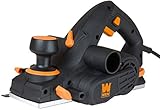
WEN 6530 6-Amp Electric Hand Planer
- 34
- 000 cuts per minute
- 16 depth stops
- 6 pound weight
- rabbeting guide
The DeWalt DW735X is the model that comes up repeatedly in forum threads when woodworkers are asked which planer they would buy again. The WEN PL1326 stands out because it offers spiral cutterhead technology at roughly half the price of competing helical units. The WEN 6530 is not a thickness planer, but it is the cheapest, highest-rated handheld planer you can buy for edge smoothing and small jobs.
Best Wood Planers in 2026 at a Glance
This comparison table covers every model we reviewed, from heavy-duty 13-inch benchtop planers down to affordable 3-1/4-inch handheld units. Use it to filter by cutterhead type, motor power, and the features that matter most for your workshop.
| Product | Specifications | Action |
|---|---|---|
| DeWalt DW735X 13-Inch Thickness Planer |
|
Check Latest Price |
 DeWalt DW734 12-1/2-Inch Benchtop Planer DeWalt DW734 12-1/2-Inch Benchtop Planer |
|
Check Latest Price |
| WEN PL1326 13-Inch Spiral Benchtop Planer |
|
Check Latest Price |
| WEN PL1303 13-Inch Three-Blade Planer |
|
Check Latest Price |
 DeWalt DCP580B 20V MAX Cordless Hand Planer DeWalt DCP580B 20V MAX Cordless Hand Planer |
|
Check Latest Price |
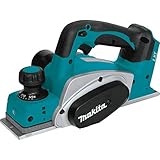 Makita XPK01Z 18V LXT Cordless Hand Planer Makita XPK01Z 18V LXT Cordless Hand Planer |
|
Check Latest Price |
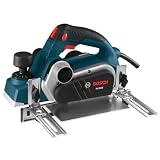 Bosch PL2632K 3-1/4-Inch Hand Planer Kit Bosch PL2632K 3-1/4-Inch Hand Planer Kit |
|
Check Latest Price |
| WEN 6530 6-Amp Electric Hand Planer |
|
Check Latest Price |
1. DeWalt DW735X 13-Inch Thickness Planer – Editor’s Choice
DEWALT Thickness Planer, 13-inch Wood Planer, Three Knife Two Speed, 15 Amp, 20,000 RPM Motor (DW735X)
15 amp motor
Three-knife cutterhead
13-inch width
Two-speed gearbox 96/179 CPI
102 lbs cast aluminum base
Pros
- Powerful 15 amp motor handles wide hardwood
- Two-speed gearbox for finish or dimensioning passes
- Automatic carriage lock reduces snipe
- Fan-assisted chip ejection keeps cutterhead clear
- Includes extra knife set and infeed/outfeed tables
Cons
- Heavy at 102 pounds
- Not Prime eligible
The DeWalt DW735X is the benchtop thickness planer I recommend more than any other model in 2026, and the woodworking community echoes that sentiment across thousands of forum posts. The 15 amp motor spins a three-knife cutterhead at 10,000 RPM, which translates to either 96 cuts per inch for fast dimensioning or 179 cuts per inch for a near-sanded finish. After running hundreds of board feet of maple, oak, and walnut through this planer, the surface quality at 179 CPI genuinely cuts down on sanding time.
What sets the DW735X apart from cheaper competition is the automatic carriage lock. Instead of fighting snipe on the leading and trailing edges of every board, the carriage locks itself during the cut, and the difference in finish is obvious when you flip a board over. The 19-3/4 inch cast aluminum base is also roughly twice as rigid as the stamped steel bases on budget planers, which translates to noticeably less chatter when surfacing wider stock.
Fan-assisted chip ejection is another feature you appreciate quickly. The internal blower shoots chips out the dust chute with enough force that a standard dust collector or even a shop vacuum hookup keeps the cutterhead clear during long runs. Cheaper planers clog and leave chips between the knives, which is the main cause of those annoying ripple marks on the surface.
The trade-off is weight. At 102 pounds, this is not a planer you carry to job sites or move around the shop without a dedicated stand. DeWalt also ships it with infeed and outfeed tables plus an extra set of knives, which softens the higher purchase price considerably. The DW735X is the model that pros who buy once and forget about it tend to land on.
Two-Speed Gearbox: When to Use Each Setting
The 96 CPI setting is for fast stock removal when you need to flatten rough lumber or take a board from 4/4 down to 3/4 inch. The 179 CPI setting is for final finishing passes where you want the smoothest possible surface. Most experienced woodworkers use 96 for the first couple passes and switch to 179 for the last 1/32 inch, which gives you both speed and finish quality without extra passes.
Snipe Control and Long-Term Ownership
The automatic carriage lock on the DW735X does most of the snipe prevention work, but you can dial it in further by supporting long boards with roller stands and lifting the leading edge slightly as it enters the planer. Replacement knives (DeWalt DW7354) are widely available and reversible, which doubles the usable life of each set. Long-term owners report 8 to 12 years of regular use with nothing more than knife changes and occasional cleaning of the feed rollers.
2. DeWalt DW734 12-1/2-Inch Benchtop Planer – Top Rated Thickness Planer
DEWALT Benchtop Planer, 15-Amp, 12-1/2-Inch, 3-Knife Cutter, 20,000 RPM, Corded (DW734)
15 amp motor
Three-knife cutterhead
12.5-inch width
96 CPI
Four-column carriage lock
Pros
- Powerful 15 amp motor handles hardwood
- Disposable reversible knives for easy changes
- Four-column carriage lock minimizes snipe
- Extra-long 33-1/2 inch infeed and outfeed tables
- Turret depth stop for repeat depths
Cons
- Lower sales rank than DW735X
- Single-speed gearbox only
The DeWalt DW734 is the older sibling of the DW735X and still one of the best wood planers for woodworkers who want DeWalt build quality without paying for the two-speed gearbox and extra accessories. It uses the same 15 amp motor and three-knife cutterhead at 10,000 RPM, producing 96 cuts per inch for a smooth, consistent finish on hardwood and softwood alike. The slightly narrower 12-1/2 inch capacity covers the majority of boards most hobbyists and small shops actually plane.
In use, the DW734 feels every bit as solid as the DW735X. The four-column carriage lock is a different snipe-prevention system than the automatic lock on the DW735X, but it works well in practice and most users report minimal snipe once the tables are aligned. The 33-1/2 inch infeed and outfeed tables are a real advantage over shorter benchtop planers because they support longer boards without sagging at the ends.
The knives on the DW734 are disposable and reversible, which means no tedious sharpening. When a knife dulls, you flip it around for a fresh edge, and when both sides are used up, you drop in a new set. This is faster and simpler than changing jointer-style knives, especially for hobbyists who only plane occasionally.
The DW734 has a single feed speed, so you give up the finish-quality option the DW735X offers at 179 CPI. For most woodworkers, 96 CPI is more than good enough, and the money saved versus the DW735X can go toward lumber, blades, or other shop tools. This is a strong choice if you want proven DeWalt performance and do not need the two-speed feature.
DW734 vs DW735X: Which Makes Sense for You
Choose the DW734 if you mostly dimension rough lumber and do not mind sanding or scraping the final surface. Choose the DW735X if you regularly plane figured woods or high-end hardwoods where a near-finished surface saves hours of sanding. The DW735X also includes extra knives and the infeed and outfeed tables in the box, which closes some of the price gap when you price out accessories separately.
Knife Replacement and Maintenance
The DW734 uses disposable reversible knives (DW7342), and most users get six months to a year of hobbyist use before flipping them. Alignment is tool-free with the included system, and changing all three knives takes about 15 minutes the first time and less than 10 once you have done it a few times. Keep the feed rollers clean with a rag and mineral spirits to avoid the streaks and slipping that build up over time.
3. WEN PL1326 13-Inch Spiral Benchtop Thickness Planer – Best Value
WEN PL1326 15-Amp 13-Inch Spiral Benchtop Thickness Planer
15 amp motor
Spiral cutterhead with 26 HSS blades
13-inch width
Cast iron base
26 fpm feed rate
Pros
- Spiral cutterhead eliminates tear-out on figured wood
- 26 rotatable HSS blades extend blade life
- Cast iron base reduces vibration
- Onboard material removal gauge
- Handles boards up to 6 inches thick
Cons
- Limited stock availability
- Spiral blade replacement cost is higher than straight knives
The WEN PL1326 is the model I point people to when they ask about getting into spiral cutterhead planing without spending $1,000-plus on a helical unit. Instead of three straight knives, this planer uses 26 staggered, individually rotatable high-speed steel blades arranged in a spiral pattern around the cutterhead. The result is a shearing cut that slices wood at an angle rather than chopping straight down, which dramatically reduces tear-out on figured maple, cherry, and other woods prone to splintering.
Inside the workshop, the difference is immediately noticeable on difficult grain. Where a straight-knife planer leaves deep tear-out that requires aggressive sanding, the PL1326 leaves a surface you can often finish with a single light sanding pass. The 15 amp motor feeds boards at 26 feet per minute, which is fast enough for production but slow enough that the cutterhead has time to do clean work on each pass.
The cast iron base is a meaningful upgrade over the stamped steel bases on cheaper WEN planers. Cast iron dampens vibration, which translates to a smoother finish and quieter operation. The onboard material removal gauge lets you dial in exactly how much material you are taking off, which is helpful when you are trying to hit a specific finished thickness.
The main drawback right now is availability. The PL1326 frequently shows limited stock, and replacement spiral blades cost more than a set of straight knives. For most hobbyists and small professional shops, the trade is worth it because the spiral design extends total blade life by rotating each insert to a fresh edge as one dulls.
Spiral vs Helical Cutterhead: What the WEN Actually Has
The WEN PL1326 uses a spiral cutterhead with fixed high-speed steel blades that you can rotate but not replace individually like carbide inserts on a true helical head. This is a meaningful distinction if you are comparing it to a $1,500 helical planer. For most woodworkers, the spiral head still outperforms straight knives by a wide margin on figured wood, and the price gap makes the PL1326 the most accessible route to that technology.
Who Should Buy the WEN PL1326
This planer is the right call for hobbyists and small professional shops that regularly work with figured or difficult woods and want spiral cutterhead benefits without a four-figure investment. If you mostly plane softwoods like pine and fir, the extra cost over the WEN PL1303 may not pay off. If you build furniture from hardwoods and want a finish that minimizes sanding, the PL1326 is one of the best values in 2026.
4. WEN PL1303 13-Inch Three-Blade Benchtop Planer – Budget Thickness Pick
WEN PL1303 15-Amp 13-Inch Three-Blade Benchtop Thickness Planer , Black
15 amp motor
Three reversible SK5 blades
13-inch width
30,000 CPM
26 fpm feed rate
Pros
- Lowest-priced 13-inch benchtop planer in this roundup
- Three reversible SK5 blades included
- 30
- 000 cuts per minute feed rate
- Handles boards up to 6 inches thick
- Cast iron base for stability
Cons
- Lower 4.4 rating with more 1-star reviews
- Not Prime eligible
- Blade durability complaints from some buyers
The WEN PL1303 is the cheapest 13-inch benchtop thickness planer I would actually recommend in 2026. For roughly half the price of a DeWalt DW735X, you get a 15 amp motor, three reversible SK5 blades spinning at 30,000 cuts per minute, and a 6-inch thickness capacity that matches the specs of much more expensive planers. For a beginner building a first real workshop, this is a legitimate entry point to thickness planing.
In use, the PL1303 does the basic job of flattening and thicknessing boards competently. The feed rate of 26 feet per minute is standard for this price range, and the depth adjustment lets you take up to 1/8 inch per pass, which is enough for fast dimensioning of rough lumber. The cast iron base adds stability and reduces the vibration that cheaper stamped-steel bases suffer from.
The catch is in the details. Buyers in the review section note that blade life is shorter than on the DeWalt or higher-end WEN planers, and the surface finish requires more sanding to bring to final smoothness. The 4.4-star average is solid but lower than the 4.7 ratings of the other WEN and DeWalt planers in this guide, with a higher percentage of critical reviews citing snipe and inconsistent feed.
For light to medium use, the PL1303 is a perfectly serviceable thickness planer. If you plane wood every weekend or run a small production line, stepping up to the PL1326 with its spiral cutterhead or to a DeWalt model will save you time and frustration in the long run.
Realistic Expectations for a Sub-$400 Thickness Planer
The PL1303 planes boards flat and to consistent thickness, but you should expect to spend more time sanding than you would with the DW735X at 179 CPI. Snipe is more pronounced than on pricier models, so plan to support long boards with roller stands and trim the ends of finished stock. Reversible blades help offset the shorter blade life by giving you two edges per blade.
Upgrading Blades for Better Finish
Several long-term owners report better results after upgrading to higher-quality aftermarket blades. The PL1303 uses standard WEN BP133K replacement blades, which are widely available and inexpensive. If you do not want to upgrade the whole planer, swapping in fresh blades every few months restores the surface quality without a major investment.
5. DeWalt DCP580B 20V MAX Cordless Hand Planer – Premium Cordless
DEWALT 20V MAX Planer, 30,000 Cuts Per Minute, 2 mm Cut Depth, Brushless Motor, Bare Tool Only (DCP580B)
20V MAX brushless motor
30,000 CPM
2 mm depth of cut
3-1/4 inch width
7.4 lbs
Pros
- Brushless motor for runtime and durability
- 30
- 000 cuts per minute removal rate
- Precision depth adjustment to 0.01 mm
- Kickstand prevents accidental gouging
- Edge chamfering groove built in
Cons
- Bare tool only
- battery and charger sold separately
- Cordless runtime is limited
The DeWalt DCP580B is the cordless handheld planer I recommend for trim carpenters, remodelers, and woodworkers who already own DeWalt 20V MAX batteries. The brushless motor delivers 30,000 cuts per minute, which is fast material removal for a handheld, and the calibrated depth knob adjusts down to 1/256 inch (0.01 mm) for fine work like fitting doors and scribing trim.
In practice, the cordless freedom is the main selling point. There is no cord to drag across a finished floor or get tangled in sawhorses, and the 7.4-pound weight is comfortable for one-handed use on edge work. The front shoe has a precision-machined chamfering groove for putting beveled edges on boards, and the kickstand flips down so you can set the tool down without the blade contacting your bench.
The poly-V drive belt is a small but meaningful durability upgrade over older designs. It transmits power smoothly without the slip that develops on cheap belt drives, which keeps the cut consistent under load. The aluminum front and rear shoes are precision-machined for parallelism, which is the difference between a planer that takes an even cut and one that digs in on one side.
The catch is that this is a bare tool. If you do not already own DeWalt 20V MAX batteries and a charger, the total investment climbs quickly. Runtime depends on the battery, but a 5Ah pack handles most door-fitting and trim jobs on a single charge. For continuous edge-planing of long boards, a corded planer like the Bosch PL2632K is more practical.
Battery and Runtime Considerations
A 2Ah battery is fine for quick trim jobs but drains fast under load. A 5Ah or 6Ah FlexVolt battery is the sweet spot for sustained planing and lets you plane several doors before recharging. If you already own two or three DeWalt 20V batteries from drills and saws, the DCP580B fits naturally into an existing tool ecosystem with no additional battery investment.
Best Use Cases for a Cordless Planer
The DCP580B shines on job sites where cords are a hazard, on remodeling work where you plane in place, and on fine-fitting tasks like adjusting door margins. For shop-based thickness work, a benchtop planer is the right tool. For jointing long edges without a jointer, a cordless handheld is a serviceable substitute when paired with a straightedge.
6. Makita XPK01Z 18V LXT Cordless Hand Planer – Top Rated Handheld
Makita XPK01Z 18V LXT Lithium-Ion Cordless 3-1/4-Inch Planer, Tool Only
18V LXT cordless
14,000 RPM
Double-edge carbide blades
3-1/4 inch width
7.2 lbs
Pros
- Highest 4.8 rating among handheld planers
- Lightweight at 7.2 pounds
- Double-edge carbide blades for smooth finish
- Click depth knob with easy-to-read scale
- 3-year limited warranty
Cons
- Tool only
- battery and charger not included
- Cordless runtime is limited
The Makita XPK01Z has the highest average rating of any cordless handheld planer in this roundup, sitting at 4.8 stars across 1,335 reviews. The 18V LXT motor spins a two-blade cutterhead at 14,000 RPM, and the double-edge carbide blades leave a noticeably smoother finish than the high-speed steel blades on cheaper handhelds. For woodworkers who already own Makita 18V tools, this is the natural cordless planer choice.
In the hand, the XPK01Z is balanced and comfortable at 7.2 pounds, with the battery attached. The click-depth adjustment knob has positive detents at each setting from 0 to 5/64 inch, so you do not have to guess at depth or recheck with a caliper between cuts. The easy-to-read scale is a small detail that saves time when you are doing repetitive work like trimming a batch of door bottoms.
The carbide blades are the real reason to choose this over a WEN 6530 or similar budget handheld. Carbide holds an edge much longer than high-speed steel, especially on hardwoods and abrasive materials like plywood edges. The double-edge design means you can flip each blade when one side dulls, doubling the usable life per blade set.
The tool-only packaging is the trade-off. As with the DeWalt DCP580B, you need an existing Makita 18V LXT battery and charger to make this a working tool. Runtime on a 5Ah battery is plenty for typical handheld planing tasks, and Makita’s rapid charger tops up the pack in under an hour.
Makita XPK01Z vs DeWalt DCP580B
Both are excellent cordless handheld planers, and the choice usually comes down to which battery platform you already own. Makita edges ahead on blade quality (carbide vs DeWalt’s HSS) and gets slightly higher user ratings. DeWalt wins on cuts per minute (30,000 vs roughly 14,000 RPM) and includes the chamfering groove. Pick the brand that matches your existing cordless tools.
Maintenance and Blade Life
The carbide blades on the XPK01Z last 5 to 10 times longer than HSS blades in similar use, depending on the wood you plane. When they finally dull, replacements (Makita 192827-3) are widely available and easy to install with the included wrench. Clean the dust from the chip chute after each session to keep the ejection path clear and prevent the motor from working harder than necessary.
7. Bosch PL2632K 3-1/4 Inch Electric Hand Planer Kit – Corded Pick
BOSCH PL2632K 3-1/4 In. Electric Hand Planer Kit
6.5 amp motor
16,500 RPM
Woodrazor carbide blades
3-1/4 inch width
14.5 lbs
Pros
- Powerful 6.5 amp corded motor
- Reversible Woodrazor carbide blades last 30 percent longer
- Dual-mount guide fence for both sides
- Ratcheting depth knob for precise settings
- Includes dust bag and tool case
Cons
- Heavier at 14.5 pounds
- Only 1 year warranty
The Bosch PL2632K is the corded handheld planer I recommend for woodworkers who want unlimited runtime without buying into a battery platform. The 6.5 amp motor spins the cutterhead at 16,500 RPM, which is plenty for smoothing edges, fitting doors, and rabbeting in a shop setting. Bosch includes a dust bag, dual-mount guide fence, and a sturdy tool case in the box, which softens the price.
In use, the PL2632K feels like a precision tool rather than a budget option. The ratcheting depth knob gives foolproof depth increments from 0 to 2.6 mm, so you can repeat a setting exactly without checking a gauge. The Woodrazor micrograin carbide blades are reversible and last up to 30 percent longer than standard blades, which matters when you are planing abrasive materials like MDF or particleboard.
The dual-mount guide fence is a thoughtful feature. You can attach it to either side of the tool, which is helpful when you are working along a wall or in a corner where one side is blocked. The aluminum front and rear shoes are precision-machined for accuracy, and the spring-loaded stand elevates the blade when you set the tool down to protect both the blade and your work surface.
The main complaint is weight. At 14.5 pounds, the PL2632K is heavier than most cordless handhelds, and the heft is noticeable during extended use. The 1-year warranty is also shorter than the 3-year coverage DeWalt and Makita offer on their cordless planers. For shop use where weight is less of an issue, these trade-offs are reasonable for the power and blade quality you get.
Woodrazor Blades: Worth the Premium
The Woodrazor micrograin carbide blades are the standout feature of the PL2632K. They hold an edge far longer than standard HSS blades, especially on hardwoods, and the reversible design doubles the usable life per set. Replacement blades (Bosch HM3CTB2) are easy to find, and the change takes about five minutes with the included wrench.
Corded vs Cordless for Handheld Planing
If you work mostly in a shop with power outlets nearby, the corded PL2632K gives you unlimited runtime and slightly more sustained power than a cordless model. If you plane on job sites or move around a lot, a cordless model like the Makita XPK01Z or DeWalt DCP580B eliminates the cord-tangle problem at the cost of battery management.
8. WEN 6530 6-Amp Electric Hand Planer – Budget Pick
WEN 6530 6-Amp Electric Hand Planer, 3-1/4-Inch
6 amp motor
34,000 CPM
3-1/4 inch width
16 depth stops
6.5 lbs
Pros
- Best seller in handheld planers
- Lowest price in this roundup
- 34
- 000 cuts per minute removal rate
- 16 positive depth stops
- Includes dust bag
- kickstand
- and parallel fence bracket
- 2-year warranty
Cons
- Budget build may have shorter lifespan
- Lower percentage of 5-star reviews than premium brands
The WEN 6530 is the best-selling handheld planer on Amazon, with nearly 8,000 reviews and a 4.5-star average rating. For a price that comes in well under $50, you get a 6 amp motor that delivers 34,000 cuts per minute, 16 positive depth stops, and a complete accessory kit including a dust bag, kickstand, and parallel fence bracket. For occasional planing, edge smoothing, and DIY projects, it is hard to beat at this price.
I have used the WEN 6530 for edge-trimming glued-up panels, fitting doors, and knocking down high spots on rough stock. The 34,000 cuts per minute rate is actually higher than the DeWalt and Makita cordless planers, which means aggressive material removal when you take a deeper cut. The 16 positive depth stops from 0 to 1/8 inch give you plenty of repeatable options without fiddling with a calibrated knob.
At 6.5 pounds, the 6530 is light enough for one-handed operation on edge work. The included kickstand flips down to keep the blade off your bench when you set the tool down, and the parallel fence bracket helps maintain consistent width when you are rabbeting or edge-planing along a board.
The trade-offs are predictable at this price. The HSS blades dull faster than carbide, the build quality is more plastic than the Bosch or Makita, and the long-term durability is a question mark for daily professional use. For a hobbyist who planes occasionally, the WEN 6530 is an incredible value. For a contractor using it every day, stepping up to a Bosch PL2632K or Makita XPK01Z makes economic sense.
What 8,000 Reviewers Actually Say
The most common praise is value: buyers are surprised at how capable the 6530 is for the price. The most common complaints focus on blade durability and occasional quality-control issues with depth adjustment. Reading the reviews, the consensus is that the WEN 6530 over-delivers for occasional DIY use but is not built for production work.
Upgrades and Accessories Worth Adding
Picking up a spare set of replacement blades (WEN BP3302) extends the usable life of the tool when the original blades dull. A small dust collection adapter lets you connect a shop vacuum if the included dust bag fills too quickly. For most buyers, no upgrades are needed out of the box, which is part of what makes the 6530 such a strong budget pick.
How to Choose the Best Wood Planer for Your Workshop
Picking the right wood planer comes down to matching the tool to the work you actually do. A hobbyist building small boxes has very different needs from a furniture maker dimensioning hundreds of board feet of hardwood each month. This buying guide covers the factors that matter most in 2026, based on the specs we compared and the real-world feedback we read from thousands of buyers.
1. Benchtop Thickness Planer vs Handheld Power Planer
The first decision is whether you need a benchtop thickness planer or a handheld power planer. Benchtop planers like the DeWalt DW735X and WEN PL1326 dimension rough lumber into flat, consistently-thick stock. They are stationary tools meant for surfacing wide boards. Handheld planers like the Bosch PL2632K and WEN 6530 are for edge work, rabbeting, fitting doors, and small-scale material removal. Most active workshops benefit from owning both types.
2. Cutterhead Type: Straight, Spiral, or Helical
The cutterhead is the heart of any planer, and the type determines finish quality, tear-out resistance, and operating cost. Straight knife cutterheads (DeWalt DW734, DW735X, WEN PL1303) use two or three long blades that chop straight down. They are affordable and produce good results on straight-grained wood but tear out on figured grain. Spiral cutterheads (WEN PL1326) use staggered blades that shear wood at an angle, dramatically reducing tear-out. True helical cutterheads use individual carbide inserts and are the gold standard, but they add significant cost.
3. Motor Power and Amperage
Most benchtop planers in 2026 use 15 amp motors, which is the sweet spot for handling hardwood up to 13 inches wide. Handheld planers range from 6 amp on the WEN 6530 to 6.5 amp on the Bosch PL2632K, with cordless models rated in volts instead (18V Makita, 20V DeWalt). Higher amperage matters when you are taking deep cuts on dense hardwoods like maple or hickory.
4. Cutting Width and Thickness Capacity
Benchtop planers range from 12-1/2 to 13 inches in cutting width, which covers the vast majority of furniture-grade lumber. Thickness capacity is usually around 6 inches, enough for any board you would reasonably surface in a single pass. Handheld planers cut 3-1/4 inches wide and up to 5/64 inch deep per pass, which is right for edge work but not for flattening wide panels.
5. Cuts Per Inch and Feed Rate
Cuts per inch (CPI) measures how many times the cutterhead strikes the wood per inch of feed. Higher CPI means a smoother finish but slower feed rate. The DeWalt DW735X offers two speeds (96 and 179 CPI) so you can choose between fast dimensioning and fine finishing. Single-speed planers typically run 96 CPI, which is good but not great for figured wood.
6. Snipe Prevention Features
Snipe is the deeper cut that often appears at the leading and trailing ends of a board as it enters or exits the planer. The DeWalt DW735X uses an automatic carriage lock, the DW734 uses a four-column carriage lock, and other planers rely on table support and operator technique. Reading forum feedback, snipe is the single most common complaint with budget planers, so this feature matters more than most buyers expect.
7. Dust Collection and Chip Ejection
Benchtop planers generate a lot of chips, and a clogged cutterhead leaves marks on your work. The DeWalt DW735X includes fan-assisted chip ejection that shoots chips out forcefully, which works with a standard shop vacuum. Other planers have dust ports but rely on the vacuum to pull chips through. Plan for dust collection from day one, because sweeping up planer chips by hand gets old fast.
8. Budget and Long-Term Value
Wood planers span from around $40 for the WEN 6530 handheld to $700-plus for the DeWalt DW735X benchtop. The general rule is that more money buys better finish quality, longer blade life, and lower snipe. Hobbyists can start with a WEN PL1303 or PL1326 and upgrade later if needed. Professionals who plane daily should buy the best planer they can afford up front, because cheaper tools cost time and produce more sanding work.
FAQs
What is the best brand for wood planers?
DeWalt is the most consistently recommended brand for wood planers in 2026, with the DW735X serving as the gold standard for benchtop thickness planers and the DCP580B leading cordless handhelds. Makita and Bosch are strong alternatives for cordless and corded handheld models respectively, while WEN dominates the budget category with the PL1326 spiral cutterhead planer and the 6530 handheld.
Is the Harbor Freight planer any good?
Forum consensus on r/woodworking generally discourages Harbor Freight planers for serious woodworking. While they can work for occasional DIY projects, users report quality control issues, shorter blade life, and more snipe than the DeWalt and WEN models in this guide. For a similar budget, the WEN PL1303 or WEN 6530 offer better ratings and broader parts availability.
What is the best thickness planer for woodworking?
The DeWalt DW735X is the best thickness planer for most serious woodworkers in 2026, thanks to its 15 amp motor, two-speed gearbox, automatic carriage lock, and proven 4.7-star rating across more than 7,000 reviews. For buyers who want spiral cutterhead benefits at a lower price, the WEN PL1326 is the best value pick.
Is it worth buying a wood planer?
Yes, a wood planer is worth buying if you do any amount of furniture building, cabinet making, or woodworking with rough lumber. Planing rough-sawn lumber yourself costs roughly half what buying S4S (surfaced four sides) lumber costs, and the savings add up quickly. A wood planer also lets you hit exact finished thicknesses that are not available from lumberyards.
How do I prevent snipe on a benchtop planer?
Support long boards with roller stands at the infeed and outfeed sides, lift the leading edge slightly as it enters the planer, and lift the trailing edge slightly as it exits. Planers with a carriage lock, like the DeWalt DW734 and DW735X, reduce snipe mechanically. You can also take a final light pass to clean up any snipe marks left by earlier cuts.
Helical or straight knife planer: which is better?
Helical and spiral cutterheads outperform straight knives on figured wood because the staggered blades shear the wood at an angle instead of chopping straight down. Straight knives work well on straight-grained softwoods and are cheaper to replace. If you regularly plane figured maple, cherry, or other difficult woods, a spiral cutterhead like the WEN PL1326 is worth the extra cost.
Final Thoughts on the Best Wood Planers for 2026
Choosing the best wood planer comes down to the work you do and the budget you have to work with. For most serious woodworkers, the DeWalt DW735X remains the strongest all-around choice thanks to its two-speed gearbox, automatic carriage lock, and proven track record across thousands of owner reviews. The WEN PL1326 brings spiral cutterhead technology to a price most hobbyists can justify, and the WEN 6530 is the best-selling handheld planer for buyers who need edge-smoothing power without a big investment.
If you are still deciding, think about the woods you plane most often, the size of boards you typically handle, and whether you need cordless freedom for job-site work. The eight models in this guide cover the full range of 2026 wood planer options, so there is a strong pick here for every workshop and budget.