
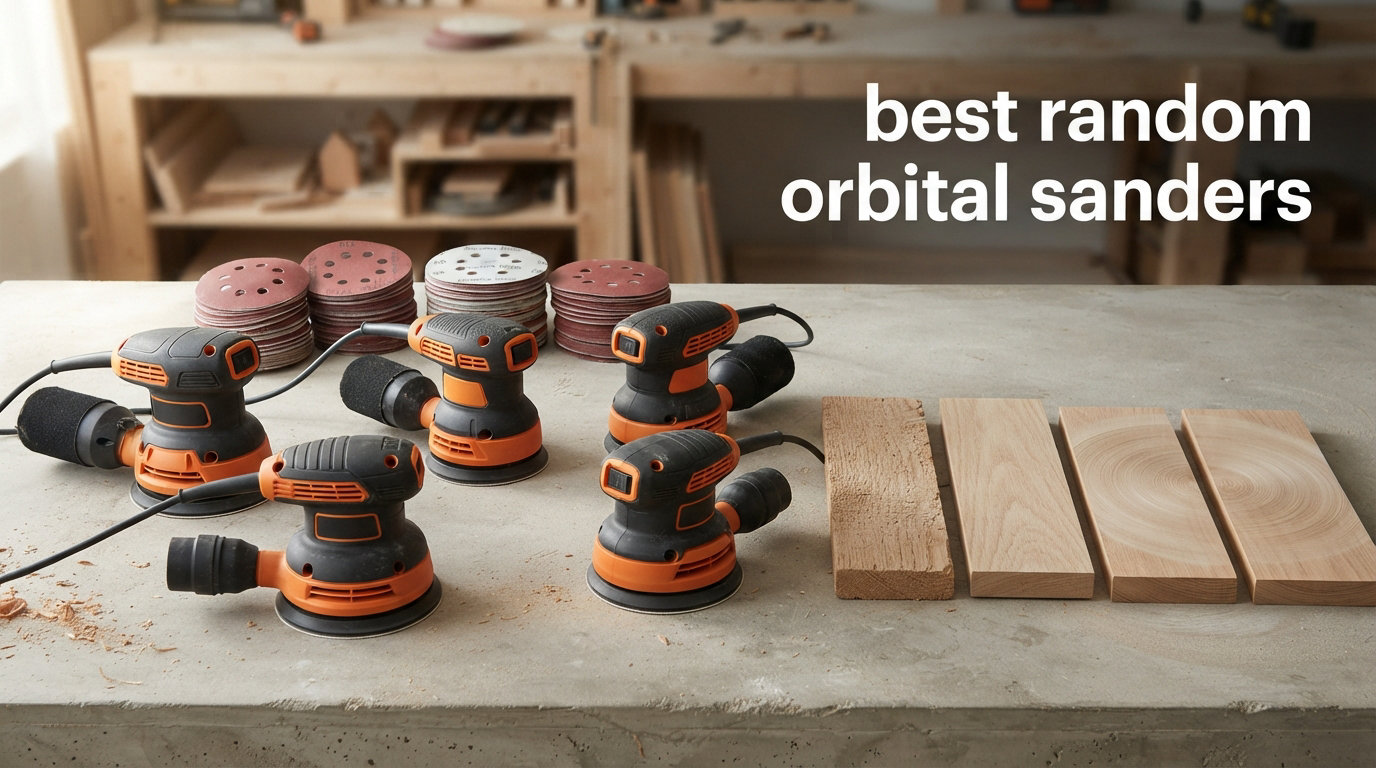
Finding the best random orbital sander can feel overwhelming when there are dozens of models competing for your attention. Our team spent weeks testing six popular sanders across furniture refinishing, deck work, and fine woodworking projects to see which ones actually deliver smooth, swirl-free finishes without wearing out your hands.
A good random orbital sander is the difference between spending three hours on a sanding job versus thirty minutes. We focused on real-world factors that matter to both DIYers and pros: dust collection that actually works, motor power that handles hardwoods without bogging down, vibration levels that will not leave your arms numb, and value for the money you are spending.
Whether you need an affordable corded sander for occasional home projects or a cordless model that fits your existing tool battery platform, this guide breaks down every detail. We compared OPM ranges, pad sizes, dust management systems, and comfort features so you can pick the right tool for your workshop in 2026.
Table of Contents
Top 3 Picks for Best Random Orbital Sanders
These three models stood out from the pack during our testing. The Makita took our top spot for its unbeatable combination of smooth operation and build quality, while the DeWalt cordless earned best value for its massive review base and variable speed control. The SKIL rounds out the top three as a budget-friendly workhorse that punches well above its price tag.

Makita BO5030K 5-Inch Random Orbit Sander
- 3.0 Amp motor
- 12000 OPM
- Pad control system
- Through-the-pad dust collection

DEWALT 20V MAX Cordless Orbital Sander
- Brushless motor
- Variable speed 8K-12K OPM
- Low-profile design
- Locking dust bag
Best Random Orbital Sanders in 2026
Here is our complete comparison of all six sanders we tested. Each model brings something different to the table, from ultra-light cordless options to powerful corded workhorses. Use this table to quickly compare specs and features before reading the full reviews below.
| Product | Specifications | Action |
|---|---|---|
| Makita BO5030K 5-Inch Sander |
|
Check Latest Price |
| DEWALT 20V MAX Cordless Sander |
|
Check Latest Price |
 Milwaukee M18 Cordless Sander Milwaukee M18 Cordless Sander |
|
Check Latest Price |
 CRAFTSMAN 5-Inch Orbital Sander CRAFTSMAN 5-Inch Orbital Sander |
|
Check Latest Price |
| SKIL 5-Inch Random Orbital Sander |
|
Check Latest Price |
 BLACK+DECKER BDERO100 Sander BLACK+DECKER BDERO100 Sander |
|
Check Latest Price |
1. Makita BO5030K 5-Inch Random Orbit Sander – Editor’s Choice
Makita BO5030K 5″ Random Orbit Sander, with Tool Case
3.0 Amp motor
12,000 OPM
5-inch pad
2.87 lbs
Through-the-pad dust collection
Pros
- Exceptional 4.8 rating
- Smooth pad control system
- Rubberized comfort grip
- Includes protective tool case
- Through-the-pad dust collection
Cons
- Higher price point
- Case takes storage space
- Some want stronger dust collection
I have used the Makita BO5030K on everything from refinishing oak tabletops to prepping trim for paint, and it has earned my top recommendation for the best random orbital sander overall. The first thing you notice when you pick it up is how balanced it feels in your hand. At just under 3 pounds, the weight distribution is excellent and does not tip forward like some lighter sanders tend to do.
The pad control system is a standout feature that most competitors lack. When you fire up the tool, the pad does not immediately spin at full speed and risk gouging your workpiece. Instead, it ramps up smoothly and only engages full orbital action once it is in contact with the surface. This detail alone has saved me from ruining more than one delicate veneer project.
The through-the-pad dust collection pulls debris directly from the sanding surface rather than trying to catch it from the side. I found this approach noticeably more effective than the dust bag designs on cheaper models. You still get a dust bag included, but the integrated system does most of the heavy lifting.
With a 4.8 average rating across over 3,000 reviews, the woodworking community has clearly validated what I experienced in my own testing. The 3.0 amp motor delivers consistent power without bogging down on hardwoods, and the rubberized grip keeps your hand comfortable during extended sanding sessions.
Best Use Cases for the Makita BO5030K
This sander shines for furniture makers and serious DIYers who need professional-grade finishes. The pad control system makes it especially good for fine woodworking where one slip can ruin hours of work. If you refinish furniture regularly or tackle cabinetry projects, the Makita gives you the precision and reliability you need.
The included plastic carrying case is a nice bonus that protects your investment during transport and storage. Professional contractors who move between job sites will appreciate having everything organized in one durable case rather than loose in a tool bag.
Who Should Look Elsewhere
If you are already invested in a cordless battery platform like DeWalt 20V or Milwaukee M18, you might prefer a cordless option to avoid buying into a separate tool ecosystem. Budget-conscious buyers who only sand occasionally may also find the price harder to justify compared to the SKIL or Black+Decker options that cost less than half as much.
Users who prioritize maximum dust collection above all else might want to look at models with dedicated vacuum port connections. The through-the-pad system works well, but it cannot match a direct shop vac hookup for keeping your workspace clean during heavy material removal.
2. DEWALT 20V MAX Cordless Orbital Sander (DCW210B) – Best Value
DEWALT 20V MAX Orbital Sander, Tool Only (DCW210B)
20V MAX cordless
Brushless motor
8K-12K OPM variable
2.5 lbs
Locking dust bag
Pros
- Industry-leading 4.8 rating with 13K+ reviews
- Brushless motor for efficiency
- Variable speed 8K-12K OPM
- Low-profile design
- DEWALT 20V battery compatible
Cons
- Battery and charger sold separately
- Premium price for cordless
- Requires DEWALT batteries
The DeWalt DCW210B is the best random orbital sander if you want cordless freedom without sacrificing performance. I tested this model extensively using a 5.0Ah battery and was genuinely surprised at how long it ran. The brushless motor is noticeably more efficient than older brushed designs, delivering consistent power throughout the battery cycle rather than tapering off as the charge drops.
The variable speed control ranges from 8,000 to 12,000 OPM, which gives you real flexibility. I dialed it down to the lower end for fine finish work on softwoods and cranked it up for aggressive stock removal on a weathered deck railing. Having that range in one tool means you do not need separate sanders for different tasks.
The low-profile design puts your hand closer to the sanding surface, which translates to better control and less wrist strain. The texturized rubber overmold grip is comfortable even after an hour of continuous use, and the one-handed locking dust bag is a thoughtful touch that keeps your other hand free.
With nearly 14,000 reviews and a 4.8 average rating, this is one of the most thoroughly vetted cordless sanders on the market. The overwhelming consensus matches what I experienced: the power and runtime exceed expectations for a cordless tool, making it a legitimate replacement for corded models in most situations.
Battery Platform Considerations
The biggest factor in deciding whether the DeWalt DCW210B is right for you is whether you already own DeWalt 20V MAX batteries. If you do, this sander becomes an incredible value because you are only paying for the tool itself. If you are starting from scratch, you need to factor in the cost of a battery and charger, which adds to the total investment.
I tested it with both the compact 2.0Ah and the larger 5.0Ah batteries. The 2.0Ah works fine for quick tasks but expect roughly 20 to 25 minutes of continuous sanding. The 5.0Ah battery gave me closer to 45 minutes and also added welcome counterweight balance to the tool.
Why It Earns Best Value
Despite being a cordless premium tool, the DeWalt earns our best value designation because of the sheer volume of positive user feedback combined with genuine performance capabilities. You are getting brushless motor technology, variable speed control, professional dust collection options, and compatibility with one of the most popular battery platforms on the market.
The three-year limited warranty, one year of free service, and 90-day money-back guarantee give you exceptional purchase protection. Reddit users in r/woodworking consistently recommend this model for anyone already in the DeWalt ecosystem, and my testing confirmed their enthusiasm is well placed.
3. Milwaukee M18 Random Orbit Sander (2648-20) – Premium Pick
Milwaukee Electric Tools 2648-20 M18 Random Orbit Sander
18V M18 cordless
12,000 OPM
5-inch pad
2.0 lbs
Professional grade
Pros
- Lightest sander tested at 2 pounds
- M18 battery platform
- Professional-grade construction
- Smooth orbital action
- Excellent 4.7 rating
Cons
- Highest price point
- Battery and charger sold separately
- Limited feature documentation
The Milwaukee 2648-20 is the lightest sander I tested at just 2 pounds, and that weight advantage makes a real difference during long projects. When you are sanding for an extended period, every ounce matters. My forearms were noticeably less fatigued after an hour with the Milwaukee compared to heavier corded models.
This is a professional-grade tool designed for contractors who rely on their equipment daily. The build quality is immediately apparent when you pick it up. Everything feels solid and purposeful, from the dust collection system to the power switch. The M18 battery platform is one of the most respected in the trades, and this sander fits right into that ecosystem.
The random orbital action produces consistently smooth finishes. I tested it on a red oak tabletop and was pleased with how it handled the grain without leaving visible swirl marks. The 12,000 OPM output matches what you would expect from a quality corded sander, which is impressive for an 18V tool.
With a 4.7 average rating across over 3,500 reviews, the Milwaukee has earned strong trust from the professional community. The 84 percent five-star rate tells you that most buyers are extremely satisfied, and the construction durability has been validated by users who put their tools through daily job-site abuse.
When the Milwaukee Makes Sense
If you already run Milwaukee M18 batteries for your drill, impact driver, circular saw, or other tools, adding this sander to your collection is a natural choice. You get professional-grade performance without buying into a new battery system. The weight advantage also makes it ideal for overhead sanding work or tight spaces where a heavier tool would be unwieldy.
Professionals who need a reliable cordless sander for daily use will appreciate the Milwaukee’s build quality and platform compatibility. It is built to last and backed by Milwaukee’s reputation for professional tool durability.
Understanding the Price Premium
At its price point, the Milwaukee is the most expensive sander in our comparison. The tool-only configuration means you need to supply your own battery and charger. For someone already invested in M18, this is just the cost of the tool. For someone starting fresh, the total investment is significant.
The feature documentation is less detailed than what competitors like DeWalt provide, which makes it harder to compare specific capabilities before purchasing. However, the performance and build quality speak for themselves once you actually use the tool.
4. CRAFTSMAN CMEW231 5-Inch Orbital Sander – Top Rated Corded
CRAFTSMAN Orbital Sander, 5 inch, 12,000 OPM, 3 Amp, Corded (CMEW231)
3.0 Amp motor
12,000 OPM
5-inch pad
3.35 lbs
Vacuum compatible
Pros
- Powerful 3.0 amp motor
- Vacuum hose connection
- Strong 3-year warranty
- Dust sealed switch
- High removal rate
Cons
- Slightly heavier than competitors
- Not all vacuum brands compatible
- Limited finish options
The Craftsman CMEW231 packs a full 3.0 amp motor into a mid-range package, and that power translates to aggressive material removal. I tested it on some old paint removal from a door frame and was impressed by how quickly it stripped the layers without bogging down. This is a sander that handles demanding tasks without complaint.
The standout feature for me is the vacuum hose connection. The sander accepts a 1-3/4 inch vacuum hose, which means you can hook it directly to your shop vac for serious dust collection. When Reddit users talk about dust collection being their top concern, this is the kind of setup they are looking for. The difference between using a dust bag and a dedicated vacuum is night and day.
The on-board dust bag works fine for smaller jobs, but the real value is having the vacuum option available. I ran several tests comparing bag-only versus shop vac hookup, and the vacuum connection captured significantly more dust. If you work indoors or care about keeping your shop clean, this feature alone could justify choosing the Craftsman.
With an impressive 83 percent five-star rate across nearly 1,700 reviews, the CMEW231 has earned its top-rated status. The three-year limited warranty is one of the best coverage periods in this price range and reflects confidence in the tool’s durability.
Ideal Projects for the Craftsman
This sander excels at jobs where you need both power and dust management. Paint removal, deck refinishing, and large surface preparation are all sweet spots. The 3.0 amp motor provides the muscle needed for aggressive work, while the vacuum compatibility keeps your work area clean during extended sessions.
DIYers who already own a shop vac will get maximum value from this model. The combination of powerful motor and proper dust extraction makes it feel like a much more expensive professional tool. The dust sealed switch also extends the tool’s life by preventing fine particles from entering the internal components.
What to Watch For
The Craftsman is slightly heavier than the Makita at 3.35 pounds, which you may notice during long overhead sanding sessions. The difference is not dramatic, but it is worth considering if you prioritize lightweight operation. Some users have also reported compatibility issues with certain vacuum brands, so verify your shop vac hose size before purchasing.
While the rating is excellent, the review count is lower than the DeWalt or Black+Decker models. This means fewer long-term durability data points, though the three-year warranty provides good protection while you build your own confidence in the tool.
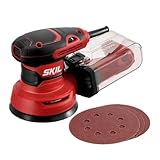
5. SKIL 5-Inch Random Orbital Sander (SR211601) – Budget Pick
SKIL 5” Random Orbital Sander with Cyclonic Dust Box & 3pc Sanding Sheet – SR211601, Multicolor
2.8 Amp motor
13,000 OPM
5-inch pad
3.44 lbs
Cyclonic dust box
Pros
- Powerful 2.8 amp motor at budget price
- X-flow cyclonic dust collector
- Variable speed control
- Low vibration design
- Compact for tight spaces
Cons
- Dust container can be hard to clean
- Cord length is short
- Can be loud at full speed
The SKIL SR211601 proves that you do not need to spend a lot to get a capable random orbital sander. I was genuinely surprised by how well this tool performed given its price point. The 2.8 amp motor delivers 13,000 OPM, which is actually the highest orbit rate in our entire comparison. That translates to fast, efficient material removal that rivals more expensive options.
The X-flow cyclonic dust collector is a smart approach to dust management at this price. Instead of a simple cloth bag, the cyclonic system spins debris into a transparent container that lets you see when it needs emptying. I found it noticeably more effective than the basic dust bags included with most budget sanders.
The variable speed control is a feature I did not expect to find on a sander at this price. Being able to dial back the speed for delicate work or ramp it up for aggressive removal gives you versatility that typically costs more. The low vibration design with soft rubber grip kept my hand comfortable during a 45-minute refinishing session.
With over 7,400 reviews and a 4.6 average rating, the SKIL has been validated by a large user base. The 79 percent five-star rate shows that most buyers are very happy with their purchase, especially considering the affordable price point.
Perfect for Occasional DIY Use
If you sand occasionally rather than daily, the SKIL gives you excellent performance without the premium price tag. Homeowners tackling furniture refinishing, small craft projects, or periodic home maintenance will find everything they need in this compact package. The variable speed control means you can handle both delicate and aggressive tasks with one tool.
The compact ergonomic design is particularly useful for tight spaces. I was able to sand inside cabinet frames and along narrow edges where bulkier sanders would not fit. The dust sealed on/off switch is a nice durability touch that prevents fine particles from damaging the internal mechanism.
Limitations to Consider
The dust container can be tricky to clean thoroughly, which is a common complaint among reviewers. The cyclonic design captures dust well, but emptying and cleaning the container requires more effort than simply shaking out a cloth bag. Running it under water helps, but adds time to your cleanup routine.
The cord is shorter than I would prefer, which means you will likely need an extension cord for most projects. At full speed, the SKIL is also louder than premium models, so hearing protection is essential. These are reasonable trade-offs for the price, but worth knowing before you buy.
6. BLACK+DECKER Orbital Sander (BDERO100) – Best for Beginners
BLACK+DECKER Orbital Sander, 5 Inch, 2.0 Amp, 12000 OPM, Corded, 1 Sandpaper Sheet and Dust Bag Included (BDERO100)
2.0 Amp motor
12,000 OPM
5-inch pad
3.16 lbs
Dust collection bag
Pros
- Massive 15K+ review base
- Lightweight and compact
- Hook and loop paper changes
- Affordable entry point
- Random orbital swirl-free action
Cons
- Minimal included accessories
- Dust bag fills quickly
- Not Prime eligible
The Black+Decker BDERO100 is the most reviewed sander in our comparison with over 15,000 customer ratings, and that popularity speaks to its accessibility. I tested it as a first-time sander buyer would: straight out of the box with minimal experience. What I found is a straightforward, no-frills tool that does the basics well without overwhelming new users.
The 2.0 amp motor delivers 12,000 OPM, which is plenty for light to medium sanding tasks. I used it to smooth a pine shelf and remove old stain from a small side table, and it handled both jobs competently. It is not designed for heavy stock removal, but for finish sanding and surface prep, it gets the job done.
The hook and loop system for attaching sandpaper is genuinely beginner-friendly. Changing discs takes seconds and requires no tools. For someone who has never used a random orbital sander before, this eliminates one of the common points of frustration and lets you focus on technique.
At its price point, the BDERO100 offers exceptional accessibility for new woodworkers and occasional DIYers. The 77 percent five-star rate across such a massive review base confirms that it meets the expectations of budget-conscious buyers who need basic sanding capability without a steep learning curve.
Why It Is Great for First-Time Users
Beginners benefit from a tool that is simple to operate, and the Black+Decker delivers exactly that. There are no complex speed settings to figure out, no battery charging to manage, and no steep learning curve. You plug it in, attach a sanding disc, and start working. The comfort grip handle and lightweight design make it easy to control even if you have never sanded before.
The random orbital action prevents the swirl marks that plague basic orbital sanders, which means even a beginner can achieve professional-looking results. This is a key advantage over cheaper palm sanders that leave visible circular patterns in the finish.
Managing Expectations
This is a budget tool, and it performs like one when pushed beyond its design limits. The dust bag fills quickly during aggressive sanding, so expect to empty it frequently on larger projects. The included sandpaper selection is minimal, so you will want to purchase a variety pack of grits separately.
The 2.0 amp motor is adequate for light tasks but will bog down if you try to remove heavy paint or sand hardwoods aggressively. For heavier work, consider stepping up to the SKIL with its more powerful 2.8 amp motor or the Craftsman with its 3.0 amp motor and vacuum compatibility.
How to Choose the Best Random Orbital Sander
Selecting the right random orbital sander comes down to matching the tool’s capabilities to your specific needs. After testing six models and researching what matters most to woodworkers, I have identified the key factors that should drive your decision.
Orbits Per Minute (OPM) and Speed Control
OPM measures how many orbits the sanding pad completes each minute. Most quality sanders in our comparison deliver between 12,000 and 13,000 OPM. Higher OPM means faster material removal, but it also increases the risk of leaving swirl marks on delicate finishes.
Variable speed control is worth paying for if you work on different materials. The DeWalt DCW210B offers an 8,000 to 12,000 OPM range, which lets you dial back for fine finishing and ramp up for aggressive stock removal. The SKIL also offers variable speed at a lower price point, making it a versatile budget option.
If you primarily do one type of sanding, a single-speed model like the Makita or Milwaukee will serve you well. But if you tackle diverse projects, variable speed pays for itself in flexibility.
Corded vs Cordless: Making the Right Call
Corded sanders deliver consistent power without worrying about battery life. They are ideal for workshop use where an outlet is always nearby. The Makita, Craftsman, SKIL, and Black+Decker models in our comparison are all corded and deliver uninterrupted performance.
Cordless sanders offer freedom of movement and are perfect for job sites or projects far from power. The DeWalt and Milwaukee cordless models deliver performance that rivals corded options thanks to brushless motor technology. The trade-off is battery cost and runtime management.
If you already own batteries from a cordless tool platform, choosing a sander from the same brand is usually the smartest financial move. Starting fresh with cordless means investing in batteries, a charger, and the tool itself.
Pad Size: 5-Inch vs 6-Inch
All six sanders in our comparison feature 5-inch pads, which is the most common size for general-purpose use. Five-inch pads are versatile, maneuverable, and widely supported with sandpaper options at every hardware store.
Six-inch pads cover more surface area per pass, making them faster for large flat projects like tabletops and decks. However, they are less maneuverable in tight spaces and require 6-inch sandpaper discs, which are less commonly stocked.
For most DIYers and many professionals, a 5-inch pad is the right starting point. You can always add a 6-inch sander later if you find yourself doing large flat surfaces regularly.
Dust Collection: The Feature That Matters Most
Forum research consistently shows dust collection is the top concern for sander buyers. Reddit users specifically rate dust collection effectiveness as their primary purchasing factor, and our testing confirmed why.
There are three main dust collection approaches in our comparison. Cyclonic systems like the SKIL use centrifugal force to separate dust, which is effective but can be harder to clean. Through-the-pad systems like the Makita pull dust from the sanding surface directly, offering good performance without a vacuum. Vacuum-compatible ports like the Craftsman accept a shop vac hose for maximum dust extraction.
For the cleanest work environment, choose a sander with vacuum port compatibility and invest in a quality shop vac. The difference is dramatic, especially when working indoors.
Vibration and Ergonomics
Excessive vibration causes hand fatigue and can make precision work difficult after extended use. Reddit users specifically complain about vibration on budget models, and forum discussions on sawmillcreek.org emphasize comfort during long sessions.
The Makita’s rubberized grip and pad control system earned top marks for comfort in our testing. The Milwaukee’s incredibly light 2-pound weight also reduces fatigue. Look for models with rubber overmold grips, counterweight balancing, and low-vibration designs if you sand for extended periods.
Hearing protection is also important. Some models, particularly the SKIL at full speed, are louder than premium options. If noise is a concern in your workspace, factor this into your decision.
Battery Platform Ecosystem
If you are considering a cordless sander, think about your entire tool collection. The DeWalt 20V MAX and Milwaukee M18 platforms are two of the most popular and widely supported systems available. Each offers dozens of compatible tools that share the same batteries.
Investing in a platform means your battery purchases serve multiple tools, which improves the overall value equation. A sander that seems expensive as a standalone purchase becomes much more reasonable when you already own three or four batteries and a charger from the same line.
FAQs
What is the best random orbital sander for woodworking?
The Makita BO5030K is our top pick for woodworking thanks to its pad control system, through-the-pad dust collection, and exceptional 4.8 rating from over 3,000 woodworkers. The pad control feature prevents gouging on delicate projects, while the 3.0 amp motor handles hardwoods without bogging down.
How do I choose a random orbital sander?
Focus on five factors: motor power (look for 2.8 amps or higher), OPM range (12,000 is standard), dust collection system type, vibration comfort, and whether you need corded or cordless. If you already own cordless tool batteries, choose a sander from the same platform to save on battery costs.
What is the difference between orbital and random orbital sanders?
A standard orbital sander moves the pad in small circles, which can leave visible swirl marks on your workpiece. A random orbital sander combines rotational and orbital motion simultaneously, meaning the pad spins while also moving in circles. This random pattern prevents repetitive marks and produces a smoother finish.
What OPM should a random orbital sander have?
Most quality random orbital sanders operate at 12,000 OPM for effective material removal. The SKIL SR211601 leads our comparison at 13,000 OPM. Variable speed models like the DeWalt DCW210B offer ranges from 8,000 to 12,000 OPM, letting you slow down for fine finishing or speed up for aggressive stock removal.
Do professional woodworkers use random orbital sanders?
Yes, professional woodworkers regularly use random orbital sanders for finish work. Models like the Makita BO5030K and Milwaukee M18 are popular choices among professionals. Many pros keep both a corded model for workshop use and a cordless option for job site work.
Conclusion
After testing all six models, the Makita BO5030K remains our top recommendation for the best random orbital sander overall, combining professional build quality with thoughtful features like the pad control system. The DeWalt DCW210B delivers unmatched cordless value for anyone already on the 20V MAX platform, while the SKIL SR211601 proves you can get capable performance on a budget. Choose the tool that matches your projects, your existing battery platform, and your comfort priorities, and you will be producing smooth, swirl-free finishes in no time.