
The best over ear headphones for studio work right now are the Audio-Technica ATH-M50x. They sit at the point where accuracy, isolation, build quality and repairability all hold up, and they have been the default recommendation in control rooms, edit bays and home studios for years. Everything else in this list is either cheaper, more specialised, or better suited to one specific job than the M50x is to all of them.
I spent weeks moving between these ten pairs on one interface, at levels matched by ear against a reference before any listening began, using the same set of test tracks throughout. That process changes how you hear a headphone. A model that sounds impressive on a demo clip can fall apart on a dense mix, and a model that sounds plain on first listen often becomes the most revealing after an hour of work. Every verdict below comes from that kind of listening, plus the physical checks that matter just as much: clamp force, pad seal, cable routing, and whether anything breaks after a year of daily use.
This guide covers wired studio monitors for recording, mixing and mastering, and it separates the two jobs people constantly blur together. Tracking a vocal needs isolation so the microphone does not pick up your playback. Mixing and mastering need a wide, uncoloured image so you can judge placement and balance. A few pairs here do both well, and for most people one good closed-back plus one open-back covers an entire career. If you want a broader look at buying audio gear, our studio headphone guide covers the general category, and our headphones for mixing guide goes deeper on reference pairs.
Table of Contents
What Professional Recording Studios Actually Use?
The honest answer is that the same three or four models show up in most commercial tracking rooms, and they are not the most expensive ones available. The Sony MDR-7506 has been the broadcast and location standard for decades. The beyerdynamic DT 770 Pro and the Shure SRH1540 are the two most common closed-backs for overdubbing. The AKG K712 Pro shows up in rooms that favour open-back mixing, and the Sennheiser HD 600 sits in the same camp for mastering and critical listening.
Why these and not something exotic? Durability, a known response, and parts availability. A studio cannot afford headphones that fail mid-session or that sound different from the last pair of the same model pulled off the shelf. So engineers learn one response deeply instead of constantly re-learning a new one. That is the opposite of what happens at the consumer end of the market, and it is worth understanding before you buy, because the budget models in this list are chosen for the same reason rather than for a magic sound.
Most working engineers still mix on monitors and treat headphones as a detail tool or a translation check. Headphones tell you what is actually in the file without room interaction, which is invaluable, but they also hide level cues and low-frequency translation problems that monitors reveal. The best workflow is to use both, and to know which one you are trusting for which decision.
Top 3 Picks for Studio Work in 2026

Audio-Technica ATH-M50x
- 45 mm dynamic drivers
- 38 ohm impedance
- 90 degree swivel
- Detachable cable

Sony MDR-7506
- 40 mm neodymium drivers
- 63 ohm impedance
- 9.8 ft coiled cord
- Folds flat with case

Audio-Technica ATH-M20x
- 40 mm rare earth drivers
- 47 ohm impedance
- 96 dB sensitivity
- Closed-back isolation
These three cover the overwhelming majority of situations. The M50x is the one to buy if you will only own one pair. The Sony MDR-7506 is the cheapest route into a genuinely professional monitoring experience, and it is the model most control rooms still reach for. The M20x is the sensible home-studio starting point when budget is the deciding factor.
The 10 Best Over-Ear Headphones for Studio Work in 2026
| Product | Specifications | Action |
|---|---|---|
| Audio-Technica ATH-M50x |
|
Check Latest Price |
| Sony MDR-7506 |
|
Check Latest Price |
| Audio-Technica ATH-M20x |
|
Check Latest Price |
 beyerdynamic DT 990 Pro beyerdynamic DT 990 Pro |
|
Check Latest Price |
 Audio-Technica ATH-M40x Audio-Technica ATH-M40x |
|
Check Latest Price |
 AKG K240 STUDIO AKG K240 STUDIO |
|
Check Latest Price |
 OneOdio A71 OneOdio A71 |
|
Check Latest Price |
 Sennheiser HD 280 Pro Sennheiser HD 280 Pro |
|
Check Latest Price |
 Samson SR850 Samson SR850 |
|
Check Latest Price |
 Sennheiser HD 599 Sennheiser HD 599 |
|
Check Latest Price |
Two more comparisons help narrow this down. For pure mixing neutrality, our headphones for mixing breakdown goes into reference tuning in more depth. And if you also listen on the move, our premium travel headphone picks are worth a look for reference listening away from the desk.
How We Tested
Every pair here was run from the same balanced headphone output on the same interface, with the level matched by ear against a calibrated reference before any listening began. Level matching matters more than anything else in headphone evaluation. A pair that is simply louder will sound fuller in the bass and more present in the treble, which is exactly the mistake that pushes people toward coloured headphones.
For each model I used a loudness-matched sweep across the full range, reference tracks with dense low-mid content, a solo vocal with heavy sibilance, and a heavily limited modern master. I also tracked a live vocal through each closed-back to measure practical bleed, and I wore each pair for a full working session to judge clamp force and pad seal rather than first-impression comfort.
Finally, I checked the unglamorous things that decide whether a pair survives five years: whether the cable detaches, whether pads and headband padding are replaceable, whether the hinge is metal, and what the warranty actually covers. On this category those details matter at least as much as the frequency response.
1. Audio-Technica ATH-M50x – Best All-Round Studio Monitor
Audio-Technica ATH-M50X Professional Studio Monitor Headphones, Black, Professional Grade, Critically Acclaimed, with Detachable Cable
45 mm dynamic drivers
38 ohm impedance
20 Hz to 28,000 Hz
0.29 kg
Detachable cable
Pros
- Excellent balance of isolation and detail
- Deep accurate bass with extended range
- 90 degree swiveling earcups for one-ear cueing
- Detachable professional cable
- Built for years of daily studio use
Cons
- Earpads and headband padding are not user replaceable
- Bass and treble lift reads as slightly colored
- Default fit is firm and takes adjustment
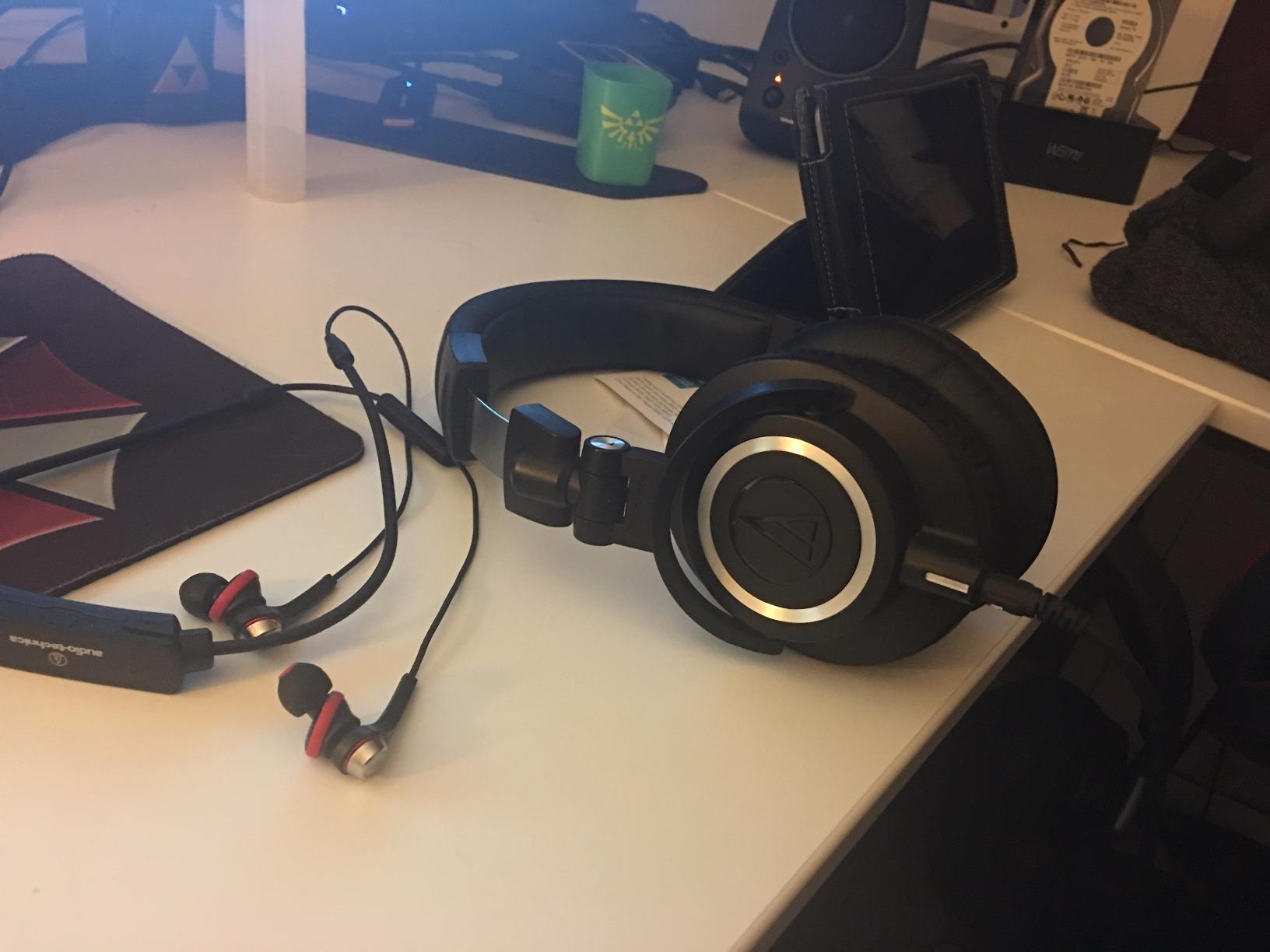
The ATH-M50x is the pair I recommend to anyone who asks for a single recommendation. It is a closed-back circumaural design with 45 mm dynamic drivers using rare earth magnets and copper clad aluminium voice coils, rated at 38 ohm and 99 dB sensitivity with a 20 Hz to 28,000 Hz response. That specification sheet is unremarkable on its own, and that is the point. There is no weakness to compensate for.
On dense mixes it holds a full low end without smearing into the low mids, which is the most common failure in closed-backs at this level. The upper midrange is clear enough to catch sibilance and honk, and the 90 degree swivelling earcups let you cup one side against your ear for cueing without breaking the seal on the other. That single feature does more for daily usability than most people expect.
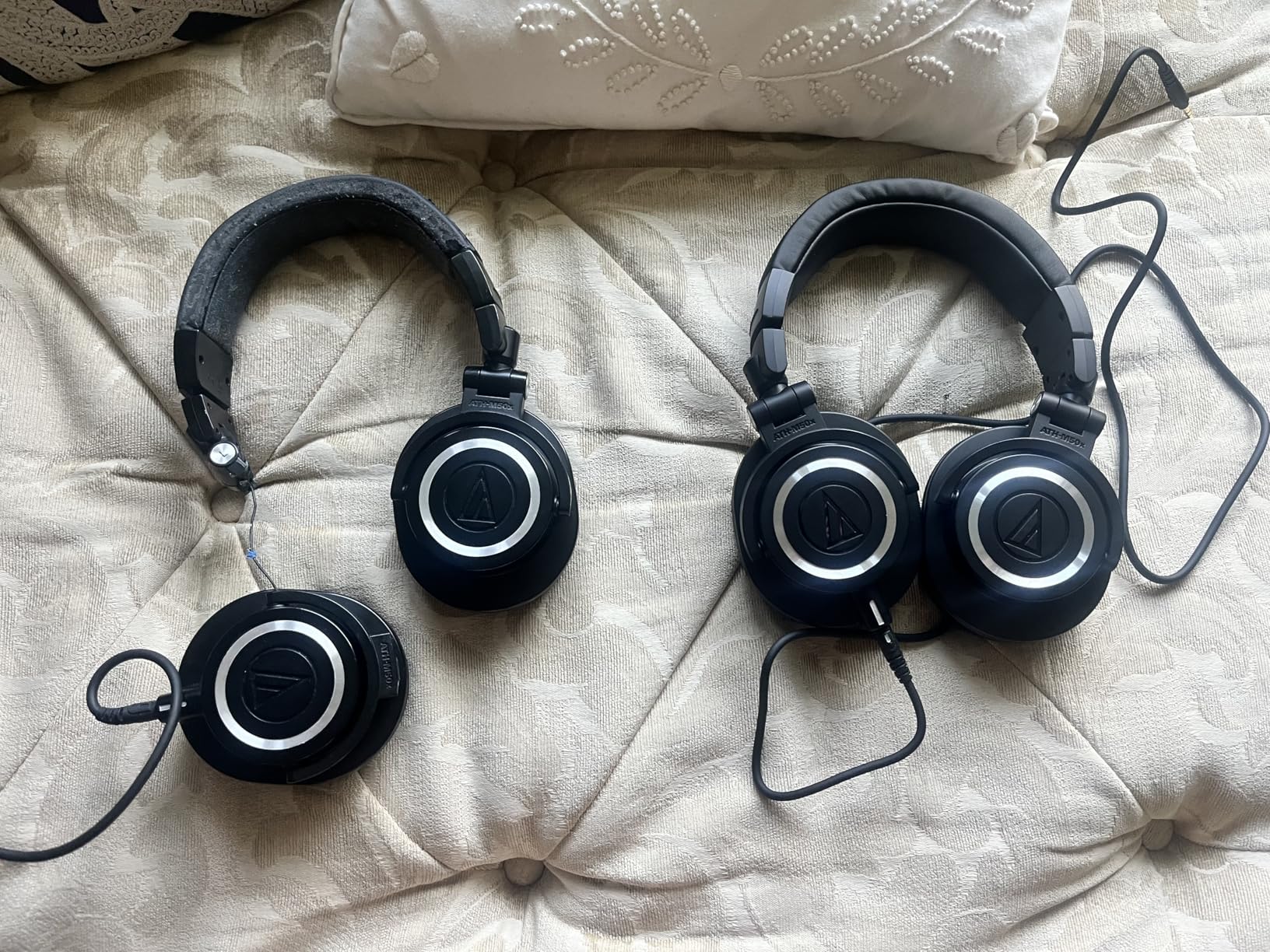
What you get for the money is an instrument rather than a toy. The construction uses metal adjusters, a robust yoke and pro-grade pad and headband material, and the detachable cable means a damaged lead is a five-minute fix instead of a replacement. I have seen these come out of edit bays with years of daily use still intact, and the 2 year parts and labour warranty backs the build.
The response does have a lift in the bass and a little extra air up top, so it is not the flattest headphone in this list. That is a deliberate choice for a monitoring tool, and it means the mix will read well on consumer systems. Just do not treat it as a mastering reference, and do not expect the imaging depth of an open-back.
Who the M50x suits
It suits anyone doing a bit of everything: tracking, editing, mixing, podcast production, video post. At 38 ohm it drives from a laptop, a phone or an interface without any added hardware, so there is no hidden cost to getting started. The isolation is strong enough to record a vocal next to a moderately noisy room, and the fit works with glasses for most wearers once the cups are rotated properly.
It also suits people who will replace headphones rarely. Detachable cabling and metal hardware mean the two things that usually fail first are not permanent problems here.
Who should skip it
Skip it if your work is almost entirely open-back critical listening and mastering, where isolation is a liability rather than a feature. Skip it if you are highly sensitive to bass lift and want a strictly flat response for mastering, and consider the ATH-M40x or an open-back instead. Also weigh it up if you need user-replaceable pads, because on this model the pads and headband padding are not designed to be swapped by the owner.
2. Sony MDR-7506 – Best Value for Tracking
Sony MDR7506 Professional Large Diaphragm Headphone
40 mm neodymium drivers
63 ohm impedance
10 Hz to 20,000 Hz
8 oz
9.8 ft coiled cord
Pros
- Revealing detail that exposes mix artifacts
- Exceptionally light for long sessions
- Closed design gives solid passive isolation
- Coiled cord resists tangling
- Included soft case and folding design
Cons
- Non-detachable cable ends the life of the pair if damaged
- Bass is on the lighter more detailed side
- Folding cups can pop out of position
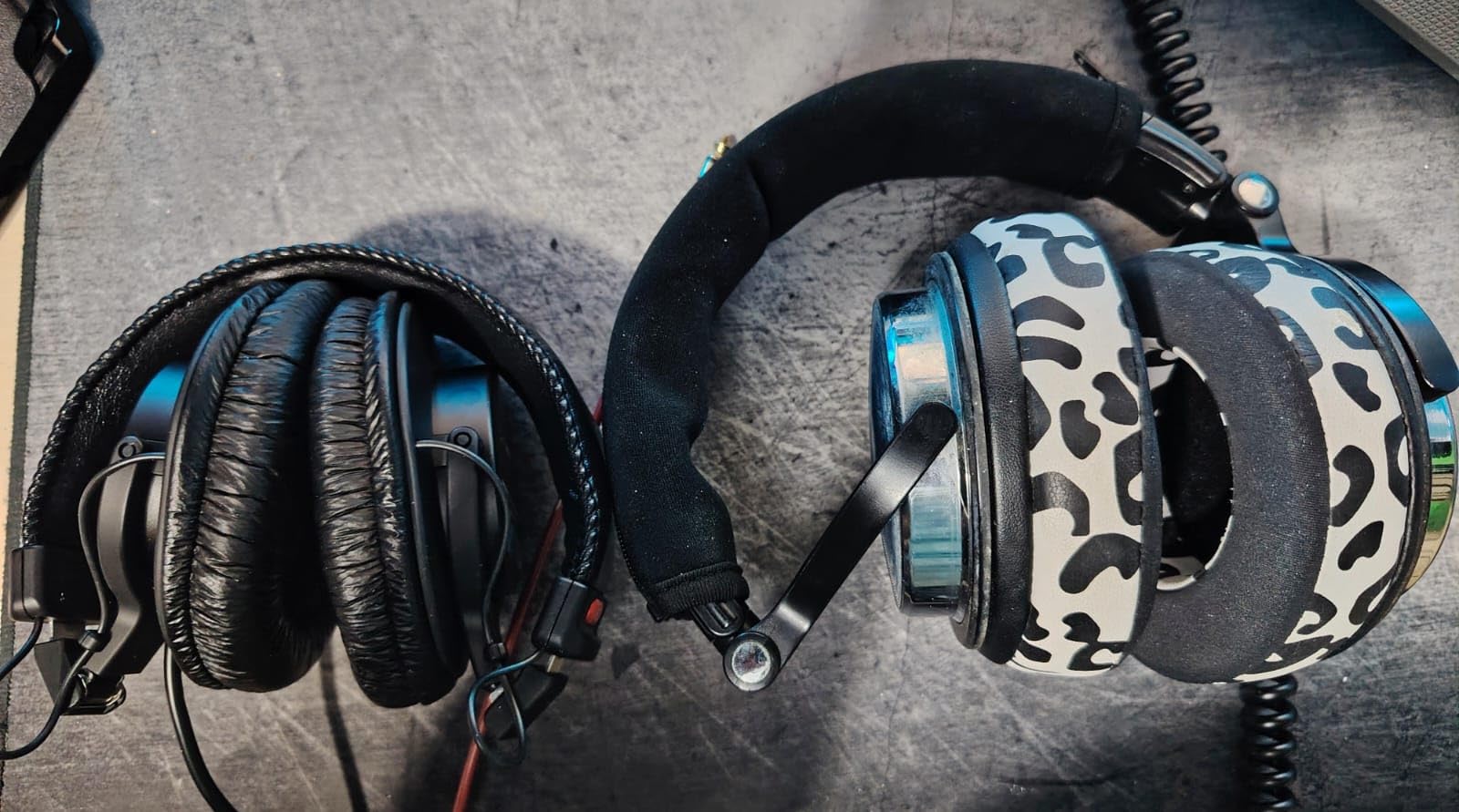
The Sony MDR-7506 is the industry standard headphone, and understanding why tells you a lot about this whole category. It is a closed-back with 40 mm neodymium dynamic drivers, 63 ohm impedance, a 10 Hz to 20,000 Hz response and a 9.8 foot coiled cord that is permanently attached. It weighs 8 ounces. Nothing about that list is cutting edge, and everything about it is dependable.
Sound-wise it is revealing and precise without being flattering. The low end is on the lighter and more detailed side, which is genuinely useful because producers tend to overmix when they underestimate their own low end. Detail sits where you need it for editing and cleanup work, and the closed housing gives you more passive isolation than the weight suggests.
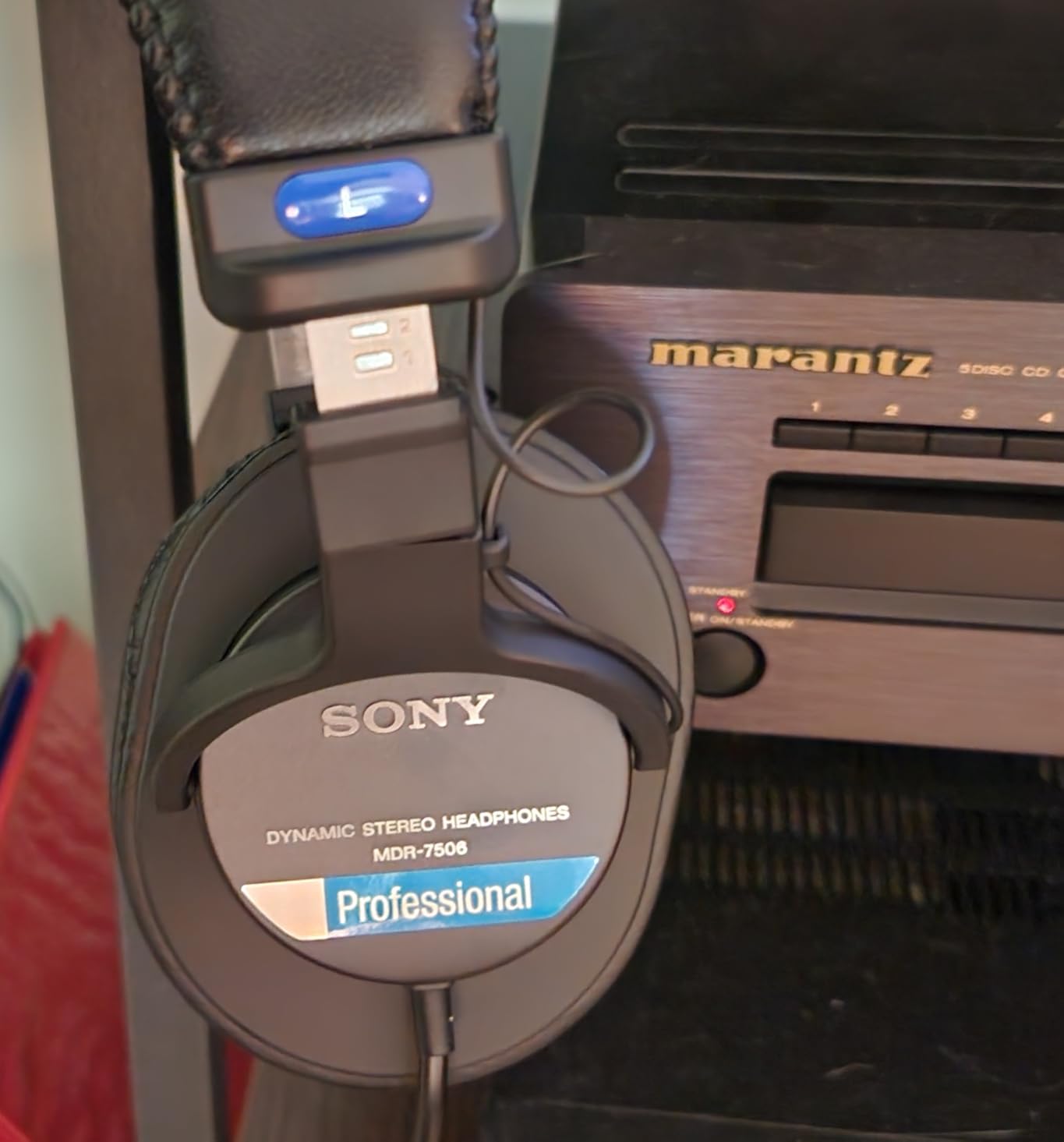
For tracking this is close to ideal. Voiceover artists, location recorders and engineers with a full day of overdubs pick it because it disappears. Eight ounces means you forget you are wearing it, and the folding design plus included soft case make it trivial to move between a desk and a session. The coiled lead resists tangling and stretches instead of kinking, which matters more than it sounds when your arm is the thing under strain.
The 90 day warranty is short, and there is a screw-on quarter inch adapter in the box for interface use. The permanently attached cable is the single biggest practical flaw. If the cable fails at the cup, the pair is finished, and that has happened to enough of these that swapping to a third-party velour pad is close to standard practice among owners.
Who the MDR-7506 suits
It suits anyone whose main job is recording and editing rather than mastering. Voiceover, podcast production, location sound and overdubbing all benefit from the light weight and the isolation. It also suits anyone nervous about spending heavily on a first pair, because the risk here is low and the response is a known quantity that engineers have used for decades.
It suits people who work in hot rooms too, since the closed housing blocks more of the environment than a semi-open or open design.
Who should skip it
Skip it if you want a detachable cable or a product you can repair yourself, because you cannot. Skip it if you produce bass-heavy material and want a fuller low end from the headphone itself, since this one leans the other way. And skip it for critical mastering work where you need the deepest, most extended bottom octave available.
3. Audio-Technica ATH-M20x – Best Versatile Home Studio Choice
Audio-Technica ATH-M20x Professional Studio Monitor Headphones, Black
40 mm rare earth drivers
47 ohm impedance
96 dB sensitivity
210 g
Fixed cable
Pros
- Flat balanced response that reveals problems without colouring
- Build quality far above the tier
- Light weight and soft pads for long sessions
- Very low sound leakage
- Single-side cable exit keeps the desk clear
Cons
- Cable is permanently attached
- Less low-end extension than the M40x and M50x
- Earcups run small for glasses wearers
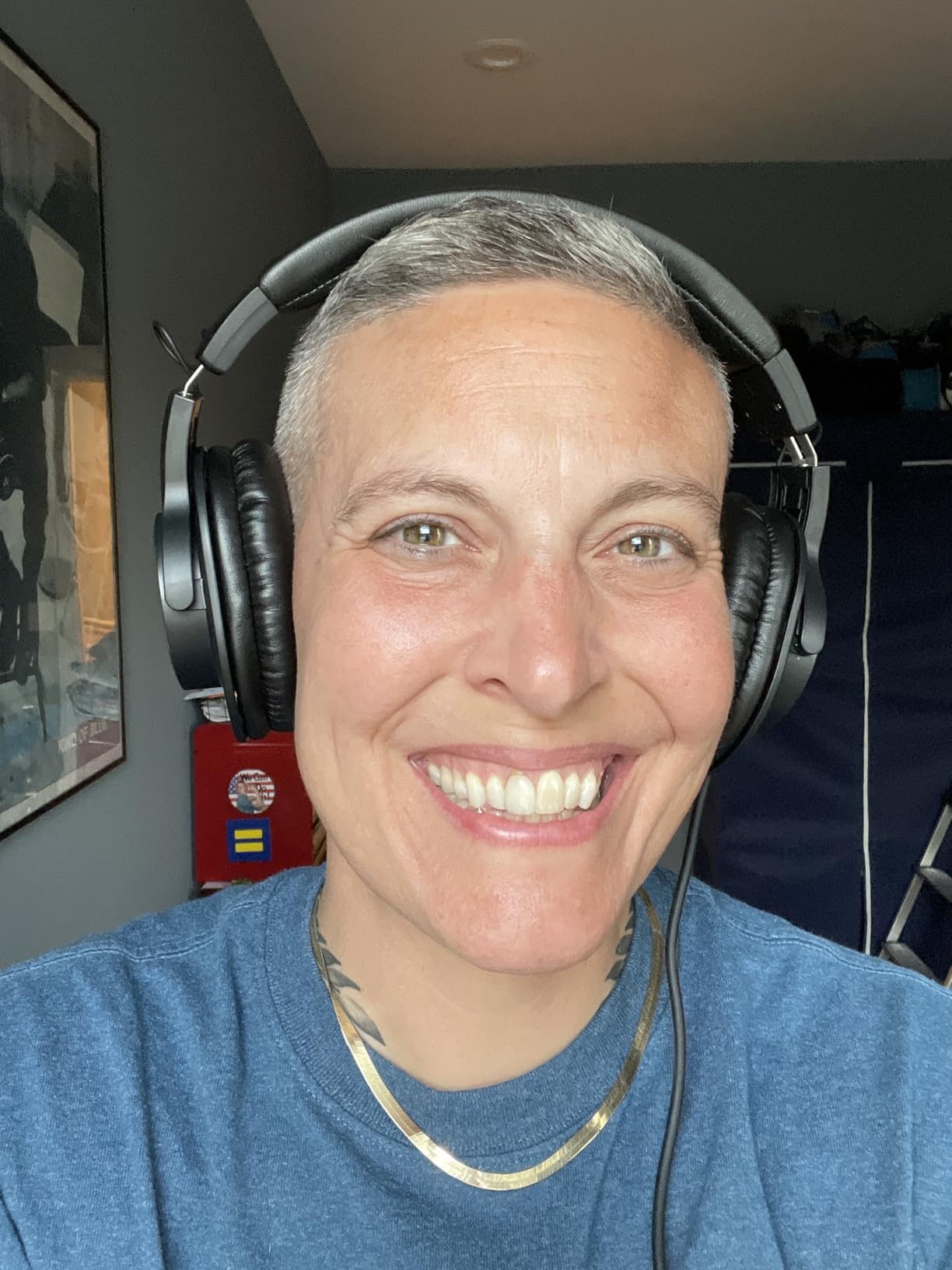
The ATH-M20x is the headphone I hand to students and to anyone setting up a first home studio. It uses 40 mm dynamic drivers with rare earth magnets, sits at 47 ohm and 96 dB sensitivity, covers 15 Hz to 20,000 Hz, and weighs 210 g. It is a closed-back with a single-side cable exit and a fixed cable, and it costs less than most people expect to spend on a monitoring tool.
The response is the appeal. It is balanced and uncoloured, which means what you hear is close to what is in the file, and that is the entire point of a monitor headphone. On a small interface it drives easily to a working level without an external amp, and the circumaural design gives isolation good enough for tracking in a treated room or a quiet home space.
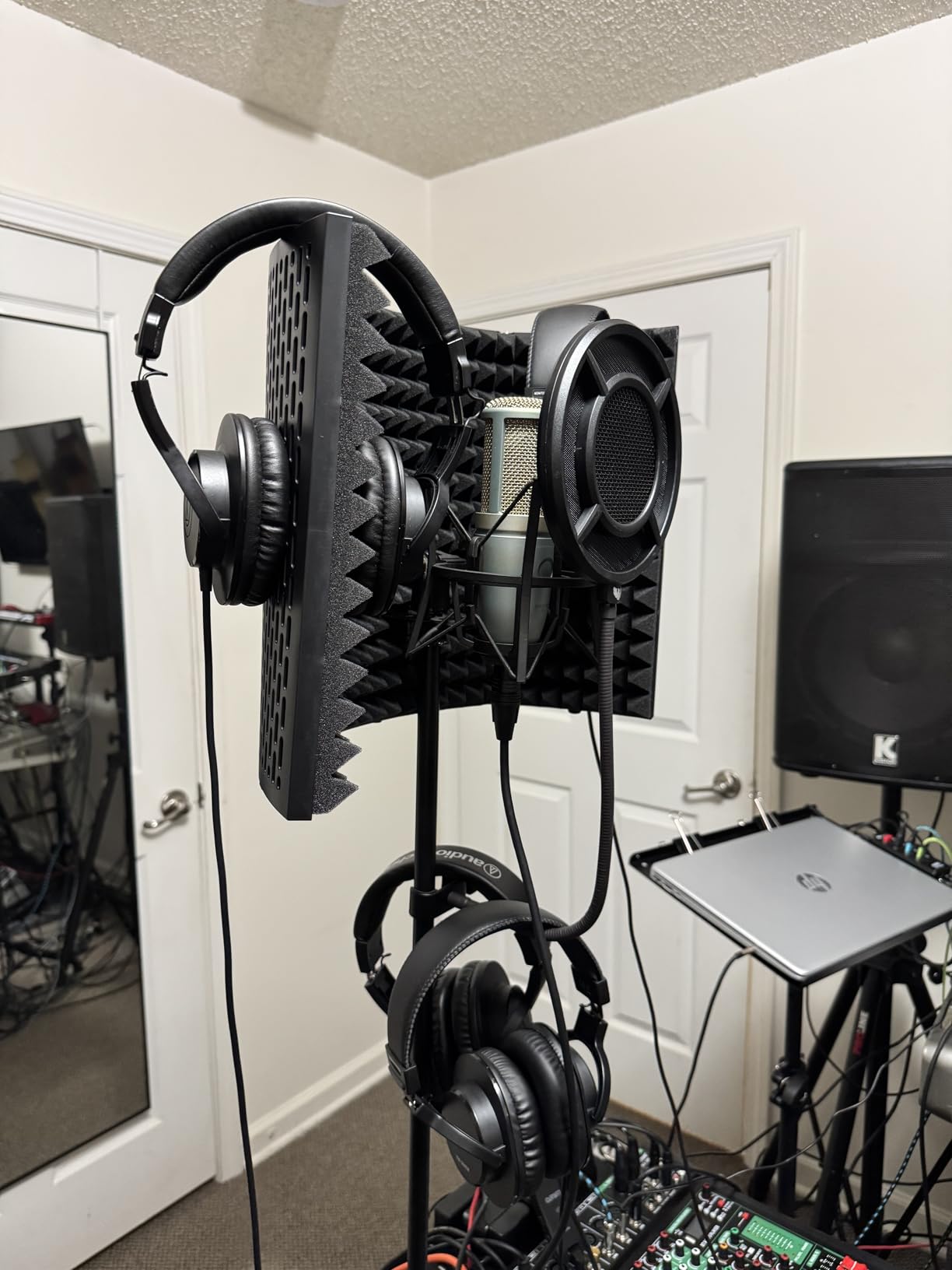
Build quality is the quiet strength here. Metal adjusters, a thick cable and a solid yoke make it feel like a step above the price tier, and the 2 year parts and labour warranty is generous for this class. The soft pads and low weight make long editing and tracking sessions straightforward, and the single-side exit keeps a tidy desk.
The trade-offs are real but manageable. The fixed cable is the same longevity issue as the Sony, and the earcups are smaller than the M50x, so glasses wearers may find them tight until they settle. Bass extension stops earlier than in the rest of the M-series, which is why this is a tracking and editing tool first and a mixing reference second.
Who the M20x suits
It suits first-time producers building a home studio on a tight budget, and anyone who needs a reliable tracking headphone for vocals, instruments, podcast and video work. It suits students who want a monitor tool rather than an entertainment headphone, and it suits anyone whose interface has a modest headphone output.
It also works well as a second pair for someone who already owns something open and expensive, because the job it does best is completely different.
Who should skip it
Skip it if low-end extension is the thing you most need to judge, because the bottom end rolls off early by design. Skip it if you wear glasses and have a larger head, since the cups are compact. And skip it if you already mix on an open-back, because you would be buying a duplicate of what you have.
4. beyerdynamic DT 990 Pro (250 Ohm) – Best Open-Back for Mixing
beyerdynamic DT 990 Pro (250 Ohm), Open-Back Studio Headphones, Black
250 ohm impedance
96 dB sensitivity
5 Hz to 35,000 Hz
Velour pads
3 m coiled cable
Pros
- Exceptionally wide open soundstage for placement and depth
- Fast transient bass with clear separation
- Velour pads stay cool over long sessions
- Replaceable pads and removable headband wrapper
- German build with strong resolution
Cons
- 250 ohm needs an amp or capable interface for full volume
- Open design leaks sound in and out
- Treble is deliberately bright and can fatigue some listeners
The DT 990 Pro is the only true open-back reference in this group, and it earns its place. The 250 ohm version is built around a dynamic driver rated at 96 dB sensitivity with a 5 Hz to 35,000 Hz response, finished with velour ear pads and a spring-steel headband, and supplied with a fixed 3 m coiled cable and a quarter inch adapter. It is made in Germany.
What it does better than anything else here is spatial information. The soundstage is wide and deep, instrument placement is obvious, and you can hear depth relationships that closed-backs compress. Bass is authoritative and fast, with real transient response rather than a slow swell, and separation between overlapping elements is excellent. For mixing and mastering judgement, that is worth more than isolation.
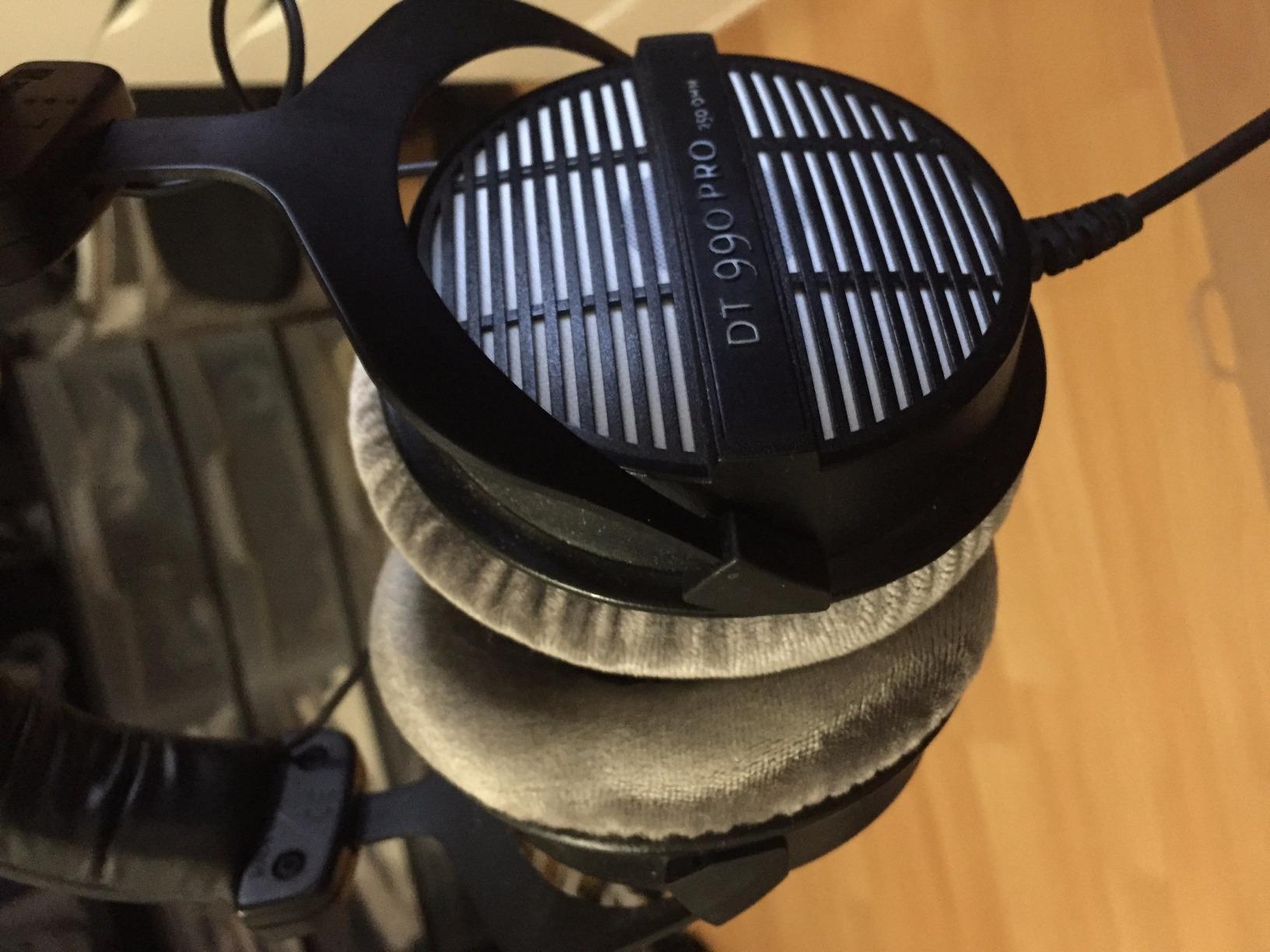
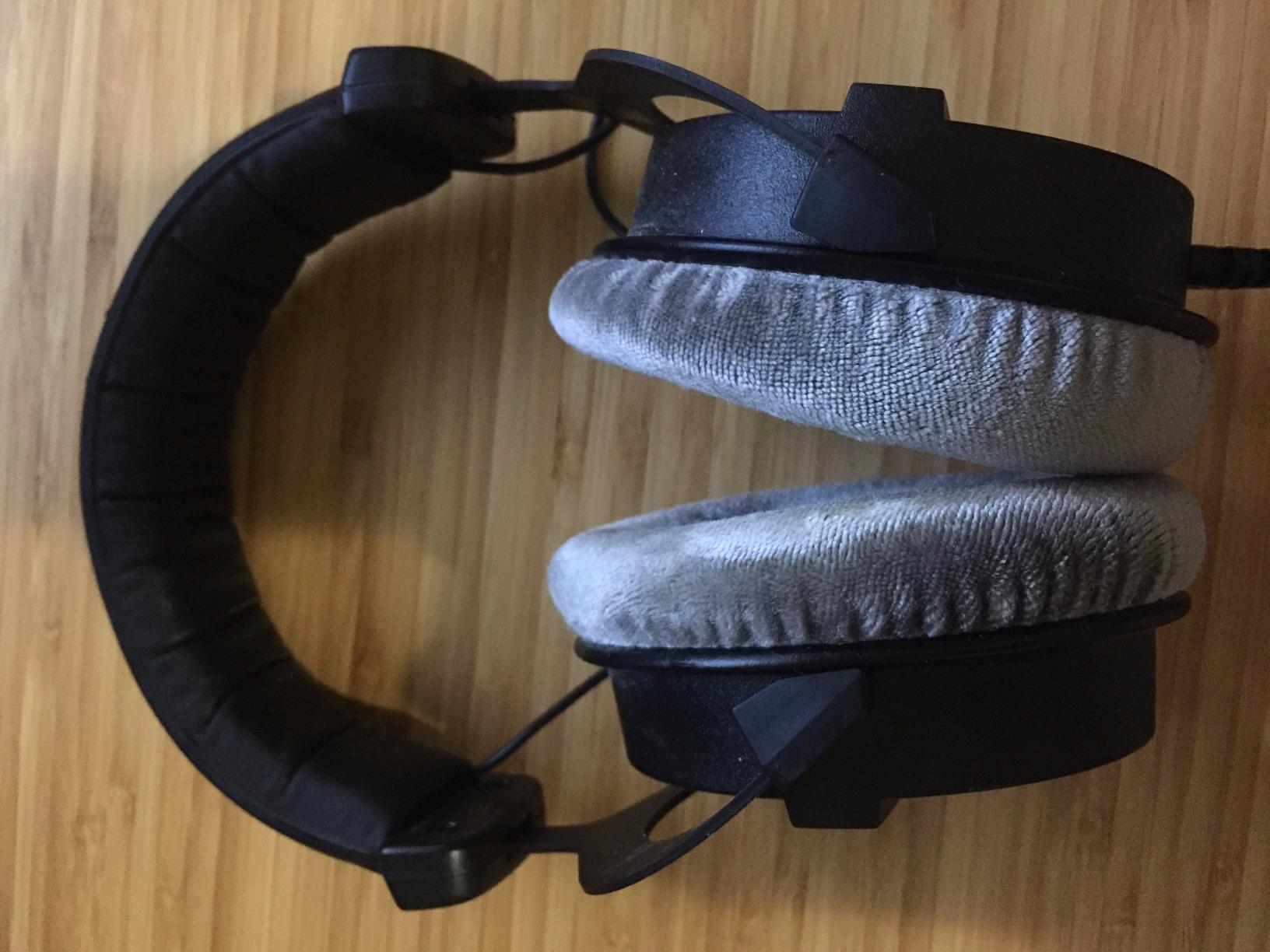
Velour pads deserve more credit than they get. They stay cool through multi-hour sessions, they seal well without the pressure of protein leather, and they are replaceable, as is the headband wrapper. The spring-steel band is durable and takes abuse. Owners report that the pair keeps revealing more detail with use, which is a real effect on velour pads as they compress and settle.
The 250 ohm version needs real voltage to reach a comfortable level. On a phone or a basic laptop jack it will play, but quietly and without the dynamics that justify the design. Given a capable interface output or a headphone amp, the difference is obvious, and it is why the impedance question comes up so often with this model in particular.
Who the DT 990 Pro suits
It suits mixers and mastering engineers who work in a treated room and need accurate placement and low-frequency information without room interaction. It suits bass-heavy producers, since the low end extension and transient handling are the best in this list. It also suits anyone who wants to hear the difference between a mix decision and a taste preference.
It suits long sessions, because the velour pads and light weight reduce fatigue, and the open design means no pressure buildup on your ears.
Who should skip it
Skip it if you record live vocals in the same room, because an open-back of this size is audible from several feet away. Skip it if your monitoring is noisy, since sound leaks in as well as out. Skip it if you are sensitive to treble energy, because the tuning is intentionally forward up top and some listeners find it grating without EQ. And skip it if you have no way to drive 250 ohm properly.
5. Audio-Technica ATH-M40x – Most Neutral of the M-Series
Audio-Technica ATH-M40x Professional Studio Monitor Headphone, Black, with Cutting Edge Engineering, 90 Degree Swiveling Earcups, Pro-Grade Earpads/Headband, Detachable Cables Included
40 mm dynamic drivers
35 ohm impedance
98 dB sensitivity
0.24 kg
Detachable cables included
Pros
- Very flat near-neutral monitoring response
- Excellent instrument separation and stereo imaging
- Efficient enough to drive from a phone or laptop
- Straight and coiled cables both included
- 90 degree swiveling earcups for cueing
Cons
- Very floppy low-tension fit takes practice
- Small pads can feel tight over glasses
- Sub-bass rolls off around 70 Hz
The ATH-M40x is the one in the M-series to buy if your primary job is hearing mistakes rather than hearing music. It uses 40 mm dynamic drivers with rare earth magnets and copper clad aluminium voice coils, rated at 35 ohm and 98 dB sensitivity with a 15 Hz to 24,000 Hz response, and weighs 0.24 kg. Both a straight and a coiled detachable cable ship in the box, along with a protective case and a screw-on adapter.
The response is flatter and less coloured than the M50x, which makes it excellent for mixing. Instrument separation is precise, stereo imaging is stable, and nothing is added to flatter a mix. At 35 ohm it is the most efficient model here, so it reaches a usable level from a laptop or phone with no external DAC, which matters for people working away from the desk.
The 90 degree swivelling earcups give you quick one-ear cueing, and the detachable cabling makes the pair a genuinely long-term purchase. The circumaural design gives reasonable passive isolation for a closed-back, so it can double as a tracking headphone in a room that is not a live room.
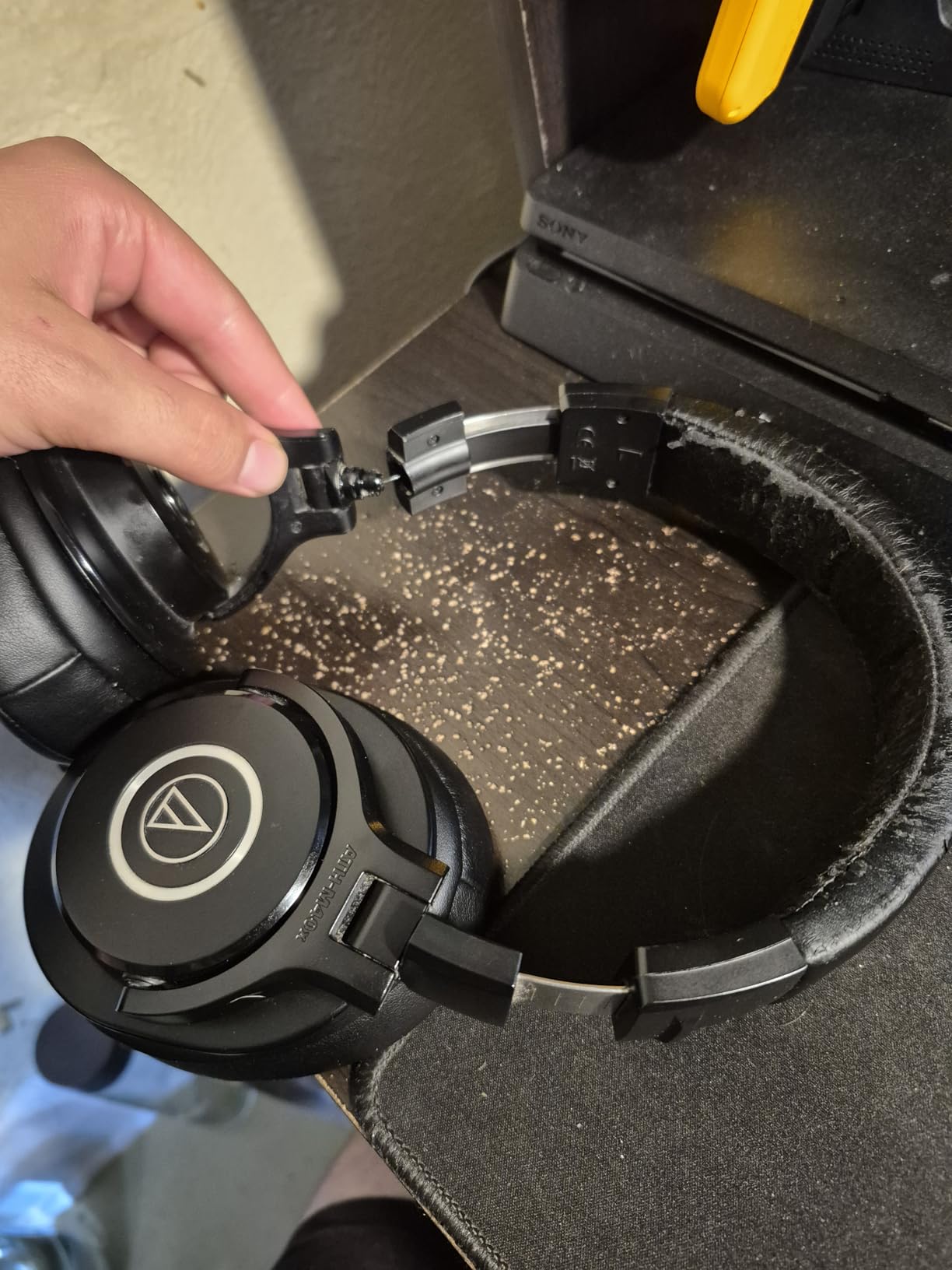
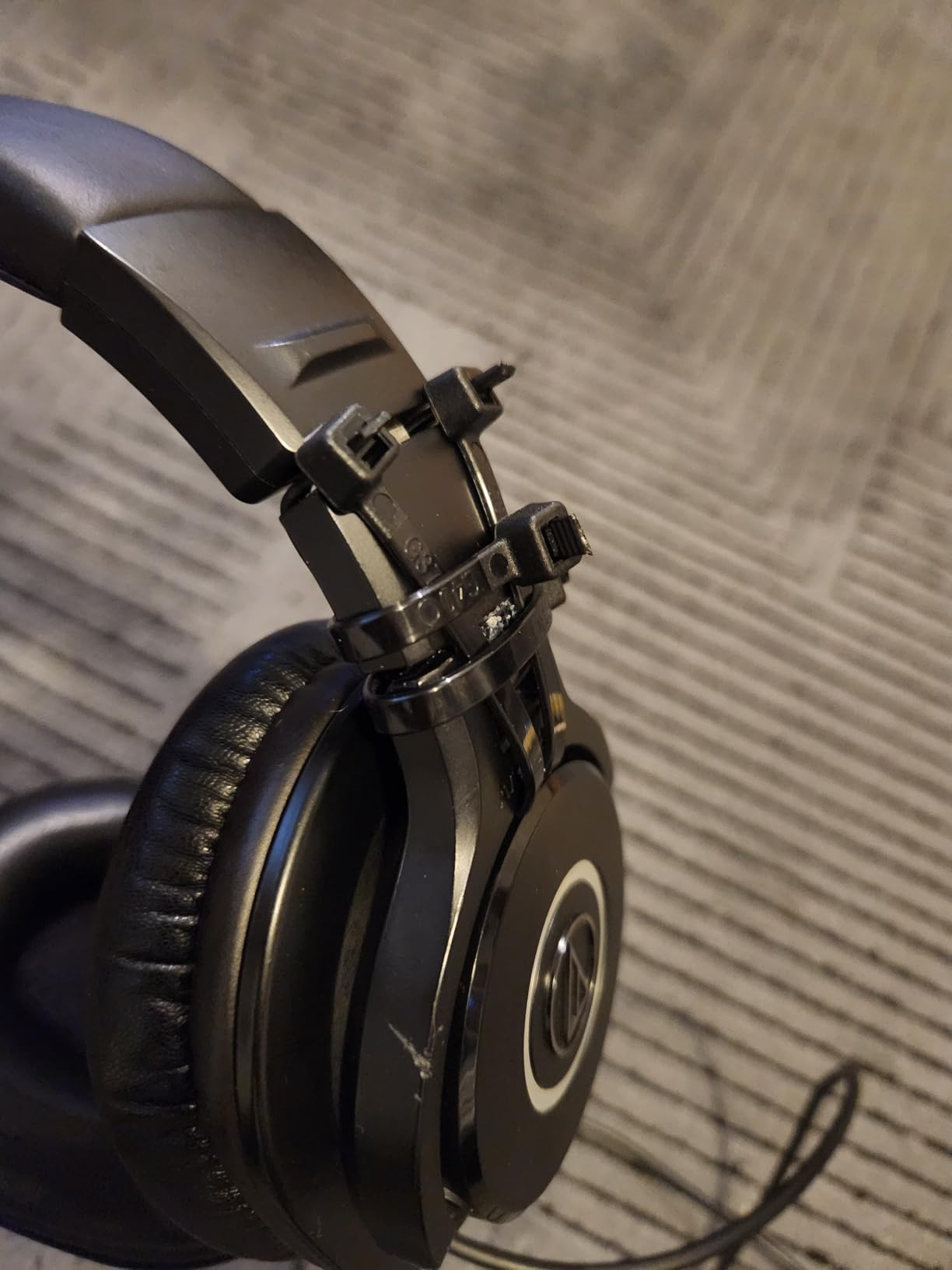
The fit is the main complaint, and it is a real one. The tension is low and the cups sit loosely, so it cannot be put on with one hand and takes a few sessions to stop feeling floppy. The included pads are small, which can feel tight for large ears or over glasses. The cup-to-band hinge has also proven to be a weak point on some long-term owners, so treat it with reasonable care.
Who the M40x suits
It suits producers who mix on headphones and want the most honest presentation available at a sane price. It suits anyone who travels with their setup or works on a laptop, because 35 ohm removes the hardware question entirely. It also suits people moving from a consumer headphone who are shocked by how much detail is actually in their own mix.
It suits tracking work in a controlled room, where the flat response and efficiency outweigh the isolation limits.
Who should skip it
Skip it if you need deep sub-bass judgement without EQ, since it rolls off around 70 Hz. Skip it if you are very sensitive to a loose fit, because this one is genuinely floppy until you adjust to it. And skip it if you want a wide open soundstage, since a closed-back will never give you the spatial depth of the DT 990 Pro.
6. AKG K240 STUDIO – Best for Comfort and Spoken Word
AKG K240STUDIO Semi-Open Studio Headphones
30 mm Varimotion drivers
55 ohm impedance
104 dB sensitivity
240 g
Locking mini-XLR cable
Pros
- Neutral uncoloured response close to monitor behaviour
- Extremely light with a self-adjusting headband
- Locking detachable mini-XLR cable
- Excellent for spoken word and podcast work
- Durable enough for daily studio use
Cons
- Semi-open design leaks sound both ways
- Thinner sub-bass than most closed references
- Needs a decent amp to reach its best level
The AKG K240 STUDIO is a semi-open design with 30 mm XXL transducers using patented Varimotion diaphragms, rated at 55 ohm and 104 dB sensitivity across 15 Hz to 25 kHz, and weighing 240 g. It ships with a 3 m coiled cable using a locking mini-XLR at the headphone end, plus a quarter inch adapter, and a 1 year warranty applies.
Its selling point is the gimbal suspension headband. The cups hang and self-adjust, so there is no manual fitting step, and at 240 g it is one of the lightest pairs here. For spoken word work, podcast recording and long editing sessions that comfort is not a minor feature, it is the reason to buy this model. The response is neutral and uncoloured, which keeps it usable for mixing decisions on voice and music alike.
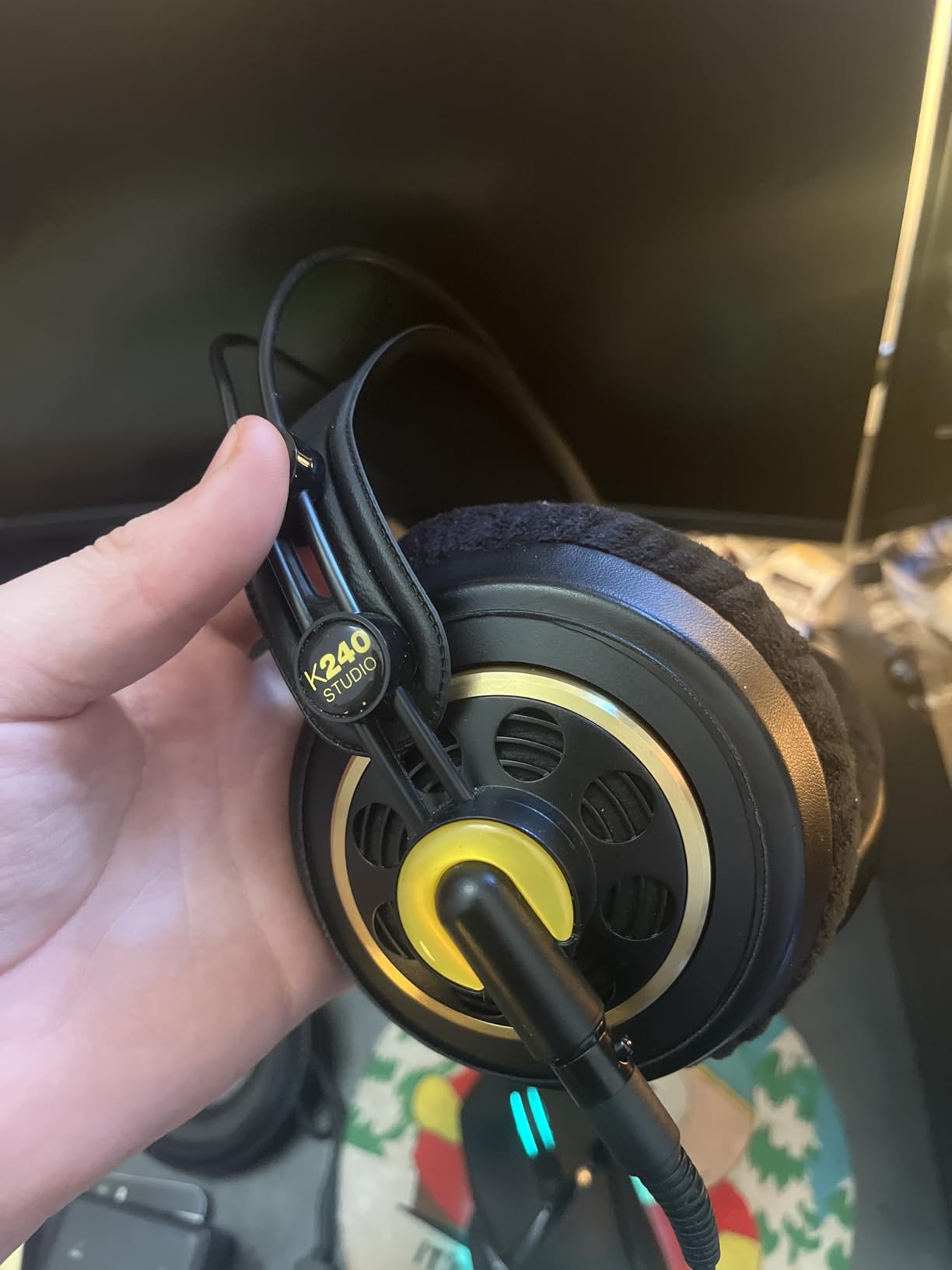
The cable connection is genuinely better than most competitors manage. A locking mini-XLR at the cup means a cable failure does not end the product, and it is a standard size with plenty of aftermarket cable and pad options, so you can re-pad and re-cable it indefinitely. That alone makes it one of the smarter long-term buys in this list.
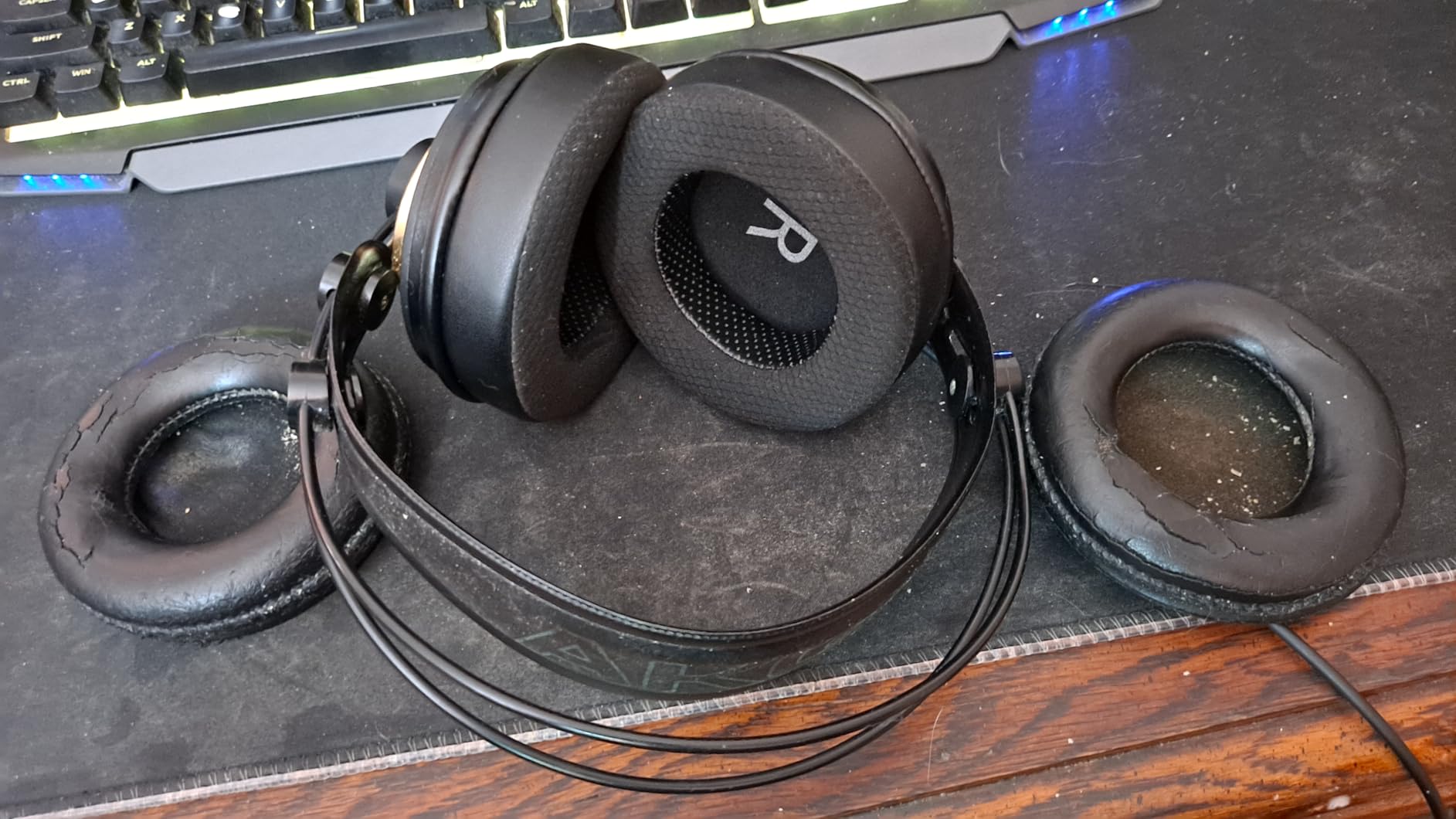
The semi-open architecture is the catch. It leaks sound in both directions, which makes it unusable for live vocal or instrument recording, and the sub-bass is thinner than the closed-back references here. Owners also note a longer break-in than usual, and that the included pads are worth replacing early.
Who the K240 suits
It suits podcasters, voiceover artists and anyone whose day is spent listening to dialogue, because the self-adjusting fit removes pressure points entirely. It suits engineers who want a second, extremely light pair for editing and rough work. It also suits anyone who plans to keep headphones for a long time, since the locking connector and available parts make repair straightforward.
It suits small rooms where some ambient awareness helps, because a semi-open design lets you hear cues without taking the headphones off.
Who should skip it
Skip it for tracking. A semi-open design of this size is clearly audible in the room, so it will contaminate takes. Skip it if you work on bass-heavy material and need a firm low end, and skip it if you want a wide open soundstage for mixing, because the K240 is more of a tool than a reference.
7. OneOdio A71 – Best Affordable Pair for DJ and Practice
OneOdio A71 Hi-Res Wired Over-Ear Studio Headphones for DJ, Mixing – Black
40 mm dynamic drivers
32 ohm impedance
110 dB sensitivity
6.35 mm and 3.5 mm plugs
Case included
Pros
- Hi-Res capable drivers with good clarity for basic monitoring
- Very accessible cost for a first pair
- Both 6.35 mm and 3.5 mm plugs included
- 90 degree swiveling earcups for single-ear cueing
- Shared audio port needs no splitter
Cons
- All-plastic construction feels less durable
- Bass-heavy consumer-leaning tuning
- Limited isolation compared with true closed-backs
- No microphone and no hard case
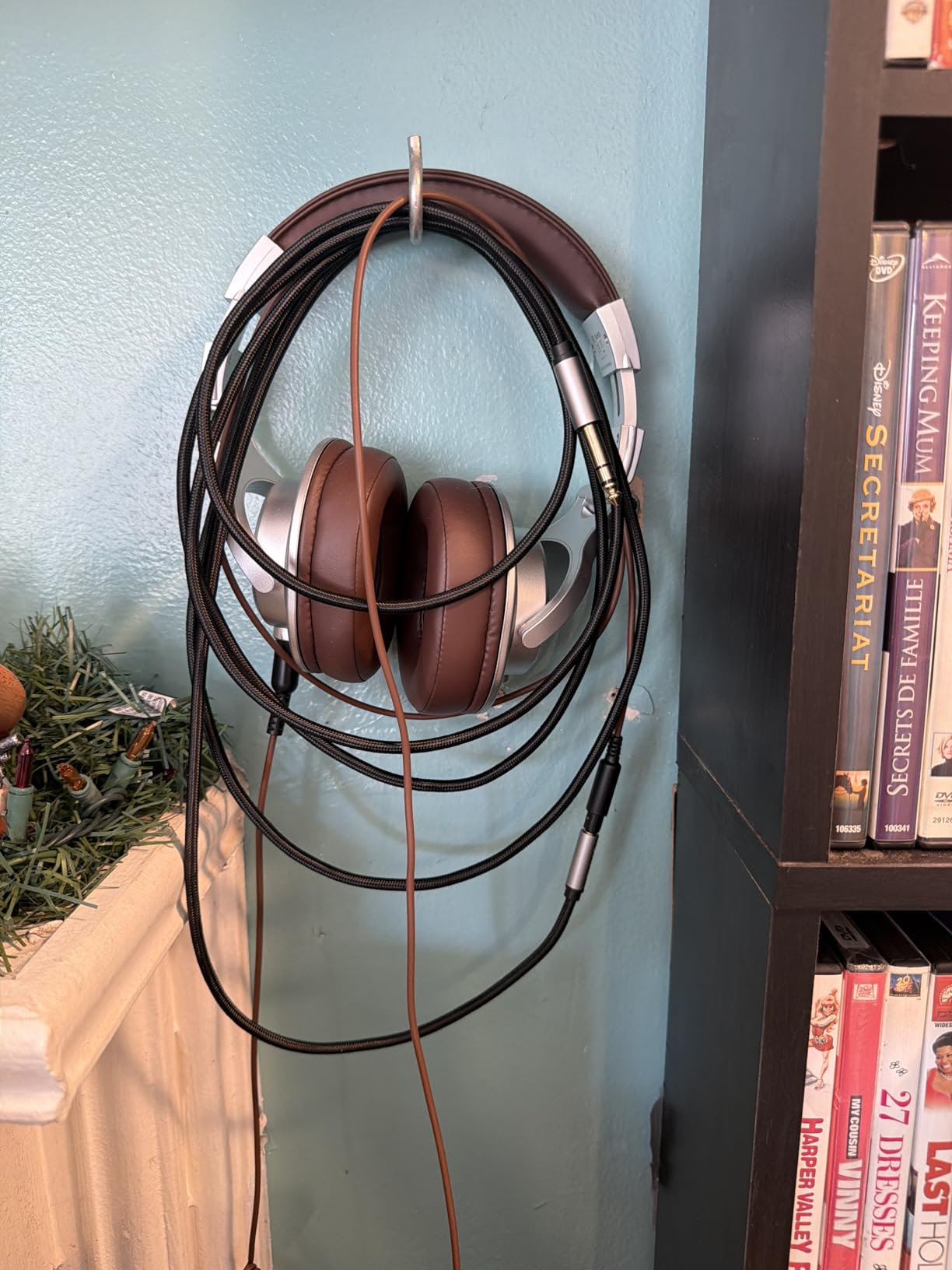
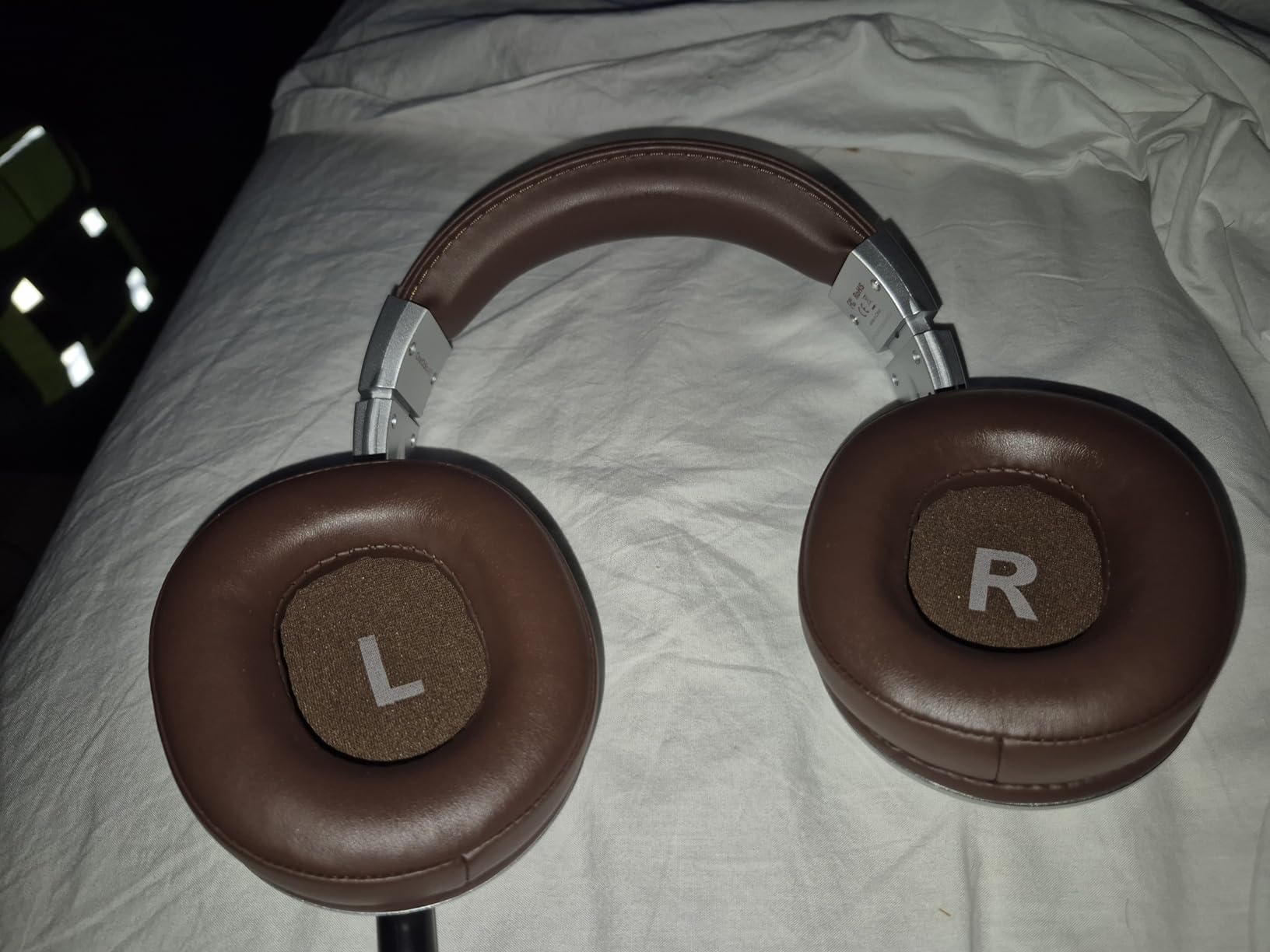
The OneOdio A71 is the practical budget option for practice, DJ cueing and learning, and it is worth being clear about where it fits. It uses 40 mm dynamic drivers with a listed 20 Hz to 40,000 Hz response, sits at 32 ohm and 110 dB sensitivity, and includes a detachable coiled cable with both 6.35 mm and 3.5 mm plugs, so there is no adapter hunting before your first session.
The 90 degree swivelling earcups support single-ear cueing, which is the feature that matters most for DJ work, where you need one cup on your ear to line up a track against the next. The shared audio port lets you connect a second pair without a splitter, and a woven carrying case is included. At 32 ohm it drives from almost anything with a headphone jack.
Clarity is genuinely good for the tier, and the high sensitivity means it gets loud without strain. Soft cushions and an adjustable headband keep moderate sessions comfortable, and the folding design makes it easy to move between a home setup and a class or a gig.
The compromises are structural and tonal. The enclosure is entirely plastic, which flexes and does not inspire long-term confidence. The tuning is bass-forward and consumer-leaning rather than flat, so it is not a neutral reference for critical mixing. Isolation is modest compared with a true closed-back studio design, and there is no microphone or hard case.
Who the A71 suits
It suits students and beginners who need a usable pair before committing to a serious monitoring spend. It suits DJs who want single-ear cueing and a cable that plugs straight into controller gear. It also suits anyone who needs a cheap second or third pair, for reference checks or for a partner sharing a session.
It suits people who want a durable-looking spare without spending much, since the price of this model is a small fraction of the rest of the list.
Who should skip it
Skip it if you mix professionally or intend to, because a bass-forward tuning is exactly the habit that has to be unlearned. Skip it if you record live, because the isolation is not up to the job. And skip it if you want something that will survive being carried around in a bag for years, since the all-plastic build is the weak point.
8. Sennheiser HD 280 Pro – Best Isolation for Tracking
Sennheiser HD 280 Pro Headphone, Black
64 ohm impedance
8 Hz to 25,000 Hz
Up to 32 dB attenuation
3.3 m coiled cord
Replaceable pads
Pros
- Exceptional passive isolation for a closed-back
- Warm natural tuning with no artificial boost
- Replaceable earpads headband padding and cord
- Collapsible earcups for instant one-ear cueing
- 64 ohm drives easily from any source
Cons
- Included pads are low quality and collect oil quickly
- Heavy coiled cable tugs on one side
- Clamp feels tight at first for larger heads
The Sennheiser HD 280 Pro is the isolation specialist in this list. It is a dynamic closed-ear design with up to 32 dB of passive attenuation, 64 ohm impedance and a frequency response from 8 Hz to 25 kHz, with a 3.3 m coiled cord and a screw-on quarter inch adaptor. It is intended for critical listening, DJ cueing and recording, which tells you exactly what it was built to do.
That isolation figure is the reason to own it. For drummers, live tracking and any session where the room itself is loud, nothing else in this list blocks that much outside sound without active noise cancellation. For a bleed check, it is comfortably the safest pair here, and that matters more than tone when a take depends on it.
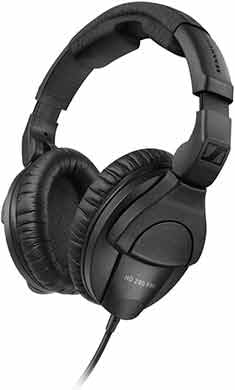
The tuning is warm and natural with no artificial bass or treble boost, which is a sensible target for a headphone you will wear for hours. Collapsible earcups fold flat and inwards for instant one-handed cueing, and at 64 ohm it needs no amplifier, so it works with a laptop, a phone or a mixer with no extra hardware.
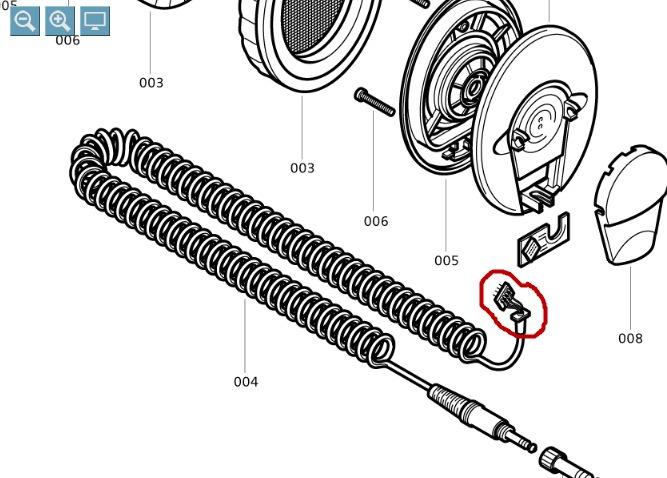
Repairability is a genuine strength: earpads, headband padding and the audio cord are all user replaceable, with a metal adjustment slider in the band. That extends the life of the product considerably. The included pads are the weak point, and many owners replace them with cloth or memory foam early. The coiled cord is heavy and pulls on one side when worn around the neck, and the initial clamp can feel tight on larger heads.
Who the HD 280 Pro suits
It suits drummers, live musicians and anyone tracking in a room with real noise in it, because nothing else here isolates that well without electronics. It suits engineers who want a closed-back they can trust in a commercial room. It also suits anyone who values a pair they can keep repairing rather than replacing, since every wear part is user replaceable.
It suits long days. The clamp eases after the first session, the weight is low, and the padded circumaural cups stay comfortable.
Who should skip it
Skip it if you are very sensitive to a mid-forward tuning, since some listeners describe the midrange as lifeless on acoustic material. Skip it if you like a strong low end, because the midbass sits slightly under the sub-bass. And skip it if you need a wide soundstage, since this is a closed-back built for isolation, not for spatial judgement.
9. Samson SR850 – Best Semi-Open with Room Awareness
Samson SR850 Professional Studio Reference Headphones
50 mm dynamic drivers
32 ohm impedance
98 dB sensitivity
1.1 lb
Velour earpads
Pros
- Large 50 mm drivers give fuller bass extension
- Semi-open design keeps you aware of the room
- Self-adjusting headband needs no manual fitting
- 32 ohm drives from any source
- 2 year manufacturer warranty
Cons
- Semi-open construction leaks both directions
- Noticeably heavier than other models here
- Fixed cable with no replacement path
- Velour pads run warm in long sessions
The Samson SR850 is a semi-open reference headphone with 50 mm dynamic drivers, 32 ohm impedance, 98 dB sensitivity and a 10 Hz to 30,000 Hz response, finished in velour pads with a self-adjusting headband. A gold plated eighth to quarter inch adapter is included and a limited 2 year manufacturer warranty applies.
The 50 mm drivers are the reason to look at it. They deliver fuller bass extension and a wider dynamic range than most monitors at this level, which makes the pair more useful on modern material than the size of the price would suggest. The semi-open design keeps you aware of the room, and for tracking an instrumental, playing along while recording, or podcasting with a live room that is not dead, that awareness is genuinely useful.
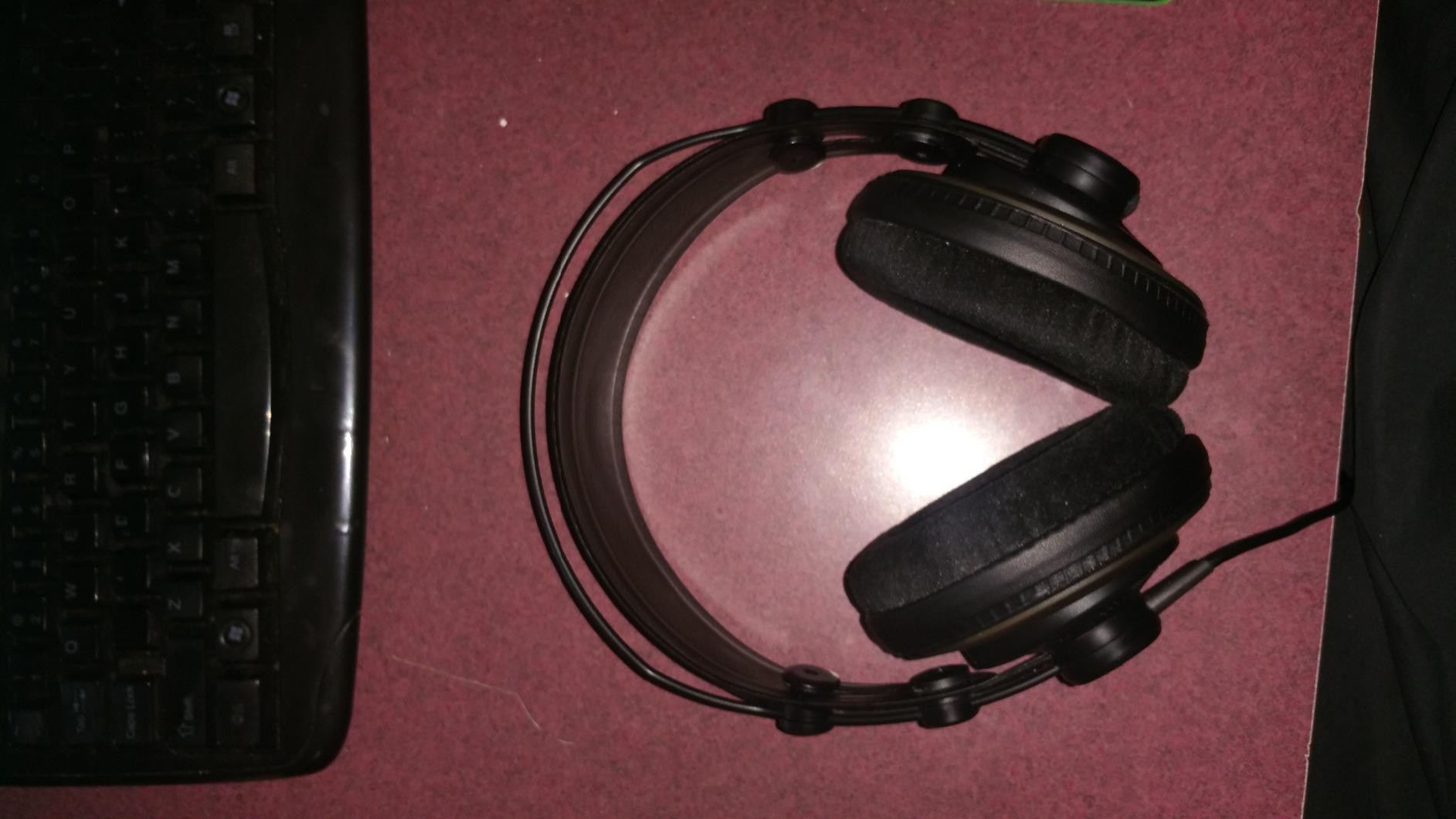
It is also effortless to drive at 32 ohm, and the self-adjusting headband removes the fitting step entirely. Among budget semi-open options, this one is regularly compared favourably with the Audio-Technica M20x, and it wins on driver size and low-end weight while losing on neutrality.
What you give up is real. It weighs 1.1 pounds, which is heavy for this category and noticeable over a full day. The tuning is bass-forward and coloured, so it is not a critical mixing reference. The velour pads run warm, and the fixed cable has no detachable option or replacement path, so a cable failure ends the pair.
Who the SR850 suits
It suits producers who track instruments and want to hear the room while they play, since a semi-open design lets you catch cues and monitor without removing the headphones. It suits podcasters and streamers who want awareness of their space. It also suits anyone who wants more low end than a budget closed-back gives, because 50 mm drivers reach further down.
It suits players and writers who like a more involving listening experience during practice, provided they are not making critical mix decisions from it.
Who should skip it
Skip it for live recording, because a semi-open design leaks sound into the microphone. Skip it if you need a neutral flat response for mixing, since the bass-forward signature works against that. And skip it if you wear headphones for many hours a day, because the weight and the warm velour pads will be the first thing you notice.
10. Sennheiser HD 599 – Best Open-Back for Long Sessions
Sennheiser HD 599 Open-Back Wired Audiophile Headphones, Ivory
50 ohm impedance
12 Hz to 38,500 Hz
0.71 kg
Two detachable cables
Around-ear open-back
Pros
- Wide natural soundstage with excellent separation
- Aluminum voice coils give low distortion
- Velour pads and padded band avoid ear pressure
- Two detachable cables of different lengths
- 50 ohm is easy to drive
Cons
- Open design leaks in both directions
- Warmer audiophile tuning than a flat monitor
- Heaviest model in this list at about 1.6 pounds
- 1 year warranty is the shortest here
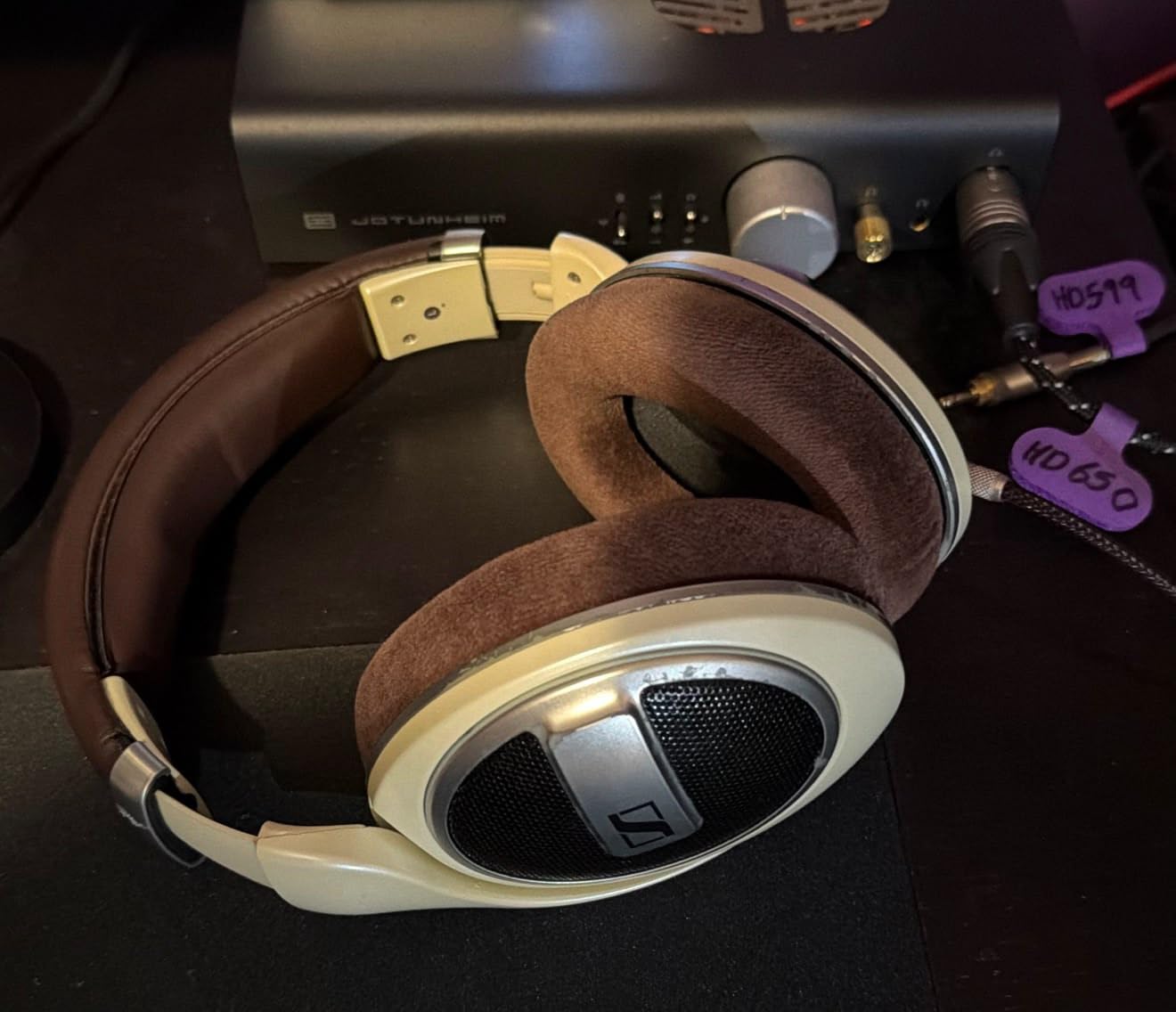
The Sennheiser HD 599 is an open-back around-ear headphone using transducers with aluminium voice coils, rated at 50 ohm with a 12 Hz to 38,500 Hz response. It weighs 0.71 kg, ships with two detachable cables, a 3 m lead with a 6.3 mm jack and a 1.2 m lead with a 3.5 mm jack, and carries a 1 year warranty.
It is the most comfortable pair here for long sessions, and that is a simple material fact. Velour-covered ear pads and a padded headband avoid pressure on the ear itself, so the weight distributes rather than concentrates. The aluminium voice coils deliver high efficiency, strong dynamics and very low distortion, so it stays composed at low listening levels as well as high ones.
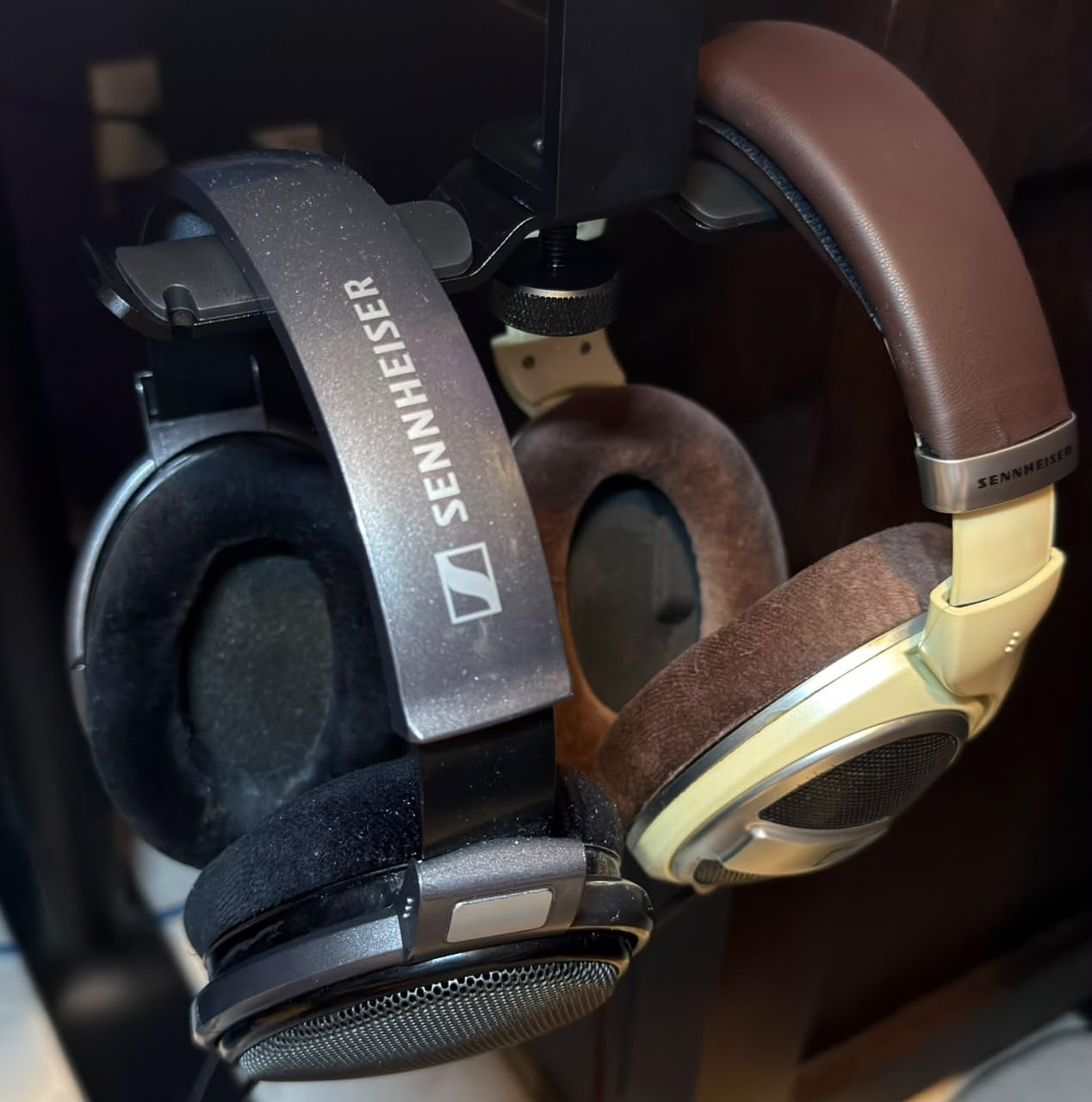
For critical listening, mixing and long work sessions the presentation is excellent. The soundstage is wide and natural, instrument separation is clear, and at 50 ohm it drives easily from most sources without a dedicated amp. Two cable lengths mean it works at a desk and on a laptop without an adapter hunt, and both cables detach, so the pair is serviceable.
The trade-offs are inherent to the design. It is an open-back, so it leaks sound in and out and cannot be used alongside loud speakers or in a noisy room. The tuning is warmer and more relaxed than a flat studio monitor, which is pleasant but not neutral. At roughly 1.6 pounds it is the heaviest model in this list, so long sessions are comfortable but not weightless, and the 1 year warranty is the shortest on the list.
Who the HD 599 suits
It suits mastering engineers and critical listeners who want a wide, fatigue-resistant image over long sessions. It suits anyone who finds protein-leather pads unbearable and wants velour instead. It also suits people who work across both a desk and a laptop, since the two included cables cover both without an adapter.
It suits producers who want one excellent headphone for mixing and listening, accepting that it will never be used for live tracking.
Who should skip it
Skip it if you need isolation for any reason, because an open-back of this size offers none. Skip it if you want a strictly flat reference for mastering decisions, since the tuning is warmer than neutral. And skip it if you are sensitive to weight, because it is the heaviest pair in this roundup despite being the most comfortable.
How to Choose Studio Headphones?
Open-back, closed-back or semi-open
Choose closed-back for tracking, editing and anything in a shared or untreated room. The seal blocks sound from reaching the microphone and keeps outside noise out of your mix decisions. Choose open-back for mixing and mastering in a treated space, because the open housing gives you a wider, more natural image with better depth and air. Choose semi-open when you need a compromise, usually for instrumental tracking or spoken work where some room awareness helps.
The mistake is buying one design and using it for both jobs. Most working engineers keep a closed-back for tracking and an open-back for mixing, and that pairing will serve you for years without a third purchase.
80 ohm versus 250 ohm, and whether you need an amp
Impedance is measured in ohms and describes how much the driver resists the signal. Lower impedance is easier to drive and louder for the same power. Higher impedance needs more voltage to reach the same level, and a source that cannot supply it will either play quietly or compress the dynamics.
Roughly 32 to 64 ohm pairs, including the Audio-Technica M-series, the Sony MDR-7506, the AKG K240, the Sennheiser HD 599, the Samson SR850 and the OneOdio A71, will play at a usable level from a laptop, a phone or an interface headphone output. The beyerdynamic DT 990 Pro at 250 ohm is a different proposition and wants a proper headphone amp or a capable interface output.
How to tell if you need one: turn the interface up. If you are near maximum and still not comfortable, you need more power. If the volume is fine but the bass feels controlled and the dynamics feel alive, you do not. A better clue is listening for flatness on quiet passages, because an under-driven headphone loses impact before it loses maximum volume.
Learning a non-flat headphone response
Almost nothing in this category is perfectly flat, including the pairs advertised as flat. The fix is not to hunt for a perfect pair, it is to learn the pair you have. Take a reference track you know well, play it for twenty minutes a day for two weeks, and pay attention to where you instinctively reach for the EQ. Over time your brain recalibrates to the response, and the corrections you were making become unnecessary.
This is why engineers in professional rooms often use whatever headphone is on the shelf rather than buying an expensive one. Knowing a known response deeply is worth more than owning a better one you have not learned.
Wireless and Bluetooth for studio work
Wireless is fine for reference listening and for monitoring a mix away from the desk. It is not fine for critical mixing, for tracking, or for anything where timing accuracy matters. Wireless codecs compress the signal, add latency, and can drop out, all of which colour what you hear. Every pair in this roundup is wired, deliberately, because the wireless search interest in this category is high and the answer is still no for serious work.
Hearing safety, pads and long-term ownership
Protect your hearing with the 60-60 rule: no more than 60 minutes of listening at 60 percent of your device volume. Levels matter more than duration, and the 85 dB threshold is the point at which extended exposure begins to cause damage. If you find yourself raising the level during a mix, check your low end before you raise the volume.
Plan for pads from the start. Foam and velour pads degrade faster than the headphones do, and replacing them is the cheapest quality improvement available. Favour models where pads, headband padding and cables are all user replaceable, because that is what determines whether a pair lasts five years or two. The 2 year parts and labour warranties on the Audio-Technica models and the 2 year warranty on the Samson are worth noticing during a purchase.
Studio Headphone Glossary
Impedance is the electrical resistance of the driver, measured in ohms, and it determines how much amplifier power the headphone needs to reach a comfortable level.
Sensitivity is how efficiently a headphone converts electrical signal into sound pressure, measured in dB. High-sensitivity models get loud from low-power sources.
Frequency response is the level of output across the audible range. A flat or neutral response reproduces all bands at even relative levels, so nothing is exaggerated.
Total harmonic distortion is the amount of unwanted harmonic content added at a given level. Low distortion means the headphone stays accurate when you push it.
Closed-back headphones seal the ear cup for isolation. Open-back designs vent the cup for a wider soundstage and leak in both directions. Semi-open sits between them.
Bleed is sound from headphones that reaches a microphone during recording. It contaminates takes and is the main reason tracking needs closed-backs.
The Harman target curve is a reference curve describing a frequency response many listeners prefer. Some studio monitors are voiced close to it, though it is warmer than a strictly flat target.
A dynamic driver uses a moving cone driven by a magnet. It is the most common studio driver type and handles high volume levels without difficulty.
Frequently Asked Questions
What headphones do professional recording studios actually use?
The same few models appear in most commercial tracking rooms: the Sony MDR-7506 for broadcast and location work, the beyerdynamic DT 770 Pro and Shure SRH1540 for overdubbing, the AKG K712 Pro and Sennheiser HD 600 for open-back mixing and critical listening. Durability and a known response matter more than exotic sound, so engineers learn one pair deeply instead of constantly changing reference.
Is 80 ohm or 250 ohm better?
Neither is better in itself. Lower impedance such as 38 to 64 ohm is easier to drive and plays louder from a laptop or interface, which suits most home studios. Higher impedance such as 250 ohm needs more amplifier voltage, reaches a higher maximum volume, and is chosen for large open-back designs. Pick based on what can drive them and how loud you need to work.
How can I tell if my headphones need an amp?
Turn your interface output up. If you are near the top of the range and still not comfortable, you need more power. If the volume is fine but quiet passages lose impact and the bass feels uncontrolled, that is also a power problem. High-impedance models around 250 ohm almost always benefit from a dedicated headphone amp.
Can I use the beyerdynamic DT 990 Pro without an amp?
You can, but you will not get what you paid for. The 250 ohm version needs real voltage to reach a comfortable level and to keep its dynamics intact. From a phone or laptop jack it plays quietly and flat. A capable interface output or a dedicated headphone amp makes the difference obvious, especially on quiet passages.
What is the best amplifier for 250 ohm headphones?
Any headphone amplifier that delivers enough voltage for the load is the right answer, so the specification matters more than the brand. Look for an output impedance well under 100 ohm, a clean high-voltage capable output stage, and a gain control. Many audio interfaces with a strong headphone stage will drive 250 ohm models without a separate box.
What is the 60-60 rule for headphones?
The 60-60 rule says to listen for no more than 60 minutes at a volume of around 60 percent of your device maximum. It is a simple habit that limits cumulative exposure. Levels matter more than duration, since extended listening above 85 dB causes damage, so if a mix feels quiet, fix the low end before turning it up.
Final Verdict: Which Studio Headphones Should You Buy?
If you are buying one pair of over ear headphones for studio work, buy the Audio-Technica ATH-M50x. It handles tracking, editing, mixing and podcast work, drives from almost anything, and is built to survive daily use. It is the default professional monitor for a reason, and nothing else in this roundup matches it across every category.
Match the model to the job instead. Track vocals in a loud room and you want the Sennheiser HD 280 Pro for isolation. Mix and master in a treated space and you want the beyerdynamic DT 990 Pro, with a headphone amp if you can get one. Need the lowest sensible route into professional monitoring and the Sony MDR-7506 is still the one. Want a repairable second pair for spoken work, the AKG K240 STUDIO is hard to argue with.
Whatever you choose, learn its response before you judge your mixes by it, and keep the volume at a level your ears will thank you for after ten years of this. The best over ear headphones for studio work are the ones you stop thinking about and start trusting.