
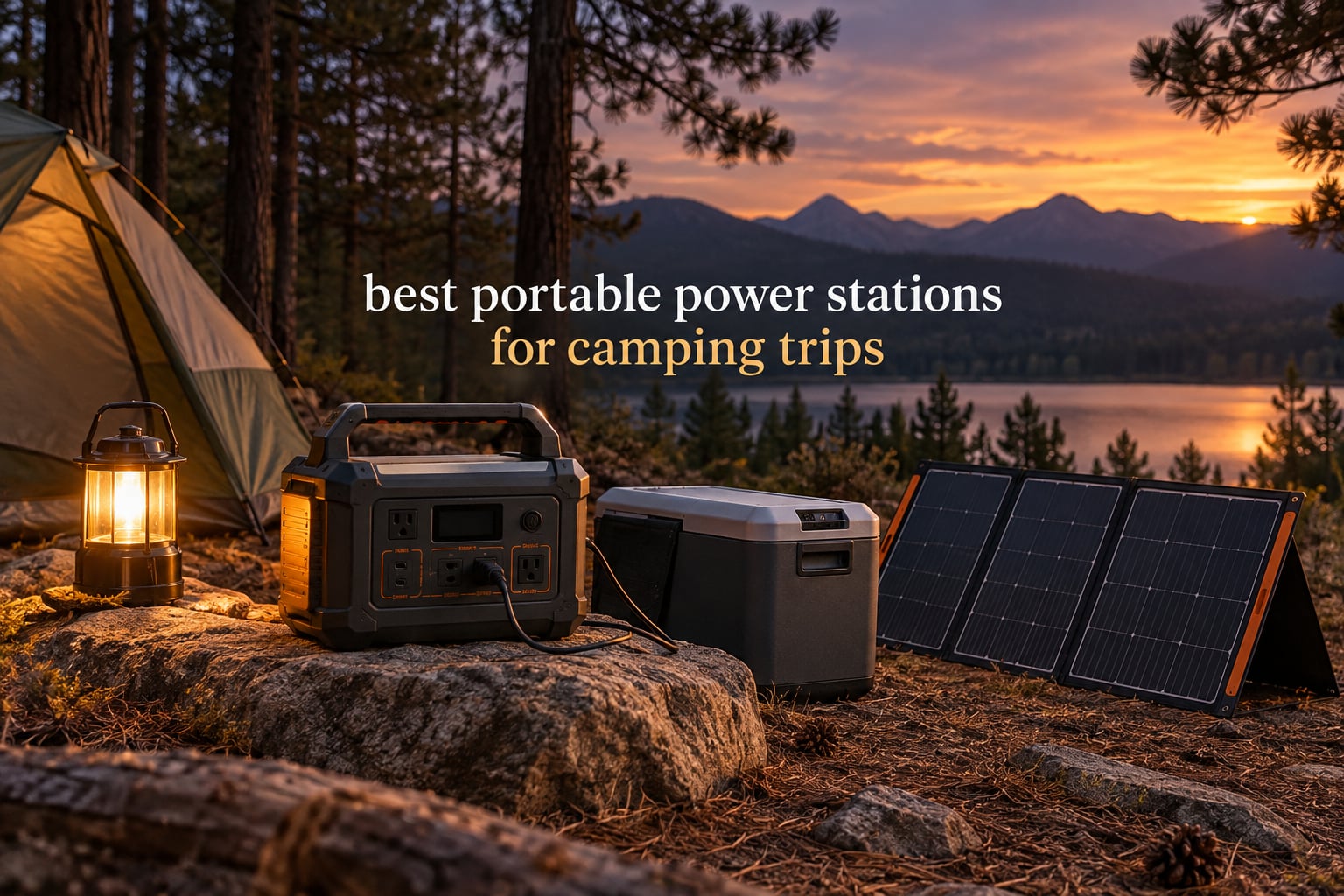
If you want the short version: a 300-500Wh unit covers a weekend of phones, cameras and lanterns, a 1000-1200Wh unit is the sweet spot for car camping with a 12V fridge, and anything above 2000Wh is for base camp or group trips where you never move it. Those three tiers are how we sorted the best portable power stations for camping trips below.
A portable power station is a rechargeable battery with a built-in inverter. You charge it from a wall outlet, a car socket or a solar panel, and it hands that energy back as household AC power plus USB and 12V DC, without the noise, fumes or fuel of a gas generator. That matters inside a tent or a van, and it matters for your lungs at a crowded site in 2026.
What it cannot do is invent energy. A 1,000Wh station is a real, finite budget, and every watt-hour you route through the inverter comes out of the pack. Measured across this category, a station typically delivers 81-93% of its rated watt-hours to an AC load, and less under a heavy sustained draw. We came back to that number in every single review below.
We also compared these picks against what campers actually say they run, and the answer is narrower than the marketing suggests. Forum threads from r/CampingGear and r/overlanding converge on a 60W compressor fridge plus device charging as the core duty, with r/CampingGear users repeatedly calling 1000Wh the sweet spot between portability and capacity. If you only camp two nights and charge two phones, this whole category is probably overkill, and we say so plainly in the honesty section.
Table of Contents
Top 3 Best Portable Power Stations for Camping Trips (October 2026)
All 10 Picks at a Glance (October 2026)
| Product | Specifications | Action |
|---|---|---|
 Jackery Explorer 300 Jackery Explorer 300 |
|
Check Latest Price |
 Jackery Explorer 1000 v2 Jackery Explorer 1000 v2 |
|
Check Latest Price |
 BLUETTI AC180 BLUETTI AC180 |
|
Check Latest Price |
 Anker SOLIX C300 Anker SOLIX C300 |
|
Check Latest Price |
 Anker SOLIX C1000 Gen 2 Anker SOLIX C1000 Gen 2 |
|
Check Latest Price |
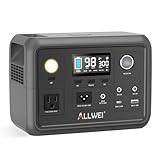 ALLWEI 300W ALLWEI 300W |
|
Check Latest Price |
 GRECELL 500W GRECELL 500W |
|
Check Latest Price |
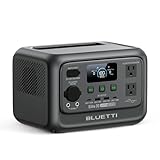 BLUETTI Elite 30 V2 BLUETTI Elite 30 V2 |
|
Check Latest Price |
 Jackery Explorer 2000 v2 Jackery Explorer 2000 v2 |
|
Check Latest Price |
 EnginStar 300W EnginStar 300W |
|
Check Latest Price |
How We Picked and What We Scored
We scored every station on the same five axes, all of them camping-first. Capacity is the raw watt-hour budget. Output is continuous AC watts, with surge headroom because a compressor fridge draws a spike every time it kicks on.
Weight decides whether a single person can move the box from the tailgate to the pitch without a second trip. Chemistry tells you how many seasons it will survive, and charging inputs decide whether it refills from a cigarette lighter, a folding panel or the wall at a home base.
We deliberately left price out of the scoring. Availability moves around and we would rather the ranking still make sense to you in 2026 than chase a number that changes weekly. The buttons under each review are the only place pricing appears.
1. Jackery Explorer 300 (292Wh) – the weekend unit you can carry in one hand
Jackery Explorer 300 Portable Power Station,292Wh
292Wh
300W AC, 600W surge
7.1 lbs
2 AC, 100W USB-C PD, 2 USB-A, 120W car port
Pros
- Light enough at 7.1 lbs to walk to a site with
- Lithium iron phosphate cells rated past 4000 cycles
- 100W USB-C PD handles phones and small laptops
- Solar panel tops it up to 80% in roughly 2.8 hours
Cons
- 292Wh disappears quickly with any real appliance load
- Only two AC outlets for a group
- Two-year warranty is the shortest in this roundup
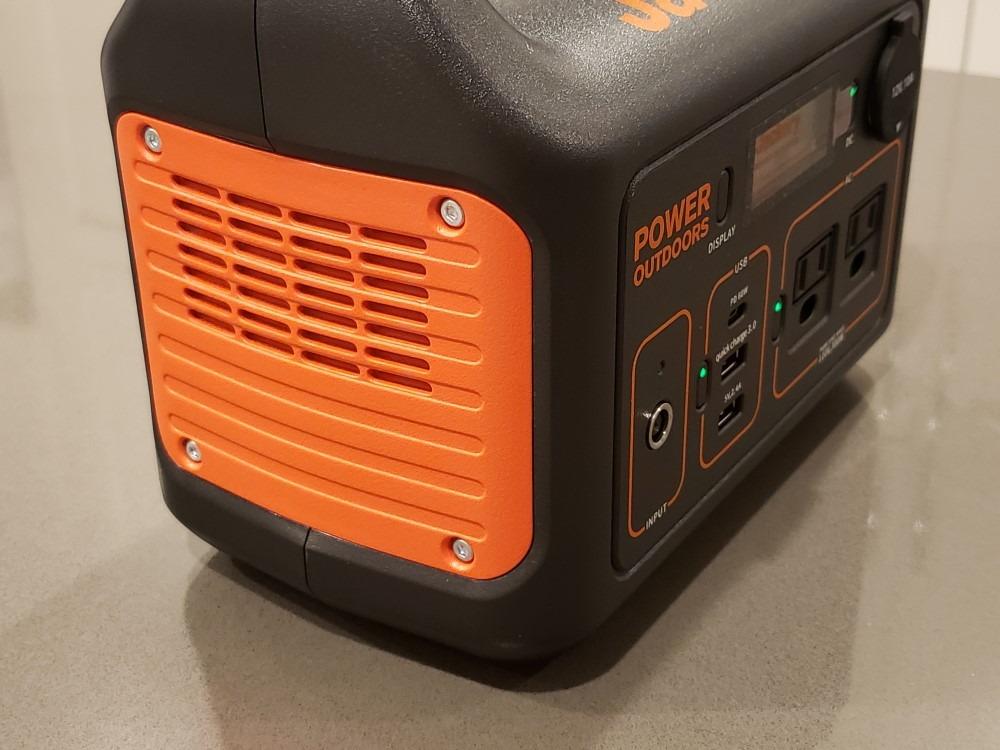
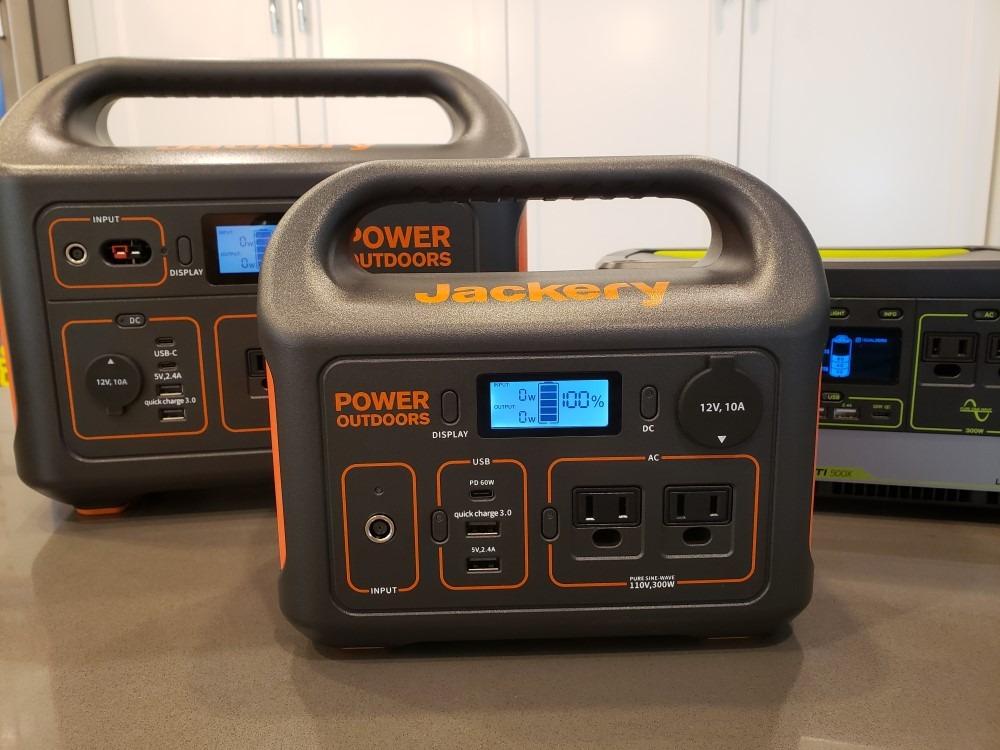
The Explorer 300 is the pick I hand to people who ask what to put in the top of a pack for two nights. It weighs 7.1 lbs, measures 9.1 by 5.2 by 7.8 inches, and carries 292Wh of lithium iron phosphate rated past 4,000 cycles. That chemistry matters more than the headline number, because it means the pack will still be there in five years of shoulder-season trips.
Six outputs cover the usual camp load: two AC outlets at 300W, a 100W USB-C PD port, two USB-A ports and a 120W car socket. A phone, a camera body with two spare batteries, a headlamp and a CPAP machine all fit inside 292Wh comfortably.
The catch is arithmetic. A 60W compressor fridge with a typical duty cycle draws roughly 40Wh per hour, so this pack gives you around six hours of fridge before the inverter overhead eats the rest. That is one evening, not a weekend. Reviewers report the same pattern: dependable output for electronics, visibly inadequate for anything with a compressor.
Solar is the quiet hero here. With a 100W panel the manufacturer claims 80% in roughly 2.8 hours, which is faster than any comparable 300W box we looked at and works well if you have open sky at your pitch.
What the 292Wh budget actually buys
Do the sum yourself before you commit. Charges for five phones, a camera battery, a laptop top-up and three nights of lantern use adds up to roughly 180Wh, so the Explorer 300 lands close to empty on a full three-night trip without a panel. Add a 100W folding panel and the arithmetic flips.
Reviewers also praise the pure sine wave AC output, which matters if you plug in anything with a fan or a motor rather than a phone charger. There is no humming and no heat in the inverter at these loads.
Where it falls short
Two AC outlets is tight for a couple camping together, and the 2-year warranty trails BLUETTI and Anker, which both offer five. If you plan to run a fridge all trip long, step up one tier rather than buying twice.
If you only need phone and camera charging for a weekend, a dedicated [power bank for camping](/best-portable-power-banks-for-camping/) is lighter and cheaper than any box here. This is the smallest station worth the word portable.
2. Jackery Explorer 1000 v2 (1070Wh) – the tier most campers land on
Jackery Explorer 1000 v2 Portable Power Station,1070Wh,1500W
1070Wh
1500W AC, 3000W surge
23.8 lbs
3 AC, 2 USB-C PD, USB-A, car port, LED
Pros
- 1500W continuous with 3000W surge handles fridge motors
- Fast wall recharge with app control over charge speed
- LFP pack holds over 70% after 4000 cycles
- Seven-port layout covers a whole campsite
Cons
- Solar input restricted to Jackery panels
- Fastest charge mode needs enabling in the app each time
- 23.8 lbs needs two hands at distance
R/CampingGear threads keep landing on the same sentence about 1000Wh being the sweet spot between portability and capacity, and this is the most popular station at that size. 1,070Wh of lithium iron phosphate with 1,500W continuous AC output and 3,000W of surge headroom covers a fridge, a CPAP and a laptop at the same time.
The charging story is the differentiator. Default wall recharge takes about 1.7 hours, which protects long-term cell health, and turning on the one-hour emergency mode in the Jackery app roughly halves it when you need to leave fast. There is also a quiet mode rated at 30dB for recharging beside a sleeping tent.
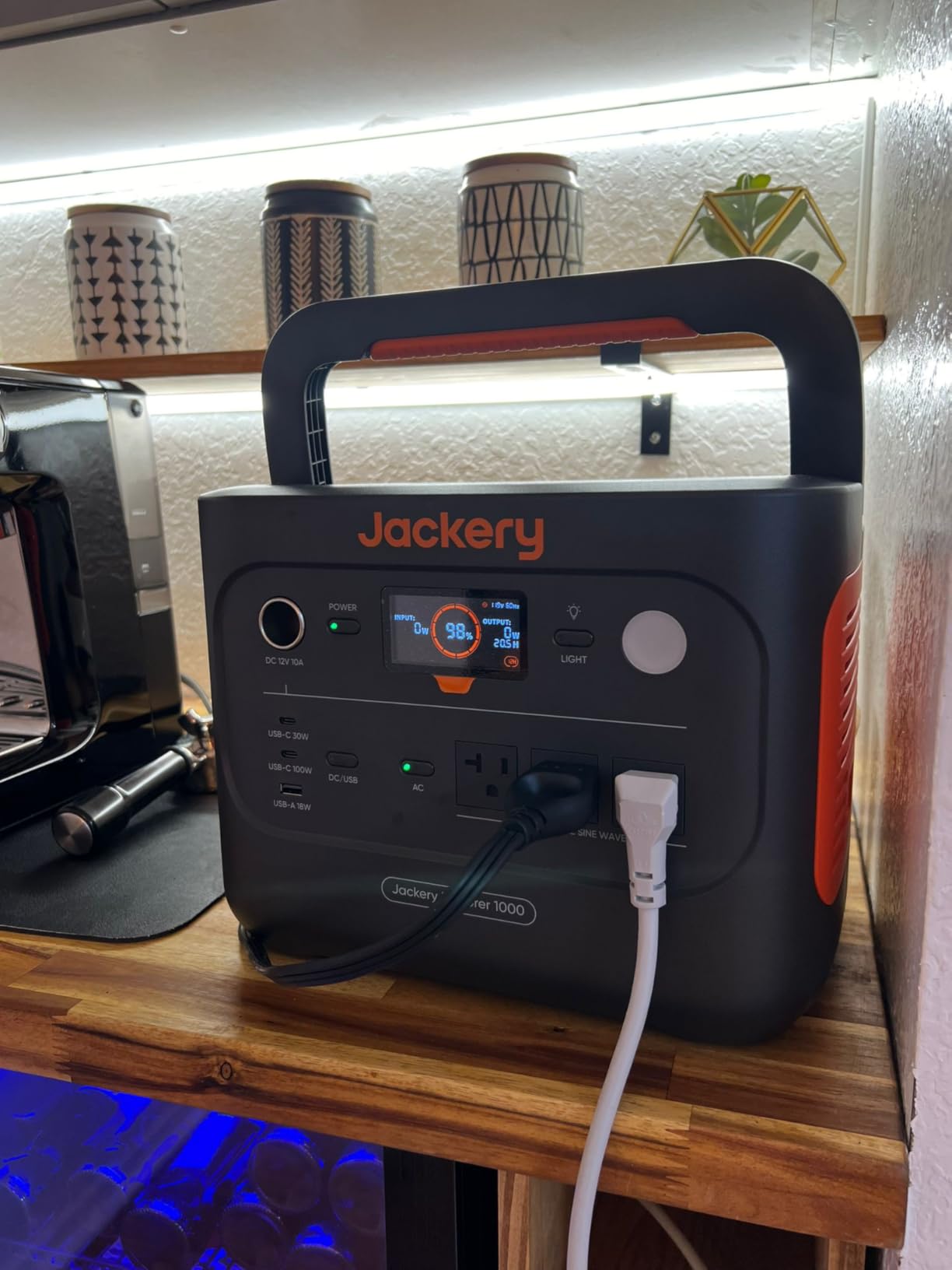
At 23.8 lbs with a foldable handle, this is a two-handed carry from the car but a manageable one, and the seven-port layout means you stop daisy-chaining extension leads. Two USB-C ports at 100W PD, one USB-A, a DC car port and three pure sine wave AC outlets cover a group trip comfortably.
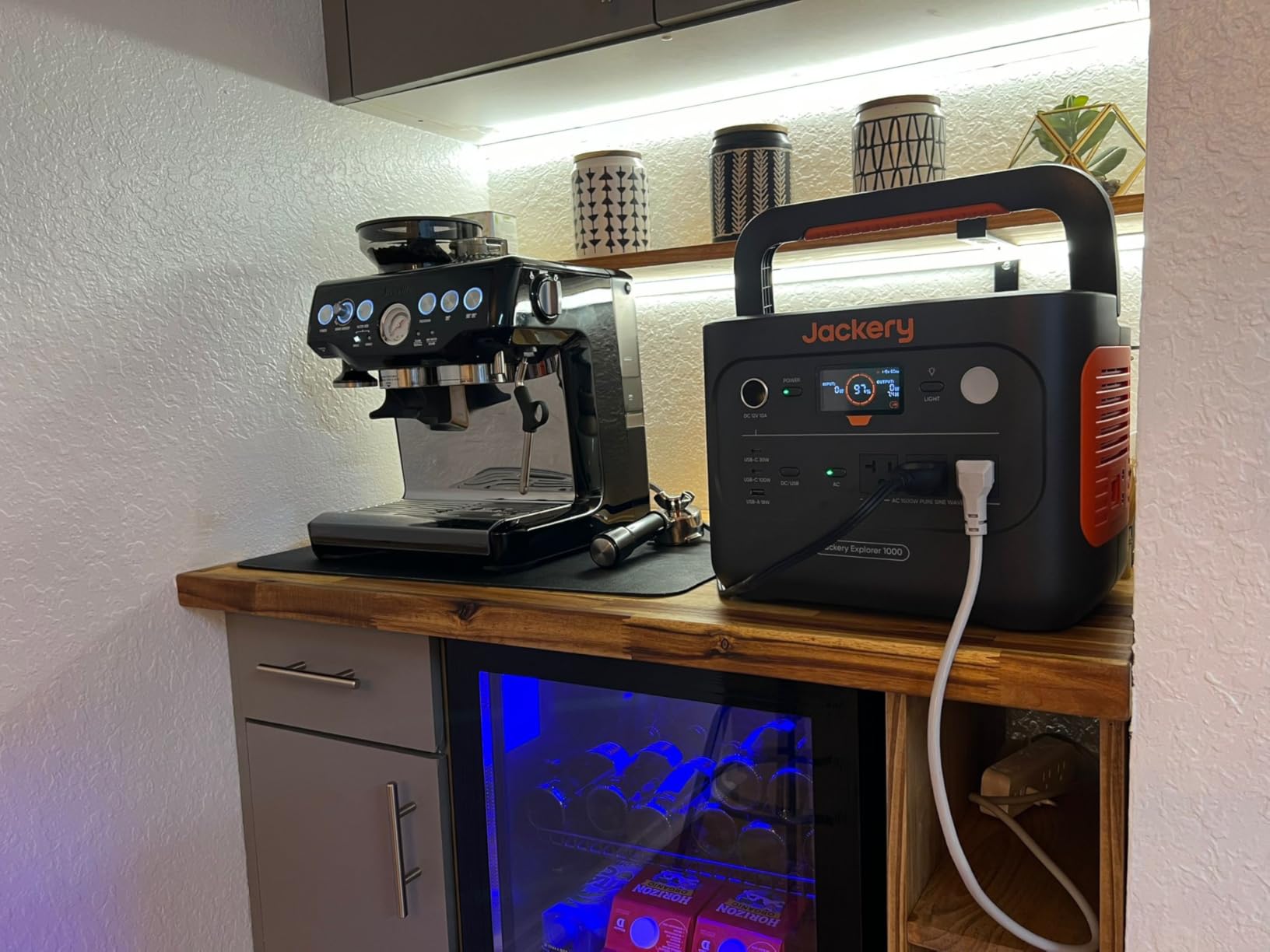
Fridge math for three nights
A 60W compressor fridge cycling about 35% of the time pulls roughly 500Wh over three nights. From 1,070Wh rated, expect around 890Wh usable after conversion losses, which leaves a genuine cushion for phone charging and lights on top of the fridge duty.
Reviewers report exactly this pattern, describing multi-night fridge runtime alongside CPAP machines on the same pack. The 3,000W surge is what lets the compressor motor start without tripping the inverter, which is the single most common complaint about smaller units.
Where it falls short
Solar compatibility is the real limitation. Jackery restricts the solar input to its own panels, so if you already own a folding panel from another brand, or want to compare options, you are starting over. Our [solar panel picks for camping stations](/best-solar-panels-for-camping-power-stations/) assume open compatibility.
The fastest recharge is not automatic, and 23.8 lbs is real weight to walk with. If you want a box that accepts any panel and has deeper spare-battery support, look at the BLUETTI AC180 or Anker SOLIX C1000 Gen 2.
3. BLUETTI AC180 (1152Wh) – fastest refill of the fridge-capable tier
BLUETTI Portable Power Station AC180, 1152Wh LiFePO4 Battery Backup w/ 2 1800W (2700W peak) AC Outlets, 0-80% in 45Min, Solar Generator for Camping, Off-grid, Power Outage
1152Wh LiFePO4
1800W AC, 2700W peak
37.4 lbs
8 outlets, 500W solar, 20ms UPS
Pros
- Full charge in roughly one hour at 1440W AC input
- 500W solar input refills in 2.8 to 3.3 hours
- 20ms UPS switchover for sensitive gear
- Five-year warranty with responsive support
Cons
- 37.4 lbs is a two-person move from the car
- Wireless charging pad often fails to hold a phone
- Idle draw of 15 to 20W shaves usable capacity
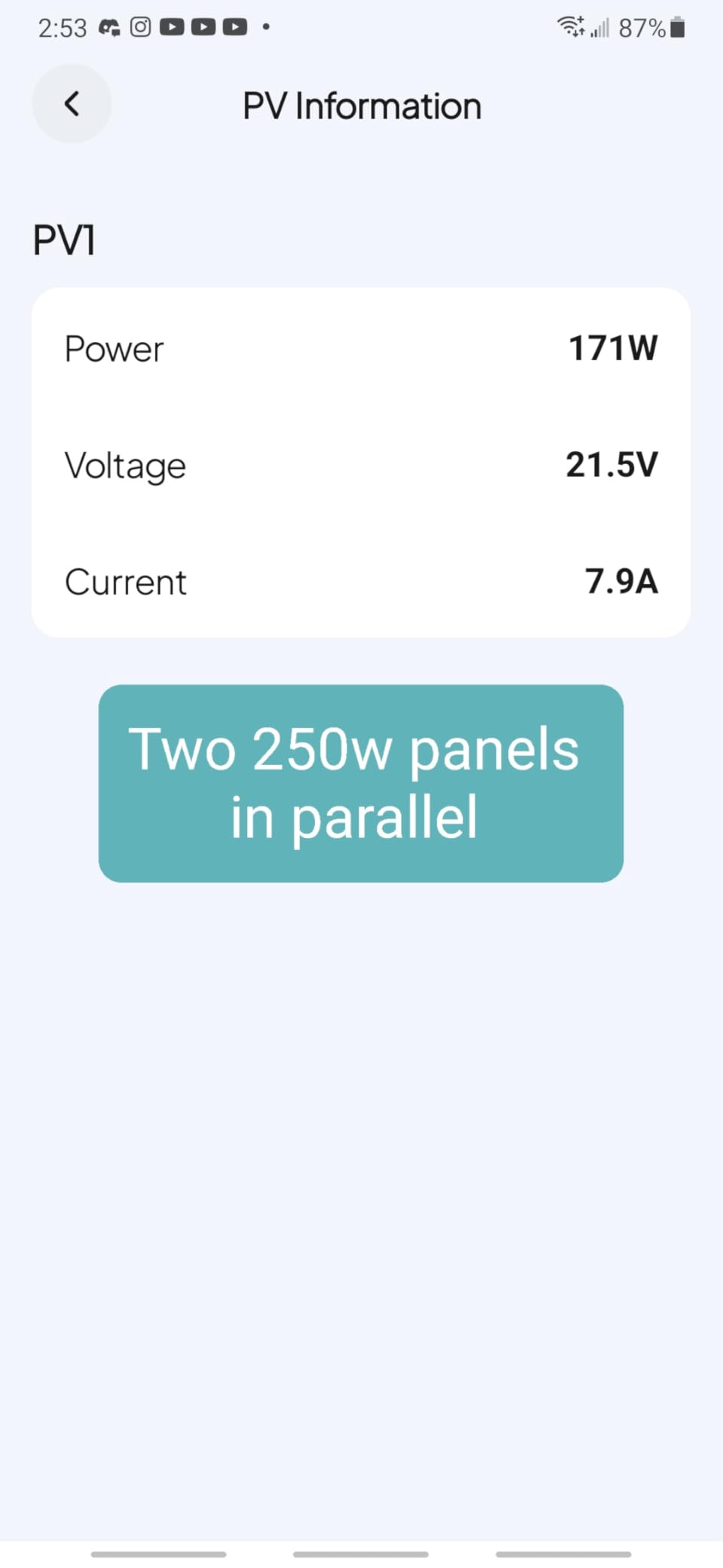
The AC180 is the one to buy if you have a car or an RV socket and want the freedom to leave midday. It accepts 1,440W of AC input and reaches full in about an hour, or pulls from 500W of solar in 2.8 to 3.3 hours according to the manufacturer. Very few stations in this class refill that fast.
Capacity is 1,152Wh of lithium iron phosphate with 1,800W continuous AC output across eight outlets, and the app can push peak output to 2,700W when a motor needs a hand. A 20ms UPS switchover keeps a CPAP or a laptop alive through a brownout, which matters if you run medical gear overnight.
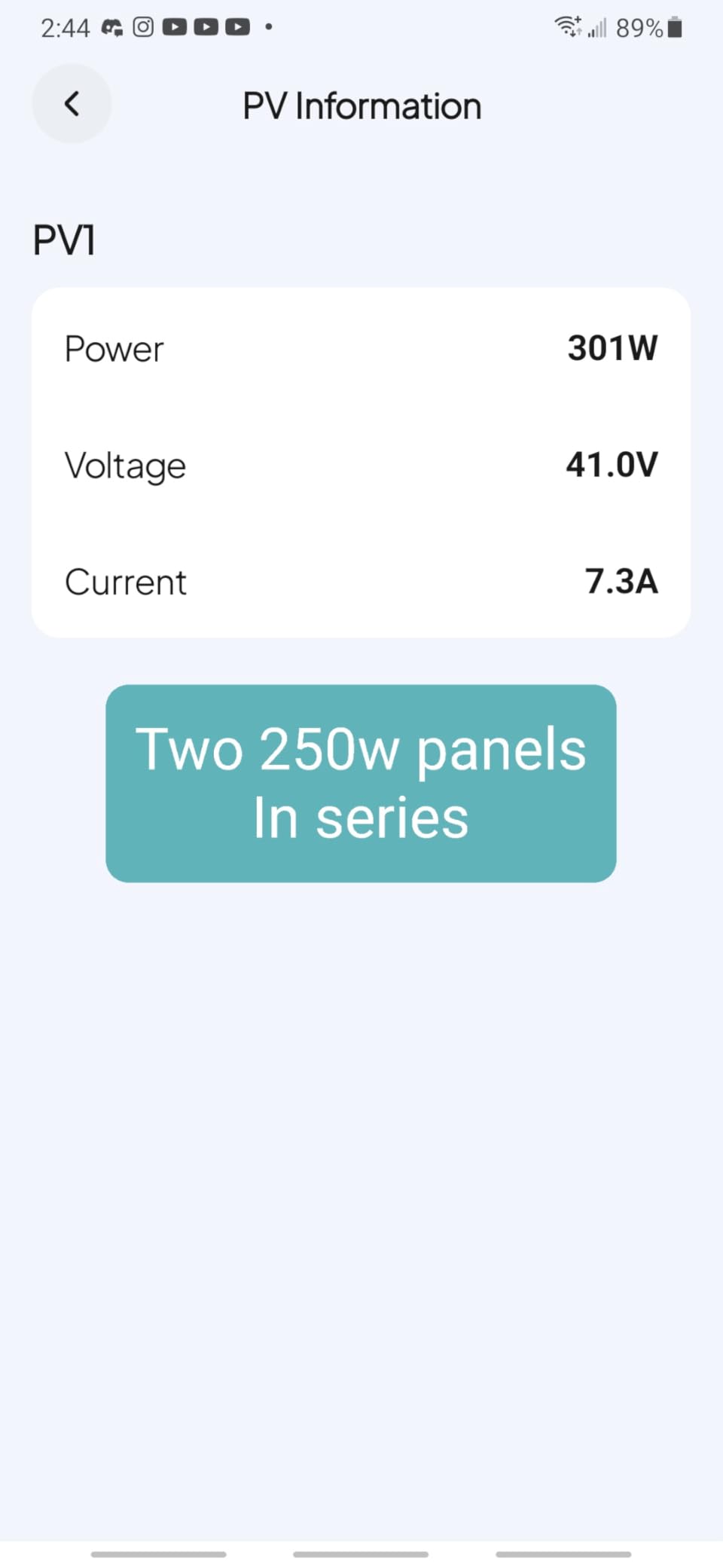
Multiple recharge paths are the quiet win here: shore power, 500W solar, 12V vehicle and alternator charging all supported. The LCD plus the app give a clear picture of input, output and remaining charge at a glance, which is more than most competitors manage.
The derating you should plan around
Owners report idle self-consumption of roughly 15 to 20W with the inverter on, so realistically usable capacity is closer to 90% of the rated 1,152Wh. Against a 60W fridge on a 35% duty cycle that is still roughly five days of runtime, which is the number that matters for a long festival or a multi-week trip.
The app also exposes a firmware update path. Several owners who saw early underperformance resolved it with a firmware update and a full discharge-recharge cycle, which is worth doing before you leave on the first trip.
Where it falls short
At 37.4 lbs this is a set-up-in-one-place box, not a carry. The top-mounted wireless charging pad draws repeat complaints about dropping a connection, so bring a cable. Some settings only change through the app, and the unit starts charging on its own whenever it sees input, which surprised more than one owner.
If weight is the deciding factor, the Anker SOLIX C1000 Gen 2 delivers similar capacity in a much lighter frame with faster recharge, at the cost of losing battery expansion.
4. Anker SOLIX C300 (288Wh) – the quietest box for a phone-heavy camp
Anker SOLIX C300 Portable Power Station, 288Wh Solar Generator for Camping
288Wh
300W AC, 600W surge
4.13 kg
3 AC, car socket, 2x 140W USB-C, 5-year warranty
Pros
- Rated at 25dB from 3.3 ft
- quiet enough to sleep beside
- Two USB-C ports at 140W each
- Reaches 80% in roughly 50 minutes from a wall
- LiFePO4 rated for 3000 cycles
Cons
- Solar limited to specific Anker panels
- Strap sold separately
- 288Wh only covers electronics
- not appliances
The C300 earns its place on noise. At 25dB measured from 3.3 ft it is the quietest station here, which matters more than it sounds when the pack is inside a tent wall three feet from your head. It also ships with lithium iron phosphate cells rated for 3,000 cycles and a five-year warranty.
The port layout is unusually modern for the size. Three AC outlets at 300W total, a 120W car socket, two USB-C ports rated at 140W each, a 15W USB-C and a 12W USB-A give you eight outputs in a footprint listed as 15% smaller than comparable designs.
Recharge is fast for a 288Wh box, reaching 80% in roughly 50 minutes from a wall outlet. You can also top up from solar, from a 12V car socket or through the PD 3.1 USB-C input, which is handy at a home base with a compatible charger.
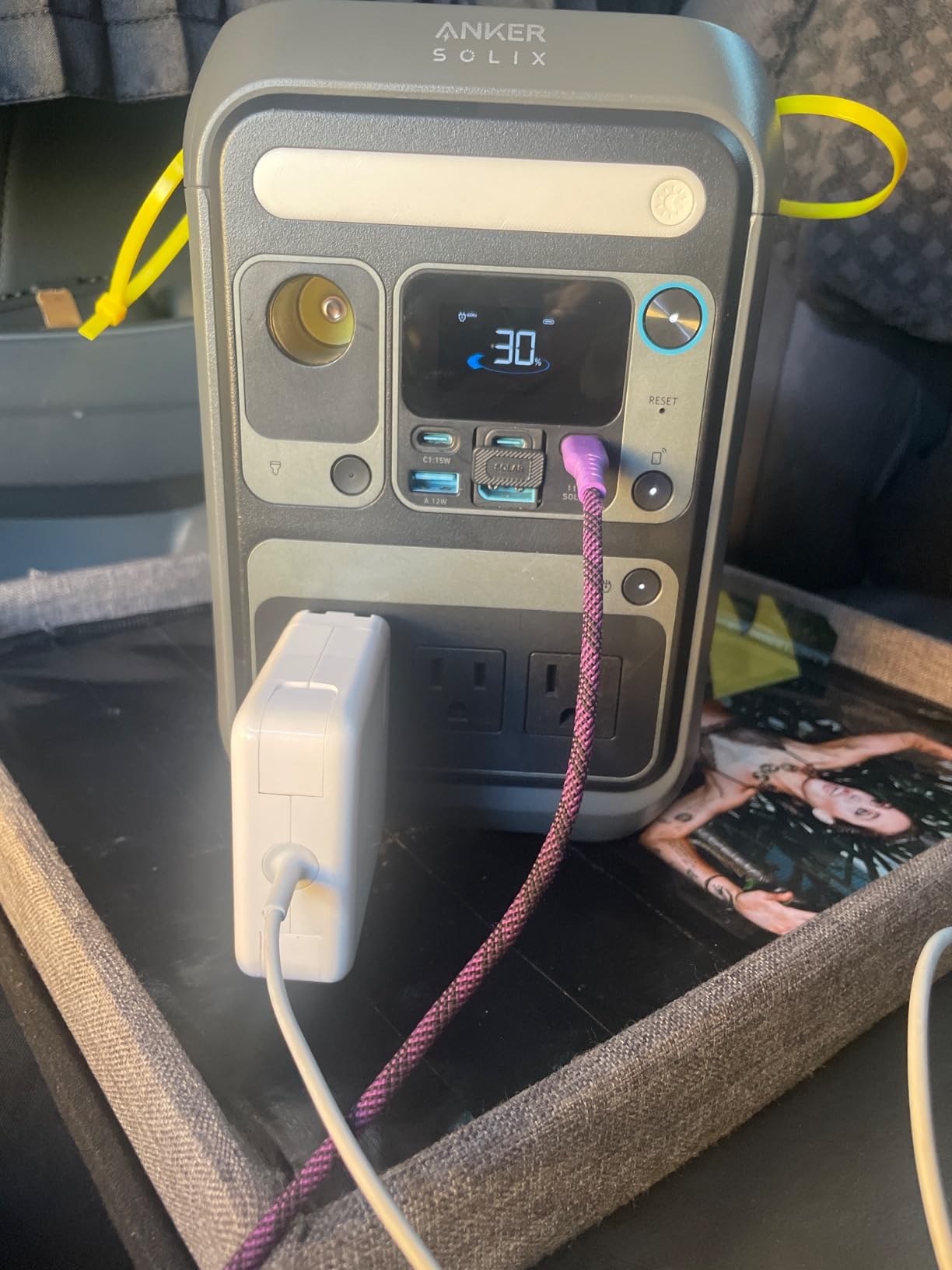
Two high-wattage USB-C ports are the differentiator
Most 288Wh competitors offer one modest USB-C port. Two at 140W each means you can charge two modern laptops at full speed from the same box, which is the scenario this station is genuinely good at. Phones, tablets, camera batteries and a router all fit inside 288Wh with room to spare.
If your camp power is mostly charging rather than running, this box outperforms larger stations because it wastes almost nothing on inverter overhead. At 288Wh you are not converting much at all.
Where it falls short
Solar compatibility is the trap. Input is limited to 100W and 60W Anker panels and does not work with the SOLIX PS30, PS200 or PS400, which catches out buyers who already own bigger Anker panels. The shoulder strap also costs extra, and 288Wh will not carry a fridge and a laptop together.
Owners rate the port count and USB-C speed very highly, but the one recurring complaint in reviews is exactly that solar restriction. Check your existing panels before choosing it.
5. Anker SOLIX C1000 Gen 2 (1024Wh) – recharge speed at the 1kWh tier
Anker SOLIX C1000 Gen 2 Portable Power Station
1024Wh
2000W AC, 3000W peak
11.3 kg
10 ports, 600W solar, 10ms UPS
Pros
- Full recharge in 49 minutes at 1600W input
- 2000W output across 10 ports with 1024Wh
- 600W solar input refills in about 1.8 hours
- 10ms UPS keeps CPAP and laptops alive
Cons
- No expansion battery capability on this platform
- No protective case included
- Measured harmonic distortion on microwave loads
This is the fastest refill we found at the 1kWh tier. With the HyperFlash mode enabled in the Anker app it takes 49 minutes at 1,600W, and 600W of solar at up to 60V recharges it in about 1.8 hours. For anyone who needs the box full again the same evening, that is the whole argument.
Output is 2,000W continuous with 3,000W peak across 10 ports on 1,024Wh of lithium iron phosphate, and the pack keeps at least 80% capacity after 4,000 cycles. Anker lists it as 14% smaller and 11% lighter than comparable models, and reviewers say they cannot hear it running.
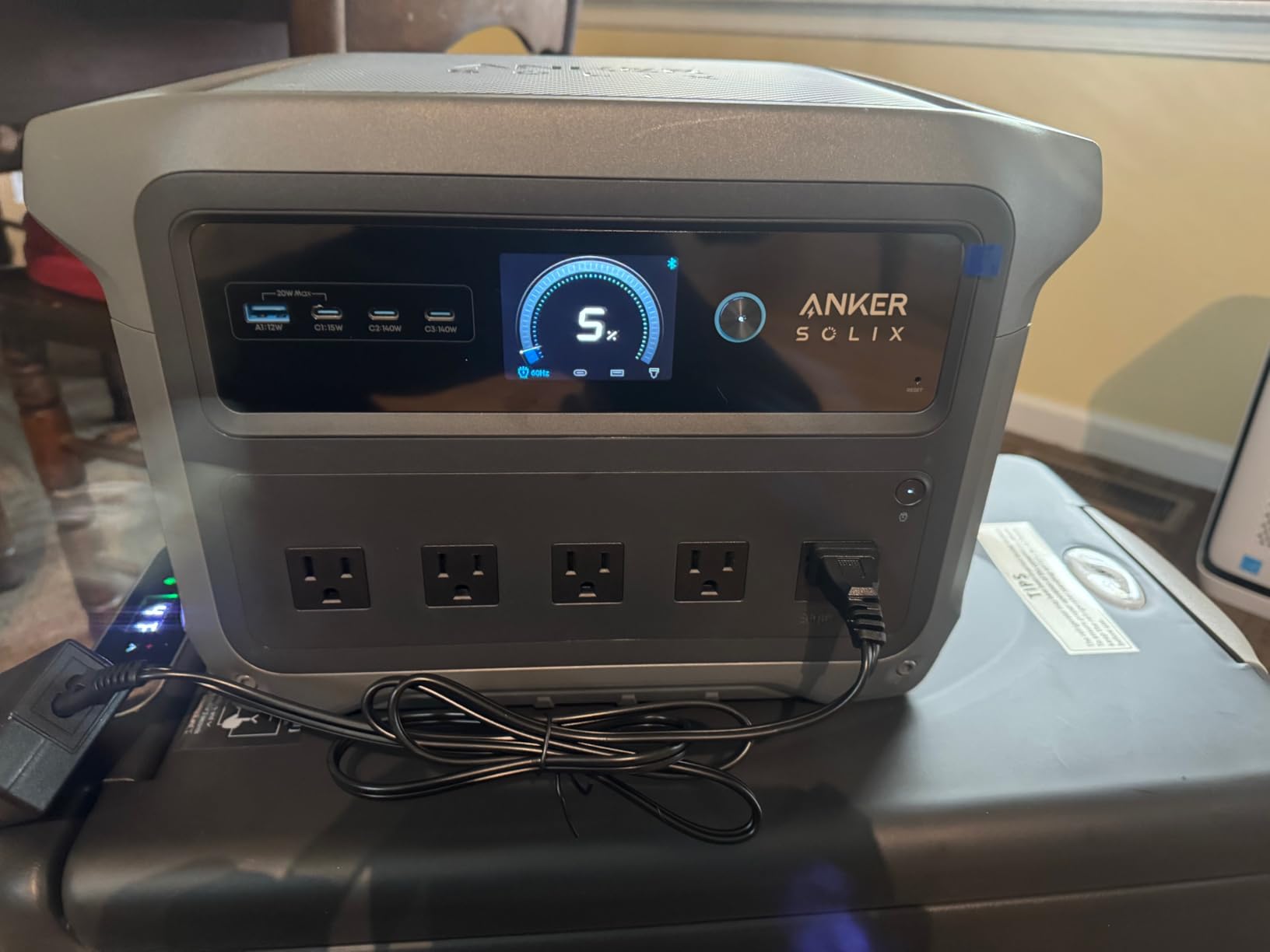
The 10ms UPS switchover is the sleeper feature for campers. It is fast enough that a CPAP machine or a laptop does not notice a switchover, which several owners specifically tested and reported as reliable pass-through behaviour under laptop workloads.
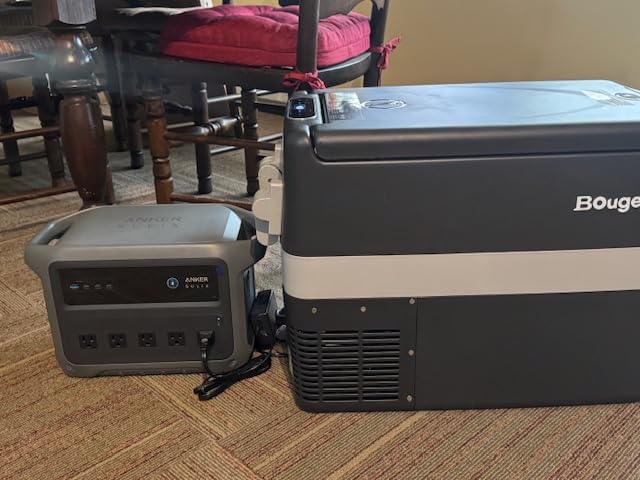
Fridge duty measured against the pack
Expect roughly 850Wh usable from the rated 1,024Wh once inverter losses apply. A 60W compressor fridge on a 35% duty cycle consumes about 500Wh over three nights, which leaves headroom for lights, phones and a laptop. Reviewers report effective 6 to 12 hour fridge backup windows in their own testing.
Multiple-night CPAP runtime comes up repeatedly in reviews alongside that capacity, which is the strongest real-world evidence that a 1kWh pack is the right tool for medical gear on a trip.
Where it falls short
The Gen 2 platform drops the expansion battery capability of the first generation, so this is a fixed 1,024Wh. That is a genuine loss if you were planning to add capacity in a second season. A protective case is not included and cable management is awkward.
One reviewer measured roughly 15 to 20% harmonic distortion on a microwave load, though it still heated food. For sensitive audio or medical gear, the BLUETTI AC180’s output spec is the safer reference point. At 24.9 lbs it is still a two-person carry over distance.
6. ALLWEI 300W (256Wh) – the most capable box per dollar spent
ALLWEI Portable Power Station 300W, 256Wh Solar Generator LiFePO4 Battery
256Wh
300W AC, 600W peak
6.4 lbs
AC, 2 DC5521, car port, USB-A, 60W USB-C PD
Pros
- Under 7 lbs with LiFePO4 cells rated for 3000 cycles
- 60W USB-C PD plus AC and car port in a small box
- Verified CPAP runtime of 20 hours over three nights
- Display shows estimated runtime
- not just wattage
Cons
- Solar input capped at 120W so 200W panels will not work
- Some owners report the charge level sticking then cutting out
- Support reportedly asks for extensive diagnostic data first
The ALLWEI is the sleeper of this roundup and the cheapest way into lithium iron phosphate chemistry. At 6.4 lbs and 9.25 by 5 by 6.8 inches it is the lightest box here, with 256Wh, 300W continuous output and 600W of peak surge from a pure sine wave inverter.
Six outputs cover the campsite well: one AC outlet, two DC5521 barrel ports, a car socket, an 18W USB-A and a 60W USB-C PD port. That USB-C rating is generous for the size, and it is what lets you charge a laptop without a brick.
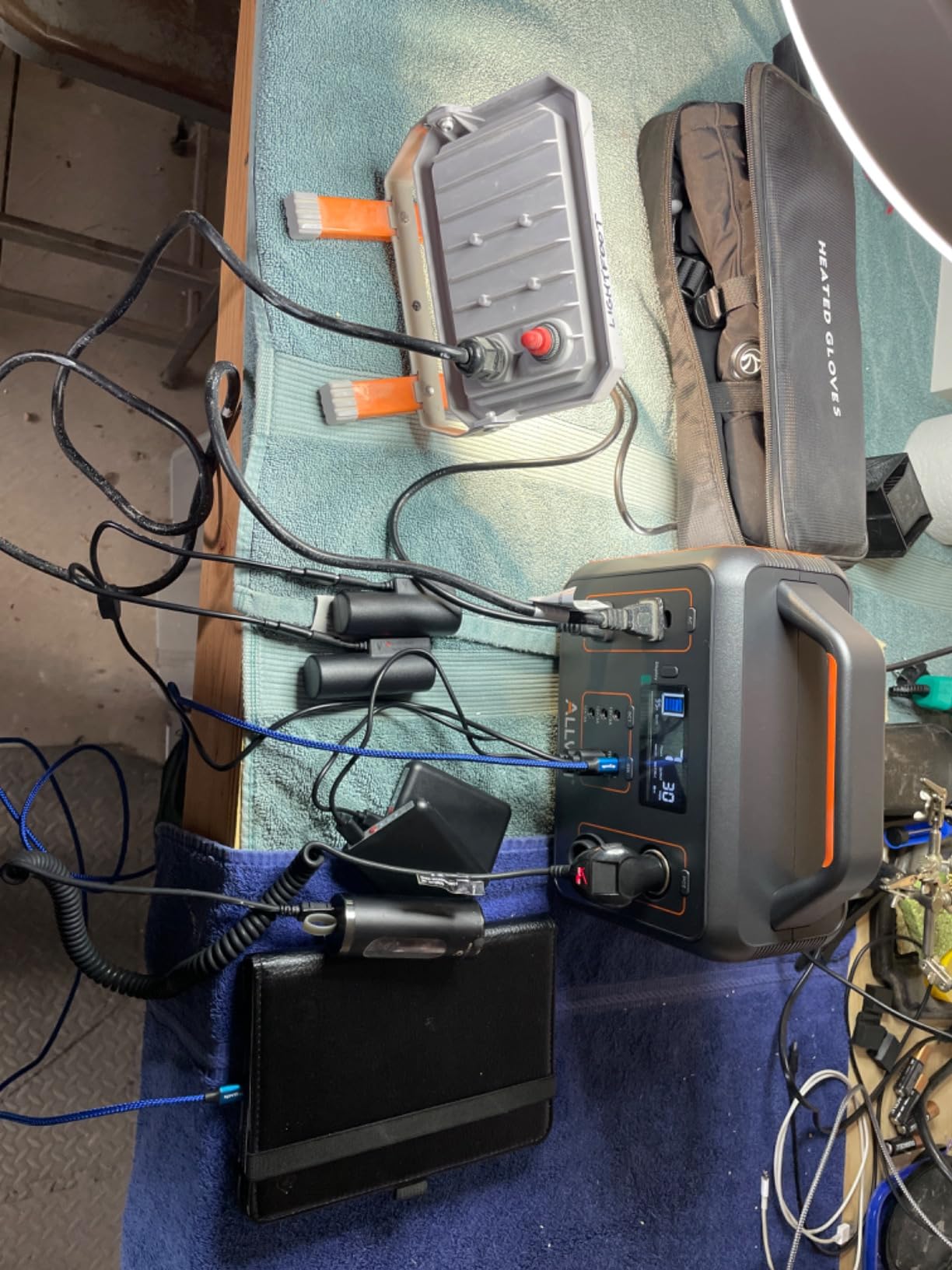
The runtime display is a small touch that matters. Rather than showing only wattage, it estimates remaining runtime, so you can see whether the pack will last the night without doing the arithmetic yourself.
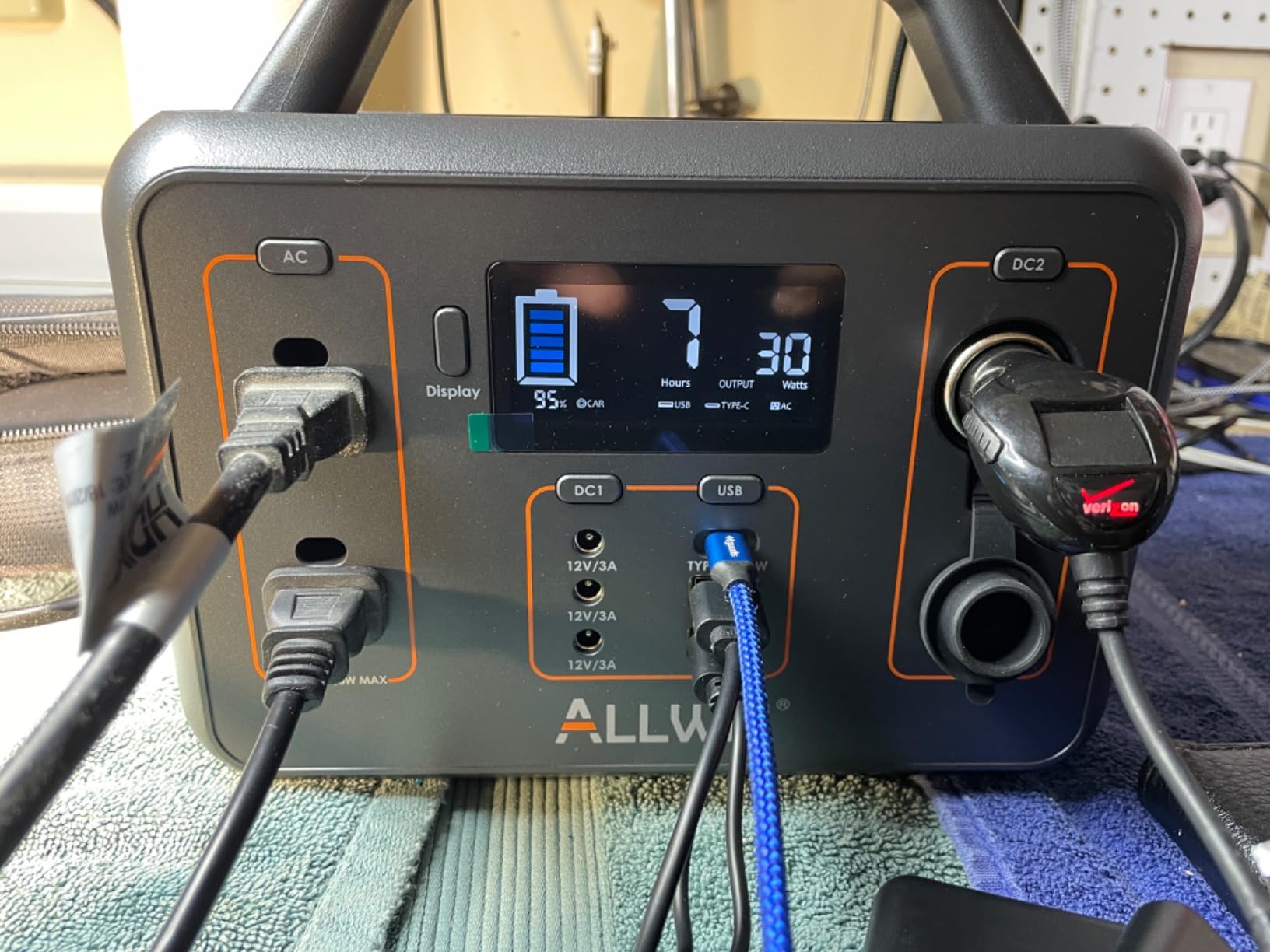
Real CPAP numbers from owners
This is where the value case holds up. Verified owner reports include 20 hours across three nights on a BMC Luna 2 and 12 hours on a DreamStation 2, which is exactly the use case a 256Wh box is suited to and one most competitors at this price cannot demonstrate. Reviewers repeatedly call out CPAP as the standout application.
Recharging is flexible for such a small unit: about 3.5 to 4 hours from a wall, the same from a car socket, 4 to 5 hours from 100W of solar, or 2 to 2.5 hours with AC and solar together.
Where it falls short
Solar input is capped at 120W, so a 200W panel you already own will not work with it. More seriously, several owners report the state-of-charge display sticking and the unit cutting out, and customer support is described as wanting extensive diagnostic data before engaging. The 4.4 average with a visibly higher one-star share reflects that.
The jackery Explorer 300 costs more but carries the brand name, a two-year warranty and a much larger review base. If you buy the ALLWEI, test the unit fully at home before the trip.
7. GRECELL 500W (519Wh) – the most connections in the pack
Grecell Portable Power Station 500W(Peak 1000W) 519Wh Outdoor Solar Generator Backup Battery Pack with 2 110V AC Outlets,10-Port Powerhouse for RV/Van Camping Fishing Climbing Road Trip Home Emergency
519.48Wh, 140,400mAh
500W AC, 1000W peak
14.1 lbs
10 outputs, 10W wireless pad, BMS
Pros
- Ten simultaneous outputs including a 10W wireless charging pad
- 519Wh covers a fridge
- projector
- blender or CPAP
- Built-in flashlight with strobe and SOS modes
- BMS with temperature and short-circuit protection
Cons
- Older lithium-ion chemistry with weaker cycle life
- Solar input capped at 200W and 6 to 9 hours for a full refill
- AC output must be switched off manually or it drains
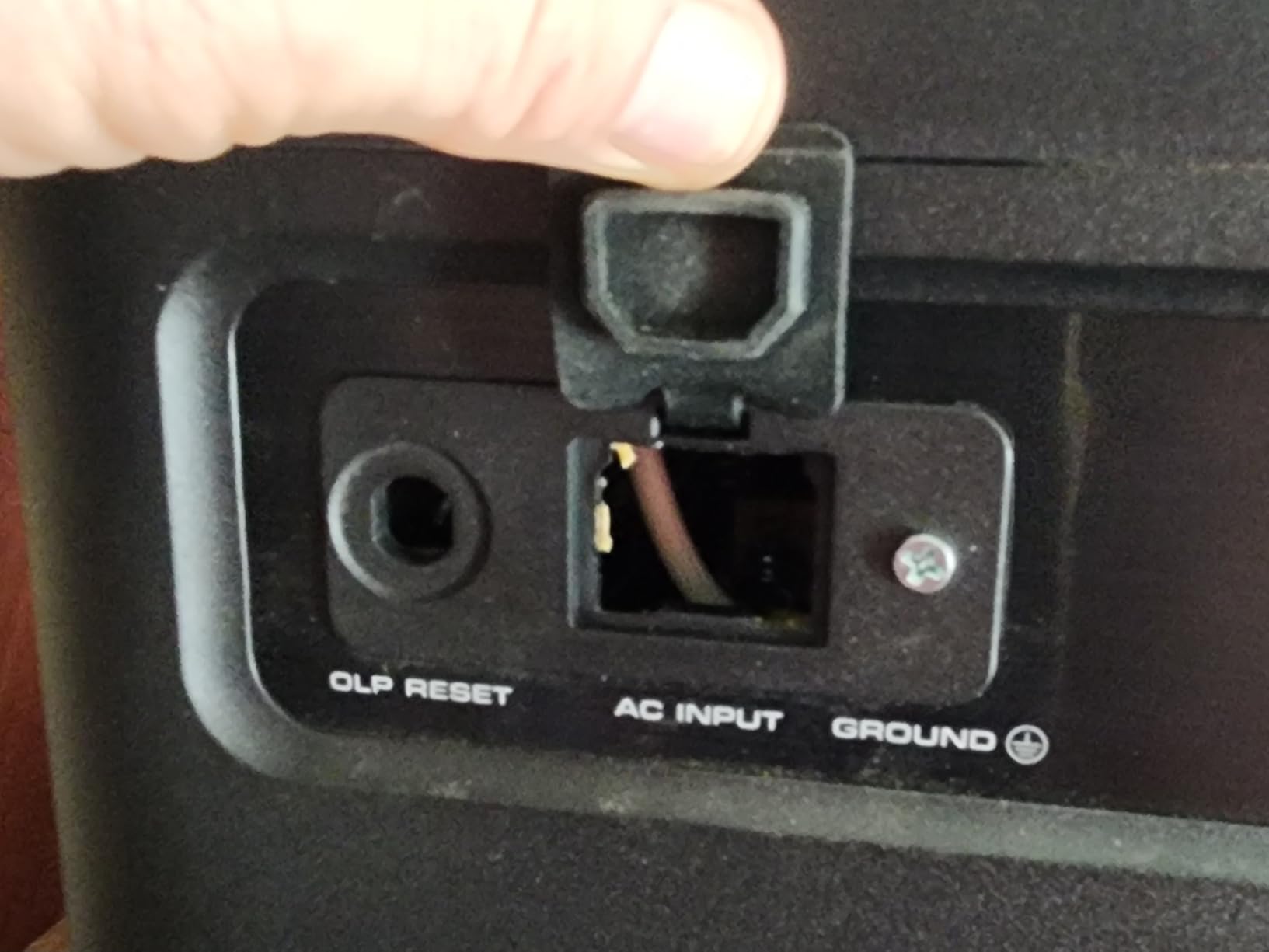
The GRECELL T-500 is the port-count champion and the only box here with a 10W wireless charging pad built in. Ten simultaneous outputs cover two pure sine wave AC outlets, three USB-A QC3.0 ports, a 60W USB-C PD port, two DC barrel ports and a car socket.
Capacity is 519.48Wh, listed as 140,400mAh, and the manufacturer names the loads it handles: phones, laptops, lights, fans, routers, projectors, small blenders, car refrigerators, drones, cameras and CPAP machines. At 500W continuous and 1,000W peak it has more headroom than the smaller boxes.
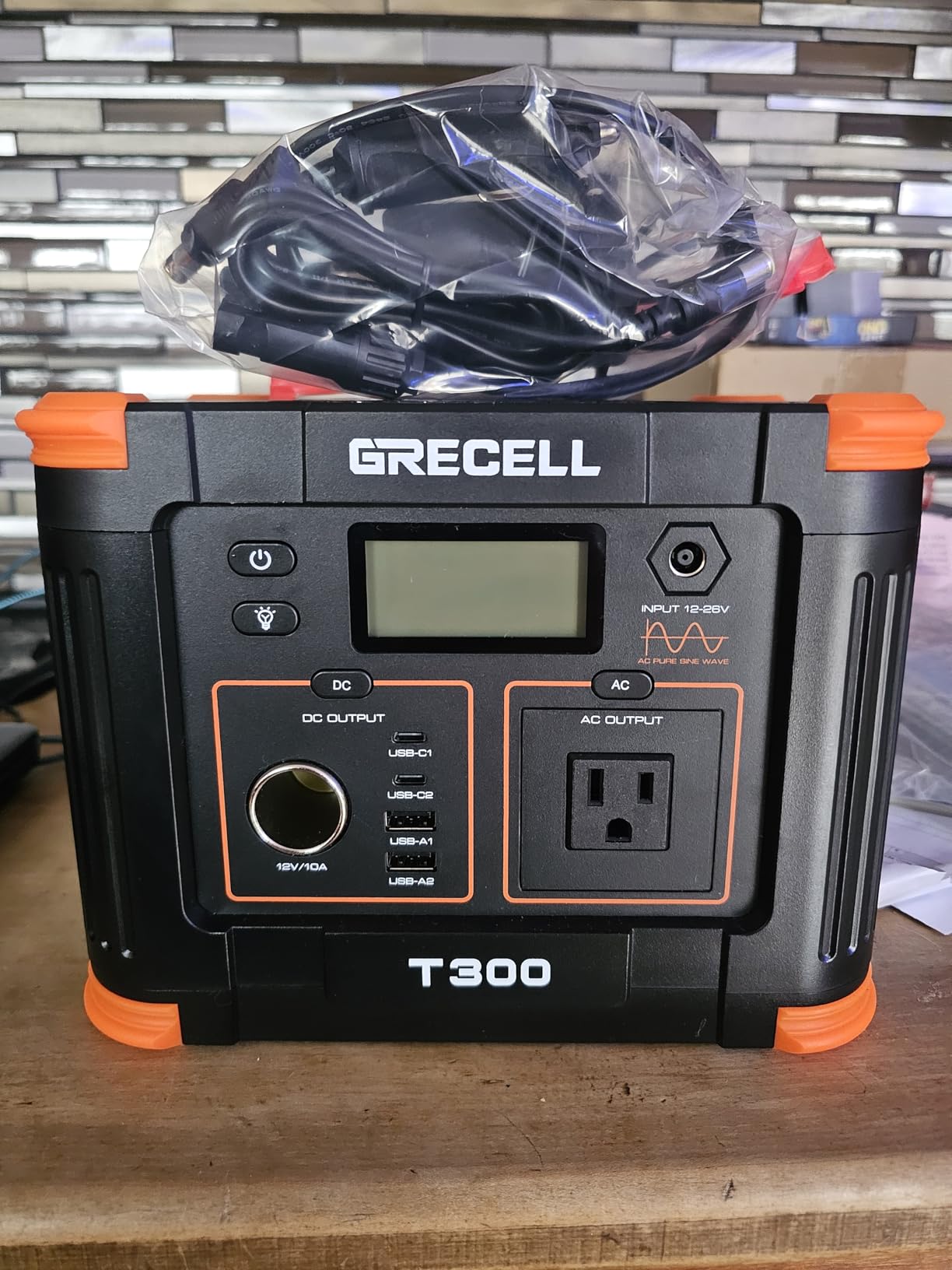
At 14.1 lbs with a solid handle and a built-in flashlight with light, strobe and SOS modes, it is a car-camping box rather than a walking one. That is the honest framing, and it matches how owners actually use these stations.
Where the extra ports actually earn their keep
For a group trip or a tailgate, ten outputs means nobody is waiting for a socket. It also removes the need for a power strip, which is one less thing to trip over in the dark. Reviewers who want many low-wattage connections at once rate it very highly for exactly that reason.
The 519Wh budget supports a 60W compressor fridge for roughly eight hours of compressor-on time, plus a full evening of charging for a group. Bring the car socket cable rather than relying on solar to keep up.
Where it falls short
This one runs older lithium-ion cells rather than lithium iron phosphate, so cycle life and heat behaviour trail every LiFePO4 rival here, and it carries a 2-year warranty. Solar input is limited to 200W and a full solar refill takes 6 to 9 hours even in good sun.
Two practical warnings from owners: switch the AC output off manually when you are not using it or it will drain the pack, and use and recharge it at least once every three months to keep the cells healthy. The 4.3 rating with an 11% one-star share is the widest gap between extremes in this roundup, so read the recent negative reviews.
8. BLUETTI Elite 30 V2 (288Wh) – open to any solar panel you own
BLUETTI Elite 30 V2 Portable Power Station 288Wh 600W LFP Solar Generator
288Wh
600W continuous, 1500W lifting
9.5 lbs
9 ports, 140W PD, 10ms UPS, 8 charge modes
Pros
- Works with almost any third-party solar panel
- 600W continuous is double most 288Wh rivals
- Standby draw of just 4.5W keeps it alive between trips
- 0 to 80% in 45 minutes on the wall
Cons
- 288Wh drains fast on CPAP or fridge duty
- No USB communication port for automatic PC shutdown
- Pro and UPS settings sit behind an app passcode
The Elite 30 V2 solves the problem that trips up half the models in this roundup. It works with almost any third-party solar panel instead of locking you to one brand, and it accepts 380W or 200W of adjustable AC input, hitting 80% in 45 minutes and full in 70.
Output is unusual for a 288Wh pack: 600W continuous, with a Power Lifting mode that reaches 1,500W for resistive loads. At 9.5 lbs it is heavier than the Explorer 300 but carries more than twice the continuous output.
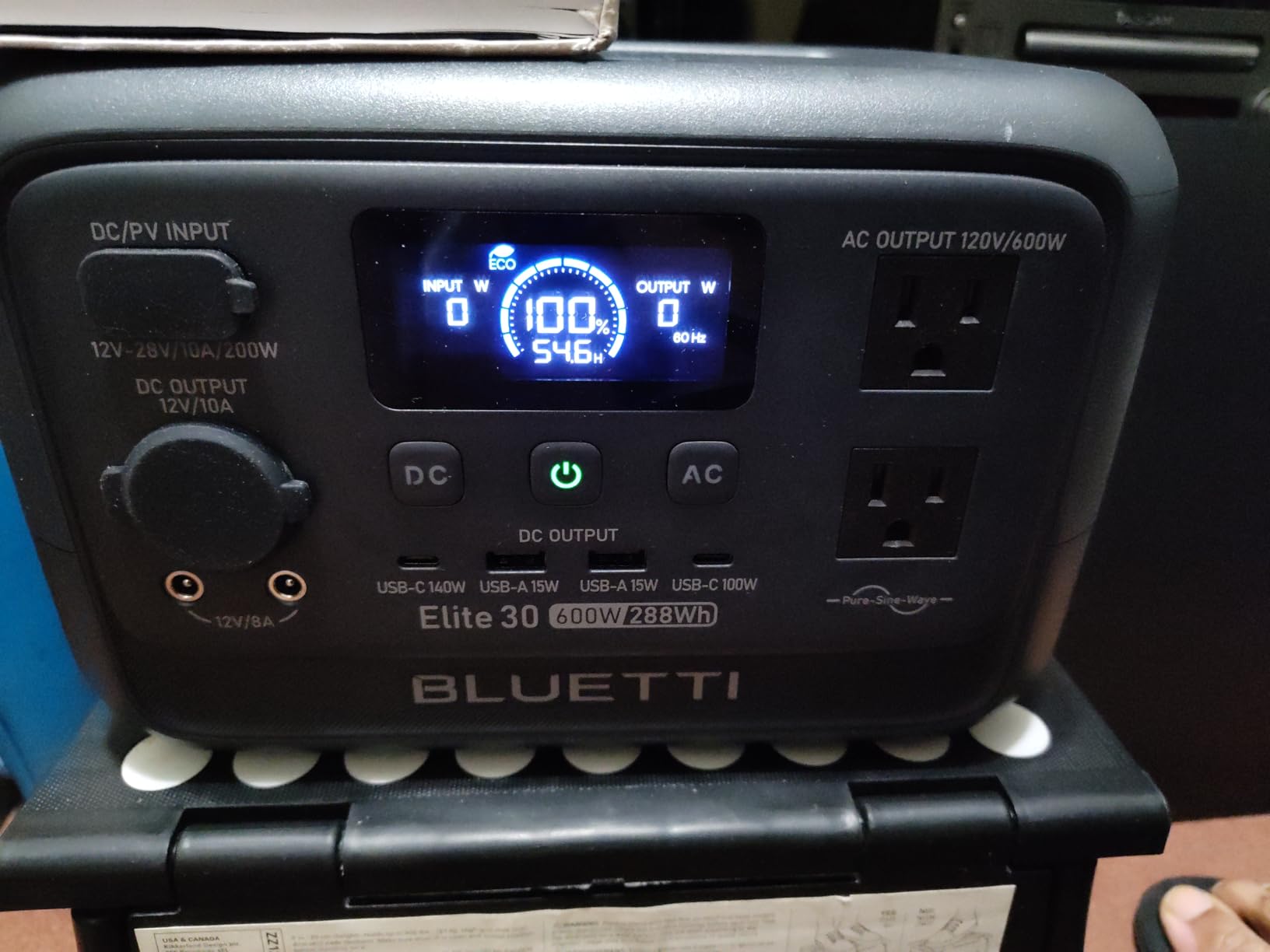
The standby figures are the quiet advantage in this category. Measured draw is 4.5W on standby, 5W on DC and 8W on AC, and the manufacturer attributes this to its cell and cooling design. For a unit that lives in a van between trips, that difference compounds.
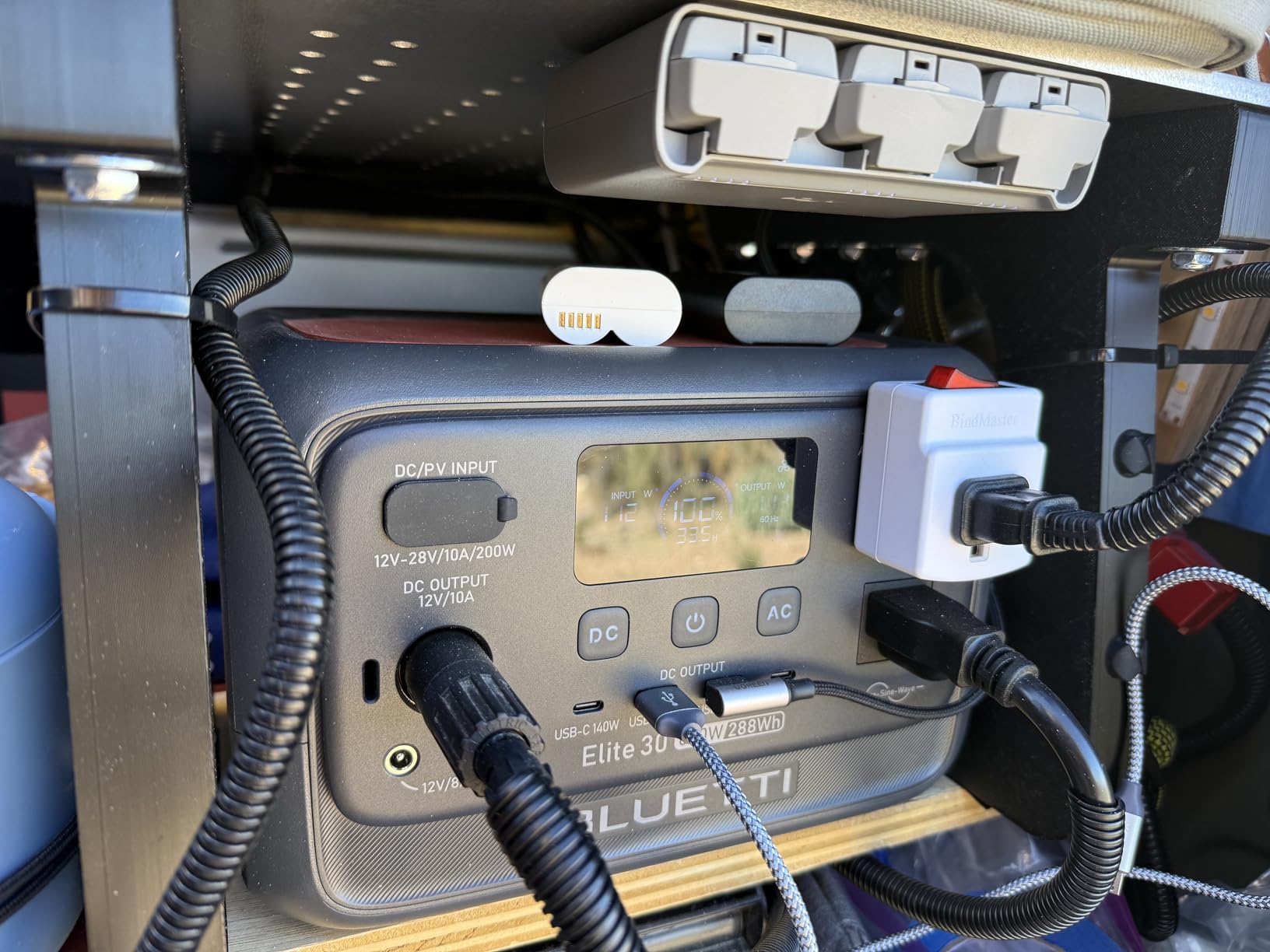
Useful as an always-on UPS
Several owners use it as a true UPS replacement, with one reporting it replacing a degraded CyberPower unit at roughly double the runtime. The 10ms switchover is fast enough for a router, a laptop or a CPAP machine, and the Bluetooth and Wi-Fi app monitoring is widely praised.
At 288Wh it is an electronics box. Phones, cameras, lights, speakers and laptops sit comfortably inside the budget, which is where the low standby draw pays off.
Where it falls short
Capacity is the hard limit. One owner saw a CPAP drain the pack to 53% in a single short night, and fridge users report the same pattern, so treat 288Wh as a device budget, not an appliance budget.
There is no USB communication port for automatic PC shutdown the way a traditional UPS provides, and enabling Pro mode and UPS settings needs a passcode in the app, default 888888, which adds friction. The listed dimensions also conflict between entries, so confirm physical size if space is tight.
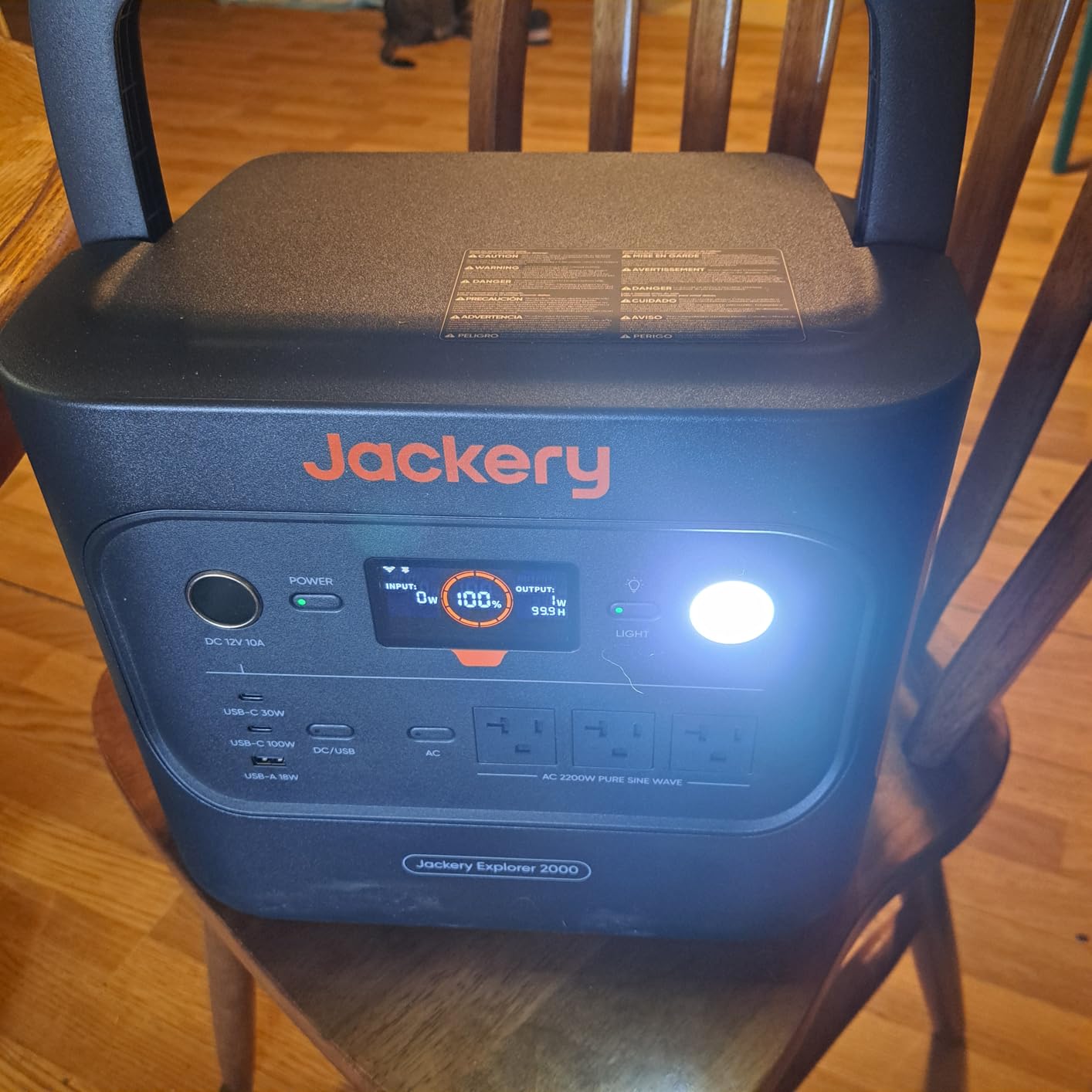
9. Jackery Explorer 2000 v2 (2042Wh) – base camp that never moves
Jackery Explorer 2000 v2 Portable Power Station, 2042Wh, 2200W AC Output
2042Wh
2200W across 3 AC ports
39.5 lbs
USB-C PD 100W, 20ms UL1778 UPS, silent mode
Pros
- 2042Wh and 2200W covers a fridge
- tools and group charging together
- Lighter and smaller than typical 2kWh stations
- 0 to 80% in 66 minutes and full in 102
- Silent charging mode runs a full charge in 5 hours under 30dB
Cons
- 39.5 lbs generally needs two people or a cart
- Solar restricted to Jackery panels
- Only three AC outlets for the capacity
This is the pick when the campsite becomes a base for a week or more. 2,042Wh of lithium iron phosphate delivers 2,200W total across three AC outlets, plus a 100W USB-C PD port, and Jackery rates the cells for up to a ten-year life.
Refill options are broad. AC fast charge reaches 80% in 66 minutes, emergency super charging fills it in 102 minutes, 400W of solar can do it in as few as six hours, and a silent mode completes a full charge in five hours under 30dB so it can sit beside a sleeping tent.
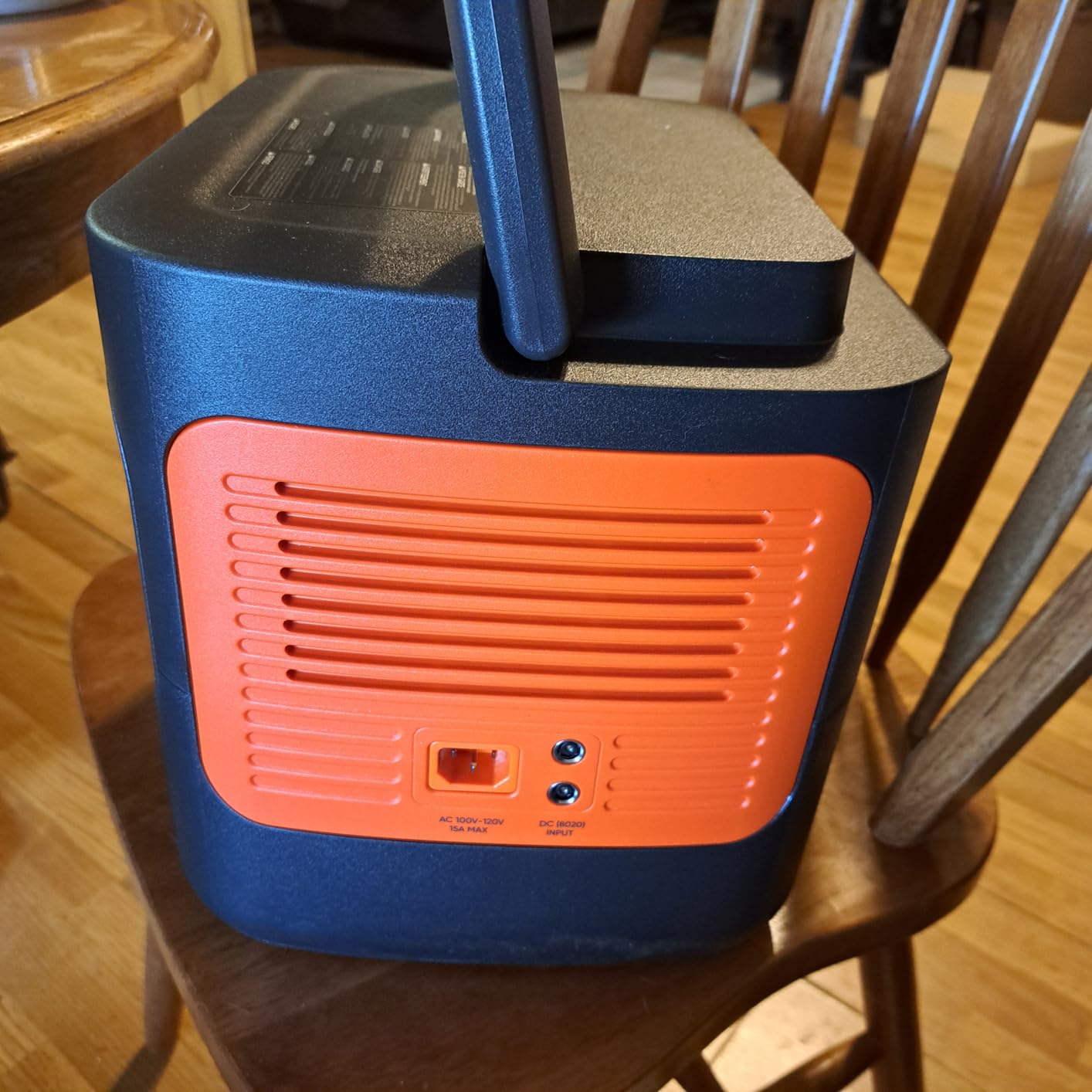
The 20ms switchover is UL1778 certified for uninterruptible power supply use, which is the certification to look for if you run anything you cannot afford to have interrupted. Cell-to-body construction borrowed from EV design is the reason it fits in 13.2 by 10.4 by 11.5 inches.
What 2,042Wh buys over a long trip
Roughly 1,700Wh usable after losses still covers a 60W compressor fridge running 24 hours a day for two full days, with power left for group charging. That is the calculation that makes a base-camp box worth carrying rather than a 1kWh one you top up daily.
It also opens up loads the smaller boxes refuse: a small power tool, a kettle, a projector, a CPAP and a fridge together. Reviewers consistently praise the capacity-to-weight ratio for a 2kWh unit.
Where it falls short
At 39.5 lbs it is the heaviest item here and generally needs two people or a cart, so plan where it will live before you pack the car. Solar is again restricted to Jackery panels.
Three AC outlets is a thin count for that much capacity, and the 869-review base is the smallest in this roundup, so its 4.4 average carries the least statistical weight. If you never move from the pitch and want more connection options, compare the port layouts before deciding.
10. EnginStar 300W (296Wh) – the cheapest way to stop being fully dependent on a car
EnginStar Portable Power Station 300W 296Wh Solar Generator
296Wh
300W pure sine wave AC
6.5 lbs
2 AC, 12V/24V DC, USB, 18W USB-C, ETL listed
Pros
- 6.5 lbs and 296Wh in a 9 x 5.5 x 7.5 inch body
- Regulated 12V and 24V DC outputs run mini fridges directly
- ETL certified with voltage and temperature cutoffs
- Reaches 80% in 2 hours from a 12V car socket
Cons
- Only 1000+ cycles from lithium-ion cells
- 12-month warranty is the shortest here
- Charging input capped at 65W so solar and car refills are slow
The EnginStar R300 is here for a specific reason: it is a low-cost way to carry a real inverter into the woods. 296Wh, 300W of pure sine wave AC output and 6.5 lbs in a 9 by 5.5 by 7.5 inch body, with eight outputs including two 110V AC outlets.
The regulated 12V and 24V DC outputs are the underrated part. Run a mini fridge or a car vacuum straight from DC and you skip the inverter entirely, which is the most efficient path in the whole roundup. A USB-C port at 18W handles phones fine.
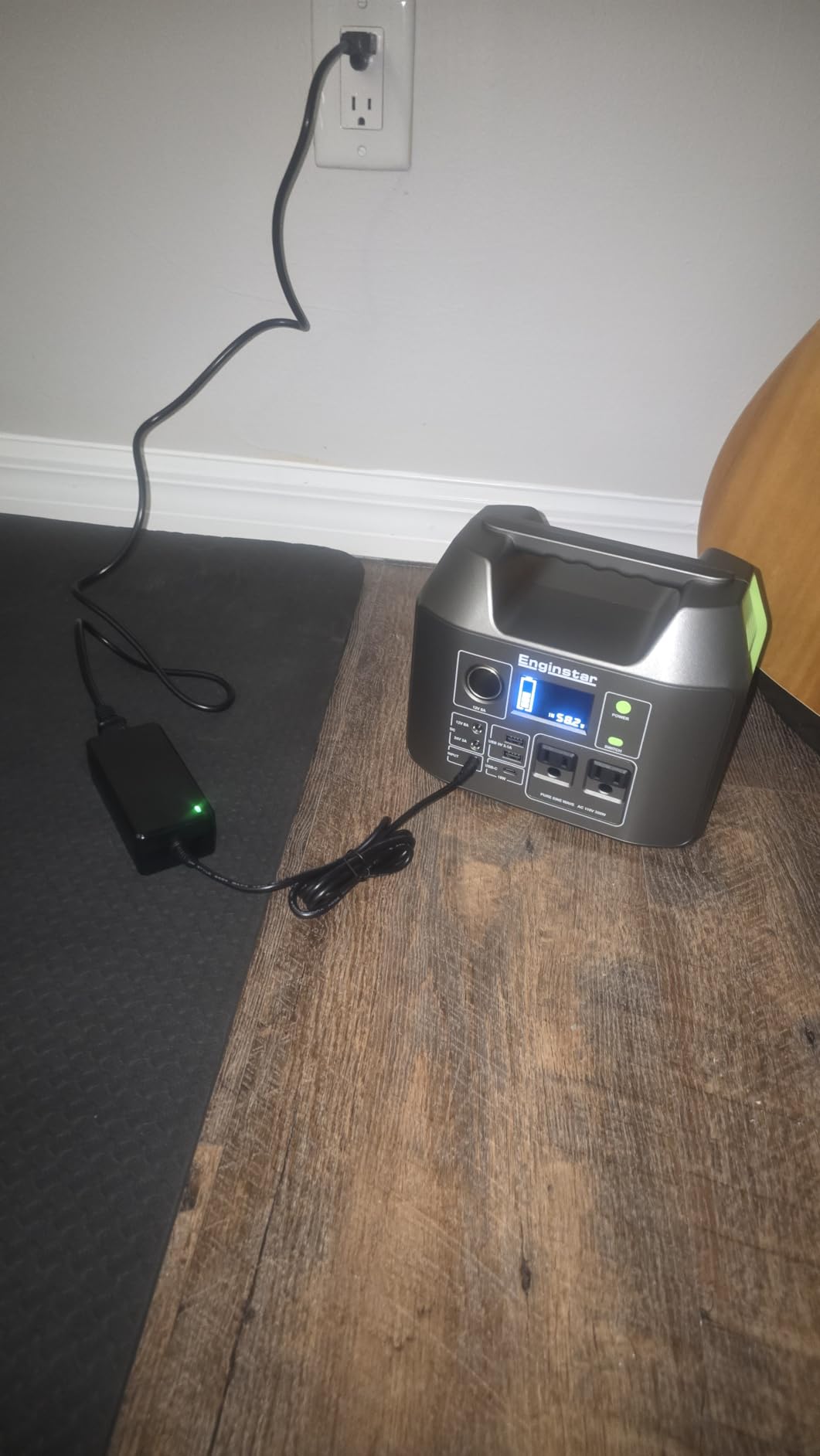
Charging works three ways: any compatible 12 to 25V panel, a wall outlet, or a 12V car socket at up to 65W that gets you to 80% in two hours. That is the useful version of car charging, since you are topping up while driving rather than waiting overnight.
Honest limits at this tier
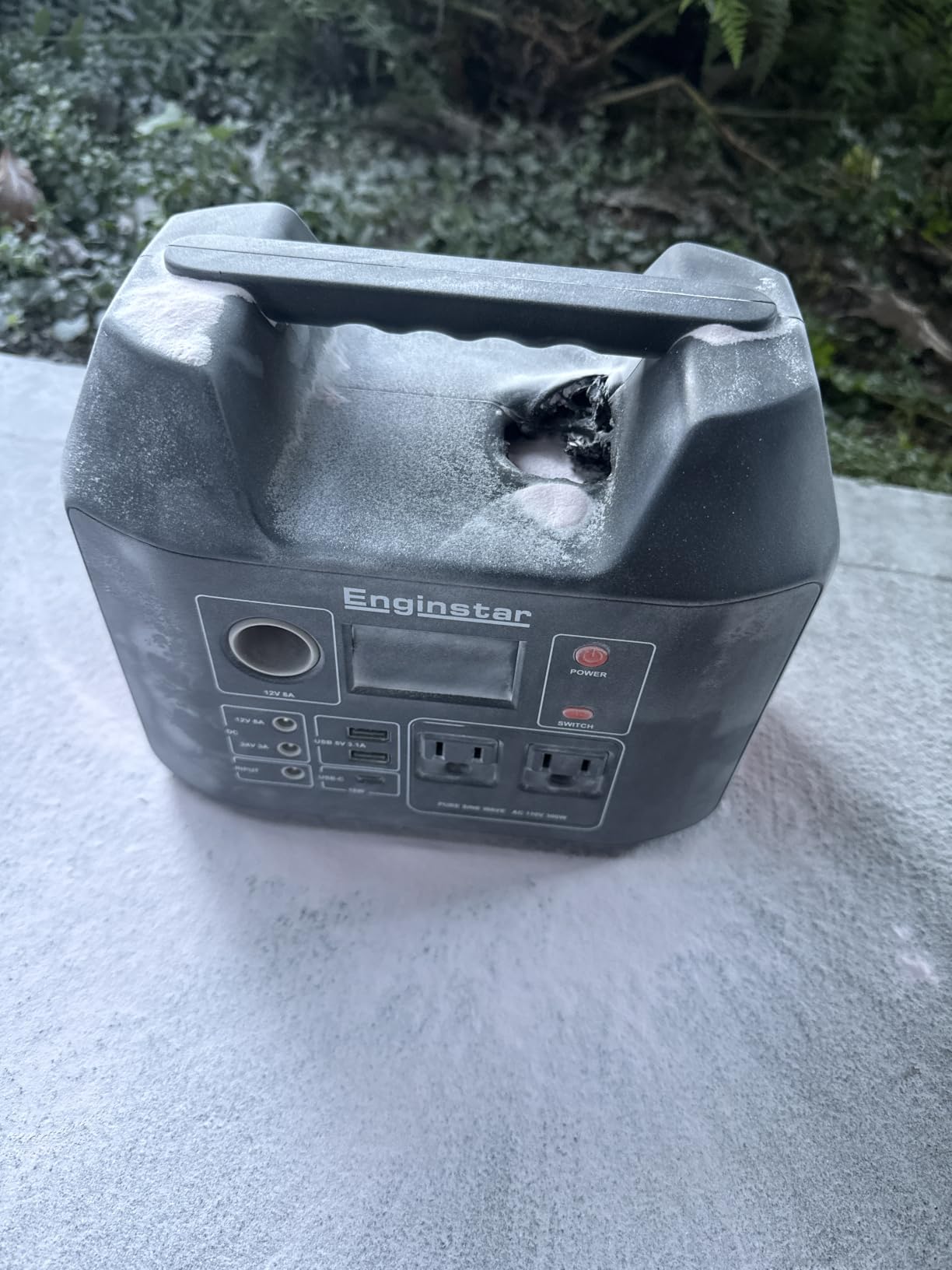
This unit runs standard lithium-ion cells supporting around 1,000 charge cycles, roughly a third of what the LiFePO4 rivals manage, and the warranty is a limited 12 months. Buyers focused on cycle life report degradation as the main long-term complaint, which lines up with the chemistry.
At 4.2 with an 11% one-star share, it is the lowest-rated box here, and the critical reviews concentrate on battery longevity rather than build quality. If you keep it for occasional weekend use and store it part-charged, that matters far less than the saving.
Who should skip it
Skip it if you plan multi-season trips or want it to outlive the vehicle. Choose the ALLWEI 300W instead and you get lithium iron phosphate cells, 3,000 cycles and a 60W USB-C port for a similar outlay.
Also worth knowing: a 65W maximum charging input means solar and car top-ups take real time. Our [winter power station guide](/best-portable-power-stations-for-winter/) covers what changes when cold weather cuts usable capacity.
What Size Power Station Do You Need for Camping?
Size it by hours, not by brand. Multiply your device watts by the hours you want them running, add about 20% for inverter losses, then pick the next capacity up. A weekend of phones, cameras and lanterns needs roughly 150 to 250Wh, a 12V compressor fridge across three nights needs about 1,000Wh, and a week of base camp with tools needs 2,000Wh or more.
Here is the reference we use. A 60W compressor fridge cycling near 35% pulls about 21Wh per hour, so 500Wh of real budget covers roughly 23 hours of compressor-on time, and 900Wh covers closer to 40.
A 12V fan at 10W draws about 40Wh over four hours. A LED lantern at 5W uses 20Wh for a long evening. A phone at 12W costs about 12Wh for a full top-up, and a 65W laptop charger is closer to 260Wh across a four-hour work block. A CPAP at 30W running all night is roughly 250Wh, and Starlink is the outlier at around 120W, which is 480Wh every hour you leave it on.
That last number is why forum advice keeps circling back to 1,000Wh as the sweet spot. Once a fridge, a CPAP and device charging share the pack, anything under 700Wh forces a daily top-up. Our earlier [camping power station roundup](/best-portable-power-stations-for-camping/) covers the same tier from a different angle if you want a second read.
Solar Charging at a Campsite: What Actually Happens
Solar is a trickle, not a refuel. A 100W panel in full sun produces close to its nameplate in the middle of the day and almost nothing at dawn or dusk, and a shaded pitch can cut output by more than half. Budget for an average day, not the best one.
Through a windscreen it is worse. Car campers running foldable panels on the dashboard report charging at roughly half the panel’s rated speed, because glass rejects some of the light before it reaches the cells. If solar is your plan, mount the panel outside and angle it toward the sun rather than leaving it on the dash.
Pairing matters too. A station with 500W of solar input does not care that your panel is 200W, but a station with 100W of input will refuse a 200W panel outright. Four of the picks here restrict input to brand-approved panels, so check compatibility before you buy anything.
For most trips, arriving home with 30 to 50% charge and topping up on the road beats relying on midday sun alone. If your panel is open to third-party hardware, the choices are much wider.
Buying Guide: The Specs That Decide the Purchase
Capacity first, then output. Continuous AC watts decide what you can plug in, and surge rating decides whether a motor will start. A compressor fridge needs roughly three times its running watts available briefly, which is why we weight surge heavily.
Chemistry decides longevity. Lithium iron phosphate units here are rated for 3,000 to 4,000 cycles, while the two lithium-ion options manage around 1,000. Over a decade of trips that gap is the difference between a tool you keep and one you replace.
Weight is a hard constraint. Under 10 lbs means one person can carry it from the car; 24 to 25 lbs means a firm two-handed lift; 37 to 40 lbs means two people or a cart. Do not buy the heaviest box in the roundup for a trip where you will move it daily.
Charging inputs decide your refill options: wall wattage, 12V car input wattage, and solar input wattage with its voltage ceiling. A 65W car input charges far more slowly than a 240W one, and a 60V solar ceiling will reject many panels outright.
Ports and safety finish the decision. Count real simultaneous needs rather than totals, and look for a battery management system with temperature, over-voltage and short-circuit cutoffs. Warranty length is a decent proxy for how the maker expects the pack to be treated, since two-year coverage on a pack meant for weekends and five-year coverage on a pack meant for base camp both make sense.
One honest note on ownership. When a component inside one of these fails, it can end the unit’s usefulness until warranty service is completed, and custom-built alternatives with app and API support are a poor substitute for an off-the-shelf pack with a battery, MPPT controller, inverter and app already integrated. Check the warranty terms in your country before buying.
Frequently Asked Questions
How big of a power station do I need for camping?
A 300-500Wh unit covers a weekend of phones, cameras and lanterns. A 1,000-1,200Wh unit is the sweet spot for car camping with a 12V compressor fridge plus device charging, because a 60W fridge on a 35% duty cycle consumes roughly 500Wh over three nights. Above 2,000Wh is for base camp or group trips where the station never gets moved.
Is it worth buying a portable power station for camping?
It is worth it if you run anything beyond phones and lanterns for more than two nights, or if a compressor fridge, a CPAP machine or Starlink is part of your setup. It is not worth it for a weekend tent trip with two phones, where a power bank is lighter and cheaper. The value comes from runtime you cannot otherwise get.
How long will a 200W power station last?
A 200W station holds roughly 200Wh of battery, so about 150 to 185Wh arrives at an AC load after conversion losses. That covers five to eight full phone charges, a laptop top-up, or about six hours of a 60W compressor fridge. Multiply your device watts by the hours you need, then add about 20% for inverter losses.
Are portable solar power stations worth it?
They are a useful top-up rather than a refuel. A 100W panel delivers close to its rating only around midday, and a shaded or windscreened pitch can cut output dramatically, with dashboard-mounted panels reported at roughly half speed. Most campers arrive with 30 to 50% charge and top up on the road.
Which portable power station is the most reliable?
Reliability tracks battery chemistry and warranty length. The lithium iron phosphate models here are rated for 3,000 to 4,000 cycles against roughly 1,000 for the lithium-ion options, and five-year warranties appear on most of them. BLUETTI support is repeatedly singled out by owners for responsive service and honoured exchanges.
Final Verdict
The Jackery Explorer 300 is the best portable power station for camping trips that last two nights, because 7.1 lbs and 292Wh is the smallest combination that still runs a real inverter. For anything longer, the Jackery Explorer 1000 v2 at 1,070Wh is the pick most campers should buy, and the BLUETTI AC180 wins whenever fast refilling matters more than weight.
Match the box to the load, discount the rated watt-hours by a fifth, and buy the smallest station that clears your trip with a day of margin. That single habit will save you from the most common camping power station mistake in 2026, which is carrying too little.