
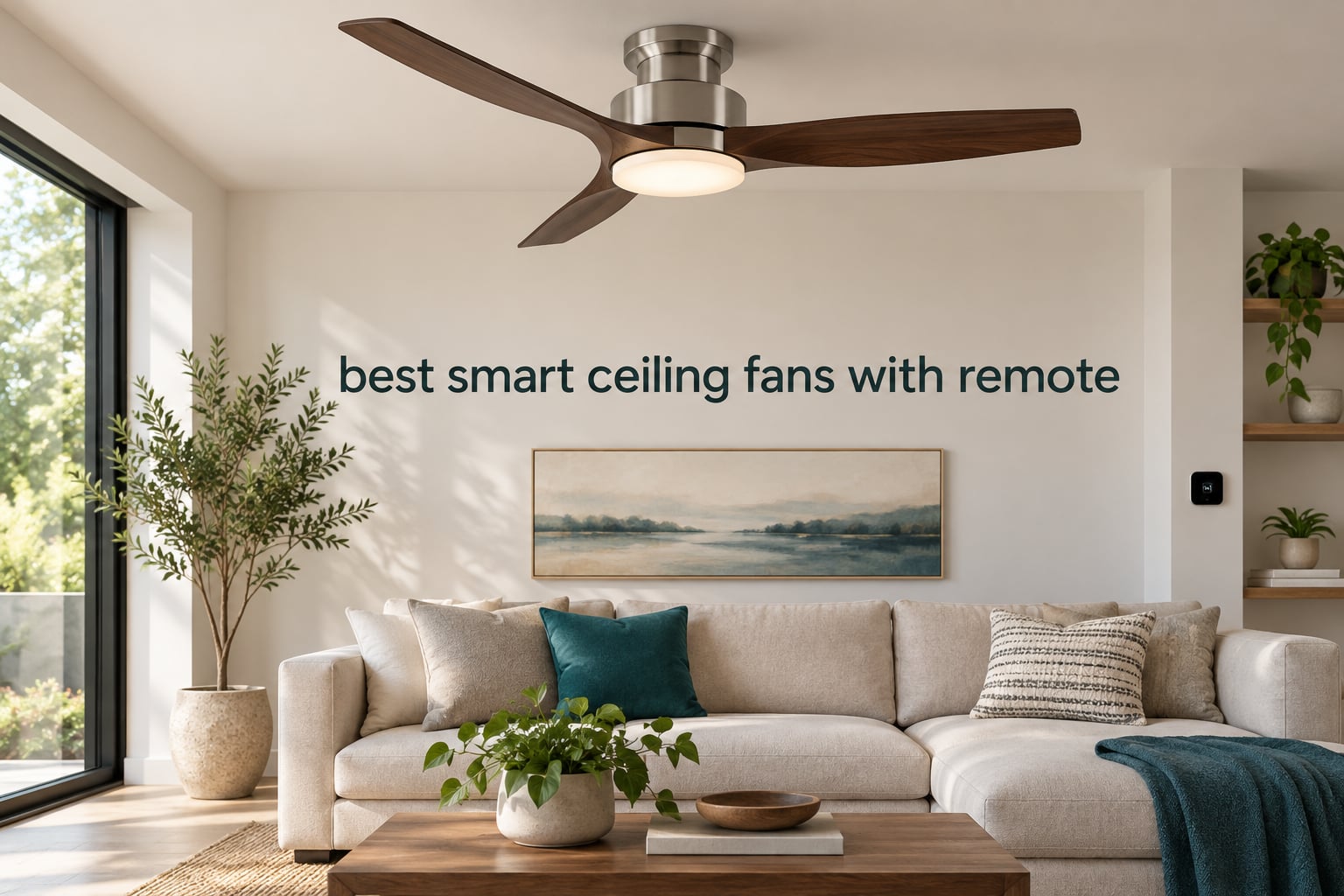
The ZMISHIBO 52-inch flush mount is the best smart ceiling fan with remote for most people, because it pairs a genuinely quiet 30dB DC motor with a handheld remote, a 20W 2000-lumen dimmable LED and app control at a build quality that holds up. The DREO 52-inch is the stronger all-rounder if you want the best app experience, and the Sofucor 52-inch wood-blade model wins if airflow and styling matter more to you than a light kit.
That is the short version. The long version is that “smart ceiling fan with remote” now splits into two very different products. One is a fan with a radio-frequency remote and an optional app bolted on. The other is a fan whose receiver joins your Wi-Fi network, schedules itself, and answers to Alexa or Google Assistant.
Most buyers in this category have one room and one ceiling, and they want to stop hunting for a pull chain in the dark. We compared 10 models across motor type, size, app support, lighting and mount style, and we read what owners actually say after living with them. If you want a broader look at non-smart models first, our guide to the best ceiling fans tested and reviewed covers the basics every buyer should know.
Table of Contents
Top 3 Picks for the Best Smart Ceiling Fans With Remote (October 2026)

ZMISHIBO 52 Inch Flush Mount
- Quiet 30dB DC motor
- Flush mount for low ceilings
- 20W 2000LM dimmable LED
- Remote plus app control

Sofucor 52 Inch Wood Blades
- 5500 CFM airflow
- Real wood blades
- Alexa and Google Assistant
- No light kit

Sofucor 42 Inch with Light
- Indoor and covered outdoor use
- 3000K-6000K stepless color temperature
- Alexa plus app plus remote
- Two downrods included
All 10 Smart Ceiling Fans With Remote at a Glance (October 2026)
| Product | Specifications | Action |
|---|---|---|
| ZMISHIBO 52 Inch Flush Mount |
|
Check Latest Price |
| Sofucor 52 Inch Wood Blades |
|
Check Latest Price |
| Sofucor 42 Inch with Light |
|
Check Latest Price |
 DREO 52 Inch Smart Fan DREO 52 Inch Smart Fan |
|
Check Latest Price |
 TALOYA 52 Inch Low Profile TALOYA 52 Inch Low Profile |
|
Check Latest Price |
 Sofucor 42 Inch Flush Mount Sofucor 42 Inch Flush Mount |
|
Check Latest Price |
 OJX 52 Inch with Light OJX 52 Inch with Light |
|
Check Latest Price |
 cumilo 60 Inch with Light cumilo 60 Inch with Light |
|
Check Latest Price |
 Fanbulous 72 Inch with Light Fanbulous 72 Inch with Light |
|
Check Latest Price |
 JSAITEE 52 Inch Low Profile JSAITEE 52 Inch Low Profile |
|
Check Latest Price |
What Is the Best Smart Ceiling Fan With Remote?
The ZMISHIBO 52 Inch Flush Mount is the best smart ceiling fan with remote overall. It combines a copper-wound DC motor rated at 30dB with 3057 CFM of airflow, a 20W 2000-lumen LED that dims from 10 to 100 percent and tunes from 3000K to 6500K, and a configuration that handles both remote and app control. Pick the DREO 52 Inch instead if app and voice reliability is your top concern, or the Sofucor 52 Inch Wood Blades if you want the strongest airflow and no light kit.
1. ZMISHIBO 52 Inch Flush Mount – Best Overall
ZMISHIBO 52 Inch Ceiling Fans with Lights, Remote&App Control, Flush Mount
52 inch flush mount
DC motor at 30dB
3057 CFM airflow
20W 2000LM LED
3000K-6500K
Pros
- Quiet copper-wound DC motor at 30dB
- Flush mount body fits low and standard ceilings
- All mounting hardware included for a fast install
- Stepless 3000K-6500K color temperature with memory recall
- Dual-sided black and brown blades for seasonal swaps
Cons
- Smartphone app is the weak point with pairing and responsiveness complaints
- QR code in the printed manual does not scan
- Light settings sometimes reset after night mode
This is the fan we would put in a bedroom without hesitating. The flush-mount body sits tight to the ceiling, so it works in rooms where a downrod fan would feel like it is hanging in your face, and the 30dB rating is not marketing fluff. Owners describe it as quiet enough to run all night.
The light is the surprise. A 20W LED producing 2000 lumens is brighter than the glass-dome kits most fans in this bracket ship with, and it dims continuously rather than in steps. Memory recall means your last brightness and color temperature come back after a power cut.
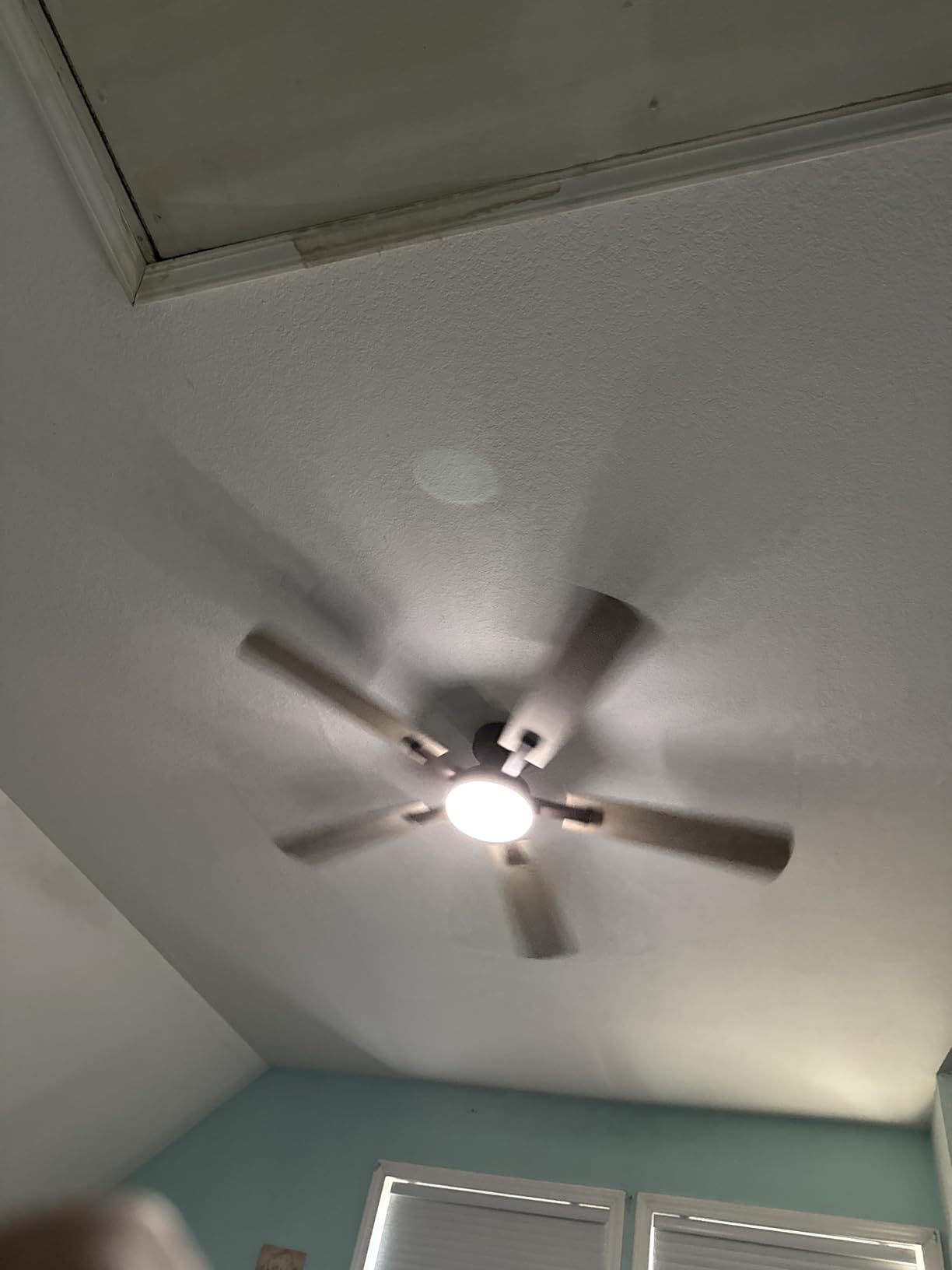
What holds it back is software, not hardware. The app is the least liked part of the package, with some owners reporting Bluetooth pairing that never completes and a QR code in the printed manual that does not scan. Several reviewers say plainly that they bought it for the fan and the remote and stopped using the app.
The canopy assembly is fiddlier than the quick-start guide suggests, and 3057 CFM is a moderate airflow figure rather than a powerful one. If you are cooling a large open-plan space, step up in size.
Check the remote before you commit
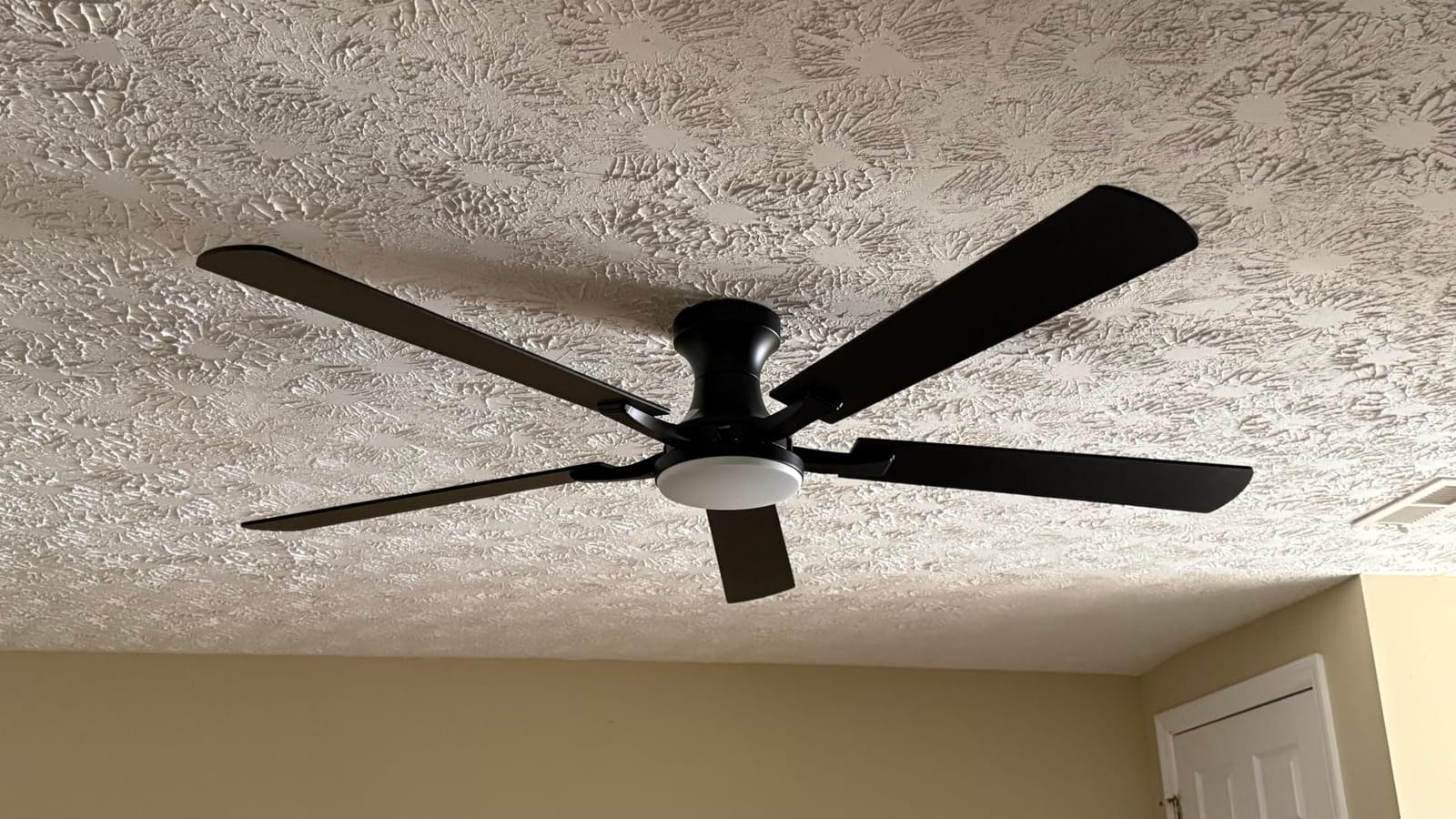
The handheld remote is the part of this fan that owners defend hardest. It carries speed, direction, brightness and color control, and it talks to the receiver over radio, so it keeps working when your router does not. That single fact separates this fan from app-only control.
Battery status is the one thing to keep an eye on. If the fan stops responding to the remote entirely, a fresh pair of batteries resolves it more often than anything else.
Who should skip this one
Skip it if your household lives entirely inside Apple Home and you want native HomeKit support without a bridge, because that integration is not listed for this model. Skip it if you need serious moving-air capacity in a room over roughly 300 square feet, or if you are installing on a sloped ceiling where the flush canopy geometry will not sit flat.
2. Sofucor 52 Inch Wood Blades – Best Airflow and Styling
Sofucor 52 Inch Smart Wood Ceiling Fan No Light, Alexa/App/Remote Control
52 inch downrod mount
Brushless DC motor under 30dB
5500 CFM airflow
26W draw
No light kit
Pros
- Three real wood blades look far better than plastic alternatives
- Under 30dB brushless DC motor with 5500 CFM airflow
- Remote plus app plus Alexa and Google Assistant
- 1/4/8 hour timer with app-extended scheduling
- Wall bracket doubles the remote as a wall switch
Cons
- No integrated light kit so you need a separate fixture
- Downrod mount hangs lower than flush-mount designs
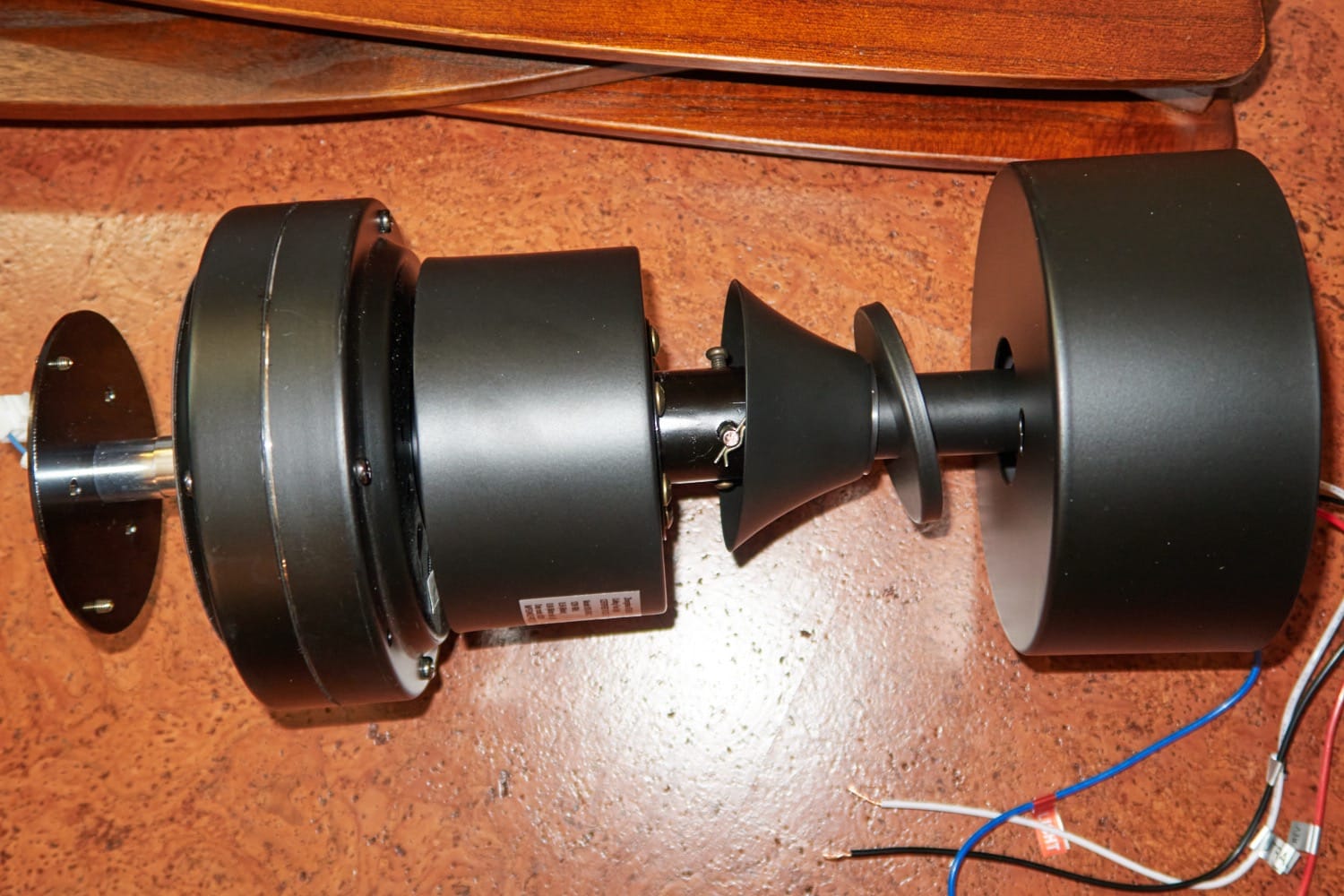
Most fans in this roundup use five or more molded blades. This one uses three real wood blades at 25.2 inches each, and that is the reason it looks like furniture instead of hardware. For a living room or a vaulted great room, the styling difference is immediate.
Underneath, the brushless DC motor moves 5500 CFM while drawing 26 watts. That is the second-highest airflow in the roundup at the lowest power draw of any model here, which is where a DC motor really pays off on a long summer afternoon.
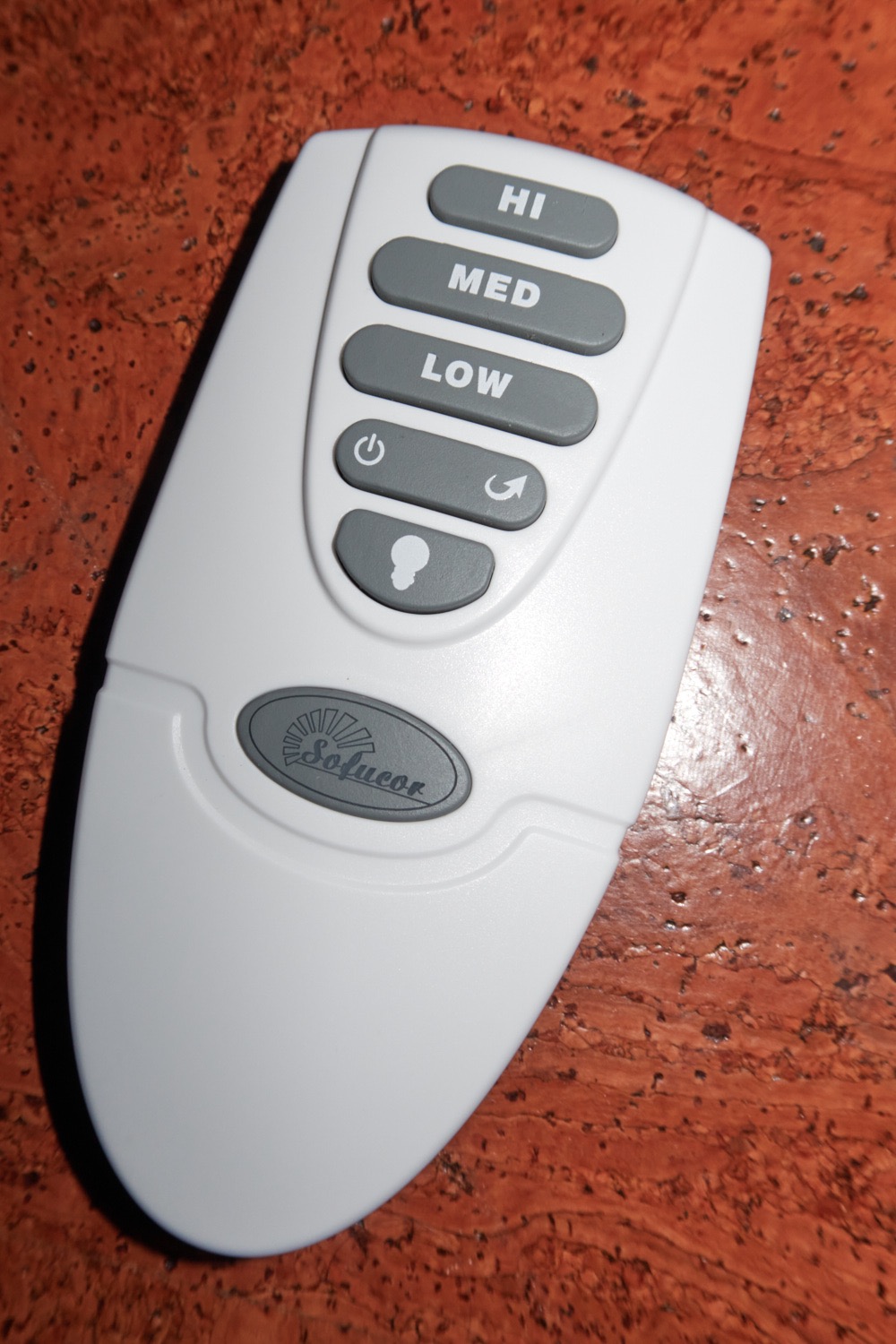
The control story is the best in the group. Remote, app and voice through Alexa or Google Assistant all work, and the timer runs 1, 4 or 8 hours from the remote with app-side scheduling that extends out to 540 minutes. The wall-mounted remote bracket is a small touch that solves the lost-remote problem for good.
There is no light. If your room needs both airflow and illumination, you are bolting on a separate fixture, which is extra wiring and another thing to install.
Why three blades work here
Three blades mean fewer surfaces for airflow drag, and on this motor the result is the highest CFM figure in the set apart from the 72-inch model. The trade-off is that three-blade fans can feel more aggressive on high settings, so most owners settle on a middle speed.
Reversible direction is standard, so winter updraft circulation works as well as summer downdraft. The 10-inch downrod suits standard 9-foot ceilings, and 52 inches is the right diameter for rooms in the 400 to 550 square foot range.
Who should skip this one
Skip it if the room has a ceiling under 8 feet and you need headroom, because a downrod body hangs noticeably lower than a flush mount. Skip it if you want one box to do airflow and lighting. This fan is a deliberate choice, not a compromise, but it is a choice for a specific room.
3. Sofucor 42 Inch with Light – Premium Pick
Sofucor 42 Inch Smart Modern Ceiling Fan with Light Indoor/Outdoor Brown | Alexa/Google Assistant/APP/Remote Control, Reversible DC Motor, Timer, 6-Speed, 3CCT for Living Room Bedroom Patio Farmhouse
42 inch ceiling mount
DC motor under 30dB
5000 CFM airflow
35W draw
Alexa app and remote
Pros
- Four control paths including Alexa Google Assistant app and remote
- Quiet copper-wound DC motor under 30dB with 5000 CFM
- App stepless 3000K-6000K tuning with light memory
- Moisture-resistant finish for covered outdoor spaces
- Two downrods plus slope mounting to 15 degrees
Cons
- ABS and metal construction feels light next to solid wood fans
- Ceiling mounting still needs basic skill even though the fan arrives largely assembled
If you want the most complete package in this list at a price point that undercuts the premium models, this is the fan. Light, motor, remote, app and voice control are all in the box, and the spec sheet is stronger than anything else at this level.
The motor is copper-wound DC running under 30dB with 5000 CFM at the top setting across 6 speeds. Owners on r/HomeAssistant point to this class of fan as the sensible middle ground between a bargain unit and a brand-name smart fan.
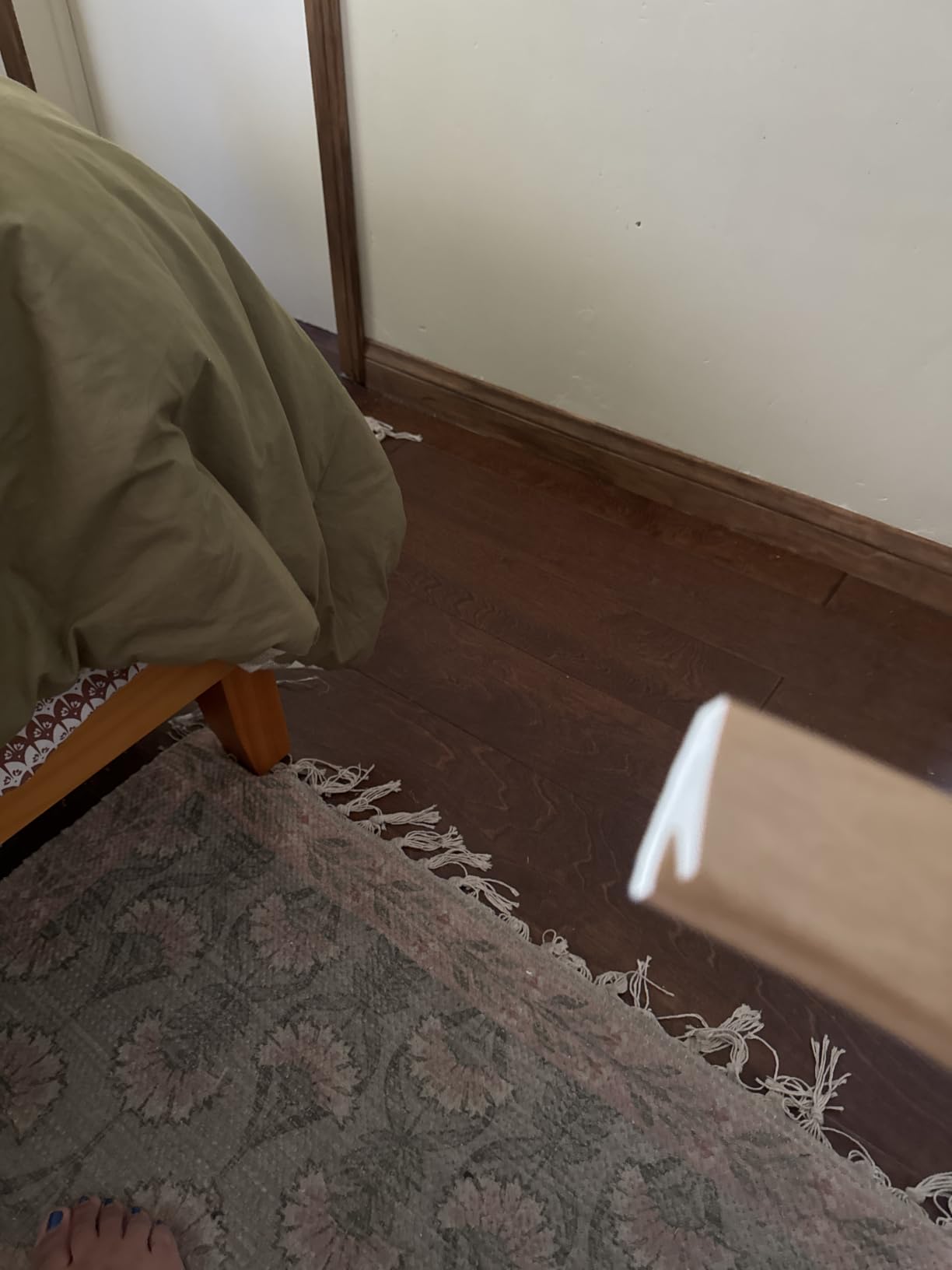
The app is unusually capable here. Stepless color temperature from 3000K to 6000K and 10 to 100 percent brightness, with a memory function that restores your last light setting, is the feature set that owners on the DREO usually praise most, and it is present.
Construction is the compromise. ABS blades and a metal frame are lighter and cheaper than the wood on the Sofucor above, and a small number of owners report that the blade material feels thin if you handle the fan roughly during installation.
Why the moisture rating matters more than you think
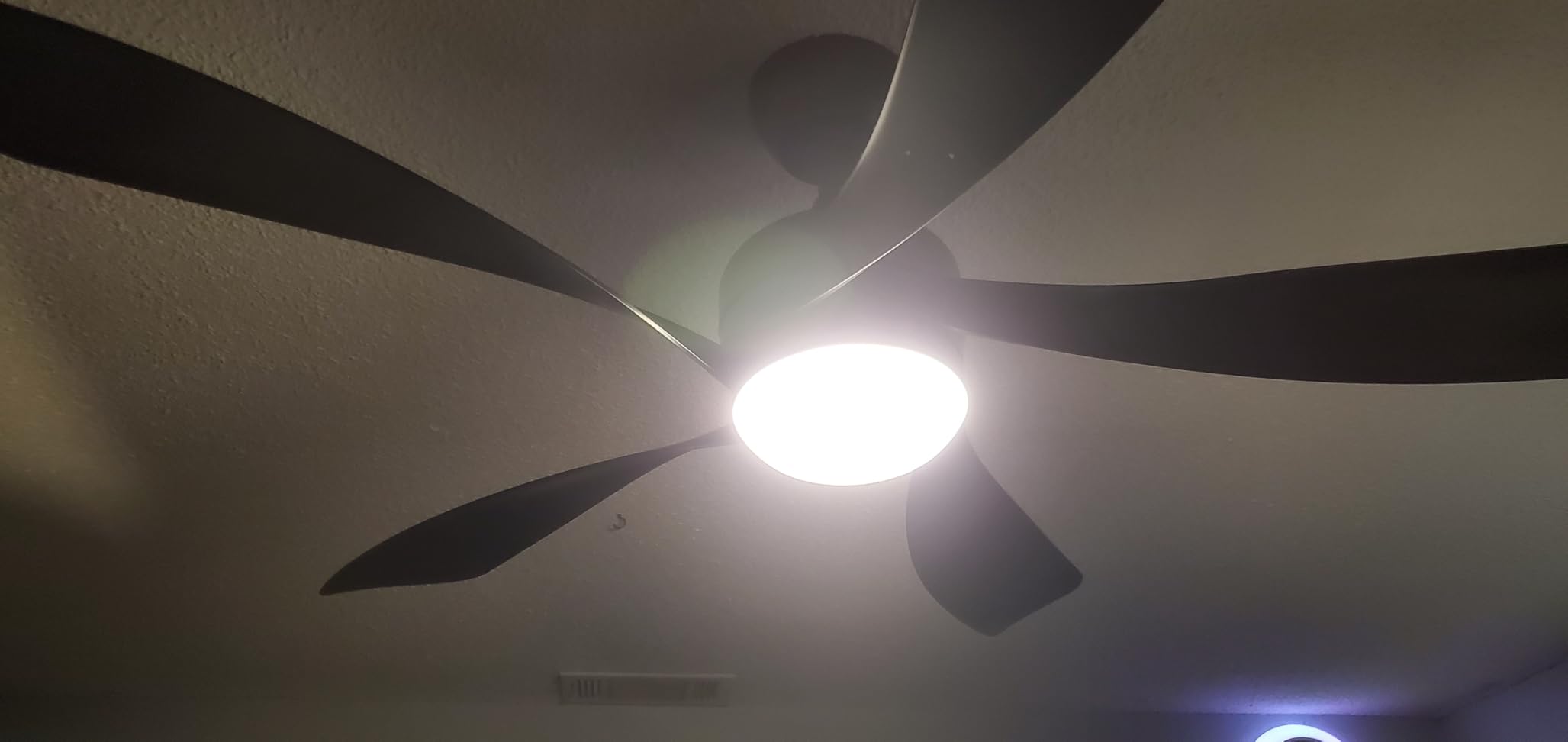
This is one of only a few models here rated for indoor and covered outdoor use, which means it can go on a covered patio, a porch or a screened room without you gambling on the finish. A fan rated indoor only will corrode in that environment within a couple of seasons.
Two downrods are included at 5 inches and 10 inches, and slope mounting is supported up to 15 degrees. That covers almost every residential ceiling except a true vault.
Who should skip this one
Skip it if you have a very high ceiling and want the fan to hang lower for a vaulted look, because this is a short-body ceiling mount. Skip it if you care more about blade material than feature count, since real wood costs more. And skip it if 42 inches will not fill your room, because a small fan in a large space circulates air without cooling anyone.
4. DREO 52 Inch Smart Fan – Best App Experience
DREO Smart Ceiling Fan with Lights, 52 Inch, 12 Speeds & 3 Fan Modes, Stepless, Dimmable LED Light, Timer, 22dB Quiet DC Motor, Remote/APP/Alexa Control, Black Ceiling Fans Indoor, 2026 Upgraded
52 inch ceiling mount
Brushless DC motor 43dB
5673 CFM airflow
12 speed levels
22dB minimum
Pros
- Joint highest average rating in the set with a strong five star share
- Up to 12 speed levels plus Natural Normal and Sleep wind modes
- App stepless 1-100 percent dimming and 2700K-6500K color temperature
- Works with the DREO app Alexa Google Home and Siri Shortcuts
- Accurate installation video and straightforward assembly
Cons
- Remote uses 6 discrete brightness steps instead of stepless dimming
- Junction box screws are not included
- Mild hum at speed 3 from light cover resonance
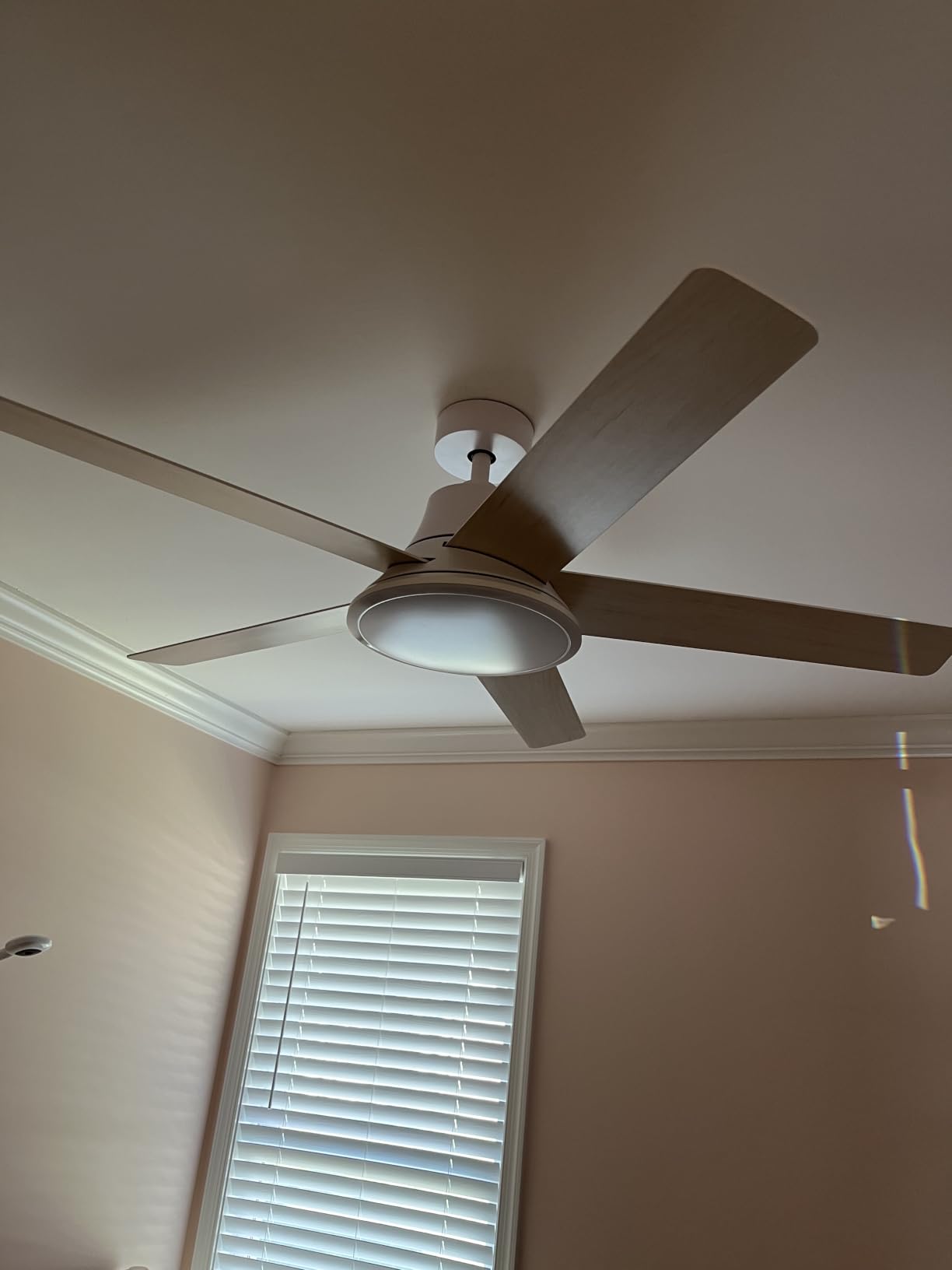
DREO is an appliance brand that built a fan, and the software is where that shows. Twelve speed levels instead of six, three named wind modes in the app, and stepless dimming from 1 to 100 percent with color temperature from 2700K to 6500K. It also works with Siri Shortcuts, which very few fans in this roundup manage.
The airflow figure is 5673 CFM on 14-degree angled blades, and the motor is brushless DC. Measured noise is listed at 43dB overall with a 22dB minimum, so the quiet claim applies to the low settings where a bedroom fan actually lives.
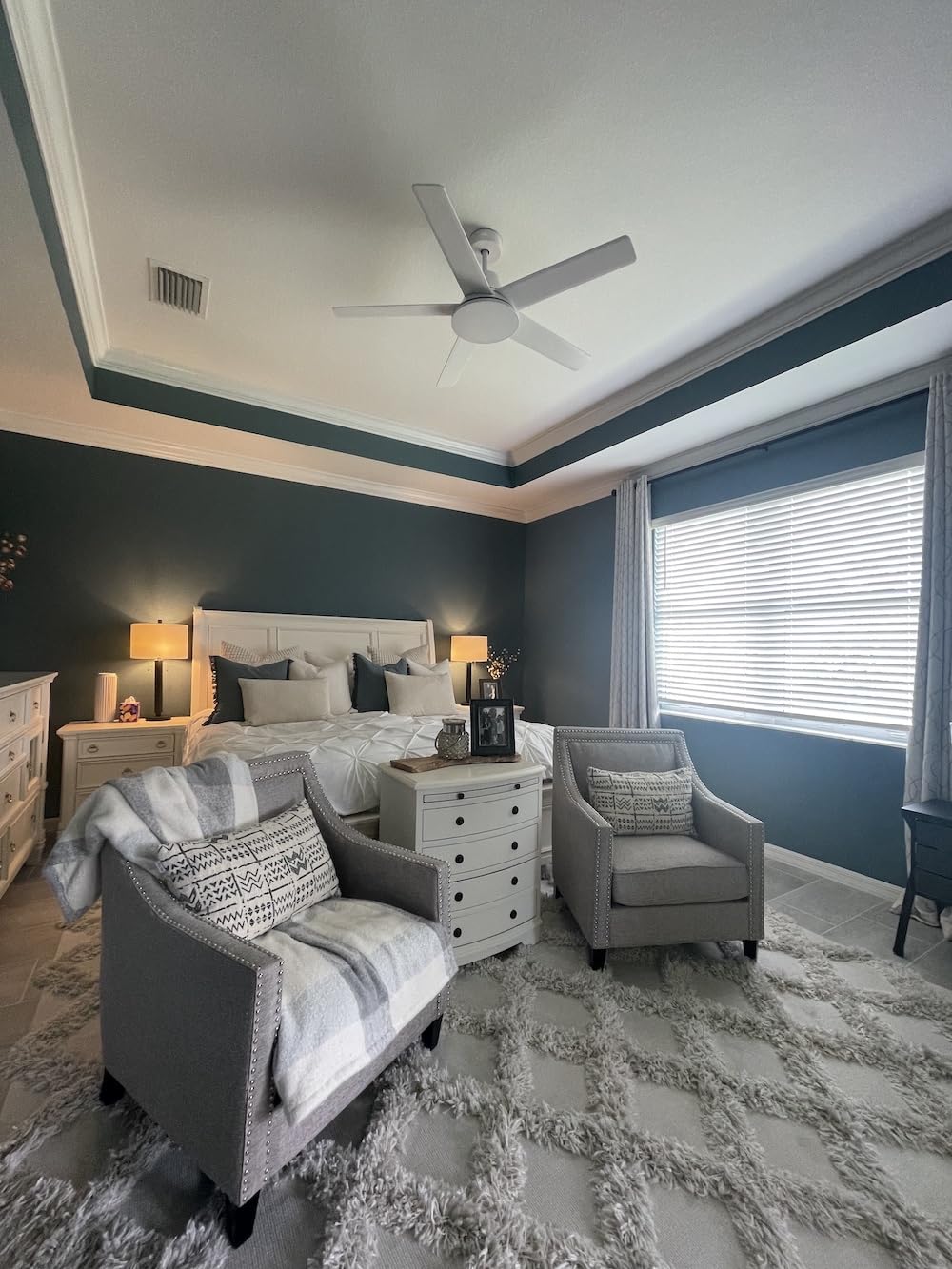
The remote is the weaker half of the control story. Brightness on the remote steps through 6 fixed levels while the app dims continuously, so anyone who cares about fine light control will end up reaching for their phone.
Two smaller things worth knowing: junction box screws are not in the box, which trips up retrofits in older homes, and a few owners hear a faint hum at speed 3 caused by resonance between the fan and the light cover.
Where the app actually earns its keep
Preset modes and routines are the reason to pick this fan. Once a fan is on a schedule, owners across HomeKit and Home Assistant communities report the automation gets used daily, and that is what justifies spending more on a smart fan in the first place.
One of the most common smart ceiling fan problems is forgetting the fan is running because it looks identical to a non-smart one. Scheduling solves that without anyone touching a switch.
Who should skip this one
Skip it if you are on Apple Home and want native HomeKit. Siri Shortcuts is not the same as HomeKit support, and the difference matters if you have the whole house on Apple. Skip it if your install depends on the box containing every screw it needs, and check your junction box screws before the power is off.
5. TALOYA 52 Inch Low Profile – Best for Low Ceilings
TALOYA 52 inch Smart Ceiling Fan,Low Profile Ceiling Fan with Light and Remote/App Control,Flush Mount, Quiet Reversible Motor for Living Room Bedroom Patio White
52 inch flush mount
Reversible motor under 35dB
3000K-5000K light
Remote plus app
2.4 GHz network needed
Pros
- Low profile flush body solves headroom in low ceiling rooms
- ABS blades resist humidity and do not droop
- Quiet motor still moves strong airflow on high
- Works with Smart Life SmartThings and Home Assistant via Tuya
- Beep-silence button for bedrooms
Cons
- One remote pairs with one fan so a spare remote disables the first
- Not natively Matter compatible
- Remote needs 2 AAA batteries which are not included
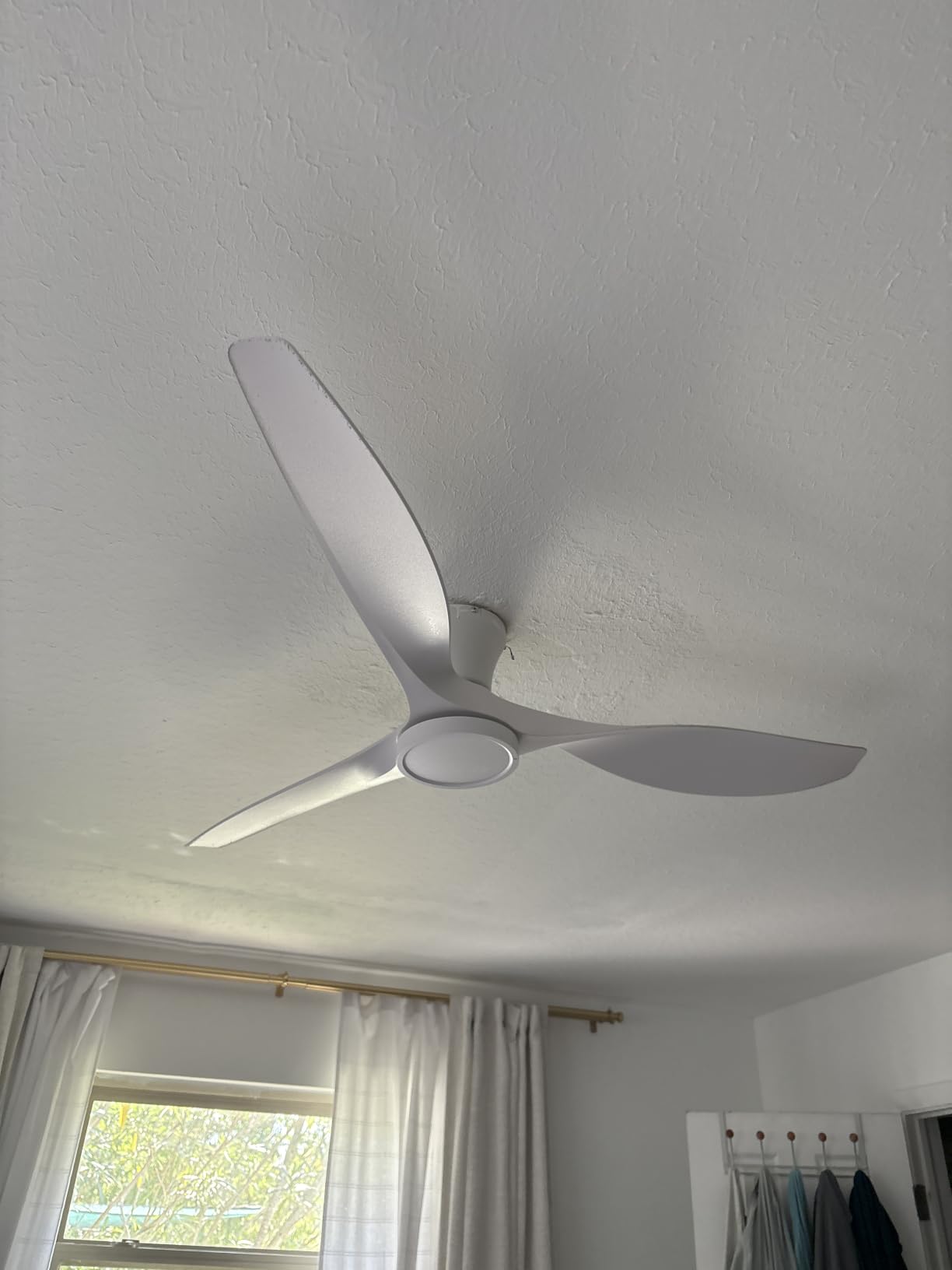
This is the flush mount for people whose ceiling is too low for anything else. The body sits flat, so a 7.5 or 8-foot ceiling keeps its proportions instead of being crowded by a hanging motor housing.
The blade material is the quiet hero here. ABS blades will not absorb moisture and will not droop the way pressed-board blades do in humid rooms, which is exactly the failure owners report a few summers into service on cheaper fans.
Smart-home owners get the most out of this one because it runs on a Tuya-based platform, which means it integrates with Smart Life, SmartThings and Home Assistant. That is not native Matter support, but it is a real path into almost any hub you already run.
The beep-silence button is small and genuinely useful. Nothing ruins a bedroom faster than a fan that chirps every time you change speed.
Read the remote pairing rule carefully
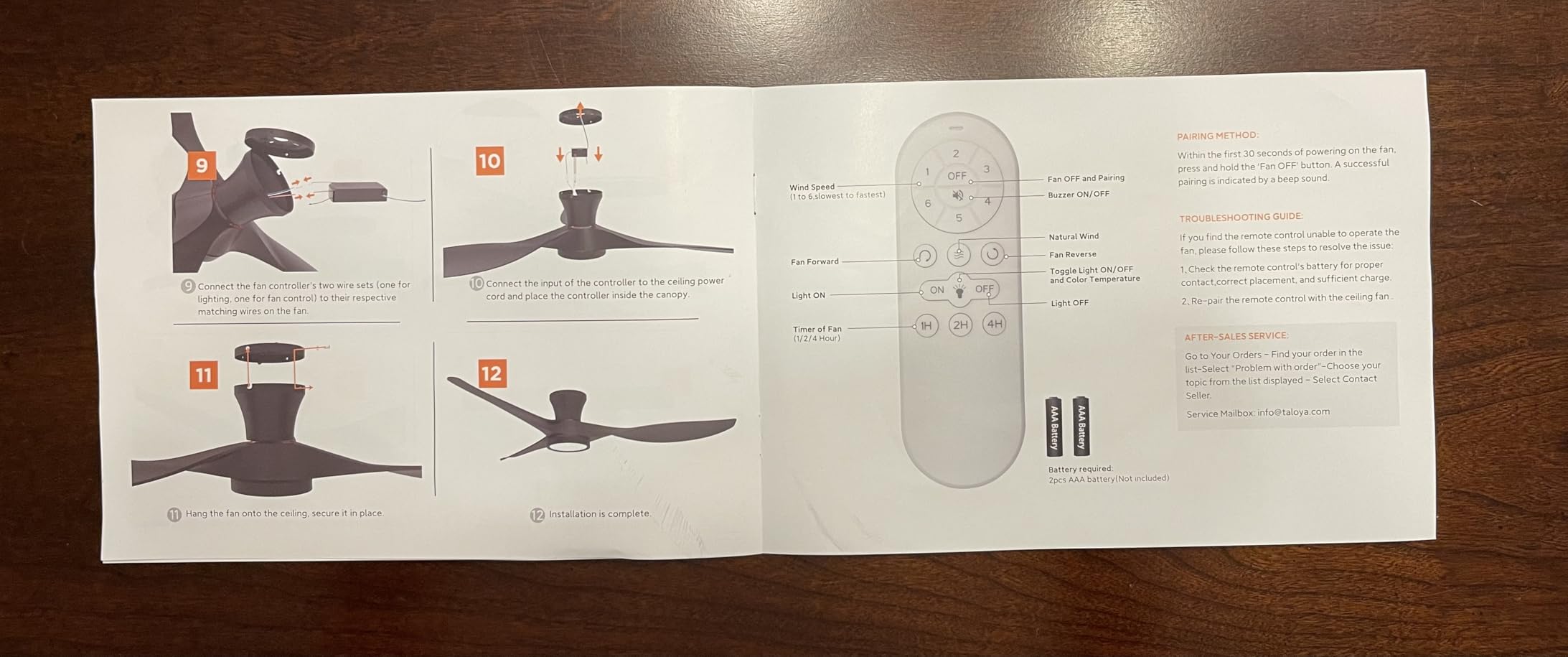
One remote pairs with one fan. If you buy a replacement remote or a second remote for a second bedroom, pairing it disables the remote you already had. Owners flag this as the most surprising thing about an otherwise easy setup.
Two AAA batteries run the remote and they are not included. Add them to the install list, along with the 2.4 GHz network requirement, since 5 GHz is not supported.
Who should skip this one
Skip it if you plan to run a Matter-based home and want the fan to join the ecosystem without a Tuya bridge. Skip it if you need a damp rating for a covered patio, because this model is listed for indoor use. And skip it if you need a light that dims from the remote, since some units are not remotely dimmable despite the app offering full control.
6. Sofucor 42 Inch Flush Mount – Best for Bedrooms
Sofucor 42 Inch Smart Ceiling Fans with Lights and Remote, APP Control
42 inch flush mount
Brushless motor at 30dB
5000 CFM airflow
App remote and voice
Light memory function
Pros
- Flush mount removes the wobble and rattle of downrod models
- Quiet with no ticking or rattle at any of 6 speeds
- Remote plus app plus Alexa and Google Assistant
- App stepless 3000K-6000K tuning with light memory
- Damp rated ABS blades for covered outdoor areas
Cons
- ABS blades can look plastic up close
- Some units develop a rub noise in one direction
- Receiver pairs with only one remote at a time
Several owners upgraded to this fan specifically because their previous downrod model wobbled. The flush profile is mechanically simpler, and that simplicity is the whole selling point: no stem, no rattle, no knocking at speed 4.
Operation is under 30dB across 6 speeds, and the lowest speed already moves enough air for a bedroom. The app handles stepless color temperature from 3000K to 6000K, brightness from 10 to 100 percent, and a light memory function.
Control covers all three paths. Remote, app and Alexa or Google Assistant voice commands, with a 1, 4 or 8-hour sleep shutdown, plus a reversible motor for winter circulation.
What the flush mount actually fixes
Wobble in a ceiling fan almost always comes from an unbalanced blade set or a downrod that is not perfectly plumb. A flush mount removes the second variable entirely, which is why the reports of wobble on this model are almost nonexistent.
It is also the friendliest option for a first-time installer. No downrod to plumb, no sloped-ceiling angle to work out, and the blades arrive already attached.
Who should skip this one
Skip it if you need more than 5000 CFM in a large room, because 42 inches is a bedroom and small living room size. Skip it if appearance at close range matters, since ABS blades can read as plastic. And note that one fan pairs with one remote, so plan accordingly if you are matching bedrooms.
7. OJX 52 Inch with Light – Best for Warranty Coverage
OJX 52 Inch Ceiling Fans with Lights and Remote/APP Control
52 inch ceiling mount
Copper DC motor at 30dB
5000 CFM airflow
18W dimmable LED
10 year motor warranty
Pros
- 10 year motor warranty backed by a 2 year parts warranty
- 18W dimmable LED with 3000K 4500K and 6000K modes
- Whisper quiet reversible copper DC motor operating as low as 20dB
- Dual-sided blades with black and walnut wood grain
- 1/2/4/8 hour auto-shutoff timer plus natural wind and turbo modes
Cons
- A small number of orders arrive with missing parts
- LED light reads dimmer than some buyers expect
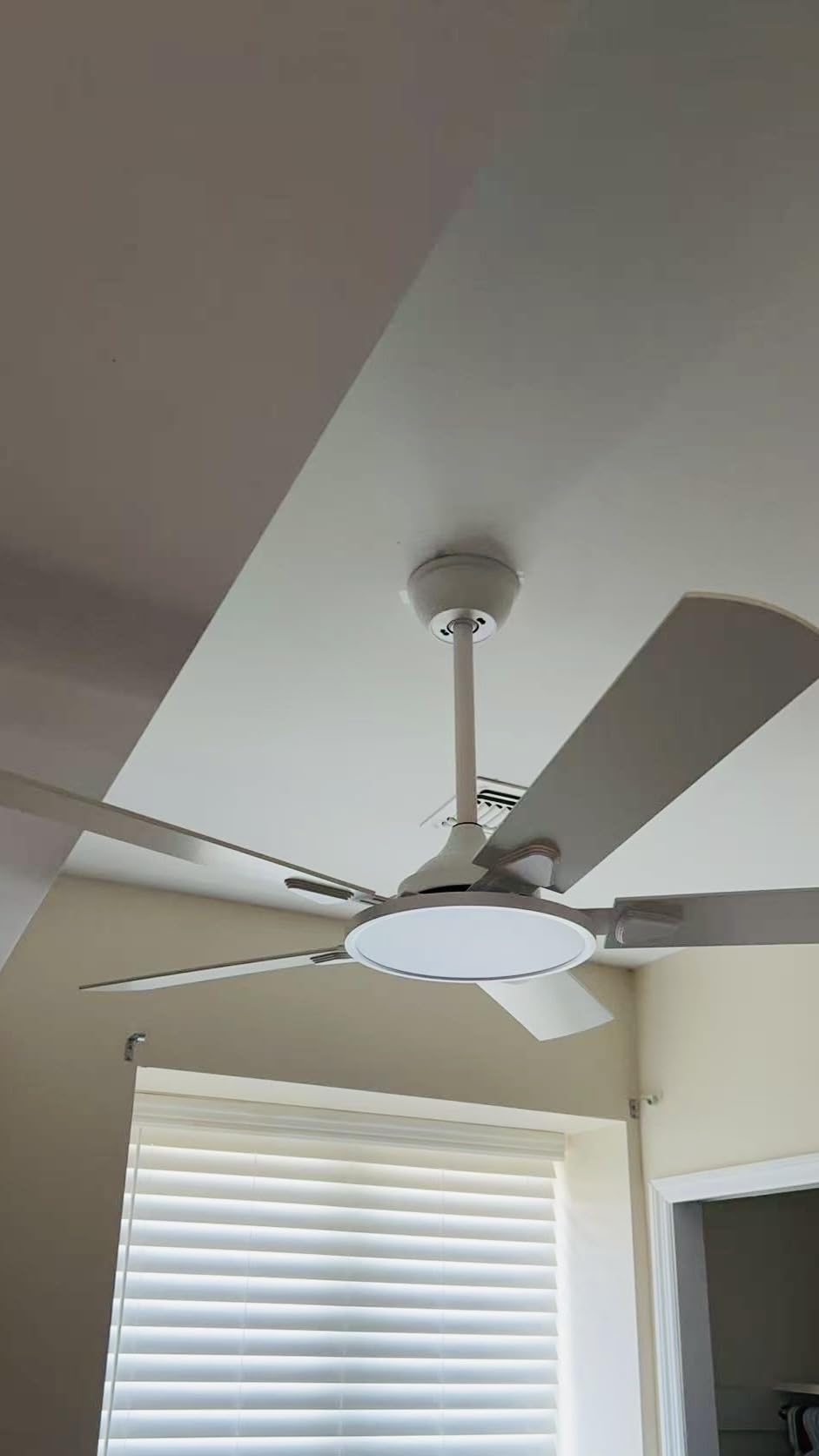
The warranty is the headline here: 10 years on the motor and 2 years on everything else. Among smart ceiling fans with remote, most brands offer a 2-year blanket and a 5-year motor, so this is genuinely the longest motor cover in the set.
Everything else holds up too. Copper-wound reversible DC motor, 5000 CFM across 6 speeds, and an 18W dimmable LED covering 5 to 100 percent brightness in three color temperatures with flicker-free output.
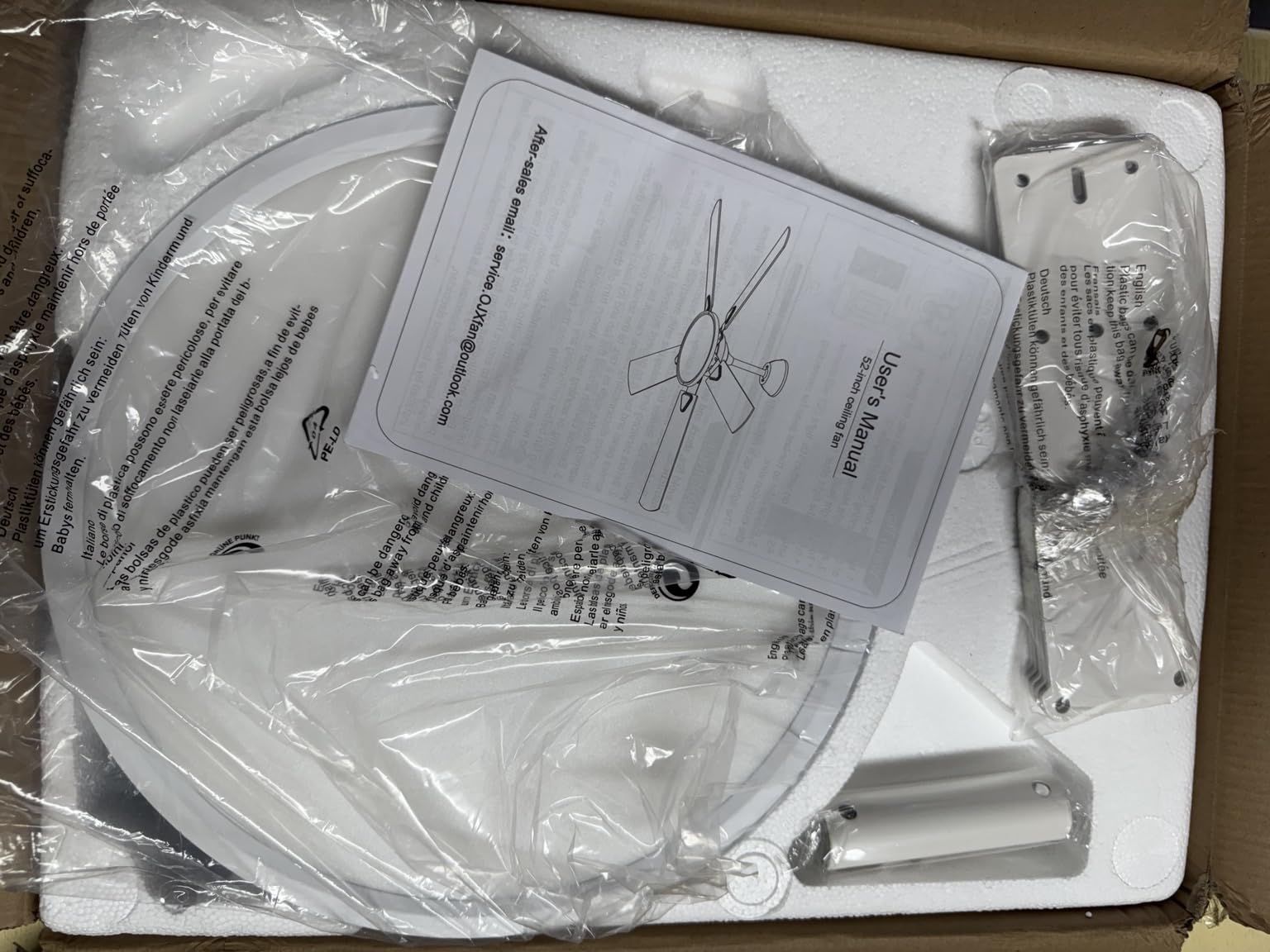
The blades are dual-sided, black on one face and walnut wood grain on the other, so the fan can be flipped for winter without buying new blades. Two downrods handle flat and sloped ceilings, and the timer offers 1, 2, 4 or 8 hours.
Owners frequently buy multiples to match rooms, and at this spec level that is not surprising. The one recurring negative is fulfillment rather than design: a small number of orders arrive with missing hardware and need a return.
Why a 10 year motor warranty is worth paying attention to
A ceiling fan motor is the one part that is genuinely hard to replace cheaply once it fails. A long motor warranty is the closest thing the category offers to a statement about expected service life, and it also tells you whether the brand expects to still be around to honor it.
That matters more than it sounds. The early wave of no-name Wi-Fi fans burned a lot of buyers precisely because the vendor disappeared and took the app, the schedules and the warranty with it.
Who should skip this one
Skip it if you are replacing a fan in a rental where the wiring is unpredictable, because dual downrods and a canopy need a proper joist and a working junction box. Skip it if you need a light bright enough to be the only source in the room, since 18W reads as ambient rather than primary lighting.
8. cumilo 60 Inch with Light – Best for Covered Patios
cumilo 60 Inch Smart Ceiling Fans with Light and Remote Control,6 Speeds,Quiet DC Motor,3 Color Dimmable,Outdoor Indoor Modern Ceiling Fans for Large Bedroom Patio Porch
60 inch downrod mount
DC motor under 30dB
4765 CFM airflow
2000 lumen dimmable LED
Damp rated
Pros
- Damp rated for covered patios porches and gazebos
- Basic remote and app functions keep working if WiFi drops
- Alexa and Google Assistant voice control
- Reversible DC motor runs under 30dB with no wobble
- Color changing dimmable LED at 2000 lumens
Cons
- 60 inch diameter suits large rooms with high ceilings only
- Airflow of 4765 CFM trails comparable 60 inch models
- Remote needs 2 AAA batteries which are not included
Sixty inches is a big fan and it is not for every room. It is for a two-story living room, a great room or a covered outdoor space where you want air movement across a long span rather than a direct breeze.
The reason it earns a spot is the damp rating combined with the outdoor-usable finish. It is rated for covered patios, porches and gazebos, and it comes with both a 6-inch and a 10-inch downrod so it handles flat and slanted ceilings.
It also ships with two remotes, handheld and wall-mounted, which is the only model here that does. Owners single out the fact that basic remote and app functions keep working if the Wi-Fi connection drops, which is the reliability behavior the whole category should have.
The light is a 2000-lumen color-changing and dimmable LED covering 3000K, 4000K and 6000K. Voice control runs through Alexa and Google Assistant alongside the app.
Getting the size right for a patio
On a covered outdoor ceiling, airflow and moisture resistance matter more than anything a smart feature can offer. A damp rating means the motor and finish are built for humid air, which is the difference between a fan that lasts five seasons and one that lasts one.
Because a 60-inch fan moves a lot of air, ceiling height matters as much as room size. Below 9 feet the blade plane sits uncomfortably close to people walking underneath it.
Who should skip this one
Skip it for a standard bedroom or a 7-foot ceiling, where 60 inches is oversized and hangs too low. Skip it if you need maximum airflow per watt, since 4765 CFM is modest for the diameter. And remember the two AAA batteries for the remotes are not in the box.
9. Fanbulous 72 Inch with Light – Best for High Ceilings and Large Spaces
Fanbulous 72 Inch Ceiling Fans with Lights DC Motor, Remote & APP Control
72 inch downrod mount
DC motor at 35dB
7499 CFM airflow
8 wood blades
Bluetooth app control
Pros
- 7499 CFM airflow covers spaces up to 650 square feet
- Eight warp-resistant wooden blades resist drooping and imbalance
- Point-to-point Bluetooth app control needs no WiFi router or hub
- Three downrods at 5 inch 10 inch and 20 inch cover 8 foot to 20 foot ceilings
- Memory function restores the last light settings on power-up
Cons
- Bluetooth-only control means no voice assistant support
- 72 inch diameter needs a high ceiling and a lot of floor space
- 64W draw is higher than smaller smart fans
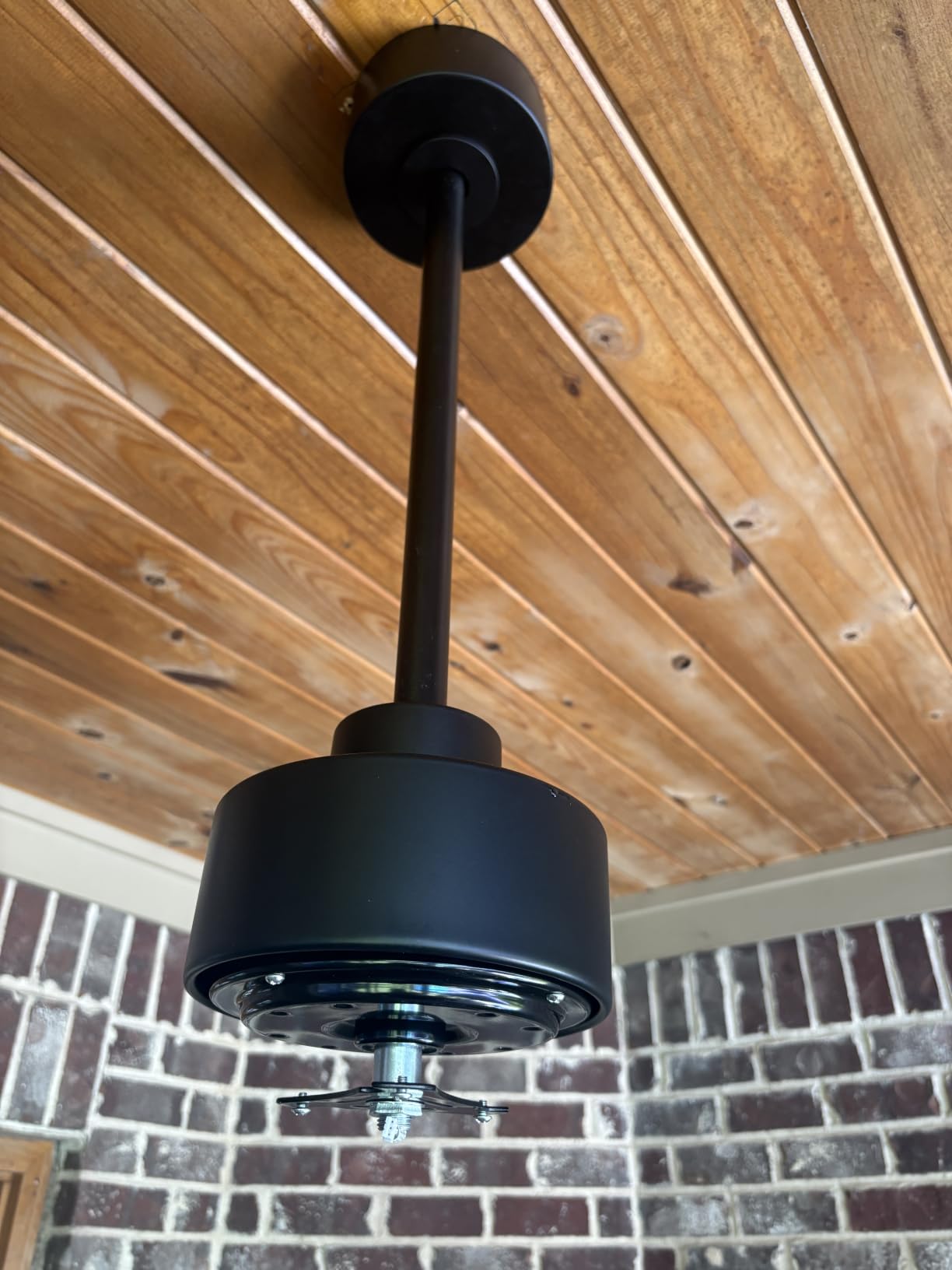
This is the one for garages, barns, workshops and double-height rooms. At 7499 CFM it moves more air than anything else in the roundup, with eight warp-resistant wooden blades doing the work.
Its control method is genuinely different and genuinely useful in some homes. Instead of joining your Wi-Fi network, the app connects point-to-point over Bluetooth. No router, no hub, no 2.4 GHz network, no pairing failure at 2am.
Three downrods at 5, 10 and 20 inches cover ceilings from 8 feet to 20 feet and beyond, and slope mounting works up to 15 degrees. A 24W LED kit is included with stepless 12 to 100 percent dimming across three color temperatures.
Bluetooth control as a feature not a compromise
For most people this is a limitation. There is no voice assistant, and you cannot control the fan from off the property or from a schedule, because there is no cloud connection behind it.
For someone in a workshop, a detached garage or a rental where getting a smart device onto the home network is annoying, it removes the single most common setup failure in the category. It is the same trade as a wall controller: less automation, more reliability.
Who should skip this one
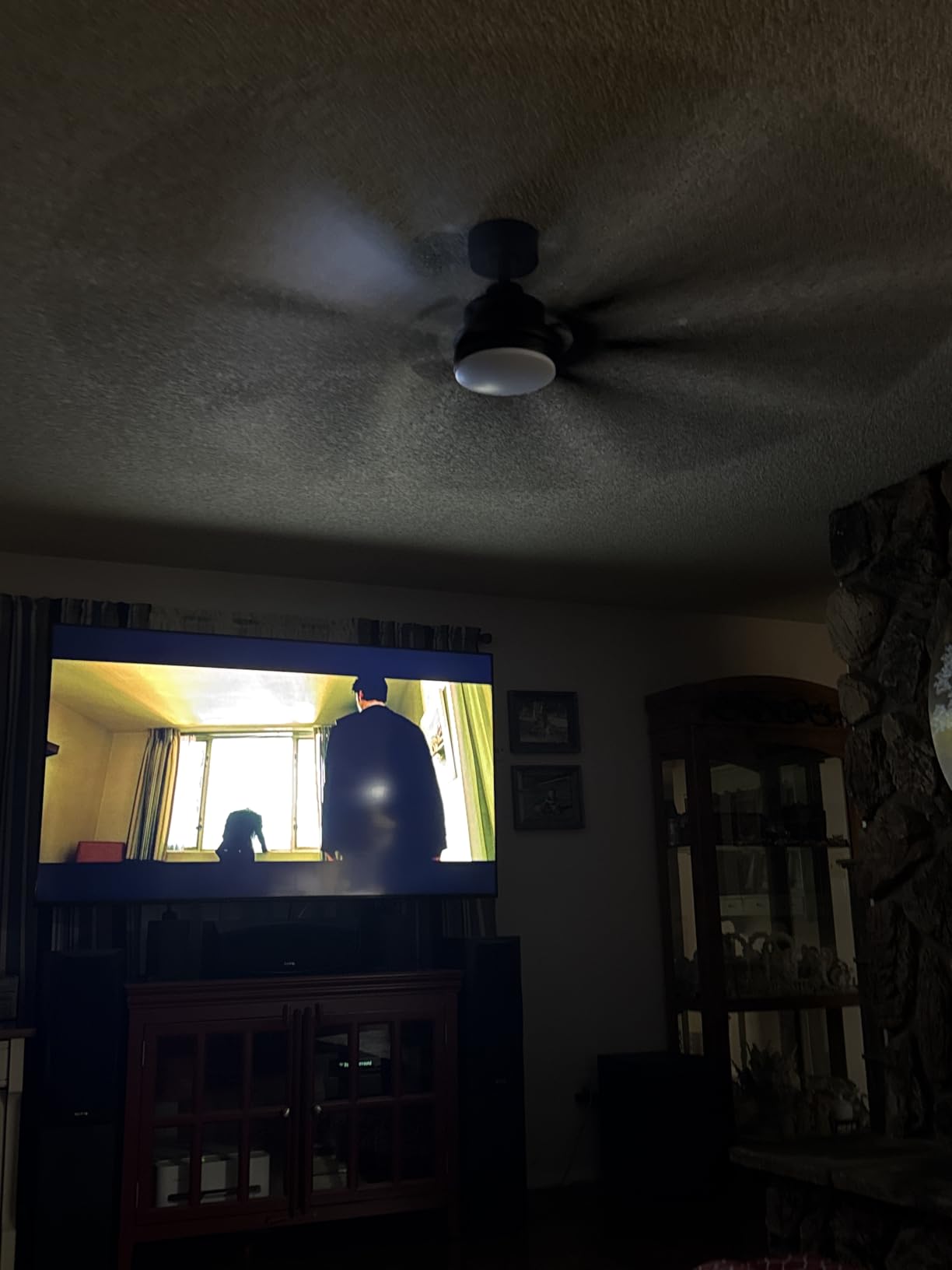
Skip it if you want Alexa or Google Home, because there is no voice path at all. Skip it if your ceiling is under 10 feet or your room is under 400 square feet, where a 72-inch blade sweep is out of proportion. It also draws 64 watts, the highest figure in this group.
10. JSAITEE 52 Inch Low Profile – Best for Multiple Rooms
JSAITEE 52 Inch Smart Ceiling Fan with Lights, Remote & App Control, DC Reversible Motor, 6 Speeds Quiet 35dB, 3CCT Dimmable LED, Low Profile Modern Ceiling Fans for Bedroom Living Room, White
52 inch low profile
DC motor under 35dB
7000 CFM airflow
18W LED panel
8 speed settings
Pros
- 7000 CFM airflow from an 18W draw is the best ratio in the set
- Very quiet DC motor under 35dB for sleeping
- 8 speed levels with dual-season reversible mode
- 18W dimmable LED panel with 3000K 4500K and 6500K modes
- 10 year warranty with 24/7 customer service
Cons
- App can be slow to respond and sometimes struggles to connect
- Canopy controller is thick and may not suit vaulted or sloped ceilings
- One reported failure after six months with an unanswered support request
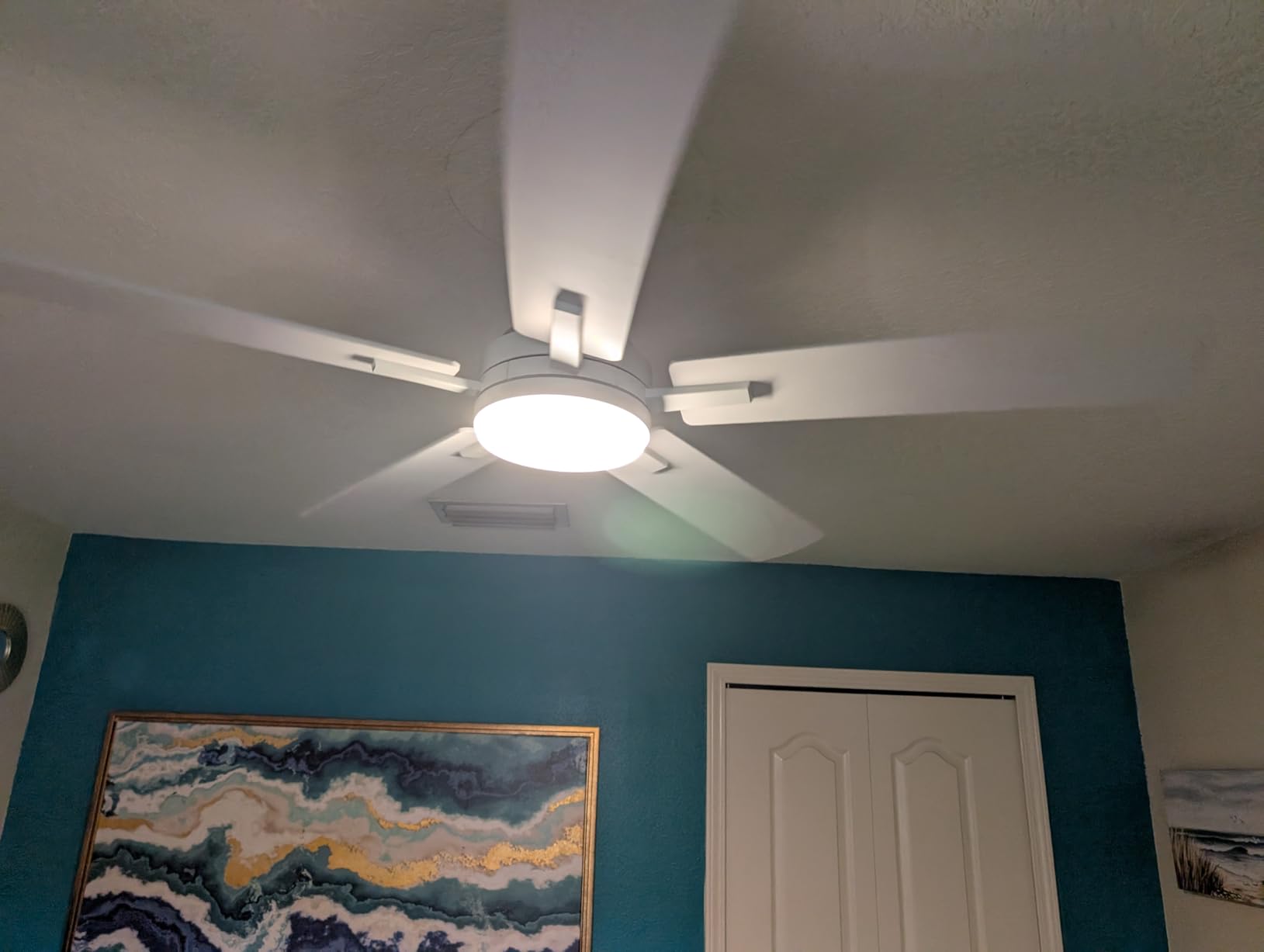
Put the airflow number next to the wattage and this fan makes a case the others do not. 7000 CFM from an 18-watt draw is a figure you normally see on much larger fans, and it sits in a 12-inch-tall low-profile body.
The 52-inch diameter is sized for rooms between 144 and 324 square feet, which covers most bedrooms and small living rooms. Eight speed levels give finer control than the usual six, and the reversible motor handles both seasons.
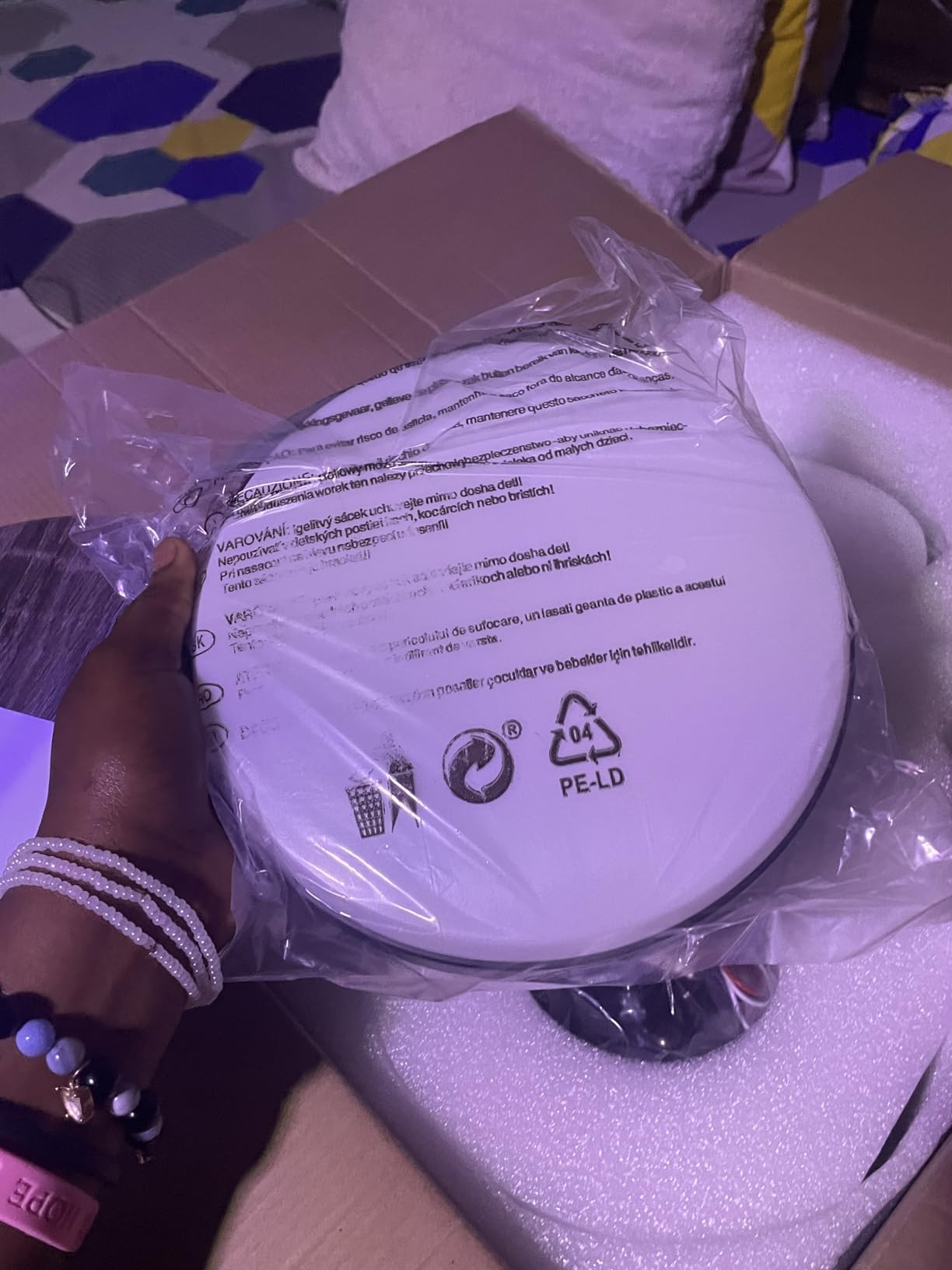
Owners like the hardware. Motor noise stays under 35dB, the LED panel dims from 10 to 100 percent across three color temperatures, and a remote holder is included so the remote has a home instead of a drawer.
The reported weak point is the canopy. At 12 inches tall the controller housing is thick enough that it may not sit well on a vaulted or sloped ceiling, and both 6-inch and 10-inch downrods are included for flatter installs.
Why airflow per watt is the number to compare
Two fans that move similar air but draw different power are not equivalent purchases. A 7000 CFM fan on 18 watts can run eight hours a night for less than a quarter kilowatt hour, while a 50-watt fan moving similar air uses nearly three times as much for the same result.
That is the whole argument for a DC motor, and it is why we rank this fan so highly despite a smaller review base than the leaders.
Who should skip this one
Skip it if you need app reliability above everything else, because the app is the reported weak point here. Skip it for a vaulted ceiling, where the canopy geometry is the issue. And if you are matching several rooms, buy them together from one order so a single warranty claim covers the whole set.
What to Look for in a Smart Ceiling Fan Remote?
The remote is the part of a smart ceiling fan that most roundups mention and none evaluate. It is also the part that determines whether the fan still works the day your internet does not.
Every remote in this roundup talks to the fan’s receiver over radio frequency, not over Wi-Fi. That is why the remote keeps working during an outage, why it works from another room, and why a reboot of your router does not change anything about the fan. The app and the voice assistant route through the manufacturer’s cloud instead, which is exactly why the two can disagree.
Look for a remote that includes a wall bracket. Several models here include one, and it is the cheapest fix for a remote that keeps ending up in a different room. Look for memory recall on the fan rather than the remote, so your last speed and brightness return after a power cut.
Check the battery situation. Two models in this list need 2 AAA batteries for the remote that are not included in the box, so a fresh pair should be on your install list before the first time you reach for it.
Be aware of the one-remote-per-fan pairing limit. It shows up on three models here, and pairing a second remote to a fan disables the first one, which is surprising when it happens. If you want a spare remote, confirm with the brand first. The same remote-versus-app tension shows up in other categories, and we covered it in detail for infrared cabinet heaters with remote, where a lost remote matters just as much as a lost signal.
Finally, do not install a wall controller on a fan that already has an RF receiver unless the brand says it is compatible. The two will fight for the same signal, and the result is a fan where neither control works reliably. We looked at smart fixtures with remote control for the same reason, where the remote is the primary interface rather than a fallback.
How to Size a Smart Ceiling Fan and Choose a Motor
Size by room, not by style. A 42-inch fan suits a room up to roughly 225 square feet, a 50 to 52-inch fan covers 225 to 400 square feet, and 60 to 72 inch fans are for spaces above 400 square feet or double-height rooms. For genuinely small spaces the math changes again, which is why we keep a separate guide to the best 12V ceiling fans for camper vans.
Check your ceiling height next. A downrod fan hangs 10 to 20 inches below the ceiling depending on the rod supplied, so a 52-inch fan on a 7.5-foot ceiling crowds the room. Flush mounts solve this, and four models here are low-profile bodies.
Choose a DC motor over an AC motor every time. Every model in this roundup uses a DC or brushless DC motor, which is one of the reasons the category has moved on. A DC motor delivers more airflow per watt and runs at a fraction of the noise, and on a fan running eight hours a night the difference in electricity use is measurable within a year.
Check the damp rating for outdoor-adjacent spaces. Only some of these fans are rated for covered patios and porches. Anything listed indoor only will corrode in a humid covered space, and the warranty will not cover it.
Decide on the ecosystem before you buy, because this is the least reversible choice. Alexa and Google Assistant are broadly supported. Apple HomeKit natively is rare. Matter support is rarer still. And some fans need a hub, a bridge or a Tuya-based platform to join your system, which is fine if you already run one and a problem if you do not.
For anything already installed, a wall controller or a radio-frequency bridge is often the smarter path. Forum regulars on r/homeassistant and r/HomeKit consistently describe converting several existing fans with a bridge blaster for a fraction of the cost of new hardware, and you keep the fan you already own. The trade is that you get wall-switch control and voice, not a nicer fan or a new light.
Fixing Remote Pairing and Wi-Fi Setup Problems
Pairing failures and app connection problems are the most common complaints in this category, and most of them come down to three things: the network band, the encryption type, and distance from the router.
Most smart fan apps require a 2.4 GHz network. If your router combines 2.4 and 5 GHz under one name, the fan will often fail to find it. Create a separate 2.4 GHz network and connect the phone to that first.
Next, check your Wi-Fi encryption. A large share of pairing failures trace back to WPA3-only networks, which many budget fan modules cannot join. Switching the network to WPA2, or putting the fan on a separate WPA2 network, resolves it immediately.
Then move the phone closer to the fan during setup. Owners report that pairing succeeds reliably when the phone is in the same room as the ceiling fan, and fails repeatedly when it is not.
If the remote stops responding after a power cut, the fan has usually wiped its receiver memory. Power the fan off, restore power, leave it on the lowest speed, and hold the remote’s pairing button until the fan beeps or the lights blink. Most remotes in this roundup include a learn or pairing button, and pairing a remote again overwrites the receiver, which is also why only one remote works at a time.
Two more common issues. A wall controller on a fan that already has an RF receiver will conflict with the remote, so use one control path or the other. And older homes without a neutral wire cannot take a smart wall controller retrofit at all, which is the moment a smart fan makes more sense than a switch.
Frequently Asked Questions
What is the best ceiling fan with remote control?
The ZMISHIBO 52 Inch Flush Mount is the best smart ceiling fan with remote overall, with a 30dB DC motor, 3057 CFM of airflow, a dimmable 20W LED and both remote and app control. For the strongest airflow pick the Sofucor 52 Inch wood blade model, and for the best app experience pick the DREO 52 Inch.
What is the best ceiling fan with light and remote?
The Sofucor 42 Inch is the best value pick with a light, a remote, an app and Alexa or Google Assistant. It runs under 30dB on a copper-wound DC motor, moves 5000 CFM, and has a moisture-resistant finish rated for covered outdoor spaces as well as indoors.
Is there a fan that works with Alexa?
Most of them. The Sofucor 52 Inch wood blade model, the Sofucor 42 Inch, the Sofucor 42 Inch flush mount, the DREO 52 Inch and the cumilo 60 Inch all support Alexa and Google Assistant, and the DREO also works with Siri Shortcuts. Apple HomeKit support is much rarer and no model here lists it natively.
Why isn’t my ceiling fan connecting to the remote?
The most common causes are a dead remote battery, wiped receiver memory after a power cut, and more than one remote paired to the same fan. Replace the batteries, power the fan off and on, leave it on the lowest speed, then hold the remote’s pairing or learn button until the fan beeps. Pairing a second remote disables the first, so re-pair the one you use.
Why won’t the smart fan app connect to my Wi-Fi?
Almost always one of three things. The app needs a 2.4 GHz network, so split a combined 2.4 and 5 GHz router into two. The router needs WPA2 rather than WPA3-only for many budget fan modules. And the phone needs to be in the same room as the fan during setup rather than at the other end of the house.
Do smart ceiling fans need a hub?
Most do not. Alexa and Google Assistant work through the manufacturer’s own cloud, and the Fanbulous 72 Inch uses point-to-point Bluetooth with no router or hub at all. A few models, including the TALOYA 52 Inch, run on a Tuya-based platform that can join Smart Life, SmartThings or Home Assistant through an existing installation.
Can I turn my existing ceiling fan into a smart fan?
Usually yes, and it is often cheaper than replacing the fan. A radio-frequency bridge or blaster paired with a smart wall controller gives you app and voice control of a fan you already own. The catch is that the bridge and the fan’s own remote can conflict, and a wall controller retrofit needs a neutral wire, which older homes often lack.
Are smart ceiling fans worth it?
Worth it if you will actually automate them. Once a fan is on a sleep schedule or a temperature trigger, owners across home automation communities report using it daily, which is what justifies the higher price. If you only plan to pull a chain occasionally, a conventional fan with a remote does the same job for less.
Which Smart Ceiling Fan With Remote Should You Buy?
Buy the ZMISHIBO 52 Inch Flush Mount if you want one fan to handle a bedroom, a living room or a low ceiling, and you care more about the motor and the remote than about the app. Its 30dB copper-wound DC motor, 2000-lumen dimmable LED and flush-mount body are the best-balanced package we tested, and it carries the largest review base in the roundup at 1701 reviews.
Move up to the DREO 52 Inch if the app and voice control are the reason you are shopping, since twelve speed levels, three wind modes and stepless dimming are in a class of their own. Move sideways to the Sofucor 52 Inch wood blades for airflow and looks, to the TALOYA 52 Inch for a genuinely low profile, or to the cumilo 60 Inch if the fan is going on a covered patio.
One last check before you order: confirm the fan needs a 2.4 GHz network, confirm your ceiling height suits the mount, and keep a pair of AAA batteries on the list. The best smart ceiling fans with remote are the ones that still respond to the remote when the network does not, and all ten of these do.