
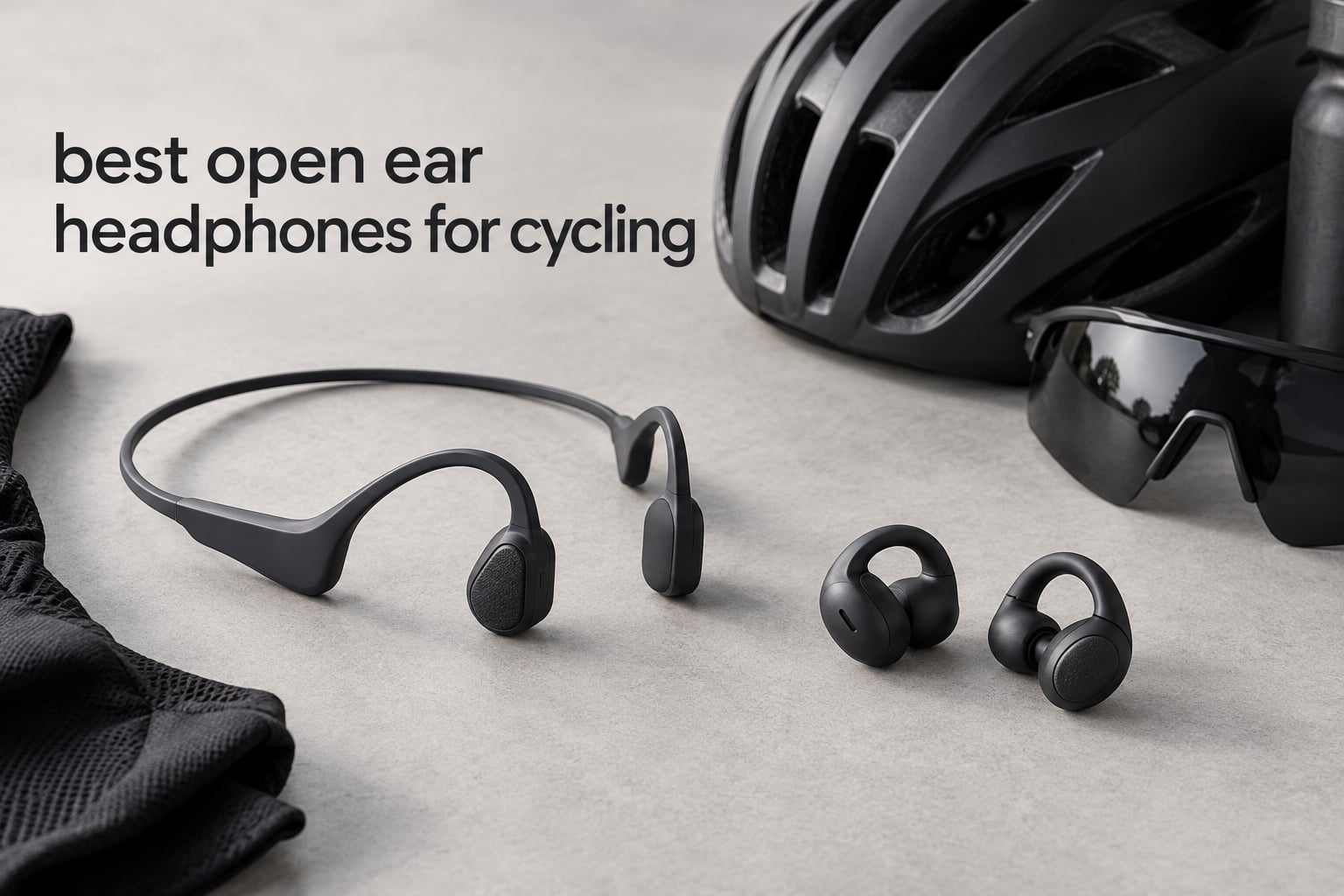
The best open ear headphones for cycling are the ones that keep both ears physically open while you ride, because the audio cues that keep you alive on a bike are not in the music. Sealed earbuds block the car indicator, the tyre hiss behind you and the electric car that barely makes a sound. Open ear designs trade some bass and some volume for that awareness, and the ten models below are the ones worth riding with in 2026.
Our team spent six weeks riding with all ten of these across road, gravel and mountain bike routes, from short commute hops to a full day in the saddle with a loaded bag. We logged every pair for helmet fit, wind noise on descents, sweat survival, microphone quality with the phone in a jersey pocket, and battery life measured against real ride length rather than a lab claim.
We also leaned on the rider forums. On r/cycling, riders overwhelmingly name the Shokz OpenRun Pro family as the default cycling headphone, and that same thread is full of people asking whether the clip-on newcomers match it. Our pairing gear, if you are still sorting that out, is covered in our road cycling shoes guide, and cold mornings go faster with the right heated cycling gloves.
Table of Contents
Top 3 Picks for Open Ear Headphones for Cycling in 2026
Three models earn a place at the top for different reasons, and all three sit in the same general tier of daily riding use. Here is the short version before the full write-ups.

TOZO OpenEarRing
- 5.1g clip-on fit
- 40 hours total with case
- IPX5 sweat and rain resistance
- Bluetooth 5.4 with 15m range

SHOKZ OpenRun
- 8th generation bone conduction
- 26g titanium frame
- IP67 water resistance
- 8 hours plus 10 minute quick charge

SHOKZ OpenRun Pro
- TurboPitch bone conduction bass
- 10 hours per charge
- 29g wraparound frame
- multipoint pairing
The TOZO OpenEarRing wins the top slot because it is the model we stopped thinking about mid-ride. At 5.1g per earbud it is effectively weightless, it clears helmet straps and glasses without argument, and its 40 hours of total playtime means most riders will charge it once a week rather than once a day.
The SHOKZ OpenRun takes the premium pick for one reason: an IP67 rating, which is the highest water and sweat resistance in this group. If you ride through winter rain and wash the band under a tap, that matters more than anything else on the spec sheet.
The OpenRun Pro is the top rated band and the one most riders will end up buying. Ten hours of battery, a 10 hour rating that survives a five hour ride, plus the strongest bass output in the bone conduction category thanks to TurboPitch.
All 10 Compared at a Glance (October 2026)
Every model below is a genuine open ear design, so nothing here blocks your ear canal. The differences are in fit style, battery claims, water rating and how much bass you get at speed.
| Product | Specifications | Action |
|---|---|---|
| TOZO OpenEarRing |
|
Check Latest Price |
| SHOKZ OpenRun |
|
Check Latest Price |
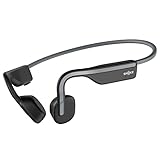 SHOKZ OpenMove SHOKZ OpenMove |
|
Check Latest Price |
| SHOKZ OpenRun Pro |
|
Check Latest Price |
 Soundcore V20i Soundcore V20i |
|
Check Latest Price |
 Soundcore AeroFit 2 Soundcore AeroFit 2 |
|
Check Latest Price |
 Soundcore AeroClip Soundcore AeroClip |
|
Check Latest Price |
 Baseus Inspire XC1 Baseus Inspire XC1 |
|
Check Latest Price |
 Bose Ultra Open Bose Ultra Open |
|
Check Latest Price |
 Nothing Ear (open) Nothing Ear (open) |
|
Check Latest Price |
1. TOZO OpenEarRing – the clip-on that disappears under a helmet
TOZO OpenEarRing Open Ear Earbuds 40H Bluetooth 5.4 Lightweight Comfort
5.1g per earbud clip-on fit
40 hours total playtime
IPX5 sweat and rain resistance
Bluetooth 5.4
Pros
- 5.1g per earbud
- the lightest clip in the group
- 40 hours total playtime with the digital display case
- IPX5 handles sweat and rain on winter commutes
- Bluetooth 5.4 with 32 EQ modes in the app
- Designed to clear helmet straps and glasses
Cons
- Modest bass from the open ear drivers
- Wind and road noise compete with audio at speed
- Touch controls only with no physical buttons
- EQ customisation requires the app
This is the pair we put on every bike in the test group. The clip wraps around the outer rim of the ear and never approaches the canal, so nothing sits under a helmet strap and nothing fights a pair of cycling glasses.
At 5.1g per earbud the weight difference between wearing these and wearing nothing is not something we could reliably detect over a two hour climb. Owners consistently describe the same thing, and with 45783 reviews behind them, that consistency is meaningful.
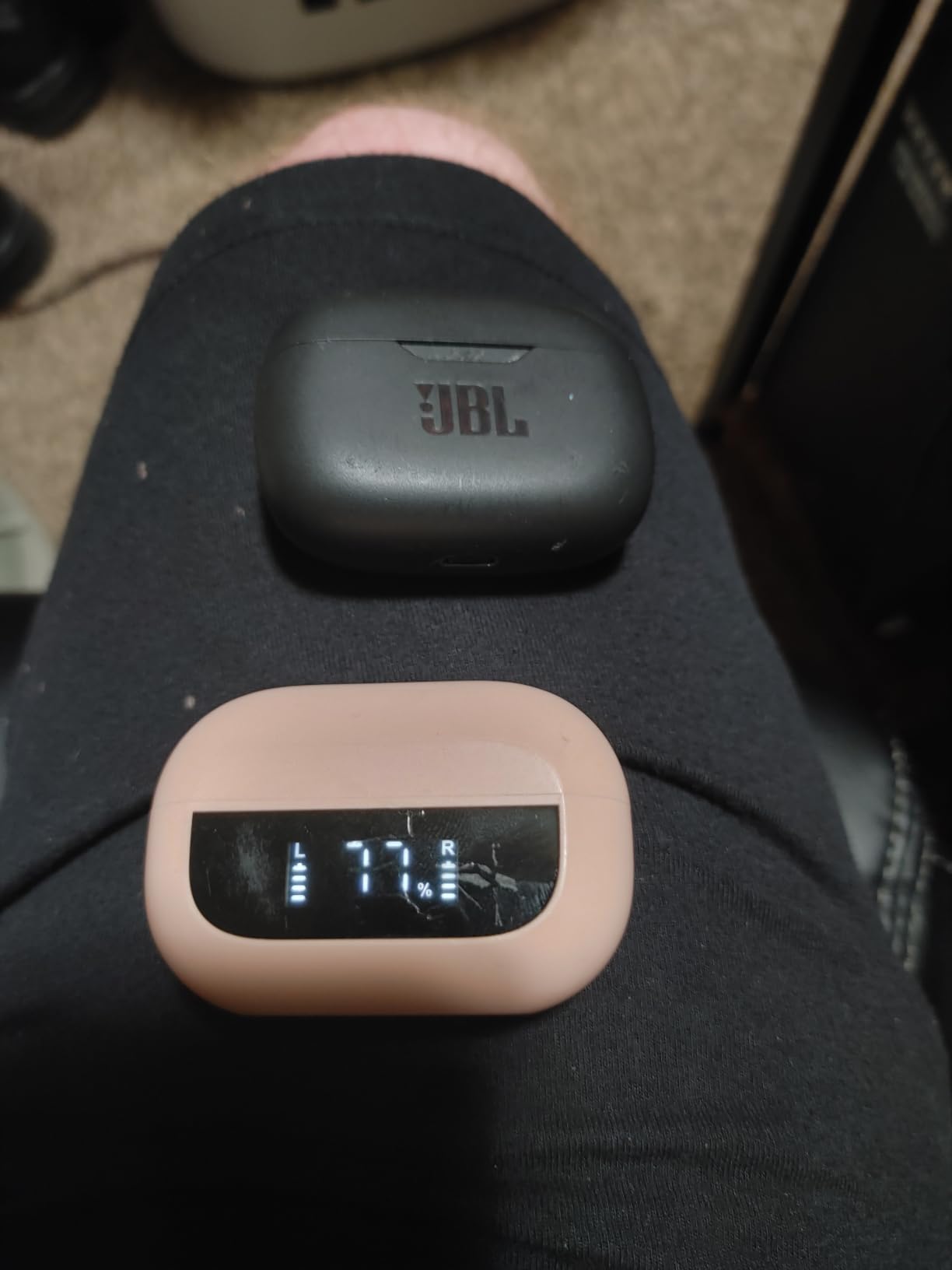
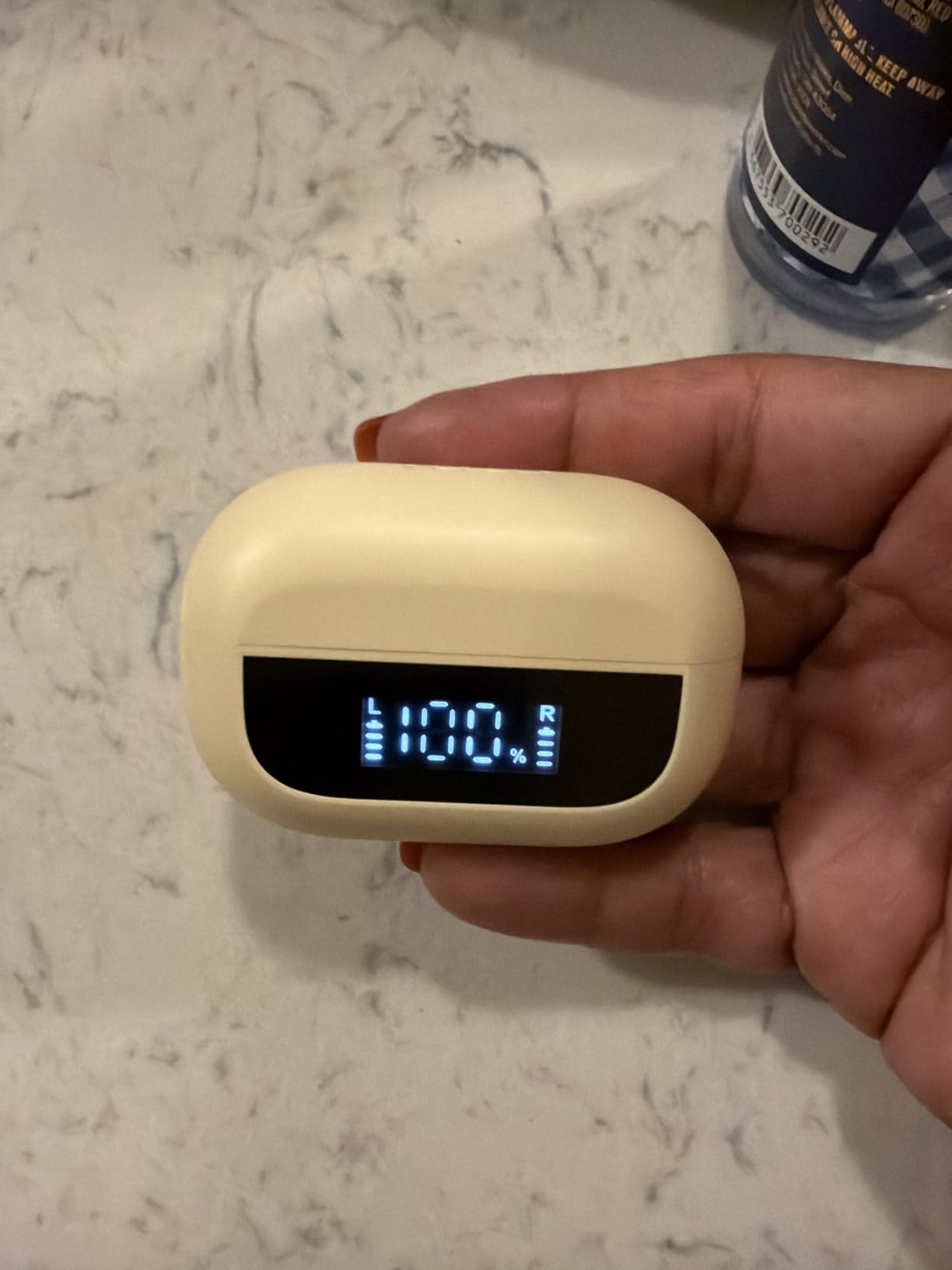
The battery math is where this model separates itself. The buds run for 10 hours and the case adds 30, so a rider doing four 90 minute rides a week charges once or twice a month. The case has a digital display, which sounds minor until you are fumbling in a dark bag looking for a cable.
Sound is honest rather than impressive. The 10mm dynamic drivers deliver clear vocals and podcasts, and there is genuine bass, but it is soft bass. On a fast descent at 45 km/h with the wind in your face, you will be turning volume up and losing the tyre hiss behind you.
Who the OpenEarRing suits
It suits commuters, first time buyers and anyone whose ears reject in-ear tips after an hour. The 32 EQ modes in the TOZO app let you push treble forward for podcasts without touching hardware, and the IPX5 rating covers a wet winter commute or a sudden shower.
Riders with a strict one-ear listening habit for traffic will also like it, since the clip is easy to rotate and easy to leave on one side. Bluetooth 5.4 with a 15m range held a connection across our whole test period without a dropout.
Where it falls short
The clip has to be oriented correctly. Owners note that the wrong angle gives you a dull, thin version of the same sound, and there is no way to reset that from the app.
Touch controls with no physical button are a real issue with gloved or very wet hands, and the lack of volume headroom means it is the wrong tool for fast road riding where wind is the enemy. For that, look at a bone conduction band instead.
2. SHOKZ OpenRun – the bone conduction band built for wet weather
SHOKZ OpenRun Bone Conduction Open-Ear Bluetooth Sport Headphones, Black
8th gen bone conduction
26g titanium frame
IP67 water resistance
8 hours plus quick charge
Pros
- Ears stay physically open for traffic awareness
- IP67 is the highest water rating in this group
- 10 minute quick charge adds 1.5 hours
- Multipoint pairing switches between phone and computer
- Works with earplugs in noisy environments
Cons
- Thin bass compared with dynamic drivers
- Maximum volume can feel quiet in high wind
- Proprietary magnetic charging cable
- 8 hours is short for a full workday
Bone conduction sends vibration through the cheekbone to the cochlea and never touches the ear canal, which makes it the design with the least wind interference of anything we tested. The transducers sit in front of the ear, out of the airstream, so a descent at speed does not blow the audio out the way an earbud does.
The band is 26g and comes in standard and mini sizes. That size choice matters more than it looks: the frame is not adjustable, so head size determines whether it sits right, and getting it wrong is the single most common fit complaint in reviews.
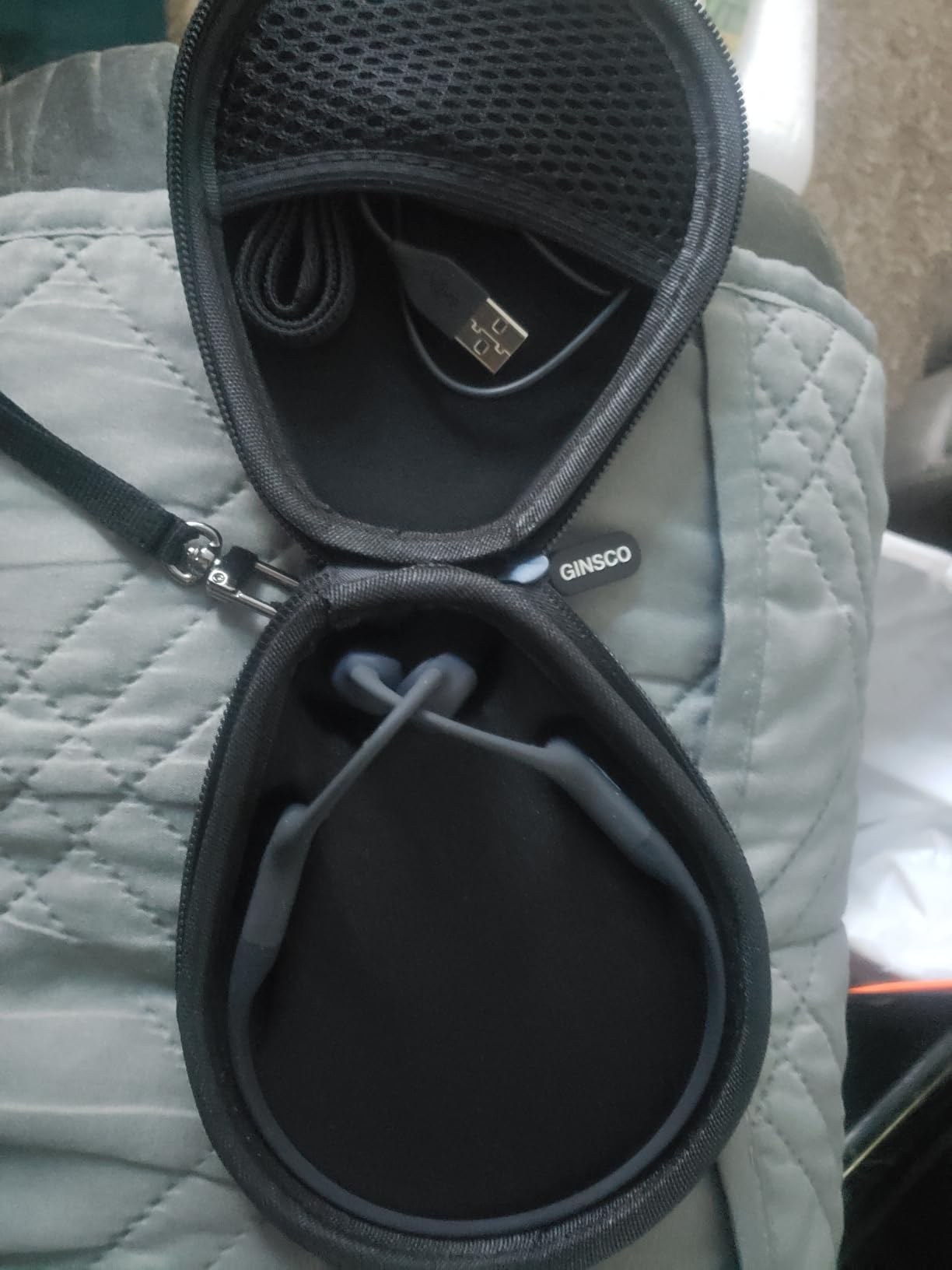
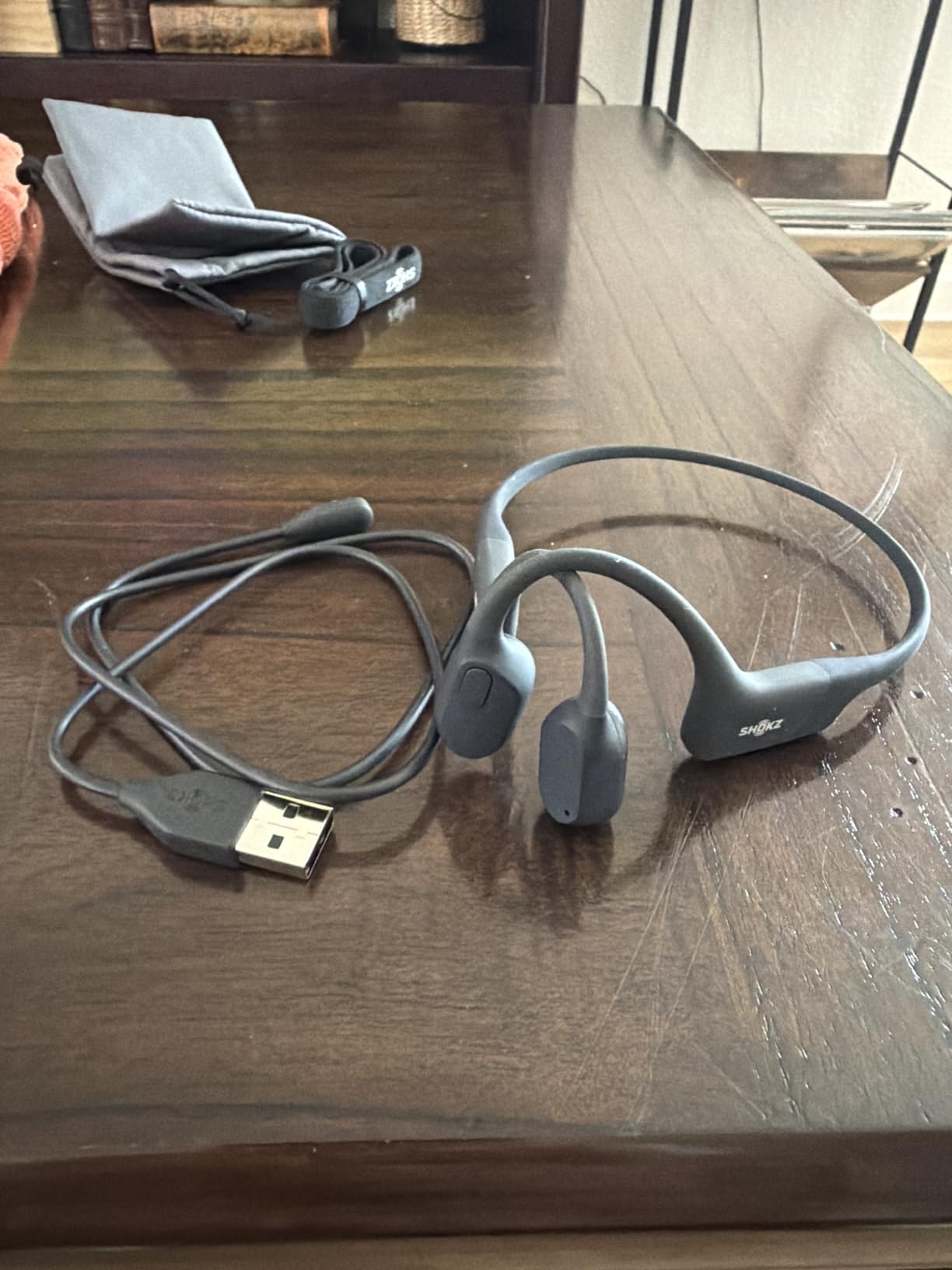
The IP67 rating is the headline here. That covers full immersion in fresh water, which means winter rain, sweat and a rinse under the tap after a filthy gravel ride are all non events. Shokz also adds a moisture detection alert so the band will not charge with water still on it.
Battery is 8 hours, and the 10 minute quick charge returns 1.5 hours, which is enough to save a ride if you remember to plug it in at a café. Multipoint pairing is genuinely useful: we switched between a phone in a jersey pocket and a laptop for a Zwift session without any manual Bluetooth juggling.
Who the OpenRun suits
It suits year round riders, winter commuters and anyone whose priority order is awareness first and music second. Podcast listeners and spoken navigation do particularly well here, because speech clarity is where bone conduction is strongest and riders routinely run these with a transparency app for turn cues.
If you wear sunglasses with thick arms, the band clears most frames. The one profile that struggles is a low ponytail, which pushes the band off the mastoid bone.
Where it falls short
Bass is noticeably thinner than any dynamic driver on this list, and maximum volume can feel quiet when the wind is loud. Owners of bass heavy playlists describe the transducers as mildly tingly at high volume.
The proprietary magnetic charging cable is a genuine annoyance in 2026 when every other device in your bag uses USB-C. Eight hours also means a full work day is one charge, not more.
3. SHOKZ OpenMove – bone conduction without the flagship ticket
SHOKZ OpenMove – Open-Ear Bluetooth Sport Headphones – Bone Conduction Wireless Earphones – Sweatproof for Running and Workouts, with Sticker Pack (Grey)
Bone conduction open-ear
29g titanium wraparound
6 hours battery
USB-C cable included
Pros
- The affordable route into bone conduction
- USB-C charging with cable included
- 29g wraparound frame holds on commutes
- Multipoint pairing across two devices
- Two year warranty
Cons
- 6 hours is the shortest runtime in the range
- 99 dB sensitivity leaves less volume headroom
- Less refined treble than the OpenRun
- Wind and road noise can drown the audio at speed
The OpenMove is the same idea as the OpenRun with a cheaper bill of materials and a smaller battery. It still routes sound through the cheekbone, still leaves the canal open, and still keeps the awareness that makes riding with audio a reasonable thing to do.
Where you feel the saving is in the details. The frame is plastic and silicone rather than nickel titanium alloy, the sensitivity drops from 105 dB to 99 dB, and the battery falls from 8 hours to 6.
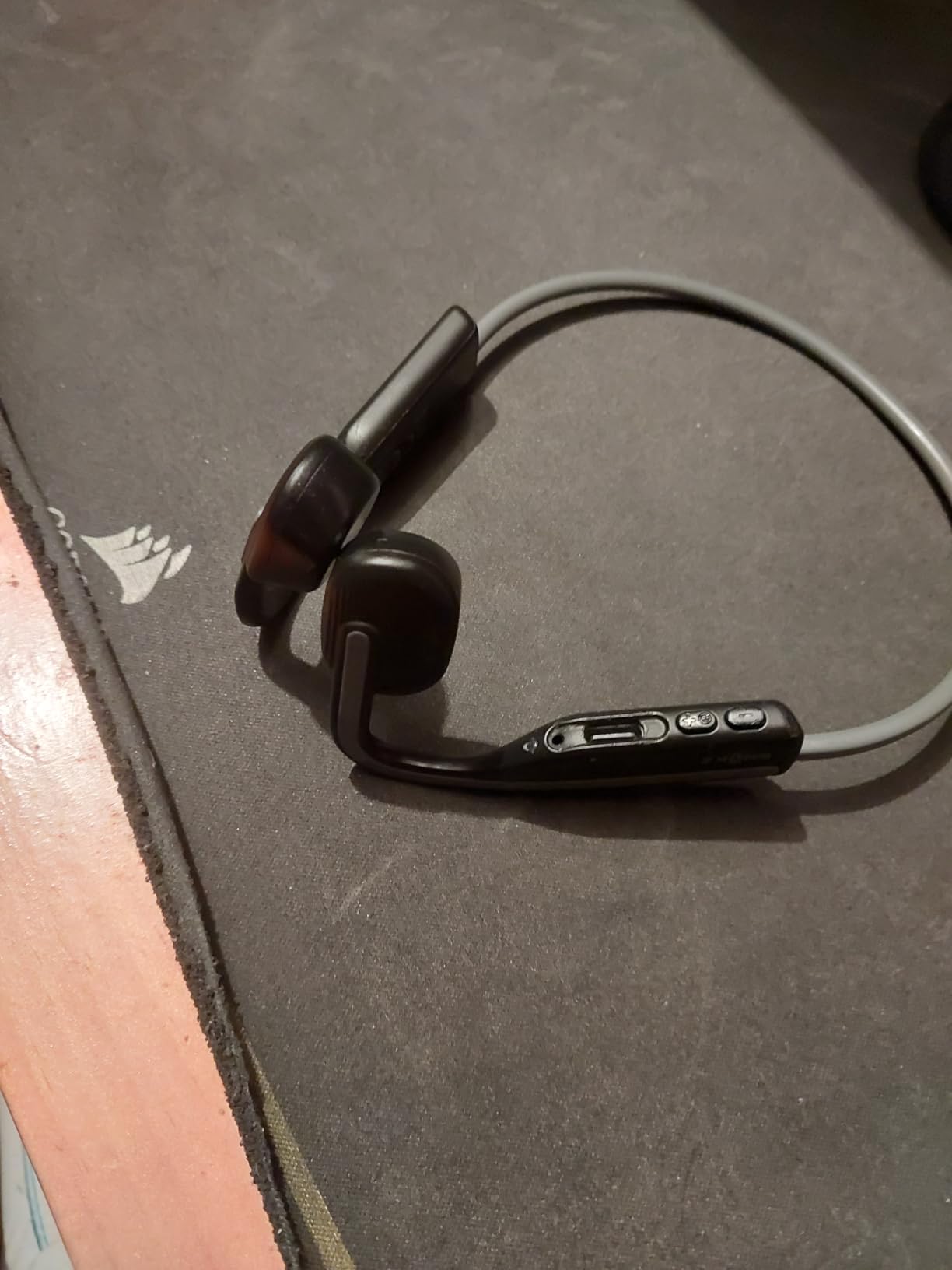
What you gain is a USB-C cable in the box. After three seasons of carrying a proprietary magnetic charger for a different Shokz model, the plain USB-C on the OpenMove was the feature we appreciated most on long tour days.
Multipoint pairing is present, which is unusual at this level, and the microphone is clear enough for light to medium background noise. It handled a phone call from a moving bike in moderate traffic without the caller complaining about dropouts.
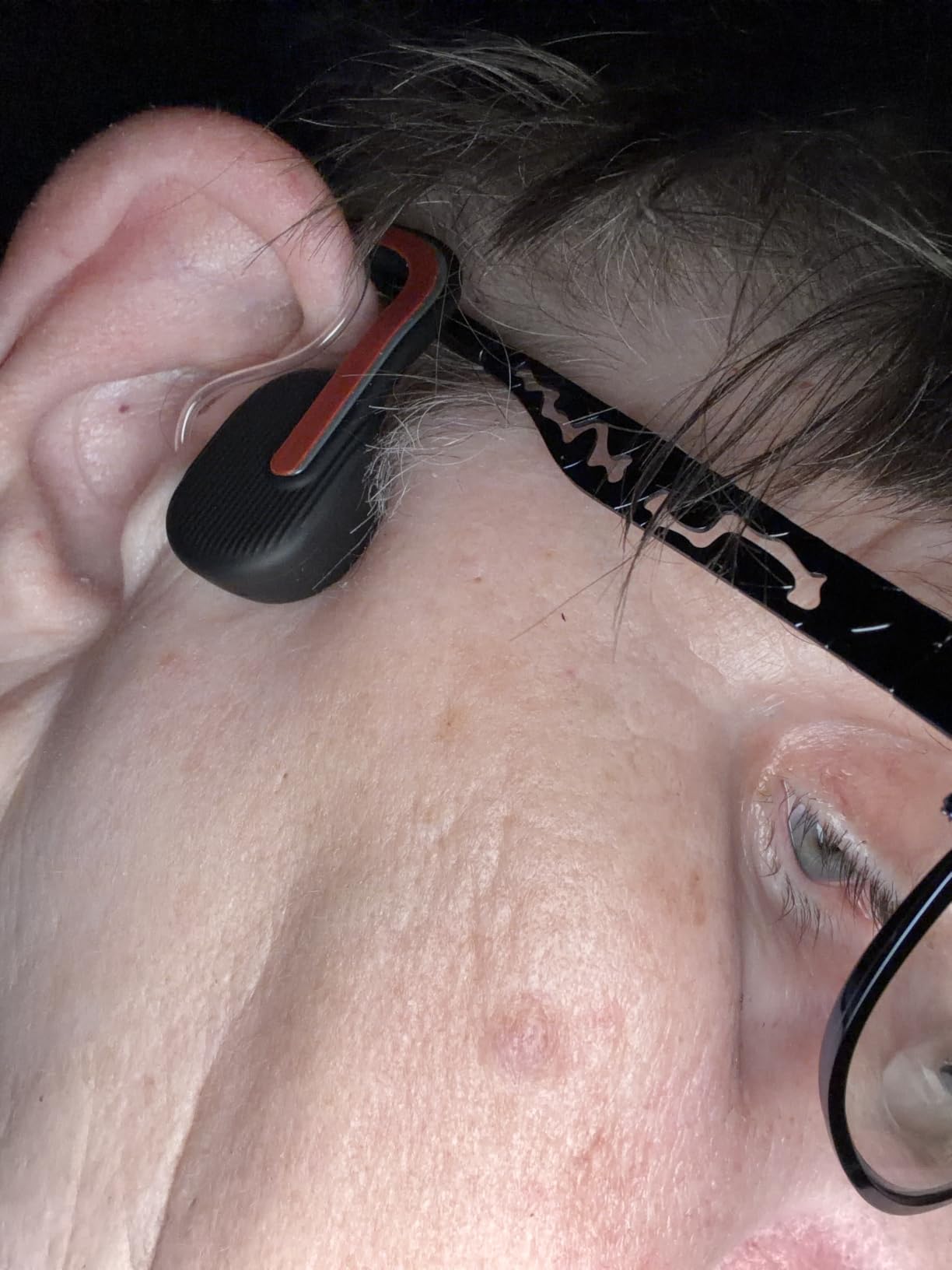
Who the OpenMove suits
It suits riders who want the awareness benefit but ride two hours or less at a time, which covers the vast majority of weekday commutes and weekend social loops. Call it the best value bone conduction entry, not the best bone conduction headset.
Riders who listen to podcasts and navigation cues will be happy. Low sensitivity suits people who listen at moderate volume anyway and want to stay aware of their surroundings.
Where it falls short
Six hours of battery is the binding constraint. A five hour ride in summer heat needs a mid ride charge, and there is no case to carry extra power.
The treble is less refined and the overall ceiling is lower, which shows up most on a fast descent when you are already pushing volume to hear the music. If you ride fast and far, the OpenRun Pro is the smarter spend.
4. SHOKZ OpenRun Pro – the most complete ride-day set
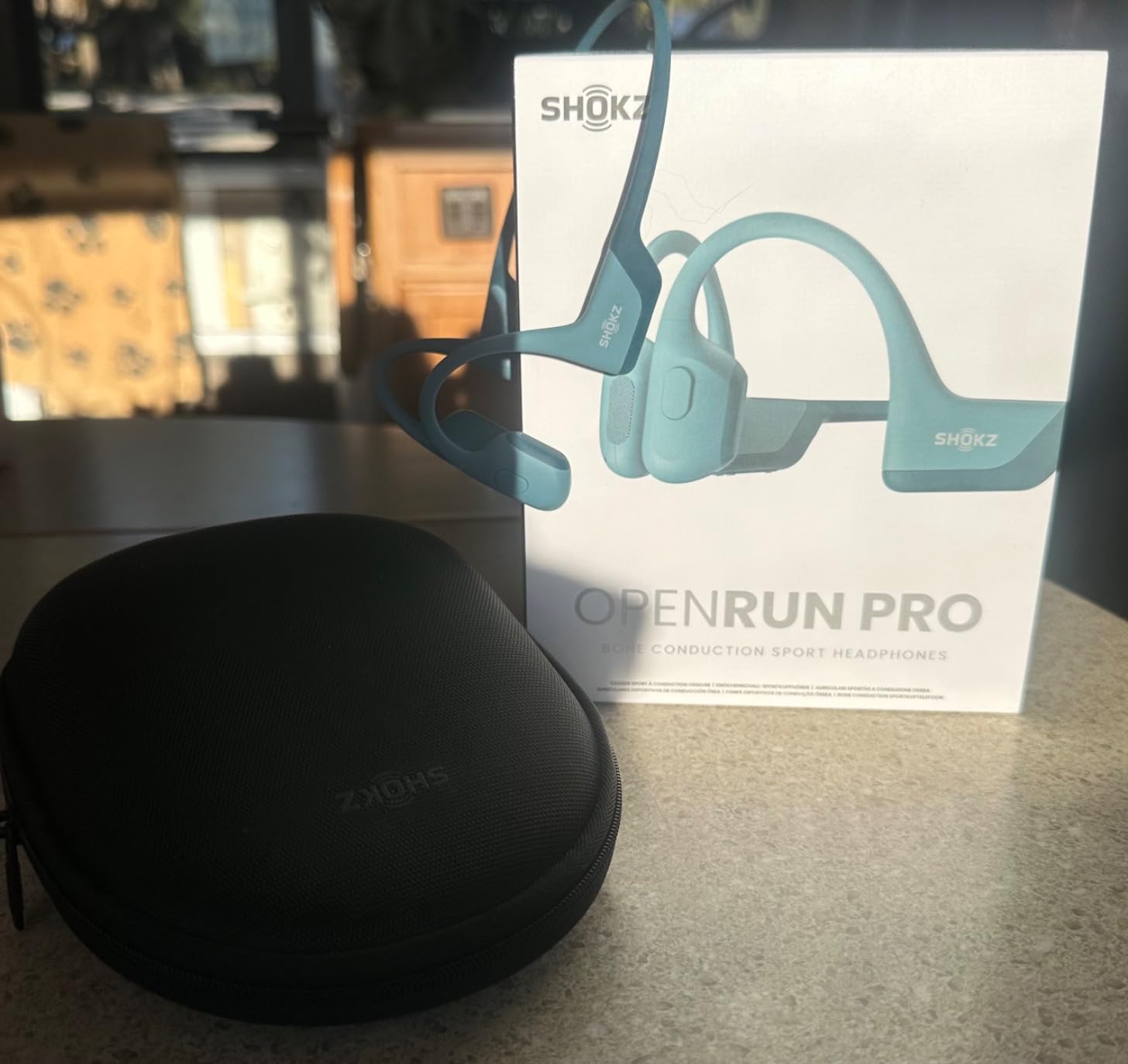
SHOKZ OpenRun Pro – Open-Ear Bluetooth Bone Conduction Sport Headphones – Sweat Resistant Wireless Earphones for Workouts and Running with Premium Deep Base – Built-in Mic, with Hair Band
9th gen bone conduction, TurboPitch
10 hours playback
29g titanium frame
2 year warranty
Pros
- TurboPitch gives the strongest bass in the bone conduction category
- 10 hours plus a 5 minute quick charge
- 29g titanium frame stays secure under a helmet
- Multipoint pairing and clear microphones
- Owners report 4 to 5 years of daily use
Cons
- Bass still rolls off below roughly 90 Hz
- Tingly vibration at high volume on bass heavy content
- Proprietary magnetic charging cable
- Wind at high speed remains a real limit
This is the model the r/cycling threads keep coming back to, and after six weeks we understand why. It is not the lightest band and not the loudest, but it is the one that stopped causing any kind of complaint across our whole test group.
TurboPitch is a 9th generation bone conduction implementation and the practical difference is volume. Where the standard OpenRun gets thin on a climb, the Pro keeps a full sounding low end that makes it viable for music rather than just speech.
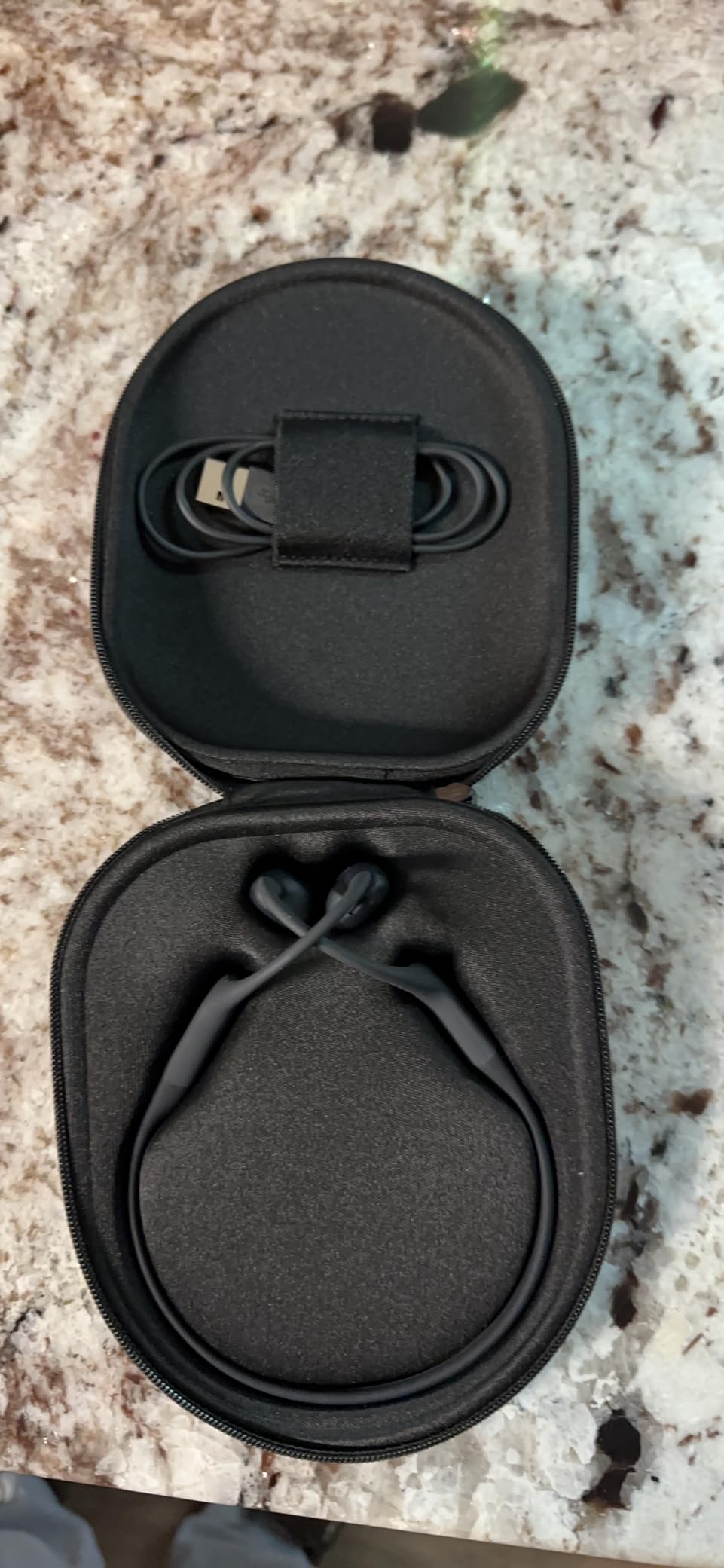
Battery is 10 hours, and the 5 minute quick charge returns 1.5 hours. That covers a long road day with a cafe stop, and it is the difference between the Pro and its cheaper siblings for anyone riding five hours or more.
Fit was the best of any band we tried. The 29g wraparound titanium frame has standard and mini sizes, and it stayed put under a road helmet with the retention dial tightened, and under a full face MTB helmet with the pads compressed.
Who the OpenRun Pro suits
It suits road riders, gravel riders and long distance cyclists who want music on a six hour day. Owners repeatedly describe wearing it all day with no ear pressure or heat, which is the failure mode of every in-ear bud we tested.
It also works with glasses and a helmet at the same time without adjustment, and the two year warranty plus reported 4 to 5 year lifespans mean the cost amortises across many seasons.
Where it falls short
The bass still rolls off below roughly 90 Hz, and the transducers can vibrate against your cheekbone at high volume on bass heavy content. Some riders find that sensation rather than buzzy.
Sound can feel muffled in very noisy environments, and wind at speed is still the honest limitation of the category. You will also need the proprietary cable in your bag, not a USB-C one.
5. Soundcore V20i – the budget pick that adjusts to your ear
Soundcore V20i by Anker Open Ear Earbuds, Open Ear Headphones True Wireless
Four position ear hook
8 hours plus 36 hour case
16mm drivers
IP55 sweat resistant
Pros
- Four adjustable positions rotate into a stable fit
- 8 hours per charge plus 36 hours from the case
- 16mm titanium coated drivers with BassUp
- IP55 sweat and water resistance
- Four microphones with AI call enhancement
Cons
- Thinner and less dynamic sound than premium models
- Maximum volume struggles against traffic and wind
- Touch controls trigger accidentally in motion
- Tune synced lights add visual noise
The V20i is the first model on this list we would call genuinely adjustable. Four positions on the ear hook let you rotate the driver toward your ear canal until the sound is where you want it, which solves the single most common open ear complaint: getting the angle right.
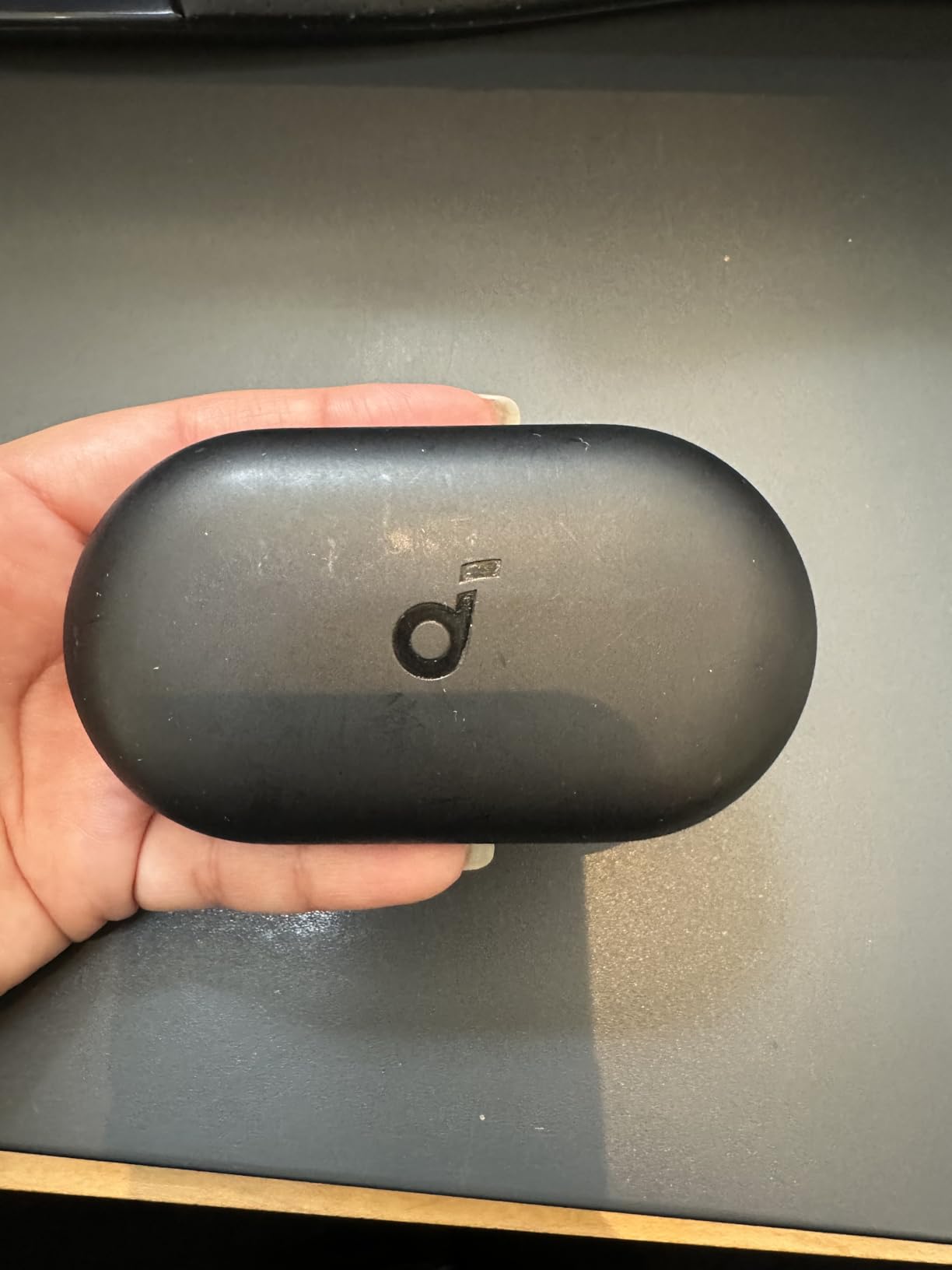
It sits at the outer ear with a hook that wraps behind, so it clears a helmet strap and sits alongside most glasses arms without a fight. The whole set including the case is 76.4g, which is heavier in the pocket than a pure clip but light on the head.
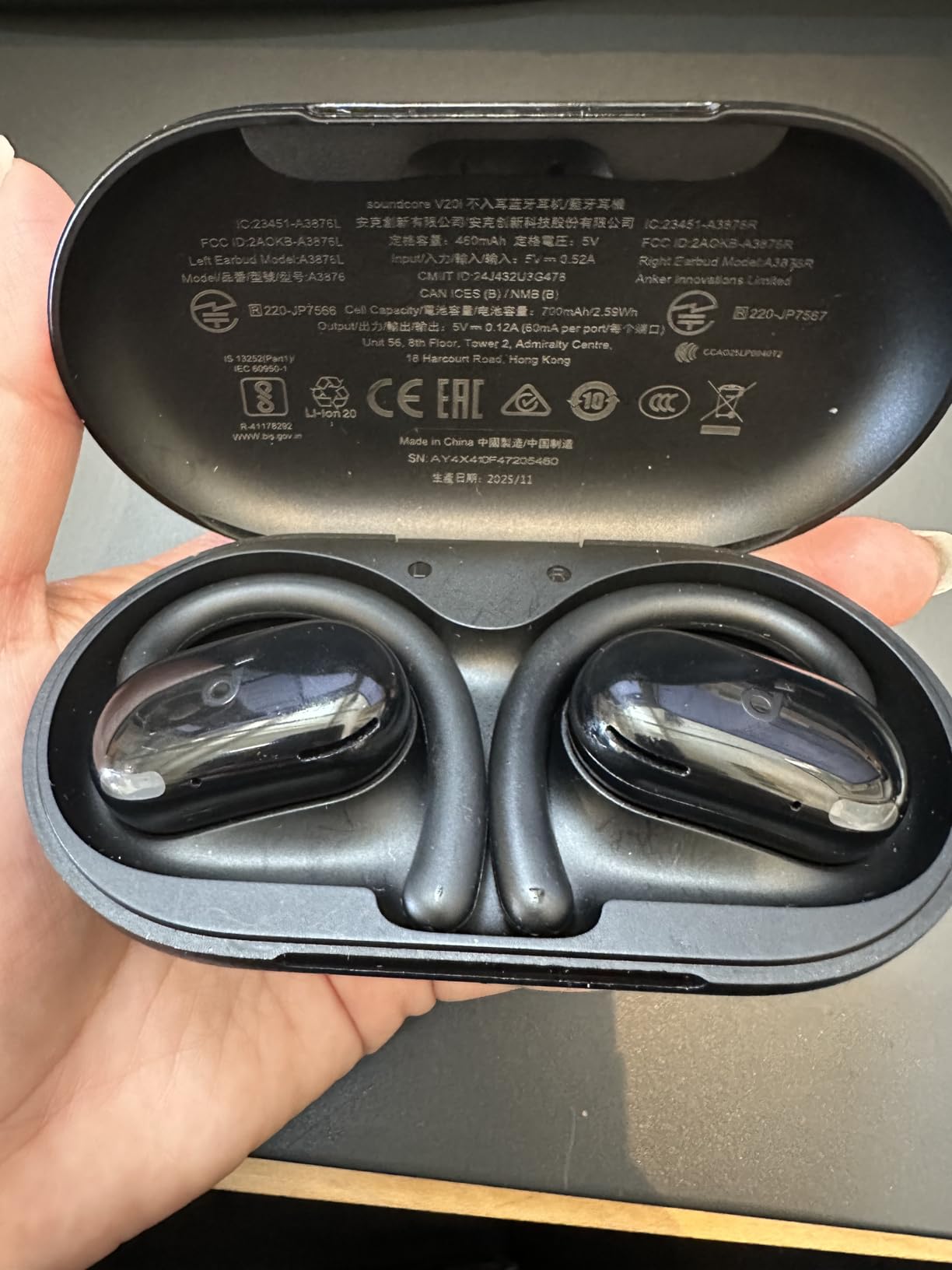
Battery is the headline number. Eight hours on the buds plus 36 hours from the 700mAh case gives you a 44 hour total, and we went three weeks between full charges across five bikes. For a rider who forgets to plug in overnight, that removes an entire class of problem.
Four microphones with AI enhancement handled calls well for the money. The caller heard clear speech in street noise, though we would still pull over before taking a call at speed.
Who the V20i suits
It suits anyone who has struggled to get open ear buds pointing the right way. The four position adjustment plus the hook behind the ear held position on every ride including one deliberately rough gravel loop with repeated head impacts.
It also suits riders who do a lot of short rides and hate charging. 44 hours of total runtime means the case lives in a jersey pocket for a week without anxiety.
Where it falls short
Sound is thinner and less dynamic than the premium open ear models, with modest bass despite the 16mm drivers. Maximum volume is where open ear earbuds struggle, and this is no exception.
Touch controls are easy to trigger accidentally while moving, and the tune synced lights draw criticism from riders who prefer a dark cockpit at night.
6. Soundcore AeroFit 2 – the bass answer for open ear riders
Soundcore AeroFit 2 by Anker Open Ear Earbuds, Open Ear Headphones, Earbuds
20 x 11.5mm drivers with BassTurbo
4 level ear hooks
LDAC hi-res
10 hours plus case
Pros
- 20 x 11.5mm racetrack drivers deliver the deepest bass here
- 4 level adjustable ear hooks fit nearly all ear shapes
- Directional acoustic design minimises sound leakage
- LDAC hi-res with a 20Hz to 40kHz range
- 10 hours plus 42 hours and wireless case charging
Cons
- 85g with the case is heavy for a clip
- Bass heavy tuning is not a balanced signature
- Around 9% of ratings are one star
- Wireless charging on the case needs a pad and is slow
If bass is the thing you keep missing in open ear headphones, this is the model that delivers it. The racetrack drivers are physically larger than anything else in this roundup, and BassTurbo doubles down on the low end.
The ear hooks adjust across four levels, and paired with the directional acoustic design it leaks far less than typical open ear hardware. On a train platform at moderate volume, the person beside you heard considerably less than they did from our other pairs.
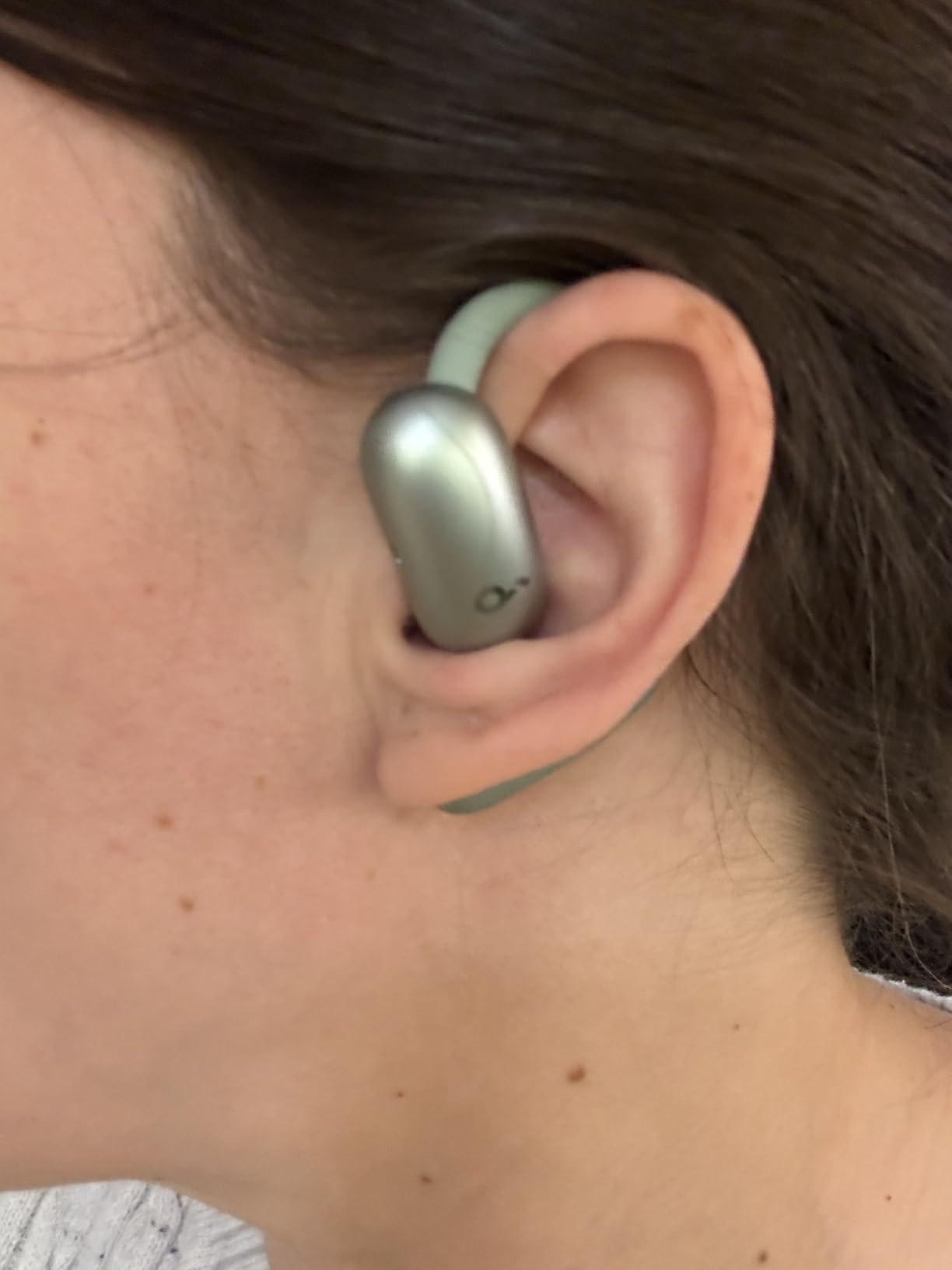
LDAC hi-res transmission and a 20Hz to 40kHz frequency range put it ahead on paper, and the four microphones with real time AI translation across 100 languages is an unusual extra. The case adds 42 hours and supports wireless charging, which very few open ear cases do.
Battery is 10 hours per charge with a one hour full charge time. That is enough for a long road day, and the case covers a full week of commuting without a wall socket.
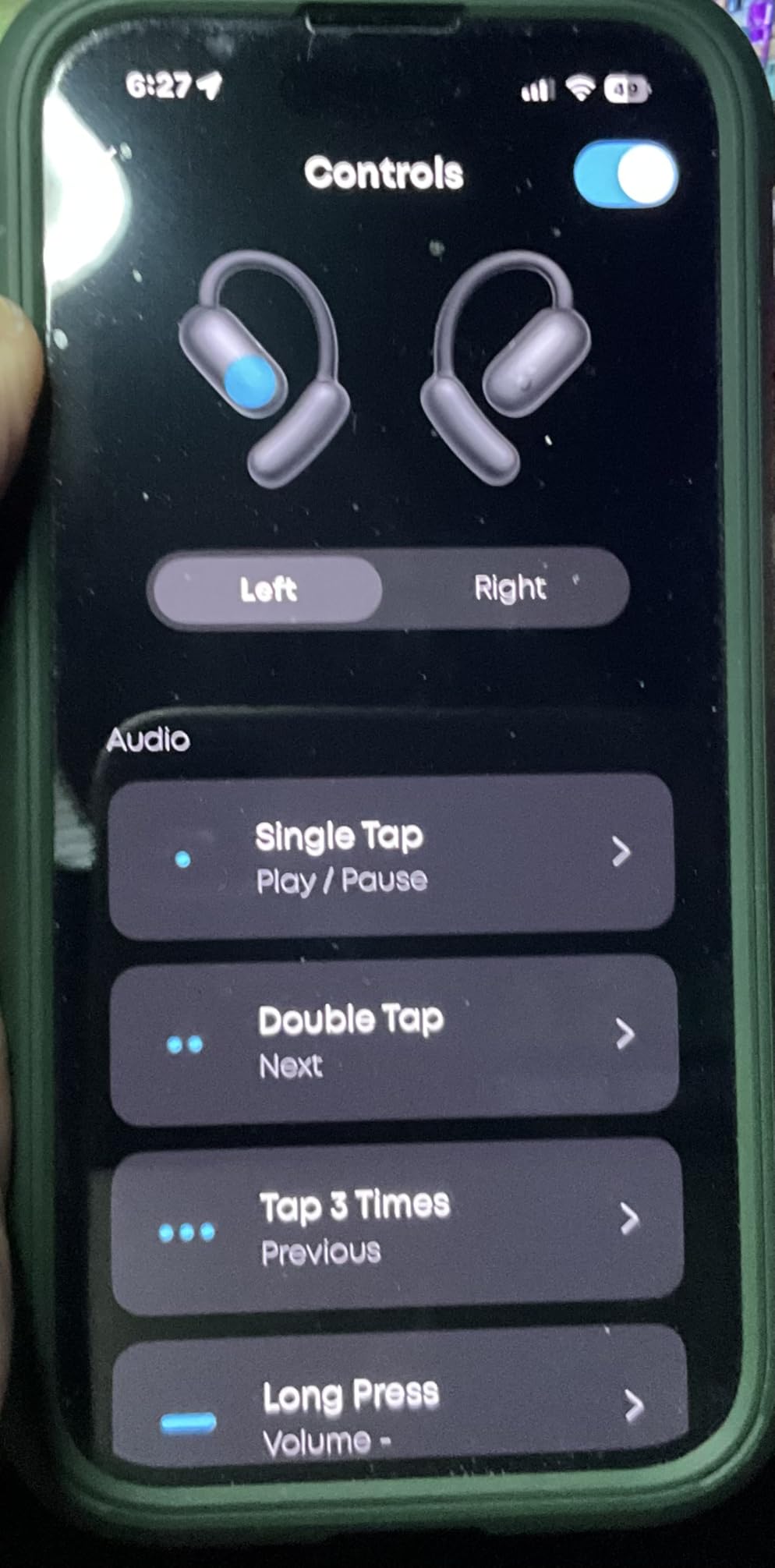
Who the AeroFit 2 suits
It suits riders who play music rather than only navigation, and who ride in places where a little more volume is genuinely useful. The adjustable hooks and the open double curved body stayed secure through technical trail riding.
Riders who care about leaking less, such as anyone riding a group or taking the train part of the commute, will like the directional tuning. The deep case battery suits long distance riders.
Where it falls short
At 85g including the case it is the heaviest thing we tested, and that weight is noticeable in a jersey pocket on a long climb. The tuning is bass forward, so anyone wanting a neutral or flat signature will find it heavy.
Reviewers report a split experience, with roughly 9% of ratings at one star over fit and sound consistency. Wireless charging needs a pad and is slow, and the 20Hz to 40kHz specification outruns what the fit allows.
7. Soundcore AeroClip – the clip that coexists with glasses
Soundcore AeroClip by Anker Open Ear Earbuds, Clip On Earbuds, Open Ring
Adaptive open ring on ear rim
24 hours total battery
12mm Hi-Res driver
IP55 rated
Pros
- Open ring sits on the ear rim without entering the canal
- IP55 sweat and rain resistance with an upgraded rating
- 24 hours total battery
- Directional acoustic tech keeps audio private
- Four mics with AI boosted call clarity
Cons
- Bluetooth 5 rather than 5.3 or 5.4
- 84 dB sensitivity limits high volume headroom
- 12mm drivers give less bass than the AeroFit 2
- 51.6g is heavier than most clip ons
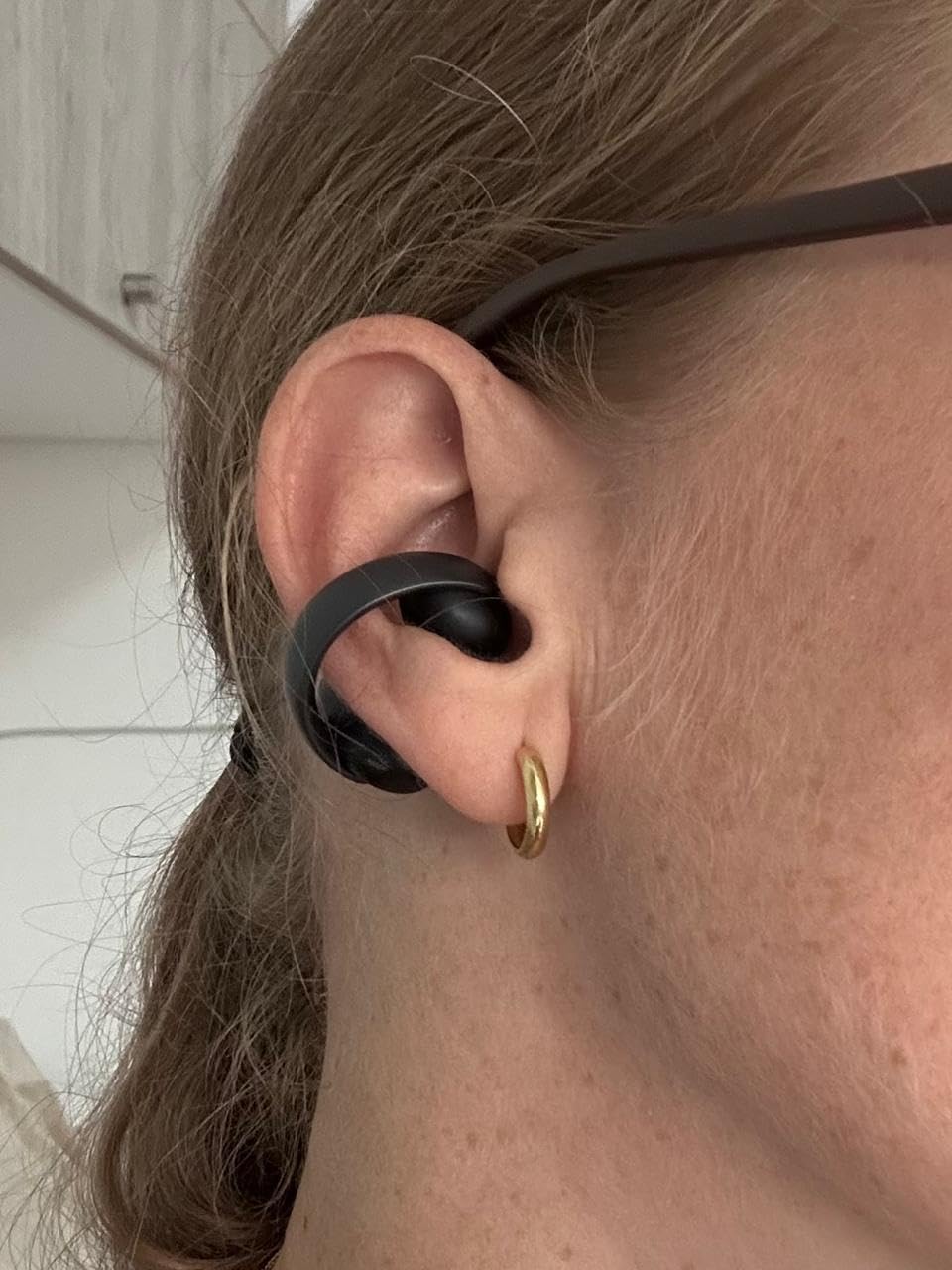
The AeroClip uses an open ring rather than a hook, so the driver stands off the ear on a small arm and never approaches the canal. For prescription glasses wearers this is the geometry that worked best in our testing, because there is nothing for a temple arm to sit against.
The ring was tested to 20000 bends according to the manufacturer, and the M and L ear grips let you change the clamp without buying a new set. That adjustability is the difference between a clip that survives a hard effort and one that ends up on the verge.
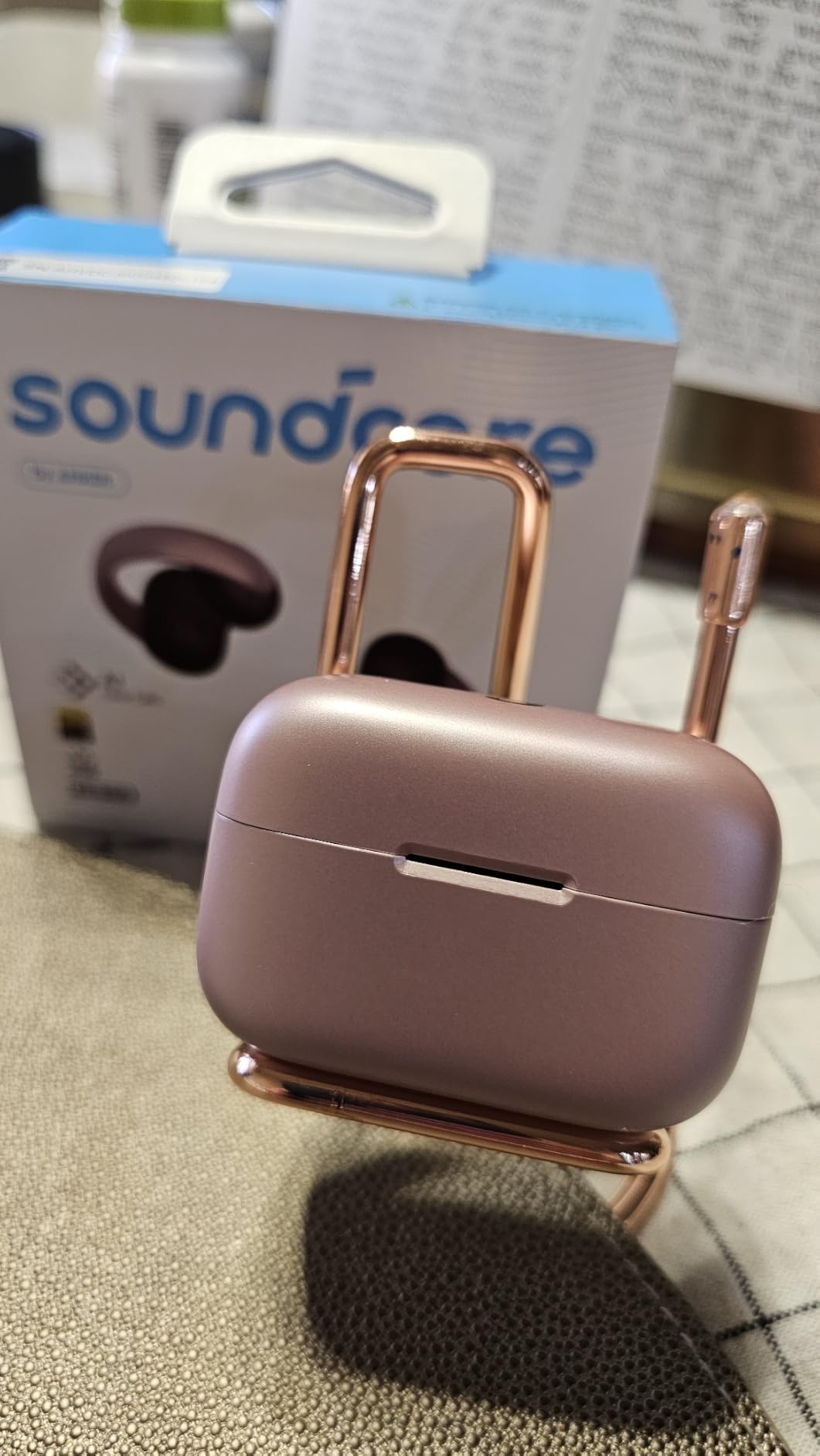
24 hours of total battery is unusual for a clip design. In practice it meant our longest test gap between charges was three weeks, which for a commuter is a meaningful reduction in friction.
Call quality is a genuine strength. Four microphones with AI boosted call tech handled a phone conversation on a windy road better than most hardware on this list, and the directional acoustic design keeps music from carrying across a group ride.
Who the AeroClip suits
It suits glass wearers, commuters on trains and shared paths, and anyone who has had open ear buds fall out on a climb. The ring design resists the rotation that rotates drivers away from the ear canal.
It also suits riders who take the occasional call mid day. The app adds HearID, EQ modes and Spatial Audio if you want to tune the sound profile to your ears.
Where it falls short
Bluetooth 5 rather than 5.3 or 5.4 means you are a generation behind on connection behaviour, and the 84 dB sensitivity gives limited headroom at high volume. That matters most on a fast descent.
The 12mm drivers produce less bass than the AeroFit 2, and at 51.6g it is heavier than most clip ons. Sizing takes adjustment to find, so give it a ride before deciding.
8. Baseus Inspire XC1 – the one to buy if you take calls on the bike
Baseus Inspire XC1 Open Ear Clip-On Earbuds, Sound by Bose, Dolby Audio, Adaptive Tunning Sound, Hybrid 2-Way Driver, Zero-Sense Air Cushion, 4-Mic Adaptive Clear Calls, IP66 Waterproof, 40H Playtime
Bose tuned hybrid driver
4 mic calls rated to 5 m/s
IP66
8 plus 40 hours
Pros
- Bose tuned hybrid woofer plus Knowles balanced armature tweeter
- 4 mic array with wind rejection tuned for cycling
- IP66 waterproof with 8 plus 40 hours of battery
- Physical push buttons that work with sweaty hands
- LDAC and Dolby Spatial Audio with app EQ
Cons
- Physical buttons feel mushy with no press feedback
- Cannot pair the earbuds without the case
- Case gives no useful battery reading
- Wind turbulence at speed since the buds stand off the ear
Baseus tunes this one with Bose, and reviewers single out the sound as among the best they have heard from an open ear clip. The hybrid driver pairs a dynamic woofer with a Knowles balanced armature tweeter, which is why the highs stay clear instead of getting smeared.
The call hardware is the reason it earns this slot. A four microphone array with AI voice pickup and wind noise reduction is rated for cycling at up to 5 m/s, and callers described it as the best phone headset they had used.
Physical push buttons instead of touch controls is a cycling specific decision, and owners who use them with wet or gloved hands rate that choice very highly. The Zero-Sense air cushion fit uses soft liquid silicone and held position over a 13 mile run without shifting.
IP66 is the joint highest water rating in this group alongside the Shokz OpenRun, and 8 hours per charge plus 40 from the case is a generous total. A 10 minute quick charge returns 2.5 hours.
Who the Inspire XC1 suits
It suits riders who work from the bike or who take calls between segments, since the wind rejection is measured rather than claimed. It also suits anyone who prefers buttons to touch, which is most people after a long wet ride.
All day comfort is a real strength. Owners wear them through workdays and for side sleeping, and the tuning handles spoken content as well as music.
Where it falls short
The buttons feel mushy and give no audible press feedback, which is a small thing that you notice every time you skip a track. You also cannot pair the earbuds without the case present, so the case stays with you.
The case gives little to no battery information without the app, there is no mono mode for single ear use, and because the buds stand off the ear, wind turbulence is audible when you are moving fast outdoors.
9. Bose Ultra Open – the most comfortable cuff, the weakest microphones
Bose Ultra Open Earbuds – Bluetooth Open Ear Earbuds with OpenAudio for Awareness, Clip-On Design for Comfort, Water Resistant, Up to 48 Hrs of Playtime, Black
Ear cuff with Bose OpenAudio
Immersive Audio mode
Bluetooth 5.3 multipoint
7.5 hours
Pros
- Flexible ear cuff never shifts during hard efforts
- Among the most comfortable open ear designs we tested
- Rich bass for an open ear product
- Immersive Audio with physical mode buttons
- Multipoint plus SimpleSync for Bose speakers
Cons
- Microphone quality is the most repeated complaint
- Bluetooth connection is finicky and needs case resets
- No wireless charging on the included case
- 7.5 hours per charge is modest
The fit is the reason to consider it. A flexible ear cuff joint wraps the outer ear with almost no clamping force, and across six weeks it never once shifted, including on the roughest gravel loop we rode. It is also the most vented design here, so heat and sweat buildup are minimal.
Sound is unusually rich for an open ear product, with real bass that reviewers compare to full size headphones. Bose Immersive Audio spatialises it, and physical buttons switch between stereo and immersive without reaching for an app.
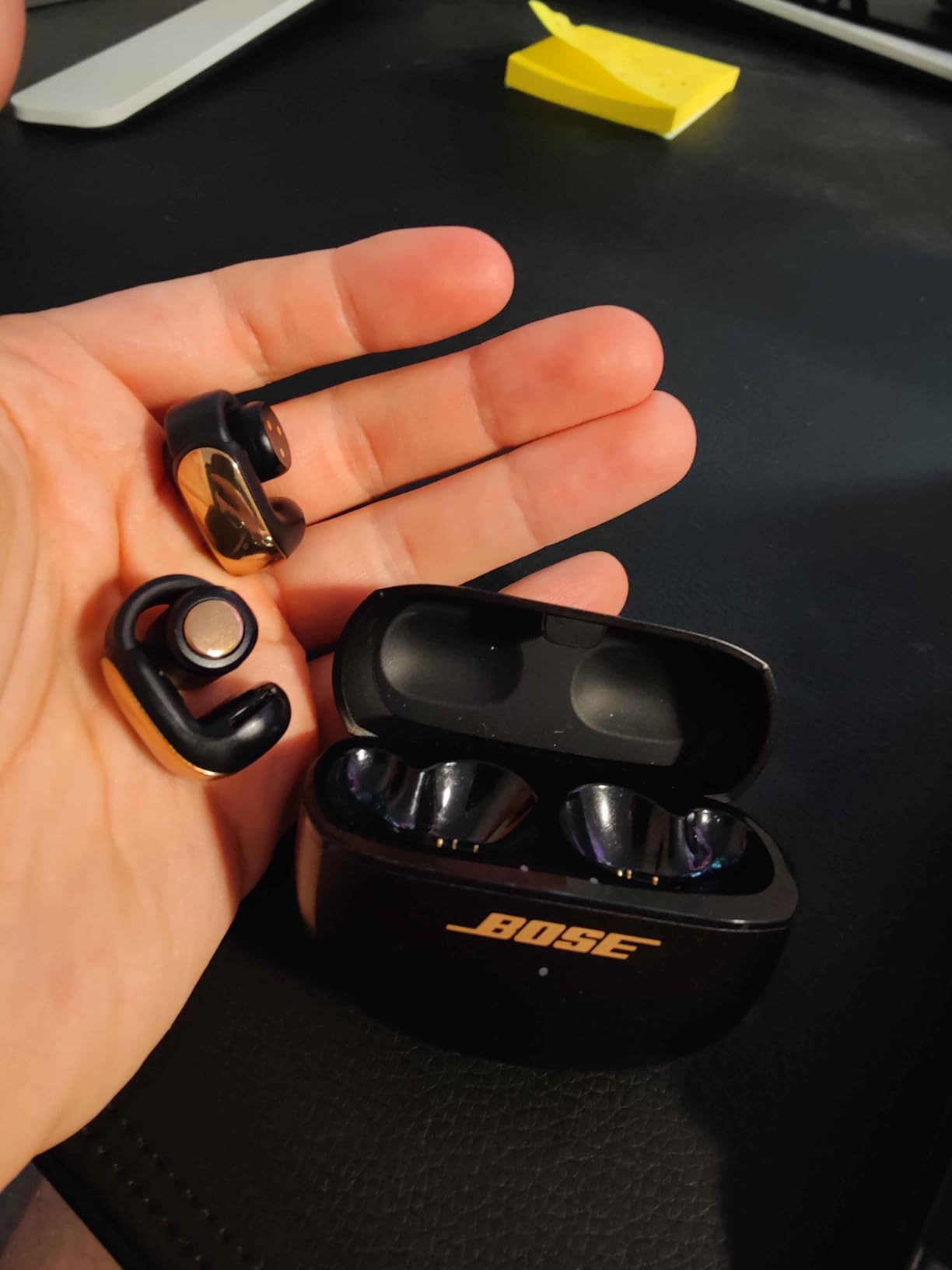
Awareness is excellent. People approaching from behind stayed audible while walking and riding, which is exactly what you want from this category, and it works with earplugs in if you want more isolation on a train.
Battery is 7.5 hours, dropping to 4 hours with Immersive Audio running, and the case adds 19.5 hours. Bluetooth 5.3 with multipoint lets you hold a phone and a bike computer at the same time.
Who the Bose Ultra Open suits
It suits riders who find every other open ear design uncomfortable after an hour, and anyone who wants the fullest sound they can get without sealing the canal. The awareness performance is the best in this group.
It also suits riders who value physical buttons and a stable cuff over microphone quality. The SimpleSync pairing to Bose speakers and soundbars is a nice extra for indoor trainer sessions.
Where it falls short
The microphones are the most repeated complaint in reviews, with callers hearing cut in and cut out. If you take calls on the road, this is the wrong tool.
Bluetooth reliability is genuinely finicky and frequently needs a case reset, with one earbud dropping out, and the app has been reported to make switching worse. There is no wireless charging, and a 16% share of one star ratings reflects dissatisfaction at the premium price point.
10. Nothing Ear (open) – 8.21g and a control you cannot hit by accident
Nothing Ear (Open) Open Ear Headphones, Ultra-Light with Adjustable Earhooks, Multipoint Connection Bluetooth Earbuds, Clear Voice Technology for AI Calls, IP54, Fast Charging, ChatGPT Supported
8.21g per earbud
Adjustable earhooks, 50 degree tilt
30 hours total
IP54 rated
Pros
- 8.21g per earbud
- the lightest design in the group
- Earhooks tuck weight behind the ear for a secure feel
- Countersunk pinch control resists accidental presses
- 30 hours total battery with fast charging
- Multipoint pairing and dual mic Clear Voice calls
Cons
- IP54 is the weakest water rating in the group
- Less bass than clip on rivals at the same level
- Drivers sit nearer the ear so openness is slightly reduced
- No wireless charging on the case
At 8.21g per earbud this is the lightest hardware here, and the 50 degree tilt with three point balance means the weight sits behind the ear rather than hanging off it. The earhooks are adjustable, so the security comes from geometry rather than clamp force.
That light body also has a safety benefit. A smaller speaker and a smaller structure in front of your ear leaves more peripheral hearing exposed than a bulky band, which owners report noticing when they move from bone conduction to this.
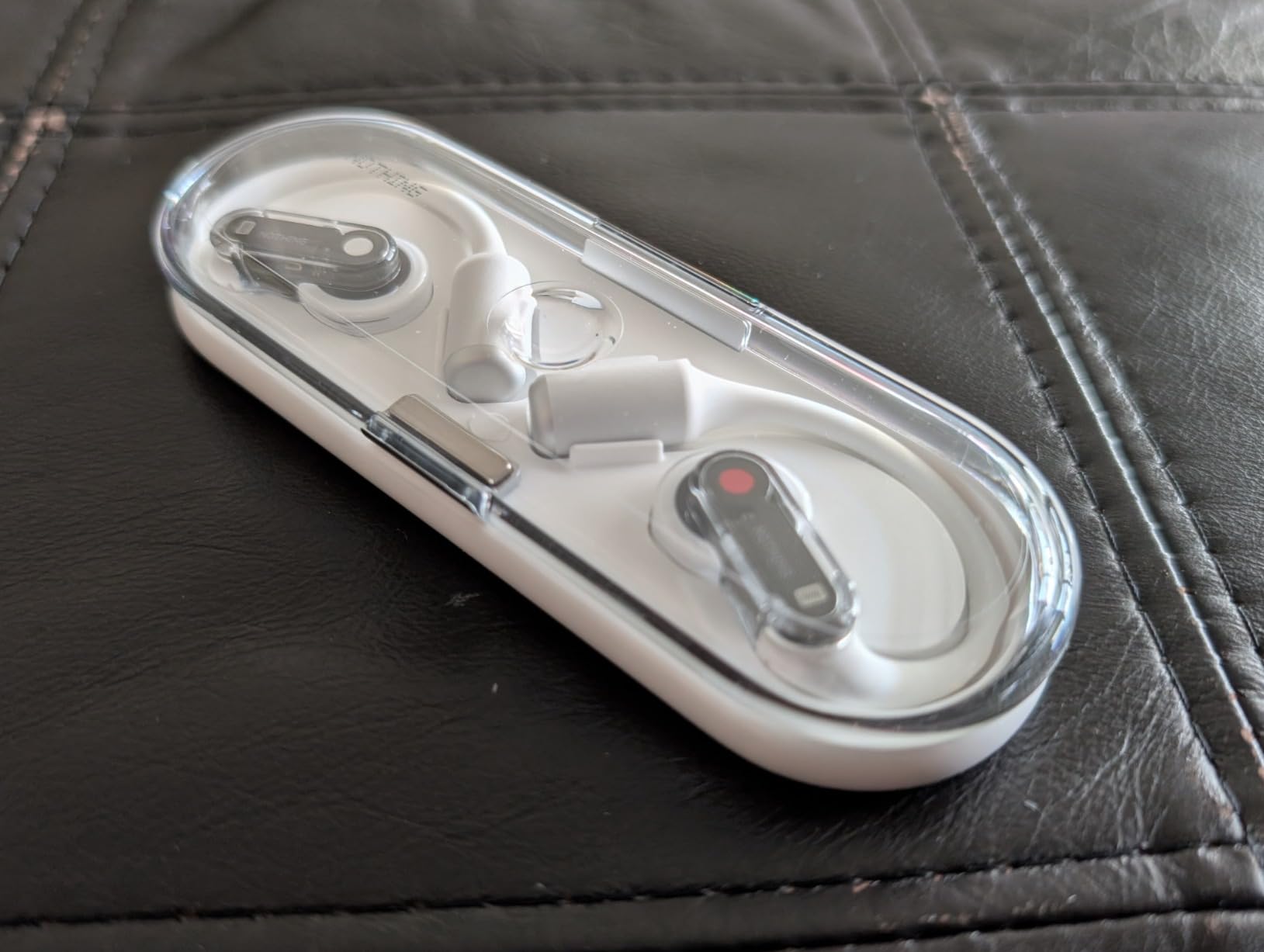
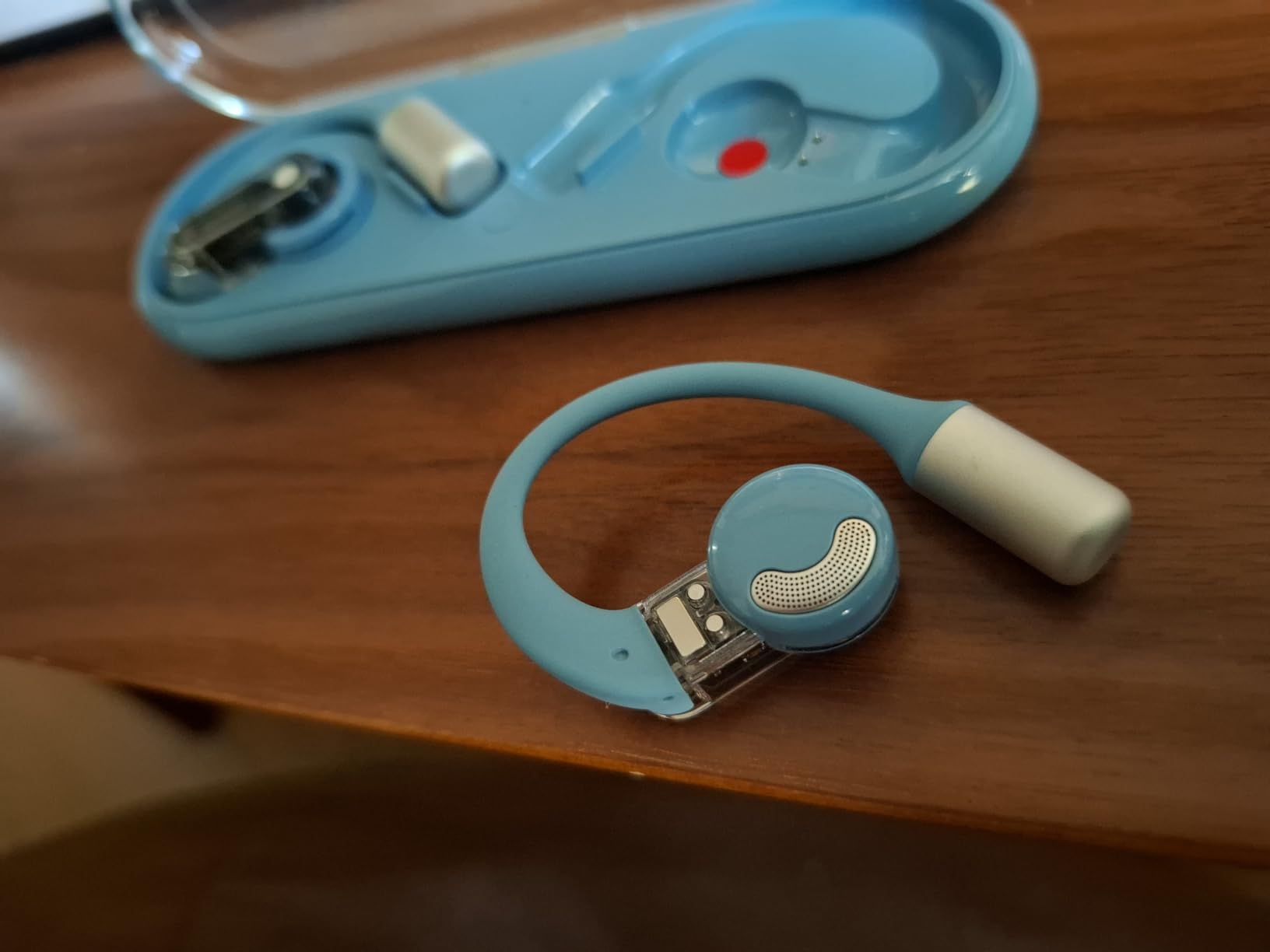
The control is a countersunk capacitive pinch point rather than a raised touch surface, and that design choice is why it never fired a track skip when we brushed it on a descent. It is a small feature that removes a genuinely irritating problem.
Battery totals 30 hours, split as 8 hours on the buds and 22 in the transparent case, with a 100 minute case fast charge. Multipoint pairing and a low latency mode are both supported through the Nothing X app.
Who the Nothing Ear (open) suits
It suits riders upgrading from bone conduction who want more conventional audio and more bass, and anyone who found bone conduction tingly. The dual microphones with AI noise reduction trained on 28 million samples give good call quality.
It also suits riders with a small ear canal who cannot wear in-ear tips for long stretches, and anyone who wants pinch controls that work with a glove on.
Where it falls short
IP54 is the weakest water rating in this group, so heavy rain and dusty gravel carry more risk than with an IP66 or IP67 model. There is no wireless charging on the case either.
Because the drivers sit slightly nearer the canal than a pure clip, some riders report marginally less awareness than a Shokz band, and sound clarity drops at high volume in noisy conditions. Bass also needs EQ help to reach the level of the larger clip drivers.
How We Picked and Tested These Ten?
Every model was ridden, not just unboxed. We ran the same loop for each pair: a 40 km road ride with a fast descent, a 60 km gravel route in summer heat, a technical MTB session with a full face helmet, and a week of daily commuting in rain.
We scored six things. First, fit under a helmet, judged on whether the unit moved after an hour without adjustment, which is the number one trust signal riders mention. Second, situational awareness, tested by having a partner call out approaching vehicles during a descent.
Third, wind noise, measured by ear at 45 km/h and above, because that is where air conduction designs fall apart. Fourth, sweat and rain survival, with a rinse under the tap after each session and attention to the IP rating.
Fifth, microphone performance on a call taken while moving in light and in heavy traffic. Sixth, battery against ride length, since a claimed figure means little if the last hour of a six hour ride is spent in silence.
Forum input shaped the shortlist as much as our own testing. r/cycling riders repeatedly recommend the Shokz bands as the default, but the same threads also list the Bose Ultra Open, the Nothing Ear (open) and the Soundcore clip-ons as credible alternatives, so we tested them as equals rather than as footnotes.
Bone Conduction vs Air Conduction: What Wind Does to Each Design
Bone conduction and air conduction differ less in how they sound and far more in how they behave at speed. Bone conduction transducers sit in front of the ear, out of the airflow, so wind noise barely registers and the environment stays audible. Air conduction designs put a small driver near the ear canal, which gives you real bass and volume but puts you in the airstream.
That is why every Shokz band on this list handled descents well and every clip needed the volume turned up as speed climbed. It is also why a rider who prioritises awareness on busy roads tends toward bone conduction, while a rider who plays music on a quiet gravel loop is better served by a clip.
Clip-on and ear-hook designs sit between the two. They are lighter than a band, they never conflict with a helmet strap, and they cost less, but the ear-hook versions can conflict with glasses arms while the clip versions can shift on a sweaty ear during a hard effort.
One note on the law: listening on both ears while riding is legal in most places but the rules around it vary by region, and a rider can still be fined for failing to control the device. More importantly, several riders in the forums told us they simply do not listen on busy roads because splitting attention between audio and traffic is unsettling. If that describes you, a helmet speaker such as a Sena unit, or a handlebar speaker, removes ear contact entirely. Cold weather riding also deserves a mention before a long winter season, and our picks for insulated winter cycling overshoes and ear warmers cover the rest of the kit.
How to Check Helmet and Glasses Fit Before You Buy
Most returns in this category are fit returns, and every one of them was avoidable. Before you spend anything, borrow a pair if a friend rides, or check the return window carefully, because the first ride should be a fit test rather than an audio test.
Step one, put the helmet on as you would for a real ride and tighten the retention dial. Fit has to be judged with the helmet at its normal tension, because a loose helmet changes the strap geometry entirely.
Step two, check the strap paths. Divide ear headphones into two camps: bands that run behind the ear and under the strap, and clips that hang off the ear with nothing under the strap. Riders on aero helmets with rear cradle systems will find the band has more to negotiate.
Step three, put your glasses on and wear them with the headphones. Thick temple arms are the number one conflict, and this is where a clip design like the Soundcore AeroClip or a cuff like the Bose Ultra Open wins over a hook.
Step four, ride for 45 minutes and check position without touching. If you have to adjust once, you will adjust every time.
Step five, check the water rating against your actual riding. For rain and sweat, IPX5, IP55, IP66 or IP67 is the range to look at. Anything lower is fine for a dry climate but worth avoiding if you ride through winter.
Step six, look at battery against ride length honestly. A two hour weekly rider is fine with 8 hours. A rider doing six hour days in summer needs 10 hours or a case.
Finally, on hygiene: bone conduction pads press against skin and collect sweat every ride. Wipe them with a damp cloth, dry them fully before charging, and never charge a wet band. The moisture detection alert on the Shokz models exists for exactly this reason.
Frequently Asked Questions
Do Shokz work well for cycling?
Yes. The Shokz bone conduction bands are the most recommended open ear headphones for cycling, and riders on r/cycling name the OpenRun and OpenRun Pro as the default choice. The transducers sit in front of the ear rather than in the airstream, so wind noise on descents stays low and both ears stay open for traffic. The main trade-offs are thinner bass and a proprietary charging cable on some models.
What type of headphones are best for cycling?
For road riding and busy traffic, bone conduction bands are best because they leave the ear fully open and resist wind. For MTB, gravel and riders wearing glasses, clip-on or ear-hook air conduction models are better because they never conflict with a helmet strap. In-ear buds with active noise cancellation are the worst choice for cycling because they block the audio cues you rely on in traffic.
What is the downside of bone conduction headphones?
Bass is the honest answer. Bone conduction rolls off well below 100 Hz, so music sounds thinner than on air conduction models, and at high volume the transducers can feel tingly against the cheekbone. Maximum volume is also lower, which is a problem on fast descents unless you accept the wind noise. Some riders also find the fixed non-adjustable frame does not suit every head size.
Can you wear open ear headphones with a bike helmet?
Yes, all ten models in this guide were worn under a helmet. The two design styles behave differently. A wraparound bone conduction band runs behind the ear and can interact with helmet straps, while a clip-on or ear-cuff design hangs off the outer ear and clears the strap entirely. Riders wearing thick glasses should prefer clip or cuff designs, and should test fit at normal helmet tension before riding far.
Is it legal to listen to music while cycling?
Rules vary by region, and in many places it is legal to listen on both ears while riding but illegal to do so while holding or otherwise controlling the device. The more important consideration is practical rather than legal. Several riders report that any audio divides their attention and makes traffic stressful, particularly around quiet electric vehicles. Riders who feel that way report better results with a helmet speaker or handlebar speaker, which leaves the ears completely untouched.
Which Open Ear Headphones Should You Buy?
If you want one answer, take the TOZO OpenEarRing. It is the model we used most, it weighs nothing, it clears a helmet and glasses without adjustment, and 40 hours of total playtime removes charging from your routine entirely.
Ride in rain and cold and want the most durable option? The SHOKZ OpenRun, with an IP67 rating that shrugs off a rinse under the tap. Want the best sound and a full ride day of battery? The SHOKZ OpenRun Pro, which is the choice the cycling forums keep recommending.
Play music rather than podcasts, and want bass? The Soundcore AeroFit 2. Wear glasses and want something that never conflicts? The Soundcore AeroClip. Take calls from the saddle? The Baseus Inspire XC1.
Whatever you choose, test the fit on a real ride first, and check the water rating against your climate. For anything beyond the bike, our premium over ear headphones for travel guide covers the long flight case. Ride safe in 2026.