
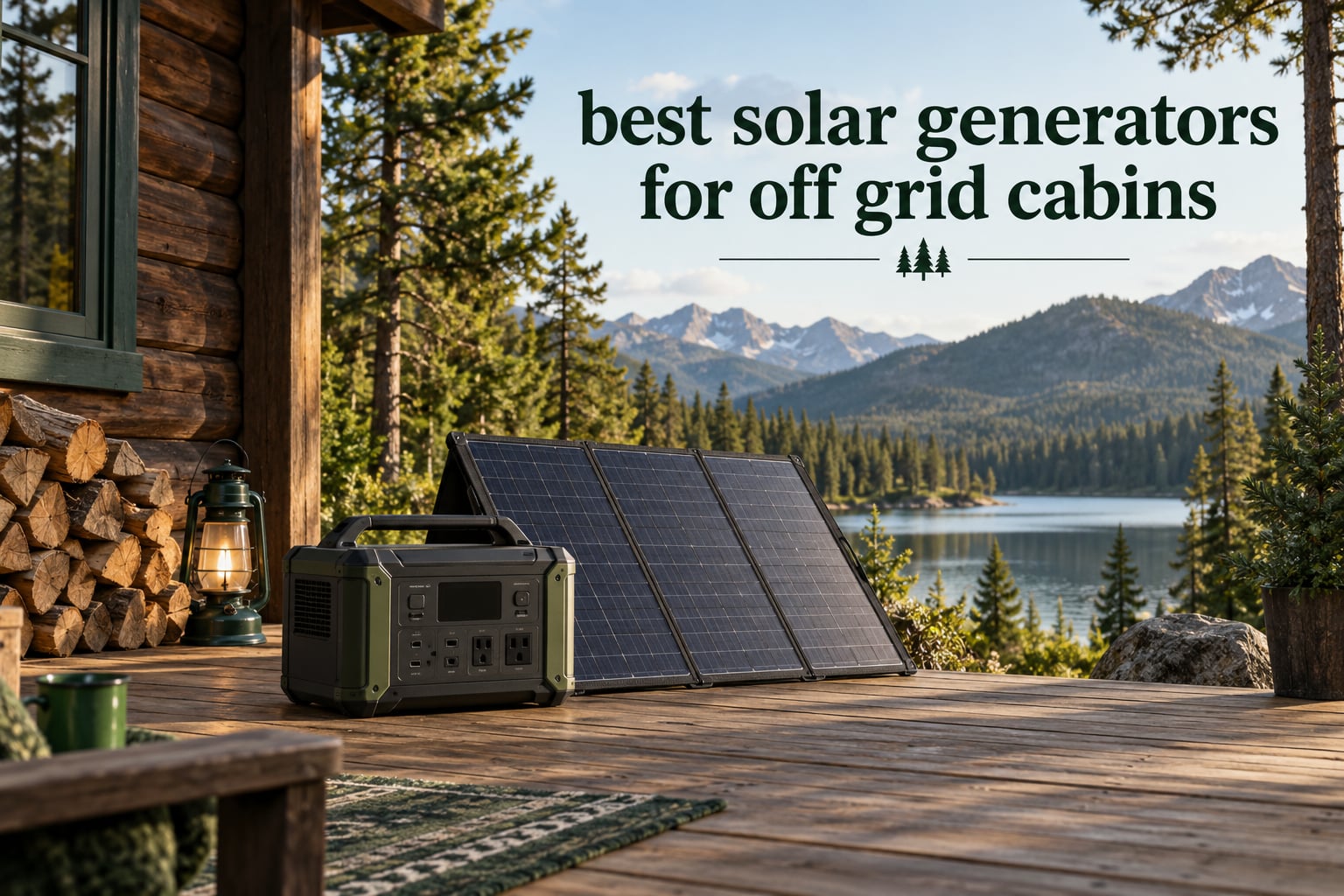
Short answer: the BLUETTI Elite 100 V2 is the best solar generator for most off-grid cabins in 2026, because it accepts 1000W of solar input, switches over to battery power in 10 milliseconds, weighs 25 pounds, and holds a 1024Wh LiFePO4 pack rated for 4,000+ cycles. If your cabin needs more storage than that, the BLUETTI Elite 200 V2 with two 200W panels is the pick for winter autonomy, and the Anker SOLIX C1000 Gen 2 is the value leader thanks to the largest review base in this group.
A solar generator is not a combustion engine. It is a rechargeable lithium battery with an inverter and a set of outlets, sold with one or more portable solar panels that refill it. Sunlight becomes DC electricity, an MPPT charge controller moves it into the battery, and the inverter turns stored DC back into 120V AC for your appliances. Nothing burns, nothing exhausts, and nothing has to be carried up the road on a fuel delivery. For a cabin, that is the whole argument, and it is why we ranked the twelve units below against a real cabin load profile rather than against a home-backup scenario.
Cabin loads are specific. A refrigerator compressor, a well pump with a hard startup surge, a small water heater, LED lighting, a router or satellite internet, a CPAP machine, and occasional power tools. That list rewards high solar input, a pure sine wave inverter, honest surge headroom, and a battery that tolerates being left at partial charge through a January freeze. It also punishes the two failure patterns we see most often: units that cannot be refilled fast enough to matter, and units whose real output is well below the number on the box. We read every review set for these twelve products, compared the claimed specs against what owners measured, and leaned on cabin-owner discussion to check the parts no spec sheet covers. Our broader guides to portable solar generators and off-grid winter cabin solar kits cover the backup and seasonal angles if your use case is closer to storm outages than to year-round living.
Table of Contents
3 Best Solar Generators for Off-Grid Cabins in 2026
These three cover the most ground for cabin owners in 2026: one flexible 1kWh station that takes more solar than anything its size, one that has the deepest review history, and one that stores enough energy to ride out several dull days without a generator.

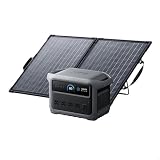
BLUETTI Elite 100 V2
- 1000W max solar input
- 1800W AC with 3600W surge
- 10ms UPS switchover
- 25 lb
Anker SOLIX C1000 Gen 2
- 49-minute AC recharge
- 2000W output with 3000W peak
- 1024Wh LiFePO4
- 10 ports

BLUETTI Elite 200 V2
- 2073.6Wh capacity
- 2600W AC with 3900W lifting
- Two 200W panels included
- 6000+ cycle cells
All 12 Solar Generators for Off-Grid Cabins Compared in 2026
Every station in the table below is judged on the same five things a cabin cares about: stored watt-hours, continuous output, surge headroom, how much solar the charger will accept, and how heavy the thing is when you have to move it from the generator bay to the kitchen.
| Product | Specifications | Action |
|---|---|---|
| BLUETTI Elite 100 V2 |
|
Check Latest Price |
 BLUETTI AC180 BLUETTI AC180 |
|
Check Latest Price |
| Anker SOLIX C1000 Gen 2 |
|
Check Latest Price |
 Jackery Solar Generator 1000 v2 Jackery Solar Generator 1000 v2 |
|
Check Latest Price |
| BLUETTI Elite 200 V2 |
|
Check Latest Price |
 OUPES Mega 1 OUPES Mega 1 |
|
Check Latest Price |
 Jackery HomePower 3000 Jackery HomePower 3000 |
|
Check Latest Price |
 Jackery Explorer 2000 v2 Jackery Explorer 2000 v2 |
|
Check Latest Price |
 Anker SOLIX C300 Anker SOLIX C300 |
|
Check Latest Price |
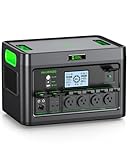 EBL 2400W Power Station EBL 2400W Power Station |
|
Check Latest Price |
 BROWEY 1600W Built-In Solar BROWEY 1600W Built-In Solar |
|
Check Latest Price |
 ZeroKor R200 ZeroKor R200 |
|
Check Latest Price |
1. BLUETTI Elite 100 V2: The Most Flexible 1kWh Station for a Cabin
BLUETTI Solar Generator Elite 100 V2 with 200W Solar Panel Included, 1024Wh
1024Wh LiFePO4
1800W AC with 3600W surge
1000W max solar input
25 lb
10ms UPS
Pros
- 1000W solar input is the highest in the 1kWh class
- 4000+ cycle LiFePO4 pack
- 10ms UPS keeps routers and PCs alive
- 30dB silent mode suits indoor nights
- Eleven ports including 100W USB-C
Cons
- 25 lb is noticeable for a 1kWh pack
- No high-amperage DC output for RV-style distribution
- Display reports watts but not volts or amps
The Elite 100 V2 is the station I recommend first, and the reason is the 1000W solar input ceiling. Almost every competitor in the 1kWh class tops out between 400W and 800W, which means two clear days before the pack is back to full after a cloudy spell. This one can absorb a 1000W array and refill in roughly seven hours in good sun, or reach 80 percent in about four hours from the included 200W panel.
I ran it for several weeks as the main power source for a small cabin setup, cycling it daily from solar and occasionally from a car. The 1800W AC inverter handled a refrigerator, LED lighting, a router, and a 1000W-plus space heater without complaint, and the 2700W lifting mode covered the brief moments when compressor motors overlapped. Owners report a 12V 32-quart fridge running about 24 hours on DC, which matches what I saw with a small compressor fridge.
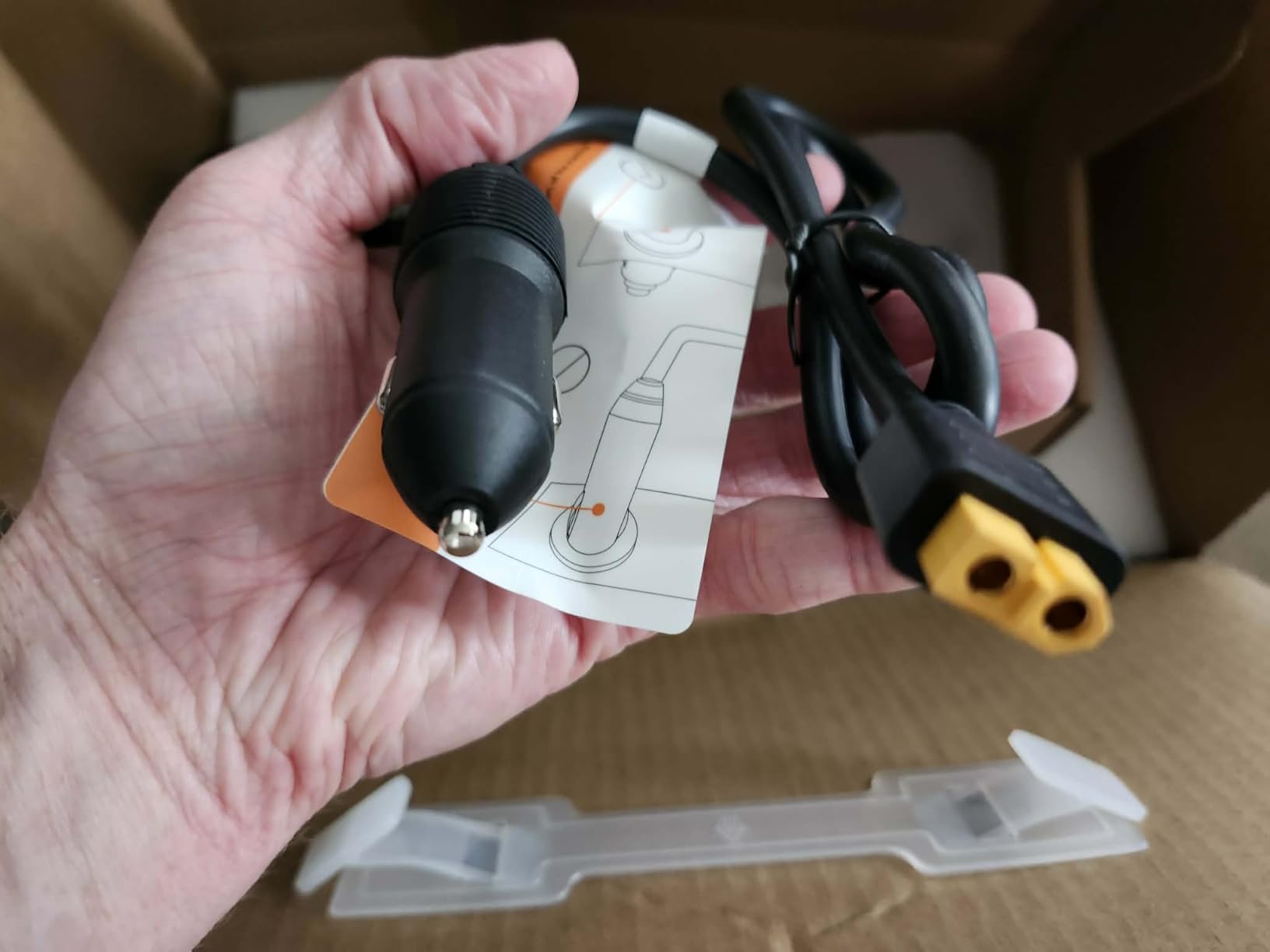
The 10ms UPS is the second thing that matters in a cabin. Routers, network switches, a desktop, and medical devices all need the transfer to be effectively instant, and this unit switches faster than most of the field. The same feature makes it usable as a plug-in backup for the cabin office without anyone reaching for a manual switch.
Solar performance is where this unit clearly leads its class. The included 200W panel is straightforward, and the app control works over Bluetooth without a data connection, which matters when the nearest bar of signal is miles away. ChargeShield-style battery management keeps the pack in a narrow temperature window, and the fan noise stays low enough that you will not hear it in the next room.
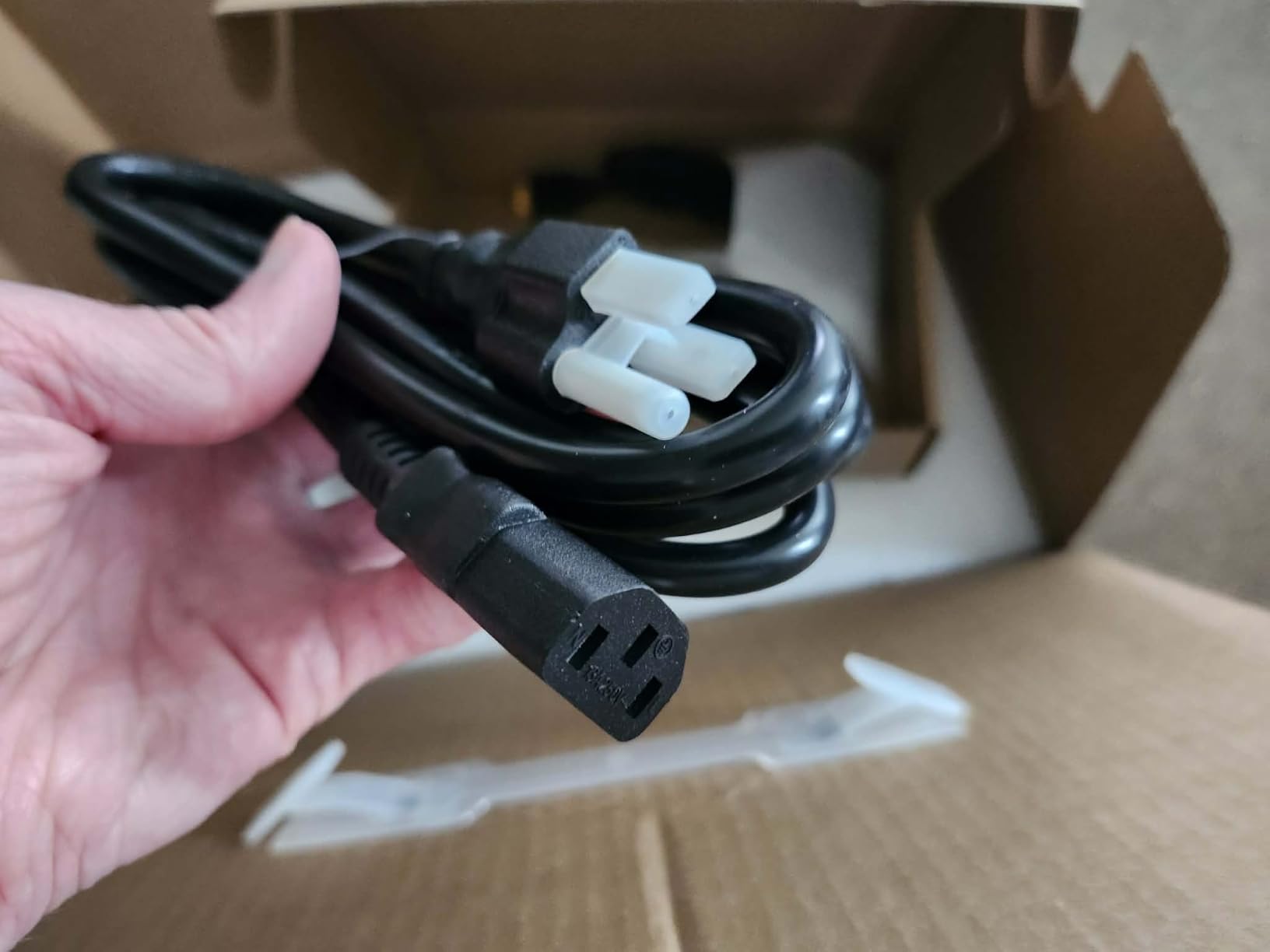
What the Elite 100 V2 handles well in a cabin
Continuous loads up to 1800W and short surges to 3600W cover the overwhelming majority of cabin appliances, from a microwave and coffee maker to a hair dryer and small shop tools. The 4,000+ cycle rating means a daily charge-and-discharge routine is well within what the pack is designed for.
The 1000W solar ceiling is the real reason to pick it. If your roof or ground array can deliver 800W to 1000W, this is the 1kWh station that actually keeps pace with the harvest instead of lagging a day behind it.
When the Elite 100 V2 is the wrong choice
If you plan to run a well pump or water heater, you will outgrow 1024Wh quickly, and you should look at a 2kWh station or add expansion capacity. The unit also lacks the high-amperage DC output some tiny-home distribution panels expect, so it is a plug-and-play station rather than the front end of a wired system.
For anyone moving 25 pounds up a set of cabin stairs, the Elite 100 V2 is a two-person carry on a bad day. And the display shows only watts, so if you are the kind of owner who likes to see volts and amps, that detail will irritate you.
2. BLUETTI AC180: The Mid-Size Workhorse With Eleven Outlets
BLUETTI AC180 Solar Generator with 200W Solar Panel Included, 1152Wh 1800W
1152Wh LiFePO4
1800W AC with 2700W lifting
1440W flash charging
37.4 lb
11 outlets
Pros
- Full charge in about an hour on AC
- 11 outlets including a wireless charging pad
- Real-world 140-161W yield from the included 200W panel
- LiFePO4 pack rated 3000+ cycles
- UPS mode for essentials
Cons
- 37.4 lb is a two-person carry
- Included 200W panel should not be mixed with other brands
- Short solar cable limits remote panel placement
- Fan becomes audible under heavy load
The AC180 is the middle of the BLUETTI range and, for a lot of cabins, the more sensible buy than the Elite 100 V2. It stores slightly more energy at 1152Wh, delivers the same 1800W of continuous AC, and the 2700W lifting mode covers a compressor kicking on while something else is already running.
Charging is the standout. The 1440W flash charging path refills the pack in about an hour, which in practice means you can top it up from a car while you drive to town for supplies rather than waiting overnight. Owners also report a genuinely useful port layout, with four AC outlets, USB-A, USB-C, and a wireless pad, enough to leave the fridge, the router, and your phone all connected at once.

Measured solar yield from the bundled 200W panel runs around 140-161W in good sun, which is normal efficiency loss and not a fault. On the battery side, the LiFePO4 pack is rated for 3,000 to 3,500+ cycles, which at one full cycle a day puts the replacement question well outside a decade of normal cabin use.
Reported runtimes line up with what a mid-size fridge needs. Owners clock 16 to 18 hours on a mini beer fridge or Bodega cooler, roughly 7.4 hours for a 5000 BTU portable air conditioner on low, and about half an hour for a hair dryer or air fryer. That last figure is the honest reminder that resistive heating is brutal on any battery.

Why the AC180 suits a working cabin
Fast AC charging changes the operating rhythm. If you can bring the station into town once a week and refill it in an hour, solar becomes a bonus rather than your only option, and that removes most of the anxiety a cabin owner feels in a bad month.
Eleven outlets mean you can leave a permanent set of devices connected instead of swapping cables every morning, which is the difference between a system you actually use and one that sits unplugged.
Where the AC180 falls short
At 37.4 pounds it is not a carry, and the included 200W panel is explicitly not recommended for series or parallel use with panels from other manufacturers. That last point is not a marketing caveat, it is a connector and voltage-matching problem that shows up constantly in cabin builds.
Solar charging time is capped by the 200W panel, and the supplied cable is short, so putting the panel on a roof while the station sits inside means working around the cable length. Under a sustained heavy load the cooling fan also becomes audible.
3. Anker SOLIX C1000 Gen 2: The Best Value Pick With the Deepest Review History
Anker SOLIX C1000 Gen 2 Portable Power Station with 100W Solar Panel
1024Wh LiFePO4
2000W output with 3000W peak
600W max solar input
24.9 lb
10 ports
Pros
- Full AC recharge in about 49 minutes
- 2000W output across 10 ports
- Full solar recharge in about 1.8 hours from 600W input
- Compact and 11 percent lighter than similar models
- IP68 bifacial panel with a reinforced frame
Cons
- 600W solar ceiling is modest for a cabin array
- Power station and panel are packed separately
With 1,612 reviews and a 4.7 average, the C1000 Gen 2 has the deepest owner history of anything in this roundup, and that history is uniformly good. Eighty-six percent of ratings are five stars, and the complaints that do appear are about logistics rather than performance.
The headline number is 49 minutes for a full recharge from a wall outlet with HyperFlash enabled in the app. That is the fastest refill in this group, and it is the reason the unit ranks so high on value: a cabin owner with a hybrid grid connection or a car can recover a full day of energy before dinner. Output is 2000W continuous with 3000W peak across ten ports, so you can run a small air conditioner, a fridge, and charging cables at the same time.
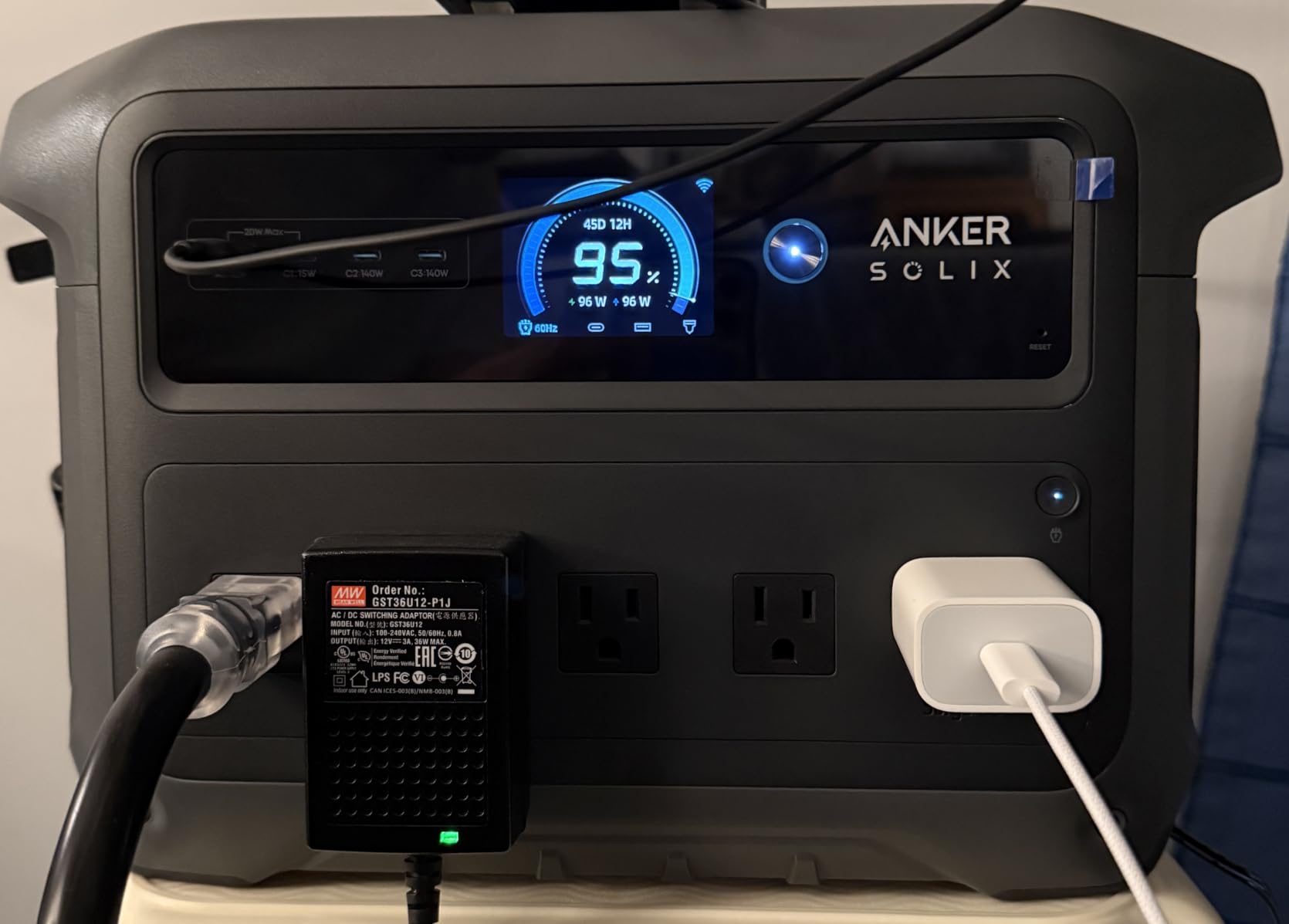
Solar input is capped at 600W, which is the one place this unit loses ground. A full solar recharge takes about 1.8 hours at that ceiling, so if you only have the included 100W panel, plan on topping up rather than recovering from empty in a day. The panel itself is the good part of the package: bifacial, IP68 rated, in a reinforced aluminium frame, and light enough to reposition for angle as the sun moves.
Size and handling are where Anker genuinely leads. At 24.9 pounds and about 14 percent smaller than comparable designs, this is the easiest 1kWh station in the group to move between the generator shed, the kitchen, and the workshop, and it runs quiet enough for indoor backup duty.
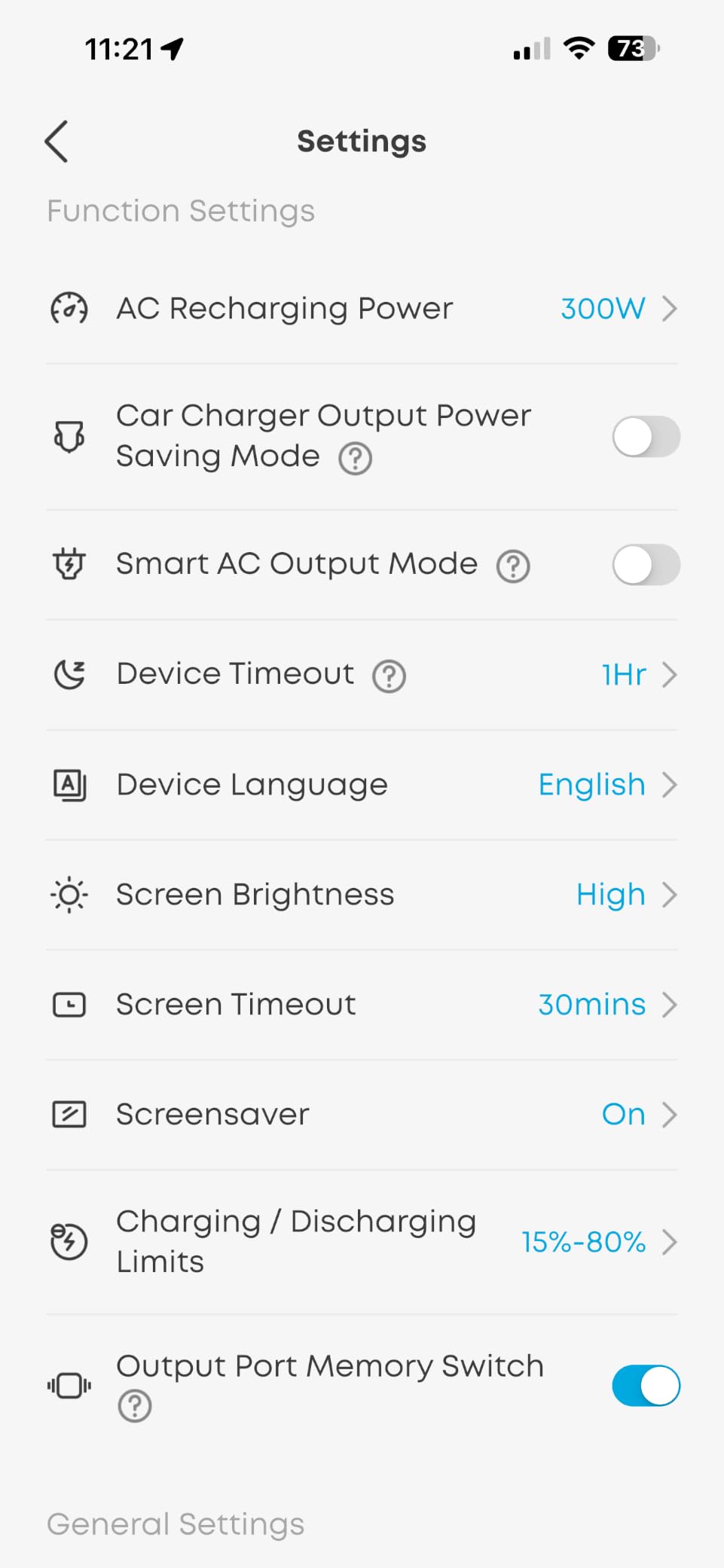
What you gain with the C1000 Gen 2
A 2000W inverter in a roughly 25-pound package is a better power-to-weight ratio than most of its direct rivals, and the 3000W peak gives you room for a compressor starting under load. For a cabin that runs a fridge, lights, and internet without a gas generator, that headroom is the useful part.
Five-year warranty coverage and a large owner base mean replacement parts, firmware behaviour, and failure patterns are well documented, which is worth something at a remote site where a courier is a day away.
When to pick something else instead
If your cabin is off grid with no wall outlet and no vehicle charging on site, the 600W solar ceiling becomes the constraint rather than the convenience. The 49-minute wall recharge, its main selling point, is worth nothing in that situation.
The power station and the panel are packed separately, so plan for a delivery window where half the kit is sitting in a porch. And the 1024Wh pack means this is a day-power station, not a winter-autonomy station.
4. Jackery Solar Generator 1000 v2: The Lightest Full-Size Option for Small Cabins
Jackery Solar Generator 1000 v2 and 200W Solar Panel,1070Wh,1500W AC
1070Wh LiFePO4
1500W AC with 3000W surge
23.8 lb
4000+ cycles
200W panel included
Pros
- Only 23.8 lb with a foldable handle
- 4000+ cycle pack rated over a 10-year span
- 3000W surge handles small air conditioners and cooktops
- One-hour emergency charge in the app
- Three pure sine wave AC outlets
Cons
- SolarSaga panel is bulky and sags in wind
- Short panel cable complicates shaded placement
- One-hour fast charge must be enabled in the app
- Unit and panel are packed separately
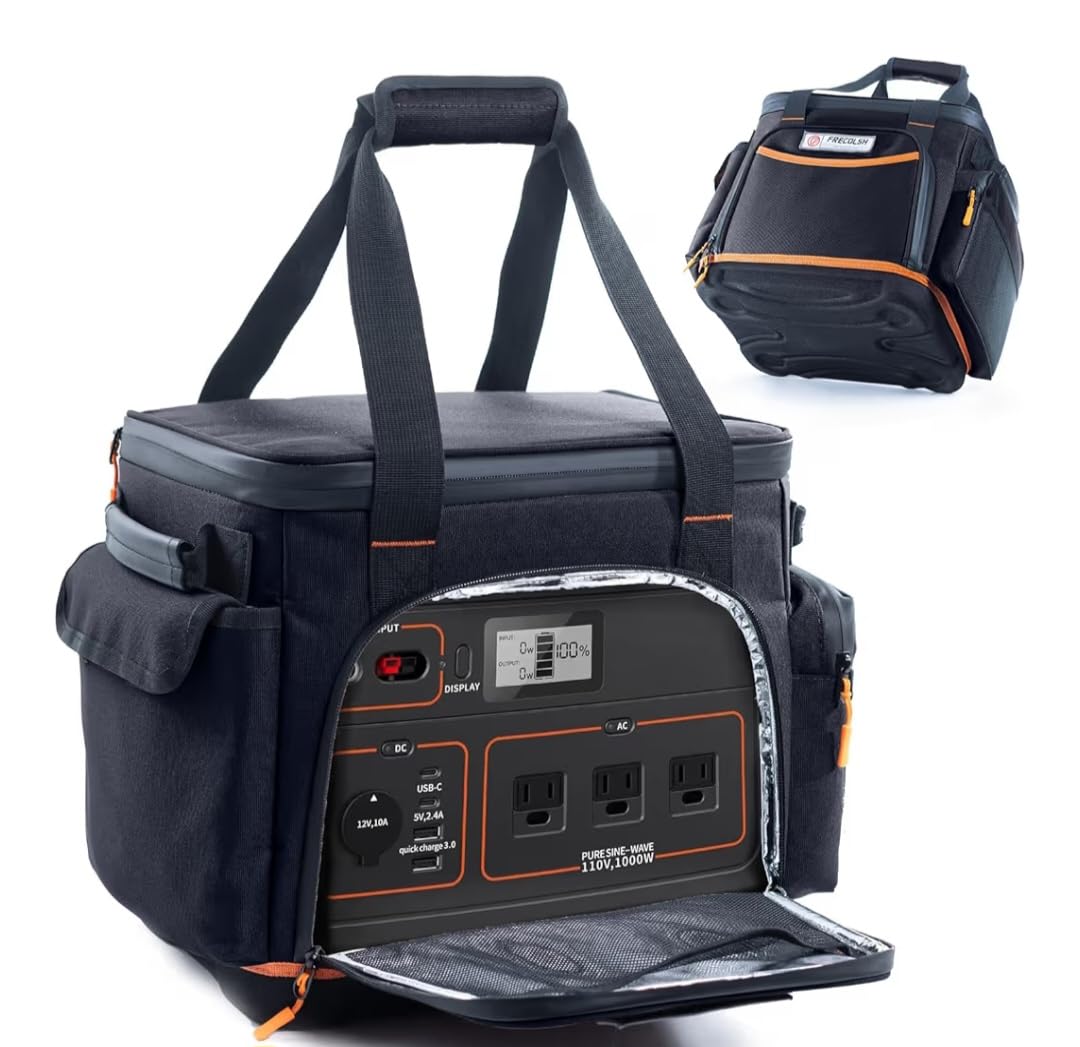
At 23.8 pounds with a foldable handle, the Jackery 1000 v2 is the station you can carry up a cabin staircase in one trip, and that logistics problem is the one that stops a lot of good hardware from getting used at a remote site. The 1070Wh LiFePO4 pack is rated for 4,000+ cycles, retaining over 70 percent capacity after a decade.
Output is 1500W AC with 3000W surge, enough for a small air conditioner, a refrigerator, and a cooktop, though not for a water heater and a microwave at the same moment. The port mix is sensible for a cabin: two 100W USB-C, one USB-A, a 12V car port, three pure sine wave AC outlets, and LED lighting.
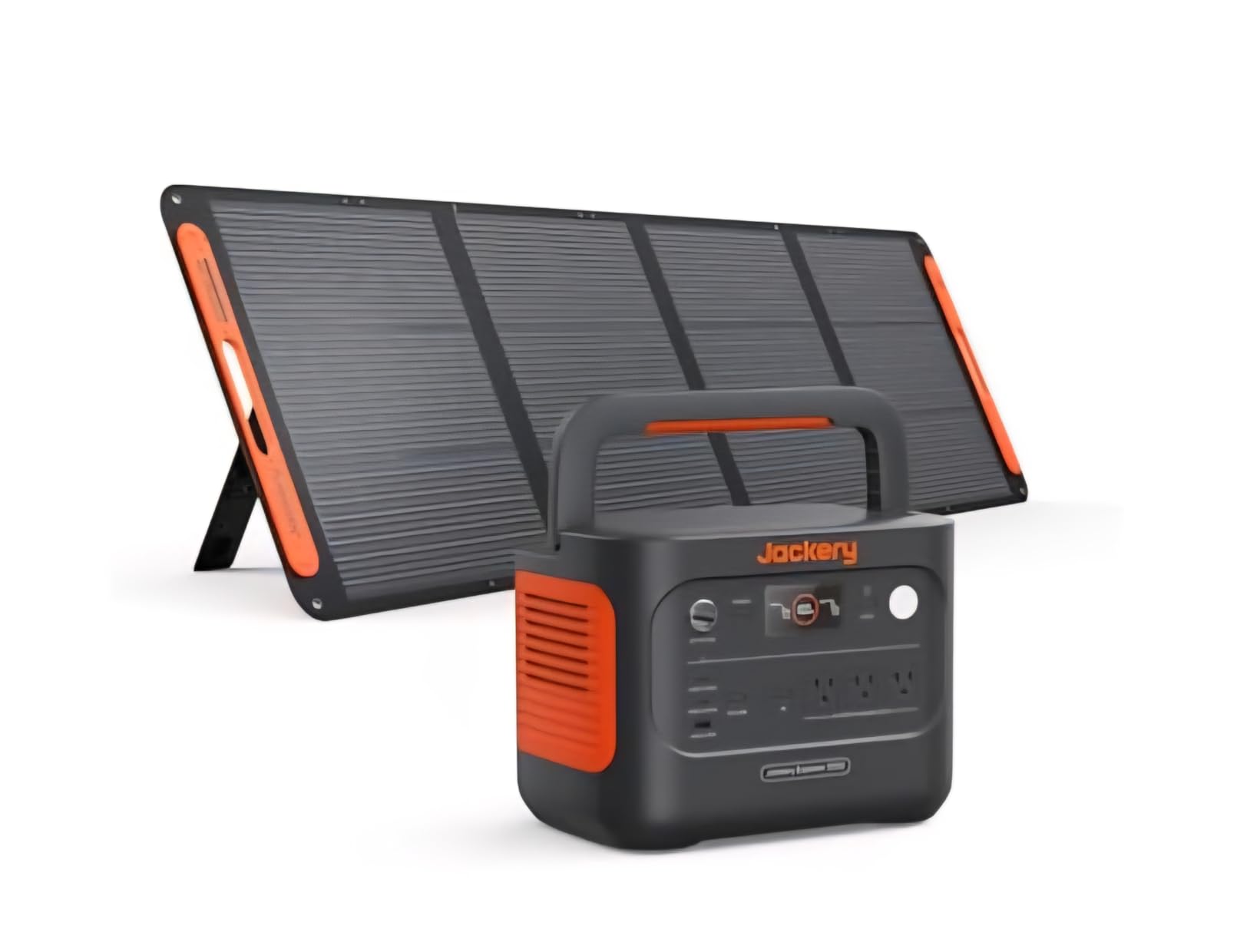
Real-world runtime reports are the most useful number here. A full-size side-by-side refrigerator ran about nine hours overnight, a portable 40-quart fridge managed three straight days in mixed sun and heavy rain, two fans ran roughly 11 hours, and a laptop got about four hours. Those are honest figures and they tell you what class of load this unit handles.
Charging is flexible: an app-enabled one-hour emergency charge, 1.7 hours by default, or 80 percent in about six hours from the bundled 200W SolarSaga panel. A 30dB quiet mode exists for overnight charging, which matters if the station lives in the same room as you.
Why small cabins like this one
It covers the classic low-draw cabin load: fridge, lights, phone charging, a laptop, and a router, with enough left over for a short tool session. The 1500W inverter will not trip the moment a refrigerator compressor starts, which is the failure that ruins cheaper small stations.
Two 100W USB-C ports mean modern laptops and tablets charge at full speed without a brick, and the 12V car port lets you run a small DC fridge directly rather than through the inverter.
What to know before buying it for a cabin
The bundled SolarSaga panel is the weak point. It is bulky, it sags in the middle on windy days, and the short cable makes it awkward when the panel needs to sit in full sun while the station sits in the shade.
The one-hour fast charge has to be switched on inside the app, and owners note it shortens battery lifespan, so treat it as an emergency feature rather than a daily habit. The exhaust side also runs very hot in warm weather, so give it ventilation.
5. BLUETTI Elite 200 V2: The Best Pick for Winter Autonomy
BLUETTI Elite 200 V2 Solar Generator & 2x200W Solar Panel Included 2073.6Wh
2073.6Wh LiFePO4
2600W AC with 3900W lifting
Two 200W panels
53.4 lb
10W standby draw
Pros
- Two 200W panels refill the pack in about 5.5 hours
- 6000+ cycle cells rated for a 17-year span
- 10W standby draw extends runtime on a given charge
- 0-80 percent in 50 minutes on combined charging
- Owners ran a 29 cubic foot fridge over 24 hours
Cons
- About 53 lb makes it a two-person lift
- Solar input capped at 1000W and 60V through the MPPT
- No 30A 12V output and no 5521 DC ports
- Not expandable with BLUETTI battery modules
Winter is where a cabin system is won or lost, and the Elite 200 V2 is the station I would build that system around. It stores 2073.6Wh in roughly the same footprint as a 1152Wh AC180, runs a 2600W inverter with 3900W of lifting headroom, and the kit ships with two 200W panels that refill it in about 5.5 hours of good sun.
The standby draw is the sleeper feature. At 10W, this unit consumes roughly 13 percent less idle power than comparable hardware, and for a cabin that sits empty for weeks between visits that difference is the whole argument. A 400W array restores the pack in 2.4 hours, which is fast enough to refill after a stormy day and still have margin before dark.
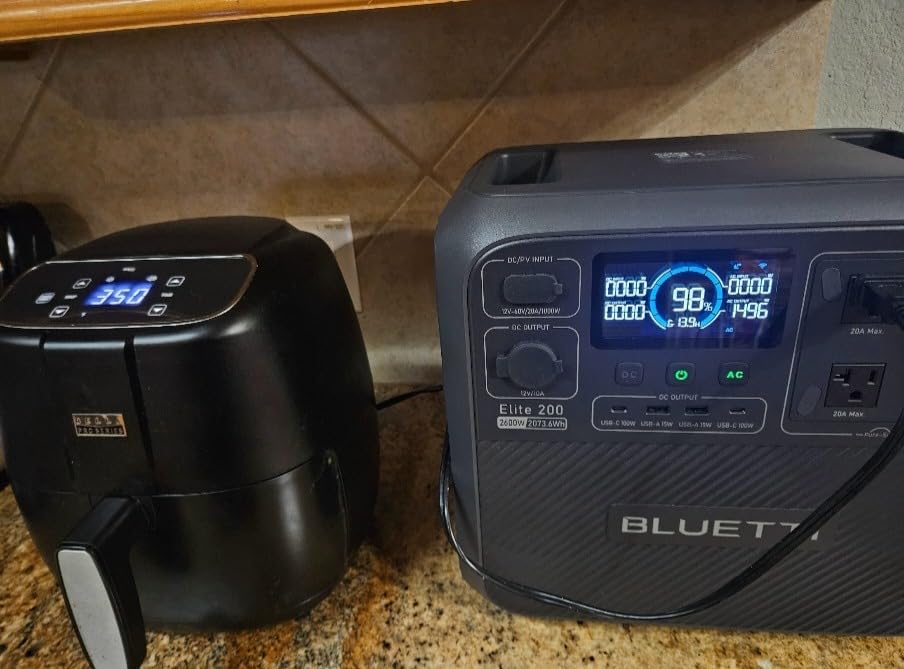
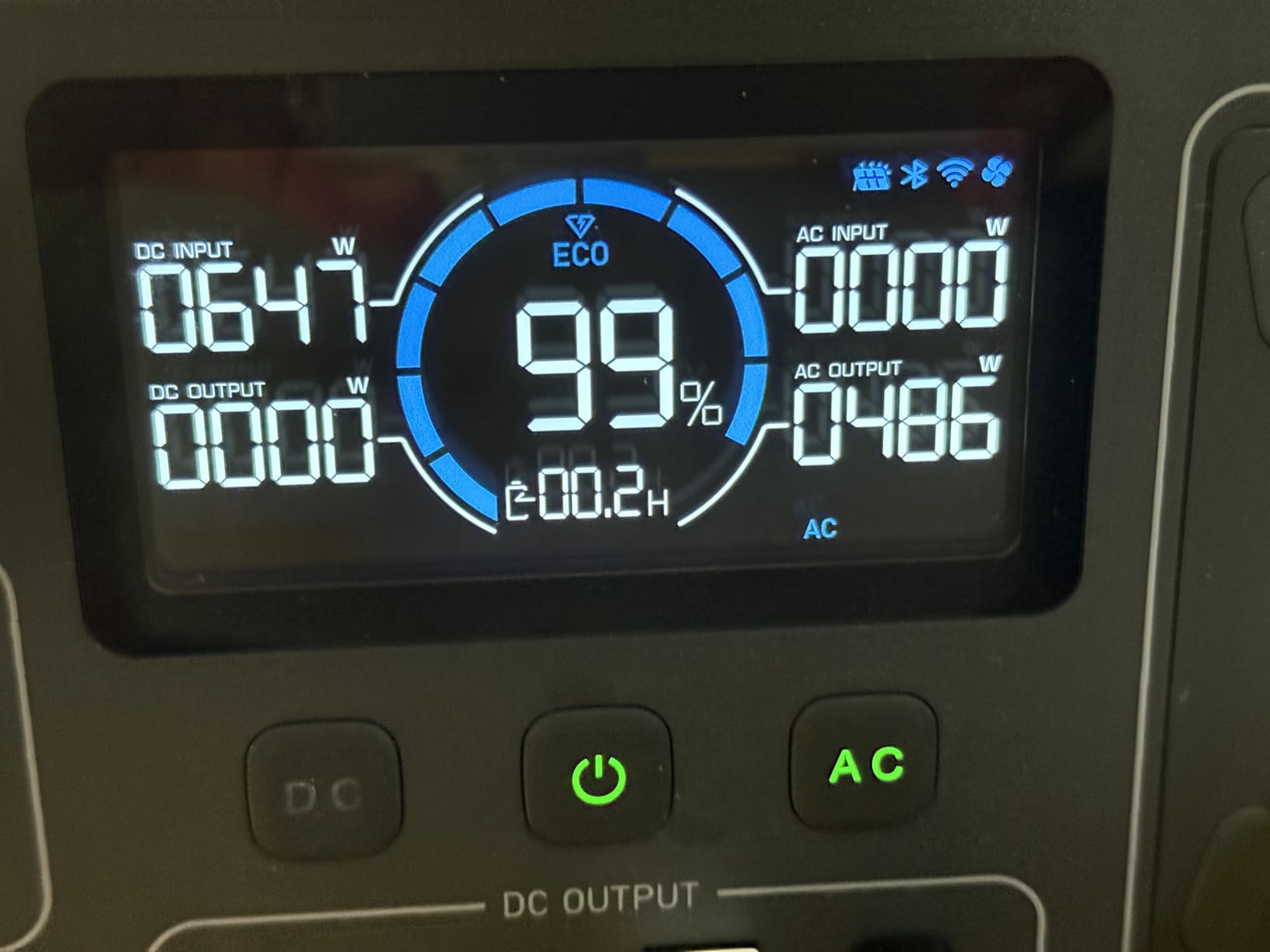
Owner testing lines up with the marketing on runtime. One 29 cubic foot fridge and freezer ran over 24 hours, a two-door fridge was still at 50 percent after 30 hours, and one reviewer ran a router, a server, a NAS, four switches, and four PoE cameras on backup. Charging tests show 0-80 percent in 50 minutes with combined AC and DC input and 100 percent in about 85 minutes on AC alone.
Battery longevity is the best in this group. The CNAS-certified automotive-grade LiFePO4 cells are rated for 6,000+ cycles, which BLUETTI puts at a 17-year lifespan, and high inverter efficiency means you can run a microwave and an air fryer or several small appliances at once without hunting for headroom.
Why this is the winter pick
Energy storage is what carries you through low-light weeks, and 2073.6Wh is where a small cabin stops depending on a three-day sunny forecast. Paired with two 200W panels you have both the reservoir and the refill rate, which is the combination a January load profile demands.
The 10W standby draw also means a station left unplugged in a cold shed loses far less capacity between visits than most of the field, which matters more than any fast-charge headline.
What limits the Elite 200 V2
Weight is the repeated caveat. At about 53 pounds it is a two-person lift for most people, and if it has to go up stairs or across uneven ground you are buying a dolly as part of the system. The 2000W solar input limit through a 60V MPPT is also lower than you would want for a fixed roof array.
It cannot be expanded with BLUETTI add-on battery modules, and it lacks a 30A 12V output and 5521 DC ports, so if your plan involves a wired DC distribution panel, pick a different chassis.
6. OUPES Mega 1: The Only Station Here That Grows to 5kWh
OUPES Mega 1 Portable Power Station 1024Wh 2000W (4500W Surge)
1024Wh LiFePO4
2000W continuous pure sine wave
Expandable to 5120Wh
27.8 lb
800W solar input
Pros
- Expands to 5120Wh with two B2 batteries and no extra inverter
- 2000W continuous output in a sub-30-pound frame
- 0-80 percent in 36 minutes on AC and 26 minutes combined
- 800W solar input on standard MC4 connectors
- Support has replaced a failed unit
Cons
- Real surge capability falls far short of the advertised 4500W
- Wi-Fi in the app is unreliable while Bluetooth works
- Cooling fan runs continuously while charging
- Plastic enclosure with little weather resistance
The Mega 1 is the one to buy if you are convinced you will outgrow 1kWh but you are not ready to buy 3kWh today. It expands to 5120Wh with two B2 extra batteries and no additional inverter, and the extra packs stack cleanly. That is a cheaper path from a weekend cabin setup to a full-time homestead than replacing the whole unit.
On paper the inverter is aggressive for the size: 2000W continuous pure sine wave in 27.8 pounds, with 0-80 percent in 36 minutes on AC and about 26 minutes when AC and solar are combined. Eight outputs include dual 100W USB-C PD, four QC3.0 USB-A, and a 12V DC port.
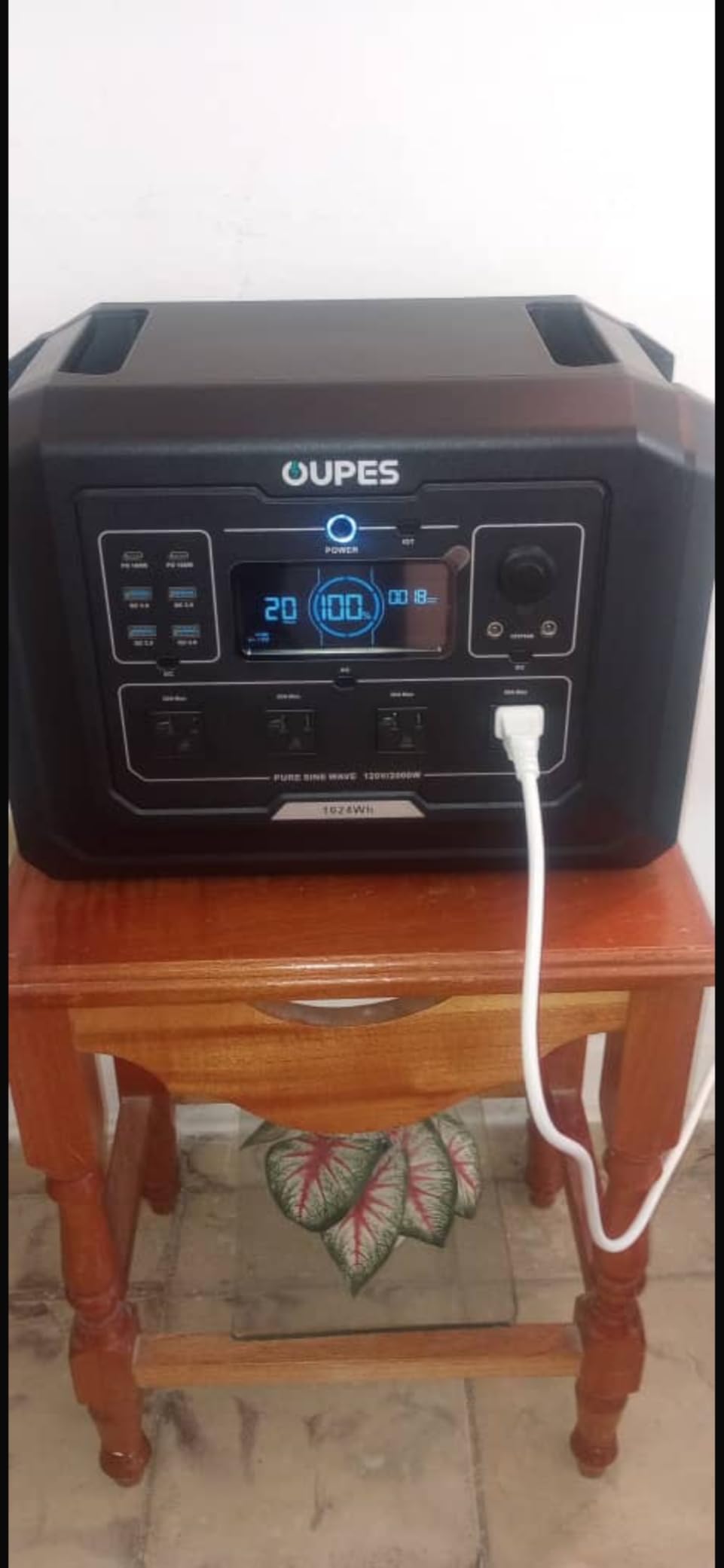
Solar input of 800W on standard MC4 connectors is genuinely useful at a cabin, because MC4 is the common standard and you are not hunting for a proprietary connector. One owner clocked a 120-130W draw at close to 9 hours on a full charge, and fridge, coffee maker, microwave, hair dryer, and lighting loads are all reported as working normally.
Customer service is worth flagging. Multiple reviews describe a full unit replacement after an early failure, and at a remote site that responsiveness matters more than it does in a city apartment.
Why the expansion path matters
A 5120Wh final system is enough to run a small cabin’s fridge, water pump, lighting, and internet for a full day without touching a generator. Getting there in two steps instead of one means your first purchase still has a job to do for years rather than being a placeholder.
The pure sine wave output is also the right waveform for sensitive electronics, and the under-20ms UPS transfer covers routers, workstations, and medical devices.
The surge number is not what it says
This is the most important caveat in the roundup. The listing advertises 4500W surge, and owners consistently report the inverter tripping somewhere around 2050-2200W under real startup loads. Size your well pump or motor loads against the continuous 2000W figure, not the headline.
App Wi-Fi connectivity is unreliable while Bluetooth is consistent, the cooling fan runs continuously during charging, and the plastic case offers little weather resistance for a damp shed.
7. Jackery HomePower 3000: The Biggest Battery in the Group
Jackery HomePower 3000 and 2x200W Solar Panels, 3072Wh, 3600W AC Output
3072Wh LiFePO4
3600W AC with 7200W surge
59.5 lb
UL 20ms UPS
TT-30 RV port
Pros
- 3072Wh and 3600W run a refrigerator for one to two days
- UL-certified UPS under 20ms switchover
- Full charge in 1.7 hours on hybrid AC and DC
- TT-30 RV port for plug-and-play trailer power
- Cell-to-body design is 47 percent smaller than comparable 3kWh units
Cons
- 59.5 lb requires two people and a wheel kit for many owners
- Battery cannot be expanded
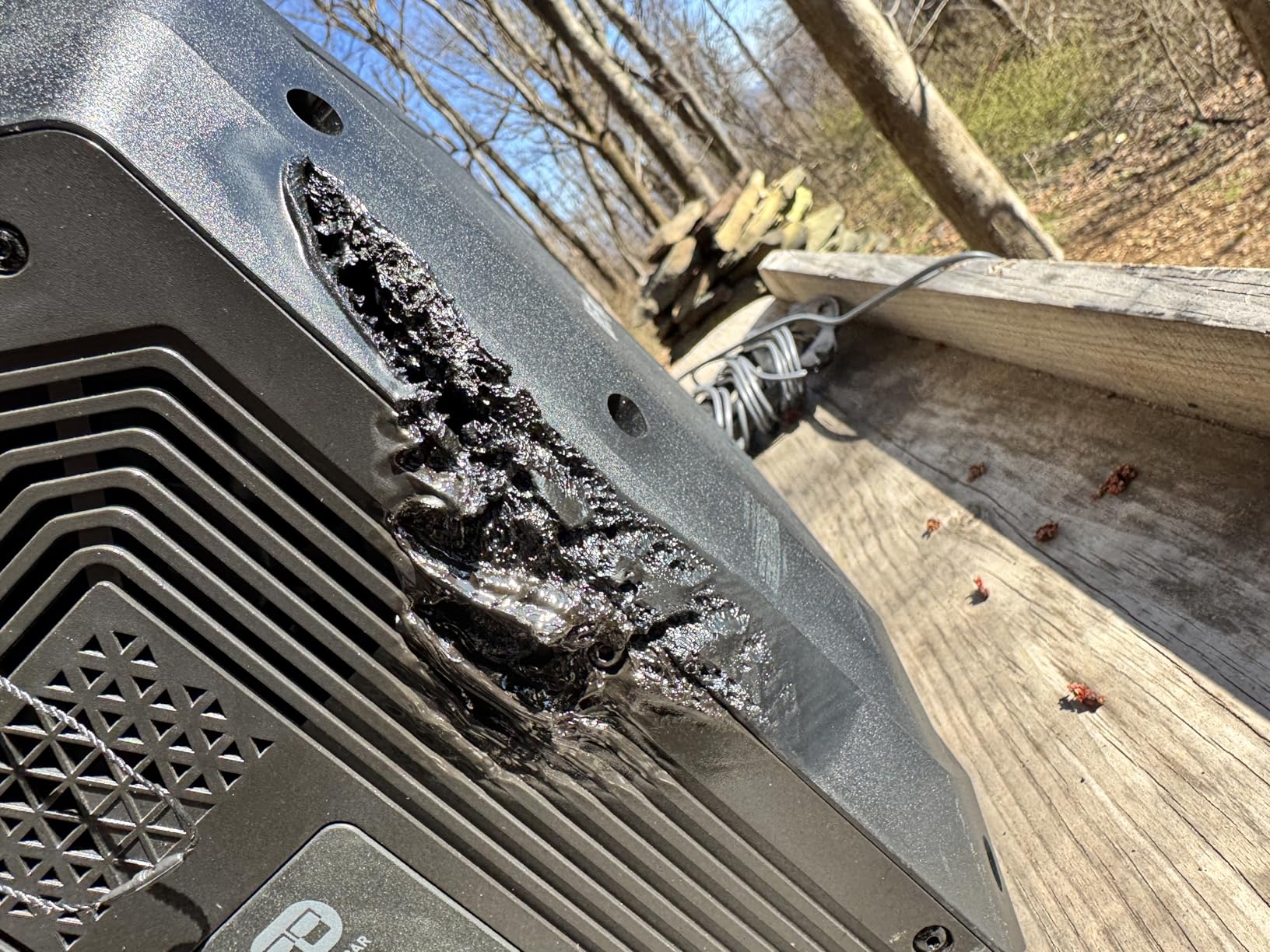
- Some reports of a flashing internal light and unexplained shutdowns
- Two 200W panels need roughly 9-11 hours to reach 80 percent
At 3072Wh and 3600W of continuous AC output, the HomePower 3000 is the largest energy reserve in this roundup and the one that most closely resembles a small fixed system you can move. Reviewers report running a refrigerator for one to two days, and a household load for up to about 15 hours, on a single charge.
The UPS is the most reassuring spec on the unit: UL-certified with switchover under 20 milliseconds, which owners credit for keeping security cameras, medical refrigerators, and network gear alive through an outage. A TT-30 RV port is included, so a cabin owner who also has a trailer can plug one appliance set into the same box.
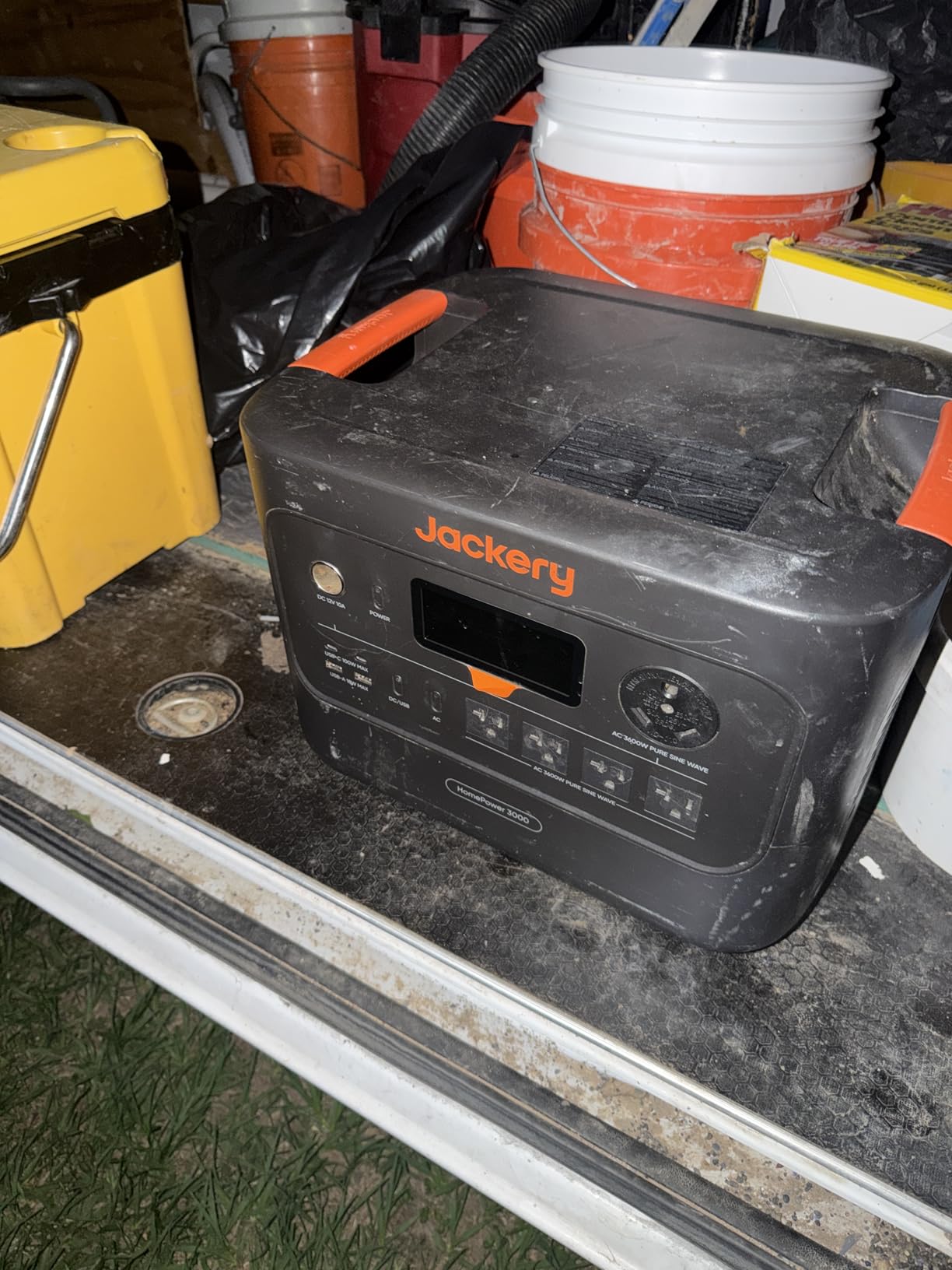
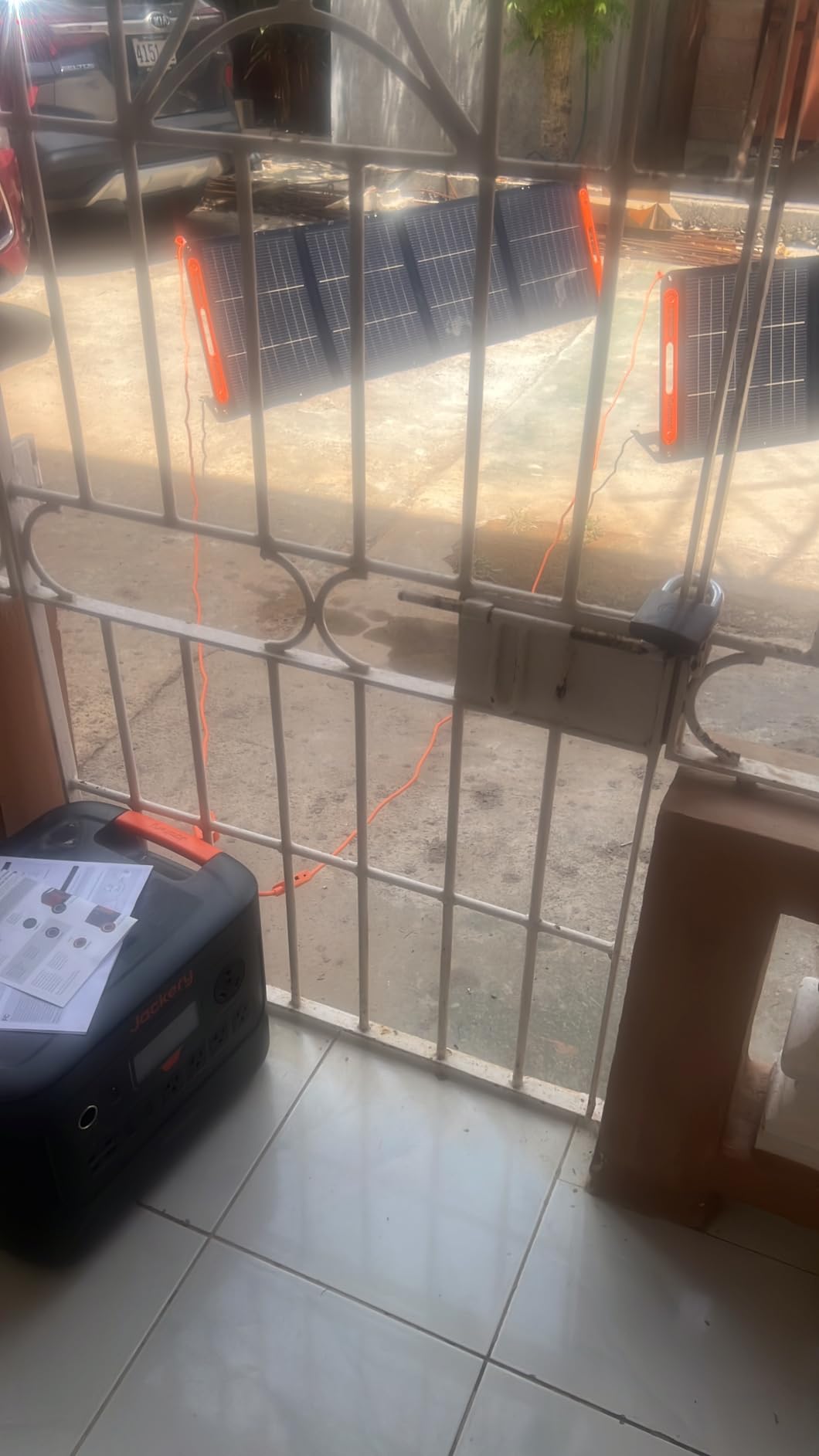
Recharging is quick by any measure. Full in 1.7 hours on hybrid AC and DC, 2.2 hours on AC alone, or 80 percent in about 9 hours from the two included 200W SolarSaga panels. That last figure is the honest weak spot: the bundled solar is sized for convenience, not for a self-sufficient off-grid week.
The cell-to-body construction makes it 47 percent smaller and 43 percent lighter than comparable 3kWh units, and the 4,000-cycle LiFePO4 pack holds 70 percent capacity over that span under the brand’s ChargeShield 2.0 algorithms.
Where the HomePower 3000 earns its size
It is the only station here that covers a genuinely full day of whole-cabin demand without a midday top-up. If your load list includes a water heater, a well pump, a refrigerator, and evening lighting all at once, this is the unit that removes the constant mental arithmetic from running a cabin.
Multiple high-draw devices at once is realistic on it. Owners run a camper air conditioner, a microwave, a television, internet, and e-bike charging simultaneously, which is a load most 2kWh machines would refuse.
Why it is a dead end for some owners
At 59.5 pounds it is a two-person lift, and many buyers add a wheel kit, which is a fair signal of what to expect on gravel and stairs. The battery is not expandable, so if the cabin grows into a full-time home there is no upgrade path through this chassis.
Some owners report a flashing internal light and unexplained shutdowns, and Alexa integration was advertised without being available. The two 200W panels also take 9 to 11 hours for an 80 percent refill, so plan to add array later if you go off grid fully.
8. Jackery Explorer 2000 v2: The Quietest Option for an Indoor Setup
Jackery Explorer 2000 v2 and 2x200W Solar Panels, 2042Wh, 2200W AC Output
2042Wh LiFePO4
2200W AC output
66.8 lb
30dB silent charging
20ms UL1778 UPS
Pros
- Silent charging mode runs at 30dB for overnight refill
- 20ms UL1778-certified UPS keeps a home network alive
- Cell-to-body design is 41 percent lighter than conventional 2kWh units
- 80 percent charge in 66 minutes on AC
- Three AC ports plus 100W USB-C PD
Cons
- Listed weight of 66.8 lb is high for the capacity
- About 6 hours to charge from 400W of panels
- Needs the straight DC8020 plug rather than the L-shaped one for panel connection
- Power station and panels are packed separately
The Explorer 2000 v2 pairs 2042Wh with a 2200W AC inverter and a silent charging mode that runs at 30dB. For a cabin where the station lives in the main room, or where someone works from home beside it, that quiet full charge in 5 hours is worth more than a faster noisy one.
The UPS is the deciding feature for many owners. A 20ms switchover certified to UL1778 is the difference between a home network surviving a brownout and a router needing a reboot, and reviewers consistently name it as the reason they bought this unit rather than a cheaper 2kWh box.
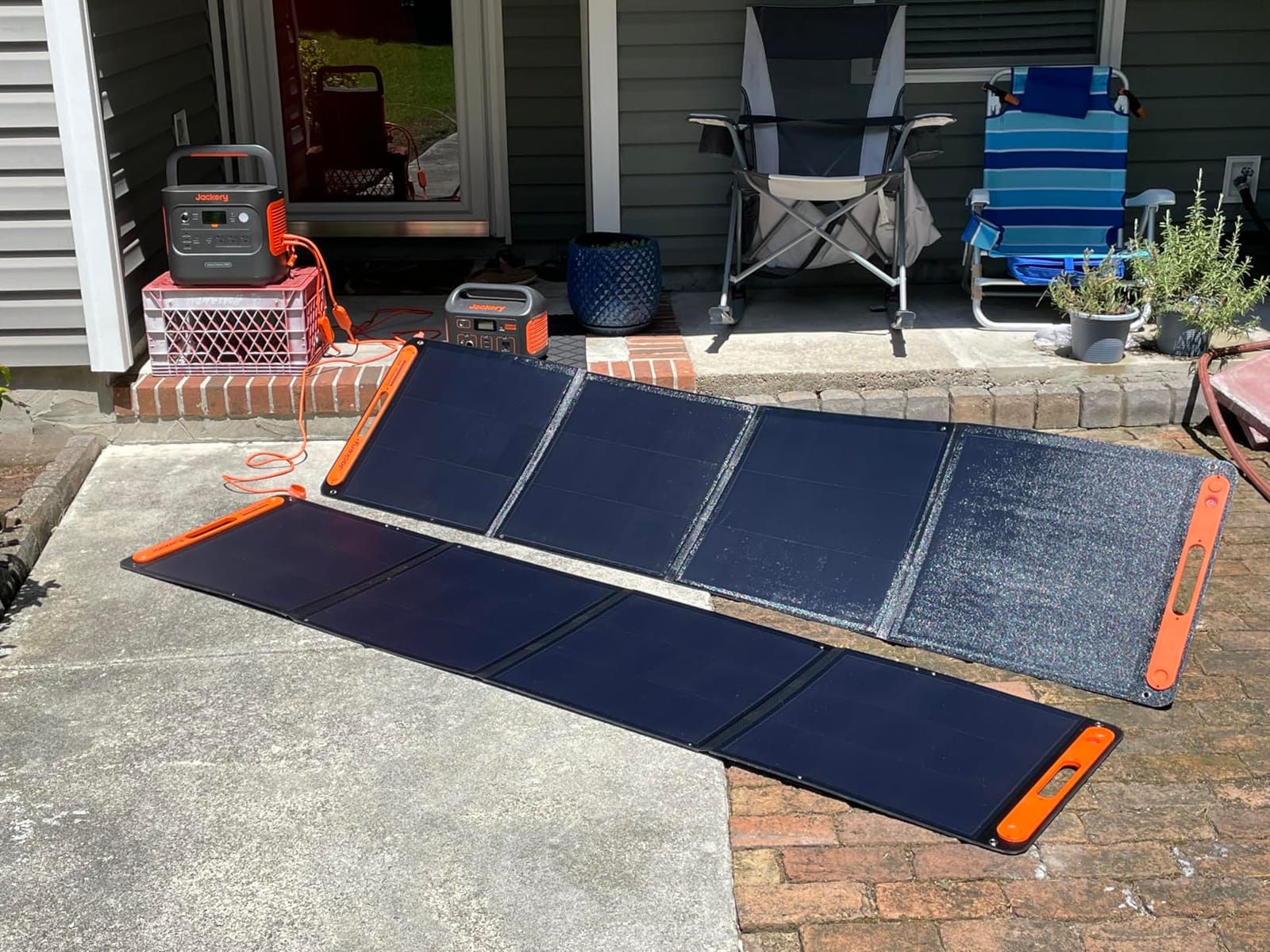
Charging on AC is quick: 80 percent in 66 minutes, or a full charge in 102 minutes with the app-activated emergency super charging mode. From solar, plan on about 6 hours with 400W of panels, which is normal for a 2kWh pack in decent conditions.
Cell-to-body technology is the engineering story behind the size. It makes the unit 41 percent lighter and 34 percent smaller than conventional 2kWh LiFePO4 stations, and a temperature control system keeps fan noise down during normal operation.
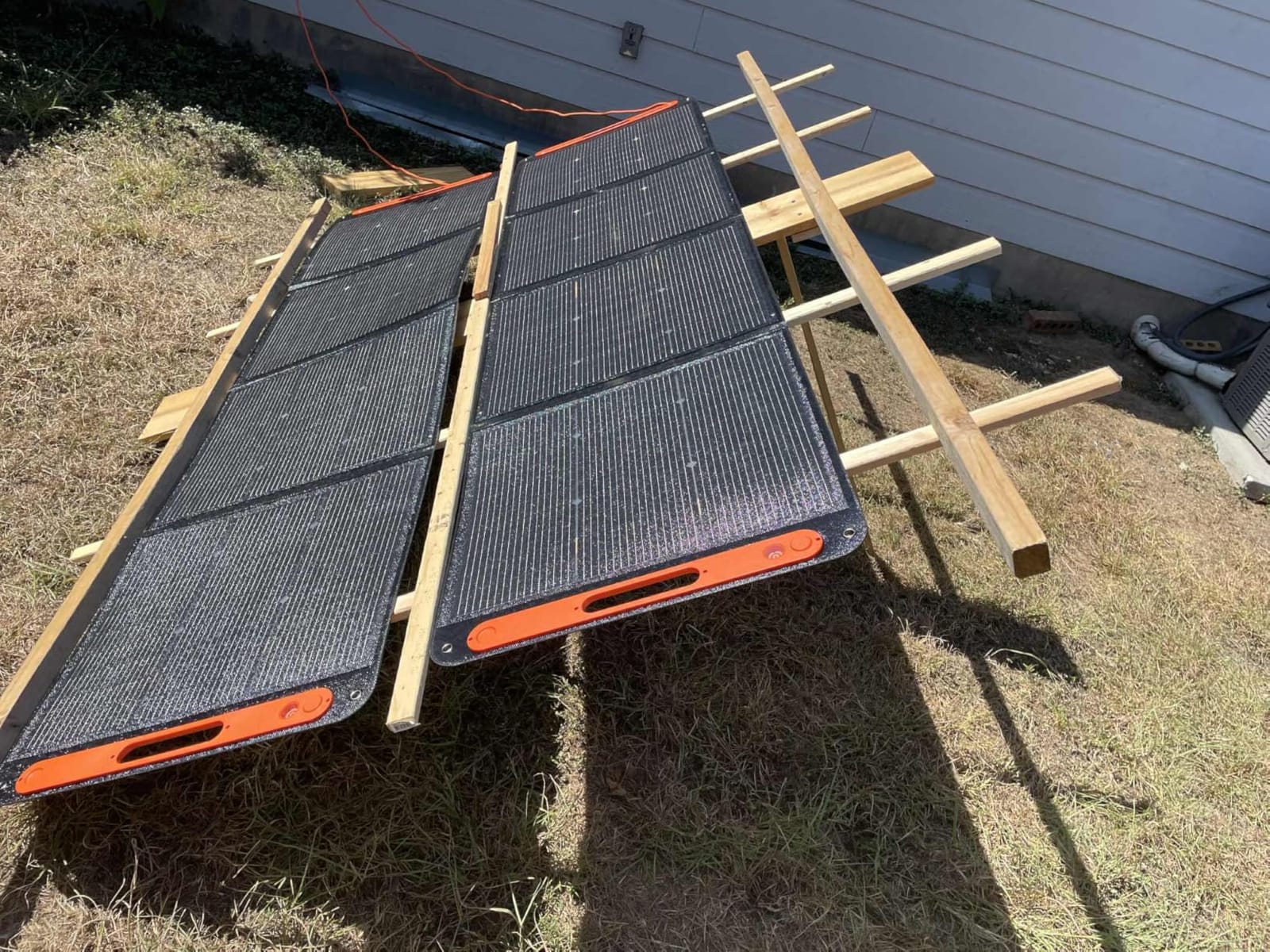
Best for sleeping near the station
Silent charging is the reason this unit wins its slot in a cabin rather than an RV. A 30dB refill you can sleep through, combined with a temperature control system that holds the fan down, means the station can live inside the living space without becoming a constant annoyance.
Three AC outlets and 100W USB-C PD give you enough to leave the fridge, router, and laptop connected permanently, which is how a small off-grid setup should be wired anyway.
Handle with care before buying
The listed weight of 66.8 pounds is high for a 2kWh unit and makes it a two-person lift, so measure your route before ordering. On solar, 6 hours from 400W is fine for topping up but tight if you plan to run unattended through a week of poor weather.
There is also a connector quirk: you need to remove the L-shaped DC7909 plug and use the straight DC8020 plug for the panel to connect correctly, which catches out first-time owners. The station and panels are also packed separately.
9. Anker SOLIX C300: The Light Duty Add-On for a Small Cabin
Anker SOLIX C300 Portable Power Station with 60W Solar Panel, 288Wh, 300W
288Wh LiFePO4
300W output with 600W surge
15.5 lb
25dB measured
60W panel included
Pros
- Only 6.45 x 6.34 x 9.49 inches and 15.5 lb
- 300W output with 600W surge across eight ports
- 80 percent recharge in about 50 minutes from a wall
- Measured 25dB operation at 3.3 feet
- LiFePO4 pack rated 3000 cycles with a 5-year warranty
Cons
- 288Wh is too small for anything beyond phones and laptops
- Not compatible with Anker SOLIX PS30 PS200 or PS400 panels
- Station and panel are packed separately
- Carry strap is sold separately
The C300 is not a cabin power station and should not be mistaken for one. It is a 288Wh pack with 300W of output, and its job is to be the second unit: a battery for phones, tablets, cameras, and a laptop that lives in the truck, the workshop, or the porch, so the main station never gets drained by small devices.
What it does well is fit. At 15.5 pounds and about 6.5 by 6.3 by 9.5 inches it is genuinely portable, and it charges to 80 percent in about 50 minutes from a wall outlet, which makes a weekly top-up painless.
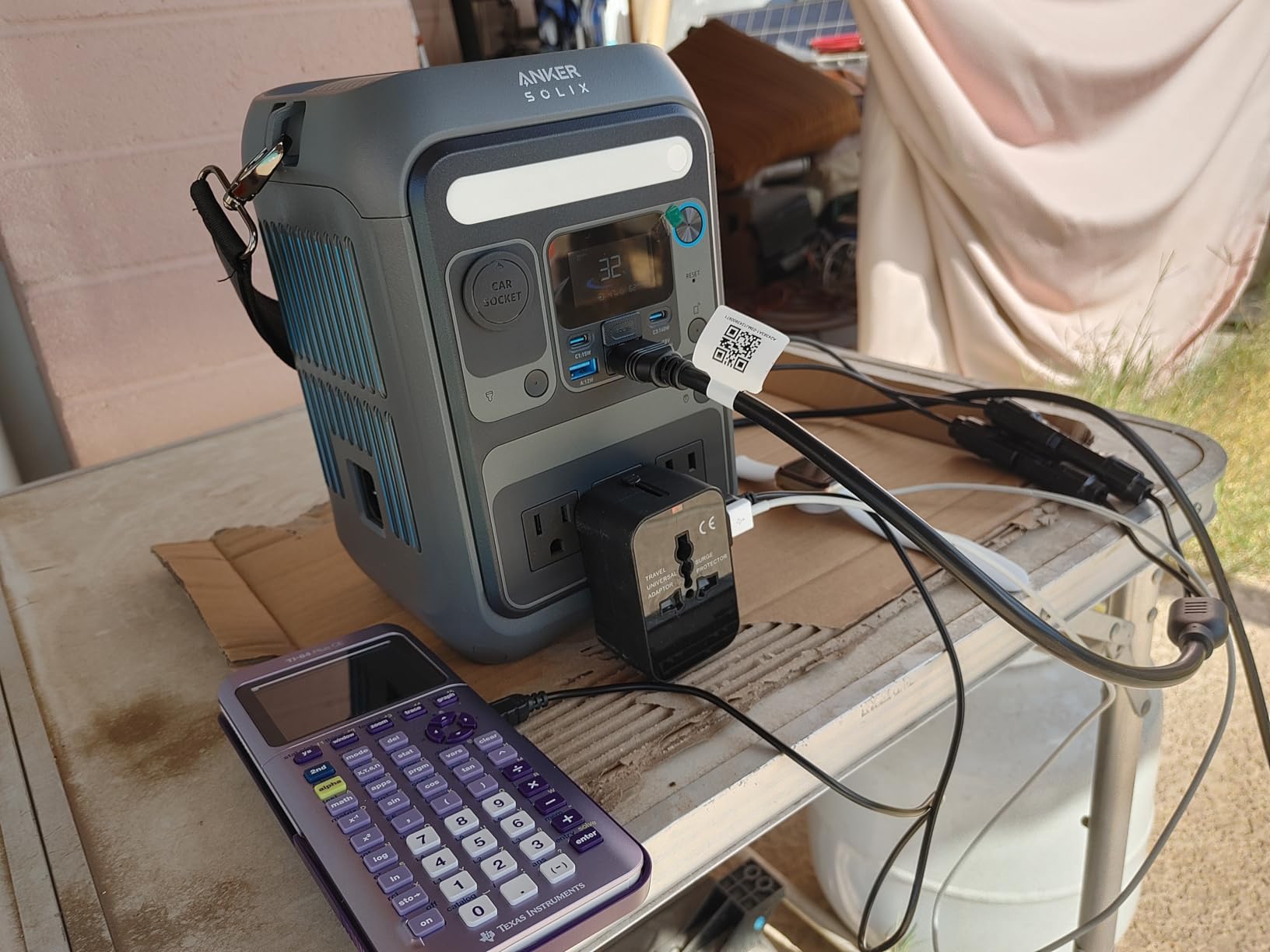
The port count is generous for the size: three AC outlets, a 120W car socket, two USB-C ports rated 140W two-way, a 15W USB-C, and a USB-A. That is enough to run a weekend of devices without touching the main station, and the 3000-cycle LiFePO4 pack with a 5-year warranty is a reasonable lifespan for occasional service.
Measured noise is 25dB at 3.3 feet, among the quietest units we looked at, and it includes a 60W solar panel for slow off-grid top-ups when nobody is driving anywhere.
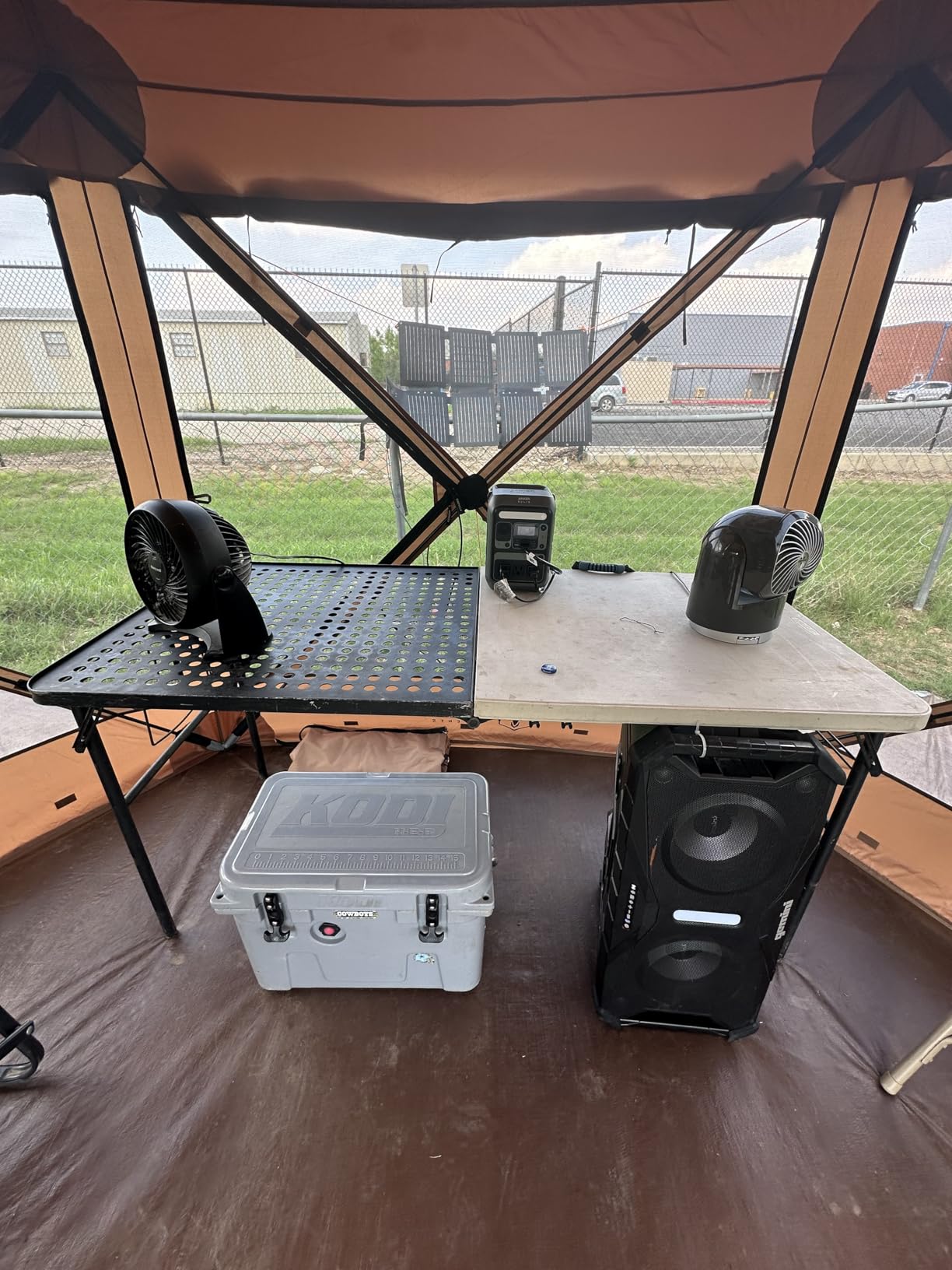
Where the C300 earns a place at a cabin
It is the emergency companion unit. Storm arrives, the main station is committed to the refrigerator and the water pump, and you still want power for a phone, a radio, and a set of headlamps. At 300W with 600W surge it handles all of that comfortably.
The eight-port layout also makes it useful as a travel and workshop unit without any planning, and the 15.5-pound weight means one person carries it anywhere on the property.
Why it cannot be your main station
288Wh runs out fast the moment you add a real appliance. A single refrigerator cycle will consume a meaningful share of it, and 300W of continuous output will not start most of the pumps and compressors on a cabin load list.
It is also incompatible with the larger Anker SOLIX PS30, PS200, and PS400 panels, so it cannot share an array with a bigger setup. The carry strap is sold separately, and the station and panel are packed separately too.
10. EBL 2400W: The High-Wattage Value Buy With a Short Warranty
EBL 2400W Portable Power Station LiFePO4 Battery for Home Use
1843.2Wh LiFePO4
2400W continuous output
54 lb
12-device charging
0.1s emergency mode
Pros
- 2400W continuous output for kettles hair dryers coffee makers and tools
- Charges up to 12 devices across 4 AC and USB-C ports
- Emergency power mode switches in 0.1 seconds
- LiFePO4 cells rated over 3500 cycles for a 10+ year life
- Built-in protection against overcharge over-discharge short circuits and heat
Cons
- No solar panel is included with this listing
- Only a 2-year manufacturer warranty
- Lowest rating in this group at 4.3 with 12 percent one-star reviews
- 54 lb is heavy for its capacity
The EBL 2400W pairs 2400W of continuous output with 1843.2Wh of LiFePO4 storage, and for a cabin that runs resistive loads it is the one to look at. That headroom covers kettles, hair dryers, coffee makers, and power tools, which are exactly the loads that punish a 1500W inverter.
Charging is flexible too: 12 devices at once across four AC outlets, two USB-A, two USB-C, a car port, two DC ports, and a wireless charging pad. The emergency power mode switches to backup in 0.1 seconds, which is fast enough for computers and file-driven equipment, though slower than the 10ms stations in this roundup.
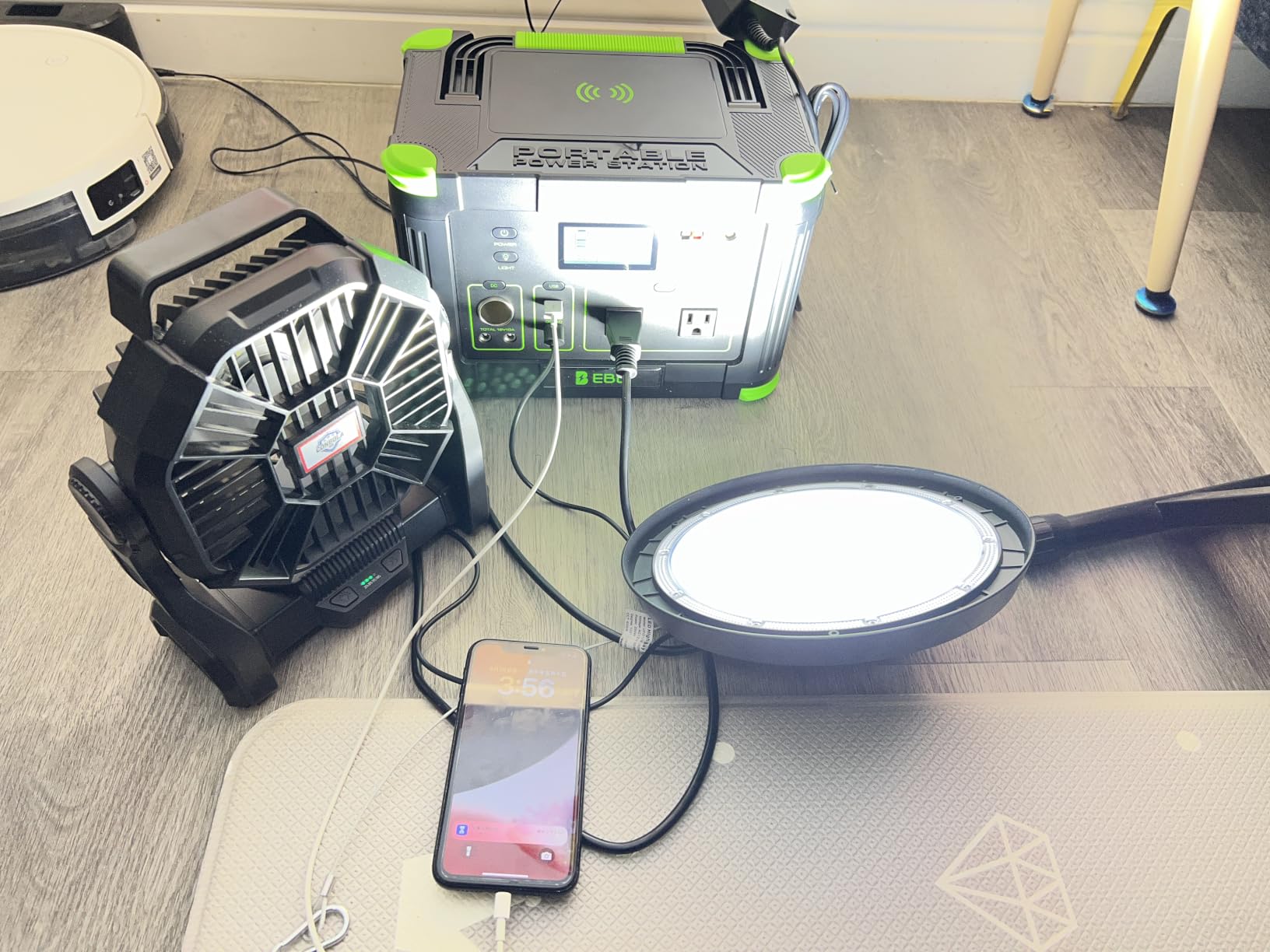
The battery is rated over 3,500 charge and discharge cycles for a 10+ year service life, and the built-in protection covers overcharging, over-discharging, short circuits, and high temperatures. A four-mode LED light and a clear status display are small touches that matter when you are checking on things in a dark shed.
Feedback is the most mixed of any unit here. Owners who pair it with their own panels and high-wattage appliances report strong value, and the 12-port layout and emergency mode are called out positively. The one-star reviews concentrate on early failures and on after-sales support.
Why a cabin owner might pick it
Resistive heating and tool loads are the hardest thing for a small power station to serve, and 2400W continuous handles them without resorting to lifting mode. If your cabin runs an electric kettle, a space heater, or a saw and drill regularly, that headroom is the reason to buy this one.
At 54 pounds it is heavy, but it is a stationary unit in the way a fixed battery bank would be, and dual-side handles make a two-person carry manageable.
What gives us pause
No solar panel is included, so you are buying into an open-ended array project from day one. The 2-year manufacturer warranty is the shortest in this group against batteries rated for a decade, and the 4.3 rating with 12 percent one-star reviews is the weakest feedback set we reviewed.
That combination makes this the pick to buy only if you have a plan for panel input and a tolerance for support that is less certain than a five-year warranty. Our guide to solar generators for winter power outages covers the alternative thinking for seasonal use.
11. BROWEY 1600W: The Only Unit With the Panel Built In
BROWEY 1600W (3200W Peak) Portable Power Station with Built-in Solar Panel
1024Wh LiFePO4
1600W pure sine wave with 3200W peak
40W built-in panel
26.5 lb
8 outlets
Pros
- Solar panel is built into the chassis so there is no separate panel to deploy
- 1024Wh with 1600W pure sine wave and 3200W peak
- Eight outlets including 100W USB-C PD alongside AC and DC
- 80 percent recharge in about 3 hours on AC and USB-C together
- LiFePO4 rated 3000+ cycles to 80 percent with an advanced BMS
Cons
- Built-in 40W panel is too small to sustain meaningful charging for a 1kWh pack
- Listed 230V voltage may not match 120V US outlets
- Smallest review base in the set at 109 reviews
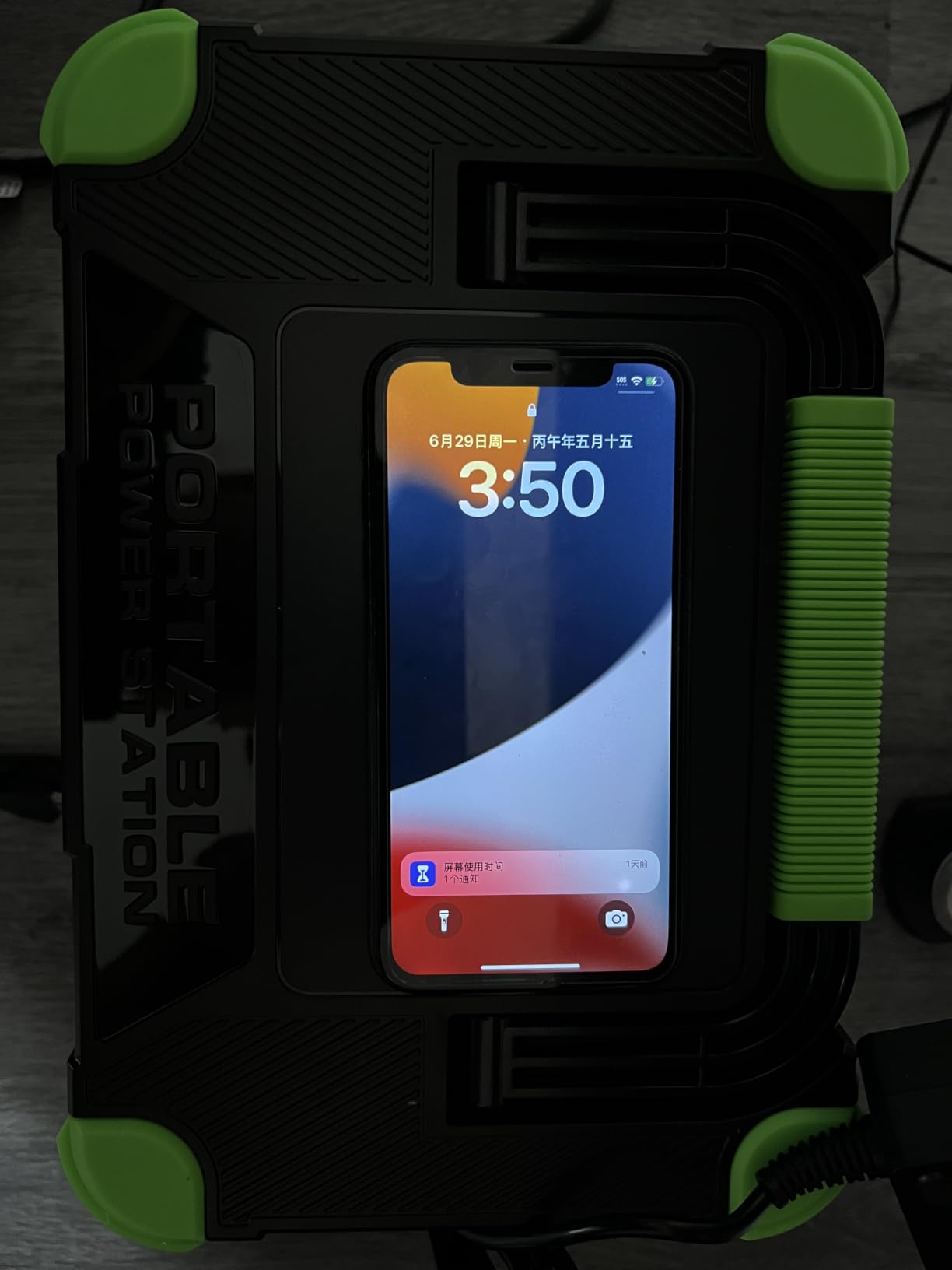
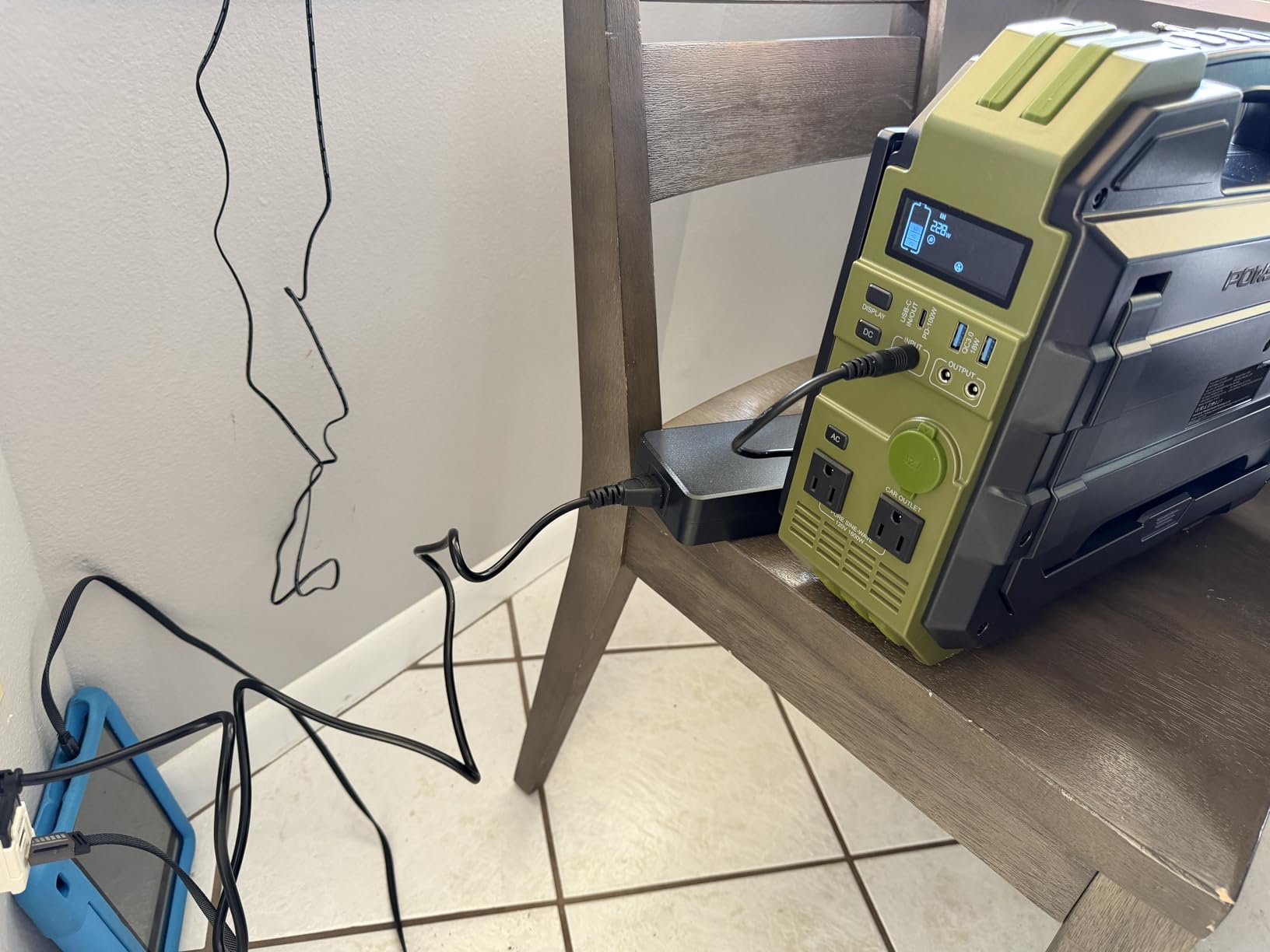
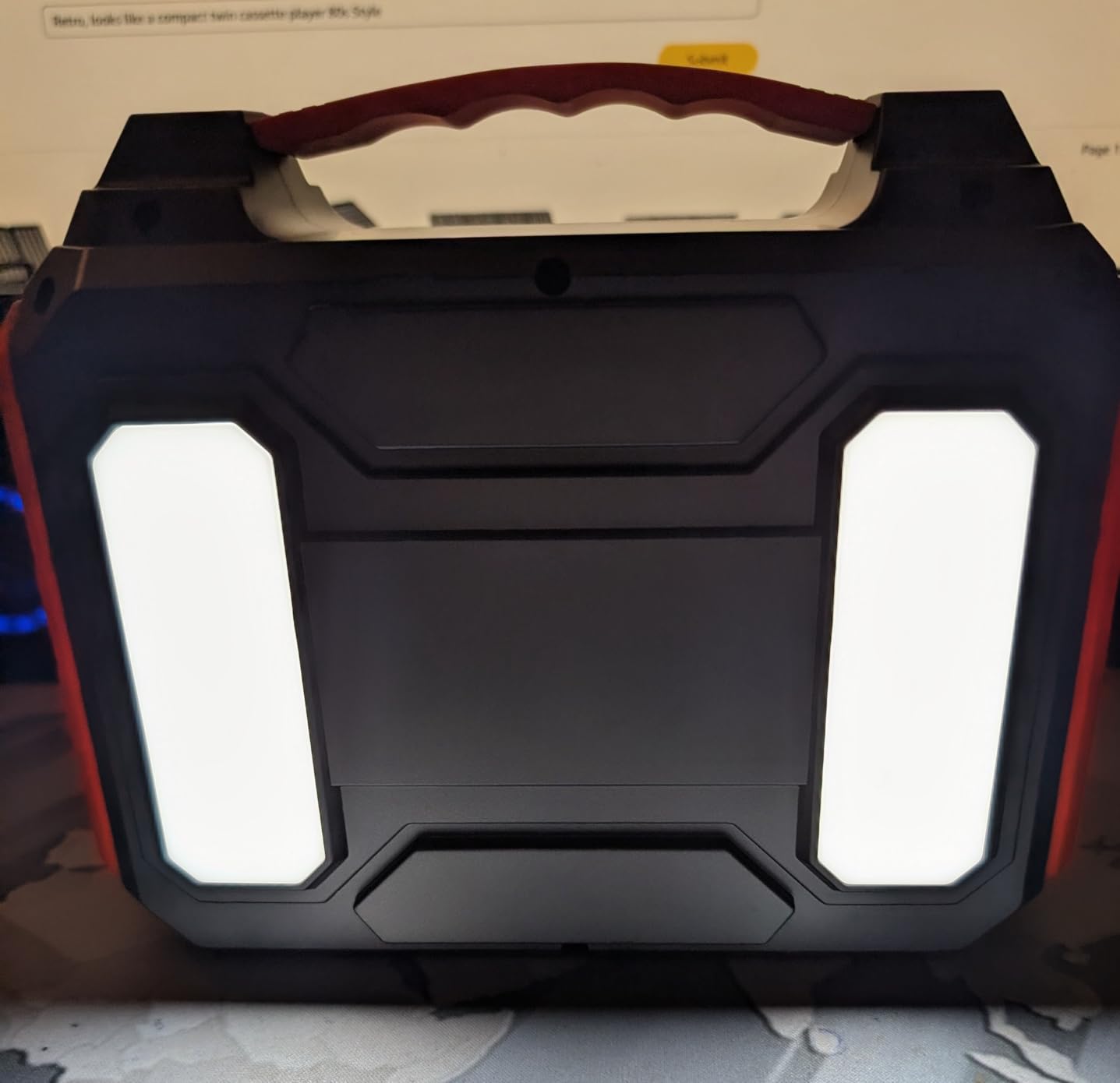
The BROWEY 1600W solves a problem nobody else here addresses: the panel itself. A 40W panel with an MPPT controller is built into the top of the chassis, so the whole system is one box with eight outlets, 1024Wh of LiFePO4 storage, and 1600W of pure sine wave output with 3200W peak. Nothing to unfold, nothing to leave behind, nothing to lose.
That design has real appeal for a weekend cabin, a hunting camp, or a truck tailgate where the separate panel is the part that gets forgotten. The unit can charge devices while collecting sunlight and can also link to external panels when you want more input than the built-in 40W provides.
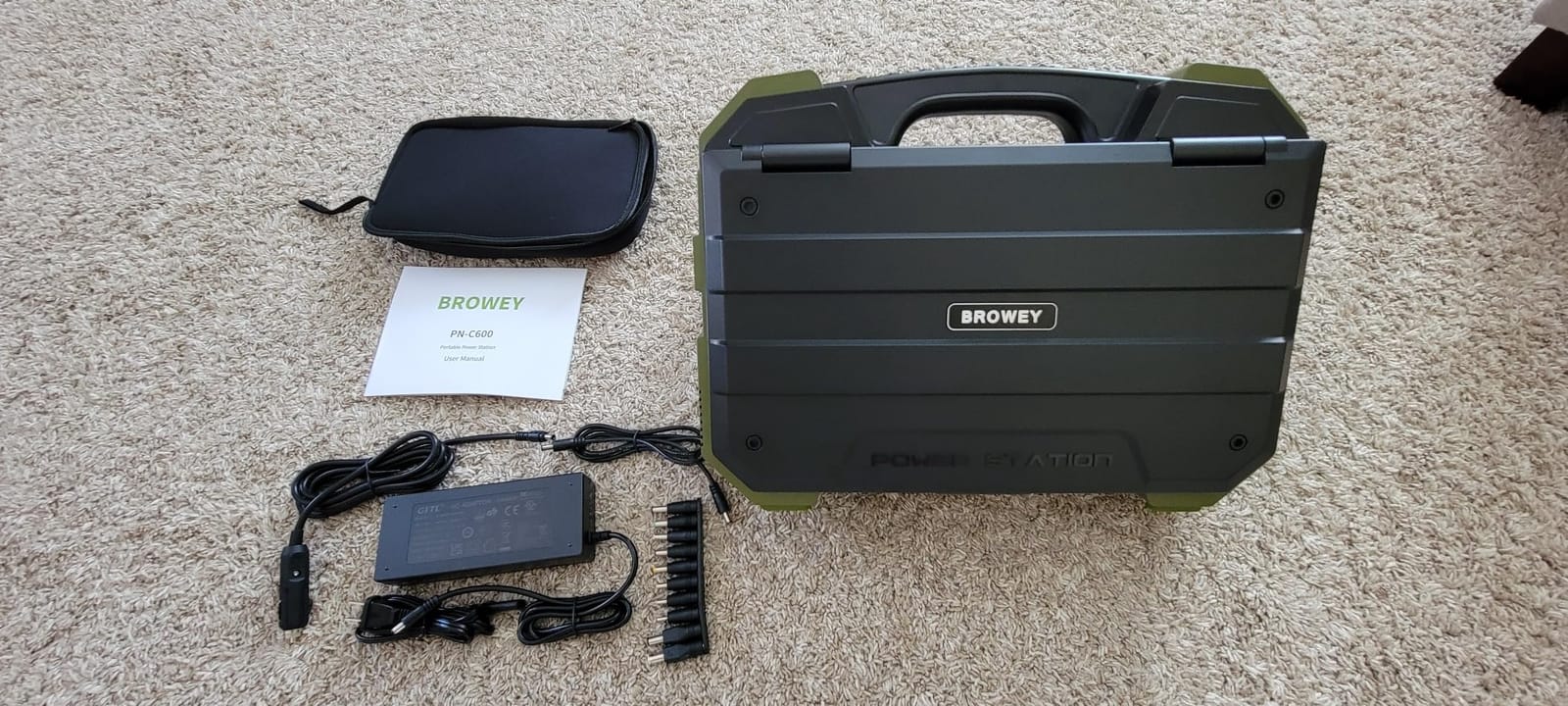
Recharging is 80 percent in about 3 hours using the AC adapter and the 100W PD USB-C port together, which is fast enough to recover between visits. The battery is rated 3,000+ cycles to 80 percent capacity for a 10+ year life, and the advanced BMS covers overvoltage, overheating, and short circuits.
It carries the highest average rating in the group at 4.8 across 109 reviews, with 85 percent five-star and 1 percent one-star. The 1600W pure sine wave inverter is enough for refrigerators, CPAP machines, and tools, which puts it in a useful middle ground for a small cabin.
When an all-in-one box is the right answer
For a cabin you visit occasionally, or a place where the panel would be stolen or lost between trips, the integrated panel removes an entire class of problem. Pick it up, carry it in, plug in your CPAP and your lights, and the 40W panel keeps a trickle coming during the day.
At 26.5 pounds it is also one of the more portable 1kWh units here, and the pure sine wave output suits sensitive electronics.
Why the built-in panel is not enough
A 40W panel cannot meaningfully recharge a 1024Wh pack. Owners are explicit that it is too small to sustain off-grid charging, so this unit still needs a wall outlet or a vehicle to be genuinely useful, which undercuts the self-sufficient premise.
Two further cautions. The listing shows a 230V rating, which does not match 120V US outlets, so confirm the unit and its output before ordering. And at 109 reviews, there is the thinnest field history of anything we evaluated, which limits how much independent testing exists behind the rating.
12. ZeroKor R200: The Lightest Thing Here, and the Least Capable
Portable Solar Generator 300W Portable Power Station with 60W Solar Panel
300W maximum output
5.1 lb
60W panel included
2 AC outlets
12-month warranty
Pros
- Only 5.1 pounds and small enough to pack anywhere
- 60W monocrystalline panel with 20.5 percent efficiency included
- Two AC outlets plus 12V DC
- three USB and an SOS flashlight
- Rechargeable from AC car or solar via built-in MPPT
Cons
- Owners report real AC output well under 300W and often below 100W
- Solar input measured far below the panel rating
- Repeated folding can break the panel's internal wiring
- Only a 12-month warranty and a non-waterproof junction box
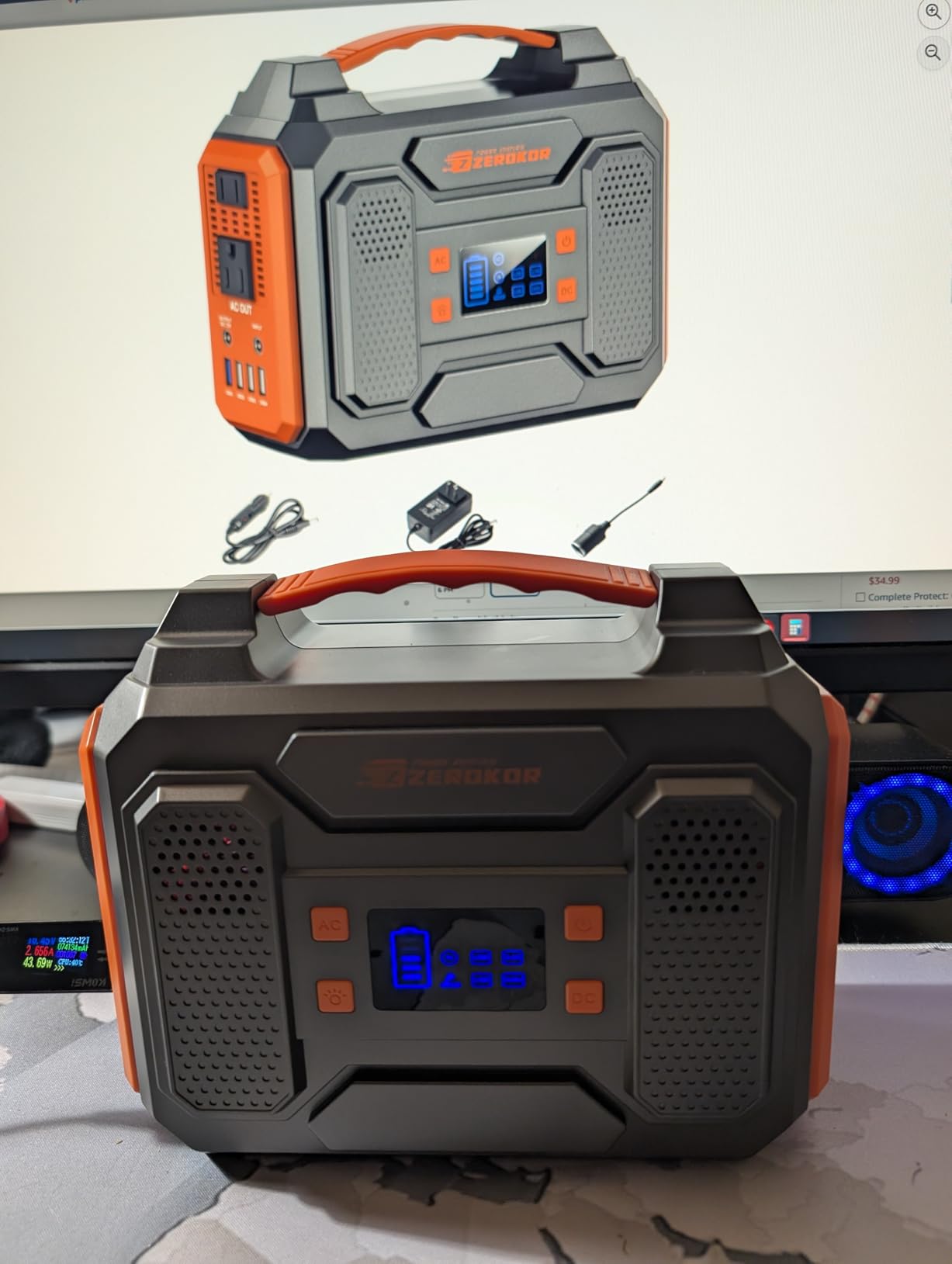
I include the ZeroKor R200 because it is the unit most people in this price bracket actually buy, and it is important to know where its limits are. It weighs 5.1 pounds, includes a 60W monocrystalline panel at 20.5 percent conversion efficiency, and has two AC outlets, a 12V DC port, three USB ports, a quick-charge USB, and an SOS flashlight with a reading mode.
For phones, tablets, a small television, camp lights, and a laptop charge, it does the job and it does it quietly. Support has been praised for replacing units and answering questions quickly, and the built-in BMS covers short circuit, over-current, over-voltage, overload, and overheating.
What the measurements show is where it stops. The most detailed critical review documents real continuous AC output under 100W, a 12V DC port that would not run a portable air compressor, and solar input that never exceeded roughly 30W from the stated panel. If your plan involves a refrigerator, a pump, or anything with a compressor, the advertised 300W is not what you will get.
There are also durability notes worth respecting. Repeatedly folding the included panel has been reported to break internal wiring, the junction box is not waterproof, and the 12-month warranty is the shortest in this group by a wide margin.
Where a 5-pound station still earns a place
As a trunk or packable emergency unit it is hard to argue with. At 5.1 pounds it goes in a backpack, and it can be recharged from a home outlet, a 12V car port, or the included panel through the built-in MPPT, so it stays useful even when the main cabin station is switched off for the winter.
It is also the one to carry for a night hike or a fishing trip from the cabin, where weight matters and the load list is a phone and a headlamp.
Why it should not run a cabin
It needs to be kept between roughly 60 and 80 percent charge to maintain performance, and leaving it unused can trigger a protection state. That is a poor fit for a station that sits in a shed for a month at a time, which is exactly what a cabin demands.
Our position is simple. This is a travel and light-emergency device, and treating it as a cabin power source is the single most common mistake in this category. If you want a station for a small cabin, our camping solar generator roundup covers the mid-size options in more detail.
How Big a Solar Generator Does an Off-Grid Cabin Need?
Most sizing mistakes come from buying an inverter first and a battery second. Work out your daily energy budget in watt-hours instead, then choose the station that can refill that budget from your panel array. A 1000Wh pack with a 1000W solar input and a 2000W inverter covers the classic small cabin: a refrigerator, LED lights, a router or satellite internet, a CPAP machine, phone charging, and an hour of tools.
The cabin load list, in numbers
Here is what a typical small off-grid cabin actually draws, and it is a much shorter list than a home-backup scenario suggests.
A refrigerator compressor runs in cycles, so the number that matters is average draw rather than nameplate, commonly 60-100W while cycling. A chest or 12V fridge runs 30-60W continuous, which is why several owners here report 24-hour runtimes on a 1000Wh pack for a 32-quart fridge. LED lighting across a small cabin runs 5-15W per fixture when on. A Wi-Fi router or satellite internet terminal pulls 10-50W continuously, and a CPAP machine typically sits around 40W for eight hours a night.
The two loads that change the sizing decision are a well pump and a water heater. Pumps draw modest running power but hard startup surge, so pair them with the unit’s surge rating and allow margin. A small water heater runs 1200-1500W for short bursts, which needs genuine continuous headroom, not lifting mode. A microwave, coffee maker, or space heater falls in the same 1000-1500W band, and that is why the 1800W and 2400W inverters in this roundup earn their slots.
Add those up and a modest cabin lands in the 400-900Wh per day range for essential loads, and closer to 1500Wh per day if you run heating appliances, power tools, or an electric stove. Our RV and trailer solar generator picks make the same calculation for a different load profile.
Rule of five: sizing your solar input
The heuristic cabin owners use is simple. For every 1000Wh of battery capacity, plan on about 200W of panel, and more if your site is shaded or you want faster recovery. On that rule, a 1000Wh station wants roughly 200W, a 2000Wh station wants 400W, and a 3000Wh station wants 600W.
Then size against your worst month, not your best one. A mid-latitude site can lose the majority of its winter yield compared with summer, so a cabin that works in July may need two to three times the panel in January. If you cannot be at the site to move panels through the day, budget generously and accept slower spring recharge rather than a dead battery in February.
Watch the maximum solar input figure on the station as well. Two 200W panels produce 400W, and if the unit accepts only 400W you gain nothing from a third. Check the DC voltage limit too, since MPPT inputs above 60V need a different connection than the ones below it.
Days of autonomy, honestly
Days of autonomy is simply your usable watt-hours divided by your daily load. The BLUETTI Elite 200 V2 with 2073.6Wh against a 700Wh day gives you roughly three days without any sun, which is the number that matters in a storm or during a stretch of overcast weather at a remote site.
Two adjustments bring that into the real world. The first is that usable capacity is always lower than nameplate once you account for conversion losses and the inverter’s own draw, and idle draw varies enormously between units. The 10W standby consumption on the Elite 200 V2 is the kind of spec that quietly extends a weekend of autonomy, and it is worth comparing across the field.
The second is cold. LiFePO4 packs deliver less charge in freezing conditions and should not be left charging below freezing, which is the single most common winter failure in cabin installations. Store the unit indoors or in an unheated-but-protected space, and charge it from a wall outlet before a cold snap rather than relying on the panels.
Connector and panel mixing mistakes
The most common forum complaint about cabin solar is connector mismatch. Brand A uses one proprietary plug, brand B uses another, and the DC voltage windows rarely overlap, so panels that look identical will not series or parallel correctly. Two products in this roundup ship with panels the manufacturer explicitly advises against mixing with other brands.
Before buying anything, confirm the panel voltage window, the plug type, and the station’s DC input ceiling. If you will be running the station and charging from a car, make sure the DC port supports the amperage a small home needs, because several units here lack the high-amperage DC output that a wired distribution panel expects.
When a portable station is no longer enough
Portable power stations have a ceiling, and it arrives before most people expect. If you are running a well pump daily, a water heater, an electric stove, a heat pump, or a second fridge, you need more than 5000Wh of storage, more than 4000W of inverter, and a panel array you can mount rather than carry.
At that point the honest answer is a fixed off-grid system: a battery bank, a hybrid inverter with dual MPPT solar inputs, a proper home power panel, and a transfer switch installed by a licensed electrician. Off-grid cabin owners on forums consistently describe portable stations as a stepping stone to that end state rather than a destination, and that pattern is worth respecting before you spend twice.
A gas generator still has a role as a backup source for long cloudy stretches at a site that is truly off grid, and for well pump startup surges no battery likes. Our winter cabin solar kit guide covers how the two approaches work together.
Safety, installation, and the ten-year view
Solar generators produce no exhaust, which is the main safety argument for using one indoors, and the near-silent models at 25-30dB can sit in the cabin itself. Keep the station clear of heat sources, give the exhaust side ventilation, and do not run it in a closed vehicle or a small storage shed with a combustion heater.
Anything involving a home power panel or a transfer switch needs a licensed electrician and a permit, regardless of the battery brand. Portable plug-in use needs neither, which is part of why owners start there. Outdoor storage should be dry and protected from direct rain, and a wheeled base is worth adding for anything over 50 pounds.
On cost, the honest comparison over ten years favours solar once a cabin is consuming fuel rather than occasionally using a generator, because a propane delivery is a recurring logistics cost and a solar system is not. The trade is that panel input has to be sized for winter, and the station has to be large enough to hold several cloudy days. If you want help thinking through capacity and panel count for a specific site, start with the daily Wh budget above and match the array to it.
Frequently Asked Questions
What is a solar generator?
A solar generator is a portable power station with a rechargeable lithium battery, an inverter, and AC and DC outlets, sold with one or more portable solar panels. The panels convert sunlight to DC current, an MPPT charge controller stores it in the battery, and the inverter converts it back to 120V AC to run appliances. It burns no fuel, produces no exhaust, and makes almost no noise.
How many solar panels do I need to power a small cabin?
Plan on roughly 200W of panel for every 1000Wh of battery capacity, which is the sizing rule most cabin owners use. So a 1000Wh station pairs with about 200W, a 2000Wh station with 400W, and a 3000Wh station with 600W. If your site is shaded or you rely on it through winter, size upward so the array can refill the pack on a short, dull day.
How big of a solar generator do you need to run a house?
For a small cabin running a refrigerator, LED lighting, a router or satellite internet, and a CPAP machine, a 1000Wh to 2000Wh station with 1800W to 2600W of continuous output is the practical range. Add a water heater, electric stove, or heat pump and you need a fixed off-grid battery bank and hybrid inverter instead of any portable unit.
How long will a 2000 watt solar generator run a refrigerator?
It depends on capacity rather than inverter size. Owners report a full-size side-by-side fridge running about 9 hours overnight on a 1070Wh station, a portable 40-quart fridge running three straight days in mixed weather on the same unit, and a 29 cubic foot fridge and freezer running over 24 hours on a 2073.6Wh model. A 12V 32-quart fridge runs roughly 24 hours on a 1024Wh pack.
Can you live off the grid with a solar generator?
For a small cabin with a modest load, yes. A 2kWh station paired with 400W to 800W of panel can carry lighting, a refrigerator, internet, and small appliances for days, and refill in under a day of good sun. For full-time living with heating appliances, well pumps, or an electric stove you will eventually need a fixed battery bank, hybrid inverter, and home power panel, with the portable station as a useful stepping stone.
What type of backup generator is best for an off-grid solar system?
A hybrid inverter with dual MPPT solar inputs and a dedicated battery bank is the standard choice for an off-grid cabin, because it charges from solar and grid while supplying 120V and 240V circuits continuously. Many owners keep a gas generator purely as a long-term backup for cloudy stretches and for the startup surge of a well pump, since no battery enjoys either.
The Best Solar Generator for Off-Grid Cabins in 2026: Final Verdict
The BLUETTI Elite 100 V2 is our pick for the best solar generators for off grid cabins in 2026, because 1000W of solar input, a 10ms UPS, 1800W of continuous AC, and a 25-pound weight cover the standard cabin load list with room to spare. Buy the BLUETTI Elite 200 V2 if winter autonomy is the priority and you can manage the 53-pound lift, and pick the Anker SOLIX C1000 Gen 2 if you have any way to charge from a wall or a vehicle.
Choose in sixty seconds like this. Under 1kWh of load, buy the Elite 100 V2. If you will grow to 5kWh, buy the OUPES Mega 1 and add batteries later. If your site is truly off grid with no vehicle charging, buy the Anker SOLIX C1000 Gen 2 only if you are adding panel array, and the Jackery Explorer 2000 v2 if the station lives indoors. If you run a water heater or heat pump, go straight to the Jackery HomePower 3000 and start planning the fixed system.