
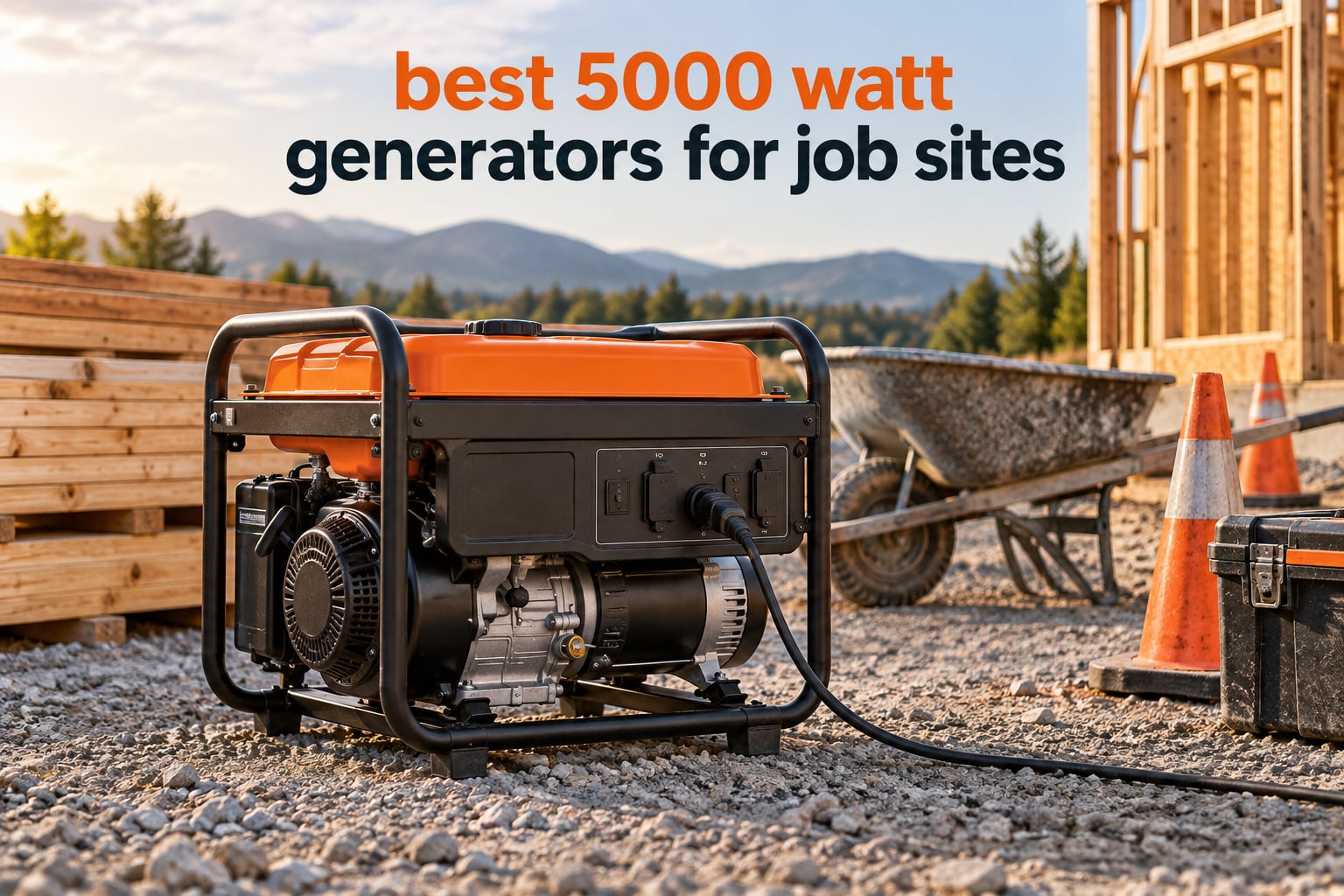
Most crews buy the wrong class of machine the first time. They read the big number on the flywheel housing, load it up with a table saw and a compressor at the same time, and spend the afternoon watching breakers reset. Choosing the best 5000 watt generators for job sites is less about the label on the side and more about reading the running-watt rating, the outlet panel and the tank size against the way your crew actually works.
We spent this roundup reading spec sheets, owner review patterns and the recurring complaints that show up in contractor forums, then matched every machine against a normal 8-to-12 hour site day. What came out of that is a short list where each pick has a specific job it does better than the other nine, not a single winner pretending to fit every trade. If you want the general category first, our broader guide to portable generators covers the smaller classes too.
The core lesson: the “5000 watt” number is a peak figure, and nearly every machine in this class is labeled with a peak. Real running output on most of them lands between 3,500 and 4,500 watts, which is the number that decides whether your compressor and your saw can start at the same time. Everything below is built around that gap.
Table of Contents
Top 3 Best Job Site Picks for 2026
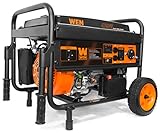
WEN 56475 Electric Start
- 3750 running watts
- 223cc OHV engine
- 4 gallon tank and 10 hour runtime
- Electric start with wheel kit

DuroMax XP5500EH
- 4500 running watts
- Gasoline or propane
- 30A 120/240V twist lock
- 3 year warranty

Oxseryn 5000W Inverter
- 4000 running watts
- Clean inverter output
- 59 pounds
- 70 dBA at 23 feet
The WEN 56475 takes the top slot on the strength of owner history rather than a single spec. It has the second-deepest review base in this group and a 4.6 average built on real multi-season use, which is the closest thing to a reliability signal available when you are buying site power sight unseen.
The DuroMax XP5500EH has the highest running wattage of any machine here at 4,500 watts, plus gasoline and propane capability and a 30A twist lock, which makes it the strongest conventional option when a transfer switch or a trailer connection is part of the plan. The Oxseryn rounds out the top three because at 59 pounds one person can move it to a second floor deck or a rear lot without recruiting help.
Quick Overview: Every Pick Compared in 2026
| Product | Specifications | Action |
|---|---|---|
| WEN 56475 Electric Start |
|
Check Latest Price |
| DuroMax XP5500EH |
|
Check Latest Price |
| Oxseryn 5000W Inverter |
|
Check Latest Price |
 PowerSmart 4800W Inverter PowerSmart 4800W Inverter |
|
Check Latest Price |
 A-iPower GXS5000 A-iPower GXS5000 |
|
Check Latest Price |
 WEN DF451i Inverter WEN DF451i Inverter |
|
Check Latest Price |
 Pulsar PG5250B Pulsar PG5250B |
|
Check Latest Price |
 Green-Power GPD5000W Green-Power GPD5000W |
|
Check Latest Price |
 WEN DF475T Dual Fuel WEN DF475T Dual Fuel |
|
Check Latest Price |
 Champion 4500W Dual Fuel Inverter Champion 4500W Dual Fuel Inverter |
|
Check Latest Price |
Two patterns jump out of that table. First, every single machine here is a 212cc-to-224cc 4-stroke engine, which is why the running-watt figures cluster so tightly between 3,500 and 4,500 watts. Second, the tank sizes and the dB ratings matter more to a crew than the surge number, because they decide how many refuelling breaks you take and whether the neighbours file a complaint.
What a 5000-Watt Generator Powers on a Job Site
A 5000-watt portable generator comfortably runs one big saw plus drills, grinders, lighting and battery charging at the same time. Plan for about 4,000 watts of continuous capacity and roughly 5,000 to 5,500 watts of starting headroom, and sequence motor loads so the compressor comes on before the saw.
These are typical tool figures used for planning, not lab readings from your exact model. Check the nameplate on the tool in front of you before you commit to a circuit.
Circular saw (7-1/4 inch): roughly 1,400 running watts, 2,300 starting watts. A single saw plus charging is easy.
Table saw (10 inch): roughly 1,800 running watts but 4,500 starting watts. It will run, and it will use nearly the whole surge window on its own.
Miter saw (12 inch): roughly 1,800 running watts, 3,000 to 3,500 starting watts. Comfortable alongside site lighting.
Reciprocating saw: roughly 300 running watts, 900 to 1,200 starting watts. Several can share a circuit.
Hammer drill: roughly 500 to 600 running watts, 1,200 starting watts. Brief spikes, easy to stagger.
Angle grinder: roughly 500 to 900 running watts, 1,500 starting watts. Short-cycle load.
Portable air compressor (about 5 gallon): roughly 1,600 running watts, 4,500 starting watts. This is the load that decides your generator class.
Wet/dry vac: roughly 400 to 1,200 watts with a small surge. Negligible against the total.
Battery charger bank: 50 to 200 watts per charger. Ten chargers is still a rounding error, and this is the easiest way to keep a cordless crew productive.
Site lighting and jobsite radio: 100 to 300 watts for a lighting package. A crew working past dusk needs far less than most people budget for.
Portable space heater: 1,500 watts. Fine on its own, a mistake alongside a compressor.
Do the math in amps once and you will never be surprised again. 5,000 watts at 120V is about 41 amps, and at 240V it is roughly 21 amps. A 20A 120V branch is therefore carrying about 2,400 watts, and two 20A duplex outlets on one panel are not two independent 20A circuits unless the manufacturer says so.
Keep 15 to 20 percent of your running rating free at all times. In practice that means one large motor load at a time, staggered starts, and no simultaneous table saw plus compressor plus heater combination.
What a 5000-Watt Generator Cannot Power
Welders, pressure washers, large compressors, central air and electric water heaters all exceed what a 4,000-watt continuous class machine can hold. Knowing the negative list saves more shift time than any other part of this guide.
A 2500 PSI pressure washer with an electric motor can pull 3,000 running amps worth of inrush behavior that trips most open-frame machines instantly. Stick an SMAW or stick welder on the same panel and you are asking the alternator to absorb a load spike far outside its design envelope. Add a central air conditioner and the compressor lockout is a foregone conclusion.
There is a second category that is more subtle: sensitive electronics. Conventional open-frame units use cheaper alternator windings and put more total harmonic distortion on the line, which can bother a laptop, a digital meter, a laser level or a job-site radio. Our inverter generator guide explains the difference in more detail, but the short version is that if your crew lives on laptops and laser levels, an inverter unit protects the tools and your reputation.
When you hit one of these loads, the answer is to size up to a 7500W or 10,000W machine, not to keep cycling a breaker.
1. WEN 56475 Electric Start – The Most Proven All-Rounder
WEN 56475 4750-Watt Portable Generator with Electric Start and Wheel Kit, Yellow and Black
3750 running / 4750 surge watts
223cc 4-stroke OHV
4 gallon tank, about 10 hour runtime
112.5 pounds, electric start
Pros
- Electric start with included battery
- Wheel kit and foldable handles for one-person moves
- Digital readout tracks oil change intervals
- Low-oil shutdown
- voltage regulation and overload protection
- CARB and EPA III compliant for sale nationwide
Cons
- 3750 running watts sits below the 5000-watt nameplate class
- Open-frame construction is loud under load
- Recoil backup is needed if the start battery goes flat
This is the machine we keep coming back to, and the reason is the review base rather than a headline specification. A 4.6 average across more than 2,300 ratings tells you the unit is doing what the box promised a year and two years after purchase, which is the only durability evidence that matters when nobody is watching the first start.
The 223cc four-stroke engine puts out 3,750 running watts and 4,750 starting watts, which is honest for the class. That is enough for a circular saw, a couple of drills, a vac and a lighting package all at once. It is not enough for a table saw and a compressor started together, so crews that run both on the same day are the ones who end up moving up a class.
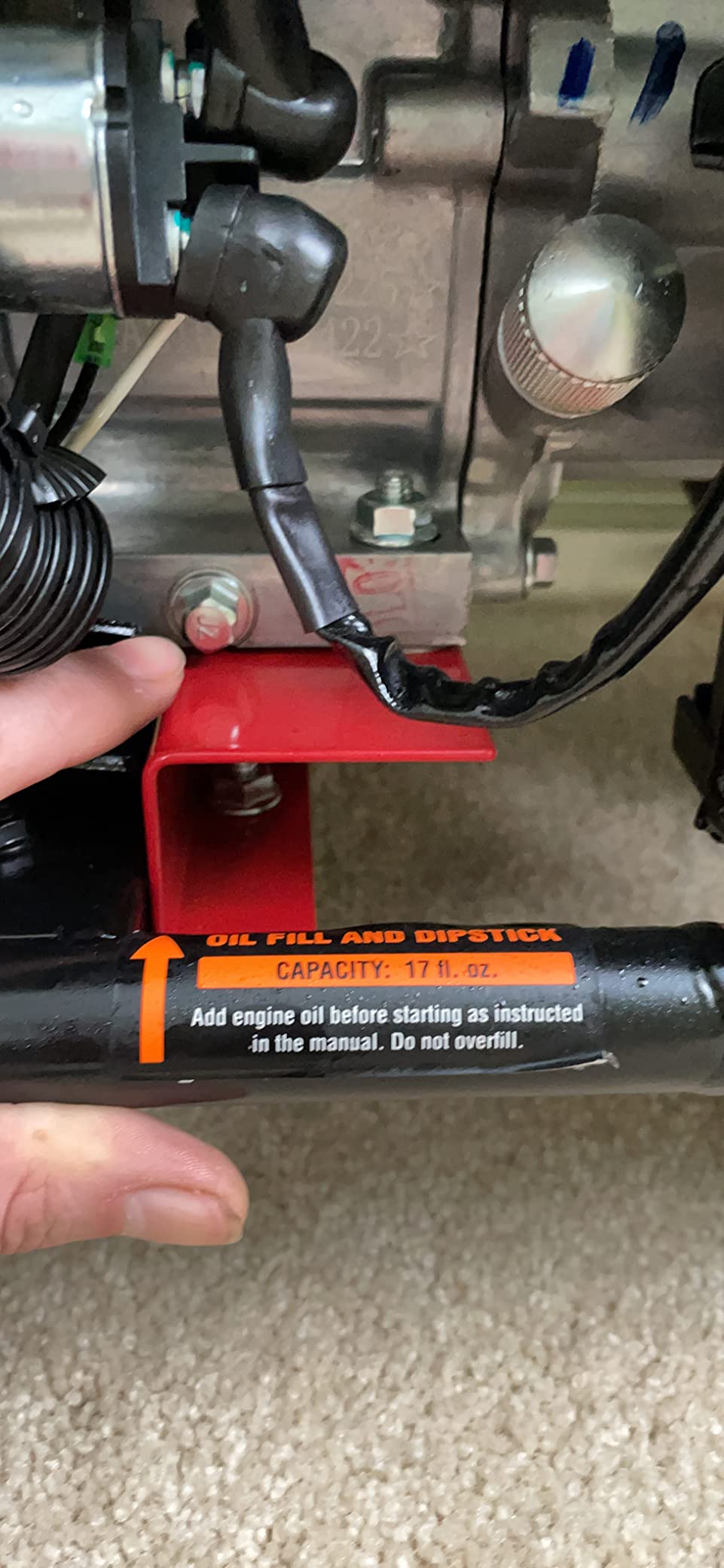
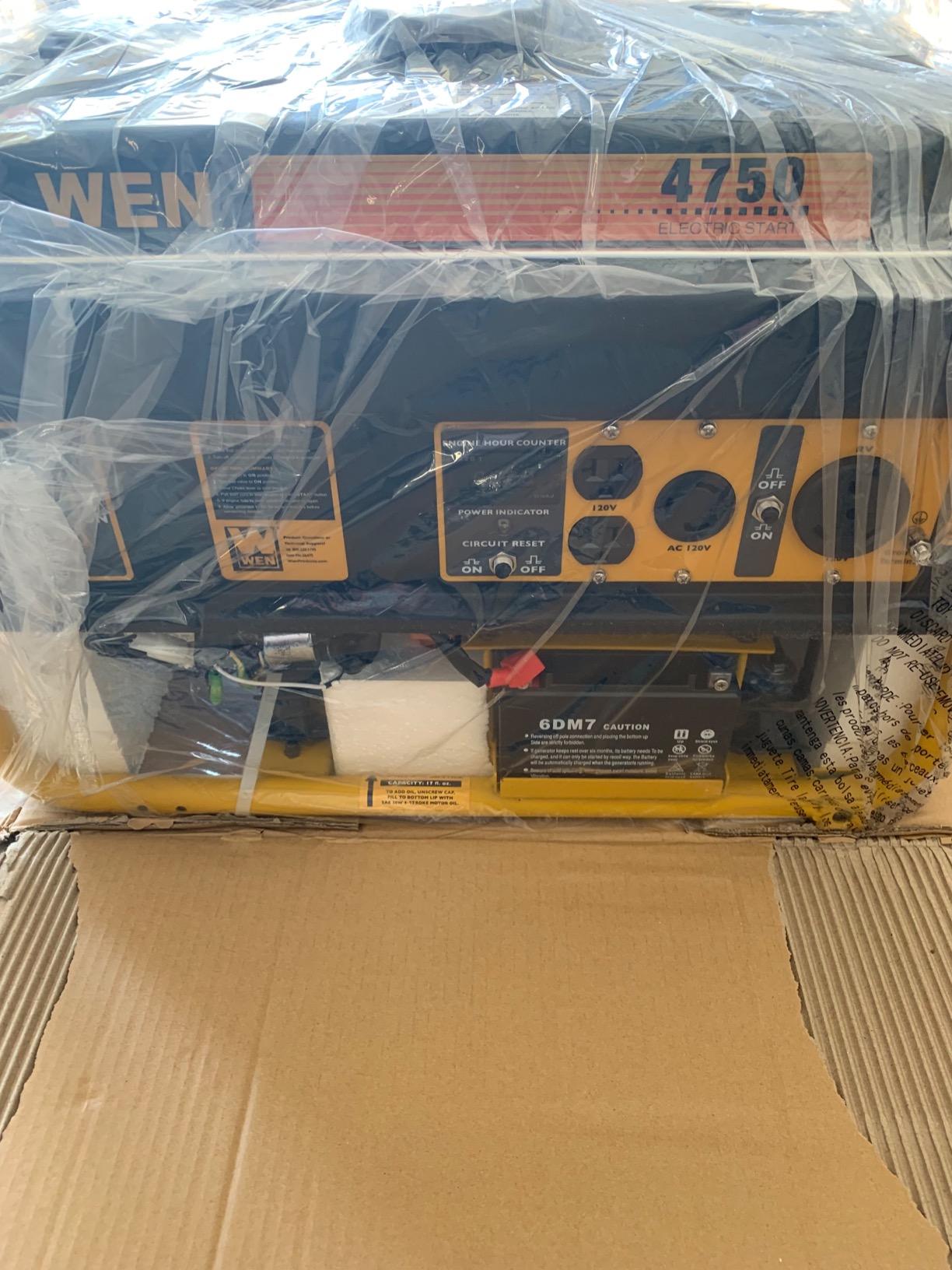
The electric start is the feature that changes daily site life. Owners mention the wheel kit and foldable handles as the reason a single person can roll it from the truck bed to the back corner, and the digital readout that reminds you when the oil is due is a small thing that keeps crews honest about maintenance intervals they would otherwise forget.
Runtime is quoted at about 10 hours on the 4-gallon tank, which is a comfortable margin over a standard shift if the load stays moderate. On a hot afternoon running a saw continuously, plan refuelling earlier in the day rather than assuming the headline figure.
For whom it fits
Framing crews, finish carpentry and general remodel work where the load is a saw plus hand tools plus lighting. The 4.6 average and the deep review history make it the safest default purchase in this class, and the 2-year warranty with a 90-day commercial term is a fair compromise for site use.
If your crew is one or two people and you want a machine that starts with a button and moves without a second set of hands, this is the pick. It also suits anyone who needs to confirm at a glance that the machine is delivering consistent output, since the digital readout removes that guesswork.
Where it falls short
The open frame is loud, and that is the deal you make for a lighter, cheaper machine. If you are working inside a house, on a residential street in the early morning, or next to a property line where noise ordinances get enforced, this is the wrong enclosure.
At 112.5 pounds it needs a two-person lift for stairs despite the wheel kit, and the 3,750-watt ceiling means no welders, no pressure washer and no large compressor. Reviewers also note that a flat start battery leaves you pulling a recoil cord, so keep the machine on a trickle charger between jobs.
2. DuroMax XP5500EH – The Heavy-Load Dual-Fuel Workhorse
DuroMax XP5500EH 5,500-Watt Dual Fuel Portable Generator – Gas & Propane, Electric Start, RV & Emergency Ready
4500 running / 5500 starting watts
224cc OHV, gasoline or propane
9 hr gas and 8 hr propane at 50 percent
124 pounds, 30A twist lock
Pros
- Highest running wattage of any unit in this group
- Switches between gasoline and propane for fuel flexibility
- 30A 120/240V twist lock supports transfer switch work
- Handles freezers and dehumidifiers without bogging
- Owners report reliable restarts after years in storage
Cons
- Roughly 30 to 45 minutes of assembly on first setup
- Solid-fill wheels flatten and the handle hardware is basic
- Battery arrives uncharged so electric start fails until it is topped up
If your load list includes a compressor, this is the strongest conventional machine here. At 4,500 running watts it is the only unit in the group that clears that number, and combined with a 5,500-watt surge window it gives you more room to start a motor load than anything else at this price and weight class.
The dual-fuel capability is not a gimmick on a site. Gasoline gives you longer run time and easy refuelling from a truck bed, while propane stores safely in a locked cage, does not off-gas in an enclosed trailer and cannot be siphoned from a can left on site. Several owners describe switching to propane when the unit is parked near a building or a trailer.
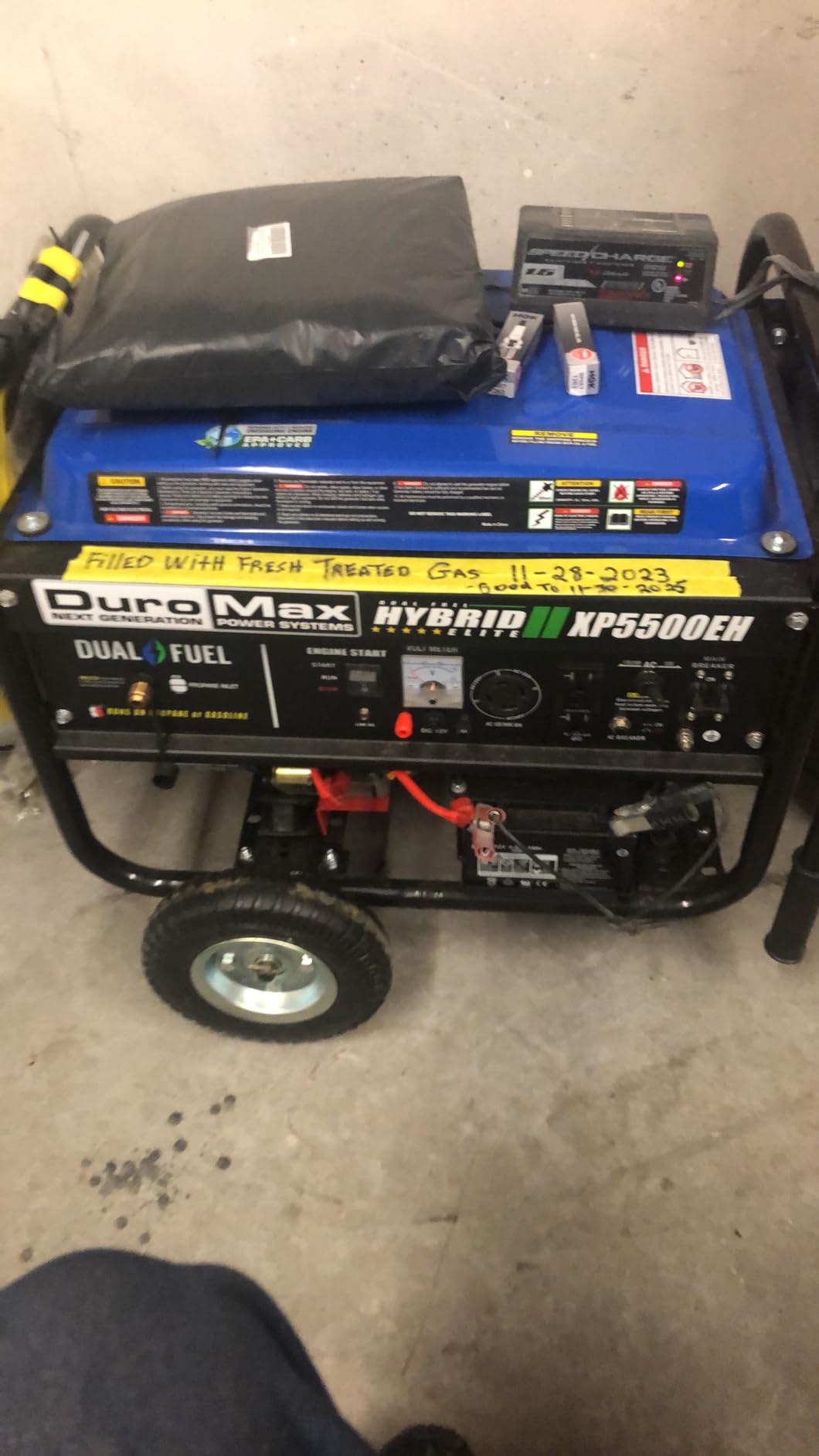
MX2 technology lets you choose between running 120V and 240V at the same time or running 120V only at full output, which matters when an RV or a transfer switch is involved. The panel carries two 120V GFCI household outlets, one 120/240V 30A twist lock, a voltmeter and 12V DC charging posts.
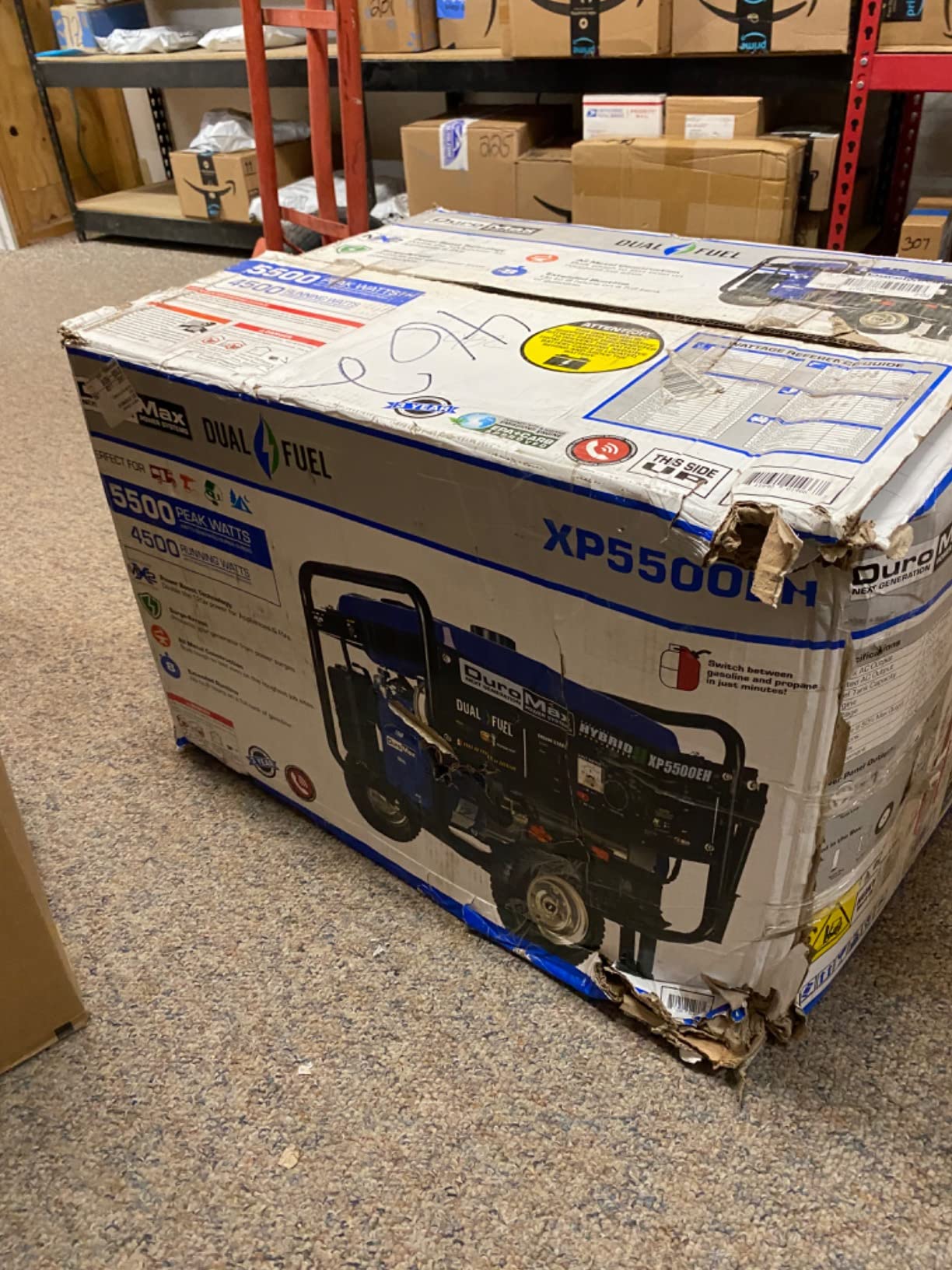
Owners with multi-year histories report that the engine starts and keeps running after long storage, which is the specific failure mode that ends a rental relationship. The 3-year warranty also stands above most of the field.
For whom it fits
Concrete and masonry work, mechanical trades and any crew that runs a portable compressor alongside saws and grinders. It is also the natural choice if the unit has to back up a temporary power panel through a 30A twist lock connection.
Contractors running multi-week jobs who want a propane option for overnight or unattended running will get more flexibility from the dual-fuel setup than from any gas-only machine here. Just confirm the propane choke procedure with the manual before your crew relies on it, because owner reviews repeatedly call those instructions confusing.
Where it falls short
At 124 pounds this is the heaviest unit on the list, and the frame handle is not designed for a solo lift over obstacles. The solid-fill wheels flatten where they rest, which becomes an issue on soft ground or gravel driveways.
Assembly takes 30 to 45 minutes on first setup, so do it in the shop rather than on the customer’s driveway. The open frame is loud, comparable to a lawn mower, which rules it out for close residential work in the early hours.
3. Oxseryn 5000W Inverter – The One-Person Lift
Oxseryn 5000W Inverter Generator Gas Powered, Portable Open Frame Generator
4000 running / 5000 peak watts
223cc inverter engine, low THD
10 hours at 25 percent load on 2 gallons
59 pounds, 70 dBA
Pros
- 59 pounds is the lightest in this group by a wide margin
- Inverter output is safe for laptops
- meters and laser levels
- ECO mode delivers strong fuel economy
- Starts on the first or second pull after adding oil
- Open frame tolerates rough environments
Cons
- Real output is closer to 3000 to 4000 watts and it can stall above that
- 70 dBA is louder than enclosed suitcase inverters
- Arrives without oil so it must be filled before the first start
At 59 pounds this is the only unit in the group that one person can load into a pickup unaided, and that changes which jobs you can cover. Finish carpentry, punch-list work and interior renovation on upper floors become practical instead of a two-person problem.
The inverter drivetrain is the real reason to like it. Rather than the noisy open-frame alternator design used by most conventional units, this machine produces clean, low-distortion power, so laptops, phone chargers, digital meters, laser levels and a job-site radio can share the same panel as the saw.
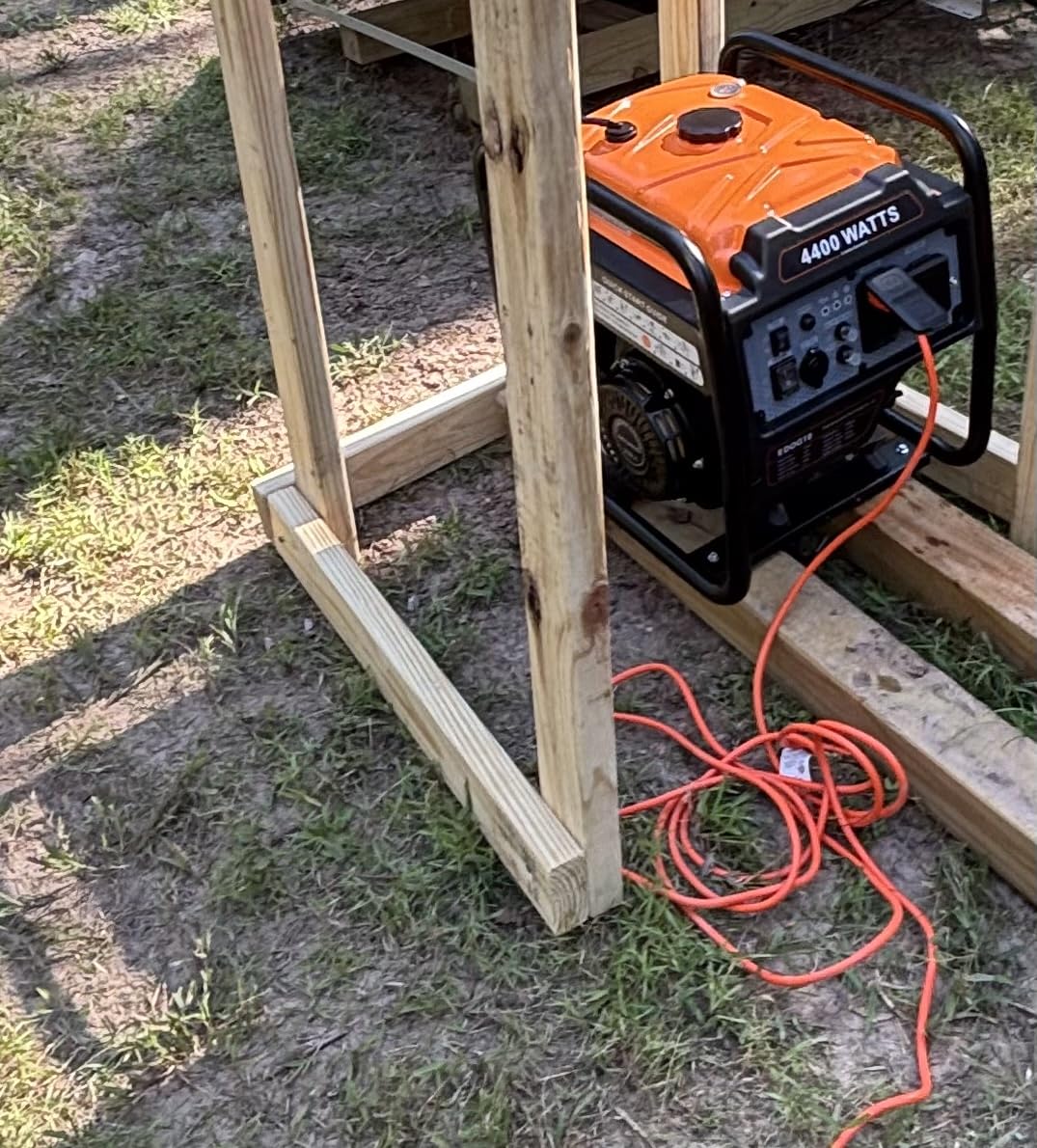
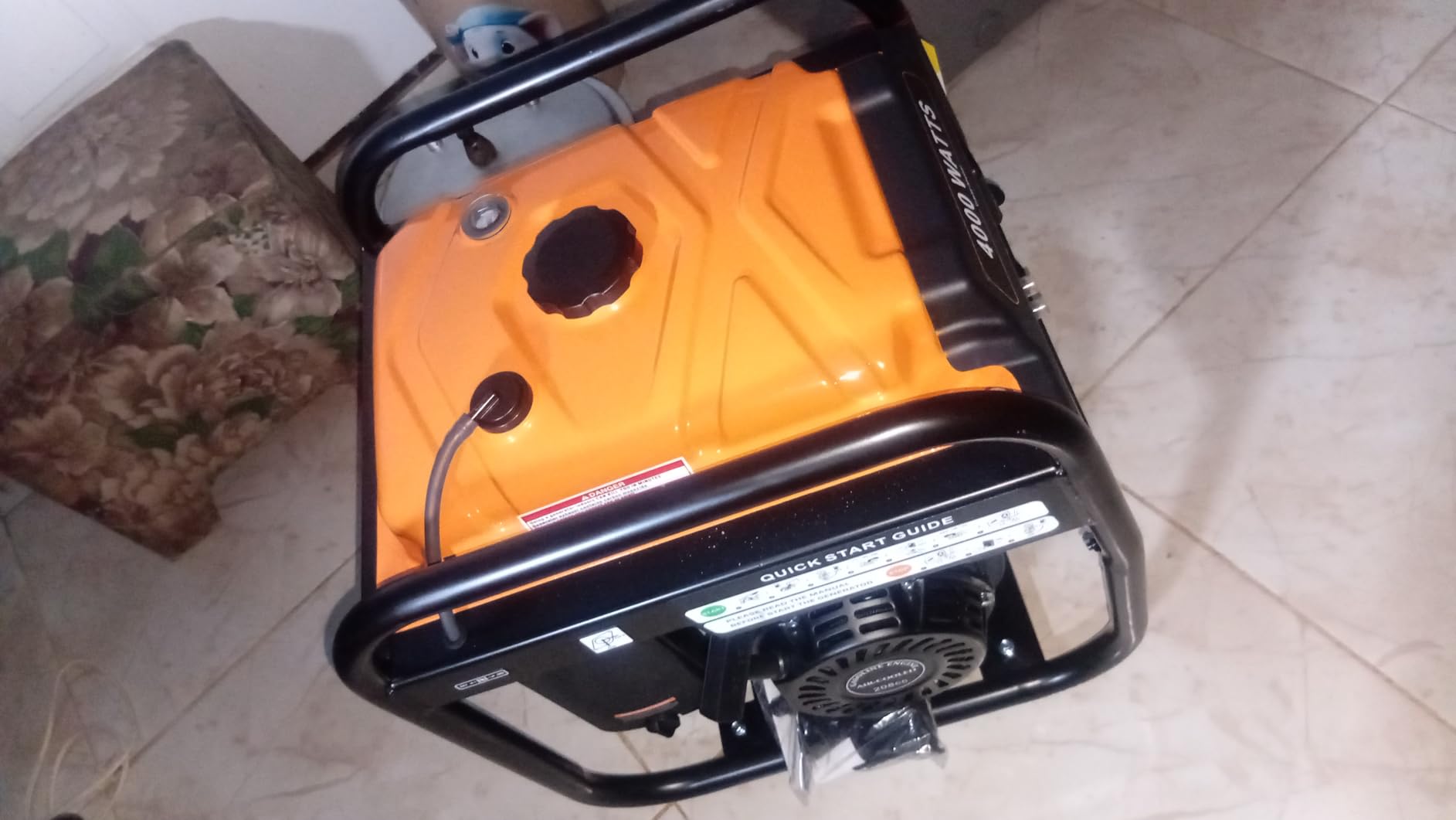
Engine size is a familiar 223cc four-stroke, rated at 4,000 running watts and 5,000 peak. The panel carries two 120V AC outlets, a 30A RV port and a 12V DC port, and the 2-gallon tank with an integrated fuel gauge delivers up to 10 hours at 25 percent load, with some owners reporting 16 hours on light duty in ECO mode.
Owners report reliable first-pull starting over many months once oil is added, and the 70 dBA figure at 23 feet is honest rather than optimistic. That is still an open frame, so it is quieter than a conventional machine but louder than a fully enclosed inverter.
For whom it fits
One-person and two-person crews, interior finish work, and anyone who needs to power sensitive electronics from the same panel as a tool. If your crew is moving between a ground floor and a second-floor deck several times a day, the weight saving pays for itself immediately.
Landscapers and small concrete crews who run a saw, a grinder and a lighting package will find 4,000 running watts adequate. With a 3-year history of quiet, complaint-free use in the review base, it also works as a weekend backup machine for a small shop.
Where it falls short
The gap between the 5,000-watt label and the real output is the honest concern here. Owners report stalling above roughly 3,000 to 4,000 watts, so treat this as a 3,500-watt practical machine and do not add a compressor to the same circuit as a table saw.
It arrives without oil, there is no ignition switch to speak of, and the choke labeling is reversed from the usual on-off convention, which catches out first-time users. The 1-year manufacturer warranty is also the shortest among the picks with any meaningful review history.
4. PowerSmart 4800W Inverter – The Marathon Runner On Paper
PowerSmart 4800 Watt Electric Start Portable Inverter Generator
3800 rated / 4800 peak watts
223cc 4-stroke inverter
18 hours at 25 percent load
89 pounds, 4 outlets plus USB
Pros
- Electric start without a heavy pull cord
- Up to 18 hours at 25 percent load on a 3.43 gallon tank
- Widest outlet selection including 30A RV-ready
- USB and DC
- Parallel ready for doubling output with a matching unit
- CO sensor
- overload protection
- low-oil shutdown plus ANSI/UL 2201 certification
Cons
- 3800 rated watts is below the nameplate once surge is discounted
- 89 pounds is heavy for a solo lift
- ABS construction is less rugged than a full metal open frame
On endurance this machine is the standout: up to 18 hours of runtime at 25 percent load from a 3.43-gallon tank. For a crew running mostly lights, chargers, a radio and a laptop, that is a full working week without a refuelling stop.
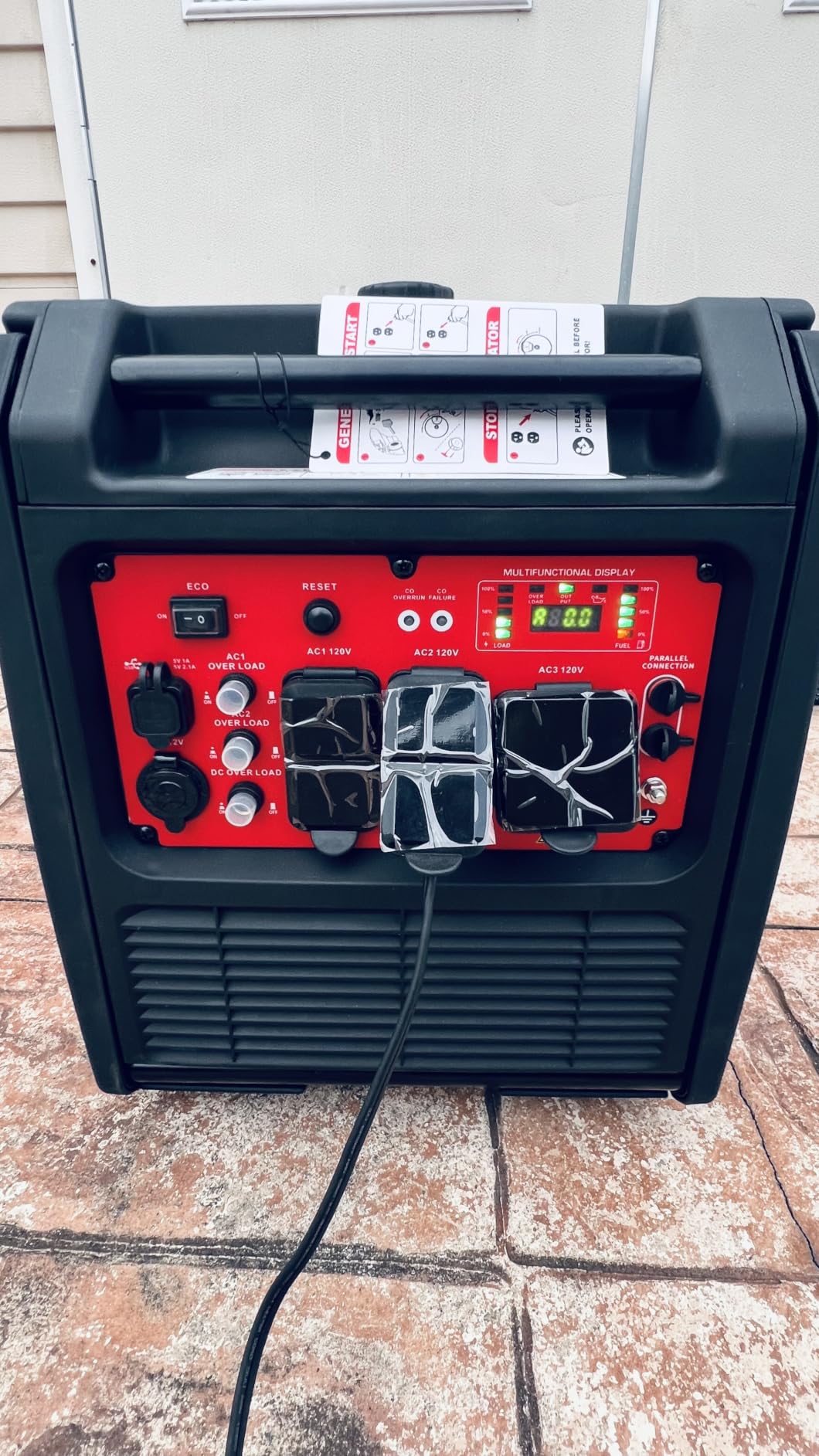
The panel is also the most generously equipped in the group. Four three-prong 120V 20A receptacles, a 30A RV-ready outlet, a 12V 8A DC outlet and two 5V USB ports mean you can charge tools, phones and a battery bank without hunting for adapters. Parallel ports let you double the output later with a matching unit.
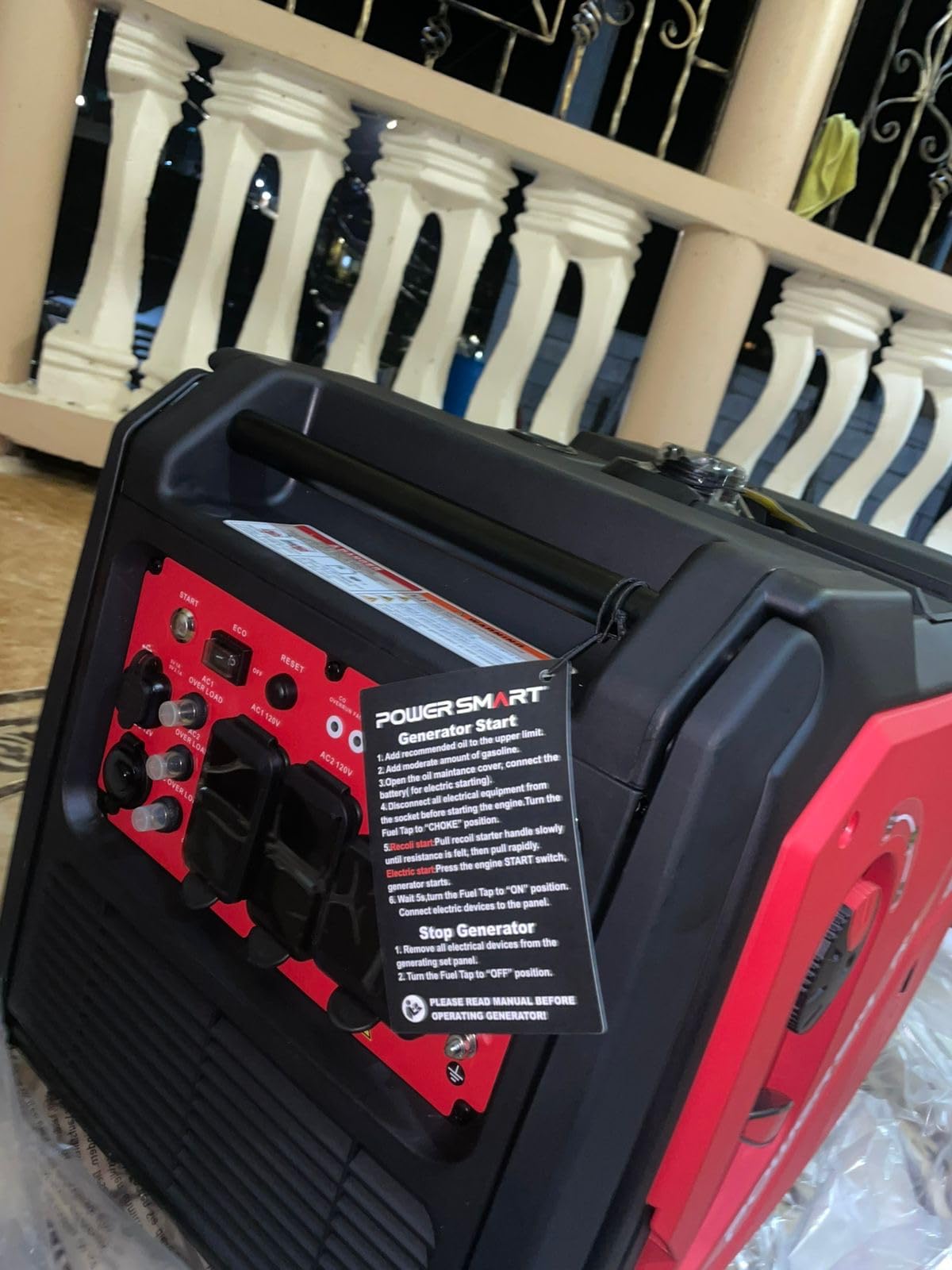
Safety is handled properly for a site. A CO sensor, overload protection and low-oil shutdown are all present, and the unit carries EPA plus ANSI/PGMA G300 and ANSI/UL 2201 certification, which is the certification set a site safety inspector is most likely to recognize.
The 2-year limited warranty sits mid-pack. Owners rate it highly for electric starting and outlet variety, and the 18-hour figure is achievable because light electrical loads rarely push the engine past the 25 percent mark.
For whom it fits
Electricians, low-voltage installers and technology-driven crews whose day is chargers, meters, laptops and lighting rather than continuous saw work. Long weekend or holiday shifts are where an 18-hour tank genuinely changes how you plan fuel deliveries.
It is also a reasonable second unit for a crew that already owns a conventional open-frame machine, since parallel capability means the two can be linked when a single load demands more than either can deliver alone.
Where it falls short
3,800 rated watts is the ceiling, and once a circular saw plus a grinder and a compressor land on the same panel you are running out of headroom fast. The honest maximum load for continuous work is closer to 3,000 watts.
At 89 pounds it needs two people on stairs, and the ABS construction is softer than the powder-coated steel frames used by the conventional units in this group, which matters on a site where the machine gets kicked and dropped. Long-term durability data on this model is still thinner than the leaders.
5. A-iPower GXS5000 – The 6.3-Gallon Tank Monster
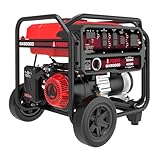
A-iPower 5000-Watt Portable Generator Gas Powered, CO Sensor Shutdown, Heavy Duty Generators with 223cc OHV Engine for Jobsite, RV, Home Backup, Emergency (GXS5000)
4000 running / 5000 starting watts
223cc OHV with cast iron sleeve
20 hours at 25 percent load
6.3 gallon tank, 68 dB, 111.6 pounds
Pros
- 6.3 gallon tank delivers long runtimes and multi-day outage coverage
- Cast iron sleeve engine handles heat and extended duty
- CO sensor shutdown plus a data center display for monitoring
- Owners report it handles large motor loads such as pumps
- Three year limited manufacturer warranty
Cons
- Loud at 68 dB under load
- Recoil start only on this model
- Frequency drift can confuse some UPS transfers
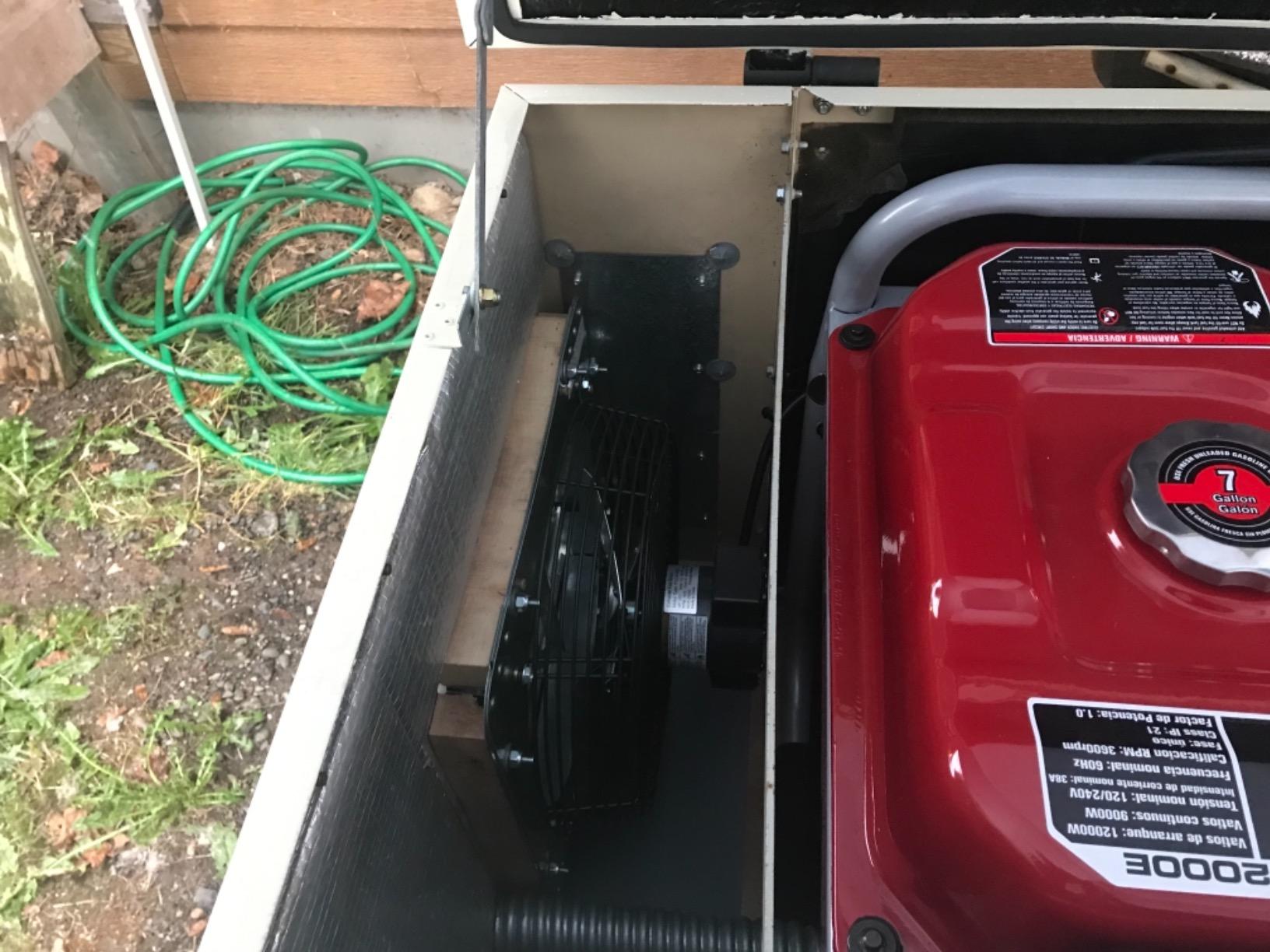
The tank is the story. At 6.3 gallons it is more than 50 percent larger than anything else in this group, and owners running outage duty report 12 to 20 hour runtimes. For a site where refuelling logistics are awkward, that capacity removes a recurring nuisance.
The 223cc overhead-valve engine uses a cast iron sleeve rather than an aluminum one, which matters in exactly the environment a generator lives in. Sustained heat and long run hours are where aluminum sleeves give up, and several owners credit the sleeve as the reason the unit keeps going.
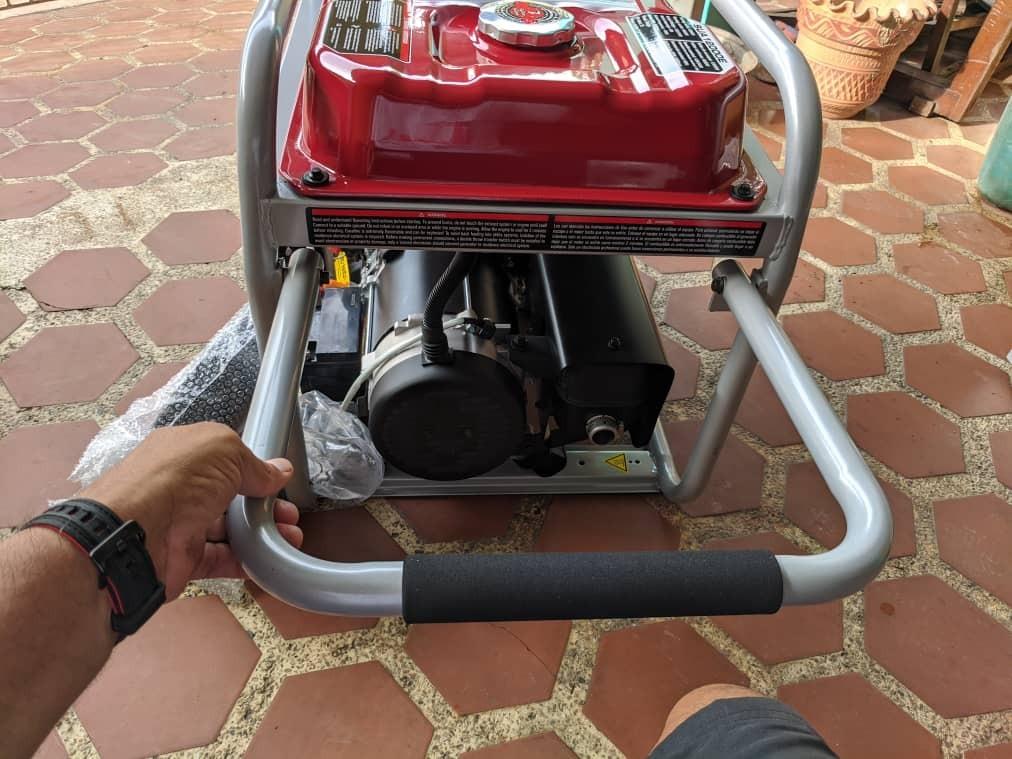
Safety and monitoring are above average for the price. A CO sensor with an indicator light, a data center display and a 3-year limited warranty are features you would normally pay a premium for, and the outlet panel includes two 20A 120V duplex receptacles, an L5-30R 30A 120V twist lock and a TT-30R 30A receptacle for trailer hookups.
Owners also report that A-iPower customer service resolves issues quickly by phone, which matters more than it sounds when a machine is down on a billable day.
For whom it fits
Multi-day and remote sites where fuel delivery is the bottleneck, storm-response crews, and anyone combining a generator with a transfer switch or a trailer connection. The 68 dB rating is acceptable on an open lot and unsuitable next to a bedroom window.
It is also a strong outage machine for a small shop, because the 6.3-gallon capacity covers a weekend without a single refuelling stop. Just budget for the recoil start, which matters at 4am in November.
Where it falls short
Recoil start is the biggest practical complaint. Owners on other models in this roundup point out that pulling a cord on a 111-pound machine before dawn is the exact scenario key-fob starting solves, and this one has no electric option.
Reviewers also report frequency drift that confuses some UPS transfers, and one account of catastrophic engine failure at roughly 54 hours of use. That is an isolated report rather than a pattern, but it is why the 4.4 average sits below the leaders rather than above them.
6. WEN DF451i – The Quietest Machine On The List
WEN DF451i Super Quiet 4500-Watt Electric Start Dual Fuel RV-Ready Portable Inverter Generator with Fuel Shut-Off
3500 rated on gas, 3150 on propane
212cc inverter, 58 dBA at quarter load
9 hour runtime, 2.2 gallon tank
100 pounds, keyless electric start
Pros
- 58 dBA at quarter load is the lowest published figure in this group
- Keyless electric start with a back-up recoil starter
- Dual fuel with automatic fuel selection for extended run times
- Clean inverter power safe for laptops and tablets
- Built-in oil drain hose and funnel speed up maintenance
Cons
- 100 pounds often requires two people to load
- Oil fill is low on the side and awkward on a heavy unit
- Fuel switching is not always seamless between propane and gas
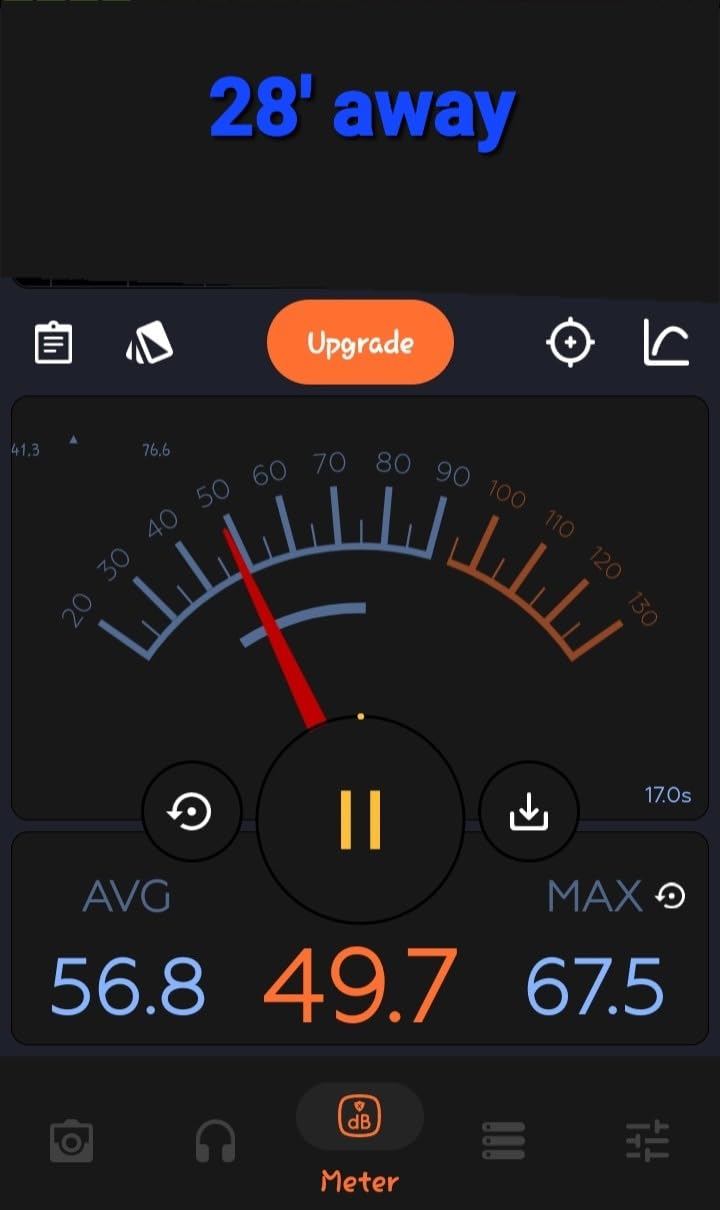
At 58 dBA measured at quarter load and 22 feet, this is the lowest published sound rating among these ten machines. If the job is in a residential neighborhood, next to a property line or on a weekend morning, that number is the whole decision.
It is also a dual-fuel inverter, so you get the quiet clean output and the option to run on propane when the machine is parked near a building or stored between shifts. Auto Fuel Selection Technology switches from propane to gasoline automatically when gasoline gives you more endurance.
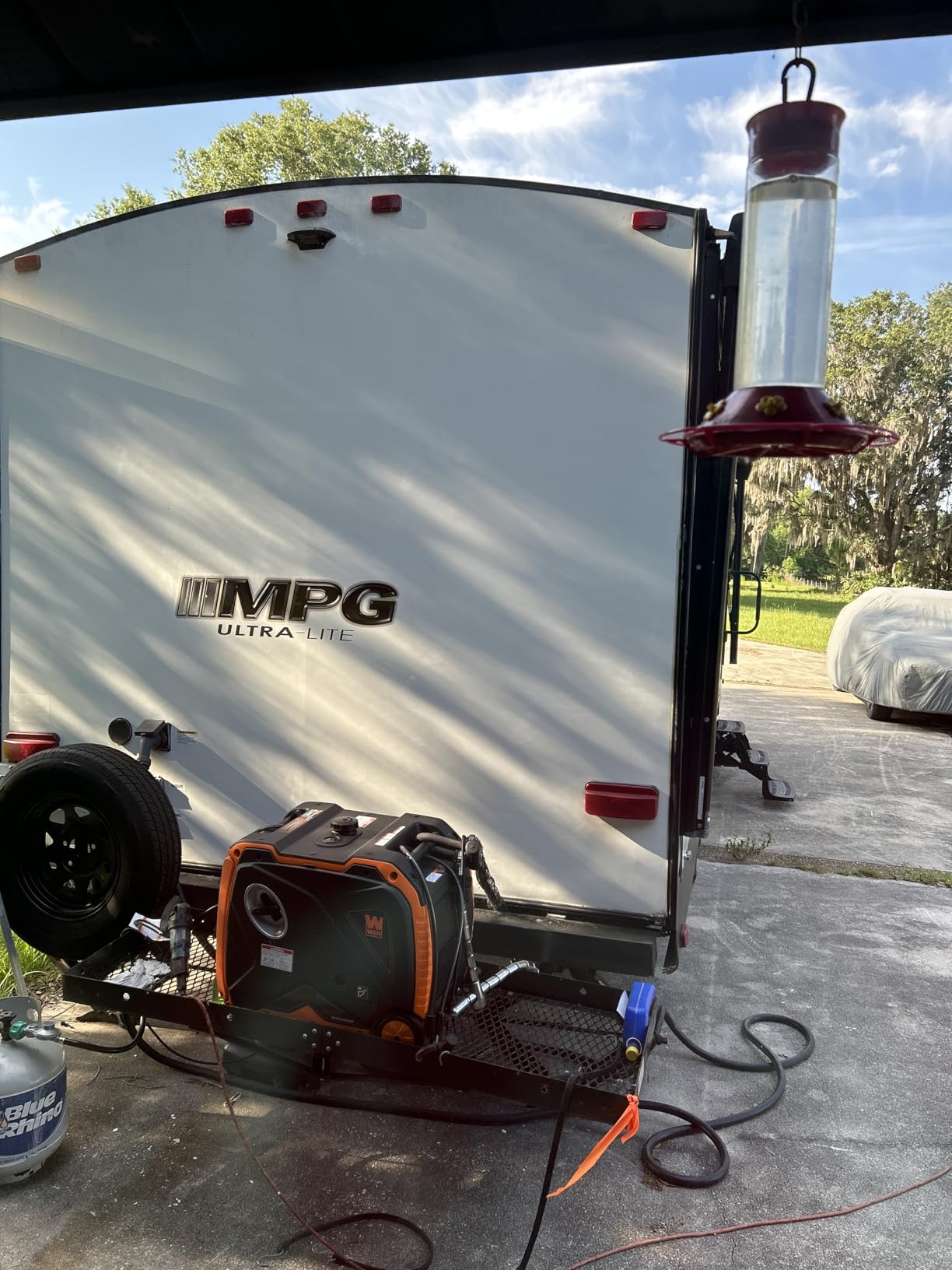
Owners praise the maintenance story. A built-in oil drain hose and funnel mean you change oil without tipping a 100-pound machine or dealing with a drain pan on uneven ground, which is a real saving across a crew that services several machines.
Rated output is 4,500 surge with 3,500 running watts on gasoline and 3,150 on propane, so this is a machine for lighting, chargers, radios, small saws and finish work rather than heavy cutting loads. Several owners report it starting RV rooftop air conditioners in ECO mode without exceeding half load.
For whom it fits
Remodel contractors working inside occupied homes, electricians running meters and laptops, and anyone who has had a noise complaint on a residential job. The 3-year limited warranty is among the longer in this group.
It is also the better choice when the generator sits near an open site door or window, since the low sound level means less carbon monoxide has to travel into the work area before you notice it. Keep the standard 20-foot clearance regardless.
Where it falls short
3,500 running watts is the smallest gas rating here, so a table saw and a compressor will not coexist, and a miter saw plus a grinder is already near the limit. If your day is dominated by cutting, this is the wrong machine.
At 100 pounds it is a two-person lift for stairs, and the low oil fill position is awkward on a heavy frame. Some owners also report needing a restart cycle before power is delivered, and the automatic fuel change is not always seamless under load.
7. Pulsar PG5250B – 12 Hours At Half Load And Switch And Go
Pulsar 5,250W Dual Fuel Portable Generator with Switch and Go Technology, PG5250B
4250 rated on gas, 3850 on LPG
224cc 4-stroke OHV, steel frame
12 hours at half load on 4 gallons
115 pounds, 30A RV and 120/240V outlets
Pros
- Switch and Go technology changes fuel sources while the engine runs
- 4 gallon tank gives up to 12 hours at half load on gasoline
- 120/240V twist lock plus a 30A RV port cover tool and trailer connections
- Powder coated steel frame with never-flat wheels and a fold-down handle
- Owners report four years of reliable service with routine oil changes
Cons
- Recoil pull start only
- Operating noise is noticeably high
- Fuel tank sits over the electronics and limits repair access
Switch and Go is the feature worth pausing on. You can move from propane to gasoline while the engine is running, without shutting down, which means you can top a propane cylinder at a different store from the one where you filled the tank and carry on working through the change.
On gasoline it rates 4,250 running watts against 5,250 peak, with 3,850 rated and 4,750 peak on LPG. The 4-gallon tank gives up to 12 hours at half load on gas, which is the best half-load figure among the conventional open-frame machines here.
The chassis is a powder coated steel frame with never-flat wheels and a fold-down handle, which is the right construction for a machine that gets dragged across gravel and job-site debris. A 3-in-1 digital meter and low oil indicator with shutdown round out a sensible control panel.
Owners with long histories report four years of dependable operation with regular oil changes. That durability record is the reason this machine earns its place despite the noisy open frame.
For whom it fits
Crews that run a full 8-to-12 hour day on a moderate load and want to finish the shift on propane. A 12-hour half-load figure means one fill at the start of the day covers a standard shift without a mid-afternoon fuel stop.
It is also a good fit for anyone connecting a trailer or a small temporary panel, since the 120/240V twist lock and 30A RV port cover both cases in one panel. The included propane hose means it is usable on either fuel from the day it arrives.
Where it falls short
Recoil start is the first thing owners complain about. At 115 pounds in the dark, that pull is a genuine annoyance and the reason many contractors move to an electric-start model in this class.
Noise is high, the fuel tank is mounted over the electronics and limits repair access, and customer service responsiveness on warranty issues is reported as weak. The 1-year limited warranty is the second-shortest in this group and is worth factoring into a long-term ownership calculation.
8. Green-Power America GPD5000W – Recoil Start, No Battery To Fail
Green-Power America GPD5000W 5000W Gas Portable Generator Recoil Start
3850 continuous / 5000 peak watts
223cc 7.5 HP OHV, 4 gallon steel tank
11 hours at 50 percent load
109 pounds, 30A twist lock
Pros
- Recoil start needs no battery and nothing to charge or fail
- 11 hours at 50 percent load from a 4 gallon steel tank
- Automatic voltage regulation
- low-oil shutdown and overload protection
- 30A twist lock supports transfer switch or RV hookup
- 8 inch flat-free wheels and a foldable handle
Cons
- Recoil start means no one-touch startup on site
- 3850 running watts is well below the 5000-watt peak label
- Open frame design runs loud under load
The appeal here is what is missing rather than what is present. There is no battery, no ignition switch and no starter motor to fail, which removes the single most common long-term complaint we saw across electric-start units in this roundup, where a dead start battery turns a 110-pound machine into a hand-pulled load.
Output is 5,000 peak watts against 3,850 continuous running watts, from a 223cc 7.5 HP four-stroke overhead-valve engine. Treat 3,850 watts as the planning figure and everything follows from that.
The 4.0-gallon steel fuel tank gives up to 11 hours at 50 percent load, and the steel tank itself is a durability upgrade over plastic. Automatic voltage regulation, low-oil automatic shutdown and built-in circuit overload protection guard whatever you plug in.
The panel is straightforward: two 120V 20A NEMA 5-20R outlets, a 120V 30A NEMA L5-30R twist lock for transfer switch or RV use, and a 12V 8.3A DC outlet for battery charging. The 2-year limited warranty is acceptable.
For whom it fits
Contractors who store equipment in a truck for weeks between jobs and want a machine that starts after sitting untouched. There is no battery to go flat, and recoil starting does not care about the temperature.
It is a sensible outage machine for a small shop, and the L5-30R twist lock means it can feed a transfer switch if you are installing one. Landscaping and light carpentry loads fit comfortably within 3,850 watts.
One more detail worth noting is the wheel package. The 8-inch flat-free wheels and a foldable frame handle cope with gravel and job-site debris better than the small solid wheels fitted to some of the units in this group, and they never need inflating at 6am.
Where it falls short
No one-touch startup is the honest limitation. Every crew member who has pulled a cord on a cold morning knows exactly what that costs, and it is why most modern site purchases have moved to electric start.
The 3,850-watt continuous figure is the lowest peak-to-running gap ratio in this group, and the open frame is loud under load. For a class where half the benefit is quiet clean power, that is a real trade.
9. WEN DF475T – The Transfer Switch Ready Dual-Fuel Value
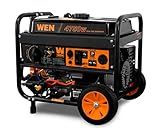
WEN 4,750-Watt 120V/240V Dual Fuel Portable Generator with Wheel Kit and Electric Start (DF475T)
3800 running on gas, 3500 on propane
224cc OHV, key electric start
11 hours at half load on 4 gallons
105.8 pounds, L14-30R 120/240V outlet
Pros
- Dual fuel switching with a simple selection dial
- True 120V/240V output with an L14-30R twist lock for transfer switch use
- Key electric start on a 224cc four-stroke OHV engine
- 4 gallon tank provides up to 11 hours at half load
- Deepest review base in this group with nearly 3000 ratings
Cons
- Open-frame construction is loud
- 3800 running watts on gas limits large saws and welders
- Heavier than the compact inverter alternatives
This machine has the largest review base of anything in the roundup, with nearly 3,000 ratings averaging 4.4. That is a meaningful sample of real ownership, and it makes the WEN DF475T the safest recommendation for anyone who wants dual fuel and 240V output without moving to a heavier commercial frame.
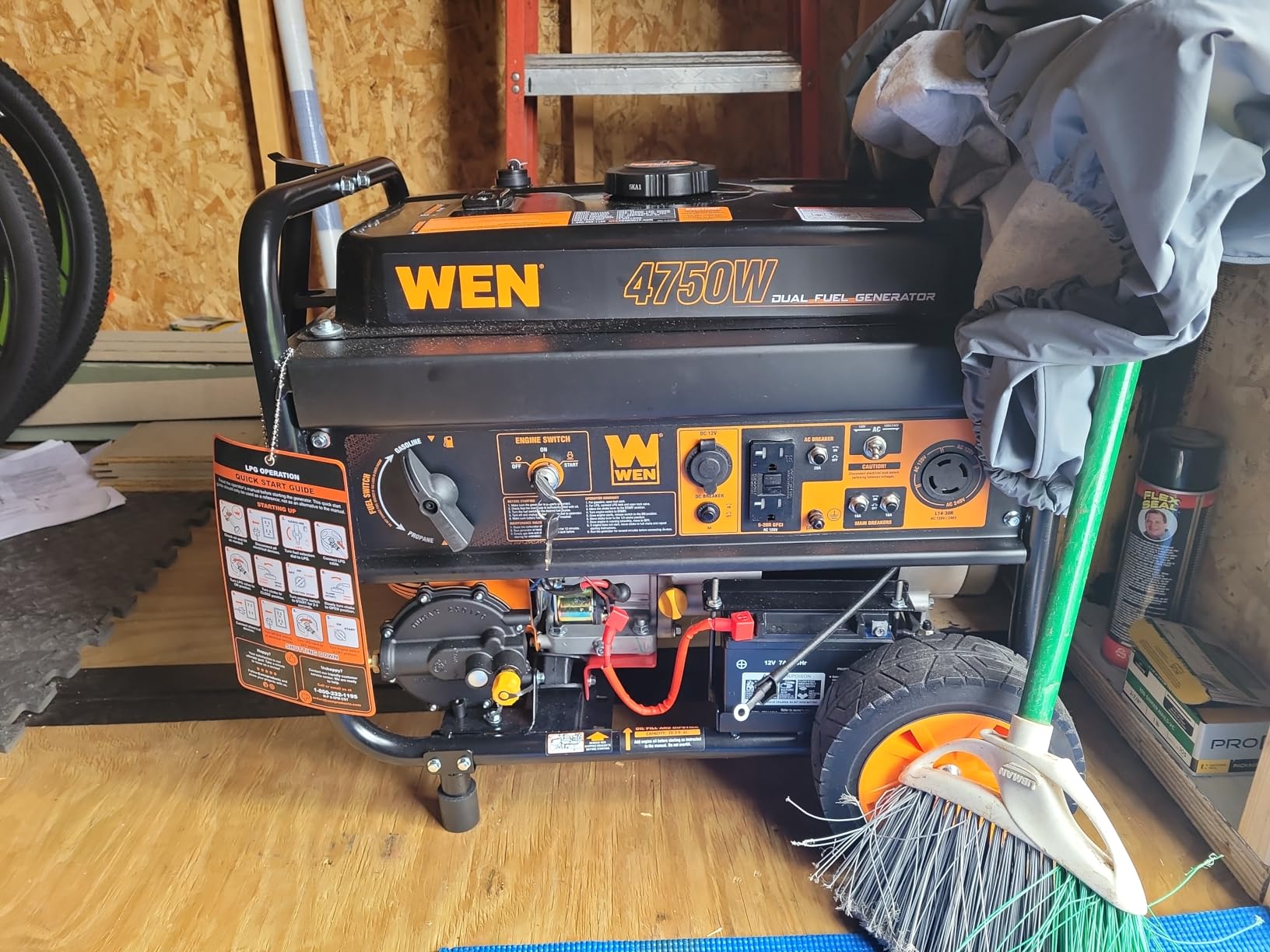
The panel is the reason to buy it. Two 120V GFCI outlets, a 120V/240V NEMA 30A L14-30R twist lock and a 12V DC plug give you a genuine 240V connection, and the unit is transfer switch ready, which means an electrician can wire it into temporary power for a remodel without adapters.
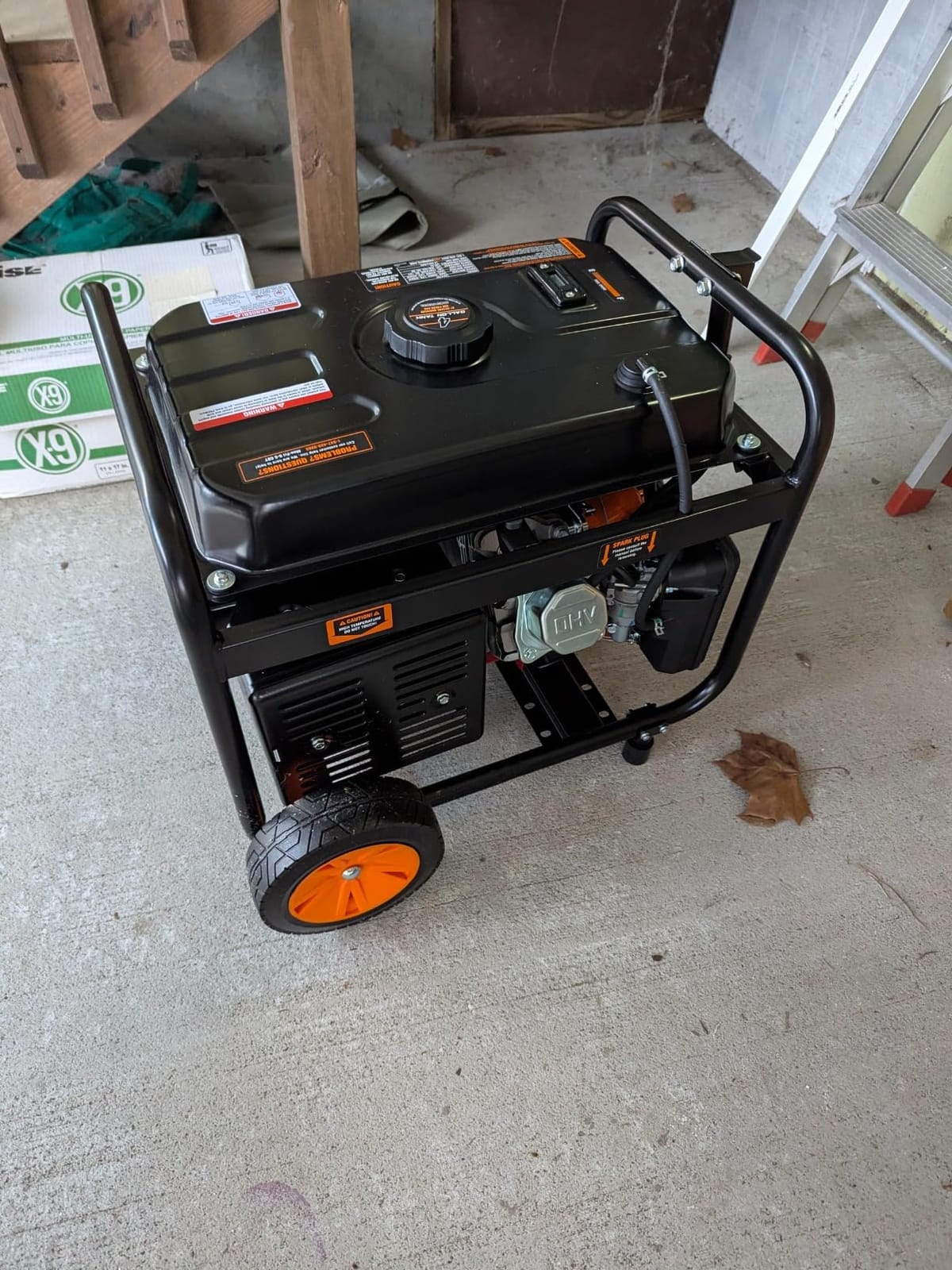
Power comes from a 224cc four-stroke OHV engine with key electric start, and the 4-gallon tank gives up to 11 hours at half load. A 47-inch LPG connection hose, a wheel and handle kit and a bottle of oil are all in the box, and the 2-year warranty is standard.
On gasoline it rates 4,750 surge and 3,800 running watts, dropping to 4,350 surge and 3,500 running on propane. Both figures are honest, which is more than several competitors in this class manage.
For whom it fits
Remodel and addition work where the site needs a temporary 240V feed for a saw, a welder’s accessories or a portable heater, plus crews that want gasoline endurance with propane as a storage option.
It is also the most common first generator in this roundup, and the review history suggests that decision is rarely regretted. For anyone who cannot easily justify a trip to a dealer, that is worth more than a marginal specification gain.
Where it falls short
3,800 running watts on gasoline is the ceiling, which puts a table saw and a compressor out of reach at the same time. A welder is also beyond it despite the 240V outlet, so plan to size up if welding enters the scope.
The open frame is loud, and at 105.8 pounds it is heavier than the compact inverter units while offering less continuous output. A whole-home backup installation also still requires a properly installed transfer switch.
10. Champion 4500-Watt Dual Fuel Inverter – The Food-Truck Workhorse
Champion 4500-Watt Electric Start Dual Fuel Portable Inverter Generator
3500 running on gas, 3150 on propane
212cc inverter, 61 dBA
14 hours on gas, 21 hours on propane
99.2 pounds, CO Shield and parallel ready
Pros
- Quiet at 61 dBA
- suitable for campground and neighborhood noise limits
- Up to 14 hours on gasoline and 21 hours on propane
- CO Shield carbon monoxide auto shutoff adds a real safety layer
- Parallel ready so a matching unit can double the output
- Intelligauge power meter tracks voltage
- frequency and run hours
Cons
- 99.2 pounds is heavy for a single person to lift
- 3500 running watts on gas limits heavier loads
- Parallel kit is sold separately
Champion built this one for people who run their machine for a living rather than for a weekend. Food-truck owners report running commercial equipment for 10 to 12 hour days on it, and several reviewers describe 150-plus hours of service and parallel operation with a second inverter.
The endurance figures are the standout: up to 14 hours on gasoline and up to 21 hours on propane from a 2.25-gallon tank. Propane runtime that long is what makes an evening or weekend event possible on a single cylinder refill.
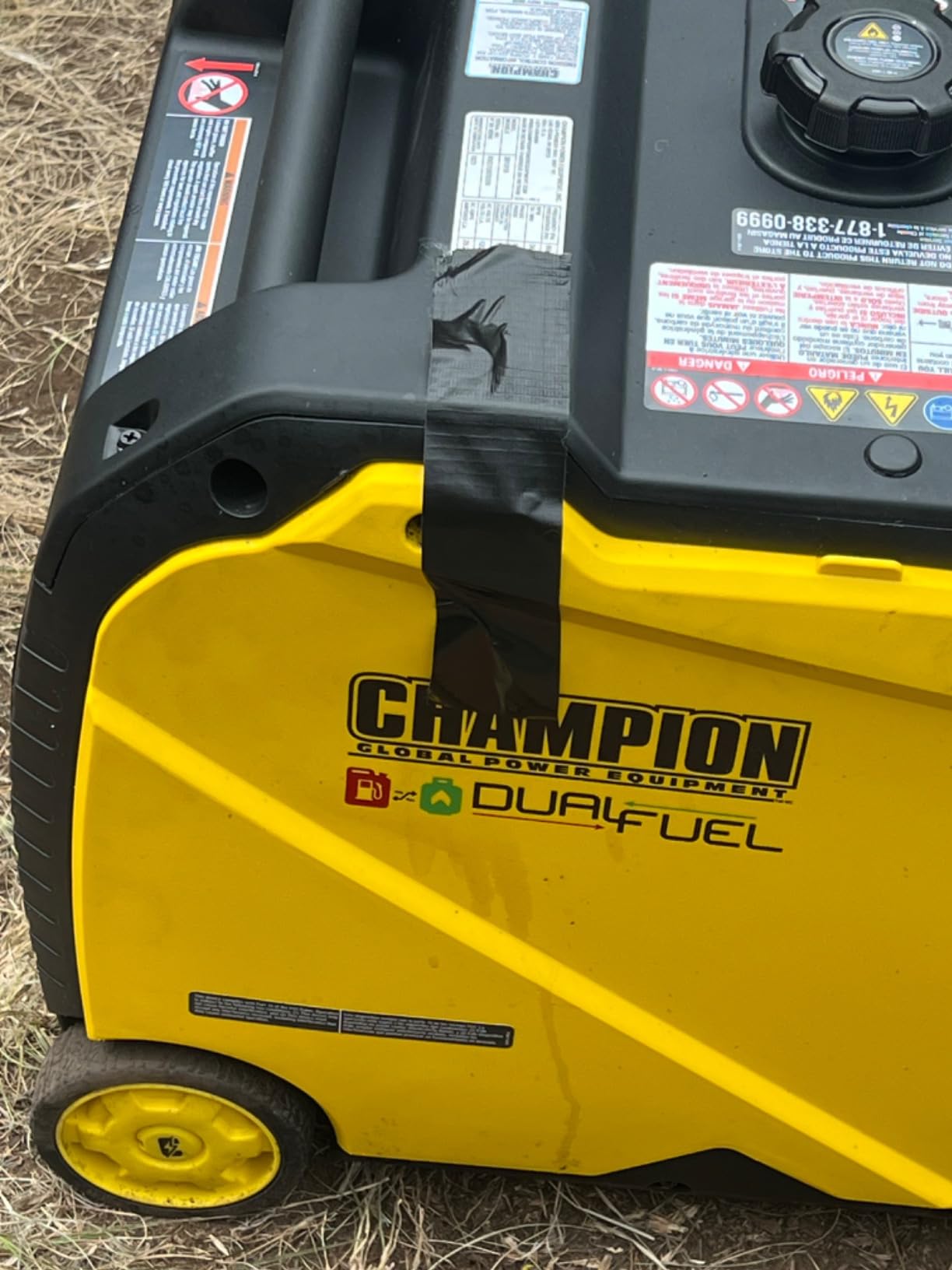
CO Shield is the carbon monoxide auto shutoff system, and on a job site where a generator can sit near an open door or a low-lying exhaust path, that is a genuine safety layer rather than a marketing line. The 61 dBA rating sits between the WEN DF451i and everything else here.
The Intelligauge power meter tracks voltage, frequency and operating hours, and the EZ Start Dial simplifies startup alongside the electric start. The 3-year limited warranty comes with free lifetime technical support, which is unusually good service coverage for this class.
For whom it fits
Food trucks, market stalls, event vendors and any crew that runs 10-to-12 hour days at moderate load. The 21-hour propane runtime means a full event day plus setup and teardown without a mid-shift cylinder swap.
Electricians and low-voltage contractors who want clean inverter power and a machine they can parallel later will find the optional kit a reasonable path to more capacity. The free lifetime technical support is a genuine advantage when you are troubleshooting a shutoff mid-shift.
Where it falls short
3,500 running watts on gasoline is the limit, and it is the second-smallest output in the group. Continuous heavy cutting is not what this machine is for, and adding a parallel kit costs extra on top of the purchase.
At 99.2 pounds it is a two-person lift for stairs, and warranty service may require transporting the unit to a service center rather than handling a field repair. The CO sensor can also shut the unit down in a confined or poorly ventilated spot, which is correct behavior but surprising if you are not expecting it.
Buying Guide: Choosing A 5000W Generator For A Job Site
Choose on running watts, tank capacity, noise and outlet type in that order. Those four numbers determine whether a machine survives a real site day, and the surge figure on the box is the least useful of the specifications.
How we picked the best 5000 watt generators for job sites
We rated every machine on four criteria: published running watts rather than peak watts, runtime at a stated load, noise rating where the manufacturer publishes one, and the outlet panel a contractor actually needs. Warranty length and the depth of owner review history broke ties, because a 3-year warranty is treated as a quality signal and a 1-year term as a warning. We also weighed the recurring failure modes in owner reviews, particularly dead start batteries, overstated output and missing CO protection.
Conventional open frame or inverter
A conventional open-frame machine gives you more watts per dollar, a cheaper alternator and a steel frame that tolerates abuse, at the cost of noise and higher total harmonic distortion. An inverter unit gives you cleaner output, noticeably lower noise and lighter weight, at a lower running-watt ceiling and a higher cost per watt.
If your tools are saws, compressors and grinders, conventional wins on capacity. If your tools include laptops, meters, laser levels and cameras, the inverter premium protects equipment you cannot easily replace and keeps the site quieter. The same tradeoff shows up when the machine is used away from work, and our camping generator guide covers where a compact inverter beats an open frame.
Gasoline, propane or dual fuel
Gasoline gives the longest runtime per gallon and the easiest refuelling, but it off-gases, degrades in storage and is siphonable. Propane stores safely, does not off-gas in an enclosed trailer and gives noticeably longer run time in hours because it burns cleaner, but it needs cylinder swaps and a supply chain.
Dual fuel gives you both. The machines in this group that switch between fuels, such as the DuroMax XP5500EH, the Pulsar PG5250B and the Champion, let you run gas during a workday and park on propane overnight without draining a tank. Dockside and boat power is a different category with its own moisture and fuel rules, covered in our portable marine generators guide.
Noise on a residential job site
Sound pressure matters when the work is next to a house. At 7 meters, roughly 60 dBA is conversational, 70 dBA is close to a vacuum cleaner and anything above 72 dBA generates complaints. Among the machines here with published figures, the WEN DF451i rates 58 dBA, the Champion 61 dBA, the A-iPower 68 dB and the Oxseryn 70 dBA.
Most remaining units in this class are open frames in the 68-to-74 dB range once you account for load. If your start time is before 8am on a residential street, buy the quieter unit even if the running watts are lower.
Outlets, GFCI protection and transfer switch readiness
Look for two 120V 20A GFCI household outlets as a minimum, plus a 30A twist lock if any of your equipment uses a locking plug. GFCI protection on the generator panel is not optional on a construction site, because damp ground and damaged cords are the normal conditions rather than the exception.
For temporary site power, a 120/240V L14-30R receptacle is what lets an electrician connect a transfer switch or a subpanel. The WEN DF475T and the DuroMax XP5500EH both provide one. If your crew only runs 120V tools, that capability is a nice-to-have rather than a need.
5000W, 7500W or 10,000W: sizing by trade
Framing crews, finish carpenters and electricians generally get by with the 5000W class. Concrete finishers, mechanics and anyone running a compressor alongside a saw need the next step up, and welders, pressure washers and HVAC work require 7500W or more.
Size up when you know two motor loads will start within a minute of each other, when the site is more than a short drive from a fuel stop, or when the machine will be shared by two crews rather than one.
Jobsite Safety And Setup Before The First Start
Set the generator at least 20 feet from any structure, and never inside a building, a vehicle or an enclosed stairwell. Keep exhaust pointed away from open doors, windows and air intakes, since carbon monoxide is odorless and accumulates at ground level before it reaches the upper part of a space.
Run equipment on 10 or 12 AWG extension cords rated for the load, which is the gauge OSHA requires for jobsite temporary wiring. A household 16 AWG cord under a loaded saw is a heat source, and crews that stretch a single cord to the far corner of a lot are the ones creating a fire risk rather than saving a trip.
Never backfeed a panel through a standard outlet. A transfer switch or an interlock installed by a licensed electrician is the only safe way to connect a generator to building wiring, and the outlet panel itself must carry GFCI protection for temporary site use.
Refuelling rules are simple: shut the engine off, let it cool, refuel away from ignition sources, and never store gasoline or propane in an enclosed trailer. Route cords along the perimeter of the work area or cover them with cable ramps, because a cord across a walkway is both a trip hazard and a cut risk. If you are working around water, dewatering pumps need a dedicated connection and a ground fault circuit interrupter on every outlet you use.
For maintenance, treat the owner’s manual schedule as the rule: check the oil level before every start, change the oil at the stated interval, keep the air filter clean in dusty conditions, and run the unit dry or nearly dry before storage. A unit stored with fuel and no stabilizer is the most common reason a generator that worked last season fails to start this season.
Red Flags To Walk Away From
Walk away from any listing that quotes a running-watt figure equal to the advertised peak, because that number is not real. Several machines in this class are sold as 5000-watt units while delivering 3,850 to 4,000 continuous watts, and the honest spec sheet is where you find that out.
Also walk away from a machine with no low-oil shutdown, no CO sensor and no manufacturer-published decibel rating, particularly if it lacks a 30A locking outlet and relies on recoil start alone at over 100 pounds. A 1-year warranty is a signal, not a dealbreaker, but it tells you where the manufacturer expects the failure point to be.
The most expensive mistake in this category is buying a dual-fuel unit and never running it on propane, then discovering the choke procedure is confusing on the first day you need it. Test both fuel modes during the first week.
Frequently Asked Questions
What can a 5000 watt generator power?
A 5000-watt portable generator runs a circular saw, miter saw, hammer drills, angle grinders, a wet/dry vac, site lighting, a jobsite radio and a bank of battery chargers at the same time, provided you keep about 4,000 watts of continuous load and start only one large motor at a time. A portable air compressor is the borderline load at roughly 1,600 running and 4,500 starting watts. A table saw can run, but its starting draw uses most of the surge window on its own.
What size generator do I need for a construction site?
A 5000-watt class unit covers the tool load of a two to four person framing or finish crew. Move up to 7500 or 10,000 watts if you run a compressor and a large saw at the same time, or if the work includes welding, pressure washing, central air or large pumps. Size the machine from your actual tool list rather than from the crew headcount, and keep 15 to 20 percent of running capacity in reserve.
Which generator is best for construction?
For general construction work the WEN 56475 is the strongest all-round choice, pairing 3,750 running watts with electric start and a deep owner review history. For heavy loads including a portable compressor, the DuroMax XP5500EH provides 4,500 running watts and dual fuel. For residential and interior work where noise and clean power matter, the WEN DF451i is the quietest unit rated in this group at 58 dBA.
What appliances should not be used with a generator?
Never run central air conditioners, electric water heaters, electric ranges and ovens, space heaters at full output alongside other loads, welders, pressure washers or large compressors on a 5000-watt class machine. Their running or starting demand exceeds the alternator’s capacity and will trip the breaker. Also avoid backfeeding a panel through a standard outlet, which requires a transfer switch or interlock installed by a licensed electrician.
How many dB is considered a quiet generator?
For residential and urban job sites, anything under 62 dBA measured at 7 meters is generally treated as quiet enough for early-morning and evening work. Between 65 and 70 dBA is workable on open lots but a common source of neighbour complaints, and above 72 dBA is effectively a lawn-mower class machine. Among the machines in this roundup, the WEN DF451i rates 58 dBA and the Champion 61 dBA.
Final Verdict: Which 5000 Watt Generator Fits Your Crew
There is no single best machine here, because the deciding variable is your load list rather than the badge. Start with the WEN 56475 for general construction if you want the most proven all-rounder, move to the DuroMax XP5500EH when a compressor is in the mix, and switch to the WEN DF451i or the Champion when noise and clean power for electronics decide the day.
Match the running-watt figure to your tools, not the peak number, and give yourself a refuelling plan that survives a hot afternoon. The best 5000 watt generators for job sites in 2026 are the ones you can start at dawn, run through a full shift and refuel before the next one, without anyone on the crew having to think about it.
Whichever you choose, run both fuel modes and both starting methods in the first week, and check the oil before every start. That habit alone prevents most of the failures we saw in owner reviews across this group.