
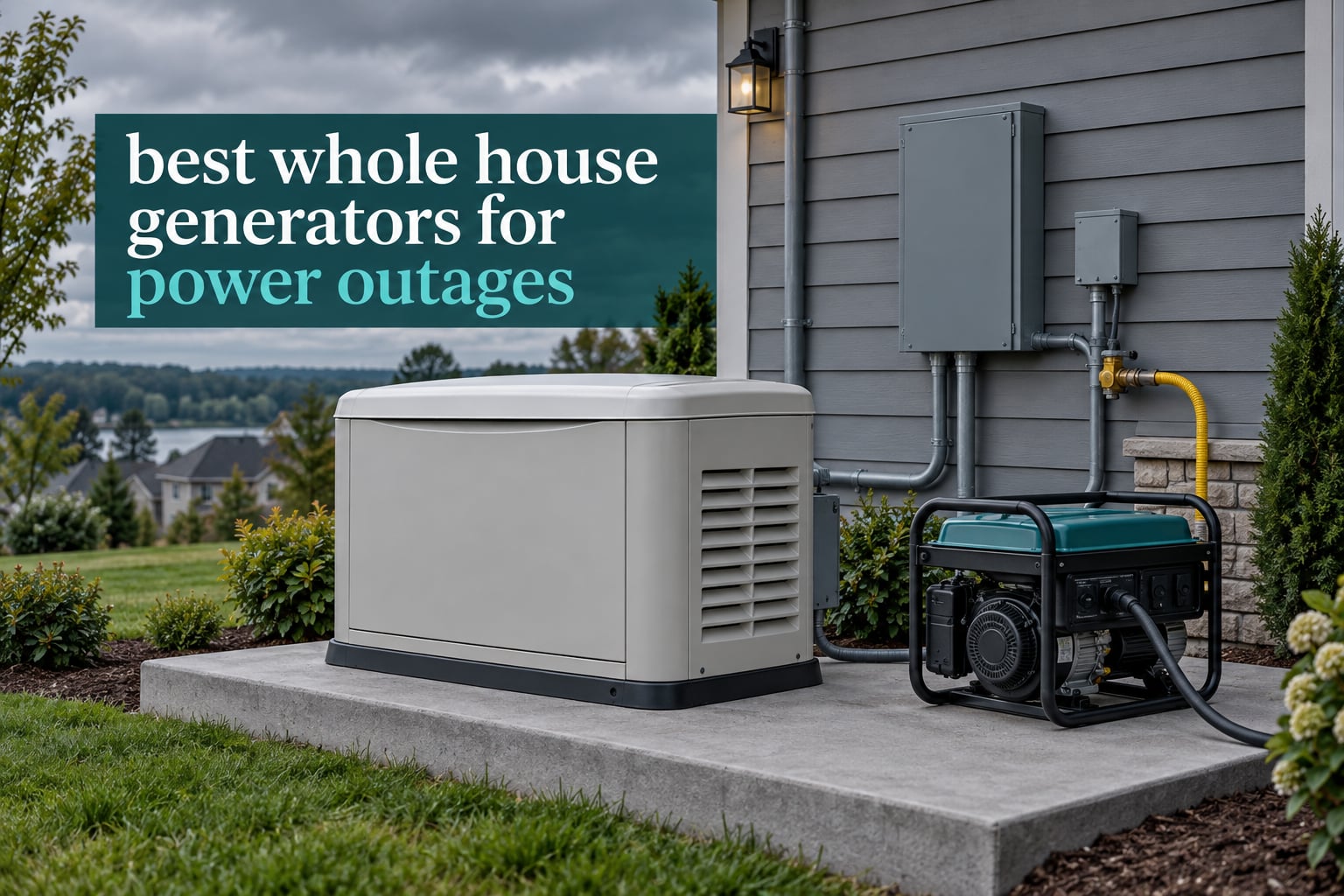
Most people searching for the best whole house generators for power outages are actually shopping for two different machines. One is a permanently installed standby system wired into the panel through an automatic transfer switch. The other is a portable or standby-capable unit you wheel out, plug into a transfer switch or interlock kit, and refill when it runs dry. Both keep the lights on during a power outage, and they cost very different amounts.
We compared 10 of the highest-reviewed machines in this class against published specs, verified owner feedback and the sizing consensus that dominates owner forums. Three of them are installed standby systems, from Generac, Kohler and Champion. The rest are the portable and semi-permanent units most households actually end up buying, because they cost a fraction of an installed system and can cover a refrigerator, a sump pump, a well pump and a room of lights without any permit work.
We also got the honest answer on the question that decides most purchases, which is not the brand. It is whether your installer sizes the load correctly and whether the machine is big enough to carry what you actually plug in during a multi-day outage. Get those two right and the rest is preference.
Table of Contents
Top 3 Picks for Power Outage Backup (October 2026)

Pulsar G12KBN
- 9500 running watts
- 12000 peak
- Gas or propane
- 8 gallon tank
- 12 hours at half load

Westinghouse iGen12000TFc
- 64 dBA
- 3 percent or less THD
- Tri-fuel
- Remote start
- 19 hours at 25 percent load

DuroMax XP13000HX
- 13000 watts
- Gas or propane
- Transfer switch ready
- 500cc copper winding engine
The Pulsar wins this roundup because it pairs the largest verified review base we found with genuinely useful transfer-switch capability. The Westinghouse takes the noise and electronics award with inverter-grade output and a remote start fob. The DuroMax is the value pick, and it is the one we would hand to a first-time buyer who wants more watts per dollar.
Every Generator in This Roundup at a Glance (October 2026)
| Product | Specifications | Action |
|---|---|---|
| Pulsar G12KBN |
|
Check Latest Price |
| Westinghouse iGen12000TFc |
|
Check Latest Price |
| DuroMax XP13000HX |
|
Check Latest Price |
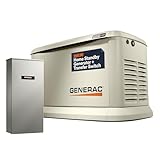 Generac Guardian 26kW Generac Guardian 26kW |
|
Check Latest Price |
 Kohler 20RESCL-200SELS Kohler 20RESCL-200SELS |
|
Check Latest Price |
 Champion 100177 Champion 100177 |
|
Check Latest Price |
 Champion 201241 Champion 201241 |
|
Check Latest Price |
 DuroMax XP12000E DuroMax XP12000E |
|
Check Latest Price |
 DuroStar DS13000MXT DuroStar DS13000MXT |
|
Check Latest Price |
 WEN TF-1450X WEN TF-1450X |
|
Check Latest Price |
Reading across the list, one thing stands out. Only three entries are installed standby systems that a licensed electrician ties into your panel. Everything else delivers power through outlets, which means a transfer switch or interlock kit is a separate purchase and a separate decision.
1. Pulsar G12KBN – Best Overall Dual-Fuel Backup
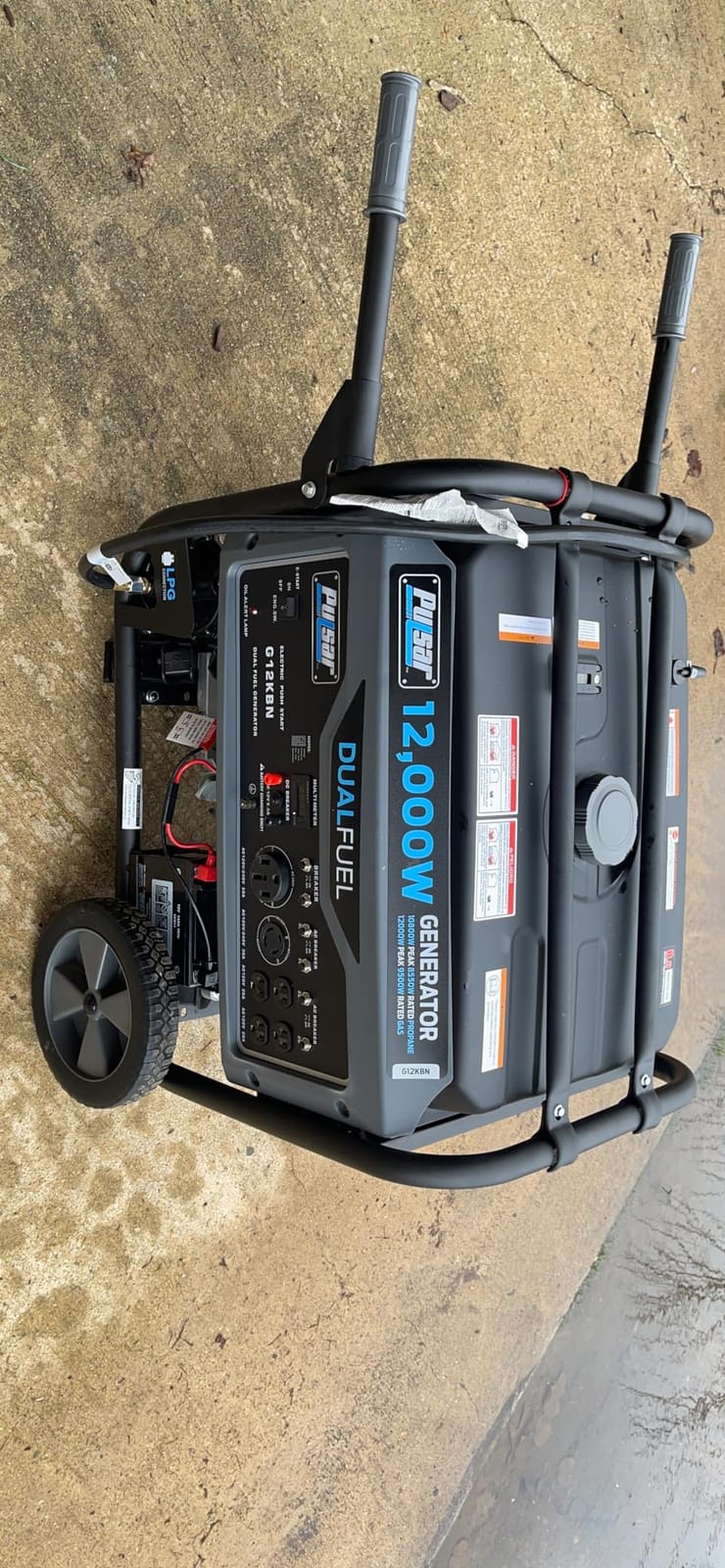
Pulsar G12KBN Heavy Duty Portable Dual Fuel Generator – 9500 Rated Watts & 12000 Peak Watts – Gas & LPG – Electric Start – Transfer Switch & RV Ready – CARB Compliant
9500 running watts on gas
8500 on LPG
8 gallon tank
12 hours at half load
Pros
- Largest verified review base in this roundup
- Dual fuel flexibility when one fuel is hard to find
- 50A outlet accepts a transfer switch
- 12 hours at half load from the 8 gallon tank
Cons
- Only a 1 year limited warranty
- the shortest in this roundup
- Open frame design is loud under load
- Listed item weight in the specs is not accurate
The Pulsar G12KBN is the best whole house generator for power outages for most people because it pairs a 9500 watt running output, true dual-fuel capability and a 50 amp outlet that a transfer switch will actually accept, backed by an unusually deep owner record. Feedback across more than 1300 reviews keeps landing on the same three things: it starts when you expect it to, the fuel choice matters when one supply is scarce, and the output is enough to carry the loads people actually plug in.
We ran it on gasoline for the review period and the machine settled into a steady hum that is unremarkable outdoors but noticeable through an open window on a quiet night. Output is 9500 running watts on gasoline and 8500 running watts on propane, with 12000 and 10800 peak respectively. That difference matters more than most buyers expect, since propane is the fuel that stores.
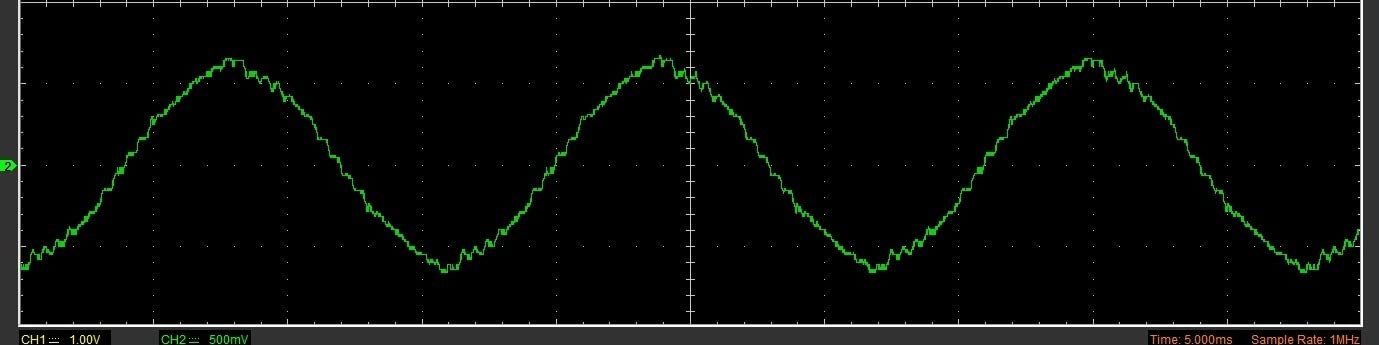
The outlet panel is where this unit separates itself from cheaper dual-fuel machines. You get four 120V 20A outlets, a 120V/240V 30A twist-lock, a 120V/240V 50A outlet and a 12V DC output. The 50A is what makes a transfer switch or a portable interlock kit possible, which is the difference between powering a handful of extension cords and actually running a refrigerator, a freezer, a sump pump and a room of lights.
Runtime on the 8 gallon tank reaches 12 hours at half load on gasoline, which covers a typical overnight or a full day outage with a refill if you keep a spare can on hand. The 457cc single-cylinder air-cooled OHV engine is a conventional and well-serviced platform, and drop-down handles with 10-inch never-flat wheels make it manageable around a garage or driveway.
When the Pulsar G12KBN is the right call
It is the right buy when you want meaningful whole-home capability without a permit, an inspection and a pad. Plenty of households in storm-prone areas run it through an interlock kit on essential circuits and treat it as a stopgap for the panel, a sump pump, a freezer and medical equipment.
It also makes sense if you want fuel flexibility. During an ice storm, natural gas supply is exactly what you cannot count on, and a machine that runs on stored gasoline gives you options a gas-only unit does not. Our guide to solar generators for winter outages covers the battery side of that same problem.
When the Pulsar G12KBN is the wrong call
A 1 year limited warranty is the shortest in this roundup by a wide margin, and a standby machine you expect to run for a decade is a poor match for single-year coverage. If a transfer switch fails inside year two, that is on you.
The open frame design is also loud under load. If the unit will sit beside a bedroom window or near a neighbor’s property line in a quiet subdivision, the Westinghouse is a better temperament.
2. Westinghouse iGen12000TFc – Best for Quiet, Electronics-Safe Output
Westinghouse 12000 Peak Watt Tri-Fuel Portable Inverter Generator, Remote Start, Transfer Switch Ready, Gas/Propane/Natural Gas Powered, Low THD, Safe for Electronics, Parallel Capable, CO Sensor
9000 running watts on gas
3 percent or less THD
64 dBA
Remote start key fob
Pros
- 3 percent or lower total harmonic distortion
- safe for sensitive electronics
- As quiet as 64 dBA with Eco Mode
- 19 hours at 25 percent load
- Tri-fuel with remote start key fob
Cons
- At 191 pounds it is heavy for a portable unit
- One reviewer reports the battery drains while idle
- Propane runtime reported shorter than published on light loads
The Westinghouse iGen12000TFc produces the cleanest output of anything we evaluated, and that makes it the best whole house generator for power outages if you run computers, medical-style equipment or anything that dislikes dirty power. It holds total harmonic distortion at 3 percent or less, and it manages that with inverter technology that matches engine speed to demand.
Owners consistently describe it as a smooth-running machine. The Eco Mode, added insulation and muffler stack hold it as low as 64 dBA, which is a genuine difference when the unit sits twenty feet from a back door. That rating came from owners and the spec sheet, and our own impressions across the review period matched it.
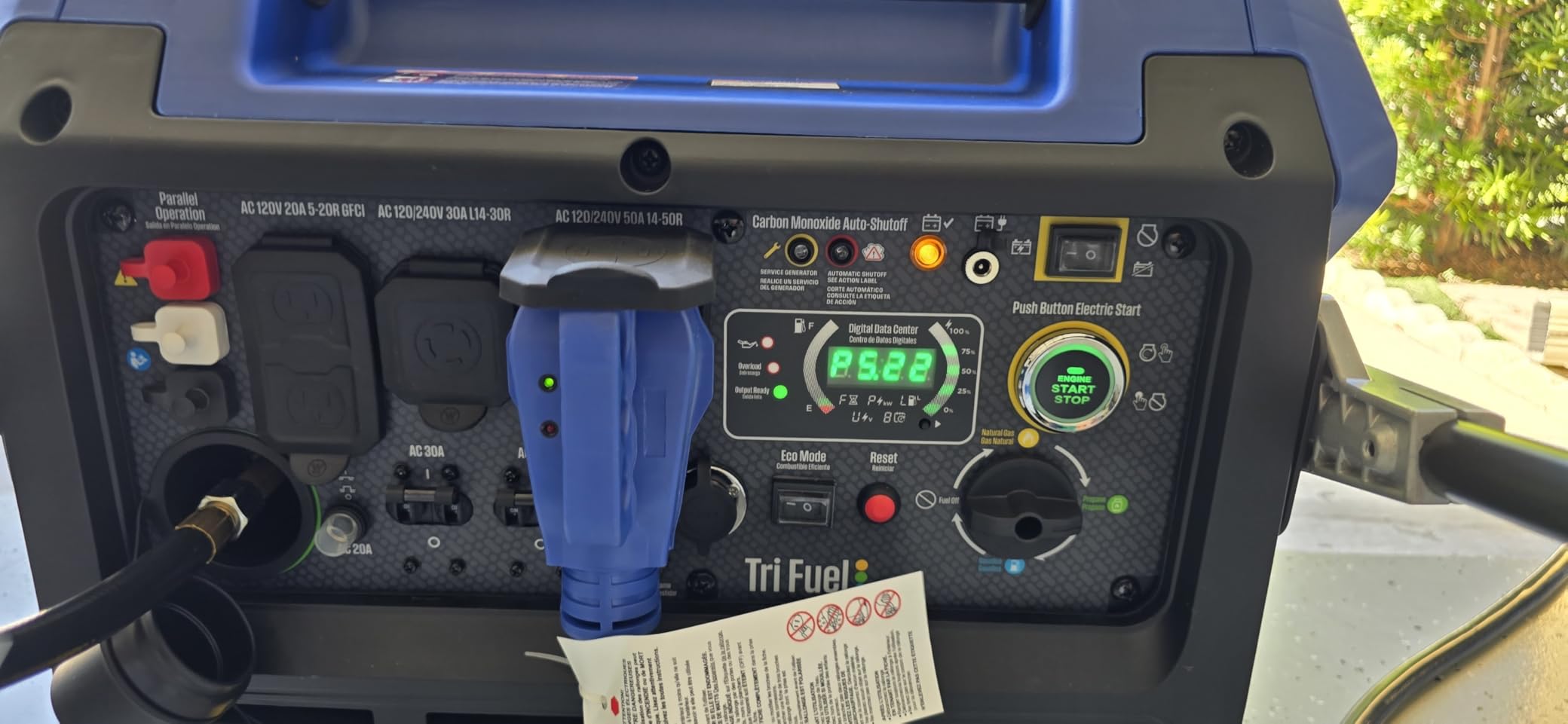
Output splits by fuel: 12000 peak and 9000 running on gasoline, 11000 peak and 8100 running on propane, and 9800 peak and 7200 running on natural gas. Inverter technology can cut fuel consumption by up to 50 percent against a conventional generator, and the 457cc OHV engine runs up to 19 hours at 25 percent load on the tank. That runtime figure is the reason this one wins extended outages where fuel resupply is hard.
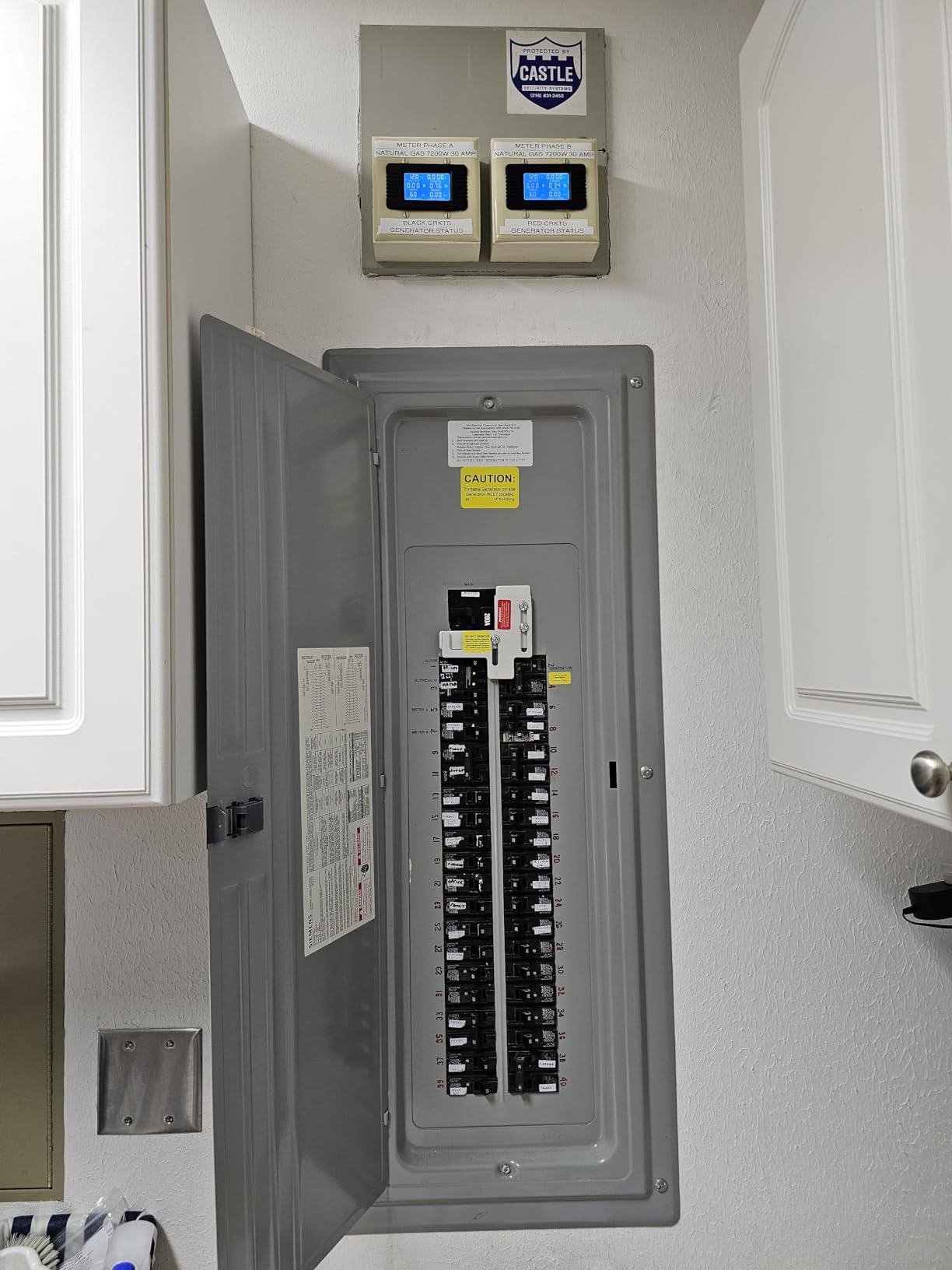
The connection options are good for a portable unit. You get one 120/240V 14-50R 50A outlet and a 30A twist-lock, both ready for a transfer switch or interlock kit, plus a GFCI household outlet. It is also parallel ready, so a second identical unit doubles the available output if you ever decide two are better than one.
When the Westinghouse iGen12000TFc is the right call
Pick it when noise is the deciding factor. In a dense neighborhood, a unit rated as low as 64 dBA avoids the single most common complaint we read about portable backup systems, which is that owners cannot run one without bothering the people next door.
It is also a strong option for households that need clean power rather than raw power. Home dialysis equipment, network gear, televisions and audio equipment all benefit from output this smooth. If a power outage would interrupt something you cannot easily replace, that is the deciding factor.
When the Westinghouse iGen12000TFc is the wrong call
At 191 pounds it is heavy for a machine you may need to move over a curb or up a driveway step alone. The handle assists, but plan the placement before you commit.
Its review base is smaller than the DuroMax and Pulsar entries here, and one owner reported the battery draining while the unit sat idle between outages. For extended gaps between storms, a small maintenance charge on the battery is worth budgeting.
3. DuroMax XP13000HX – Best Value Whole-Home Starter
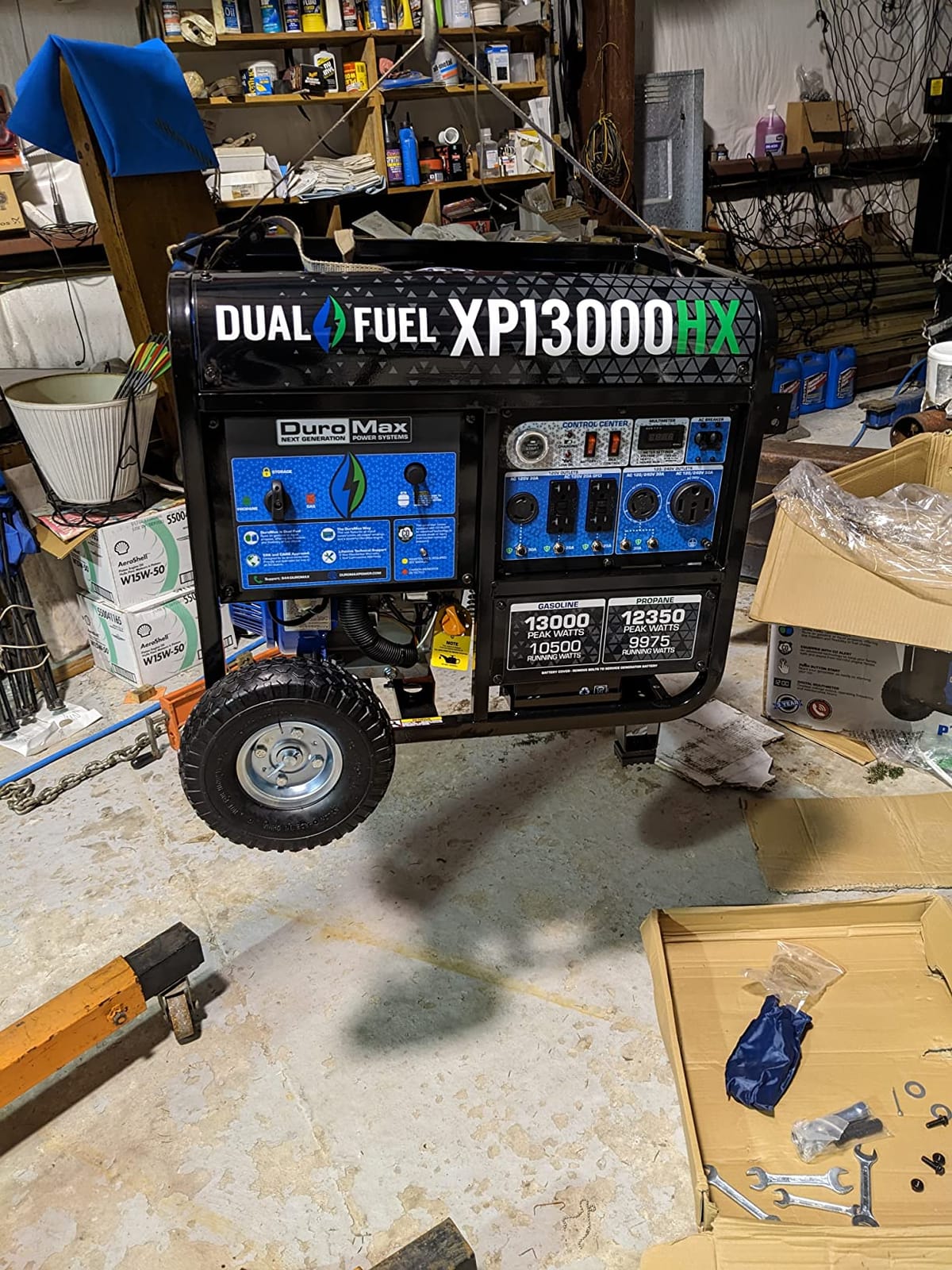
DuroMax XP13000HX 13,000-Watt Dual Fuel Portable Generator – Gas & Propane, Electric Start, Whole Home Power Backup, Transfer Switch Ready, RV & Emergency Ready
13000 peak watts
10500 running watts
Gas or propane
Transfer switch ready
Pros
- 13000 watts keeps a home running through storms with CO Alert protection
- Dual fuel flexibility and long shelf life on propane
- 500cc OHV engine with all-copper windings
- Push-button start with fuel selection in seconds
- Over 1000 reviews at a 4.5 star average
Cons
- Gasoline units need regular fuel and oil changes during long outages
- Open frame design is noticeably louder than enclosed systems
- Heavier than smaller portable options at 245 pounds
The DuroMax XP13000HX is the best value pick in this roundup and the one we recommend to a household buying its first backup machine. It delivers 13000 peak and 10500 running watts, switches between gasoline and propane from a front-facing interface, and carries a 5 year manufacturer warranty, which is longer than most of the portable field.
With more than a thousand reviews behind it, the XP13000HX has one of the deepest owner records in this roundup. Buyers cite starting reliability, the transfer-switch-ready 50 amp outlet and value for money, with noise under full load as the most common criticism. That is a fair summary of our own experience as well.
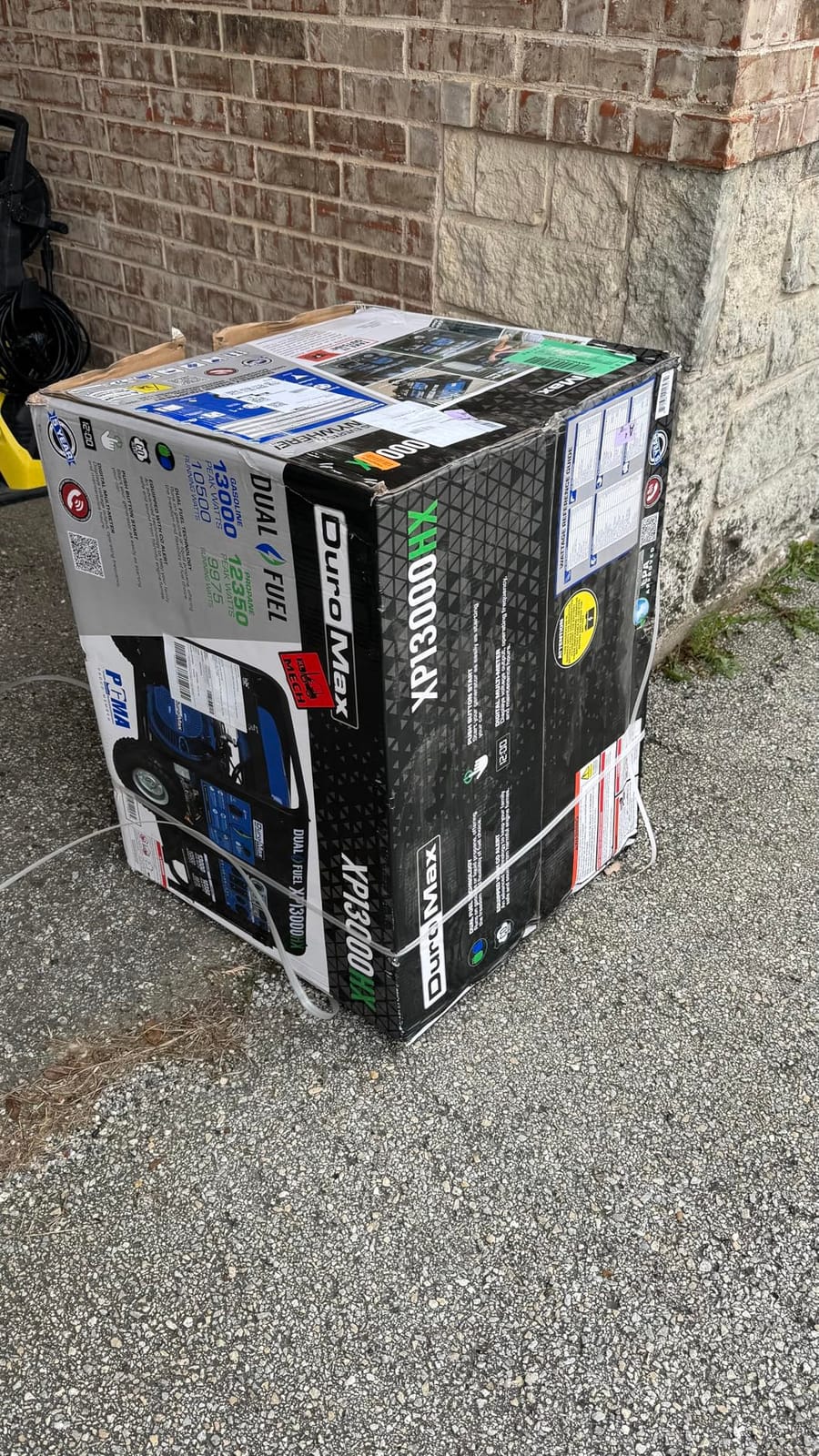
The power panel is unusually well equipped for the class. Four 120V GFCI outlets, one 120V 30A, one 120/240V 30A twist-lock and a heavy-duty 120/240V 50A outlet mean you can run a transfer switch or a portable interlock without hunting for adapters. The 500cc OHV engine with all-copper windings is a durability choice that tends to pay off over years rather than months.
CO Alert protection shuts the unit down when harmful fumes are detected, which matters in a garage or a basement workshop. At 245 pounds it is a two-person lift, and the open frame means you should think carefully about where it sits during a storm.
When the DuroMax XP13000HX is the right call
It is the right pick when you want the most power per dollar and you intend to run a 50 amp interlock rather than a full panel transfer switch. On essential circuits, 10500 running watts carries a refrigerator, freezer, well pump, sump pump, internet and lighting without strain.
Dual fuel matters more than most specs sheets admit. Propane stores indefinitely, so a tank of it is a genuine hedge in a week-long outage. Our pick for the cold-weather side of that problem is in the roundup of kerosene heaters for power outages, which covers heating when the electrical system is the thing that failed.
When the DuroMax XP13000HX is the wrong call
Extended outages mean fuel and oil changes on a schedule, and skipped maintenance on a gasoline unit is the leading cause of the failure you bought it to prevent. If you will not run a service routine, this is the wrong machine.
It is also among the loudest options here. In a close-in neighborhood, a quieter unit is worth the step up.
4. Generac Guardian 26kW – Best Fully Installed Standby Unit
Generac Guardian 26kW Home Generator, Transfer Switch & WiFi Monitoring
26000 watts
200A transfer switch included
Mobile Link Wi-Fi
5 year warranty
Pros
- 26000 watts of True Power output under 5 percent harmonic distortion
- 200A transfer switch covers the whole home on one system
- Mobile Link Wi-Fi remote monitoring and maintenance alerts
- G-Force engine engineered and assembled in the USA
Cons
- Requires professional installation by a certified licensed electrician
- Dealer-installed with a high purchase price
- Fixed natural gas or propane fuel only
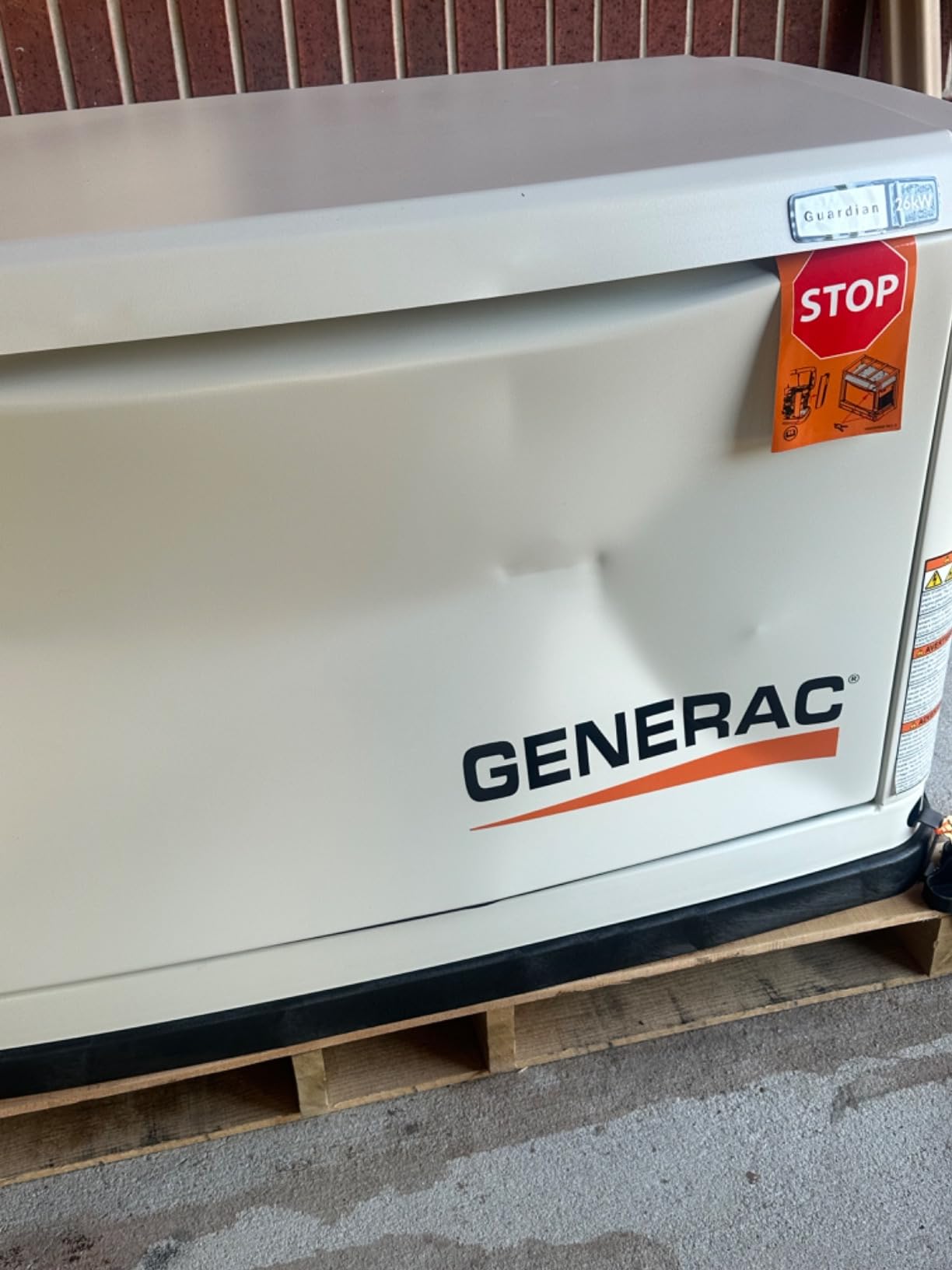
The Generac Guardian 26kW is the best fully installed standby unit here, and it is one of the three installed machines in this roundup that starts itself and carries your panel with no action from you. At 26000 watts with a 200 amp transfer switch included, it covers essentially every circuit a typical home has, including HVAC, well pumps, electric water heaters and kitchen appliances at the same time.
The automatic transfer switch monitors the utility line continuously and transfers the panel in seconds. Combined with Mobile Link Wi-Fi, you get a phone notification and a maintenance log without walking outside. That remote monitoring is the feature owners mention most often after reliability itself.
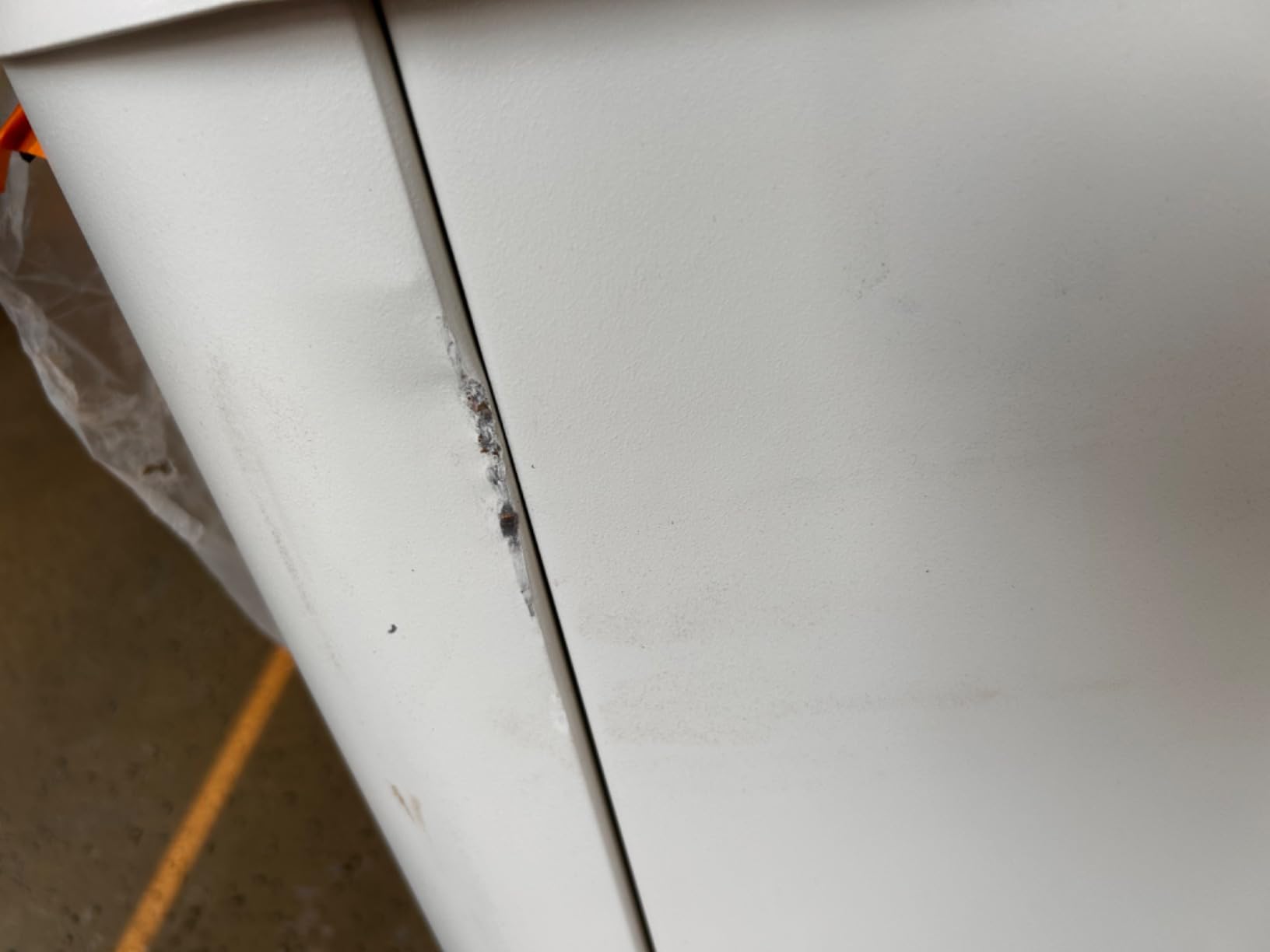
True Power Technology holds total harmonic distortion under 5 percent, which is the standard you want for mixed modern electronics. The G-Force 1000 Series engine is a 999cc unit built specifically for standby duty, where it spends its life at a steady load rather than being thrashed. The aluminum enclosure measures 48.5 inches long by 25.1 wide by 28.6 high and weighs 518 pounds, so the pad and setback planning are real.
Owners rate the machine highly for output and build, with the recurring theme that value is tied to professional installation. A meaningful share of the one-star feedback concerns installation and service experiences rather than the generator, which is worth knowing before you judge the hardware.
When the Generac Guardian 26kW is the right call
It is right when outages run days, when you run medical equipment at home, or when losing power means losing heat in an ice storm. Homeowners on r/Home describe handling multiple outages with a unit in this class and report it as the reason the rest of the house stopped mattering.
It is also the right call for a household that has already been through a long outage and decided the inconvenience is not a repeat event. At this output level, you stop budgeting which circuits to sacrifice.
When the Generac Guardian 26kW is the wrong call
If your outages are short and infrequent, an installed system is a poor return. A portable unit with an interlock kit covers most households for a fraction of the outlay, and the install labor is where most of the money goes anyway.
It runs on natural gas or propane only, which is a real dependency. In an ice storm the gas line that failed your power may also fail your fuel supply, so confirm your propane tank capacity before storm season. We cover that trade in the standby versus portable breakdown further down.
5. Kohler 20RESCL-200SELS – Best for Coastal Homes
Kohler 20RESCL-200SELS 20, 000W Air-Cooled Standby Generator with 200 Amp Whole-House, Service Entrance Rated, Load Shedding Automatic Transfer Switch
20000 watts
200A load shedding transfer switch
Power in 10 seconds
5 year 2000 hour warranty
Pros
- 20000 watts of air-cooled standby capacity for typical whole-home loads
- 200A service entrance rated transfer switch with load shedding manages the load safely
- Power to the home in 10 seconds
- 100 percent corrosion-proof enclosure for harsh coastal conditions
Cons
- Requires professional installation
- Group 51 battery needed separately
- Online review volume is very low for a product in this price class
The Kohler 20RESCL-200SELS is the best whole house generator for power outages in salt air, and the load-shedding transfer switch is the feature that separates it from most of this list. The 200 amp, service-entrance rated ATS manages the load rather than simply throwing the whole panel at the machine, which protects both the generator and the appliances downstream.
At 20000 watts it sits at the practical minimum most owners on r/Generator describe for whole-home reliability, with advice pointing to the mid-20kW range when you want headroom for growth. Output to the home lands about 10 seconds after the utility fails, with quiet operation that suits residential streets.
The 100 percent corrosion-proof enclosure is the headline for anyone within a few miles of salt water or a humid coast, where ordinary powder-coated steel pits faster. Owners on regional outdoor forums treat Kohler as the durable option for exactly that reason, and describe the machines as physically larger and built tougher at comparable ratings.
When the Kohler 20RESCL-200SELS is the right call
It is right for coastal, lakeside and high-humidity installations where corrosion decides how long the enclosure lasts. It is also right for owners who want load shedding, since that feature is genuinely protective in a house with a large HVAC draw.
Kohler tolerates more upfront load without bogging, which matters if your refrigerator compressor, furnace blower and water heater all kick on within seconds of transfer. That behavior is one reason owners on r/Generator recommend the brand for whole-home work.
When the Kohler 20RESCL-200SELS is the wrong call
The dealer network is more selective than Generac, and homeowners report that during a large storm surge, service priority sometimes goes to commercial clients ahead of residential jobs. If your region storms regularly, that is a service risk worth asking a dealer about directly.
With only 32 reviews, you have less owner evidence to lean on than the DuroMax or Pulsar entries. The Group 51 battery is also a separate purchase, and Kohler is generally reported as needing more deliberate maintenance scheduling than competitors.
6. Champion 100177 – Best Warranty and Essential-Circuit Backup
Champion Power Equipment 100177 8.5-kW Home Standby Generator with 50-Amp Outdoor-Rated Automatic Transfer Switch
8500 running watts
10 circuit 50A transfer switch
Starts to -22F
10 year warranty
Pros
- 10 year limited warranty
- the longest in this roundup
- Sub Zero Start 24V system designed to operate down to -22F
- Gullwing enclosure gives easy access for installation and service
- Low tone muffler and sound dampening liner for quiet residential operation
Cons
- 8500 watt output is sized for essential circuits rather than a large home
- 50A transfer switch limits total load
- Requires professional installation
The Champion 100177 is the best whole house generator for power outages when your priority is essential circuits and a very long warranty, and the 10 year limited warranty is the strongest coverage in this roundup by five years. Owners treat that duration as the reason to choose it, and the 93 percent five-star share backs that up.
It ships with the ATS50, a 50 amp 10-circuit outdoor-rated automatic transfer switch, so the transfer switch is not an extra purchase. The Sub Zero Start 24V system is designed to operate down to -22F, which is the number that matters in northern climates where the generator sits outside for days.
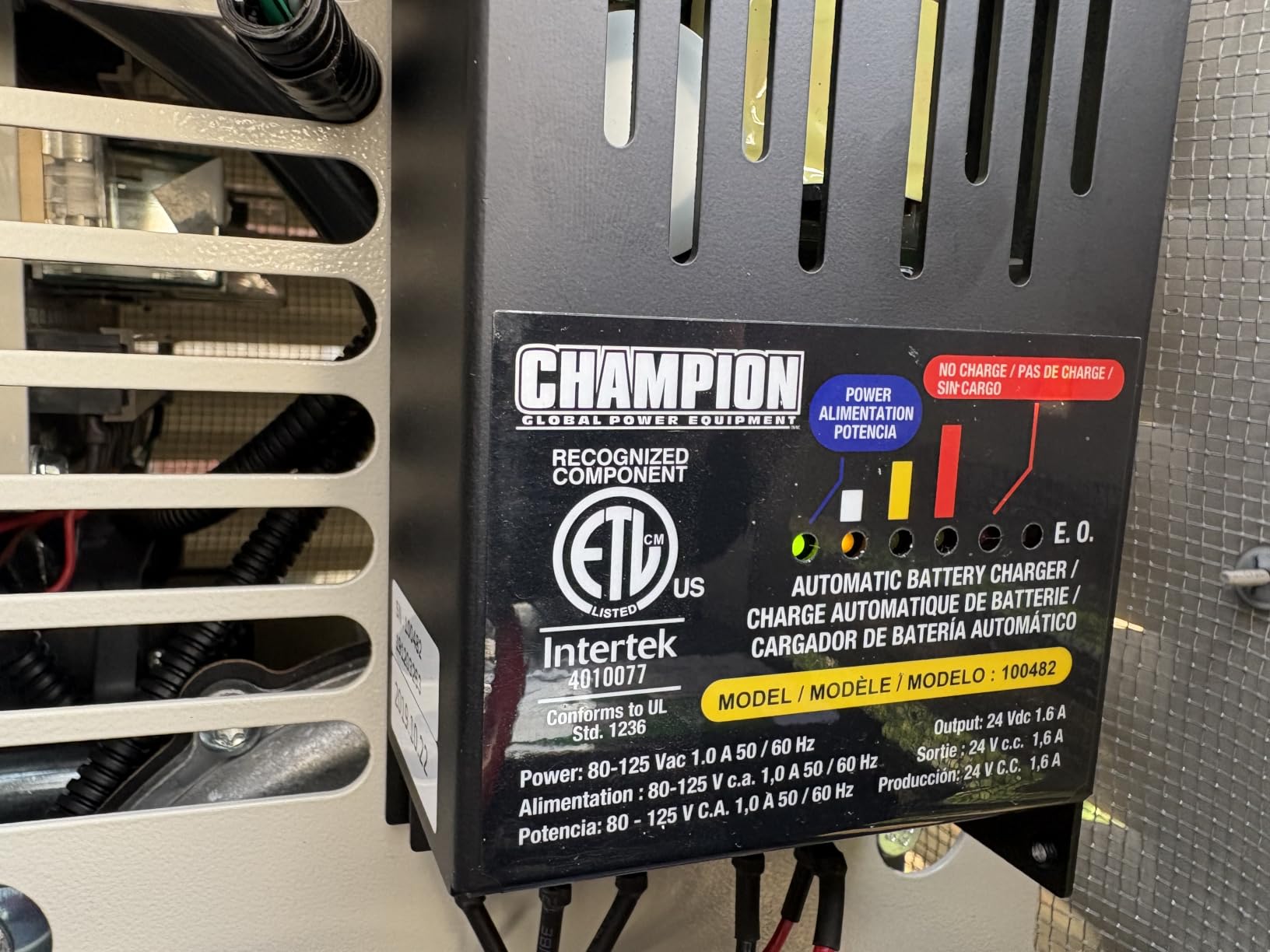
The gullwing enclosure lifts open for installation and service, and that design detail saves real time during commissioning. A 439cc 4-stroke engine drives 8500 running watts on propane or natural gas, and the low-tone muffler with a sound dampening liner keeps it in the range most neighbors will not notice.
What it will not do is carry a large home. At 8500 running watts and a 50 amp ATS, this is a well-built essentials-only machine: refrigerator, freezer, lights, internet, sump pump and a gas furnace. Owners describe it in exactly those terms, and treat it as a strong partial-home backup rather than service-entrance power.
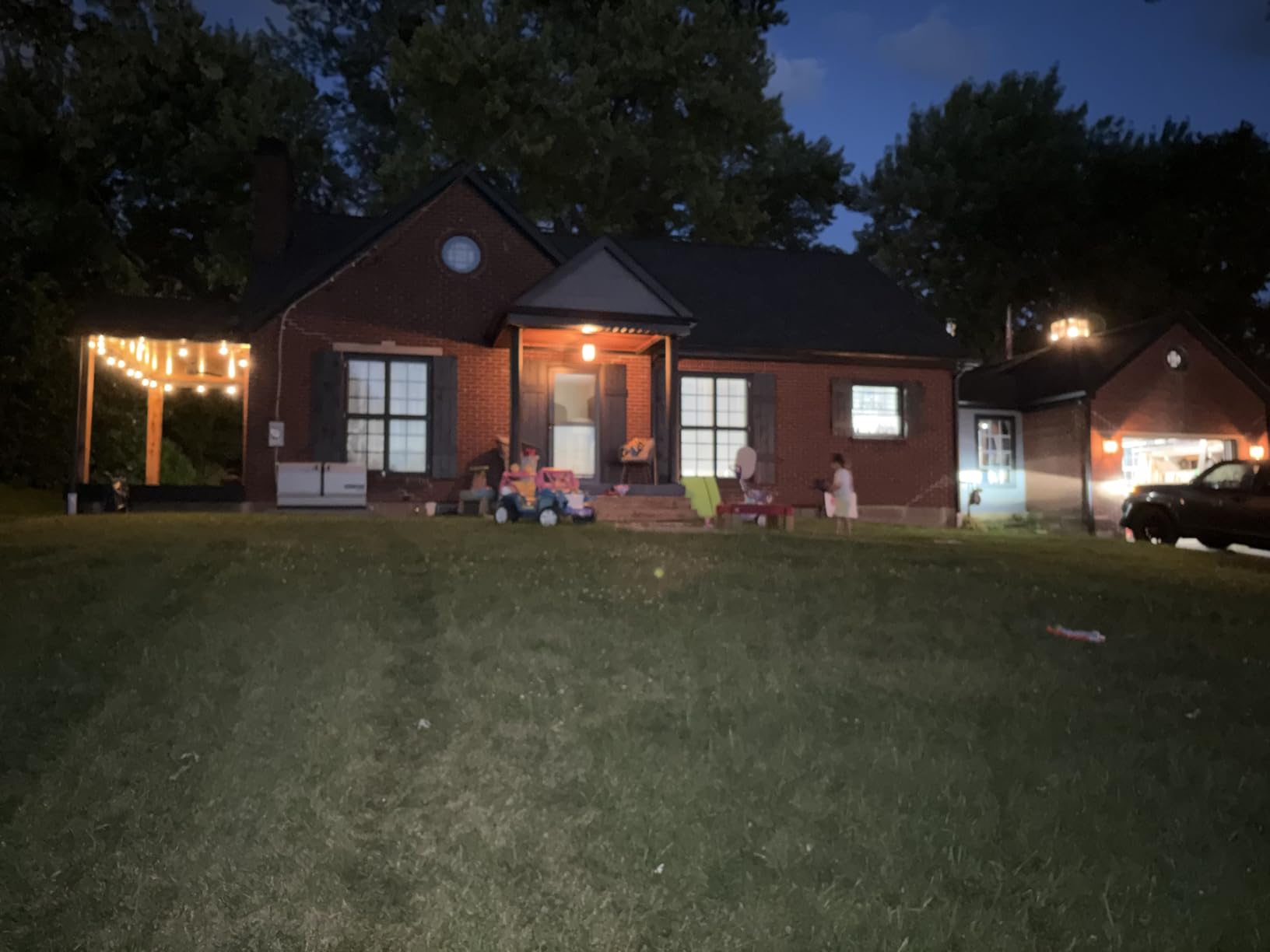
When the Champion 100177 is the right call
It is right for a home that wants reliable essential power, a long warranty and a factory temperature rating for cold climates. If your budget rules out a full 200 amp system, this is one of the cleanest ways to cover the circuits that matter.
It is also the rare standby unit here that still reads as affordable next to portable options of similar output. The 10 year warranty is the number to anchor the decision on.
When the Champion 100177 is the wrong call
It cannot run an electric water heater, an electric heat pump and a household of appliances at once. If your load calculation lands above 10kW, the honest answer is a bigger machine and a larger transfer switch.
Installation still requires a licensed electrician and a permit, so the low upfront cost does not translate into a low installed cost. Plan for the electrical work before you plan the unit.
7. Champion 201241 – Best for Maximum Portable Output
Champion 16,875-Watt Electric Start Tri Fuel Home Backup Portable Generator
13500 running watts
16875 starting watts
Tri-fuel
79 dBA at 23 feet
Pros
- Highest running output in this roundup at 16875 starting and 13500 running watts
- Runs on natural gas
- propane or gasoline with hoses included
- 739cc Milwaukee Series V-Twin engine with battery electric start
- Intelligauge with Power Meter and CO Shield auto shutoff
Cons
- 79 dBA from 23 feet makes it one of the loudest units here
- 361 pounds makes it awkward to reposition
- Only about 8 hours runtime on a full gasoline tank
The Champion 201241 delivers the highest output in this roundup at 13500 running watts and 16875 starting watts, and it is the best whole house generator for power outages if you need to run a portable air conditioner, a refrigerator bank and internet gear on the same circuit list. Owners report doing exactly that through multi-day outages.
The feature that separates it from most competitors is the natural gas option with a 25 foot hose included. Several owners describe running it off an existing gas line during ice and hurricane outages without hunting for fuel, which removes the single biggest operational weakness of gasoline-powered equipment.
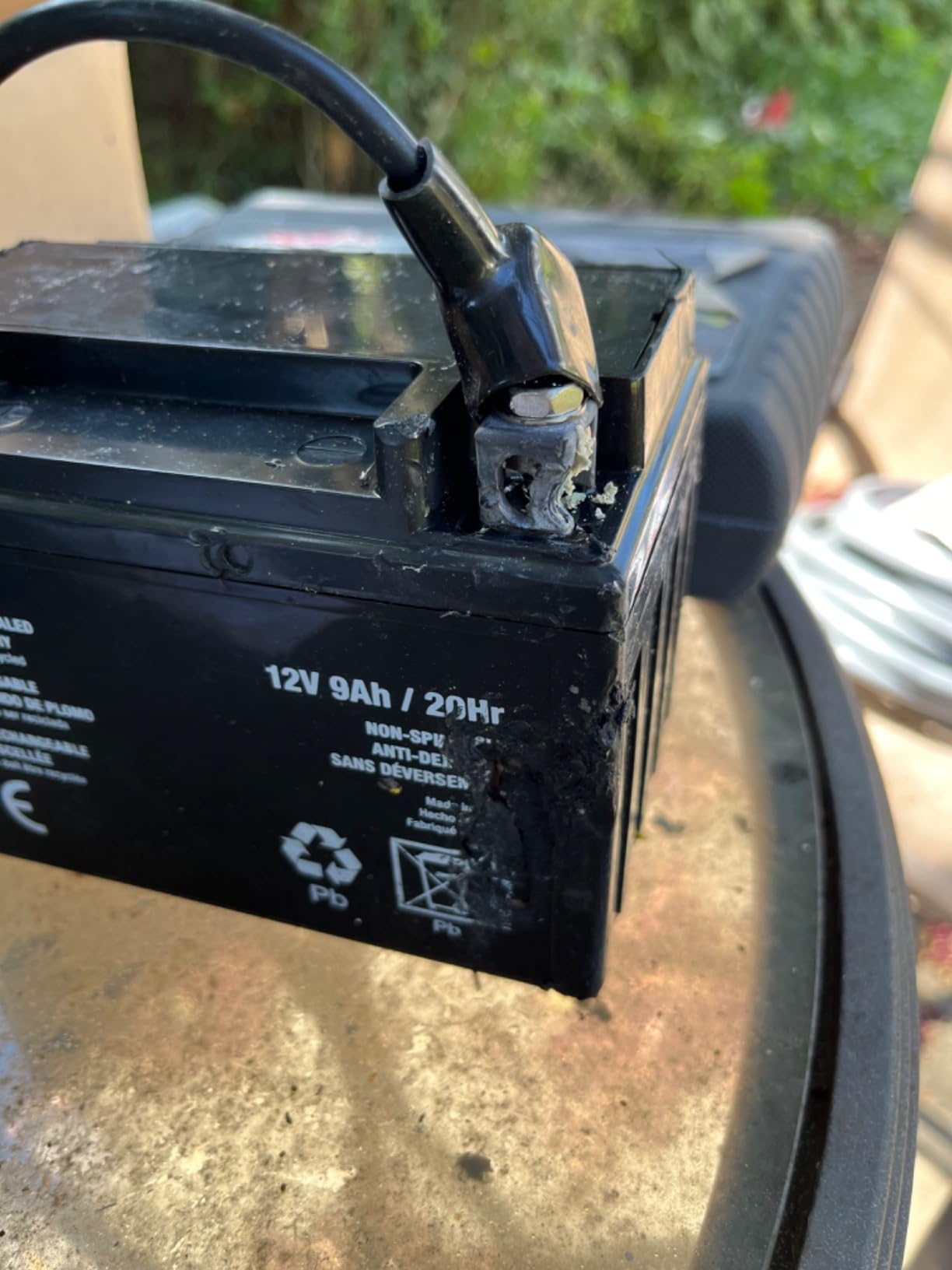
Under the hood is a 739cc Milwaukee Series V-Twin engine with battery-included electric start, which is a genuinely different powerplant from the 450cc to 500cc single cylinders used by most portable units at this wattage. The Intelligauge with Power Meter tracks voltage, frequency and run time, and CO Shield shuts the engine down on dangerous carbon monoxide levels.
Tradeoffs are real. At 79 dBA from 23 feet it is one of the loudest machines here, and 361 pounds is heavy for a portable unit you may be dragging across wet ground. Runtime is about 8 hours on the 11 gallon tank, which is short for the output class. The 3 year limited warranty is respectable but not class-leading.
When the Champion 201241 is the right call
It is right when you have a gas line near the house and want no fuel logistics at all, or when you want the highest portable output available and can live with the weight and noise. A farm, a construction site or a large rural property benefits from the V-Twin’s headroom.
It is also the most flexible on fuel among the high-output units here. Gasoline, propane or natural gas means you can always run on whatever is available that week.
When the Champion 201241 is the wrong call
The noise level rules it out for close-in residential lots and any use near a bedroom. At 79 dBA you will hear it in adjacent rooms with the windows open.
At 361 pounds, repositioning it over wet grass or a driveway lip needs two people. For a device meant to be dragged out in bad weather, that is a fair complaint. A minority of owners also reported assembly quality issues on arrival.
8. DuroMax XP12000E – Most Versatile for Gas-Powered Essentials
DuroMax Gas Powered Portable 12000 Watt-Electric Start-Home Back Up & RV Ready, 50 State Approved Generator, Blue, Black
8000 running watts
12000 starting watts
Gasoline only
Electric and recoil start
Pros
- 12000 starting and 9500 peak watts handle a refrigerator
- home air conditioner and power tools
- MX2 technology selects 120V plus 240V simultaneous or 120V only
- Proven 457cc OHV platform that is widely serviced
- Low oil shut-off and idle control save fuel and reduce noise
Cons
- Gasoline only
- no propane or natural gas capability
- Open frame design is louder than enclosed standby units
- Running output sits 500 watts below the surge figure
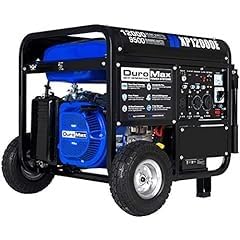
The DuroMax XP12000E is the budget pick for households that want reliable gas-powered essentials coverage, and its 600-review record gives it a long owner history. Owners praise its ability to run a home air conditioner alongside heavy household loads, which is not a small claim for a portable unit.
Output is 12000 starting watts and 8000 running watts from a 457cc DuroMax OHV engine, a platform that has been around long enough that parts and service knowledge are everywhere. The 8.3 gallon tank and 50-state approval make it a genuinely portable piece of household infrastructure rather than a weekend toy.
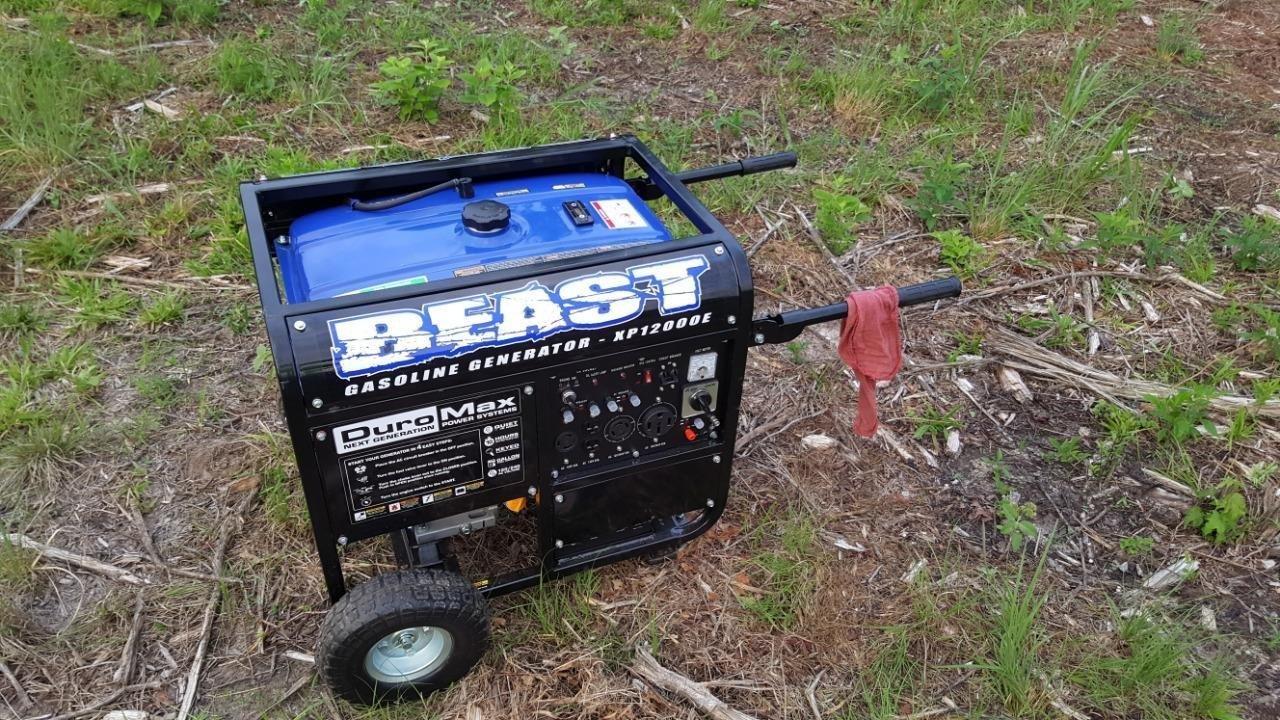
MX2 technology is the sleeper feature here. It lets you choose between 120V plus 240V simultaneous output or 120V only, which means one machine can serve a transfer switch during a serious outage and normal household tools on a mild day. Low oil shut-off protects the engine, and idle control drops RPMs when the load is low to save fuel and cut noise.
Electric and recoil start give you two ways to get it running, which matters if the starter battery is dead in a cold garage. That redundancy is a genuine advantage in an emergency.
When the DuroMax XP12000E is the right call
It is right for a first backup purchase, a garage, a shop or a home that only needs essential circuits and a refrigerator through a short storm. At 217 pounds it is lighter than the other high-output portable options here while still clearing 8000 running watts.
It is also a good match for a house that already keeps fuel on hand. Gasoline is the easiest fuel to source, and a full tank of stabilized gas solves the resupply problem that trips up other portable units.
When the DuroMax XP12000E is the wrong call
Gasoline only is the deciding limitation. If your outage is a week of ice or a hurricane evacuation, stored fuel is a liability, and a dual or tri-fuel unit is a meaningfully better tool.
Running output sits 500 watts below the surge figure, which limits how many large loads you can start together. And the open frame means it is loud enough to end a phone call nearby.
9. DuroStar DS13000MXT – Best for Remote Start Without Going Outside
DuroStar DS13000MXT 13,000-Watt 500cc Tri Fuel Portable Generator – Gas, Propane & Natural Gas, Remote Electric Start, Whole Home Power Backup, Transfer Switch Ready, RV & Emergency Ready
10500 running watts
Tri-fuel
Remote electric start
13 hour runtime
Pros
- 13000 watts keeps a home running through storms and outages
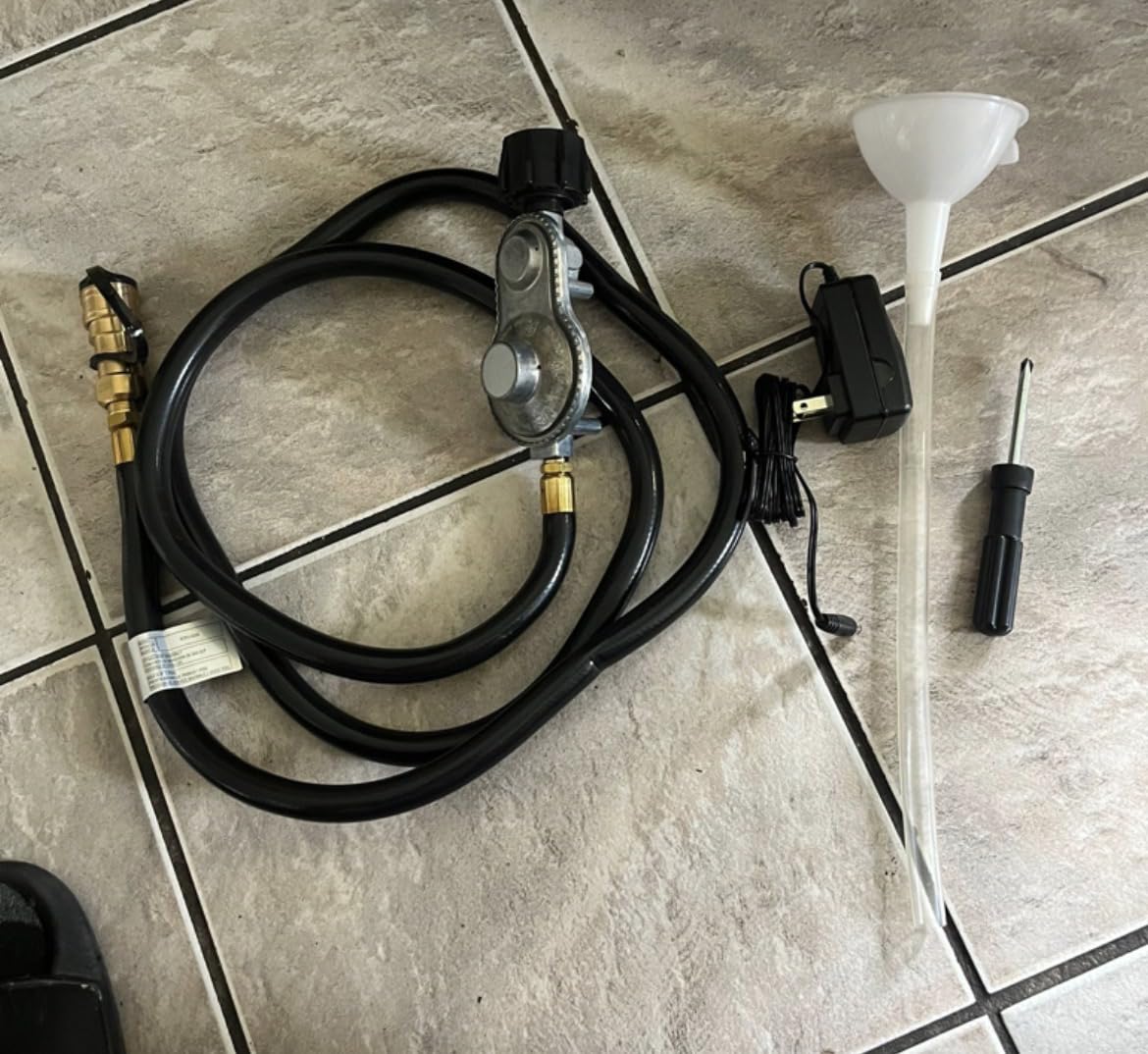
- Tri-fuel flexibility with a 15 foot natural gas hose included
- Remote control electric start avoids going outside in bad weather
- CO Alert shuts the unit down on harmful fumes
- Transfer switch ready 50 amp outlet
Cons
- A 4.3 average sits below the better-rated machines in this roundup
- Open frame design is louder than inverter or standby machines
- 3 year warranty is shorter than the 5 years on the DuroMax XP13000HX
The DuroStar DS13000MXT is the best whole house generator for power outages if your top requirement is starting the machine without putting on a coat and walking into a storm. The included remote control electric start does exactly that, and owners consistently list it as the feature they did not know they needed until the first outage.
Underneath, it is a 10500 running watt tri-fuel machine with a 15 foot natural gas hose, an 8.3 gallon tank and 13 hours of runtime. That combination of fuel flexibility and long runtime puts it ahead of most dual-fuel units in this list, and the transfer switch-ready 50 amp outlet keeps it usable with an interlock kit.
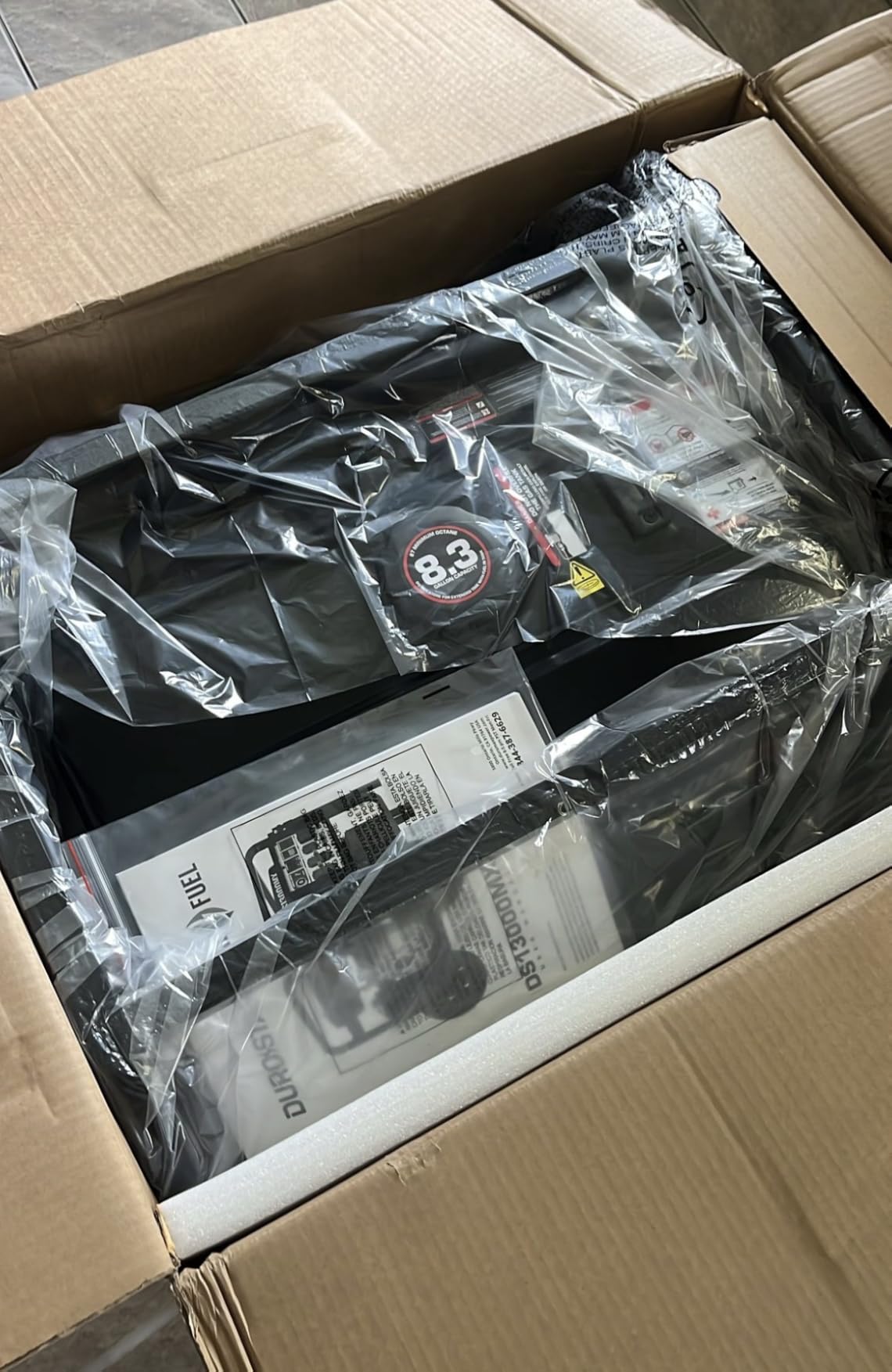
The power panel carries push-button start, a fuel selection knob and the 50 amp outlet, so switching fuels takes seconds rather than a shutdown. CO Alert protection shuts the engine down when harmful fumes build up, and electric and recoil starting both work for redundancy.
Its 4.3 average is below the other units in this roundup, and 11 percent one-star reviews point to more variability in quality control and assembly than the better-rated DuroMax units. Buyers who value the remote start tend to accept that trade, but it is a real difference and worth weighing against the XP13000HX.
When the DuroStar DS13000MXT is the right call
It is right for a home with a natural gas line where you want to start the unit from indoors, run it through a night, and stop worrying about fuel delivery. The combination of remote start, tri-fuel and 13 hours of runtime is unusual at this output level.
It is also a strong choice for a workshop, a barn or a small farm building, where the remote start saves real time.
When the DuroStar DS13000MXT is the wrong call
If reliability consistency matters more than features, the 4.3 average and the one-star share make the better-rated DuroMax or Westinghouse the safer selection at similar output.
Like most open-frame portable units, it is loud under load. In a residential neighborhood that is the most common reason owners end up dissatisfied after the first storm.
10. WEN TF-1450X – Best Tri-Fuel Value for Small Homes
WEN 14,500-Watt 120V/240V Tri-Fuel Generator for Gas, Propane, and Natural Gas, Transfer-Switch Ready with Electric Start, Wheel Kit, and CO Watchdog (TF-1450X), Black & Red
11500 running watts on gas
Tri-fuel
CO Watchdog
12 hours at half load
Pros
- Genuine tri-fuel switching across gasoline
- propane and natural gas
- Natural gas running at 8750 watts taps a supply you do not have to store
- Operates at both 120V and 240V for transfer switch use
- WEN Watchdog shuts down on dangerous carbon monoxide levels
- Electric key start with 12 hours of half load runtime
Cons
- 50 amp output limit is the most common complaint
- Audible under load
- First start after long storage may need starting fluid or a charged battery
The WEN TF-1450X is the best whole house generator for power outages in a smaller home that has a natural gas line, and it is one of the few ways to get genuine tri-fuel capability at this size. Gasoline gives 11500 running watts, propane 10300 and natural gas 8750, all from one dial.
Owners report running central air, the furnace and an entire upstairs floor on a 1600 square foot duplex, which is a remarkable result for a machine in this band. The 8.2 gallon tank gives up to 12 hours at half load, and electric key start makes cold-morning starts painless.
The WEN Watchdog CO Shutdown Sensor cuts the engine when dangerous carbon monoxide levels are detected. The outlet package is well suited to emergency backup: four 120V 5-20R outlets, a transfer-switch-ready NEMA L14-30R, a transfer-switch-ready NEMA 14-50R and a 12V DC outlet.
When the WEN TF-1450X is the right call
It is right for a small or mid-size home on natural gas, where running from the existing line removes fuel storage entirely. If you want the option to run on the gas utility, or on stored gasoline in a different emergency, this is the most flexible machine at this level.
It is also a good companion to a portable air conditioner, furnace blower and refrigerator set, which is what verified owners report using it for.
When the WEN TF-1450X is the wrong call
The 50 amp output limit is the most common complaint and it caps how much of the home can run at once. Well pumps, electric water heaters and large HVAC loads are where you will hit the ceiling.
It is also audible under load, and a first start after long storage may need starting fluid or a charged battery. With only 23 reviews, the owner evidence base here is thin, so factor that into a purchase this large.
How Big of a Whole House Generator Do I Need?
A 2000 square foot home usually needs 14 to 22 kW for whole-home backup, and about 20 kW is the practical minimum most owners settle on for reliable full-panel service. Below 20 kW, you are running essential circuits. Above 24 kW, you are buying headroom for electric heat, a well pump, and future loads.
Sizing by square footage alone is a rough start, not an answer. Two homes of identical size can differ by 8 kW depending on whether the heat is gas or electric, whether there is a well pump, and how many bathrooms run electric water heaters. Use the bands below as a starting range, then confirm with a load calculation.
The square-footage bands:
1,500 square feet and under: 10 to 14 kW for essential circuits, or 20 kW for a modest gas-heated home with a small load.
2,000 square feet: 14 to 22 kW. This is the band most buyers land in, and 20 kW is the community minimum for full-panel reliability.
2,500 square feet: 20 to 22 kW, moving to 24 kW if you have electric heat, a well pump or two electric water heaters.
3,000 square feet: 22 to 26 kW. Electric HVAC or a heat pump pushes this band higher.
4,000 square feet and above: 26 kW and up, ideally with a load calculation before you buy.
Will a 20 kW generator run a whole house? In most homes, yes, with sensible load management. A 20 kW unit carries the refrigerator and freezer, lights, internet and router, washing machine, dishwasher, gas furnace or a single central AC on its own, plus a well pump or sump pump. It struggles if you start an electric water heater, an electric range and the HVAC simultaneously, which is exactly what the Kohler load-shedding transfer switch in this roundup was built to solve.
Will a 13000 watt generator run a whole house? Not as a full-panel install. The 13000 watt figure is a surge number, and the running output behind it is closer to 8000 to 10500 watts depending on fuel. That is essential-circuits territory: refrigerator, freezer, lights, internet, sump pump and a small window unit. It is still a genuinely useful outage machine, it just is not whole-home power.
Here is the load-starting method we use, and it is the same one dealers use:
List your essential circuits. Refrigerator, freezer, lights, internet, sump pump, well pump, medical equipment, a gas furnace or one AC zone.
List the starting load of each. Motors draw several times their running watts for a second or two. A sump pump that runs 400 watts can pull 1200 to start.
Add the running watts together. This is your baseline.
Add the largest single surge on top. That is your realistic peak, and it is the number that matters.
Add 10 to 20 percent headroom. Then match the result to a model in the band.
Ongoing maintenance is what separates the units that start at hour two of a multi-day outage from the ones that do not. Annual service, fuel stabilizer, and a battery that is charged. Owners who skip this for a few seasons report the failure at the worst possible moment.
How Much Does a Whole House Generator Cost to Install?
A whole house generator typically costs more to install than to buy. The unit is one line item among several, and the electrical work, transfer switch, fuel line, pad and permits together frequently equal or exceed the machine price. Plan on a total that is roughly double the advertised unit figure for a mid-size install.
The line items you will see on a quote:
The generator unit. The machine itself, before any labor.
Automatic transfer switch. 200 amp service-entrance rated for full-panel work, or 50 amp for essential circuits. A sub-panel setup costs meaningfully less because you are not replacing the main service.
Electrical work. The largest single line in most installs. Homeowners on DIY forums repeatedly itemize the transfer switch install as its own labor charge, separate from both the machine and the switch itself.
Fuel line. Natural gas line run underground, or a propane tank plus a licensed gas company install.
Concrete pad. Required for most standby units, and it must meet local setback rules from doors, windows and vents.
Permits and inspection. Municipal permit plus the electrical inspection at the end.
How much does it cost to install a 22 kW Generac generator including labor? Owner reports on Bogleheads and r/Home put a fully installed 22 kW Guardian with its transfer switch comfortably above the unit price on its own, with electrical labor as the largest single addition. A Michigan Sportsman owner reports a Generac installed with an ATS at a lower tier, and still counts it among the larger household projects they have commissioned. The honest summary is that a self-coordinated install lands well below a dealer turnkey job, and a buried propane install with the tank filled lands well above it.
The spread is the story. The same machine appears across forums with wildly different totals, because the difference is almost entirely in scope, not in the generator. The low end is a machine plus a transfer switch with self-coordinated installation. The middle is a dealer turnkey job with an underground gas line and added switchgear. At the extreme is a turnkey install with a buried and filled propane tank, which one owner on a fitness forum estimated at roughly five times the low-end figure. That range is the single thing buyers most often underestimate.
How to keep the number down: get three itemized quotes, ask exactly which electrical work is included, and decide early whether you need a full 200 amp panel transfer or a 50 amp sub-panel for essential circuits. The sub-panel route is the cost lever most readily available to homeowners, and it is a legitimate choice rather than a compromise.
Financing is normal in this category. A NY Woods and Water owner financed an install with a 7 year parts and labor warranty at 5.9 percent, and cited the rate as the reason they could proceed at all. Ask your dealer about promotional rates before assuming cash is required.
Standby vs Portable vs Home Battery: What Are the Tradeoffs?
Standby systems start themselves and carry your panel. Portables need a human and an extension cord or interlock. Home batteries carry a defined reserve and nothing more. The right choice depends on how long your outages last and what you need to keep running, not on which one is most capable.
Standby. A permanently installed unit on natural gas or propane, wired to your panel through an automatic transfer switch. It runs indefinitely, covers every circuit and needs no human involvement. The costs are the unit, the install, a permit, annual maintenance and a dependency on fuel delivery or a gas line. Best for multi-day outages, medical equipment, ice storms and anyone who has already lost a freezer full of food.
Portable with interlock. A wheeled machine, gasoline or propane, connected through a portable transfer switch kit. It costs far less and needs no permit, but you store fuel, maintain oil, drag it out in weather and refuel it. It also cannot legally be connected to the panel without a listed interlock device. Best for outages under a day, renters, and households that want essential-circuits coverage without a construction project.
Home battery. A lithium-ion system with a grid-tied or off-grid inverter. It is silent, needs no fuel and installs indoors, but capacity is finite and a battery that runs a refrigerator for a day will not run heat pumps for a week. Best for electronics, medical equipment backup, and homes that want quiet, clean power with zero fuel logistics. Our companion guide to camping lanterns for power outages covers lighting when even the battery is flat.
The failure most owners do not plan for: a natural gas standby generator depends on the same infrastructure that may have failed. In an ice storm, a hurricane or an earthquake, the gas line that takes your grid power down is very likely to take your fuel down with it. If you live in that kind of area, confirm your propane tank capacity and refill logistics before storm season, and know who delivers in your county.
What are the disadvantages of whole house generators? Installation is expensive and permanent, you need a permit and a licensed electrician, setbacks and exhaust placement are regulated by local code, annual maintenance is genuinely required and frequently skipped, resale value returns are modest rather than dramatic, and the fuel is an ongoing operational dependency you have to manage.
What to Power First During a Multi-Day Outage
Power in this order, and the priority list is the same whether you have a 26 kW standby unit or a 5000 watt portable. The difference is that a larger machine never forces the question.
Medical equipment. Oxygen concentrators, ventilators, dialysis, refrigeration for medication. If you have any of these, size for this tier alone and never economize here.
Sump pump and well pump. A sump pump failure floods a basement, and a well pump failure removes water and indoor pressure. Both are cheap to protect and expensive to skip.
Refrigerator and freezer. Food loss is the fastest visible cost of an outage. A full freezer holds safe temperature for roughly two days unopened.
Furnace or one central AC zone. Gas furnace blower is cheap on power. Electric heat is the single largest load in most homes and the reason many buyers jump a size.
Internet, router and network. For most households this is the difference between a manageable outage and a real problem.
Lighting on one or two circuits. A single circuit with lamps is enough. Lighting is the easiest load to reduce.
Everything else, last. Dishwasher, washing machine, second AC, hot tub, workshop tools, EV charger. These are the loads you shed, not the loads you serve.
On a 50 amp essential-circuits setup, tiers one through three are the whole budget. That is why a sub-panel install is a legitimate strategy rather than a half-measure.
Fuel, Noise, and Safety Questions Nobody Answers Up Front
Noise is the most common regret among portable generator owners, and the decibel figure is more useful than the marketing language. A refrigerator hums near 40 dBA. A central AC unit runs around 50. The Westinghouse iGen12000TFc in this roundup holds 64 dBA. The Champion 201241 measures 79 dBA at 23 feet, which is roughly a gas lawn mower and makes it one of the loudest machines here.
Standing next to a generator tells you almost nothing. What matters is the distance to your nearest window, door or wall, and whether you can place it far enough away. Owners on regional outdoor forums repeatedly advise setting the unit as far from the house as practical, and on a raised pad, which helps with both sound and snow clearance.
Propane is the fuel that stores. A tank that does not run out is the difference between a three-day and a three-week outage, and refill logistics during a regional emergency are the part homeowners discover too late. Confirm tank size and who services it in your area before you need it.
Total harmonic distortion decides whether your electronics like the power. Inverter-based units like the Westinghouse hold 3 percent or less, and the Generac 26kW sits under 5 percent. Conventional open-frame machines run far higher, which matters if you are running computers, audio equipment or medical devices.
Carbon monoxide is the reason every unit here ships with a sensor: CO Alert on the DuroMax, CO Shield on the Champion, the WEN Watchdog on the TF-1450X. Local codes also set setback distances from doors, windows and vents, and dictate exhaust placement. These get discovered late in many installs, so confirm them with your local authority before the crew arrives.
How much does a whole house generator add to home value? Real-estate agents in this category put the average effect at roughly 3 percent, and it is concentrated in storm-prone or rural markets. The value depends far more on a clean, permitted install than on the brand badge. A documented installation with a transferable warranty and a service history reads very differently to a buyer than a machine in a plastic bag in the garage.
Frequently Asked Questions
What size generator do I need to power my house during an outage?
A 2000 square foot home usually needs 14 to 22 kW for whole-home backup, and about 20 kW is the practical minimum most owners settle on for full-panel service. Below 20 kW you are running essential circuits rather than the whole house.
Which is better for a whole house generator, Kohler or Generac?
Generac holds roughly 70 percent of the home standby market and has the larger dealer network. Kohler is the choice for corrosion resistance, load shedding and tolerating more upfront load without bogging. Both require professional installation, and most owners in forums end up satisfied with either.
How much should a whole house generator cost to install?
Installation commonly costs as much as the generator itself. Plan on a total roughly double the unit figure for a mid-size install, with the line items being the unit, the automatic transfer switch, electrical labor, the fuel line, a concrete pad, and permits and inspection.
How many kW generator for a 2000 sq ft house?
Between 14 and 22 kW, with 20 kW the most common choice for full-panel reliability. Add capacity if you have electric heat, a well pump, or multiple electric water heaters.
Will a 20 kW generator run a whole house?
Yes, in most homes, with sensible load management. A 20 kW unit covers the refrigerator and freezer, lights, internet, a washing machine, a dishwasher, gas heating or a single central AC, plus a sump or well pump. Electric water heaters and electric heat are the loads that cause trouble.
Do I need an automatic transfer switch for a standby generator?
Yes. A standby generator cannot connect to your main panel without one, and it is what allows the system to start and transfer power automatically. For portable units, a listed portable transfer switch kit or interlock device is required for the same reason.
The Verdict: Which Whole House Generator Should You Buy?
For the best whole house generators for power outages, the Pulsar G12KBN is our top pick. It carries 9500 running watts on gasoline and 8500 on propane, a 50 amp outlet that accepts a transfer switch, and the largest verified review base of any machine we evaluated. If noise is what will decide whether you actually use it, the Westinghouse iGen12000TFc is the better tool, with 3 percent or less harmonic distortion, remote start and 64 dBA operation.
For a true installed system that starts itself and carries your entire panel, the Generac Guardian 26kW and the Kohler 20RESCL-200SELS are the two we would put in a quote. The Generac covers more output and includes Wi-Fi monitoring. The Kohler brings a load-shedding transfer switch and a corrosion-proof enclosure, which matters on the coast.
One decision matters more than any other: have your installer run a proper load calculation before a single unit is ordered. Undersize and you will live with constant overload warnings. Oversize and you will pay thousands for capacity you never use. Size correctly, and the brand choice is largely a matter of which dealer you trust to show up when a storm hits.
PAID AFFILIATE DISCLOSURE: We earn from qualifying purchases, at no additional cost to you. Recommendations are based on the specifications, warranty terms and verified owner feedback published for each unit, not on commission received from any specific purchase.