
An interview is the one recording you cannot ask for twice. The subject has moved on, the room booked for you is booked for somebody else tomorrow, and the answer that mattered landed exactly once. That is why choosing a portable audio recorder for interviews is not really a spec decision. It is a decision about how much of a bad take you can survive.
We spent weeks with six recorders built for exactly this job, carrying them into quiet offices, noisy cafés and windy doorways to see how they behave when the level jumps mid-sentence. The short version: the Zoom H5 is the one we would grab first. It records four tracks at once, takes two XLR/TRS combo inputs with phantom power, and has the deepest owner-review history of anything in this guide.
The Zoom H5 is the best portable audio recorder for field interviews overall. It is the rare recorder that covers a solo conversation, a two-person interview and a small panel with one body, thanks to four-track capture, interchangeable capsules and two mic/line inputs with selectable phantom power. Everything else here either does less or asks you to add gear you have to carry.
The rest of this guide goes past the marketing sheet, because the pages ranking for this keyword are mostly aimed at video creators rather than people whose whole job is the conversation. We cover how to match input count to the number of people speaking, what 32-bit float actually fixes, how to run a backup recorder for interviews you cannot repeat, and what happens after you hit stop. Product facts below come from manufacturer listings and owner review data, not from estimation.
Table of Contents
Top 3 Picks for Field Interviews in 2026
Zoom H5
- Four-track simultaneous recording
- Interchangeable X/Y capsule
- Two XLR/TRS combo inputs with phantom power

Zoom F3
- 32-bit float with dual A/D converters
- Two locking XLR inputs
- Ultra-low-noise preamps

Zoom H1 XLR
- 32-bit float / 96kHz WAV
- Two XLR/TRS combo inputs plus 3.5mm input
- OLED waveform display
The H5 takes the top slot on evidence rather than novelty. It is the highest-rated recorder here at 4.7 stars across more than 1100 reviews, and its four-track mode records two isolated dialogue channels plus a stereo reference in a single pass, which is the setup most interview kits eventually grow into. The F3 is the modern alternative when clipping anxiety outweighs expandability, and the H1 XLR is the smallest body here that still gives you two locking XLR inputs.
Best Portable Audio Recorders for Field Interviews (October 2026)
| Product | Specifications | Action |
|---|---|---|
| Zoom H5 |
|
Check Latest Price |
| Zoom F3 |
|
Check Latest Price |
| Zoom H1 XLR |
|
Check Latest Price |
 TASCAM DR-10L Pro TASCAM DR-10L Pro |
|
Check Latest Price |
 TASCAM DR-10X TASCAM DR-10X |
|
Check Latest Price |
 TASCAM FR-AV2 TASCAM FR-AV2 |
|
Check Latest Price |
Two things stand out immediately. Only the H5 records more than two channels at once, which matters the moment a third voice joins. And every 32-bit float body in this group still needs microphones of its own, except the DR-10L Pro, which ships with a matched lavalier already attached.
1. Zoom H5 – The Recorder That Covers Every Interview Shape
Zoom H5 4-Track Handheld Recorder for Filmmakers & Musicians
115 g
Four-track capture
Two XLR/TRS combo inputs
24-bit WAV to SD up to 32GB
Pros
- Four-track simultaneous recording isolates two speakers plus a stereo reference
- Interchangeable capsule system expands as your interview work does
- Two XLR/TRS combo inputs with selectable phantom power and a -20dB pad
- Shock-mounted X/Y capsule cuts handling noise on handheld run-and-gun work
- Long-standing platform with a 1 year limited replacement warranty
Cons
- Records 24-bit rather than 32-bit float so gain still needs manual attention
- SD card capacity limited to 32GB
- Larger and less pocketable than the newer 32-bit float bodies
When a subject leans into a story and then raises their voice, four-track mode lets you isolate the microphone on the person actually talking. That single feature retires the most common complaint we hear from people moving up from pocket recorders: you cannot pull one voice out of a stereo pair after the fact.
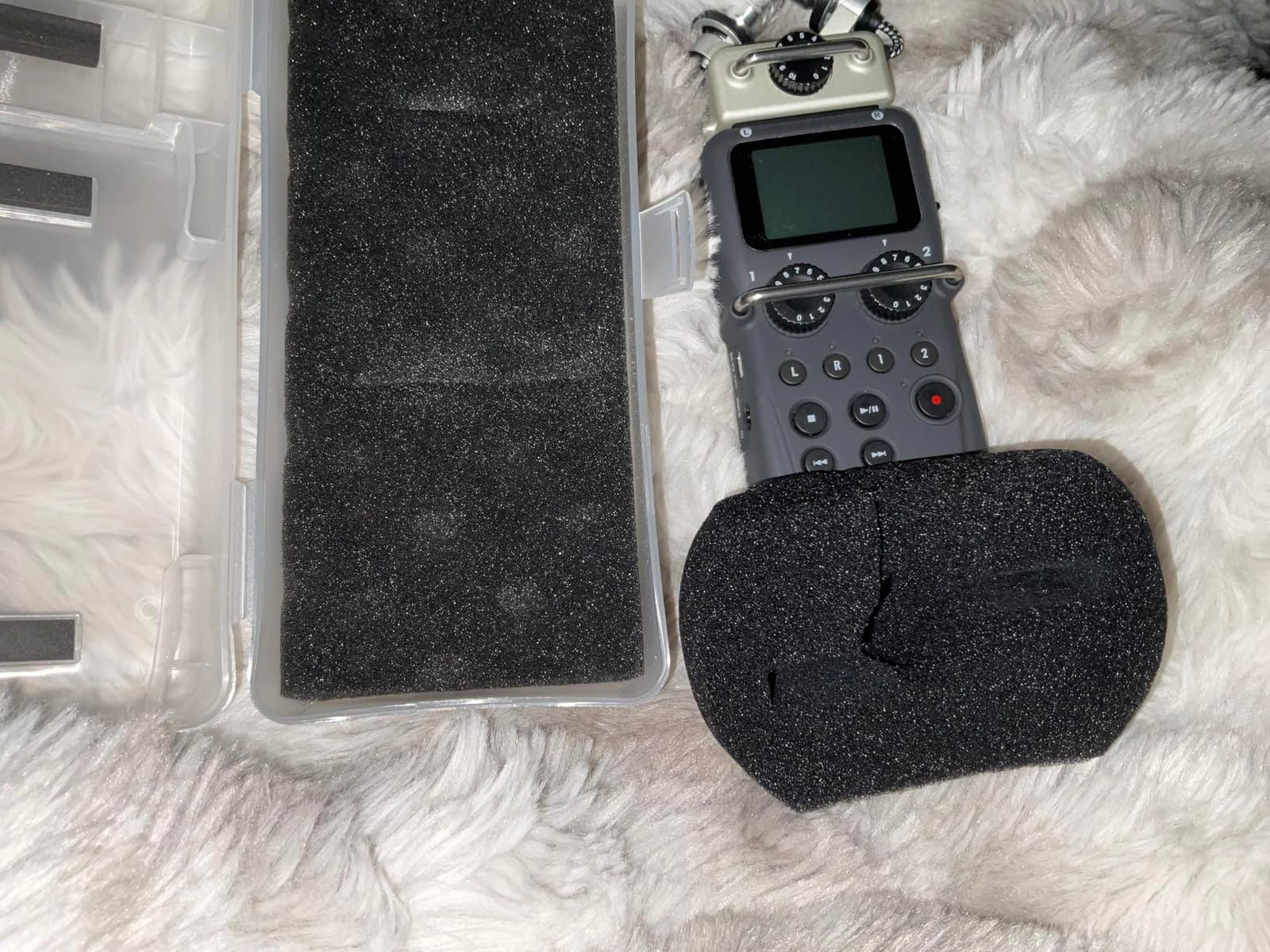
In the hand it is not small, and that is the trade. At 115 g with a 1.7 by 2.6 by 5.3 inch body, it lives in a jacket pocket or a small bag rather than a shirt pocket. For a fixed two-person interview that is a fair swap for four simultaneous channels.
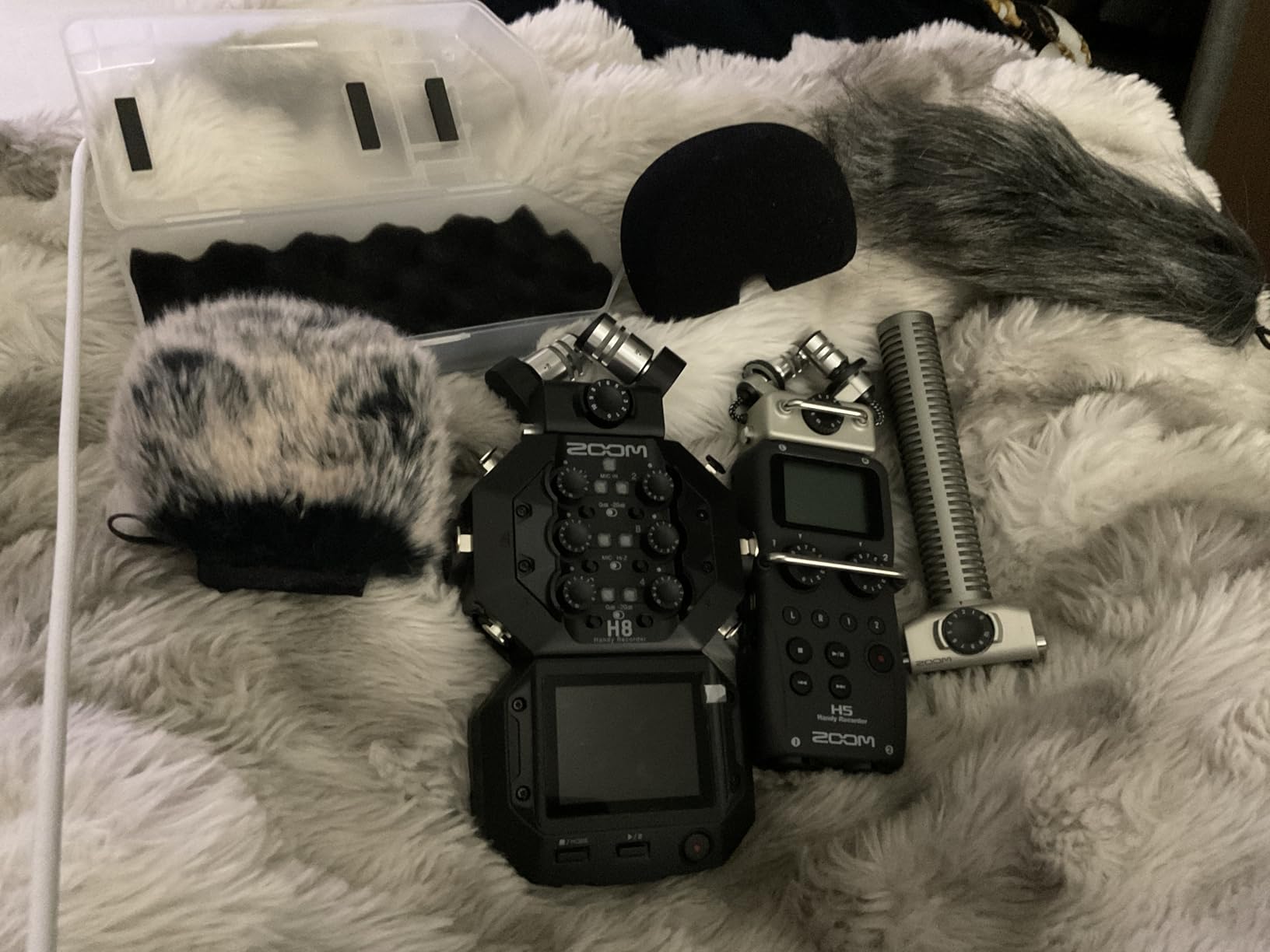
Owner feedback backs the recommendation: 84% of reviews are five star, and the recurring praise is for using it as a long-lived interview and documentary workhorse rather than a backup device. The included XYH-5 X/Y capsule sits in a shock mount, which matters if you are holding the recorder instead of setting it on a table. It also works as a multichannel and stereo USB audio interface for PC, Mac and iPad with Loop Back, so the same box can be your capture device at a desk.
Check these details before you buy
The XYH-5 capsule records an overlapping stereo pair, which is ideal for ambience and room tone but gives you two mixed voices on each channel. If you need one mic per speaker, pair it with two external mics on the combo inputs. Confirm the capsule system you want is sold separately, since the interchangeable lenses are optional extras rather than standard kit.
Where it will disappoint you
Levels are your problem again. Without 32-bit float, a shout in a quiet room can still clip before you react, and the safety limiter is not a substitute for riding the gain. The 32GB card ceiling is also dated now, so plan to swap files mid-session on anything longer than a short interview.
2. Zoom F3 – The Clean Answer to Unpredictable Interview Levels
Zoom F3 Professional Field Recorder for Filmmakers & Musicians
8.48 ounces
Two locking XLR inputs
32-bit float
Up to 73 hours of WAV
Pros
- 32-bit float recording removes gain-staging guesswork and prevents clipping on sudden peaks
- Two locking XLR inputs with preamps rated as having an extremely low noise floor
- Runs about 5-6 hours on two AA batteries and accepts USB power
- Compact cube that fits a jacket pocket a cold shoe or a magic arm
- Reliable clean sync with camera audio using a simple clap
Cons
- Only two inputs so it cannot cover a three-person interview
- Phantom power limited to 10mA total across both channels
- No built-in microphones so the recorder is useless without added mics
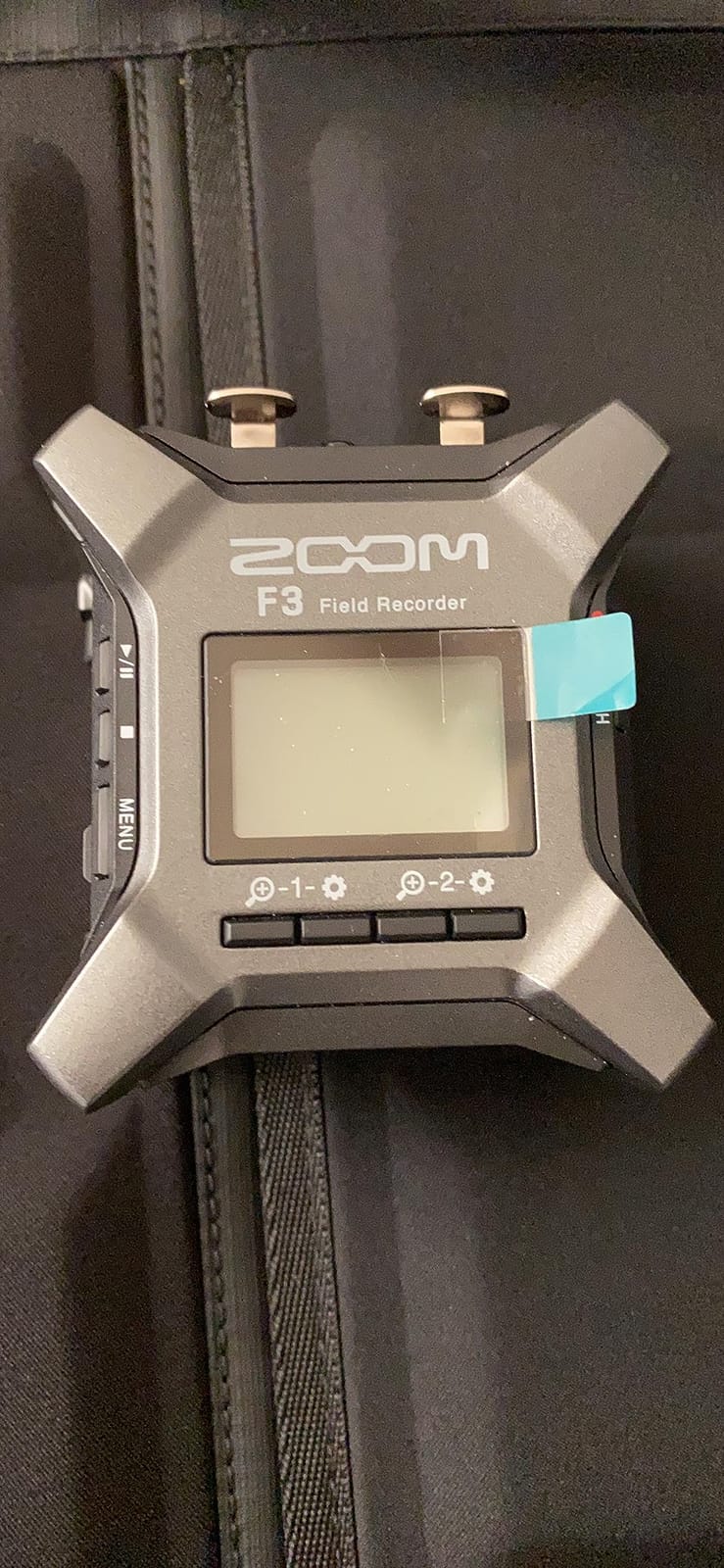
The F3 is the recorder people buy when they stop trusting their ears. Because it captures 32-bit float through dual A/D converters, a level that would have clipped a conventional recorder is simply a number the converter caught twice, and you pull it down afterwards in any DAW.
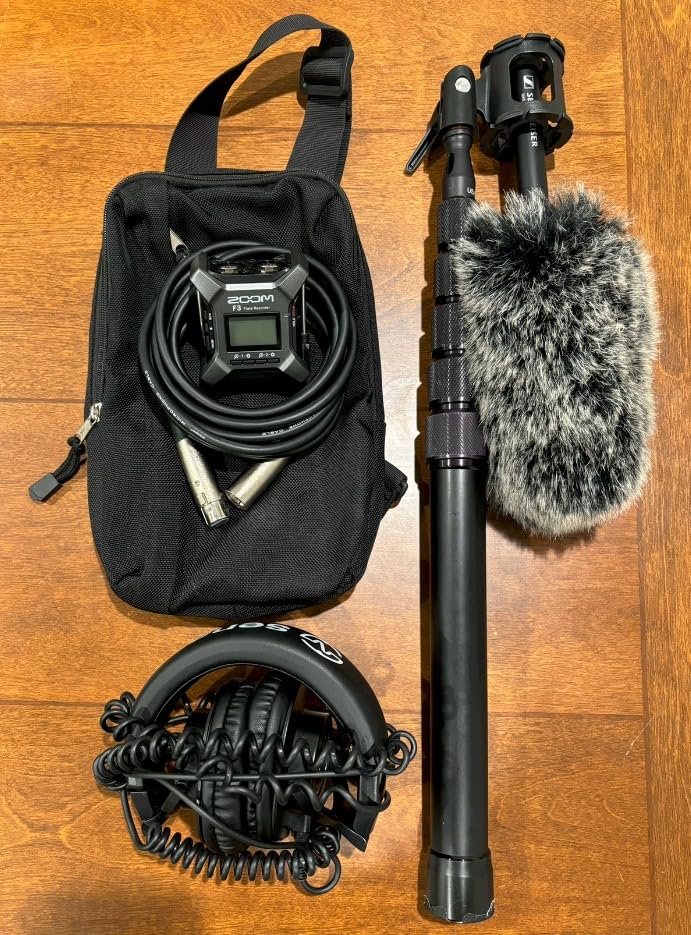
For a two-person interview that is exactly the scenario you want. One lav on each side of the table, both channels written as separate tracks, no engineer watching meters, and no dialogue lost because somebody laughed. Owners rate the preamps as having an extremely low noise floor, which is what keeps the hiss out of a quiet office recording.
The physical design helps too. At 8.48 ounces and 3.04 by 2.95 by 1.88 inches with a 1/4-20 mounting point, it attaches to video gear or a pole instead of demanding a dedicated operator. Owners on location forums describe it as close enough to the professional Sound Devices bodies that the lower cost makes it attractive, which is the comparison most often made in that community.
Check these details before you buy
Microphone phantom power is capped at 10mA shared across both channels, so a pair of high-draw condenser microphones is out. Dynamic and low-draw condenser microphones, the normal choices for interviews, work without complaint. Battery life is roughly five to six hours on two AA cells, and a USB power bank extends it for a full working day.
Where it will disappoint you
Two inputs is the ceiling. Bring in a third participant, an interpreter or a second mic for room tone and you are done. There is also no 3.5mm jack at all, which reviewers mention more than almost anything else, and the microSD card door is reported as popping open when bumped, risking a card eject mid-take.
3. Zoom H1 XLR – Smallest Body Here With Two Locking XLR Inputs
Zoom H1 XLR 2-Channel Recorder for Filmmakers, Musicians & Podcasters
6.4 ounces
Two XLR/TRS inputs
32-bit float / 96kHz
Waveform OLED display
Pros
- 32-bit float recording with an OLED waveform display makes level checking intuitive
- Two locking XLR/TRS combo inputs plus a 3.5mm stereo input for a third source
- Very small and light enough to fit in a palm or hoodie pocket
- Doubles as a USB-C audio interface that many owners use daily
- Accepts microSDXC cards up to 1TB
Cons
- Two microphones record as a stereo L/R pair rather than two separate mono tracks
- Plastic housing so keep the warranty for heavy field use
- Battery life drops sharply with 48V phantom power
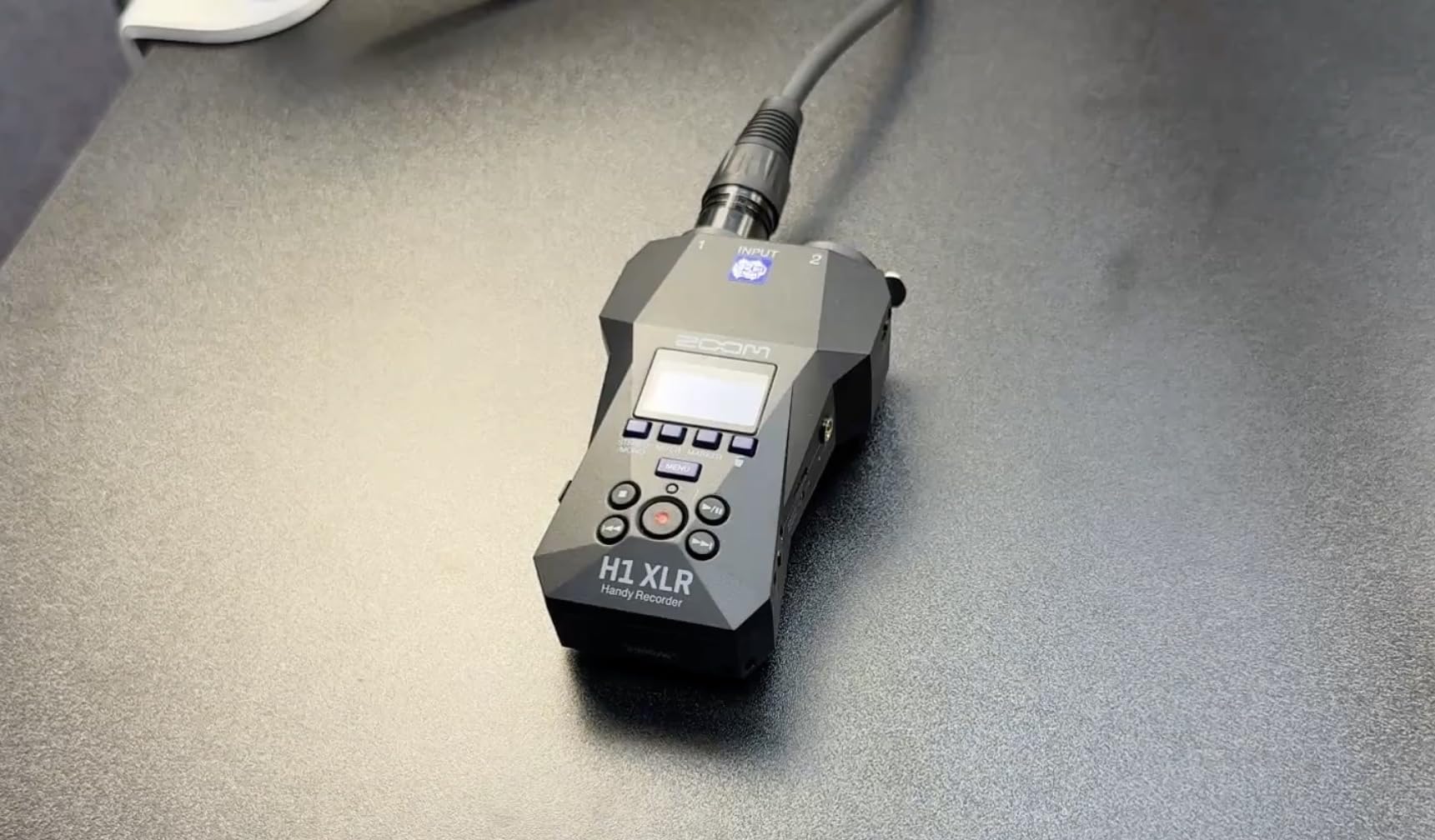
Most interviews never need more than two microphones, and the H1 XLR puts two locking XLR inputs on a body you can hold in one hand while writing with the other. Its OLED waveform display is the feature that sells it: you can see peaks and headroom at a glance rather than trusting a row of segment lights.
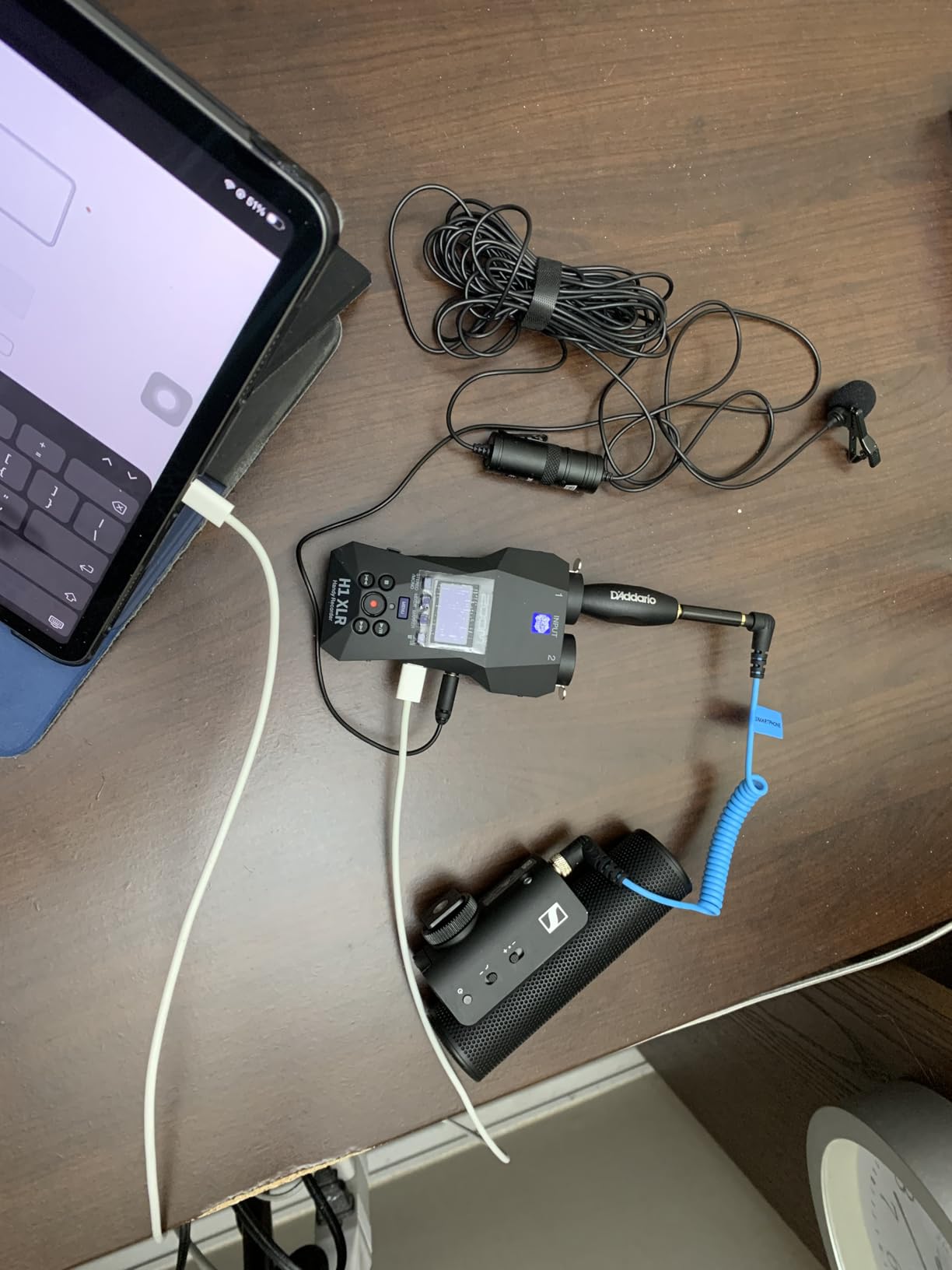
Owners repeatedly describe it as the best value XLR-capable recorder in its class, with 81% of reviews at five stars. It records 32-bit float at 96kHz to WAV, takes SDXC cards up to 1TB, and runs about 10 hours on two AA batteries. Several people buy it purely as a desk audio interface over USB Type-C and stop using the recorder buttons entirely.
For solo work it does something else useful: a 3.5mm stereo mic and line input sits alongside the XLR pair, so you can add a third source cheaply when the setup needs a room mic.
Check these details before you buy
The single most important thing to confirm is that with two microphones attached it writes a stereo L/R pair, not two isolated tracks. If a two-person interview where one person speaks quietly is part of your work, that limitation will show up in the edit. The 0.96-inch screen is also small, and the device can freeze if the card is not formatted correctly, so format in the recorder before a session.
Where it will disappoint you
Phantom power on this model drains batteries fast, so carry good cells rather than the spare alkaline ones in your bag. The body is plastic, and owners advise keeping the warranty because a sizeable drop on concrete can crack it. There is no timecode, so syncing to camera relies on a clap.
4. TASCAM DR-10L Pro – Recorder and Lavalier in One Pocket
TASCAM DR-10L Pro Field Recorder with Lavalier Microphone and 32-bit Float Recording for Audio for Video — Supports 512GB microSDXC and LTC Jam Sync for Seamless Timecode Synchronization
65 g
Included TM-10L lavalier
32-bit float
microSDXC up to 512GB
Pros
- Bundled TM-10L lavalier is matched to the recorder and captures clear voices in busy rooms
- 32-bit float removes gain adjustment between quiet answers and loud interruptions
- Very small and light at 65 g so it can be hidden on the subject
- Firmware V2.0 adds LTC Jam Sync across multi-device shoots
- CONNECT app controls up to 5 recorders at once
Cons
- Internal lithium cell holds the date and time and must be recharged via USB-C or timestamps reset
- Bluetooth timecode adapter is sold separately and this model needs the AK-BT1
- Included lavalier has no foam windscreen for windy outdoor work
This is the only recorder in the group that arrives ready to record. The TM-10L clip-on lavalier is matched to the body, plugs straight in, and is small enough to disappear under a collar. For sensitive or off-camera conversations where a visible recorder would change what people say, that combination is worth more than any input on the spec sheet.
The review pattern is instructive: people who follow the setup steps rate it very highly, with 75% five stars and 11% four stars. The matched lav captures voices cleanly in busy settings such as receptions, and 32-bit float means you do not touch the gain between a whisper and an interruption. Storage runs to 512GB microSDXC, and the CONNECT app can drive up to five of these at once, which is a neat way to build a multi-speaker panel capture without buying five recorders.
Check these details before you buy
Charge the unit before every shoot. The internal lithium cell is what stores the clock, and if it dies the timestamp resets on each power-up, which scrambles your file naming later. Use a card you have tested in the body, because reviewers report intermittent recognition with some cards listed as compatible.
Where it will disappoint you
One microphone, one channel, no XLR. This is a single-voice tool and cannot serve a two-person conversation with isolation between speakers. The included lavalier also has no foam windscreen, which is the first thing you will miss on a windy street, and the small screen makes the menu system fiddly to operate under pressure.
5. TASCAM DR-10X – The Plug-On News Gathering Recorder
TASCAM XLR Micro Audio Portable Digital Recorder for XLR Microphones, Voice Recorder, Interview and News Gathering, Black (DR-10X)
2.56 ounces
Captive XLR connector
Dual Recording backup track
Mono WAV and MP3
Pros
- Extremely compact and clips directly to a handheld XLR microphone with no cable run
- Dual Recording captures a second lower-level copy as a safety track
- Manual and automatic gain with a low cut filter and limiter
- Sliding record switch prevents accidental recording starts
Cons
- All-plastic body with no locking collar and reviewers report connector wear over months
- Single AAA battery can drain quickly
- No phantom power so condenser microphones need their own battery
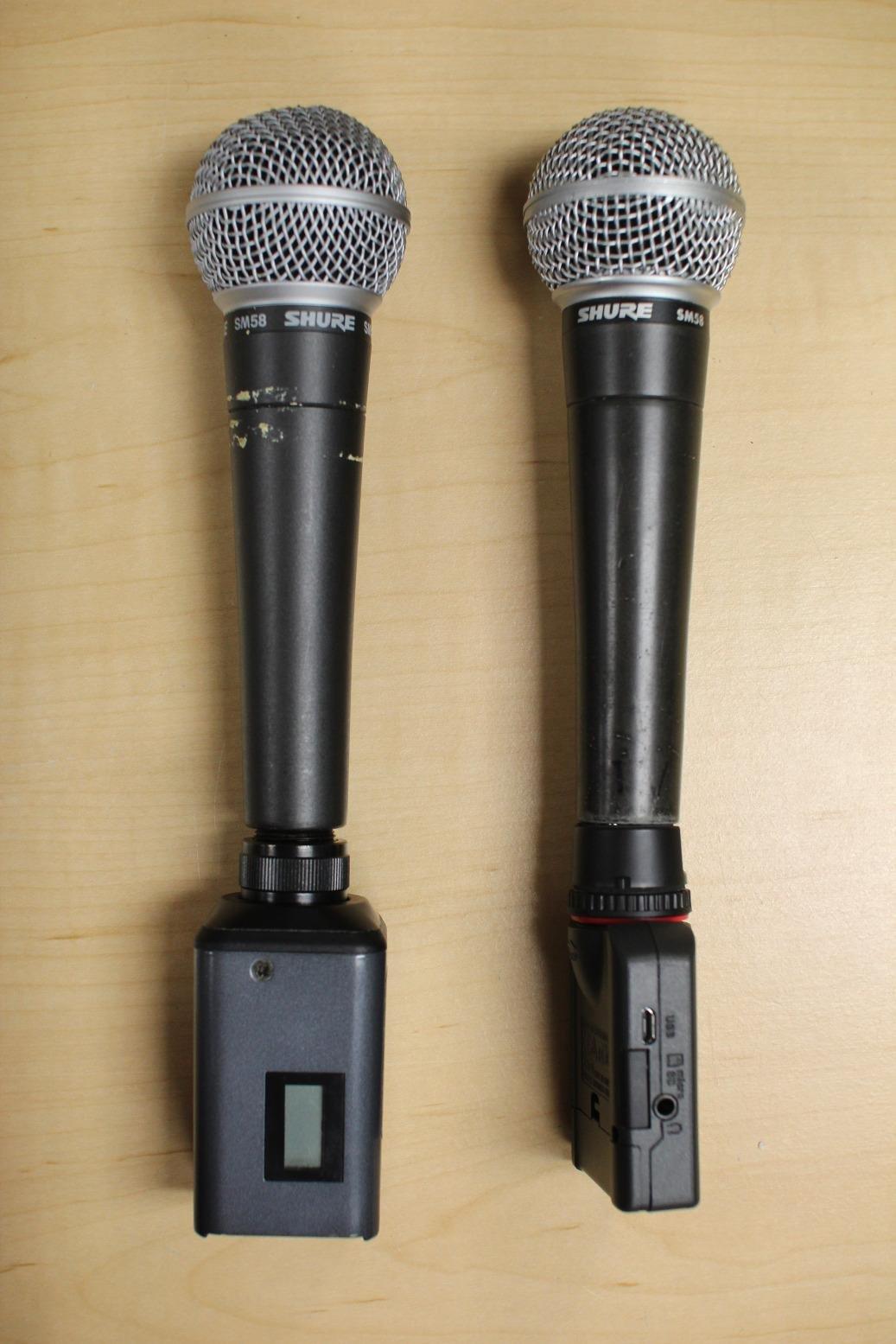
The DR-10X answers a narrow question well: how do you get clean, isolated dialogue when you are holding a microphone? The captive XLR connector attaches directly to a handheld reporter microphone, so there is no cable to snag and no second device to manage. At 2.56 ounces it is the smallest recorder here by a wide margin.
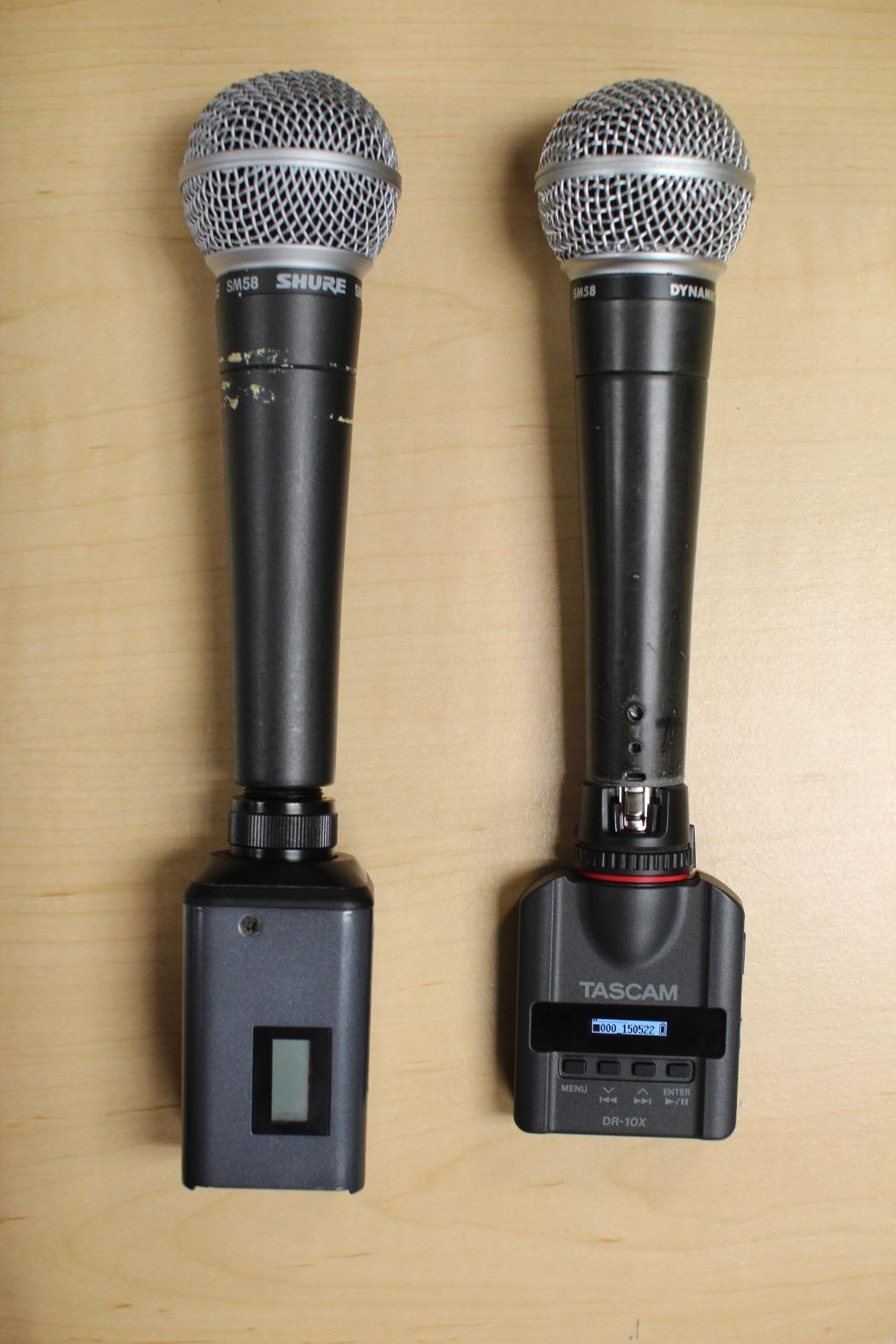
Its Dual Recording mode is the genuinely useful feature for interviews. The unit captures a second copy at a lower level, so if the main track distorts on a sudden peak you still have usable audio underneath. Owners describe the mono 48kHz 24-bit capture as clear and interference-free, and several have bought more than one as a run-and-gun or backup recorder.
Two conveniences matter more than they sound. The sliding record switch prevents an accidental press in a pocket, and if the battery dies the unit closes the file automatically so the recording is not lost.
Check these details before you buy
It records mono on one channel only, so two people in conversation means either one shared microphone or two separate recorders running side by side. MicroSD playback is capped at 32GB. Headphone monitoring through the 3.5mm jack lets you check data right away, which is how you confirm the safety track exists before you leave.
Where it will disappoint you
Durability is the recurring complaint. Reviewers report the plastic housing and connector failing after months of daily use, and there is no metal frame or locking collar to take the abuse of a working reporter. The single AAA battery also drains quickly, and automatic gain mode can produce audible level breathing that sounds worse than a manually set level.
6. TASCAM FR-AV2 – The One With Timecode Built In
TASCAM FR-AV2 Compact 32-Bit Float Field Recorder and Timecode Generator with Dual XLR/TRS Inputs and No-Clip Audio Recording for Videographers
9.5 ounces
Two XLR/TRS combo inputs
32-bit float with dual ADCs
48k, 96k and 192kHz
Pros
- Built-in timecode generation and timecode IN/OUT on a high-accuracy TCXO
- 32-bit float with dual ADCs means no gain riding and no clipped take
- Two XLR/TRS combo inputs with Ultra HDDA preamps plus a 3.5mm input
- Records at 48kHz
- 96kHz and 192kHz
- Compact body at 3.9 by 3.15 by 1.57 inches and 9.5 ounces
Cons
- Highest price of the six recorders we compared
- Wireless monitoring adapter is sold separately and only the AK-BT2 version works
- Much smaller review base than the established Zoom recorders
If your interview audio has to sit against picture on a timeline, this is the recorder that removes the most friction. It generates timecode internally and accepts timecode in and out through a high-accuracy TCXO, so you can jam to a camera or a sound mixer without buying a separate timecode box.
The capture side matches the story: 32-bit float through dual ADCs, two XLR/TRS combo inputs with Ultra HDDA preamps, and a 3.5mm input for a third source. It records at 48kHz, 96kHz and 192kHz and runs on three AA batteries. Reviewers note the compact metal-and-plastic build works well for location work, and 74% of its reviews sit at five stars.
That owner base is small, at 78 reviews, which is the honest caveat. You are buying a newer platform with less field history than the Zoom bodies, so read the manual before the shoot rather than during it.
Check these details before you buy
Wireless monitoring needs the AK-BT2 adapter bought separately, and this recorder does not work with the other generation of adapter. Verify your timecode source accepts the same rate the unit generates before you commit. It also costs more than the rest of the recorders we compared, which matters if timecode is not part of your workflow.
Where it will disappoint you
Without video on the timeline, most of the timecode capability sits unused and you have simply bought a two-input 32-bit float recorder at a higher price than the alternatives. There is no built-in microphone, so microphones are a separate purchase, and a two-input ceiling still applies for panels.
How Many Recorder Inputs Do You Actually Need for an Interview?
This is the question that comes up most often in field recording forums, and it has a simple answer: count the people who might speak independently, then add one channel you can afford to sacrifice. Here is how that plays out against the recorders above.
Recording one person on their own
You need one channel and a decent microphone. A built-in stereo pair is enough for note-taking and for anyone who is stationary and close to the recorder, because interview speech sits far above the noise floor of a still body. Every recorder in this guide handles this case.
Recording two people in conversation
You need two isolated channels, one microphone per speaker, and this is where most entry recorders fall short because they have zero or one real input. The Zoom H5 with two external microphones, the F3 and the H1 XLR all fit this shape, but only the H5 keeps those channels clean alongside a stereo reference track.
Recording two people plus room tone
Room tone is thirty seconds of the empty room recorded before everyone speaks, and it is what lets an editor smooth a jump cut later. You need a third channel, which the H5 provides in four-track mode and the FR-AV2 provides through its 3.5mm input. A two-input recorder can do it only by recording ambience on a separate device afterwards.
Recording a three-person panel
Three independent voices need three inputs. Among the six recorders here, only the Zoom H5 genuinely covers this without extra hardware, and even then it relies on its internal stereo pair, so a lavalier per panelist through an interface is the more careful route. This is the point where many journalists switch to a dedicated multi-track setup.
Why 32-Bit Float Matters on Interviews
32-bit float recording captures a far wider range of volume than a conventional bit depth, using two A/D converters per channel. The practical effect is that a level which would have clipped a standard recorder is preserved instead. You set rough gain and stop worrying, which on an unscripted conversation removes the single most stressful part of the job.
Four of the six recorders here write 32-bit float, including the F3, the H1 XLR, the DR-10L Pro and the FR-AV2, all using dual converter architecture. The H5 is the exception at 24-bit, which is its one meaningful specification gap against newer bodies. It remains our pick because four-track capture solves a bigger practical problem than clipping insurance does.
Phantom power and preamps still matter
Float capture does not rescue a noisy preamp. In a quiet office, an audible hiss floor is the difference between a usable take and one you have to denoise, and that is why the F3’s preamps are singled out as having an extremely low noise floor. Phantom power decides which microphones you can use: the H5 offers selectable phantom with a -20dB pad on both combo inputs, the H1 XLR supplies 48V at the cost of battery life, the F3 limits total phantom draw to 10mA across both channels, and the DR-10X offers none at all.
Matching the recorder to the room
A quiet office rewards low self-noise and manual gain with plenty of headroom. A noisy street rewards a directional microphone close to the speaker and a windscreen, because the alternative is asking the preamp to work harder on a level you do not control. The built-in stereo capsules on the H5 are useful for ambience and for holding a recorder up in a quiet room, but they are not the answer on a traffic-heavy pavement.
If your recording chain is heading into a computer rather than a field recorder, our guide to audio interfaces for clean capture at a desk covers the fixed-location side of the same job.
Backups, Consent and the Workflow After the Interview
Three things decide whether an interview recording survives contact with real work: a second recorder, a consent plan, and a naming scheme. None of them appear on a spec sheet, and all three bite harder in the field than in a studio.
Running a backup recorder on interviews you cannot repeat
Forum users describe losing un-repeatable takes to a flat battery, a card that fell out, or a level that clipped during an emotional answer. The standard answer is a second recorder running the same session, started within a few seconds of the first and positioned differently so the audio is not identical. A small body such as the DR-10L Pro or the DR-10X costs little to carry and turns a single point of failure into two.
Two safeguards cost nothing. Check the file after the subject leaves the room rather than at the end of the day, and treat any recorder with a moving card slot as something you should not bump. The same disciplined, pack-what-you-need thinking we cover in our professional field kit guide applies to any job that runs away from a table.
Recording people legally and respectfully
Recording rules differ by jurisdiction. Many places operate one-party consent, where the person recording may record a conversation they are part of, while others require all-party consent, meaning everyone involved has to agree. Journalists working across state lines routinely assume the strictest rule that applies. State an intent to record at the start, get a clear verbal yes, and offer to stop if anyone objects.
Beyond the law, telling people they are on a recorder changes the conversation. It is simply better practice, and it protects you if the recording is ever disputed.
Naming files so you can find last Tuesday
People who transcribe interview audio for a living complain most about a single flat folder of files with meaningless names. Set the pattern before the first interview and stick to it: date, project, participant and take. If your recorder has an internal clock, as the DR-10L Pro does, keep that cell charged so timestamps stay correct. Keep originals on one drive, copies on another, and record the consent detail in the same place as the file so the archive stays usable.
How We Chose These Recorders
We scored every unit on the five things that decide whether an interview recording survives being carried out of a building.
1. Input count and microphone flexibility. Two isolated XLR or TRS inputs with phantom power, plus whatever third input exists for room tone.
2. Headroom and clipping behaviour. Whether 32-bit float is present, and how the preamps behave in a quiet room.
3. Channel layout. Whether two microphones write as separate tracks or as a stereo pair, which changes everything in the edit.
4. Power and storage realities. Real battery life in hours, the format the card accepts, and whether a flat battery destroys the take.
5. Carry weight and durability. What the body weighs, whether it survives a daily bag, and how small it is when you need it discreet.
Ratings and owner review counts came from the verified product listings. Weight, battery, storage and input details come from manufacturer specifications. Where owners consistently report the same weakness, we repeated it rather than softening it.
Frequently Asked Questions
What is the best audio recorder for interviews?
The Zoom H5 is the best overall choice for field interviews because it records four tracks at once, accepts two XLR/TRS combo inputs with selectable phantom power, and is rated 4.7 stars across more than 1100 owner reviews. For two-person interviews where clipping risk is the concern, the Zoom F3 adds 32-bit float capture. For a solo voice on a budget, the TASCAM DR-10L Pro ships with a matched lavalier.
What is the best handheld recorder for interviews?
For handheld work with a microphone in your other hand, the Zoom H5 is the strongest all-round option, with four-track recording, two combo inputs and an interchangeable capsule system. The TASCAM DR-10X is smaller at 2.56 ounces and attaches directly to a handheld XLR microphone, but it captures a single mono channel and its plastic housing wears over months of daily use.
What is the best sound recorder for field recordings?
For ambience and field recordings where you control the placement, the Zoom H5 with its shock-mounted X/Y capsule gives you an overlapping stereo pair plus two spare XLR inputs. The Zoom F3 is the quieter and more compact alternative for location sound, offering an extremely low noise floor in a body that mounts to a rig, though it requires you to bring your own microphones.
How many XLR inputs do I need for a 2-person interview?
You need two isolated inputs for a two-person interview, one microphone per speaker. Add a third channel if you want room tone recorded in the same pass, which most editors rely on for smoothing jump cuts. Of the recorders we compared, the Zoom H5 covers two speakers plus room tone in four-track mode, the Zoom F3 covers two speakers, and the Zoom H1 XLR covers two speakers but writes them as a stereo pair rather than separate tracks.
Is 32-bit float recording worth it for speech?
For unscripted conversation with unpredictable levels, yes. 32-bit float capture uses two A/D converters per channel and preserves peaks that a conventional bit depth would clip, so you set approximate gain and correct in post. The trade-off is that it does not fix a noisy preamp or a badly placed microphone, and recorders without it still work if you watch levels carefully.
Our Final Verdict for Field Interviews in 2026
The Zoom H5 is the portable audio recorder for field interviews we would buy, and the reason is channel count rather than headline specification. Four simultaneous tracks, two combo inputs with phantom power, a shock-mounted stereo capsule and the widest owner-review base in this group add up to a recorder that handles a solo conversation, a two-person interview and a small panel without changing equipment.
Buy the Zoom F3 if you want clipping insurance and a quieter preamp and your interviews are always two people. Buy the Zoom H1 XLR if size matters more than isolated tracks. Buy the TASCAM DR-10L Pro for a hidden single voice, the DR-10X for plug-on news gathering, and the FR-AV2 when your audio has to lock to picture on a timeline. Whatever you choose, carry a backup recorder, ask permission before you press record, and name your files before you leave the room.