
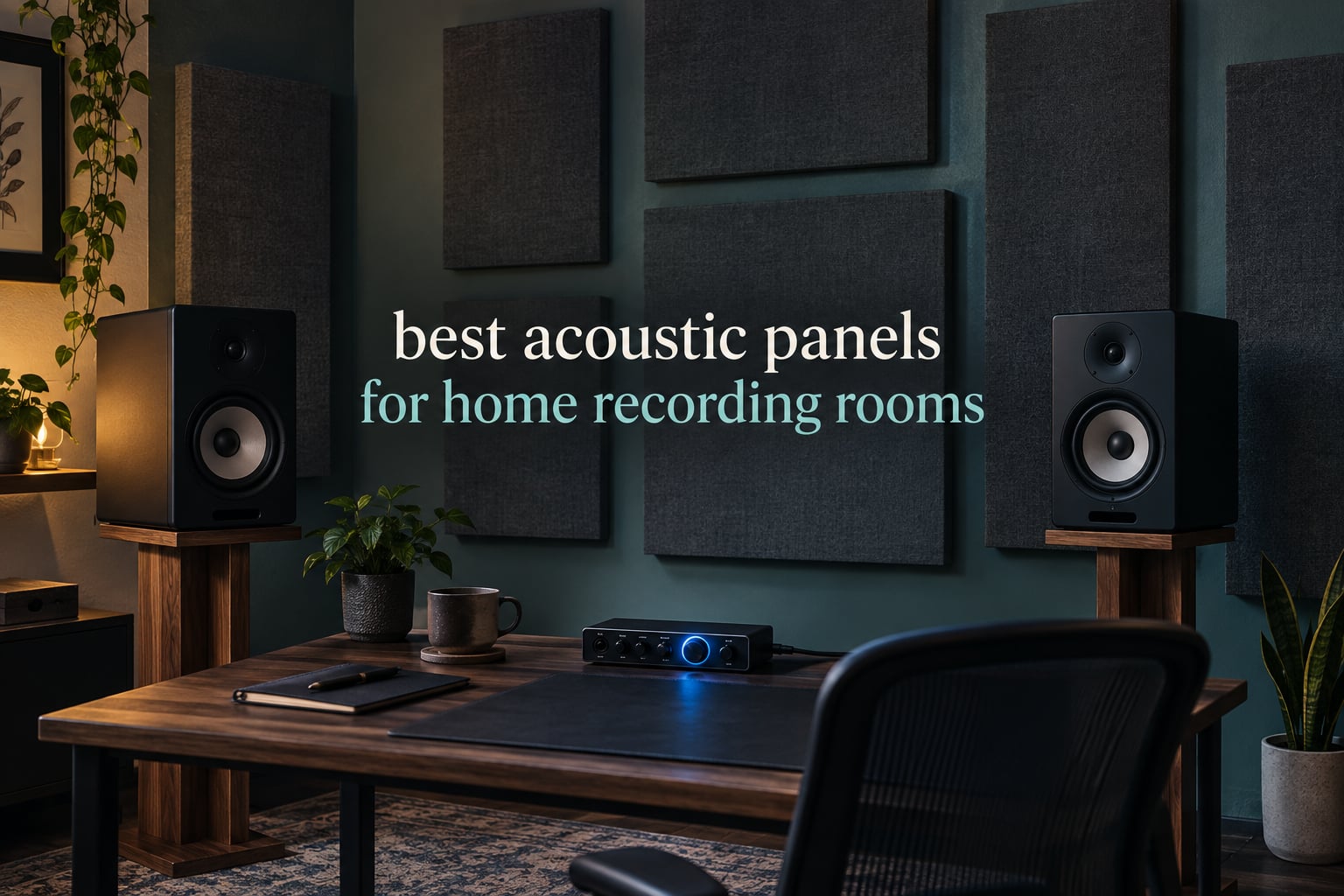
The best acoustic panels for home recording rooms are 2-inch fabric-wrapped or foam broadband panels rated NRC 0.8 or higher, hung first at your first reflection points and then along the rear wall. That is the baseline that fixes echo, flutter and smear in a domestic room without wrecking the low end.
Two things decide whether treatment works, and neither of them is the brand name. Placement beats quantity every time, and thickness decides which frequencies you can actually control. A room full of thin decorative tiles will look like a studio and still sound like a stairwell.
We spent weeks comparing specs, mounting systems and owner reports across twelve panels sold for home recording rooms, from budget foam to hand-framed wool panels made in the USA. We also read what people report back after living with them, because the gap between a spec sheet and a room is where most buying mistakes happen. If you are starting from scratch, our earlier guide to acoustic panels for home studios covers the short version.
One correction before the list: acoustic panels treat the room. They do not soundproof it. More on that below, because it is the single most mis-sold idea in this niche.
Table of Contents
Top 3 Picks for Home Recording Rooms in 2026

ATS Acoustic Panel 24x48x2
- NRC 1.0 absorption rating
- Solid wood internal frame
- 48 by 24 inch
- Handcrafted in the USA
TroyStudio Thick Foam Panels
- NRC 0.8 at 2 inch thick
- 52 square feet of coverage
- Grooved 3D surface
- Flame retardant to TB 117-2013

Dailycooper 12-Pack Panels
- Self-adhesive backing
- 9.4 lb per cubic foot density
- 0.4 inch polyester
- Beveled hexagon design
Best Acoustic Panels for Home Recording Rooms (October 2026)
The table below carries every panel in the list with its stated rating and coverage so you can narrow the field before reading the detail. Rows without a published absorption coefficient are marked as such, because plenty of sellers simply do not print one.
| Product | Specifications | Action |
|---|---|---|
| ATS Acoustic Panel 24x48x2 |
|
Check Latest Price |
| TroyStudio Thick Foam Panels |
|
Check Latest Price |
| Dailycooper 12-Pack Panels |
|
Check Latest Price |
 Dmsky 80-Pack Foam Panels Dmsky 80-Pack Foam Panels |
|
Check Latest Price |
 shipxinfuren 48x24x2 Foam Panels shipxinfuren 48x24x2 Foam Panels |
|
Check Latest Price |
 JBER Corner Bass Traps JBER Corner Bass Traps |
|
Check Latest Price |
 AudioSilk Room Kit Panels AudioSilk Room Kit Panels |
|
Check Latest Price |
 TONOR Dual-Layer Panels TONOR Dual-Layer Panels |
|
Check Latest Price |
 Soon Global Arcadian Vortex Soon Global Arcadian Vortex |
|
Check Latest Price |
 BUBOS 6-Pack Wood Grain Panels BUBOS 6-Pack Wood Grain Panels |
|
Check Latest Price |
 JaneTech 8-Pack Art Panels JaneTech 8-Pack Art Panels |
|
Check Latest Price |
 BSHEAD 12in Wall Panels BSHEAD 12in Wall Panels |
|
Check Latest Price |
1. ATS Acoustic Panel 24x48x2 in Fog for Broadband Absorption
ATS Acoustic Panel 24x48x2 Inches, Beveled Edge (Fog)
2 inch thick wool core
NRC 1.0
48 x 24 inch
8.3 lbs per panel
Wood frame
Pros
- Highest published absorption rating in this set at NRC 1.0
- Solid wood internal frame resists dents
- Drill template and hardware included
- Handcrafted in the USA
Cons
- Included Z-clamp hardware is wall-only so ceiling mounting needs different hardware
- Thin backing makes screws hard to fully engage
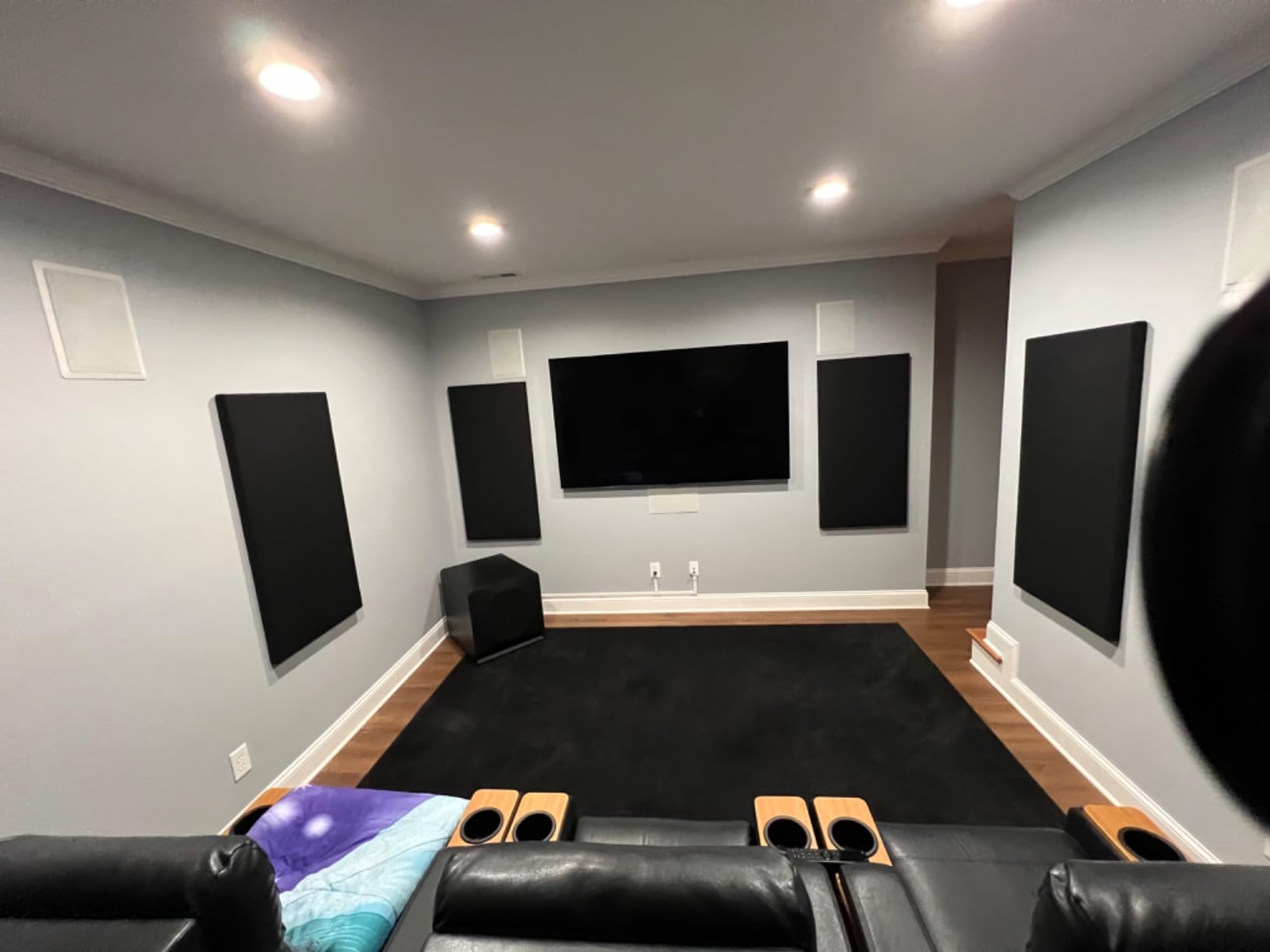
This is the panel we would put in a mixing room first. At 24 by 48 inches and 2 inches thick it covers a serious amount of wall, and it is the only product here that publishes a full NRC 1.0 rating alongside a stated wool core and a solid wood internal frame.
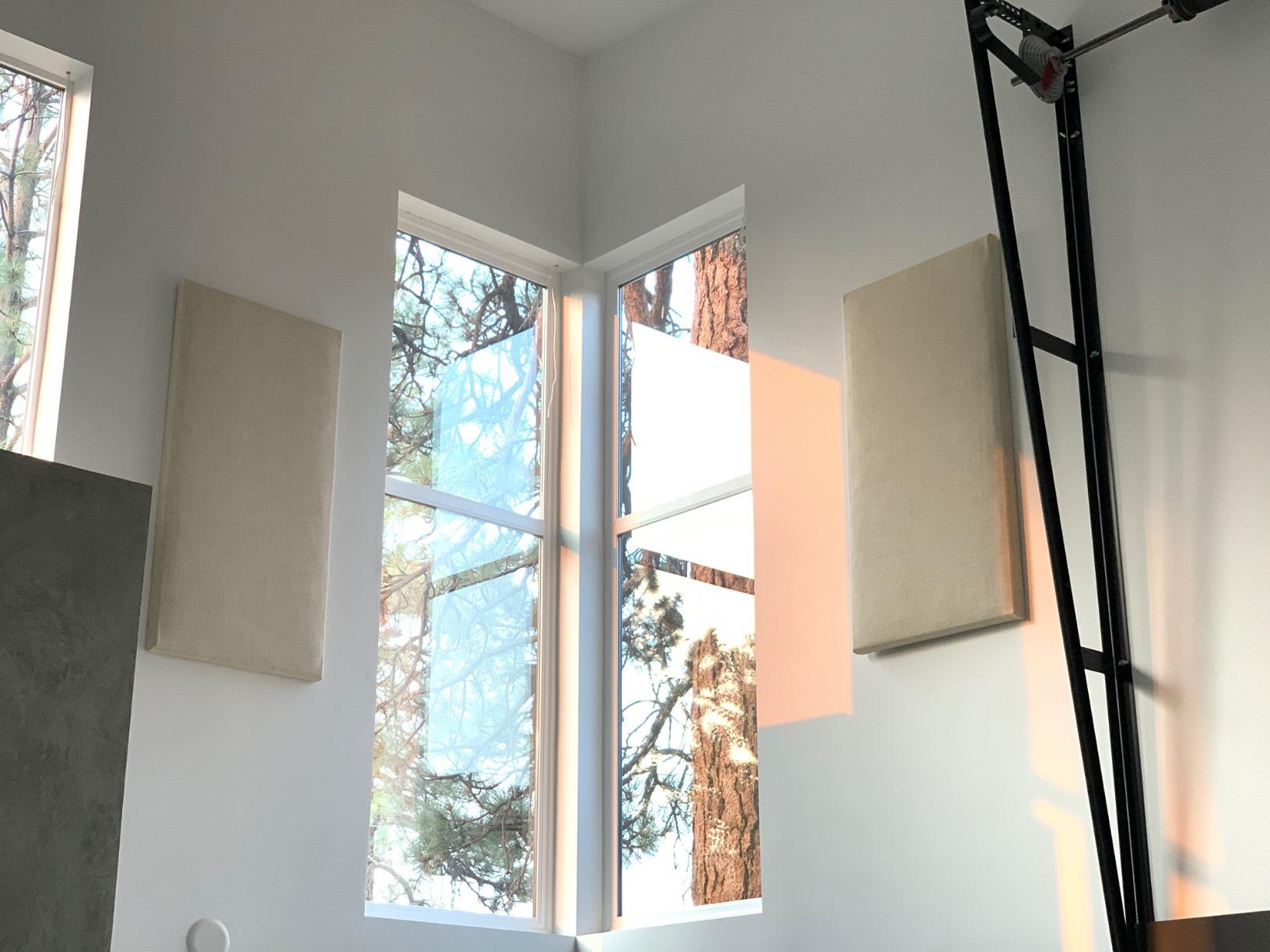
Owners report real, measurable change. One reviewer documented reverb decay dropping from over five seconds to around three seconds with six panels installed, which is the kind of before-and-after number most listings never produce.
What to check before you buy
The included Z-clamp hardware is wall-only. If you plan a ceiling cloud you will need your own D-hooks and anchors, and the supplied paper template wears out on a large order, so print more if you are covering several panels.
The fabric reads as slightly fuzzy up close and the edges are not as crisp as the price point might suggest. If a seamless look matters to you, look at the printed wood-grain options further down this list.
Who it suits and who it does not
It suits anyone with a dedicated room who wants one purchase that handles mids and highs properly and looks like furniture. At 8.3 pounds per panel, the frame also survives a room that gets used rather than just admired.
It does not block sound through a wall, and it does not reach the bottom octave. You will still want corner treatment behind the listening position, and if your ceiling is your worst problem, budget for hardware separately.
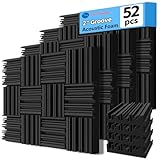
2. TroyStudio Thick Foam Panels for 52 Square Feet of Coverage
TroyStudio Thick Acoustic Foam Panels, 12 X 12 X 2 Inch 52 Pcs Broadband Sound Absorbing Foam, Dense Soundproof Padding Tile, Recording Studio Foam Absorber, Groove Decorative 3D Wall Ceiling Panel
2 inch foam
NRC 0.8, average 0.77
52 pieces
52 sq ft coverage
Grooved face
Pros
- Publishes NRC 0.8 and average absorption 0.77 at 2 inches
- 52 square feet from one pack
- Grooved profile looks better than flat foam squares
- Flame retardant to California TB 117-2013
- Cuts easily with a knife
Cons
- Vacuum packing leaves panels needing a soak and reshape
- Some panels stay wavy permanently
- Adhesive sold separately
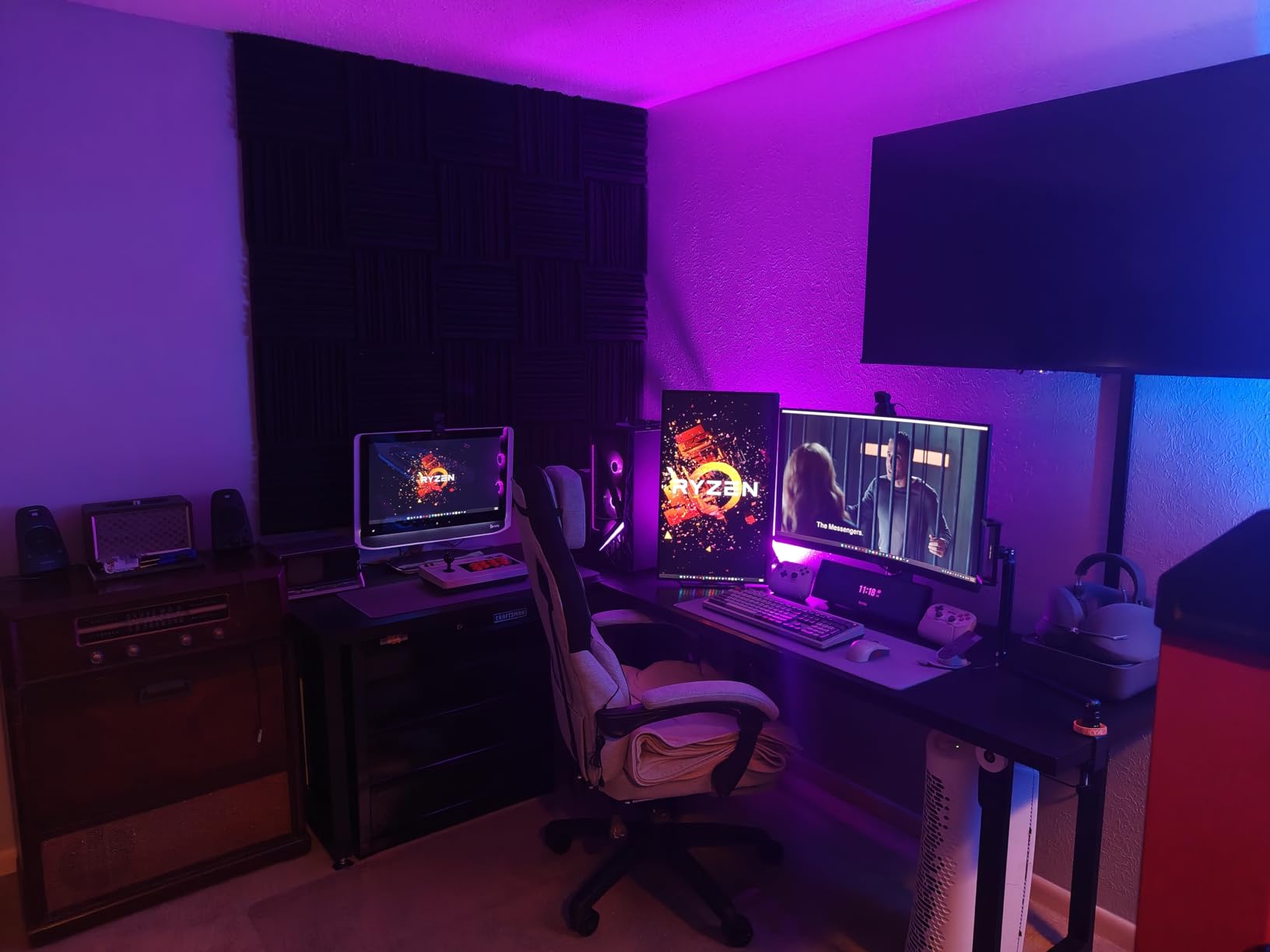
Foam gets dismissed unfairly, and this pack is the reason. At 2 inches thick with a published NRC 0.8 and an average absorption coefficient of 0.77, it reaches the threshold that thin decorative wedges never touch, and 52 panels cover 52 square feet.
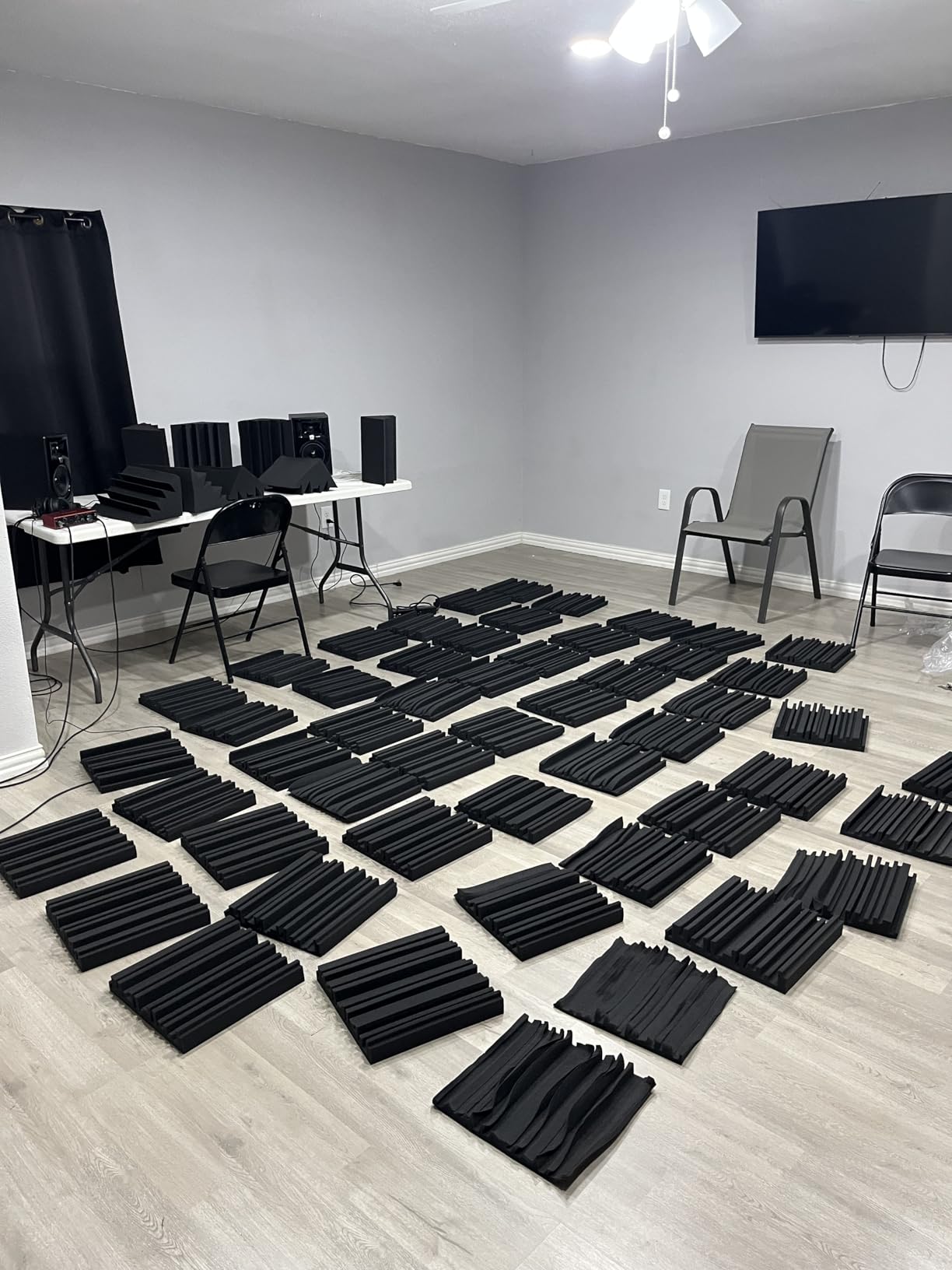
Owners report it taming reflections and port resonance behind near-field monitors. The grooved surface also does a little spreading work that flat tiles cannot, which helps keep a foam-treated room from sounding dead.
What to check before you buy
The delivery format is the main thing to plan for. These arrive vacuum sealed and many buyers describe a soak, reshape and low-heat dry cycle before they look right. Build that time into your install day.
A minority of reviewers report foam that feels too light in density for serious low-end control, and some pieces never fully flatten. If bass is your main problem, this is not the panel, however good the coverage figure looks.
Who it suits and who it does not
It suits a bedroom studio or spare room where you want as much treated area as possible from one purchase, and anyone who wants a published number rather than a claim. Odourless and non-toxic to California TB 117-2013 also helps in a shared living space.
It does not isolate, and it will not stop bass vibration through a wall or floor. It also leaves a visible foam look, so if the room doubles as a living space, plan to concentrate the panels at ear height rather than covering everything.
3. Dailycooper 12-Pack Panels for Tool-Free Installation
Dailycooper 12 Pack Self-Adhesive Acoustic Panels 12″ X 10″ X 0.4″ – Sound Proof Foam Panels for Walls with High Density, Y-Lined Design, Flame Resistant, Absorb Noise and Eliminate Echoes(Black)
0.4 inch polyester
9.4 lb per cu ft density
12 x 10 inch
7.5 sq ft coverage
Self-adhesive
Pros
- Self-adhesive backing needs no extra glue or tape
- 9.4 lb per cu ft density is unusually high for a thin panel
- Beveled hexagon face works as decor
- Trim-able with a knife
Cons
- 0.4 inch thickness gives only modest echo control
- 7.5 square feet per pack means many packs are needed
- Adhesive is hard to remove from rental walls
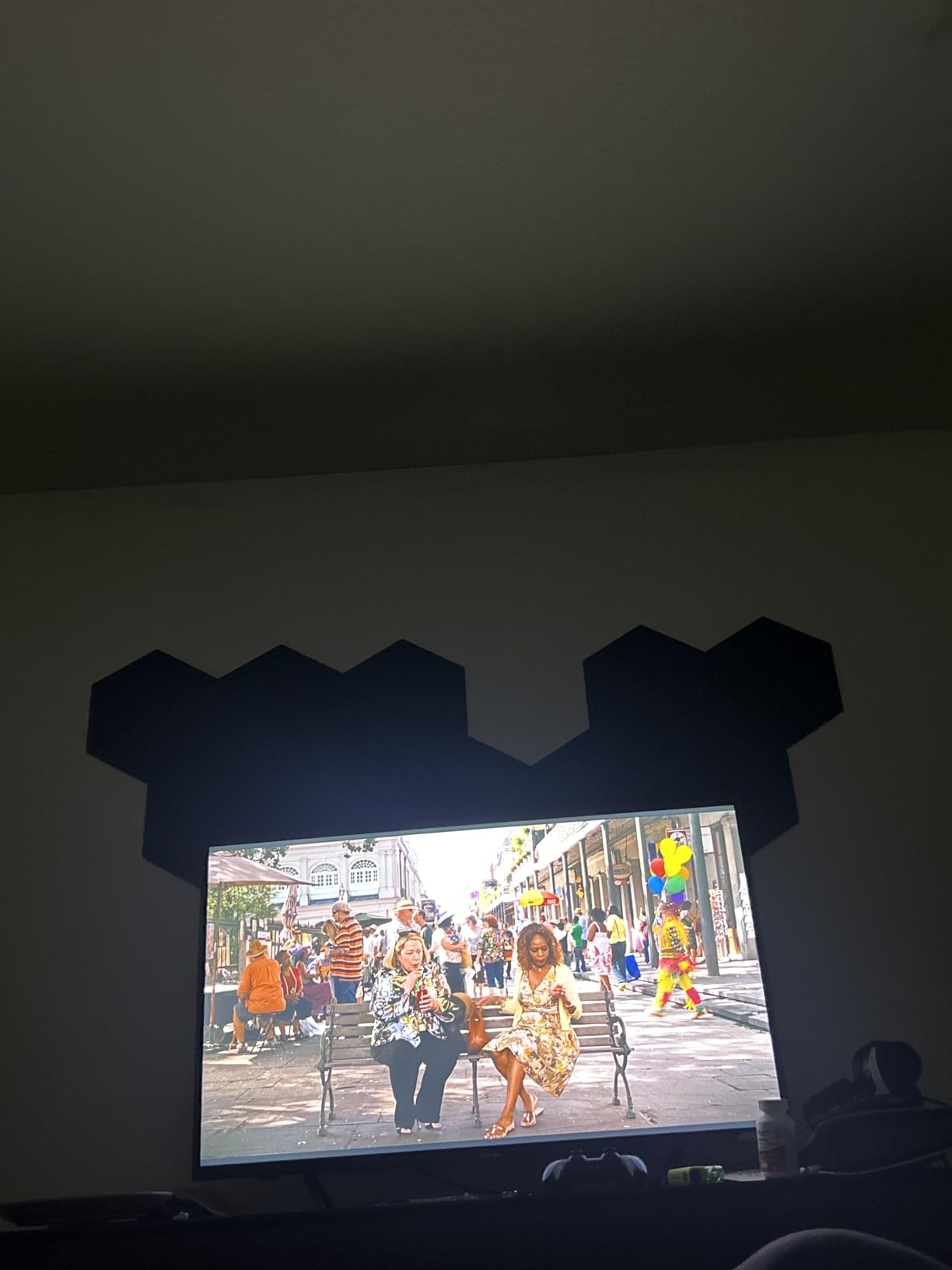
This is the most consistently rated product in the whole set, with a 4.4 average and a 71 percent five-star share across 830 reviews. The reason is simple: the density is 9.4 pounds per cubic foot in a panel that is only 0.4 inches thick.
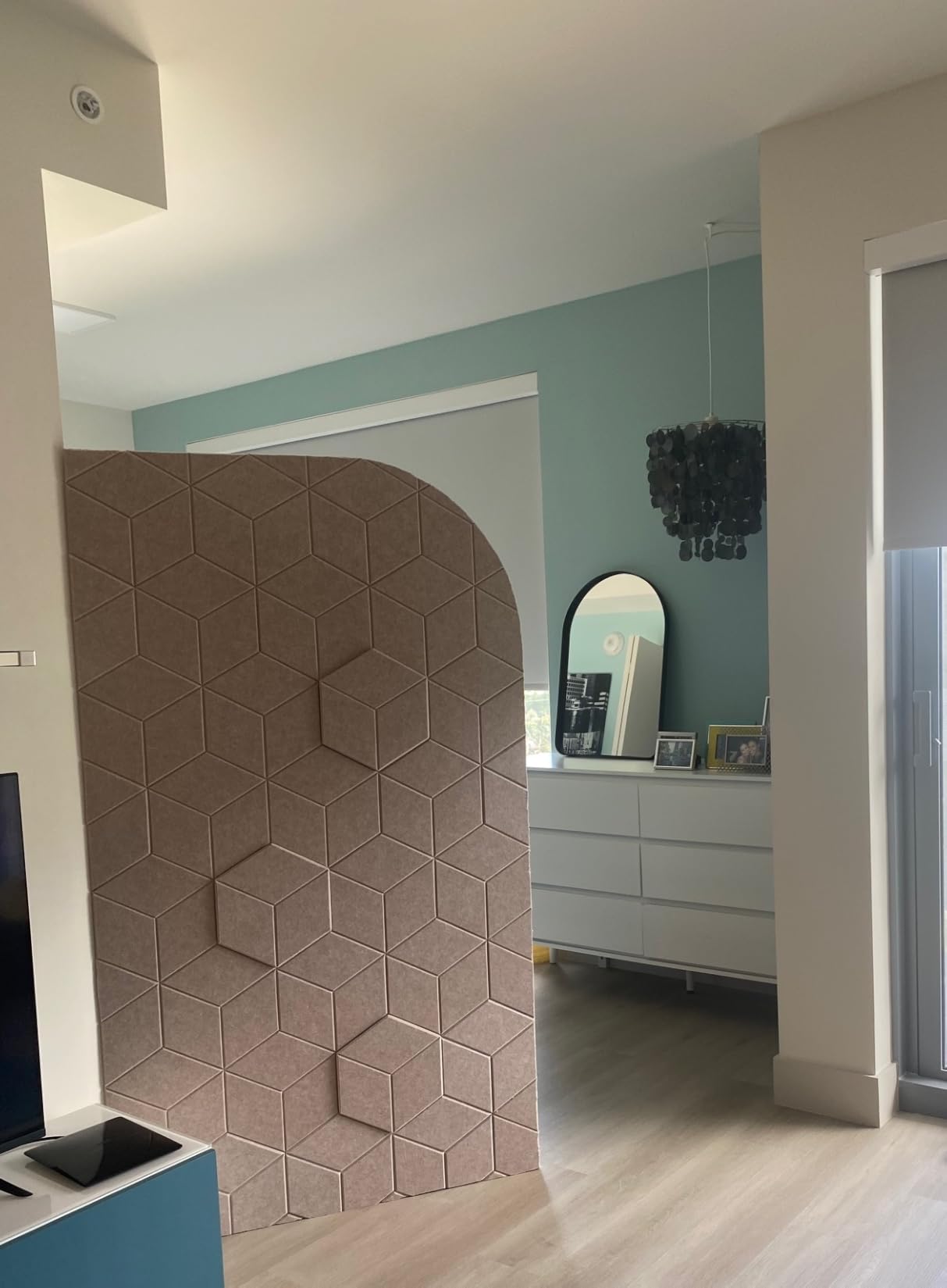
That density figure matters more than it sounds. Most decorative foam at this thickness sits far lower, and density is what separates a panel that soaks up energy from one that just sits on the wall. The beveled hexagon face also means you are not covering your studio in ugly squares.
What to check before you buy
Do the coverage math before ordering. A 12-pack gives you 7.5 square feet, which is real but modest, and the panels need to cover an area rather than be scattered around it for the effect to register.
Some buyers report panels arriving smaller than the listing photos suggest, so measure your intended patch of wall first. The adhesive is also difficult to lift off a wall later, which matters if you rent.
Who it suits and who it does not
It suits a first-time owner building a small vocal or podcast corner, or a renter who needs something that goes up in an afternoon with no drill. Polyester here is flame retardant, odourless and safe to touch.
It does not isolate sound at all, and 0.4 inches will not do much below the midrange. If your room problem is bass or neighbour noise through a wall, treat this as a reflection fix and look elsewhere for the low end.
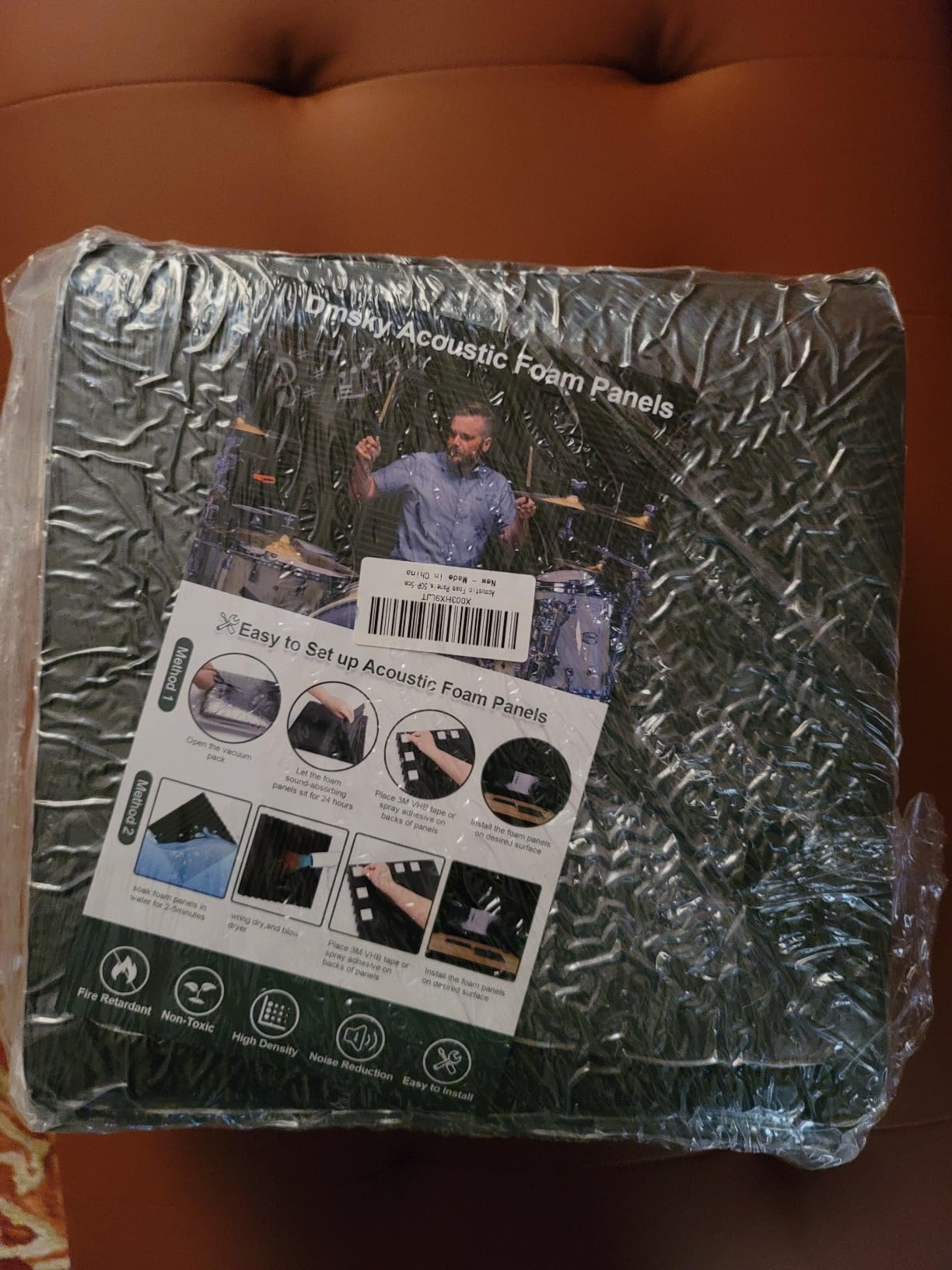
4. Dmsky 80-Pack Foam Panels for Whole-Wall Coverage
80 Pack Acoustic Foam Panels,1″X 12″ X 12″Sound Proof Foam Panels,High Density Sound Absorbing Panels,Soundproof Wedges Panels for Studio Recording & Office & Home
1 inch polyurethane foam
80 pieces
12 x 12 inch
11520 sq in coverage
Formaldehyde-free
Pros
- Highest review volume in the set across 3701 reviews
- Covers 11520 square inches from one purchase
- Cuts to any size without losing performance
- Non-toxic and formaldehyde-free
Cons
- Adhesive is not included and must be bought separately
- Absorbs reflections rather than blocking transmission
- Vacuum compression needs time or a soak to re-expand
When the question is how much area can I treat at once, this pack answers it. Eighty 12 by 12 inch tiles give you 11,520 square inches of two-dimensional coverage, which is more than most people install in a whole room.
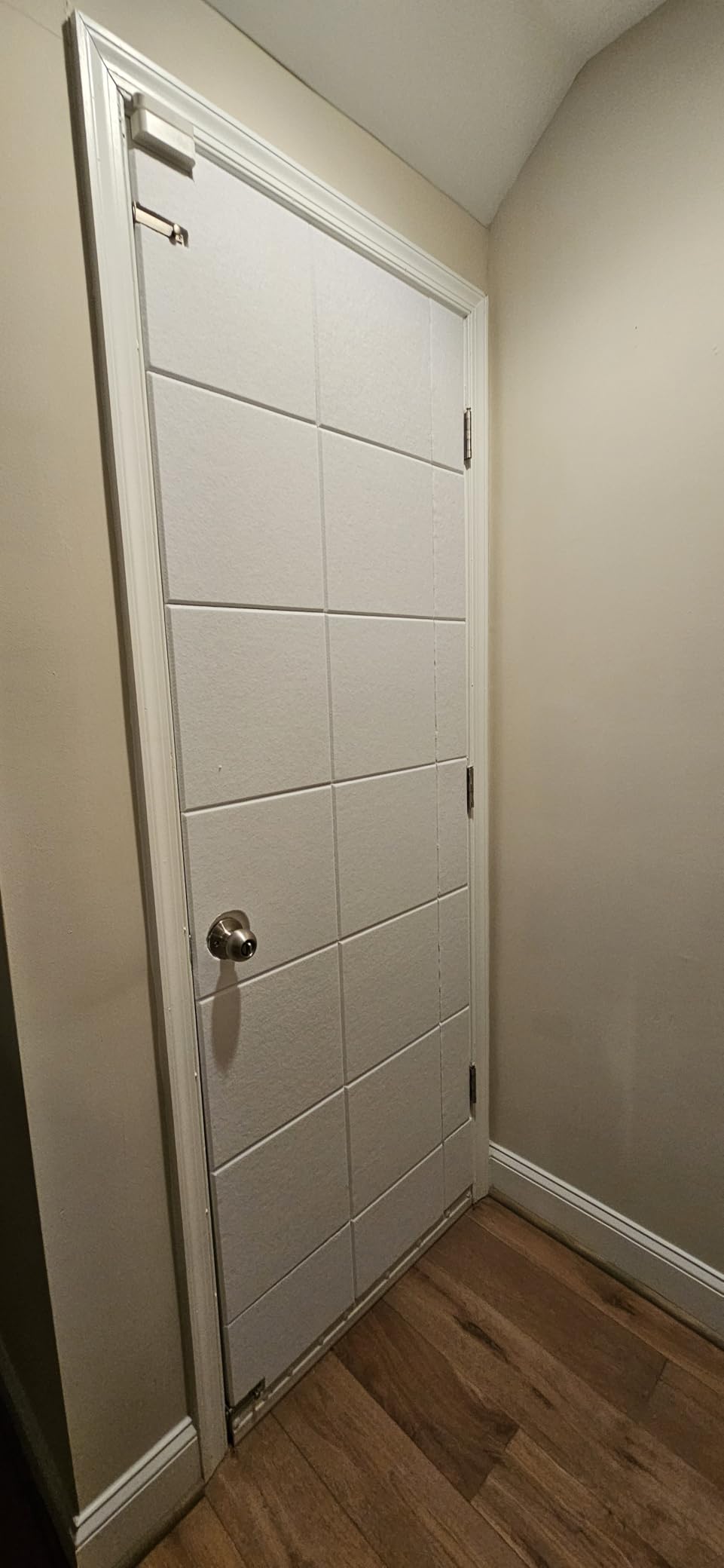
The 1 inch thickness is the honest limitation here. That is a mid and high frequency tool, and at this volume it is genuinely useful for killing flutter echo across parallel walls. It is not a low-frequency solution and it is not an isolation product.
What to check before you buy
Foam wedge profiles need adhesive you have to supply, usually spray or a nail-free construction adhesive. Budget for that separately, and test on an inconspicuous patch first because the wedge profile grips paint.
The 4.1 average with a ten percent one-star share traces almost entirely to packaging. Panels arrive compressed and need roughly 24 hours in a ventilated space, or a short water soak, before they hold their shape.
Who it suits and who it does not
It suits a large untreated room where echo is the complaint and you want to cover wide wall sections cheaply in one order. It also suits anyone who wants to cut panels into custom shapes, since cutting does not affect performance.
It does not suit someone chasing bass problems. At 1 inch, foam contributes very little below the midrange, and a lot of buyers who expect it to fix low-end build-up end up convinced that treatment does not work at all.
5. shipxinfuren 48x24x2 Foam Panels for Maximum Size Per Piece
4 Pack Acoustic Foam Panels, 48 x 24 x 2″ Sound Proof Foam Panels for Walls
2 inch foam
48 x 24 inch
4 panels
32 sq ft coverage
Fire retardant polyester
Pros
- Each panel is nearly door-sized so coverage per piece is huge
- 2 inch wedge thickness trims easily with scissors or a knife
- Fire retardant polyester foam
- Recovers shape faster than most vacuum-packed foam
Cons
- Included adhesive patches are weak and often fail on walls
- Difficult to mount without a backing board or your own adhesive
- Some panels arrive deformed or fail to fully re-expand
Four panels at 48 by 24 inches is an unusual amount of coverage per piece, and 32 square feet comes from a small number of boxes. Owners highlight the size first: this is what a door-sized panel actually lets you do to a wall in one move.
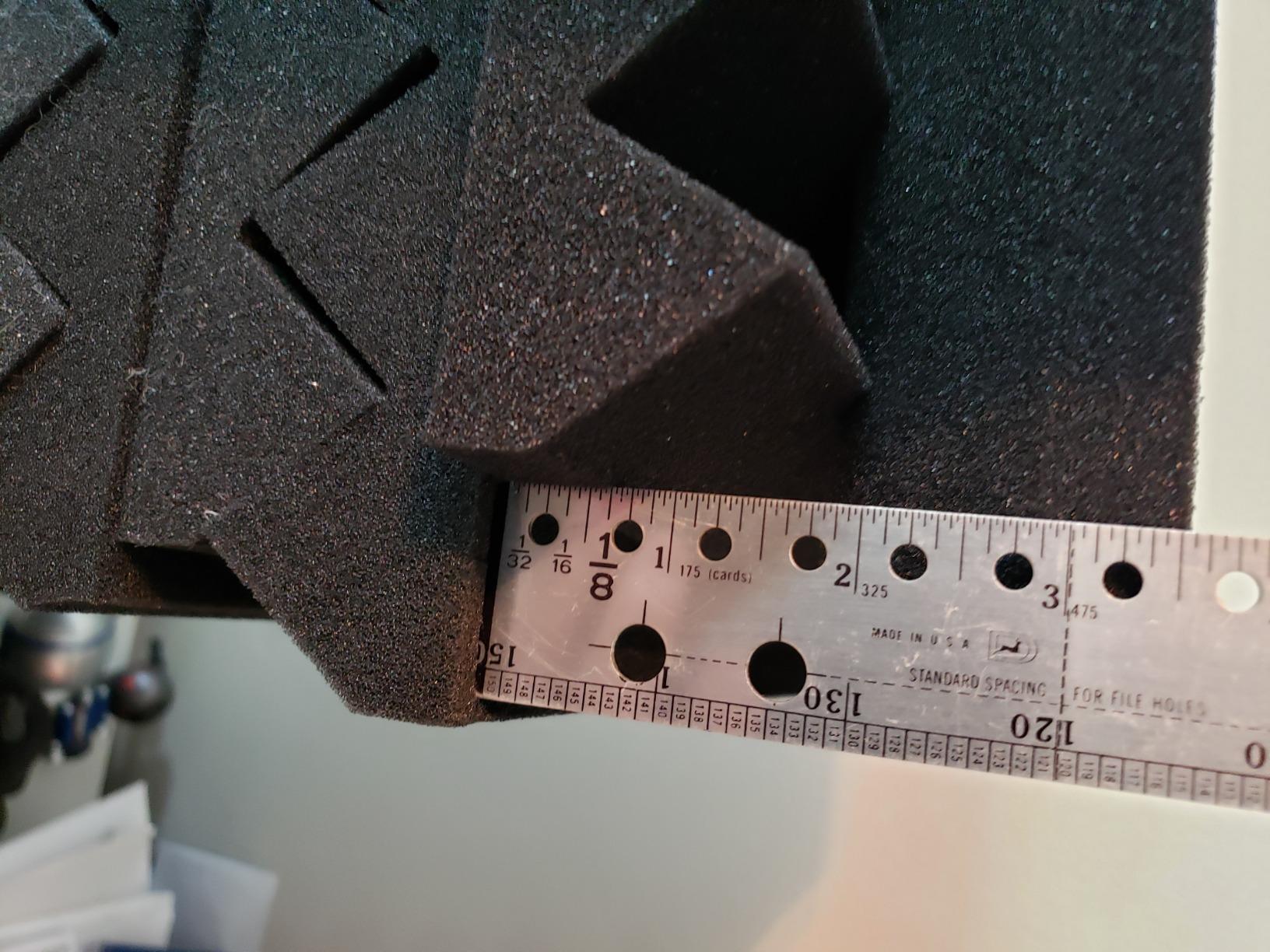
The 2 inch wedge profile is substantial for foam and trims with ordinary scissors. Buyers also report containing loud bass playback that previously carried through the house, which is a claim about what you hear elsewhere rather than what you hear in the room.
What to check before you buy
The adhesive is the weak point and it is the most repeated complaint in the reviews. The supplied patches do not hold, so plan on spray adhesive, double-sided tape or thumb tacks over a backing board instead.
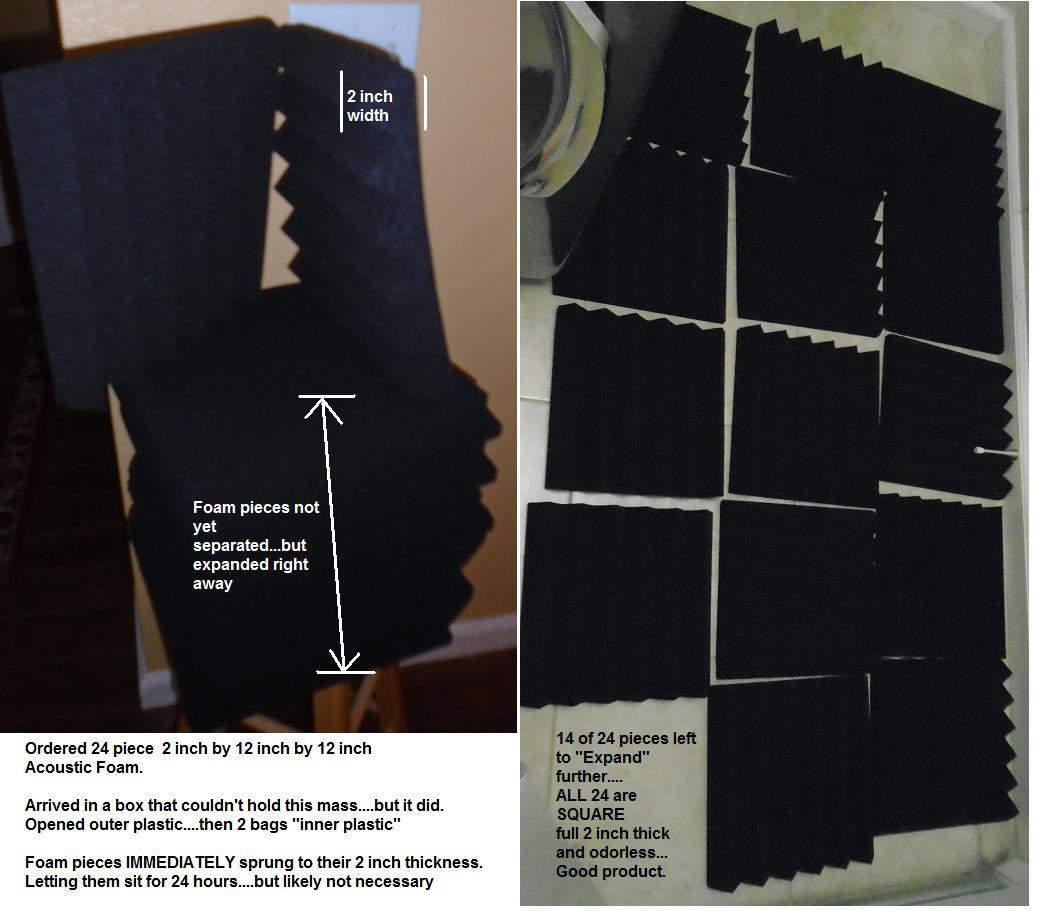
A small number of panels arrive deformed or fail to re-expand, and allow 24 to 48 hours after opening. Shape recovery is faster than most compressed foam, but it is not instant.
Who it suits and who it does not
It suits a small room where a large number of small tiles would create a visible grid and eat your mounting time. Fewer, larger panels also mean fewer seams and fewer edges to look untidy.
It does not block transmission, and foam this thick still does very little below the midrange. If your room is boomy rather than echoey, this is not the first purchase you should make.
6. JBER Corner Bass Traps for Low-Frequency Build-Up
JBER 4Pack Acoustic Foam Corner Bass Traps, Studio Foam Corner Block Finish
Corner mount design
12 x 7 x 7 inch each
4 pack
1.04 lbs per trap
Low and mid frequency
Pros
- Corner mounting fits neatly into a tight ceiling-to-wall junction
- Targets the low and mid build-up that flat panels miss
- Sharp square edges give a cleaner look than wedge foam
- Light at 1.04 pounds per trap
Cons
- Four pieces cover only a small fraction of the room surface
- Mounting needs adhesive or fasteners that are not included
- Frequency-specific and does not block transmission
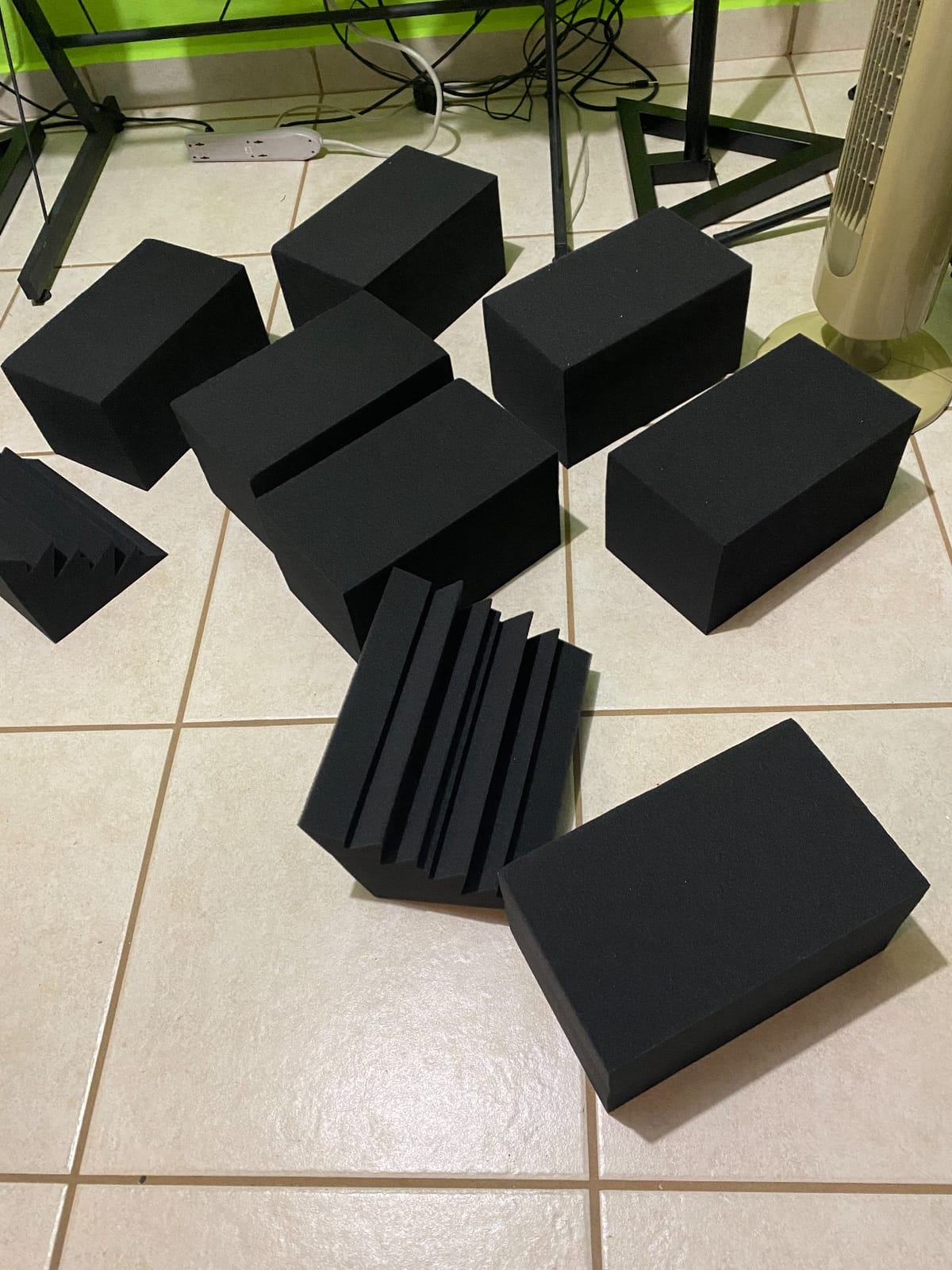
Corners are where a small room stores its worst energy, and this 4-pack is shaped for exactly that job. Each trap measures 12 by 7 by 7 inches and sits neatly in a ceiling-to-wall junction, or mounts horizontally along a wall.
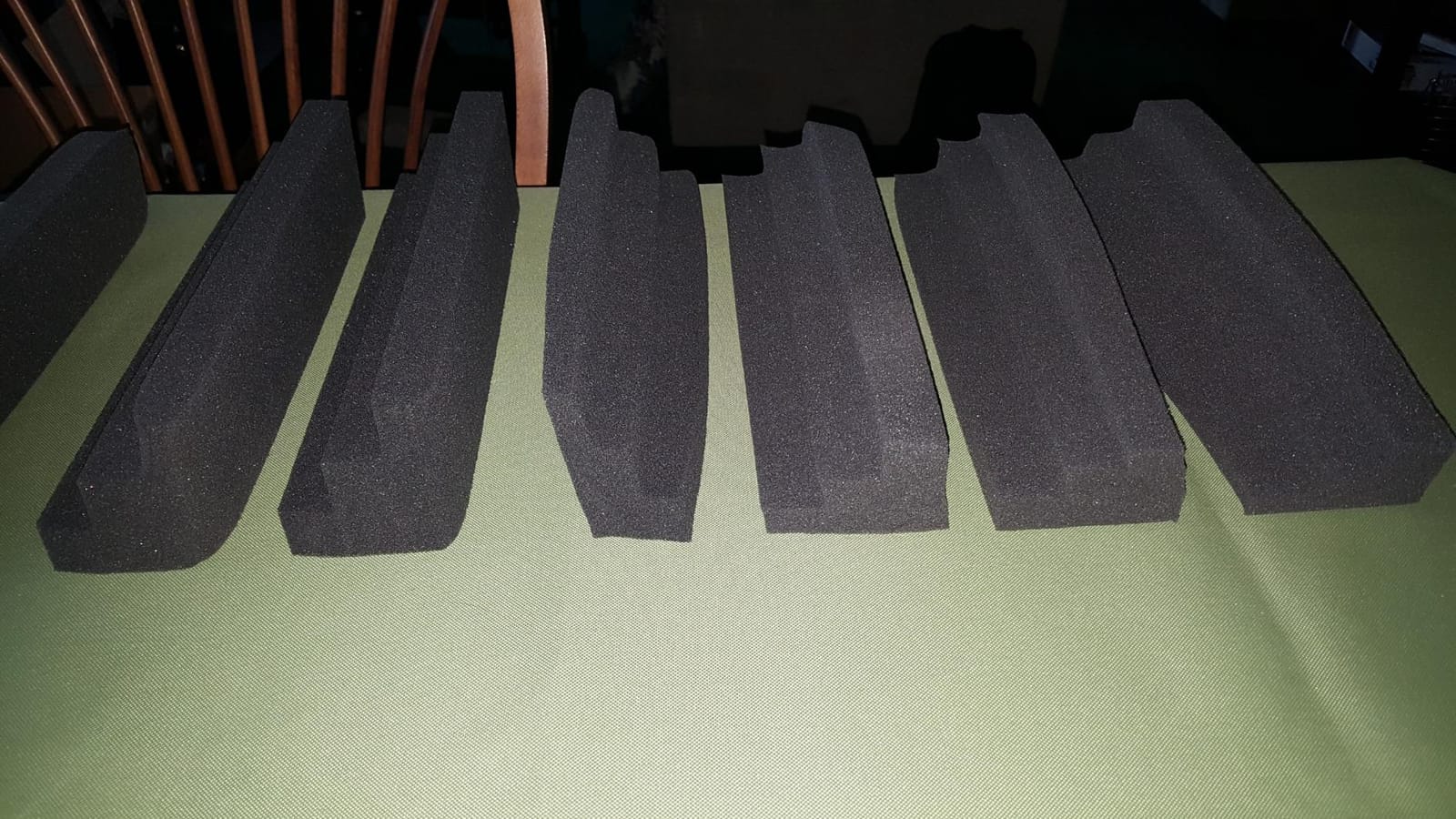
Owners report the low end warming and clearing, which is the classic symptom of removing corner build-up. Note that the effect depends on depth, and at 7 inches across these are modest traps compared with a stacked floor-to-ceiling column.
What to check before you buy
Four traps is a starter quantity, not a treatment. If you want real corner work you will be stacking these vertically in all four corners, so count on more than one pack before you measure the corner height.
Hardware is not included. Glue, double-sided tape or nails all work, but you need your own, and the foam surface grips paint if you use adhesive and later want it off.
Who it suits and who it does not
It suits a small bedroom studio where the boom is in the bass and you have already treated your first reflection points with flat panels. Corners are the next most efficient place to spend after those.
It does nothing about echo or flutter, and it does not isolate anything. If your room is bright and slapback-heavy rather than boomy, corner traps will not be your first purchase.
7. AudioSilk Room Kit Panels for Rented Spaces
AudioSilk Acoustic Panels, 4 Pack ROOM KIT, Large, 46″ x 23″, Mid Grey
0.4 inch thick
NRC up to 0.91
45.7 x 22.8 inch
Recycled PET
Mounts with strips or screws
Pros
- NRC up to 0.91 from a 0.4 inch recycled PET panel
- Arrives flat with no vacuum wait or expansion
- Removable with nano tape or Command strips
- Large panels replace many small foam squares
Cons
- Adhesive strips are sold separately
- Command strips will not hold these on a ceiling
- Panels can snap or crease if bent too far
This is the renter answer. The material is post-consumer recycled PET, it arrives flat and rigid, and it can be mounted with removable strips rather than glue or screws, so you can take the whole room with you when you move.
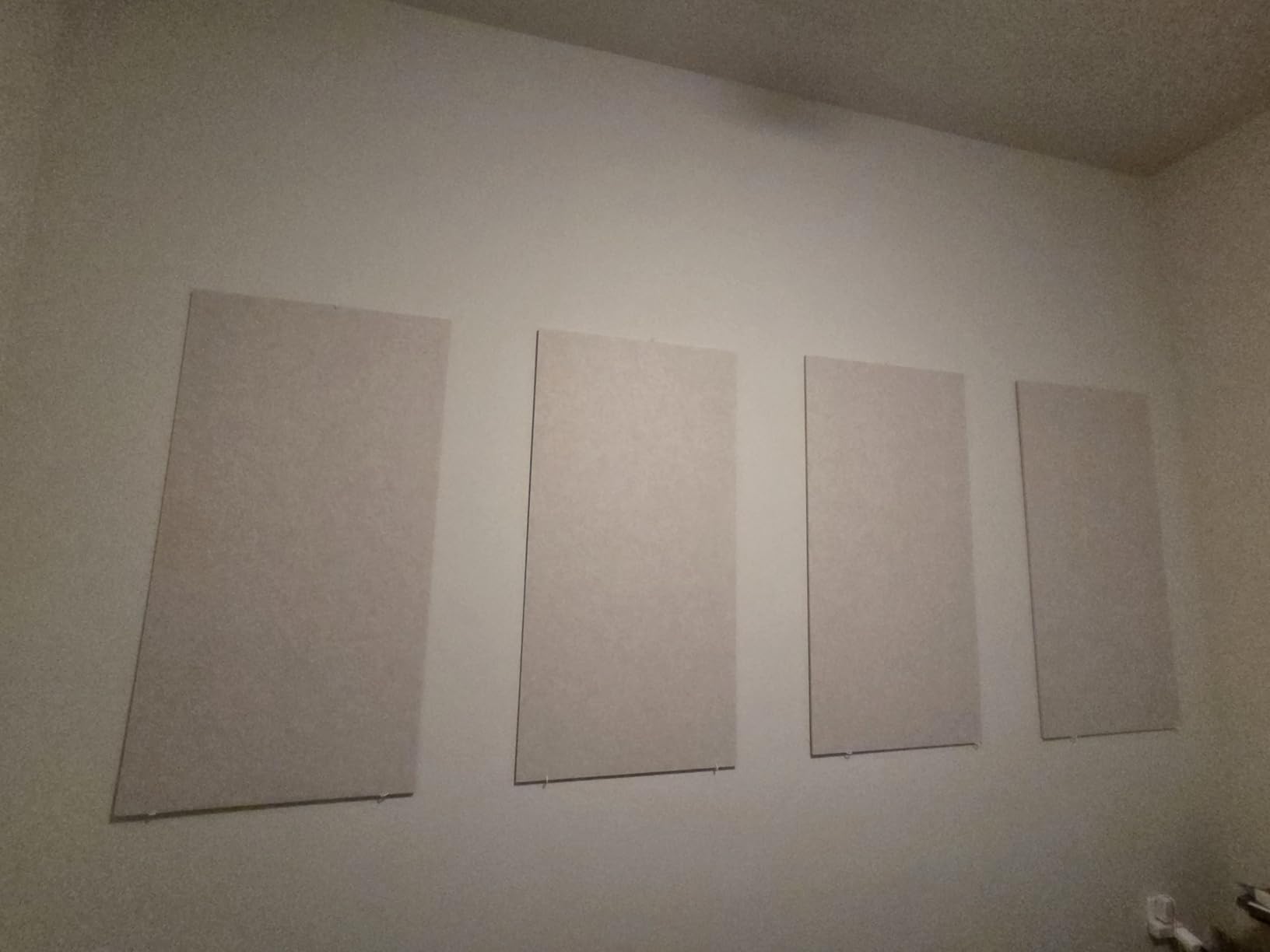
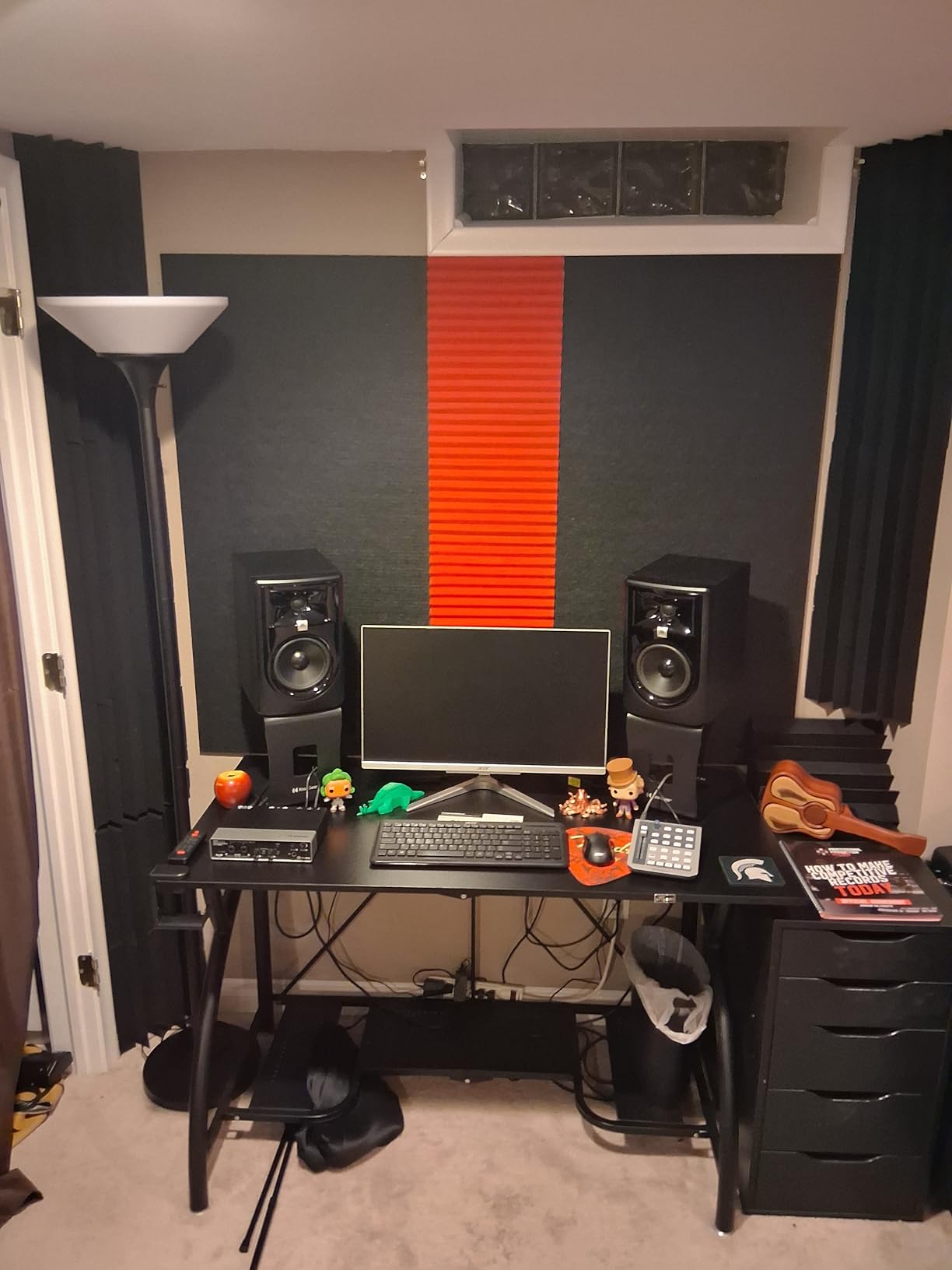
That flat arrival is the quiet hero. Vacuum-packed foam needs a day or more of recovery before it looks right, while these come out of the box ready to hang. The claimed NRC of up to 0.91 is unusually high for the thickness, though it is a manufacturer figure.
What to check before you buy
One reviewer with twenty years of production experience gave the most credible technical read in the set: excellent at knocking down high frequencies, but the 0.4 inch thickness cannot transform room acoustics on its own. Take that seriously before you expect a different room.
Mounting hardware is not included, and the recommended Command strip approach will not hold these panels on a ceiling. Ceiling work means drywall screws, which means you are drilling after all.
Who it suits and who it does not
It suits anyone in a rented flat who cannot touch the walls permanently, and anyone who has been disappointed by foam that never expands properly. It also carries free treatment and room measurement advice with the purchase.
It does not do the low end. Engineers keep repeating that 2 inches is the realistic minimum for meaningful absorption, and at 0.4 inches you are buying a high-frequency fix with a nice finish.
8. TONOR Dual-Layer Panels for Neighbour and Household Noise
TONOR Dual-Layer Thickened Acoustic Wall Panels-4 Pack 47.2″x23.6″x0.72″
Dual-layer build
0.72 inch thick
47.2 x 23.6 inch
4 panels
Self-adhesive backing
Pros
- 0.72 inch dual-layer build is far thicker than 0.35 inch felt rivals
- About 31 square feet of coverage per four-piece set
- Users report 50 percent or better reduction in household noise
- No chemical off-gassing odour
Cons
- Adhesive bonds so strongly that removal damages panel or wall
- Some buyers report little effect against low-frequency vibration
- Stripe pattern does not align perfectly across panels
This is the pick for people whose problem is noise arriving from elsewhere rather than echo bouncing around their own room. Apartment users installing wide wall and ceiling coverage report roughly 50 percent reductions in laundry, furnace and neighbour noise.
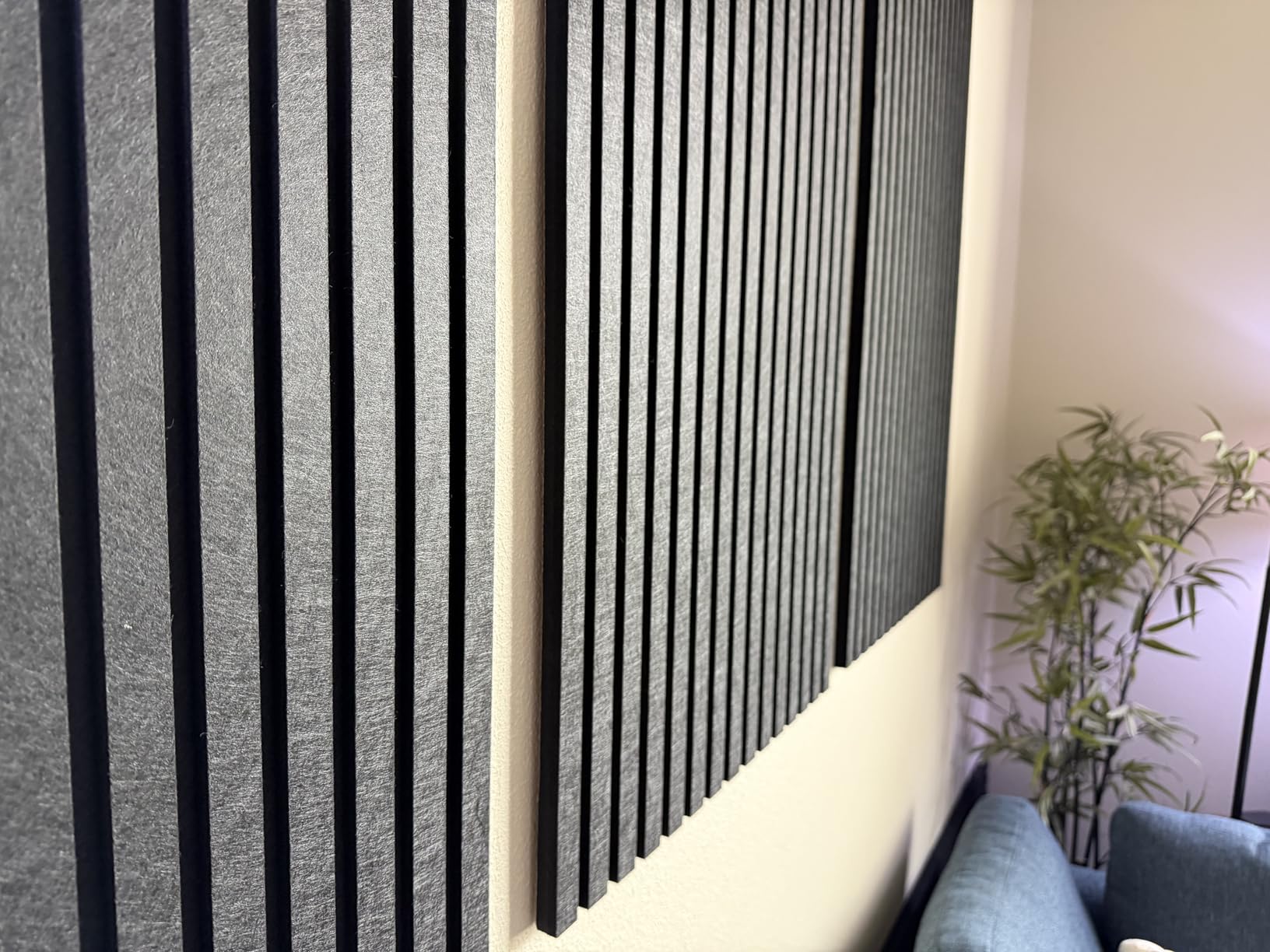
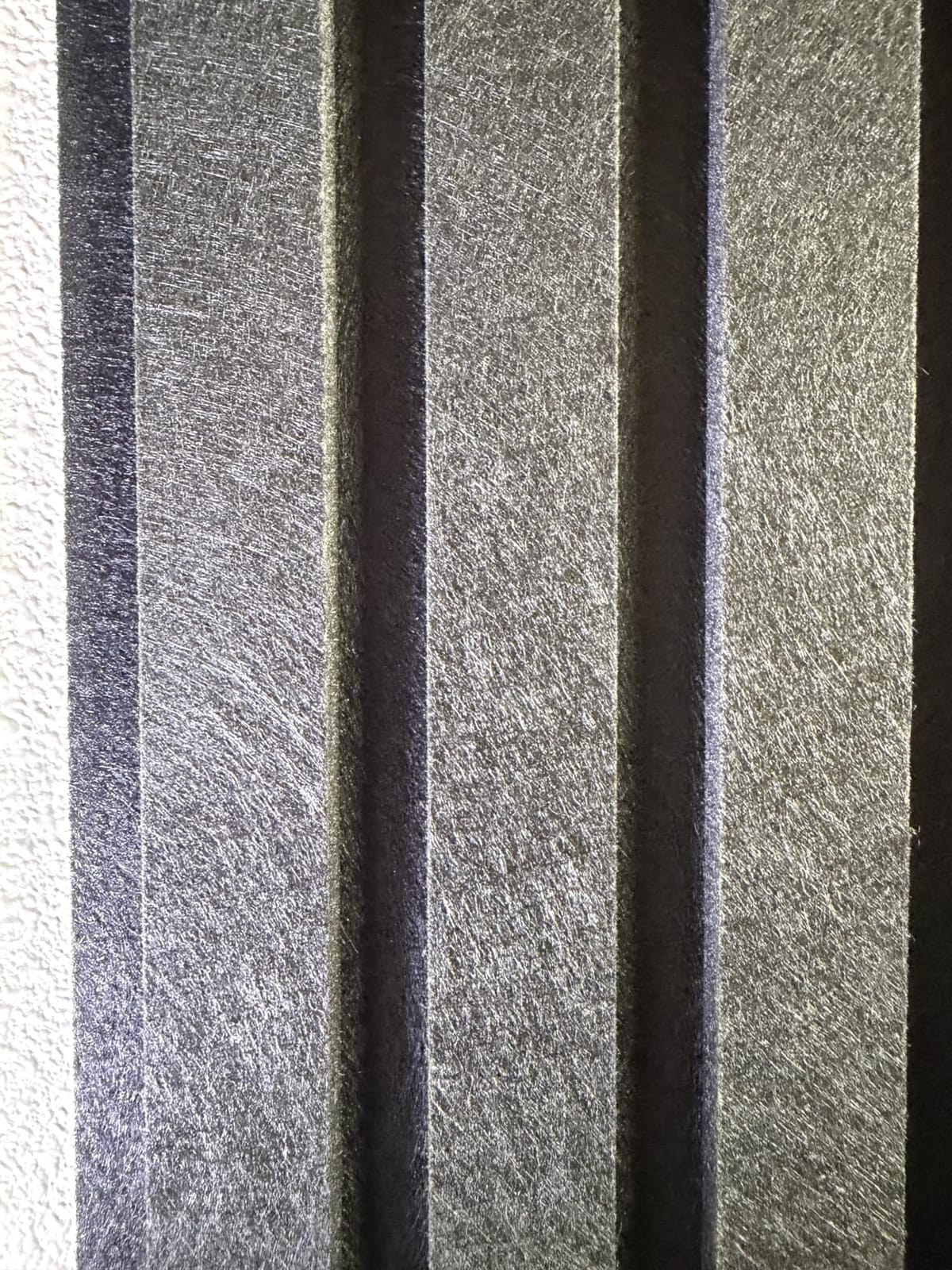
The dual-layer construction at 0.72 inches is the differentiator. Most decorative felt in this category sits at 0.35 to 0.4 inches, so this is roughly twice as thick for absorbing airborne sound, which is exactly the frequency range that carries through walls.
What to check before you buy
The adhesive is permanent in practice. Nearly every reviewer flags it, and it matters more here than anywhere else because these panels are large. If you rent, you are effectively making them part of the wall.
Performance is frequency dependent. Reviewers wanting to damp mechanical vibration report only 10 to 15 percent improvement, which is an honest limit rather than a defect. Structure-borne noise needs isolation work, not absorption.
Who it suits and who it does not
It suits someone in a flat dealing with audible household and neighbour noise who cannot rebuild the wall. Large panels also mean a ceiling can be covered in a couple of passes without a visible grid of tiles.
It does not stop bass vibration through a structure, and at 0.72 inches it falls well short of the 2 inch minimum for serious absorption. Buy it for airborne noise, not for a footstep problem.
9. Soon Global Arcadian Vortex Panels for a Decorative Feature Wall
Soon Global Acoustic Wall Panels, Arcadian Vortex
23.62 inch square
6 panels
Polyester with grooves
30 adhesive squares included
Wood-texture print
Pros
- Grooves and wood-texture print flow continuously across adjoining panels
- Thirty transparent adhesive squares included in every six-pack
- Tool-free installation with no nails or drills
- Holds its shape over time despite being lightweight
Cons
- Thin polyester performs far below professional absorber depth at low frequencies
- No manufacturer warranty listed
- Print prioritises appearance over measurable absorption
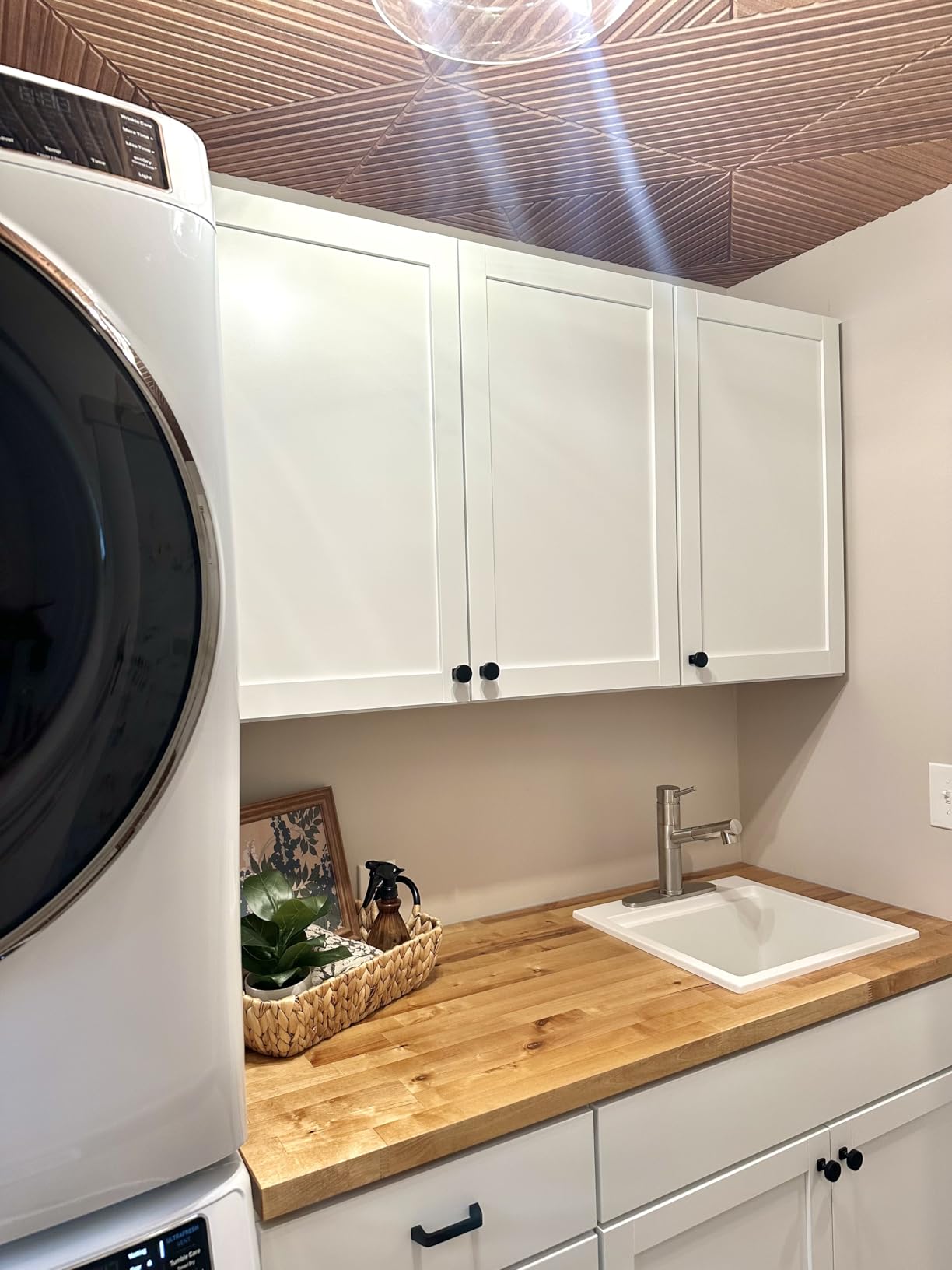
The strongest purchase objection in this niche is appearance: nobody wants a bedroom that looks like a bunker. These 23.62 inch panels with linear groove channels and a realistic wood-texture print are built to make treatment the decor rather than something you hide.
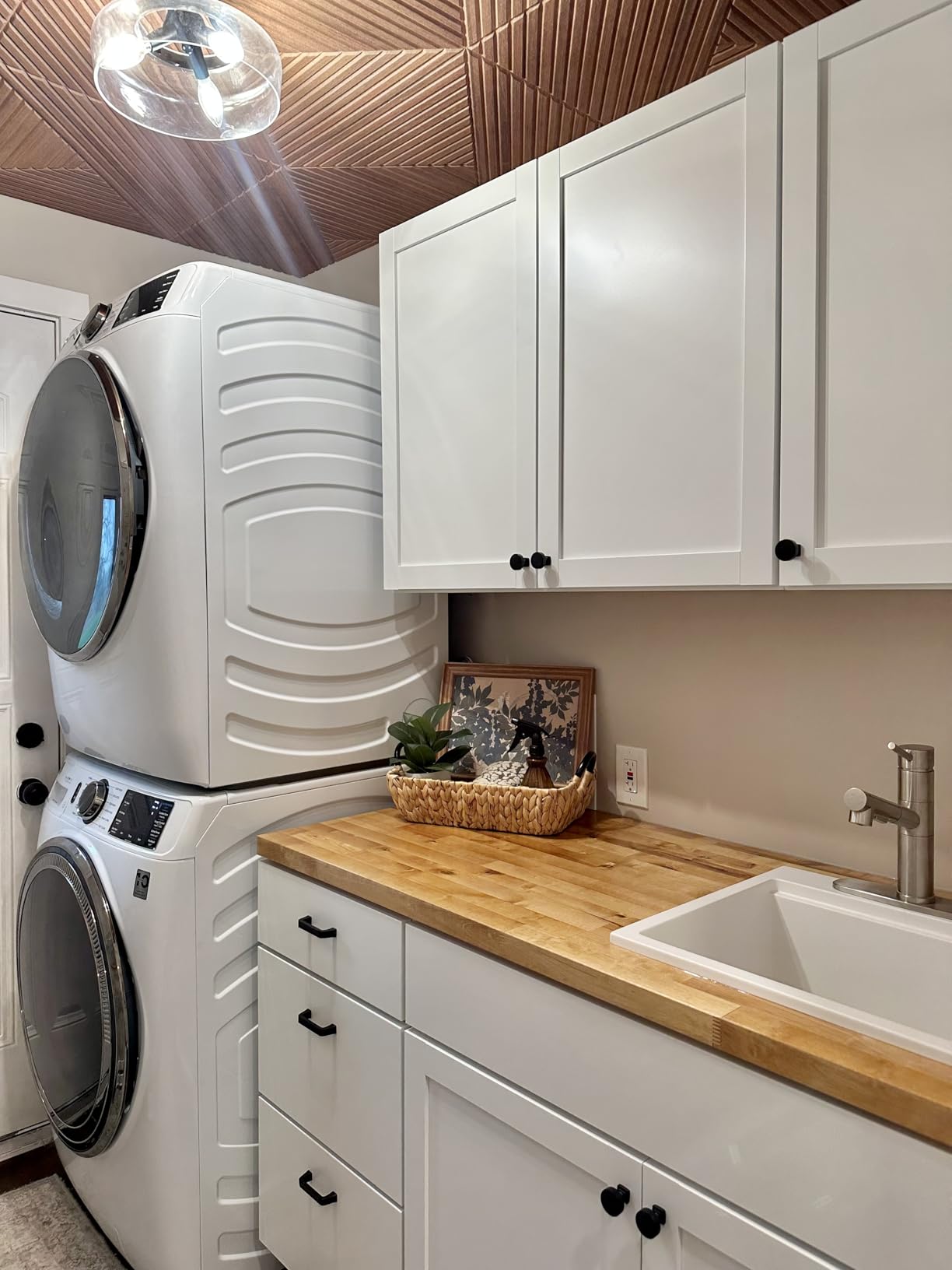
Because the groove pattern and print are designed to line up, adjoining panels read as one continuous feature wall. Thirty adhesive squares in every six-pack is more mounting hardware than most competitors supply, and the install needs no tools at all.
What to check before you buy
No published absorption coefficient is listed, and the manufacturer warranty is recorded as none. That is the trade: this is a decorative surface with real mid and high frequency benefit, not a measured absorber.
Because grooves are printed rather than carved deep, the diffusion effect is shallow. If flutter echo between parallel walls is your main complaint, use broadband panels at the first reflection points instead and treat this as the finish layer.
Who it suits and who it does not
It suits a living room studio, a home cinema or a streaming setup where the camera sees the wall. It also suits anyone who has abandoned foam because of how it looked.
It does not suit a critical mixing room on its own. Thin polyester will not control room modes, and you should not expect it to replace the 2 inch panels at your listening position.
10. BUBOS 6-Pack Panels for a Wood-Slat Look on a Budget
BUBOS 6-Pack Acoustic Panels, Wood Grain Sound Absorbing Panels, 23.6×23.6
23.6 inch square
0.35 inch thick
High-density polyester
6 panels
Wood grain print
Pros
- Light Diamond Weave print reads as wooden slats
- Polyester is odourless
- dust-free and resists crumbling
- Vacuumable surface makes upkeep simple
- Trims easily with a box cutter
Cons
- Only 0.35 inches thick so improvement is moderate
- Adhesive backing varies between packs and can strip paint
- Needs near-total surface coverage before noticeable reduction
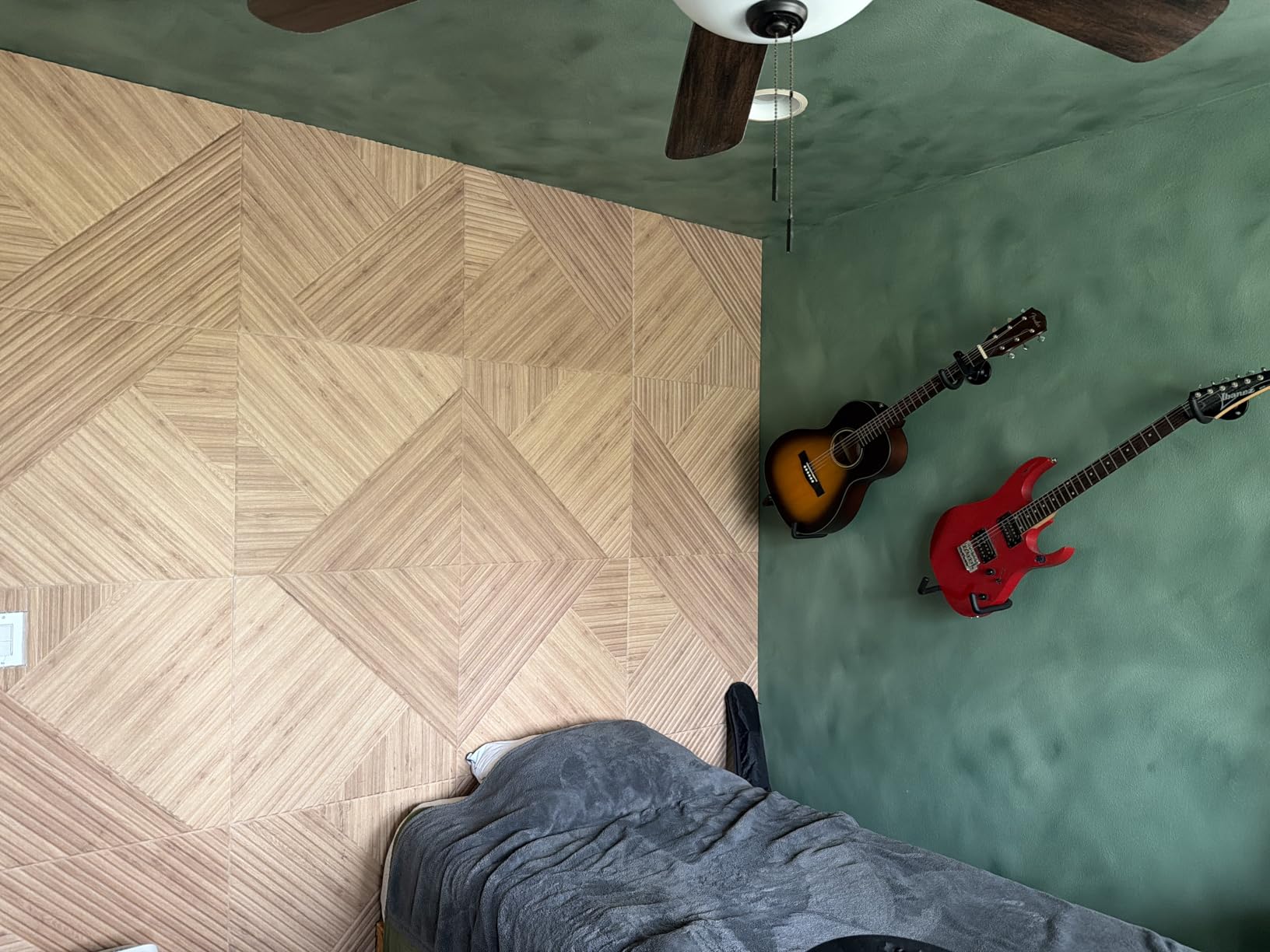
This is the cheapest route to the slatted wood look that dominates the aesthetic conversation in home studio forums. The Light Diamond Weave print mimics slats convincingly and weighs a fraction of what real timber slat panels weigh.
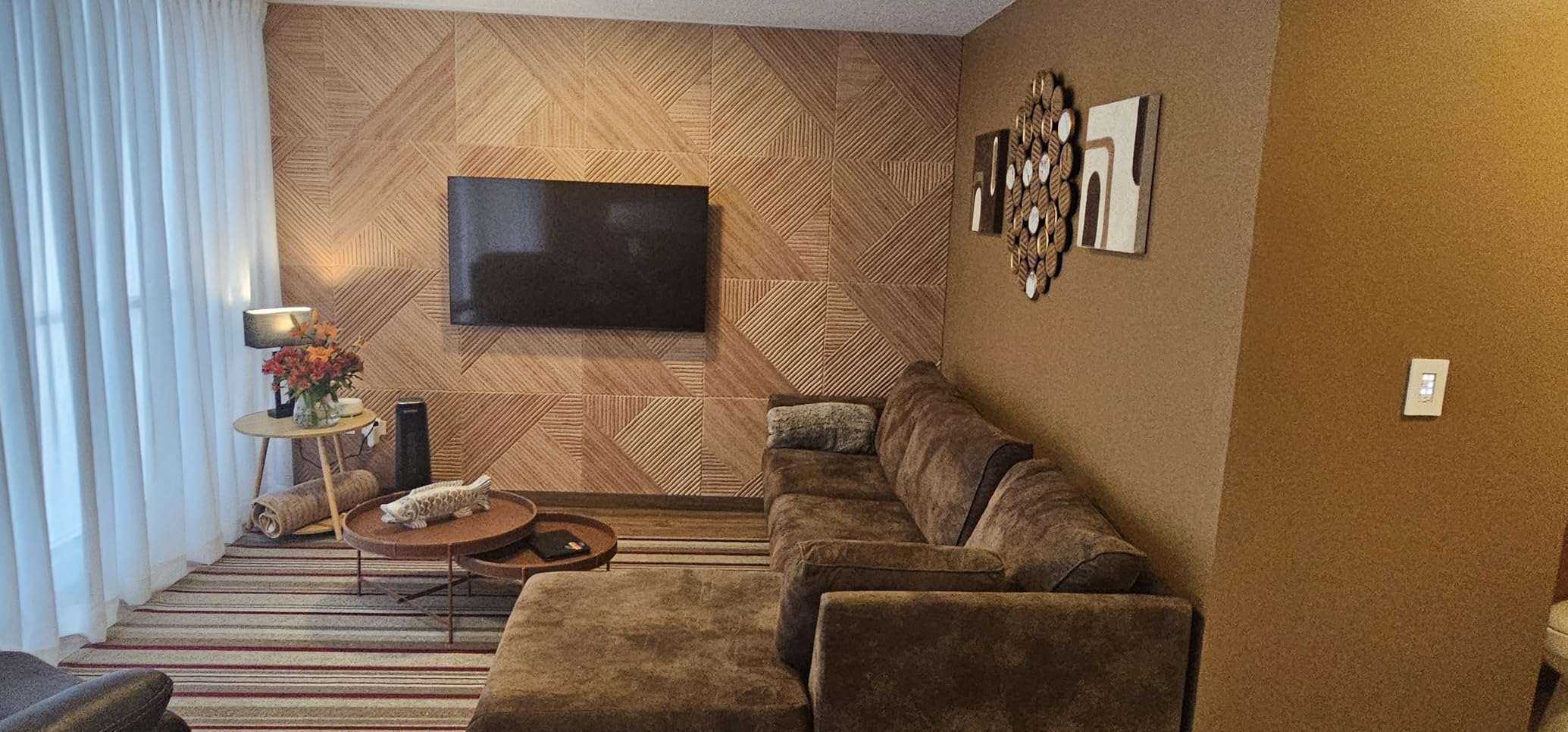
The polyester construction is the real advantage over foam for this role. Reviewers report it resisting crumbling and sagging, and the surface can be vacuumed, which matters in a room where the panels are decorative enough to keep visible.
What to check before you buy
The adhesive is inconsistent between packs of the same listing. Some arrive with weak tabs, others with full adhesive backing that tears paint when pulled off, so if you rent, use removable strips instead.
At 0.35 inches, expect moderate improvement only. Several verified reviews document real reductions in sound carrying between rooms, but only when coverage is extensive. Treat the coverage requirement as a budget line, not a detail.
Who it suits and who it does not
It suits someone building a vocal booth corner or a home cinema wall on a tight budget who still wants the room to look designed. Six panels at 23.6 inches square give nearly four times the coverage of 12 inch tiles.
It does not suit a critical listening position. There is no published absorption coefficient here, and 0.35 inches will not touch your low end or your early reflections in a measurable way.
11. JaneTech 8-Pack Art Panels for Studios That Double as Living Spaces
JaneTech 8-Pack Art Acoustic Panels Sound Absorbing Panels, 48×32 Inch Decorative Acoustic Panels, Sound Absorbing Wall Art with Nano Glue for Recording and Home Studio, Office,Conference
48 x 32 inch art format
8 panels
Polyester fiber
Nano glue mounting
4.14 lbs per pack
Pros
- Art-panel styling that works as wall decor
- Polyester fiber is flame retardant and wear resistant
- Nano glue stickers mount on walls
- doors
- windows and ceilings
- Light enough to install with no tools
Cons
- Absorbs mainly high frequencies
- No published NRC or absorption coefficient
- Listing copy describes a different pack size than the variant received
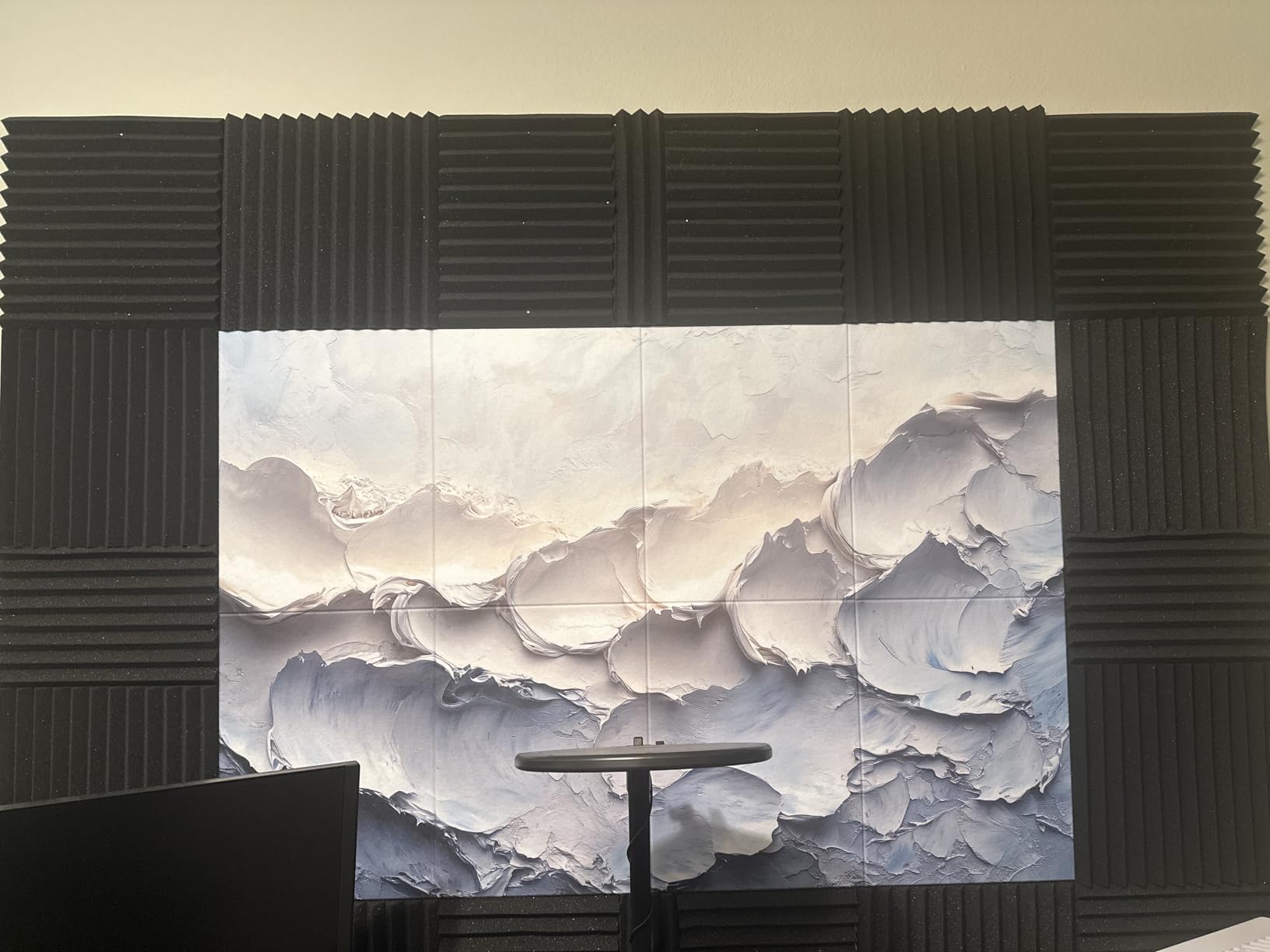
Art panels solve a problem no fabric-wrapped panel does. If the wall is visible on camera or guests see it, these read as printed artwork rather than studio equipment, and the eight-panel pack covers a lot of wall doing it.
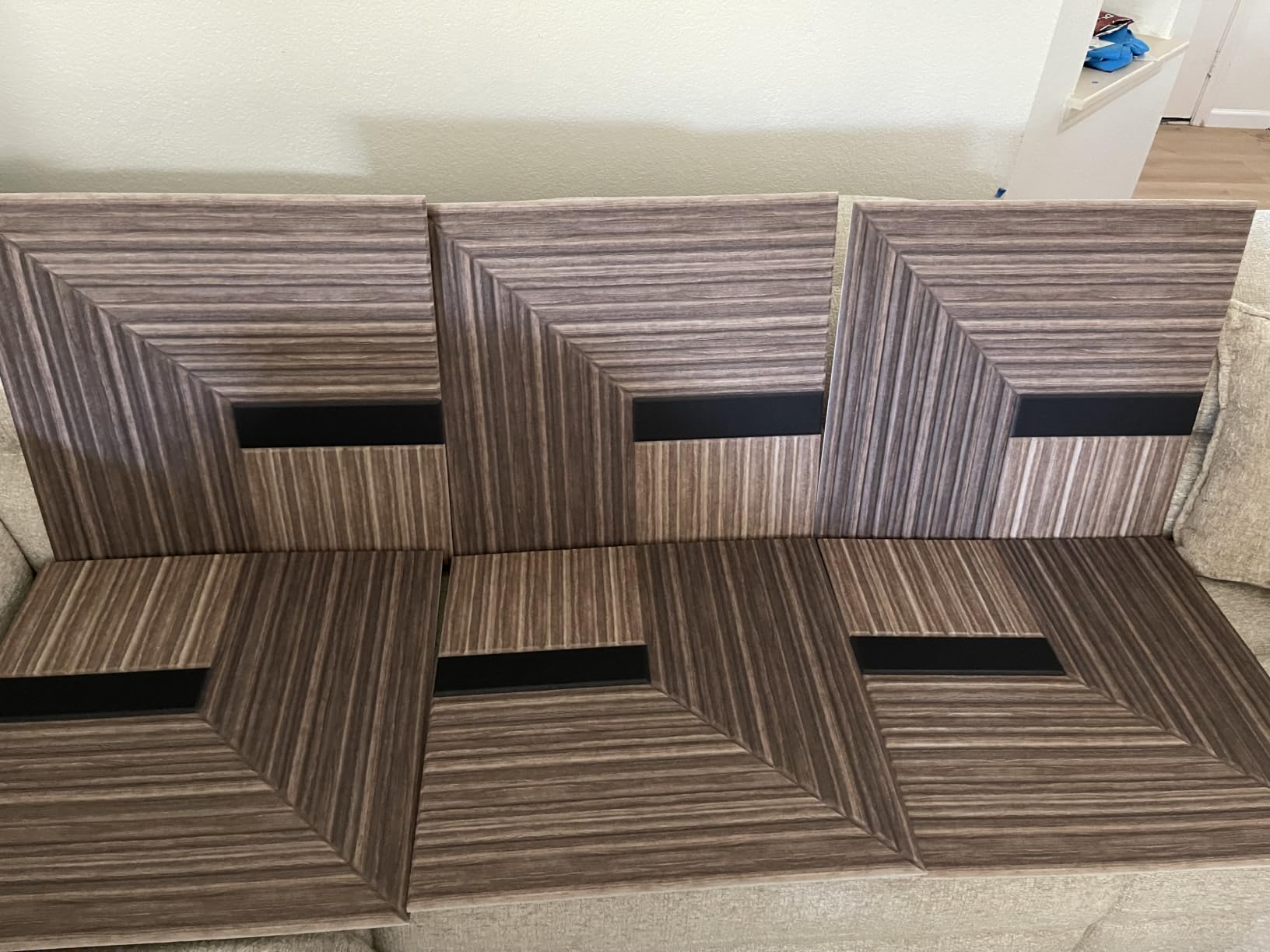
Reviewers treat them as functional wall art for studios, offices and conference rooms rather than pure treatment. The nano glue sticker system mounts on walls, doors, windows and ceilings in three steps, which is unusually flexible for the surfaces involved.
What to check before you buy
Expect the finish to be the selling point rather than the coefficient. These absorb mainly high frequencies and no numeric absorption figure is published, so you are buying appearance with some real midrange benefit attached.
Read the pack description carefully. Reviewers report the listing copy describing a six-pack of larger panels while the delivered variant was an eight-pack of smaller ones, which is an expectation mismatch rather than a quality problem.
Who it suits and who it does not
It suits a home office, podcast corner or streaming room where the wall is on camera and you refuse to compromise on the visuals. If the instruments in the room are also new, our acoustic guitars for beginners guide covers the other half of a spare-room setup.
It does not suit a mixing room. Without bass and mid control from elsewhere, art panels will only take the edge off high-frequency reflections, and they will not change how your low end sounds.
12. BSHEAD 12in Wall Panels for DIY Layouts and Removable Mounting
12in Acoustic Panels for Walls, High Density Soundproof Wall Panels
0.47 inch thick
12 x 12 inch
8 panels
1.2 lb per cu ft density
45 degree chamfer
Pros
- Includes spare removable tape so panels come down without wall damage
- 45 degree chamfer pattern can be rotated into custom layouts
- High 1.2 lb per cu ft density for the thickness
- Trims cleanly with a blade and ruler
Cons
- Several buyers report no audible difference at all
- Best results need a full wall or upper four feet covered
- Adhesive grips poorly on textured walls
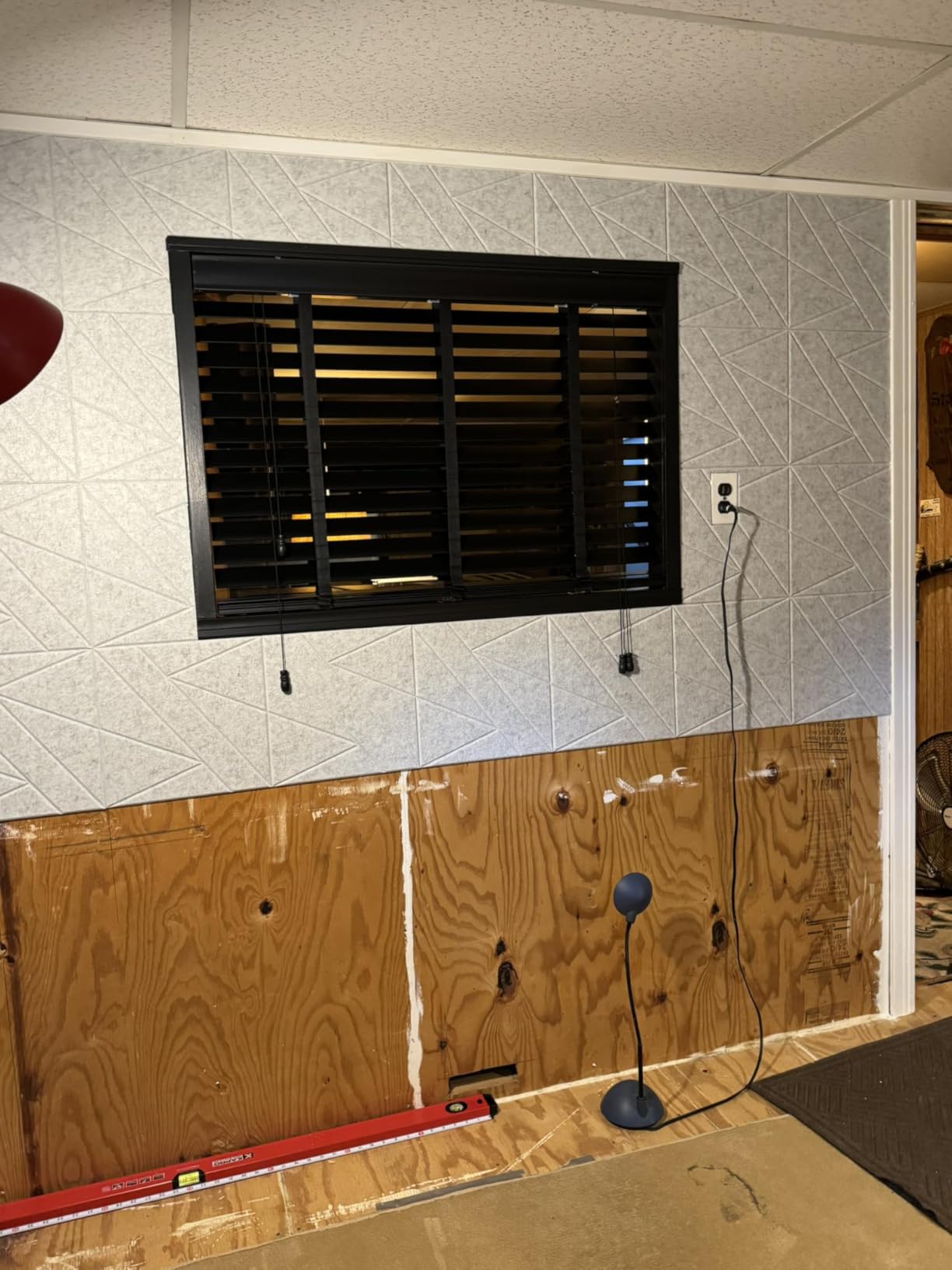
The 45 degree chamfer edge is the detail worth noticing. Because every tile shares the same angled face, you can rotate and splice them into repeating patterns and custom shapes rather than staring at a flat grid of squares.
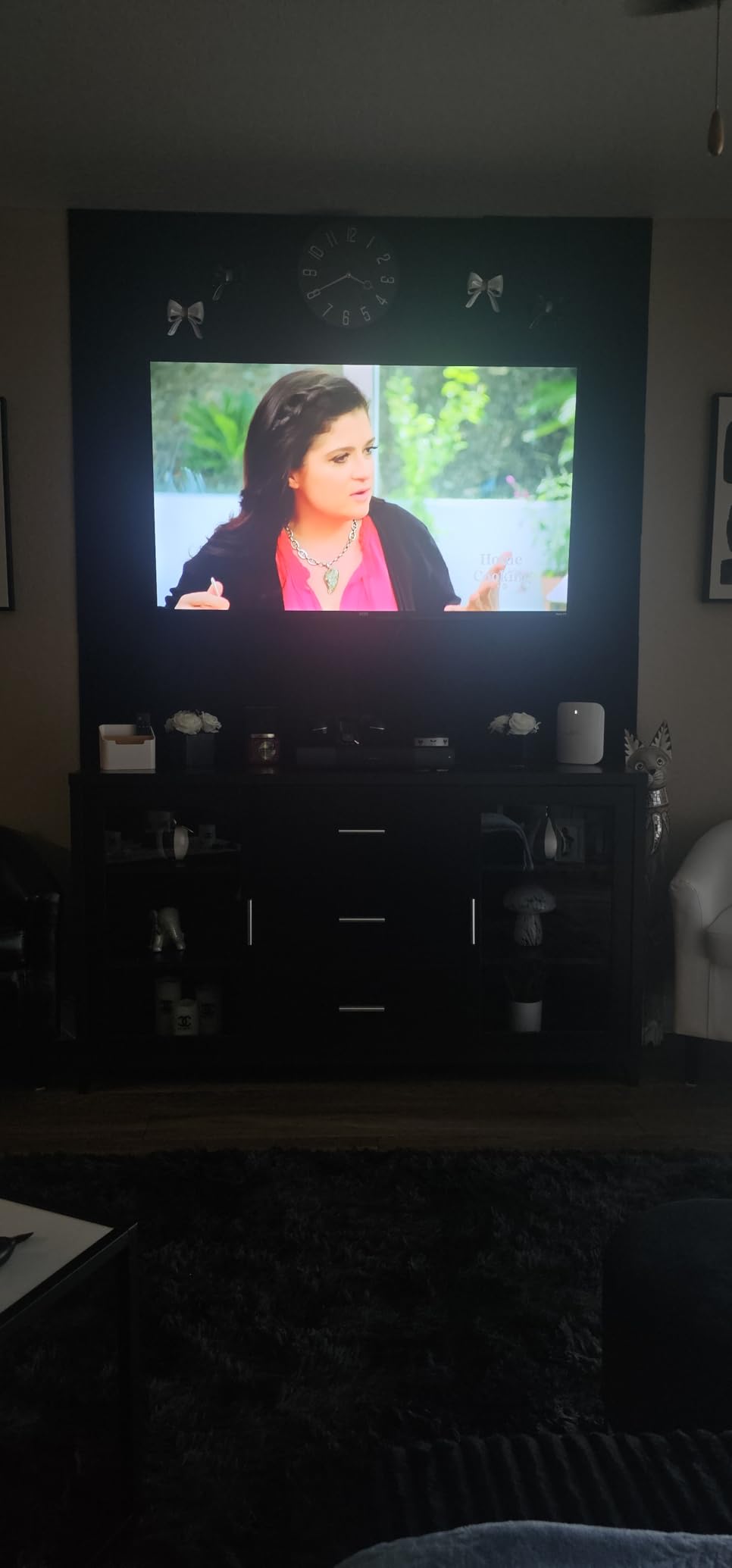
Buyers who covered a full wall report genuine echo and noise reduction and a professional studio appearance. The spare removable tape included in the pack is a genuine renter feature that most listings at this level skip.
What to check before you buy
Coverage is the deciding factor. An 8-pack gives roughly 7.6 square feet, and the reviews are consistent that best results come from covering an entire wall or the upper four feet rather than scattering panels.
Performance reviews split sharply, with a vocal group at one to three stars saying the panels are decorative with no measurable acoustic change. Adhesive also grips less well on textured walls, which rules out masonry and heavy texture.
Who it suits and who it does not
It suits a first room where you want a visible studio look and the freedom to rearrange later, and anyone who wants to design a pattern rather than cover a wall evenly.
It does not suit anyone chasing bass, transmission or isolation, and it carries only a 30 day warranty. At 0.47 inches it is a mid and high frequency tool, not a room treatment.
Buying Guide: Thickness, Core Material, NRC and Mounting
Thickness is the single decision that matters most, because it sets the lowest frequency you can influence. Everything else on the spec sheet is secondary to getting a panel deep enough for the problem in front of you.
At 1 inch you are working on the mid and high range, which means echo, flutter and vocal clarity. At 2 inches you reach down into the lower mids, which is why 2 inches is the common starting point for home recording rooms. At 4 inches and beyond, and in deep corner columns, you start to address the low end. Below about 1 kHz, thin foam panels do very little, and that is the number one reason buyers conclude treatment does not work.
Core material decides durability and how the panel behaves over years. Mineral wool and fiberglass at 6 to 7 pounds per cubic foot is the classic studio core, and a framed wool panel gives you edge protection as well. Polyester felt is what most decorative panels here use: it is clean, vacuumable and does not crumble, but it is thin by design. Foam is the lightest and the cheapest and the least effective at low frequencies.
NRC, the Noise Reduction Coefficient, is an average of absorption across a spread of frequencies. Treat it as a headline figure, not a curve. A panel that performs well at 4 kHz and poorly at 250 Hz can still post a respectable average, which is exactly the failure mode of every thin decorative panel on the market. If you are reading imported product specs, note that European panels are often quoted with alpha-w under BS EN ISO 11654, which is not the same scale as NRC.
Fire rating is worth a look in a domestic space. Look for ASTM E84 Class A where it is published, and note that California Technical Bulletin 117-2013 compliance, which the TroyStudio pack carries, is a different test.
Mounting decides whether you can install at all. Z-clamp hardware on the ATS panel is wall-only, Command strips will not hold these panels on a ceiling, and permanent adhesive backing means removal takes paint with it. In a rented flat, removable strips or nano tape are the practical option, and a freestanding panel needs no wall access at all.
One risk almost no guide mentions: panels act as thermal insulation. That can trap condensation against the wall behind them, particularly on an exterior wall in a humid climate, which leads to mould. Leave a ventilation gap where you can, avoid exterior walls where possible, and check behind panels periodically.
If you build instead, forums consistently point to rigid 2 inch Owens Corning 703 with no backing as the cheapest material that genuinely performs, wrapped in acoustically transparent fabric over a breathable membrane. That is a weekend build, and the r/podcasting consensus treats it as the value benchmark.
What Acoustic Panels Cannot Do
Acoustic panels cannot soundproof a room, and no panel on this list changes that. Absorption reduces the energy inside your room. Isolation, which is what people mean by soundproofing, is a completely different problem involving mass, decoupling and airtightness of the structure itself.
They also cannot fix bass below the frequency their thickness supports, and they cannot stop sound travelling through a wall, floor or ceiling. If your complaint is your neighbour’s bass drum, that is a building problem and no panel in this list addresses it.
And they cannot make a room better by covering every surface. Over-treatment produces a dead, tiring space where mixes stop translating. Leave some surface open and keep a mix of absorption and diffusion.
Frequently Asked Questions
What are the best acoustic panels for a recording studio?
2 inch thick panels rated NRC 0.8 or higher are the standard choice, installed first at your first reflection points and then along the rear wall. Framed wool panels with a published NRC of 1.0 lead our list, 2 inch grooved foam rated NRC 0.8 covers the most area per pack, and dense polyester is the practical choice when mounting has to be tool-free.
What is the best acoustic treatment for a home recording studio?
Treat in priority order: first reflection points at ear height, then the rear wall behind the listening position, then room corners with deep bass traps, then a ceiling cloud above the mixing position. Aim to cover 20 to 30 percent of total wall surface with broadband absorption and leave part of the room untreated so mixes still translate.
How do you soundproof a room for recording?
Soundproofing is isolation, not absorption. It requires adding mass, decoupling the structure so vibration does not pass through, and sealing gaps so air cannot move. That means dense door seals, a solid core door, acoustic sealant on wall junctions, and often a floating floor or a second layer of drywall.
What are some good acoustic panels for a home studio?
For most bedrooms and spare rooms, 2 inch foam or a framed fabric-wrapped wool panel at first reflection points gives the largest improvement. For rented rooms, removable-mount recycled PET panels avoid permanent damage. For appearance, printed wood-grain or art panels treat high frequencies while reading as decor.
What are some common problems with acoustic panels?
The most common problems are buying panels too thin for the frequency you need, scattering them instead of concentrating them at reflection points, expecting isolation from an absorber, and over-treating until the room sounds dead. Vacuum-compressed foam arriving crushed and permanent adhesive that strips paint are the two most frequent purchase regrets.
What are the best brands of acoustic panels?
Brands worth shortlisting include ATS Acoustics for framed wool panels with published NRC ratings, TroyStudio for large foam packs, Auralex, Primacoustic, Vicoustic and GIK Acoustics for broader ranges, and Acoustics America for entry fabric-wrapped panels. Check that any brand publishes a thickness, a core density and an absorption figure rather than a photograph.
How many acoustic panels do I need for a home studio?
A common starting target is 20 to 30 percent of total wall surface area. A 10 by 12 foot room with an 8 foot ceiling has roughly 704 square feet of wall, so that target is near 141 square feet, or about 18 panels at 8 square feet each. Placement matters more than the total, so spend it at first reflection points first.
Final Verdict for 2026
For most home recording rooms the ATS Acoustic Panel 24x48x2 is the right first purchase. It is the only panel here with a published NRC 1.0, a solid wood frame and a hardware kit in the box, and at 24 by 48 inches it moves the needle quickly. Pair it with deep corner traps behind your listening position and you have covered the two problems that matter most.
If the room is small and the budget is real, the TroyStudio 2 inch pack gives you 52 square feet of NRC 0.8 coverage in one order, and the Dailycooper 12-pack is the fastest way to put something useful on a wall in an afternoon. For rented flats, the AudioSilk room kit mounts with removable strips and arrives flat instead of compressed.
Whichever you pick, put the first panels at your first reflection points, find them with a mirror, and keep enough of the room untreated that your mixes still travel. That is the method behind every good result we saw reported in 2026, and it costs nothing.