
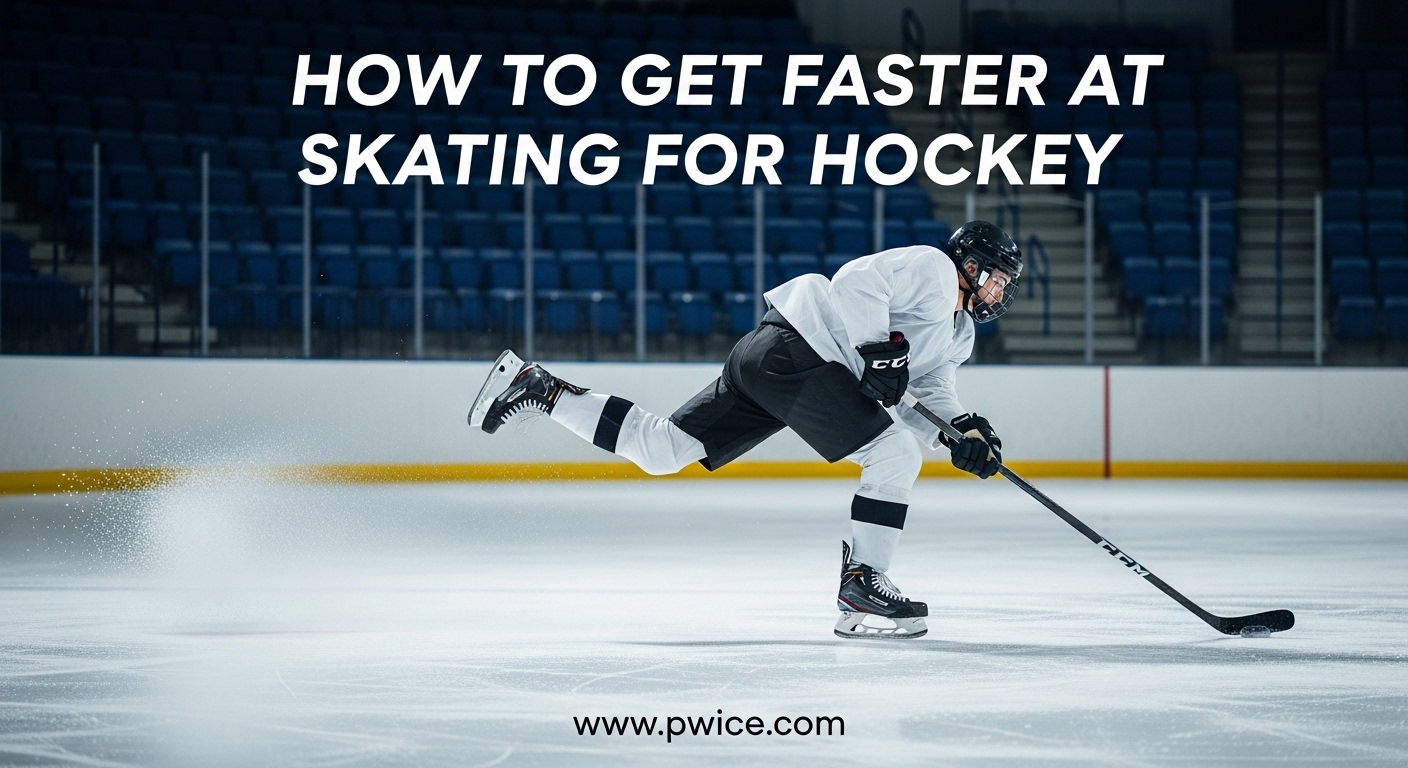
Speed separates good hockey players from great ones. Learning how to get faster at skating for hockey requires a blend of proper technique, off-ice strength training, and consistent practice both on and off the ice. Whether you are a beginner lacing up for the first time or a competitive player pushing toward elite performance, the strategies in this guide will help you accelerate past the competition.
In this comprehensive guide, we will break down the biomechanics of skating speed. You will discover specific exercises that translate directly to on-ice velocity, learn technique refinements that NHL players use, and get a practical training schedule you can follow starting today.
Table of Contents
7 Quick Tips to Skate Faster Right Now
Before diving into the detailed training program, here are seven actionable techniques you can implement during your next skate session. These tips target the most common speed limitations I see in players at every level.
- Get low: Maintain a deep knee bend with your center of gravity forward over your toes
- Fully extend your driving leg: Push completely through each stride to maximize power output
- Master the toe flick: Finish every push with your toe pointed down for extra propulsion
- Bring your leg back to center: Recover quickly to position for the next explosive push
- Increase stride frequency: Take more strides per minute without sacrificing form
- Practice crossovers daily: Circle drills build the hip strength needed for speed
- Train off-ice sprints: Short explosive runs develop the same muscles used in skating
How to Get Faster at Skating for Hockey: The Science of Speed
Skating speed is not magic. It is biomechanics applied consistently over time. Understanding the components of speed will help you train smarter and see results faster.
Stride Frequency vs. Stride Length: Finding the Balance
Speed equals stride frequency multiplied by stride length. Both matter, but most recreational players focus too much on trying to take giant strides. The fastest skaters actually take more frequent, medium-length strides with explosive power.
Think of it like running. Elite sprinters have a cadence around 250 steps per minute. Your skating cadence should be similarly high during acceleration, then lengthen slightly once you reach top speed.
The key is hip abduction combined with rotation and extension. This hip movement pattern generates the side-to-side power that propels you forward on ice.
The Hip Abduction-Rotation-Extension Sequence
Every powerful skating stride follows the same sequence. First, your hip abducts, pushing your leg out to the side. Then your hip internally rotates, setting the angle of attack. Finally, your hip extends fully, driving power through the ice.
This A-R-E sequence happens in milliseconds during top-speed skating. Off-ice training that strengthens these specific movement patterns will directly translate to faster skating.
Professional Speed Benchmarks
NHL players reach speeds of 20 to 25 miles per hour during game situations. Connor McDavid has been clocked at over 25 mph during breakaways. These numbers give you a target to visualize, but focus first on improving your personal best speed.
Track your progress by timing yourself over set distances. Most rinks have markings at the blue lines and red line that make timing 50-foot sprints easy.
6 Essential Off-Ice Exercises to Build Hockey Speed
Off-ice training forms the foundation of skating speed. The right exercises build the hip strength, explosive power, and stability you need on the ice. Here are six movements every hockey player should master.
1. Bulgarian Split Squats
Bulgarian split squats develop single-leg strength and hip stability. These directly mirror the single-leg push of every skating stride.
Stand about two feet in front of a bench. Place one foot behind you on the bench. Lower your hips until your front thigh is parallel to the ground. Drive through your front heel to return to standing.
Perform three sets of eight to ten reps per leg. Start with bodyweight, then progress to holding dumbbells once you can complete all reps with perfect form.
2. Plyometric Box Jumps
Box jumps train explosive hip extension, the same power pattern used in acceleration. They also develop reactive strength in your legs.
Stand facing a sturdy box or platform about knee height. Drop into a quarter squat, then explode upward, driving your knees toward your chest. Land softly with both feet on the box. Step down carefully.
Beginners should use an eighteen-inch box and focus on landing mechanics. Advanced players can use twenty-four to thirty-inch boxes and add a weighted vest.
3. Sprint Training
Short sprints build the neuromuscular coordination needed for quick acceleration. Sprinting also develops hip flexor strength for fast stride recovery.
Find a flat surface and mark off twenty yards. From a standing start, explode into a sprint and run through the finish line. Walk back slowly for full recovery between reps.
Complete six to eight sprints per session, resting ninety seconds between each. Focus on driving your knees up and pumping your arms aggressively.
4. Pallof Press
The Pallof press builds anti-rotation core strength. This stability helps you transfer power efficiently from your legs to the ice without energy leaks.
Attach a resistance band to a pole at chest height. Stand perpendicular to the anchor point with the band at your chest. Press your arms straight forward while resisting the band’s pull that wants to rotate your torso. Hold for two seconds, then return.
Do three sets of twelve reps per side. Keep your hips square throughout the movement. This exercise should feel challenging to your obliques and deep core muscles.
5. Slide Board Lateral Movement
Slide boards perfectly replicate the lateral push of skating strides. They train hip abduction strength and build the specific muscle endurance needed for long shifts.
Stand on a slide board with booties on your shoes. Push off with one foot to slide across to the other side. Push back immediately with the opposite foot. Generate power from your hips, not your knees.
Beginners should aim for continuous sliding for thirty seconds. Advanced players can do interval sets of forty-five seconds on, fifteen seconds off, for ten rounds.
6. Single-Leg Romanian Deadlifts
This exercise develops hamstring strength and hip hinge mechanics. Strong hamstrings help you maintain proper skating posture and prevent fatigue late in games.
Stand on one leg with a slight knee bend. Hinge at your hips while extending your free leg behind you. Lower your torso until it is nearly parallel to the ground. Squeeze your glutes to return to standing.
Complete three sets of ten reps per leg. Hold light dumbbells once you master the balance component. Focus on feeling your hamstrings and glutes working.
Beginner vs. Advanced Modifications
If you are new to training, start with bodyweight versions of each exercise. Master the movement patterns before adding load. Take longer rest periods between sets.
Advanced players should increase intensity through heavier weights, shorter rest periods, or more complex variations. Add jump squats after Bulgarian split squats. Use a weighted vest for box jumps. Sprint uphill instead of on flat ground.
On-Ice Technique Tips to Skate Faster Immediately
All the off-ice strength in the world will not help if your technique is inefficient. These on-ice adjustments can make you faster today without any additional fitness.
Optimize Your Knee Bend
Standing too upright kills your power. You need a deep knee bend with your hips low to generate force against the ice. Think of sitting back into a chair while keeping your chest up.
Your center of gravity should be forward over your toes, not back on your heels. This forward lean lets you push back effectively with each stride.
Practice skating with a puck on your stick. If you feel off-balance or slow, check your knee bend depth first.
Master the Toe Flick
The toe flick is the secret weapon of elite skaters. As you finish each stride, point your toe down and flick your foot backward. This small movement adds significant power to every push.
Practice this by skating slow laps and exaggerating the toe flick on every stride. Feel the extra push you get when your toe digs in at the end of the motion. Once you feel it, gradually increase speed while maintaining the flick.
Perfect Your Crossovers
Crossovers are essential for cornering and acceleration. They also build the hip strength that carries over to straight-line speed.
Skate circles around the faceoff dots for two minutes in each direction. Focus on pushing with the outside leg and bringing the inside leg over smoothly. Keep your shoulders level and your core engaged.
As you improve, tighten the circles and increase speed. The goal is to maintain clean technique even when fatigued.
Forward Lean and Weight Transfer
Your body angle determines your direction of force. Lean forward from your ankles, not your waist. This keeps your power vector pointing where you want to go.
Transfer weight completely onto each pushing leg before initiating the push. Incomplete weight transfer wastes energy and reduces power output.
Practice by doing acceleration drills from a standstill. Push off hard with one leg and glide on it for a moment before starting the next stride. Feel the full weight transfer.
Recovery Stride Mechanics
Speed is not just about the push. How quickly you return your leg to center for the next stride determines your maximum cadence.
Focus on bringing your recovery leg back under your body quickly. Use your hip flexors to drive the knee forward, not just gravity to let the leg swing back.
Practice recovery speed with stationary drills. Stand on one leg and drive the other knee up rapidly. Alternate legs for thirty-second intervals.
Sample Weekly Training Schedule
Consistency beats intensity. Here are two sample schedules depending on your current fitness level. Both balance on-ice and off-ice work for maximum speed development.
Beginner 4-Week Schedule
Focus on building a foundation with perfect technique. Quality matters more than volume at this stage.
- Monday: Off-ice strength training (30 minutes), basic exercises only
- Tuesday: On-ice practice (45 minutes), focus on knee bend and basic strides
- Wednesday: Rest day or light stretching
- Thursday: Off-ice strength training (30 minutes)
- Friday: On-ice practice (45 minutes), crossover drills
- Saturday: Optional stick and puck session, casual skating
- Sunday: Full rest
Intermediate 4-Week Schedule
Once you have mastered the basics, increase intensity and add more specific speed work.
- Monday: Off-ice strength training (45 minutes), all six exercises with weights
- Tuesday: On-ice speed drills (60 minutes), sprints and acceleration work
- Wednesday: Off-ice conditioning (30 minutes), slide board intervals
- Thursday: On-ice practice with puck (60 minutes), speed with puck handling
- Friday: Off-ice strength training (45 minutes)
- Saturday: Game or scrimmage situation
- Sunday: Active recovery, light stretching or yoga
Progress Tracking Methods
Measure your improvement to stay motivated. Time yourself on a standard sprint distance every two weeks. Record video of your skating form to compare over time.
Pay attention to game situations too. Are you winning more races to the puck? Do you feel fresher in the third period? These real-world indicators matter more than stopwatch times.
Common Mistakes That Slow You Down
After working with dozens of players, I see the same errors repeatedly. Avoid these pitfalls to accelerate your progress.
Overstriding Errors
Trying to take strides that are too long actually slows you down. Your foot lands too far in front of your body, creating braking force with each step.
Keep your strides underneath your hips. Focus on frequency and power, not reach. Think quick and explosive, not long and stretched.
Standing Too Upright
Upright posture feels more comfortable but dramatically reduces power output. You cannot generate force from a weak position.
Check your posture frequently during practice. Set a reminder on your phone or ask a teammate to watch your knee bend depth.
Neglecting Off-Ice Training
Many players only work on speed during on-ice sessions. This limits your development significantly. Off-ice training builds the raw strength that translates to power on the ice.
Commit to at least two off-ice sessions per week even during your competitive season. The strength maintenance will keep your speed sharp.
Poor Practice Quality
Skating lazy laps reinforces bad habits. Every stride during practice should be done with attention to technique. Fatigue is not an excuse for sloppy form.
Shorten your practice duration if needed to maintain quality. Ten perfect strides beat one hundred mediocre ones.
Beginner-Specific Tips and Age Considerations
Starting your hockey journey requires patience and realistic expectations. Here is guidance specifically for newer players and those wondering about age limitations.
Is 14 Too Late to Start Hockey?
Fourteen is absolutely not too late to start hockey. Many successful players began in their teenage years or even later. What matters is your commitment to learning and consistent practice.
At fourteen, you still have years of physical development ahead. Your body can adapt and build the specific muscle patterns needed for elite skating. Focus on fundamentals and do not rush the process.
Join a beginner-friendly league or clinic. Work with a power skating coach if possible. Most importantly, skate as often as you can while maintaining enthusiasm for the game.
Beginner Progression Pathway
Start with basic forward skating and stopping. Do not worry about speed yet. Build the confidence and balance that form the foundation of all advanced skills.
Once you can skate forward and backward comfortably, begin adding knee bend and basic stride technique. Use the off-ice exercises in this guide to build strength even before you feel fast on the ice.
Expect to see noticeable speed improvements after eight to twelve weeks of consistent training. Progress feels slow at first, then accelerates as your body adapts.
Frequently Asked Questions
How to increase skating speed in hockey?
Focus on three areas: technique refinement (knee bend, toe flick, full extension), off-ice strength training (Bulgarian split squats, sprints, plyometrics), and consistent practice of crossover drills. Combine stride frequency work with stride length development for maximum velocity.
How do NHL players skate so fast?
NHL players combine elite genetics with years of technical training and exceptional lower-body strength. They maintain deep knee bends, execute perfect toe flicks, and recover their legs quickly for high stride frequency. Their off-ice training emphasizes explosive power and hip mobility specific to skating mechanics.
Is 14 too late to start hockey?
No, fourteen is not too late to start hockey. Many players begin as teenagers and develop into competitive athletes. At this age, you still have significant physical development ahead. Focus on learning proper skating fundamentals, practice consistently, and be patient with your progress.
How long does it take to see results from speed training?
Most players notice improvements within four to six weeks of consistent training. Significant speed gains typically require eight to twelve weeks of dedicated off-ice and on-ice work. Track your progress with timed sprints every two weeks to stay motivated.
Why am I not getting faster despite training hard?
Common reasons include overstriding, standing too upright, neglecting technique work, or inconsistent off-ice training. You might also be training at the wrong intensity. Speed requires maximum effort during drills with full recovery between sets. Evaluate your form using video analysis.
Can I train for hockey speed at home?
Yes, you can perform many effective exercises at home. Bulgarian split squats, single-leg Romanian deadlifts, and sprint training require minimal equipment. Use a slide board or even socks on a hardwood floor for lateral movement practice. Focus on perfect form during every repetition.
Conclusion
Getting faster at skating for hockey is a journey that rewards consistent effort. The techniques in this guide work for players at every level, from beginners taking their first strides to advanced athletes chasing elite speed.
Focus on the fundamentals. Master your knee bend. Train your hips off the ice. Practice quality strides every time you skate. Track your progress and celebrate small improvements.
Speed separates good players from great ones. Start implementing these strategies today, and you will see results within weeks. Your breakaway opportunities are waiting.