
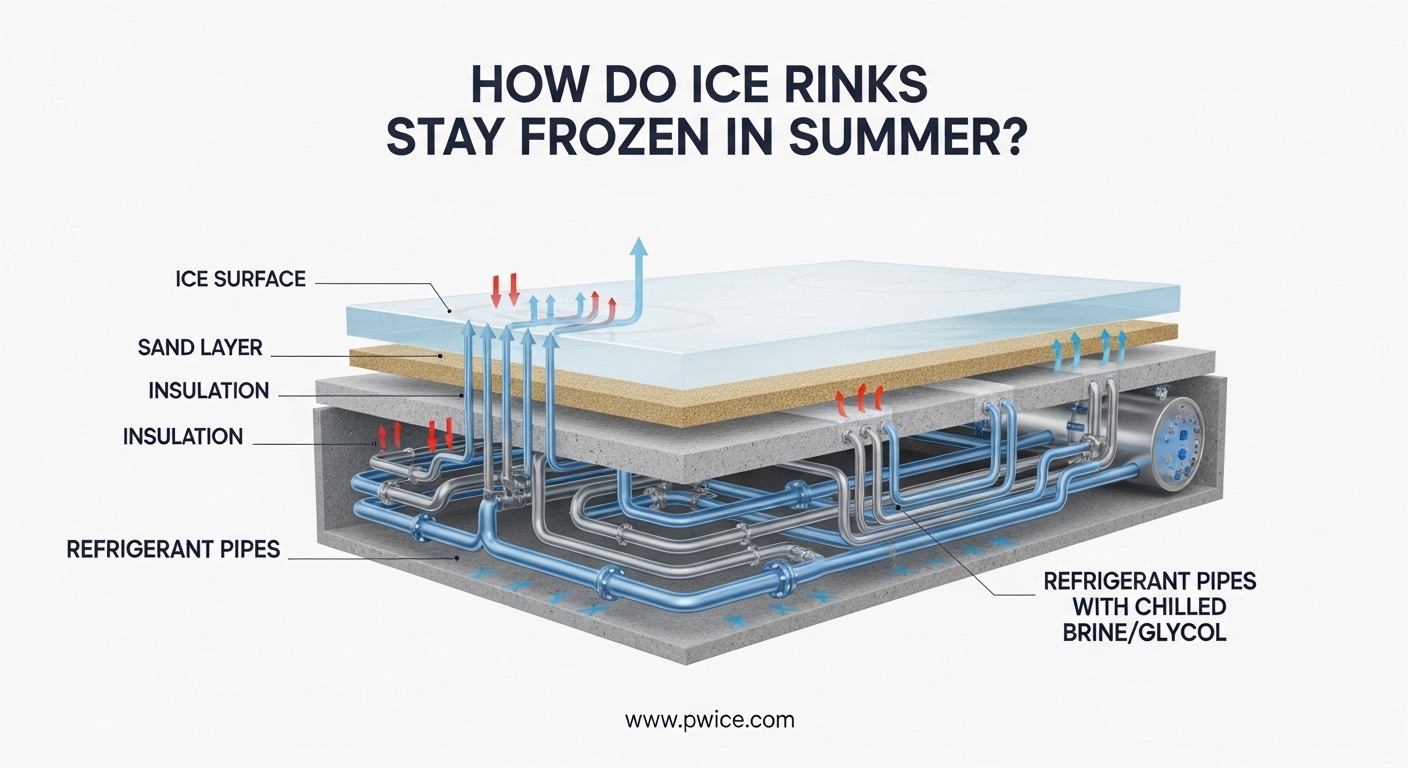
Ice rinks stay frozen in summer through a powerful indirect refrigeration system that circulates cold brine or glycol through pipes embedded in a concrete slab beneath the surface. A giant chiller running 24 hours a day keeps the coolant at minus-5 degrees, continuously absorbing heat and preventing the ice from melting even when outside temperatures soar past 90 degrees Fahrenheit.
I remember standing at an outdoor rink in Florida during July, watching people skate while the thermometer read 95 degrees. It seemed impossible. The ice glistened under the sun, perfectly solid beneath skaters gliding by. That moment sparked my curiosity about the engineering behind this cooling marvel.
Our team researched ice rink technology across multiple facilities, from local community rinks to professional NHL arenas. We talked to maintenance crews, studied refrigeration diagrams, and examined how these systems handle extreme weather conditions. In this guide, you will learn exactly how ice rinks maintain frozen surfaces in warm weather, why humidity matters more than heat, and what makes professional rinks different from temporary outdoor setups.
Table of Contents
How Do Ice Rinks Stay Frozen in Summer: The Direct Answer
The secret lies in an indirect refrigeration system that never stops working. Beneath the ice surface, thousands of feet of pipes carry super-chilled brine or glycol solution. This coolant absorbs heat from the ice above and carries it away to a central chiller unit.
The chiller uses ammonia refrigerant in a continuous vaporization and compression cycle. Warm brine arrives at the chiller, transfers its heat to the ammonia, and returns to the pipes ice-cold. This heat exchange cycle runs constantly, maintaining the ice temperature between 24 and 28 degrees Fahrenheit regardless of outdoor conditions.
Most people assume the ice sits on regular concrete. In reality, it rests on a specially engineered chilled concrete slab with built-in pipe systems. This slab acts like a massive freezing platform, distributing cold evenly across the entire skating surface. The concrete itself stays well below freezing, creating a thermal barrier that actively pulls heat out of the ice layer above.
The Refrigeration System: Your Giant Minus-5 Degree Freezer
Think of an ice rink as a refrigerator turned inside out. Instead of cooling the air inside a box, it cools a flat surface exposed to the open air. This requires enormous cooling power and specialized equipment that operates around the clock.
The Four Main Components of Ice Rink Refrigeration
Every ice rink refrigeration system contains four essential components working together in a continuous cycle. The compressor pressurizes ammonia refrigerant, raising its temperature significantly. This hot, pressurized gas then flows to the condenser, where it releases heat to the outside air and transforms back into a liquid.
The liquid ammonia moves through an expansion valve, which rapidly drops its pressure and temperature. This super-cold liquid enters the evaporator, where it absorbs heat from the brine solution circulating through the pipes. As the ammonia absorbs heat, it vaporizes and returns to the compressor to begin the cycle again.
The brine solution, typically a calcium-chloride mixture, serves as the middleman in this heat exchange process. It never mixes with the ammonia but transfers heat between the refrigeration system and the ice surface above. This indirect approach allows the system to use efficient ammonia refrigerant while keeping the skating surface safe and uncontaminated.
Why the System Runs 24 Hours a Day
Stopping the refrigeration system for even a few hours would spell disaster. Without constant cooling, the thermal mass of the concrete slab would eventually warm up, and the ice would begin melting from below. Heat constantly attacks the ice from multiple directions: warm air above, ground temperature below, sunlight exposure, and the friction of skates cutting across the surface.
Professional rinks monitor their systems continuously, adjusting chiller output based on outdoor temperatures and scheduled activities. A busy public session with hundreds of skaters generates significant heat through friction and body warmth. The refrigeration system compensates by working harder during these peak times, maintaining consistent ice quality throughout the day.
What Flows Through Those Pipes: Brine vs Glycol
The coolant circulating through rink pipes must stay liquid at extremely low temperatures. Regular water would freeze solid at 32 degrees, rendering the system useless. Instead, rinks use anti-freeze solutions that remain fluid at minus-5 degrees and colder.
Brine Solution: The Traditional Choice
Brinewater, typically a calcium-chloride solution, has been the standard coolant for ice rinks for decades. This salt-water mixture can be chilled to approximately minus-10 degrees Fahrenheit without freezing. It transfers heat efficiently and costs less than alternatives, making it popular for large facilities.
The concentration of calcium-chloride determines how cold the brine can get before freezing. Rink operators carefully balance this concentration for their specific climate and operating conditions. Too weak, and the brine might freeze during cold snaps. Too strong, and the solution becomes corrosive to pipes and pumps.
Glycol: The Modern Alternative
Propylene glycol offers a food-safe, non-toxic alternative to brine solutions. Many newer rinks and temporary installations choose glycol because it poses less risk if leaks occur. Unlike calcium-chloride brine, glycol will not corrode metal components as aggressively, potentially extending equipment lifespan.
Glycol systems typically operate at slightly higher temperatures than brine systems, usually around 18 to 20 degrees Fahrenheit. This small difference requires more careful insulation and slightly higher energy consumption to achieve the same ice surface temperature. However, the reduced maintenance costs and environmental safety often justify this trade-off.
Building the Ice: Layer by Layer Construction
Creating a rink involves more than just turning on a chiller and spraying water. The entire structure is engineered from the ground up to maintain frozen conditions efficiently. Understanding these layers explains why outdoor rinks can survive summer heat.
From the Ground Up: The Foundation Layers
The foundation begins with compacted sand and gravel, providing both drainage and structural support. Above this sits a crucial insulation layer, typically made of high-density foam or similar materials. This insulation prevents ground heat from warming the ice from below and reduces the cooling load on the refrigeration system.
Here is where engineering gets clever: a heated concrete layer sits above the insulation. This seems counterintuitive, but this thin layer of concrete contains warming elements that stay just above freezing temperature. Its purpose is to prevent frost from forming in the ground below the rink, which could cause heaving and structural damage. The heat stays trapped by the insulation and never reaches the ice above.
The Chilled Slab and Ice Surface
The chilled concrete slab forms the heart of the system. This thick layer of concrete contains thousands of feet of embedded piping arranged in a grid pattern. The brine or glycol flows through these pipes, chilling the entire slab to between 18 and 24 degrees Fahrenheit.
Building the actual ice surface requires patience and precision. Crews spray thin layers of water, allowing each to freeze completely before adding the next. This builds up approximately 1 to 2 inches of solid ice. The first layers bond directly to the cold concrete, creating excellent thermal contact. Later layers freeze from both above (cold air) and below (cold concrete), resulting in dense, durable ice perfect for skating.
Why Humidity Is Actually the Biggest Enemy (Not Heat)
Most people assume summer heat poses the greatest threat to ice rinks. While hot weather certainly challenges the refrigeration system, humidity causes more problems than temperature alone. High humidity creates a constant battle against condensation and frost buildup that can destroy ice quality.
The Dew Point Problem
When humid air contacts the cold ice surface, moisture condenses and freezes, creating a rough, frosty texture. This frost buildup forces the Zamboni to work harder and can make skating conditions unsafe. In extreme humidity, rinks can accumulate several inches of frost overnight, requiring extensive maintenance to restore smooth ice.
Wind compounds this problem by constantly supplying fresh humid air to the surface. A gentle breeze on a humid Florida afternoon can deposit frost faster than the refrigeration system can compensate. This explains why many outdoor rinks install wind barriers or schedule maintenance during calmer parts of the day.
Real-World Examples: Florida and Las Vegas
The Florida Panthers practice facility maintains NHL-quality ice despite outdoor temperatures regularly exceeding 90 degrees with 80% humidity. Their system uses oversized chillers and extensive dehumidification equipment to combat the challenging climate. The energy costs run substantially higher than equivalent facilities in colder regions, but the technology works reliably year-round.
Las Vegas presents different challenges: extreme heat with low humidity. The Vegas Golden Knights practice facility and the outdoor rink at The Cosmopolitan both operate successfully in desert conditions exceeding 110 degrees. Without humidity concerns, these facilities focus primarily on combating heat transfer through the air and managing intense sun exposure.
Sun Management Strategies
Direct sunlight delivers enormous heat energy to ice surfaces. A square meter of ice in direct summer sun receives over 1,000 watts of solar energy. Without protection, this overwhelms even powerful refrigeration systems. Many outdoor summer rinks install shade structures, reflective canopies, or schedule operating hours to avoid peak sun exposure.
Some facilities use white paint or reflective additives in their ice to increase solar reflectivity. The traditional blue or red lines and advertisements painted on NHL ice actually serve a practical purpose: dark colors absorb more heat, so keeping the majority of the surface white or light-colored helps maintain temperature stability.
Keeping It Smooth: The Zamboni and Ice Maintenance
Even with perfect refrigeration, ice surfaces deteriorate during use. Skate blades cut grooves, body heat melts surface layers, and debris accumulates. The Zamboni machine, that distinctive vehicle circling rinks between sessions, serves essential maintenance functions that preserve ice quality.
Does a Zamboni Use Hot or Cold Water?
The answer surprises most people: Zambonis use hot water for resurfacing. Temperatures typically range from 140 to 160 degrees Fahrenheit. Hot water melts the ice surface slightly, creating a thin layer of slush that bonds with the new water being laid down. This produces a smoother, more durable surface than cold water would create.
The Zamboni shaves the top layer of ice with a sharp blade, removing cuts and rough spots. A horizontal auger collects these ice shavings into the machine’s tank. Then a water sprinkler lays down fresh hot water, which melts into the existing surface and refreezes quickly due to the cold concrete below. The result is a glass-smooth finish ready for the next session.
Ice Thickness and Paint
NHL rinks maintain ice approximately 1.5 to 2 inches thick. Thicker ice insulates better from the cold concrete below, actually making the surface softer and slower for skating. Thinner ice risks damage from skate blades reaching the concrete or paint layers beneath. Finding the right balance requires constant monitoring and adjustment.
The lines, circles, and logos on hockey ice are not painted on top. They are embedded within the ice layers. Crews paint these markings on the chilled concrete before building up the final ice layers above them. This protects the artwork from skate damage and keeps colors vibrant throughout the season.
Frequently Asked Questions
How do outdoor ice rinks stay frozen in summer?
Outdoor ice rinks stay frozen through a powerful refrigeration system that circulates cold brine or glycol through pipes embedded in a concrete slab beneath the ice. A large chiller unit runs 24 hours a day, keeping the coolant at minus-5 degrees and continuously removing heat from the ice surface. Insulation layers below the concrete prevent ground heat from warming the system.
Does a Zamboni use hot or cold water?
A Zamboni uses hot water between 140 to 160 degrees Fahrenheit for resurfacing ice. The hot water slightly melts the existing surface, creating a bond with the new layer being applied. This produces a smoother, more durable finish than cold water would achieve.
How do they stop ice rinks from melting?
Ice rinks prevent melting through continuous refrigeration that removes heat faster than it can accumulate. The system includes a chiller, compressor, condenser, and miles of pipes carrying cold brine beneath the ice. Multiple insulation layers prevent heat from below, while shade structures and reflective paint reduce solar heating from above.
How does the NHL keep the ice frozen?
NHL facilities use industrial-grade indirect refrigeration systems with ammonia refrigerant and brine or glycol coolant. Their systems are oversized for reliability and include backup chillers for critical games. Advanced dehumidification systems combat humidity, which poses a bigger threat than heat alone.
How much does it cost to keep an ice rink frozen?
Operating costs vary by size and climate but typically range from $5,000 to $15,000 per month for electricity alone. Outdoor summer rinks in hot climates face costs at the higher end due to increased cooling demands. Energy represents the largest ongoing expense, followed by water, maintenance, and labor.
What coolant do ice rinks use?
Most ice rinks use either brine (a calcium-chloride saltwater solution) or glycol (propylene glycol) as coolant. Brine offers better heat transfer and lower cost but is corrosive to metal. Glycol is non-toxic and less corrosive but requires slightly different operating temperatures. Both remain liquid at the extremely low temperatures needed for ice making.
Conclusion
Ice rinks stay frozen in summer through a remarkable combination of engineering and continuous operation. The indirect refrigeration system, using brine or glycol circulating through miles of pipes, removes heat 24 hours a day. Multiple insulation layers and specialized concrete construction prevent heat intrusion from above and below.
The next time you step onto an outdoor rink in August or watch an NHL game in a warm-weather city, appreciate the technology beneath your skates. Minus-5 degree chillers, ammonia compressors, and careful humidity management make the impossible seem routine. Whether you are a curious spectator or an aspiring engineer, understanding how ice rinks stay frozen reveals the fascinating intersection of thermodynamics, construction, and human ingenuity.