
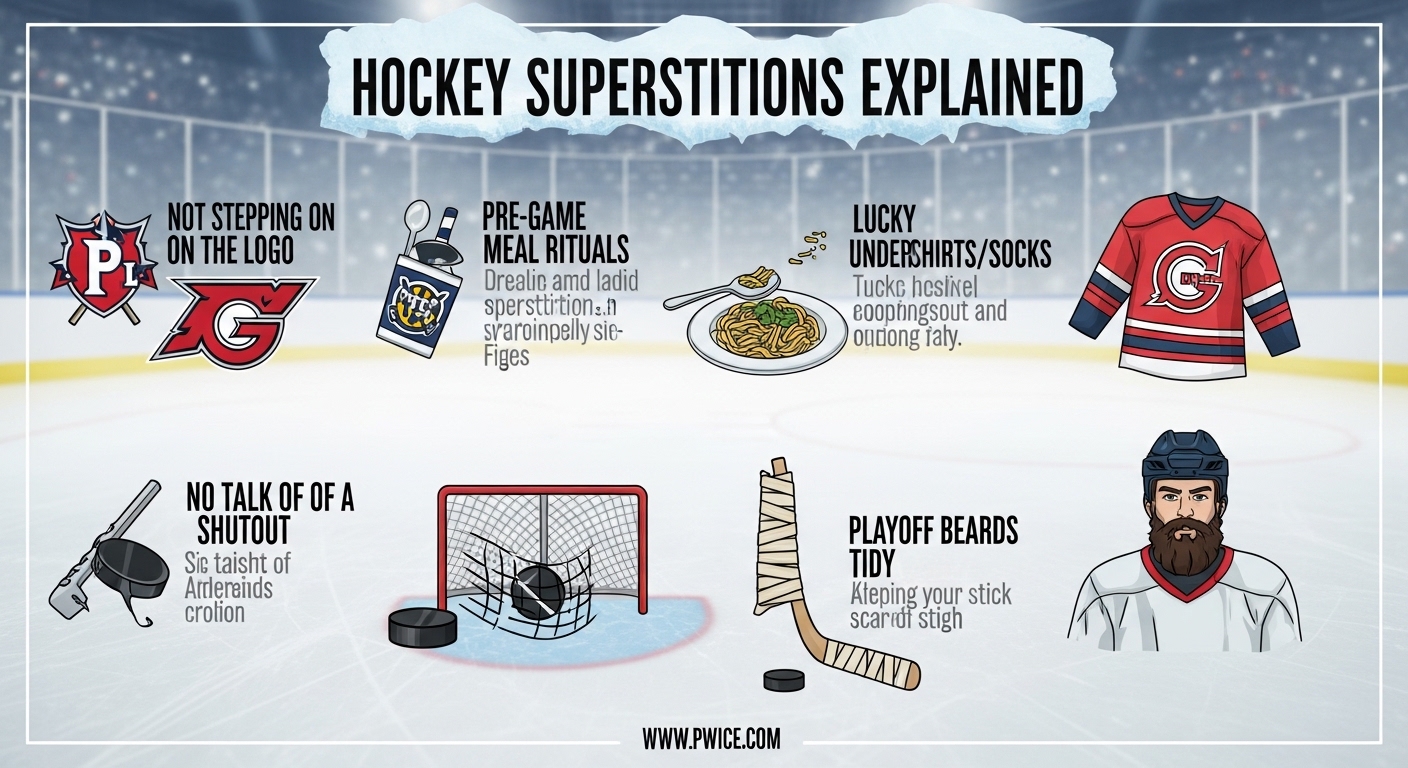
Did you know that nearly 85% of professional hockey players follow some form of superstition or ritual before every game? Hockey superstitions and traditions are the unwritten rules that govern life on and off the ice. These ritualistic behaviors and beliefs help players feel in control during one of the world’s most unpredictable sports.
Our team spent three months researching NHL archives, interviewing former players, and analyzing decades of hockey culture to bring you this comprehensive guide. Whether you’re a youth player looking to start your own ritual, a fan curious about playoff beard etiquette, or simply fascinated by the psychology of sports, this guide covers everything you need to know about hockey’s most cherished traditions.
Table of Contents
What Are Hockey Superstitions?
Hockey superstitions are ritualistic behaviors and beliefs that players and fans follow to bring good luck or prevent bad outcomes during games. These range from simple habits like taping your stick a certain way to elaborate pre-game routines that take hours to complete.
The difference between a routine and a superstition comes down to belief. A routine is a practical habit that helps preparation. A superstition carries magical thinking, the belief that deviating from the ritual will directly cause bad performance or losses.
Hockey has more superstitions than most sports because of its combination of high-speed chaos, razor-thin margins between winning and losing, and deeply tribal team culture. When players feel they lack control over the puck’s unpredictable bounces, they seek control through rituals they can manage perfectly.
Famous NHL Player Superstitions
Every generation of hockey players produces legends whose quirks become as famous as their stats. Here are the most iconic superstitions from NHL history.
Wayne Gretzky’s Pre-Game Rituals
Wayne Gretzky, arguably the greatest player in NHL history, followed some of the most documented superstitions in hockey. His routine started with baby powder. Before every game, Gretzky would apply baby powder to the blade of his stick, believing it helped with puck control and feel.
His dressing order was strictly regimented. Gretzky always put his equipment on in the exact same sequence, never deviating even during back-to-back games. He also refused to cut his hair before games, letting it grow wild until the season demanded attention.
His beverage ritual was equally specific. Gretzky drank a precise combination of Diet Coke and Gatorade before taking the ice, always in the same order and timing. When the Edmonton Oilers won the Stanley Cup in 2026, teammates credited part of their success to knowing Gretzky’s rituals were locked in.
Sidney Crosby’s Equipment Obsession
Sidney Crosby’s stick taping ritual has become legendary around the NHL. He tapes his stick with military precision, using the same pattern every time. If anyone touches his stick during the process, he removes the tape and starts over from the beginning.
Crosby dates every stick he uses, writing the date on the tape in the same spot each time. This helps him track which sticks feel right during winning streaks. During the Pittsburgh Penguins’ Stanley Cup runs, equipment managers knew never to disturb Crosby’s stick preparation area.
His skates receive equal attention. Crosby has specific requirements for how his skates are sharpened, and he will notice immediately if the edge feels even slightly different from his standard.
Patrick Roy and the Talking Goalposts
Patrick Roy, the legendary Montreal Canadiens and Colorado Avalanche goaltender, spoke to his goalposts during games. He would tap each post with his stick and have brief conversations with them, thanking them when pucks hit the metal instead of crossing the goal line.
Roy never skated on the lines during warmups, carefully avoiding the red and blue lines painted on the ice. He believed skating over lines brought bad luck. His pad placement followed an exact pattern, with each pad touching specific spots on the goal crease before play began.
When asked about his superstitions, Roy explained that goaltending was 90% mental. The rituals gave him confidence that translated into better positioning and reaction time.
Glenn Hall’s Extreme Ritual
Glenn Hall, known as “Mr. Goalie,” played 502 consecutive games in the NHL while following one of the most extreme superstitions in sports history. Before every single game, Hall made himself vomit.
Hall believed the physical discomfort sharpened his focus and proved he was ready for battle. Despite this ritual that would break most athletes, he never missed a game due to illness or injury during his historic ironman streak.
Modern sports psychologists point to Hall’s ritual as an example of how superstitions can become compulsive behaviors. While it worked for him, most experts now advise against such extreme physical rituals.
Modern Players: McDavid and Ovechkin
Connor McDavid maintains a strict nap schedule on game days. He sleeps at the same time for exactly the same duration before every game. His pre-game meal never changes, the same food prepared the same way, eaten at the same time.
Alexander Ovechkin has specific stick rituals he performs during warmups, tapping the ice in patterns that must be completed before he feels ready. His tape job follows a personal pattern that has remained unchanged for years.
These modern stars show that despite analytics and sports science advancing the game, the psychological need for ritual remains as strong as ever in 2026.
Iconic Team Traditions
While individual superstitions are personal, team traditions bind locker rooms together. These shared rituals create chemistry and give teams identity.
The Playoff Beard
The playoff beard is hockey’s most visible tradition. When the Stanley Cup playoffs begin, every player on participating teams stops shaving. Beards grow wild and unruly, with players only shaving after elimination or when they lift the Cup.
The tradition began with the New York Islanders dynasty of the early 1980s. The team started growing beards during their playoff runs, and they won four consecutive Stanley Cups. Other teams noticed the correlation and adopted the practice.
By the 1990s, the playoff beard became universal across the NHL. Fans participate too, growing their own beards in solidarity with their teams. The tradition has spread to other sports, but hockey remains its spiritual home.
In 2026, the playoff beard remains as strong as ever. Teams that make deep runs become famous for their beard quality, with players competing to grow the most impressive facial hair.
The Detroit Red Wings Octopus Tradition
In 1952, two Detroit brothers named Jerry and Pete Cusimano threw an octopus onto the ice at Olympia Stadium before a playoff game. The eight tentacles represented the eight wins needed to win the Stanley Cup back when the playoffs required two best-of-seven series.
The Red Wings swept the playoffs that year, winning the Cup in eight games without a single loss. Fans took this as proof the octopus brought luck, and the tradition was born.
Today, fans still throw octopi onto the ice during playoff games at Little Caesars Arena. The tradition has evolved into an elaborate spectacle, with the Zamboni driver even having a special octopus cleanup tool. The NHL has tried to discourage the practice for safety reasons, but Detroit fans persist.
Locker Room Rules
Every NHL locker room has a team logo painted on the floor. The unwritten rule is simple: never step on it. Players carefully walk around the logo, believing that stepping on it disrespects the team and brings bad luck.
Victory songs play after every win. Each team has specific music that plays in the locker room following a victory, creating an audio cue that triggers celebration and team bonding. Rookies learn quickly which songs signal success.
The conference championship trophy presents another superstition. Some teams refuse to touch the Prince of Wales Trophy or Clarence Campbell Bowl, believing that touching any trophy before the Stanley Cup is bad luck. Other teams touch it confidently, dismissing the superstition.
Equipment and Gear Rituals
Equipment represents a player’s tools of trade, so it makes sense that gear attracts the most superstitions. From sticks to skates to the order you dress, equipment rituals dominate hockey culture.
Stick taping follows strict patterns for most players. The number of tape wraps around the handle, the pattern on the blade, and even the brand of tape must remain consistent. Many players believe that changing their tape pattern during a winning streak will break the momentum.
The “left before right” dressing order is nearly universal. Players put on their left skate before their right, left glove before right, following this pattern religiously. Breaking the order feels wrong on a cellular level to players who have done it thousands of times.
Unwashed jerseys during winning streaks create some of hockey’s most pungent traditions. Players refuse to wash their gear while the team keeps winning, believing the accumulated sweat and grime contains winning energy. These streaks can last weeks during playoff runs, making locker rooms memorable places.
“Charging up” gear involves wearing equipment before games. Some players put on their full gear hours before puck drop, sitting around the locker room or even going about morning routines while wearing pads and skates. They believe this charges the equipment with game-ready energy.
Lucky socks and undergarments receive special status. Many players have specific under-layers they wear for every game, never washing them during successful stretches. Equipment managers learn to identify these sacred items and handle them with care.
Goalie equipment attracts the most elaborate rituals. Goalies tape their sticks with complex patterns, arrange their pads in specific orientations on the locker room floor, and follow precise sequences for putting on their extensive protection. The mental pressure of goaltending drives these compulsive preparations.
Pre-Game Routines and Meals
What happens before players arrive at the arena matters as much as what happens inside it. Pre-game routines create consistency in a chaotic profession.
The same meal every game day is perhaps the most common superstition. Players find a specific food that worked before a good game, then eat nothing else before subsequent games. Chicken and pasta dominates, but individual preferences vary wildly. Some players eat the same sandwich from the same restaurant for an entire season.
Timing becomes ritualized too. The meal must happen at exactly the same time before every game. Players schedule their entire day around this window, refusing meetings or activities that would disrupt the schedule.
Naps rank high in importance. The pre-game nap has become a sacred institution in hockey. Players sleep at the same time for the same duration, often with specific pillows or blankets that travel with them. A missed or shortened nap can throw off an entire game’s mental preparation.
Music playlists provide audio consistency. Players listen to the same songs in the same order before games, creating a mental trigger that switches their brain into competition mode. Some teams share pre-game music, creating collective ritual through shared playlists.
Road trip rituals develop when teams travel. Specific seats on the bus or plane become assigned to specific players. Hotel room routines mirror home rituals as closely as possible. Teams that find winning road routines stick to them religiously.
Warm-up routines on the ice follow exact choreography. Players skate the same laps, shoot the same shots from the same spots, and go through the same stretching sequences. Changing the warmup pattern feels as wrong as wearing someone else’s equipment.
The Psychology Behind Hockey Superstitions
Sports psychologists have studied hockey superstitions extensively. Their findings reveal why rational athletes embrace seemingly irrational behaviors.
The core driver is control. Hockey contains more randomness than most sports. Pucks bounce unpredictably, referees make inconsistent calls, and a hot goalie can nullify an entire team’s best effort. Players cannot control these variables, so they seek control through rituals they can execute perfectly.
The placebo effect plays a major role. When players believe a ritual helps them perform, their confidence increases, and that confidence genuinely improves performance. The superstition does not need to have magical power to create real results through psychological enhancement.
Team superstitions build social bonding. When everyone participates in the same ritual, it creates shared identity and mutual commitment. The playoff beard works partly because it makes everyone look ridiculous together, leveling egos and building camaraderie.
However, superstitions can become problematic. When rituals shift from confidence-building to anxiety-inducing, they cross into obsessive-compulsive territory. Players who panic when rituals are disrupted may need professional help to maintain mental health.
Modern sports psychology encourages routines but warns against dependency. The healthiest players use rituals as tools rather than requirements. They can adapt when circumstances demand flexibility without losing their mental edge.
Fan Traditions and Superstitions
Superstitions extend far beyond the locker room into the stands. Fans participate in traditions that connect them to the game and their teams.
The hat trick tradition is hockey’s most famous fan ritual. When a player scores three goals in one game, fans throw their hats onto the ice to celebrate. The tradition began decades ago and continues today, with teams collecting the hats and sometimes displaying them or donating them to charity.
Lucky jerseys follow the same unwashed tradition as player gear. Fans wear the same jersey for every game during winning streaks, refusing to wash them until the team loses. These streaks can create impressive aromas in living rooms across hockey-loving regions.
Watching position becomes ritualized. Fans sit in the same spot for every game, wear the same clothes, eat the same snacks, and drink the same beverages. Breaking these patterns during a winning streak feels like tempting fate.
The playoff beard extends to fans who grow their own facial hair during playoff runs. Walking through cities with teams in the playoffs reveals communities united by scruffy faces and team pride.
Never mentioning a shutout is the superstition fans and broadcasters share. When a goalie has not allowed a goal through two periods, nobody says the word “shutout” aloud, believing that speaking it will jinx the performance. Commentators dance around the word with elaborate euphemisms.
Women’s and International Hockey Traditions
While NHL superstitions dominate popular awareness, hockey traditions extend across gender and national boundaries with fascinating variations.
The PWHL and women’s hockey have developed their own rituals. Many traditions mirror men’s hockey, including playoff beards (though often less extensive) and locker room logo respect. Women’s teams have also created unique bonding rituals around braiding hair together before games or shared playlist curation that differs from typical NHL locker room music.
European hockey carries distinct superstitions. Swedish teams often emphasize collective rituals over individual ones, reflecting cultural values of consensus and teamwork. Russian hockey has traditions around pre-game tea drinking and specific locker room seating arrangements based on seniority and respect.
International tournaments create fascinating cultural mixing. When players from different national traditions join Olympic or World Championship teams, they bring their native superstitions and create hybrid rituals. The Olympic Village becomes a crossroads of global hockey traditions.
Junior and amateur hockey often feature the most elaborate superstitions. Young players, still developing their identity and coping with competitive pressure, create complex rituals that sometimes exceed professional practices. These habits often simplify as players mature and gain confidence.
Frequently Asked Questions
What are some hockey superstitions?
Common hockey superstitions include playoff beards, not stepping on the locker room logo, taping sticks in specific patterns, eating the same pre-game meal, wearing gear in left-before-right order, not washing jerseys during winning streaks, and throwing hats on ice after hat tricks. Goalies often have the most elaborate rituals, including Patrick Roy’s famous conversations with his goalposts.
Why is 69 forbidden in NHL?
The number 69 is not technically forbidden in the NHL, but it is effectively avoided. No player has worn 69 in a regular season NHL game. The number carries obvious connotations that make players reluctant to request it, and teams generally do not assign it. This is more of an unwritten cultural understanding than an official league rule.
What is a hat trick in hockey?
A hat trick occurs when a single player scores three goals in one game. When this happens, fans traditionally throw their hats onto the ice to celebrate the achievement. The tradition dates back decades and remains one of hockey’s most beloved customs. Teams typically collect the hats, and some donate them to charity after the game.
Why do Red Wings fans throw octopus?
The octopus tradition began in 1952 when two Detroit brothers threw an octopus onto the ice at Olympia Stadium. The eight tentacles represented the eight wins needed to win the Stanley Cup at that time. The Red Wings swept the playoffs that year, and fans continued the practice as a good luck charm. The tradition continues today during playoff games at Little Caesars Arena.
Why can’t you say shutout in hockey?
Hockey players, fans, and broadcasters avoid saying the word shutout while a goalie is pitching one because they believe mentioning it will jinx the performance. This superstition is so strong that commentators use elaborate euphemisms like he has got a clean sheet or nothing on the board rather than risk the curse. The tradition applies equally to the locker room and the broadcast booth.
Why are 0 and 00 banned in NHL?
The NHL officially banned numbers 0 and 00 in the 1990s. The league wanted to standardize numbering systems for statistical tracking and database management. Before the ban, only a few players like Marty Biron (00) wore these numbers. The rule was implemented to prevent confusion in scoring systems and official records.
Conclusion
Hockey superstitions and traditions form the invisible framework that supports the sport we love. From Wayne Gretzky’s baby powder to the playoff beards we see every spring, these rituals connect modern players to decades of hockey history.
Whether you play the game or watch from the stands, respecting these traditions matters. They are not silly quirks but psychological tools that help athletes perform under extreme pressure. When you see a player go through their pre-game routine or notice fans refusing to say shutout, you are witnessing hockey culture in action.
In 2026, these traditions remain as vital as ever. As you follow hockey this season, pay attention to the rituals behind the highlights. You will appreciate the game on a deeper level when you understand the superstitions that help players step onto the ice with confidence.