
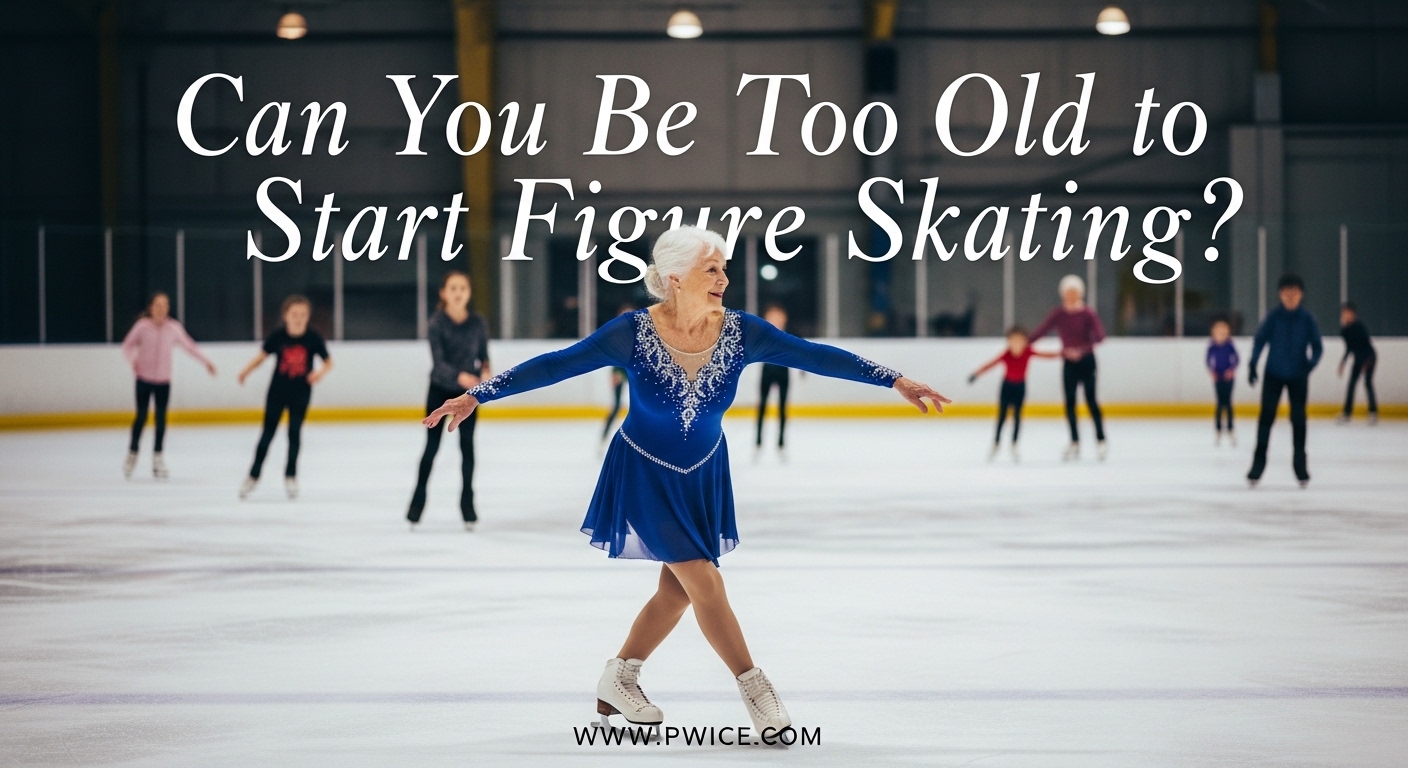
No, you can never be too old to start figure skating. U.S. Figure Skating runs dedicated adult skating programs, and skaters begin their journey at every age from 5 to 85. Whether you are 15, 30, or 60, the ice welcomes anyone willing to lace up a pair of skates and step onto the rink.
I have seen this question asked hundreds of times across skating forums and rink boards. People worry they have missed some invisible deadline, that their window closed while they were busy with other things. That fear is understandable, but it is not grounded in reality. Figure skating is one of the few sports where age truly does not define your potential for enjoyment and progress.
In this guide, I will break down exactly what you can expect when starting figure skating at different ages. We will look at realistic goals, physical considerations, and the inspiring stories of adults who stepped onto the ice and proved it is never too late.
Table of Contents
Can You Be Too Old to Start Figure Skating? The Short Answer
You cannot be too old to start figure skating. There is no age cutoff, no upper limit, and no moment when the skating community will tell you to hang up your skates. Adult skating programs exist specifically because people begin this sport at every stage of life.
The perception that figure skating is only for children comes from watching Olympic athletes who started at age 4 or 5. Elite competitive skating does favor early starters, but that represents less than 1% of the skating world. The other 99% includes adults learning their first spins, retirees working on basic footwork, and parents skating alongside their children.
U.S. Figure Skating, the national governing body, actively promotes adult figure skating through dedicated test tracks, competitions, and events. The adult skating community is described by participants as one of the most welcoming groups in sports. Everyone remembers what it felt like to wobble on their first lap around the rink.
What to Expect When Starting at Different Ages
Your starting age does influence what you can realistically achieve, but not whether you should start. Each decade brings different advantages and considerations. Here is what you can expect when you start figure skating at various ages.
Starting in Your Teens (Ages 13-19)
If you are 15 and wondering if it is too late, the answer is absolutely not. Starting in your teens gives you the perfect balance of physical capability and mental focus. Your body is still developing strength and flexibility, but you have the discipline to practice consistently and absorb instruction.
Real forum discussions reveal that starting at 15 can still lead to competitive success. One skater shared how they began at 15 with no prior experience, worked through the freestyle tests, and eventually medaled at adult competitions. Another mentioned that starting at 15 gave them enough time to master double jumps and participate in collegiate skating programs.
Your goals at this age might include competing in local events, joining a synchronized skating team, or simply building skills for a lifetime of recreational skating. College skating programs also welcome skaters who started in their teens and want to continue competing at the collegiate level.
Starting in Your 20s
Your 20s are actually one of the best times to start figure skating as an adult. You have the physical capacity to progress quickly, the independence to schedule consistent practice, and often more disposable income for lessons and equipment than you had as a teenager.
A 27-year-old forum contributor with a ballet background shared their experience starting figure skating in [cy-1]. Within two years, they had progressed through basic skills and were working on freestyle elements. They noted that their dance background helped with body awareness and flexibility, but that skating was a completely different challenge requiring its own dedication.
Adults starting in their 20s can realistically aim for single jumps, dance tests, and participation in adult competitions. Many skating rinks offer adult-only group classes that create a comfortable learning environment. You will likely progress faster than older beginners while still enjoying the full adult skating community.
Starting in Your 30s and 40s
Your 30s and 40s represent the peak years for recreational adult skating. Many skaters in this age group have established careers, stable schedules, and the motivation to pursue a long-deferred passion. The adult skating community is particularly active in this demographic.
Forum discussions include numerous success stories from this age range. Skaters report that while they may not achieve double jumps, they can master beautiful spins, complex footwork patterns, and ice dancing. Adult competitions feature robust categories for skaters in their 30s and 40s, with many events specifically designed for this group.
Physical conditioning becomes more important at this age, but it is entirely manageable. Regular off-ice training, proper warm-up routines, and attention to flexibility will support your on-ice progress. Many skaters find that the discipline they apply to skating enhances other areas of their lives, creating a positive feedback loop of health and motivation.
Starting at 50 and Beyond
Starting figure skating at 50, 60, or even 80 is absolutely possible. One particularly inspiring forum post described an 82-year-old beginner student who learned basic skills and expressed profound pride in their progress. The student started with no expectations of grandeur, simply wanting to experience movement on the ice.
Many older adults worry about arthritis and joint health. Research and arthritis advocacy organizations note that skating can actually be beneficial for joint mobility when done correctly. The smooth gliding motion reduces impact stress compared to running or other high-impact activities. The cold environment can also help reduce inflammation for some individuals.
Realistic goals for skaters starting at 50 and beyond include forward and backward skating, basic turns, two-foot spins, and simple dances. The joy comes from the movement itself, the music, and the community. Adult skating events include categories specifically for skaters over 50, creating opportunities for recognition and camaraderie.
Realistic Expectations Based on Your Starting Age
Understanding what is achievable at different starting ages helps set goals that keep you motivated. Here is a realistic breakdown of where your figure skating journey might lead depending on when you start.
If you start in your teens, you can potentially work through all the U.S. Figure Skating test levels, including freestyle tests with double jumps. Competitive opportunities exist through adult categories and potentially collegiate skating. With dedication, you could achieve intermediate or advanced levels within 5 to 10 years.
Starting in your 20s and 30s opens the door to single jumps, moves in the field tests, and ice dancing. Many adult skaters in this range achieve pre-bronze or bronze test levels, compete in adult events, and find the sport deeply satisfying without pursuing Olympic-level skills. Your timeline to these achievements might be 3 to 7 years with consistent practice.
Starting at 40 and beyond focuses more on the fundamentals and artistic expression. Basic spins, edge work, and simple dances provide endless challenge and enjoyment. Testing through the preliminary and pre-bronze levels is very achievable. The goal shifts from progression speed to sustained participation and physical wellness.
Getting Started: First Steps for Adult Skaters
Beginning your figure skating journey requires just a few simple steps. The barrier to entry is lower than most people assume, and you do not need expensive equipment to start.
First, find a local rink that offers Learn to Skate programs. Most rinks run adult-specific classes or mixed-age beginner sessions. Group lessons are affordable and provide structured progression through basic skills. Call ahead to ask about adult beginner options and whether the rink has figure skating coaches available.
Your initial gear needs are minimal. Rental skates work perfectly for the first few months. As you progress, you will want to invest in your own skates fitted specifically for figure skating rather than hockey. Comfortable, warm athletic clothing is sufficient for lessons. You do not need competition dresses or advanced equipment as a beginner.
Consider your schedule and commit to consistency. Two sessions per week is the sweet spot for adult beginners. This frequency allows you to build muscle memory without overwhelming your body or your calendar. Many rinks offer early morning or lunch-hour adult sessions that fit around work schedules.
Physical Factors That Matter More Than Age
While age influences some aspects of figure skating, other physical factors often matter more. Your background, body awareness, and commitment to conditioning will determine your progress more than the number of candles on your birthday cake.
Prior movement experience provides a significant advantage. Adults with backgrounds in dance, gymnastics, martial arts, or yoga often progress faster because they understand body alignment, balance, and movement patterns. One forum participant noted that their yoga practice translated directly to better posture and edge control on the ice.
Flexibility, balance, and core strength are the three pillars of figure skating success. These qualities can be developed at any age through off-ice training. Regular stretching, balance exercises, and core work will accelerate your on-ice progress significantly. Many adult skaters spend as much time on off-ice conditioning as they do on the ice.
The mental aspect is equally important. Adults often bring better focus, goal-setting skills, and patience than younger skaters. You understand that progress takes time and that comparison to others is not productive. This maturity can actually make adult beginners more coachable and more consistent in their practice.
Frequently Asked Questions
At what age is it too late to start figure skating?
It is never too late to start figure skating. U.S. Figure Skating runs adult skating programs for skaters of all ages, and people successfully begin skating in their 20s, 30s, 40s, 50s, and beyond. Age does not determine whether you should start, though it influences what skills you might realistically achieve.
Is 20 years old too late to start figure skating?
No, 20 is not too old to start figure skating. Many adult skaters begin in their 20s and make significant progress. Your 20s offer a good balance of physical capability and mental focus. You can realistically aim for single jumps, ice dancing, and participation in adult competitions.
Can a 50 year old learn to ice skate?
Yes, a 50 year old can absolutely learn to ice skate. Many adults start figure skating at 50 and beyond, focusing on basic skills, spins, and artistic expression. The adult skating community includes robust categories for skaters over 50, and the health benefits of skating can be particularly valuable at this age.
Is skating good for arthritis?
Ice skating can be beneficial for arthritis when done properly. The smooth gliding motion reduces impact stress compared to high-impact activities like running. The cold environment may help reduce inflammation for some individuals. As with any exercise, arthritis patients should consult their doctor and start gradually.
Can adults compete in figure skating?
Yes, adults can absolutely compete in figure skating. U.S. Figure Skating offers adult test tracks and competitions at the local, regional, and national levels. Adult competitions include categories for different age groups, skill levels, and disciplines including freestyle, ice dancing, and pair skating.
How long does it take to learn figure skating as an adult?
Progress depends on your starting age, physical background, and practice frequency. Most adult beginners can skate forward and backward confidently within 3 to 6 months of consistent lessons. Basic spins and turns typically take 6 months to 2 years. Single jumps may take 2 to 4 years for adults starting in their 20s and 30s. The journey is gradual but rewarding at every stage.
Conclusion: Can You Be Too Old to Start Figure Skating?
You cannot be too old to start figure skating. The sport welcomes beginners at every age, from teenagers curious about ice dancing to retirees seeking a new form of exercise. Your age determines your starting point, not your potential for joy and progress on the ice.
The adult skating community is growing, supportive, and full of people who asked the same question you are asking now. They took the first step onto the ice despite their doubts, and they found a sport that offers physical challenge, artistic expression, and lasting friendships.
If you have been wondering whether you should start figure skating, the answer is yes. Find a local rink, sign up for a beginner class, and discover what is possible. The ice is waiting, and it does not care how old you are. It only cares that you show up.