
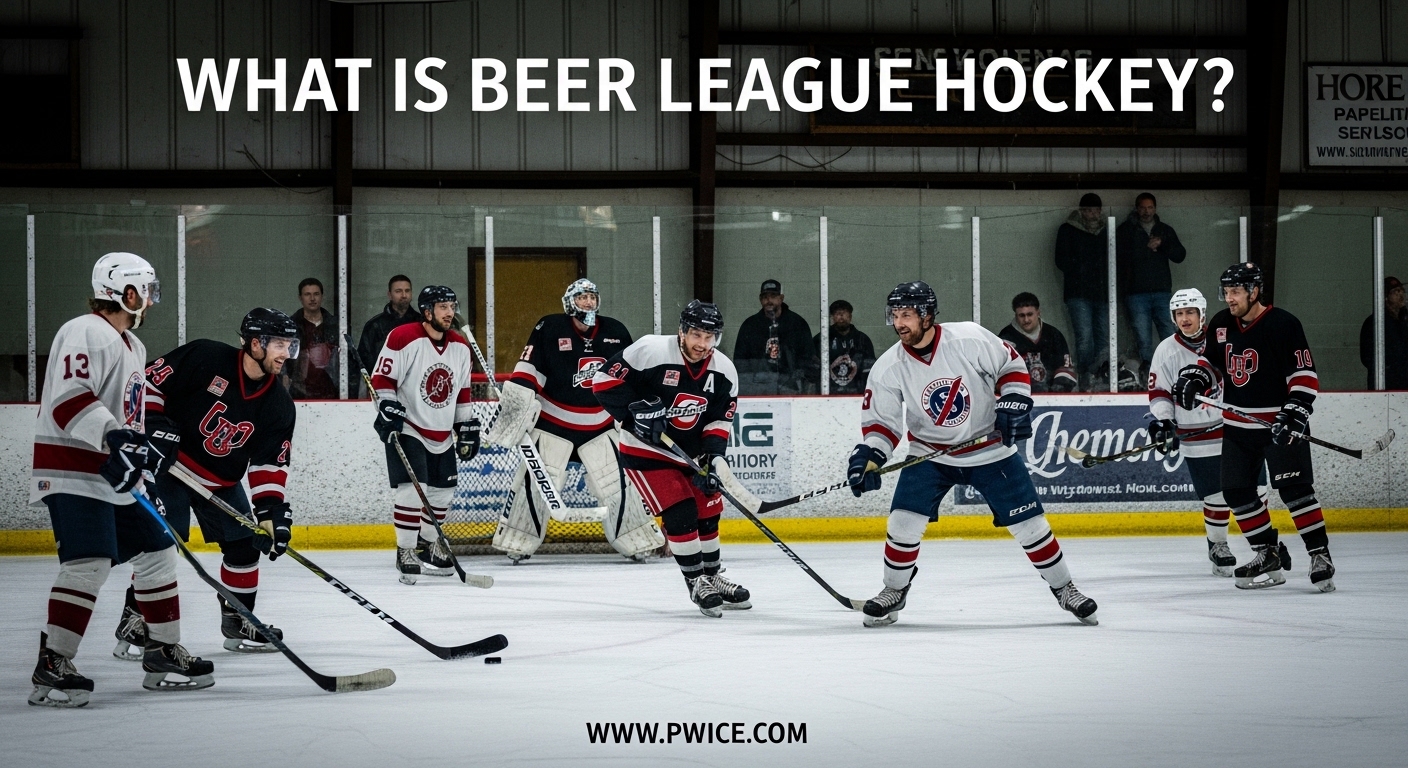
Beer league hockey is adult recreational ice hockey for players of all skill levels, ages, and backgrounds who want to play the game without the pressure of professional or high-stakes competitive hockey. These leagues prioritize fun, social connection, and physical activity over winning championships. Unlike youth or collegiate hockey, beer league welcomes everyone from complete beginners picking up a stick for the first time to former professional players looking to stay active and connected to the sport they love.
The defining characteristic of beer league hockey is its accessibility. Leagues are organized into skill divisions ranging from A (highest skill) through E or beginner levels (entry point for new players). Games are almost universally non-contact, meaning no body checking is allowed, which keeps the atmosphere friendly and reduces injury risk for adults who need to work the next morning. Most games happen late in the evening or on weekends when working adults can participate.
If you have ever wondered whether you are too old, too inexperienced, or simply not good enough to play hockey, beer league exists specifically to prove those doubts wrong. This guide covers everything you need to know about what beer league hockey is, where the name comes from, how the divisions work, what it costs, and how to get started.
Table of Contents
Why Is It Called Beer League Hockey?
The name “beer league” has historical roots dating back over a century, though it carries different meanings today than it did originally. In the late 1800s and early 1900s, amateur baseball and hockey leagues in North America often relied on sponsorships from local taverns, pubs, and breweries to fund equipment, uniforms, and ice time. These establishments would provide financial support in exchange for naming rights, leading to team names like the “Budweisers” or “Miller Brewers.” The leagues themselves became colloquially known as “beer leagues” because of this pub funding connection.
The term stuck around even as sponsorship structures changed. Today, very few beer leagues actually have official brewery sponsorships, but the name endures because of the post-game social tradition. Many teams head to a nearby bar or pub after games to share stories, build camaraderie, and yes, drink beer together. This social component became so central to the experience that the name remained relevant even as the original meaning faded.
Here is a crucial point that confuses many potential players: drinking beer is not required to participate in beer league hockey. The name refers to the culture and history, not a mandate. Many players do not drink at all, whether for health, religious, or personal reasons, and they are fully accepted as valuable teammates. The focus is on enjoying hockey and building friendships, not on alcohol consumption.
Beer League Hockey Skill Levels Explained
One of the most common questions from potential players is about skill levels and where they fit in. Beer leagues use a division system that typically ranges from A (highest skill) down to E or Beginner (entry level). Understanding these divisions helps you find the right fit and ensures you have fun while continuing to improve.
Division A – Elite Level
A Division is the highest competitive level in beer league hockey. These teams typically include former professional players, recent college hockey graduates, and skilled junior players who still compete at a high level. The skating, passing, and shooting skills in A Division can be impressive to watch. Games move fast, systems are structured, and the competition is fierce despite the non-contact rules. If you played NCAA Division I, major junior, or professional hockey recently, this is likely your starting point.
Division B – Advanced Level
B Division sits one step below the elite level and includes players with strong hockey backgrounds who may be a few years removed from their peak competitive days. You will find former college club players, strong high school players, and A Division players who have slowed down slightly. The game is still fast and skilled, but with slightly more room for error and less rigid systems than A Division.
Division C – Intermediate Level
C Division represents the middle ground of beer league hockey and often has the largest number of teams. Players here typically have solid fundamental skills but may lack the high-end speed or hockey IQ of upper divisions. This is a popular landing spot for adults returning to hockey after years away from the game. You will find a mix of players who played growing up and took time off, along with athletic beginners who have progressed quickly. The pace is moderate, and the atmosphere emphasizes fun while still maintaining structure.
Division D – Recreational Level
D Division is designed for recreational players who enjoy hockey but are not focused on high-level competition. Many players here started hockey as adults or returned after very long breaks. Skating skills vary, and the game moves at a slower, more manageable pace. This division is perfect for adults in their 30s, 40s, and 50s who want to stay active and enjoy the social aspects without the intensity of higher divisions.
Division E / Beginner – Entry Level
E Division or Beginner leagues are specifically designed for adults who have never played organized hockey before. These programs often include instructional components, patient referees who explain rules as they go, and a completely judgment-free environment. If you learned to skate as an adult and want to try playing in games, this is where you start. Many rinks also offer “learn to play” clinics that feed into beginner leagues.
| Division | Typical Player Background | Skill Level | Best For |
|---|---|---|---|
| A | Former pro, recent college, elite junior | Elite | High-level competitive players |
| B | Club college, strong high school, former A | Advanced | Very skilled recreational players |
| C | Experienced youth players, returning adults | Intermediate | Most adult recreational players |
| D | Recreational players, late-start adults | Recreational | Casual players, older adults |
| E/Beginner | First-time adult players | Entry | Absolute beginners |
Rules and Safety in Beer League Hockey
Beer league hockey operates under a fundamentally different rule set than professional or even high-level amateur hockey. The primary focus is keeping everyone safe, uninjured, and able to go to work the next morning. This philosophy shapes every aspect of how the game is played and officiated.
Non-Contact Rules
The most important rule difference is that body checking is virtually never allowed in beer league hockey. While incidental contact happens during competitive play for the puck, any intentional body check results in an immediate penalty and potentially an ejection. This rule exists because beer league players are typically working adults aged 25 to 55 who cannot risk injuries that would impact their careers or family responsibilities.
Despite the non-contact designation, beer league is still physical. Battles for puck position, stick lifting, and defensive positioning all require contact. The key difference is that you cannot deliberately skate through an opponent to separate them from the puck. Learning to play physically within these constraints is part of the beer league skill development process.
No Fighting Policy
Fighting is strictly prohibited in beer league hockey. Unlike professional leagues where fighting carries a five-minute major penalty but is otherwise accepted, beer leagues treat fighting as an ejection-worthy offense. Most leagues automatically suspend players who fight for multiple games. This zero-tolerance approach reflects the reality that beer league players have jobs, families, and responsibilities that make injuries from fighting unacceptable.
Penalty Structure
Beer league penalties follow standard hockey rules with some modifications. Minor penalties like tripping, hooking, and slashing result in two minutes in the penalty box. Major penalties for more serious infractions like boarding or charging typically carry five minutes and often include game misconducts. Many leagues also enforce “suspension pending review” policies for major penalties to discourage dangerous play.
One unique beer league tradition is the “don’t be a jerk” rule. While not officially written in most league bylaws, referees and league administrators have broad discretion to eject or suspend players who display consistently unsportsmanlike behavior. Trash talking, cheap shots, and aggressive conduct that goes beyond normal competitiveness can result in penalties even if the specific action does not violate a technical rule.
The Culture and Social Side of Beer League Hockey
Beyond the games themselves, beer league hockey has developed a distinct culture centered on camaraderie, mutual respect, and balancing hockey with adult life. Understanding this culture helps new players integrate and enjoy the full experience.
Fun Over Winning Philosophy
While winning is always enjoyable, beer league hockey officially prioritizes fun, safety, and sportsmanship over competition. Leagues discourage ringers (players who play below their skill level to dominate games) and promote balanced teams. Most players would rather lose a close, well-played game than win by running up the score against an overmatched opponent. This mindset creates a welcoming environment where players support each other regardless of which team they are on.
The Post-Game Tradition
The post-game gathering is where much of beer league’s social bonding happens. After most games, both teams head to a bar, restaurant, or someone’s garage to share drinks, food, and stories. This tradition breaks down barriers between opponents and builds the community that makes beer league special. These sessions often last longer than the games themselves and frequently produce lasting friendships that extend beyond hockey.
As mentioned earlier, drinking is completely optional at these gatherings. Many players stick to water, soda, or protein shakes. The point is spending time together, not consuming alcohol. Non-drinkers report feeling fully included in beer league culture without any pressure to consume beer.
Respect for Goalies
Beer league has an unwritten but absolute rule: respect your goalies. Goalies are the hardest position to fill in adult hockey, and leagues constantly struggle to find enough netminders. Good goalies are treasured, and teams go out of their way to keep them happy. This includes not running them in the crease, not shooting high in warmups, and generally showing appreciation for the fact that they are wearing 40 pounds of equipment so everyone else can play.
Locker Room Etiquette
Beer league locker rooms operate with their own set of unwritten rules. Players typically arrive 30-45 minutes before game time to get dressed without rushing. Tape gets shared when someone runs out. Veterans offer tips to newcomers without being condescending. Music playlists are democratically managed or rotated between teammates. The atmosphere is relaxed and supportive rather than intense or hostile.
What to Expect: Time Commitment and Costs
Before jumping into beer league hockey, prospective players should understand the realistic time and financial commitments involved. These factors vary significantly by region, rink, and league quality.
League Fees and Costs
Beer league hockey is not an inexpensive hobby, but costs vary widely depending on your location and division. In most North American markets, expect to pay between $400 and $800 per season for league fees. Higher divisions with more ice time and better referees tend toward the upper end. Lower divisions and smaller markets may be more affordable.
These fees typically cover 15-25 games plus playoffs, ice rental, referee costs, and basic league administration. Some leagues require separate payments for jerseys, while others include them. Budget an additional $50-100 for team jerseys if not included.
Individual game costs break down to roughly $25-40 per game when you divide total fees by games played. This is comparable to a round of golf or a nice dinner out, which helps contextualize the expense.
Equipment Investment
First-time players need to budget for equipment, which represents a significant upfront investment. A complete set of beginner gear including skates, helmet, shoulder pads, elbow pads, gloves, pants, shin guards, and a stick costs between $500 and $1,000 if purchased new. However, used equipment, end-of-season sales, and online marketplaces can cut this in half.
Goalies face much higher costs, with full new goalie setups running $2,000-3,000. Many beginner goalies piece together used equipment or take advantage of goalie-specific starter packages offered by retailers. Some leagues offer goalie equipment rental programs to help new netminders get started.
Time Commitment
Beer league demands a significant weekly time investment. Games typically last 60-75 minutes including warmups, and most leagues schedule them late in the evening to accommodate working players. Expect 10:00 PM, 10:30 PM, or even 11:00 PM start times during weeknights. Weekend games may be scheduled earlier but often conflict with family time.
Add 30 minutes before the game for dressing and 30 minutes after for showering and socializing, and a single game consumes 2.5-3 hours of your evening. Most leagues play one game per week, though tournament teams or players on multiple teams may play more frequently.
The late hours create challenges for players with early morning work schedules or family obligations. Many beer league players in their 30s and 40s report that managing hockey around career and family is their biggest ongoing challenge. Successful long-term beer league players find ways to integrate hockey into their lifestyle rather than treating it as a separate obligation.
How to Join Beer League Hockey
Getting started in beer league hockey is more accessible than most people assume, but the process varies depending on your experience level and local options.
Finding a League
Start by identifying ice rinks in your area. Most metropolitan areas have multiple rinks, each potentially hosting several different leagues. Call the rinks directly and ask about adult hockey programs. Many rinks have dedicated adult hockey coordinators who can explain options and skill levels.
Online resources help too. USA Hockey and Hockey Canada maintain directories of adult programs. Local hockey Facebook groups and Reddit communities like r/hockeyplayers frequently post about teams looking for players. Websites like BenchApp and TeamSnap are commonly used for beer league team management and sometimes list open roster spots.
Assessing Your Skill Level
Honest self-assessment is crucial for finding the right division. Overestimating your abilities leads to frustration for you and your teammates. Underestimating creates problems too, as playing significantly below your skill level is frowned upon in beer league culture.
If you have never played organized hockey before, start in a beginner or E Division program regardless of how well you think you skate. Game situations require skills that do not translate from public skating or other sports. Many rinks offer “learn to play” classes specifically for adult beginners that feed into their lowest divisions.
If you played youth, high school, or college hockey, consider how long you have been away from the game. A former high school player who has not skated in ten years might start in C or D Division and work back up. A former college player five years removed might fit in B Division. Most leagues allow player movement between divisions if your initial placement proves incorrect.
Joining as a Free Agent
Most leagues have systems for individual players looking for teams. Contact the league administrator and ask about free agent lists or draft programs. Many leagues hold “free agent skates” before each season where individual players scrimmage and get placed on teams needing roster spots.
Showing up at a rink and asking around can work too. Beer league players are generally friendly, and word spreads quickly when a new player is looking for a team. Posting in local hockey Facebook groups or on rink bulletin boards is another effective approach.
Starting Your Own Team
If you have a group of friends interested in playing together, starting a team is straightforward. Most leagues accept team registrations if you can provide 10-15 skaters and a goalie. You will need a team name, jerseys, and a captain who serves as the administrative contact.
The captain handles registration, fee collection, and communication with the league. Many teams use apps like BenchApp or TeamSnap to manage rosters, schedule availability, and collect payments. Being a captain requires organizational skills but offers the satisfaction of building and leading a team.
Who Plays Beer League Hockey?
Beer league hockey welcomes an incredibly diverse range of players. Understanding who you will encounter helps set expectations and demonstrates just how inclusive these leagues truly are.
The typical age range spans roughly 25 to 55 years old, though players in their 60s and even 70s are not uncommon in lower divisions. Many rinks offer “senior” leagues specifically for players over 50 or 60 who want to play at a slower, more social pace. At the other end, some leagues accept players as young as 18 or 21, creating a wide generational mix.
Skill backgrounds vary enormously. On any given team you might find a former NHL player, a dentist who learned to skate at age 35, a college club player, and a construction worker who played pond hockey growing up. This diversity is part of beer league’s charm. Everyone shares a love for hockey regardless of their different paths to the game.
Women’s and co-ed beer leagues have grown significantly in 2026. Many rinks now offer women-only divisions, and co-ed leagues are increasingly common. These programs create welcoming environments for women who want to play without facing the physical disadvantages that can occur in mixed-gender competition.
Professional backgrounds are irrelevant in beer league. Doctors play with delivery drivers. Lawyers play with landscapers. The locker room and ice surface create an egalitarian space where your job title, income, or social status outside the rink means nothing. This democratic quality is one of beer league’s most appealing characteristics.
Frequently Asked Questions About Beer League Hockey
Can you fight in beer league hockey?
No, fighting is strictly prohibited in beer league hockey. Unlike professional leagues where fighting results in a major penalty, beer leagues typically eject players who fight and often suspend them for multiple games. The zero-tolerance policy exists because players are working adults who cannot risk injuries affecting their careers and family responsibilities.
Do you have to drink beer in beer league hockey?
No, drinking beer is absolutely not required to play beer league hockey. While the name comes from historical tavern sponsorships and post-game socializing traditions, many players do not drink alcohol at all. Non-drinkers are fully accepted and valued members of every team. The focus is on enjoying hockey and building friendships, not consuming alcohol.
How good do you have to be to play beer league hockey?
Beer league hockey accepts all skill levels from complete beginners to former professional players. Leagues are organized into divisions from A (elite) through E/Beginner (entry level), so you can find a competitive environment appropriate for your abilities. Many adults start hockey for the first time in their 30s, 40s, or 50s through beginner programs specifically designed for new players.
Is there checking in beer league hockey?
No, body checking is not allowed in beer league hockey. Leagues operate under non-contact rules to keep players safe and uninjured for their work and family obligations. While incidental contact occurs during competitive play for the puck, intentional body checking results in immediate penalties and potential ejection. This is the most significant rule difference from competitive youth or professional hockey.
How much does beer league hockey cost?
Beer league hockey typically costs between $400 and $800 per season for league fees, depending on your location and division level. Additional costs include equipment ($500-1,000 for a full new set), which is a significant upfront investment for new players. Goalies face higher equipment costs. Individual game costs work out to roughly $25-40 per game when averaged across a season.
What age can you play beer league hockey?
Most beer league players range from 25 to 55 years old, though many leagues accept players as young as 18 or 21. Players in their 60s and 70s regularly participate in lower divisions or senior-specific leagues. There is effectively no upper age limit as long as you can skate safely and keep up with the pace of your division. Beer league truly accommodates adults of all ages.
Conclusion: Is Beer League Hockey Right for You?
Beer league hockey offers something rare in adult life: an opportunity to engage in genuine play purely for enjoyment, friendship, and physical activity without the pressure of professional stakes or high-stakes competition. Whether you are a former college player missing the game, an adult who never had the chance to play growing up, or someone looking for a unique way to stay active and meet people, beer league has a place for you.
The investment is significant in both time and money, but players consistently report that the returns in friendship, fitness, and fulfillment justify the cost. The non-contact rules keep you safe for work and family. The skill divisions ensure appropriate competition. The social culture builds lasting relationships.
Your next step is simple: find a local rink, inquire about beginner programs or free agent skates, and give it a try. The beer league community is waiting with open locker room doors, ready to welcome another player who simply loves the game. After all, as experienced players say, all roads eventually lead to beer league. See you at the rink.