
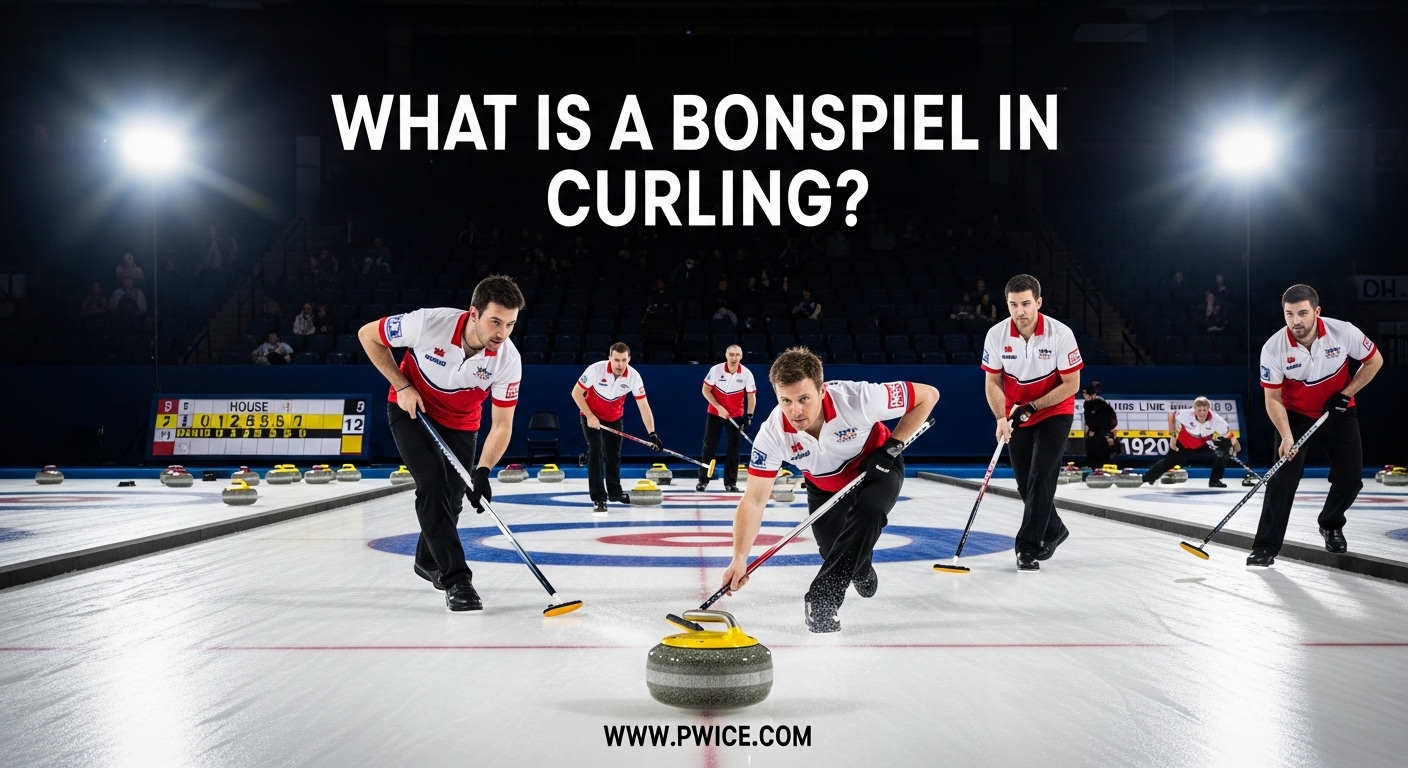
A bonspiel (pronounced BON-speel, /bɒnˈspiːl/) is a curling tournament where multiple teams gather to compete over several games, typically held on a weekend. Think of it as a celebration of the sport that combines friendly competition with community building and Scottish tradition. Whether you are a complete beginner or a seasoned club curler, understanding what a bonspiel is opens the door to one of the most enjoyable aspects of this unique winter sport.
In this guide, I will walk you through everything you need to know about curling bonspiels. We will explore their rich history, how they work, the different types you can enter, and what to expect at your first event. By the end, you will feel confident about signing up for your first spiel and joining the welcoming community that makes curling special.
Table of Contents
What Is a Bonspiel in Curling?
A bonspiel is simply a curling tournament, but that basic definition barely scratches the surface of what these events truly represent. At its core, a bonspiel brings together multiple teams from different clubs to play several games over the course of a weekend. Most bonspiels guarantee participants at least three games, ensuring everyone gets plenty of ice time regardless of how many matches they win.
The word itself carries centuries of Scottish heritage. Derived from Scottish Gaelic, “spiel” means game or play, and “bon” is thought to come from the Dutch “bond” meaning league or association. When you attend a bonspiel, you are participating in a tradition that dates back to the 16th century when curlers first gathered on frozen Scottish lochs for organized competitions.
Modern bonspiels take place almost exclusively on artificial ice in dedicated curling facilities. Until the 20th century, most bonspiels were held outdoors on frozen ponds and lochs, with participants braving the elements to play this ancient game. The transition to indoor ice has made the sport more accessible and comfortable while preserving the social traditions that have always defined bonspiel culture.
What makes a bonspiel different from regular league play is the mix of competition and camaraderie. You will face opponents you have never met, testing your skills against unfamiliar strategies and playing styles. Between games, teams gather for meals, drinks, and conversation in a tradition called broomstacking. This social component transforms a simple tournament into a memorable weekend experience.
History and Origin of the Word Bonspiel
The term bonspiel reflects curling’s Scottish roots and the linguistic blending that occurred as the sport spread across Northern Europe. Scottish Gaelic provided the foundation with “spiel” meaning game, play, or sports meeting. The “bon” prefix likely derives from Dutch “bond” (association or league) or possibly from a Scottish word meaning good or merry.
Historical records show bonspiels were significant cultural events in Scotland as early as the 1500s. The Grand Match, also called The Bonspiel, stands as perhaps the most famous historical example. This outdoor curling tournament brought together hundreds of teams on frozen lochs in Scotland, with the last official Grand Match taking place in 1979 on the Lake of Menteith. The tradition continues today in modified form, celebrating the outdoor origins of the roaring game.
As Scottish immigrants brought curling to Canada and the United States in the 18th and 19th centuries, they carried the bonspiel tradition with them. Canadian curling clubs began organizing indoor bonspiels in the late 1800s as artificial ice technology developed. The Manitoba Curling Association Bonspiel, first held in 1888, remains one of the world’s largest curling tournaments and a testament to how deeply the bonspiel tradition took root in North America.
Today, bonspiels range from small club events with eight teams to massive competitions drawing hundreds of curlers from multiple countries. The scale has changed, but the essential character remains the same: a gathering of curling enthusiasts for sport, socializing, and the preservation of a uniquely communal athletic tradition.
How Does a Curling Bonspiel Work?
Understanding bonspiel format helps ease the anxiety many first-timers feel about their first tournament. Most bonspiels follow a similar structure, though specific rules and schedules vary by event and club.
The Weekend Format
Most curling bonspiels run from Friday evening through Sunday afternoon. Friday typically features an opening ceremony, practice ice, and social gathering. Saturday forms the competition heart of the event, with multiple draws (scheduled games) throughout the day. Sunday usually offers the final games, playoffs, and closing banquet.
A “draw” in curling terminology refers to a scheduled time slot when multiple games occur simultaneously across the ice sheets. A typical Saturday at a bonspiel might have morning, afternoon, and evening draws, allowing teams to play two or three games in a single day. Your team’s schedule depends on your performance and the bracket system.
The 3-Game Guarantee
Nearly all club-level bonspiels offer a three-game minimum guarantee. This means you will play at least three games even if you lose every match. This structure exists specifically to ensure participants get value from their entry fee and enjoy a full weekend of curling regardless of skill level.
The three-game guarantee works through a bracket system. After an initial round or two, teams get separated into A, B, and sometimes C brackets based on their win-loss record. The undefeated teams compete in the A bracket for the championship. Teams with one loss move to the B bracket. Those with multiple losses enter the C bracket. Each bracket produces its own winner, so even a team that loses early can win the C bracket and go home with hardware.
Game Structure at Bonspiels
Bonspiel games typically consist of eight ends rather than the standard ten ends used in championship curling. This shorter format allows tournaments to complete more games in a limited timeframe. Some events use six-end games for mixed or doubles competitions.
Each end plays just like a regular league game. Teams alternate delivering eight stones each, with the score determined by stones closest to the button (center of the house) after all sixteen stones are thrown. The team with the hammer (last stone advantage) changes each end based on scoring.
Conceding Games
One aspect of bonspiel etiquette that confuses many beginners involves conceding games. In competitive curling, teams can concede when they feel they cannot realistically win, saving time and energy for subsequent matches.
Your skip (team captain) makes this decision after consulting with the team. Common situations for conceding include being down by three or more points with only one or two ends remaining, or recognizing the opponent’s skill level makes a comeback impossible. Never feel pressured to concede if you want to keep playing, but understand that accepting a concession is also perfectly acceptable.
Types of Bonspiels
Not all bonspiels are created equal. Event organizers design different types of tournaments to accommodate varying skill levels, team compositions, and competitive goals. Understanding these distinctions helps you find the right entry point for your first bonspiel experience.
Open Bonspiels
Open bonspiels welcome any team regardless of gender composition or skill level. These represent the most inclusive category and often the best choice for first-time participants. Open events frequently attract a wide range of abilities, from beginners in their first season to experienced competitive curlers.
The beauty of an open bonspiel lies in its diversity. You might play against a team of complete novices in one game and face former provincial champions in the next. The bracket system typically separates teams by performance after a round or two, ensuring competitive balance in later games.
Men’s and Women’s Bonspiels
Traditional men’s spiels and women’s spiels restrict participation to all-male or all-female teams. These events maintain the historical structure of curling competition and often attract more serious competitive teams. Many longtime clubs host annual men’s and women’s bonspiels with decades of tradition behind them.
5 & Under and 3 & Under Bonspiels
For newer curlers, 5 & Under and 3 & Under bonspiels provide the perfect introduction to tournament play. These events restrict participation to teams with combined experience levels under five years (or three years) of curling. This ensures beginners compete against similarly experienced opponents.
If you have been curling for two years and your teammates have one year each, your combined six years of experience would exceed a 5 & Under limit. These restrictions create comfortable environments where newer players can learn tournament etiquette and format without facing overwhelming competition.
Themed and Costume Bonspiels
Some of the most popular club bonspiels incorporate themes or costumes. Halloween spiels, ugly sweater events, and decade-themed tournaments add festive elements to the competition. Teams dress up, the club decorates, and the atmosphere becomes more party than serious sport.
These events excel at building community. The shared experience of playing a serious game while wearing a ridiculous costume breaks down barriers between teams and clubs. Even competitive curlers enjoy letting loose at a themed spiel.
Cashspiels
Cashspiels offer prize money to winning teams, attracting more serious competitive curlers. Entry fees run higher than social bonspiels, but the potential payout draws experienced teams looking to offset their curling expenses. Beginners should gain experience at social bonspiels before attempting cashspiels.
Mixed and Doubles Bonspiels
Mixed bonspiels require teams with two men and two women, traditionally alternating positions. Doubles bonspiels use the two-player format that has grown rapidly in popularity since its inclusion in the Olympic program. Both formats offer faster, more dynamic gameplay that appeals to many modern curlers.
The Social Side: Broomstacking and Traditions
Curling culture places enormous emphasis on sportsmanship and social connection. No aspect of bonspiel culture better exemplifies this than broomstacking, the traditional post-game gathering that gives curling its reputation as one of the most sociable sports.
What Is Broomstacking?
Broomstacking occurs after teams finish their game and shake hands. Instead of rushing off the ice, both teams gather in the warm room or lounge area to share drinks and conversation. The name derives from the historical practice of placing brooms across the playing area to indicate a break in the game, then gathering for refreshment.
During broomstacking, teammates and opponents mingle as friends rather than rivals. You might discuss that tricky shot in the fourth end, learn about curling at your opponent’s home club, or simply chat about life beyond the rink. This tradition transforms competitors into colleagues and builds the relationships that sustain curling communities.
Some bonspiels formalize broomstacking by providing drink tickets or hosting hospitality rooms between draws. Others leave it informal, trusting teams to maintain the tradition independently. Either way, participating in broomstacking represents an essential part of the bonspiel experience.
Banquets and Social Events
Beyond broomstacking, bonspiels typically include organized social events. Saturday evening banquets bring all participants together for dinner, speeches, prize drawings, and often live entertainment. These events celebrate the completion of the main competition phase and allow curlers from different clubs to connect.
The banquet atmosphere varies by event. Some maintain formal traditions with roast beef dinners and lengthy speeches. Others opt for casual buffets with more time for socializing. Either way, attendance is expected and participation encouraged. These gatherings remind everyone that bonspiels are about community as much as competition.
Sportsmanship and Etiquette
Curling etiquette demands specific behaviors that might surprise newcomers. The Spirit of Curling, a document published by the World Curling Federation, guides these expectations. Key tenets include calling your own fouls, congratulating opponents on good shots, and maintaining composure regardless of the score.
At a bonspiel, etiquette extends beyond the ice. Arrive on time for your draws, help set up or take down equipment if asked, and thank the ice crew and volunteers who make the event possible. The curling community is small enough that reputations follow players from club to club and bonspiel to bonspiel.
Your First Bonspiel: A Beginner’s Guide
Walking into your first bonspiel can feel intimidating. I remember my first tournament vividly: the nervousness about playing strangers, uncertainty about format, and worry that my beginner skills would embarrass my team. Those feelings are completely normal and shared by nearly every curler attending their first spiel.
Here is what I wish someone had told me before that first event: losing games is expected for beginners, and nobody cares about your record as much as you do. The veteran curlers at bonspiels remember their own first tournaments and typically welcome newcomers warmly. Focus on learning, meeting people, and enjoying the experience rather than worrying about the scoreboard.
What to Bring to Your First Bonspiel
Packing properly reduces stress and lets you focus on the curling. Here is a checklist for your first bonspiel:
Curling Equipment:
- Your broom (or verify the club provides house brooms)
- Clean curling shoes with two separate pairs (one for ice, one for off-ice)
- Slider or gripper attachments if you use them
- Stabilizer if you prefer it over a traditional broom for delivery
Clothing:
- Multiple layers of comfortable athletic wear
- Team uniforms or matching shirts if your team has them
- Warm socks (feet get cold even in indoor rinks)
- Slip-on shoes for between games (your curling shoes should never touch concrete)
- Light jacket or sweater for warm room areas
Personal Items:
- Water bottle to stay hydrated
- Snacks for between draws
- Phone charger (tournament days are long)
- Cash for 50/50 draws, bar tabs, or merchandise
- Business cards or contact information to share with new curling friends
Understanding Costs
Bonspiel entry fees vary widely based on event prestige and location. Local club bonspiels typically charge between $50 to $150 per person for a weekend event. This usually includes your games, Saturday banquet, and sometimes a participant gift or prize draw entry.
Additional costs to budget for include travel if the bonspiel requires overnight stays, meals not covered by the event, and social spending during broomstacking. Many curlers bring coolers with snacks and drinks to manage costs between games.
Etiquette for First-Timers
Beyond basic curling etiquette, first-time bonspiel participants should understand a few specific expectations. Arrive at the club at least 30 minutes before your first draw to find your dressing area, get oriented, and warm up properly.
During games, keep conversation appropriate and avoid excessive noise that might disturb adjacent sheets. After delivering your stone, move quickly to the side of the sheet to avoid blocking your teammates or opponents. When the opposing skip is preparing to call a shot, remain still and quiet.
If you lose badly, maintain good sportsmanship. Compliment your opponents on their strong play, and remember that every experienced curler has endured similar defeats. The curling community values attitude and effort more than winning percentage.
Finding the Right Bonspiel
Not every bonspiel suits beginners. When evaluating events for your first tournament, look for these indicators of beginner-friendliness:
Check if the bonspiel offers a 5 & Under or novice division. These events specifically welcome newer curlers and create appropriate competition levels. Open bonspiels that mention being “welcoming to all levels” also make good choices.
Contact the bonspiel committee before registering if you are unsure about skill requirements. Most organizers gladly answer questions and might pair you with appropriate opponents or guide you toward the right division. Some events even offer individual registration, placing you with a team that needs an extra player.
Notable Bonspiels Around the World
Certain bonspiels have achieved legendary status in the curling world. While beginners should not enter these elite events, knowing about them helps you appreciate curling’s competitive depth and rich tradition.
The Brier, Canada’s national men’s championship, technically qualifies as a bonspiel though it represents the pinnacle of competitive curling. Similarly, the Scotties Tournament of Hearts crowns Canada’s national women’s champion. These events attract the world’s best curlers and determine who will represent Canada at world championships.
The Manitoba Curling Association Bonspiel stands as the world’s largest annual curling tournament. Since 1888, this event has drawn hundreds of teams to Winnipeg each February. The MCA Bonspiel preserves the traditional outdoor bonspiel spirit while taking place on modern indoor ice.
In the United States, the curling capital is arguably Minneapolis, Minnesota, home to numerous historic clubs and major events. However, curling’s American heartland extends across the upper Midwest and Northeast, with strong communities in Wisconsin, North Dakota, Massachusetts, and Washington state.
The Ironman Outdoor Curling Bonspiel in Calgary, Alberta, revives the outdoor bonspiel tradition on modern terms. Teams compete on outdoor sheets created specifically for the event, embracing the historical Scottish model of curling on frozen ponds. Similar outdoor events have sprung up across Canada and the northern United States, connecting modern curlers to the sport’s frozen-loch origins.
Frequently Asked Questions
Why are curling tournaments called bonspiels?
The word comes from Scottish Gaelic where ‘spiel’ means game, combined with what is believed to be Dutch ‘bond’ meaning league. Scottish curlers began using the term in the 16th century for organized gatherings on frozen lochs. The name stuck as curling spread globally, preserving this linguistic connection to the sport’s Scottish heritage.
How long does a bonspiel last?
Most bonspiels run from Friday evening through Sunday afternoon, lasting about two to three days. Some larger events extend to four days, while smaller one-day spiels also exist. The typical format includes Friday registration and socializing, Saturday competition with multiple games, and Sunday finals followed by a closing banquet.
Who can enter a bonspiel?
Anyone who curls can enter appropriate bonspiels. Many events are open to all skill levels, while some restrict entry by experience (5 & Under), gender (men’s or women’s), or competitive level (cashspiels). Beginners should seek novice-friendly events or 5 & Under bonspiels where they will compete against similarly experienced curlers.
What is broomstacking?
Broomstacking is the traditional post-game social gathering where opposing teams meet to share drinks and conversation. After shaking hands on the ice, teams gather in the warm room to discuss the game, learn about each other’s clubs, and build friendships. This tradition transforms competitors into colleagues and represents one of curling’s most valued cultural practices.
What should I wear to a bonspiel?
Wear comfortable athletic clothing in layers that allow free movement for sliding and sweeping. Bring clean curling shoes with grippers, warm socks, and a light jacket for off-ice areas. If your bonspiel has a theme, you might need a costume. Avoid clothing that sheds lint onto the ice, and never wear your curling shoes on concrete or carpet.
When is bonspiel season?
Bonspiel season typically runs from October through April in North America, aligning with the curling season. Peak bonspiel activity occurs January through March when clubs host their major annual events. Summer bonspiels exist in some regions, particularly in curling hotspots like Wisconsin and Minnesota where dedicated ice facilities operate year-round.
Conclusion
A bonspiel in curling is far more than a simple tournament. It represents a gathering of community, a celebration of Scottish heritage, and an opportunity to test your skills against new opponents while building lasting friendships. From the first delivery to the final handshake, bonspiels embody what makes curling unique among winter sports.
If you have been curling in league play and wondering whether you are ready for your first bonspiel, the answer is almost certainly yes. Start with a 5 & Under or novice-friendly open event, pack your gear using the checklist above, and approach the weekend with an open mind. You will lose some games, learn from every opponent, and leave with new friends from clubs you never knew existed.
The curling community awaits your participation. Find a bonspiel that matches your experience level, register with your team, and discover why curlers worldwide consider the bonspiel weekend the highlight of their season. Once you experience that combination of competition, tradition, and camaraderie, you will understand exactly what is a bonspiel in curling and why these events have endured for over 500 years.