
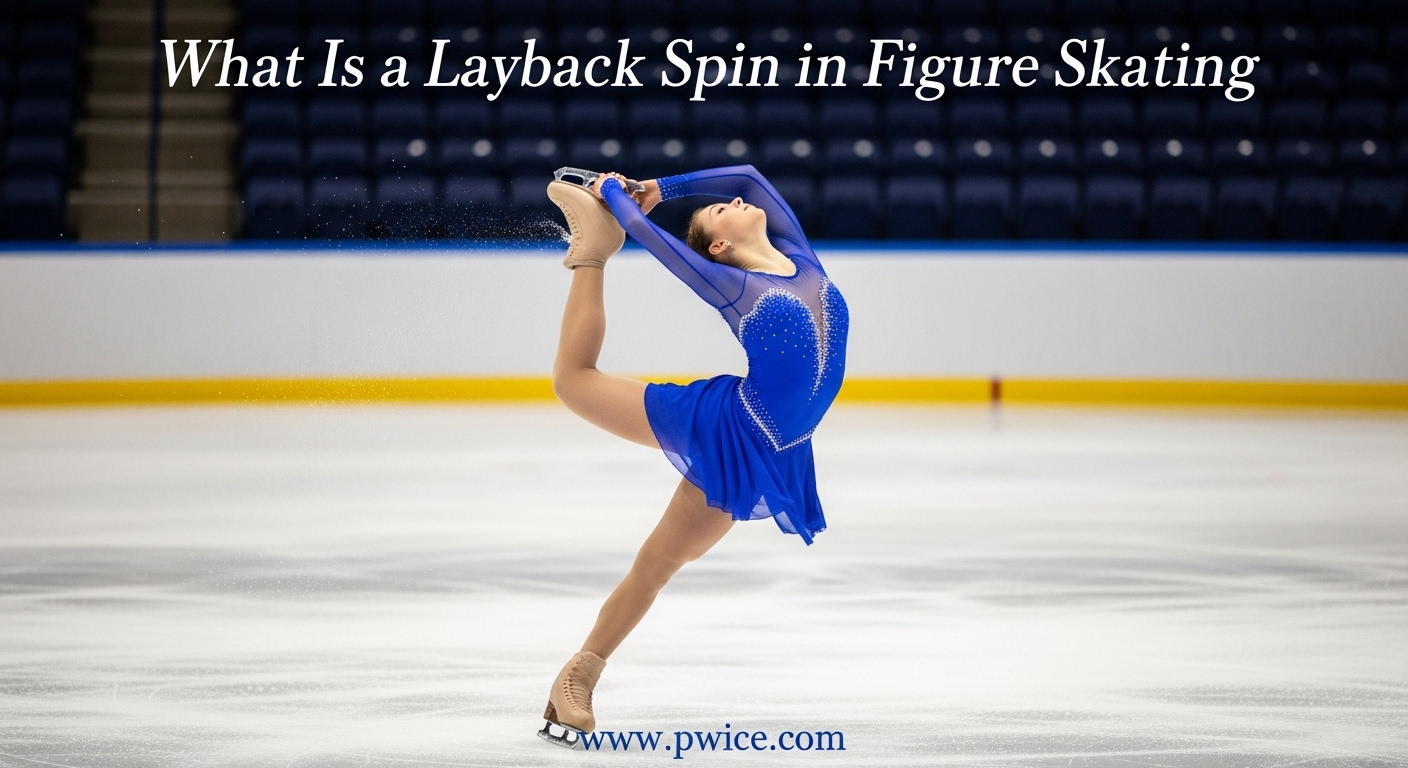
A layback spin is an upright figure skating spin where the skater arches their head and upper body backward while holding the free leg in a back attitude position, creating an elegant pose that resembles an arabesque in ballet. The skater faces upward toward the sky while rotating on one foot, making it one of the most visually striking elements in figure skating. This spin showcases a skater’s flexibility, balance, and control while adding technical value to competition programs.
In this guide, you will learn everything about the layback spin: its history, how to execute it properly, the physical requirements, popular variations, and how it compares to other spins. Whether you are a skater learning this element, a coach teaching it, or a fan wanting to understand what makes this spin special, I have gathered insights from biomechanics experts, master coaches, and forum discussions with real skaters to give you the complete picture.
Table of Contents
What Is a Layback Spin in Figure Skating?
A layback spin (abbreviated as LSp in the ISU Judging System) belongs to the upright spin family, but it distinguishes itself through the distinctive backward arch of the upper body. While a standard upright spin keeps the torso vertical, the layback requires the skater to bend backward from the upper spine while maintaining a centered rotation.
The free leg plays a crucial role in this spin. The skater holds the non-skating leg in a back attitude position, which means the leg extends behind the body with the knee bent at approximately a 90-degree angle. This creates the characteristic silhouette that judges and audiences recognize immediately.
In competition, the layback spin carries a base value of 1.2 points in the ISU Judging System, making it slightly more valuable than a basic upright spin (1.0) or a camel spin (1.1). Skaters can increase this value by adding difficult variations, achieving higher levels, or combining it with other spin features to maximize their technical score.
History and Origin
The layback spin traces its origins to British figure skater Cecilia Colledge, who invented this elegant element in the 1930s. Working with her coach Jacques Gerschwiler, Colledge developed the spin as a way to showcase flexibility and artistry while maintaining the technical requirements of competitive skating.
Colledge first performed the layback spin in competition during the early 1930s, and it quickly became her signature move. The element helped her win numerous titles, including the World Championships in 1937. Her innovative approach to spinning influenced generations of skaters who followed.
Over the decades, the layback spin evolved from its classic form into multiple variations. In the 1970s, Swiss skater Denise Biellmann popularized what we now call the Biellmann spin, taking the layback position and adding a full split by pulling the free leg up behind the head. This variation became so iconic that it earned its own name, though it technically remains a difficult variation of the layback spin family.
How to Execute a Layback Spin
Executing a proper layback spin requires more than just bending backward. The technique involves precise body positioning, controlled entry, and maintained balance throughout the rotation. Here is how to perform this spin correctly.
Step 1: Establish a Strong Entry
Begin by entering the spin from a controlled approach, typically using a back scratch or forward inside edge entry. The key is to establish a tight, centered rotation before attempting the layback position. A wobbly or off-center entry will make the layback nearly impossible to hold.
Step 2: Position the Free Leg
Bring the free leg into a back attitude position by lifting it behind you with the knee bent. The thigh should be close to horizontal, and the knee should point outward. Engage the hip muscles to hold this position steadily without letting the leg drop or swing.
Step 3: Initiate the Arch
Once the spin is centered and the free leg is stable, begin arching backward from the upper back. Keep the lower back engaged and the core tight. The head should tilt back naturally as the chest opens upward. Avoid collapsing through the waist, as this will pull you off center.
Step 4: Maintain the Position
Hold the layback position for a minimum of three rotations to receive credit in competition. Focus on keeping the weight over the skating foot and using the core muscles to control the arch. The arms can extend outward or upward to enhance the visual line of the position.
Common Mistakes to Avoid
Many skaters make the error of bending their standing knee during the layback, which drops the center of gravity and causes them to lose balance. Another frequent mistake is trying to arch from the lower back rather than the upper spine, which creates a collapsed appearance and risks back strain. Finally, neglecting core engagement leads to wobbly, uncontrolled spins that receive lower levels from judges.
Physical Requirements and Biomechanics
The layback spin demands specific physical capabilities that combine strength, flexibility, and coordination. Understanding these requirements helps skaters train effectively and avoid the injuries that can result from attempting this spin without proper preparation.
Back Flexibility
The most obvious requirement is spinal extension flexibility, particularly in the thoracic spine (upper and mid-back). Skaters need enough back flexibility to arch gracefully without compressing the lumbar spine. However, forum discussions reveal that many coaches overemphasize back flexibility while underestimating the importance of core strength.
Core Strength
Core strength actually matters more than extreme back flexibility for executing a safe, controlled layback. The rectus abdominis, obliques, and deeper core muscles must engage eccentrically to control the backward arch and prevent the spine from collapsing. Skaters with strong cores can execute beautiful laybacks even with moderate flexibility, while flexible skaters with weak cores often struggle with balance and control.
Hip Flexor and Adductor Flexibility
The free leg position requires flexible hip flexors and adductors to achieve the back attitude without straining. Tight hip flexors will pull the pelvis into an anterior tilt, which compresses the lower back and makes the arch uncomfortable or painful. Off-ice stretching targeting these muscle groups should accompany on-ice training.
Balance and Proprioception
The layback position shifts the skater’s center of gravity significantly backward from its normal position over the skating foot. Skaters must develop exceptional balance and body awareness to maintain this shifted position while rotating. This explains why the layback spin typically comes after skaters have mastered simpler upright spins and developed strong basic spinning skills.
Layback Spin Variations
The basic layback spin serves as a foundation for several beautiful and technically challenging variations. Each adds difficulty and visual interest while building on the same fundamental position.
The Biellmann Spin
The Biellmann spin represents the most well-known layback variation, named after Swiss skater Denise Biellmann who popularized it in the 1970s. In this variation, the skater pulls the free leg up and over their head, grabbing the skate blade with both hands while maintaining the back arch. This creates a full split position behind the head and counts as a difficult variation in the ISU Judging System, adding significant base value to the spin.
The Haircutter Spin
The haircutter spin adds another level of difficulty by having the skater pull the free leg blade across the back of their head in a sawing motion. This variation gets its colorful name from the visual similarity to cutting hair. It requires exceptional flexibility and control to execute without losing balance or center.
Catch Foot Layback
In the catch foot layback, the skater grabs the free foot or blade with one hand while maintaining the layback arch. This can be done with the hand reaching over the head or around the side of the body. The catch foot position counts as a feature that can help raise the spin level in competition.
Side Layback Spin
The side layback spin involves arching to the side rather than directly backward, creating a different visual line while maintaining similar technical requirements. This variation offers choreographic variety and can be combined with other positions for complex spin combinations.
Figure Skating Spin Comparison
Understanding how the layback spin fits among other figure skating spins helps skaters and fans appreciate its unique characteristics. Each spin type offers different challenges and visual appeal.
The upright spin family includes the basic upright spin, the layback spin, and variations like the Biellmann. The camel spin family requires the free leg to extend parallel to the ice surface at hip height, creating a flying camel illusion when entered from a jump. The sit spin family positions the skater in a low sitting position with the thigh of the skating leg parallel to the ice.
Compared to a basic upright spin, the layback requires significantly more back flexibility and core control. The camel spin demands strong balance and extension but less spinal flexibility. The sit spin challenges leg strength and low-position balance. Many skaters find the layback more difficult than a camel but easier than a Biellmann, placing it in the intermediate to advanced category of spin elements.
Here is how the spins compare in technical value and characteristics:
Spin Type Breakdown
Upright Spin: Basic standing position with vertical torso. Base value 1.0. Difficulty level: Basic. Requires solid balance and basic spinning technique.
Layback Spin: Arched backward with free leg in back attitude. Base value 1.2. Difficulty level: Intermediate. Requires back flexibility and core strength.
Camel Spin: Free leg parallel to ice surface. Base value 1.1. Difficulty level: Intermediate. Requires extension and balance.
Sit Spin: Sitting position with thigh parallel to ice. Base value 1.1. Difficulty level: Intermediate. Requires leg strength and low balance.
Biellmann Spin: Full split behind head from layback position. Counts as difficult variation. Difficulty level: Advanced. Requires extreme flexibility and control.
Learning Progression: From Beginner to Advanced
Learning the layback spin requires patience and progressive skill building. Attempting the full position before developing foundational skills leads to frustration and potential injury. Here is a recommended progression based on teaching methodologies from master coaches.
Phase 1: Off-Ice Preparation (2-4 weeks)
Begin with off-ice flexibility and strength training. Focus on thoracic spine mobility exercises, core strengthening (particularly eccentric control), and hip flexor stretching. The ballet barre work mentioned by expert coach Annette Thomas provides an excellent foundation, as the back attitude position in ballet directly translates to the layback spin position.
Phase 2: Attitude Position Mastery (2-3 weeks)
On the ice, practice holding the back attitude position without arching backward. Focus on keeping the free leg steady, the standing knee straight, and the hips level. Master coaches emphasize that skaters should not attempt the arch until they can hold the attitude position for multiple rotations with complete control.
Phase 3: Gradual Arch Introduction (3-4 weeks)
Begin introducing small backward leans while maintaining the attitude position. Start with just a slight upper back bend and gradually increase the arch as comfort and control improve. Coaches should spot skaters during this phase to prevent falls and build confidence.
Phase 4: Full Layback Position (2-3 weeks)
Once comfortable with partial arches, progress to the full layback position. Focus on keeping the weight centered over the skating foot and using the core to control the arch rather than collapsing backward. Video feedback helps skaters see their position and make adjustments.
Phase 5: Variation Training (ongoing)
After mastering the basic layback, skaters can begin learning variations like the catch foot or working toward the Biellmann position. Each variation requires additional flexibility and strength training.
Famous Layback Spin Performances
Certain skaters have become legendary for their exceptional layback spins, creating moments that fans remember decades later. These performances demonstrate what is possible when technique, flexibility, and artistry combine.
Sasha Cohen stands out as perhaps the most famous layback spin technician in recent memory. Her layback position achieved an almost impossible depth of arch while maintaining perfect centering and speed. During her 2006 Olympic free skate in Turin, Cohen’s layback spin exemplified the classic aesthetic that fans and judges admire.
Yuna Kim of South Korea incorporated beautiful layback variations into her programs throughout her career. Her 2010 Olympic gold medal performance featured a layback spin that showcased both technical precision and elegant line. Kim’s ability to transition smoothly into and out of the position set a standard for competitive skaters.
Angela Nikodinov earned recognition for maintaining the extended free leg position that characterized classic layback spins from earlier eras. Forum discussions frequently mention her as an example of the aesthetic many fans miss in modern competitive skating, where tucked positions sometimes score higher but look less elegant.
Denise Biellmann’s influence extends beyond her own performances to the variation that bears her name. Her ability to achieve and hold the full Biellmann position in the 1970s and 1980s demonstrated what was possible with dedicated flexibility training, paving the way for future generations.
Frequently Asked Questions
Is a layback spin hard?
A layback spin requires intermediate to advanced skating skills. It demands back flexibility, core strength, and well-developed balance. While not the hardest spin in figure skating, it challenges most skaters more than basic upright or camel spins. Proper training progression makes it achievable for dedicated skaters within several months of focused practice.
What is the hardest spin to do in figure skating?
The Biellmann spin is widely considered the hardest spin variation. It requires pulling the free leg into a full split position behind the head while maintaining the layback arch. Other difficult spins include flying camel spins with complex variations and certain sit spin combinations. The layback spin itself sits at intermediate difficulty, while the Biellmann represents its advanced evolution.
What is the value of layback spin?
In the ISU Judging System, a basic layback spin has a base value of 1.2 points. Skaters can increase this value by achieving higher levels through additional features, adding difficult variations like the Biellmann position, or executing the spin in both directions (left and right). A well-executed level 4 layback spin with difficult variations can earn significantly more than the base value.
Why is it called the Biellmann spin?
The Biellmann spin is named after Swiss figure skater Denise Biellmann, who popularized this variation in the 1970s. Biellmann learned the position from her teammate Karin Iten and incorporated it into her competitive programs, where it became her signature move. The spin’s distinctive beauty and difficulty made it immediately associated with her name throughout the skating world.
Conclusion
The layback spin represents one of figure skating’s most elegant and challenging elements. From its invention by Cecilia Colledge in the 1930s to its modern variations performed by today’s champions, this spin continues to captivate audiences and test skaters’ abilities.
Understanding what is a layback spin in figure skating means appreciating the combination of back flexibility, core strength, and spinning technique required to execute it well. Whether you are learning this spin for the first time or simply want to understand what makes it special, remember that proper progression and strength development matter more than forcing extreme flexibility.
As you watch figure skating competitions in 2026 and beyond, look for the layback spin and its variations. Notice the depth of the arch, the position of the free leg, and the control maintained throughout the rotation. When executed well, few elements in figure skating match the pure aesthetic beauty of a perfect layback spin.