
The best laser rangefinders for hunting give you a measured distance before you decide whether a shot is responsible. A hunting laser rangefinder sends a laser to the target and times its return, turning that trip into a distance reading; that is far more dependable than trying to judge a distant tree, deer, or hillside by eye.
For this 2026 guide, I compared all 12 analyzed models by the details that matter outside the truck: stated target range, magnification, angle-compensation tools, display type, power system, weather protection, and the manufacturer-listed limitations. I also kept a practical concern from long-range and hunting forums front of mind: a huge reflective-range claim does not automatically mean the same distance on game.
Can you hunt with a laser rangefinder? Yes. Any hunter shooting past 100 yards, an archer shooting from an elevated stand, or a rifle hunter facing uneven ground can use one to reduce distance guesswork. My short version is to choose the model that gives the information your hunting style needs, then confirm its reading on the actual target and terrain before you shoot.
Table of Contents
Top 3 picks answer the fastest hunting decisions
The Leupold is my all-around pick because it combines a compact build with bow-specific Flightpath information and wind-aware ballistic ranging. REDTIGER suits hunters who want 7x viewing, a rechargeable battery, and fast stated readings, while REVASRI is the straightforward option for scan mode and remembered settings.
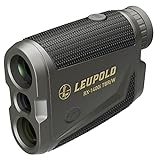
Leupold RX-1400i TBR/W Gen 2
- TBR/W ballistic ranging
- Flightpath bow mode
- 1400 yd reflective range


Best laser rangefinders for hunting in 2026 at a glance
This overview separates specialized ballistic units from simpler multi-mode models. Treat the stated maximum as a starting point, not a promise of deer-range performance, unless the listing gives a game-specific distance.
| Product | Specifications | Action |
|---|---|---|
|
Leupold RX-1400i TBR/W Gen 2
|
|
Check Latest Price |
|
REDTIGER WildVue S1
|
|
Check Latest Price |
 Vortex Sonora HD 1800
|
|
Check Latest Price |
 Astra Optix OTX2400B
|
|
Check Latest Price |
 SIG SAUER KILO3K
|
|
Check Latest Price |
 CIGMAN 3280 Yard
|
|
Check Latest Price |
 Acer SW-RF700
|
|
Check Latest Price |
 PEAKPULSE 1700 Yard
|
|
Check Latest Price |
 SIG SAUER Kilo2200
|
|
Check Latest Price |
|
REVASRI 1000Y Hunting
|
|
Check Latest Price |
1. Leupold RX-1400i TBR/W Gen 2 is the most complete bow-and-rifle pick
Leupold RX-1400I TBR/W Gen 2 w/Flightpath Rangefinder, Black/Gray
5x
1400 yd reflective
TBR/W and Flightpath
Pros
- TBR/W ballistic ranges
- Flightpath bow mode
- Bright adjustable TOLED
- Lifetime warranty
Cons
- 5x magnification
- IP54 rather than full waterproof
I would start with the Leupold if one rangefinder has to cover an archery season and a rifle season. Its True Ballistic Range/Wind system calculates ballistic range, and the listing says it can generate a hold point for a 10-mph, 90-degree wind out to 800 yards.
The 5.1-ounce weight and small 4-by-1.4-by-3-inch body make the case for carrying it instead of leaving it in a pack. Its 4.7 rating from 411 reviews is the highest rating in this group, though its 5x magnification is less than several 6x and 7x choices here.
Its stated range is 1,400 yards on reflective objects and 1,200 yards on trees. That tree figure is more useful for planning a hunting setup than a reflective number alone, but it is still not a stated range on game.
The red TOLED display has selectable brightness, which gives you a way to match the display to changing cover or fading light. IP54 water resistance handles dust and light water exposure, while the lifetime warranty gives this model unusually strong long-term backing.
Bow hunters get Flightpath obstruction information
Leupold lists a selectable Bow mode with Flightpath technology that shows potential arrow obstructions. I would favor that extra context for a treestand or steep hillside where the direct line to the animal can hide a branch in the arrow’s path.
Rifle hunters get wind-aware range data
The TBR/W function is the deciding feature for a rifle hunter who already understands their load and holds. It does not replace practice or a verified range card, but it supplies more than a plain line-of-sight reading.
2. REDTIGER WildVue S1 is the 7x rechargeable all-rounder
REDTIGER Range Finder for Hunting, 1600 Yards Laser rangefinder, 7X Magnification, Clearer and Accurate on Angle&Speed Measurement, Waterproof, Rechargeable for Bow Hunting, Shooting, Archery
7x
1600 yd
Rechargeable 1000mAh battery
Pros
- 7x magnification
- Fast stated readings
- Up to 8000 measurements
- Angle and bow modes
Cons
- Plastic housing
- IP54 protection
The REDTIGER gives hunters a useful combination of 7x magnification and a stated 1,600-yard maximum range. I like the extra magnification for looking across open country, since the distant target can be easier to identify before I ask the device for a reading.
Its listing claims accuracy within 0.5 yard and readings in under 0.5 second. Those are manufacturer-provided figures, so I would confirm repeatability on a known-distance object before relying on it for a difficult shot.
The HD LCD display is listed at up to 80% light transmission, and the unit offers horizontal distance, angle, height, straight-line distance, and speed modes. That is a broad tool set for a hunter moving between bow season, rifle season, and informal target practice.
A 1,000mAh rechargeable battery is specified for up to 8,000 measurements per charge. Rechargeable power is convenient, but I would charge it before each trip because battery drainage is a recurring complaint among rangefinder users.
Longer looks come from the 7x optical view
Seven-power magnification is a reasonable middle ground for western glassing breaks and longer shooting lanes. It helps make the target appear larger, although a rangefinder is still not a substitute for binoculars when you need to study an animal for several minutes.
Quick readings fit active spot-and-stalk use
The stated sub-half-second reading speed and multiple distance modes fit a moving hunting situation better than a one-purpose device. Its plastic construction and IP54 rating mean I would still protect it from hard impacts and sustained wet weather.
3. Vortex Sonora HD 1800 is the optics-first game-range choice
Vortex Sonora HD 1800 Laser Rangefinder
6x 21mm
1800 yd reflective
700 yd game
Pros
- Stated 700 yd game range
- HD multi-coated optics
- HCD angle range
- Lifetime warranty
Cons
- Reflective range exceeds game range
- Limited review count
The Vortex Sonora makes its case with one detail I wish every listing stated: it separates the 1,800-yard reflective maximum from a 700-yard game range. For an elk or deer hunter, that game figure is much more informative when deciding whether this laser rangefinder fits the distances you actually hunt.
I would choose this model when optical quality is high on the list. The 6x, 21mm configuration uses an HD optical system and fully multi-coated lenses, while ArmorTek protection is listed to resist scratches, oil, and dirt.
Its HCD, or Horizontal Component Distance, gives an angle-compensated distance. That is the number archers and hunters on pronounced slopes care about because the slanted line-of-sight distance may not reflect the horizontal shooting solution.
At 6.1 ounces, it remains compact enough for a jacket pocket. O-ring seals are specified for waterproof performance, and the unit is tripod adaptable when you want a steadier view from a fixed glassing point.
Game-specific ranging makes expectations clearer
The stated 700-yard range on game is the Sonora’s strongest buying signal. I would rather work from that conservative number than shop solely by the much larger number achieved on a highly reflective target.
Protected HD glass favors regular field carry
Fully multi-coated lenses and an ArmorTek protective layer are relevant if your rangefinder shares a pack pocket with calls, gloves, and other gear. The unlimited unconditional lifetime warranty adds reassurance, though the analyzed listing has only 54 reviews.
4. Astra Optix OTX2400B is the ballistic-data pick for long shots
Astra Optix OTX2400A 6x21 2400yd Class 1 905nm 0.25mW Eye-Safe Laser Rangefinder with Applied Ballistics® for Hunting, Shooting and Golfing with Red OLED Display Fast 0.1s & Accurate +/-1 yd.
6x
2400 yd reflective
Bluetooth Applied Ballistics
Pros
- 950 yd stated deer range
- 0.1 second ranging
- Red OLED display
- Bluetooth ballistic solutions
Cons
- No dimensions listed
- No listed limitations
The Astra Optix OTX2400B is the hunting rangefinder I would study first for a shooter who wants connected ballistic information. It pairs Bluetooth with Applied Ballistics firing solutions and lists a red OLED display with five brightness settings.
Its published ranges distinguish 2,400 yards on reflective targets, 1,400 yards on trees, and 950 yards on deer. That target-by-target detail puts it ahead of broad maximum claims when a long range hunting rangefinder is the goal.
The listing calls out an eye-safe Class 1, 905nm laser and ranging speeds as fast as 0.1 seconds. Fast data is helpful, but I would still take a second reading if brush, rain, or partial cover leaves any doubt about what the laser hit.
All-glass optics, 6x magnification, full multi-coating, and a rain-repellent protective coating round out the optical package. Its specified 0.14-kilogram weight keeps a data-heavy unit from becoming a burdensome carry item.
Long-range rifle users get target-specific stated distances
The stated 950-yard deer range is the meaningful number for a hunter considering distant game, not the 2,400-yard reflective maximum. A shooter must still account for skill, conditions, local rules, and the ethical range of their own setup.
Connected ballistics suit prepared rifle setups
Bluetooth and Applied Ballistics make sense when you keep verified bullet information and want firing solutions available in the optic. I would not pick this route for a hunter who wants only a simple yard number with the fewest possible settings.
5. SIG SAUER KILO3K is the deepest ballistic-system rangefinder
SIG SAUER KILO3K 6X22MM Compact Lightweight Waterproof Accurate Laser Rangefinder |BDX-U/X, Red OLED Display (SOK3K602)
6x
3000 yd reflective
BDX 2.0 ballistic system
Pros
- 3000 yd stated range
- 25 bullet profiles
- OLED hold data
- BaseMap integration
Cons
- Game range not listed
- Battery details not listed
The KILO3K is built for the hunter or long-range shooter who wants a rangefinder to participate in a larger ballistic system. SIG lists LOS, Angle Modified Range, Archery, BDX-U, and BDX-X modes rather than a single generic distance function.
Its stated 3,000-yard range applies to reflective targets. That is an impressive ceiling, yet the listing does not state tree or deer distances, so I would not translate that number directly into an expected game range.
The segmented OLED display can show distance, elevation holdover, and wind hold data. It also stores 25 bullet profiles across eight ballistic groups, which is useful for a shooter with several verified load and rifle combinations.
BDX 2.0 uses low-energy Bluetooth, and BaseMap integration can create remote waypoints. Those features make this a serious technical tool, but they also call for time spent learning the controls before the hunt.
Advanced rifle systems get the most from BDX
I would match the KILO3K with a hunter who already records ballistic data and appreciates digital elevation and wind holds. Its information density is helpful only when the profile in use has been checked against real shooting results.
Archery users have a dedicated mode but fewer stated bow details
Archery mode gives bow hunters a direct place in the KILO3K feature set. The supplied specifications do not describe an obstruction display or a game-specific bow range, so users who need those details should keep that gap in mind.
6. CIGMAN 3280 Yard is the maximum-distance multi-mode option
Hunting Range Finder 3280 Yards, CIGMAN Rechargeable Laser Rangefinder 6X Magnification, 7 Modes Rangefinder with Slope, Distance, Angle, Speed, Scan, Waterproof Hunting Gear for Hunter (Camo)
6x
3280 yd
Seven modes and Type-C charging
Pros
- 3280 yd stated range
- Continuous tracking
- 6000 uses per charge
- Type-C charging
Cons
- Game range not listed
- Limited review count
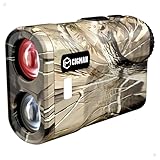
CIGMAN lists the largest maximum range in this lineup: 3,280 yards with accuracy stated at plus or minus 1 yard. That specification will attract a hunter who regularly ranges distant terrain features before a stalk or a shooter who wants a large stated ceiling.
For game, I would give more weight to repeatable target acquisition than the headline number. The available data does not provide a deer, tree, or game distance, so there is no hunting-target figure to compare directly with the Vortex or Astra.
Its seven modes include straight ranging, continuous scan, speed, two-point height or angle, horizontal or angle, golf slope, and flagpole lock. Continuous scan can be useful while following changing terrain, provided you know exactly which object is returning the measurement.
The rechargeable 750mAh battery is listed for 6,000 uses and a three-hour full Type-C charge. A 6x multi-coated lens and waterproof, dustproof construction give the basic outdoor platform a sensible feature set.
Open-country users benefit from broad terrain ranging
The large stated range and continuous-scan function suit hunters who need to map ridges, basins, and approach routes well beyond ordinary shot distance. I would treat those terrain readings separately from the tighter standard needed for ranging an animal.
Rechargeable Type-C power reduces specialty-battery dependence
Type-C charging makes it simple to top up the unit from common charging gear before a trip. That convenience does not remove the need to check charge status, especially because power loss remains a common rangefinder frustration.
7. Acer SW-RF700 is the simple Hunt Mode choice for close cover
Acer Hunting Range Finder with Slope, 800 Yards Range Finder for Hunting, 6X Magnification, Waterproof Archery Rangefinder for Deer, Rechargeable Battery with Magnet Stripe
6x
800 yd
Hunt Mode and USB-C power
Pros
- 0.5 second Hunt Mode
- USB-C rechargeable
- Textured wet grip
- Angle and scan modes
Cons
- 800 yd maximum
- Polycarbonate body
The Acer SW-RF700 makes sense for hunters who need a straightforward tool in woods, food plots, and shorter shooting lanes. Its stated 800-yard maximum is far below the biggest claims in this roundup, but that is still beyond the range at which many deer and bow hunters make decisions.
The useful feature here is Hunt Mode, which the listing says locks on moving targets in 0.5 second. In grass, branches, and uneven cover, I would take several readings and verify the laser is selecting the animal rather than a foreground twig or background tree.
It offers 6x magnification with angle, scan, speed, height, horizontal-distance, and slope-compensation modes. That gives a new owner room to learn a range finder for hunting without stepping into a complicated ballistic-app system.
The polycarbonate body has a textured grip, anti-scratch coating, and IP54 protection against water and dust. USB-C rechargeable power is convenient for pre-hunt preparation, while the stated one-year warranty is shorter than the lifetime coverage on some competitors.
Woodland and stand hunters can prioritize target lock
Hunt Mode is the reason to consider this Acer for a wooded setup. The fast stated lock has more relevance in brushy cover than a giant range figure that you will never approach from a typical stand.
New users get clear controls without a ballistic learning curve
Its multi-mode layout covers the central distance and angle functions without listed Bluetooth profiles or map features. I would choose that simplicity for a hunter who wants to concentrate on ranging fundamentals first.
8. PEAKPULSE 1700 Yard is the 7x angle-compensation alternative
Pros
- 7x magnification
- 1700 yd stated range
- Complex-cover optimization
- Rechargeable power
Cons
- Vehicle-window limitation
- No listed weather rating
PEAKPULSE combines 7x magnification with a stated 1,700-yard range and angle compensation. I would look at it when magnification matters as much as a broad set of basic distance functions.
The product information says its ranging is optimized for complex hunting environments with grass, shrubs, and bushes. That directly addresses a real concern from hunting discussions: a unit can give an inconsistent result when the intended target is surrounded by clutter.
It provides straight-line, horizontal, vertical-distance, angle, speed, and continuous-scanning modes. The stated accuracy is about 1 yard, and the rechargeable battery can be powered from a power bank or vehicle power source.
The unit weighs 8 ounces and is made from ABS and silicone. Its listing does not supply a water-resistance rating, so I would carry it in a protected pocket or case when rain is likely.
Brushy environments are the stated use-case strength
PEAKPULSE specifically calls out grass, shrubs, and bushes rather than presenting only an open-field maximum. I would still range a clear object behind the animal as a cross-check whenever cover makes the reading uncertain.
Vehicle-based ranging has one important limitation
The listing says windowless measurement requires opening a car window. Hunters who scout from a vehicle should account for that detail instead of expecting reliable readings through closed glass.
9. SIG SAUER Kilo2200 is the compact digital-ballistics monocular
Sig Sauer Electro-Optics Kilo2200 6x22mm Monocular Digital Ballistic Laser Rangefinder, High-Precision Optics, Ideal for Hunting and Shooting (SOK22606)
6x22
1200 yd
Digital ballistic technology
Pros
- 6x22 monocular
- Digital ballistic technology
- Compact 0.57 lb build
- Clear display
Cons
- Limited review count
- No weather rating listed
The SIG SAUER Kilo2200 is a compact 6×22 monocular-style option that lists digital ballistic technology and a 1,200-yard measuring range. I would view it as a focused hunting and shooting tool rather than a feature-heavy connected system.
At 0.57 pound, it is designed for portability, and its clear display is meant to make distance access quick. That combination matters when you need to range from a rest, a blind, or a short stop during a stalk.
The supplied product data calls out high-precision optics and a user-friendly interface but does not list detailed target ranges, mode names, battery type, or water-resistance rating. Those omissions do not mean the functions are absent; they mean I would not assume them from the data available here.
Only 12 reviews are recorded in the analyzed listing, with a 4.3 average rating. That is a much smaller feedback sample than the more established entries, so I would pay particular attention to the specifications that matter most to my own hunting conditions.
Minimal carry weight fits mobile hunting kits
A compact monocular rangefinder can take up less room than a larger optic system. I would choose this format when I already carry binoculars and want the rangefinder to be a separate, simple device.
Digital ballistic technology suits informed rifle users
The digital ballistic feature can appeal to a rifle hunter who wants more than raw line-of-sight distance. The product data does not list profile capacity or connected-app features, so buyers needing those details should not presume KILO3K-level system depth.
10. REVASRI 1000Y Hunting is the popular multi-function starter
REVASRI Hunting Laser Rangefinder with Rechargeable Battery 1000 Yards Hunting Range Finder with Target Acquisition Technology Easy-to-Use Clear Accurate Rangefinders for Hunters
6.5x
1000 yd
Seven functions with memory
Pros
- 2489 reviews
- Mode memory
- Continuous scan
- Rechargeable battery
Cons
- No target-specific range listed
- One-year warranty
The REVASRI stands out because it has the largest review base in this comparison: 2,489 reviews and a 4.4 rating. That volume does not prove it is right for every hunt, but it gives a broader pool of buyer feedback than products with only a few dozen reviews.
It lists a 5-to-1,000-yard range, 6.5x magnification, plus or minus 1-yard distance accuracy, and plus or minus 1-degree angle accuracy. For many ordinary deer-hunting distances, those baseline figures are more relevant than a multi-thousand-yard headline.
The seven functions cover ranging, an all-in-one setting, scanning, speed, height, golf compensation, and storage mode. Mode memory reopens the last function used, which I appreciate because switching menus with gloves on is an avoidable hassle.
A rechargeable built-in lithium-ion battery and continuous scan make this a practical generalist. Its listed IP54 water resistance calls for basic weather awareness rather than carefree exposure to sustained rain.
Frequent users benefit from remembered settings
Mode memory is a small feature with a real day-to-day benefit. A hunter who normally uses scan or a preferred distance mode does not have to cycle through every option at the beginning of each use.
General hunting distances fit the 1000-yard platform
I would consider the REVASRI for a hunter who needs ordinary ranging, angle information, and scan mode in one compact unit. The product data does not state a tree or deer range, so the maximum should not be treated as a game-range claim.
11. GREEN SHOT ELH1000 is the uncomplicated one-button hunting mode option

GREEN SHOT Range Finder for Hunting - 1200 Yards Golf Rangefinder with Slope Switch, Flag Lock, Speed Mode, Waterproof Rechargeable Hunting Range Finder, Ideal for Archery, Golf, Bow Hunter
6x
1200 yd
Five modes with slope switch
Pros
- 0.5 yd stated accuracy
- Hunting mode
- Slope on or off
- One-button operation
Cons
- Plastic construction
- Small review sample
The GREEN SHOT ELH1000 focuses on ease of use, with one-button operation and five stated modes: straight line, flagpole lock, hunting, golf, and speed. I would put it on the short list for a hunter who wants a clear menu rather than a dense ballistic interface.
Its listing gives a 1,200-yard maximum, 6x magnification, and plus or minus 0.5-yard accuracy. Hunting Mode is described as filtering background noise for clearer target acquisition, a useful goal when an animal stands near branches or brush.
The slope toggle can be switched on or off, and its listed rechargeable battery removes the need for a separate disposable cell. The device weighs 0.35 pound, which is a modest addition to a bowhunting or rifle-hunting pack.
Only 64 reviews appear in the analyzed data, so the 4.6 rating is based on a smaller sample than the REDTIGER or REVASRI. Its plastic housing is another reason I would use the included protection carefully rather than treating it as impact-proof.
Simple controls work well for occasional users
One-button operation removes friction for a hunter who uses a rangefinder often enough to need it but not often enough to memorize complex controls. The five modes still give flexibility for straight, angled, moving, and hunting-specific situations.
Slope control helps separate practice and hunt needs
The on-or-off slope switch allows the user to choose whether angle-related information appears. For hunting on a slope, I would want to understand the horizontal-distance output and practice with it before making it part of a shot decision.
12. CALPOWER GT6-GF7 is the 7x basic range-and-scan alternative

Golf & Hunting Rangefinder with Rechargeable Battery, 5/1200Y Camo Laser Range Finder 7X Magnification, Distance/Angle/Speed/Scan Multi Functional Waterproof Rangefinder with Case
7x
5 to 1200 yd
ARC and continuous readings
Pros
- 7x magnification
- ARC and scan
- Slope switch
- Anti-fog claim
Cons
- Golf-focused listing
- Flag lock has short stated limit
The CALPOWER GT6-GF7 is listed for both golf and hunting, with 7x magnification and a 5-to-1,200-yard operating range. Its mixed-use design can work for a hunter who wants a simple distance tool, but I would examine its hunting functions rather than assuming every golf feature carries over.
The product information lists continuous readings, ARC, pin seeking, flagpole-locking vibration, and a slope switch. ARC is relevant to hilly ground because it is intended to provide angle-related distance information, while continuous readings can help map several objects quickly.
Its high-precision measurement is listed at plus or minus 1 meter, and it uses a lithium-ion battery. At 8.8 ounces, it is heavier than several compact models, an item to consider if you carry it on a lanyard all day.
The flagpole-lock feature is specified at 150 yards for a flag and 250 yards for an unfolded flag. That limitation is not necessarily a hunting limitation, but it shows why I would prioritize a model with explicit hunting or game-target data for regular field use.
Dual-use buyers get 7x viewing and continuous ranging
Seven-power magnification and continuous readings are the relevant parts for a hunter. The golf-oriented functions may be useful elsewhere, but they are not a replacement for a documented game-range rating or an archery obstruction feature.
Moderate-distance hunting is the sensible use case
I would use this CALPOWER for normal-range distance checks where a clear target is available. Its listing has 32 reviews, so I would be especially deliberate about testing readings against known distances before relying on it in dense cover.
A hunting rangefinder should match your game, terrain, and shot process
The right choice begins with the farthest realistic distance at which you need a reading, not the largest number on a product box. For a treestand bow hunter, repeatable readings from roughly 20 to 60 yards and angle compensation can matter more than massive long-range specifications.
For deer hunting in mixed woods, prioritize a clear display, enough magnification to identify the target, scan or target-acquisition help, and a body you will actually carry. The Acer’s Hunt Mode, GREEN SHOT’s hunting setting, and REVASRI’s scan mode are examples of features aimed at simpler ranging tasks.
Game-target distance is the range specification that matters most
Reflective range is measured on highly cooperative surfaces and is usually the biggest number in a listing. A tree range is more informative for terrain work, while an explicit deer or game range is the most relevant stated figure for a hunter deciding if a device fits open-country use.
In this group, Vortex lists 700 yards on game, and Astra lists 950 yards on deer. Where a listing names only a reflective maximum, I would build a margin into expectations and test the rangefinder on real vegetation and known-distance targets before season.
Angle compensation gives a horizontal shooting reference
Angle compensation matters when your line of sight runs sharply uphill or downhill. The device measures the slanted distance, then can provide a horizontal or angle-modified value that better matches the trajectory problem, especially for bow hunting and steep rifle country.
It is not magic permission to stretch a shot. You still need to know your bow or rifle setup, account for wind where relevant, and make only shots you have practiced under comparable conditions.
Magnification should help identification without adding shake
Five-power is compact and adequate for many ordinary hunting shots, while 6x is the common middle ground in this list. A 7x option such as REDTIGER, PEAKPULSE, or CALPOWER makes a distant target look larger, but hand shake can also be easier to notice.
I prefer a rangefinder as a measuring instrument and binoculars as the tool for extended glassing. A tripod-adaptable unit such as the Vortex Sonora can help from a fixed point, but it still has a narrower role than binoculars for studying animals and terrain.
Power and weather protection deserve a pre-hunt routine
Rechargeable units are convenient, particularly models with Type-C or USB-C charging, but a battery indicator should be part of your pre-hunt check. If your hunting area is cold or wet, store the rangefinder where you can access it quickly but protect it from direct exposure.
IP54 indicates resistance to dust and splashing, not unlimited water exposure. O-ring-sealed waterproof construction, as listed for the Vortex, gives a different level of confidence, but I would still dry the lenses and body after a wet hunt.
Hunting modes differ from golf modes in the information they prioritize
A hunting rangefinder is intended to range animals, trees, and irregular terrain, often with angle compensation, scan functions, and target-acquisition behavior. A golf rangefinder commonly emphasizes flag locking and tournament-related slope control; a dual-use model can serve both tasks, but its hunting data needs close inspection.
That difference is why I would not select a device based on a flag-lock feature alone. For hunting, confirm that the display, ranging behavior, stated target range, and angle function fit game and cover rather than a clear flag on a course.
Consistent readings come from a repeatable use method
Start by cleaning the objective and eyepiece with a proper lens cloth, hold the unit against a stable rest when possible, and range a known object before the hunt. On an animal near brush, take several readings and compare the target distance with a nearby clear object to see whether the laser may be catching foreground cover.
That simple routine responds to the most common user concern: inconsistent readings. No rangefinder can remove the need to identify exactly what you ranged, and no ballistic calculation replaces a calm, ethical decision in the field.
FAQs answer common hunting rangefinder questions
What rangefinder do most pros use?
There is no one rangefinder used by every professional hunter or shooter. Pros often choose models that match their shooting system: hunters who need bow data may prefer angle and archery modes, while long-range rifle users often want verified ballistic profiles, clear OLED data, and target-specific ranging information.
Is there any difference between a hunting rangefinder and a golf rangefinder?
Yes. Hunting rangefinders are designed around animals, trees, irregular terrain, scan functions, and angle-compensated distance, while golf rangefinders commonly prioritize flag locking and slope settings. A dual-use unit can work for hunting, but check its stated game-target behavior and hunting mode before treating it as a dedicated hunting optic.
What range finder does Tiger Woods use?
The supplied research does not identify a verified rangefinder used by Tiger Woods, so this guide does not assign him a specific model. His equipment choice would be golf-focused and should not be used as a shortcut for selecting a hunting rangefinder, where game targeting and angle data matter more.
Can you hunt with a laser rangefinder?
Yes. A laser rangefinder helps hunters measure distance to a target or nearby terrain so they can assess a shot more accurately. It is especially helpful beyond 100 yards, for elevated archery positions, and on steep ground, but it must be used with practice, target confirmation, and ethical judgment.
The best hunting rangefinder is the one that provides trustworthy field-relevant data
For the broadest hunting use, I would choose the Leupold RX-1400i because Flightpath and TBR/W answer bow and rifle needs in one compact unit. Pick the Vortex or Astra when an explicit game or deer range and stronger optics or ballistic detail matter most; pick a simpler rechargeable model when you need dependable basic ranging for ordinary hunting distance.
The best laser rangefinders for hunting in 2026 are not defined by a huge maximum number alone. Choose the target range, angle function, magnification, power routine, and weather protection that suit your hunt, then practice with the device until every reading supports a calm and responsible decision.