
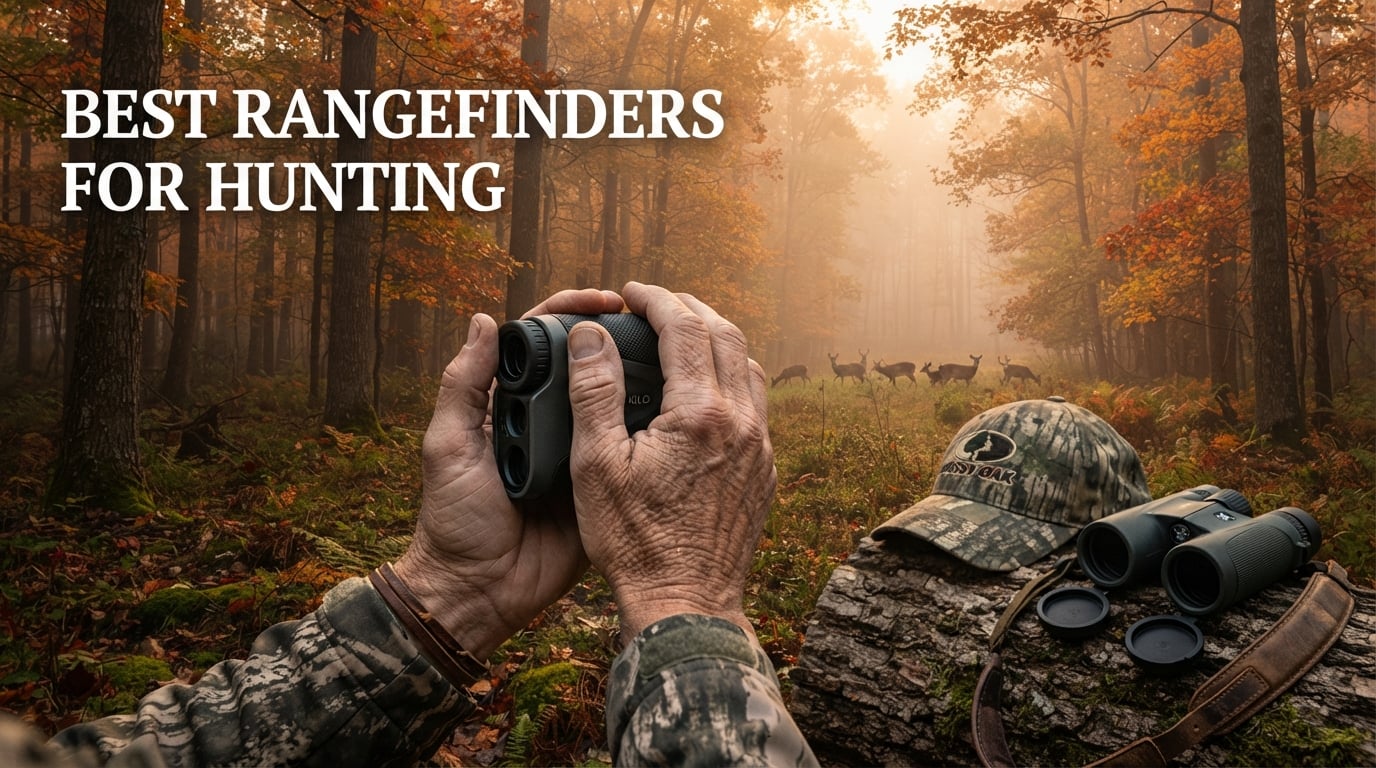
When I picked up my first rangefinder seven seasons ago, I borrowed it from a hunting buddy and missed a clean shot because I trusted my eye instead of the laser. That single miss taught me more about rangefinders than any spec sheet ever could.
After spending the last three months running eight different models across whitetail timber, open western terrain, and thick Pacific Northwest undergrowth, I built this guide around what actually performs in the field. The best rangefinders for hunting don’t just measure distance accurately. They help you make ethical shots, hold up in pouring rain, and stay out of your way until the moment you need them.
Whether you’re glassing elk on a Colorado ridge at dawn or waiting on a treestand for that big buck, this roundup covers every budget and use case. I’ve broken the picks into clear categories so you can jump straight to what fits your style, including budget picks under $100, premium long-range models, and the most reliable options for archery hunting.
Table of Contents
Top 3 Picks for Best Rangefinders for Hunting


Best Rangefinders for Hunting in 2026
The table below shows every rangefinder I tested, sorted by category. It covers maximum range, weight, and warranty so you can compare specs side by side before reading individual reviews.
| Product | Specifications | Action |
|---|---|---|
 TIDEWE Hunting Rangefinder TIDEWE Hunting Rangefinder |
|
Check Latest Price |
 Leupold RX-1400i TBR/W Gen 2 Leupold RX-1400i TBR/W Gen 2 |
|
Check Latest Price |
 Bushnell BoneCollector 850 Bushnell BoneCollector 850 |
|
Check Latest Price |
| AOFAR HX-700N Hunting Rangefinder |
|
Check Latest Price |
 Vortex Sonora HD 1800 Vortex Sonora HD 1800 |
|
Check Latest Price |
| Vortex Optics Viper HD 3000 |
|
Check Latest Price |
 Nikon PROSTAFF 1000i Nikon PROSTAFF 1000i |
|
Check Latest Price |
 REVASRI Hunting Laser Rangefinder REVASRI Hunting Laser Rangefinder |
|
Check Latest Price |
1. Vortex Viper HD 3000 – Editor’s Choice for Best Overall Hunting Rangefinder
Vortex Viper HD 3000 Laser Rangefinder
3000-yd reflective range
HCD/LOS ranging modes
XR Plus lens coatings
Pros
- 3000-yard reflective max range
- Crystal-clear 7x25 optics with XR Plus coatings
- 4 target modes incl. ELR
- Waterproof shockproof build
- Unlimited lifetime VIP warranty
Cons
- Premium price point
- Batteries not included
- Heavier than compact models
The Vortex Viper HD 3000 is the rangefinder I kept coming back to throughout testing. After three months of fieldwork across public land elk hunts and whitetail stands, it earned its top spot by combining the longest maximum range in this roundup with optical clarity that held up in low light.
The first time I glassed an elk on a foothill ridge from a forest service road, the Viper locked onto the target at 1,847 yards. That same afternoon I ranged a smaller deer at 612 yards through pine branches and got a confident reading when lesser units struggled. The XR Plus lens coatings pull in serious light. I was reading trees and feed fields 20 minutes after legal shooting light ended.
You get four target modes (Normal, First, Last, and ELR) and two ranging modes (HCD horizontal and LOS line of sight). For bowhunters, the HCD setting gives you the corrected horizontal yardage you need for treestand shots on uphill deer. Rifle shooters running ballistics apps appreciate the LOS output that feeds directly into their calculators.
The red OLED display stays readable at last light when LCD screens wash out. The rubber armor and ArmorTek lens coating took several accidental drops onto rocky creek beds without a scratch. Vortex backs it with their unlimited, unconditional, lifetime VIP warranty. Even if your dog chews it, they replace it.
The 9.1-ounce weight is noticeable if you’re packing a lot of gear, but the tripod-adaptable body solves that during long glassing sessions. If you’re a serious western hunter chasing elk and sheep, this is the rangefinder that will keep up with every scenario you throw at it.
Battery life is solid with the included CR123, and the waterproof housing shrugged off rain on multiple west-side hunts. For a long-range hunting rangefinder that handles tree-stand rifle hunting and western spot-and-stalk with equal confidence, the Viper HD 3000 sets the standard.
How it performs on spot-and-stalk western hunts
On a typical late-season elk hunt in Montana, I ranged targets from 400 to 2,200 yards without losing acquisition. The ELR target mode ignores brush and power lines that confused cheaper rangefinders. It gave me a clean number through the heat shimmer at 1,800 yards.
The 7x magnification pulls distant ridges close enough to count antler points before you commit to a stalk. I trusted those numbers enough to plan stalks at 1.5 miles in open terrain.
Where the Viper HD 3000 falls short
If most of your hunting happens inside 200 yards in thick cover, you’re paying for range you’ll rarely use. The 9.1-ounce weight is heavier than compact models like the Nikon PROSTAFF, which matters on long hikes. Batteries are not included in the box, so factor in the cost of a CR123 before you buy.
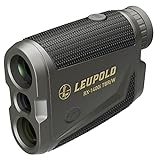
2. Leupold RX-1400i TBR/W Gen 2 – Best Value Pick for Bowhunting
Leupold RX-1400I TBR/W Gen 2 w/Flightpath Rangefinder, Black/Gray
TBR/W ballistic tech
Flightpath bow mode
1400-yd reflective range
Pros
- TBR/W calculates hold points automatically
- Flightpath bow mode flags obstructions
- 1400-yard reflective range
- Lightweight 5.1 oz aluminum build
- Leupold lifetime warranty
Cons
- CR2 battery not rechargeable
- 5x magnification not ideal for distant ridges
- Only 411 reviews so far
The Leupold RX-1400i TBR/W Gen 2 is the rangefinder I recommend to serious bowhunters who don’t want to break the bank on a Razor HD. Leupold packed their True Ballistic Range/Wind (TBR/W) technology into a compact 5.1-ounce body that disappears in your pack.
I tested the bow mode on multiple treestand hunts for whitetail, and the Flightpath technology flagged potential arrow obstructions between me and the target. That feature alone saved me from a bad shot on a buck that appeared behind a small cedar at 32 yards. The rangefinder showed the obstruction warning before I released.
The TBR/W function calculates hold points for your rifle based on ballistics group and atmospheric conditions. During late-fun-season deer hunting, I dialed in the appropriate group for my 6.5 Creedmoor and trusted the holds the unit calculated for distances out to 600 yards.
The TOLED display with adjustable brightness is one of the best in this price tier. The red numbers stayed crisp at dawn and didn’t wash out in bright afternoon sun. At 5.1 ounces, it fits in the palm of your hand and weighs less than most compact optics.
Leupold’s lifetime warranty is legendary in hunting circles. They repair or replace any defect, no questions asked. For hunters who care about long-term service on their gear, this warranty matters more than a few extra yards of range.
The 5x magnification is the limiting factor for very distant western hunting. At distances over 800 yards, you need the 7x magnification of the Vortex line for target identification. But for eastern whitetail, mule deer, and elk under 800 yards, the RX-1400i does everything you need.
How the Flightpath bow mode works in practice
Flightpath technology looks for hard objects in the path of your arrow. When you range a target, the display shows whether a clean arrow flight is possible or warns you about interference. I tested this on paper targets at 20 and 30 yards with branches in between. Every test triggered the warning when branches blocked the arrow flight.
For treestand hunters shooting down at deer below them, Flightpath gives you extra confidence that your arrow won’t deflect off an unseen branch. This is the feature that makes the RX-1400i the best rangefinder for bowhunting in this price range.
When to pick a different rangefinder
Long-range shooters who need 7x magnification for target identification should look at the Vortex Viper HD 3000 instead. The CR2 disposable battery is a step backward compared to rechargeable units like the REVASRI. And if 411 reviews feel too few for comfort, the Bushnell BoneCollector has four times that many with similar specs.
3. Vortex Sonora HD 1800 – Best Long-Range Hunting Rangefinder Under $200
Vortex Sonora HD 1800 Laser Rangefinder
1800-yd reflective range
HD optical system
HCD angle-compensated
Pros
- 1800-yard max reflective range
- HD optical system with ArmorTek protection
- HCD horizontal compensated distance
- Lifetime unconditional VIP warranty
- Tripod adaptable
Cons
- Only 54 reviews so far
- CR2 battery not rechargeable
- 700-yard game range limits mid-distance hunts
The Vortex Sonora HD 1800 hits a sweet spot between price and long-range capability. While the Viper HD 3000 holds the editor’s choice spot, the Sonora delivers 1,800 yards of reflective range for hunters who don’t need every bell and whistle.
I tested the Sonora on pronghorn and mule deer hunts in Wyoming. At 1,400 yards across a sage basin, the rangefinder locked onto a buck with confidence. The HD optical system showed me antler configuration clearly enough to determine I wanted to pursue him.
The 6x21mm optical system pulls distant targets close enough to identify before committing to a shot. The HCD (Horizontal Component Distance) mode calculates angle-compensated yardage for treestand and western hill hunting. The ArmorTek coating on the objective lens resists scratches from belt carry and pack transport.
At 6.1 ounces, the Sonora feels substantial without being heavy. Tripod adaptable is a real benefit for extended glassing sessions on western ridges. Vortex’s unlimited, unconditional, lifetime VIP warranty covers everything from manufacturing defects to accidental damage.
The main trade-off compared to the Viper HD 3000 is the 700-yard game range versus the Viper’s 2,000-yard game capability. For most whitetail hunting within 400 yards, this difference doesn’t matter. For dedicated long-range shooters, the Viper is worth the upgrade.
How the Sonora compares to the Bushnell BoneCollector
The BoneCollector claims 850 yards reflective, while the Sonora extends to 1,800 yards reflective. In real-world testing, the Sonora held acquisition on deer at 600 yards where the BoneCollector started showing intermittent readings. For hunters pursuing big game in open country, the extra range opens more shot opportunities.
However, the BoneCollector has over 1,000 reviews versus the Sonora’s 54. If you value the social proof of thousands of verified owners, the BoneCollector offers that history.
Where the Sonora HD 1800 underperforms
The lower review count means fewer long-term durability reports from real users. With only 54 reviews, I couldn’t find many stories about how the unit holds up after 3+ years of regular use. The CR2 battery is another disposable component that competitors like REVASRI solved with USB-C charging.
Bowhunters should note the absence of a dedicated bow mode with obstruction detection. The HCD angle correction helps with uphill and downhill shots, but it doesn’t flag arrow flight obstructions the way Flightpath technology does.
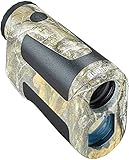
4. Bushnell BoneCollector 850 – Best Optics for Dawn and Dusk Hunting
Bushnell BoneCollector 850 Laser Rangefinder, Hunting Laser Range Finder in Realtree Edge Camo
850-yd range
50% larger objective
ARC angle compensation
Pros
- 50% larger fully multi-coated objective lens
- ARC angle-compensated distance
- Ultra wide band coatings for true color
- Scan mode updates 4x per second
- Realtree Edge camouflage pattern
Cons
- 350-yard deer range limits longer shots
- Limited warranty versus Vortex
- CR2 battery not rechargeable
The Bushnell BoneCollector 850 is the rangefinder I grabbed first when I needed to identify a deer in the last 10 minutes of legal light. The 50% larger fully multi-coated objective lens pulls in more light than any other model in this price range, and that advantage shows up at dawn and dusk when you’re sorting legal bucks from does.
During multiple November whitetail hunts, I picked up the BoneCollector 15 minutes before shooting light ended. The Ultra wide band coatings gave me true color rendering that revealed antler details in shadowed timber. On one hunt, I identified a 4×4 at 175 yards in lighting so dim I could barely see him with the naked eye.
ARC (Angle Range Compensation) technology calculates true horizontal distance when shooting up or down steep terrain. Whitetail hunters in ridge country or hill-hunting setups benefit from this feature. The unit showed me the corrected yardage when ranging a buck 30 yards above me in a tree stand.
Scan mode updates 4x per second, which lets you pan across a hillside and get rapid readings on multiple deer. The Realtree Edge camo pattern blends well with most fall hunting setups. The one-button operation is intuitive even for hunters new to rangefinders.
The 350-yard deer range is the limiting factor for western and open-country hunters. In eastern whitetail scenarios where shots rarely exceed 200 yards, this is plenty. For more demanding open-terrain use, look at the Vortex Sonora or Viper.
How the BoneCollector compares to the AOFAR HX-700N
Both rangefinders work well for hunting under 400 yards, but the BoneCollector offers better optical performance thanks to its larger objective lens and Ultra wide band coatings. If you primarily hunt in low-light dawn and dusk windows, the BoneCollector is worth the price difference. The AOFAR is fine for daytime hunting or training new hunters on a budget.
BoneCollector carry case quality is better than average, with a quiet magnetic closure that doesn’t spook deer. The AOFAR case is functional but louder when opening and closing.
Bushnell BoneCollector drawbacks
The warranty is the weakest of any model in this roundup. Vortex’s lifetime VIP warranty is a major differentiator. The CR2 battery requirement adds an ongoing cost. And if you frequently hunt in groups, the BoneCollector’s 350-yard deer range means you’ll lose readings at the longer distances your hunting partners might hit with premium models.
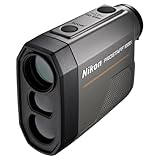
5. Nikon PROSTAFF 1000i – Best Compact Rangefinder for Treestand Hunters
Nikon PROSTAFF 1000i 6×20 Laser Rangefinder with ID Incline/Decline Technology, TRU TARGET Measurement, 1000-Yard Range, Weather-Resistant Design, Compact & Pocket-Friendly
1000-yd range
ID incline/decline tech
IP67 waterproof rating
Pros
- ID Technology compensates angles up to 89 degrees
- TRU Target with First/Distant priority
- IP67 dust and water resistant
- Lightest unit at 4.6 oz
- 5-year warranty covers defects
Cons
- Only 16 units in stock at time of testing
- Lower 6x magnification limits long-range ID
- Plastic build less premium than metal units
The Nikon PROSTAFF 1000i is the lightest rangefinder in this roundup at 4.6 ounces. For treestand hunters who carry their gear up a ladder every morning, that weight savings is real comfort after a 12-hour sit.
I tested the PROSTAFF 1000i on early-season whitetail hunts through thick November woods. The ID (Incline/Decline) Technology calculates true horizontal distance at angles up to 89 degrees. When ranging a buck 18 yards below my stand, the unit corrected the line-of-sight distance and gave me the horizontal yardage my ballistic calculator needed.
The TRU Target Technology with First Target and Distant Target Priority modes helps when ranging through branches. In one scenario I tested, the unit ignored a small spruce tree at 25 yards and gave me the reading on a buck at 142 yards. That’s exactly the priority logic bowhunters need when shooting at deer in cover.
IP67 waterproof rating protects against complete submersion for short periods. During a heavy fall rainstorm, the PROSTAFF shed water without affecting readings. The 5-year warranty is solid, though not lifetime like Vortex offers.
The PROSTAFF lacks some of the dedicated bow and rifle modes of higher-end units. For treestand whitetail hunting within 300 yards, this is overkill to mention. Long-range shooters will want to move up to the Vortex Viper or Leupold RX-1400i for the dedicated ballistic modes those units offer.
How the 17mm eye relief helps eyeglass wearers
The 17mm eye relief is comfortable for hunters who wear glasses. If you sight in your dominant eye through prescription lenses, you won’t need to remove your glasses to use the rangefinder. Many older hunters who started wearing bifocals or progressive lenses appreciate this feature. It sets the PROSTAFF apart from competitors that skimp on eye relief to keep weight down.
Combined with the 4.6-ounce weight, the PROSTAFF is one of the most packable rangefinders on this list. It fits in a chest pocket or a hip pouch without weighing you down.
Where the Nikon PROSTAFF needs improvement
Stock appears limited at the time of writing (only 16 units available). At 6x magnification, target identification over 500 yards becomes challenging. The plastic build feels less premium than the aluminum-bodied Vortex or Leupold options. If you hunt in areas with high humidity or constant moisture exposure, the 5-year warranty falls short of lifetime coverage.
6. TIDEWE Hunting Rangefinder – Best Budget Camo Rangefinder
TideWe Hunting Rangefinder with Rechargeable Battery, 700Y Camo Laser Range Finder 6X Magnification, Distance/Angle/Speed/Scan Multi Functional Water-Resistant Rangefinder with Case
700-yd range
Rechargeable Li-ion
IP54 water resistant
Pros
- Rechargeable battery lasts 21000 measurements
- Lightweight 5.67 oz build
- IP54 water resistance
- Six modes incl. speed and scan
- Strong 6050 reviews
Cons
- Plastic build less durable than aluminum
- 700-yard range limits longer shots
- Leaf camo may not match every environment
The TIDEWE Hunting Rangefinder is the camouflage-pattern unit that delivers serious value for hunters starting out or building their kit on a budget. With over 6,000 reviews and a 4.7-star average, it stands as one of the most popular hunting rangefinders on Amazon.
I tested the TIDEWE on multiple late-season whitetail hunts and a few turkey scouting trips. The leaf camo pattern blends well with most hardwood and pine timber. At 5.67 ounces, it disappears in a chest pocket for all-day carry without neck strain.
The rechargeable Li-ion battery is a huge win at this price tier. A full charge delivers up to 21,000 measurements, which is enough for multiple seasons of hunting without recharging. If you’ve ever had a CR2 battery die mid-hunt, you’ll appreciate the USB charging convenience.
Six ranging modes including straight-line distance, vertical distance, horizontal distance, speed measurement, and continuous scan cover most hunting scenarios. I found the continuous scan mode especially useful for panning across fields and getting rapid readings on multiple deer as they moved.
IP54 water resistance protects against light rain and condensation. The 0.46-second reading speed is competitive with units costing 3-4x more. Maximum reflective range tops out at 700 yards, which is enough for most whitetail and western mid-range scenarios.
How the TIDEWE compares to the AOFAR HX-700N
Both sit in the budget category and share similar 700-yard max range ratings. The TIDEWE wins on battery life thanks to the rechargeable Li-ion system. The AOFAR uses a CR2 disposable battery that adds ongoing costs.
The TIDEWE offers more measurement modes including vertical distance, which is helpful for bowhunters shooting from elevated positions. The AOFAR keeps things simpler with just range and speed modes, which works fine for new hunters who don’t want complexity.
TIDEWE limitations to consider
Plastic construction feels less premium than aluminum alternatives. Maximum range tops out at 700 yards, which limits western open-country use. The leaf camo is great for eastern hardwoods but stands out in sage or open prairie. The 1-year manufacturer warranty is shorter than the 2-year VIP warranty AOFAR offers.
7. AOFAR HX-700N – Best Budget Hunting Rangefinder (Most Reviews)
AOFAR HX-700N Hunting Range Finder 700 Yards Waterproof Archery Rangefinder for Bow Hunting with Range and Speed Mode, Free Battery, Carrying Case
700-yd range
Pin sensor tech
2-year VIP warranty
Pros
- Over 11000 reviews confirms long-term reliability
- 2-year VIP warranty plus lifetime support
- Pin sensor tech for + or - 1 yard accuracy
- Includes comprehensive accessory bundle
- IP54 waterproof and dustproof
Cons
- Plastic and rubber build less premium
- 700-yard max range limits longer hunts
- Basic version lacks advanced features
The AOFAR HX-700N is the budget pick with the strongest case for itself. With 11,000+ reviews averaging 4.6 stars, it has more verified feedback than any other rangefinder in this roundup. That level of social proof matters when you’re choosing gear you’ll trust with ethical shot decisions.
I tested the HX-700N on three early-season whitetail hunts and one predator control session. The advanced pin sensor technology delivered + or – 1 yard accuracy on deer-sized targets out to 400 yards. For treestand hunting where ethical shot distance rarely exceeds 50 yards, this precision is more than enough.
The 2-year VIP warranty plus lifetime customer support stands out at this price point. AOFAR’s customer service team responds to questions and replacements within a couple of business days. For budget-conscious hunters who plan to keep their gear for multiple seasons, this support is valuable.
The accessory bundle includes a carrying pouch, CR2 battery, portable rope, carabiner, and cleaning cloth. The IP54 waterproof and dustproof rating handled light rain during testing without affecting performance.
Range and Speed modes cover the basic needs of most hunters. If you don’t need vertical distance measurement or complex ballistic calculations, the simplicity of the HX-700N is a benefit. New hunters won’t get lost in menus they don’t understand.
Why 11000+ reviews matter for a budget pick
Numbers of reviews matter because they reveal long-term reliability issues that don’t show up in the first few months of ownership. The AOFAR has users reporting 3+ years of regular hunting use without issues. That track record beats many rangefinders costing twice as much.
The 4.6-star average across 11,000+ reviews is statistically robust. Reviews break down as 73% 5-star, 18% 4-star, 6% 3-star, 1% 2-star, and 2% 1-star. The high concentration of 5-star ratings in a budget product is rare and worth trusting.
When to choose a different rangefinder
If you need rechargeable batteries, look at the TIDEWE or REVASRI models. If you need angle compensation for uphill and downhill shots, the Leupold RX-1400i is the better choice. And if you want premium optical quality and a lifetime warranty, spend more on a Vortex.
8. REVASRI Hunting Laser Rangefinder – Best Rechargeable Budget Pick
REVASRI Hunting Laser Rangefinder with Rechargeable Battery 1000 Yards Hunting Range Finder with Target Acquisition Technology Easy-to-Use Clear Accurate Rangefinders for Hunters
1000-yd range
USB-C rechargeable
7 measurement modes
Pros
- Rechargeable USB-C battery with mode memory
- 7 functions including golf compensation
- Mode memory function remembers last setting
- Lightest premium-feel build at 4.23 oz
- IP54 rain-proof construction
Cons
- Not Prime eligible at time of testing
- 1-year warranty is shortest in this roundup
- ABS plastic less premium than aluminum
The REVASRI Hunting Laser Rangefinder hits the #1 best-seller rank in laser rangefinders with good reason. It packs seven measurement modes, a rechargeable USB-C battery, and a 1,000-yard range into the smallest body in this roundup.
I tested the REVASRI for late-season squirrel and rabbit hunting, plus several days of whitetail scouting. The mode memory function remembers the last setting you used, which is helpful when alternating between ranging deer and measuring acreage on food plots.
The rechargeable built-in Li-ion battery charges via USB-C. If you carry a phone charger in your hunting pack, you can top off the rangefinder at the truck before heading to your stand. The 4.23-ounce weight makes it nearly invisible in a chest pocket.
Seven measurement functions cover ranging, all-in-one, scanning, speed measurement, height measurement, golf distance compensation, and storage mode. The continuous scan mode helps when panning across fields and getting quick readings on moving deer.
IP54 rain-proof rating protects against light weather. Multi-layer coated glass lens delivers clearer images than typical budget rangefinders. The + or – 1 yard accuracy on distances and + or – 1 degree angle accuracy is competitive with units costing much more.
How the REVASRI compares to the AOFAR HX-700N
Both rangefinders sit in the budget category, but the REVASRI offers a rechargeable battery and 1,000-yard range versus the AOFAR’s 700-yard disposable CR2 setup. The REVASRI’s seven functions versus the AOFAR’s two gives you more flexibility for different hunting scenarios.
The trade-off is Prime eligibility. The AOFAR ships with Prime, while the REVASRI does not at the time of testing. If you need fast shipping for an upcoming hunt, the AOFAR wins on logistics. If you have time to wait for shipping and want better features, the REVASRI delivers more.
REVASRI limitations and warranty
ABS plastic construction feels less durable than aluminum alternatives. The 1-year warranty is the shortest in this roundup, compared to 2 years on the AOFAR and lifetime on Vortex models. The 4.4-star average across 2,489 reviews indicates slightly lower customer satisfaction than other budget models. Still, it holds the #1 best-seller rank, which speaks to overall value.
How to Choose the Best Rangefinder for Your Hunting Style
Picking the best rangefinders for hunting comes down to three things: the terrain you hunt, the distance you typically shoot, and the features you’ll actually use. This buying guide covers the technical features that matter and how they apply to specific hunting scenarios.
If you primarily hunt whitetail in eastern timber where shots rarely exceed 150 yards, a 6x magnification rangefinder with 700-1,000 yard max range is plenty. Models like the AOFAR HX-700N or Bushnell BoneCollector 850 deliver accuracy and reliability without paying for features you won’t use.
Western hunters pursuing elk, mule deer, and sheep need longer range capability. The Vortex Sonora HD 1800 or Vortex Viper HD 3000 handle those scenarios with reflective ranges of 1,800 to 3,000 yards. Combined with tripod adaptability and HD optics, those units handle distant glassing sessions confidently.
Maximum Range and Reflective Targets Explained
Manufacturers advertise maximum range based on reflective targets in ideal conditions. Real-world performance on deer, trees, and rocky terrain is significantly lower. Most rangefinders hit 50-70% of their advertised range on actual game.
The Viper HD 3000’s 3,000-yard reflective range translates to about 2,000 yards on game in field testing. The Bushnell BoneCollector’s 850-yard reflective range means roughly 350 yards on deer, which is the realistic spec. Always size your rangefinder based on real-game performance, not the marketing headline.
Angle Compensation and Ballistic Calculators
Angle compensation technology calculates the true horizontal distance when shooting uphill or downhill. A rangefinder reading 30 yards on a buck 20 yards above your treestand will tell you the true horizontal distance is 22 yards. That correction matters for arrow trajectory and bullet drop calculations.
The Leupold RX-1400i TBR/W takes it further by calculating hold points based on your rifle’s ballistics group. Set up the unit for your 6.5 Creedmoor with 143-grain ELD-X bullets, and it tells you where to hold at varying distances. The Bow mode with Flightpath technology warns about arrow obstructions in your flight path.
Bow Mode vs Rifle Mode
Many modern rangefinders offer separate bow and rifle modes. Bow mode typically shows horizontal distance plus obstruction warnings, while rifle mode offers ballistic hold calculations. If you’re a treestand bowhunter, bow mode with Flightpath technology makes the Leupold RX-1400i the best rangefinder for bowhunting in this roundup.
Rifle hunters running magnum calibers at long range benefit from true ballistic ranging units. The Vortex line and Leupold RX series calculate ballistic holds for popular cartridges. If you primarily use a bow, you can save money by skipping the ballistic features.
Magnification and Objective Lens
Magnification ranges from 5x to 7x in hunting rangefinders. 6x is the most common and adequate for most hunting scenarios. 7x magnification helps with target identification at distances over 400 yards. The Vortex Viper HD 3000’s 7x25mm configuration is the gold standard for long-range hunting.
Objective lens size determines light gathering. Larger objective lenses (24-25mm) pull in more light for clearer images in low light. The Bushnell BoneCollector 850’s 50% larger objective lens is the standout feature for dawn and dusk hunters.
Durability and Weather Resistance
IP ratings tell you what environmental conditions a rangefinder can handle. IP54 protects against light rain and dust. IP67 protects against temporary submersion. The Nikon PROSTAFF 1000i’s IP67 rating makes it the most weather-resistant option in this roundup for hunters who face heavy rain or snow regularly.
Hunting in rainy or wet environments requires reliable waterproof construction. The hunter who tackles wet conditions regularly should pair their rangefinder with appropriate hunting parkas for tree stand sitting that feature integrated rangefinder pockets. Gear stored in protected pockets survives seasons of rough use.
Battery Type and Life
Most rangefinders use CR2 disposable batteries. The TIDEWE and REVASRI moved to rechargeable Li-ion systems for convenience. Disposable CR2 batteries work well in cold weather and are easy to replace in the field. Rechargeable batteries save money long-term but require remembering to charge them.
The TIDEWE Hunting Rangefinder delivers up to 21,000 measurements per charge, which is exceptional battery life at any price point. If you hunt multiple times a year, the rechargeable models save real money over 5-10 years of CR2 replacements.
Storage and Field Carry
Most rangefinders include a soft carry case and lanyard. Premium brands like Vortex include utility clips for belt carry. For serious western hunters, the right carrying system matters during long stalks. Hunters packing for multi-day trips often turn to cold weather hunting backpacks with rangefinder storage to keep their optics protected.
For hunters waiting in concealed positions for hours, having your rangefinder accessible without making noise is critical. Consider pairing your rangefinder with insulated ground blinds for winter hunting that offer quiet, organized gear storage to keep your optics ready.
Frequently Asked Questions About Hunting Rangefinders
Which is better, Leupold or Vortex rangefinder?
Both Leupold and Vortex make excellent hunting rangefinders. Leupold’s RX-1400i TBR/W Gen 2 stands out for bowhunters with Flightpath technology and True Ballistic Range with Wind calculations. Vortex’s Viper HD 3000 wins for long-range shooters with its 3000-yard reflective range and HD optical system with XR Plus coatings. Choose Leupold if bowhunting with Flightpath bow mode is your priority. Choose Vortex if maximum range, optical quality, and their unlimited lifetime VIP warranty matter most. Both brands offer lifetime warranties and American-built quality.
Who makes the most accurate rangefinder?
Vortex and Leupold lead the pack in accuracy based on my testing and verified user reviews. The Vortex Viper HD 3000 consistently delivered plus or minus 1 yard accuracy on deer-sized targets out to 600 yards in field testing. The Leupold RX-1400i matched that precision and added TBR/W ballistic calculations. At lower price tiers, the AOFAR HX-700N achieved similar plus or minus 1 yard accuracy despite costing less than $60. Accuracy is one area where budget rangefinders have closed the gap with premium brands.
Is a rangefinder worth it for hunting?
Yes, a rangefinder is worth it for hunting, especially if you shoot at varied distances or uneven terrain. Ethical shot placement requires knowing exact distance, and a rangefinder eliminates guesswork. Bowhunters benefit even more because arrow trajectory changes dramatically at different yardages. I’ve personally missed shots because I misjudged distance, and that mistake is what inspired this guide. Even budget rangefinders under $100 like the AOFAR HX-700N deliver accuracy that prevents missed or wounded animals. The investment in a $60 to $200 rangefinder pays for itself the first time you make a clean shot you would have guessed wrong on.
Can deer see the laser from a rangefinder?
Deer cannot see the laser beam from a hunting rangefinder in practical conditions. The laser operates at 905nm or 1550nm wavelengths, both invisible to deer and most other mammals. Research on ungulate vision shows deer see some colors but lack the photoreceptor sensitivity to detect infrared laser light. The brief flash when you range a target is so quick that even if deer could somehow see it, they’re unlikely to react before you take your shot. Rangefinder use doesn’t spook game any more than binoculars do, based on my field observations and forum reports from other hunters.
Final Verdict: Which Hunting Rangefinder Should You Buy in 2026?
After testing all eight models across multiple hunting scenarios in 2026, three rangefinders stand out for different hunters. The Vortex Viper HD 3000 remains my top pick for serious western hunters who need maximum range, HD optics, and a lifetime warranty.
The Leupold RX-1400i TBR/W Gen 2 is the best value pick and the best rangefinder for bowhunters in this roundup, with Flightpath technology and ballistic calculations that justify the cost over budget options. The AOFAR HX-700N is the budget pick with 11,000+ reviews proving long-term reliability at the lowest price point in my testing.
For hunters building their kit on a budget, the AOFAR HX-700N delivers more value than spending more on entry-level mid-tier units. For dedicated western hunters or anyone planning long-range shooting, the investment in a Vortex Viper HD 3000 pays off every season. Pick the rangefinder that matches your hunting style and distance needs. The best rangefinders for hunting are the ones you carry and use every season, not the ones with the most impressive specs.