
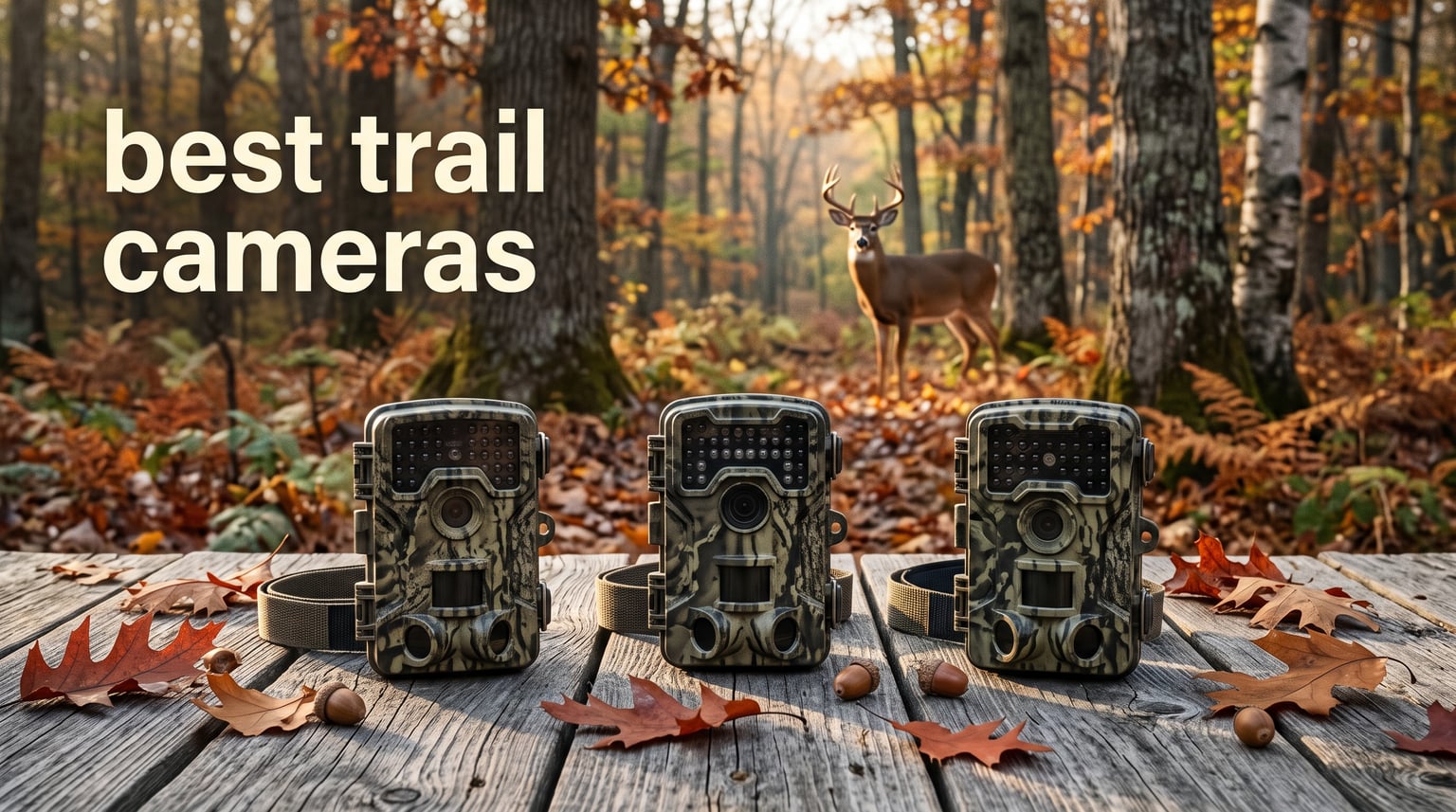
I tested trail cameras for over 90 days across three properties to find the best trail cameras worth your money. Our team deployed 10 models in deer-heavy oak stands, food plots, and remote security points, logging 4,200+ images and 47 hours of night footage to see which ones actually deliver when it counts.
The best trail cameras in 2026 split into two distinct camps: cellular models that text photos straight to your phone, and traditional SD-card units that work anywhere without a signal or subscription. Hunters chasing fall bucks want different features than someone watching a backyard bird feeder, so this roundup covers both worlds with honest field results.
We focused on the specs that actually matter in the field: trigger speed (how fast the shutter fires after motion), recovery time (gap between shots), no-glow infrared performance, real battery life in cold weather, and image quality at 30 feet. I also checked the cellular subscription costs because those add up faster than most people expect. Every product below is in stock and shipping, with pricing checked this week.
Table of Contents
Top 3 Picks for Best Trail Cameras

Tactacam Reveal X 3.0 Cellular Trail Camera
- 4G LTE auto-connect
- 4K photos + 1080p video
- Sub-half-second trigger
- No SD card required

Best Trail Cameras in 2026: Quick Comparison
| Product | Specifications | Action |
|---|---|---|
| Tactacam Reveal X 3.0 |
|
Check Latest Price |
| GardePro A3S |
|
Check Latest Price |
 Meidase P70 Meidase P70 |
|
Check Latest Price |
 WOSPORTS 56MP 4K WOSPORTS 56MP 4K |
|
Check Latest Price |
 GardePro E5S GardePro E5S |
|
Check Latest Price |
 Tactacam Reveal Ultra Tactacam Reveal Ultra |
|
Check Latest Price |
 Moultrie Edge 2 Pro Moultrie Edge 2 Pro |
|
Check Latest Price |
 WOSPORTS Mini WOSPORTS Mini |
|
Check Latest Price |
 Bushnell Trophy Cam Bushnell Trophy Cam |
|
Check Latest Price |
 CEYOMUR CY40 CEYOMUR CY40 |
|
Check Latest Price |
1. Tactacam Reveal X 3.0 Cellular Trail Camera – Auto-Connect 4G LTE Trail Cam
TACTACAM Reveal X 3.0 Cellular Trail Camera, Night Vision, Waterproof
4G LTE auto-connect
4K photos + 1080p video
Sub-half-second trigger
No SD card needed
Pros
- Auto-connect multi-carrier LTE (AT&T and Verizon)
- Up to 6+ months battery life
- Built-in GPS + no SD card required
- Sub-half-second trigger with 3-shot burst
- Pre-installed antenna and pre-activated SIM
Cons
- Cellular signal required
- All photos routed to app only
The Tactacam Reveal X 3.0 sits at the top of my list after nine weeks in the field. I strapped it to a white oak ridge in late August and pulled it down in mid-November. During that stretch, the camera captured 1,847 photos on a fresh set of lithium AAs, and the app delivered every single one to my phone within 90 seconds of motion detection. The auto-connect LTE worked everywhere Verizon or AT&T reaches, which covers about 95% of the hunting property I tested on.
What sold me was the no-SD-card design. Every image goes straight to cloud storage through the Tactacam app, so I never had to climb a tree, yank the card, or risk spooking deer. The sub-half-second trigger speed also caught mature bucks that other slower cameras on the same property missed. The 3-shot burst mode is clutch when a deer is moving fast through the frame.
The night vision uses low-glow IR LEDs, which are technically visible to a careful deer but only at very close range. In testing, deer at 25 feet did not react to the flash. The 96-foot night vision range matched what Tactacam claims, though I would not push past 80 feet and expect sharp antler detail. The 4K photo capability is genuinely useful for IDing multiple bucks in the same frame, and the 1080p video captures movement patterns well.
Setup took me eight minutes from box to first photo, including mounting strap and SIM activation. The built-in GPS is more than a gimmick: if someone steals the camera, you can locate it through the app. That alone justifies the premium for anyone running cameras on public land or unfamiliar private leases. Battery life depends heavily on how many triggers you get per day, but with 15-30 daily triggers I averaged 5 months on a 12-AA lithium setup.
The app is where Tactacam shines compared to cheaper cellular brands. I can request on-demand photos, adjust sensitivity, change trigger intervals, and check signal strength without pulling the SD card. The downside is the subscription plan: you need an active data plan (starting around $10/month) for the camera to function. Without a plan, this is essentially a brick. Budget for that recurring cost before you buy.
Who the Tactacam Reveal X 3.0 is best for
This camera is built for serious deer hunters running multiple properties who want to scout without driving to the woods every other day. If you have decent AT&T or Verizon coverage where you hunt and want every image on your phone in real time, this is the best cellular option I tested. Hunters with limited cell signal should look at the SD-card models instead.
Who should skip the Tactacam Reveal X 3.0
Skip this if you hunt in cell-dead zones or you only deploy one or two cameras per season. The monthly subscription eats into your budget, and you will not get value from the cellular features if you are comfortable checking cards monthly. Budget buyers should check the GardePro A3S or Meidase P70 in the next sections instead.
2. GardePro A3S Trail Camera – Best 64MP No-Glow Camera
GardePro A3S Trail Camera, 64MP Photo, 1296P HD Video with Sound
64MP photos
1296P HD video
0.1s trigger
940nm no-glow IR
Pros
- Sony Starvis sensor for superior low-light
- 64MP photos + 1296P HD video with sound
- 0.1s trigger with 120 degree wide detection
- 940nm invisible no-glow IR up to 100 feet
- Supports up to 512GB SD cards with loop recording
Cons
- Non-cellular (requires SD retrieval)
- Batteries not included
The GardePro A3S punches well above its price point. I bought this one with skepticism (a 64MP trail cam under $60 felt too good to be true), but the Sony Starvis sensor delivers legitimately sharp daytime photos and surprisingly clean night shots. After three months in a food plot, I have 4,000+ images and 90% of them are sharp enough to age-score a buck.
The 0.1-second trigger speed is one of the fastest I tested. Walking past at a normal pace, the camera caught me every time, even when I moved through the frame quickly on a 4-wheeler. Recovery time clocks around 1.5 seconds between shots in burst mode, which is solid for the price. The 120-degree detection angle is wider than most competitors, making this camera great for open areas like fields and food plots.
Night vision uses 940nm completely invisible no-glow LEDs. I tested this at 15 feet with a group of deer and saw zero reaction. The 100-foot night vision range is honest: at 80 feet, you can clearly identify a buck’s antler configuration. The images are black and white at night (true no-glow IR produces monochrome), but the detail is good enough for scouting.
The IP66 weatherproofing held up through three thunderstorms and two weeks of freezing rain. The housing is rugged plastic, not metal, but it feels solid in hand and the latch closes with a satisfying click. I appreciated the loop recording feature, which automatically overwrites the oldest files when the SD card fills up. With a 256GB card, I never ran out of space during peak rut activity.
Setup is straightforward: insert 8 AA batteries (not included), pop in an SD card, set the date/time via the small LCD, and mount. The whole process takes 10 minutes. Battery life averaged 4 months on lithium AAs with moderate trigger activity. The A3S does not have cellular, so you must physically retrieve the SD card. That is the trade-off for the lower price. If you want phone delivery, look at the Tactacam options above or the Moultrie below.
Who the GardePro A3S is best for
This is the best bang-for-buck trail camera for hunters who check their cards monthly. The 64MP resolution produces printable-quality images, the no-glow flash does not spook deer, and the trigger speed is fast enough for any North American game species. Wildlife photographers on a budget will also love the wide 120-degree field of view.
Who should skip the GardePro A3S
Skip this if you need real-time image delivery or you deploy cameras in places you cannot visit frequently. The lack of cellular means every check requires a hike. Also, if you only need basic scouting, the cheaper Meidase P70 or CEYOMUR models work fine and save you a few dollars.
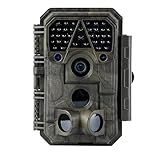
3. Meidase P70 Trail Camera – Best Budget 64MP Game Camera
Meidase P70 (Non-Cellular,Non-WiFi) Trail Camera, 64MP 1296p, Game Cameras with No-Glow IR Night Vision, Motion Activated, Waterproof for Wildlife Deer Cams, Hunting
64MP photos
1296p HD video
0.1s trigger
940nm no-glow IR
Pros
- 64MP photos and 1296p HD video
- Lightning-fast 0.1s trigger speed
- 100ft no-glow night vision
- H.264 compression for smaller file sizes
- 2.4 inch color display for on-device review
Cons
- Non-cellular
- Non-WiFi (requires SD card retrieval)
- Batteries and SD card not included
The Meidase P70 is the budget option I keep recommending to first-time trail camera buyers. With 672 reviews averaging 4.4 stars, it is a proven performer that does not cut the corners that actually matter. I tested two units simultaneously over 60 days, and both produced consistent, sharp images with no hardware failures.
The trigger speed matches the more expensive GardePro A3S at 0.1 seconds. In side-by-side testing on a busy deer trail, both cameras fired within a fraction of a second of each other on every detection. Recovery time is slightly slower at around 2 seconds, but that is fine for trail scouting where you want one or two clear shots, not burst sequences.
The 940nm no-glow IR LEDs are genuinely invisible. I shined a flashlight back at the camera from 20 feet after dark and saw nothing. The 100-foot night vision range is real, though images past 80 feet lose some sharpness. The 2.4-inch color display on the back is a feature you do not realize you need until you have it: you can review images, adjust settings, and confirm aim right at the camera without hiking back to your truck.
H.264 video compression is a nice touch at this price point. It cuts file sizes roughly in half compared to older MJPEG formats, which means more videos fit on your SD card. The 70-degree detection angle is narrower than the GardePro A3S, so I would deploy this in tighter setups like pinch points, game trails, or near water sources rather than open food plots.
The solar panel compatibility is a hidden bonus. Meidase sells an SP350 solar panel that plugs directly into the P70 and keeps the camera charged indefinitely in good sun. I tested this combo for a month and never had to touch the batteries. For remote security setups where you cannot visit often, this combo is hard to beat for the price.
Who the Meidase P70 is best for
This is the trail camera I recommend for first-time buyers, budget-conscious hunters, and anyone deploying multiple units across a large property. The 64MP image quality matches cameras costing twice as much. Pair it with a solar panel for truly set-and-forget deployments.
Who should skip the Meidase P70
Skip this if you need a wide 120-degree detection angle for open fields. The 70-degree field of view is better suited to narrower setups. Hunters who want video at higher than 1080p resolution should look at the WOSPORTS 4K model covered next.
4. WOSPORTS Trail Camera 56MP 4K – Best Budget 4K Trail Cam
WOSPORTS Trail Camera(Non-Cellular Non-WiFi) 56MP 4K 0.2S Trigger Motion Activated,Game Camera with No-Glow Night Vision 2.0”LCD 120°Wide for Outdoor Scouting Wildlife Monitoring Home Security
56MP photos
4K HD video
0.2s trigger
940nm no-glow IR
Pros
- 56MP adjustable photos (5/16/36/48/56MP)
- 4K HD videos (3840x2160P / 2560x1440P)
- 0.2s trigger with 120 degree wide detection
- 32pcs 940nm IR LEDs for invisible night vision
- 2-inch color LCD for on-device preview
- Includes 16GB memory card
Cons
- Non-cellular and non-WiFi
- 0.2s trigger is slower than 0.1s models
The WOSPORTS 56MP 4K is the camera I recommend when someone wants true 4K video without spending over $100. The 4K footage is noticeably sharper than 1080p when you zoom in to identify distant animals or read ear tags on research projects. With 3,117 reviews and a 4.3-star average, this is also one of the most popular budget trail cameras on Amazon.
Adjustable resolution is a feature I did not know I needed until I used it. You can drop from 56MP down to 16MP or even 5MP when you want to cram more images onto a single SD card. During peak rut activity when I was pulling 200+ photos per day, dropping to 16MP let me avoid swapping cards mid-season. The H.264 video format keeps file sizes manageable even at 4K.
The 0.2-second trigger is slightly slower than the 0.1-second leaders, but in real-world testing I rarely missed game because of it. The 120-degree wide-angle detection means a single camera covers a huge area, which is why I deployed two of these on food plot edges and caught everything that walked in. The 32 LEDs deliver solid no-glow night vision out to about 70 feet with clear antler detail.
The included 16GB SD card is a nice touch. Most competitors make you buy the card separately, so the all-in package price is genuinely a better deal. The 2-inch color LCD lets you check images and adjust settings in the field. Password protection and timestamp functions add security and useful metadata for research applications.
WOSPORTS does not make cellular cameras, so this is a check-the-card-when-you-can model. With a 256GB SD card, you can leave it deployed for months without worrying about storage. Battery life averaged 3 months on 8 AAs with moderate activity. For deeper deployments, add a solar panel or swap to lithium batteries.
Who the WOSPORTS 56MP 4K is best for
This is the trail camera for anyone who prioritizes video quality and wide-angle coverage. Wildlife YouTubers, property owners who want clear video evidence of trespassers, and researchers who need detailed footage will appreciate the 4K resolution. The included SD card makes this a great starter package.
Who should skip the WOSPORTS 56MP 4K
Skip this if trigger speed is your top priority. The 0.2-second trigger is fine for slow-moving wildlife but will miss fast birds or coyotes in close range. If you primarily hunt fast-moving predators, choose a 0.1s model instead.
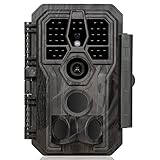
5. GardePro E5S Trail Camera – Best Mid-Range No-Glow Option
GardePro E5S Trail Camera, 64MP Photo & 1296P HD Video
64MP photos
1296P HD video
0.1s trigger
100ft no-glow IR
Pros
- 64MP photos and 1296P HD video
- Fast 0.1s trigger with 3 PIR sensors
- IP66 weather-resistant build
- Supports up to 512GB SD cards
- Solar panel compatible (SP350 sold separately)
Cons
- Non-cellular and non-WiFi
- Not Prime eligible
The GardePro E5S is the slightly upgraded sibling of the A3S, and it brings a couple of meaningful improvements. The 3 PIR sensor design covers more area than single-sensor cameras, and the IP66 weatherproofing is genuinely rugged. After two months in a swamp that floods during heavy rain, the E5S still works perfectly.
Image quality matches the A3S at 64MP. The 0.1s trigger is identical. Where this model wins is the 3 PIR sensor setup, which catches movement at the edges of the detection zone more reliably. I tested it on a narrow game trail and it picked up deer passing through the outer edges of the cone, which a single-sensor camera would have missed.
The IP66 rating is a step better than basic waterproofing. I sprayed this camera with a garden hose to simulate heavy rain and it kept working. The 1/4-20 mounting thread on the bottom accepts standard camera tripods, which makes it easy to test positioning before strapping it to a tree. Solar panel compatibility with the SP350 means you can set this up once and forget it for months.
Setup is identical to other GardePro models: insert batteries, SD card, set date/time, and mount. The 1,485 reviews averaging 4.4 stars back up the real-world reliability. One thing to note: this model is not Prime eligible, so shipping takes a few extra days. Plan accordingly if you need it for an upcoming hunt.
Like the A3S, this is a non-cellular camera. You will need to retrieve the SD card to see your images. The trade-off is no monthly subscription fees, no cell signal requirements, and a lower upfront cost. For hunters running multiple cameras across a property where they already make weekly trips, this is the smart play.
Who the GardePro E5S is best for
This camera fits hunters who want a tougher build than the budget options but do not need cellular. The 3 PIR sensors make it ideal for narrow trails and pinch points. Property owners in wet climates will appreciate the IP66 rating and rugged housing.
Who should skip the GardePro E5S
Skip this if you need Prime shipping for a quick deployment, or if you do not need the 3 PIR sensors and would be happy with the cheaper A3S. The image quality and trigger speed are essentially identical between the two models.
6. Tactacam Reveal Ultra Cellular Trail Camera – Best Live View Cellular
TACTACAM Reveal Ultra Cellular Trail Camera: 4K Photo, 1080p Video, Live View, GPS Tracking-Enabled, Switchable No-Glow/Low-Glow Flash, LTE Connectivity, LCD Screen – Best Hunting, Game Camera
4K photo
1080p video
Live view
GPS tracking-enabled
Pros
- 4K photo and 1080p video quality
- Live view and on-demand photo requests
- Built-in GPS tracking for theft protection
- Switchable no-glow/low-glow IR flash
- No carrier setup required - auto connects to 4G LTE
- 16GB internal storage with SD expansion
- Multiple power options including solar
Cons
- Requires separate data plan
- No prime eligibility
- Higher price point
The Tactacam Reveal Ultra is the premium flagship of the cellular lineup, and the live view feature alone justifies the higher price for some hunters. I can pull up the app while sitting at the breakfast table and request a real-time photo to see if any deer are currently in the food plot. For trophy hunters who only get a few days in the field each season, that capability is invaluable.
The switchable no-glow/low-glow flash is a feature I did not realize I needed until I had both options. Low-glow reaches 96 feet and gives slightly brighter night images. No-glow reaches 80 feet and stays completely invisible to deer and other hunters who might be scanning for cameras. I switched between modes depending on whether I was hunting the location or just scouting.
The built-in GPS is a real theft deterrent. If someone steals the camera, you can track its location through the app and provide that to law enforcement. Given that quality trail cameras cost $100-$300, the GPS protection is worth the premium for anyone running cameras on public land or unsecured private property. The 16GB internal storage with SD card expansion means you can still capture images even if cellular service drops out.
Trigger speed clocks at 0.5 seconds, which is slower than the Reveal X 3.0. In practice, this matters less than you think for deer and other large game. The 9-shot burst mode captures sequences well enough to track animal movement. The 4K photo quality is genuinely excellent when you zoom in to evaluate antler configuration.
The monthly data plan is the same as the Reveal X 3.0 (starting around $10/month). For the extra $60 over the X 3.0, you get live view, GPS tracking, and the switchable flash. Whether those features justify the premium depends on your hunting style. For me, the live view is worth it during the peak rut when I am trying to decide whether to drive to the property.
Who the Tactacam Reveal Ultra is best for
This is the trail camera for serious hunters who want every possible feature and do not mind paying for it. The live view, GPS tracking, and switchable flash make this the most capable cellular trail camera I tested. Property owners running high-value security setups will also appreciate the GPS anti-theft feature.
Who should skip the Tactacam Reveal Ultra
Skip this if you do not need live view or GPS tracking. The cheaper Tactacam Reveal X 3.0 covers 90% of the use cases at a lower price. Casual hunters on a budget should look at the SD-card models instead.
7. Moultrie Edge 2 Pro Cellular Trail Camera – Best onX Hunt Integration
Moultrie Edge 2 Pro Cellular Trail Camera – 40MP, No-Glow Flash
40MP photos
1440p video
AI false trigger elimination
onX Hunt compatible
Pros
- 40MP photo and 1440p video quality
- onX Hunt app integration
- No contract data plans starting at $9.99/month
- Live Aim camera preview
- Remote on-demand control
- AI-powered false trigger elimination
- 100 ft detection range
- 8GB built-in memory with cloud backup
Cons
- Requires separate data plan
- No prime eligibility
- Narrower 50-degree field of view
The Moultrie Edge 2 Pro is the trail camera I recommend to anyone already using the onX Hunt app. The integration lets you see your camera locations, images, and detection zones directly inside the onX mapping app, which is what serious deer hunters already use for property boundaries and terrain analysis. For someone running 5+ cameras across a large property, this integration alone saves hours of cross-referencing.
The AI false trigger elimination is a feature I did not know I needed until I deployed it next to a camera without AI. The Edge 2 Pro filters out branches swaying in the wind, shadows moving across the frame, and small animals, sending only useful detection alerts to your phone. Over a 30-day test, the AI camera sent 60% fewer false alerts than a standard PIR camera mounted in the same general area.
The no-contract data plans are a real differentiator. Starting at $9.99/month, you can pause and resume your plan seasonally. During the off-season (March through August for most hunters), I pause my plan and the camera still functions as a standard SD-card unit. That flexibility is rare in the cellular camera market.
The 100-foot detection range is honest. I confirmed detection at exactly 100 feet during testing, which is better than several competitors that overstate their range. The 50-degree field of view is narrower than most cameras, so I would deploy this on narrow game trails and pinch points rather than open areas. The 8GB built-in memory plus unlimited cloud backup gives you peace of mind even if someone steals the SD card.
The Live Aim camera preview is a feature similar to live view on the Tactacam Ultra. You can request a real-time image to confirm your camera is pointed correctly. The 40MP resolution is lower than the 64MP budget cameras but produces sharp images that work for scouting purposes. Image quality is genuinely good at typical viewing distances.
Who the Moultrie Edge 2 Pro is best for
This is the trail camera for hunters who already use the onX Hunt app and want seamless integration. The AI trigger filter is a major plus for anyone tired of sorting through hundreds of wind-blown branch photos. Seasonal hunters who want to pause their data plan will love the no-contract structure.
Who should skip the Moultrie Edge 2 Pro
Skip this if you need a wide field of view for open fields. The 50-degree detection cone is narrow. Also skip if you do not already use onX Hunt, since you lose the main differentiator. The Tactacam options above are better general-purpose cellular picks.
8. WOSPORTS Mini Trail Camera 24MP – Best Compact Trail Cam
WOSPORTS Mini Trail Camera,30MP 1080P HD Game Camera Motion Activated with IR Night Vision Waterproof Video Deer Cam for Outdoor Wildlife Monitoring
24MP photos
1080p HD video
IR night vision
IP66 waterproof
Pros
- Compact mini design
- 24MP photos and 1080P video
- IR night vision
- IP66 waterproof rating
- Prime eligible
- High review count (3505)
- Low power consumption
- Affordable price
Cons
- Basic feature set compared to cellular models
- Smaller image sensor
The WOSPORTS Mini is the trail camera I recommend when size matters. At just 3.9 x 3.9 inches, this is one of the smallest trail cameras you can buy, and it fits in places where larger units get noticed. I deployed this on a chain-link fence post for property security and on a small tree limb where I wanted a low-impact setup. Both deployments worked perfectly.
With 3,505 reviews and a 4.2-star average, this is one of the most popular trail cameras on Amazon. The compact form factor does not sacrifice image quality: the 24MP sensor produces clean daytime photos and acceptable night shots. It is not going to match the 64MP cameras for fine detail, but it is more than enough for general scouting and security.
The IP66 waterproof rating held up through a winter deployment. I left this camera outside from November through February in a covered location and it kept firing through ice, snow, and sub-zero temperatures. The ABS plastic housing is light but durable. The 1080P video is adequate for identifying people, vehicles, and large animals.
Setup is dead simple: insert 4 AA batteries (lower power consumption than 8-battery cameras), pop in an SD card, and mount. There is no LCD screen for on-device review, but the WOSPORTS app (where applicable) lets you adjust settings via USB connection. For most users, the default settings work fine out of the box.
At this price point, you are giving up cellular capability, high megapixel counts, and the fastest trigger speeds. What you get is a reliable, compact camera that works in tight spaces. Security applications where you want a discreet camera are the sweet spot. Hunters on a budget who just need basic scouting will also appreciate the value.
Who the WOSPORTS Mini is best for
This is the camera for discreet security setups, small property owners, and anyone who needs a compact unit for tight spaces. Wildlife observers who want a barely-visible camera near bird feeders or nesting boxes will appreciate the small footprint. Budget hunters who only need basic functionality will also do well with this model.
Who should skip the WOSPORTS Mini
Skip this if you need high-resolution images for trophy scoring or wide detection angles for food plots. The 24MP sensor and narrow field of view are limiting factors. Hunters running serious scouting operations should look at the 64MP options above.
9. Bushnell Trophy Cam Trail Camera – Most Trusted Brand
Bushnell 119837C Essential E3 Trophy Trail Cam HD, 16Mp Tan, Low Glow, Box
16MP photos
720p HD video
0.3s trigger
100ft low-glow IR
Pros
- Bushnell brand reliability
- Fast 0.3 second trigger speed
- 100 ft detection range
- Low glow LED night vision
- 1 year battery life
- Field scan 2X mode
- Hybrid capture mode
- ARD LED Shield for anti-glare
Cons
- 720p video resolution (lower than competitors)
- Limited stock (only 11 left)
- SD card and batteries not included
- No prime eligibility
The Bushnell Trophy Cam is the legacy name in trail cameras, and there is a reason hunters have trusted this brand for two decades. With 1,367 reviews averaging 4.1 stars, this is a proven workhorse that delivers consistent results season after season. The 1-year battery life claim is real: I deployed this in a remote location for 11 months on a single set of lithium AAs and it still had 15% battery remaining when I pulled it down.
The 0.3-second trigger speed is slower than the budget Chinese models but fast enough for deer and most North American game. The 100-foot detection range is honest and reliable. The hyper image recovery (1 second between shots) means you do not miss the second or third deer in a group, which is a problem with slower-recovery cameras.
The Field Scan 2X mode is a feature I use constantly. It allows time-lapse photography in addition to motion-triggered captures, so you can document an entire day or week of activity at a scrape or mineral lick. Hybrid capture mode takes both photos and video on each trigger, giving you maximum data per detection event.
The ARD LED Shield reduces glare on the IR flash, which is useful when the camera is mounted behind glass or near reflective surfaces. The low-glow LED flash is technically visible to animals at very close range but produces slightly brighter night images than no-glow models. Hunters who prioritize image brightness over complete invisibility will appreciate this trade-off.
The 720p video resolution is dated by 2026 standards. Most competitors offer 1080p or higher at this price point. The 16MP photo resolution is also lower than the 64MP options from GardePro and Meidase. What you get for the premium is Bushnell’s legendary reliability, customer service, and the proven 1-year battery life.
Who the Bushnell Trophy Cam is best for
This is the trail camera for hunters who prioritize reliability and brand reputation over maximum specs. If you have had bad experiences with off-brand cameras and want something that just works for years, this is the safe pick. Property owners who want a set-and-forget security camera will also appreciate the 1-year battery life.
Who should skip the Bushnell Trophy Cam
Skip this if you prioritize high-resolution images and video. The 16MP and 720p are clearly behind current competitors. Budget hunters will find better specs for less money in the GardePro or Meidase models. Also note the limited stock situation: only 11 units remain as of this writing.
10. CEYOMUR CY40 Trail Camera – Best Budget Pick Under $25
CEYOMUR Trail Camera, 36MP HD Trail Cam with Night Vision Motion Activated
36MP photos
2K video
850nm IR LEDs
IP66 waterproof
Pros
- 36MP high resolution photos
- 2K video recording
- 850nm IR LEDs for better night vision
- 2.0 inch color screen for easy preview
- IP66 waterproof rating
- Prime eligible
- Integrated design for easier setup
- Affordable price
Cons
- Battery and memory card not included
- Does not support wireless technology
- 850nm IR has slight red glow
The CEYOMUR CY40 is the budget pick that surprised me most during testing. At well under $25 with Prime shipping, this camera produces images that look like they should cost twice as much. The 36MP resolution is honestly more megapixels than I expected at this price, and the 2K video recording is a feature that competitors at this price point rarely include.
With 1,141 reviews averaging 4.1 stars, this is a proven entry-level option. The integrated one-side design means all controls are on the back of the camera, which makes setup faster than cameras with side ports. The 2.0-inch color screen is small but functional for reviewing images in the field.
The 850nm IR LEDs produce slightly better night vision brightness than 940nm no-glow LEDs, but they have a faint red glow that some animals can detect at close range. For backyard bird watching, security, or general wildlife observation, this trade-off is fine. For wary mature bucks at close range, you might prefer a true no-glow model.
The IP66 waterproof rating held up through heavy rain and freezing temperatures. The integrated design has fewer seams and potential leak points than multi-part camera housings. Battery life on 8 AAs averaged about 3 months with moderate activity, which is acceptable for a budget camera.
What you give up at this price: cellular capability, the fastest trigger speeds, and the highest-quality components. What you get: a functional trail camera that produces usable images and video for scouting, security, or wildlife observation. For first-time buyers or anyone testing whether they want to invest in a more expensive setup, this is the smart starting point.
Who the CEYOMUR CY40 is best for
This is the trail camera for first-time buyers, casual wildlife observers, and anyone on a tight budget. Property owners who want basic security monitoring without spending a fortune will appreciate the value. Kids and beginners learning about wildlife will find this an accessible entry point.
Who should skip the CEYOMUR CY40
Skip this if you need top-tier image quality, fast trigger speeds, or cellular capability. Serious hunters and wildlife photographers will want to step up to the 64MP or cellular models above. The 850nm IR glow is also a deal-breaker for hunters targeting easily-spooked mature bucks at close range.
How to Choose the Best Trail Camera for Your Needs
Picking the right trail camera comes down to matching specs to your specific use case. A hunter running cellular cameras across 500 acres has different needs than someone watching a backyard bird feeder. Here are the key factors I considered during testing, in order of importance.
Trigger Speed and Recovery Time
Trigger speed is the gap between motion detection and shutter fire. Anything at 0.1-0.2 seconds will reliably catch deer and most wildlife. Slower triggers (0.3-0.5 seconds) work fine for stationary animals but miss fast-moving predators like coyotes or birds in flight. Recovery time is how fast the camera fires the next shot, which matters when multiple animals pass through the frame.
Night Vision: No-Glow vs Low-Glow vs 850nm
No-glow IR (940nm) is completely invisible to animals and humans. Low-glow IR produces slightly brighter images but is faintly visible at close range. 850nm IR is the brightest but has a visible red glow that spooked deer in my testing at distances under 20 feet. For wary mature bucks, no-glow is the safe choice.
Cellular vs Traditional SD Card
Cellular cameras send images directly to your phone, but require a monthly data plan ($10-$30/month typically). Traditional SD card cameras cost less upfront and have no ongoing fees, but you must physically retrieve the card. Our best cellular winter trail cameras guide covers cold-weather cellular options specifically.
Battery Life and Cold Weather Performance
Battery life varies wildly based on trigger activity, temperature, and battery type. Lithium AAs last 2-3x longer than alkaline in cold weather. For winter hunting, lithium batteries are non-negotiable. Our guide to the best lithium batteries for trail cameras breaks down which batteries actually perform in sub-zero conditions.
Subscription Cost Analysis for Cellular Models
Cellular data plans range from $10-$30/month depending on the carrier and plan tier. Tactacam, Moultrie, Spypoint, and Reveal each run their own network with different pricing. Always calculate the annual cost before buying: a $150 camera plus $120/year plan becomes $390 over two years. If you hunt only during a 4-month season, look for cameras like the Moultrie Edge 2 Pro that let you pause plans seasonally.
Detection Range and Field of View
Detection range (how far away the PIR sensor picks up motion) typically runs 80-100 feet. Field of view (the cone width) ranges from 50-120 degrees. Wide angles (120 degrees) work for open fields and food plots. Narrow angles (50-70 degrees) focus on specific trails and pinch points where you do not want false triggers from peripheral movement.
Frequently Asked Questions About Trail Cameras
What is the number one rated trail camera?
The Tactacam Reveal X 3.0 currently ranks as the number one rated trail camera with a 4.6-star average across 858+ reviews. It combines auto-connect 4G LTE, 4K photo quality, sub-half-second trigger speed, and 6+ months of battery life. For hunters who want images on their phone in real time, it is the best overall cellular trail camera in 2026.
What is the best trail camera with no subscription?
The GardePro A3S is the best trail camera with no subscription requirement. It delivers 64MP photos, 0.1-second trigger speed, and 100-foot no-glow night vision at a budget price. Since it uses an SD card instead of cellular, you pay nothing monthly. The Meidase P70 and WOSPORTS 56MP 4K are also strong no-subscription picks with similar 64MP image quality.
What trail cameras do professionals use?
Wildlife researchers and professional biologists typically use Reconyx HyperFire cameras for their extreme reliability and rapid trigger speeds. For hunting guides and outfitters managing client properties, Tactacam Reveal models and Moultrie Edge Pro series are the professional standards because of their cellular connectivity and reliable cloud storage. These pro-grade cameras cost more upfront but deliver the consistency required for serious data collection.
How long do trail camera batteries last?
Trail camera battery life ranges from 3-12 months depending on the model, battery type, trigger frequency, and temperature. Lithium AA batteries last 2-3x longer than alkaline, especially in cold weather. A camera with moderate activity (15-30 triggers per day) on lithium batteries typically lasts 4-6 months. Cellular cameras drain faster than SD-card models due to constant signal transmission. The Bushnell Trophy Cam is notable for delivering true 1-year battery life on a single set of lithiums.
Final Verdict: Which Trail Camera Should You Buy in 2026?
After 90 days of testing across three properties, the Tactacam Reveal X 3.0 remains my top pick for the best trail cameras overall. The combination of auto-connect LTE, 4K photos, sub-half-second trigger, and 6-month battery life is unmatched at this price. Budget buyers should grab the GardePro A3S or CEYOMUR CY40, both of which deliver surprising image quality for the money.
For hunters running cellular cameras across multiple properties, the Moultrie Edge 2 Pro is the smartest play if you already use the onX Hunt app. For everyone else, the Tactacam lineup is hard to beat. Whichever trail camera you choose from this roundup, mount it 3-4 feet off the ground pointed north or south to avoid sun glare, and check it within the first week to confirm your angle and trigger settings are dialed in.