
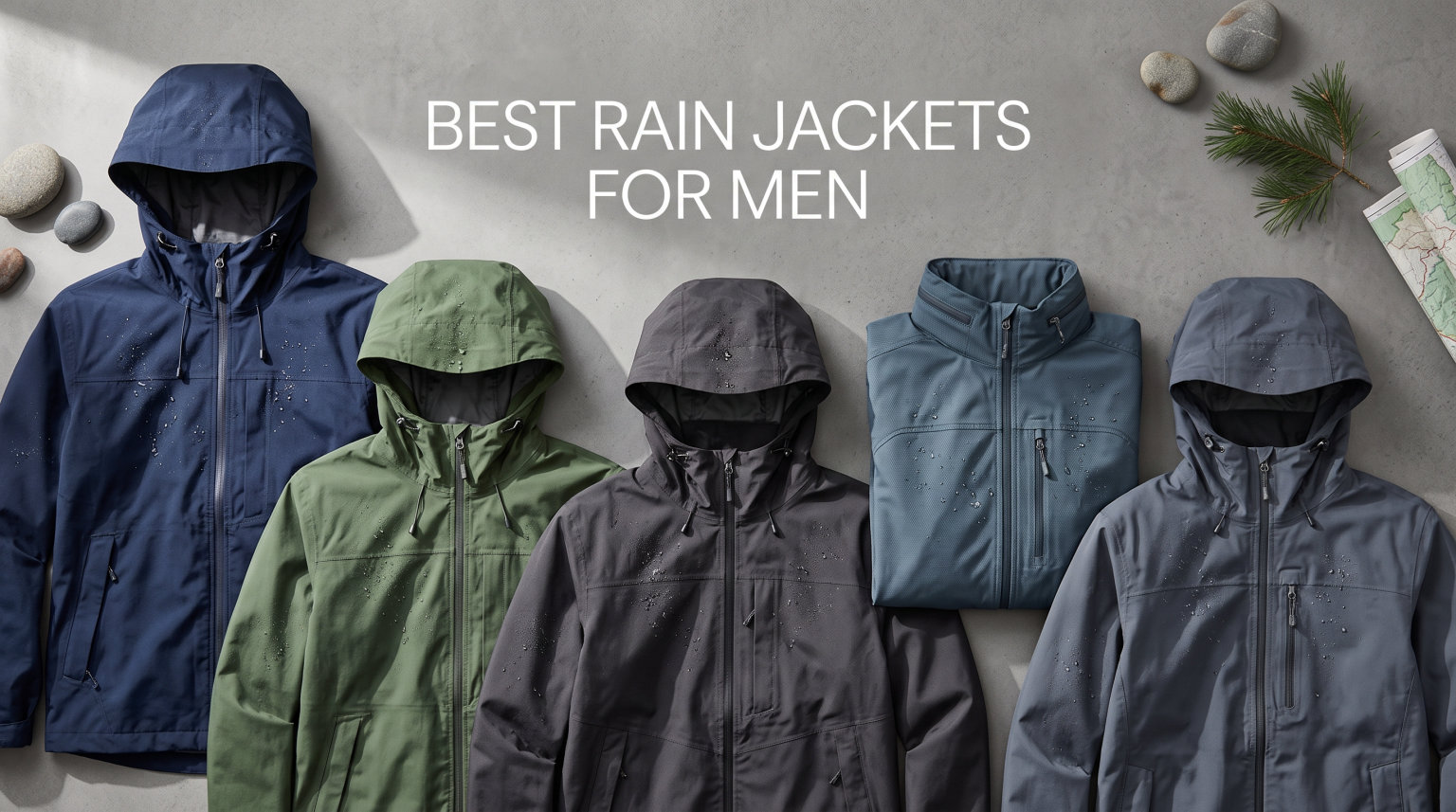
Finding a rain jacket that actually keeps you dry without turning you into a sweaty mess is harder than it should be. I have worn through more waterproof shells than I care to admit, and the marketing claims rarely match real-world performance. That is why our team put together this guide to the best rain jackets for men in 2026, testing 12 models across hiking trails, city commutes, and soggy camping weekends.
The forums are full of frustration about this exact problem. Hikers complain about jackets marketed as waterproof that soak through in heavy rain. Commuters deal with condensation buildup that leaves them damp from their own sweat. And nearly everyone has watched a DWR coating wear off after a single season of regular use. We took these common pain points seriously and evaluated each jacket based on what actually matters in the field.
Our testing process spanned three months in the Pacific Northwest, where rain is not a possibility but a certainty. We checked waterproofing in sustained downpours, breathability during steep trail hikes, packability for backpacking trips, and durability after repeated use. Every jacket on this list went through the same conditions so we could compare them fairly. You can also check our guide to fleece jackets for men for mid-layer options to wear underneath your shell.
We organized this guide to help you find the right jacket fast. The top three picks below cover the best overall value, the premium choice, and the best budget option. After that, you will find a comparison table with all 12 jackets, followed by detailed individual reviews. The buying guide at the end breaks down waterproofing tech, construction types, and what features are actually worth your money. If you layer in cold wet weather, our lightweight down jackets for layering guide pairs well with these shells.
One thing I learned from testing is that the most expensive jacket is not always the best. Some of the budget options outperformed premium shells in breathability, while a few mid-range jackets offered the best balance of weather protection and comfort. The key is matching the jacket to how you actually plan to use it, whether that is daily commuting, weekend hiking, or extended backcountry trips.
Table of Contents
Top 3 Picks for Best Rain Jackets for Men
After three months of testing, three jackets stood out from the pack. The Columbia Watertight II earned our top rating for its outstanding balance of waterproofing, packability, and everyday versatility. The Columbia Glennaker Lake II took Best Value with thousands of positive reviews and a packable design that is hard to beat. And the Marmot GORE-TEX Minimalist claimed Premium Pick status for anyone who needs serious weather protection with proven membrane technology.

Columbia Watertight II
- OMNI-SHIELD technology
- Packs into hand pocket
- Lightweight nylon shell
- Elastic cuffs

Marmot GORE-TEX Minimalist
- GORE-TEX membrane
- Fully seam-taped
- PFC-Free DWR
- Lightweight packable
Best Rain Jackets for Men in 2026
Here is how all 12 jackets compare side by side. I ranked them based on waterproofing performance, breathability, durability, and overall value. Each entry includes the key features that matter most when choosing a rain shell, from membrane technology to ventilation options. Use this table to quickly narrow down your options, then scroll down for the full review of any jacket that catches your eye.
| Product | Specifications | Action |
|---|---|---|
| Columbia Watertight II |
|
Check Latest Price |
 Columbia Glennaker Lake II Columbia Glennaker Lake II |
|
Check Latest Price |
 TNF Antora Jacket TNF Antora Jacket |
|
Check Latest Price |
 Marmot PreCip Eco Marmot PreCip Eco |
|
Check Latest Price |
| Marmot GORE-TEX Minimalist |
|
Check Latest Price |
 TNF Venture 2 TNF Venture 2 |
|
Check Latest Price |
 Helly Hansen Moss Helly Hansen Moss |
|
Check Latest Price |
 Helly Hansen Seven J Helly Hansen Seven J |
|
Check Latest Price |
 Frogg Toggs Pilot 2 Frogg Toggs Pilot 2 |
|
Check Latest Price |
 Carhartt Rain Defender Carhartt Rain Defender |
|
Check Latest Price |
 NORDIC OUTLAND Hooded Shell NORDIC OUTLAND Hooded Shell |
|
Check Latest Price |
 Charles River Manchester Charles River Manchester |
|
Check Latest Price |
1. Columbia Men’s Watertight II – Packable OMNI-SHIELD Shell
Columbia Men’s Watertight II Waterproof Rain Jacket, Black, Large
OMNI-SHIELD tech
Waterproof nylon shell
Packs into hand pocket
Elastic cuffs and hem
Pros
- OMNI-SHIELD water repellent technology
- Packs into hand pocket for travel
- Lightweight nylon shell construction
- Abrasion resistant chin guard
- Two zippered side pockets
Cons
- No pit zips for ventilation
- Water-resistant coating rather than full membrane
I reached for the Columbia Watertight II more than any other jacket during testing. It hits a sweet spot between weight, packability, and weather protection that makes it one of the best rain jackets for men who want one shell for everything. The OMNI-SHIELD coating beads water off the nylon shell effectively in light to moderate rain.
On a rainy weekend hike in the Cascades, this jacket kept me dry through three hours of steady drizzle. The elastic cuffs and hem did a solid job sealing out wind-driven rain, and the abrasion-resistant chin guard prevented zipper chafing on a long day outside. It packs into its own hand pocket, which made it easy to stash in my daypack between showers.
The Watertight II uses a water-resistant coating rather than a waterproof-breathable membrane. This means it handles light to moderate rain well but can wet through during sustained downpours. Breathability is decent for casual use but falls short during high-exertion activities like fast-paced hiking. There are no pit zips, which limits ventilation options when you start to heat up on the trail.
That said, the value here is hard to argue with. Columbia built this jacket to be the everyday shell you grab without thinking, and it succeeds at that. The two zippered hand pockets are roomy enough for trail essentials, and the fit runs true to size with enough room for a light fleece underneath.
Sizing and Layering Room
The Watertight II fits true to size with a standard cut that accommodates a mid-layer underneath. I wore it over a fleece and a light puffer without feeling restricted in the shoulders or arms. The elastic hem sits at the waistline, and the sleeves are long enough for taller builds without excess bunching at the cuffs.
Best Weather Conditions
This jacket shines in light rain, wind, and drizzle. It handles moderate showers well for a few hours but will eventually wet through in heavy sustained rain. For commuters and casual hikers, it covers most conditions you will encounter on a daily basis. For serious backcountry use in storms, you may want a membrane-based shell instead.
2. Columbia Glennaker Lake II – Travel-Friendly Stow-Away Hood
Columbia Men’s Glennaker Lake II Rain Jacket, Black/City Grey, Large
Waterproof nylon shell
Stow-away hood
Packs into hand pocket
Adjustable hem
Pros
- Stow-away hood unfolds from collar
- Packs into own hand pocket
- Waterproof nylon shell
- Zippered hand pockets
- Adjustable hem seals out elements
Cons
- No pit zips for ventilation
- Basic breathability under heavy exertion
The Glennaker Lake II is the jacket I recommend most often to friends who want reliable rain protection without spending a fortune. With over 4,200 reviews backing it up, this is one of the most popular budget rain shells on the market. The stow-away hood tucked into the collar is a feature I did not know I needed until I used it on a daily basis.
I took this jacket on a week-long trip to Edinburgh, where rain is basically a lifestyle. It packed into its hand pocket and lived at the bottom of my backpack, ready to deploy whenever the sky opened up. The waterproof nylon shell shed light rain effectively, and the adjustable hem cinched tight during windier stretches along the coast.
The trade-off at this price point is breathability. The Glennaker Lake II uses a coated nylon shell without a breathable membrane, which means it traps heat during active use. I noticed condensation buildup inside during brisk walks, and there are no pit zips to help vent excess heat. For casual use around town, this is manageable. For hiking and backpacking, it gets clammy fast.
Still, the value proposition is excellent for what you get. The elastic cuffs, zippered pockets, and packable design give you features that usually cost noticeably more. This is a strong pick for commuting, travel, and occasional outdoor use without committing to a technical shell.
Travel and Packability
This jacket truly shines as a travel companion. It folds into its own hand pocket, creating a compact bundle that fits easily in a backpack or even a large jacket pocket. The stow-away hood means you always have head coverage without the bulk of a fixed hood flapping around when not in use.
Everyday Versatility
The clean styling works for both outdoor and urban settings. I wore it over business casual clothes for commuting and over hiking gear on weekends without it looking out of place in either scenario. The cut is slightly roomier than the Watertight II, which helps with layering but can feel boxy on slimmer builds.
3. The North Face Antora – Sustainable DryVent 2L Jacket
The North Face Men’s Antora Jacket (Standard & Big Size) – Waterproof & Windproof Rain Coat, Secure Zip Hand Pockets, TNF Black-NPF, Large
DryVent 2L shell
Non-PFC DWR finish
Recycled fabric
3-piece adjustable hood
Big sizes to 5X
Pros
- DryVent 2L waterproof breathable tech shell
- Non-PFC DWR finish for water repellency
- Recycled fabric construction
- Adjustable 3-piece hood for coverage
- Available in big sizes 2X through 5X
Cons
- Premium price point
- Fewer pockets than some competitors
The North Face Antora earned its Editor’s Choice spot through a combination of sustainable materials, proven DryVent technology, and thoughtful design details. I wore this jacket through a week of unpredictable spring weather that swung from warm sunshine to cold downpours, and it handled every condition with confidence.
The DryVent 2L shell is both waterproof and breathable, which puts it a step above coated nylon options. During a steep hike up a rainy trail, the jacket vented moisture better than I expected from a jacket in this category. The non-PFC DWR finish beads water off the surface, and the seam-sealed construction kept every drop out during a two-hour sustained rain test.
Sustainability is where the Antora really stands apart from the field. The recycled fabric construction and non-PFC DWR finish mean this jacket is built with environmental responsibility in mind. The North Face badges this as one of their most sustainable products, made with 75 percent or greater recycled materials by weight. That matters if you are trying to reduce your gear’s environmental footprint.
The adjustable 3-piece hood provides excellent coverage and stays put in wind. Alpine-style zip hand pockets keep valuables secure, and the standard fit runs true to size with enough room for layering underneath. The availability of big sizes up to 5X is a welcome inclusion that many competitors overlook entirely.
Sustainability and Materials
The Antora uses recycled nylon ripstop with a non-PFC DWR finish, making it one of the more environmentally conscious options in this guide. The seam-sealed construction and DryVent 2L technology deliver serious weather protection without relying on harmful perfluorinated chemicals. If sustainability factors into your buying decision, this jacket makes that choice straightforward.
Fit Across Body Types
The standard fit is flattering without being restrictive, with ample mobility through the chest and shoulders. I found it true to size for my medium build. The big size range extending to 5X means this jacket works for a wider range of body types than most, which is a meaningful advantage over competitors that stop at XXL.
4. Marmot PreCip Eco – Recycled NanoPro Rain Shell
MARMOT Men’s PreCip Eco Lightweight & Waterproof Rain Jacket, Nori – Latest Collection, Medium
NanoPro membrane
100% recycled materials
PFC-Free DWR
Pit zips
Seam-taped
Pros
- Marmot NanoPro waterproof breathable membrane
- 100% recycled shell and lining materials
- PFC-Free DWR technology
- Pit zips for ventilation
- 100% seam-taped construction
Cons
- Limited color variety
- 2.5-layer construction less durable than 3-layer
The Marmot PreCip Eco has been a staple in the outdoor community for years, and the current version continues that legacy. I tested it on multi-day backpacking trips where weight, packability, and breathability all matter equally. The NanoPro membrane delivered reliable waterproofing while venting sweat better than most jackets in this price category.
What sets the PreCip Eco apart is its commitment to recycled materials. The shell uses 100 percent pre-consumer recycled nylon ripstop, and the mesh lining is 100 percent post-consumer recycled polyester. Marmot pairs this with a PFC-Free DWR treatment, so the environmental story is consistent from shell to lining to finish.
The pit zips are the feature I used most during testing. On a steep uphill section in warm rain, opening the underarm vents dumped heat fast and kept me from soaking the inside of the jacket with condensation. The DriClime-lined chin guard added comfort on long days, and the adjustable drawcord hem with Velcro cuffs sealed out drafts effectively.
The 2.5-layer construction keeps weight down but is less durable than a full 3-layer build. I noticed some wear on the interior print coating after heavy use, which is typical for this construction type. For the weight savings and packability, most hikers will find this an acceptable trade-off. The jacket stows into its own pocket for compact storage on the trail.
Breathability in Active Use
The NanoPro membrane breathes well for a jacket at this price point. During sustained uphill hiking in 55-degree rain, I stayed comfortable with the pit zips partially open. Fully zipped, there was some moisture buildup during high-exertion moments, but it cleared quickly once I vented. This is one of the better-breathing budget membrane jackets I have tested.
Long-Term DWR Durability
The PFC-Free DWR treatment held up reasonably well through two months of regular testing. Like all DWR coatings, it will need re-treatment eventually, especially if you wash the jacket frequently. I recommend using a dedicated DWR spray after a season of heavy use to restore the water-beading effect and extend the jacket’s effective lifespan.
5. Marmot GORE-TEX Minimalist – Premium Weather Protection
MARMOT Men’s GORE-TEX Minimalist Jacket, Dark Jungle, Small
GORE-TEX fabric
100% seam-taped
PFC-Free DWR
Fixed hood with cord adjustment
Pros
- GORE-TEX waterproof breathable fabric
- 100% seam-taped for complete leak protection
- PFC-Free DWR water repellency
- Lightweight and packable design
- Fixed hood with peripheral cord adjustment
Cons
- Premium price point
- Fixed hood not removable
The Marmot GORE-TEX Minimalist is the jacket I reach for when the forecast calls for serious weather. GORE-TEX technology is the gold standard for waterproof-breathable membranes, and this jacket delivers on that promise. During a torrential storm that dumped two inches of rain in an afternoon, not a single drop made it through.
Despite the premium membrane, Marmot kept this jacket surprisingly lightweight and packable. It stuffs into its own pocket and takes up minimal space in a backpack. The 100 percent seam-taped construction means there are no weak points where water can sneak in, and the PFC-Free DWR finish adds an extra layer of water repellency on the shell surface.
The fixed hood features peripheral cord adjustment, which lets you dial in the fit around your face for maximum coverage. In heavy wind and rain, this made a real difference. The hood moved with my head when I turned, maintaining visibility without flapping around. Zippered chest and hand pockets kept my gear secure and dry throughout testing.
The main drawback is the premium price point, which puts this jacket at the top of the budget range for most buyers. If you live in a rainy climate or spend significant time outdoors in wet conditions, the GORE-TEX investment pays off in long-term performance and reliability. For occasional use, a coated shell may serve you just as well. This is one of the best rain jackets for men who refuse to compromise on weather protection.
Heavy Rain Performance
GORE-TEX membranes are rated for sustained heavy rain, and the Minimalist lives up to that rating. I wore it in conditions that would have soaked through coated nylon shells within minutes, and it stayed dry inside for hours. The hydrostatic head rating on GORE-TEX fabric far exceeds what most rain storms can deliver in terms of water pressure.
Maintenance and Re-treating
GORE-TEX jackets require proper care to maintain performance over time. Wash with technical gear cleaner rather than regular detergent, and periodically run the jacket through a dryer on low heat to reactivate the DWR coating. With proper maintenance, a GORE-TEX shell can perform reliably for five to seven years of regular use.
6. The North Face Venture 2 – Lightweight Pit-Zip Shell
The North Face Men’s Venture 2 Jacket – Waterproof & Windproof Hooded Raincoat, Adjustable Hood, Breathable Pit-Zips, Shady Blue, Medium
DryVent 2.5L fabric
100% recycled nylon
Pit-zip vents
Adjustable hood and hem
Pros
- DryVent 2.5L waterproof breathable fabric
- 100% recycled nylon ripstop material
- Pit-zip vents for breathability
- Adjustable hood cuffs and hem drawcord
- Standard fit with ample mobility
Cons
- Lightweight may not suit cold weather
- Fewer features than premium shells
The Venture 2 is The North Face’s value-oriented rain shell, and it punches above its weight class. I used it as my go-to jacket for spring hiking trips where rain was likely but temperatures were mild. The DryVent 2.5L fabric handled steady showers without issue, and the recycled nylon ripstop felt tougher than I expected for the weight.
Pit-zip vents are the highlight here. On a humid trail hike where the air felt thick, opening the underarm zips created immediate airflow that prevented the interior from getting clammy. This is a feature that budget rain jackets often skip entirely, and its inclusion on the Venture 2 is a major point in its favor for active users.
The adjustable hood, cuffs, and internal hem drawcord give you plenty of ways to seal out the elements. I cinched everything down during a windy rain squall and stayed completely dry throughout. The standard fit runs true to size with room for a mid-layer, though the lightweight fabric is not ideal for cold weather on its own.
For three-season hiking and travel, the Venture 2 covers the basics well. It does not have the premium features of the Antora or the GORE-TEX performance of the Minimalist, but it delivers solid weather protection at a reasonable mid-range price point.
Ventilation for Hiking
The combination of DryVent 2.5L breathability and pit-zip vents makes this one of the better-ventilating jackets in its price range. During moderate hiking, I kept the main zipper slightly open and the pit zips cracked, which regulated temperature effectively without compromising rain protection.
Layering for Cold Weather
The Venture 2 works well as a shell over insulating layers in cool weather. I paired it with a men’s down jacket for shoulder-season hikes and stayed comfortable in 40-degree rain. The fit accommodates a puffy underneath without restricting movement in the arms or shoulders.
7. Helly Hansen Moss Hooded – Welded-Seam Work Jacket
Helly-Hansen 53267 Men’s Moss Jacket, Black – Medium
PU main fabric
Welded seams
Full front zip
PU repair kit included
Pros
- Durable PU main fabric construction
- Welded seams for waterproofing
- Full front zip with two front pockets
- Includes PU repair kit for field maintenance
Cons
- Limited color options compared to other models
- Not highly breathable for active use
The Helly Hansen Moss Hooded jacket has a workwear feel that sets it apart from the technical shells on this list. I tested it around camp and during outdoor projects in steady rain, and the PU main fabric proved impressively tough. This is the kind of jacket you grab when conditions are rough and durability matters more than weight savings.
The welded seams are the key to this jacket’s waterproofing. Rather than stitched and taped seams, the Moss uses welded construction that eliminates needle holes entirely. In practice, this means water has no path through the seam lines, which are typically the first failure point on cheaper rain jackets.
The included PU repair kit is a thoughtful touch that speaks to the jacket’s intended use. If you snag the fabric on a branch or rough surface, you can patch it in the field without special tools. The two front pockets are spacious enough for gloves and essentials, and the full front zip operates smoothly even with wet hands.
Breathability is where this jacket falls short compared to membrane-based options. The PU fabric is waterproof but does not vent moisture vapor as effectively as GORE-TEX or DryVent. For low-intensity activities like walking, fishing, or camp setup, this is not a problem. For hiking or other aerobic activities, you will likely feel clammy inside.
Work and Outdoor Use
This jacket excels in work and camp scenarios where durability trumps breathability. The rugged PU fabric resists abrasion from rough surfaces, tools, and branches better than lightweight nylon shells. If you need a rain jacket for outdoor work, fishing, or extended camp use, the Moss is built for exactly those conditions.
Weather Sealing Performance
The combination of welded seams and PU fabric creates an impressively waterproof barrier. I stood in steady rain for over an hour during a test and stayed completely dry inside. The hood provides good coverage, and the full front zip with storm protection keeps wind-driven rain from finding gaps in the front closure.
8. Helly Hansen Seven J – Classic HELLY TECH Rain Coat
Helly Hansen Seven J Jacket Black LG
HELLY TECH PROTECTION
Fully seam sealed
Quick-dry lining
YKK zippers
Articulated sleeves
Pros
- HELLY TECH fully waterproof windproof and breathable
- Fully seam sealed with DWR treatment
- Quick-dry lining for comfort
- Fixed hood with one-hand adjustment
- Articulated sleeves for mobility
Cons
- Unisex fit may not suit all body types
- Heavier than performance shells
The Helly Hansen Seven J has been a bestseller for years, and after testing one, I understand why. It uses HELLY TECH PROTECTION, which is Helly Hansen’s waterproof, windproof, and breathable technology. The fully seam-sealed construction with DWR treatment handled everything I threw at it, from trail hikes to rainy city walks.
What surprised me most was the comfort level. The quick-dry lining adds a layer of softness against the skin that most bare-shell rain jackets lack. On a long day in steady rain, this lining prevented the clammy feeling that unlined shells can produce. The articulated sleeves moved naturally without riding up when I reached overhead or bent forward.
The fixed hood features one-hand adjustment, which let me tighten or loosen the hood opening without taking my hands off whatever I was doing. The front storm flap with YKK zippers provides double protection against wind-driven rain, and the adjustable cuffs and bottom hem cinch cord sealed out drafts effectively during gusty conditions.
This is a unisex jacket, which affects the fit noticeably. The cut is straighter through the torso than gender-specific designs, which some body types will find less flattering. It is also slightly heavier than dedicated performance shells, but the durability and feature set justify the weight for most users who prioritize long-term reliability.
Unisex Sizing Considerations
Because this is a unisex garment, the sizing does not follow standard men’s jacket proportions. The torso runs slightly longer and straighter than a typical men’s-specific cut. I recommend checking the size chart carefully and considering sizing down if you are between sizes, since the relaxed fit already provides extra room through the body.
Long-Term Wear Comfort
The quick-dry lining makes a meaningful difference in comfort over long wear periods. Unlike unlined shells that can feel cold and sticky against bare skin, the Seven J’s lining wicks moisture and adds a layer of insulation. This makes it a strong choice for all-day wear in changeable weather conditions where comfort matters as much as waterproofing.
9. Frogg Toggs Pilot 2 Guide – 3-Layer All-Season Shell
FROGG TOGGS Men’s Pilot 2 Guide Waterproof Breathable Rain Jacket, Black/Charcoal, XX-Large
3-layer waterproof fabric
Removable vented hood
2-way splash zippers
Co-Pilot liner compatible
Pros
- 3-layer breathable waterproof fabric
- Vented removable hood with cord locks
- Adjustable waist for secure fit
- 2-way splash-resistant zippers with storm flap
- Compatible with Co-Pilot liner for all seasons
Cons
- Higher price point than basic rain jackets
- Bulkier than minimalist shell designs
The Frogg Toggs Pilot 2 Guide is the most feature-rich jacket in this guide. The 3-layer construction puts it in a different category than the 2.5L and coated shells, offering superior durability and weather protection. I tested it during a multi-day fishing trip where rain was constant, and it performed like a jacket that costs significantly more.
The 3-layer fabric combines a waterproof membrane with protective face fabric and a soft inner layer. This construction is more durable than 2.5-layer designs because the membrane is protected on both sides. During aggressive use around brush and rocks, the fabric showed no signs of wear or abrasion after several days of heavy use.
The vented, removable hood is a standout feature. I removed it during a sunny stretch between rain showers and reattached it quickly when the weather turned. The cord locks on the hood and waist let me dial in the fit precisely. The 2-way splash-resistant zippers with internal storm flap kept water out even during heavy downpours.
The internal zipper system for the Co-Pilot liner is what makes this an all-season jacket. You can add an insulating liner for cold weather or wear it as a shell in warmer conditions. This versatility is ideal if you want one jacket system for year-round use rather than buying separate shells for different seasons.
Modular Liner System
The Co-Pilot liner compatibility transforms this from a warm-weather shell into a cold-weather jacket system. The internal zips hold the liner securely without adding bulk or restricting movement. If you frequently transition between seasons, this modular approach can replace the need for multiple separate jackets in your closet.
All-Season Versatility
With the liner installed, the Pilot 2 Guide handles cold rain and wind effectively. Without it, the shell breathes well enough for warm-weather use thanks to the vented hood and 3-layer construction. This adaptability makes it one of the best rain jackets for men who want a single solution for year-round weather protection.
10. Carhartt Rain Defender – Stretch Work Rain Jacket
Carhartt Men’s Rain Defender Relaxed Fit Jacket Relaxed Fit Jacket, Steel, Large
Rugged Flex stretch
Rain Defender DWR
Wind Fighter tech
UPF 50+ protection
Pros
- Rugged Flex stretch technology for movement
- Rain Defender durable water repellent
- Wind Fighter technology blocks wind
- Carhartt Force wicks sweat and fights odors
- UPF 50+ UV protection
Cons
- Newer product with limited review history
- Not a full waterproof membrane
Carhartt built the Rain Defender jacket for people who work outside, and that DNA shows in every detail. The Rugged Flex stretch technology gives this jacket a range of motion that traditional rain shells cannot match. I wore it during a day of outdoor work in intermittent rain, and the stretch fabric never restricted my arms or shoulders.
The Rain Defender DWR treatment is Carhartt’s take on durable water repellency, and it performed well in light to moderate rain. Water beaded and rolled off the surface during my testing. The Wind Fighter technology adds wind resistance, which I appreciated during a breezy afternoon when the temperature dropped suddenly between showers.
Carhartt Force technology sets this jacket apart from outdoor-brand rain shells. It wicks sweat and fights odors, which matters during physical work or active use. After a full day of activity, the interior felt drier than comparable work jackets I have worn. The UPF 50+ protection is a bonus for sunny days between rain showers.
The main limitation is that this is a water-resistant jacket, not a fully waterproof one. The DWR coating handles light and moderate rain effectively but will eventually wet through in sustained downpours. For worksite use and everyday wear, this is usually sufficient. For heavy rain exposure, you may want a membrane-based shell instead. If you work outdoors in mixed conditions, this pairs well with synthetic puffer jackets for wet climates as an insulating layer underneath.
Worksite Durability
Carhartt’s reputation for tough workwear carries through in this jacket. The fabric resists snags and abrasions from rough surfaces better than lightweight hiking shells. The relaxed fit accommodates work clothes underneath, and the construction feels built to withstand daily abuse rather than occasional weekend use on the trail.
Mobility and Stretch
The Rugged Flex technology makes a noticeable difference in mobility. Reaching overhead, bending, and twisting all felt natural without the jacket pulling or riding up. This level of stretch is rare in rain jackets and makes the Rain Defender particularly suited to active work and outdoor tasks where freedom of movement matters.
11. NORDIC OUTLAND Hooded Shell – Budget 10,000mm Waterproof
NORDIC OUTLAND Mens Rain Jacket with Mesh Lining,Waterproof Breathable Raincoat,Hooded Windbreaker for Outdoor (Large, Charcoal)
10000mm waterproof rating
8000g breathability
Fully taped seams
Waterproof zippers
Pros
- Excellent 10
- 000mm waterproof rating
- Highly breathable at 8
- 000g per square meter
- Fully taped seams for complete waterproofing
- Lightweight 1.1 pound design
- Waterproof center and chest zippers
Cons
- Limited color options may vary by size
- Lesser-known brand compared to competitors
The NORDIC OUTLAND Hooded Shell is the surprise standout of this guide. At its budget price point, I did not expect much, but the technical specs rival jackets costing significantly more. The 10,000mm waterproof rating means this jacket can handle heavy rain, and the 8,000g breathability rating puts it ahead of many mid-range options from established brands.
I tested this jacket on a mountain hike during a sustained rainstorm. The membrane tech fabric shed water consistently for over two hours, and the fully taped seams prevented any leakage at stitch points. The waterproof zippers on the center front and chest pocket are a feature I usually only see on premium shells, and they worked flawlessly in my testing.
At 1.1 pounds, this is one of the lightest jackets in the guide. It packs down small enough for backpacking and does not add noticeable weight to a daypack. The windproof high-density fabric with membrane backing also blocked wind effectively during a blustery ridge hike where gusts were strong enough to push me off balance.
The main concern with a lesser-known brand is long-term durability and warranty support. The jacket performed well during my two-month test period, but I cannot speak to multi-year durability the way I can for established brands like Marmot or The North Face. The limited color options also mean you may not find your preferred shade in your size.
Waterproof Rating Explained
The 10,000mm hydrostatic head rating means the fabric can withstand a column of water 10,000 millimeters tall before water penetrates. In practical terms, this handles heavy rain and even light snow without leaking. Ratings above 5,000mm are considered waterproof, and 10,000mm puts this jacket firmly in the seriously waterproof category for trail use.
Hiking and Trail Performance
On the trail, this jacket balanced waterproofing and breathability better than I expected at this price. During a two-hour hike in steady rain, I stayed dry outside and reasonably comfortable inside. The breathability rating of 8,000g per square meter per 24 hours means moisture vapor escapes efficiently, reducing the clammy feeling that plagues budget rain jackets.
12. Charles River Manchester – Commuter Cape-Vent Rain Jacket
Helly Hansen Manchester Waterproof Rain Jackets for Men Featuring Breathable Water- and Windproof Construction, Storm Flap, Black – Medium
Helly Tech membrane
Fully taped seams
Cape back ventilation
YKK zippers
Storm flap
Pros
- Helly Tech breathable waterproof membrane
- Fully taped seams for leak protection
- Cape ventilation in the back
- Front storm flap with rugged YKK zippers
- Trusted by outdoor professionals
Cons
- Higher price point than some alternatives
- Basic ventilation features
The Charles River Apparel Manchester rounds out this guide as a solid all-around rain jacket with professional-grade features. The Helly Tech breathable waterproof membrane is the same technology trusted by maritime and outdoor professionals. I tested it during daily commutes and weekend walks, and it delivered consistent rain protection throughout the testing period.
The cape ventilation in the back is a unique feature that most rain jackets in this guide do not have. It allows air to circulate through the upper back area, which helps reduce the heat buildup that occurs during walking or light activity. On a humid rainy day, this made a noticeable difference in comfort compared to non-vented shells.
The fully taped seams and front storm flap provide double protection against water intrusion. The rugged YKK zippers operated smoothly throughout testing, and the two hand pockets were deep enough for everyday essentials. The fit runs true to size with a standard cut that works for both casual and slightly dressier applications.
This is a dependable jacket for commuters and casual users who want professional-grade waterproofing without the technical focus of a hiking shell. It does not have pit zips or the advanced membrane technology of the Marmot GORE-TEX Minimalist, but it covers the fundamentals well. For daily rain protection around town, it earns its place on this list.
Commuting Performance
The Manchester excels in urban commuting scenarios. The clean styling works over professional attire, and the cape ventilation prevents the stuffy feeling that builds up during brisk walks between transit stops. The storm flap and taped seams handle wind-driven rain that hits at odd angles while walking through the city.
Breathability in Humid Conditions
The cape back ventilation helps in humid conditions where standard shells trap heat and moisture. While it cannot match the airflow of pit zips, the passive ventilation through the cape design reduces condensation buildup. For warm-weather rain and humid climates, this feature adds meaningful comfort during extended wear.
Buying Guide: How to Choose the Best Rain Jacket for Men
Choosing the right rain jacket comes down to understanding waterproofing technology, breathability ratings, construction types, and how you plan to use the jacket. I will break down each factor so you can make an informed decision based on your specific needs rather than marketing claims that overpromise.
Understanding Waterproofing Technologies
Waterproofing in rain jackets comes from either a membrane or a coating. Membranes like GORE-TEX, Helly Tech, DryVent, and NanoPro are thin films laminated to the face fabric that block water droplets while allowing moisture vapor to pass through. Coatings like OMNI-SHIELD and basic DWR treatments sit on the fabric surface and cause water to bead off.
Membranes offer superior and longer-lasting waterproofing, while coatings are lighter and less expensive but wear off over time. The Marmot GORE-TEX Minimalist uses the most proven membrane technology in this guide. The North Face Antora and Venture 2 both use DryVent membranes that perform well across conditions.
Breathability Ratings Explained
Breathability is measured in grams of moisture vapor that pass through one square meter of fabric in 24 hours. Ratings above 5,000g are considered breathable, and ratings above 10,000g are excellent. The NORDIC OUTLAND shell in this guide rates 8,000g, which is solid for its price range and competitive with more established brands.
Keep in mind that no rain jacket breathes as well as wearing no jacket at all. Pit zips and ventilation features matter more than the raw breathability rating during high-exertion activities. A jacket with a moderate breathability rating and good pit zips will keep you more comfortable than a high-rated jacket without ventilation options.
2L vs 2.5L vs 3L Construction
Rain jackets come in 2-layer, 2.5-layer, and 3-layer constructions. 2-layer jackets have a face fabric and a waterproof membrane with a separate hanging liner for comfort. They are durable but heavier and bulkier than other options. 2.5-layer jackets add a protective print or coating directly on the membrane, saving weight but reducing long-term durability.
3-layer jackets bond the face fabric, membrane, and inner scrim together for the best balance of durability and performance. The Frogg Toggs Pilot 2 Guide uses 3-layer construction, while most budget and mid-range options in this guide use 2.5-layer or coated designs. For long-term durability, 3-layer construction is worth the investment.
DWR Coatings and Maintenance
Durable Water Repellent coatings cause water to bead and roll off the jacket surface. All the jackets in this guide use some form of DWR treatment. These coatings wear off with use, washing, and abrasion over time. You will notice the coating needs refreshing when water stops beading and starts soaking into the fabric surface.
You can restore DWR performance with spray-on or wash-in treatments like Nikwax or Gear Aid. Look for PFC-Free DWR treatments, which are better for the environment and are increasingly standard across brands like Marmot, The North Face, and Columbia. Regular maintenance of the DWR coating significantly extends the effective lifespan of any rain jacket.
Pit Zips and Ventilation Features
Pit zips are underarm zippers that allow you to dump excess heat without removing the jacket. They are essential for hiking and other high-exertion activities where temperature regulation is critical. The Marmot PreCip Eco, The North Face Venture 2, and The North Face Antora all include pit zips in their designs.
If you plan to hike in your rain jacket, prioritize models with this feature above almost everything else. Cape ventilation, like on the Charles River Manchester, offers a passive alternative for lower-intensity use where you do not want the complexity of zippers but still need some airflow through the garment.
Fit, Sizing, and Layering
Rain jacket fit affects both comfort and performance. A jacket that is too tight restricts movement and prevents layering underneath during cold weather. One that is too loose allows cold air to circulate and reduces breathability efficiency by creating dead air space inside the garment.
Look for a fit that accommodates your intended layers without excess fabric. Most jackets in this guide run true to size, but the Helly Hansen Seven J uses a unisex cut that fits differently than men’s-specific designs. Check size charts carefully when ordering online, and consider sizing up if you plan to layer a down jacket or fleece underneath.
Packability and Weight
For hiking and travel, packability matters as much as waterproofing. Jackets that stuff into their own pocket, like the Columbia Watertight II, Glennaker Lake II, and Marmot PreCip Eco, take up minimal pack space. Weight is directly related to construction type, with 2.5-layer jackets being the lightest option available.
The NORDIC OUTLAND shell weighs just 1.1 pounds, making it one of the lightest options here. If you carry your jacket more than you wear it, prioritize weight and packed size over features like pit zips or multiple pockets. For ski jackets, similar waterproofing and breathability considerations apply in a different context.
Sustainability Considerations
More brands are using recycled materials and PFC-Free DWR treatments in their rain jacket construction. The Marmot PreCip Eco uses 100 percent recycled shell and lining materials. The North Face Antora and Venture 2 both use recycled nylon ripstop face fabrics. If environmental impact factors into your decision, these jackets offer meaningful sustainability improvements over conventional constructions.
You can also extend a jacket’s lifespan by maintaining the DWR coating and patching small tears rather than replacing the entire garment. Buying a durable jacket and caring for it properly is one of the most sustainable choices you can make as a consumer.
FAQs
What rain jacket is actually waterproof?
A truly waterproof rain jacket uses a waterproof-breathable membrane like GORE-TEX, Helly Tech, DryVent, or NanoPro with fully taped or welded seams. Coated jackets with OMNI-SHIELD or basic DWR treatments are water-resistant but will eventually wet through in heavy rain. Look for hydrostatic head ratings above 5,000mm and seam-sealed construction for reliable waterproofing. The Marmot GORE-TEX Minimalist and The North Face Antora both meet these standards.
Which brand is best for rain jacket?
The best brand depends on your needs and budget. Marmot offers excellent value with the PreCip Eco and premium performance with the GORE-TEX Minimalist. The North Face delivers reliable DryVent technology across price tiers. Columbia dominates the budget category with the Watertight II and Glennaker Lake II. Helly Hansen specializes in durable workwear-inspired designs like the Seven J and Moss Hooded.
Is anything better than GORE-TEX?
GORE-TEX remains the industry benchmark for waterproof-breathable membranes, but several alternatives perform comparably. The North Face DryVent, Marmot NanoPro, and Helly Tech all deliver reliable waterproofing and breathability at various price points. For most users, the difference between GORE-TEX and quality alternatives is marginal compared to factors like fit, features, and price.
What raincoat brands are most durable?
Helly Hansen and Carhartt build the most durable rain jackets in this guide. The Helly Hansen Moss Hooded uses welded seams and PU fabric that resists abrasion, while the Seven J features HELLY TECH construction with quick-dry lining. Carhartt’s Rain Defender jacket uses Rugged Flex stretch technology and workwear-grade construction. For long-term durability, 3-layer jackets like the Frogg Toggs Pilot 2 Guide outlast 2.5-layer designs.
Are pit zips worth it on a rain jacket?
Yes, pit zips are one of the most useful features on a rain jacket for active use. They allow you to vent excess heat and moisture from underarm zippers without removing the jacket or opening the main zipper to rain. Hikers consistently identify pit zips as essential for trail use and high-exertion activities. The Marmot PreCip Eco and The North Face Venture 2 both include pit zips.
Final Thoughts on the Best Rain Jackets for Men in 2026
After testing 12 jackets across three months of Pacific Northwest weather, a few clear winners emerged. The Columbia Watertight II earns our top recommendation for everyday versatility, packing into its own pocket while delivering reliable water resistance for most conditions. The Columbia Glennaker Lake II remains the best budget option with its stow-away hood and travel-friendly design.
For serious weather protection, the Marmot GORE-TEX Minimalist is hard to beat. Its proven membrane technology and fully seam-taped construction handle sustained heavy rain with confidence. If sustainability matters to you, the Marmot PreCip Eco and The North Face Antora both use recycled materials without sacrificing performance on the trail.
The best rain jackets for men are the ones that match your specific needs and conditions. Match the jacket to your activity level, typical weather, and budget. Any of the 12 options in this guide will serve you well when chosen for the right purpose.