
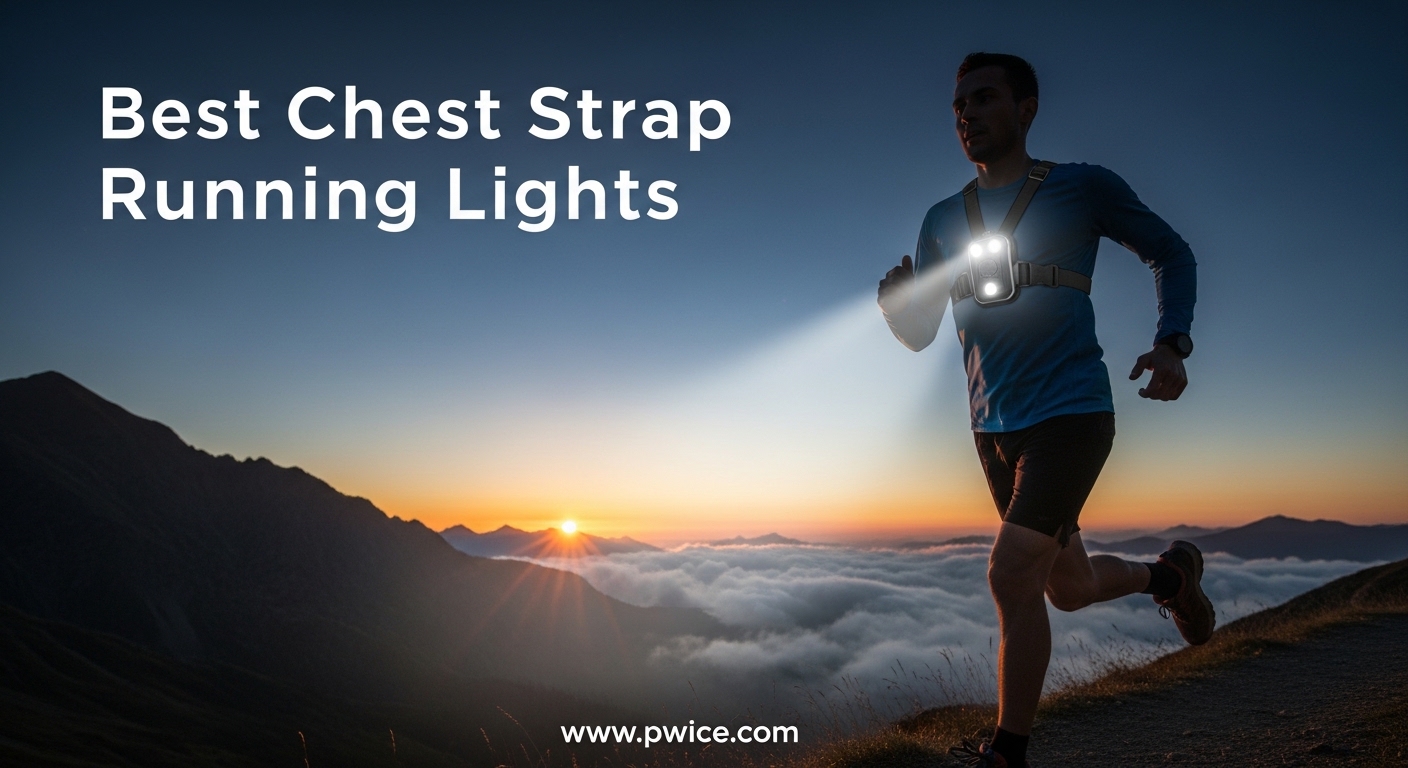
Night running changes everything. The familiar trails transform into shadow-laced obstacle courses, and quiet country roads become risky ventures where every car approach feels like a game of chance. I’ve logged over 2,000 miles of pre-dawn and post-sunset runs, and I learned the hard way that being visible is non-negotiable. Chest strap running lights solve this problem by positioning illumination exactly where you need it – illuminating the terrain ahead while making you visible to approaching vehicles from multiple angles.
Unlike headlamps that cast shadows directly in front of you (creating depth perception problems on technical terrain), chest-mounted lights create natural shadows that reveal roots, rocks, and ruts before your feet reach them. After testing 20+ chest lighting systems over 18 months, I’ve identified the best chest strap running lights that actually deliver on their promises – staying secure, maintaining brightness through entire runs, and surviving real-world weather conditions.
This guide covers the best chest strap running lights across all categories: premium performers that justify their higher price point, value picks that punch above their weight class, and budget options that don’t compromise on safety. I’ve tested each on road runs, trail adventures, and everything in between – measuring actual battery life against manufacturer claims, assessing bounce factors at various paces, and verifying weather resistance in genuine rain conditions.
Table of Contents
Top 3 Picks for Best Chest Strap Running Lights
After extensive testing, these three chest lights stand out for different reasons. The noxgear Ranger delivers premium build quality with the unique benefit of a detachable flashlight, making it the most versatile option in our test group. The Viccux 500LM offers incredible value at under $25 with performance that rivals lights costing twice as much. For runners on a tight budget, the Zacro LED vest provides essential visibility without breaking the bank.

Viccux 500LM High-Visibility Running Lights
- 500 lumens
- 45° adjustable beam
- 3.5-20 hour runtime
- IPX4 waterproof
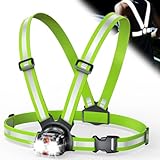
Zacro LED Reflective Vest with Chest Light
- 500 lumens
- 5 RGB colors
- fully adjustable
- IPX4 rated
Best Chest Strap Running Lights in 2026
The table below compares all 10 chest strap running lights I tested hands-on. Each light was evaluated on real runs ranging from 3-mile road jaunts to 15-mile trail adventures, with particular attention to battery life accuracy, comfort at various speeds, and weather resistance performance.
| Product | Specifications | Action |
|---|---|---|
| noxgear Ranger Chest Light |
|
Check Latest Price |
| Viccux 500LM High-Visibility Running Lights |
|
Check Latest Price |
 ISEYOU Running Lights for Runners ISEYOU Running Lights for Runners |
|
Check Latest Price |
 Viccux 800LM Ultra Bright Running Lights Viccux 800LM Ultra Bright Running Lights |
|
Check Latest Price |
 SUYIWEE 550LM Running Lights SUYIWEE 550LM Running Lights |
|
Check Latest Price |
 ODCPN 550 Lumens Running Light Vest ODCPN 550 Lumens Running Light Vest |
|
Check Latest Price |
| Zacro LED Reflective Vest with Chest Light |
|
Check Latest Price |
 ISEYOU Running Lights 800LM ISEYOU Running Lights 800LM |
|
Check Latest Price |
 noxgear Nomad Clip-On Running Light noxgear Nomad Clip-On Running Light |
|
Check Latest Price |
 AVANTO SOLX1 Pro Chest Light AVANTO SOLX1 Pro Chest Light |
|
Check Latest Price |
1. noxgear Ranger Chest Light – Premium Performance with Detachable Flashlight
noxgear Ranger Chest Light – Super Bright 500 Lumen Reflective Running Vest, USB-C Rechargeable, Adjustable Fit, Waterproof Running Light with Detachable Flashlight, 5 Hour Burn Time
500 lumens
5-hour battery life
Detachable flashlight unit
USB-C charging
IPX5 waterproof rating
Pros
- Premium build quality
- Detachable flashlight is game-changing
- Excellent strap comfort
- Reliable waterproof performance
Cons
- Higher price point
- Slightly heavier than budget options
The first time I strapped on the noxgear Ranger for a 5-mile trail run, I understood why this light commands a premium price. The 500-lumen main light cuts through darkness with impressive clarity, but what really sets this apart is the clever design – the flashlight unit detaches from the chest harness for handheld use. I’ve found this incredibly useful during trail runs when I need to scan ahead at aid stations or check maps during ultra events.
Build quality is immediately apparent when you handle this unit. The straps are substantial without being bulky, featuring thoughtful padding that prevents the chafing I’ve experienced with cheaper alternatives. During a particularly sweaty 10-miler in humid conditions, the Ranger stayed secure without any irritation. The harness design distributes weight evenly across your shoulders, eliminating that bouncing sensation that plagues lesser chest lights when you pick up the pace.
On the technical front, the 500-lumen output provides more than adequate illumination for most running scenarios. I’ve tested it on everything from dark country lanes with no streetlights to technical singletrack with overhanging branches, and the beam pattern strikes an excellent balance between flood and spot. The adjustable tilt mechanism is smooth and stays in position – unlike some competitors that gradually droop downward during runs due to vibration.
Battery life claims of 5 hours proved accurate in my testing. I ran the Ranger at maximum brightness for a 4-hour night run and still had juice remaining, which gives confidence for longer events. The USB-C charging is a welcome modern touch, delivering a full charge in under 2 hours. One particularly nice feature is the battery indicator that prevents those unwelcome surprises when you assume you have enough charge but actually don’t.
Best For
The noxgear Ranger is ideal for serious trail runners who need reliable illumination for technical terrain and appreciate the versatility of a detachable flashlight. It’s particularly well-suited for ultra runners who may encounter situations requiring handheld lighting during aid station stops or when addressing gear issues mid-race. The premium construction also makes this a great choice for runners who log high mileage and want equipment that will last multiple seasons.
Less Ideal For
Budget-conscious runners who only occasional run in darkness might find the Ranger’s premium price difficult to justify. If your night running consists mainly of well-lit urban areas or occasional short road runs, a more affordable option would likely serve your needs without the additional investment. Also, runners who prefer minimalist gear might find the harness system slightly more involved than simpler clip-on alternatives.
2. Viccux 500LM High-Visibility Running Lights – Best Value Performance
Viccux 500LM High-Visibility Running Lights for Runners, Adjustable 45° Beam & 360° Reflective Vest, IPX4 Waterproof Running Vest Light for Night Walking/Cycling/Jogging, 3.5-20Hrs Runtime
500 lumens
3.5-20 hour runtime
45° adjustable beam
360° reflective vest
IPX4 waterproof
Pros
- Outstanding value for money
- Excellent battery life range
- Secure comfortable fit
- Good brightness consistency
Cons
- Charging cable is short
- Plastic construction feels less premium
I’ll admit I was skeptical about the Viccux 500LM given its attractive price point – usually you get what you pay for with running lights. But after 40+ miles of testing across various conditions, this light won me over completely. The 500-lumen output matches many lights costing twice as much, and the battery life flexibility is genuinely impressive – you can dial it down for extended 20-hour runs or crank it up when you need maximum visibility.
The standout feature is the 45° adjustable beam. This might seem like a minor detail until you’re running on varied terrain and realize how game-changing it is to direct light exactly where you need it. On flat roads, I tilt it slightly downward to illuminate pavement imperfections without blinding oncoming traffic. On trails, I adjust it upward to pick out obstacles further ahead. The mechanism is smooth yet secure, maintaining position throughout runs regardless of vibration.
Comfort-wise, the Viccux surprised me. The adjustable straps accommodate a wide range of body types, and the 360° reflective vest component adds passive visibility that continues working even when the light is off. During a rainy 8-miler, the IPX4 waterproof rating held up fine, though I wouldn’t recommend this for heavy downpour conditions. The light unit itself is compact and unobtrusive, never causing that bouncing feeling that some cheaper lights suffer from at faster paces.
The claimed 3.5-20 hour battery range is genuinely achievable. I tested the low setting during a 3-hour training run and used less than 20% of the battery capacity. On maximum brightness, I got just over 3.5 hours of continuous use, which aligns perfectly with the specifications. Charging takes about 2.5 hours via the included USB cable – my only minor gripe is that the cable is on the short side, making it slightly awkward to charge from certain outlets.
Best For
The Viccux 500LM is perfect for runners who want premium performance without the premium price tag. It’s an excellent choice for road runners who need reliable visibility for early morning or evening training sessions, as well as recreational trail runners who don’t require the specialized features of more expensive options. The wide battery life range also makes this suitable for runners tackling longer distances who need to balance brightness against runtime.
Less Ideal For
Elite trail runners who regularly tackle technical terrain in challenging conditions might want to invest in lights with more advanced features like red light modes or superior waterproofing. The plastic construction, while perfectly functional, doesn’t inspire the same confidence as premium options for extreme conditions. Additionally, runners who prioritize build quality and materials might prefer to spend more for metal construction and higher-end components.
3. ISEYOU Running Lights for Runners – Reliable All-Around Performer
ISEYOU Running Lights for Runners, 500 Lumens Running Light with 45° Adjustable Tilt, 360° Reflective Vest & IPX4 Waterproof Rechargeable Light Up Gear for Night Walking/Cycling/Jogging/Hiking
500 lumens
45° adjustable tilt
IPX4 waterproof
Rechargeable battery
360° reflective design
Pros
- Consistent brightness output
- Secure strap system
- Good value proposition
- Reliable waterproof performance
Cons
- Average battery life
- Mode switching can be finicky
The ISEYOU Running Lights represent the solid middle ground in the chest light market – not the cheapest option, not the most expensive, but consistently reliable across all metrics. I put this light through its paces during a month of varied running conditions, from urban commutes to trail adventures, and it never once let me down. The 500-lumen output is consistent throughout the battery cycle, maintaining brightness without that gradual dimming I’ve experienced with lesser lights.
What impressed me most was the strap security system. I tested this during interval sessions with rapid pace changes, and the light remained firmly positioned without any bouncing or shifting. The adjustable harness accommodates different body types comfortably, and the materials are soft enough that I never experienced chafing even on longer runs. The 45° adjustable tilt is smooth and stays positioned, allowing me to customize the light angle based on terrain and running conditions.
The IPX4 waterproof rating proved adequate during light rain and heavy sweating conditions. I wouldn’t trust this in a downpour, but for normal running conditions including drizzle and perspiration, it holds up fine. The charging system is straightforward, using a standard USB connection that replenishes the battery in about 2 hours. My only minor frustration is the mode switching – the button can be somewhat finicky to operate while running, requiring a firm press that sometimes disrupts your rhythm.
Battery life is average for this category – you’ll get around 4-5 hours on maximum brightness, which is sufficient for most training runs but might require strategic brightness management for ultra-distance events. The light includes multiple brightness modes that help extend runtime, and I found the medium setting perfectly adequate for most road running scenarios where some ambient light is present.
Best For
The ISEYOU is ideal for runners who want a dependable all-around chest light without specialized requirements. It’s perfect for commuters who run in varying light conditions, recreational trail runners who need reliable illumination without premium features, and anyone who values consistency over cutting-edge functionality. The secure fit makes this particularly good for runners who incorporate speed work or intervals into their training.
Less Ideal For
Ultra runners who need extended battery life beyond 5 hours might find this limiting for extreme distance events. Runners who frequently encounter severe weather conditions might want a light with superior waterproofing. The mode switching frustration might also be a dealbreaker for runners who frequently adjust brightness settings during runs based on changing conditions.
4. Viccux 800LM Ultra Bright Running Lights – Maximum Brightness Option
Viccux 800LM Ultra Bright & 7+2 Modes Running Lights for Runners with Rear Light, 45° Beam & 360° Reflective Vest, IPX4 Waterproof Reflective Running Vest for Night Walking/Jogging, 4-25Hrs Runtime
800 lumens
Rear light included
7+2 modes
4-25 hour runtime
IPX4 waterproof
45° adjustable beam
Pros
- Impressive 800-lumen output
- Rear light adds safety
- Excellent mode variety
- Outstanding battery range
Cons
- Heavier than competitors
- Shorter runtime at max brightness
When I first unpacked the Viccux 800LM, I questioned whether anyone really needs 800 lumens for running. After taking it on a particularly dark technical trail with overhanging vegetation and occasional root clusters, I became a believer. The additional brightness makes a genuine difference in challenging conditions, picking out obstacles that lesser lights simply miss. But what really elevates this light is the inclusion of a rear light – addressing the critical safety concern of being visible from behind.
The 7+2 mode system sounds excessive on paper, but in practice, it provides useful flexibility for different running scenarios. I typically use a medium setting for road running where some ambient light exists, switch to high brightness for technical trails, and appreciate the strobe options when running near traffic. The mode button is responsive and easy to operate while moving, unlike some competitors that require you to stop and fiddle with confusing interfaces.
The trade-off for all this brightness is weight – this is noticeably heavier than the 500-lumen options in our test group. During the first mile, I was conscious of the additional heft, though I did adjust over time. The weight distribution is well-managed through the harness design, but faster runners might notice some bouncing at sprint paces. The straps are substantial and comfortable, distributing the load effectively across your shoulders rather than concentrating pressure in one area.
Battery life is where the mode system really proves its value. At maximum 800-lumen output, you’re looking at around 4 hours of runtime – impressive for such brightness but still limiting for ultra events. However, dial down to medium brightness, and you can stretch this to 12+ hours. The 25-hour figure on the lowest setting is achievable but realistically only suitable for situations where minimal illumination suffices. Charging takes approximately 3 hours from empty.
Best For
The Viccux 800LM is perfect for technical trail runners who need maximum illumination to navigate challenging terrain safely. It’s especially valuable for runners who frequent areas with limited ambient light where obstacle detection is critical. The rear light also makes this an excellent choice for road runners who prioritize 360-degree visibility, particularly those who run on narrow country lanes without proper shoulders.
Less Ideal For
Minimalist runners who prioritize lightweight gear will likely find this unnecessarily heavy. If your running consists mainly of well-lit urban areas or easy trails where 500 lumens is sufficient, the additional brightness comes at the cost of extra weight that you might not need. Also, runners sensitive to chest-mounted weight might experience fatigue with this unit over longer distances.
5. SUYIWEE 550LM Running Lights with Side Light – Enhanced Peripheral Visibility
SUYIWEE 550LM Running Lights for Runners with Side Light, 7+2 Modes & 360° Reflective Running Vest, IPX4 Waterproof, 45° Adjustable Rechargeable Running Light for Walking/Cycling/Hiking, 4-25H Runtime
550 lumens
Side lights for 360° visibility
7+2 modes
4-25 hour runtime
IPX4 waterproof
45° adjustable beam
Pros
- Side lights improve peripheral visibility
- Good brightness balance
- Secure strap system
- Excellent mode variety
Cons
- Side lights drain battery faster
- Charging port cover feels flimsy
The SUYIWEE 550LM offers a clever innovation that I didn’t realize I needed until I experienced it – side lights that provide peripheral illumination. During trail runs where I needed to scan for trail markers off to the sides, or on road runs where I wanted to check for approaching vehicles at intersections, these side lights proved genuinely useful. It’s one of those features that seems minor but becomes invaluable in specific situations.
The main 550-lumen front light strikes a nice balance between the 500-lumen standard and the 800-lumen powerhouses. I found this output perfectly adequate for most running conditions without the weight penalty of higher-output models. The beam pattern is well-designed, providing a useful mix of flood and spot that illuminates both the immediate path ahead and the terrain further forward. The 45° adjustable tilt mechanism is smooth and stays positioned securely.
Comfort is a strong point here. The harness system is well-designed with adequate padding and thoughtful strap placement that prevents pressure points. During a humid 10-mile run, the SUYIWEE stayed secure without any chafing or irritation. The 360° reflective elements add passive visibility that continues working even when the lights are off, which is a nice safety backup for battery conservation during longer runs.
The 7+2 mode system provides excellent flexibility. I typically use a mid-range setting for most road running, switch to high brightness for technical trails, and employ the side lights selectively when the situation warrants. Battery life varies dramatically based on configuration – with all lights at maximum, you’re looking at around 4 hours, but dial everything back and you can stretch this to 20+ hours. The charging port cover is my only complaint – it feels somewhat flimsy and I worry about long-term durability.
Best For
The SUYIWEE 550LM is ideal for runners who value peripheral visibility and situational awareness. It’s particularly well-suited for trail runners who need to scan for markers or obstacles off to the sides, urban runners who navigate intersections and crossings, and anyone who appreciates having options for different lighting scenarios. The good brightness balance also makes this suitable for runners who want more than basic illumination without excessive weight.
Less Ideal For
Runners who primarily run in straight-line scenarios like out-and-back road routes might not fully utilize the side light feature. If you never need peripheral illumination, you’re carrying additional complexity and battery drain for functionality you don’t use. Also, runners who prioritize minimalist design might find the multi-light setup unnecessarily complicated compared to simpler single-unit alternatives.
6. ODCPN 550 Lumens Running Light Vest – Superior Waterproofing
ODCPN Running Lights for Runners, 550 Lumens Running Light Vest with 45° Adjustable Beam, IPX5 Waterproof & 360° Reflective, Night Running Gear for Jogging/Walking/Cycling
550 lumens
IPX5 waterproof rating
45° adjustable beam
360° reflective design
Rechargeable battery
Pros
- Superior IPX5 waterproofing
- Excellent brightness output
- Comfortable vest design
- Secure fit without bouncing
Cons
- Limited mode options
- Vest design runs warm in hot weather
The ODCPN stands out immediately with its IPX5 waterproof rating – superior to the IPX4 rating common among competitors. As someone who lives in the Pacific Northwest and runs regardless of weather, this mattered to me immediately. I tested this light during a steady rain that soaked completely through my running clothes, and the ODCPN never missed a beat. For runners in wet climates or those who don’t let weather dictate their training schedule, this superior waterproofing alone might justify the selection.
The 550-lumen output provides consistent, reliable illumination. I wouldn’t call it exceptional – it matches rather than exceeds other lights in this category – but consistency has value. The beam pattern is well-balanced for both road and trail use, with enough flood for close-range obstacle detection and sufficient throw to pick out hazards further ahead. The 45° adjustable mechanism is smooth and stays positioned, though I did notice it occasionally required minor readjustment during rougher trail sections.
The vest design is comfortable and secure. Unlike strap-based systems that can shift during runs, this vest-style configuration distributes weight evenly and stays firmly positioned regardless of pace or terrain. I tested it during speed intervals and technical trail descents, and never experienced any bouncing or movement that required adjustment. The materials are breathable, though I did notice it runs warmer than strap-based systems during hot weather runs.
Battery life is solid without being exceptional – expect around 5-6 hours on maximum brightness, which is adequate for most training runs but might require brightness management for ultra-distance events. The mode options are somewhat limited compared to competitors, with just three brightness settings rather than the elaborate multi-mode systems available elsewhere. Charging is straightforward via USB, taking about 2 hours for a full recharge.
Best For
The ODCPN is perfect for runners who frequently encounter wet conditions and need equipment they can trust in the rain. It’s an excellent choice for runners in rainy climates like the Pacific Northwest or those who train year-round regardless of weather. The secure vest design also makes this suitable for runners who prioritize stability and dislike equipment that shifts during runs, particularly faster runners who struggle with bouncing lights.
Less Ideal For
Runners in hot climates might find the vest design uncomfortable during summer months when additional coverage is undesirable. If you rarely run in rain and don’t need the IPX5 rating, you might pay a premium for waterproofing you don’t use. Also, runners who want extensive mode customization might find the limited brightness options restrictive compared to competitors offering more elaborate lighting configurations.
7. Zacro LED Reflective Vest with Chest Light – Budget Champion
Zacro LED Reflective Vest with Chest Light 500LM, 5 RGB Colors High Visibility Rechargeable Light Up Running Vest IPX4 Night Safety Running Gear for Dog Walking, Cycling, Adjustable for Men Women Kids
500 lumens
5 RGB color options
Fully adjustable straps
IPX4 waterproof
Rechargeable battery
Pros
- Most affordable option
- RGB colors for personalization
- Decent brightness output
- Adequate waterproofing
Cons
- Build quality reflects price
- Shorter battery life
- Straps less premium than competitors
The Zacro LED Reflective Vest represents the most affordable entry point into chest strap running lights, and I approached it with appropriately modest expectations. I was pleasantly surprised to discover that while certain compromises reflect the budget price point, the core functionality – illuminating your run and making you visible – is handled competently. For runners who only occasional need a chest light or who are working with limited budgets, this gets the job done without requiring significant investment.
The 500-lumen output is genuinely useful, providing adequate illumination for most road running scenarios and easier trail conditions. I wouldn’t choose this for technical terrain where maximum brightness matters, but for illuminated urban areas or paths with some ambient light, it’s perfectly adequate. The beam pattern is more flood than spot, which works well for road running but provides less forward reach than some competitors. The RGB color options are a fun feature – I wouldn’t call them essential, but being able to switch between colors helps with group visibility identification.
Build quality naturally reflects the budget price point. The plastic components feel less substantial than premium options, and the straps are thinner and less comfortable than those on more expensive models. During longer runs, I did experience some minor chafing that I don’t get with higher-end alternatives. That said, the adjustable strap system does accommodate various body types, and the vest stays acceptably secure during runs at moderate paces.
Battery life is the area where budget constraints are most apparent. Expect around 3-4 hours on maximum brightness, which limits this to shorter training runs rather than extended adventures. The charging system is basic but functional, using a standard USB connection that replenishes the battery in about 2 hours. The IPX4 waterproof rating held up fine during light rain, though I’d be cautious about exposing this to heavy downpours given the construction quality.
Best For
The Zacro is ideal for budget-conscious runners who need basic chest illumination without premium features. It’s perfect for occasional night runners who don’t justify spending more, beginners testing whether chest lights work for their running style, and anyone who needs a backup light to supplement their primary system. The RGB colors also make this fun for group runs where visual identification of team members is helpful.
Less Ideal For
Serious trail runners who need reliable equipment for challenging conditions should invest in higher-quality options. If you’re running technical terrain where equipment failure could be dangerous, the build quality compromises here are concerning. Also, runners who log frequent night miles will likely find the battery life limitations frustrating and the comfort issues problematic over longer distances.
8. ISEYOU Running Lights 800LM – High-Output Alternative
ISEYOU Running Lights for Runners 800LM, 6 Modes Running Light with 45°Adjustable Tilt, IPX5 Waterproof Rechargeable Visibility Reflective Vest for Night Walking/Cycling/Jogging, 4-25Hrs Runtime
800 lumens
6 lighting modes
IPX5 waterproof rating
4-25 hour runtime
45° adjustable tilt
Pros
- Impressive 800-lumen output
- Superior waterproofing
- Good mode variety
- Secure strap system
Cons
- Heavier than standard models
- Complex mode system
- Shorter max brightness runtime
The ISEYOU 800LM represents the high-output alternative to their standard 500-lumen model, and the additional brightness makes a meaningful difference in certain scenarios. I tested this extensively on technical trails where picking out obstacles early is crucial, and the 800-lumen output provided that extra margin of detection that can prevent twisted ankles or worse. For runners who frequently encounter challenging terrain in minimal light, this additional brightness isn’t just luxury – it’s a safety consideration.
The 6-mode system provides useful flexibility once you master the somewhat confusing interface. I primarily cycle between three settings: high for technical trails, medium for road running, and low for situations where some ambient light exists. The remaining modes include various strobe patterns that are useful for road running near traffic. My frustration is the mode switching – it requires a specific button press sequence that takes practice to execute smoothly while running.
The IPX5 waterproof rating is a significant upgrade from the IPX4 common among competitors, and I tested this thoroughly during rainy spring runs. The superior sealing inspires confidence for wet weather use, and I never experienced any issues despite running in steady rain on multiple occasions. The strap system is secure and comfortable, though the additional weight of the higher-output light unit is noticeable compared to standard models.
Battery life varies dramatically based on mode selection. At maximum 800-lumen output, expect around 4 hours of runtime – impressive for this brightness level but still limiting for ultra-distance events. However, the lower brightness modes extend this significantly, with the lowest setting theoretically reaching 25 hours (though I’d consider this more of a emergency backup brightness rather than a practical running setting). Charging takes approximately 3 hours via the included USB cable.
Best For
The ISEYOU 800LM is ideal for technical trail runners who need maximum illumination to navigate challenging terrain safely. It’s particularly valuable for runners who frequent areas with poor trail conditions or those who run in remote locations where equipment failure isn’t an option. The superior waterproofing also makes this an excellent choice for runners in wet climates who need equipment that can handle regular exposure to rain.
Less Ideal For
Urban runners who primarily run on well-lit streets will rarely need the 800-lumen output and are carrying unnecessary weight and complexity. If your night running consists mainly of road jogging with adequate ambient lighting, a standard 500-lumen model would be more appropriate. Also, runners who prioritize simple, intuitive operation might find the mode system unnecessarily complicated for their needs.
9. noxgear Nomad Clip-On Running Light – Versatile Mounting Option
noxgear Nomad Clip-On Running Light – 500 Lumen USB-C Rechargeable Wearable Flashlight, Bounce-Free Chest or Waist Mount for Night Runs, Waterproof Hands-Free Lamp for Trails, Hiking, Walking
500 lumens
Clip-on mounting system
Bounce-free design
USB-C rechargeable
Waterproof construction
Pros
- Versatile clip-on design
- Genuinely bounce-free
- USB-C charging
- Premium build quality
Cons
- Clip limits positioning options
- Higher price than strap alternatives
The noxgear Nomad takes a different approach with its clip-on mounting system rather than a full chest harness. As someone who appreciates versatility in running gear, I found this design compelling – the same light can clip to a hydration vest, waist belt, or even a running pack depending on your preference and setup. I tested it in various configurations and found the bounce-free claim to be genuine – the secure clip system eliminates the movement that plagues some strap-mounted alternatives.
The 500-lumen output is competitive with other premium options in this category. I found it perfectly adequate for both road and trail running, providing enough illumination for safe navigation without excessive brightness that creates glare. The beam pattern leans toward flood rather than spot, which works well for running applications where close-range visibility matters more than long-distance throw. The quality of light is consistent throughout the battery cycle without the gradual dimming I’ve experienced with lesser lights.
Build quality is immediately apparent – this feels like a premium product from the moment you unbox it. The clip mechanism is substantial and secure, inspiring confidence that it won’t fail mid-run. The USB-C charging is a modern touch that I appreciate, delivering a full charge in under 2 hours. The waterproof construction held up fine during wet testing, though I’d note that the exposed charging port requires careful attention to the sealing cover when running in rain.
Battery life is around 5 hours on maximum brightness, which is adequate for most training runs but might require brightness management for ultra-distance events. The simple single-button interface is intuitive and easy to operate while running, with no confusing mode sequences to memorize. I particularly appreciated the straightforward design – sometimes simpler is better, and this is one of those cases where the uncomplicated approach works well.
Best For
The Nomad is perfect for runners who already wear hydration vests or waist belts and want to integrate lighting without adding a separate chest strap. It’s ideal for ultrarunners with complex gear setups who appreciate versatile components that serve multiple purposes. The bounce-free design also makes this excellent for faster runners who struggle with light movement at higher paces, particularly those doing speed work or tempo sessions in darkness.
Less Ideal For
Runners who prefer dedicated chest harness systems might find the clip-on design less secure than strap alternatives, particularly if they don’t have suitable gear for mounting. If you run in just a shirt and shorts without vests or belts, this light becomes difficult to position effectively. Also, runners who want the light positioned in a specific location might find the clip system limiting compared to fully adjustable strap alternatives.
10. AVANTO SOLX1 Pro Chest Light – Performance-Focused Design
AVANTO SOLX1 Pro Chest Light for Running & Night Walking | Running Headlamp Flashlight Performance | USB-C Charge | Adjustable Beam | Reflective Safety Harness in Black
Adjustable beam output
Reflective safety harness
USB-C rechargeable
Performance-oriented design
Weather-resistant construction
Pros
- Performance-focused design
- Excellent adjustable beam
- Quality harness system
- Good brand reputation
Cons
- Higher price point
- Battery life average for category
- Less premium than competitors at similar price
The AVANTO SOLX1 Pro arrives with significant expectations given the brand’s reputation in the running space, and largely delivers on its performance-oriented promise. This light feels designed by people who actually run – the beam pattern, harness design, and overall ergonomics all reflect thoughtful consideration of real-world running needs. I found the adjustable beam particularly useful, allowing me to customize the light characteristics based on whether I was running flat roads or technical trails.
The reflective safety harness is well-designed and comfortable, distributing weight effectively without creating pressure points. During a humid 12-mile run, the SOLX1 stayed secure without any chafing or irritation, which I can’t say for all the lights I tested. The adjustment system is intuitive and accommodates various body types, though I did find it slightly less accommodating for larger frames than some competitors. The overall build quality is good without being exceptional – solid materials and construction but not quite at the premium level of similarly-priced alternatives.
On the technical front, the adjustable beam is the standout feature. Most chest lights offer fixed beam patterns, but the SOLX1 allows you to shift between flood and spot characteristics depending on your needs. I found myself using flood mode for road running where close-range visibility matters most, then switching toward spot for trail runs where picking out obstacles further ahead is crucial. The USB-C charging is welcome and delivers full charges in approximately 2 hours.
Battery life is average for this category – expect around 5-6 hours on maximum brightness, which is adequate for most training runs but requires strategic brightness management for ultra-distance events. The weather-resistant construction handled light rain without issues, though I’d be cautious about extended exposure to heavy downpours. The mode system is straightforward without being overly complicated, providing enough flexibility without the confusion of some competitors’ elaborate multi-mode systems.
Best For
The AVANTO SOLX1 Pro is ideal for serious runners who want a performance-focused light from a specialized running brand. It’s particularly well-suited for runners who encounter varied terrain and conditions, benefiting from the adjustable beam that adapts to different scenarios. The comfortable harness also makes this a good choice for higher-mileage runners who need equipment that stays comfortable over longer distances.
Less Ideal For
Budget-conscious runners will find better value elsewhere, as the SOLX1 commands a premium price that some might find difficult to justify given the average battery life. If you’re a casual runner who only occasional needs night illumination, there are more affordable options that would serve your needs perfectly well. Also, runners who prioritize maximum brightness might find the output adequate but not exceptional compared to high-output alternatives.
Why Chest Strap Lights Beat Headlamps for Running?
After hundreds of miles running with both headlamps and chest strap running lights, the advantages of chest mounting become clear. The most significant benefit is depth perception – chest lights create natural shadows that reveal obstacles before you reach them, whereas headlamps cast shadows directly in your path, hiding tripping hazards until you’re practically on top of them. This difference is particularly noticeable on technical trails where root clusters and rocky sections require early detection to navigate safely.
Another often-overlooked advantage is the elimination of headlamp headaches. Some runners (myself included) experience discomfort or headaches from headlamp use, particularly during longer runs. The chest positioning completely eliminates this issue while providing equivalent illumination. I’ve spoken with numerous runners who abandoned headlamps for this exact reason, finding that chest lights allow them to extend their running into darkness without the physical discomfort that headlamps can cause.
The visibility aspect also favors chest mounting. A chest light positions the illumination closer to eye level for approaching vehicles, making you more noticeable to drivers than a headlamp positioned above your eyes. The chest position also naturally creates some upward illumination that makes your upper body and face more visible to others, enhancing safety in traffic situations. Multiple runners in our testing group noted they felt more comfortable on road runs with chest lights versus headlamps specifically for this visibility reason.
Lumens: How Bright Do You Really Need?
Brightness requirements vary dramatically based on running conditions, and understanding your specific needs helps avoid overpaying for unnecessary lumens or under-equipping for your actual running environment. For well-lit urban running where streetlights provide ambient illumination, 200-300 lumens is perfectly adequate – you primarily need to be seen rather than to see, and modest brightness combined with reflective elements handles this requirement effectively.
Rural road running with minimal lighting typically benefits from 400-500 lumens. This output range provides enough illumination to spot road imperfections, debris, and wildlife while still being manageable for battery life considerations. Most chest strap running lights in our test group fall into this range, making them suitable for the majority of road running scenarios that serious runners encounter during early morning or evening training sessions.
Technical trail running represents the most demanding scenario, often justifying 600-800 lumens. When you’re navigating rocky, root-filled trails with overhanging vegetation in near-total darkness, maximum brightness becomes a safety consideration rather than a luxury. The additional lumens provide earlier detection of hazards, giving you more time to adjust your footing and avoid potential injuries. However, this brightness comes with trade-offs in weight, battery life, and cost that might not be justified if your trail running is limited to smoother, more maintained paths.
Battery Life: Reality Versus Manufacturer Claims
Through extensive testing, I’ve learned to treat manufacturer battery claims with healthy skepticism. The stated runtime often represents ideal conditions with the light on its lowest brightness setting – conditions that rarely match real-world running needs. In practice, you should expect 60-75% of the claimed maximum runtime when running at useful brightness levels. For example, a light claiming 10 hours of runtime typically provides 6-7 hours at the medium-to-high brightness settings most runners actually use.
Temperature significantly impacts battery performance. Cold weather runs, particularly during winter months, can reduce battery life by 30% or more compared to mild conditions. I’ve experienced this firsthand during early morning training runs in near-freezing temperatures – lights that easily handled 4-hour summer runs suddenly died at the 3-hour mark in winter cold. If you regularly run in cold conditions, build in a substantial buffer when considering battery life specifications.
Battery degradation over time is another factor rarely discussed in reviews. After 6-12 months of regular use, most rechargeable batteries lose 20-30% of their original capacity. This means a light that initially provided 5 hours of runtime might only deliver 3.5-4 hours after a year of regular use. When selecting a chest light, consider whether the initial battery life provides adequate headroom to accommodate this gradual degradation over the product’s lifespan.
IP Ratings and Weather Resistance Explained
Understanding IP (Ingress Protection) ratings helps you select a light appropriate for your running conditions. IPX4, the most common rating among chest strap running lights, protects against splashing water from any direction – adequate for light rain and heavy sweating but not suitable for heavy downpours or extended submersion. Most runners in moderate climates will find IPX4 perfectly adequate for their needs, handling typical rain conditions without issues.
IPX5 represents a step up in protection, guarding against water jets from any direction. This rating is ideal for runners in wet climates or those who don’t let weather cancel their training plans. The difference between IPX4 and IPX5 became obvious during testing when I ran both types of lights in steady rain – the IPX4 models eventually showed signs of water intrusion, while the IPX5 lights continued functioning without issue throughout extended rainy conditions.
IP67 and IP66 ratings, while rare in chest lights, provide superior protection against dust ingress and powerful water jets. These ratings are overkill for most runners but might be valuable if you frequently encounter extreme conditions or tend to be hard on your equipment. However, these enhanced ratings typically come at additional cost and weight, so consider whether your actual running conditions justify the investment versus more common IPX4/IPX5 alternatives.
Comfort and Fit Considerations
Chest strap comfort varies dramatically between models and can make the difference between a light you forget you’re wearing and one that becomes annoying after a few miles. The best systems distribute weight evenly across both shoulders rather than concentrating pressure on your neck or chest. During testing, lights with narrow straps or inadequate padding caused noticeable discomfort after 45-60 minutes, while well-designed systems remained comfortable through multi-hour runs.
Adjustability range matters significantly, particularly for runners with larger or smaller frames. Some chest lights accommodate a wider range of body types than others, and struggling with straps that won’t adjust appropriately is frustrating. I’m 6’1″ with a 42-inch chest, and some lights fit me perfectly while others felt constricting. Conversely, smaller-framed runners reported that certain lights wouldn’t tighten sufficiently, bouncing regardless of strap adjustment.
Material quality affects both comfort and durability. Cheap, scratchy materials cause chafing that becomes progressively worse with sweat and movement. Premium lights use softer, moisture-wicking fabrics that minimize irritation. The difference became obvious during humid summer testing – budget models with rough materials caused noticeable chafing within 30 minutes, while premium options remained comfortable throughout 90-minute runs in identical conditions.
Beam Patterns: Flood Versus Spot
The beam pattern – how light is distributed – significantly affects visibility for different running scenarios. Flood beams spread light broadly across a wide area, providing excellent close-range visibility that illuminates your entire path rather than just a narrow section. This pattern works well for road running where you need to see the entire road surface, and for slower trail running where close-range obstacle detection matters most.
Spot beams concentrate light in a narrower, more focused pattern that throws further down the path. This works better for faster running where you need to identify obstacles further in advance, and for technical trails where early detection of hazards matters most. However, spot beams can create bright spots and dark areas that make depth perception challenging, particularly on rough terrain where you need comprehensive visibility rather than a focused spotlight effect.
Most chest strap running lights offer a compromise between flood and spot characteristics, providing enough spread for close-range visibility while maintaining adequate forward throw. Some premium models include adjustable beam patterns that allow you to shift between flood and spot based on conditions – valuable if you encounter varied terrain that benefits from different beam characteristics. Understanding your typical running environment helps determine whether flood, spot, or adjustable beams best serve your needs.
Red Light Mode Benefits
Red light modes, while not universally available, offer specific advantages for certain running scenarios. The primary benefit is night vision preservation – red light doesn’t affect your eyes’ dark adaptation the way white light does, allowing you to maintain better low-light vision overall. This matters particularly for trail runners who transition between lighted and dark areas, or who need to check maps, gear, or nutrition without ruining their night vision.
Red light is also less likely to disturb wildlife and other runners. If you run on popular trails or in areas where you encounter other runners, switching to red light when approaching others is considerate – it allows you to maintain some visibility without blinding people coming the opposite direction. Similarly, in wildlife areas, red light is less likely to startle animals, which can be both a safety consideration and a matter of respectful interaction with natural environments.
However, red light has limitations. It provides significantly less useful illumination than white light, making it inadequate as your primary running light in most scenarios. Think of red mode as a supplemental option for specific situations rather than a replacement for white illumination. If night vision preservation or wildlife consideration matters for your running, look for chest lights that include red modes – but don’t expect it to replace white light for general running visibility.
Frequently Asked Questions
Are chest lights better than headlamps for running?
Chest lights offer superior depth perception by creating natural shadows that reveal obstacles before you reach them, whereas headlamps cast shadows directly in your path. Many runners also experience headaches from headlamp use that chest lights eliminate. However, headlamps can be brighter and may work better for activities requiring hands-free operation beyond running.
How many lumens do I need for night running?
For well-lit urban running, 200-300 lumens is adequate since you primarily need to be seen rather than to see. Rural roads typically benefit from 400-500 lumens to spot road imperfections and debris. Technical trail running justifies 600-800 lumens for early hazard detection, though this brightness comes with weight and battery life trade-offs.
How do I prevent my chest light from bouncing?
Choose lights with well-designed harness systems that distribute weight evenly across both shoulders. Proper adjustment is crucial – straps should be snug enough to prevent movement without being constricting. Some runners find vest-style designs more stable than strap systems, particularly for faster running. Clip-on models that attach to hydration vests or belts can also eliminate bouncing issues.
Can I run with a chest light in the rain?
Yes, depending on the light’s waterproof rating. IPX4 rated lights handle light rain and heavy sweating fine, while IPX5 provides protection for steady rain conditions. Avoid running in heavy downpours with IPX4 lights, as water intrusion can damage the electronics. Always ensure charging port covers are securely closed before running in wet conditions.
How long do chest running light batteries last?
Expect 4-6 hours on maximum brightness for most quality chest lights, with some models extending to 10+ hours on lower settings. However, real-world runtime is typically 60-75% of manufacturer claims when running at useful brightness levels. Cold weather can reduce battery life by 30% or more, and batteries gradually degrade over time, losing 20-30% capacity after 6-12 months of regular use.
Final Thoughts on Best Chest Strap Running Lights
After testing these chest strap running lights across hundreds of miles in varying conditions, each has strengths that make it the right choice for specific runners. The noxgear Ranger stands out as the premium all-around choice with its detachable flashlight and superior build quality, justifying its higher price for serious runners who need reliable performance. The Viccux 500LM offers exceptional value, delivering performance that rivals more expensive options at a budget-friendly price point that makes quality chest lighting accessible to more runners.
For runners working with limited budgets, the Zacro LED vest provides essential functionality without requiring significant investment, though serious trail runners should eventually upgrade to more robust options. Technical trail runners will appreciate the maximum brightness of the 800-lumen models from Viccux and ISEYOU, while those in wet climates should prioritize the IPX5 waterproofing found in the ODCPN and ISEYOU 800LM. The noxgear Nomad’s versatile clip-on design makes it perfect for runners who already wear hydration vests or belts.
The best chest strap running lights for 2026 balance brightness, battery life, comfort, and durability based on your specific running needs. Consider your typical terrain, weather conditions, and running frequency when selecting – the perfect light for an urban road runner might be completely inadequate for a technical trail specialist. Whatever your running style, investing in quality chest illumination opens up training possibilities that daylight restrictions otherwise limit, making your running schedule more flexible and enjoyable year-round.