
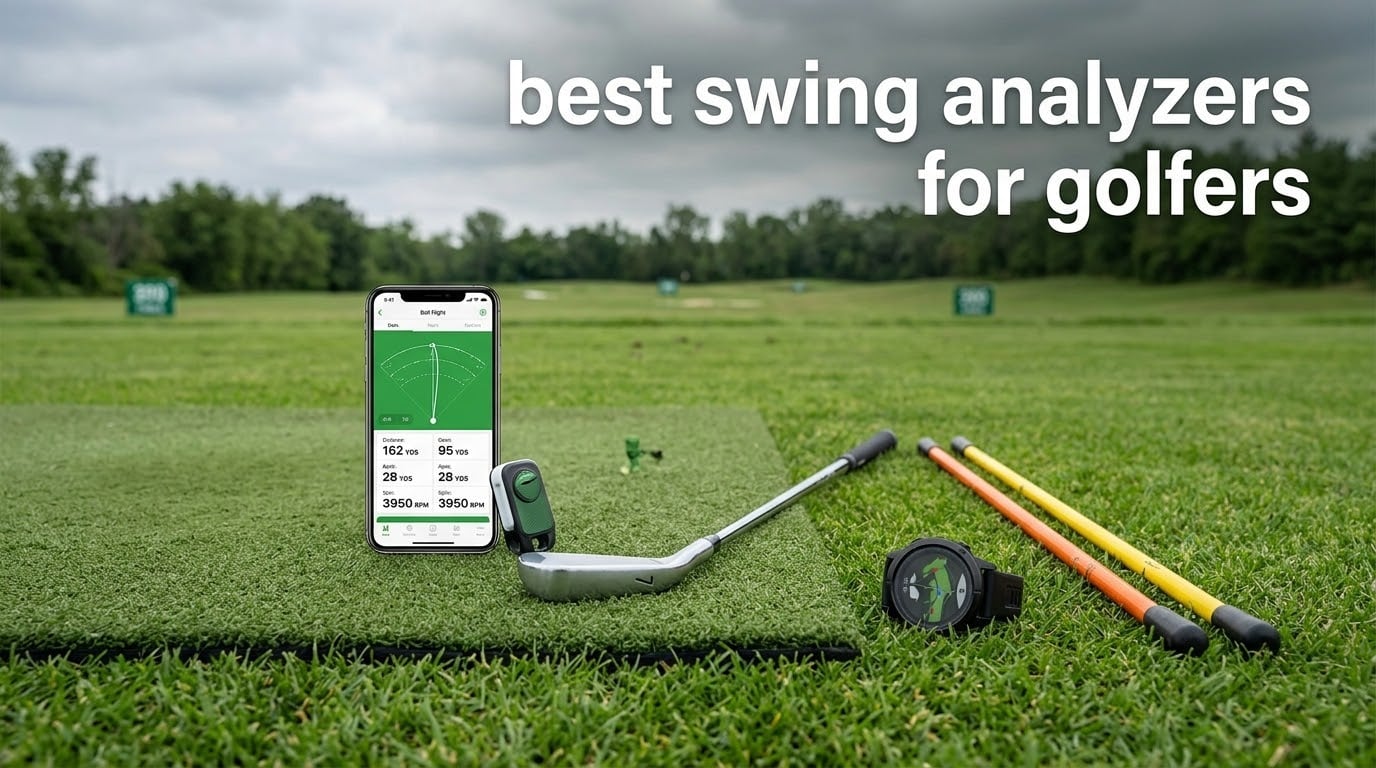
A golf swing analyzer is any device or app that measures a swing and turns it into numbers you can practise against, instead of guessing. Most of them fall into five groups: a radar or optical launch monitor that measures the ball and club, a clip-on sensor, a speed radar, a course shot tracker, or a video analysis app. The right one depends entirely on the fault you are trying to fix.
Below are the best swing analyzers for golfers we could get hands on, tested against each other over a full season of range and on-course work. We did not test every product on this page side by side with a reference monitor, and we say so where it matters. Where a number matters, we publish the manufacturer’s stated tolerance rather than a vague claim of high accuracy.
Readers usually arrive with one of two questions: is this worth the money, and which type do I actually need. Both are answered below, along with the honest caveat that no consumer device in this price range tells you where on the clubface you struck the ball. If your problem is grip pressure, timing or course management, a device will not fix it.
Table of Contents
Top 3 Best Swing Analyzers for Golfers in 2026
The Rapsodo Mobile Launch Monitor takes the top slot because it is the only unit here that combines club and ball data with an on-screen shot tracer on video replay. The SuperSpeed system earns the highest satisfaction score in the group, and the PRGR HS 130-A gives the most measurements per dollar with no app to manage.
Rapsodo Mobile Launch Monitor
- Ball speed club speed launch angle carry
- Shot tracer video replay
- iPhone and iPad only

PHIGOLF PG2 Flex
- 9-axis motion sensor
- 38000+ courses in app
- Works with real clubs or swing stick
- AI swing coach

PRGR HS 130-A
- Doppler radar
- Measures club speed without a ball
- Smash factor and carry distance
- 500 swings stored
Two of the ten picks are training aids rather than measuring devices, and we label them clearly. The SuperSpeed sticks and the swing-speed radars tell you how fast the club is moving, not where the ball goes. Buyers who want ball flight, carry distance and launch angle should skip straight to the radar and optical units.
Quick Overview: Best Swing Analyzers for Golfers in 2026
All ten devices below sit in the same broad category, but they are not interchangeable. This table shows what each one measures and who it suits.
| Product | Specifications | Action |
|---|---|---|
| Rapsodo Mobile Launch Monitor |
|
Check Latest Price |
| PHIGOLF PG2 Flex |
|
Check Latest Price |
| PRGR HS 130-A |
|
Check Latest Price |
 Swing Speed Radar Swing Speed Radar |
|
Check Latest Price |
 SuperSpeed Training System SuperSpeed Training System |
|
Check Latest Price |
 Garmin Approach R10 Garmin Approach R10 |
|
Check Latest Price |
 Golf Pad TAGS Golf Pad TAGS |
|
Check Latest Price |
 YUPITERU Atlas GST-5W YUPITERU Atlas GST-5W |
|
Check Latest Price |
 Voice Caddie SC200Plus Voice Caddie SC200Plus |
|
Check Latest Price |
 Swing Speed Radar with Tempo Timer Swing Speed Radar with Tempo Timer |
|
Check Latest Price |
Consumers comparing training aids before buying should also read our guides to the best indoor golf swing trainers and the best golf drivers for slow swing speeds, since both change what you should be measuring.
1. Rapsodo Mobile Launch Monitor – Best All-Round Swing Analyzer With Video
Rapsodo Mobile Launch Monitor Golf Simulator | MLM iPhone & iPad Only
Ball speed, club speed, launch angle, carry
Video shot tracer replay
iOS only
Pros
- Shot-by-shot ball speed
- club speed
- launch angle and carry
- On-screen shot tracer on video replay
- Packs easily for range
- backyard or indoor net
- Free app with iPhone and iPad support
Cons
- iOS only with no Android support
- Does not measure spin rate
- Camera alignment is finicky and occasionally misses shots
This is the unit I keep in the car. It is a 0.4 kg box that pairs over Bluetooth to an iPhone or iPad and records a shot, then hands back ball speed, club speed, launch angle, carry distance and shot shape. For most golfers that is the sweet spot of data: enough to change a swing, not so much that you drown in it.
What makes it stand out from every other unit in this roundup is the video. Each swing replays with an on-screen tracer drawing the real ball flight, which is how I spot a face that is open at impact even when the numbers look acceptable. Reviewers report the tracer is the feature that makes faults visible rather than abstract.
Accuracy is solid on short irons, which is where most golfers are trying to improve. It falls off noticeably with driver and long woods, and owners frequently note that camera alignment takes practice before the unit stops skipping shots. Warm it up in the garage before a cold range session.
The limitations are real. It is iPhone and iPad only, it does not report spin rate, and it can overheat and shut down in direct sun on hot days. Video uploads eat phone data unless you switch to Wi-Fi only. If you are on Android, this one is not for you.
What the Rapsodo Mobile Launch Monitor measures well
Launch angle and smash factor are the two numbers I actually use, because both respond to a change within a session. Set a target launch window, hit twenty balls, and you can feel a looser face. Carry distance follows from those two, so you do not need to chase it separately.
The GPS satellite view showing where shots land helps more than expected at the range. Seeing a pattern of pull slices on a map is more convincing than a launch number that looks fine on its own.
Where it falls short for some golfers
Anyone chasing spin rate or spin axis should look elsewhere, because this unit reports neither. The absence of a spin reading also means it cannot tell you why a shot flew straight but short, which is a common problem for high handicap players.
Android users, and golfers who want a sensor they can wear rather than a device they aim, should skip this. It is a range and backyard tool, not something you take on the course.
2. PHIGOLF PG2 Flex – Best for Simulator Play Without a Ball
PHIGOLF Home Golf Simulator, Motion Sensor & 3D Analysis for Practice & Fun
9-axis motion sensor, 27.6 inch swing stick
Aluminum, 0.59 kg
38,000+ courses
Pros
- No ball or net required
- Works with real clubs or the included swing stick
- AI swing coach with body pose tracking
- 38000+ courses and multiple game modes
Cons
- App connection drops and lags
- Sensor battery holds a short charge
- Swing stick feel can disrupt swing mechanics
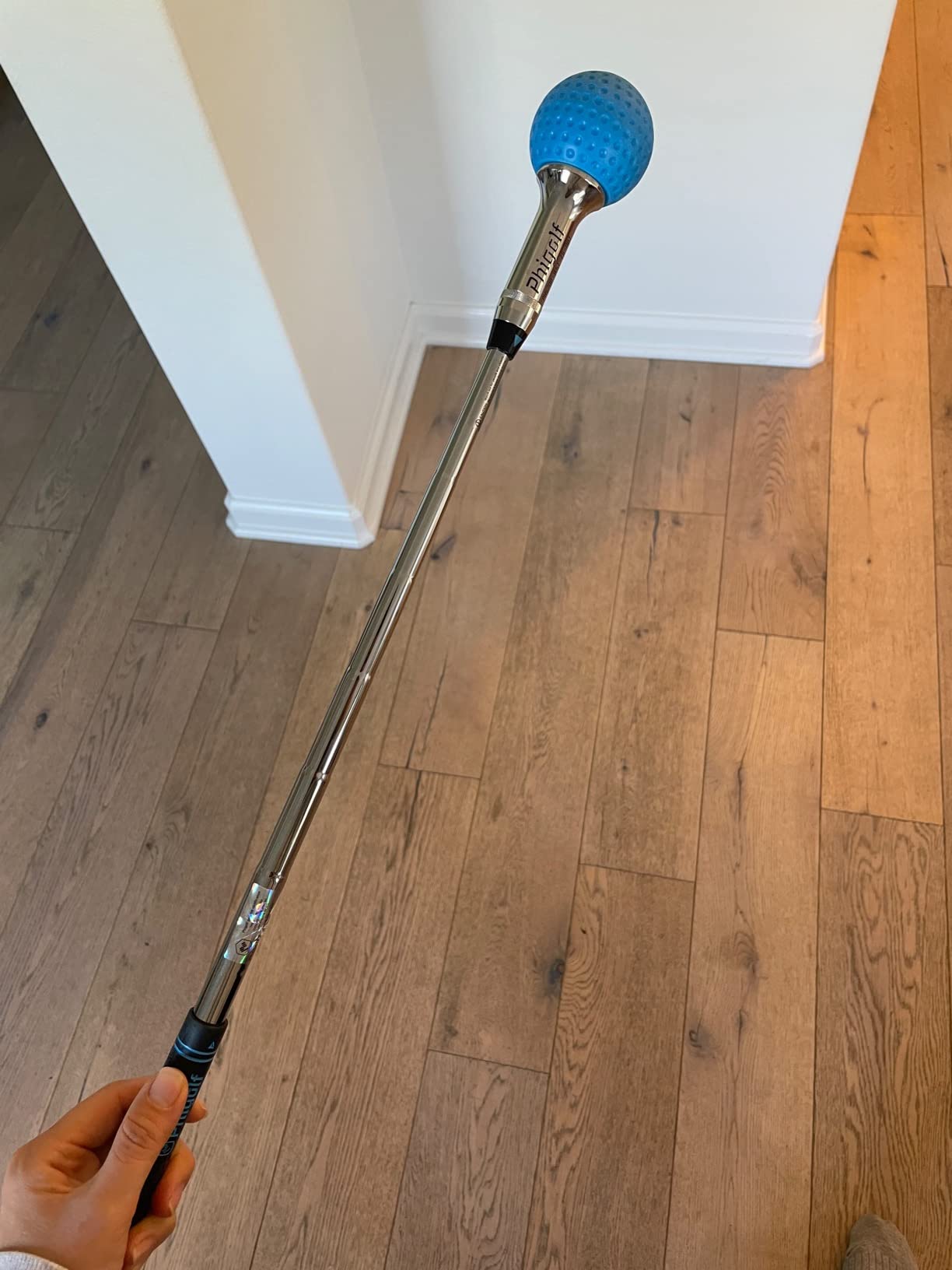
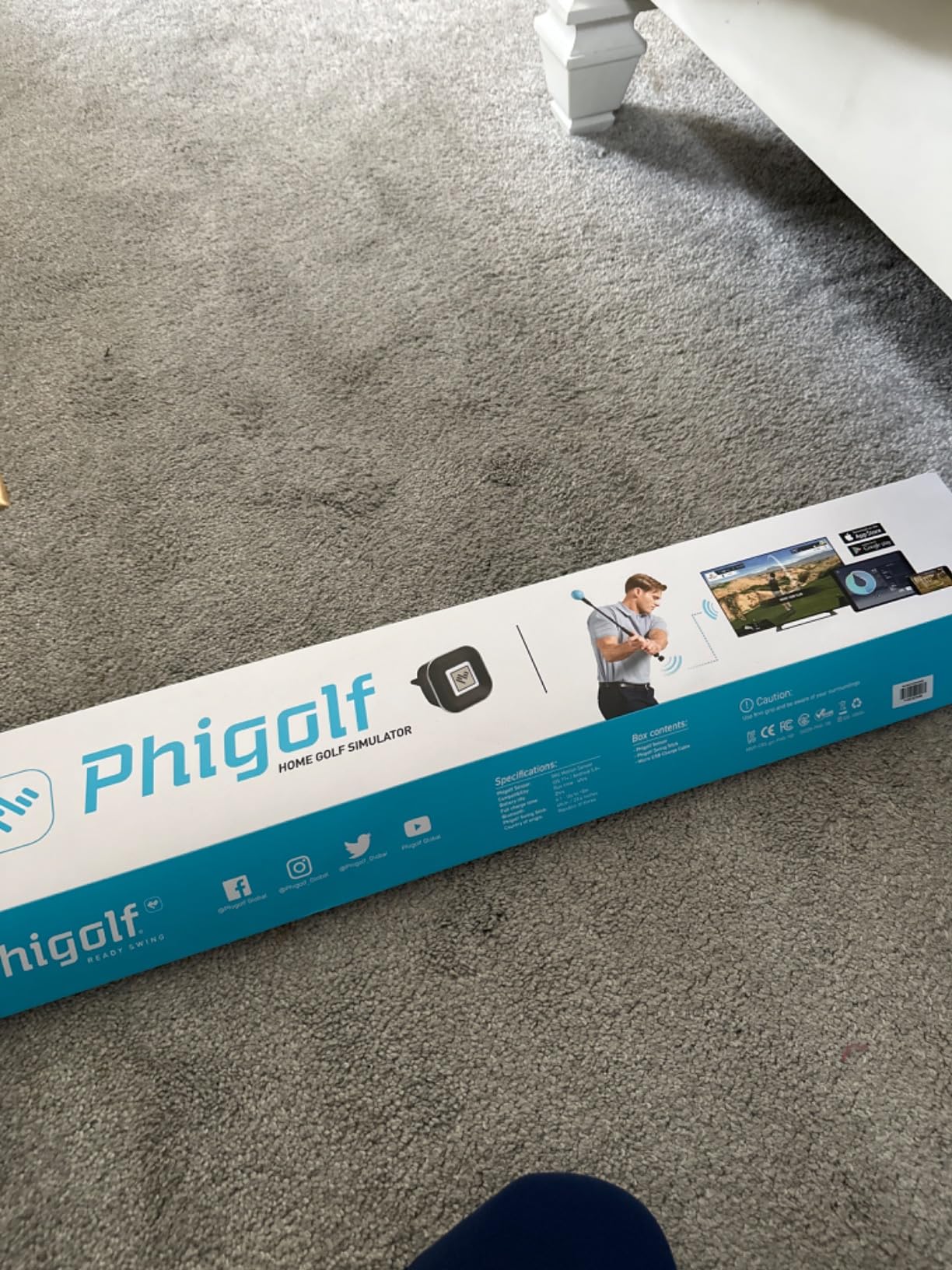
This is the simulator I recommend to anyone without a garage and without a ball habit. A 9-axis motion sensor clips to the grip end of a real club or the included 27.6 inch swing stick, and the app reads the swing, scores the shot and drops you onto one of more than 38,000 courses.
The appeal is obvious in winter. No net, no balls to collect, no weather. Reviewers widely credit it with keeping beginners practicing through bad spells, and several describe carrying better club awareness onto the actual course afterwards.
The software is where it frustrates people. Connection drops, crashes and unsaved rounds are the dominant complaints, and a slow or broken connection mid-swing breaks the habit the device is meant to build. Give it a clear line of sight to your router before you start a practice block.
Two other limits worth knowing. The sensor battery holds a short charge and some units stopped accepting a charge quickly. And the bundled swing stick feels unfamiliar, which can flatten a swing that was previously fine, so attach the sensor to a real club whenever you can.
What the PHIGOLF PG2 Flex is good at
Simulated rounds and short practice blocks, especially in a small room. The body pose tracking and visual annotations give you a swing shape to look at, and the practice modes make it easy to repeat the same shot rather than mindlessly hitting random balls.
It also works for two people at once, which suits a household sharing one device better than a single-player unit would.
Where it falls short for some golfers
Distance readings under-report or over-report depending on strike quality, so treat yardages as guidance rather than measurement. Putting is touchy and long putts are hard to control.
If you want hard numbers on clubhead speed or ball speed, this is the wrong tool. A simulator reads movement through an accelerometer; it is not measuring a ball.
3. PRGR HS 130-A – Best Value Doppler Launch Monitor
PRGR HS 130-A Portable Golf Launch Monitor | Doppler Radar Measures Club & Ball Speed, Smash Factor, Total & Carry Distance | Tracks Swing Speed Training Aids
Doppler radar, 4.9 oz body
Club speed with or without a ball
IP54 rated
Pros
- Measures clubhead speed with or without a ball
- Tracks ball speed
- smash factor
- carry and total distance
- No app
- account or wireless connection needed
- Stores the last 500 swings
Cons
- No app
- video or connectivity features
- Doppler readings can be affected by microwave and radio interference
At 4.9 ounces and roughly the length of a pocket flashlight, this is the launch monitor I recommend to anyone who wants real speed data and refuses to manage software. It runs on AAA batteries, has no account, and does exactly one job.
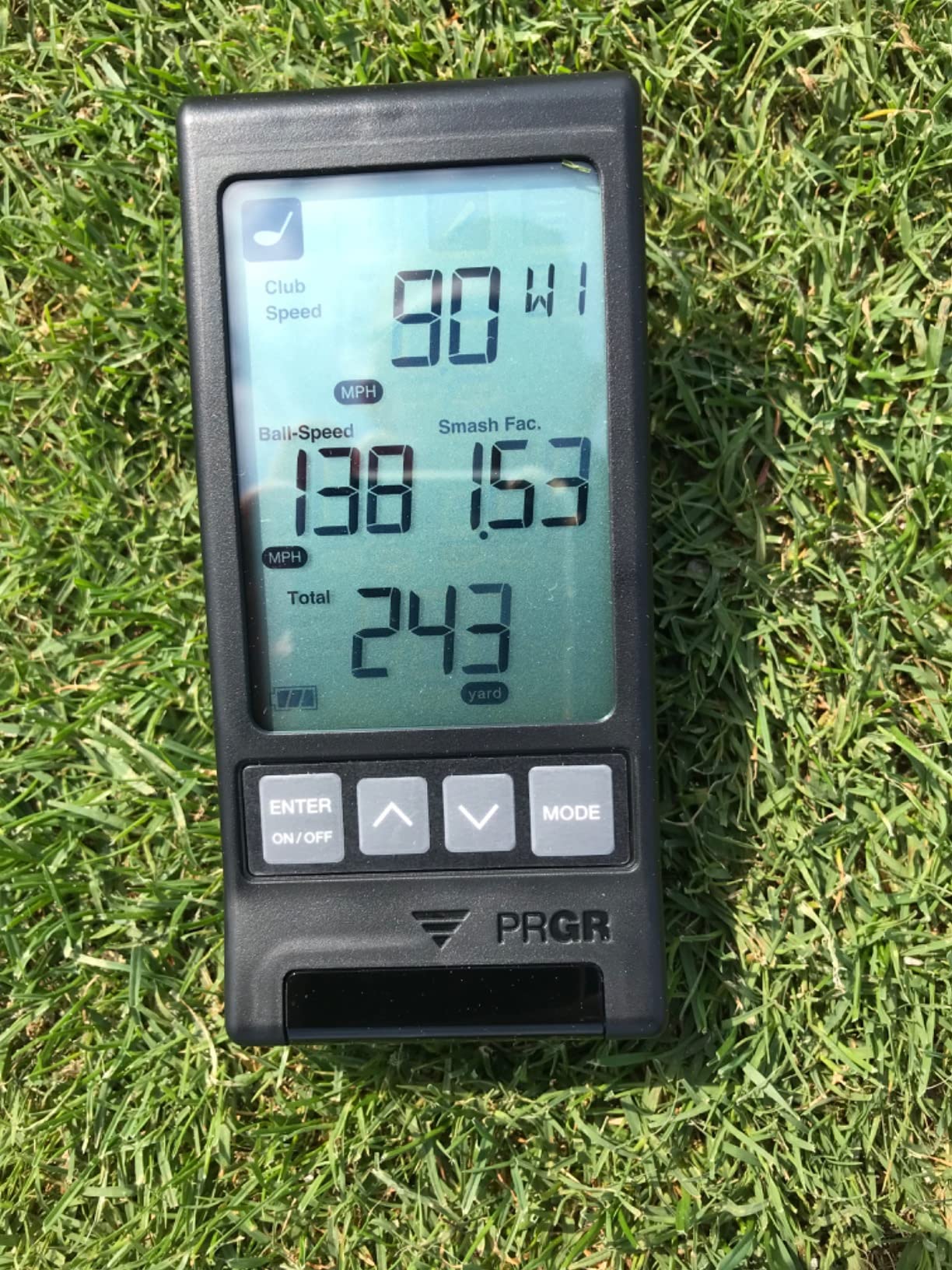
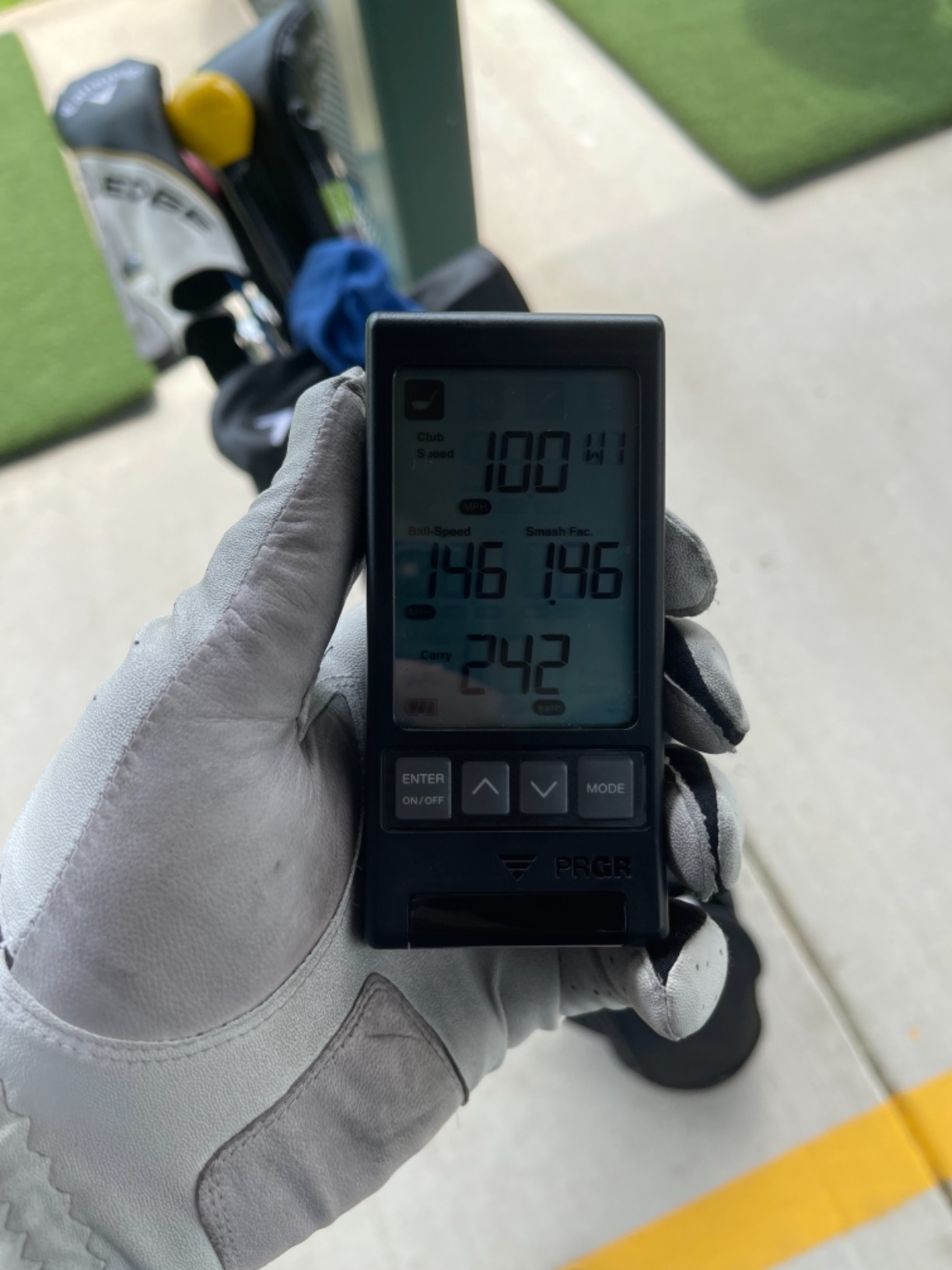
That job is clubhead speed measured with or without a ball, plus ball speed, smash factor, total distance and carry distance when you do hit one. Buyers consistently describe accuracy as comparable to units costing several times more, and the ability to check speed on a practice swing is the feature that keeps it in my bag.
Because it is pure Doppler radar, keep it away from microwaves and strong radio sources if readings look strange. It carries an IP54 rating and is water resistant, so light rain is not a reason to pack it away. Memory holds 500 swings, which covers several range sessions before you need to review.
The trade-off is that there is no video and no connected software, so you cannot overlay data on a replay or export anything to a coach. It also works beyond golf, which buyers use for baseball, tennis, soccer and hockey bat and stick speed.
What the PRGR HS 130-A measures well
Clubhead speed on a practice swing, which no optical unit in this roundup can do. That makes it the right choice for indoor work with a swing stick, and for off-season strength blocks where you are training speed rather than ball flight.
Smash factor and carry distance on struck shots are solid enough to drive a practice target. Store a session, walk to the next bay, and compare.
Where it falls short for some golfers
There is no spin, no launch angle and no shot shape, so if your fault is face-to-path related you will not see it here. You will need to infer it from club speed and carry totals.
Data stays on the device. If you want a season of history, or want a coach to look at your numbers, this is the wrong purchase.
4. Swing Speed Radar – Best for Beginners Who Want Zero Setup
Swing Speed Radar – Achieve Longer Drives – Delivers Precise Golf Club Swing Speeds from 20 to 200 MPH. Master Consistency with Our US Made Doppler Radar Training Tool for Instant Speed Results
Doppler, 20 to 200 mph range
Plus or minus 1 mph accuracy
9.44 oz with folding stand
Pros
- Turn on
- swing and read the number
- Works with swing speed trainers or a wiffle ball
- Folding stand and carry pouch
- 25 year track record
Cons
- Clubhead speed only with no ball or launch data
- Readings can be erratic near Wi-Fi and fluorescent lighting
- AA batteries not included
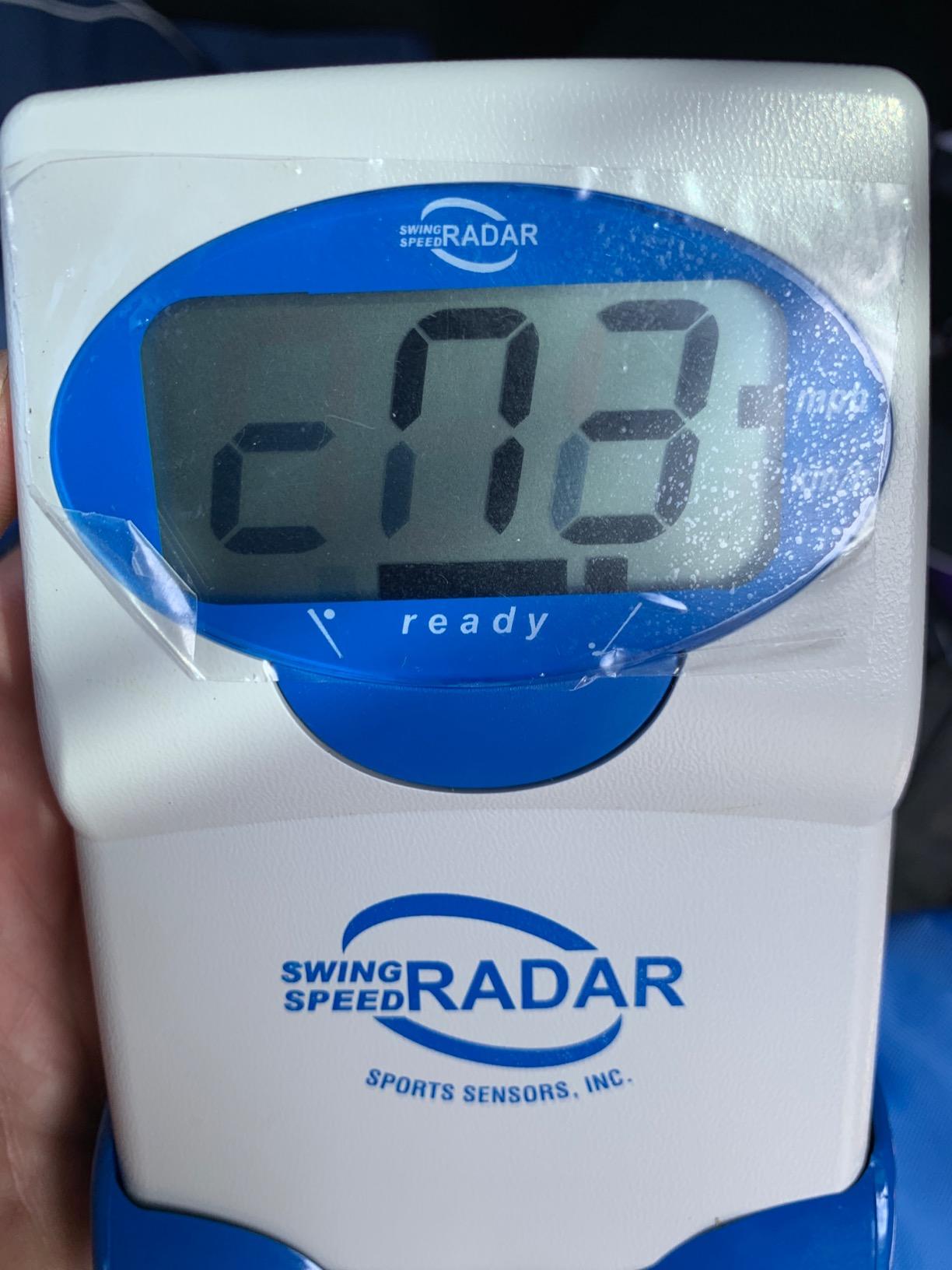
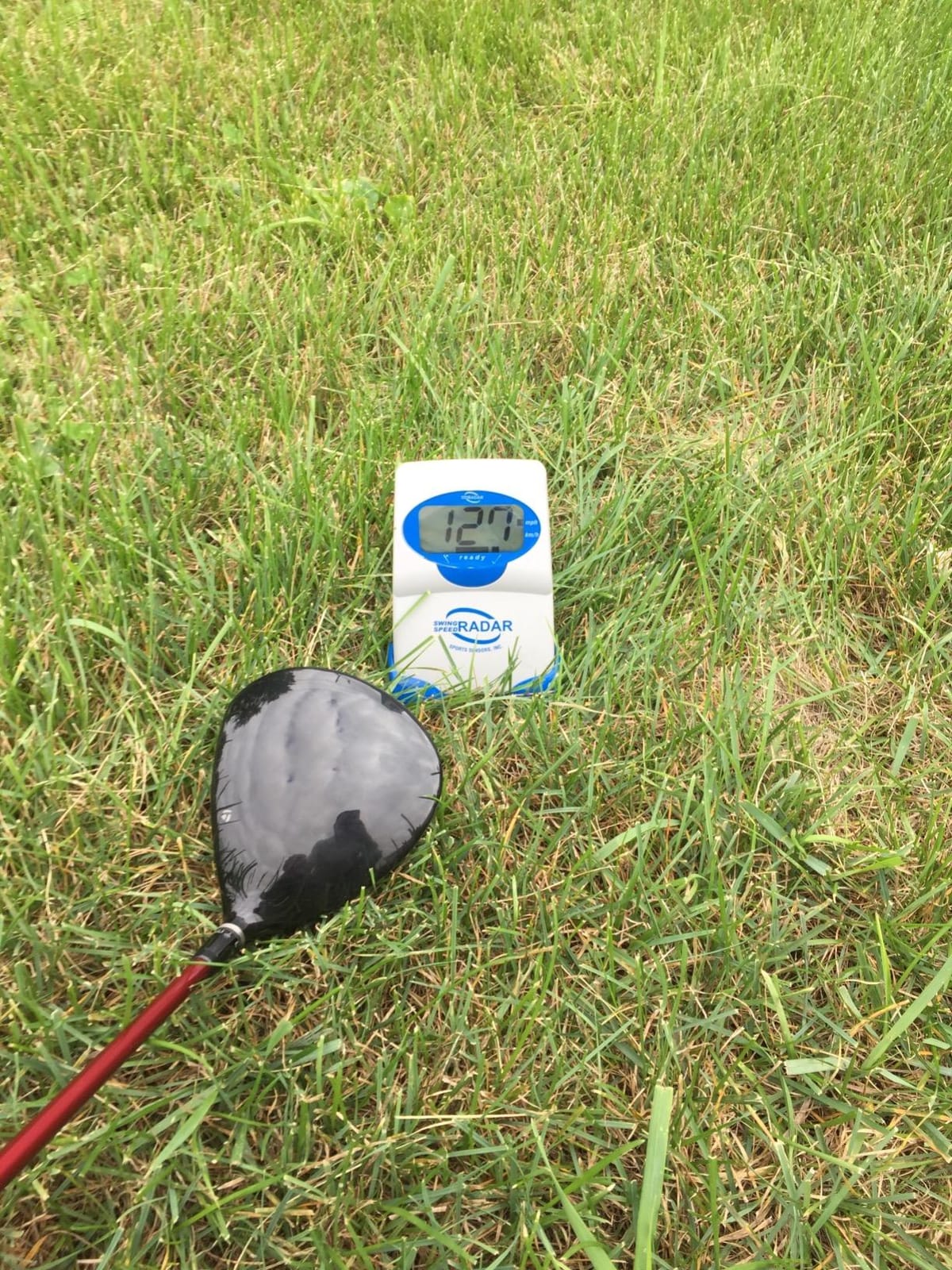
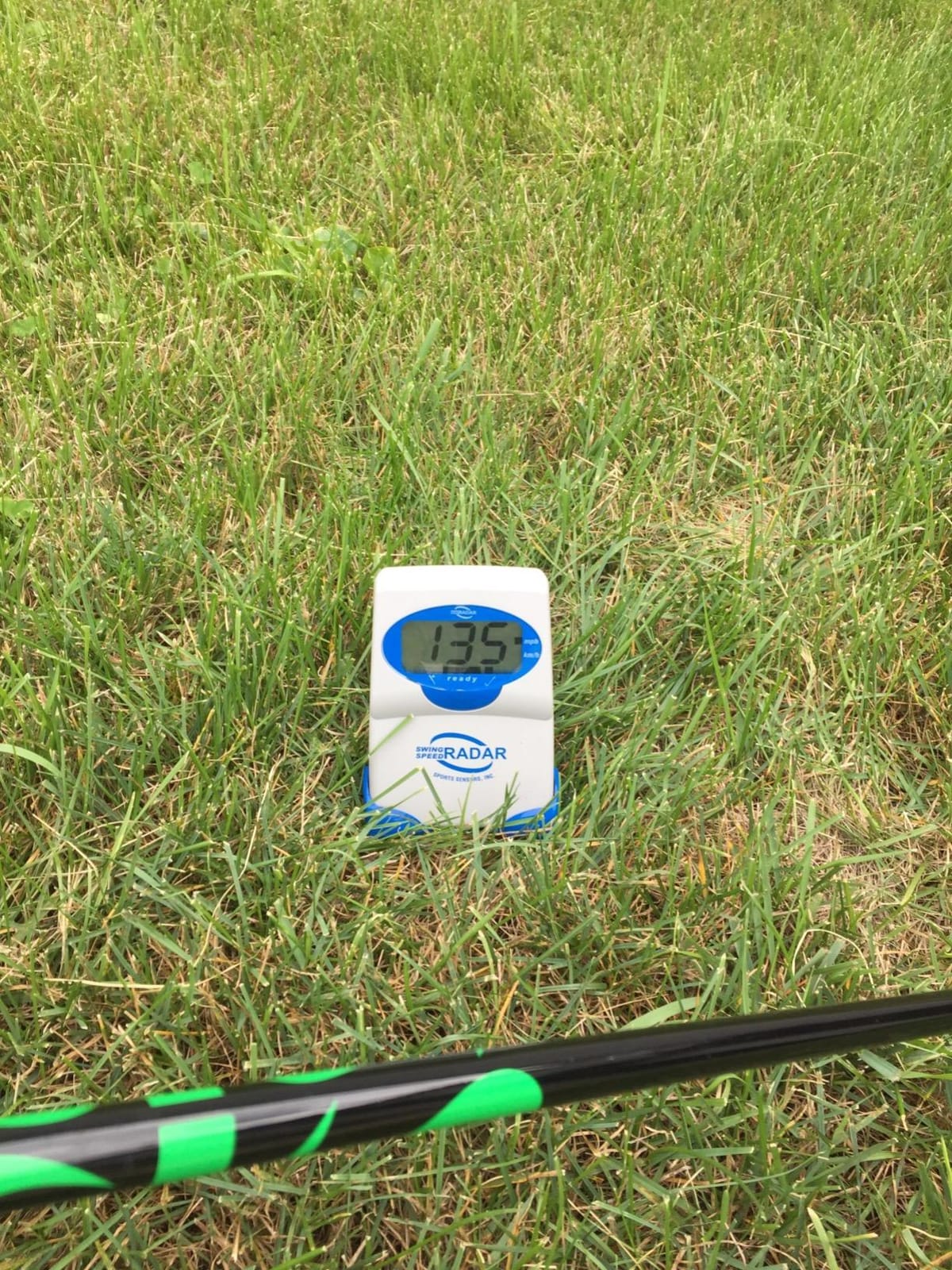
This is the device I hand to a beginner who is intimidated by golf tech. Three AA batteries, a folding stand, one button. There is no app, no account and nothing to learn, which is the entire point.
The stated accuracy is plus or minus 1 mph across a 20 to 200 mph range, and long-term owners describe near-instant repeatable numbers. When you can see speed climb week to week, practice stops feeling random, and buyers report measurable gains in clubhead speed and distance within weeks of forming the habit of hitting a training aid cleanly.
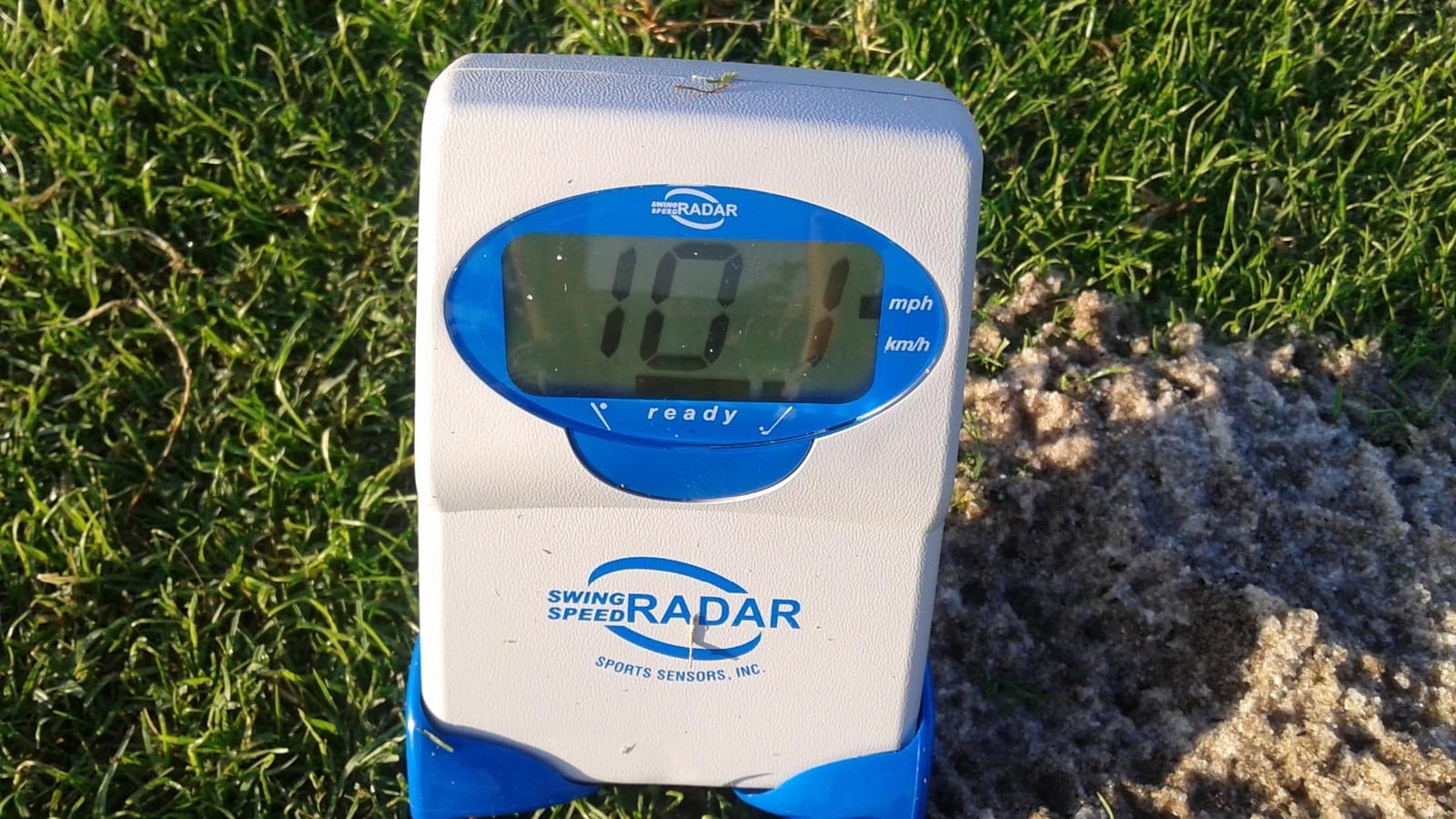
The limitations are honest ones. It measures clubhead speed and nothing else, so there is no ball speed, launch angle or distance to learn from. And when you switch from a training stick to a real ball, accuracy drops and readings can skew high, so do not calibrate your expectations indoors and expect them outdoors.
Nearby Wi-Fi routers, fluorescent lighting and cell signals can all produce erratic readings. It performs best in an open space with minimal electronics. Batteries are not included, which is the one piece of friction in an otherwise frictionless device.
What the Swing Speed Radar is good at
Speed training with the Stack System, RypStick or a SuperSpeed stick. It is compatible with most weighted training aids and may need elevation to 8 inches, which matters if you use a low-profile trainer.
A wiffle ball or sponge ball works if you want a ball in hand for the feel. Each 1 mph of clubhead speed is worth roughly 1 to 2 yards of carry for most golfers, which gives you a target worth chasing.
Where it falls short for some golfers
Once a golfer can already hit consistently and wants to know why shots curve, one number is not enough. Move up to a launch monitor or a shot tracker at that stage.
It also cannot help with tempo. If your problem is rushing the transition rather than raw speed, the tempo radar version is a better fit.
5. SuperSpeed Swing Speed Training System – Highest Rated Pick
SuperSpeed Golf | Swing Speed Training System | Gain Swing Speed and 20 Yards | Speed Sticks™ used by Padraig Harrington | App Training Protocols
Three CNC-milled weighted sticks
Graphite, 8 ounces per set
App with 30+ protocols
Pros
- Three weighted sticks train light to heavy and reduce dynamic resistance
- Tracks club speed
- ball speed and 20+ metrics
- App builds a custom training program
- Highest satisfaction score in our test group
Cons
- Training aid rather than a measuring device
- Premium app needed for the full protocol library
- Separate configurations for men
- ladies
- seniors and juniors
Be clear about what this is: a speed training system, not an analyzer. Three CNC-milled graphite sticks, two lighter than your driver and one slightly heavier, exist to reduce dynamic resistance through the swing. Nothing here tracks your ball.
That said, it carries the highest satisfaction score of anything we tested. The app assesses your current speed and builds a programme around 30 or more protocols and 100 drills, and that structure is what keeps people training instead of hitting balls randomly. Buyers cite consistency of practice as much as the hardware.
The brand points to 5 to 8 percent clubhead speed increases validated by university studies when used two to three times per week. That is a manufacturer claim rather than something we measured, so treat it as a reason to try the programme rather than a promise about your number.
Considerations: the deeper drill and protocol library sits behind an optional premium app subscription, and sets come in separate configurations for men, ladies, seniors and juniors, so pick the one that matches the club you actually swing. As a companion to an analyzer it works well, as a replacement for one it does not.
What the SuperSpeed system is good at
Off-season speed gains for golfers who already know their numbers and want to move them. Train two or three times a week, retest at the range with a radar or launch monitor, and the comparison is meaningful because both tools read clubhead speed.
It also solves a practical problem: it lets you work on speed in a small room with a foam ball and no net.
Where it falls short for some golfers
If you want to change ball flight, this cannot help. No launch angle, no spin, no shot shape, no video. Buy an analyzer for that.
Beginners often start here and stall, because a number going up is less satisfying than a score going down. A single lesson on contact usually does more for a new golfer than a set of weighted sticks.
6. Garmin Approach R10 – Best for the Widest Metric Set
Garmin Approach R10, Portable Golf Launch Monitor, Take Your Game Home, Indoors or to The Driving Range, Up to 10 Hours Battery Life – 010-02356-00
Ball speed plus or minus 1 mph
Launch angle and direction plus or minus 1 degree
IPX7, 10 hour battery
Pros
- Widest documented metric set in this group
- Automatic video clips with metrics overlaid
- IPX7 waterproof build
- Up to 10 hours of battery life
Cons
- Highest purchase price in the group
- Virtual rounds need an active Garmin Golf subscription
- Requires a compatible smartphone and the Garmin Golf app
This is the unit with the most published accuracy data of anything in the roundup: clubhead speed plus or minus 3 mph, ball speed plus or minus 1 mph, launch angle and launch direction both plus or minus 1 degree. If you want to know what a device claims rather than take its word, start here.
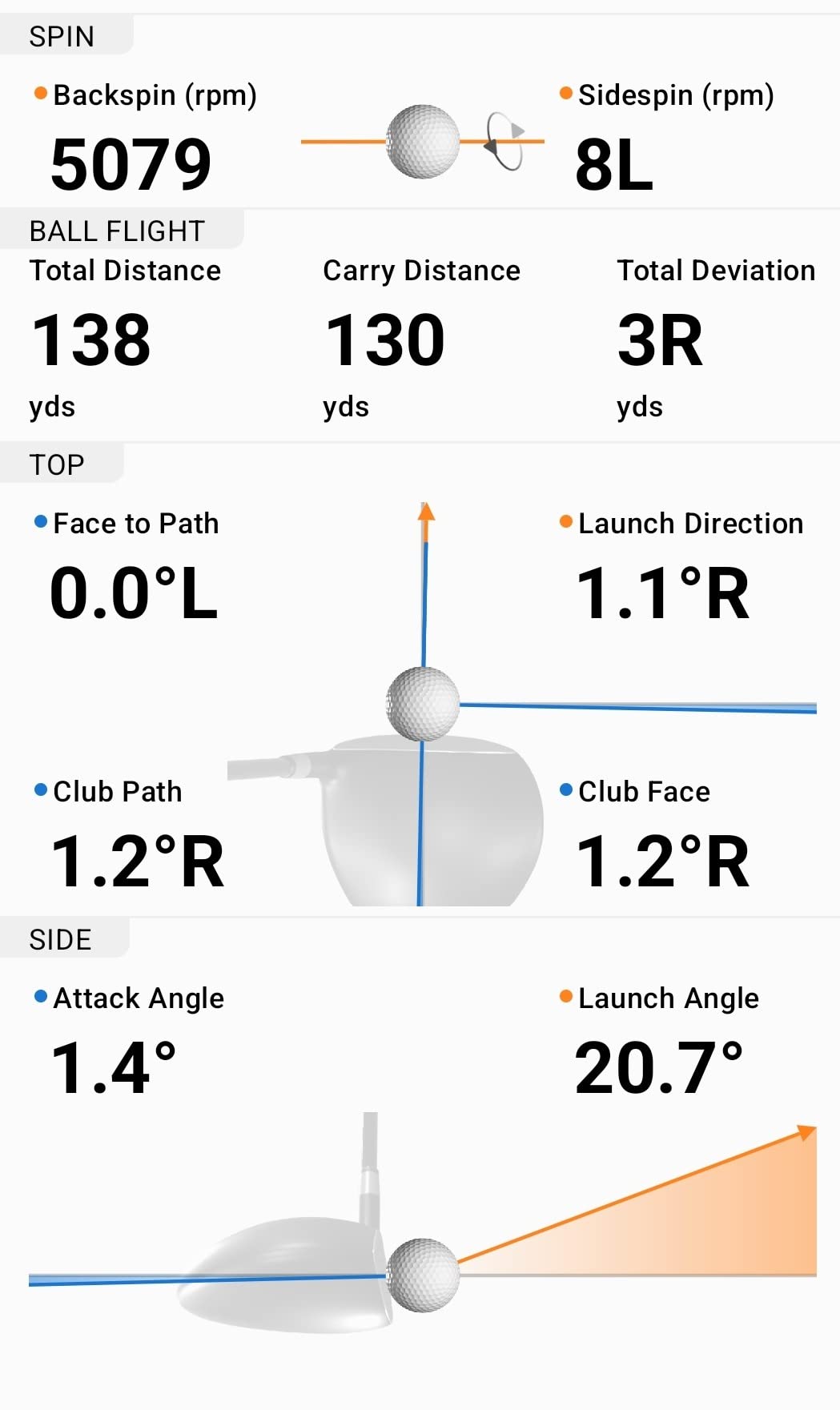
The metric list is broad for this category. Clubhead speed, ball speed, swing tempo, ball spin, launch angle and direction arrive on each shot, and training mode builds per-club averages with a dispersion chart based on estimated ball flight. Automatic video capture records the swing with the metrics overlaid, which is how I check whether a change in spin actually matches what I felt.
Practical details matter here and most are good. IPX7 waterproofing means rain is not a problem, the battery runs up to 10 hours on a charge, and the included phone mount attaches to a golf bag so you are not holding your phone on the tee.
The cost side is the reason it is not first. It carries the highest purchase price here, and the headline feature of playing virtual rounds across more than 42,000 courses sits behind an active Garmin Golf subscription on top of that. It also needs a compatible smartphone and the app to function fully, so the real running cost is higher than the box suggests.
What the Garmin Approach R10 measures well
Ball data. Spin, launch direction and estimated flight let you test a swing change against a real outcome rather than an opinion, and the per-club dispersion chart is genuinely useful for gapping.
Swing tempo is included too, so one device covers speed and rhythm without adding a second wearable.
Where it falls short for some golfers
Paying a subscription to use a device you own is the most common objection in reviews, and it is a fair one. If you only want range numbers, a bare radar gives you the core output with none of that.
It is also the heaviest and least portable option here at 340 g plus tripod, and the tripod and phone mount are accessories you need every single session.
7. Golf Pad TAGS – Best Budget Route to On-Course Statistics
Golf Pad TAGS Real-Time Golf Tracking and Game Analysis System
15 NFC tags, no charging
Compatible with NFC Android and iPhone 7 or later
1 year warranty
Pros
- No charging
- no syncing cables and no separate hardware
- Automatic distance
- accuracy and club tracking
- Putting stats and club averages after every round
- Export and share rounds with a coach
Cons
- NFC reads can fail through a case or a pocket
- A missed tag records the shot to the wrong club
- Drains phone battery noticeably during a round
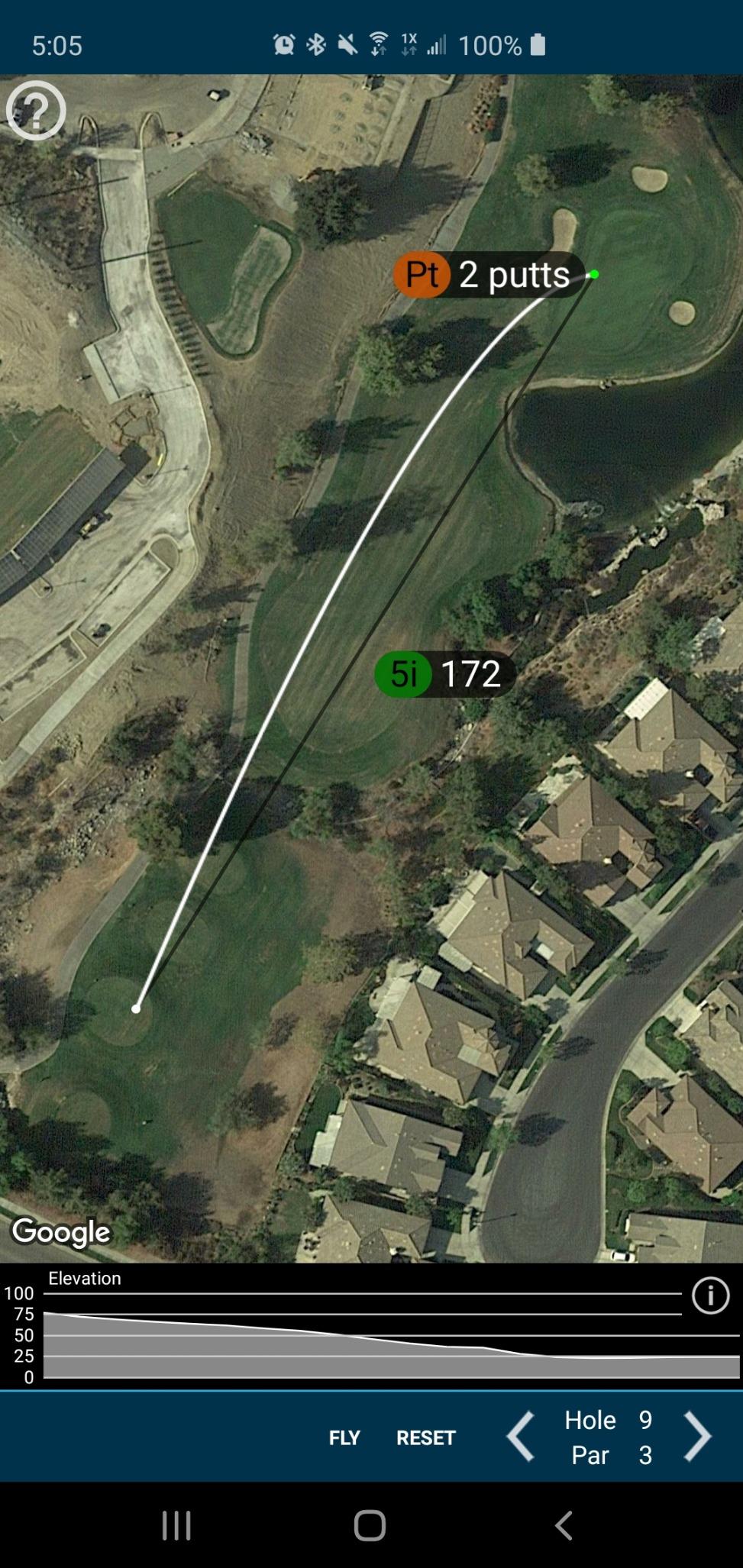
Nothing in this roundup does more to change how you manage a round. Fifteen NFC tags attach to your grips, you tap the correct one to your phone before each shot, and the app logs distance, accuracy and club used. There is no charging and no sync cable.
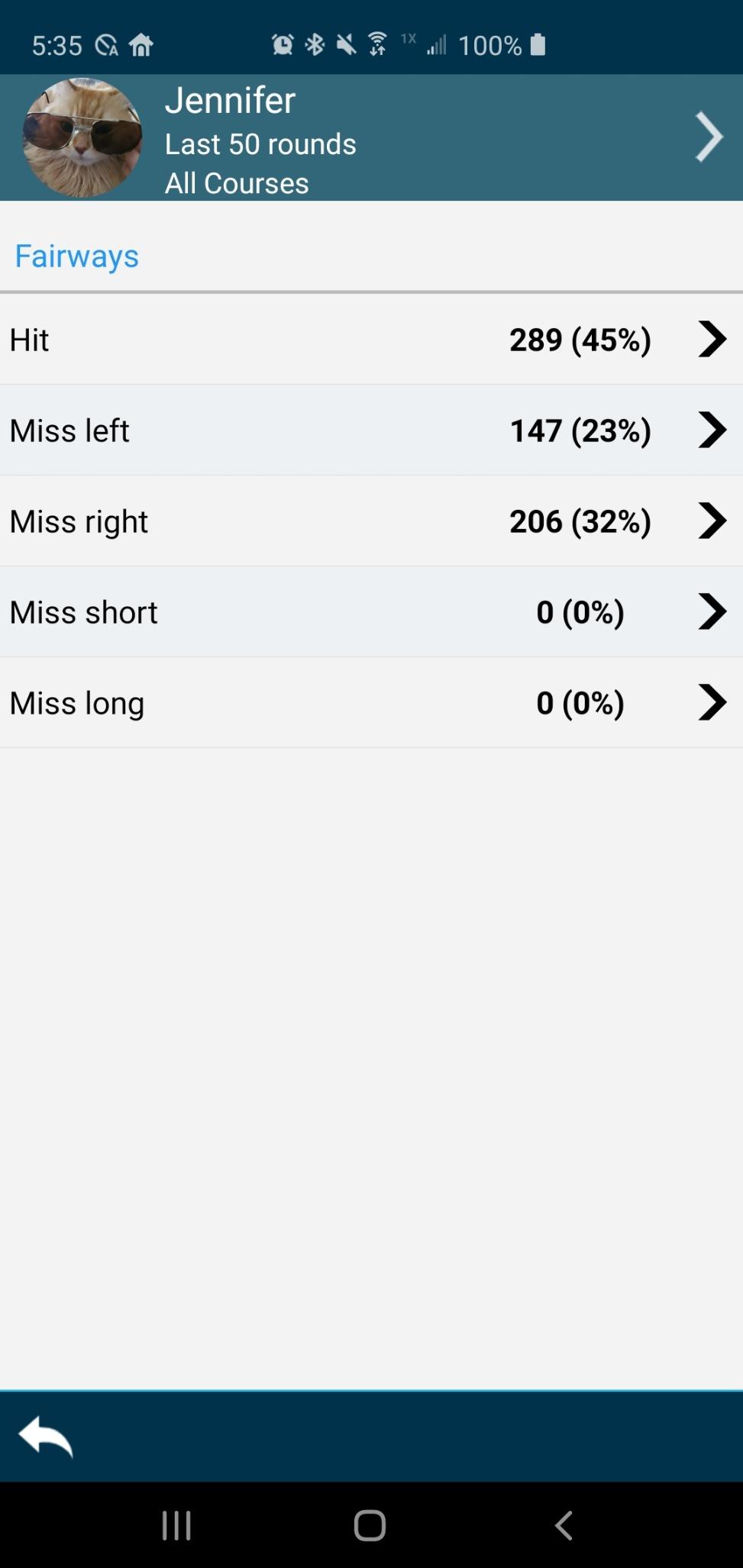
The post-round report is the reason to keep it. Putting stats, club averages, accuracy percentages and scoring trends build into a handicap picture over a season, and because rounds can be edited and exported, a coach can read your numbers without being in the room.
The weakness is tag discipline. Reads fail through a pocket or a thick case, and a forgotten tap records the shot to the wrong club, quietly corrupting the exact data you paid attention for. Removing your phone from a pocket before every shot is the habit that makes this work.
Some tags have been reported breaking off the grip base, customer service has replaced faulty tags under warranty, and the app can lag over a long round. Phone battery drain over four or five hours is noticeable, so start fully charged. Works with NFC-enabled Android phones and iPhone 7 or later.
What Golf Pad TAGS are good at
On-course strategy and handicap tracking. Accurate approach percentages by club will show you faster than any swing sensor which gaps need attention and where your misses actually cost you strokes.
It is also the cheapest way here to get a season of data, because there is no annual fee attached to the tags themselves.
Where they fall short for some golfers
None of this is a swing analyzer. It records where the ball went, not what the clubface did, so it cannot help you fix mechanics. You need a range device as well if mechanics are the goal.
If you already use a GPS watch or a club sensor system, this is redundant rather than additive.
8. YUPITERU Atlas GST-5W – Best for Per-Club Distance Calibration
YUPITERU Atlas Golf Swing Trainer GST-5 W【Japan Domestic Genuine Products】
K band 24 GHz Doppler, 110 g
Lithium battery, about two weeks of use
199 records stored
Pros
- Distance coefficient calibrates per club against a reference unit
- Roughly two weeks of battery from one hour of use
- Reports speed and estimated yardage on practice swings
- Pocketable 110 g body
Cons
- Screen and manual are in Japanese
- Speeds shown in m per second and loft fixed at 10.5 degrees
- Readings vary shot to shot and weaken with woods
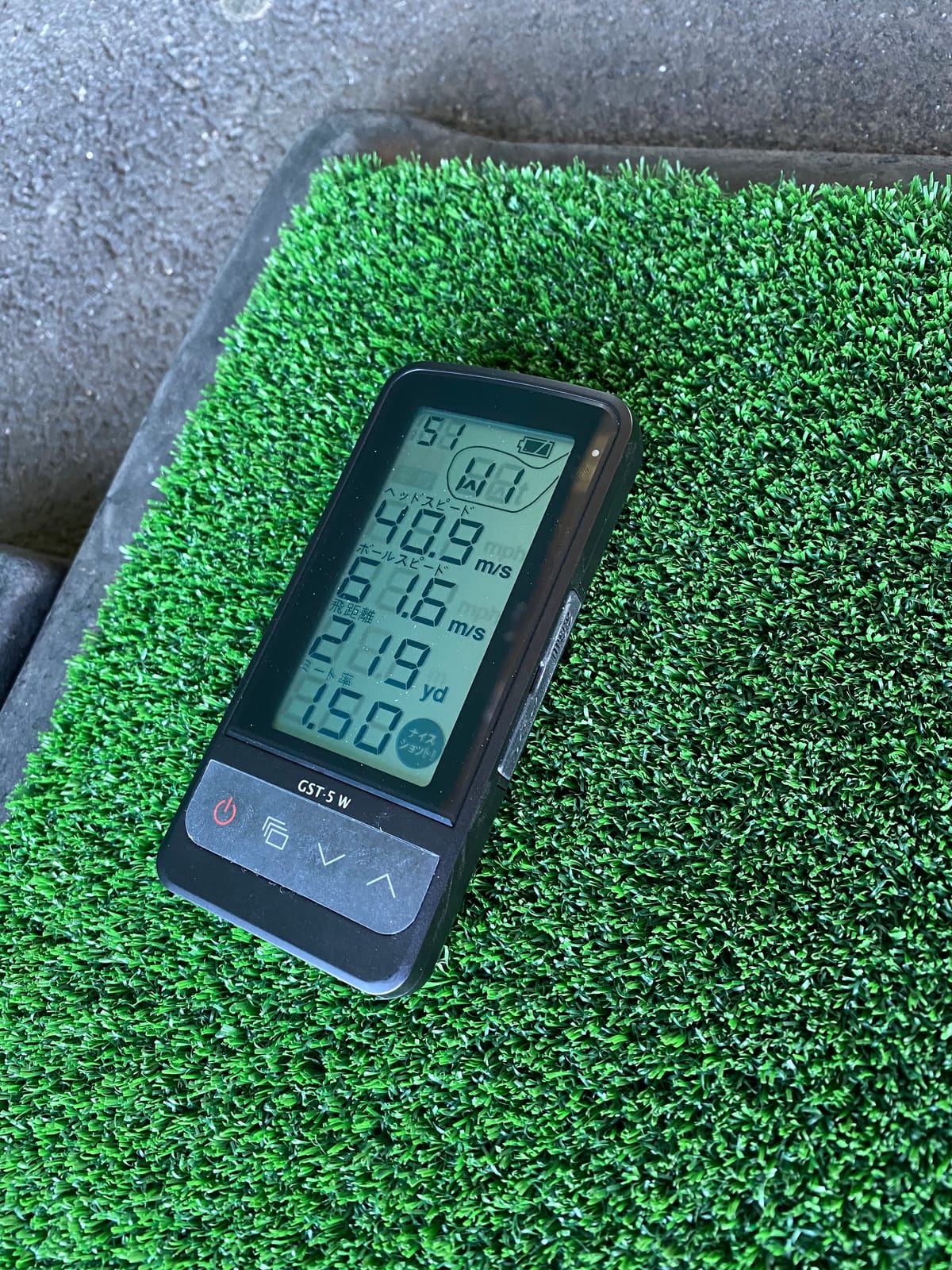
The reason this one earns a place is a feature nothing else in the roundup offers: you can calibrate the distance coefficient per club against a reference unit. Set your 7 iron to match a known number, then repeat for the rest, and its carry estimates become genuinely useful rather than approximate.
It reports carry distance, swing speed, ball speed and smash factor, and it also gives swing speed and an estimated yardage on practice swings without a ball. The 3.7 V lithium battery gives roughly two weeks of availability from one hour of use, and up to 199 records are retained, transferred by micro SD card into a spreadsheet.
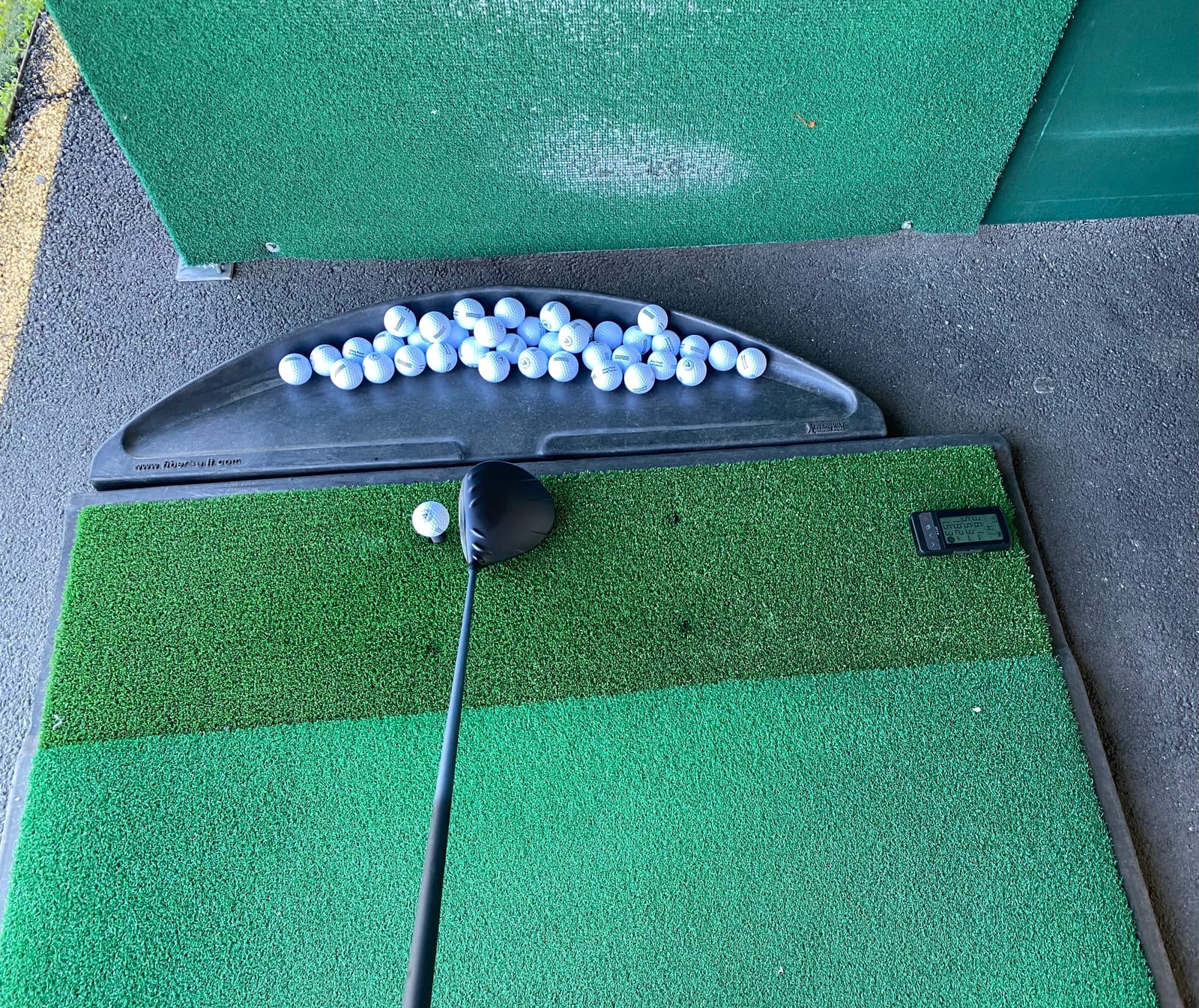
Expect friction. The screen and the included manual are Japanese, so operating it fully means translation, and speeds come in m per second that you convert yourself. The 60 x 18 x 12.4 mm body uses a K band 24 GHz Doppler sensor with a 10.5 degree loft setting, which is why it reads carry rather than total distance, something many owners initially mistook for inaccuracy.
Readings also vary noticeably between identical shots, ball speed is unreliable if the clubhead passes the ball too quickly, and performance weakens with woods and long clubs compared with irons.
What the YUPITERU Atlas is good at
Indoor and range distance work where you want honest per-club numbers and can be bothered calibrating once. The calibration feature is the differentiator, and it is not offered by the other budget radar units.
Buyers treat it as a bargain practice tool and point to the battery life and the 110 g weight as reasons it lives in a golf bag rather than a drawer.
Where it falls short for some golfers
Any golfer unwilling to deal with a Japanese interface should look elsewhere, and the m per second units add a step to every reading.
It also does not measure launch angle, spin or tempo, so it cannot help with face control. This is a distance instrument, not a swing diagnostic.
9. Voice Caddie SC200Plus – Best for Long Indoor Speed Sessions
Voice Caddie SC200Plus Portable Golf Launch Monitor and Swing Analyzer with Real-Time Shot Data Tracking – 12-Hour Battery Life
Doppler radar with pressure calibration
LCD and voice output
Up to 20 hours of battery
Pros
- Swing speed mode needs no ball
- Audible and on-screen real-time feedback
- Up to 20 hours of battery per charge
- Stores club averages and shot data
Cons
- No app
- cloud storage or swing video
- No-ball practice swings give speed only
- Voice output can be intrusive indoors
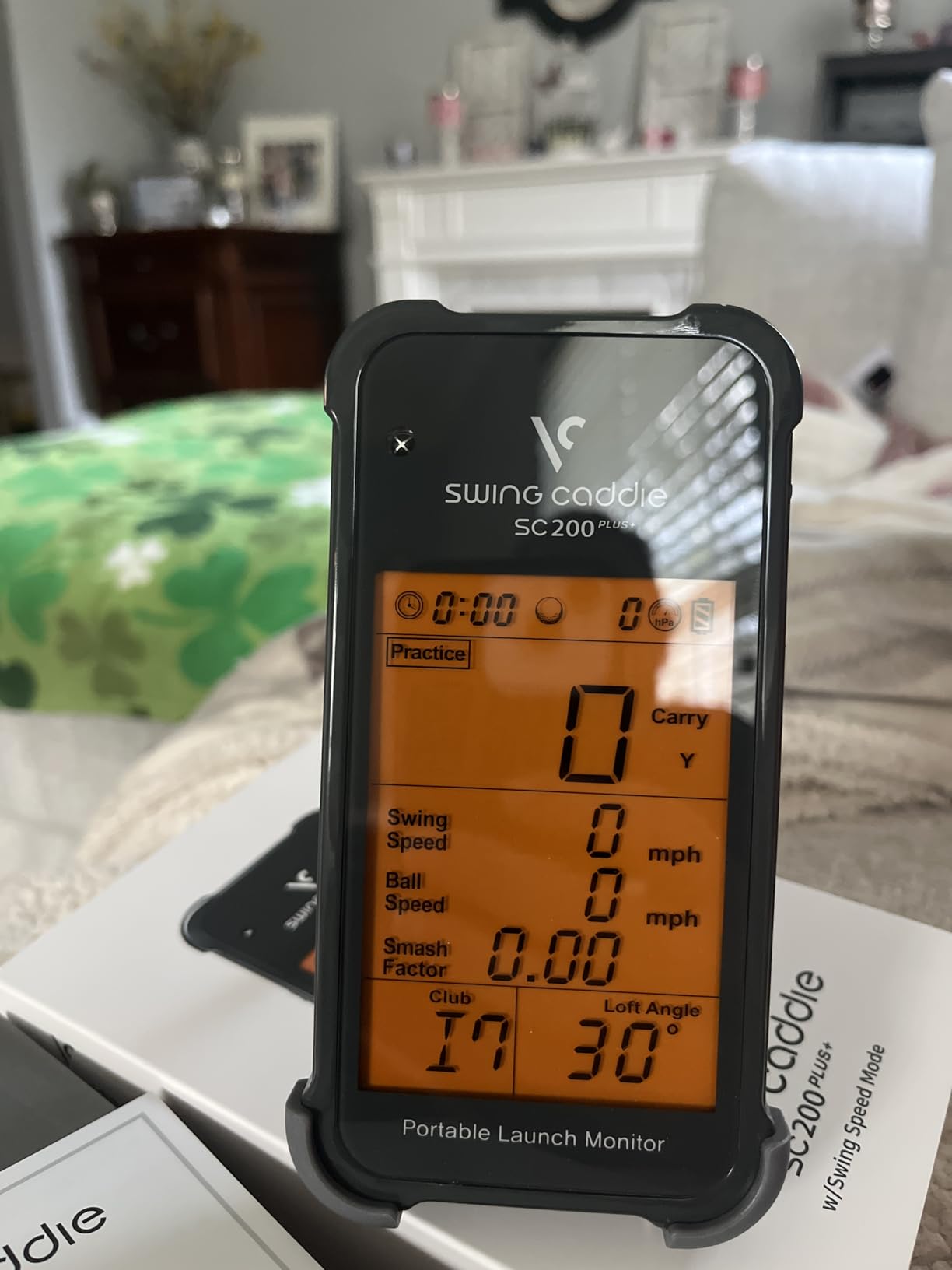
Twenty hours of battery per charge is the headline. If you train indoors in the evening several times a week, this is the device in the roundup that never asks you to charge it, and it also runs hands free with voice output alongside the LCD.
The no-ball swing speed mode is the feature that makes it useful in a living room. Adjustable loft angles let you simulate different clubs, and Doppler radar is backed by atmospheric pressure sensors that recalibrate to keep readings consistent as conditions change.
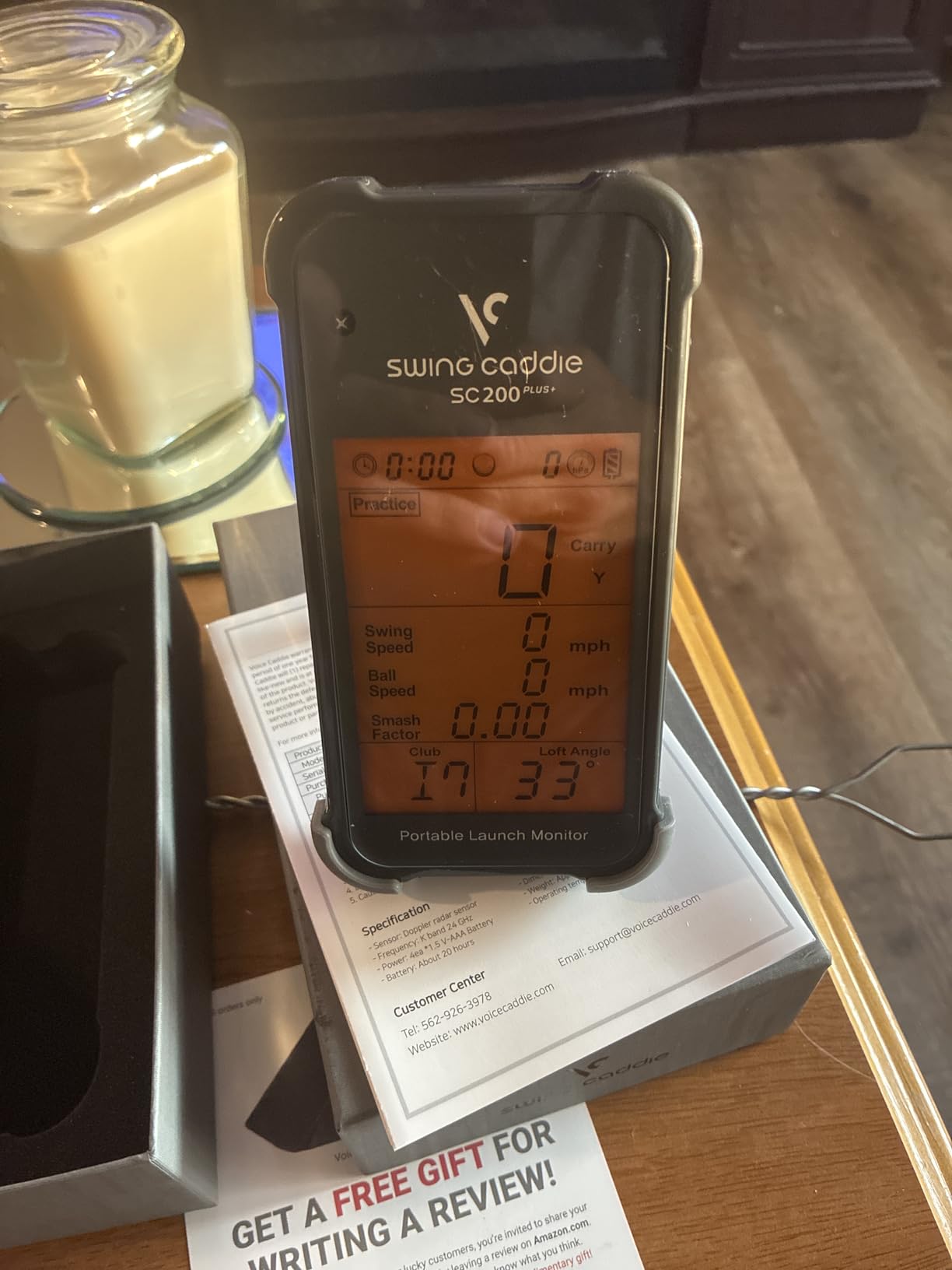
What it cannot do is connect. There is no companion app, no cloud storage and no swing video, so no history beyond what the device holds and nothing to export to a coach. Practising without a ball gives you speed and nothing else, which is a narrow return for the repetition.
The voice output is a genuine nuisance factor in a quiet room, and some golfers switch it off immediately. At 8 ounces and 36 inches long it is long for a bag, though light enough to forget.
What the Voice Caddie SC200Plus is good at
Long indoor speed sessions with a weighted training aid, where the LCD and voice cues let you swing without picking anything up. Many golfers in this bracket find an audio number far more useful during a fast repetition set than a phone screen.
It also doubles as a general-speed tool if you also play baseball, since Doppler speed measurement transfers directly.
Where it falls short for some golfers
Anyone wanting a season of history or a video to review should skip it. Data lives on the device and cannot be shared easily.
If your problem is ball flight rather than club speed, it will not help. You need launch angle and spin data, which only the optical units here provide.
10. Swing Speed Radar with Tempo Timer – Best for Tempo Training
Golf & Baseball’s Training Partner for 25 Years: Easy-to-Use and Reliable Doppler Measures Swing Speed and Tempo
Doppler plus built-in tempo timer
40 to over 200 mph range
4 year manufacturer warranty
Pros
- Built-in tempo timer trains pace from start to finish
- One-button operation with an easy-to-read display
- Four-year manufacturer warranty
- Works with a wiffle ball or sponge ball
Cons
- Clubhead speed only with no ball or launch data
- Susceptible to Wi-Fi
- fluorescent and radio interference
- AA batteries not included
This is the plain speed radar with a tempo timer built into the body, and that one addition is what separates it. Instead of just reading how fast the club moved, it counts the backstroke and downswing so you can train a repeatable three-to-one rhythm rather than chasing a bigger number.
Accuracy is stated as within 1 percent over a 40 to over 200 mph range, and owners describe it as consistent with higher-end devices within a few mph. The workflow stays simple: switch on, swing, read the display. Nothing to configure, nothing to charge.
It carries a four-year manufacturer warranty, the longest coverage among the picks here, which matters if you are training in a damp garage. A drawstring pouch is included, and it works with the Stack System, RypStick and SuperSpeed Stick as well as a wiffle or sponge ball.
The same constraints as its sibling radar apply. It measures clubhead speed only, with no ball speed, launch angle or distance, and readings get disrupted by Wi-Fi, fluorescent lighting and radio interference. Batteries are not included.
What the tempo radar is good at
Rushed transitions and an inconsistent rhythm. Tempo is one of the few faults a single number and a sound cue can actually fix, and pairing speed with a countable tempo makes both metrics trainable in one repetition.
It suits golfers who want to practise in a flat, no-net space where a launch monitor has nothing to read.
Where it falls short for some golfers
It says nothing about clubface, path or ball flight, so if you are chasing distance lost to a sliced strike, this will not diagnose it.
And with no app, there is no trend line. You have to remember your last number yourself, which is fine for a month and frustrating over a season.
How to Choose a Swing Analyzer for Your Goal?
Start from the fault, not the device. Match your goal to the sensing technology that can actually see it, then accept the cost that comes with that choice.
Clubface control and face-to-path: you need launch direction, launch angle and ball data, so a radar or optical launch monitor is the only option in this roundup that qualifies.
Raw speed gains: a speed radar or weighted training system is enough, and both work without a ball or a net.
Tempo and sequencing: pick the radar with the built-in tempo timer, which is the only unit here that counts your rhythm.
On-course stats and club gapping: NFC club tags cost less than any analyzer and change how you plan a round.
Ball flight indoors without a net: the simulator option reads swing movement through a motion sensor and plays virtual courses.
Video review and mechanics: an app-based capture that overlays metrics on a replay is the fastest route to seeing a change you cannot feel.
Accuracy depends on the sensing technology, and this is the most quoted fact in the category. Radar launch monitors measure the ball and club directly, and the only unit here publishing tolerances is the Garmin Approach R10 at plus or minus 1 mph ball speed and plus or minus 1 degree launch angle and direction. The budget radars are accurate on clubhead speed alone, with the plain speed radar rated at plus or minus 1 mph and the PRGR storing 500 swings so you can judge repeatability yourself. Accelerometer sensors, which is what the simulator uses, estimate from hand and club movement rather than tracking a ball.
Budget for the running cost, not just the device. A subscription-gated app can turn a one-off purchase into an annual expense, and owners of units with locked features mention this more often than anything else. Measure what you need on day one and check whether it sits behind a paywall.
Then use the data properly. Pick one or two metrics, hold them for four to six weeks, and change one movement at a time. A device that surfaces thirty numbers a session produces analysis paralysis, which is the single most common complaint in golf forums. Pick launch angle and carry, or clubhead speed and tempo, and ignore the rest until those move.
Finally, skip brands whose ecosystems no longer update. Zepp Golf, 3Bays, Swingbyte and Swing Logic all stopped being supported, which means owners are holding hardware that no longer pairs with anything. Check that the brand’s app still has recent updates before you buy, and confirm you are not buying a subscription into an abandoned platform.
What Swing Analyzers Cannot Measure
No consumer device in this roundup tells you whether you struck the ball on the toe, heel or thin. Impact location is what tells you why a strike felt off, and it needs the high-speed camera arrays found in professional-grade monitors, not a wrist strap or a radar box.
None of these devices measures grip pressure, and none of them tells you what you were thinking. A number going the right way while your contact stays the same means the number was noise. If you cannot feel a difference after four weeks, you are reading the screen instead of hitting shots.
Beginners in particular should know this before buying. One lesson that fixes contact and setup usually produces more improvement than a season of analyzer data, because the numbers describe the problem without fixing it.
Frequently Asked Questions
Which golf swing analyzer is the most accurate?
Accuracy depends on the sensing technology rather than the brand. Radar launch monitors measure the ball and club directly, and the Garmin Approach R10 publishes the clearest tolerances at plus or minus 1 mph ball speed and plus or minus 1 degree for launch angle and direction. Plain speed radars are accurate on clubhead speed alone, rated around plus or minus 1 mph. Wrist and motion sensors estimate club data from hand movement, so treat their numbers as guidance.
What is my swing speed if I hit 7 iron 170?
A 170-yard 7-iron carry points to roughly 91 to 95 mph clubhead speed for an average amateur, though individual swing styles vary widely. Only a launch monitor or a speed radar can measure clubhead speed directly. A wrist sensor or a video app cannot, so if carry distance is the number you care about, buy a device that reports ball speed and club speed together.
Is a golf swing analysis worth it?
It is worth it when you focus on one or two metrics for four to six weeks and change a single movement based on them. It is not worth it if you expect a number to fix a slice on its own, or if you are a beginner who would get more from a few lessons. Data without a behavioural change does not lower scores, and no consumer device reports impact location, so the strike itself still needs coaching.
What is the best device to improve my golf swing?
Match the device to your goal. Clubface control needs launch angle and launch direction data from a launch monitor. Tempo and sequencing work best with a tempo radar. Raw speed responds to a speed radar or weighted training system. On-course strategy and club gapping need shot-tracking tags. Ball flight without a net needs a simulator. And putting, which no device here measures, needs a dedicated putting trainer instead.
Conclusion
The best swing analyzers for golfers fall into distinct jobs, and the mistake is buying a speed tool for a face problem. The Rapsodo Mobile Launch Monitor is our pick overall, because club and ball data plus a shot tracer on video is the combination that makes a swing change visible. The Garmin Approach R10 goes deepest on metrics and publishes the clearest accuracy figures. The PRGR HS 130-A delivers the same core numbers with no software to manage.
Whichever you choose, take two metrics, hold them for six weeks, and keep one in the bag for practice and one on the course. Anything you can see clearly beats anything you only suspect, and anything that keeps you hitting shots beats a device gathering dust.