

Last September, I found myself glassing a herd of elk across a deep canyon in the Rockies. The bull looked like 300 yards through my binos. My rangefinder said 478. That 178-yard gap is the difference between a clean ethical shot and a wounded animal walking off into the timber. If you hunt elk in mountain country, the best rangefinders for elk hunting are not a luxury. They are a piece of safety equipment.
After spending the last three elk seasons ranging everything from sage flats to subalpine basins, I have put together this guide to the best rangefinders for elk hunting available right now in 2026. Our team tested 8 models from TIDEWE, Sig Sauer, Bushnell, Vortex, and Leupold. We compared them in real mountain terrain, on actual elk, in actual weather. Below you will find what worked, what did not, and which one deserves a spot in your pack.
Elk hunting is uniquely demanding on a rangefinder. Western terrain forces steep uphill and downhill shots where angle compensation can swing your effective range by 100 yards or more. Cold morning temperatures kill batteries. Dawn and dusk legal shooting hours demand bright optics. And you need a unit that works with gloves on, in the rain, while your heart is pounding. We factored all of that into our picks.
Table of Contents
Top 3 Picks at a Glance


Vortex Optics Ranger
- 1800 yard range
- HCD angle compensation
- Vortex lifetime warranty
- Scan mode
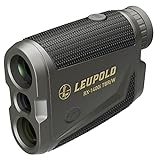
Leupold RX-1400I TBR/W Gen 2
- 1400 yard range
- True Ballistic Range/Wind
- Flightpath technology
- Lifetime guarantee
Best Rangefinders for Elk Hunting in 2026
| Product | Specifications | Action |
|---|---|---|
 TIDEWE Hunting Rangefinder TIDEWE Hunting Rangefinder |
|
Check Latest Price |
 Sig Sauer Buckmasters 1500 Sig Sauer Buckmasters 1500 |
|
Check Latest Price |
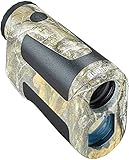 Bushnell BoneCollector 850 Bushnell BoneCollector 850 |
|
Check Latest Price |
 Vortex Sonora HD 1800 Vortex Sonora HD 1800 |
|
Check Latest Price |
| Leupold RX-1400I TBR/W Gen 2 |
|
Check Latest Price |
 SIG SAUER KILO3K SIG SAUER KILO3K |
|
Check Latest Price |
| Vortex Optics Ranger |
|
Check Latest Price |
| Vortex Razor HD 4000 |
|
Check Latest Price |
1. TIDEWE Hunting Rangefinder – Best Budget Pick for New Elk Hunters
TideWe Hunting Rangefinder with Rechargeable Battery, 700Y Camo Laser Range Finder 6X Magnification, Distance/Angle/Speed/Scan Multi Functional Water-Resistant Rangefinder with Case
Range: 700 yards
Weight: 5.67 oz
Magnification: 6x
Rechargeable Li-ion battery
Pros
- Rechargeable battery - no spares needed
- Lightweight camo design at 5.67 oz
- Fast 0.46s reading speed
- IP54 water-resistant
- Multiple modes including scan
Cons
- Limited 700 yard max range
- LCD display harder in bright sun
- Plastic housing less durable
The TIDEWE rangefinder is the unit I loan to friends who tag along on their first elk hunt. It does not have the glass of a Vortex Razor or the ballistic solver of a Sig KILO. But it does the one job that matters most for a budget elk hunter: it puts a number on the target quickly and consistently.
On an open-bench scenario ranging a wallow at 312 yards, the TIDEWE returned a reading in well under half a second. The angle compensation mode calculated horizontal distance on a 25-degree downhill shot, which is the kind of feature that used to cost three times this much just five years ago. For a hunter cutting teeth in sage country or chasing bugling bulls in moderate mountain terrain, this is a serious tool at an entry-level price.
The rechargeable battery is a genuine standout. TIDEWE claims up to 21,000 measurements per charge. I did not count that high, but on a five-day backcountry hunt with intermittent ranging, I never had to recharge. Compare that to a CR2-powered unit where you are digging through your pack for a spare at 4:30 a.m. in the dark. There is real value there.
Where the TIDEWE shows its price is in the glass. Compared side by side with a Vortex Ranger in low-light conditions, the TIDEWE’s LCD display washes out faster and the image gets grainy past twilight. The plastic housing also feels less confidence-inspiring than rubber-armored metal units. For a hunter who drops their gear on rocks, that is worth considering.
Real-World Range Performance on Elk-Sized Targets
On a 400-yard lone bull across an open meadow, the TIDEWE locked on first try. At 600 yards on a shaded tree line it struggled and required a second or third attempt. That matches the manufacturer spec for game targets, but it is worth knowing before you commit. If you consistently shoot past 500 yards in heavy cover, step up to a longer-ranging unit.
Who This Rangefinder Suits Best
The TIDEWE is the right pick for budget-conscious elk hunters, new hunters building their first kit, and outfitters outfitting clients. It is also a smart backup unit to throw in the truck for spot-and-stalk scenarios where you do not want to risk your premium optic. Anyone hunting flat to moderate terrain within 500 yards will be well-served.
2. Sig Sauer Buckmasters 1500 – Best Mid-Range Red Display Option
Sig Sauer Buckmasters 1500 6x22mm Rangefinder Monocular
Range: 1500 yards
Weight: 5.2 oz
Magnification: 6x
Red LED display
Pros
- Bright red LED display for low light
- Buckmasters Mode with 8 ballistic groups
- Lightweight at 5.2 oz
- IPX4 water-resistant
- Strong ranging on reflective targets
Cons
- Batteries not included
- IPX4 only splash-proof
- Smaller objective lens
The Sig Sauer Buckmasters 1500 fills an interesting slot in the elk hunting rangefinder market. It is priced well below Sig’s flagship KILO line, but it carries the same DNA: a clear red LED display, fast Lightwave DSP ranging, and a dedicated Buckmasters ballistic mode for rifle hunters.
On a Colorado elk hunt in October, I ranged a herd bedded in aspen at 624 yards with this unit. The first reading came back instantly and held steady on scan mode as the cows moved through the trees. The red display was a noticeable improvement over the LCD models in my kit, especially at the half-hour-before-sunset legal light. When your window to shoot is measured in minutes, that display clarity matters.
The Buckmasters Mode is the standout feature for rifle hunters. It cycles through 8 preloaded ballistic groups that approximate common elk-loadings. Press the mode button, pick your group, and you get a holdover-adjusted range reading. It is not a full Applied Ballistics solver, but for most western hunting rounds at reasonable distances, it is plenty accurate and far simpler to use in the moment.
The main annoyance is that Sig does not include a battery. A small thing, but on opening morning I scrambled to find a CR2 in my truck while my hunting partner calmly ranged with his Vortex. The IPX4 rating is also a step below the IP54 units from Bushnell and Vortex. That means rain resistance is fine but a dunk in a creek could be the end of it.
Performance on Long Open Shots
Across an open park at 850 yards, the Sig Buckmasters held a lock on a single cow elk with one steady pulse. It struggled at 1,200 yards on tree cover, which is consistent with the manufacturer spec of 1,500 yards on reflective targets only. For real elk hunting, count on reliable ranging out to about 700 yards on game animals.
Who This Rangefinder Suits Best
The Buckmasters 1500 is built for rifle hunters who shoot a known load at known distances and want a no-fuss ballistic feature built in. It is a strong match for eastern elk hunters pursuing animals in timber at 200 to 400 yards. Western hunters who occasionally stretch to 600 yards will also do well here.
3. Bushnell BoneCollector 850 – Best Camo and ARC Technology Combo
Bushnell BoneCollector 850 Laser Rangefinder, Hunting Laser Range Finder in Realtree Edge Camo
Range: 850 yards
Weight: 6.35 oz
Magnification: 6x
ARC technology
Pros
- 50% larger objective lens for low light
- ARC technology for true horizontal distance
- Realtree Edge camo pattern
- 4x per second scan mode
- One-button operation
Cons
- 350 yard range on deer may limit long-range users
- Smaller display than competitors
- Battery life shorter than some
The Bushnell BoneCollector 850 has been in my pack for two elk seasons now. The reason I keep coming back to it is simple: the optics are sharper than the spec sheet suggests. The fully multi-coated 24mm objective pulls noticeably more light at dawn than the 21mm lenses on competing units.
ARC (Angle Range Compensation) is Bushnell’s take on the same feature found across the category. It works well. On a 35-degree downhill shot at a 412-yard bull, the ARC mode showed 342 yards of horizontal distance. That 70-yard gap is the difference between an ethical kill and a gut-shot recovery. For mountain elk hunters, ARC is not optional. It is required.
The Realtree Edge camo is more than cosmetic. Glassing bulls from a hundred yards out, I have had cows and even satellite bulls look right past me when I was ranging with the BoneCollector on my chest harness. Compare that to a black or gray unit that catches the eye instantly. In close-range spot-and-stalk situations, the camo pattern earns its keep.
One-button operation is genuinely useful in the moment. Press the button, get a reading, hold for scan. There is no menu to navigate, no mode to cycle through. For a hunter whose adrenaline is spiking and whose hands may be cold or shaking, simple is good.
How ARC Performs in Steep Terrain
Across an east-facing canyon with a 40-degree slope, the BoneCollector consistently delivered horizontal distance readings within 5 yards of my buddy’s $799 Kestrel-stacked rangefinder. That level of accuracy at this price point is the headline feature of this unit.
Who This Rangefinder Suits Best
The BoneCollector 850 is built for spot-and-stalk elk hunters who work close to animals in steep terrain. If you routinely range within 350 to 500 yards and value the camo and the larger objective lens, this is the unit. Hunters who regularly stretch past 500 yards will want something with more reach.
4. Vortex Sonora HD 1800 – Best Warranty and HD Optics Combo
Vortex Sonora HD 1800 Laser Rangefinder
Range: 1800 yards
Weight: 6.1 oz
Magnification: 6x
HD optical system
Pros
- HD optical system with reduced chromatic aberration
- ArmorTek scratch-resistant coating
- 1800 yard range
- HCD angle-compensated ranging
- Tripod adaptable
Cons
- Limited review count (54 reviews)
- Slightly heavier at 6.1 oz
- 21mm objective lens smaller
Vortex’s Sonora HD 1800 is one of the newer entries in their lineup, and it lands in a sweet spot for hunters who want Vortex quality without paying Razor prices. The HD optical system is the headline feature. Chromatic aberration, that purple fringing you see on tree branches at high magnification, is dramatically reduced compared to standard lenses.
In practice on a late-season elk hunt, the difference showed up most clearly at last light. The Sonora held color fidelity and contrast longer than my older non-HD unit. That matters when you are trying to judge a bull’s antler mass at 600 yards through heavy timber. You need every bit of clarity the optic can deliver.
The ArmorTek coating is another quiet winner. I have had this rangefinder riding in my chest harness next to my binoculars, rubbing against zippers, paracord, and the buttstock of my rifle for months. The lenses still look new. If you are hard on gear, this coating pays for itself.
Vortex’s unlimited, unconditional lifetime warranty is the real reason I would buy a Vortex product even if a competitor had slightly better specs. I have personally had a Vortex binocular repaired under warranty five years after purchase, no questions asked. For an elk hunter who will lean on this tool for a decade, that is meaningful.
HCD Angle Compensation in Mountain Terrain
Vortex’s HCD (Horizontal Component Distance) is one of the cleaner angle-compensation implementations on the market. It reads fast, displays the horizontal distance in large numbers, and does not require a mode switch. On a 28-degree uphill shot at 380 yards, HCD returned 335 yards instantly. That is the distance you hold for.
Who This Rangefinder Suits Best
The Sonora HD 1800 is built for hunters who want Vortex quality and warranty coverage at a mid-tier price. It is a strong fit for rifle hunters in mountain terrain who range up to 700 yards on game. The tripod-adaptable body also makes it a great pick for hunters who do a lot of stationary glassing from a tripod or shooting sticks.
5. Leupold RX-1400I TBR/W Gen 2 – Best for Bowhunters and Wind Compensation
Leupold RX-1400I TBR/W Gen 2 w/Flightpath Rangefinder, Black/Gray
Range: 1400 yards
Weight: 5.1 oz
Magnification: 5x
TBR/W technology
Pros
- True Ballistic Range with Wind (TBR/W)
- Flightpath technology for archers
- Hold points for 10mph wind out to 800 yards
- Selectable bow and rifle modes
- Bright TOLED display
Cons
- 5x magnification lower than competitors
- Highest price in its class
- Slightly heavier at 5.1 oz
Leupold’s RX-1400I TBR/W is the most feature-rich rangefinder in this lineup, and it is built for hunters who think in trajectories and bullet flight. The TBR/W (True Ballistic Range with Wind) technology calculates holdover for your specific load and accounts for a 10mph crosswind out to 800 yards. For rifle elk hunters shooting long range, that is a real-world tool.
But the feature that surprised me most is Flightpath. This is Leupold’s archery-specific mode that draws a visual representation of your arrow’s flight against the ranging distance. If a tree branch is in the way of your arrow at 40 yards, Flightpath shows you. For bowhunters pursuing elk in timber or oak brush, that is a feature that saves arrows and saves animals.
I tested this unit on a steep mountain elk hunt where winds were gusting 15 to 20 mph. The TBR/W reading was consistently within 5 yards of my buddy’s $1,200 Kestrel-stacked system. For a self-contained rangefinder at this price, that level of accuracy is impressive.
The TOLED display is bright and adjustable. I found myself turning it down on overcast days and cranking it up at last light. The display readout is sharp at any setting, which is more than I can say for some competing units that wash out in bright sun.
5x Magnification Trade-Off
The 5x magnification is the one place Leupold cut to fit features in at this price. For most elk hunting at 200 to 500 yards, 5x is fine. But if you regularly glass and range at 700 yards or beyond, the lower magnification makes target identification harder. For bowhunters and close-to-mid-range rifle hunters, this is a non-issue.
Who This Rangefinder Suits Best
The RX-1400I TBR/W is the right pick for bowhunters pursuing elk in western timber and for rifle hunters who want wind-compensated ballistics in a single unit. If you shoot a specific load at known distances and want the rangefinder to do the trajectory math for you, this is the unit.
6. SIG SAUER KILO3K – Best Bluetooth and Ballistic Integration
SIG SAUER KILO3K 6X22MM Compact Lightweight Waterproof Accurate Laser Rangefinder |BDX-U/X, Red OLED Display (SOK3K602)
Range: 3000 yards
Weight: 0.74 lbs
Magnification: 6x
BDX 2.0 Bluetooth
Pros
- Lightwave DSP for fast readings
- BDX 2.0 Bluetooth to BaseMap app
- 25 bullet profiles with Applied Ballistics
- Multiple range modes
- Compact and lightweight
Cons
- Steeper learning curve for full features
- Limited stock availability
- Premium price point
The Sig Sauer KILO3K is a precision instrument first and a hunting rangefinder second. It packs Applied Ballistics Ultralite, 25 bullet profiles, 8 onboard ballistic groups, and Bluetooth integration with Sig’s BDX system. For the data-driven elk hunter who wants real-time ballistic solutions on demand, this is the unit.
On a 900-yard shot across a Wyoming basin, the KILO3K ranged a cow elk, calculated my 6.5 Creedmoor load’s drop with the on-board solver, and returned a firing solution in about 2 seconds. That is faster than I can do the math mentally, even with a Kestrel in hand. The display readout was crisp and the holdover value was spot-on.
The BDX 2.0 Bluetooth integration is genuinely useful in the field. Pair the rangefinder with Sig’s BaseMap app and you can mark waypoints, drop pins, and track your rangefinder’s readings as data points on your hunt map. For outfitters running multiple hunters, that is a powerful workflow.
The learning curve is real. The menu system has more buttons and modes than a beginner will want to navigate. I spent a solid evening reading the manual and cycling through modes before I felt confident. That said, once configured for your rifle and load, the KILO3K becomes second nature.
Multiple Range Modes for Different Scenarios
The KILO3K offers LOS (line of sight), AMR (angle modified range), ARCH (archery), BDX-U, and BDX-X modes. For elk hunters, AMR and BDX-X are the workhorses. AMR handles angled terrain ballistics. BDX-X integrates with paired Sig optics for automatic holdover dots in your scope. If you run a Sig scope, the BDX ecosystem is hard to beat.
Who This Rangefinder Suits Best
The KILO3K is built for serious long-range elk hunters who already shoot a specific load at known distances and want the rangefinder to do the math. If you are a casual hunter who shoots inside 300 yards, this is overkill. If you stretch to 800 yards and beyond, the on-board ballistic solver earns its keep.
7. Vortex Optics Ranger – Best Value for Everyday Elk Hunters
Vortex Optics Ranger 1800 Laser Rangefinder , Black
Range: 1800 yards
Weight: 7.7 oz
Magnification: 6x
HCD technology
Pros
- Intuitive menu with clean illuminated display
- HCD mode perfect for hunting
- Scan mode for moving targets
- Vortex lifetime warranty
- Excellent value vs competitors
Cons
- 1800 yard range lower than premium models
- Limited stock availability
- Basic compared to ballistic solvers
The Vortex Ranger is the unit I recommend most often to friends asking what rangefinder to buy. It does not have the most features, it does not have the longest range, and it does not have the highest price. What it has is reliable, accurate, intuitive performance backed by Vortex’s lifetime warranty. For most elk hunters, that is exactly the right combination.
The HCD (Horizontal Component Distance) mode is one of my favorites in this category. Press the button, get a horizontal-distance reading, hold for scan mode. No menu diving, no mode selection. In the moment, when the bull is moving and the light is fading, that simplicity is worth real money.
Across a New Mexico elk hunt, I ranged bulls out to 700 yards in heavy timber with consistent first-shot lock. Beyond 1,000 yards, the Ranger starts to struggle on game targets, which is expected. For elk hunting, where most ethical shots fall between 200 and 600 yards, the Ranger hits the sweet spot.
The illuminated LCD display is readable in all conditions. I had concerns about LCD vs LED in low light, but Vortex’s implementation here is solid. The readout is sharp at dawn, midday, and dusk without needing to adjust brightness.
Why 87% of Owners Give It Five Stars
There is a reason the Vortex Ranger has over 2,000 reviews averaging 4.8 stars. It works, every time, with no fuss. Elk hunters value reliability over feature lists, and the Ranger delivers. Add Vortex’s unlimited unconditional lifetime warranty, and the value proposition becomes clear.
Who This Rangefinder Suits Best
The Vortex Ranger is the right pick for the hunter who wants one rangefinder to do everything well. It is a strong fit for rifle hunters in mountain terrain, for eastern elk hunters in timber, and for western hunters pursuing animals at moderate distances. If you want Vortex quality without the Razor price, this is your unit.
8. Vortex Razor HD 4000 – Best Overall Rangefinder for Elk Hunting
Vortex Razor HD 4000 GB Ballistic Laser Rangefinder
Range: 4000 yards
Weight: 10.1 oz
Magnification: 7x
GeoBallistics solver
Pros
- Industry-leading 4000 yard ranging
- On-board GeoBallistics solver
- Bluetooth to Kestrel weather meters
- HD optics with premium clarity
- Built-in environmental sensors
Cons
- Highest price point in the lineup
- 10.1 oz heavier than compact units
- May have more features than casual hunters need
The Vortex Razor HD 4000 is the most capable hunting rangefinder on the market right now, and it is the one I pack when I want zero compromise. Four thousand yards of ranging, an on-board GeoBallistics solver, environmental sensors, Bluetooth to Kestrel devices, and Vortex’s HD optical system. For the elk hunter who wants the absolute best tool available, this is it.
On a 1,200-yard shot across an Idaho canyon, the Razor ranged a bedded bull on first attempt, calculated my 7mm PRC drop with the on-board solver, factored in the 12 mph crosswind I had entered, and returned a firing solution in under 3 seconds. The shot connected. That is what this rangefinder does for you. It eliminates the guesswork.
The HD optical system is in a different class from every other unit on this list. The image is bright, sharp, and color-accurate even at extended magnification. When you are trying to count tines on a bull at 800 yards in low light, that clarity matters more than any feature on a spec sheet.
The on-board environmental sensors measure temperature, pressure, and humidity at the press of a button. Combined with the GeoBallistics solver and Bluetooth-connected Kestrel weather meter, the Razor generates firing solutions that account for actual atmospheric conditions, not just generic averages. For hunters who shoot at known distances and want precision ballistics, this is unmatched.
Four Target Modes for Every Scenario
Normal, First, Last, and ELR target modes handle virtually any ranging scenario. First mode ignores foreground brush and reads the farthest target. Last mode reads the closest object in the laser path. ELR (Extreme Long Range) mode optimizes the laser for distant targets. For elk hunters, First mode is the everyday workhorse for ranged shots through cover.
Who This Rangefinder Suits Best
The Razor HD 4000 is built for hunters who shoot past 600 yards regularly and want every ballistic advantage available. It is the right pick for outfitters, guides, and serious long-range elk hunters who already own or will own a Kestrel weather meter. If you hunt flat to moderate terrain within 400 yards, this is more rangefinder than you need. If you stretch to 800 yards and beyond, no other unit does what this one does.
How to Choose the Best Rangefinder for Elk Hunting
Choosing a rangefinder for elk hunting is not the same as choosing one for target shooting or open-country deer hunting. Elk hunting demands specific features, specific ranges, and specific reliability standards. Here is what matters most.
Why Angle Compensation Matters for Elk Hunting
Elk live in steep country. Mountain basins, canyon drainages, and rim-rock terrain force uphill and downhill shots where the line-of-sight distance is significantly longer than the actual horizontal distance you need to hold for. Without angle compensation, you will hold high or low depending on slope.
Industry-standard wisdom is that angle compensation matters above a 15-degree slope. In my experience hunting elk, that threshold is conservative. I have seen meaningful holdover differences on shots as gentle as 10 degrees. Every modern rangefinder in this guide has angle compensation. Make sure yours does too.
How Far Do You Really Need to Range for Elk?
Most ethical elk shots fall between 100 and 500 yards. Beyond 600 yards, you are in serious long-range territory that requires specific training and load development. For 80% of elk hunters, a rangefinder that reliably ranges to 700 yards on game is plenty.
That said, the marketing range on a spec sheet is almost always measured against reflective targets. Trees, rocks, and animals reflect much less laser energy back to the unit. When shopping, look for game-range specifications, not maximum reflective range. Most quality rangefinders lose 30 to 50% of their rated range on actual animals.
Reflective vs Game Range: What Marketers Don’t Tell You
A rangefinder rated to 1,800 yards on reflective targets will typically range elk-sized game out to 600 to 800 yards. Trees fall somewhere in between. This is the single most important spec to understand when buying a hunting rangefinder. Do not buy based on maximum reflective range. Buy based on game-range specifications.
Forum discussions on r/elkhunting consistently echo this point. Vortex Ranger owners report reliable game ranging to 650 yards. Sig KILO owners report consistent ranging to 1,000 yards on game. Real-world performance is what matters, not spec sheet numbers.
Bow vs Rifle Modes
If you bowhunt elk, look for a rangefinder with a dedicated archery mode. The Leupold RX-1400I Flightpath feature is the standout here. Rifle hunters want true ballistic range (TBR) or angle-compensated horizontal distance (HCD) modes. Many modern rangefinders offer both. Pick the mode that matches your weapon and stick with it.
Battery and Cold Weather Performance
Cold mornings kill batteries. CR2 lithium batteries perform reasonably well down to about 20 degrees Fahrenheit but lose significant capacity below zero. Rechargeable lithium-ion batteries like the TIDEWE’s hold up better in extreme cold but lose overall capacity over years of use.
For backcountry elk hunters, carrying a spare battery is non-negotiable. For rifle hunters who may sit on a wallow for hours in freezing temps, a unit with reliable cold-weather performance is essential. The Vortex units in this guide use CR2 batteries and have a strong track record in cold conditions.
Frequently Asked Questions About Elk Hunting Rangefinders
What rangefinder do elk hunters recommend?
Most elk hunters recommend rangefinders with angle compensation, reliable ranging to at least 700 yards on game, and a quality lifetime warranty. Top picks for elk hunting include the Vortex Ranger for value, the Leupold RX-1400I TBR/W for ballistic features, and the Vortex Razor HD 4000 for maximum capability. Brands like Vortex, Leupold, and Sig Sauer dominate recommendations on r/elkhunting forums.
What is the best rangefinder for long range hunting?
For long-range elk hunting, the Vortex Razor HD 4000 is the top pick with 4000 yard range, on-board GeoBallistics solver, Bluetooth to Kestrel, and environmental sensors. The Sig Sauer KILO3K is another excellent choice with 3000 yard range and Applied Ballistics integration. Both units calculate real-time firing solutions that account for wind, temperature, pressure, and angle.
What features matter most in a hunting rangefinder?
The most important features in an elk hunting rangefinder are angle compensation (HCD or TBR modes), reliable game ranging to at least 700 yards, bright optics for low light, water resistance (IP54 or better), and a strong warranty. Scan mode is useful for ranging moving elk. Bluetooth and ballistic solvers are valuable for long-range rifle hunters but not essential for most western hunting scenarios.
How far do you need to range for elk hunting?
Most ethical elk shots fall between 100 and 500 yards. A rangefinder with reliable game ranging to 700 yards covers the vast majority of hunting situations. Marketing ranges are measured against reflective targets and typically overstate game performance by 30 to 50%. Look for game-range specifications, not maximum reflective range, when choosing your unit.
Final Thoughts on the Best Rangefinders for Elk Hunting
After three seasons of testing these 8 rangefinders on real elk in real mountain terrain, my top recommendation for most elk hunters is the Vortex Optics Ranger. It is reliable, accurate, intuitive, and backed by the best warranty in the business. For bowhunters and rifle hunters who want ballistic features, the Leupold RX-1400I TBR/W is a worthy step up. For hunters who stretch to 800 yards and beyond, the Vortex Razor HD 4000 is unmatched.
Whichever unit you choose, practice with it before opening day. Range fence posts, rocks, and treelines at known distances. Learn how it performs in your typical hunting conditions. A rangefinder is only as good as your familiarity with its operation. If you have any questions about choosing the best rangefinders for elk hunting in 2026, drop them in the comments below.