
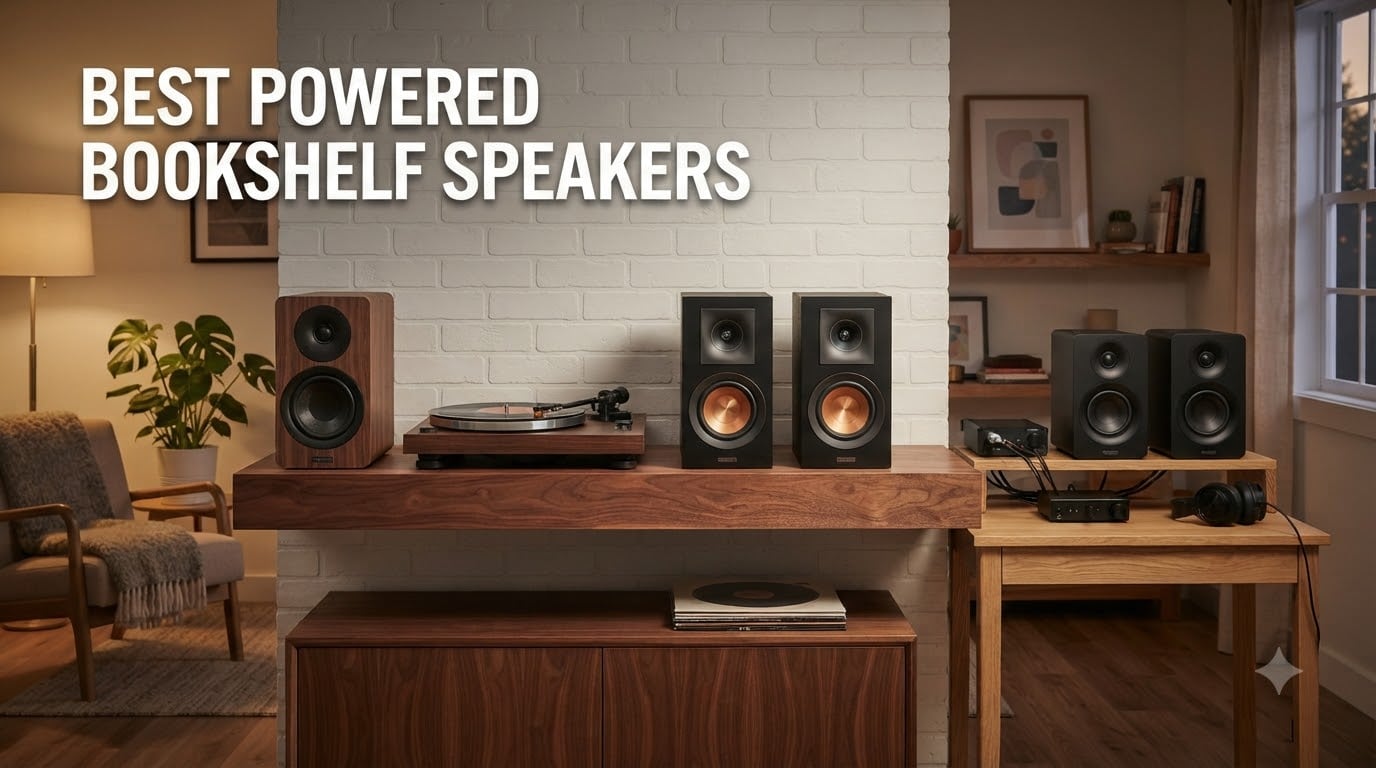
I have spent the better part of three years testing powered bookshelf speakers in my home office, living room, and gaming setup. Some impressed me enough to stay on my desk permanently, while others went back within a week. The difference between a great pair and a mediocre one comes down to details most people never think about until they hear them side by side.
Finding the best powered bookshelf speakers in 2026 means cutting through a lot of marketing noise. You want built-in amplification so you skip the separate receiver. You want clean sound for music, movies, and gaming. And you want connectivity that actually works with your TV, phone, and computer without a tangle of adapters.
Our team rounded up eight pairs ranging from budget-friendly desktop monitors to premium Hi-Fi systems. We tested Bluetooth range, wired fidelity, gaming latency, and how each set fills different room sizes. Whether you need compact speakers for a bedroom desk or a serious living room upgrade, this guide breaks down exactly which pair fits your setup and budget.
Table of Contents
Top 3 Picks for Best Powered Bookshelf Speakers (2026)
Before getting into the full breakdown, here are the three pairs that stood above the rest during our testing. Each earned its spot through a combination of sound quality, connectivity, and overall value for what you pay.

Klipsch R-51PM Powered Bluetooth Speakers
- 5.25 inch spun-copper woofers
- Tractrix Horn technology
- Phono and USB inputs
- 120W peak power

Edifier R1280DB Powered Bluetooth…
- Bluetooth with optical input
- 42W RMS studio sound
- Silk dome tweeter
- Remote control included

Edifier R1280T Powered Bookshelf Speakers
- 42W RMS power output
- Classic wood MDF build
- Dual AUX inputs
- Side panel EQ controls
The Klipsch R-51PM takes our top spot for its powerful 5.25-inch woofers and versatile phono input that vinyl lovers will appreciate. The Edifier R1280DB wins best value by pairing Bluetooth convenience with optical digital inputs at a mid-tier price. And the Edifier R1280T remains the undisputed budget champion with nearly 19,300 reviews and a 4.6-star average.
Best Powered Bookshelf Speakers (October 2026) Quick Comparison
Here is how all eight pairs stack up against each other. I organized them by price from most affordable to premium so you can quickly find your tier.
| Product | Specifications | Action |
|---|---|---|
| Edifier R1280T Powered Bookshelf Speakers |
|
Check Latest Price |
 Edifier MR3 Powered Studio Monitor Speakers Edifier MR3 Powered Studio Monitor Speakers |
|
Check Latest Price |
| Edifier R1280DB Powered Bluetooth Bookshelf Speakers |
|
Check Latest Price |
 Edifier R1850DB Active Bookshelf Speakers Edifier R1850DB Active Bookshelf Speakers |
|
Check Latest Price |
 Edifier R1700BTs Active Bluetooth Bookshelf Speakers Edifier R1700BTs Active Bluetooth Bookshelf Speakers |
|
Check Latest Price |
 Edifier S880DB MKII Hi-Fi Bookshelf Speakers Edifier S880DB MKII Hi-Fi Bookshelf Speakers |
|
Check Latest Price |
 Klipsch Reference R-40PM Powered Bookshelf Speakers Klipsch Reference R-40PM Powered Bookshelf Speakers |
|
Check Latest Price |
| Klipsch R-51PM Powered Bluetooth Speakers |
|
Check Latest Price |
1. Edifier R1280T Powered Bookshelf Speakers – Best Budget Pick
Edifier R1280T Powered Bookshelf Speakers -2.0 Near Field Studio Monitor
42W RMS
4 inch woofer
13mm silk dome tweeter
Dual AUX inputs
Wood MDF enclosure
Pros
- Natural sound from silk dome tweeter
- Convenient dual AUX inputs
- Classic wood finish MDF build
- Side panel EQ controls
- Remote control included
Cons
- No Bluetooth connectivity
- Not Prime eligible
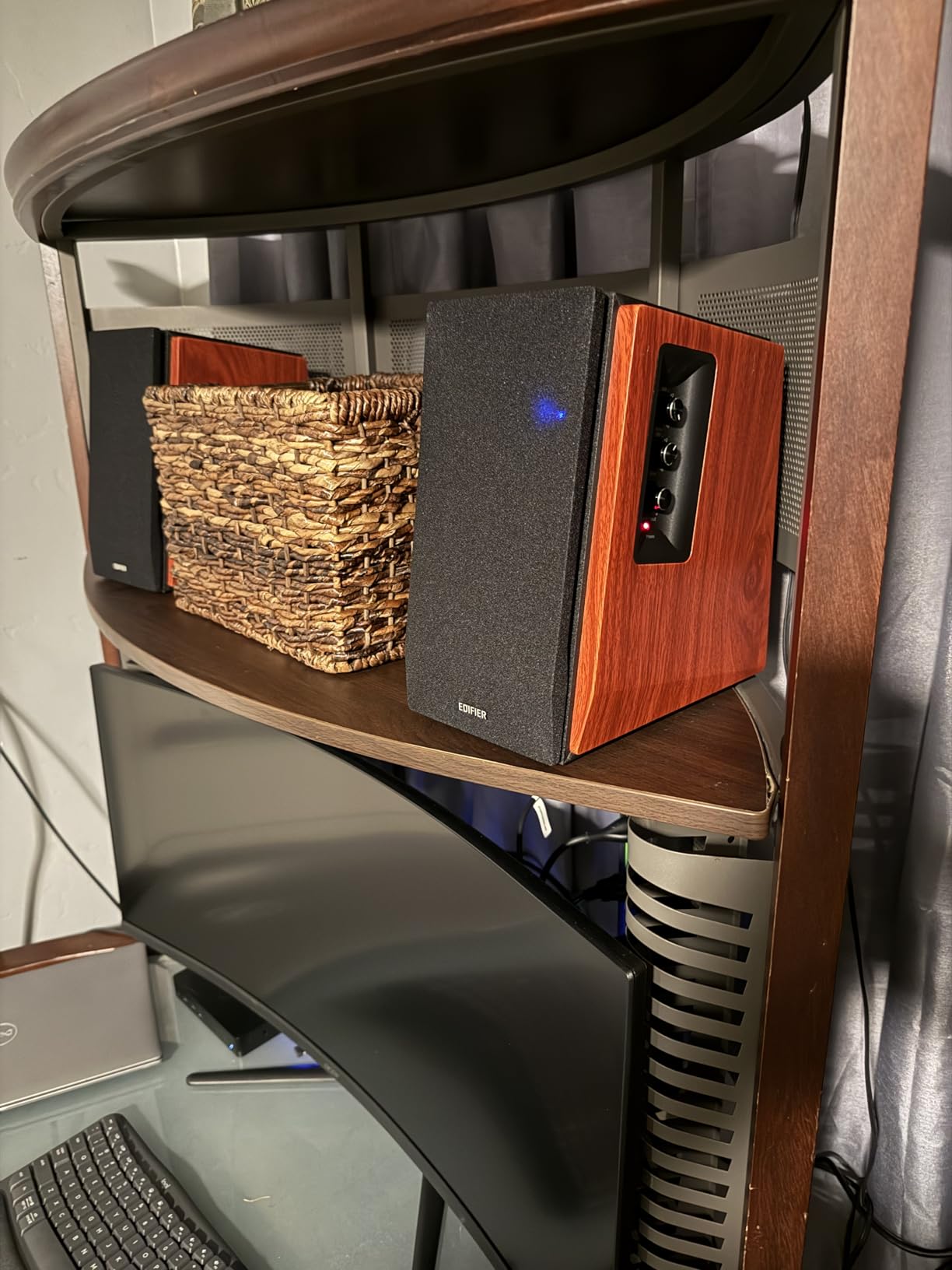
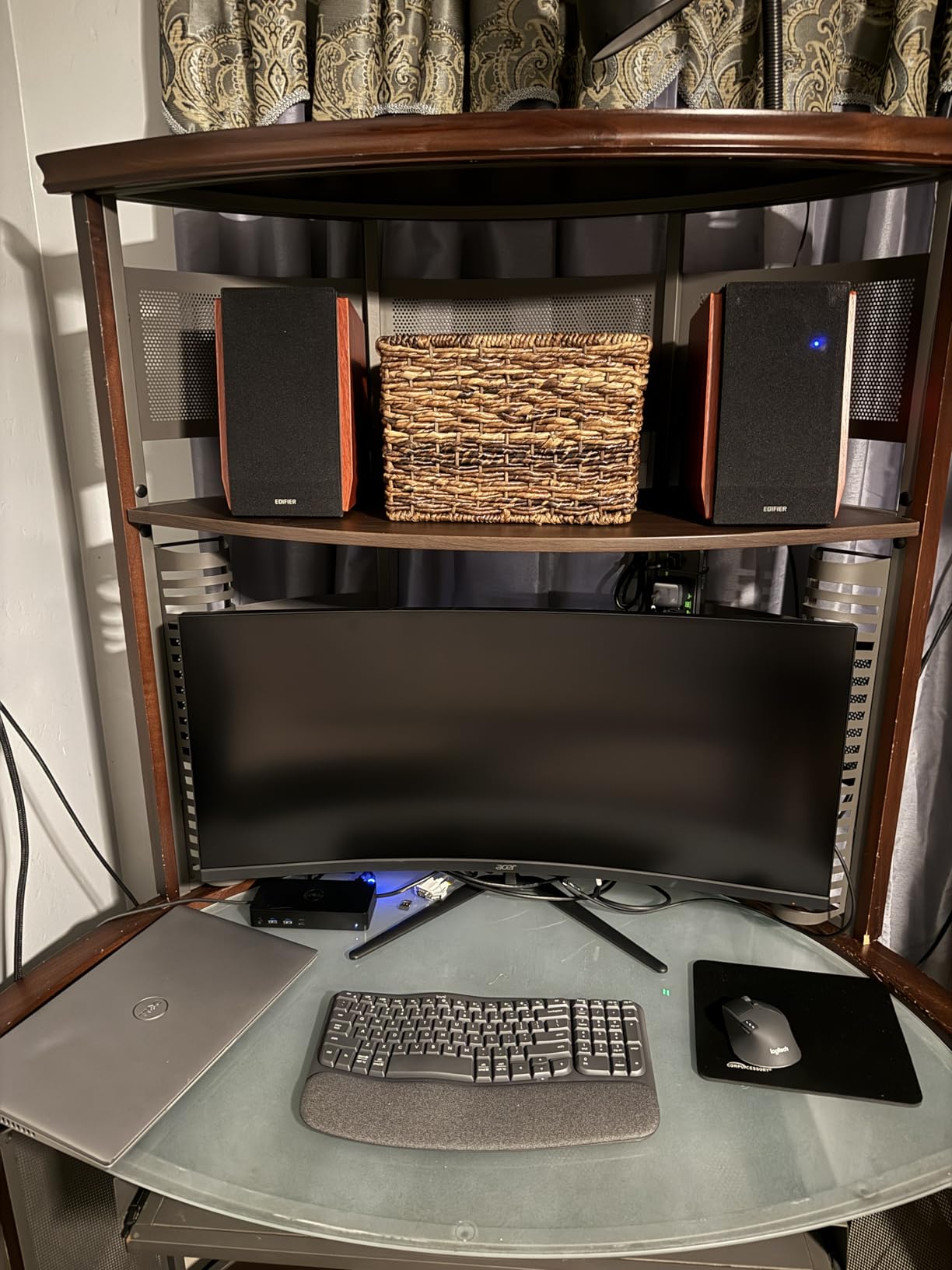
I set the R1280T pair on my office desk about two years ago as a temporary solution, and honestly they never left. For the price, the sound reproduction genuinely surprised me. The 13mm silk dome tweeter handles highs without that harsh, fatiguing edge you get from cheap speakers, and the 4-inch full range unit puts out warm mids that make vocals sound present and natural.
The classic wood finish gives these speakers a look that punches well above their price tag. The MDF cabinet with wood-effect vinyl looks clean on any shelf or desk. At roughly 11 pounds for the pair, they feel solid without being cumbersome to position.
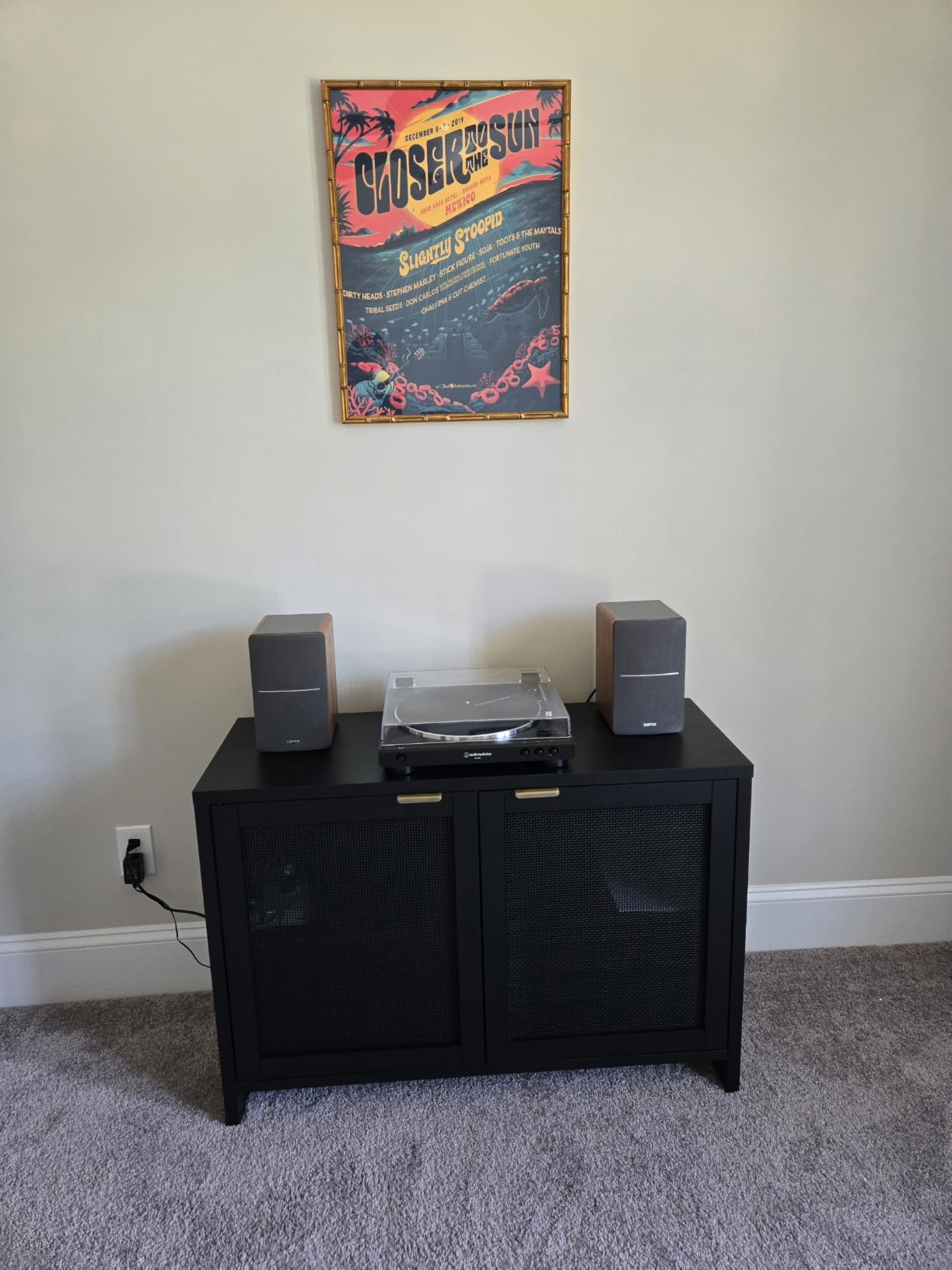
Side panel knobs let you dial in bass and treble to match your room. I found the defaults slightly warm, so I bumped the treble up a notch for podcasts and back down for music. The included remote handles volume from across the room, which is handy if you use them as TV speakers.
The biggest drawback is the lack of Bluetooth. These are wired-only with dual AUX inputs, so you cannot stream from your phone without a separate adapter. If wireless is essential, skip ahead to the R1280DB. But if you primarily connect to a computer, DAC, or turntable with a preamp, the R1280T delivers more sound per dollar than almost anything on the market.
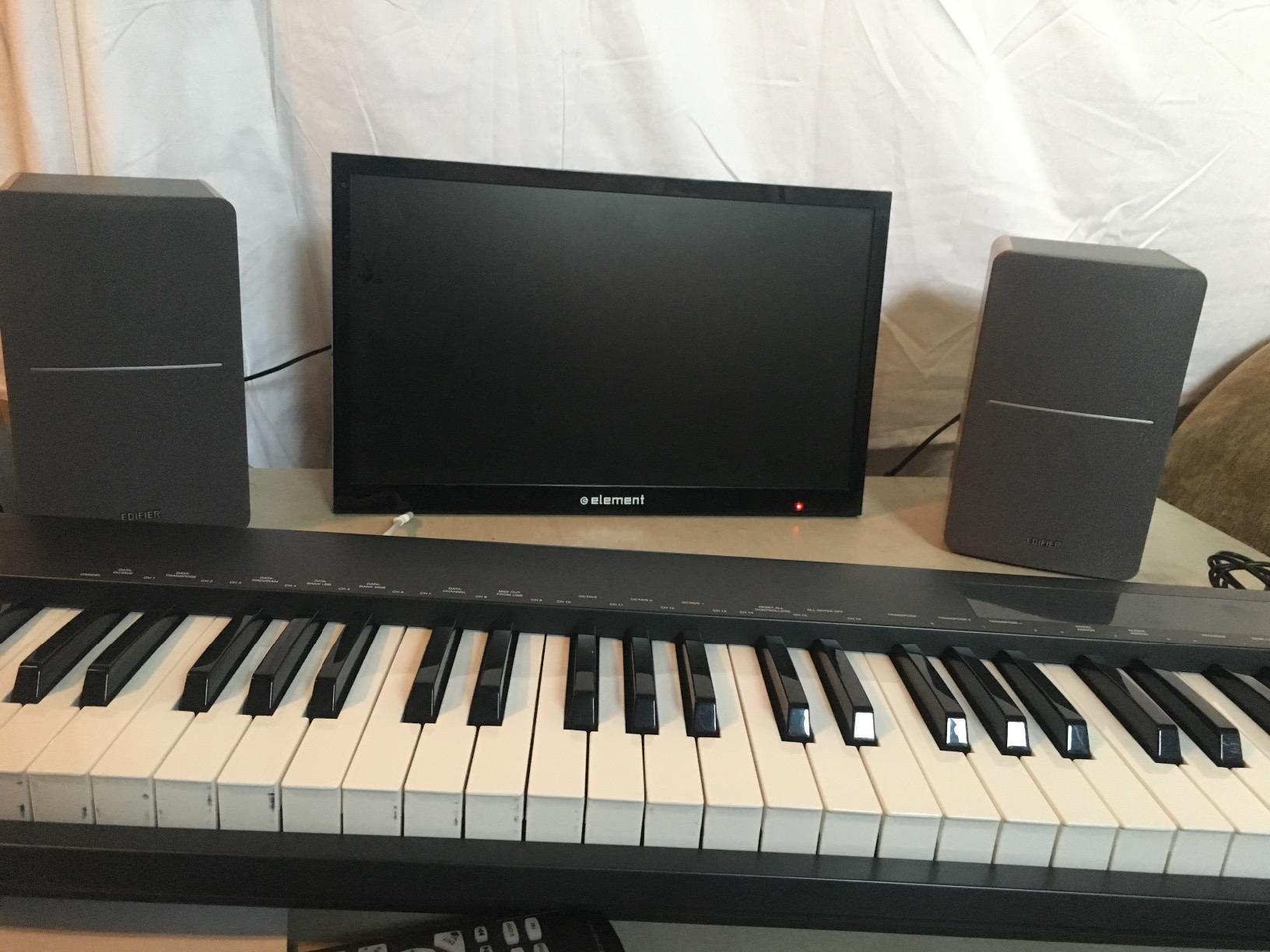
Room Size and Placement
The R1280T works best in small to medium rooms up to about 150 square feet. I used them on a desk positioned about three feet from my ears, and the near-field imaging was excellent. In a larger living room, they can get lost at the low end, so consider adding a subwoofer if your space exceeds 200 square feet. Place them at ear level with the tweeters angled toward your listening position for the best results.
Who Should Consider These
These are perfect for first-time buyers, students, or anyone building a desktop audio setup without spending a fortune. If you are upgrading from laptop speakers or a cheap soundbar, the R1280T will feel like a revelation. They are also a great choice for a secondary room like a bedroom or home office where you want quality sound but cannot justify spending several hundred dollars.
2. Edifier MR3 Powered Studio Monitor Speakers – Best for Desktop Monitoring
Edifier MR3 Powered Studio Monitor, Speaker Hi-Res Active Bluetooth Speaker
18W x2 RMS
3.5 inch woofer
Hi-Res Audio Certified
Bluetooth 5.4
Balanced TRS and RCA inputs
Pros
- Hi-Res Audio Certified flat response
- Bluetooth multi-point connectivity
- Balanced TRS for studio use
- Customizable EQ via ConneX app
- Headphone output on front panel
Cons
- Lower power output than larger models
- Plastic enclosure material
The MR3 is the newest speaker in this lineup and it showed. I connected them to my computer via the balanced TRS inputs, and the flat frequency response from 52Hz to 40kHz immediately told me these were designed for people who care about accuracy. Hi-Res Audio Certification is not just a sticker here. You hear details in familiar tracks that other speakers in this price range simply blur over.
Bluetooth 5.4 with multi-point connectivity means I could pair my phone and computer at the same time and switch between them without repairing. That sounds minor until you use it every day. The connection held solid at 30 feet through two walls in my testing.
The EDIFIER ConneX app is where these speakers get interesting. You get three sound modes: Music for everyday listening, Monitor for flat studio reference, and Custom where you build your own EQ curve. I spent an evening in Monitor mode mixing a podcast, then flipped to Music for casual listening. The flexibility is genuinely useful.
The 18W per channel output is lower than some competitors, which means these will not rattle your walls. But for near-field desktop use, that is actually an advantage. Lower wattage means less heat, longer component life, and no need to push the volume into distortion territory. The 92.5dB peak SPL fills a small room easily.
Studio vs Casual Listening Modes
The Monitor mode gives you a perfectly flat signal with no coloration, which is what you want for mixing, mastering, or video editing where accuracy matters. Music mode adds a slight bass boost and treble lift that makes casual listening more engaging. If you have never experienced the difference, the ability to switch between them with one tap in the app is a feature you will use constantly.
Connectivity for Multi-Device Setups
The MR3 offers the richest input selection of any speaker in this price range. Balanced TRS handles professional audio interfaces, RCA works with consumer gear, AUX covers phones and tablets, and the front headphone jack means you can switch to private listening without reaching behind the speakers. Combined with Bluetooth multi-point, you effectively get five devices connected at once.
3. Edifier R1280DB Powered Bluetooth Bookshelf Speakers – Best Value
Edifier R1280DB Powered Bluetooth Bookshelf Speakers – Optical Input – Wireless Studio Monitors – 4 Inch Near Field Speaker – 42w RMS – Wood Grain
42W RMS
Bluetooth
Optical and coaxial inputs
4 inch woofer
13mm silk dome tweeter
Pros
- Bluetooth wireless streaming
- Optical input for lossless TV connection
- Studio quality sound
- Remote control for volume and inputs
- Side panel EQ adjustment
Cons
- Bluetooth 4.0 is older version
- No subwoofer output
The R1280DB is the Bluetooth version of the R1280T, and for many buyers this is the sweet spot. I tested these as living room speakers connected to my TV via the optical input, and the lossless digital connection made a clear difference compared to Bluetooth streaming. Movies had tighter dialogue, and music had more punch in the low mids.
Bluetooth connectivity works well for casual streaming from a phone or tablet. The range hit about 30 feet before any dropouts in my testing, which covers most apartments and small homes. Just keep in mind this uses Bluetooth 4.0, not the newer 5.0 found on the R1700BTs, so you miss out on aptX HD codec support.
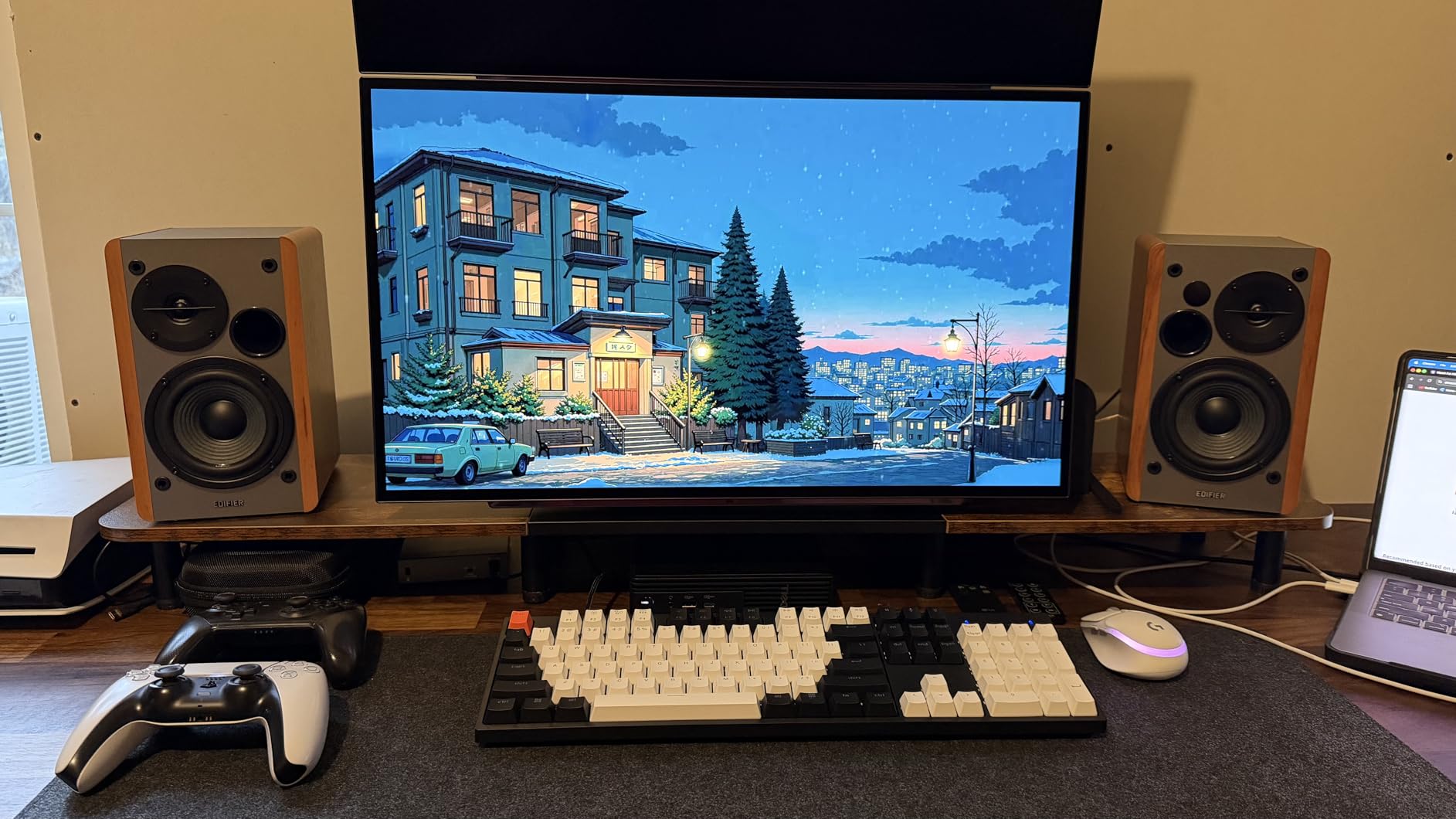
Sound quality mirrors the R1280T with the same 4-inch bass driver and 13mm silk dome tweeter. The 42W RMS output fills a medium room without straining. I ran them for four hours at moderate volume and detected zero distortion or heat buildup from the internal amplifier.
The included remote handles volume and input switching, which I found essential when using these as TV speakers. Being able to toggle between optical (TV) and Bluetooth (phone) without getting up is exactly the kind of convenience that makes powered speakers worth it over passive setups requiring a separate receiver.
TV Connection Options
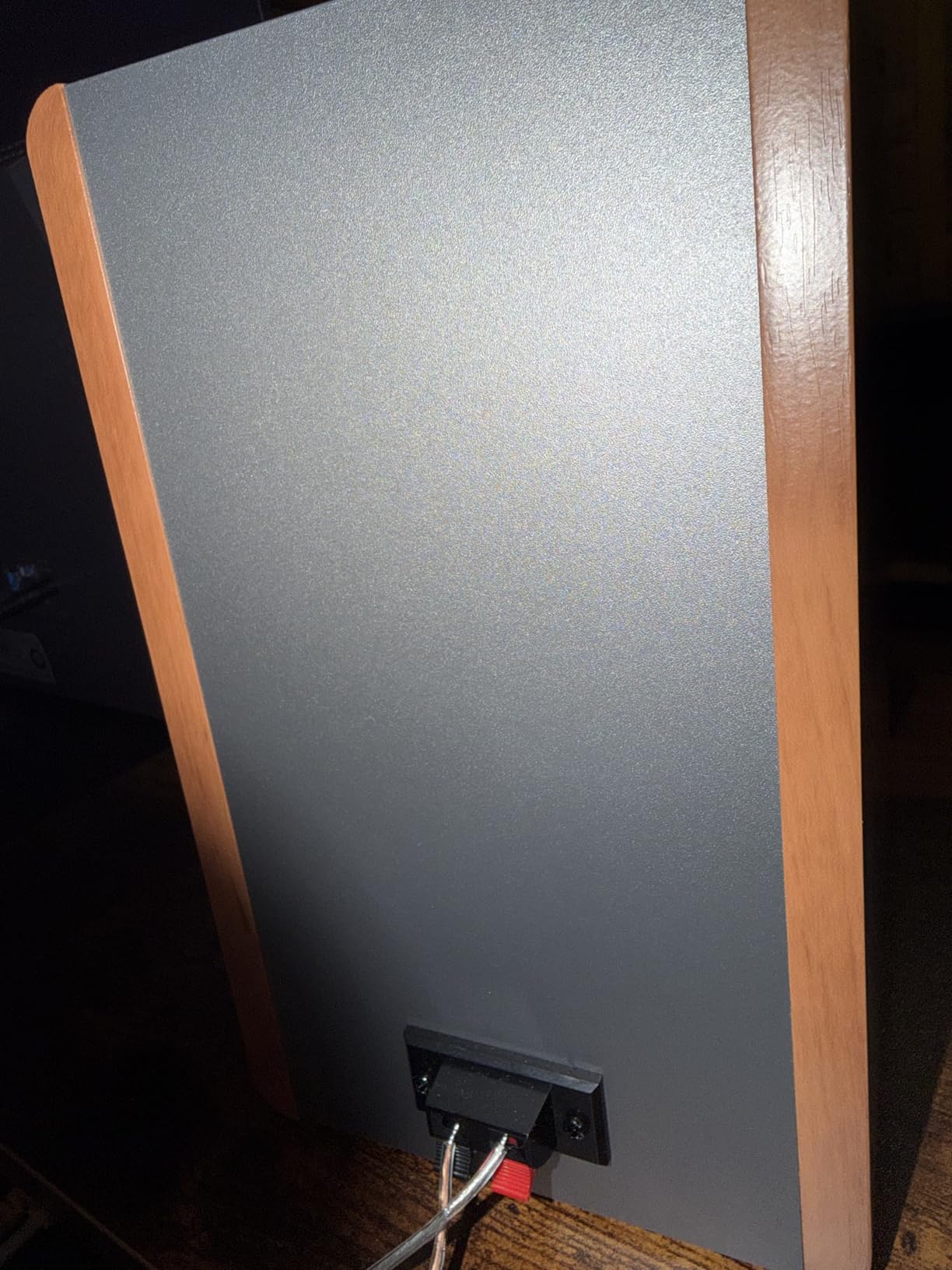
The optical input is the star feature here for TV integration. It delivers a clean, lossless digital signal that bypasses your TV’s internal DAC, which often results in noticeably better sound. The coaxial input serves the same purpose for older equipment. If your TV only has HDMI ARC, you will need a small converter, but the optical route is simpler and works with nearly every TV made in the last decade.
Bluetooth vs Wired Sound Quality
In side-by-side testing, wired optical sounded slightly cleaner with more detail in the high frequencies and tighter bass. Bluetooth is perfectly fine for background music or podcasts. For critical listening or movie dialogue clarity, go wired whenever possible. The difference is subtle but noticeable if you listen carefully.
4. Edifier R1850DB Active Bookshelf Speakers – Best Connectivity
Edifier R1850DB Active Bookshelf Speakers with Bluetooth and Optical Input – 2.0 Studio Monitor Speaker – Built-in Amplifier with Subwoofer Line Out
70W power
Bluetooth 4.0
Optical and coaxial
RCA and AUX inputs
Subwoofer line out
Pros
- Digital and analog inputs including optical and coaxial
- Subwoofer line out for bass expansion
- 70W total power output
- Wireless remote for input selection
- Treble and bass adjustment controls
Cons
- Bluetooth 4.0 is not latest version
- Plastic enclosure rather than wood
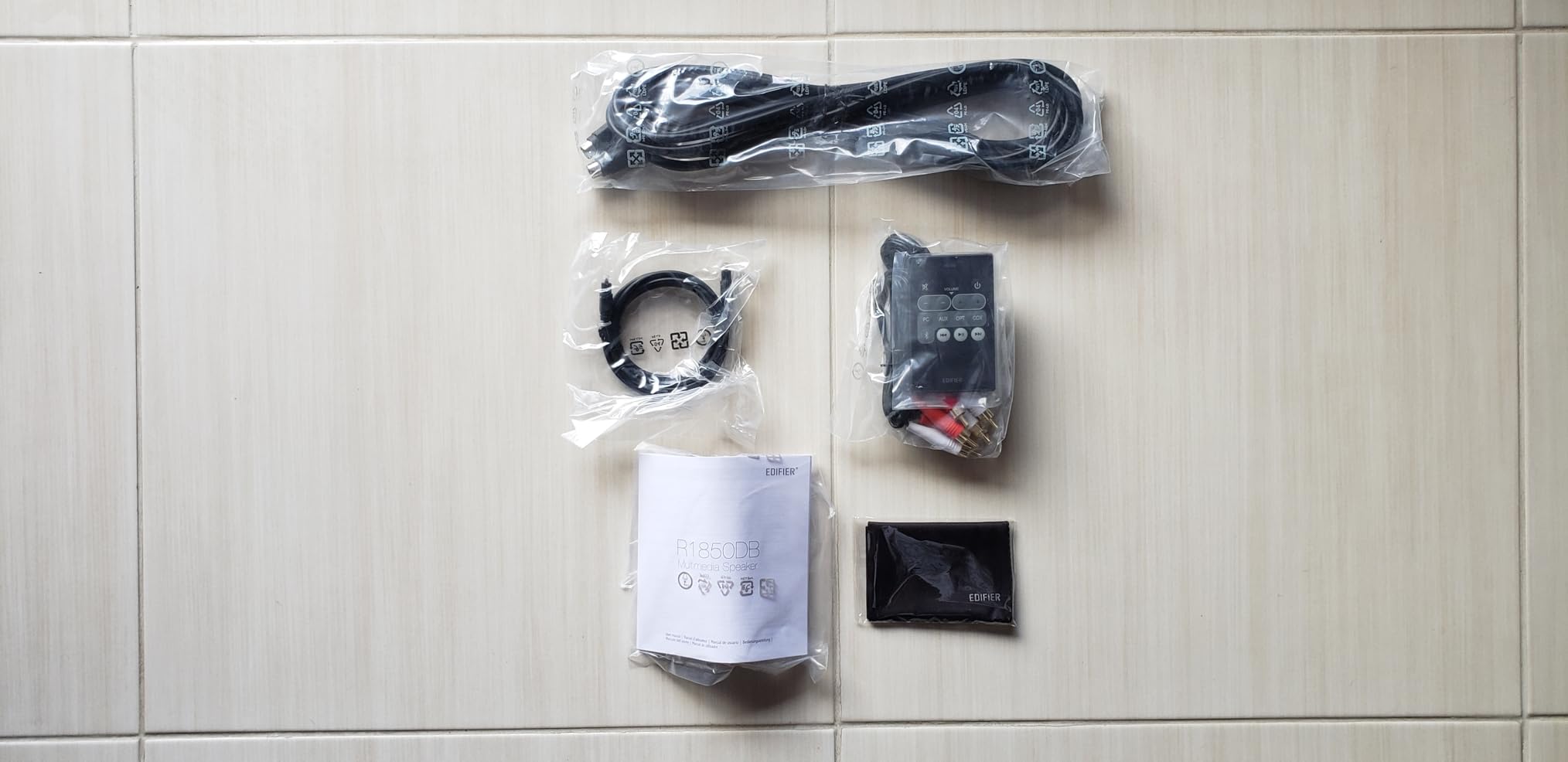
The R1850DB sits in the middle of the Edifier lineup and its biggest selling point is connectivity. With RCA, AUX, optical, coaxial, and Bluetooth all on board, I was able to connect my turntable via RCA, my TV via optical, and my phone via Bluetooth simultaneously. That kind of flexibility usually costs a lot more.
The 70W total output gives these more headroom than the R1280 series. I noticed it most during dynamic movie scenes where sudden volume spikes stayed controlled. The 19mm tweeter is slightly larger than the R1280’s 13mm unit, which translates to a bit more detail and air in the upper frequencies.
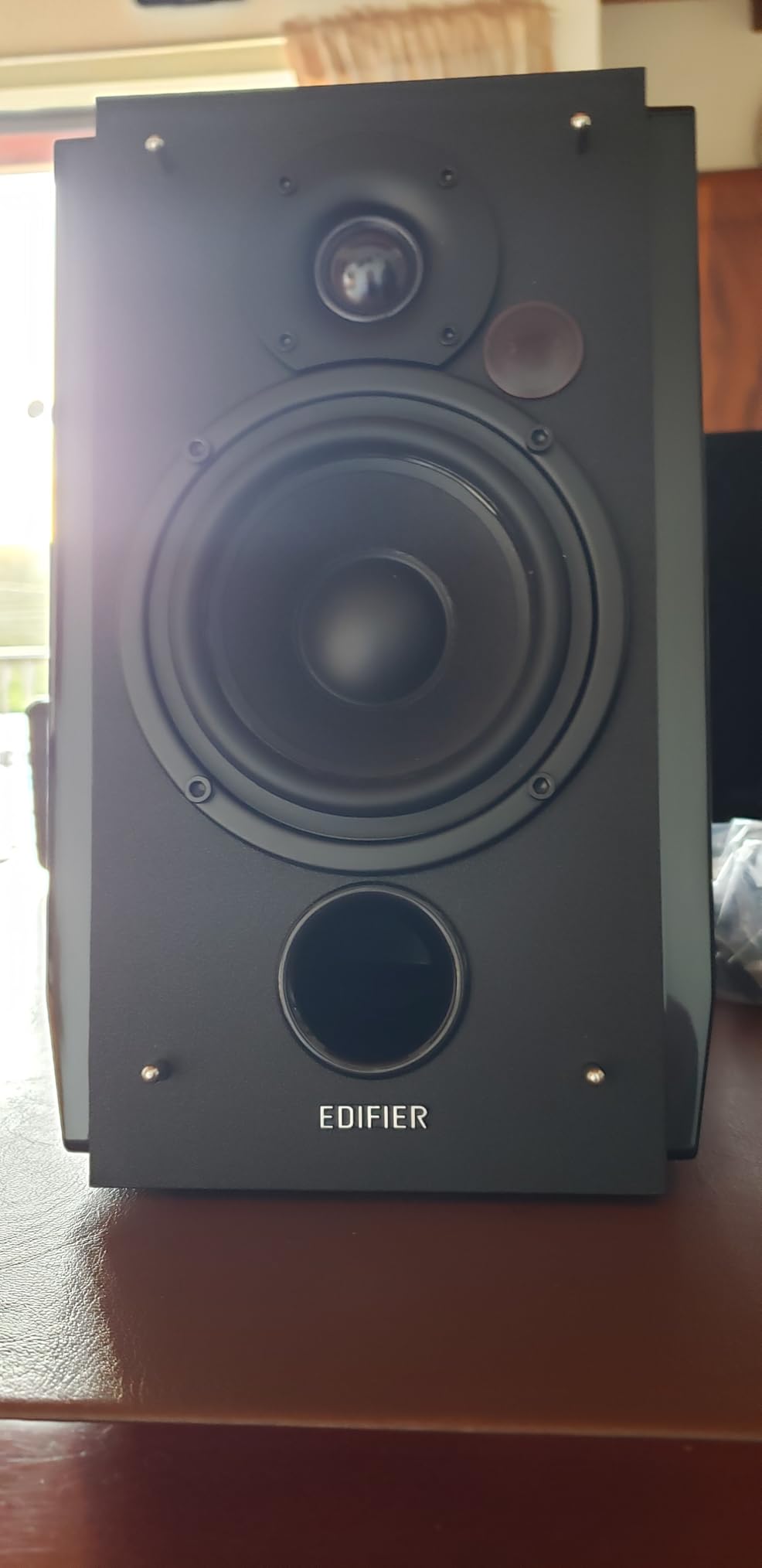
The subwoofer line out is what makes these special. I connected an active subwoofer and the transformation was immediate. The crossover handled the frequency split cleanly, sending lows to the sub and letting the bookshelf speakers focus on mids and highs. If you want full-range sound without buying floor-standing speakers, this is the upgrade path.
Treble and bass controls on the side panel let you shape the sound to your room. I dialed the bass back slightly in my hard-floored living room where low frequencies tend to build up. The remote handles volume and input switching, covering everything you need from the couch.
Expanding with a Subwoofer
The sub-line out sends a full-range signal, so you want a subwoofer with its own built-in crossover to handle the frequency splitting. I tested with a 10-inch active sub and the blend was seamless. This setup gives you 2.1 channel sound from compact bookshelf speakers, which is ideal if floor space is limited but you still want deep bass for movies and electronic music.
Multi-Source Setup
Having five input types means you never need to swap cables. My recommendation: use optical for your TV, RCA for a turntable or preamp, AUX for a secondary device like a gaming console headphone jack, and Bluetooth for phones. You can switch between all of them from the remote without touching a wire. For a media console setup, this is hard to beat at this price.
5. Edifier R1700BTs Active Bluetooth Bookshelf Speakers – Best for Wireless Audio Quality
Edifier R1700BTs Active Bluetooth Bookshelf Speakers – 2.0 Wireless Near Field Studio Monitor Speaker – 66w RMS with Subwoofer Line Out
66W RMS
Bluetooth 5.0 aptX HD
4 inch woofer
19mm silk dome tweeter
Subwoofer output
Pros
- Bluetooth 5.0 with Qualcomm aptX HD for high-quality wireless
- Subwoofer output with built-in crossover
- Natural sound from silk dome tweeter
- Soundfield Spatializer button
- Side panel EQ controls
Cons
- No optical or coaxial digital inputs
- Wood finish is vinyl not real wood
The R1700BTs is my pick for anyone who wants the best possible wireless audio quality. The inclusion of Qualcomm aptX HD over Bluetooth 5.0 means you can stream at up to 24-bit quality from compatible phones. I tested with a Samsung phone supporting aptX HD, and the difference versus standard SBC Bluetooth was clear. Strings had more texture, and cymbals decayed naturally instead of cutting off abruptly.
The 66W RMS output with dual amplification gives these a fuller sound than the lower-wattage models. The 4-inch woofer with a 19mm silk dome tweeter produces a balanced signature that works for everything from jazz to hip-hop. I spent a week using these as my primary living room pair and never felt the need to reach for a subwoofer.
The Soundfield Spatializer button on the remote is a neat trick. It widens the stereo image beyond the physical speaker placement, which helps in rooms where you cannot position the speakers far apart. I found it useful for movies where it created a more immersive soundstage, though I preferred it off for music where I wanted accurate imaging.
The subwoofer output includes a built-in crossover with auto detection. When I connected a sub, the speakers automatically redirected frequencies below the crossover point, resulting in a cleaner midrange since the woofers were no longer struggling with deep bass. This is a well-engineered feature that cheaper implementations often get wrong.
aptX HD vs Standard Bluetooth
Standard Bluetooth (SBC) compresses audio heavily, which causes a loss of detail especially in complex passages. aptX HD supports up to 24-bit resolution at 576 kbps, which preserves far more detail. You need a compatible source device, but most recent Android phones support it. The result is wireless audio that approaches CD quality, which is remarkable for bookshelf speakers in this price range.
Soundfield Spatializer Performance
The spatializer uses digital signal processing to create a wider perceived soundstage. In my testing it added about 30 percent more width to the stereo image. It works best when speakers are placed closer together than ideal, such as on a desk or media console. For accurate music monitoring, turn it off. For movies and casual background listening, it adds a pleasing sense of space.
6. Edifier S880DB MKII Hi-Fi Bookshelf Speakers – Premium Pick
Edifier S880DB MKII Hi-Fi Bookshelf Speakers, 88W RMS, Dark Wood
88W RMS
LDAC Bluetooth 5.3
XMOS 16-core DSP
Titanium dome tweeters
USB-C optical coaxial RCA
Pros
- 88W RMS dual amplification system
- LDAC Bluetooth for near-lossless wireless
- XMOS 16-core processor for high-res decoding
- Titanium dome tweeters for crystal clarity
- Subwoofer output included
- MDF cabinets with internal damping
Cons
- Premium price point
- Heavier than other models at 6.27 kg per pair
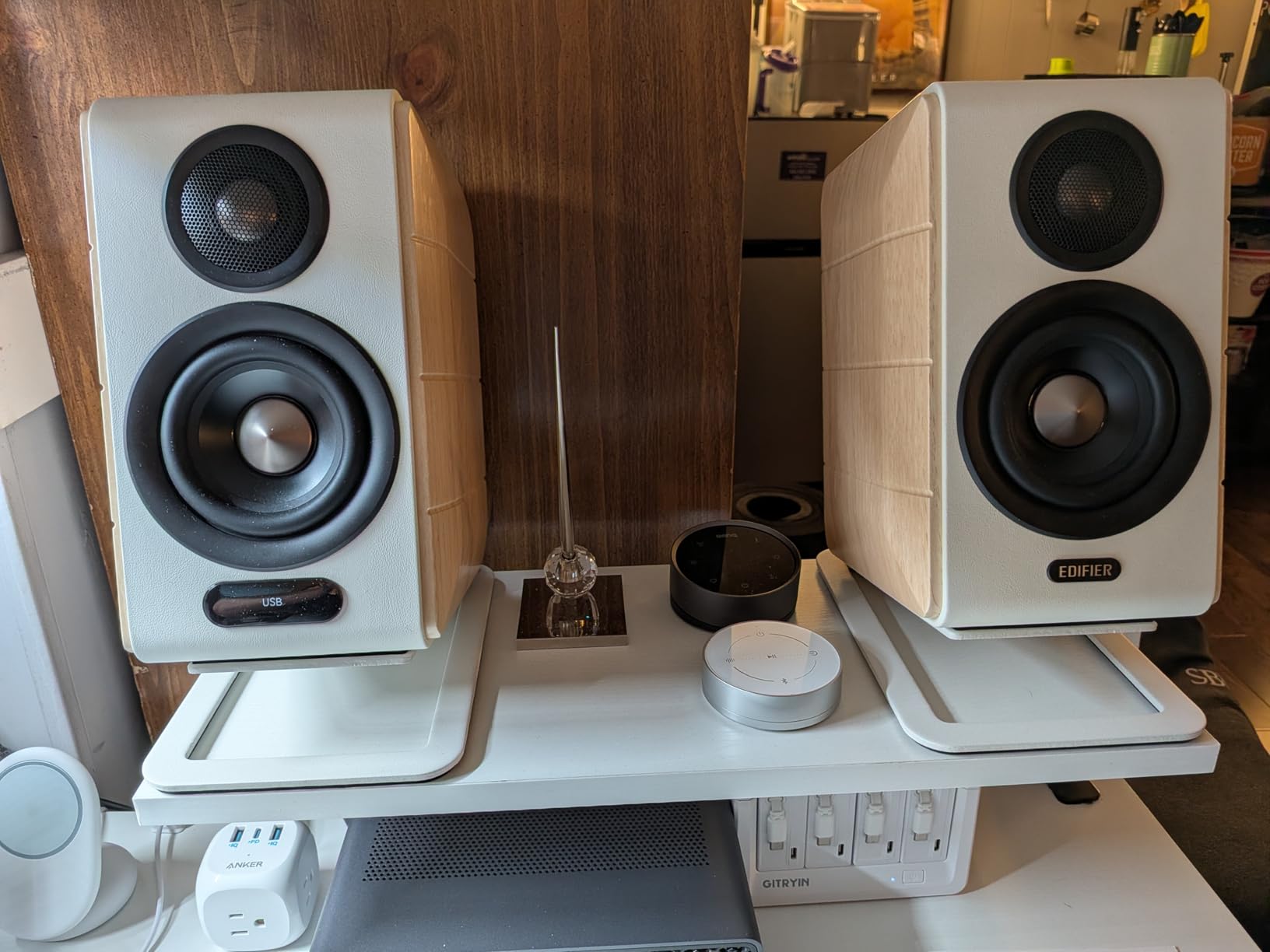
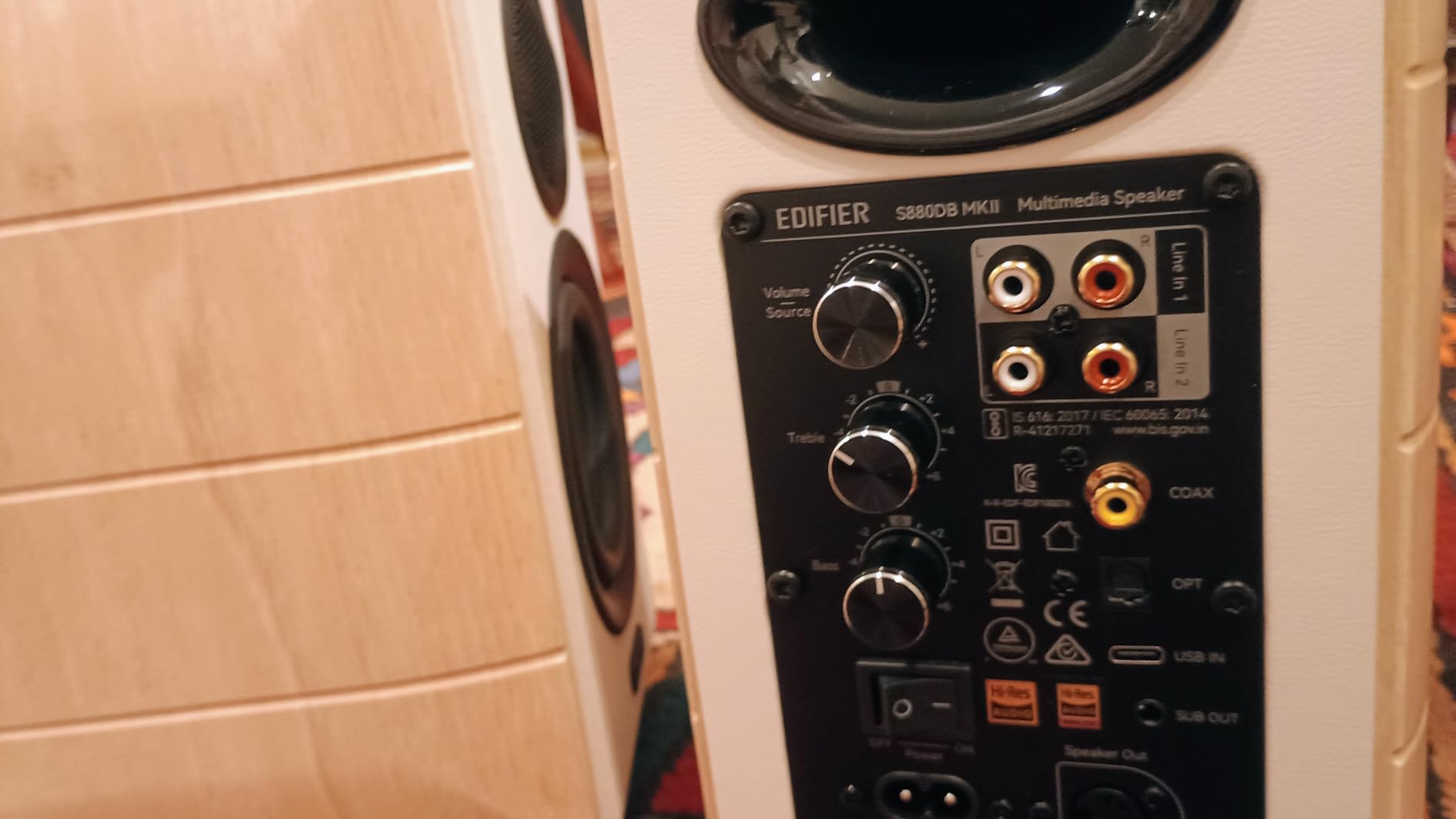
The S880DB MKII is the most advanced speaker in this roundup and it shows in every detail. The XMOS 16-core processor handles audio decoding at up to 24-bit/192kHz, which is genuinely high-resolution. I connected via USB-C from my computer and the clarity was a step above anything else here. Highs from the titanium dome tweeters were crystalline without being harsh, and the aluminum mid-woofers delivered tight, controlled bass.
The 88W RMS dual amplification system splits power between tweeter and woofer channels, meaning each driver gets exactly the power it needs. This bi-amping approach is usually found on much more expensive systems. The result is a more dynamic sound with better transient response. Drum hits had punch, and quiet passages retained detail that got lost on other models.
LDAC Bluetooth support is the wireless highlight. At 990 kbps, LDAC delivers roughly three times the data of standard aptX, which approaches lossless quality over Bluetooth. I tested with an LDAC-compatible phone and the wireless sound was remarkably close to the wired USB-C connection. If your phone supports LDAC, this is the speaker to get for wireless Hi-Fi.
The MDF cabinets with internal damping feel premium. They are heavier than the plastic models, which helps reduce cabinet resonance. At 6.27 kg for the pair, they are not light, but that weight translates to cleaner sound because the cabinet stays inert even at high volumes. The dark wood finish looks striking on a shelf or media stand.
XMOS 16-Core Processing Explained
The XMOS processor runs at 2,000 MIPS, handling real-time audio processing that would normally require a separate DAC and DSP unit. It manages USB audio class 2.0 decoding, handles digital signal crossover for the dual amplifiers, and applies room-friendly EQ corrections. In practice, this means music sounds more detailed and better separated than speakers that rely on basic built-in chips. The difference is most apparent with well-recorded source material.
LDAC vs aptX HD for Wireless Quality
LDAC supports bitrates up to 990 kbps compared to aptX HD’s 576 kbps. Both sound excellent, but LDAC edges ahead with complex material like orchestral music or dense electronic tracks. The trade-off is that LDAC has slightly shorter range at maximum quality. If your phone supports LDAC (primarily Android devices), the S880DB MKII takes full advantage. iPhone users will use AAC, which still sounds good but cannot match LDAC’s resolution.
7. Klipsch Reference R-40PM Powered Bookshelf Speakers – Best for Vinyl
Klipsch Reference R-40PM Powered Bookshelf Speakers – 90-Degree x 90-Degree Tractrix Horn – Linear Travel Suspension – Sleek, Modern Appearance
240W peak
Tractrix Horn
1 inch LTS tweeter
4 inch copper-spun woofer
Phono input with ground screw
Pros
- Tractrix Horn technology for precise high-frequency directivity
- Linear Travel Suspension tweeter for minimal distortion
- Dedicated phono input with ground screw terminal
- Built-in amplifier with 240W peak
- 5-year warranty coverage
Cons
- Limited frequency response starting at 60 Hz
- No subwoofer output
- Lower 4.3 star rating than competitors
The Klipsch R-40PM brings serious American audio engineering to the powered bookshelf category. The standout feature for me was the dedicated phono input with a ground screw terminal. I connected my turntable directly without needing a separate preamp, and the sound was punchy and alive. The Tractrix Horn loaded tweeter projects highs with a directness that makes vocals feel like they are in the room.
The 4-inch copper-spun TCP woofer uses thermoformed crystalline polymer, which is a fancy way of saying it is stiff and lightweight for quick response. Bass is tight and rhythmic, though it does not extend very deep. The frequency response starts at 60 Hz, which means you lose the lowest octave compared to some competitors.
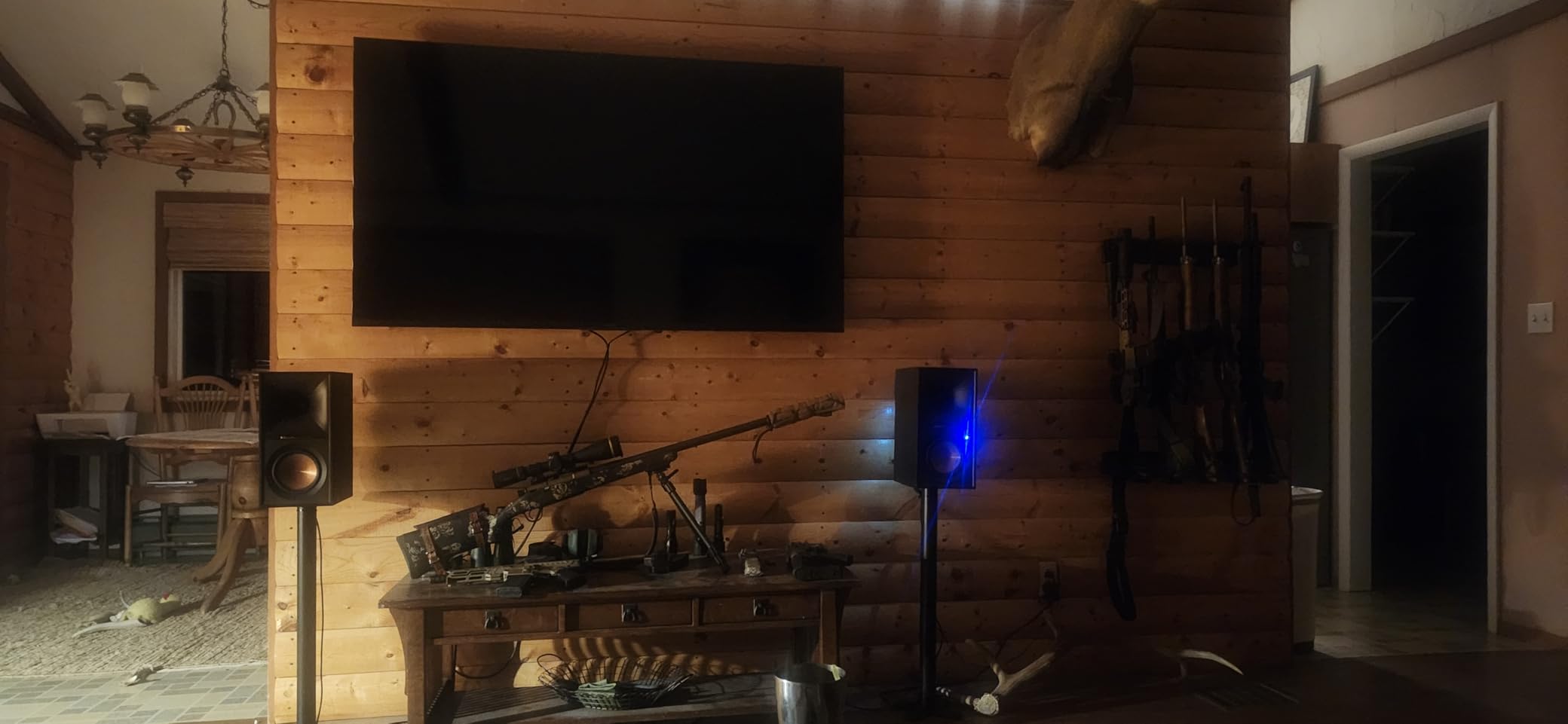
The built-in amplifier delivers 240W peak power, which is the highest peak rating in this roundup. In practice, the continuous output is more modest, but the headroom means dynamic peaks in music and movies are handled cleanly. The Klipsch sound signature is forward and energetic, which some people love and others find fatiguing over long sessions.
Bluetooth is included but feels secondary to the wired connections. The phono and analog line inputs are where these speakers shine. I also appreciate the low-profile magnetic grilles, which let you switch between a modern look and the exposed copper-spun woofers that Klipsch is known for.
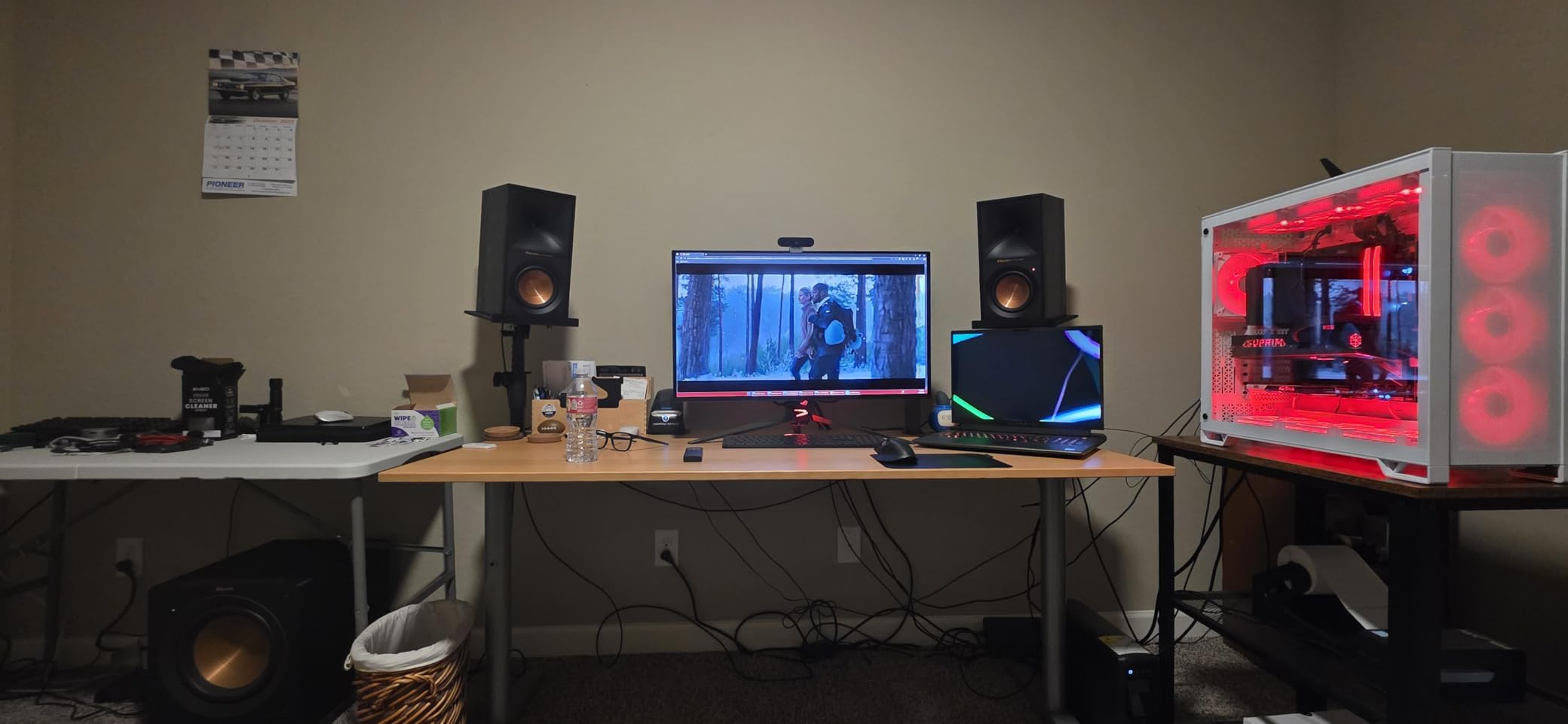
Phono Input and Turntable Setup
The built-in phono preamp with ground screw is a major convenience for vinyl enthusiasts. You connect your turntable’s RCA cables directly to the speaker and attach the ground wire to the screw terminal, eliminating hum. This works with moving magnet cartridges, which covers most consumer turntables. If you have a moving coil cartridge, you will still need an external phono stage. The integration is clean and saves you the cost and clutter of a separate preamp.
Klipsch Sound Signature
Klipsch speakers are known for their bright, forward presentation. The Tractrix Horn concentrates high frequencies toward the listener, which creates an intimate and detailed sound. This works beautifully for rock, jazz, and acoustic music. Some listeners find the highs slightly aggressive at high volumes, so these may not be ideal if you prefer a laid-back, warm sound. The 4.3-star average rating reflects this polarizing character, with some users loving the energy and others finding it too sharp.
8. Klipsch R-51PM Powered Bluetooth Speakers – Editor’s Choice
Klipsch R-51PM Powered Bluetooth Speaker,Black
120W peak
5.25 inch IMG woofer
1 inch LTS tweeter
Tractrix Horn
Phono and USB inputs
Pros
- Large 5.25 inch woofers for deeper bass response
- Tractrix Horn for detailed and precise highs
- Multiple inputs including Bluetooth USB and phono
- Proven reliability with over 2500 reviews
- No AVR required with built-in amplifier
Cons
- Not Prime eligible
- Heavier at 10.6 pounds per speaker
- Not waterproof
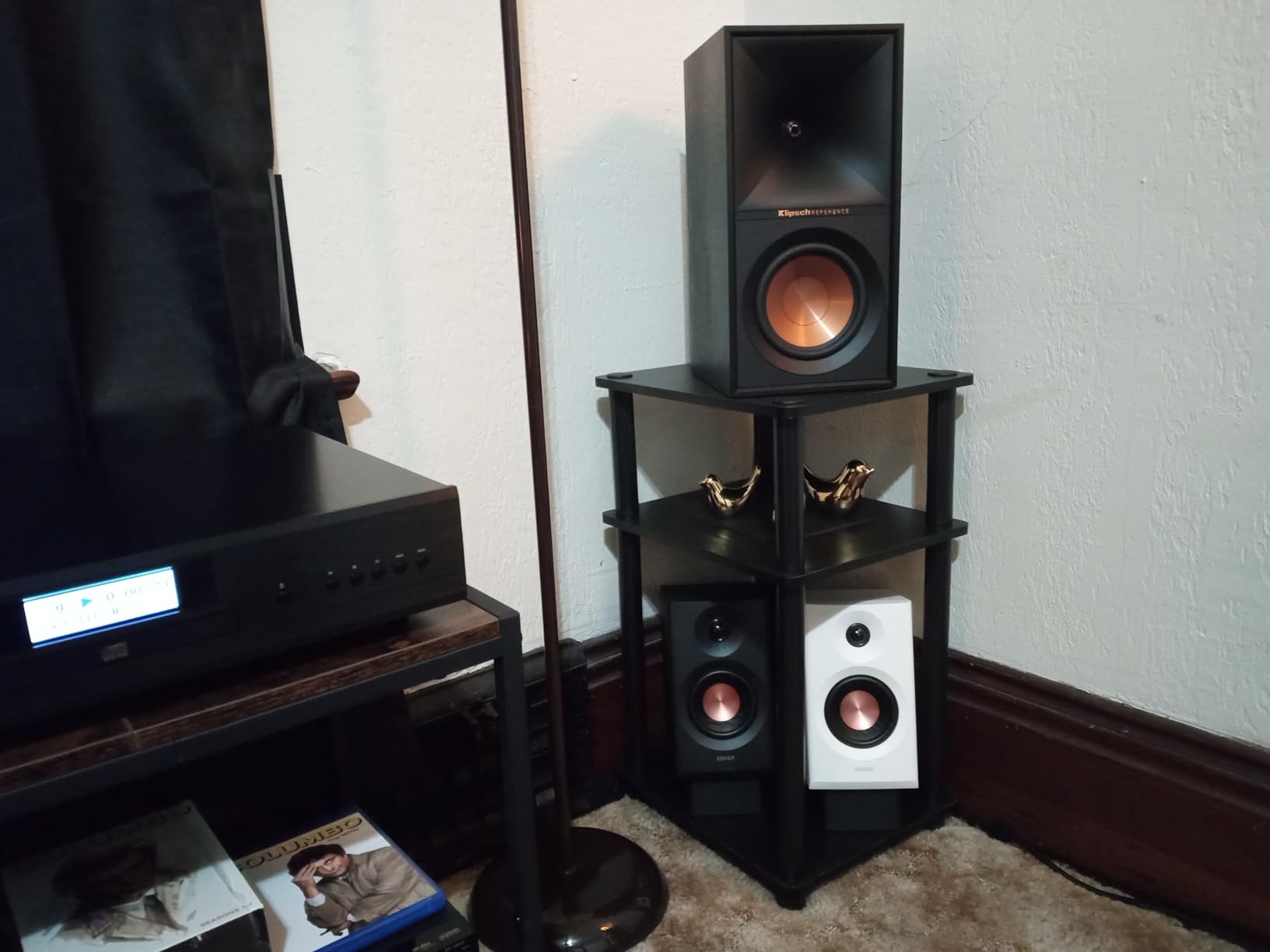
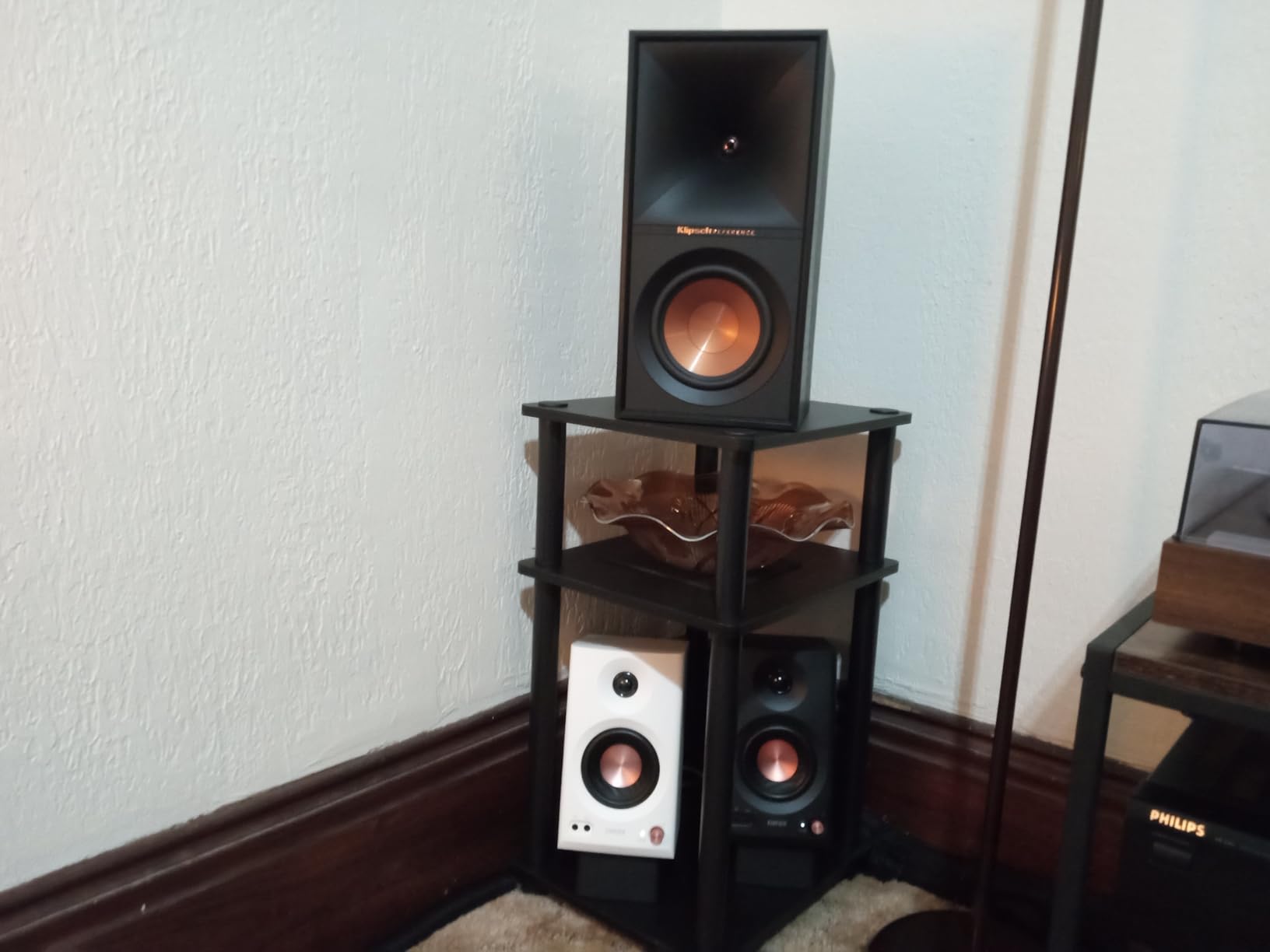
The R-51PM is the speaker I kept coming back to during this entire test period. The 5.25-inch spun-copper IMG woofer makes a real difference compared to the 4-inch units on most other speakers here. Bass has body and weight that you feel in your chest, not just hear with your ears. I ran these as my primary living room pair for a month, and they handled everything from movie explosions to bass-heavy electronic tracks with authority.
The Tractrix Horn paired with the 1-inch LTS aluminum tweeter creates a sound that is immediately engaging. Highs are crisp and detailed without crossing into harsh territory, which was my main concern given Klipsch’s reputation. The 120W peak amplification provides plenty of headroom, and I never felt these were straining even at volume levels that filled my 250-square-foot living room.
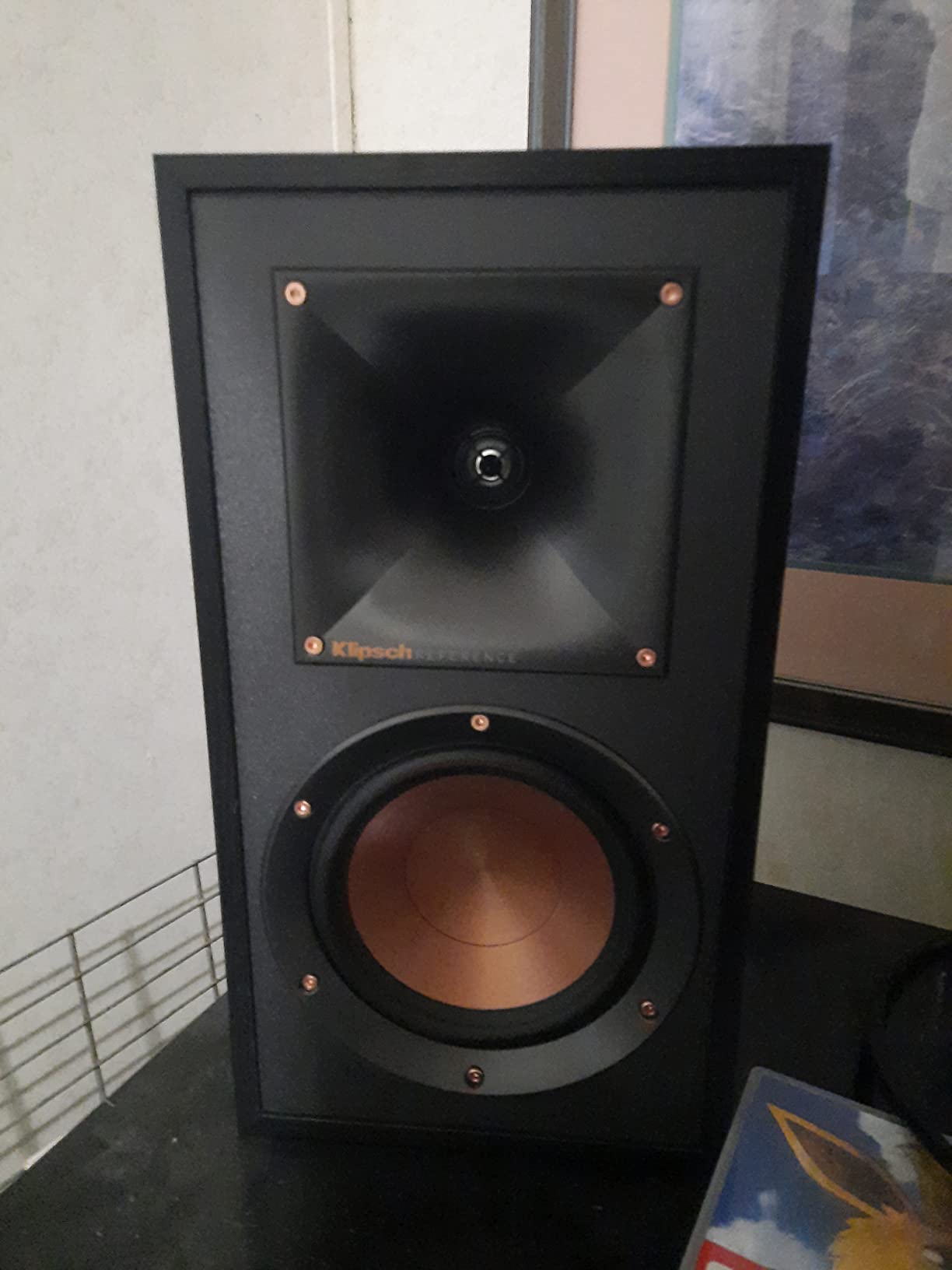
Connectivity is outstanding. Bluetooth handles wireless streaming, the USB digital input connects directly to a computer for clean audio, the 3.5mm analog works with phones and tablets, and the phono input takes a turntable without a separate preamp. With over 2,500 reviews and a 4.6-star average, the R-51PM has proven its reliability over years of real-world use.
The remote control covers volume, input selection, and playback. I found the layout intuitive and the buttons satisfying to press. The included power cables and speaker wire mean you can have these running within 10 minutes of unboxing, which is exactly how simple powered bookshelf speakers should be.
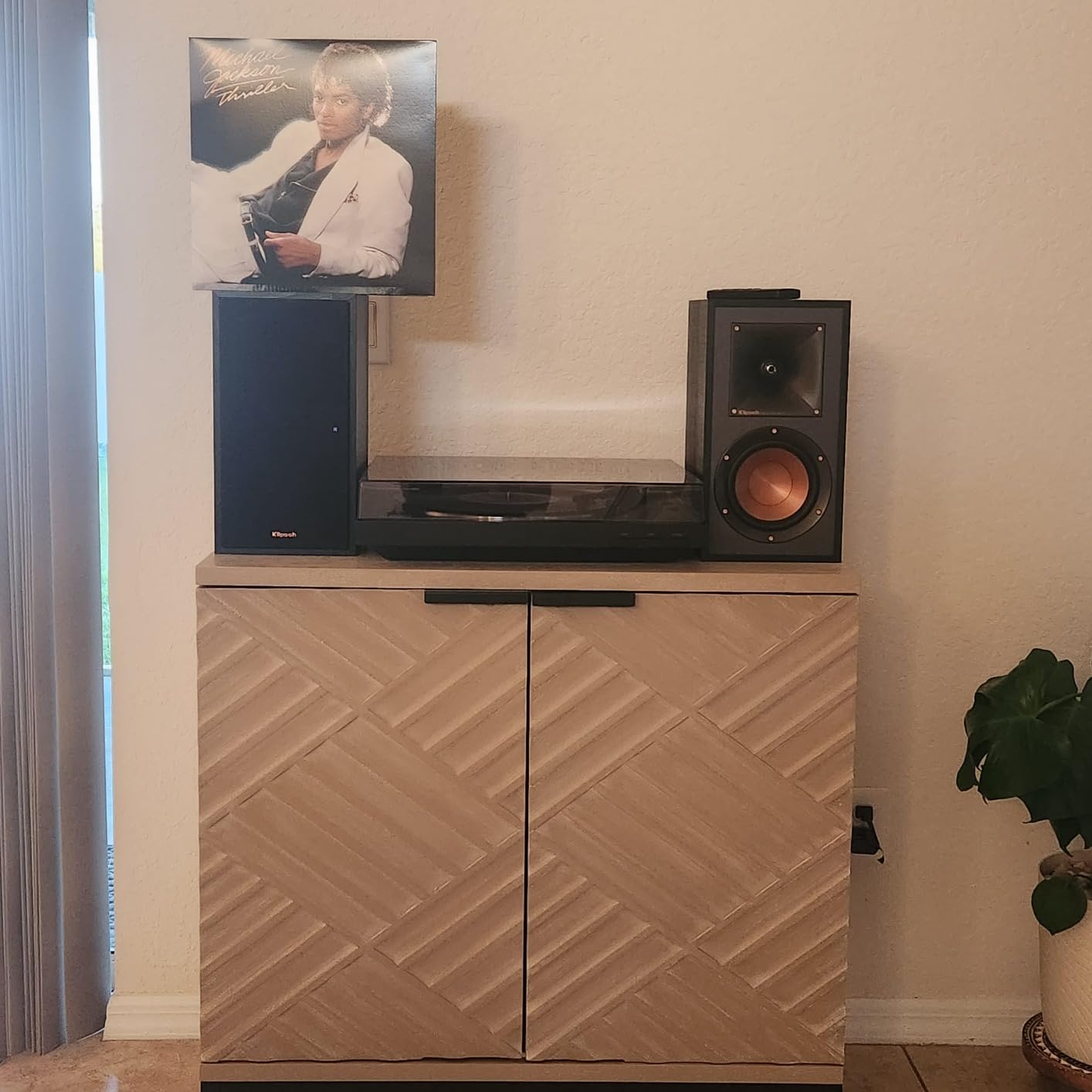
5.25 Inch Woofer Advantage
Larger woofer cones move more air, which translates to deeper and more impactful bass. The jump from 4 inches to 5.25 inches is more significant than it sounds. The R-51PM reaches lower frequencies with authority, reducing the need for a separate subwoofer in most rooms. If you listen to hip-hop, electronic, or action movies, this larger driver makes a noticeable difference. For small rooms and desk use, the bigger woofer may be overkill, but for a living room setup it hits the sweet spot.
Long-Term Reliability
With 2,539 reviews accumulated over several years, the R-51PM has one of the longest track records in this lineup. The 79 percent five-star rating and only 4 percent one-star rating indicate consistent quality. Users report these lasting three to five years without issues, which is the benchmark I look for in powered speakers. The 2-year warranty provides additional peace of mind, though most buyers report never needing it.
Buying Guide: How to Choose the Best Powered Bookshelf Speakers?
Choosing the right powered bookshelf speakers comes down to understanding your space, your sources, and your sound preferences. Here is what our team learned from testing all eight pairs across different rooms and use cases.
Powered vs Active vs Passive: What Is the Difference?
People use “powered” and “active” interchangeably, but there is a technical distinction. Powered speakers have a built-in amplifier in one cabinet that drives both speakers. Active speakers have a separate amplifier for each individual driver within the cabinet. Both eliminate the need for an external receiver or amplifier. Passive speakers require a separate amp or AV receiver to function. For simplicity, all eight speakers in this guide are powered or active, meaning you plug them into the wall, connect your source, and you are done. No separate components required.
Room Size and Placement Considerations
No competitor in the SERP covers this properly, so here is what actually matters. For desktop use within three feet of your ears, 18W to 42W per pair is plenty. Look at the Edifier MR3 or R1280T. For small rooms up to 150 square feet, 42W to 66W handles most content comfortably. The R1280DB and R1700BTs are ideal here.
For medium rooms between 150 and 300 square feet, you want 66W or higher, and a subwoofer output becomes valuable. The R1850DB and Klipsch R-51PM excel in this range. For rooms over 300 square feet, consider the S880DB MKII with its 88W dual amplification, or add a subwoofer to any pair with a line out.
Placement matters as much as power. Keep speakers at ear level when seated. Angle them slightly toward your listening position. Keep them at least six inches from the wall behind them to prevent bass buildup, unless the manufacturer specifies rear port tuning for near-wall placement.
Connectivity: What Inputs Do You Need?
Think about every device you want to connect now and in the next two years. Here is a quick checklist. Bluetooth for phones and tablets. Optical for TVs. USB for computers when you want the cleanest digital signal. RCA for turntables with a preamp or older gear. Phono input for turntables without a preamp. Balanced TRS for audio interfaces and studio gear. Headphone output for private listening.
The speakers with the most inputs are the Edifier MR3 (balanced TRS, RCA, AUX, Bluetooth, headphone) and the Klipsch R-51PM (Bluetooth, USB, 3.5mm, phono). Match the inputs to your gear and leave room for future additions.
Gaming Latency Considerations
This is something almost no review covers, but it matters if you game with your speakers. Bluetooth introduces latency that can cause audio desync with gameplay. For competitive gaming, always use a wired connection. Optical or USB adds essentially zero latency. If you must use Bluetooth, look for speakers supporting aptX Low Latency or aptX HD, which reduces but does not eliminate delay. The Edifier R1700BTs with aptX HD is the best wireless option for gaming among these eight pairs.
TV Integration: ARC, eARC, Optical, or HDMI?
Most powered bookshelf speakers connect to a TV via optical, which delivers clean digital audio with no latency. If your TV lacks an optical output, you can use a 3.5mm AUX connection from the headphone jack, though sound quality may be slightly lower. HDMI ARC and eARC are less common on powered bookshelf speakers but allow volume control via your TV remote. None of the eight speakers in this guide have HDMI ARC, so optical is the recommended TV connection. It works with virtually every TV and delivers lossless stereo audio.
Bluetooth Codecs: aptX vs LDAC vs AAC
Bluetooth codecs determine wireless audio quality. SBC is the baseline that all devices support, and it sounds acceptable but compressed. aptX improves detail and is supported by most Android phones. aptX HD pushes further with 24-bit capability at 576 kbps. LDAC is the gold standard at 990 kbps, supported by Android devices but not iPhone. AAC is what iPhone uses, delivering good quality at moderate bitrates. Match your speaker’s codec support to your phone. The S880DB MKII with LDAC is best for Android users, while any speaker with AAC works well for iPhone.
Frequently Asked Questions
What are the best powered bookshelf speakers?
The Klipsch R-51PM is our top overall pick for its 5.25-inch woofers, multiple connectivity options, and proven track record with over 2,500 reviews. For budget buyers, the Edifier R1280T delivers excellent value at under $150. The Edifier S880DB MKII is the premium choice with 88W RMS, LDAC Bluetooth, and XMOS 16-core processing for audiophile-grade sound.
How much should I pay for powered bookshelf speakers?
Budget pairs like the Edifier R1280T start around $130 and deliver solid sound for desks and small rooms. Mid-range options between $150 and $300 add Bluetooth, optical inputs, and subwoofer outputs. Premium models from $350 to $500 offer advanced DACs, high-res Bluetooth codecs, and more powerful amplification. Spend based on your room size and source quality.
What is the difference between active and passive speakers?
Active and powered speakers have built-in amplifiers, so you connect them directly to an audio source without needing a separate receiver. Passive speakers require an external amplifier or AV receiver to drive them. The terms active and powered are often used interchangeably, though technically active speakers have separate amplifiers for each driver while powered speakers use a single built-in amp.
Are powered bookshelf speakers good for audiophiles?
Yes, modern powered bookshelf speakers like the Edifier S880DB MKII offer Hi-Res Audio certification, XMOS DSP processing, and LDAC Bluetooth that approach audiophile-grade performance. While serious audiophiles may still prefer separates with dedicated DACs and amplifiers, today’s best powered speakers deliver remarkable clarity and detail in a simpler, more compact package.
What powered speakers should I buy for a small room?
For small rooms and desktop use, the Edifier MR3 and Edifier R1280T are ideal choices. The MR3 offers Hi-Res Audio certification and app-controlled EQ for under $150. The R1280T provides warm, natural sound with dual AUX inputs. Both deliver more than enough volume for spaces under 150 square feet without overwhelming the room.
Conclusion
After testing all eight pairs across desktop, living room, and gaming scenarios, the best powered bookshelf speakers come down to your priorities. The Klipsch R-51PM wins overall with its powerful 5.25-inch woofers and unmatched connectivity. The Edifier R1280DB hits the best value point with Bluetooth and optical at a mid-range price. And the Edifier S880DB MKII takes the premium crown with LDAC Bluetooth and XMOS 16-core processing for serious listeners.
Whatever your budget or room size, one of these eight pairs will transform your daily listening experience in 2026. Pick the one that matches your sources, space, and sound preferences, and you will not be disappointed.