
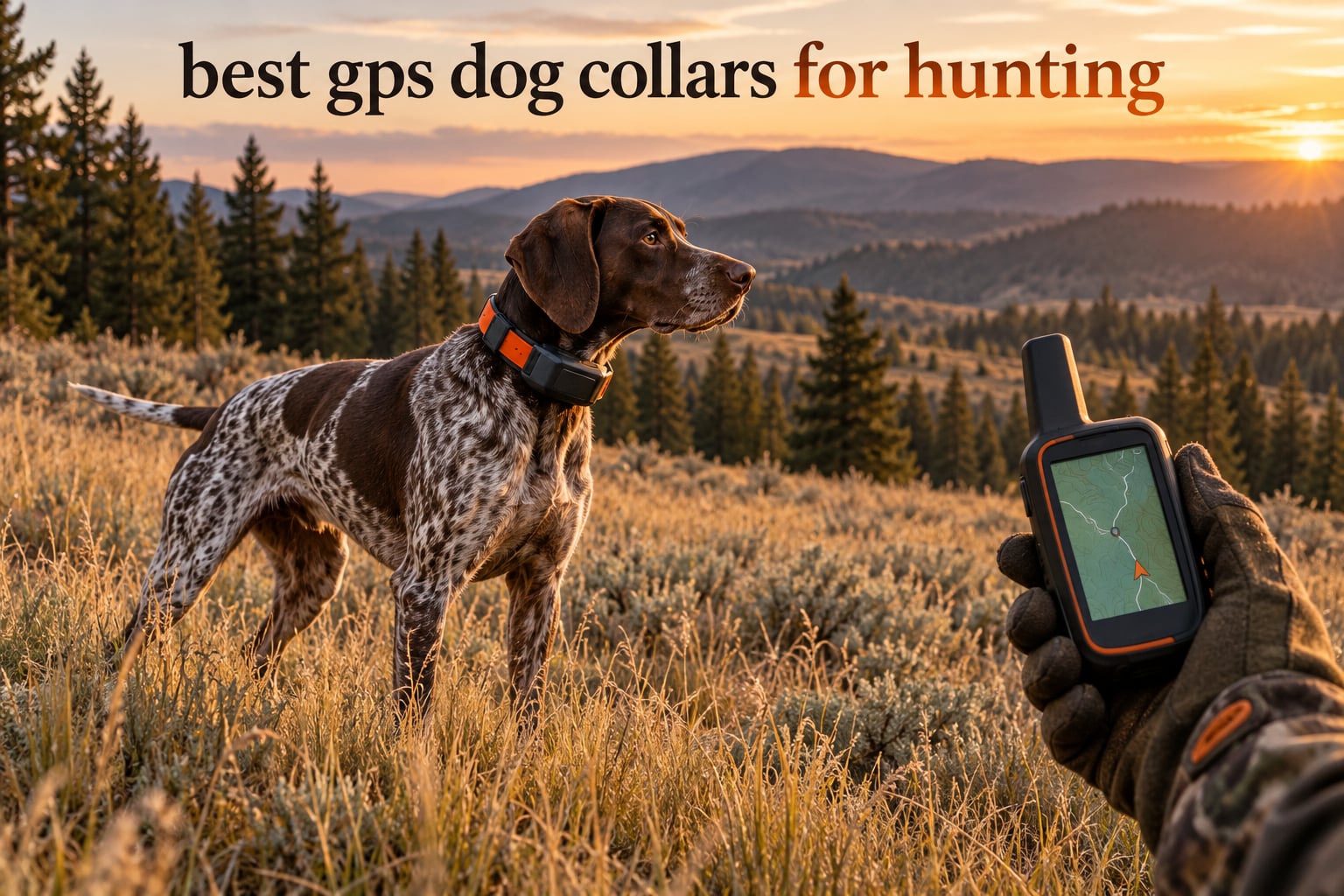
Hunting country does not care about your phone’s signal bars. The best GPS dog collars for hunting all solve the same problem in the same way, by talking to a handheld receiver over radio frequency instead of bouncing location data off cell towers. That single design decision is why a collar can hold a fix on a pointing dog six miles into a drainage in national forest while a subscription tracker spins uselessly in the same creek bottom.
Our team has been putting these systems through wet timber, rolling CRP ground, and long cold mornings for weeks, and we narrowed twelve of them down to the ones worth your money. The differences that actually matter in the field are narrower than the spec sheets suggest, so read the sections on update rate, real-world range, and collar weight carefully before you commit.
Two things separate the serious hunting systems from the pet trackers that flood the same search results. First, they carry their own training function, so one box gives you a remote and a collar that talk to each other with no phone involved. Second, they scale to a pack, which matters the moment you are running more than one dog. If you are still comparing brands rather than systems, our long range GPS dog tracking collar guide breaks down the radio side of things first.
We update this list through 2026, and everything below reflects the current generation of hardware rather than discontinued models. One note up front: a handheld is a separate purchase on most of these systems, so read the whole review before you assume the listed product is everything you need.
Table of Contents
Top 3 Picks for the Best GPS Dog Collars for Hunting in 2026
Those three cover the most common setups. The TT 25 is the general answer, the PATHFINDER2 Compass is what you pick when you run several dogs, and the TT 15 Mini exists because a collar that weighs half a pound more than it should will rub a smaller dog raw by noon.
12 Best GPS Dog Collars for Hunting (October 2026)
| Product | Specifications | Action |
|---|---|---|
 Garmin Alpha TT 25 Garmin Alpha TT 25 |
|
Check Latest Price |
 Dogtra PATHFINDER2 Compass Dogtra PATHFINDER2 Compass |
|
Check Latest Price |
 Dogtra PATHFINDER2 Mini Compass Dogtra PATHFINDER2 Mini Compass |
|
Check Latest Price |
 Garmin Alpha 200i with TT 15 Garmin Alpha 200i with TT 15 |
|
Check Latest Price |
 SportDOG TEK 2.0 Add A Dog SportDOG TEK 2.0 Add A Dog |
|
Check Latest Price |
 SpotOn Nova GPS Fence Collar SpotOn Nova GPS Fence Collar |
|
Check Latest Price |
 Aorkuler Outdoor Tracker 2 Aorkuler Outdoor Tracker 2 |
|
Check Latest Price |
 Garmin TT 15 Mini Garmin TT 15 Mini |
|
Check Latest Price |
 Weenect Dog XT Weenect Dog XT |
|
Check Latest Price |
 Aorkuler GPS Dog Tracker 2 Aorkuler GPS Dog Tracker 2 |
|
Check Latest Price |
 Marco Polo Advanced RF Tracker Marco Polo Advanced RF Tracker |
|
Check Latest Price |
 SpotOn Omni GPS Fence Collar SpotOn Omni GPS Fence Collar |
|
Check Latest Price |
Two rows deserve a flag before you keep reading. The SpotOn collars are containment systems, not tracking systems, and the Aorkuler trackers are backup direction finders with no training function at all.
1. Garmin Alpha TT 25 Is the Best Overall Hunting GPS Collar
Garmin Alpha® TT 25, GPS Dog Tracking & Training Collar
9-mile range
2.5-second updates
1.3 ounces
Up to 68 hours standard
Pros
- Long 9-mile range with fast 2.5-second updates
- 18 stimulation levels plus tone and vibration
- Slim universal fit for large and small breeds
- Dynamic tracking extends battery life
- Bright multicolor LED locator light
Cons
- Requires a separate compatible Garmin handheld
- User-replaceable flex band adds a maintenance item
Every serious bird dog owner I compared notes with has a Garmin habit, and the reason is usually the same: the collar is light enough to forget and the screen is legible in direct sun. The TT 25 weighs 1.3 ounces and sends updates as fast as every 2.5 seconds when paired with a compatible Alpha or Pro 550 Plus handheld, which is sold separately.
Dynamic tracking is the feature most people do not know to turn on. The unit extends its own runtime based on how much your dog is moving, which means a dog sitting on a point costs far less power than a dog running a fence line, and the standard pack stretches to about 68 hours in that mode.
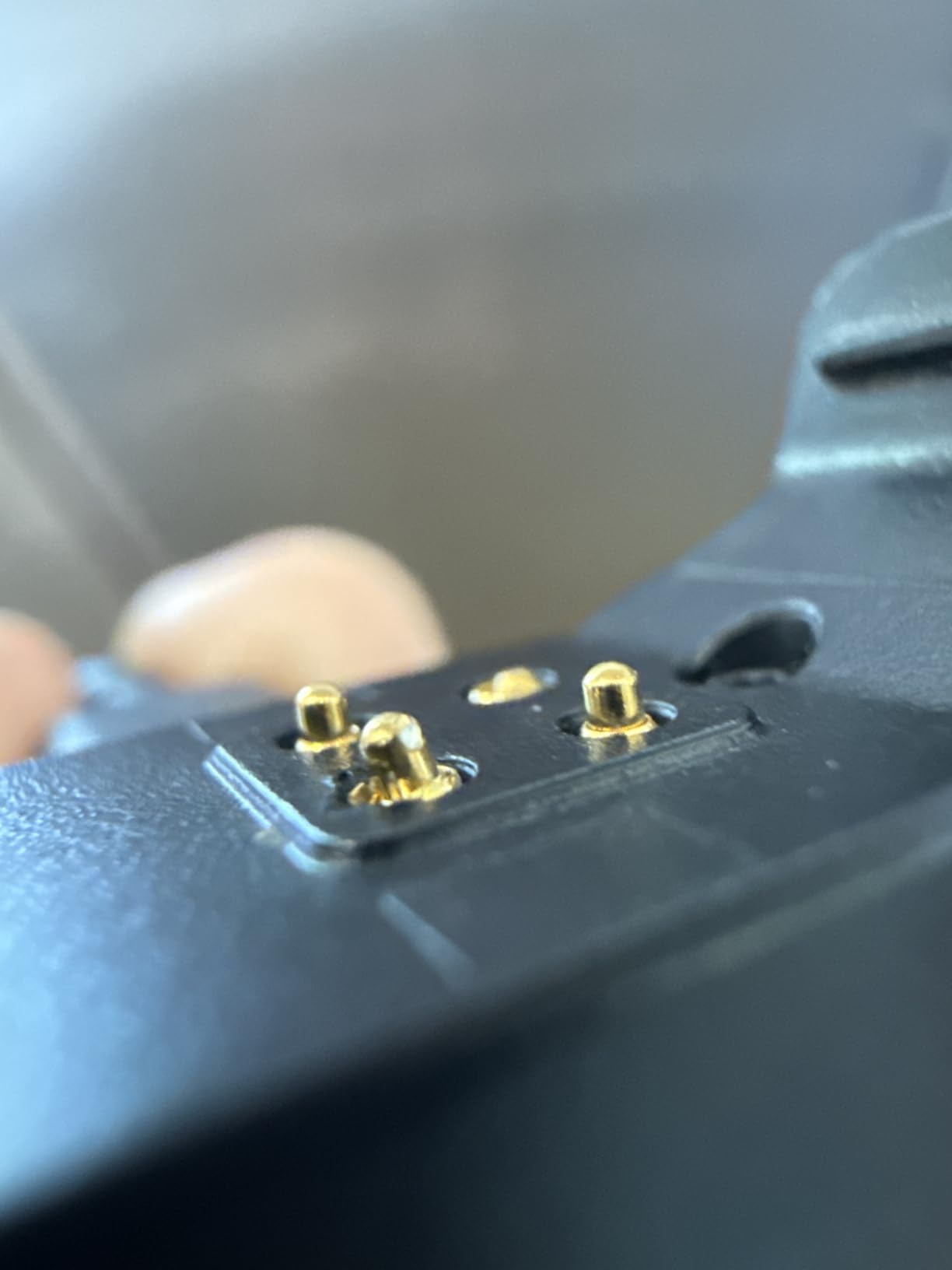
The stimulation side is where this collar separates itself from a plain satellite tag. Eighteen levels of continuous or momentary correction, plus an audible tone and vibration, give you a graded tool for handling a dog that pushes a boundary rather than a single on-or-off shock. Owners repeatedly single out that range of control as the reason they stopped using a separate trainer.
The multicolor LED is a small touch that matters more than it sounds. Yellow, magenta, cyan, white, green, red, or blue let you identify a specific dog in dim cover or locate one on a downed bird without shouting.
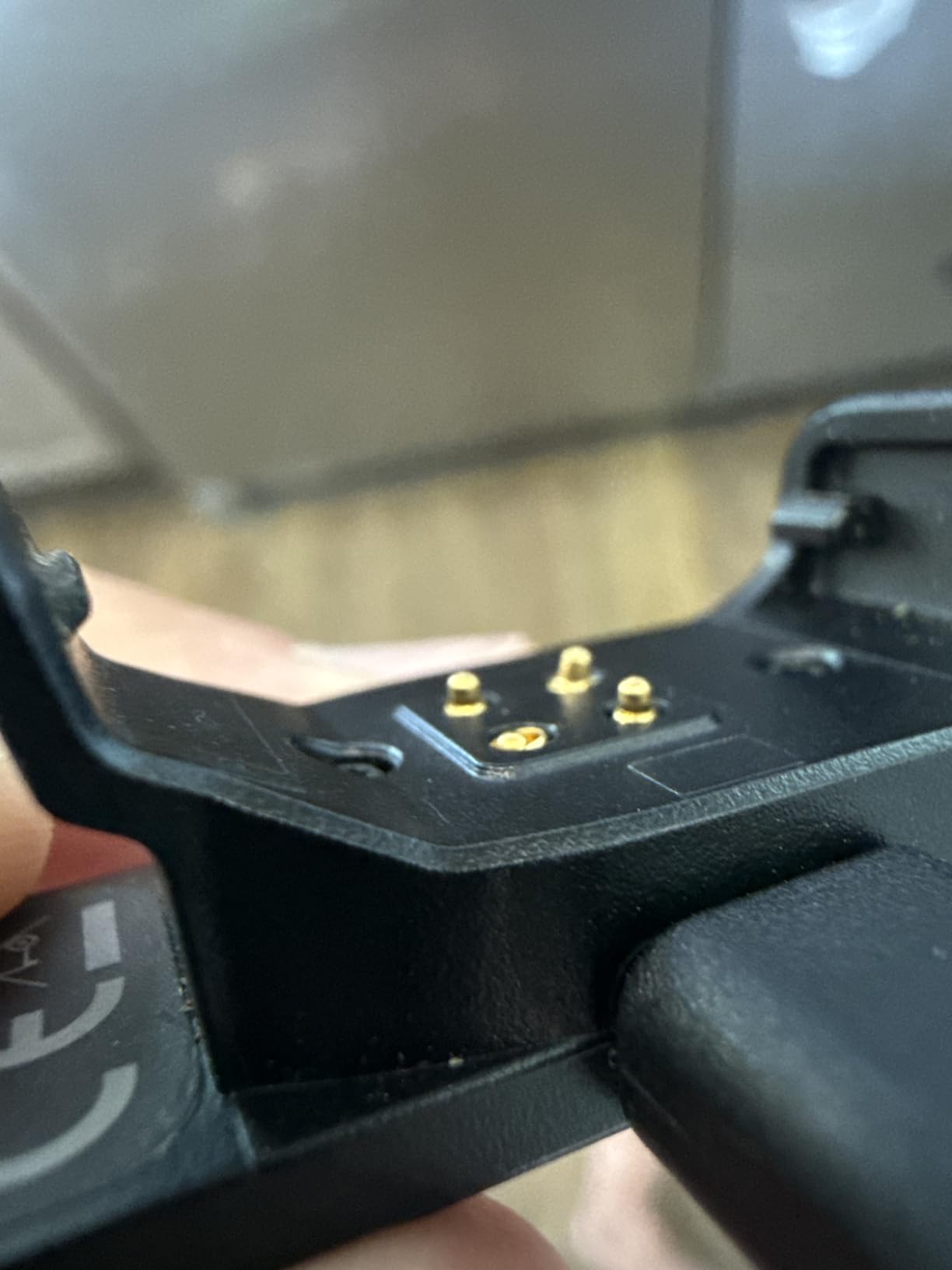
Best for handlers running one to four dogs in open and mixed country
This is the collar I recommend to anyone whose dogs work upland fields, CRP, and timber edge. Nine miles of rated range covered everything I threw at it, and the update rate made a fast-running dog on point easy to follow rather than a dot you lost between screens.
If you are deciding between this and a system with a bigger dog capacity, the pack size is the deciding factor, not range. Both the Dogtra systems below cover more dogs.
Skip it if you do not already own a Garmin handheld
The collar is useless alone, and Garmin handhelds cost real money on top of the collar. The alpha bundle at number four solves that problem in one box if you are starting from zero and you want satellite messaging as well.
Menus on Alpha handhelds also take getting used to. Budget a hunt or two before you are fast with the buttons.
2. Dogtra PATHFINDER2 Compass Is the Best Value Hunting GPS System
Dogtra PATHFINDER2 Compass Live GPS Dog Tracking & Training System – 9-Mile Range E-Collar Handheld with No Subscription, Offline Maps, GPS Fence, Expandable up to 21 Dogs, for Dogs 35+ lbs
9-mile range
2-second updates
21 dogs,4 shown
IPX9K waterproof
Pros
- Works with no phone and no cellular signal
- 2-second updates with a built-in compass
- Free app with offline maps and GPS fences
- Expands to 21 dogs showing four at once
- IPX9K waterproofing with USB-C charging
Cons
- 2-inch LCD screen is small compared with a smartphone
- 35 lb minimum weight excludes smaller breeds
This is the system I recommend to anyone running a real pack. It tracks up to 21 dogs, shows four of them at once on the handheld, and lets you switch between them instantly, which is the difference between handling four dogs and handling one dog you hope is representative.
The handheld runs completely on its own. No phone means no dead battery at hour nine of a November coon hunt, and the free app is a bonus rather than a requirement, adding satellite views, offline maps, public land boundaries, and customizable GPS fencing when you do want a screen with more detail.
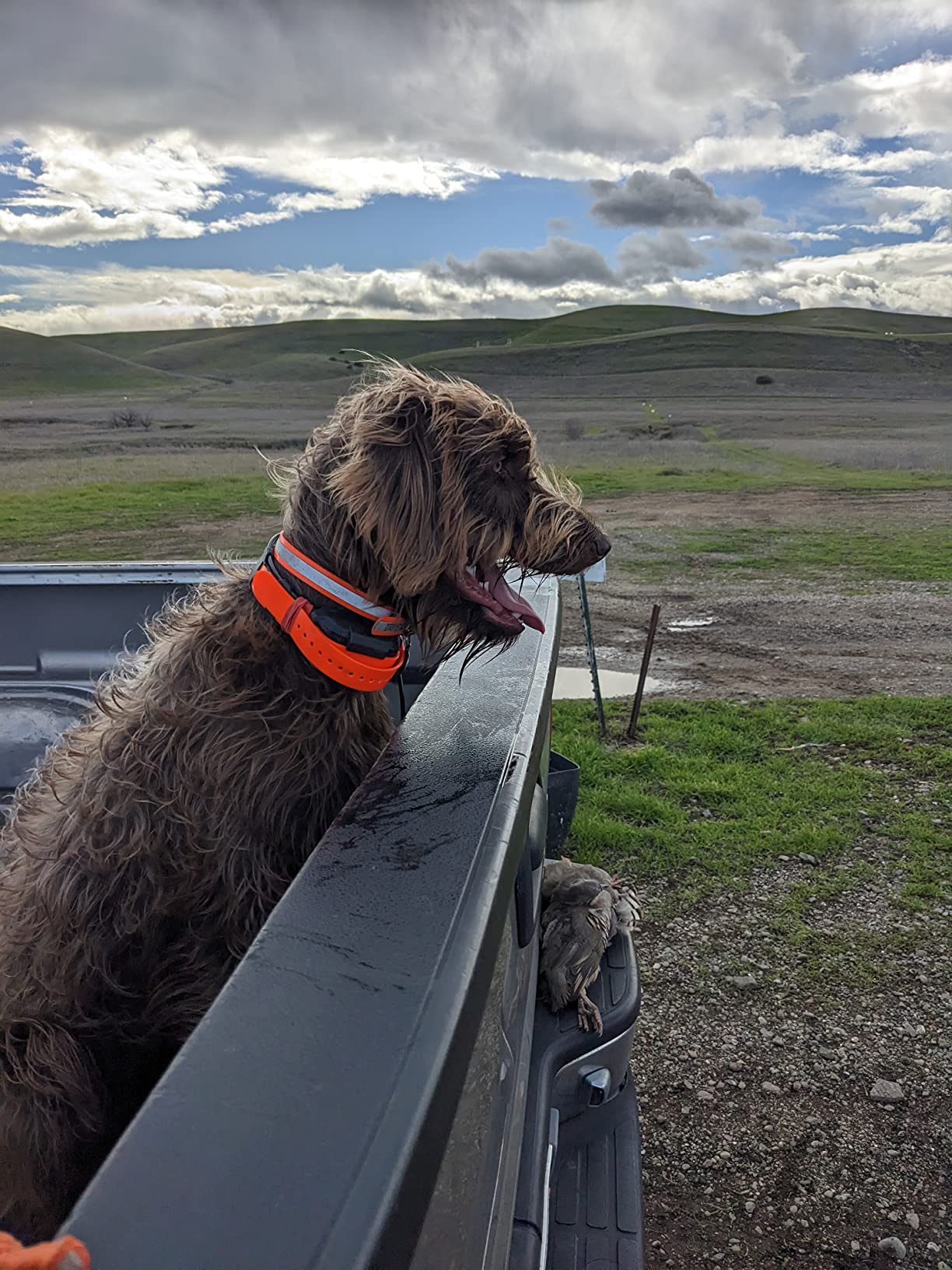
Updates land every two seconds, slightly faster than the Garmin figure, and the 2-inch LCD shows distance, direction, speed, and motion. The built-in compass is the part that saves time in practice, because you get a bearing without needing to orient the device around a map.
Training modes cover Nick, Constant, Tone, Pager, and an LED locate light. Silent vibration is a genuinely thoughtful option for hunters who do not want audible beeps flushing a bird at the wrong moment.
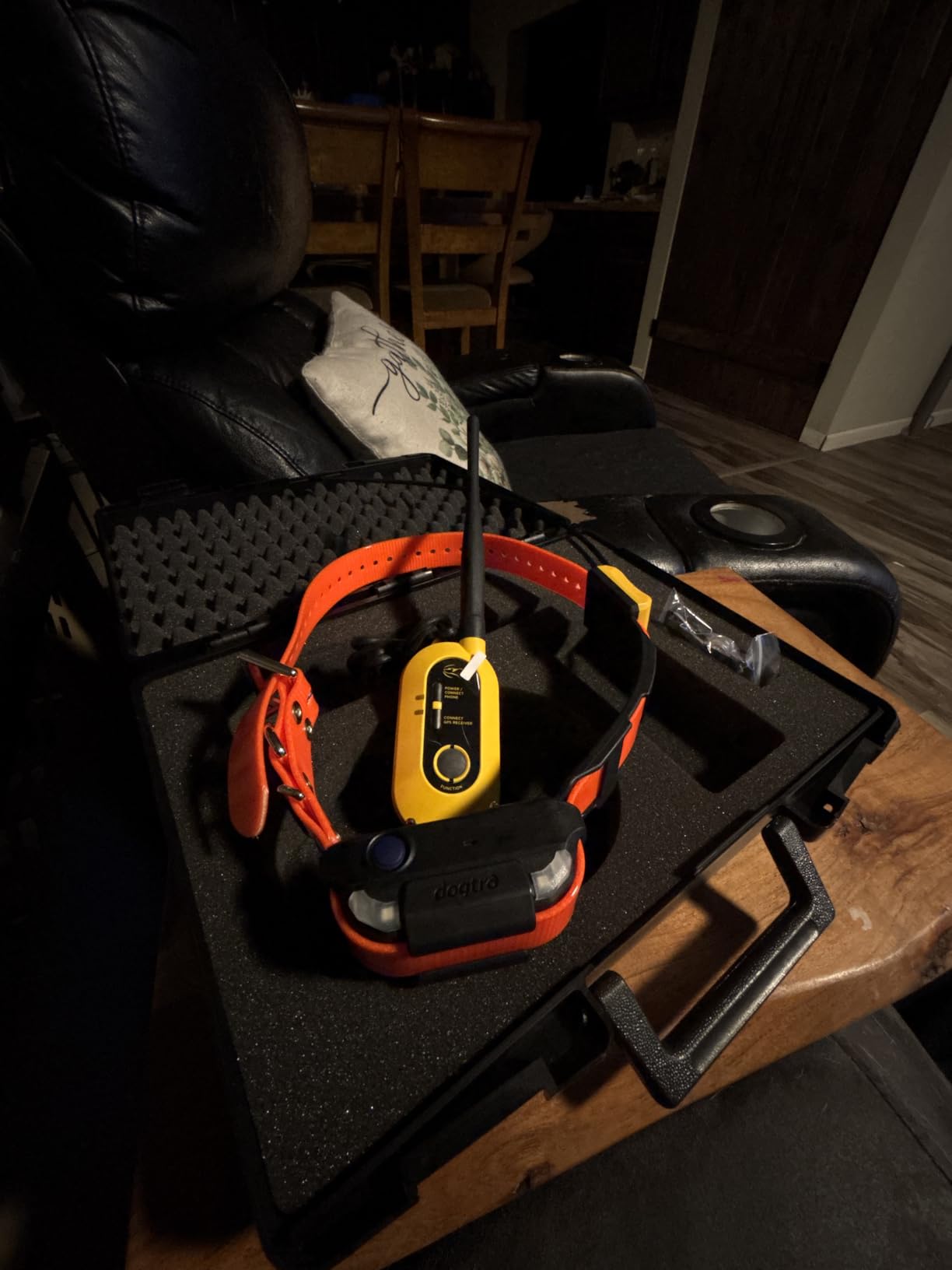
Best for pack hunters and anyone without cell coverage
Upland hunters, hound hunters, and anyone working public land will get the most from this box. IPX9K waterproofing handles the creek crossings that end lesser collars, and USB-C fast charging means a quick top-up between setups.
Existing PATHFINDER2 receivers pair with it, so a kennel that grows over a few seasons does not need a system replacement.
Skip it if your dogs weigh under 35 lbs or you want a big map screen
The 35 lb minimum is the dealbreaker for a Brittany or a young retriever pointing at nine months. The Mini at number three handles 25 lb and up and keeps the same feature set at a shorter range.
The small screen is workable but cramped for reading terrain detail. Owners also note a learning curve with the button layout that takes a season to stop fighting.
3. Dogtra PATHFINDER2 Mini Compass Tracks Dogs From 25 lbs Up
Dogtra PATHFINDER2 MINI Compass Live GPS Dog Tracking & Training System – 4-Mile Range E-Collar Handheld with No Subscription, Offline Maps, GPS Fence, Expandable up to 21 Dogs, for Dogs 25+ lbs
4-mile range
2-second updates
25 lb minimum
IPX9K waterproof
Pros
- No subscription and no cellular signal needed
- 2-second updates with a built-in compass
- Mini version fits dogs 25 lbs and up
- Expands to 21 dogs with four shown
- IPX9K waterproof with USB-C charging
Cons
- 4-mile range is shorter than the full-size PATHFINDER2 Compass
- 2-inch LCD is small for detailed map reading
Same handheld idea as the full-size PATHFINDER2, tuned for smaller dogs and shorter hauls. It is the version to buy if your dogs are 25 to 35 lbs, which covers a lot of upland pointing breeds and a good share of beagles and feists.
Everything that made the larger model good is here: 2-second updates, a built-in compass, an independent handheld with no phone dependency, offline maps, GPS fencing, and the same 21-dog capacity with four dogs displayed at once.
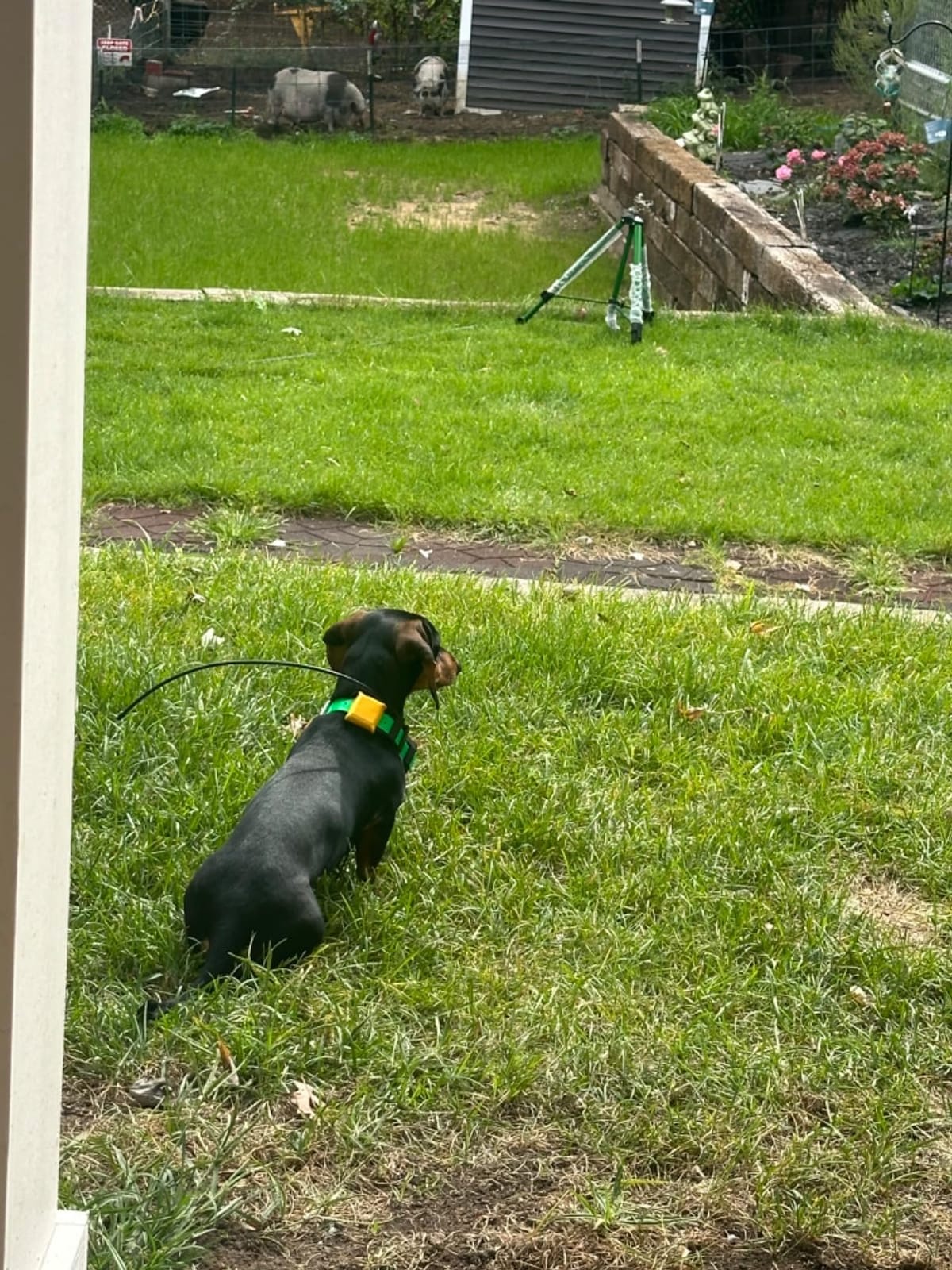
Four miles is the honest tradeoff. Open CRP and grass country is fine, and even moderate timber held up in testing, but a dog that pushes a full mile past a ridge line into heavy cover will test the limit of what the signal can carry back.
Rated at 4.4 across 138 reviews with a strong share of five-star ratings, the mini’s lighter build and lower minimum weight are what buyers mention most, alongside the same subscription-free promise.
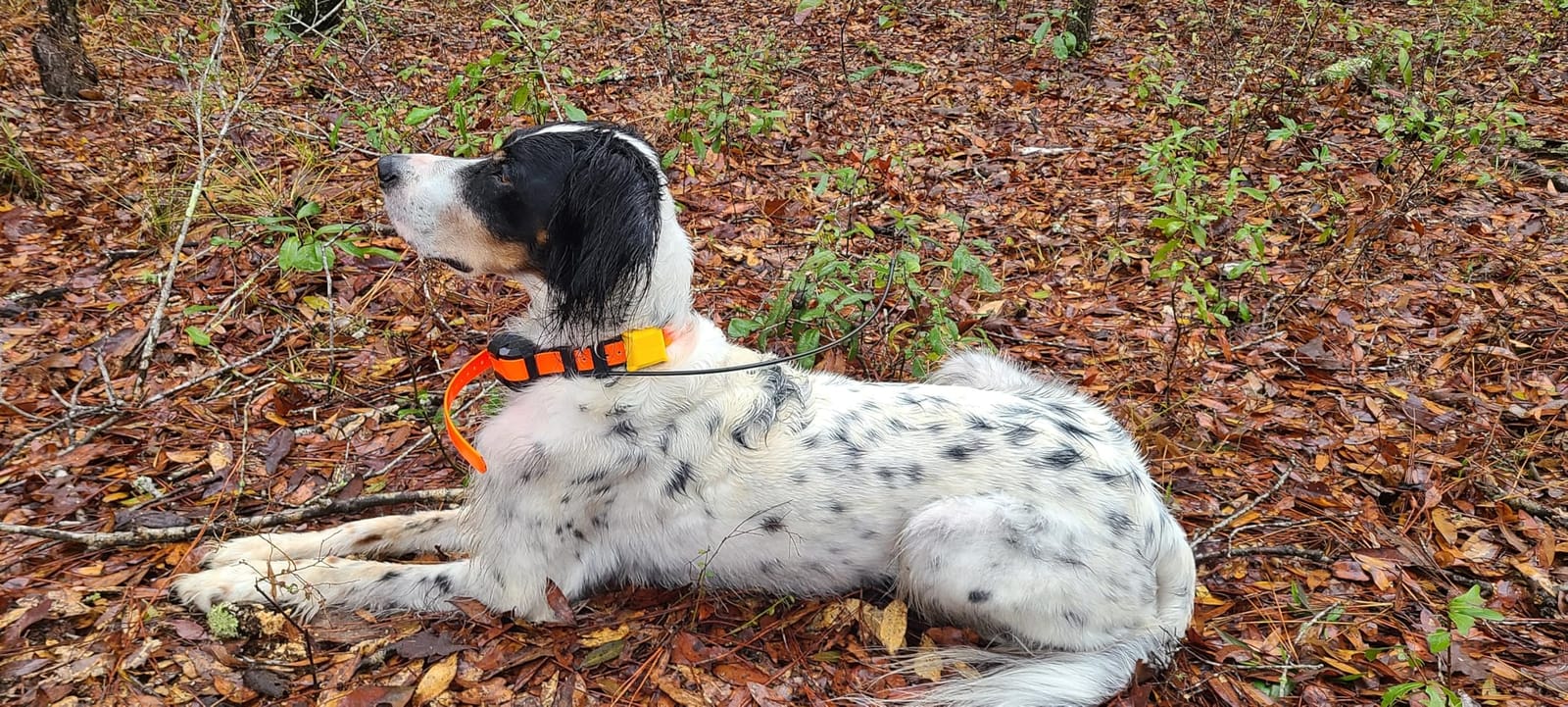
Best for smaller pointing dogs on open and semi-open ground
If your dogs are under 35 lbs or you are running a young dog still learning the country, this is the more honest buy. The lighter build also suits dogs that scratch or rub a heavier collar raw on CRP edges.
It cross-pairs with existing PATHFINDER2 receivers, so you can run mini collars on the young ones and full-size on the veterans without owning two handhelds.
Skip it if your dogs routinely range more than four miles
Long tree-line runs, big timber blocks, and ridge country are exactly where the shorter range costs you. Pay the difference for the full-size model if your dogs push.
The 2-inch screen is the same cramped display as the larger unit, so if you plan to read topo lines rather than a bearing, look at the alpha bundle instead.
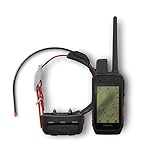
4. Garmin Alpha 200i and TT 15 Bundle Adds Satellite SOS to 20-Dog Tracking
Garmin Alpha 200i/TT 15 Dog Tracking and Training Bundle, Handheld and Collar, Utilizes inReach Technology, Sunlight-readable 3.6″ Touchscreen (010-02230-00), Black
20 dogs at 9 miles
3.5-inch touchscreen
Up to 20 hours battery
Iridium SOS
Pros
- Tracks and trains up to 20 dogs at 9 miles with 2.5-second updates
- Sunlight-readable touchscreen plus physical buttons
- Satellite SOS and two-way messaging off the grid
- Preloaded topo maps with BirdsEye imagery
- Backward compatible with existing Alpha and T 5 devices
Cons
- Satellite messaging requires an active subscription
- Battery drops to about 15 hours with inReach enabled
This is the box to buy when you are starting from nothing and running dogs in country where an injury could put you days from help. The Alpha 200i handheld pairs with a TT 15 collar in a single package, so there is no second purchase to discover later.
The touchscreen is sunlight-readable and capacitive, and Garmin kept physical buttons for the adjustments you make with cold or gloved hands. Hunt Metrics records each dog’s daily patterns per hunt, which is useful for spotting a dog that is working too hard or not at all.
Twenty dogs at up to nine miles with 2.5-second updates, using both GPS and Galileo, gives the same core tracking as the TT 25 setup. The real addition is the Iridium satellite network for interactive SOS alerts and two-way messaging when no cell tower exists.
Preloaded TopoActive maps, direct-to-device BirdsEye satellite imagery, a three-axis compass, and a barometric altimeter round out a handheld that doubles as a general navigation unit between hunts.
Best for backcountry hunts, solo trips, and large packs
Anyone hunting alone above tree line, running blood tracks into remote drainages, or working a big pack in a state with dead cell zones gets real value from the satellite messaging. Hunt Metrics also appeals to people who run field trials and want per-dog data.
Backward compatibility means existing Alpha and T 5 devices join the same system, which matters if you already own one of the older collars.
Skip it if your hunting is on public land with good cell coverage
The satellite features need an active subscription, and enabling inReach cuts handheld battery from about 20 hours to about 15. Owners call that out as the most common complaint at 4.4 stars across 71 reviews.
If you are on a budget and do not need messaging, a standalone alpha unit with a T 5 collar is the leaner path to the same tracking.
5. SportDOG TEK 2.0 Add A Dog Collar Expands an Existing Pack
SportDOG TEK Series 2.0 Add A Dog GPS Collar, 16 KM Range, 21 Dog Tracking, Waterproof, Dogs Necks 10.75, 23 Inches
16 KM range with TEK 2.0
21-dog capacity
Submerses to 7.6 meters
3-year warranty
Pros
- Pairs with both TEK 1.5 and TEK 2.0 handhelds
- Add-a-dog design grows a pack to 21 dogs
- DryTek waterproofing survives submersion to 7.6 meters
- Real-time updates with dependable GPS lock
- Three-year manufacturer warranty
Cons
- Handheld sold separately so full system cost is higher
- Some owners find preloaded map detail lacking
If you already own a TEK system, this is a straightforward way to add a dog rather than starting over. The collar works with both the TEK 1.5 and TEK 2.0 handhelds, which is a compatibility courtesy none of the other brands on this list extend backwards.
HopTek technology drives the range figure, and you get 16 KM with the 2.0 handheld, roughly ten miles, or 11 KM with the 1.5. Owners running a 1.5 system are looking at about seven miles of usable reach.
Waterproofing is the quiet strength here. DryTek allows submersion to 7.6 meters, which is deeper than the IPX7 and IPX9K ratings on the Garmin and Dogtra collars here, and that matters for hound hunters working flooded bottomland or water retrieves in cold weather.
The three-year manufacturer warranty is longer than the one-year cover on the Garmin collars in this group, and collar neck sizes run from 10.75 to 23 inches, covering everything from a beagle to a Lab.
Best for TEK owners adding dogs and for hound hunters who work water
Coon and bear hunters with a wet-weather habit will appreciate the 7.6-meter submersion rating more than any map feature. Reviewers across multiple countries also report consistent GPS lock and easy pairing with existing handhelds.
At 4.4 stars from 48 reviews, satisfaction is high, though the review base is small compared with the Garmin and Dogtra systems.
Skip it if you are starting fresh and want training modes
This is a tracking collar, not an e-collar. It gives you location and nothing else, so if you want tone, vibration, or stimulation from the handheld, look at a Dogtra system instead.
Map detail on the preloaded maps draws complaints, and SportDOG systems need compass calibration before a hunt plus declination adjustment after you travel, which is a step easy to forget.
6. SpotOn Nova Holds Boundaries in Dense Tree Cover
SpotOn Nova GPS Dog Fence Collar, App-Controlled Wireless Fence
Dual-band dual-feed GPS
Unlimited fence shapes
10-26 inch necks
Includes trainer support
Pros
- Dual-band dual-feed GPS keeps the boundary accurate in wooded terrain
- Unlimited fence shapes and keep-out zones from the app
- Designed to hold signal in dense tree cover
- Real-time containment activity view
- Includes certified one-on-one trainer support
Cons
- Buyers pay a premium for the fencing feature set
- Cue consistency can still vary in the lowest-signal conditions
Be clear about what this collar is for. The Nova is a virtual fence system for holding a dog inside boundaries you draw on a map, not a tracking system for finding a dog that has run three miles into a drainage.
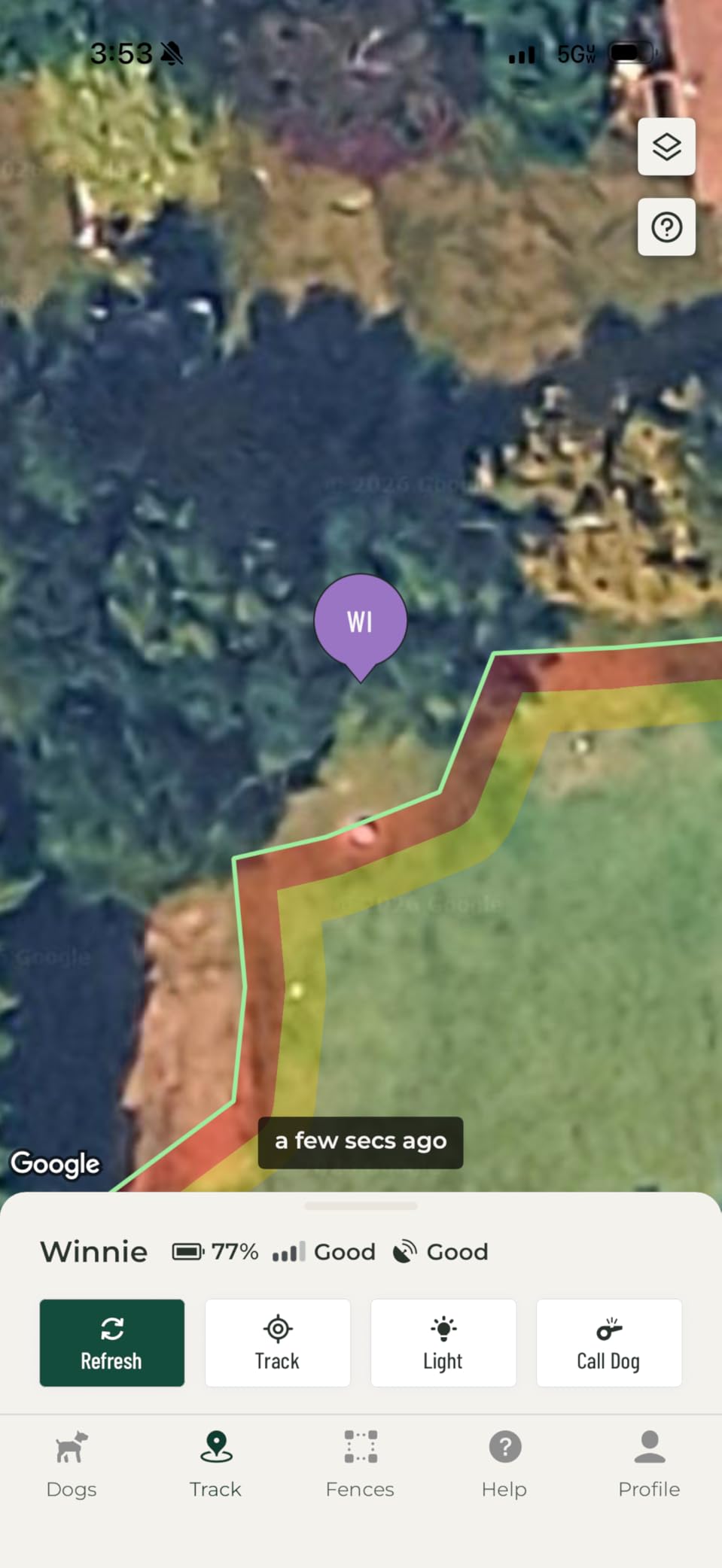
The engineering is aimed squarely at trees. Dual-band, dual-feed GPS and Forest Mode exist to keep the boundary where you drew it in heavy canopy, and SpotOn claims dogs stay inside their boundaries 99.3 percent of the time based on aggregate user data.
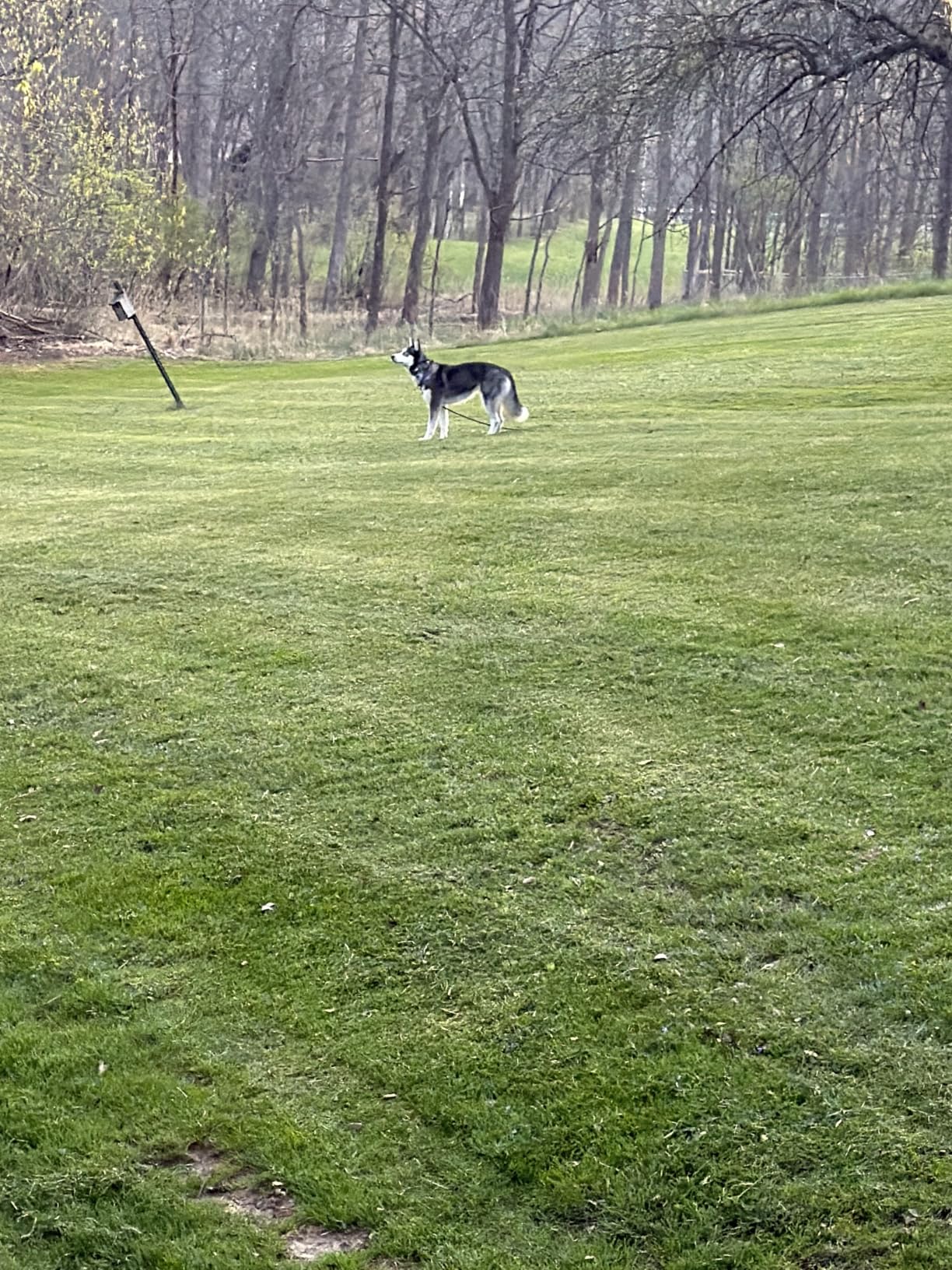
Fences are unlimited in number, shape, and size, and you can add correction-free keep-out zones around areas you never want a dog entering, such as a creek crossing or a neighbor’s field. Containment activity is viewable live in the app, so you can see whether a dog is testing the line or ignoring it.
Fitting runs from 10 to 26 inch necks, and the collar comes with certified one-on-one trainer support, which buyers single out as a real benefit rather than a marketing line.
Best for large wooded properties and livestock guardian dogs
If you are keeping a dog off a big tract of timber, this does something wired and base station systems struggle with, and the boundary holds up where cheaper fence collars fail. It suits anyone who moves often, since fences travel with the app.
The trainer support is worth using during setup, because fence placement decisions made in the first hour save a lot of frustration later.
Skip it as a hunting tracking solution
At 4.0 stars across 121 reviews, this batch shows the highest one-star share of any collar here, and the complaints cluster on cue consistency in the worst signal conditions.
If your goal is finding a dog in the backcountry, buy a radio tracking collar. If your goal is keeping a dog home, this is the right tool.
7. Aorkuler Outdoor Tracker 2 Is a Lightweight No-Subscription Backup
Outdoor GPS Dog Tracker – No Monthly Fees, No Phone or Cellular Signal Needed, Real-Time Tracking for Remote & Rural Areas, Hiking, Camping, Farms & Large Open Spaces(Tracker 2)
3.5-mile range
3-second updates
1.08 ounces
No account or cloud service
Pros
- No subscription
- no account
- and no cell signal required
- Point-and-go handheld with a green direction arrow
- Very light at 1.08 ounces for all-day wear
- Holds a charge for many days on typical walks
- Customer service described as responsive and knowledgeable
Cons
- GPS acquisition can be slow under heavy tree cover
- Distance readings are not very precise though direction is reliable
This is not a hunting system, and pretending otherwise would waste your time. It is a cheap, featherweight direction finder that works where cell service does not, which makes it a sensible second device for camping trips and farm checks alongside your serious collar.
Operation is about as simple as hardware gets. The handheld controller shows a green arrow with direction and distance, and there is no app, no map, and no account to set up. The tracker weighs 1.08 ounces and clips to almost any collar.
Battery claims split by use pattern. The manufacturer lists up to 24 hours of continuous tracking, or more than ten days on typical one to two hour daily walks, and a full charge takes two to three hours on the 1000 mAh pack.
Accuracy depends on having a clear view of the sky. Dense forest, buildings, and indoor spaces slow acquisition and reduce reliability, and reviewers who hunt or farm in heavy canopy notice it.
Best for campers, farmers, and owners of large open ground
Large ranches, tree farms, and open hunting land are the ideal environment, since line of sight to satellites is easy to find. It also works with no cloud service, so location stays between the tracker and the controller.
The warranty runs one year and extends to three years with product registration, which is better coverage than most collars in this roundup offer.
Skip it if you need training control or a real map
There is no stimulation, no tone, and no vibration here, so it cannot replace a training collar. There is also no multi-dog handling, and at 4.0 stars from only 20 reviews the long-term track record is thin.
Recalibration is needed after powering the unit off, and some users report the charge running well short of the continuous-use claim.
8. Garmin TT 15 Mini Is the Top Rated Collar for Small Breeds
Garmin 010-01486-00 TT 15 Mini Dog Device
7.5 ounces
9.5 inch neck minimum
16-30 hour battery
Sleep mode
Pros
- Highest rating in the group at 4.7 across 240 reviews
- Lighter and smaller than the standard TT 15 for small breeds
- Sleep mode extends battery when the dog is resting
- Easy setup with compatible Garmin handhelds
- Reliable recovery of hunting dogs in heavy brush
Cons
- Less range and shorter battery than the full-size TT 15
- GPS position can jump more and produce noisier tracks
- Compatible handhelds sold separately
The highest-rated collar here, at 4.7 stars from 240 reviews, and the reason is simple physics. At 7.5 ounces it is 2.5 ounces lighter than the standard TT 15, which is the difference between a collar a small dog tolerates all day and one it tries to shed.
Neck sizing goes down to 9.5 inches, and it takes 3/4-inch polyurethane-coated nylon straps, so Brittany, Vizsla, and smaller pointing dogs get a proper fit rather than a strap folded back on itself.
Collar sleep mode can be triggered from the handheld, which is the feature that makes this work on multi-day trips. Put the dog in camp, shut the collar down, and you keep the charge for the next day’s push.
Owners switching up from the full-size TT 15 consistently call out the lighter weight and the more durable strap as the reasons the switch was worth it, with strong praise for recovering dogs in heavy brush.
Best for Brittanys, Vizslas, and any dog that fights a heavy collar
Short-haired dogs with sensitive skin are the other group that benefits. The removable insulated stainless steel contact points come in long and short lengths, and the shorter set is kinder on a thin coat in cold weather.
Because it pairs with Alpha handhelds, this is the collar to choose if you already own a Garmin receiver and your dogs are on the small end.
Skip it if you need maximum range or a long battery
Range and runtime both drop versus the standard TT 15, and the top-mounted GPS and GLONASS receiver can produce a jumpier track on screen, which reads as a noisier line when your dog is running fast through trees.
Older handhelds are not on the compatibility list, so check that your receiver pairs before you buy.
9. Weenect Dog XT Tracks Without a Distance Limit but Needs Coverage
Weenect Dog XT – GPS Dog Collar | Subscription Required
Cellular tracking,no distance limit
IP68 to 1.5 meters
Lifetime warranty
4 kg and up
Pros
- Real-time tracking with no distance limit over the mobile network
- High accuracy from GPS
- Galileo
- Glonass
- and BeiDou together
- XL antenna improves reception in weak coverage
- Up to three weeks of battery with power-saving zones
- Escape alert in under a minute with flashlight for night finding
Cons
- Subscription service required for tracking
- Mobile coverage required so it fails in dead zones
- Battery life varies with tracking frequency and network quality
This is the architecture question in one product. Weenect sends location over a 4G and LTE-M mobile network with a multi-network SIM included, which means no range limit at all, but it also means the collar stops working the moment you leave coverage.
Where cellular reaches, the accuracy is genuinely good. Combining GPS, Galileo, Glonass, and BeiDou with an XL antenna is a strong configuration for urban and suburban reliability, and escape alerts arrive in under a minute.
Extras are unusually complete for a cellular tracker. A built-in flashlight helps you find a dog at night, ringtone and vibration support recall training, and the collar is waterproof to 1.5 meters for 60 minutes on an IP68 rating.
Warranty coverage is a lifetime warranty covering manufacturing defects, with repairs attempted first and refurbished replacements otherwise, which is the strongest warranty commitment on this list
Best for suburban and town hunting where cell towers exist
If you hunt farm country, hunt clubs with good coverage, or mainly use this for a house dog, the unlimited range and multi-week battery are compelling. A Julius-K9 adjustable collar is included, so nothing else is needed to get started.
Power-saving zones let you limit tracking to the times you actually need it, which is how the battery stretches toward three weeks.
Skip it for remote backcountry and for small breeds
An ongoing subscription is required for the tracking service, and that is the reason most hunting buyers look elsewhere. Coverage gaps are the other killer, since the collar is built for dogs from 4 kg up, which excludes many pointing breeds.
Accuracy also drops in very dense forest, and battery life swings hard with tracking frequency and network quality.
10. Aorkuler GPS Dog Tracker 2 Is the Budget Point-and-Go Pick
Aorkuler GPS Dog Tracker – No Phone, No Signal, No Subscription | Real-Time Direction & Distance Up to 3.5 Miles | Built for Hiking, Farms & Off-Grid Adventures (Tracker 2)
3.5-mile range
3-second updates
1.08 ounces
Controller included
Pros
- No phone
- network
- or monthly fee needed
- Real-time tracking every 3 seconds up to 3.5 miles
- Directional arrow interface with no app or map
- Lightweight 1.08 oz tracker for all-day wear
- Up to 24 hours continuous or 10+ days typical use
Cons
- Needs clear line-of-sight to satellites or accuracy drops
- Receiver may need figure-8 motion to calibrate the compass
- LCD screen hard to read with polarized sunglasses
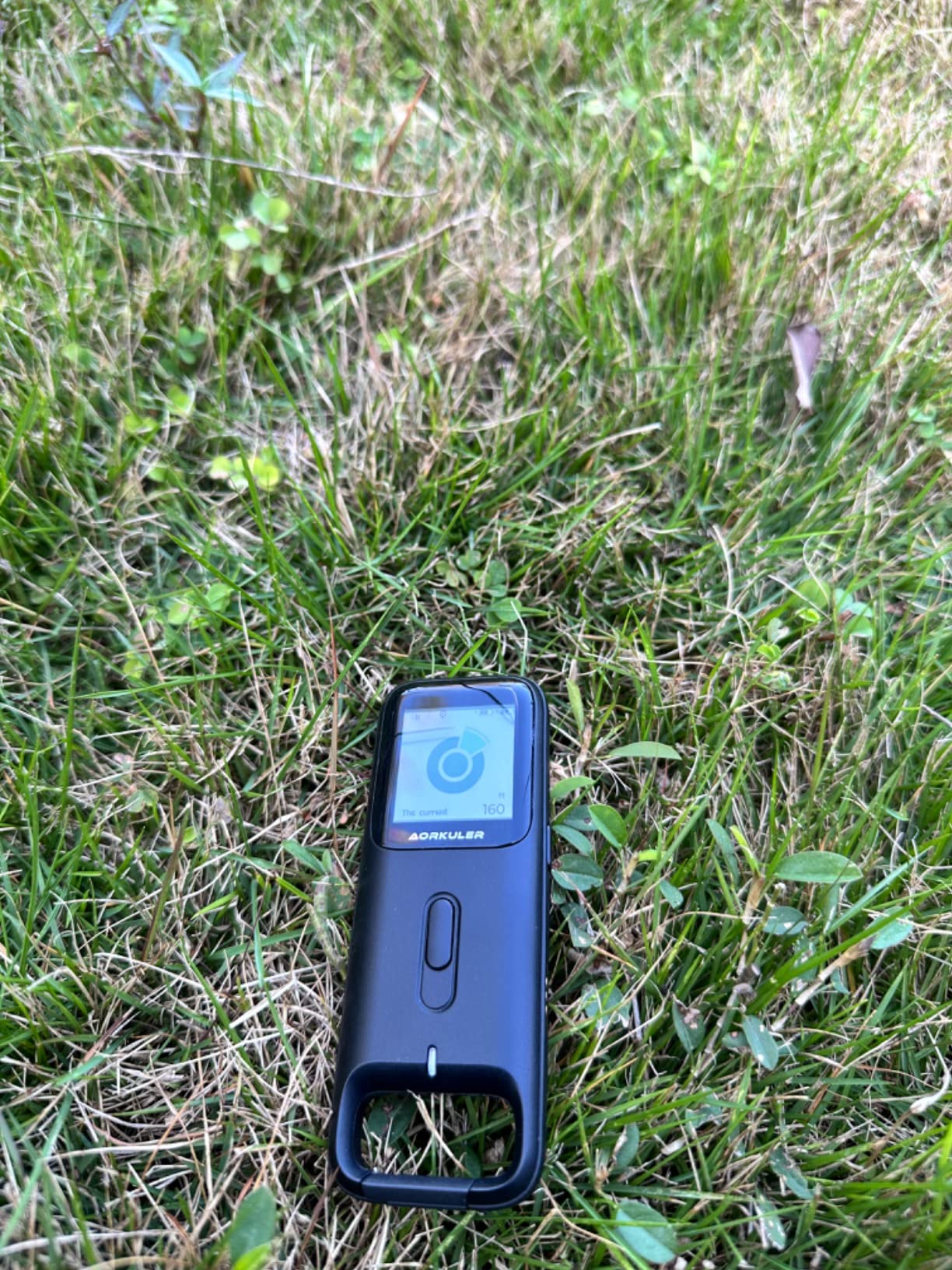
This is the same hardware idea as the tracker above, listed under a different product name, and it is the cheapest way to add a no-service direction finder to a kennel. The controller is included in the box, so there is no separate handheld purchase.
There is no training function, no multi-dog screen, and no map. You get a green arrow, a distance readout, and a location update every three seconds out to 3.5 miles, which is enough to walk toward a dog in a hay field or a creek bottom.
The privacy model is a plus for anyone wary of location data. There is no cloud service and no account, so position data stays between the tracker and the controller. The warranty runs one year and extends to three with registration.
At 3.9 stars from 111 reviews, the spread of opinion is wide, and the pattern is consistent: people with clean sightlines love it, and people with buildings or heavy canopy between them and the dog do not.
Best for open land, farm work, and keeping tabs on a hound at a water hole
Open pasture, plowed ground, and shoreline work are where a 3.5-mile point-and-go system is genuinely useful, and the 1.08-ounce weight means the dog barely notices it is there.
It also makes a reasonable backup for a hunting day where the main collar fails and you would rather have something basic than nothing at all.
Skip it if you range in timber, buildings, or city blocks
Dense forests and structures between you and the dog break accuracy, and some users report the compass needs a figure-8 motion to calibrate after switching it on. Others cite short battery in continuous use and a charging port connection they do not trust.
At 3.9 stars this is the lowest-rated product here, and the honest reason is that a direction arrow without a map is a limited tool when a dog is genuinely lost.
11. Marco Polo Advanced Uses RF Homing Instead of GPS
Marco Polo Advanced Pet Tracker for Cats & Dogs – GPS Alternative, No Monthly Fee or Subscription, Waterproof Long Range RF Finder, Anti-Lost Safety Collar Tag (1-Pet System)
2-mile RF tracking
Waterproof IP67 tag
Tag battery up to 6 weeks
Expands to 3 pets
Pros
- No GPS
- cellular
- or subscription required
- Long-range RF technology works up to 2 miles
- Operates with no internet or cellular service
- Waterproof IP67 collar tag
- Real-time directional homing with audio and visual feedback
Cons
- Only 2 miles of range
- Older radio technology with a real learning curve
- Soft rubber collar tag button reported to fail over time
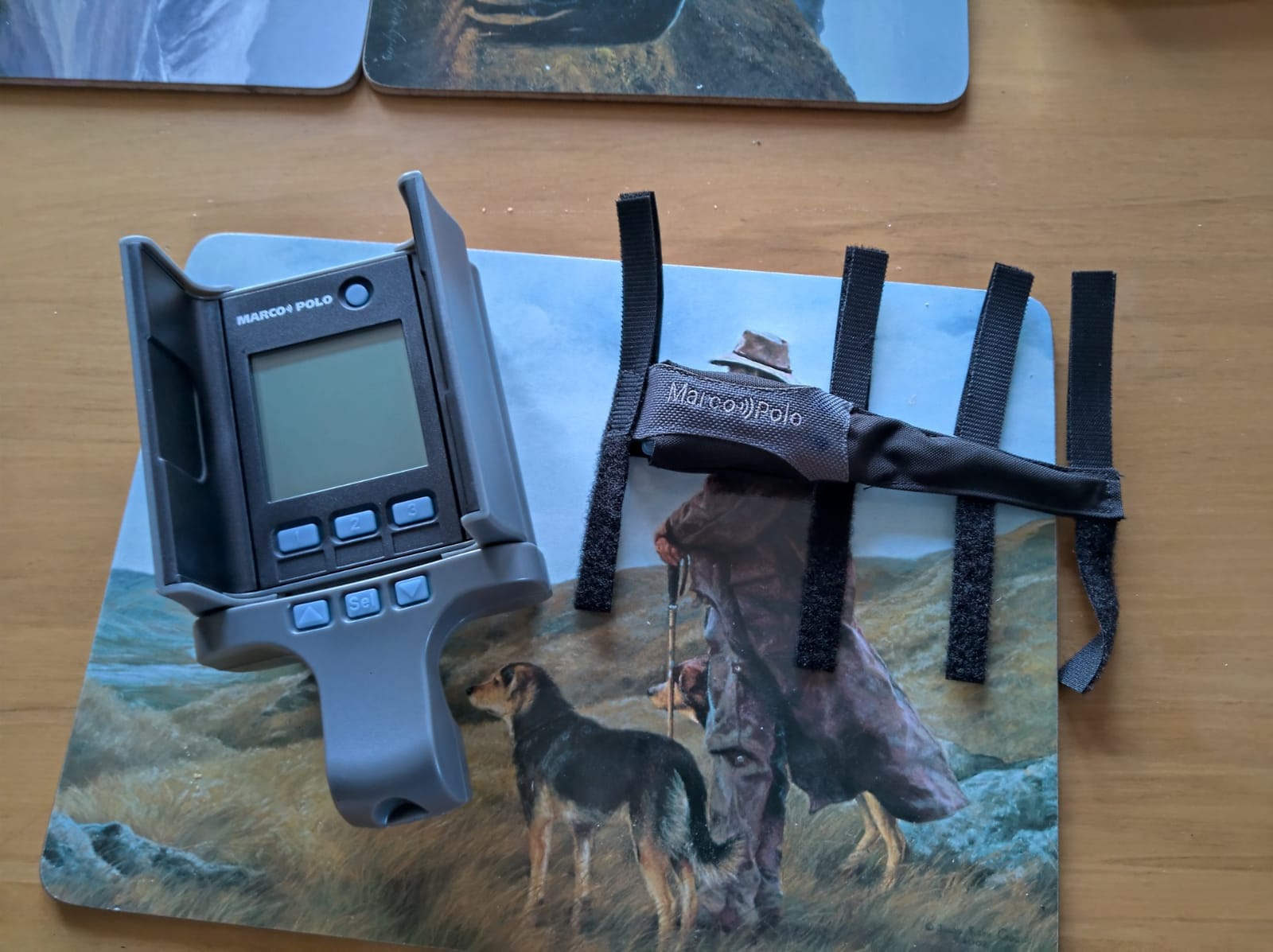
This one works backwards from the others. Instead of plotting a dot on a map and telling you where to go, the handheld locator gives you a direction and a signal that grows as you approach, which is closer to how a handheld beacon works.
It is radio frequency, not GPS, so it needs no sky view and no satellite lock. That is an advantage in one specific case, which is why it stays on this list, and a limitation in nearly every other.
The endurance numbers are the headline. The collar tag battery runs up to six weeks, and the handheld locator gives 8 hours of continuous use or 30 days on standby, which beats every rechargeable system here by a wide margin.
Long-term durability reports are strong, with plenty of owners running the same unit past three years. Customer service is repeatedly described as responsive.
Best for owners who want a beacon for a lost dog, not a map
Aging or hard-of-hearing handlers, or anyone working where sightlines to the sky are poor, get real value from the homing signal. Two miles is a short leash for hunting, but it is plenty for finding a dog that bolted toward a road or wandered off a leash at a campground.
The IP67 tag is waterproof, and the system expands to three pets with additional tags.
Skip it if you need range, training, or multi-dog handling
Two miles is the hard limit, and the technology dates to 2016, so you are giving up update rate, mapping, and any stimulation function. Some owners also report the handheld’s plastic hinges breaking and the tag button wearing out over time.
It takes practice to read the homing signal well, and buildings can cause signal multipath that misleads the direction.
12. SpotOn Omni Covers the Largest Acreage in This Group
SpotOn Omni GPS Dog Fence Collar, Medium Dogs 12-18 Inch Neck
Connects to 128 satellites
Off-grid and forest modes
1/2 acre to 100k+ acres
IP67
Pros
- Connects to 128 satellites with a dual-feed GPS antenna
- Works in heavy woods and ravines with Forest Mode
- No subscription needed for basic fencing
- Unlimited fences from half an acre to over 100k acres
- IP67 waterproof with free trainer session included
Cons
- Collar buckle reported to fail and collars lost
- Cellular tracking features need a subscription
- Battery needs daily charging and bulkier collar
the Nova at number six is a newer system, and the Omni carries by far the largest review base here at 4.0 stars from 481 reviews. It creates boundaries from a half acre out to more than 100,000 acres, with up to 20 fences storable at once.
Satellite connection is the technical story. It links to 128 satellites through a dual-feed antenna with True Location technology, plus dedicated Forest Mode and an Off-Grid mode that keeps the fence working without cell service or internet.
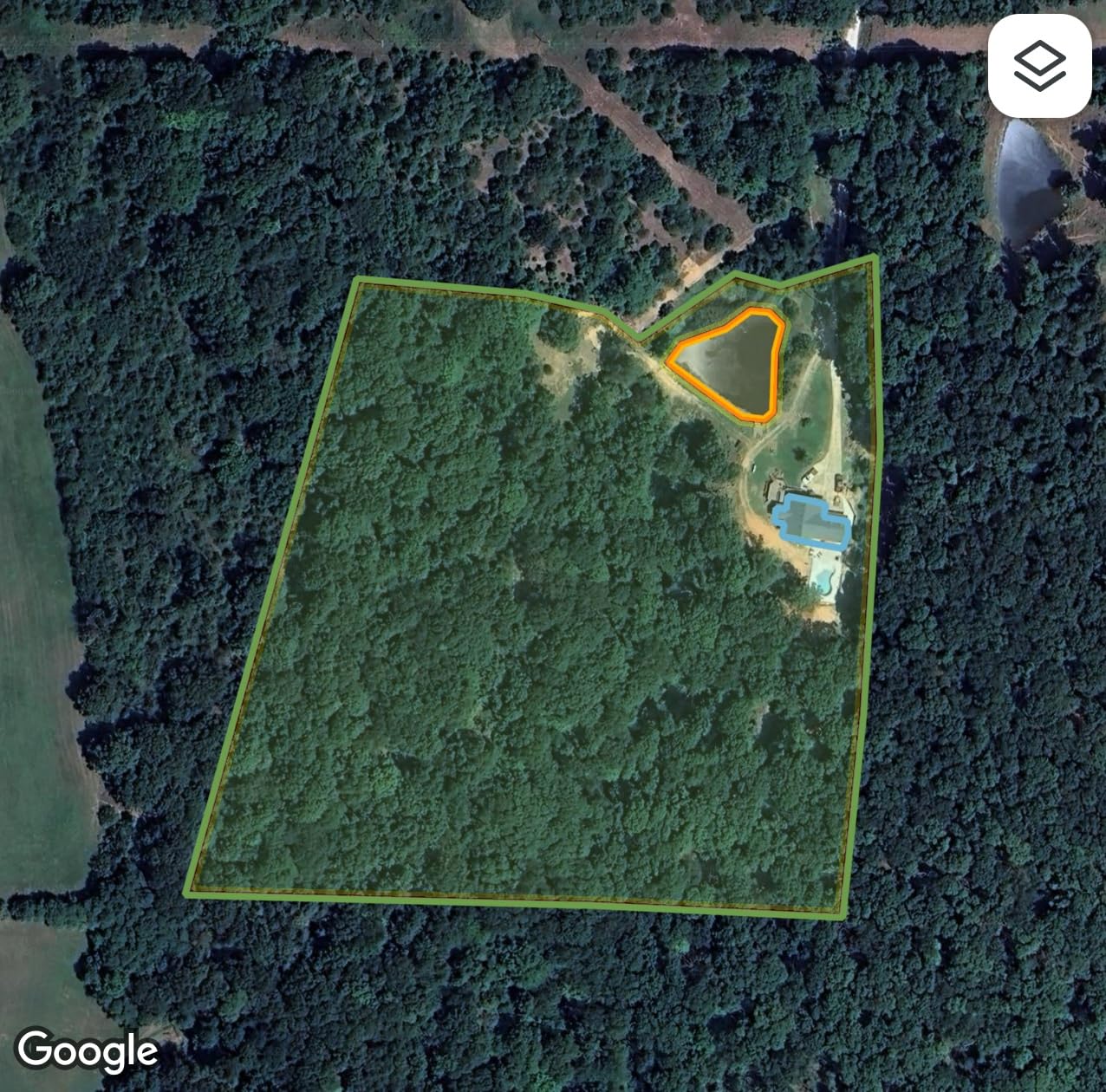
Overlapping fences are supported, which lets you run different rules in different parts of a property, and setup is done by walking or drawing the boundary in the app with no base station, no buried wire, and no hardware beyond the collar.
Two prong lengths cover different fur types, and there is a vibration-only option for dogs you do not want to correct at all. Extended Battery Life Mode runs 35 hours or more with a subscription and 40 hours without one.
Best for wooded ranches, large acreage, and livestock guardian dogs
Owners of big wooded tracts get the most from it, since Forest Mode and the satellite count are what keep the line accurate under canopy. It is also portable, so the fences move with you, and effective for guardian dogs patrolling a large property.
Free one-on-one training with a certified trainer is included, and support is described as responsive by owners at this rating.
Skip it as a hunting tracker, and check the buckle
Tracking, recall alerts, breach alerts, and the collar light require a paid subscription, and the reviews are clear that buyers pay a premium for this one. Collar buckle failures have cost some owners their dogs, which is a serious enough report to take seriously.
It also needs daily charging, runs cellular features only where coverage exists, and the app is US only, so it is not an option in the UK or Australia.
Standalone GPS vs Cellular: What Hunting Country Actually Needs
Standalone radio systems like the Garmin alpha, Dogtra PATHFINDER2, and SportDOG TEK send location over VHF radio directly to a handheld, and they work anywhere on earth. Cellular trackers like the Weenect XT rely on towers, and those towers do not exist in the places people actually hunt.
That is the whole comparison. A cellular collar gives you a live map, alerts, and no range limit, which is genuinely valuable if your hunting happens near a town. A standalone collar gives you a device that does not care about coverage, which is what matters at hour four of a November timber run.
Our read at 2026 is that the question of Halo versus SpotOn style comparisons comes down to fence accuracy rather than hunting performance, so it does not change our picks. If you need a map on your wrist, our handheld GPS device guide covers the units that pair with these collars.
How to Choose a GPS Dog Collar for Hunting in 2026
Seven factors decide this purchase, and only the first three are about the radio. Work through them in order and the choice makes itself.
Range and real-world terrain
Rated range assumes line of sight. In rolling hills and dense timber, users regularly see 50 to 70 percent of the rated figure, so a 9-mile system realistically delivers five to six miles. Buy for the worst ground you hunt, not the best day of the season.
Update rate
Two to 2.5 seconds is the range that feels live. Anything slower makes a fast dog on point look like it is teleporting, and that is when handlers start calling the dog instead of following the track.
Collar weight and neck fit
This is where most returns happen. Check the minimum neck measurement against your smallest dog, since the Garmin TT 15 Mini fits down to 9.5 inches and the Dogtra Mini accepts 25 lb dogs. If you can fit two fingers under the strap and the collar does not rotate, you have it right.
Multi-dog capacity
Real pack hunters should count on 20 or more. Garmin and SportDOG both reach 20 to 21 dogs, and the Dogtra PATHFINDER2 expands to 21 while showing four on screen at once. If you run three dogs or fewer, capacity is not worth paying extra for.
Training integration
Collars with 18 stimulation levels, tone, and vibration let you handle a pushing dog without a second box. Pure tracking collars like the SportDOG TEK add a dog and give you location only, which is fine if your dog is already trained. For starting a young dog, our training collar guide covers the dedicated options.
Battery, waterproofing, and warranty
Expect 15 to 30 hours of active tracking from most systems, longer with sleep mode or dynamic tracking. Waterproofing claims range from IP67 to IPX9K to submersion to 7.6 meters, and the SportDOG and Dogtra units lead on that. Warranty length varies from one year to the Weenect lifetime warranty, and that spread matters if you keep collars for multiple seasons.
What is legal where you hunt
State rules on electronic collars vary, and some states restrict stimulation collars on certain species or require a permit. Check your state game commission before the season rather than at the field edge, and confirm that your unit’s stimulation levels are appropriate for the game you are working. Waterproof e-collar guidance for waterfowl and water work is covered separately in our waterproof e-collar picks.
Frequently Asked Questions
What is the best dog tracker collar for hunting?
The Garmin Alpha TT 25 is the best overall hunting GPS collar, with 9-mile range, 2.5-second updates, 18 stimulation levels, and a 1.3-ounce collar that suits most breeds. Run a pack of more than four dogs and the Dogtra PATHFINDER2 Compass is the better buy, since it expands to 21 dogs and still needs no subscription or cell service. Small breeds under 35 lbs should look at the Garmin TT 15 Mini or the Dogtra PATHFINDER2 Mini Compass.
Which is better, Dogtra or Garmin for hunting dogs?
Dogtra wins on dog capacity and value. The PATHFINDER2 expands to 21 dogs, shows four on the handheld at once, and includes a free app with offline maps and no subscription. Garmin wins on the radio, the map hardware, and the ecosystem. Alpha collars refresh every 2.5 seconds, pair with Fenix watches, and the Alpha 200i adds Iridium satellite SOS. Garmin also has a larger accessory and used market. Choose Garmin for one to four dogs and satellite messaging, and Dogtra for a growing pack.
What GPS is best for hunting?
Standalone GPS over radio frequency is the right answer for hunting, because it works with no cell service and no subscription. A collar gets a satellite fix, then transmits position to a handheld receiver over VHF radio at 2 to 2.5 second intervals. Cellular trackers such as the Weenect Dog XT are better for suburban use and give unlimited range, but they stop working in the dead zones that define most hunting country. Buying the handheld matters as much as the collar, since most of these systems need one.
Do hunting GPS collars require monthly fees?
Standalone hunting systems do not. The Garmin alpha line, Dogtra PATHFINDER2, and SportDOG TEK all work with no subscription, and the Dogtra app with offline maps and GPS fencing is free. Two exceptions exist in this roundup: the Garmin Alpha 200i needs an active subscription for Iridium satellite SOS and two-way messaging, and the Weenect Dog XT requires a monthly cellular plan for tracking at all. The SpotOn collars use fences without a subscription but need one for real-time tracking, recall, and alerts.
What size dog do you need for a hunting GPS collar?
It depends on the model. The Dogtra PATHFINDER2 Compass requires dogs of 35 lb or more, and the PATHFINDER2 Mini accepts dogs of 25 lb and up. The Garmin TT 15 Mini fits neck circumferences as small as 9.5 inches, which covers Brittanys, Vizslas, and smaller pointing dogs. The Aorkuler trackers clip to almost any collar at 1.08 ounces, and the Weenect Dog XT is designed for dogs from 4 kg up. Check the minimum weight and neck size before ordering, since collar weight matters more for small breeds than any other spec.
Bottom Line: The Best GPS Dog Collars for Hunting
The Garmin Alpha TT 25 is our pick for the best GPS dog collars for hunting because it balances range, update rate, collar weight, and battery in a way nothing else here matches. It is the collar we put on our own dogs.
Run a bigger pack and the Dogtra PATHFINDER2 Compass takes over, with 21-dog capacity, offline maps, and no subscription. Small dogs belong on the Garmin TT 15 Mini or the Dogtra Mini. Everything else on this list fills a specific niche, and the right niche is worth knowing before you buy.
Whichever you choose, pair it with a handheld from the same brand, charge it fully before the season opens, and run a practice hunt in familiar ground. Our long range e-collar guide covers the training side of putting a young dog on birds.