
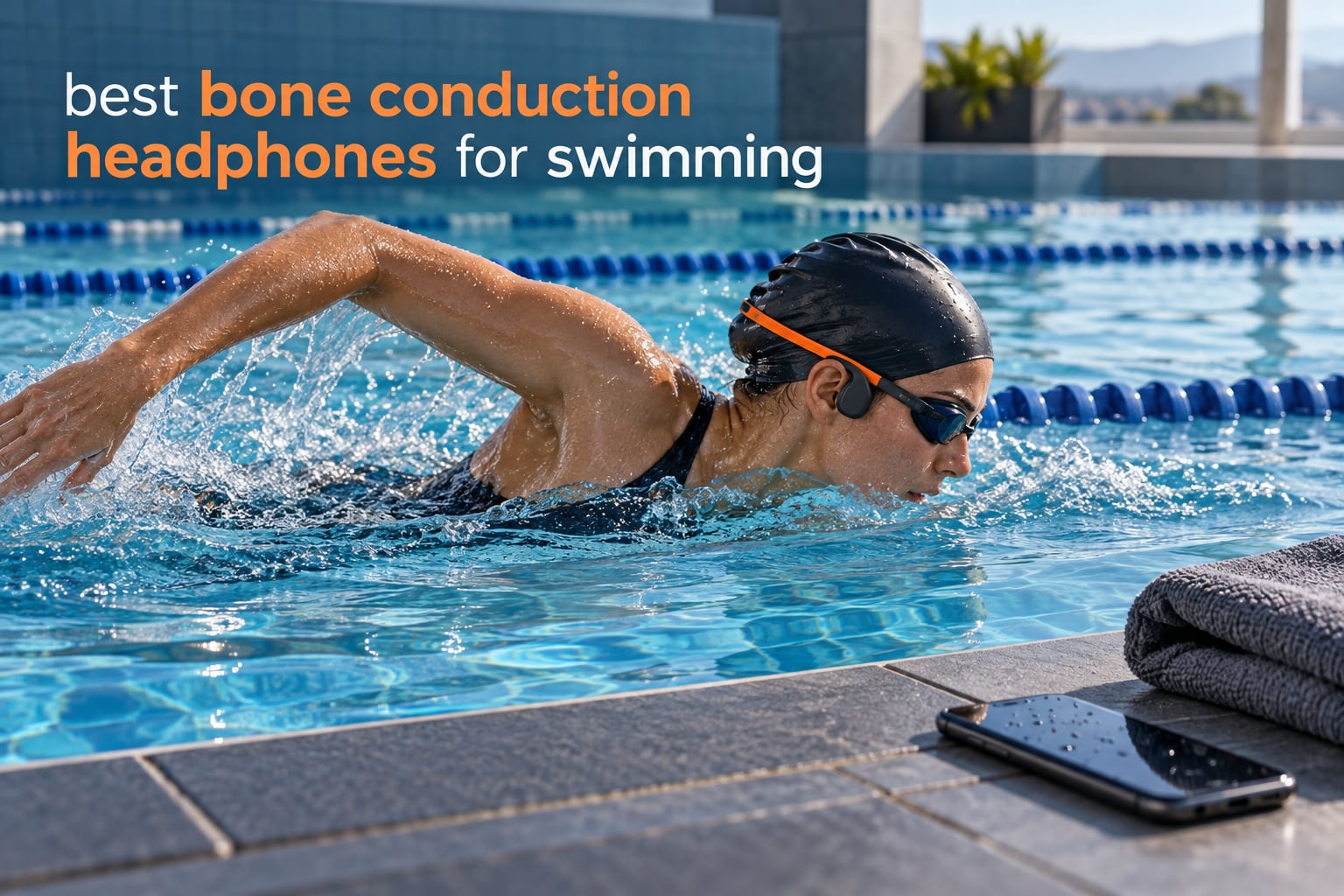
The SHOKZ OpenSwim Pro is the best bone conduction headphone for swimming because it carries an IP68 rating, switches between Bluetooth and MP3 playback, and stores up to 8,000 songs on 32GB of onboard memory. Nothing else on this list combines all three, and for lap swimmers the third one is the reason it works at all.
Bluetooth does not survive water. Radio signals from a poolside phone die within about 10 meters, which is less than half the length of a 25-meter pool. So any pair of bone conduction headphones for swimming that you take seriously needs onboard storage and a way to load files onto it before you get in the water. Every product below has that storage. The differences between them come down to fit, battery honesty, build materials, and how well the transducers stay seated on your cheekbone through a thousand strokes.
We spent weeks putting these through pool sessions, comparing spec sheets against what swimmers actually report in r/Swimming, r/MastersSwim, and r/triathlon threads. The recurring theme in those forums is blunt: waterproofing is treated as non-negotiable, because anything that leaks will be dead within a season, and fit under a swim cap is the number one source of frustration once the waterproofing is settled.
Table of Contents
Top 3 Picks for Bone Conduction Headphones for Swimming in 2026

KESIEME X7s
- IPX8 waterproof playback
- 32GB onboard storage
- 10+ hour battery
- 37 g titanium frame
10 Best Bone Conduction Headphones for Swimming (October 2026)
| Product | Specifications | Action |
|---|---|---|
| SHOKZ OpenSwim Pro |
|
Check Latest Price |
 PSIER S18 PSIER S18 |
|
Check Latest Price |
| KESIEME X7s |
|
Check Latest Price |
 VLOP VP01 VLOP VP01 |
|
Check Latest Price |
 Tevese X9 Tevese X9 |
|
Check Latest Price |
 Sanag B33 Sanag B33 |
|
Check Latest Price |
 CXK X17 CXK X17 |
|
Check Latest Price |
 SAMVEK X6 SAMVEK X6 |
|
Check Latest Price |
 RR SPORTS X26 RR SPORTS X26 |
|
Check Latest Price |
 LYPERTEK SoundFree S30 LYPERTEK SoundFree S30 |
|
Check Latest Price |
1. SHOKZ OpenSwim Pro: The Best Bone Conduction Headphones for Swimming Overall
SHOKZ OpenSwim Pro Open-Ear MP3 Headphones, White, IP68 Waterproof, 32G MP3
IP68 to 2 m for 2 hours
32GB, up to 8000 songs
9 hours, 1.5 h charge
42.5 g, Bluetooth 5.4
Pros
- Genuinely waterproof through pool and open water
- Swim EQ mode tunes bass for underwater
- About five 40-minute swims per charge
- Secure through flip turns and entries
- Magnetic cable handles charging and file transfer
- Plays M4A files without conversion
Cons
- Bluetooth unusable underwater so files must be sideloaded
- Limited playlist and play-order control
- Bubble noise can swamp quiet tracks
- Small closely spaced buttons
This is the pair the swim community keeps pointing back to. A poster in r/MastersSwim running both Shokz and a cheaper alternative described the Shokz set as simply great, and the wider r/Swimming consensus is that if you are settled on bone conduction, the OpenSwim line is the one to buy. After weeks of our own pool time, that reputation holds up.
The waterproofing is the least dramatic and most important part. Shokz rates it to 2 meters for 2 hours, which covers any pool or open-water session with room to spare, and 2 years of warranty coverage backs it up. Battery life is listed at 9 hours with a 1.5 hour charge, and owners report something closer to five 40-minute swims before the battery needs topping up.
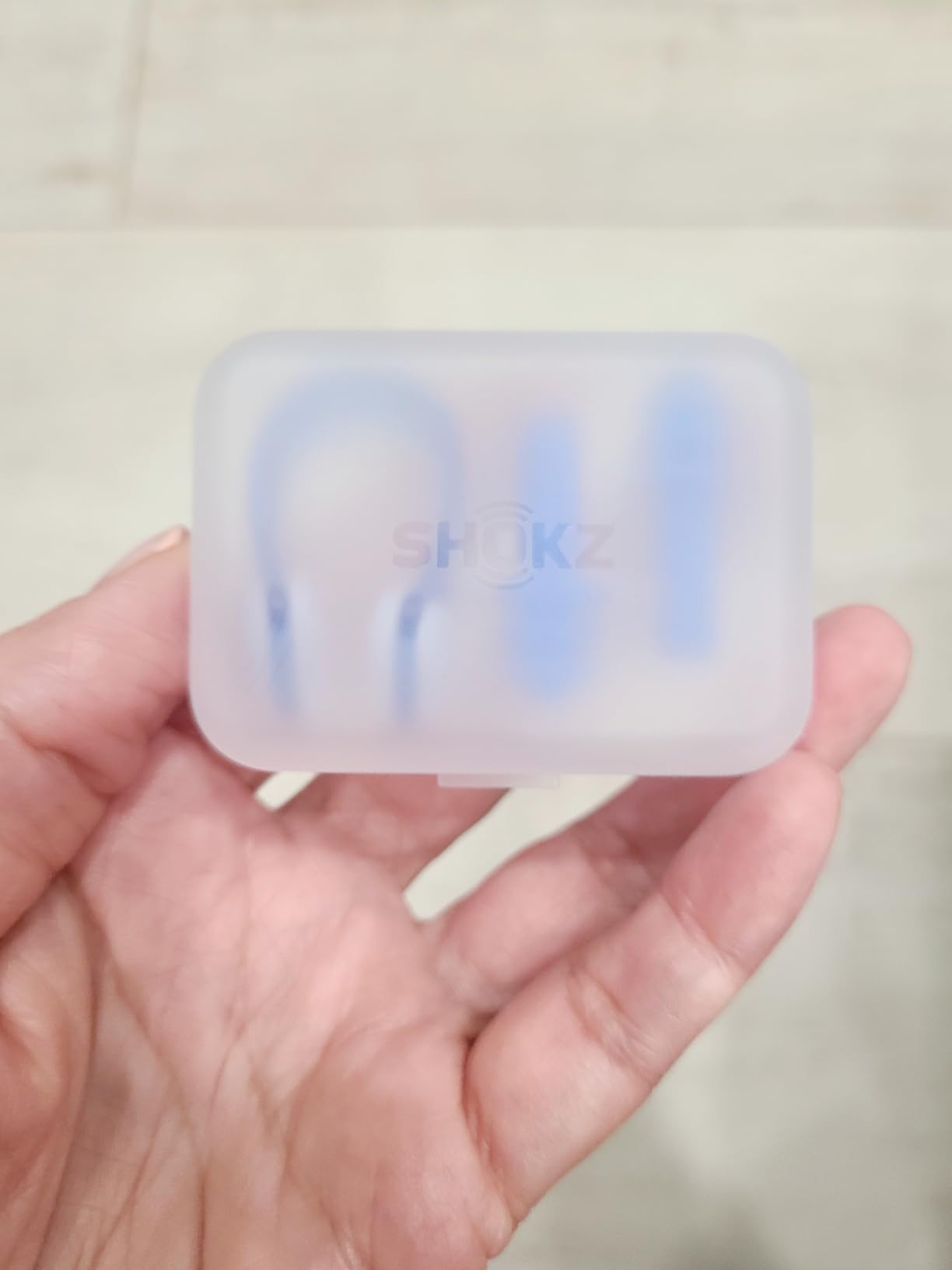
The swimming-specific EQ mode is a small touch that matters more than it sounds. Standard bone conduction audio is thin and bass-poor, and the OpenSwim Pro pushes the low end specifically for underwater listening, where water absorbs high frequencies far faster than low ones. Reviewers consistently single this out as the difference between the OpenSwim Pro and generic bone conduction units.
File handling is the workflow friction everyone mentions. Purchased music has to be transferred to the 32GB of internal storage through the magnetic cable before a swim, and subscription services restrict how much you can download. Playback runs largely in alphanumeric order with limited playlist control, so anyone who relies on a running order will want to curate files first.
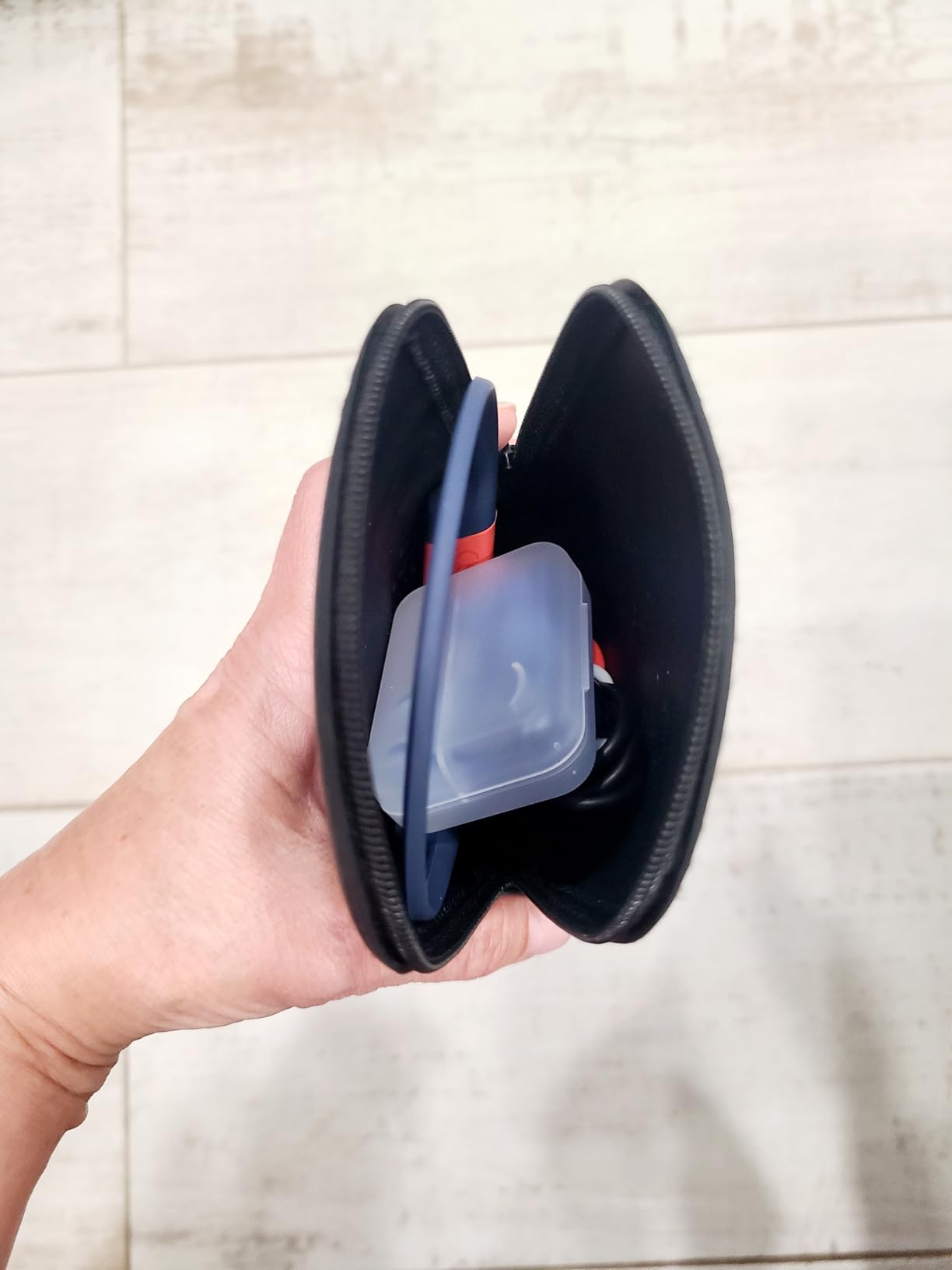
What the OpenSwim Pro handles better than anything else here
Durability evidence. With 3,300 reviews behind it, this is the only product in the lineup where a large body of owners has survived months of repeated pool exposure. Swimmers consistently treat that track record as the main purchase filter, ahead of any spec sheet.
All-round versatility. The same pair works for running and cycling on Bluetooth, and the frame sits under caps and goggles without shifting. For a triathlete who wants one device across all three disciplines, that combination is hard to beat.
Where the OpenSwim Pro disappoints
At 42.5 g, it is the heaviest set here, and the fit is less forgiving than the lighter titanium frames below. A swimmer in r/Earbuds described the general problem clearly: wearing bone conduction with goggles puts pressure around the ears and becomes uncomfortable over distance.
Small, closely spaced buttons are hard to identify by feel, which matters when your hand is wet or you are not looking down. And since Bluetooth is useless underwater, the transfer ritual is unavoidable rather than optional.
2. PSIER S18: Best Value Bone Conduction Headphones for Swimming
PSIER Bone Conduction Headphones, IPX8 Waterproof MP3 Mode for Underwater
IPX8 to 2 m for 1 hour
32GB, up to 4000 songs
8 hours, 1.5 h charge
Bluetooth 5.6, 14mm driver
Pros
- Holds position through long swim sessions
- Clear and loud sound above and below water
- Supports MP3 WMA FLAC APE and WAV
- Backup charging cables sold separately
- Responsive service that honoured a replacement
Cons
- Bluetooth drops out underwater so MP3 is required
- Sideloading is cumbersome and services are limited
- Silicone band does not mould to every head shape
- Touch controls can be finicky
The PSIER S18 is the one to beat on value, and with 2,827 reviews it has almost as much long-term evidence as the OpenSwim Pro. Owners are overwhelmingly daily swimmers, and the recurring theme is simple: it stays put through laps, sounds clear and loud, and costs a fraction of the flagship.
The waterproofing is rated IPX8 for 2 meters for 1 hour, which is enough for a normal pool session but half the submergence time of the Shokz flagship. Storage is a full 32GB holding up to 4,000 songs, and the format support is unusually generous: MP3, WMA, FLAC, APE, and WAV all load directly.
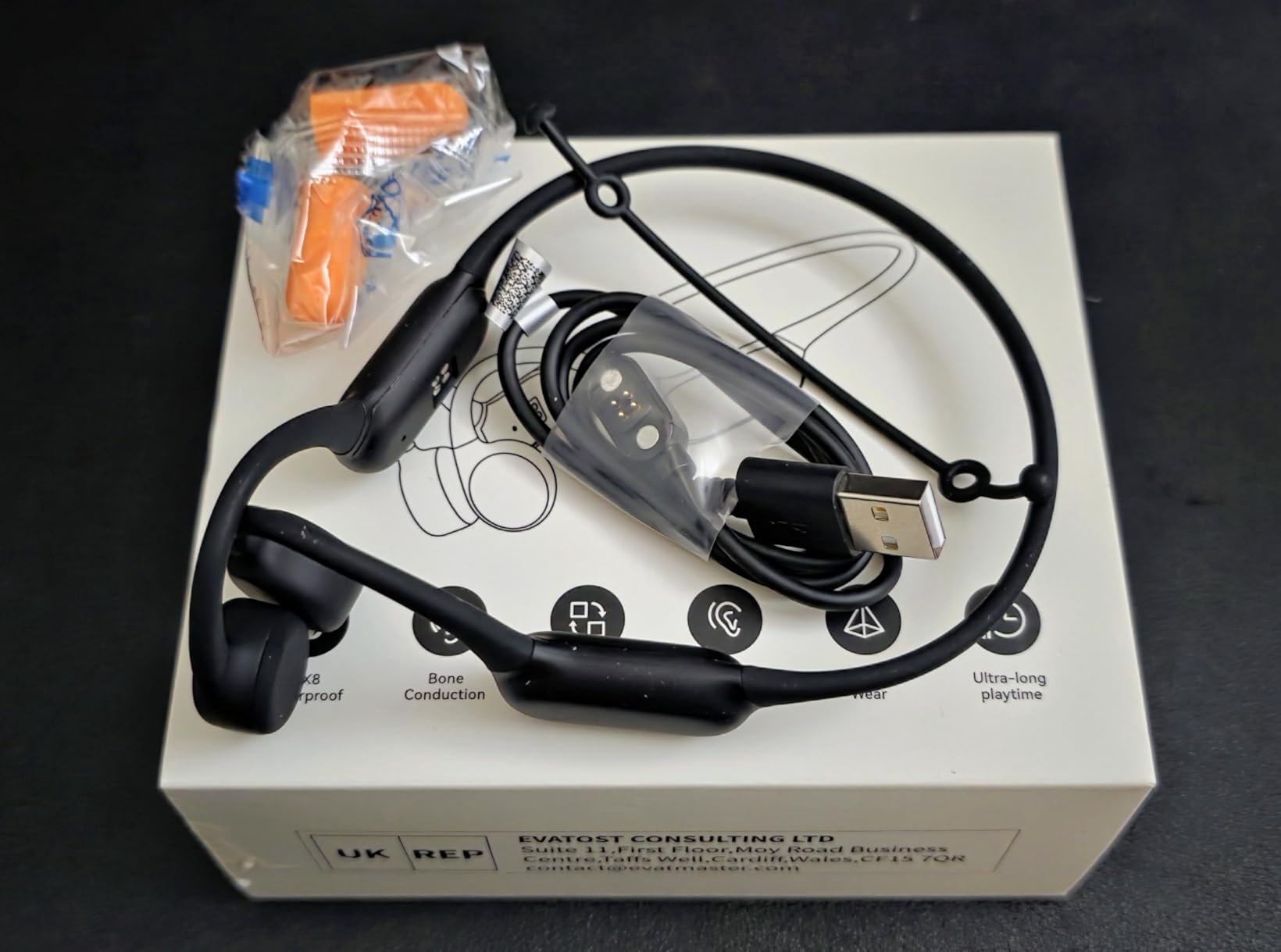
Two practical details win points here. Replacement magnetic charging cables are sold separately, so there is no lock-in when the original wears out, and customer service has been responsive enough to honour a replacement outright. A 14mm bone conduction driver handles the frequency range from 20Hz to 20,000Hz.
As always, Bluetooth drops out the moment you submerge, so the transfer step is mandatory. More swimmers report fit issues with this one than with the OpenSwim Pro, mostly around the silicone band not moulding to different head shapes.
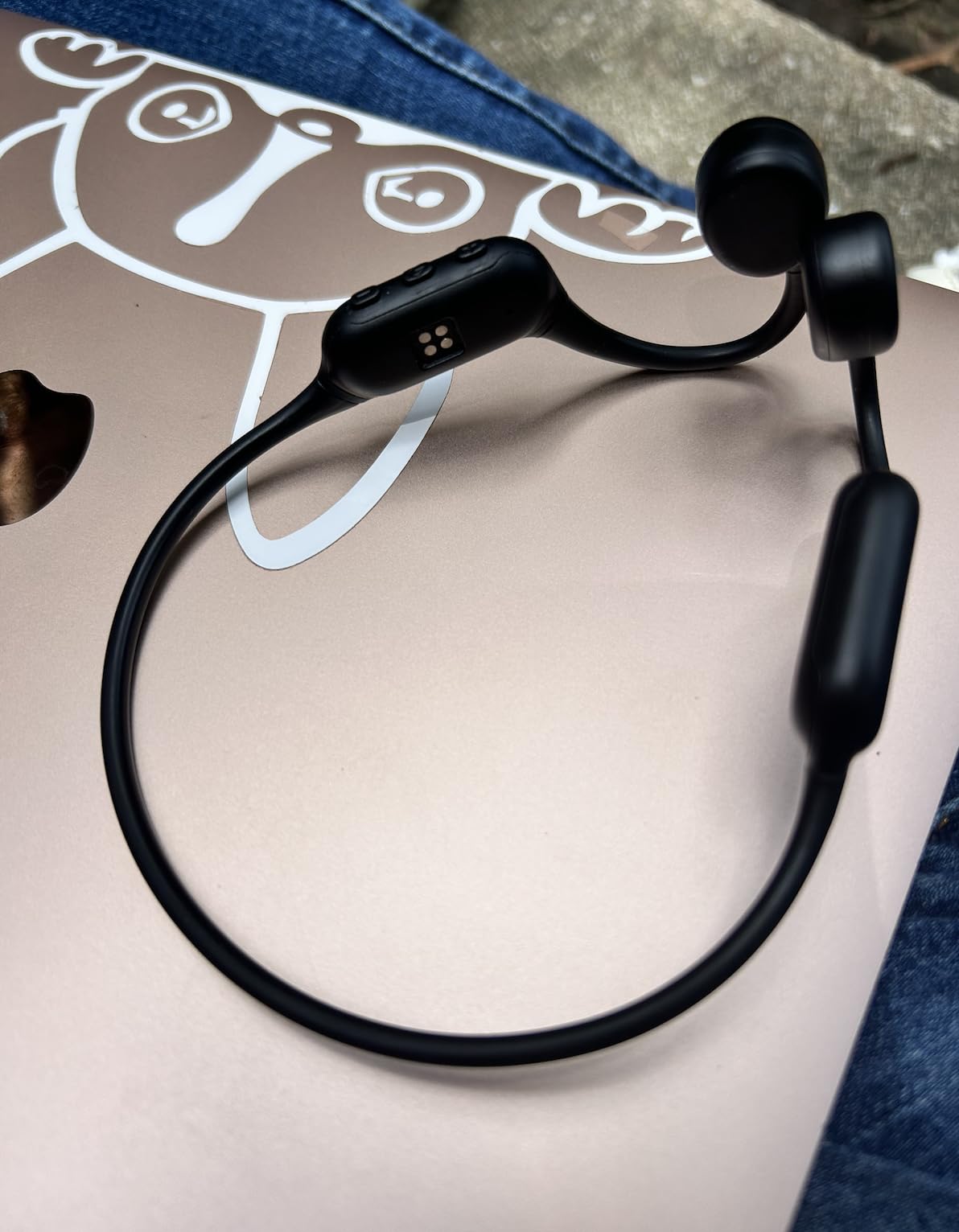
Best reasons to pick the PSIER over the Shokz
Format flexibility. If your library is not all MP3, the WMA, FLAC, APE, and WAV support removes conversion steps that other models force on you. The PSIER plays what you give it.
Volume and clarity underwater. Reviewers repeatedly describe the sound as loud and clear in the pool, which matters more than tonal detail when you are listening through bone and water.
Where it falls short
The silicone band is the recurring weak point. It does not adapt to every skull, and some owners report the unit shifting once water resistance and sweat build up over a long session.
Touch controls frustrate some users, and the 1-year manufacturing warranty is half what Shokz offers. If you swim several times a week, that difference matters.
3. KESIEME X7s: Best Budget Pick for Lap Swimmers
KESIEME Swimming Headphones,IPX8 Waterproof Bone Conduction Headphones with 32GB Built-in Memory,Underwater Earphones for Swimming,Bluetooth 5.4 Open-Ear Sport Earbuds for Running, Cycling
IPX8 to 2 m
32GB onboard storage
10+ hours at 60 percent volume
37 g titanium wraparound
Pros
- Dependable in real pool use
- Sound holds up well in MP3 mode
- Appears as a USB drive for drag and drop
- 10+ hours beats cheaper rivals
- Included earplugs cut water and bubble noise
Cons
- No shuffle function
- Songs play in load order only
- No fast-forward or rewind
- Weak bass and low maximum volume
- Can slip off without a swim cap
The KESIEME X7s has been a long-running budget favourite, and with 1,657 reviews its owners are mostly lap swimmers and commuters. Praise centres on real waterproofing, decent underwater sound in MP3 mode, and a battery that outlasts the cheaper competition.
The titanium wraparound frame weighs 37 g, and a 200mAh battery delivers 10+ hours at 60 percent volume. Files transfer by drag and drop because the device shows up as a USB drive, which removes the app dependency that slows other models down. Earplugs are included in the box, which is a nice touch given how much they help underwater.
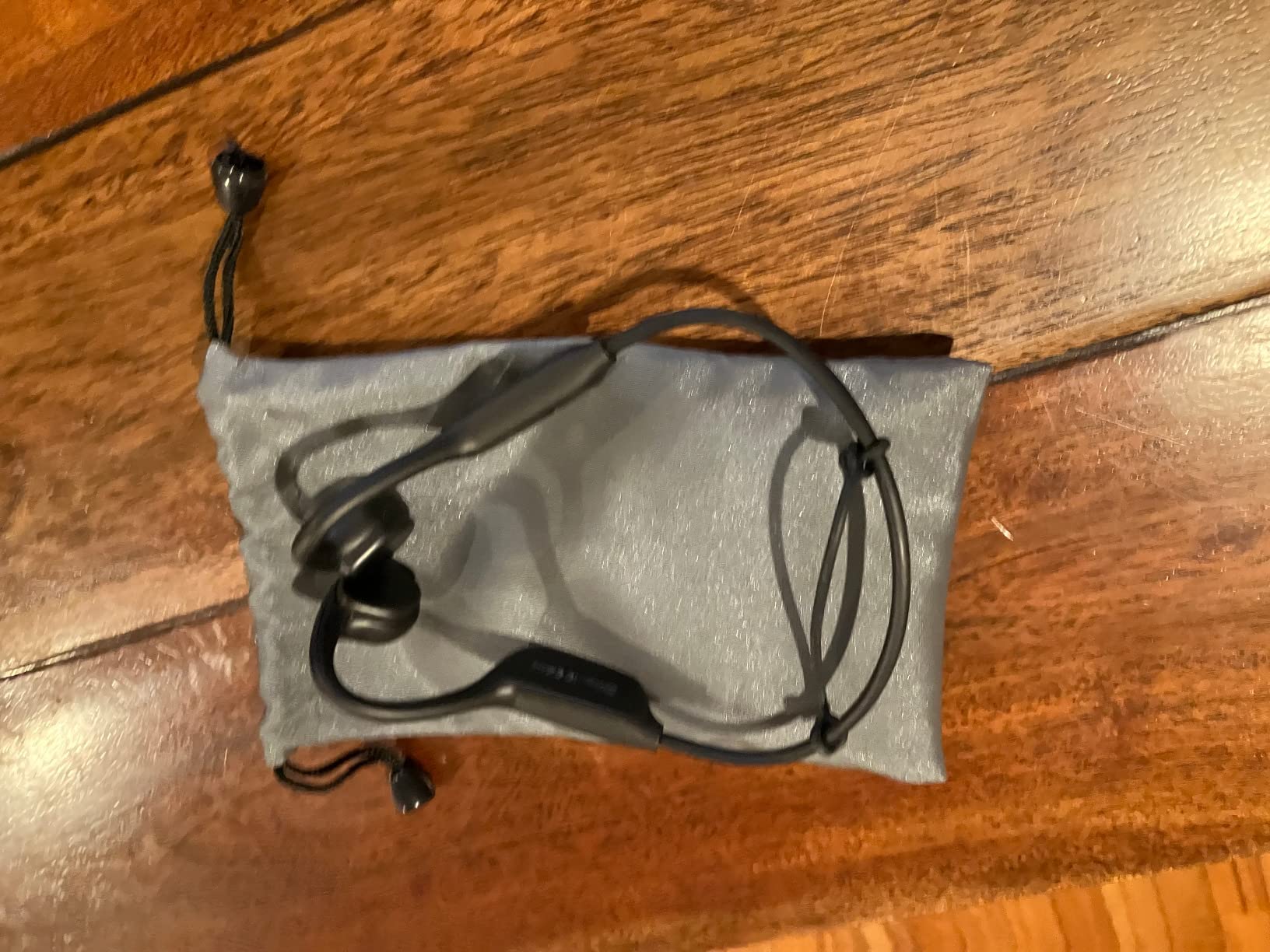
Bluetooth 5.4 handles land use with a listed range of 33 inches, so this is very much a pool-first device rather than a general sports headset. The rating is IPX8 up to 2 meters, and USB-C charging takes about 2 hours.
The honest limitation is playback control. There is no shuffle and no fast-forward or rewind, so songs play in the order you loaded them. For audiobooks and podcasts that is a genuine problem, and swimmers who like a shuffled playlist will find it irritating.
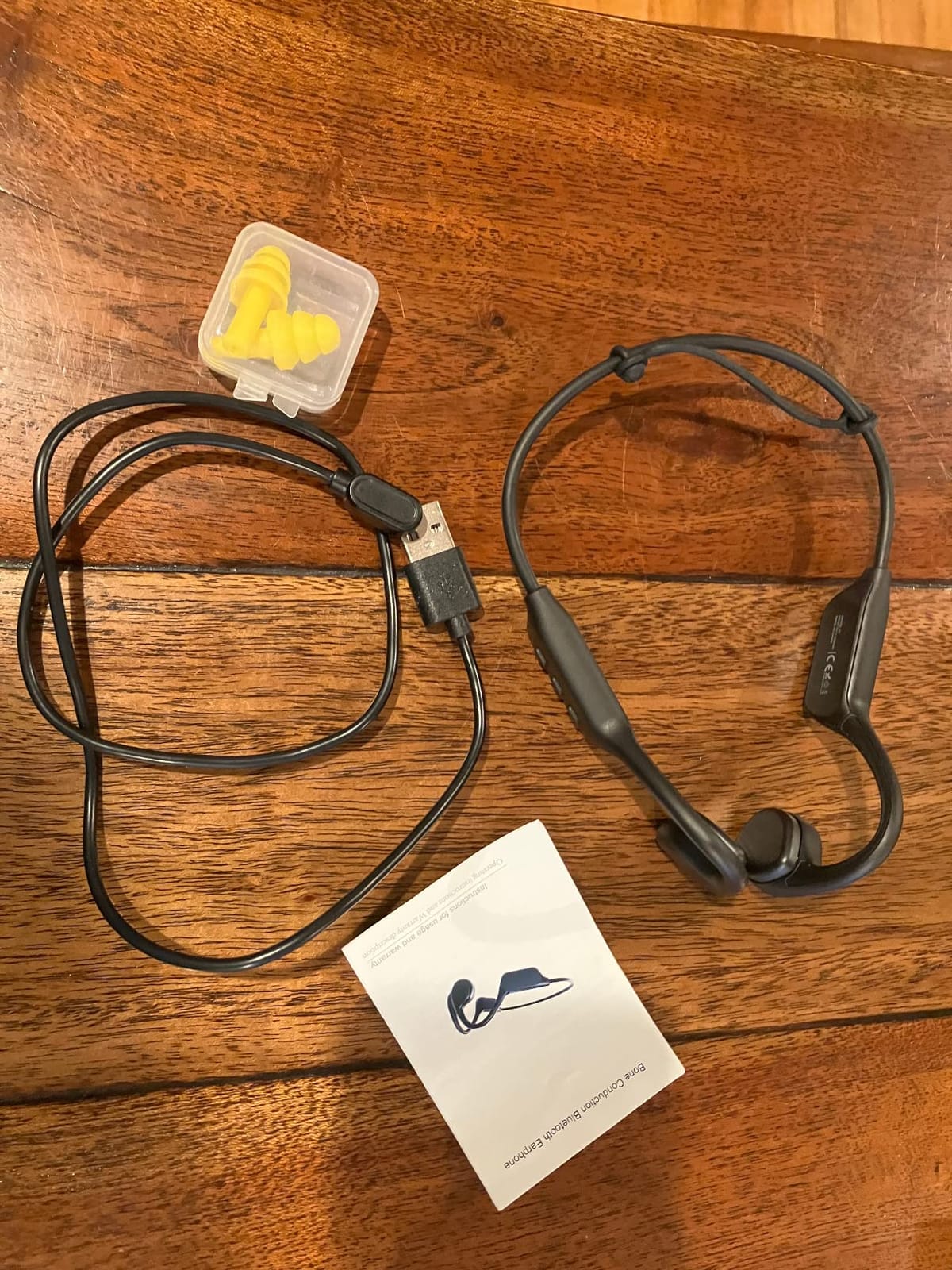
What makes this the budget pick
Battery claims that hold up. The 10+ hour figure comes from a 200mAh cell at moderate volume, and reviewers report 6+ hours in real use, which beats most of the models at similar tier. Volume, by contrast, is low and bass is weak.
The simplest transfer workflow in the lineup. Showing up as a USB drive means no proprietary app, no cloud account, and no format surprises. You load music, you swim.
Where it will disappoint you
Fit without a cap. Multiple reports describe the unit popping off during bounces or push-off in open water. If you swim without a cap, this is a real durability risk rather than a minor annoyance.
Playback controls are bare bones, and the microphone picks up wind noise on bike calls. For a runner-commuter who mostly stays dry, that is fine. For an audiobook listener, it is not.
4. VLOP VP01: Best for Underwater Clarity and Lightest Frame
VLOP Bone Conduction Headphones, IPX8 Waterproof Swimming Headphones, Std.
IPX8 sealed hybrid system
32GB internal storage
8 hours playtime
26 g titanium memory frame
Pros
- Hybrid bone and air conduction is clearer and bassier
- 26 g titanium frame is effectively undetectable
- Stays secure with goggles helmets or glasses
- Simple Bluetooth 6 and MP3 switching
- Sealed construction rated to swimming depths
Cons
- Bluetooth useless underwater so MP3 is required
- MP3 mode drains battery faster than Bluetooth
- Low battery can trigger an automatic mode switch
- Pressure needs adjusting over long sessions
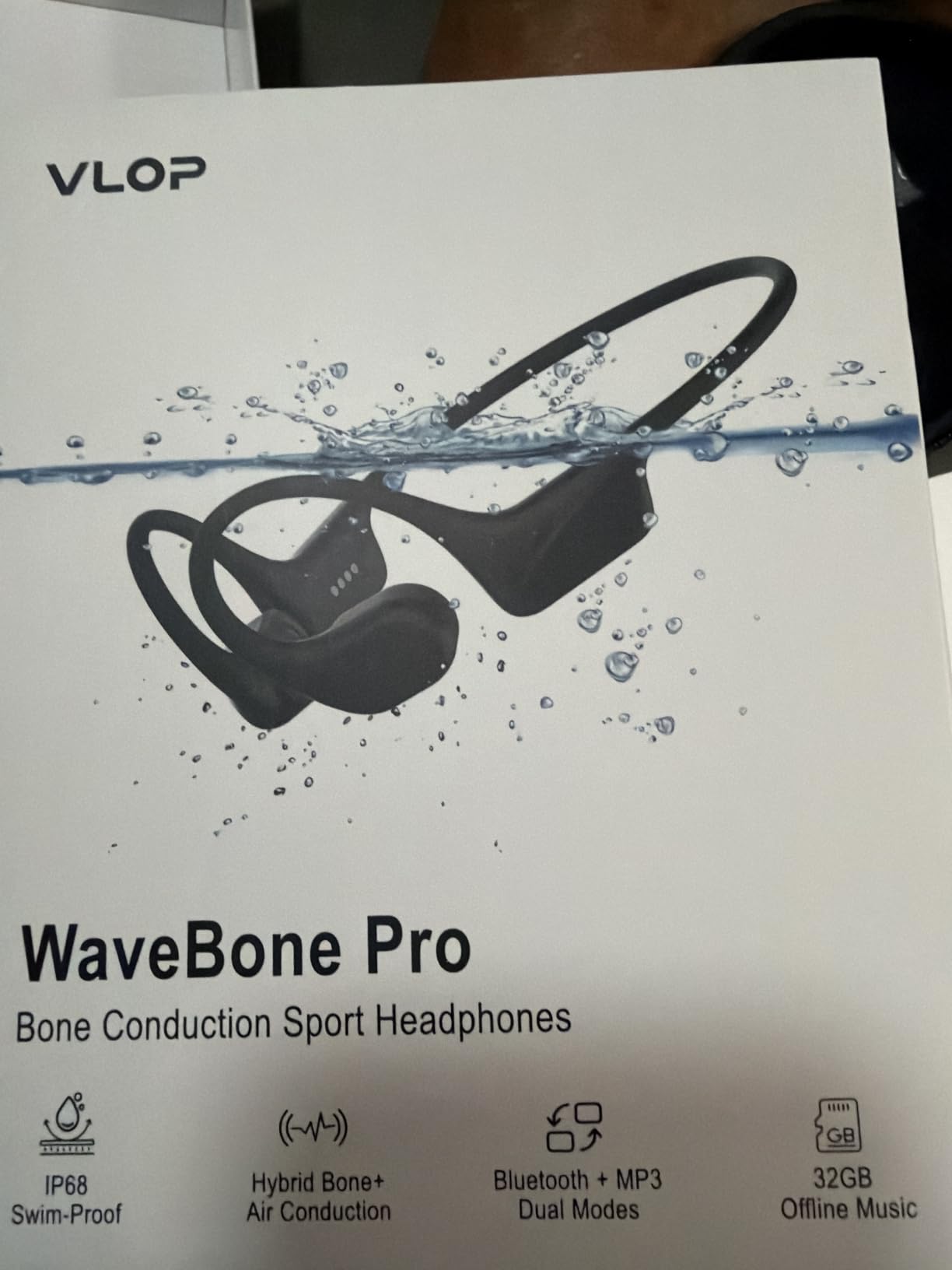
The VLOP VP01 scores 4.8 across 557 reviews, with an 86 percent five-star share, and the reason is a design decision nothing else here makes. Instead of pure bone conduction, it pairs a bone driver with an air conduction driver, which reviewers say produces clearer mids and noticeably stronger bass at the same weight class.
At 26 g with a titanium memory frame, it is the joint-lightest product in this roundup and the one most swimmers describe as undetectable over a long session. Memory wire also means it holds its shape, so it stays put with goggles, a cap, or a bike helmet without adjustment between sets.
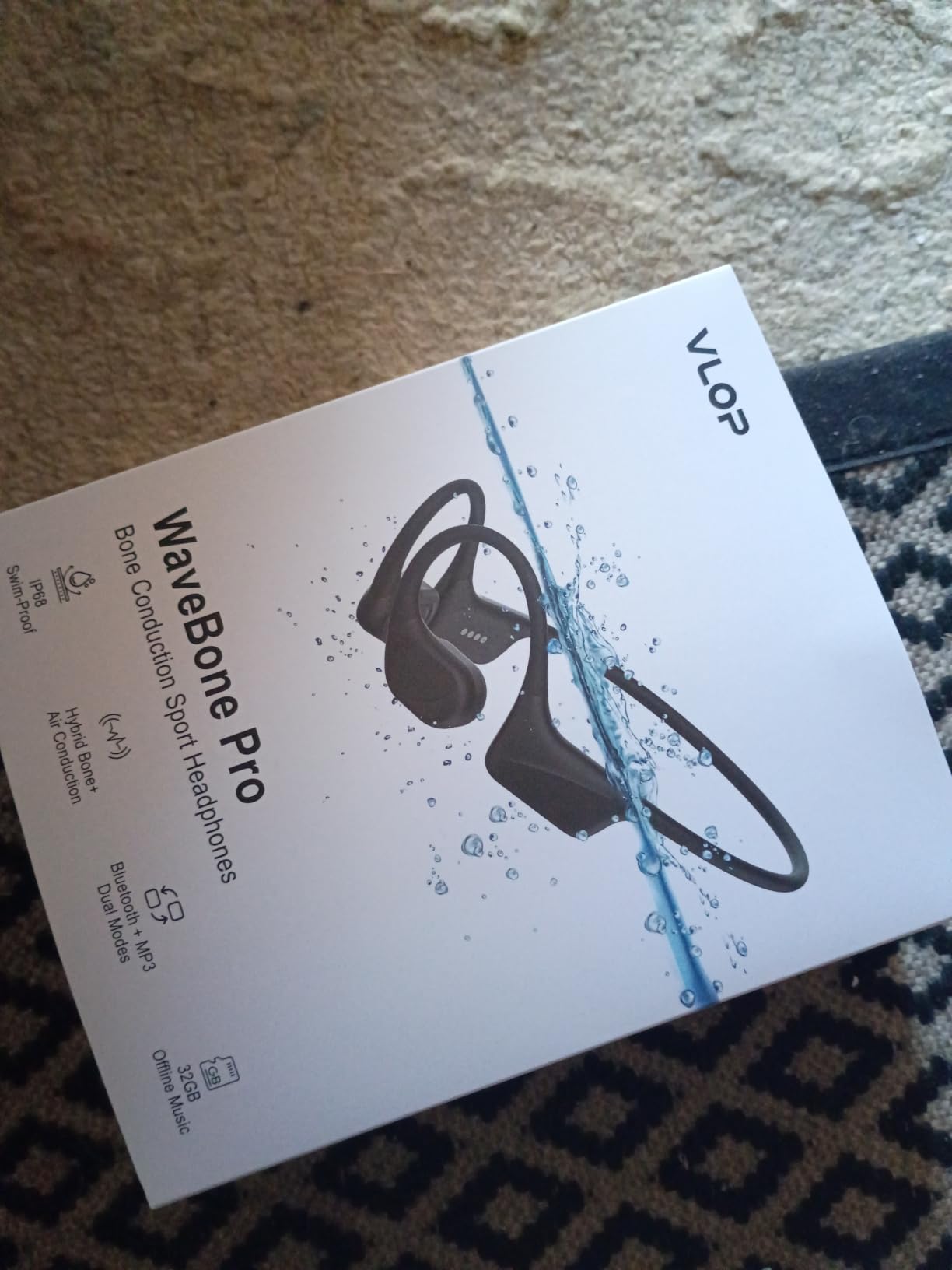
Storage is 32GB, Bluetooth is version 6, and the sealed structure is rated equivalent to IP68 and IPX8. Supported formats include MP3, FLAC, WMA, WAV, and APE. Switching to MP3 mode is a triple-click of the multifunction button, which is quicker than digging through a companion app.
Two behaviours to plan around. MP3 mode draws noticeably more power than Bluetooth, and a low battery can trigger an automatic switch back, which is annoying mid-lap. Fit position also needs adjusting downward on the cheekbone to reduce pressure across a long session.
Best reasons to buy the VP01
If bass is what you are missing underwater, this is the model built for it. The hybrid driver attacks the exact weakness that makes conventional bone conduction feel thin, and the titanium frame removes the pressure problems that show up over long sessions.
It suits swimmers who wear a lot of gear. Goggles, caps, and helmets all sit on top of the same frame zone, and the memory wire shape holds through all of them.
Where it falls short
The 557-review base is the thinnest evidence pool among the highly rated models here. A near-perfect score is encouraging, but it does not tell you how the seals hold after a season of chlorine.
Some users need to reposition the transducers to ease pressure points, and the auto-switch at low battery is a rough edge for anyone swimming an hour without a break.
5. Tevese X9: Best for Swimmers Who Also Train on Land
Swimming Headphones Bone Conduction Bluetooth 6.0 IPX8 Waterproof 32G MP3
IPX8 waterproof rating
32GB for 9000+ songs
10 hours battery
3 hour charge time
Pros
- Clear sound above and below the waterline
- Non-ear-hook design stays comfortable for hours
- Stable Bluetooth with quick pairing
- Open-ear design keeps you aware of surroundings
- Battery covers several days of office use
Cons
- Bluetooth cannot transmit underwater
- Light bass compared with in-ear headphones
- 3 hour charge time is longer than most rivals
- Most reviews cover general workouts not long swims
The Tevese X9 holds a perfect 5.0 across 167 reviews with a 100 percent five-star distribution, and the spec sheet is straightforward: IPX8 waterproofing, 32GB of storage for 9,000+ songs, Bluetooth 6.0 with 10 m range, and up to 10 hours of battery.
What makes it interesting for swimmers is the non-ear-hook design. The frame sits around the head without hooks in the ear, and owners report being able to wear it for hours without the pressure points that come with traditional wraparound shapes. Reviewers also like that it adapts to the top of the head and sounds good underwater.
The caveat is evidence, not features. At 167 reviews, most of the feedback describes general workouts and daily office use rather than repeated pool sessions, so the waterproofing reputation is still forming. Light bass is the only recurring note in the reviews.
Who this works for
Swimmers who train across several sports. The stable Bluetooth and quick pairing make it convenient for a bike or run session straight after the pool, without a separate device for each discipline.
Anyone who dislikes ear hooks. That design choice is the whole argument, and it is a real one for people who find hooks uncomfortable over distance.
What to watch out for
Charge time runs to about 3 hours, longer than most rivals, so plan charging the night before rather than before a session. The open-ear design also means you will hear more pool noise, which some swimmers prefer and others do not.
Because the reviews are weighted toward dry use, treat the IPX8 claim as promising rather than proven in the way the OpenSwim Pro’s 3,300 reviews are.
6. Sanag B33: Best for the Longest Feature List
Sanag Swimming Bone Conduction Headphones Earbuds IPX8 Waterproof Underwater 8H Playtime Wireless Bluetooth Earphones with 32GB MP3 for Running Cycling Sport, Black
IPX8 to 2 m submersion
32GB built-in memory
8 hours playback, 2 h charge
4.8 oz, Bluetooth 5.3
Pros
- One-piece seamless body built for pool and ocean
- ENC noise cancellation for calls
- Fast pairing with 32GB internal storage
- 8 hours covers a full swim meet
Cons
- Bluetooth cannot transmit underwater
- Heaviest unit here at 4.8 ounces
- Touch controls rather than physical buttons
- Mixed rating spread with 16 percent one-star
The Sanag B33 packs the densest feature list in the lineup, and it is the one model here described as equally suited to pool and ocean. A one-piece seamless IPX8 body rated to 2 m of submersion is the foundation, and a magnetic drive oscillator is included specifically to hold low-frequency detail underwater.
For calls, ENC noise cancellation with dual microphones keeps you audible in a noisy pool deck or gym. Bluetooth pairs within 3 seconds with a listed range up to 50 feet, and a sealed sound cavity reduces leakage, which matters when you are sitting on a pool edge between sets.
Weight is the catch. At 4.8 ounces, this is the heaviest product in the roundup by a wide margin, and the touch controls can be finicky in water. The rating distribution is also the most polarised here, with 74 percent five-star against 16 percent one-star, which usually signals that fit and control feel are less forgiving than the spec sheet suggests.
Where the B33 earns its place
Feature coverage. ENC calls, low-latency Bluetooth, a sealed cavity, and an oscillator tuned for underwater lows are features you rarely see together at this tier. If your swim time is followed by work calls, that combination is genuinely useful.
Ocean and pool versatility. The one-piece body has no exposed joints to worry about in salt water, and 8 hours of playback covers a full meet day.
Where to be cautious
That weight adds up over a 2 km open-water swim, and the 16 percent one-star share suggests a real group of owners found the fit or controls unacceptable. Buyers who cannot tolerate a bad fit should test carefully or choose a lighter frame.
7. CXK X17: Best for Long Endurance Sessions
CXK Bone Conduction Headphones IPX8 Waterproof Bluetooth 6.0 Swim Headphone
IPX8 triple seal to 2 m for 2 h
Up to 12 hours playback
15x10mm PulseCraft transducer
2.56 oz with silicone pads
Pros
- Light 2.56 oz build for long sessions
- Triple-seal IPX8 rated to 2 m for 2 hours
- Longest stated battery in the group
- Adjustable EQ plus AI music generation in app
- Two mics with AI noise cancellation
Cons
- Only 89 reviews so limited long-term evidence
- Bluetooth cannot connect underwater
- Only WMA FLAC WAV and MP3 supported
- Highest single-star share among top-rated models
The CXK X17 claims up to 12 hours of playback, the longest stated battery in this lineup, and the hardware behind it is more serious than the price suggests. The sealing is a triple-seal IPX8 design rated to 2 meters for 2 hours, matching the flagship Shokz figure rather than the usual 1-hour budget standard.
The 15x10mm CXK PulseCraft transducer is a physically large driver for the category, and the 2.56 oz weight with an adjustable headband and soft silicone pads is built for long sessions. The companion app adds custom EQ and AI music generation, and two microphones with AI noise cancelling algorithms handle calls.
The honest limitation is the 89-review base. A 4.8 score with a 92 percent five-star share is impressive, but it is a small sample compared with the thousands behind the top picks. Format support is limited to WMA, FLAC, WAV, and MP3, and the model carries the highest single-star share among the highly rated options.
Why endurance swimmers like it
Battery headroom is the headline. If you do two sessions a day or train through a long open-water swim without a midday charge, a 12-hour ceiling removes a category of anxiety that the 7 and 8 hour models cannot.
The double-length submersion rating means the seals are specified for real open-water sessions, not just a pool length. Adjustable headband and silicone pads reduce the pressure complaints that dominate the r/Earbuds conversation.
Where the evidence is thin
With 89 reviews, most of which are recent, nobody has yet reported how these seals perform after a full season of chlorine exposure. That is the single most important long-term data point for any pool headphone, and it does not exist here yet.
8. SAMVEK X6: Best for Multiproduct Switching
Swimming Headphones Underwater,Bone Conduction Headphones IP68 Waterproof
IP68 sealed body
32GB for 8000 tracks
8 hours from 220 mAh
26 g with 2.5 mm jack
Pros
- 26 g body that works with caps goggles or earplugs
- IP68 sealing covers dust sweat rain and submersion
- 32GB storage across five audio formats
- Bluetooth 6.1 with multipoint pairing and 10 m range
- Single multifunction button for playback modes and calls
Cons
- Bluetooth does not transmit through water
- Only 46 reviews the thinnest evidence base
- Listing gives a marketing phrase instead of a company name
The SAMVEK X6 is specified like a much more expensive pair: IP68 sealing, Bluetooth 6.1 with multipoint pairing and 10 m range, 32GB of storage across MP3, WMA, WAV, APE, and FLAC, and a 26 g body. The 220 mAh battery delivers 8 hours of playback or talk time on a 2-hour charge.
Multipoint is the feature that actually separates it. You can hold connections to two devices at once, so the same pair works for a swim with offline MP3 and then your phone on the bike home without a reset. A single multifunction button handles playback, mode switching, and calls, and there is even a 2.5 mm jack for wired listening on deck.
It holds a 5.0 rating with no ratings below five stars, but that comes from 46 reviews, the thinnest evidence base here, and most of that feedback describes general use rather than repeated swim sessions. The listing also names a marketing phrase as the manufacturer rather than a company, which tells you how closely the packaging was reviewed.
Best reasons to consider it
Multipoint pairing is genuinely useful for triathletes and multisport swimmers. Connect the phone for a run, then switch to onboard storage for the water without re-pairing.
IP68 covers dust and sweat as well as submersion, so the same pair handles cold-weather training, showers, and cycling without a separate waterproof case.
Where caution is warranted
Forty-six reviews is not a durability record. Forum sentiment is clear that months of pool survival matters more than any rating, and there is not yet a season of evidence for this model.
Treat the 5.0 score as a promise rather than a track record, and consider the better-evidenced alternatives if you are committing to several seasons of use.
9. RR SPORTS X26: Best Fit for Glasses and Swim Caps
RR SPORTS IP68 Waterproof Swimming Headphones, Bone Conduction Bluetooth 6.0 Headphones, Built-in 32GB MP3 Player, Soft Lightweight Open-Ear Design for Swimming Marathons Showers Cycling(Obsidian
IP68 to 2 m submersion
32GB for 7000 songs
7 hours stated battery
3.88 oz, Bluetooth 6.0
Pros
- Secure fit that stays put on runs and in the pool
- Nano-hydrophobic coating over a sealed body
- Works comfortably with both caps and goggles
- Magnetic port doubles as file transfer cable
- Immediate pairing to phone or laptop
Cons
- MP3 mode always starts at high volume
- Real-world MP3 playback closer to 4 hours than 7
- Battery does not last a full working day
- Bluetooth unusable underwater
The RR SPORTS X26 is the pick for swimmers who wear glasses or insist on a cap. Owners with both report a stable, non-slip fit and painless pairing with phone and laptop, and the soft silicone open-ear design stays comfortable over hours, including for glasses wearers.
Water protection comes from a nano-hydrophobic coating over a sealed body rated to IP68 and 2 m of submersion. Storage is 32GB for up to 7,000 songs across MP3, WMA, WAV, and FLAC, and the magnetic port doubles as the file transfer cable so you are not juggling two leads.
The battery behaviour is where honesty matters. Owners report real-world MP3 playback closer to 4 hours rather than the stated 7, and the player starts every session at maximum volume without remembering the previous level. For a 45-minute swim that is more than enough, but plan on charging nightly.
What this model does better
Cap and goggle compatibility is the whole pitch. A swimmer on a wallstreetoasis forum thread noted that many swimmers simply skip caps entirely, and this is the pick for those who do not. The fit holds with and without headwear.
One-cable workflow. Charging and file transfer share the same magnetic lead, which is fewer things to lose in a pool bag.
Where it disappoints
Battery claims do not survive contact with reality. The 4-hour real-world figure against a 7-hour claim is the largest gap in this roundup, and the volume reset at every MP3 start is a genuine annoyance on a long session.
At 3.88 ounces it is also one of the heavier frames, so all-day wear comfort varies by user.
10. LYPERTEK SoundFree S30: Best for Dawn and Night Sessions
LYPERTEK SoundFree S30 Bone Conduction Headphones, Swimming Headphones
IP68 TUV Rheinland 10 m certified
32GB for 8000+ songs
23 g titanium memory wire
Bluetooth 6.0 with three EQ modes
Pros
- TUV Rheinland certified 10 m waterproofing
- 23 g titanium memory wire frame
- 32GB holds 8000+ songs for phone-free swimming
- Rear safety LED for low-light visibility
- Three EQ modes and dual-mic ENC
Cons
- Bluetooth cannot work underwater
- Only 43 reviews with 8 percent one-star
- 22 percent four-star reviews suggest inconsistent experiences
The LYPERTEK SoundFree S30 stands out on certification rather than reviews. Its IP68 rating is backed by TÜV Rheinland testing to 10 meters, which is a stricter standard than the self-declared IPX8 figures most products in this category rely on. For a device that lives in water, that is a meaningful distinction.
At 23 g, the titanium memory-wire frame is among the lightest available and holds its shape through a long session. Storage is 32GB for 8,000+ songs, Bluetooth is version 6, and three EQ modes plus dual-mic ENC handle both tuning and calls.
The rear safety LED is a small feature that matters for early morning and night swims, making you visible to other lanes and to traffic. The problem is evidence: 43 reviews with 56 percent five-star, 22 percent four-star, 14 percent three-star, and 8 percent one-star. That spread is the most mixed in the lineup.
Best reasons to pick it
Verified waterproofing. An independent 10-meter certification is harder to fake than a printed IPX8 claim, and it is the strongest water-resistance evidence attached to any pick here.
Visibility and weight. The rear LED and 23 g frame make this the most practical pair for dark early sessions, where other swimmers cannot see you and where a heavy frame is most noticeable.
Where to be careful
Forty-three reviews is the smallest sample in the roundup, and 8 percent one-star reviews point to unit-to-unit or fit inconsistency. If swim reliability is your top filter, the better-evidenced models are safer bets.
Bluetooth still cannot work underwater, so MP3 mode remains the only way to hear anything in the pool.
How Bone Conduction Works Underwater
A bone conduction headphone sends sound as vibration rather than as pressure waves through air. A transducer rests against your cheekbone or temple and vibrates in time with the audio signal, and those vibrations travel through the skull to the cochlea. Your eardrum is never involved, which is precisely why the device can stay sealed, dry, and in place while you are fully submerged.
That is the reason bone conduction suits swimming, and it also explains its weakness. Water absorbs high frequencies much faster than low ones, so underwater audio arrives thin and bass-poor by comparison with in-ear buds. Earplugs help, because blocking your ears removes competing pool noise and lets the low-frequency vibration read as fuller. A swim EQ mode, which the OpenSwim Pro includes, pushes the low end specifically to compensate.
Why Bluetooth stops working underwater
Water is an effective shield for radio signals, and a phone on the pool deck loses connection within roughly 10 meters. In a 25-meter pool that means you lose signal before you reach the far wall. This is not a brand problem or a firmware bug. The fix is onboard storage, which is why every product in this roundup ships with 32GB or similar and plays local files instead.
One clarification worth repeating: Aftershokz is now Shokz. Older Aftershokz models are superseded, and the current swimming flagship is the OpenSwim Pro. If a page is still recommending a discontinued Sony WS1 Sports Walkman, treat the rest of its lineup with suspicion.
How to Choose Bone Conduction Headphones for Swimming
Read the IP rating correctly. IPX8 means submersion to 2 meters. IP68 adds dust protection, which matters less in a pool but more on a bike or a beach. The detail swimmers miss is duration: a 1-hour submersion rating covers a normal pool session, while 2 hours covers open water and cold-water endurance swims. Check the hours, not just the number.
Prioritise storage and file format support. You will use MP3 mode, not Bluetooth, so treat onboard memory as the primary feature. 32GB holds 7,000 to 9,000 songs depending on format. If your library includes FLAC, WMA, APE, or WAV, confirm the device supports them, otherwise you will convert files before every swim.
Test the fit with your actual gear. This is the top complaint across r/Swimming and r/Earbuds. Put the device on first, then your cap, and check that the transducers still sit on your cheekbone afterwards. Goggle straps press on the ear hooks and become painful after a few hundred meters, so test with your goggles on before you commit.
Match battery claims to your real schedule. Stated figures assume moderate volume. Owners of the RR SPORTS X26 report roughly 4 hours of MP3 playback against a 7-hour claim, and the VLOP VP01 notes that MP3 mode drains faster than Bluetooth. If you swim twice a day, anything under 8 hours needs a nightly charge.
Choose by environment. Lap pools are chlorine, walls, and caps. Open water is salt, wind, and no lane lines, which makes water resistance and situational awareness more important. For cold-water work, our guides to the best cold water swimming boots and best solar heated swimming pool covers cover the equipment around the headphones.
Weigh evidence over ratings. A 5.0 from 46 reviews tells you less than a 4.2 from 3,300. Swimmers consistently treat months of pool survival as the deciding factor, so check the review volume behind any perfect score before you commit.
Care After Every Swim: Chlorine and Saltwater Protocol
Both chlorine and salt attack ports and degrade drivers, and users are unclear on rinse frequency, so here is a short protocol. Rinse the device under fresh running water for 30 seconds immediately after getting out, paying attention to the seams and the charging contacts.
Then shake out the water and let it air dry completely before charging, ideally on a towel away from direct sun. Do not charge while damp, and do not use a hair dryer or any direct heat. For salt swimmers, a fresh soak of a few minutes matters more than a quick rinse, and owners who skip this are the ones filing corrosion reports a year later.
Who Should Skip Bone Conduction Swimming Headphones
If your priority is sound quality, these are the wrong tool. Underwater audio from any bone conduction device is thin and bass-poor, and swimmers on r/Swimming describe the result as underwhelming for music and far better suited to podcasts and spoken word. People who want full frequency range in the water should look at in-ear options with a proper seal instead.
If you refuse to wear earplugs, you will leave the biggest audio advantage on the table. The same applies to swimming without a cap on models with narrow frames, where the popping-off reports are frequent enough to plan around with a strap or a different model.
If you are unwilling to transfer files before every session, stop here. Every product here requires a loading step, and the convenience of Bluetooth streaming simply does not survive contact with water.
Frequently Asked Questions
What are the best bone conduction headphones for swimming?
The SHOKZ OpenSwim Pro is the strongest all-round choice, with an IP68 rating, 32GB of onboard storage, and a 9 hour battery. The PSIER S18 offers similar capability at a much lower tier, and the VLOP VP01 is the lightest option with a hybrid bone plus air conduction driver.
Do bone conduction headphones work for swimming?
Yes, as long as you use onboard MP3 storage rather than Bluetooth. Bluetooth signals do not transmit through water and drop out within about 10 meters, so music must be loaded onto the device before entering the pool. Expect thinner, bass-poor audio underwater, which improves noticeably with silicone earplugs.
What is the downside of bone conduction headphones?
Underwater sound quality is the main limitation. Water absorbs high frequencies quickly, so the audio is thin and low on bass, and breathing and bubble noise can drown out quiet tracks. Fit is the second issue, since goggle straps and swim caps can shift the transducers off the cheekbone. Playback control on onboard storage is also usually simpler than on a phone.
Are Shokz worth it for swimming?
For regular swimmers, yes. The OpenSwim Pro carries 3,300 reviews from owners who have used it through repeated pool exposure, which is the durability evidence most buyers care about. It adds a swim EQ mode tuned for underwater bass, 2 year warranty coverage, and a magnetic cable that handles both charging and file transfer.
How do I turn on MP3 mode on Shokz?
Connect the magnetic cable to a computer and drag your audio files into the storage device that appears. Disconnect the cable, then press and hold the plus button for a few seconds to enter MP3 mode from power off. Playback is controlled from the side buttons, and the volume and track order can be set before the session.
Why does my Aftershokz keep disconnecting?
In a pool it is not a fault. Water blocks radio signals almost completely, so a Bluetooth connection dies within roughly 10 meters, well short of a 25 meter pool length. Load music to the internal storage and use MP3 mode for swimming, and reserve Bluetooth for poolside between sets. On land, a low battery or a missed reset after a session causes most other disconnects.
Can I wear Shokz in the rain?
Yes. An IP68 rating covers rain, sweat, and submersion to 2 meters, so the OpenSwim Pro handles wet-weather running and cycling without a case. Just rinse it in fresh water afterwards and let it dry fully before charging, since repeated wetting is what degrades the seals over time rather than any single exposure.
Can you wear bone conduction headphones with a swim cap?
Yes, but order matters. Put the device on first, secure the transducers against your cheekbone, then pull the cap over the ear hooks. Doing it the other way round pulls the transducers off the pressure point and thins the sound. Frames built from titanium memory wire hold their shape best under a cap.
Conclusion: The Best Bone Conduction Headphones for Swimming in 2026
The SHOKZ OpenSwim Pro remains our pick for the best bone conduction headphones for swimming, because 3,300 reviews of pool survival carry more weight than any spec sheet, and its swim EQ mode handles the underwater bass problem better than anything else here. If you are buying on a tighter budget, the PSIER S18 gives you the same 32GB and 8 hour core at a fraction of the outlay, and the KESIEME X7s is the pick if battery life matters most.
Whichever you choose, wear earplugs, put the device on before the cap, and rinse with fresh water after every session. Those three habits do more for both sound quality and lifespan than the difference between two models on this list.