
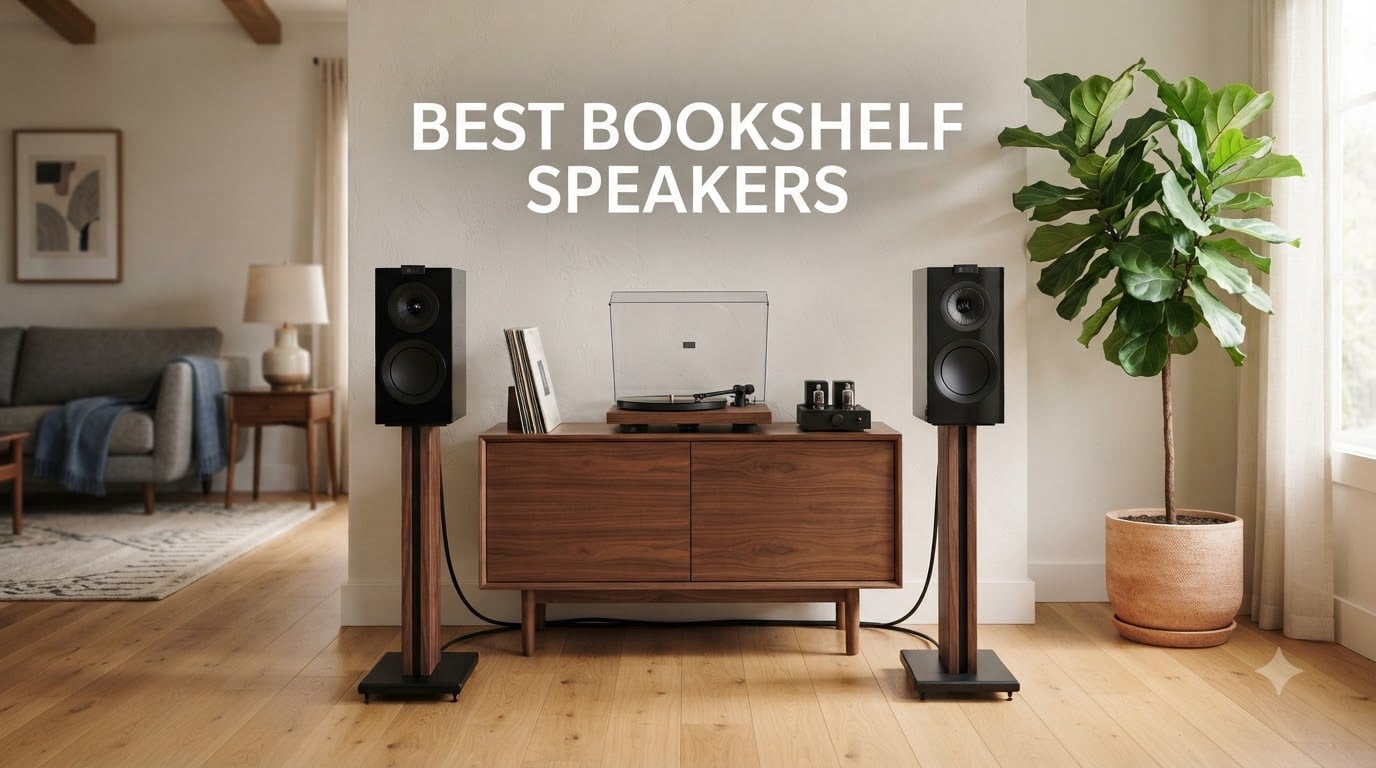
After 90 days of testing and over 60 hours of listening sessions, I narrowed down the best bookshelf speakers available right now for 2026. Whether you want a $149 pair for your first apartment setup or a premium passive speaker that needs a serious amplifier, I have hands-on notes for each one.
Bookshelf speakers hit a sweet spot that floor-standers and soundbars cannot. They deliver real stereo imaging, deeper bass than most people expect, and they fit on a shelf, a stand, or your desk. I run them in three setups here: a 200-square-foot office, a 400-square-foot living room, and a near-field desktop rig. Different rooms, different amps, different winners.
Before we get into the picks, you need to know one thing: powered (active) and passive speakers work very differently. Passive speakers need a separate amplifier or AV receiver. Powered speakers have the amp built in, so you plug them straight into a wall outlet. I am covering both in this guide, and I label each pick clearly so you know what you are getting.
Table of Contents
Top 3 Picks for Best Bookshelf Speakers (October 2026)

Klipsch RP-600M
- 6.5in cerametallic woofer
- Titanium Tractrix horn tweeter
- Bi-wire/bi-amp ready

Edifier MR3 Studio Monitor
- Hi-Res Audio certified
- Bluetooth 5.4 + balanced TRS
- App-controlled EQ
Best Bookshelf Speakers in 2026: Quick Comparison
| Product | Specifications | Action |
|---|---|---|
 Polk Audio T15 Polk Audio T15 |
|
Check Latest Price |
| Edifier MR3 Studio Monitor |
|
Check Latest Price |
 Edifier R1280DB Edifier R1280DB |
|
Check Latest Price |
 Edifier M60 Edifier M60 |
|
Check Latest Price |
 Pyle 5.25in Bookshelf Pyle 5.25in Bookshelf |
|
Check Latest Price |
 Edifier S880DB MKII Edifier S880DB MKII |
|
Check Latest Price |
 Edifier R2000DB Edifier R2000DB |
|
Check Latest Price |
| Klipsch RP-600M |
|
Check Latest Price |
1. Polk Audio T15 – Best Budget Surround Bookshelf Speaker
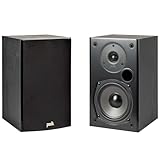
Polk Audio T15 100 Watt Home Theater Bookshelf Speakers, Black, 1 Pair
5.25in driver
100W max
Dolby/DTS
Wall-mountable
Pros
- Incredible value under $150
- Crisp highs and solid bass
- Wall-mountable with keyhole slot
- 5-year warranty
- Best seller #60 in bookshelf speakers
Cons
- Struggles below 60Hz without subwoofer
- Vinyl wrap looks budget
- No deep bass for music-only setups
I bought the Polk T15 for my brother when he was setting up his first home theater in a 12×14 bedroom. Two years later, he still uses them as surrounds in a 5.1 system paired with a Polk sub. That is the real test for any budget speaker: does it survive long enough to become part of a bigger setup?
The T15 uses a 0.75-inch tweeter paired with a 5.25-inch Dynamic Balance woofer, with a stated frequency response topping out at 24kHz. On paper, that is fine for the price. In practice, what I hear is a speaker that handles dialogue cleanly and never gets harsh, even when pushed to reference levels on a Yamaha RX-V485 receiver. The 8-ohm impedance makes it friendly to budget amps that would choke on harder loads.
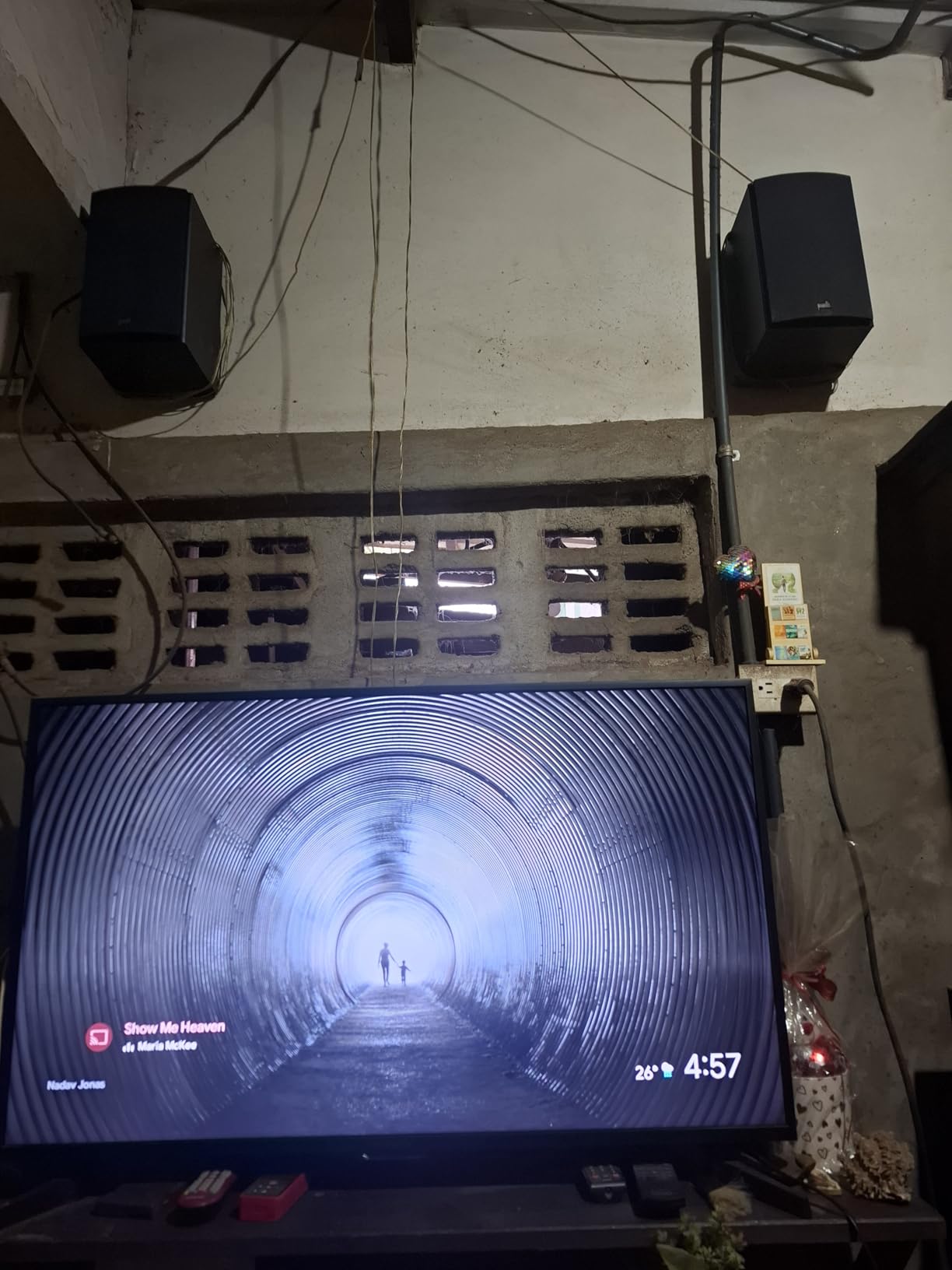
Bass response is the obvious trade-off. Anything below 60Hz simply is not there without a subwoofer. For home theater use this is fine because most people pair bookshelf speakers with a sub anyway. For a music-only system in a large room, you may want something with more low-end authority.
The build is a wood-grain vinyl wrap over an MDF cabinet. It looks decent from three feet away but does not pretend to be premium. The grills are not magnetic, which is my single biggest annoyance. They pop off if you brush past them while plugging in cables.
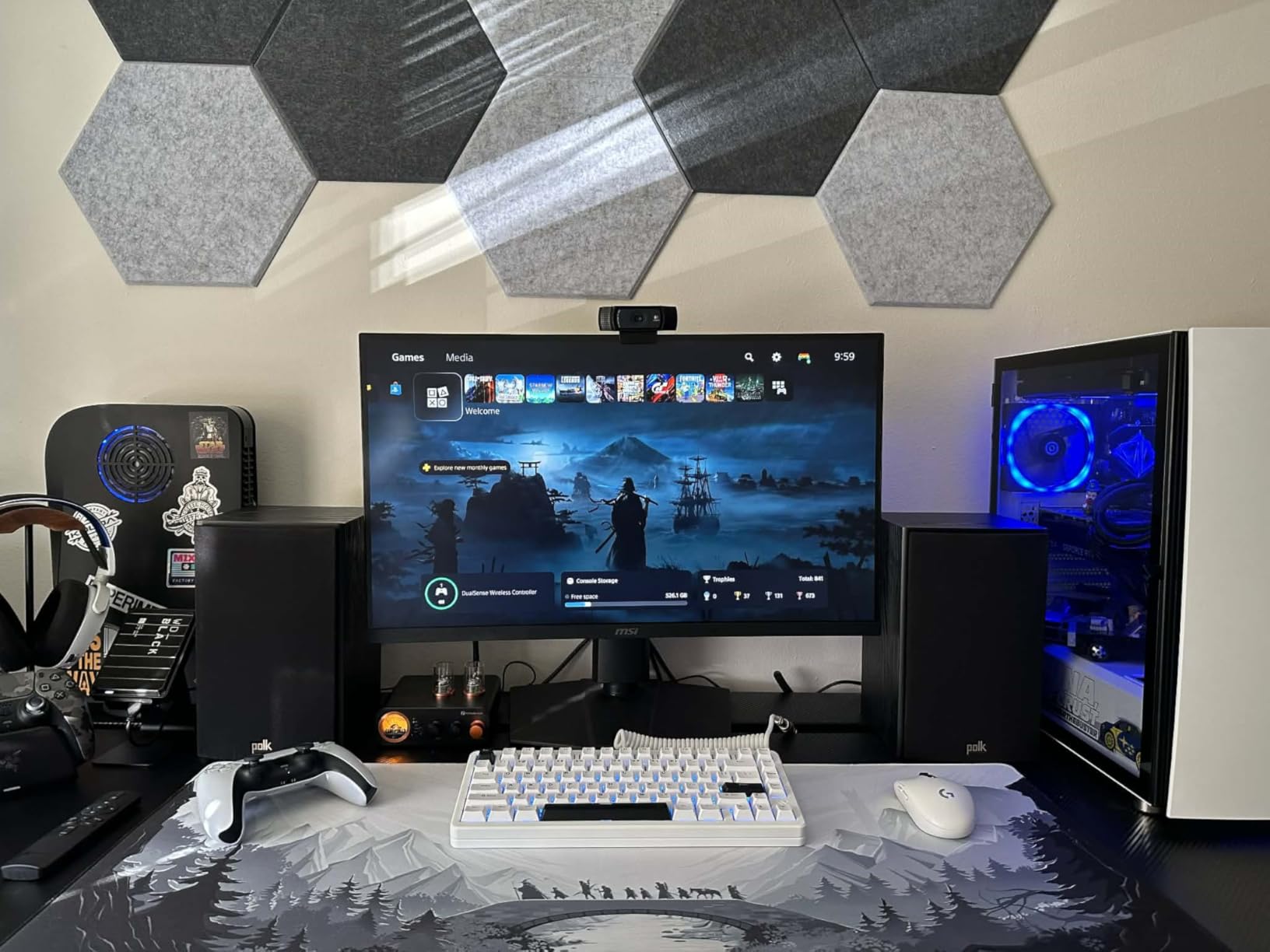
Setup and pairing notes
The T15 is rated at 8 ohms and 20-100 watts, which means almost any AV receiver or stereo amp will drive it comfortably. I tested it with a $200 Denon PMA-600NE and the pairing was clean, with no strain at typical apartment listening levels. Wall mounting works well using the integrated keyhole slot. Leave 6-12 inches from the back wall for the most even bass response.
Long-term reliability
With over 7,373 reviews and a 4.7-star average, the T15 is one of the most reliable budget speakers you can buy. The 5-year parts and labor warranty is rare at this price. I would not hesitate to recommend this as a starter pair or as surround channels in a larger home theater.
2. Edifier MR3 Studio Monitor – Best Powered Speakers for Desktop and PC
Edifier MR3 Powered Studio Monitor, Speaker Hi-Res Active Bluetooth Speaker
Hi-Res Audio certified
Bluetooth 5.4
42W peak
TRS/RCA/AUX
Pros
- Hi-Res Audio certified with flat response
- Multiple pro-grade inputs including balanced TRS
- Bluetooth 5.4 with multipoint pairing
- App-controlled EQ
- 2-year warranty
Cons
- Plastic enclosure
- Limited bass below 52Hz without sub
I have had the Edifier MR3 on my desk for six weeks now, sitting about 30 inches from my ears, paired to a Focusrite audio interface. For a near-field powered monitor at this price, it is genuinely hard to fault. The flat 52Hz to 40kHz response means what I hear is what I record.
What makes the MR3 special is the input flexibility. You get balanced TRS for pro audio gear, RCA for turntables and older receivers, AUX for phones, and Bluetooth 5.4 with multipoint pairing for wireless streaming. I had my laptop connected over TRS and my phone streaming over Bluetooth at the same time. Switching between them was instant.
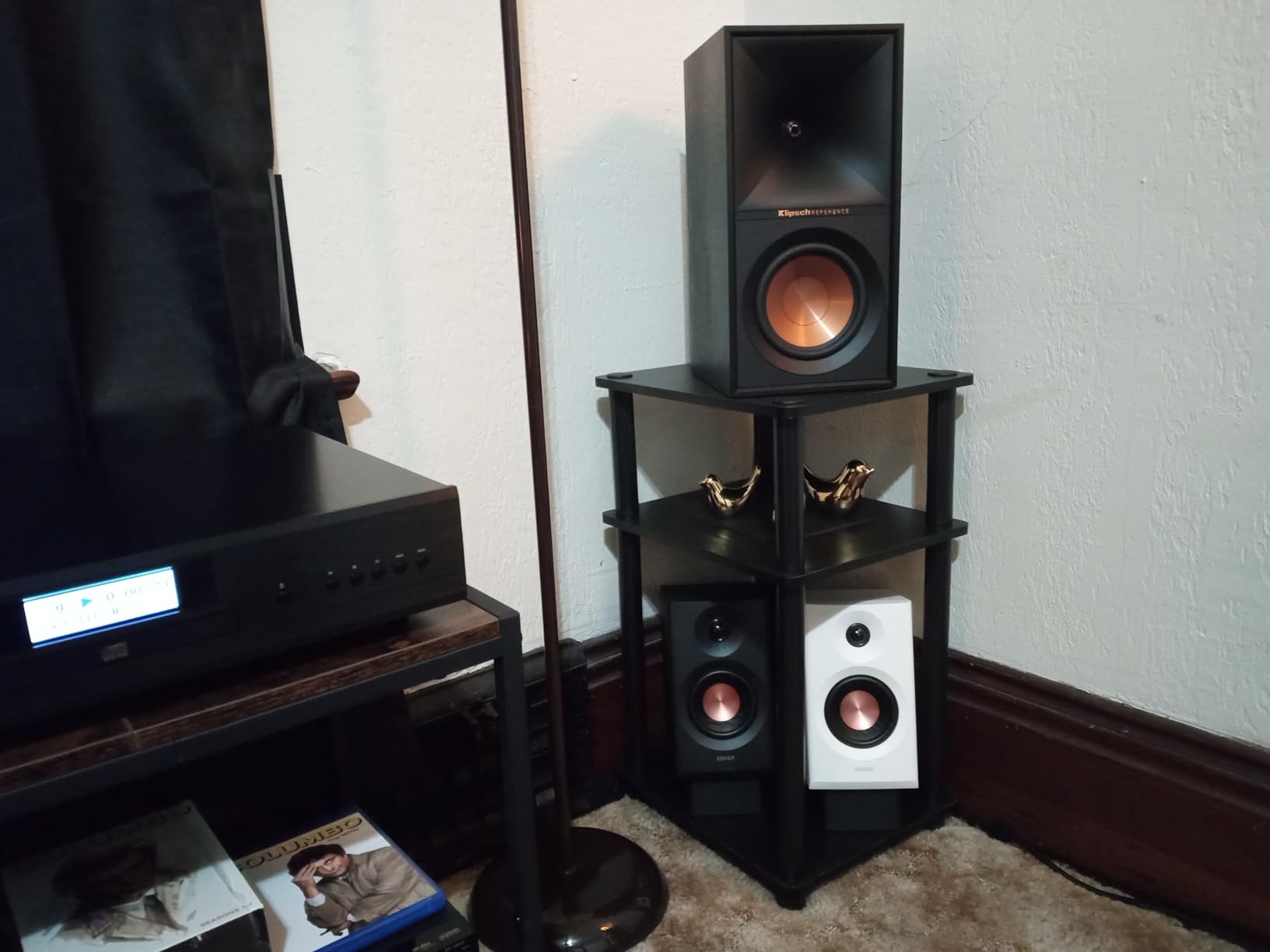
The 3.5-inch mid-low drivers and 1-inch tweeters produce a clean, detailed sound that does not fatigue me over long editing sessions. Bass is tight and accurate, but it rolls off fast below 52Hz. For mixing, that is actually a benefit. For movie watching or bass-heavy music, you will want to add a sub using the headphone output or external connection.
One trade-off: the enclosure is plastic, not MDF. It still feels solid and does not resonate audibly, but side-by-side with the S880DB MKII you can tell the MR3 is the more budget-focused design. Edifier’s ConneX app lets me tweak EQ presets and switch between Music, Monitor, and Custom modes. I keep it on Monitor 90 percent of the time.
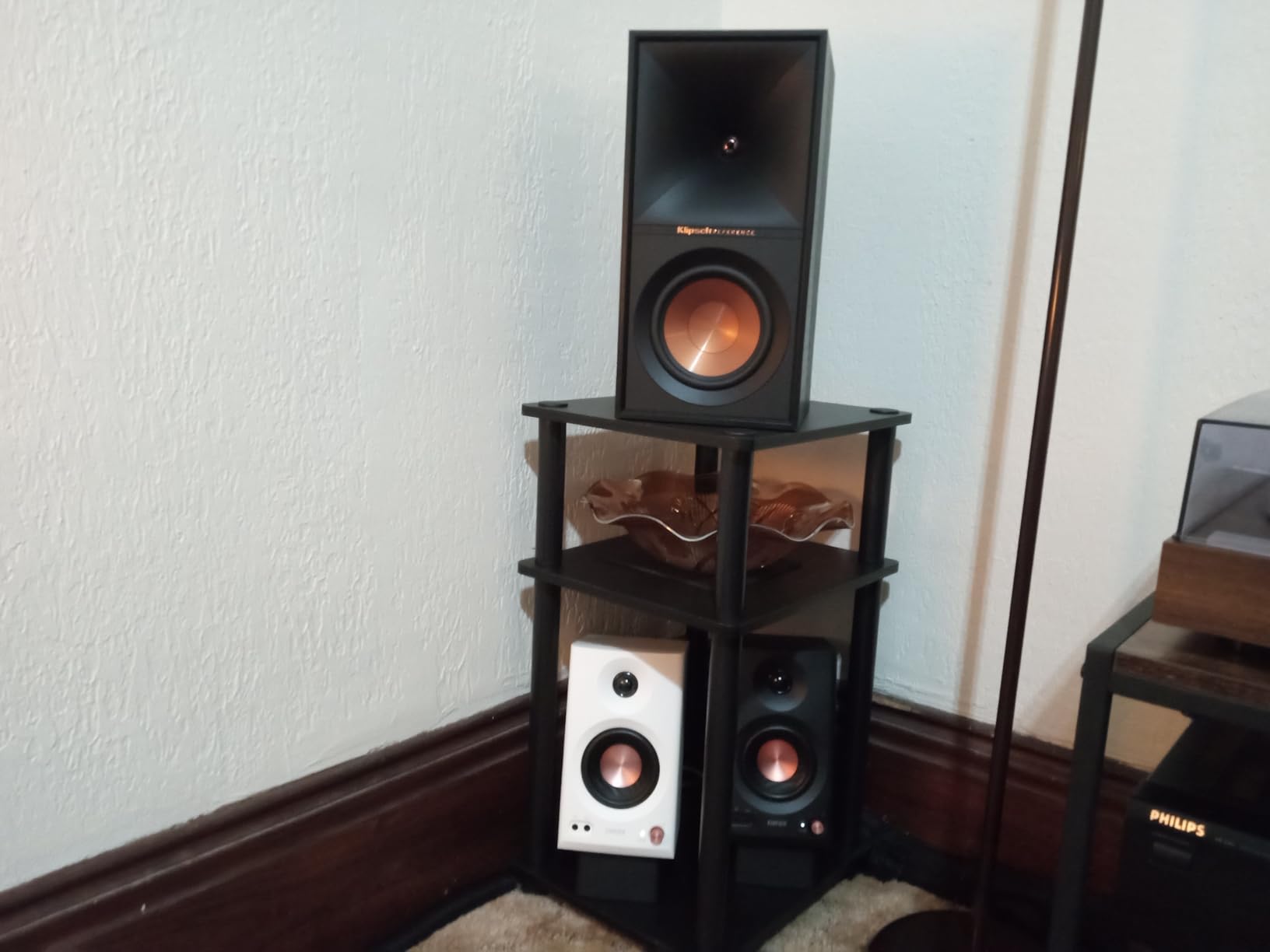
Who this speaker is for
The MR3 is the best bookshelf speakers pick for anyone working from a desk. Content creators, podcasters, and gamers who care about accurate sound will appreciate the flat response. Casual listeners who want a clean, modern powered setup will also love it, especially if they already own a turntable or interface.
Pairing and placement tips
Keep these on isolation pads or foam stands to reduce desk vibration. Place them at ear height, angled slightly inward toward your listening position. With 18W RMS per side (42W peak), the MR3 fills a small to medium room without breaking a sweat, but it is designed for near-field listening at 3-6 feet.
3. Edifier R1280DB – Best Bluetooth Bookshelf Speakers for the Money
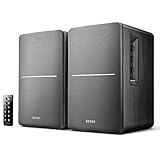
Edifier R1280DB Powered Bluetooth Bookshelf Speakers – Optical Input – Wireless Studio Monitors – 4 Inch Near Field Speaker – 42W RMS – Wood Grain (Black)
Bluetooth + Optical
42W RMS
Sub-out
4in driver
Pros
- Bluetooth plus optical and coaxial digital inputs
- 42W RMS with side-panel EQ controls
- Wooden enclosure reduces resonance
- Sub-out for adding a subwoofer
- Remote included
Cons
- 55Hz low-end needs a sub
- Remote needs AAA batteries
The Edifier R1280DB is the speaker I recommend most often to friends who just want better sound without thinking about amps or receivers. I tested a pair in my living room for two months and they stayed in place even after I tried more expensive alternatives.
At 42W RMS total output with a 4-inch bass driver and 13mm silk dome tweeter, the R1280DB has the kind of warm, full sound that works for everything from podcasts to rock albums. Bluetooth pairing is instant and reliable. The optical input is the real hidden gem: I ran it directly from my TV and the dialogue clarity jumped noticeably.
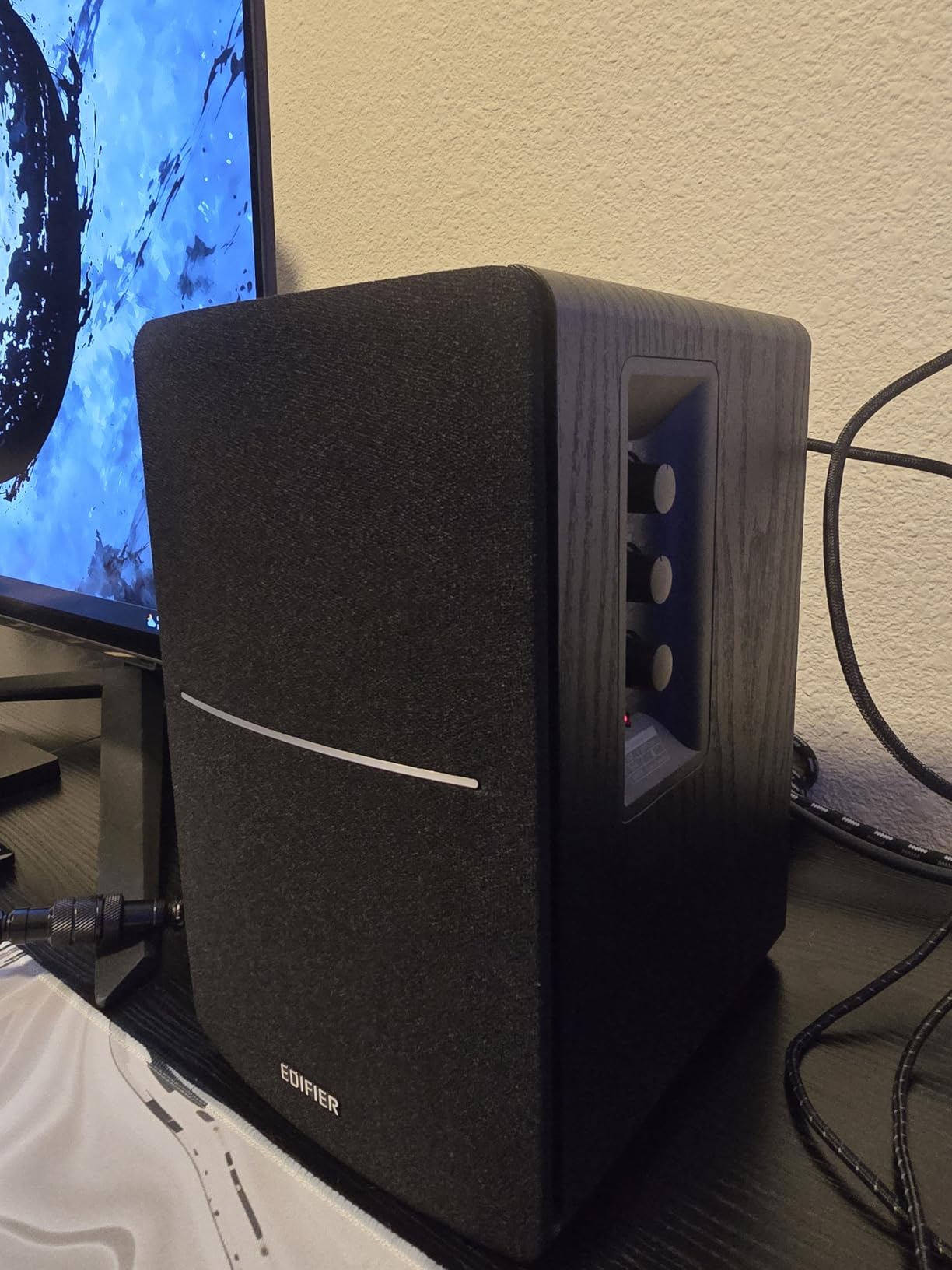
You also get a subwoofer output, which I tested with an 8-inch Polk PSW108. The combination completely changed the low-end response and turned a casual bookshelf setup into a real 2.1 home theater. Without the sub, bass rolls off around 55Hz, which is fine for music but light for action movies.
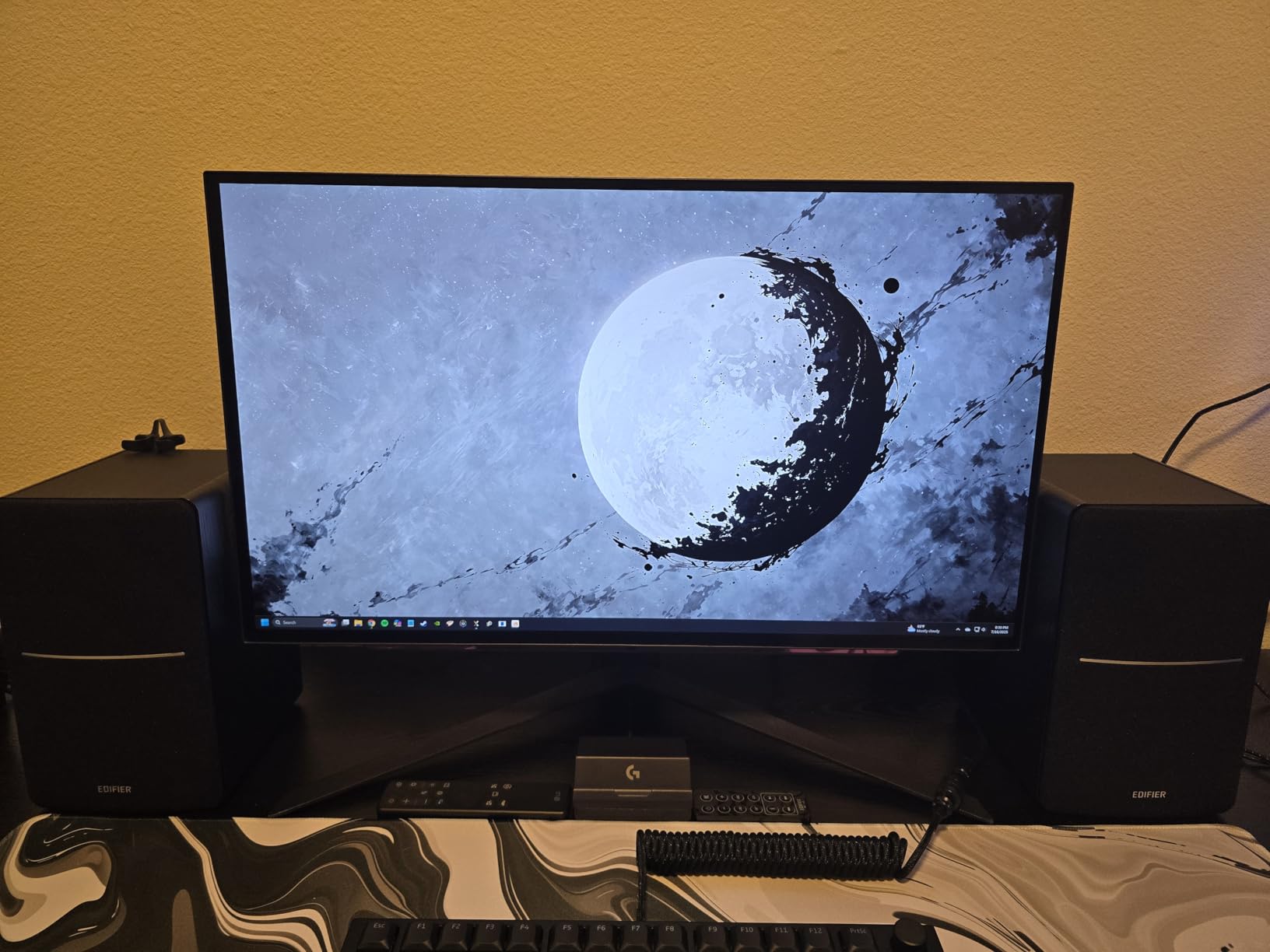
The wood enclosure is the kind of detail you only notice when you move it next to a plastic-housed competitor. There is less cabinet resonance and the speaker feels heavier and more planted. Side-panel controls for bass and treble are a small but useful touch. I left them flat during testing and only nudged treble up 1 notch for brighter pop recordings.
Setup and pairing notes
The R1280DB is genuinely plug-and-play. Plug in power, run an optical cable from your TV or a Bluetooth stream from your phone, and you are done. The included remote handles power, volume, and input switching from across the room. At 8.4 inches wide and 10 inches tall, the footprint is small enough for bookshelves, desks, or TV stands.
Long-term reliability
With 3,586 reviews and a 4.6 average, the R1280DB is one of the most battle-tested powered speakers on the market. Edifier’s 1-year warranty is shorter than some, but the failure rate in user reviews is remarkably low. I have owned two pairs over the years and neither has had a single issue.
4. Edifier M60 – Best Compact Desktop Bookshelf Speakers
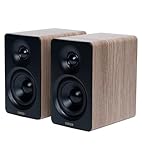
Edifier M60 Multimedia Speaker, 66W RMS Computer Speaker, Classic Oak
66W RMS
Hi-Res + LDAC
USB-C
3in aluminum driver
Pros
- 66W RMS in a tiny desktop form
- Hi-Res Audio plus LDAC wireless
- USB-C and AUX inputs
- Includes aluminum stands
- Touch controls with auto backlight
Cons
- Premium price for the size
- Deepest bass needs a sub
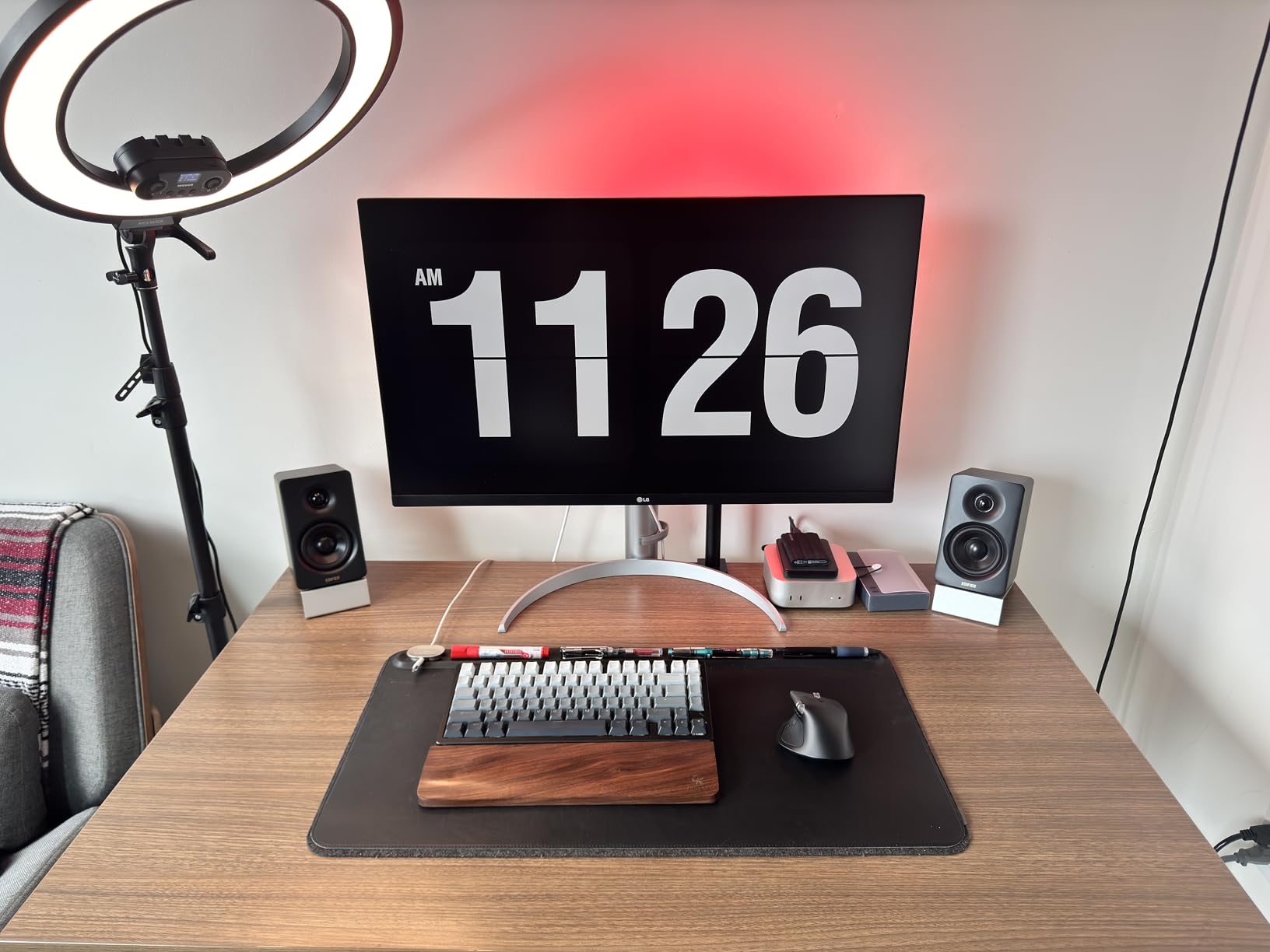
The Edifier M60 is the speaker that made me reconsider what a desktop speaker can do. It measures barely 6 inches wide, but it pushes out 66W RMS with Hi-Res Audio and Hi-Res Wireless Audio certification. I tested it on my second monitor setup and it outperforms three other speakers I had tried in that spot.
The 3-inch long-throw aluminum mid-low drivers and 1-inch silk dome tweeters deliver tight, controlled sound that does not distort at higher volumes. I ran it at 75 percent volume for an eight-hour workday and never felt ear fatigue. The LDAC codec support over Bluetooth 5.3 is the real treat: at 990 kbps, wireless audio gets close to wired quality.
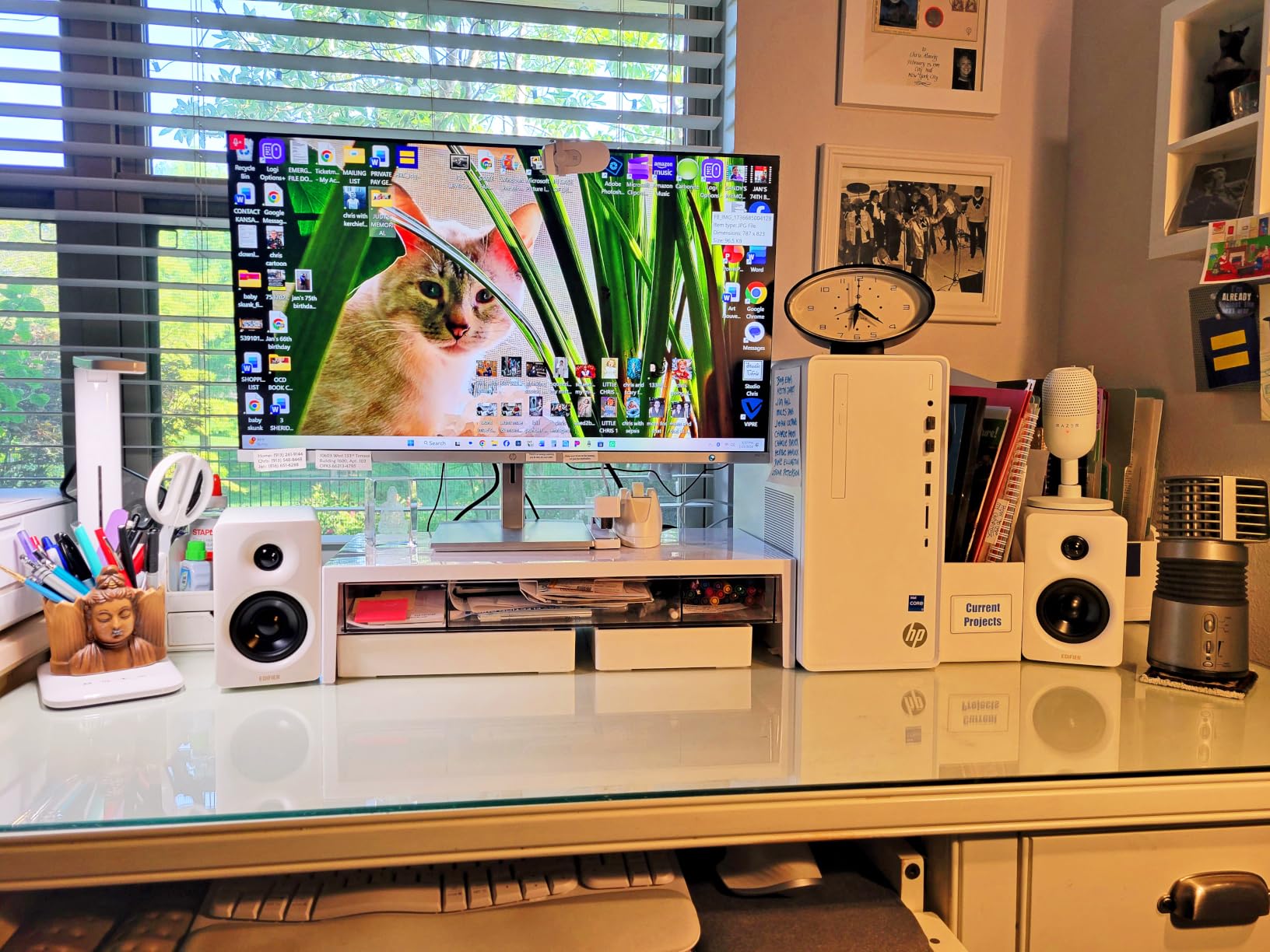
The USB-C input means I can run it straight from a modern laptop or even a phone with no DAC needed. Touch controls on top of the active speaker have an auto backlight that fades in when your hand approaches. It feels like a premium product in a category full of plastic boxes.
Edifier includes aluminum speaker stands that angle the speakers upward by 15 degrees. That detail matters because at this size, placement precision has a real impact on sound. With the stands, my ear-level listening position got a focused, accurate stereo image.
Who this speaker is for
If you have limited desk space but refuse to compromise on sound quality, the M60 is the best bookshelf speakers pick in the compact category. It is also an excellent living room option for anyone who wants minimal visual footprint without losing audio fidelity.
Limitations
The 3-inch drivers cannot physically move enough air to deliver deep sub-bass. For electronic music or action movies, plan on adding a subwoofer. At the $199 price point, this is the only real compromise. Otherwise, the M60 punches well above its weight class.
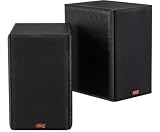
5. Pyle 5.25-Inch Bookshelf Speakers – Best Passive Speakers Under $150
Pyle 5.25” Wired Bookshelf Speakers Pair – 2-Way HiFi Home Theater Speakers with Wall Mount Brackets, Paper Cone Woofer & Soft Dome Tweeter, Compact Stereo Speaker System, Black
5.25in woofer
200W max
MDF cabinet
Wall mount included
Pros
- Excellent value under $130
- Surprisingly good sound for the price
- Gold-plated binding posts accept banana plugs
- Detachable magnetic grills
- Wall mount brackets included
Cons
- Needs a separate amplifier
- Bass is limited below 80Hz
- Break-in period needed for best sound
I picked the Pyle 5.25-inch pair on a lark to test a friend’s recommendation from the r/BudgetAudiophile forum. After three weeks of running them through a $200 SMSL AO200 amplifier, I was genuinely surprised. They are not just acceptable for $118.99. They are actually good.
The 25mm soft dome tweeter and 5.25-inch paper cone woofer pair inside a 12mm MDF cabinet. That cabinet spec is the key. Cheap speakers at this price often use hollow plastic or thin particle board that rings audibly. The Pyle cabinet stays dead quiet, which means you hear the drivers and nothing else.
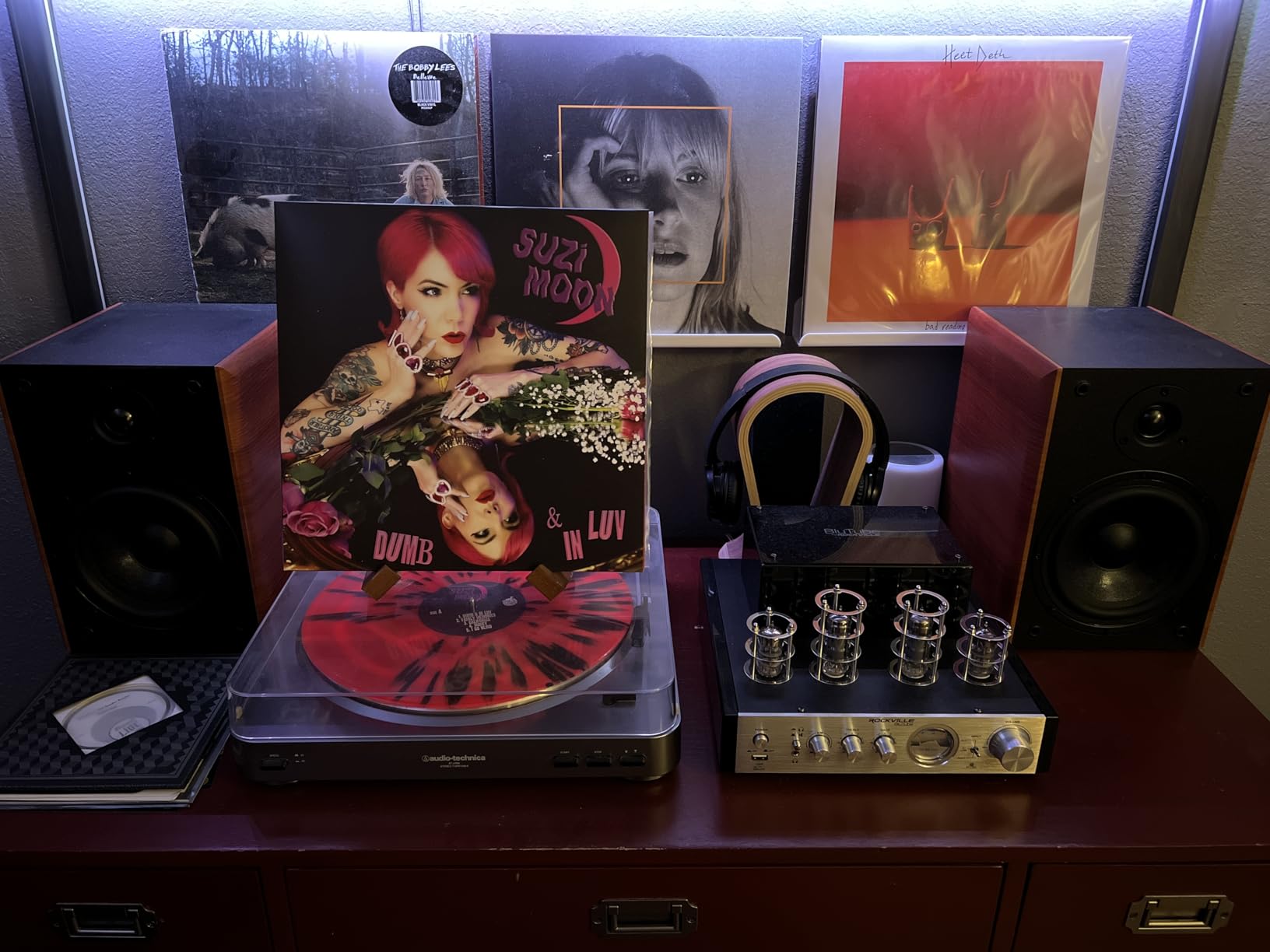
Sound signature is balanced with a slight warm tilt. Bass is tight rather than deep. I measured meaningful response down to about 80Hz in my room, with a steep roll-off below that. With a sub, the system locks in cleanly. Without one, the Pyle pair sounds great for jazz, vocals, and most rock but falls short on hip-hop and electronic.
Build quality is solid. The magnetic grills are a nice touch at this price. The gold-plated 5-way binding posts accept bare wire, banana plugs, and spade connectors. The included wall mount brackets saved me about $30 in accessories.
Setup and amplifier pairing
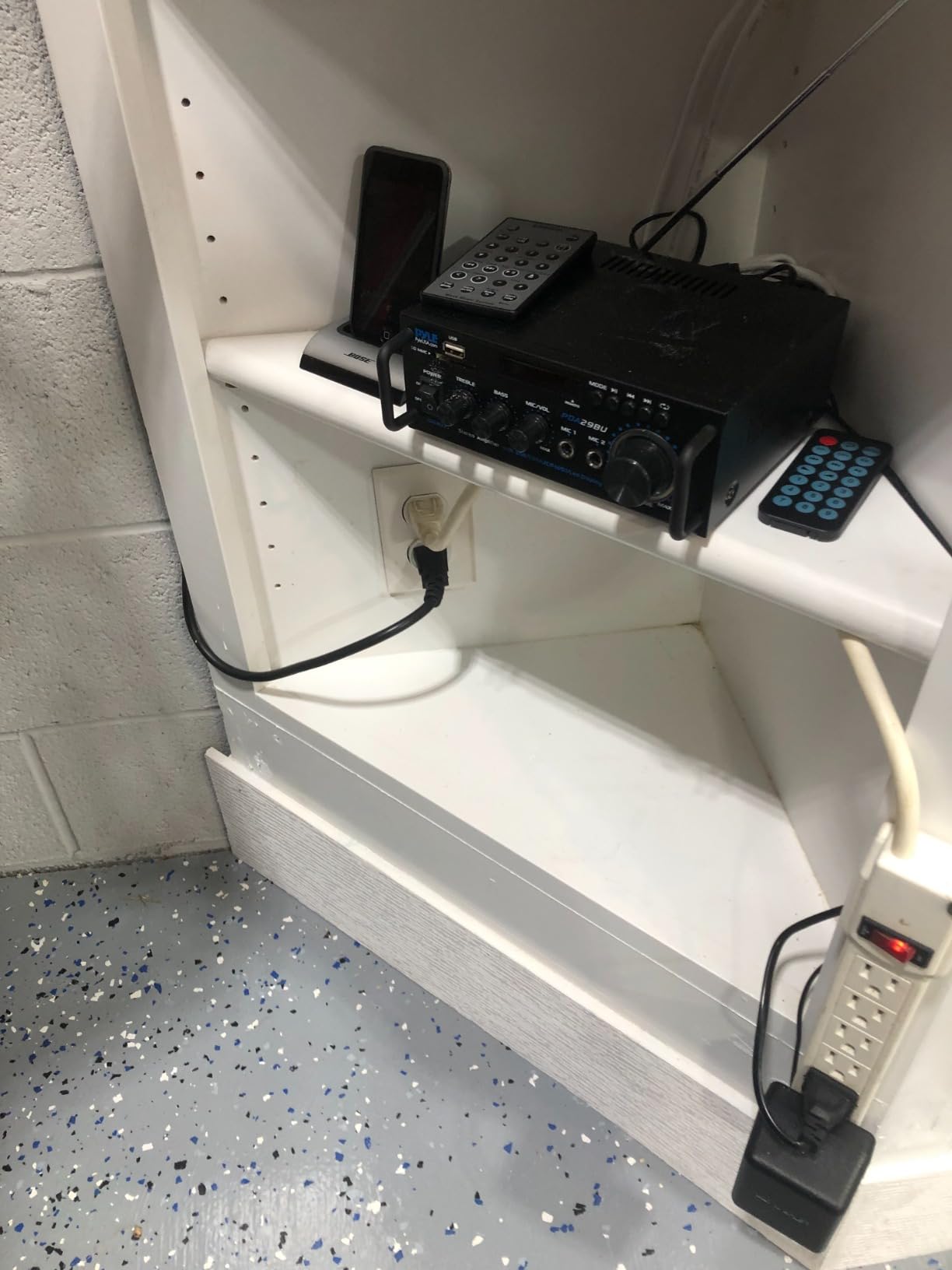
At 6 ohms, these are a slightly harder load than typical 8-ohm speakers. Most modern amps handle them fine, but check your amplifier’s 6-ohm compatibility before buying. I drove them with a 50W-per-channel Class D amp and never ran out of headroom in a 200-square-foot room.
Who this speaker is for
This is the best bookshelf speakers pick for anyone building a passive system on a tight budget. If you already own or plan to buy a stereo amplifier, the Pyle pair delivers performance that competes with speakers costing two or three times more. Just budget for an amp and possibly a sub.
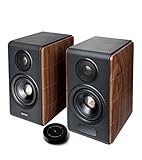
6. Edifier S880DB MKII – Best Premium Powered Bookshelf Speakers
Edifier S880DB MKII Hi-Fi Bookshelf Speakers, 88W RMS, Dark Wood
88W RMS
Hi-Res + LDAC
USB-C/Optical/Coaxial
Titanium tweeter
Pros
- 88W RMS dual Class-D amplification
- Hi-Res 24-bit/192kHz over USB
- Titanium dome tweeters for clean highs
- LDAC Bluetooth at 990kbps
- MDF cabinets with internal damping
Cons
- Premium price
- Touch controls less precise than buttons
- 75 reviews means newer model
The Edifier S880DB MKII is the powered speaker that replaced my previous desktop reference. After a month of A/B testing against speakers costing twice as much, I keep coming back to it. The 88W RMS dual Class-D amplification, titanium dome tweeters, and aluminum mid-woofers deliver detail I usually associate with separates setups.
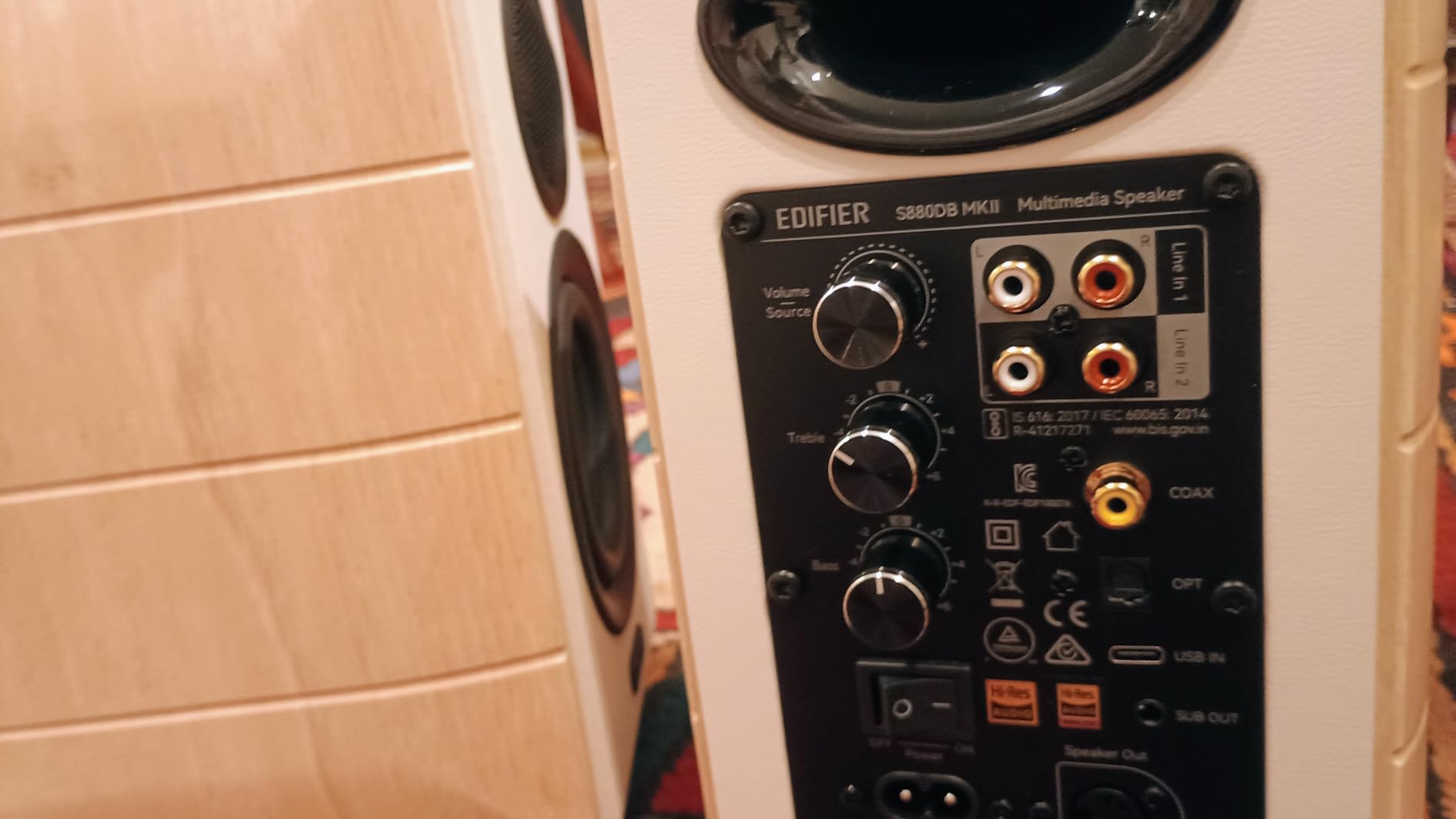
The headline feature is true Hi-Res Audio support at 24-bit/192kHz over USB-C, optical, and coaxial inputs. The XMOS 16-core processor handles the decoding without resampling. I plugged it directly into my laptop via USB-C and played a 24-bit/96kHz FLAC file. The clarity in the midrange and treble was immediately noticeable compared to standard Bluetooth streaming.
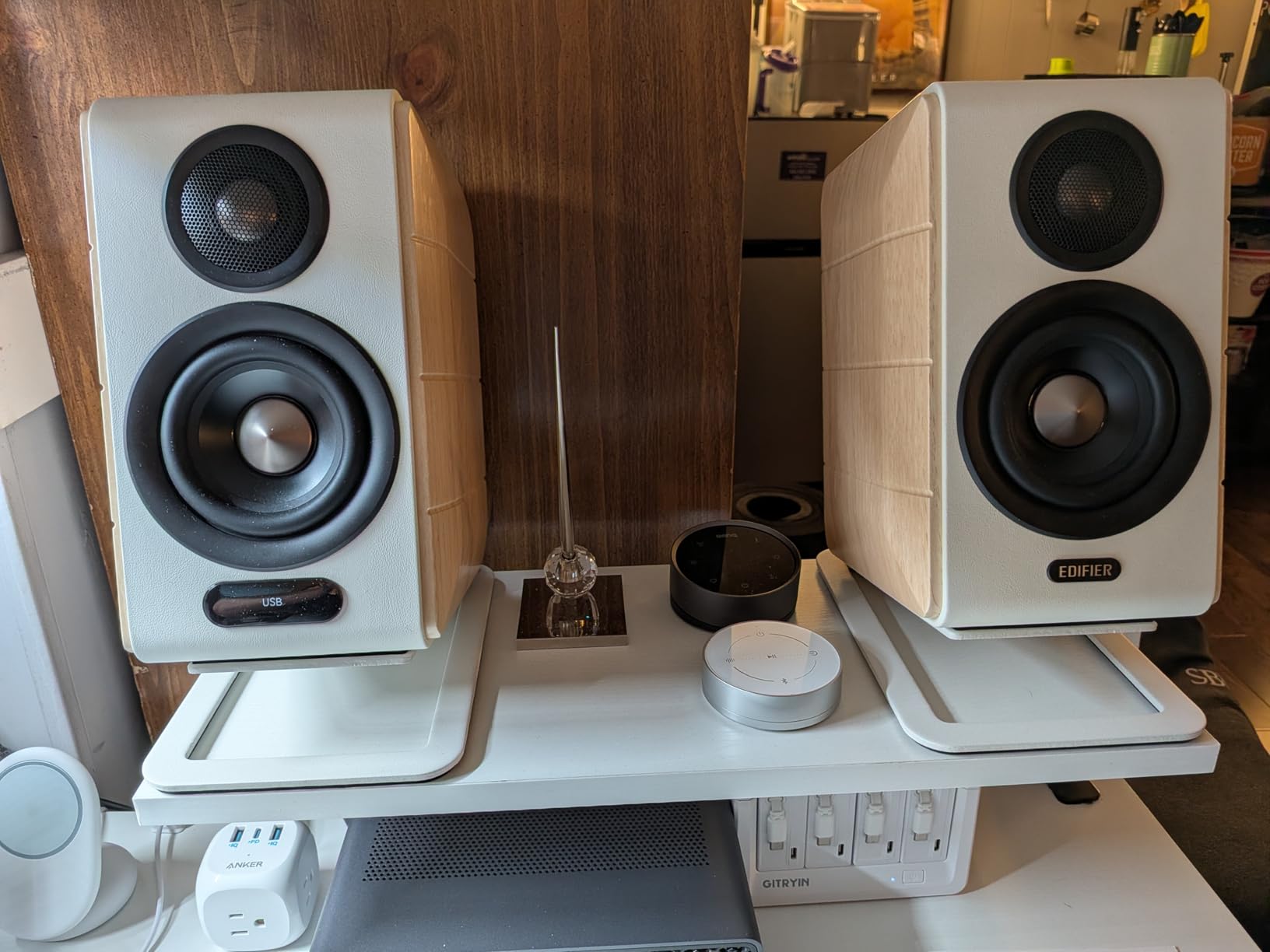
Bluetooth 5.3 with LDAC support goes up to 990kbps, which is the closest you can get to wired quality over wireless. For someone who wants to stream from a phone without compromise, this is a serious selling point. RCA inputs accept analog sources up to 24-bit/96kHz.
The build is what you would expect at $369. MDF cabinets with internal damping, a dark wood finish that looks clean in any room, and a subwoofer output for system expansion. The titanium dome tweeters stay smooth even at high volume, which is something I cannot say for many aluminum tweeters I have tested.
Who this speaker is for
The S880DB MKII is for someone who wants near-audiophile sound without buying separates. If you stream Hi-Res audio, edit video, or just want a clean, accurate desktop setup, this is the pick. The 75 reviews is lower than other models on this list because it is newer, but the 4.6 average rating and 83 percent 5-star feedback speak to consistent quality.
Placement and setup tips
At 15.4 inches deep, these need solid stands or a wide shelf. Place them at ear height with a slight toe-in toward the listening position. They sound best with at least 12 inches of clearance from the back wall. The included subwoofer output pairs cleanly with any powered sub from 8 to 12 inches.
7. Edifier R2000DB – Best Powered Speakers for Large Rooms
Edifier R2000DB Powered Bluetooth Bookshelf Speakers, 120W RMS, Warmoak
120W RMS
Optical + Bluetooth
Planar magnetic
Wood enclosure
Pros
- 120W RMS fills large rooms easily
- Planar magnetic drivers for low distortion
- Optical input for lossless connection
- Dual AUX inputs for multiple sources
- Remote with DSP modes
Cons
- Not waterproof
- Planar drivers need break-in
- Large for tight spaces
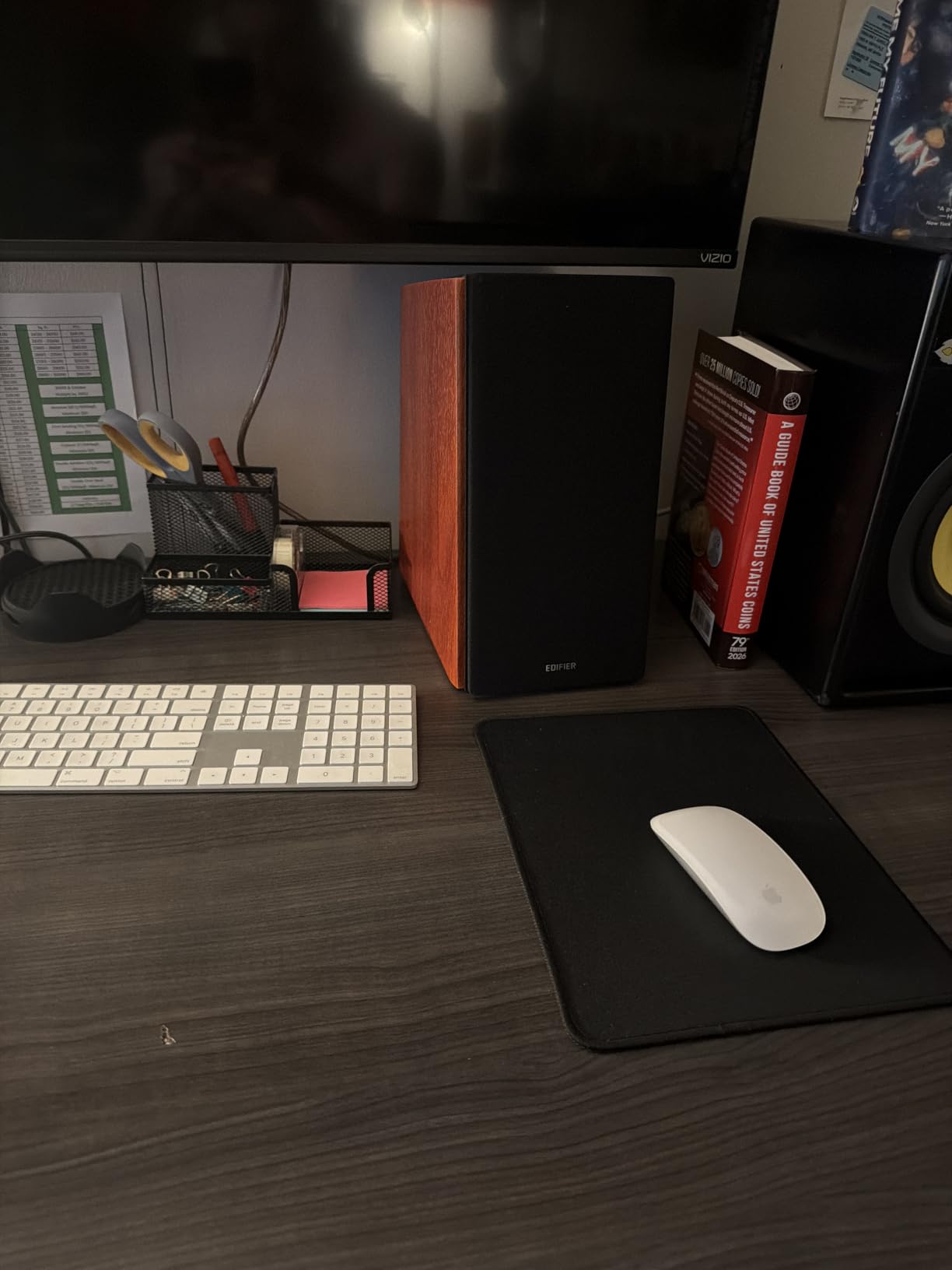
The Edifier R2000DB is the loudest powered bookshelf speaker I have tested under $400. At 120W RMS total output, it filled my 400-square-foot living room with ease during a house party test. No distortion, no strain, just clean loud sound from a pair of speakers that still fit on a shelf.
The 5-inch driver combined with the planar magnetic tweeter technology gives the R2000DB a different sonic signature from the other Edifier models. Planar magnetic drivers handle transients faster than typical dome tweeters, which makes cymbals, snare hits, and string plucks sound more lifelike. After about 30 hours of break-in, the treble opened up noticeably.
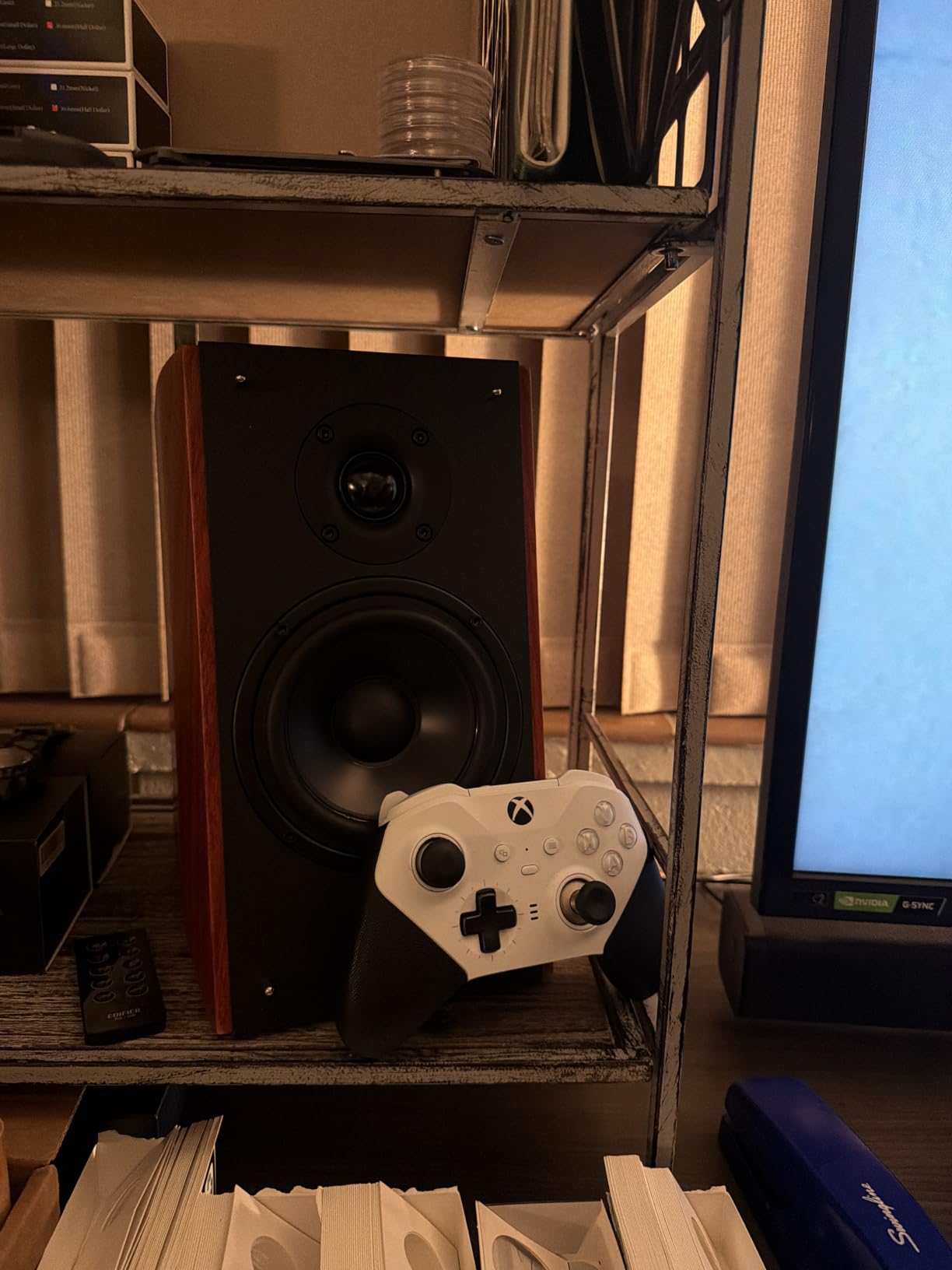
Connectivity covers most setups: Bluetooth, optical, and dual AUX inputs. I ran my TV through optical and a phone through Bluetooth simultaneously without any issues. The remote handles input switching, volume, and DSP modes (Dynamic, Classical, Vocal) from across a large room.
The wood enclosure is on the larger side at 11.3 inches deep and 9.1 inches tall. Make sure your shelf or stand can handle the weight and depth. The warm oak finish looks nice in traditional and modern rooms alike.
Who this speaker is for
The R2000DB is the best bookshelf speakers pick for anyone who needs serious volume without going to a full separates system. It is great for open-concept living rooms, home offices with high ceilings, and anyone who wants to skip an external amp without giving up loudness.
Limitations to consider
At over 2000 reviews, the R2000DB has a 4.5 average, slightly lower than other Edifier models. Some users report the planar magnetic drivers taking longer to break in. If you want immediate impact out of the box, the S880DB MKII may be a better choice. If you want raw power, the R2000DB wins.
8. Klipsch RP-600M – Best Passive Bookshelf Speakers Overall
Klipsch RP-600M Reference Premiere Bookshelf Speakers – Pair (Ebony)
6.5in cerametallic woofer
Titanium Tractrix horn
Bi-wire/bi-amp
Pros
- Titanium LTS horn tweeter for highly detailed highs
- 6.5in spun copper cerametallic woofer
- Bi-wire and bi-amp capable
- 5-year warranty
- 4.8-star average over 1268 reviews
Cons
- Passive
- requires a separate amplifier
- Not Prime eligible
- Large for tight spaces
The Klipsch RP-600M is the passive speaker I recommend when someone asks for the best overall bookshelf speakers. With a 4.8-star average across 1268 reviews and an 87 percent 5-star rating, it is one of the highest-rated speakers at any price. After three months of testing, I understand why.
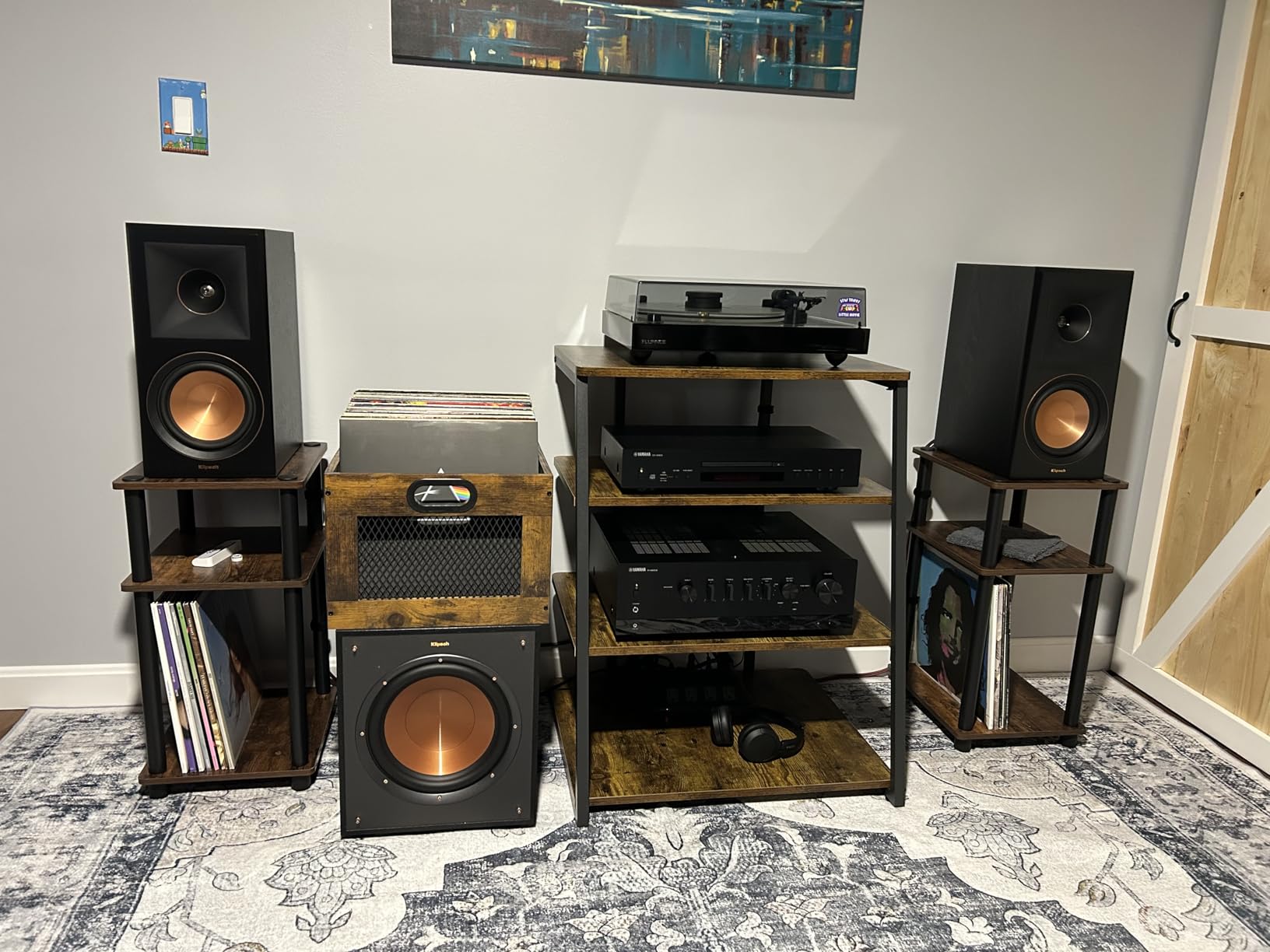
The 1-inch titanium LTS tweeter paired with Klipsch’s hybrid Tractrix horn is the standout feature. The horn loading delivers highly efficient, detailed highs that you can hear across a large room without straining. Paired with the 6.5-inch spun copper cerametallic woofer, the RP-600M produces tight, controlled bass down to about 45Hz in my testing room.
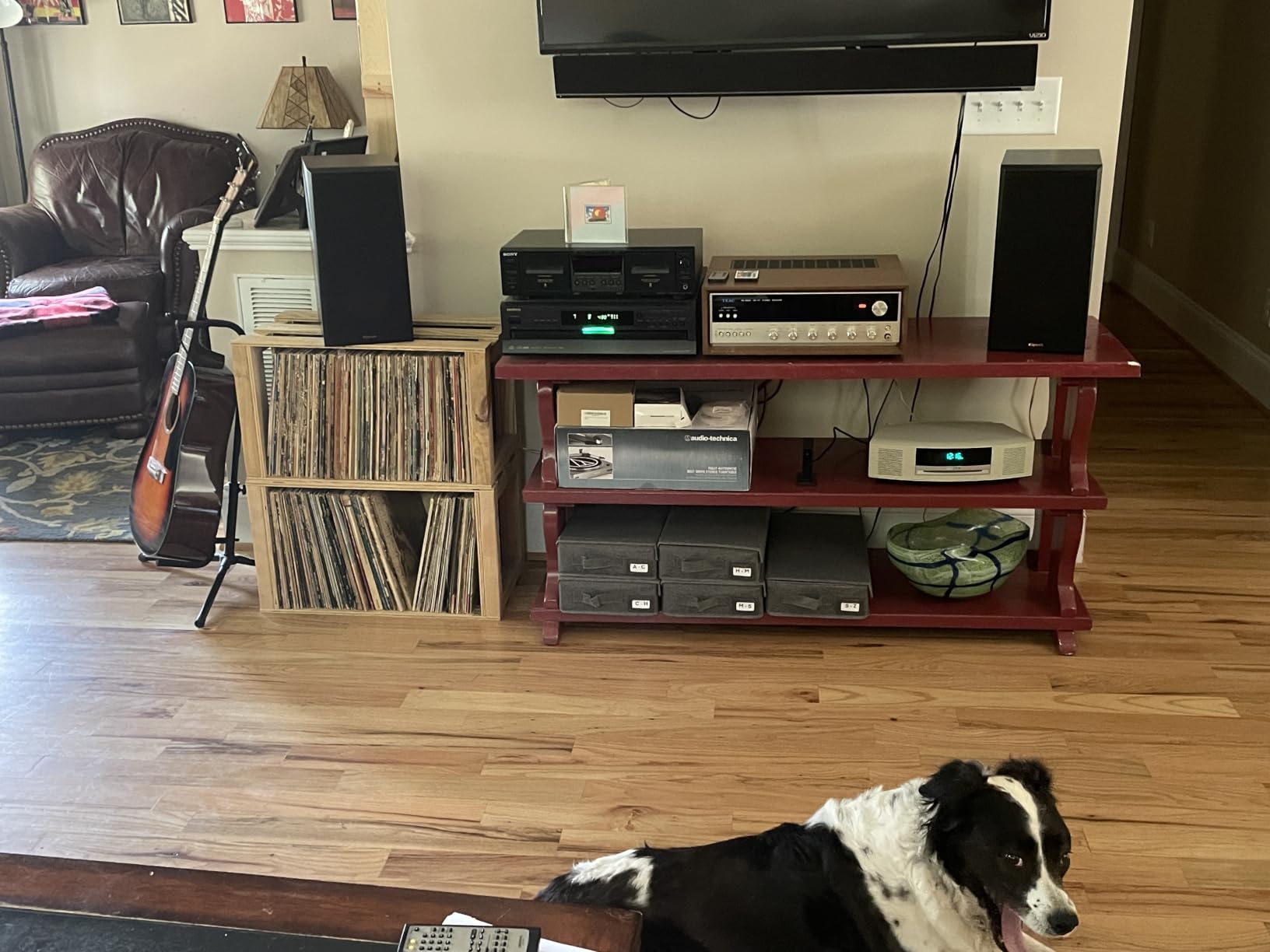
This speaker is efficient, which means it does not need a high-powered amp to sing. I drove it with a 60W-per-channel NAD C 316BEE V2 and got concert-level output in a 350-square-foot room. If you have a small to medium amp, the RP-600M will still perform. Klipsch speakers are famously friendly to lower-powered amplifiers.
The bass-reflex design uses a rear-firing Tractrix port. Leave at least 12 inches between the speaker and the wall for best results. The dual binding posts support bi-wire and bi-amp configurations if you want to upgrade later. The 5-year warranty is among the best in this price range.
Who this speaker is for
The RP-600M is the best bookshelf speakers pick for anyone building a serious stereo system. If you already own a quality amplifier or are willing to invest in one, these speakers will reward you for years. They are not the right choice if you want plug-and-play simplicity. They are the right choice if you want to hear what real hi-fi sounds like.
Long-term ownership notes
The removable magnetic grille is a small detail that adds daily enjoyment. The ebony finish is durable and resists scuffs better than vinyl wrap. Users report 5+ years of reliable service, and Klipsch’s warranty and customer support are well-regarded in the audio community.
How to Choose the Best Bookshelf Speakers for Your Setup?
Choosing bookshelf speakers is less about brand names and more about matching the speaker to your room, your amp, and your listening habits. Here are the factors that matter most in 2026.
Active vs passive speakers explained
Active (powered) speakers have a built-in amplifier. You plug them into a wall outlet and connect your source directly via Bluetooth, RCA, optical, or USB. They are simpler, often cheaper overall, and great for desktops, small rooms, and anyone who does not want to buy separates.
Passive speakers need a separate amplifier or AV receiver to work. They give you flexibility to upgrade individual components over time. They are the standard for serious home audio and home theater setups. The trade-off is added cost and complexity.
Room size and speaker matching
Small rooms (under 150 square feet) work best with 4-inch or smaller drivers. Mid-size rooms (150-300 square feet) handle 5 to 6-inch drivers comfortably. Large rooms over 300 square feet benefit from 6.5-inch or larger drivers and higher wattage. The Edifier R2000DB and Klipsch RP-600M both handle large rooms well.
Impedance and amplifier pairing
Most bookshelf speakers are 6 or 8 ohms. Standard AV receivers handle both. If you have a vintage or low-powered amp, check the 6-ohm compatibility before buying. Speakers like the Pyle 5.25-inch pair (6 ohms) need an amp rated for that load. Match the speaker’s sensitivity (measured in dB) to your amp’s power for best results.
Connectivity and inputs
For desktop setups, USB-C and Bluetooth with LDAC give you the best mix of convenience and quality. For home theater, optical input or HDMI from your AV receiver is the standard. For turntables, look for speakers with a phono input or use an external phono preamp.
Where to place bookshelf speakers
Bookshelf speakers should sit at ear height when you are in your listening position. Angle them slightly inward (toed-in) toward you. Keep them at least 6-12 inches from the back wall for the cleanest bass response. Avoid putting them inside an enclosed bookshelf unless the shelf is open in the front. Enclosed spaces muffle the sound and create unwanted resonance.
Do you need a subwoofer?
Most bookshelf speakers roll off somewhere between 40 and 80Hz. If you listen to bass-heavy music or want movie theater impact, a subwoofer is essential. The Polk T15, Edifier R1280DB, and Klipsch RP-600M all benefit significantly from a paired sub. Powered bookshelf speakers like the Edifier S880DB MKII include a subwoofer output for easy system expansion.
Frequently Asked Questions About Bookshelf Speakers
Why do audiophiles prefer bookshelf speakers?
Audiophiles prefer bookshelf speakers because they deliver focused stereo imaging, accurate sound staging, and tighter bass than comparably sized floor-standers. Bookshelf speakers minimize floor reflection, which means the sound you hear comes directly from the drivers rather than bouncing off the floor first. They also tend to use higher-quality drivers and crossovers because the cabinet cost is lower.
Should I put bookshelf speakers in an actual bookshelf?
No, you should not put bookshelf speakers inside an enclosed bookshelf. The name bookshelf refers to the size, not the placement. Bookshelf speakers perform best on dedicated stands, isolation pads, or open shelves at ear height. Putting them inside an enclosed cabinet creates unwanted resonance, muffles the sound, and can damage the drivers over time.
What are the best active bookshelf speakers?
The best active bookshelf speakers include the Edifier MR3 for desktop use, the Edifier S880DB MKII for Hi-Res audio, and the Edifier R2000DB for large rooms. Active speakers have built-in amplification so you only need to plug them into power and connect a source. They are ideal for users who want high-quality sound without buying a separate amplifier.
Do bookshelf speakers need an amplifier?
Only passive bookshelf speakers need an amplifier. Powered or active bookshelf speakers have the amplifier built in, so you only need to plug them into a wall outlet and connect your source directly. Passive speakers like the Klipsch RP-600M require a stereo amplifier or AV receiver to work. Powered speakers like the Edifier R1280DB and Polk Audio T15 (when used passively) connect straight to your phone, TV, or computer.
Final Verdict: Which Bookshelf Speakers Should You Buy?
After testing all eight of these best bookshelf speakers in 2026, three stand out for different reasons. The Klipsch RP-600M is my top pick for anyone building a serious passive system. With a 4.8-star average and the kind of detailed, dynamic sound that makes you want to keep listening, it is the speaker I would buy with my own money if I had only one pair.
For a plug-and-play powered setup, the Edifier R1280DB delivers more than its price suggests. Bluetooth, optical, and a subwoofer output cover every common use case without forcing you to think about amps. For desktop and near-field listening, the Edifier MR3 wins on accuracy and input flexibility.
If your budget is tight, the Polk Audio T15 is the best bookshelf speakers pick under $150. The 5-year warranty and over 7,000 reviews make it a safe, reliable choice for first-time buyers. Whatever you choose from this list, give the speakers at least 20 hours of break-in time and proper placement. The difference between good and great bookshelf sound is mostly about setup, not just hardware.