
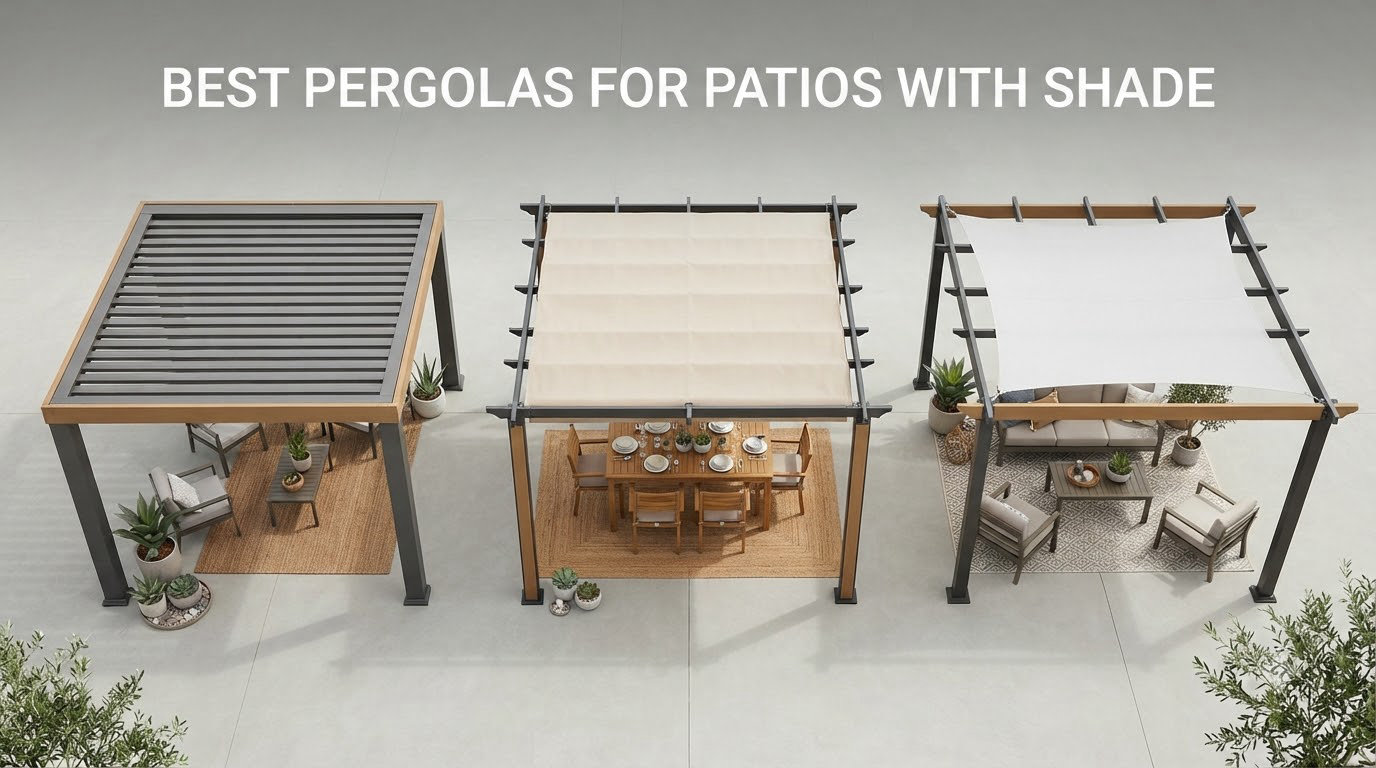
A patio is only worth having if you can stand being on it. The problem with most pergolas sold online is that they are a frame, not shade. An open slatted roof cuts glare and gives you dappled light, but it does not block the sun, and it does not stop rain either. If you have been scrolling through listing photos wondering why every finished patio looks like the same half-lit room, the frame was never the problem. The roof was.
That is why the best pergolas for patios with shade all share one trait: a roof that actually closes. Retractable fabric canopies, adjustable louvers, hard polycarbonate panels and woven shade sails each solve it differently, and the right answer depends on whether you want permanent coverage, a roof you close before a storm, or a structure you can take down in October and put back up in April.
Fast answer on shade effectiveness: A pergola shades effectively only when its roof is solid, closed or angled. Open slats, thin beams and spaced rafters give filtered light, not shade. Real shade comes from retractable canopies, adjustable louvers, polycarbonate panels or tensioned sail fabric that sit directly above your seating, plus side curtains and screens for low-angle afternoon sun.
We went through twelve patio pergolas in the same price band shoppers are actually buying in 2026, read the ratings, checked the specs and compared what owners say after the build is finished and the first storm rolls through. If you want a broader read first, our general pergola roundup covers the structural and design side. This one is strictly about how much sun each roof actually blocks.
Table of Contents
Top 3 Pergolas for Patios With Shade (October 2026)

PURPLE LEAF 12×16 Retractable Canopy
- Powder-coated aluminum frame
- Yarn-dyed canopy
- 12x16 coverage


Best Pergolas for Patios With Shade (October 2026)
The table below is the fast version. Scroll past it for the full reviews with the details that decide whether a structure will work on your patio.
| Product | Specifications | Action |
|---|---|---|
| PURPLE LEAF 12′ x 16′ Retractable Canopy Pergola |
|
Check Latest Price |
| Kozyard Morgan Retractable Canopy Pergola |
|
Check Latest Price |
| Aoxun 8×10 Polycarbonate Lean-To with Netting |
|
Check Latest Price |
 Aoxun 10′ x 14′ Lean-To Gazebo, Black Aoxun 10′ x 14′ Lean-To Gazebo, Black |
|
Check Latest Price |
 Backyard Discovery Windham 14′ x 12′ Steel Kit Backyard Discovery Windham 14′ x 12′ Steel Kit |
|
Check Latest Price |
 Domi 10′ x 16′ Lean-To Gazebo, Grey Domi 10′ x 16′ Lean-To Gazebo, Grey |
|
Check Latest Price |
 Outsunny 12′ x 10′ Retractable Canopy Pergola Outsunny 12′ x 10′ Retractable Canopy Pergola |
|
Check Latest Price |
 HAPPATIO 10′ x 10′ Retractable Canopy Pergola HAPPATIO 10′ x 10′ Retractable Canopy Pergola |
|
Check Latest Price |
 MIRADOR 80S Louvered Pergola 10′ x 12′ MIRADOR 80S Louvered Pergola 10′ x 12′ |
|
Check Latest Price |
 Tangkula 10×10 Steel Retractable Canopy Pergola Tangkula 10×10 Steel Retractable Canopy Pergola |
|
Check Latest Price |
 ABCCANOPY Arched Pergola 10’x12′ ABCCANOPY Arched Pergola 10’x12′ |
|
Check Latest Price |
 AirWire 12’x20′ Louvered Aluminum Pergola AirWire 12’x20′ Louvered Aluminum Pergola |
|
Check Latest Price |
1. PURPLE LEAF 12′ x 16′ Retractable Canopy Pergola – Best Overall Shade Value
PURPLE LEAF Outdoor Pergola 12′ X 16′ Retractable Canopy Aluminum, Gray
190.55 x 138.97 x 96.06 inch aluminum frame
Yarn-dyed canopy
Sliding with safety lock
Pros
- Widest review base in the group at 1487 ratings
- Canopy slides easily and slopes to shed rain
- Powder-coated aluminum resists rust
- Replacement parts sent quickly
- No sticker residue on the finish
Cons
- Assembly instructions are confusing with mismatched holes
- Base design makes anchoring harder than expected
- Included curtains are thinner than expected
This is the one I kept coming back to. A powder-coated aluminum frame carries a yarn-dyed canopy that slides along the top and locks wherever you set it, and at 190.55 by 138.97 inches it is the widest footprint of the retractable group here. The extra cross beam that runs the length of the roof is the detail that matters, because a canopy needs something solid underneath it to stay taut.
Owners describe the canopy sliding easily and sloping to shed rainwater, and the frame holding its shape without any surface rust at the joints. The yarn-dyed fabric is a step above the basic polyester most kits ship with, and 64% of the 1487 ratings are five stars.
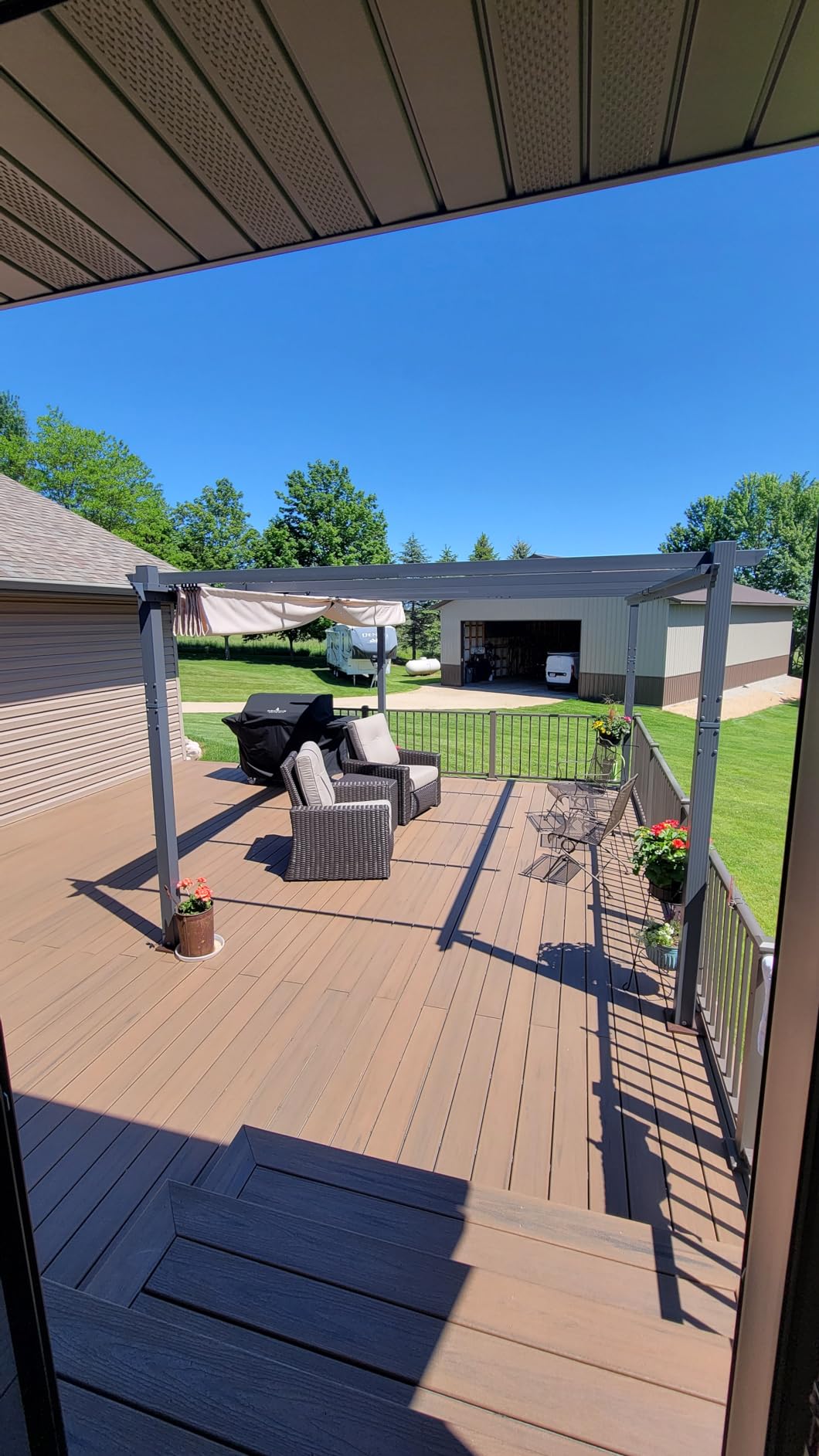
The complaints cluster in one place: assembly. Reviewers report instructions that are hard to follow and screws or holes that do not line up exactly as described, plus missing or damaged hardware on arrival. Several owners specifically flag the base and post design as harder to anchor than they expected, so buy proper ground anchors rather than relying on the supplied feet.
The second recurring gripe is the included curtains, which several buyers describe as thinner and lower quality than the rest of the build. The canopy retention clips are stiff, and the elastic loop on them can snap. Treat the curtains as a bonus rather than a feature and plan on adding your own if privacy is the goal.
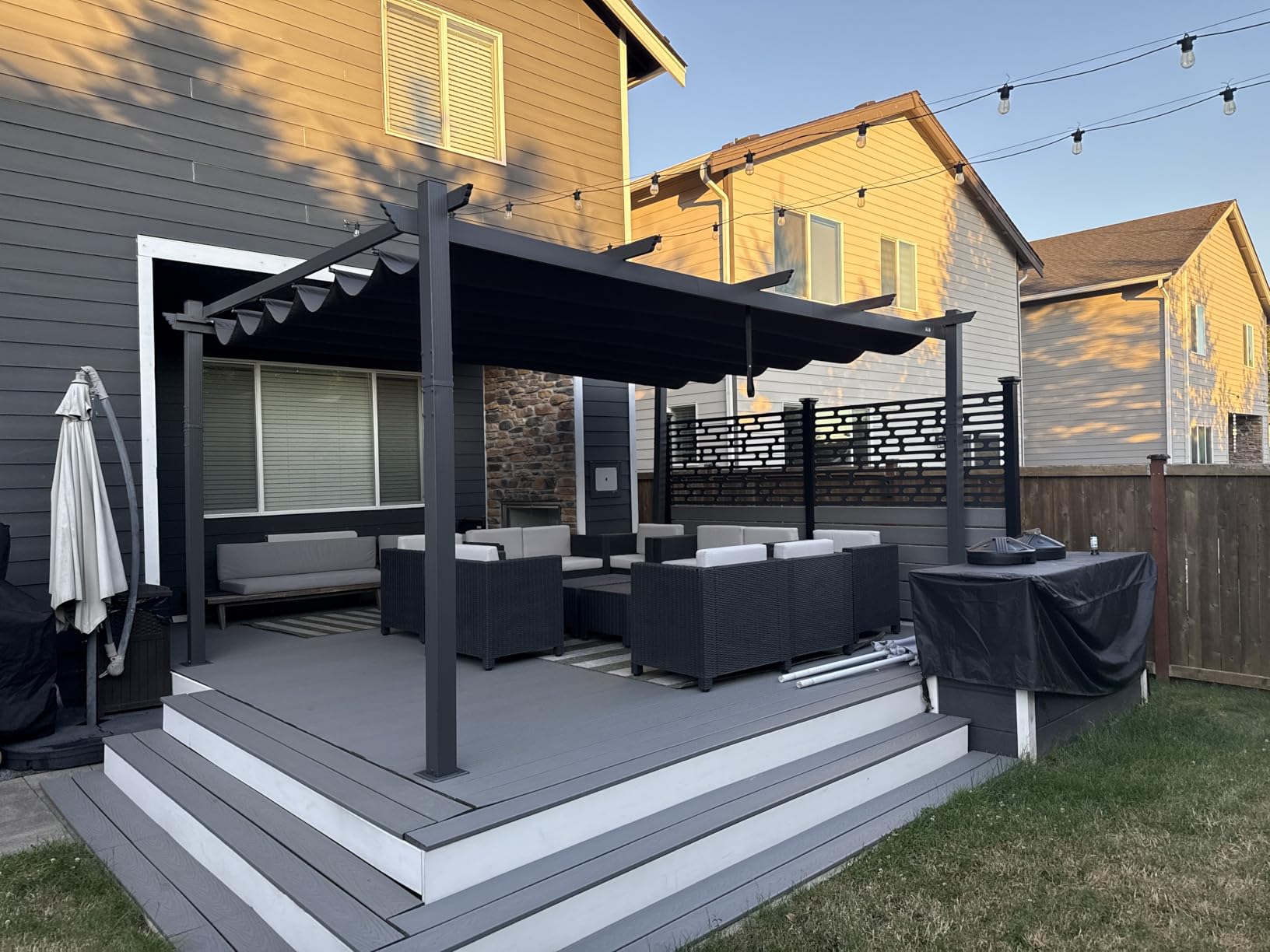
What you should check before ordering
Measure your patio plus clearance on all sides before you commit. Owners consistently praise the two-person build, so this is a weekend job rather than a contractor job, but go in knowing the instructions will need a second pair of eyes. Check the hardware bag against the parts list before you start, because that is the single most common source of stalled builds.
Who it suits and who should skip it
This is the right pick if your patio is a normal suburban 12 by 16 slab and you want shade you can open and close. Skip it if you are planning to bolt it to an exterior wall with a code-required permit, or if you want a sealed waterproof roof, because a fabric canopy with an open profile will never keep rain off your seating when the wind drives it sideways.
2. Kozyard Morgan Retractable Pergola with Sun Shade Canopy – Best Value Freestanding Unit
Kozyard Morgan Outdoor Retractable Pergola with Sun Shade Canopy
Alloy steel and aluminum frame
250 gsm polyester canopy
88.2 pounds
Pros
- Lightweight rust-resistant frame
- Adjustable canopy blocks most direct sun
- Two-person assembly with hardware included
- Good value in this size class
Cons
- Inner clearance is smaller than the nominal size
- Anchor bolts must be bought separately
- Canopy is 250 gsm polyester not heavy canvas
The Kozyard Morgan is the simplest thing on this list that still counts as real shade. The canopy is a 250 gsm PA polyester rated waterproof, UV blocking and fade resistant, mounted on a powder-coated aluminum and steel frame at 88.2 pounds. That combination of low weight and a genuine adjustable canopy is why it lands here as the value pick.
It is freestanding, so you can move it later if the patio layout changes. Buyers rate the frame as rust resistant and the canopy as effective at cutting direct sunlight, and the whole thing goes up with all hardware included.
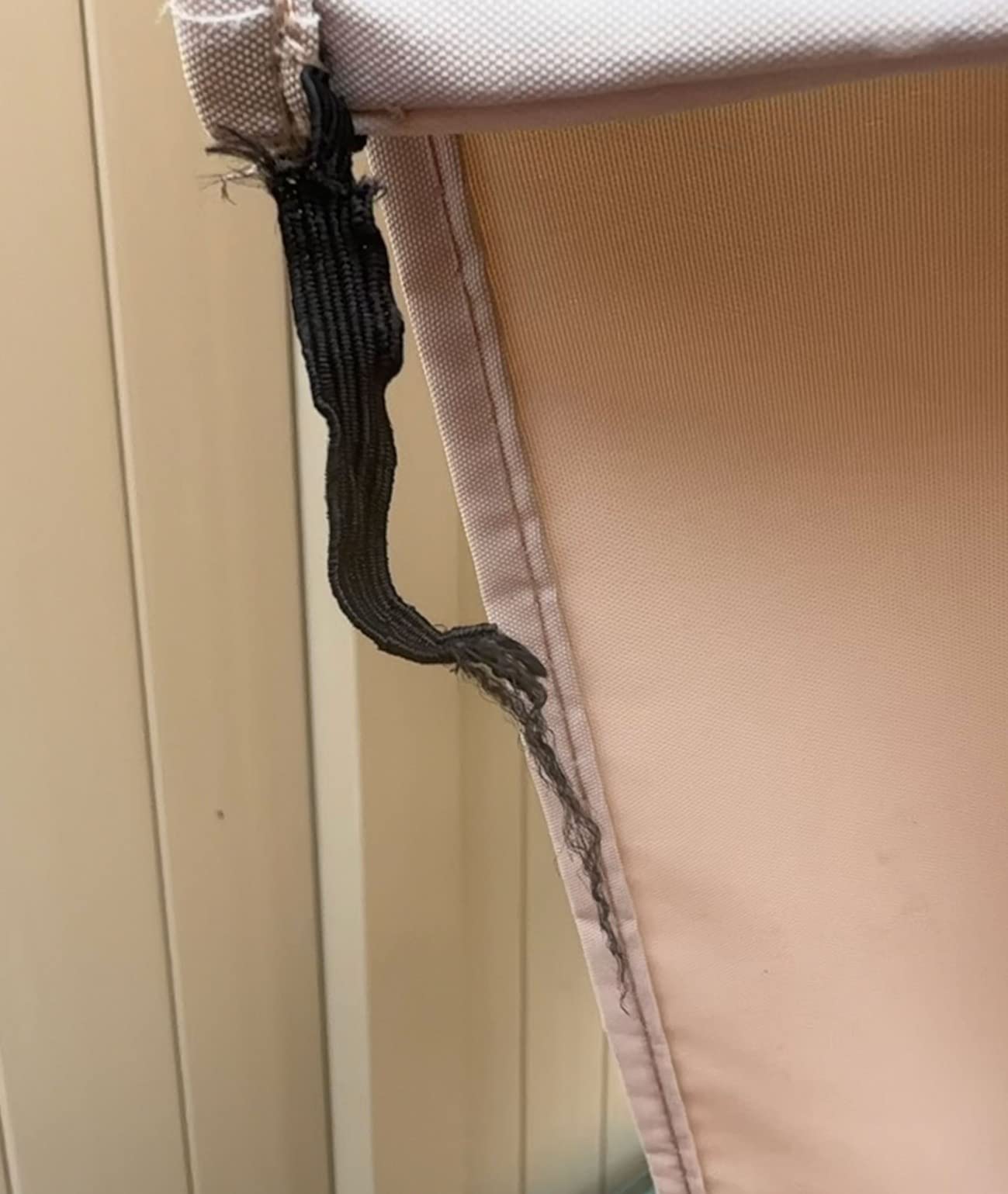
Two things catch people out. First, the clearance between the poles is smaller than the nominal pergola size, which matters if you are sizing to fill a tight yard. Second, proper anchor bolts are not included for concrete or deck, so add those to your hardware budget before the day you start.
The canopy itself is a mid-weight polyester rather than a heavy canvas, and the 12% one-star share reflects owners who expected more from it. A 1-year limited warranty with replacement parts is included, which is thinner coverage than some kits in this group offer.
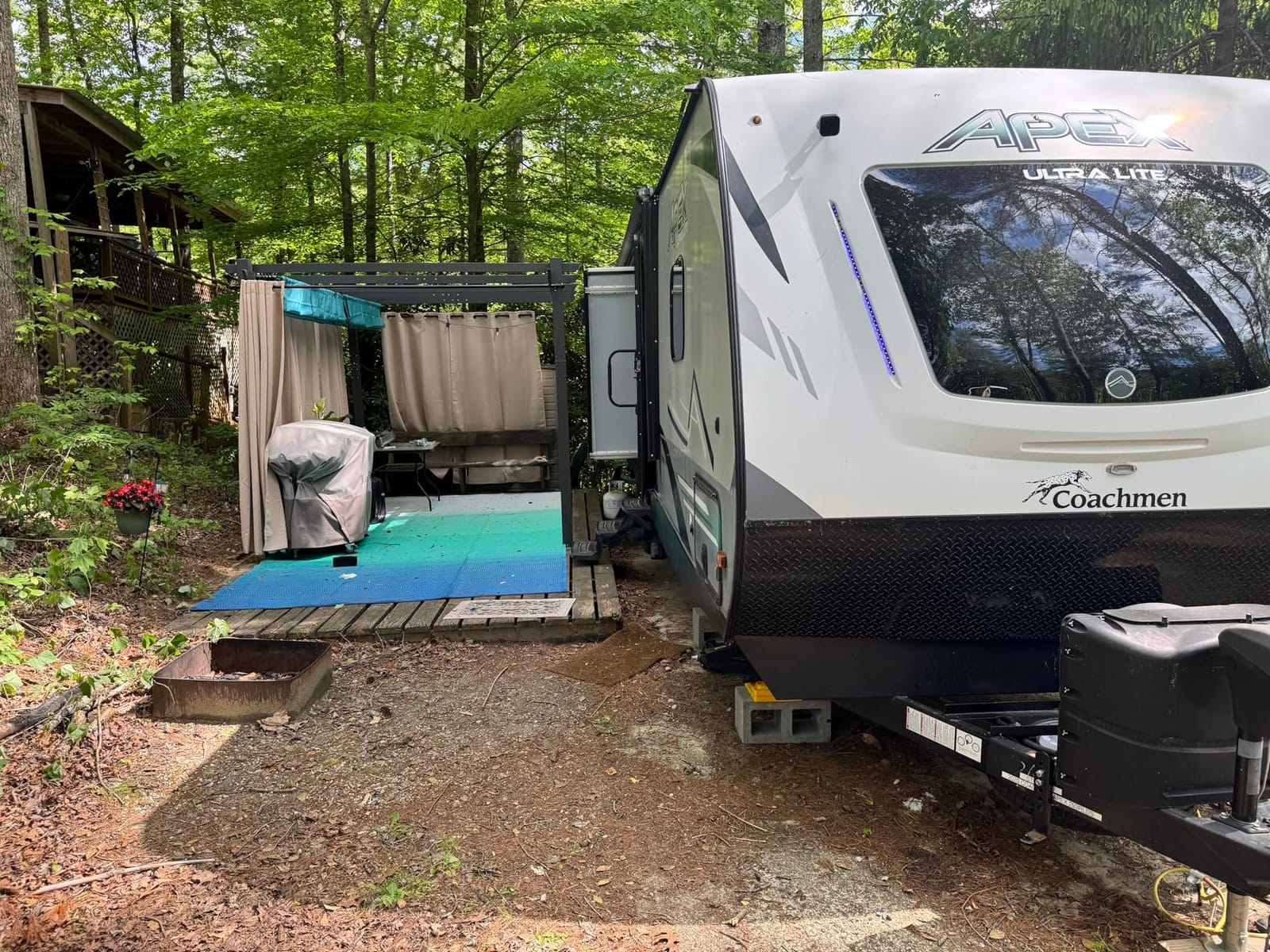
How much shade you actually get
The 10 by 13 variant gives a 10 by 13 shade area, and smaller 10 by 10 and 10 by 12 versions cover proportionally less. Sit your dining table and chairs inside those numbers, not the outer footprint, before you commit. Forum threads on small patios show the hardest decision is footprint rather than style.
Where it falls short
This is not the pergola for a coastal yard or a high-wind region. A light freestanding frame with fabric tension on top is closer to a sail than a masonry structure, and no published wind rating is offered. It is also a single adjustable panel, so you cannot screen one half of the seating while leaving the other open.
3. Aoxun 8×10 Polycarbonate Lean-To with Netting – Best UV Blocking Shade
Aoxun 8x10FT Pergola with Netting and Curtains for Patio
Multi-wall polycarbonate panels
Blocks 99% of UV
129.6 pounds
Pros
- Polycarbonate gives real UV and heat blocking with soft light
- Curtains and mesh panels are detachable and mixable
- Sloped roof drains quickly
- 69% of ratings are five stars
Cons
- Must be mounted to a solid exterior wall
- Wall-mount design limits placement
- Assembly needs two or more people
Put this and the two galvanized steel lean-tos side by side and you see the difference between a fabric roof and a real one. The multi-wall polycarbonate here is rated from -40 to 240 degrees Fahrenheit, blocks 99% of UV rays and cuts heat by up to 90%, all on a sloped roof that channels water away instead of letting it pool over your table. 69% of the 564 ratings are five stars, which puts this near the top of the group on owner satisfaction.
The side tracks accept privacy curtains and breathable fine mesh panels separately, so you can put solid fabric on the sun-facing side and mesh on the other. That combination is what owners mention most often, and it is the closest these kits get to the side-panel upgrade that patio builders keep asking for.
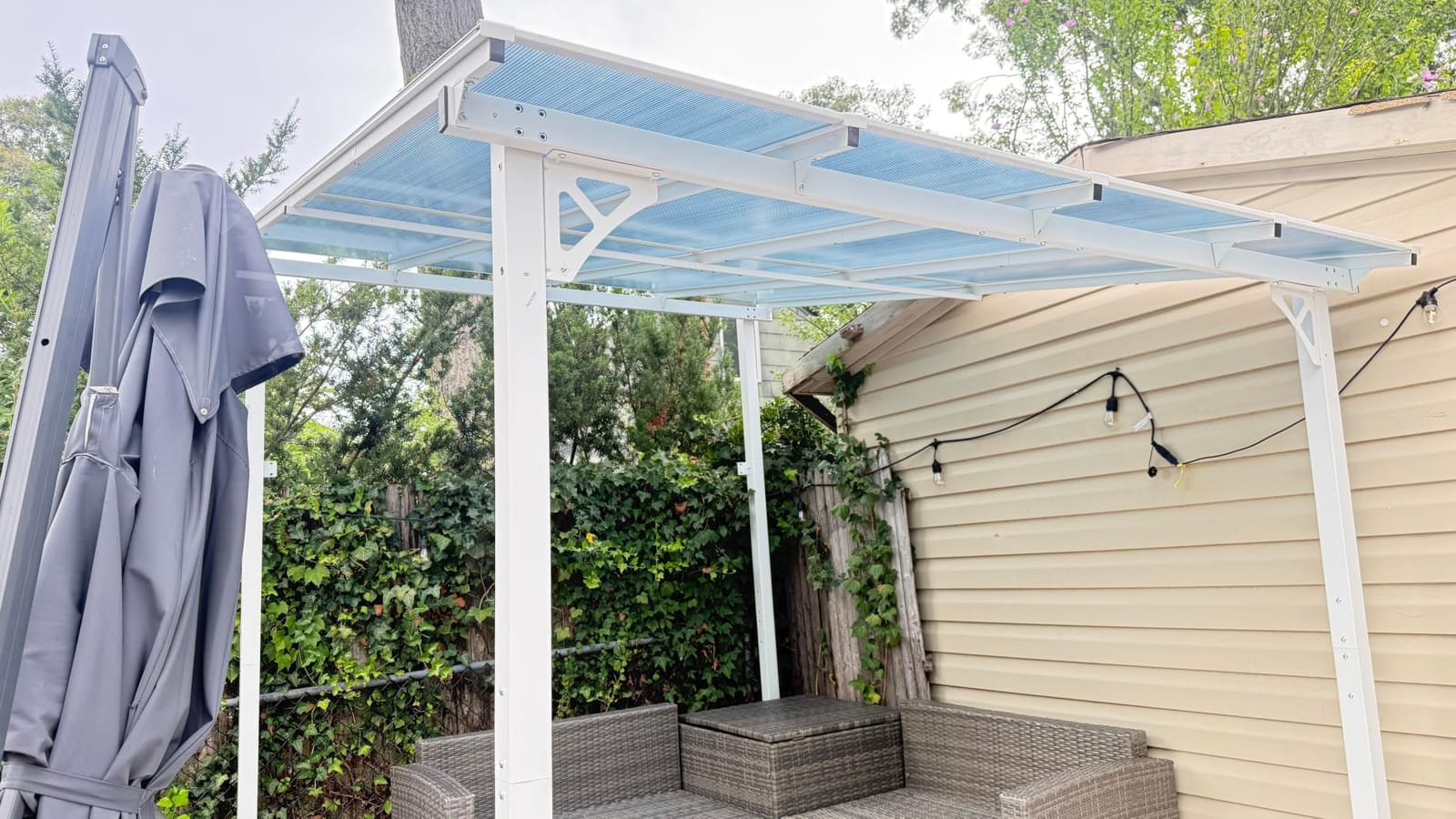
Polycarbonate is heavier than fabric and it changes the feel of the space. Owners describe soft, diffuse light instead of the hard dappling you get from an open frame, and they rate that as a genuine upgrade for a west-facing patio. The sloped roof is the reason this design drains properly, so do not level it out during install.
The critical planning point: this has to be mounted to a solid exterior wall and cannot stand alone. That single constraint decides where it can go, and it is the reason we would not start without measuring the wall run first. Assembly also needs two or more people because of the wall-anchored frame.
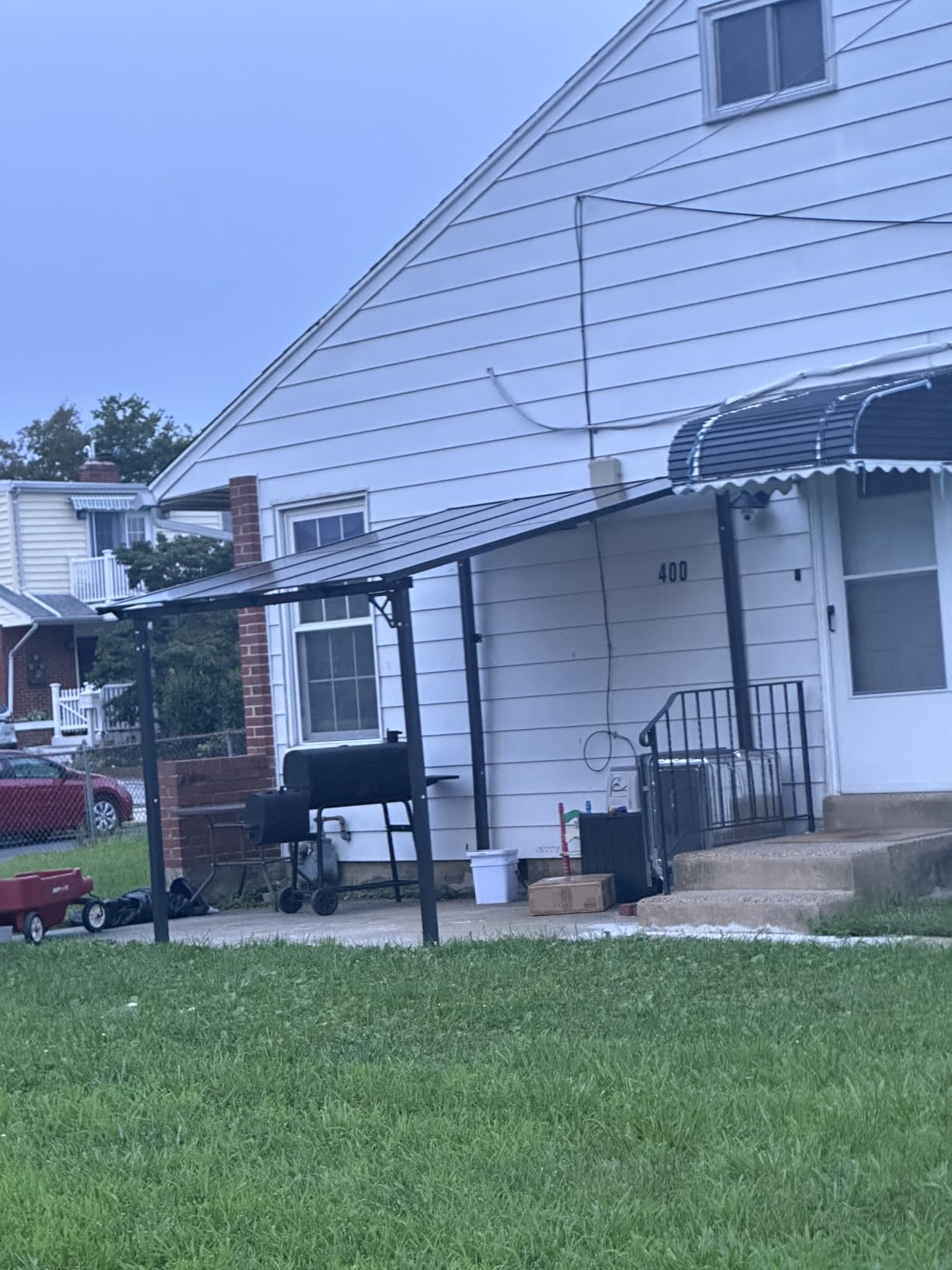
When this roof type is the right call
Pick hard polycarbonate when your problem is heat and UV rather than flexibility. If you want to change the light level by afternoon, this is the wrong roof, because it does not open. It is the right roof for an outdoor kitchen or a dining table where the priority is keeping the space usable in midsummer.
What to watch during installation
Panels rated for that temperature range still need a clean, level mounting surface and correct fastener spacing or the panels will haze. Buyers report the frame itself arrives rust free with a clean modern finish. If your exterior wall is thin or has a finished surface you do not want punctured, this is not a weekend build.
4. Aoxun 10′ x 14′ Lean-To Gazebo with Steel Hardtop – Best for Snow and Hail
Aoxun 10′ x 14′ Lean to Gazebo Pergola with Sloping Roof for Patio, Black
Galvanized steel roof rated 77 lbs per sq m
Handles 6 inches of snow
233.7 pounds
Pros
- Hardtop roof handles sun rain hail and snow
- Holds up through strong winds and rough winters
- 120 sq ft of shade seats 6-8 people
- Dark finish looks clean on a deck
Cons
- Roof screws thread into plastic brackets that can leak
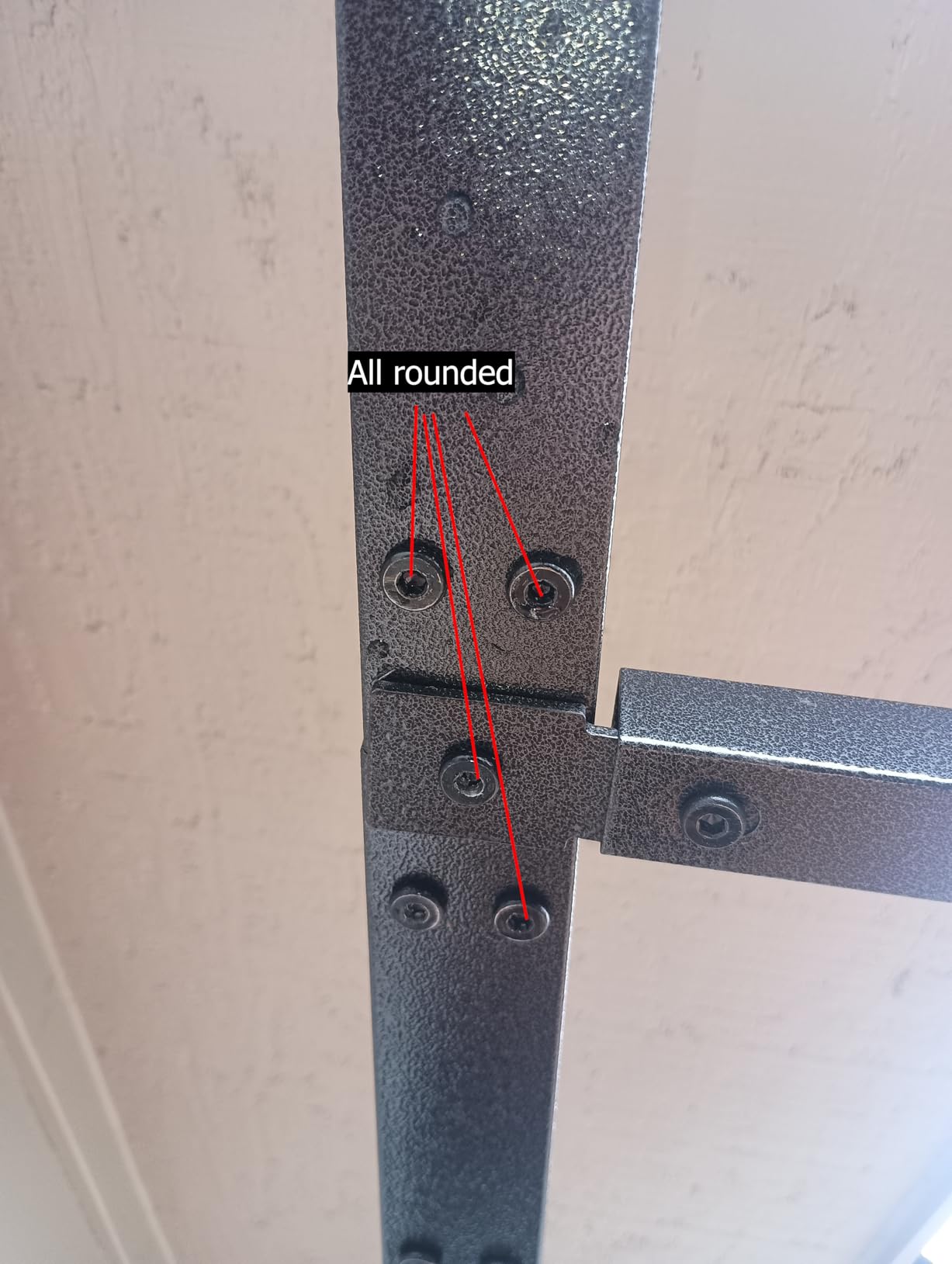
- Soft screws can round off during assembly
- Protective film removal is tedious
The Aoxun 10 by 14 is a hardtop, and that changes everything about weather. The reinforced galvanized steel roof is rated for 77 pounds per square meter and about 6 inches of snow, and the triangular reinforcement and steel pillars give a stated wind stability of 31 to 38 mph. Anchors for the wall and ground are included, which is more than most kits in this range offer.
At 120 square feet it seats six to eight people, and reviewers who finished the build report it surviving a full year of high wind and snow. One owner upgraded from three to five stars after a year in the weather, which is about the strongest durability signal you can get from a review section.
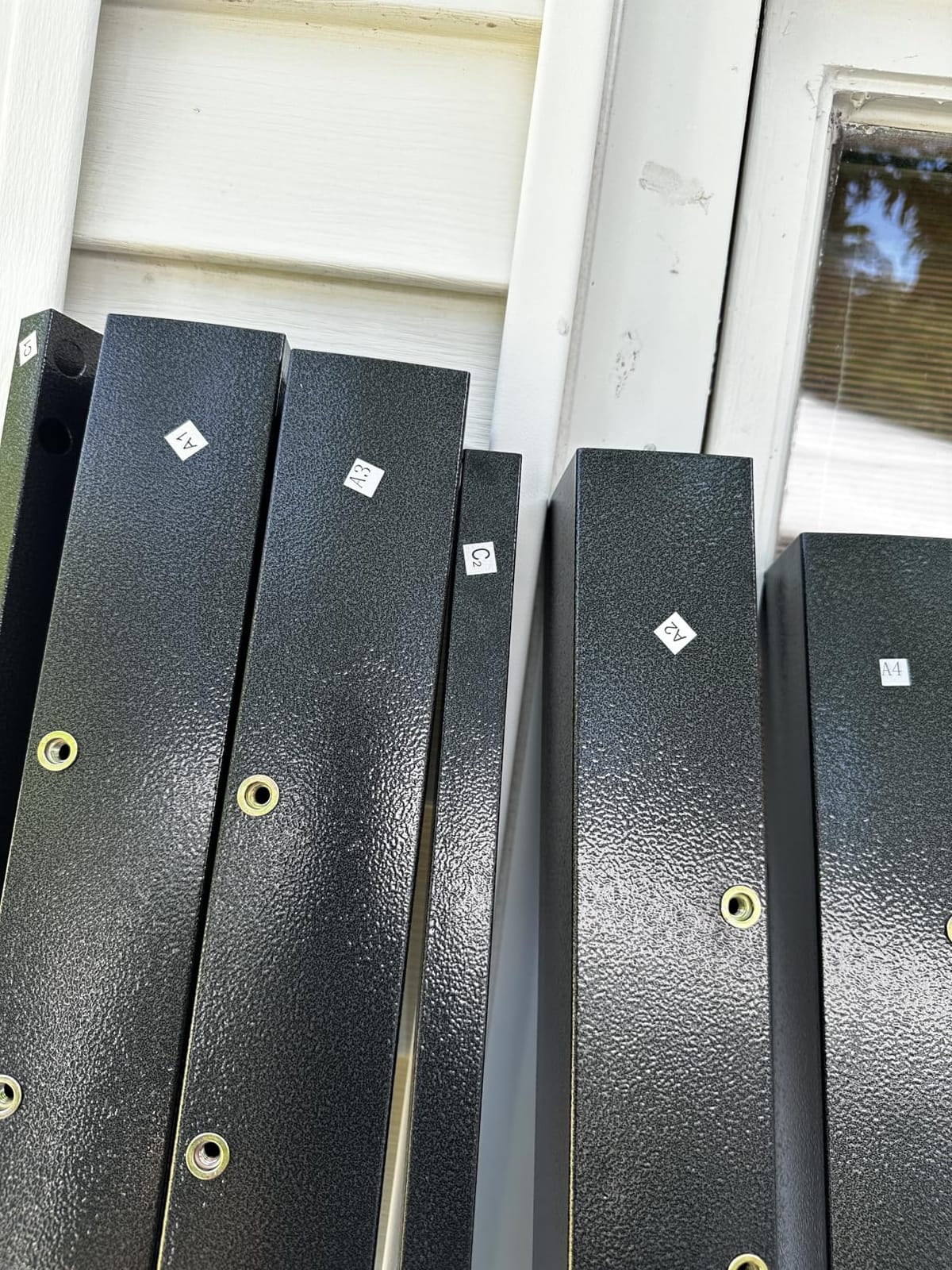
Assembly is where the stars come off. The most repeated complaint is that roof panel screws thread into plastic brackets, which can leak unless the bracket is reinforced, and several reviewers report soft screws whose heads round off during the build. Others mention bent panels or dented legs arriving, so inspect the shipment before you start.
The protective film on the roof panels takes far longer to remove than the build itself, and the posts feel thin for a structure this size. Budget an afternoon for the build, a weekend for the film, and a plan for checking the roof fastener brackets after the first storm.
Why hardtops earn their space
If your climate has four seasons and a real winter, a hardtop is the only roof type here that stays useful when snow arrives. Fabric canopies and shade sails have to come down in that weather, which means you lose the structure exactly when you need it. The slanted roof sheds rain and hail without any motor or latch involved.
Where the trade-off shows up
A hardtop is a fixed commitment. There is no opening it for airflow in the evening and no seasonal removal, so you should be sure you want permanent coverage over that part of the patio. The 31 to 38 mph wind figure is also a modest number compared with the heavy steel kit later in this list, so this is a four-season choice rather than a storm-country choice.
5. Backyard Discovery Windham 14′ x 12′ Steel Kit – Best for High Wind
Backyard Discovery Windham 14′ x 12′ Modern Galvanized Steel Pergola Kit with Shade Sail Canopy, All-Season Durability, PowerPort, High-Wind Rating for Outdoor Patio, Garden, Deck, Entertaining
Tested to 100 mph when anchored
5-year limited warranty
673.5 pounds
Pros
- Heavy-duty frame holds up in wind and winter weather
- Pre-drilled parts align cleanly
- Elegant white finish suits a pool deck
- Owners who bought twice report consistent quality
Cons
- Shade sail is weaker than the frame
- Included sail does not fully cover the top
- Powder coat scratches easily during assembly
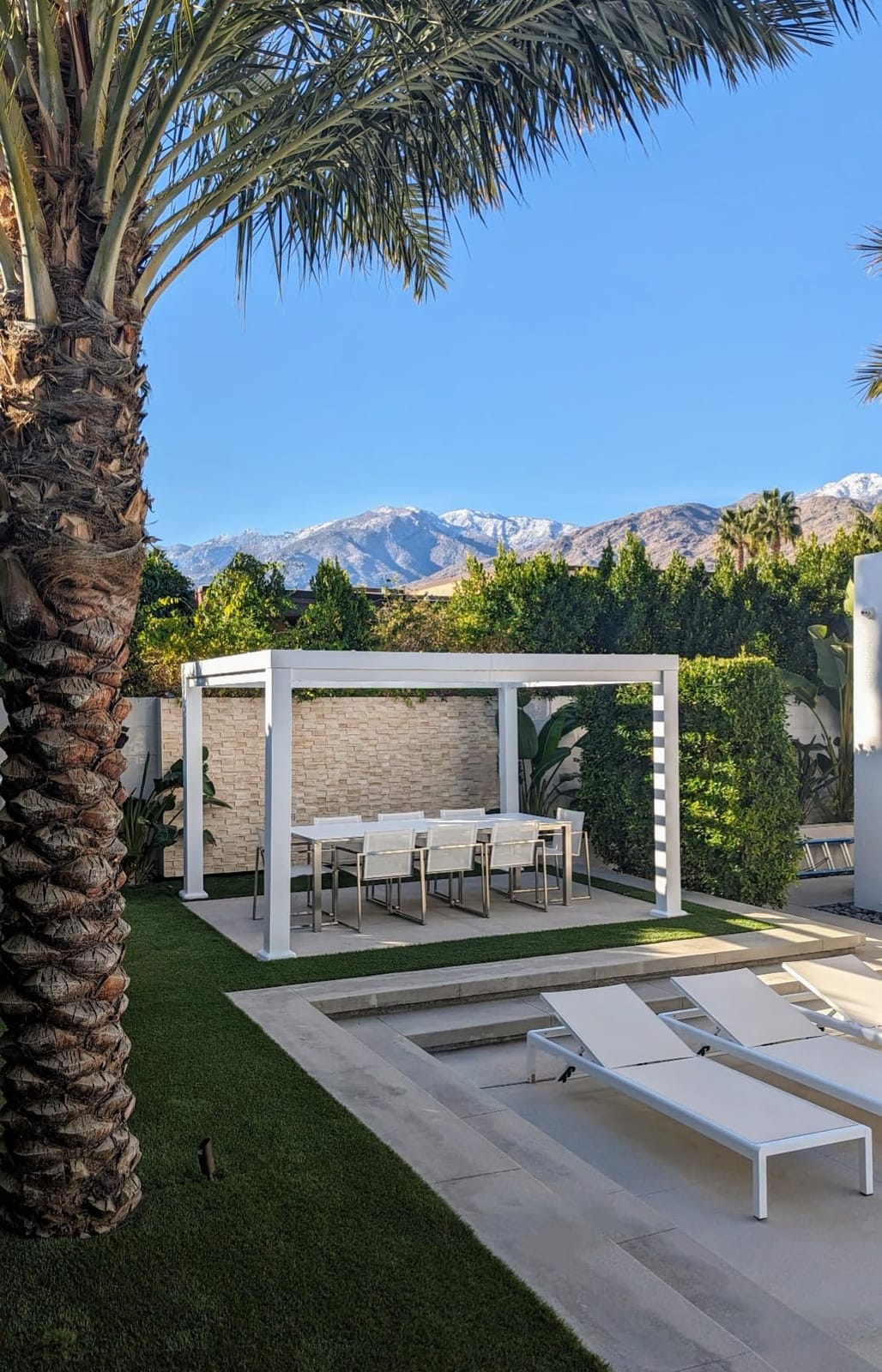
This is the strongest wind story in the roundup. The Windham is Pro-Tect tested and documented to withstand up to 100 mph when anchored per the manual, and it carries a 5-year limited warranty that nothing else here matches. The frame is 100% powder-coated galvanized steel with heavy-duty anchoring plates hidden inside the posts, which is exactly what you want in a storm-prone region.
At 168 square feet and 673.5 pounds, it is also the heaviest unit here and the most demanding to build. The parts arrive pre-fabricated and pre-drilled with guided app instructions, so nothing needs cutting, but you will need at least two strong people and most of a day.
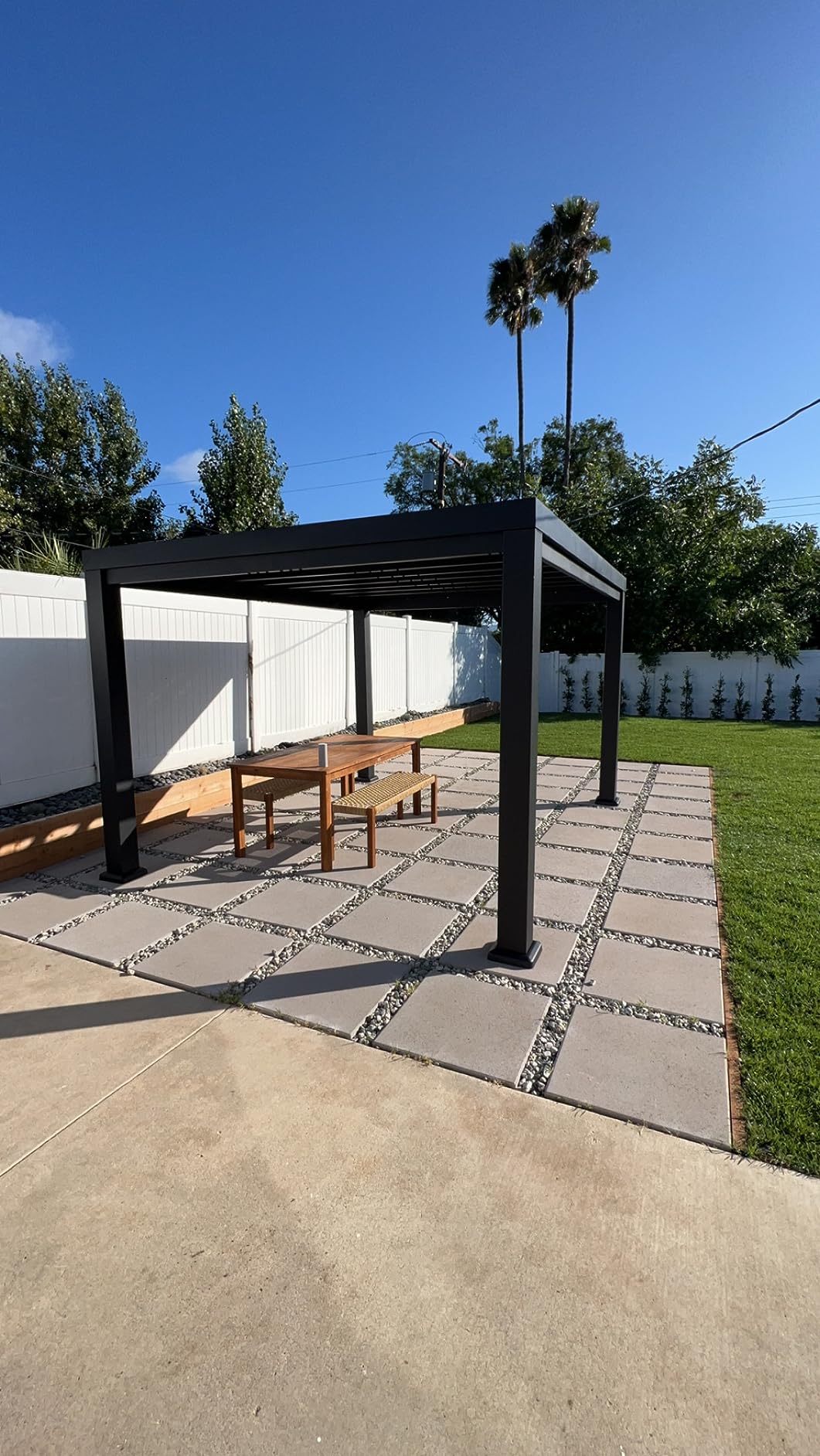
The steel is the strength. The shade sail is not. Reviewers consistently separate the two, calling the sail noticeably weaker than the frame, and several owners bought a separate cover because the included sail does not fully cover the top. It is a soft UV-protected breathable woven fabric, so it filters light rather than blocking it completely.
Buyers with strong wind stories also report the powder coat scratches easily during assembly. Set the parts on blankets or cardboard before you unpack them. The patented PowerPort adds three electrical outlets and three USB ports, though the power source is not included.
What the 100 mph number actually means
Read the qualifier before you rely on it. The rating is conditional on anchoring per the manual, and an unanchored frame of any size is a sail waiting for a windy day, which is the single most common complaint in homeowner threads. The number is only true if you bolt the plates into concrete or properly lagged them into a deck.
Who should buy this one
Coastal yards, exposed lots and anywhere with a storm season. Owners who have bought from this brand twice cite consistent quality across sizes, which is a good sign for repeat purchases and for matching a second section to an existing one. Skip it if you want a dark, sealed roof or a small footprint, because 168 square feet is a large commitment.
6. Domi 10′ x 16′ Lean-To Gazebo – Best for Expandable Coverage
Domi 10’x 16′ Lean to Gazebo,Outdoor Gazebo Pergola with Sloped Roof, Grey
160 sq ft hardtop coverage
60 mph wind rating
22 lbs per sq ft snow load
Pros
- Stays square and stable once wall-mounted
- Galvanized roof with working gutter drainage
- No rust on arrival
- Good value for 160 sq ft of hardtop
Cons
- Assembly takes two to three days for some
- Roof panel film is slow to remove
- Sharp roof edges cause cuts
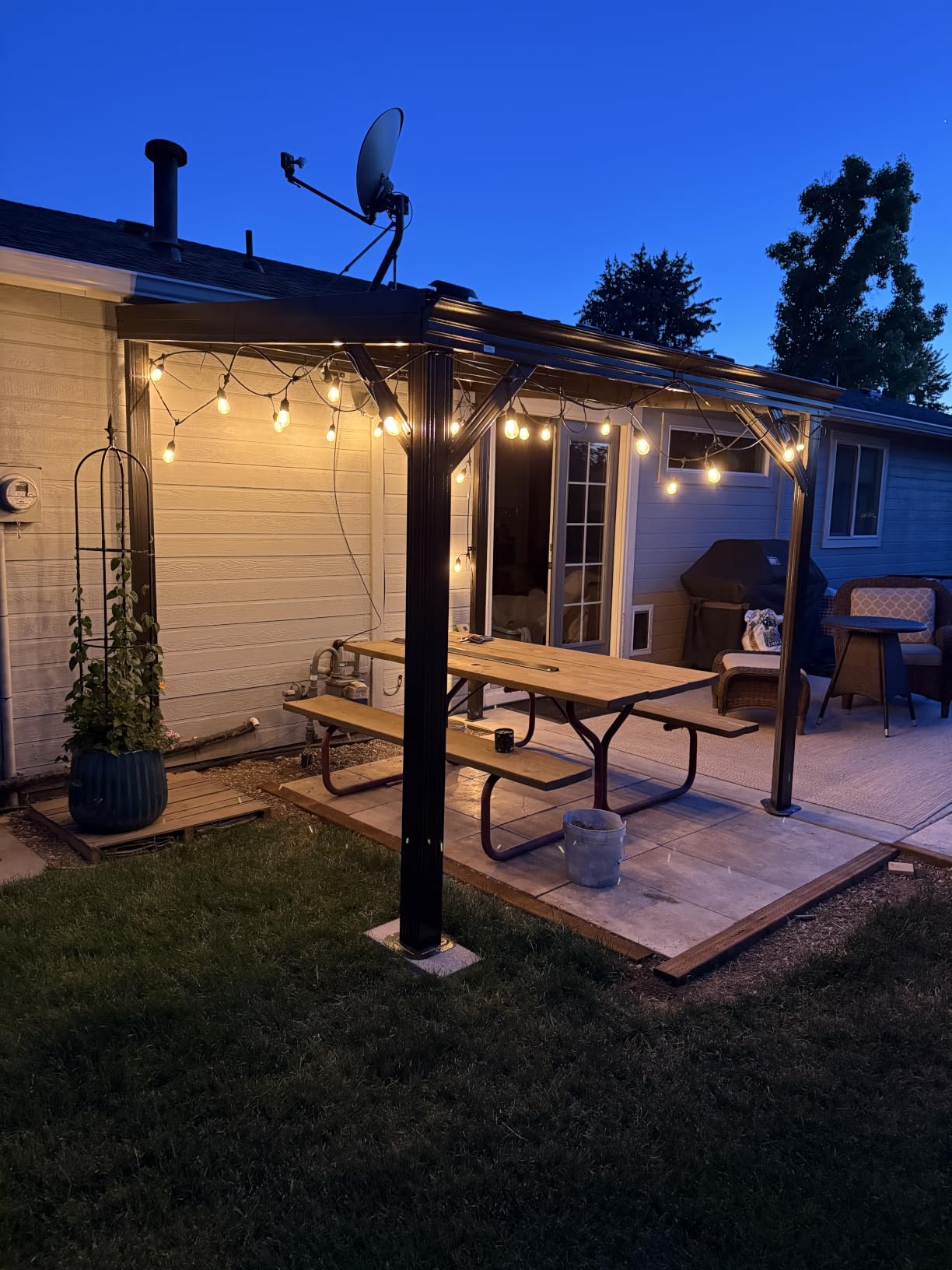
The Domi is the one to look at if you might want more patio later. Same-width sections link with an optional kit, so a 10 by 16 lean-to can become a longer covered run without replacing the roof system. The roof is galvanized steel with an improved gutter system that channels rain and snow away from the seating area, and the frame is rated for 60 mph wind and 22 pounds per square foot of snow load.
The listing also states 99% UV protection with a UPF 50+ rating, which puts the shade performance closer to the polycarbonate unit than to a fabric canopy. Buyers call the frame sturdy and note that it stays square and stable once it is wall-mounted.
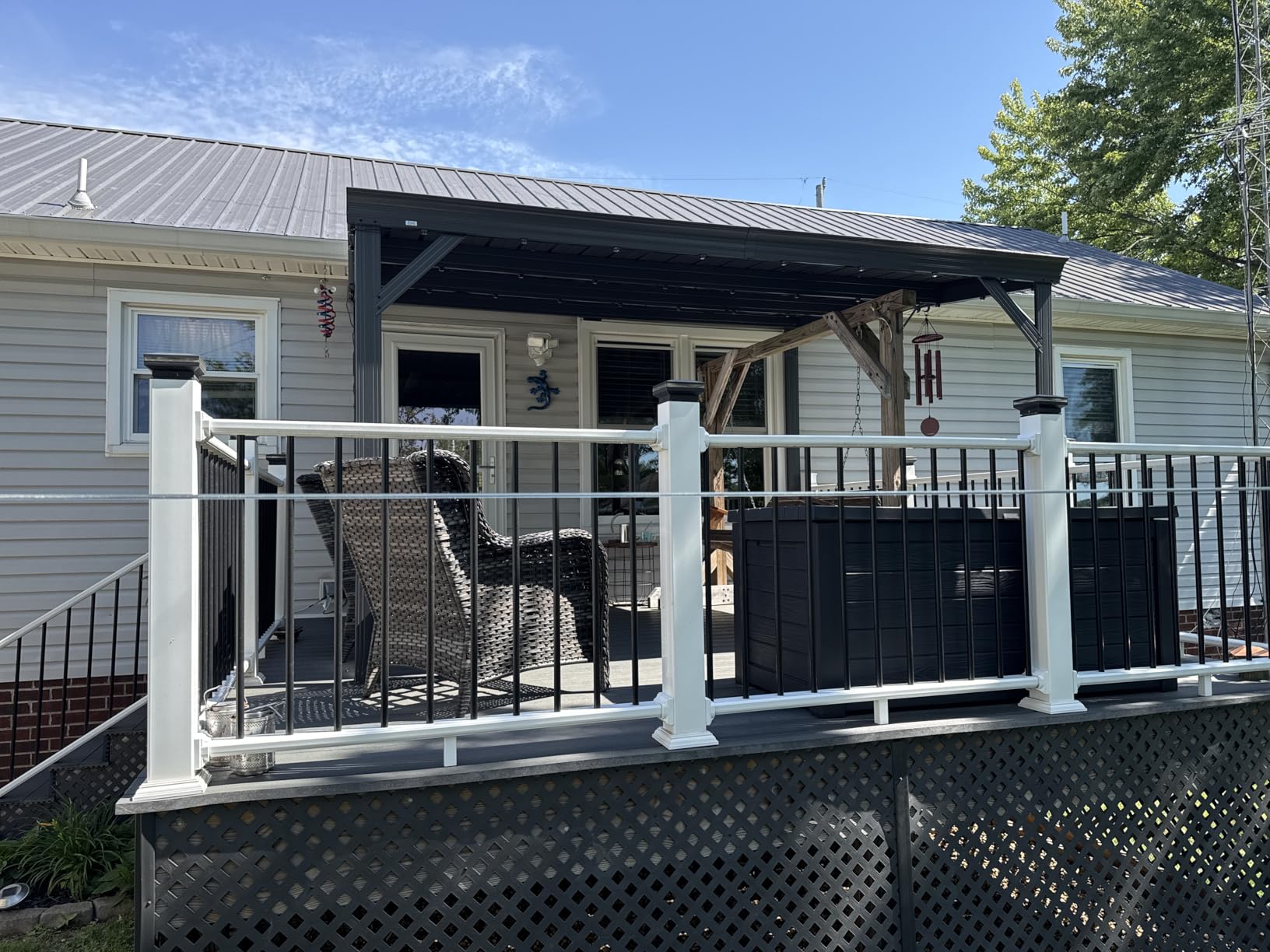
Nobody builds this in an afternoon. Multiple reviewers report two to three days of assembly, and the build needs three or more people, because legs can bend when raising the frame if fewer than three help. The roof panel protective film is slow and tedious to remove, and sharp roof panel edges can cause cuts during the process.
The instructions are diagram-only and can be confusing, so budget the time honestly. Owners do report that customer service quickly resolves arrival damage and sends replacement trim, which softens the arrival-damage risk on a product this size.
When to expand rather than replace
Planning a second section later is the reason to pick this one, and it is a real saving if you know the run is going to grow. The connectable design uses the same roof panels and gutters, so the covered area stays visually consistent. It is a better long-term answer than sizing up to a structure too large for the space today.
What the drain system solves
That gutter and slope detail is what separates a usable hardtop from a water trap, and owners single it out as doing its job. On a wall-mounted lean-to, water management matters more than on a freestanding frame because the runoff lands close to the house. Keep the downspout path clear before the first storm, whatever the roof material.
7. Outsunny 12′ x 10′ Retractable Canopy Pergola – Best for Two Independent Canopy Sections
Outsunny 12′ x 10′ Outdoor Retractable Pergola Canopy with Sun Shade Beige
118.2 sq ft shade area
Two sliding canopy halves
133.4 pounds
Pros
- Frame regularly called the best in its price class
- Halves raise and lower independently for partial shade
- Two-person build in three to four hours
- Distinctive cornice edge styling
Cons
- Canopy rail bar has the hole on the wrong side
- Canopy flaps and bunches in a light breeze
- Halves will not hold position at different heights
The Outsunny is built around one idea that genuinely helps: the canopy splits into two independently adjustable sections. You can pull one half back over the table and leave the other extended, which is the shade-control arrangement that most single-panel kits cannot offer at this size. The 118.2 square foot shade area seats up to seven.
Buyers regularly call the solid steel frame the best they have found in this price bracket, and the UV-resistant PU coating keeps it clean in sun. The slotted rail design lets the canopy slide for variable shade, and each of the four feet has an openable cover for ground stakes.
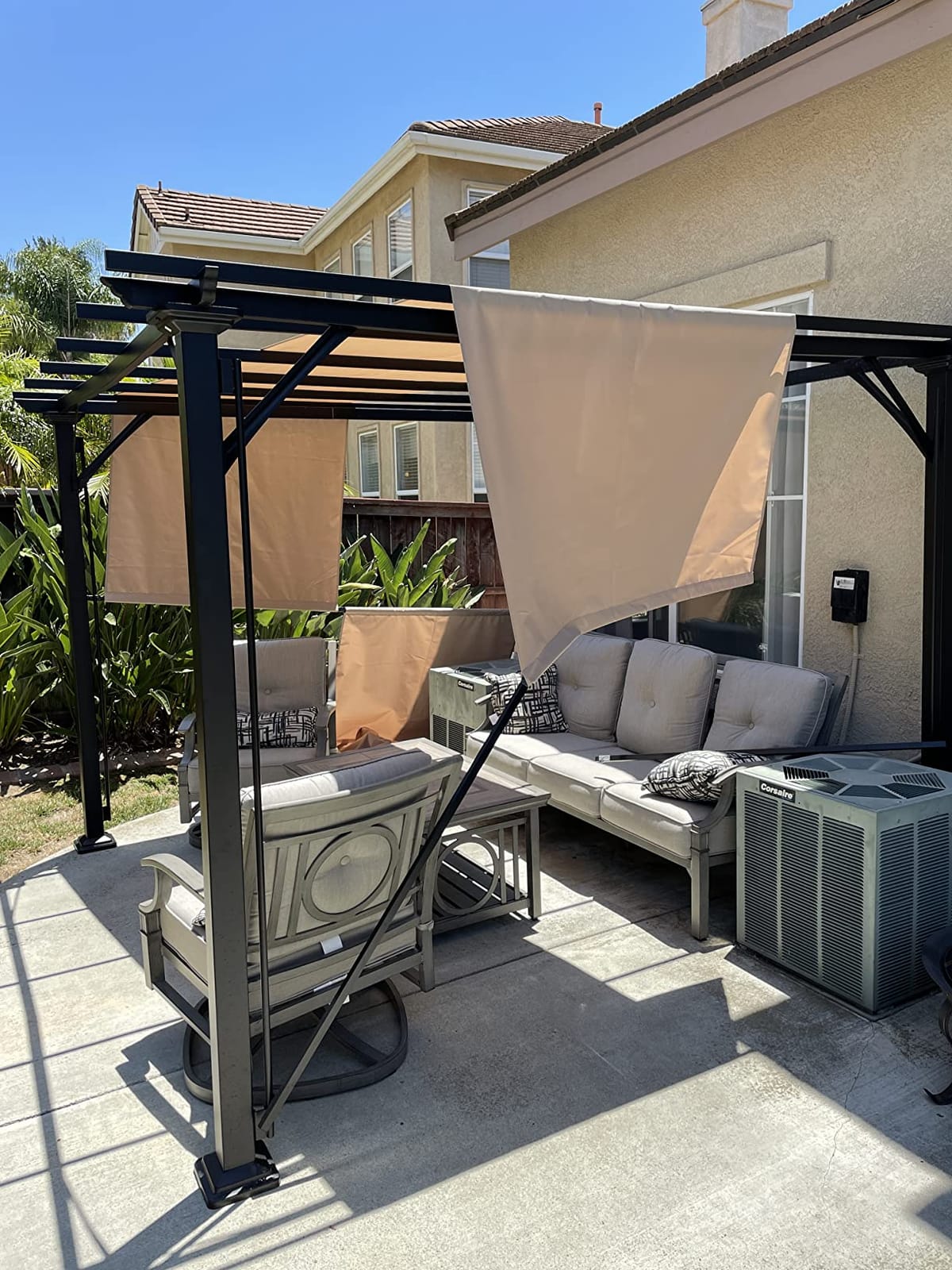
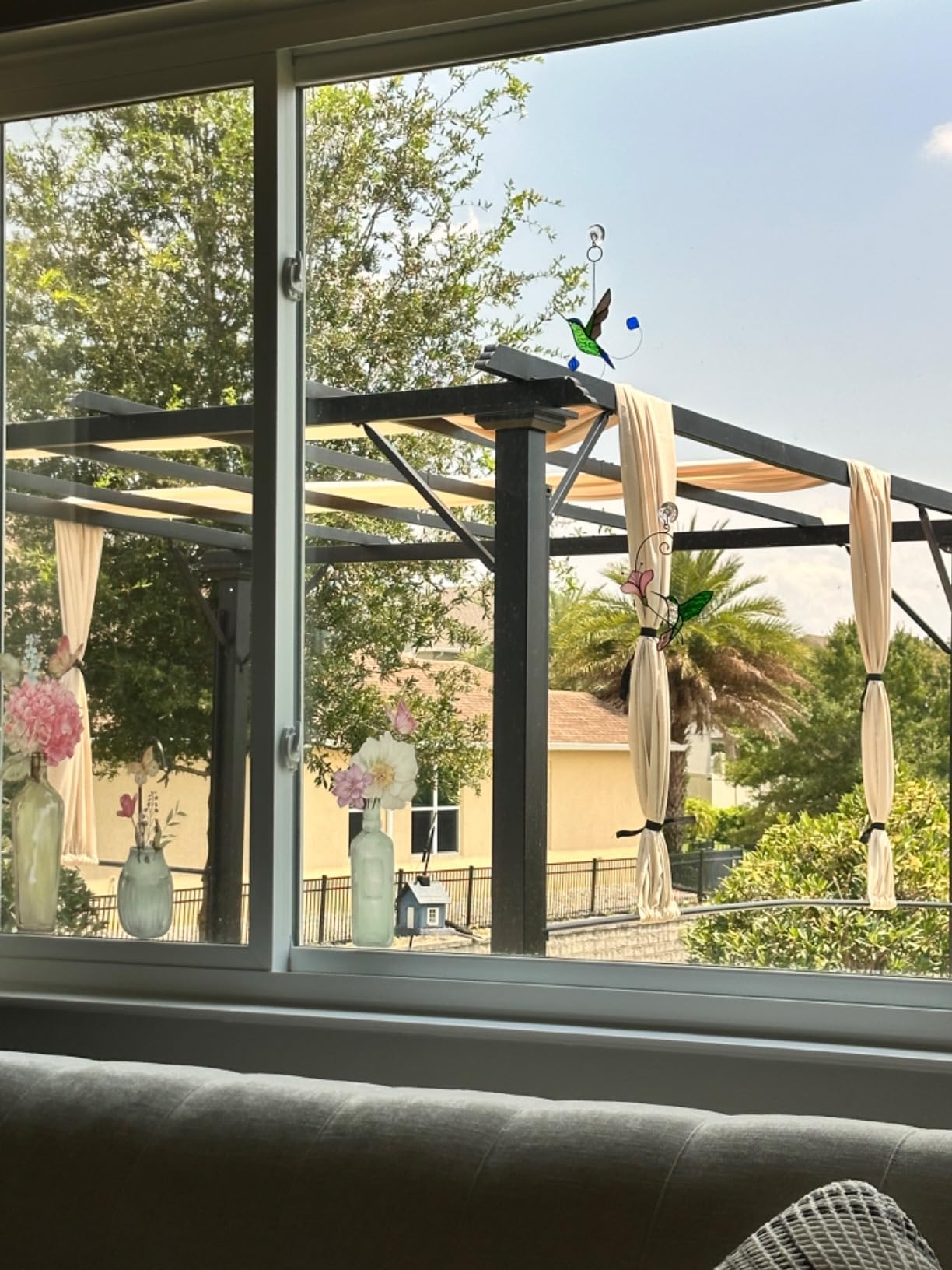
The canopy is the weak half of this package. The rail uses a two-piece bar with the hole on the wrong side, so the two halves latch unreliably, and even a light breeze makes the fabric flap, bunch and slide. Owners end up using bungee cords or binder clips to make it behave, which tells you exactly what to expect.
Even when set, the two halves will not hold at different heights. The top crossbars are two steel pieces joined by weaker metal and bow under upward pressure, and the instructions are diagram-only with at least one assembly step missing. The listing itself recommends taking the canopy down in bad weather, which is a fair summary of its storm performance.
What you can control and what you cannot
You get two zones of shade, which is genuinely useful over a dining table plus a lounge chair. You do not get a canopy that stays put in wind, and the joined top bars mean the frame is not the rigid structure that a steel kit of this weight should be. Treat the independent halves as a convenience, not as a storm feature.
Who should keep looking
If you live somewhere with regular wind, this is the wrong unit. There is no published wind rating, the canopy is explicitly a take-down-in-bad-weather component, and the 11% one-star share is largely breeze complaints. For a calm patio and a fixed seating layout, the frame is a good buy on its own.
8. HAPPATIO 10′ x 10′ Retractable Canopy Pergola – Most Versatile for Small Patios
HAPPATIO 10′ X 10′ Retractable Pergola with Sun Shade Canopy, Patio Aluminum Frame Shelter for Backyards, Gardens, Porch, Includes Ground Studs and Expansion Screws (Grey)
100 sq ft shade area
66.4 pounds
Lightweight coated aluminum
Pros
- Light enough to disassemble and reassemble seasonally
- Blocks direct sun well for a shaded seat
- Clear video installation guides
- Seller sent replacement parts after storm damage
Cons
- Light aluminum feels flimsy in wind
- One reviewer reports total collapse in a windy storm
- Canopy magnets are weak
- Sliders can break within months
At 66.4 pounds this is the lightest structure in the roundup, and that is the whole pitch. Owners like that they can take it down at the end of the season and put it back up in spring, which is not realistic with any of the steel or aluminum frames here. The 100 square foot footprint and coated aluminum frame cover a small patio without dominating the yard.
The two-piece retractable canopy includes a smaller top cover for extra protection, and the safety locking system is paired with magnet retention and extra straps. Eight ground studs and eight expansion screws for anchoring come in the box, which is unusual at this end of the price spectrum. Buyers also mention clear video installation guides.
Low weight cuts both ways. Reviewers describe the frame as flimsy, and one Southern California owner reports the whole structure collapsed in a windy rain storm and could not be repaired. The canopy magnets are weak, so the shade slides open or closed in a breeze, and the small wheeled sliders are a recurring break point.
Other owners report the top cover splitting open in heavy wind and rain. Against that, 65% of the 144 ratings are still five stars, and at least one buyer had the seller send replacement parts after storm damage. It is a fair trade for renters and light users, and a poor one for anyone expecting a permanent structure.
How to get more life out of it
Use all eight ground studs and expansion screws on a hard surface, because a 66-pound frame with fabric tension on top is exactly the setup that gets caught. If you take it down in winter, inspect the sliders and magnets in the spring and replace them before the breeze season rather than after.
Where it fits best
Renters, seasonal patios and anyone who cannot pour a concrete footing. A 10 by 10 with 87.7 inches of headroom suits a small bistro set or two lounge chairs, and low headroom is worth checking against your door clearances. It is not a structure to attach to a house or leave standing through a storm season.
9. MIRADOR 80S Louvered Pergola 10′ x 12′ – Best for Adjustable Louvers
MIRADOR 80S Louvered Pergola 10′ x 12′, Modern Style with Adjustable Louvers and Integrated Drainage System for Deck Garden Yard, Easy Installation, Charcoal
Louvers adjust from closed to 90 degrees
Interlocking seal
Integrated drainage
Pros
- Best-rated pergola in the group at 4.6 stars
- Louvers crank smoothly per 10 ft section
- Integrated drainage handled heavy rain
- Hardware and packaging thoughtfully organized
Cons
- Louver attachment clamps are plastic not metal
- Slings take practice to operate
- Louvers arrived bent in some shipments
This is the only louvered roof that adjusts with a sling rather than a crank, and it earns the highest average rating in the group at 4.6 stars with 80% five-star reviews. The louvers run from fully closed to 90 degrees, and they interlock to form a weather-tight seal in showers, which is the spec that separates a real louvered pergola from fixed decorative slats.
Integrated drainage routes water through the legs so it never pools or splashes back onto the seating area. At 120 square feet and 485 pounds it seats eight or more, and owners describe the charcoal powder-coated posts as heavy enough to feel rigid while still being manageable as a build-yourself project. The kit includes an organized component box, printed instructions, video tutorials and a complete hardware box.
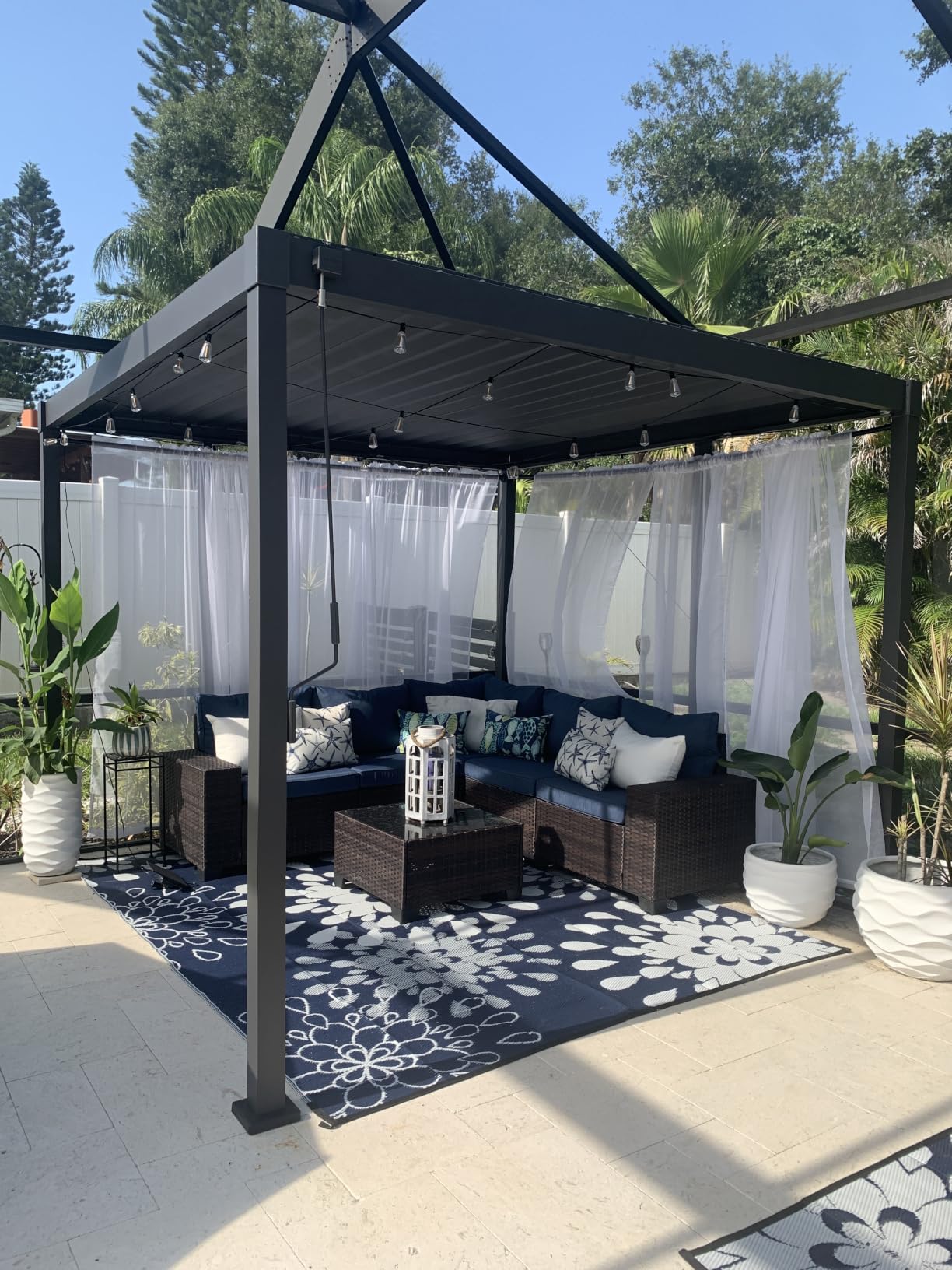
Two details deserve a note. The louver attachment clamps are plastic rather than metal, which is a fair concern for long-term UV exposure and the most common complaint among owners. And the louvers themselves are fragile in transit, arriving bent in some shipments, so inspect them before you start and photograph the condition for the record.
The sling operation takes a bit of getting used to, and louver installation instructions could be clearer with better labelling. Owners report needing a rental impact hammer and proper wedge anchors for concrete, so plan the anchoring method before the frame comes out of the box.
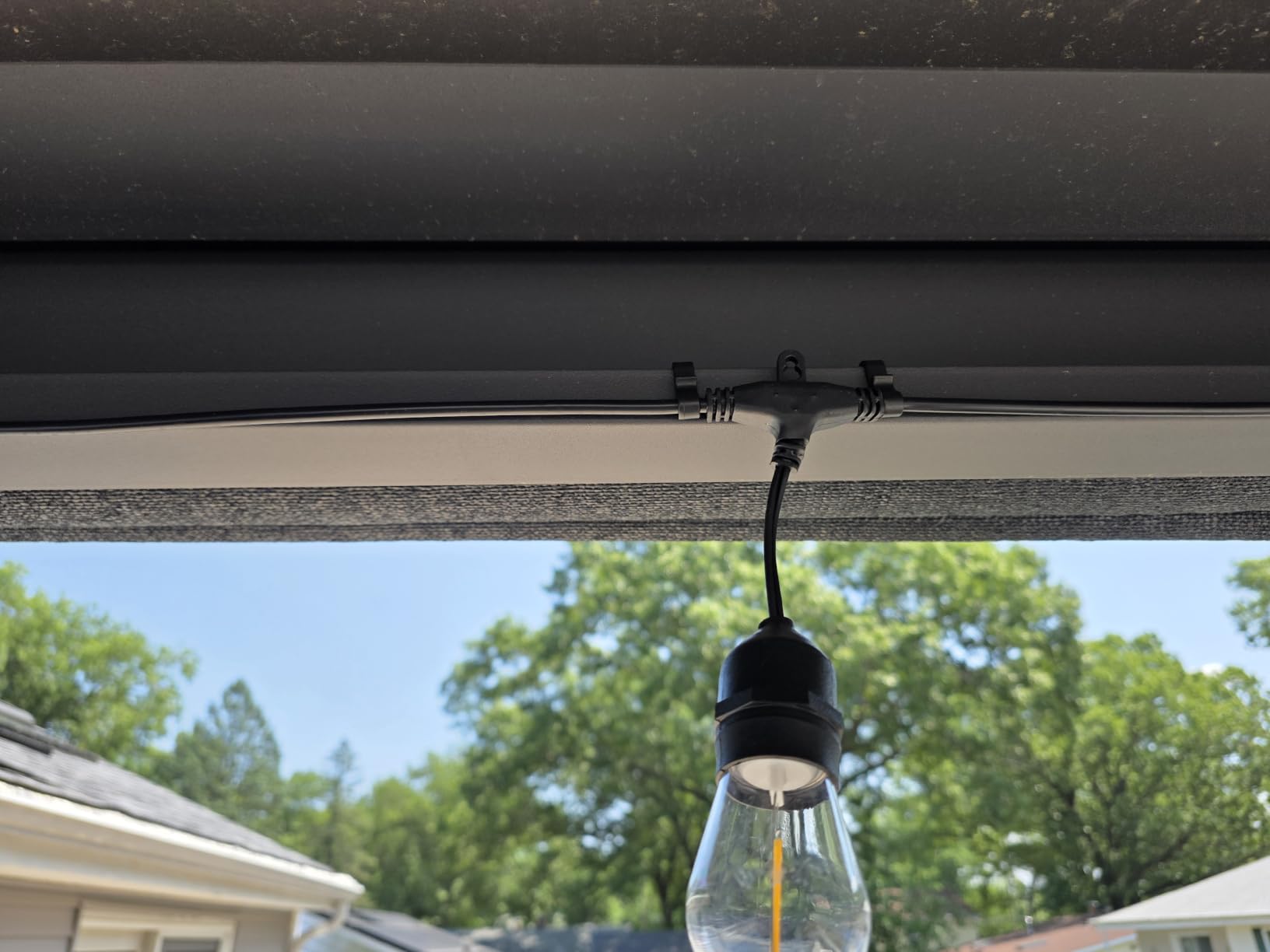
Open, angled or closed: when to use which mode
Closed gives you shade and a dry seat under a shower, angled gives you shade plus airflow from above, and open gives you dappled light with full air movement. This is the frame that answers the question buyers keep asking, which is whether you want to control your shade or just have it. The interlocking seal means closed is a genuine weather mode rather than a gesture.
Who should choose louvers
Choose a louvered roof when you want a permanent structure that changes with the day and the season. It is a better fit than a retractable fabric canopy for a dining area you use year round, and better than a hardtop if evening airflow matters. It is a heavier, more permanent build than anything else in the retractable group.
10. Tangkula 10×10 Steel Retractable Canopy Shade Structure – Best Rustproof Steel Canopy Unit
Tangkula 10x10FT Outdoor Patio Shade Structure, Steel Pergola with Retractable Canopy Shades, Rustproof Metal for Patio, Backyard, Garden (Beige)
100 sq ft shade area
Alloy steel frame
135 pounds
Pros
- Powder-coated steel frame resists rust
- Two canopy sections adjust independently
- PU-coated canopy sheds light drizzle
- Fixing ring limits canopy shake in wind
- Neutral styling suits most decor
Cons
- Canopy sections do not hold a fixed position
- Top frame uses joined two-piece bars that flex
- Diagram-only instructions
The Tangkula is a straightforward 10 by 10 steel structure with a genuinely useful two-piece canopy. Both sections retract independently and pull from both sides, so you can screen the half of the patio that needs it. The canopy is sun-resistant, flame-retardant polyester with a waterproof PU coating, and it is listed as waterproof overall.
Owners like the powder-coated steel frame for rust resistance, and the ring on the pole helps keep the canopy from shaking in the wind, which is a specific fix for a problem most retractable kits have. Two anchors per leg come included. At 135 pounds and 87.6 inches tall, it is a compact footprint for a full dining set.
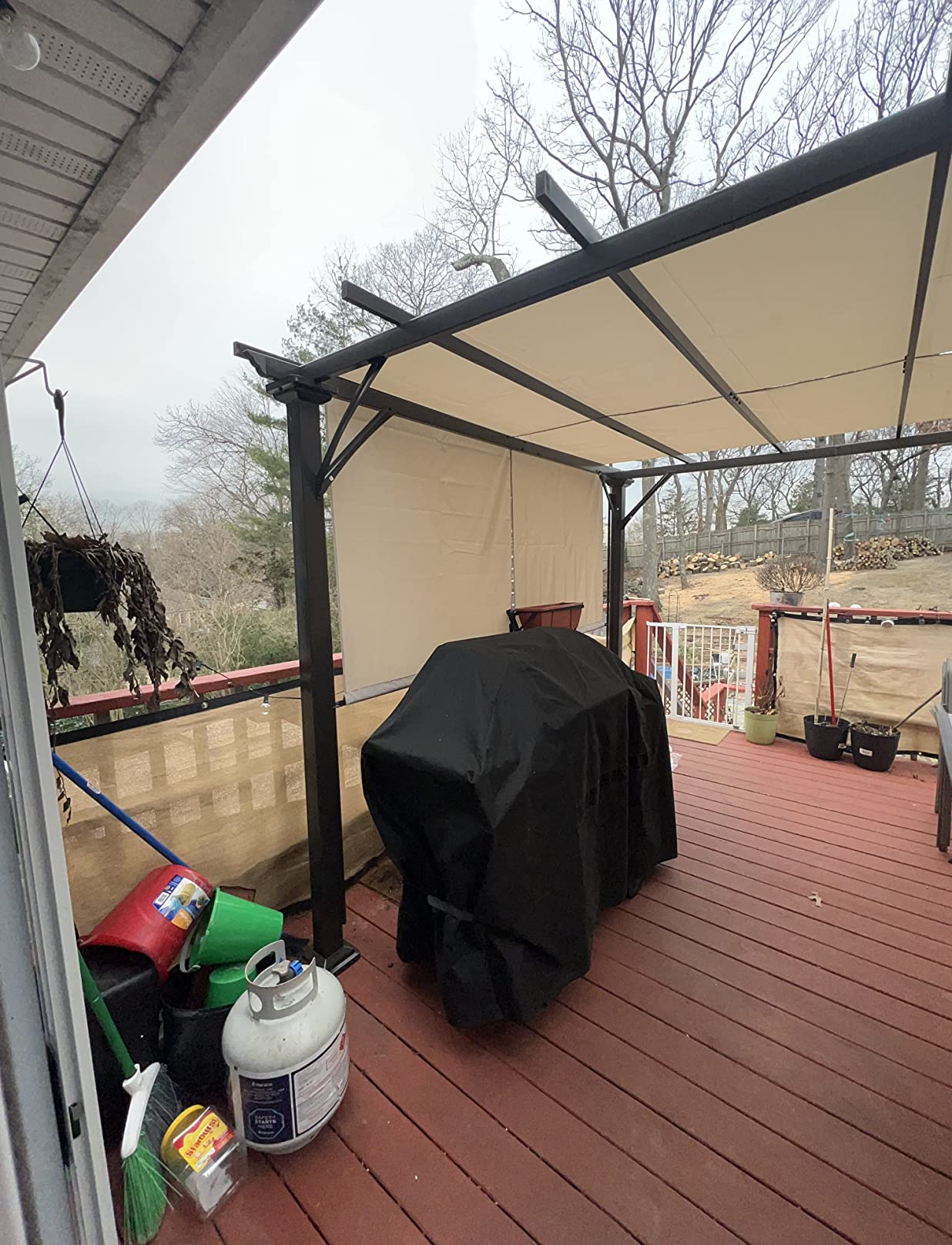
The consistent weakness is position holding. Buyers report the canopy sections are hard to keep at a fixed setting once adjusted, so the two-zone idea works but needs re-setting. The all-steel top frame is assembled from two-piece joined bars that can flex when you press upward on the canopy, which is a structural weakness rather than a cosmetic one.
Instructions are diagram-only and can require redoing a step. The 55% five-star share reflects that this is adequate rather than outstanding, and the 12% one-star share is mostly canopy complaints. The elegant neutral beige styling is the part reviewers mention most warmly.
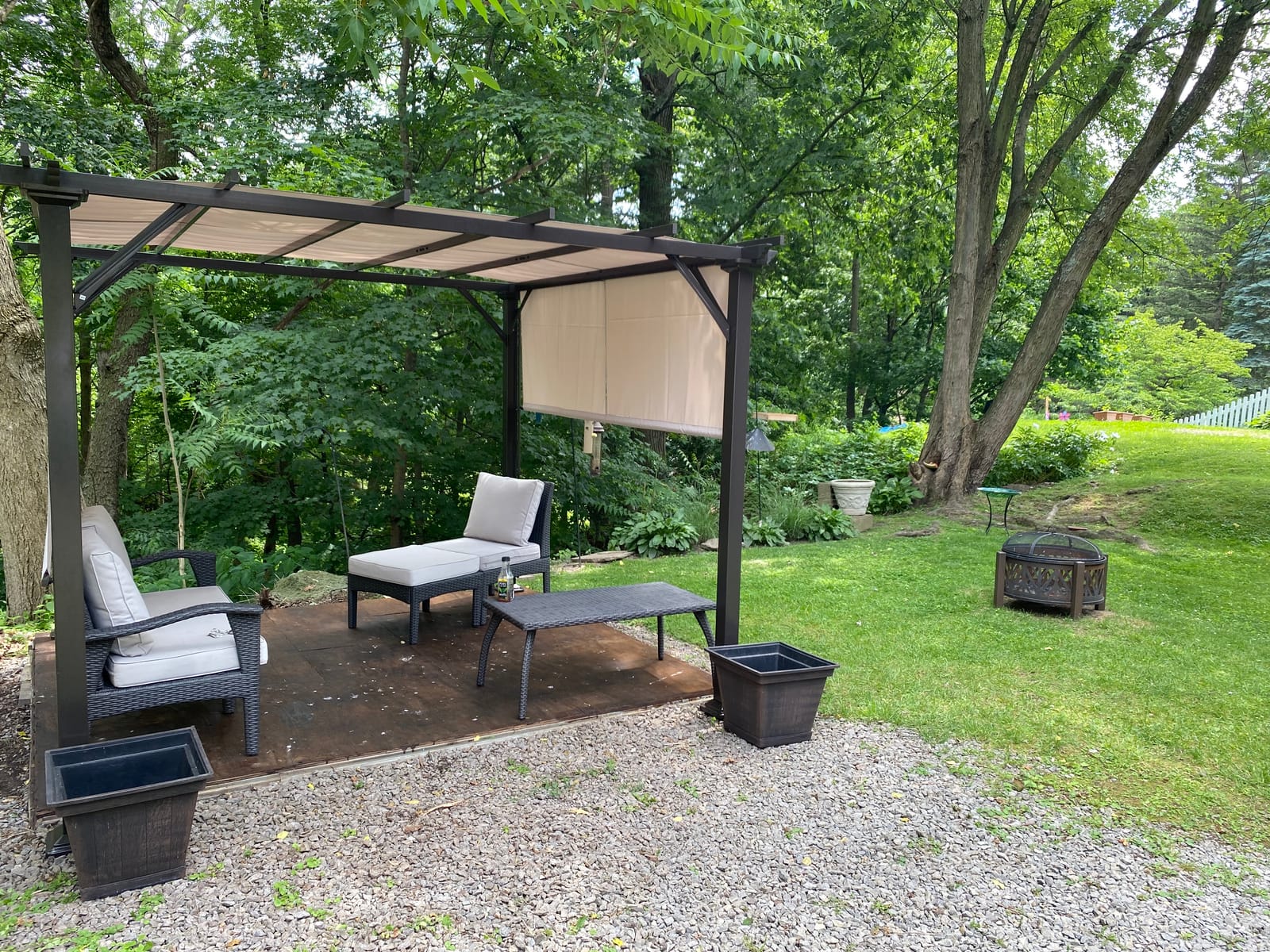
When two canopy sections are worth it
Two independent sections matter most when your seating is split, such as a dining table at one end and a sofa at the other. You can shade the table at midday and open the sofa side in the afternoon. If your patio is one continuous seating area, a single adjustable panel is simpler and one fewer thing to re-set.
What the wind question looks like here
There is no published wind rating for this unit, and no mechanical anchor beyond the two supplied per leg. The pole ring reduces canopy flapping, but the fabric still catches air. In a coastal or open-lot location, choose a rated structure instead, and in a sheltered yard this one is workable with proper ground anchors.
11. ABCCANOPY Arched Pergola 10’x12′ – Best Arched Style
ABCCANOPY Arched Pergola 10’x12′ with Retractable Sun Shade, Dary Gray
Arched roof profile
120 sq ft shade area
99 pounds
Pros
- Arched profile stands out against flat-top designs
- Thicker reinforced legs at all four posts
- Rip-Lock canopy is waterproof UV protective and breathable
- Canopy adjusts from both sides for privacy
Cons
- Canopy does not reliably hold position
- Fabric can sag or shift in breezy conditions
- Lighter duty than the hardtop metal options
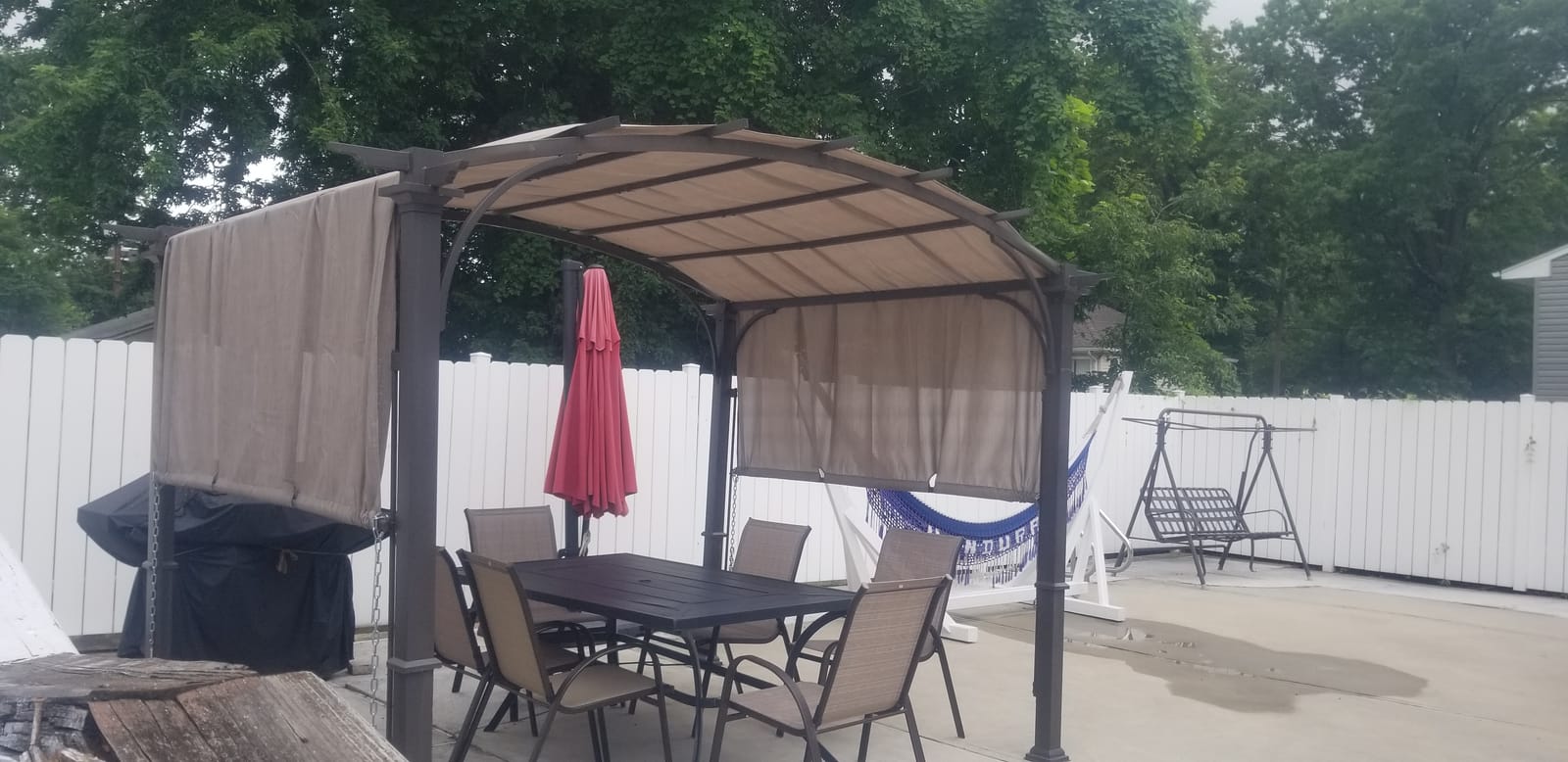
The arched roof is the whole reason to buy this one. Everything else is a competent powder-coated steel frame with thicker reinforced square legs at the base of all four posts, and at 99 pounds it is one of the lighter builds here. The curve changes the look of a yard more than any fabric choice will, and that is a real consideration when the structure stays up all year.
The Rip-Lock canopy fabric has high tensile strength and air permeability, and it is listed as waterproof and UV protective. It retracts from both sides, which owners use as a partial privacy screen rather than only as shade. 120 square feet is a comfortable footprint for a dining set.
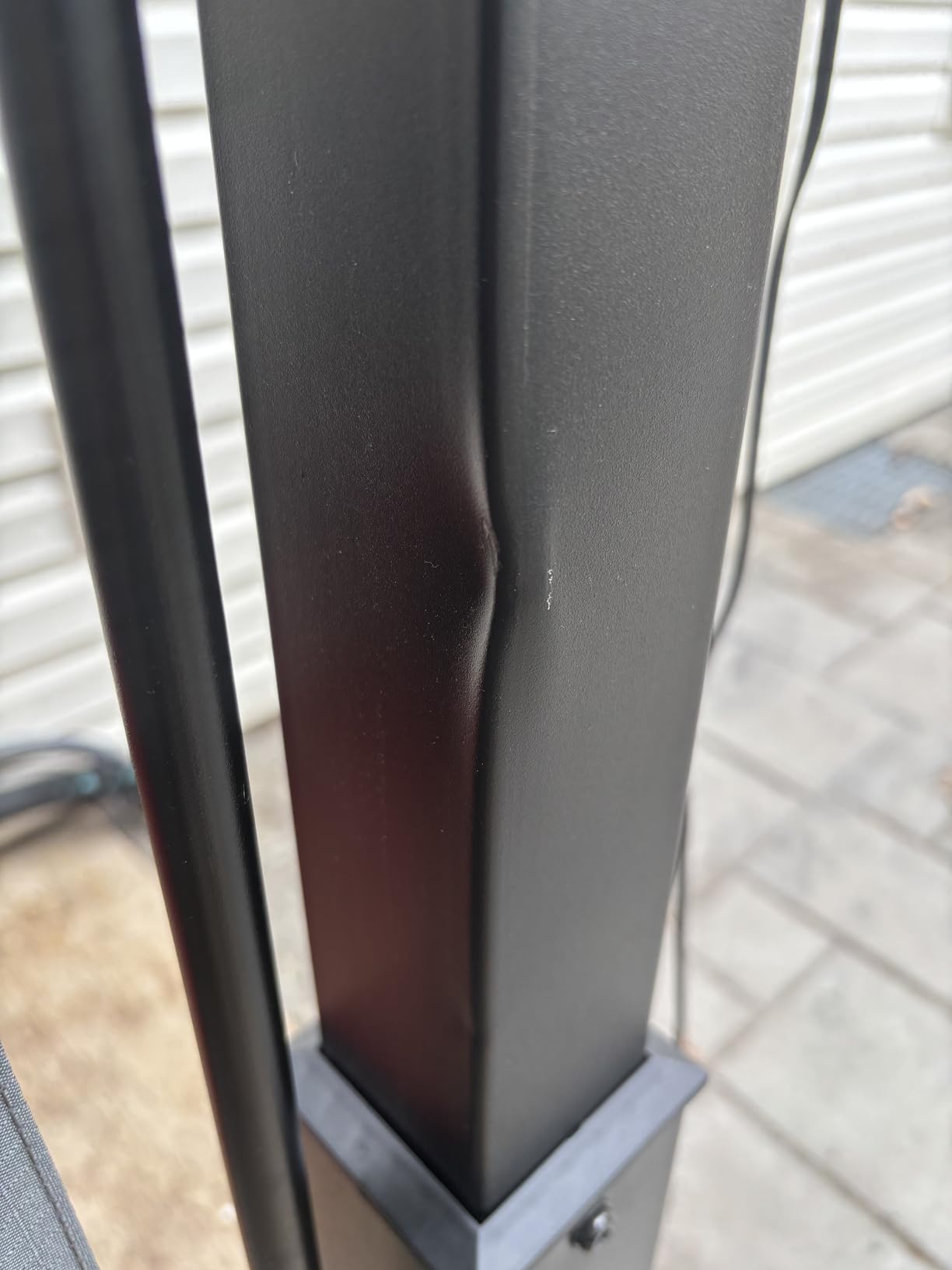
At 4.0 stars the set reads as adequate rather than outstanding, and the limitation is consistent: the canopy does not reliably hold its position once retracted, and fabric panels can sag or shift in breezy conditions. That is the recurring thread in the reviews rather than any single defect.
Owners also note the frame and fabric are lighter duty than the metal hardtop options. If you want a look that reads as a garden structure more than a covered room, that trade is worth it. If you want weather protection, it is not, and the fabric profile will need replacing sooner.
Who the arch suits
The profile works well in a garden setting, around a curved patio edge, or anywhere the structure is visible from inside the house. It softens the industrial look that flat-top steel frames bring. Just confirm your patio furniture fits under a curved roof, because the arch reduces usable clearance at the sides compared with a flat frame.
Where the fabric limits you
A waterproof label is not the same as a sealed roof, and the sagging and shifting reported here is exactly the behaviour that shows up in a stiff breeze. Plan on checking the canopy tension seasonally and replacing the panels when the fabric loses shape. It is a shade structure with a weather rating, not a shelter you can sit under in a downpour.
12. AirWire 12’x20′ Louvered Aluminum Pergola – Best for Maximum Coverage
Airwire 12’x20′ Louvered Pergola Aluminum Frame Gray
240 sq ft coverage
Crank louvers closed to 90 degrees
586 pounds
Pros
- Largest coverage area here at 240 sq ft with two roof sections
- Aluminum frame resists rust corrosion and UV
- Integrated channels keep water off the seating area
- Curtains and mesh screens are detachable and washable
Cons
- 586 pounds means a full crew to assemble
- UPF 15 curtains offer less protection than a 50+ canopy
- Rated water resistant rather than waterproof
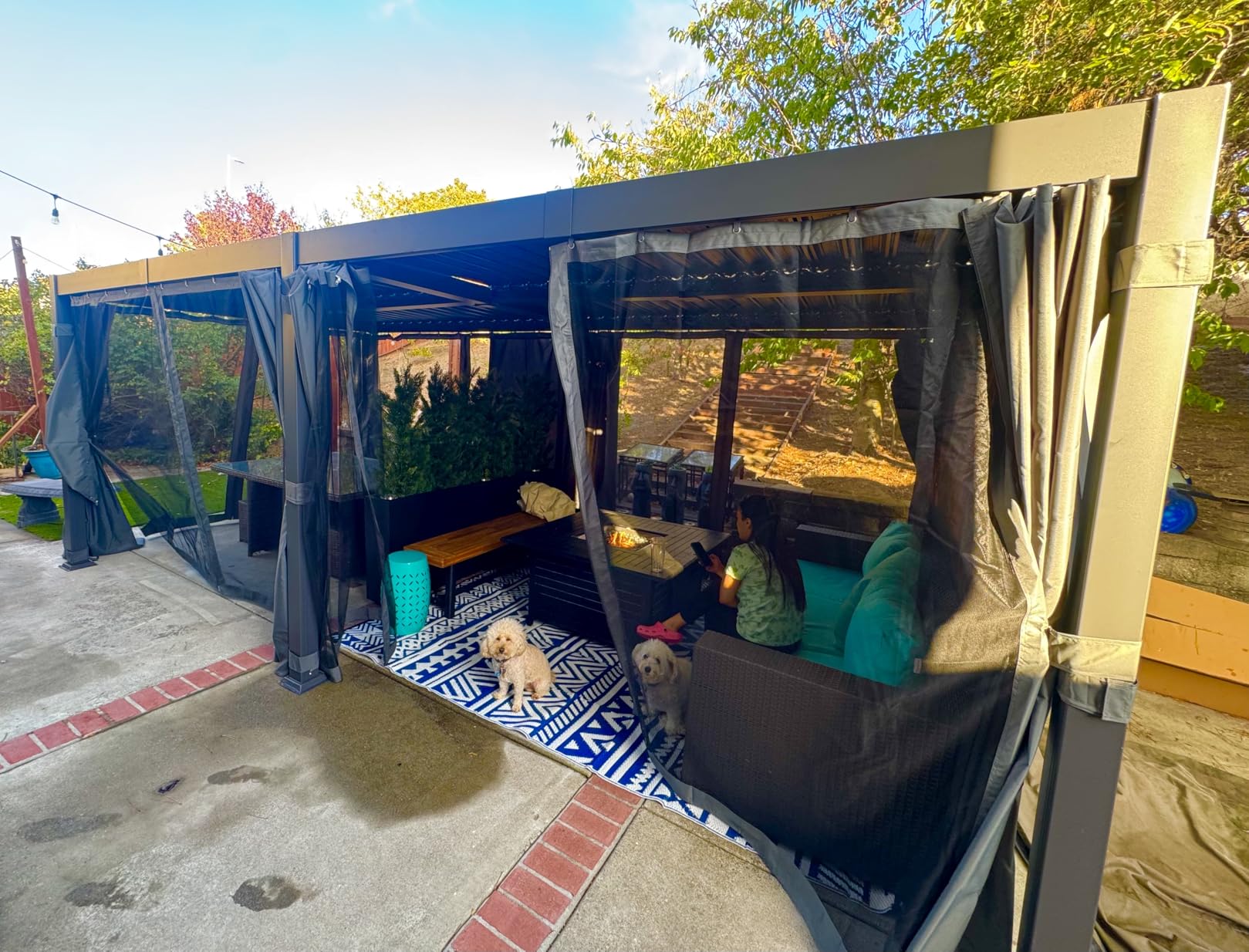
At 240 square feet the AirWire covers more patio than anything else here, which matters if you are shading an outdoor kitchen plus a seating area. The roof is louvered from 0 to 90 degrees with two independently controlled sections, driven by a crank handle and winding device rated for more than 100000 rotations, so it is a hand-crank system with no motor to fail.
The heavy-duty aluminum alloy frame has a matte dark gray powder coating that resists rust, corrosion and UV damage, and the sloped louver roof sends rain into integrated channels and down the columns. Owners rate the finish and the drainage design highly. Zippered curtains for privacy and UV protection come with detachable mesh screens that owners describe as washable and water resistant.
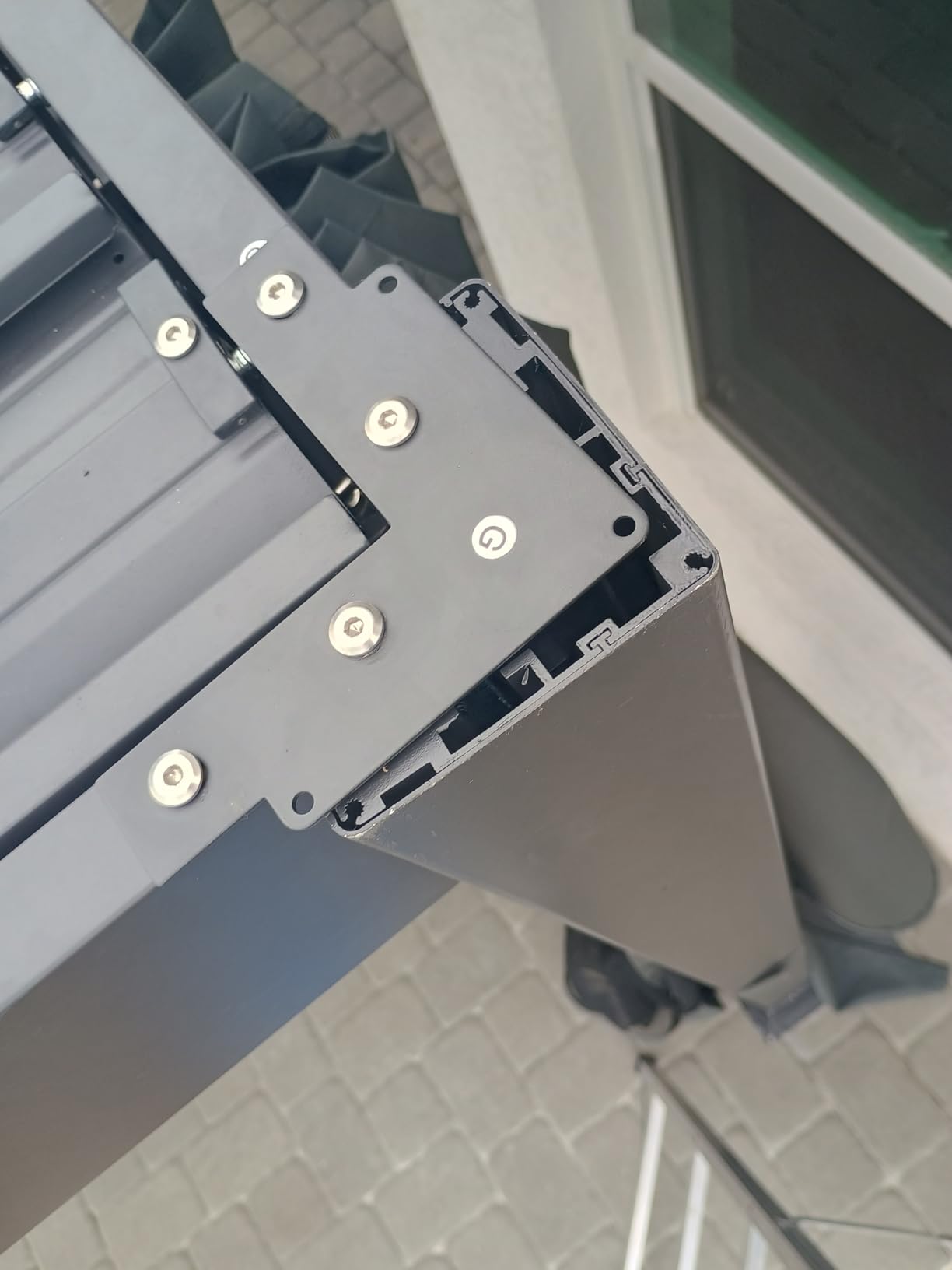
The weight is the headline problem. At 586 pounds, this needs a full crew to assemble, and at 86.8 inches tall it also has lower headroom than several smaller units here. Pre-drilled holes and clearly labelled parts with a manual and video tutorial reduce the fumble, but this is not a two-person weekend build.
Two honest caveats. The curtains carry a UPF 15 rating, which is materially less protection than a 50+ rated canopy, so the fabrics filter rather than block. And the structure is rated water resistant, not waterproof, so treat the louvers as shade and rain management rather than a shelter you can sit under in a storm.
When two roof sections earn the size
Independent sections only make sense once the roof is wide enough to split, and at 240 square feet this is the one structure here where that genuinely pays off. You can run one section closed over the kitchen and the other open over the lounge. A single-section louver of the same size would be more than most patios need.
What to check before this size works
Measure your site carefully, because 12 by 20 is a structure, not a shelter. At 86.8 inches of headroom you should check door and window clearances before the frame goes up, and confirm you have the crew and the equipment for the build. It is a strong choice for a large patio and a poor fit for a compact one.
How to Choose a Patio Pergola That Actually Shades
Every roof on this list does one of four things: it closes, it angles, it hardens into panels, or it filters through fabric. Once you know which of those you are buying, the rest of the decision gets much smaller.
The four shade system types, and which one you need
Retractable canopy is the flexible choice. It opens fully when you want sun and closes for shade or light drizzle, and it is the most forgiving in a moderate climate. The weakness is tension: fabric that sags, slides or flaps will not hold a set position, so expect to re-adjust it and expect to take it down in bad weather.
Louvered roof is the controllable choice. Louvers that run from closed to 90 degrees let you move between shade and airflow through the day, and interlocking blades make closed mode a real weather mode. The cost is weight, complexity and a larger build, plus a higher chance of a hardware clamp or a blade wearing out over time.
Hardtop panels, whether galvanized steel or multi-wall polycarbonate, are the permanent choice. Nothing moves, so nothing can flap or fail mechanically, and a sloped roof with a real gutter system is the best rain handling on this list. The trade is that you have given up all light control for good.
Shade sail and mesh fabrics are the lightest choice. A woven sail filters light and promotes airflow at almost no structural weight, which is why it pairs well with a heavy steel frame. It will not block much heat, and coverage is often incomplete at the top.
Aluminum, steel, or wood: what actually lasts
Aluminum wins on weight and maintenance. It does not rot, does not need staining and will not rust, which is why it shows up on both the lightest portable unit here and the largest. Its weakness is handling: heavy aluminum sections flex more than steel at the same gauge, and it dents rather than bends back.
Steel wins on stiffness and wind resistance. The 100 mph rated kit in this roundup is galvanized steel at 673.5 pounds, and the whole point of that weight is that the frame does not move when the wind hits it. Galvanization is the difference between a steel frame that lasts and one that streaks orange within two seasons, so check for the coating on the spec sheet before you buy.
Wood wins on appearance and loses on maintenance. Homeowner threads are consistent on this: wood pergolas grey, warp and rot, and need re-staining every one to two summers. If you want wood, budget for the maintenance schedule rather than treating it as a one-time project. Vinyl sits between the two and will not rot, but it can fade and crack in sustained sun.
How much shade area your patio needs
Start with furniture, not the patio. A dining table with six chairs wants roughly 80 to 100 square feet of shade, an outdoor kitchen plus counter seating wants 120 to 160, and a lounge area with a sofa wants 80 or less. Then add two to three feet of clearance on every side so people can walk behind seated guests.
This is where most buyers go wrong, and the number that matters is the shade area rather than the outer footprint. A 10 by 10 frame with 10 by 10 inner clearance seats a bistro set comfortably, but the same frame on a nominal 12 by 12 listing with narrower post spacing will feel cramped. Check the inner clearance figure before you measure your furniture.
Then think about the sun angle. An overhead roof handles high midday sun well and does almost nothing about low west-facing afternoon light. That is the case for side curtains, mesh panels or a screen on one wall, and several units here include dual side tracks for exactly that reason.
Attached or freestanding: the decision that limits everything else
Attached lean-tos are wall-mounted, which means they need a solid exterior surface, a proper ledger or flashing detail, and in most jurisdictions a permit because the structure transfers load into the house. They drain well and they cost less to support because the house carries half the structure, but they are the hardest to reposition.
Freestanding units need four good footings and correct anchoring hardware, which is why anchoring shows up as a complaint in so many reviews here. Kits that include ground studs or expansion screws are the easiest to do properly, and any product with no published wind rating should be treated as a structure you take down before a storm rather than one you brace through one.
Existing structures complicate both. Forum threads repeatedly surface the same problem: a metal awning already on the house makes attaching a pergola awkward, and roof skylights on an existing patio cover complicate re-roofing. Walk the site and look at what is already there before you order anything.
Where to buy and what delivery looks like
Retail and direct-to-consumer kits give you the widest range and the most published specs, which is what this roundup is built from. Dealer and contractor channels sell built-to-order louvered systems with published wind ratings and installed pricing, and the premium buys you permits handled, a project lead and a storm rating. Manufacturer direct is the middle path.
Check three things before you pay: whether anchoring hardware is included, whether replacement parts exist for the canopy and any motor or crank assembly, and what the stated warranty length actually covers. A canopy with no replacement path is a five-year problem regardless of how good the frame is. If you need something more enclosed, our hardtop gazebo picks go deeper on fully roofed structures.
Wind Ratings and Storm Protocol: What the Number on the Label Means
Only three structures in this roundup publish a wind figure, and they are very different numbers. The Backyard Discovery steel kit is documented to 100 mph when anchored per its manual, the Domi lean-to is rated 60 mph with a 22 pounds per square foot snow load, and the Aoxun 10 by 14 is stated at 31 to 38 mph. The rest publish nothing, which is a hard stop for a coastal yard.
A wind rating is conditional, not absolute. Every number above assumes the anchoring method in the manual, on the surface the manual specifies. An unanchored frame of any size acts as a sail, and that is the single most common safety fear in homeowner threads. Buy ground anchors suited to your surface, not the ones that happen to be in the box.
The storm protocol is simple. Before a forecast, retract or close the canopy and clear anything loose from the seating area. If a retractable canopy is your shade, take it down rather than fighting a latch in rising wind, which is the advice reflected in the Outsunny listing. Never treat any of these as a shelter to be inside during a severe storm, regardless of the rating.
Snow is the other half of the question. The hardtops carry snow loads, with the Aoxun 10 by 14 rated for about 6 inches and the Domi for 22 pounds per square foot. Fabric canopies and shade sails do not, so in a four-season climate you are choosing a structure you can leave standing or one you take down twice a year.
Frequently Asked Questions
Are pergolas effective for shade?
A pergola is effective for shade only when its roof is closed, angled or solid. Open slats, spaced rafters and thin beams filter light into dapples but do not block sun or rain. Real shade comes from retractable canopies, adjustable louvers, polycarbonate panels or woven sail fabric sitting directly above the seating, plus side curtains for low-angle afternoon light.
What type of pergola lasts the longest?
Powder-coated aluminum and galvanized steel last longest because neither rots nor needs annual staining. Galvanized steel outlasts aluminum in stiffness and wind resistance, while aluminum wins on weight and corrosion resistance. Wood lasts longest only with a committed re-staining schedule every one to two summers, and untreated wood greys, warps and rots without one.
How much wind can a pergola withstand?
It depends entirely on size, material and anchoring. Among the structures in this roundup, one galvanized steel kit is documented to 100 mph when anchored per its manual, a galvanized lean-to is rated 60 mph, and a hardtop steel lean-to is stated at 31 to 38 mph. Any rating assumes the specified anchors are used on the specified surface, and an unanchored frame of any size acts as a sail.
Should I keep my pergola open or closed during high wind?
Close it and leave it closed. Retracting a canopy or lowering louvered blades into a sealed position removes the surface area that catches wind. If the canopy will not retract cleanly, take it down rather than forcing a latch in rising wind, and clear loose items from the seating area before the storm arrives. None of these structures is a shelter to sit inside during severe weather.
What are the downsides of a louvered pergola?
The main drawbacks are weight, cost per square foot and maintenance surface area. Louvered frames are the heaviest and most expensive option, they need a larger crew and proper concrete anchoring, and every blade, clamp and drive component is a part that can wear. Slings or cranks also take practice to operate smoothly, and an open louvered roof is not a watertight shelter.
What is better, a pergola or a retractable awning?
A retractable awning is better when you want cheap shade over an existing patio with no structure to build, and it can be rolled away entirely when unused. A pergola is better when you want shade you can stand under for years, with room for lights, fans, curtains or a dining set beneath it. Awnings wind and tear more easily, while a pergola is a fixed asset that anchors permanently.
The Verdict on the Best Pergolas for Patios With Shade
If you want one answer, take the PURPLE LEAF 12 by 16. It has the widest review base in the group at 1487 ratings, a powder-coated aluminum frame and a yarn-dyed canopy that slides and slopes to shed rain, and it costs the least fuss to justify. If UV and heat are your real problem, the Aoxun polycarbonate lean-to blocks 99% of UV and needs no adjustment ever.
Match the rest by climate. Snow and hail point to the Aoxun 10 by 14 hardtop. Coastal and open-lot yards point to the Backyard Discovery steel kit with its documented 100 mph rating and 5-year warranty. Controlling light through the day points to the MIRADOR louvered pergola, and covering the most patio possible points to the AirWire at 240 square feet. Small yards and renters point to the HAPPATIO or the Kozyard, both of which two people can handle.
Whichever you choose, verify the anchors, confirm the inner clearance fits your furniture, and check that replacement parts exist for the canopy. Those three checks account for most of the complaints we read across the reviews in this roundup, several of which run into the hundreds. Once it is up, the space works year round, which is the entire point of a patio pergola in 2026. For the furniture and finishing touches, our outdoor rug picks and fire table reviews cover what goes underneath.