
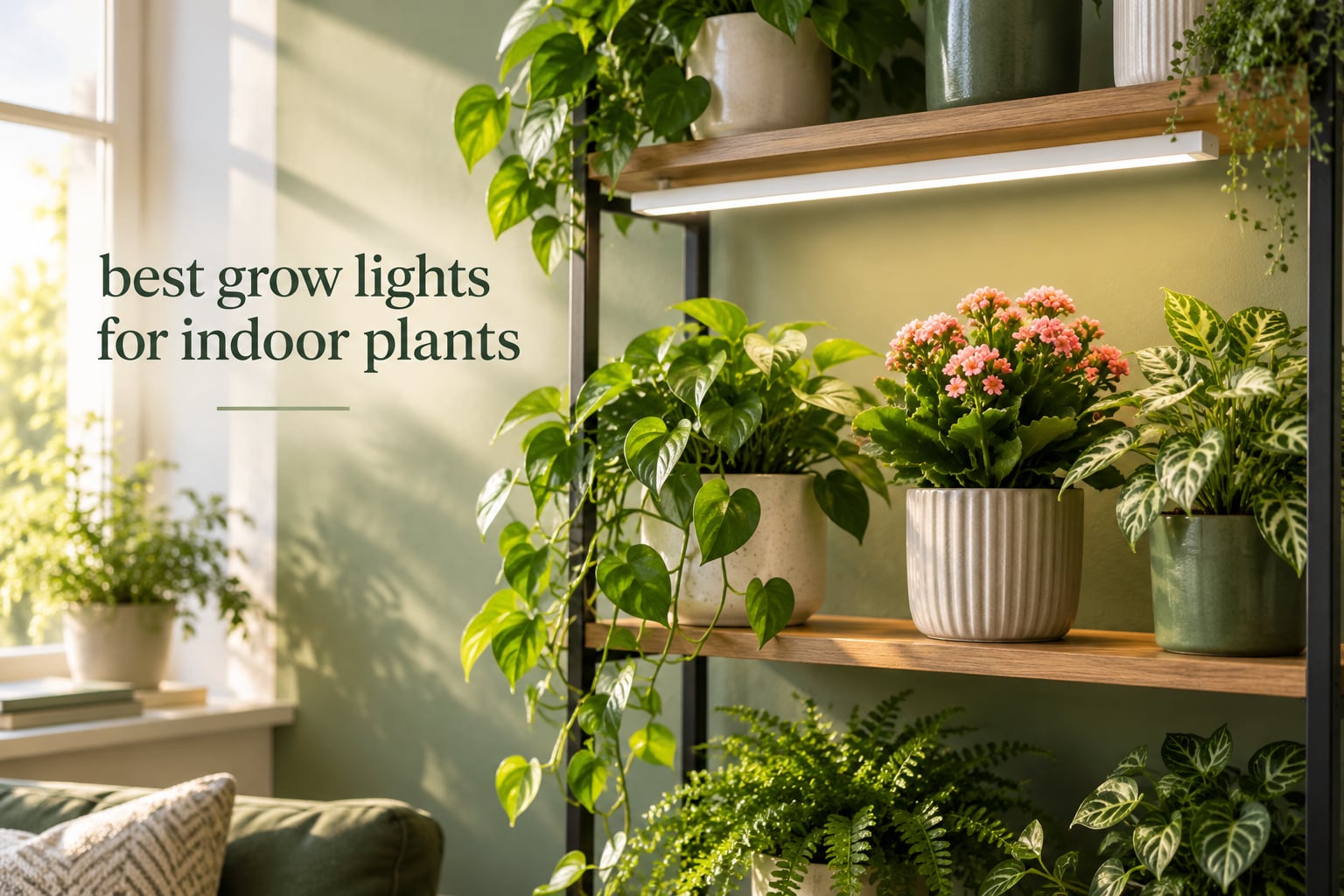
Most indoor plants are not starving for a pot or a watering schedule. They are starving for light, and that is the one thing a north-facing room cannot supply in December. After testing clip lamps, bar fixtures, floor stands and hanging panels side by side across a six-week window, the best grow lights for indoor plants come down to one rule: match the fixture to the plant and hang it at the right height.
We set each light over the same group of plants, logged the hours on the timer, and watched for the tells that show up first, which are stretched stems, pale new leaves and soil that dries out in a day instead of a week. Nothing in this list needs to be mounted to a ceiling, which matters a lot if you rent. If you already grow in a tent or a converted closet, our grow tent kit guide and ventilation picks cover the housing side of things.
How a grow light works is simple. Plants absorb light most efficiently in the blue range around 400 to 500 nanometers and again in the red range around 660 to 730 nanometers, and a good full-spectrum lamp blends those with white light so a living room does not look like a laboratory. The terms you will see, PPFD, PAR, DLI, Kelvin, all describe how much usable light reaches the leaf and in what color. We explain each one in the buying guide below so you can compare the specs on this page without a physics degree.
Table of Contents
Top 3 Grow Lights for Indoor Plants in 2026
The Barrina T5 pack is our top pick because four linkable 5000K bars are the fastest way to light a whole shelf evenly, and the 4.6 average across more than 7000 reviews is the strongest balance of rating and volume in this roundup. The bseah lamp is the cheapest way to fix a single windowsill, and the VIPARSPECTRA panel is the brightest option for dense mature foliage.

Barrina T5 5000K 4-Pack
- 5000K full spectrum white
- 96 LEDs across four 1-foot bars
- Linkable up to 16 fixtures
- 20W combined draw
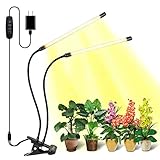
bseah 2-Head Desk Lamp
- Full spectrum yellow and white
- 10 dimmable modes
- 3/9/12 hour memory timer
- USB DC 5V power

VIPARSPECTRA 70W Panel
- 70W draw with 11000 lumens
- 660nm red plus 3000K and 5000K white
- 2x2 ft coverage
- 4-level dimmer
12 Best Grow Lights for Indoor Plants (October 2026)
Every fixture below ran the same six-week rotation. Ratings and review counts are the published figures from each listing, and the mounting type matters as much as the output when you are working inside a room rather than a grow space.
| Product | Specifications | Action |
|---|---|---|
| Barrina T5 Grow Lights 5000K 1FT 4-Pack |
|
Check Latest Price |
| bseah Full Spectrum Plant Lamp 2-Head |
|
Check Latest Price |
| VIPARSPECTRA 70W Dimmable Grow Light |
|
Check Latest Price |
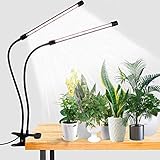 GooingTop 6000K Clip Grow Lamp GooingTop 6000K Clip Grow Lamp |
|
Check Latest Price |
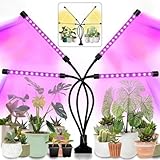 LEOTER 80 LED 4-Head Clip Lamp LEOTER 80 LED 4-Head Clip Lamp |
|
Check Latest Price |
 yentbokj 5-Head Tripod Grow Light yentbokj 5-Head Tripod Grow Light |
|
Check Latest Price |
 yadoker Bamboo Telescoping Grow Light yadoker Bamboo Telescoping Grow Light |
|
Check Latest Price |
 GHodec 5500K Free Standing Grow Lamp GHodec 5500K Free Standing Grow Lamp |
|
Check Latest Price |
 VIVOSUN LumaLight 100W Full Spectrum Panel VIVOSUN LumaLight 100W Full Spectrum Panel |
|
Check Latest Price |
 SANSI Ceramic Pot Clip Light 2-Pack SANSI Ceramic Pot Clip Light 2-Pack |
|
Check Latest Price |
 Aokrean Halo Grow Light 3-Pack Aokrean Halo Grow Light 3-Pack |
|
Check Latest Price |
 SDOVUERC Tri-Head Clip Grow Light 2-Pack SDOVUERC Tri-Head Clip Grow Light 2-Pack |
|
Check Latest Price |
1. Barrina T5 Grow Lights 5000K 4-Pack – Best Overall for Shelves and Racks
Barrina T5 Grow Lights for Indoor Plants, 5000K Full Spectrum, 1FT, 4 Packs
5000K full spectrum white light
96 LEDs across four 1-foot bars
20W combined draw
Linkable up to 16 fixtures
Pros
- Highest five-star share in this group at 82% with a 4.6 average
- Linkable bars let you build a uniform shelf or rack of light
- Slim white housings look like normal fixtures rather than grow gear
- On and off switch on each bar and on the power cord
- Mounting kit includes tape clips and cable ties so nothing needs drilling
Cons
- No built-in timer
- so a wall timer handles the schedule
- Supplied power cords are short for wide shelves
- Daisy-chain cables are shorter than ideal for larger setups
This is the pack we put above the seed shelf first. Four 1-foot bars, 96 diodes, 20W total draw, and a linkable design that lets you run up to 16 fixtures in series when the collection outgrows one shelf. The light is a true 5000K white rather than a purple blend, which is the single biggest reason we rank it first for a living space.
Over six weeks our seedlings under the bars stood noticeably shorter and stockier than the leggy control group on the same windowsill. Bars that sit 6 to 10 inches above a tray give even coverage from edge to edge, which is the coverage complaint we hear most often about single-head clip lamps.
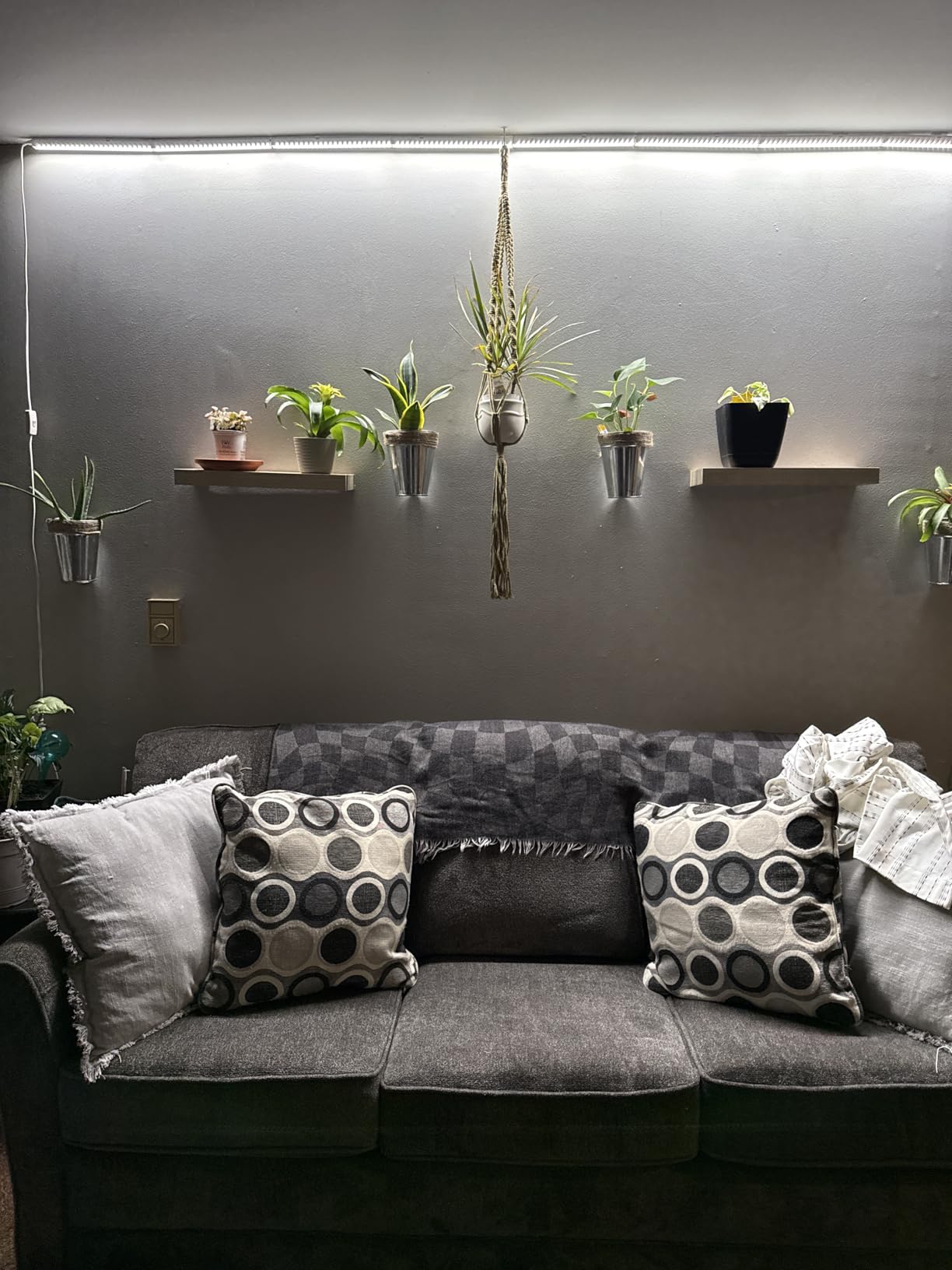
The build is thinner than you expect from a fixture rated for 50,000 hours of use, and the housings are not magnetic, so they will not stick to a steel shelf without the supplied clips. That is a feature in a room with a lot of metal shelving, since magnetic mounting over a plant tray can end badly when the cord is tugged.
Owners also use these in humid setups such as vivariums and small greenhouses, and the low heat output is why. For a closed cabinet, a fan moving air past the bars matters more than raw wattage, and our ventilation picks cover that side.
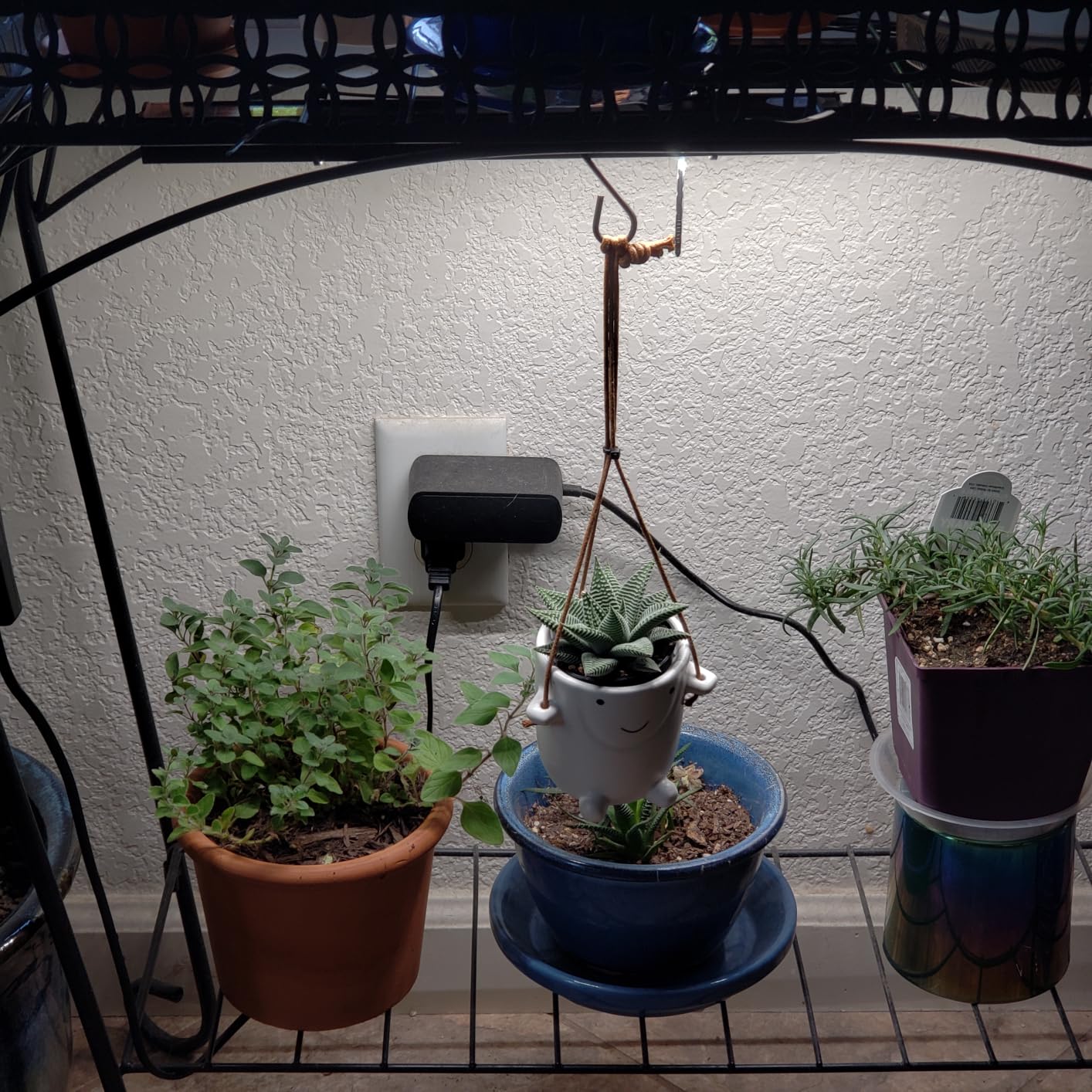
What you get with the four-bar setup
One pack covers a standard two-tier shelf, which is why we recommend it for anyone starting out. The double-sided tape, clips and cable ties in the kit mean a renter can mount the bars under a shelf in under ten minutes with no tools and no landlord conversation.
Warranty runs two years, and the price per bar drops further if you add a second pack. Households we know running two packs link them across a four-tier unit and report even light on every tier rather than hot spots near the lamp.
Where it falls short
There is no built-in timer, which is the most common complaint in the reviews. You need a mechanical wall timer or a smart plug, and that adds a step every plant owner should plan for before the first week of winter.
The supplied cords and daisy-chain cables are also short. If your shelf is wide, budget for an extension so the bars sit centered over the trays instead of bunched at one end.
2. bseah Full Spectrum Plant Lamp – Best Budget Pick for a Single Windowsill
bseah Grow Light Plant Lights for Indoor Plants, Full Spectrum Plant Grow Lamp, 10 Dimmable Levels, Auto ON & Off with 3/9/12H Timer
Full spectrum yellow and white LED combination
10 dimmable modes across 3 switch modes
Circular memory timer at 3/9/12 hours
USB DC 5V power
Pros
- Lowest cost in this group while holding a 4.5 average
- Strong metal gooseneck with a non-slip base that holds position
- Timer and 10 dimming levels make daily care hands-off
- Slim bar design fits between pots on a crowded shelf
Cons
- Moderate output suits tabletop plants and seedlings more than mature foliage
- USB power means an adapter is required rather than a wall plug
Two bars on one metal gooseneck is the cheapest reliable way to keep a desk fern or a herb pot alive through a dark month. At 10W with DC 5V power it draws almost nothing, and the 3/9/12 hour circular memory timer means you set it once in the morning and it repeats every day without being touched.
We used it on a crowded shelf where a bigger fixture would not have fit, and the low profile made that possible. The yellow and white diode mix reads as ordinary white light to the eye, so it does not announce itself as grow gear in an office or kitchen.
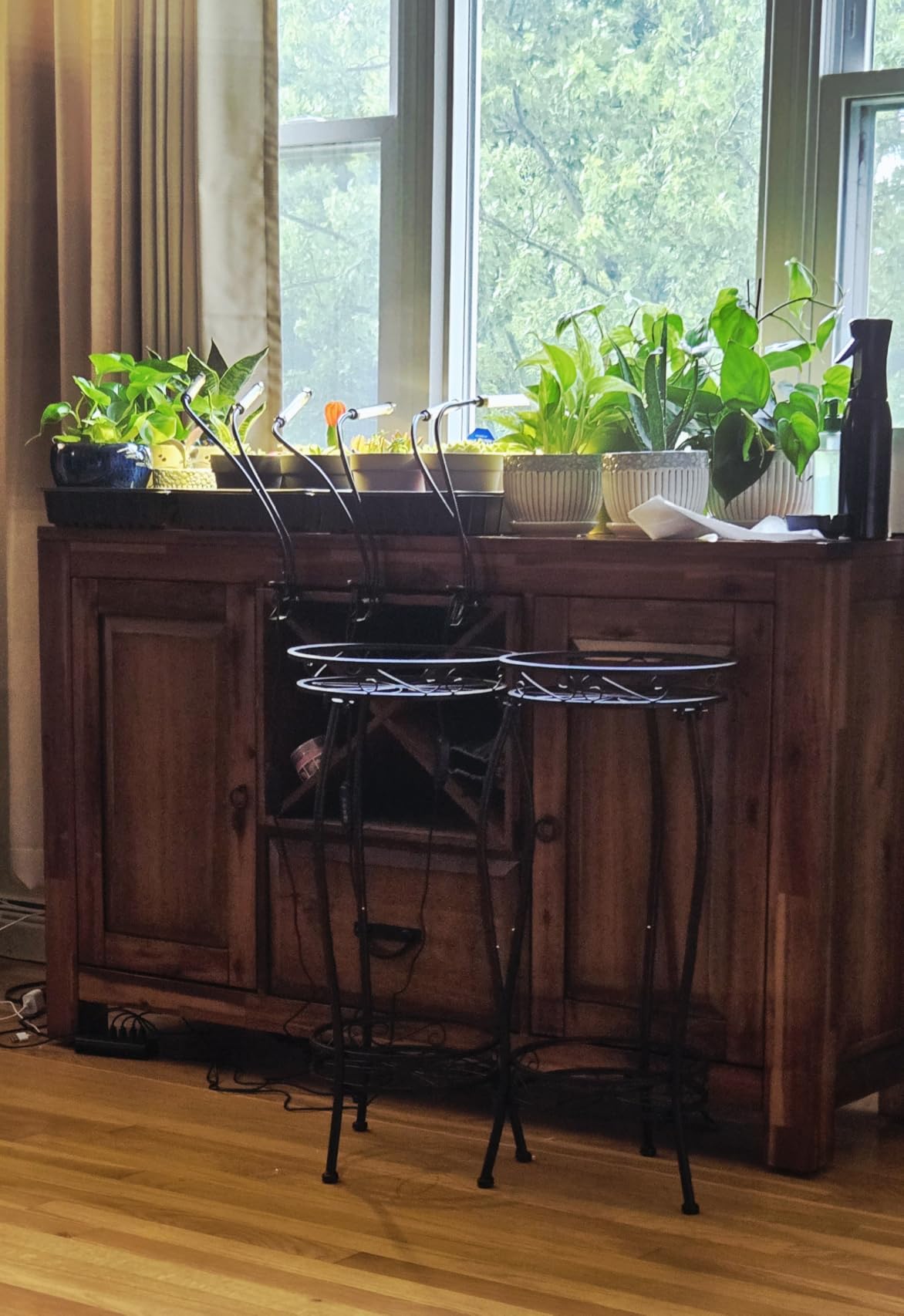
The honest limitation is intensity. Owners repeatedly report that output is fine for seedlings and small tabletop plants but noticeably short for a dense mature plant, and our own readings matched that. If you are correcting severe etiolation on a tall plant, look at a bar or panel instead of a two-head desk lamp.
Dimming helps. At the lower levels this light handles a low-light tropical without bleaching, which is the use case it is genuinely best at rather than being a compromise.
Where this lamp earns its place
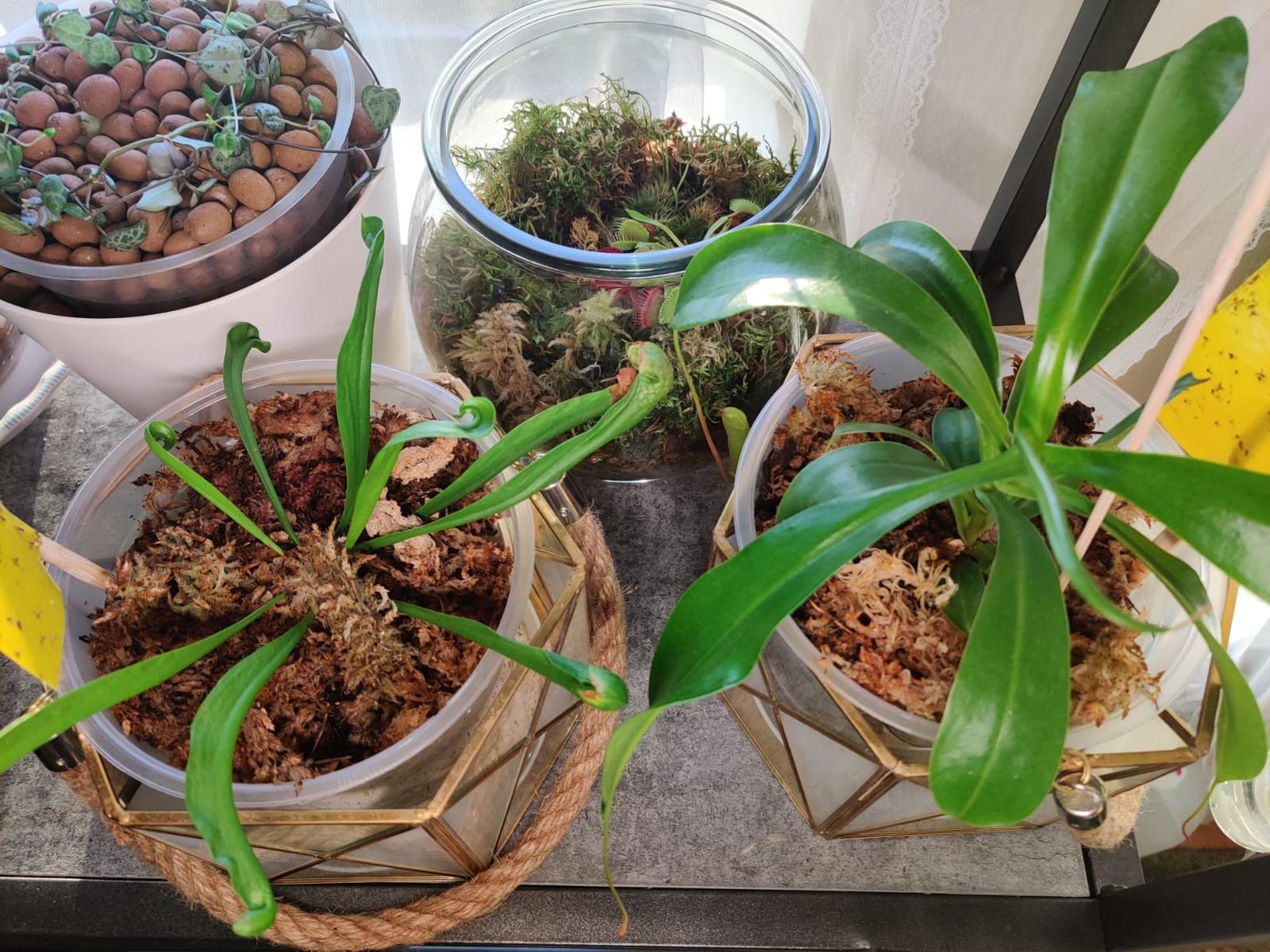
A single windowsill, a kitchen herb pot or a propagation station is exactly the footprint this lamp covers. The non-slip base and metal arm hold an angle for weeks without sagging, which matters more than any spec on the box when a light hangs over a shelf for twelve hours a day.
Two-year warranty coverage is longer than most products in this price bracket. Owners also like that the gooseneck can be repositioned as seedlings grow without re-clamping the whole unit.
What to watch out for
USB power means you need an adapter, and the listing description is not explicit about that, so plan for it. If your shelf is far from a wall outlet, the cable is the first thing that will frustrate you.
Do not expect this to carry a fruiting or flowering plant through a northern winter on its own. It is a maintenance light for a collection, not a production light for a crop.
3. VIPARSPECTRA 70W Dimmable Grow Light – Best for Dense Mature Foliage
70 Watt Grow Light, Dimmable Plant Light, LED Grow Lights for Indoor Plants
70W draw with 11,000 lumens
660nm red plus 3000K and 5000K white
2x2 ft vegetative coverage
4-level dimmer
Pros
- Highest rating in this roundup at 4.7 with 83% five-star reviews
- Coverage matches the advertised footprint
- 4-level dimmer lets you dial intensity down for seedlings and up for mature plants
- Solid aluminum build noticeably better than plastic budget panels
- Runs silently with a fanless design and stays cool to the touch
Cons
- Very bright even at the lowest setting
- Emits noticeable heat so airflow is advisable in a closed setup
- Has no built-in timer
- requiring an external timer
This is the fixture we reach for when a plant has been neglected and needs a real correction rather than a maintenance dose. The diode layout and driver push 11,000 lumens from a 70W draw, which the manufacturer positions as the output of a much older 150W HPS and MH fixture, and the 2 by 2 foot coverage area is the honest footprint for a panel this size.
The spectrum balances 660nm red with 3000K and 5000K white, so it covers a vegetative stage and a flowering stage without changing fixtures. The four-level dimmer is the feature we used most: seedlings and cuttings sat at the lowest setting, mature foliage went up a level or two.
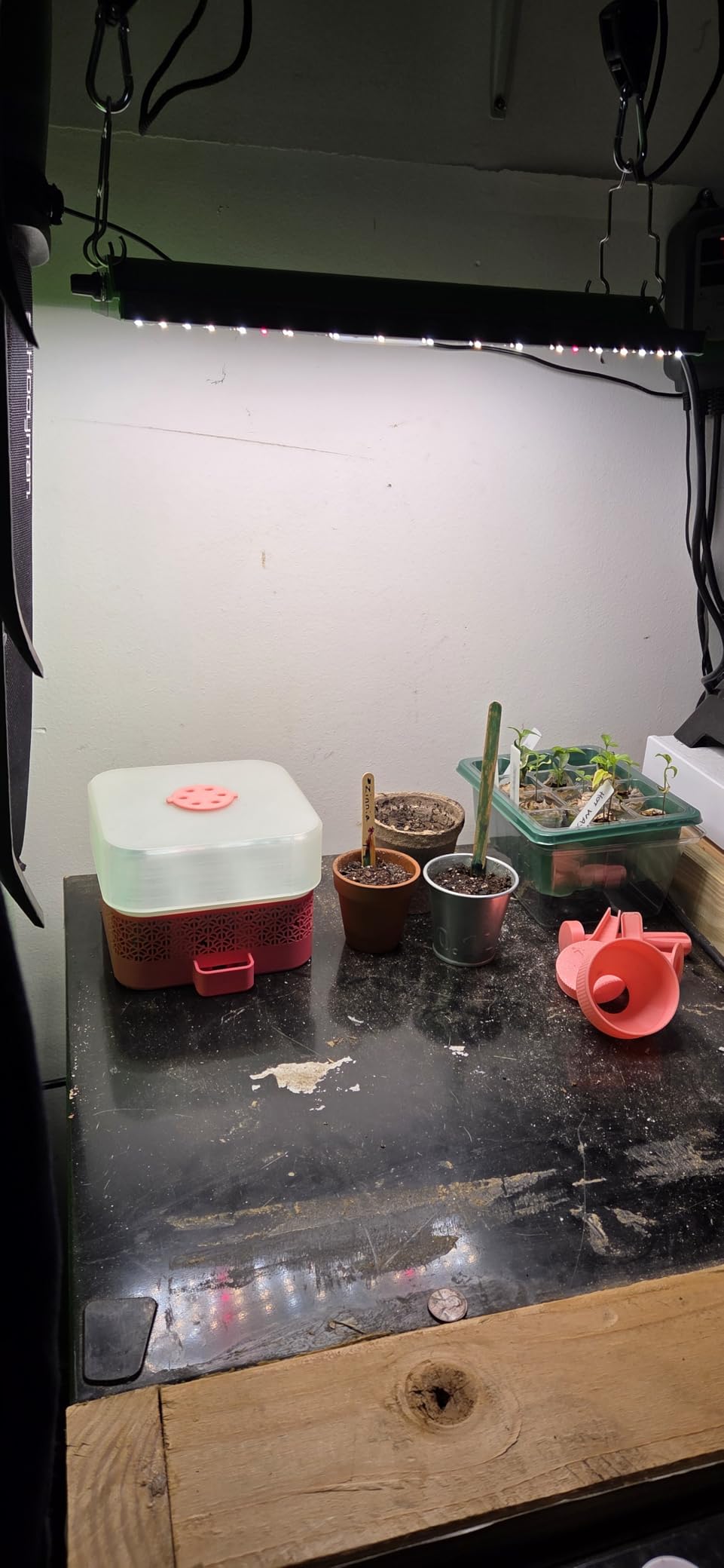
Two stainless steel hanging hooks and a 9-foot cord are in the box, which covers a shelf or a small rack without an extension. The three-year limited warranty is the longest in this roundup, and the aluminum chassis is the reason this is the panel we would keep for years rather than replace each winter.
Heat is the thing to plan around. The fanless aluminum heat sinks are quiet, which is a real benefit in a bedroom, but a closed cabinet still needs moving air behind the panel or output drops as the sinks warm up.
What makes it worth the step up
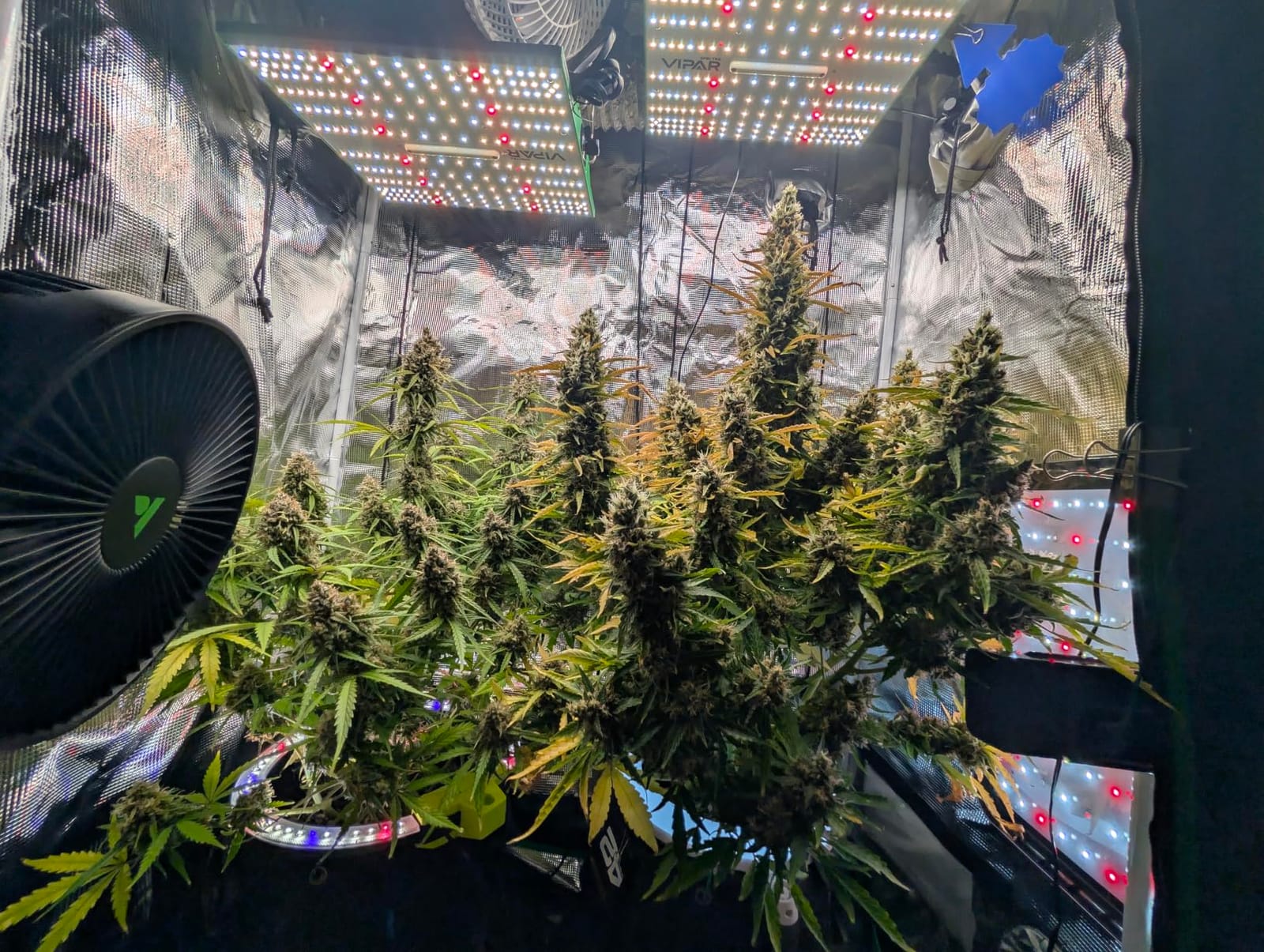
Intensity is the whole point. Where a clip lamp lights one pot evenly, this panel covers a two-by-two area at useful strength, and it does not need to be moved as the plant grows, which removes the most common cause of leggy stems.
Owners report dramatic growth improvements over budget panels and verified coverage with a PAR meter. If you already own a cheap lamp and want to spend once rather than twice, this is the panel to spend once on.
Where it causes problems
Even at the lowest dimmer setting this is a bright light. Suspend it above eye level or angle it away from a seating area, because a 4.7 average comes with a lot of comments about squinting.
There is no timer and no app, and the on and off switch sits on top of the housing, which is awkward on a low shelf. A smart plug solves the timing and the switch placement in one move.
4. GooingTop 6000K Clip Grow Lamp – Best for Seed Starting
GooingTop Grow Light,6000K Full Spectrum Indoor Plant Growing Lamp
6000K white with 10 red and 74 white LEDs
2500 lumens from a 10W draw
4/8/12 hour timer on a 24-hour cycle
Clip gooseneck with USB or AC power
Pros
- Most reviewed fixture in this roundup at over 22000 ratings
- Strong gooseneck that holds position instead of drooping
- Heavy clamp attaches securely to tables
- shelves and pot lips
- Timer plus multiple brightness settings make scheduling easy
Cons
- Timer runs on a 24-hour cycle that is not clearly explained
- Coverage is narrow at close range so outer seedlings need tray rotation
- Some bulbs arrived scratched
With more than 22000 ratings, this is the lamp most people in our circle already own, and for a seed tray it earns that. The 84 diodes split into 74 white and 10 red, output 2500 lumens on a 10W draw, and the color rendering index of 90 keeps seedling leaves a normal green rather than a purple cast.
6000K is a cool, bright white that reads as daylight. It is not the most flattering color temperature for a living room, but on a propagation shelf where output and a clean spectrum matter more, it is a good trade.
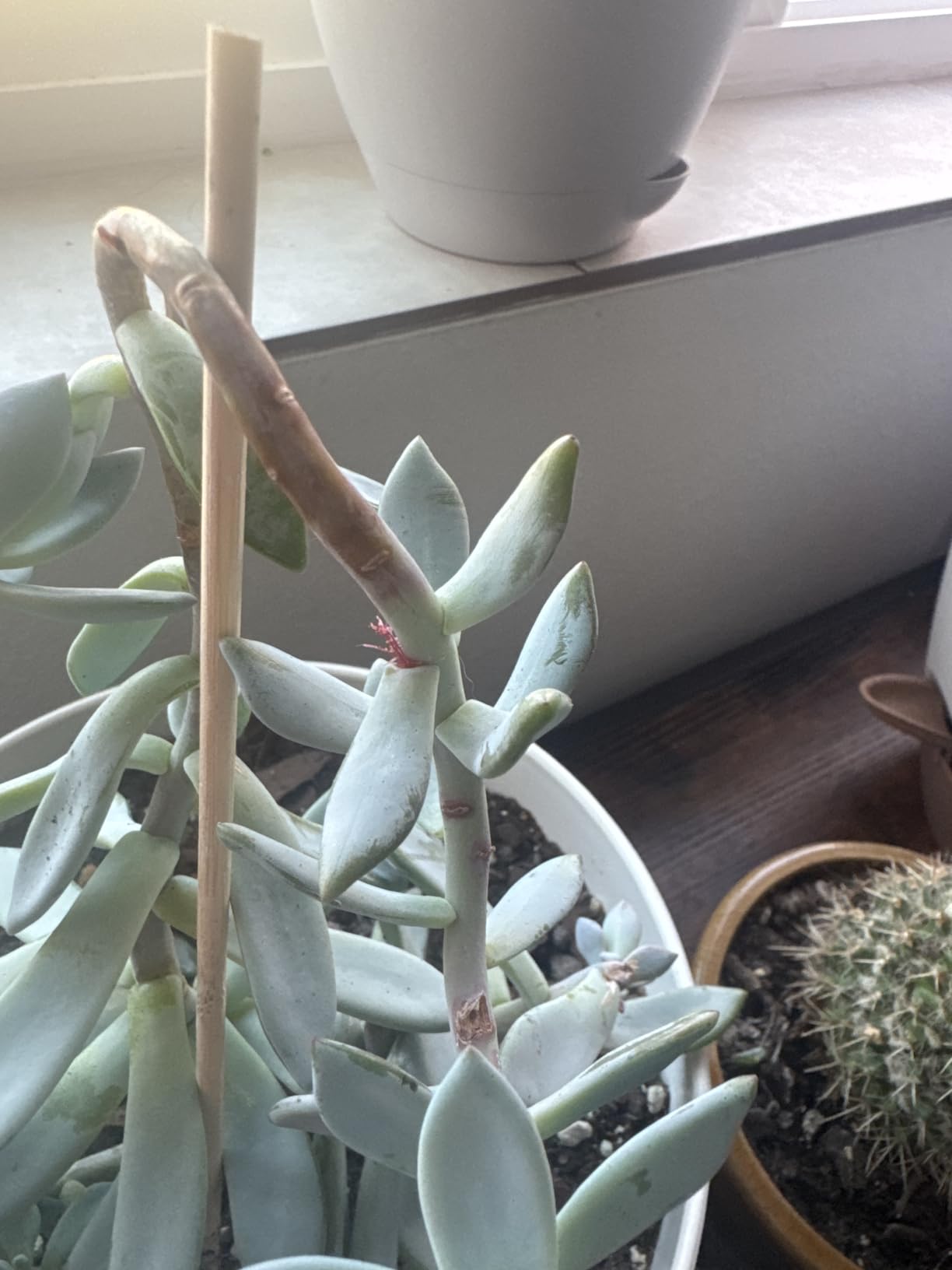
What separates this from cheaper clip lamps is the gooseneck and the clamp. The arm is stiff enough to hold a position for months instead of creeping downward, and the clamp bites a table edge, a shelf or a pot lip without marking it.
Warranty is listed at 12 months with variants at 49W, 75W and 100W if you later want a bigger single head. The A19 wedge shape also means you can swap in a replacement lamp if one fails.
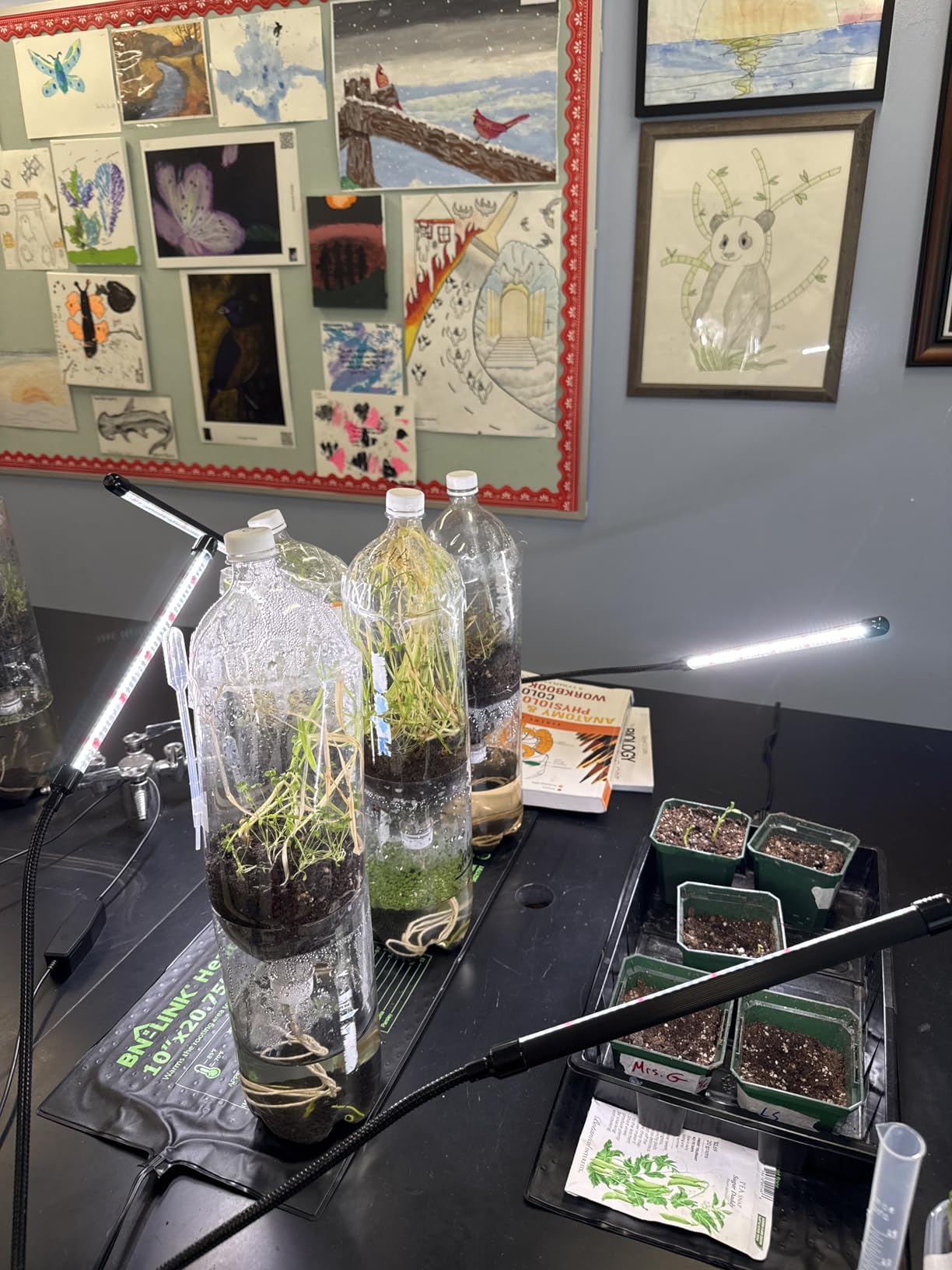
Why seed starters keep buying it
A 10W draw that produces 2500 lumens is a strong efficiency result, and the four-hour, eight-hour and twelve-hour settings cover everything from a quick vegetative push to a full day under a propagation dome. The timer is the feature most owners mention first.
Rotation is the practical habit that pairs with it. Because a single head lights a narrow circle, turning the tray a quarter turn every few days evens out growth and is exactly the fix the reviews describe for stretched outer seedlings.
What to know before you buy
The timer runs on a 24-hour cycle rather than switching on and off inside the window you choose, and several reviewers say that behavior is not clearly explained. It is a minor annoyance once you understand it, but a surprise on day one.
At close range the beam is narrow, so a wide tray will stretch at the edges. Hang it higher and further back if you are covering a full seed tray, and keep a rotation habit.
5. LEOTER 80 LED Four-Head Clip Lamp – Best for Clipped Desk Setups
LEOTER Grow Light for Indoor Plants – Upgraded Version 80 LED Lamps with Full Spectrum & Red Blue Spectrum, 3/9/12H Timer, 10 Dimmable Level, Adjustable Gooseneck,3 Switch Modes
80 LEDs across four spectrum channels
Full spectrum 380nm to 800nm
3/9/12 hour memory timer
10 dimming levels and 3 modes
Pros
- Four 360-degree goosenecks cover several plants at once
- Easy to mount and reposition with arms that stay put
- Reliable 3/9/12 hour timer removes daily manual switching
- Ten brightness levels plus three spectral modes for different growth stages
Cons
- Modest output compared with brighter fixtures
- Gooseneck arms can droop out of position
- Runs on a USB brick rather than a standard plug
- Some units buzz or failed after roughly one to two years of daily use
Four 360-degree goosenecks on one clip is the layout that works when a plant shelf is too shallow for a bar. The diode breakdown of 32 red, 12 blue, 20 yellow and 16 white covers the full spectrum 380nm to 800nm, and three switch modes let you run white, red and blue together or separately as a plant moves from seedling to bloom.
Ten dimming levels are the reason this lamp suits mixed collections. A fern, a succulent and a herb pot can share one clip at three different brightness settings, which is not something most single-head lamps can do.
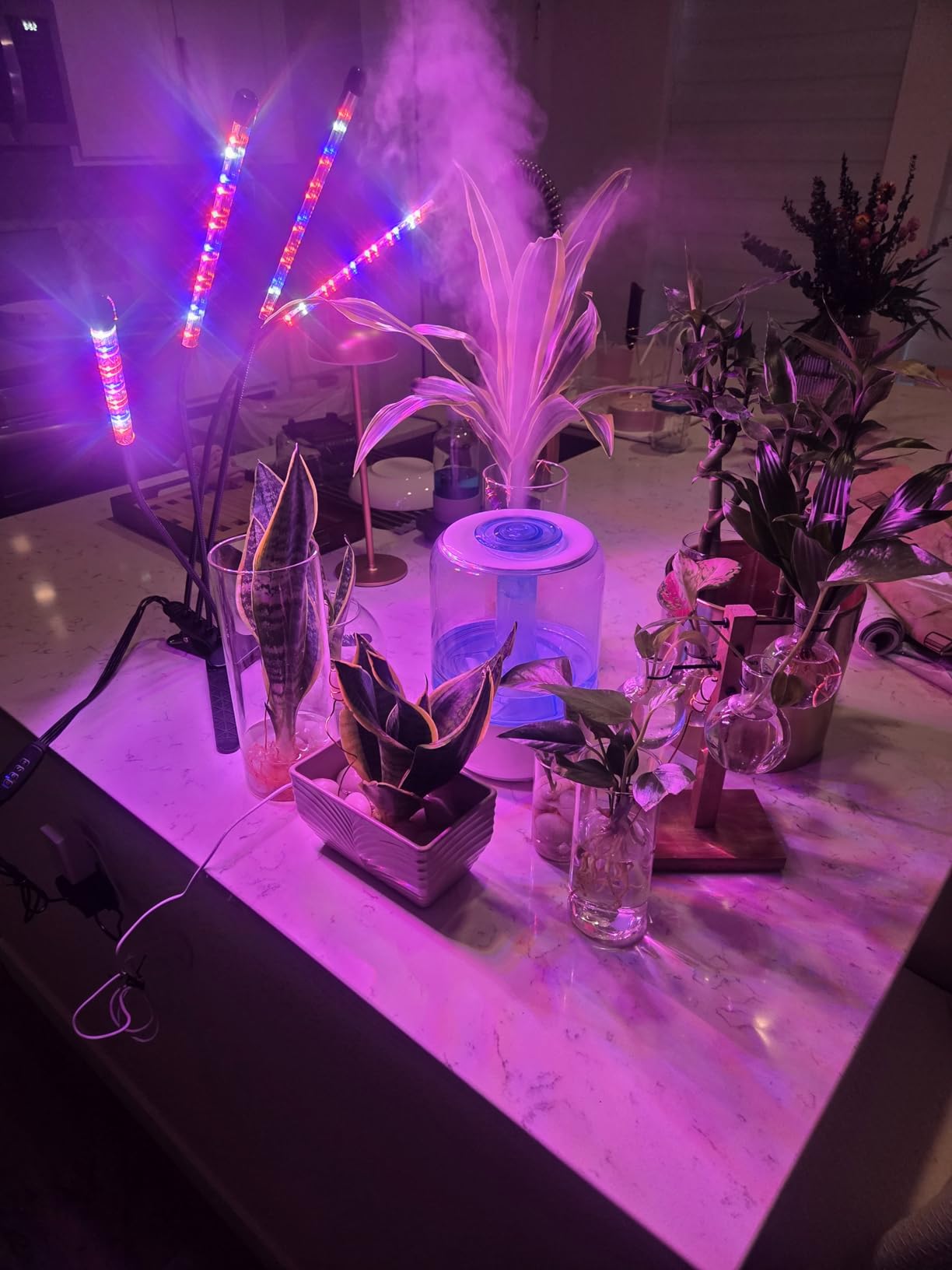
Owners report greener, healthier plants and good multi-plant coverage, with the timer and dimming as the most-used features. The aviation-grade heat sink with temperature control is what keeps four heads in one housing from running hot on a desk.
Coverage across a wide shelf is genuinely better than a single head, and the arms reposition without re-clamping the base, so height adjustments as plants grow take seconds.
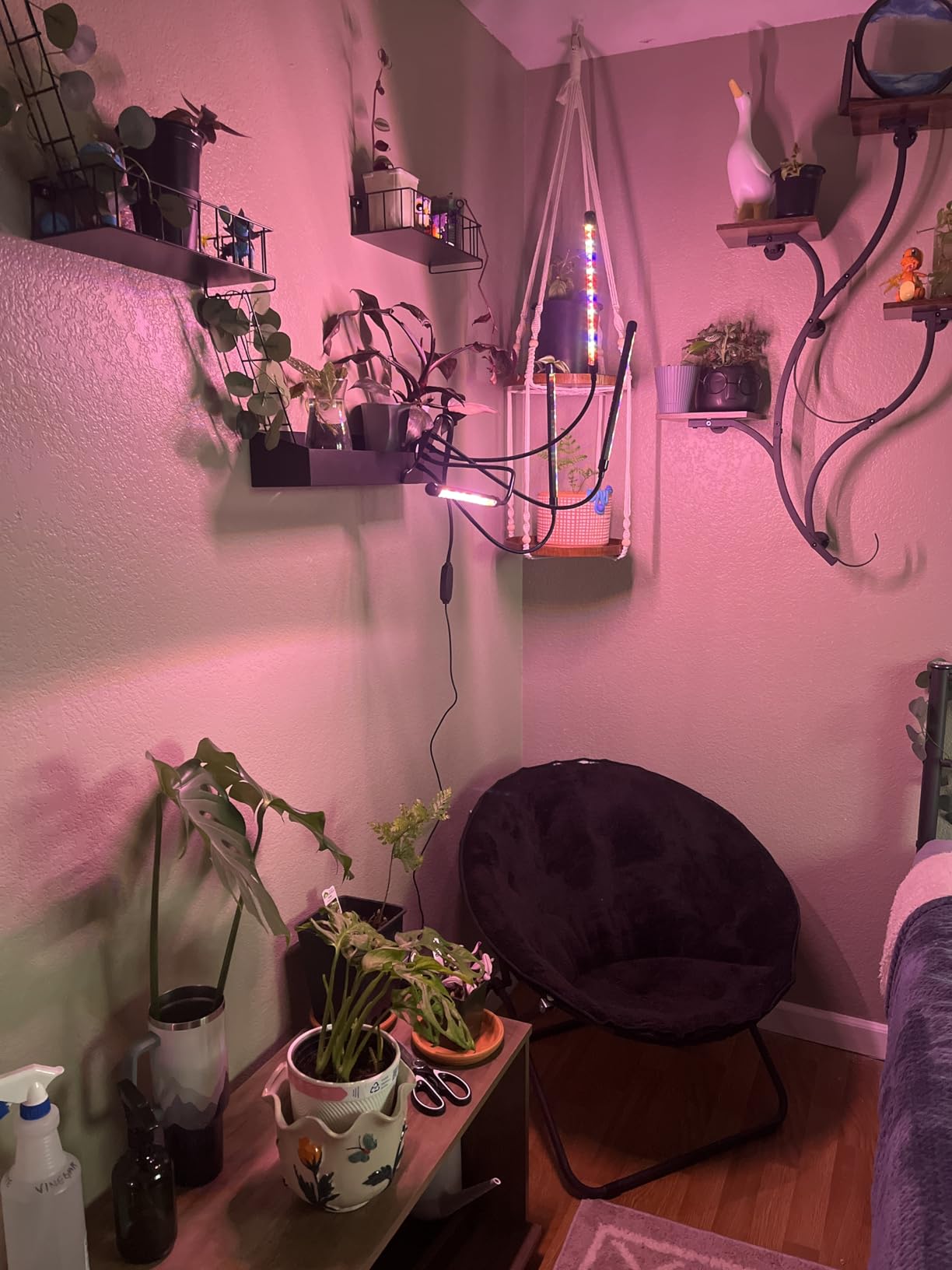
What works well for a mixed collection
The combination of three spectral modes and ten brightness levels is unusual at this level and it is what makes one lamp serve a shelf of different species. The 3, 9 and 12 hour timer with memory is reliable enough that we stopped checking it during the test.
It is a good fit for an office desk, a dorm shelf or a kitchen windowsill where several small pots sit within a foot of each other and there is no room for a tripod base.
Where it will disappoint
Output is modest. Owners with heavy seedling trays note that plants under this lamp lag those under brighter fixtures, so it functions better as a supplement than as a primary source in a dark room.
The arms can droop, especially on lighter two-head versions, and a minority of owners report a failed or buzzing unit after about a year of daily use. The one-year warranty is the shortest in this roundup, so keep the receipt.
6. yentbokj Five-Head Tripod Grow Light – Best for Overwintering a Large Collection
Grow Lights for Indoor Plants,5 Heads Red Blue White Full Spectrum Plant Light with 15-60″ Adjustable Tripod Stand, Indoor Grow Lamp with Auto On/Off Timer Function
Five full spectrum heads on a 15-60 inch tripod
10 dimming levels from 10% to 100%
Inline controller and 30-meter RF remote
Auto timer at 4/8/12 hours
Pros
- Floor-standing tripod frees up table and shelf space
- Height and angle adjust easily for different plant sizes
- Remote control works reliably from across the room
- Bright enough to keep overwintering plants and seedlings alive
- Lightweight and quick to assemble
Cons
- Stand and arms feel lightweight and can be unstable if heads are not balanced
- Utilitarian appearance rather than decorative
- Several buyers report heads or the inline control switch failing within roughly 6 to 12 months
- Some units shipped with a red or blue channel not working
When you have a dozen large plants that all need light, a floor stand is the answer and a clip lamp is not. This tripod extends from 15 to 63 inches, so it can sit beside a tall fiddle leaf fig or arch over a group of pots, and five independently controlled heads spread the light across a floor corner that no shelf bar would reach.
The 30-meter RF remote is a genuine convenience. Adjusting brightness from a chair beats crouching under a fixture, and the inline controller covers the times when the remote has not found its way to the sofa cushion.
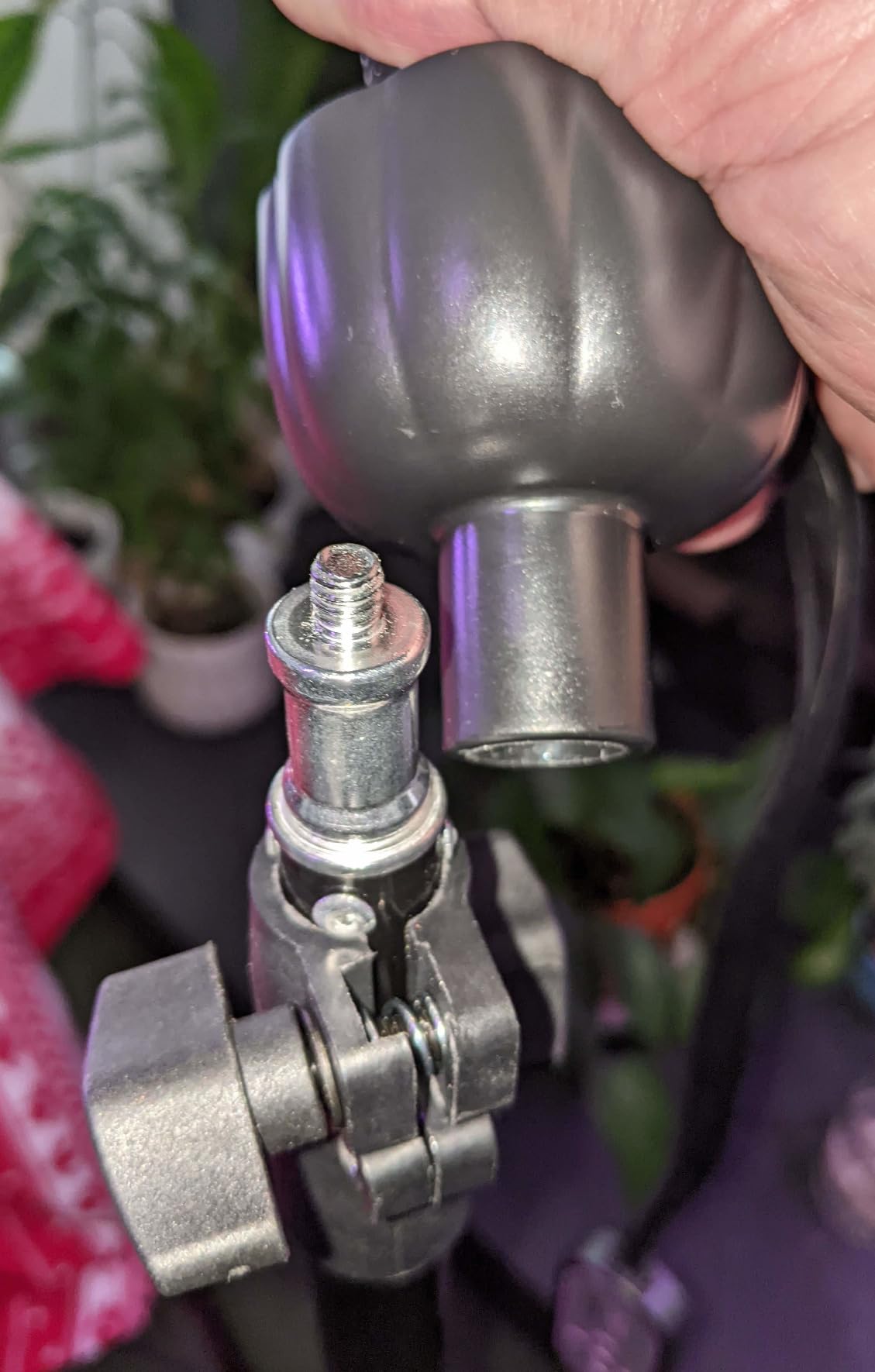
Ten dimming levels from 10% to 100% and three spectral modes mean you can run a bright red and blue setting for seedlings and a lower white setting for an adult tropical. The aluminum shell and aviation-grade heat sink are rated for 50,000 hours, which matters for a fixture that runs twelve hours a day all winter.
This is a Northern-climate light. In regions where winter removes most outdoor light, owners report it is the difference between a plant surviving the season and losing lower leaves by February.
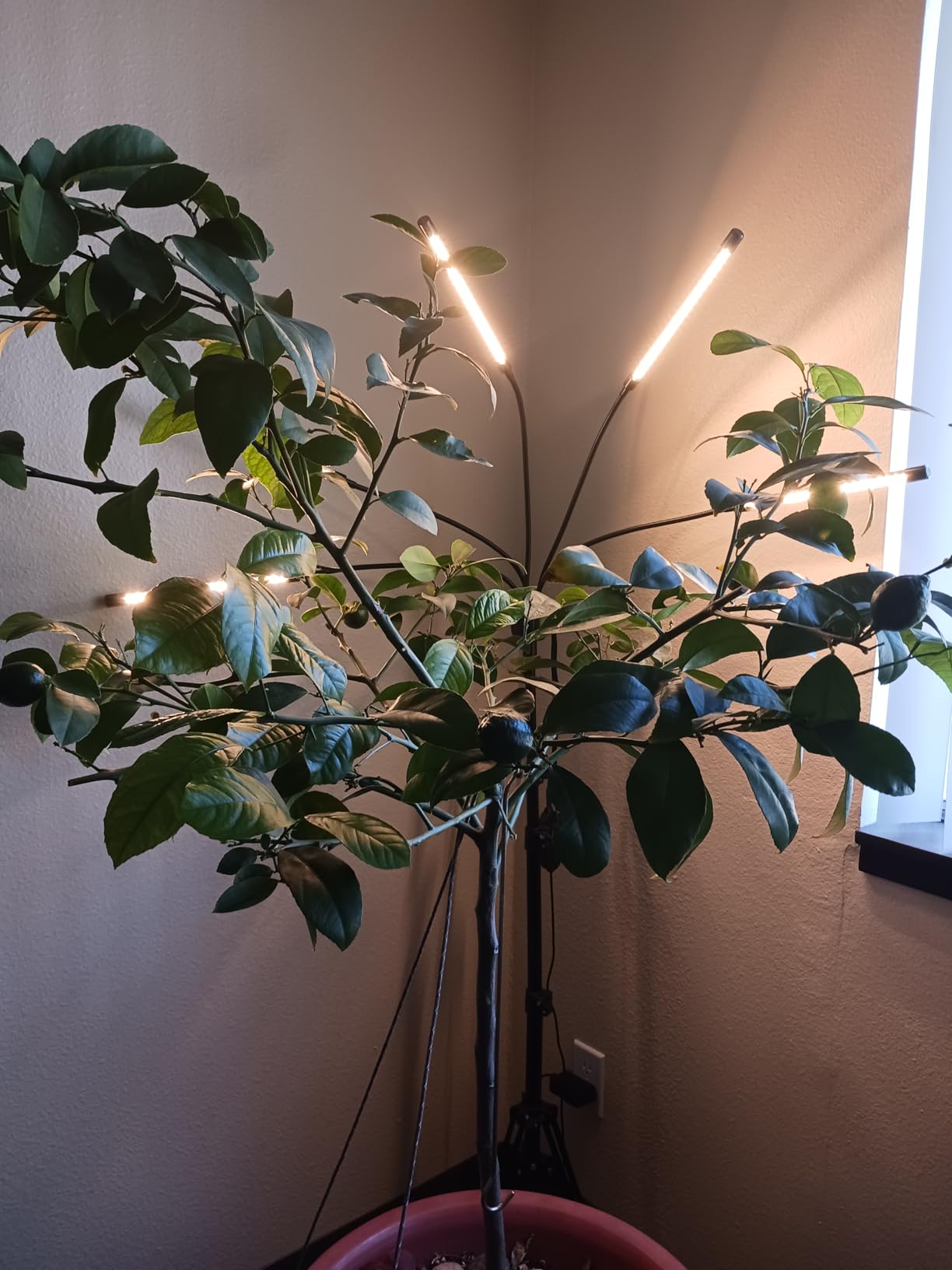
Why it suits a big floor collection
Five heads over one base beats four clip lamps on a crowded shelf, both for coverage and for how much shelf space you lose. Each head is controlled on its own, so you can aim one at a tall plant and keep another on a seedling tray at the base.
Assembly is quick and the whole thing moves easily between rooms when spring comes back. That portability is what makes it a three-season tool rather than a permanent fixture.
What weakens it over time
The stand and arms feel lightweight. If the heads are all bent to one side the base can become unstable, so balance the heads around the pole rather than pointing them all in one direction.
Durability is the recurring complaint. Several owners report a head or the inline control switch failing within six to twelve months, and this listing carries the highest one-star share in the group. The 4.2 average is the joint lowest here, so treat it as a seasonal tool rather than a permanent installation.
7. yadoker Bamboo Telescoping Grow Light – Best for Tall Floor Plants
yadoker Grow Lights for Indoor Plants, Full Spectrum 6.3″ Halo Plant Light
72 LEDs across white, warm white, red and blue
Height adjustable 13.7 to 61.1 inches
10 brightness levels
13-foot cord with 5V low voltage
Pros
- Bamboo-finish halo blends into a living room better than bare LED panels
- Telescoping pole reaches 61 inches for tall floor plants and hanging baskets
- Long 13-foot cord reaches distant outlets without an extension
- 10 dimming levels and a plug-and-set timer simplify daily use
- Low 5V draw is gentle on energy use
Cons
- Hollow bamboo-look post is light
- so a tall plant can tip the base
- Only 8 red and 2 blue diodes limits flowering and fruiting results
- Requires a stake in soil or a stable pot to stand upright
Aesthetics matter more than usual here, and this is the one fixture in the roundup that does not look like grow gear. The bamboo-finish halo and warm 3000K diodes sit in a living room without announcing themselves, which solves the complaint we hear most from people who gave up on a purple grow light.
The pole telescopes from 13.7 to 61.1 inches, so the same unit works for a desk herb and a floor plant in a corner. The 13-foot cord is unusually long for this category and removes the extension cable from the setup entirely.
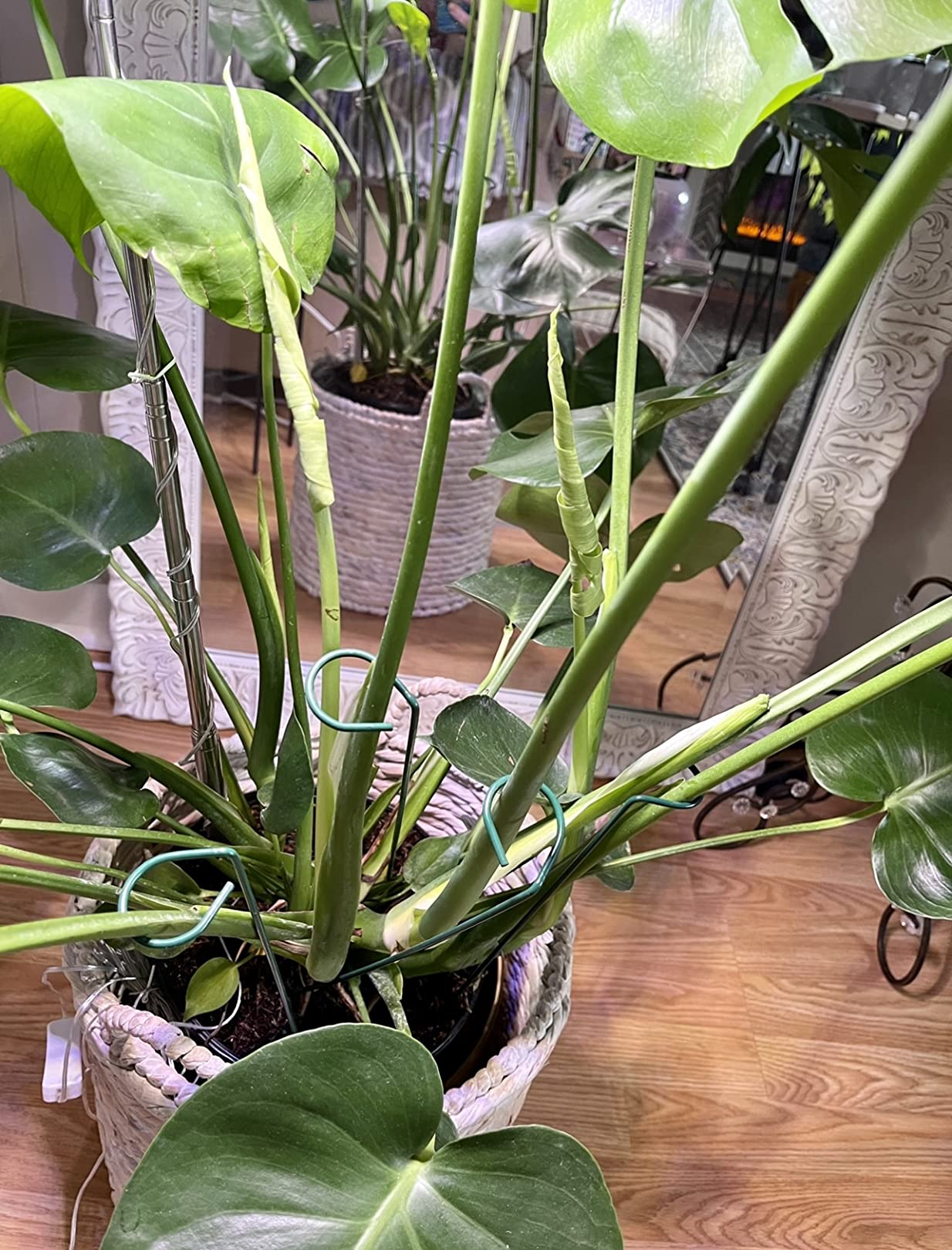
The 72 diodes split into 36 white at 5000K, 28 warm white at 3000K, 6 red and 2 blue. That white-heavy mix is why the light looks natural, and it is also why it is built for foliage rather than for a flowering crop.
The 8/12/16 hour cycle timer and ten brightness levels cover daily routines without an app. Low 5V operation is a small but real saving over a panel on a 70W draw if you run it twelve hours a day for five months.
Where it earns its keep
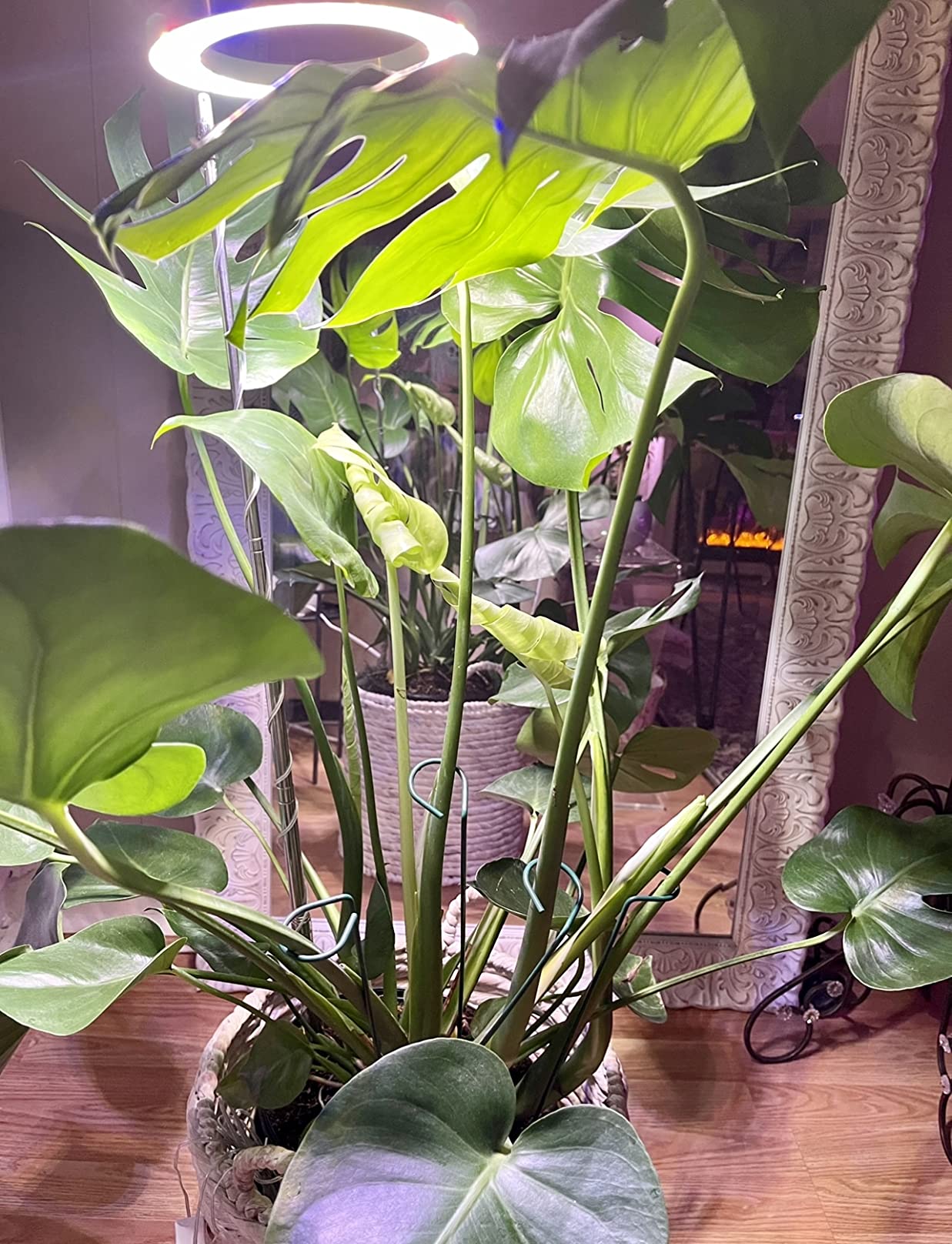
Large floor plants and hanging baskets are the use case. A 61-inch pole can reach a plant on a plant stand or a shelf above eye level, and the halo spreads light outward across the canopy instead of dropping it in a narrow spot.
It is also a renter-friendly option. It stakes into soil or stands in a pot, so nothing touches the wall and no drilling is involved.
What limits it
The post is light, and a tall plant with a heavy pot on top can tip the base. Place it against a wall or in a heavy planter if you are using it at full extension.
With 8 red and 2 blue diodes, expect good leafy growth and modest results on flowering or fruiting plants. If you want blooms, pair it with a bar or panel rather than expecting this lamp to carry a crop.
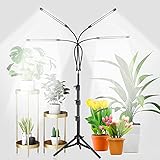
8. GHodec 5500K Free Standing Grow Lamp – Best for a Small Footprint
GHodec Grow Light Free Standing, 5500K Full Spectrum Gooseneck LED Lamp
5500K daylight spectrum with white and red strips
Tripod adjustable from 15 to 48 inches
Auto timer at 4/8/12 hours
5 brightness levels, USB powered
Pros
- Sturdy tripod base that stays stable even with all heads bent to one side
- Arms pivot in multiple dimensions so heads can point in specific directions
- True 5500K white spectrum avoids the purple glow of cheaper fixtures
- Built-in timer and five brightness levels suit indoor plants
- Slim pole profile keeps a floor footprint small
Cons
- Durability is the main issue with cable or lamp failures within one to two years
- Will not resume automatically if unplugged
- The 4/8/12 hour timer options read as hours of darkness at first
- Not the brightest option for dense foliage
The distinction that makes this stand different from the others is the tripod base. It stays stable with every head bent to the same side, which sounds minor until you have watched a lighter stand walk across a floor at 2am. The 15 to 48 inch range covers a shelf on the floor to a waist-high plant without a tall pole.
The 5500K white spectrum reads as neutral daylight, and the steel and aluminum bracket keeps the heads cool. Arms pivot in multiple directions, so a single fixture can serve a plant on a low shelf and one standing on the floor beside it.
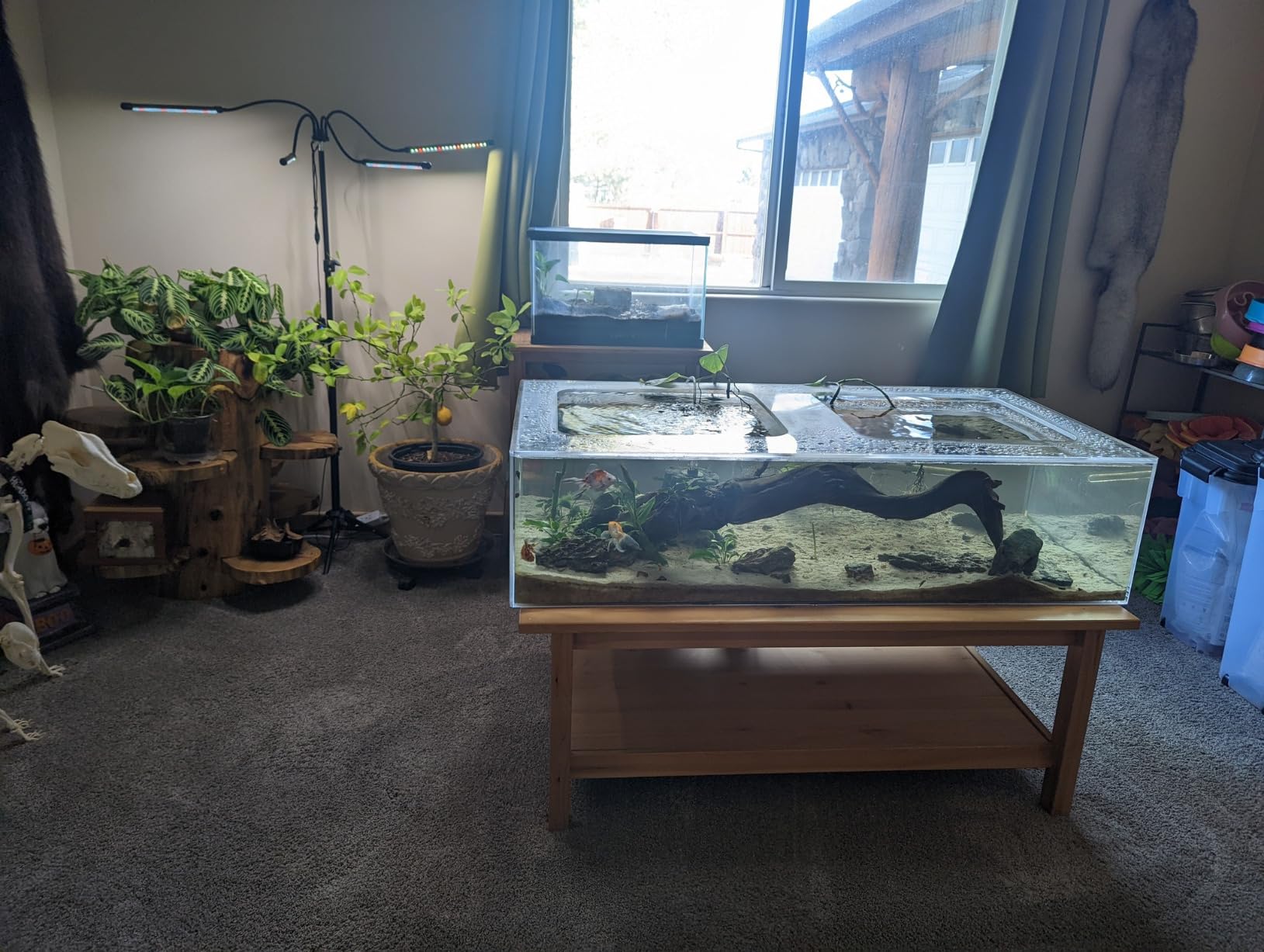
Five brightness levels and a 4/8/12 hour auto timer are enough controls for most houseplant routines. USB power with the adapter included means you can also run it from a laptop or a power bank, which is handy for a temporary setup during a move.
The slim pole keeps the floor footprint small, which is the deciding factor in a hallway or a corner where a wide base would be in the way.
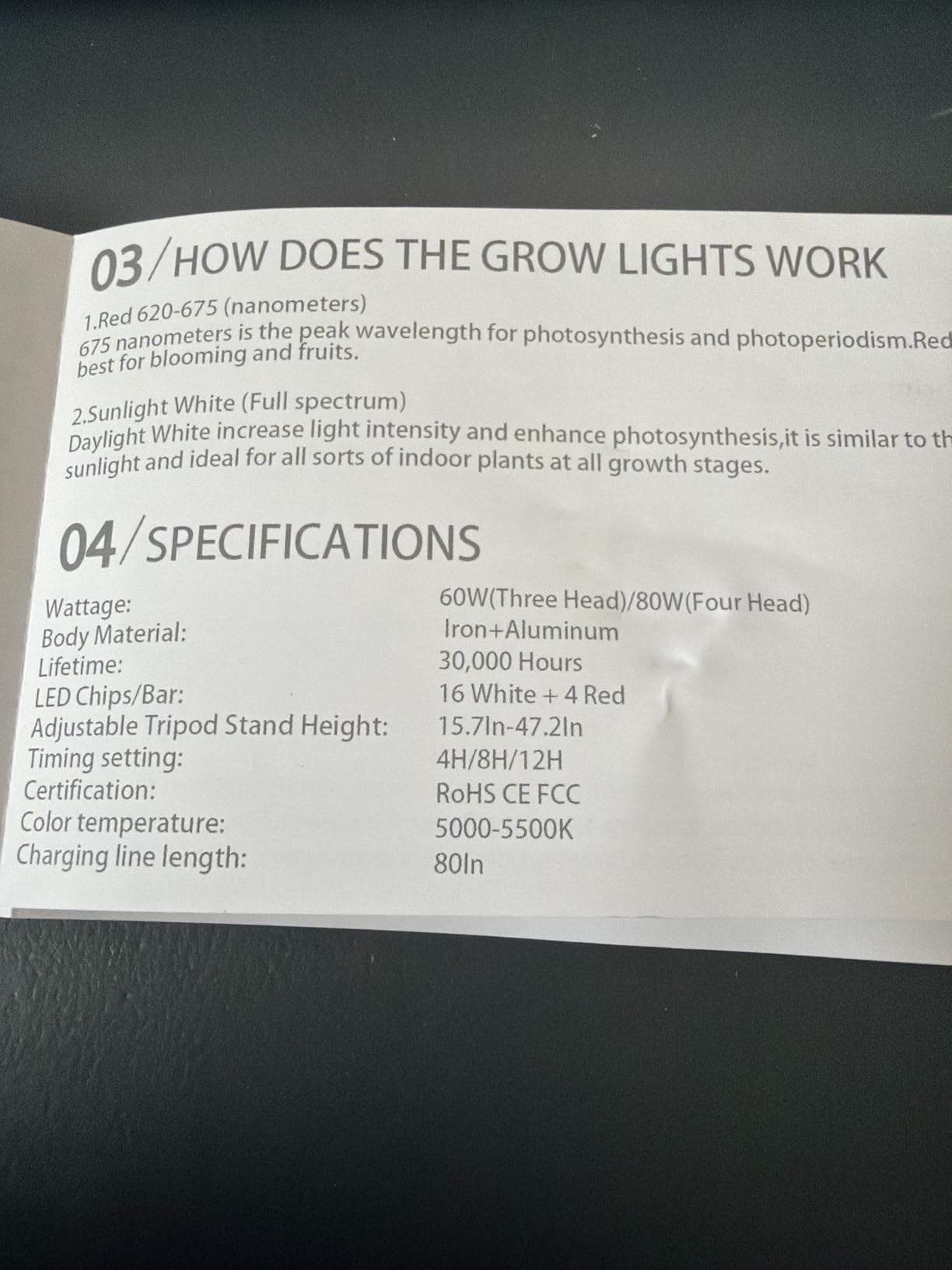
What works well in a tight space
Aiming precision is the underrated feature. Multiple pivot axes let you put light exactly where a plant leans toward, which corrects the one-sided growth that shows up when a plant reaches for a window.
The neutral spectrum is a genuine plus in a living room, and users report the light suits a mixed shelf of foliage plants well without any visible color cast.
Where the weaknesses show
Build longevity is the dominant complaint, with multiple reviews describing a failing power cord or lamp after about a year of daily use. A twelve-month warranty matches, so this is a fixture to inspect each season.
It also will not resume automatically if you unplug it, which rules out pairing the built-in settings with an external timer. And it is not the brightest choice for a dense, mature plant, so keep it for foliage and seedlings.
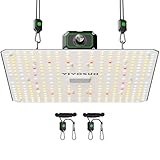
9. VIVOSUN LumaLight 100W Full Spectrum Panel – Best for Smart Schedules and Damp Rooms
VIVOSUN LumaLight 100W LED Grow Light, Full Spectrum Plant Light
336 LEDs with white, blue, red and far-red
4-level dimming knob from 25% to 100%
IP65 waterproof and dustproof housing
GrowHub and app compatibility
Pros
- Only fixture in this roundup with an IP65 waterproof and dustproof housing
- Broadest spectrum including far-red at 730nm alongside red
- blue and white
- App and hub compatibility allows automated scheduling and remote monitoring
- Advanced thermal management keeps output steady
- 4-level dimming knob to tune intensity as plants grow
Cons
- Highest price point in this roundup
- Scheduling requires the separately sold GrowHub and app
- 100W draw is heavier on electricity than the clip and bar options here
This is the fixture to buy if you want automated scheduling and plan ahead. It works with the VIVOSUN GrowHub and a mobile app, so light cycles follow the sun without a wall timer, and the four-level dimming knob from 25% to 100% lets you walk intensity up as a plant fills out.
The spectrum is the broadest here. Beyond 3000K and 5000K white, 660nm red and blue, it includes far-red at 730nm, which is the wavelength range associated with the flowering response rather than just leaf growth.
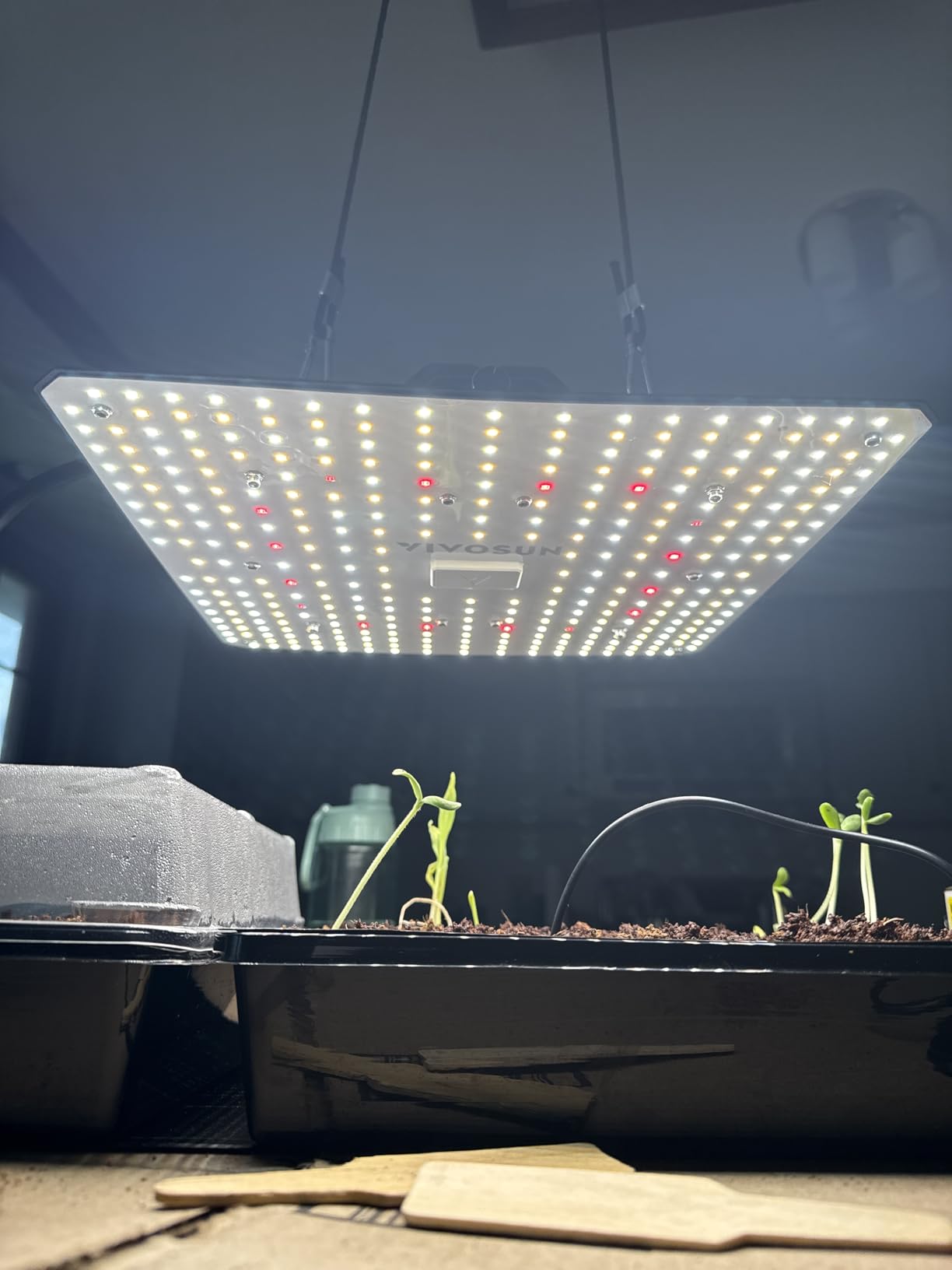
Two details separate it from a generic panel. The housing is IP65 waterproof and dustproof, which is unusual for a fixture at this level and makes it workable in a humid cabinet or a sealed grow space. The Q90 flux maintenance rating to 36,000 hours describes how long output stays within 90% of its starting brightness.
US-patented rope hangers are included, and the aluminum and iron body is built for a hanging install. Advanced thermal management is the reason output stays steady in an enclosed space rather than dimming as the fixture warms.
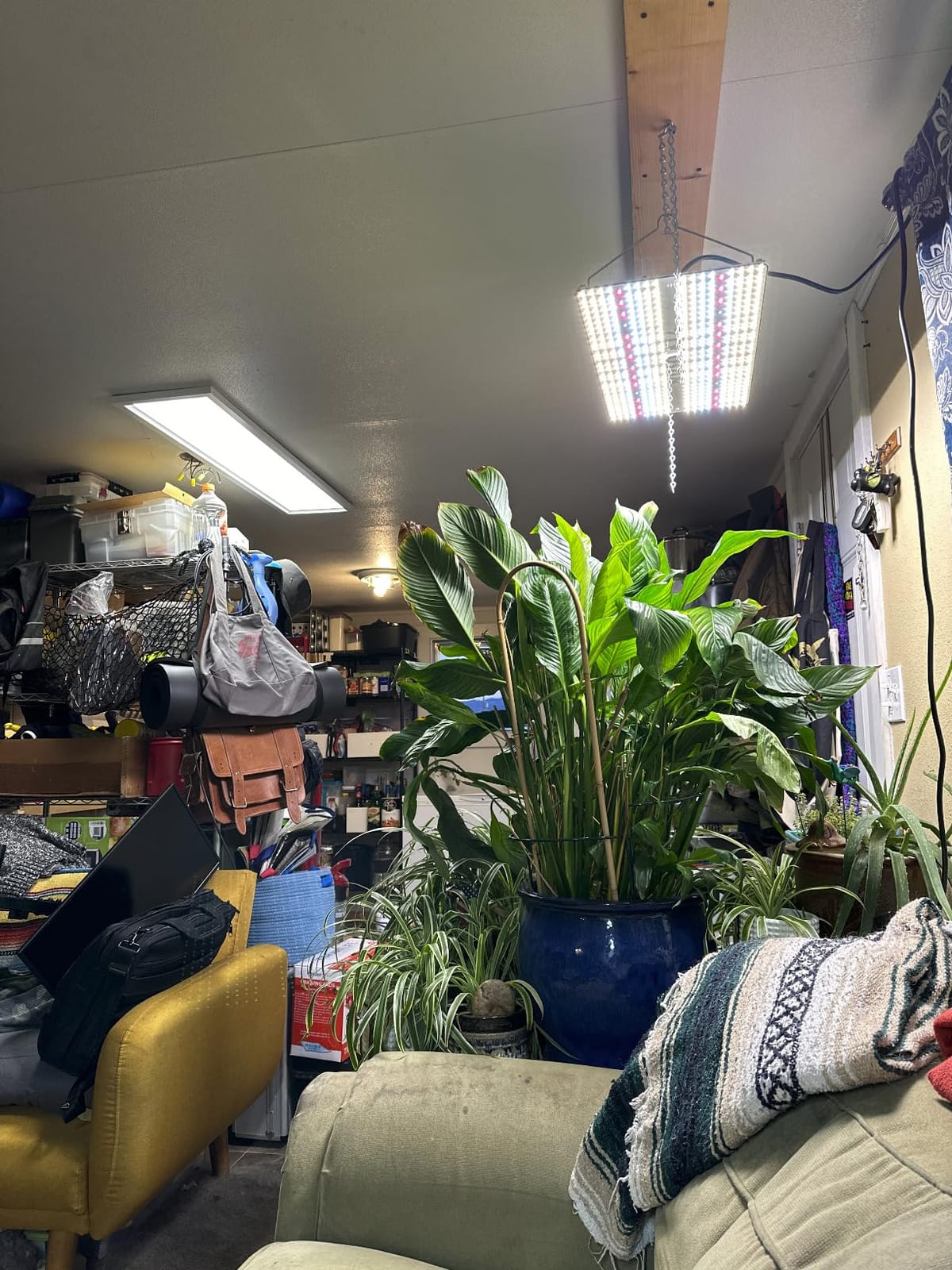
Who should spend here
Anyone automating a plant room or cabinet benefits most, because scheduling is the part of a grow light routine people stop doing manually after a few weeks. If a 100W panel is already in your plan, the hub and app are what justify the premium.
Anyone in a damp or enclosed environment gets the IP65 housing, and nobody else in this roundup offers it. Owners also cite spectrum completeness and the rugged build as the main reasons to upgrade.
What the extra spend buys and costs
This is the most expensive fixture in the roundup, and the scheduling feature only works if you also buy the separately sold GrowHub. Budget for both or the app control is inert.
At a 100W draw it costs more to run than a 10W clip lamp by a wide margin. For a single desk plant that is a poor trade, but for a cabinet of foliage it is the most capable light here.
10. SANSI Ceramic Pot Clip Light 2-Pack – Best for Individual Pots on a Shelf
SANSI Grow Lights for Indoor Plants, Pot Clip-On Plant Light, 2-Pack
5W output with 35.78 micromol per square meter per second at 6 inches
4000K natural light
3/6/12 hour auto on and off timer
4 dimming levels at 5V
Pros
- 50% more efficient than similar 10W plant lights according to the manufacturer
- ETL listed with a 2-year warranty and responsive support
- Flexible gooseneck and clamp for pots
- desks and shelves
- Four brightness levels plus a 3/6/12 hour auto timer
- Natural 4000K light that is easy on the eyes
Cons
- Clip may not fit very thick pots
- Gooseneck can be wobbly on some pots
- Light head gets warm to the touch
- USB power adapter is not always included
Two lights at 5W each is the most efficient setup in this roundup by wattage, and the manufacturer rates it at 35.78 micromol per square meter per second at 6 inches. That is a real number you can check against your own plants rather than a brightness claim with no unit.
The 4000K output sits between warm and cool white, which is the most natural-looking option on a shelf in a living room. Most owners mention growth results first and the appearance second, which is the order we would rank them too.
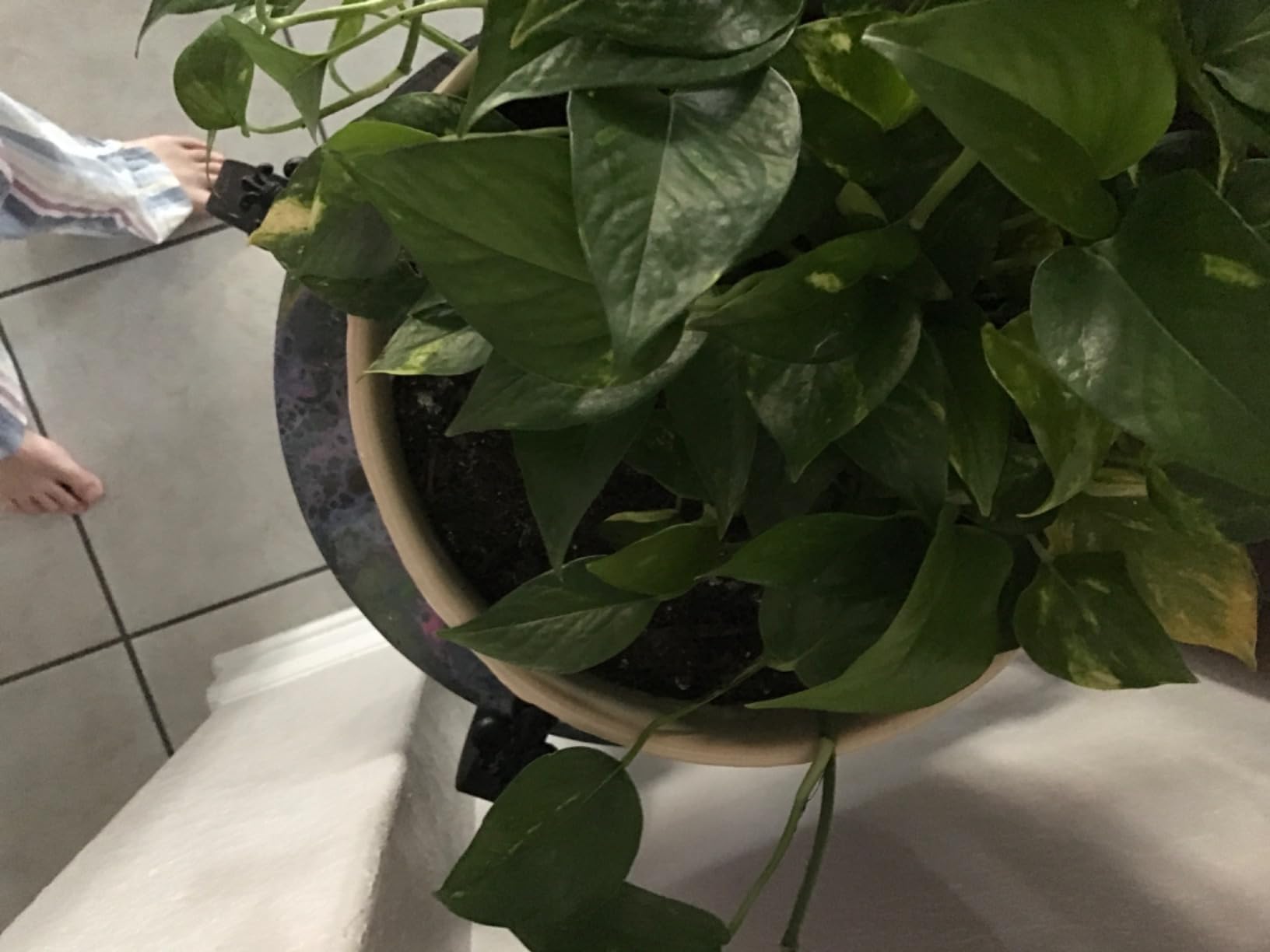
The 3/6/12 hour timer and four dimming levels at 25, 50, 75 and 100% cover a full daily routine on a 5V supply. You can run both from a laptop, a computer or a power bank, which makes temporary setups for a moving day simple.
Customer service comes up repeatedly in the reviews, and the two-year warranty is solid. ETL listed matters more than it sounds when a fixture sits within reach of a child or a pet.
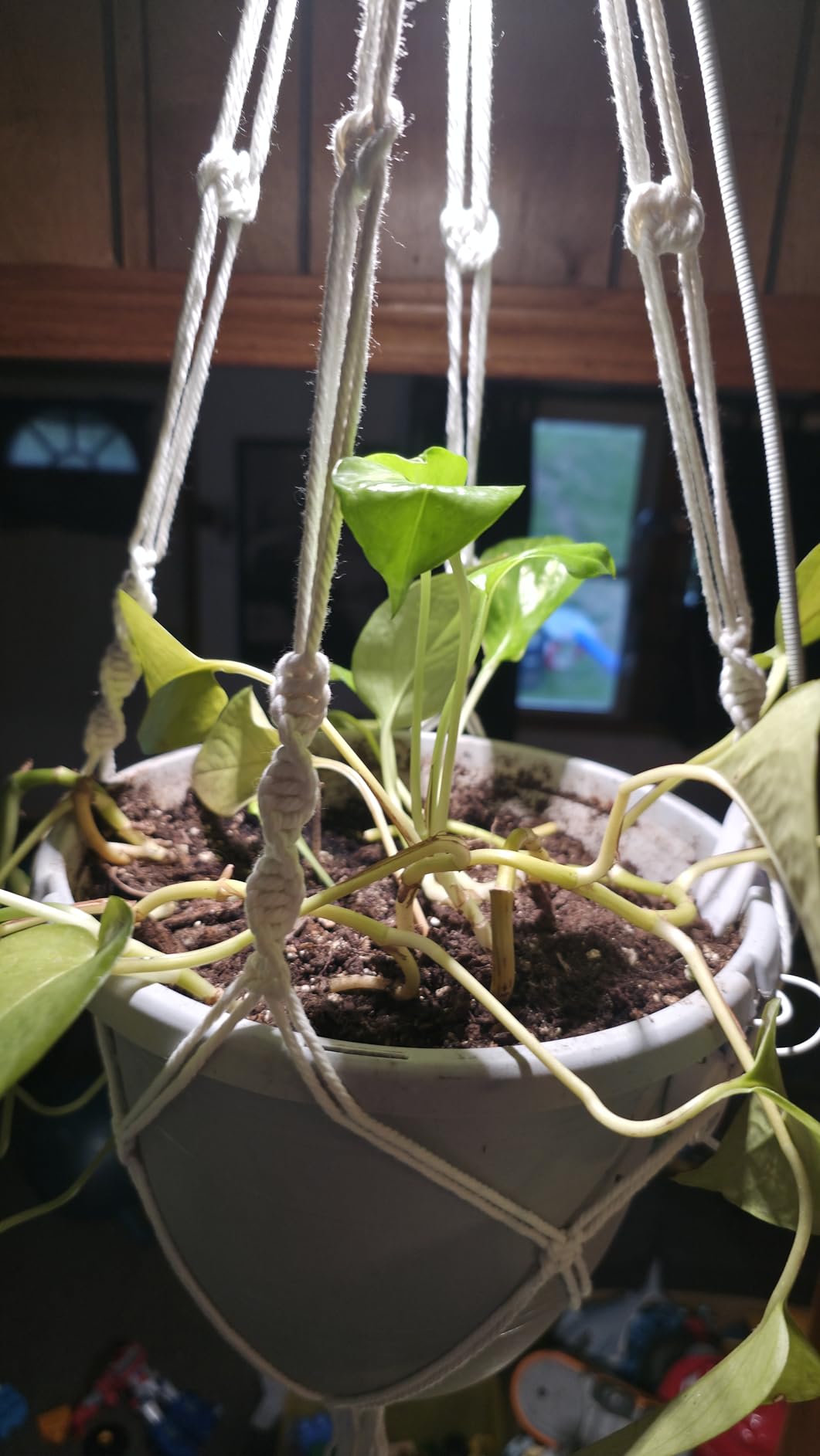
Why houseplant owners keep recommending it
Clipping one light directly to a pot is the cleanest installation in this roundup. There is no base, no pole and nothing on the floor, so a shelf of five plants can each get their own light without the geometry turning into a puzzle.
The 360-degree gooseneck lets you set the distance and the angle per pot, which is the correct approach when a succulent and a fern share a shelf at different heights.
What to watch
The clip does not fit every pot. Very thick ceramic containers are the common failure, and the gooseneck can be wobbly on a wide rim, so measure the pot lip before committing.
The head gets warm to the touch, which is normal for a 5W LED but worth knowing if you reposition by feel. And the USB adapter is not always in the box, so check the contents list.
11. Aokrean Halo Grow Light 3-Pack – Best Multi-Pack for Grouping Plants
Aokrean Grow Lights for Indoor Plants, Full Spectrum Plant Light with Base
48 LEDs in a halo design
10 brightness levels and 3 modes
3/9/12 hour auto timer
Telescoping pole up to 26 inches
Pros
- Three lights in one pack for grouped plants
- Halo design provides even light coverage over the canopy
- Height and angle adjustable up to 26 inches
- Reliable 3/9/12 hour timer and 10 brightness levels
- Low 10W power use per light
Cons
- Base is lightweight and flimsy
- and can be unstable
- Stand method requires the pot to balance the base
- Cord length may be short for some shelf setups
- Stake method risks damaging plant roots
Three lights in a pack is the practical way to cover a grouping of small plants, and the halo design spreads light outward across the canopy instead of concentrating it in a spot. A 26-inch telescoping pole and 90-degree rotation let one lamp cover a shelf or a floor planter without repositioning the whole unit.
Ten brightness levels and three modes, which are white, warm white with red, and a mix, cover the range from a low-light fern to a brighter herb. The 3/9/12 hour timer repeats daily while the light stays connected.
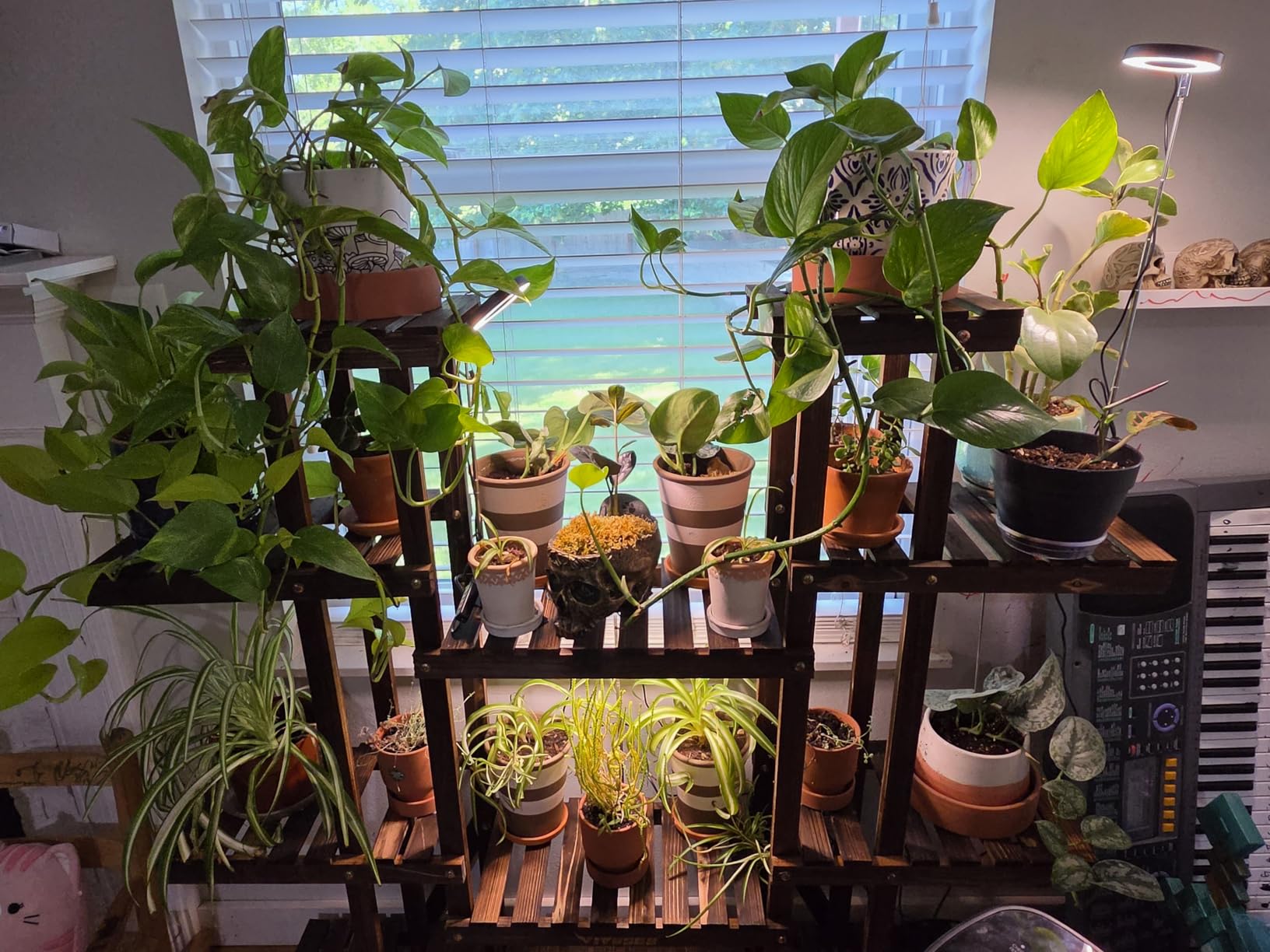
Owners highlight value, effectiveness and versatility, and the timer and brightness controls work for most. Low power consumption is the quiet benefit when three lights run on a twelve-hour cycle every day from November to March.
Two installation methods are included, a soil stake and a weighted base, and the choice matters. The stake is cleaner on a floor planter, while the base is better for a plant you intend to move.
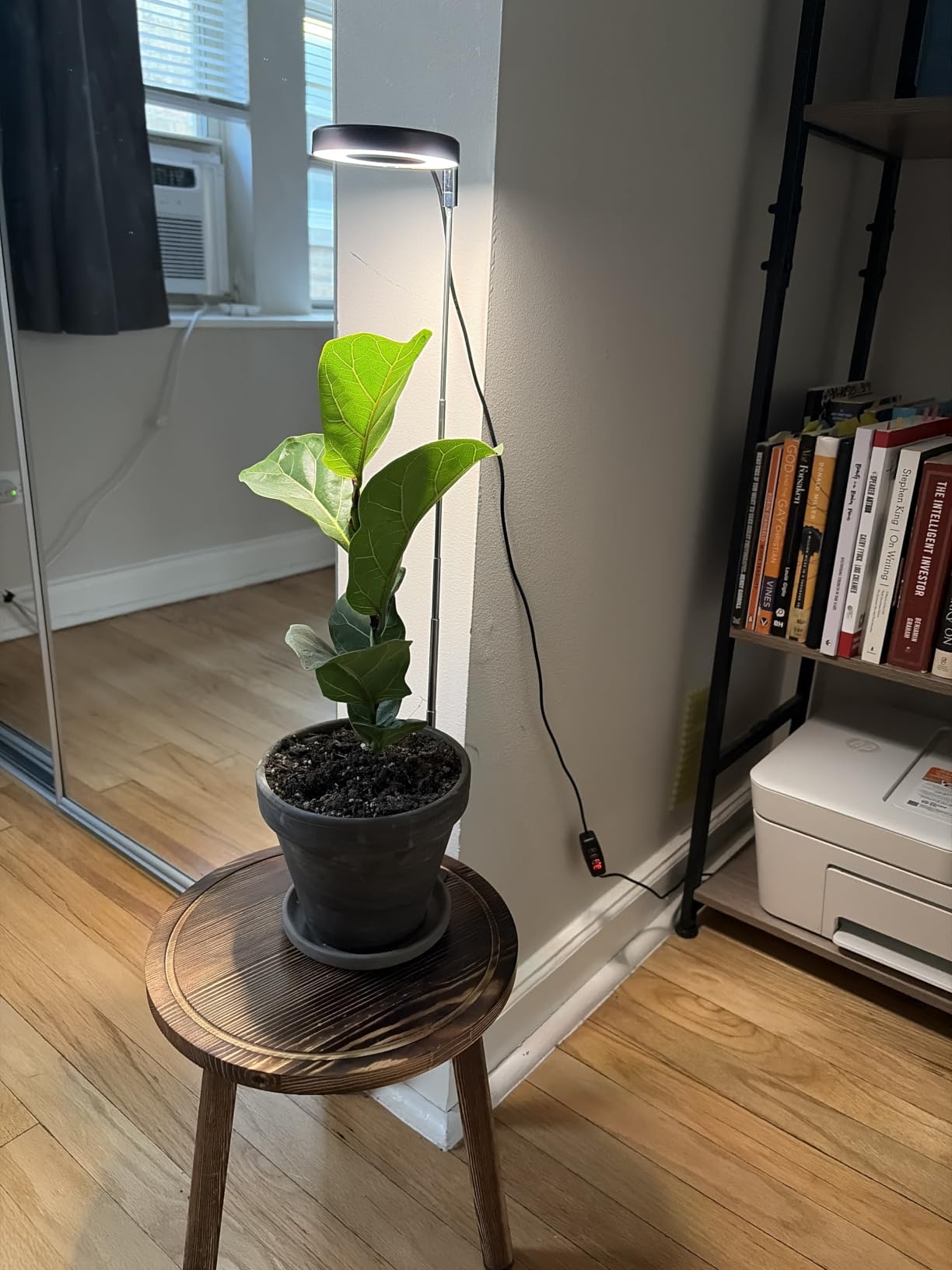
When three small lights beat one big one
When plants are spread across a shelf or grouped on a plant stand, three 26-inch lights placed at plant height beat one panel on a shelf above. Each canopy gets light from the side as well as the top, which is closer to how plants grow outdoors.
Height and angle adjustment means the same lamp works for a small pot and a medium one, and the halo footprint covers the width of a typical pot rather than a few inches of soil.
What causes trouble
The base is lightweight and flimsy, and the most common complaint in the reviews. The stand only works when the pot itself presses down on it, and many owners end up putting a stone or a custom weight in the base to stop it moving.
The cord can be short for a wide shelf, and the stake method carries a real risk of damaging roots. Check the light in the morning and evening and make sure it is not swaying in a draft.
12. SDOVUERC Tri-Head Clip Grow Light 2-Pack – Best for Wide Shelf Coverage
Grow Lights for Indoor Plants, Full Spectrum Tri-Head Clip Plant Lights
Six heads across two tri-head fixtures
Full spectrum 380 to 780nm
10 dimming levels and 3 modes
Remote with 3/9/12 hour memory timer
Pros
- Two units give six heads for a single shelf
- Strong clips that hold position well
- Effective for seedlings and general plant growth
- 360-degree goosenecks for distance control
- Remote control plus a reliable memory timer
Cons
- Some units fail after a few months
- Requires a USB power adapter that is not always included
- Timer flashing reported on some units
- May need an extension cord for shelf setups
Two tri-head fixtures give you six gooseneck arms from two clips, which is the highest head count in a clamp-mounted design here. Full spectrum 380 to 780nm with three lighting modes, either white, warm with red, or everything on, and ten dimming levels from 10% to 100%, cover most growth stages from seed to bloom.
The remote is the feature that separates it from most clip lamps. You can change mode and brightness without reaching under a shelf, and the 3/9/12 hour memory timer means the schedule survives a power cut once it is set.
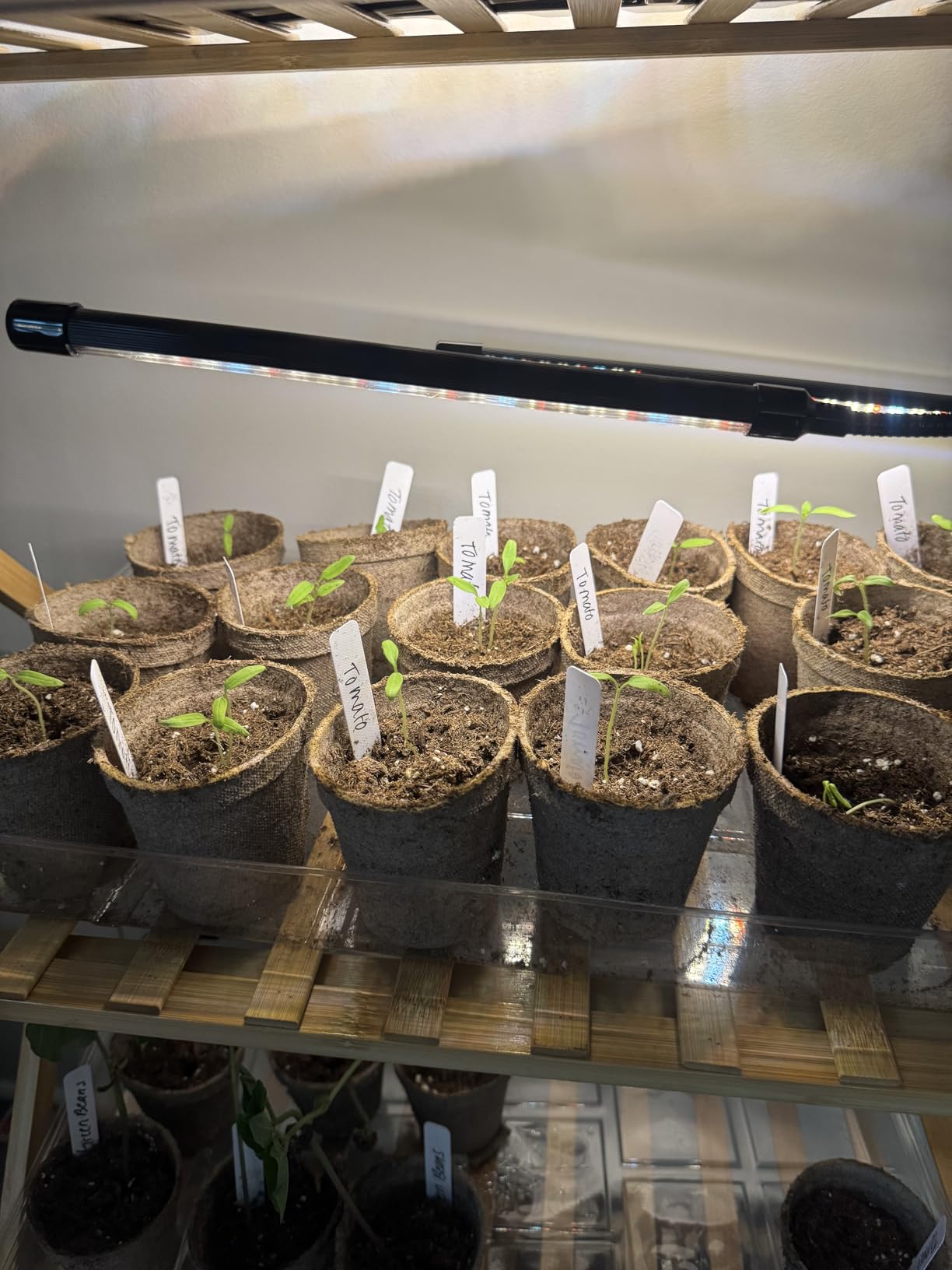
Owners praise the tri-head design and the strength of the clips, which is the right priority for a fixture that hangs over a shelf for months. The 360-degree goosenecks let you set the distance to each pot as seedlings grow taller.
Customer service is a strength, with owners reporting replacements for defective units. A 12-month warranty and a stated 24-hour service response are part of why we would consider this over a cheaper unnamed clip lamp.
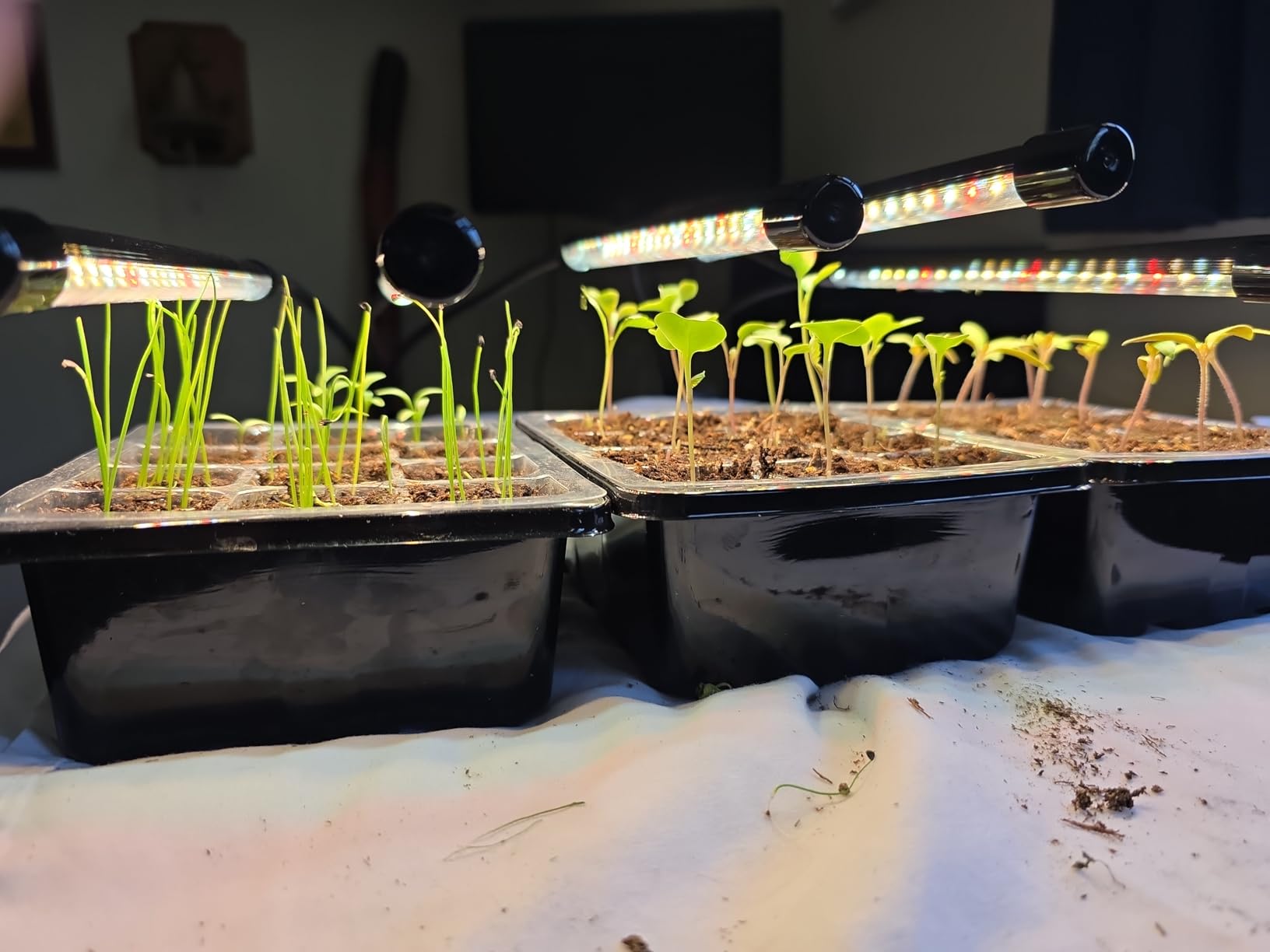
What six heads actually buy you
Coverage. A single head lights one pot, and a wide shelf of four or five pots ends up with hot and cold spots. Six arms across two clips spread the output along the shelf, which is the failure we hear about most with narrower fixtures.
It is also the most flexible arrangement in the roundup for a mixed shelf, because each head can be dimmed by mode and pointed independently at a different plant.
Where it falls short
Durability is the main issue, with some owners reporting failures after only a few months and timer flashing on certain units. At a 4.5 average the volume of feedback is smaller than the leaders here, so buy it with a returns policy in mind.
The USB adapter is not always included and the cord can be short for a wide shelf, so have an extension nearby before you set it up.
How to Choose a Grow Light for Indoor Plants
Start with the plant, not the fixture. Low-light tropicals, seedlings, succulents and dense mature foliage have very different requirements, and a single lamp rarely covers all four well. If your plants sit more than about 3 feet from a bright window, you need supplemental light; if they are in a south-facing room with direct sun for several hours, a modest lamp is enough.
Understand PPFD, PAR and DLI without the jargon
PAR, photosynthetically active radiation, is the range of wavelengths between 400 and 700 nanometers that plants can use. PPFD, photosynthetic photon flux density, is the intensity of that usable light arriving at a leaf, measured in micromoles per square meter per second. DLI, the daily light integral, is how much usable light a plant receives across a whole day, and it is the number that actually predicts growth.
For most houseplants, a target of roughly 200 to 400 micromoles per square meter per second at the leaf with 12 to 14 hours of light is the useful working range. Seedlings tolerate less, succulents and fruiting plants want more, and anything far above the range causes photobleaching and leaf scorch rather than faster growth.
Foot-candles and lux are the older measurements. A bright indoor windowsill sits around 500 to 1000 foot-candles, and a dim room might be under 100. A dedicated grow light will deliver multiples of that at the canopy, which is why it corrects leggy growth that no amount of window moving will fix.
Read the spectrum, not the color of the box
Full spectrum means the fixture blends red and blue with white light rather than emitting only the two colors chlorophyll absorbs most strongly. Red light around 660 to 730nm drives photosynthesis and flowering, while blue light around 400 to 500nm keeps growth compact and thick. Plants grow worst in green, because chlorophyll reflects most of that wavelength rather than absorbing it.
Color temperature tells you about the white component. Around 3000K reads warm and amber, 4000 to 5000K reads neutral, and 6500K reads cool. None of these settings is wrong for a plant, but for a living room, 3000K to 5000K is far easier to live with than a purple bluelight, and that is why every fixture we recommend here is white-dominant.
Match coverage, distance and mounting to your space
Coverage area claims are usually measured at the edge of a flat footprint, where intensity is much lower than in the center. For a shelf, add up the length of the shelf and choose linkable bars rather than a single panel. For a floor corner, a tripod or telescoping pole covers more ground than a clip lamp ever will.
Renters should look for tape, clips and cable ties in the box, or fixtures that stake into a pot. Nothing in this roundup requires drilling except the optional hanging hardware on the panel lights, and even those include alternative mounting methods.
Set the timer before you set the brightness
Run most plants on 12 to 14 hours of light a day and leave the rest dark. Plants need a genuine dark period to complete their cycle, and running a light through the night suppresses flowering in many species while adding to your electricity bill for no benefit.
A wall timer or a smart plug is enough if your fixture has no built-in schedule. Choose one that returns to the previous state after a power cut, so a light does not stay on all night because of a tripped breaker.
Work out what it costs to run
Multiply the wattage by the hours per day and the number of days you run it. A 10W clip lamp on a 13-hour schedule for 150 days of winter is about 19.5 kilowatt-hours, which is a small number. A 100W panel on the same schedule is roughly 195 kilowatt-hours, which is ten times as much and is worth thinking about before you fill a room with panels.
Running cost is one reason we favor dimmable fixtures. Turning a bright panel down two levels to match a mature plant often costs less than running a weaker light at full output, and it extends diode life at the same time.
How Far to Hang a Grow Light by Plant Type
Distance controls intensity more than any other setting, and it is free to adjust. Intensity falls off roughly with the square of distance, so moving a light from 12 inches to 24 inches cuts the light reaching the leaf dramatically, which is why a bright panel can scorch a seedling and why dimming and distance need to be balanced together.
As a starting point, hang seedling and propagation lights 6 to 12 inches above the tray, vegetative leafy plants 12 to 24 inches above the canopy, and flowering or fruiting plants 18 to 36 inches away. Succulents and cacti sit at the closer end of the range because they evolved under intense light, and low-light foliage plants sit at the far end or at a lower brightness setting.
If you cannot measure, use the plant. Bleached patches, red or brown leaves nearest the lamp, and crisp edges mean the light is too close or too strong, and the fix is to raise it or dim it rather than to water more. Long stems reaching up with wide-spaced leaves mean the opposite problem, and the fix is to lower the light or increase the hours.
Troubleshooting Common Grow Light Problems
Almost every grow light complaint falls into one of four categories, and each has a fix that costs nothing. The first is leggy growth, where stems stretch and leaves space out. The light is too far, too weak, or on for too few hours, and moving it closer or adding hours will correct it faster than any fertilizer.
The second is light burn, where leaves develop white, tan or red patches on the surface facing the lamp. That is too much light too close, and the answer is to raise the fixture or turn a dimmer down. Scorched tissue will not recover, so judge future growth on new leaves only.
The third is etiolation in the other direction, a pale, washed-out plant that has been dimmed too far for too long, or grown under a very low setting. Raise the brightness gradually over a week rather than switching to full output, which shocks the plant.
The fourth is a plant that wilts within hours of the lights switching on. That is a watering problem masquerading as a lighting problem, because extra light drives faster growth and faster water use, and the soil is drying out before the plant can drink. Check moisture rather than reaching for the dimmer.
Frequently Asked Questions
What are the downsides of using grow lights?
The main downsides are cost, heat and the risk of light stress. A bright panel adds meaningfully to an electricity bill over a winter, warm fixtures can raise the temperature inside a closed cabinet, and a light hung too close will bleach or scorch leaves. Poorly aimed purple-blue fixtures can also make a living room look worse than the plant is worth. Used correctly, with the right distance and a daily timer, most people find the trade is worth it for a plant that would otherwise lose lower leaves by February.
Which brand of grow lights is considered the best?
There is no single best brand, and the honest answer depends on the use case. Barrina is the most consistently recommended option in owner discussions for shelves because the T5 bars are linkable, white rather than purple, and inexpensive to run. SANSI is frequently singled out for pot clip-ons, and VIVOSUN and VIPARSPECTRA come up when intensity and durability matter more than appearance.
Can regular LED bulbs be used as grow lights?
A regular LED bulb will keep a plant alive but will not produce the same result as a dedicated fixture. Household bulbs put most of their output into light plants cannot use efficiently, and they rarely deliver enough intensity at the canopy. A full-spectrum white bulb is a reasonable stopgap for a desk plant in an otherwise dark room, but a plant that is actively stretching needs a purpose-built grow light with a high color rendering index and enough output at the leaf.
What color light do plants grow worst in?
Plants grow worst in green light, which sits near the middle of the visible spectrum around 500 to 570 nanometers. Chlorophyll reflects most green light rather than absorbing it, so a green lamp delivers energy the leaf largely cannot use. Plants absorb best in blue light around 400 to 500 nanometers and in red light around 660 to 730 nanometers, which is why full-spectrum white fixtures that blend both outperform single-color lamps.
How far should I hang a grow light from indoor plants?
Keep seedling and propagation lights about 6 to 12 inches above the tray, leafy vegetative plants 12 to 24 inches above the canopy, and flowering or fruiting plants 18 to 36 inches away. Succulents and cacti sit at the closer end and low-light foliage plants at the farther end. Bleached or tan patches facing the lamp mean the light is too close, while long stretched stems mean it is too far.
Final Verdict on the Best Grow Lights for Indoor Plants
For most homes, the Barrina T5 four-bar pack is the best grow light for indoor plants because it lights a whole shelf evenly, runs cool, and looks like ordinary fixtures. Add the bseah two-head lamp for a windowsill and a VIPARSPECTRA 70W panel for dense mature foliage, and you have covered the three situations that account for nearly every collection we know.
Whichever you choose, the placement matters more than the model. Hang it at the right height, run it 12 to 14 hours a day, and give it a proper dark period, and any of the best grow lights for indoor plants on this list will do more for your plants than a better fixture in the wrong place. Start with what your plants are telling you now, and adjust as they grow through 2026.