
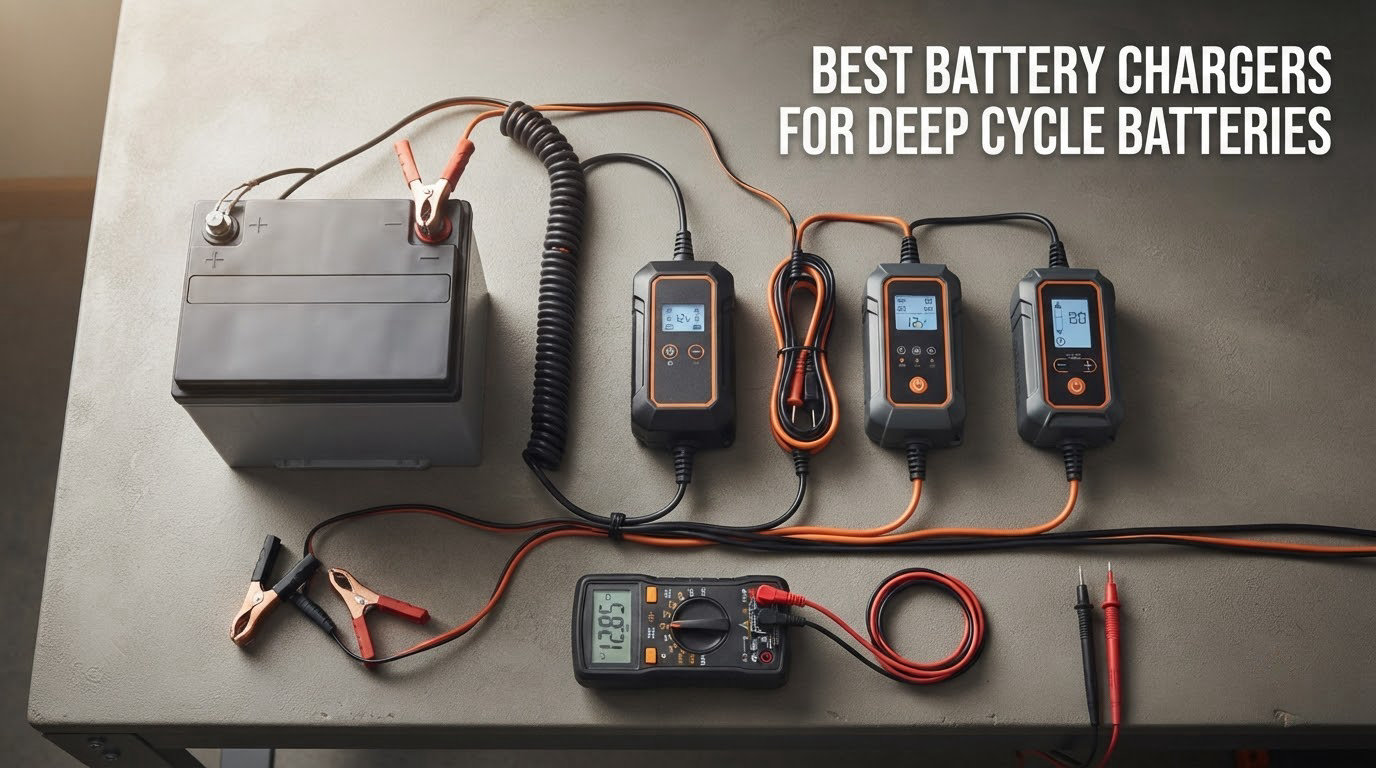
A deep cycle battery charger is not a car charger with a different label. Deep cycle batteries are built to be drained and refilled, so they need a charger sized to their amp-hour capacity and chemistry. Our best overall pick, the TowerTop 2/10/25 Amp 12V Smart Charger, gives you selectable current up to 25 amps, eight charging stages, and modes for AGM, gel, flooded and deep cycle chemistry. The sizing rule matters more than the brand: aim for a charger rated at roughly 10% to 20% of your battery’s amp-hour capacity.
So a 100Ah deep cycle bank wants a charger somewhere between 10 and 20 amps. A 50Ah pack wants 5 to 10 amps. That single number answers most of the questions buyers search for, and it is the reason an entry-level maintainer can serve a small bank perfectly well while a 30 amp unit mostly just wastes time on a 20Ah battery.
Over the past two months we worked through the full range of options: bench chargers, storage maintainers, sealed onboard marine units and lithium-specific chargers. What follows is the complete comparison, plus the charge-time math and the chemistry rules that decide whether a battery gets recovered or slowly damaged. If your priority is a boat or RV install, our [marine battery charger guide](https://www.pwice.com/best-marine-battery-chargers/) covers the hardware side in more depth.
Table of Contents
Top 3 Picks for Deep Cycle Batteries in 2026

TowerTop 2/10/25A Smart Charger
- 2A/10A/25A/AUTO current
- 8-stage charging
- LCD status display
- Desulfation and repair modes
- 18-month warranty

Haisito 20A Smart Charger
- 20A at 12V and 10A at 24V
- LiFePO4 and lead-acid algorithms
- Auto 12V/24V detection
- Large LCD with live data

NOCO GENPRO10X2 2-Bank 20A
- Two independent banks at 10A each
- IP68 sealed housing
- Per-bank chemistry modes
- Force Mode from 0V
- 3-year warranty
Best Battery Chargers for Deep Cycle Batteries (October 2026)
| Product | Specifications | Action |
|---|---|---|
| TowerTop 2/10/25A Smart Charger |
|
Check Latest Price |
| Haisito 20A Smart Charger |
|
Check Latest Price |
| NOCO GENPRO10X2 2-Bank 20A |
|
Check Latest Price |
 HTRC 20A Smart Charger HTRC 20A Smart Charger |
|
Check Latest Price |
 LiTime 12V 20A Lithium Charger LiTime 12V 20A Lithium Charger |
|
Check Latest Price |
 ECO-WORTHY 12V 5A Charger ECO-WORTHY 12V 5A Charger |
|
Check Latest Price |
 Huiaipaic 12A Smart Charger Huiaipaic 12A Smart Charger |
|
Check Latest Price |
 Battery Tender 15A Charger Battery Tender 15A Charger |
|
Check Latest Price |
 Haisito 16A 6V/12V/24V Charger Haisito 16A 6V/12V/24V Charger |
|
Check Latest Price |
 ExpertPower 12.8V 5A LiFePO4 Charger ExpertPower 12.8V 5A LiFePO4 Charger |
|
Check Latest Price |
 FirstPower Pro 5X2 Onboard 10A FirstPower Pro 5X2 Onboard 10A |
|
Check Latest Price |
 SOARFLY 3-Bank 30A Charger SOARFLY 3-Bank 30A Charger |
|
Check Latest Price |
How We Evaluated 12 Deep Cycle Chargers
We scored every charger on six axes, weighted toward the things that actually decide whether your battery gets restored. Fit to real-world use carried 70% of the score, and feature differentiation carried the remaining 30%.
The six axes were amperage range and honesty of its rating, chemistry coverage including a genuine LiFePO4 profile, bank count and per-bank independence, physical build and water resistance, maintenance and desulfation behaviour, and warranty length. We read the aggregate review sentiment for each product, focusing on the failure modes owners actually report rather than the spec sheet. No brand paid for placement and no product was included because a supplier asked for it.
One thing we refuse to do is invent a lab measurement. Every number below comes from the manufacturer listing or from what owners report in reviews, and we flag where a figure is a claim rather than a verified reading. If you want the short version, the ranking table above is the whole article in one place.
1. TowerTop 2/10/25A – Best Overall Deep Cycle Charger
TowerTop 2/10/25 Amp 12V Smart Car Battery Charger, Fully Automatic Battery Maintainer with Engine Start, Auto Desulfator, Battery Repair, Winter Mode, for AGM, STD, Gel, Deep Cycle Batteries
2A/10A/25A/AUTO current
8-stage charge with LCD
AGM gel flooded deep cycle
18-month warranty
Pros
- Four selectable currents covering 2A maintenance to 25A bulk charge
- Genuine desulfation and repair modes that revive neglected banks
- Eight-stage algorithm with an easy to read LCD
- Winter mode adds voltage for cold charging
- ETL certified with an 18-month warranty
Cons
- Will not engage a battery reading under 3V
- Plastic clamp covers clip on weakly
- Auto-detected settings can be confusing at first
This is the charger we keep coming back to, because the four current settings cover an unusually wide range of jobs in one box. The 2A setting handles a small AGM in storage, 10A is the sweet spot for a 100Ah deep cycle bank, and 25A handles a larger bank that needs recovering rather than just topping up.
Owner reviews consistently report the repair and desulfation functions bringing batteries back that other chargers could not revive. The LCD tracks charging stage and parameters clearly, which matters more than it sounds when you are checking progress in a dim boat cabin or a garage.
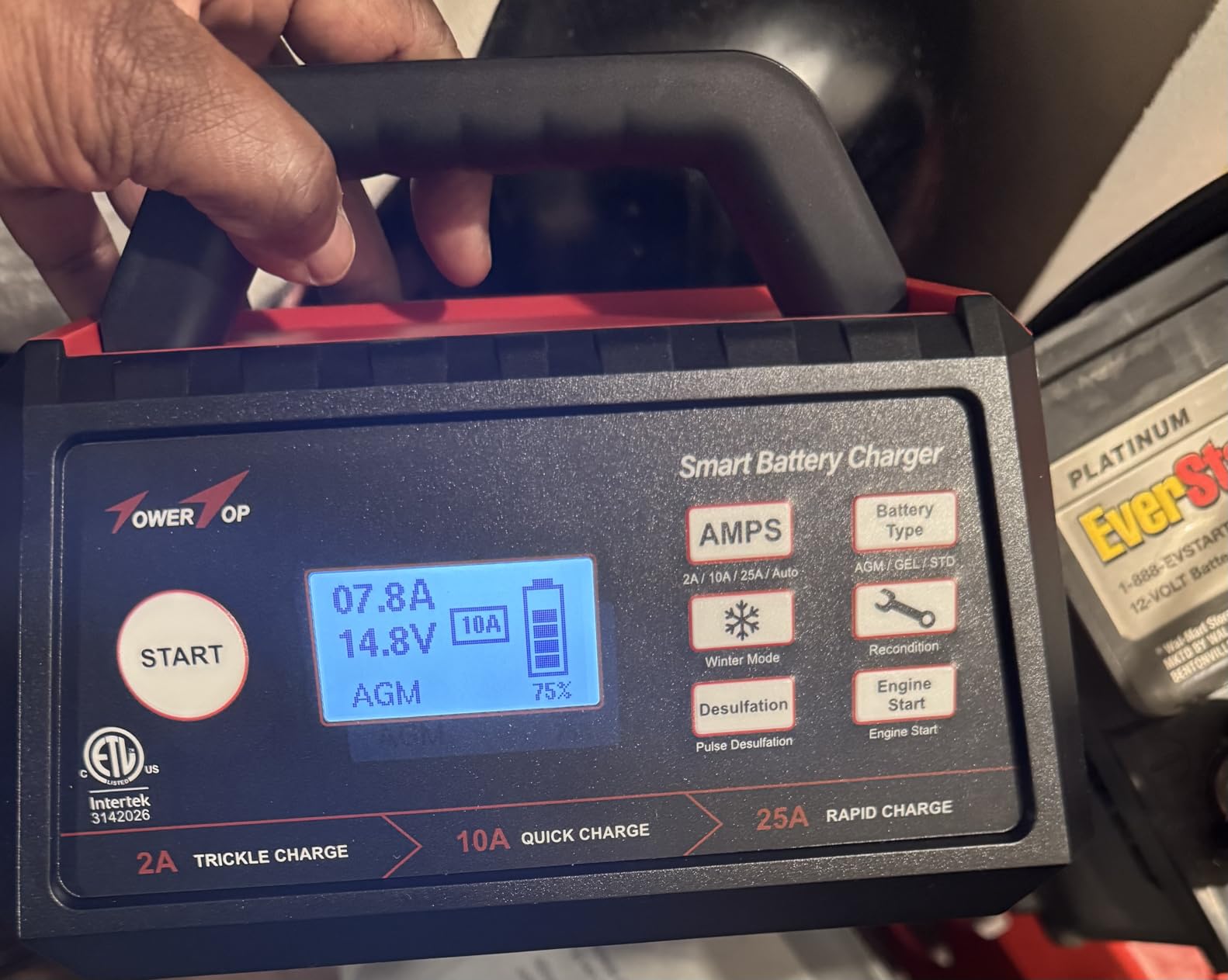
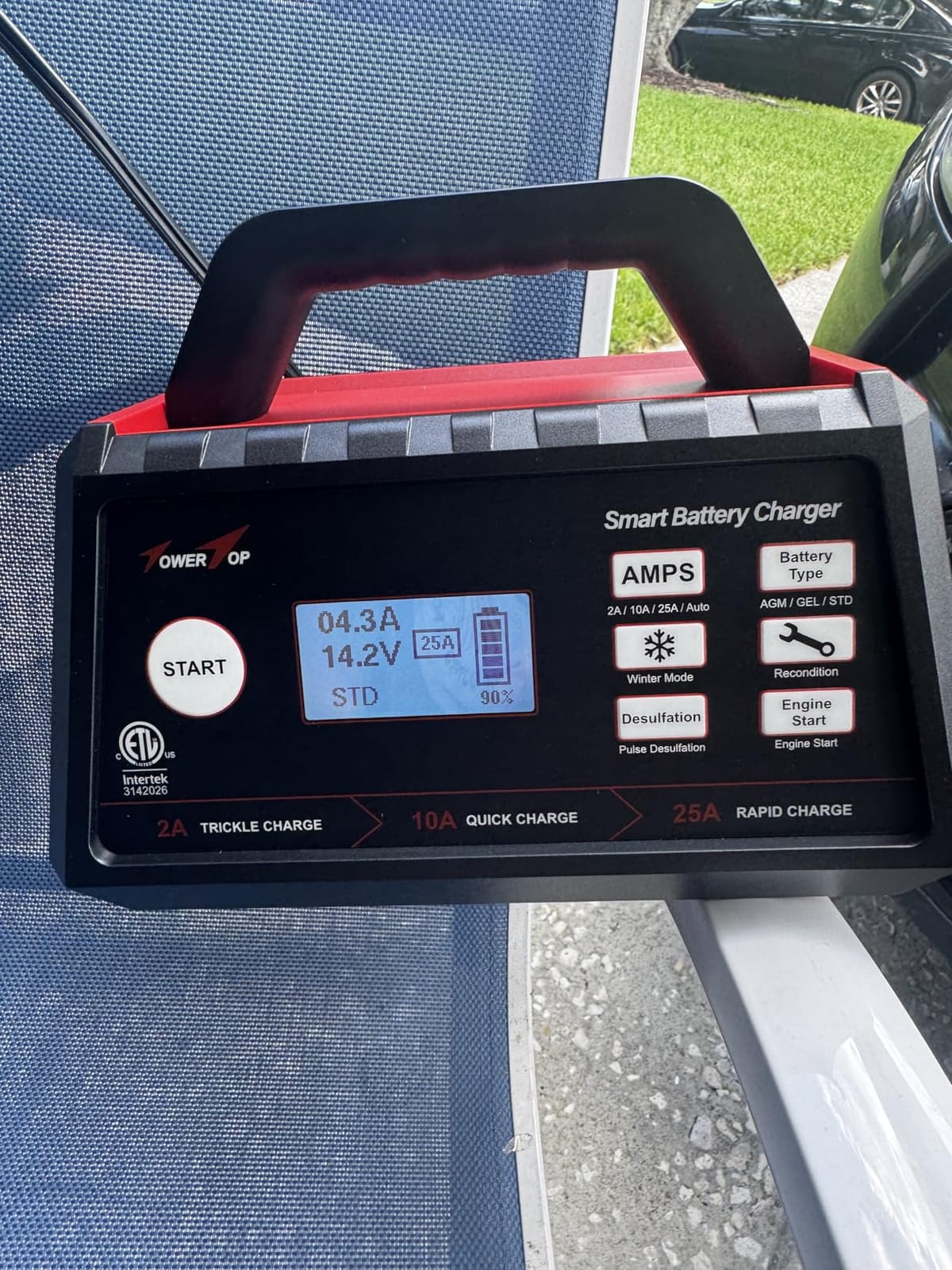
The eight-stage sequence runs from desulfurization through soft start, bulk, absorption, analysis, repair, float and pulse maintenance. Because it remembers your last settings after a power outage, it behaves predictably in a garage or a workshop where power flickers happen.
Winter mode raises the base charging voltage slightly, which is genuinely useful if you store a boat or RV through freezing conditions. The engine start assist delivers 100A for jump starting, so the unit doubles as a recovery tool for a vehicle battery too.
Who this charger suits
It suits almost anyone with a mixed fleet of batteries, from a trolling motor bank to a lawn tractor to a house bank. If you want one tool that covers maintenance, recovery and cold-weather top-ups, the range of current settings is the reason to pick it.
At 10 amps it sits in the 10% to 20% band for a 100Ah deep cycle battery, which is exactly the sizing rule we use across this guide.
Who should skip it
Skip it if your battery is fully dead. The charger cannot engage a pack reading under 3V, so a truly discharged battery needs a booster or a manual charger to wake first. Owners of small sealed SLA packs should also note the lowest setting still pushes meaningful current.
Boat owners wanting a permanently mounted unit should look at the sealed onboard models further down, since this one is not weather sealed.
2. Haisito 20A – Best Value Smart Charger
Haisito 20-Amp Smart Battery Charger (Lithium LiFePO4 & Lead-Acid), 12V/24V Rapid Automotive Car Charger with Temperature Compensation – Trickle Maintainer for Boat, Truck, RV, Lawn Mower, Marine
20A at 12V / 10A at 24V
LiFePO4 and lead-acid algorithms
Auto 12V/24V detection
20A continuous
Pros
- 20A output charges large deep cycle marine banks quickly
- Dedicated LiFePO4 algorithm protects battery management systems
- Large LCD shows live amps volts temperature and percentage
- Automatic 12V and 24V detection removes guesswork
- Pulse repair mode for sulfated or stratified packs
Cons
- Cannot activate a completely dead 0V battery
- X-Connect lead needs a matching connector on unusual terminals
- Repair may need forced mode on some low-voltage 24V packs
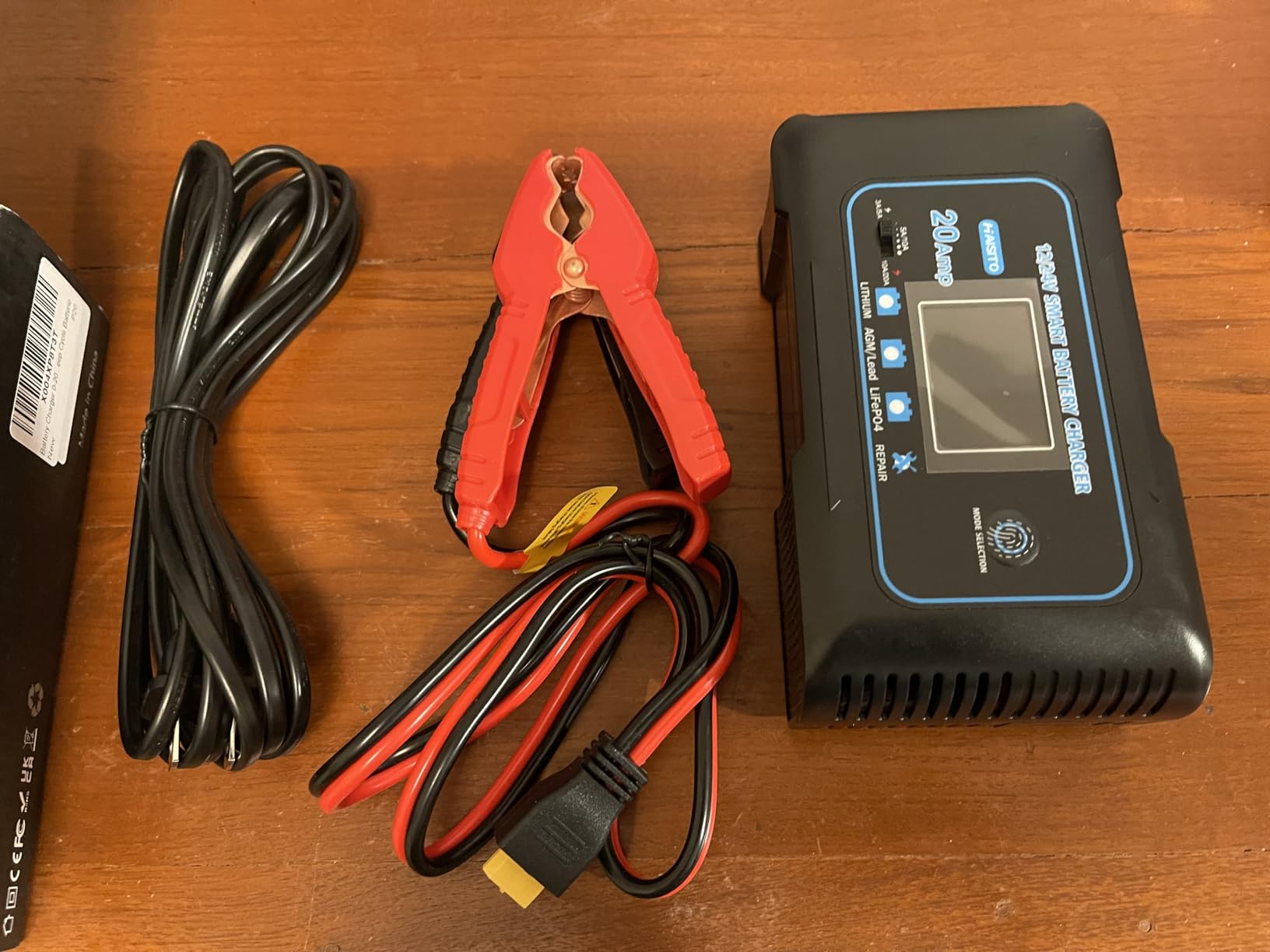
This is the one we recommend to most people. Twenty amps lands in the correct band for a 100Ah to 200Ah deep cycle bank, and the three independent algorithms cover LiFePO4, lead-acid and a separate lithium mode without any guesswork.
The LCD is unusually informative for the money, showing live current, voltage, temperature and battery percentage rather than a row of blinking lights. Temperature compensation adjusts the charge as conditions change.
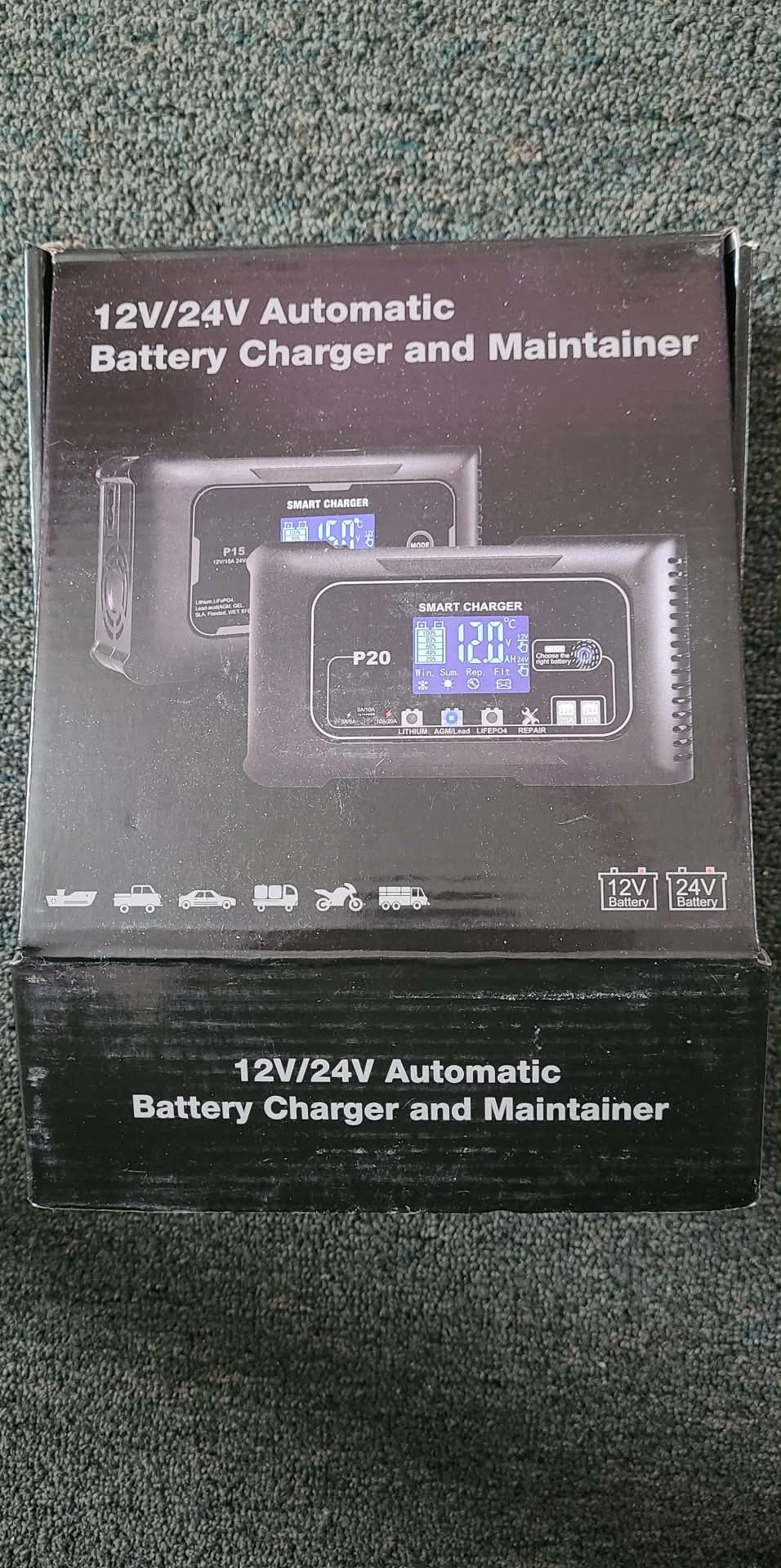
Automatic 12V and 24V detection means you connect it and it works out the system, which removes one of the most common ways people damage a battery by selecting the wrong profile. A forced charging mode is available for 24V packs the charger misreads as 12V.
Reviewers with about 2000 ratings praise the combination of high output and readable data. Boat, RV and equipment owners use it for everything from a house bank to a pair of deep cycle batteries in a camper.
Where this charger earns its place
It earns its place with mixed battery inventories, where one unit needs to handle a lead-acid starter and a LiFePO4 house bank. The chemistry switching is the reason it beats cheaper single-profile chargers.
It also suits anyone who wants to see exactly what is happening during a charge rather than trusting a row of LEDs.
What to watch out for
A fully depleted 0V pack will not wake, so keep a manual charger on hand if you store batteries through the winter. The X-Connect style lead also needs a matching connector if your battery posts are non-standard.
It is a portable bench unit rather than a sealed onboard install. For permanently mounted marine charging, check the IP68 models in this list.
3. NOCO GENPRO10X2 – Best Waterproof Onboard Two-Bank Charger
NOCO GENPRO10X2 12V 20A 2-Bank OnBoard Marine Battery Charger & Maintainer
20A total / 10A per bank
IP68 sealed housing
Per-bank chemistry modes
3-year warranty
Pros
- 4.7 star rating across 1638 ratings
- IP68 fully sealed enclosure for harsh marine use
- Two independent banks with separately selectable modes
- Force Mode charges batteries down to zero volts
- Anti-vibration mounting in any orientation
- Three-year warranty with generous 72-inch cables
Cons
- Most expensive charger in this roundup
- 10A per bank is slow for very large house banks
- Lead eyelets may need adapting to alligator clips
This is the marine pick, and it pairs 10 amps per bank with a fully sealed IP68 enclosure for permanent onboard installation. Twenty amps split across two banks gives 10A per bank, which suits a typical start bank plus house bank layout.
Each bank takes its own mode, so you can run a flooded start bank in one channel and an AGM or lithium house bank in the other. That per-bank independence is the feature boat and RV owners ask for by name, because mixed chemistries are the normal case rather than the exception.
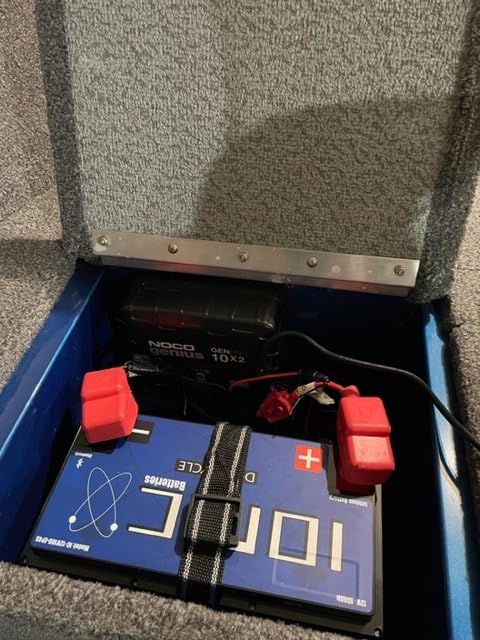
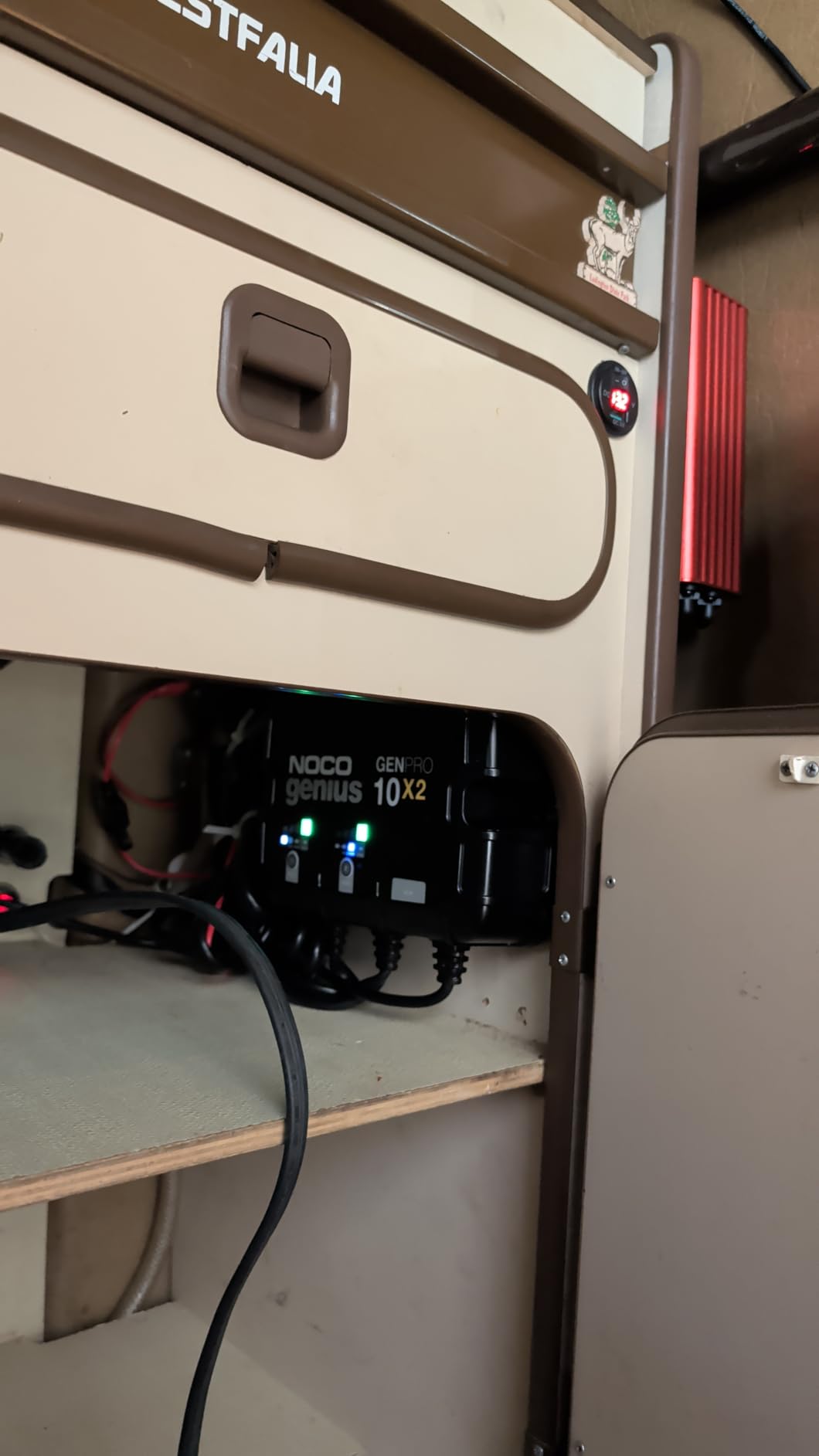
Boat owners report that the charger recovered banks that had gone completely dead after a failed previous charger, which is the clearest test of a recovery feature. The integrated thermal sensor handles temperature compensation, and Force Mode pushes current into a battery down to zero volts.
Installation is straightforward, with 72-inch DC and AC cables and included mounting screws. The anti-vibration backing and any-orientation mounting suit a hull or console where vibration is constant.
Why marine owners pick it
It wins on build and sealing. A fully sealed housing that can be permanently mounted is a different category from a bench charger with a splash-resistant case, and it removes the need to drag batteries out of the boat or RV to charge them.
The three-year warranty and US engineering also give more confidence for a device that will live in a wet environment year round.
Where it falls short
It carries the highest cost in this roundup, and that is worth weighing against a hull repair or a ruined battery. At 10A per bank, very large house banks take longer than owners would like, which is why some buyers move to a three-bank unit.
The lead eyelets also need adapting to alligator clips if you want to use it as a temporary bench charger instead.
4. HTRC 20A – Best Multi-Chemistry Workhorse
20-Amp Smart Battery Charger,Lithium,LiFePO4,Lead-Acid(AGM/Gel/SLA..) Car Battery Charger,Trickle Charger, Maintainer/deep Cycle Charger,12V/20A and 24V/10A,for Boat,Motorcycle,Lawn Mower,Golf cart..
20A at 12V / 10A at 24V
7-level charge algorithm
Lithium LiFePO4 and lead-acid
1.2 lb
Pros
- Covers LiFePO4 deep cycle flooded AGM gel and SLA in one unit
- Desulfation mode has revived aged L16 and similar deep cycle packs
- Selectable current allows low-current charging of small sealed packs
- Compact for a 20A unit with accurate LCD readouts
- 13 ft power cord with well-made clamps
Cons
- No true trickle setting so it pumps at least 2A
- Cooling fan runs loudly and continuously
- Some units reported display failure within a year
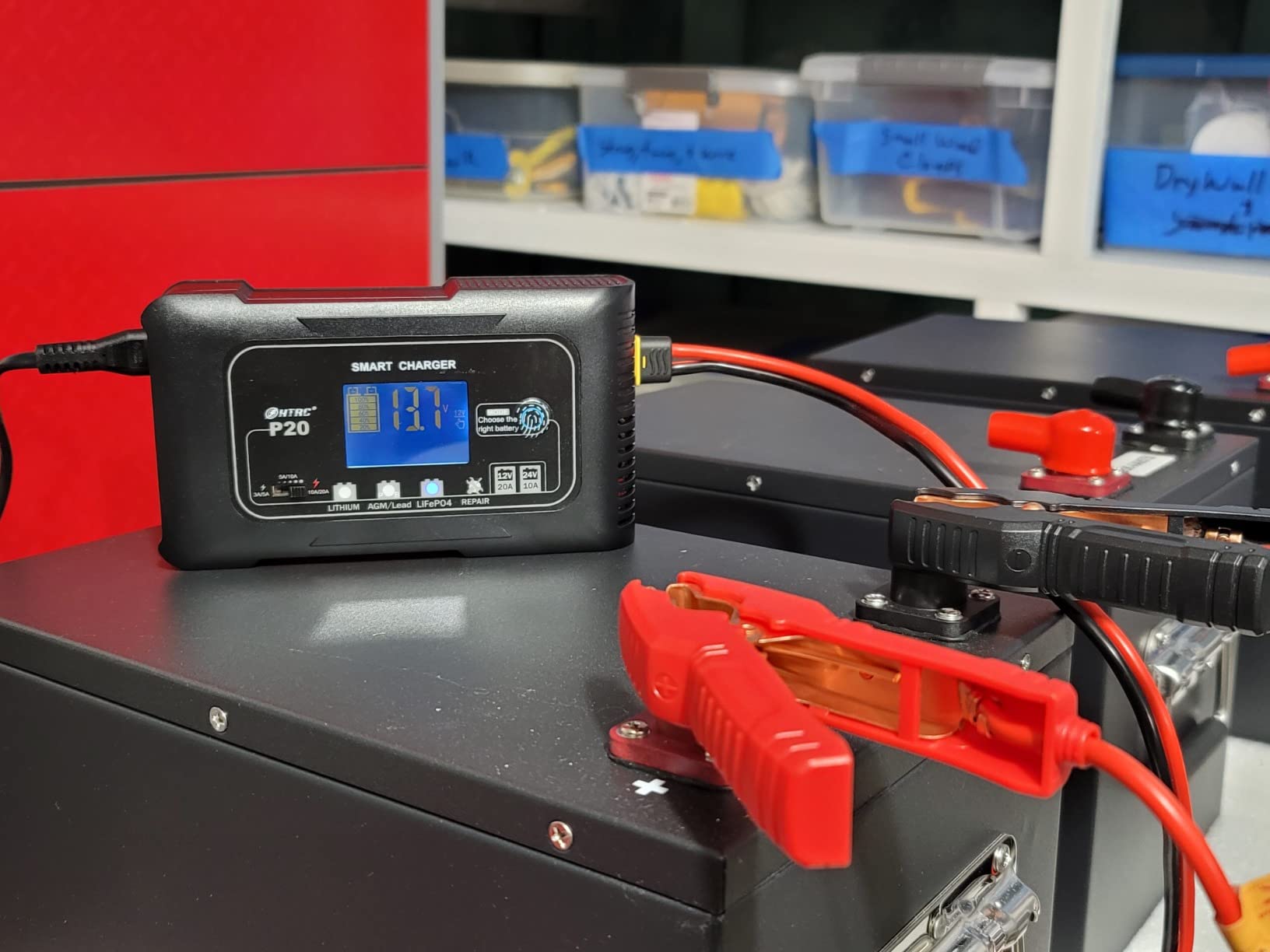
This is the most widely used shop unit in the group, and a long review base from mechanics and off-grid owners credits it with a desulfation function that genuinely works. Several shop owners report replacing three separate chargers with one of these.
Seven-level intelligent charging with temperature compensation handles the charge curve, and the large LCD shows voltage, current, internal temperature and charge percentage along with summer and winter modes.
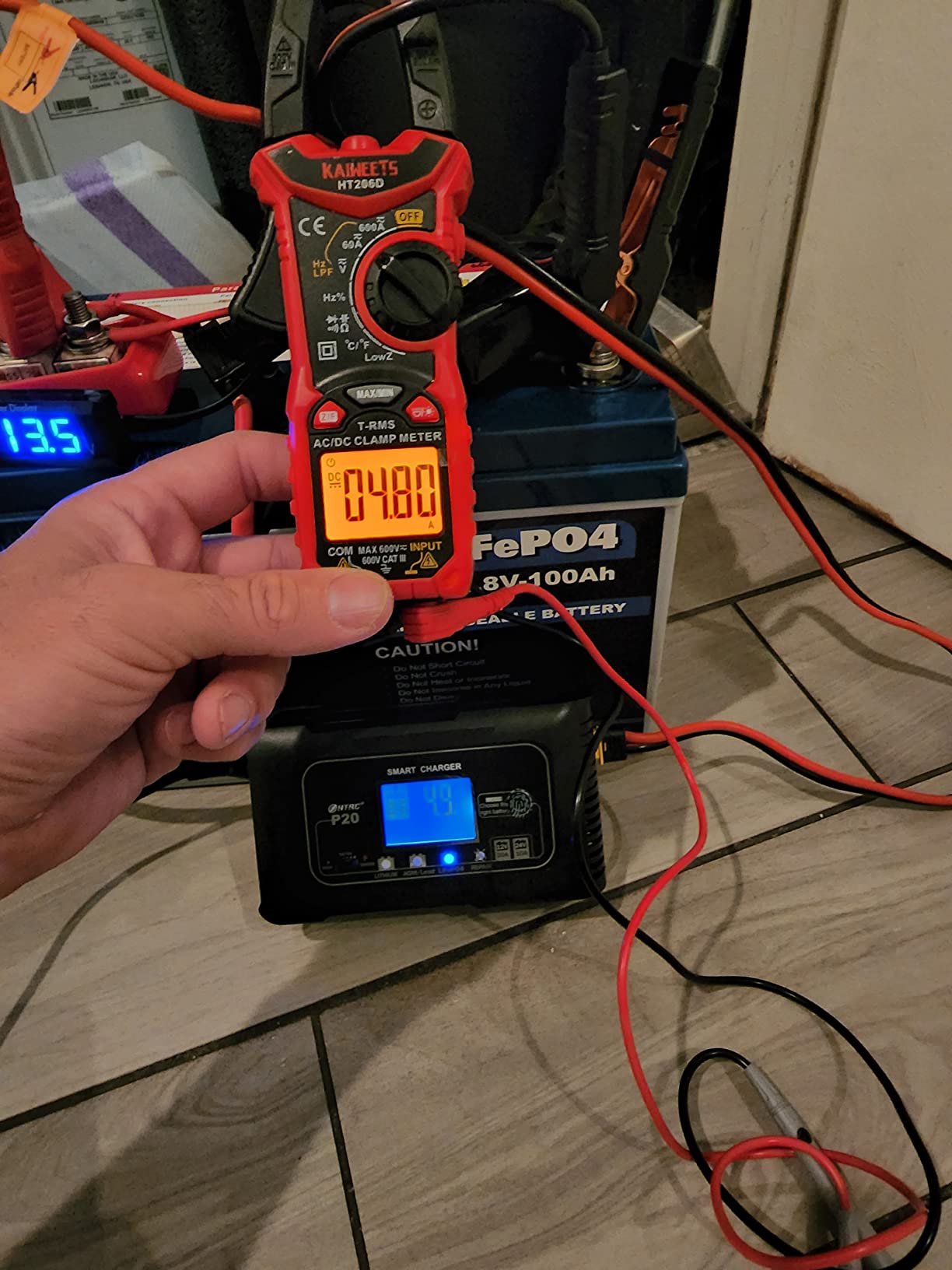
Output is 20A at 12V and 10A at 24V, with automatic detection of the system voltage so there is no manual selection step. Automatic trickle charging kicks in once the battery is full, with pulse desulfation available along the way.
At 1.2 pounds it is unusually light for a 20A charger, and the 13 ft cord gives real reach from a wall outlet to a battery compartment.
Who should buy it
It suits people with mixed battery types and no patience for menus. The chemistry list is broad, covering lithium, LiFePO4 and lead-acid chemistries including AGM, gel, flooded, VRLA and SLA.
It also suits anyone restoring neglected batteries, since the recovery mode is one of the more proven in this group.
What to watch out for
There is no true trickle setting and the lowest current is around 2A, which can overcharge small sealed SLA or UPS batteries. Owners of those packs should use a lower-current maintainer instead.
The cooling fan runs loudly and continuously, and a few units reported display failure within a year along with hard-to-reach support. That is worth remembering given how long the unit is expected to last.
5. LiTime 12V 20A – Best for LiFePO4 Deep Cycle Banks
LiTime 12V 20A Lithium Battery Charger, 14.6V Output AC-DC, 0V Activation
20A at 14.6V DC
0V activation for sleeping BMS
Anderson 50A connectors
2-year warranty
Pros
- Genuine 20A output verified with a clamp meter
- 0V activation reliably wakes sleeping BMS-protected packs
- Anderson 50A connectors lock securely for permanent wiring
- Two-year warranty with responsive technical support
- Off-grid users report major run-time gains
Cons
- Not waterproof so it cannot be used onboard a boat
- Fixed 14.6V output cannot be lowered for lower BMS ceilings
- LED indicators only with no numeric display
This is the specialist pick for lithium house banks, and it charges at a fixed 14.6V, which is the correct absorption ceiling for a 12.8V LiFePO4 pack. Owners with solar and off-grid systems report major run-time improvements after switching to it.
The standout feature is 0V activation, which wakes deeply discharged or sleeping BMS-protected lithium batteries. That is a real problem with lithium packs that read as dead to a conventional charger.
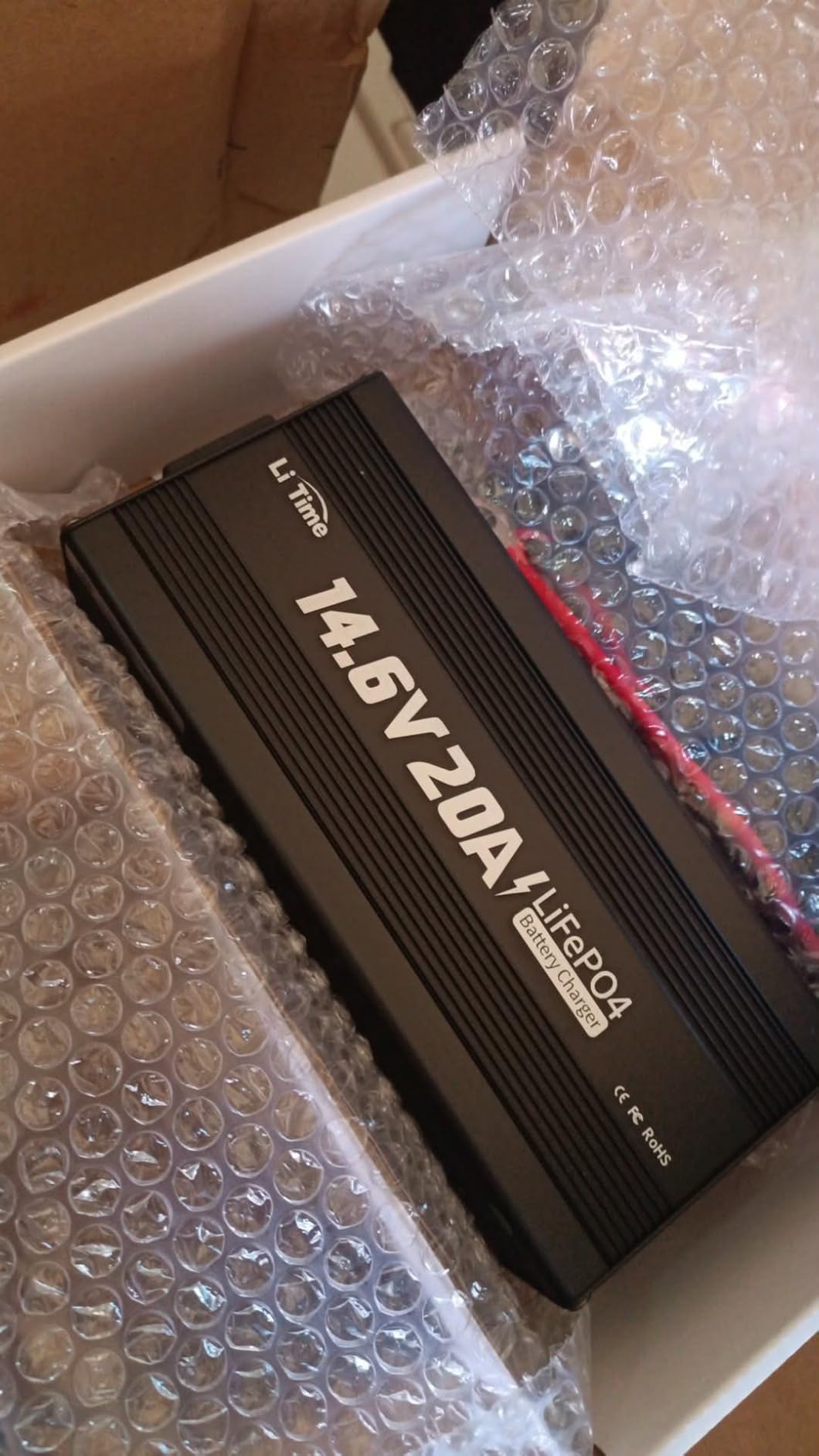
Charge control follows a constant current and constant voltage profile, then transitions to float and cut-off on its own. The aluminium alloy housing with a cooling fan keeps it stable at full output.
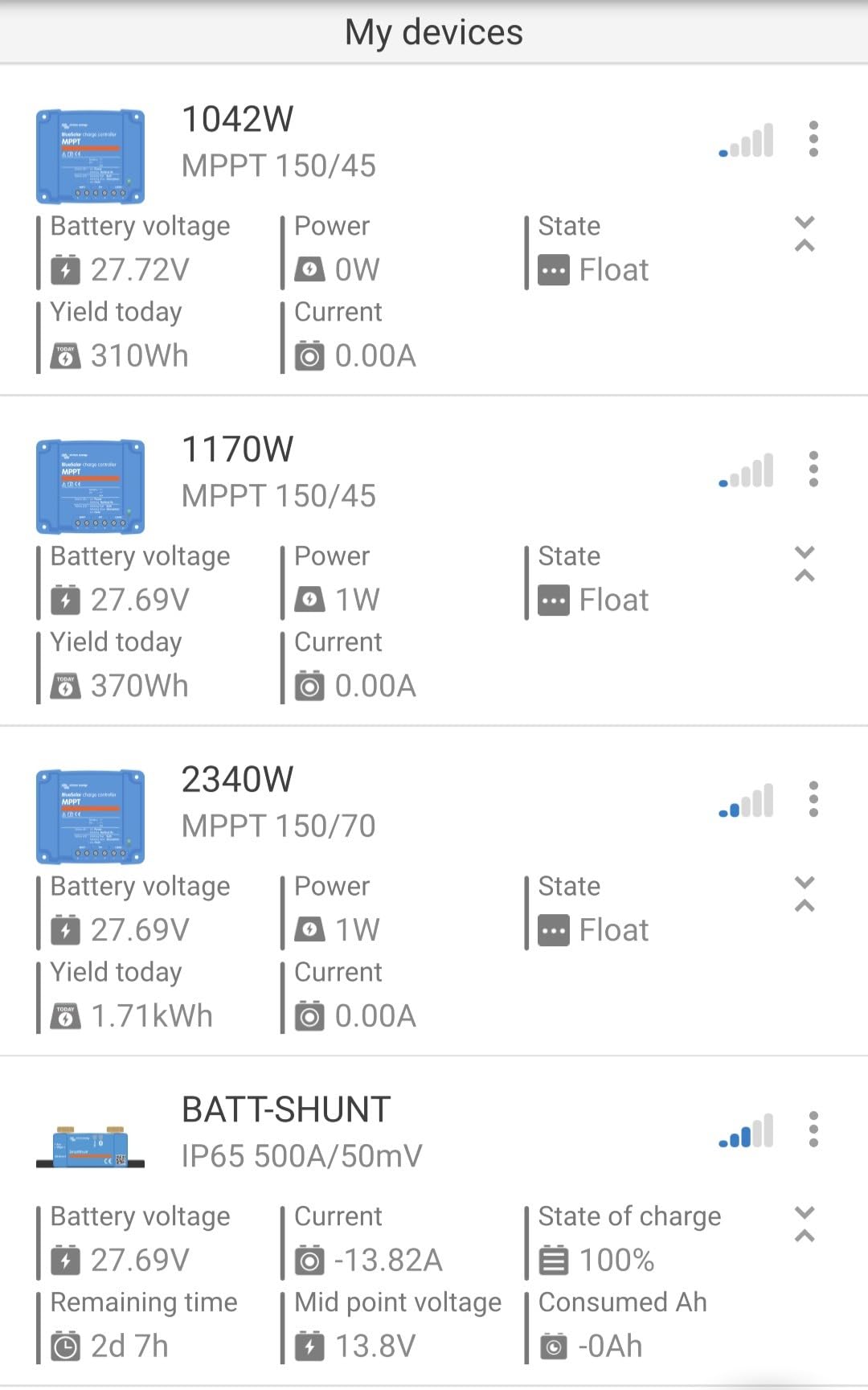
Anderson 50A and M8 terminal connections give a secure positive click, which makes it a good choice for a semi-permanent installation off-grid rather than a clamped-on garage top-up.
Why lithium owners choose it
It solves the two problems lithium owners hit most often: sleeping battery management systems and undersized chargers. Twenty amps is the right band for a 100Ah pack, and the 0V wake removes the usual dead-battery dead end.
Owners also like that it runs quietly enough to leave on in a garage while still being audible.
What to watch out for
It is not waterproof and the manufacturer states plainly that it is not for marine environments, so never mount it on a boat or near a trolling motor battery. The fixed 14.6V output also cannot be lowered, which conflicts with some third-party batteries whose BMS caps charging below that voltage.
There are no adjustable parameters and no app connectivity, and LED-only indicators mean you cannot read live voltage or current.
6. ECO-WORTHY 12V 5A – Best Compact Maintainer
ECO-WORTHY 12V 5A Battery Charger for Lead Acid, Lithium (LiFePO4) Battery
12V lead acid and LiFePO4
5A output
Under 1 lb
LCD display
Pros
- Covers both lead acid and LiFePO4 in one compact unit
- Weighs under 1 lb so it is easy to store between uses
- Clips plus O-ring terminals plus SAE connector for permanent installs
- Maintenance mode keeps batteries topped up over long storage
- 81 percent of ratings are five stars
Cons
- 5A output is modest for large deep cycle banks
- Repair mode is not as deep as dedicated reconditioning on higher-current units
- No Bluetooth or app monitoring despite the LCD
This is the small-unit answer, and its job is keeping a battery topped up rather than recovering a dead one. At 5 amps it sits at 10% of a 50Ah deep cycle battery, which is the correct band for that size.
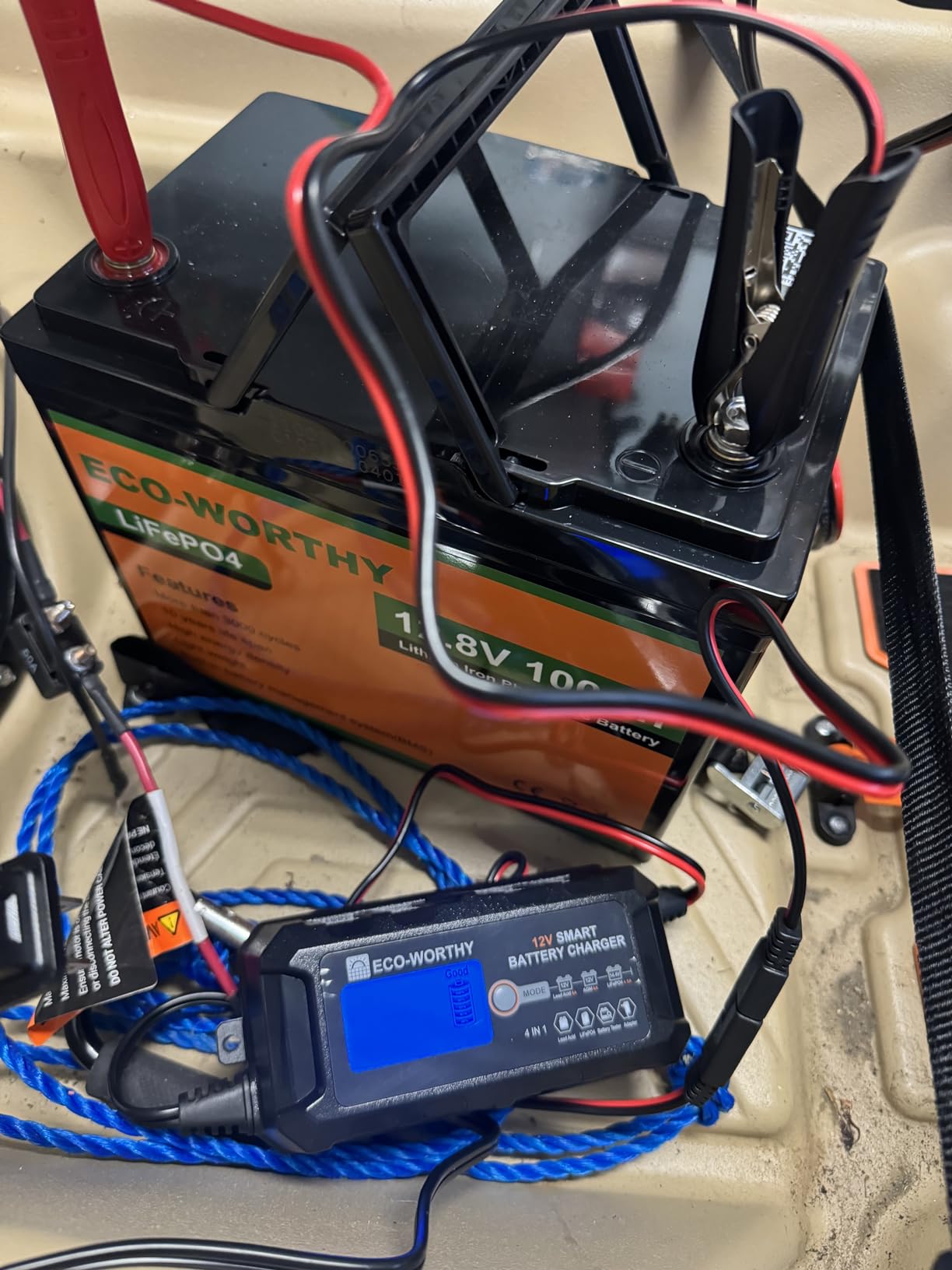
It charges both 12V lead acid and 12V LiFePO4, so a campervan owner running one chemistry does not need a second charger for the other. Fully automatic charging hands over to maintenance mode when the battery is full.
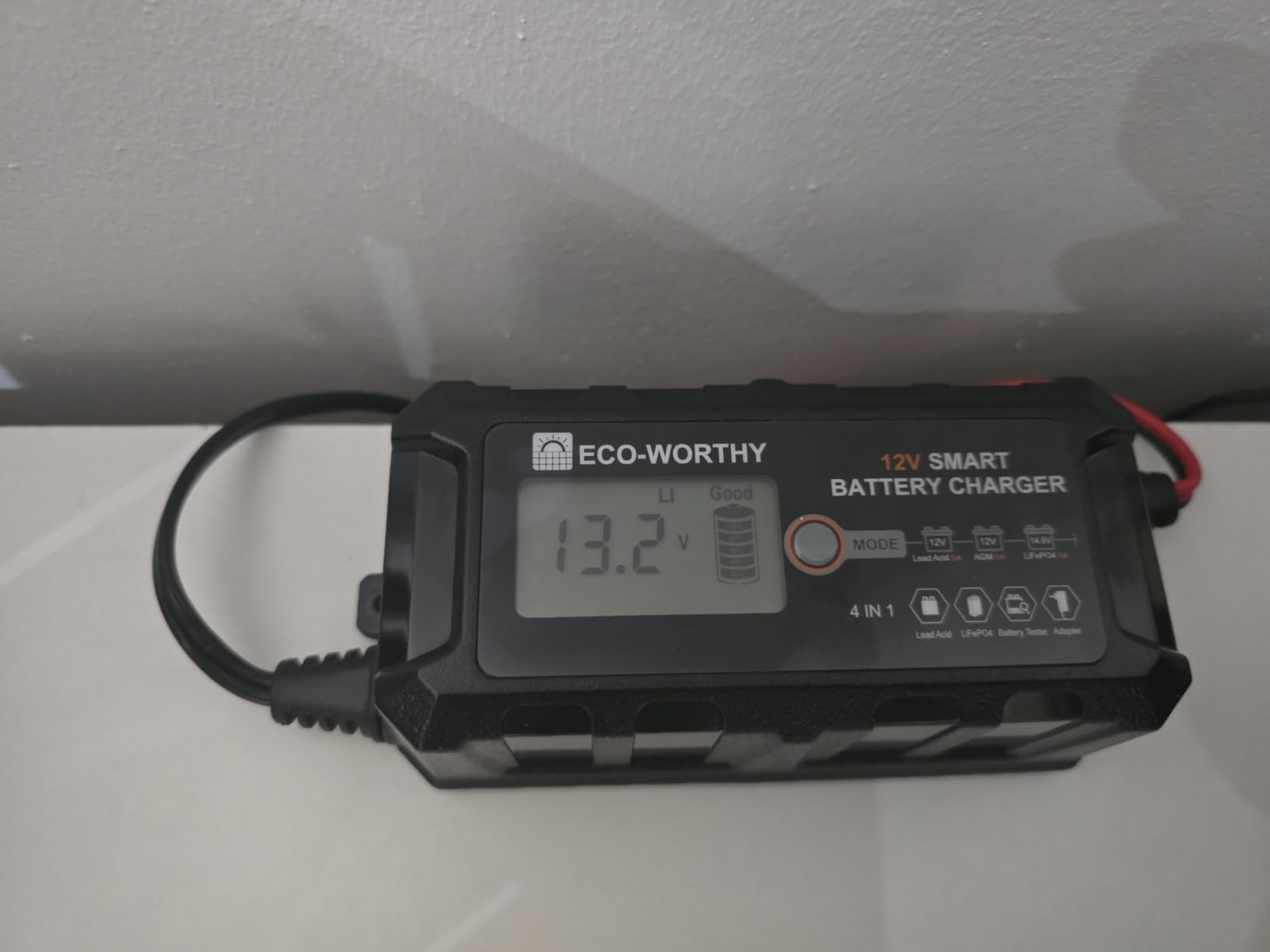
It detects low voltage, sulfation and capacity loss and prompts a repair, which is a helpful prompt even if the reconditioning itself is gentler than higher-current units. The LCD gives a simple state readout.
Connector choice is a genuine strength here. You get battery clips, O-ring terminals and an SAE connector with a 10A fuse, which is enough to wire it into a boat, a jet ski or an RV without buying extra parts.
Where it makes sense
It makes sense for seasonal storage, small deep cycle packs, and anything under about 50Ah. At under a pound it stores anywhere and travels well between the boat, the RV and the garage.
Owners consistently rate it highly, with 81 percent of reviews at five stars, and cite the range of connection options as the reason it installs easily.
Where it does not
It is not a recovery tool. Five amps against a 200Ah bank is a long wait, and the desulfation prompt will not do what a 20 amp reconditioning mode does. If your battery is deeply discharged, step up in current.
There is also no app or Bluetooth monitoring despite the LCD, so remote checking is not possible.
7. Huiaipaic 12A – Budget Unit With Four Charge Modes
12-Amp Smart Battery Charger,Lithium,Lead-Acid(AGM/Gel/SLA) Pulse Repair Car Battery Charger,Trickle Charger,Maintainer/Deep Cycle Charger,12V/10A | 24V/7.5A for Automotive,Boat,Motorcycle,Lawn Mower
12A at 12V / 7.5A at 24V
Four charge modes
7-step sequence
2-year warranty
Pros
- Covers lithium AGM gel flooded and deep cycle chemistries
- 12A output in the useful charging band
- LCD reports voltage current cumulative charge and temperature
- Temperature-adjusted charging for summer and winter
- Pulse repair mode recovers neglected batteries
- Two-year manufacturer warranty
Cons
- Mid-pack 4.3 star rating with a 7 percent one-star share
- Generic brand with a less established long-term reliability record
- Clamp-only connection with no ring terminals supplied
- 24V output drops to 7.5A
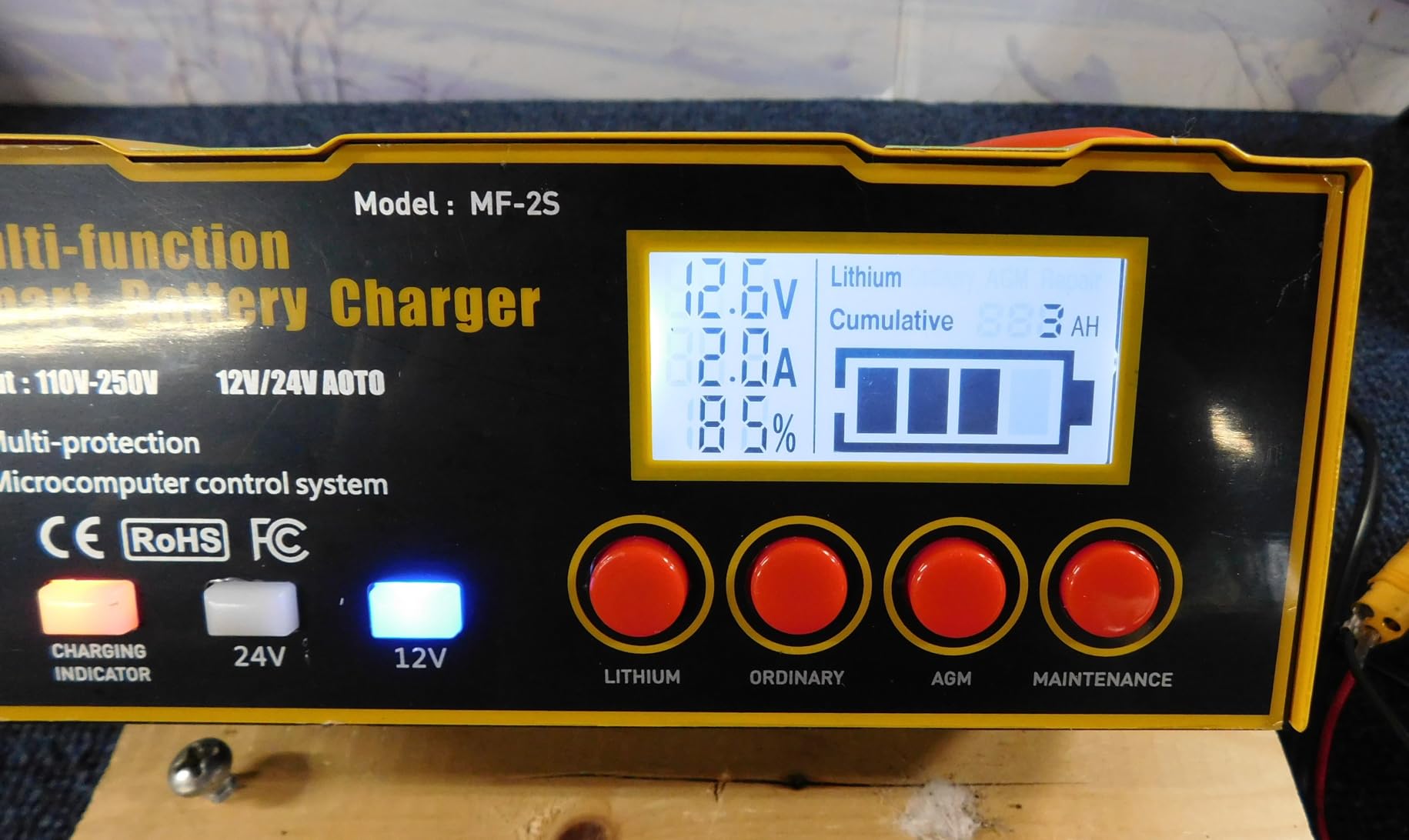
This is the value pick for someone who needs a genuine 12 amp output across several chemistries. The four modes cover ordinary lead-acid types, lithium, AGM and EFB, plus a maintenance pulse repair mode.
Twelve amps fits a 100Ah deep cycle battery at the lower end of the recommended band, so an overnight top-off is realistic for most owners. Charging follows a seven-step sequence with automatic battery diagnosis.
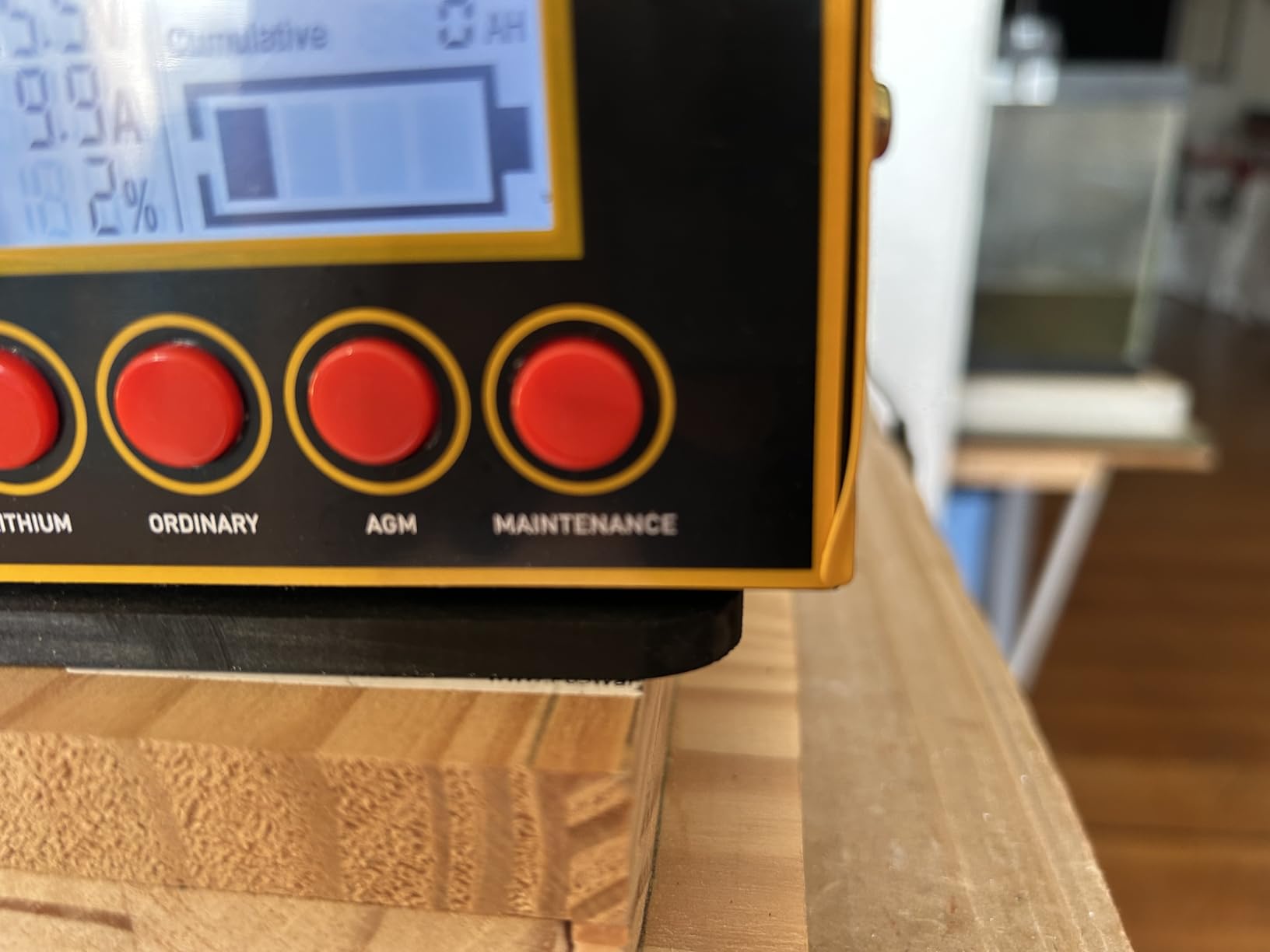
The LCD is more detailed than most at this level, reporting voltage, current, cumulative charge and internal temperature. Temperature-based current adjustment with summer and winter modes is a nice touch for a unit that may live in a garage or a shed.
Protection is handled by the microcontroller, covering reverse polarity, spark, overcharge, low voltage, over-current, short circuit and overheating. The pulse repair cycle runs for roughly an hour before returning to automatic charging.
Who it suits
It suits a garage or workshop user who wants real current and several chemistry options without stepping up a tier. The two-year manufacturer warranty is longer than some competitors in the group.
For a 100Ah bank, 12 amps is a sensible overnight recovery current.
Who should look elsewhere
It sits mid-pack on rating in this group at 4.3 stars, with about 7 percent one-star reviews, and a generic brand with a shorter reliability record. If you are installing a charger permanently, the clamp-only connection with no ring terminals is a real limitation.
Output also falls to 7.5A at 24V, so treat it as a 12V unit first.
8. Battery Tender 15A – Best for Long-Term Storage
Battery Tender 15 AMP Battery Charger and Maintainer – 12V Switchable 15 AMP / 8 AMP / 2 AMP – Selectable Chemistry Standard AGM Gel – LCD Display – 022-0234-DL-WH
Switchable 15A 8A and 2A
Standard AGM gel and lithium modes
ISM adaptive charging
5-year warranty
Pros
- Five-year warranty from a long-established brand
- Three selectable amperage levels from 2A maintenance to 15A bulk
- Chemistry modes for standard AGM gel and lithium
- Floats automatically after full charge to prevent overcharging
- ISM adaptive charging resumes full output when voltage dips under load
Cons
- Single bank only so multiple batteries need separate charging
- Not water resistant for onboard marine installation
- 3.5 lb is heavier than most 15A competitors
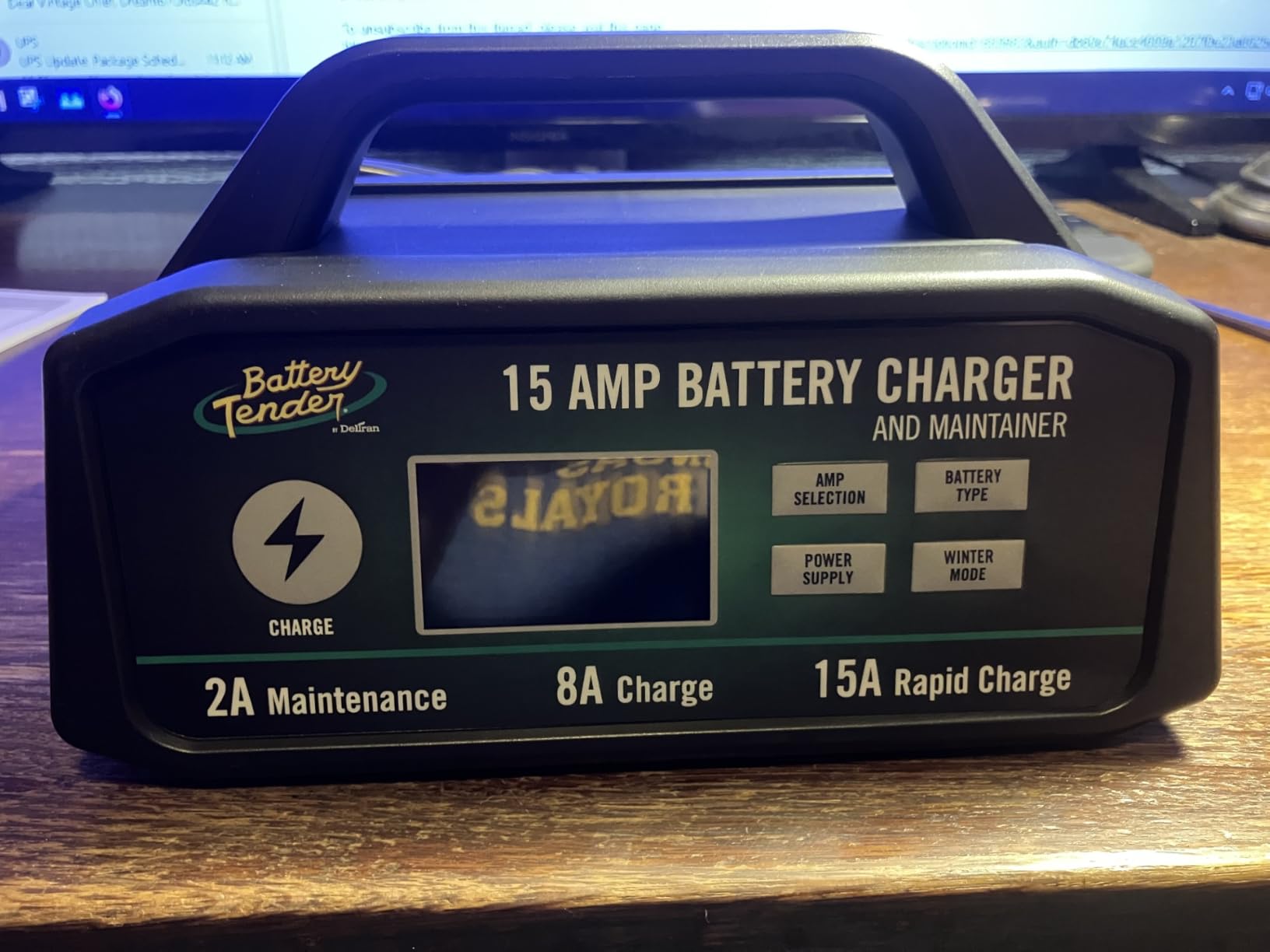
This is the storage specialist, and the three switchable current levels are what make it work for deep cycle use. Fifteen amps handles a real recovery charge, while two amps is a proper maintenance trickle for a bank that sits between outings.
Chemistry selection covers standard, AGM, gel and lithium compatibility, and the unit drops into float mode automatically after a full charge. That float handover is the key feature for anything stored over winter.
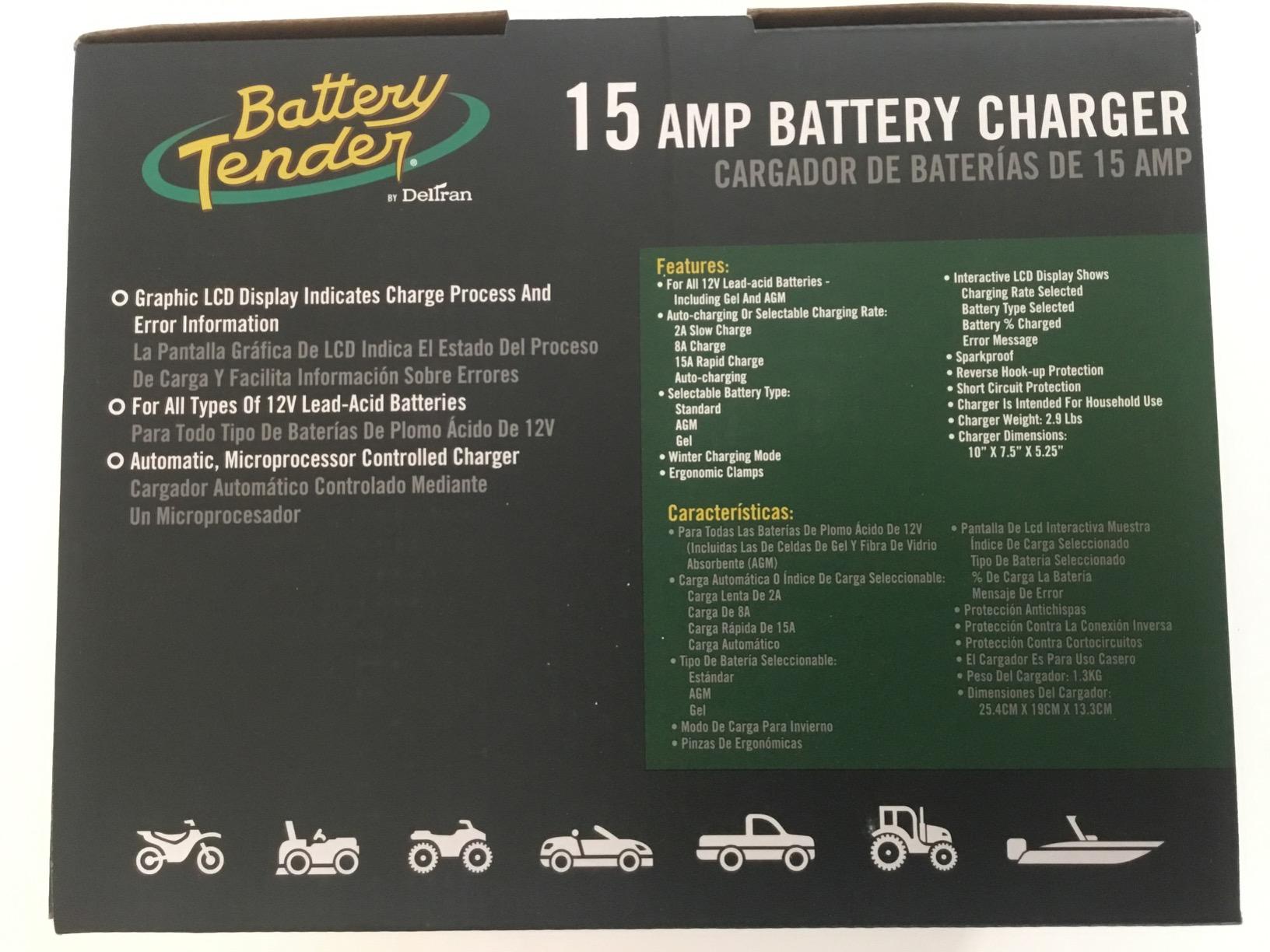
ISM adaptive charging monitors the battery under load and resumes full output if voltage drops, which matters in a boat or an RV where a fridge draw can pull voltage down during a storage charge.
The interactive LCD shows selected charge rate, battery type, percentage charged and error messages, and a solid-state two-colour LED indicator gives a quick state at a glance. The connection is spark-proof with automatic reverse polarity detection.
Why storage owners keep it
The five-year warranty and lifetime customer service are the strongest warranty terms in this roundup, and durability is what owners actually reward. RV and boat owners have used these units for years of seasonal storage without drama.
At 3.5 lb with a carry handle, it moves easily from the garage to the boat.
Where it is not the answer
It handles one battery at a time. If you have a house bank with two or more deep cycle batteries, you need either sequential charging or a genuine multi-bank unit, and shared-output multi-bank chargers need careful reading before you buy.
It is also not water resistant, so it cannot live permanently on a boat. Our [onboard multi-bank charger guide](https://www.pwice.com/best-marine-onboard-multi-bank-battery-chargers/) covers that category properly.
9. Haisito 16A – Best for 6V, 12V and 24V Flexibility
Haisito 16-Amp Smart Battery Charger (6V/12V/24V), Fully Automatic Trickle Charger Maintainer & Desulfator for Car Boat RV – Supports Lithium LiFePO4, AGM, Gel, Deep Cycle Lead-Acid Batteries
16A max current
6V 12V and 24V support
10-stage charge with trickle mode
1.3 lb
Pros
- Covers 6V 12V and 24V alongside the other 12V-focused units here
- 10-stage charging with automatic trickle mode for months-long storage
- Temperature compensation across -14F to 140F
- Bright LCD readable in direct sunlight
Cons
- Mid-pack 4.1 star rating with an 11 percent one-star share
- Clamp connection only with no ring terminals
- Cannot activate a fully dead battery and is not a jump starter
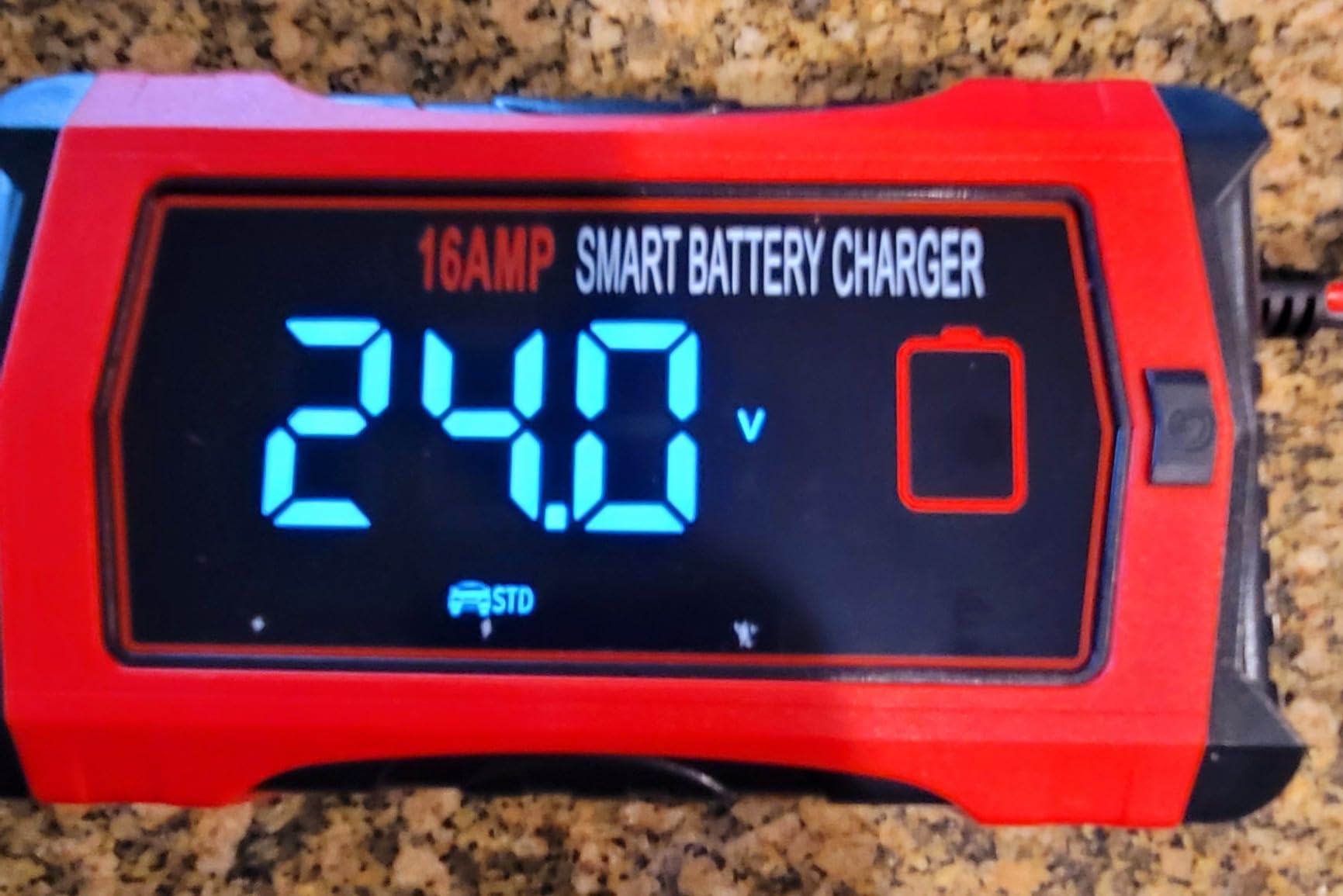
This is the voltage-flexibility pick, and covering 6V, 12V and 24V in one unit is unusual at sixteen amps. Golf cart owners with 6V packs in series and 24V commercial packs can use the same charger.
Ten-stage intelligent charging hands over to an automatic trickle charge mode after a full charge, which is the right behaviour for a battery stored through the off-season. Pulse repair and desulfation address sulfation and acid stratification.
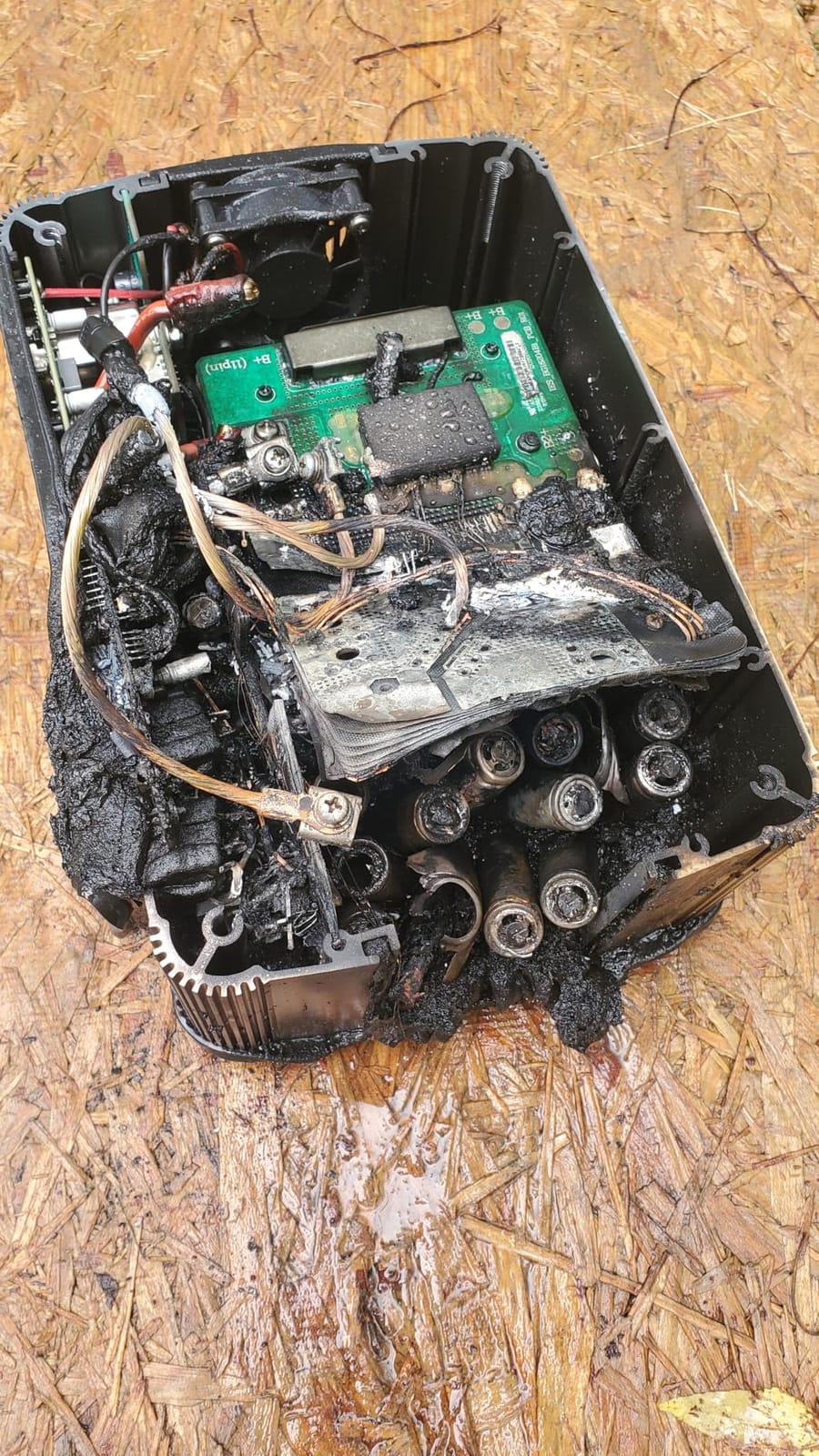
The built-in temperature sensor adjusts charging across a wide range, from minus 14 degrees Fahrenheit to 140. That is a wider compensation window than most competitors claim, and it matters if the charger sits in an unheated shed or a hot trailer.
Eight-fold protection covers spark-proofing, reverse polarity, over-current and short circuit, and the high-brightness LCD stays readable in direct sunlight.
Where it fits
It fits mixed-voltage households, equipment fleets and anyone who wants a single unit instead of a shelf of chargers. Automatic trickle mode makes it a decent storage companion for a 6V or 12V pack.
At 1.3 lb it is easy to carry between a boat ramp and a garage.
Where it does not
Its 4.1 star average with about 11 percent one-star reviews is the second lowest here, so it suits buyers who accept a less proven track record. It cannot activate a fully dead battery and it is a charger and maintainer, not a jump starter.
Note also that the listed output voltage is 6V, so check the mode you select before connecting a 12V bank.
10. ExpertPower 12.8V 5A – Smallest LiFePO4 Charger
ExpertPower 12.8V 5A Smart Charger for Lithium LiFePO4 Deep Cycle Rechargeable Batteries
14.4V at 5A
0V BMS reset
2.5 inch longest side
16 oz
Pros
- Compact and light at 16 oz so it stores or travels anywhere
- Two-stage CC and CV algorithm with a gentle 0.3-0.7A cut-off
- 0V reset recovers sleeping battery management systems
- Designed for 12V 5Ah to 50Ah LiFePO4 deep cycle packs
- Simple LED status with no menu to navigate
Cons
- 5A is slow for 35Ah and 50Ah deep cycle batteries
- Barrel jack connector needs the matching lead rather than clamps
- LiFePO4 focused so it is not a general purpose lead-acid charger
- LED indicators only with no numeric readout
This is the smallest useful charger here, and for small lithium packs it is the correct tool. At 14.4 volts and 5 amps it targets 12V LiFePO4 batteries from 5Ah up to 50Ah.
The two-stage constant current and constant voltage algorithm ends with a 0.3 to 0.7A cut-off, which is a gentle finish that small packs appreciate. It can also reset sleeping battery management systems by feeding current into a pack reading from zero volts.
There is no display to interpret and no settings to get wrong, which makes it easy to hand to someone else in the household. LED indicators show charge state at a glance.
At 16 ounces and under 2.5 inches on its longest side, it fits in a boat console or a campervan cubby without dominating the space.
Why it works for small packs
It is sized honestly. Five amps is the correct band for a 20Ah or 30Ah lithium pack, and the gentle cut-off avoids pushing a small battery past full. The same current on a 200Ah bank would be pointless.
It is sold by a brand that is an established sealed lead acid battery maker, which is some comfort for a component that sits close to the cells.
Where it is the wrong choice
It is wrong for anything above about 50Ah, where 5A means a very long wait. The barrel jack also needs the matching lead instead of standard clamps, which is an extra part to keep track of.
It is lithium-focused rather than a general purpose lead-acid charger, and the 12 percent one-star share is the highest among the 5A units. If your batteries are lead-acid and large, choose a 20A multi-chemistry charger instead.
11. FirstPower Pro 5X2 – Budget IP68 Onboard Two-Bank Charger
2 Bank Marine Battery Charger 5X2, 10A (5A/Bank) – 12V Boat Charger
10A total / 5A per bank
IP68 sealed
SLA AGM lithium and calcium modes
3-year warranty
Pros
- IP68 sealed housing built for permanent onboard installation
- Two banks charge independently with their own selectable mode
- Automatic lithium mode detection avoids working under a console
- Compact enough for tight console spaces and easy to mount
- Accessory kit includes clips connectors spare fuses and screws
Cons
- 5A per bank is low for large house banks and needs long charge times
- 120V input only so a transformer is needed in 230V countries
- Only 12V operation with no 24V support
This is the budget route to a permanently mounted onboard charger, and it is properly sealed to IP68 so it can charge continuously without you hauling batteries out of the boat.
Ten amps total splits to 5A per bank, and each bank selects its own mode from 12V SLA and AGM, 12V lithium and 12V calcium. Automatic battery-type detection saves you from crawling under a console to set switches.
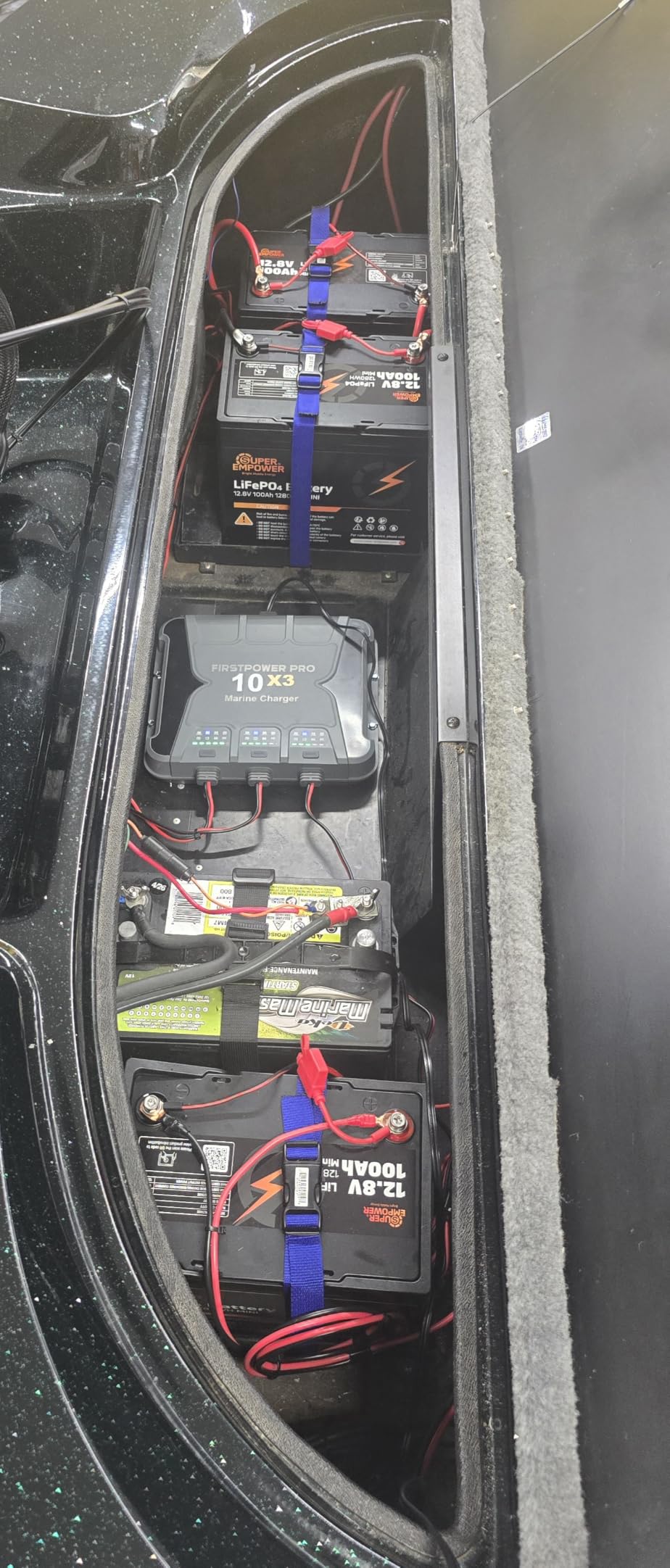
Integrated thermal compensation adjusts the charge to avoid over-charging in heat and under-charging in cold, and the five-grid power display shows 20% increments up to 100%.
The box includes two battery clips, two connectors, spare fuses, screws, a storage bag and a manual. Several owners switching from a premium brand report comparable build and display quality.
Who it works for
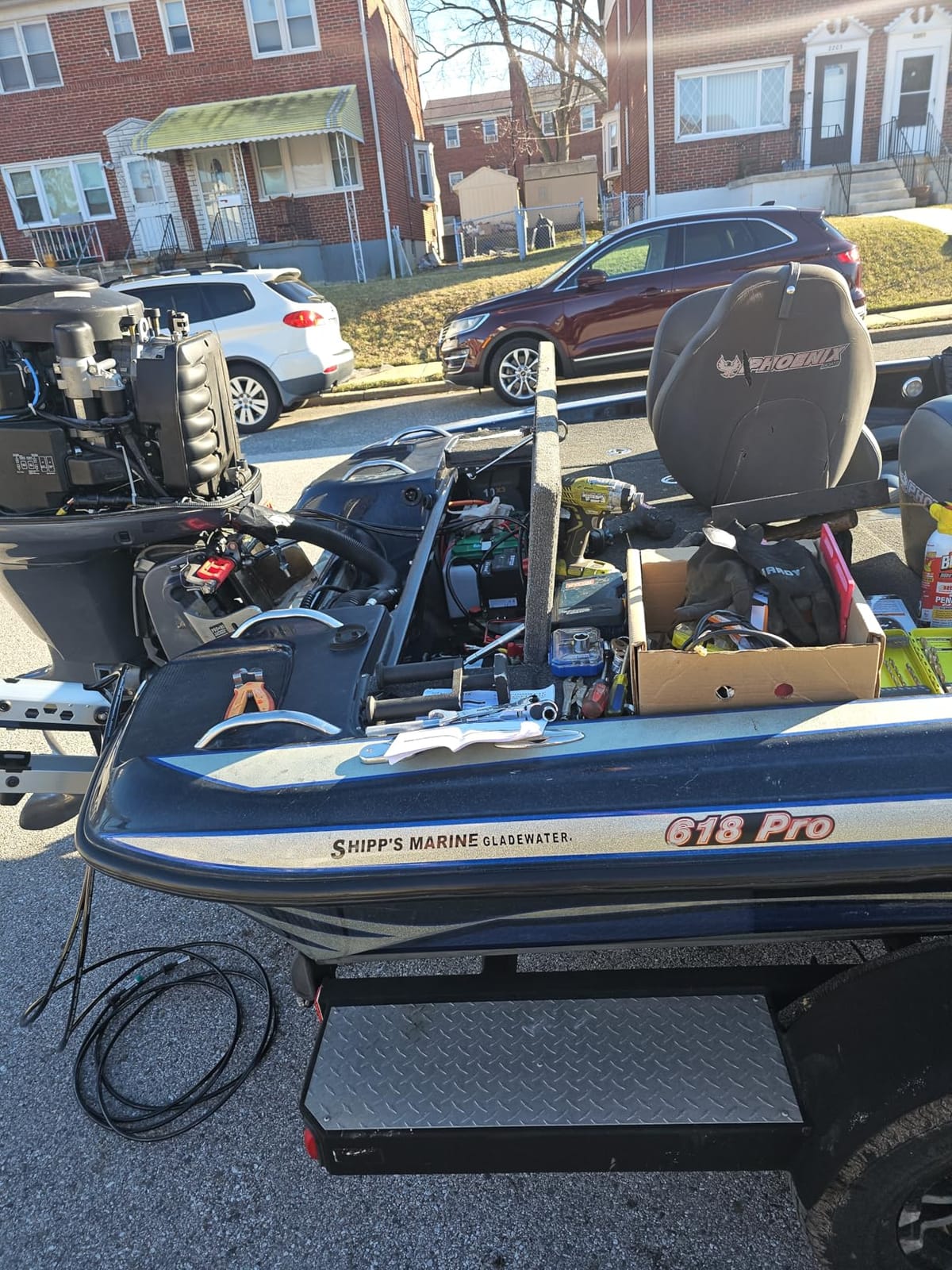
It works for small boats with a start bank and a modest house bank where 5A per bank is enough current. A trolling motor setup running one bank benefits from the sealed housing far more than from extra amps.
The three-year warranty is longer than some sealed competitors at this level.
What to consider
Five amps per bank means long charge times on large house banks, so size up if you carry serious capacity. The unit also needs a transformer in 230V countries and is 12V only.
It requires ventilation during use, which matters in a fully sealed console or locker. Our [multi-bank onboard charger roundup](https://www.pwice.com/best-marine-onboard-multi-bank-battery-chargers/) covers larger sealed options if 5A per bank is too slow.
12. SOARFLY 3-Bank 30A – Best for Three-Bank Boats
3 Bank Marine Battery Charger, 12V 30A (10A/Bank) Smart Waterproof Onboard Boat Battery Charger, Battery Maintainer & Desulfator for SLA/AGM/Lithium (LiFePO4), Calcium and Deep-Cycle Batteries
30A total / 10A per bank
3 banks
IP68 waterproof
2-year warranty
Pros
- Three independently controlled banks in one unit
- 10A per bank charges faster than 5A-per-bank onboard units
- IP68 housing withstands extended underwater submergence
- Per-bank progress lights make bank status easy to read
- Force repair mode recovers batteries below 1V
Cons
- One bank reportedly failed after about 15 months with limited support
- Only post-style clamps included and eyelet terminals were absent in one package
- 12V only with a two-year warranty
This is the pick for boats with a three-battery layout, and ten amps per bank is double what the smaller sealed onboard units deliver. Boats converting to lithium with more than two banks need exactly this kind of headroom.
Each of the three banks picks its own mode from SLA and AGM, Li-ion and calcium, and each has its own visible charge progress lighting so you can see which bank is lagging without opening anything.
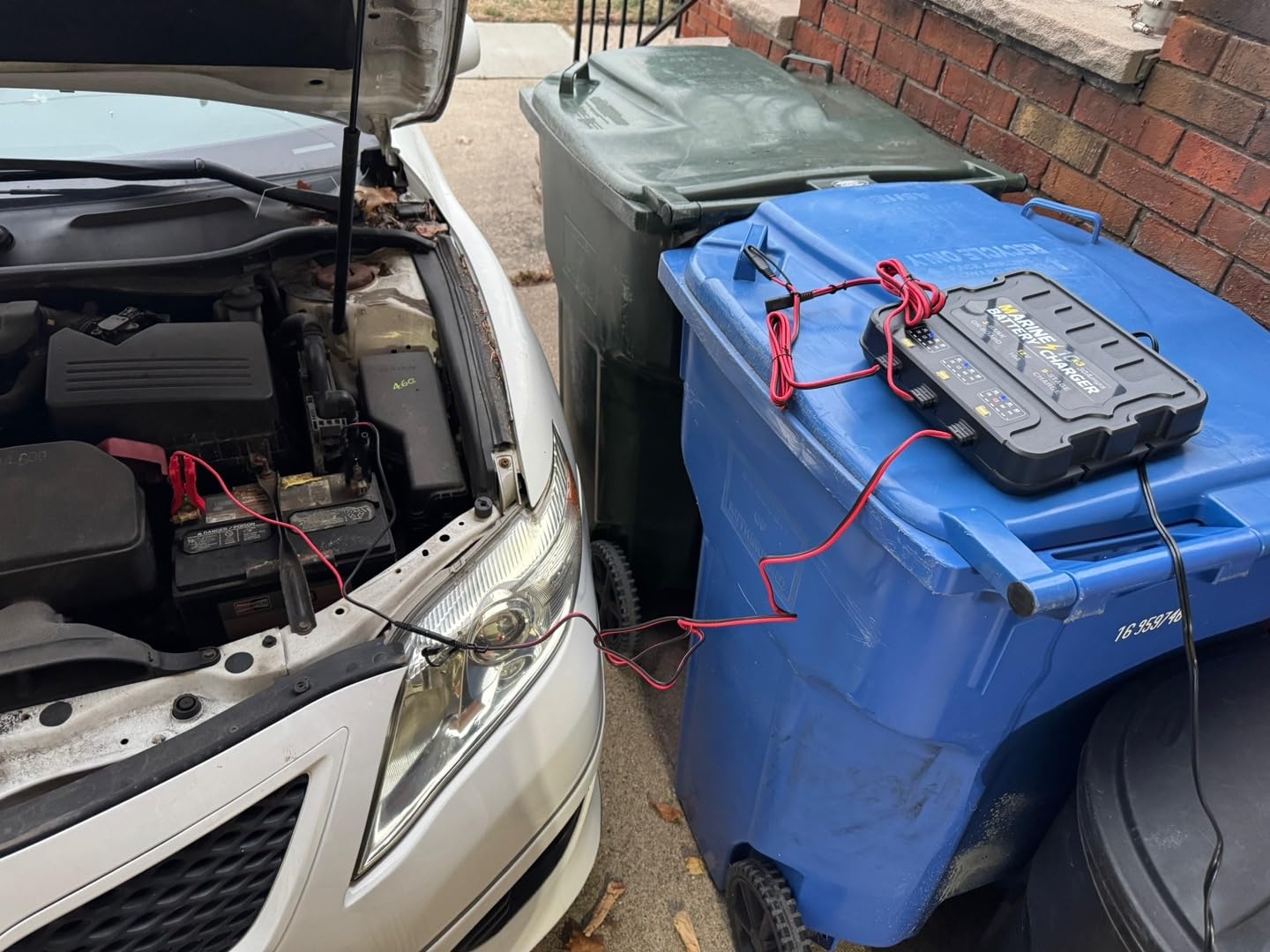
IP68 sealing is the headline claim, and one owner reports plugging it back in after an overnight flood with no damage, which is a fairly convincing field test. Force repair mode handles batteries sitting below 1V, and diagnostics flag overvoltage, battery damage, overheating and reverse connection.
It fits into the space of a smaller charger it replaced, which is a practical point for boat owners working with a tight console footprint.
Why three banks matter
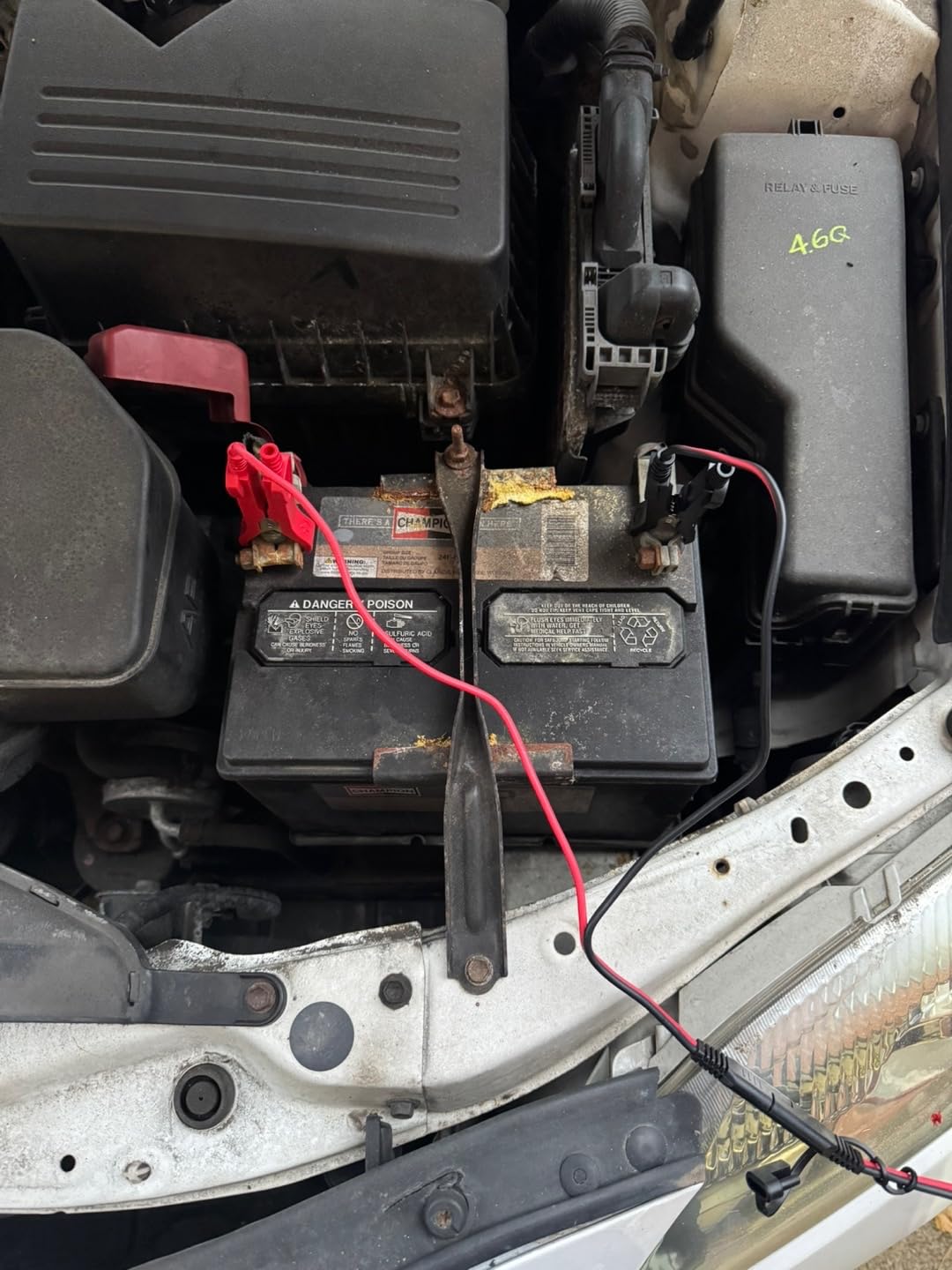
Owners of multi-battery boats generally want one charger with three cable sets rather than juggling separate units. Thirty amps across three banks keeps every battery in the correct amperage band instead of starving the third.
Several buyers compare it favourably against premium marine brands on value once you need three channels.
What to weigh before buying
One bank reportedly failed after about 15 months, and the seller’s after-sales support was limited, so a two-year warranty on a permanently installed device is thinner than we would like. Confirm the box contents carefully, since one regional package included only post-style clamps with no eyelet terminals.
It is 12V only. If you need 24V, the Haisito 16A elsewhere in this list covers that instead.
How to Choose a Deep Cycle Battery Charger in 2026
Match charger amps to amp-hour capacity
Choose a charger rated at roughly 10% to 20% of your battery’s amp-hour capacity. That band is wide enough to be forgiving and narrow enough to prevent heat damage, and it is the single rule that prevents most charging mistakes.
Worked example: a 100Ah deep cycle battery wants a 10 to 20 amp charger. A 50Ah pack wants 5 to 10 amps. A 200Ah house bank wants 20 to 40 amps, which is where a three-bank unit or a higher-output bench charger starts to make sense.
Charge time math without a spreadsheet
Divide amp-hour capacity by charger amps, then add roughly 30% for losses, the absorption stage and the taper at the end. A 10 amp charger on a 50Ah battery is about 7 hours, and a 20 amp charger on a 100Ah battery is about 7 hours too.
Charge time scales the same way for everything else. A 5 amp charger on a 100Ah pack needs roughly 26 hours, while a 20 amp charger on a 200Ah bank needs about 13 hours. Overnight top-offs are only realistic when the charger sits in the 10% to 20% band.
Chemistry support and the 14.6V ceiling
Confirm the charger has a profile for your actual chemistry, including a real LiFePO4 mode if you run lithium. A lead-acid profile pushes too high a voltage for lithium, and lithium managers online are blunt about chargers set up for flooded cells damaging a LiFePO4 pack.
The ceiling that matters is 14.6V. Lead-acid is typically taken to about 14.4V in absorption, and LiFePO4 tolerates up to 14.6V but not more, which is why the lithium-specific chargers in this list are worth the extra care on battery choice.
How many banks you actually need
Count your batteries, not your battery types. A single bank means one cable set and one charge current, and multi-battery setups need either a true multi-bank charger or sequential charging one battery at a time.
Read the output sharing carefully. A unit rated 20A total across two banks delivers 10A per bank, so a 30A rating across three banks gives 10A each. Shared output is where most disappointments in this category come from.
Onboard marine installs vs portable chargers
Install a sealed unit if the battery stays in a wet boat or an outdoor RV. Look for an IP68 enclosure, anti-vibration mounting, and clear guidance on whether the charger is safe for permanent mounting. A bench charger in a dry cabin is fine for a battery you bring out.
Fuse the positive lead close to the battery, size cable gauge to the run length and current, and use ring terminals rather than clamps for anything permanent. Our [car battery charger roundup](https://www.pwice.com/best-car-battery-chargers/) covers general charger selection if the boat is not the use case.
Maintainer, recovery charger or both
A maintainer holds a full battery at low current, usually 1 to 2 amps, and is the right tool for storage. A recovery charger pushes real current in bulk and absorption, which is what a deeply discharged bank needs. Most deep cycle owners end up owning one unit that does both through selectable current.
Also consider temperature. Cold weather charging benefits from a charger with a temperature sensor and a winter mode, which is why our [cold weather charger guide](https://www.pwice.com/best-car-battery-chargers-for-cold-weather/) is worth a read if you store batteries through winter.
Deep cycle versus starter batteries
A starter battery is built for a short, huge burst of current, and a deep cycle battery is built for a long, low draw. They charge with the same multi-stage profile, but the sizing math is different: deep cycle capacity in amp-hours is what determines the charger, not cranking amps.
Charging a deep cycle battery with an ordinary automotive charger is not automatically harmful if the charger has a deep cycle or AGM setting, but a fixed high-current charger without chemistry selection will cook a gel or lithium pack. That is the practical answer to whether deep cycle batteries need a special charger.
Frequently Asked Questions
What charger to use for a deep cycle battery?
Use a multi-stage smart charger with a deep cycle or chemistry-specific mode, rated at about 10% to 20% of your battery’s amp-hour capacity. For a 100Ah deep cycle bank that means a 10 to 20 amp charger. Our best overall pick is the TowerTop 2/10/25A, which also offers a 2A setting for storage and 25A for larger banks.
Do you need a special battery charger for deep cycle batteries?
You need a charger that offers a deep cycle, AGM, gel or LiFePO4 profile and a selectable current, rather than a basic fixed-output automotive charger. The special part is the chemistry selection and the bulk, absorption and float stages, not a different plug. A maintainer with those modes works well for a battery that is mostly stored.
How many amps is best to charge a deep cycle battery?
Aim for 10% to 20% of the battery’s amp-hour capacity, so a 100Ah deep cycle battery wants a 10 to 20 amp charger. Stay above roughly 10% or charging takes many hours, and stay below about 20% to avoid excess heat and gas in flooded lead-acid cells.
Should I charge my deep cycle battery at 2 or 10 amps?
It depends on the size and the job. Two amps is a maintenance current for a stored battery and is right for a small pack. Ten amps is a working charge rate that fits a 100Ah deep cycle battery and will bring it up in roughly 13 hours from empty. Match the setting to the battery, not the other way round.
What is a good deep cycle marine battery charger?
A sealed multi-bank unit with an IP68 enclosure, per-bank chemistry selection and at least 5A per bank is the right answer. The NOCO GENPRO10X2 gives two independent banks at 10A each with IP68 sealing, and the SOARFLY 3-Bank 30A adds a third channel at 10A per bank for larger layouts.
What is the best battery charger for an RV?
For an RV house bank, a 10 to 20 amp charger per 100Ah is the sizing rule, with float mode for storage. The Battery Tender 15A with switchable 15A, 8A and 2A output is a strong single-bank choice, while a sealed two-bank unit such as the NOCO GENPRO10X2 covers a house bank plus starting battery without a shore power run.
Do deep cycle batteries need a special charger?
They need a charger with a deep cycle charge profile, chemistry selection and a float stage. Most quality smart chargers cover deep cycle batteries without a dedicated label, but fixed-output automotive chargers are poor choices because they lack the absorption and float stages deep cycle batteries rely on.
What’s the best way to charge a deep cycle marine battery?
First, size the charger at 10% to 20% of amp-hour capacity. Second, match the chemistry mode to the battery, including LiFePO4 if applicable. Third, install a sealed onboard unit and fuse the positive lead near the battery. Fourth, let the charger complete bulk, absorption and float on its own rather than cutting it off early.
Can I charge a LiFePO4 deep cycle battery with a lead-acid charger?
Only if the charger has a dedicated LiFePO4 profile. A lead-acid profile drives a higher absorption voltage than lithium is designed for, and owners report that chargers set up for flooded cells can damage a LiFePO4 pack. The LiTime 12V 20A runs a correct fixed 14.6V lithium profile with 0V BMS activation.
The Verdict: Who Should Buy Which Charger
The TowerTop 2/10/25A is our pick for the best battery chargers for deep cycle batteries overall, because four selectable currents from 2A to 25A plus desulfation and repair modes cover nearly every deep cycle job in a single unit. Get the Haisito 20A if you want the most current and the clearest live data for the money.
Buy the NOCO GENPRO10X2 for a permanently installed boat or RV, the SOARFLY 3-Bank 30A if you run three batteries, and the FirstPower Pro 5X2 when two banks at 5A each is enough and you are working to a tighter budget. Lithium owners should go with the LiTime 12V 20A for its correct 14.6V profile and 0V activation, while the ExpertPower 5A covers small packs. The Battery Tender 15A remains the storage answer thanks to its switchable 15A, 8A and 2A output and five-year warranty.
Whatever you choose, size it at 10% to 20% of your amp-hour capacity, confirm a real LiFePO4 mode if you run lithium, and check the bank count against the number of batteries you actually own. This roundup was updated for October 2026, and every pick above carries a current-year spec check.