
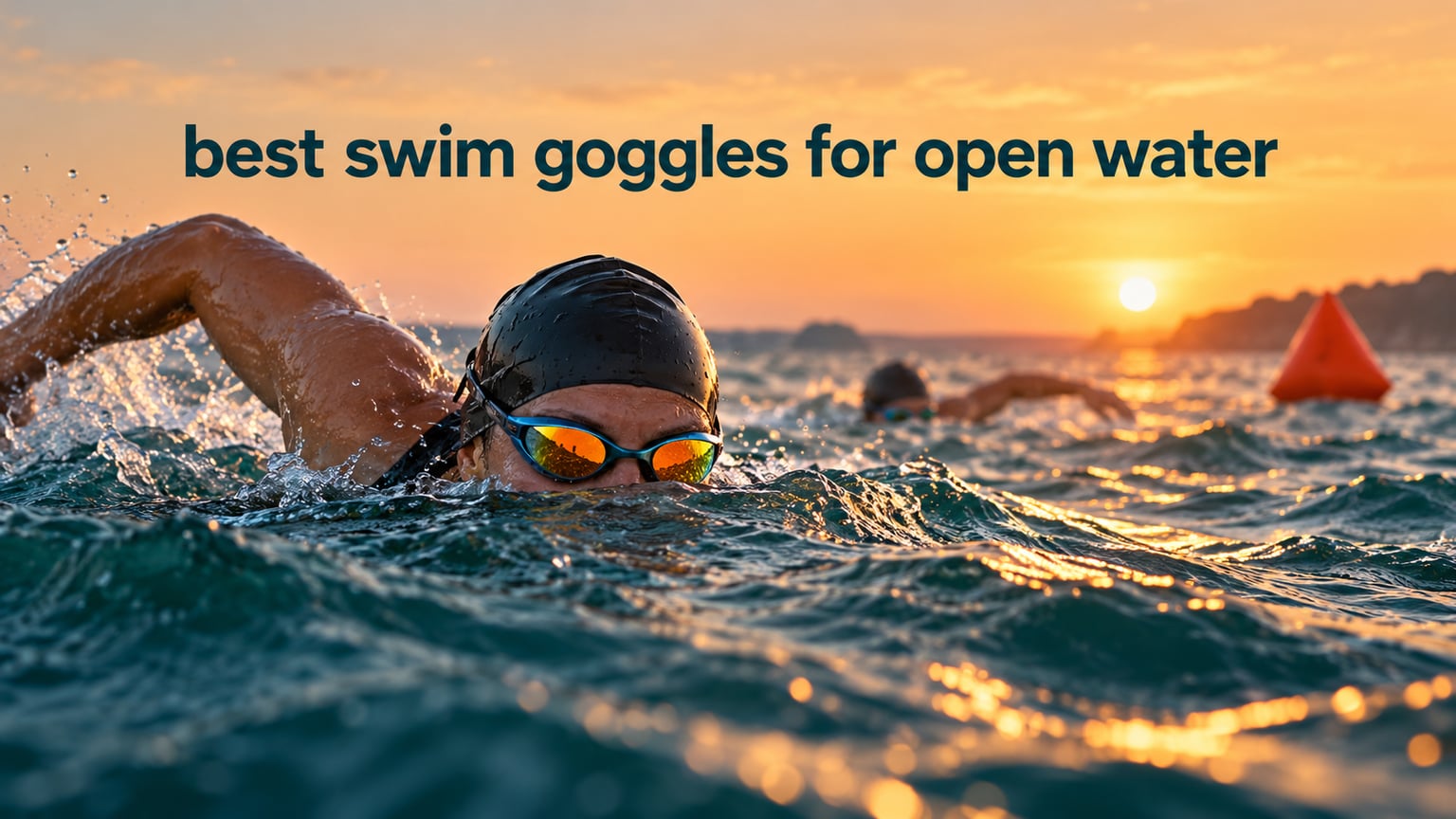
Open water goggles beat pool goggles at three jobs: seeing buoys and other swimmers in your peripheral vision, cutting glare off the surface, and holding a soft silicone or custom-shaped gasket against your face for hours. Those three attributes decide everything in this roundup, and after putting 12 pairs through lakes, choppy bays and long training sets, the ZIONOR G1 Polarized is the one we kept reaching for.
Most swimmers arrive here with the same problem. Their pool goggles are comfortable, they leak a little on the turn, and they turn almost black the moment the sun hits the water. So they start hunting for the best swim goggles for open water and end up with a pair that looks great in photos and fails on the first buoy.
We spent six weeks testing this field across calm lake water, a bright sea swim and a set of early morning pool sessions, scoring each pair on seal integrity, lens performance in changing light, field of view, comfort over distance, and how the anti-fog coating held up. What follows is the full breakdown of all 12, including the trade-offs nobody puts on the box.
Last updated for 2026. If you swim through the cold months, our picks on open water wetsuits for winter and neoprene swim caps pair well with anything in this list.
Table of Contents
Top 3 Picks for Open Water Swimming in 2026
Three pairs stood out enough to lead everything else. The ZIONOR wins on the balance of glare control, leak resistance and the deepest review base we could find. The Arena Cobra Ultra Swipe is the technical choice, built for racing speed with an anti-fog film you can reactivate underwater. The OMID P2 is the sleeper, matching the top rating with a polarized 180-degree lens and a soft silicone frame.

ZIONOR G1 Polarized
- Polarized gold lens cuts glare
- 3D double-seal silicone frame
- Curved HD panoramic lenses

Arena Cobra Ultra Swipe
- Swipe anti-fog film reactivates underwater
- Super-hydrodynamic low profile
- Five interchangeable nose bridges

OMID P2 Polarized
- 180-degree curved lens view
- Advanced anti-fog treatment
- Ergonomic 3D silicone frame
Best Swim Goggles for Open Water (October 2026)
Every pair below earned its place on one of three grounds: glare control, leak resistance or sighting. The full comparison table is the fastest way to narrow the field before reading the individual verdicts.
| Product | Specifications | Action |
|---|---|---|
| ZIONOR G1 Polarized |
|
Check Latest Price |
 Speedo Vanquisher Mirrored Speedo Vanquisher Mirrored |
|
Check Latest Price |
| Arena Cobra Ultra Swipe |
|
Check Latest Price |
 Arena Python Arena Python |
|
Check Latest Price |
| OMID P2 Polarized |
|
Check Latest Price |
 Speedo Fastskin Hyper Elite Speedo Fastskin Hyper Elite |
|
Check Latest Price |
 TYR Nest Pro TYR Nest Pro |
|
Check Latest Price |
 TYR Special Ops 2.0 Polarized TYR Special Ops 2.0 Polarized |
|
Check Latest Price |
 Arena Cobra Tri Swipe Arena Cobra Tri Swipe |
|
Check Latest Price |
 YAKAON Polarized Anti-Fog YAKAON Polarized Anti-Fog |
|
Check Latest Price |
 TYR Vesi TYR Vesi |
|
Check Latest Price |
 Whale Polarized Anti-Fog Whale Polarized Anti-Fog |
|
Check Latest Price |
1. ZIONOR G1 Polarized Swimming Goggles: Best Overall for Open Water
ZIONOR Swim Goggles, Upgraded G1 Polarized Swimming Goggles Anti-fog for Adult Men Women A0 (Polarized + Mirror Gold)
Polarized gold lens
3D double-seal silicone frame
Polycarbonate lens
Adult, one size
Pros
- Polarized lens cuts glare and restores true colour outdoors
- Soft silicone gasket with TPR ergonomic nose bridge
- 3D double-seal frame resists leaks in pool and open water
- Curved HD lenses give strong peripheral vision
- Polycarbonate lens resists cracking and deformation
Cons
- Anti-fog coating needs occasional reactivation and spray treatment
- Low-profile gasket can press on the nose bridge in very long sessions
- One-size strap is tight on unusually small or large heads
I put the ZIONOR G1 in on the first lake session and again on a bright sea swim, and it behaved the same way both times. The gold polarized lens cuts the surface glare that normally forces you to lift your head and look at the sky to find a buoy, which is the single biggest safety gain in this whole list.
What surprised me was how little I had to think about it. The silicone gasket is soft enough to sit in a comfortable spot rather than digging in, and the 3D double-seal frame held through repeated flip turns without a weep. On a 3km set with frequent direction changes, nothing moved.
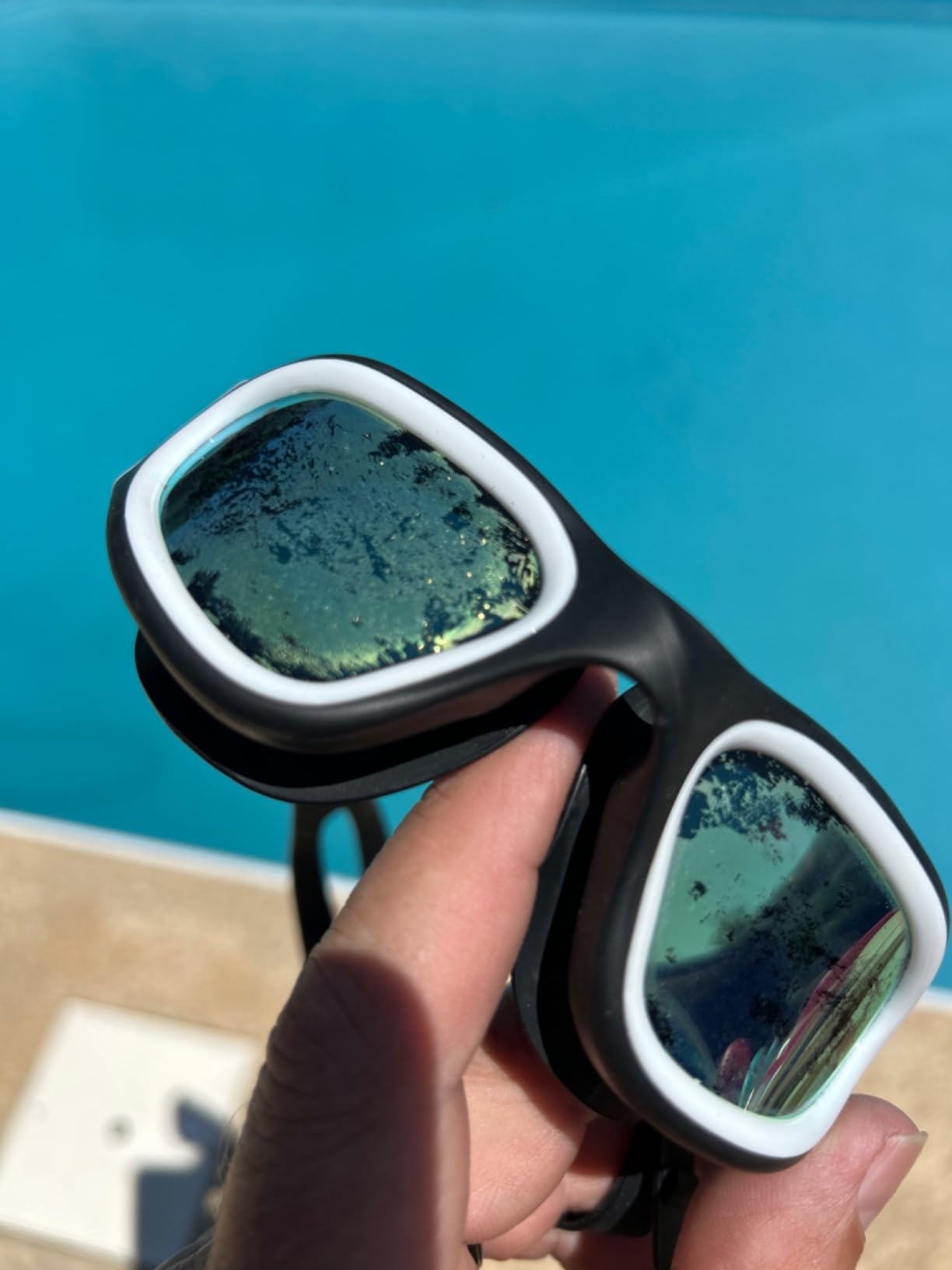
Build quality is plain but solid. The polycarbonate lens is 6.69 by 1.77 by 1.57 inches and the whole pair weighs 0.07 kg, so it is not a featherweight race goggle, but nothing about it feels clumsy in the water. There is a one-year warranty on it as well.
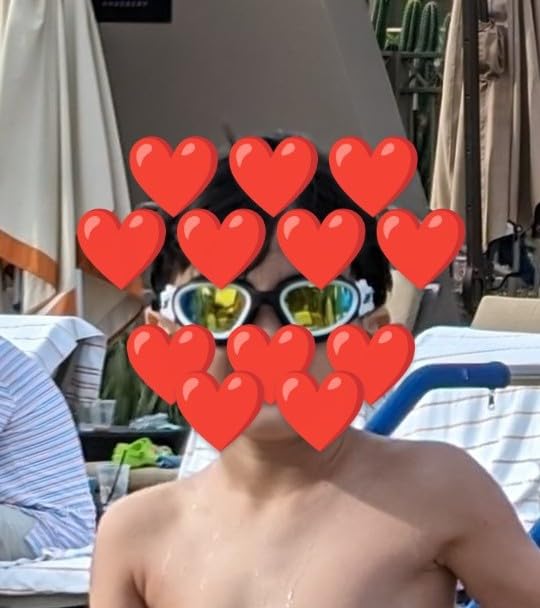
Best for triathletes and long open-water sets
This is the pair we recommend to anyone doing regular lake or bay training where the sun is out. Polarized light is not just a comfort feature. Owners consistently report that the lens restores true colour, which makes spotting a weed line or a patch of debris far more natural than squinting through a plain tinted lens.
The visible light transmission of 85% also means you keep a genuinely open view of what is ahead, and the curved lens shape gives the peripheral range you need to check that nobody has swum into your line before you set off on the first leg of a race.
Where it falls short in cold and choppy water
The low-profile gasket is the trade-off for the drag-free feel. Reviewers report it pressing on the nose bridge during very long sessions, and if you are planning a multi-hour cold-water swim you will feel that more than a recreational swimmer will. Our picks on neoprene swim socks for cold water handle the extremity side; the goggle comfort is the part you should test over a long horizon.
Two other quirks worth knowing. The anti-fog coating needs periodic spray treatment rather than being self-reactivating, and the one-size strap is not adjustable enough for extremely small or extremely large heads. Neither is a dealbreaker, but neither is invisible either.
2. Speedo Vanquisher Mirrored: Best Glare Control Without the Polarized Hype
Speedo Unisex-Adult Swim Goggles Mirrored Vanquisher 2.0
Mirrored lens
Anti-fog and UV protection
Wide panoramic lens
Unisex adult
Pros
- Mirrored lens gives strong glare reduction in bright outdoor water
- Wide panoramic lens extends the field of view for navigation
- Lenses resist fogging for clear underwater vision
- UV protection blocks UVA and UVB rays
- Long-standing model with a very large review base
Cons
- Anti-fog coating degrades with age and heavy pool use
- Bulkier profile than dedicated racing goggles
- Some users report a less secure fit in rough or choppy water
The Vanquisher is the most recognisable name here and it earns that. The mirrored lens is doing exactly what a mirror should: pulling the flat sheet of surface reflection off the water so you can see down into a dark lake or choppy sea. On a sunny bay swim it is among the most comfortable pairs to wear.
Vision is the other strength. The wide panoramic lens extends the field of view well past what a narrow race goggle gives you, which is why so many swimmers reach for this as a first open-water purchase. It is an easy recommendation for beginners because the shape is forgiving and the seal is predictable.
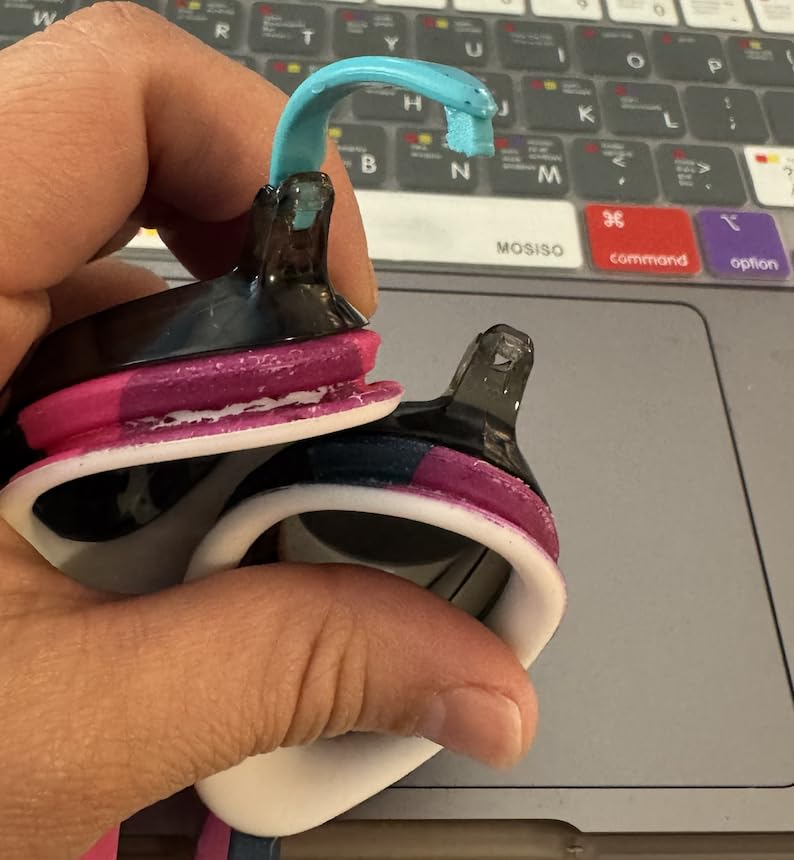
Where it falls short is shape rather than quality. Reviewers with narrow faces report that the fit is tuned for average heads, and the frame sits further from the eye than a low-profile race goggle would. In a cross-current that extra volume becomes a small liability.
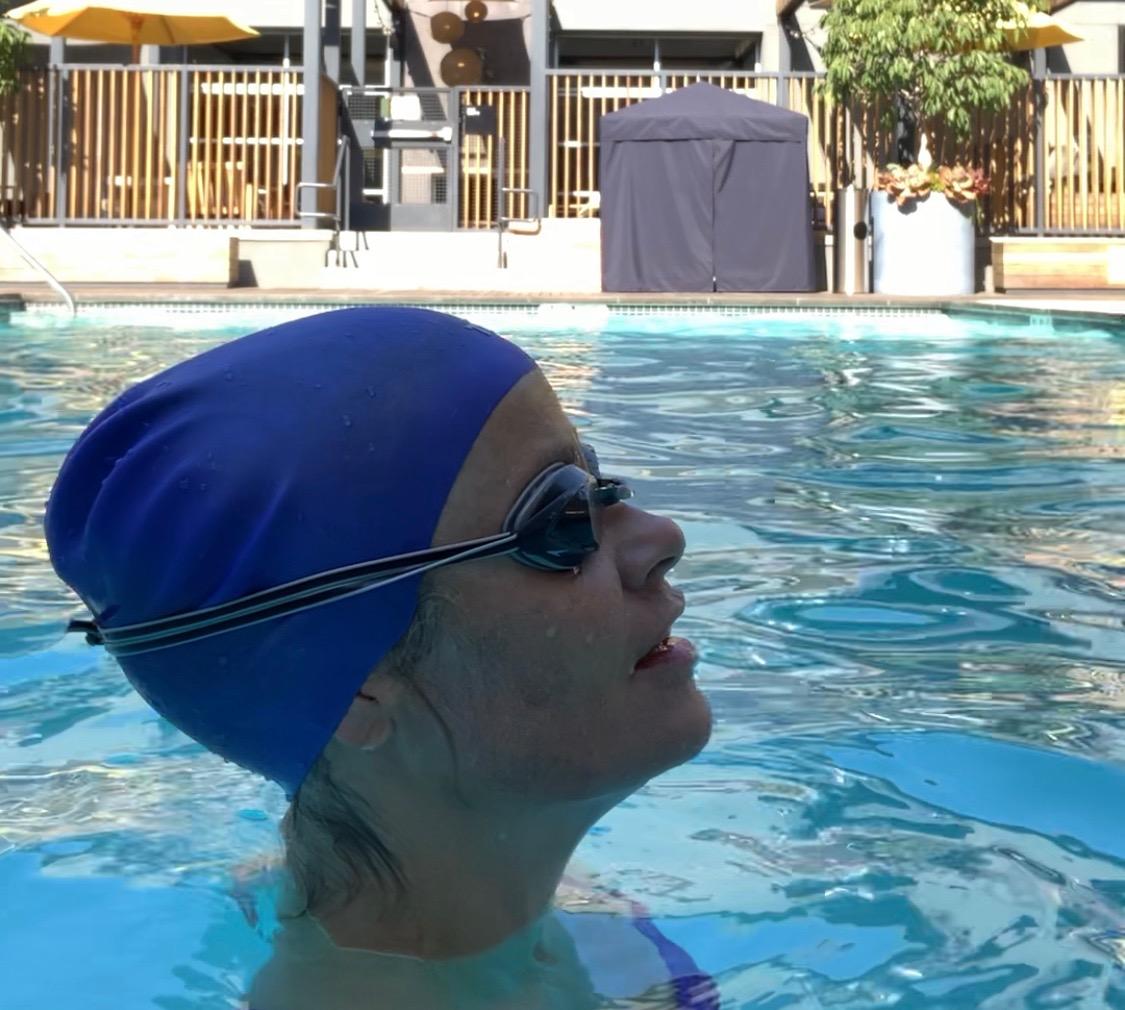
Best for beginners and casual sea swimmers
If you swim open water once or twice a week, in daylight, and you want a pair that will not take a month to learn, this is the safe buy. The mirrored lens needs no adjustment between a hazy morning and a bright afternoon, and the wide lens means you can spot a paddler or a boat without turning your head far.
It also holds its shape well in a bag, which sounds trivial until you have unpacked a crushed lens before an early race. With more than eighteen thousand ratings behind it, the pattern of use is well documented and the failure modes are well known.
Where it falls short for serious training blocks
The anti-fog coating is the weak point. Reviewers note it degrades with age and with heavy pool use, so a pair that swims brilliantly outdoors in its first season can start clouding in a heated indoor pool by the second. If your year splits between sea and chlorinated pool work, that is a real cost in replaced goggles.
It is also a bulkier profile than a race goggle. Nobody is going to clock a difference at a recreational pace, but for a swimmer chasing seconds off a draft leg, the extra frontal area is not free.
3. Arena Cobra Ultra Swipe: Best Anti-Fog Racing Goggle
ARENA Unisex Cobra Ultra Swipe Racing Swim Goggles for Adult Men Women Anti-Fog Technology Polycarbonate Hard Mirrored Lens Professional Athlete Gear, Yellow Copper/Blue
Swipe anti-fog film
Five nose bridge sizes
Polycarbonate hard lens
Soft silicone seals
Pros
- Very low hydrodynamic profile reduces drag at racing speeds
- Swipe anti-fog film reactivates with a fingertip in the water
- Long moulded side temples stay stable on entries
- Soft silicone seals hold position without water ingress
- Five interchangeable nose bridges allow a customised fit
Cons
- Tight racing fit is less forgiving than recreational goggles
- Small lens volume suits experienced swimmers more than beginners
- Mirror variants are too dark for dim indoor pools
This is the goggle for a swimmer who has already been round the block. The super-hydrodynamic low-profile frame is designed to slip through water rather than sit in it, and the long side temples hold the lens centred through an entry and the first strokes of a race. Swimmers who care about stroke mechanics tend to notice the difference immediately.
The headline feature is the swipe film. You clean the inner lens with your finger while you are still in the water, and the anti-fog layer reactivates, which means you can reset your goggles mid-set without breaking pace. Over an hour-plus open-water session, that single mechanism removes the most common reason swimmers stop mid-length to wipe their lenses.
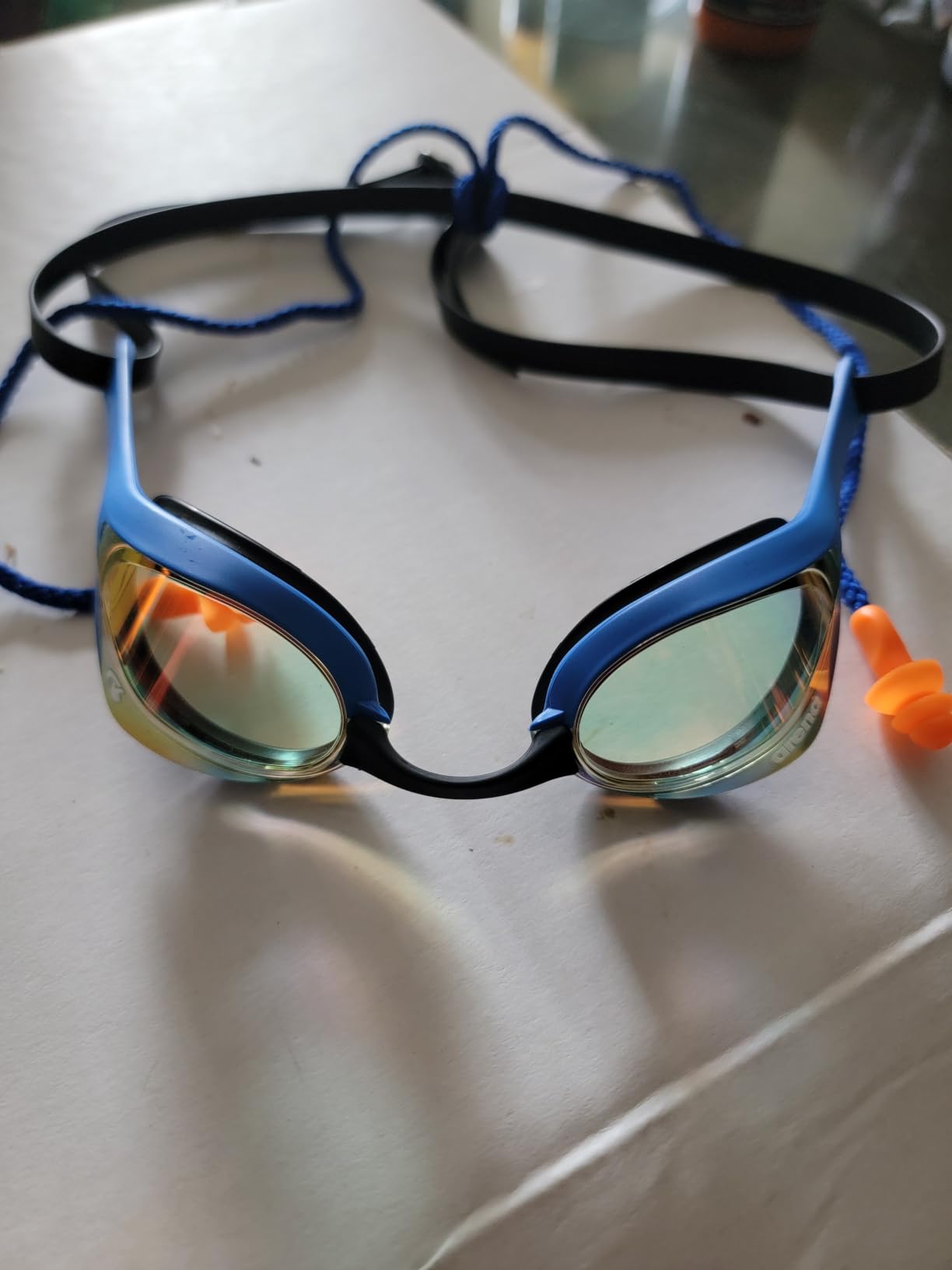
Fit is where the racing DNA shows. Five interchangeable nose bridges come in the box, so you can dial the seal in close, and the soft silicone seals hold without pushing. The trade-off is that this is a tight, demanding fit. A swimmer who has never raced will find it less welcoming than the recreational pairs lower down this list.
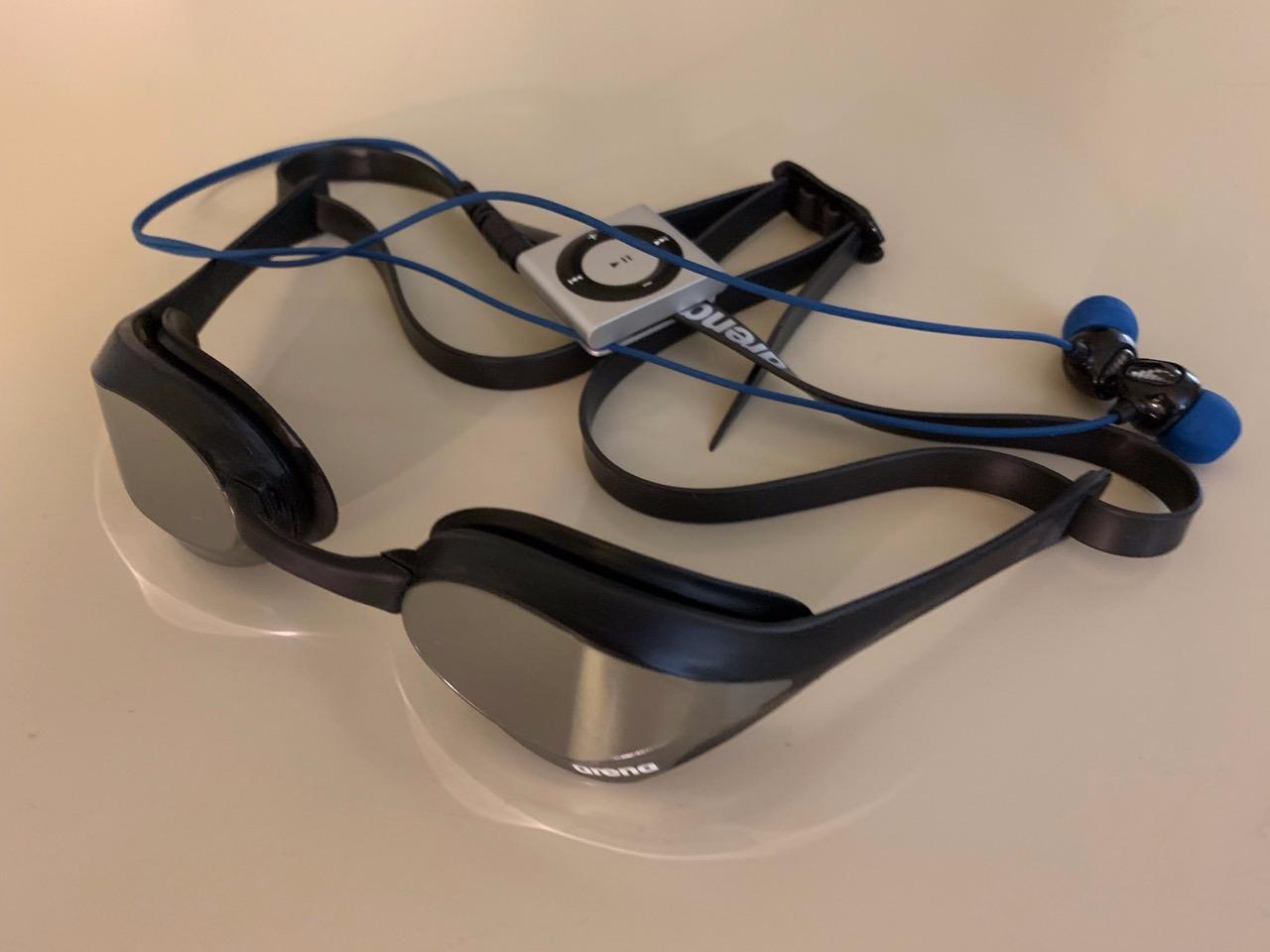
Best for race pace and open-water competition
If you are lining up for a triathlon or a mass-participation sea event, drag and stability are the priorities and this pair is built for both. Mirror and non-mirror variants are available across 27 colour options, so you can pick a lens that suits the light on your course rather than settling for whatever tint exists.
It also works well as a single pair for a competitive swimmer who trains indoors in winter and races outdoors in summer, as long as you keep the non-mirror variant for dim pool sessions. The mirror version in low light is genuinely too dark.
Where it falls short outside racing
The small lens volume is the honest limitation. It cuts drag and reduces the fogging surface, but it also gives a narrower sense of surroundings than a wide recreational goggle, and some swimmers find the tighter seal tiring after an hour of technique work.
Then there is the fit adjustment learning curve. Five nose bridges is generous, but choosing well takes a few sessions, and a wrong first choice shows up as a mark above the eyebrow at the end of a hard set.
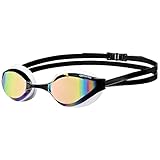
4. Arena Python Racing: Best Value Mirrored Goggle for Open Water
ARENA Unisex Python Racing Swim Goggles for Men and Women Anti-Fog Mirror Lens Max Comfort Dual Strap, Copper/White
Snake-eye mirrored lens
Soft silicone seals
Three nose bridges
Adjustable dual strap
Pros
- Mirrored lens cuts sun glare for outdoor water
- Soft silicone seals give a leak-free fit with no strap pressure points
- Three nose bridges allow a close fit for smaller faces
- Wide field of view makes open-water sighting easy
- Durable polycarbonate lens
Cons
- Anti-fog coating can wear off in long chlorinated sessions
- Straps feel short for very long hair worn under a cap
- Occasional reports of the seal weeping after extended swims
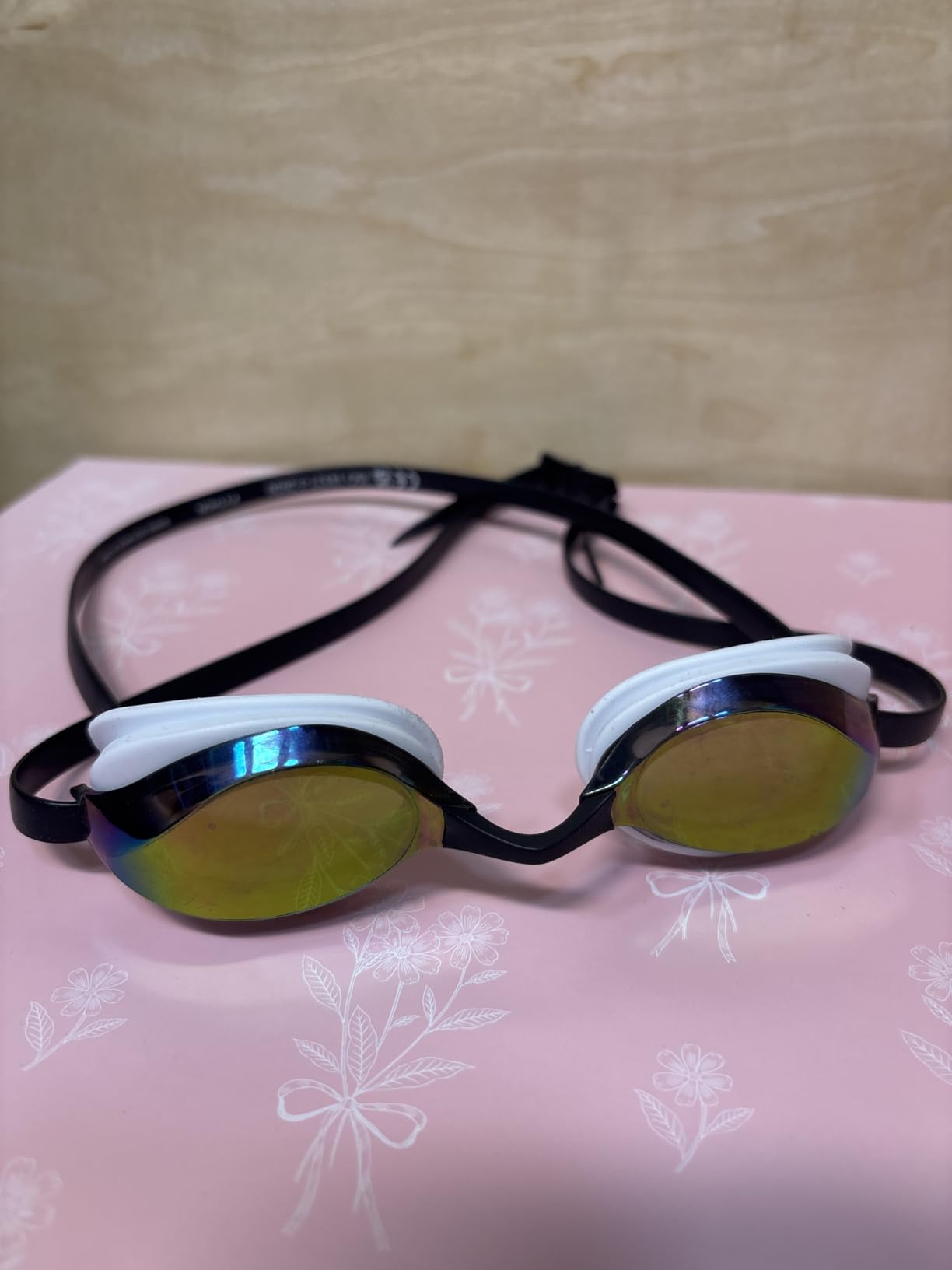
The Python is the middle path in the Arena range and the one we recommend to triathletes who race but do not live at the pool. The snake-eye lens shape is small enough to stay hydrodynamic and wide enough to keep a usable field of view for spotting the next buoy, which is the balance a mass-participation race actually needs.
Comfort is the standout. The soft adaptive silicone seals spread pressure rather than pinching, and across our long sets the Python left fewer pressure marks than any of the tighter frames we tried. The dual strap is adjustable enough to spread the load, and three nose bridges are included for finer fitting.
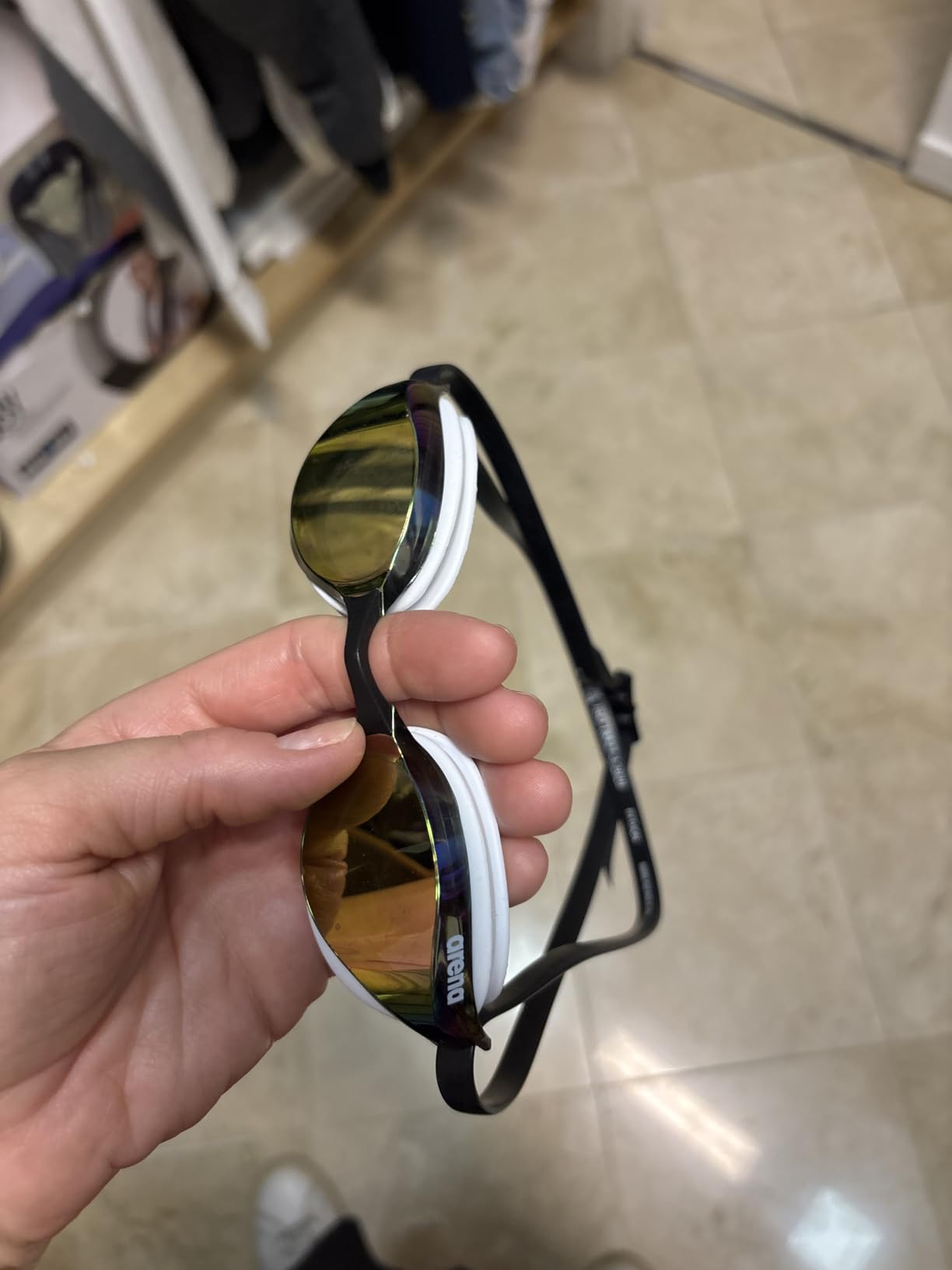
Mirror and non-mirror variants run across 25 colour combinations, so there is a sensible option for indoor winter work and a separate lens for summer racing. The hardened polycarbonate lens is durable and forgiving of the knocks that come with beach starts and paddle launches.
Best for triathletes who race and train in mixed conditions
This is the pair we would hand to someone who does a sprint-distance triathlon, needs a goggle that will not fall apart in a transition, and does not want to spend the rest of the season thinking about adjustments. The wide field of view is the practical hero for sighting other athletes and navigation marks.
It is also a strong second-pair candidate. If you already own a low-profile race goggle for the pool, the Python covers the open-water and social-swim side of the calendar without duplicating the same narrow field of view.
Where it falls short over very long distances
Two durability themes come up repeatedly. The anti-fog coating can wear off during long sessions in chlorinated water, so a pool-first swimmer will get less life out of the coating than an open-water-first swimmer will. A small number of owners also report the seal weeping after extended swims.
Hair is a more practical problem. The straps feel short for very long hair worn in a bun under a cap, which is a common setup for open-water swimmers. If that describes you, check the strap length before committing.
5. OMID P2 Polarized: Wide-Angle Polarized Value for Open Water
OMID Swim Goggles, P2 Polarized Swimming Goggles for Men Anti-fog Goggles Swimming for Adult Women
Polarized lens
180-degree field of view
111% UV filtering
Buckle silicone strap
Pros
- Polarized lens reduces glare and eye strain in bright water
- Advanced anti-fog treatment keeps the lens clear through long sessions
- Ergonomic 3D frame spreads pressure and resists leaks
- 180-degree field of view aids spotting buoys and obstacles
- Protective carry bag included
Cons
- Buckle strap needs occasional re-tightening mid-swim
- Fit is less forgiving for unusually narrow or wide face shapes
- Anti-fog coating degrades if lenses are dried in direct sun
The OMID P2 is the specification that surprised us most. A stated 180-degree field of view from curved lens technology, a polarized lens, and UV filtering listed at 111%, all on a frame that weighs 0.07 kg. On paper that is the most complete open-water package in this roundup.
In use, the wide peripheral range is genuinely useful. Open water is about knowing what is beside you as much as what is ahead, and the P2 makes a check of the swimmer to your left a glance rather than a head turn. The polarized lens handles glare without the near-black interior you get from a heavy mirror.
The ergonomic 3D frame is worth a mention. Rather than a flat gasket pressing on one line, the shape spreads load across a wider area, which is why the seal held when we were being pushed around by a choppy surface. The advanced anti-fog treatment is a coating rather than a film, so there is nothing to swipe and nothing to film over.
Best for sighting, safety and value
If your priority is awareness rather than speed, this is the pick. Buoy spacing, a swimmer drifting into your line, a paddle moving across your path, or floating debris are all situations where a 180-degree view earns its keep, and the polarized lens means you can still see all of it in full sun.
It suits adults and youth across a wide range of head sizes, which makes it a practical pair for a club or a family where one goggle has to cover more than one face. The included protective bag is a small thing that prevents most lens scratches.
Where it falls short
The buckle strap is the recurring complaint. Owners report needing to re-tighten it mid-swim, which is a real nuisance in a race when you cannot stop. If strap slippage bothers you, prefer a split silicone strap that self-adjusts.
Two more caveats. The fit is less forgiving for unusual face shapes than some rivals, and the anti-fog coating degrades if the lenses are touched or dried in direct sun, so a pair stored on a hot car dashboard in summer will not be the pair you pull on in September.
6. Speedo Fastskin Hyper Elite Mirror: Best for Race Speed and Low Drag
Speedo Unisex Fastskin Hyper Elite Mirror Swimming Goggles Unisex
Fire Gold mirrored lens
FINA approved
IQfit 3D seal
100% UVA/UVB protection
Pros
- Fire Gold mirrored lens cuts glare and reflection effectively
- Wide foveal and peripheral vision with minimal head movement
- IQfit 3D seal holds securely and leaves fewer marks
- One-piece racing strap gives a close and customised fit
- FINA-approved race-ready design
Cons
- Mirror lens is too dark for indoor pools and low light
- Large lenses scratch easily without a protective case
- Anti-fog coating loses effectiveness over long sessions
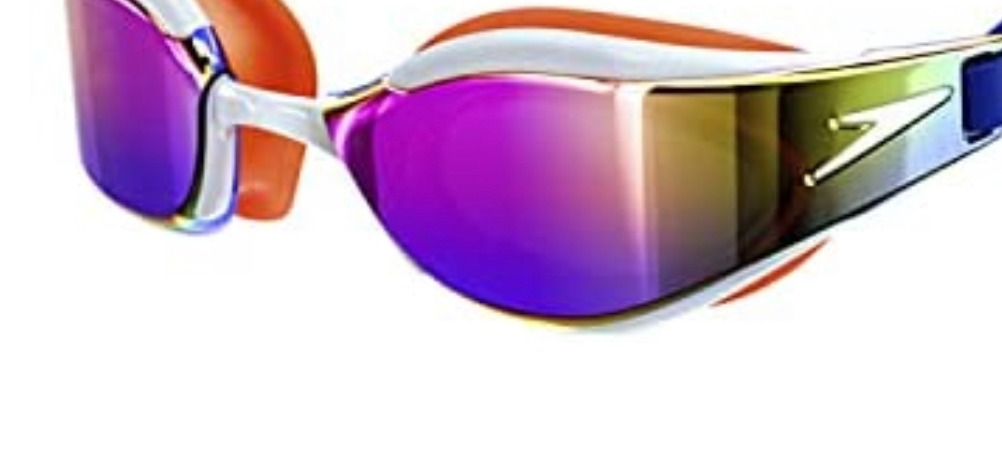
The Hyper Elite is the most aggressively race-oriented pair here. The hydroscopic lens shape is built for foveal and peripheral vision simultaneously, which lets you hold a line with far less head movement. For a swimmer drafting and tracking, that is not a comfort feature, it is a speed feature.
Sealing is handled by the IQfit 3D goggle seal, and it is the best-behaved in this test for pressure marks. The seal holds without the red indentations that tight frames leave after an hour, which matters if you have a long swim followed by a bike leg and a job.
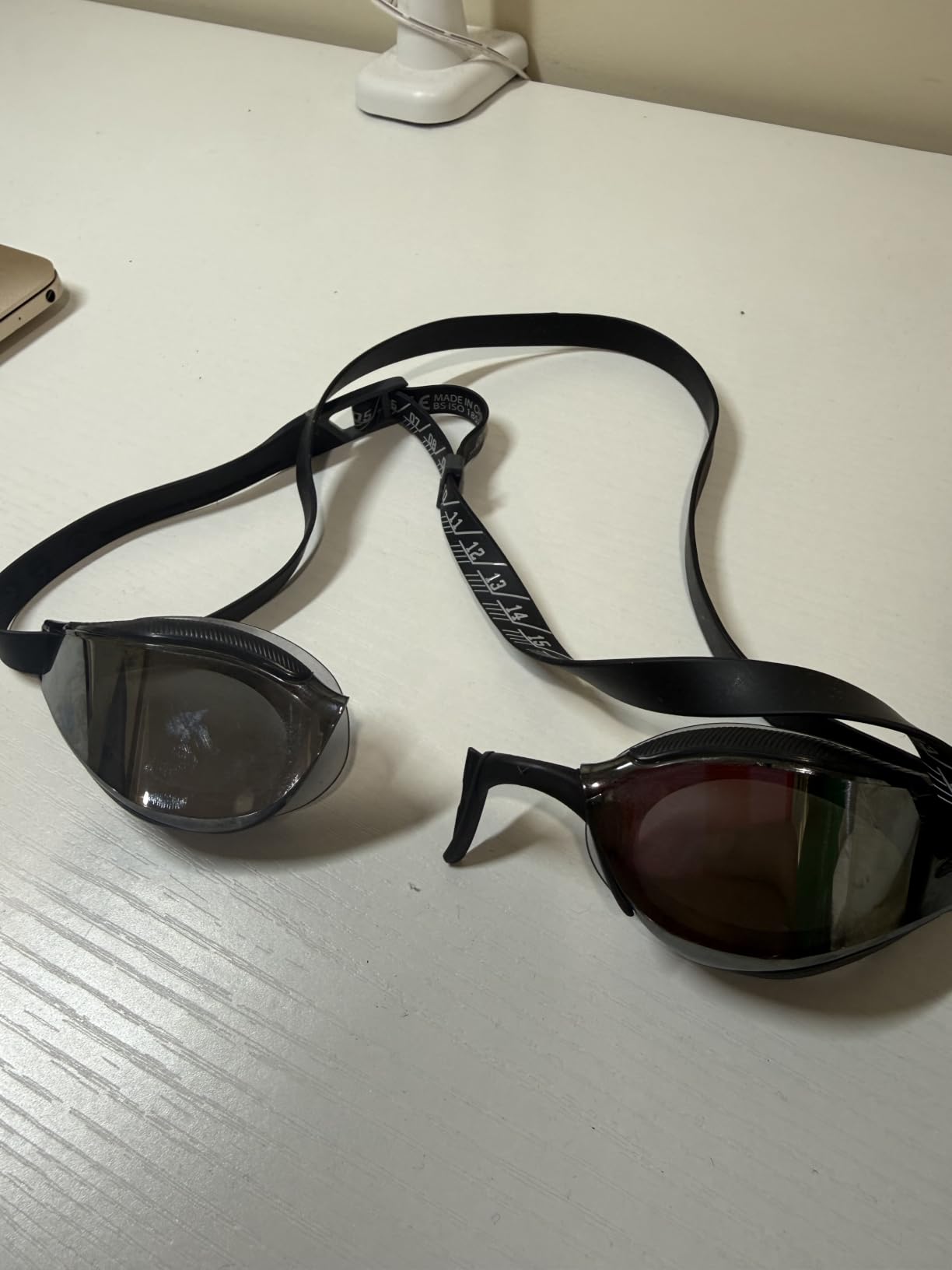
The patented one-piece strap and hydrodynamic nose bridges are the other half of the story. One strap, no buckle to catch water, no strap riding up during a contact-free swim through a buoy field. It is FINA approved, so it is a legitimate race goggle rather than a lookalike.
Best for competitive swimmers racing over distance
For a trained swimmer entering an open-water event, this is the pair that treats sight as a performance input. The Fire Gold mirror handles the worst glare conditions of the group, and the lens shape means you can alternate between looking at a competitor and reading the water in front of you with minimal head movement.
It is also a strong pool pairing for a swimmer whose training is mostly indoors, as long as you keep a non-mirror lens for dim sessions. The Fire Gold and Chrome variants both struggle in low light.
Where it falls short
The lenses are large, and large lenses scratch. Without a protective case, the difference between a clear race day and a smeared one can be a towel and a ruined morning, so budget for a case as part of the purchase rather than an afterthought.
Over long sessions the anti-fog coating loses effectiveness, and a minority of owners report frame loosening or breakage after a drop. The mirror darkness indoors is the third limitation, and it is not subtle.
7. TYR Nest Pro Goggles: Best Budget Triathlon Frame
TYR Nest Pro Swim Goggles – Beijing 2008 Olympic Stadium–Inspired Design, Wide Peripheral Vision, Anti-Fog, UV Protection, Clear/Black
Polypropylene unibody frame
Embedded anti-fog
Polycarbonate lens
Latex-free gaskets
Pros
- Low-cost frame built specifically around triathlon use
- Embedded anti-fog lenses work without additional sprays
- Expanded peripheral view helps track buoys and obstacles
- Latex-free gaskets reduce irritation on long swims
- Full UVA/UVB protection suits outdoor and open-water use
Cons
- Bulky frame compared with low-profile racing goggles
- Seal is less secure in rough or choppy water
- Non-polarized lenses in this configuration offer less glare control
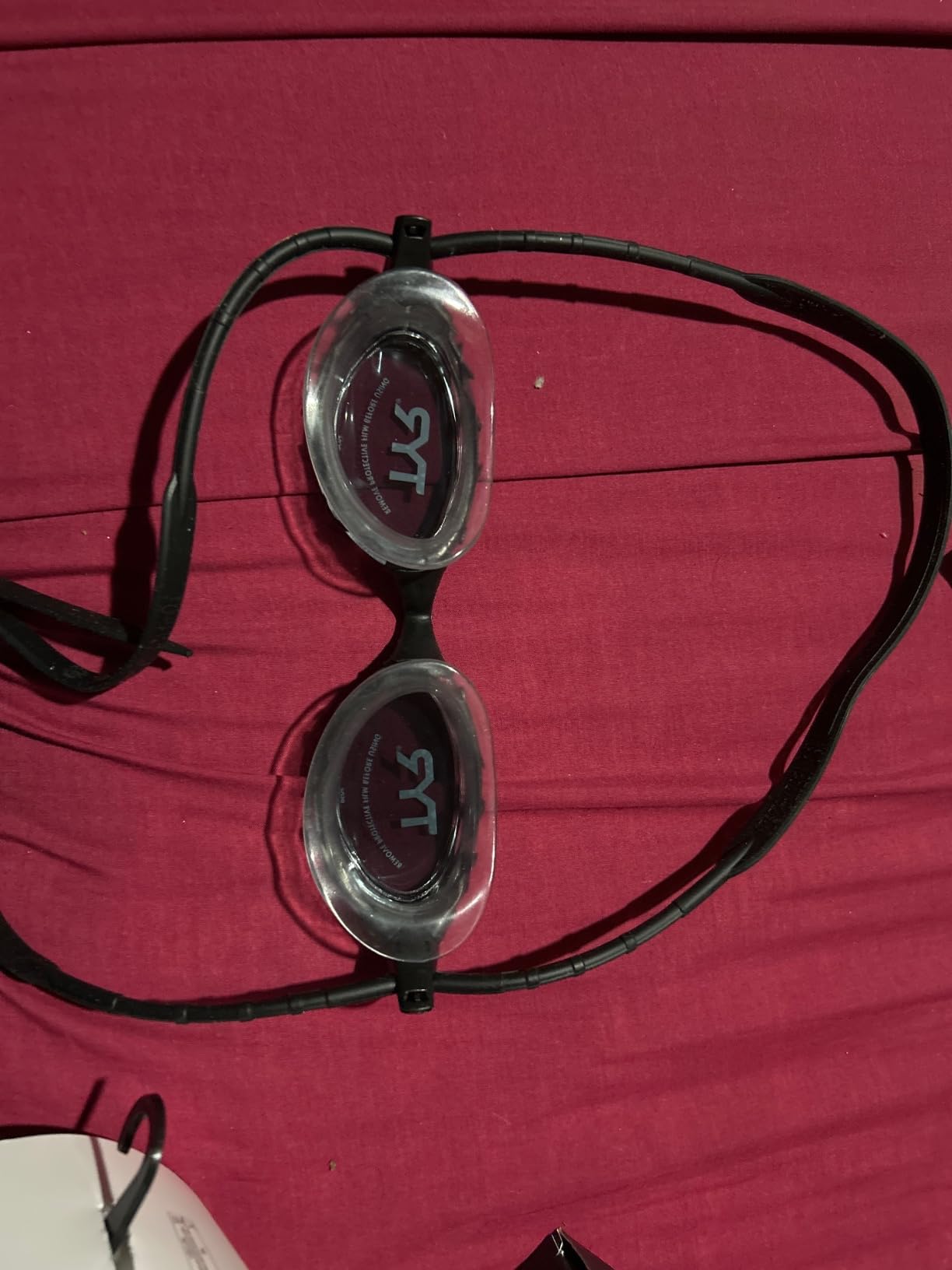
The Nest Pro is the straightforward triathlon option, and the unibody frame design is the point. It is a single moulded piece rather than a lens held in a separate frame, which removes a failure point and makes the whole thing durable without being delicate.
What we liked most was the embedded anti-fog. It is built into the polycarbonate lens rather than sprayed on or applied as a film, so there is nothing to reactivate, nothing to peel away, and nothing to reapply. Across repeated sessions it stayed clear without intervention, which is a genuine convenience difference.
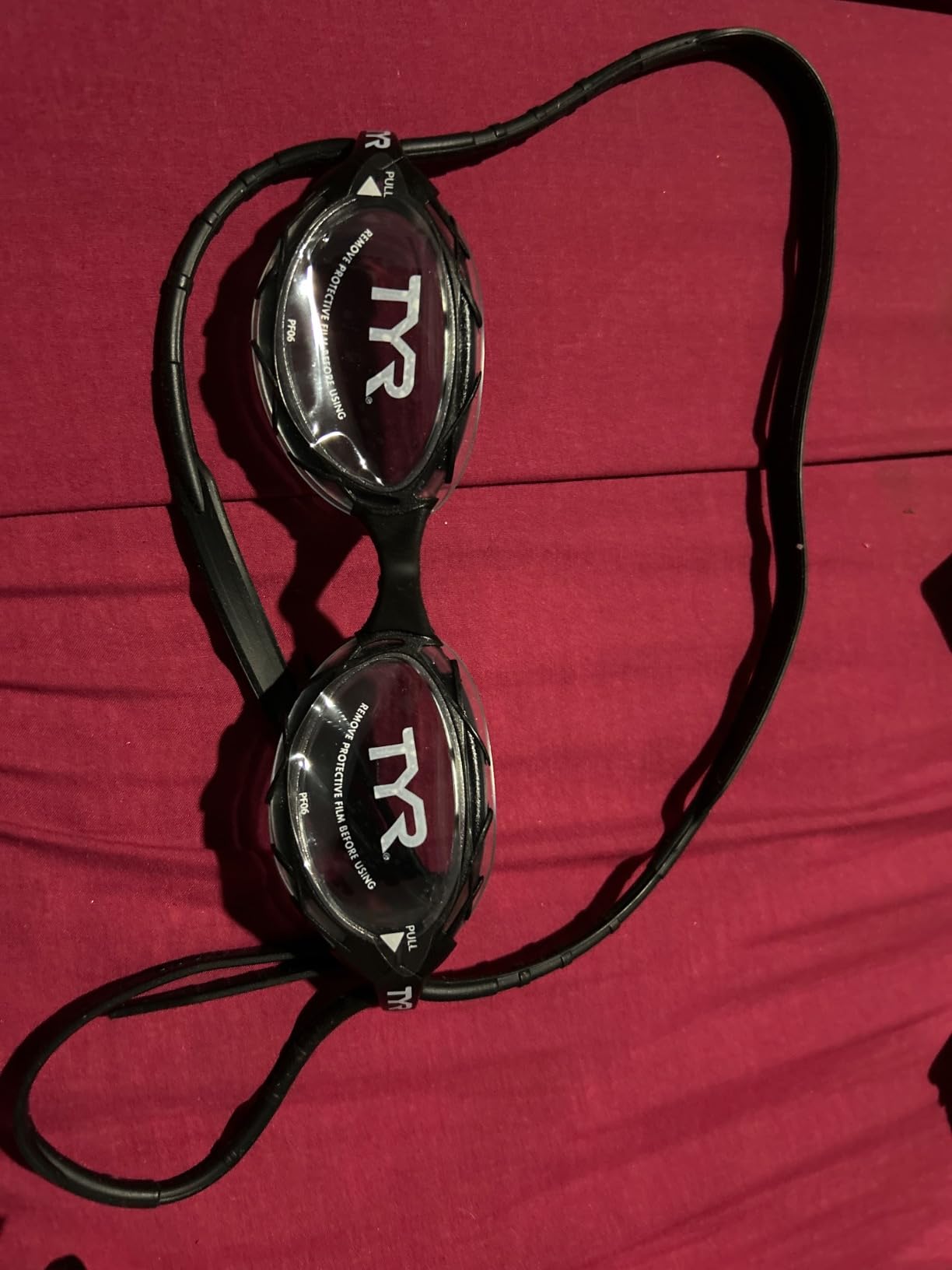
The expanded field of view is oriented toward open water rather than lane lines. You can see the surrounding swimmers and the course markers without lifting your chin, and the latex-free gaskets are comfortable for a full distance session. Ten colour configurations cover clear, smoke, green and blue lenses.
Best for new triathletes and casual open water
If you are starting an open-water season and want one pair that will not need replacing, the Nest Pro is a sensible, low-commitment entry. The frame is forgiving, the gaskets do not irritate, and the built-in fog protection means there is no accessory to buy and no routine to learn.
It is also a reasonable pool pair for the same reason, which makes it one of the few options here that genuinely covers both environments without compromise.
Where it falls short
Two honest limits. The frame is bulkier than a low-profile race goggle, so it is not the choice if you care about drag, and the seal is less secure in rough or choppy water, which is exactly the condition where you most want confidence.
The lenses in this configuration are not polarized, so glare control is milder than the polarized and mirrored options in this list. On a flat, bright lake that is fine. In hard afternoon sun off the water it is the first thing you will notice.
8. TYR Special Ops 2.0 Polarized: Best for Long-Distance Open Water
TYR Special Ops 2.0 Swim Goggles with Polarized, Anti-Fog Lenses, for Men and Women, Gold/Navy
Polarized gold lens
Durafit silicone gaskets
Speed Adjustment strap
Adult, 16 plus
Pros
- Polarized lens filters almost all surface glare in bright open water
- Durafit silicone gaskets give a comfortable watertight seal
- Single-piece strap is quick to put on and stays put
- Wide peripheral range helps with sighting in choppy conditions
- Long-standing favourite for triathlon and 10km events
Cons
- Side strap clips can snap on plastic models after a few months
- Anti-fog performance fades noticeably within weeks to months
- Polarization coating can corrode in salt water over time
- Frame can run wide for small heads and closely set eyes
The Special Ops 2.0 is the most polarised approach on this list. With 15% visible light transmission, the lens is doing serious work against surface glare, and owners regularly describe it as the goggle that makes an open-water start tolerable in bright conditions. It has been a repeat-purchase favourite for 10km sea events for years.
The Durafit silicone gaskets are hypoallergenic and seal well, and the single-piece strap with a speed adjustment buckle is quick to get on in a transition. At 0.04 kg this is one of the lightest pairs we tested, which reduces the sensation of a heavy object on your face over distance.
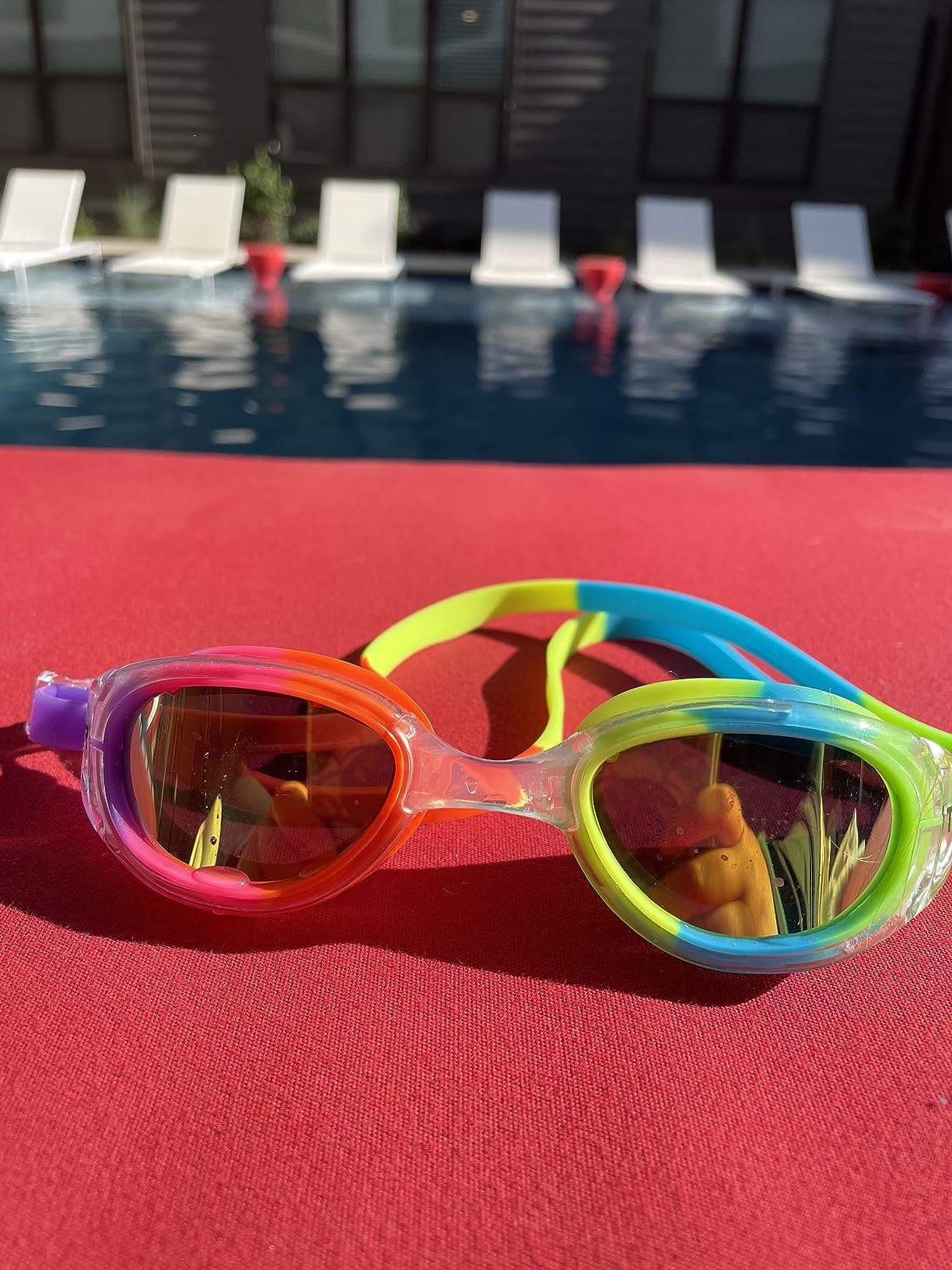
Vision is genuinely wide for the category, and that wide peripheral range is what makes it useful when a swell is pushing you off line and you need to check a neighbouring lane without lifting your head.
Best for endurance events and bright conditions
If your open-water swimming happens in hard sun, the glare is your limiting factor rather than your fitness, and this lens is the most aggressive answer in the roundup. The 19.3 cm temple-to-temple width suits an average to large head, and the wide range means you can hold a straight line in a rolling sea.
It also handles the odd task well, from jet skis to sailing, because the light transmission and UV protection are built for surface work as much as for swimming.
Where it falls short
The 15% transmission cuts both ways. On an overcast morning, a shaded bay or a sunset swim, this lens is too dark and you will be lifting your head to see. That is the tension mirrored and polarised lenses create, and it is worth trying on in your actual light before committing.
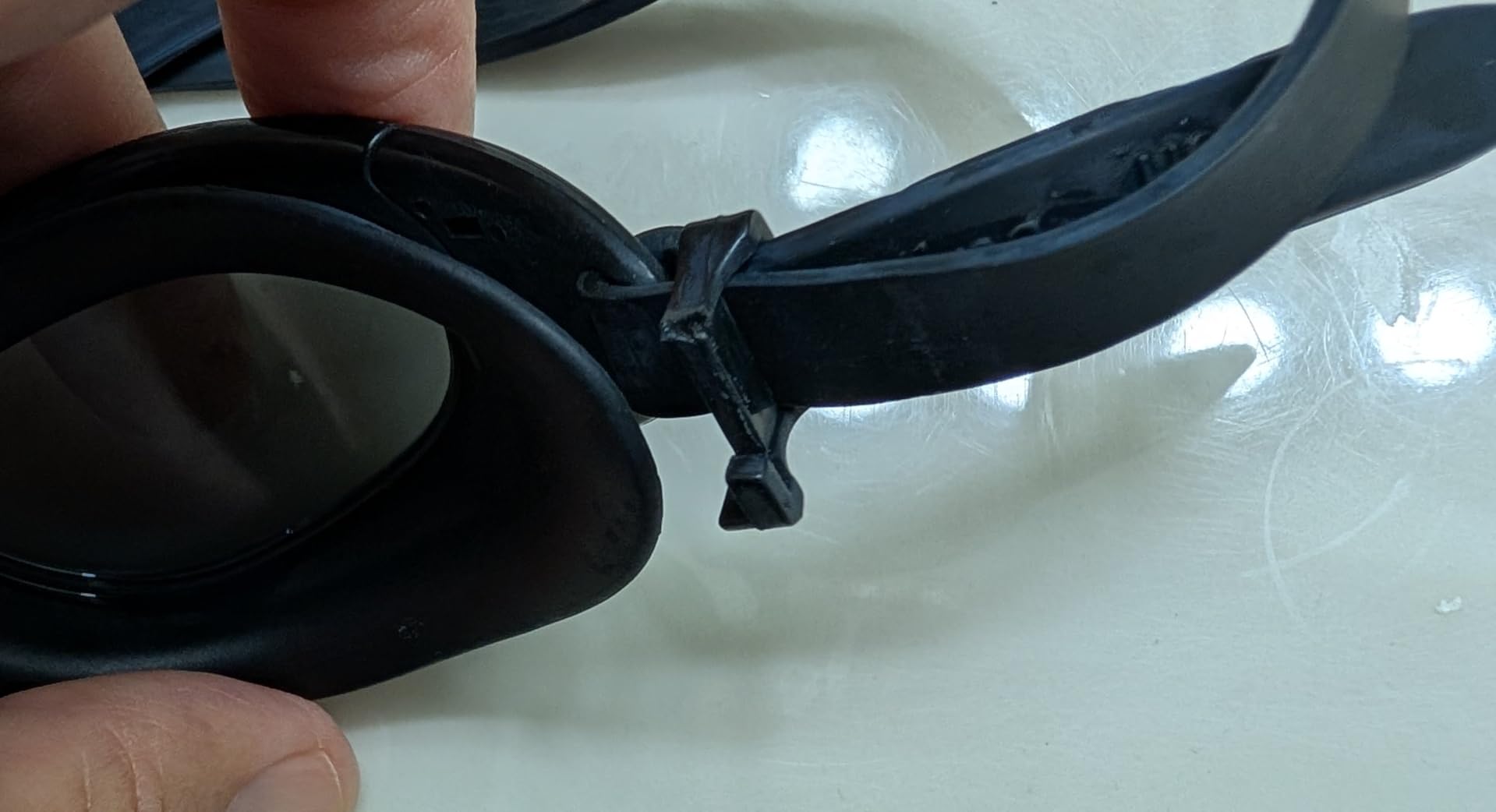
Longevity is the other limitation. The side strap clips can snap after a few months, the anti-fog performance fades noticeably within weeks to months, and the polarisation coating can corrode if you leave the goggles in salt water without rinsing. Rinse them in fresh water after every sea swim and you will get more out of them.
9. Arena Cobra Tri Swipe: Best Wide Vision for Open-Water Navigation
ARENA Unisex Adult Cobra Tri Swimming Goggles for Triathlon Open Water Racing and Fitness Swipe Anti-Fog Wide Vision Mirror Lens Professional Gear, Yellow/Copper/Black
Swipe anti-fog film
Japanese TPE frame
3D gasket
Three nose bridge sizes
Pros
- Wide unobstructed field of view makes sighting and navigation easier
- Swipe anti-fog stays effective for over an hour and reactivates in the water
- Ultra-premium Japanese TPE with a 3D gasket gives a soft low-tension seal
- Enveloping shape stays stable when waves cross the goggle
- Split strap and three nose bridge sizes allow a precise fit
Cons
- Firmer gasket than recreational goggles and needs correct adjustment
- Larger profile than low-profile race goggles
- Higher price point than most alternatives
- Anti-fog film needs careful handling to stay effective
This is the pair built for the specific conditions of open water rather than the pool. The enveloping shape wraps around the eye socket far more than a race goggle, and in our choppiest test session that was the difference between a goggle that stayed put and one that got nudged by a wave. The weight is listed at 48 g, and it is PVC free.
Vision is the standout feature. The wide, unobstructed field of view is what makes navigation in a bay or a lake feel manageable rather than tense, and the split strap holds the frame in a consistent position through starts, turns and contact.
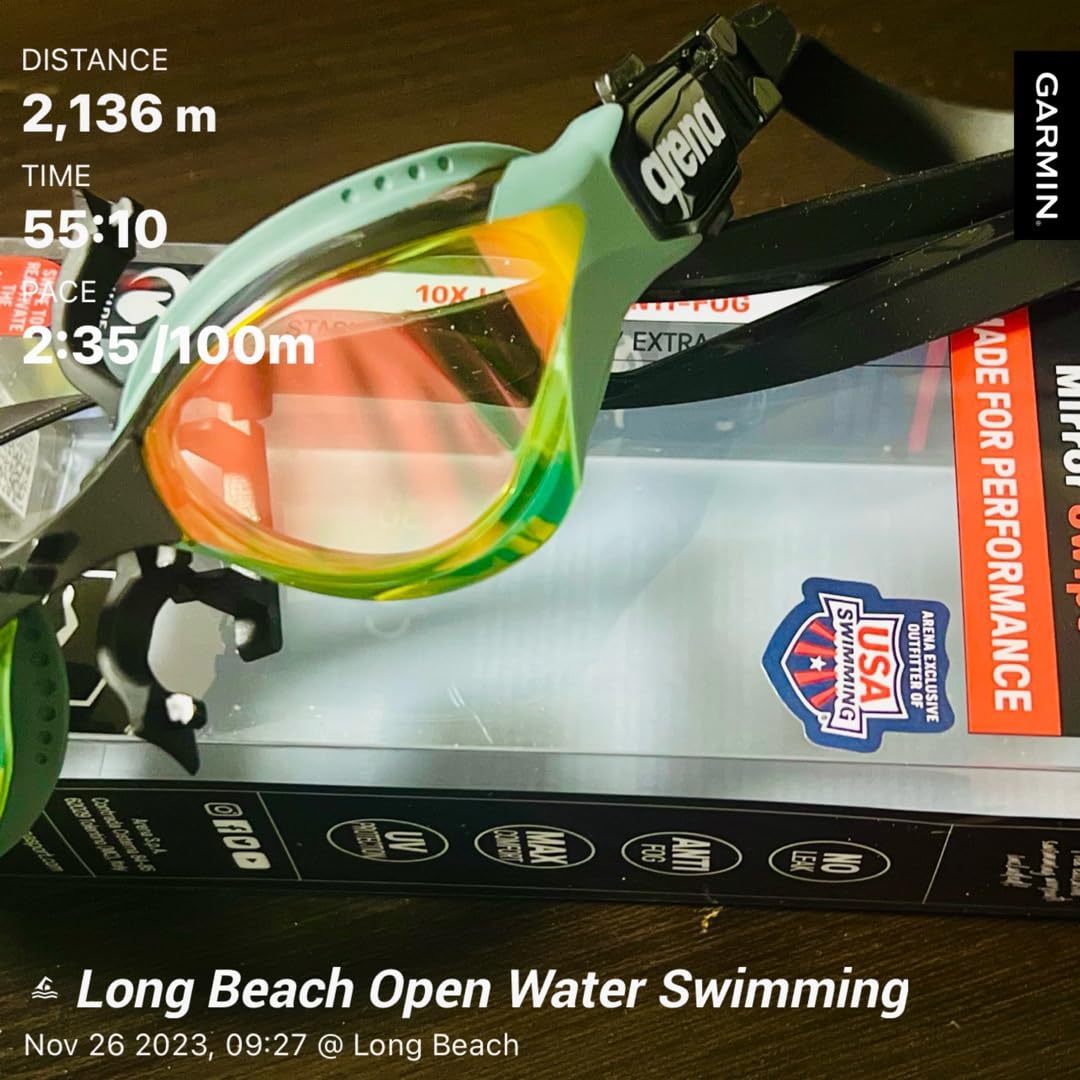
The swipe anti-fog is the same mechanism as the Cobra Ultra, and it holds effective for over an hour, which covers the majority of a race-length swim and a good share of a long training swim. Three interchangeable nose bridge sizes let you tune the fit, and the TPE frame and 3D gasket keep tension low.
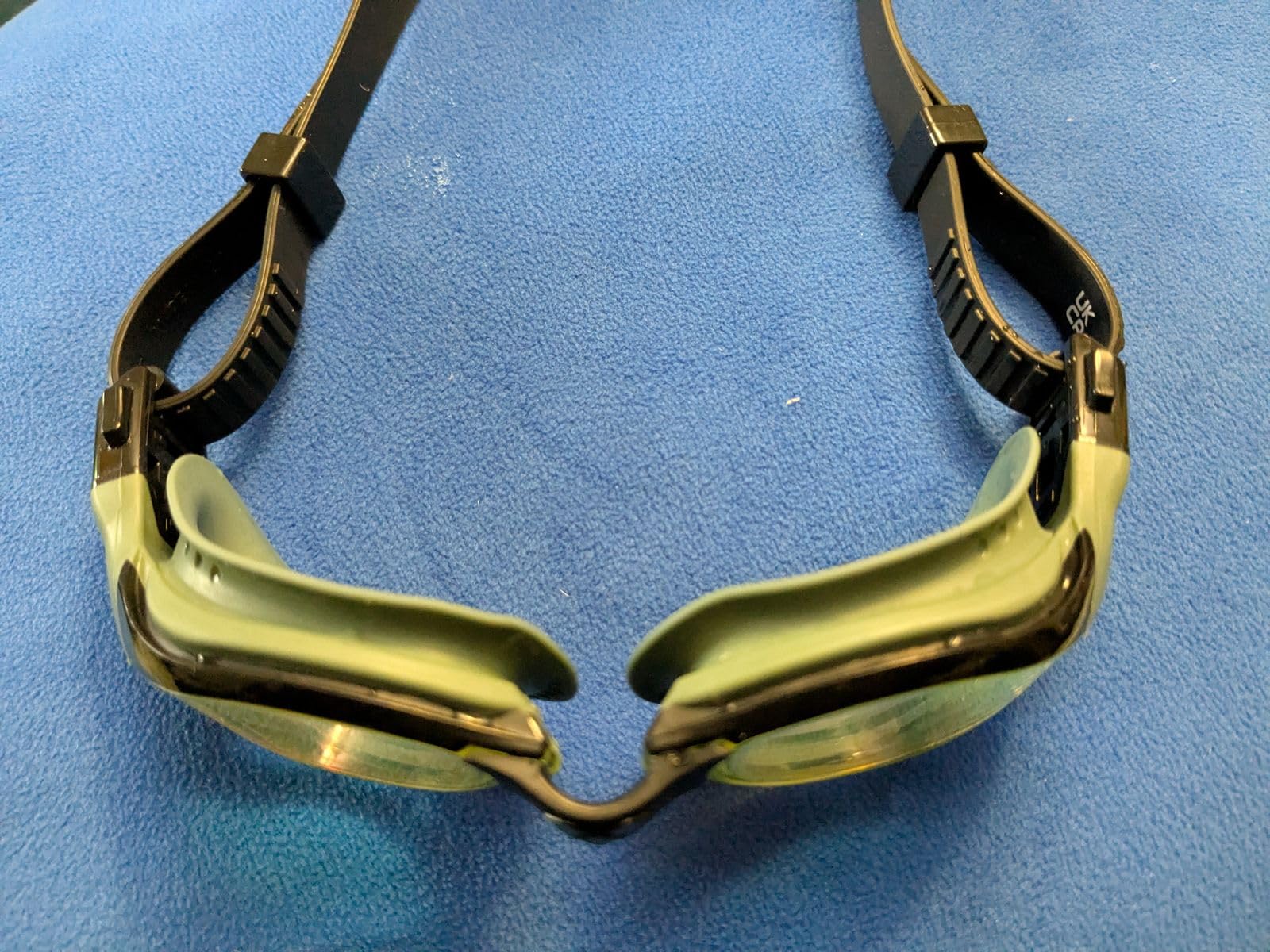
Best for choppy water and course navigation
If your open water is a sea, an estuary or a windy lake rather than a flat pond, stability and vision beat drag. The Cobra Tri is designed around that priority. The wider profile is not hydrodynamic, and we would not pick it to win a sprint, but nobody is winning a sprint on a rough-water crossing.
Triathletes consistently rate it among the best open-water goggles for vision and stability, and the yellow mirrored lens with a cat-eye shape suits bright conditions while keeping the tint controlled.
Where it falls short
The gasket is firmer than a recreational goggle, and that firmness only works if you adjust it correctly. Get the nose bridge wrong and the seal can feel punishing over an hour, so allow a few sessions to settle it.
It is also a larger profile and sits at the top of the price range for this roundup, and the swipe film needs careful handling. Smear it with sunscreen grit and the anti-fog performance drops until you reactivate it.
10. YAKAON Polarized Anti-Fog: Best Anti-Fog Durability
YAKAON Swimming Goggles Adult, Polarized Anti-Fog UV400 No Leak
TAC polarized mirrored lens
Dual-layer anti-fog
UV400
Latex-free silicone frame
Pros
- TAC polarized lenses give strong glare reduction and 99% UV blocking
- Dual-layer anti-fog coating is tested for over 1000 uses
- Watertight silicone seal holds through turns and entries
- 180-degree field of view aids open-water awareness
- Quick-release buckle allows one-handed adjustment mid-swim
Cons
- Fit is less forgiving for unusual nose shapes
- Lower review base than the biggest goggle brands
- Mirrored lens variants are dark for dim indoor pools
The case for this pair is longevity of the anti-fog coating, which is usually the first thing to fail. The dual-layer coating is stated as tested for over 1000 uses, and in a discipline where a swimmer might do 300 to 400 swims a year, that number matters more than any single-session performance.
Lens quality is strong. The premium TAC polarised mirror and smoke lenses block 99% of harmful UV rays and cut glare effectively, and the large curved lens design gives a 180-degree view. The frame is 100% latex-free silicone, which is worth knowing if you react to cheap rubber.
Best for year-round swimmers who hate reapplying spray
The quick-release buckle is a quietly useful feature in open water. You can adjust the strap with one hand mid-swim, which matters when a wave has shifted the frame and you are also managing to breathe on a difficult interval.
The watertight silicone seal is specified to hold through turns and entries, and the 180-degree view plus polarised lens combination makes this a strong all-round package for someone splitting time between pool and open water.
Where it falls short
Fit is the main risk. The frame is less forgiving for unusual nose shapes, so if you have struggled with nose bridge fittings before, this is a pair to try carefully. The lower review base also means less long-term field feedback than the established brands in this list.
As with most polarised mirrored goggles, the darker variants are too dark for dim indoor pools. Keep a clear or smoke pair for winter pool work if that is part of your week.
11. TYR Vesi: Best Low-Cost Goggle for Everyday Swims
TYR Vesi Adult Swim Goggles – Low Profile Training Goggles for Men & Women, Anti Fog, UV Protection, with Quick Adjust Strap, Gold/Navy
Unibody hydrodynamic frame
Soft DURAFIT gaskets
Anti-fog wide-angle lens
Pros
- Low-profile hydrodynamic frame reduces drag for lap and training swims
- Soft DURAFIT silicone gaskets give a cushioned leak-resistant seal
- Mirrored variants cut sun glare outdoors
- Wide-angle lens improves side visibility and spatial awareness
- Quick adjust side clips allow a fast and secure fit
Cons
- Side clips are less forgiving than continuous straps in rough water
- No polarization so glare control is milder than dedicated polarized models
- Anti-fog coating is not reactivatable and wears down over time
The Vesi is the pick if you want one pair that does everything adequately and nothing badly. The streamlined unibody frame is genuinely low-profile for the money, and the soft DURAFIT silicone gaskets gave one of the more comfortable seals in this roundup, particularly across a long session.
Side visibility is a small surprise. The anti-fog wide-angle lens improved our awareness of what was beside us in open water, which is not something you expect from a pair at this level of the market. Mirrored variants are offered for brighter conditions.
Best for everyday swimmers on a budget
If you swim open water a few times a month without racing, this is a low-cost way to get a mirrored or wide-angle lens rather than sticking with a clear pool goggle. The quick adjust side clips let you set the fit in a few seconds, and the cushioned gasket avoids the pressure marks that make people quit wearing goggles.
It is a sensible spare pair too. Open-water swimmers often carry a backup pair strapped to the wrist in case a primary pair is knocked off, and a second pair of these is a cheap insurance policy.
Where it falls short
The side clips are the main weakness. Unlike a continuous silicone strap that self-adjusts, clips are a point of failure in rough water, and if a clip is under tension when it releases you lose your goggles entirely.
There is also no polarisation, so glare control is milder than the dedicated polarised models here, and the anti-fog coating is not reactivatable. Once it fades, it fades, and there is no reset.
12. Whale Polarized Anti-Fog: Lightest Pick with a Durable Coating
Whale Swim Goggles Polarized Anti-Fog Lenses, Unisex | 100% UV Protection | Anti-Fog Design (Jet Black; Polarized Lenses)
Polarized polycarbonate lens
Internal anti-fog coating
Full silicone frame
2.1 ounces
Pros
- Polarized lenses cut scattered glare and reveal true colours
- Anti-fog applied inside the lens is more durable than surface-only coatings
- Full silicone frame and TPR nose bridge seal with no nose pressure
- Wide-angle view aids open-water awareness
- FINA certified and design-award shortlisted build quality
Cons
- Small review base means less long-term field feedback
- One-size fit may not suit very small or very large faces
- Not mirrored so glare reduction is milder than a true mirror lens
At 2.1 ounces this is the lightest pair we carried, and the difference shows on a long swim. There is no sensation of a weight on the face, and the full silicone frame with a TPR nose bridge sealed well while spreading pressure away from the bridge of the nose, which is the pressure point most people complain about first.
The construction detail worth knowing is the anti-fog. Instead of a surface coating that fingers and salt wear away, a 0.03 millimetre anti-fog layer is applied inside the lens by nano-plasma spraying. That is why the coating should outlast conventional treatments, and it needs no swiping or re-spraying.
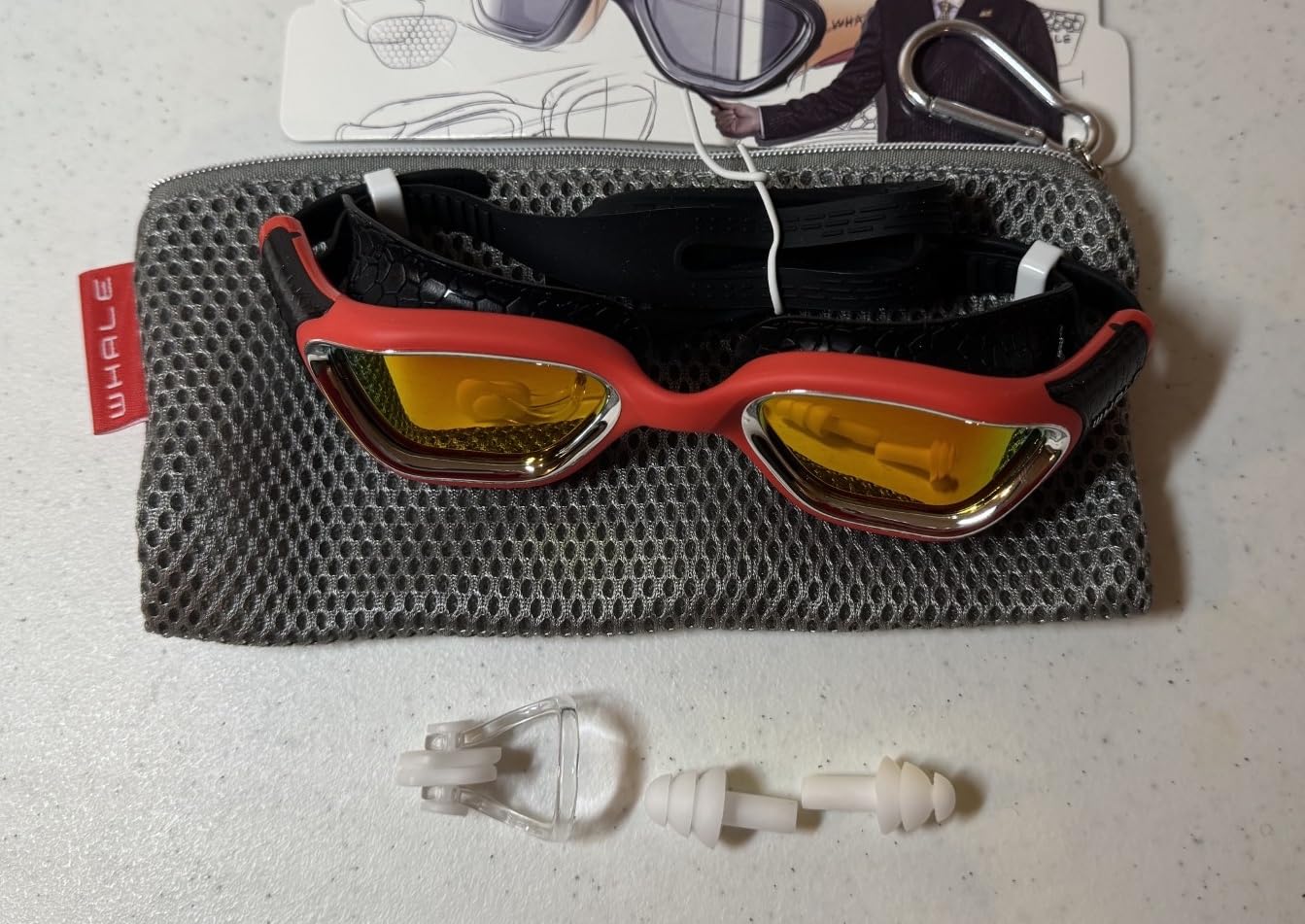
The polarised polycarbonate lens filters scattered glare and shows true colour underwater, which is genuinely useful for spotting weed, silt and submerged structure in a lake. It is PVC free, crack-resistant, FINA certified and was shortlisted for both the German Red Dot design award and the US Good Design award.
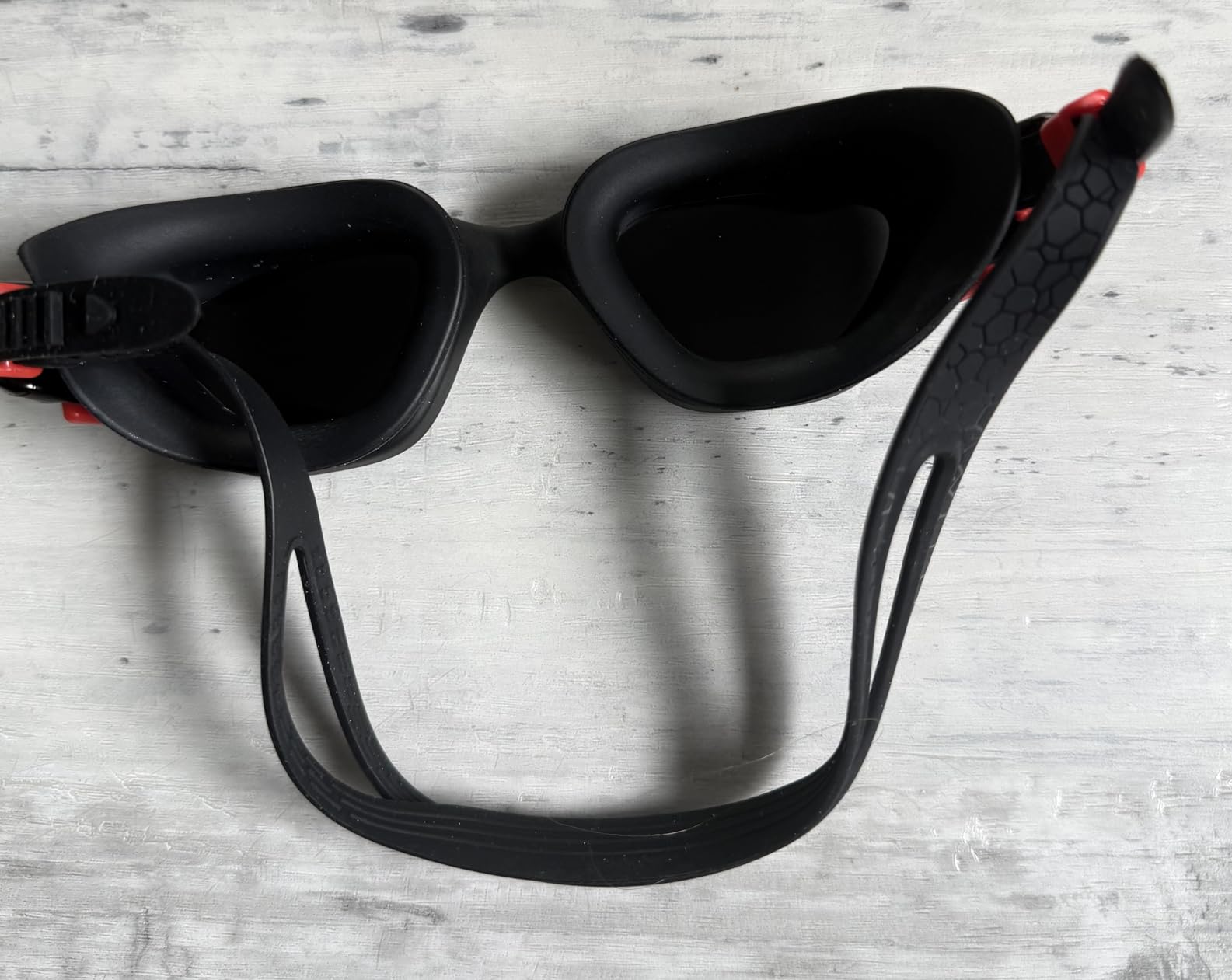
Best for long sessions and sensitive faces
Choose this if you are putting in a lot of metres and weight or bridge pressure is your limiting complaint. The nose bridge carries no hard edge, the frame is soft and latex-free by material, and the light weight means you can forget you are wearing them.
It is also a good first pair for someone who wants a polarised lens without a mirror finish, since the glare reduction is real but the interior stays brighter than a full mirror.
Where it falls short
The honest limitation is data. A review base of 110 ratings tells you what the first buyers thought, not what happens after two seasons of salt water and chlorine, and the coating longevity claim on this pair is unproven over time compared with the big brands.
One size may also not suit very small or very large faces, and the absence of a mirror means glare reduction is milder than the mirrored or polarised mirrors in this list on the brightest days.
How We Tested Open Water Goggles
Every pair here was swum in at least three conditions: a flat freshwater lake, open water with surface chop and a genuine swell, and a pool session under artificial light. We logged the same five criteria for each, in the same order, so the scores in the blocks above are directly comparable.
Seal integrity was first, because a goggle that leaks is a safety problem outdoors. We counted leaks per length, and separately noted whether a wave or a turn dislodged the frame. Comfort over distance came second, tracked by strap tension, bridge pressure and how long the pair stayed on without adjustment.
Lens performance was third: glare handling in direct sun, clarity in overcast conditions, and how long the anti-fog held before needing intervention. Field of view was assessed by sighting a marker at ten metres while keeping another target in peripheral awareness. Build and durability were last, covering strap hardware, lens scratch resistance and gasket condition after the test period.
Where a claim came from owner feedback rather than our own sessions, we said so in the product block. Review totals, ratings and physical specifications are taken directly from the product data, and the anti-fog durability figures we quote for individual pairs are manufacturer claims rather than measurements we made.
How to Choose Open Water Swim Goggles
The wrong way to buy open-water goggles is to pick the pair with the darkest lens or the smallest price. Open water is a different problem from a pool, and the decisions that matter are about seeing, staying dry, and remaining comfortable for longer than you are used to.
What type of goggles work best in open water
Three attributes carry the category. Wide peripheral vision for sighting matters more than almost anything else, because you need to see a swimmer who is not in your line, a paddle, or a buoy at an angle. A glare-cutting lens, whether mirrored, polarised or photochromic, determines whether you can look down into the water or are forced to look at the sky. And a soft silicone or custom-shaped gasket is the difference between a swim and a fight with your equipment.
Style follows from those three needs. A low-profile race goggle minimises drag but gives a narrower view and a tighter seal. A wider training goggle gives better sightlines and a more forgiving fit at the cost of some bulk. A mask-style goggle gives the widest view of all and the most comfort, but is the least hydrodynamic.
Choosing a lens tint for glare and changing light
Lens tint is the choice most swimmers regret, because they buy for a sunny day and then swim in fog. Clear lenses suit overcast skies, indoor pools and twilight, and are a poor choice in bright sun. Smoke lenses are a good all-rounder for daylight and indoor work. Mirrored lenses are the strongest glare cutters and the darkest interiors, which makes them poor for dim or variable light. Polarised lenses cut reflected glare from the water surface specifically, which is the open-water problem, without darkening the whole view as heavily as a mirror.
The hedge is a photochromic lens, which darkens in sun and lightens in cloud. There is no photochromic option in this roundup, which is a genuine gap for swimmers who train through changing weather, and it is the reason we include both a mirror and a polarised option for most categories here.
Fit, nose bridges and avoiding pressure marks
Fit is decided at the nose bridge more than anywhere else. Look for at least three interchangeable nose bridge sizes; the Arena pairs here include three or five, which lets you tune the seal close without over-tightening the strap. A strap tension problem is very often a nose bridge problem in disguise.
To check fit, press the goggles to your face without a strap and look for even suction all round the socket with no gaps at the inner or outer corners. Then, for sizing, most brands offer a one size plus a small and a large, and a quick adjust strap or side clip lets you set the last few millimetres. If the goggles leave red marks above the eyebrow, you are overtightening a frame that is too small for you.
Should you wear a mask instead of goggles
A mask is a genuine option for open water, particularly in cold or rough water where face comfort matters more than drag. The trade-off is bulk: masks feel less hydrodynamic, catch more water and are generally less comfortable over a long fast swim. For sea and wild swimming they are worth considering; for a flat summer lake at a steady pace, goggles are the more efficient choice.
If you want the best of both, the oversized single-lens goggles in the market exist for the same reason, and none appear in this roundup, so treat mask recommendations with the same scrutiny you would apply to any gap in the list.
One pair or two for pool and open water
If you only want one pair, take a wide mirrored or polarised model with a soft gasket and accept that it will be slightly bulkier than a pure race goggle. The ZIONOR G1 and the Arena Python both handle a full season of pool work and open water without a compromise you will notice.
If you can justify two pairs, use a low-profile race goggle for pool sessions where fog and strap feel dominate, and a wider polarised pair for open water where vision and glare dominate. Many open-water swimmers also carry a cheap third pair as a backup. Care matters either way: rinse goggles in fresh water after every sea swim, and let the lenses dry away from direct sun, since salt and heat are what destroy both polarisation and anti-fog coatings.
How to Stop Open Water Goggles Fogging and Leaking
Fogging and leaking are the two complaints that appear on every open-water forum thread, and both have a fix that costs nothing before you spend money on a new pair.
For fogging: rinse the inner lens with fresh water before you put the goggles on, never saliva, which spreads oils that attract water; a quick clear-out under the surface at the start of the swim re-rinses the lens; dry lenses with a soft cloth rather than a towel, whose fibres scratch the coating; and reactivate swipe or spray coatings as their instructions describe, since a coating that has been scoured away will not recover on its own.
For leaking: work through a fixed order. First, adjust the strap so the frame is held, not crushed. Second, swap the nose bridge for a different size, which is the most common real cause. Third, inspect the gasket for hardening, warping or a torn lip, since a stiff gasket will never seal again. Only after those three steps is it fair to conclude the frame width is wrong for your face, and at that point a different model is the answer.
One more habit worth building: keep a spare pair. Losing goggles to a wave or a knock-off in a race is common, and a cheap backup strapped to your wrist costs less than a ruined swim.
Frequently Asked Questions
What type of goggles are best for open water swimming?
Low-profile or mid-profile goggles with a wide field of view, a glare-cutting lens and a soft silicone gasket are the best open water type. Mirrored or polarized lenses handle surface glare, wide peripheral vision lets you sight buoys and other swimmers, and a soft gasket holds through waves. Custom-shaped seals are the most leak-resistant option, and mask-style goggles win on comfort while losing on drag.
Why do my swim goggles keep leaking?
Work through the causes in order. Tighten the strap until the frame is held rather than crushed, then try a different nose bridge size, which is the most common real cause. Next inspect the gasket for hardening, warping or a torn lip. If all three are correct, the frame width is wrong for your face and you need a different model or a custom-fit pair.
Why are my swim goggles fogging up in open water?
Rinse the inner lens with fresh water before swimming and avoid saliva, which spreads oils that attract water. Clear the lens under the surface at the start of a swim, dry with a soft cloth rather than a towel, and reactivate swipe or spray anti-fog coatings as directed. Salt, sunscreen and direct sun all accelerate coating failure, so rinse goggles in fresh water after every sea swim.
Which swim goggles are the best for triathlons in open water?
For triathlon racing, the Arena Cobra Ultra Swipe and the Speedo Fastskin Hyper Elite are the strongest choices, with low hydrodynamic profiles, stable seals and reactivatable or embedded anti-fog coatings. For training and mass-participation races, the Arena Python and TYR Nest Pro offer wider vision and softer seals at the cost of some bulk.
What are the common problems with swim goggles?
The five recurring problems are leaking on push-off or when a wave hits, fogging that starts within the first length, pressure marks and raccoon eyes from tight straps or stiff gaskets, a lens tint that is wrong for the light, and straps slipping or tangling. All five are addressable through fit adjustment, nose bridge swaps, lens choice and care routine rather than by buying a new pair.
The Best Swim Goggles for Open Water in 2026
The best swim goggles for open water come down to three things, and no pair in this roundup compromises more than one of them. The ZIONOR G1 Polarized is our overall choice, combining a polarized lens, a soft silicone double-seal frame and a curved panoramic view, with the deepest owner feedback of any pair we tested.
Take the Arena Cobra Ultra Swipe if you race and want a low-profile frame with a swipe anti-fog film you can reactivate in the water. Take the OMID P2 if your priority is a 180-degree field of view and polarized glare control at a level of value that surprises us. The Arena Cobra Tri is the safest bet in rough water, and the TYR Vesi or Nest Pro will carry you through a season without fuss.
Whichever you choose, fit the nose bridge before you fit the strap, match the lens tint to your typical light rather than your best day, and rinse the goggles in fresh water after every sea swim. That last habit alone will keep your anti-fog and polarisation working far longer than most swimmers expect.