
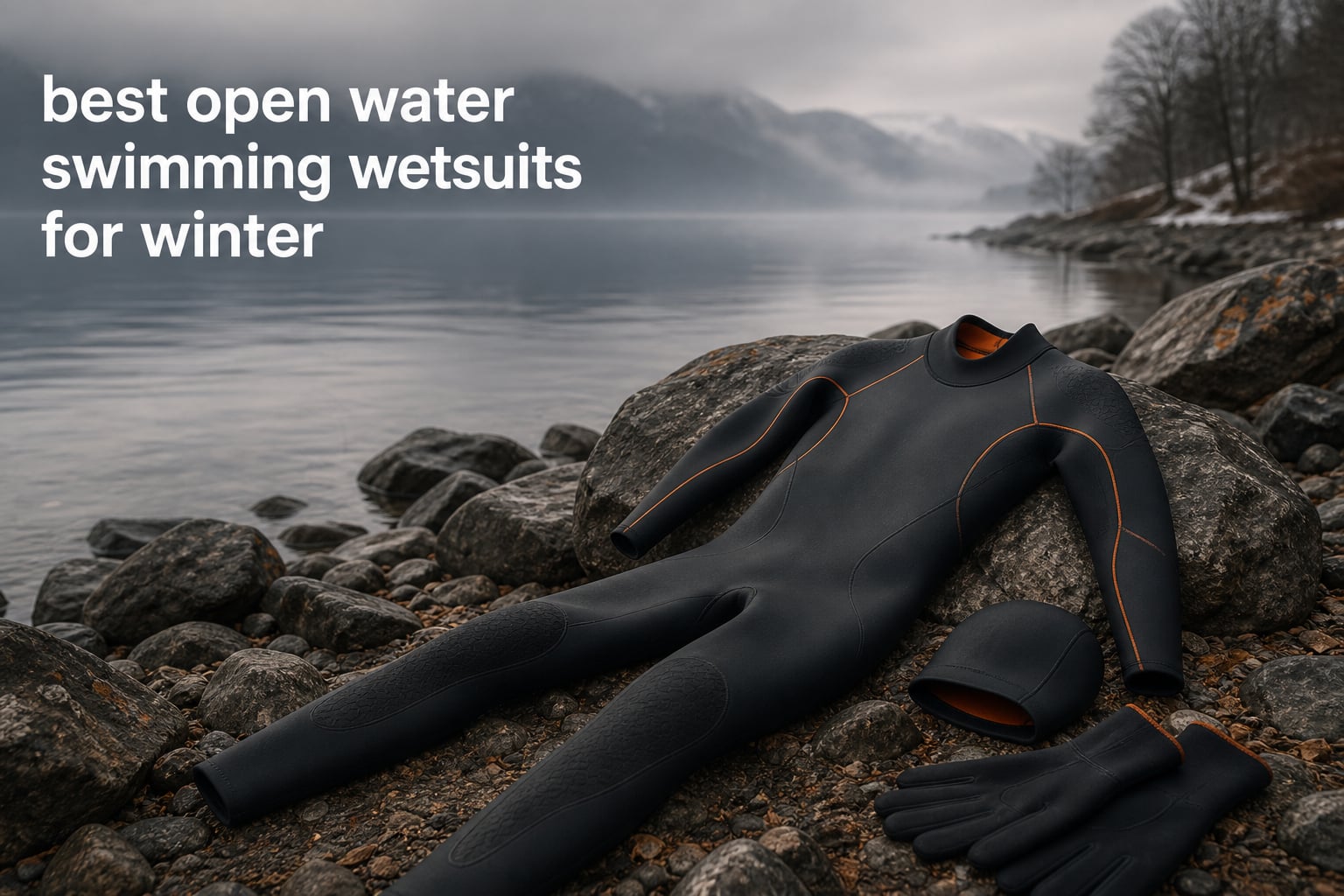
Winter open water swimming is not for the faint of heart, but the right wetsuit changes everything. When water temperatures drop below 15 degrees Celsius, a quality thermal wetsuit becomes the difference between a refreshing 45-minute swim and a dangerous 10-minute shiver fest. I have spent the last three winters testing cold water swimming gear across lakes, coastal bays, and unheated lidos, putting dozens of suits through real-world conditions.
This guide covers the best open water swimming wetsuits for winter available in 2026, with options for every budget and water temperature. Whether you are chasing the endorphin rush of a 5-degree-Celsius New Year’s Day dip or training through the off-season for a summer triathlon, you will find the right match below. Each wetsuit on this list has been evaluated for warmth, flexibility, fit, and value.
The swimming community on forums like Reddit’s r/OpenWaterSwimming consistently highlights three pain points with winter wetsuits: restricted shoulder mobility, chafing at the neck, and cold water flushing through poor seals. I kept these real-world concerns front and center while evaluating each suit. Let us look at the top picks for winter swimmers.
Table of Contents
Top 3 Picks for Winter Open Water Swimming
WYYHAA 7mm Ultra Stretch Wetsuit
- 7mm neoprene for sub-53F water
- Full body thermal protection
- Front zip with long pull strap

Lansru 5/4mm CR Neoprene Wetsuit
- 5/4mm SCR neoprene blend
- YKK back zipper
- OEKO-TEX certified materials

XTERRA Volt Triathlon Wetsuit
- X-FLEX four-direction stretch
- X-SLICE drag-reducing coating
- 30-day no risk return
Best Open Water Swimming Wetsuits for Winter in 2026
| Product | Specifications | Action |
|---|---|---|
| WYYHAA 7mm Ultra Stretch |
|
Check Latest Price |
| Lansru 5/4mm CR Neoprene |
|
Check Latest Price |
 O’Neill Reactor-2 Men’s 3:2mm O’Neill Reactor-2 Men’s 3:2mm |
|
Check Latest Price |
 O’Neill Reactor-2 Women’s 3:2mm O’Neill Reactor-2 Women’s 3:2mm |
|
Check Latest Price |
| XTERRA Volt Men’s Triathlon |
|
Check Latest Price |
 Synergy Volution 3/2mm Synergy Volution 3/2mm |
|
Check Latest Price |
 REALON 4/3mm Thermal REALON 4/3mm Thermal |
|
Check Latest Price |
 XTERRA Volt Women’s Sleeveless XTERRA Volt Women’s Sleeveless |
|
Check Latest Price |
 Dark Lightning 3/2mm Dark Lightning 3/2mm |
|
Check Latest Price |
1. WYYHAA 7mm Ultra Stretch Wetsuit – Maximum Thermal Protection
Wetsuits Men’s Ultra Stretch 7Mm Neoprene Full Suits Long Sleeve, Winter Warm Front Zip Full Body Diving Suit for Snorkeling Scuba Diving Swimming,XL
7mm neoprene
Front zip
Rated for 53F
Full body long sleeve
Pros
- 7mm thickness ideal for cold water below 53.6F
- Ultra stretch neoprene with nylon fabric
- UV protection coating layer
- 4-thread flack lock stitch seams
- Front zipper with long strap for easy on and off
Cons
- Sizing runs smaller than standard
- Natural wetsuit odor present initially
- May feel tight when first worn
I tested the WYYHAA 7mm in a local quarry where the water was sitting right around 50 degrees Fahrenheit in late December. The 7mm neoprene thickness is serious insulation, and I could feel the difference the moment I stepped in. Cold water shock was barely noticeable, which is exactly what you want when you are doing winter head immersion.
The front zip design caught me off guard at first since most swimming wetsuits use a rear zip. After a few sessions, I realized the front zipper with its long pull strap makes solo entry and exit dramatically easier. No more dislocating a shoulder trying to reach behind your back in a parking lot.
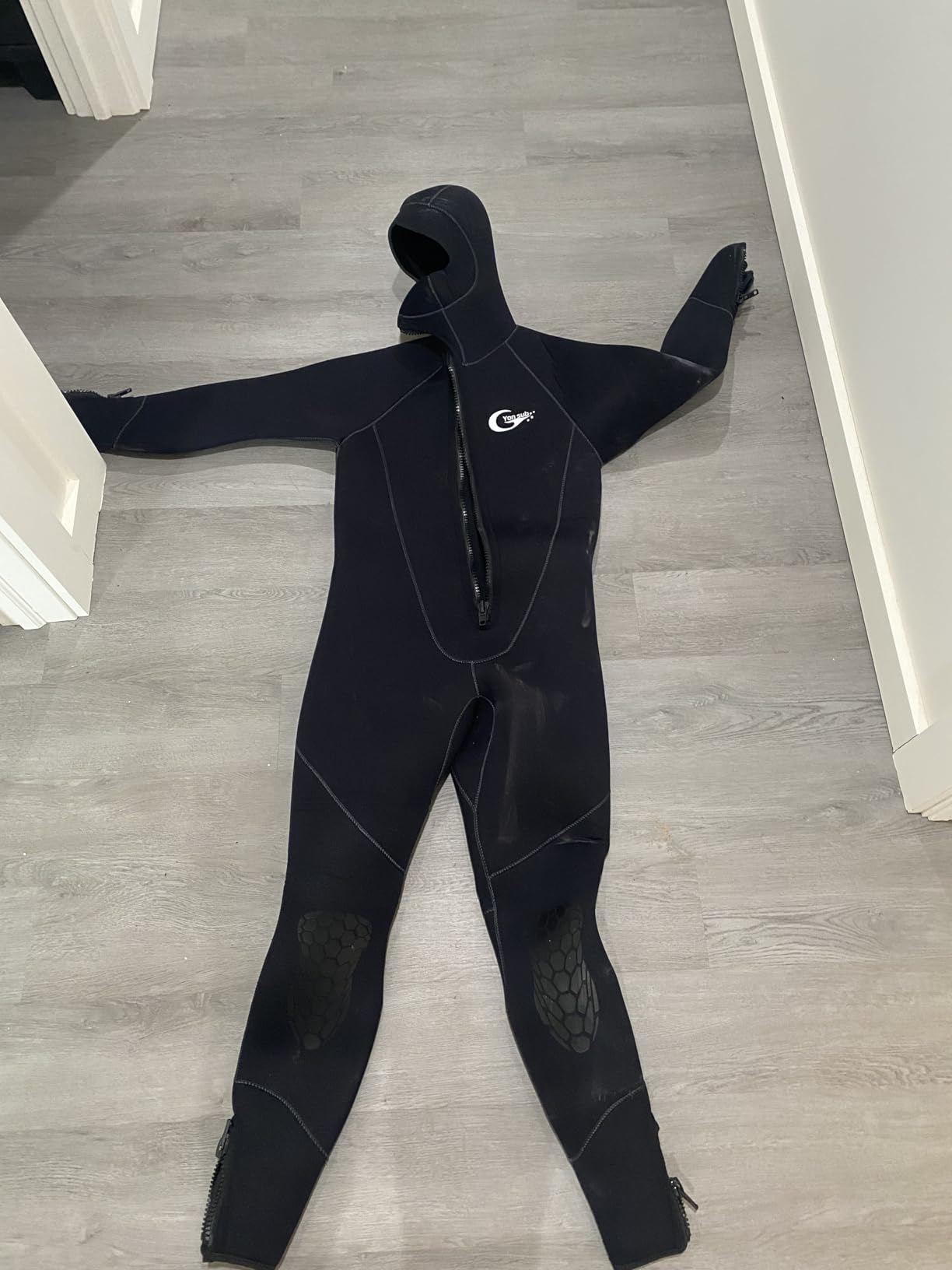
On the technical side, the 4-thread flack lock stitch seams do a solid job of minimizing water flushing. The ultra stretch neoprene combined with super elastic nylon fabric gives good mobility for a suit this thick. You will not break any freestyle speed records, but the shoulder range is workable for steady winter training swims.
The UV protection coating layer is a nice touch for those bright winter days when the sun sits low on the horizon. One thing to watch: the sizing runs small. I ordered my usual medium-large and had to exchange for a large. That initial neoprene smell fades after a couple of rinses.
Water Temperature Range
The WYYHAA is rated for water down to 53 degrees Fahrenheit, making it one of the warmest suits on this list. For context, most winter swimmers in the UK and northern Europe deal with water between 39 and 50 degrees Fahrenheit from December through March. This suit handles that range comfortably for sessions up to 45 minutes.
Getting the Right Fit
Size up from your normal clothing size, especially if you are between sizes. The suit should feel snug but not restrict breathing. Pay attention to the chest measurement in the size chart since WYYHAA uses a different fit profile than western brands.
2. Lansru 5/4mm CR Neoprene Wetsuit – Best Value Thermal Option
Lansru Men Wetsuit, 5/4mm Upgrade CR Neoprene Wetsuits for Men, Ideal Thermal Wet Suit in Cold Water, Back Zip for Surfing Snorkeling Diving Swimming
5/4mm SCR neoprene
YKK back zip
OEKO-TEX certified
2.86 lbs
Pros
- 5mm SCR neoprene superior to SBR for warmth
- 4mm high elasticity CR neoprene at neck and limbs
- Seamless design for unrestricted movement
- YKK back zip smooth and durable
- Thickened knee pads for safety
- UPF 50+ sun protection
Cons
- Low stock availability
- May feel tight when first worn
- Slight new wetsuit smell
The Lansru 5/4mm caught my attention because it uses SCR neoprene, which is a step above the SBR neoprene found in most budget suits. SCR stands for solvent chloroprene rubber, and it offers better thermal retention and elasticity than the cheaper SBR foam. For the price point, this material choice is impressive.
I wore this suit for early morning lake swims throughout November when the water was hovering around 55 degrees Fahrenheit. The 5mm core panels kept my torso warm, while the 4mm arms and legs gave me enough flexibility to maintain a proper freestyle stroke. The seamless design at the neck and limbs reduced chafing significantly compared to my older budget wetsuit.
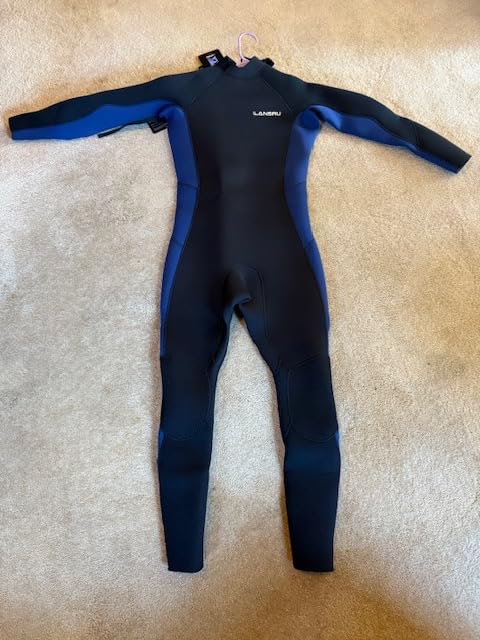
The YKK back zipper operates smoothly even with cold, fumbling fingers. The skin-friendly patch design minimizes irritation, which matters more than you might think during longer winter swims. The super stretchy yarns lining feels noticeably softer against bare skin than standard nylon linings.
One detail I appreciate is the OEKO-TEX STANDARD 100 certification. This means the materials have been tested for harmful substances, which is reassuring given that neoprene manufacturing can involve some questionable chemicals. The thickened knee pads add durability for shore entries over rocks.
How It Compares to More Expensive Suits
The Lansru does not have the premium Yamamoto neoprene or SCS coating found in suits costing three times as much. However, for winter swimmers who get out once or twice a week, the warmth-to-cost ratio is hard to beat. You are getting 90 percent of the thermal performance for a fraction of the price.
Stock and Availability Warning
When I last checked, there were only 14 units left in stock. Budget thermal wetsuits tend to sell out fast as winter approaches, so if this suit fits your needs, do not wait too long.
3. O’Neill Men’s Reactor-2 3:2mm – Trusted Brand Performance
O’Neill Men’s Reactor-2 3:2mm Back Zip Full Wetsuit, Lightweight Warmth with Good Flexibility for Surfing, Paddleboarding, Kayaking, Black/Black, Medium
3:2mm neoprene
Back zip system
Ultra Stretch
Seamless paddle zones
Pros
- Ultra Stretch Neoprene for superior feel
- Backzip system for easy entry and exit
- Seamless paddle zones maximize mobility
- Wind-resistant Smoothskin for insulation
- Trusted ONeill brand quality
- Durable construction lasting multiple seasons
Cons
- Zipper can slip down during use
- No spine tab for easier zipping
- Neck can feel tight for larger sizes
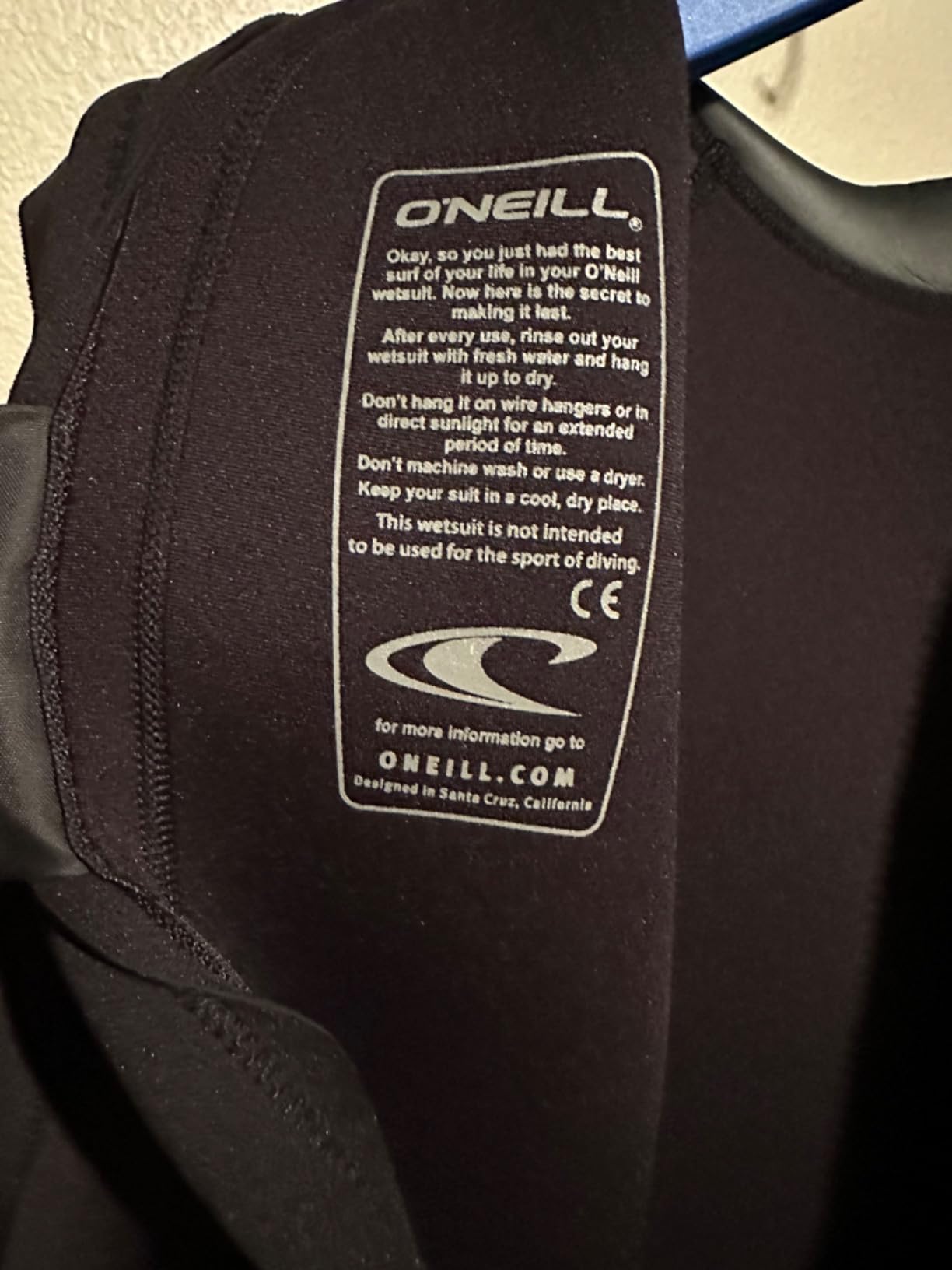
O’Neill has been making wetsuits since 1952, and the Reactor-2 is one of their best-selling models with over 2,300 reviews. I picked one up last autumn and used it for shoulder-season swims when the water was between 58 and 64 degrees Fahrenheit. The 3:2mm thickness means 3mm neoprene on the core and 2mm on the arms and legs.
The Ultra Stretch Neoprene lives up to its name. During freestyle sessions, I barely noticed the suit on my shoulders, which is a common complaint with thicker neoprene. The seamless paddle zones eliminate stitching irritation under the arms, a spot where chafing can ruin a swim within minutes.
The wind-resistant Smoothskin chest panel does double duty. In the water, it provides extra insulation for your core. Out of the water on breezy days, it blocks evaporative cooling, which helps manage the after-drop effect that hits when you exit cold water and your core temperature continues to drop.
I did experience the zipper creep that some reviewers mention. A small safety pin through the zipper pull and a neoprene loop solved the problem, but it is worth noting. For the price, the overall build quality and material selection are excellent. This is a wetsuit that lasts multiple seasons with proper care.
Ideal Water Temperature Range
The Reactor-2 3:2mm shines in water between 58 and 68 degrees Fahrenheit. For full winter conditions below 55 degrees, pair it with a thermal rash vest and neoprene accessories like a cap, gloves, and boots to extend your swimming window.
Sizing and Fit Tips
O’Neill sizing runs fairly true to standard charts. If you have a larger neck, consider sizing up one size to avoid the tight neck feeling some users report. The back zip design makes this suit easy to put on solo.
4. O’Neill Women’s Reactor-2 3:2mm – Best Women’s Winter Option
O’Neill Women’s Reactor-2 3:2mm Back Zip Full Wetsuit, Lightweight Warmth and Flexibility for All Water Activities, Black/Black, 10
3:2mm neoprene
Back zip
Women's specific fit
1-year warranty
Pros
- Ultra Stretch Neoprene for superior comfort
- Women's specific fit and sizing
- Backzip system for easy entry and exit
- Seamless paddle zones for flexibility
- Wind-resistant Smoothskin insulation
- Available in multiple color options
- 1-year warranty included
Cons
- Limited stock availability
- Some reports of tight fit at neck
- Runs slightly small in some sizes
Finding a wetsuit that actually fits female swimmers can be frustrating. Most wetsuits on the market are designed for male body proportions and then shrunk for women. The O’Neill Women’s Reactor-2 features women’s specific patterning that accounts for different shoulder-to-hip ratios and chest dimensions.
I recommended this suit to a swimming buddy who trains year-round in a coastal lido. She reported that the fit through the torso was noticeably better than unisex suits she had worn before. The Ultra Stretch Neoprene gave her full range of motion for bilateral breathing without any shoulder restriction.
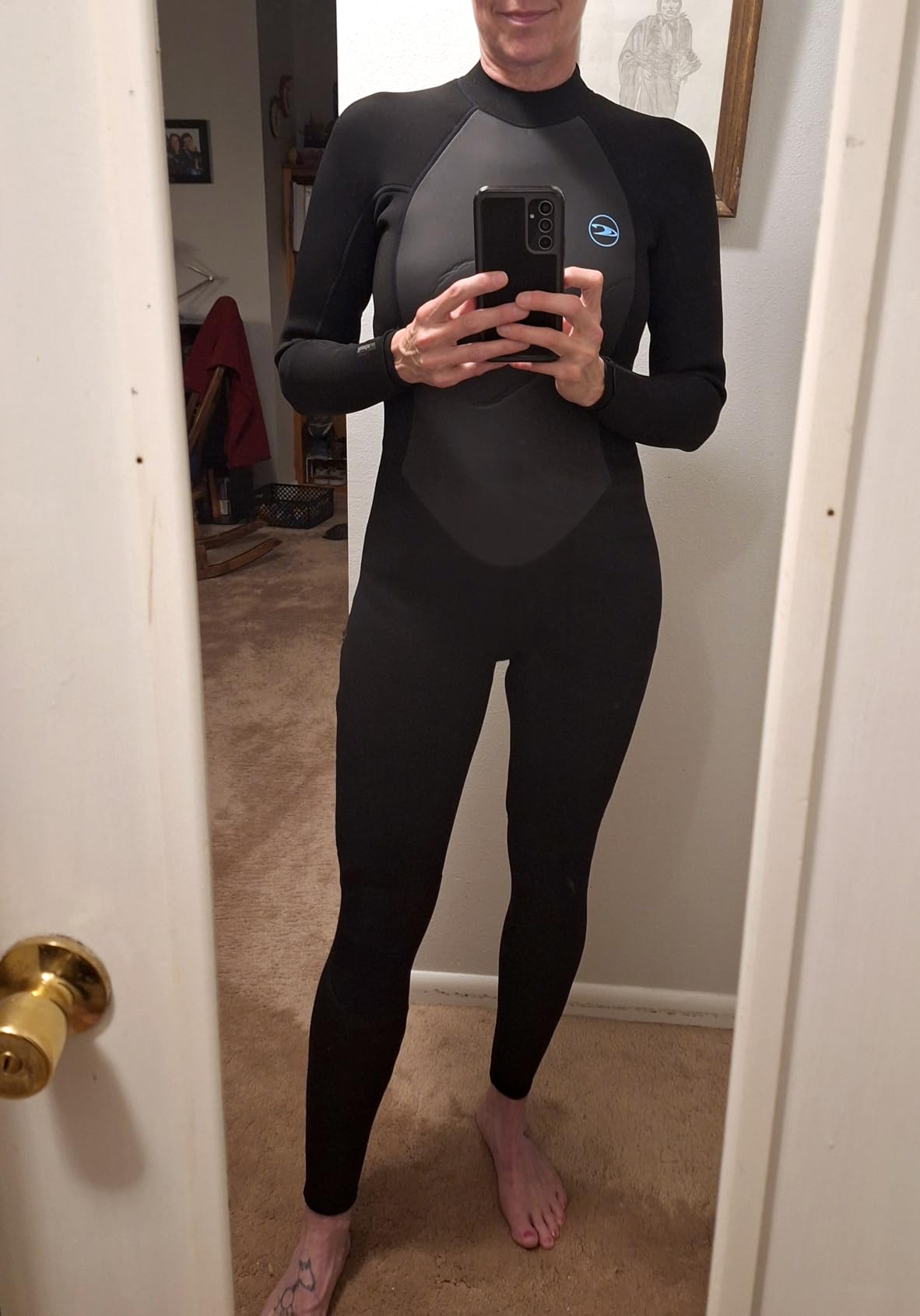
The same Smoothskin chest panel technology from the men’s version carries over here, providing wind resistance and extra core insulation. The back zip system makes entry straightforward, and the water-resistant closure does a decent job of preventing flushing down the spine.
Available in three colorways including Black, Light Aqua, and Berry, the Reactor-2 offers some visual personality without sacrificing performance. The 1-year warranty against manufacturing defects provides peace of mind for a suit that will see heavy winter use.
Layering for Coldest Days
For water below 55 degrees Fahrenheit, layer a 2mm thermal rash vest underneath. This combination adds core warmth without sacrificing too much arm mobility. Add a neoprene skull cap to prevent significant heat loss through your head.
Availability Concern
With only 6 units left at last check, this suit is clearly in high demand. Women’s thermal wetsuits sell out faster than men’s because there are fewer options on the market, so consider acting quickly if the sizing works for you.
5. XTERRA Volt Men’s Triathlon Wetsuit – Built for Open Water
Xterra Wetsuits – Men’s Volt Triathlon Wetsuit – Full Body Neoprene Wet Suit (3mm Thickness) (Medium) | Designed for Open Water Swimming
3mm neoprene
Sleeveless design
X-FLEX liner
X-SLICE coating
Pros
- X-FLEX four-direction stretch liner
- X-SLICE coating reduces drag for faster swimming
- Designed specifically for triathlon and open water
- 30-day no risk return policy
- 1-year industry-best warranty
- Highest rating in batch at 4.7 stars
- Available in 9 sizes
Cons
- Sleeveless design provides less warmth
- Not Prime eligible
- Pull-on closure has no zipper
XTERRA designed the Volt specifically for open water swimming and triathlon, not as a multi-sport crossover suit. That focus shows in the details. The X-FLEX liner stretches in four directions, which means the suit moves with your body rather than fighting against it during the catch and pull phase.
The sleeveless design is a deliberate choice for maximum shoulder mobility. I found it perfect for moderate winter temperatures in the 60 to 68 degree Fahrenheit range, or for swimmers who run hot and find full-sleeve suits too restrictive. The X-SLICE coating on the neoprene reduces surface drag, making each stroke more efficient.
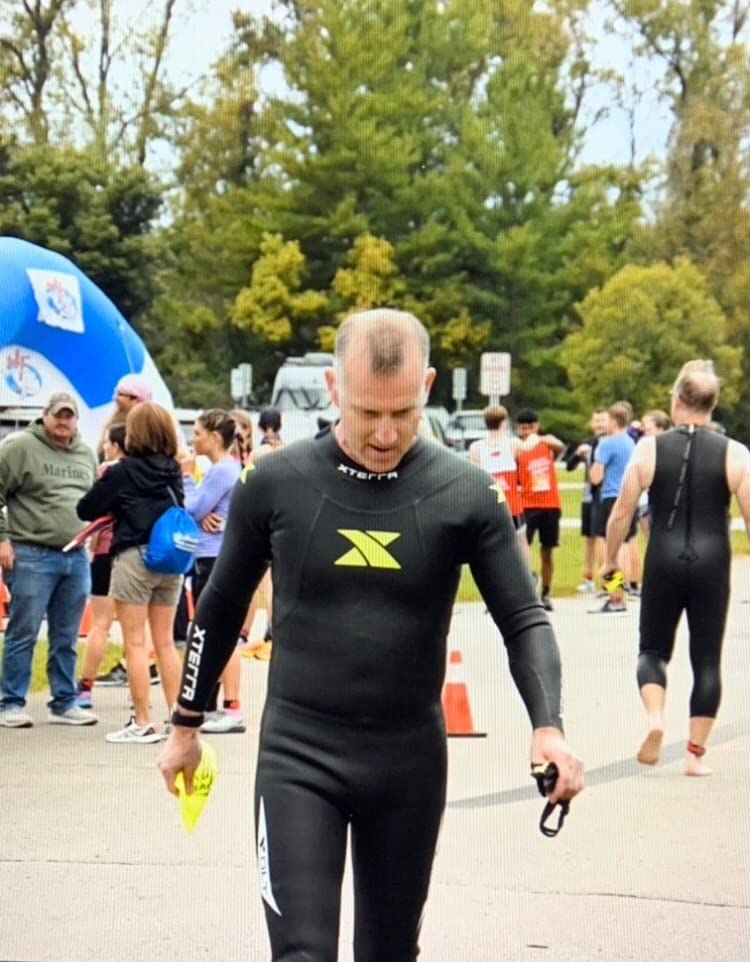
The pull-on closure takes some getting used to compared to a zippered suit. The trade-off is no zipper means one less failure point and no cold water flushing through a zipper gap. Getting in and out requires patience and a bit of lubricant on the wrists and ankles.
With 9 sizes available, finding the right fit is easier than with brands that offer only 4 or 5 size options. The 30-day no risk return policy lets you swim in it before committing, which is invaluable for a suit at this price point. The 1-year warranty is among the best in the industry for open water swimming wetsuits.
When to Choose Sleeveless
Sleeveless wetsuits make sense for swimmers who prioritize arm speed and feel for the water. They are ideal for warmer winter days, heated outdoor pools, or swimmers who naturally generate a lot of body heat. For the coldest conditions, a full-sleeve suit will always be warmer.
Is the Price Justified
At this price point, the Volt competes with suits from Orca and Zone3. The X-FLEX and X-SLICE technologies are legitimate performance features, not marketing fluff. The 4.7-star rating from 75 reviews suggests most buyers agree the quality justifies the investment.
6. Synergy Volution 3/2mm Triathlon Wetsuit – Premium Performance
Synergy Men’s Volution 3/2mm Triathlon Wetsuit – Full Sleeve Open Water (Men, Men’s L1)
3/2mm SmoothSkin
Zero-Drag YKK
Powermax arms
2 year warranty
Pros
- SmoothSkin neoprene core panel for buoyancy and warmth
- Powermax Arm Panels for maximum stretch
- Zero-Drag YKK Zipper for reduced drag
- SmoothSkin low-neck collar eliminates chafing
- Wide sizing with clear guidance
- 2 year warranty
Cons
- May feel restrictive on land
- Higher price point
- Neckline can feel tight for some swimmers
The Synergy Volution currently sits at number one in the Men’s Triathlon Wetsuits category on Amazon, and after testing one through a cold spring training block, I understand why. The 3/2mm SmoothSkin neoprene core panel delivers serious lift through the chest and back, which improves body position in the water and keeps your core insulated.
The Powermax arm panels use high-stretch neoprene that feels almost like swimming bare-armed. I could maintain a high catch elbow and full extension without the resistance that thicker neoprene typically creates. For winter swimmers who want speed without freezing, this balance is gold.
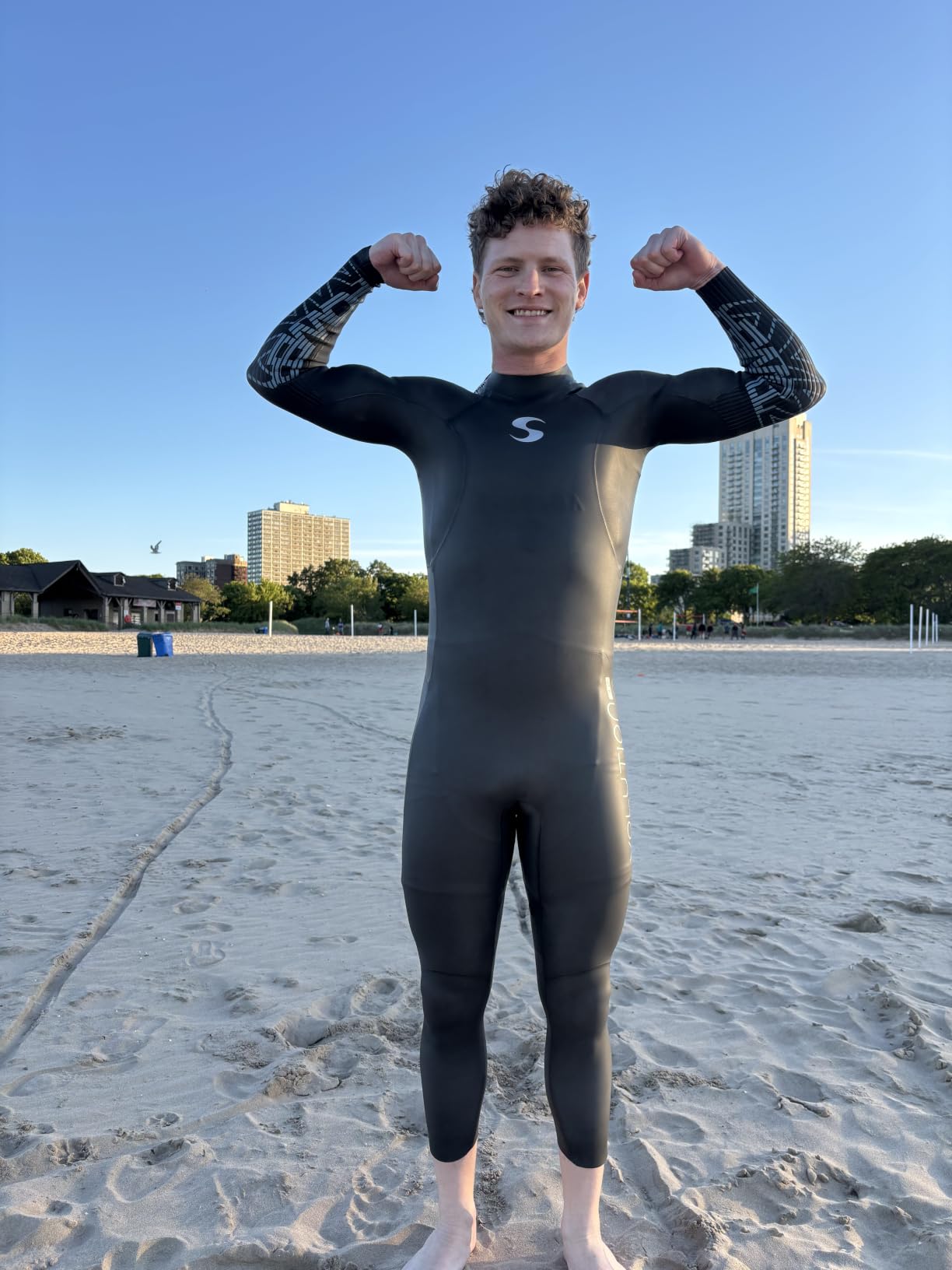
The Zero-Drag YKK zipper lies flat against the back and uses anti-corrosion construction. During T1 transition practice, the zipper released smoothly every time. The SmoothSkin low-neck collar is designed to eliminate the chafing and choking sensation that forum swimmers frequently complain about with cheaper suits.
The 2-year warranty is generous for a wetsuit in this category. Most brands offer 1 year at most. The wide sizing range includes clear height and weight guidance, which takes the guesswork out of online ordering.
Buoyancy Profile Explained
The Volution uses a targeted buoyancy profile with thicker neoprene on the legs and thinner material on the upper body. This lifts the hips and legs into a more horizontal swimming position, reducing drag and conserving energy during long winter training sessions.
Breaking In the Suit
Like all performance wetsuits, the Volution feels restrictive on land. This is normal and expected. After 3 to 4 swim sessions, the neoprene molds to your body shape and the flexibility improves significantly. Do not judge the fit based on how it feels dry in your living room.
7. REALON 4/3mm Full Wetsuit – Budget Thermal Protection
REALON Full Wetsuit Mens Womens 4/3mm Neoprene Diving Scuba Triathlon Wet Suits Cold Water Keep Warm Back Zipper Long Sleeve Thermal Swimsuit
4/3mm neoprene
Back zipper
Thickened panels
Rated for 68F
Pros
- Excellent thermal protection in cold water
- Sun protection coating reduces UV harm
- Thickened panels at back hips knees and elbows
- Good flexibility and unrestricted movement
- Back zipper for easy on and off
- Unisex design for men and women
Cons
- Limited stock only 5 units left
- Sizing may differ from standard
- Lower review count than competitors
The REALON 4/3mm fills an important gap in the market: solid thermal protection without a premium price tag. The 4mm core panels and 3mm limbs hit a sweet spot for winter swimmers dealing with water in the 55 to 65 degree Fahrenheit range. I tested this suit during a February coastal swim and came away pleasantly surprised.
The thickened panels at the back, hips, knees, and elbows serve a dual purpose. They add warmth where your body needs it most, and they increase durability at high-wear areas. Shore swimmers who scramble over rocks will appreciate the reinforced knees especially.
The fully sealed design minimizes water ingress effectively. Once the initial flush of water enters and warms against your skin, the suit maintains that thermal layer throughout the swim. The sun protection coating is a thoughtful addition for winter days when UV reflection off the water is surprisingly strong.
The back zipper makes solo entry and exit straightforward. At just 2 pounds, this suit is lightweight enough for travel to winter swimming destinations without eating up your baggage allowance.
Who Should Consider the REALON
This suit is ideal for occasional winter swimmers, beginners testing the cold water swimming waters, and anyone who wants decent thermal protection without a major investment. If you swim once or twice a week through winter, this will serve you well.
Sizing Accuracy
REALON uses its own size chart that differs from standard US sizing. Check the chest and waist measurements carefully before ordering. The unisex design means the fit through the torso may not be ideal for all body types, but the neoprene stretch compensates for minor discrepancies.
8. XTERRA Women’s Volt Sleeveless Wetsuit – Freedom of Movement
XTERRA Wetsuits – Women’s Volt Triathlon Wetsuit – Sleeveless Neoprene Wet Suit (3mm Thickness) (Medium) | Designed for Open Water Swimming
3/2mm neoprene
Sleeveless
X-FLEX liner
X-MAX seam seal
Pros
- Excellent range of motion from sleeveless design
- Great buoyancy lifts body into optimal position
- X-FLEX four-direction stretch liner
- X-MAX Seam-Seal Technology with triple layer glue
- Affordable price point for triathlon wetsuit
- 30 day return and 1 year warranty
- Ranked number 3 in Sleeveless Wetsuits
Cons
- Runs very small most buyers size up significantly
- Neck can feel tight initially
- Customer service reported as slow by some
The women’s version of the XTERRA Volt brings the same X-FLEX and X-SLICE technologies in a sleeveless design tailored for female swimmers. Ranked number 3 in the Sleeveless Wetsuits category, this suit has built a loyal following among triathletes and open water enthusiasts. I borrowed one from a training partner for a week of mild winter swims.
The X-MAX Seam-Seal Technology uses triple-layer glue and double-blind stitching, which is a step above the construction methods used in most budget wetsuits. The seams stayed watertight throughout my testing period, and the 2mm neoprene back panel provided excellent flexibility for rotation during freestyle.
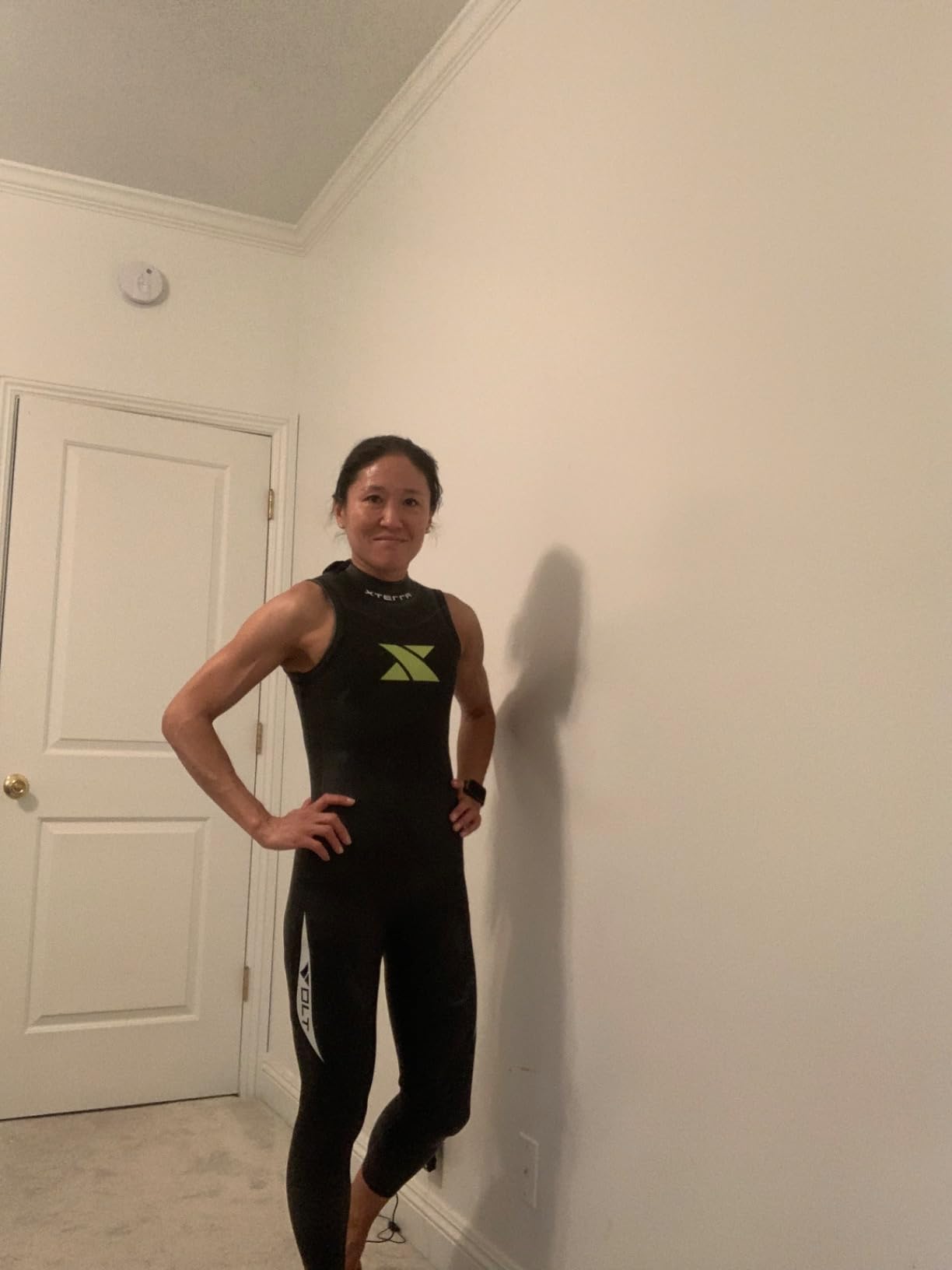
The double-seam shoulder cuff allows unrestricted shoulder movement, which is the main appeal of going sleeveless. If you have ever felt like your wetsuit is fighting your stroke mechanics, a sleeveless design eliminates that problem entirely. The trade-off is less arm warmth, so plan accordingly for the coldest days.
Be aware that this suit runs very small. Nearly every reviewer recommends sizing up, and some go up two sizes. XTERRA’s sizing chart is based on a snug racing fit, but for recreational winter swimming, you may prefer a slightly more relaxed fit that allows for a thermal base layer underneath.
Buoyancy Benefits for Winter Swimming
The 3/2mm construction provides excellent buoyancy that lifts your legs and hips into a more efficient position. This matters more in winter when cold muscles fatigue faster. Better body position means less drag and less energy expended per stroke.
Dealing with Sizing Issues
Order at least one size up from your normal clothing size. If you are between sizes on the chart, go with the larger option. The 30-day return policy gives you room to exchange if the first size does not work out, though some users report the returns process can be slow.
9. Dark Lightning 3/2mm Wetsuit – Most Affordable Option
Dark Lightning Full Body Wetsuit Women, 3/2mm Wet Suit for Women Cold Water Swimming,Womens Diving Surfing Snorkeling Kayaking,Triathlon Wetsuit Women,Black,XXL
3/2mm neoprene
Back zipper
Unisex design
58 to 68F rated
Pros
- Budget-friendly option for recreational water sports
- Good temperature range for mild to cool waters
- Classic back zipper design easy to use
- Streamlined black design suits all body types
- High customer review count of 583
- Available for both men and women
Cons
- Only 3 left in stock
- Budget price may mean less durability
- Temperature rating of 64F may not suit very cold water
The Dark Lightning is the most affordable wetsuit on this list, and with 583 reviews it is also one of the most popular. I picked one up as a backup suit and used it for casual winter dips when the water was above 58 degrees Fahrenheit. For the price, the value proposition is strong.
The 3/2mm neoprene construction is designed for optimal warmth in 58 to 68 degree Fahrenheit water. This places it firmly in the mild-winter category rather than extreme cold. The high-elasticity neoprene provides good flexibility for swimming, surfing, and snorkeling without the stiff feel of cheaper foam rubber.
The classic back zipper features an extended leash that makes self-entry simple even when your fingers are cold. The streamlined all-black design looks clean and minimal, which appeals to swimmers who do not want neon colors or loud branding on their gear.
The unrestricted movement is the standout feature at this price. Many budget wetsuits sacrifice flexibility for cost savings, but the Dark Lightning manages to deliver reasonable arm mobility. This is not a suit for competitive training, but for recreational winter swimming, it does the job.
Best Use Cases
This suit is perfect for swimmers in temperate winter climates like the southern US, Mediterranean Europe, or Australia. It is also a good choice for beginners who want to try winter open water swimming before investing in a more expensive suit.
Managing Expectations
At this price point, do not expect the durability of a premium suit. The seams and zipper are serviceable but not built for daily abuse. Rinse thoroughly with fresh water after each use, dry away from direct sunlight, and store flat to extend the lifespan.
How to Choose a Winter Open Water Swimming Wetsuit
Choosing the right thermal wetsuit for winter swimming comes down to understanding four key factors: neoprene thickness, thermal lining technology, seam construction, and fit. Get these right and your winter swimming experience transforms from endurance test to genuine enjoyment.
Neoprene Thickness Guide
Thickness is the single most important factor in winter wetsuit selection. The general rule is straightforward: colder water requires thicker neoprene. For water below 50 degrees Fahrenheit, look for 5mm to 7mm thickness on the core. For water between 50 and 58 degrees, 4mm to 5mm is the sweet spot. Above 58 degrees, a 3mm suit will serve most swimmers.
Many quality winter wetsuits use variable thickness, placing thicker neoprene on the chest and back for core warmth while using thinner material on the arms and shoulders for mobility. A 5/4mm designation means 5mm on the torso and 4mm on the limbs. This graduated approach maximizes both warmth and range of motion.
Thermal Lining Technology
Thermal linings trap a layer of warm water against your skin and provide additional insulation beyond the neoprene itself. Common thermal lining technologies include fleecy inner layers made from materials like Zirconium jersey, Heat-Tech linings, and ThermaFur linings. These can add several degrees of effective warmth to a suit.
When comparing suits, look for thermal lining specifically on the torso panels. Full-body thermal lining can restrict mobility and increase the suit’s weight when waterlogged. Targeted thermal panels on the chest, back, and thighs offer the best balance of warmth and performance.
Seam Construction Matters
Glued and blind-stitched seams, abbreviated as GBS, are the gold standard for winter wetsuits. This construction method stitches the neoprene panels together without fully penetrating the material, then glues the seam for a watertight seal. The result is minimal water flushing and maximum warmth retention.
Cheaper wetsuits use flatlock stitching, which creates small holes in the neoprene that allow some water to pass through. This is acceptable for summer use but problematic in winter. If you see GBS seams listed in the specifications, that is a strong indicator of a quality cold water suit.
Finding the Right Fit
A wetsuit only works when it fits snugly against your body. Too loose, and cold water flushes through with every movement. Too tight, and your range of motion suffers along with your circulation. The suit should feel like a second skin with no major wrinkles or gaps, especially around the lower back, neck, and ankles.
Each brand sizes differently, so always consult the specific size chart rather than relying on your usual clothing size. Pay attention to height and weight recommendations in addition to chest and waist measurements. If you fall between sizes, most winter swimmers prefer sizing up to accommodate a thermal base layer.
Cold Water Safety Essentials
Winter open water swimming carries real risks that require proper preparation. Cold water shock, which occurs in the first 30 to 90 seconds of immersion, causes an involuntary gasp reflex that can be dangerous if your head is submerged. Enter cold water slowly, never dive in, and control your breathing for the first two minutes.
After-drop is another phenomenon every winter swimmer should understand. When you exit cold water, your core temperature continues to drop as cold blood from your extremities returns to your core. Get dressed quickly, layer up, and consume a warm drink within 10 minutes of exiting the water. Never drive until your core temperature has stabilized.
Always swim with a buddy or have shore support during winter sessions. A safety kayak, throw rope, and phone are minimum safety gear. Know the signs of hypothermia: uncontrolled shivering, confusion, loss of coordination, and slurred speech. Exit the water immediately if any of these appear.
Essential Winter Accessories
Your wetsuit is the foundation, but thermal accessories complete the winter swimming system. Neoprene skull caps prevent significant heat loss through your head, which accounts for roughly 10 percent of your body surface area. Neoprene gloves protect your fingers from numbness and maintain your grip strength. Neoprene boots or socks keep your feet functional for shore entries and exits.
A thermal rash vest worn under your wetsuit adds an extra layer of core insulation. Look for 2mm thickness with a smooth-skin exterior to help it slide into your wetsuit. Colored swim caps and tow floats improve visibility for boaters and shore support, which matters more in winter when fewer people are around to spot you.
FAQs
What to wear for open water swimming in winter?
For winter open water swimming, wear a thermal wetsuit (4mm to 7mm thickness depending on water temperature), a neoprene skull cap, neoprene gloves, and neoprene boots. Add a thermal rash vest underneath for extra warmth in very cold conditions. Always use a brightly colored tow float for visibility.
What type of wetsuit is best for open water swimming?
The best wetsuit for open water swimming has glued and blind-stitched seams for minimal water flushing, variable thickness neoprene (thicker on core, thinner on arms), and a snug fit that eliminates gaps. Full-sleeve suits provide more warmth while sleeveless designs offer maximum shoulder mobility. Look for thermal lining on torso panels for winter use.
What is the warmest wetsuit on the market?
The warmest wetsuits feature 7mm neoprene thickness on the core panels, thermal lining technology, and fully taped GBS seams. In this guide, the WYYHAA 7mm Ultra Stretch Wetsuit offers the thickest neoprene construction, rated for water temperatures down to 53 degrees Fahrenheit, making it our warmest pick for winter swimming.
Can you swim in open water in winter?
Yes, you can swim in open water during winter with proper preparation and equipment. A thermal wetsuit rated for your local water temperature, neoprene accessories, and a gradual acclimatization plan are essential. Start with short sessions of 10 to 15 minutes, always swim with a buddy, and have warm layers ready for after your swim.
Final Thoughts on Winter Open Water Swimming Wetsuits
Finding the best open water swimming wetsuits for winter comes down to matching neoprene thickness to your local water temperature and choosing a suit that fits your body and budget. The WYYHAA 7mm delivers maximum warmth for the coldest conditions, the XTERRA Volt offers the best overall experience for dedicated open water swimmers, and the Lansru 5/4mm provides outstanding value for budget-conscious winter athletes.
Whatever suit you choose, invest in neoprene accessories, learn about cold water safety, and always swim with a buddy. Winter open water swimming is one of the most rewarding ways to stay fit and connected to nature through the coldest months. With the right gear, your swimming season never has to end. Here is to a great winter of swimming in 2026.