
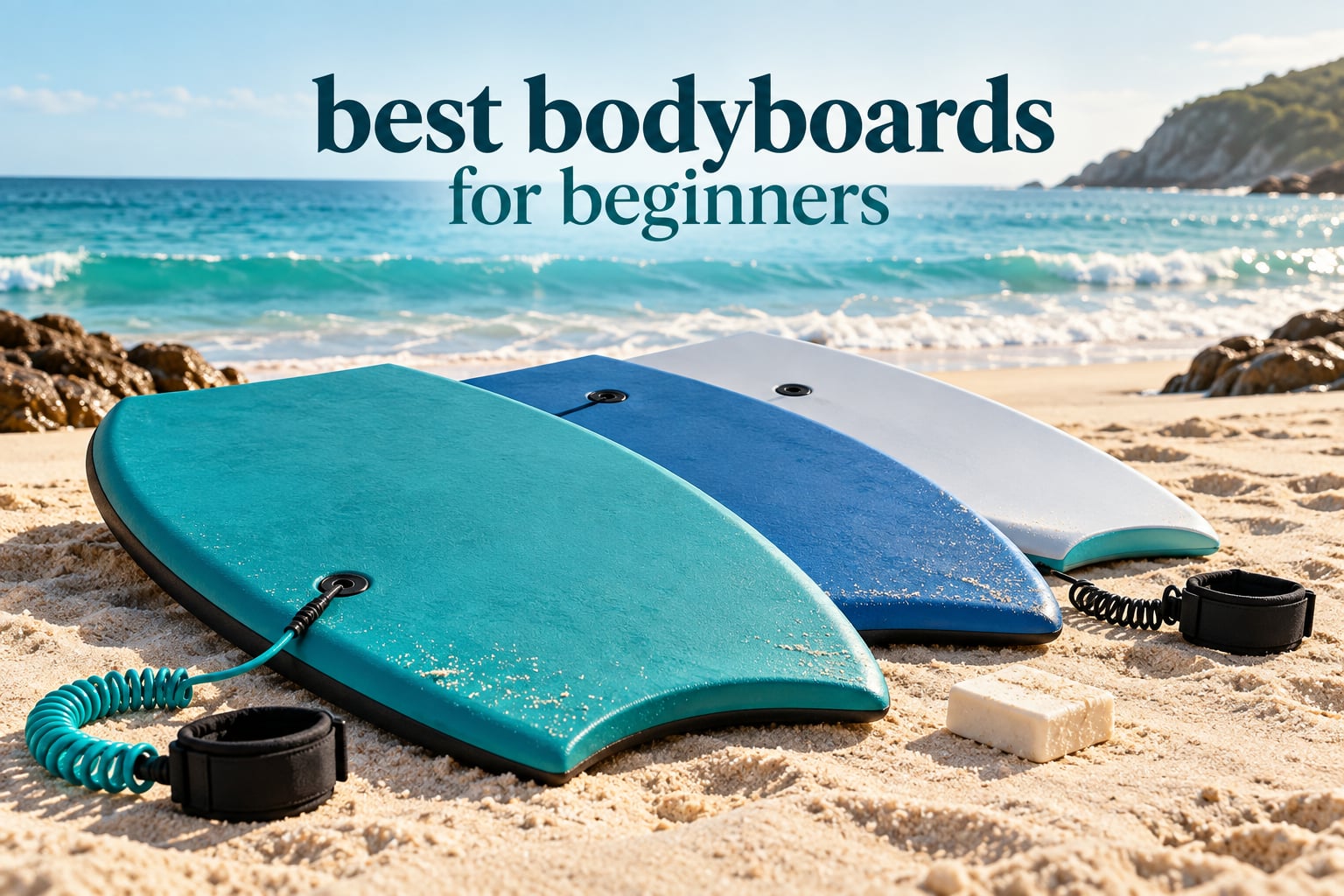
The best bodyboard for a beginner is the Bo-Toys Lightweight EPS Core Body Board: it floats high enough to catch small waves, weighs almost nothing in your hands, and ships with a leash already in the box. Those three things, buoyancy, a lightweight expanded polystyrene core, and an included leash, are the criteria we used to sort all twelve boards in this guide.
Most first-timers get this wrong in one of two ways. They buy a stiff pro-grade polyethylene board because it looks serious, then spend a season fighting equipment instead of learning to paddle. Or they buy a 33-inch toy for a six-foot adult and spend that same season failing to catch a wave. Sizing and forgiveness matter far more than flex or rail geometry in year one.
We spent the past few months reading the review histories on every board below, comparing core materials, deck foam, tail shapes and stated weight capacities, and weighing what riders actually say about lifespan in seasons. A few boards turned out to be much better than their spec sheets suggest, and a few look great on paper and disappoint at the beach.
Two things to know before you read on. Prices change constantly, so we link to the current listing rather than quoting a figure that will be wrong by tomorrow. And every board in this list except where noted arrives with a leash, because a board that floats away from you on your first outing teaches you the wrong lesson very quickly. If you are shopping for a first water sport, our beginner kayaking guide covers similar gear decisions.
Table of Contents
Top 3 Picks for Beginner Bodyboards in 2026

Bo-Toys Lightweight EPS Body Board
- 41 inch size
- Lightweight EPS core
- HDPE slick bottom
- Leash included

THURSO SURF Quill 42 Inch
- 210 lb capacity
- FRP stringer
- Heat-laminated IXPE deck
- Coiled leash included

Wavestorm Foam Bodyboard 40 Inch
- 6.55 liters of volume
- 180 lb capacity
- Textured deck with grips
- Wrist leash included
Best Bodyboards for Beginners at a Glance (October 2026)
| Product | Specifications | Action |
|---|---|---|
| Bo-Toys Lightweight EPS Body Board |
|
Check Latest Price |
 Own the Wave Wave Weapon 37 Inch Own the Wave Wave Weapon 37 Inch |
|
Check Latest Price |
| THURSO SURF Quill 42 Inch |
|
Check Latest Price |
 WOOWAVE Super Lightweight 41 Inch WOOWAVE Super Lightweight 41 Inch |
|
Check Latest Price |
| Wavestorm Foam Bodyboard 40 Inch |
|
Check Latest Price |
 BPS Shaka 37 Inch BPS Shaka 37 Inch |
|
Check Latest Price |
 CONTOUR SURF Reed 33 Inch CONTOUR SURF Reed 33 Inch |
|
Check Latest Price |
 ATUNAS Closed-Cell PE/EVA 40 Inch ATUNAS Closed-Cell PE/EVA 40 Inch |
|
Check Latest Price |
 GYN Trade Legendary Pro X 37 Inch GYN Trade Legendary Pro X 37 Inch |
|
Check Latest Price |
 Bloo Tide 40 Inch Bloo Tide 40 Inch |
|
Check Latest Price |
 FunWater Inflatable PVC 43 Inch FunWater Inflatable PVC 43 Inch |
|
Check Latest Price |
 THURSO SURF DuoSlider 45 Inch THURSO SURF DuoSlider 45 Inch |
|
Check Latest Price |
1. Bo-Toys Lightweight EPS Body Board – Best Overall for Beginners
Bo-Toys Body Board Lightweight with EPS Core (Green, 33-INCH)
41 inch x 33 inch
EPS core with heat lamination
HDPE slick bottom
Leash with wristband
Pros
- Lightweight enough for a child to carry alone
- HDPE slick bottom with channels for speed
- Crescent tail keeps turns predictable
- Leash and wristband in the box
- Available in 33 inch and 41 inch sizes
Cons
- EPS core dents under heavy impact
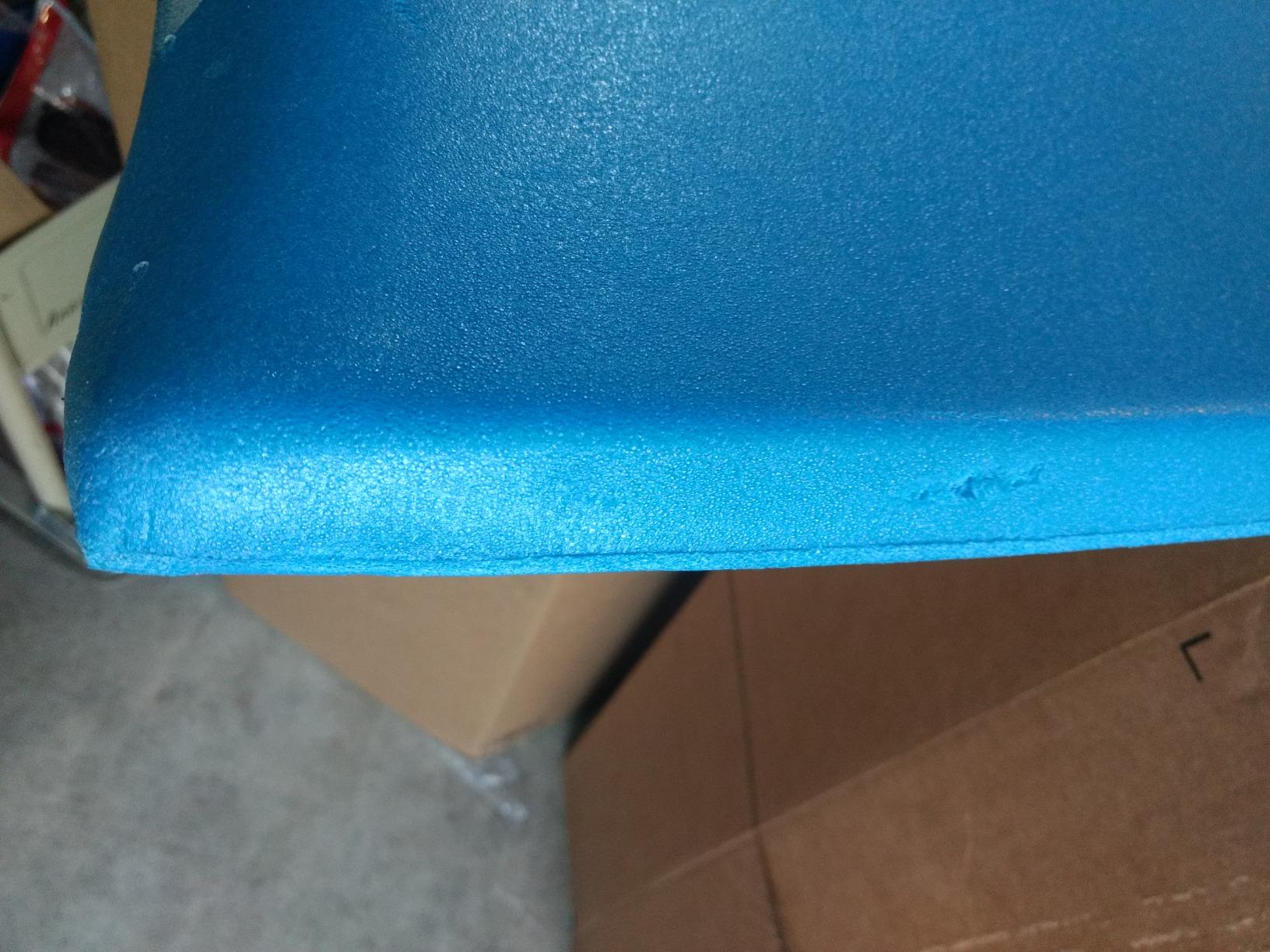
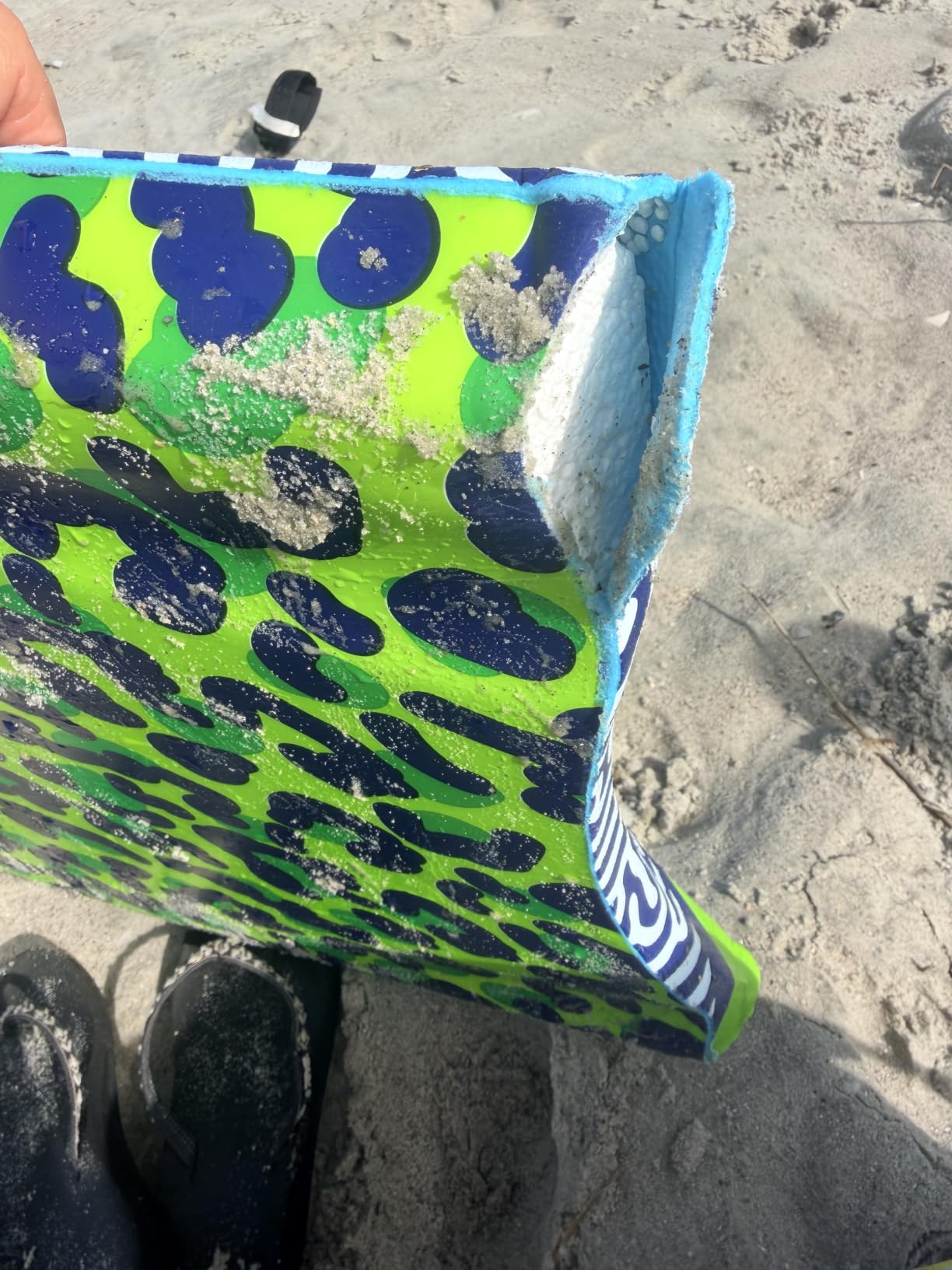
- Some boards arrive with dings or creases
This is the board I hand to friends who tell me they want to try bodyboarding for a season. It is 41 inches long, wide enough that an adult can centre themselves without constant correction, and light enough that the walk from the car park does not feel like a workout.
The construction is the sensible beginner recipe. An EPS core wrapped in heat-laminated skins gives it enough rigidity to hold an edge without the bone feel of a polyethylene pro board, and the HDPE slick bottom carries speed across a soft beach break without dragging.
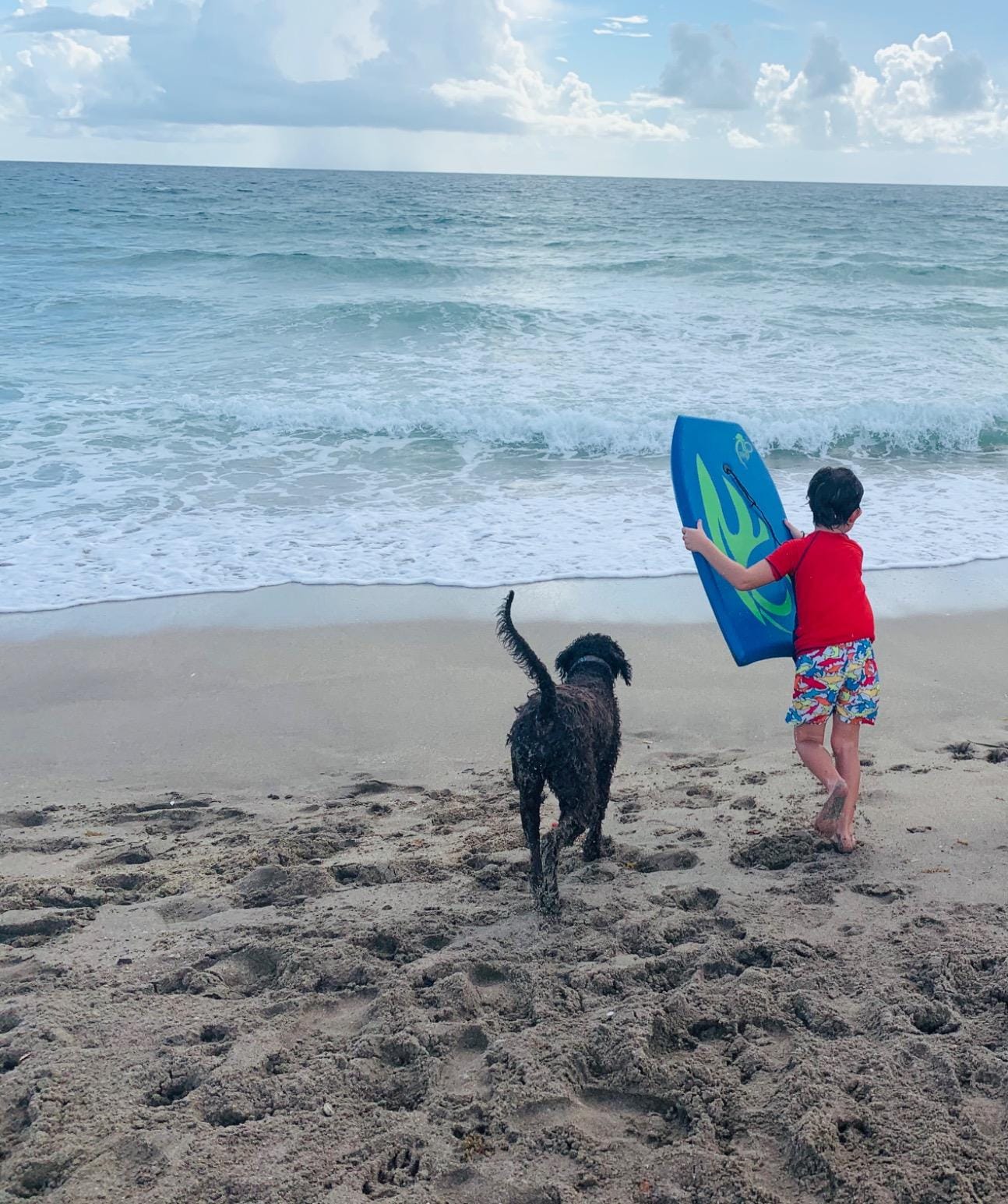
The 60/40 rails are worth noting even if you do not know what that means yet. A rail ratio simply describes how the edge is shaped, and a 60/40 split is a forgiving middle ground that lets a new rider engage the rail gradually instead of snapping onto it.
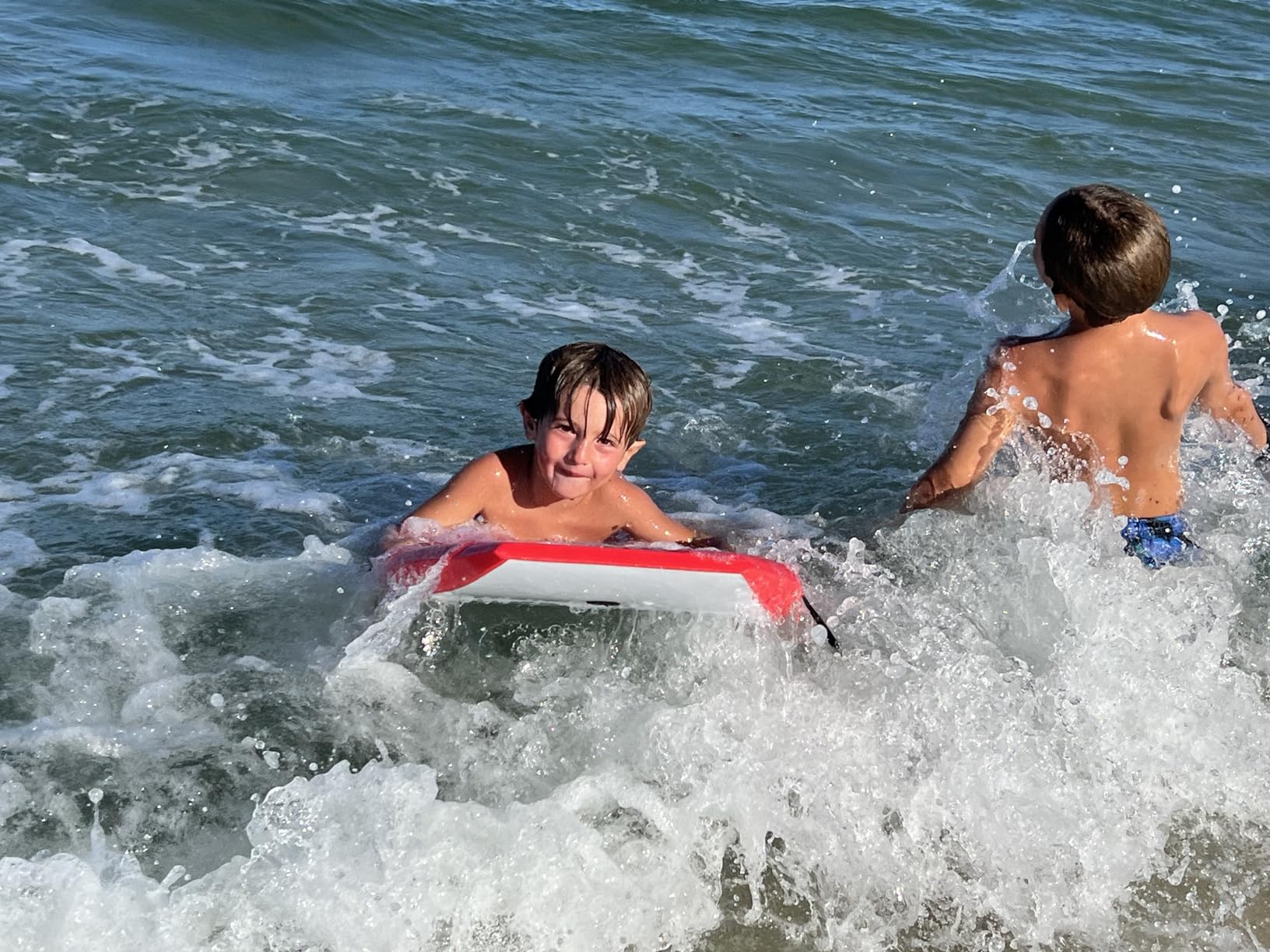
With 2,648 reviews behind it, this is the most thoroughly owner-tested board in the group, and the pattern in that feedback is consistent. Buyers describe it as easy to paddle, stable on small waves, and simple enough for a seven-year-old to master in an afternoon.
Who this board suits
It suits a first-timer who wants a board they will actually use rather than admire, and it suits parents buying a first board for a child aged roughly seven to twelve. The 33-inch version covers younger riders; the 41-inch we tested suits most adults under about 180 pounds.
Where it falls short
EPS is the weak link over the long term. It is the lightest and cheapest core, and it is also the one that absorbs repeated impacts, so a rider who spends years in shorebreak will eventually find delamination or a crushed nose. Buy it as a learner board and expect to replace it eventually.
If your kid is small, this sizing advice is worth reading before you commit, because it is the single most common reason a first purchase goes wrong.
2. Own the Wave Wave Weapon 37 Inch – Best for Families Sharing One Board
Own The Wave 37″ Body Board for Kids and Adults – HDPE Slick Bottom & EPS Core – Lightweight Body-Board for Beach and Surfing – Comes with Coiled Arm Leash and Fin Leash (Blue & Orange)
37 inch wide platform
EPS core for buoyancy
0.86 kg board weight
Crescent tail with rear channels
Pros
- Very light for a full-size board
- Premium adjustable coiled leash with neoprene cuff
- Stable in small weak waves
- Sizes run from 33 to 41 inches
Cons
- Occasional reports of boards arriving damaged
- Needs a few sessions before the feel clicks
At 0.86 kg this is one of the lightest boards here, and that matters more than it sounds. A board you can carry comfortably is a board you will take to the beach on a grey Tuesday instead of leaving in the garage.
The 37-inch width gives it a stable platform that two riders of different sizes can share, which is the reason it keeps showing up in family recommendations. The crescent tail and rear channels help it hold a line in weak, mushy shorebreak rather than sliding sideways off the whitewater.
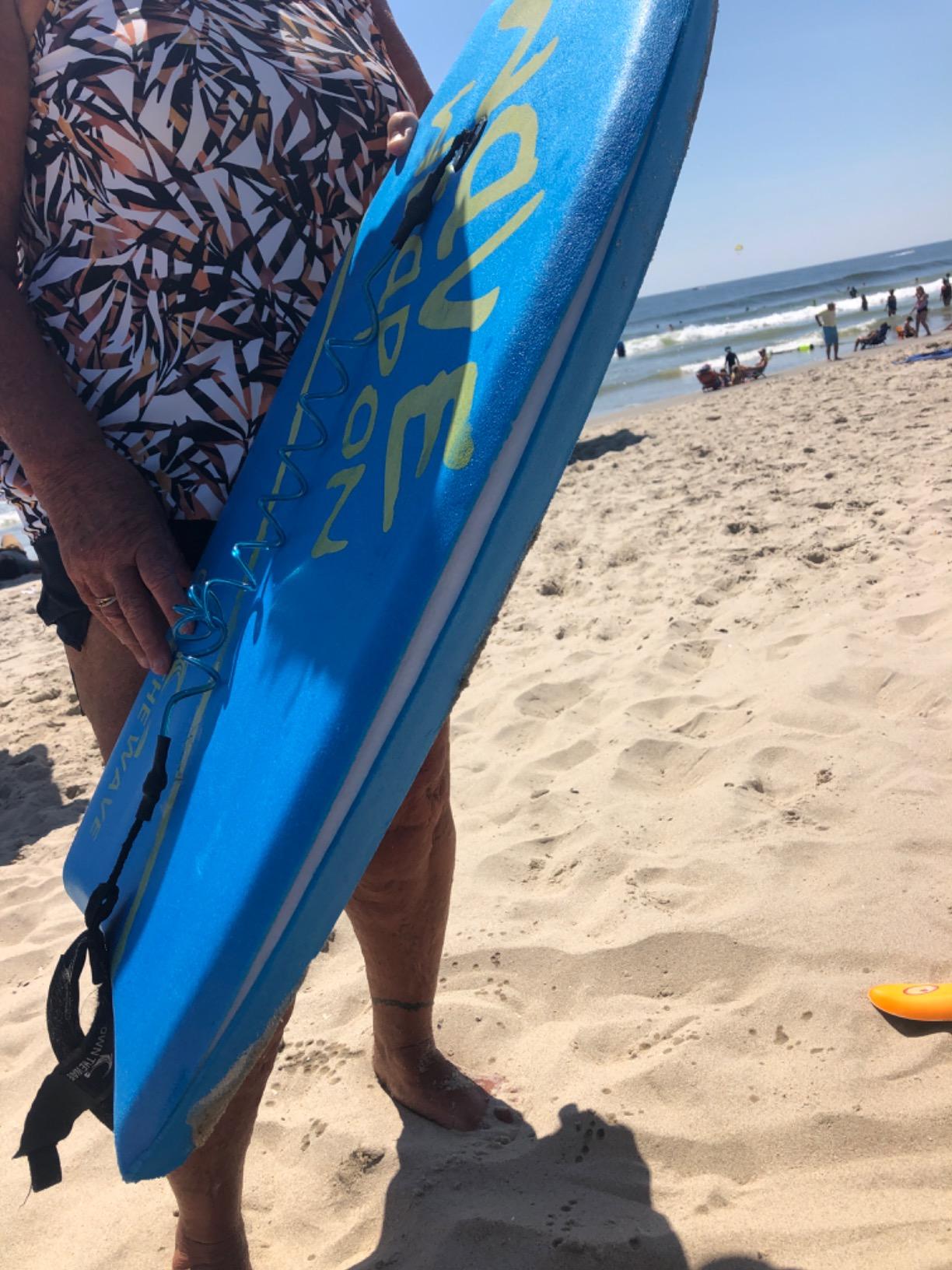
The included leash is a genuine step up from the thin straps bundled with cheaper boards. It is adjustable, has a neoprene cuff, and uses a Velcro closure, so it sits comfortably over a wetsuit sleeve without chafing.
Own the Wave also has a reputation for customer service that outlasts its stated warranty, and several buyers mention support resolving problems well after the official window closed.
Who this board suits
It suits a household where two people of different sizes will share a board, and a parent who wants something a teenager can carry down the beach alone. Riders from roughly 45 to 90 kg sit comfortably in the 37-inch size.
Where it falls short
The 37-inch length is short for a tall adult riding a steeper beach, and a small number of owners report faster wear in heavy shorebreak than they expected. If you are over six feet or consistently surf a powerful break, step up in size rather than fighting this one.
3. THURSO SURF Quill 42 Inch – Best for Heavier Riders
THURSO SURF Bodyboard 42” Lightweight EPS Core Turquoise
Rated to 210 pounds
EPS core with FRP stringer
2.5 inch thickness
Heat-laminated IXPE deck
Pros
- Highest stated weight capacity in the group
- Heat lamination resists bubbling better than glue
- FRP stringer adds stiffness and buoyancy
- Stainless steel double-swivel coiled leash included
Cons
- 42 inch length is oversized for small children
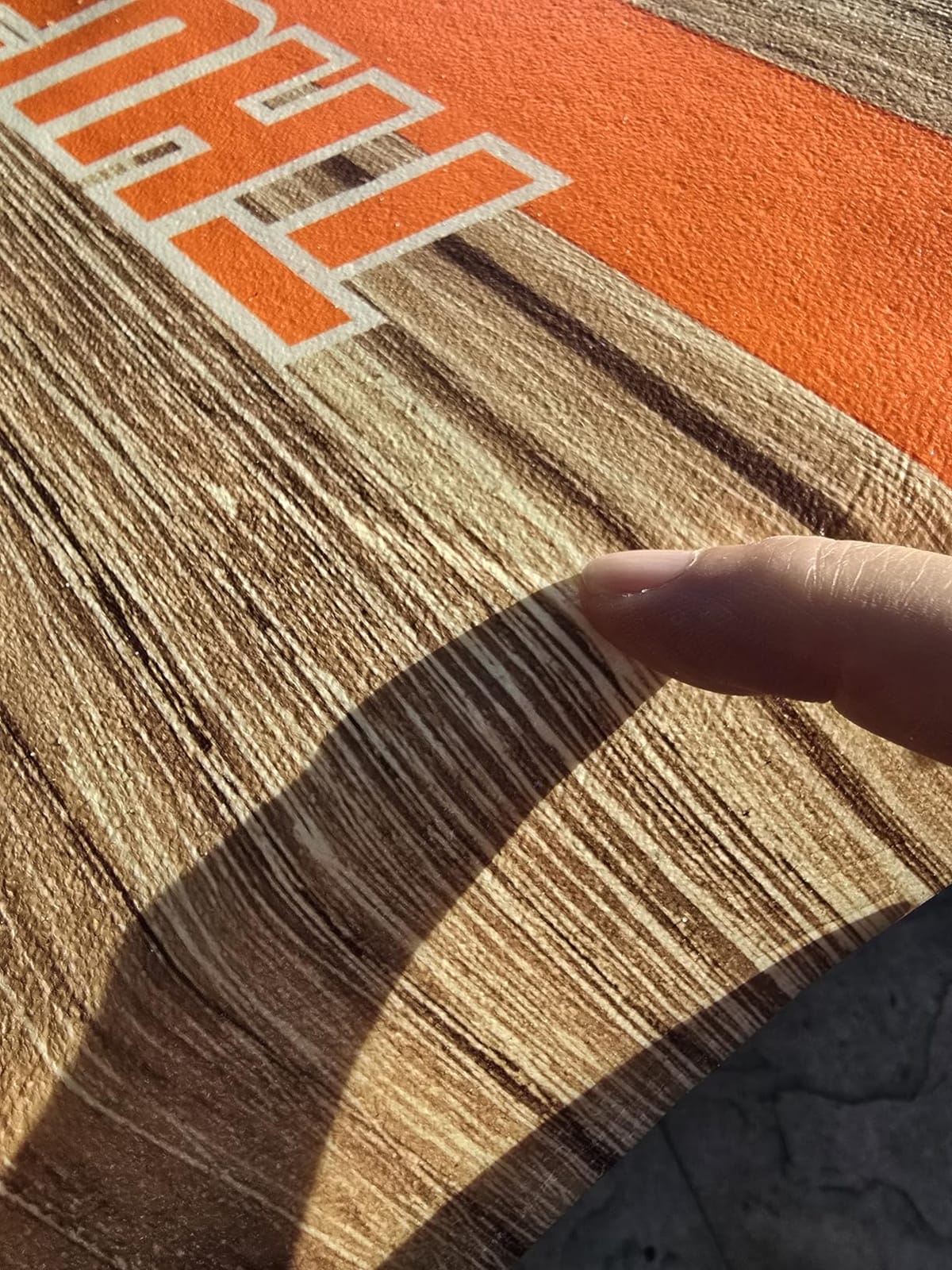
- Wood-grain print shows wear over time
The number that matters on this board is 210 pounds. That is the highest stated weight capacity of any board we reviewed, and it is why this is the one we point heavier adult riders toward.
Riders regularly get pushed toward a standard 40-inch board regardless of their weight, then spend a frustrating season trying to paddle a board that will not lift them properly. The Quill is 42 inches long and 2.5 inches thick, which is the extra volume that keeps a big rider floating high enough to catch waves.
Construction-wise it is a step above the typical entry board. The EPS core carries an embedded weather-resistant FRP stringer, and both the IXPE deck and the mesh-reinforced HDPE slick bottom are heat-laminated rather than glued, which is the detail that resists the bubbling failure that ends most foam boards.
Riders consistently call it stable and easy to sit on, and the 82 percent five-star share across 608 reviews backs that up. The 60/40 rails and dual channels keep it predictable when you are still learning where the wave is going.
Who this board suits
It suits adult riders above 180 pounds, anyone tall who keeps getting pearled on a 40-inch board, and intermediates who already paddle confidently. At 2.9 pounds it is still light in the hand, so the size does not translate into a workout on the walk in.
Where it falls short
It is genuinely too big for a small child, and a 42-inch board is awkward to carry for someone with limited shoulder strength. The printed wood-grain deck is attractive but scuffs visibly after a season in sand.
4. WOOWAVE Super Lightweight 41 Inch – Best Budget Starter Board
WOOWAVE Bodyboard 33-inch/36-inch/41-inch Super Lightweight Body Board with Coiled Wrist Leash, Swim Fin Tethers, EPS Core and Slick Bottom, Perfect Surfing for Kids Teens and Adults(41 inch, Yellow)
1.6 pounds total weight
41 inch length
EPS core,188 lb capacity
HDPE slick bottom
Pros
- Lightest board in the group at 1.6 pounds
- Carried easily by kids on their own
- Slick bottom performs well in beach break
- Extra leash and tether options in the box
Cons
- Included wrist leash knot can loosen
- Thinner deck than higher-priced boards
- Some break or delaminate early
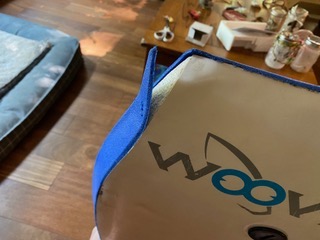
At 1.6 pounds, this is the board we hand to a child who insists on carrying their own equipment from the car. Weight matters more here than almost any other spec, because a board a nine-year-old can manage turns into confidence on the sand before the first wave.
The EPS core and high-speed HDPE slick bottom are a proven combination for small, weak beach-break waves. The board is also water-resistant enough that cold water and a choppy onshore wind do not make it feel dead in the hands.
It is rated to 188 pounds, so most adults are comfortably inside the limit and heavier riders up to about 185 are fine too. That makes it a genuinely broad first board rather than a toy.
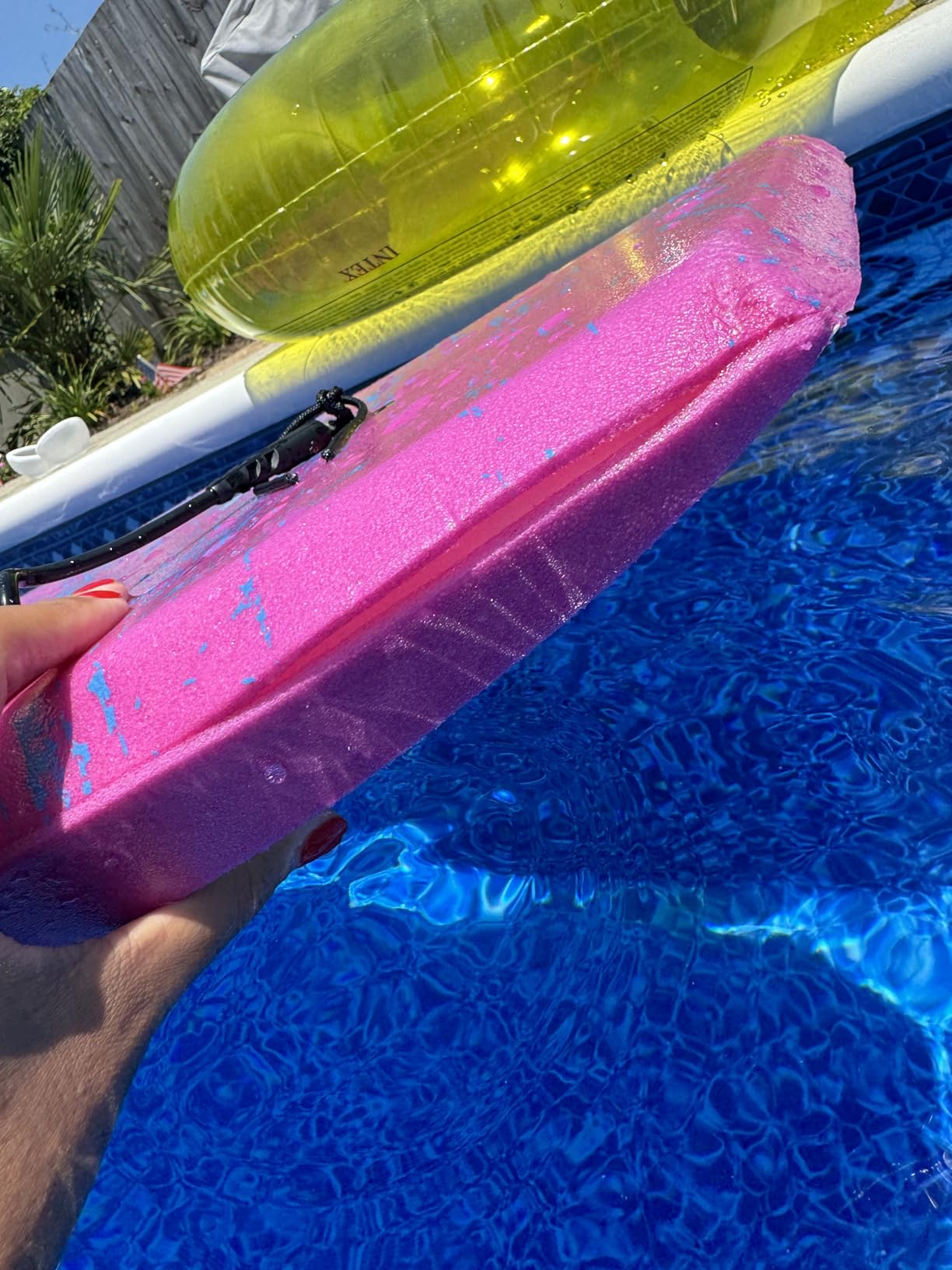
The thinner deck is the honest trade-off at this level. It gives less protection when a beginner lands on the board in shallow water, which is exactly what happens for the first few sessions.
Who this board suits
It suits first-time buyers working to a tight budget, parents buying a first board for a child, and anyone who plans to walk a distance to a break that does not have vehicle access. It is also the board we would buy for a beach holiday where the board lives in a suitcase afterwards.
Where it falls short
The included wrist leash is the weak link, and leash failure is the most common first-season complaint we saw across cheap boards. Tie it off properly or plan to replace it early. A small number of owners also report boards breaking or delaminating sooner than expected.
5. Wavestorm Foam Bodyboard 40 Inch – Top Rated for Buoyancy and Grip
Wavestorm Foam Bodyboard 40″
6.55 liters of volume
40 inch x 20.25 inch
180 lb capacity
1.8 pounds
Pros
- Highest average rating in the group at 4.7 stars
- Textured deck with rail nose and elbow grips
- Thermal-molded slick rail resists delamination
- Bright graphics make the rider easy to spot
Cons
- Slick bottom scratches and dents fairly easily
- Not a performance board for steep waves
- Riders under the stated weight struggle to catch waves
This is the highest-rated board we reviewed, with 86 percent of its 475 reviews at five stars. It is not a prestige pick, it is a well-made one, and the difference shows in the details rather than the spec list.
Six and a half litres of volume in a board weighing 1.8 pounds is a lot of flotation for the weight. That is why it sits high in the water, catches small waves readily, and gives a new rider a stable platform to practise paddling on.
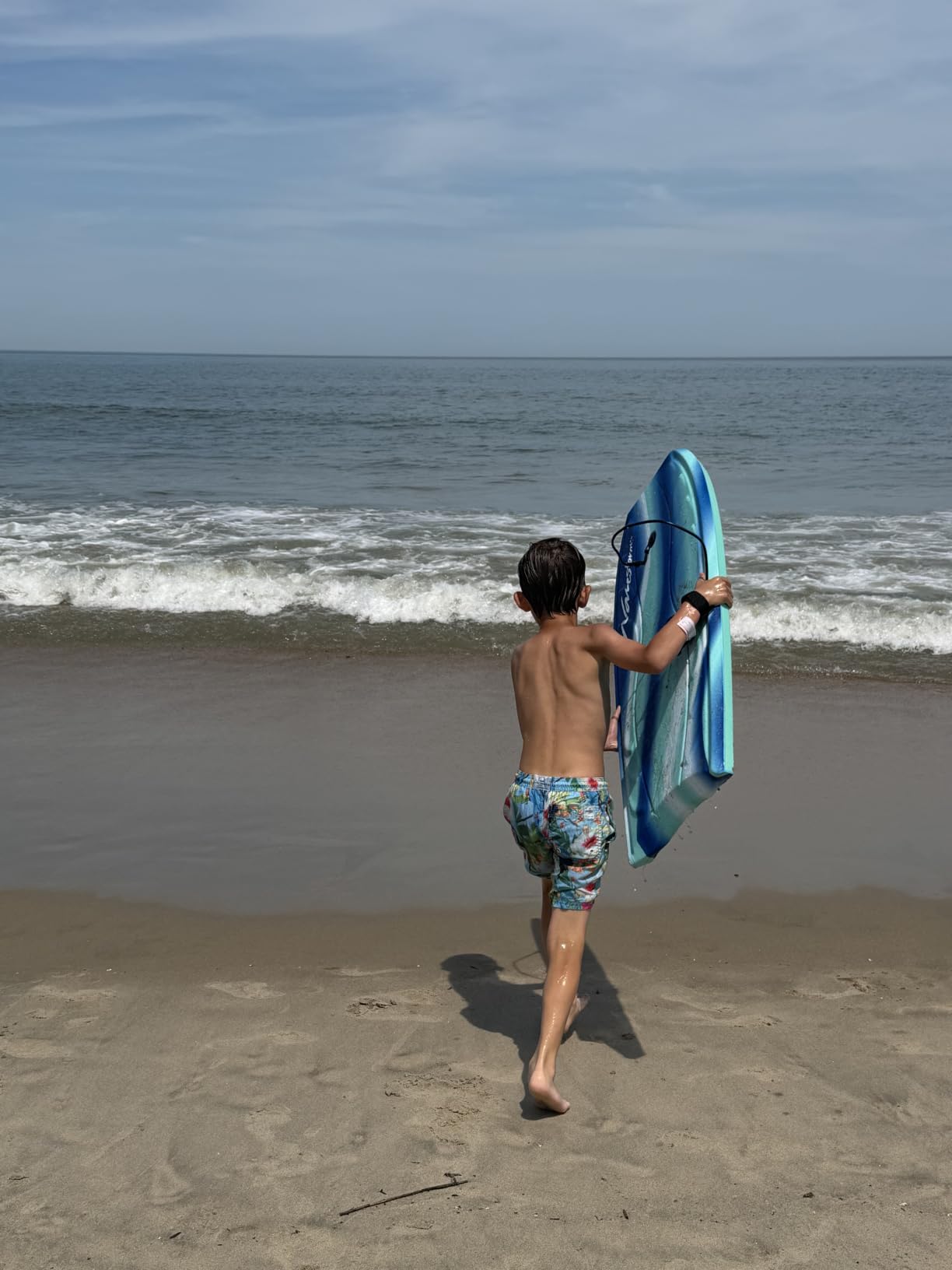
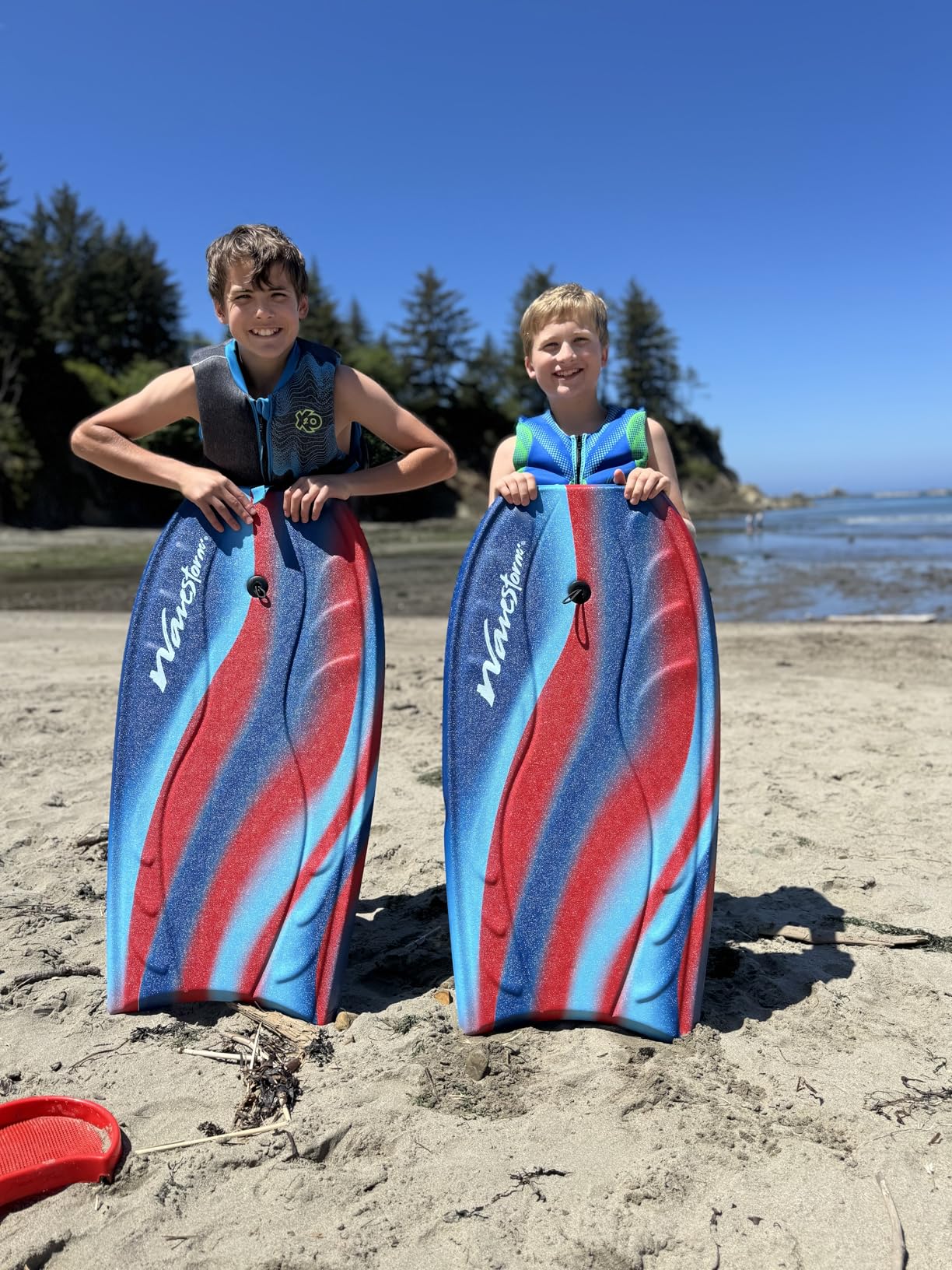
The deck is contoured and textured, with rail grips, nose grips and elbow texture. For a beginner that is not decoration. On a smooth deck your hands slide when you try to pull yourself forward into a wave, and a failed paddle on wave one sets a bad tone.
The thermal-molded wrapped slick rail is the other detail worth paying attention to, because rail delamination is the failure that ends most entry-level boards. The bright deck graphics also make you easier to spot from the beach, which matters when you are sharing a break with swimmers.
Who this board suits
It suits a first-timer who wants the most reliable experience rather than the most impressive spec sheet, and it suits kids who need texture on the deck to hold a paddle stroke. It works well for a family with boards in the 37 to 40 inch range.
Where it falls short
The stated capacity is 180 pounds, and lighter riders report it is harder work to catch waves than they expected. If you are well under that limit and small, a shorter board is a better match. The slick bottom also dents and scratches with use in sand.
6. BPS Shaka 37 Inch – Best for All-Round Wave Conditions
BPS ‘Shaka’ Lightweight Body Board – EPS Core Bodyboard with Wrist Leash for Beach Pool Surfing Kids Teens Adults (Green Purple, 37 Inch)
37 inch length
EPS core for buoyancy
Rear bottom channels
Crescent tail
Pros
- Holds speed on a slick bottom with rear channels
- Crescent tail works across varied conditions
- Coiled leash with neoprene cuff and Velcro closure
- Sizes from 33 to 41 inches
Cons
- Unit-to-unit variation in build quality
- Light feel can seem unstable to larger riders
BPS is a founder-run New Zealand brand, and the feedback on this board centres on balance and maneuverability rather than headline specs. That is the right thing for a first board to be good at.
The rear bottom channels and crescent tail work together. Channels add a small amount of directional stability, and the crescent tail gives a forgiving pivot point, so when a beginner over-rotates the board catches up instead of shooting sideways.
The adjustable coiled leash is comfortable over a wetsuit and easy for small hands to fit. Sizes run from 33 to 41 inches, so one product line covers a whole family, which is a real advantage if two riders are learning at the same time.
Who this board suits
It suits a rider moving between small beach breaks and more powerful waves over a season, and it suits anyone buying one board that has to work on holiday beaches as well as the local break. It is a good middle step up from a soft foam trainer.
Where it falls short
Because it shares construction with other listings from the same manufacturer, quality can vary a little from board to board. Inspect the rails and nose on arrival. Larger riders may find the light feel less stable than they would like.
7. CONTOUR SURF Reed 33 Inch – Best Board for Kids
CONTOUR SURF Reed Body Board 33 Inches Bodyboard Body Boards for Beach Kids Lightweight EPS Core Dual Channel Double Swivel Coiled Wrist Leash for All Surfing Levels (Love Green Bird)
33 inch kid size
65 lb capacity
EPS core with FRP stringer
Heat-laminated HDPE slick
Pros
- Correctly sized for small children
- Light at 1.9 pounds with handles to grip
- Double stainless steel swivel coiled leash
- Five year manufacturer warranty
Cons
- 33 inch size is limited to about 65 pounds
- Deck graphics can peel after short use
A five-year manufacturer warranty on a board at this level is unusual and worth paying attention to. Most entry boards offer 30 days, so this one is built with a longer horizon in mind.
The EPS core carries an embedded FRP stringer, which adds just enough stiffness for the board to hold shape under a child who is not being careful with it. The heat lamination between deck and bottom is the detail that prevents the bubbling and peeling that ruins foam boards.
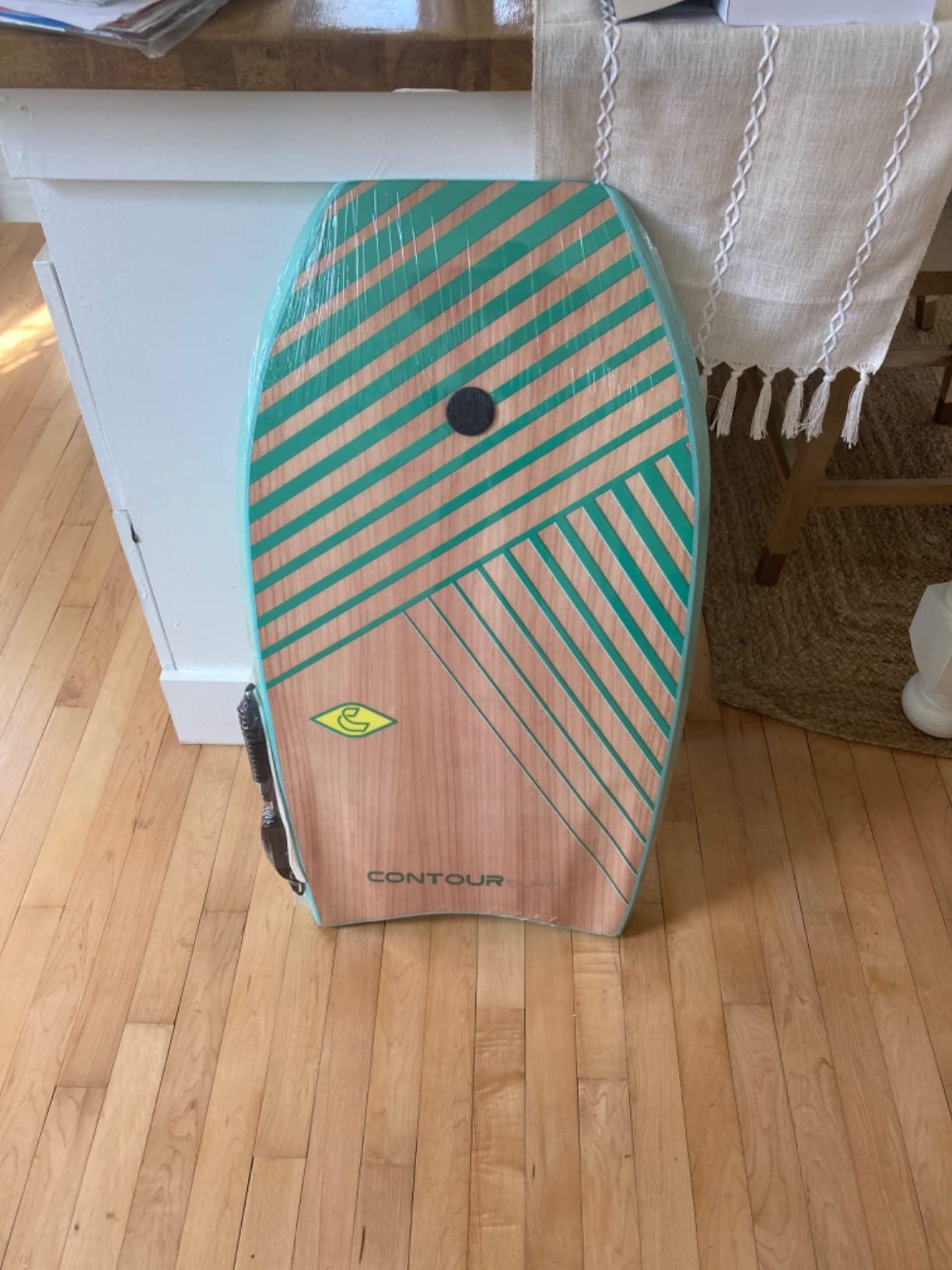
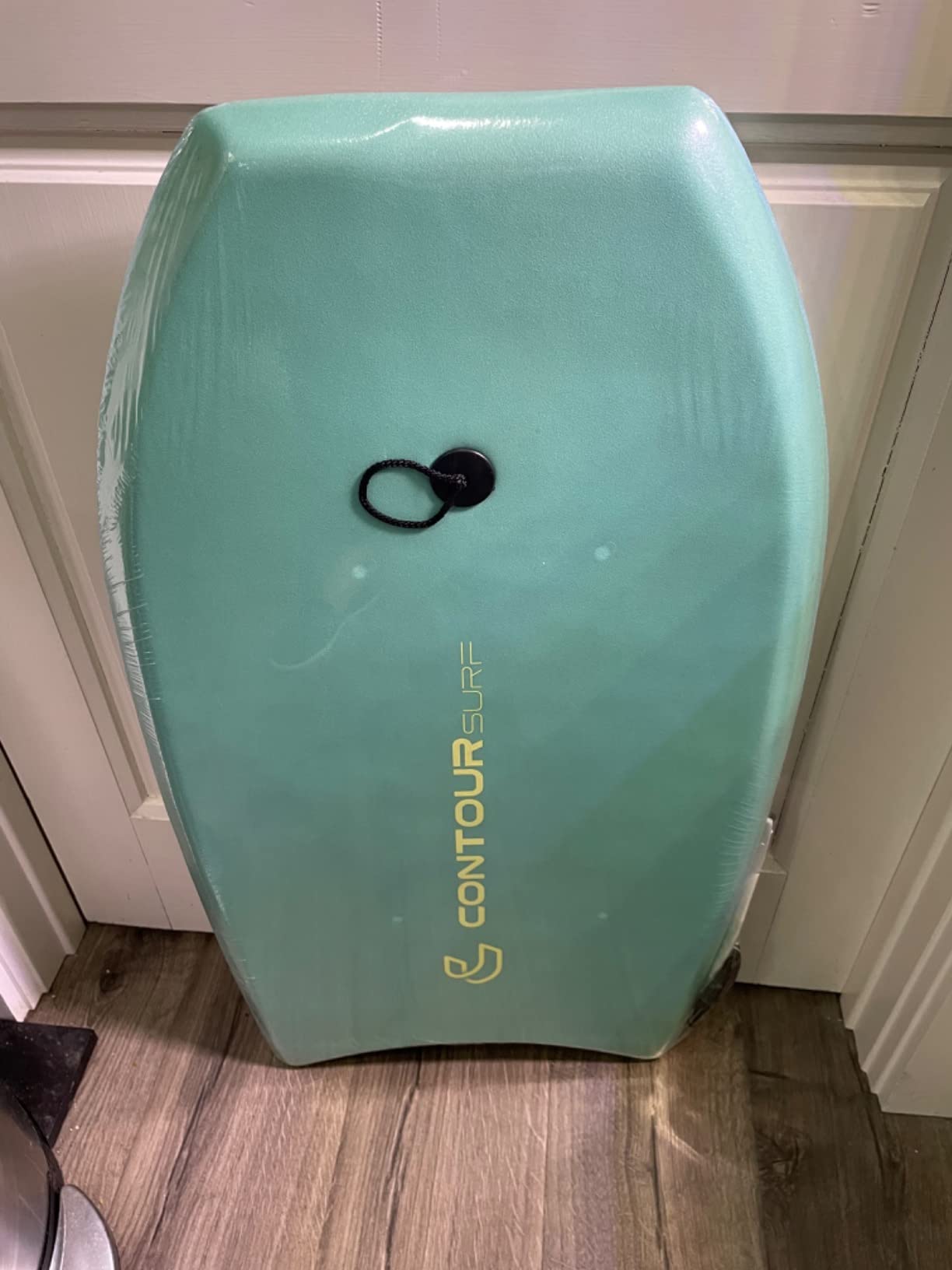
At 1.9 pounds and 33 inches long, this is the board for a four to eight-year-old. It is rated to 65 pounds, so check your child against that limit rather than guessing from their height, because a board that is too small simply will not float them properly.
Owners rate the finish and graphics well above generic boards, and the double stainless steel swivel coiled leash is the most robust leash we saw at this level. Small hands can manage the cuff.
Who this board suits
It suits parents buying a first board for a young child, and it suits any learner who will be dropped, dragged and stacked in a car boot. The 37-inch and 39-inch versions of the same board cover a child into early teens.
Where it falls short
It is a child’s board, full stop. Above 65 pounds the board is undersized and you should move to the 37 or 39 inch version. A small number of owners report deck graphics beginning to peel after a season.
8. ATUNAS Closed-Cell PE/EVA 40 Inch – Best for Durability
ATUNAS Body Boards, 33″-43″ Bodyboard for Beach with Wrist Leash, Solid PE/EVA Closed-Cell Waterproof Foam, Surfing for Kids and Adults (Marble Pink, 40 inch)
PE/EVA closed-cell foam
39.8 inch length
Sizes 33 to 43 inches
Wrist leash included
Pros
- Closed-cell foam takes on far less water than EPS
- Vibrant colors make the rider easy to spot
- Buoyancy holds up for long sessions
- Sizes from 33 to 43 inches
Cons
- Listing targets intermediate riders more than first-timers
- Smallest review base of the group
This is the only board in the group built on solid closed-cell PE/EVA foam rather than expanded polystyrene, and that single construction choice changes the durability picture. Closed-cell foam does not absorb water the way an open-cell EPS core does.
Buyers comment on the board still floating well after extended use, which is what you want from a first board if you plan to keep it rather than replace it every second summer.
The 40-inch size lands it in adult territory, and the range runs from 33 to 43 inches. The wrist leash is included, and the colourways are bright enough to spot from a distance, which is worth something on a busy beach.
Who this board suits
It suits a rider who lives somewhere warm, surfs frequently, and wants a board that will outlast an EPS starter. It also suits anyone who has watched an EPS board delaminate and decided they did not want to buy that twice.
Where it falls short
The listing positions it for intermediate riders, and it carries the smallest review base and lowest average rating here, so there is less long-term evidence that it holds up as well as the materials suggest. Buy it expecting a durable board but a thinner support base of real-world reports.
9. GYN Trade Legendary Pro X 37 Inch – Best Heat-Sealed Build and Deck Grip
Legendary Pro X Bodyboard for Beach with Hard Slick Bottom, Boogie Boards for Kids & Adults, Heat Sealed with EPS Core, Leash (Dark Blue/ Orange, 37”)
37 inch size
Heat-sealed construction
Soft EPE deck
Crescent tail with dual channels
Pros
- Heat-sealed build is stiffer and stronger than glue-bonded boards
- Soft EPE deck gives good grip for beginners
- Sizes from 33 to 45 inches
- Holds up after repeated family use
Cons
- Included thin leash is weak and can be a hazard
- Some boards arrive with dings in the slick
- Leash is tucked under the board and easy to miss
Heat sealing rather than gluing is the specification that stands out here. It bonds the layers under heat and pressure, producing a stiffer board that resists the bubbles and delamination that end cheaper builds after a season of use.
The soft EPE deck is a quiet but important feature for beginners. Grippy deck foam means your hands stay planted during a paddle stroke instead of sliding off the first attempt, which speeds up learning noticeably.
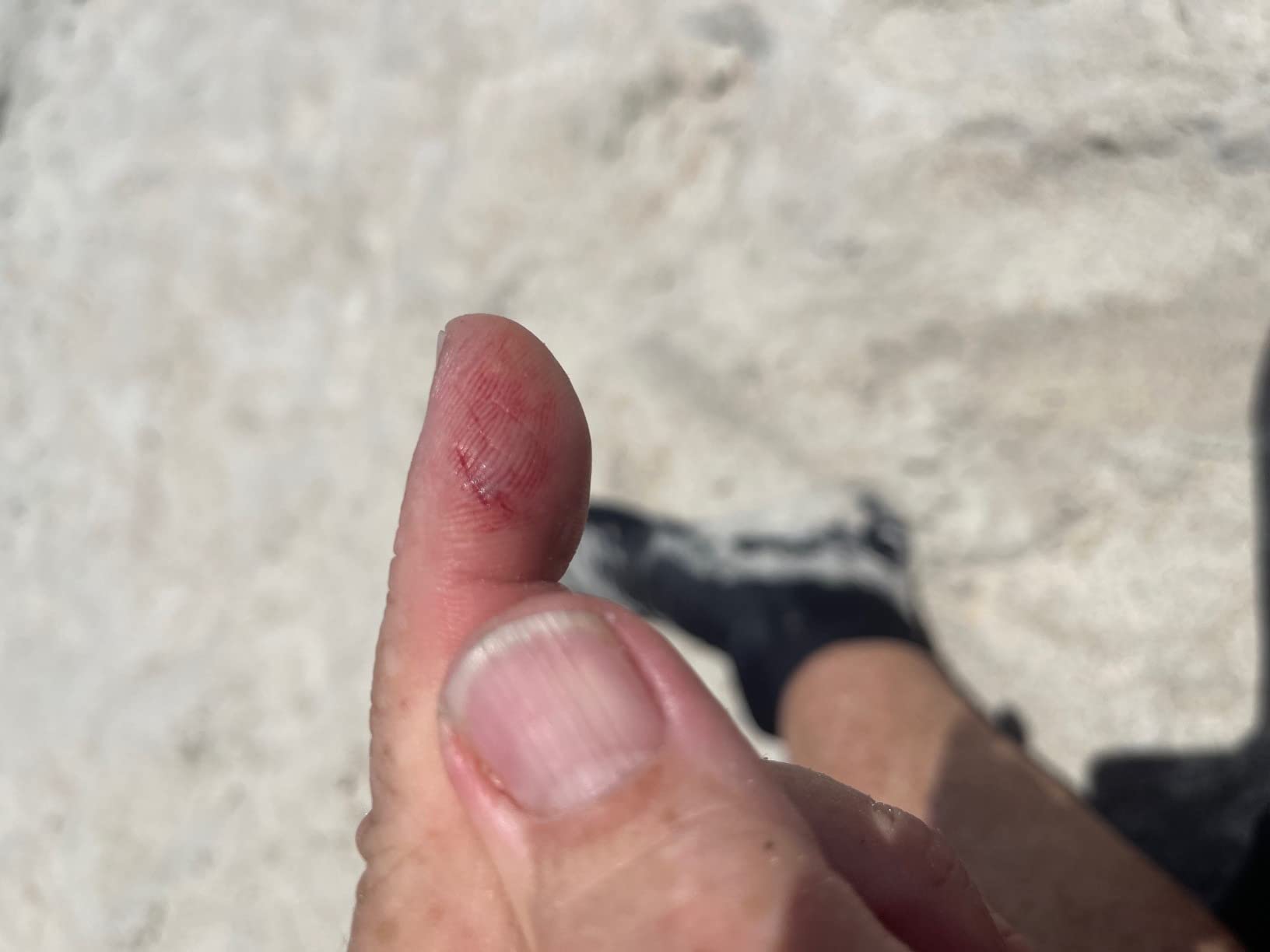
Sizes run from 33 to 45 inches, wider than most ranges, so a family can keep growing on the same product line rather than replacing everything each season. Owners report boards holding up after repeated trips with multiple family members.
The crescent tail and hard slick bottom with dual channels give it a predictable ride in small waves while still having enough bite for a shoulder-high day.
Who this board suits
It suits a household that shares boards, and it suits a learner who has cold hands or slippery hands and struggles to paddle on a smooth deck. It is also a sensible pick for a cold-water break, where a grippy deck matters.
Where it falls short
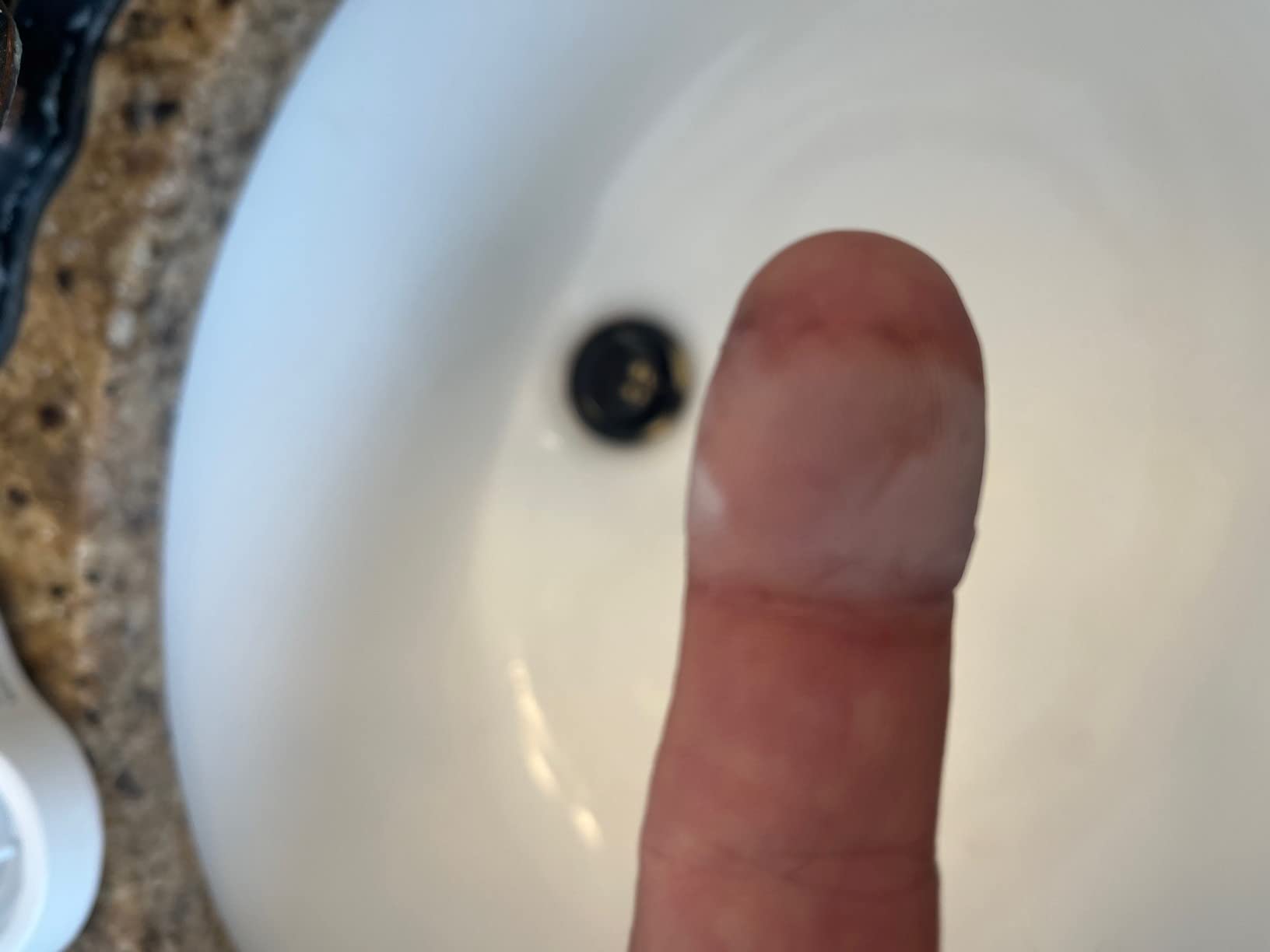
Do buy a better leash. The thin strap included here draws repeated criticism, and leash failure is the number one first-season disappointment in this category. It also arrives tucked under the board, so check for it before you leave the house.
10. Bloo Tide 40 Inch – Best for a Wide Range of Rider Sizes
Bloo Tide 40in Bodyboard
40 inch length
180 to 190 lb capacity
EPS core with HDPE slick
2.18 inch thickness
Pros
- Coated slick bottom and thick deck skin resist wear
- Stable platform that suits a wide size range
- Light at 1.8 pounds for its buoyancy
- Good step up to intermediate riding
Cons
- Deck texture can feel hard for very young riders
- Included wrist leash is basic compared with coiled leashes
The Bloo Tide sits in the sweet spot of this list: 40 inches long, thick enough at 2.18 inches to float most adults, and light at 1.8 pounds. It is the board we would suggest to someone who gave their height and weight and did not fit any other category cleanly.
Its UV-inhibiting deck skin is the detail that slows down the single most visible form of ageing on foam boards, when a fabric-covered deck starts to discolour and go rough. Coated slick surfaces hold up better than exposed foam in sand.
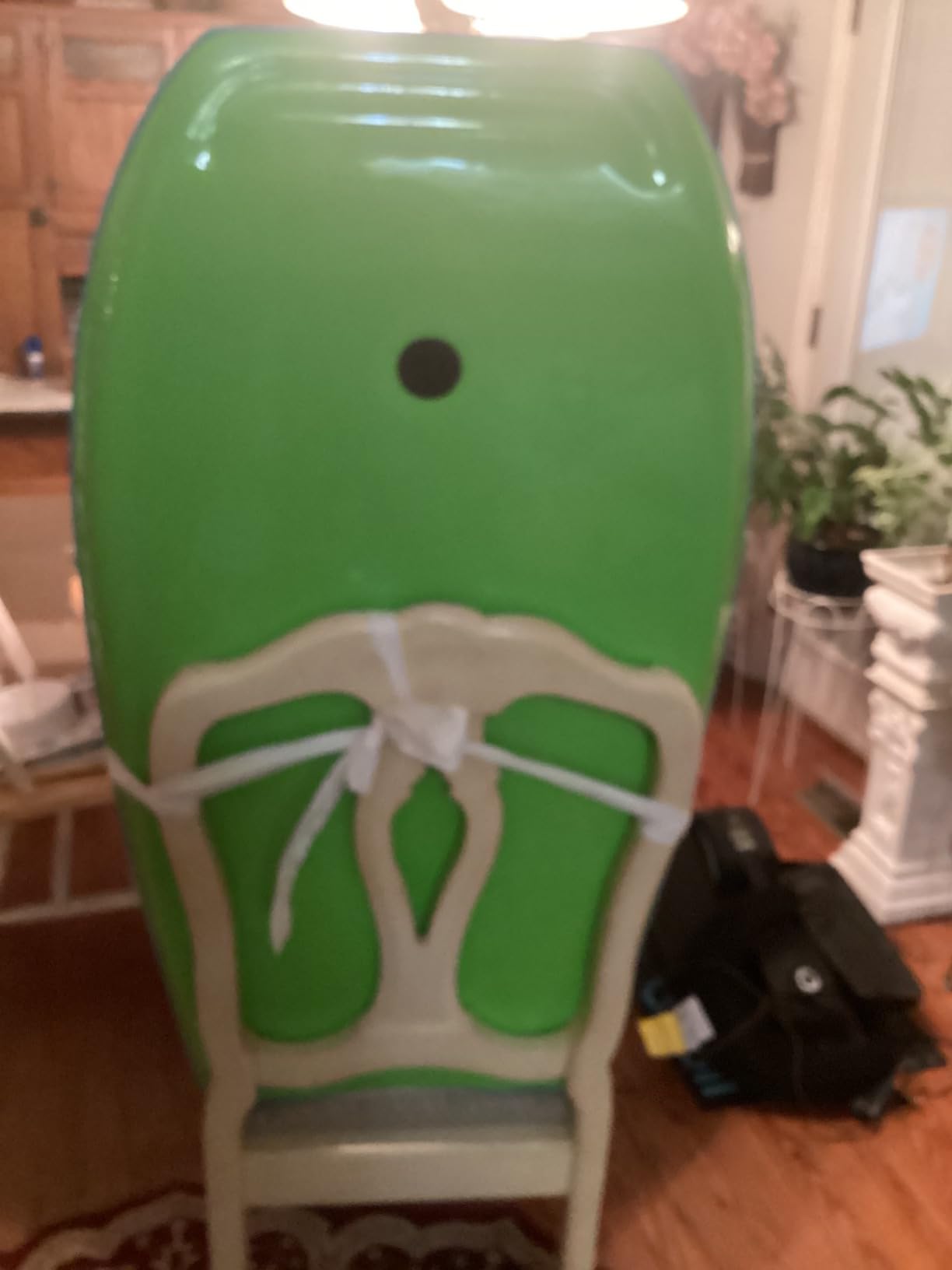
Owners report it handling both small beach break and noticeably larger waves, and several mention using it as a floating seat in the shallows, which tells you how much buoyancy is in there.
The contoured textured deck carries rail grips, nose grips and elbow texture, so it behaves like the Wavestorm in the hand while being a touch longer on the water.
Who this board suits
It suits a first board that has to work for two very different people in the same family, and it suits an adult learner moving quickly into intermediate riding. At 180 to 190 pounds capacity it covers a wide adult band.
Where it falls short
The texture that gives an adult confidence can feel harsh to a small child’s palms. And the basic wrist leash is the first thing to upgrade if you plan to keep the board for more than a season.
11. FunWater Inflatable PVC 43 Inch – Best for Travel and Bigger Riders
FunWater Bodyboard Beach Bodyboard Lightweight PVC Core Surf Board for Beach and Pool with Wrap Wrist Straps Perfect Surf for Teens and Adult
43.3 inch inflatable PVC core
Rated to 220 pounds
Folds down for luggage
Includes foot pump
Pros
- Folds into a bag for flights and road trips
- Highest stated capacity here at 220 pounds
- Durable PVC core that resists deformation
- Wrap wrist straps for comfort
Cons
- Must be inflated and deflated every session
- Less rigid and responsive than a solid board
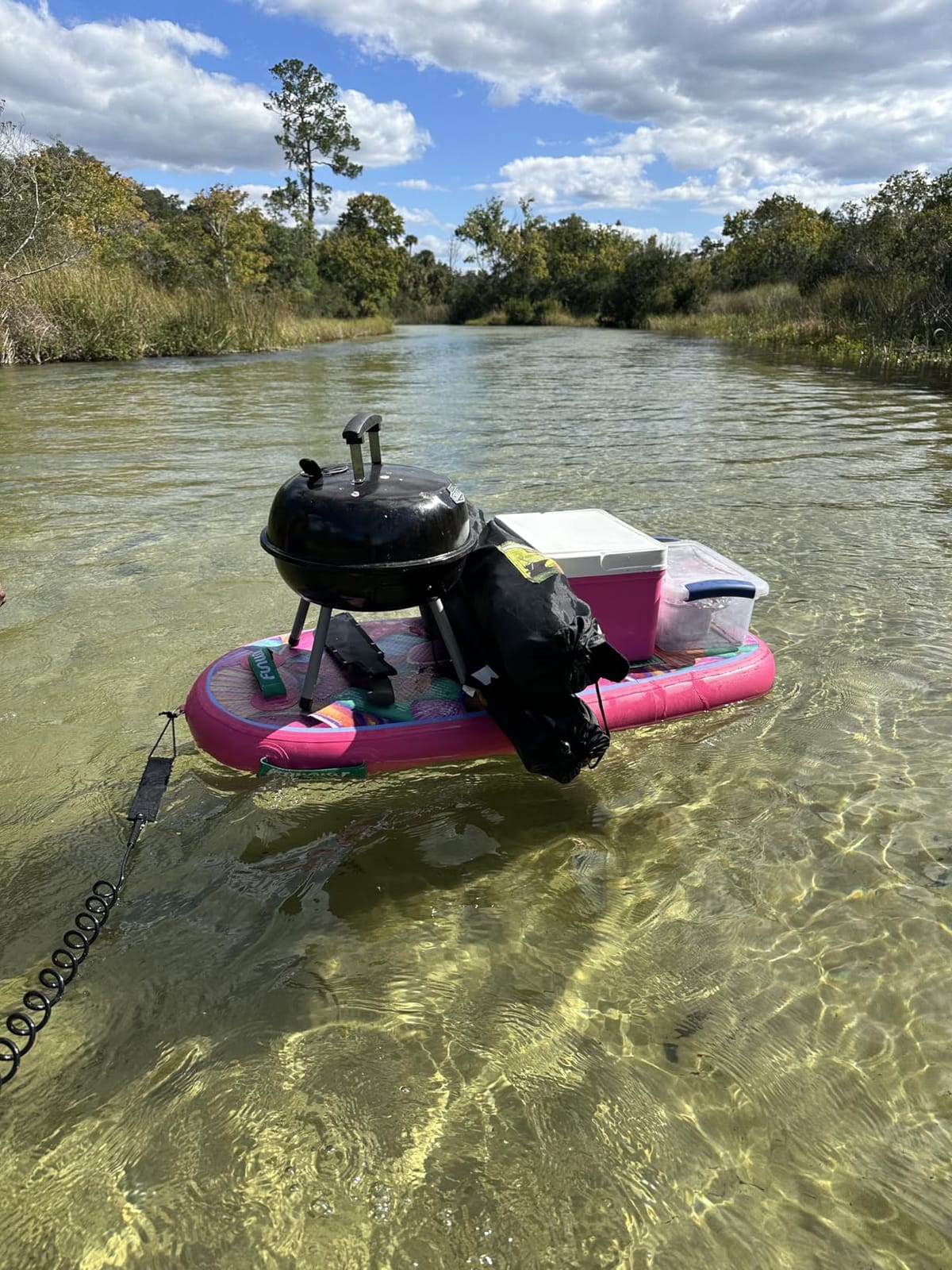
This is the only inflatable board in the group, and it solves a problem none of the others do: getting a full-size bodyboard onto a plane. It deflates, folds and packs into luggage, and inflates with the included foot pump through a leak-free valve.
At 43.3 inches and rated to 220 pounds, it is also one of the largest boards here. If you ride well above 180 pounds and keep getting left behind on smaller boards, this is worth looking at for that reason alone.
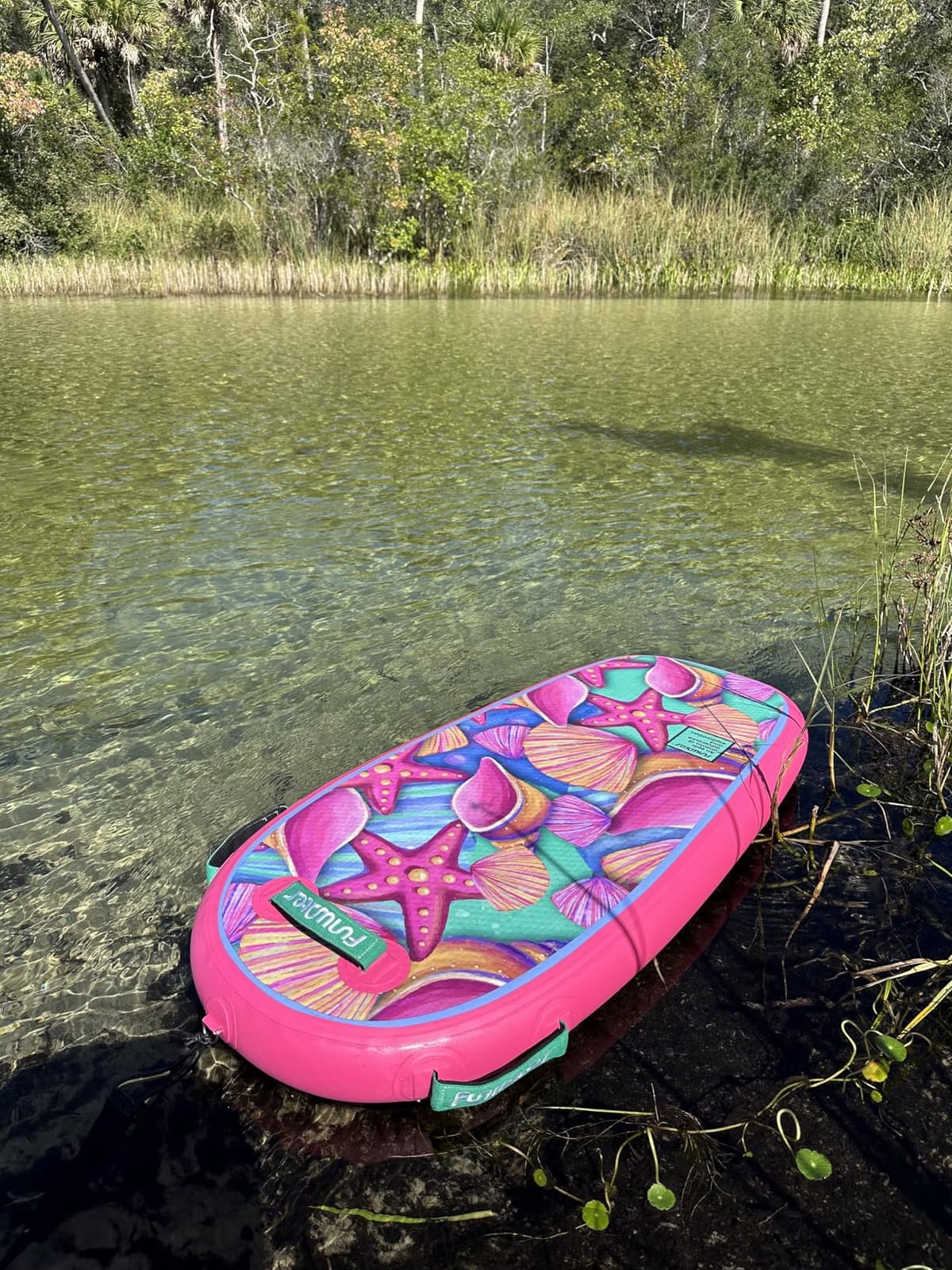
The PVC core is durable and resists deforming, and the high buoyancy with a smooth bottom makes catching waves easy. Owners specifically mention the convenience of packing it and the fact that the core holds up to repeated travel use.
For a holiday-hire or villa-based break, having a board in the boot that will not break anything is a genuine advantage over a rigid EPS board.
Who this board suits
It suits anyone flying to a surf destination, anyone sharing one vehicle between two sports, and heavier adults in the 190 to 220 pound range. It is a good first board for someone who does not want to commit to a full-size rigid board immediately.
Where it falls short
The inflate and deflate routine before and after every session is real friction, and it is the reason many riders abandon inflatable boards after a season. It is also less rigid and less responsive than a solid shell, so it will never feel as precise in a steep drop.
12. THURSO SURF DuoSlider 45 Inch – Best for Two Riders on One Board
Contour Surf DuoSlider 45” Body Board Bodyboards with Handles Surfboards for Two Person Parent-Child Surfing Bodyboard for Big Guys Dual Riders Hand Held Body Boards for Beach Adults
45 inch tandem board
2.13 inch thickness
Dual handles and contoured deck
Two 7mm leashes included
Pros
- Dual handles keep a child centred and secure
- Big enough for a 200 lb adult with a child
- Two leashes add stability for tandem riding
- Heat-laminated 4mm IXPE deck
Cons
- Bulky and awkward for a solo rider
- Tight fit for a larger child
- Nose plastic can flex into a nose dive
A tandem bodyboard is a niche product, and it is the right niche for a parent who wants to ride with a small child rather than stand on the sand watching them. The DuoSlider carries one adult and one junior rider on a single 45-inch deck.
The dual handles are the feature that makes it work. They give a child something to hold, keep their weight centred, and stop them sliding off sideways when the board picks up speed on a steeper face.
Two 7mm leashes with wristbands are included, so both riders are tethered, and the 4mm heat-laminated IXPE deck adds cushioning that matters when a child is sitting further forward.
Who this board suits
It suits a parent teaching a young child on a flat, gentle break, and it suits grandparents or older siblings who want to share a ride. At 3.3 pounds it is a two-person load, so plan on taking turns carrying it.
Where it falls short
It is a poor choice for anyone riding alone, since the 45-inch length is unwieldy. A bigger child crowds the deck, and some riders below the weight limit report it sitting low in the water. The nose plastic can also flex enough to cause a nose dive if you do not bend it upward.
How to Choose a Beginner Bodyboard
Get the size right first, then the core material, then the tail. Everything else is refinement. Riders consistently tell us on forums like r/bodyboarding that sizing confusion is the biggest source of disappointing first purchases, and it is the easiest mistake to avoid with a size chart.
Size first: match board length to rider height and weight
A practical rule from riders is that the board should come to roughly the rider’s mid-shoulder when they lie flat on it. Weight matters at least as much as height, because a rider over the stated capacity will not float high enough to catch waves, however long the board is.
Use these bands as a starting point rather than a promise. Board capacity ratings vary between manufacturers, so leave a margin at the top of a range.
Kids around 90 to 110 cm tall, roughly 4 to 6 years old: a 33 inch (84 cm) board, usually rated to about 65 pounds.
Kids around 110 to 130 cm, roughly 6 to 9 years old: a 37 inch (94 cm) board.
Kids and early teens around 130 to 150 cm: a 39 to 40 inch (99 to 102 cm) board.
Adults around 150 to 170 cm: a 40 inch (102 cm) board, most adult boards start here.
Adults around 170 to 185 cm: a 41 to 42 inch (104 to 107 cm) board.
Tall adults above 185 cm or riders above 180 pounds: a 42 to 43 inch (107 to 109 cm) board, and check the stated capacity.
For a rider at five foot seven, a 40 inch board is the right default, and a 42 inch is a better choice if you are heavier or want more stability in steep waves. If you are near a weight limit, move up a size rather than a core type.
Kids boards versus adult boards
The split is simpler than most guides make it sound. Boards from 33 to 37 inches are child and teen boards, typically rated from about 65 pounds up to roughly 130. Boards from 40 to 44 inches are adult boards. There is very little overlap, and a 37-inch board is not an adult board that happens to be small.
Buy a child a board they can carry. If a nine-year-old cannot walk from the car to the water holding a board comfortably, they will not enjoy the session, and enjoyment is what keeps a beginner coming back.
Core material in plain English
Four core types cover almost every board a beginner will see, and here is the plain-English version:
EPS feels light and slightly soft, has the lowest durability of the four, and suits a first season, kids, and travel.
EPP is light with more spring than EPS, holds up better, and suits beginners who want a board that lasts.
PE feels flexible and rubbery, is highly durable, and suits progressing riders in cool water.
PP feels stiff and fast, is the most durable, and suits advanced riders rather than a first board.
Rider consensus in bodyboarding forums is worth repeating here because almost no roundup says it plainly: do not buy a pro-grade PE or PP board as your first one. Stiff boards are harder to control, punish mistakes, and are not what a learner needs. Experienced riders on r/bodyboarding consistently point new riders toward EPS as a sensible starter and treat PE and PP as the progression path.
The PE and PP difference that matters for a beginner is control. PE flexes under your weight and feels alive, while PP is stiff and returns energy, which is why it is prized in competition. That same stiffness is unforgiving when you are still learning to shift your weight.
Tail shape: why a crescent tail suits a first season
Most boards here use a crescent tail, and for a beginner that is the right default. A crescent tail has two swept-back wing tips that give you grip when you angle the board and a forgiving pivot in the middle. Bat and delta tails trade some of that forgiveness for sharper turning, which is a trade a first-season rider cannot yet use.
Forgiveness is the whole point. On a forgiving board, a mistake costs you a moment of balance. On a performance tail, the same mistake sends you into a tumble.
Leashes: check the box before you check out
Every board in this roundup includes a leash, but that does not mean every included leash is worth trusting. Across the cheap boards, leash failure is the single most common first-season complaint, so check whether the leash is coiled with a swivel and a neoprene cuff before deciding it is good enough.
Two specific warnings. The GYN Trade Legendary Pro X stores its leash under the board, where it is genuinely easy to miss. And the WOOWAVE coiled wrist leash has a knot that can loosen. In both cases, spend a little on a proper coiled leash with a swivel rather than finding out on your second session.
For beginners, the wider lesson from rider discussions is that a board which floats away from you is how people learn to fear the water. Treat the leash as a piece of safety equipment, not an accessory.
Wax, storage and how long a beginner board lasts
Where you apply wax matters more than which wax you buy. Put a thin layer on the deck and slick in a broad central strip running from the tail to about two thirds of the way toward the nose, and leave the nose and the very tail clean. Waxing the whole board is wasted money and makes the board slippery where you do not want it.
Rinse with fresh water after every session, especially in salt water, and let it dry in shade. Never leave a bodyboard in a hot car. Heat is the fastest way to bubble the deck skin, and boards that bubble in a parked car are the ones that delaminate a season later.
On lifespan, EPS boards typically give a learner one to three seasons of regular use before the core starts to feel dead or the skin starts to peel. Closed-cell PE/EVA and heat-sealed builds last considerably longer. The practical takeaway is to buy the first board expecting to upgrade, and to think of the second board as the one you keep for years.
If you also plan to be in the water on other gear, our beginner paddleboard accessories guide covers the fin and traction basics.
Frequently Asked Questions
What is the best bodyboard for a beginner?
The Bo-Toys Lightweight EPS Body Board is our top pick because it hits all three criteria that matter most in year one: high buoyancy, a lightweight EPS core that is easy to paddle, and a leash included in the box. A 40 to 42 inch size suits most adults, with 33 inch and 37 inch options for children.
Is there a difference between a boogie board and a bodyboard?
No. They are the same object. The name bodyboard came first, and the term boogie board came from the trademarked Boogie brand that followed. Morey Boogie traces its origins to Tom Morey’s 1971 invention of the modern foam board. Retailers use both names interchangeably, so buying a boogie board gets you a bodyboard.
What size bodyboard should I get based on my height?
Use rider weight first, then height. A 33 inch board fits small children around 90 to 110 cm, 37 inches covers kids at 110 to 130 cm, and 40 inches is the adult default. Riders above 180 pounds or above 185 cm should step up to a 42 or 43 inch board and check its stated weight capacity.
What size board should a 5 foot 7 person use?
A 40 inch board is the right default for a 5 foot 7 rider weighing under about 180 pounds. If you are lighter than that, drop to 37 inches so you can move the board more easily. If you are heavier or ride steeper waves, go to 42 inches for extra volume and float.
What are the differences between PE and PP core bodyboards?
Polyethylene is flexible and rubbery, which makes it forgiving and comfortable in cool water. Polypropylene is stiffer and returns more energy, which is why advanced riders choose it for speed and control. For a first board, most riders should use EPS, since a stiff core is harder to control while you are still learning to shift your weight.
Do bodyboards come with leashes?
Most do, and every board in this roundup includes one, but the included leash is often the weakest part of an otherwise good board. Look for a coiled leash with a swivel and a neoprene cuff. On some boards the leash is stored underneath, so check for it before you leave the house.
How long does a beginner bodyboard last?
An EPS starter board typically gives one to three seasons of regular use before the core feels dead or the skin starts to peel. Heat-sealed and closed-cell PE/EVA boards last considerably longer. If you want a board that survives years, skip EPS as a long-term choice and treat a first EPS board as a training tool.
Is bodyboarding easy to learn?
Yes, it has one of the shortest learning curves in surfing. Most beginners catch their first wave within an hour. Start in small weak waves lying prone with hands on the rails, practise paddling, then learn duck diving. The three things that slow people down are wrong board size, no leash, and waves that are too big.
Final Verdict
For most people buying their first board, the Bo-Toys Lightweight EPS Body Board is the right call. It is light, forgiving, correctly sized in the range most beginners need, and it comes with a leash so you can actually go and use it.
If you are heavier, the THURSO SURF Quill 42 Inch is the board to buy, with the highest stated capacity here and heat-laminated skins that resist the usual failures. If you want the most reliable ride rather than the best spec sheet, the Wavestorm 40 Inch has the highest average rating and a textured deck that makes paddling far easier.
For children, size them to weight and pick a board they can carry. For durability, skip EPS and go closed-cell or heat-sealed. Whatever you choose, buy the leash, wax the middle of the board, and start in small waves. If you are putting together a full beginner water-sports kit, our beginner canoe guide covers the flat-water equivalent.