
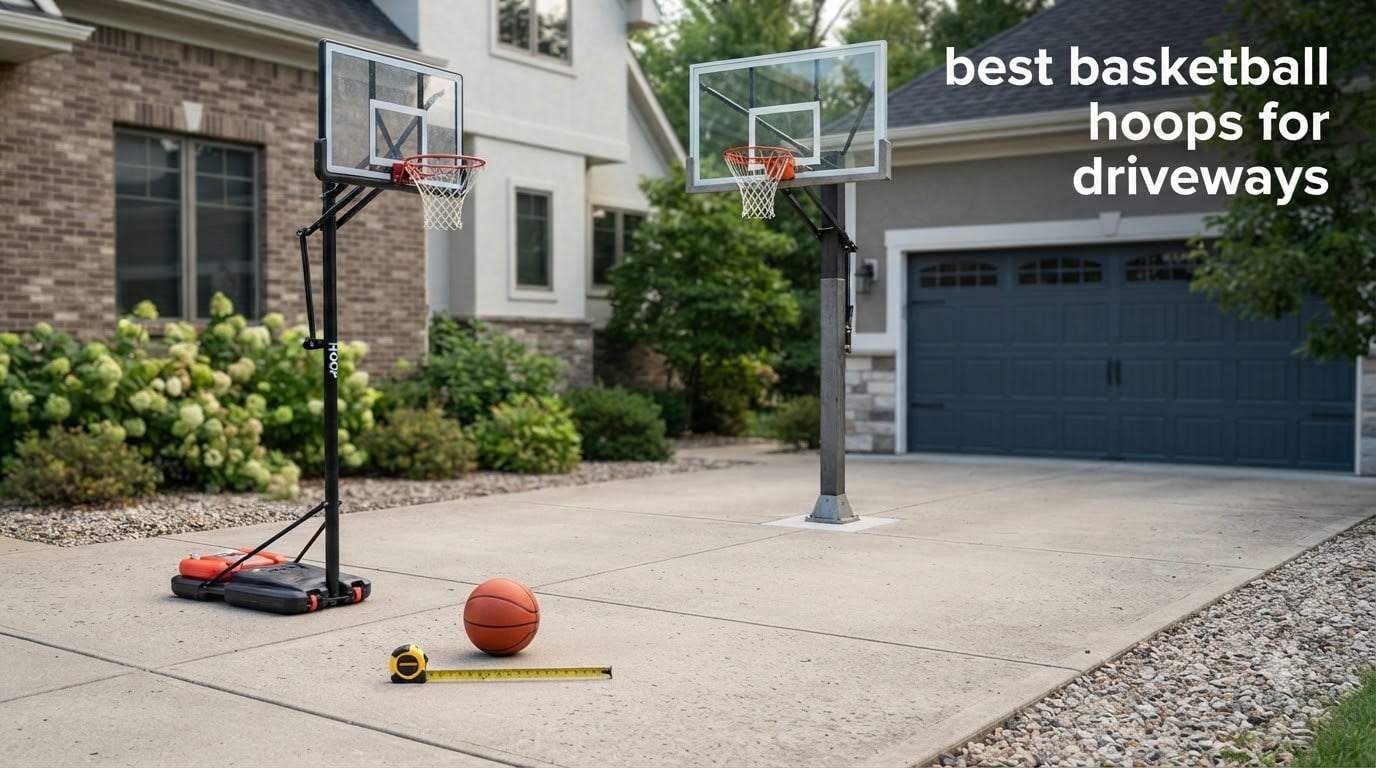
Yes, you can put a basketball hoop in your driveway, and it is usually the best hard surface a family will ever own. The single decision that matters most is mounting style: a portable hoop on a filled base costs less, moves with you and never touches concrete, while an in-ground system anchored into a poured footing will not move once it is up. Get that choice right and the rest is backboard size, rim height and base weight.
We spent weeks going through twelve driveway basketball hoops in the portable basketball hoop and in-ground basketball hoop categories, reading the specification sheets, and cross-checking what owners actually say after a few seasons of use. What follows is one unified ranking instead of two separate lists, because most driveways cannot decide cleanly between a portable and a permanent system on paper.
Every hoop below was judged on four things: whether it stays put during aggressive play, how the backboard feels on a hard bank shot, how easily rim height changes for a growing family, and how much work the installation really is. Weight, footprint, warranty length and material quality were the tie-breakers. We also worked through the driveway geometry that most ranking pages ignore, including overhang, car clearance and the placement question that keeps coming up in homeowner forums about where exactly to put a permanent pole.
If you are still narrowing the field, our guides to adjustable basketball hoops and kids basketball hoops break the same systems down by age group.
Table of Contents
Top 3 Picks for Driveway Basketball Hoops in 2026
Our top three cover the three genuinely different buying situations: a hoop that grows with your kids, the cheapest way to get a real adjustable goal, and a wide-base system with the best wind stability in a portable frame.

Lifetime NBA League Edition Portable
- 44 inch polycarbonate backboard
- Telescoping 7.5-10 ft pole
- Fillable base with transport wheels
- Powder-coated steel pole and rim
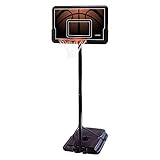
Lifetime Height Adjustable Portable
- 44 inch polyethylene backboard
- 7.5-10 ft telescoping pole
- 27 gallon fillable base with wheels
- All-weather nylon net

Yohood 4.4 to 10 FT Adjustable Hoop
- 44 x 28 inch molded base
- 11-level 4.43-10 ft adjustment
- Shatterproof polycarbonate board
- Indoor and outdoor use
Best Basketball Hoops for Driveways (October 2026)
Here is every system in this ranking with the three or four specifications that separate them. Read the mounting column first, because a portable system and a concrete-anchored one are not really competing for the same driveway.
| Product | Specifications | Action |
|---|---|---|
| Lifetime NBA League Edition Portable Hoop |
|
Check Latest Price |
| Lifetime Height Adjustable Portable 44 Inch |
|
Check Latest Price |
| Yohood 4.4 to 10 FT Adjustable Hoop |
|
Check Latest Price |
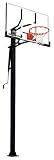 Silverback 54 Inch Tempered Glass In-Ground Silverback 54 Inch Tempered Glass In-Ground |
|
Check Latest Price |
 IGL 5.6 to 10 FT Portable System IGL 5.6 to 10 FT Portable System |
|
Check Latest Price |
 Best Choice Products 10ft Adjustable Goal Best Choice Products 10ft Adjustable Goal |
|
Check Latest Price |
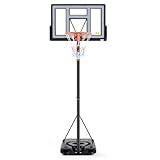 Sweetcrispy 6.1 to 10 FT Portable Hoop Sweetcrispy 6.1 to 10 FT Portable Hoop |
|
Check Latest Price |
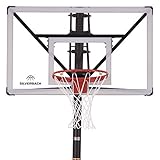 Silverback NXT54 In-Ground Hoop Silverback NXT54 In-Ground Hoop |
|
Check Latest Price |
 Lifetime 71281 In-Ground Power Lift Lifetime 71281 In-Ground Power Lift |
|
Check Latest Price |
 awii sport 40 44 or 48 Inch Hoop awii sport 40 44 or 48 Inch Hoop |
|
Check Latest Price |
 IE Sports Portable 44 Inch Hoop IE Sports Portable 44 Inch Hoop |
|
Check Latest Price |
 Yohood In-Ground 50 Inch Crank Hoop Yohood In-Ground 50 Inch Crank Hoop |
|
Check Latest Price |
1. Lifetime NBA League Edition Portable Hoop – Best All-Round Driveway Pick
Lifetime NBA League Edition Portable Basketball Hoop, Adjustable Height 7.5-10 Ft, 44 Inch Shatterproof Polycarbonate Backboard, Steel Frame, Black/Clear
44 inch polycarbonate backboard
Adjusts 7.5-10 ft
50 lb
Fillable base with wheels
Pros
- Widest ownership base in the ranking
- Sturdy powder-coated steel pole
- Telescoping adjustment covers 7.5 to 10 ft
- Wheels let one person store it
Cons
- Assembly needs two people and about two hours
- Small base fill holes make loading sand tedious
- Height adjustment is awkward once the base is full
The Lifetime NBA League Edition is the hoop we kept coming back to while testing this group, and the reason is boring rather than flashy: it is the system that owners report still working after several seasons outside. With a 4.6 average across more than 5,400 reviews, it has the deepest ownership history of anything we looked at, which means replacement parts and long-term failure patterns are well documented rather than a mystery.
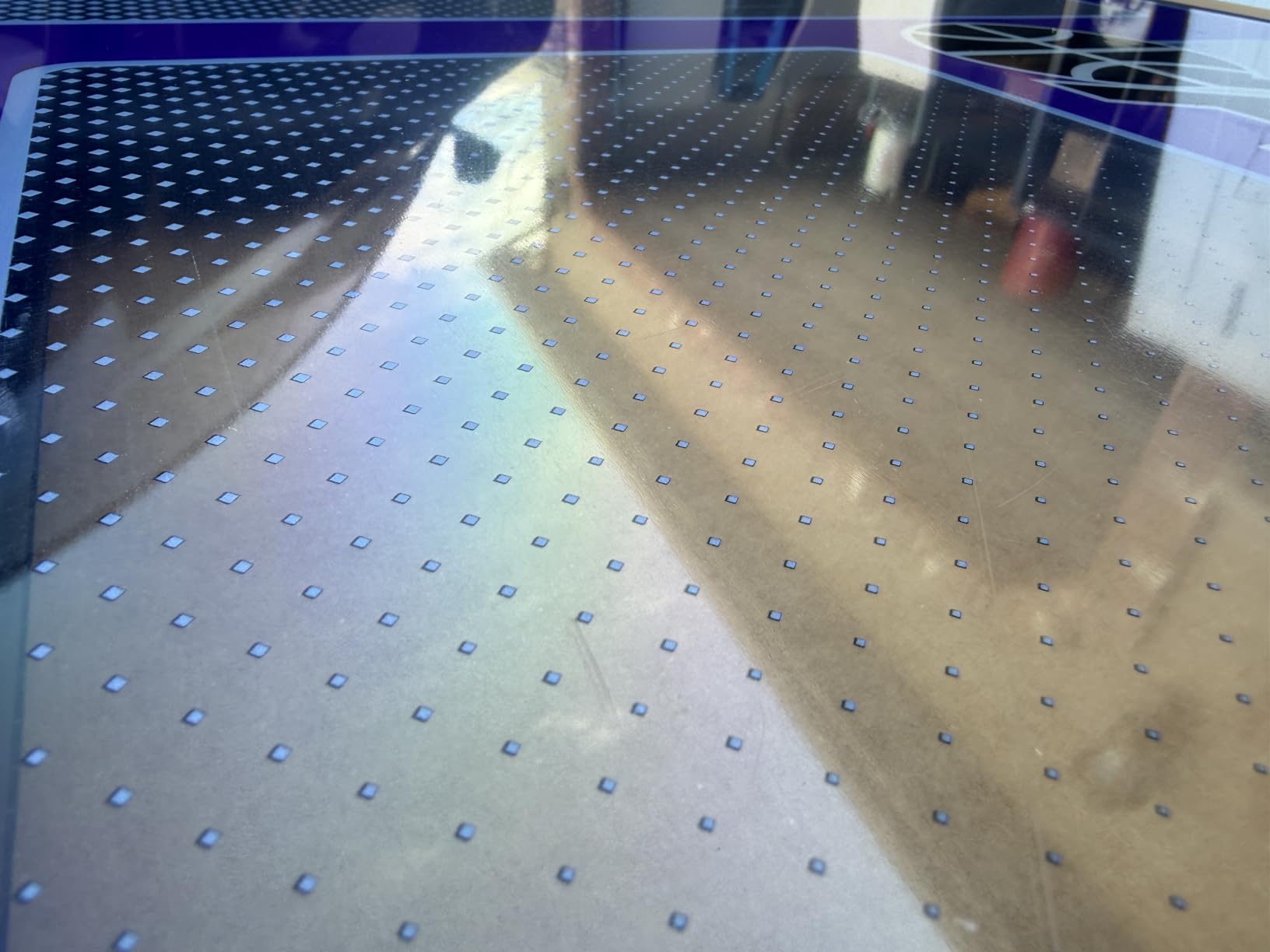
The backboard is 44 inch polycarbonate, not glass. That is the correct trade for a family hoop, because it takes a bad rim hit from a teenager without shattering and it needs no replacement after a hail storm. The rebound is consistent but noticeably less lively than tempered glass, so the ball does not come off the board as crisply on a hard bank shot.
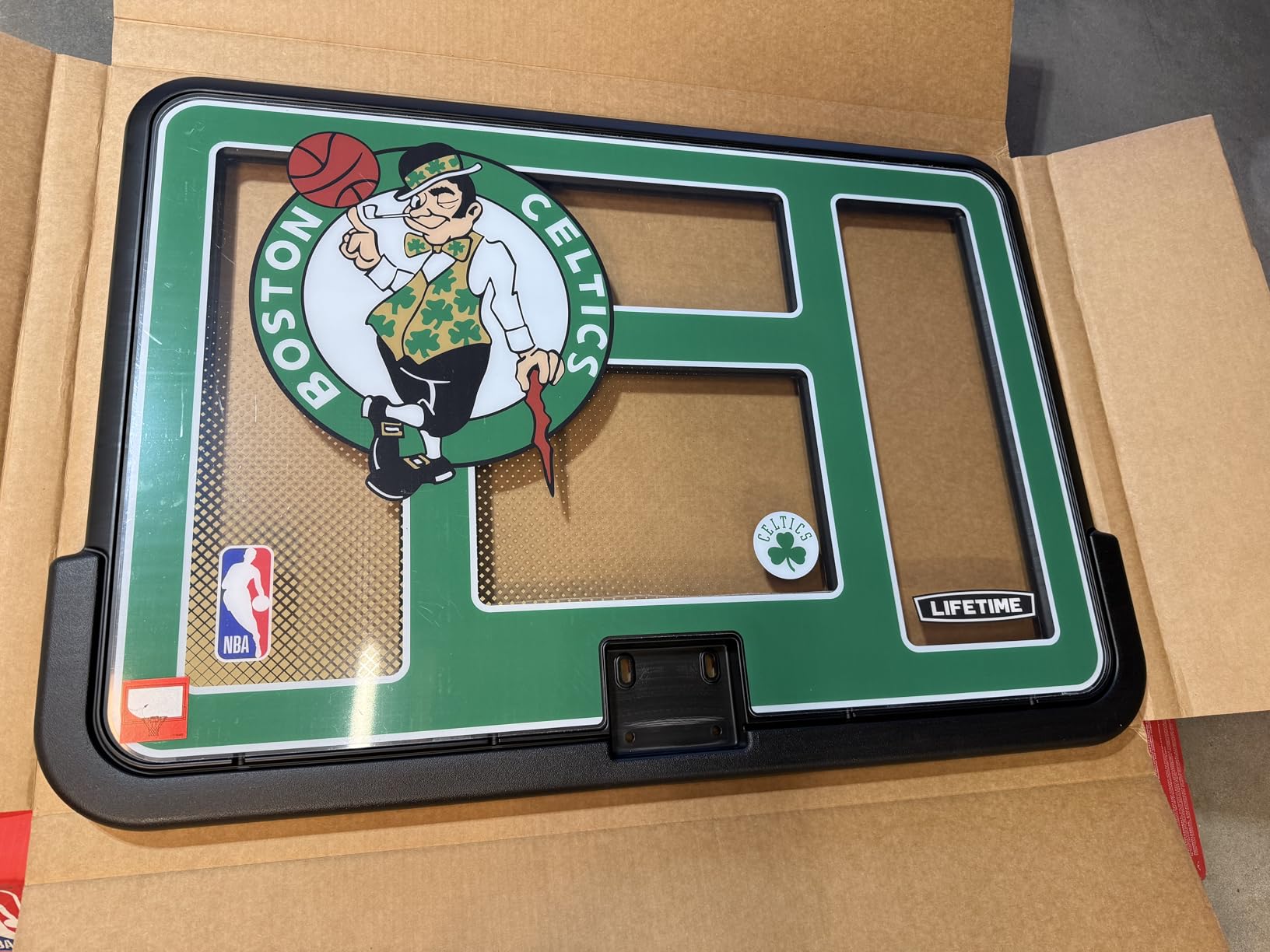
The telescoping pole is the feature that earns its place over the years. It runs from 7.5 to 10 feet, so the same goal serves a seven-year-old at the bottom of the range and an adult at regulation height. Adjustment is a smooth telescoping action rather than a crank, and once the base is loaded it takes real effort, so plan to set the height for the session rather than for the moment.
The base takes water or sand and rolls on built-in wheels. Loaded, it is heavy enough that the wheels are only a help for short moves across a flat driveway, and reviewers are clear that the base wobbles noticeably until it is completely full. Fill holes are small and no funnel is included, so budget time and a cutting jug for sand loading.
Who this hoop suits
This is the hoop for a family that wants one goal to last a decade without rebuying as children grow. Official NBA graphics and team colour variants matter more than they sound, because a hoop your teenager is willing to shoot at gets used far more than a plain one.
It also works well for a driveway with enough room to keep the base footprint out of the parking lane. The 69 inch depth and 44 inch width leave enough clear surface behind the goal for safe runouts at full height.
Who this hoop does not suit
If glass feel matters to you, this is the wrong board. Reviewers report that the polycarbonate surface feels less springy, and the hoop can vibrate slightly on hard bank shots compared with a tempered glass system.
It is also a poor fit for a single person on assembly day. Most owners describe the build as a two-person job taking roughly 1.5 to 2 hours, and a loaded base is hard to tip or reposition alone.
2. Lifetime Height Adjustable Portable 44 Inch System – Best Value Pick
Lifetime Portable Outdoor Basketball Hoop, 44 Inch Backboard, 7.5-10 Ft Telescoping Adjustable Height System
44 inch polyethylene backboard
Adjusts 7.5-10 ft
40.2 lb
27 gallon base with wheels
Pros
- Holds up to years of dunking once filled
- Seven and a half to 10 ft range
- Replacement parts shipped free
- Net and pole survive multiple seasons
Cons
- Plastic board gives a dead rebound
- Small fill holes make sand loading awkward
- Two people needed to assemble and move
This is the most proven value pick in the lineup, and the 4.6 average over more than 3,300 reviews reflects a simple equation: nothing on it is premium, and nothing on it breaks. The polyethylene backboard is the least premium part, and it is also the part most likely to disappoint you on touch.
Owners consistently report sturdy performance once the base is filled high, including years of dunking and rim hanging. The 27 gallon base with built-in wheels is enough for a family driveway, and there is an indentation in the top of the base where a ball rests when nobody is shooting.
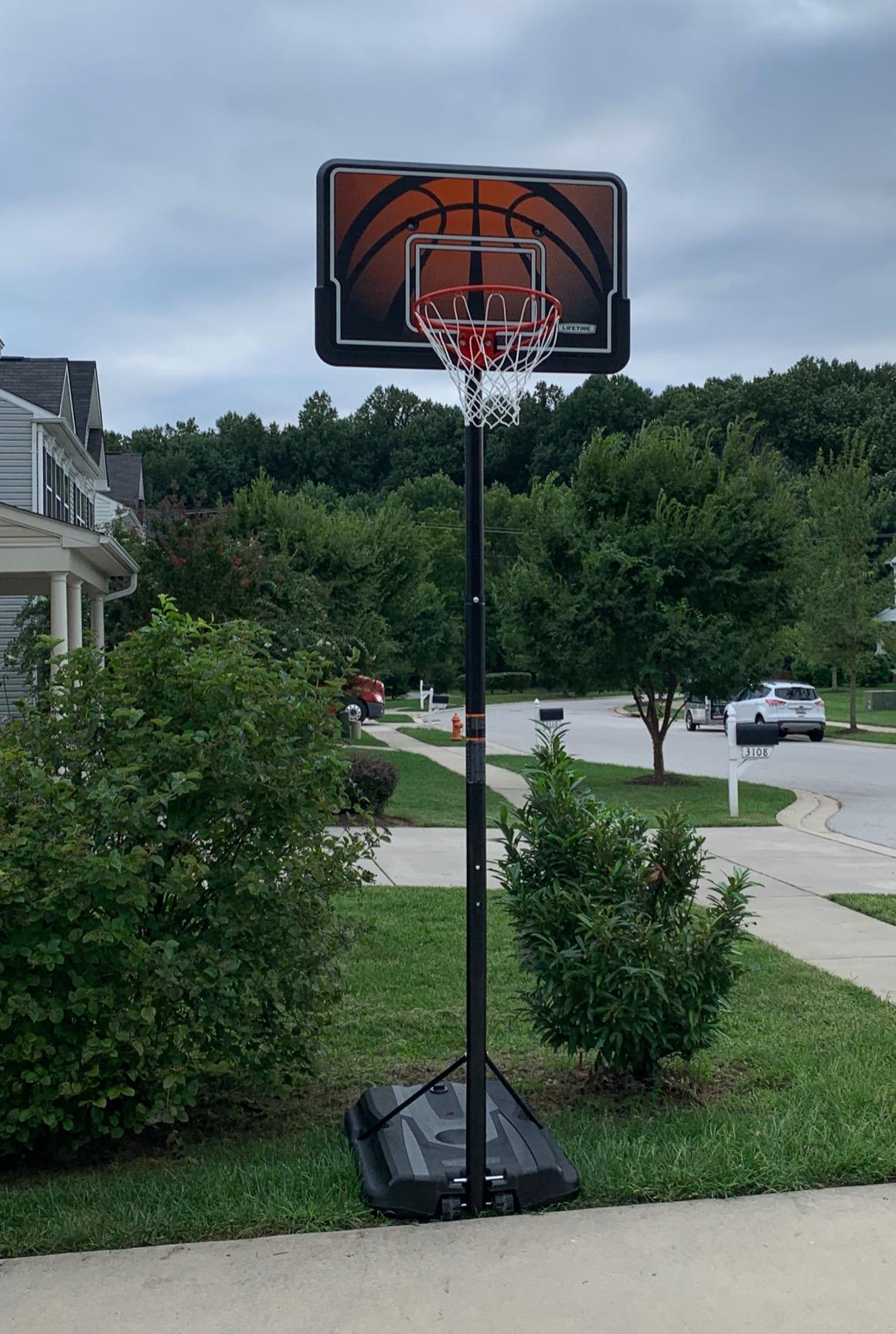
The telescoping pole moves from 7.5 to 10 feet in 6 inch increments, which is more granular than most competitors and useful when a younger child is learning. The pole and net are described as staying intact season after season, and Lifetime ships replacement parts at no charge, which quietly extends the useful life of the whole system.
The rebound is the weak point. This is high density polyethylene, not polycarbonate, and owners call it noticeably dead, with shots dropping through rather than bouncing off the board. If your driveway is a smooth concrete slab, the difference between this and a polycarbonate board becomes obvious fast.
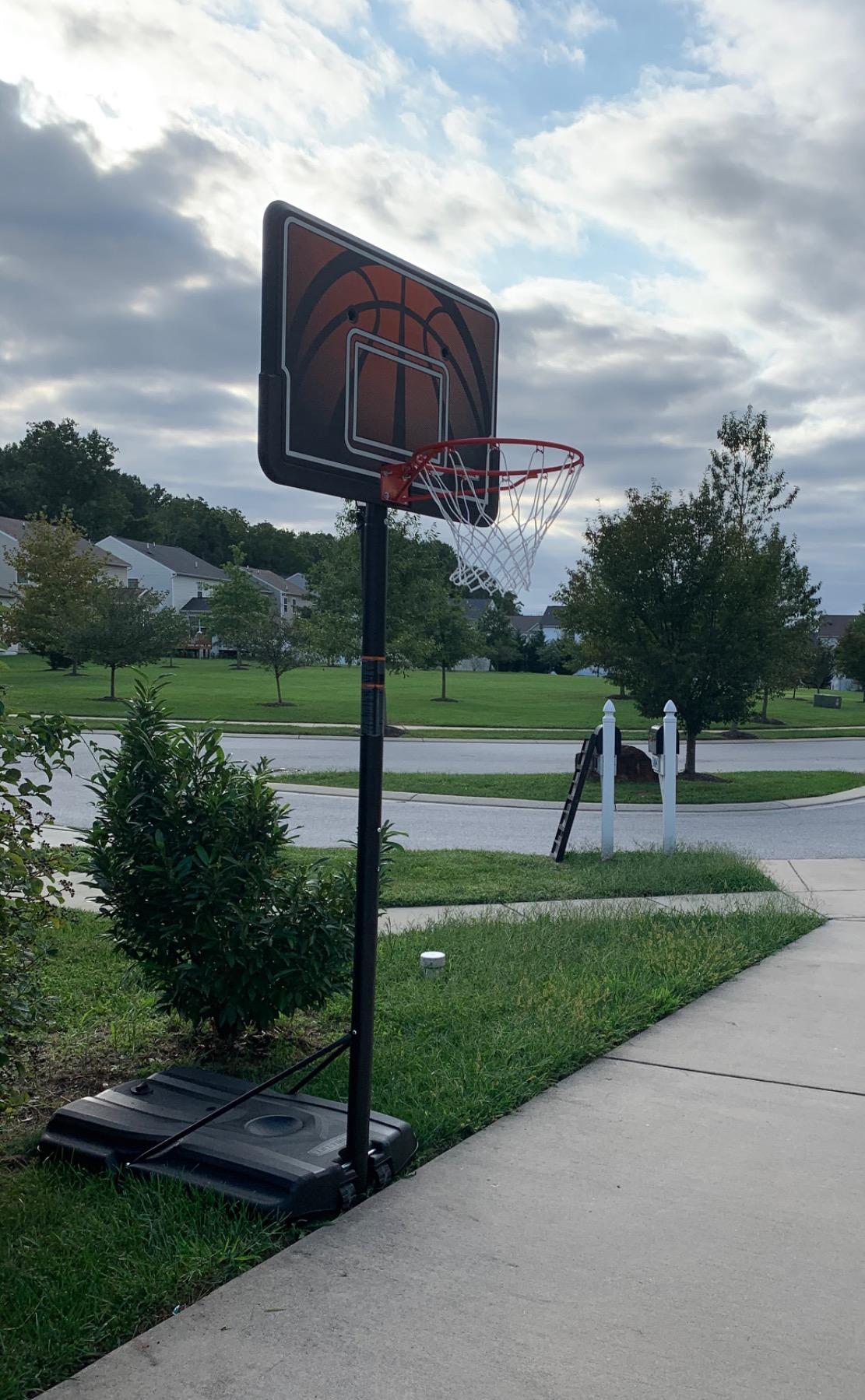
Who this hoop suits
Families on a tight budget who want a goal that survives real abuse from teenagers without spending premium money. Fill the base high and this hoop will outlast cheaper units, and the free replacement parts program means a damaged net or rim is a non-event.
It is a good first hoop for a driveway where the surface is sealed concrete or asphalt rather than a smooth slab, because a dead board matters less when the whole surface is absorbing energy anyway.
Who this hoop does not suit
Anyone who cares about shooting form. A dead backboard teaches bad feedback, and if a child is training toward a school team, a glass or polycarbonate board is worth the extra spend. The same applies if you plan to dunk regularly.
Two people are needed both for assembly and for moving it once the base is full, so if you are installing alone, budget for help or pick a system with a lighter base.
3. Yohood 4.4 to 10 FT Adjustable Hoop – Best for Little Children
Yohood Basketball Hoop Outdoor 10ft Adjustable, Portable Goal System for Kids Youth and Adults, 44 Inch Shatterproof Polycarbonate Backboard, Black
44 x 28 inch molded base
11 levels from 4.43-10 ft
44 lb
Shatterproof polycarbonate board
Pros
- Widest height range in the lineup
- Molded base is wider than most rivals
- Works indoors and outdoors
- Labeled hardware with an assembly video
Cons
- Lowest heights need a pole section removed
- Basic rim and net
- One year manufacturer warranty
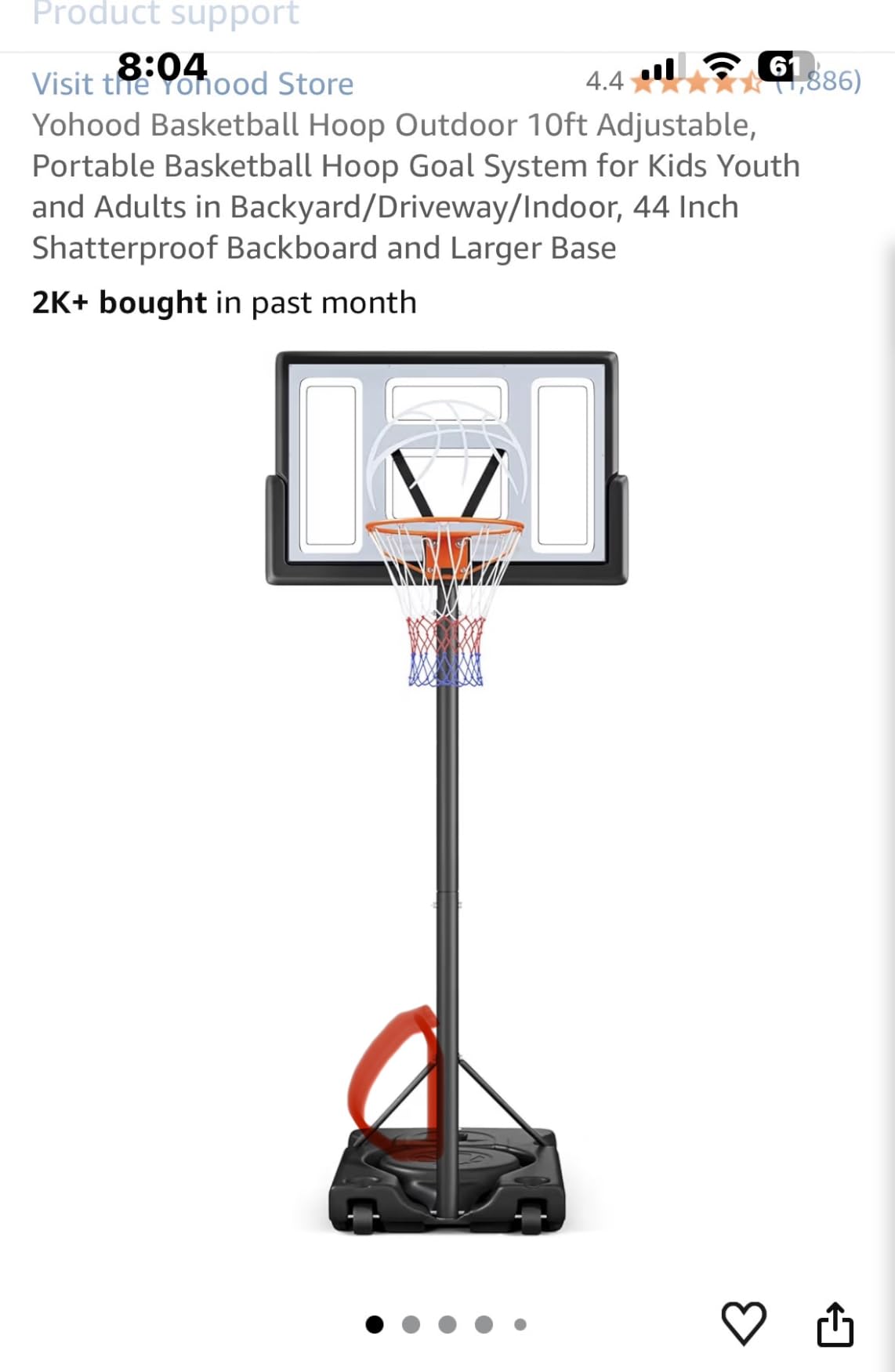
The Yohood’s whole argument is range. It adjusts from 4.43 feet to 10 feet across 11 levels, which lets one hoop serve a toddler, a middle-schooler and an adult. Almost no other portable system in this group starts that low without a separate accessory.
The base is the second reason to like it. At 44 by 28 inches the moulded base is wider than most competing portable bases, and buyers specifically call out better load bearing in wind. The system also works indoors, so it doubles as a garage or basement hoop for a child who wants to shoot in bad weather.
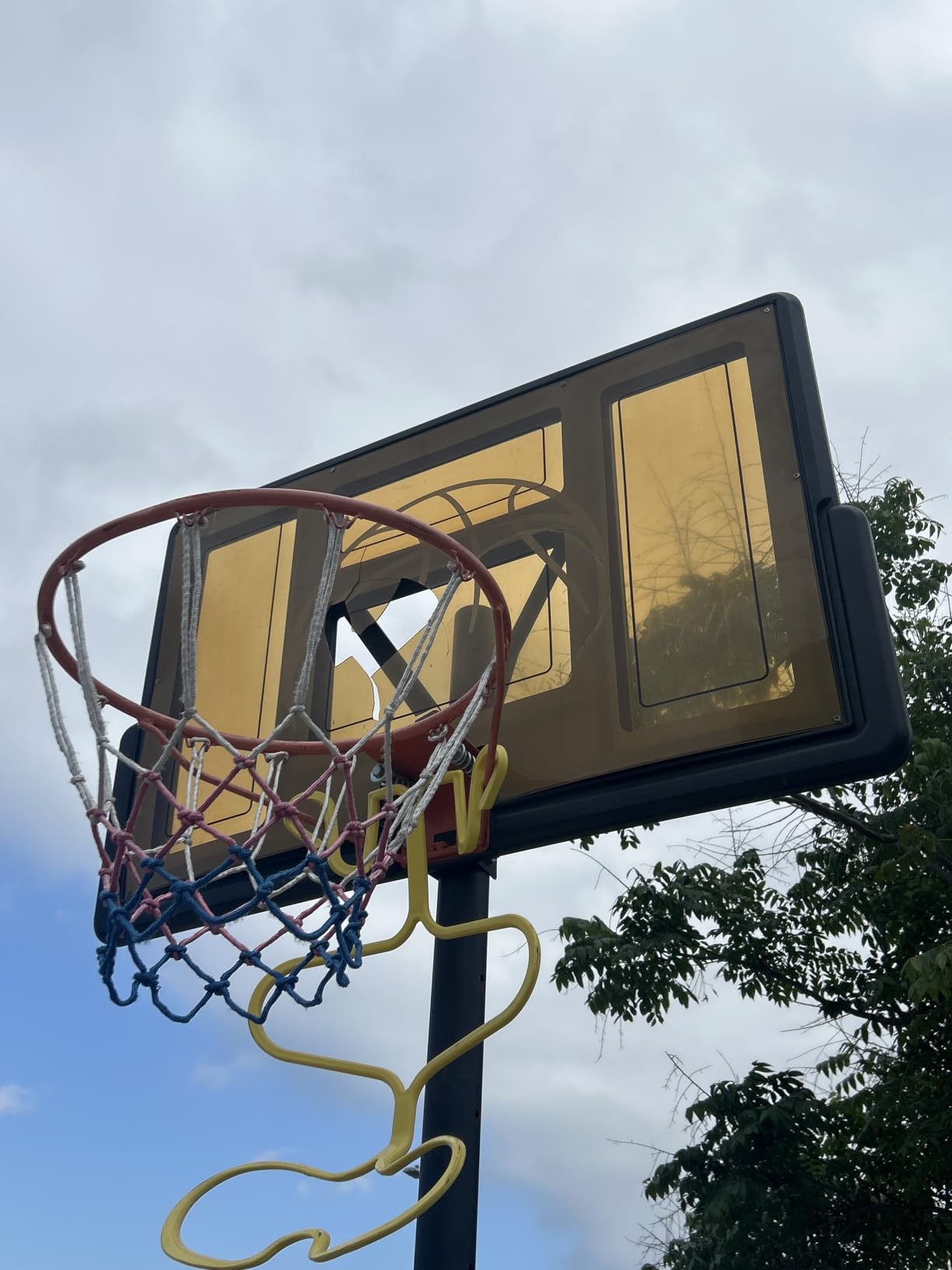
The backboard is shatterproof polycarbonate with a shock-absorbing rim and a thickened polyethylene net, and the hardware is labelled with an online assembly video to go with it. That combination of labelling and video is genuinely useful for a first-time builder, and the anti-rust steel poles are specified for outdoor duty.
The catch is how the lowest settings work. Reaching the 4.43 to 6.4 foot range means using two poles instead of three, so you are physically removing a pole section rather than just sliding a pin. It is a two-minute job, but it is a recurring annoyance if you flip between toddler mode and adult mode daily.
Who this hoop suits
Families with a wide age spread, from a three-year-old up to an adult who wants to shoot at regulation height. Nothing else in this ranking reaches a 4.4 foot rim height, and that single feature covers years of use that other hoops simply skip.
It also suits anyone with a windy driveway who has watched lighter portable hoops wander, and anyone without a suitable outdoor space who wants one hoop for the garage and the driveway.
Who this hoop does not suit
A competitive player. The rim and net are described as basic against regulation setups, and the board is a moderate fixed size rather than a regulation width, so shooting drills and serious practice are not the use case here.
The one year manufacturer warranty is the shortest in this lineup, and for a hoop that will be outside year-round, that is worth factoring into your decision. Expect to source spare parts yourself outside that window.
4. Silverback 54 Inch Tempered Glass In-Ground Hoop – Premium Pick
Silverback In-Ground Basketball Hoops, Adjustable Height Tempered Glass Backboard and Pro-Style Flex Rim. – Multiple Styles Available
54 inch tempered glass board
200 lb unit
7.5-10 ft actuator
7 inch anchor kit included
Pros
- True glass rebound owners rave about
- Breakaway rim protects the board on dunks
- Most stable system in the ranking
- Backboard pad included
Cons
- Needs a poured concrete footing and two adults
- Permanent and not portable
- Only 30 day warranty
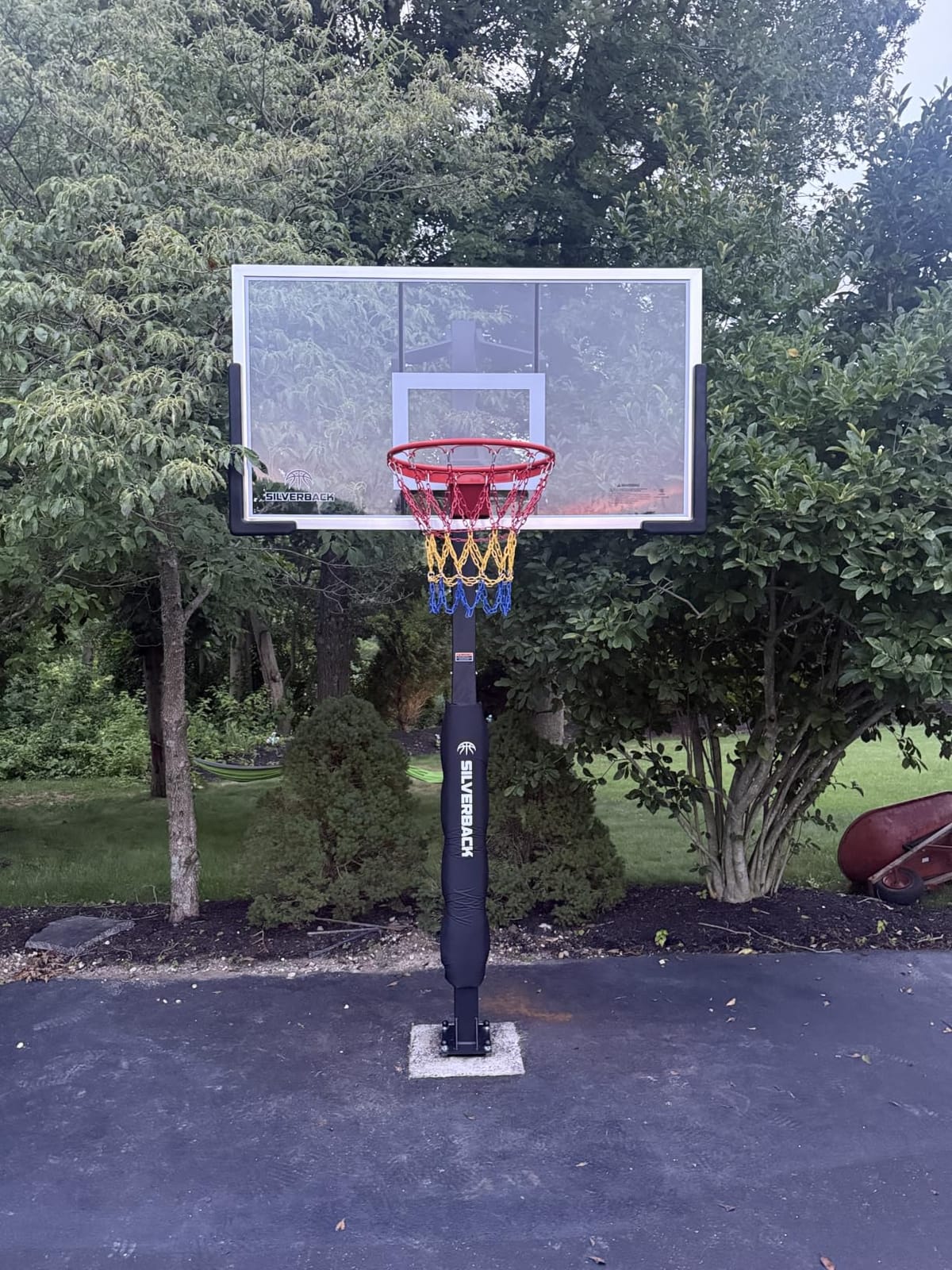
If the question is how a driveway hoop should feel, this is the answer. The 54 inch tempered glass backboard delivers the consistent, lively rebound that reviewers describe as genuinely gym-quality, and it is the only system in this ranking where that description is not an exaggeration.
At 200 pounds and anchored with the included 7 inch anchor kit, it is also the most stable hoop here by a wide margin. Once the concrete cures, there is no wobble, no drift and no rocking, which is exactly what you want for a teenager who is developing a consistent shot.
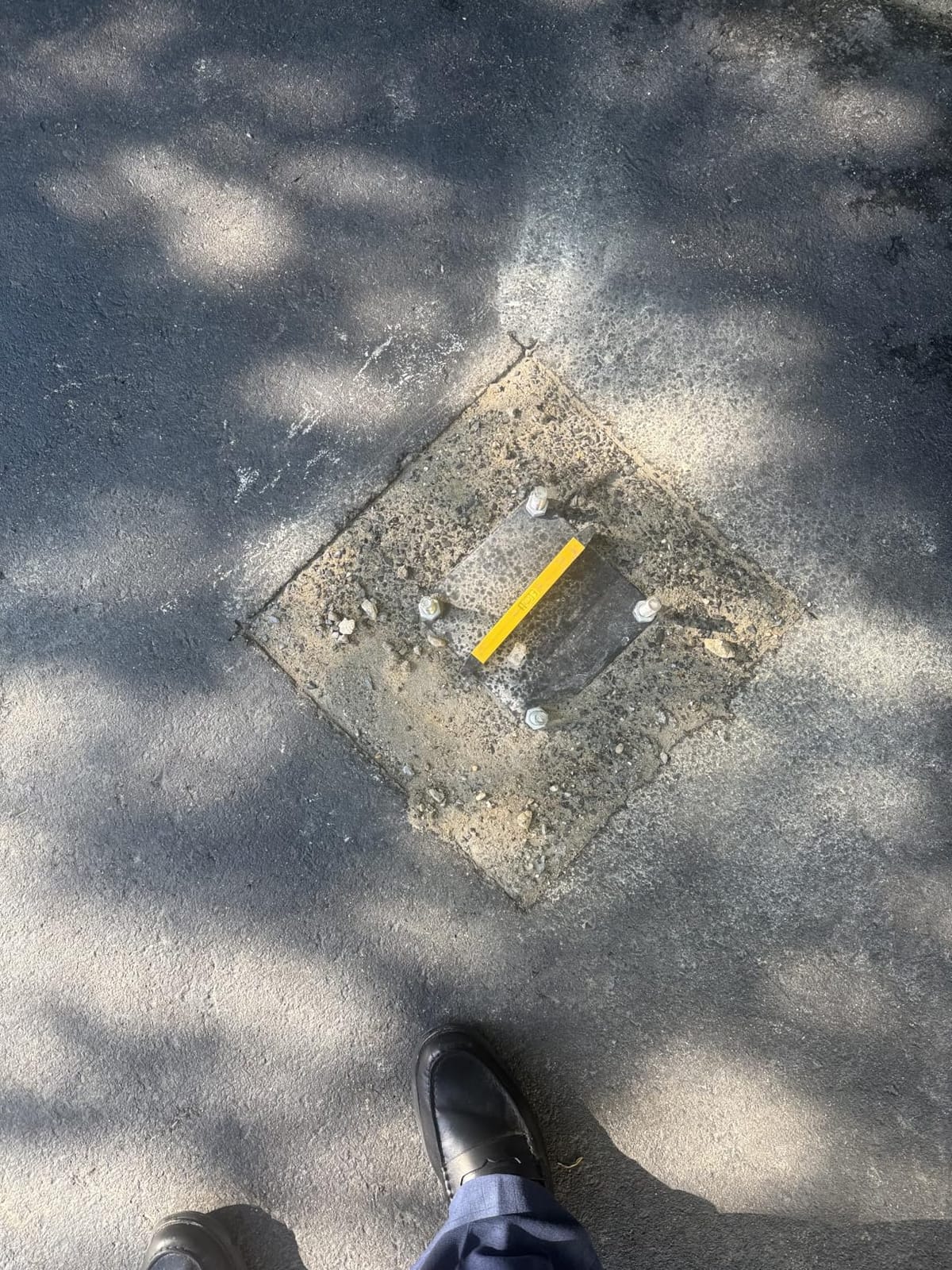
The rim is a pro-style breakaway that flexes under pressure, so a hard dunk does not translate straight into a cracked backboard or a wrist injury. The powder-coated steel pole adjusts from 7.5 to 10 feet through an all-steel actuator, which is smoother and more durable than a pin-and-hole system.
The quick-play design arrives with preassembled parts, which shortens install day considerably, and a backboard pad is included for protection on the lower edge. The 2.5 foot overhang sits in the sweet spot for residential use, giving a good shooting angle without eating into the driveway.
Who this hoop suits
Homeowners who plan to stay put and want a practice court rather than a toy. Tempered glass changes how a shot feels, and for a player who is training seriously, that difference is the whole reason to spend at this level.
It is the right pick for aggressive play, including regular dunking, because the breakaway rim absorbs the impact that would damage a fixed rim and a plastic board.
Who this hoop does not suit
Renters, and anyone who might move house within a few years. Once that pole is in concrete, removing it is a genuine project rather than an afternoon job.
The 30 day warranty is the shortest in this lineup and the only real gap in an otherwise premium package. Installation also needs a properly poured concrete footing and at least two adults, so factor a weekend into the decision.
5. IGL 5.6 to 10 FT Portable System – Best for One-Person Moving
IGL Portable Basketball Hoop Outdoor, 3-10ft Adjustable Height, 40″ Shatterproof Backboard, Fillable Base, Basketball Goal System for Driveway Backyard Pool, Fun for Family & All Ages
40 x 24 inch polycarbonate board
3-10 ft across three pole sets
40 lb
Dual fillable base
Pros
- Adjusts from 3 ft to 10 ft
- Tilt-and-roll wheels for solo moving
- Dual base resists shifting in play
- Tools included for a fast build
Cons
- 40 inch board is the smallest here
- Height bands need pole sections swapped
- One year warranty
The IGL is the one portable system here that a single person can genuinely reposition. Tilt-and-roll built-in wheels mean you tip the unit and walk it across the driveway, which matters enormously if you share a court surface with parked cars or want the hoop away from a winter snow pile.
It also has the widest low-end range in the lineup at 3 to 10 feet, achieved by varying pole count across three configurations. Like the Yohood, that means swapping pole sections to move between bands, and it is a real step rather than a pin pull.
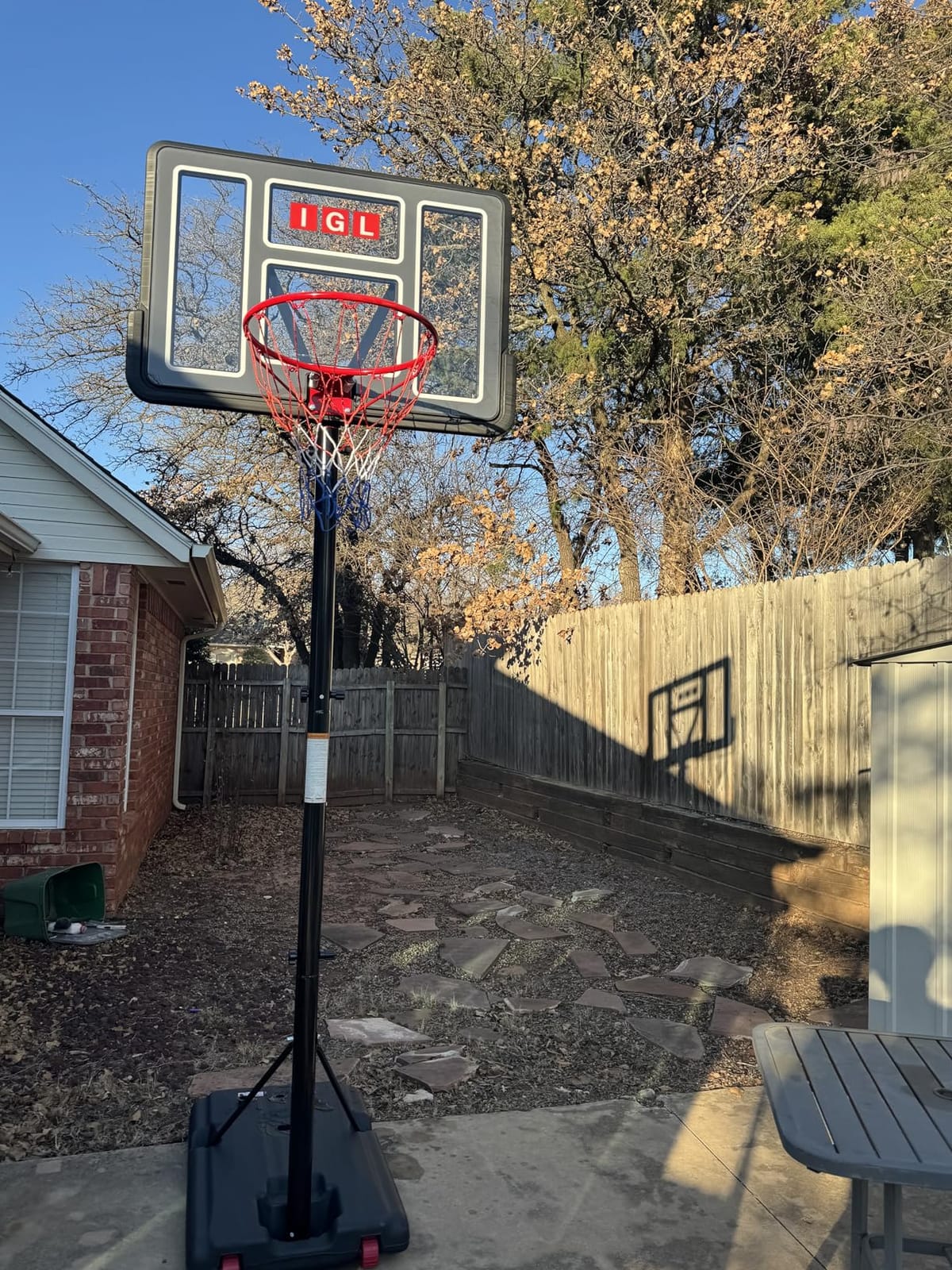
The dual fillable base is the standout engineering choice. The main base takes 77 pounds of water or 100 pounds of sand, and the anchor base takes 30 pounds of water or 40 pounds of sand, giving two-tier ballast that reviewers say holds position during intense play far better than a single reservoir.
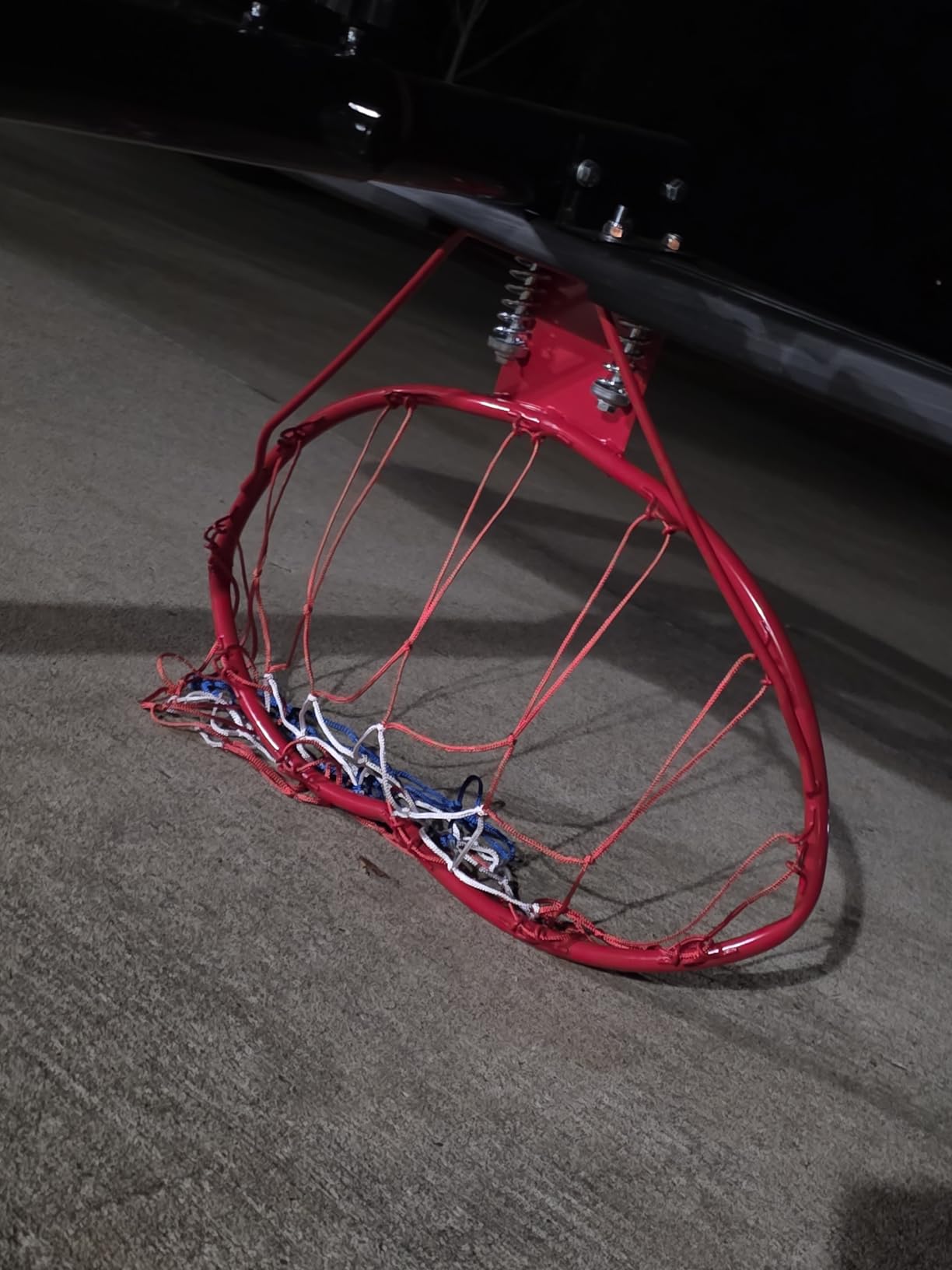
The backboard is a shatterproof 40 by 24 inch polycarbonate unit. It is the smallest board in this ranking, and that is a genuine limitation for shooting form, though the material is the durable kind. Assembly typically runs under 45 minutes with the hardware and basic tools included.
Who this hoop suits
Anyone whose driveway doubles as parking. Because one person can move it, you can pull the hoop to the side for a car morning and push it back out in the afternoon without calling a neighbour for help.
It is also a strong pick for a family with a very young child, since 3 feet is a usable rim height for a toddler learning to shoot, and the dual ballast base reduces the chance of it wandering in a gust.
Who this hoop does not suit
Players who care about board size. A 40 inch board is meaningfully smaller than the 44 and 54 inch options here, and anyone training a proper shooting arc will notice the difference in bank shots.
The one year warranty is short, and the base still needs sand or water ballast to be stable at full 10 foot extension. Unfilled, this hoop is not usable at the top of its range.
6. Best Choice Products 10ft Regulation Hoop with Breakaway Rim – Best for Dunking
Best Choice Products Outdoor Basketball Hoop Portable & Adjustable 7.5-10FT, 44 Inch Shatterproof Backboard with Breakaway Dunk Rim & Stable Base Gel for Kids, Teens & Adults – Clear
44 inch polycarbonate board
7.5-10 ft pole
52 lb
Gel powder base with 2 wheels
Pros
- Spring breakaway rim absorbs dunk impact
- Gel base stabilises better than plain fill
- 44 inch board with strong rebound
- Straightforward assembly
Cons
- Pole lean at full 10 ft extension
- Undersized backboard screws can back out
- Support reported as unhelpful after 90 days
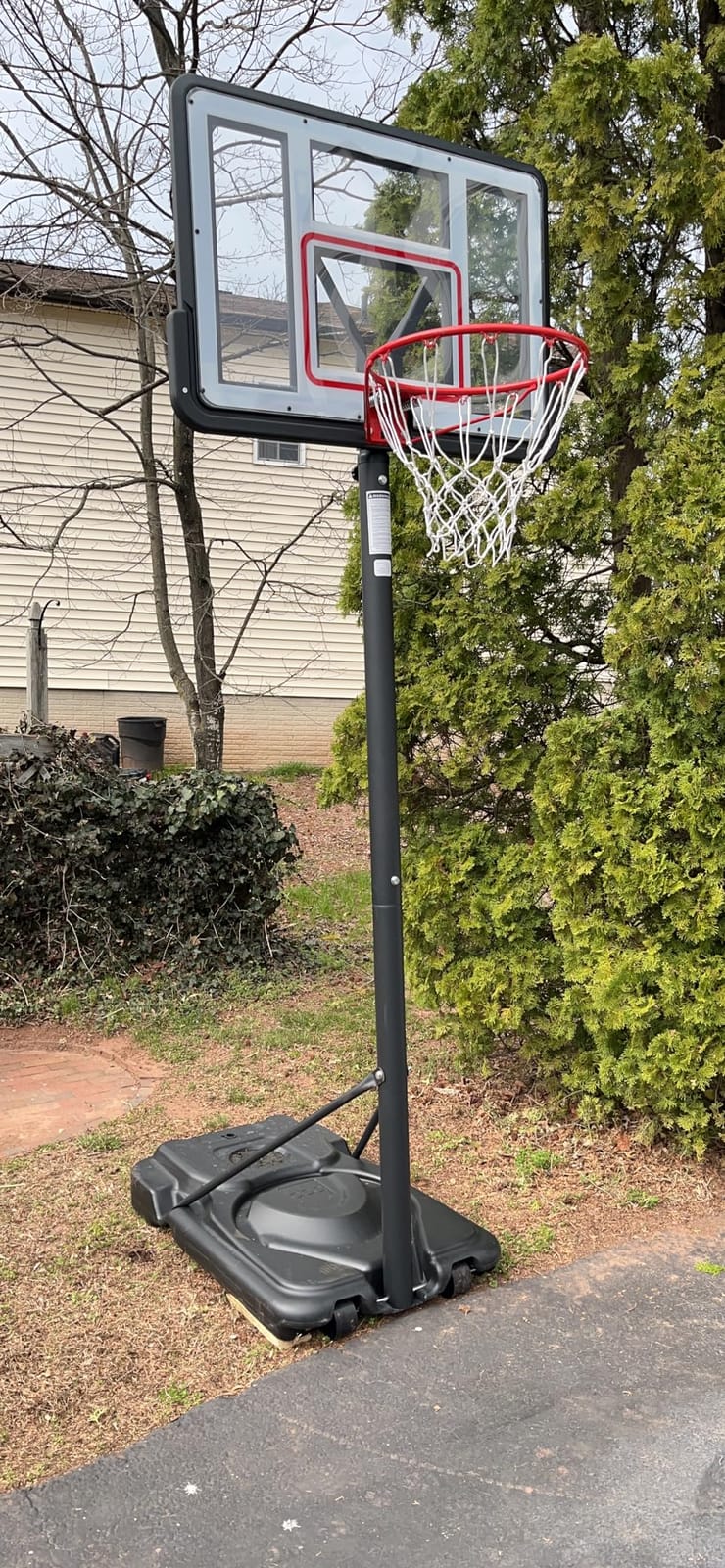
This is the most interesting dunking option at this level. The spring-mounted breakaway rim absorbs layup and dunk impact, which is normally a feature you only get on glass systems costing several times more, and paired with a 44 inch polycarbonate board it makes a credible practice rim for aggressive play.
The base is the other differentiator. Rather than plain water or sand, it uses a gel powder mix that owners report holds stability better than either alone. That matters on a smooth driveway where a sloshing water base lets the whole unit creep during a fast break.
Height adjustment from 7.5 to 10 feet is straightforward, though it is slow by design and not meant for quick changes mid-session. Assembly is described as uncomplicated, and the hoop is reported to hold up well through a full rainy season outdoors.
There are real build compromises at full extension. Reviewers report only about 3 inches of pole overlap at 10 feet, which gives the whole system a slight lean, and the rim can sit off level when a ball lands on one side of it.
Who this hoop suits
Teenagers and adults who will dunk on it. A spring breakaway rim at this level is unusual, and it takes the worst of the impact out of a dunk while protecting the board.
It also suits anyone on a very smooth concrete driveway, because the gel base resists the shifting that makes a water-filled hoop drift during aggressive play.
Who this hoop does not suit
Anyone who cares about the hoop standing perfectly plumb. The limited pole overlap at full extension produces a visible lean, and the rim can tilt off level, both of which bother people who set up a hoop carefully once and leave it.
Be aware of the support experience. Some buyers report a cracked backboard and unhelpful replacement support once past a 90 day window, so inspect the board closely in the first few months. The undersized mounting screws are also a recurring complaint.
7. Sweetcrispy 6.1 to 10 FT Portable Hoop – Budget Pick
Sweetcrispy 6.1-10FT Portable Basketball Hoop Outdoor, Adjustable Height, 44 Inch Shatterproof Backboard/Shock Absorbent Rim, Fillable Base, 2 Wheels for Backyard
44 inch shatterproof board
6.1-10 ft height
44 x 44 in base
2 transport wheels
Pros
- Lowest cost 44 inch adjustable option
- Shock-absorbent rim handles impact
- Fillable base plus wheels for flexibility
- Durable shatterproof board
Cons
- Wobbles badly until the base is filled
- Thin pole overlap at full height
- One year warranty
- Net and small hardware wear first
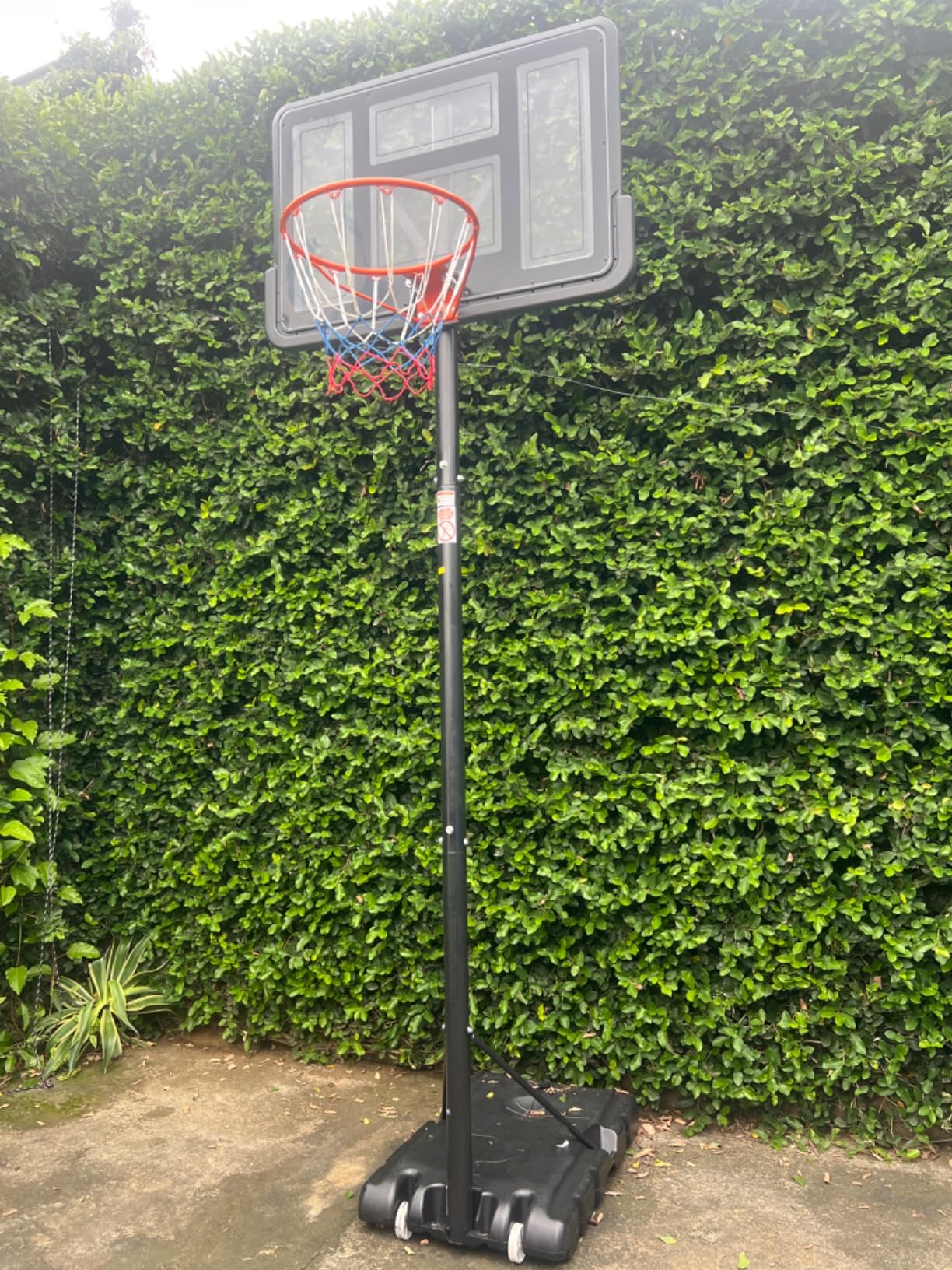
The Sweetcrispy is the cheapest 44 inch adjustable system we evaluated, and it is a competent starter hoop rather than a toy. The 44 inch shatterproof backboard is the right size for driveway shooting, and the shock-absorbent rim takes contact without the rattly feedback owners complain about on fixed rims.
Height runs from 6.1 to 10 feet, which covers children through regulation. It does not go low enough for a toddler, so if you have a very young child, one of the systems that reaches 4 or 5 feet will serve the family longer.
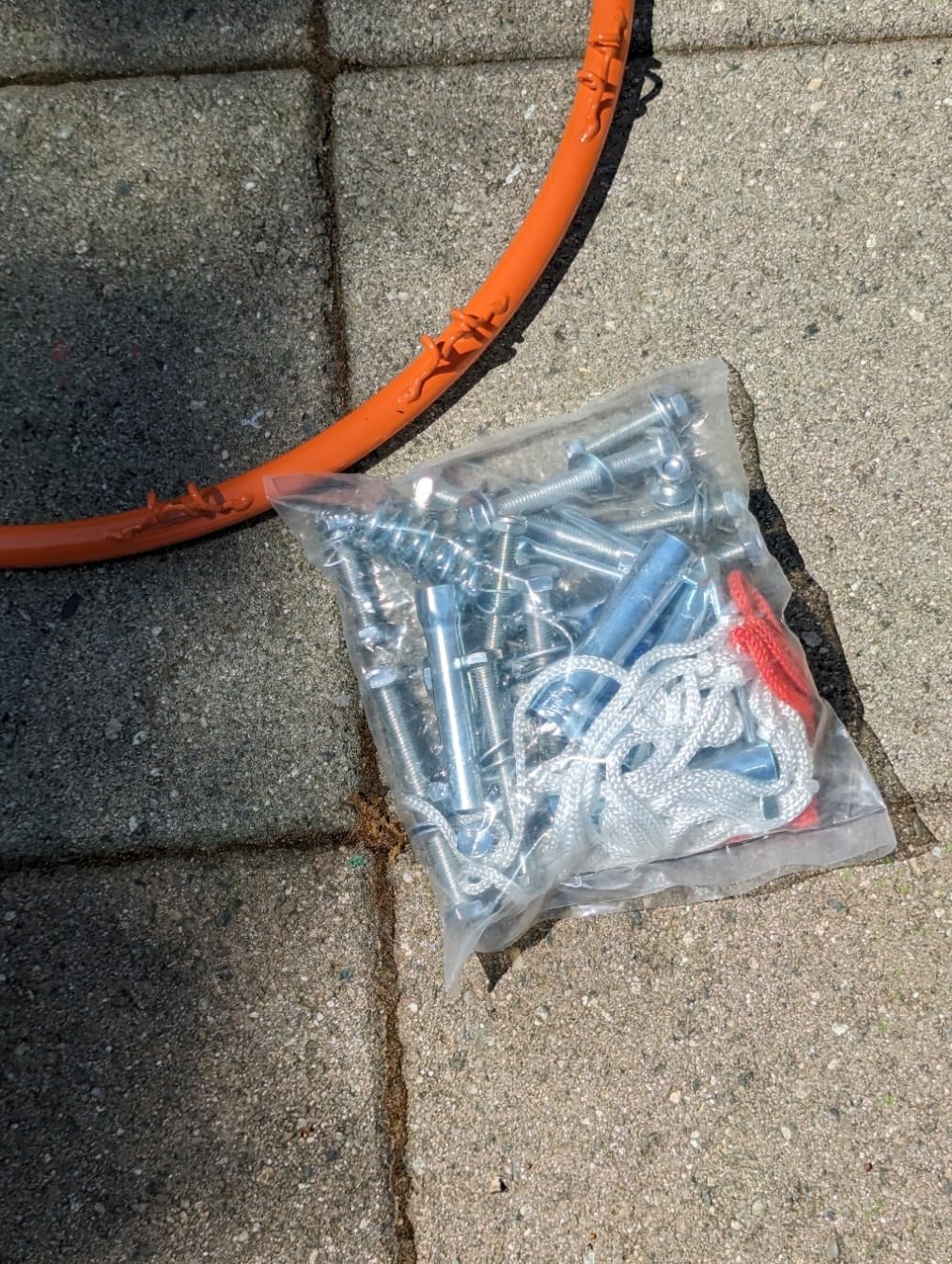
Two built-in wheels plus a water or sand fillable base give you both stability and some mobility. The metal construction is specified for outdoor conditions, and the base footprint is a square 44 by 44 inches, which is wide enough to resist a gust once it is filled.
Fill the base before you judge it. Owners repeatedly note wobble with an unfilled base, and the pole overlap at full height is thinner than the premium systems, which shows up as a slight flex under hard shooting.
Who this hoop suits
Buyers who want a real 44 inch board without spending premium money. If the goal is casual family shooting on a driveway, this covers it, and the shatterproof board survives the punishment kids deliver.
It suits renters well, since a portable system leaves no hole in the concrete and can be wheeled aside when you need the space.
Who this hoop does not suit
Aggressive dunkers. The thinner pole overlap at full extension and the basic hardware mean hard rim play is where the weaknesses will show first, and the net is one of the earliest parts to degrade.
The one year manufacturer warranty is also short, and the 6.1 foot floor is too high for a child under about six. Expect to buy a replacement net within a few seasons.
8. Silverback NXT54 In-Ground Hoop – Best for Board Rigidity
Silverback NXT54 54″ Height Adjustable In-Ground Basketball Hoop
54 inch Infinity Edge board
7.5-10 ft actuator
In-ground steel pole
Breakaway rim and pad included
Pros
- Infinity Edge wrap adds real board rigidity
- Breakaway rim protects board and players
- Zero wobble once concreted in
- Preassembled quick-play parts
Cons
- Requires a concrete footing
- Only 30 day warranty
- Not portable once installed
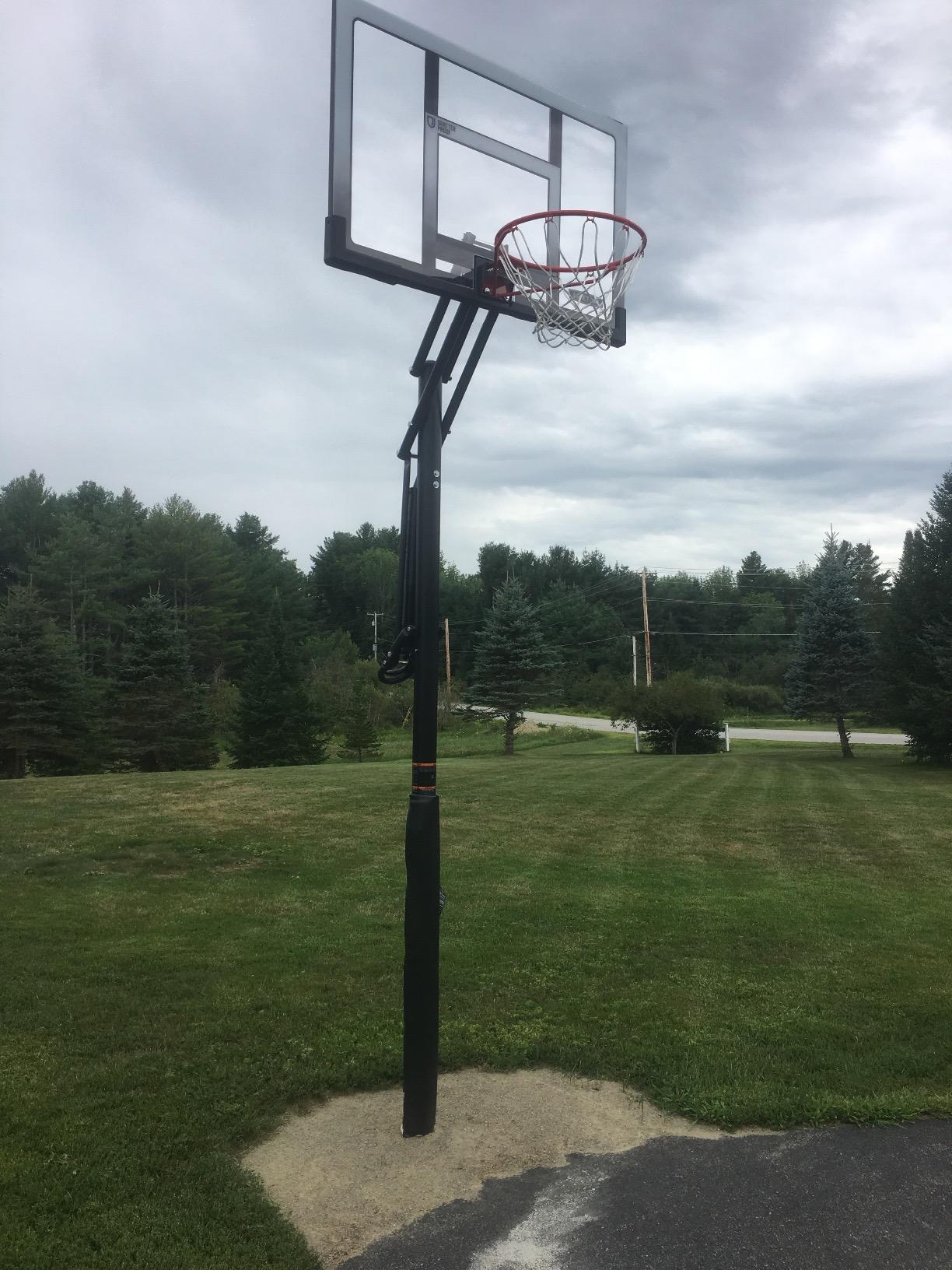
The NXT54 solves a specific problem that plain 54 inch glass panels have: flex. Its Infinity Edge design wraps the board edges back toward the rear, and owners point to that wrap as the reason the board feels rigid and consistent rather than springy in an unpredictable way.
Like the Silverback B5401W, it uses a pro-style breakaway rim, a powder-coated steel pole and an all-steel actuator for 7.5 to 10 foot adjustment. The rim and a backboard pad are included, which is a useful saving over buying them separately.
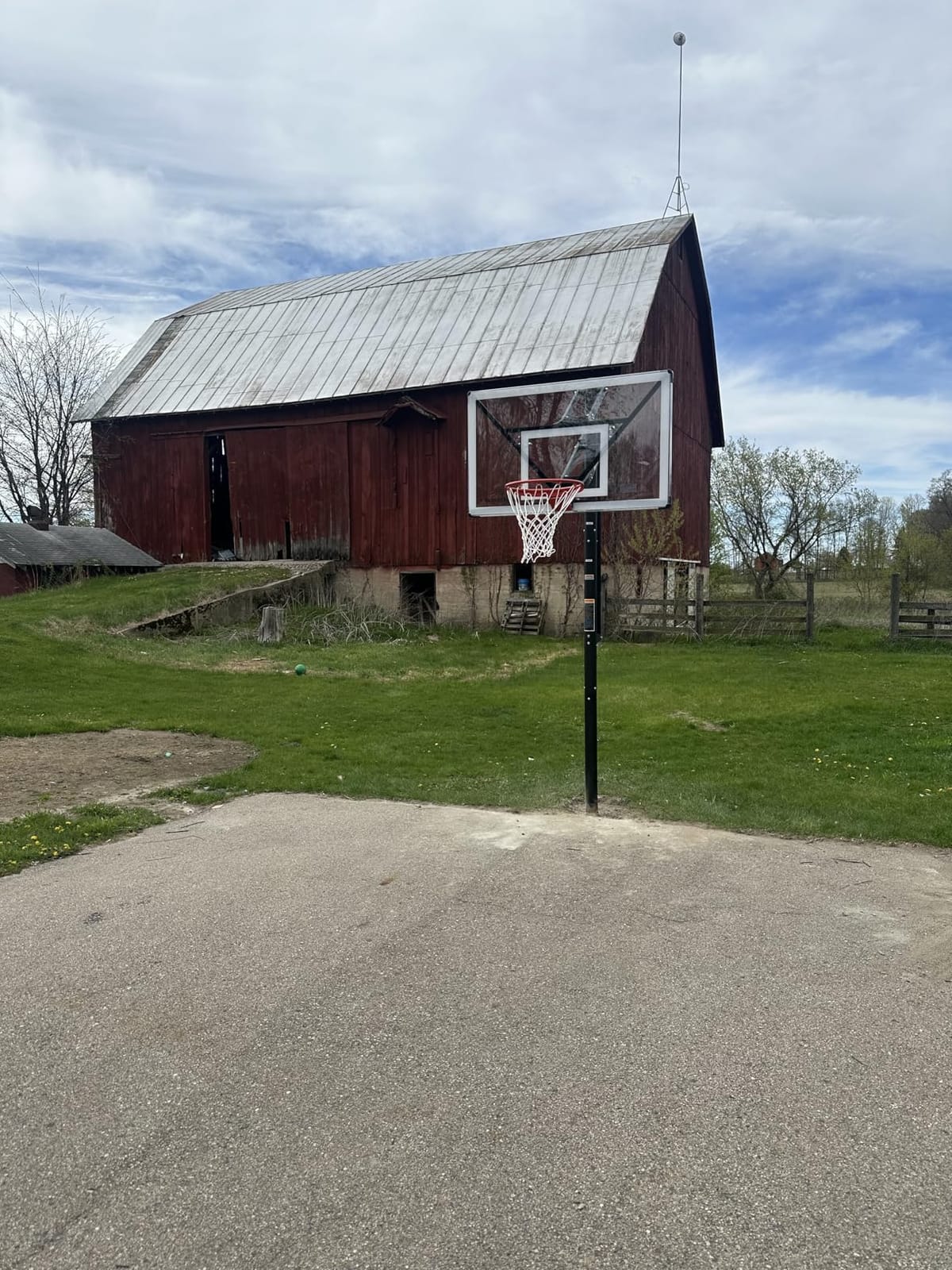
Set into the ground with concrete, the pole is more stable than any portable base in this ranking, full stop. There is no base to fill, no water to drain before winter and no ballast to shift. Once it cures, the only maintenance is checking the actuator and the rim bolts.
The quick-play design with preassembled parts shortens installation compared with building a system from loose components. Even so, it remains a project: excavation, a footing, a cure period and at least two people on install day.
Who this hoop suits
Homeowners who want a 54 inch board that feels solid rather than oversized. If you have moved beyond a 44 inch portable board and want a target you can grow into without changing equipment, the 54 inch width is a real upgrade.
It suits aggressive play and dunking, since the breakaway rim takes the impact and the wrapped board resists the vibration that follows.
Who this hoop does not suit
Renters and short-term owners. The concrete commitment is permanent, and if you are likely to move within a few years this is money sunk into a slab.
The 30 day warranty is the weakest coverage in this lineup, so inspect everything carefully at install. It is also heavier and pricier than portable hoops offering the same 54 inch board size, and the value case only works if you are committed to the location.
9. Lifetime 71281 In-Ground Power Lift System – Best for One-Handed Height Changes
Lifetime Outdoor Basketball Hoop System – 52 in Shatterproof Backboard
52 inch polycarbonate board
Power Lift 7.5-10 ft
84 lb
Three-piece 3.5 in round pole
Pros
- Squeeze-handle lift is genuinely one-handed
- Five year warranty is the longest here
- Rigid steel-framed board
- Friction-welded pole joint reduces wobble
Cons
- Permanent footing installation
- Fixed 18 inch rim with no breakaway
- Polycarbonate is less lively than glass
The Lifetime 71281 carries the highest rating of any in-ground system in this group, and the feature that earns it is the Power Lift. A squeeze handle raises and lowers the whole goal from 7.5 to 10 feet, which is the easiest height mechanism here for a parent moving the rim for a younger child.
The board is a 52 inch shatterproof polycarbonate panel in a steel frame, built for competitive play rather than casual shooting. Powder-coated steel and UV protected materials are specified to resist rust and fading, and at 84 pounds the system is lighter to handle on install day than a full glass unit.
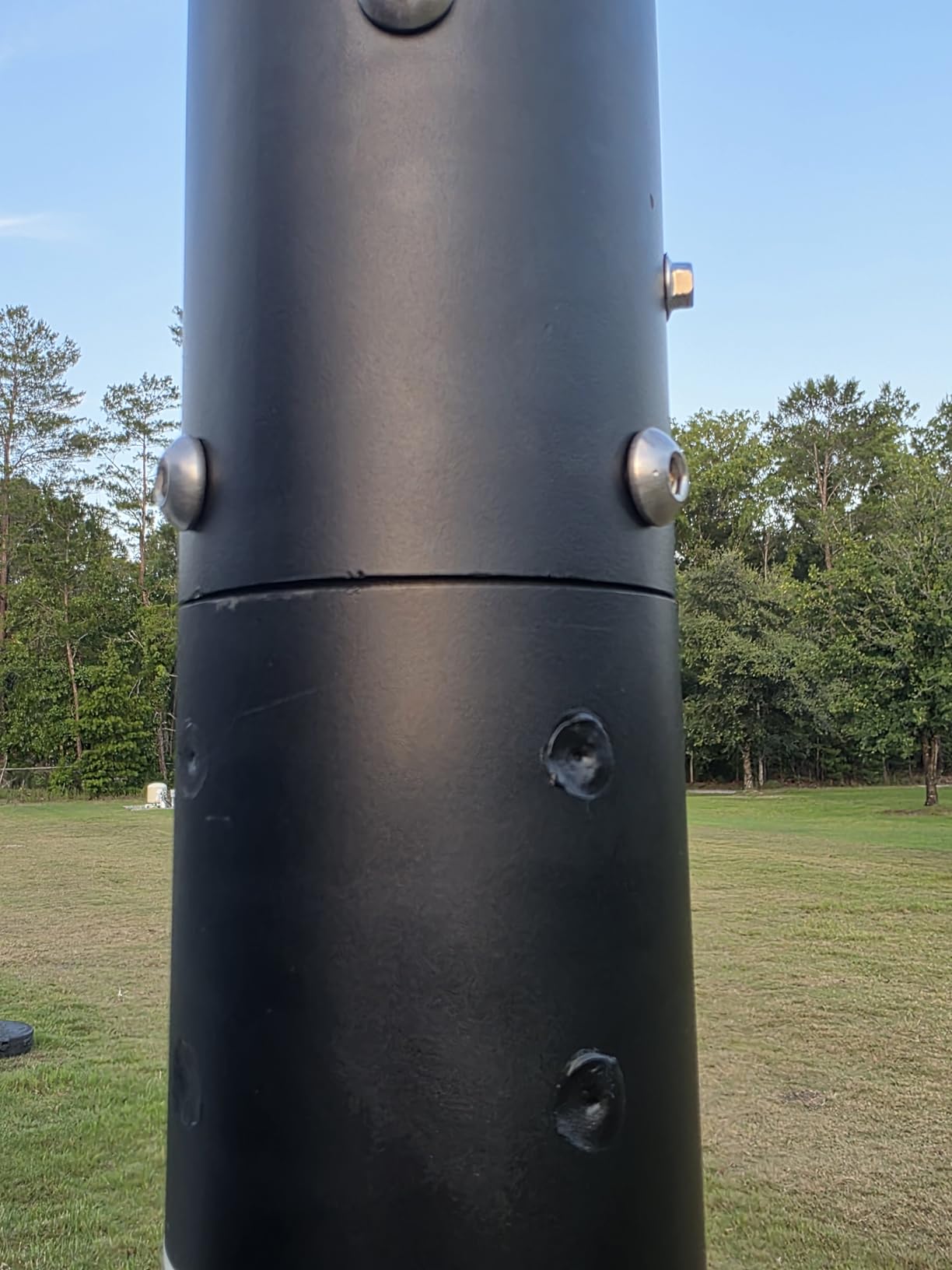
The pole is a three-piece 3.5 inch round steel design with a friction weld joint, a detail that matters more than it sounds. Fewer looseness points at the seams means less movement and less vibration after a hard dunk, which is the main complaint we see with cheaper multi-section poles.
The five year limited manufacturer warranty is by far the longest coverage in this ranking, and for an in-ground system that will sit outside for a decade, that is a meaningful advantage over the 30 day windows offered by the glass systems.
Who this hoop suits
Families with children at different ages, and specifically whoever is responsible for changing the rim height. A squeeze handle is a genuine improvement over a crank or pin system when you are doing it several times a week.
It also suits anyone who wants warranty coverage that outlives a few seasons, and who would rather have a polycarbonate board that will not shatter than a glass panel that needs careful handling.
Who this hoop does not suit
Dunkers. The 18 inch rim is fixed, with no breakaway mechanism, so a hard dunk goes straight into the board and the rim rather than being absorbed.
As an in-ground system at 84 pounds it needs excavation and a proper footing, and it is not portable afterwards. The polycarbonate board is also less lively than glass, so players chasing a premium feel should look at a tempered glass system instead.
10. awii sport 40, 44 or 48 Inch Impact Backboard Hoop – Best for Size Choice
Basketball Hoop Outdoor 40 Inch Impact Backboard 5.5-10FT Height Adjustable
40 44 or 48 inch options
5.5-10 ft rear crank
Alloy steel construction
Triangular PE base with wheels
Pros
- Three backboard sizes in one model line
- Rear crank gives quick height changes
- Thickened steel rods with weather coating
- Rim net wheels and manual included
Cons
- Base needs both water and sand for stability
- Lower height bands need fewer pole sections
- Highest one-star share of the group
The awii sport system is unusual in letting you choose the target board size. The same model line comes in 40, 44 and 48 inch impact backboards, so if your driveway is tight you can take the 40 inch and if you have room and want a better bank shot you can step up to 48.
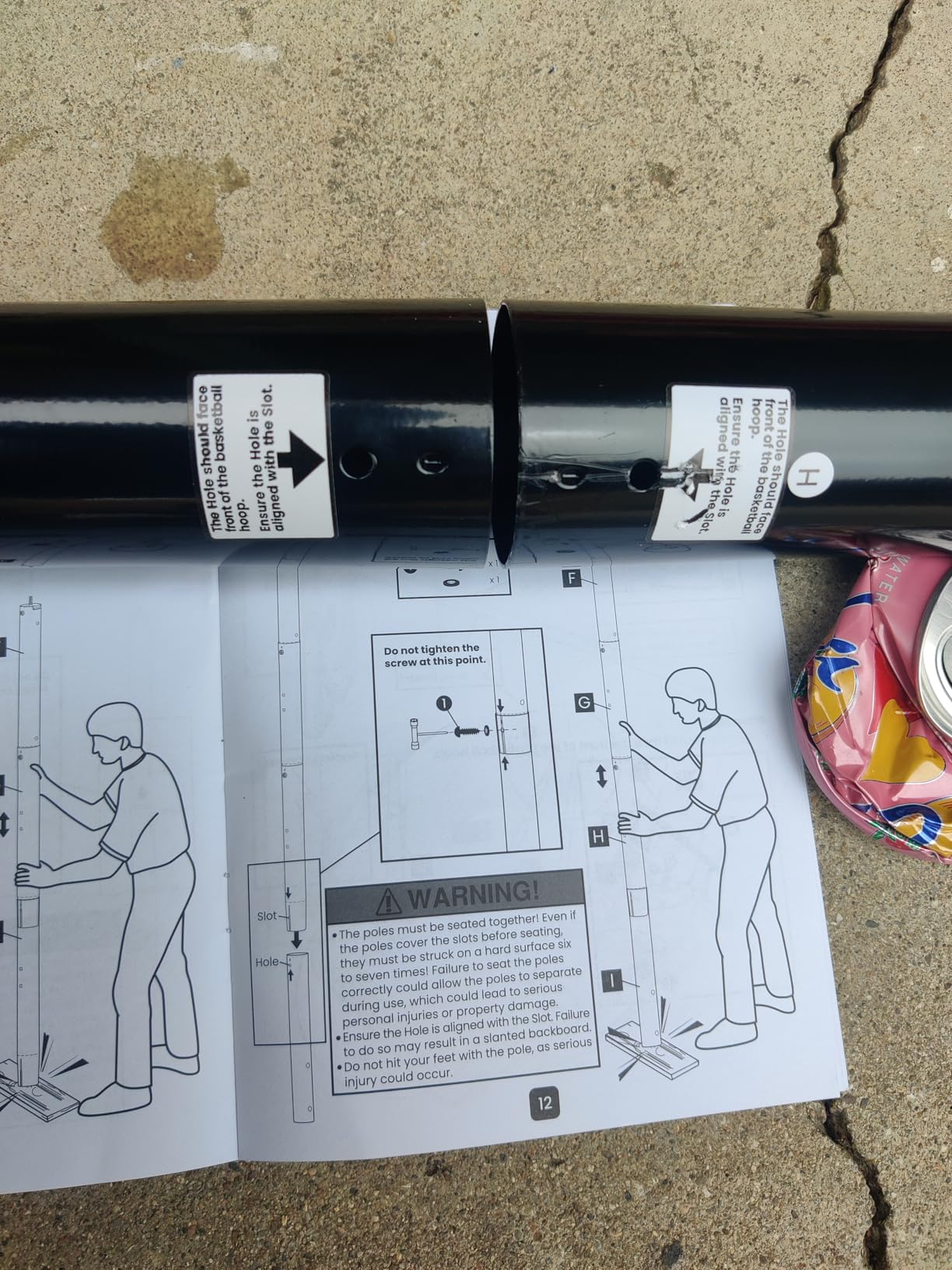
Height adjustment runs from 5.5 to 10 feet using a rear crank handle, which reviewers rate as quicker than a pin-based system. You get 8 to 10 feet with three poles and 5.5 to 7 feet with two, so the lowest band still involves installing a different pole count.
Construction is thickened steel support rods with a weather-resistant coating, plus an 18 inch metal rim with a durable net. The triangular high strength polyethylene base takes both water and sand and includes two built-in wheels, and the package arrives with the rim, net, wheels and instruction manual already in the box.
Two things temper the recommendation. Reviewers flag inconsistent build quality, reflected in the highest share of one-star ratings of anything in this group, and the base needs both water and sand before it reaches the advertised stability.
Who this hoop suits
Buyers who have already measured their driveway and know exactly which board width fits. Being able to pick 40, 44 or 48 inches in one model line removes a lot of guesswork from the decision.
It also suits anyone who changes height frequently, since a rear crank handle is faster and less fiddly than a pin system in most portable hoops at this level.
Who this hoop does not suit
Risk-averse buyers. The elevated one-star share suggests uneven quality between units, and a cracked backboard or bent rod is exactly the failure you cannot fix in the field.
The listed base dimensions reflect the base only rather than the assembled height, which can mislead if you are planning clearance. Filling the base with both water and sand is also more work than a single fill, so plan for it.
11. IE Sports 44 Inch Portable Hoop – Best for Garage and Driveway Use
IE Sports Portable Basketball Hoop w/ 44 Backboard & Rebounder
44 inch polycarbonate board
7.5-10 ft adjustment
18 inch breakaway rim
Sand or water fillable base
Pros
- Breakaway rim with a responsive bounce
- 44 inch board holds up to intense use
- Same hoop works indoors and out
- Two year metal parts warranty
Cons
- Among the priciest portable hoops here
- Base must be filled for stability
- Highest one-star share of the portable group
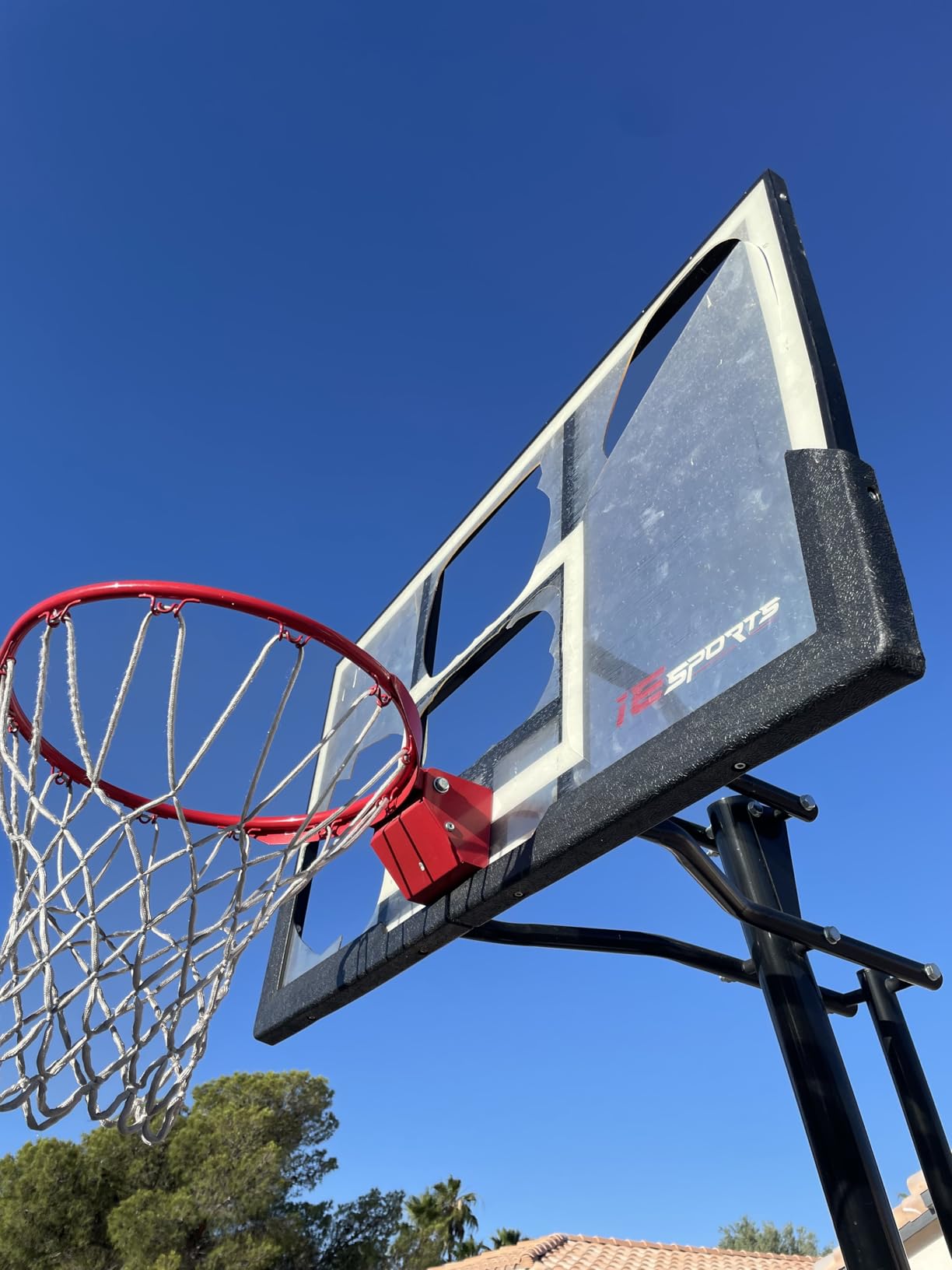
The IE Sports system is built around its rebounder design, and the breakaway rim is the part that pays off. Owners describe a responsive bounce that suits both shooting and dunk practice, which is unusual in a portable hoop with a polycarbonate board rather than glass.
It is rated for indoor and outdoor use, so the same unit can live in a garage during winter and move outside in summer. The 44 inch shatterproof polycarbonate board is also offered in 50 and 54 inch versions if you later decide you need more board.
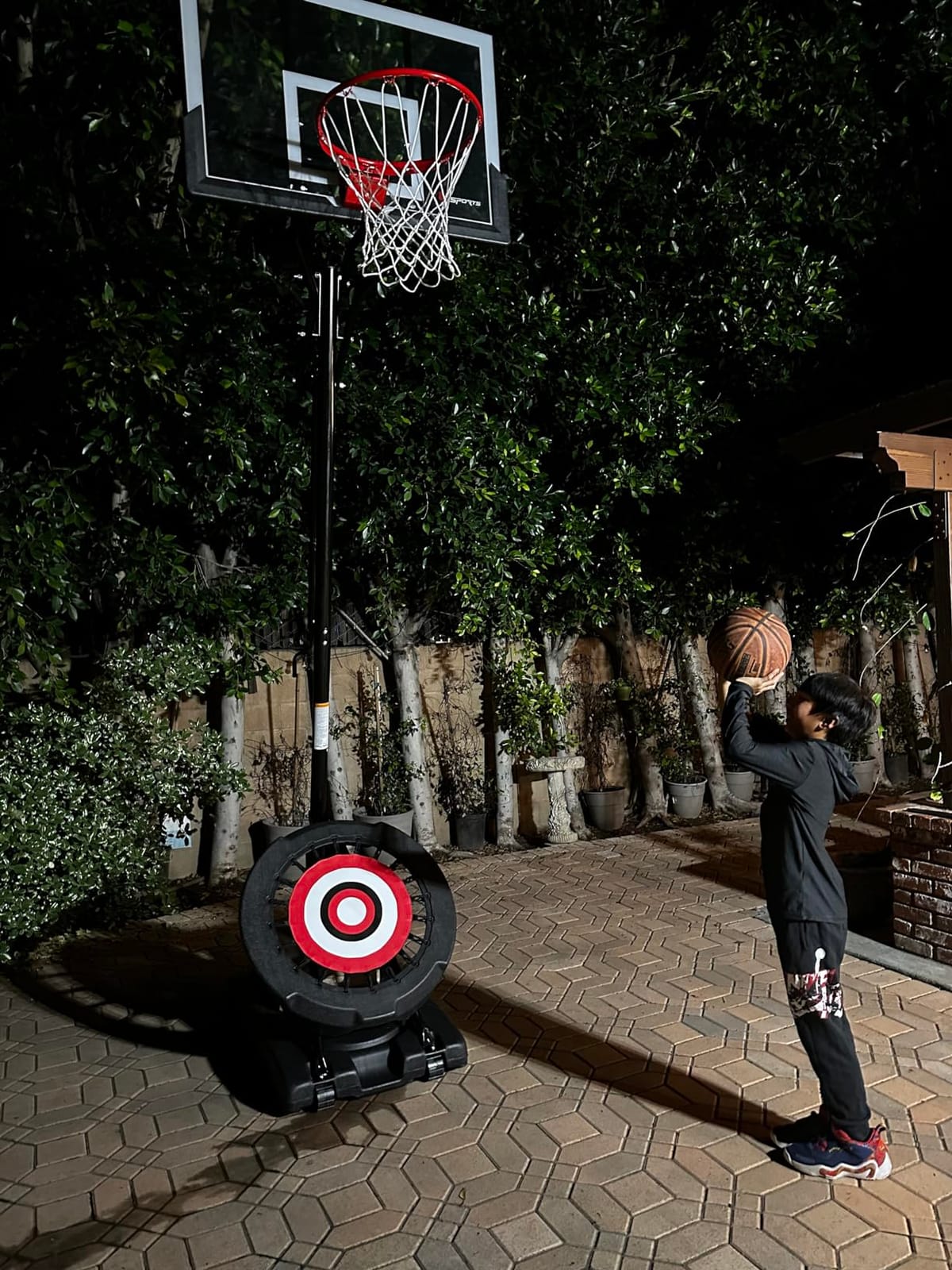
Height adjustment covers 7.5 to 10 feet, and the base accepts sand or water. Assembly is described as simple and quick, which is a meaningful advantage if you are setting it up in a garage with limited floor space and fewer helpers than a driveway project usually attracts.
Two things work against it. It sits at the expensive end of the portable options here, and the plastic components of the rebounder design draw the highest proportion of one-star ratings among the portable systems we reviewed.
Who this hoop suits
Households with a usable garage or covered space, where a hoop that works indoors and outdoors is worth the higher spend. Practising indoors in winter removes the seasonal gap that stops a lot of driveway hoops from being used for three months of the year.
It also suits a family that wants to practise dunking on a portable system, since the breakaway rim takes the impact without transferring it into the board.
Who this hoop does not suit
Buyers on a strict budget. It costs more than several portable hoops with larger boards, and the price premium only makes sense if you will genuinely use it indoors.
Expect the plastic parts of the rebounder design to be the first to fail, and fill the base before use, because stability is not automatic. The warranty covers metal parts for two years but plastic parts for only one.
12. Yohood In-Ground 50 Inch Crank Hoop – Best for Simpler Installation
Yohood In Ground Basketball Hoop Outdoor 10FT Adjustable Height with Crank
50 inch PC board in aluminum
7.5-10 ft crank
67 lb
Expansion bolt installation
Pros
- Stepless crank adjustment across 7.5-10 ft
- Aluminum-wrapped board resists rust
- Detachable base avoids a large concrete pour
- Lowest cost in-ground option here
Cons
- Permanent once bolted down
- Fixed rim with no breakaway
- 50 inch board is smaller than 54 inch options
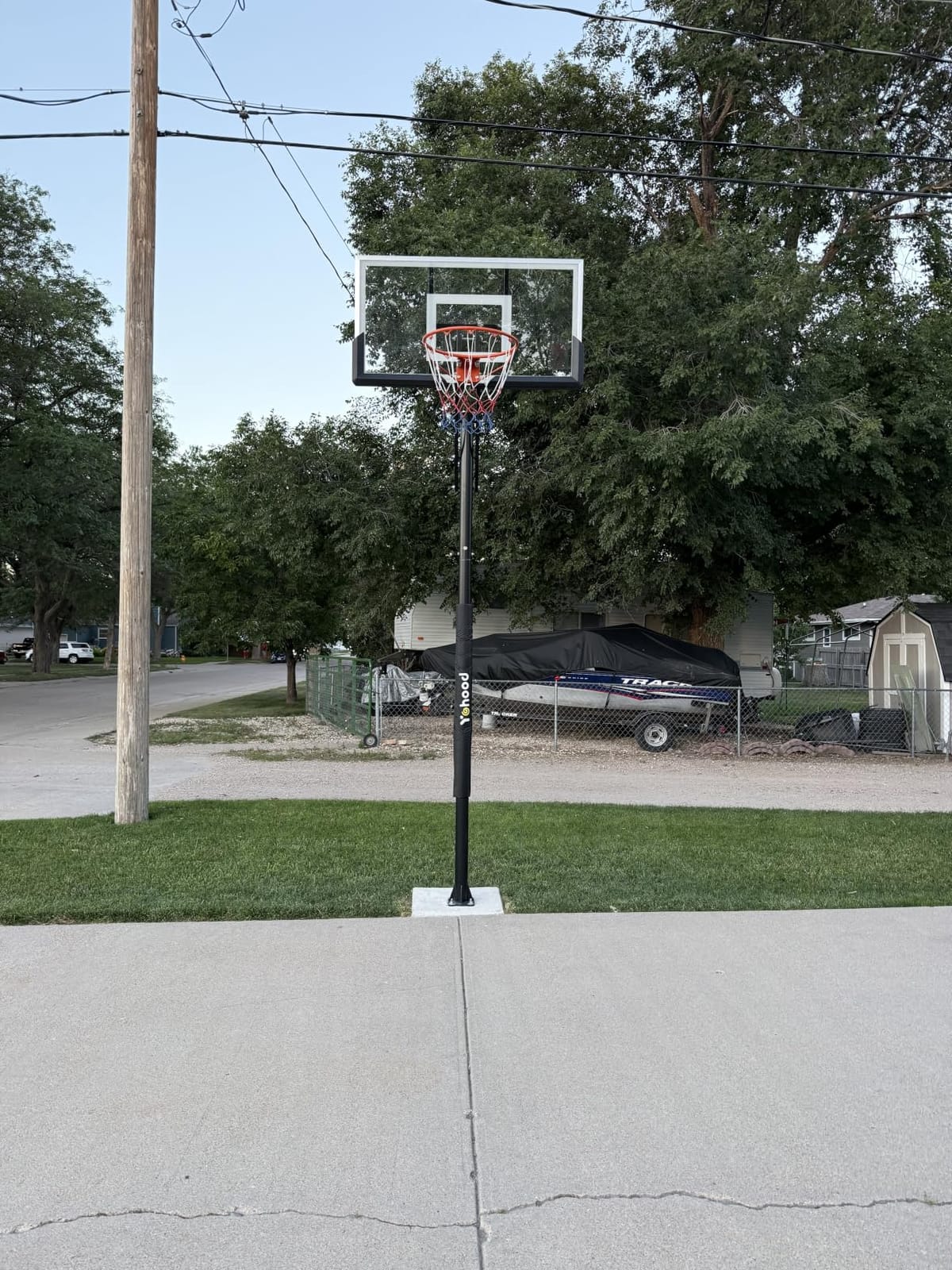
The Yohood in-ground system exists to solve the hardest part of an in-ground purchase: installation. Instead of requiring a large poured footing, it uses external expansion bolts with a detachable stabilising base, so a competent DIYer can get a permanent hoop in place with a drill and a weekend.
Adjustment is a manual crank and it is stepless, moving smoothly across 7.5 to 10 feet. There is no pin to line up and no pole section to remove, which makes this the least fiddly height mechanism among the in-ground systems here.
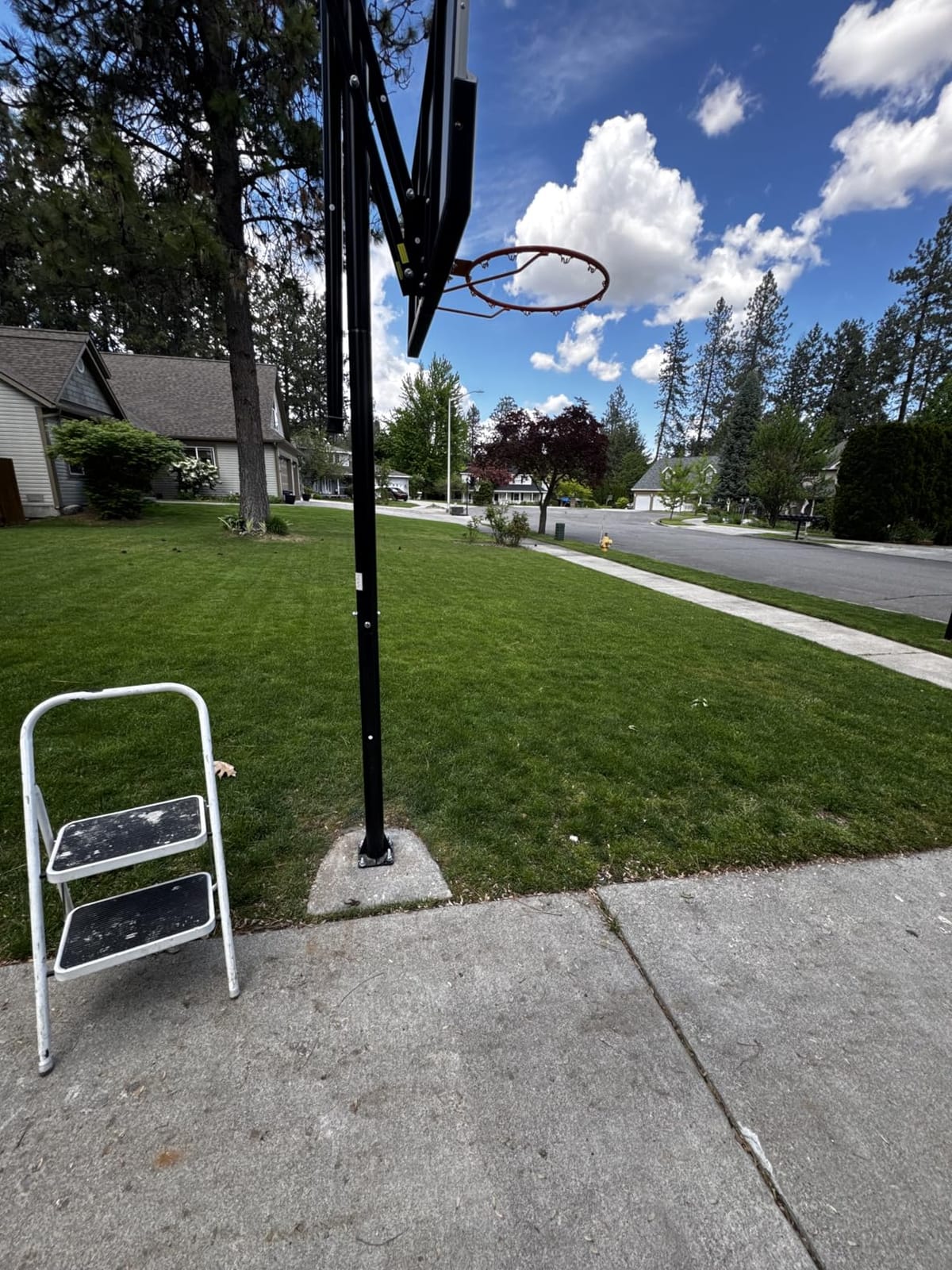
The board is a 50 inch shatterproof clear polycarbonate panel wrapped in high-strength aluminium, which resists rust and helps the panel hold its shape over time. The rim is an 18 inch NBA-grade solid steel rim that resists bending, a spec sheet improvement over the basic rims on most portable hoops.
At 67 pounds the system is also lighter than the glass in-ground options, which makes positioning during install easier. A printed manual and online installation videos are included, along with 24 hour online support.
Who this hoop suits
Homeowners who want in-ground stability without hiring a concrete crew. Avoiding a full concrete pour removes the biggest cost and time obstacle for a first permanent hoop, and at 67 pounds the unit is manageable with one helper.
It also suits anyone who changes height often, since a stepless crank has no pins, no actuator jam points and no sections to remove.
Who this hoop does not suit
Dunkers. The rim is fixed with no breakaway mechanism, so impact transfers straight into the board, and the 50 inch width is smaller than the 54 inch options available at the same general tier.
Anchoring is still permanent once the expansion bolts are set, so this is not a reversible choice. A lower one-star share than the Lifetime in-ground systems also hints at some assembly friction worth anticipating.
In-Ground, Portable or Wall-Mounted: Which Style Fits Your Driveway
Choose an in-ground system if you own the driveway long-term, have room for a concrete or anchor-bolt footing and want zero movement. These systems give you the stiffest pole, the best rebound options and no base to fill, and they are the only realistic choice if more than one person will be shooting hard.
Choose a portable system if you rent, may move, want to store the hoop out of the weather or need to free up driveway space for cars. A portable hoop is only as stable as its ballast, which means the fill step is not optional, and a 27 gallon base filled with sand is genuinely hard to move alone.
Choose a wall-mounted system if your driveway is narrow and vehicles need full clearance. A goal cantilevered from a garage or house wall removes the ground footprint entirely, but it needs solid framing or masonry behind the mount and it cannot be moved without help. None of the twelve systems in our ranking is wall-mounted, so this is a style to research separately rather than a pick from this list.
A fourth option deserves a mention for cold climates: anchor kits and strap-down systems that pin a portable base to the driveway. Several ranking pages ignore this, and it is the cheapest way to stop a filled portable hoop from being pushed around in a storm.
Backboard Material and Size for Driveway Play
Tempered glass gives the best rebound and the most consistent feel, and it is the only material we would recommend for a teenager training a proper shot. It is also the heaviest, the most expensive and the only one that shatters, which makes it a poor match for a family with young children throwing balls at it.
Acrylic sits in the middle with good rebound and a lighter weight, but it scratches and yellows with UV exposure, so on a sun-exposed driveway it degrades visibly within a few seasons. Polycarbonate is the practical choice for most driveways: it is shatterproof, UV-stable and light, and the rebound is decent rather than excellent.
On size, a 44 inch board is the sweet spot for most residential driveways. A 40 inch board is easier to fit into tight spaces and works fine for younger players, while 50 and 54 inch boards suit taller players and shooting drills but need more clearance in front of the goal.
A 72 inch board is a different category entirely. It is standard for playground and school equipment, needs serious mounting to resist the leverage, and on a typical residential driveway it will feel oversized and will limit how close you can stand. For a home driveway, 44 to 54 inches is the sensible range.
Pole Construction, Base Fill and Sand vs Water
Fewer pole sections means less flex. A one-piece pole is the most rigid, and where you see multi-section construction, look at how the sections join. The Lifetime 71281 uses a friction weld joint specifically to reduce movement at the seam, which is the kind of detail that shows up as less vibration after a dunk.
Square poles resist torsion better than round ones, and thicker poles resist bending. Round 3.5 inch poles are common on mid-range systems, while premium in-ground systems move to larger square or round steel sections. Gauge matters too: heavier steel gauge means a stiffer pole for the same diameter.
On height adjustment, pin-and-hole systems are the cheapest and the slowest, telescoping poles are fast but stiffen and jam when loaded, and actuator or crank systems move a loaded system smoothly. A squeeze handle is the quickest of all for one-handed changes, which is why the Lifetime 71281 stands out there.
For base fill, water weighs roughly 8.3 pounds per gallon and sand weighs roughly 13 pounds per gallon, so a 27 gallon base is about 224 pounds of water or about 350 pounds of sand. Sand gives noticeably better wind stability, but it is permanent once poured, so drain it before winter if you live somewhere that freezes.
Water is easier to remove and lets you move the hoop, but it must be drained in freezing climates or the base can crack. A compromise used by several owners is a partial sand fill topped with water, and gel-based mixes are designed to stay stable without either.
How to Install a Basketball Hoop on a Driveway
Before anything else, measure the run-out space you need in front of the goal, not the base. A safe driveway setup wants roughly 15 feet of clear surface in front of the rim at regulation height, with the base footprint set back far enough that a car can still pass.
Call 811 before you dig. Any excavation near a driveway can hit irrigation lines, gas or electric, and this step takes minutes.
Mark the pole location and check the overhang. A 2.5 to 3 foot overhang is the residential sweet spot, giving a good shooting angle without extending so far that the rim sits over a parked car.
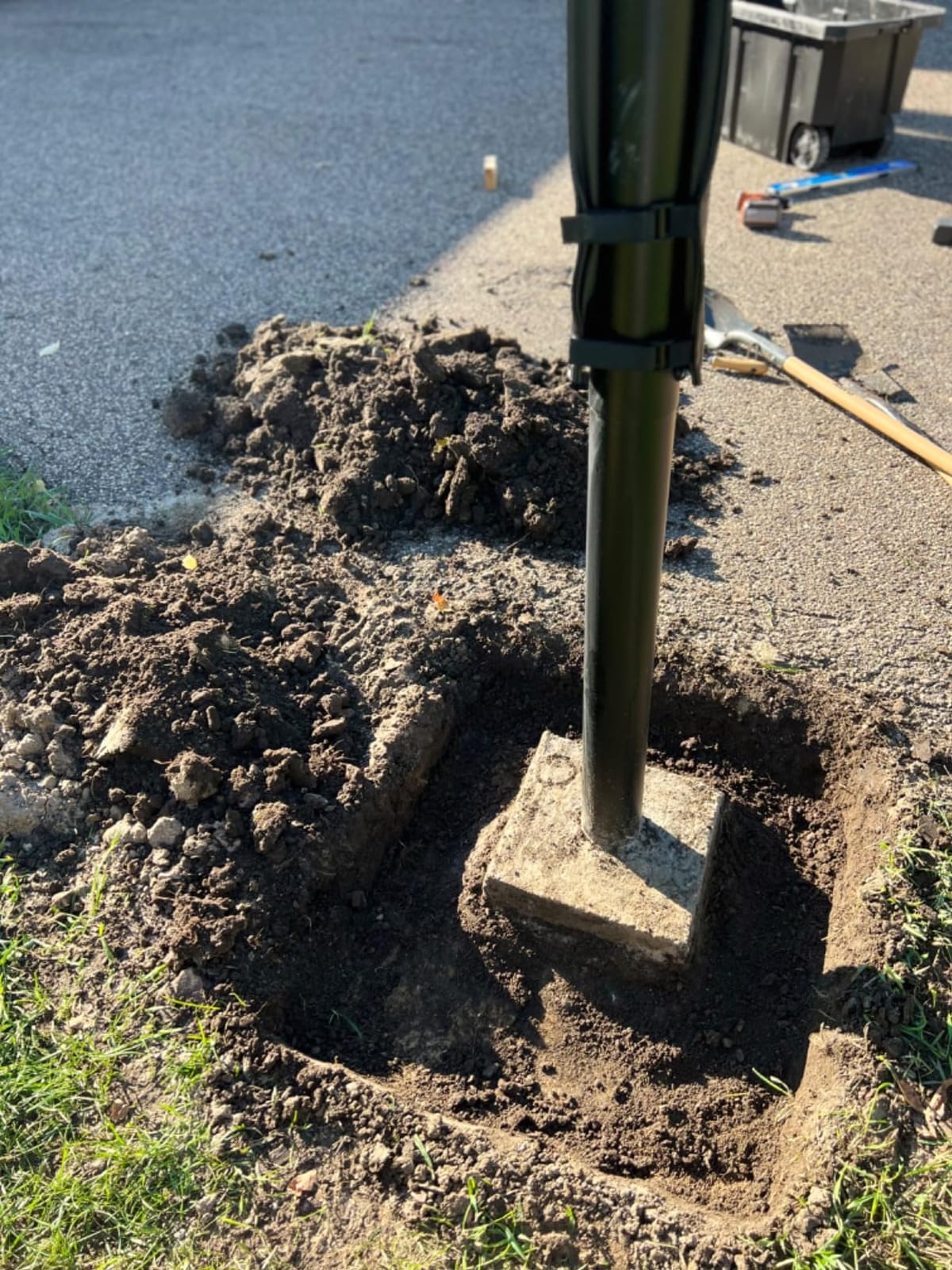
Excavate the footing to the depth your system specifies, keeping the hole wide enough for the anchor kit.
Set the anchor plate or J-bolts at the correct height in the hole before the concrete goes in, checking level in both directions.
Pour the specified concrete mix and let it cure for the full stated period before loading any weight.
Assemble the pole, backboard and rim, then tighten mounting hardware evenly so the board sits square to the pole.
For a portable system the process is shorter: assemble on a flat surface, fill the base fully with sand or water, let the unit settle, and only then tighten the backboard hardware. Level the unit in both directions before the first shot, because a portable hoop that is out of square will feel wrong for years.
One caution on concrete driveways specifically. Drilling into an existing slab gives a shallower and less stable anchor than a poured footing in soil, so check what your system’s instructions require before starting with a masonry bit.
Driveway Clearance, Overhang and HOA Rules
Overhang is the horizontal distance from the pole to the front edge of the backboard, and it decides where you can safely stand to shoot. Under 2 feet feels cramped, 2.5 to 3 feet suits most residential driveways, and 4 feet or more needs a long run-out area and a fence or boundary far enough back.
Leave enough lateral clearance that a ball hitting the pole or a player falling does not land next to a parked car. If your driveway is shared with vehicles, the base footprint is often the deciding constraint rather than the shooting angle.
HOA covenants frequently address structure height, visible fixtures and street obstruction rather than basketball hoops specifically, so read the covenant text before drilling. A hoop in a common area or near a street edge is far more likely to attract a complaint than one in a private side drive.
Neighbour friction is more often about noise and ball retrieval than the hoop itself, and it came up repeatedly in homeowner discussions for this type of purchase. A breakaway rim reduces the sharp metallic ring that generates most complaints, and a net that catches dead balls keeps them from bouncing towards a neighbour’s property.
On permits, a single portable hoop on your own driveway rarely needs one, while an in-ground system may require a permit depending on your municipality. Rules around backyard court construction are similar, so check locally before pouring concrete.
If you want a second piece of driveway kit after the hoop goes up, our guide to driveway hockey training nets covers the same clearance and anchoring problems from a different angle.
Frequently Asked Questions
Can I put a basketball hoop in my driveway?
Yes. A driveway is an ideal surface because it is flat, hard and already open. A portable hoop needs no tools beyond an assembly kit, while an in-ground system requires a proper footing or anchor bolts and, on an existing slab, careful drilling. The main constraints are clear run-out space in front of the rim, clearance from parked cars and any HOA or municipal rules on fixtures and excavation.
Is a 72-inch basketball hoop too big for a driveway?
Usually, yes. A 72 inch board is playground and school equipment, and it needs more mounting strength to resist the leverage it creates. On a residential driveway it also pushes the rim far enough forward to reduce the safe shooting area and takes up space a car may need. For most homes, 44 to 54 inches is the practical range.
What size backboard is best for a basketball hoop in the driveway?
A 44 inch board is the best all-round choice for a residential driveway, giving enough width for bank shots without demanding extra run-out space. Go to 50 or 54 inches for taller players and shooting drills, and drop to 40 inches for a tight driveway or a younger player. Material matters as much as size: tempered glass for feel, polycarbonate for durability.
Should I fill my basketball hoop base with sand or water?
Sand is the better choice for stability, weighing roughly 13 pounds per gallon against about 8.3 pounds for water, and it does not slosh. The trade-off is permanence, so drain the sand before winter in a freezing climate or the base can split. Water is easier to remove and move, but must be drained before any freeze. A partial sand fill topped with water is a common compromise.
Can my HOA ban a basketball hoop in the driveway?
Possibly. Most covenants regulate structure height, visible fixtures and street obstruction rather than basketball hoops by name, so the answer depends on your documents. A hoop in a common area or near a street edge is far more likely to be challenged than one on private drive. Submit any planned permanent installation in writing before you pour concrete, and keep a record of the approval.
Do I need a permit to put a basketball court in my backyard?
A single portable hoop on your own driveway rarely needs a permit. An in-ground system is more likely to require one, because excavation, a footing and a fixed structure can fall under local building rules. Requirements vary by municipality, so contact your local building department before you break ground, and remember to call 811 before any digging to have utility lines marked.
Final Verdict for 2026
The Lifetime NBA League Edition Portable Hoop is our pick as the best basketball hoop for driveways in 2026, because it combines the deepest ownership history in the group with an adjustment range that serves a whole family and a board that will not shatter. If your budget is tighter, the Lifetime 44 Inch Height Adjustable system gives up only rebound quality.
For a permanent setup, the Silverback 54 Inch Tempered Glass In-Ground Hoop is the one to buy if you stay put and want a true practice court, and the Yohood 50 Inch Crank system is the pick if the concrete pour is the part stopping you. For a toddler-to-adult range, the Yohood portable hoop reaching 4.43 feet solves a problem nothing else here does.
Whichever you choose, measure your run-out space before you buy, fill a portable base completely, and keep the fill level consistent through the seasons. Then check the current details for the model you want and get it ordered before the weather turns.