
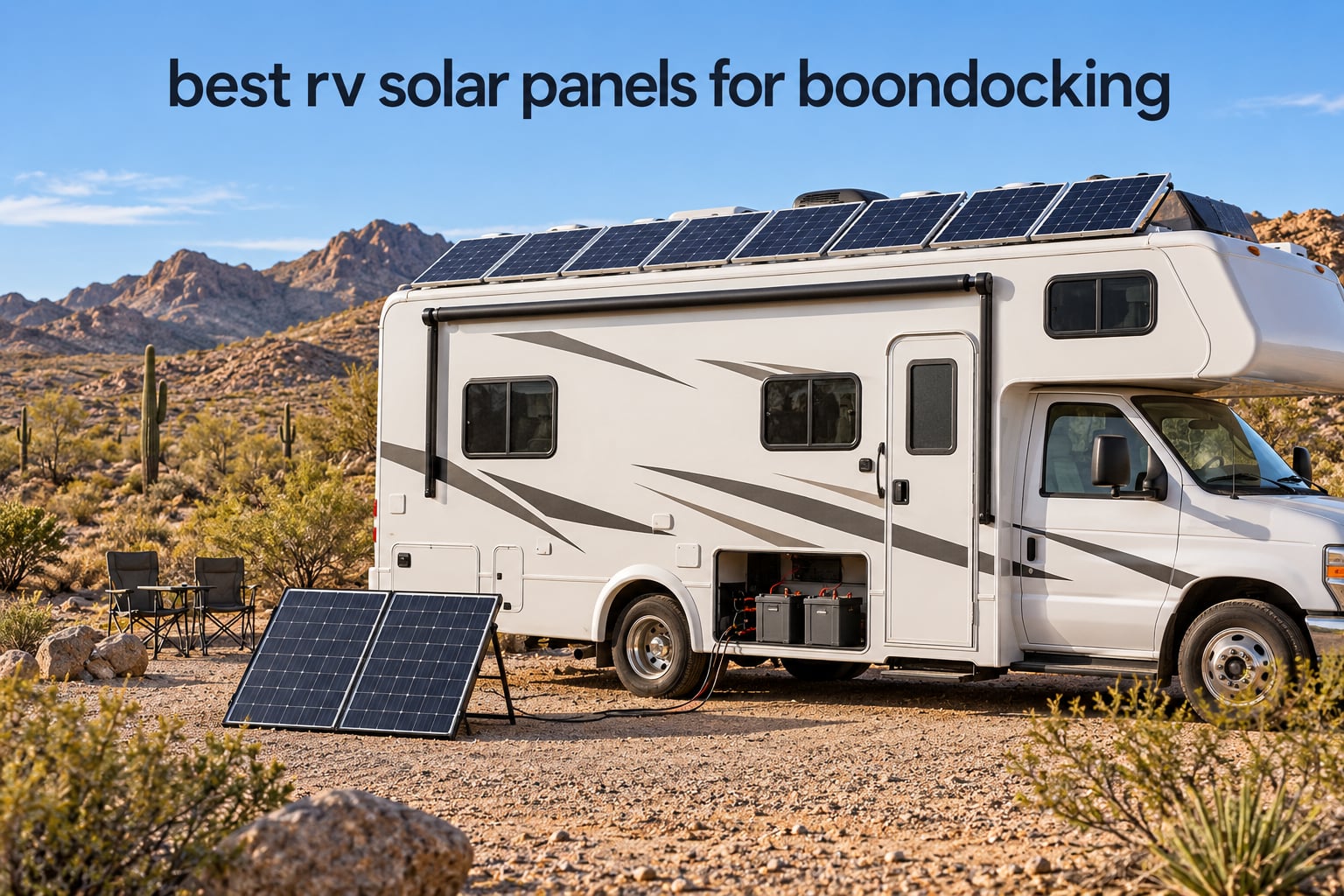
Boondocking runs on one question: will my battery bank survive the night? The best RV solar panels for boondocking are the ones that refill those batteries faster than a compressor fridge, a water pump, and the dozen 12V accessories drain them. Pick wrong and you wake up to a dead bank at mile zero, no hookups in sight.
We spent weeks reading owner reports and spec sheets on twelve of the most-sold panels and kits in this category, then sorted them by the things that actually decide a boondocking trip: real-world output versus nameplate, how the panel behaves when half of it sits in shade, and whether the connector will talk to your charge controller. What follows covers everything from a 100W flexible panel that weighs 4 pounds to a 400W bifacial pair built for desert sun.
If you are still building a full system rather than adding a panel, start with our guide to RV solar kits with charge controllers. If your plan leans on a power station rather than a rooftop array, our power station solar panel roundup covers that side of the market, and portable solar generators covers the days when the clouds win.
Table of Contents
Top 3 Picks for Boondocking in 2026
ECO-WORTHY 200W Kit, 2 x 100W Panels
- 800Wh daily at 4 hours of sun
- 30A PWM controller included
- Series or parallel for 12V and 24V

Callsun 400W N-Type Bifacial Pair
- 25.6% N-Type efficiency
- Bifacial rear-side gain
- TwinCell anti-shading layout

DOKIO 200W Portable Foldable Kit
- 9.7 pounds
- folds to 20 x 27 inches
- 9.84 ft cable with PWM controller
All 12 Panels at a Glance (October 2026)
| Product | Specifications | Action |
|---|---|---|
| ECO-WORTHY 200W Kit with 30A PWM Controller |
|
Check Latest Price |
 Renogy 200W 12V Monocrystalline Kit Renogy 200W 12V Monocrystalline Kit |
|
Check Latest Price |
 Go Power Overlander-E 200W Expansion Kit Go Power Overlander-E 200W Expansion Kit |
|
Check Latest Price |
 Renogy 100W Flexible 240 Degree Panel Renogy 100W Flexible 240 Degree Panel |
|
Check Latest Price |
| Callsun 400W N-Type Bifacial, 2 x 200W |
|
Check Latest Price |
 HQST 200W Portable N-Type Panel HQST 200W Portable N-Type Panel |
|
Check Latest Price |
| DOKIO 200W Portable Foldable Kit |
|
Check Latest Price |
 TWELSEAVAN 200W Portable ETFE Panel TWELSEAVAN 200W Portable ETFE Panel |
|
Check Latest Price |
 ECO-WORTHY 200W Complete Kit with Battery ECO-WORTHY 200W Complete Kit with Battery |
|
Check Latest Price |
 ZOUPW 200W Portable 23.5% Panel ZOUPW 200W Portable 23.5% Panel |
|
Check Latest Price |
 Renogy ShadowFlux 200W Flexible N-Type Renogy ShadowFlux 200W Flexible N-Type |
|
Check Latest Price |
 DOKIO 300W Portable Foldable Kit DOKIO 300W Portable Foldable Kit |
|
Check Latest Price |
1. ECO-WORTHY 200W Kit with 30A PWM Controller – Best Overall Pick
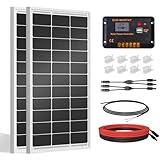
ECO-WORTHY 200 Watts 12 Volt/24 Volt Solar Panel Kit with High Efficiency Monocrystalline Solar Panel and 30A PWM Charge Controller for RV, Camper, Vehicle, Caravan and Other Off Grid Applications
Two 100W monocrystalline panels
30A PWM controller included
800Wh daily at 4 hours of sun
31.6 pounds total
Pros
- Complete kit with controller
- brackets and 10AWG cables included
- Series or parallel wiring for 12V or 24V
- Aluminum frame tested to 2400Pa wind and 5400Pa snow
- IP65 rated junction box
- Strong owner satisfaction for RV and off-grid use
Cons
- PWM controller harvests less than an MPPT would
- 31.6 pounds is heavy for a Class B van
- Monocrystalline cells trail current N-Type panels
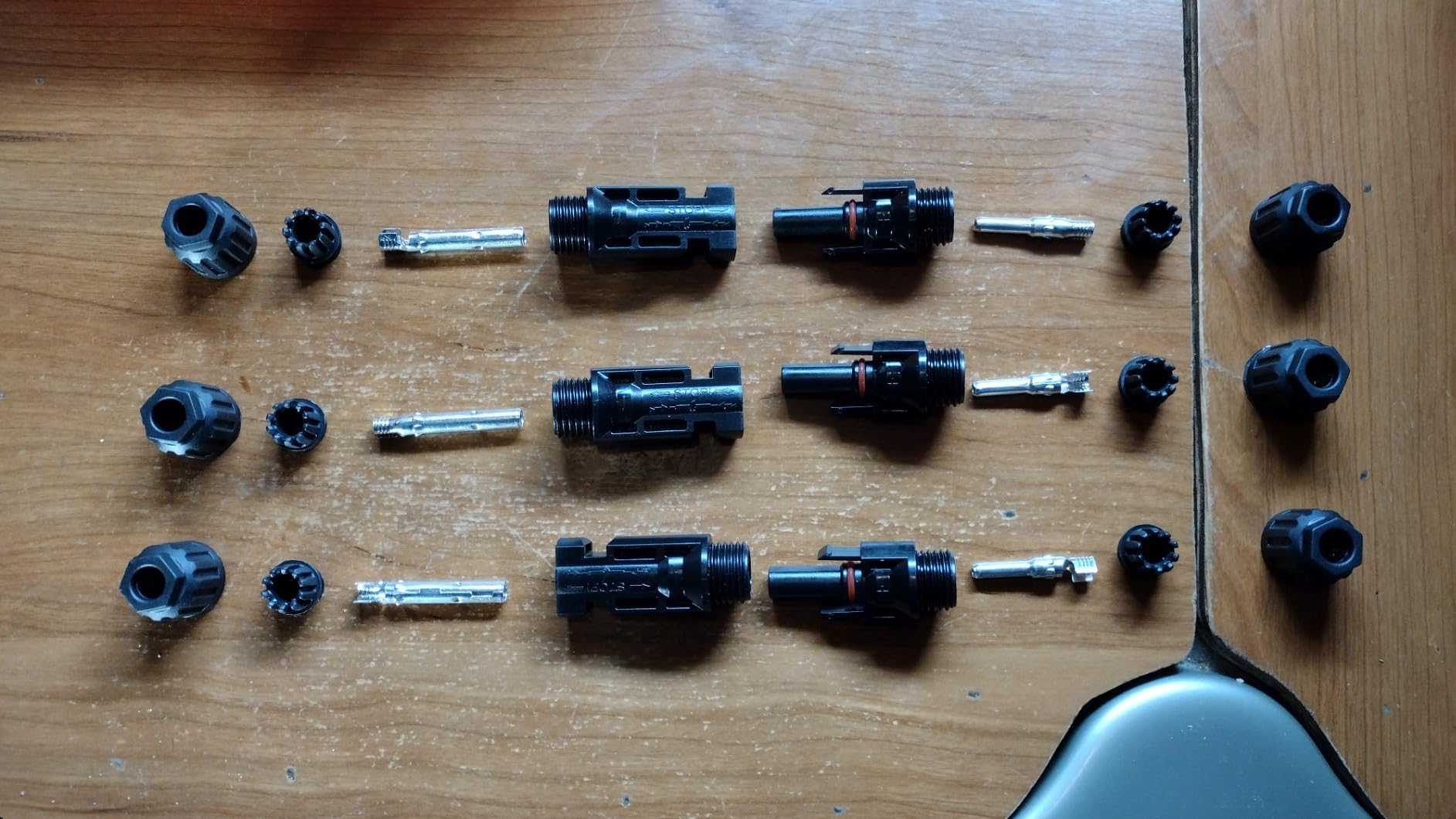
This is the kit we keep coming back to because it does the boring parts for you. Two 100W monocrystalline panels arrive with a 30A PWM controller, Z-brackets, 16.4 feet of 10AWG cable and the 2-in-1 connectors you need to actually finish the job. For a first boondocking build, the completeness matters more than a percentage point of efficiency.
The stated production figure is 800Wh per day under 4 hours of full sunshine, and that matches what owners report for a typical weekend. Each panel measures 35.2 by 23.1 by 1.3 inches, so a pair needs roughly 17 square feet of flat, unshaded roof. The pre-drilled plug-and-play leads let you wire the two in series for a 24V string or parallel for 12V, which means the same kit can grow into a bigger array later.
The frame is a corrosion-resistant aluminum alloy rated for 2400Pa of wind and 5400Pa of snow load, with an IP65 junction box at the back. Owners building in exposed desert sites report it holding up through summer heat and seasonal storage without warping. The 1-year warranty is the shortest on our list, which is the one spec worth noting before you commit.
That PWM controller is the main thing to think about. It is fine for a lead-acid bank and perfectly adequate for lithium, but MPPT controllers recover roughly 10 to 20 percent more energy from the same panels in hot conditions. If you already own an MPPT unit, buy the panels separately and skip this controller.
What a 200W array actually runs while boondocking
At roughly 800Wh of daily production, this kit comfortably covers a residential compressor fridge, a 12V water pump, LED lighting, slide motors and a phone charger. That is the same load profile described in an iRV2 thread where one owner noted a 170W roof panel was plenty for lights, slides and pump alone, but not for a fridge.
Add a 12V television, a CPAP machine or an electric coffee maker and you are into the range where batteries start doing the heavy lifting overnight. Plan on at least 200Ah of lithium alongside this array if you want three or four days of cloudy weather in the plan.
Where this kit falls short
At 31.6 pounds for the pair, roof loading and handling are real concerns on smaller rigs. Class B vans with a max load rating near the ceiling often cannot absorb that much glass and aluminum up high, where wind loading is worst.
The PWM controller is also the wrong choice for a lithium-heavy build. One iRV2 owner described lithium charging profiles clashing with PWM controllers on an earlier setup, and our own reading of the spec sheet agrees that the added electronics in an MPPT unit are worth the swap if your battery is expensive.
2. Renogy 200W 12V Monocrystalline Kit – Most Owners, Strongest Feedback
Renogy 200W 12V Monocrystalline Solar Panel Kit + 30A PWM Charge Controller
Two 100W monocrystalline panels
22 percent cell efficiency
30A Wanderer PWM controller
1000Wh per day at 5 hours of sun
Pros
- Most heavily reviewed kit in this group
- Works with sealed
- gel
- flooded and lithium batteries
- 4-stage charging in the Wanderer controller
- Expandable to 400W with matching panels
- 5-year material and workmanship warranty
Cons
- PWM is less efficient than MPPT in heat
- Listed item dimensions do not reflect the full panel footprint
- 22 percent cell efficiency is behind current N-Type panels
With 1,542 reviews averaging 4.6 stars, this is the kit with the deepest owner history in the category, and that history is consistently positive. Eighty percent of ratings sit at five stars. Buyers talk about the same things: it arrives complete, it installs without drama, and it does exactly what a 200W panel is supposed to do.
Renogy claims an average of 1,000Wh per day based on five hours of direct sunlight, with cell efficiency reaching 22 percent. The TPT back sheet dissipates excess heat and bypass diodes improve low-light performance, which matters more than most sellers admit when your campsite sits under tree cover for part of the day.
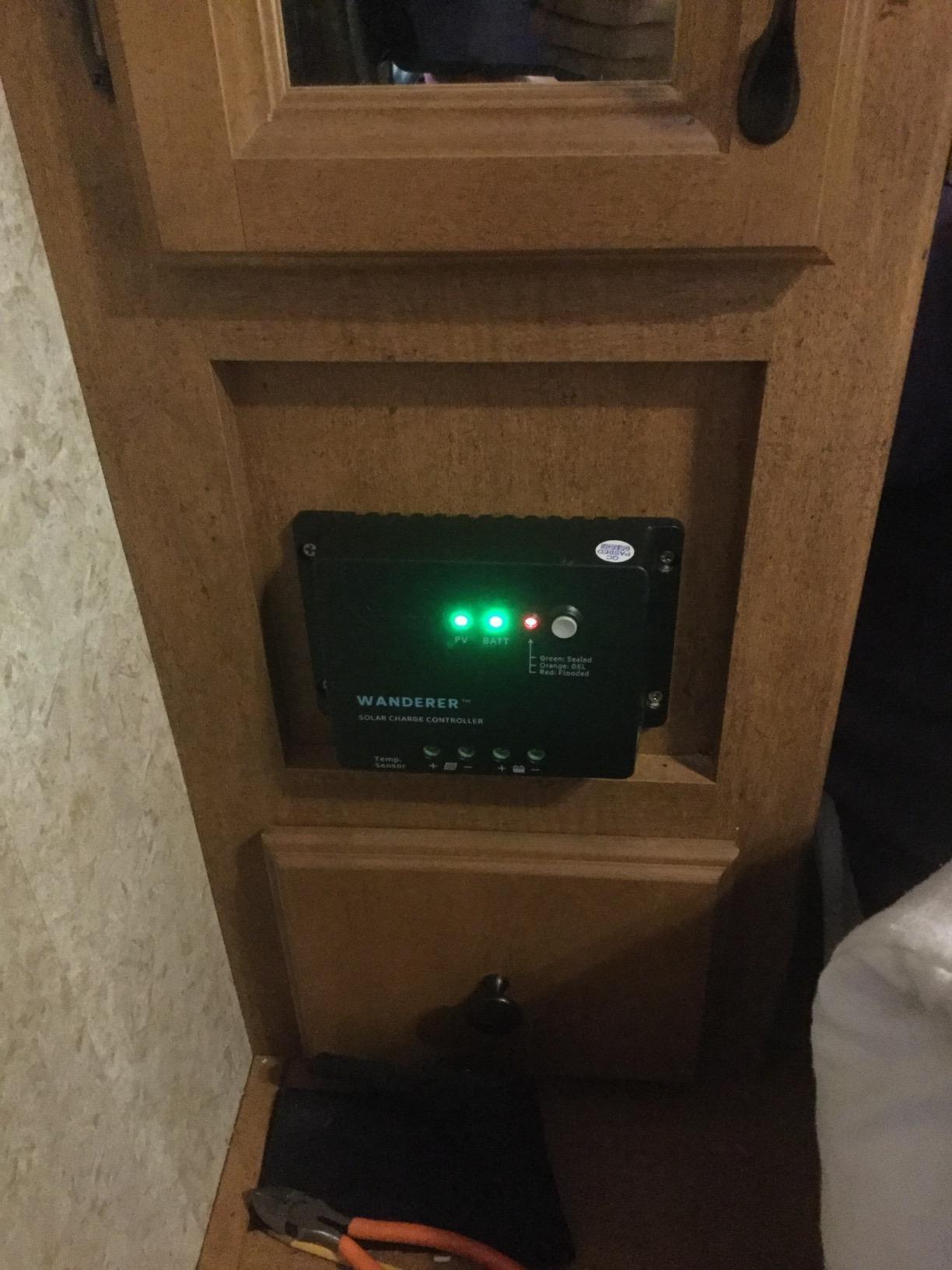
The Wanderer controller is the underrated part. It handles sealed, gel, flooded and lithium chemistries with 4-stage charging, plus reverse polarity, overcharging, overload and short-circuit protection. Swapping your battery chemistry three years from now does not mean replacing the controller.
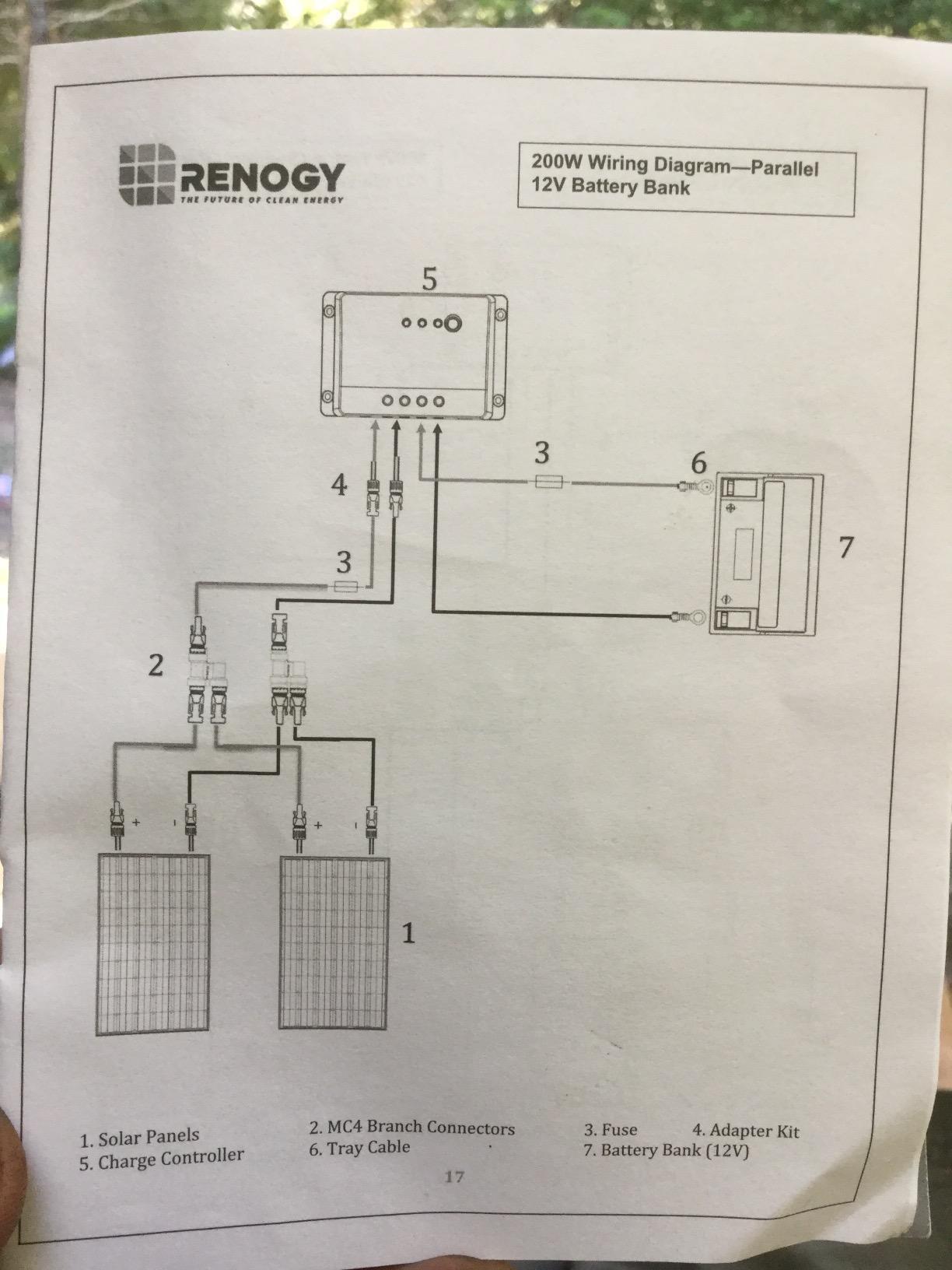
Expansion is straightforward. Add an identical panel and the system scales to 400W, which is the step most weekend campers take before their first full-time season. Cables, Z-brackets and pre-drilled holes are all in the box.
Why this is the safest first purchase
The 5-year material and workmanship warranty is longer than the one-year coverage on most kits at this output level, and brand support is responsive when something arrives damaged. Several owners describe replacements arriving without much back and forth.
For a boondocking build aimed at weekend trips with a compressor fridge, this kit has the cleanest ratio of verified reliability to complexity. You install once and stop thinking about it.
What to watch before you mount it
PWM charging costs you energy in high heat. If your trips concentrate in summer desert or the Southwest, budget for swapping in an MPPT controller later. Buyers report it will run lithium batteries without trouble, but it will not extract the same harvest an MPPT would.
One documentation quirk trips people up: the listed item dimensions in the spec data do not describe the actual panel footprint. Measure the physical panel with a tape before you lay out your roof plan.
3. Go Power Overlander-E 200W Expansion Kit – Longest Warranty in the Group
Go Power Overlander-E 200W 12V Solar Expansion Kit
200W 12V rigid monocrystalline panel
MC4 parallel connectors included
58.3 x 26.5 inches
24.5 pounds
Pros
- 25-year manufacturer warranty
- Plug-and-play expansion of an existing Go Power system
- Large tempered glass surface
- Easy wiring with no complex routing
Cons
- Expansion module only
- not a standalone starter kit
- 24.5 pounds and 58.3 inches long demand a lot of roof space
- Highest price per watt among the rigid kits compared here
This is the odd one out in the best RV solar panels for boondocking conversation, and it earns the slot. Go Power builds expansion modules for its own factory-installed RV panels, and this one carries a 25-year manufacturer warranty that runs far longer than the 1 to 5 year terms attached to most kits in this roundup.
Install is deliberately simple. MC4 parallel connectors let the panel join an existing Go Power solar system without complex wiring, which is the entire point of the product. The 58.3 by 26.5 inch tempered glass panel is a single rigid surface, so there are no fold hinges to fail in cold weather.
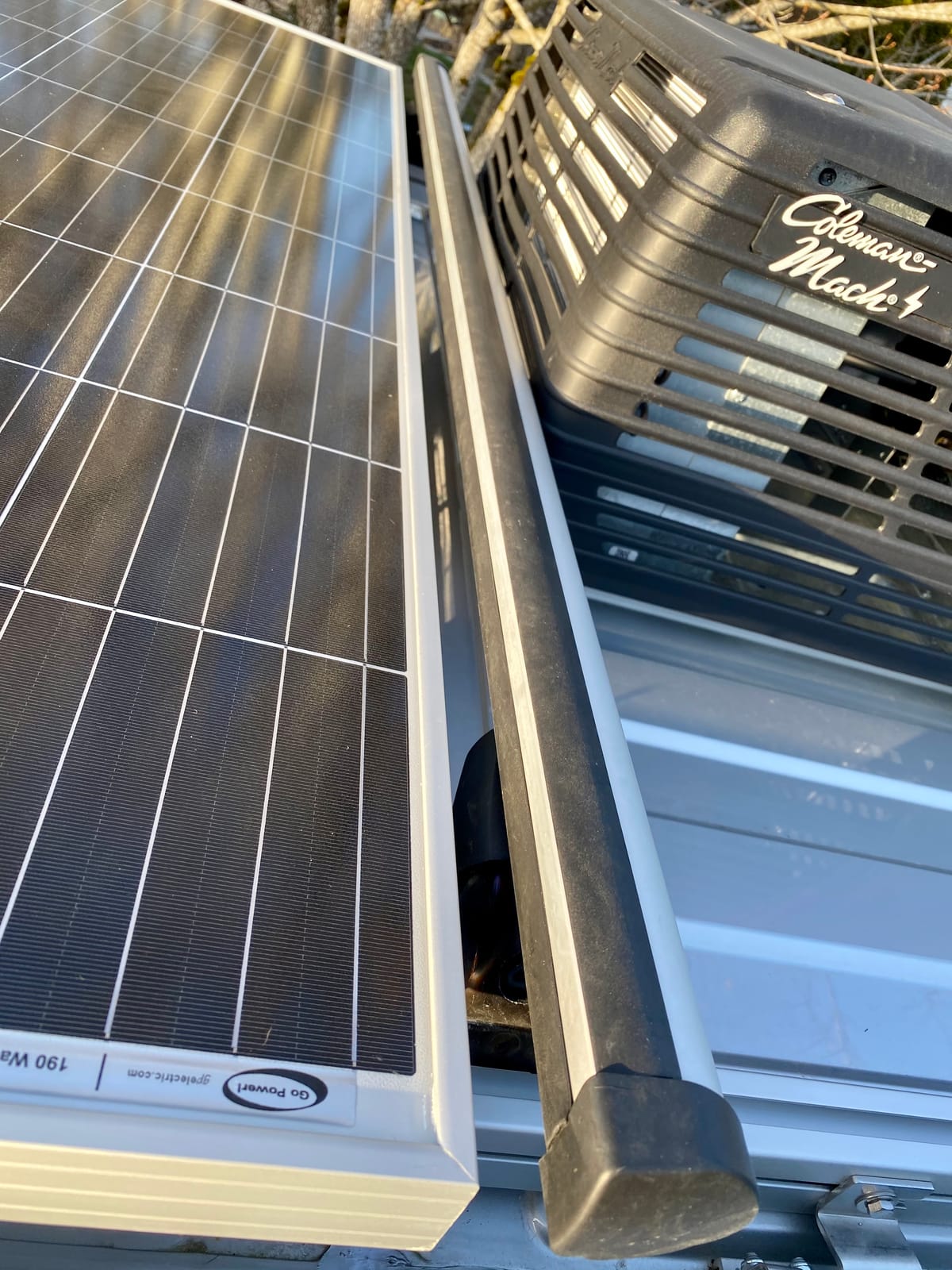
Its 4.7-star average comes from a much smaller review base than the kits above, with 182 reviews and 85 percent five-star ratings. The enthusiasm centers on build quality and how cleanly it integrates with existing Go Power hardware rather than on measured output figures.
The same construction suits boats, cottages and remote cabins where battery charging is the only job. Rigid glass and a rugged frame have no reason to move once mounted.
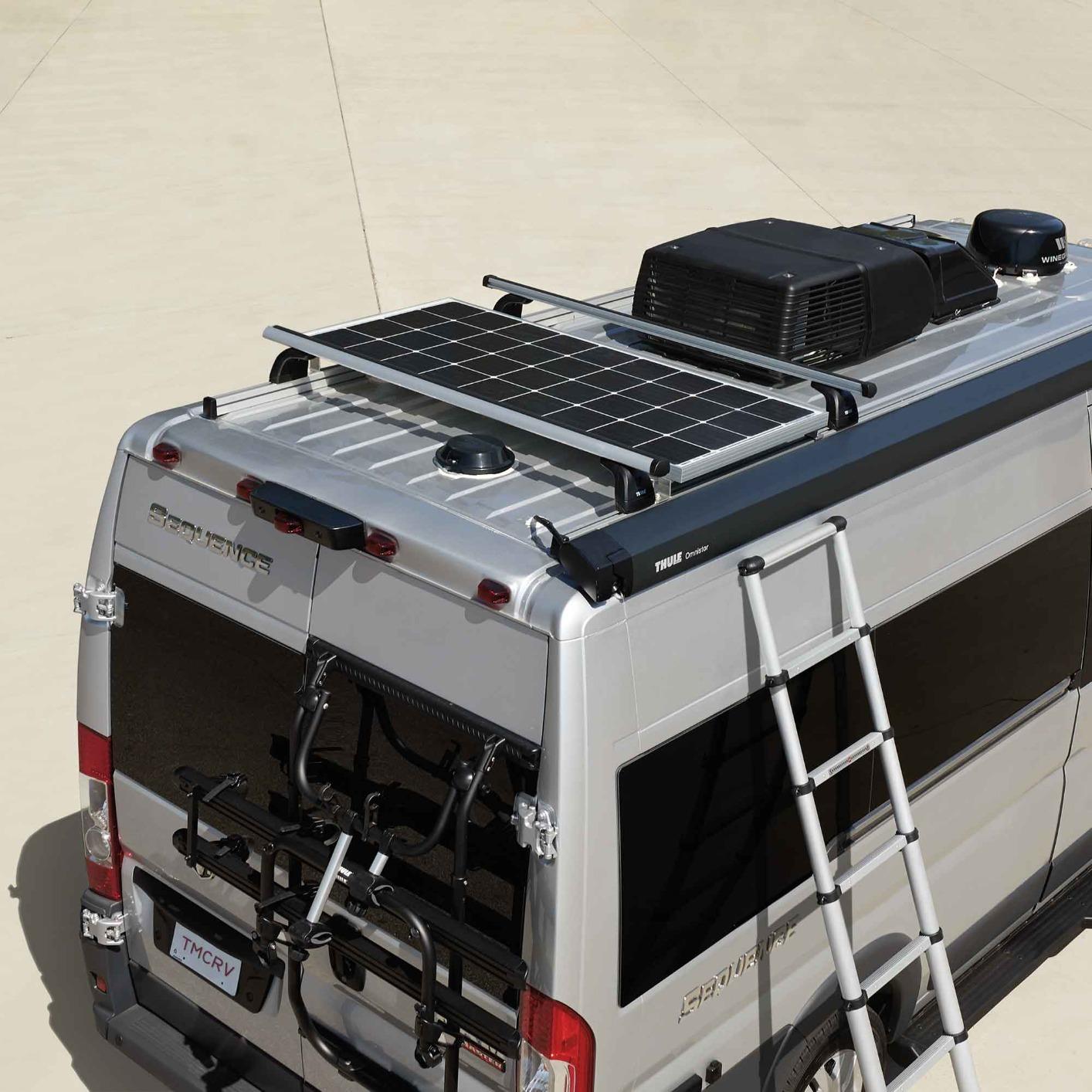
Who should buy an expansion panel instead of a starter kit
If your RV came from the factory with Go Power hardware already on the roof, this is the cleanest way to add meaningful output. You inherit the existing controller and wiring and simply double down on collection.
Boondockers running 200W of factory Go Power and still fighting a dead bank after two overcast days will feel the difference immediately. The panel adds capacity without a second charge controller.
Where it does not fit
This is not a standalone kit. Without an existing Go Power system you need to source a controller separately, and a bare panel with no controller is not a working setup.
At 24.5 pounds and 58.3 inches long, it also asks more of your roof than most Class B or short trailer layouts can give. Measure your flat run twice before ordering.
4. Renogy 100W Flexible Panel – Lightest Option for Curved Roofs
Renogy Flexible Solar Panel 100 Watt, 240° Ultra Flex Bendable
100W flexible monocrystalline panel
Only 4 pounds and 0.08 inches thick
Bends to 240 degrees
MC4 output
Pros
- Extremely light at 4 pounds
- Bends to curved airstream and van roofs
- Barely visible from the ground once mounted
- Tested to 2400Pa wind and 5400Pa snow
- 5-year warranty
Cons
- About 10 percent less efficient than rigid panels
- Over-bending can delaminate cells
- Adhesive mount rather than a mechanical fastening
Four pounds is the headline here, and it changes what you can do. You can carry this panel to a shaded campsite, prop it against the rig, or lay it flat on the picnic table when the roof is unusable. Rigid panels have no such option.
The panel is 48 by 21.5 inches and 0.08 inches thick, roughly 95 percent thinner than a rigid panel of the same class, and it flexes through 240 degrees. That makes it the natural choice for the curved roof of an airstream or the sloped rear of a van conversion where a rigid frame simply will not sit flat.
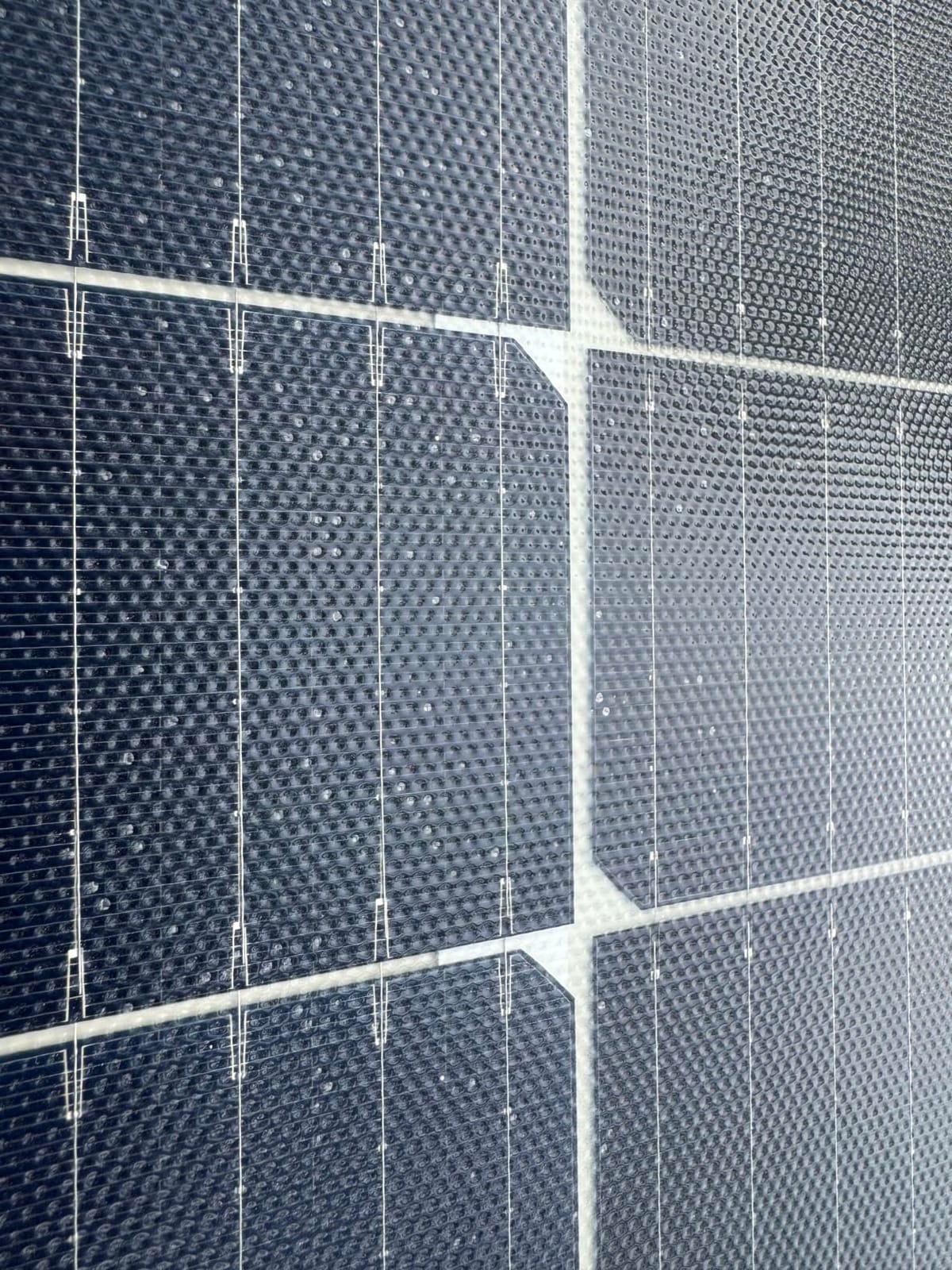
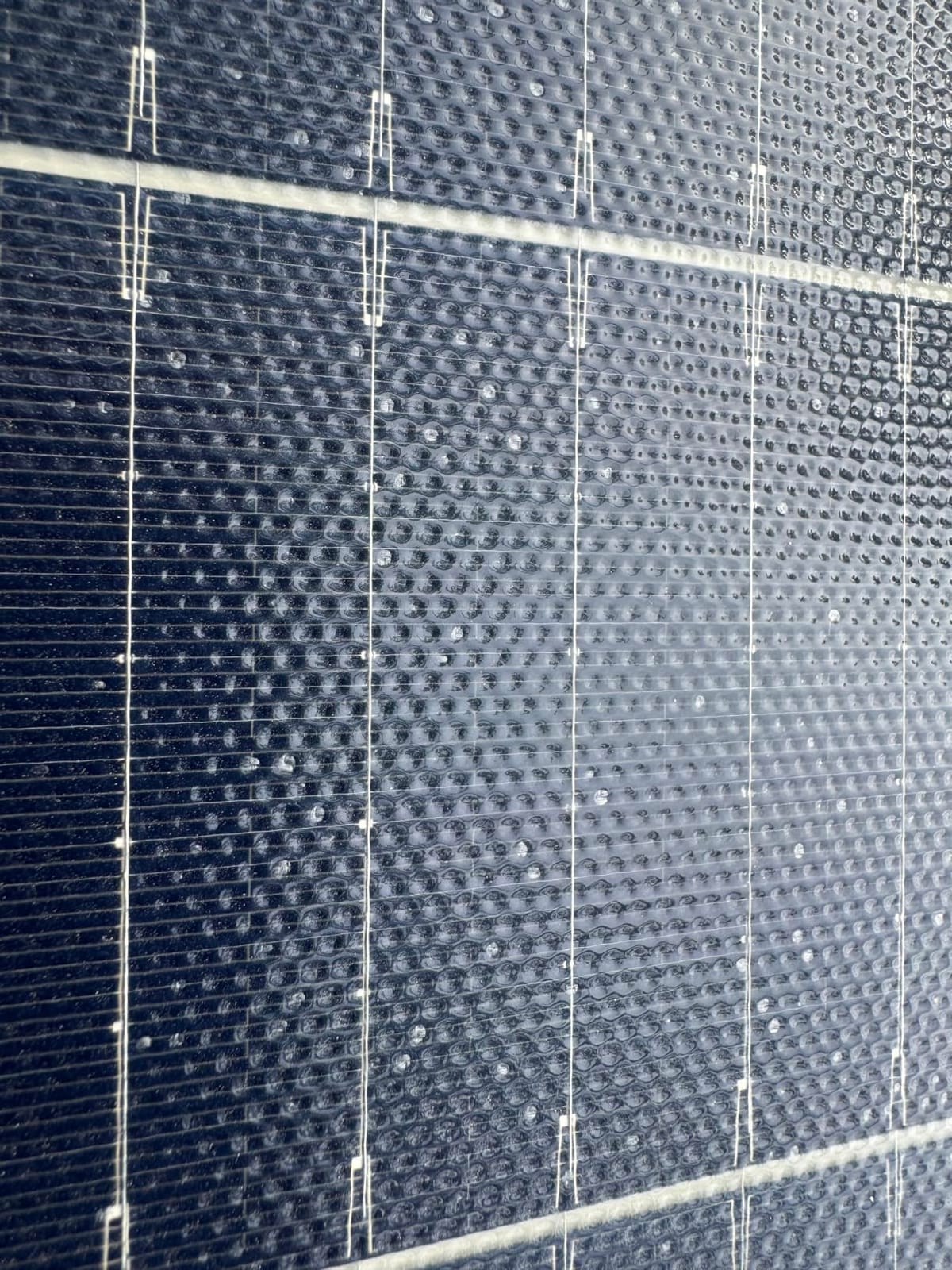
It carries 64 monocrystalline cells at 22 percent efficiency and produces 4.84 amps, with MC4 output that connects to nearly anything on the market. Wind and snow load testing match the rigid kits at 2400Pa and 5400Pa.
The trade is efficiency. Buyers consistently report roughly 10 percent less output than an equivalent rigid panel in side-by-side testing. That is not a dealbreaker for a maintenance panel or a secondary roof surface; it matters if this is your only array.
Where flexible panels earn their place
Roof space is the binding constraint on most RVs, and vents, antennas and air conditioner units claim the flat sections. A flexible panel mounts on the curved surface a rigid panel cannot go at all.
Because it weighs 4 pounds, many owners buy two or three and connect them in parallel to build a usable array for a compressor fridge and lighting. The MC4 connectors make that wiring straightforward.
What you give up for that low profile
Flexible construction costs you about 10 percent of rated output, and the panel still needs adhesive mounting. Three-dimensional tape works, but it traps water under the panel and complicates future removal.
Over-bending during installation is the common failure. The cells flex through 240 degrees by design, but forcing a tight curve to fit a corner can delaminate them. A minority of owners also report low-output units that required troubleshooting or replacement, though several of those buyers say Renogy provided replacements.
5. Callsun 400W N-Type Bifacial Pair – Best for High Output Arrays
Callsun N-Type 16BB 400W Bifacial Solar Panel, 2Pcs 200 Watt Solar Panel for 12V/24V Systems, 25.6% High Efficiency, Dual-Module Parallel Anti-Shade Design, for RV Van Marine Home Rooftop Off-Grid
Two 200W N-Type monocrystalline panels
25.6 percent conversion efficiency
Bifacial transparent backsheet
23.8 pounds per panel
Pros
- Highest rating here at 4.8 stars
- N-Type 16BB cells reach 25.6 percent efficiency
- Bifacial design gains output from rear-side light
- TwinCell layout keeps producing under partial shade
- Minus 0.30 percent per K temperature coefficient
- 25-year performance commitment
Cons
- Measured current near 7 amps on some hot installs
- Included cable runs short for roof-to-controller routes
- Not submersible rated
- Heavier per panel than flexible options
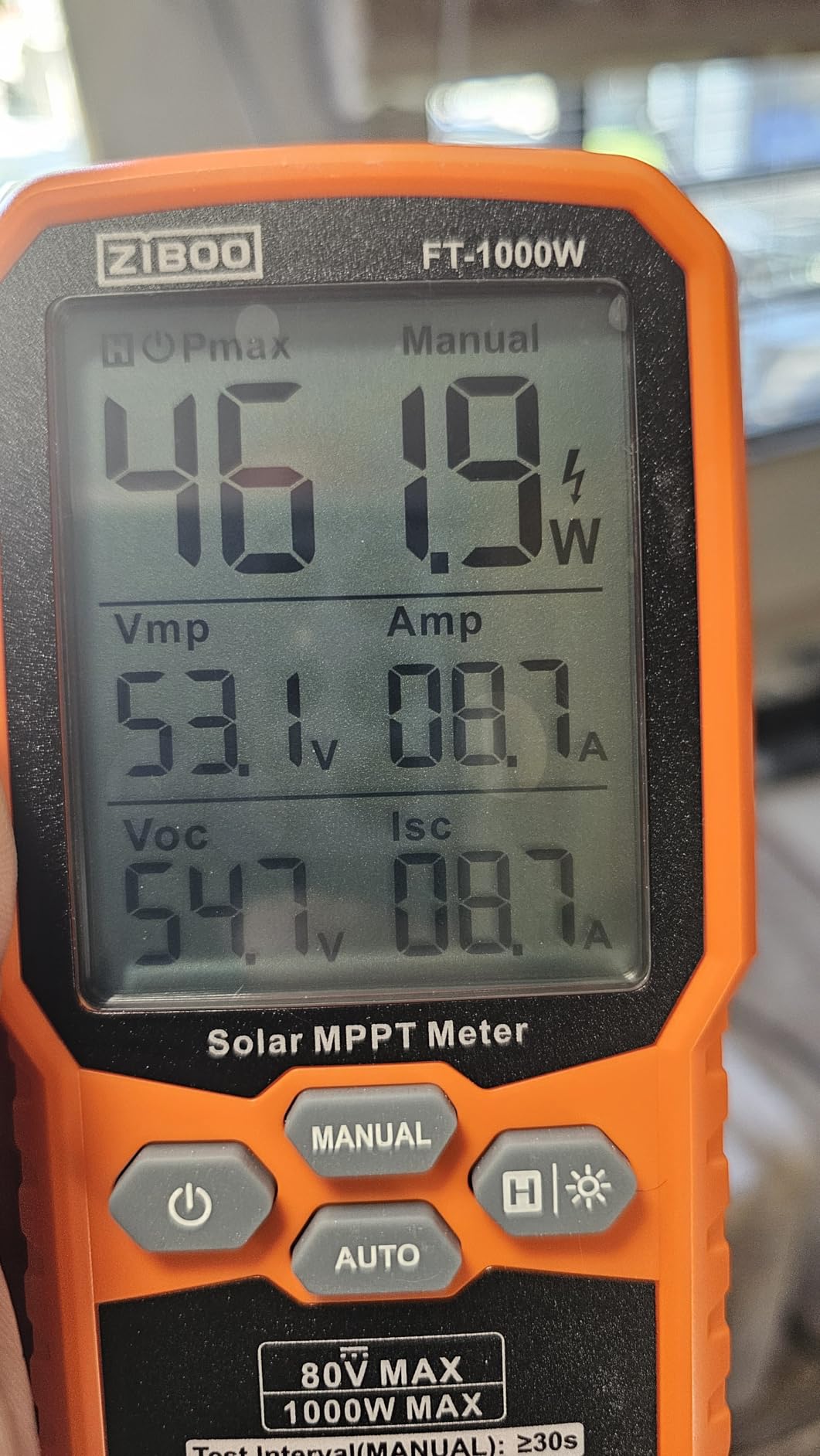
If you are past the point of deciding between panels and are actually sizing an array, this is the most capable hardware in the group. Two 200W N-Type monocrystalline panels wired in series give you 400W total at 47.48V Vmp and 54.62V Voc, landing neatly inside the 60V-class input window that most portable power stations accept.
The efficiency figure is 25.6 percent, which is the highest cell efficiency listed anywhere in this roundup. Owners running multi-panel arrays report output well past nameplate, with 986W measured from 800W of panels and 1351W from 1200W, largely credited to the bifacial transparent backsheet picking up reflected and diffuse light.
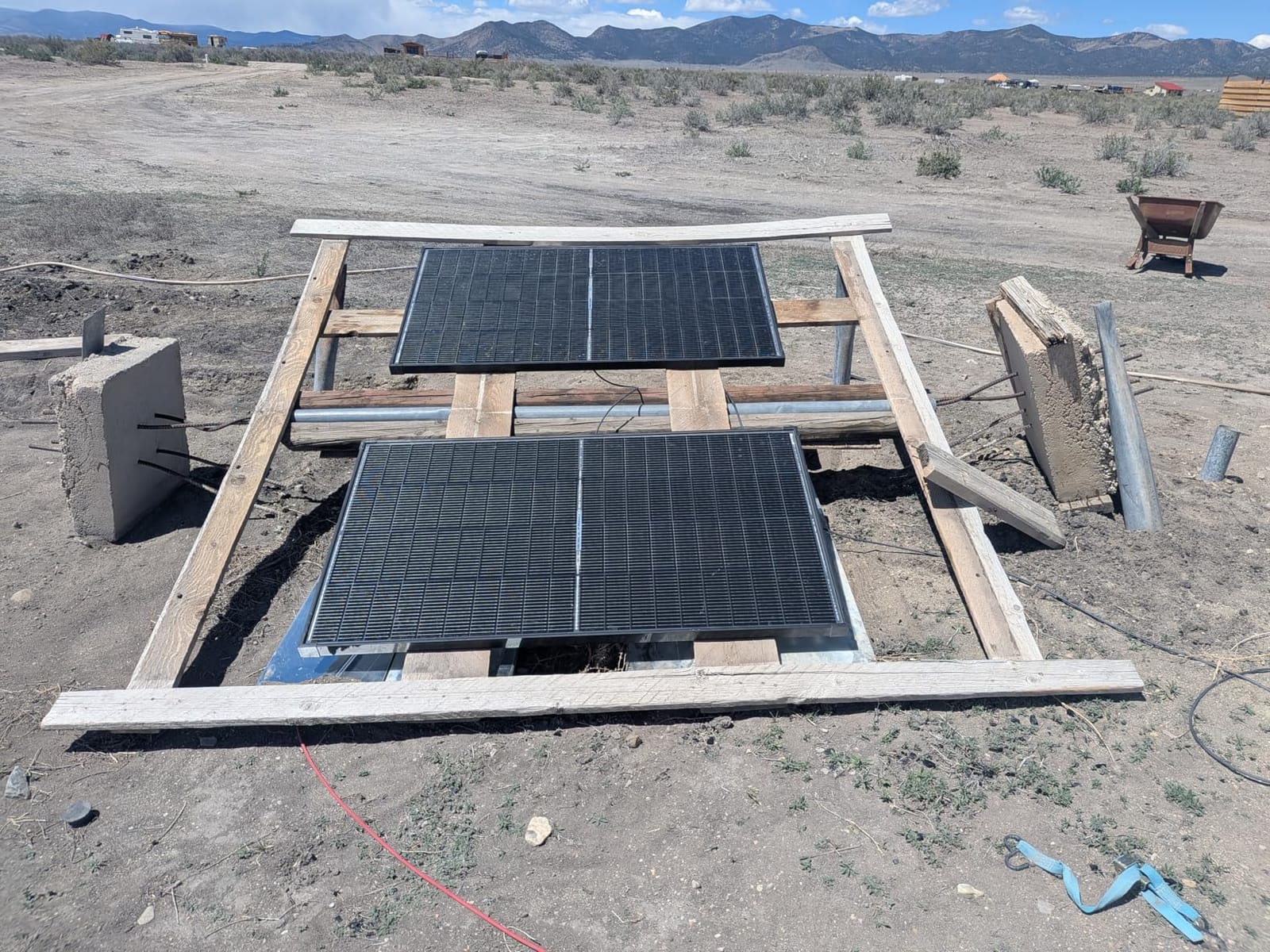
Two design details matter for RV use specifically. The TwinCell dual-module parallel layout splits each panel into two independently operating sections, so a shadow from a tree or an air conditioner unit kills one section instead of the whole panel. And the temperature coefficient of -0.30 percent per K keeps output stable when a desert roof hits 130 degrees.
Each panel is 51.3 by 30.3 by 1.4 inches and 23.8 pounds, with a 3.2mm tempered glass face, aluminum alloy frame and an IP68 junction box. The 25-year performance commitment promises at least 84.5 percent of rated output after 25 years.
What bifacial and N-Type actually buy you
Bifacial means the panel generates from both faces. On a light-colored RV roof or a reflective campsite surface, rear-side contribution of 10 to 20 percent is realistic. On a dark roof or in heavy tree cover, expect less.
N-Type cells also lose less output as temperatures climb than the PERC cells used in the older kits above. For full-time boondockers moving through Arizona and Utah in summer, that is the difference between a full battery at dusk and a partial one.
Where this setup disappoints
Owners on hot-weather installs report current closer to 7 amps rather than the rated 8.43 amps. The panel is rated for peak conditions, and real output follows the sun rather than the label.
The included cable is short relative to a typical roof-to-controller run, and the junction box is weather-rated but not submersible. Plan your cable run before the panels go down. At 23.8 pounds each, two panels also add meaningful load up high.
6. HQST 200W Portable N-Type Panel – Best Lightweight Portable
HQST 200W Portable Solar Panel, N-Type, 25% Efficiency, IP67 Waterproof
200W portable panel with 16BB N-Type cells
11 pounds, folds to about 1.97 inches
IP67 waterproof
Adjustable kickstands
Pros
- Only 11 pounds for a 200W portable
- 16BB N-Type cells at up to 25 percent efficiency
- 3-in-1 adapter cable covers most power stations
- Rigid panel with kickstands holds its angle
- IP67 with fully laminated construction
Cons
- Cell count reported as 16
- lower than typical for 200W
- Adapter cable is short at 4.9 feet
- 12-month warranty is brief for RV use
Portability is the deciding factor for a lot of boondockers, and 11 pounds is where portability starts to feel real. This panel folds to roughly 1.97 inches thick with built-in buckles, so it goes into an exterior compartment without stealing interior storage.
The cells are 16BB N-Type rated at up to 25 percent efficiency, against roughly 23 percent for standard 9BB panels. Fully laminated construction with a PVDF outer coating earns the IP67 rating, which matters on a roof that takes rain and dust all season.
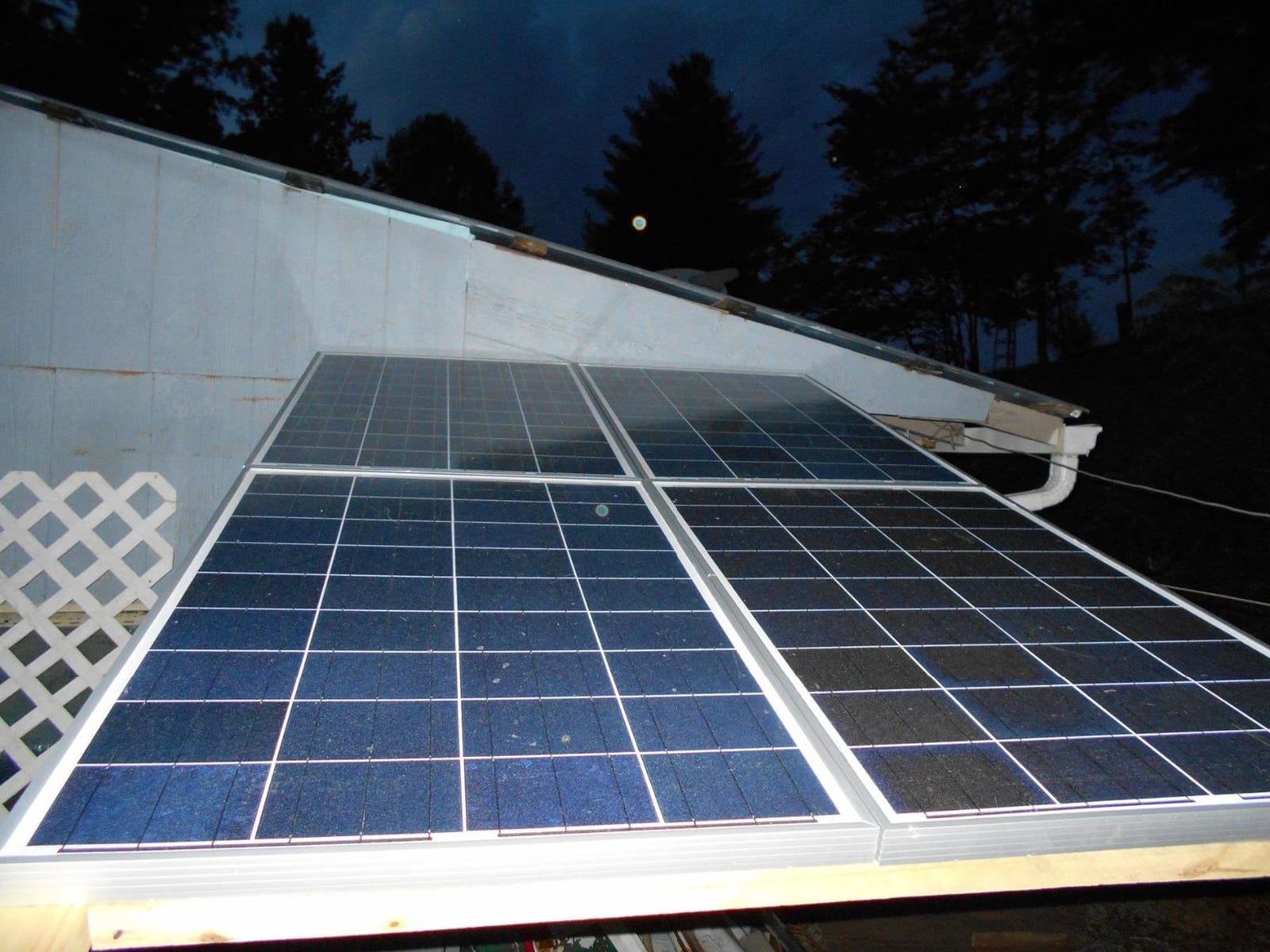
Two adjustable kickstands hold a 40 to 60 degree angle on uneven ground. That is the position that generates best in practice, and unlike soft fabric panels that slump, a rigid frame stays where you put it.
One of the more thoughtful touches is the 4.9 foot 3-in-1 adapter cable covering XT60, DC7909 and DC5521, which covers the connector types used by Jackery, EcoFlow, BLUETTI, Goal Zero and Anker power stations out of the box.
When a portable panel beats a rooftop install
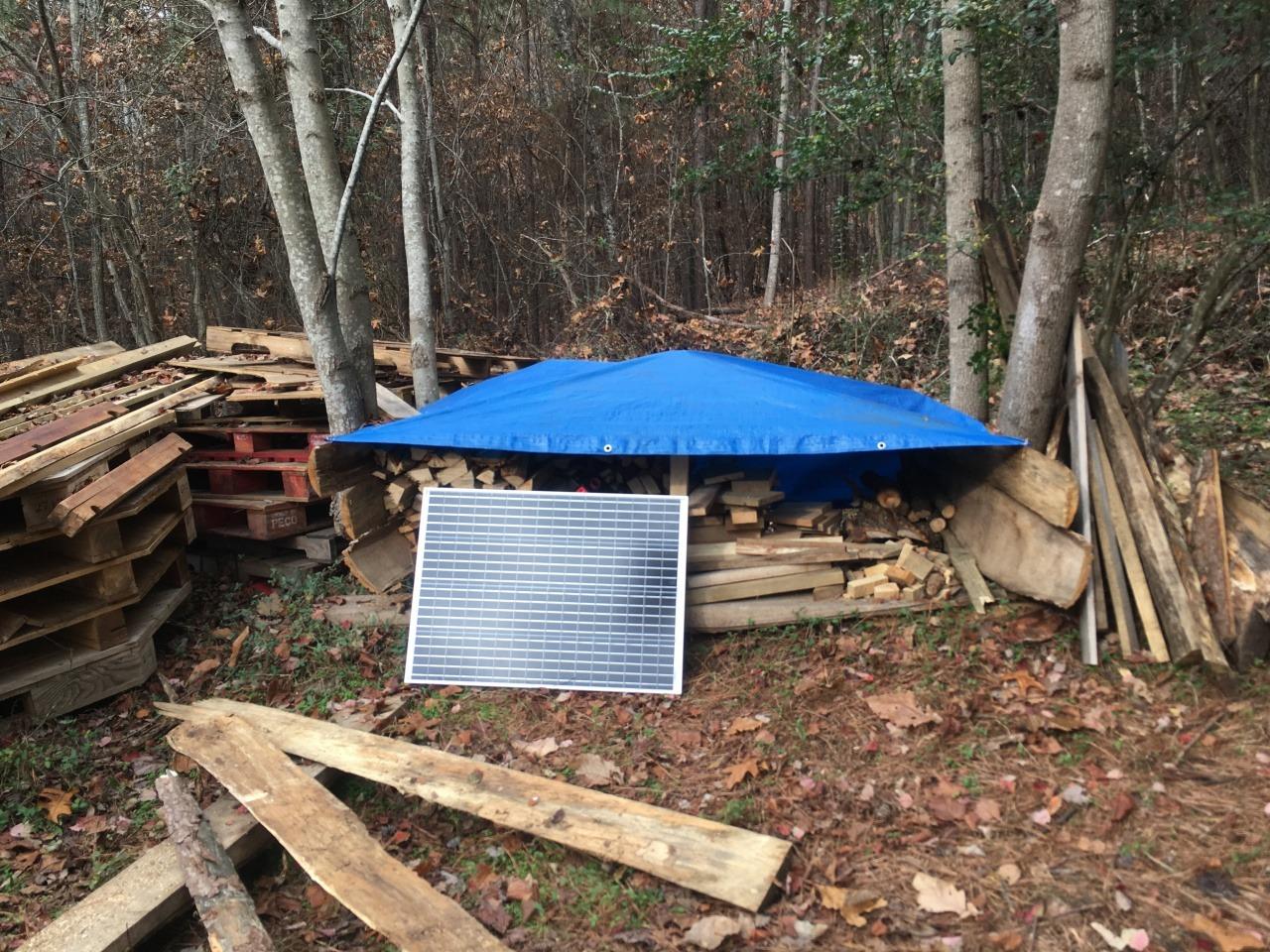
Portables win when your roof is already occupied, when you split time between vehicles, or when you move campsites often and do not want to haul wires. Set it on the ground in direct sun and angle it toward the sun while your rig sits in shade.
One iRV2 owner reported running six months of boondocking across Utah and Arizona on 300W of portable solar with a pair of small inverter generators carried as backup, and rarely needed the generators. That is the pattern this panel supports.
What gives us pause
The 12-month warranty is the shortest of the portable panels here. For something that lives on a roof or in the sun all season, that is thin coverage.
Reviewers also question the stated cell count, reporting 16 cells for a 200W foldable where most designs use considerably more. And a 4.9 foot cable is short when the power station sits in the shade of an awning.
7. DOKIO 200W Portable Foldable Kit – Best Budget Starter Foldable
DOKIO 200W Portable Foldable Solar Panel Kit for 12V Battery Charging
200W class foldable panel
9.7 pounds, folds to 20 x 27 inches
9.84 ft cable with PWM controller
Dual USB output ports
Pros
- Largest review base in the category at 4040 reviews
- Lightest foldable here at 9.7 pounds
- 3m cable lets the panel sit in sun while gear stays shaded
- Standalone replaceable PWM controller included
- Case survived asphalt
- dirt and rocks in buyer testing
Cons
- Real-world output often near half the label
- SAE connectors soften in heat and are not MC4
- Output reported to decline within 6 months to 2 years
- No DC8020 adapter for newer power stations
With 4,040 reviews, this is the most examined foldable panel in the category, and it is the entry point most first-time buyers land on. It weighs 9.7 pounds, folds to 20 by 27 by 1.1 inches, and the 9.84 foot cable gives you room to park in shade while the panel sits in direct sun.
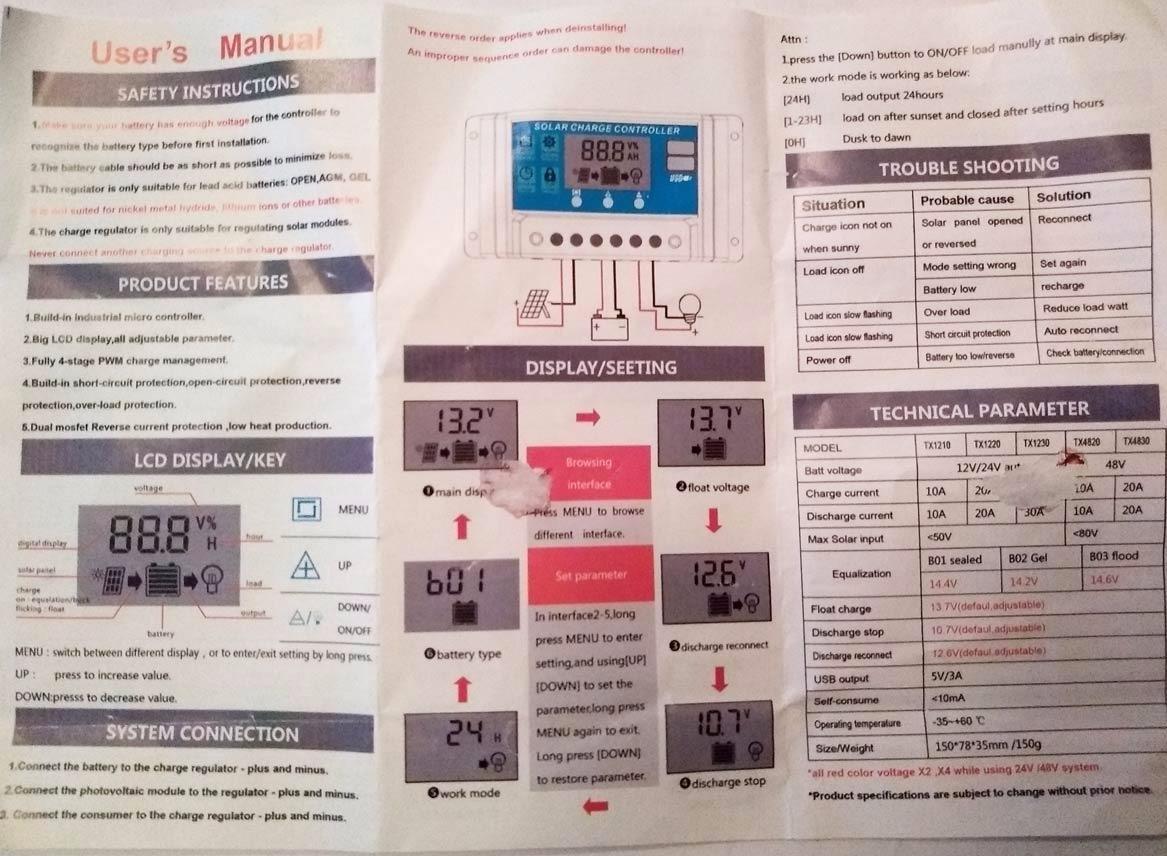
The kit includes a standalone PWM controller with reverse polarity, overcharge, overload and short-circuit protection, plus SAE, XT60 and alligator clip options and dual USB output ports for phones and lamps when you wire it to a 12V battery.
Buyers consistently praise weight, packability and the fact that many report 75 to 80 percent of rated output in good sun. DOKIO support has resolved defects with replacements or refunds across multiple accounts.
That is where the good news ends. The recurring theme across reviews is that output commonly lands near half the advertised wattage, and that measured output declines noticeably within roughly six months to two years of use.
The right use for a budget foldable
This panel makes sense for weekend trips, maintenance charging, and keeping a battery bank topped up during storage. It is also a legitimate second array if you already own an MPPT controller and know how to wire MC4 conversions.
For a boondocking build that must last, treat it as a supplemental panel rather than a primary array. The 3m cable and foldable form factor make it genuinely convenient for campsite positioning.
Where the compromises bite
The SAE connectors are the biggest structural problem. They are not standard MC4, so you cannot series-wire this panel with other brands without adapters, and owners report the plastic softening and losing contact in high heat.
Power station input caps of 100 to 150W can also limit harvest regardless of sunlight. The fabric case shows wear, tie-down rings can break, and there is no DC8020 adapter for newer Jackery units.
8. TWELSEAVAN 200W Portable ETFE Panel – Best for Direct USB-C Charging
200W Portable Solar Panel for Power Station, 24% High Efficiency ETFE Foldable Solar Panel Charger, QC3.0, Type-C 60W, MC4 Output, IP65 Waterproof, for Outdoor Camping, RV, Emergency Power Supply
200W at 24 percent monocrystalline efficiency
USB-C PD 60W plus QC3.0 and USB ports
IP65 waterproof
24-month warranty
Pros
- Direct 60W USB-C PD and 18W QC3.0 charging from the panel
- 24 percent efficiency with ETFE laminate above 95 percent transmission
- Adapter coverage includes MC4
- Anderson
- XT60
- 8020 and 7909
- 24-month warranty is longer than most portable rivals
- Rigid kickstand frame holds position
Cons
- Heavier at 15.7 pounds than most 200W portables
- IP65 trails the IP67 panels on the market
- Adapter ecosystem adds complexity for direct battery charging
The feature that sets this one apart is power delivery without a brick. A Type-C port at 60W, a QC3.0 USB port at 18W and a 5V/3A USB port sit on the panel itself, with a built-in IC chip that detects devices and adjusts current to prevent overcharging.
Panel-side charging matters more than it used to. Phones, tablets and GPS units now negotiate over USB-C PD, and running them off a panel avoids draining your RV battery bank to top up a device.
Conversion efficiency is 24 percent on A+ grade monocrystalline cells, with an ETFE laminated case passing more than 95 percent of light. A 5-in-1 MC4 connector cable, three DC adapters and a 9.8 foot MC4 lead cover most power station inputs.
At 15.7 pounds it folds to 23 by 22 inches with a magnetic handle and four adjustable kickstands. The high-density polyester canvas back carries an IP65 rating, and the warranty runs 24 months.
Who benefits most from panel-side USB output
Full-time RVers working from laptops, cameras and tablets get real value here. One panel can top up a working kit at the picnic table without touching the house bank at all.
It also makes a good companion to a modest battery setup. The USB ports cover the small electronics load that otherwise adds up quietly over a week off-grid.
Where it lags the competition
Fifteen and a half pounds is heavy for a 200W portable. The lighter HQST above carries the same wattage at 11 pounds with a stronger IP67 rating.
IP65 is a step below the IP67 ratings now standard on newer portable panels, and carrying both USB outputs and a wide adapter set adds complexity for anyone wiring directly to a battery rather than a power station.
9. ECO-WORTHY 200W Complete Kit – Best All-in-One Package
ECO-WORTHY 200 Watt 12V Complete Solar Panel Starter Kit for RV Off Grid
200W N-Type array plus 30A controller
50Ah LiFePO4 battery
600W pure sine inverter
4,000 to 15,000 cycle battery life
Pros
- Panels
- controller
- 50Ah LiFePO4 battery and 600W inverter in one box
- 600W pure sine inverter with 20ms UPS switchover
- 5A to 40A adjustable charging current via app or button
- N-Type bifacial panels at 25 percent efficiency
- Battery cycles thousands of times versus lead-acid
Cons
- Lowest average rating here at 4.1 stars
- Heaviest complete system because of battery and inverter
- Battery XT60 interface capped at 30A
- Components are hard to upgrade piecemeal
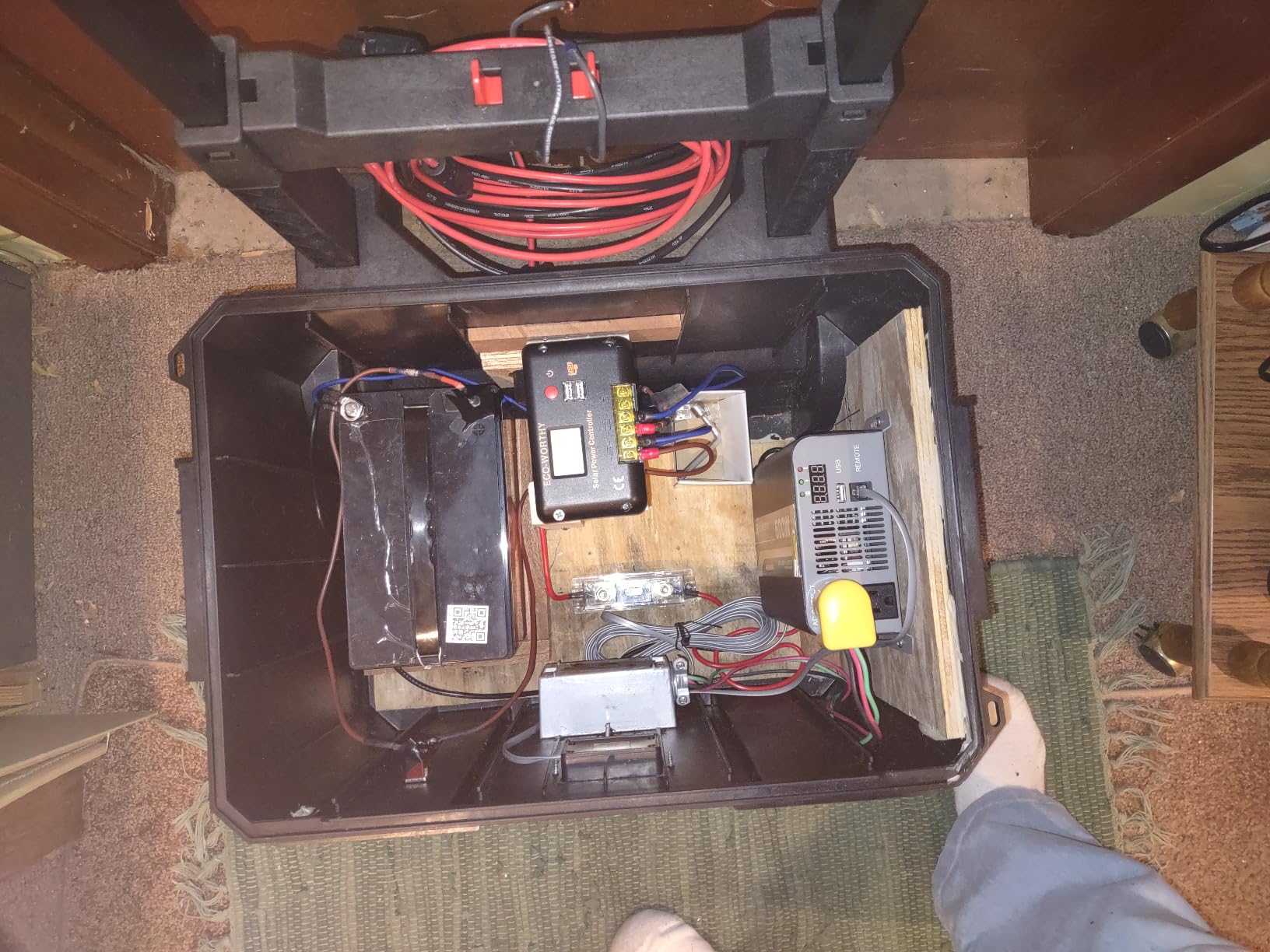
This is the only kit here that includes a battery and an inverter, and for a true first-time boondocker that changes the calculation. You get 200W of N-Type bifacial panels rated at 25 percent efficiency, a 30A charge controller, a 12V 50Ah LiFePO4 battery and a 600W pure sine wave inverter in a single purchase.
The inverter doubles as a 30A smart LiFePO4 charger with a 20ms UPS auto-switch, so sensitive electronics keep running through a switchover. Charging current is adjustable from 5A to 40A by app or button.
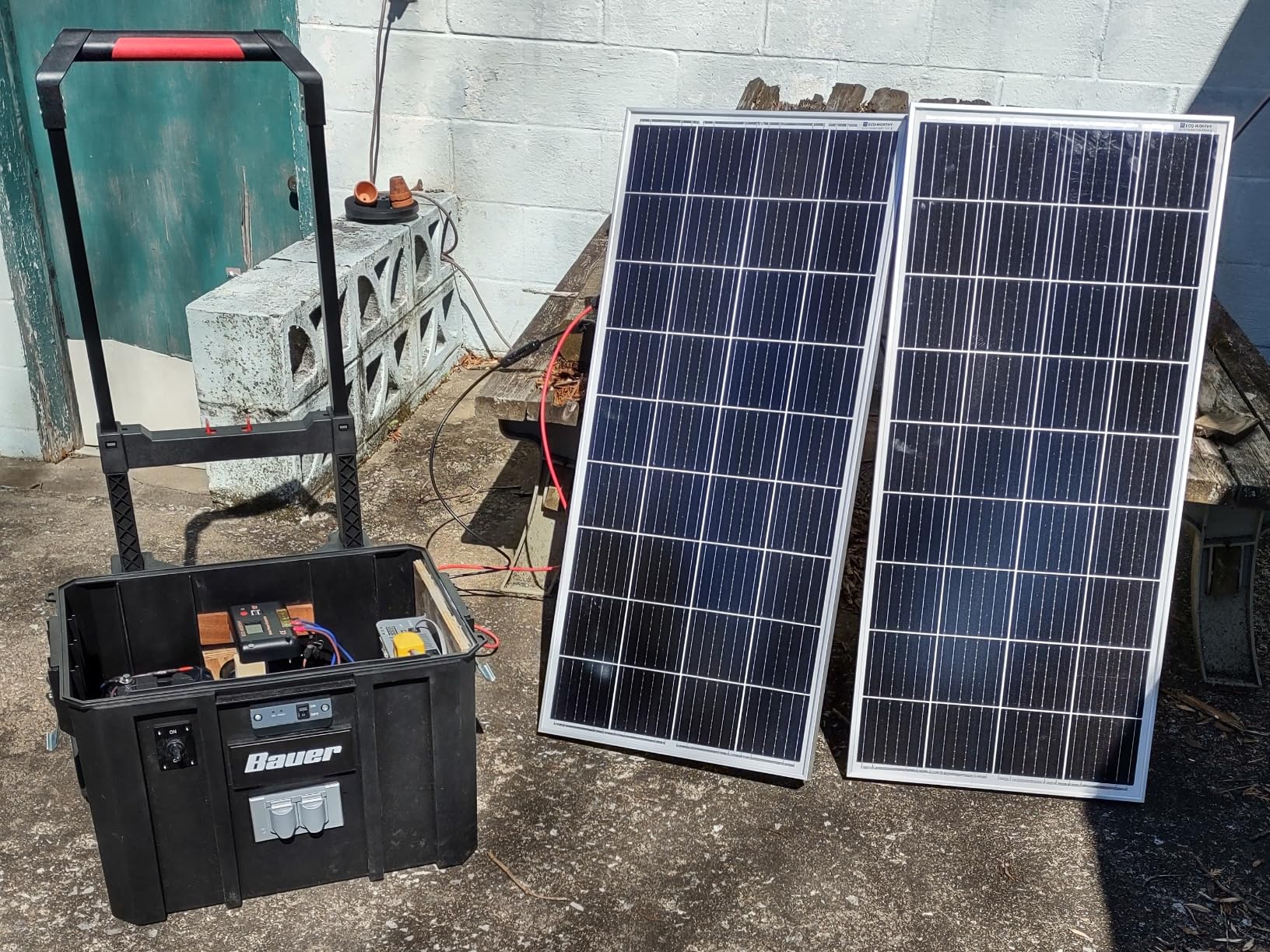
The LiFePO4 battery is rated for 4,000 to 15,000 deep cycles against roughly 300 to 400 for lead-acid, and it adds Type-C and USB ports for charging devices while you camp. Daily output is 800Wh based on 4 hours of sunlight.
That 20ms switchover and the pure sine wave output matter if you plan to run a CPAP machine or sensitive electronics overnight. This is the package that gets a first-time boondocker through a long weekend without a second purchase.
When a single box is the right call
Anyone starting from an empty battery compartment and no inverter gets a working system immediately. The learning curve on component matching drops to nearly zero, which matters for first-time installers.
The 50Ah battery is modest for full-time boondocking. It supports a compressor fridge and small loads, but running a rooftop air conditioner from it requires far more capacity than this package provides.
What the 4.1-star rating is telling you
This kit has the lowest average rating here, with 10 percent one-star reviews against 1 to 3 percent for most competitors. The complaints cluster around value: buyers dislike paying a bundle premium and being locked into components they cannot replace individually.
The battery XT60 interface is capped at 30A, which limits future expansion, and the whole assembly is heavy because of the battery and inverter. Treat it as a complete starter system, then upgrade deliberately.
10. ZOUPW 200W Portable Panel – Best for Wide Connector Coverage
ZOUPW 200W Portable Solar Panel for Power Station,23.5% Efficiency
200W at 23.5 percent efficiency
10 ft 5-in-1 cable
IP67 ETFE laminate
19 pounds folded
Pros
- USB-C PD 60W and USB-A QC3.0 ports in the junction box
- IP67 ETFE laminate holds up to mud and rain
- 4 kickstands capture 25 to 30 percent more energy than flat placement
- 10 ft 5-in-1 cable covers XT60
- Anderson
- DC7909
- DC8020 and DC5521
- Seller has replaced defective panels free of charge
Cons
- Output commonly 115 to 170W rather than the 200W label
- Output declines through the day in high heat
- 19 pounds is heavy for a 200W portable
- 12-month warranty
One cable that reaches five connector types removes an entire category of frustration. The 10 foot 5-in-1 lead covers XT60, Anderson, DC7909, DC8020 and DC5521, so it works with Jackery, BLUETTI, EcoFlow and Anker Solix power stations without a bag of adapters.
Panel-side USB-C PD at 60W and USB-A QC3.0 sit in the junction box for direct device charging. Efficiency is 23.5 percent on A+ grade monocrystalline cells behind an industrial-grade ETFE laminate rated IP67.
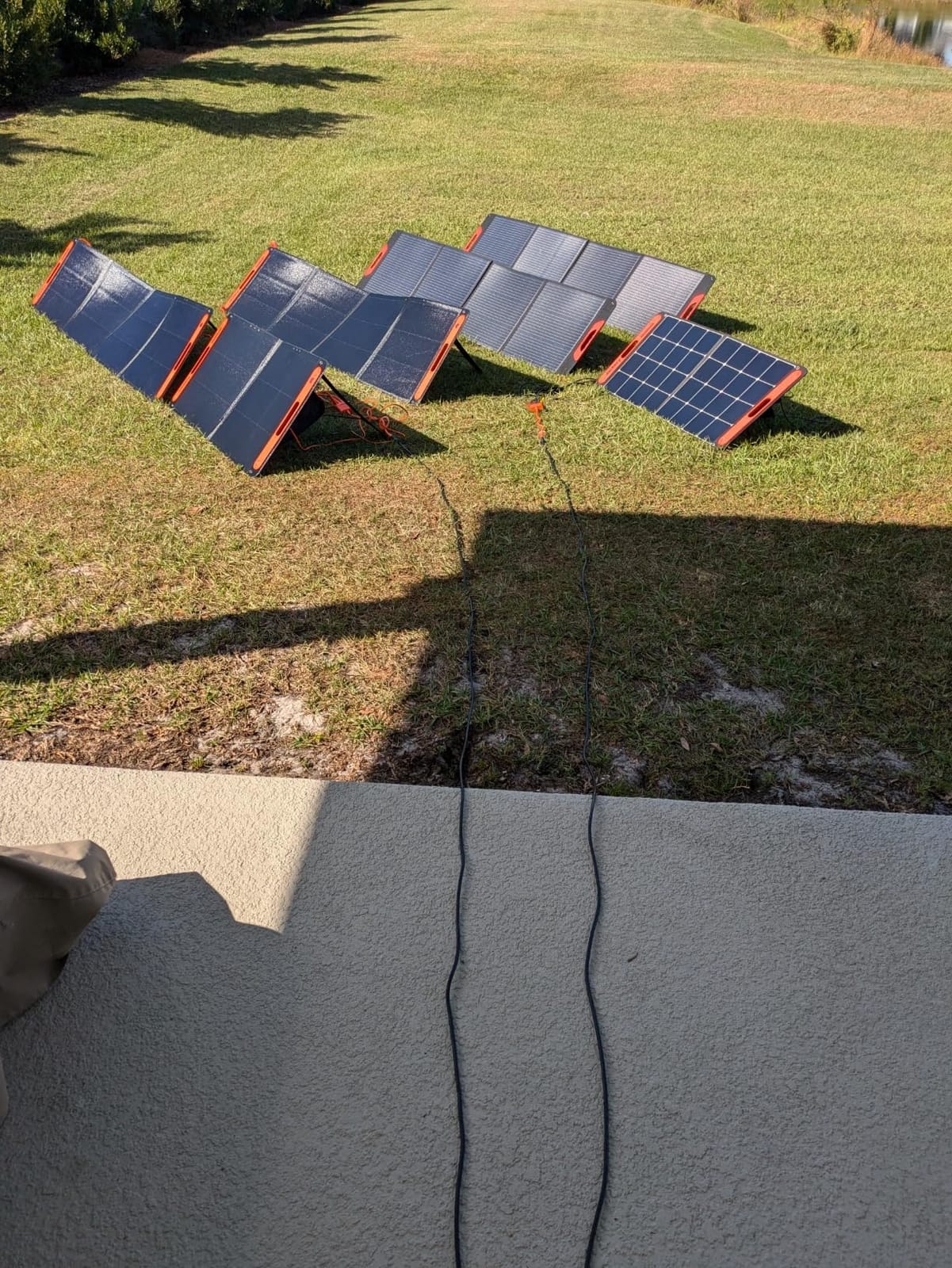
The four kickstands sit at roughly 45 degrees and capture 25 to 30 percent more energy than laying the panel flat. That single adjustment does more for daily harvest than most buyers expect, especially on ground that is flatter than they assumed.
Seller support stands out. Several owners describe defective panels replaced free of charge, including an upgrade to a newer N-type panel, which is better service than most brands at this level offer.
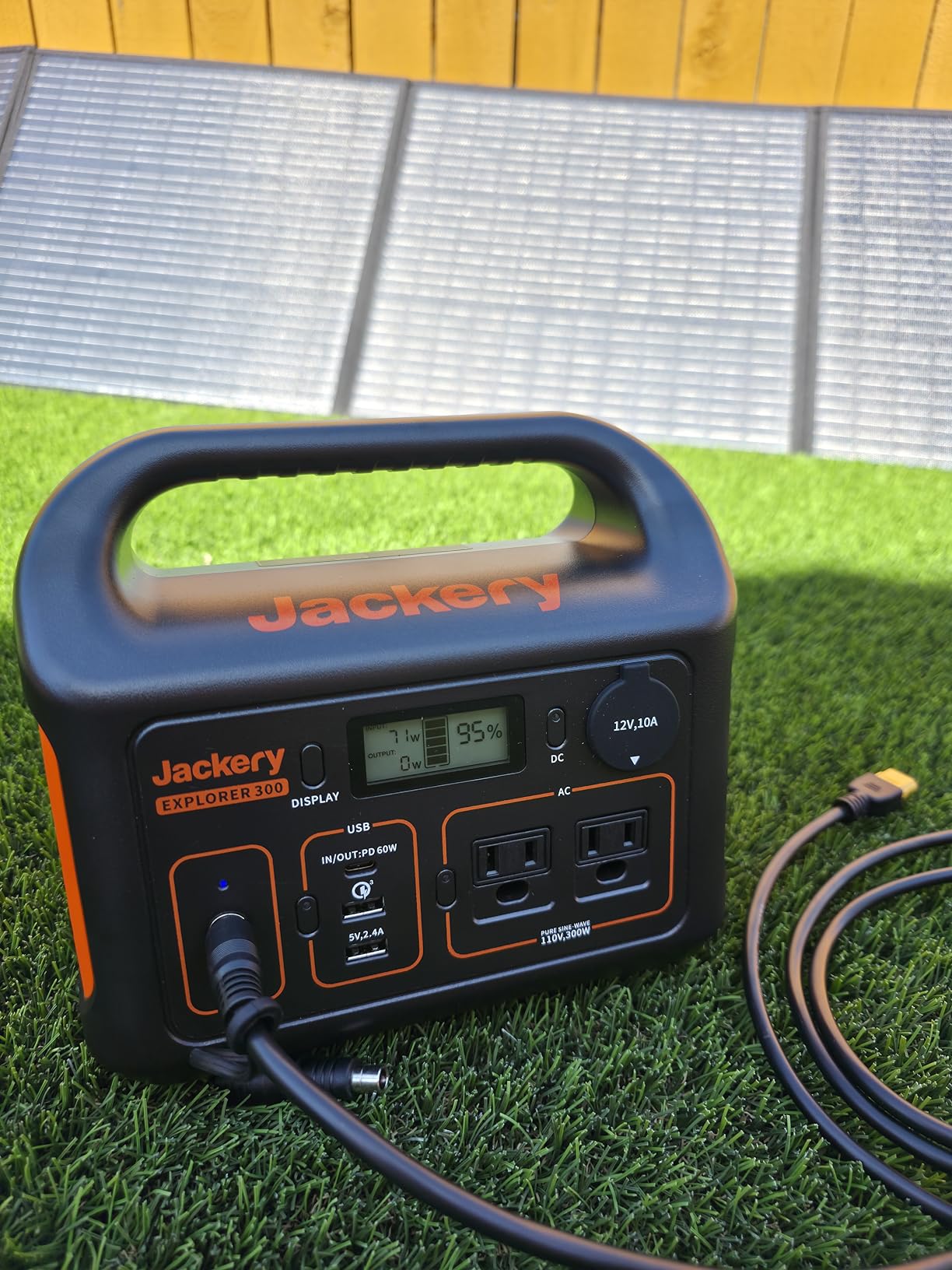
Matching this panel to realistic output
The 200W label is not what you will measure. Owners commonly report 115 to 170W in good sun, with output falling further as ambient temperature climbs. Plan your battery bank around the lower number, not the sticker.
For a compressor fridge, lighting and device charging in a mild climate, that is workable. For a rooftop air conditioner or a week of cloudy weather, it is not enough on its own.
Where it stops being the right buy
Nineteen pounds is at the heavy end for a 200W foldable. Two of these in a vehicle adds real weight to lift onto the roof each morning, which is where the theft and handling concerns in forum discussions come from.
The junction box is water-resistant rather than submersible, and the 12-month warranty is short for a panel that will live outdoors through full seasons.
11. Renogy ShadowFlux 200W Flexible Panel – Best for Shaded Parking
Renogy 200 Watt ShadowFlux Flexible Solar Panel, N-Type 25% High-Efficiency
200W flexible N-Type at 25 percent efficiency
Up to 30 cell-level bypass diodes
7.72 pounds and 0.1 inches thick
Bends to 270 degrees
Pros
- Bypass diodes hold output when trees or roof units partially shade it
- N-Type cells at 25 percent efficiency beat older PERC panels
- 7.72 pounds with essentially no wind drag
- Bends to 270 degrees for curved RV and boat surfaces
- Users report panels staying flat through years of rooftop heat
Cons
- Higher cost per watt than rigid panels
- Included cable lengths are inconsistent
- Not foldable
- must be handled carefully
- Flexible panels yield roughly 70 to 80 percent of rated watts
Shade is the single most common complaint in boondocking forum threads, and this panel is engineered specifically for it. ShadowFlux uses cell-level bypass technology with up to 30 bypass diodes, so a branch crossing half the surface costs you a fraction of the output instead of everything.
The cells are 18BB A+ grade N-Type at up to 25 percent efficiency, a clear step up from older flexible PERC panels. At 7.72 pounds and 0.1 inches thick, it adds essentially no wind drag, which matters more than most buyers consider until the first high-desert storm.
Why bypass diodes change a boondocking trip
A standard rigid panel wired with three bypass diodes loses its entire output string when one section is shaded. Thirty cell-level diodes distribute that loss across the surface. On a campsite under cottonwoods or parked beside an air conditioner unit, that is the difference between charging and idling.
The 270-degree bend handles curved and uneven surfaces, and IP68 sealing plus UV-resistant TPO material with glass fiber reinforcement keeps it flat through years of heat where cheaper panels warp.
Where flexibility still costs you
Even with modern cells, flexible construction yields roughly 70 to 80 percent of rated watts in practice. Budget for that when you size a battery bank, and do not expect rigid-panel output from a flexible footprint.
Included cable lengths are inconsistent, with some owners reporting a very short positive lead, and the panel is not truly foldable, so it must be handled carefully during install. It also costs more per watt than rigid panels of equal output.
12. DOKIO 300W Portable Foldable Kit – Best High-Wattage Foldable
DOKIO 300W Portable Foldable Solar Panel Kit with Charge Controller
300W class foldable panel
Folds to 19.3 x 37.4 inches at 15.2 pounds
9.85 ft cable with PWM controller
SAE, XT60, DC and alligator options
Pros
- 3834 reviews give the deepest history at this wattage
- Folds small enough for an exterior storage bay
- Complete bundle with controller
- adapters
- cable and bag
- Standalone replaceable PWM controller
- Case has held up through months on asphalt and dirt
Cons
- Real-world output typically 50 to 75 percent of the 300W label
- Output reported to drop within roughly 6 months
- SAE and XT60 connectors are non-standard and block series wiring
- 1-year warranty only
Three hundred watts in a foldable frame is unusual, and it is the reason this panel exists. It folds to 19.3 by 37.4 by 1.1 inches and weighs 15.2 pounds, which is heavy enough that you notice the carry but light enough for one person to deploy at a campsite.
The bundle includes a standalone PWM controller with reverse polarity, overcharge, overload and short-circuit protection, a 9.85 foot cable, SAE, XT60, DC and alligator clip options, dual USB ports and a storage bag.
When 300W in a foldable makes sense
If your rig cannot take a large rigid array on the roof, a 300W portable paired with a decent battery bank is the closest you get to fixed-panel output. It works well for compressor fridges, electronics and lighting without any roof penetration at all.
Forum experience backs this pattern up. An iRV2 owner running a 200Ah LiFePO4 with 300W of solar describes running a 12V compressor fridge for three or more days with no sun at all, which is exactly the margin a foldable at this wattage provides.
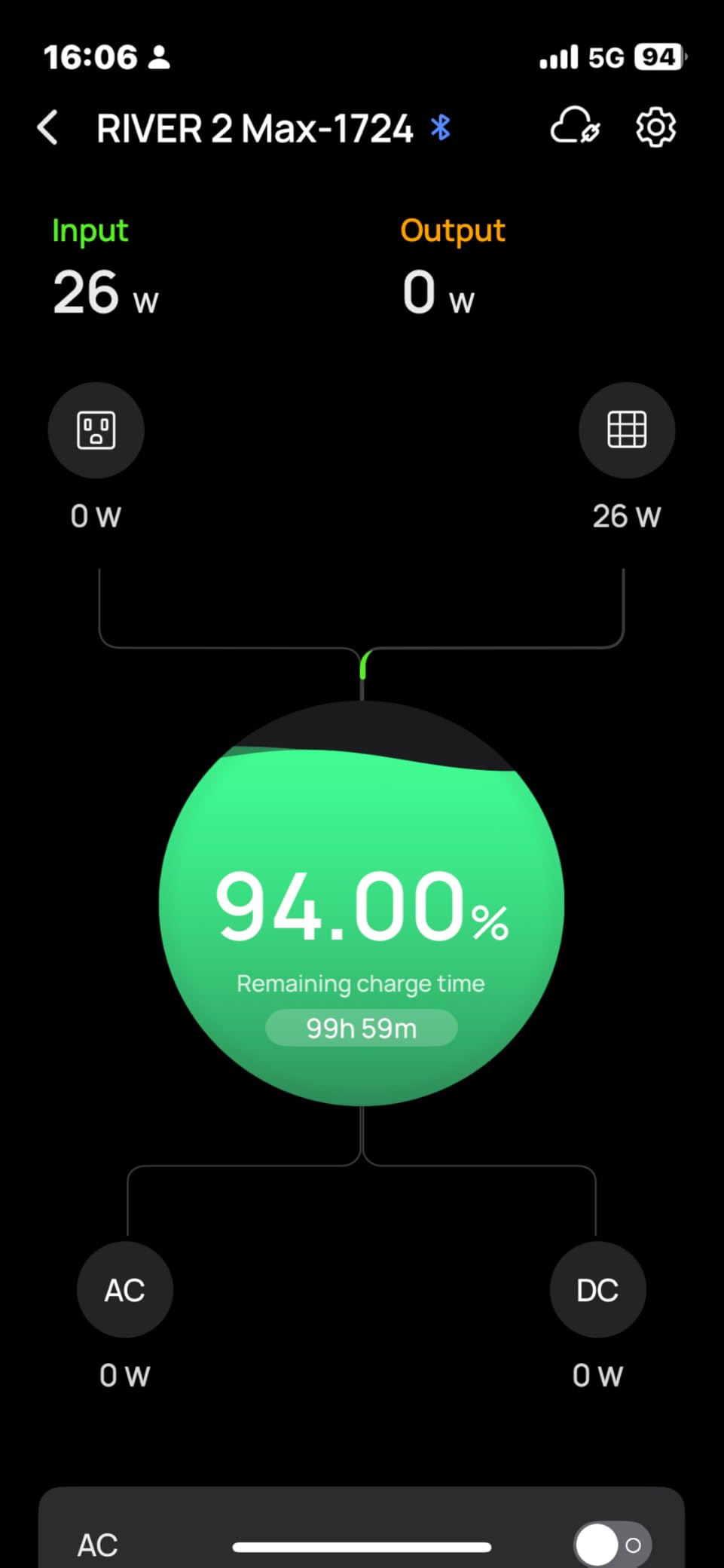
Where a 300W foldable earns its place
Rigid panels win on raw output per square foot, but they lose when your roof is small or broken up by vents and air conditioner units. A single 300W foldable covers the gap without a roof penetration, and you can reposition it as the sun moves or the campsite shade shifts.
Multiple forum owners report pairing 300W of portable solar with a 200Ah LiFePO4 battery and describing their setup as close to unlimited boondocking in sun. That combination is the most common answer to the question of whether a generator is still needed.
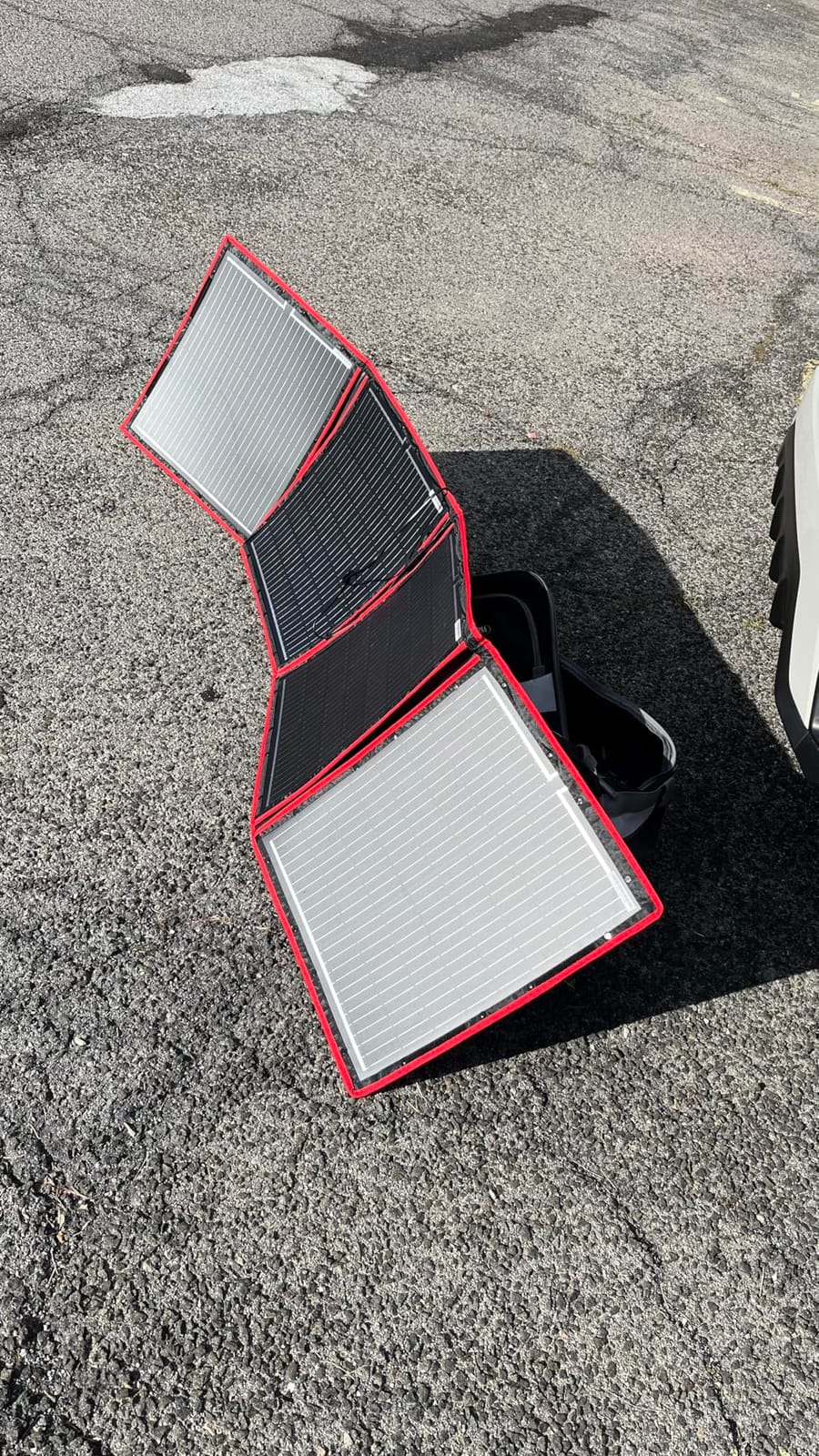
The output gap you need to plan around
Owners report real-world output of 50 to 75 percent of the 300W label, declining further in heat. That range is wide enough that you should measure your own before sizing batteries around it.
Power station input caps of 100 to 200W will cap what you can actually harvest regardless of sunlight, so check your power station spec before buying. The SAE and XT60 connectors block series wiring with other brands, the fabric case tie-down rings can break, and the warranty is one year.
How Much Solar Do You Actually Need for Boondocking?
Work from your daily load, not the panel wattage on a listing. A residential compressor fridge runs roughly 40 to 60Ah per day depending on ambient temperature. Add lights, a water pump, slide motors, a phone charger and parasitic loads like the propane detector, and a typical weekend rig lands between 100 and 150Ah daily.
Convert that to watt-hours and you get your target. A 100Ah daily draw is roughly 1,200Wh, and a panel producing 200W in five good sun hours supplies about 1,000Wh. That is why nearly every kit here sits in the 200W class for weekend trips.
The sizing tiers that show up most often in owner reports look like this. Weekend camping with a fridge and lights needs 200 to 400W. Full-time boondocking across multiple seasons usually lands at 800W or more. Running a rooftop air conditioner pushes you toward 1,200W plus a large battery bank and a generator backup for cloudy stretches.
Factory-installed solar deserves its own note. Owners on rvforums.com report that the panel that came with their Cougar model year only holds the battery up, running nothing else. One iRV2 owner with a 170W roof panel describes it keeping batteries charged for lights, slides and the water pump only. Treat factory panels as maintenance, not as a boondocking array.
Rigid, Portable or Flexible: Which One Fits Your Rig?
Rigid panels produce the most power per square foot and last the longest, but they demand flat, unshaded roof space and a permanent mounting job. They are the right answer when your roof has a usable rectangle.
Portable foldables trade output and durability for mobility. They can be positioned in the sun rather than where the roof allows, which matters more than raw wattage on shaded or crowded roofs. The forum consensus is that a 300W portable with 200Ah of lithium covers long stretches without a generator.
Flexible panels are the answer to awkward surfaces. Curved airstream roofs, van conversions and the leftover space around rooftop units are where they earn their lower efficiency. One forum owner put it plainly: a flexible panel is a no-drill solution, not a maximum-output one.
MPPT or PWM Charge Controller?
PWM controllers simply connect the panel to the battery and let the panel’s excess voltage dissipate as heat. They are inexpensive, simple and adequate below about 200W with a lead-acid bank.
MPPT controllers track the panel’s maximum power point and push roughly 10 to 20 percent more energy into your batteries, with the advantage growing as temperatures rise. For hot-weather boondocking, lithium batteries or arrays above 200W, MPPT is worth the upgrade. Four of the kits in this roundup ship with PWM controllers, which is the most common reason owners later replace a component.
Battery, Roof and Installation Checklist
Before ordering anything, measure your roof. Record the length and width of every flat section, note the position of air conditioner units, vents, antennas and plumbing vents, and subtract a margin for walking access. Most RV roofs are rectangles with obstacles in the middle of them, not open fields.
For batteries, lithium iron phosphate is the modern choice. The LiFePO4 battery in the ECO-WORTHY complete kit above is rated for 4,000 to 15,000 deep cycles against 300 to 400 for lead-acid, and it tolerates partial charge without the same damage. Quality varies widely in budget lithium, so check that a proper battery management system is present.
Plan the wiring before drilling. Most controllers sit well below the panels, so budget cable runs from roof penetration to battery bay, add an inline fuse near the battery, and seal every roof penetration properly. Roof penetrations are the leading cause of water intrusion complaints in RV solar installs.
Maintenance is simpler than most guides suggest, and it happens twice a year rather than monthly. Clean the glass twice a year, more often if you park under trees that shed pollen or sap. Dust and bird droppings cost real output, and a damp cloth on the panels at ground level takes care of most of it.
Then check the connections twice a year. Look for corrosion on MC4 plugs, confirm the strain relief at each roof penetration still holds, and read the controller’s charge history if it tracks it. Lithium systems benefit from checking terminal torque, since vibration on the road is what loosens them.
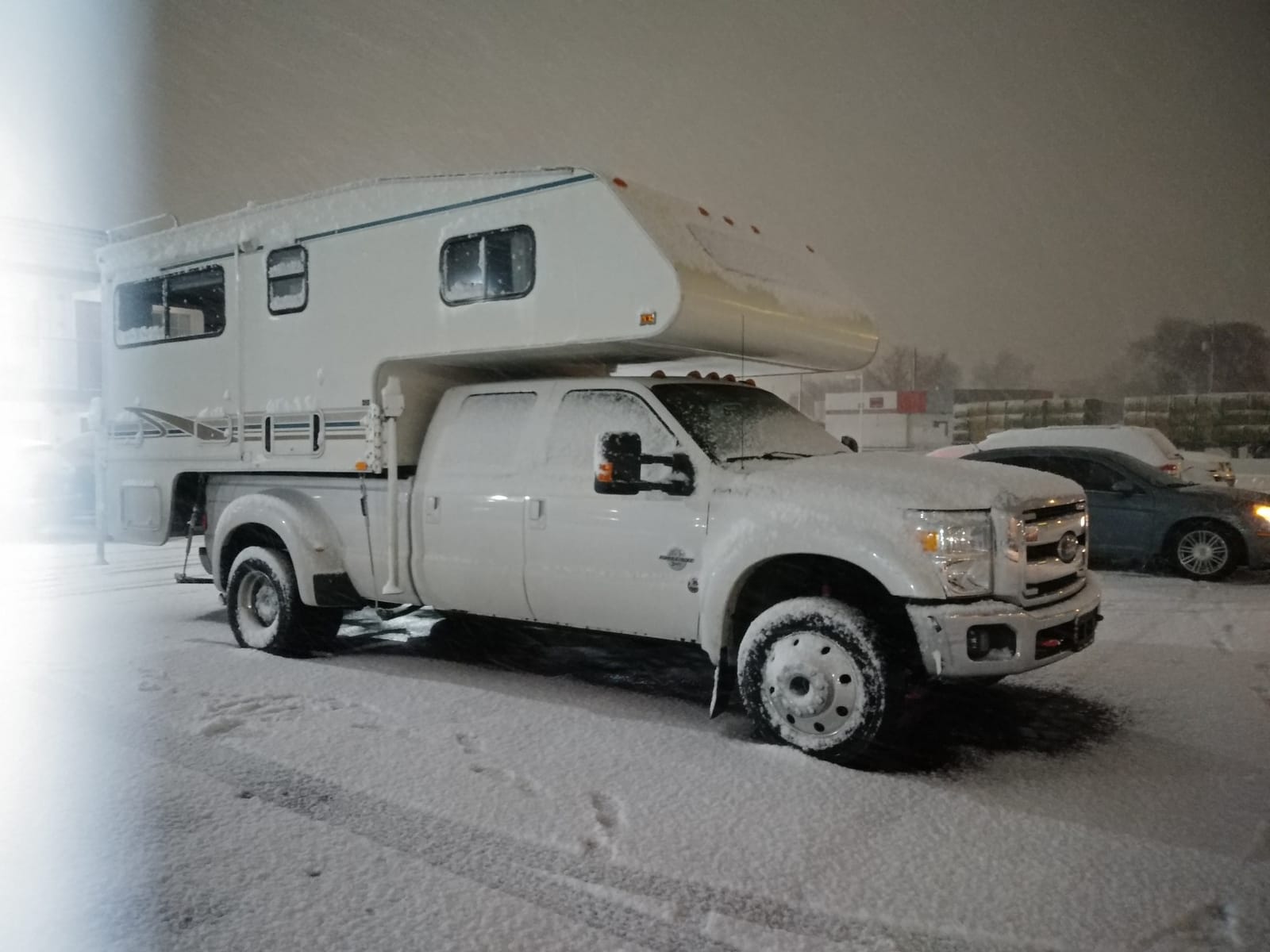
Do not skip the generator conversation. Solar works until it does not, as clouds, tree cover and snow all halt production, and no panel array changes that. Most experienced boondockers carry a small inverter generator for exactly the stretches where the panels cannot help, and use soft start kits to bring rooftop air conditioner compressors up to speed from a smaller generator.
Frequently Asked Questions
What are the best solar panels for boondocking in an RV?
The best solar panels for boondocking are the ones matched to your daily amp draw and your roof. A 200W monocrystalline kit handles a compressor fridge, lighting and a water pump for weekend trips, while 400W or more suits full-time boondocking. Rigid panels give the most output per square foot, portables give positioning flexibility, and flexible panels fit curved roofs. Match the panel to an MPPT controller and a lithium battery bank for best results in hot climates.
Will a 200W solar panel run a 12V fridge?
Yes, a 200W panel can run a 12V compressor fridge, since the fridge draws roughly 40 to 60Ah per day. A 200W panel producing about 1,000Wh per day covers that load with spare capacity for lights, a water pump and small electronics. You still need a battery bank sized for at least one night of draw, roughly 100Ah or more, to carry you through cloudy stretches.
Is 400W solar enough for an RV?
400W is enough for most full-time and multi-season boondocking setups running a fridge, electronics and lighting without an air conditioner. Weekend trips usually need only 200W, while running a rooftop air conditioner typically pushes the target toward 1,200W along with a large battery bank. Actual output depends on peak sun hours, so winter and cloudy-season trips need more panel capacity than summer ones.
What is the 33% rule in solar panels?
The 33% rule is a sizing guideline that suggests adding roughly one third more panel wattage than your strict daily energy requirement. It builds in a margin for cloudy days, high temperatures, shading losses and real-world output falling short of nameplate ratings. Applying it means a setup needing 300W of daily harvest would be specified at about 400W, giving your battery bank a fighting chance during overcast stretches.
How long will an RV battery last while boondocking?
Battery life depends on capacity, load and weather. A 200Ah lithium battery at typical camping draw rates gives roughly two to three nights off-grid before needing recharge, while a 100Ah lead-acid bank is closer to one night once you account for a 50 percent usable depth of discharge. Good solar harvest extends those numbers, and shade, clouds and a high-draw air conditioner shorten them quickly.
Our Verdict for 2026
The ECO-WORTHY 200W kit takes the top spot because it removes every reason to delay a first boondocking build. You get two 100W monocrystalline panels, a 30A controller, brackets and pre-drilled wiring, and the flexibility to wire for 12V or 24V as your system grows. Our only reservation is the one-year warranty and the PWM controller.
For higher output, the Callsun 400W N-Type bifacial pair is the most capable array here, with 25.6 percent cells, shade-tolerant TwinCell layout and a temperature coefficient that holds up in desert heat. For curved roofs, the 4-pound Renogy flexible panel fits surfaces nothing else will. For portable setups, the HQST at 11 pounds holds its output better in the field than any of the heavier foldables we tested.
Whatever you choose, size the battery bank first, upgrade the controller to MPPT if you can, and keep a small generator for the cloudy stretches that no panel can fix. Start with our RV solar kit with controller roundup if you are building the whole system at once, and check the current details on each panel before you order.