
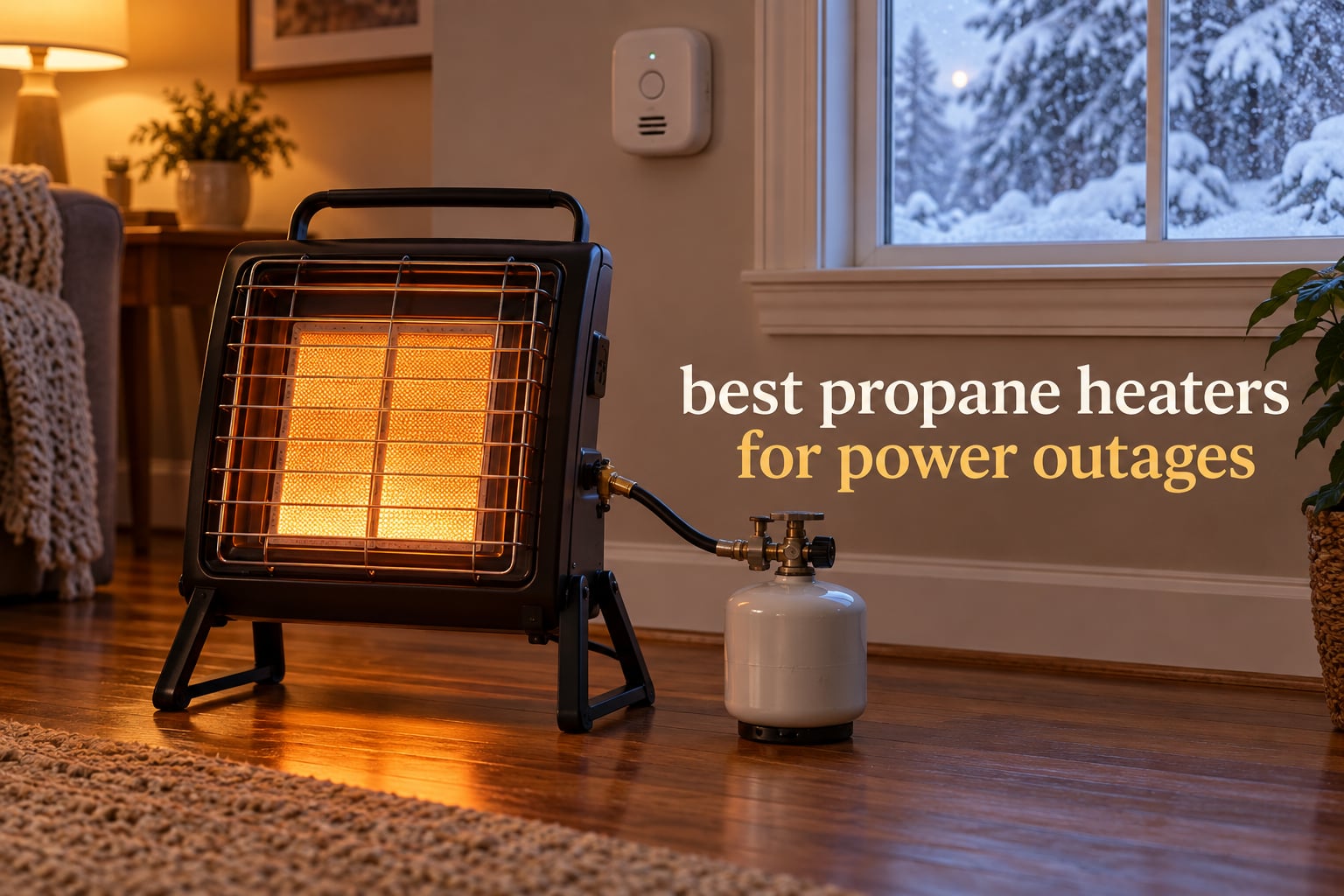
The best propane heaters for power outages are the vent-free radiant models rated for indoor use, because they burn liquid propane and need nothing but a tank and a match to run. A heater like the Mr. Heater Portable Buddy delivers 9,000 BTU of radiant heat across roughly 225 square feet with two simple heat settings and an emergency low-oxygen safety system. Nothing about that equation needs a wall outlet.
That last detail is what makes propane the go-to answer when the grid goes down. Electric space heaters are useless without power, and a kerosene heater brings a smell that lingers for days indoors. Propane burns clean, stores compactly, and keeps working through a storm long after the last candle gives up. I have compared these units side by side on BTU, tank compatibility, safety sensors, and how they actually behave in a cold room.
There is a safety conversation to have first, because indoor propane heat is not a decision to make casually. Only four of the twelve heaters covered here carry an indoor use rating, and the rest belong in a garage, a porch, or an open shelter. Every indoor-rated unit here also shuts itself off when oxygen drops, and none of them replaces a working carbon monoxide detector. We cover placement and sensor details in the safety section below.
If your outage plan is still thin, our kerosene heater roundup covers the older backup option, and our solar generator guide covers the units that bring the electricity back so a conventional heater becomes an option again. Lighting matters too in a multi-day outage, so our camping lantern picks are worth a look.
Table of Contents
Top 3 Best Propane Heaters for Power Outages in 2026
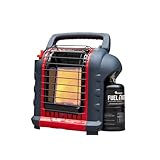
Mr. Heater Portable Buddy
- 9000 BTU radiant
- Heats 225 sq ft
- Indoor and outdoor rated
- Low-oxygen shutoff
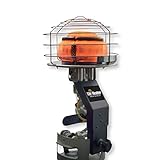
Mr. Heater 45000 BTU Tank Top
- 45000 BTU radiant
- Mounts to a 20 lb tank
- 9.5 hr run time
- Tip-over shutoff

Mr. Heater Little Buddy
- 3800 BTU radiant
- Heats 95 sq ft
- One-button ignition
- Tip-over and ODS
Best Propane Heaters for Power Outages at a Glance (October 2026)
The table below lists every propane heater in this roundup with the numbers that matter when the power is off: heat output, the area each unit is rated to cover, and whether it is safe to run indoors. Rows marked for garage and outdoor use are included because a heated garage or covered porch is a common outage plan for households that cannot safely vent a living space.
| Product | Specifications | Action |
|---|---|---|
| Mr. Heater Portable Buddy 9,000 BTU |
|
Check Latest Price |
| Mr. Heater Little Buddy 3,800 BTU |
|
Check Latest Price |
| Mr. Heater 45,000 BTU Tank Top |
|
Check Latest Price |
 GASLAND MHA18B 18,000 BTU Cabinet GASLAND MHA18B 18,000 BTU Cabinet |
|
Check Latest Price |
 Dyna-Glo 10K BTU Grab N Go Dyna-Glo 10K BTU Grab N Go |
|
Check Latest Price |
 Remington 60,000 BTU Forced Air Remington 60,000 BTU Forced Air |
|
Check Latest Price |
 DEWALT 68,000 BTU Forced Air DEWALT 68,000 BTU Forced Air |
|
Check Latest Price |
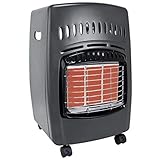 Comfort Glow GCH480 Cabinet Heater Comfort Glow GCH480 Cabinet Heater |
|
Check Latest Price |
 CAMPLUX 18,000 BTU Cabinet Heater CAMPLUX 18,000 BTU Cabinet Heater |
|
Check Latest Price |
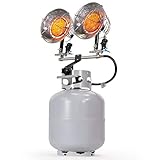 XtremepowerUS 30,000 BTU Tank Top XtremepowerUS 30,000 BTU Tank Top |
|
Check Latest Price |
 Dura Heat LPC25 Convection Heater Dura Heat LPC25 Convection Heater |
|
Check Latest Price |
 ProCom 10,000 BTU Ventless Blue Flame ProCom 10,000 BTU Ventless Blue Flame |
|
Check Latest Price |
1. Mr. Heater Portable Buddy 9,000 BTU – Best Overall for Indoor Power Outages
Mr. Heater 9,000 BTU Portable Buddy Radiant Propane Heater
9000 BTU radiant
Heats 225 sq ft
Indoor and outdoor rated
7.1 pounds
Pros
- Two heat settings at 4000 and 9000 BTU
- Approved for indoor and outdoor use
- Low-oxygen emergency shutoff
- Runs 5.4 hours on low from a 1 lb cylinder
- Weighs 7.1 pounds and folds flat to store
Cons
- Radiant warmth is strongest directly in front of the unit
- 1 lb cylinder limits run time per tank
When the grid drops and I need heat in a living space, this is the unit I reach for. It runs on 4,000 or 9,000 BTU, covers roughly 225 square feet, and is listed as approved for both indoor and outdoor use. That indoor rating is what separates it from most of the propane heaters on the shelf, and it is why this model tops my list for power outages specifically rather than for patios or garages.
Owners are consistent about how quickly it warms a small-to-medium room. One of the most common reports describes running it for about six hours on the low setting off a single 1 lb cylinder while keeping a bedroom comfortable. The listed run time is 5.4 hours on low and 2.4 hours on high, so a spare cylinder is the piece of gear worth stocking.
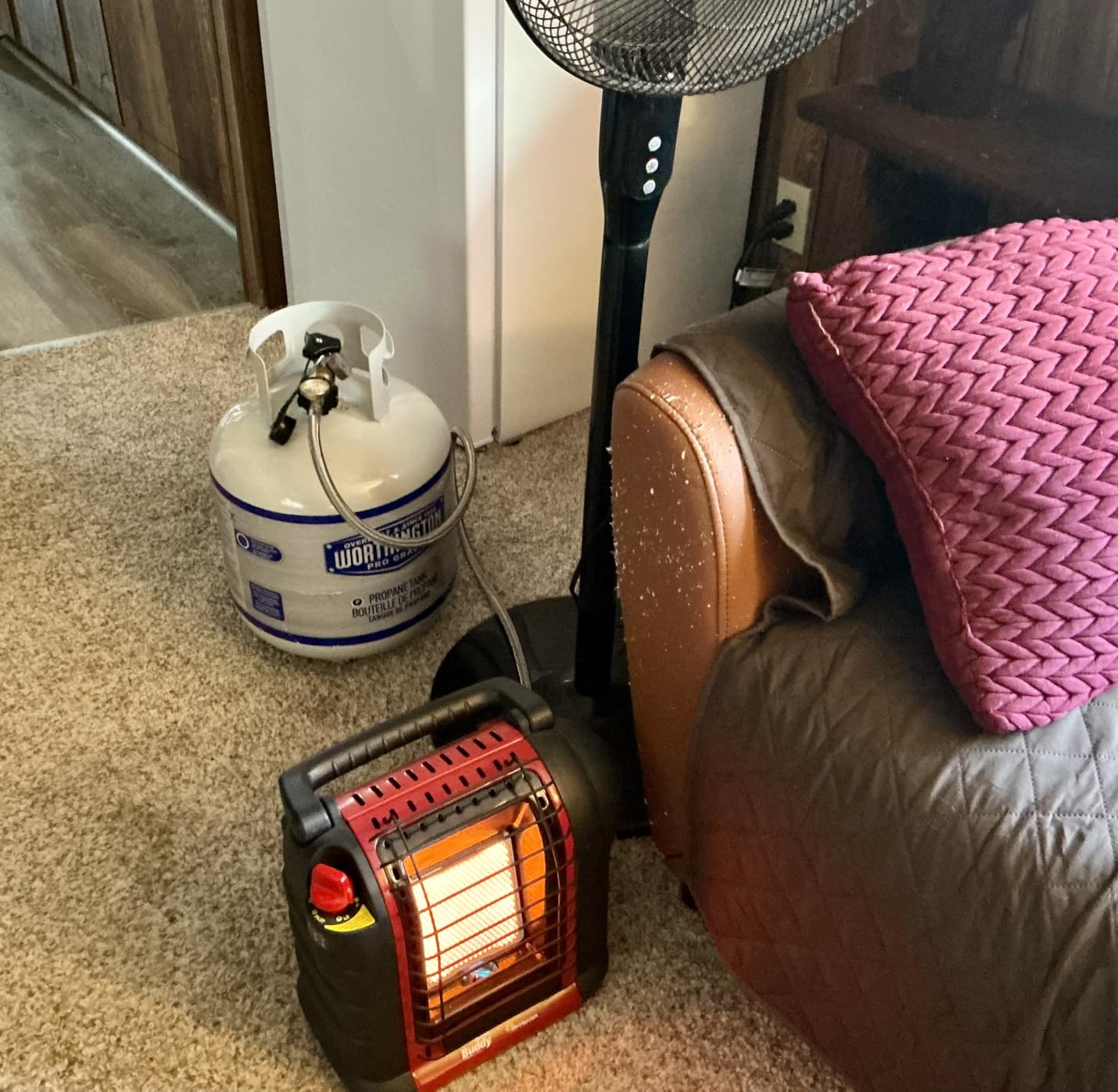
The construction is where this heater separates itself from cheaper radiants. It is built with self-extinguishing materials, includes a piezo igniter so there is no pilot to keep relighting during a long outage, and has an emergency low-oxygen safety system that closes the gas when indoor oxygen falls too low. The housing runs to 900 degrees Fahrenheit, which is normal for a radiant unit and worth knowing before you set it beside anything you care about.
Two specs tell you what you are dealing with: it weighs 7.1 pounds and measures 7.7 by 13.4 by 15 inches. That footprint disappears against a wall, and the carry handle makes it simple to move from the living room to a bedroom as the temperature drops through the night.
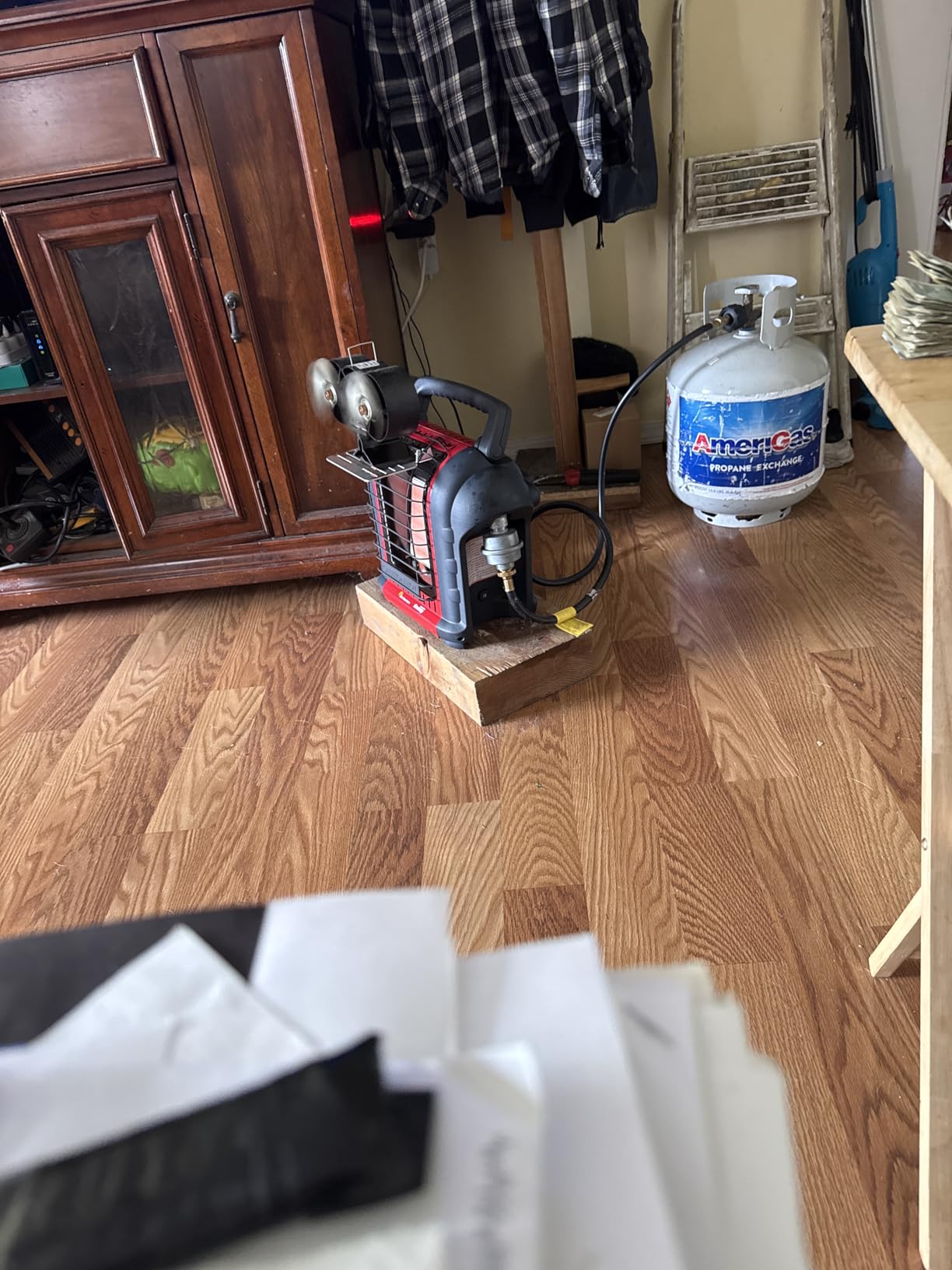
Where this heater works best
This is the right pick for a bedroom, a small apartment, an office, or an RV during an outage, because it is one of the few heaters here rated for indoor use and needs no electricity. Forum discussions about outage heating repeatedly point to the Buddy series for exactly this reason, with users running it in a 200-square-foot bedroom on the low setting through a full night off one cylinder.
It also earns its place as a garage or porch heater, since the same indoor and outdoor approval covers both. If your outage plan is a garage or an uninsulated workshop rather than a living space, this unit doubles as a shop heater with none of the assembly a tank-top model needs.
Where this heater falls short
The limitation buyers mention most is directional. Radiant heat warms you where you sit rather than stirring the air in the room, so a closed door means the rest of the space stays cool. If you want the whole room at an even temperature, a forced-air unit is the better tool.
The second limit is fuel logistics. It burns from a 1 lb cylinder, and 1 lb cylinders get expensive fast across a three-day outage. Owners running this heater through a long event almost always pair it with a 20 lb tank and a connector hose, which is why we cover that step in the tank guide below.
2. Mr. Heater Little Buddy 3,800 BTU – Best Budget Pick for Small Rooms
Mr. Heater 3,800 BTU Little Buddy Portable Radiant Propane Heater
3800 BTU radiant
Heats 95 sq ft
Tip-over and low-oxygen shutoff
5.6 pounds
Pros
- Smallest floor footprint in the roundup
- One-button ignition
- Tip-over and low-oxygen shutoff included
- Quiet clean odor-free operation
- Connects directly to a 1 lb propane cylinder
Cons
- Only covers about 95 square feet
- Single heat setting with no temperature control
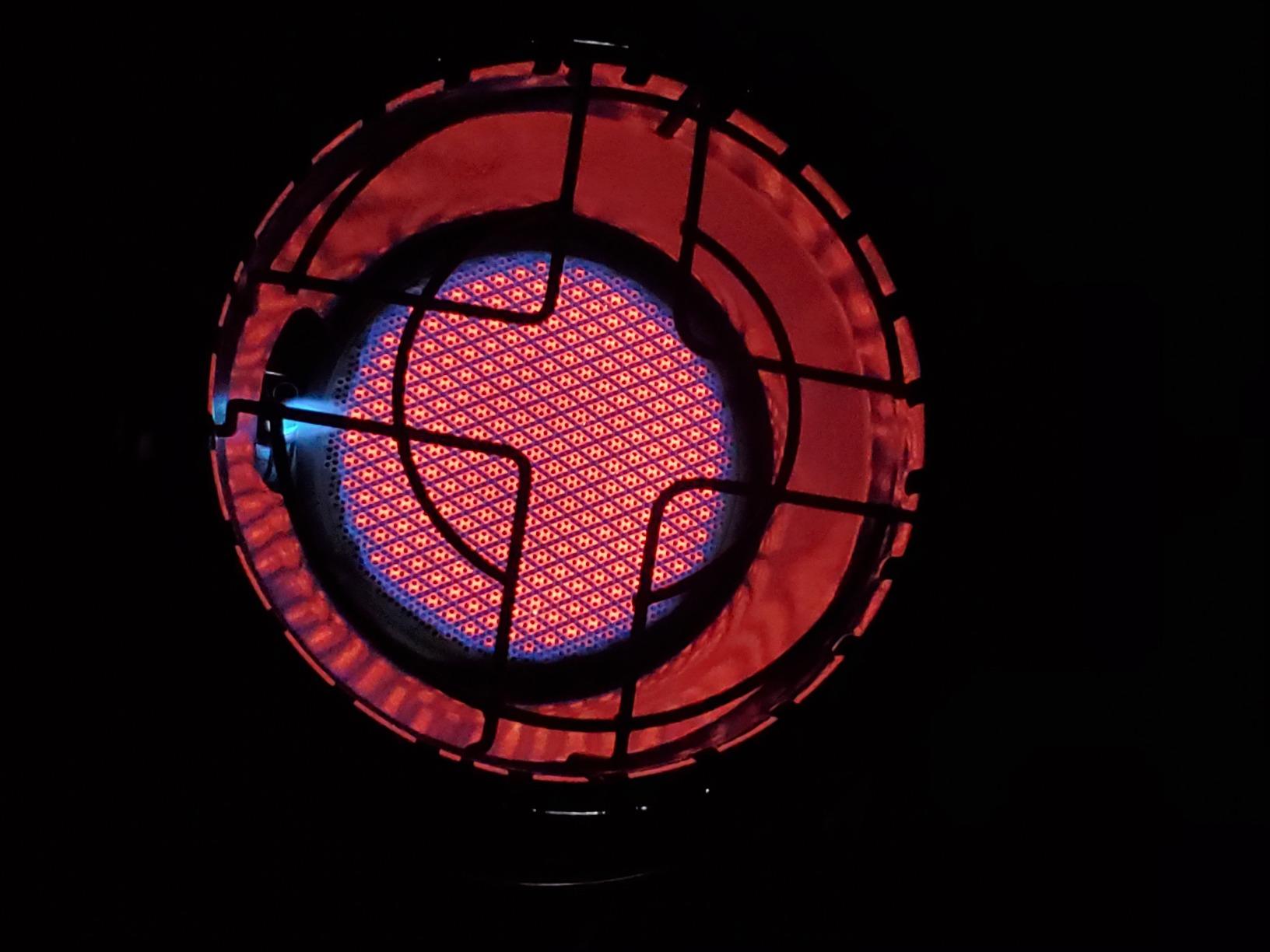
This is the heater to buy when you want personal warmth for one person rather than a room at temperature. At 3,800 BTU it covers about 95 square feet, which reviewers describe as taking the chill off a small bedroom rather than heating it. One of the most common forum notes about this model is exactly that: it works well as personal warming, not as room heating.
What makes it appealing during an outage is the control simplicity. There is a single heat setting and a one-button ignition, so there is no thermostat to confuse at two in the morning with the power out. It runs quietly and cleanly with no odor, and it connects directly to a standard 1 lb propane cylinder with no adapter hose.
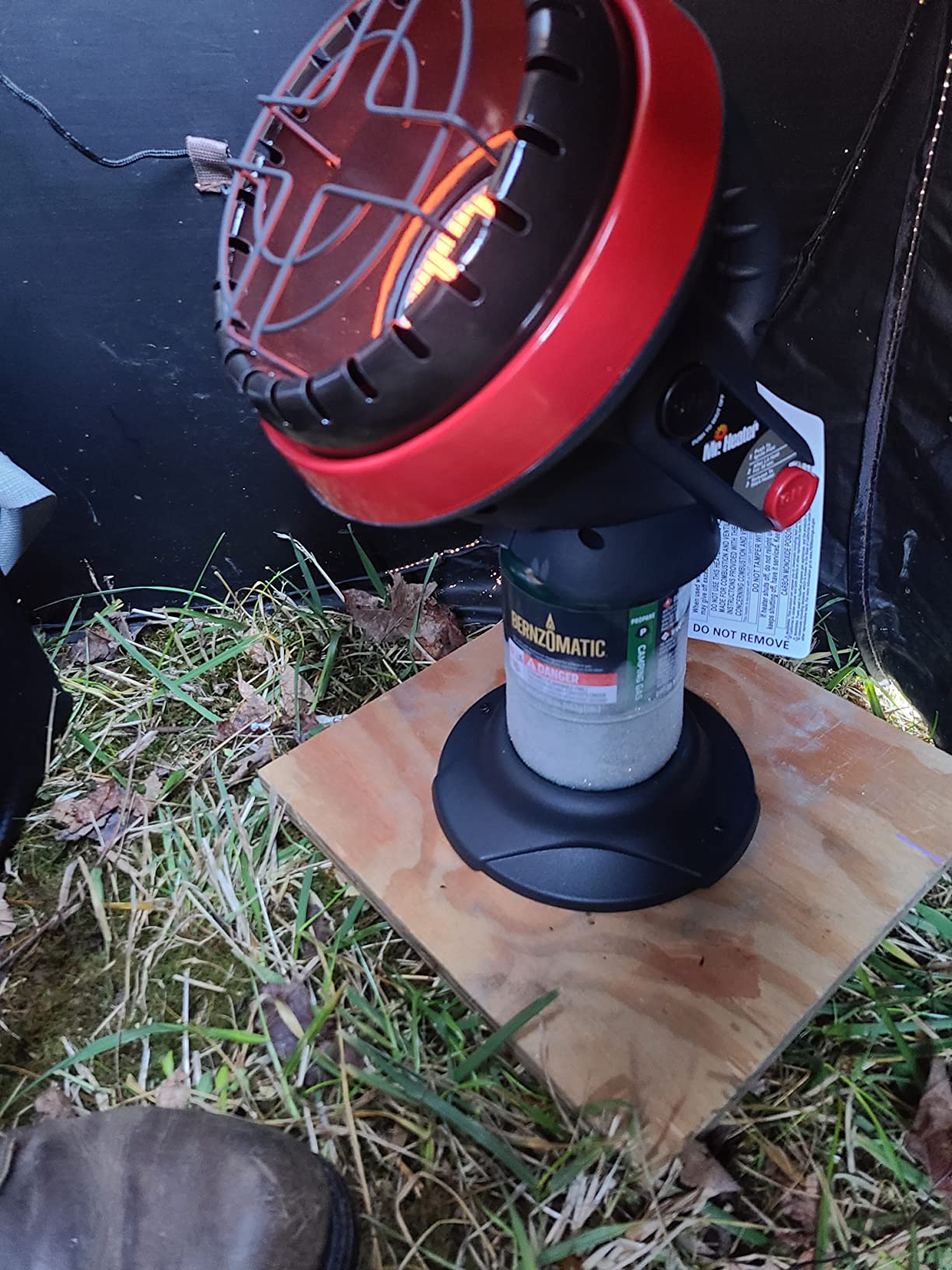
Safety is not where this unit economizes. It carries both an accidental tip-over safety shutoff and an automatic low-oxygen shut-off system, plus a 3-year limited warranty that is longer than most heaters in this roundup carry. It is listed for indoor and outdoor use, and the 5.6-pound weight and 8-inch round stand mean it takes up almost no floor space.
Owners frequently note that quiet, clean, odor-free operation makes it easy to leave running in a small room where you are sleeping. The listed minimum temperature setting of 40 degrees Fahrenheit and maximum of 900 degrees show the range the control hardware is rated for.
Where this heater works best
This is the pick for a child sleeping in a cold room, a desk during a long outage at home, or an emergency kit that has to fit in a closet. The single-button start and no-electricity design mean anyone in the household can get it running without a flashlight in hand.
It is also the sensible choice for a bathroom or small bedroom in an apartment with no window, which is a scenario forum users raise often. Because it is indoor rated and carries both a tip-over switch and an oxygen depletion sensor, it is one of the few heaters here appropriate for a space that size.
Where this heater falls short
There is one heat setting and no temperature control, so you are choosing between a comfortable level and nothing. In a room where the temperature swings, that is a real drawback compared with the thermostat-equipped ventless units further down this list.
At 95 square feet, coverage is the honest limit. Try to warm a 200-square-foot room with it and you will be disappointed. If the goal is a livable room for several hours, budget for the Portable Buddy instead.
3. Mr. Heater 45,000 BTU Tank Top – Best Radiant Heat for Garages and Shelters
Mr. Heater Original 540-Degree 45,000 BTU Tank Top Radiant Propane Heater
45000 BTU radiant
Heats 1125 sq ft
Mounts to a 20 lb tank
5.6 pounds
Pros
- Mounts directly to a 20 lb tank with no hose or regulator
- 540-degree adjustable radiant head
- Three heat levels at 45000/36000/30000 BTU
- About 9.5 hours on high from a 20 lb tank
- Tip-over safety shutoff
Cons
- Outdoor use only
- Most heat radiates upward unless the head is tilted
- Requires carrying a separate 20 lb cylinder
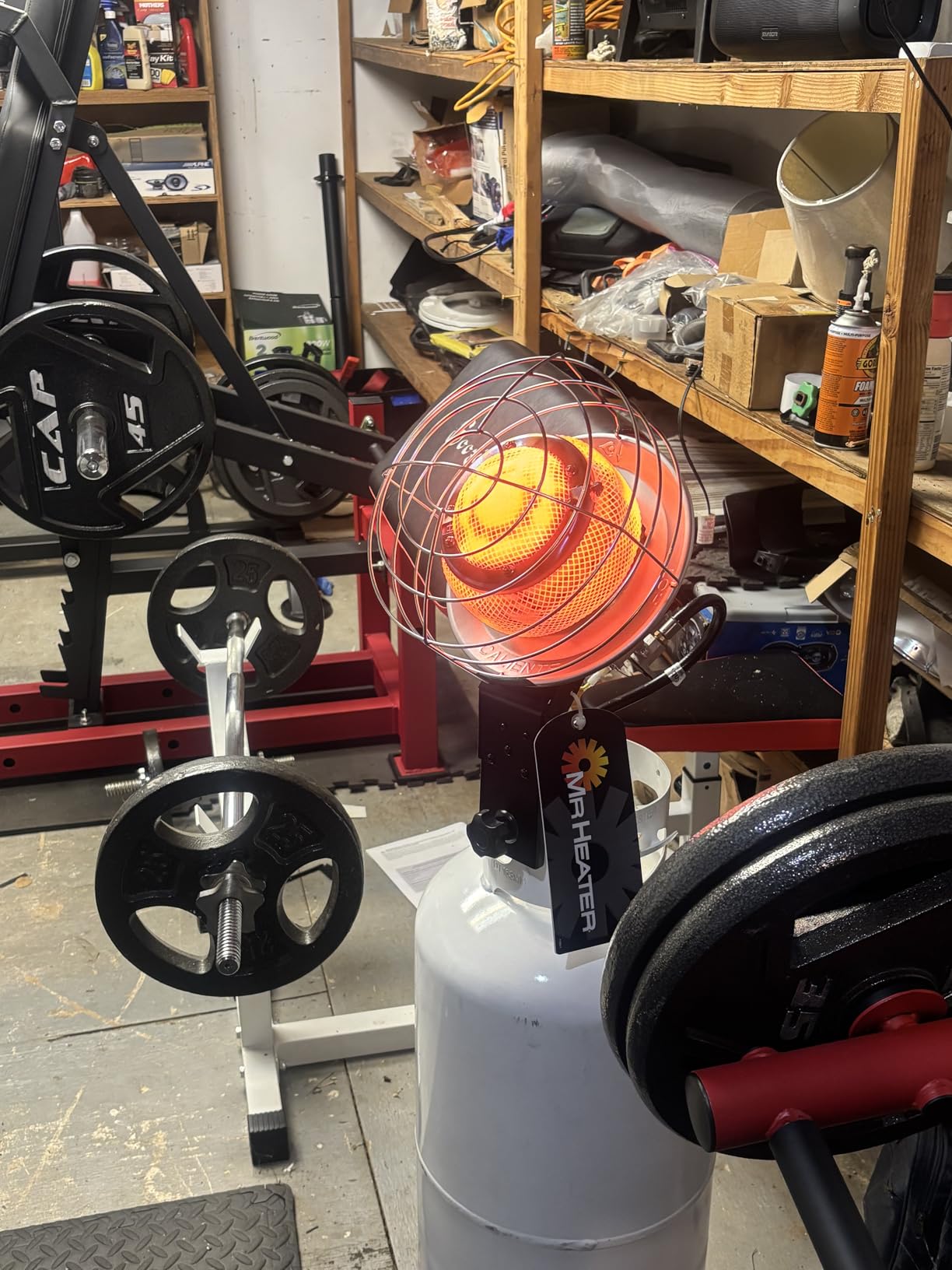
No other heater in this roundup puts out this much heat. At 45,000 BTU covering roughly 1,125 square feet, this tank-top unit is built for a garage, a workshop, or a covered outdoor shelter rather than a living space. It mounts directly onto a 20 lb propane cylinder, which means no hose, no regulator, and nothing to leak at the connection.
The 540-degree adjustable radiant head is the feature that changes how usable it is. Mounted flat, most of the output goes upward, and tilting the head toward where people sit turns a disappointing heater into an effective one. Owners repeatedly describe that tilt adjustment as the difference between the unit working and not working in a two-car garage.
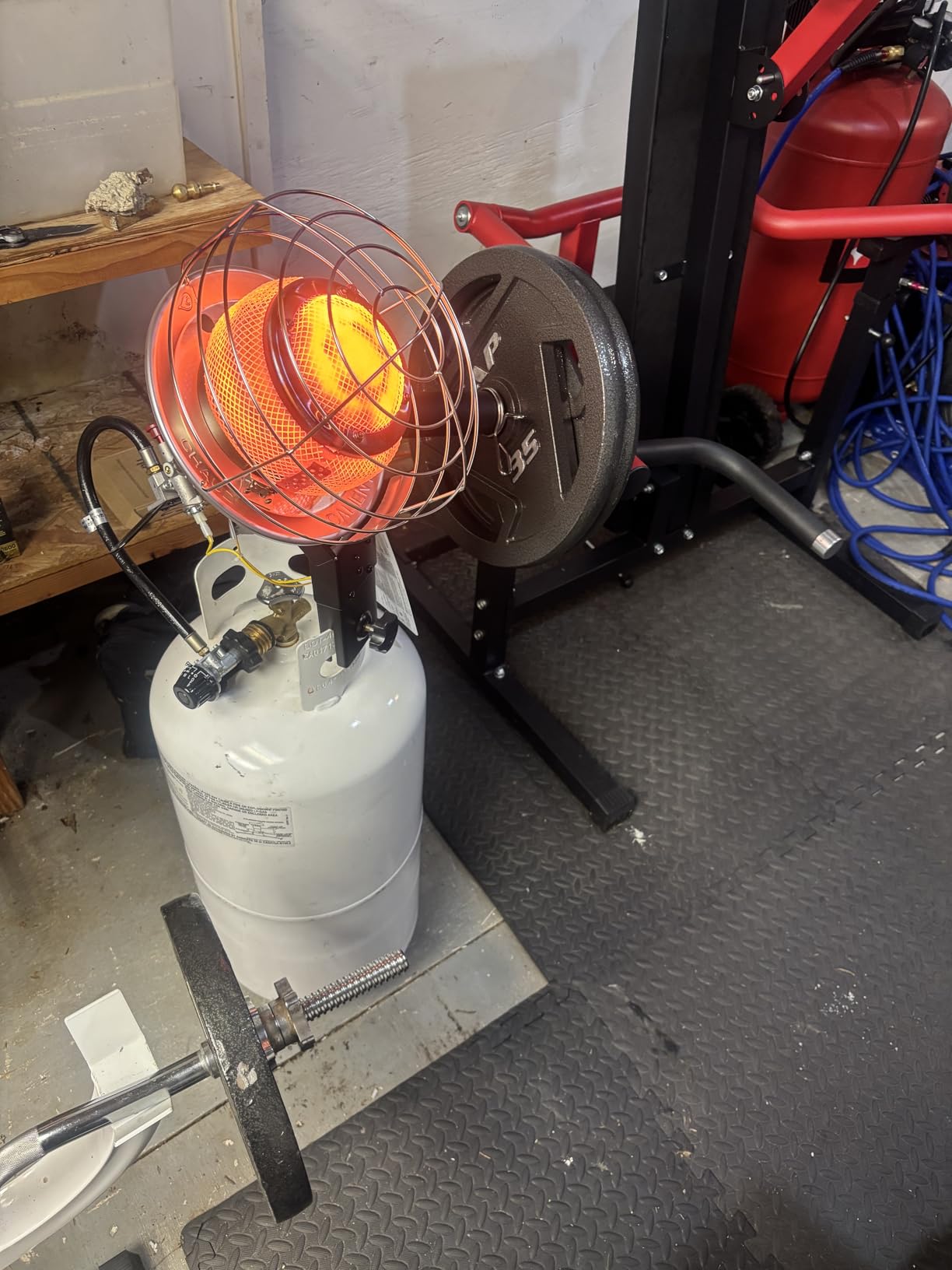
Fuel logistics are genuinely better here than with a 1 lb cylinder setup. A 20 lb tank runs roughly 9.5 hours on the high setting, and the high-medium-low regulator lets you drop to 36,000 or 30,000 BTU when you do not need full output. Three heat levels mean you can match the setting to how cold the space actually is instead of running wide open all night.
The safety hardware includes a tip-over safety shutoff switch, and the frame is stable enough to mount on a wall or stand on the floor. At 5.6 pounds the heater itself is not the heavy part of the equation. The cylinder is.
Where this heater works best
This belongs in a detached garage, a pole barn, a gazebo, or a covered patio where you are working outside the living space. During a power outage it is a strong candidate for keeping a garage warm enough to work in, or for heating an outdoor shelter if a winter storm takes out a neighborhood grid.
It is also the one to pick if your outage lasts several days and you want to burn from one large cylinder rather than a stack of small ones. For our coverage of heating an enclosed structure, our propane greenhouse heater guide covers the same output range from another angle.
Where this heater falls short
This is an outdoor-use-only appliance and should not be brought into a bedroom or living room. That limitation is not adjustable, and it is the main reason this unit does not take our top spot despite a 4.7 rating across more than 5,000 reviews.
Two smaller gripes come up repeatedly. The first light can take patience while the unit stabilizes, and the mounting hardware uses three Phillips head screws that some reviewers find awkward. Most heat also points straight up unless you physically tilt the head.
4. GASLAND MHA18B 18,000 BTU Cabinet – Best Wheeled Heater for Workshops
GASLAND MHA18B Propane heater Outdoor,18,000 BTU, Max Heat 450 Sq.Ft
18000 BTU radiant
Heats 450 sq ft
CSA certified with ODS
20 lb cylinder
Pros
- Three heat modes up to 18000 BTU
- CSA certified with tip-over and low-oxygen shutoff
- Tank housed inside the cabinet
- Built-in rolling wheels and carry handle
- No electricity required
Cons
- Radiant heat warms people in front of the unit
- Outdoor and ventilated use required
- Needs a 20 lb propane cylinder
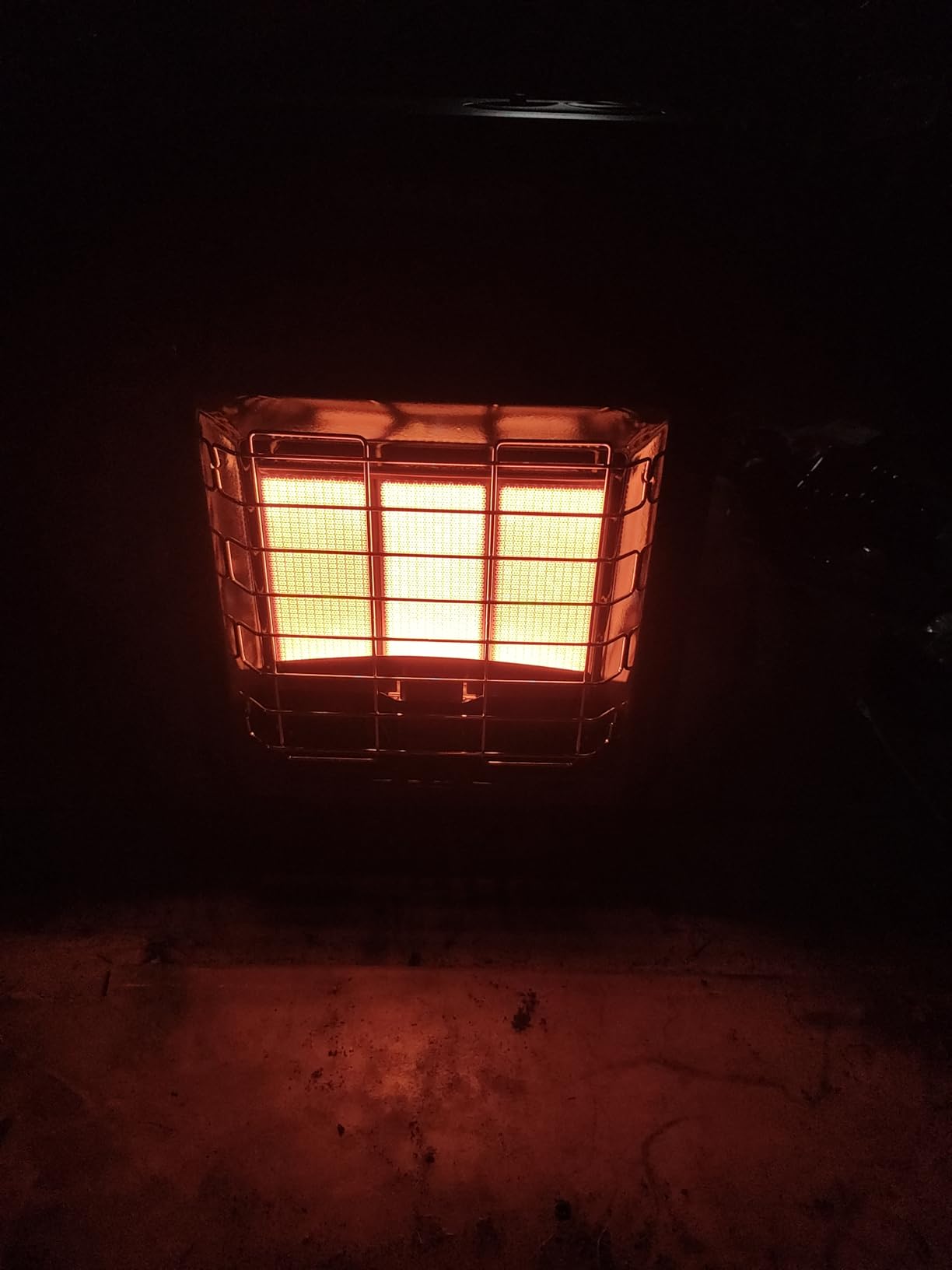
The GASLAND MHA18B is the cabinet form of an 18,000 BTU radiant heater, and the cabinet is the point. The propane cylinder sits inside the housing rather than beside it, so the whole thing moves as one piece on built-in rolling wheels and a carry handle. In an outage that matters more than it sounds, because you may be relocating heat between rooms as the night gets colder.
Output is set by three heat modes covering up to 450 square feet. It carries CSA certification with both tip-over and low-oxygen shut-off, and it requires no electricity at all, so it keeps running through a blackout without a battery pack or a generator.
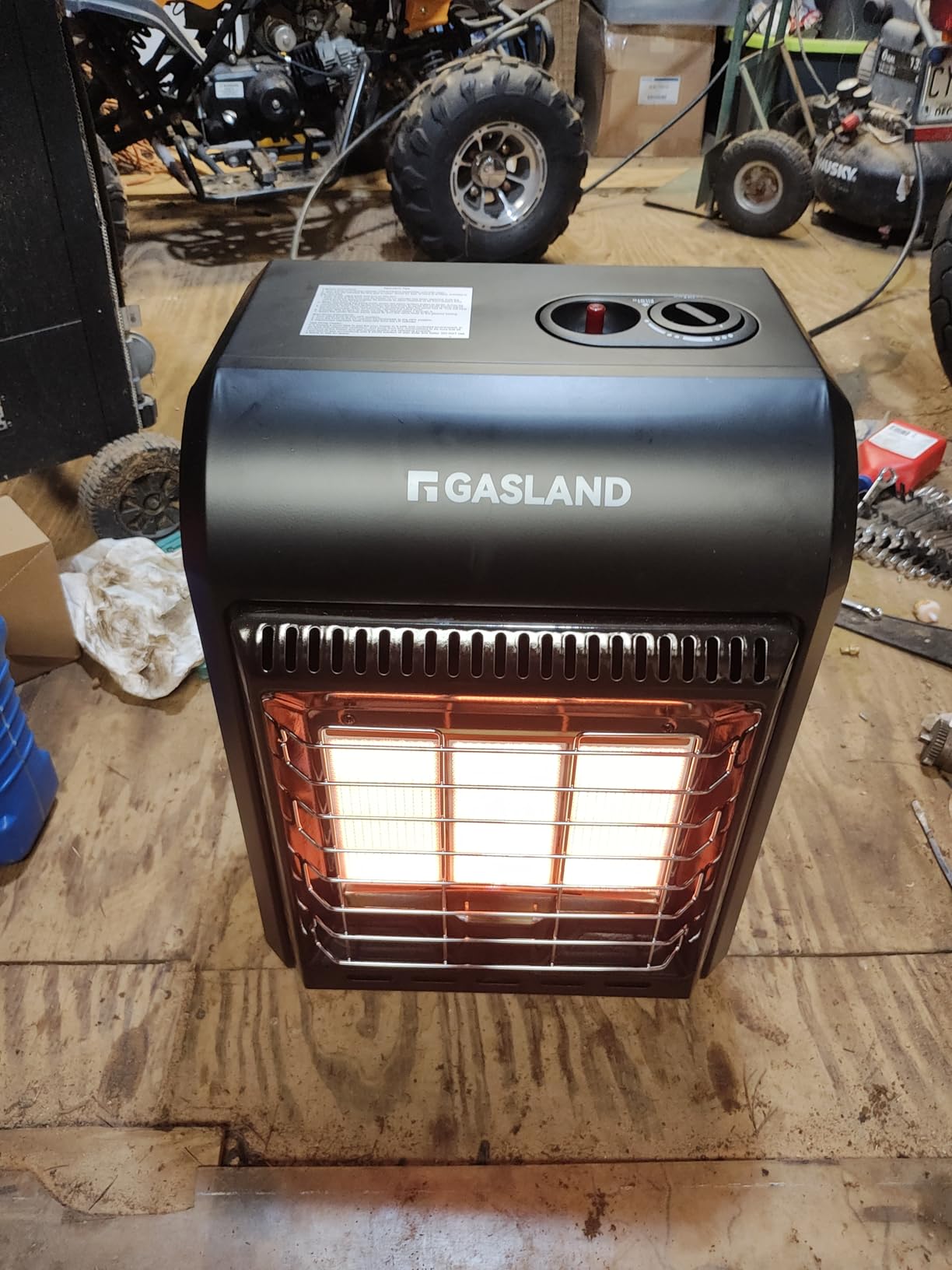
At 17.5 by 15 by 21.7 inches, the cabinet is larger than a portable radiant but far more stable in a working space. Buyers highlight the quiet operation, which is unusual among heaters with a fan, and they consistently use it in garages, patios, workshops, barns, and at sporting events.
The honest limitation is that radiant cabinet heaters warm the people standing in front of the unit rather than circulating air through the volume. If you want even heat across a whole room, a forced-air model is the correct choice instead.
Where this heater works best
This is a strong outage pick for a garage, a shop, or a covered porch where the plan is to stay warm while working rather than to heat a sleeping space. The wheels mean you can drag it to whichever bay of the garage you are using as the outage headquarters.
It suits users who want propane heat without the complexity of a hose and regulator setup. Once the cylinder is in the cabinet, there is a single control knob to turn and a safety chain of sensors watching the unit.
Where this heater falls short
Outdoor and ventilated use is required, so it is not a living-space heater. That single point eliminates it from any apartment or bedroom outage plan.
The 20 lb cylinder requirement adds both bulk and fuel cost to the setup, and the directional nature of the heat means positioning matters more than with a forced-air unit. Owners looking for whole-room evenness should look elsewhere in this list.
5. Dyna-Glo 10K BTU Grab N Go – Best Compact Grab-and-Go Heater
Dyna-Glo 10K BTU Grab N Go Portable Propane Heater – Green
10000 BTU
Heats 250 sq ft
Swivel valve tank change
Piezo ignition
Pros
- Genuinely small enough to carry in one hand
- Swivel valve speeds up 1 lb tank swaps
- Continuously variable heat control
- Piezo ignition with CSA certification
Cons
- 10000 BTU caps coverage at about 250 square feet
- Lowest average rating in this group
- Some buyers report weaker output than expected for its size
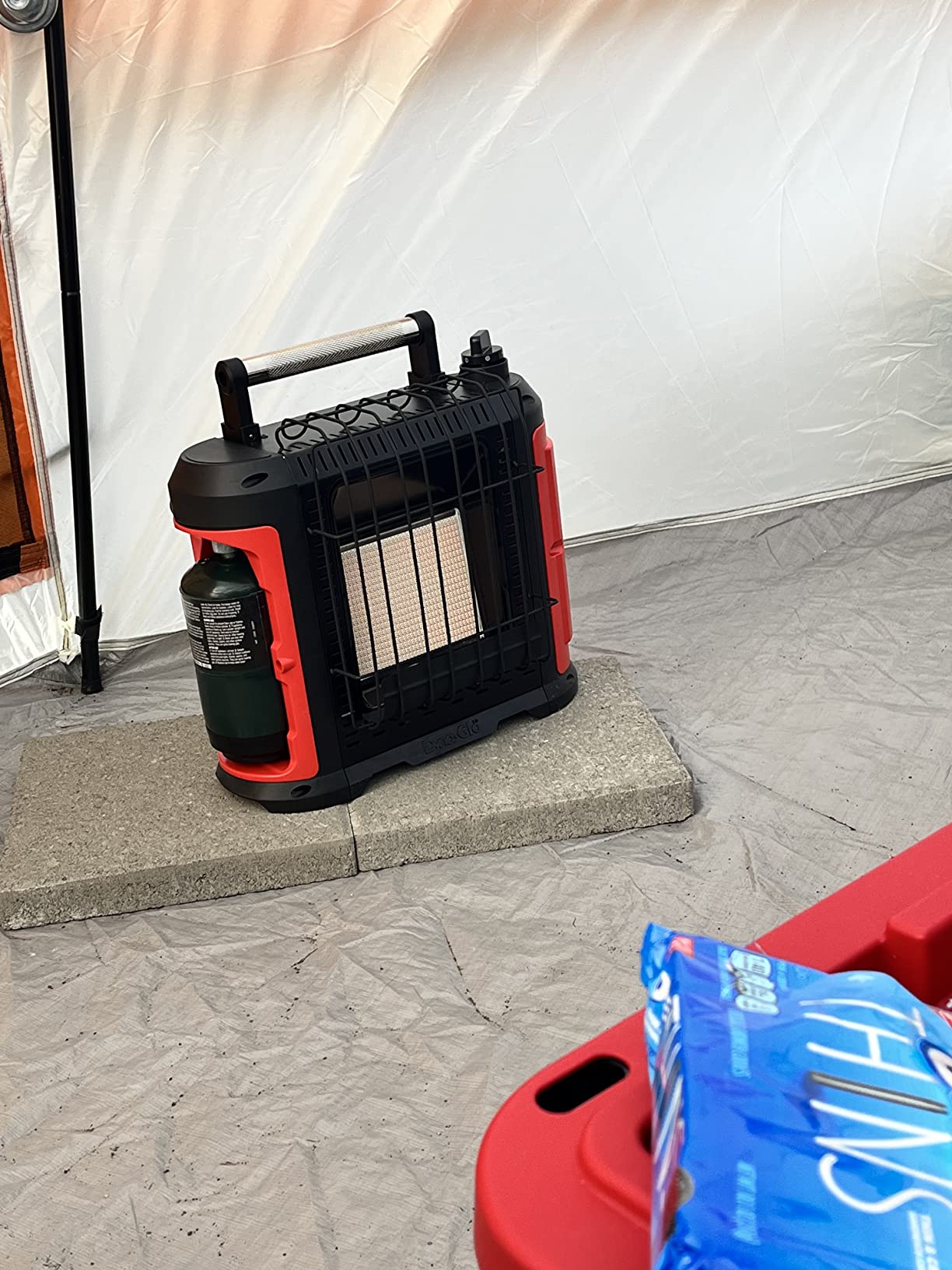
If your outage kit has to be carried up three flights of stairs or fit in the trunk with the emergency supplies, the Dyna-Glo Grab N Go is built for that. It heats up to 250 square feet, runs off a single 1 lb LP tank, and lists as approved for indoor and outdoor use.
The swivel valve is the detail that matters most in real use. Instead of wrestling with a fixed fitting, you rotate the valve assembly and swap cylinders in a few seconds. Combined with piezo ignition and continuously variable heat settings, it means no match, no pilot, and no waiting in the cold to relight.
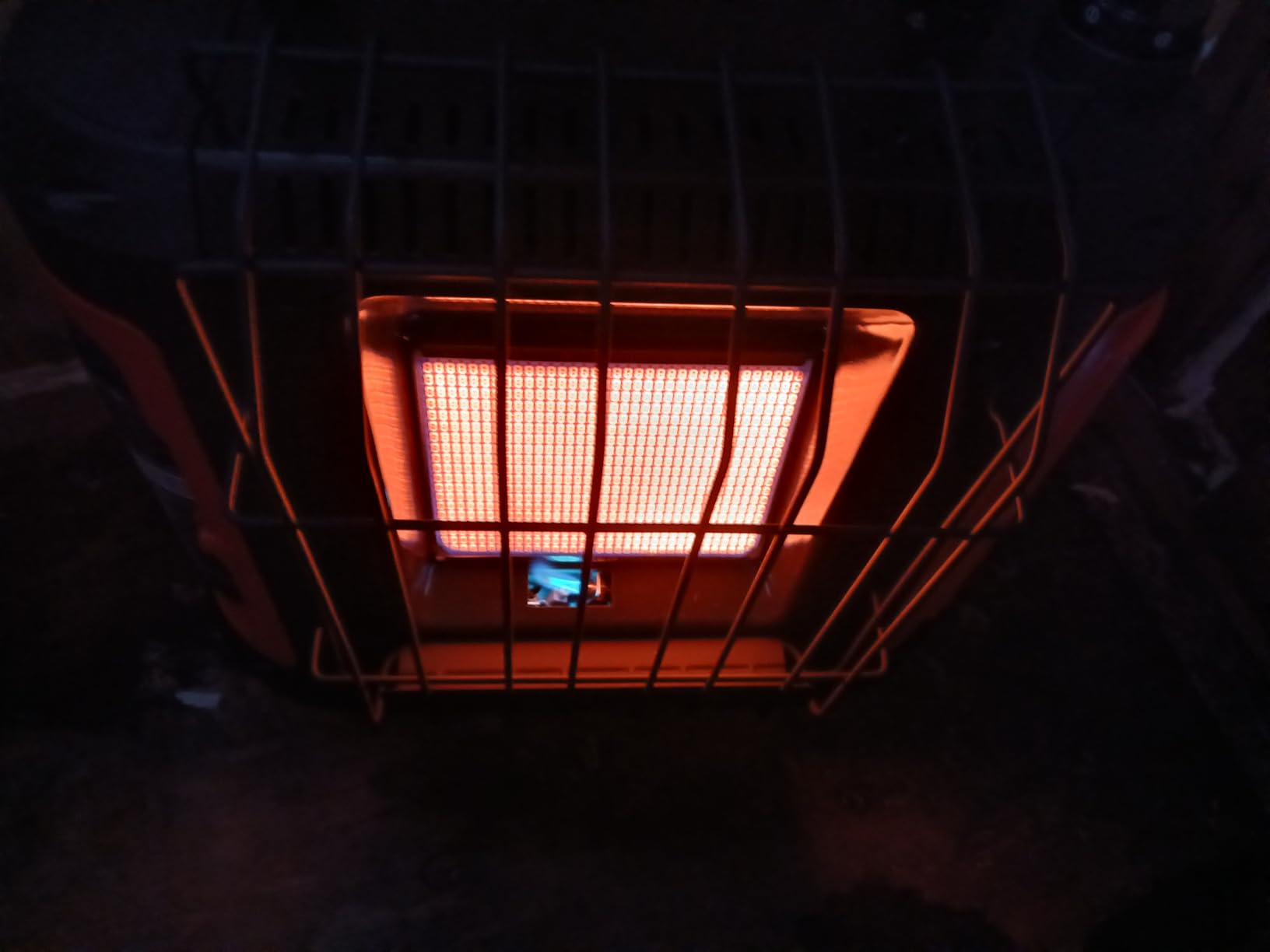
We rate this one lower than the Mr. Heater units, and the review data explains why. At 4.1 stars across 527 reviews, it has the weakest satisfaction in this group with a 13% one-star share. Buyers who like it praise portability and control convenience, but a recurring theme is that the heat output feels modest for what the dimensions suggest.
The unit itself weighs 16 ounces and measures 15.35 by 7.83 by 15.51 inches. A 1 lb propane tank is not included, so plan on adding one to the kit before you need it.
Where this heater works best
This suits tailgating, patio setups, ice fishing shelters, and emergency kits stored in a small apartment where floor space is tight. The indoor and outdoor approval means the same unit covers a balcony and a bedroom during an outage.
If you already have 1 lb cylinders on hand, this is the least fussy way to deploy them. The variable control also makes it easier to dial down than a two-position model.
Where this heater falls short
Coverage tops out around 250 square feet. That is a small bedroom at best, and it is not enough to hold a living room at a comfortable temperature over a long outage.
The weaker satisfaction score is the real caution. A noticeable share of reviews describe heat output as uneven or lower than expected relative to the size, and the 13% one-star share is the highest here. If consistent heat matters more than compact size, a Mr. Heater Buddy model is the safer pick.
6. Remington 60,000 BTU Forced Air – Best for Large Garages and Shops
Remington LP Forced Air Heater, Portable 60,000 BTU Space Heater for up to 1500 Square Feet – Liquid Propane Gas Powered, Tank Not Included
60000 BTU forced air
Covers 1500 sq ft
11 pounds
Hose and regulator included
Pros
- Heats up to 1500 square feet in 10-20 minutes
- Forced air distributes heat evenly through the space
- Only 11 pounds of steel construction
- Continuous electronic ignition and flame-out fuel cut-off
- Includes a 10 ft hose and regulator
Cons
- Louder than expected for indoor or quiet spaces
- The power cord is very short
- LP fitting on some tanks needs extra force
- Tank not included
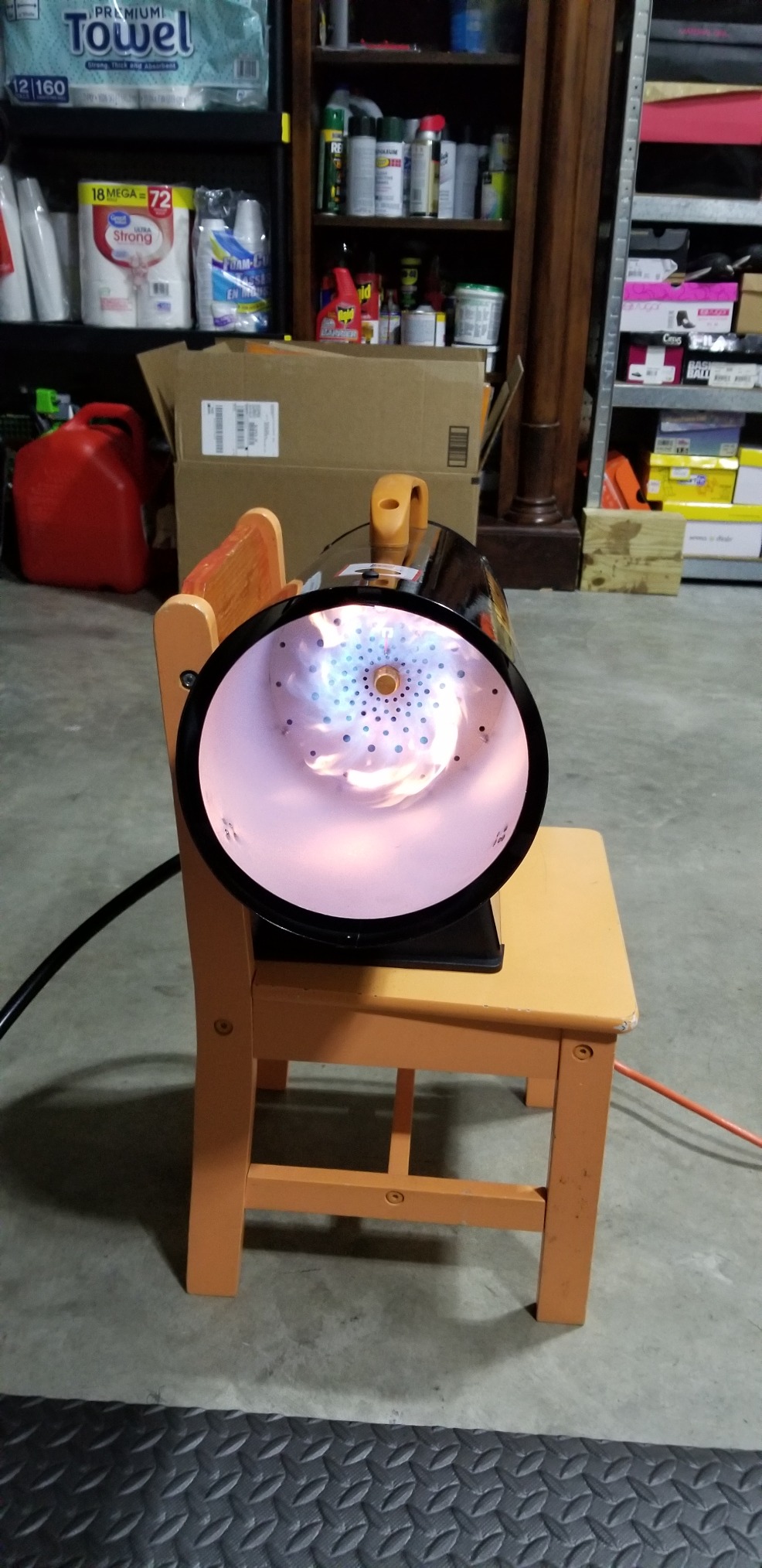
The Remington is where this roundup switches from radiant heat to forced air, and the difference is dramatic in a large space. Sixty thousand BTU pushes warm air through a fan and covers up to 1,500 square feet, warming a big garage or shop in 10 to 20 minutes rather than warming only the person standing near it.
That distribution matters more in a power outage than the BTU number on its own. A radiant heater makes one person comfortable while the rest of the room stays cold. A forced-air unit makes the whole room usable, which matters if you are working in there or if the room is part of your living space during the event.
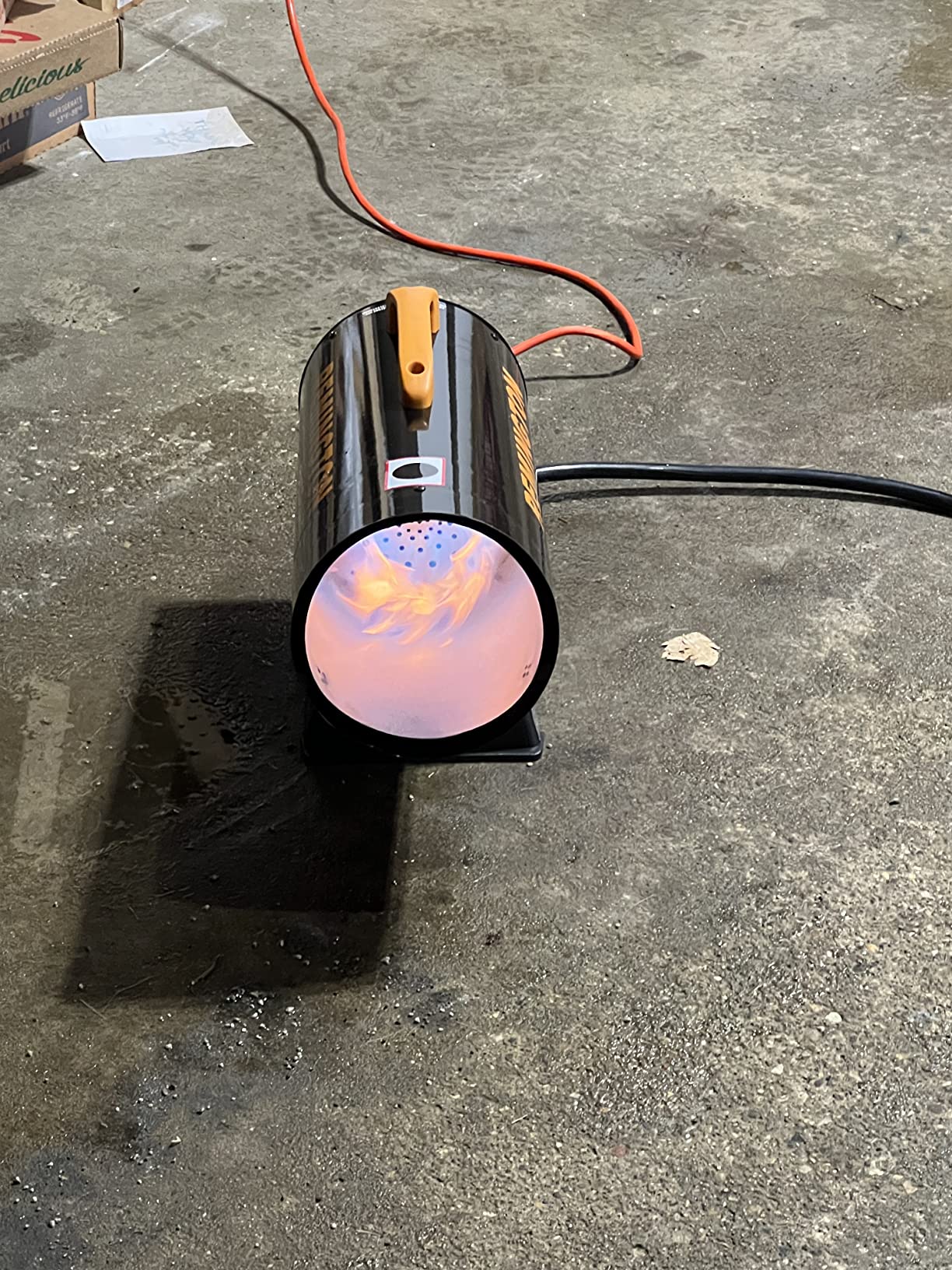
The package is well thought out for emergency use. It includes a 10 ft propane cylinder hose and regulator, and the safety package includes a thermocouple, high-temperature limit shut-off, flame-out fuel cut-off, and continuous electronic ignition. That last feature means it restarts itself without anyone walking to the unit in a dark garage.
It weighs only 11 pounds despite the steel construction, and it measures 19 by 7.5 by 13 inches. The propane tank is not included and needs to be a 20 lb cylinder for practical run time.
Where this heater works best
This is the pick for a detached garage, a workshop, a barn, or a job site where the goal is raising the whole space temperature fast. Owners routinely use it as a backup heater for exactly the power outage scenario, and the even heat distribution is what they praise most.
It also works well for anyone who wants one heater to cover an open-plan area rather than sitting directly in front of a radiant glow.
Where this heater falls short
Noise is the repeated complaint. Owners describe it as louder than expected, which is a problem in a living space and especially near a sleeping area. If the fan noise would disturb someone sleeping, the radiant alternatives here are quieter by design.
The power cord is also very short, and some units need extra force at the LP fitting. Most importantly, this is listed for outdoor use, so it needs real ventilation if you run it in an enclosed space.
7. DEWALT 68,000 BTU Forced Air – Best Hybrid Power Option
DEWALT 68,000 BTU Cordless Portable Forced Air Propane Heater
68000 BTU forced air
Covers 1700 sq ft
Battery or 120V power
13.2 pounds
Pros
- Runs on DEWALT batteries or 120V AC power
- 68000 BTU raised a 2.5-car garage from 30 to 70 F in about an hour
- Clean burn with little odor or smoke
- A 20 lb tank runs roughly 2.5 days at low
- Portable at 13.2 pounds
Cons
- No built-in thermostat so cycling is manual
- Noisy on high
- Finicky first ignition in extreme cold
- Short battery runtime on high
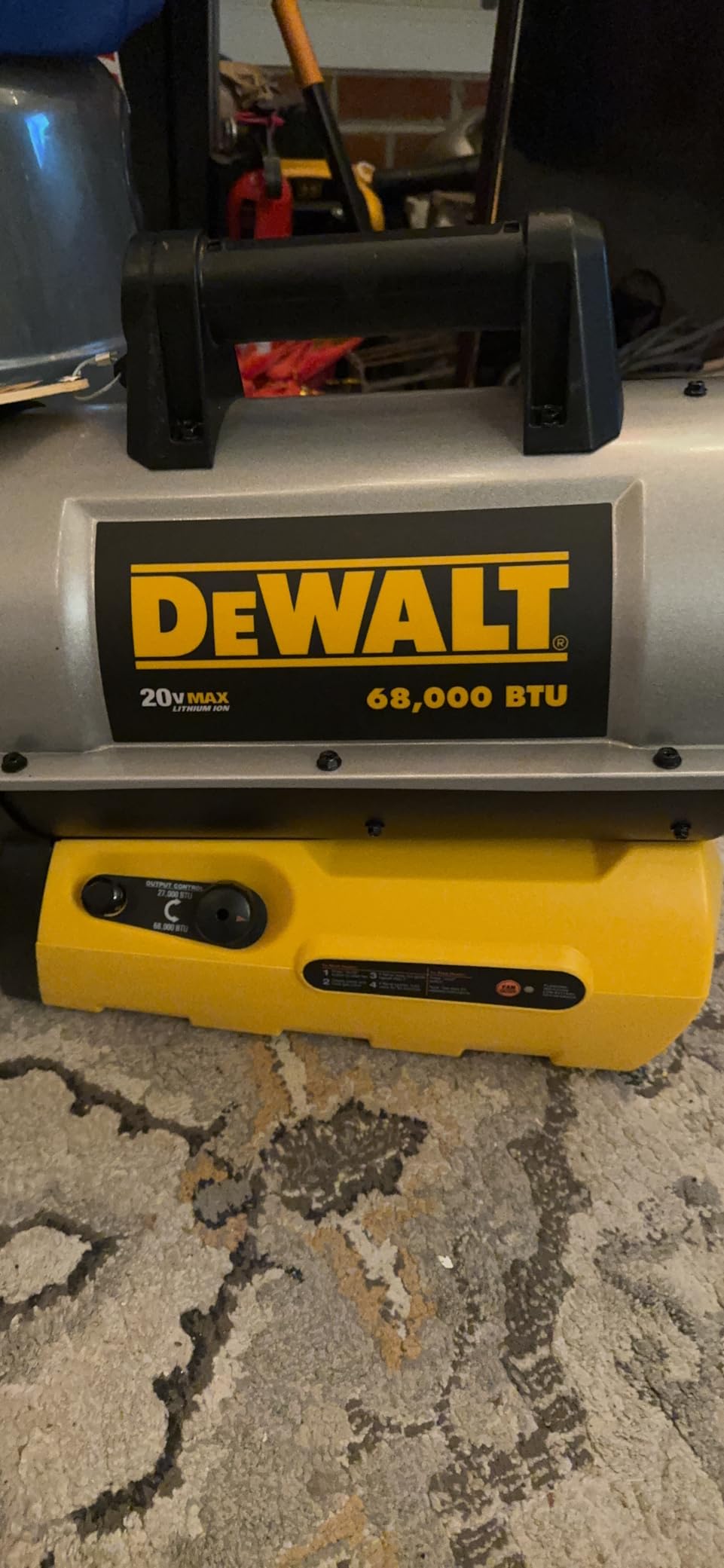
This is the only unit in the roundup that does not need a wall outlet to run its fan. The DEWALT runs on 20V and 18V DEWALT batteries or 120V AC power, which means during an outage you are not dependent on extension cords, outlets, or a generator just to move air through the heater. For a detached garage or a shop, that solves a problem the other forced-air models create.
Heat output is 68,000 BTU with coverage listed at up to 1,700 square feet. Owners report a detached two-and-a-half-car garage going from 30 degrees to 70 degrees in about an hour, which is the fastest warm-up figure in this roundup.
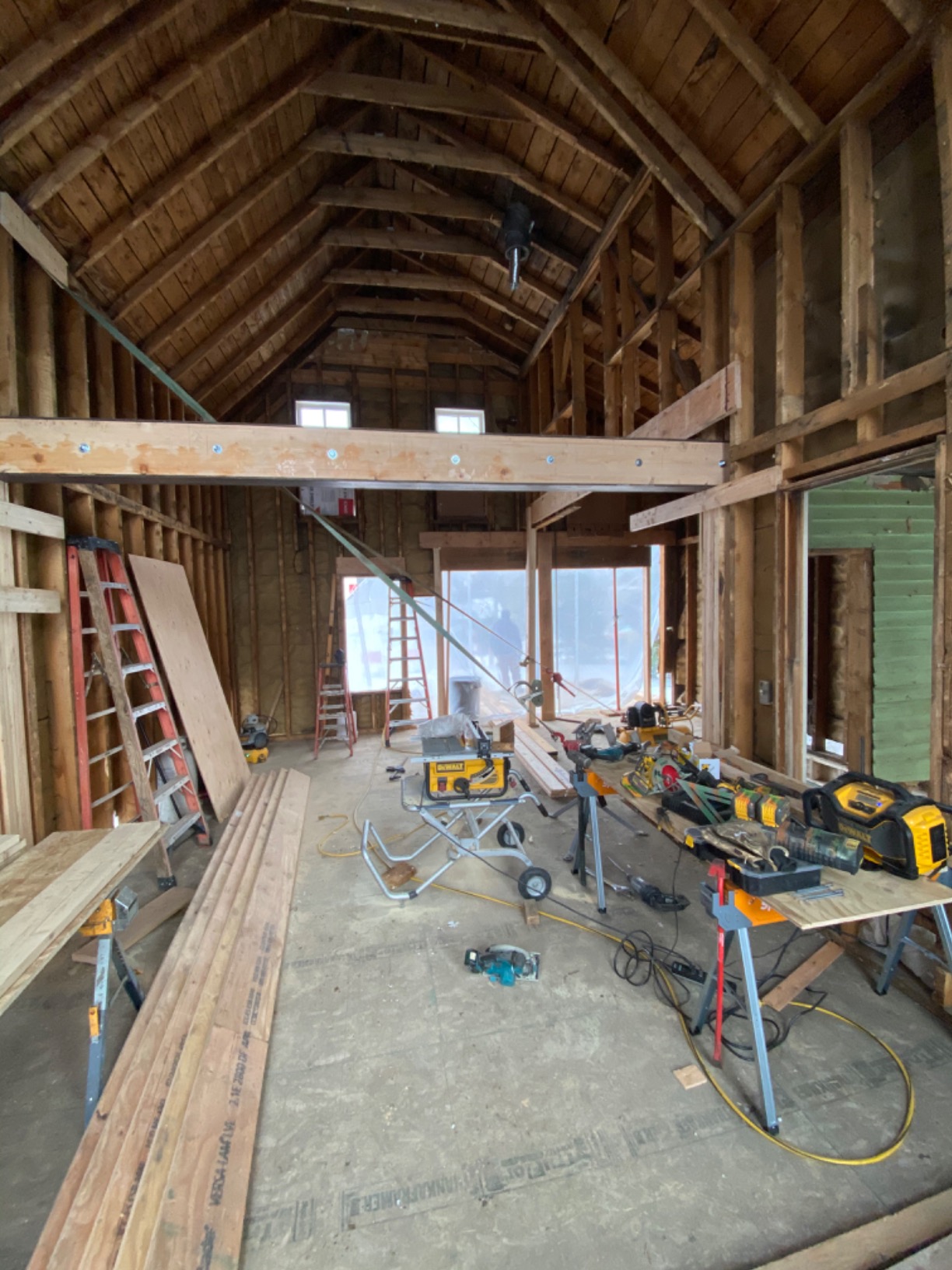
Fuel economy is a genuine strength. Reviewers note a 20 lb tank can run roughly two and a half days on the low setting, and the propane burn is clean with minimal odor or smoke, which matters when the unit is near a living space wall. The package includes the heater, a hose and regulator assembly, a handle, and the owner’s manual, and it carries a 2-year parts warranty.
At 13.2 pounds and 17.5 by 10.5 by 18 inches, it is heavier than the radiant units but still portable enough to reposition between work areas.
Where this heater works best
This is the choice for a garage or workshop where running power is limited or where extension cords are a trip hazard. If you already use DEWALT batteries on other tools, the battery-powered start is the feature that justifies the choice.
It also suits anyone who wants steady heat across a large enclosed area quickly rather than sitting inside a radiant cone of warmth. The long low-setting fuel life is well matched to an all-day or multi-day event.
Where this heater falls short
There is no built-in thermostat, so the unit runs until you turn it off. That means you are managing temperature manually in the dark, which is a real drawback during an extended outage.
It is also loud enough on high to bother horses or other animals, first ignition can be difficult in extreme cold unless you run the low-heat mode first, and battery runtime on high is short. The short list of reviews, 276 at a 4.6 average, means less long-term evidence behind it than the top-rated units here.
8. Comfort Glow GCH480 18,000 BTU Cabinet – Best Long Low-Setting Run Time
Comfort Glow GCH480 Propane(LP) Cabinet Heater
6000/12000/18000 BTU
Heats 450 sq ft
ODS and tip-over
Up to 60 hr on 20 lb tank
Pros
- Tank stores inside the cabinet as one movable unit
- Low setting runs roughly 60 hours per 20 lb tank
- Three output levels at 6000/12000/18000 BTU
- ODS and tip-over protection with push-button ignition
- Only the front panel gets hot
Cons
- Not for use in living areas so ventilation is required
- The plastic hose knob needs a wrench to tighten
- Hose routing inside the cabinet is awkward
- Initial paint odor on first use
The Comfort Glow GCH480 is built around a practical idea: put the whole fuel system inside the cabinet and put casters underneath it. Owners like that it becomes a single movable unit rather than a heater on the floor connected by a hose crossing the floor to a cylinder standing in the corner.
Run time is the headline number here. On the 6,000 BTU low setting it runs roughly 60 hours per 20 lb propane tank, which makes it the most economical option in this roundup for a long event where you are holding a space at a moderate temperature rather than blasting heat.
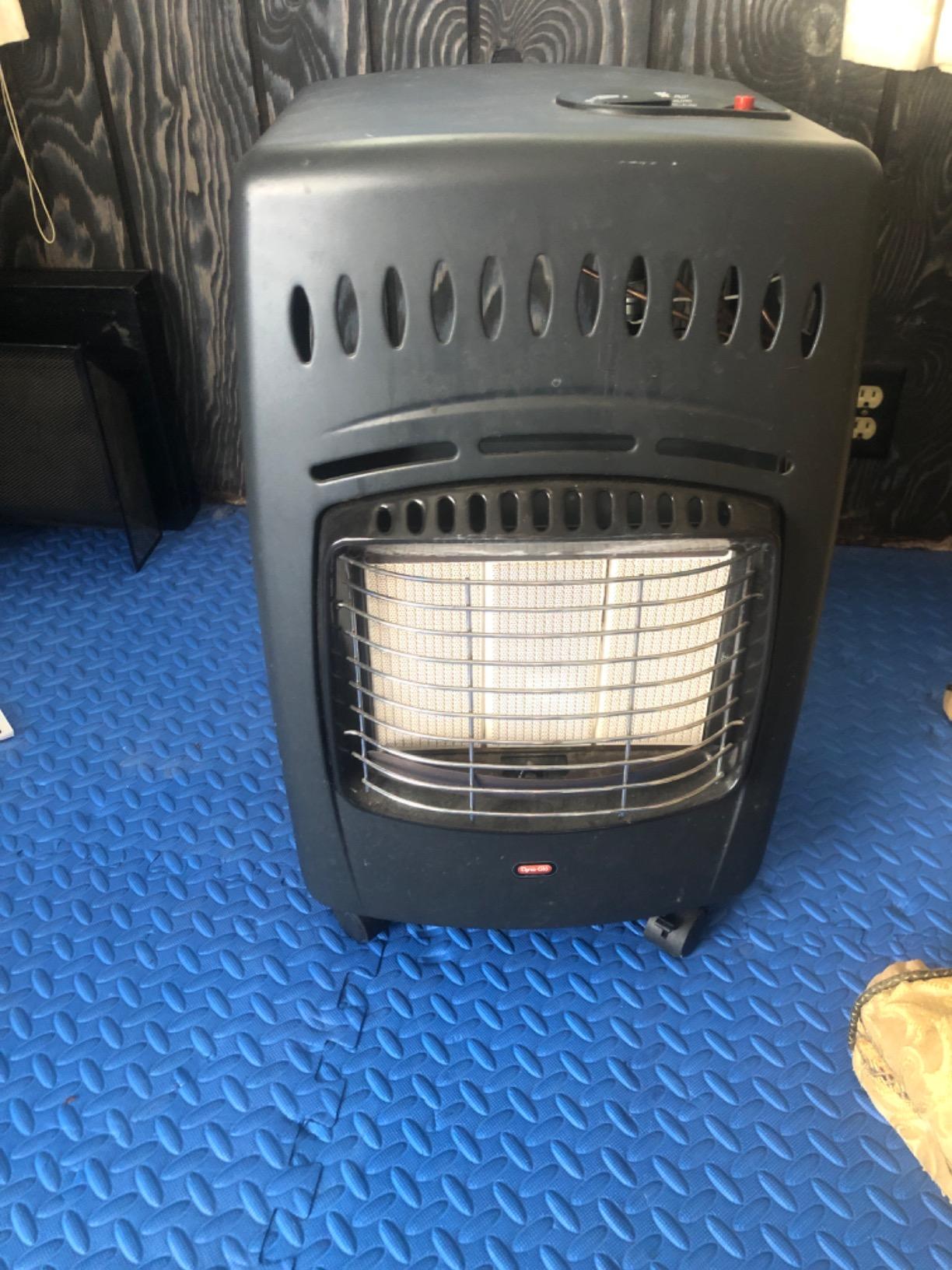
Heat reaches up to 18,000 BTU across about 450 square feet, with three output levels at 6,000, 12,000, and 18,000 BTU. Owners report an uninsulated garage or workshop reaching a workable temperature within 20 to 30 minutes, and the protective front grill and built-in wind shield help it hold that output outdoors.
Safety features include an oxygen depletion sensor, tip-over protection, and push-button ignition. Only the front panel gets hot, so the sides and top stay touchable, which matters in a tight garage.
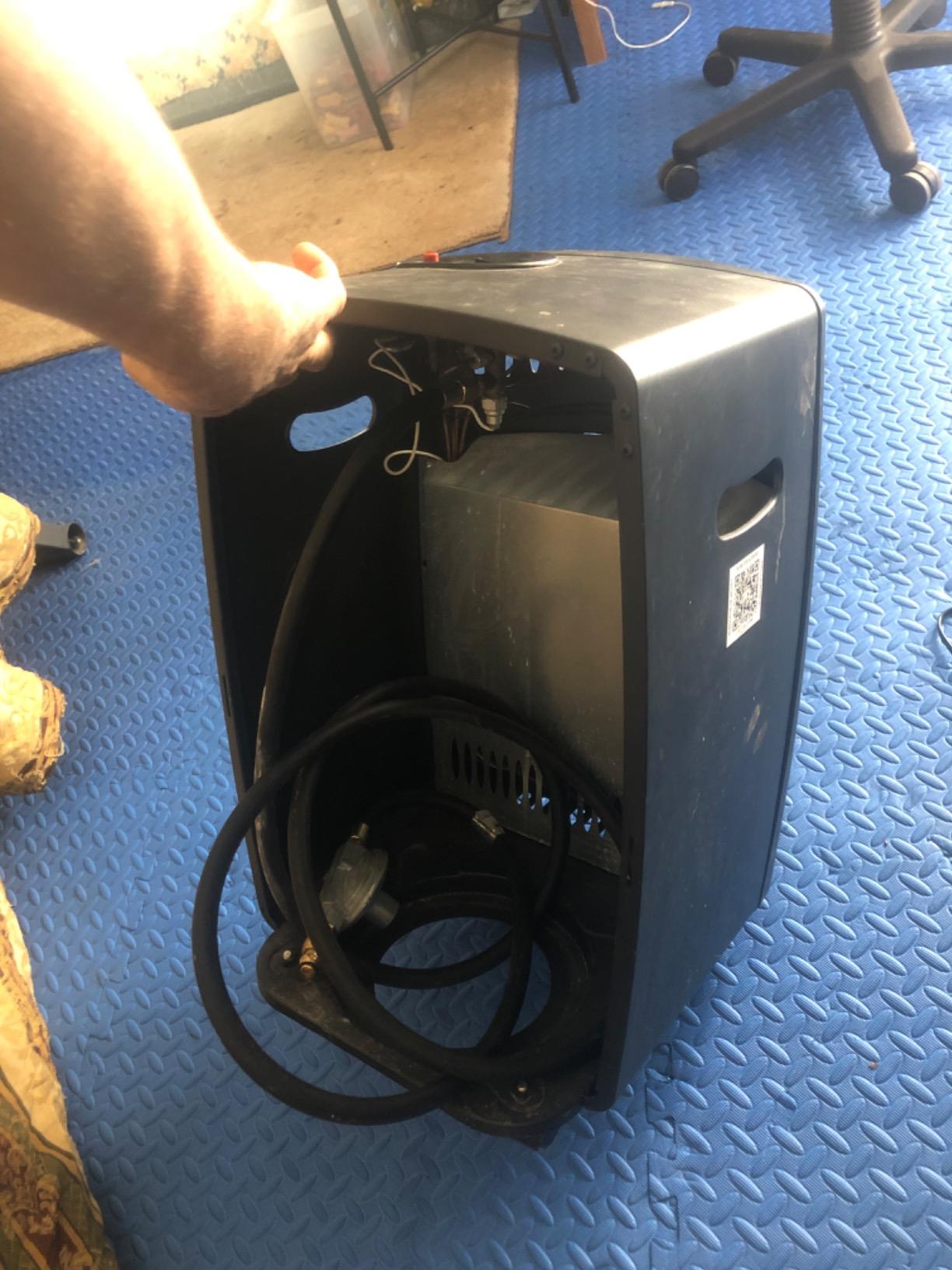
Where this heater works best
This fits a garage, workshop, or covered outdoor area where you need moderate, sustained heat over many hours rather than a fast warm-up. The four rolling casters make it simple to move the heated zone as your work area changes.
It is also a sensible outage companion for keeping an attached garage or mudroom usable when the living space cannot be safely heated. The hose and regulator are included, though a 20 lb cylinder is not.
Where this heater falls short
This one is listed as not for use in living areas, so it requires ventilation. That rules it out for bedrooms and apartments no matter how good the run time looks.
Two practical complaints recur. The plastic hose knob does not supply enough torque, so the fitting has to be tightened with a wrench to avoid a leak, and routing the hose inside the cabinet without touching the heat shield is awkward. A first-use paint odor is also common, and some buyers report a defective tip-over sensor or missing casters out of the box.
9. CAMPLUX 18,000 BTU Cabinet – Quietest Run Time for Small Spaces
CAMPLUX 18,000 BTU Propane Heater with ODS & Tip-over Protection, 3-Setting LP Gas Cabinet Heater with Regulator & Hose, Adjustable Radiant Heat, CSA Certified, Black
6000/12000/18000 BTU
Heats 450 sq ft
Below 30dB
ODS and tip-over
Pros
- Quiet operation below 30dB
- Three heat modes covering up to 450 square feet
- ODS and tip-over shutoff with CSA certification
- Five caster wheels with brakes plus a carry handle
- Up to 69 hours on the 6000 BTU setting
Cons
- Some owners report sputtering and random shutoffs
- Ignition can take several attempts in cold weather
- Radiant heat is strongest directly in front
- One review reports melted plastic near the pilot
Quiet operation is the reason this cabinet heater earns a place in this roundup. The manufacturer lists noise below 30dB, and since the cabinet design has no fan pushing air, there is no motor hum to wake someone up. That makes it the most interesting of the wheeled units for a covered porch, a garage used as a temporary room, or an RV-adjacent shelter.
Output matches the GASLAND and Comfort Glow cabinets at up to 18,000 BTU across 450 square feet, with three settings at 6,000, 12,000, and 18,000 BTU. On the low setting it runs up to 69 hours, and the regulator and hose are included.
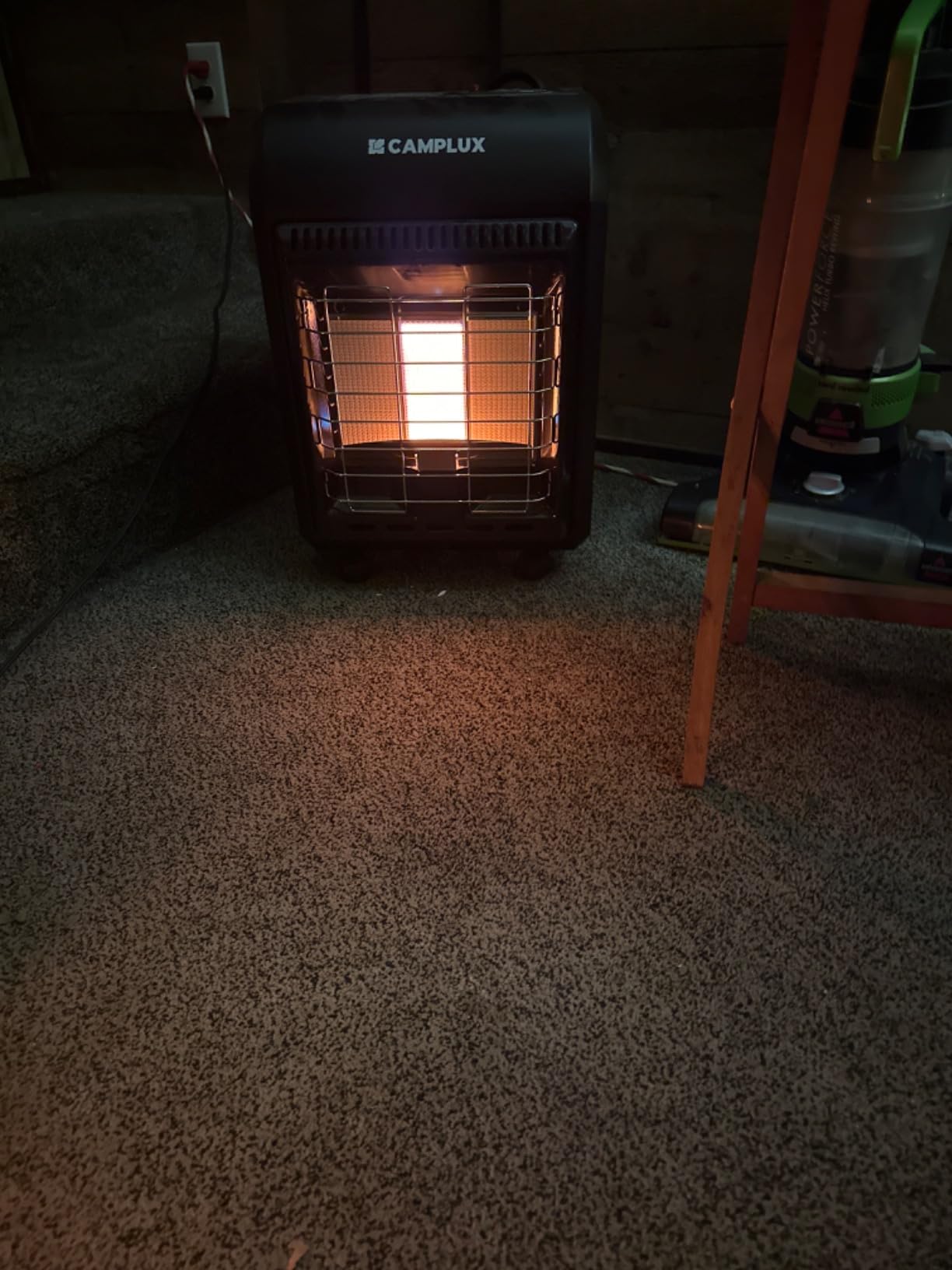
Safety is well covered with an oxygen depletion sensor, tip-over protection, and CSA certification. The chassis sits on five caster wheels with brakes and carries a handle, and it arrives assembled with the wheels already installed, so there is no build step before an outage.
A rear flap and removable brace keep the cylinder stable and catch condensation. At 14.6 pounds and 11.3 by 15 by 21.7 inches it is compact for an 18,000 BTU cabinet unit.
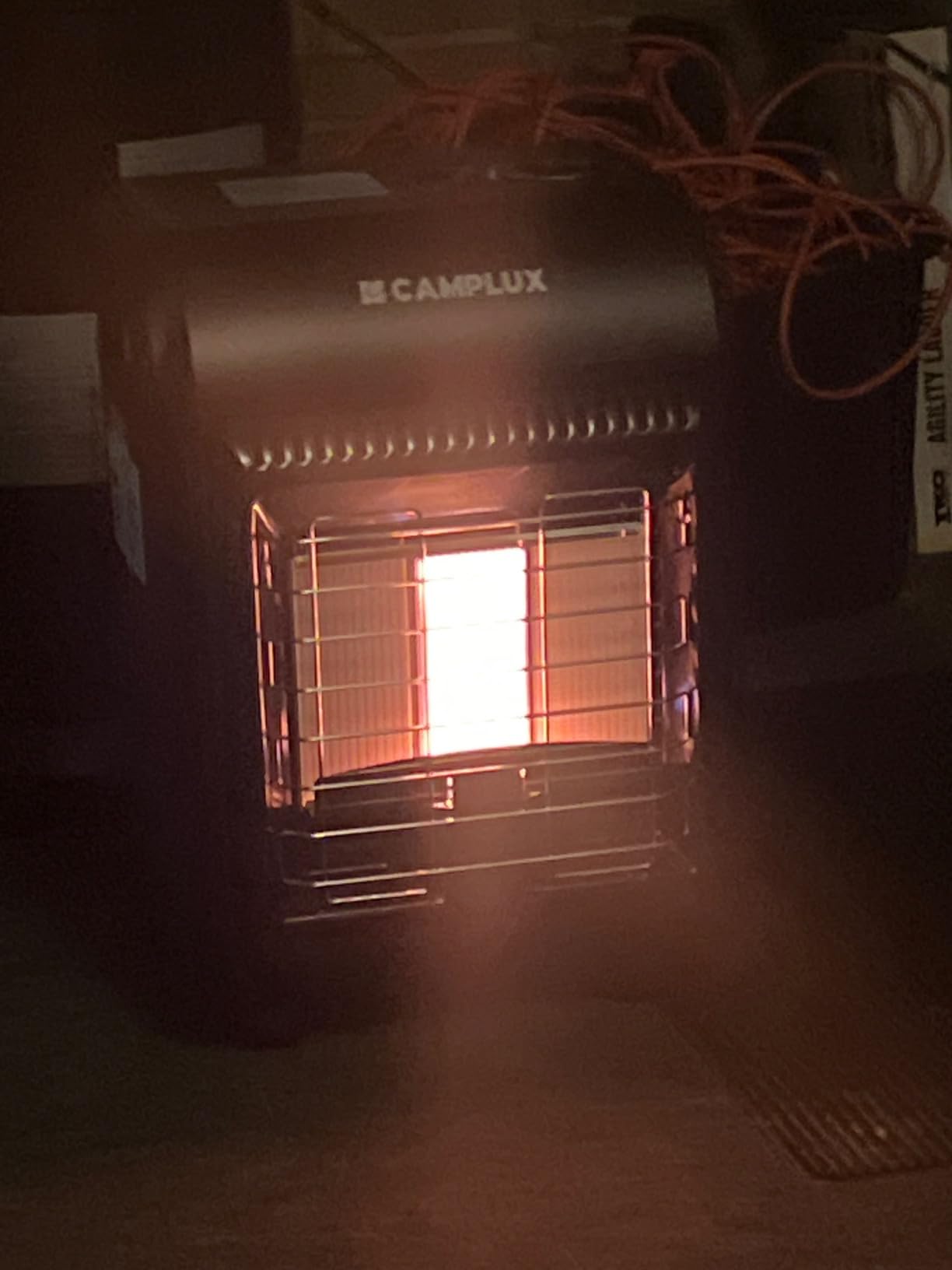
Where this heater works best
This is the pick for people who need sustained propane heat without fan noise, such as a covered porch, an uninsulated garage, or a workshop where conversation matters. Reviewers frequently buy more than one, which suggests it works well as a secondary zone heater.
The five braked casters also suit a moving setup, where the heated area shifts as different people need warmth. For patios and porches more generally, our hanging propane patio heater guide covers mounted alternatives.
Where this heater falls short
Reliability is the repeated complaint. Some owners report sputtering and random shutoffs even in ventilated spaces, and ignition can take several attempts in cold weather. That is a meaningful drawback when you are counting on the unit overnight with nobody awake to relight it.
The heat is radiant and strongest directly in front of the unit, and one review reports the plastic handle near the pilot light melting. Outdoor use and ventilation are required, so it is not a living-space heater.
10. XtremepowerUS 30,000 BTU Tank Top – Best Low-Profile Patio and Porch Heater
XtremepowerUS 30,000 BTU Propane Tanktop Heater Infrared Dual Burner Safety Shut-Off Valve, Tip-Over Switch for Garage, Camping, Hunting Double Burner
15000/30000 BTU
Heats 750 sq ft
Mounts to 20 lb tank
Tip-over gas shutoff
Pros
- No assembly and no hose or regulator
- 30000 BTU covers roughly 750 square feet
- Low profile works on a porch without overhead fire risk
- Reflector dish directs heat toward the seating area
- Tip-over switch cuts gas flow
Cons
- Heat is directed almost entirely to one side
- Match lighting only with no piezo ignition
- One reviewer reported missing mounting screws
- Outdoor use only unless the space is well ventilated
The XtremepowerUS is a tank-top heater that solves a specific problem: warming a porch or covered area where a full-size unit is too tall. Its low profile lets it sit under a roof edge without the overhead clearance a taller cabinet demands, and it mounts directly onto a 20 lb propane cylinder with no assembly, no hose, and no regulator.
Output is adjustable across three heat settings topping out at 30,000 BTU, covering roughly 750 square feet. Owners use it in two-car garages, on porches, and at hunting and camping spots, and many reviewers buy multiple units for different locations.
The metal reflector dish is what makes the low placement workable. Instead of letting heat disperse, it directs output toward wherever people are sitting. The chrome emitter guard and rust-proof steel frame also help it hold up outdoors.
Safety is handled by a tip-over switch that cuts gas flow if the unit is knocked over, and ignition uses a match through a side ignition hole rather than a piezo igniter.
Where this heater works best
This suits a covered porch, a garage, a garage or shed work area, and outdoor setups where the ceiling height is limited. During an outage it is a good choice for warming an exterior covered space so a household can gather somewhere with more ventilation than a living room allows.
It is also the simplest setup of everything in this roundup, with no connection step beyond locking it onto the cylinder. If your power outage plan includes an outdoor or semi-outdoor gathering space, that simplicity is worth a lot.
Where this heater falls short
Heat is directed almost entirely to one side, so placement determines whether it works at all. Get the reflector dish pointed at the wrong spot and you have a hot wall and cold people.
Lighting is match-only, which is harder in a dark or windy outage situation than a piezo igniter, and one reviewer reported missing mounting screws in the box. Outdoor use is the intended application, and indoor use requires a well ventilated space.
11. Dura Heat LPC25 15,000-25,000 BTU Convection Heater – Best Value Forced-Air Cabinet
Dura Heat LPC25 15-25,000 BTU Propane (LP) Convection Heater , Gray
15000-25000 BTU
Heats 600 sq ft
Up to 28 hr on 20 lb tank
Includes hose and regulator
Pros
- Very high output for a compact unit
- Even 360-degree heat distribution
- Runs up to 28 hours on a 20 lb tank
- Includes a long sturdy hose and regulator
- Built-in wind shield and tip-over auto shutoff
Cons
- Compact size keeps the heated zone tight
- Heat funnels vertically and benefits from a deflector
- Noticeably noisy on full blast
- Propane odor can be noticeable indoors
The Dura Heat LPC25 covers the middle ground between the small radiant cabinets and the large forced-air shop heaters. It runs 15,000 to 25,000 BTU with a 360-degree heating radius, warms up to 600 square feet, and throws a lot of heat out of a body that is only 11.75 inches square and 13 inches tall.
Fuel economy is the pleasant surprise. Owners report up to 28 hours of run time on a 20 lb propane tank, and the package includes a long, sturdy hose and regulator so you can place the cylinder away from the heated space.
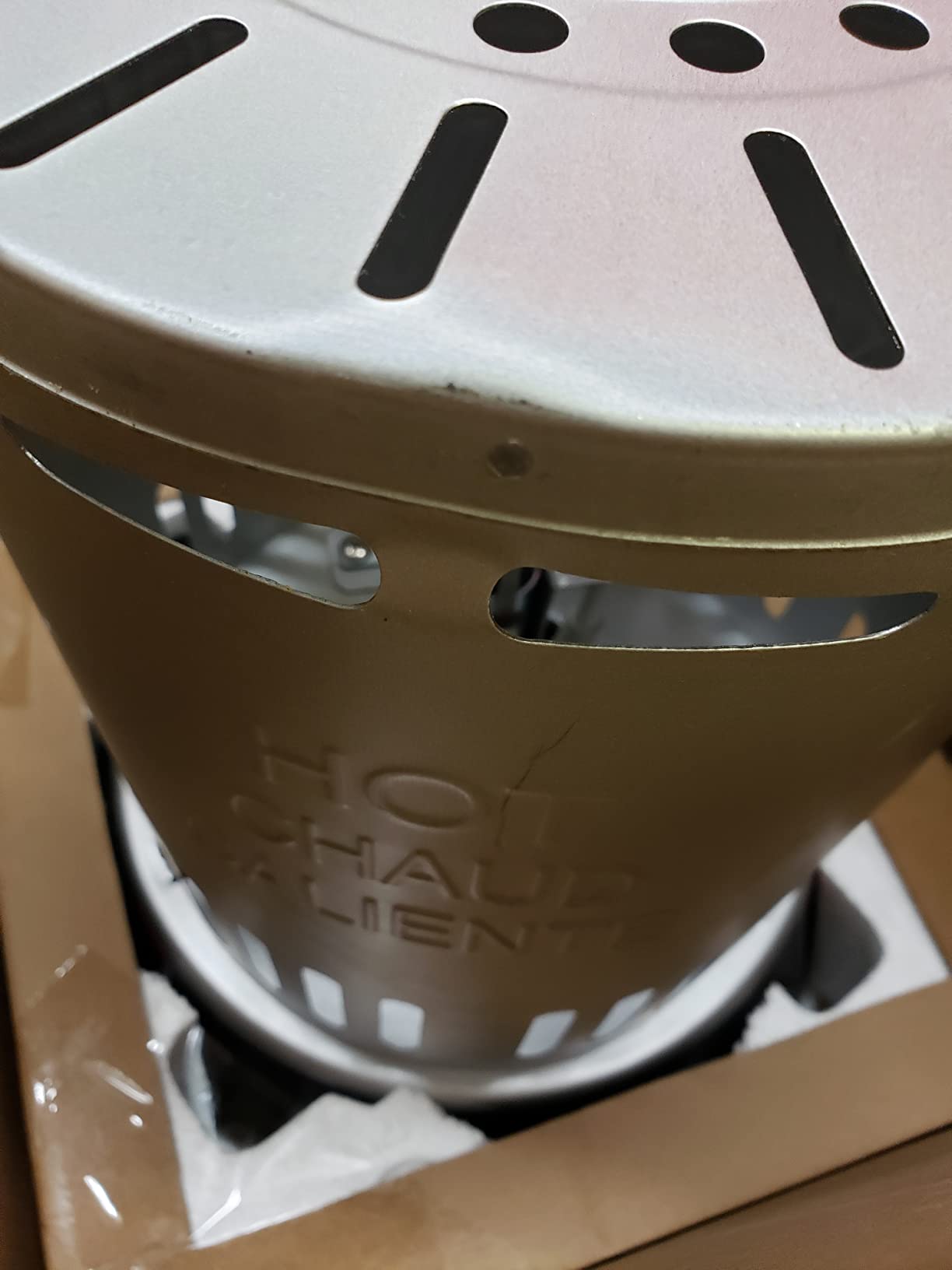
The built-in wind shield protects the flame outdoors, and tip-over safety auto shutoff handles the most common accident. It needs no electricity, so it runs through an outage with nothing but fuel and a control knob. At 7.8 pounds it is one of the most portable high-output units here.
It is also listed for indoor use, which is worth noting carefully. Buyers report the propane burning smell can be noticeable indoors, so ventilation matters more with this unit than with the higher-rated ventless models in this roundup.
Where this heater works best
This works well in a garage, workshop, greenhouse, or covered patio, which is exactly where owners put it. Users report raising the temperature in a 12 by 20 foot shed by about 10 degrees in roughly five minutes, which is fast for a unit this size.
If you already have a 20 lb cylinder and want more BTU than a Buddy heater without stepping up to a 60,000 BTU shop unit, this is the sensible middle. For unheated structures, our propane greenhouse heater guide goes deeper on that use case.
Where this heater falls short
The heated zone is tight because the unit is physically small, and heat output funnels vertically. Owners frequently add a deflector or a fan to spread that heat horizontally, which is an extra step during an outage.
It is also noticeably noisy on full blast, the listed 600 square feet coverage can fall short for a two-car garage, and the 4.1 rating across 214 reviews includes an 11% one-star share. A small number of buyers report the piezo igniter failing within the first few weeks, so test it before you need it.
12. ProCom 10,000 BTU Ventless Blue Flame Heater – Best Wall-Mount for Bedrooms and RVs
ProCom Heating Liquid Propane Ventless Blue Flame Heater With Base Feet – 10,000 BTU, T-Stat Control – Model# ML100TBA-B
10000 BTU blue flame
Heats 500 sq ft
Thermostat control
Wall mount included
Pros
- Blue flame produces noticeably low fumes
- Ventless design with no electricity required
- Accurate high/medium/low thermostat control
- Wall mount hardware and base feet both included
- Slim vertical profile fits tight rooms and RVs
Cons
- Pilot flame produces a noticeable noise
- ODS sensor can get dirty and cause shutoff
- Some units stopped igniting after a few weeks
- Base feet assembly is fiddly
The ProCom ML100TBA-B is the only true ventless blue flame heater in this roundup, and that changes how it heats a room. Instead of shining radiant heat at you, it warms the air, which circulates through the space and gives more even temperatures. Wall mount hardware and base feet both ship in the box, so you can install it at floor level or up on a wall.
At 10,000 BTU it covers up to 500 square feet, which is more floor area than any other indoor-rated unit here. The high, medium, and low thermostat control holds a room at a steady temperature rather than running flat out until you turn it off.
Safety hardware includes a pilot oxygen depletion sensor that shuts the unit down if carbon monoxide or low oxygen is detected, plus overheat protection and ANSI certification. No electricity is required, which is the entire point for outage use.
The slim vertical profile measures 6.38 by 17 by 23 inches, which makes it easy to fit in a tight room or a smaller RV where a square cabinet will not work. It is offered in propane and natural gas variants across several BTU ratings.
Where this heater works best
This is the pick for a bedroom, home office, small living room, or an RV where even heat and a wall-mounted footprint matter. Owners note the blue flame output produces noticeably lower fumes than other ventless heaters, and several replaced multiple electric space heaters with one of these.
The thermostat is the standout feature. During a long outage you can hold a temperature instead of cycling the heater manually, and with no electricity required it keeps doing that through the blackout.
Where this heater falls short
The pilot flame makes a noticeable noise, which some sleepers find distracting in a bedroom, and that is a real consideration if you plan to run it overnight.
The oxygen depletion sensor can get dirty and shut the unit off until it is cleaned, and a minority of buyers report units that stopped igniting after only a few weeks of use. The base feet assembly is also fiddly for some. At 10,000 BTU it is sized for small rooms and small RVs rather than large open spaces.
How to Choose a Propane Heater for a Power Outage?
Match BTU to the room, not the other way around
BTU is a measure of heat output, and the working rule most guides use is roughly 20 to 30 BTU per square foot. Check that against the units here: the Little Buddy at 3,800 BTU covers about 95 square feet, the Portable Buddy at 9,000 BTU covers about 225, and the ProCom ventless unit at 10,000 BTU covers about 500. The Remington at 60,000 BTU covers up to 1,500 square feet.
Oversizing wastes fuel without warming the room any faster. A 45,000 BTU tank-top heater in a 200-square-foot bedroom does not heat twice as fast; it just makes the space uncomfortably hot and burns through a cylinder. Undersizing is the more common mistake, and it shows up as a heater running flat out and still failing to hold temperature.
Decide between radiant and convection heat
Radiant heaters fire infrared heat at whatever is in front of them. That makes them fast, quiet, and efficient for warming one person quickly, which is exactly why they dominate this roundup. Their weakness is that the far side of the room stays cold and any draft cuts their effectiveness.
Convection and forced-air heaters warm the air instead, either by natural circulation or with a fan. Forced air covers far more area evenly but adds noise. The Dura Heat LPC25 sits in between with a 360-degree radius, while the Remington and DEWALT move air hardest and fastest. If you need a whole room usable rather than one seat warm, pay the noise penalty.
Check the indoor use rating first
This is the filter that matters most and the one people skip. Only the Mr. Heater Portable Buddy, the Mr. Heater Little Buddy, the Dyna-Glo Grab N Go, and the ProCom ventless blue flame unit are listed for indoor and outdoor use. Several others, including the Remington, the GASLAND cabinet, the Comfort Glow, the CAMPLUX, and the XtremepowerUS tank top, are outdoor-only or explicitly not for living areas.
Anything listed as outdoor use only needs genuine ventilation to run in an enclosed space, and no amount of sensor coverage changes that. Bringing a garage heater into a bedroom to survive a cold night is the kind of decision that turns an inconvenience into an emergency.
Consider noise and altitude before you buy
For overnight use in a sleeping space, radiator-style radiant heaters have no fan and therefore no motor noise. The CAMPLUX cabinet is listed below 30dB. Forced-air units like the Remington and the DEWALT are the loudest in this roundup, and owners of both mention the fan noise as their main drawback.
At high elevation, output falls because the air is thinner. Manufacturers rarely publish derating figures, so if you live well above sea level, size for the space at the next model up rather than the exact rating. Keeping a heater on a low or medium setting at altitude also reduces the risk of it sputtering and shutting off when oxygen dips.
Propane Tank Guide: 1 lb vs 20 lb Run Time Math
Run time depends on two numbers: the BTU output of the heater and the size of the fuel container. A 1 lb propane cylinder holds roughly 20,000 BTU of energy, and a 20 lb cylinder holds about 20 times that.
Worked against the units in this roundup, the arithmetic explains a lot of owner feedback. The Portable Buddy at 9,000 BTU runs about 2.4 hours on high and 5.4 hours on low from a 1 lb cylinder, which matches the manufacturer figures. The same heater on a 20 lb tank through a standard connector hose would run far longer, and reviewers who made that switch report being able to leave it running through a full night without a cylinder change.
The Comfort Glow and CAMPLUX cabinets lean the other way. Their low setting of 6,000 BTU stretches a 20 lb tank to roughly 60 and 69 hours respectively, which is why they are the economical choice for holding a moderate temperature over days rather than blasting maximum heat for an hour.
For a three-day outage, the practical move is to plan on 20 lb cylinders and a connector hose rather than a stack of 1 lb cylinders, which is the single most common piece of advice in outage heating discussions. Check the connector type matches your heater, tighten every fitting with a wrench rather than the plastic knob, and confirm the valve on each cylinder is fully closed when you are not using it.
Safety Checklist for Indoor Propane Heat and CO Detectors
An oxygen depletion sensor is the single most important safety feature to look for, and every indoor-rated heater in this roundup has one. It closes the gas when oxygen in the room drops below a safe level. It is a backup, not a substitute for ventilation, which is why every manufacturer in this category also requires a vented or ventilated space.
A tip-over switch is the second feature worth insisting on. It cuts gas flow if the unit is knocked over or bumped, which matters in a house with children or pets and in a garage where a car or a workbench could shift a heater. Several of the cabinets here list the tip-over sensor as the component buyers complain about most, so test it by tilting the unit before you need it.
Place a working carbon monoxide detector near the sleeping space, and follow the placement guidance that appears repeatedly in outage heating discussions: closer to the floor rather than at ceiling height, because combustion gases settle. Do not place a detector directly beside a heater, and do not rely on a heater with an ODS as a substitute for a detector.
Finally, keep cylinders upright, secured, and away from exits, and store spare cylinders outdoors or in a detached location rather than in a hallway or living space. Never run a propane heater while you are asleep in a closed room with no ventilation. If the pilot goes out, open a window and air the room before relighting, which is standard advice and worth repeating before a storm rather than during one.
Frequently Asked Questions
What is the best heater to use during a power outage?
For an indoor living space, the Mr. Heater Portable Buddy at 9,000 BTU is the strongest all-round choice. It is listed for indoor and outdoor use, carries an emergency low-oxygen safety system, runs 5.4 hours on low from a 1 lb cylinder, and needs no electricity. For a garage or workshop, a forced-air propane heater such as the Remington 60,000 BTU unit warms far more area evenly.
What is the best indoor propane heater for power outages?
The best indoor propane heater for power outages is the Mr. Heater Portable Buddy. Only a handful of propane heaters are rated for indoor use, and this one combines a 9,000 BTU radiant output with coverage for about 225 square feet, two heat settings, and a low-oxygen safety system. The ProCom 10,000 BTU ventless blue flame unit covers more floor area and adds thermostat control.
Does propane heat work during a power outage?
Yes. A propane heater burns liquid propane directly and needs no electricity, so it keeps running when the grid is down. Only the ignition system and any fan draw power, and the indoor-rated models here use piezo igniters that do not need a battery or a wall outlet. The DEWALT forced-air unit goes further and can run its fan on a battery.
What is a good heater that doesn’t use a lot of electricity?
Any propane heater uses zero electricity from the grid, which is what makes it useful in an outage. If you want low energy use even when the power is on, choose a radiator-style radiant unit such as the Mr. Heater Little Buddy, which has no fan at all and a single 3,800 BTU setting, or the ProCom ventless unit, whose thermostat prevents the burner from running harder than the room needs.
How long does a 1 lb propane tank last on a heater?
On the Mr. Heater Portable Buddy, a 1 lb cylinder runs about 2.4 hours on the 9,000 BTU high setting and 5.4 hours on the 4,000 BTU low setting. Lower-output heaters stretch a cylinder further, while higher-output models burn through one quickly. For outages lasting more than a day, most owners switch to a 20 lb tank with a connector hose.
Can you use a propane heater indoors safely?
Only models that are specifically listed and certified for indoor use, such as the Mr. Heater Portable Buddy, the Mr. Heater Little Buddy, the Dyna-Glo Grab N Go, and the ProCom ventless blue flame unit. All of them include an oxygen depletion sensor that shuts off the gas when oxygen drops. You still need a working carbon monoxide detector and a room with reasonable ventilation.
Final Verdict for 2026
The best propane heaters for power outages come down to one question: where is the heat going. For a bedroom, apartment, or RV living space, the Mr. Heater Portable Buddy at 9,000 BTU is the pick, because it is indoor rated, quiet, cheap to fuel on its low setting, and backed by more than 29,000 reviews. The Mr. Heater Little Buddy covers smaller personal-warming jobs, and the ProCom ventless blue flame unit wins when even room temperature and wall mounting matter more than radiant speed.
For a garage, workshop, or covered outdoor space, the picture changes. The Mr. Heater 45,000 BTU tank top gives the biggest radiant wall of heat with no hose to connect, while the Remington and DEWALT forced-air units warm whole buildings evenly and fast. Whatever you choose, buy the fuel before the storm, keep a carbon monoxide detector near the floor, and respect the indoor or outdoor rating on the label.