
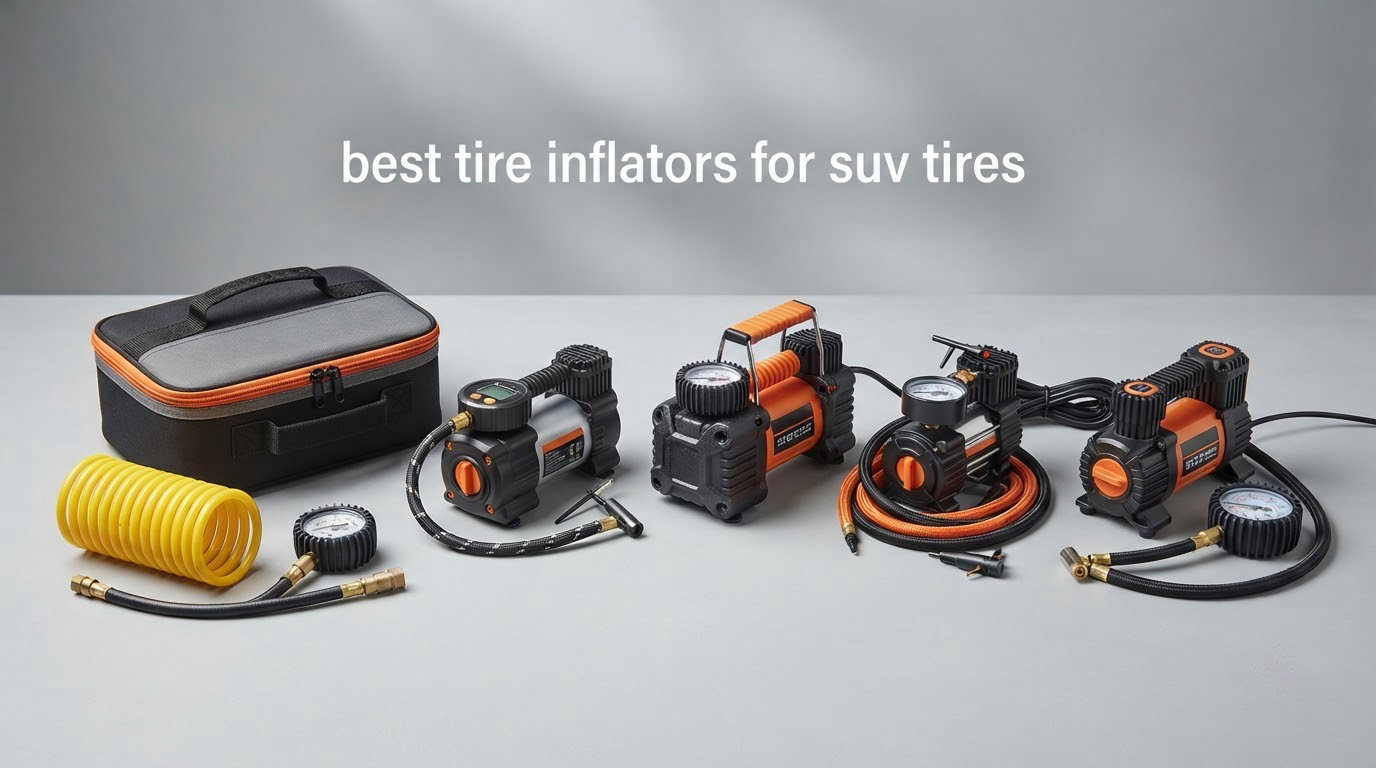
The best tire inflators for SUV tires fall into three clear groups. For most owners, the AstroAI 160PSI Cordless Inflator is the one to buy: a 160 PSI ceiling, a 20V battery, a 12V DC adapter, and a 4.6-star rating across more than 16k reviews. If your SUV runs 33-inch or 35-inch off-road tires, the ETENWOLF VORTEX S6 or the VIAIR 300P cover the ground. Here is how the ten fit.
SUV tires are not just bigger than sedan tires, they hold more air. That single fact changes which pump works, because a small handheld that tops off a crossover in 40 seconds can take far longer on a body-on-frame rig wearing 35s. Pressure also drops roughly 1 PSI for every 10 degrees Fahrenheit of temperature change, so cold weather is when an underinflated tire is most likely to be found.
Underinflation is not a comfort issue. It causes uneven tread wear across the shoulders, longer stopping distances, worse fuel economy, and a much higher chance of a blowout on a heavy vehicle. Having a portable tire inflator that lives in the cargo area turns a roadside problem into a few minutes of work.
We built this list around the specs that actually matter for SUV-sized tires: maximum PSI, airflow in liters per minute, duty cycle, hose and cord reach, and battery capacity. We used published manufacturer specifications plus what owners report in the review data. We did not bench-test these units ourselves, and we say so up front.
Table of Contents
Top 3 Picks for Best Tire Inflators for SUV Tires (October 2026)

AstroAI 160PSI Cordless Inflator
- 160 PSI max covers SUV and LT pressures
- 20V battery plus 12V DC dual power
- Up to 20 minutes of continuous run
- 50 dB operating noise

AVID POWER 20V Cordless Inflator
- 30 LPM dual power cordless inflator
- Metal cylinder and metal gears
- 20V battery plus 9.8 ft 12V cord
- 1.8 kg with tool bag

VIAIR 300P 12V Inflator Kit
- Rated for tires up to 33 inches overall
- 25 ft 5-in-1 hose with inline gauge
- 2.3 CFM at 150 PSI working pressure
- Aluminum body with vibration tray
Best Tire Inflators for SUV Tires (October 2026)
Every pick below is designed around SUV-class tires. The columns worth scanning first are maximum PSI and airflow, because those two numbers decide how long a fill takes on a large tire.
| Product | Specifications | Action |
|---|---|---|
| AstroAI 160PSI Cordless Inflator |
|
Check Latest Price |
| AVID POWER 20V Cordless Inflator |
|
Check Latest Price |
| VIAIR 300P 12V Inflator Kit |
|
Check Latest Price |
 GSPSCN 12V Heavy Duty Inflator GSPSCN 12V Heavy Duty Inflator |
|
Check Latest Price |
 ETENWOLF VORTEX S6 ETENWOLF VORTEX S6 |
|
Check Latest Price |
 AUXITO 26000mAh Inflator AUXITO 26000mAh Inflator |
|
Check Latest Price |
 ETENWOLF VORTEX S7 ETENWOLF VORTEX S7 |
|
Check Latest Price |
 WOLFBOX 150PSI Inflator WOLFBOX 150PSI Inflator |
|
Check Latest Price |
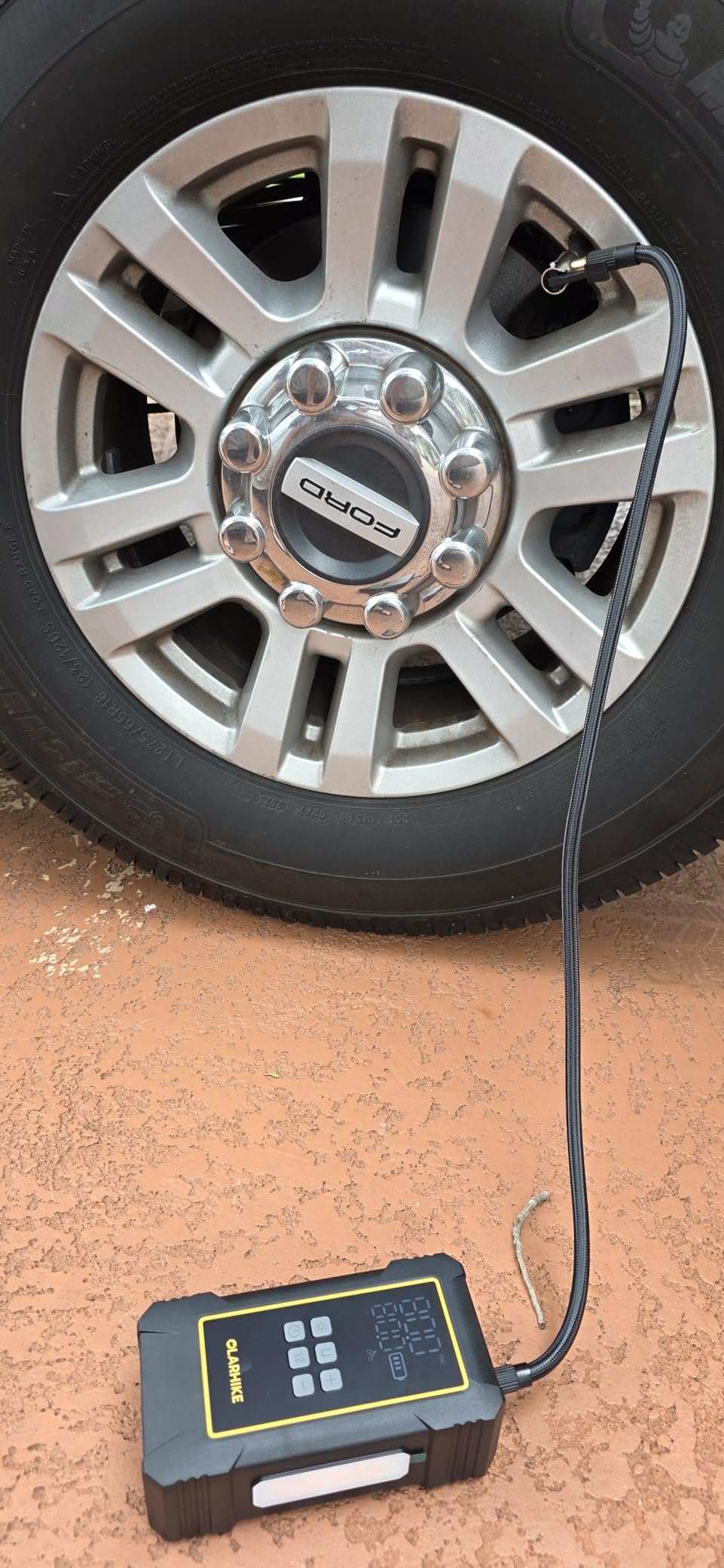
 OlarHike 12000mAh Inflator OlarHike 12000mAh Inflator |
|
Check Latest Price |
 Fanttik X10 APEX Inflator Fanttik X10 APEX Inflator |
|
Check Latest Price |
1. AstroAI 160PSI Cordless Inflator – Best Overall for SUV Tires
AstroAI Cordless Tire Inflator Portable Air Compressor 160PSI 12VDC Battery
160 PSI max
20V battery plus 12V DC
20 min continuous
50 dB
1.15 kg
Pros
- 160 PSI ceiling covers SUV and LT tire pressures
- Inflates 30 to 36 PSI in under 40 seconds
- Dual power with rechargeable 20V pack and 12V adapter
- Quiet 50 dB running noise
- Full nozzle kit and storage bag
Cons
- Charger not included a USB-C cord only
- Predictably plastic body
- Hot hose and quicker battery drain on long fills
This is the pump we would put in a family SUV without hesitating. The headline spec is the 160 PSI ceiling, and that number is what separates it from most cordless handhelds, which top out around 100 PSI. Most passenger SUVs run 30 to 45 PSI cold, so 100 PSI would technically work, but the headroom matters when a tire is hot and overinflated and you need to bleed air back down to target.
It runs two ways. The built-in 20V rechargeable pack handles the case where your accessory socket is occupied or the vehicle is a fair distance from the tire, and the included 12V DC adapter handles long sessions where you do not want to burn through the pack. Owners on car forums describe exactly this pattern: cordless in the driveway, plugged in at the roadside.
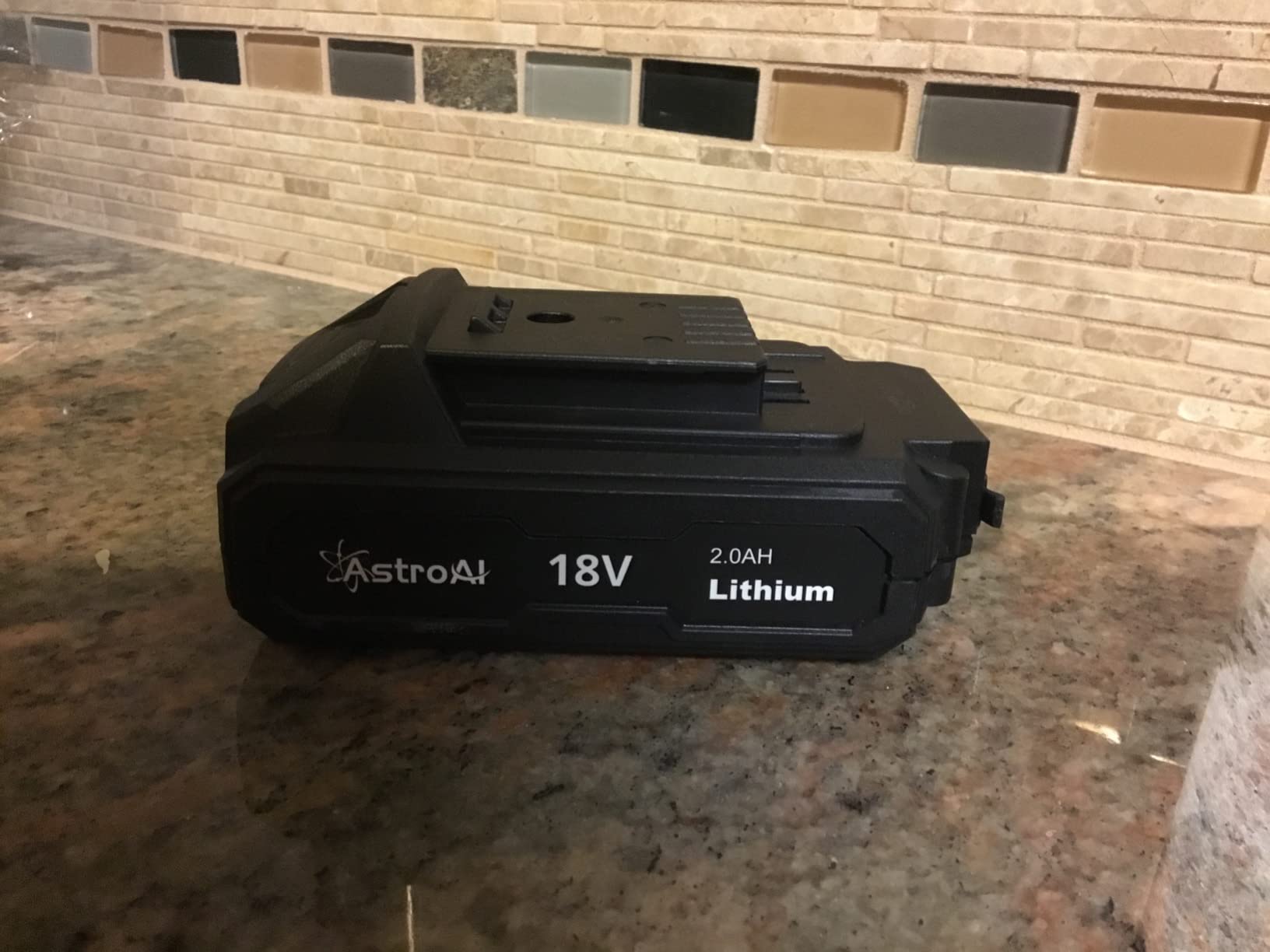
Manufacturer figures put a 30 to 36 PSI top-off on a 195/65 R15 in under 40 seconds and a full 195/65 R15 fill in about 4 minutes, with up to 20 minutes of continuous operation before a break is needed. Those numbers line up with what reviewers describe, and the real-world value here is the size of the battery relative to a typical top-off job rather than a full fill from flat on four tires.
The metal cylinder and gear set are worth noting because plastic internals are the usual first thing to fail in cheaper pumps. The unit weighs 1.15 kg and measures 6.69 by 3.15 by 9.45 inches, which is a genuinely small footprint for a cargo-area tool. The in-box kit is unusually complete: inflation needle, tapered adapter, Presta-to-Schrader adapter, extension hose coupling, storage bag, USB-C cord, replacement fuse, and a 2.0 Ah rechargeable pack.
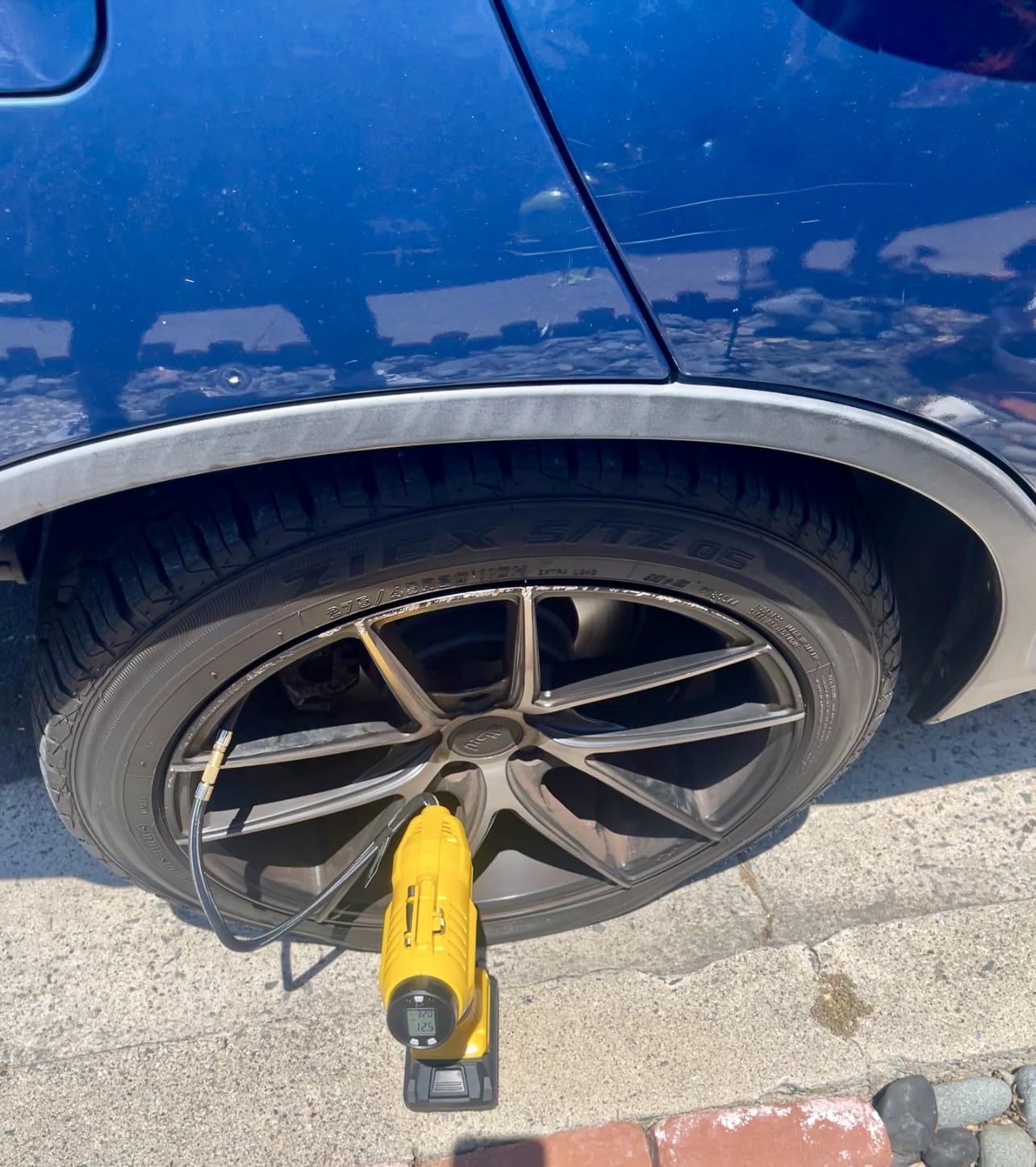
Who This Pump Is Right For
Midsize and three-row SUV owners doing seasonal top-offs and pre-trip checks will find this the easiest unit to live with. Because it is cordless, you can inflate all four tires without leaving the engine running, which sidesteps the car battery question entirely. It also runs from minus 20C to 55C according to the manufacturer, so winter top-offs in a cold driveway are within spec.
If you tow, run a boat, or own a dually, the battery is the limiting factor. Reviewers are clear that sustained multi-tire inflation on large tires drains the pack quickly and that recharge time afterwards is long. For that work, look at a larger pack or a 12V unit that never runs down.
Who Should Skip It
Skip this if you plan to air down and reinflate 33 or 35-inch off-road tires on a trail day. That is a volume job, and this is a top-off machine with a 160 PSI ceiling, not a high-volume tank compressor.
Also skip it if you want a metal-bodied unit that feels solid in the hand. The construction is mostly plastic, and reviewers who prefer durability tend to move up to an aluminum-bodied kit. One small annoyance: the wall charger is not in the box, only a USB-C cord, so you need a USB-C power source or your own charger.
2. AVID POWER 20V Cordless Inflator – Best Value Cordless Pick
AVID POWER Cordless Tire Inflator Portable Air Compressor 20V Battery Pump
100 PSI max
30 LPM
20V battery plus 12V
1.8 kg
65 dB
Pros
- Largest review base in the roundup
- 30 LPM inflates a 195/60 R14 to 36 PSI in under 3 minutes
- Dual power with 20V pack and 9.8 ft 12V cord
- All-metal cylinder and metal gears
- Tool bag and multiple nozzles included
Cons
- 100 PSI ceiling rules out truck and trailer work
- Not built for high-volume items
- Needs a 3 minute cooldown after 10 to 15 minutes of running
- Short 1.64 ft hose
With close to 29,000 reviews, this is the most thoroughly owner-tested inflator in the group, and that record is worth something on its own. It sits in the Wheel and Tire Air Compressors and Inflators category at number 17, with more than 1,200 units ranked in Automotive. Long-run consistency is the argument here, not a headline spec.
The 30 LPM airflow is a genuine step up from typical small handhelds. A 195/60 R14 from empty to 36 PSI takes under three minutes on paper, and the dual power setup means the 20V pack handles the driveway while the 9.8 ft 12V cord handles a longer session at the roadside. Metal cylinder and metal gears are the construction choice we look for in pumps expected to live in a trunk for years.
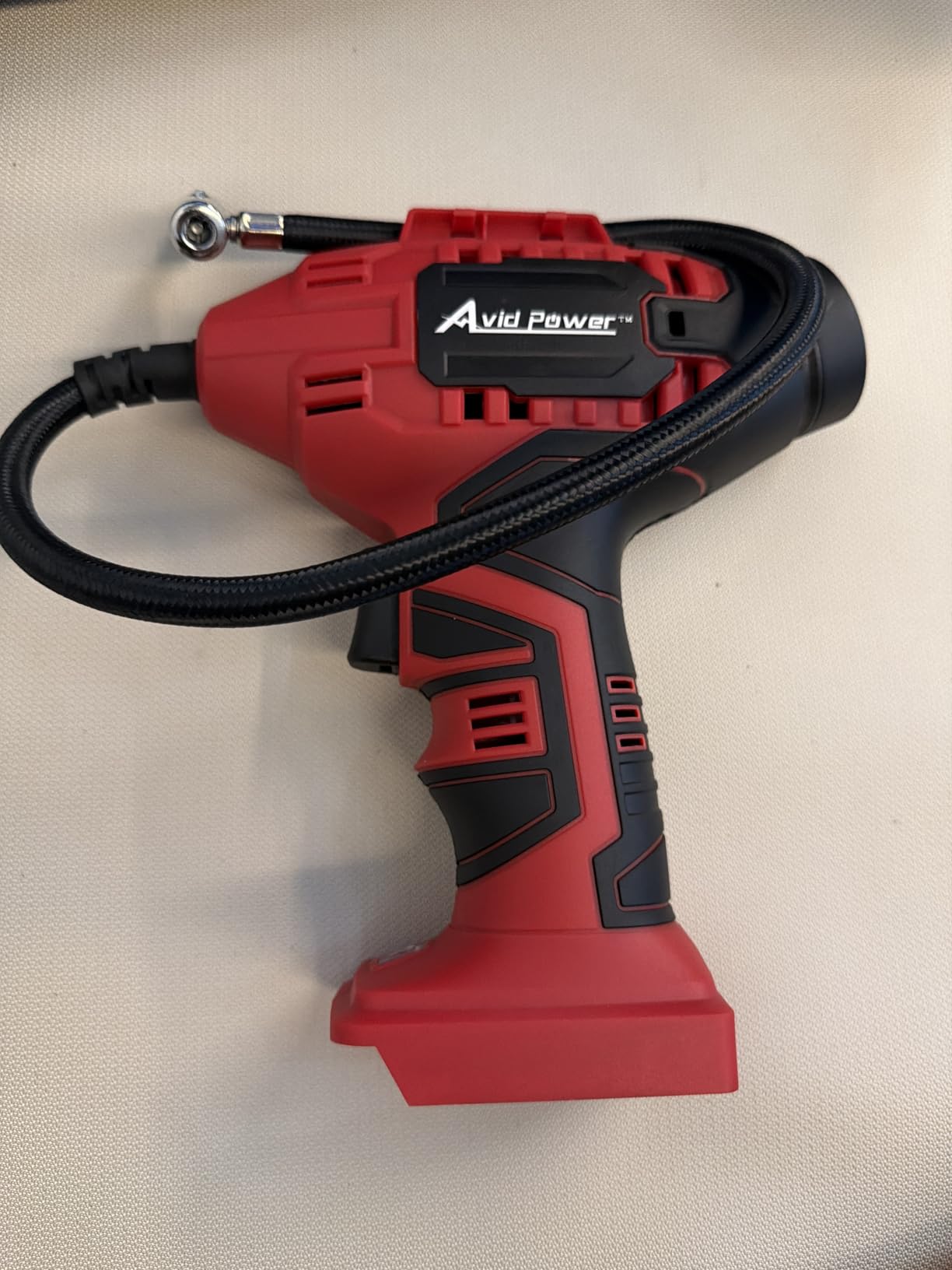
At 1.8 kg and 7.48 by 2.91 by 10.24 inches, it is a full size tool rather than a pocket unit, which is appropriate for something with this much internal metal. The battery takes 3 hours to charge, the maximum current draw is 8 A, and peak output is 200 watts at 0.27 hp. Noise is listed at 65 dB.
The display is a four-unit anti-glare panel reading PSI, BAR, KPA, and KG-CM, with accuracy stated at plus or minus 2 PSI. That tolerance is slightly wider than the plus or minus 1 PSI claimed by the ETENWOLF and AUXITO units, which is why we still recommend a separate pencil gauge for final readings.
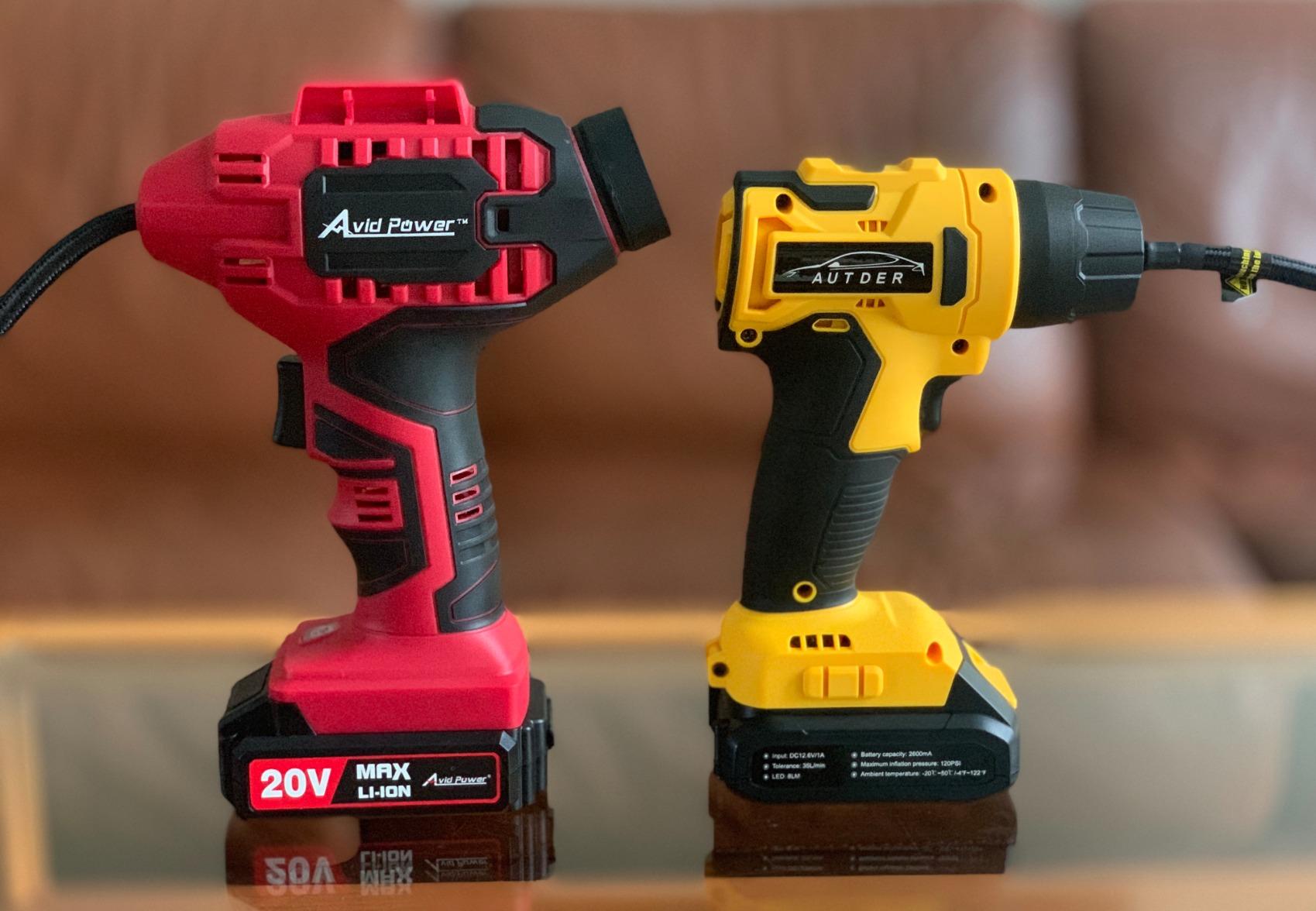
Who This Pump Is Right For
This suits a normal-size SUV on a cold-weather top-off schedule. The 100 PSI ceiling is not a problem for a tire rated at 30 to 40 PSI, and the metal internals mean it should still be working after several seasons of use. Owners who want a proven, low-surprise cordless tool tend to land here.
The 3-minute cooldown after 10 to 15 minutes of continuous running is the spec to plan around. For topping off four tires from 28 to 35 PSI, you will almost certainly finish inside that window, so the cool-down rarely comes into play in normal use.
Who Should Skip It
Skip it for light truck tires or any setup that specifies pressures above 100 PSI. The manufacturer is direct about this: the unit is not suitable for high-volume items or high-pressure truck and trailer tires. If you tow a trailer or run LT tires at 50 PSI and above, this is the wrong class of pump.
The 1.64 ft hose is also the shortest on the list. On a long SUV with a front-only accessory socket, you will be moving the vehicle to reach the rear tires. That is a small annoyance for a top-off job and a real one when a tire is low.
3. VIAIR 300P 12V Inflator Kit – Best for 33-Inch Tires
VIAIR 300P 12V Portable Tire Inflator, 150 PSI for Truck and SUV Tires
150 PSI
2.3 CFM
33 inch tire rating
25 ft hose
8.7 lb
Pros
- Rated for tires up to 33 inches overall diameter
- 25 ft hose plus 8 ft cord reaches every tire
- 414 watt aluminum pump at 2.3 CFM free flow
- 5-in-1 inflator and deflator hose with inline gauge
- Deluxe dual-compartment bag and anti-vibration tray
Cons
- Battery clamp and running engine required
- 33% duty cycle needs cool-down pauses
- Heaviest unit in the roundup at 8.7 lb
- No digital auto shut-off
This is the only unit here with a published tire diameter rating, and that is why it earns a place in a roundup about SUV tires. VIAIR states it handles tires up to 33 inches in overall diameter, which covers the most common off-road upgrade on a Jeep or a full-size truck without guessing.
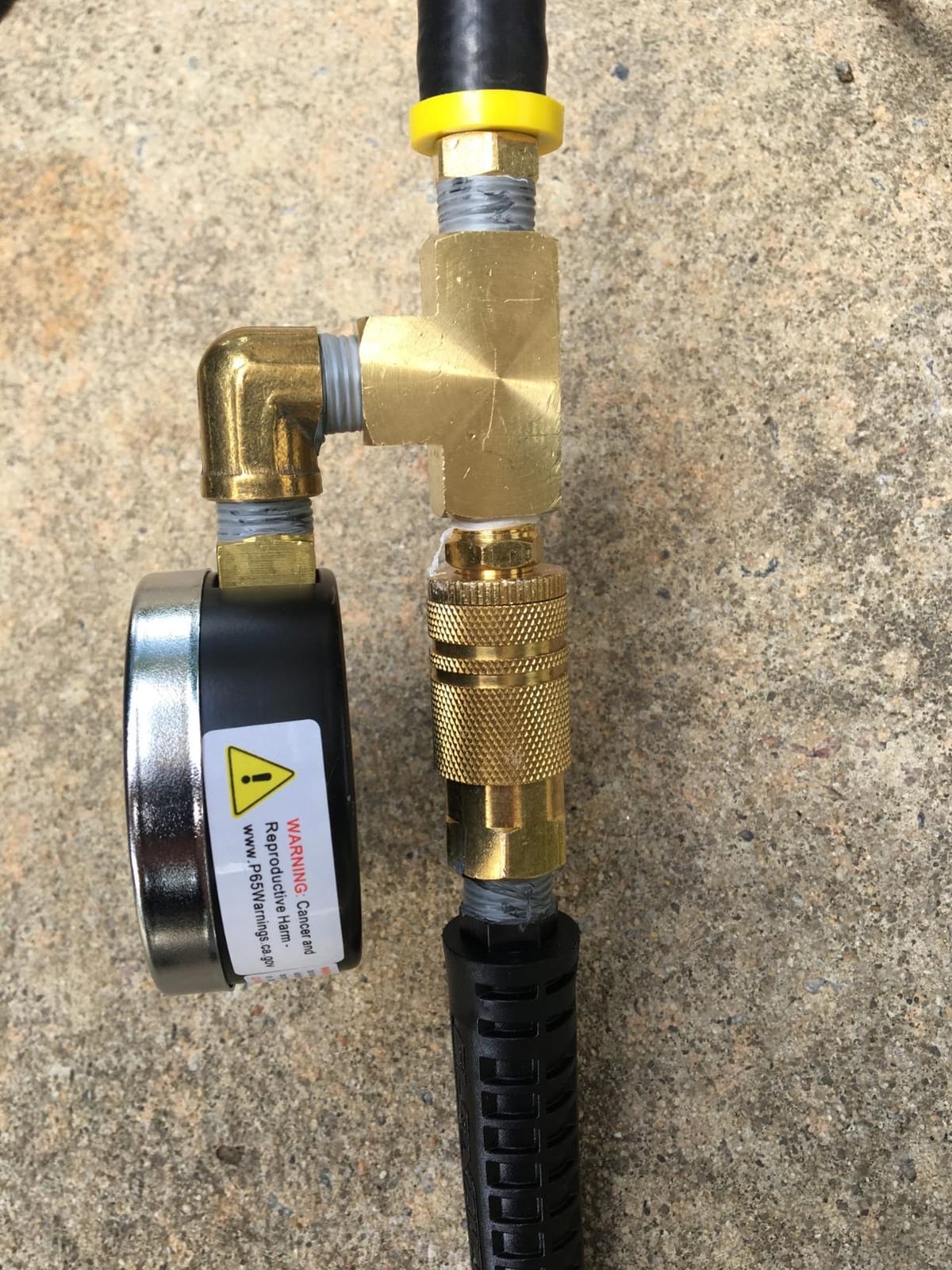
The 25 ft, 5-in-1 inflator and deflator hose with an inline 100 PSI gauge solves the reach problem better than anything else in the group. On a long-wheelbase SUV or a truck with a bed, you can run the hose from a front socket to the rear axle without moving anything. The hose also deflates, which is exactly what you need for airing down on sand or mud.
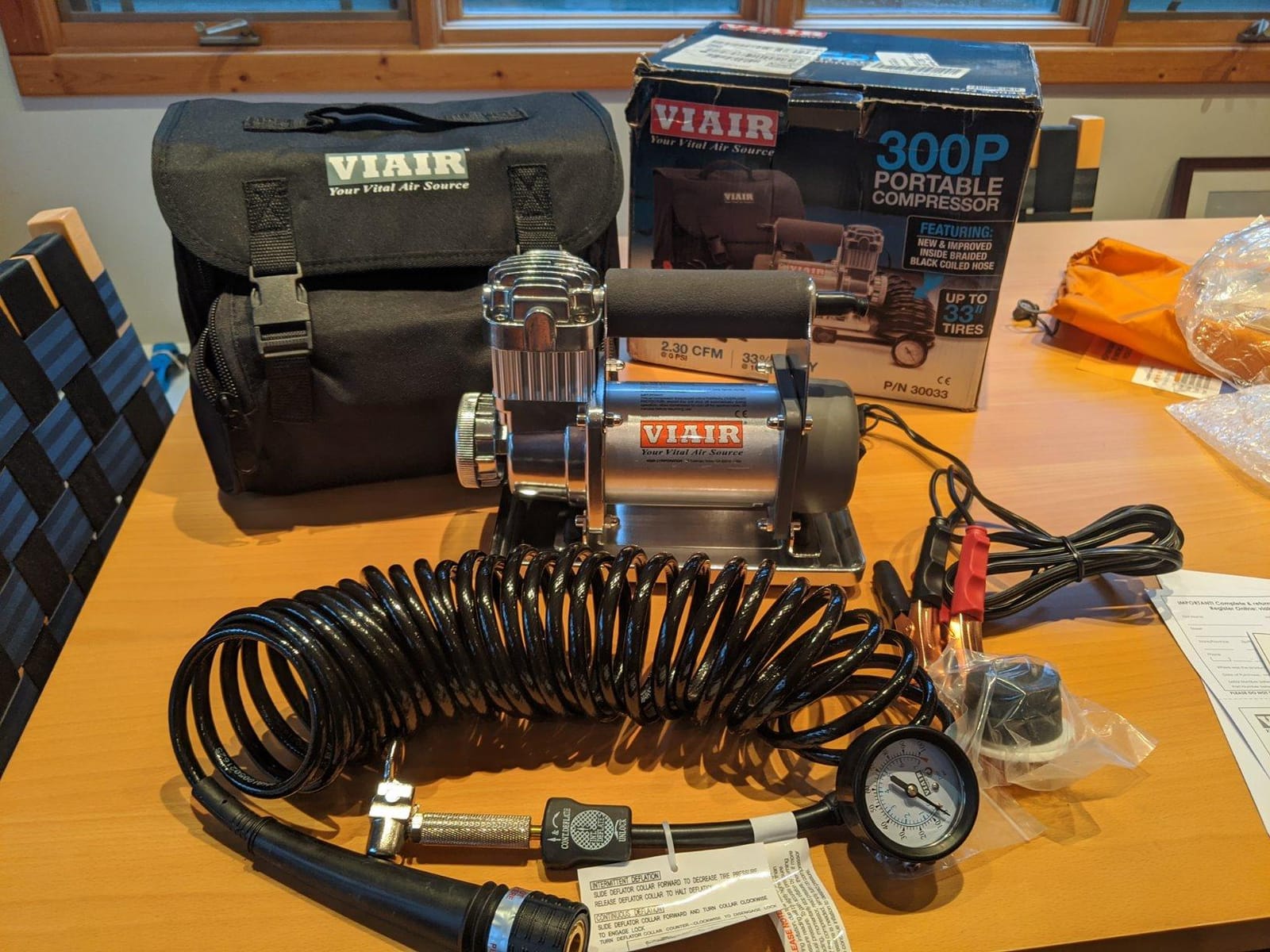
The pump itself is aluminum, rated 150 PSI at a 33% duty cycle, with 2.30 CFM free flow from a 414 watt motor drawing up to 30 A. At 8.7 lb it is the heaviest unit we list, and the 6.9 cubic foot tank volume is what allows it to deliver that airflow rather than cycling continuously.
Owners consistently describe this as the trusted, no-surprise choice for full-size trucks and Jeeps. Forum consensus in off-road and overlanding communities repeatedly names VIAIR as the reference brand for 100% duty cycle and multi-tire work, and Forest River owners call it top of the line. A one-year manufacturer defect warranty comes with it.
Who This Pump Is Right For
Anyone running 33-inch tires, a full-size body-on-frame truck, or a Jeep that gets aired down for trail work. The combination of tank volume, 25 ft of hose, and a deflator function is a genuine trailhead kit rather than a top-off device. It also works as a garage compressor on a boat or trailer tire.
It suits people who already think of the inflator as a garage or tailgate tool rather than something carried by hand. The carry bag has two compartments and the anti-vibration tray stops the unit walking across a truck bed while it runs.
Who Should Skip It
Skip it if you want a grab-and-go cordless unit. It clamps to a vehicle battery and the engine must be running during use, so it cannot be pulled out in a parking lot with a dead vehicle. There is no internal battery option at all.
Also note the 33% duty cycle. On long fills you will be cycling it on and off with cool-down pauses, and there is no digital auto shut-off, so pressure is read off the inline gauge after you switch off rather than set as a preset. For someone who wants to press a button and walk away, that is friction.
4. GSPSCN 12V Heavy Duty Inflator – Best Long-Reach Corded Pick
GSPSCN 12V Heavy Duty Tire Inflator Metal Portable Air Compressor Pump
150 PSI
70 LPM
11.5 ft cord and hose
20A
battery clamps
Pros
- 70 LPM double-cylinder direct-drive airflow
- Metal cylinder motor and connecting rod
- 11.5 ft power cord plus 11.5 ft extended hose
- Explicitly built for SUVs pickups trucks vans and RVs
- Included battery clamps for direct 12V connection
Cons
- Corded only with no battery option
- 6 lb weight
- No digital preset auto shut-off
- Requires a vehicle battery for clamp use
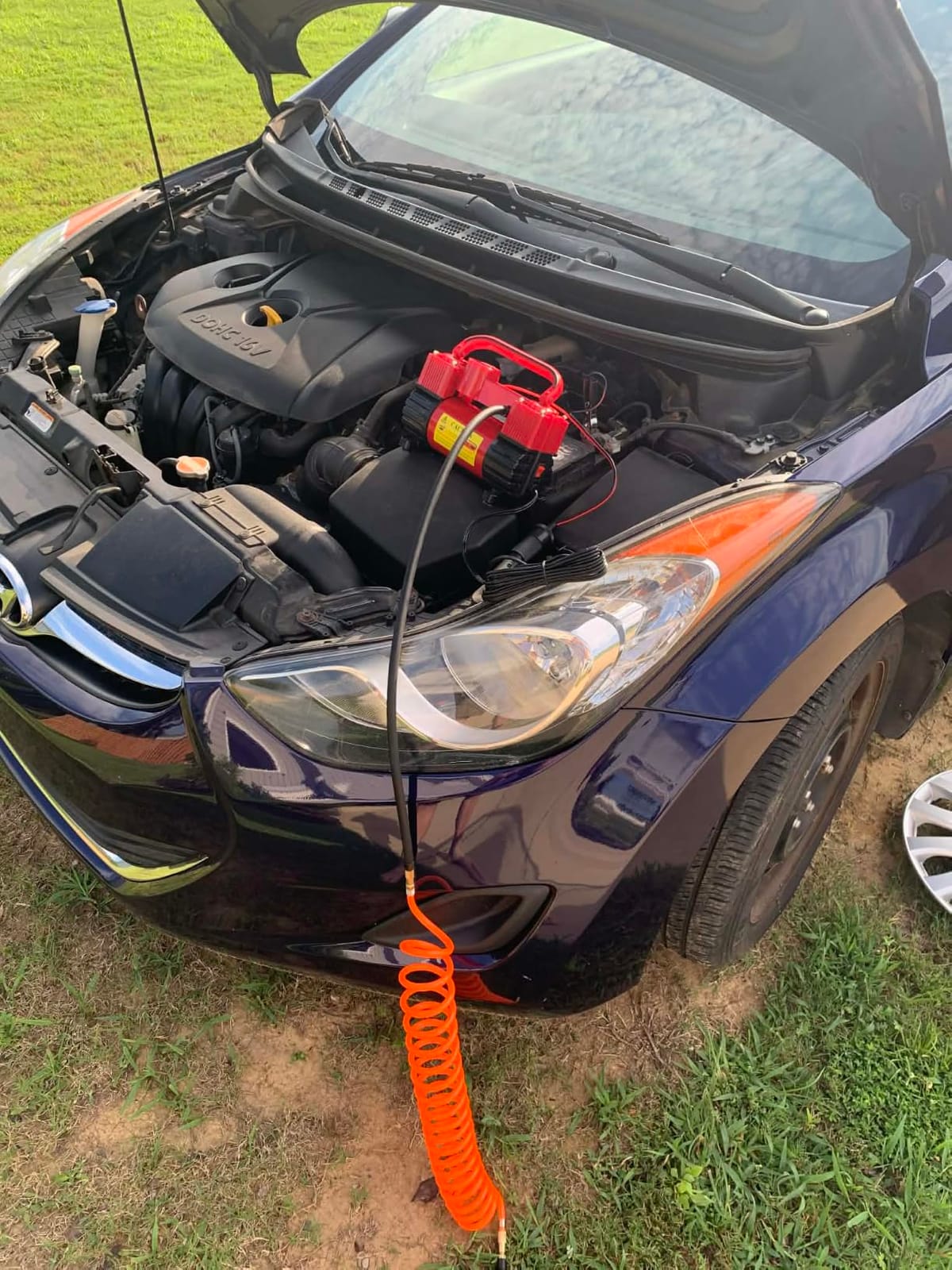
The fastest raw airflow in this roundup belongs to the GSPSCN, and for a large tire that is the spec that matters most. A 70 L/min double-cylinder direct-drive design puts a 200/70 R18 from empty to 35 PSI in about a minute according to the manufacturer, with 150 PSI maximum working pressure.
The reach numbers solve the problem we hear about most from SUV owners. You get an 11.5 ft power cord and an 11.5 ft extended air hose, so a front-console socket can reach a rear tire on a long wheelbase without moving the vehicle. That is the exact complaint that shows up repeatedly in car and tool forums, and this unit answers it directly.
Construction is integrated-molding metal: a metal cylinder, a metal motor, and a metal connecting rod. At 240 watts and up to 20 A it will want a solid accessory circuit, and that draw is the reason we would run the engine or use the included battery clamps rather than a lightly fused console socket. Noise is listed at 70 dB.
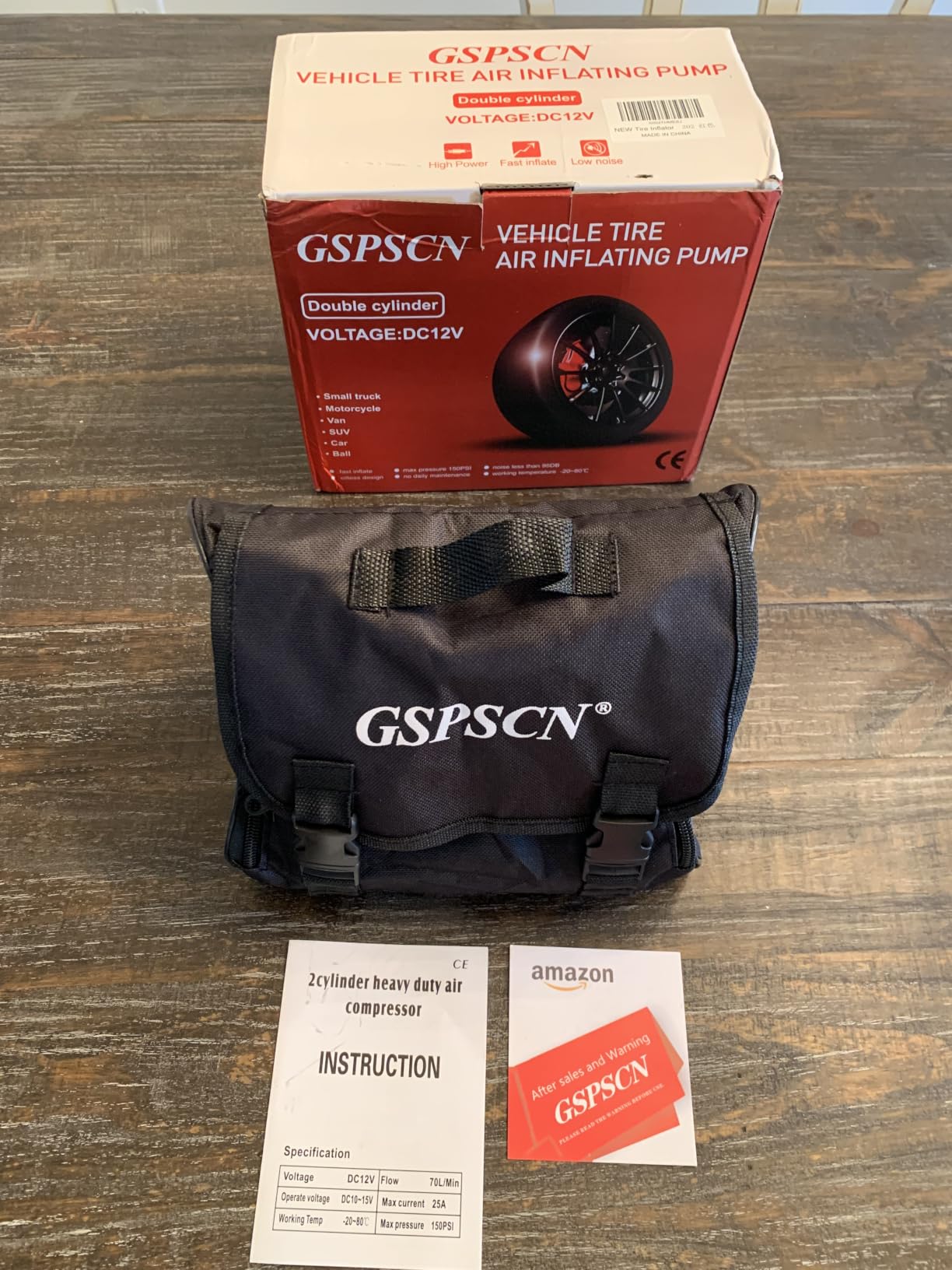
The box includes the 11 ft extension hose, an Oxford storage bag, a replacement fuse, a car battery clamp, and three inflation adapters. The battery clamp path is genuinely useful: on a body-on-frame SUV or a truck with a secondary battery, you can power the pump without a socket at all.
Who This Pump Is Right For
Owners of pickups, large SUVs, vans, and RVs who want raw speed and long reach from a 12V source. At 8.6 by 3.1 by 7.2 inches and 6 lb, it is a garage or cargo-area unit rather than something you carry to a trailhead. The stated compatibility list covers SUVs, pickups, trucks, vans, RVs, cars, motorcycles, golf carts, and bikes.
It is also a good choice for a household with several vehicles where one corded unit gets shared. The 20 A ceiling and metal drivetrain suggest it will handle repeated work without the thermal rest breaks a small handheld needs.
Who Should Skip It
Skip it if you need cordless operation. There is no battery option here, so if your vehicle is dead or you are a long walk from the nearest socket, this unit cannot help. That is a real risk on a night road.
Skip it if you want hands-off inflation. There is no digital preset auto shut-off, so you manage pressure with an inline readout and your own hand. And at 20 A it is the highest current draw in the group, so check your accessory circuit rating before plugging in.
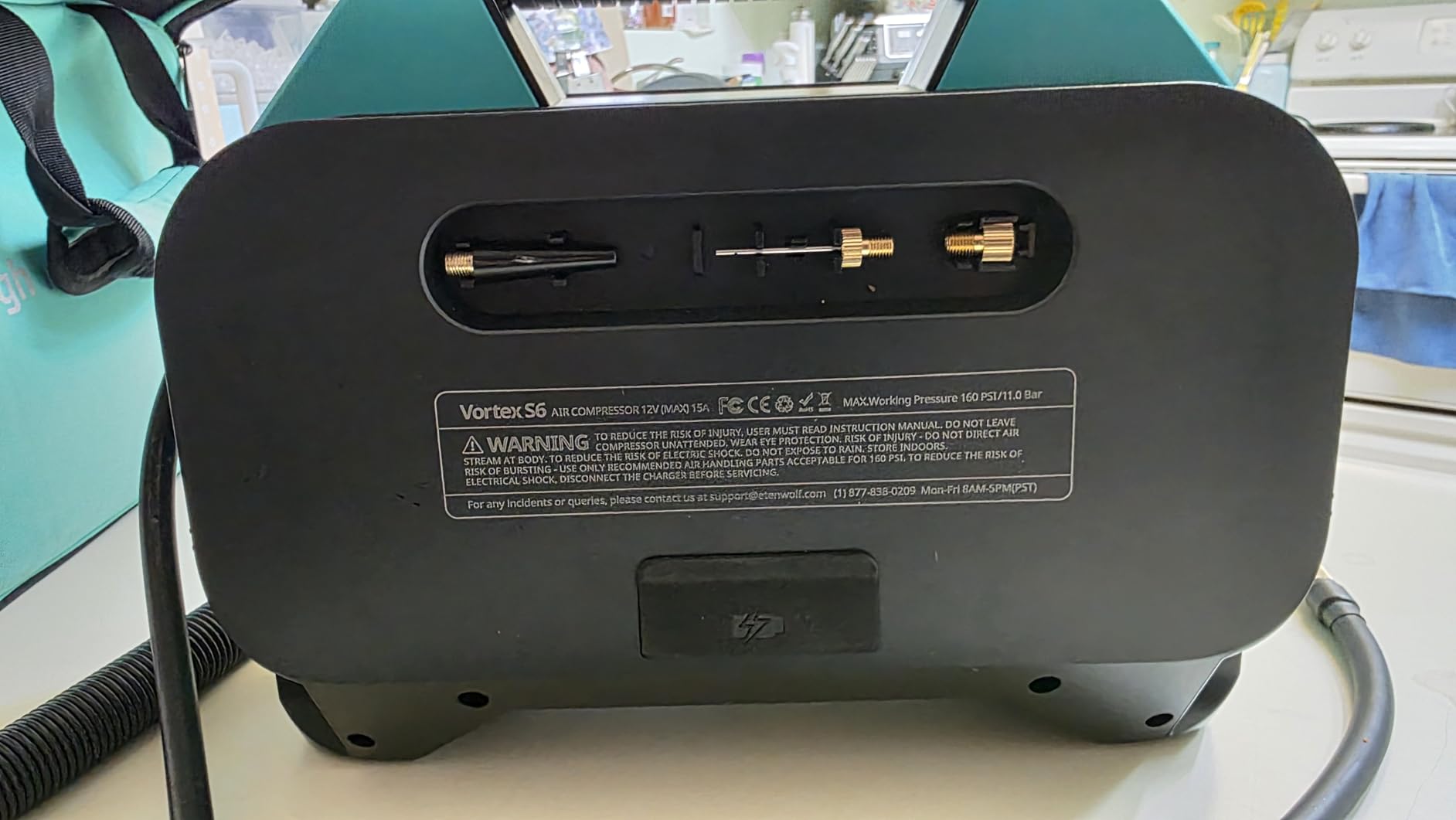
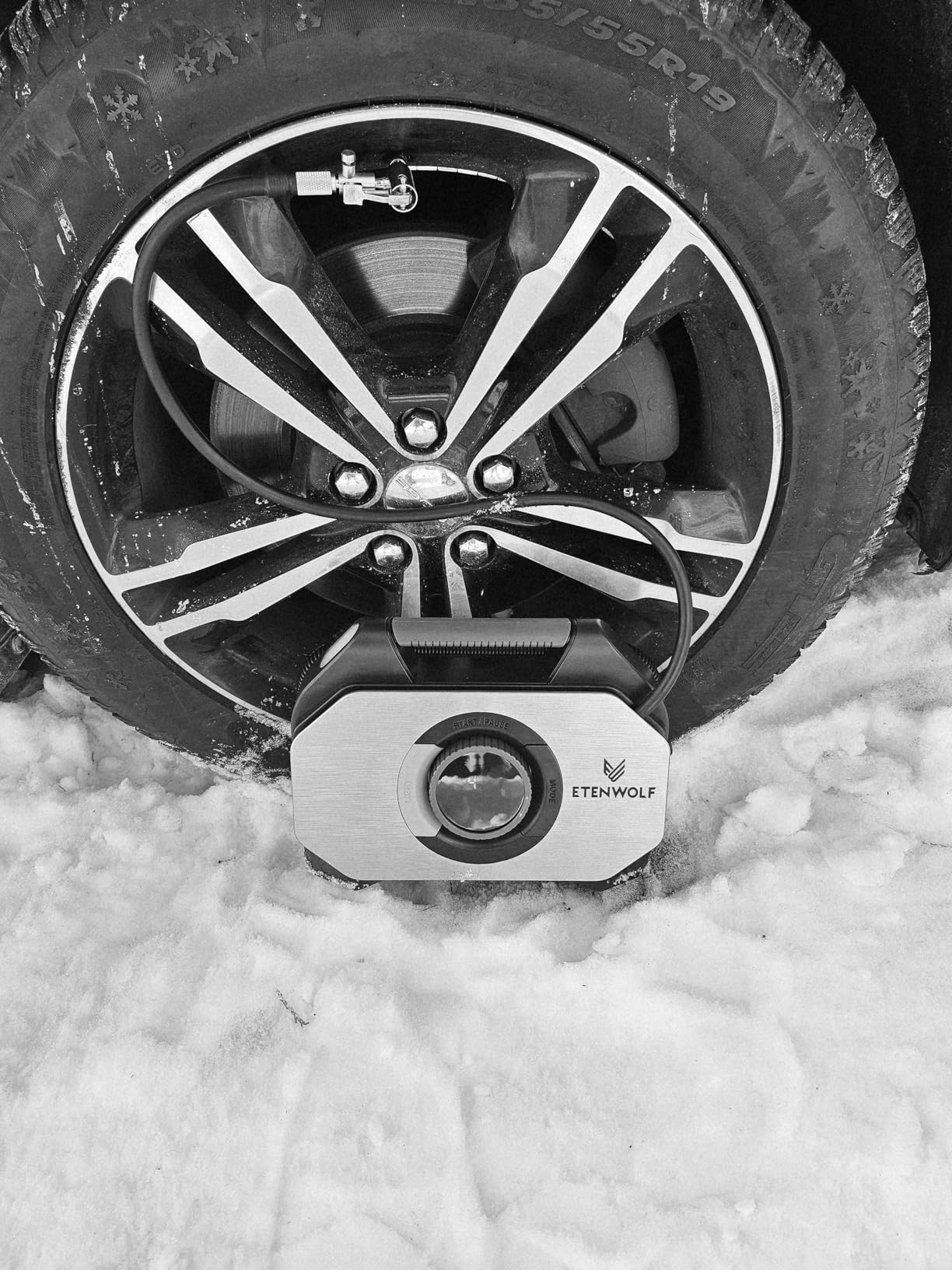
5. ETENWOLF VORTEX S6 – Top Rated Cordless Inflator
ETENWOLF VORTEX S6 Tire Inflator Portable Air Compressor, Cordless Air Pump
160 PSI
42 L/min
19200 mAh
100% duty cycle
78 dB
Pros
- Strongest 4.7 star rating with 85% five-star share
- 19200 mAh covers up to 18 F150 tires per charge
- 100% duty cycle means no cool-down between tires
- Factory calibration sheet and plus or minus 1 PSI accuracy
- Seven preset modes with pressure memory
- Quick-connect lever-lock chuck that does not leak
Cons
- 90 degree chuck is awkward on recessed valve stems
- Louder than most competitors at 78 dB
- Full recharge of the 19200 mAh pack takes longer
- Not intended for paddleboards
The S6 has the highest rating in this group at 4.7 stars with an 85% five-star share, and it is the first unit in the roundup whose 100% duty cycle claim changes what you can do in one session. There is no cool-down break. On a four-tire job, that removes the most common complaint owners have about portable inflators.
Airflow is 1.5 CFM, or 42 L/min at 0 PSI, and the manufacturer states it fills a 31-inch tire from 30 to 35 PSI in one minute. The 19200 mAh lithium battery is claimed to cover up to 18 F150 tires at 245/70 R17 from 30 to 35 PSI per charge, which is more capacity than most four-wheel-drive owners will need in a season.
Accuracy is the other differentiator. ETENWOLF ships a factory calibration sheet, and the gauge is stated at plus or minus 1 PSI with 160 PSI maximum. Seven preset modes plus a memory function means you set your SUV target once and stop touching the dial, which removes a step that causes overinflation on the second or third tire.
USB-C 45W bidirectional charging lets it refill from a wall charger or act as a power bank, and the 1000-lumen light doubles as a camping lantern with steady, flashing, and SOS modes. Owners servicing pickups, trucks, and Class C motorhomes report that the gauge readings match their own reference gauges closely.
Who This Pump Is Right For
This is the right pick for a truck or large SUV owner who wants cordless freedom with no cool-down pauses between tires. The 42 L/min output handles LT tire sizes without the long waits that make owners reach for a shop compressor, and the 100% duty cycle means four tires are one continuous job.
It also suits owners with a second vehicle on 12V accessories, since the 45W USB-C charging is faster than the 27W on the Fanttik and it can top up a phone or laptop on the trail. The 160 PSI ceiling leaves headroom if your tires are rated higher than the typical 30 to 45 PSI range.
Who Should Skip It
Skip it if you inflate at night near people who are sleeping. At 78 dB it is among the loudest units here, and that is a common complaint in reviews. It is also 6 lb, so it is a cargo-area tool rather than a grab-and-go handheld.
Skip it if your wheels have recessed or very short valve stems. The 90-degree air chuck is the most repeated fitment complaint in the reviews, and the fix is a separate adapter. Full recharge of the 19200 mAh pack also takes noticeably longer than the smaller units in this list.
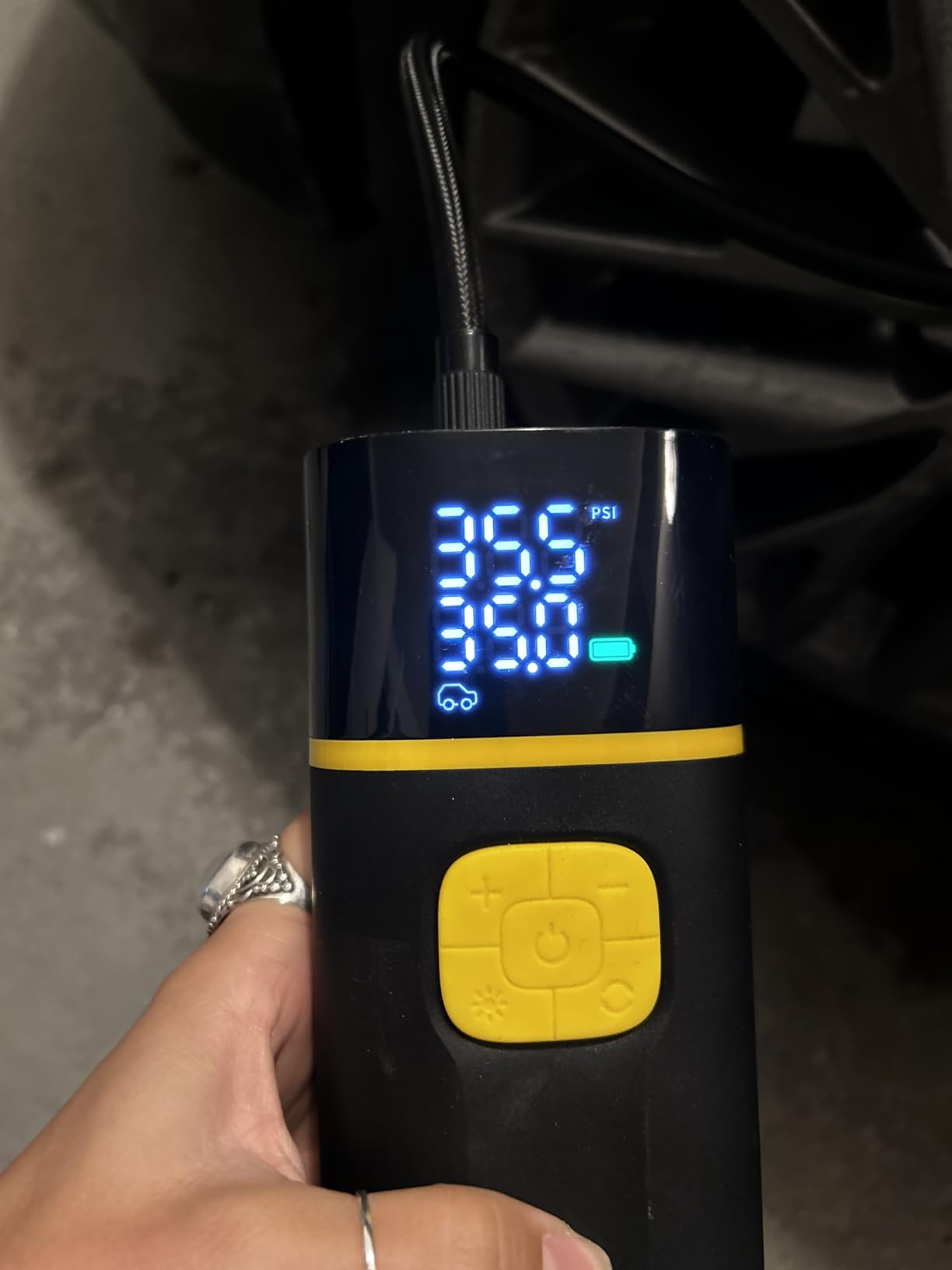
6. AUXITO 26000mAh Inflator – Best for Pickup and RV Tires
AUXITO 26000mAh Heavy Duty Portable Air Compressor for Pickup, Truck, RV
150 PSI
55 L/min
26000 mAh
3.9 lb
2 year warranty
Pros
- 55 L/min brushless motor with plus or minus 1 PSI sensor
- 275/65R18 truck tire from 30 to 36 PSI in 60 seconds
- 26000 mAh covers about 30 truck tire top-offs
- Recharges in 2 hours on a standard USB-C cable
- 3.9 lb body and 2000 lumen LED
- 2-year warranty with lifetime support
Cons
- 150 PSI max is below the 160 PSI of the ETENWOLF units
- Smaller pack than the 38400 mAh S7
- Slightly higher 1-star share at 5 percent
- Some cold-weather error reports
The AUXITO is the best balance of size and capability in the list. At 3.9 lb with a 26000 mAh pack and 55 L/min of airflow, it does not look or feel like a compromise, and it is the unit we would suggest to someone who drives a pickup with LT tires and wants cordless operation rather than a clamped compressor.
The 36mm brushless motor is rated for 55 L/min at 150 PSI maximum, and the manufacturer states it inflates a 275/65R18 pickup tire from 30 to 36 PSI in 60 seconds. A high-precision pressure sensor gives plus or minus 1 PSI accuracy, which is among the tightest tolerances here, and there are four preset modes plus a custom 2 to 150 PSI range on a large LCD.
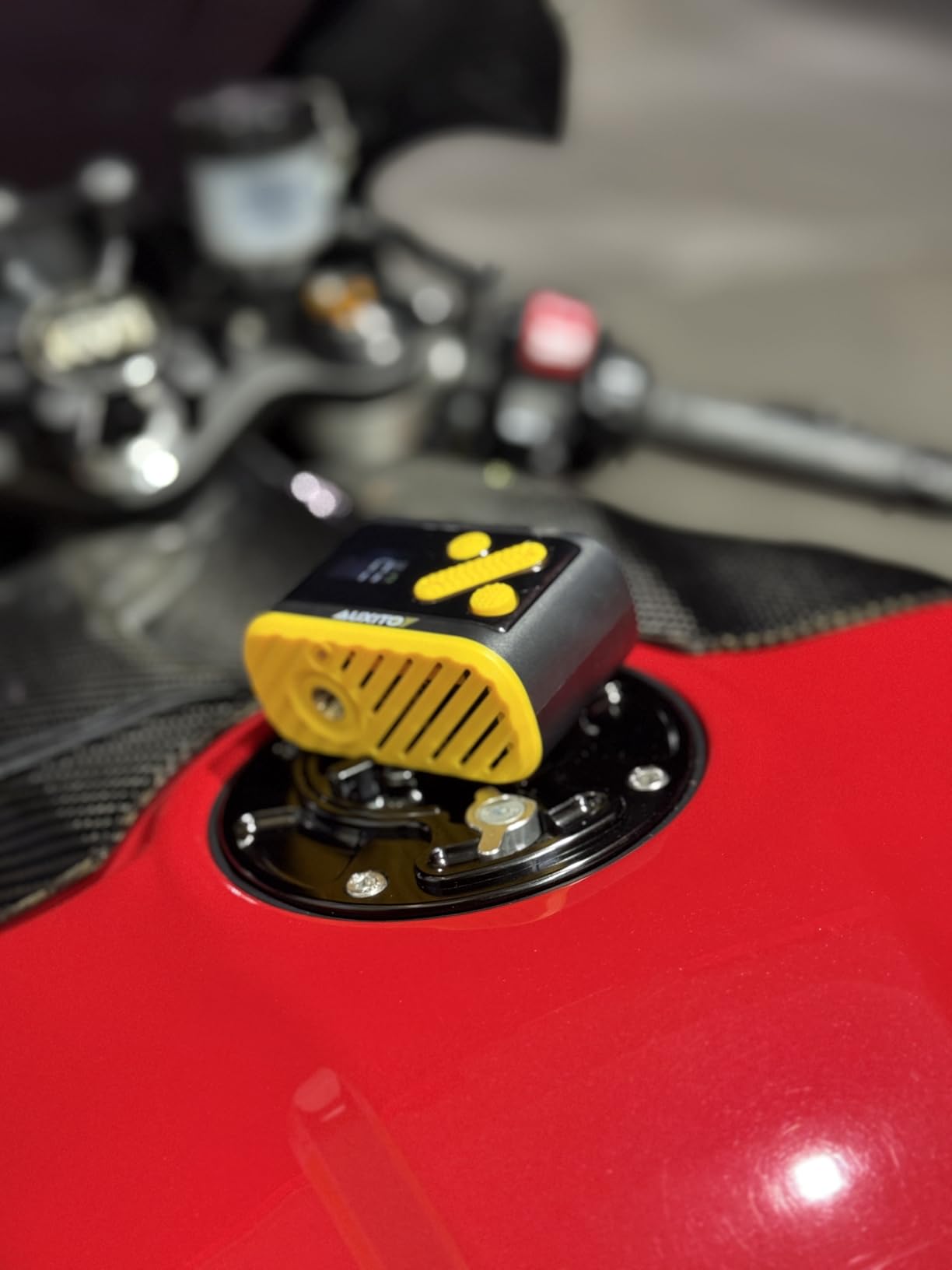
Battery life is the reason to choose it over smaller packs: 26000 mAh gives roughly 30 truck tire top-offs or 30 minutes of continuous runtime, and it recharges in about 2 hours over a standard USB-C cable with the included 65W fast charger. You do not need a proprietary brick, which is a small convenience that matters when the device sits in a vehicle for years.
It also functions as a power bank with Type-C output, and the 2000-lumen LED offers steady, strobe, and SOS modes, which is genuinely useful on a dark shoulder at night. A 2-year limited warranty with lifetime customer support is the longest coverage in the group alongside the S7 and WOLFBOX.
Who This Pump Is Right For
Pickup owners, RV towables, and Class C motorhome drivers who want to top off a full set of large tires without planning a garage visit. Thirty top-offs per charge means a full-set check on a heavy truck is one charge, and the 3.9 lb weight means one person can carry it to each valve.
It is also a strong pick for anyone who pre-trips regularly. A 60-second fill on a 275/65R18 makes a four-tire pressure check a five-minute job, which is the habit that actually prevents problems rather than reacting to a warning light.
Who Should Skip It
Skip it if you need more than 150 PSI. Some EV pickups and load-rated setups specify higher cold pressures, and the ETENWOLF S6 and S7 both reach 160 PSI. The gap is small, but it exists.
Skip it if you live somewhere genuinely cold and will use it in deep winter. There are a handful of early reports of error indications in very cold weather. The 5% one-star share is also the highest in this roundup, so expect a slightly larger tail of complaints than the higher-rated units.
7. ETENWOLF VORTEX S7 – Best for 35-Inch Off-Road Tires
ETENWOLF VORTEX S7 Tire Inflator for Heavy-duty Vehicle with 38400 mAh
160 PSI
52 L/min
38400 mAh
100% duty
260W
Pros
- Fills a 30-inch SUV tire in 30 seconds
- 38400 mAh covers up to 33 F150 tires per charge
- 100% duty cycle with dedicated cooling on all four tires
- Factory accuracy calibration card included
- Handles Class C RVs and 35-inch off-road tires
- 2-year warranty
Cons
- Loudest unit in the roundup at 80 dB
- Premium price for a portable inflator
- Housing feels more plastic than the price suggests
- No dually extended chuck included
The S7 is the largest battery in the roundup at 38400 mAh, and it is the only cordless unit here that a serious off-road owner can fill four 35-inch tires with in one session. The 100% duty cycle dual-cylinder design with dedicated cooling is rated for a 10-year lifespan, and the manufacturer states it runs all four F150 tires from 0 to 35 PSI without a cool-down break.
Performance figures are the best in the group. A 260W dual-motor system delivers 1.85 CFM, or 52 L/min at 0 PSI, and fills a 30-inch SUV tire in 30 seconds with plus or minus 1 PSI accuracy. Owners servicing heavy electric vehicles, F-250 Super Duty trucks, and Class A motorhomes report matching gauge readings and barely any battery dent across multiple vehicles.
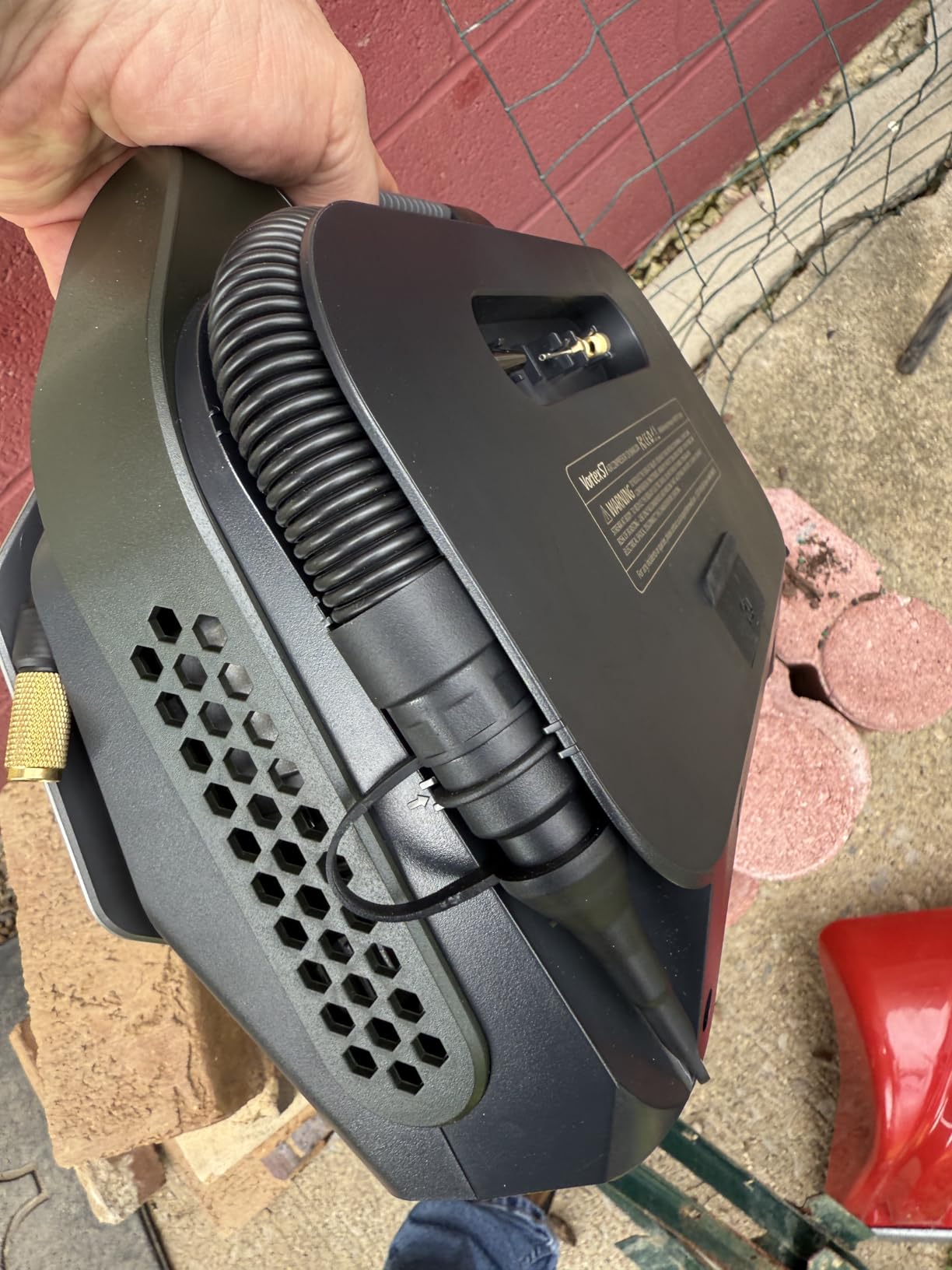
The auto shut-off shows both current and target pressure on a digital display, and a factory calibration card ships in the box. USB-C 45W bidirectional charging doubles as a power bank, and the 1000-lumen LED has steady, flashing, and SOS modes. There is also a small 2.6 liter tank volume to smooth delivery. A 2-year warranty is included.
What owners consistently praise is the thermal behavior. Reviews note that it stays cool and does not walk or vibrate while running, which matters when you are working through four large tires in sequence and the alternative is a pump that overheats and refuses to restart.
Who This Pump Is Right For
This is the unit for a trail-rated build: 35-inch tires, a dually, a heavy-duty truck, or a motorhome that needs a full set of large tires raised from low pressure. The 100% duty cycle removes the stop-start rhythm that makes airing back up at a trailhead tedious, and the 38400 mAh pack means you are not rationing the last tire.
It also works as a garage compressor for trailers, and the 45W USB-C charging means you can refill it from a battery pack or a vehicle outlet if you are away from a wall. For owners who already carry a 100% duty cycle 12V compressor, this is the cordless equivalent of the same workflow.
Who Should Skip It
Skip it if you only top off. For a 30 PSI to 35 PSI check on a crossover, this is far more machine than the job needs. It is also the loudest unit we list at 80 dB, and owners flag that as a real annoyance in campgrounds and residential driveways.
Skip it if you tow a dually with a separate inner wheel. There is no extended chuck included for those setups, and the housing reads as more plastic than the price suggests to some owners. The premium cost is easiest to justify at 35 inches and above.
8. WOLFBOX 150PSI Inflator – Best for Dual-Power Charging
WOLFBOX 150PSI Heavy Duty Tire Inflator Portable Air Compressor,Double- cylinder 45LPM Fast Air Pump for Car Tires,3.5” LED Display,20” Hose,Air Compressor for Car,Pickup Truck,Bike
150 PSI
45 LPM
3x4000 mAh
12V DC and USB-C
3.1 lb
Pros
- Published real-world timings including 1:40 for an SUV tire and 2:36 for a pickup tire
- Battery covers up to 10 mid-size SUV or 6 pickup tire top-offs
- Works from 12V DC or USB-C for garage and road use
- Detachable quick-connect chuck with direct screw-on hose option
- 3.5 inch dual digital display and 2-year warranty
Cons
- 80 dB is the loudest tier in the roundup
- 45W charger not included
- 20 inch hose is short
- 6 percent one-star share
What sets the WOLFBOX apart is the honest tire-size data. The manufacturer publishes fill times on named sizes rather than one flattering number: 44 seconds for a 195/65 R15 from 29 to 36 PSI, 1 minute 40 seconds for a 265/65 R18 SUV tire, and 2 minutes 36 seconds for a 315/70 R17 pickup truck tire. That is the kind of specification an SUV owner can actually use to plan a session.
Airflow is 45 L/min from a dual-cylinder design at 150 PSI maximum, and the tank volume is 2.64 liters. The battery pack is 3 x 4000 mAh, or 44.4 Wh, which the manufacturer states covers up to 23 car tires, 10 mid-size SUV tires, or 6 pickup tires per charge. That ten-SUV-tire figure is the number that matters for this topic.
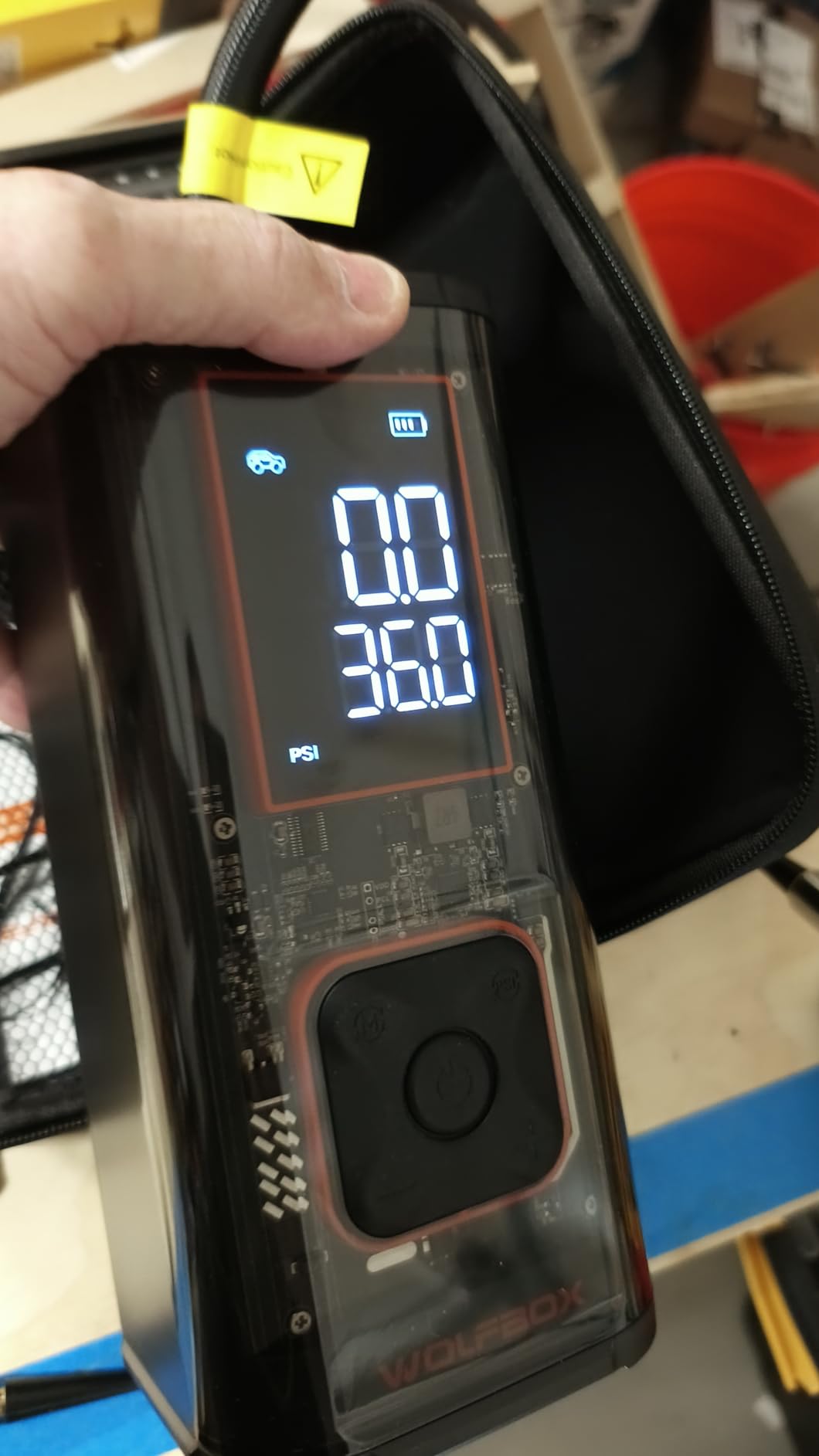
Charging paths are unusually flexible. The unit runs from the included 11 ft 12V DC car charger or over USB-C, taking roughly 100 minutes on a 45W charger, though that charger is not in the box. There is also a 3.5 inch dual digital LED display that stays readable in daylight, an LED with standard and SOS modes, and a power bank function.
The upgraded detachable quick-connect chuck is the detail owners praise most. It can be removed and the hose screwed directly onto the valve, which produces a more reliable seal on larger tires than a clip-on fitting that can slip under pressure.
Who This Pump Is Right For
SUV owners who split time between a vehicle and a garage. Because it runs from either 12V DC or USB-C, the same unit works plugged into the vehicle on a roadside and plugged into a wall in the driveway, and the ten-SUV-tire battery figure covers most people’s monthly pressure checks several times over.
At 3.1 lb it is the lightest heavy-duty unit in the group, which matters if you are carrying it around a vehicle rather than storing it. The 2-year warranty is also among the longest we see.
Who Should Skip It
Skip it if noise matters to you. At 80 dB it sits in the loudest tier, and early-morning use in a residential driveway is a common trigger for complaints.
Skip it if reach matters. The 20 inch hose is short, and the 11 ft 12V cable belongs to the car charger rather than the pump itself, since the inflator is cordless when running on its own battery. The 45W charger is also not included, so budget for a wall charger separately.
9. OlarHike 12000mAh Inflator – Best Compact Metal-Body Pick
OlarHike 12000mAh Heavy Duty Tire Inflator Portable Air Compressor
150 PSI
50 L/min
12000 mAh
3.2 lb
metal body
Pros
- Twin-cylinder 50 L/min output
- 195/65 R15 from 30 to 35 PSI in 20 seconds
- Metal body in a compact 3.2 lb package
- Dual power with battery or continuous 12V car adapter
- Patented Twist-Lock hose connection with lock-on chuck
- 45W PD charging doubles as a power bank
Cons
- 12000 mAh is the smallest pack in the group
- 78 dB is loud for the size
- 190 watt output trails the heavy-duty models
- 31.5 inch hose is tight on large rigs
The OlarHike is the one we would suggest for a midsize crossover where a full set of top-offs needs to happen quickly and the unit has to live in a small cargo area. A 50 L/min twin-cylinder design is strong for its size, and the stated figure of 195/65 R15 from 30 to 35 PSI in 20 seconds is the fastest sedan-sized top-off in the group.
It runs two ways as well, from the 12000 mAh pack or continuously from the 12V car adapter, which means you can do a long multi-tire session without watching the battery. The body is metal rather than plastic, and at 3.2 lb with a 7.3 by 3.8 by 2.5 inch profile it packs flat in a cargo floor.
Two braided nylon hoses are included, one long and one short, both with a lock-on air chuck, plus a full adapter set and a rugged EVA case. The patented Twist-Lock connection is the feature owners mention most, because a secured fitting is what stops air escaping around the valve stem during a long fill. A battery management system covers over-charge, over-discharge, over-current at 19A, short-circuit, and temperature protection.
Auto-stop with a memory function and an onboard LED handle routine top-offs, and 45W PD bidirectional charging lets the unit top up a phone. It currently holds a 4.6 rating across roughly 435 reviews, and it ranks in the top five of Inflation Devices and Accessories.
Who This Pump Is Right For
Midsize SUV owners with a seasonal top-off habit and limited cargo space. The metal body and lock-on chuck hold up better than plastic-cased handhelds of similar output, and 50 L/min is enough to make a full-set check feel quick. Auto-stop with memory means you set your target once.
It is also a sensible second unit to keep in a second vehicle, or a backup alongside a heavier compressor. The dual power means it still works if one charging method is unavailable.
Who Should Skip It
Skip it for large tire volume. The 12000 mAh pack is the smallest here, giving you fewer tires per charge than the 19200, 26000, and 38400 mAh packs, and reviewers describe it as better suited to car and SUV top-ups than to filling a full set of large truck tires from flat.
Skip it if you are on big rubber. At 190 watts and a 31.5 inch hose it will manage, but not comfortably. At 78 dB it is also louder than the size suggests, and that is worth factoring in for early starts.
10. Fanttik X10 APEX – Best for Daily Top-Ups
Fanttik X10 APEX Heavy Duty Tire Inflator Portable Air Compressor
150 PSI
35 second car fill
6 tires per charge
1.39 kg
200 lumen
Pros
- Fastest car tire fill in the roundup at 35 seconds
- Lightest heavy-duty option at 1.39 kg
- AccuInflate sensors with one-click preset auto-stop
- Retractable 29.5 inch charging cable keeps the kit tidy
- 200 lumen work light and daylight readable display
Cons
- Only 210 reviews so the long-term record is short
- 29.5 inch hose is short for larger trucks and RVs
- 27W charging is slower than 45W and 65W rivals
- One-year warranty is the shortest here
The Fanttik is the lightest unit in the roundup at 1.39 kg, and it delivers the fastest published car tire fill: 35 seconds for a 195/55 R15 from 28 to 33 PSI. For a pickup tire, the stated figure is 1 minute 16 seconds for a 265/70 R17 from 30 to 35 PSI, which is still a usable number for a mid-size rig.
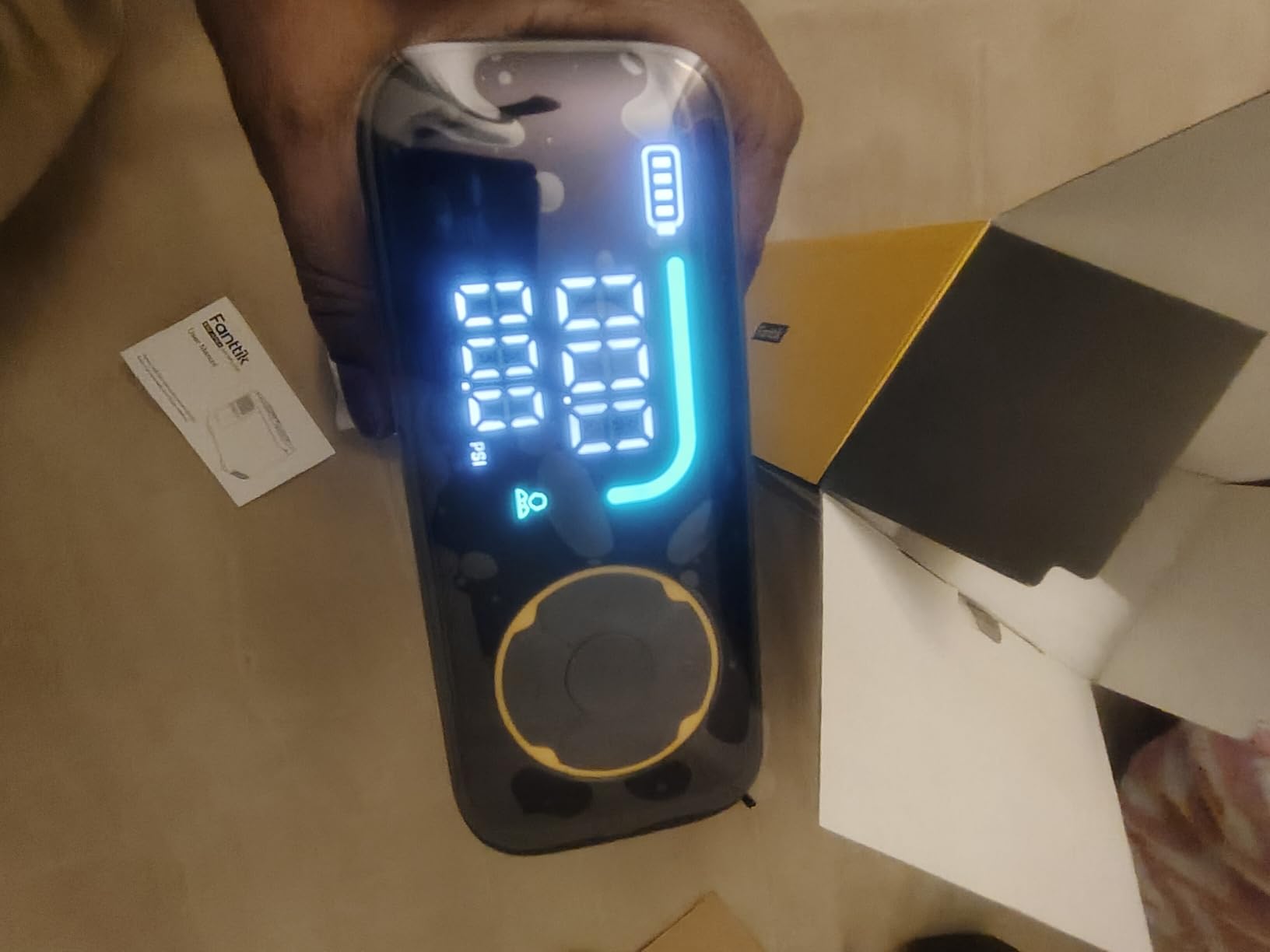
Its AccuInflate system uses high-precision sensors with a one-click preset auto-stop, and the high-visibility color display stays readable in direct daylight. That combination is what makes it a good daily driver rather than a garage tool, because the friction of setting a target each time is what stops people from checking pressures at all.
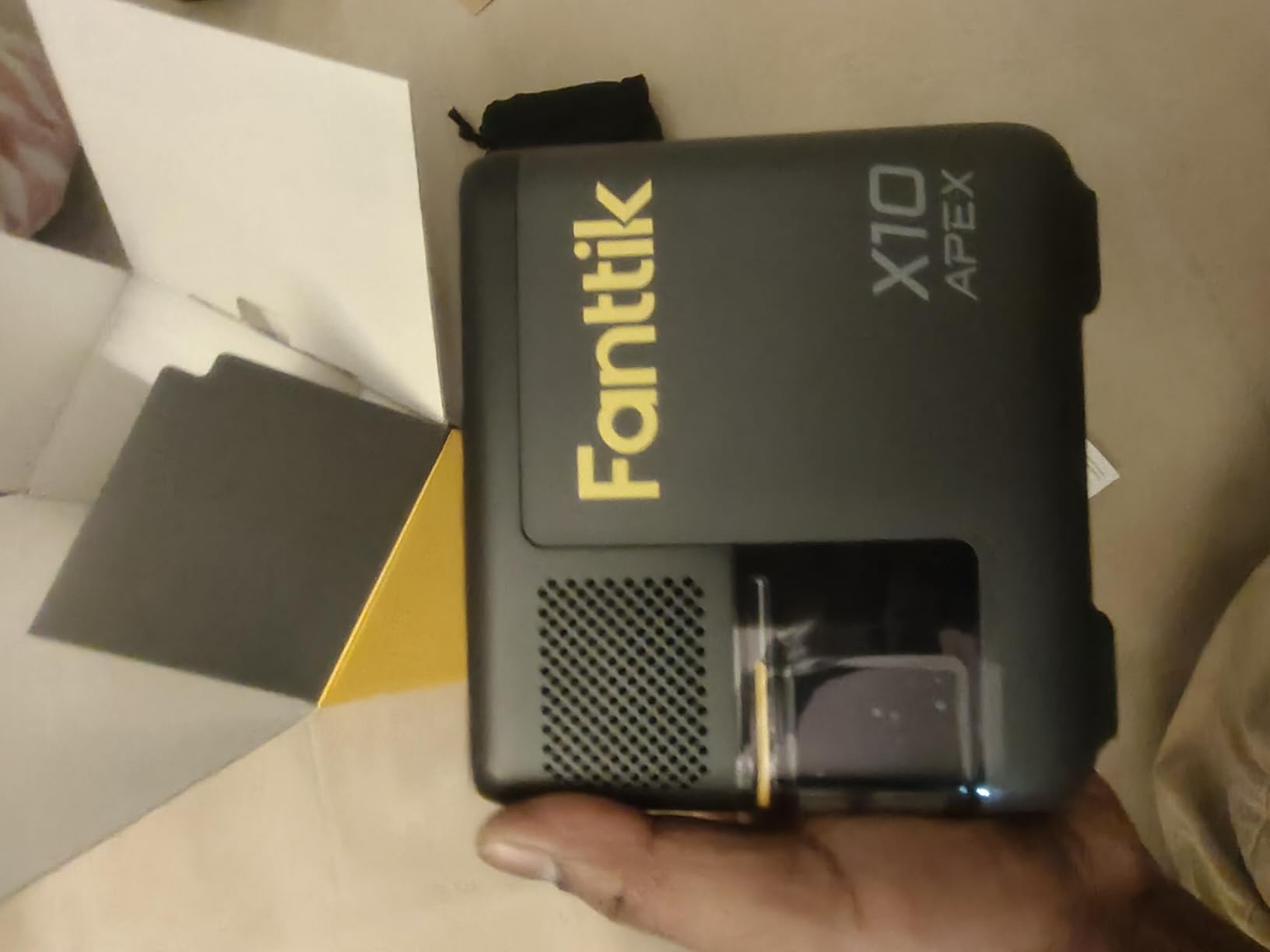
Battery capacity is the trade: the high-capacity pack covers six car tires per charge, or about 2.5 phone charges, and charging is 27W bidirectional over a 29.5 inch retractable cable with a dedicated Type-C port. The retractable cable is a small quality-of-life touch that keeps the kit tidy in a cargo area, and the 200-lumen work light is dimmer than the 1000 and 2000-lumen units but adequate for a valve stem at night.
It currently sits at 4.7 stars from about 210 reviews, which is a strong rating on a short record. That is worth flagging honestly: a new listing with a small review base has not yet been through a decade of trunk storage, and warranty length is the practical proxy for that. This one is a year.
Who This Pump Is Right For
Anyone who wants a small, tidy unit for frequent top-offs on a compact or midsize SUV. At just over three pounds it is easy to carry to each wheel, and the 35-second fill makes a four-tire check something you will actually do rather than put off. The 150 PSI ceiling gives headroom over the typical 30 to 45 PSI range.
It is also a good fit for a vehicle with two USB-C ports, since it can charge the inflator and a phone at the same time. For a daily-commute SUV where the biggest job is a monthly pressure check, the capacity here is more than sufficient.
Who Should Skip It
Skip it for 33 and 35-inch tires. The 29.5 inch hose is short for reaching valves on larger trucks and RVs, and the battery covers six car tires rather than a set of large ones. If your tires are big, the reach matters more than the weight saving.
Skip it if you want long-term proven reliability from a large review base. Two hundred and ten reviews and a one-year warranty make this the least established unit we list, and it also charges most slowly at 27W. We would buy it for convenience, not for a decade of off-road work.
What PSI Do SUV Tires Actually Need?
The number is on the driver’s door jamb sticker, not on the sidewall. The sidewall maximum is a structural limit the tire must survive, not a daily target, and inflating to the sidewall maximum is one of the most common mistakes owners make. Most passenger SUVs run 30 to 40 PSI cold. Light truck and tow-capable SUVs commonly run 50 to 65 PSI, and some body-on-frame models go higher still.
Because the door sticker reflects the heaviest configuration and the lightest, the spare tire placard is the one you want if you are topping up the spare. The spare is often rated for a higher speed and higher pressure than the tires on the ground.
Measure cold, before driving. A tire that has been driven 20 minutes can read 4 to 6 PSI high, which is a meaningful difference when you are deciding whether it needs air. If you must check warm, add the heat gain back into your target rather than trusting the number on the display.
For more background on how tire pressure behaves through the seasons, our guide on portable tire inflators for winter covers cold-weather pressure loss in more detail.
Corded 12V vs Cordless: Which Works Better on an SUV?
A corded 12V unit cannot run out of power. That single property is why owners who want reliability keep a plug-in model in the vehicle, and it is the safest choice if you are roadside with a partially depleted car battery. The trade is reach and current draw, because a 20 A pump on a lightly fused accessory circuit will trip the fuse or slow down.
A cordless unit removes both problems. No socket, no cable to trip over, and no car battery drain, which is why cordless has become the default for routine top-offs. The limitation is battery capacity, and it shows up hardest on exactly the tires this article is about: large volume, low starting pressure, four tires in a row.
Our read of owner consensus across car, tool, and off-road forums is that the third path is the most practical for many households. Dual-power units such as the AstroAI, the AVID POWER, the OlarHike, and the WOLFBOX let you use the pack for a single tire and the 12V adapter for a full set, which covers both failure modes without owning two devices.
If you are still deciding, our cordless inflator guide covers the battery-capacity numbers in more detail, and our digital inflator roundup covers gauge accuracy across the category.
Duty Cycle, Heat and Cooling on Big Tires
Duty cycle is the single most-cited credibility factor in owner discussions, and it is the number most manufacturers bury. It is simply how long the pump runs before it needs a rest, expressed as minutes on and minutes off. A pump with a 33% duty cycle can run about 20 minutes and then needs a break. A pump advertised as 100% duty cycle has cooling designed in and does not.
Why it matters here: an SUV tire holds more volume than a sedan tire, so a fill from low pressure takes longer, and a longer fill pushes a small pump into its thermal limit. The recurring owner complaint is a pump that heats up, stops, and then refuses to restart until it has cooled for several minutes. In a parking lot at night that is genuinely frustrating.
The AVID POWER asks for a 3-minute cooldown after 10 to 15 minutes of continuous use. The AstroAI states up to 20 minutes of continuous operation. The VIAIR 300P runs at a 33% duty cycle. The two ETENWOLF units and no others in this list claim 100% duty cycle with dedicated cooling, which is why they are the picks for large tire volume and off-road reinflating.
Respecting the cool-down period is not optional. Running a pump past its rated duty cycle is the fastest way to shorten the life of the motor and the cylinder seals, and it is why some budget pumps report dead after a single season of heavy use.
Hose Reach: The Front-Socket to Rear-Tire Problem
Short hoses are the most common complaint we see from SUV owners specifically, and the reason is geometric. A three-row or long-wheelbase SUV can put the rear axle far enough from the front console socket that a two-foot hose simply does not reach, which means moving the vehicle or moving the pump.
At the short end, the AVID POWER has a 1.64 ft hose and the WOLFBOX has 20 inches. The AstroAI, Fanttik, and OlarHike cluster around 29 to 32 inches, which handles a midsize SUV fine. The two corded heavy-duty options solve it properly: the GSPSCN has an 11.5 ft cord plus an 11.5 ft extended hose, and the VIAIR 300P has a 25 ft five-in-one hose.
There is a second reach problem that hose length does not solve: whether the chuck geometry fits your valve stem. The ETENWOLF S6 has the most repeated fitment complaint in the reviews, because its 90-degree air chuck is awkward on very short or recessed stems. A 15-degree or flexible adapter is the fix.
How Accurate Are Inflator Gauges?
Buyer reviews report that many inflator gauges read 1 to 2 PSI high, which is the most common accuracy complaint across the category. It is not a defect; it is a small offset that shows up as a tire that reads correctly on the inflator and low on your own gauge.
The stated tolerances on our top picks range from plus or minus 1 PSI on the ETENWOLF S6, the S7, and the AUXITO, to plus or minus 2 PSI on the AVID POWER. The ETENWOLF S6 and S7 also include a factory calibration card, which is unusual at this level and gives you a reference to check against.
Our advice is simple and it costs almost nothing. Check the tire with a separate pencil or digital gauge after the inflator stops, and if there is a consistent offset, add or subtract it from your preset. Two minutes of this at the first fill makes every later fill accurate, and it also tells you whether your own gauge is the one that is off.
What a Portable Inflator Can and Cannot Fix
An inflator solves low pressure caused by temperature change, a slow leak in the valve stem, or a nail that the tire can still hold air around. Those are the majority of roadside pressure problems, and they take minutes rather than a tow.
It cannot fix a puncture large enough that the tire loses pressure faster than the pump can replace it, and it cannot fix a damaged sidewall or bead. A plug kit handles tread-area punctures; anything in the sidewall or shoulder is a tire replacement, not a repair. If a tire is visibly bulged, cracked, or has a cord showing, do not inflate it.
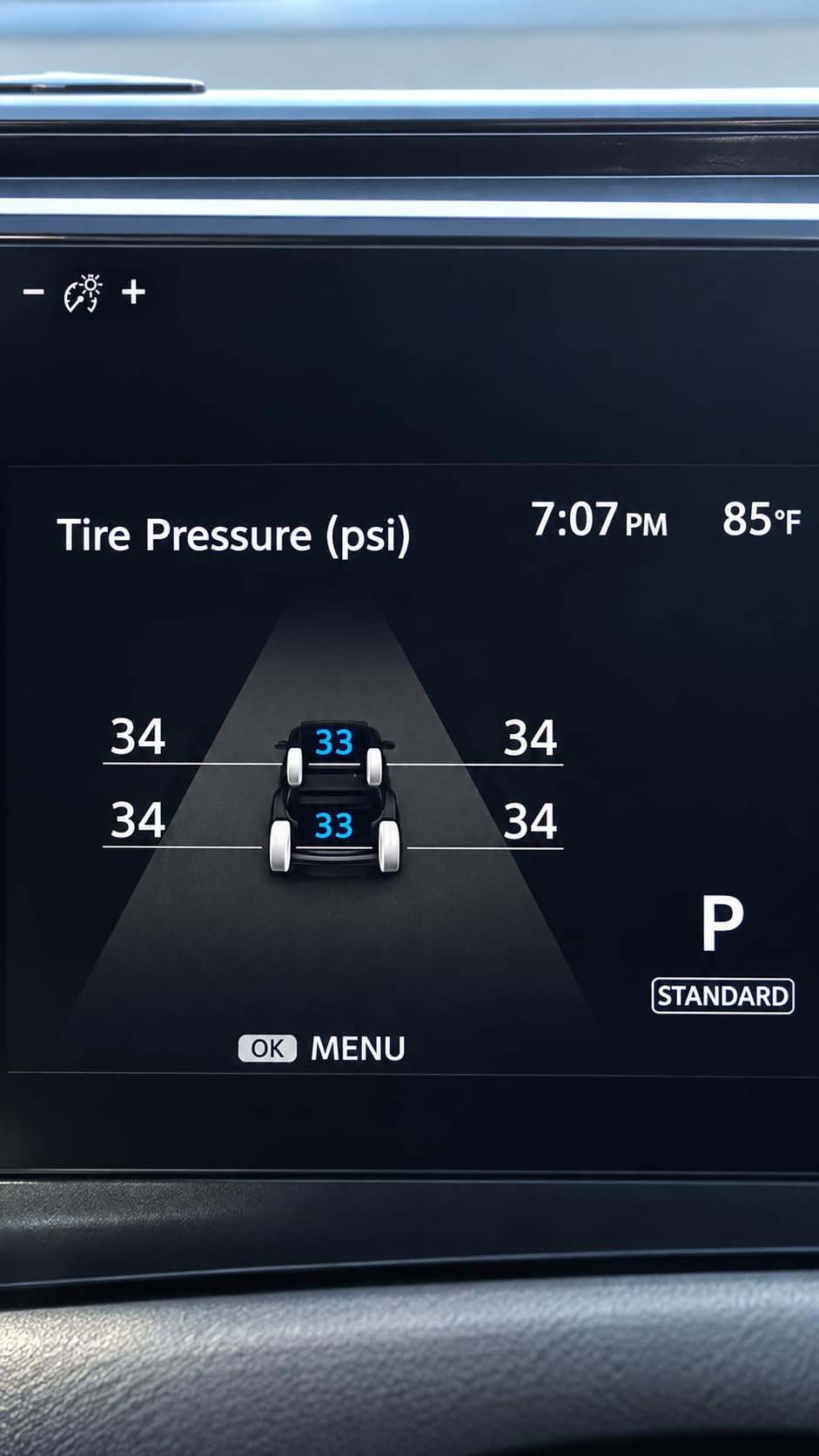
One practical note on TPMS: topping off a tire does not clear a low-pressure warning by itself on many vehicles. The system often needs the pressure to be corrected and then a period of driving above a threshold speed before it re-reads, and some vehicles need the warning cleared at the dealer. If the light returns, you likely have a real leak rather than a temperature-related drop.
How We Ranked These 10 Inflators
We did not bench-test these units, and we would rather say that plainly than present numbers we did not measure. Everything here comes from published manufacturer specifications and from what owners report in the review data. Where a figure is a manufacturer claim rather than a verified result, we treat it as a claim.
We ranked on four things. First, whether the maximum PSI and airflow actually cover SUV tire pressures and volumes. Second, duty cycle, because it determines whether four tires in a row is one job or four. Third, reach, including hose length, cord length, and chuck fitment. Fourth, the size and honesty of the owner record, since a tool that lives in a trunk for a decade should have a long track record.
That last point is why the AVID POWER, with close to 29,000 reviews, ranks as our value pick rather than our first choice despite a 100 PSI ceiling. We also excluded any unit whose stated maximum pressure sits below what the tire class needs, which is why no 30 PSI-capable unit made the list despite strong ratings in the category.
Frequently Asked Questions
What is the best tire inflator for a SUV?
The AstroAI 160PSI Cordless Inflator is the best all-round choice for SUV tires. It has a 160 PSI ceiling that covers typical 30 to 45 PSI SUV pressures with headroom, dual power from a 20V battery and a 12V DC adapter, and up to 20 minutes of continuous operation. For 33-inch or 35-inch off-road tires, step up to the ETENWOLF VORTEX S6 or S7 for 100 percent duty cycle, or the VIAIR 300P for a rated 33-inch capacity.
Are 12V tire inflators good?
A 12V inflator is the most reliable option because it cannot run out of power. It works from your accessory socket, from battery clamps on the vehicle battery, and many models also run from a wall outlet at home. The two things to check are the maximum current draw, which can be 20 A or more on heavy-duty double-cylinder pumps, and the duty cycle, which determines how long it runs before it needs to cool down.
What are the common problems with digital tire inflators?
The most common problems are gauge readings that run 1 to 2 PSI high, which means checking with a separate gauge once to calibrate your preset. Other recurring issues are hoses too short to reach a rear tire on a long SUV, batteries that arrive depleted after sitting in a cold trunk, units that stop and refuse to restart after running past their stated duty cycle, and wall chargers that are not included in the box.
What PSI should my SUV tires be?
Use the number on the driver’s door jamb sticker, not the maximum on the tire sidewall. Most passenger SUVs run 30 to 40 PSI cold, while light truck and tow-capable SUVs commonly run 50 to 65 PSI. The spare tire placard often shows a different, higher figure. Measure cold, before driving, because a tire that has been driven can read 4 to 6 PSI high.
How long does it take to inflate SUV tires?
For a top-off on a mid-size SUV tire, expect roughly 30 to 60 seconds on a 45 to 70 L/min unit. Filling from flat is a different job: the WOLFBOX publishes 1 minute 40 seconds for a 265/65 R18 SUV tire and 2 minutes 36 seconds for a 315/70 R17 pickup tire, while the ETENWOLF S6 states one minute for a 31-inch tire from 30 to 35 PSI. A full set of four from flat takes considerably longer.
Do 12V tire inflators drain the car battery?
A single tire top-off will not meaningfully drain a healthy car battery. Filling all four tires from flat can, especially on a smaller battery or with the engine off. Running the engine during inflation is the standard advice from owners, and it also keeps voltage up so the pump does not slow down or trip the accessory circuit fuse. Battery clamps on the vehicle battery are an alternative for vehicles with weak accessory circuits.
The Verdict: Which Tire Inflator Should You Buy
For most SUV owners in 2026, the AstroAI 160PSI Cordless Inflator is the right buy. A 160 PSI ceiling, dual power, a 20-minute continuous rating, and a 4.6-star record across more than 16,000 reviews cover seasonal top-offs, pre-trip checks, and the occasional low tire without any ceremony.
Match the machine to the rubber. A 100 PSI handheld is fine for routine top-offs. A 150 to 160 PSI cordless with a 40 L/min-plus motor and 100% duty cycle handles LT and 33 to 35-inch tires. A clamped tank compressor with a long hose is the right answer for off-road airing down and reinflating.
Whichever you choose, read the duty cycle number, measure your tires cold, and check the pressure once with a separate gauge to calibrate your preset. Those three habits do more for your tire life than the last few PSI of pump speed ever will.