
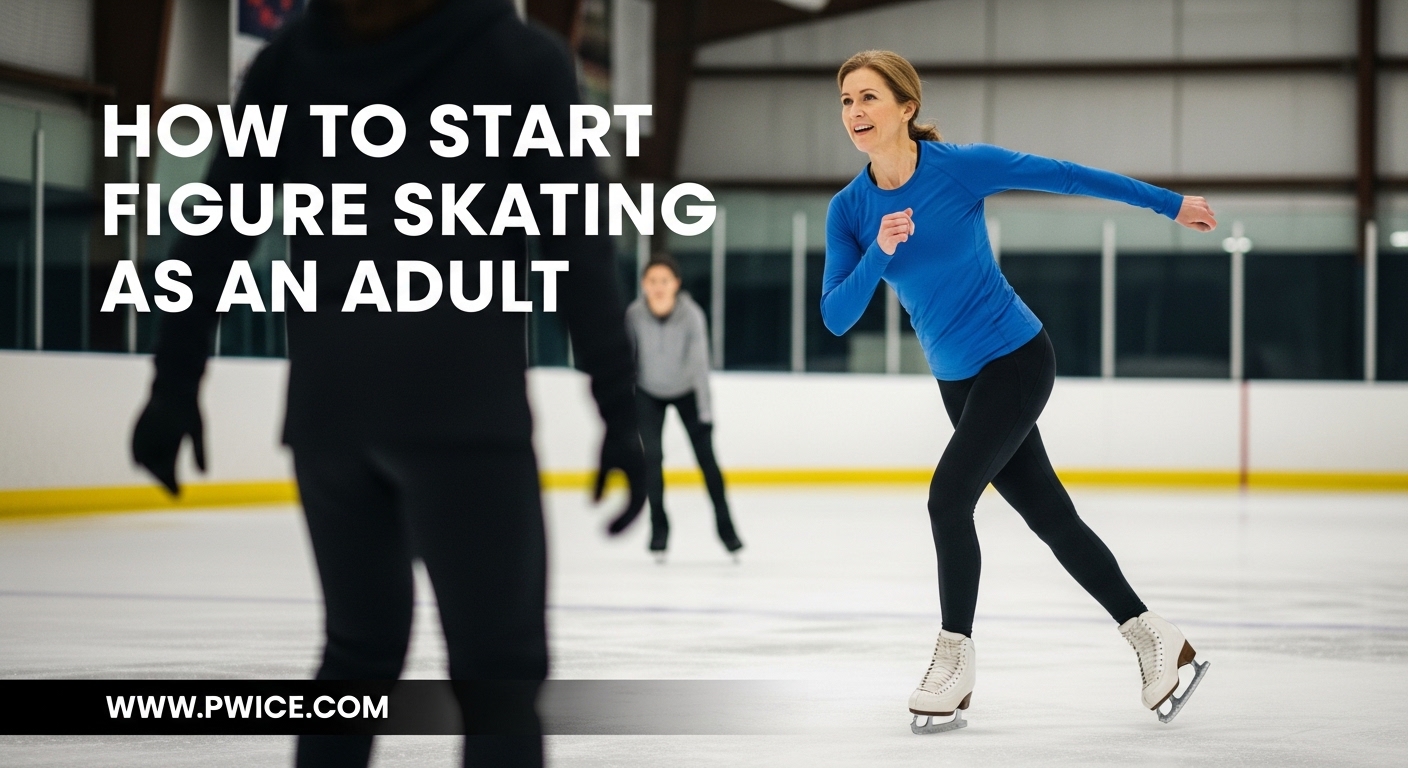
I started figure skating at 34 years old. I had never laced up a pair of ice skates before that first wobbly step onto the ice, and I was convinced everyone at the rink was staring at the adult Bambi flailing near the boards.
Within six months, I was skating backward. By the end of my first year, I could do a waltz jump and was competing in my local adult competition. If you are wondering whether it is too late to start figure skating, the answer is a resounding no. Adults in their 20s, 30s, 40s, 50s, and well beyond are lacing up skates for the first time every single day.
Learning how to start figure skating as an adult is simpler than you might think. You need a local ice rink with adult beginner lessons, properly fitted skates, and the willingness to look a little foolish for your first few sessions. Most adult beginners start feeling comfortable on the ice within 4 to 8 weeks of consistent practice.
This guide covers everything I wish I had known before stepping onto the ice. We will address your concerns about age and injury, walk you through finding lessons and equipment, set realistic expectations for your first year, and give you the confidence to take that first glide.
Table of Contents
Common Concerns (and Why You Shouldn’t Let Them Stop You)
Every adult beginner faces the same mental barriers. I heard them in my own head, and I have heard them from hundreds of other adult skaters in online communities. Let us tackle these head-on.
Am I Too Old to Start?
You are not too old. Deanna Stellato-Dudek returned to competitive figure skating at age 33 after an 18-year break, then made the U.S. Olympic team at 42. The adult skating community includes people who started in their 50s, 60s, and even 70s.
Adult beginners actually have advantages over children. You understand your body better, can follow complex instructions, and are more motivated by the mental challenge. The average age at most adult skating sessions at my local rink is somewhere between 35 and 50.
Your body does change as you age. Recovery takes longer, flexibility requires more dedicated work, and you cannot bounce back from falls quite like a 10-year-old. But these are manageable factors, not dealbreakers. You simply adjust your timeline and expectations.
Will I Get Hurt?
Fear of injury is the number one concern I see in adult skating forums. The reality is that beginner figure skating is relatively safe when you learn proper falling technique and wear appropriate protective gear.
Most adult beginner injuries are minor: bruises from falls, sore muscles from using stabilizer muscles you did not know existed, and occasional wrist strains from catching yourself incorrectly. Serious injuries are rare at the beginner level because you are not jumping or spinning yet.
The key is learning how to fall before you learn how to skate. We will cover falling technique in detail later in this guide. Once you know how to go down safely, that fear loses much of its power.
Do I Need to Be Athletic?
I was not an athlete when I started. I worked a desk job, did not exercise regularly, and could not touch my toes. Figure skating met me where I was and built my fitness gradually.
Skating develops the athleticism it requires. Your core strengthens to maintain balance. Your legs develop power for strokes and edges. Your flexibility improves through the movements themselves. You do not need to be fit to start. You get fit by starting.
Will I Look Silly Among All the Kids?
This was my biggest fear, and it turned out to be completely unfounded. Most rinks have dedicated adult beginner classes, and even during public sessions, adults skate alongside kids without anyone thinking twice about it.
Here is the truth nobody tells you: everyone at the rink is focused on their own skating. The advanced skaters are working on their jumps. The other beginners are worried about their own balance. The kids are just having fun. No one is judging the adult learner carefully stepping away from the boards.
And when you do feel self-conscious, remember that every single person on that ice was once a beginner. The coach doing triple jumps started with swizzles just like you will.
How to Start Figure Skating as an Adult: The First Steps
Now let us get practical. Here are the exact steps to take from this moment to your first time on the ice.
Step 1: Find a Rink With Adult Programs
Not all ice rinks are created equal for adult beginners. Search for “ice rink near me” and then check their websites for “Learn to Skate” or “Adult Skating” programs.
Call the rinks directly and ask three questions: Do you offer adult beginner group lessons? What is the average age in those classes? Do you have freestyle sessions reserved for adults?
The best rinks for adult beginners have dedicated adult learn-to-skate classes, coaches who specialize in adult students, and a culture that welcomes adult skaters. Many rinks affiliated with U.S. Figure Skating have structured adult curricula.
Step 2: Choose Your Lesson Format
You have three main options for learning: group lessons, private coaching, or a combination of both. Here is how they compare.
| Lesson Type | Cost | Best For | Pros | Cons |
|---|---|---|---|---|
| Group Lessons | $15-30 per class | Absolute beginners, budget-conscious | Affordable, social, structured curriculum | Less individual attention, pace set by group |
| Private Coaching | $50-100 per hour | Specific goals, faster progression | Customized instruction, immediate feedback | Expensive, no peer learning |
| Combination | Varies | Most adult learners | Group for basics, private for specific skills | Requires scheduling coordination |
Most adult beginners should start with group lessons. They provide structure, social connection, and affordable instruction. After 2-3 months, consider adding occasional private lessons to work on specific skills.
Step 3: Get Properly Fitted Skates
Rental skates are fine for your very first session to see if you enjoy skating. But if you are committing to lessons, you need your own skates within the first month.
Beginner figure skates need to fit snugly but not painfully tight. Your heel should not lift when you bend your knees. The boot should provide ankle support without cutting off circulation.
Go to a pro shop at an ice rink, not a general sporting goods store. A professional fitter will measure your foot, check your ankle strength, and recommend appropriate beginner boots. Expect to spend $150-300 for a quality beginner setup.
Step 4: Gather Essential Equipment
Beyond skates, you need a few key items. Here is a breakdown of what to budget for your first year.
| Item | Budget Option | Mid-Range | Premium |
|---|---|---|---|
| Beginner Skates | $120-180 | $200-350 | $400+ |
| Blade Guards | $10-15 | $20-30 | $40+ |
| Soakers (Blade Covers) | $8-12 | $15-25 | $30+ |
| Padded Shorts | $25-40 | $50-80 | $100+ |
| Wrist Guards | $15-25 | $30-40 | $50+ |
| Helmet (optional) | $30-50 | $60-100 | $150+ |
| Practice Clothing | $50-75 | $100-150 | $200+ |
You can start with just skates, blade guards, soakers, and comfortable warm clothing. Add padded shorts and wrist guards once you start attempting more advanced skills.
Step 5: Dress Appropriately
Wear fitted, warm clothing that allows movement. Avoid bulky jackets that restrict arm motion. Yoga pants or fitted sweatpants work well for bottoms. Thin layers on top let you adjust as you warm up.
Thin socks are better than thick ones. Thick socks create pressure points and reduce your ability to feel the skate. Bring gloves to protect your hands when you fall. Thin knit gloves work for beginners.
Leave scarves and long accessories at home. They can drag on the ice and create tripping hazards. Long hair should be tied back so you can see clearly.
What to Expect at Your First Lesson
Walking into your first figure skating lesson feels intimidating. Knowing what will happen helps calm those nerves.
Before You Step on the Ice
Arrive 30 minutes early for your first lesson. You need time to check in, find the correct rink entrance, and put on your skates properly.
Lace your skates snugly from the toe up. The bottom eyelets should be tight enough that your heel cannot lift. The top eyelets around your ankle should be snug but not cutting off circulation. Tuck laces into the boot so you do not trip on them.
Put on your blade guards immediately after lacing. Walk carefully on the rubber flooring. Blade guards protect your blades and give you grip on dry surfaces. Remove them only at the ice entrance.
Your First Moments on Ice
Most beginner lessons start with simply standing on the ice. You will learn the basic skating posture: knees bent, weight over the balls of your feet, arms slightly forward for balance.
Your first skills will likely include marching in place, forward swizzles (making small arcs with your feet), and two-foot glides. Do not rush these basics. They are the foundation of everything that comes after.
Expect to hold onto the boards at first. Your instructor will encourage you to push away from the wall as soon as possible, even if just for a few seconds. That first independent glide is a huge milestone.
Learning to Fall (Yes, Really)
Your instructor will teach you falling technique in your first or second lesson. This is not optional. Learning to fall correctly prevents injuries and eliminates the fear that holds most beginners back.
The proper falling technique involves bending your knees deeply, tucking your chin to your chest, and lowering yourself to the side. You want to land on your outer thigh and hip area, not your hands, knees, or tailbone.
Once down, you learn how to get up safely. Turn onto your hands and knees, bring one foot up between your hands, push up with your hands while lifting that front foot, then bring the other foot up. Your instructor will walk you through this until it feels natural.
What Skills Come First
Figure skating has a logical progression of skills. Your first few months will focus on these fundamentals:
Forward stroking is your basic method of moving across the ice. You push with the inside edge of one foot, glide on the other, then alternate. It looks simple but requires balance, knee bend, and edge control.
Snowplow stops teach you how to stop safely. You push your heels out and toes in, creating friction with the ice to slow down. It takes practice to execute cleanly.
One-foot glides develop the balance needed for everything else. You glide forward on one foot while lifting the other, holding the position for increasing distances.
Backward swizzles and gliding introduce backward movement. These feel unnatural at first but become comfortable with repetition.
Most adult beginners work on these basic skills for 2-3 months before advancing to crossovers, turns, or beginning spins.
How Fast Will You Progress
Progression speed varies enormously between individuals. Factors include your natural balance, previous athletic experience, age, how often you practice, and whether you have anxiety about falling.
Plan on spending 8-12 weeks at the very beginner level before skills start clicking. That might sound like a long time, but remember that you are learning to move across a sheet of ice on quarter-inch blades.
The key is consistent practice. One hour-long session per week maintains your skills but builds slowly. Two to three sessions per week creates much faster improvement. Even 30 minutes of focused practice beats a long session where you are just coasting around.
Your First Year: Skills and Timeline
Having a realistic timeline helps you stay motivated when progress feels slow. Here is what most adult beginners can expect during their first year.
Weeks 1-2: Finding Your Ice Legs
Your only goal is getting comfortable standing and moving on the ice. You will spend most of your time near the boards, working on basic posture, marching, and simple glides.
Focus on developing your knee bend and ankle flexibility. These foundations determine everything that comes later. Do not worry about looking graceful yet.
Most adults feel significantly more stable by the end of week 2. You will still wobble, but you will spend more time away from the boards than clinging to them.
Weeks 3-4: Basic Movement
You will learn forward stroking, two-foot turns, and the beginnings of your snowplow stop. These skills give you real mobility on the ice.
This is also when falling becomes less scary. You have done it enough times to know it is not catastrophic. Your falling technique improves, and you get faster at recovering.
By week 4, many adult beginners can skate a full lap of the rink without touching the boards. That independence feels incredible.
Weeks 5-8: Building Confidence
Forward crossovers, backward swizzles, and one-foot glides become your focus. These intermediate basics require the balance and edge control you have been developing.
You might attempt your first public skating session outside of class during this period. The different environment challenges your skills in new ways. The ice might be rougher, and there are more people to navigate around.
Physical conditioning becomes noticeable now. Your legs last longer before getting shaky. Your core supports your posture more naturally. Skating starts feeling like exercise rather than survival.
Months 3-4: Skill Integration
Your separate skills start combining into fluid movement. You can stroke across the ice, cross over in corners, stop when needed, and transition between forward and backward skating.
Many adult beginners start considering private lessons during this phase to work on specific technique issues. Group lessons continue providing structure and social connection.
You might attend your first adult freestyle session, which is designated practice time for skaters working on specific skills. These sessions have different etiquette and flow than public skating.
Months 5-6: Intermediate Skills
Three-turns, mohawks, and beginning spins enter your vocabulary. These are the gateway skills to freestyle skating. They require precise edge control and body alignment.
Some adult beginners attempt their first waltz jump around month 6. This small jump is the foundation of all figure skating jumps. It feels enormous the first time you leave the ice intentionally.
Your fitness level has transformed significantly by this point. You have core strength, leg power, and flexibility you did not have six months ago.
Months 7-12: Finding Your Path
By the end of your first year, you have real choices about where to take your skating. Some adults remain recreational skaters, enjoying the movement and exercise without pursuing formal testing.
Others enter the U.S. Figure Skating adult test structure, working through “Moves in the Field” tests that certify your skill progression. These tests provide goals and recognition for your progress.
Some adults discover a competitive side they never knew they had. Adult competitions exist at local, regional, and national levels. Adult Nationals happens every year with divisions by age and skill level.
Whatever path you choose, you are officially a figure skater now. The identity shift from “person trying skating” to “skater” happens somewhere in that first year.
Staying Safe and Preventing Injury
Safety concerns keep many adults off the ice. A smart approach to injury prevention lets you skate confidently for years.
Master the Fall
We have mentioned falling technique already, but it deserves emphasis. Most skating injuries happen when people fight the fall or throw their hands out to catch themselves.
Practice falling deliberately in your early sessions. Bend your knees, lower your center of gravity, and settle onto your side. Wear padded shorts to protect your tailbone and hips during this learning phase.
When you feel yourself losing balance, accept the fall rather than flailing. A controlled fall from low height causes minimal impact. A panicked attempt to stay upright often ends in awkward, injury-prone crashes.
Wear Appropriate Protection
Protective gear for adult beginners is smart, not embarrassing. Here is what to consider.
Padded shorts protect your tailbone and hips from the hard ice. These are especially valuable when learning backward skills and falls. Many adult skaters swear by them.
Wrist guards prevent the most common beginner injury: wrist sprains from catching yourself on falls. As you learn proper falling technique, you can phase these out.
Helmets are not standard in figure skating but are perfectly acceptable for adult beginners. Some rinks require them for certain classes. If falling anxiety prevents you from committing to movements, a helmet removes that barrier.
Listen to Your Body
Adult bodies recover differently than younger ones. Soreness after skating is normal, especially in your feet, ankles, and core. Sharp pain is not.
Learn the difference between muscle fatigue and joint stress. Foot pain often indicates poorly fitted skates rather than normal exertion. Ankle pain might mean you need more support or better technique.
Take rest days seriously. Your body builds strength during recovery, not just during activity. Skating 7 days a week as a beginner invites overuse injuries.
Stay warm on the ice. Cold muscles injure more easily. Do off-ice warmups before skating, and keep moving during your session. Standing still on cold ice tightens everything up.
Know When to Stop
Fatigue causes injuries. When your legs start shaking or your concentration wavers, it is time to end your session. One more attempt at a skill when you are exhausted often ends in a fall.
Ice conditions matter too. Hard, fast ice feels different than soft, snowy ice. Crowded sessions increase collision risk. Choose your practice times strategically as a beginner.
Frequently Asked Questions
Is 40 too old to learn to skate?
No, 40 is not too old to learn figure skating. Many adults start in their 40s, 50s, 60s, and beyond. The adult skating community includes skaters of all ages who began as complete beginners. Your progression might be slightly slower than a teenager’s, but you can absolutely learn proper technique and become a competent skater.
Is ice skating good for bone density?
Yes, ice skating can help maintain and improve bone density. The weight-bearing nature of skating stimulates bone formation, particularly in the legs and hips. The balance challenges also engage core muscles and improve overall stability. Combined with the lateral movements and quick changes of direction, skating provides excellent bone and joint health benefits for adults concerned about osteoporosis and aging.
How long does it take to learn basic figure skating as an adult?
Most adult beginners feel comfortable on the ice within 4-8 weeks of consistent practice. Basic skills like forward stroking, stopping, and simple glides typically take 2-3 months to execute confidently. Within 6-12 months, dedicated adult beginners can learn crossovers, backward skating, and beginning turns. Full competency through the basic skills usually requires 1-2 years of regular practice, though this varies by individual.
Should adults start with group lessons or private coaching?
Most adult beginners should start with group lessons. They provide structured curriculum, social connection with other adult learners, and affordable instruction. Group lessons typically cost $15-30 per session compared to $50-100 for private coaching. After 2-3 months of group lessons, some adults add occasional private sessions to work on specific skills. Private coaching from the start makes sense if you have specific performance goals, significant anxiety about group settings, or scheduling constraints that prevent regular class attendance.
How much does it cost to start figure skating as an adult?
Initial costs range from $300-600 for your first year. Expect to spend $150-300 for beginner skates, $25-50 for protective gear like padded shorts and wrist guards, and $15-30 per group lesson. Many rinks offer multi-week lesson packages that reduce per-session costs. As you advance, costs may increase for private coaching and better equipment, but recreational adult skating remains relatively affordable compared to many other fitness activities.
Do I need to buy skates immediately as a beginner?
You do not need to buy skates immediately. Rental skates are fine for your first few sessions while you determine if you enjoy skating. However, if you commit to lessons, purchase your own skates within the first month. Rental skates are often poorly maintained and fitted, which slows your progress and can cause foot pain. Properly fitted beginner skates make learning significantly easier and more enjoyable.
How often should I practice as an adult beginner?
Aim for 2-3 skating sessions per week as an adult beginner. Consistency matters more than session length. Two 45-minute practice sessions beat one 2-hour session because fatigue affects learning. Your muscles and nervous system need repeated exposure to build the specific strength and coordination skating requires. If you can only manage once per week, you will still progress, just more slowly. Quality focused practice always trumps mindless ice time.
Can adults compete in figure skating?
Yes, adults can absolutely compete in figure skating. U.S. Figure Skating hosts Adult Sectionals and Adult Nationals every year with divisions by age (21-30, 30-40, 40-50, 50-60, 60-70, 70+) and skill level. Many adults who started as complete beginners work their way through the test structure and eventually compete. Adult competitions focus on personal improvement and community rather than the intense pressure of junior competitive skating. It is a welcoming environment for skaters at all levels.
What should I wear for my first figure skating lesson?
Wear warm, fitted clothing that allows free movement. Yoga pants or fitted sweatpants work well on bottom. Layer thin tops so you can adjust as you warm up. Avoid bulky jackets that restrict arm movement. Thin socks are better than thick ones. Bring gloves to protect your hands when you fall. Long hair should be tied back. Leave scarves and long accessories at home as they create tripping hazards on the ice.
Start Your Skating Journey Today
You now have everything you need to start figure skating as an adult. The path from your first wobbly step to confident skating is clearer than you expected.
Find a local rink with adult beginner classes this week. Call and ask about their next session start date. Rent skates for your first visit if needed, but commit to buying proper equipment once you know this is for you.
Remember that every skater on the ice started exactly where you are now. The adult skating community is waiting to welcome you. Your only regret will be that you did not start sooner.
Lace up, step onto the ice, and discover what you are capable of. See you at the rink.