
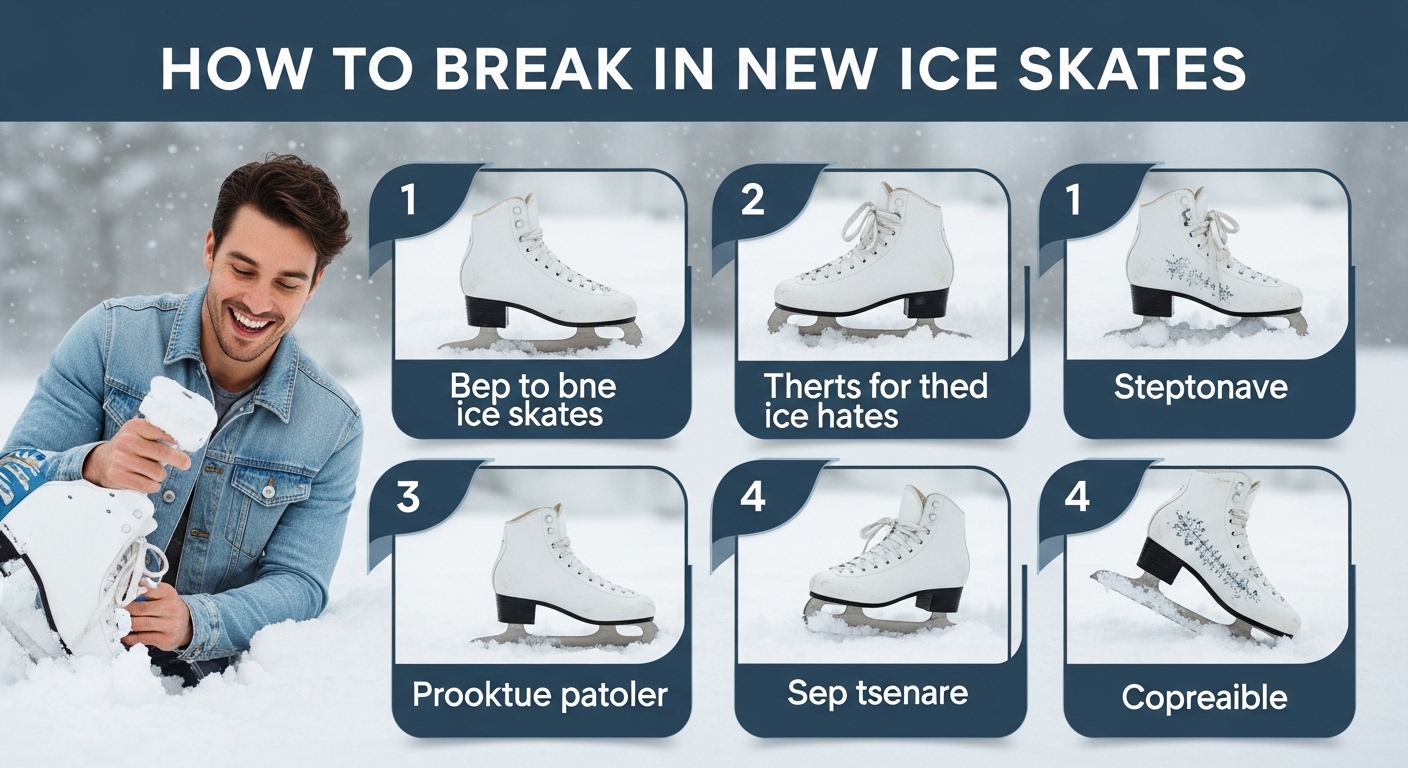
Key Takeaways: Breaking in new ice skates typically takes 10-15 hours of ice time over 1-2 weeks. The most effective methods include: 1) Short 20-30 minute skating sessions with deep knee bends and crossovers, 2) Professional heat molding which speeds up break-in significantly, 3) Wearing skates at home with blade guards for 30-60 minutes daily. Most discomfort is normal, but sharp arch pain or heel lift indicates a fitting problem.
Slipping on a brand new pair of ice skates feels exciting—until you take those first few strides and realize your feet are screaming at you. I have been there. That stiff, unforgiving leather or synthetic material pressing against every curve of your foot can turn a fun skating session into a test of endurance.
Learning how to break in new ice skates properly is essential for both your comfort and your skating progress. Our team has gathered insights from professional skate technicians, experienced coaches, and dozens of real skaters from forums like r/FigureSkating and r/hockeyplayers to bring you the most comprehensive break-in guide available in 2026.
In this guide, you will learn the fastest methods to break in your skates, how to tell if the pain you are feeling is normal or a sign of wrong fit, and a week-by-week timeline so you know exactly what to expect.
Table of Contents
Why Breaking In Your New Ice Skates Matters
New ice skates come straight from the factory with stiff boots designed for support and performance. This stiffness is great for ankle stability, but terrible for comfort until the material softens and molds to your unique foot shape.
Skipping the break-in process or rushing through it can lead to blisters, bruised feet, and even long-term injuries like plantar fasciitis or stress fractures. I have seen skaters develop bad habits like skating on their inside edges or avoiding deep knee bends simply because their boots hurt too much.
A properly broken-in skate boot gives you better control, improved power transfer to the ice, and the confidence to focus on your skills rather than your discomfort. The goal is a boot that feels like a natural extension of your foot—supportive yet comfortable.
How to Break In New Ice Skates: The Complete Process
There are three proven methods for breaking in new ice skates, and most skaters benefit from combining all of them. The key is patience and consistency. Your feet will thank you for not rushing this process.
Method 1: Short Ice Sessions with Targeted Exercises
The most reliable way to break in new ice skates is through controlled, short skating sessions. Start with 20 to 30 minutes on the ice for your first several wears. This timeframe allows your feet to settle into the boots without excessive swelling that would make the fit even tighter.
Many experienced skaters on Reddit recommend unlacing your boots completely after 15 minutes, rubbing your feet for a moment, then relacing and continuing. This simple trick relieves pressure and lets you extend your session comfortably.
During these sessions, focus on specific exercises that flex the boot material. Deep knee bends are the single most effective exercise for breaking in skates. They force the ankle area of the boot to flex and soften. Do sets of 10 deep knee bends throughout your session.
Crossovers also work wonders because they require the boot to flex side-to-side while supporting your weight. Practice forward and backward crossovers around the circles. One-foot glides, edges (both inside and outside), and swizzles all contribute to softening different areas of the boot.
Method 2: Heat Molding (Fastest and Most Effective)
Heat molding, often called “baking” your skates, is the fastest way to significantly reduce break-in time. This professional service uses a specialized oven to heat your boots to a precise temperature that softens the thermoformable materials without damaging them.
Once heated, you put on the skates and sit with your knees bent at 90 degrees for about 10-15 minutes while the boots cool and harden to your foot shape. The result is a boot that feels like it has already had several weeks of skating time.
According to forum discussions and pro shop feedback, heat molding typically costs between $30 and $60. Most skate shops include this service free when you purchase skates from them. However, not all boots can be heat molded—only those specifically designed with thermoformable materials. Check with your manufacturer or skate technician before attempting this.
Jackson, Edea, and many modern Bauer and CCM hockey skates are heat-moldable. Traditional leather boots may not be suitable for this process. Never attempt to heat mold at home using a kitchen oven or hair dryer—the temperature control is not precise enough and you risk ruining your expensive boots.
Method 3: Off-Ice Wearing at Home
Wearing your new skates at home is an easy way to accumulate break-in time without being on the ice. Put on your blade guards, wear thick socks, and walk around on carpeted surfaces for 30 to 60 minutes daily.
The carpet protects your blades while providing a soft surface that reduces impact. Some skaters recommend doing simple exercises while wearing your skates at home—standing in a skating stance, doing gentle knee bends, or even watching TV while wearing them.
One word of warning: never walk on hard floors without blade guards, and never leave your skates on for extended periods if you start feeling pain. At-home wearing should complement your ice sessions, not replace them. The actual skating movements on the ice are what truly shape the boot to your skating stance.
Break-In Timeline: What to Expect Week by Week
Understanding the timeline helps set realistic expectations. Here is what most skaters experience during the break-in period:
| Time Period | Session Length | What to Expect |
|---|---|---|
| Weeks 1-2 | 20-30 minutes | Significant stiffness and pressure. Discomfort is normal. Focus on deep knee bends and basic edges. |
| Weeks 3-4 | 30-45 minutes | Boot begins softening. Pressure points may still exist but intensity decreases. Can attempt longer skating. |
| Weeks 5-8 | 45-60 minutes | Comfort improves dramatically. Boot starts feeling natural. Can handle full practice sessions. |
| Weeks 9-12 | Normal skating | Boot is fully broken in. Should feel like an extension of your foot. Performance at peak. |
Beginner boots with lower stiffness ratings may break in faster—some skaters report comfortable fits after just 6-8 hours of ice time. Advanced boots with high support ratings, like the Jackson Freestyle or Edea Chorus, can take 15-20 hours or more to fully break in.
If you skate multiple times per week, you will break in your boots faster than someone who only skates once weekly. The key is consistent exposure rather than cramming long sessions sporadically.
Managing Pain and Discomfort During Break-In
Some discomfort during break-in is completely normal. The forums are filled with skaters asking if their level of pain is typical. Here is the truth: pressure and tightness are expected. Sharp pain, numbness, or pain that makes you alter your skating technique is not.
Products That Help With Break-In Pain
Gel pads and gel ankle sleeves are go-to solutions recommended by experienced skaters. These provide cushioning over pressure points like your ankle bones, reducing friction and preventing blisters. Bunga pads are a popular brand specifically designed for figure skaters.
Moleskin is another essential product. This adhesive padding can be cut to size and applied directly to hotspots on your feet or inside the boot where pressure builds. Many skaters keep moleskin in their skate bag at all times during break-in.
Blister prevention tape and second skin dressings provide protection for areas prone to rubbing. If you feel a hotspot developing during a session, stop and address it immediately rather than pushing through.
Sock choice matters too. Some skaters prefer thin moisture-wicking socks, while others start with thicker socks during break-in and transition to thinner ones once the boots soften. Experiment to find what works for your feet.
Lacing Techniques That Help with Break-In
How you lace your skates can make a significant difference during break-in. The heel lock lacing technique prevents heel lift, which is a common cause of blisters and discomfort. After lacing through the bottom hooks, cross the laces and thread them through the top eyelets to create a locking mechanism around your ankle.
During the first few weeks, consider skipping the top hook entirely. This reduces pressure on your ankle while still providing adequate support. As the boot softens, you can start using the top hook for maximum stability.
Window lacing is useful if you have a specific pressure point on the top of your foot. Skip crossing the laces over that area by threading straight up the sides, creating a window that relieves pressure directly on the hotspot.
Normal Pain vs Wrong Fit: How to Tell the Difference
This distinction confuses many skaters, especially beginners. Normal break-in pain includes: pressure on your ankle bones (the bones on the inside and outside of your ankle), tightness across the width of your foot, and general stiffness that improves as you warm up during a session.
Pain that indicates wrong fit includes: sharp arch pain that persists or worsens, heel lift where your heel slides up and down inside the boot, numbness or tingling in your toes, and pain that actually increases after 4-6 weeks of attempting to break in the skates.
Arch pain is a red flag. It often means the boot is either too narrow, too short, or lacks the arch support your foot needs. Some skaters require aftermarket insoles or custom orthotics, but persistent arch pain usually means you need a different boot size or model.
If you are experiencing the wrong-fit symptoms, see a professional skate fitter. Continuing to break in ill-fitting boots can cause long-term foot problems.
Common Mistakes to Avoid When Breaking In Skates
After reviewing countless forum threads and consulting with skate technicians, we have identified the most common mistakes that make break-in harder than it needs to be.
Starting with a long first session is the number one error. I understand the excitement of new skates, but that three-hour practice session on day one will leave you with blisters and regret. Stick to the 20-30 minute rule for your first several wears.
Water soaking is an old myth that needs to die. Some skaters still recommend soaking boots in water or wearing wet socks to soften them faster. This destroys the materials, voids your warranty, and can rust your blades. Never introduce water to break in your skates.
Using direct heat like a hair dryer or space heater at home is another dangerous shortcut. You cannot control the temperature precisely enough, and you risk melting adhesives, warping the boot, or damaging heat-sensitive components.
Pushing through severe pain is not tough—it is foolish. Pain exists to tell us something is wrong. If you feel sharp pain, numbness, or pain that changes how you skate, stop immediately. Continuing can cause injuries that sideline you for weeks.
Skipping the one-month blade mounting check is a mistake many new skaters make. As your boots break in and soften, the blade mounting can shift slightly. Having your skate technician verify the blade position after the initial break-in period ensures optimal performance and prevents uneven edge wear.
When to Seek Professional Help?
Sometimes DIY break-in methods are not enough, and that is completely normal. Professional skate technicians have tools and expertise that can solve problems you cannot fix at home.
Boot stretching is a service where a technician uses specialized equipment to expand specific areas of the boot. If you have a bunion, wide forefoot, or other unique foot shape causing pressure, stretching can create the room you need without compromising boot support.
Punch out service targets specific pressure points by pushing out a small area of the boot from the inside. This costs approximately $15-30 per spot and provides immediate relief for persistent hotspots.
Professional heat molding, as discussed earlier, is the most valuable service for faster break-in. If your skate shop offers this, it is usually worth the investment.
If after 4-6 weeks of consistent break-in efforts your skates still cause significant pain, consult a professional fitter. They can assess whether the issue is fit-related or if adjustments can make your boots work for your feet.
Frequently Asked Questions
How long does it take to break in new ice skates?
Breaking in new ice skates typically takes 10-15 hours of ice time over 1-2 weeks. Beginner boots with lower stiffness may break in faster (6-8 hours), while advanced boots with high support ratings can take 15-20 hours or more. Combining on-ice sessions, off-ice wearing, and professional heat molding can speed up this process.
Is it normal for new ice skates to hurt?
Yes, some discomfort is normal during break-in. Pressure on ankle bones, tightness across the foot, and general stiffness that improves as you warm up are all typical. However, sharp arch pain, heel lift, numbness, or pain that worsens over time indicates a fitting problem rather than normal break-in discomfort.
How to break in brand new ice skates?
The best way to break in new ice skates involves three methods: 1) Short 20-30 minute ice sessions with deep knee bends, crossovers, and edge work, 2) Professional heat molding which significantly speeds up the process, and 3) Wearing skates at home with blade guards for 30-60 minutes daily. Consistency and patience are essential.
How do you break in ice skates fast?
The fastest way to break in ice skates is professional heat molding, which can reduce break-in time by 50% or more. This service costs $30-60 at most pro shops. Combining heat molding with short daily skating sessions and at-home wearing will get you to a comfortable fit faster than any single method alone.
Can you wear ice skates around the house to break them in?
Yes, wearing ice skates at home is an effective break-in method. Always use blade guards and walk on carpeted surfaces for 30-60 minutes daily. Do gentle knee bends and stand in skating stance while wearing them. Never walk on hard floors without blade guards, and remove them if you feel sharp pain.
Should I get my new skates heat molded?
Heat molding is highly recommended if your boots are heat-moldable and your skate shop offers the service. It accelerates break-in significantly and helps the boot conform to your foot shape faster. Check with your manufacturer to confirm your boot model is compatible—most modern Jackson, Edea, Bauer, and CCM skates can be heat molded.
Conclusion
Learning how to break in new ice skates properly takes patience, but the reward is worth the effort. A well-broken-in boot becomes an extension of your foot, providing the support and control you need to skate your best.
Remember the fundamentals: start with short 20-30 minute sessions, use targeted exercises like deep knee bends and crossovers, consider professional heat molding to speed things up, and wear your skates at home with blade guards. Most importantly, listen to your body and distinguish between normal break-in pressure and pain that signals a fit problem.
The break-in period typically spans 1-2 weeks and 10-15 hours of ice time, though this varies by boot stiffness and skating frequency. With the strategies in this guide, you will move through this process smoothly and get back to focusing on what matters—enjoying your time on the ice.