
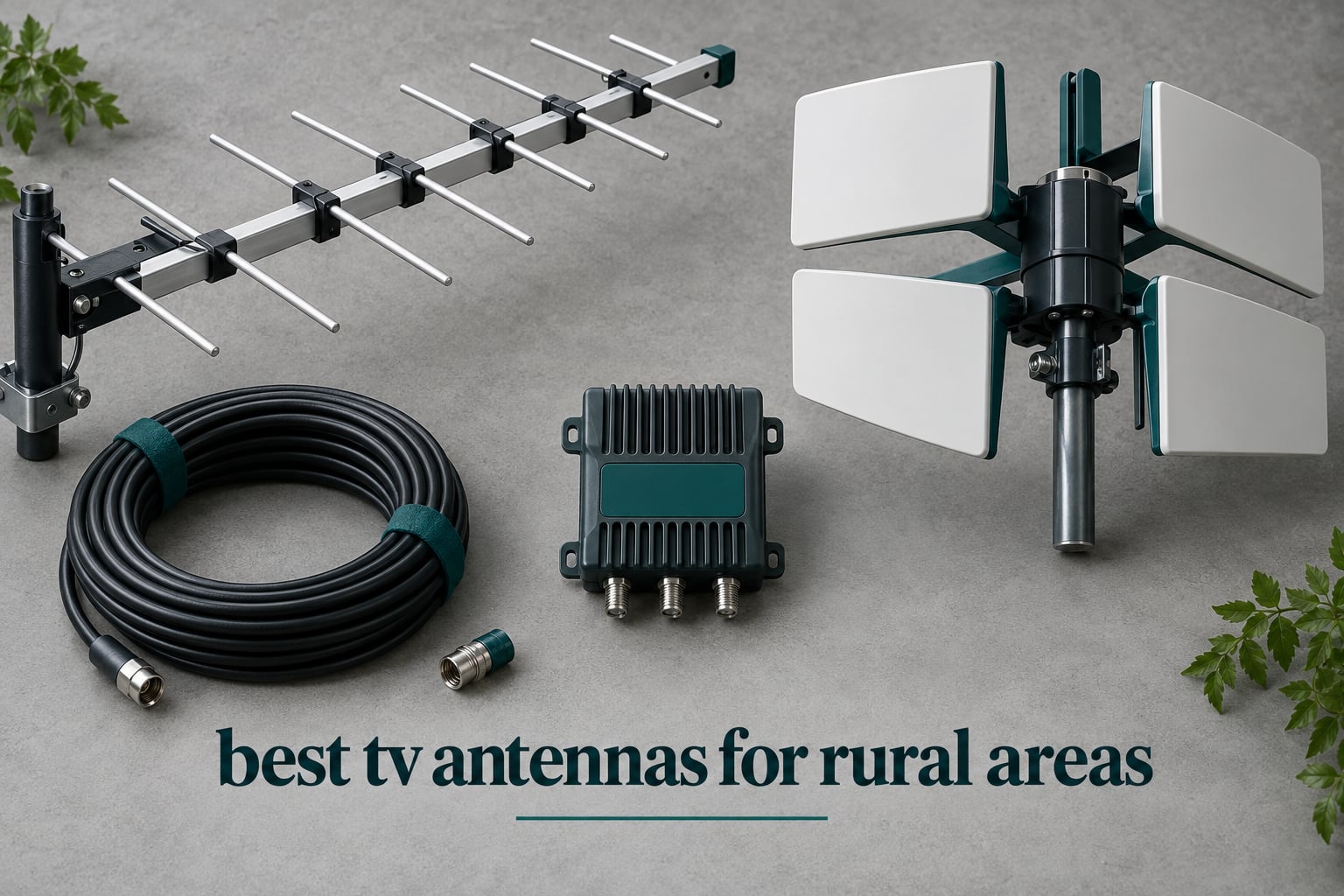
If you live past the last cable line, the best TV antennas for rural areas are large outdoor directional antennas mounted high and aimed straight at the transmitter cluster. Our top picks are the GE Outdoor HD Digital TV Antenna for most farms and rural homes, the Antennas Direct ClearStream 2V when you would rather not aim anything, and the Winegard HD7694P when a rooftop has to survive full weather exposure.
That answer is short on purpose, because the honest version of this topic is not a spec sheet. It is a rule about distance. Broadcast TV travels by line of sight, and the curve of the Earth alone limits a tower to roughly 30 miles of reliable coverage on flat ground. Any box claiming 150 or 200 miles is describing a number nobody can use, which is why the entire category is littered with disappointment.
What actually changes your results is simpler than the marketing suggests: how far you sit from the towers, whether you can see them, which side of the house the antennas sit on, and whether the antenna covers VHF as well as UHF. We went through the full spec sheets and thousands of owner reviews for twelve outdoor-rated antennas to sort that out. Our picks and reasoning for every model are below, along with a tower-distance guide and an honest section on the situations where no antenna is the answer.
Table of Contents
Top 3 Picks for Rural TV Antennas (October 2026)

GE Outdoor HD Digital TV Antenna
- Passive directional gain
- VHF and UHF
- NEXTGEN TV ready
- J-mount included
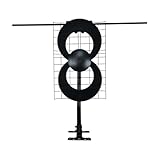
ClearStream 2V Multi-Directional
- Wide multi-directional beam
- Reflector for forward gain
- 20-inch mast included

PBD Amplified Antenna 360 Rotation
- Motorized remote rotation
- Dual TV outputs
- Full kit with pole and coax
All 12 Antennas Compared in 2026
| Product | Specifications | Action |
|---|---|---|
| GE Outdoor HD Digital TV Antenna |
|
Check Latest Price |
| Antennas Direct ClearStream 2V |
|
Check Latest Price |
| PBD Amplified Outdoor Antenna 360 Rotation |
|
Check Latest Price |
 Winegard HD7694P Heavy-Duty Yagi Winegard HD7694P Heavy-Duty Yagi |
|
Check Latest Price |
 Five Star Indoor/Outdoor Yagi FSA-5812 Five Star Indoor/Outdoor Yagi FSA-5812 |
|
Check Latest Price |
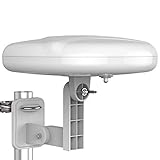 1byone Outdoor 360 Omni-Directional Antenna 1byone Outdoor 360 Omni-Directional Antenna |
|
Check Latest Price |
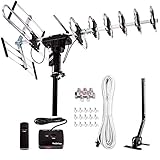 Five Star Outdoor Amplified 5-TV Kit Five Star Outdoor Amplified 5-TV Kit |
|
Check Latest Price |
 Antennas Direct ClearStream 4V Antennas Direct ClearStream 4V |
|
Check Latest Price |
 Antennas Direct 8-Element Bowtie DB8 Antennas Direct 8-Element Bowtie DB8 |
|
Check Latest Price |
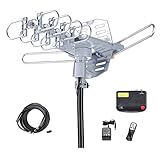 McDuory 150 Mile 360 Infrared Rotor McDuory 150 Mile 360 Infrared Rotor |
|
Check Latest Price |
 CEKAY All-Metal Outdoor Yagi Kit CEKAY All-Metal Outdoor Yagi Kit |
|
Check Latest Price |
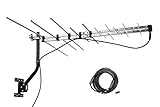 McDuory UHD-3968 Yagi Log-Periodic McDuory UHD-3968 Yagi Log-Periodic |
|
Check Latest Price |
1. GE Outdoor HD Digital TV Antenna for the Widest Range of Farms and Homes
GE Outdoor HD Digital TV Antenna, Long Range Smart TV Antenna
Passive directional
29 x 15 x 20.5 inch
3 pounds
VHF and UHF
NEXTGEN TV ready
Pros
- Passive gain-only design needs no amplifier or power
- 4.4 rating across more than 10700 reviews
- J-mount and hardware included for attic or roof
- Limited lifetime replacement pledge from a recognized brand
- Owners report 60 to 100+ channels at 25 to 60 miles
Cons
- Tedious assembly of many small parts with thin-print instructions
- Very directional so small rotations can cost a whole cluster of channels
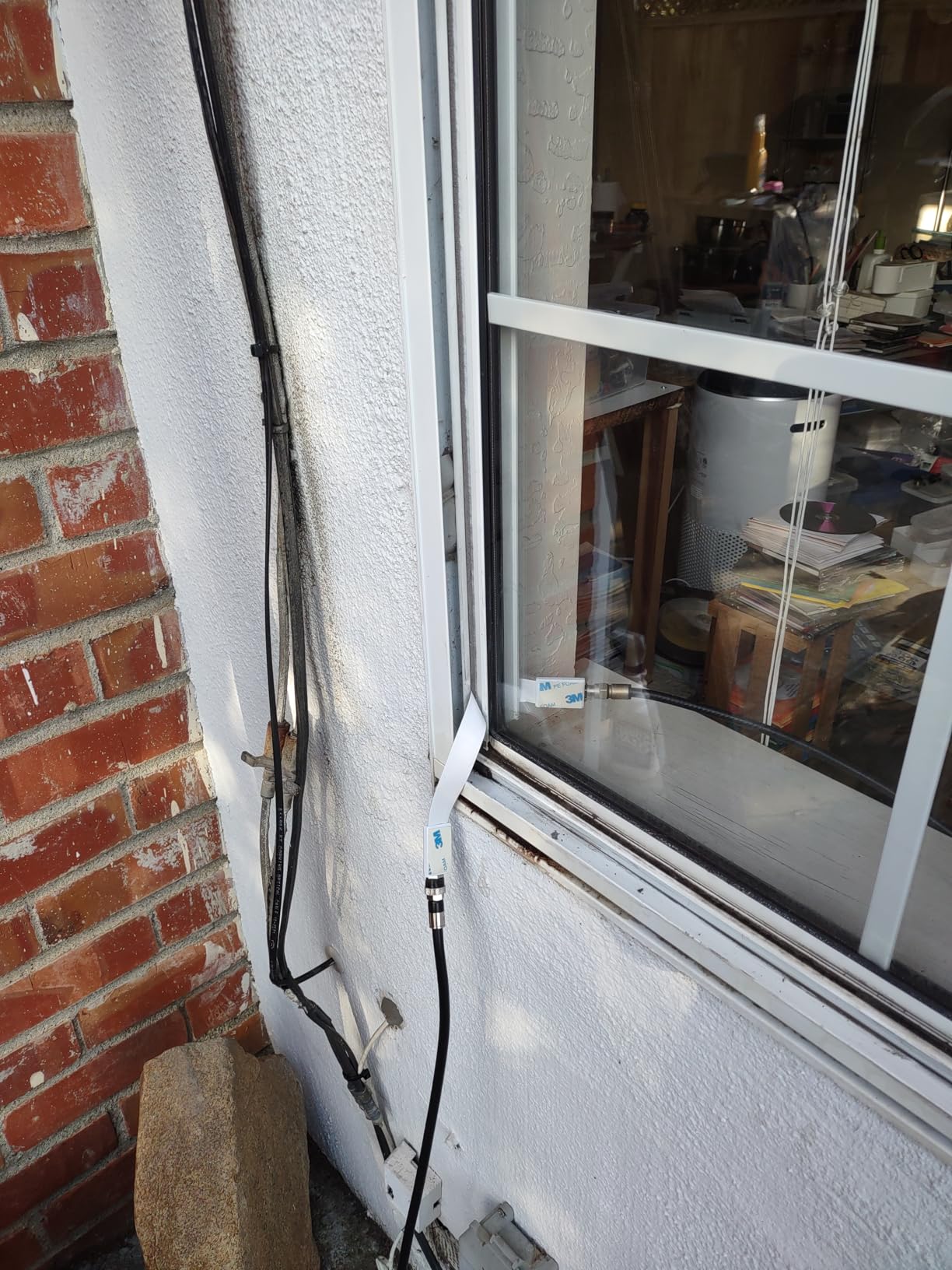
- Coaxial cable not included
This is the antenna I would put on most rural roofs. It is a plain passive directional Yagi with no amplifier, no motor and no power supply, which sounds basic until you remember that most rural reception failures come from noise and overload rather than from a lack of boost.
Reviewers consistently report 60 to more than 100 channels between 25 and 60 miles from towers when the antenna is pointed correctly. That is the kind of number that matters, and it comes from a design that has nothing to break.
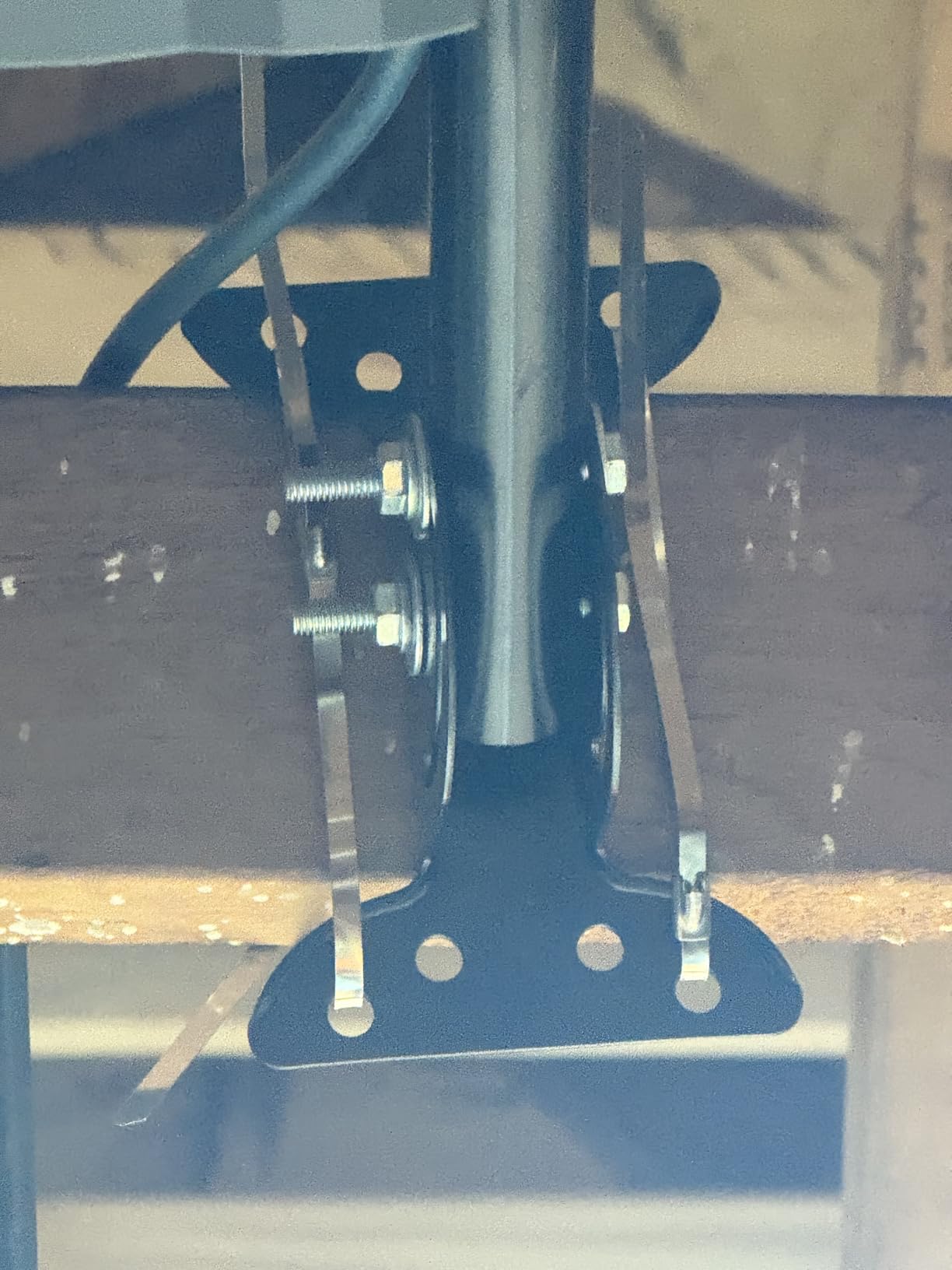
The GE also carries a limited lifetime replacement pledge, which is rare in this category and covers the part most likely to weather-degrade. My one reservation is assembly. Owners describe putting together a lot of small elements with thin-print instructions, so budget an unhurried hour rather than assuming a ten-minute job.
There is a second point that decides many purchases. Because the design is directional, a small rotation can drop one group of stations while picking up another. Plan on rescanning repeatedly while you dial it in, and treat the first hour as aiming, not installing.
How far you are from the towers decides whether this works
At 25 to 50 miles with a clear view, this is a strong performer with no caveats. Beyond roughly 60 miles, you are asking a three-pound passive antenna to fight the noise floor, and adding gain elsewhere in the chain matters more than a bigger boom here.
The single biggest install mistake we see is pointing at a town rather than at the transmitter cluster. Check your actual tower bearing before you climb anything, and aim for the strongest single cluster rather than trying to cover several towns at once.
Where this antenna will frustrate you
If your towers sit in more than one direction, a rotor is a better investment than a longer boom, and you can add one later. If your local CBS or NBC affiliate broadcasts on a VHF channel, verify coverage before mounting, because passive Yagis vary a lot in their high-VHF elements.
Coaxial is not in the box. Use RG6 rather than the thinner RG59 for any run longer than a few feet, since RG59 losses at the top of the UHF band are exactly what kills fringe reception.
2. Antennas Direct ClearStream 2V When You Would Rather Not Aim Anything
Antennas Direct ClearStream 2V Indoor Outdoor TV Antenna UHF VHF Multi-Directional, 60+ Mile Range, 4K 8K UHD, NEXTGEN TV – w/Reflector, 20-inch Mast
Double-loop multi-directional
31.4 x 6.5 x 18 inch
2 pounds
UHF and Hi-VHF
Lifetime warranty
Pros
- Wide multi-directional beam removes the need for precise aiming
- Reflector adds forward gain and rejects interference from behind
- Reviewers report 30 to 100+ channels in favourable conditions
- Several owners have run the same unit for eight years or more
- Lifetime manufacturer antenna warranty
Cons
- Single Hi-VHF dipole does not reliably recover weak channels 7 to 13
- Unamplified so long cable runs in fringe areas need a pre-amp
- Not approved for roof mounting without a separate mast or tripod
Where the GE asks you to aim, the ClearStream 2V does not. Its double-loop array covers a wide horizontal beam, which is the single most valuable feature in country where towers are scattered across the horizon rather than clustered in one direction.
It is also the antenna that shows up most often in long-term ownership reports. Multiple reviewers describe using the same unit for eight years or more, and the included reflector measurably improved signal quality in several installs by pushing gain forward and rejecting whatever was arriving from behind.
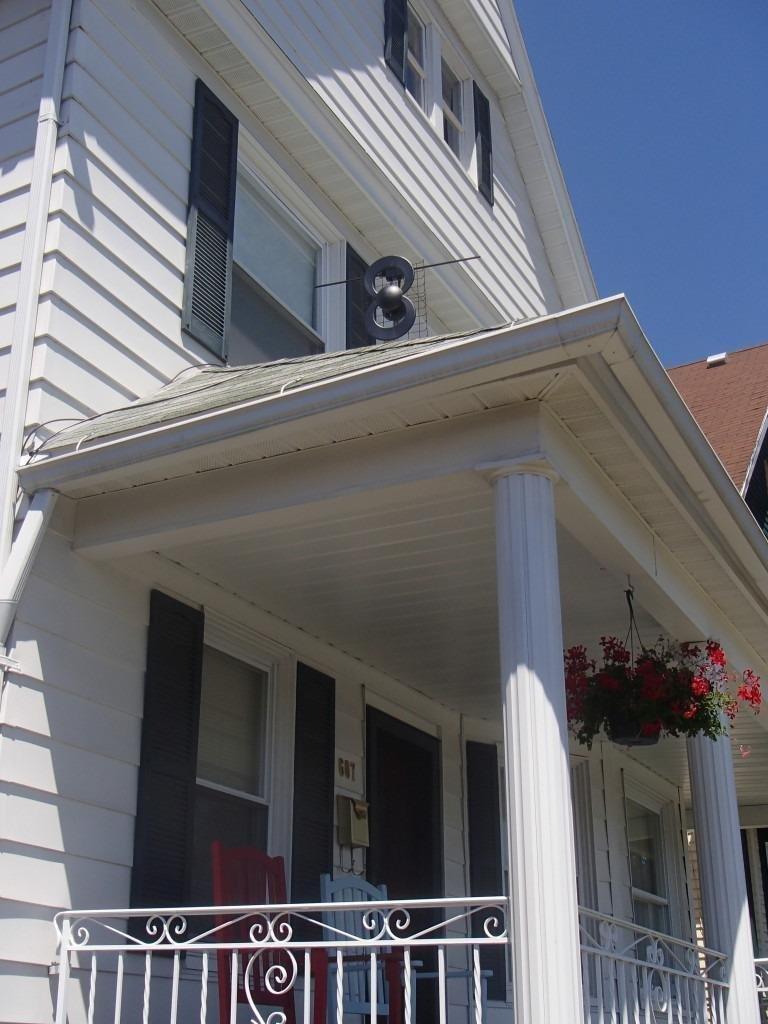
Owners report channel counts anywhere from 30 to more than 100 depending on distance and terrain, and several describe reception from towers 90 to 100 miles away under favourable conditions. That is genuinely impressive for an unamplified antenna, and the reflector option is worth having on any install past 40 miles.
The recurring caveat in reviews is the VHF dipole. A single element does a poor job of pulling weak high-band VHF stations, which is the band where rural CBS, NBC and ABC affiliates most often sit. If your local network affiliate is on channel 13, test that station first.
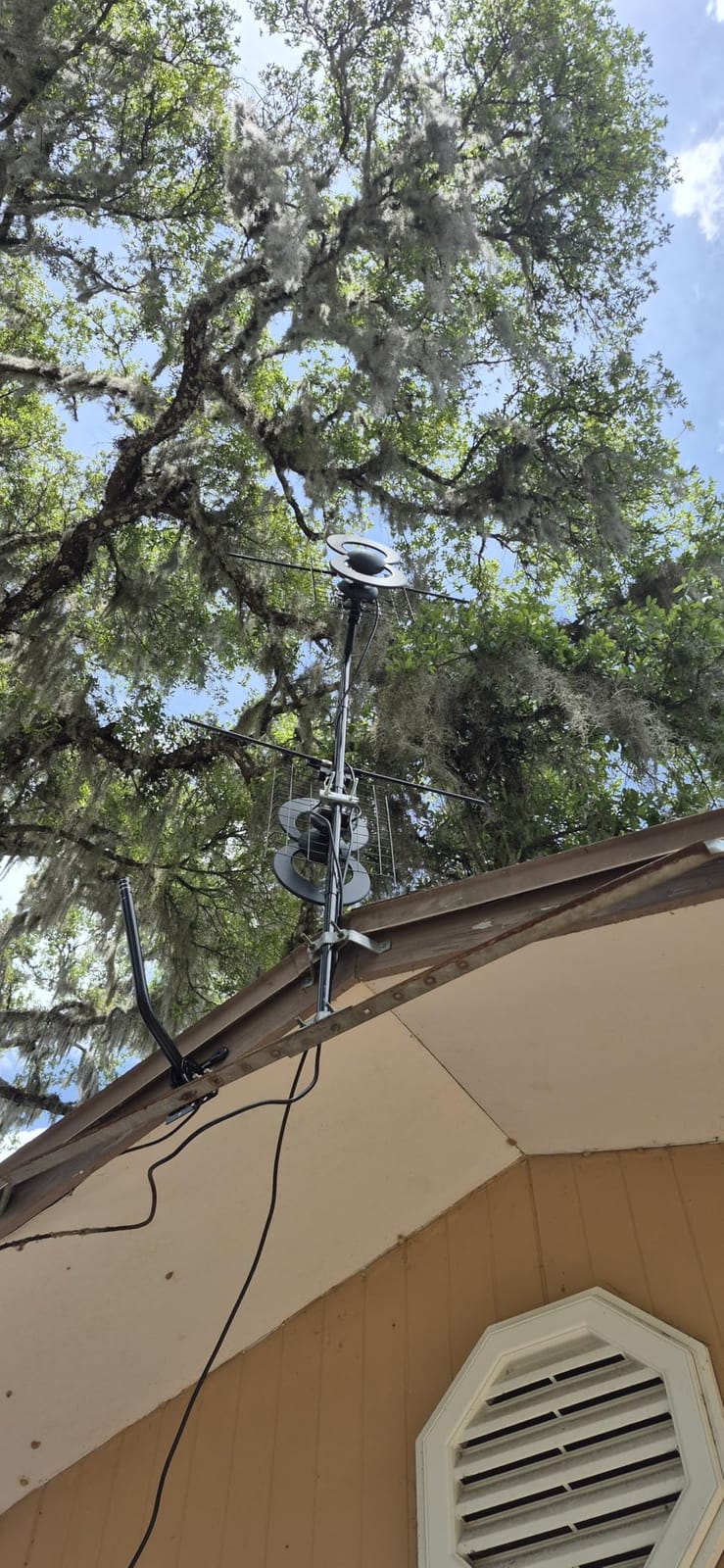
What makes this the easiest rural install
Set it facing the general direction of your towers, run a channel scan, and nudge it a few inches at a time. The wide beam means small adjustments produce small changes, so the fine-tuning is quick rather than frustrating.
The included 20-inch mast with a pivoting base works indoors, in an attic or outdoors on a pole. For rural use, choose the reflector variant, because rejecting rear interference matters more the further you are from the transmitter.
The limits worth knowing before you mount it
It ships unamplified, which is correct engineering for moderate distances and wrong for a 100-foot coax run at the edge of coverage. If you are deep fringe, plan to add a low-noise pre-amplifier at the antenna, not in the house.
Roof mounting is not approved with the included hardware, so an exterior mast or tripod is a separate purchase. In an attic with foil-backed insulation, expect noticeably fewer channels than the same antenna on a pole outside.
3. PBD Amplified Outdoor TV Antenna for Towers in More Than One Direction
PBD Amplified Outdoor TV Antenna for Local Channels, 360° Remote Rotation
Amplified with 360 rotation
Two TV outputs
40ft RG6 and pole included
Lifetime warranty
Pros
- Motorized rotation lets you aim from indoors without climbing the roof
- Dual outputs drive two televisions with no splitter purchase
- Complete kit includes pole cable and remote control
- Lifetime warranty with 24/7 support
- Reviewers report dramatic channel gains over indoor antennas at 25 to 100 miles
Cons
- Lightweight all-plastic body may not survive many outdoor seasons
- Rotor has no position indicator so you cannot tell which way it points
- Motor can stick and some units rotate on their own
With 19,259 reviews behind it, this is the most thoroughly exercised rotor in the group, and the reason is obvious once you are in the country. Many rural households can see transmitters in two or three directions, and a motorized head lets you chase them without going outside.
The all-in-one nature of the kit is the real value here. You get the pole, 40 feet of RG6, the mounting hardware and the remote in one box, which removes the four separate accessory purchases that usually follow an antenna purchase.
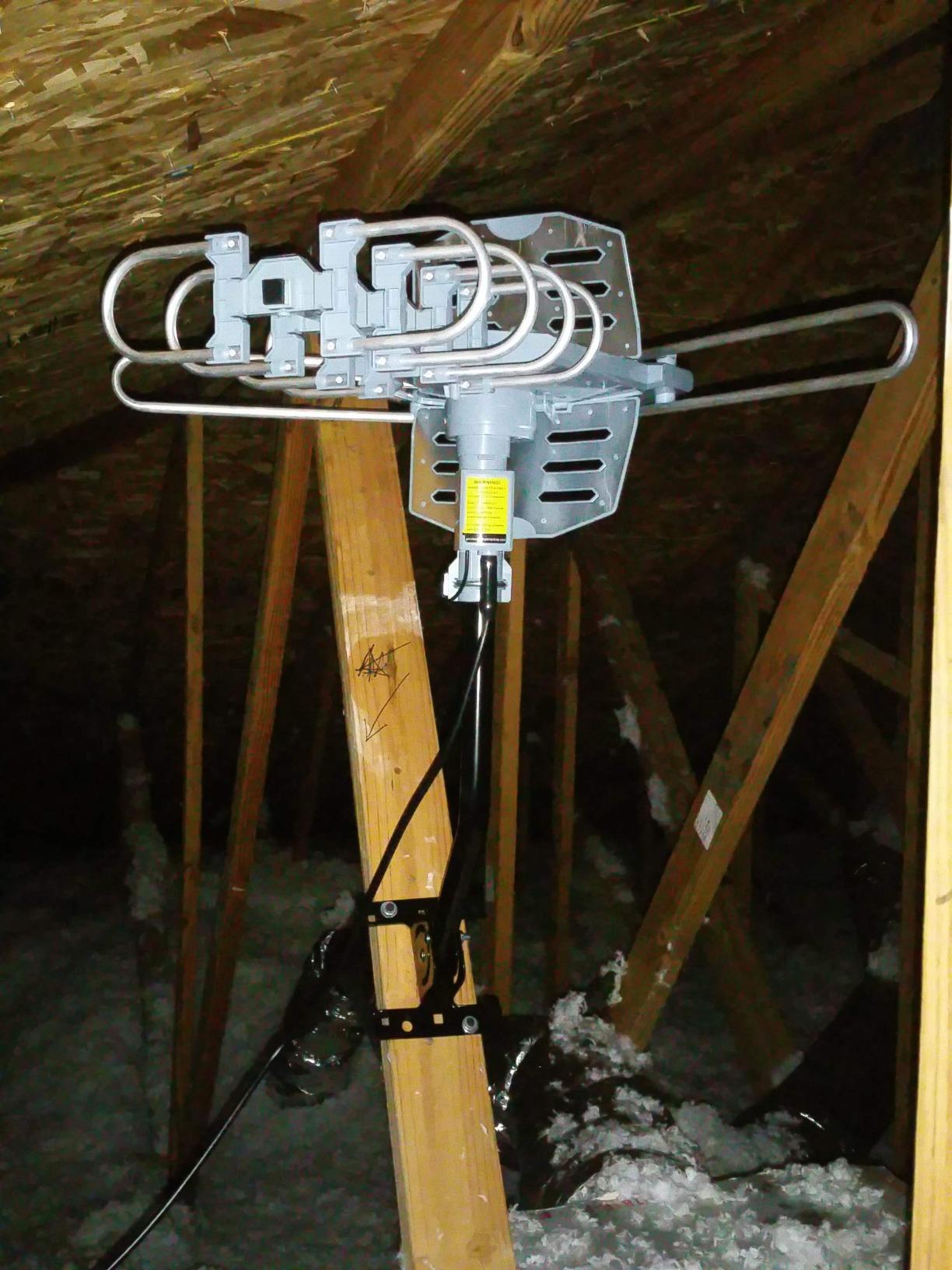
Two TV outputs mean a household with a second set does not need a splitter, and a splitter would cost you signal. That is a meaningful saving in a weak-signal area, where every extra loss is a channel you cannot get back.
Owners report dramatic gains over indoor antennas at distances between 25 and 100 miles once the unit is mounted high. The built-in high-gain, low-noise amplifier is doing real work on long coax runs, which is precisely the situation this antenna is built for.
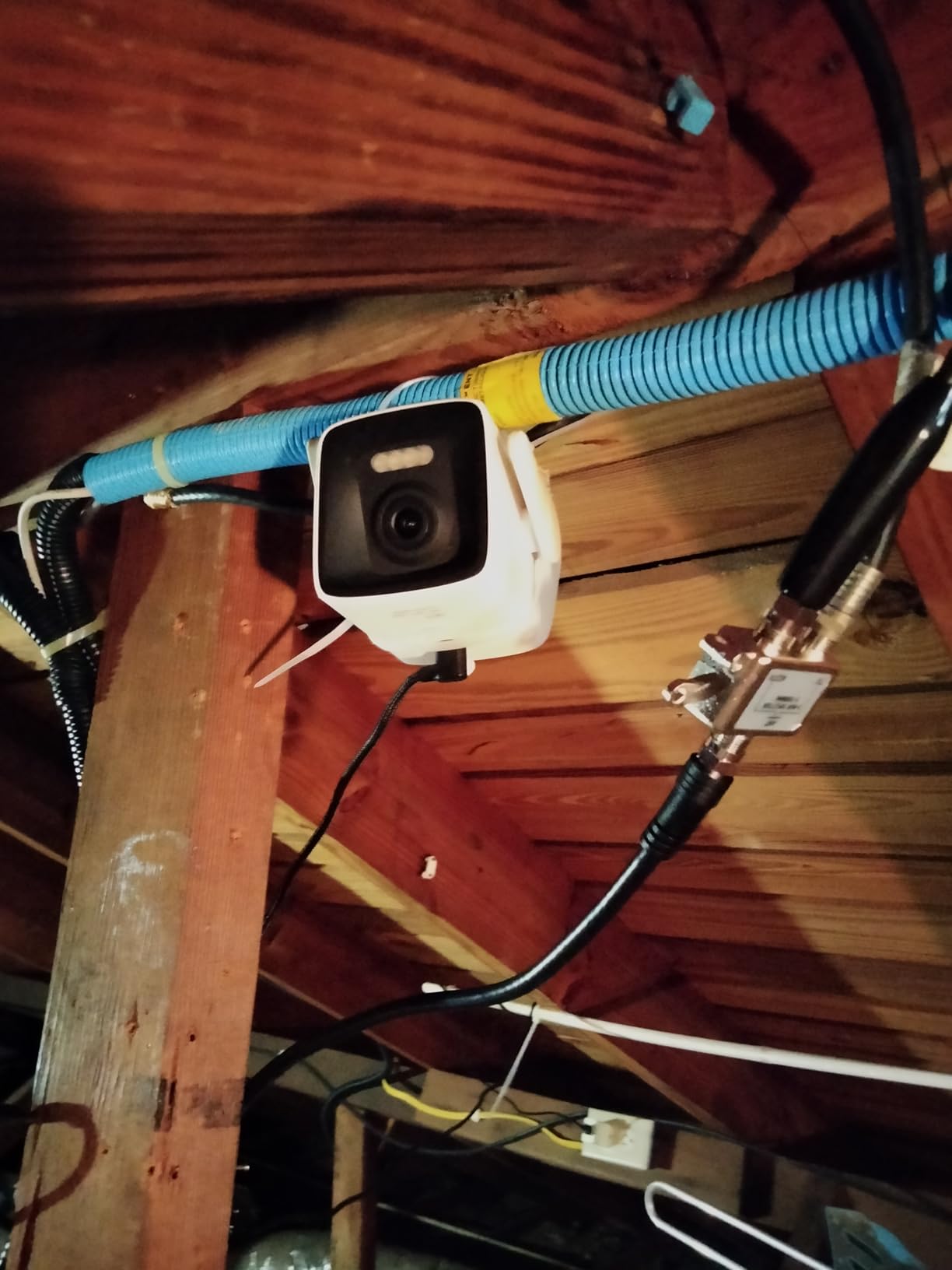
Why rotation matters more than people expect
People assume every rural market has one transmitter cluster. That is often untrue, and when a second cluster sits 40 to 60 degrees off, a fixed antenna has to compromise. A rotor lets you take the best of both once you have scanned.
Scan with the antenna in a rough position, note which stations appear, then rotate in small steps and rescan. Once you know the two useful positions, you can leave it there and only revisit it when a station changes format or a new transmitter starts up.
Where the rotors cause trouble
There is no position readout, so from inside the house you have no idea which way the antenna is pointing. If the motor ever stops mid-rotation, you are climbing a ladder to find out, and reviewers do report sticking motors and units that drift on their own.
The all-plastic body is the other concern for a permanent roof mount. It is fine for a seasonal install or a pole in a sheltered yard, but if the antenna will live on an exposed rural roof through ice and wind, look for a metal chassis instead.
4. Winegard HD7694P for Rooftops That Take a Beating
Winegard HD7694P Heavy-Duty Outdoor Yagi TV Antenna
Zinc-plated steel chassis
6.7 pounds
Hi-VHF and UHF
45-mile claimed reach
Pros
- Only all-metal zinc-plated chassis in the group for exposed rural rooftops
- Non-amplified design removes amplifier noise and a power supply failure point
- Directional gain keeps fringe stations stable in wind and rain
- Works with the Winegard RV Halo app channel finder for aiming
- 71 percent five-star across 1215 reviews
Cons
- Shortest claimed reach of the premium options at 45 miles
- Directional so multiple markets need a separate rotor
- One-year limited warranty is the shortest in the group
Everything else in this roundup uses aluminium, plastic or coated steel. The Winegard HD7694P is built from zinc-plated steel throughout, and that single fact decides the recommendation for anyone mounting on an exposed roof, a pole in an open yard or a cabin that sees real weather.
Like the GE, it is fully passive. There is no amplifier to add noise, no power supply to fail in a wet barn, and no motor to seize in January. What you get is directional Yagi gain doing the only job it needs to do.
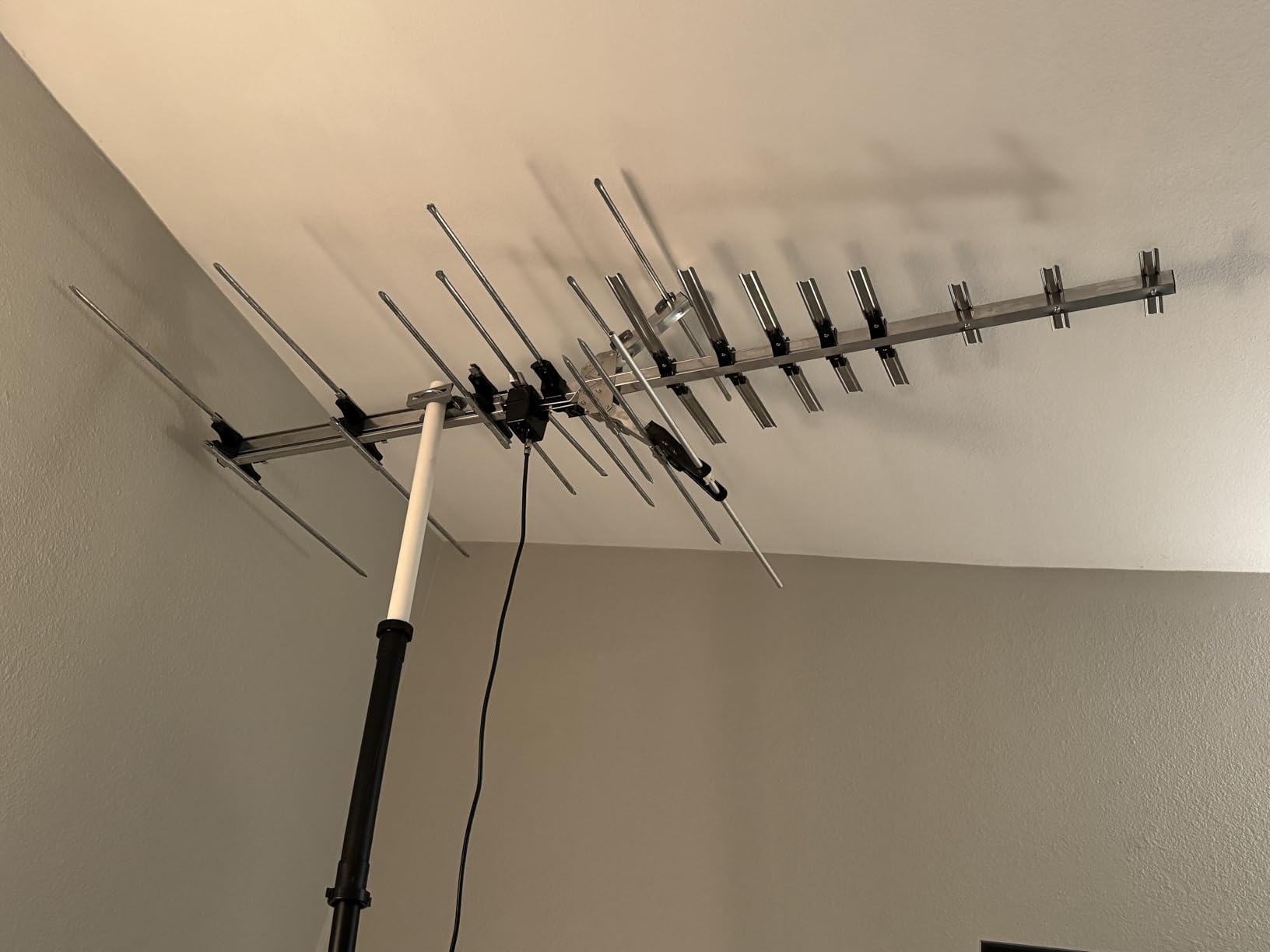
It receives Hi-VHF and UHF in HD, and it is compatible with NextGen TV and 4K Ultra HD tuners. For a rural buyer, the two bands that matter most are covered, which avoids the single most common rural failure of buying a UHF-only antenna and losing the network affiliates.
Winegard’s RV Halo app includes a TV Channel Finder that assists placement and aiming, which is helpful if you have never aimed a directional antenna. Forum regulars in r/StCharlesMO describe Winegard as one of the more respectable brands in this space, and the install experience backs that up.
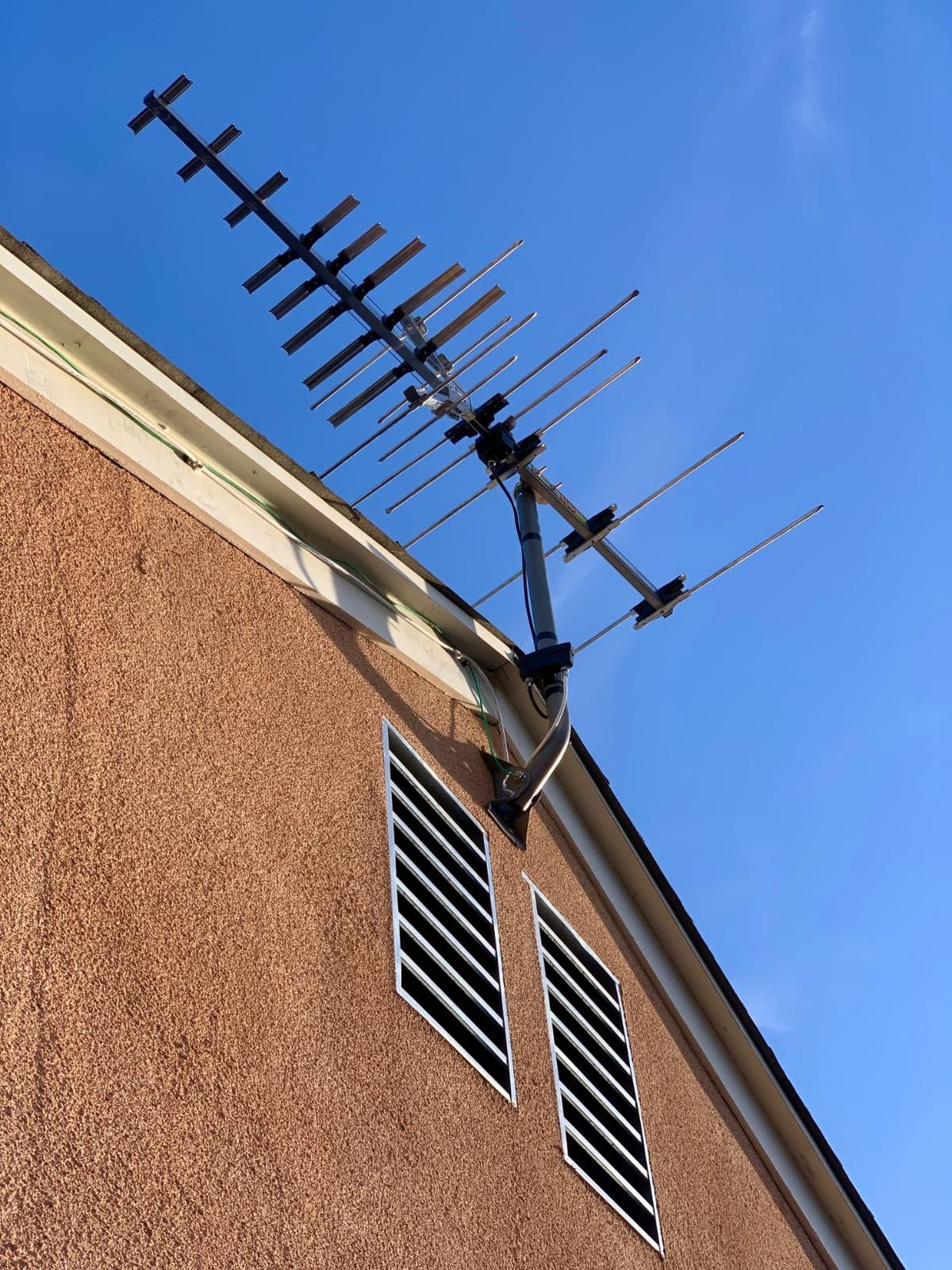
Why metal construction matters on a farm
Galvanised steel does two things. It resists corrosion across multiple seasons of dew, rain and snow, and it holds its element alignment in wind, which matters because a bent Yagi loses gain quietly rather than obviously. You notice fewer channels, not a broken antenna.
At 6.7 pounds it is heavy enough to stay put without over-gauging the mast, and the included mounting hardware is the real hardware rather than stamped plate. For a permanent installation, that difference shows up in year three.
The honest trade-off
The claimed reach is 45 miles, the shortest of the premium options here. If you sit well beyond that in flat open country, you want a longer boom and more elements rather than a durable short one.
It is also strictly directional, so a household with towers in two directions needs a rotator. And the one-year warranty is the shortest in the group, which is worth weighing against the build quality before you commit.
5. Five Star FSA-5812 Yagi as a First Rooftop Upgrade
Five Star TV Antenna Indoor/Outdoor Yagi Satellite HD Antenna with up to 200 Mile Range – Attic or Roof Mount TV Antenna, Digital OTA Radio/FM Antenna for 4K 1080P with Mounting Pole
Extended-length Yagi elements
Passive design
40ft coax and 20-inch pole
Mostly metal build
Pros
- Yagi directional gain beats smaller multi-directional antennas in the same tier
- Passive with no motor and no amplifier so there is nothing to break
- Owners report channel counts rising from 34 to 86 stations
- All-metal construction held up through a windstorm in a long-term review
- Light and compact enough for a small roof or an attic
Cons
- Three-foot boom is small for long-range work; useful ceiling is roughly 60-70 miles
- Listing calls it a satellite antenna and claims 200 miles which reviewers call misleading
- Plain steel mounting hardware will eventually rust and the wing nuts are cheap stampings
This is the antenna most people should buy first when they are moving past rabbit ears. The extended-length Yagi elements deliver noticeably more directional gain than a small multi-directional panel, and because nothing in the signal chain is powered, the failure modes are close to zero.
Several owners report channel counts roughly doubling, from 34 to 86 stations, which is the kind of step change that makes the move from indoor to outdoor feel immediate. Others describe it simply doubling or tripling whatever rabbit ears were managing.
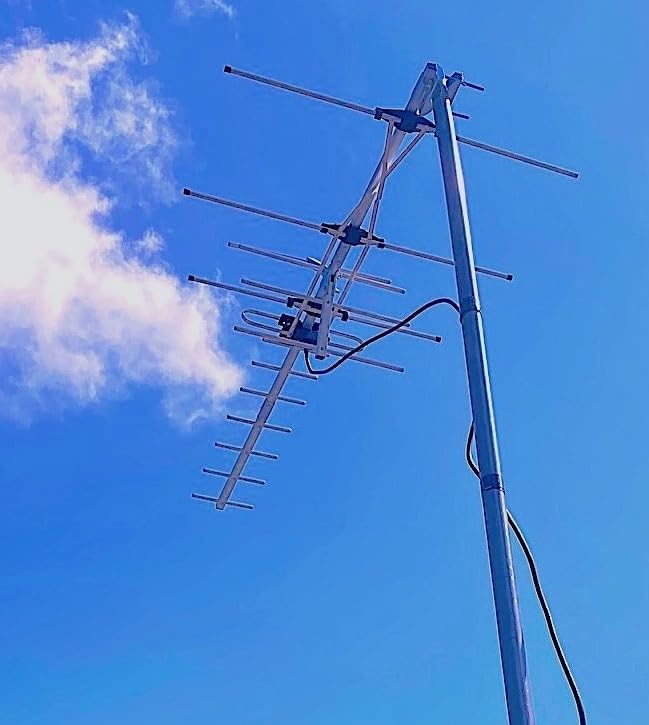
Technically literate reviewers like the element sizing. It is a real Yagi with a proper boom rather than a small panel with a marketing label, and that is why it holds signal in places a cheaper panel would not.
One long-term owner reported the mostly metal construction surviving a windstorm intact. The package includes 40 feet of coax and a 20-inch pole, so an attic, chimney, eave or mast mount are all options without a second order.
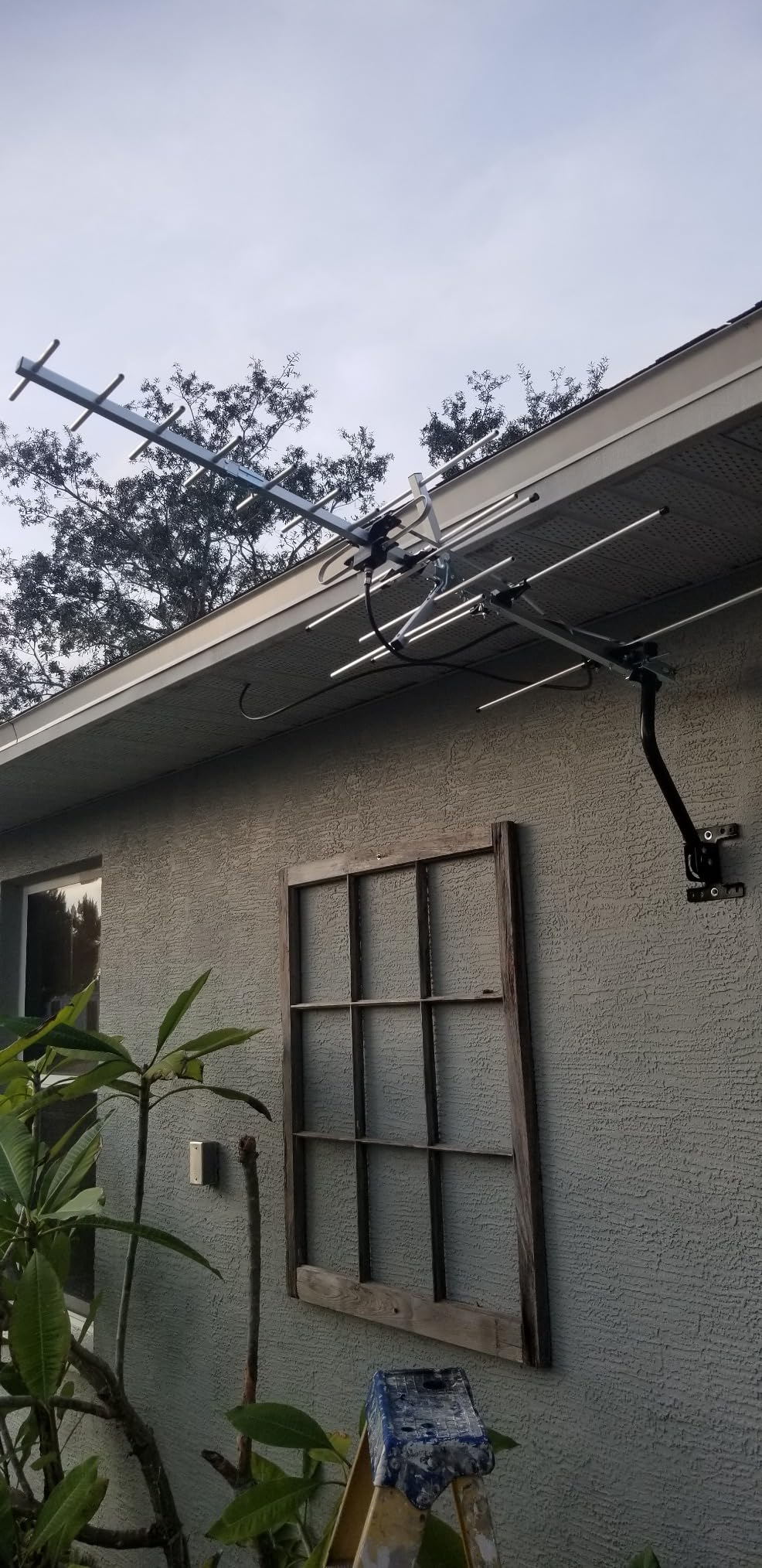
Where this antenna fits in the distance tiers
Think of it as a 25 to 50 mile antenna that performs well, and in open country nearer 60. That is where the three-foot boom and this element size sit, and owners reviewing the 200-mile claim on the listing repeatedly document the real ceiling as lower.
If your towers are within 50 miles and roughly in one direction, this is a complete, low-maintenance answer. It also handles both VHF and UHF plus FM radio, which makes it useful beyond television.
What to fix before it goes up
The single U-bolt mount makes precise levelled aiming hard, so budget extra time for alignment. The steel hardware will eventually rust, and the wing nuts are cheap stampings that are worth replacing with stainless before the first storm season.
Assembly instructions are poor by every account, and reviewers say a tutorial video is effectively required. A knowledgeable installer on r/Austin makes the same point about attic Yagis: they do wonders when they are actually pointed at the towers.
6. 1byone Outdoor Omni-Directional Antenna for Set-and-Forget Installs
1byone Outdoor TV Antenna, 360°Omni-Directional Reception, 100+ Miles Range
360-degree omni-directional
11.81 inch footprint
Pre-amplifier and 4G LTE filter
Pros
- Omni-directional design needs no aiming at all
- Built-in pre-amplifier and 4G LTE filter recover signal lost over long coax runs
- Tool-free installation with coaxial cable included
- Compact 11.8-inch footprint suits an attic RV or rooftop
- Moisture-proof and flame-retardant housing
Cons
- Lowest rating in the group at 3.8 with 18 percent one-star reviews
- Single TV output only
- Marketing range claim of 100+ miles is optimistic against real tower distance
If the idea of climbing a roof and rotating an antenna sounds unappealing, this is the set-and-forget option. It receives in all directions, so you mount it once, aim it at nothing in particular, and rescan whenever you want to check for changes.
The 4G LTE cellular filter is the detail that matters most here. Rural homes sit near cell towers and rural road coverage, and cellular signals landing on broadcast frequencies are a common source of noise that an unfiltered antenna happily amplifies.
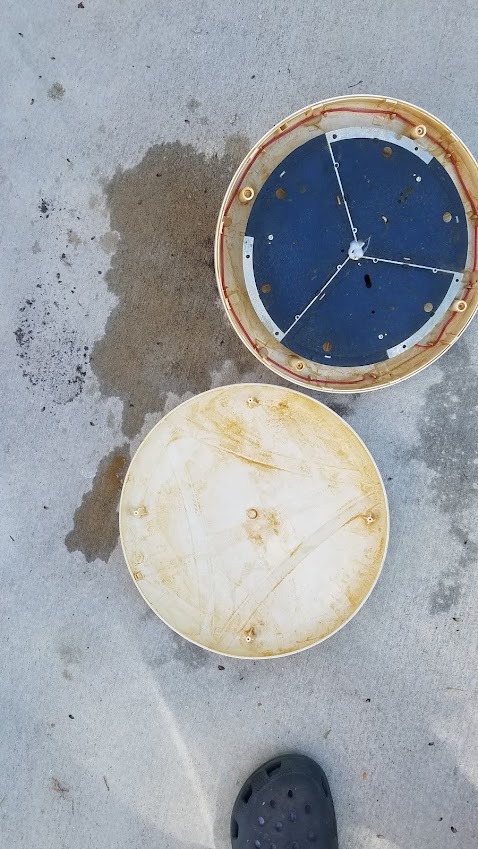
At 11.81 inches square it is small enough for an attic, an RV or a small rooftop without a big mast, and the included 39 feet of RG6U with a tool-free install keeps the job to one visit.
The built-in pre-amplifier exists to offset long cable runs from a high mast, which is the same reason to add a pre-amp manually on a passive antenna. Here it comes in the box.
Where the no-aiming approach pays off
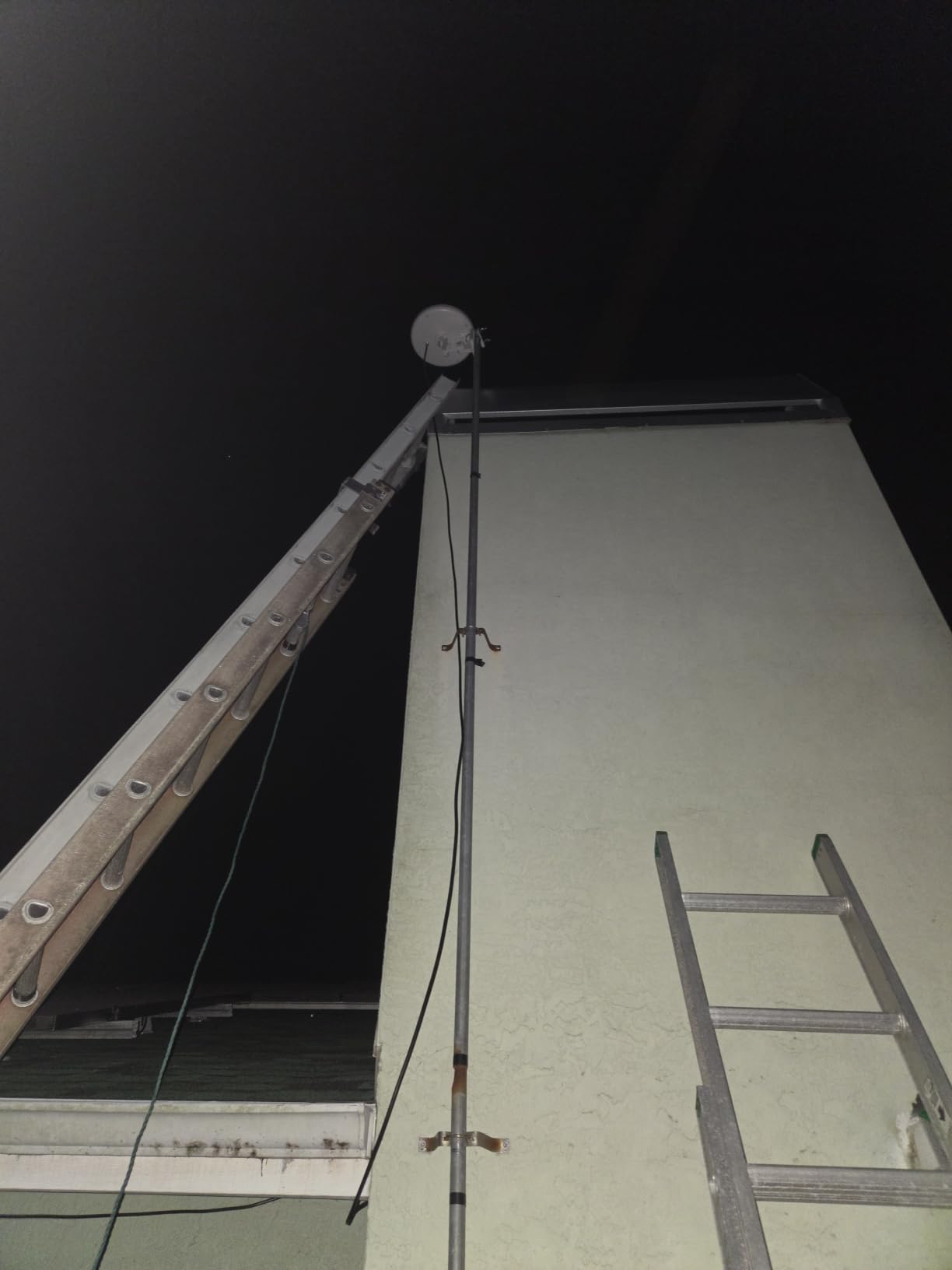
Omni-directional reception is the right call when towers are spread across more than one bearing, when the property is small and awkward, or when the install is in an attic where fine alignment is difficult. You give up some gain against a Yagi pointed correctly, and you give up all the gain you would have lost to imperfect aiming.
Owners consistently praise the no-aim reception model and the included pre-amp. In a valley with transmitters on two ridges, that is the difference between a working install and a Saturday spent on a ladder.
Why the rating is the lowest here
With 10,743 reviews, this has the largest evidence base of any omni unit in the group, and the 3.8 average with 18 percent one-star tells you something real. Receptions at long distance are inconsistent, and 53 percent five-star is not the profile of a set-and-forget device.
It also has a single TV output. A second television means a splitter, and a splitter costs signal you may not have. Plan for a pre-amp at the antenna if your run is long rather than relying on the built-in one, and treat the 100-mile figure as marketing.
7. Five Star Amplified Antenna When Five Households Share One Signal
Five Star Outdoor Digital Amplified HDTV Antenna – up to 200 Mile Long Range,Directional 360 Degree Rotation,HD 4K 1080P FM, Supports 5 TVs Plus Installation Kit and Mounting Pole
15-35dB auto-gain booster
360-degree motorized rotation
4-way splitter
Pros
- Only kit here that legitimately splits signal to five televisions
- Built-in 15-35dB auto-gain chip measurably improved marginal signals
- Remote rotation helps when towers sit in more than one direction
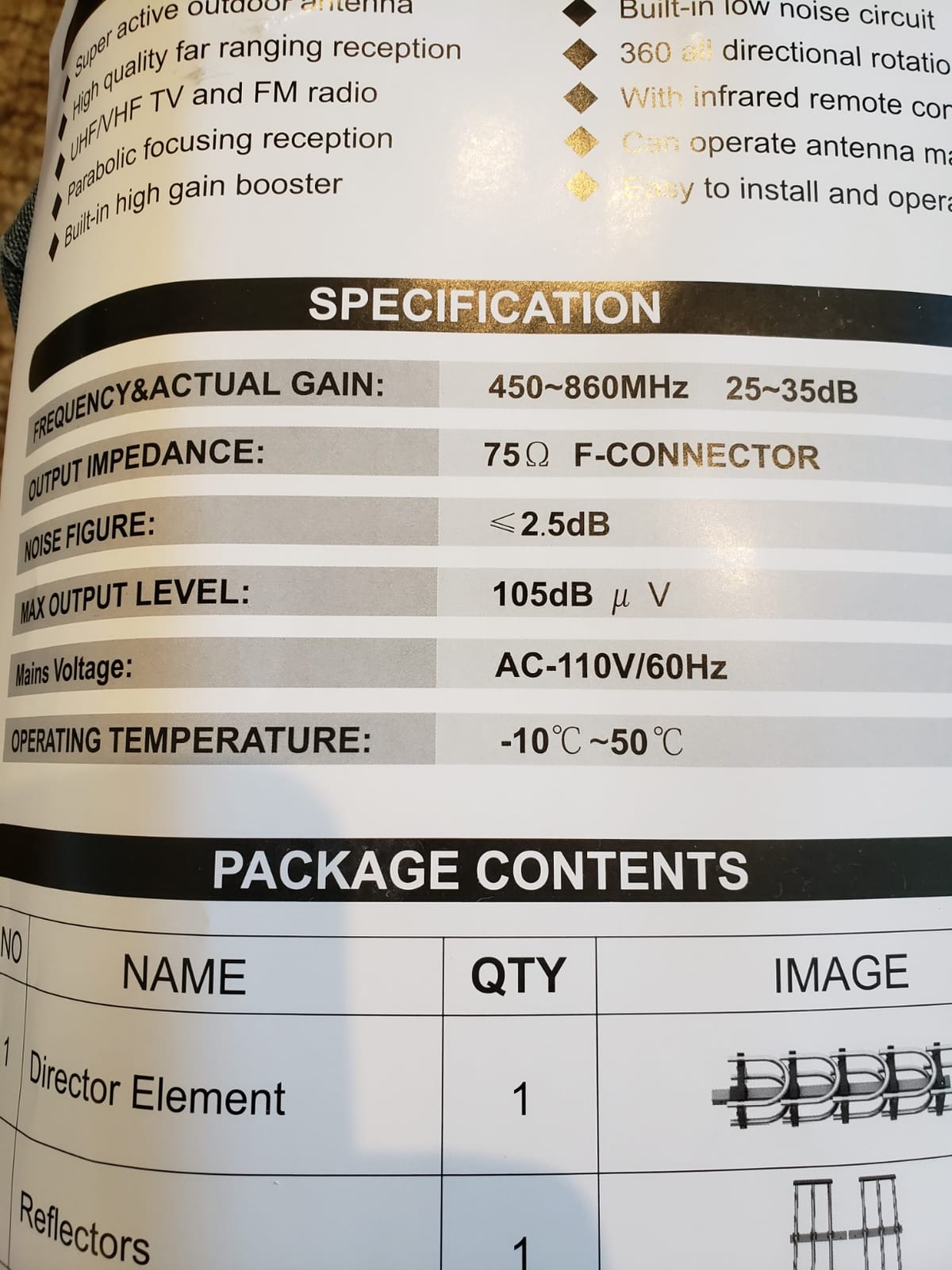
- FM broadcast reception across VHF 40-230MHz and UHF 470-860MHz
- Rooftop install completed in about an hour by most owners
Cons
- Lowest 4.0 average in the group with 11 percent one-star reviews
- Rotor has no position readout so direction is unknown from indoors
- White coax boot is very hard to seat or seal without a heat gun
Households that need more than two sets have a real constraint, because every split costs signal. This is the only kit in the group that addresses it properly, with an included four-way splitter and a booster rated at 15 to 35 dB. If some of those sets are in a vehicle rather than a bedroom, our guide to the best RV TV mounts for bumpy road travel covers keeping a screen secure on bad roads.
The auto gain control chip is worth understanding. Rather than running maximum boost all the time, it adjusts to the incoming signal, which is a saner approach on a strong local market than a fixed high-gain amplifier that overloads the tuner.
One reviewer locked all four major networks from towers 25 miles away with the clusters 65 degrees apart, which is exactly the scattered-tower situation a rotor was invented for. Most owners report 40 or more channels after a rooftop install of roughly an hour.
Six reflector elements handle UHF and a separate element covers high VHF, and it also picks up FM radio, which is a small but genuinely useful bonus in remote areas where FM reception is equally difficult.
When the multi-TV splitter is the deciding factor
If you are feeding a main living room, two bedrooms, a cabin and an RV, this avoids stacking splitters on top of each other. Each extra split loses a few dB, and on a fringe site those losses are what turns a marginal channel into a missing one.
The trade is a big amplifier in front of the array, so treat this as a solution for many sets or long cable runs rather than a default for a single television. If you only have one TV, the same money is better spent on a better antenna.
Where owners report trouble
The rotor is the most common complaint. It has no position readout, it loses position when it moves on its own, and several reviews describe it failing within a season, which is why the 4.0 average carries 11 percent one-star reviews.
The white coax boot is genuinely hard to seat and seal, and reviewers mention a heat gun. The included 40 feet of white coax is often too short for a high mast, and the motor-rated cable is not sold as a separate spare, so plan the run length before ordering.
8. Antennas Direct ClearStream 4V for the Strongest Multi-Directional Gain
Antennas Direct ClearStream 4V Outdoor TV Antenna
Four loop elements
43-degree pattern
4.1 pounds
NEXTGEN TV and 8K UHD
Pros
- Four-element array gives the highest gain of any multi-directional option here
- Reflectors keep pixelation and dropouts down in weak-signal areas
- 43-degree pattern still picks up towers in more than one direction
- Lifetime manufacturer warranty and a heavy 4.1-pound build
Cons
- One of the higher-priced antennas in the group
- Unamplified so long coax runs in fringe areas still need a pre-amp
- No coax included in the base package
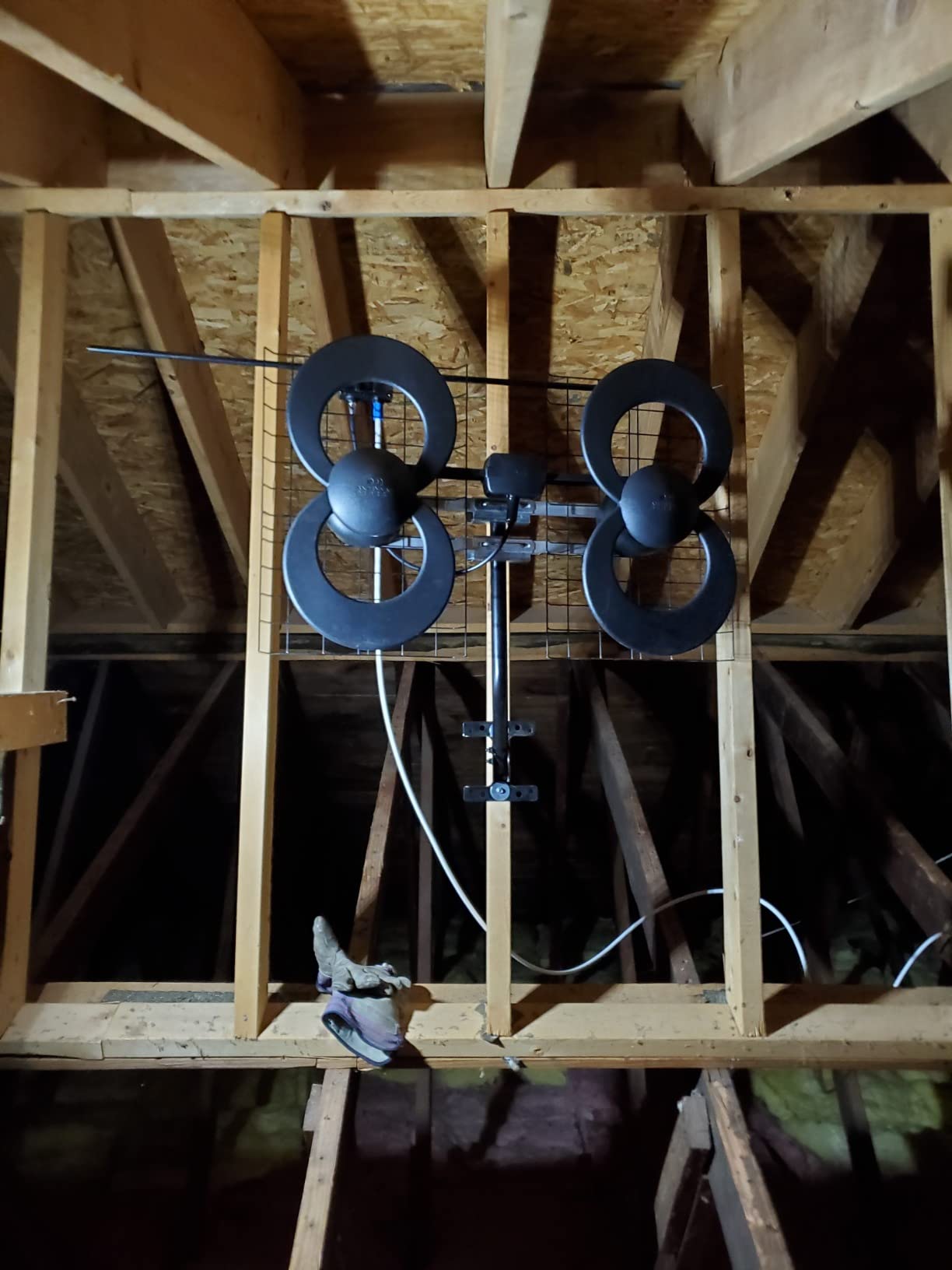
When you want multi-directional reception but more gain than the ClearStream 2V delivers, this is the step up. Four patented loop elements with dedicated UHF and Hi-VHF elements give it the strongest multi-directional gain we found in this group.
It is also the best-reviewed product here on a percentage basis, with 71 percent five-star and only 6 percent one-star across 4,248 reviews. A 4.1-pound build and a lifetime manufacturer warranty back that up.
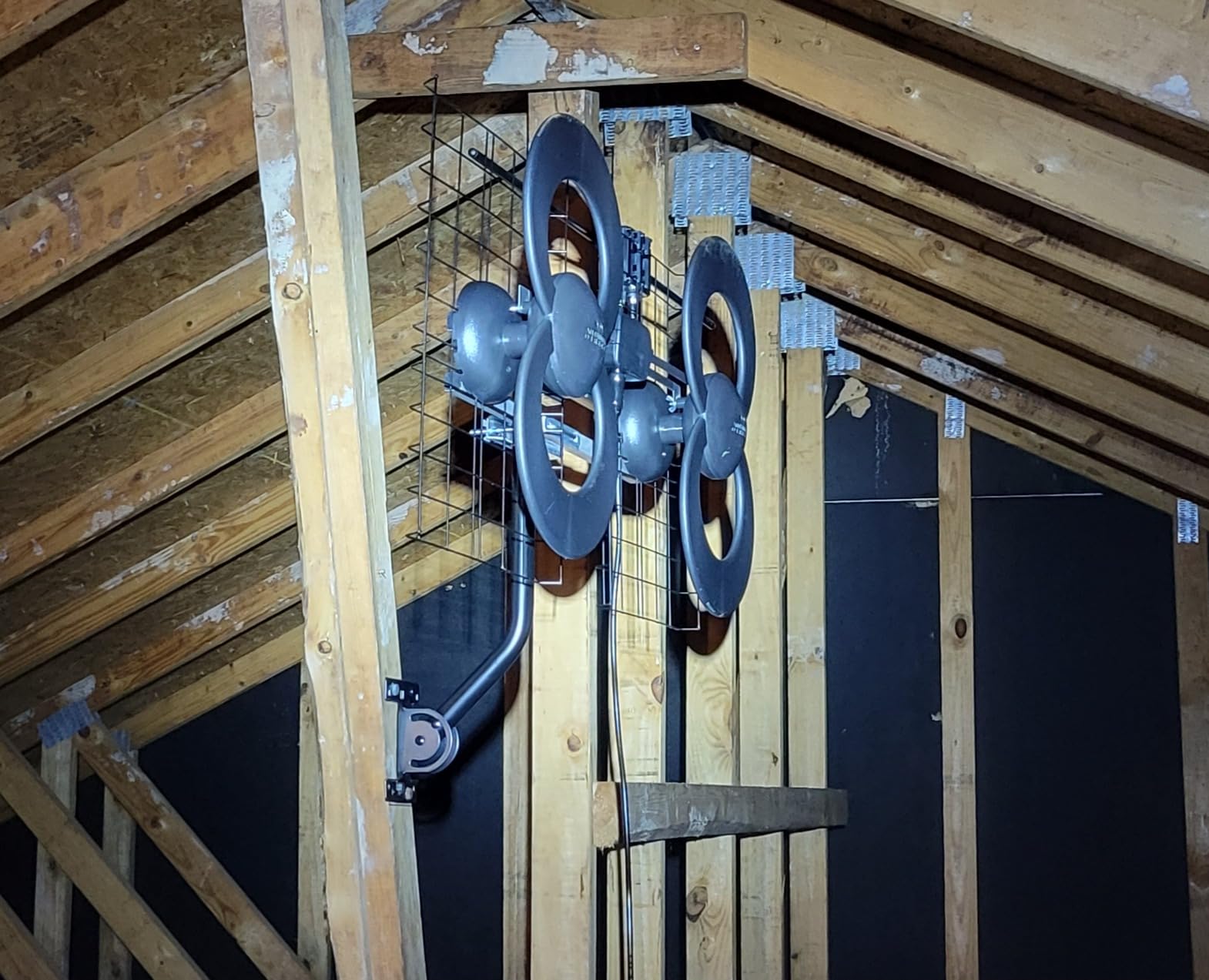
Reflectors add forward gain and block interference arriving from behind, which owners credit with fewer dropouts and less pixelation in weak-signal areas. That is the specific problem you fight when a rural site has buildings, grain silos or a tree line behind the house.
The 43-degree horizontal pattern is narrower than the 2V, so you need a more definite idea of where your towers are, but it is still wide enough to cover a main cluster plus a secondary direction.
Where the four-element array earns its cost
At 40 to 70 miles, the extra gain is what separates this from a smaller panel. Reviewers using it in fringe and farm locations report the difference between a stable picture and a picture that breaks up in wind.
It is compatible with NEXTGEN TV, 4K UHD, 8K UHD and 1080p tuners, and it works with any coax-connected television or converter box. The included 20-inch mast and pivoting base handle attic, wall and outdoor mounting.
What it costs you to choose
It sits at the higher end of what we tested, and combined with the coax you need to buy separately, a rural install with a long cable run adds up. If your distance is under 35 miles, the 2V delivers most of the reception at a lower outlay.
It is unamplified, which is the right design for a clean install and the wrong one for a fringe site with a long run. Add a low-noise pre-amplifier at the antenna if you are in that situation, never in the house.
9. Antennas Direct 8-Element Bowtie for Heavily Foliage-Blocked Sites
Antennas Direct 8-Element Bowtie UHF Outdoor HDTV Antenna, Multi-Directional, 70+ Mile Range, 4K 8K UHD NEXTGEN TV – w/All-Weather Mounting Hardware
8-element bowtie array
17.4 dB gain
10 pounds
UHF 470-608 MHz
Lifetime warranty
Pros
- Largest published gain figure in the group at 17.4 dB
- Multi-directional brackets let you turn it toward different tower clusters
- Reflectors add forward gain and reject interference
- Heavy 10-pound build with all-weather mounting hardware
- Lifetime manufacturer antenna warranty
Cons
- UHF-only array so it will not receive high-band VHF stations
- Large 36 by 48 inch face needs mounting height and clear line of sight
- It sits in the upper half of the price range here
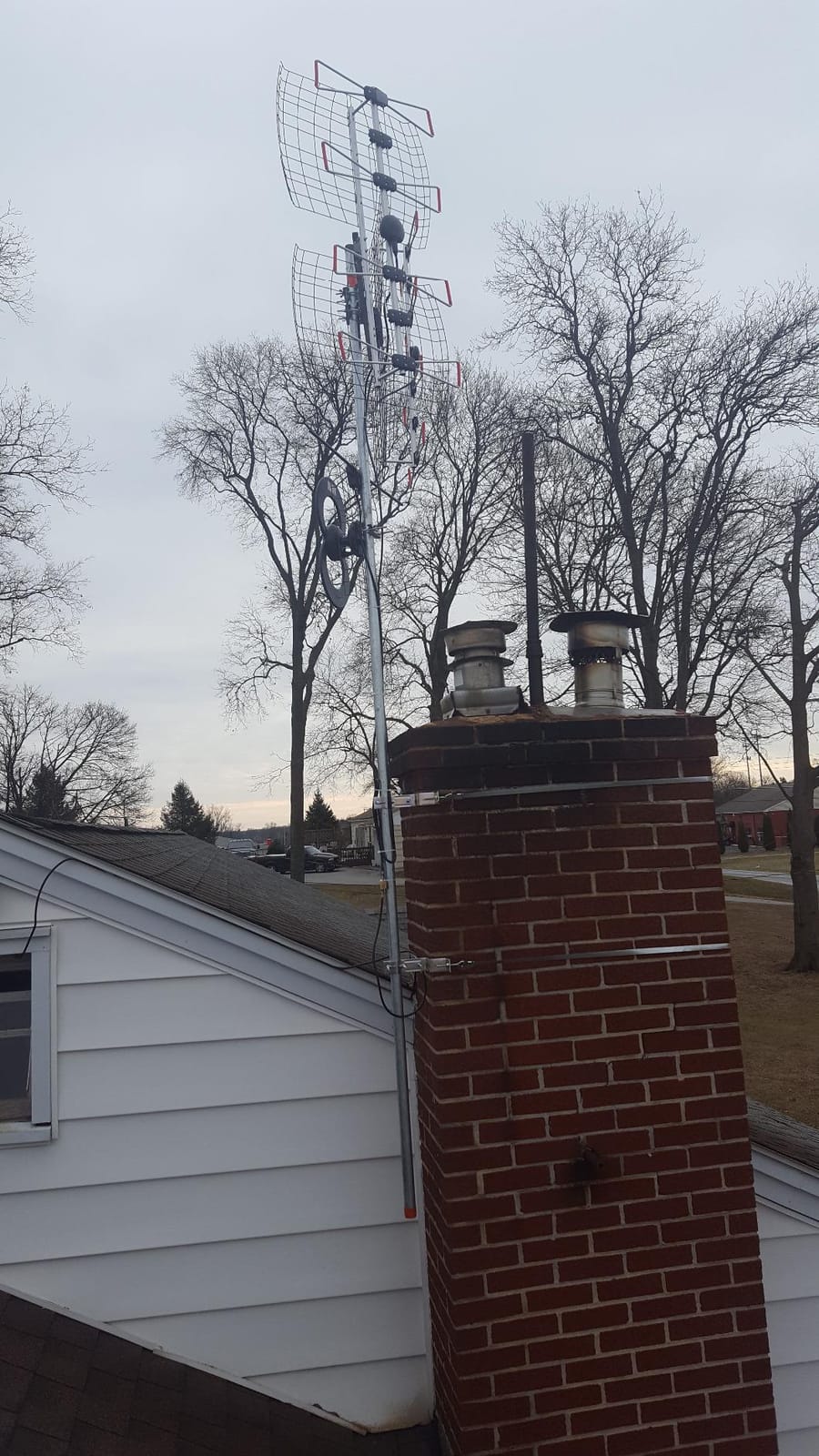
When trees are the problem rather than distance, gain is the answer. This eight-element bowtie array carries the highest published gain figure in our group at 17.4 dB, and raw gain is exactly what compensates for signal that has already been scattered and absorbed by foliage.
At 10 pounds and 36 by 48 inches it is not a discreet object. It needs a mast that can carry it, real mounting height, and a clear view past whatever is blocking the path.
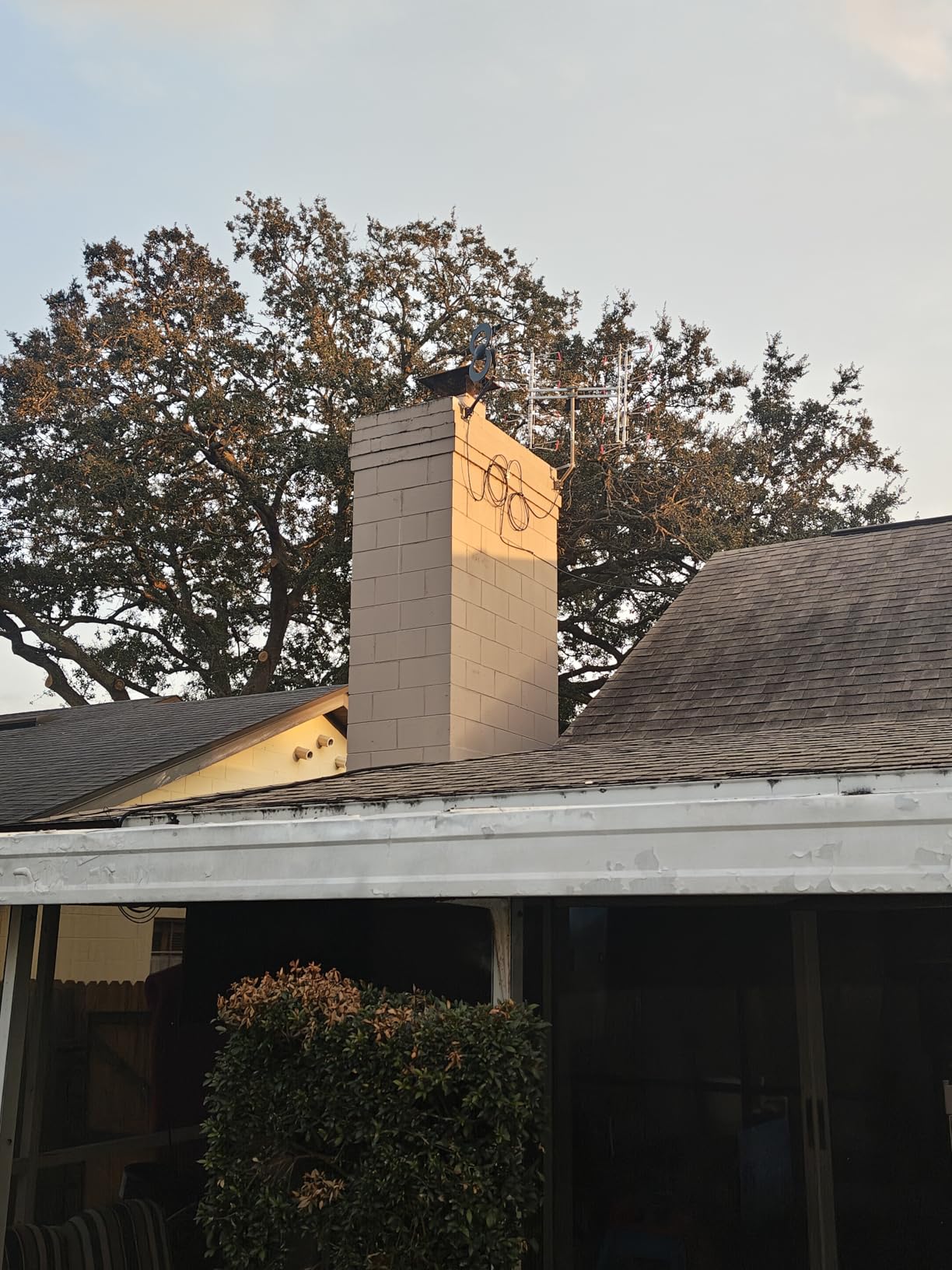
The special brackets let you rotate the whole array toward different tower clusters, which gives you some of the flexibility of a multi-directional antenna while keeping the gain of a large array. Owners using it in rural settings with heavy tree cover report it holding stations that smaller antennas lose.
Reflectors protect incoming signal from the interference that causes pixelation, and the all-weather hardware with an adjustable mast clamp is appropriate for a permanent install.
When foliage is the limiting factor
Wet leaves in spring attenuate UHF badly, and a tower 40 miles away through a tree line can arrive with less signal than a tower 25 miles away across open ground. In that situation, more gain in the antenna recovers the difference that no amount of cost elsewhere will.
The 17.4 dB figure is why this antenna is chosen over a cheaper UHF panel. If your problem is trees and distance together rather than distance alone, this is the correct shape of solution.
Check your VHF stations first
The array covers 470 to 608 MHz UHF only, so it will not receive high-band VHF. If a major network affiliate in your market broadcasts on channel 13, you need a second antenna or a different model, and that is the deal-breaker for many rural buyers.
The size also means the mount has to be right. A 36 by 48 inch face at low height on a weak pole sags in wind and shifts alignment, which costs gain without producing any visible fault.
10. McDuory 150 Mile Rotor as a Lower-Cost Rotating Head
McDuory Amplified Digital Outdoor HDTV Antenna 150 Miles Long Range – 360 Degree Rotation Infrared Control – Tools Free Installation – Support 2 TVs
360-degree infrared rotation
Dual TV outputs
40ft RG6 included
Pole not included
Pros
- Low-cost way to get motorized rotation in a scattered-tower location
- Infrared remote means aiming without roof access
- Dual TV outputs with no splitter purchase needed
- Several owners report all networks from towers 35 to 50 miles out once mounted high
- Tool-free snap-together assembly
Cons
- Rotor has no direction feedback so the remote buttons frequently move the same way
- Mounting pole is not included
- Amplifier must stay powered or reception drops away
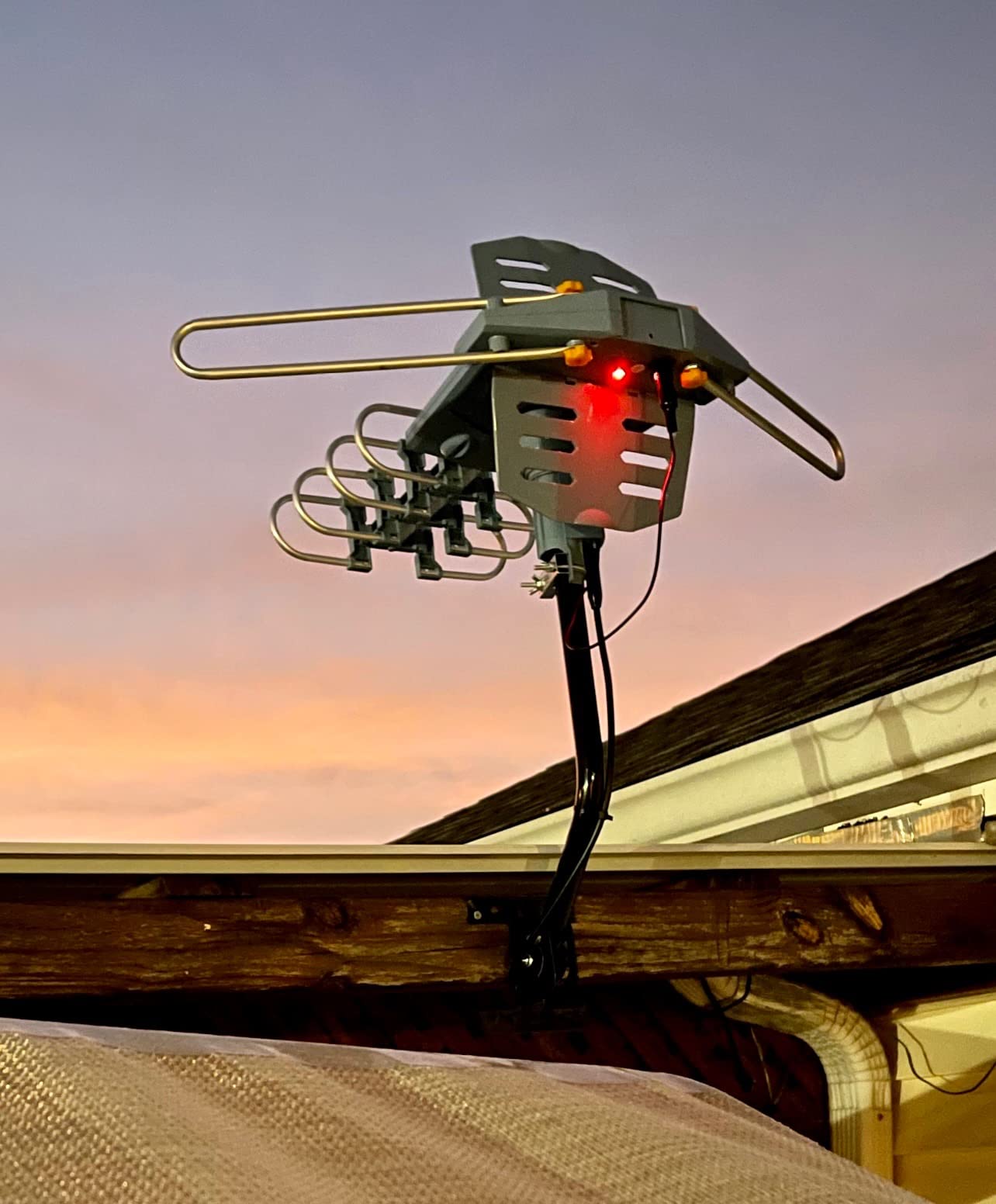
This is the cheapest way to put a rotating head on a rural mast. The infrared remote handles 360-degree rotation, which covers the common case of a main cluster plus a secondary transmitter on a different bearing.
Like the PBD, it drives two televisions directly, which avoids a splitter in a place where every extra loss costs you a station. The snap-on element assembly needs no tools, so a first-time installer can complete the antenna itself without a kit.
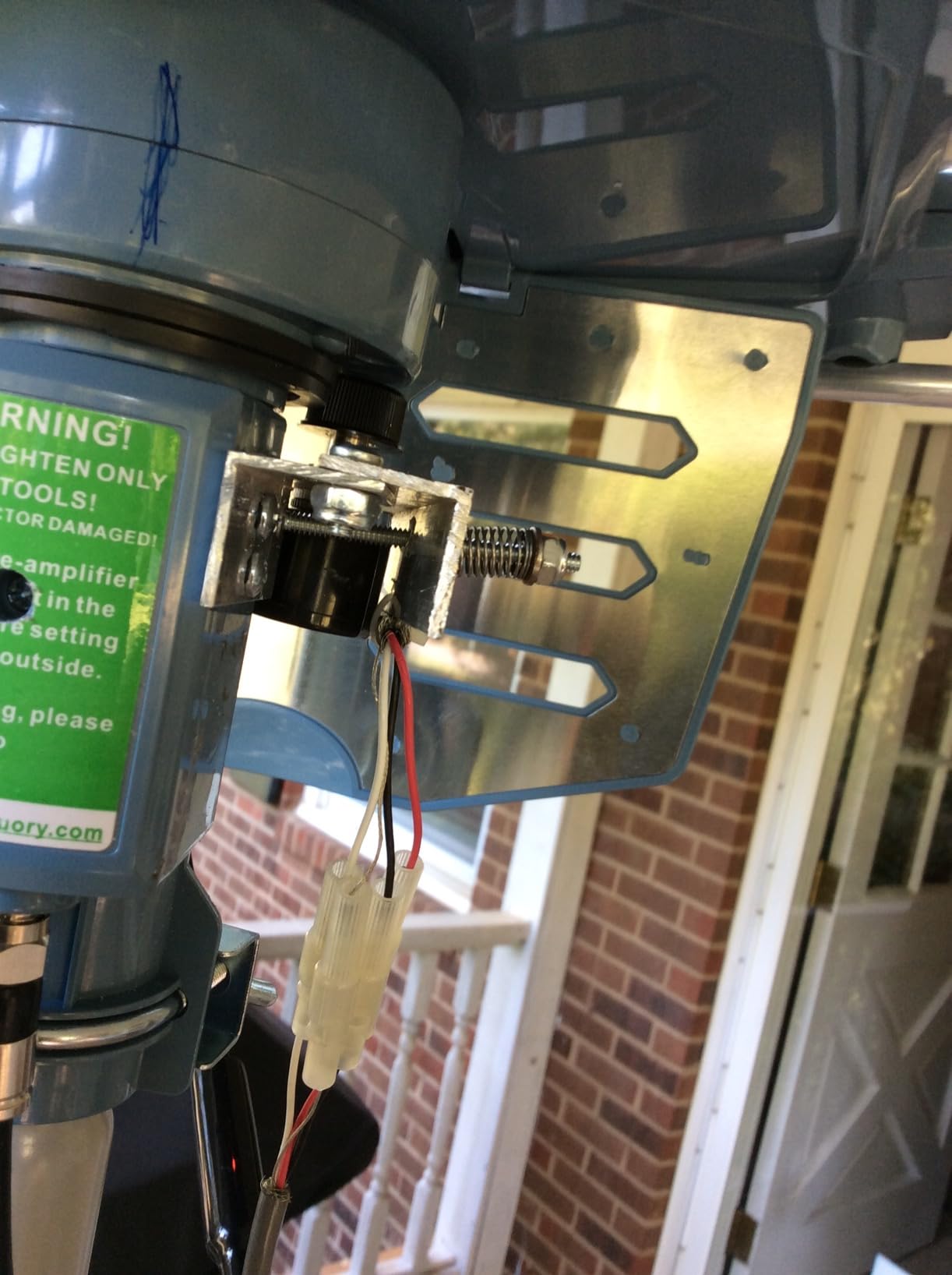
Several owners report receiving all networks from towers 35 to 50 miles away once the antenna was mounted high. The 40 feet of outdoor RG6 in the box is the right cable for the job, and the unit is described as lightning protected and grounded.
Technically inclined reviewers are the harshest critics here, and their complaints are worth reading before buying. Some report elements with an unreliable electrical connection at the element-to-element joints, and ham-radio operators rate its real-world reception as mediocre even at 25 feet with clear line of sight.
What the remote actually gets you
When it works, remote rotation removes the single most annoying part of a rural antenna install. You scan, rotate, scan again, and lock onto the best position without climbing a ladder, which is worth a great deal in winter or on a steep roof.
The trade is that you cannot know which way it is pointing. There is no position readout and no direction feedback, so the remote buttons sometimes move the same way, and you are rotating by guesswork until you find a working position.
Before you commit to this one
The mounting pole is not included, so add that to your cost and make sure it is tall enough and strong enough. If the amplifier loses power, reception drops away entirely, which is a real risk on a long rural power run.
For a first outdoor install within about 50 miles, this is a workable way to get rotation on a budget. If you expect a permanent exposed-roof mount at deep fringe distances, a passive Yagi with a durable mast is the more dependable path.
11. CEKAY All-Metal Yagi Kit as a Complete Budget Install
CEKAY Outdoor Yagi TV Antenna, 40 ft Cable & J-Pole, All-Metal
All-metal directional Yagi
170-860MHz
40ft RG6 and J mount
NEXTGEN TV ready
Pros
- All-metal construction at a budget price is the standout feature
- J-mount and 40ft of RG6 included so no second purchase is needed
- Mostly pre-assembled with no tools required
- Directional Yagi gain suits a single rural tower cluster
- Weather-tolerant build intended for permanent rooftop mounting
Cons
- Smallest review base in the group at 551 reviews
- Directional only so towers in different directions need a rotator
- One-year warranty among the shortest offered
The CEKAY is worth noticing because it is all metal at a price where most competitors in the group are plastic or coated steel. For a permanent rooftop or yard-pole install, that is a meaningful difference in how the antenna looks after three winters.
It is also genuinely complete. The J-mount and 40 feet of RG6 are in the box, the elements are mostly pre-assembled, and no tools are required, so the install is one trip rather than a project.
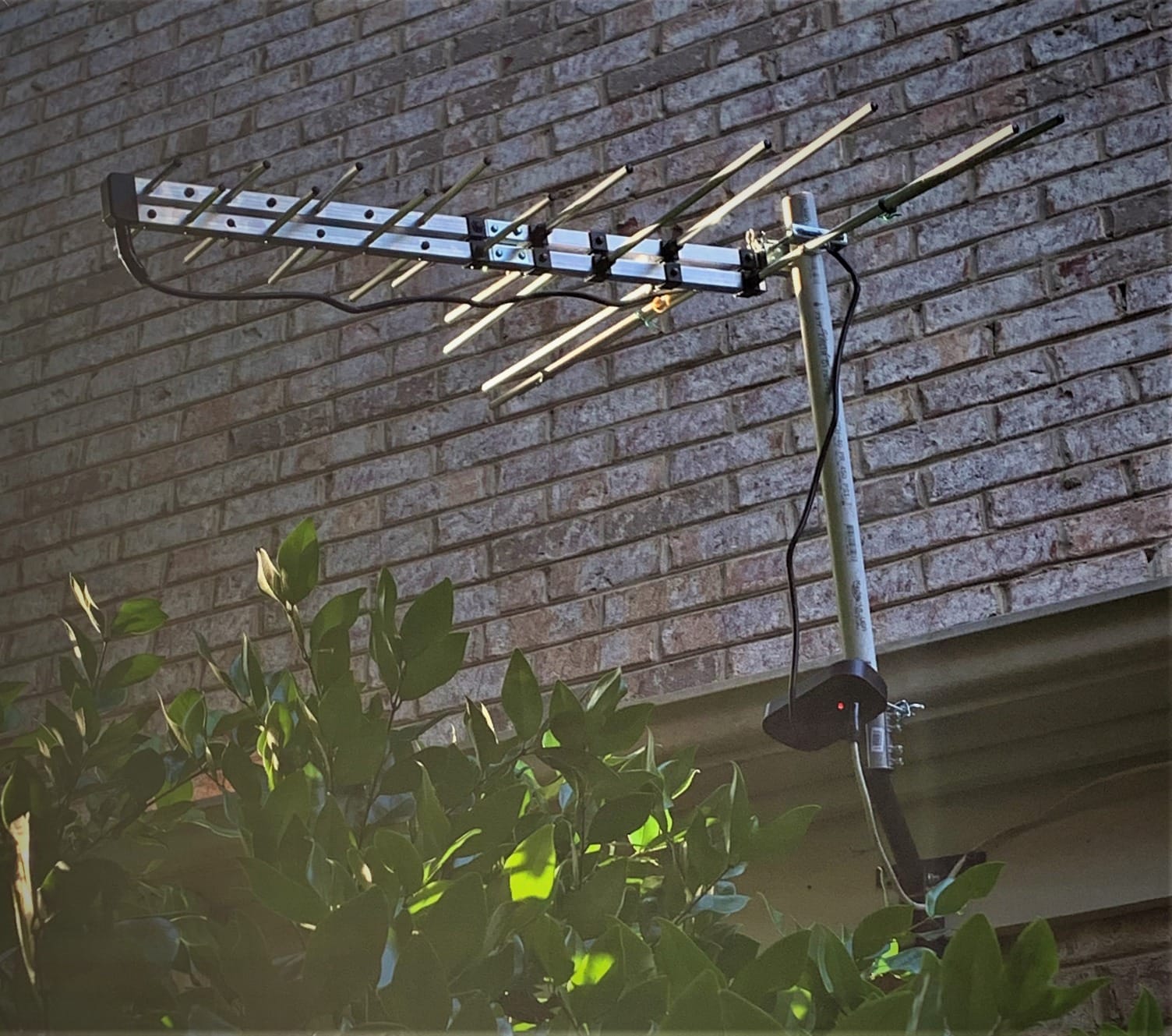
Coverage runs across 170 to 860 MHz, which takes in VHF and UHF, and it supports 720p, 1080i, 1080p, 4K and 8K tuners plus NEXTGEN TV. That band coverage matters more in the country than the resolution claims do, because a missing channel is a missing channel.
The rating distribution is the most favourable in the group, with 69 percent five-star and only 4 percent one-star across 551 reviews. We would treat that as encouraging rather than conclusive, given how small the sample is.
What the all-in-one kit actually saves
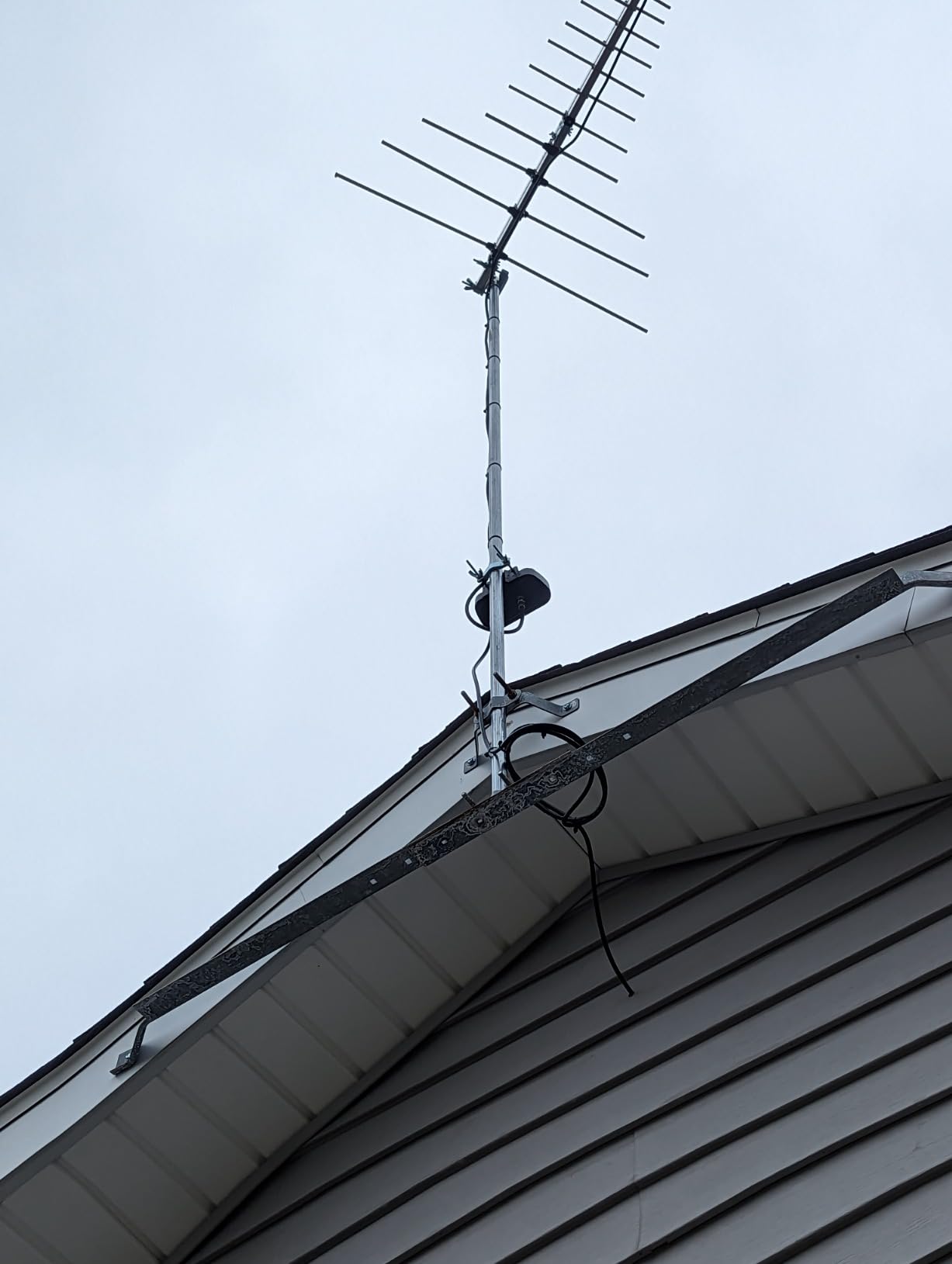
Most antenna purchases are followed by a second order for a pole, a cable and hardware. This one removes that step, and for someone mounting on a J-mount for the first time it removes the two mistakes that most often ruin an install, which are an undersized pole and the wrong cable.
The 40 feet of included RG6 is enough for a standard J-mount at the eave or gable, which is where most rural installs actually happen. Move it higher on a pole and you will want a longer run of the same cable.
Where the thin data should give you pause
With 551 reviews, long-term durability information is thin, and one year of warranty is short. Nobody has yet reported what this antenna looks like after five seasons, which is exactly the information you want for a permanent roof mount.
It is strictly directional, so if your towers sit in more than one direction, you will eventually want a rotor. Treat this as a strong starting antenna within roughly 50 miles and one clear bearing, then plan for growth.
12. McDuory UHD-3968 Yagi as the Lowest-Cost Step Up From Indoor
McDuory TV Outdoor Yagi Antenna with Long Range Reception Capacity – Digital TV Antenna Available for Attic or Roof Mount, Long Range Digital OTA Antenna for Clear Reception, 4K/1080P/HD
Yagi log-periodic
VHF 170-230MHz and UHF 470-860MHz
Mast bracket and RG6
Pros
- Least costly antenna here and reliably doubles or triples channel counts over rabbit ears
- Long horizontal elements receive high-band VHF that smaller antennas miss
- Mostly pre-assembled with no tools required
- 40ft of RG6 and a mounting bracket in the box
- One owner in northeastern spring weather saw at most an isolated crackle
Cons
- Press-fit elements in thin-wall tubing are the acknowledged weak point; owners recommend pop rivets
- Factory-installed elements often do not seat fully against the element spine
- Plated steel hardware can rust after a few seasons outdoors
If your only current option is a set of rabbit ears or a small indoor panel, this is the cheapest meaningful upgrade on the list. Owners report channel counts doubling or tripling almost every time, which is the entire point of moving outdoors.
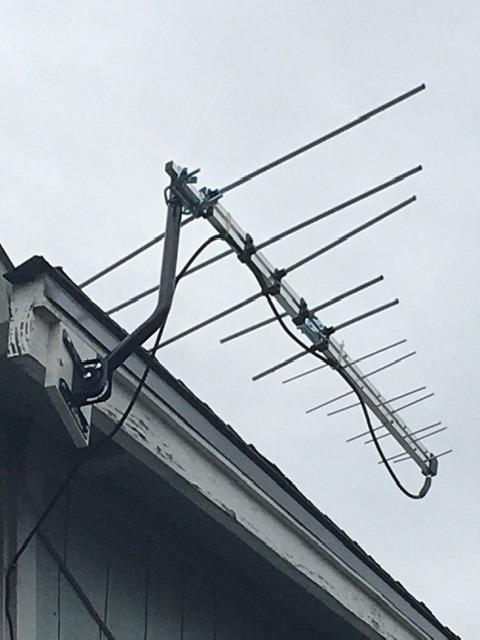
Technically literate reviewers praise the design itself, calling the long and short element arrangement a correct log-periodic layout that genuinely handles high-band VHF, the band that carries many rural network affiliates.
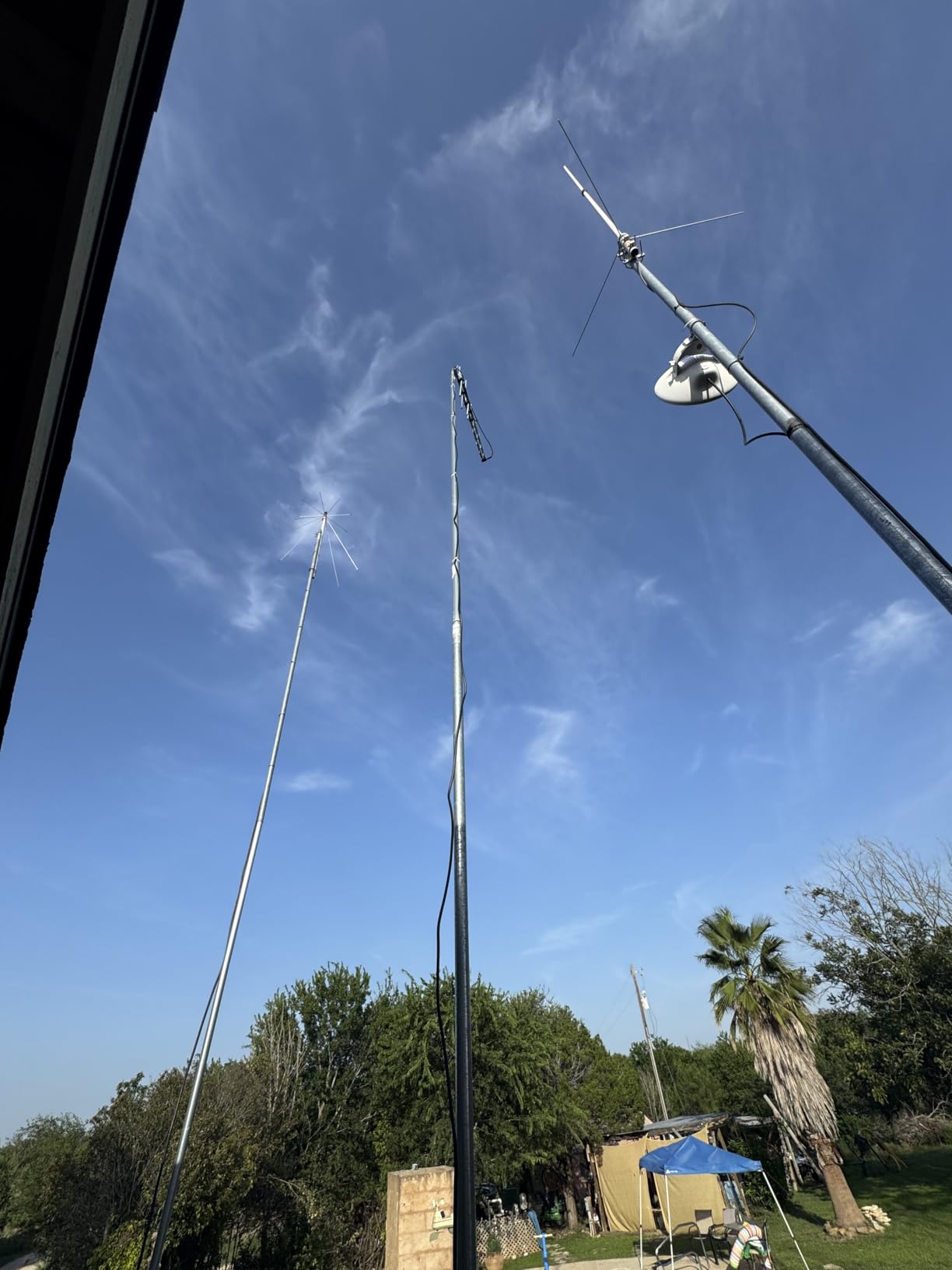
It is mostly pre-assembled and needs no tools, light enough for an attic or an RV, and the package includes 40 feet of RG6, a short mast and a side-mount bracket. Weather resistance and lightning protection are part of the design.
One owner in changing northeastern spring weather reported at most an isolated crackle and no dropouts, which is a useful data point in regions where weather is the reason channels vanish.
Why the element sizing matters for rural VHF
High-band VHF is where a lot of antennas quietly fail. The long horizontal elements here are sized for it, so if your local CBS or NBC affiliate sits on channel 11 or 13, this design is far more likely to hold it than a small panel of similar size.
Realistic reach is about 50 miles according to the technically minded reviewers, not the advertised figure. Within that range, the gain-to-cost ratio here is hard to beat.
Reinforce the elements before mounting outside
Press-fit elements in thin-wall tubing are the acknowledged weak point, and owners recommend adding pop rivets or screws. Factory-installed elements also often do not seat fully and can lose contact with the element spine, so check each joint before it goes up.
Plated steel hardware can rust within a few seasons, and the antenna is directional, so towers in several directions need a rotator later. Treat this as a smart first step that you can build on rather than a final deep-fringe system.
How to Choose a TV Antenna for Rural Areas?
Start with distance, then add terrain
Your distance to the transmitter cluster sets everything else. Use the FCC reception maps or a RabbitEars lookup with your address, note the bearing of each tower, and measure the distance to the strongest one rather than the nearest town name on a label.
0 to 25 miles: a good indoor multi-directional panel or a small ClearStream works, and an outdoor install is mostly about stability rather than reach.
25 to 50 miles: a passive Yagi or a multi-directional outdoor array with a J-mount is the sweet spot. This is where most of our picks live.
50 to 75 miles: go bigger. A four-element array, a longer Yagi, or a rotor aimed at a single cluster. Plan on a pre-amplifier at the antenna for long cable runs.
75 miles and beyond: expect a difficult install with a strong directional antenna on a high mast, and accept that some stations will not arrive. Range claims on the box stop being useful somewhere around 30 miles.
Terrain then modifies the number. Open flat farmland is the easy case. A valley, a ridge in the way, a metal roof, or a stand of wet trees each remove signal, and none of them are fixed by a bigger amplifier.
Check your VHF stations before you buy
This is the most common rural mistake and it is worth its own warning. CBS, NBC and ABC affiliates in smaller markets frequently broadcast on channels 2 through 13, which is VHF. A UHF-only antenna will pull in every independent station and lose the networks that people actually watch.
Before buying, look up the channel numbers and virtual channel numbers of your local stations. If any major network sits above channel 13, you need an antenna with a genuine Hi-VHF element, not a marketing mention of VHF in the feature list.
Understand why a pre-amplifier helps and when it hurts
A pre-amplifier boosts the signal at the antenna, before the cable run loses any of it. That is why it belongs at the top of a mast and not behind the television, where it amplifies the noise the long coax has already collected.
It helps when your signal is weak at the antenna and your coax run is long, which is the standard deep-fringe case. It hurts when the signal arriving at the antenna is already strong, because a strong signal pushed through a high-gain amplifier overloads the tuner and can reduce your channel count. Both major testing publications we reviewed have documented the same effect in the opposite directions.
The practical rule: passive antenna mounted close to the towers, no amplifier. Long run plus weak signal, pre-amp at the antenna. Many sets fed from one antenna, a distribution amplifier sized for the splitter, not a mast-head booster.
Decide between indoor, attic and rooftop
Indoor panels are for homes within roughly 20 miles of a transmitter with an unobstructed window view. Forum users in r/fargo, r/StCharlesMO and r/Austin all describe the same lesson arriving the hard way, that indoor antennas simply stop working outside metro areas.
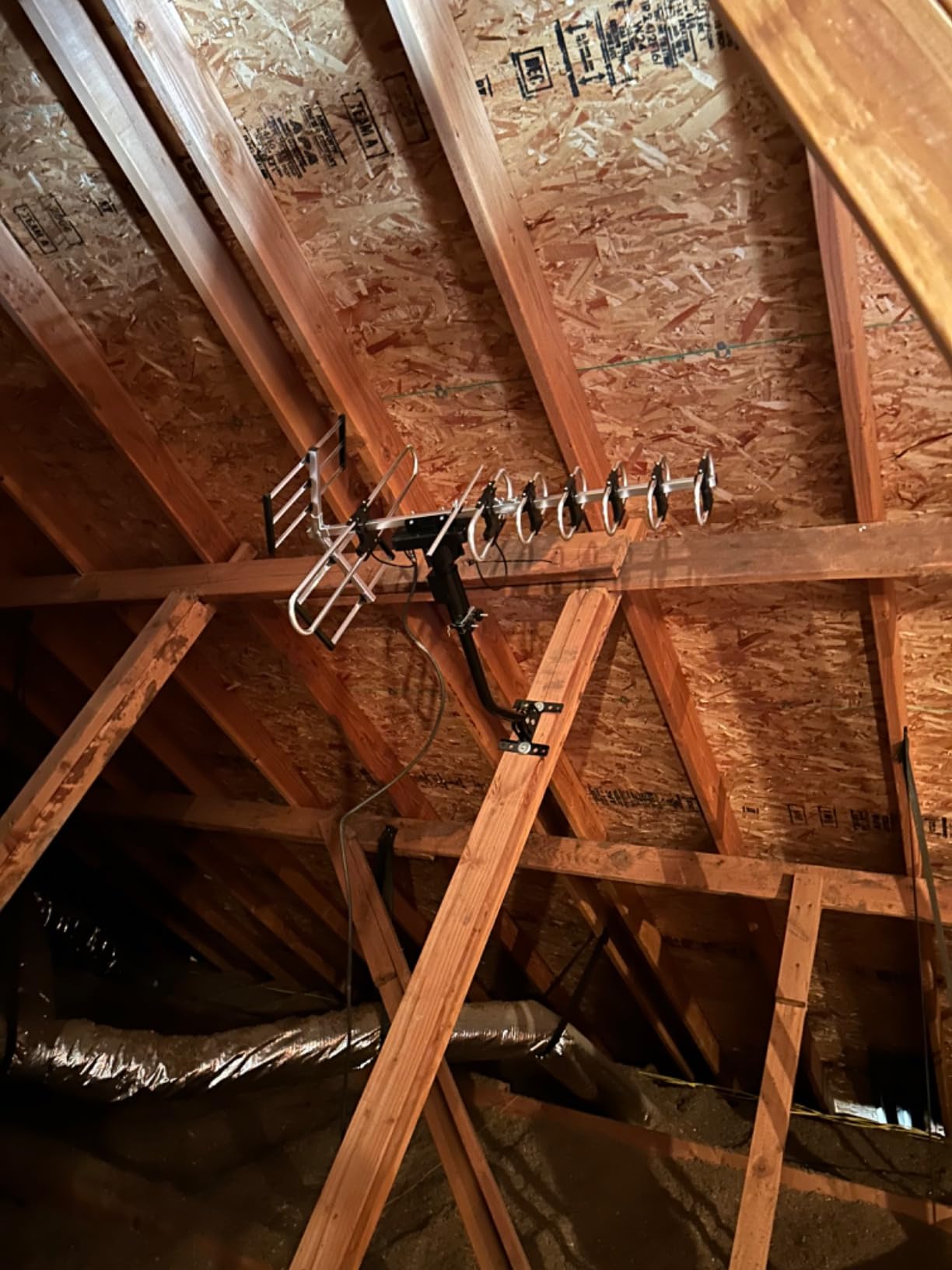
Attic mounts are the underrated middle option. A properly aimed Yagi in an attic does very well, and r/Austin has owners confirming it directly. You lose signal to roofing material and any foil-backed insulation, so treat attic results as a discount on rooftop results and always aim at the actual tower bearing.
Rooftop or pole mounting is the real answer beyond 40 miles, and it is also where metal roofs complicate everything. If a metal roof rules out penetrating mounts, mount on a pole beside the house, higher than the roofline, rather than fighting the roof.
Ignore the range number on the box
A 150-mile or 200-mile claim is calculated from free-space path loss with no allowance for terrain, foliage, buildings or the curvature of the Earth. The curvature alone caps line-of-sight broadcast TV at about 30 miles, which is why reviewers who have actually installed antennas keep documenting that real reach is a fraction of the claim.
Compare gain, element count, band coverage, beam pattern and warranty instead. Those numbers describe the antenna. The range number describes the marketing.
Other things worth checking before you order
A detachable coaxial connector saves you an afternoon and a crimp tool. RG6 cable is the correct choice for any long run, since RG59 losses in the upper UHF band are a leading cause of disappointing results. A lifetime antenna warranty is worth more than a booster chip you will never use.
One antenna feeding two televisions needs a splitter, and a splitter costs signal, so a dual-output design is a real advantage. If you are planning an OTA DVR or a whole-home distribution, plan the splitter and amplifier location before the antenna goes up, not after.
One more practical note. If your new antenna is prompting you to rearrange the room around the television, our picks for the best electric fireplace TV stands cover units that hide cable runs and keep gear off the floor, which matters more in a farmhouse where the coax comes in at floor level.
Installing and Aiming a Rural Antenna
Mount for line of sight, not for height
Height only helps if it clears the obstruction. The most common forum advice is to raise the antenna until it can see the tower cluster over the treeline or roofline, and to stop there. Adding mast height above the point of clear sight buys you very little and adds wind load and a longer cable run.
For a rooftop or pole install, twenty feet above the surrounding obstruction is a realistic target. A longer run of RG6 than necessary costs signal at the top of the UHF band, so keep the cable as short as the site allows.
Grounding and weather protection matter in the country
Any metal antenna on a roof or pole needs a grounding block and a bond to the electrical service grounding system, plus surge protection at the point where coax enters the house. Rural properties are the most exposed places to lightning, because they are the tallest thing for miles.
Choose metal hardware, seal the coax entry point, and check element alignment after the first serious storm. An antenna that has shifted two degrees loses channels without any visible fault, and a rescan is the fastest way to notice.
The first ten minutes after mounting
Rescan for channels, note what appears, then move the antenna six inches and scan again. Repeat across the general arc of your tower cluster until the channel count stops improving. This fine-tuning is more valuable than any amplifier in the chain.
On a rotating antenna, find the two or three useful positions and note the direction. After that, rescan every few months because stations retune, transmitters change and new channels launch, and a rescan takes two minutes.
Set expectations before the first scan
Rural owners on community forums are unusually consistent on one point. A realistic expectation is a solid set of major networks, regional sports where they are available, and weather and news, not a full cable package of several hundred channels. AntennaWeb and DTV reception maps tell you exactly which stations are receivable at your address before you spend anything.
It is also worth knowing when no antenna will work. A site in a deep valley shadowed by a ridge, or a metal-roofed building with no clear bearing to any transmitter, may not be solvable with any antenna at all. If a reliable full package matters more to you than owning the equipment, satellite is the honest answer rather than a failure.
Frequently Asked Questions
What is the best rated TV antenna for rural areas?
For most rural homes the GE Outdoor HD Digital TV Antenna is the strongest all-round choice, because its passive directional design needs no power and its 4.4 rating rests on more than 10,700 reviews. If you would rather not aim anything, the Antennas Direct ClearStream 2V covers a wide multi-directional beam, and for an exposed rooftop the Winegard HD7694P is the only all-metal chassis in the group.
How can I get better TV reception in rural areas?
Four things move the needle more than any other purchase. Mount the antenna outside, because indoor panels rarely work past 20 miles. Confirm the antenna covers VHF channels 7 to 13, since rural network affiliates often sit there. Aim at the actual transmitter cluster rather than at a town. Then mount high enough to clear the treeline and rescan after every small adjustment.
Which TV antenna picks up the most channels?
Channel count depends far more on distance, terrain and aim than on the model. Reviewers of the GE Outdoor HD Digital TV Antenna report 60 to more than 100 channels between 25 and 60 miles, and owners of the ClearStream 2V report 30 to 100+ channels in favourable conditions. Deep fringe sites will pull more from a four-element array or a rotor than from any small panel.
Do indoor TV antennas work in rural areas?
They work within roughly 20 miles of a transmitter when the room has an unobstructed window view of the tower direction. Beyond that, forum owners in rural communities consistently report that indoor antennas fail and a rooftop or pole-mounted antenna is required. An attic-mounted Yagi is the useful compromise, since a correctly aimed attic antenna does well while losing some signal to roofing material.
Should I buy an amplified or non-amplified TV antenna?
Buy non-amplified if you are within about 40 miles and your coax run is short, because a strong signal pushed through a high-gain amplifier can overload the tuner and reduce your channel count. Buy amplified, or add a low-noise pre-amplifier at the antenna, when the signal is weak at the antenna and you are running a long cable. Never place a booster at the television end of a long cable run.
How do I find my nearest TV broadcast tower?
Use the FCC DTV reception maps or a RabbitEars coverage lookup with your address, then note the bearing and distance to each transmitter. Aim for the strongest cluster rather than the nearest town. Knowing the bearing in advance saves hours of rotating an antenna on the roof, and it tells you whether you need a directional antenna, a multi-directional one or a rotor.
How high should I mount an outdoor TV antenna?
High enough to clear the obstruction, which in practice means above the surrounding roofline or treeline rather than as high as you can reach. Extra height above the point of clear sight adds little and increases wind load and cable loss. Keep the coax run short and use RG6, since every extra foot of thin cable costs signal at the top of the UHF band.
Conclusion
The best TV antennas for rural areas come down to one variable: how far you sit from a transmitter and whether you can see it. Inside 50 miles, a passive Yagi or a multi-directional outdoor array handles almost anything. Past that, you need gain, a higher mount and an honest expectation of what will arrive.
For most rural homes, the GE Outdoor HD Digital TV Antenna is the pick, with the ClearStream 2V behind it for anyone who does not want to aim, and the Winegard HD7694P for exposed rooftops. Check your VHF stations before you order, mount outside, aim at the transmitter cluster, and rescan. The final step in the room is arranging the television itself, and our guide to the best TV stands for every room covers that.