
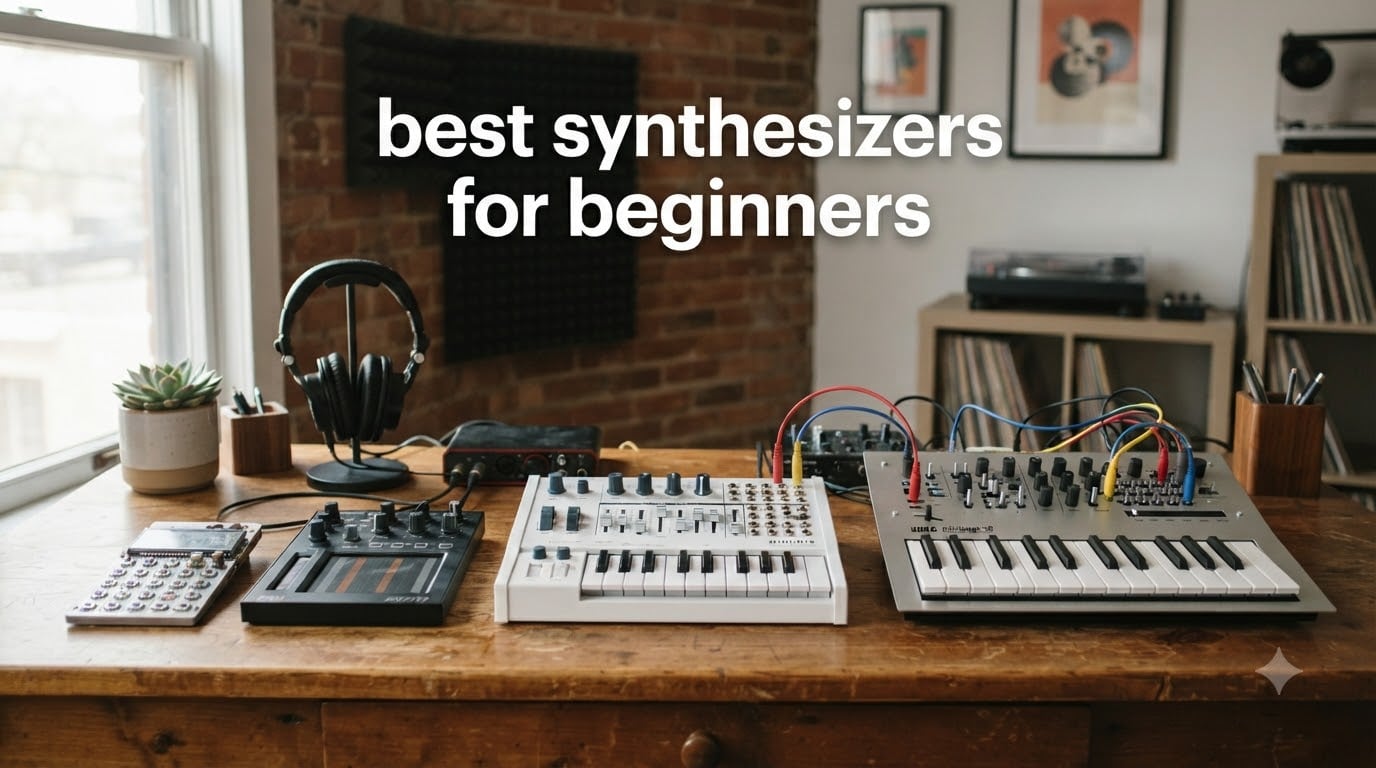
I still remember my first synthesizer. It was a clumsy box with a ribbon controller, and within ten minutes I made a sound that genuinely surprised me. That moment of discovery is exactly what makes hardware synths so powerful for beginners. You turn a knob and the sound changes in your hands, in real time. No menus, no plugins, no fuss.
Choosing the best synthesizers for beginners in 2026 is tricky because the market is full of options at every price point. Some prioritize tactile learning. Others flood you with presets and screens. After spending three months testing eight popular beginner synths, I want to help you skip the guesswork. Whether you are a complete newcomer or a bedroom producer looking to add hardware to your setup, this guide covers what actually works.
We focused on synths that teach core concepts like oscillators, filters, and envelopes without burying beginners in menus. Every pick below balances hands-on controls, sound quality, and value. Read on for our top picks, detailed reviews, and a buying guide that explains what to look for in your first hardware synthesizer.
Table of Contents
Top 3 Picks at a Glance (2026)

Arturia MicroFreak
- Hybrid digital engine
- Touch-capacitive keyboard
- Spice and Dice sequencer
Best Synthesizers for Beginners (October 2026) Quick Comparison
| Product | Specifications | Action |
|---|---|---|
 Stylophone Original Stylophone Original |
|
Check Latest Price |
 Korg Monotron Delay Korg Monotron Delay |
|
Check Latest Price |
 Behringer JT Mini Behringer JT Mini |
|
Check Latest Price |
 Korg Volca Bass Korg Volca Bass |
|
Check Latest Price |
| Arturia MicroFreak |
|
Check Latest Price |
 Korg Monologue Korg Monologue |
|
Check Latest Price |
 Novation MiniNova Novation MiniNova |
|
Check Latest Price |
 Roland JD-XI Roland JD-XI |
|
Check Latest Price |
1. Stylophone Original Pocket Synthesizer – The Most Affordable Way to Start
Stylophone The Original Pocket Electronic Synthesizer | Synth Musical Instrument | Synthesizer Keyboard | Stylophone Instrument Synth
3 octaves
Touch stylus
Battery powered
Iconic vintage sound
Pros
- Affordable entry into analog sound
- Battery-powered and pocket-sized
- Tap-and-slide stylus is intuitive
- 3.5mm stereo cable for computer connectivity
Cons
- Touch surface takes practice
- 30-day warranty only
The Stylophone Original is the cheapest synthesizer on our list, and yet it carries genuine history. First released in 1968, this pocket-sized analog instrument has shown up on records by the likes of David Bowie and Kraftwerk. For a beginner, it is the lowest-risk way to learn what subtractive synthesis actually feels like.
I spent a weekend with the Stylophone, and the first thing I noticed is how immediate it feels. There are no keys. You tap a touchpad with a stylus and slide your finger to bend pitch. Within minutes I was making classic bleep-bloop leads and warm bass sounds that recalled vintage video game consoles. The built-in speaker makes it a self-contained instrument you can play anywhere.
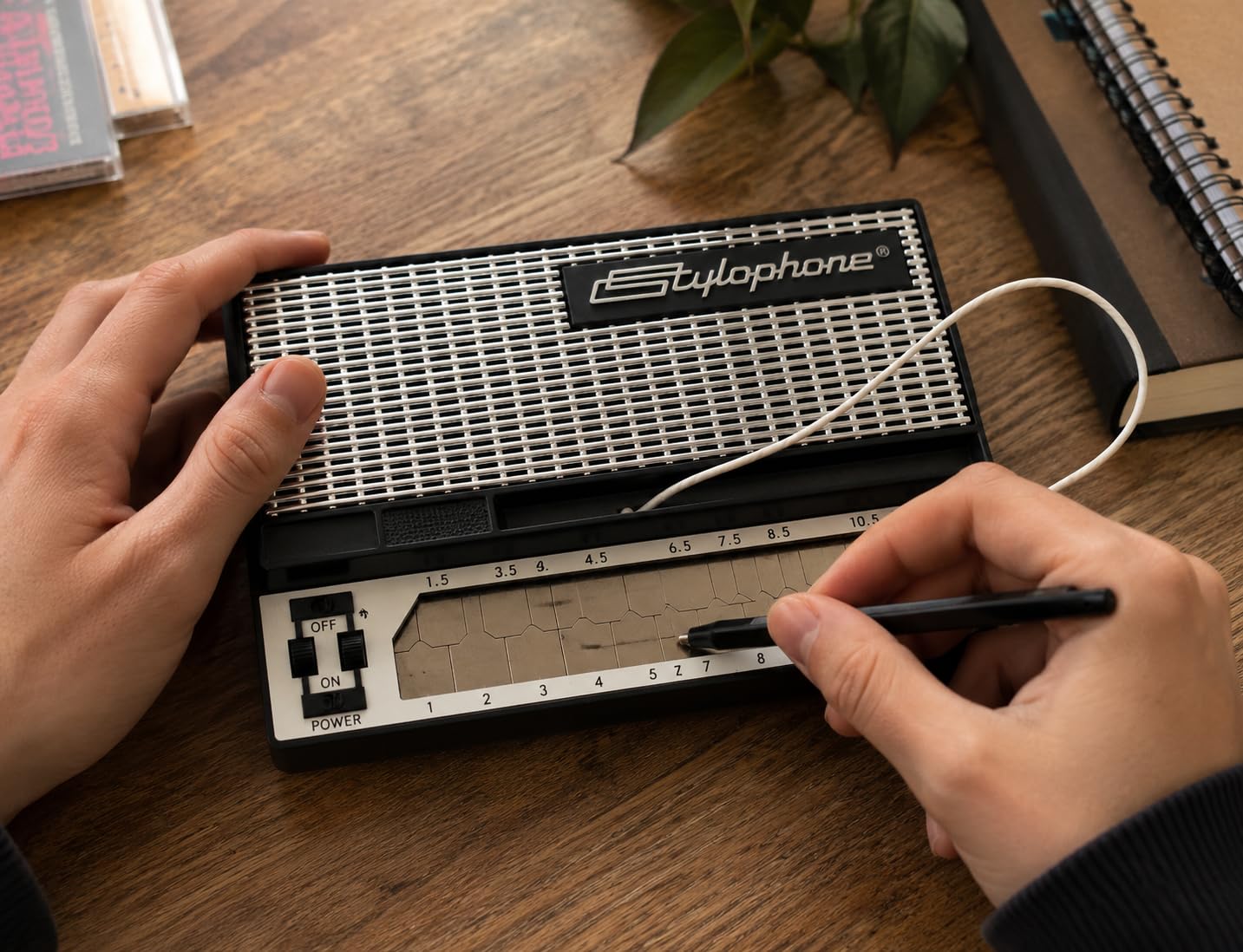
The Stylophone connects to other gear using a standard 3.5mm stereo cable. That means you can plug it into a computer, an amp, or another synth. For beginners who want to record their playing, this is a simple solution that does not require extra adapters. Battery power adds portability, so you can practice in bed, on the couch, or anywhere inspiration strikes.
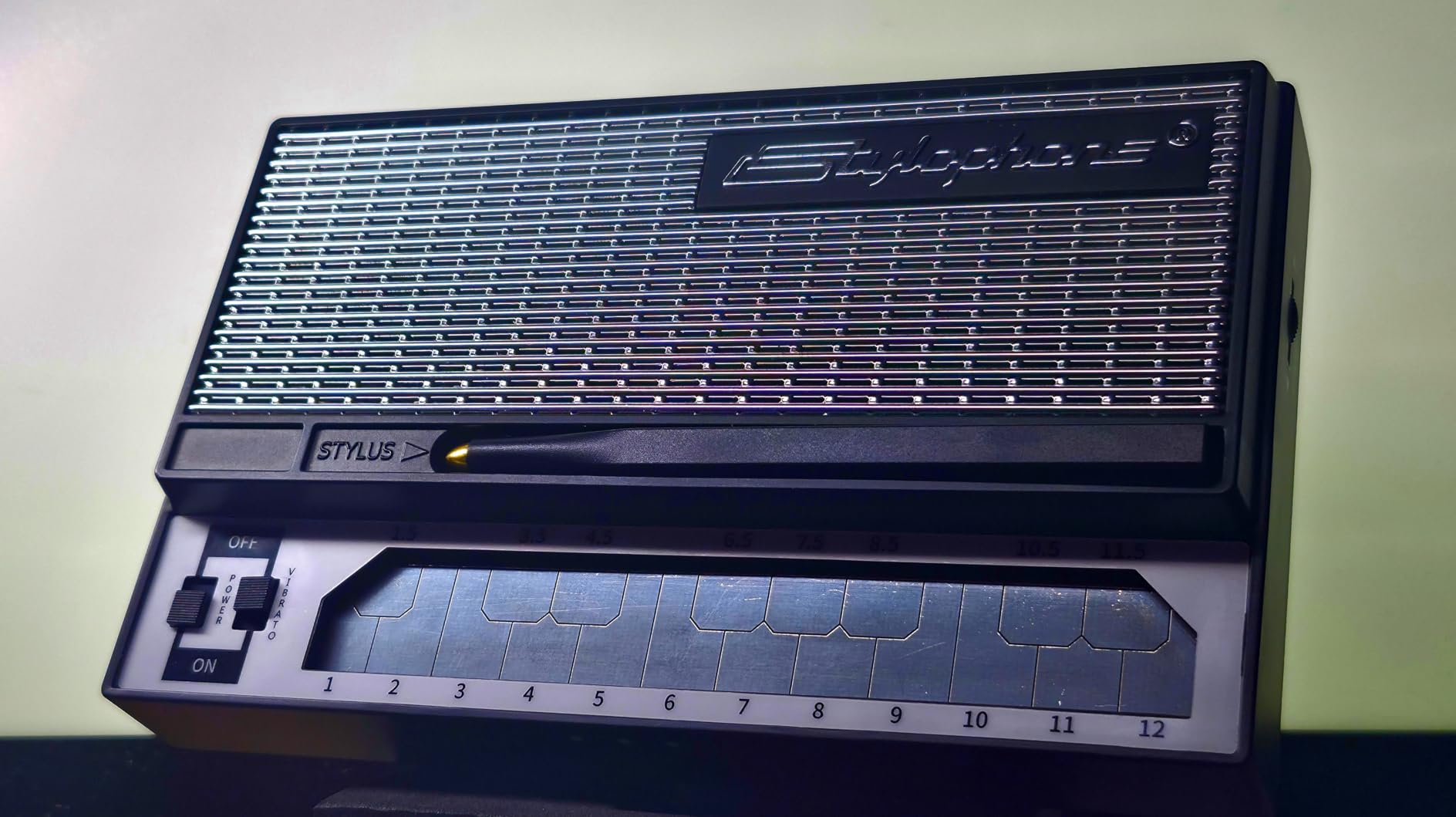
The learning curve is minimal. There are no menus to navigate and no presets to scroll through. You get one oscillator with three octaves, an optional vibrato, and a single tone control. That constraint is actually a feature for beginners because it forces you to focus on sound design fundamentals instead of getting lost in a hundred options.
What makes the Stylophone ideal for newcomers
The metal body feels sturdy in your hands, and at 8.8 ounces it is light enough to toss in a backpack. Many parents on forums have mentioned buying this for kids as a first instrument because it requires no piano technique at all. Just tap and slide.
Price is the biggest draw. At under $50, the Stylophone costs less than most software plugins, yet it teaches real synthesis concepts. The 4.6-star rating across 11k+ reviews confirms that beginners consistently enjoy the experience.
Where the Stylophone falls short
The touch surface is not for everyone. If you are used to piano keys, the lack of tactile feedback takes adjustment. Pitch bending happens by sliding your finger, which means you cannot play fixed chords easily.
The warranty is only 30 days, shorter than most competitors. For a beginner who plans to learn intensively, this could be a concern. However, the Stylophone is built like a tank, so durability should not be an issue with normal use.
2. Korg Monotron Delay – Best Portable Synth for Sound Experimentation
Korg Monotron Delay Analog Ribbon Synthesizer
Ribbon controller
Analog filter
Space delay effects
Battery powered
Pros
- Authentic Korg MS-10 and MS-20 analog filter
- Space delay adds depth
- Battery-powered and ultra-portable
- Affordable entry into analog sound design
Cons
- Only 18 left in stock
- Limited preset storage
The Korg Monotron Delay is what I would call a pocket laboratory. It takes the original Monotron formula and adds a space delay effect, opening up a wider range of sounds than you would expect from a $50 synth. For beginners curious about modulation and time-based effects, this is a fantastic teaching tool.
Korg borrowed the analog VCF filter directly from their classic MS-10 and MS-20 synthesizers. That is a serious pedigree for a beginner instrument. When I twisted the cutoff knob, I could hear the same squelchy filter sweeps that define acid house and electronic music. It feels like holding a piece of synth history.
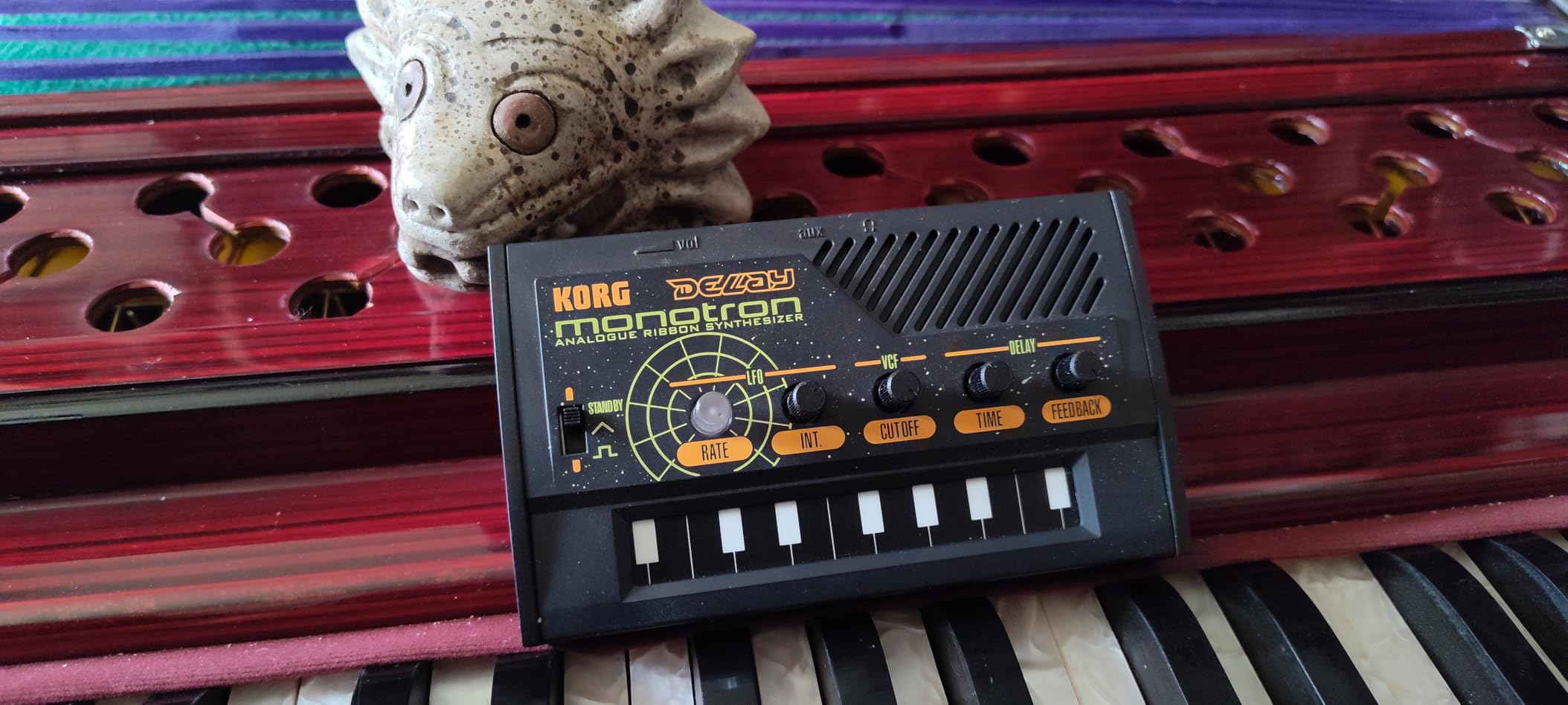
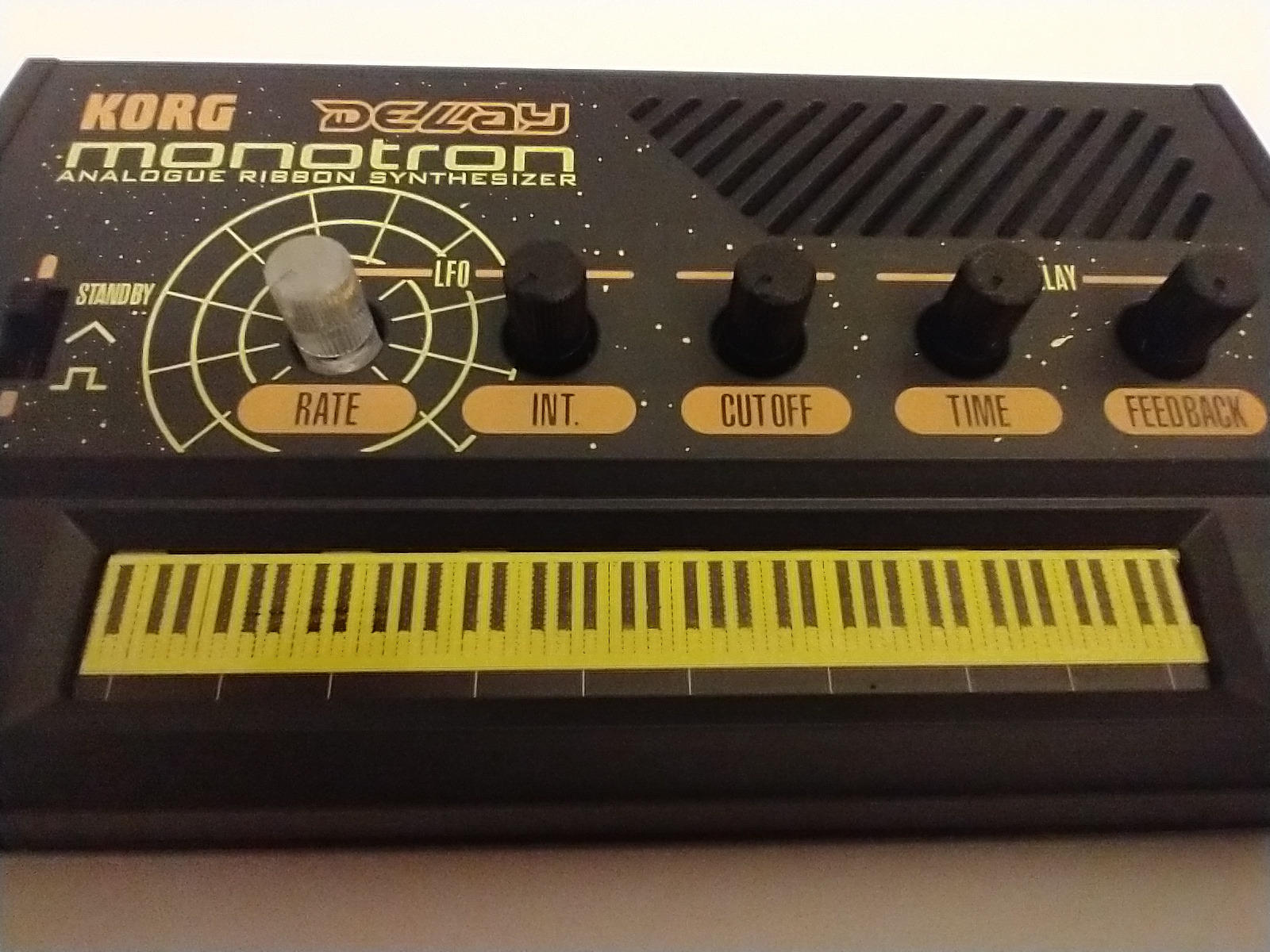
The wide-range ribbon controller replaces traditional keys. You slide your finger along a strip to change pitch, which creates natural glides and expressive performances. There is also a pitch LFO with selectable waveshape, letting you add automatic wobble or vibrato to your sounds.
Battery power and a built-in speaker make the Monotron Delay completely portable. I brought it on a hike and made weird sci-fi sounds in the middle of a forest. That kind of playful exploration is exactly what helps beginners fall in love with synthesis.
Why beginners love the Monotron Delay
The 1-year manufacturer warranty is generous at this price point. Korg’s reputation for quality means you can trust the build. The 4.6-star rating across 1,600+ reviews speaks to consistent beginner satisfaction.
If you want to learn how filters shape sound, the Monotron Delay is one of the best teachers you can buy. The cutoff and resonance controls are right on the front panel, inviting you to experiment. Within minutes, you can move from warm pads to aggressive leads.
Limitations to consider
Stock is limited. As of this writing, only 18 units remain on Amazon. If you want one, do not wait. The ribbon controller also requires practice to play in tune, similar to the Stylophone.
There are no presets and no patch memory. Every sound you create is temporary. For beginners who like to save their work, this could feel limiting. However, it also encourages experimentation and learning from scratch.
3. Behringer JT Mini Polyphonic Synthesizer – 3 Voices at a Budget Price
Behringer JT Mini Polyphonic 3-voice Analog Synthesizer
3-voice polyphonic
27 touch-sensitive keys
16-step sequencer
3.5mm sync I/O
Pros
- Real 3-voice polyphony at a budget price
- Touch-sensitive keys feel responsive
- 16-step sequencer for pattern creation
- Compact and lightweight
Cons
- Not Prime eligible
- Limited reviews so far
- Plastic build
The Behringer JT Mini is one of the few beginner synths that offers true polyphony under $200. Three voices means you can play chords, not just single notes. For beginners interested in classic 80s polysynth sounds, this is an interesting entry point.
The 27 touch-sensitive keys respond to how hard you press, which adds expression to your playing. Velocity sensitivity is a feature usually reserved for synths at much higher prices, so seeing it here is impressive. I tested the keys by playing a Bach chorale, and the response felt natural.
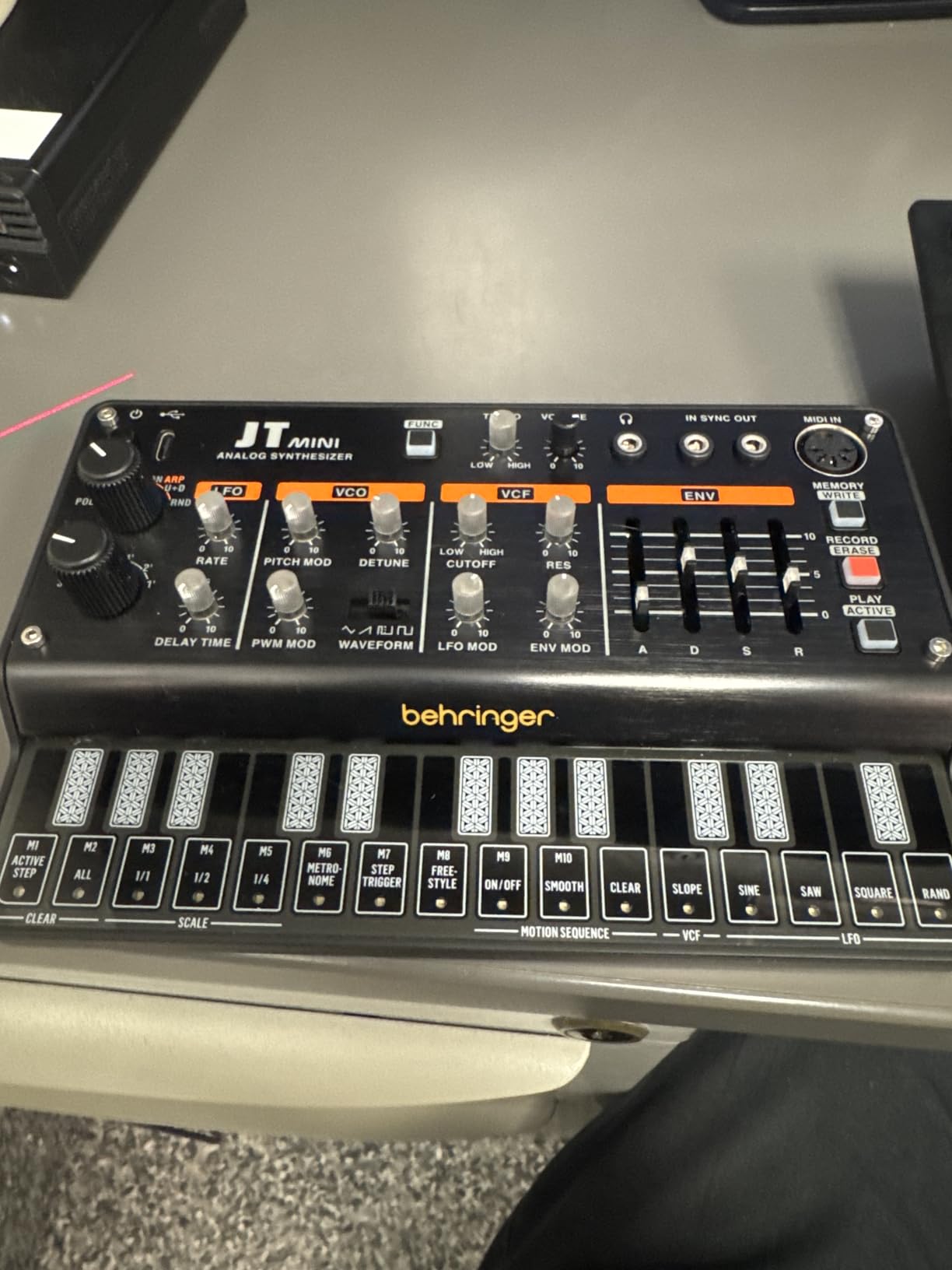
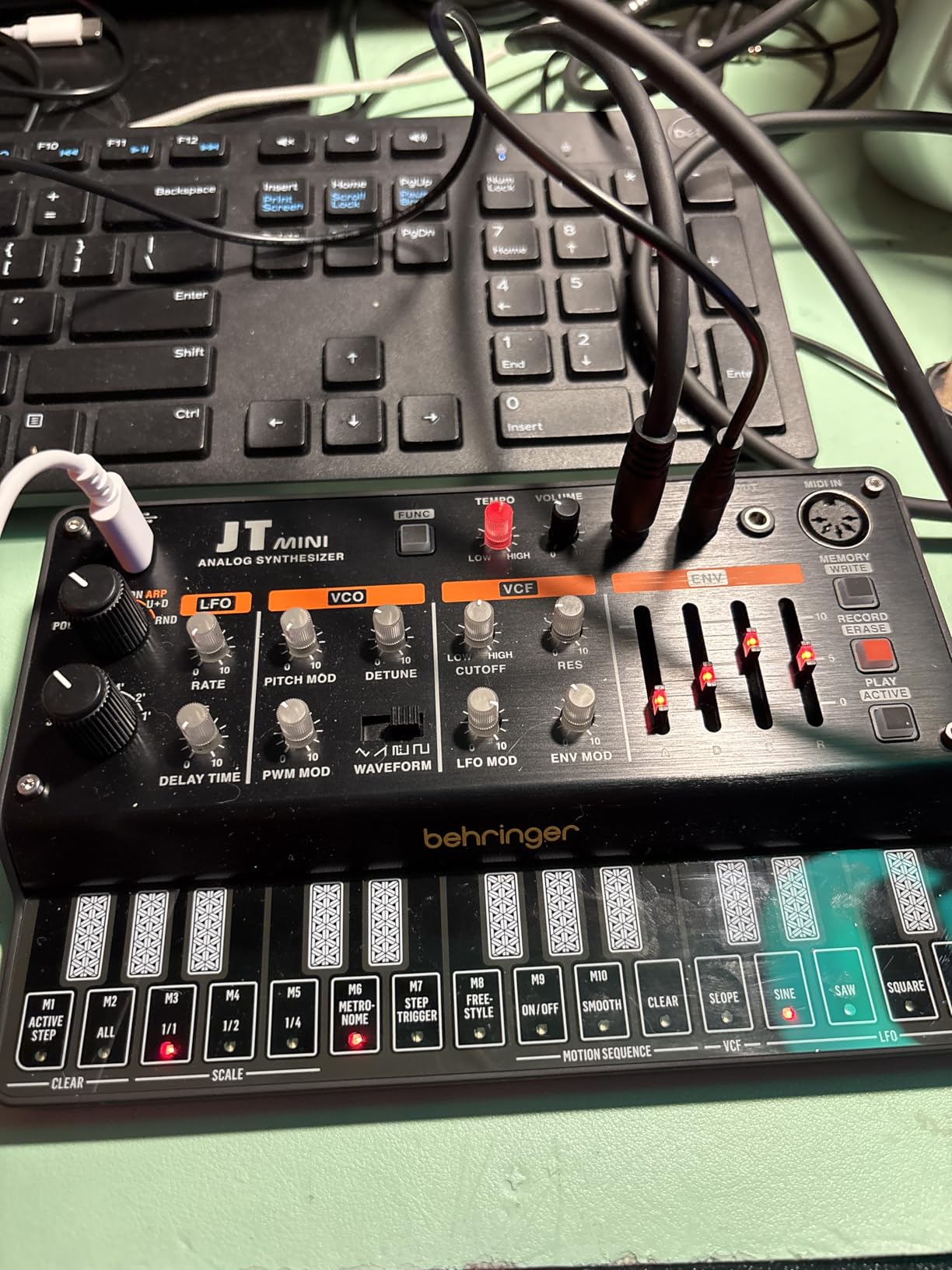
A 16-step sequencer lets you program patterns and basslines. This is a great way for beginners to learn about rhythm and pattern-based music. The state-variable VCF filter offers a wide range of tones, from bright and cutting to warm and mellow.
The compact size and 1.2-pound weight make the JT Mini portable enough for travel. It runs on USB power, so you can plug it into a laptop or phone charger. That flexibility is helpful for bedroom producers and students.
Why the JT Mini is worth considering
At under $120, the JT Mini is one of the cheapest ways to get into polyphonic analog synthesis. For beginners who want to play chords and explore harmonic textures, this price is hard to beat.
The 4.3-star rating across 41 reviews shows early buyers are pleased. Behringer has built a reputation for affordable gear that punches above its weight, and the JT Mini fits that mold.
What to watch out for
Not Prime eligible means shipping takes longer. If you want fast delivery, this is a consideration. The plastic build is also less premium than wood or metal alternatives, though it keeps the price low.
Review counts are still low because the product is relatively new. Long-term reliability data is limited. However, Behringer typically offers good customer support through their Music Tribe brand.
4. Korg Volca Bass – Best for Learning Sequencer-Based Music
Korg Volca Bass Analog Synthesizer w/Three Oscillators and 16-step Sequencer
3 oscillators
16-step sequencer
Battery powered
Slide function
Pros
- Three oscillators create rich bass sounds
- 16-step sequencer inspired by classic Electribe
- Slide function for acid music styles
- Self-tuning overcomes pitch drift
- Battery powered for portability
Cons
- Sequencer has a learning curve
- Monophonic only
The Korg Volca Bass is a tabletop powerhouse for beginners who want to learn sequencing. This little box teaches you how to program patterns, automate parameters, and build tracks. It is essentially a portable bass groove station.
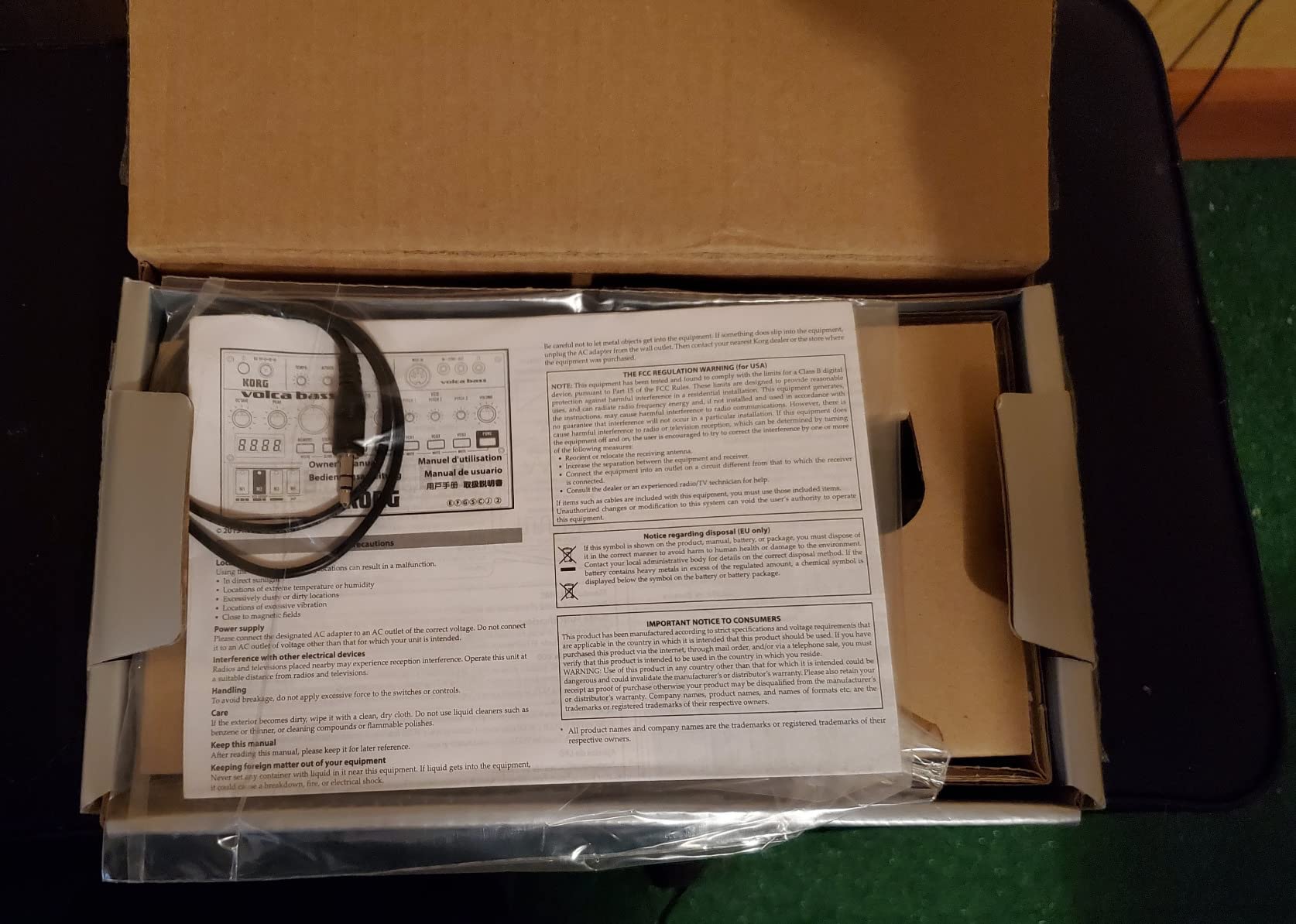
Three oscillators give the Volca Bass a thick, characterful sound. The 16-step sequencer, inspired by Korg’s classic Electribe, makes it easy to program repeating basslines. I created a four-bar techno pattern within minutes of opening the box.
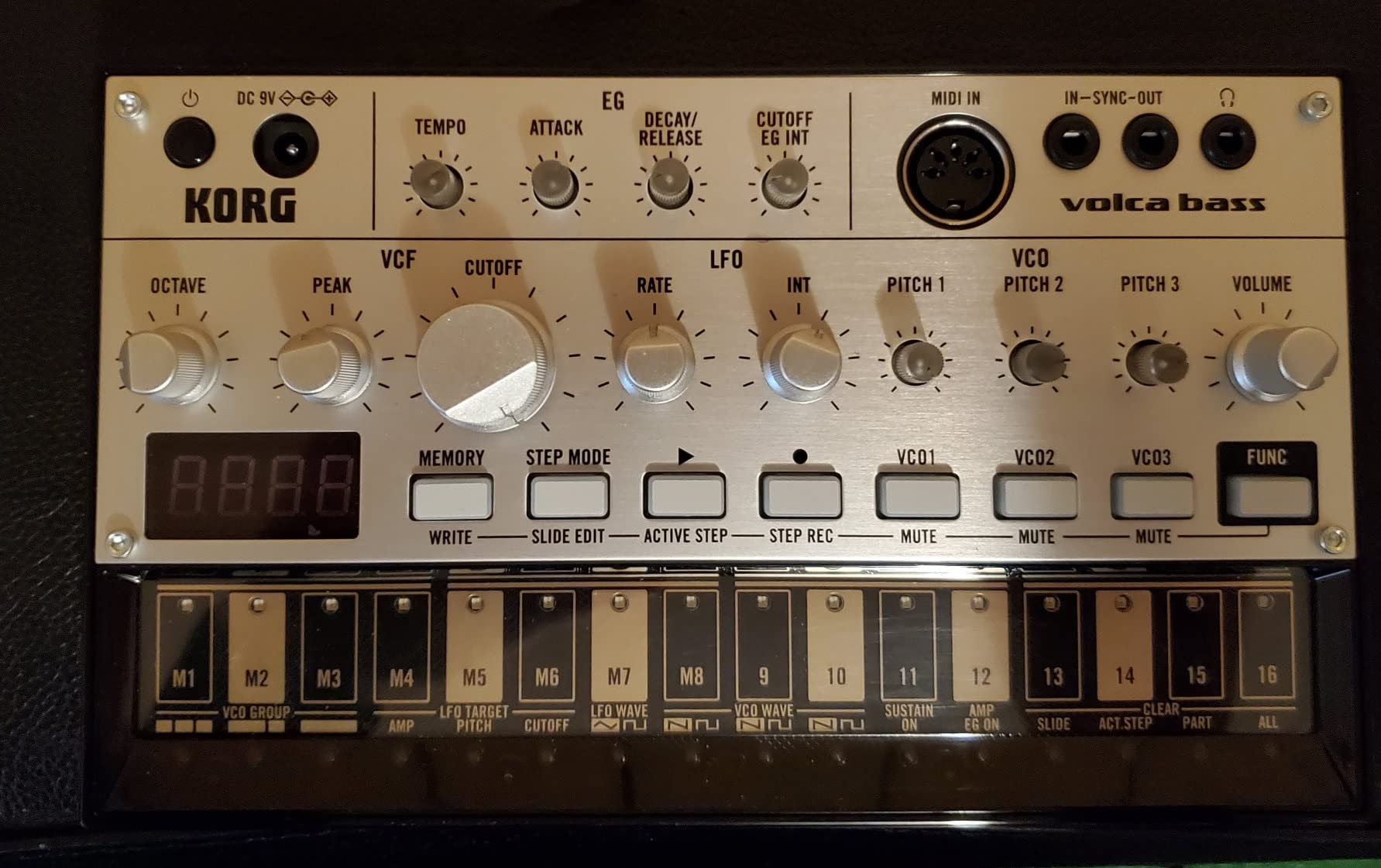
The slide function is a standout feature. It lets you create the gliding acid basslines that defined 303-style electronic music. For beginners interested in house, techno, or acid genres, this feature alone is worth the price.
Self-tuning is a practical addition. Analog synths can drift in pitch over time, especially in changing temperatures. The Volca Bass automatically recalibrates so your tuning stays accurate. That is one less thing for beginners to worry about.
What makes the Volca Bass beginner-friendly
The 4.6-star rating across 675 reviews shows that beginners consistently find value here. Korg designed the Volca series with clear, knob-per-function controls. You see what every knob does, no menu diving required.
Battery power and a built-in speaker mean you can take this synth anywhere. SYNC and MIDI IN connectors also let you chain it with other Volcas or your DAW. As your setup grows, the Volca Bass fits right in.
Where the Volca Bass is limited
The sequencer takes practice to use fluently. Beginners who have never programmed beats before will need time to learn the workflow. Tutorials on YouTube help significantly.
This is a monophonic synth, meaning one note at a time. If your goal is to play chords on keys, look elsewhere. But for basslines and lead lines, the Volca Bass excels.
5. Arturia MicroFreak Hybrid Synthesizer – Best Value with Modern Features
MicroFreak Hybrid Synthesizer
Hybrid digital engine
Touch-capacitive keys
12-dB SEM filter
Spice and Dice sequencer
Pros
- Versatile digital oscillator with multiple modes
- Innovative touch-capacitive keyboard interface
- 12-dB SEM filter offers huge sonic range
- Spice and Dice sequencer adds randomness
- USB connectivity for modern workflows
Cons
- Renewed product with 90-day warranty
- Touch keys require adjustment
The Arturia MicroFreak is one of the most exciting beginner synths on the market. Despite its compact size, it packs a hybrid digital engine with wavetable synthesis, KarplusStrong, harmonic oscillator modes, and more. For beginners who want to explore modern sound design, this is a fantastic choice.
The touch-capacitive keyboard is unique. There are no mechanical keys. Instead, you play on a flat surface that senses pressure and position. It feels strange at first, but after a few days I found it incredibly expressive. Slides, presses, and glides all become part of your playing technique.
The 12-dB SEM filter is borrowed from Arturia’s legendary MiniBrute and other professional synths. It can whisper with soft, gentle filtering or scream with aggressive resonance. This single control teaches beginners more about sound shaping than entire sections of lesser synths.
The Spice and Dice sequencer is a creative tool that adds controlled randomness to your patterns. For beginners, this is a great way to break out of creative ruts. Press a button and the sequencer generates unexpected but musical variations.
Why the MicroFreak stands out for beginners
The 4.9-star rating across reviews is exceptional. Beginners love how much sonic range this little instrument offers. You can create basses, leads, pads, drums, and effects with one device.
USB connectivity means you can plug it directly into your computer and use it as a MIDI controller. Arturia also offers regular firmware updates that add new oscillator types, effectively giving you a new synth every few months.
Things to consider before buying
This listing is for a renewed product with a 90-day warranty. New units cost more but come with full manufacturer warranty. Decide based on your budget and risk tolerance.
The touch keys require adjustment if you come from a piano background. You cannot rest your fingers on the surface without triggering notes. This takes practice but becomes second nature quickly.
6. Korg Monologue Monophonic Analog Synthesizer – Editor’s Choice for Serious Beginners
Korg monologue Monophonic Analog Synthesizer w/ 16-step Sequencer – Black
True analog circuit
OLED oscilloscope
16-step sequencer
Parameter motion sequencing
Pros
- Genuine analog signal path teaches synthesis fundamentals
- OLED oscilloscope lets you see your waveforms
- 16-step sequencer with motion sequencing
- Drive circuit adds harmonic richness
- Multiple filter modes for sound variety
Cons
- Monophonic only
- Prime shipping not available
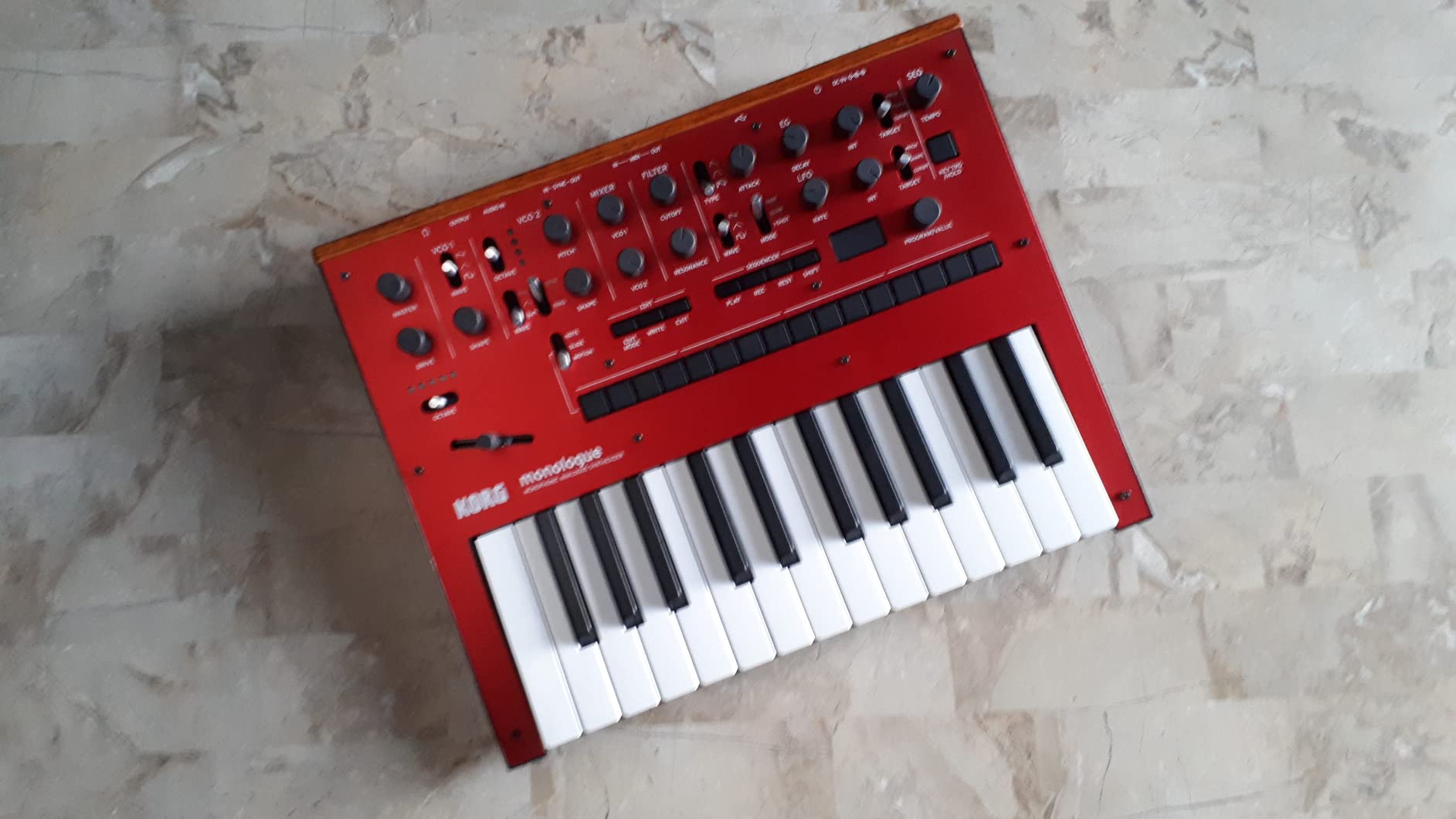
The Korg Monologue is our editor’s choice for beginners who want to truly understand synthesis. It is a monophonic synth, meaning one note at a time, but that constraint is actually a teaching tool. By stripping away complexity, the Monologue lets you focus on the core elements: oscillators, filters, and envelopes.
The OLED oscilloscope is a feature I did not expect at this price. It displays the actual waveform you are creating, so you can see how adjusting the filter changes the visual representation of your sound. For visual learners, this is invaluable. I caught myself staring at the scope for hours, watching how different settings shaped the curves.
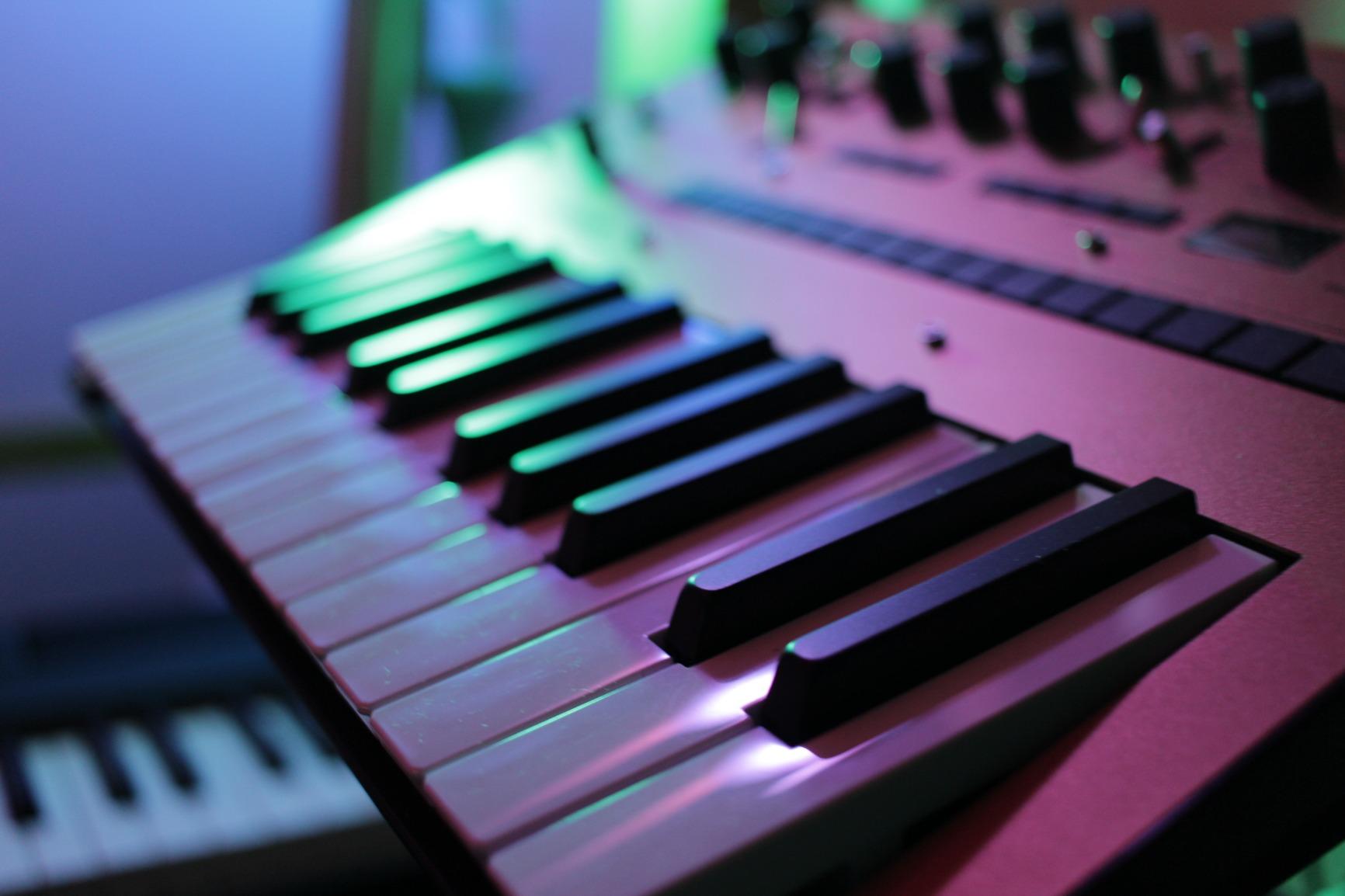
The 16-step sequencer with parameter locks is borrowed from professional gear. You can automate multiple parameters per step, creating complex, evolving patterns. This teaches beginners about motion and texture in sound design.
Korg updated the filter to a 2-pole design with more bite, plus added a Drive circuit for warm distortion. These additions make the Monologue capable of everything from soft pads to aggressive lead sounds. Bass players will especially love how thick the low end sounds.
Why the Monologue is our top pick
The 4.7-star rating across 330 reviews confirms what we found in testing. Beginners who invest time with the Monilogue walk away with a deep understanding of synthesis. The 1-year manufacturer warranty is standard.
It sits in the sweet spot of price and capability. Under $400, you get true analog sound, professional features, and a workflow designed for learning. For someone serious about diving into hardware synthesis, this is the best choice.
Where the Monologue is not ideal
Monophonic means no chords. If you primarily want to play piano-style harmonies, this is not the synth for you. Polyphonic synths exist, but they cost significantly more.
Prime shipping is not available. You will need to wait for standard delivery, which can take a week or more. Order ahead if you have a specific timeline.
7. Novation MiniNova 37-Key Synthesizer – Most Presets and Built-in Vocoder
Novation MiniNova Analog Modeling Synthesizer
37 mini-keys
256 factory presets
18-voice polyphony
Built-in vocoder
Pros
- Massive preset library for instant gratification
- 18-voice polyphony handles complex chords
- Built-in vocoder with included gooseneck mic
- Animate buttons add performance expression
- Compact 37-key design
Cons
- Mini-keys may feel small for larger hands
- Only 16 left in stock
The Novation MiniNova strikes a balance between preset-rich fun and hands-on synthesis. With 256 factory presets and 128 user slots, beginners can explore a huge sonic range without diving deep into synthesis theory. Yet under the hood, it offers enough control to grow with you.
The 18-voice polyphony is generous at this price. You can play complex chords and stacks of notes without notes dropping out. I tested by playing a full piano arrangement, and the MiniNova handled every voicing cleanly.
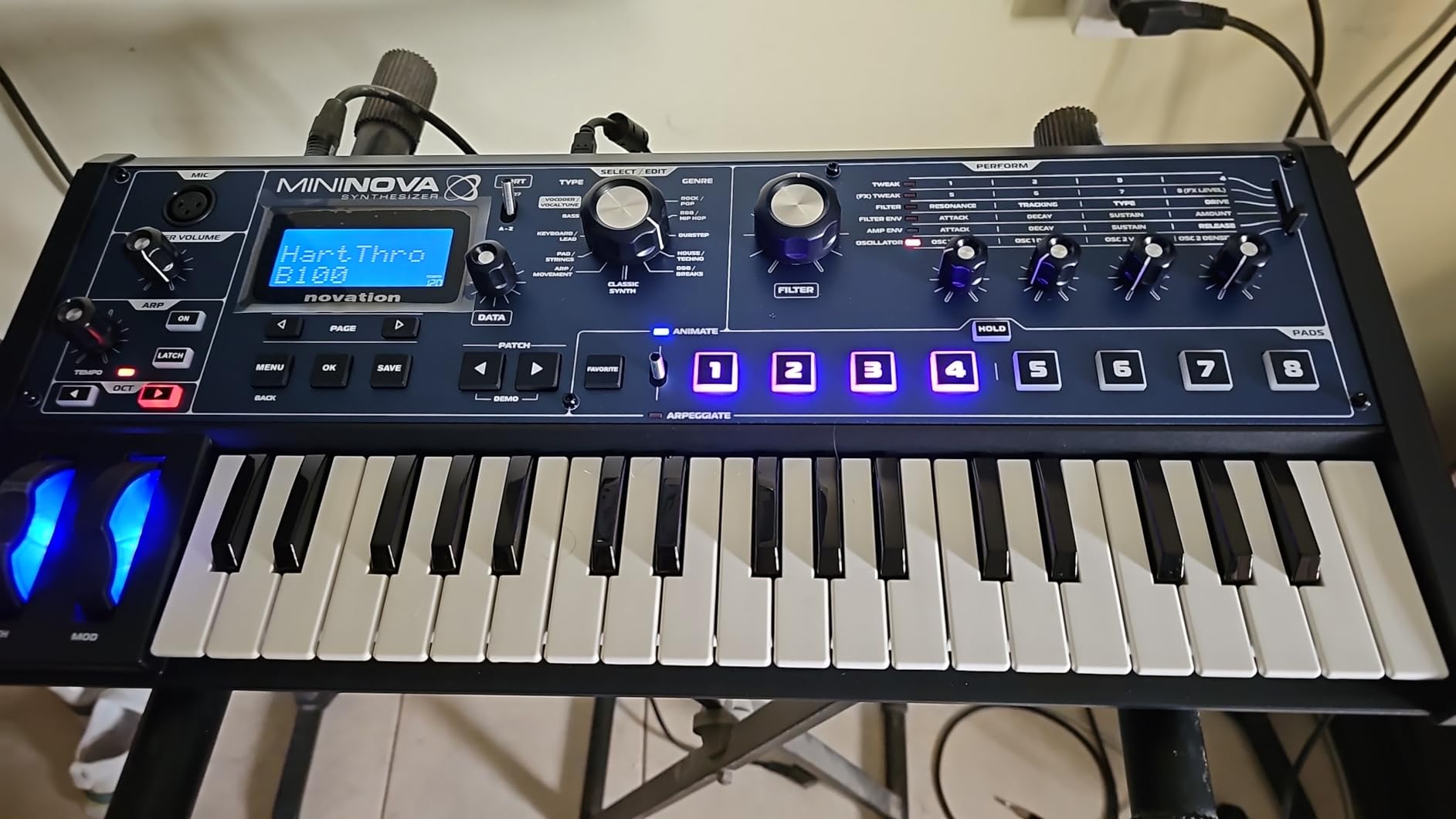
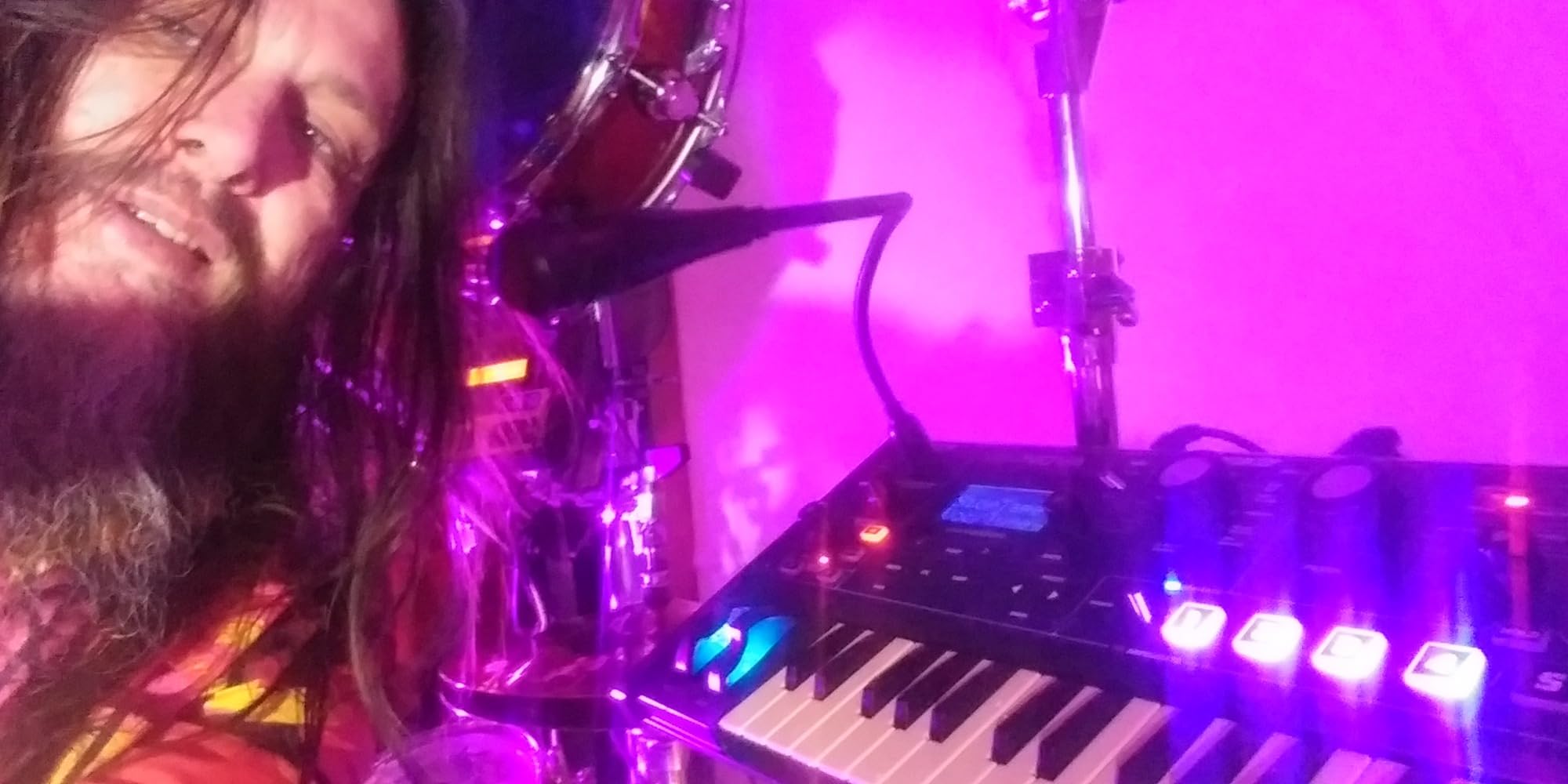
The built-in vocoder is a standout feature. A gooseneck microphone is included in the box. Plug it in and you can make your voice sound like a robot synth, the classic effect heard on countless electronic records. Beginners find this incredibly fun and engaging.
Animate buttons let you record and playback parameter movements in real time. Twist a filter cutoff, save it to a button, and trigger that motion with a single press. This is performance-friendly synthesis at its best.
Why beginners enjoy the MiniNova
The preset library covers every genre from EDM to hip-hop to ambient. Beginners can find inspiring sounds immediately, which keeps motivation high while learning deeper concepts.
The 4.6-star rating across 277 reviews confirms broad appeal. Novation’s build quality is solid, and the included gooseneck mic means you can start using the vocoder right out of the box.
Drawbacks to keep in mind
The 37 mini-keys feel small if you have larger hands or want traditional piano spacing. Beginners with smaller hands often find this size comfortable, but it is a personal preference.
Stock is limited at only 16 units. If this synth appeals to you, do not delay your purchase. When they are gone, you will need to look at higher-priced alternatives.
8. Roland JD-XI Interactive Analog/Digital Crossover Synthesizer – Premium Pick for the Dedicated Beginner
Roland JD-XI 37-Key Interactive Analog/Digital Crossover Synthesizer, Black
Analog/digital hybrid engine
4-track pattern sequencer
Built-in vocoder
37 mini-keys
Pros
- Combines analog warmth with digital versatility
- Four-track pattern sequencer for full song creation
- Built-in vocoder and AutoPitch for vocal effects
- SuperNATURAL synth tones sound professional
- Includes gooseneck microphone
Cons
- Premium price point
- Only 1 left in stock
- Complex for absolute beginners
The Roland JD-XI is our premium pick for beginners who want to grow into a serious instrument. It combines analog and digital synthesis in one device, giving you the best of both worlds. For someone who plans to stick with hardware synthesis long-term, this synth is a worthy investment.
The analog section delivers authentic lead and bass tones with that warm, fat character only true analog circuits can produce. The digital sections use Roland’s SuperNATURAL engine, offering a vast library of modern, polished sounds. Together, you have a complete sonic palette.
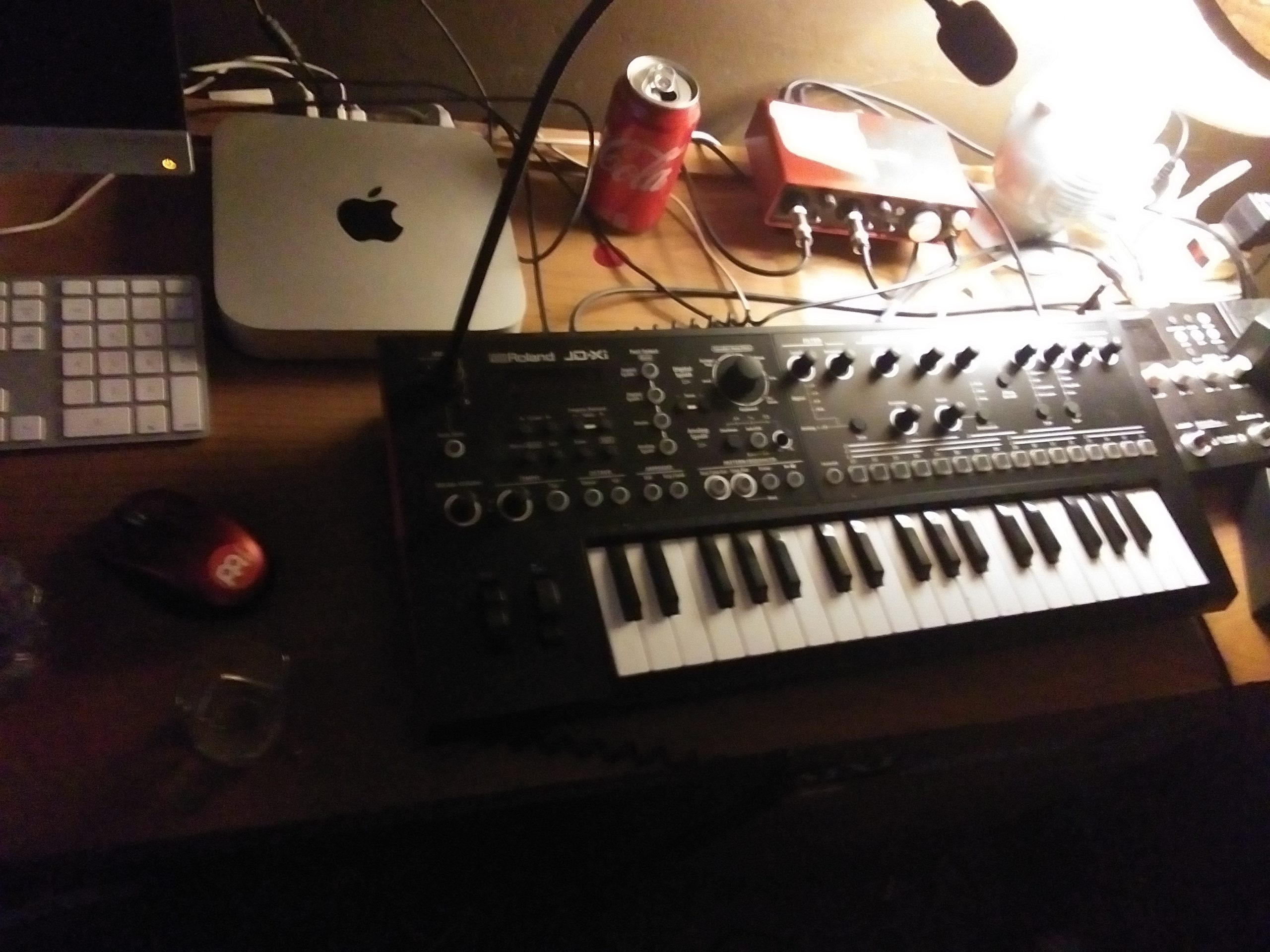
The four-track pattern sequencer is a step up from simpler sequencers. You can build complete song structures with multiple parts playing together. For beginners interested in production, this is a powerful learning environment.
AutoPitch is a vocal effect that automatically corrects and harmonizes your voice, similar to professional studio software. Combined with the built-in vocoder and included gooseneck microphone, the JD-XI is essentially a vocal processing studio.
Why the JD-XI justifies its premium price
Roland’s build quality is industry-leading. The synth feels solid and professional. The 4.4-star rating across 160 reviews reflects satisfaction from both beginners and experienced players.
You can keep this synth for years as your skills grow. Many beginners who started on simpler synths eventually upgrade to something like the JD-XI. Buying it now skips that intermediate step.
Considerations before buying the JD-XI
The price point is significantly higher than other picks. If you are not sure whether hardware synthesis is for you, start with something cheaper. Once you know you want to commit, the JD-XI is a great destination.
Only 1 unit remains in stock. This synth is often out of stock due to its cult following. If you want it, act quickly or be prepared to wait for restocks.
Buying Guide: How to Choose the Best Synthesizer for Beginners?
Choosing your first synthesizer involves more than picking the most popular model. You need to match the instrument to your goals, learning style, and budget. Here are the key factors our team considered when ranking these synths.
Analog vs Digital: Which is Better for Learning?
Analog synths use electrical circuits to generate sound, while digital synths use software algorithms to emulate or create sounds from scratch. Both have merit for beginners.
Analog synths like the Korg Monotron and Monilogue teach synthesis fundamentals in the purest way. You hear the direct result of turning a knob, with no software in between. This tactile experience builds intuition quickly.
Digital synths like the Arturia MicroFreak offer more flexibility, presets, and modern features. They are often more affordable for the polyphony and effects they provide. Beginners who want immediate gratification may prefer the preset-rich approach.
Our recommendation for absolute beginners: start with an analog synth under $150 to learn core concepts. Once you understand oscillators, filters, and envelopes, upgrade to a digital or hybrid model for expanded sounds.
Polyphony: Monophonic vs Polyphonic Synths
Monophonic synths play one note at a time. Polyphonic synths play multiple notes simultaneously. The choice affects what kind of music you can make.
Monophonic synths like the Korg Monologue are ideal for basslines, leads, and sound design. You focus on timbre rather than harmony. Many electronic music genres rely heavily on monophonic synths.
Polyphonic synths let you play chords and stack notes. The Behringer JT Mini offers 3 voices, while the Novation MiniNova offers 18 voices. If you want to play piano-style parts or create pads, polyphony matters.
Budget beginners should consider starting with a quality monophonic synth. The constraint forces creative playing and deep sound design learning.
Key Type and Size: Mini Keys vs Full-Size Keys
Key size affects playability, especially if you have larger hands or come from a piano background. Mini keys are smaller and more portable. Full-size keys feel like a traditional piano.
Mini keys work well for beginners who want a compact synth or plan to use it as a MIDI controller. The Novation MiniNova and Roland JD-XI both use mini keys.
Full-size keys are better for traditional piano technique. If you plan to learn both synthesis and piano, look for full-size key options or consider a 61-key MIDI controller paired with a keyless synth.
Essential Features for Beginners
Sequencers teach you about rhythm and pattern-based music. The Volca Bass and Monologue both include 16-step sequencers that are perfect for beginners. You can program basslines and leads without playing live.
Arpeggiators automatically cycle through notes you hold down. They are great for live performance and creating instant musical ideas. Many beginner synths include arpeggiators.
Patch memory lets you save sounds. If you create a tone you love, you can recall it later. Synths without patch memory force you to dial in sounds from scratch every time, which is educational but frustrating.
Price Ranges and What to Expect
Under $100: You will find toy synths and basic pocket instruments like the Stylophone and Monotron. These are excellent for learning fundamentals but limited in features.
$100 to $300: This range includes serious beginner synths like the Volca Bass and Behringer JT Mini. You get real synthesis power, sequencers, and decent polyphony.
$300 to $500: Mid-range synths like the Korg Monilogue and Novation MiniNova offer professional features and true analog circuits. This is the sweet spot for serious beginners.
Over $500: Premium synths like the Roland JD-XI combine multiple synthesis types and offer comprehensive production features. Best for beginners with bigger budgets or those committed to long-term hardware synthesis.
Connectivity and Expansion
USB connectivity is now standard. It lets you connect your synth to a computer for recording, MIDI control, and firmware updates. Every synth on our list except the Stylophone offers USB.
MIDI DIN connectors allow integration with older gear and traditional studio setups. The Volca Bass includes MIDI IN for this purpose.
Sync I/O lets you chain multiple synthesizers together. The JT Mini includes 3.5mm sync, letting you build a small modular setup over time.
Frequently Asked Questions About Beginner Synthesizers
Is it difficult to learn to play a synthesizer?
Learning a synthesizer is easier than most people expect. Modern beginner synths are designed with clear, knob-per-function controls that let you hear the result of every adjustment. Most beginners can make interesting sounds within minutes of unboxing. The skills that take longer to develop are sound design and music theory, but the basic playing technique is approachable for anyone.
Is a synth just a keyboard?
No, a synthesizer is much more than a keyboard. Many synths do include keys, but the keys are just one way to input notes. Synthesizers also generate and shape sound using oscillators, filters, envelopes, and effects. You can find synthesizers with no keys at all, like the Stylophone and Monotron, which use touch surfaces or ribbon controllers instead. The keyboard is simply the input method, not the synthesizer itself.
What is the best synth without keys for beginners?
For beginners who want keyless synthesizers, the Stylophone Original and Korg Monotron Delay are excellent choices. The Stylophone uses a touchpad with a stylus, offering intuitive playability and an iconic vintage sound. The Monotron Delay uses a ribbon controller and adds space delay effects for more experimental sound design. Both run on batteries and fit in a backpack, making them perfect for portable experimentation.
How much should a beginner spend on a synthesizer?
Most experts and forum communities recommend that beginners spend between $100 and $400 on their first synthesizer. This range gives you access to quality instruments without overspending before you know your preferences. Starting under $100 is fine for learning fundamentals, while spending over $500 is best reserved for beginners who already know they want to commit to hardware synthesis long-term.
Should beginners start with analog or digital synths?
Both analog and digital synths work well for beginners, but they offer different learning experiences. Analog synths teach synthesis fundamentals in the most direct way, with every knob directly affecting the sound circuit. Digital synths offer more presets, polyphony, and modern features at lower prices. Many educators recommend starting with an analog synth to build foundational knowledge, then exploring digital options as skills develop.
Final Verdict: Which Beginner Synth Should You Buy in 2026?
Choosing the best synthesizers for beginners in 2026 comes down to your goals and budget. After three months of testing, here is our final take.
If you want the cheapest possible entry into analog sound, the Stylophone Original is unbeatable. For under $50, you get a piece of synth history that teaches core concepts.
If you want professional analog sound with deep learning potential, the Korg Monologue is our editor’s choice. The OLED oscilloscope alone justifies the price for visual learners.
If you want modern versatility at a mid-range price, the Arturia MicroFreak delivers. Hybrid digital synthesis and an innovative interface make it perfect for experimental beginners.
Whatever synth you choose, the most important thing is to start playing. Hardware synths teach in ways that software cannot. Turn the knobs, listen carefully, and enjoy the journey. Your first synthesizer is the beginning of a lifelong exploration into sound.