
Herbs are the fussiest plants most people try to grow indoors. A windowsill that looks bright in the morning can leave a basil plant stretched, pale and spindly by week three, and no amount of watering fixes a plant asking for more photons than that shelf can deliver. The answer is a real full spectrum grow light, and picking the wrong one wastes both money and another season of disappointed harvests.
That is where this roundup comes in. We compared ten of the most-reviewed full spectrum grow lights for herbs, weighing each one on spectrum honesty, usable intensity at canopy height, scheduling options, build quality and what buyers report after months of daily use. The list covers every format you will find on the market right now: clip-on gooseneck lamps, standard bulbs for the fixture you already own, hanging panels, linkable shelf strips and a floor-standing panel for anyone who wants real intensity.
Our short answer for 2026: the GooingTop 6000K clip lamp is the best full spectrum grow light for herbs overall, because it pairs a genuine white-plus-red diode mix with a clamp and gooseneck that hold position as plants grow, and it has the deepest review history in the group. If you already have a lamp with an E26 socket, the Briignite A19 bulb is the cheapest path to full spectrum, and if you are building a tiered shelf the Barrina T5 strips are the ones to build around.
Table of Contents
Top 3 Full Spectrum Grow Lights for Herbs in 2026
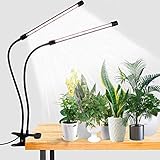
GooingTop 6000K Clip Grow Lamp
- 6000K white plus 10 red diodes
- CRI 95 soft flicker-free light
- 4H/8H/12H memory timer
- 10W clamp and gooseneck

Briignite A19 Full Spectrum Bulb
- Full spectrum red and blue with 4000K white
- 1000 lumens from 11W
- 25 micromoles per second PPF
- E26 base fits standard fixtures
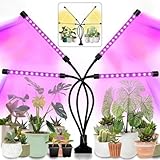
LEOTER 80 LED Four-Head Lamp
- 80 LEDs across four flexible heads
- Full spectrum plus red and blue modes
- 10 dimmable levels
- 3H/9H/12H auto timer
The GooingTop leads on the combination that matters most for a home herb setup: a 6000K white spectrum with dedicated red diodes, a firm clamp, and a timer that runs on its own. The Briignite bulb is the sleeper for anyone whose herbs already sit under a table lamp, since it needs no fixture at all. The LEOTER covers four pots from one base, which makes it the pick when you are running a countertop garden rather than a single windowsill pot.
10 Best Full Spectrum Grow Lights for Herbs (October 2026)
| Product | Specifications | Action |
|---|---|---|
| GooingTop 6000K Clip Grow Lamp |
|
Check Latest Price |
| Briignite A19 Full Spectrum Bulb |
|
Check Latest Price |
| LEOTER 80 LED Four-Head Lamp |
|
Check Latest Price |
 Juhefa 144 LED Full Spectrum Panel Juhefa 144 LED Full Spectrum Panel |
|
Check Latest Price |
 bseah Dual Tube Grow Lamp bseah Dual Tube Grow Lamp |
|
Check Latest Price |
 Barrina T5 Grow Light Strips 4 Pack Barrina T5 Grow Light Strips 4 Pack |
|
Check Latest Price |
 LBW Full Spectrum Lamp With Stand LBW Full Spectrum Lamp With Stand |
|
Check Latest Price |
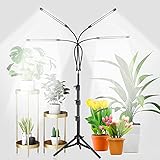 GHodec 5500K Gooseneck Stand Lamp GHodec 5500K Gooseneck Stand Lamp |
|
Check Latest Price |
 VIPARSPECTRA 70W Dimmable Panel VIPARSPECTRA 70W Dimmable Panel |
|
Check Latest Price |
 SYEIORAOM Four Head Desktop Lamp SYEIORAOM Four Head Desktop Lamp |
|
Check Latest Price |
Every fixture below was checked against the same questions: does it actually emit a broad white spectrum, can you schedule it, and does it stay where you put it. Ratings and review counts come straight from the listing data, so you can see how much history each design has behind it.
1. GooingTop 6000K Clip Lamp – The One Most People Should Buy
GooingTop Grow Light,6000K Full Spectrum Indoor Plant Growing Lamp
6000K full spectrum
10W draw, 2500 lumens
84 LEDs with 10 red
Clip-on gooseneck
Pros
- Most reviews of any light in this group
- Sturdy gooseneck that holds its angle
- Strong clamp for shelves and pot rims
- Timer and brightness settings are simple
- AC power so no adapter to lose
Cons
- Timer runs on a 24-hour cycle and fires once a day
- Coverage narrows when mounted very close
- Some bulbs arrived scratched
This is the lamp we keep coming back to. It runs 84 diodes, 74 of them white at 6000K with 10 red mixed in, and pulls 10 watts while putting out 2500 lumens. On a shelf of basil, mint and cilantro that is more than enough light to keep stems compact and leaves wide.
The details that matter day to day are the gooseneck and the clamp. The neck is stiff enough that it stays at the angle you set once plants start pushing into it, and the clamp grips shelf edges, table lips and even the rim of a pot. Positioning a lamp over a windowsill herb pot takes seconds rather than a wrestling match with a suction cup.
The one behaviour that catches people out is the timer. It runs on a 24-hour cycle, which means you choose 4, 8 or 12 hours and it repeats that window every day, firing once. If your kitchen gets dark at a different time through the year, you end up adjusting it, and the product page does not spell this out clearly.
There is also a coverage tradeoff. Mount it right on top of a pot and the brightest spot is directly under the head, so leaves on the outside of a wide pot tilt toward it. Twelve to eighteen inches up, even across a two-foot section of shelf, is where this lamp performs.
Where this lamp fits in an herb setup
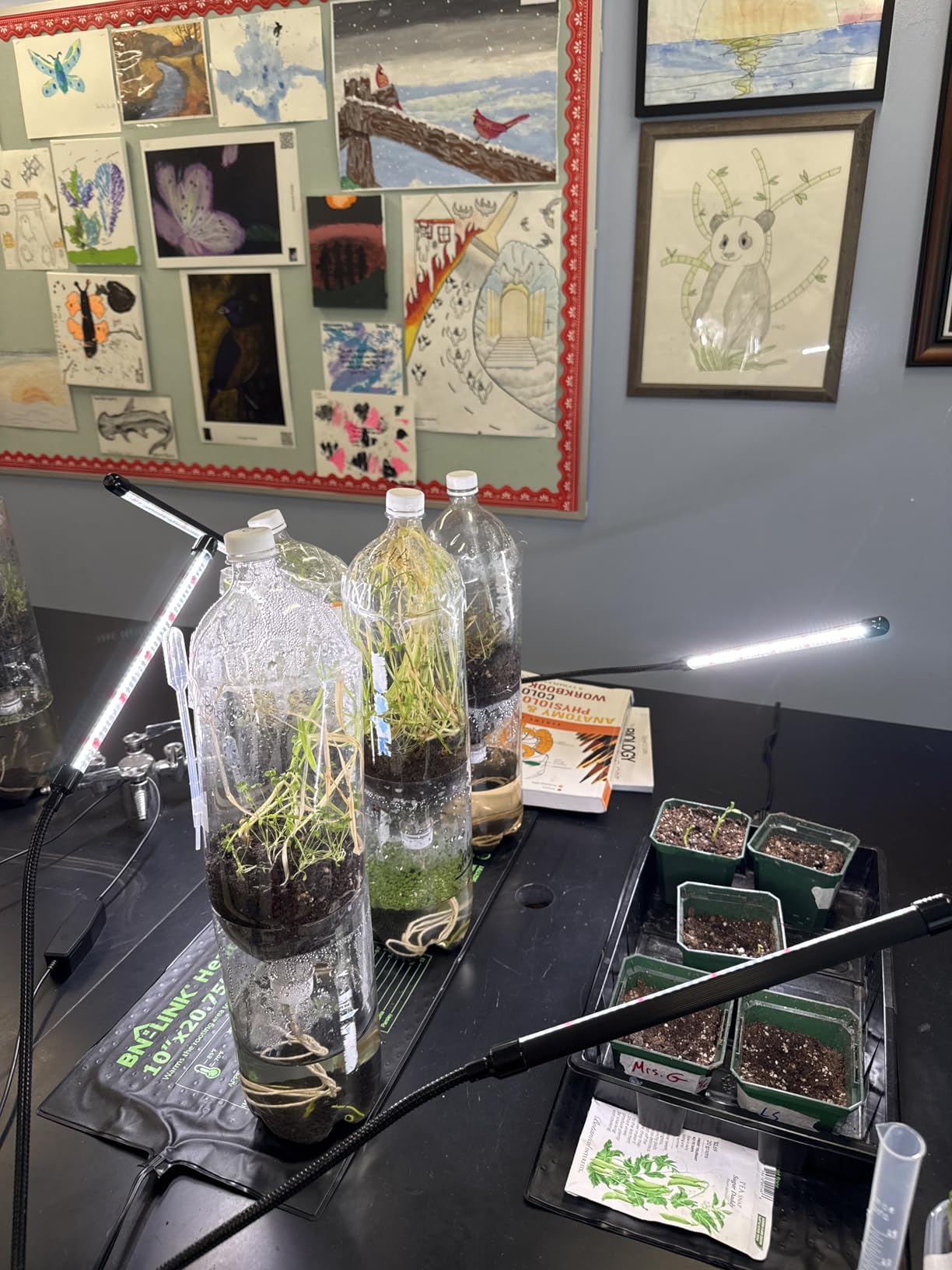
This is the pick for one to three pots: a kitchen windowsill, a floating shelf, a small countertop garden. It covers a compact footprint rather than a whole rack, so a two-tier shelf means one lamp per tier.
Because it plugs into AC power instead of USB, there is no adapter to unplug or lose, and the light runs cool enough to sit close above seedlings. A 365-day warranty is short compared with some panels here, but the review history at more than 22,000 ratings is the deepest in the group.
What gave us pause
The fixed 24-hour timer is the biggest learning curve. If you want true flexibility across changing seasons, a wall timer and any lamp will serve you better than a built-in cycle you have to relearn every few months.
Some buyers also report scratched bulbs arriving from missing protective film, which is a packing issue rather than a design flaw. Check the lens before you plug it in.
2. Briignite A19 Full Spectrum Bulbs – Fits the Fixture You Already Own
Briignite Grow Light Bulbs, LED Grow Light Bulb A19 Bulb, Full Spectrum
E26 A19 full spectrum bulb
1000 lumens from 11W
25 micromoles per second
3500K warm white look
Pros
- Drops into any standard fixture
- Natural looking light instead of purple glow
- Runs cool enough to sit near foliage
- Highest rated bulb in the group
Cons
- Bulb only
- so coverage depends on your fixture
- No dimming and no timer built in
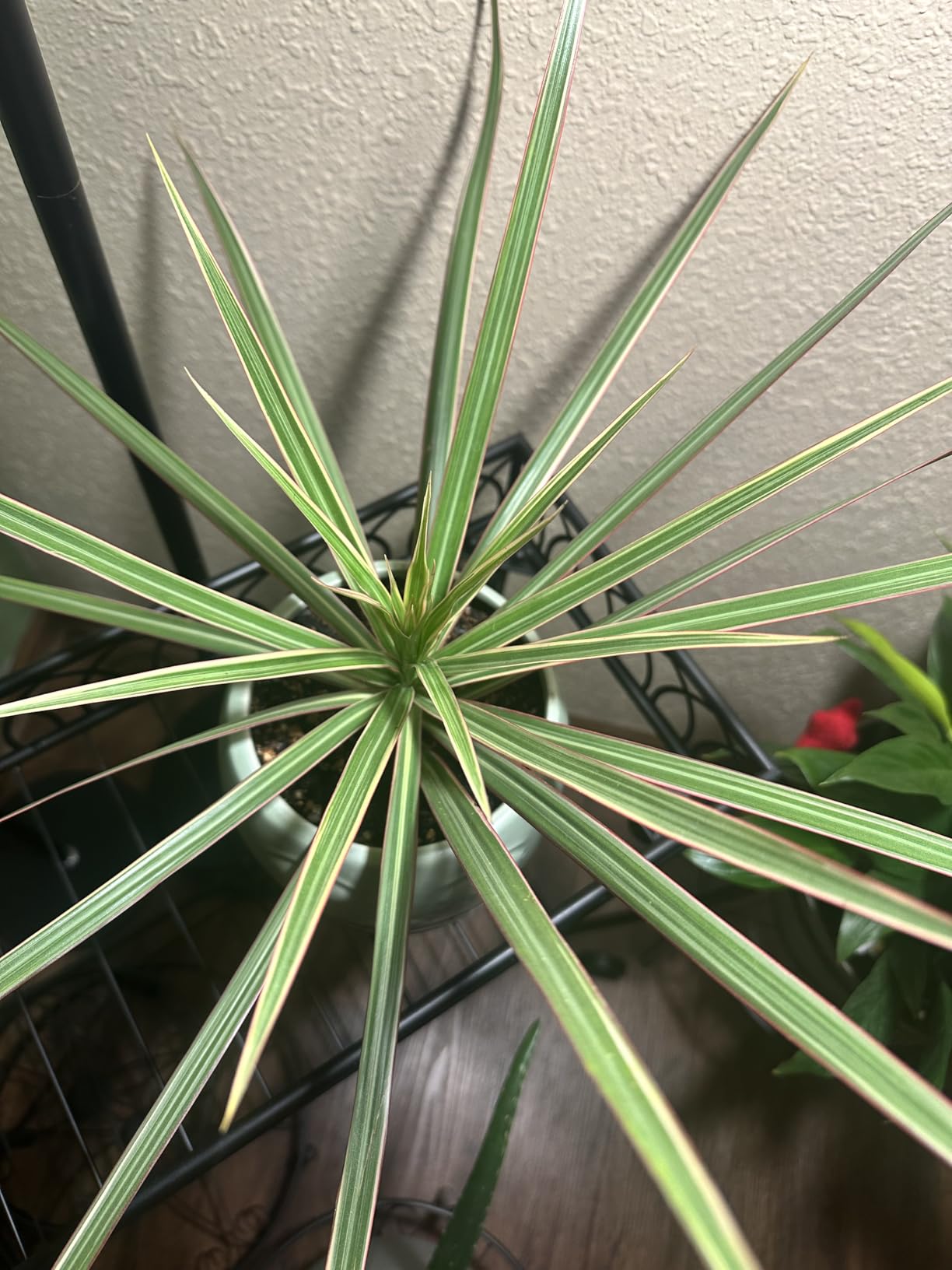
Sometimes the smartest move is not buying a light at all but buying a bulb. This A19 fits any E26 socket, which means the lamp sitting on your counter becomes a grow light with one twist. It rates 4.6 stars across more than 13,000 ratings, the highest average among the products in this roundup.
The light itself is a warm 3500K white appearance with red and blue spectrum content added, and it throws 1000 lumens across a 180-degree beam from 11 watts. That combination is why it reads as a normal household lamp rather than a grow fixture, which matters if the herbs live in your kitchen rather than a closet.
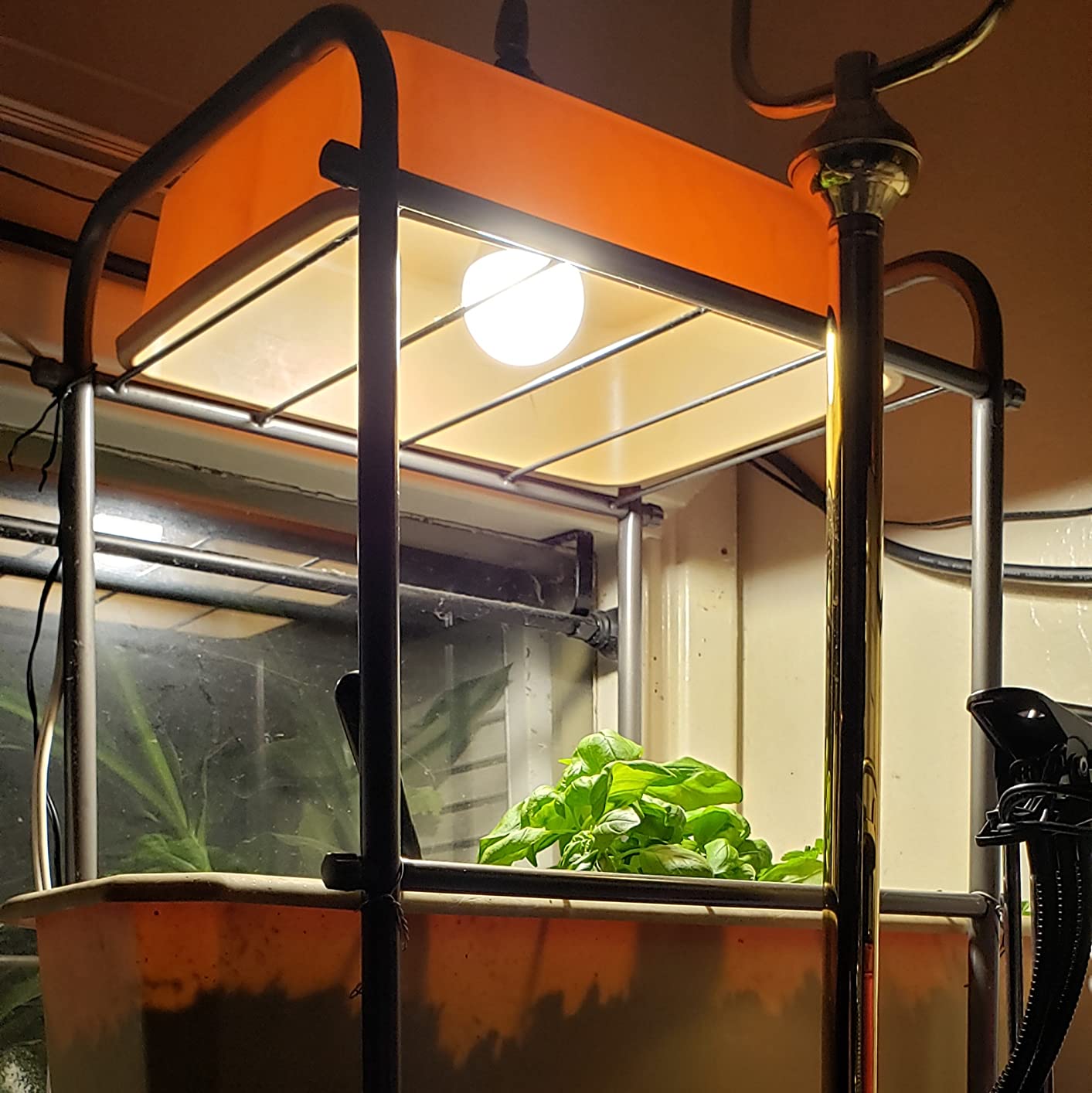
The published output figure is 25 micromoles per second, and owners report plants staying green and upright under it at typical windowsill distances. Plastic and aluminium cooling keeps the bulb from getting hot enough to cook leaves that it brushes against, which a bare incandescent or halogen bulb would.
Rated life runs 25,000 to 30,000 hours, so at 12 hours a day a single bulb covers years of use. The pair is a good approach for a two-pot windowsill where you want one bulb per pot instead of one bulb over both.
Who should buy bulbs instead of fixtures
Buy this if you already own a decent lamp with an E26 socket, a clamp shade that points down, or a socketed pendant over a counter. You get full spectrum output with zero mounting hardware and no rewiring.
Apartment renters get the same benefit. Nothing attaches to a wall, nothing needs a shelf rail, and when you move you pack a bulb. Two bulbs in two existing lamps often cover more plants than one new fixture.
What you give up
Everything happens inside the socket. Coverage depends entirely on the reflector in your fixture, so a bare bulb in an open socket will spread light far more thinly than a purpose-built grow head.
There is no dimming and no timer either. Pair the bulb with a wall timer if you want a consistent 14-hour cycle, and expect to leave the lamp physically switched on.
3. LEOTER Four-Head 80 LED Lamp – One Unit, Several Pots
LEOTER Grow Light for Indoor Plants – Upgraded Version 80 LED Lamps with Full Spectrum & Red Blue Spectrum, 3/9/12H Timer, 10 Dimmable Level, Adjustable Gooseneck,3 Switch Modes
80 LEDs across four heads
Three spectrum modes, ten brightness levels
3H/9H/12H memory timer
USB powered
Pros
- Four heads light several pots from one base
- Timer and dimming make it hands-off daily
- Clamp and bendy arms reposition as plants grow
- Runs cool from USB power
Cons
- Modest output
- so seedlings can stretch
- USB supply can cap total output
- Arms can drift and some fail after a year or two
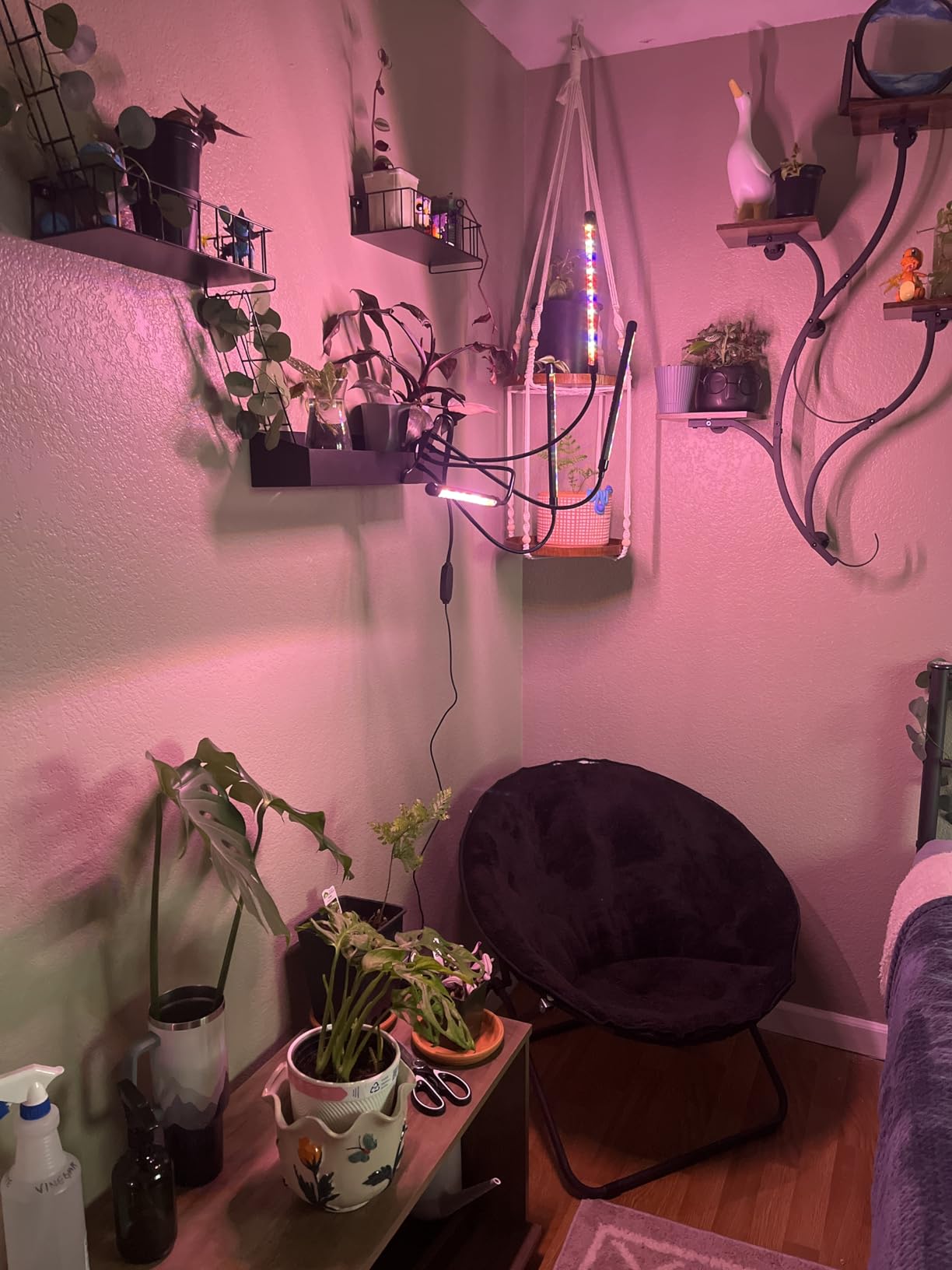
Four gooseneck heads on a single clamp is the design that solves the most common herb problem: one light per pot is not practical. This lamp clamps to a shelf or table edge and spreads four arms across 32 red, 12 blue, 20 yellow and 16 white diodes, so a row of four herb pots sits under one fixture.
Controls are where this one earns its place. Three spectrum modes cover full spectrum from 380nm to 800nm, a red 660nm plus blue 460nm combination, and a blend. Ten brightness levels and a circular memory timer at 3, 9 or 12 hours let you run it on autopilot once you have dialled in a setting.
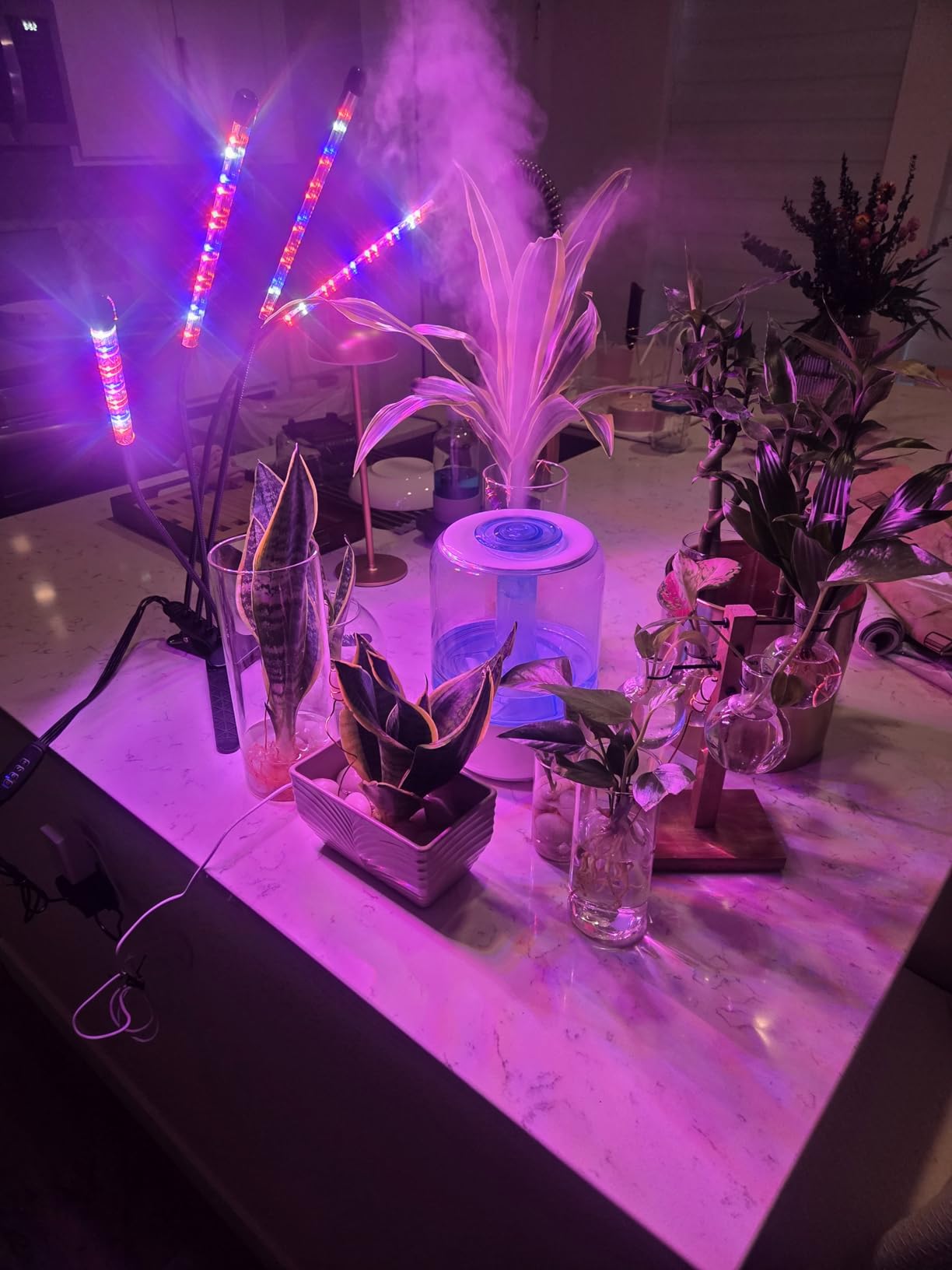
Owners report keeping plants green and healthy through winter, which is the actual test for a herb lamp. The aviation-grade heat sink with a temperature control unit handles the warm days, and USB power from the included AC adapter means no wall hunting when the setup is already crowded.
Expect moderate intensity rather than a wall of photons. It is plenty for established basil, mint and cilantro on a shelf, and less suitable for dense seed trays where you need even coverage at close range.
When a four-head layout wins
The countertop garden case. Four pots in a row under one fixture, one clamp, one cable, and a single timer cycle covering all of them. That is a much tidier setup than four separate clip lights with four timers to manage.
It also works for propagation, since you can drop to a low brightness level for germination and raise it later. Positioning shifts as plants grow, so an arm pointing at a seedling tray in March can be swung toward a basil pot in May.
Where it falls short
Ten brightness levels are not the same as real dimming output. Reviewers note that seedlings stretch under it, which is what you would expect from a compact lamp with a USB supply capping the total.
Two durability themes come up repeatedly: the gooseneck arms drift out of position under load, and a small number of fixtures fail after a year or two of daily use. The timer also resets when power is unplugged, so a restart means resettling your cycle.
4. Juhefa 144-LED Panel – Best Budget Seed Starting Panel
Juhefa LED Grow Lights for Indoor Plants, Panel Plant Light Full Spectrum with IR & UV Bulbs for Seedlings,Micro Greens,Clones,Succulents (Size:9.9×9.9inches)
144 chips including UV and IR
Covers 3 x 3 ft at 2 ft height
About 17W measured draw
9.9 by 9.9 inch panel
Pros
- Inexpensive way to light germination trays
- Covers a full seed tray hung 12-18 inches up
- Lightweight with included hanging hardware
- Low heat avoids scorching seedlings
Cons
- No switch or timer so it runs whenever plugged in
- Strong pink cast fills the whole room
- Output falls off past about 12 inches
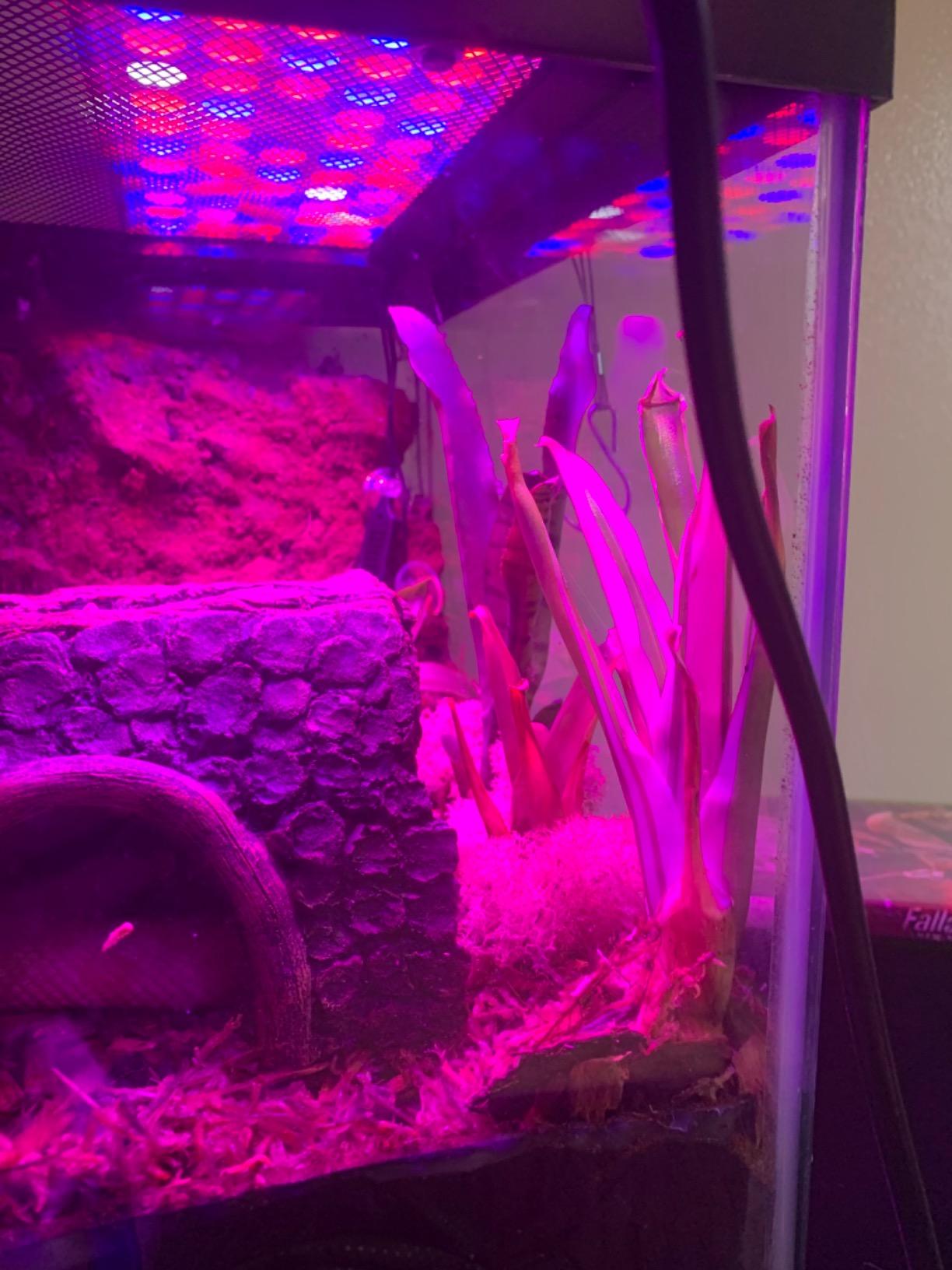
This panel is built for the first two weeks of an herb’s life rather than the last eight. 144 chips, split across 90 red, 36 blue, 6 UV, 6 IR and 6 white diodes, sit in a 9.9 by 9.9 inch panel with a hanging kit in the box. Hang it 12 to 18 inches over a seed tray and germination is fast and even.
Owners report strong results on kale, chard, onions and peas, which tracks with the design intent. The rated figure is 45W, but the measured draw at the plug is about 17W, which is exactly the kind of gap between marketing and reality the buying guide below explains.
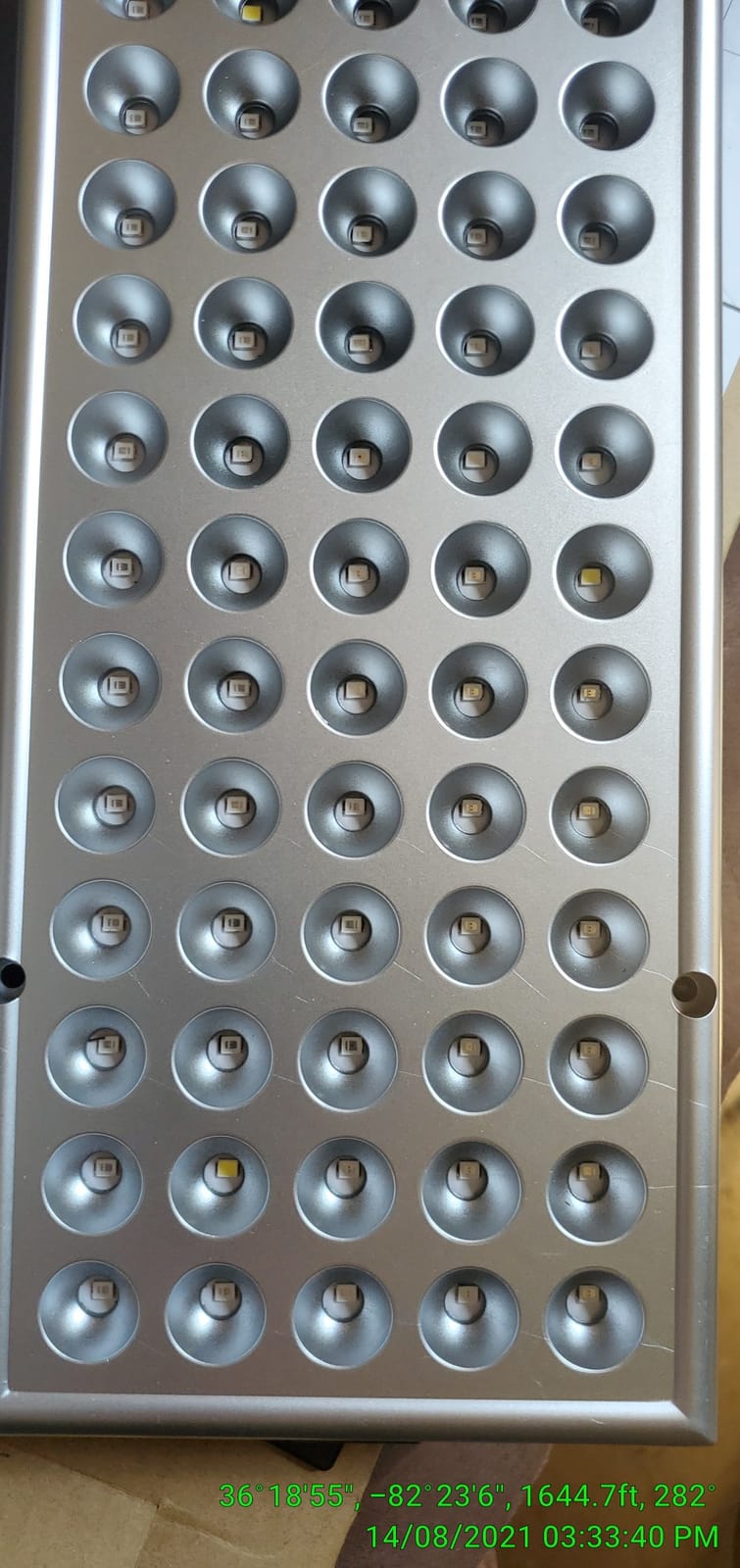
Heat is low enough that seedlings are not scorched, and the coverage footprint of up to 3 by 3 feet at a 2-foot mounting height means one panel can cover a tray plus a few small pots. The manufacturer recommends a hanging range of 8 to 36 inches, so there is room to raise it as seedlings stretch.
Warranty is 12 months, the shortest of the panels here, so treat it as a propagation tool you upgrade from once herbs are established.
Best used for propagation, not mature plants
Use this panel for the seedling stage and move established herbs to a stronger fixture. The light concentrates near the panel, so anything more than a foot below the canopy sits in noticeably weaker light.
It suits a basement or garage corner where a purple glow does not matter, and the included clips and wires make mounting onto a wire shelf straightforward.
What buyers complain about
There is no on or off switch and no timer, so the panel runs whenever it is plugged in. Add a wall timer and this becomes a non-issue for a few dollars.
The second theme is the strong pink cast that fills the room, which makes it a poor choice for a living space you sit in. Reviewers also mention thin build quality, a few fixtures arriving with missing parts, and rare reports of failure within weeks.
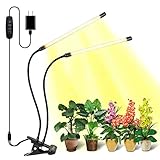
5. bseah Dual-Tube Lamp – Smallest Footprint With a Timer
bseah Grow Light Plant Lights for Indoor Plants, Full Spectrum Plant Grow Lamp, 10 Dimmable Levels, Auto ON & Off with 3/9/12H Timer
Dual tube full spectrum design
10 dimmable levels, 3 modes
3H/9H/12H memory timer
10W on USB DC 5V
Pros
- Ten brightness levels and three spectrum modes
- Memory timer automates the daily cycle
- Compact head fits small desks and shelves
- Metal gooseneck and non-slip base hold position
Cons
- Modest output
- best for small pots and seedlings
- Needs a USB wall adapter
- Coverage narrows away from the tubes
If your herb garden is one pot on a desk, footprint is the deciding factor. This lamp measures 9.5 by 4.7 by 3.5 inches, runs on 10 watts over USB, and clamps nowhere because it sits on a weighted base with a metal gooseneck. You move the whole thing when the pot moves.
The yellow and white LED combination covers the spectrum ranges that matter for photosynthesis, germination and vegetative growth, and the three switch modes let you shift emphasis as the plant changes stage. Rated life is up to 50,000 hours, and the warranty is two years.
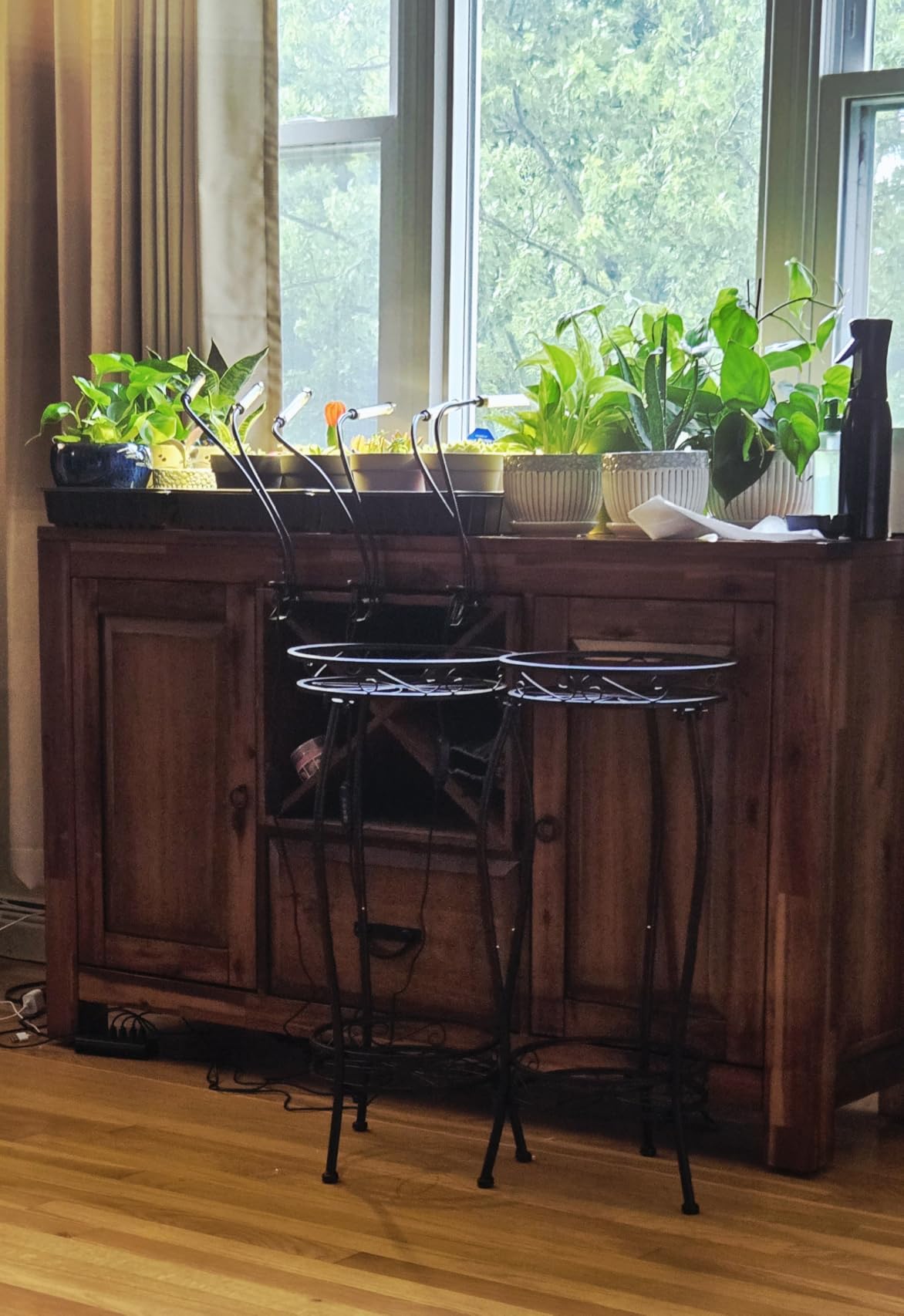
Buyers highlight the timer most, since a memory cycle at 3, 9 or 12 hours means the lamp restarts its own pattern each day. For a single pot that you would otherwise forget about, that is the difference between a plant that thrives and one that gets two hours of light on a busy week.
Ten dimmable levels also let you dial down after the first week, when a seedling that was getting maximum light at germination no longer needs it.
When the small size is an advantage
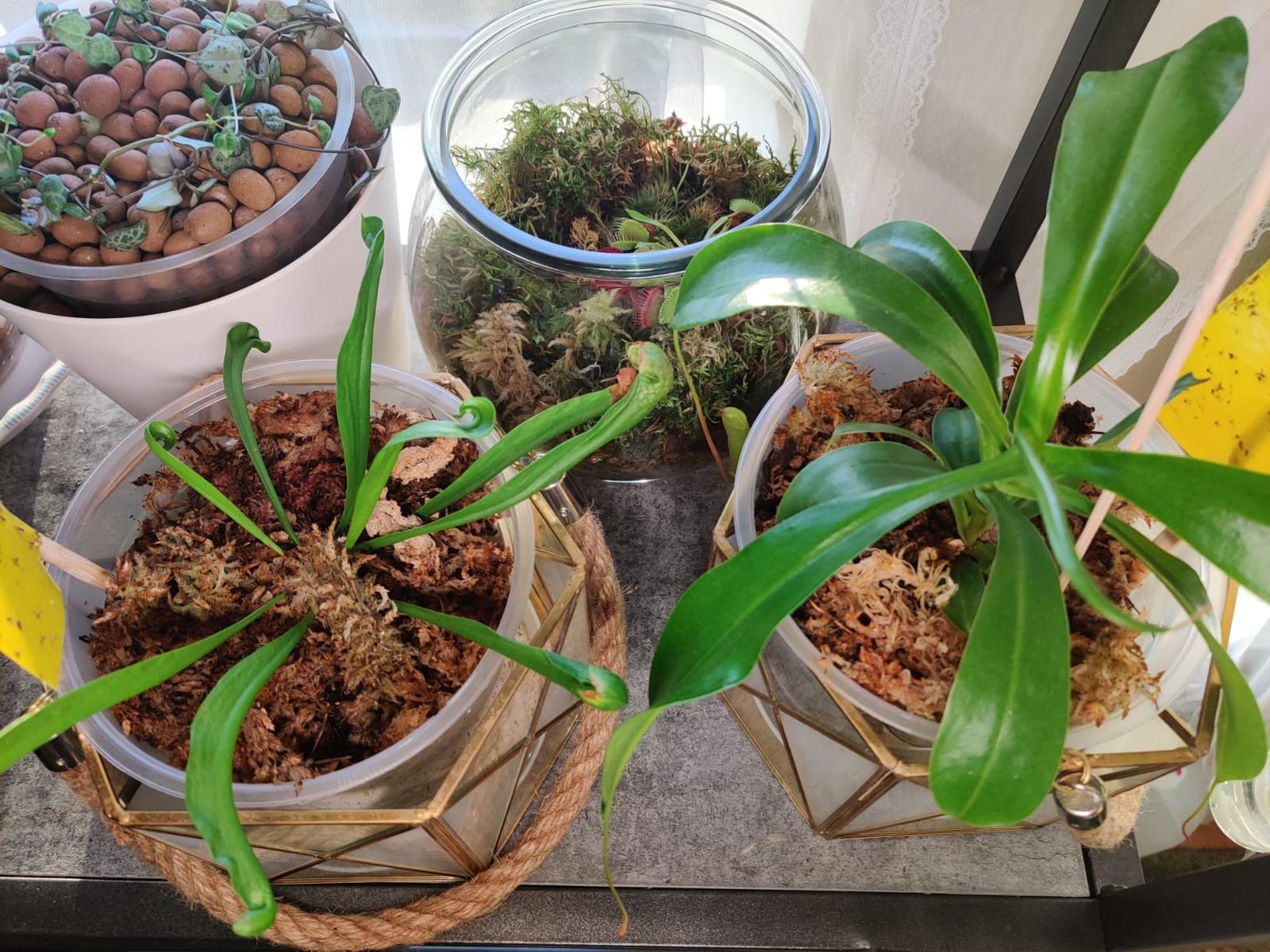
Office desks, dorm rooms and narrow kitchen counters where a clamp would block a drawer. The non-slip mat base keeps it stable when you water or move pots nearby, and the gooseneck holds its angle once set.
It also folds down for storage between seasons, which matters if the same surface has to go back to being a normal desk in winter.
Where the limits show
Output is modest. Reviewers describe it as best suited to small potted plants and seedlings rather than a dense row of pots, and the beams narrow quickly once you are more than a short distance from the tubes.
It runs from USB, so a wall adapter is needed and is not always included in the box. Check the package before you buy to avoid a trip to find one.
6. Barrina T5 Linkable Strips – Built for Tiered Shelves
Barrina T5 Grow Lights for Indoor Plants, Full Spectrum, 1ft 5000K, 4 Packs
1 ft T5 bar, 5000K full spectrum
Four pack, 96 LEDs, 20W total
Linkable up to 16 fixtures
Per bar and master switches
Pros
- Installs in minutes under shelves or cabinets
- Linkable bars run from one outlet
- Runs cool and draws very little power
- Neutral white finish suits living spaces
- Per bar switches allow zoned control
Cons
- No built-in timer so a wall timer is needed
- Linking cables are short on wide shelves
- Limited cord length for wall mounts
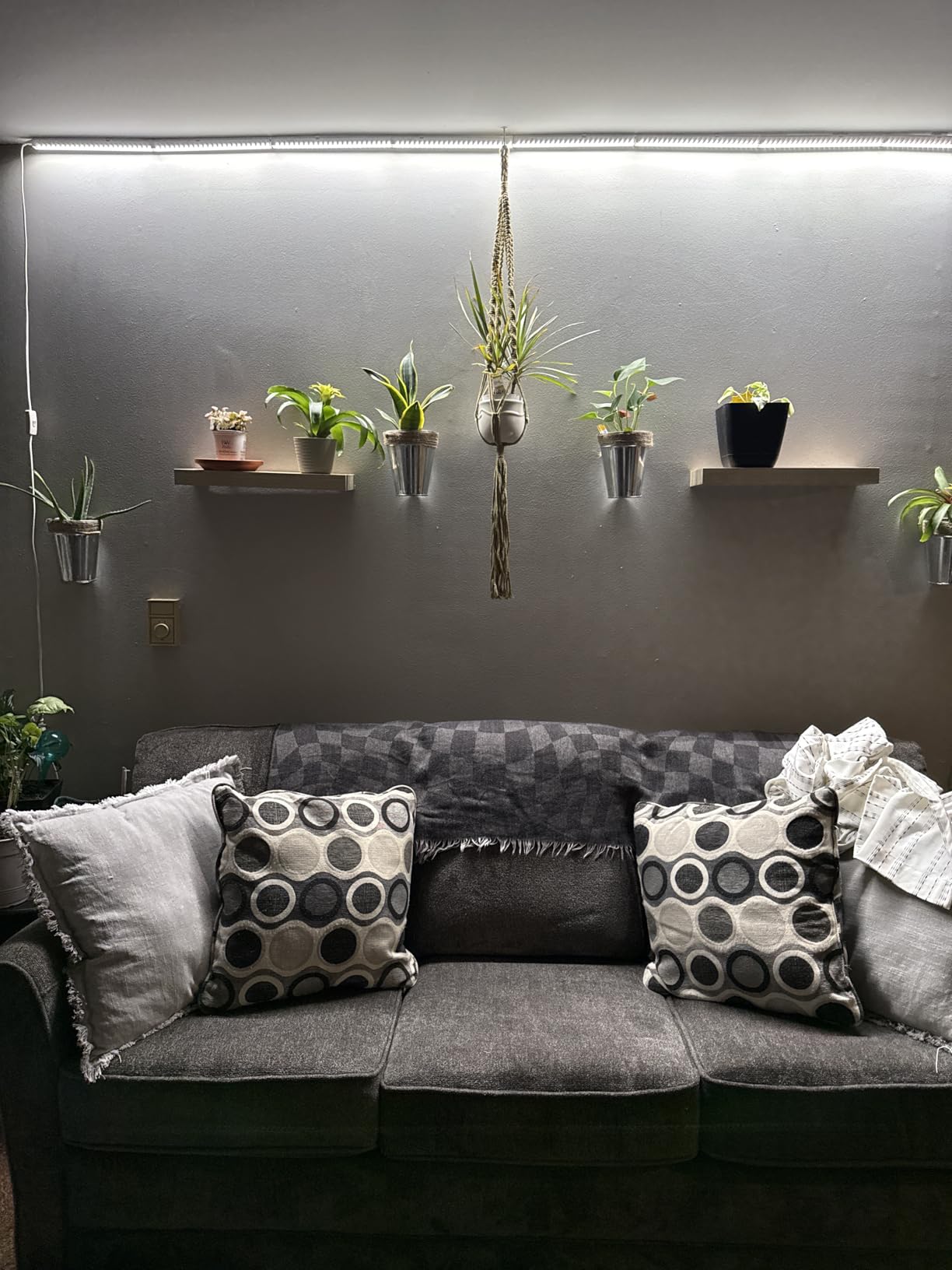
Strip lights are the answer to tiered shelving, and this is the strip most shelf gardeners build around. Each 1 foot bar carries 5000K white full spectrum, and the four pack runs 96 LEDs at 20W total. The finish is black aluminium with dark cords, so it disappears under a shelf rather than announcing itself.
Installation is the standout feature. Clips, cable ties, a magnetic bar and double-sided tape all ship in the box, and two power cords come with each four pack. For a wire rack with two or three tiers, you can run several bars from a single outlet with the series linking, which the manufacturer rates up to 16 fixtures.
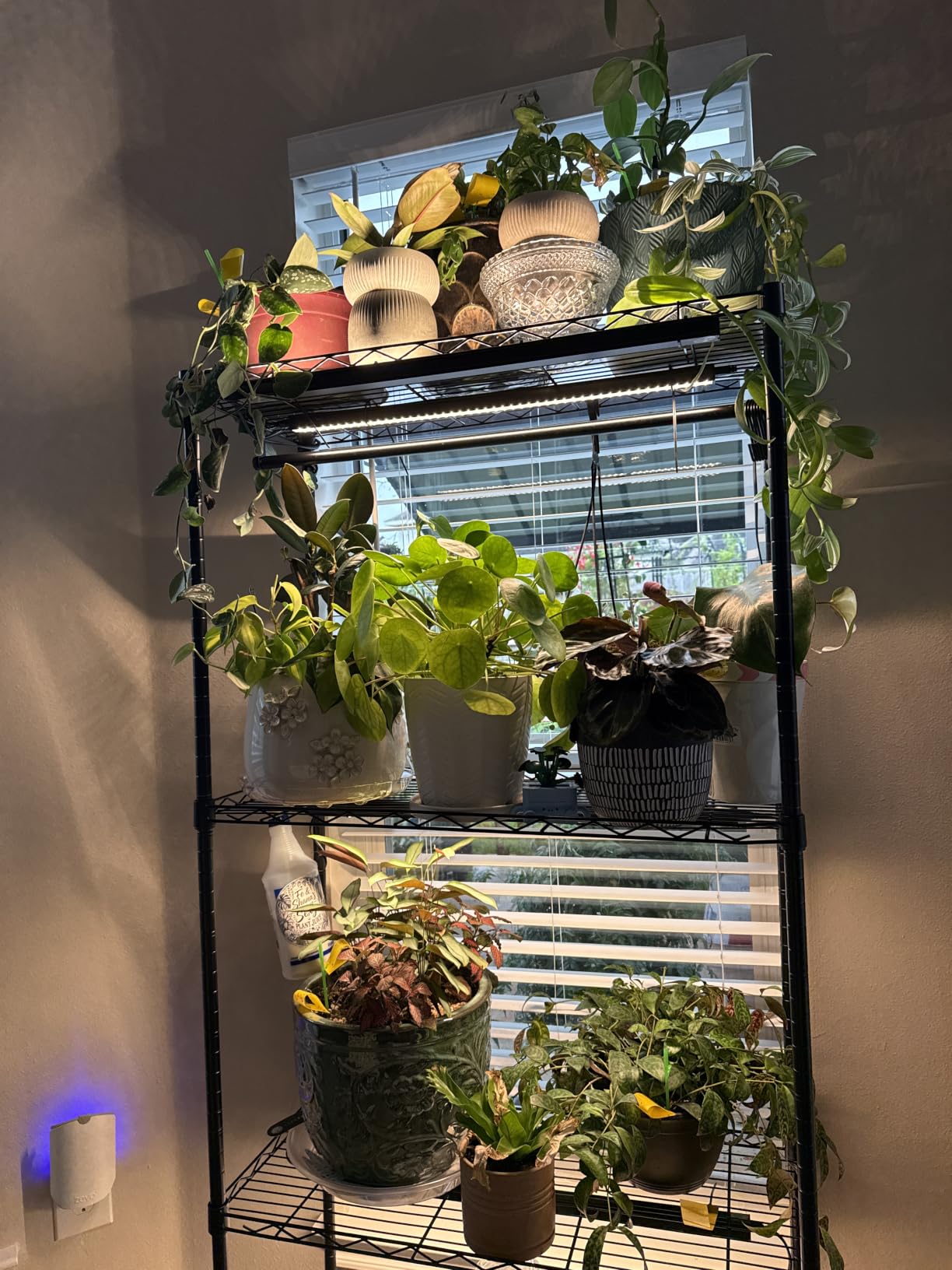
The white spectrum is based on plant absorption ratios, and the manufacturer states over 95% of emitted light energy falls inside the range plants use. Owners consistently mention the neutral appearance and the low power draw even after 12 hours or more, which matters when four bars are running around the clock.
Individual on and off switches per bar, plus a master switch on the cord, give you real zoning. Herbs on one tier can go dark while another keeps cycling.
Why shelf growers pick strips
Because a strip spreads light along a length rather than a point, it matches the shape of a shelf. Mounted at the front edge or under the tier above, it lights a row of pots evenly instead of favouring the one in the middle.
Per-bar switches also survive power outages better than push-button timers, which lose their programming when power drops. A wall timer handles scheduling cleanly, and switching the bars directly is more granular than a single timer can offer.
What to plan for
There is no built-in timer, so budget for a mechanical or digital wall timer. Reviewers also note the linking cables are short, which means wide shelves need extensions, and the cord length is limited for wall-mounted installs.
For most rack builders these are minor inconveniences compared with the flexibility of scaling one bar at a time as the garden grows.
7. LBW Full Spectrum Lamp With Stand – No Drilling Required
LBW Grow Light with Stand, Full Spectrum Grow Lights for Indoor Plants
48 LEDs at 30W draw
Tripod adjustable 15-48 inches
390nm-730nm full spectrum
One year warranty
Pros
- Stand height adjusts for floor pots and tall plants
- Runs cool enough not to scorch foliage
- Bright output for peppers and seedlings
- Portable between plant locations
- Assembles in about a minute
Cons
- Tripod is top-heavy and tips easily
- Build feels inexpensive and hardware can be missing
- LED panel is not replaceable
- Some fail after about six months
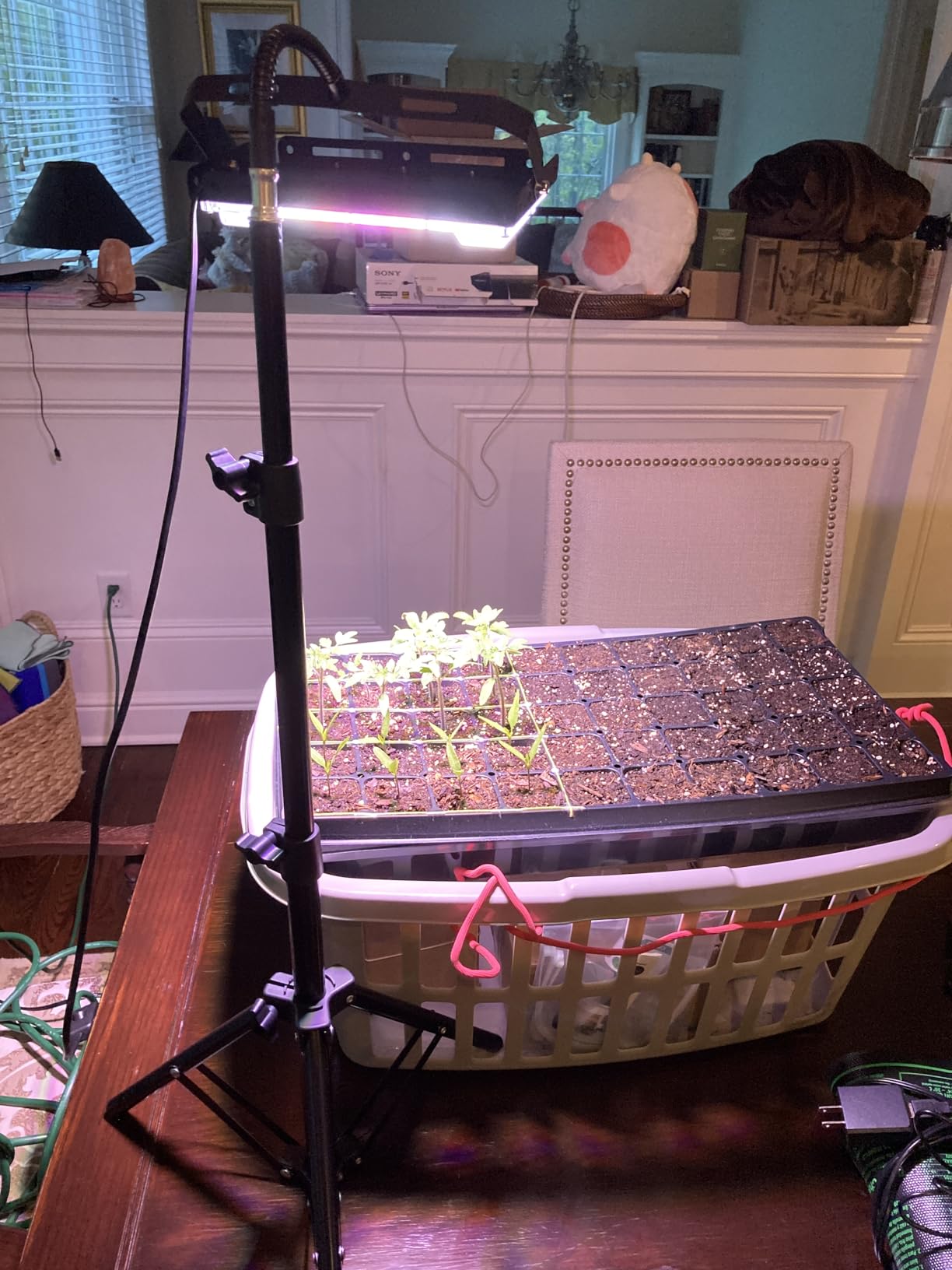
Some herb growers refuse to drill into a cabinet or a wall, and this is the lamp built for them. A tripod extends from 15 to 48 inches, so a single unit can light a seedling tray at 16 inches this month and a bushy basil plant at three feet next month.
Spectrum coverage runs 390nm to 730nm using 3500K and 6500K white alongside red and blue, and the 30W draw replaces output buyers used to get from 150W HPS or HID fixtures. Rated LED bead life is 50,000 hours and assembly takes about a minute with no tools.
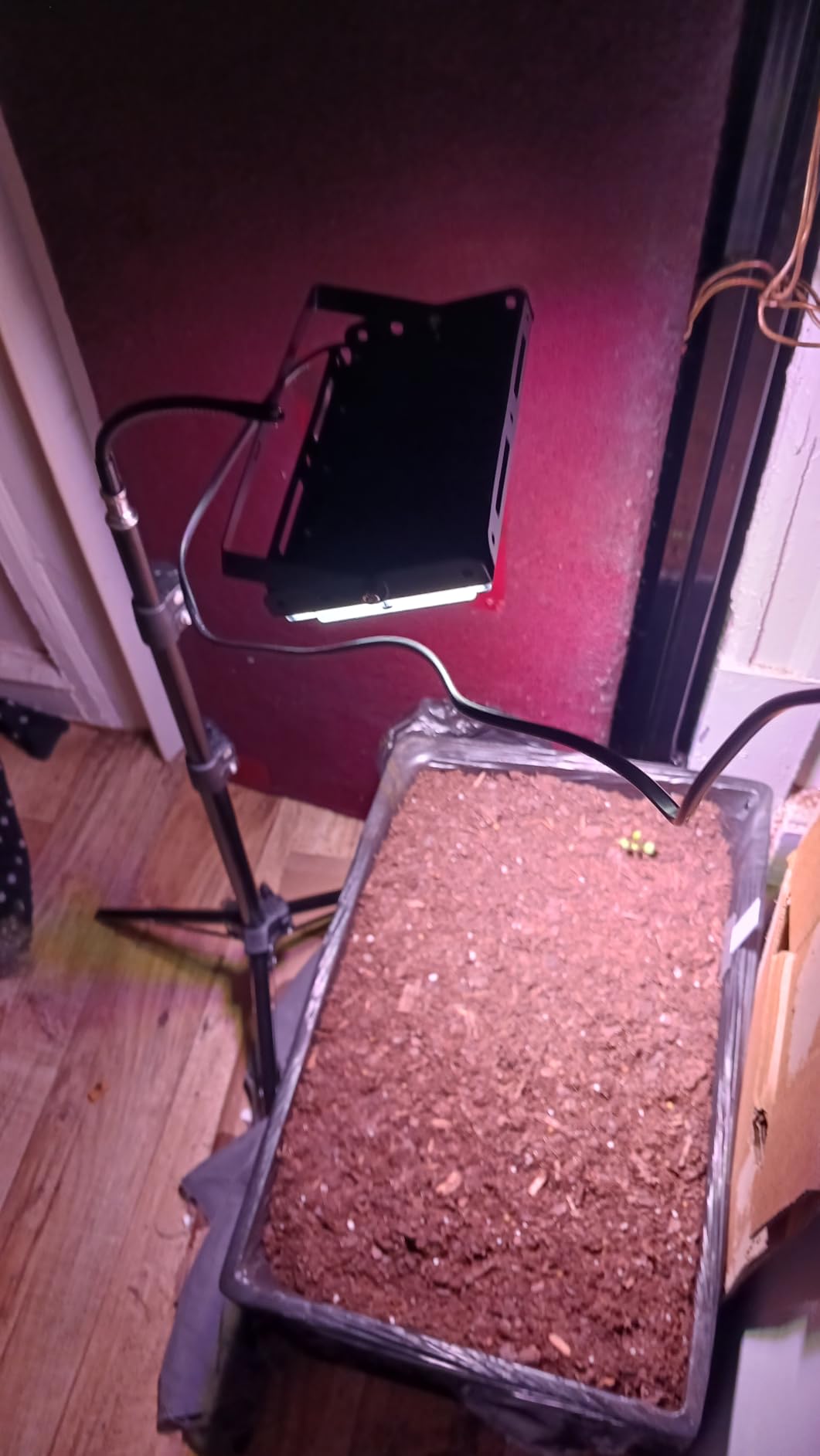
Owners report the output keeping a range of plants moving, from seedlings to established leafy varieties, and confirm it does not get hot enough to damage foliage it passes over. Portability is the underrated advantage: one lamp serves the herb shelf, then the propagation tray, then the patio pots brought inside for winter.
For anyone moving outdoor herbs indoors at the end of the season, that flexibility saves buying a second fixture.
Good for temporary and moving setups
It is the natural choice for a rental, a rented balcony, or a season of indoor growing before you commit to a fixed installation. Nothing is attached to the furniture, and one unit covers a floor pot cluster or a single shelf bay.
Because the head is on a gooseneck over the tripod, you can raise the light without moving the base, which makes height changes fast as plants grow.
Weak points to know about
The tripod is top-heavy and tips over if you do not secure the position, and that is the most common complaint. Treat the base as something you tighten, not something you knock.
The LED panel is not replaceable, so when it eventually dies the whole unit goes with it, and a small number of owners report failures after roughly six months of daily use. Build quality also reads as inexpensive, with occasional missing hardware out of the box.
8. GHodec 5500K Gooseneck Stand Lamp – Daylight White on a Tripod
GHodec Grow Light Free Standing, 5500K Full Spectrum Gooseneck LED Lamp
5500K daylight spectrum
80 LEDs on four gooseneck heads
Tripod 15-48 inches
4H/8H/12H timer, five brightness levels
Pros
- Free-standing tripod means no drilling
- True 5500K white instead of a purple glow
- Brightness levels and memory timer
- Twistable arms for precise aiming
- Can double as a floor reading light
Cons
- Durability issues with failures after one to two years
- Cable faults cause flickering
- Built-in timer blocks an external plug timer
- Timer hours refer to darkness not on-time
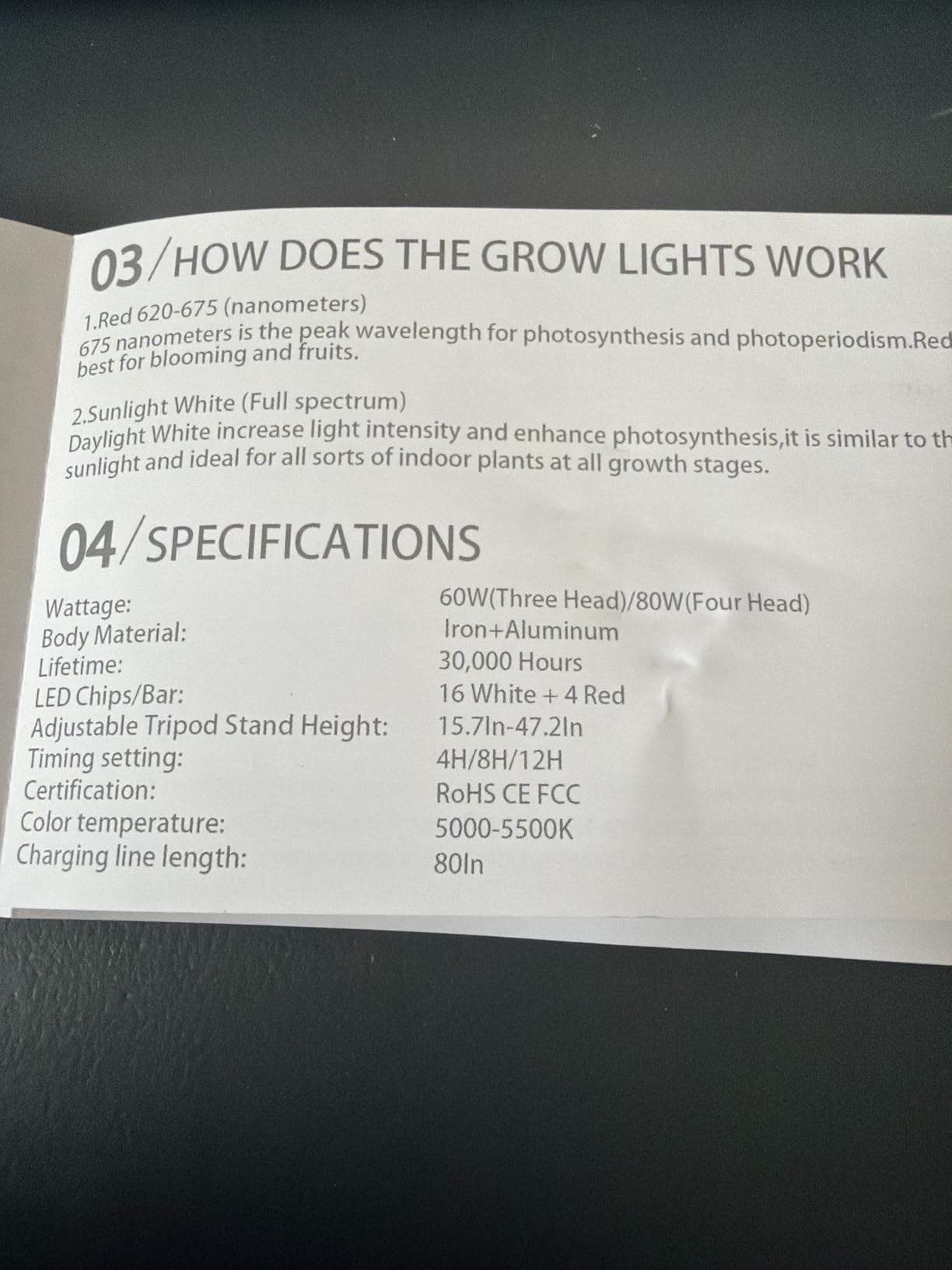
The GHodec sells a specific idea: real daylight-white light, 5500K, on a stand you can walk from room to room. Four gooseneck heads each carry 16 white plus 4 red diodes, and the tripod adjusts from 15 to 48 inches, so the same unit works on a kitchen counter and a floor-standing herb cluster.
Controls include a five-level brightness adjustment and an auto on and off timer with 4, 8 and 12 hour options, powered over USB with the adapter included. The steel and aluminium bracket dissipates heat and keeps the base steady with the legs extended.
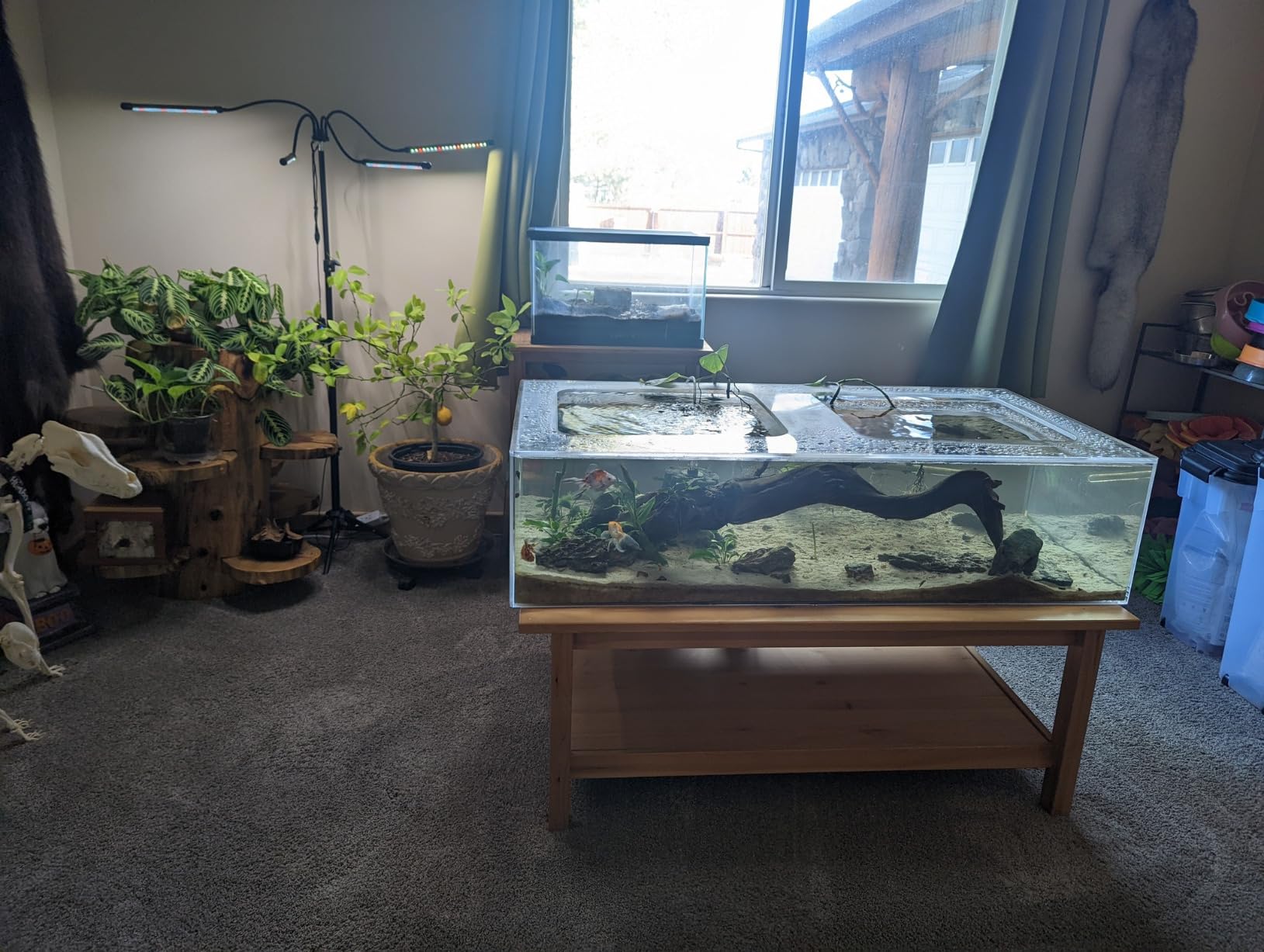
Owners like the daylight output, which avoids the purple cast that makes a room feel like a lab, and the arms can be twisted to aim light at a specific pot. Several buyers also use it as a general floor lamp between growing sessions.
Two things catch newcomers. The timer counts hours of darkness rather than hours of light, which inverts most people’s first assumption, and because the timer is built in, an external plug timer on the same outlet will fight with it.
Best for spaces you cannot modify
No holes, no adhesive, no shelf rail. That makes it a good pick for a rented flat, a dorm room or a conservatory where the layout changes with the season. Moving the whole plant and the lamp together is the entire setup process.
It also suits anyone who wants a fixture that doubles as normal lighting, since 5500K reads as daylight rather than as a grow light.
The longevity problem
Durability is the dominant negative theme. Reviews describe the cable or the lamp itself failing after one to two years of daily use, with cable faults causing flickering or a lamp that will not stay on.
The build is also the lightest of the standing options here, so expect to reposition it rather than leave it in a busy corner. The 12-month warranty offers limited cover if the cable gives out in year two.
9. VIPARSPECTRA 70W Panel – The Most Light in the Group
70 Watt Grow Light, Dimmable Plant Light, LED Grow Lights for Indoor Plants
70W panel, 11000 lumens
660nm red with 3000K and 5000K white
Four level dimmer
Fanless aluminum heat sink
Pros
- Noticeably stronger growth than budget panels
- Four level dimmer for seedlings through vegetative stage
- Coverage close to what is advertised
- Silent and cool running
- Hanging pulleys make height changes easy
Cons
- Very bright even at the lowest setting
- Warm enough to want airflow in a closed space
- No built-in timer
- Switch and plug sit on top of the fixture
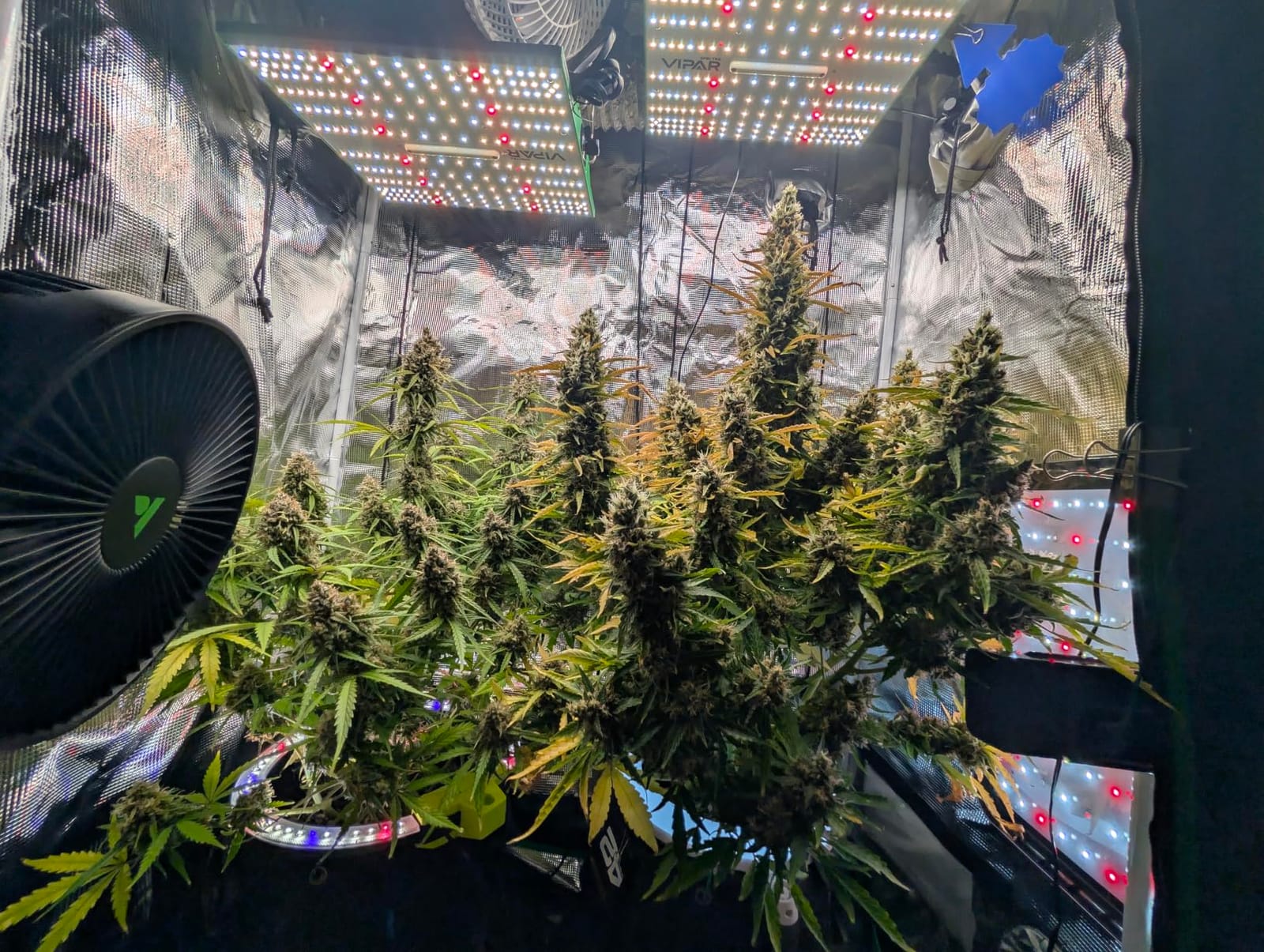
If your herbs need real intensity rather than a gentle shelf lamp, this is the panel that delivers it. 216 diodes push 11000 lumens from 70 watts, with a balanced spectrum of 660nm red plus 3000K and 5000K white. The stated coverage is a 2 by 2 foot vegetative area, where a 150W HPS or metal halide fixture used to be the norm.
It also carries the highest rating in this roundup at 4.7 stars, and buyers consistently report faster, thicker growth than cheaper panels produce. A four-level dimmer is what makes that power usable across stages: turn it down for seedlings, turn it up for vegetative growth.
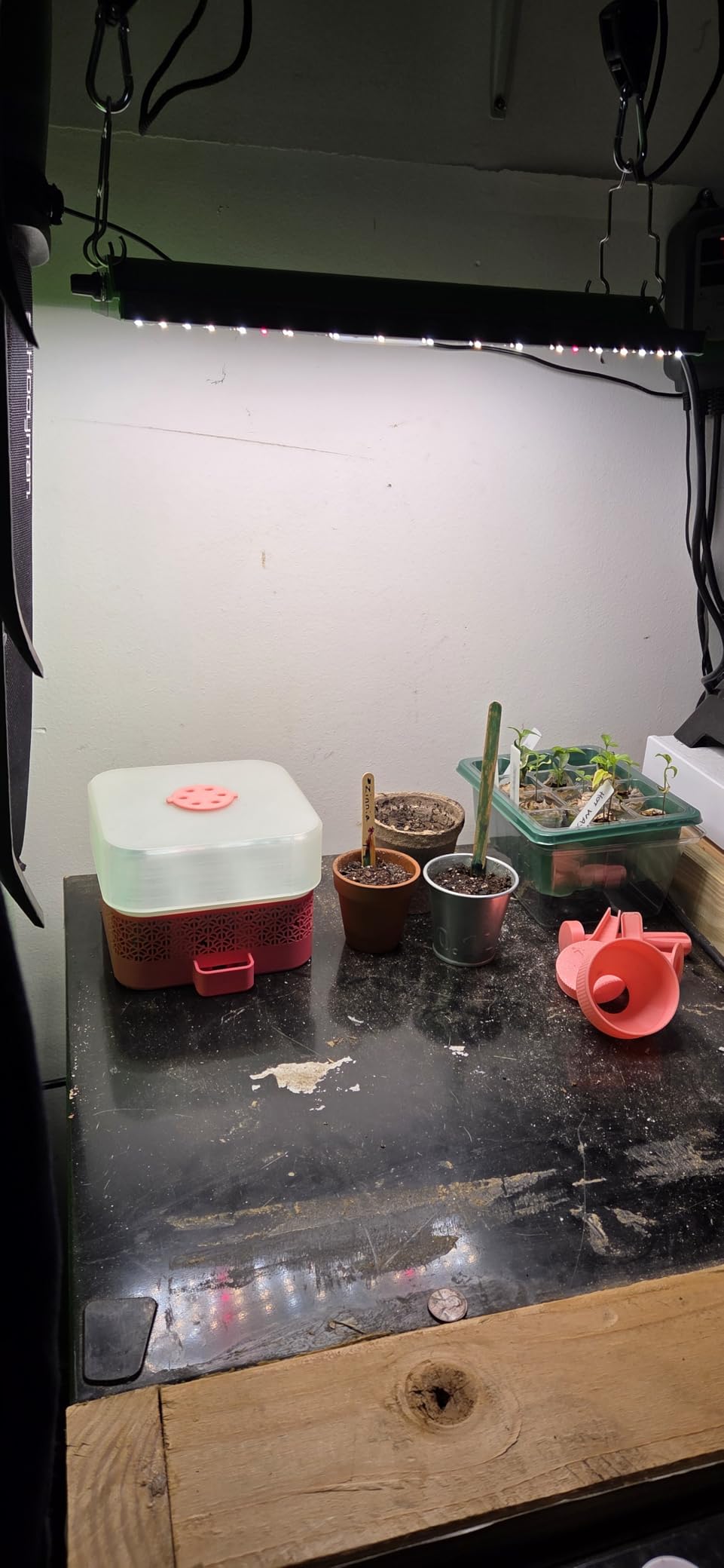
The diode layout is tuned for seedlings and vegetative growth, and the design is fanless with large aluminium heat sinks, so it runs silent. Owners mention filling a five-foot shelf evenly, close to the advertised footprint, and the stainless steel hanging pulleys make repositioning simple as the canopy rises.
The build is the most substantial here: an aluminium housing with a conformal coating on the LED board, a 3-year limited warranty, hanging hooks and a 9 foot cord in the box.
Where the extra output pays off
Dense plantings, a multi-tier rack running two or three tiers at once, or moving outdoor herbs inside before they lose their leaves. When light is the limiting factor, more photons translate directly into compact growth and a sturdier plant going into winter.
It also suits anyone running a small tent. If you are setting up a dedicated enclosure rather than a shelf, our grow tent kit guide covers the rest of the build.
Handle it carefully
It is bright even at the lowest setting, so position it out of eye line and do not look directly into the diodes. It also throws noticeable heat, which in a closed space wants moving air. Our grow tent ventilation kit guide covers airflow options for enclosed setups.
There is no built-in timer, and the on/off switch and plug sit on top of the fixture, which is awkward on a shelf below eye level. Add a wall timer and mount it somewhere you can reach.
10. SYEIORAOM Four-Head Desktop Lamp – Starter Tray Coverage
SYEIORAOM Grow Lights for Indoor Plants, Four Head LED Grow Light with Full Spectrum, Red White Spectrum for Indoor Plant Lamp, Adjustable Gooseneck, Suitable for Vegetation
72 LED beads across four heads
Red and white full spectrum
360 degree goosenecks, telescopic pole
120V corded, no assembly
Pros
- Four heads cover a full 72 cell seed tray
- Sets up straight out of the box
- Weighted base will not tip
- Measures brighter than cheaper LED lamps
- Folds down for storage
Cons
- No built-in timer
- Output drops off if mounted too high
- Maximum height limits fast growers
- Some fail or dim within a few months
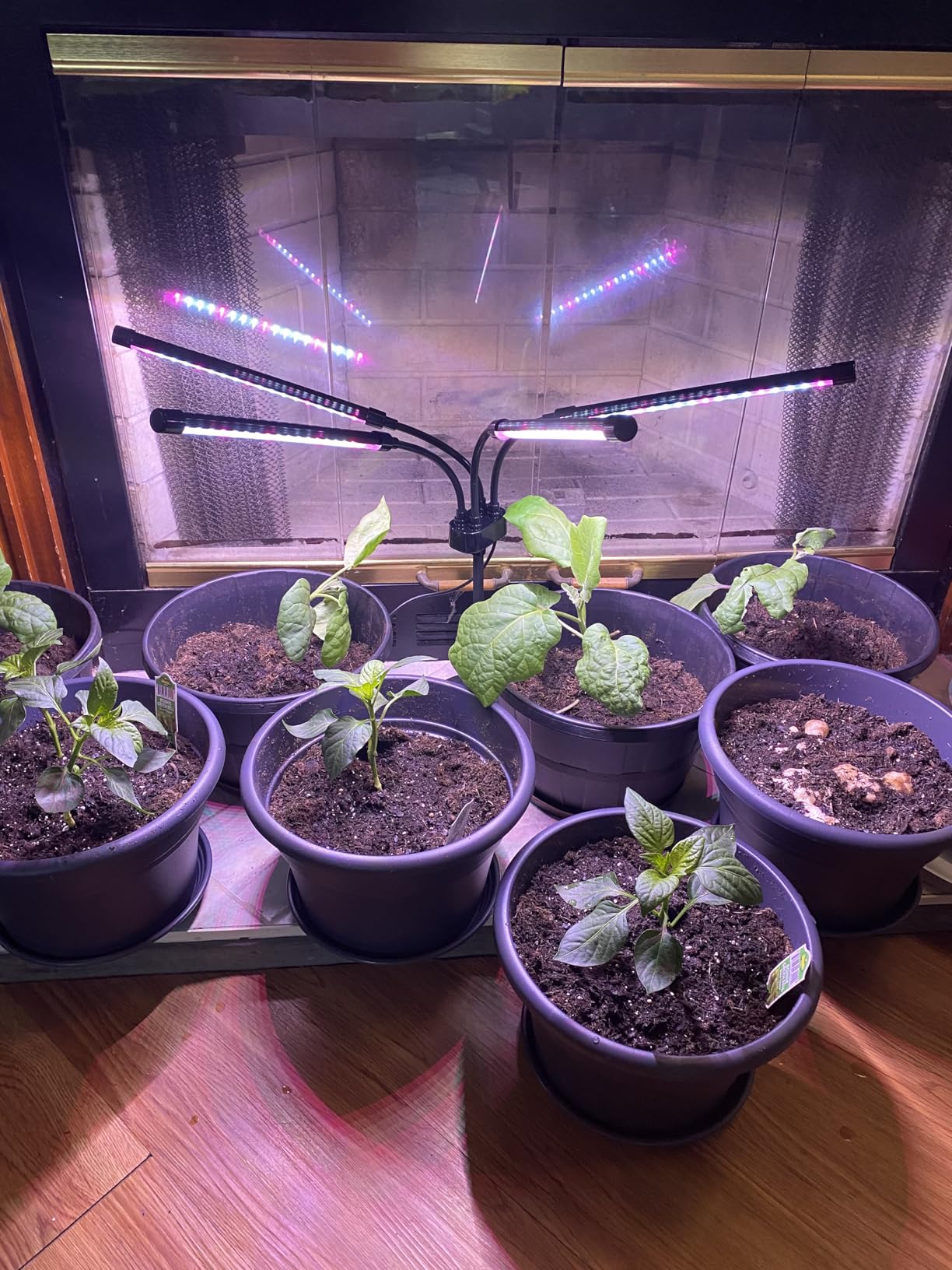
This is the lamp to buy if you are starting herbs from seed and want one fixture that covers the whole tray. 72 LED beads are split across four heads, each on a 360-degree gooseneck, and the telescopic pole raises the whole assembly as seedlings grow. Owners specifically call out full 72-cell tray coverage.
The spectrum is a balanced red and white combination described as simulating daylight, and the lamp suits germination, rooting, vegetative growth and flowering in the same fixture. There is no assembly: it plugs into 120V and works from a push button.
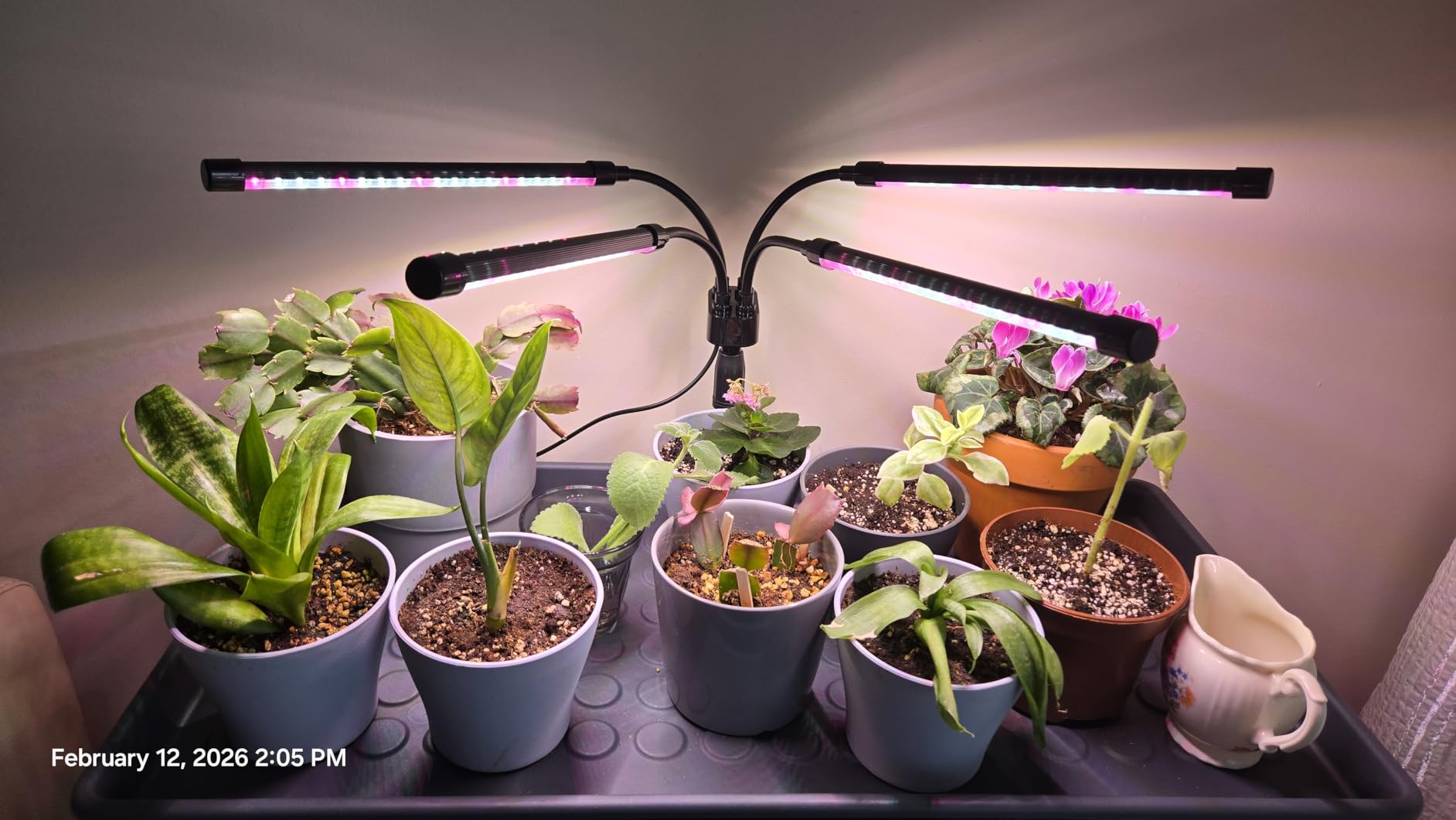
Two practical details make it pleasant to live with. The weighted base does not tip when you move pots around it, and the arms fold so the whole unit fits in a drawer between seasons. Buyers also report measured output well above cheaper LED grow lights.
It is the simplest first step into indoor herb growing: one box, one cable, no mounting hardware, and a tray of basil or cilantro under it in an afternoon.
Good for a first season
Seed starting, cuttings and a single tray of leafy herbs is where this design is strongest. The telescopic pole means you can raise the light as the canopy lifts without buying a taller stand or rearranging the shelf.
It is also a reasonable second light for a room where you already have a strip light handling mature plants, since propagation is the stage where even coverage matters most.
What to plan around
No built-in timer means an external outlet timer, which is the most common request from buyers. Output also drops off noticeably if the light sits too high above the tray, and that is the most common cause of leggy starts.
The maximum pole height is limited, so fast growers outgrow it, and a minority of owners report fixtures that stopped working or dimmed sharply within a few months. The included mains cable is thin, and the plug is US only.
What Full Spectrum Actually Means for Herbs
Full spectrum is not a marketing word with no definition. It means the fixture puts light across the 400 to 700nm range that plants photosynthesise with, which in practice means white diodes plus dedicated deep red around 660nm. White light supplies the blue, green and yellow midrange that keeps leaves flat and stems sturdy, while red drives photosynthesis efficiency. Lights that ship blue and red only, often sold as blurple, look dramatic and grow thin, stretched plants, which is exactly the failure growers complain about.
How much light herbs need
Most leafy herbs are moderate feeders of light. Aim for a canopy level of roughly 150 to 300 micromoles per square metre per second during vegetative growth, with seedlings content at the lower end. Below about 100 you will see pale, stretched growth. Above 400 for a long stretch, leafy herbs can show signs of stress, and flowering herbs bolted early under constant high light is a common report from growers running 24-hour schedules.
Different herbs sit in different bands. Basil and rosemary want the upper part of that range because they are strong light responders. Mint, cilantro and parsley are happy in the middle. Thyme, oregano and other Mediterranean herbs tolerate more intensity than they strictly need, which is why a bright shelf often works better for them than a dim one.
Hanging height by growth stage
Height is the adjustment people get wrong most often. Start seedlings at 18 to 24 inches above the tray and bring the light down gradually as they thicken. Once herbs enter vegetative growth, 10 to 14 inches above the canopy is the productive range. A shelf garden with a tier above may force 6 to 10 inches, which is why a bar or strip light that spreads light along a length works better there than a single downward head.
Raising the light does not weaken it linearly. Output falls off sharply with distance, so doubling the height cuts intensity dramatically. The Juhefa panel in this list covers 3 by 3 feet at a 2 foot height and drops off quickly past about 12 inches, which is the same behaviour every fixture in this roundup shows to a lesser degree.
Photoperiod: 14 to 16 hours on
Run the lights 14 to 16 hours a day and keep 8 to 10 hours of total darkness. Going to 24 hours gives you shorter stems, thinner leaves and, in flowering herbs like basil, a higher chance of bolting. Going under 12 hours produces the leggy, pale growth that makes people think their light is broken.
A wall timer is the simplest solution and works with every light here. Built-in memory timers are convenient but the ones on clip lamps behave differently: the GooingTop runs a 24-hour cycle that fires once per day, and the GHodec counts hours of darkness rather than hours of light. Read the behaviour before you rely on one.
True wattage versus marketing wattage
A label reading 80 watts on a desk lamp is often a diode count or an equivalent comparison, not what the lamp pulls from the wall. The true figure is what you can measure at the plug, and it drives both your energy bill and how much heat lands on the plant.
Two examples from this list. The Juhefa panel is rated 45W and measures closer to 17W at the plug. The LBW lamp draws 30W and is described as replacing 150W HPS or HID output, which is a comparison of light produced, not electricity consumed. Meanwhile the GooingTop clamp lamp is a genuine 10W with an 84-diode array, and the VIPARSPECTRA panel is a true 70W.
For running costs, the honest number is watts divided by 1000, multiplied by hours per day, times your electricity rate. At 12 hours a day a 20W strip setup uses about 2.4 kWh a week, so a 70W panel running 16 hours a day is roughly 33 kWh a month. Multiply by your local rate and you have the number, no guesswork needed.
What to check before you buy
White plus red, not blurple. If the product page only mentions red and blue diodes, expect stretched growth.
Coverage at your real height. A 3 by 3 foot claim at 2 feet is not a 3 by 3 foot claim at 8 inches.
A timer, or a plan for one. A wall timer solves the scheduling problem for any fixture.
Dimming or brightness levels. Essential for using one light from seedling stage to full vegetative growth.
Mounting and cord length. Check that the light reaches your actual shelf or rack position before you commit.
Warranty length. Two years or more tells you the manufacturer expects the unit to survive multiple growing cycles.
Common Mistakes With Grow Lights for Herbs
Most disappointing herb harvests trace back to a setup mistake rather than a bad light. These are the ones we see repeatedly.
Mounting too high. Light falls off fast with distance, so a lamp hung at the ceiling to keep it out of the way produces stretched stems no matter how bright the spec sheet is.
Running lights 24 hours. Continuous light causes leggy growth and pushes flowering herbs toward bolting. Give them 8 to 10 hours of true darkness.
No airflow. Lights add heat to an already small space. Moving air under the canopy prevents powdery mildew, which is a common report from growers in enclosed shelves.
Believing marketing watts. Measure or look up the true draw. A lamp pulling half of what the label implies changes both heat and running cost.
Skipping seasonal transitions. Outdoor herbs brought inside have already spent months in full sun. Give them a week at reduced brightness first, or the sudden intensity increase shocks the leaves.
Choosing a purple light for a visible room. Blurple setups grow plants, but a 5000K or 6000K white lamp lets you keep the setup in a kitchen or living space without living in a magenta glow.
Frequently Asked Questions
What is the best grow light for herbs?
For most home herb setups, the best grow light for herbs is a white-plus-red LED that gives you control over height and a way to schedule it. Our top pick is the GooingTop 6000K clip lamp for single to three pots, the Briignite A19 bulb if you already own a lamp with an E26 socket, and the Barrina T5 strips if you are building a tiered shelf.
Do herbs grow well under grow lights?
Yes. Basil, mint, cilantro, parsley, chives and thyme all grow well under LED grow lights when the light delivers roughly 150 to 300 micromoles per square metre per second at the canopy and runs 14 to 16 hours a day. Light is usually the limiting factor for indoor herbs, not nutrients.
Which color LED light is best for plant growth?
A white LED with deep red around 660nm added is best for plant growth. White diodes cover the full 400 to 700nm photosynthetic range and keep leaves flat and stems sturdy, while red drives photosynthesis. Blue plus red only, often sold as blurple, produces stretched, thin growth and unbalanced leaf shape.
Do full-spectrum LED lights help plants grow?
They do. Full-spectrum LEDs give herbs normal leaf morphology, better colour and stronger stems compared with insufficient window light, and they help prevent leggy stretching. The practical limit is intensity and duration, so pair any full-spectrum light with a schedule of 14 to 16 hours on and 8 to 10 hours of darkness.
What is the best grow light for basil?
Basil wants the upper end of normal herb intensity, so pick a light that reaches roughly 250 to 300 micromoles per square metre per second at the canopy. A four-head lamp such as the LEOTER covers several pots from one clamp, and the VIPARSPECTRA 70W panel gives the strongest output if you have a dense planting or a multi-tier rack.
How far should grow lights be from herbs?
Keep seedlings 18 to 24 inches below the light, then lower the fixture to 10 to 14 inches above the canopy during vegetative growth. On a shelf with a tier above, 6 to 10 inches is normal, which is why a spread-along-a-length bar or strip beats a single downward head in that situation.
How many hours a day should grow lights be on for herbs?
Run lights 14 to 16 hours a day and keep 8 to 10 hours of total darkness. Continuous 24-hour lighting gives shorter stems, thinner leaves and increases the chance of bolting in flowering herbs, while fewer than 12 hours produces the pale, stretched growth people mistake for a faulty lamp.
Conclusion
After working through ten fixtures, the best full spectrum grow lights for herbs in 2026 come down to a few clear matches. The GooingTop 6000K clip lamp takes the top spot for the widest range of home setups, with a genuine white-plus-red spectrum, a clamp that holds, and the deepest review record we found. For existing lamps, the Briignite A19 bulbs are the simplest possible upgrade. For a tiered shelf, the Barrina T5 strips scale one bar at a time and look like part of the furniture.
Beyond those three, match the format to the job: four heads for a row of pots, a dual-tube lamp for a single desk pot, a stand when you cannot drill, and a panel like the VIPARSPECTRA 70W when you want real intensity and have the airflow to match it.
Whichever you pick, set the height, run 14 to 16 hours a day, and give the leaves moving air. That combination does more for a basil plant than any specification on the box.