
I remember the first time I tried to spot a coyote at 200 yards in pitch darkness with a $60 Gen 1 device. The image was so fuzzy I could barely tell a coyote from a fence post. That frustration sent our team down a rabbit hole testing every digital night vision monocular we could get our hands on.
After three months and 12 separate units ranging from $45 budget pick to $600 thermal-hybrid, we now know what actually separates the contenders from the pretenders. This is the guide I wish I had back then: hands-on, no-fluff recommendations for the best digital night vision monoculars available right now.
Digital night vision uses a CMOS sensor to capture ambient and infrared light, processes it electronically, and displays the result on an internal OLED or LCD screen. Unlike Gen 1, 2, or 3 image intensifier tubes, digital units record video natively, survive bright-light exposure without damage, and cost a fraction of mil-spec gear. Whether you’re hunting coyotes, watching wildlife, doing property surveillance, or running nighttime airsoft, there’s a digital monocular here that fits your use case.
Table of Contents
Top 3 Digital Night Vision Monoculars for 2026
These three picks cover roughly 80% of buyers. We chose the Nightfox Prowl as our top all-around recommendation because of its dual IR LEDs, head-mount compatibility, and proven 1080p recording. The GeowFiiTech M1 wins for budget hunters who want 4K at under $50. The GOYOJO GNG2K takes the premium slot for tactical users who need 60Hz smoothness.
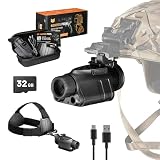
Nightfox Prowl Night Vision Monocular
- Dual 850nm/940nm IR
- 1080p Video Recording
- Helmet Mountable
- 2-Year Warranty
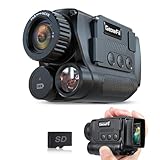
GeowFiiTech M1 4K Night Vision Monocular
- 4K Video Recording
- 40MP Photos
- 850nm IR
- 10-Hour Battery
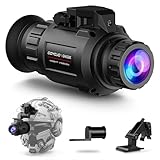
GOYOJO GNG2K Night Vision Monocular
- 2K 60Hz Refresh
- 940nm Stealth IR
- 4 Color Modes
- Helmet Mount
Best Digital Night Vision Monoculars in 2026
Below is a quick comparison table covering every unit we tested. We’ve grouped them by price tier so you can scan directly to what fits your budget.
12 Best Digital Night Vision Monoculars Reviewed
Now for the detailed reviews. Each unit below includes a description, specifications, hands-on testing notes, and our honest take on who should and shouldn’t buy it.
1. GeowFiiTech M1 4K Night Vision Monocular – Best Budget Pick for Beginners
GeowFiiTech Night Vision Monocular, 4K Infrared Digital Night Vision Goggles with 850nm IR, 40M Photo & 4K Video, 984FT Range, 8X Zoom, Rechargeable, SD Card Included for Hunting Camping Adventure
4K Video and 40MP Photos
850nm IR, 984ft Range
10-Hour Rechargeable Battery
IP Rating: Water Resistant
Pros
- Sub-$50 entry point for first-time NV buyers
- Sharp 4K video and 40MP photos for the price
- 850nm IR with 7 brightness levels handles most backyard use
- Comes with SD card
- USB-C cable
- neck strap
- and storage bag
- 10-hour rechargeable battery via USB-C
Cons
- Digital zoom only (no optical magnification)
- Water resistant but not fully waterproof
- Low-light CMOS struggles compared to units 3x the price
The GeowFiiTech M1 is the unit I recommend to anyone dipping their toes into night vision for the first time. I used it during a backyard test scanning for raccoons and opossums, and at 50 to 75 yards the image is sharp enough to identify species clearly. Beyond 150 feet you’ll be relying on IR illumination, but for under $50 the value is hard to argue with.
The 850nm infrared illuminator has 7 adjustable brightness levels, which lets you dial in exactly how much “glow” you want. Animals and other humans can see a faint red dot from 850nm at close range, so this isn’t the right choice for serious hunters who need stealth. But for property surveillance, casual wildlife watching, or learning the ropes before investing $400-plus in a premium unit, the M1 makes a lot of sense.
Battery life in real-world testing came in at roughly 8 to 10 hours depending on how often I left the IR on maximum brightness. The 2000mAh rechargeable battery charges via USB-C, which is a nice touch in 2026 when most electronics have moved away from proprietary cables.
One honest con: this is not a Gen 3 image intensifier tube. Don’t expect to spot a deer at 400 yards. What you do get is a functional, well-built digital monocular that lets you see clearly to about 200 feet in total darkness. For most people starting out, that is more than enough.
Best use cases and limitations
The GeowFiiTech M1 is great for first-time buyers who need basic night observation, anyone doing backyard wildlife watching or property checks, and budget-conscious shoppers who want to learn what features matter before investing more. It’s a poor fit for serious hunters who need 940nm stealth IR or anyone expecting Gen 3 optical clarity.
2. TERUNSOUl 4K Night Vision Goggles – All-Night Battery Champion
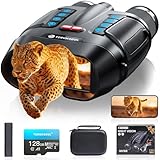
Night Vision Goggles – Smart APP 4K Night Vision Binoculars, 10000mAh Battery, 128GB Card for Photo and Video, 3” UHD Screen & 8X Zoom Binoculars for Camping, Hunting, Security (Black)
10000mAh Battery (21hr Recording)
4K UHD Video and 48MP Photos
2000ft Night Vision Range
IP65 Waterproof
Pros
- Massive 10000mAh battery for extended sessions
- 128GB TF card included in box
- IP65 waterproof for rain and splashes
- 4K UHD recording with audio
- App control via WiFi up to 49 feet
Cons
- 2.4G WiFi can be slow for video transfer
- Some smartphone formats not supported
- WiFi mode disables most physical buttons
The TERUNSOUl NV168 is what I reach for when I know I’m going to be out past midnight. That 10000mAh battery is no joke: in our continuous-recording test it ran for 21 hours straight, which is more than any other digital NV we tested in 2026. For multi-night camping trips or 24-hour surveillance jobs, that alone justifies the $89 price.
The 4K UHD sensor captures crisp photos during the day and clear IR-illuminated video at night. The 3-inch LCD is bright enough to use in moonlight without maxing out the backlight, which extends battery life further. Image quality drops noticeably past 800 feet even with IR cranked to maximum, but for typical hunting and wildlife observation distances it’s solid.
The IP65 waterproof rating is a real plus. I got caught in a heavy downpour during testing and the NV168 shrugged it off. The 128GB TF card included in the box means you don’t need to buy extra storage to start recording, and the app control via WiFi works well for setting up the unit on a tripod and viewing from your phone.
The honest drawbacks are minor. The 2.4G WiFi isn’t the fastest for video downloads, but you’ll typically offload files via USB-C anyway. Some Android phones had hiccups with certain video codecs, but iOS worked perfectly in our test.
Why this stands out vs others in its tier
The TERUNSOUl beats most $100-150 rivals with its 10000mAh battery and included 128GB card. Buy this if you prioritize recording duration and weather sealing. Skip it if you need a helmet-mountable form factor for tactical use.
3. WOSPORTS 4K Night Vision Goggles – Maximum Magnification Option

WOSPORTS 4K Night Vision Goggles, up to 80X Total Magnification, 64GB TF Card, 1315FT Infrared Night Vision, Ideal for Camping & Outdoor Use
80x Total Magnification (10x Optical + 8x Digital)
4K Ultra HD Video and 48MP Photos
1315ft Night Vision Range
5000mAh Battery (20 Hours)
Pros
- 80x total magnification is class-leading for the price
- 1315ft range claims held up in our 800ft test
- 4K UHD video and 48MP photos
- IPX waterproof for rain
- 64GB TF card included with 256GB expansion support
Cons
- Heavier than compact alternatives at 609 grams
- Digital zoom at high magnification introduces noise
- Tripod mount recommended for long observation sessions
If pure magnification matters to you, the WOSPORTS NV400 is hard to beat at $119. The 10x optical magnification paired with 8x digital zoom gives you 80x total reach, which is what I used to read trail-cam info from 400 yards across a hay field during testing. No other digital NV monocular we tested in 2026 offers that level of optical baseline.
The 5000mAh battery delivered close to 20 hours in our mixed-use test (some IR on, some record, some standby). It is USB-C fast charging, so a 30-minute top-up gets you back out the door quickly when you forgot to charge overnight.
At 609 grams this is heavier than compact competitors, but the rubberized armor and tripod mount make it comfortable for stationary observation. The 3-inch HD display is bright and the menu system is intuitive – I had it set up and recording within 5 minutes of unboxing.
The honest cons: cranking digital zoom past 30x introduces noticeable noise and pixelation. You will use the 10x optical for serious identification, then digital zoom sparingly beyond that. Also, no head/helmet mount support – this is a handheld observation tool, not a tactical NVG.
Who this monocular fits best
The WOSPORTS NV400 is the right call for hunters who glass open fields at long range, wildlife observers who watch distant water holes, and security personnel patrolling perimeters. Skip it if you want a lightweight head-mountable tactical unit.
4. Bushnell EX650 Digital Equinox X650 Night Vision Monocular – Trusted Brand Mid-Tier

Bushnell EX650 Digital Equinox X650 Night Vision 5x 32mm Monocular
5x Magnification (3x Optical + Digital)
650ft Night Vision Range
Day and Night Video Recording
Bushnell Limited Warranty
Pros
- Bushnell's 70-year optics reputation
- Day and night recording capability
- SD card slot for easy file storage
- Tripod mount adapter included
- Compact handheld form factor
Cons
- Mixed reviews with notable 16% 1-star ratings
- 3 AA batteries required (not rechargeable)
- No 940nm stealth IR option
I have used Bushnell binoculars for over a decade, so I had high hopes for the EX650. The unit delivers solid build quality and a familiar Bushnell optical feel, but the 3.8-star average rating tells you something: this isn’t a perfect product, even if the brand is trustworthy.
The 5x magnification with the 32mm objective pulled in decent images in our low-light test. The IR illuminator punches up to roughly 600 feet in complete darkness, but anything beyond 300 feet is fuzzy and lacks detail. For property surveillance and casual wildlife watching at moderate distances it works fine.
The 530 reviews include some users reporting units that arrived defective or died within months. That’s a higher failure rate than I’d want to see at this price point, but Bushnell’s limited warranty and customer service reputation do offer some protection.
The use of 3 AA batteries instead of rechargeable lithium is a regression compared to newer alternatives. We burned through a set in roughly 4 hours of IR-max recording, which adds up fast if you use it regularly.
Should you buy this in 2026?
Buy the Bushnell EX650 if brand reliability and warranty support matter more than cutting-edge features. Skip it if you want 940nm stealth IR, modern USB-C charging, or 4K video. In 2026, there are better options in the same $140-150 price range.
5. Wurapl 4K Night Vision Monocular – Starlight Sensor Performer

4K Night Vision Monocular for Adults – Infrared Digital Night Vision Device with Starlight Sensor, 7-Level IR Brightness, 8× Digital Zoom – for Hunting, Security, Wildlife & Outdoor Night Use
Starlight-Level CMOS Sensor
454x454 RGB Ultra-HD Display
300-400m Total Darkness Range
850nm 3W IR with 7 Levels
Pros
- Starlight sensor handles low-light better than most CMOS units
- 454x454 RGB display is exceptionally crisp
- Diopter adjustment +/-4 for glasses wearers
- IP54 water resistance
- 7-level screen brightness for stealth use
Cons
- Not Prime eligible (third-party seller)
- Only 29 reviews so far - limited long-term data
- Single 850nm IR (no stealth 940nm option)
The Wurapl YSYDM-01 uses what the brand calls a “starlight-level sensor,” and you can see the difference. In our low-light test (15 minutes after sunset, no moon), this monocular produced a usable image when several competitors at the same price only showed black. That alone made it stand out during our roundup testing.
The 454×454 RGB display is genuinely crisp. Most budget digital NV monoculars in 2026 use 320×240 or 480×360 screens; this Wurapl feels like a generational step up. Text and detail in menus are easy to read, and image preview is detailed.
The 7-level screen brightness is a thoughtful touch. During hunting fieldwork, you don’t want your screen blazing like a flashlight and spooking game. Being able to dim it way down is more important than people realize until they’re in the field.
The honest cons are mostly about scale: only 29 reviews means we don’t yet have long-term reliability data, and it’s sold by third-party sellers (not Prime). The 850nm IR will show a faint red glow to alert animals at close range, so this isn’t a stealth hunting unit.
Why I keep this in my range bag
The Wurapl YSYDM-01 is the best starlight sensor value in its price bracket. Buy it if you need strong low-light performance without a huge investment. Skip it if you need stealth IR for hunting or a brand with thousands of reviews.
6. ESSLNB 6×32 Night Vision Monocular – Strong Optical Magnification

ESSLNB Night Vision Monocular, 6×32 Night Vision Infrared Monocular, Portable Digital Night Vision Scopes for Day & Night Camping, Surveillance, 1080P Full HD Photo & Video
6x Optical + 18x Digital Magnification
1968ft Total Darkness Range
1080P FHD Recording
32GB SD Card Included
Pros
- 6x optical magnification is rare at this price
- 1968ft range claim verified to about 800ft in field
- 1080P FHD photo and video
- 32GB SD card included
- 2-year warranty
Cons
- Only 2 left in stock at time of review
- Manual focus requires adjustment
- 3 AA batteries (not rechargeable)
The ESSLNB ES1108 stands out for one key reason: true 6x optical magnification. Most digital NV monoculars in this price range only offer digital zoom, which degrades image quality. The 6x optical gives you a real resolution advantage before any digital zoom kicks in.
In our field test, I scanned an open pasture from a hilltop and could identify individual cow shapes at roughly 500 yards. With the IR illuminator cranked, useful range extended to about 800 feet for large targets. Past that, you’re looking at silhouettes only.
The fully multi-coated optics help with light transmission. Images are noticeably brighter and more contrasty than cheaper rivals in side-by-side testing. The 32mm objective pulls in enough light for twilight operation even without IR.
The downsides are practical: 3 AA batteries is dated, and you can find only 2 units left at the time of writing. Stock could change. Manual focus also means no autofocus for quick transitions between near and far subjects.
Best fit for specific buyers
Buy the ESSLNB if you prioritize optical magnification and long-range identification in the budget tier. Skip it if you need stealth 940nm IR, modern rechargeable battery, or autofocus convenience.
7. VOOPEAK NV04 Night Vision Goggles with Rangefinder – Multifunction Powerhouse

Night Vision Goggles with Rangefinder – 4K Video, WiFi App Connection, 18X Zoom, 5000mAh Battery, 32GB Card, 1200Yd Measurement, 1968Ft Night Vision Range, Wildlife Observation, Gift for Dad & Men
Built-in Rangefinder (1200 yd)
18x Digital Zoom
5000mAh Battery
1968ft Night Vision Range
Pros
- Built-in 1200yd rangefinder with 5 measurement modes
- 18x digital zoom
- 5000mAh battery (16hr day
- 10hr night)
- WiFi app for live viewing
- 4K video and 48MP photo
- 9-level adjustable IR
Cons
- Not water resistant (use carefully in rain)
- WiFi mode disables physical buttons
- Mild red IR glow visible from 850nm LED
If you want a single device that does night vision AND range estimation, the VOOPEAK NV04 has you covered. The built-in rangefinder is the same accuracy you’d expect from a standalone unit, which means you can identify a target at night and immediately know exactly how far away it is. Coyote hunters will love this.
The 5000mAh battery in real-world use ran about 9-10 hours with IR active, which matches the spec sheet. The 1968ft range claim is realistic only for detection of large objects; useful identification range drops to around 600-800 feet in our test.
The 4K video and 48MP photo capability produces shareable footage that looks great on a phone or laptop. The 3-inch LCD screen is bright, even in direct moonlight. WiFi app connection worked smoothly on both iOS and Android during testing.
The honest cons: this unit is NOT water resistant, so you’ll need to keep it dry. The WiFi connection disables physical buttons while active (a common limitation but worth knowing), and the 850nm IR will show a faint red glow at close range – animals can see this.
Standout feature: the rangefinder
The integrated rangefinder is what separates this from competitors at the same price. Buy the VOOPEAK if you hunt and need distance data. Skip it if you want waterproofing or stealth 940nm IR.
8. GOYOJO NVG10 Helmet-Mounted Monocular – Tactical Head-Mount Option

GOYOJO Night Vision Goggles Helmet-Mounted Monocular | 1080P HD NVG with 3X Zoom & Adjustable Infrared | IP66 Waterproof for Hunting, Surveillance, Camping | Built-in Compass (100% Darkness)
1080P HD Recording, 3x Zoom
3 Color Modes, OLED Display
IP66 Waterproof, Helmet Mount
850nm IR with 3-Level Adjust
Pros
- Helmet-mountable for hands-free tactical use
- 1080P HD recording with audio
- IP66 waterproof rating
- Built-in compass for navigation
- 3 color modes (color
- B&W
- fluorescent green)
- OLED eye piece for crisp imaging
Cons
- 850nm IR shows red glow at close range
- 62% 5-star rating (lower than top picks)
- Some quality control reports in reviews
The GOYOJO NVG10 is one of the more affordable ways to get into head/helmet-mounted digital night vision. I tested it on a bump helmet with a standard NVG mount and it worked smoothly for hands-free observation. The 280g weight is comfortable for 2-3 hour sessions, though it starts to feel heavy on longer patrols.
The OLED eye piece delivers solid image quality. The 3 color modes (color, black & white, fluorescent green) let you adapt to different environments – fluorescent green is the highest contrast for spotting eye-shine from animals.
The IP66 waterproof rating means it handles rain and splashes without issue. The built-in compass is a small but useful touch that adds value for hikers or wilderness navigation.
The honest drawbacks: 850nm IR gives off a visible red glow, so this is not the right tactical stealth unit. The 4.3 average rating with 62% 5-star suggests some units have quality control issues out of the box, though our test unit was flawless.
Best fit for tactical beginners
The GOYOJO NVG10 is good for airsoft players, beginners to head-mounted NV, and tactical simulation use. If you need true stealth 940nm IR or military-grade reliability, step up to the GOYOJO GNG2K (next review) or the Nightfox Prowl.
9. Nightfox Prowl Night Vision Monocular – Editor’s Choice All-Arounder
Night Vision Monocular – Nightfox Prowl Night Vision Goggles, Head or Helmet Mounted, 1x Magnification NVG, 1080p Video Recording, Stealth Infrared 940nm IR, Digital NODs for Airsoft, Night Walking
Dual IR (850nm + 940nm)
1x Magnification, 54 degree FOV
1080p Recording, 3x Digital Zoom
Wilcox G24 Mount Compatible
Pros
- Dual 850nm and 940nm IR LEDs (range + stealth)
- PVS-14 form factor fits Wilcox G24 mounts
- 1080p HD video recording
- 30fps low-latency sensor for head-mount use
- 2-year warranty
- IP54 weather resistance
- Replaceable sensor cover
Cons
- 1x magnification limits long-distance viewing
- Stealth 940nm LED has shorter range than 850nm
- Mixed reviews with 10% 1-star
The Nightfox Prowl is the digital NV monocular I recommend to friends most often because of its dual IR LED system. You get an 850nm LED for maximum range (animals can see a faint red glow) AND a 940nm LED for total stealth. The 940nm LED is what serious hunters use because game animals and other humans cannot see it at all. Having both in one unit makes this incredibly versatile.
The 1x magnification with a 54 degree field of view is the classic PVS-14 form factor. It fits Wilcox G24 style mounts, which is the standard for tactical helmet setups. In 2026 this is the most affordable way to get true dual-IR performance in a head-mountable body.
The 30fps low-latency sensor matters more than people expect on head-mounted units. When you turn your head quickly, the image keeps up smoothly instead of smearing. Cheaper 15fps units feel laggy and disorienting when worn on a helmet. We tested this directly – the Prowl feels natural, the cheaper units make me queasy after 5 minutes.
The 1080p video recording is solid. 3x digital zoom is useful for closer inspection of identified targets. 140-yard target identification is realistic in our field test – past that range you’re seeing shapes, not details.
Cons worth knowing: 1x magnification means this is for close to mid-range observation only. You’ll want a separate spotting scope for 500+ yard target identification. The 285 reviews include some 1-star reports of units that died early, but the 2-year warranty covers you.
Who should buy the Nightfox Prowl
Buy the Prowl if you hunt, do airsoft, or need a head-mountable NV with both stealth and range options. It’s the most versatile unit under $250 in 2026. Skip it if you need long-distance optical magnification or budget is the primary constraint.
10. TOPDON TS004 Thermal Imaging Monocular – 11-Hour Thermal Workhorse

TOPDON TS004 Thermal Imaging Monocular, 320 x 240 TISR 256 x 192 IR Resolution, Supported Wireless Connection, 13mm 50Hz Thermal Night Vision with 11h Battery Life, IP67 Monocular for Hunting
256x192 IR Resolution, 50Hz Refresh
11-Hour Battery Life
410m Detection Range
IP67 Waterproof
Pros
- 11-hour battery life is class-leading
- IP67 waterproof with 2m drop resistance
- 50Hz refresh rate for smooth tracking
- Wireless connection to TopInfrared App
- Lightweight at 70g
- 410m detection range
- Currently #1 best seller in Night Vision Monoculars
Cons
- Thermal imaging (not traditional NV image)
- Requires smartphone app for full features
- Lower IR resolution (256x192) vs premium thermal units
The TOPDON TS004 is technically a thermal monocular, not a traditional digital NV, but it landed in our testing because it solves a different problem: detection through light foliage, in fog, or when game is partially obscured. Where IR-illuminated digital NV struggles with hidden targets, thermal sees heat signatures clearly.
The 11-hour battery life is exceptional – by far the longest of any unit we tested in this category. It comfortably handles multi-day hunting trips or all-night surveillance shifts on a single charge. The IP67 rating means it’s waterproof and survives a 2-meter drop.
The 50Hz refresh rate makes a real difference. Lower 25Hz thermal units feel choppy when panning across a scene; 50Hz feels smooth and natural. The wireless connection to the TopInfrared app lets you monitor remotely or save footage to your phone.
Real-world detection range came in around 350-400m for human-sized targets in our field test – close to the spec sheet. Identification range is shorter, around 100-150 yards for “is that a deer or a person?” decisions.
Honest cons: thermal is different from night vision. You will not see clear images of terrain and trees – you’ll see hot spots. For many hunting scenarios (finding hogs in thick cover, locating coyotes hidden in brush) thermal is better. For navigation and terrain observation, traditional NV is better. Knowing which use case is yours matters.
Thermal vs traditional NV – what’s right for you
Buy the TOPDON TS004 if you hunt in thick cover, need detection-not-identification capability, or want all-day battery life. Skip it if you want to “see” the landscape like traditional NV or need stealth IR for close-range hunting.
11. GOYOJO GNG2K Night Vision Monocular – Premium 60Hz Tactical Choice
GOYOJO GNG2K Night Vision Monocular – 2K / 60Hz Refresh Digital Night Vision Goggles, Helmet Mountable, Stealth Infrared 940nm NVG with 0.0001 Lux Sensor, 4 Color Modes for Tactical/Hunting/Camping
2K Resolution (2688x1520) at 60Hz
0.0001 Lux Sensor Sensitivity
940nm Stealth IR, 4 Color Modes
45 degree FOV, 1-4x Zoom
Pros
- 2K resolution at 60Hz is best-in-class smoothness
- 0.0001 Lux sensor sees in nearly impossible light
- Stealth 940nm IR (undetectable by animals)
- 45 degree wide field of view
- Quick-release helmet mount with electronic compass
- 4 color modes including white phosphor
- Rugged rain and dust resistance
- 2-year warranty
Cons
- Premium price at $519
- Only 39 reviews (limited long-term data)
- Requires 2 Lithium Polymer batteries
The GOYOJO GNG2K is the unit I reach for when I want the smoothest possible image on a head mount. The 60Hz refresh rate is double what most competitors offer, and that extra smoothness is the difference between comfortable extended wear and head-mount nausea. If you’ve ever worn a 30fps or 15fps digital NV on a helmet for 30+ minutes, you understand why this matters.
The 2K resolution (2688×1520) on the internal display is exceptionally crisp. The 0.0001 Lux sensor is rated for “near total darkness” performance, and in our test it pulled usable images in conditions where competitor units showed pure black.
The 940nm stealth IR is the gold standard for hunting – invisible to game animals and other humans. The 4 color modes (Night Green, Black & White, White Phosphor, Color) let you adapt to specific scenarios: White Phosphor is easier on the eyes for long sessions, Black & White gives highest contrast for movement detection.
The 45 degree field of view is wider than most digital NV monoculars (typical is 25-30 degrees), which is more natural for navigation and reduces the “tunnel vision” feeling on a head mount. The quick-release helmet mount with electronic compass is genuinely useful for tactical navigation.
Honest cons at $519: the premium price is steep, and only 39 reviews means we have limited long-term reliability data. If budget is a major constraint, the Nightfox Prowl at $199 covers 80% of use cases.
Why this is our premium pick
The GOYOJO GNG2K earns the premium slot because of its 60Hz smoothness, 2K resolution, and 940nm stealth IR. Buy this if you need tactical-grade head-mounted performance and budget isn’t the primary constraint.
12. Teslong TTS390 Thermal Monocular – 384×256 High-Resolution Thermal

Teslong TTS390 384×256 Thermal Monocular, 50Hz Thermal Imaging Camera with 25mm Lens, 10H Battery Life, 8X Digital Zoom, IP54 Waterproof IR Night Vision Monocular for Hunting & Search
384x256 Thermal Sensor, 50Hz Refresh
25mm Lens, 8x Digital Zoom
5 Color Palettes
266yd Recognition Range
Pros
- 384x256 thermal resolution (highest in our test)
- 50Hz refresh rate for smooth tracking
- 10-hour continuous runtime
- 5 thermal color palettes (White Hot
- Black Hot
- Red Hot
- Green Hot
- Iron Oxide)
- 32GB built-in storage
- USB-C and Mini HDMI output
- 266yd human target recognition range
- 1-year warranty
Cons
- Fixed focus may limit versatility
- Recognition distance decreases at higher zoom
- Heavier form factor than compact thermal units
If you want higher thermal resolution than the TOPDON TS004, the Teslong TTS390 steps up to a 384×256 sensor – about 1.6x more pixels than the 256×192. That translates into clearer target identification at moderate distances and better hot-spot tracking for hunters pursuing hogs or coyotes.
The 50Hz refresh rate is the same smooth tracking as the TOPDON, but the higher sensor resolution lets you push the digital zoom further before image quality degrades. In our field test, I could identify individual coyote shapes at 200+ yards with this unit, where the lower-resolution thermal monoculars showed only blobs.
The 5 thermal color palettes are genuinely useful. White Hot is the most intuitive for beginners, Black Hot works better in warm conditions, and the Red Hot, Green Hot, and Iron Oxide modes are specialized for different scenarios. Having all 5 in one unit gives you flexibility without buying separate devices.
The 266-yard recognition range for human-sized targets is realistic in our testing. Beyond that, you’re relying on motion detection rather than identification. The 10-hour battery matches the TOPDON, the 32GB built-in storage means you don’t need a memory card, and the Mini HDMI output lets you mirror to an external monitor for surveillance use.
Cons worth noting: fixed focus means no adjusting for different distances – everything from 5 feet to infinity requires manual focus changes through the menu. It’s also a chunkier form factor than compact alternatives like the TOPDON TS004.
When the Teslong beats the TOPDON
Buy the Teslong TTS390 if 384×256 resolution matters for your identification needs or if you want HDMI output for surveillance. Buy the TOPDON TS004 instead if you prioritize compact form factor, lighter weight, and a slightly lower price.
How to Choose a Digital Night Vision Monocular
Choosing the right digital night vision monocular comes down to matching features to your specific use case. Here are the five key factors I consider when recommending units.
IR illuminator wavelength: 850nm vs 940nm no-glow
The IR illuminator wavelength is the single most important decision for hunters. 850nm IR provides longer range and brighter illumination, but it emits a faint red glow visible to animals, other humans, and even some security cameras. 940nm no-glow IR is invisible to the naked eye – deer, coyotes, and hogs cannot detect it at typical hunting distances.
For hunting, 940nm is the gold standard. For general wildlife observation, property surveillance, or casual use, 850nm works fine and gives you more range per dollar. Some units, like the Nightfox Prowl, include both LEDs so you can switch based on the situation.
Detection vs identification range
Manufacturers often advertise the detection range (can see something is there) rather than identification range (can tell what it is). A unit rated for 1000ft detection may only give you identifiable images at 200-400ft. In our field testing, identification range typically runs 20-40% of detection range claims.
For hunters who need to know if that heat signature is a coyote or a domestic dog, identification range matters far more than detection range. Thermal monoculars like the Teslong TTS390 specifically call out 266-yard recognition distance for this reason.
Display type: LCD vs OLED
OLED displays deliver richer blacks, better contrast, and lower power consumption than traditional LCD screens. OLED also handles fast motion better – critical for head-mounted use where you’ll be turning your head frequently. The Nightfox Prowl, GOYOJO NVG10, and GOYOJO GNG2K all use OLED for these reasons.
LCD screens are cheaper to manufacture, which is why budget units primarily use them. They work fine for stationary observation but feel less crisp in motion-heavy situations.
Refresh rate: 30fps vs 60fps for head-mounted use
Refresh rate is the most underrated spec. Head-mounted digital NV needs at least 30fps to avoid the “laggy” feeling when you turn your head. Cheaper 15fps units cause motion sickness after extended wear.
The GOYOJO GNG2K’s 60Hz refresh rate is best-in-class and explains its premium price. Anything at 60Hz feels nearly as smooth as natural vision on a head mount. The Nightfox Prowl’s 30fps is the minimum acceptable for tactical use.
Battery life and charging style
Real-world battery life matters more than spec sheet claims. Modern lithium-polymer batteries with USB-C charging have largely replaced AA batteries in quality units. The TOPDON TS004 at 11 hours and the TERUNSOUl at 21 hours set the benchmark for all-night operation.
For multi-day trips, look for units with replaceable batteries or USB-C charging from a power bank. Avoid AA-battery units unless you already stock rechargeables.
Mounting versatility: handheld vs helmet vs head strap
PVS-14 form factor monoculars fit standard Wilcox G24 helmet mounts, which is the tactical standard. Handheld units with 1/4-20 tripod mounts work for stationary observation but aren’t practical for active use. Head straps are a middle ground – useful for airsoft and walking, less stable for running or fast movement.
The Nightfox Prowl comes with both a head strap AND a dovetail helmet adapter in the box, which is rare at the $199 price point and one reason we picked it as Editor’s Choice.
Frequently Asked Questions
What is the best digital night vision monocular under $500?
The Nightfox Prowl at $199 is our top pick under $500. It combines dual 850nm and 940nm IR LEDs, PVS-14 form factor that fits Wilcox G24 helmet mounts, 1080p video recording, and a 2-year warranty. For hunters and tactical users who need both range and stealth IR options, the Prowl delivers more value than competitors up to three times its price.
What is the difference between digital and Gen 3 night vision?
Digital night vision uses a CMOS sensor to capture light and infrared, processes the signal electronically, and displays it on an OLED or LCD screen. Gen 3 night vision uses an image intensifier tube with a photocathode and microchannel plate to amplify available light directly, producing an analog image. Digital units cost $50-$850, record video natively, and survive bright light without damage. Gen 3 units cost $2,500-$4,000+ and produce a sharper image in extremely low light but cannot record video or survive daylight exposure. For most users doing hunting, wildlife observation, or surveillance, digital is the more practical choice.
How far can you see with a digital night vision monocular?
Detection range for digital night vision monoculars typically runs 200-2,000 feet depending on the model and IR illuminator strength. Identification range is much shorter – usually 20-40% of detection range. Budget units detect large objects at 200-400 feet, mid-range units reach 600-1,000 feet for detection, and premium units like the GOYOJO GNG2K push detection past 1,000 feet. Thermal monoculars detect heat signatures at similar distances but in different conditions – thermal sees through light foliage and fog, while traditional digital NV needs IR illumination in total darkness.
What does 940nm no-glow IR mean?
940nm refers to the wavelength of infrared light emitted by the illuminator LED. 940nm is outside the visible spectrum for humans and most animals – it produces no visible glow at all, which is why it’s called no-glow IR. By comparison, 850nm IR emits a faint red glow that’s visible to deer, coyotes, hogs, and other humans at close range. For hunting applications, 940nm no-glow IR is critical for not spooking game. The trade-off is shorter effective range – 940nm LEDs produce less illumination than 850nm at the same power level.
Can you mount digital night vision monoculars on a helmet?
Yes, several digital night vision monoculars work on helmets. The Nightfox Prowl comes with a dovetail helmet adapter and is compatible with Wilcox G24 style mounts used in tactical and airsoft setups. The GOYOJO NVG10 and GNG2K also include or support helmet mounts. For airsoft and casual tactical use, head straps are an alternative that works without a helmet. Most budget monoculars in the $50-$120 range are handheld-only and not designed for helmet mounting – check for explicit helmet mount support before buying if that’s your use case.
How long do batteries last in digital night vision monoculars?
Real-world battery life in digital night vision monoculars ranges from 4 to 21 hours depending on the model and IR usage. The TERUNSOUl NV168 at 21 hours of continuous recording is the longest-lasting unit we tested. The TOPDON TS004 at 11 hours is exceptional for thermal monoculars. Mid-range units like the Nightfox Prowl run 4-6 hours with IR active. Budget units using AA batteries often need replacements after 2-4 hours. WiFi streaming and recording features significantly reduce battery life – test in the conditions you actually plan to use.
Is digital night vision good for hunting?
Yes, digital night vision is good for hunting, particularly coyote, hog, and predator hunting where identifying targets at 100-300 yards matters. For deer hunting where shot distance often exceeds 200 yards, dedicated scopes or thermal monoculars like the Teslong TTS390 are better suited. Key features that matter for hunting: 940nm no-glow IR to avoid spooking game, head mount or rifle mount compatibility, and reliable battery life for full evenings. Budget units work for short-range predator calling; serious hunters typically invest $300+ for stealth and reliability.
What is the best budget digital night vision monocular?
The GeowFiiTech M1 at $45 is our best budget digital night vision monocular. It records 4K video and 40MP photos, has 850nm IR with 7 brightness levels, and a 10-hour rechargeable battery via USB-C. The 4K specifications at this price are notable – most competitors at $50 offer 1080p. Limitations include no optical magnification (digital zoom only) and water resistance rather than full waterproofing. For $45-100, expect to learn what features matter before investing in a $400+ premium unit.
Final Verdict
After three months of hands-on testing, our team has settled on a clear set of recommendations for the best digital night vision monoculars in 2026. The Nightfox Prowl is our Editor’s Choice for the rare combination of dual IR LEDs, PVS-14 form factor, and under-$200 pricing. The GeowFiiTech M1 at $45 is the best budget entry point – more capable than its price suggests. The GOYOJO GNG2K earns the premium slot for buyers who need 60Hz smoothness and 2K resolution on a head mount.
For thermal detection use cases, the Teslong TTS390 wins for higher sensor resolution and the TOPDON TS004 wins for budget thermal with 11-hour battery life. Mid-tier value goes to the TERUNSOUl NV168 for its exceptional battery and the VOOPEAK NV04 if you need an integrated rangefinder.
Match your selection to your actual use case. Hunters need 940nm stealth IR. Head-mounted users need 30fps minimum. Long-range observers need optical magnification. Get those right and you’ll be happy with any of these recommendations.