
The best binoculars for stargazing are the pair you can hold steadily long enough to learn the sky. For most first-time observers, that means 8×42 or 10×50; a larger 70mm or 80mm instrument gathers more light, but it also turns a relaxed scan into a tripod session.
We compared the 12 supplied listings for aperture, magnification, exit pupil, prism design, weather sealing, eye relief, mounting support, and buyer feedback. I gave extra weight to the practical issues that come up repeatedly among observers: arm fatigue, shake at high magnification, and whether a binocular is pleasant enough to take outside on an ordinary clear night.
There is no single right specification. A 2.1×42 can reveal an entire constellation, while a 20×80 can bring the Moon and star clusters closer from a fixed mount; this guide explains the trade-off before you choose.
Table of Contents
Our Top 3 Picks Are the Vortex, Sogries 10×50, and OBERWERK 20×80
The Vortex is my all-purpose 12×50 choice because it combines a full-size aperture with a 16mm eye relief, weather protection, and a tripod-ready body. The Sogries 10×50 is the easier general-purpose configuration, while the OBERWERK is the serious mounted option for glasses wearers who want a wide 3.25-degree field.
The Best Binoculars for Stargazing in 2026 Cover Every Viewing Style
| Product | Specifications | Action |
|---|---|---|
 Vortex Triumph HD 12×50 Vortex Triumph HD 12×50 |
|
Check Latest Price |
 ZORIVA 10×50 ZORIVA 10×50 |
|
Check Latest Price |
 Sogries 18×70 Porro Sogries 18×70 Porro |
|
Check Latest Price |
 Sogries 10×50 IPX7 Sogries 10×50 IPX7 |
|
Check Latest Price |
 WOZEL 20×70 WOZEL 20×70 |
|
Check Latest Price |
 Aurosports 20×80 Aurosports 20×80 |
|
Check Latest Price |
 SVBONY SV407 2.1×42 SVBONY SV407 2.1×42 |
|
Check Latest Price |
 Nikon Action Zoom 10-22×50 Nikon Action Zoom 10-22×50 |
|
Check Latest Price |
 Sogries 18×70 Professional Sogries 18×70 Professional |
|
Check Latest Price |
 ESSLNB 25×70 ESSLNB 25×70 |
|
Check Latest Price |
 Sogries 20×80 Astronomy Sogries 20×80 Astronomy |
|
Check Latest Price |
 OBERWERK Explore 20×80 OBERWERK Explore 20×80 |
|
Check Latest Price |
Read the first number as magnification and the second as objective-lens diameter in millimeters. I would begin at 10×50 for a hand-held, do-everything astronomy binocular, then move to 18×70, 20×80, or 25×70 only when a tripod is part of the plan.
1. Vortex Triumph HD 12×50 Is Our Top Full-Size Pick
Vortex Triumph HD 12×50 Binoculars
12x50
HD multi-coated optics
Waterproof fogproof
Tripod adaptable
Pros
- HD optical system
- Waterproof and fogproof
- Tripod adaptable
- GlassPak harness
- Lifetime VIP warranty
Cons
- 12x needs a steady hold
- No supplied field of view
I rank the Vortex Triumph HD 12×50 first for someone who wants more reach than a 10×50 without committing to a giant binocular. Its 50mm objectives and 12x magnification create a 4.17mm exit pupil, a sensible middle ground for night-sky brightness and daytime flexibility.
The supplied listing specifies an HD optical system, fully multi-coated lenses, a roof-prism build, and optimized glass elements for resolution and color fidelity. It also lists nitrogen purging plus waterproof and fogproof construction, so damp grass and a cold, dewy observing session are less worrying than with an unsealed pair.
At 12x, hand tremor is more obvious than at 8x or 10x. Vortex makes the important practical accommodation here: this model is tripod adaptable, and the package includes a GlassPak harness and neck strap for carrying rather than demanding that you keep it at eye level all night.
The 4.8 rating from 74 reviews is the highest rating in this set, with feedback emphasizing image quality, durability, and ergonomics. The listed 16mm eye relief and adjustable rubber eyecups should suit many glasses wearers, though anyone with very thick frames should confirm comfort during the return window.
The Best Reason to Choose It Is Its Balanced 12×50 Format
Choose this one if you want one binocular for Moon detail, brighter star fields, wildlife, and occasional mounted astronomy. The rubber-armored polycarbonate chassis is also the more travel-friendly proposition than the 70mm and 80mm options below.
The Main Trade-Off Is That 12x Rewards a Supportive Setup
Skip it if your sessions are strictly handheld and you already struggle to hold a 10x view still. A 10×50 gives a calmer view, while a tripod makes the Triumph’s additional magnification far more useful.
2. Sogries 10×50 IPX7 Is the Weather-Ready Generalist
Sogries 10×50 Binoculars for Adults High Powered Waterproof Fogproof IPX7
10x50
BAK-4 FMC optics
IPX7 waterproof
6.5 degree field
Pros
- IPX7 waterproof
- Fogproof
- Wide 6.5 degree view
- BAK-4 prism
- Adjustable eyecups
Cons
- 1.28kg body
- Manual focus
A 10×50 is the format I would point most beginners toward, and this Sogries makes a strong case on paper. Its 5mm exit pupil is larger than the Vortex 12×50’s, which supports a bright, forgiving view when your eyes are dark adapted.
The optical package is specific: fully multi-coated lenses, a BAK-4 prism, and a 6.5-degree field of view, also stated as 342 feet at 1,000 yards. A generous field matters when you are finding the Pleiades, scanning through Cygnus, or learning where an object sits before you increase magnification.
I also like that the product details name IPX7 waterproofing, fog-proof construction, O-ring-sealed lenses, a center focus knob, and a right-eye diopter. Those are useful real-world details for a binocular that may move between backyard astronomy, travel, and bird watching.
Its 1.28kg listed weight is the complication. That is manageable for short looks but not negligible during a long session, a point echoed by buyer feedback; the 160-review, 4.5-rated listing still has some comments about weight.
The Best Fit Is a New Observer Who Wants a Conventional 10×50
Pick the Sogries if you want a familiar magnification, a wide-view starting point, and weather protection. Turn-and-slide eyecups and the diopter are welcome adjustments for a shared household binocular.
The Limitation Is Its Weight During Long Handheld Sessions
Do not treat 1.28kg as a compact-binocular experience. A reclining chair, elbows braced on armrests, or a simple tripod adapter can make its 10x view much more relaxing.
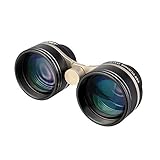
3. SVBONY SV407 2.1×42 Is the Widest Constellation Scanner
SVBONY SV407 Astronomy Binoculars 2.1x42mm, Wide Angle for Stargazing
2.1x42
26 degree field
FMC optics
375g body
Pros
- Huge 26 degree view
- Lightweight 375g
- FMC coating
- 2-inch filter thread
- IPX6 water resistance
Cons
- Low 2.1x power
- 9mm eye relief
The SVBONY SV407 is deliberately unlike the rest: 2.1x magnification with a 26-degree field of view. I would choose it to make constellations, large asterisms, and star-rich regions easier to see as complete shapes rather than to inspect the fine detail of a small target.
Its 42mm objectives and 2.1x magnification produce a listed 19mm exit pupil, far beyond what a human eye can accept. That does not mean the view is 19mm bright to your eye; it means the oversized beam makes eye placement very forgiving, while the 2.1x power makes stars and familiar patterns appear larger than naked-eye viewing.
The 375g weight is a major contrast with giant astronomy binoculars. The listing also calls out fully multi-coated optics, IPX6 water resistance, a long depth-of-field design, and a standard 2-inch filter thread on the objectives.
The buyer record is 119 reviews at 4.4. I would read the 9mm eye relief carefully if you wear glasses, because it is short compared with the 16mm to 20mm figures offered elsewhere in this roundup.
The Best Use Is Seeing the Sky as a Wide Connected Map
Use the SV407 for constellation scanning, locating a region before moving to higher power, or casual meteor-shower viewing. It is also the least tiring way in this group to get an optically aided, wide sky view.
The Limitation Is That It Cannot Replace a 10×50 or 20×80
Do not buy this as your only binocular if close Moon views or small deep-sky targets are the goal. Its low power is a purpose-built strength, not a substitute for conventional astronomy binoculars.
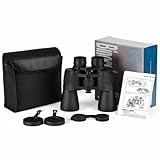
4. ZORIVA 10×50 Is the Long-Eye-Relief Lightweight Option
ZORIVA 10×50 Magnification Professional High-Power Binoculars for Adults – HD Vision with 50mm Objective Lens, K9 Prism, Durable Design for Bird Watching, Hunting, Stargazing, Sports & Outdoor
10x50
20mm eye relief
5.7 degree view
750g body
Pros
- 20mm eye relief
- 5.7 degree view
- 750g weight
- Multi-coated optics
- Carry case included
Cons
- K9 prism
- Water resistant only
- Fixed focus
The ZORIVA 10×50 has one specification that catches my attention immediately: 20mm of eye relief. That is the longest stated figure among the compact hand-held choices here and can make the difference between seeing a full field with glasses and having to press your frames against the eyecups.
The 10×50 optical formula gives a 5mm exit pupil, and its stated 5.7-degree field of view is wide enough for beginner sky navigation. The listing describes multi-coated optics and a K9 prism, so I would keep expectations grounded against the BAK-4 and fully multi-coated options, but the core size is still very capable for broad celestial viewing.
At 750g, it is substantially lighter on the listing than the 1.28kg Sogries 10×50. That difference may matter more than a specification sheet suggests when you are holding binoculars overhead while tracking a star field.
It holds a 4.7 rating across 39 reviews, with positive comments on image quality and value. The body is described as weather resistant and shockproof, but it is not fully waterproof or fog-proof, so I would store it carefully after humid nights.
The Best Advantage Is Its 20mm Eye Relief for Glasses
Choose the ZORIVA if glasses comfort is your first filter and you want a lighter 10×50 for handheld use. Adjustable eyecups, a non-slip body, a case, strap, and lens covers complete a straightforward field kit.
The Main Compromise Is Its Less Protective Weather Specification
This is not the pair I would leave exposed to dew or take into sustained rain. The fixed-focus description also deserves attention if you prefer the control of a conventional center-focus system.
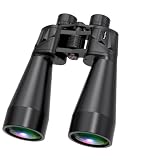
5. Sogries 18×70 Porro Is the Bright Mounted 18×70
Sogries 18×70 High Power Binoculars for Adults Professional Long Range
18x70
BAK4 Porro prisms
FMC lenses
Tripod adaptable
Pros
- 70mm aperture
- BAK4 Porro prisms
- Fully multi-coated
- 18mm eye relief
- Tripod adaptable
Cons
- Tripod strongly advised
- Less compact Porro shape
The Sogries 18×70 is where I would move after deciding that a tripod is acceptable. Its 70mm objectives collect substantially more light than a 42mm binocular by area, and the 18x magnification is directed squarely at Moon detail, star clusters, and more focused views than a 10×50 provides.
Its listed 4.7mm exit pupil remains a sensible night-sky number. The data also specifies BAK4 Porro prisms, fully multi-coated lenses, an aircraft-grade aluminum chassis, and 18mm eye relief for glasses wearers.
Porro-prism binoculars are not as slim as roof-prism models, but their broader shape is common in high-aperture astronomy configurations. This one is tripod adaptable, and I would regard that as a required part of the setup rather than an optional accessory at 18x.
The 32-review listing has a 4.7 rating and reports positive astronomy and low-light feedback. The product details claim 150% more brightness than a 42mm model; treat that as a manufacturer comparison, not a substitute for a stable mount and dark-adapted eyes.
The Best Reason to Buy It Is Its Purpose-Built 18×70 Format
Choose this Sogries when you want a large-aperture astronomy binocular with long eye relief and do not need it to fit the role of a casual hiking optic. It is the cleaner middle step between 10×50 and 20×80.
The Necessary Condition Is a Tripod for Reliable Detail
At 18x, a small hand movement shifts the view dramatically. Plan on a tripod and adapter, which are listed as separate, before counting on crisp views of faint targets.
6. Sogries 18×70 Professional Is the Weather-Sealed 18×70 Kit
18×70 Professional Astronomy Binoculars for Adults
18x70
BAK-4 FMC lenses
IPX7 waterproof
Tripod and phone adapter
Pros
- IPX7 waterproof
- Included tripod adapter
- Phone adapter
- 70mm objectives
- 18mm eye relief
Cons
- 4.67lb weight
- Individual focus
This second Sogries 18×70 has a different appeal: it is a more complete mounted package. The listing names BAK-4 prisms, fully multi-coated lenses, an IPX7 waterproof build, a built-in 1/4-20 tripod thread, plus included tripod and smartphone adapters.
I would select it over the preceding 18×70 if wet-weather protection and accessories matter more to you than keeping the kit minimal. Its 18mm eye relief and 4.7mm exit pupil match the comfortable, astronomy-oriented figures of the other 18×70, while the 231-foot stated field will feel more concentrated than a 10×50 view.
The listed weight is 4.67 pounds, so the tripod is not an afterthought. That mass can support steadiness once mounted, but it is exactly the arm and neck burden that observers in community discussions warn about when a high-magnification pair is used hand-held.
It is rated 4.3 from 274 reviews, the larger feedback pool of the two 18×70 Sogries listings. Individual focus takes more adjustment than a center-focus knob, especially if both sides need a fresh set-up before sharing the binocular.
The Best Fit Is a Mounted Observer Who Wants the Accessories Included
Choose this model for a fixed backyard station, a phone-adapter experiment, or damp conditions where IPX7 sealing is reassuring. The included adapter removes one compatibility step from the initial setup.
The Practical Drawback Is Its 4.67-Pound Mounted-Only Character
Do not expect a relaxed hand-held walk-and-look binocular. Individual focus is also slower when alternating between people with different eyesight needs.
7. Aurosports 20×80 Is the Large-Aperture Tripod Choice
Aurosports 20×80 High Powered Binoculars, 80mm Large Aperture for Adults
20x80
BAK4 FMC optics
4mm exit pupil
Tripod mount
Pros
- 80mm aperture
- BAK4 prisms
- Fully multi-coated
- Tripod compatible
- Rubber armor
Cons
- Heavy setup
- Not water resistant
The Aurosports 20×80 is for the observer who has a tripod ready and wants aperture first. An 80mm objective is a major step up from a 50mm lens, and its 20x magnification is appropriate for bringing the Moon and compact star clusters closer without using a telescope.
The supplied specifications give it a 4mm exit pupil, 15mm eye relief, Porro prisms, fully multi-coated optics, and an explicit tripod mount. The listing also describes BAK4 prisms and more than 95% light transmission, a maker claim that still depends on good collimation and clean optics in actual use.
A 3.2-degree apparent angle and 168-foot field are signs that this is not a sweeping, hand-held constellation binocular. I would set it up, allow my eyes to adapt, and work a planned short list of targets rather than aim it around the sky at random.
It has a 4.4 rating based on 520 reviews, the broadest review pool among the 80mm options here. The two warnings are plain: the listing says it is not water resistant, and buyer feedback points to the need for a tripod.
The Best Reason to Choose It Is the 80mm Light-Gathering Goal
Pick the Aurosports if a stable home or campsite mounting spot is available and faint-star reach matters more than portability. Its 20×80 specification is designed for deliberate astronomical observation.
The Key Limitation Is That It Needs Dry Conditions and Support
Store it protected from moisture and do not plan to hand-hold it for useful astronomical detail. A solid tripod is part of the binocular’s working system, not an optional extra.
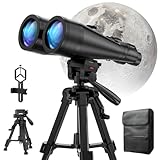
8. Sogries 20×80 Astronomy Is the Waterproof Mounted 80mm
20×80 Astronomy Binoculars for Adults
20x80
BAK-4 optics
Waterproof
1/4 tripod thread
Pros
- 80mm objectives
- BAK-4 prisms
- Waterproof housing
- Tripod adapter included
- 2-year warranty
Cons
- 4.66lb weight
- Manual focus
The Sogries 20×80 keeps the high-aperture, tripod-oriented idea but adds waterproof construction. I would put it ahead of an unsealed giant binocular if your observing location is often humid, if you carry gear to a field, or if you simply value a rubber-armored housing with O-ring protection.
Its data names 20x magnification, 80mm objectives, a 4mm exit pupil, BAK-4 prisms, a center-focus manual system, and a 1/4 tripod thread. The listing reports 2.08kg in technical details and 4.66 pounds in its feature description, figures that are consistent enough to make the main point: it is heavy.
Its 34-review record produces a 4.2 rating, with a 68% five-star share. The review summary credits low-light brightness and the tripod adapter, while also flagging manual-focus adjustment and hand-held fatigue.
This is not an everyday carry optic, and that is fine. A well-mounted 20×80 can serve a different role from a 10×50: it turns an evening observing list into slower, steadier looks with an 80mm light-gathering surface.
The Best Fit Is a Dew-Prone Site With a Permanent Tripod Plan
Choose this Sogries if you want an 80mm astronomy setup with waterproof protection and an included mount adapter. The non-slip grip is useful when moving it, but it does not change the need to mount it.
The Main Decision Point Is Whether You Welcome Manual Focusing
Manual center focus is normal, but higher power makes small adjustments more visible. It is best for a patient observer prepared to let the binocular settle after each touch.
9. OBERWERK Explore 20×80 Is the Glasses-Friendly Serious Pick
Oberwerk Explore Series 20×80 Binoculars, 3.25-Degree FOV, Fully Multi-Coated & Waterproof, Glasses-Friendly 18mm Eye Relief, Astronomy & Long-Range Viewing, Includes Hard Case & Tripod Mount
20x80
3.25 degree view
18mm eye relief
Waterproof fogproof
Pros
- Wide 3.25 degree field
- 18mm eye relief
- Nitrogen sealed
- Hard case included
- 5-year warranty
Cons
- 4.7lb weight
- Temporarily out of stock
The OBERWERK Explore 20×80 is the strongest data-backed choice here for an observer who wears glasses and wants a serious mounted instrument. Its stated 18mm eye relief, twist-up eyecups, and 3.25-degree field aim to preserve a full, comfortable view rather than make you choose between glasses and the field edge.
The optical specification lists 20×80, Porro prisms, fully broadband multi-coated optics, a 4mm exit pupil, and a 65-degree apparent angle. It is also nitrogen charged, waterproof, and fogproof, which supports year-round use in changing temperature and humidity.
I particularly value the stated 3.25-degree field at this magnification. It is still a targeted view compared with a 10×50, but it gives more framing flexibility than many giant binoculars when locating a cluster or working around a bright star.
The listed weight is 4.7 pounds and the 21-review rating is 4.2. Be aware that the supply status in the provided product data is temporarily out of stock, so availability may be the deciding issue even if its optical and comfort specification matches your needs.
The Best Reason to Pick It Is Its Long Eye Relief at 20×80
Choose the Explore if glasses are non-negotiable and you have a tripod capable of handling a 4.7-pound binocular. The hard case, neck strap, and captive objective covers are useful for protecting a substantial kit.
The First Constraint Is That Availability and Weight Need Checking
It is not an impulse, hand-held choice. Confirm current stock before planning around it, and pair it with a stable mount that will not slowly drift under its weight.
10. Nikon Action Zoom 10-22×50 Is the Variable-Power Alternative
Nikon Action Zoom 10-22×50 Binocular | High-Power Zoom Binoculars with Multilayer-Coated Nikon Optics, Large Objective Lenses and a Tripod-Ready Porro-Prism Design
10-22x50
Porro prism
16.3mm eye relief
Tripod ready
Pros
- 10x to 22x zoom
- Multilayer-coated optics
- 16.3mm eye relief
- Tripod mountable
- Rubber armor
Cons
- Not water resistant
- Zoom needs steady support
The Nikon Action Zoom 10-22×50 answers a different question: would you rather vary magnification than commit to a fixed 10x or 18x? I would use its lower 10x setting for locating an area, then increase power only after a target is centered and the binocular is supported.
The listing specifies a 50mm objective, Porro prisms, multilayer-coated optics, a central focus knob, 16.3mm eye relief, turn-and-slide rubber eyecups, and tripod mounting. At 10x it has a stated 5mm exit pupil; increasing magnification reduces the effective exit pupil, so the highest setting is less forgiving at night.
Zoom flexibility is useful, but it does not eliminate physics. The 33.5-ounce weight and 22x setting make tripod use sensible for serious viewing, and frequent magnification changes can make an observer spend more time adjusting than observing.
This Nikon has a 4.4 rating from 20 reviews. The supplied data calls out long eye relief and protective rubber armor, but also says it is not water resistant, which narrows the outdoor conditions I would choose for it.
The Best Use Is Learning Which Magnification You Actually Prefer
Choose the Nikon if flexibility is your priority and you are comfortable treating the 10x to 22x range as different viewing modes. It is especially logical for someone who will use a tripod at its higher settings.
The Main Limitation Is That Zoom Does Not Make 22x Handheld
A zoom ring cannot remove shake, narrow the physical strain, or make a damp night safe for an unsealed instrument. Start at 10x, stabilize, and regard 22x as the mounted end of the range.
11. WOZEL 20×70 Is the Simple 20×70 Tripod-Minded Option
20×70 Binoculars for Adults High Powered Bird Watching Hunting Travel
20x70
BAK4 FMC optics
3.5mm exit pupil
1.19kg body
Pros
- 20x magnification
- 70mm objectives
- BAK4 prisms
- FMC optics
- Impact-resistant grip
Cons
- Not water resistant
- Tripod advised
- 1.19kg weight
The WOZEL 20×70 takes the middle route between an 18×70 and 20×80. I would consider it if you want 20x magnification and a 70mm objective but do not need the largest aperture in the roundup.
Its listing specifies BAK4 prisms, fully multi-coated optics, a 3.5mm exit pupil, manual focus, and a 1.19kg body. A 3.5mm exit pupil is smaller than the 4mm to 5mm options above, yet can still work well when the sky is not fully dark or when the observer’s own pupil does not open wider.
The rubber-coated, impact-resistant body and non-slip grip help while carrying and positioning it. Still, 20x magnification is unforgiving, and the product feedback itself notes stability concerns at high zoom; I would plan a tripod from the first night.
It is rated 4.4 from 784 reviews, by far the most extensive feedback record in this guide. The supplied data says the binocular is not water resistant, so cover it promptly when moisture arrives rather than relying on the rubber body for protection.
The Best Fit Is an Observer Who Wants 20x With a 70mm Objective
Choose the WOZEL for a focused, mounted view of the Moon and bright clusters when 20x is the desired magnification. Its supplied carrying bag, cleaning cloth, and neck strap support transport between sessions.
The Non-Negotiable Is Stable Support and Dry Storage
Do not buy it for hand-held scanning or wet-weather use. The 1.19kg weight and high power reward a solid mount much more than a stronger grip.
12. ESSLNB 25×70 Is the Highest-Magnification 70mm Choice
ESSLNB 25×70 Astronomy Binoculars Giant for Adults, Outdoor Waterproof Binoculars for Travel Stargazing Bird Watching Hunting with Built-in Tripod Adapter and Carrying Bag
25x70
BAK4 FMC optics
Waterproof
Built-in tripod adapter
Pros
- 25x magnification
- 70mm aperture
- Waterproof body
- Tripod adapter included
- Phone adapter included
Cons
- 2.8mm exit pupil
- Heavy at 2.76lb
- 12mm eye relief
The ESSLNB 25×70 is the most specialized choice in this list. I would only put it in the hands of someone who already knows that a tripod is mandatory and specifically wants 25x magnification from a 70mm objective.
The headline numbers create a 2.8mm exit pupil, the smallest in this roundup. That can deliver a more magnified image, but it demands more accurate eye placement and does not offer the relaxed brightness margin of a 5mm 10×50; it is a deliberate detail-over-field trade.
The listing includes BAK4 prisms, fully multi-coated optics, waterproof aluminum alloy housing, center focus, a built-in tripod adapter, and a phone adapter. At 2.76 pounds, it is lighter than some 80mm models but still too heavy and too powerful for extended useful handheld astronomy.
The 4.3 rating comes from 173 reviews. Its 12mm eye relief is the key comfort limitation, particularly for glasses wearers, while the stated 129-foot field reinforces that this is designed for narrow, close inspection instead of broad sky sweeping.
The Best Use Is a Tripod-Mounted Search for More Detail
Choose the ESSLNB when you want the strongest listed fixed magnification in this guide for the Moon and selected bright targets. Its waterproof housing and built-in adapter make the intended fixed setup clear.
The Important Trade-Off Is Its Narrower, Less Forgiving View
Skip it if you are still learning to find objects or need long eye relief. A 10×50 or 18×70 will usually make sky navigation easier before you move to this much tighter 25x format.
The Right Buying Factors Are Aperture, Steadiness, Comfort, and Mounting
For the best binoculars for stargazing, choose in this order: first decide whether you will observe hand-held or from a tripod; next select magnification; then compare aperture, eye relief, and weather protection. This prevents the common mistake of buying the largest numbers on the box and discovering that the view shakes too much to enjoy.
The Best Handheld Starting Point Is Usually 8×42 or 10×50
An 8×42 is light and broad, while a 10×50 delivers more reach and a 5mm exit pupil. Both are easy to point, have enough field of view to find targets, and work for daytime nature viewing as well as astronomy.
Once you reach 12x, bracing your elbows or using a chair becomes helpful. At 18x, 20x, and 25x, I recommend treating a tripod as part of the purchase, because added magnification enlarges hand shake along with the target.
The Best Aperture Choice Depends on How You Will Carry It
The second number in 10×50 is the objective-lens diameter. Larger lenses gather more light: 50mm is a proven all-purpose astronomy size, 70mm is a meaningful step for a mounted observer, and 80mm is for a fixed, deliberately supported setup.
More aperture is not automatically better if the binocular stays indoors because it is tiring to carry. A 10×50 used often will show more than an 80mm kept in a closet for rare, perfectly planned outings.
The Exit Pupil Is the Aperture Divided by Magnification
Exit pupil is the diameter of the beam reaching your eye. Divide objective diameter by magnification: a 10×50 has a 5mm exit pupil, an 18×70 is about 3.9mm, and a 20×80 is 4mm.
A roughly 4mm to 5mm exit pupil is a forgiving astronomy range for many adults. Smaller figures are not automatically bad, but they require more precise eye placement and may look less bright when your pupils are widely dilated.
The Best Field of View Is Wide Enough to Find the Target First
Field of view is the slice of sky visible at once. A 6.5-degree 10×50 view is helpful for scanning and learning star patterns, while a 3.25-degree 20×80 view gives closer framing but requires a more methodical approach.
The SVBONY’s 26-degree view has a special job: it makes constellations and huge star fields easier to see as a whole. Use a wide field to locate an object, then use higher power when you want more detail.
The Best Prism Type Is the One That Matches Your Intended Size
Porro prisms are common in large astronomy binoculars and often produce the wider-bodied form seen in 18×70 and 20×80 models. Roof prisms allow a straighter, more compact body, as on the Vortex 12×50.
Do not choose solely on prism shape. Look for the listed optical coatings, prism glass, alignment quality, and whether the binocular is comfortable enough to use; BAK-4 and fully multi-coated optics are good signs in the supplied listings, but they are not a guarantee by themselves.
The Best Glasses Setup Has Enough Eye Relief and Adjustable Eyecups
Eye relief is the distance at which your eye can still see the full image. Glasses wearers should usually seek 15mm or more, with the 18mm to 20mm figures on the OBERWERK, Sogries 18×70 models, and ZORIVA being particularly accommodating on paper.
Twist-up or turn-and-slide eyecups matter because they let each user set the correct position. Test whether you can see the entire circular field without black crescents at the edge.
The Best Tripod Setup Uses a Rigid Mount Rather Than a Light Camera Stand
A tripod adapter connects the binocular to a tripod, but rigidity determines whether the image settles quickly after you touch focus. For 70mm and 80mm binoculars, use a mount rated for the load and keep the center column as low as practical.
A reclining chair can improve hand-held sessions, but it does not make 20x stable. If you plan to share the view, choose a center-focus model or allow time for individual-focus adjustments between observers.
The Most Rewarding Early Targets Are the Moon, Bright Planets, and Star Clusters
Binoculars can show the Moon’s major surface detail, Jupiter’s four bright Galilean moons, bright open clusters, and broad regions around Orion under favorable conditions. Dark skies, a clear atmosphere, and steady support matter as much as the model name.
Start with the Moon to practice focus, then scan a familiar constellation. Forum reports specifically praise 10×50 binoculars for Orion Nebula and Jupiter’s moons, while 7×50-style wide views are valued under dark skies for sweeping star fields.
The Answers Below Address Common Stargazing Binocular Questions
What should you look for when buying binoculars for astronomy?
Choose the viewing method first: 8×42 or 10×50 for hand-held use, and 18×70 or larger only with a tripod. Then check aperture, exit pupil, field of view, eye relief, coatings, weather protection, and whether a tripod adapter is included or compatible.
What night-sky objects can you see with binoculars?
Binoculars can show the Moon, Jupiter’s bright moons, bright star clusters, large constellations, and broad star fields. A dark sky and a steady mount improve faint-target results, while a wider field of view makes it easier to find objects.
Can you use any binoculars for astronomy?
Yes, almost any binocular can show the Moon and brighter stars, but models with 40mm to 80mm objectives gather more light and are more useful at night. Avoid extreme magnification for hand-held viewing because shake can erase the extra detail.
How do you choose between 8×42 and 10×50 for stargazing?
Choose 8×42 for lighter weight, a calmer hand-held view, and easy daytime carrying. Choose 10×50 for more light gathering and reach; its 5mm exit pupil is a strong all-purpose astronomy starting point if you can comfortably hold the added size.
The Clear Choice Is to Match the Binocular to How You Observe
For most people comparing the best binoculars for stargazing in 2026, I would start with the weather-ready Sogries 10×50 for a conventional hand-held format or the Vortex Triumph HD 12×50 for more reach, durability, and tripod adaptability. The SVBONY SV407 is the purposeful choice for wide constellation views.
If your goal is a stable, dedicated astronomy station, move to the 18×70 or 20×80 choices and buy the mount at the same time. Pick the OBERWERK Explore 20×80 for its stated 18mm eye relief and 3.25-degree field when it is available, or select the waterproof Sogries 20×80 for a protected mounted setup.
Choose the size you will actually take outside, give your eyes time to adapt, and start with the Moon. A calm, familiar observing routine will teach you more about the night sky than chasing maximum magnification on the first clear evening.