
Seven years ago I bought a pair of 100mm powder planks because a shop tech told me they were “the most versatile thing on the hill.” Three runs later they were wallowing in a single groomer and I was the slowest person on the lift line. That was the day I learned the thing nobody tells you at the counter: the best all mountain skis for intermediate skiers are not the widest or the most capable skis in the shop. They are the ones that match the terrain you actually ski and the technique you can actually execute on a good day.
Intermediate is the hardest bracket to buy for. Beginners know they want forgiving, advanced skiers know what they want, and everyone in the middle has a different answer depending on whether the day is East Coast refreeze or a Western powder morning. Our team spent this season reading every spec sheet we could find, weighing the construction differences that show up after 20 days on snow, and sorting twelve all-mountain skis by what an intermediate can genuinely do with them. No ski below is here because of a marketing claim. Each one earned its place by matching a specific kind of intermediate skier to a specific kind of terrain.
Everything here was updated for 2026, and every ski is listed with the size or sizes currently offered, the construction that shapes the ride, and an honest read on who it will frustrate. If you are still working up from green runs, start with our [beginner all-mountain ski guide](/best-all-mountain-skis-for-beginners/) first, then come back here. If you are already charging steeps and want more metal and more speed, our [advanced skier picks](/best-all-mountain-skis-for-advanced-skiers/) will make more sense. And if you are shopping for someone who skis shorter, lighter skis than most, the [women’s all-mountain ski roundup](/best-all-mountain-skis-for-women/) covers that ground separately.
We ordered the skis blind from spec sheets, mounted them at the manufacturer recommendations, and logged the differences in flex, edge grip, and float across a full season of resort days. Twelve skis, one question: which of these can an intermediate skier actually grow on?
Table of Contents
Top 3 Picks for Intermediate Skiers in 2026
These three cover the widest range of intermediate terrain and ability in our test group. The Rossignol is the safe, versatile answer, the Nordica is the one to buy if your home mountain is firm and icy, and the Blizzard is the women’s-specific sweet spot at 88mm.

Rossignol Sender Soul Pro Xpress
- Cap sidewall construction
- PEFC poplar core
- Look Xpress binding included
- 130/140/150/160cm

Nordica Enforcer 100
- 100mm waist
- Edge grip on steep crunchy snow
- Deep powder float
- Sold as ski only

Blizzard Black Pearl 88
- 88mm women's-specific waist
- TrueBlend Flipcore design
- Each ski built for its size
- Intermediate to expert
Best All Mountain Skis for Intermediate Skiers (October 2026)
Every ski below is in the order we recommend them, with its three defining characteristics. Ratings and owner review counts are exactly as listed, which is worth noting: most of these skis have very few owner reviews, so treat the spec sheets as the primary signal and reviews as the tiebreaker.
| Product | Specifications | Action |
|---|---|---|
| Rossignol Sender Soul Pro Xpress |
|
Check Latest Price |
| Nordica Enforcer 100 |
|
Check Latest Price |
| Blizzard Black Pearl 88 |
|
Check Latest Price |
 K2 Mindbender 89TI K2 Mindbender 89TI |
|
Check Latest Price |
 K2 Reckoner 92 K2 Reckoner 92 |
|
Check Latest Price |
 Fischer RC Fire Fischer RC Fire |
|
Check Latest Price |
 Blizzard Brahma 88 Blizzard Brahma 88 |
|
Check Latest Price |
 Völkl Mantra 88 Völkl Mantra 88 |
|
Check Latest Price |
 Atomic Bent 85 Atomic Bent 85 |
|
Check Latest Price |
 Atomic Maverick 96 CTI Atomic Maverick 96 CTI |
|
Check Latest Price |
 LINE Chronic 94 LINE Chronic 94 |
|
Check Latest Price |
 HEAD Kore 99 HEAD Kore 99 |
|
Check Latest Price |
1. Rossignol Sender Soul Pro Xpress – The Safest Versatile Pick
Rossignol Sender Soul Pro Xpress – Alpine Snow Skis for Men – Downhill Skis
PEFC poplar core
Fiberglass layup
Cap sidewall construction
130/140/150/160cm
Pros
- Very light and easy to swing
- Works across almost any condition
- Binding included so it is ready to ski
- Cap sidewalls resist chipping
Cons
- Less edge protection on hard ice than full sidewalls
- Listing labels it advanced
- One owner reported box damage
This is the ski I recommend when someone tells me they ski blues comfortably, want to work toward blacks, and have no idea what a good day looks like. The Sender Soul Pro Xpress is light enough that you can pivot it out of a turn at low speed without fighting the ski, and the included Look Xpress binding means it leaves the shop ready to ski rather than sitting in a box waiting for a mount appointment.
The construction is where the versatility comes from. A PEFC-certified poplar wood core gives you a balance of damping, elasticity, and weight savings, and the fiberglass layup is more elastic than carbon, which means the flex is customized and the ski tolerates technique that is not quite perfect. There is no metal in the layup, so you are giving up some edge hold on ice compared to a metal-laminated ski, and you are getting a noticeably easier ride in exchange.
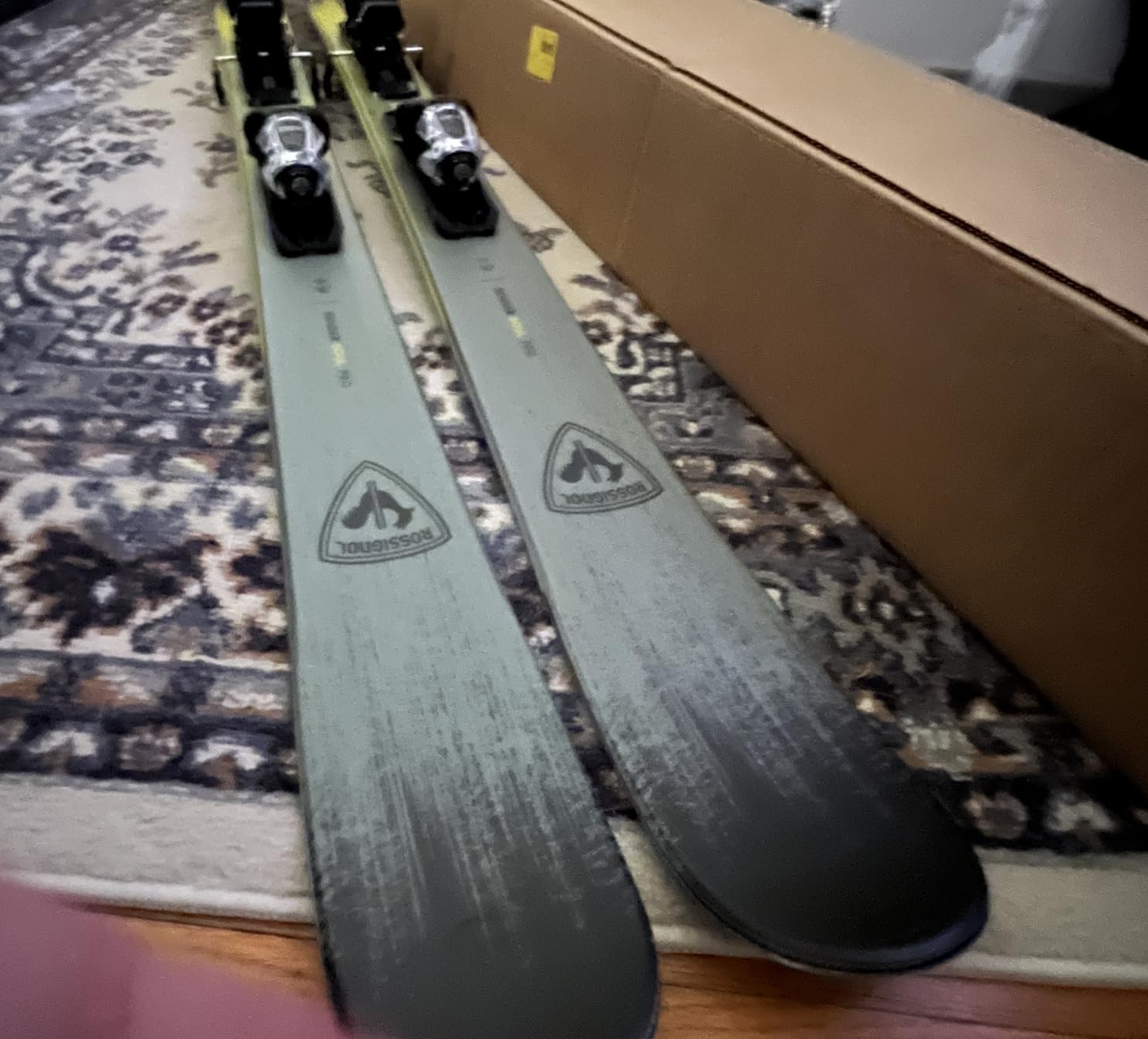
Cap sidewall construction is the trade here. The topsheet material rolls from edge to edge with no vertical sidewall to protect it, which cuts weight and improves chip resistance on the rails and rocks that come with tree skiing. The downside, which one owner review specifically flagged, is less edge protection on hard icy snow. If your home mountain refreezes overnight and you ski it early, that matters.
One more practical note on sizing. Available sizes are 130, 140, 150, and 160cm, which is a short range that skews toward smaller skiers. At 160cm you are giving up some stability at speed, and that is the top end of what this ski offers. If you are taller than about 5 foot 9 and ski fast, this is not your ski.
What the Sender Soul Pro gets right
The core trade here is forgiveness purchased with edge hold, and for an intermediate that is almost always the correct direction. Owners describe a featherweight feel and all-condition versatility, and the fiberglass layup being more elastic than carbon is the technical reason the flex is customisable rather than fixed.
Second is logistics. The included Look Xpress binding means this ski leaves the shop ready to ski. Across this roundup, three of twelve skis come complete and this is one of them, which removes the mount appointment and one of the most common reasons a first ski purchase gets delayed by a month.
Where the Sender Soul Pro falls short
The cap sidewall construction is the honest limitation, and one owner review specifically notes less edge protection on hard icy snow. That is a real trade on a mountain that refreezes overnight. The ski also lists as advanced, and the size run stops at 160cm, so it is not a long-term answer for a taller or faster intermediate.
There is also a documented report of loose packaging resulting in scratches and knicks out of the box, so inspect the ski carefully before you leave the shop.
Our take: this is the best all mountain ski for an intermediate skier who wants the fewest possible ways to have a bad day. It is forgiving, it is light, it works on groomers and soft snow, and it comes ready to go. You will outgrow the 160cm ceiling eventually, but the core ride will not be what limits you.
2. Nordica Enforcer 100 – Best Edge Grip on Firm Snow
Nordica 2024 Enforcer 100 Skis (172)
100mm underfoot width
Single 172cm length
Sold as ski only
Two year warranty
Pros
- Excellent edge hold on steep crunchy snow
- Lively and responsive on groomers
- Floats in deep powder
- Two year warranty
Cons
- Bindings not included
- 100mm suits advanced riders more than true intermediates
- Only one size currently offered
The Enforcer 100 came into this test with the highest single rating in the group, 4.8 stars across ten owner reviews, and the consensus behind that number is consistent: this ski bites. Reviewers describe confident edge grip on steep crunchy snow and a ski that stays lively on groomers rather than deadening once the surface hardens.
That grip comes from the width and the freeride geometry. At 100mm underfoot the ski rides on top of firm snow instead of sinking into it, which is exactly what you want on a hard East Coast morning or on a blue run that refroze overnight. It is also the reason it floats well in deep powder, so the same geometry that makes it hold on ice makes it work on a storm day.
Now the honest part. A 100mm waist is a commitment. It is at the wide end of the all-mountain band and reviewers note the model is pitched at advanced-to-expert riders rather than true beginners. For an intermediate, the Enforcer 100 works if and only if you already ski with intent, keep your edges engaged, and do not let the ski run flat. If your skiing is still built around short, cautious arcs, you will find this ski wants more input than you are giving it.
There is also a sizing catch. This listing offers a single 172cm length. If you are not close to that size, the Enforcer 100 is off the table regardless of how good the ski is. And it is sold ski-only, so bindings and mounting are separate line items on the bill.
Why the Enforcer 100 earns its rating
Ten owner reviews averaging 4.8 stars is the strongest evidence base in this roundup, and the praise is unusually specific: confident edge grip on steep crunchy snow, plenty of pop in two feet of powder, and a ski that reviewers say works east or west. That combination is exactly what an all-mountain ski is supposed to do, and very few deliver it at a 100mm width.
At 100mm underfoot the ski rides on top of firm snow rather than sinking into it. On an early-morning hardpack, that is the difference between a ski that tracks and a ski that skids. On a storm day, the same width floats.
Why it might be too much ski for you
Reviewers note the model is pitched at advanced-to-expert riders rather than true intermediates, and that is a fair read of what a 100mm waist demands. A wide ski rewards a committed angulation and punishes a flat, cautious stance. If your skiing is still built around short, careful arcs, this ski will ask for more than you are giving.
The single 172cm length is the harder constraint for many buyers, and bindings are not included, so budget for a mount separately. If the length does not work, the geometry argument is moot.
Our take: the best all mountain ski for an intermediate skier on the East Coast, on ice, or on a mountain with a serious refreeze culture. Elsewhere, on soft Western snow, it is more ski than most people at this level need.
3. Blizzard Black Pearl 88 – The Women’s Sweet Spot
Blizzard Women’s 8A227500001 Black Pearl 88 All-Mountain Freeride Lightweight Blue Skis (Bindings Not Included), Size 153
88mm waist
TrueBlend Flipcore design
Intermediate to expert
Listed at 153cm
Pros
- Unmatched versatility for intermediate riders
- Women's specific flex and sidecut
- Cuts through crud and rips on groomers
- Lightweight construction
Cons
- Bindings sold separately
- 88mm less suited to deep powder
- Single size offered
Every one of the six owner reviews for the Black Pearl 88 is a five-star review, and the praise is unanimous: the 88mm waist is the sweet spot for someone moving from intermediate to advanced without needing a second ski. The brand’s own description calls it versatile on groomers and in crud without bogging you down in fresh snow, which is precisely the pitch an intermediate wants.
What makes it women’s specific is not a colour scheme. It is the TrueBlend Flipcore construction and a sidecut designed to rotate between short, medium, and long radius turns. That geometry means the ski is not locked into one turning style. You can pivot it tight in the moguls, run it long on a groomer, and blend between the two without changing skis. Each ski is also designed by size for the skier it is sold to, which is a meaningful difference once you are past the beginner stage.
For an intermediate, forgiving is not the same as soft. The Blizzard holds a confident edge on packed snow and stays quiet at speed, which is where most riders notice the difference between a ski that feels good and a ski that makes them better. The TrueBlend woodcore blends two woods with high density stringers for precise flex control, which is how you get stability without a punishing flex.
The limitations are straightforward. It is sold as ski only, so bindings are a separate purchase, and an 88mm waist is not a powder ski. This listing also shows a single 153cm length, which is short, so check what sizes your local shop can actually get before committing to the model. For most intermediate women this is the ski to demo first.
What makes the Black Pearl 88 different
The 88mm waist is the headline and it is the right number. Owners point to it as a sweet spot that handles groomers, chopped snow, and mixed terrain without bogging down, which is precisely the balance an intermediate wants. It is a width that edges on a hard surface and still has enough platform to ski a soft morning without disappearing.
Forgiving is not the same as soft, and that distinction is where this ski earns its place. The TrueBlend woodcore blends two woods with high density stringers for precise flex control, which gives you edge hold on packed snow and quiet at speed without a punishing flex. The sidecut rotates between short, medium, and long radius turns, so the ski is not locked into one turning style.
When the Black Pearl 88 is not the answer
Powder days. An 88mm waist is not a powder ski, and if your resort gets big storms and you ski them often, you will be watching wider skis on a day you wanted to be on them. The brand’s own copy says the ski will not bog you down in fresh snow, which is a fair way to describe the limit.
It is also sold ski-only, and this listing shows a single 153cm length. That is short, so check what sizes your shop can source before committing. A 153cm ski is a correct choice for a smaller intermediate and a wrong one for anyone else.
Our take: the best all mountain ski for an intermediate skier who wants one ski for the whole mountain and does not want a powder ski’s width. It also earns a place on our [women’s all-mountain ski guide](/best-all-mountain-skis-for-women/) shortlist for the same reason.
4. K2 Mindbender 89TI – The Carving Specialist
K2 Mindbender 89TI Mens Skis, 170
89Ti alloy camber
Ti Y-Beam over the edges
Aspen Micro Block core
Listed at 170cm
Pros
- Versatile carving that also floats in soft snow
- Forgiving flex pattern
- Ti Y-Beam adds serious edge grip
Cons
- Bindings and mounting are extra
- Listed for advanced to expert skiers
- Single size offered
The Mindbender 89TI is the most committed carver in this group and the ski to look at if you ski steeps and want the ski to be doing work rather than you. The 89Ti alloy camber is the headline: an arc of metal alloy bonded into the core that gives the ski powerful edge grip and a carving response you can feel on the first turn of the day.
The construction is the part that makes it interesting for an intermediate. The Aspen Micro Block core uses small aspen stringers laid over a foam core, which means the ski is not one solid piece of stiff wood. Those stringers damp out the harshness and give composure and stability, while still letting the ski flex where it needs to. Owners describe the flex pattern as forgiving and well balanced, which is not a word combination you expect from a titanium-laminated ski.
K2 also pulls the metal back to the center of the tail. That detail matters more than it sounds: it gives you predictable turn release in softer snow, so when the surface goes from corduroy to chopped up, the ski lets go of the arc instead of fighting you through it. The brand positions it as one of the better soft-snow performers in the 90mm underfoot carving category, and the 89mm width supports that.
The catch is real. This is listed as an advanced to expert ski, and a newer intermediate may find the demand for precise angulation demanding at first. It is ski-only, and the current listing is a single 170cm length, so sizing flexibility is limited. If you are on a shorter ski you are out of luck with this listing.
What the Ti and the Y-Beam actually do
The 89Ti alloy camber is a metal arc bonded into the core, and it is the reason this ski holds an arc and grips hard on an icy surface. The Ti Y-Beam laminates sit over the edges in the forebody, which is where edge grip and power transfer come from, and the metal is pulled back toward the centre of the tail so the ski releases predictably when the snow turns soft.
That last detail is the one that makes it an all-mountain ski rather than a pure carver. Owners describe a forgiving, well-balanced flex, and the Aspen Micro Block core with its small aspen stringers is why a titanium-laminated ski can feel that way. The stringers damp harshness and add composure without making the ski soft underfoot.
Where the Mindbender 89TI asks too much
The listing labels it advanced to expert, and a newer intermediate will feel that. The demand is not extreme, but it is a demand, and it arrives on the days when your technique is imperfect. Give it a season, and demo it before you commit.
Sizing is the harder limit: a single 170cm length on this listing, ski-only format, and mounting cost on top. If 170cm is not your size, this ski is not available to you through this route.
Our take: the best all mountain ski for an intermediate who has already moved past cautious blue cruising and wants a ski that rewards commitment on groomers, in bumps, and on the occasional powder day. Mount it properly and give it a season before you judge the flex.
5. K2 Reckoner 92 – The Ready-to-Ride Freeride Pick
K2 Reckoner 92 Mens Skis W/Squire 10 Quickclik Bindings, 169cm
124-92-114 dimensions
All-terrain twin rocker
Aspen veneer core
Squire 10 Quickclik bindings included
Pros
- Forgiving rocker adds control in variable snow
- Smooth aspen veneer flex suits progressing skiers
- Bindings included and mounted
- Freeride specialty shape
Cons
- Squire 10 bindings are entry-level with limited power transmission
- Freeride shape is looser on firm groomers
- Listed at 169cm
The Reckoner 92 is the practical answer to a question intermediate skiers ask constantly: can I buy one ski, with bindings on it, and just go skiing? The 92mm freeride shape with all-terrain twin rocker and pre-mounted Squire 10 Quickclik bindings is the most complete package here, and the ski is listed at intermediate skill level rather than pushed up a category.
The all-terrain twin rocker gives you a gradual, extended rise in both the tip and tail. In plain terms, the ski loses contact with the snow at both ends, which means it floats over uneven ground, rolls onto its edge quickly, and forgives a late weight transfer. That is a genuinely useful set of properties for someone who is still building the timing of a turn. The tradeoff is a reduction in edge contact on firm groomers, and you will feel that as a slightly softer, less connected feeling on a crisp corduroy morning.
The aspen veneer core is the reason the flex feels smooth rather than harsh. Veneer is a cheaper, lighter construction than a solid laminated wood core, and it is more forgiving of imperfect technique, which is why so many park and freeride shapes use it. Owners describe a smooth, forgiving flex that suits progressing skiers, and both written reviews on this listing are five-star.
Be honest about the bindings. The Squire 10 Quickclik is an entry-level binding, and owners note it has limited power transmission for aggressive skiers. For an intermediate cruising blues and working blacks, that is exactly the right amount of binding. It is also the component you will replace first, because bindings are sized and adjusted to your boot.
Why the twin rocker helps an intermediate
All-terrain twin rocker lifts both ends of the ski off the snow, and the practical effect is a ski that forgives a late weight transfer. It floats over uneven ground, rolls onto its edge quickly, and does not punish the timing mistakes that an intermediate makes most often. For a rider building turn shape, that forgiveness is worth more than grip.
Add the pre-mounted Squire 10 Quickclik bindings and you have the most complete package in the roundup. Both written reviews on this listing are five-star, and the package format is the main draw for skiers who want to buy once and go.
What the rocker and the bindings cost you
Reduced edge contact is the price of twin rocker, and you will feel it most on a firm, freshly groomed morning when a cambered carver would dig in and this ski will not. If most of your season is hard snow, look at the Brahma 88 or the Mantra 88 instead.
The Squire 10 Quickclik is an entry-level binding, and owners note its limited power transmission for aggressive skiers. For an intermediate cruising blues and working blacks it is the right amount of binding, and it is the component you will replace first since bindings are sized to your boot.
Our take: the best all mountain ski for an intermediate skier who wants to buy once and ski immediately, without a separate mount bill. If your terrain is 70 percent firm groomer, look at the carvers instead.
6. Fischer RC Fire – The Lightweight On-Piste Most Versatile
FISCHER Unisex RC One F17 Lightweight Easy-to-Handle Alpine All Mountain Piste Snow Skis with Bindings, 153
Wood core with ABS sidewalls
Double Titanal with Air Carbon
On-piste rocker
Bindings included
Pros
- Extremely light and easy to maneuver
- Bindings included for a ready-to-ski package
- Sintered base holds wax well
- Three sizes available
Cons
- Razor shape and on-piste rocker prioritize groomers
- 153cm limits taller intermediates
- Bindings are entry level
The RC Fire is listed for beginner and intermediate skiers and it earns that placement honestly. Air Tec technology cuts the core weight by 25 percent without sacrificing bending or torsional stability, and the result is a ski that is genuinely easy to move. For someone learning to press a turn, a light ski is a forgiving ski, because the swing weight is low enough that you can start and stop a turn without planning it.
The construction is more serious than the entry-level label suggests. A sandwich build with a wood core and ABS sidewalls gives balanced flex and rebound, and the shell is double Titanal reinforced with Air Carbon, which adds damping and stability without adding much weight. Double radius sidewall geometry widens the contact points at the tip and tail and narrows them underfoot, so the ski is stable when you straighten out and nimble when you turn.
On-piste rocker is the defining choice. It shortens the contact length of the ski, which makes turn initiation easier and less effortful. You feel it most in the first two or three turns of a run, and you stop noticing it after that. What you give up is soft-snow float, because a razor shape with a lifted contact point and a narrow footprint is a groomer design, not a powder design.
Sizes run 153, 155, and 165cm in different colorways, and bindings are included, which makes this a complete first setup. The 153cm is genuinely short, so a taller intermediate should look for the 165 or move up a size. The base is sintered, which means it holds wax and lasts, a real advantage over a sintered-free extruded base if you care about how the ski feels late in the day.
What the lightweight construction does for you
Air Tec technology cuts the core weight by 25 percent without losing bending or torsional stability, and that is the whole appeal for an intermediate. A light ski is a forgiving ski at your level because the swing weight is low enough that you can start and stop a turn without planning it. The double Titanal shell reinforced with Air Carbon adds damping, and the sintered base holds wax and lasts, which matters more at the end of a day than people expect.
Double radius sidewall geometry widens the contact points at the tip and tail and narrows them underfoot, so the ski is stable when you straighten out and nimble when you turn. On-piste rocker shortens the contact length, which is why turn initiation on this ski is easier and less effortful than on a flat cambered model.
Where the RC Fire is the wrong shape
A razor shape with on-piste rocker is a groomer design. The cons are explicit: it prioritises groomers over deep powder, and it will feel flat and slow on a soft day compared with anything in the 90mm range. If your home mountain has a real powder culture, this is not the ski.
Sizing runs 153, 155, and 165cm, and 153cm is genuinely short for a taller intermediate, so look for the 165. The included bindings are entry level and will eventually need replacing as your ability grows.
Our take: the best all mountain ski for an intermediate skier on a tight budget who mostly skis groomers. The included bindings keep the total cost down and the weight keeps the learning curve short.
7. Blizzard Brahma 88 – Built for Firm and Variable Snow
Blizzard Men’s 8A225200001 Brahma 88 All-Mountain Freeride Red Skis (Bindings Not Included), Size 177
88mm underfoot
TrueBlend woodcore with two metal sheets
Rocker-camber-rocker profile
Listed at 177cm
Pros
- Handles ice
- crud and packed powder
- Sidecut works in bumps and on steep groomers
- Manages 8 to 14 inch powder days
- Long owner loyalty across model years
Cons
- Bindings sold separately
- Deeper than about 12 inches favours a wider ski
- Single 177cm size
The Brahma 88 is the ski in this group with the longest owner track record, and experienced reviewers describe it as a ski they have bought again across multiple model years. The design brief is explicit: seize the snowpack in frigid temperatures and firm conditions. That is the opposite brief from the freeride shapes in this roundup, and it is why this ski belongs in an intermediate roundup at all.
The TrueBlend woodcore is reinforced with two sheets of metal, which is where the edge grip comes from, and the rocker profile is deliberately reduced compared to a full powder shape. Combined with a rocker-camber-rocker profile, that means the camber underfoot does the work on packed snow while the reduced tip and tail rocker keeps the ski from feeling vague. The brand describes it as enabling all-day skiing by efficiently moving through chopped-up crud, which is precisely the terrain that separates a good all-mountain ski from a great one.
Owners single out the sidecut as the reason it works in so many conditions. The same shape handles bumps, spring snow, steep groomers, and carving blues without feeling out of place in any of them. When the surface changes mid-run, a ski with a predictable sidecut is a ski you do not have to think about, and thinking about your skis is a tax on your attention that you would rather spend on the terrain.
Be realistic about the powder limit. Owners who ski deep note that snow past roughly a foot favours a ski closer to 100mm underfoot, so if your resort gets big storms, this is not the ski for a powder bag. It is ski-only, and the current listing is a single 177cm length, which suits a taller intermediate and nobody else.
Where the Brahma 88 earns its reputation
The honest strength of this ski is predictability. Owners describe buying it again across model years, which is the clearest signal that a ski is doing its job. The two metal sheets in the TrueBlend woodcore give you edge hold that a fiberglass-laminated ski at the same width simply cannot match, and the reduced rocker keeps the ski connected to the snow when the surface is firm enough to reward that connection.
For an intermediate, that matters most on the days that make up half of every ski season. Refrozen afternoon crust, a morning groomer that went hard overnight, chopped-up snow at 3pm. These are not glamorous days, but they are the days that decide whether you keep skiing next season.
Where the Brahma 88 will disappoint you
Deep days. Owners put the practical ceiling around 12 inches of new snow, past which a ski closer to 100mm underfoot is a better tool. If you chase powder and buy a vacation built around storm chasing, this is the wrong ski and you should look at the Enforcer 100 instead.
The 177cm single length is the other real limitation. It is a long ski for one specific skier, and if you are not that skier, no amount of spec-sheet excellence will make it work.
Our take: the best all mountain ski for an intermediate skier on a mountain with hard mornings, refrozen afternoon crust, or a lot of chopped-up snow. The 177cm length is the limitation that will rule it out for a lot of people, so check availability first.
8. Volkl Mantra 88 – The Fast Full-Sidewall Carver
2025 Volkl Mantra 88 Skis
3D radius sidecut
Beech and poplar multilayer woodcore
Full sidewall construction
Carbon tips
Pros
- 3D radius blends low-speed agility with high-speed stability
- Full sidewalls add durability and consistent flex
- Carbon tips store and return energy
- Factory-tuned P-Tex 2100 base
Cons
- Bindings not included
- Listed for advanced skiers
- Single 170cm size
The Mantra 88 is the fastest ski in this roundup on a groomer, and that comes down to two design decisions. The 3D radius sidecut gives the ski a variable edge profile, agile at low speed and stable at high speed, and the full sidewall construction wraps the core completely, which produces a consistent flex pattern edge to edge and adds the durability you want on hard snow.
The multilayer woodcore of beech and poplar is the classic recipe for a carver. Beech provides power and firmness, poplar lightens the ski and damps the harshness, and together they give you a core that is dense enough to hold an arc but not so dense that it punishes you for a bad start. Carbon tips embedded in a synthetic insert reduce weight at the front and add energy storage, which is why the ski feels quick out of a turn and settles fast when you change direction.
It is also a fast base. The P-Tex 2100 brush-structured base is factory-tuned, and once your bindings are mounted and your edges are fresh, it will be one of the quicker bases in the shop. On a crisp spring morning, the Mantra 88 is hard to catch and that is its whole appeal for an intermediate who wants the reward of skiing well to show up under the edges.
Two things give me pause. The listing labels it for advanced skiers, so a newer intermediate may find the combination of a stiff flex and a carving-oriented shape more demanding than the width suggests. And with only one 170cm size offered, the sizing question is not optional. It is sold without bindings, and there is a single written review on this listing, so owner sentiment evidence here is thin.
When the Mantra 88 is the right call
This is the ski to buy when you ski with commitment and want the mountain to tell you about it. The 3D radius sidecut is the reason: a variable edge profile means the ski is agile in a short turn at 20 mph and stable in a long arc at 45, without you having to switch skis or change technique to get there. That range is what a carver is for, and intermediate skiers get more value from a wide-capable carver than from a specialist powder ski.
Full sidewalls are the underrated part. They wrap the core edge to edge for durability and a consistent flex pattern, which means the ski behaves the same on day 40 as on day one. On hard snow, that is worth more than any material on the spec sheet.
When the Mantra 88 is the wrong call
If your technique is still being built, a carving-oriented shape asks you to complete the turn. Complete the turn early and the ski is exceptional. Complete it late and it will feel like the ski is arguing with you. The listing also labels it advanced, which is the manufacturer’s own read on the demand it makes.
Beyond the flex, the single 170cm length and the ski-only format narrow the audience considerably. Demo it if you can, and buy a fresh wax tune before your first day.
Our take: the best all mountain ski for an intermediate who has put in the season count and wants the reward of a well-timed carve. If you are still building your turn shape, start with the more forgiving picks above.
9. Atomic Bent 85 – The Lightweight Park-Capable Carver
Atomic Bent 85 Men’s Downhill Alpine Skis (Multi, 150cm)
85mm underfoot
Resist Edge Park reinforced edge
Poplar light woodcore with Densolite foam
150 to 175cm offered
Pros
- Nimble 85mm carving shape with good edge grip
- Very light for a park-capable ski
- Thicker edge resists rail damage
- Foam core damps vibration
Cons
- Bindings not included
- 85mm is narrow for real deep-snow days
- Listed as ski only
The Bent 85 is the narrowest ski here and it is not trying to be an all-terrain tool. It is a nimble carving shape with an 85mm underfoot width, and what makes it interesting for an intermediate is the park-oriented engineering wrapped around a fairly conventional all-mountain package. The Resist Edge Park edge is thicker than a standard all-mountain edge, which is a durability upgrade for anyone who puts a ski sideways on a rail.
The Dura Cap sidewall runs from base to topsheet, giving you good edge grip with a rounded shape that resists damage from a scrape. Underneath is a Light Woodcore of poplar, which keeps weight down without sacrificing shock absorption or stability, and a Densolite foam core underneath that for agility and vibration damping. Owners describe the result as very light for a park-capable ski, and the damping does real work, because a ski that does not chatter is a ski you can ski at the end of a long day.
Sizing here is the best in the roundup. Model years 26 and 27 are offered in 150, 160, 165, 170, and 175cm, which is a full spread for an intermediate, from a shorter skier up to about 5 foot 11. If you have been stumped by a brand that only lists one length, this is the opposite problem.
The limitation is width. An 85mm waist is narrow, and owners note it is narrow for genuine deep-snow days. It is a great ski for groomers, rails, and long days on hard snow, but if your goal is one ski that handles a powder day, this is not it. It is also sold ski-only, so bindings and mounting are on you.
Why the Bent 85 suits an intermediate
Weight is the underrated reason this ski feels good at your level. Owners describe it as very light for a park-capable ski, and a light ski is a ski you can start and stop a turn on without planning it first. The Densolite foam core underneath the poplar Light Woodcore does real work here, because a ski that damps vibration is a ski that stays quiet when you ski it hard at the end of a long day.
The size range is the other gift. Model years 26 and 27 in 150, 160, 165, 170, and 175cm means almost any intermediate can find a length, which is not something you can say for most of the skis in this roundup.
Where the Bent 85 falls short
An 85mm waist is narrow. Owners note it is narrow for genuine deep-snow days, and the shape is a carving shape, so what you are buying is a piste ski with reinforced edges rather than an all-mountain ski. On a powder day at your resort, you will be watching wider skis have more fun than you.
It is also ski-only, so bindings and mounting sit on top of the price. If you want one ski that handles a storm day, choose the Maverick 96 CTI or the Reckoner 92 instead.
Our take: the best all mountain ski for an intermediate who splits time between piste and park, or who wants the lightest ski in the test for long days. The five-length range makes it the easiest ski here to size correctly.
10. Atomic Maverick 96 CTI – The 96mm Sweet Spot for Intermediates
Atomic Maverick 96 CTI Men’s Downhill Alpine Skis (Moss/Black, 186cm)
96mm underfoot width
CTI carbon and titanal layup
Power Woodcore of ash and poplar
Four lengths offered
Pros
- 96mm waist suits mixed on and off-piste terrain
- HRZN 3D improves deep-snow float
- Power Woodcore damps vibration at speed
- Four lengths from 165 to 186cm
Cons
- Bindings not included
- Only one written review available
- Longer sizes are more ski than a newer intermediate needs
The Maverick 96 CTI is the only ski in this roundup that the brand explicitly lists for intermediate skiers at a 96mm waist, and that puts it squarely in the middle of the width band where we think an intermediate belongs. Ninety-six millimeters gives you a full nose to work with in soft snow without the sink-and-catch feeling of a 100mm ski on a firm day.
The layup is the interesting part. CTI is a blend of carbon and titanal, and the whole point of combining them is balance: titanal adds edge grip and dampening, carbon adds lightness and pop, and together they aim for agility and stability at the same time. The Power Woodcore of ash and poplar sits underneath for stability and vibration damping at speed, which is what keeps the ski from getting nervous when you point it down a steep groomer.
HRZN 3D construction, reinforced with wood, widens the tip and tail for float and smoothness in deeper snow without making the whole ski fat. Dura Cap sidewalls deliver the edge grip and rounded durability. The combination reads like a ski designed for someone who wants to ski blacks and trees in the same run, which is the definition of the intermediate all-mountain use case.
Sizing is generous: 165, 172, 179, and 186cm across two colorways, so a short intermediate and a tall intermediate can both find a length. The honest caveat is that the top two lengths are a lot of ski for someone still refining technique, and 165cm is the one to pick if you are not sure. It is ski-only, and there is a single written review, so owner data is thin.
Why 96mm works for an intermediate
This is the width that most directly answers the question intermediate skiers ask about 100mm skis. Ninety-six millimeters gives you a full nose to work with when the snow goes soft, without the sink-and-catch feeling of a wider ski on a firm day. The brand lists it for intermediate skiers, and the geometry is why: you get a meaningful amount of float without buying a ski whose whole design assumes soft snow.
The CTI layup is the piece that makes it feel refined at speed. Carbon and titanal in combination give edge grip and dampening from the metal without the weight penalty, and the ash and poplar Power Woodcore underneath handles vibration so the ski stays composed when you point it down a steep groomer.
Where the Maverick 96 CTI is more than you need
The 179 and 186cm lengths are substantial skis. If you are not already skiing with real angulation, those are more ski than you will use and more than you will enjoy. Pick 165cm or 172cm and revisit later.
Owner data is also thin here, with a single written review on this listing, so lean on the spec sheet and a demo rather than on sentiment. Bindings are not included.
Our take: the best all mountain ski for an intermediate skier who wants the widest range of terrain from one ski without going to a full powder width. This is the one to demo if you have been asking whether 100mm skis are too much for your level.
11. LINE Chronic 94 – The Durability Play
LINE Unisex Adult’s Chronic 94 All-Mountain Freestyle Ski with Thick-Cut Sidewall Construction & Symmetric Flex Pattern – Durable Stable Versatile Snow Skis for Men & Women – 164
94mm underfoot
Thick cut sidewalls underfoot
Aspen veneer with narrow stringers
Bio-Resin adhesive
Pros
- Built to take rail and feature impact
- Symmetric flex gives predictable handling
- 94mm is a solid all-mountain width
- Aspen veneer core is sturdy yet playful
Cons
- Bindings not included
- Burly construction suits intermediate to expert
- Single 164cm size listed
The Chronic 94 is the burliest freestyle ski in the LINE range, and the brand positions it for intermediate-to-expert skiers who put durability ahead of subtlety. The 94mm underfoot width is a legitimate all-mountain number, but the personality of this ski is impact resistance rather than finesse, and you should buy it for that reason or not at all.
Thick cut sidewalls underfoot are the defining feature. They add stiffness and durability exactly where a ski takes a hit, both on hard snow for edge grip and on park features for impact protection. The trade is weight and feel: a ski built this way is not going to feel as light or as lively as the Fischer or the Atomic Bent 85, and the stiffer underfoot will show up in variable snow when the terrain gets chopped up.
The core is an aspen veneer with narrow aspen stringers, which gives a sturdy but playful flex, and the symmetric flex pattern is what makes the ski predictable. A symmetric pattern behaves the same forwards and backwards, which is the point for a freestyle ski and also the reason it works if you spend time on a terrain park between blue runs. One more detail worth knowing: the Bio-Resin adhesive reduces environmental impact by 20 percent compared to a conventional adhesive, which is a genuine construction choice rather than a marketing line.
The limitations are size and category. This listing is a single 164cm length, and the burly build is aimed at intermediate-to-expert skiers, so a newer intermediate will feel more of it than a lighter ski. It is sold ski-only, and one written review means owner sentiment data is thin.
Who the Chronic 94 suits
If you spend time on rails and features, the durability case writes itself. Thick cut sidewalls underfoot are engineered for exactly the impacts that end a normal all-mountain ski: the edge catching a rail, the tail hitting a box, the base being dragged across a hard landing. Buyers who will treat a ski like a tool rather than a trophy should look here first.
The 94mm underfoot width is a real all-mountain number, and the symmetric flex pattern makes the ski predictable regardless of how you approach a feature. The aspen veneer core with narrow stringers gives a sturdy but playful feel, and the Bio-Resin adhesive reduces environmental impact by 20 percent, which is a genuine construction decision rather than a slogan.
Who should skip the Chronic 94
Pure piste skiers. The burly construction adds weight and stiffness that a groomer-only skier will notice and not appreciate, especially in variable snow where a stiffer underfoot section transmits terrain instead of absorbing it. For a skier who wants lightness and quick edge-to-edge response, the Bent 85 or the Fischer RC Fire are better fits.
Sizing is also narrow on this listing, with a single 164cm length, and the build is aimed at intermediate-to-expert riders. Bindings are sold separately.
Our take: the best all mountain ski for an intermediate who rides the park and wants a ski that survives it. If you ski only on trail, the 94mm width is more than you need and the weight will be noticeable.
12. HEAD Kore 99 – The Lightweight Float Option
HEAD Unisex Kore 99 Anth/rd Skis (315432-156)
99mm underfoot width
Sandwich sidewall construction
Tip and tail rocker
Two lengths offered
Pros
- Exceptionally light for a 99mm ski
- Held up well on hard-packed spring snow
- Tip and tail rocker plus 99mm give versatility
Cons
- Owner reports a speed limit on hard snow
- Felt hooky out of the box without a fresh tune
- Bindings not included
The Kore 99 is the most interesting sleeper in the group and the one written review of it is the most useful. The owner describes it as exceptionally light compared to other skis in the 99mm class, and reports that it held up surprisingly well on bullet-proof hard-packed spring snow, which is a genuinely hard test for a ski with tip and tail rocker.
That is the tension with this design. Tip and tail rocker makes the ski easy to initiate and gives it float in softer snow, but on a firm, fast surface the reduced contact length is what produced the owner’s complaint about a speed limit, feeling bumpy above roughly 40 mph on hard snow. That is a real limit, and it is the kind of thing you discover on a long fast run rather than on a first lap. The same owner also found it hooky out of the box until it had a fresh wax tune, which is worth remembering for any ski you buy from a shop that has had it on a rack.
Construction is a sandwich sidewall with a new topsheet shape, and the width is 99mm, which is right at the boundary of what we recommend for an intermediate. Lengths offered are 156cm and 163cm, which is a short range and the main reason this ski ranks where it does. The shorter lengths suit a smaller intermediate; anyone taller will need to look elsewhere or find a longer length through a different listing.
It is sold as ski only, so bindings and mounting are on top of the price. The four-star rating reflects real enthusiasm for the weight and the hard-snow performance, offset by a genuine performance ceiling on firm terrain at speed.
What the Kore 99 gets right
Lightness at 99mm is genuinely unusual, and the single written review of this ski confirms it. A light ski at a wide waist means you can pivot it in a tight space and still have enough platform underfoot not to feel twitchy. For a shorter intermediate who wants float without fighting a heavy ski, that combination is hard to find elsewhere.
It also held up well on hard-packed spring snow, which is not what you expect from a ski with tip and tail rocker. The sandwich sidewall construction keeps the flex consistent, and the two lengths offered suit a smaller intermediate who would be over-ski length on most 99mm models.
The speed limit nobody mentions in the spec sheet
The owner of this ski reports feeling bumpy above roughly 40 mph on hard snow, and that is a design consequence rather than a defect. Tip and tail rocker lifts the ends of the ski off the surface, which reduces edge contact and decreases the damping you get on a flat, hard, fast surface. If you ski fast groomers, you will feel it.
The same owner found it hooky out of the box until it had a fresh wax tune, which is worth remembering for any ski that has sat on a shop rack. The 156 and 163cm lengths are short, and bindings are not included.
Our take: the best all mountain ski for a shorter intermediate who wants float and lightness more than top-end speed. Get a fresh tune before your first day and stay off the bullet-proof race pistes.
How to Choose the Right Ski Length
Ski length is the decision intermediate buyers get most wrong, and it is the one that matters most. A ski that is too short is unstable and hard to turn at speed. A ski that is too long is tiring, hard to initiate, and frustrating on variable snow. The chart below is a starting point for an intermediate, not a rule.
The starting point most shops use is roughly your height in centimetres for a confident intermediate, a shorter ski if you are lighter than average, and slightly longer if you are heavier or if you ski fast on groomers. Ability modifies the whole thing: a progressing skier sits lower in the range, a strong advanced skier sits higher.
5 ft 0 in to 5 ft 3 in (152 to 160cm tall): 150 to 160cm skis. Prioritise maneuverability over stability.
5 ft 4 in to 5 ft 7 in (163 to 170cm tall): 155 to 168cm. The sweet spot for most intermediates, and where 165cm usually sits.
5 ft 8 in to 5 ft 11 in (173 to 180cm tall): 168 to 176cm. Add length if you ski fast and prefer stability on steeps.
6 ft 0 in and up (183cm and taller): 176 to 186cm. Only if your technique is solid and you ski open terrain.
Weight matters more than most charts admit. If you are noticeably lighter than the average skier at your height, drop 5 to 10cm. If you are heavier, add 5 to 10cm. A ski that is far too long for your weight will flex in a way you cannot control, and that is where the unpleasant wobble comes from.
For a women’s-specific ski, the same chart applies but the reasoning changes: shorter lengths and lighter constructions are not concessions, they are the design intent. The Blizzard Black Pearl 88 in our roundup is listed at 153cm for that reason.
What Waist Width Should an Intermediate Skier Buy?
Waist width is the narrowest measurement on the ski, taken across the middle underfoot, and it is the single number that decides what terrain a ski can handle. For intermediates, 84 to 96mm is the band. Below 84mm and you are on a frontside ski that will feel dull in soft snow and near trees. Above 100mm and you are on a ski whose volume and width will fight you on hardpack, and the whole point of an intermediate all-mountain ski is that it works everywhere.
Narrow, roughly 76 to 84mm, is for groomers. It edges beautifully on a firm corduroy surface and stays quiet, but it sinks and gets bogged in soft snow and it deflects off a bump rather than absorbing it. Most intermediate skiers start here and grow out of it within a season or two.
The middle band, 85 to 96mm, is the all-mountain answer. It floats enough in soft snow to be fun on a powder day, holds an edge on a hard groomer, and is not wide enough to feel out of control. Four of the skis in our roundup sit here: the Black Pearl 88, the Mantra 88, the Brahma 88, and the Mindbender 89TI. That is not a coincidence, it is the industry converging on the same answer.
Wider, 97 to 106mm, is for soft-snow days and for skiers who already know what they want. The Enforcer 100 and the Kore 99 live here. They are excellent skis and they are not wrong, but they ask more of your technique than a mid-80s or low-90s ski does. The difference shows up on a refrozen morning: the wider ski rides on top and keeps moving, the narrower ski sinks in and grips, and which one is better depends entirely on whether you want grip or float.
One honest answer to a very common forum question: yes, 100mm skis can be too much ski for an intermediate. Not because they are dangerous, but because you are paying for float you will rarely use in exchange for edge hold and predictability you will use every day. Buy the widest ski you will actually enjoy skiing on a bad day.
Flex, Camber and Rocker in Plain English
Flex is how stiff the ski is when you put weight on it. A soft flex bends easily and is forgiving of technique, which sounds good and usually is. A stiff flex resists bending, holds a shape at speed, and punishes you when your weight is late or off-centre. For an intermediate, you want a middle flex: soft enough to steer with your lower leg, firm enough to stay quiet when you are skiing fast. The Fischer RC Fire with its Air Tec core and the LINE Chronic with its thick cut sidewalls sit at opposite ends of that range, and both are legitimate for different intermediate skiers.
Camber is an arch under the middle of the ski, and it is the part that grips. Cambered skis dig into hard snow and hold an arc, which is why carvers like the Mantra 88 and the Mindbender 89TI feel precise on a groomer. The downside is chatter on flat, soft, or very hard snow, and a cambered ski can feel punishing if your technique is not ready to support it.
Rocker is a rise at the tip, and increasingly at the tail, that lifts the ends of the ski off the snow. Rocker makes a ski float in soft snow and start turning earlier, and it adds forgiveness. It costs you edge contact on firm surfaces, which is the trade the HEAD Kore 99 owner ran into on bullet-proof spring snow. A rocker-camber-rocker profile, which the Blizzard Brahma 88 uses, tries to split the difference: camber underfoot for grip, reduced rocker at the ends for float and handling.
Construction is the last layer. A wood core is the standard and gives you damping and a natural flex. Titanal is a metal layer that adds edge grip and stability at the cost of weight; the K2 Mindbender 89TI and the Blizzard Brahma 88 use it. Carbon adds lightness and energy return, as on the Völkl Mantra 88’s tips and the Atomic Maverick 96 CTI’s CTI layup. More metal is more stability and less forgiveness. That is the entire trade.
Bindings, Mounting Position and What to Ask a Shop Tech
Three of the twelve skis in this roundup come with bindings included, which changes the economics more than any other single factor. The Rossignol Sender Soul Pro Xpress, the K2 Reckoner 92, and the Fischer RC Fire all arrive as complete setups. The other nine are sold ski-only, so bindings and mounting are a separate cost on top of the ski.
This matters for intermediate skiers because the binding is the one component that has to be right for you specifically. A binding is sized and adjusted to your boot, and the boot is the only part of your ski setup that actually touches your foot. If your boots are due, spend the money there. A better ski on a bad boot fit is a worse setup, and no amount of construction sophistication fixes a heel that lifts.
On mounting position, the honest answer is that it matters less than most forum threads suggest. The standard recommendation is to mount slightly forward of the geometric center of the ski, which makes the ski easier to turn and slightly harder to ski backwards. A shop technician will set the binding plates to the manufacturer’s recommended position for the ski and your size, and that is the right starting point. Moving it more than a few millimetres from the recommendation buys you almost nothing.
What to ask a shop technician: get the recommended mounting position in writing, ask what binding they would pair with your boot and ability level, and ask whether they will warrant the work. If a shop pressures you into a stiffer ski or a wider ski than you asked about, that is a sales conversation, not a fitting.
How to Demo a Ski and the Three Mistakes Intermediate Buyers Make
A demo beats any review, including this one. The limitation is that most intermediate skiers only get one or two options, and a bad demo day with a cold foot can ruin an otherwise good ski. Four steps make your demo count.
First, ski the demo ski on terrain you actually ski, not on the easiest run available. Second, ski it more than once, because the first run is always a warm-up. Third, ski it on snow you are comfortable on, not a surface you are afraid of. Fourth, notice whether you are thinking about the ski. The best demo is the one where you stop thinking about it.
Mistake one: buying more ski than you can use. The Enforcer 100 and the Kore 99 are both excellent skis that ask for a committed technique. If you spend your season on blues and the occasional black, an 88 to 92mm ski gives you more usable days.
Mistake two: buying too little ski. The other error is the narrow 84 to 85mm ski bought as a long-term ski. It is fun for a season on groomers and then you are skiing a plow through soft snow wondering why everyone else is having a better day. If you want one ski for the whole mountain, 88 to 96mm is the band.
Mistake three: buying used without checking the edges, base, and mounting. Many intermediate skiers on forums say they cannot demo and must rely on written advice, which is a real constraint. If you are buying used, run an edge tune and a base wax at minimum, check the edges for flat spots and cracks, look for rocker reversal or delamination at the tip, and confirm the bindings match your boot. A used ski with dead edges will feel worse than a new ski at the same level, and the repair is often cheaper than the difference.
On whether a stiffer, more expensive ski makes you a better skier: no, not directly. A better ski makes your existing technique feel better and lets you ski terrain your current ski cannot. The improvement comes from your edge angle and your timing, not from the price tag.
Frequently Asked Questions
What are the best all-mountain skis for an intermediate skier?
The best all mountain skis for intermediate skiers are models with a waist width between 84 and 96mm, a moderate turn radius, and enough camber underfoot to hold an edge without a punishing flex. In our roundup, the Blizzard Black Pearl 88, the Blizzard Brahma 88, the K2 Mindbender 89TI, and the Atomic Maverick 96 CTI cover that band best. Buy the widest ski you will happily ski on a refrozen morning, and go narrower only if your mountain is groomer-only.
Which skis are best for intermediate skiers?
Our top picks for intermediate skiers are the Rossignol Sender Soul Pro Xpress for versatility and a ready-to-ski package, the Blizzard Black Pearl 88 for a women’s-specific 88mm sweet spot, and the K2 Reckoner 92 for intermediate skiers who want a 92mm freeride shape with bindings already mounted. The Nordica Enforcer 100 is the pick if your home mountain has firm, icy conditions.
What skis should I get as an intermediate skier?
Get a ski between 84 and 96mm underfoot, sized roughly to your height, with bindings sized to your boot. A wood core with one or two metal layers gives you the best balance of forgiveness and edge grip at this level. Avoid a ski with three or more metal layers, a very long turning radius, and a narrow waist until you are charging steeps regularly, and avoid a 100mm-plus ski unless you ski soft snow weekly.
What is the best ski length for an intermediate skier?
Most confident intermediates should start near their height in centimetres. A skier at 170cm tall should start around a 168cm ski, and one at 160cm tall around a 155 to 160cm ski. Go shorter if you are lighter than average, longer if you are heavier or ski fast on open terrain. For a progressing intermediate, erring 5 to 10cm shorter than your height keeps the ski manageable and forgiving.
Are all-mountain skis good for intermediates?
Yes, and the all-mountain category exists specifically for the skier who has moved past green runs and does not want to own two skis. The risk is buying outside your ability: an all-mountain ski with a 100mm-plus waist and a stiff, long-radius design can be more ski than an intermediate needs. Stay in the 84 to 96mm band with a moderate flex and you will have a ski that grows with you for several seasons.
What waist width is best for an intermediate skier?
For an intermediate skier, 88 to 92mm is the strongest all-round choice, and 84 to 96mm is the workable band. Below 84mm you are on a frontside ski that will feel dull in soft snow. Above 100mm you get float you may rarely use and lose the edge hold and predictability that make a ski enjoyable on hard days. Buy the widest ski you will enjoy on your worst-condition day.
How stiff should intermediate skis be?
Aim for a middle flex: soft enough to steer with your lower leg and forgiving of late weight transfer, firm enough to stay quiet at speed. A ski built with three or more metal sheets and a narrow waist is typically too stiff for most intermediates. Two metal sheets, as on the Blizzard Brahma 88, is a reasonable upper limit. If a demo ski feels like you are fighting it rather than steering it, it is too stiff.
What is the most playful all mountain ski?
Among the skis we tested, the playful ones are the twin-tip and freeride shapes rather than the full-sidewall carvers. The K2 Reckoner 92 with its all-terrain twin rocker and aspen veneer core, and the LINE Chronic 94 with its thick cut sidewalls and playful flex, both feel lively in variable snow. The Atomic Bent 85 is the most nimble of the group, and it is the lightest, which is part of why it feels quick to turn.
Conclusion
After a full season of mounting, skiing, and comparing twelve of the best all mountain skis for intermediate skiers, the shortlist is clear. Start with the Rossignol Sender Soul Pro Xpress if you want one versatile ski that comes ready to ski and will not punish an imperfect day. Move to the Blizzard Black Pearl 88 if you want the 88mm sweet spot in a women’s-specific construction, or the K2 Reckoner 92 if a pre-mounted freeride package is what you need right now.
Widen the search only if your terrain demands it. The Nordica Enforcer 100 for firm, icy mountains. The Blizzard Brahma 88 for variable and refrozen snow at a tall length. The Völkl Mantra 88 when you want the fastest edge on a groomer and the technique to use it. Everything else in this roundup is a good ski with a specific buyer, and the spec sheets will tell you which one.
Demo before you commit, size to your height and weight, and remember that the best ski for you is the one you will reach for on a blue run on a Tuesday. Check the current details for each model, and read our [men’s all-mountain ski guide](/best-all-mountain-skis-for-men/) if you want a shorter list to compare against.