
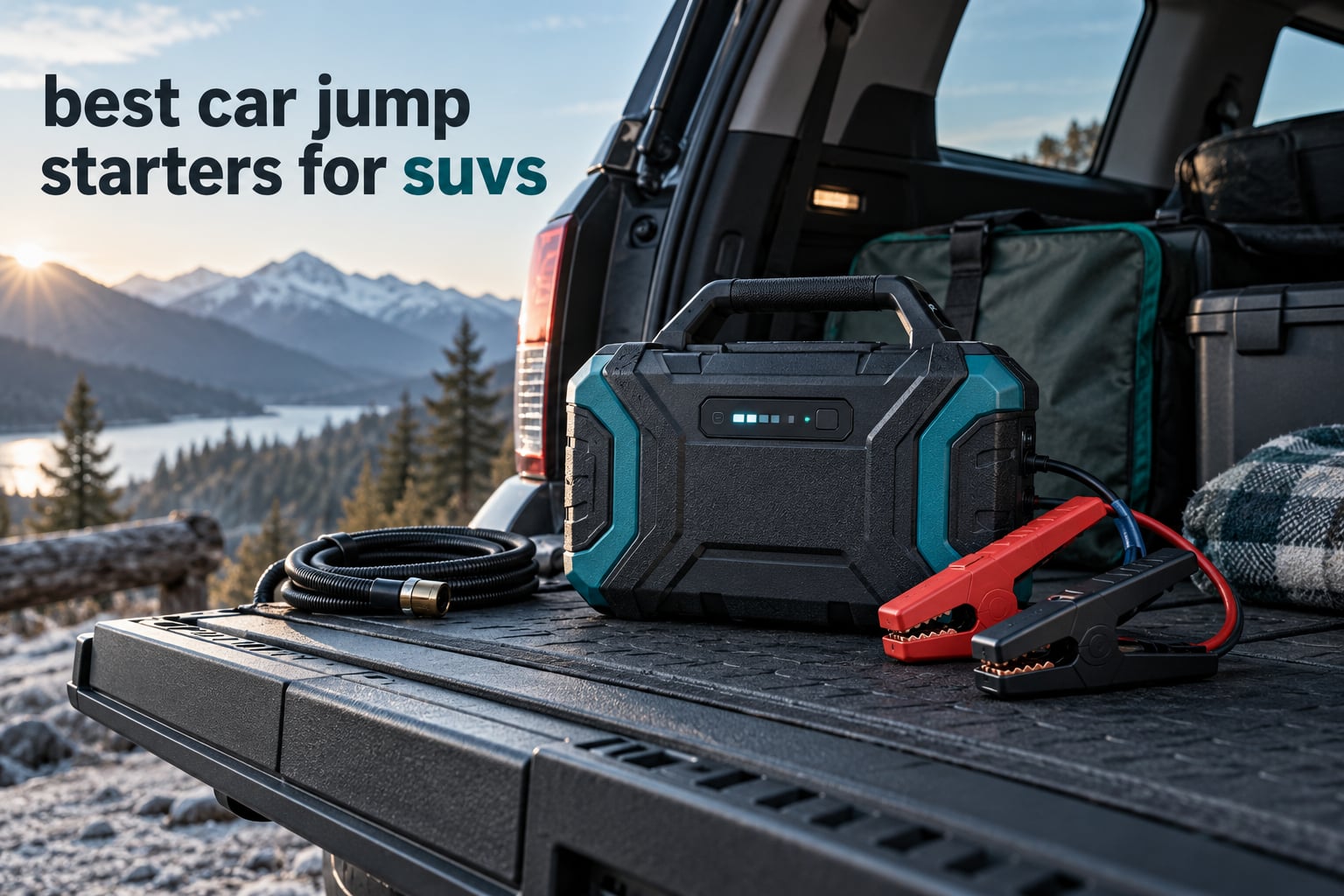
A dead battery in an SUV is a bigger problem than the same failure in a sedan. The engine is heavier, the battery often hides under a seat or behind a trim panel in the cargo floor, and the factory electronics keep cycling in the background the whole time the vehicle sits.
That is why the best car jump starters for SUVs are not simply the units with the biggest number on the box. We went through 12 packs rated from 3000A to 8000A, weighed the claims against owner reports, and matched each one to the kind of engine and the kind of winter it was actually built for. If you want the short version, the Hulkman Alpha85 is the one most SUV owners should buy, and the Clore JNC660 is the one to buy if your battery is genuinely stone dead rather than merely weak.
We also broke down the details that decide whether a pack works on a three-row family vehicle: cold weather derating, clamp reach, where the battery actually sits, and what happens to your vehicle’s charge after you disconnect. Our related picks on the best car jump starters with air compressor and best portable jump starters for trucks cover two corners of this list in much more depth.
Table of Contents
Top 3 Picks for SUVs Right Now (October 2026)
All 12 Jump Starters at a Glance in 2026
Everything below is a portable 12V pack with smart clamps and reverse polarity protection. The differences that matter for an SUV are engine coverage, stored energy in watt-hours, how heavy the thing is when you are lifting it into a third row, and whether the leads are long enough to reach a battery tucked under a seat.
| Product | Specifications | Action |
|---|---|---|
 Hulkman Alpha85 Hulkman Alpha85 |
|
Check Latest Price |
 Clore JNC660 Clore JNC660 |
|
Check Latest Price |
 GOOLOO GP4000 GOOLOO GP4000 |
|
Check Latest Price |
 WOLFBOX MegaVolt24 WOLFBOX MegaVolt24 |
|
Check Latest Price |
 Povasee A30 Povasee A30 |
|
Check Latest Price |
 TOPDON JS3000 TOPDON JS3000 |
|
Check Latest Price |
 HPBS H50 HPBS H50 |
|
Check Latest Price |
 BRPOM 8000A BRPOM 8000A |
|
Check Latest Price |
 OXILAM 6000A OXILAM 6000A |
|
Check Latest Price |
 UTRAI 8000A UTRAI 8000A |
|
Check Latest Price |
 HPBS 5000A Air HPBS 5000A Air |
|
Check Latest Price |
 GEHOPOW A9 GEHOPOW A9 |
|
Check Latest Price |
1. Hulkman Alpha85 – Best All-Round Jump Starter for SUVs
Hulkman Alpha85 Smart Portable Jump Starter, 2000A Battery Booster Pack with LED Display, Flashlight, 74Wh Power Bank & Jumper Cable, 12V Jump Box for up to 8.5L Gas & 6.0L Diesel, Cars, SUVs & Trucks
2000A peak
74Wh capacity
8.5L gas or 6.0L diesel
4.5 pounds
2 year warranty
Pros
- Starts V8 trucks and full-size SUVs without hesitation
- Full charge in 90 minutes with the included 65W charger
- Holds charge for months sitting in a hot or cold vehicle
- USB-C PD
- USB-A QC3.0 and 12V DC output for camping gear
- IP65 shell with a five-mode flashlight
Cons
- No carrying case in the box
- Battery percentage reads high under load
- Fast charging needs the proprietary charger rather than a USB-C PD input
- No built-in air compressor
The Alpha85 is the pack I keep in my own SUV, and the reason is unglamorous: it is the rare lithium unit that does not need babysitting. It holds charge for up to 18 months according to the manufacturer, which means you can put it in the cargo well in October and still trust it in March. Owners consistently report it reviving batteries in cars, SUVs and V8 trucks, with several mentioning multi-year service without a single failure.
Capacity is the honest reason it works on big engines. The pack stores 20000mAh at 15V, which works out to roughly 74Wh, and the clamps are rated for engines up to 8.5L gas or 6.0L diesel. That covers a 5.0L V8 in a full-size SUV with margin, and the 65W charger refills it from empty in about 90 minutes, so a jump in the morning and a recharge before dinner is realistic.
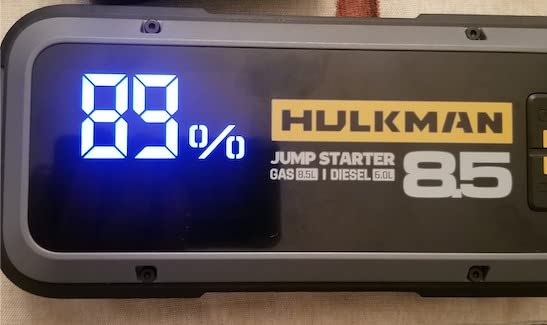
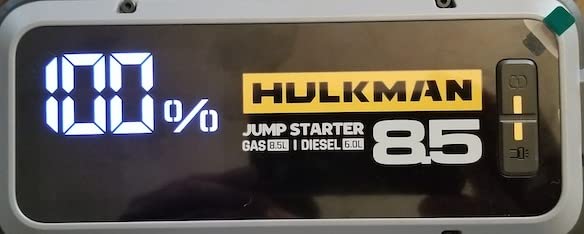
The extras matter more on an SUV than on a car because you have the room and you have the outlets. Three output options cover a 12V DC accessory port at 10A, USB-A QC3.0 and USB-C Power Delivery at 18W, which is enough to run a pump or charge a laptop in the back of the vehicle. The 3.3-inch LCD shows battery level, operational status and error codes, so you are not guessing whether the pack is charged.
Where it falls short is in the details. There is no carrying case, which matters if you want to keep it tidy behind a third-row seat. The battery percentage on the display is not load-compensated, so it can read higher than what is actually available in a cold morning, and fast charging only works with the proprietary 16.8V charger rather than a standard USB-C PD input. None of that stops it from starting your SUV.
Is the Alpha85 right for your SUV?
It suits most owners of midsize and full-size gas SUVs, especially anyone who parks outdoors, drives long rural routes or has already had one battery die in a parking lot. The 4.5 pound weight is low enough that it is not a nuisance to lift, and the IP65 shell shrugs off rain and dust when you store it under a tonneau or in a bed.
Skip it if your only jump will be on a small 2.0L four-cylinder, where you would be carrying four pounds you never use, or if you also want tire inflation from the same box. For cold-weather-only drivers who want the fewest moving parts, this is still the first one to reach for because the fast recharge means you can top it up on a kitchen counter in an evening.
Where it falls short
The missing case and the load-inaccurate display are the two things owners mention most. The missing air compressor is the third, so if a tire goes down on the same trip as the dead battery you still need a separate inflator.
There is one more limitation worth knowing. Fast charging relies on the included AC adapter, so topping it up from a vehicle USB port over the course of a long drive is slow. Budget an evening with a wall outlet rather than planning a quick turnaround on a highway stop.
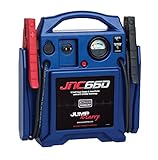
2. Clore Automotive JNC660 – Best for Truly Dead Batteries
Clore Automotive Jump-N-Carry JNC660 1700 Peak Amp 12 Volt Jump Starter , Blue
1700 peak amps
22Ah AGM lead-acid
46 inch #2 AWG cables
18 pounds
Pros
- Keeps cranking where small lithium packs quit
- Starts engines even with the battery removed entirely
- 46 inch leads with serious clamp jaws
- Button-free operation with no charging mode to remember
- Stores for months without losing charge
Cons
- 18 pounds is a lot to lift into a third row
- Roughly five hours to recharge with your own extension cord
- No USB ports and no flashlight
- Two-prong plug does not fit every extension cord
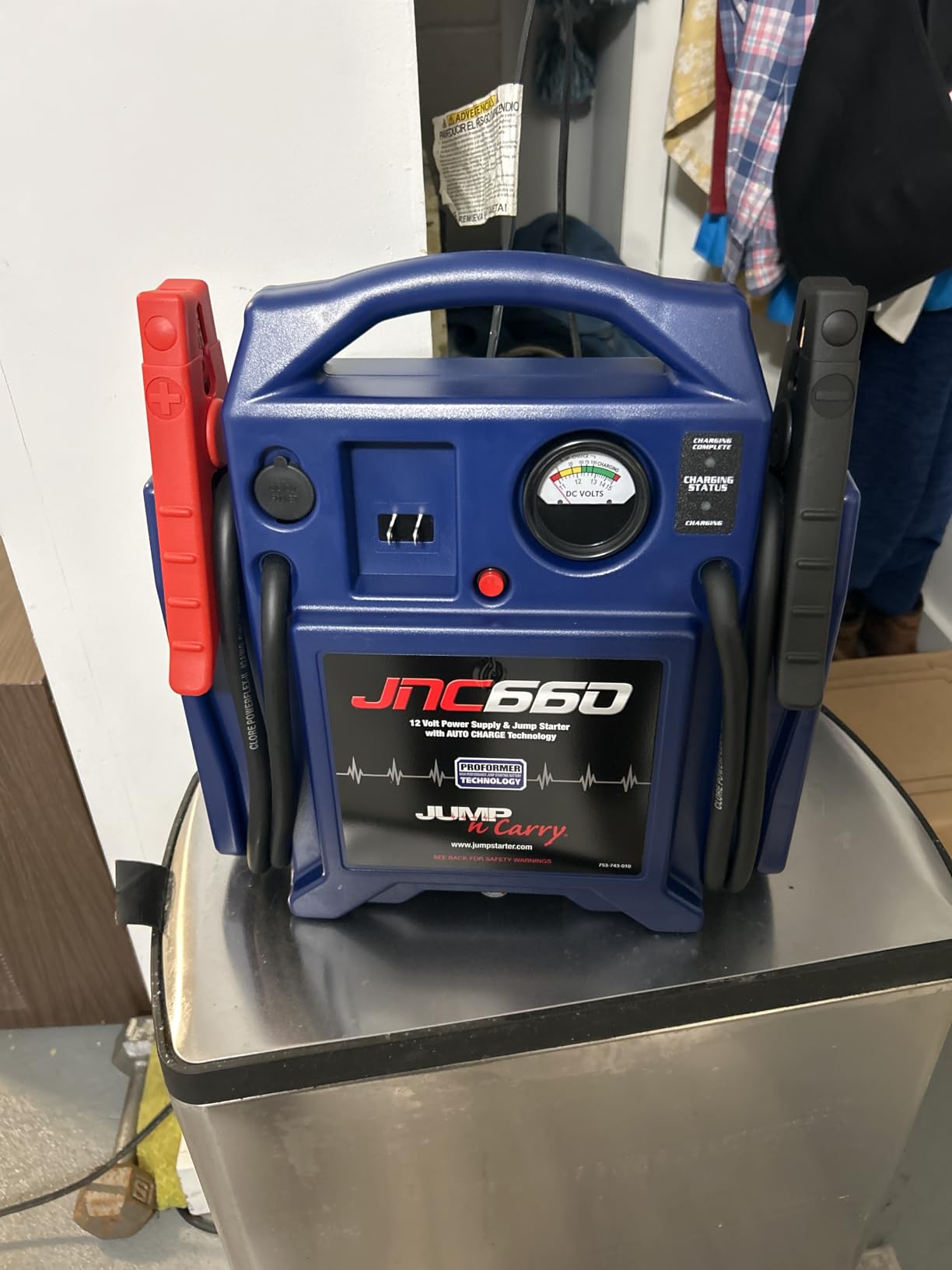
Everything else on this list is a lithium pack built to deliver a short, intense burst. The JNC660 takes a different approach entirely. It carries a 22Ah Clore Proformer AGM lead-acid battery, which stores far more total energy than a pack of similar weight in lithium cells, and lead acid shrugs off cold far better than lithium does. That is why it is the pick for a battery that has been dead for weeks rather than a battery that just got left on for a night.
The numbers on paper understate it. 1700 peak amps on a lead-acid design that can hold cranking current far longer than a lithium pack ever could, plus 46 inch #2 AWG cables that give you real reach to a battery mounted away from the engine bay. Owners describe starting large engines including a 4.2L with no battery installed at all, which is the hardest possible test.
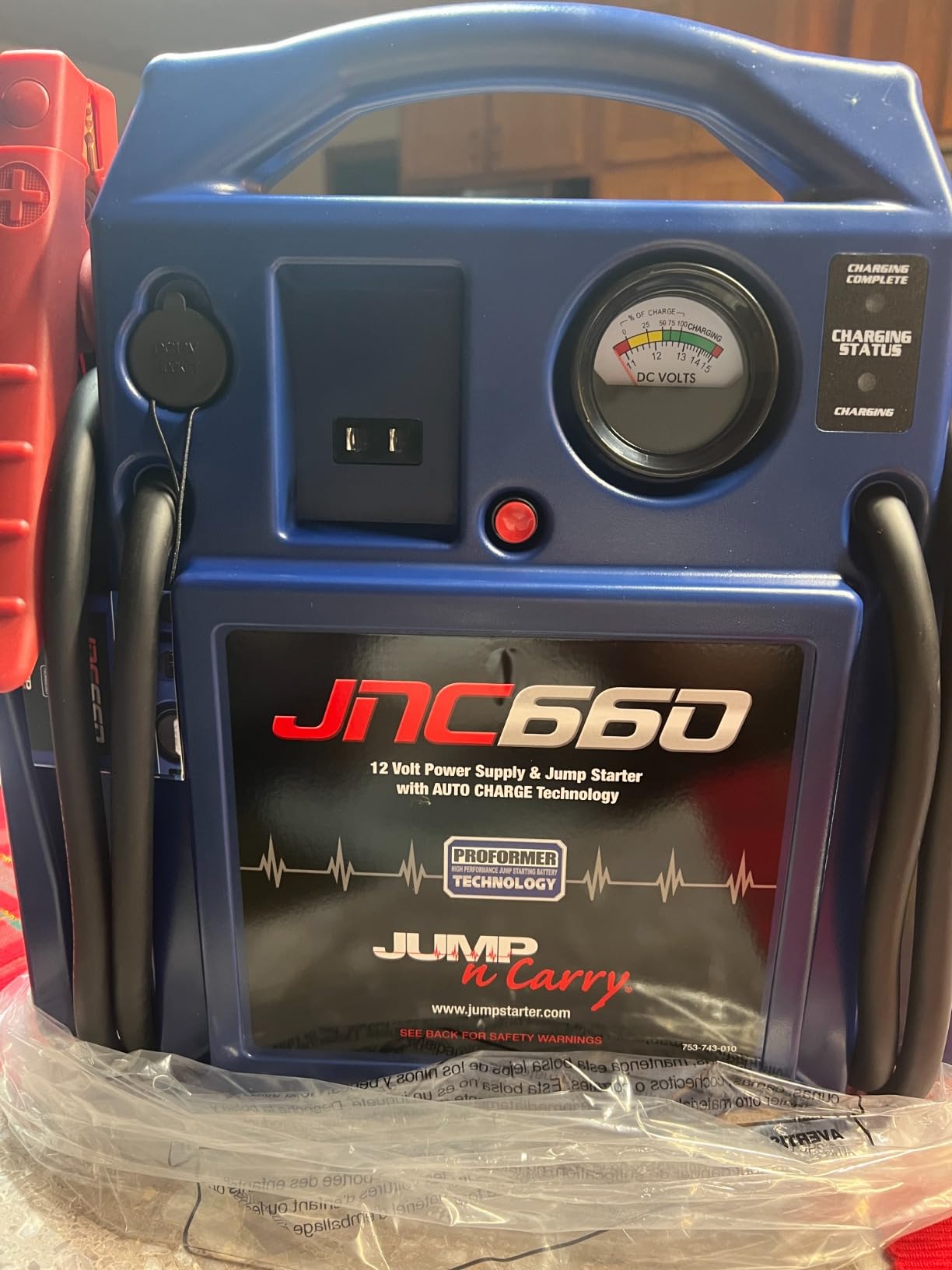
That behavior is exactly what experienced owners on r/askcarguys recommend for genuinely dead batteries and large engines, and their consensus is that the heavy lead-acid Clore packs out-crank lightweight lithium units in that specific scenario. The same forum thread leans toward lithium for convenience and repeated jumps, which is the trade-off in one sentence. Long cables, a built-in voltmeter that reads the pack’s charge state, and a handle with cable wrap holders all point the same way: this is a shop tool.
It also stores indefinitely without a charge cycle and will not over-charge if you leave it plugged in, which matters if it lives in a garage or a truck bed between uses. Trade professionals use it daily and report it surviving drops from a hood. The 12V DC outlet can power accessories while the pack is idle.
Who should buy the JNC660?
Buy it if you tow, you run a boat or RV, you drive a diesel, or you have been stranded once already and want the option that cranks hardest. In our view it is the correct choice for anyone whose SUV spends weeks at a time parked, on a farm, at a trailhead or on a job site where nobody else is nearby to help.
Two packs in one vehicle is a legitimate strategy that owners recommend. A lithium pack for convenience during the year and a lead-acid JNC660 for the truly dead morning is a combination that covers both failure modes, and the forum consensus supports pairing them rather than choosing between them.
Where it falls short
Eighteen pounds is the headline drawback. That is a real lift into the third row of a family SUV, and it is a lot of weight to keep in a small car. Charging takes roughly five hours and requires your own extension cord, and the two-prong plug does not fit every cord.
The feature list is sparse by modern standards. There are no USB ports and no flashlight, so it will not charge a phone or light up a roadside scene. The instruction sheet and the analog charge gauge can also confuse first-time users, which is worth knowing if you are buying this as a gift.
3. GOOLOO GP4000 – Best Value Jump Starter for Big Engines
GOOLOO GP4000 Jump Starter – 4000A 12V Car Battery Jumper Starter Portable
4000A peak
24000mAh, about 98Wh
Engines to 10.0L
3.9 pounds
Pros
- Delivers genuine cranking power from a small package
- Up to 60 jump starts per full charge
- BOOST mode revives deeply discharged batteries
- Works from -4F to 140F
- Includes an EVA storage case
Cons
- Detachable cable is awkward to find and align in the dark
- No wall charger in the box
- USB recharge takes about five hours even on a 50W charger
- Can struggle with a fully sulfated battery
The GP4000 is the one we would tell most SUV owners to buy after the Alpha85. It stores 24000mAh, roughly 98Wh, which puts it among the highest-energy packs here at under four pounds, and it is rated for gasoline and diesel engines up to 10.0L. Owners regularly report it outperforming pricier units on real vehicles.
BOOST mode is the feature that earns its keep on an SUV. When the smart clamps detect a battery voltage so low that the pack refuses to engage normally, the button forces a restart. Deep-discharge recovery comes up again and again in owner reviews of this model, and that is the scenario most SUV owners actually meet after a long winter stop.
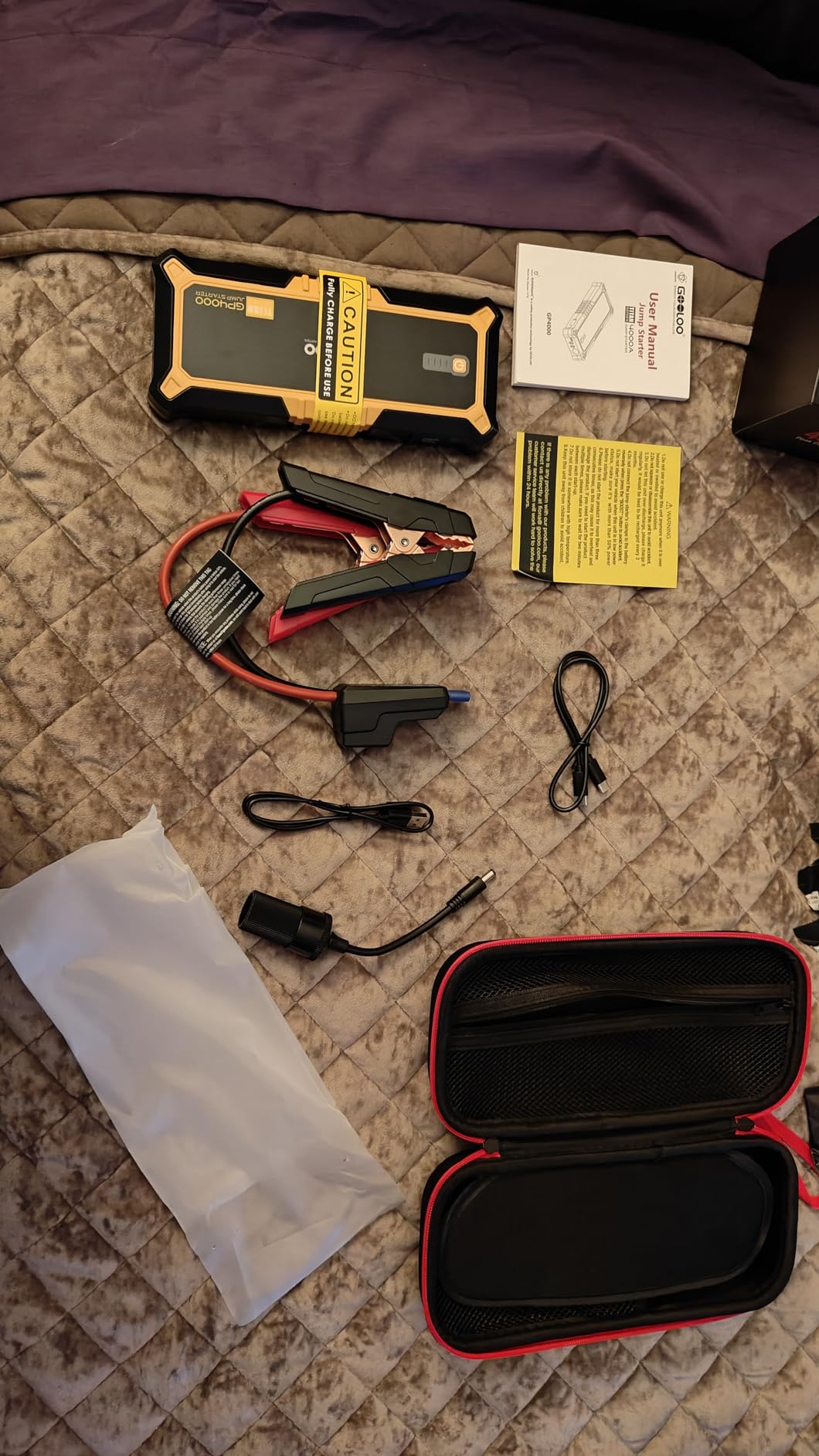
The housing is rugged, with rubber corner bumpers and a drop-resistant shell, and the rated operating range of -4F to 140F is honest for a lithium unit. Dual USB outputs plus USB-C at 5V/3A let you top the pack up from the vehicle while you drive, which turns a long road trip into a maintenance cycle. All-metal clamps and 10 built-in protections are standard on this class.
It is also one of the few packs in this lineup that includes a case. The EVA storage case is molded closely enough to matter, which is more than several competitors here manage.
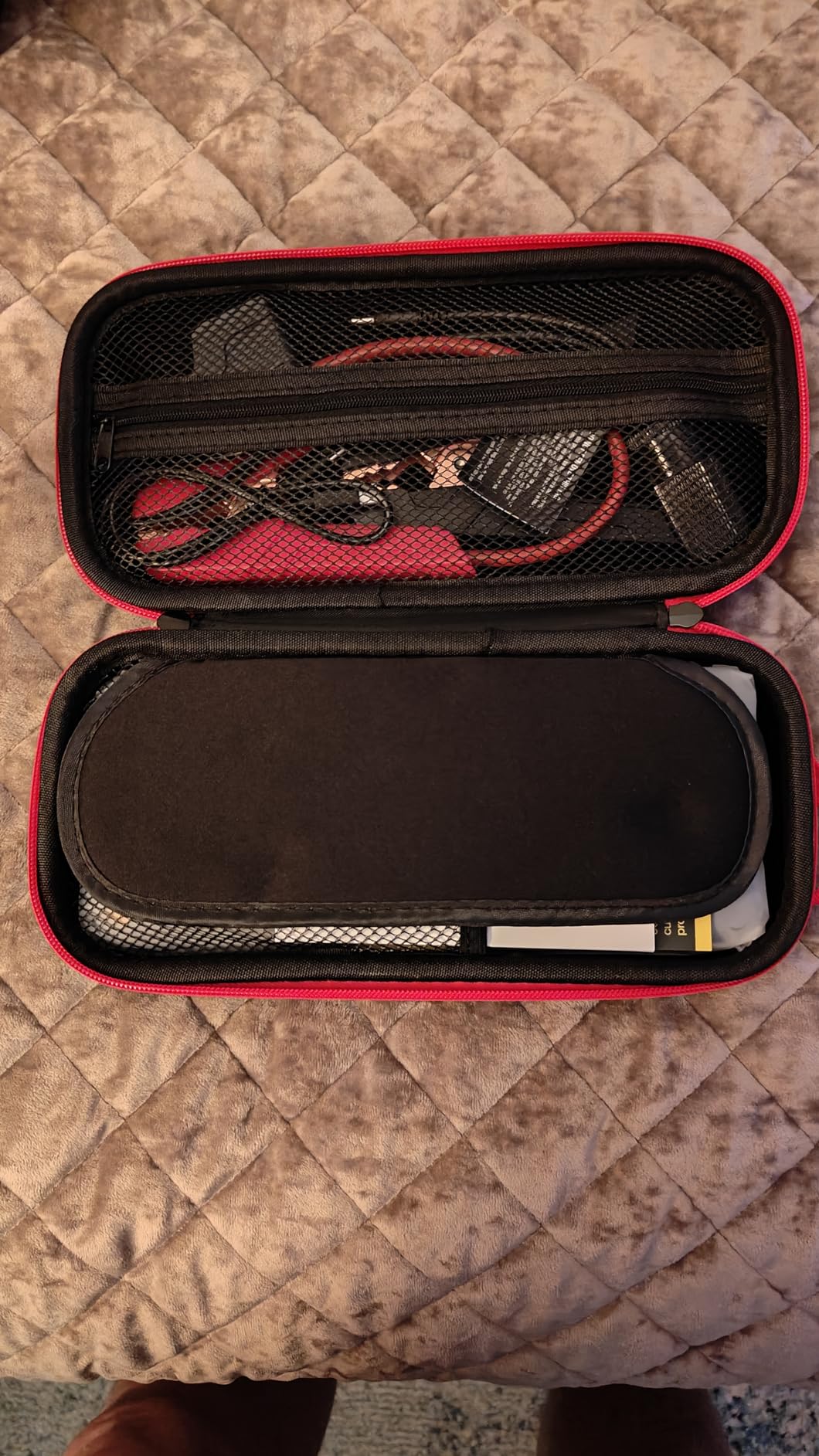
Is the GP4000 right for your SUV?
It fits nearly every SUV on the road today, from a compact crossover to a full-size truck body with a 6.0L diesel. The 98Wh of stored energy is enough for roughly 60 jump starts per full charge according to the manufacturer, so a family that uses it several times a season will not drain it.
The small size is what makes it easy to live with. At 3.9 pounds and under two inches thick, it fits a glovebox, a console bin or the pocket behind a third-row seat without anyone noticing it is there.
Where it falls short
The detachable jumper cable is the biggest annoyance. It plugs into the body separately, which means in a dark parking lot you are feeling for a socket and aligning a small plug, and there is no printed reminder of the correct connection sequence on the housing.
Recharging over USB is slow, roughly five hours even on a 50W charger, and no wall adapter is included. Most importantly, a fully discharged and sulfated battery remains the hard case. If your SUV’s battery has been dead for months, the GP4000 will do a great deal of work short of that, but the Clore is the safer bet.
4. WOLFBOX MegaVolt24 – Best Recharge Speed With USB-C
WOLFBOX 4000A Jump Starter,12V Car Battery Jumper Starter Portable with 65W Quick Charger,LED Display,88.8Wh Booster Jump Box Pack (10L Gas 10L Diesel Engine) with LED Light,Jumper Cables, MV24
4000A peak
88.8Wh pack
Engines under 10L
3 pounds
IP64
Pros
- 65W USB-C refills the pack in about 1.3 hours
- Readable LCD status display
- Only three pounds
- LED flashlight with SOS and strobe modes
- UL
- FCC and CE certified with an IP64 rating
Cons
- Product metadata lists passenger cars as the compatible vehicle type
- Boost mode trips protection if clamp polarity is wrong
- Model numbers in this line differ in capacity so check carefully
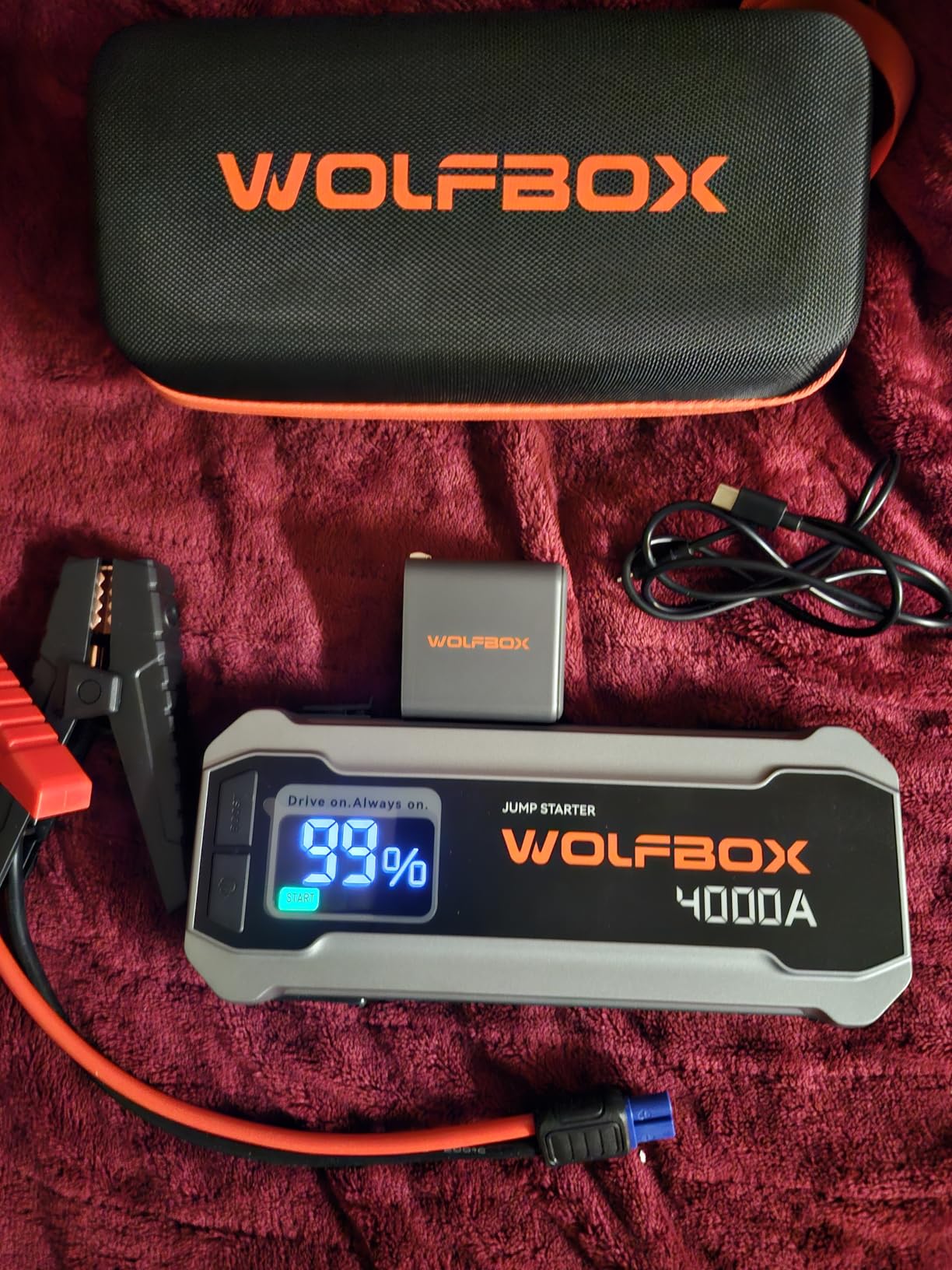
Charging speed is the underrated feature of this pack. The 65W USB-C input, paired with the included PD65W charger, refills the 88.8Wh battery in about 1.3 hours. For an owner who does not want to think about a maintenance schedule, that means you can plug it in after dinner and forget about it, or top up between two errands.
The output side is equally modern: a 65W USB-C port that works in both directions, a QC3.0 USB-A port, and an HD LCD that shows charge and status at a glance. The 4000A peak output covers gasoline and diesel engines under 10 liters, which comfortably handles a 5.3L V8 or a 3.0L turbodiesel.
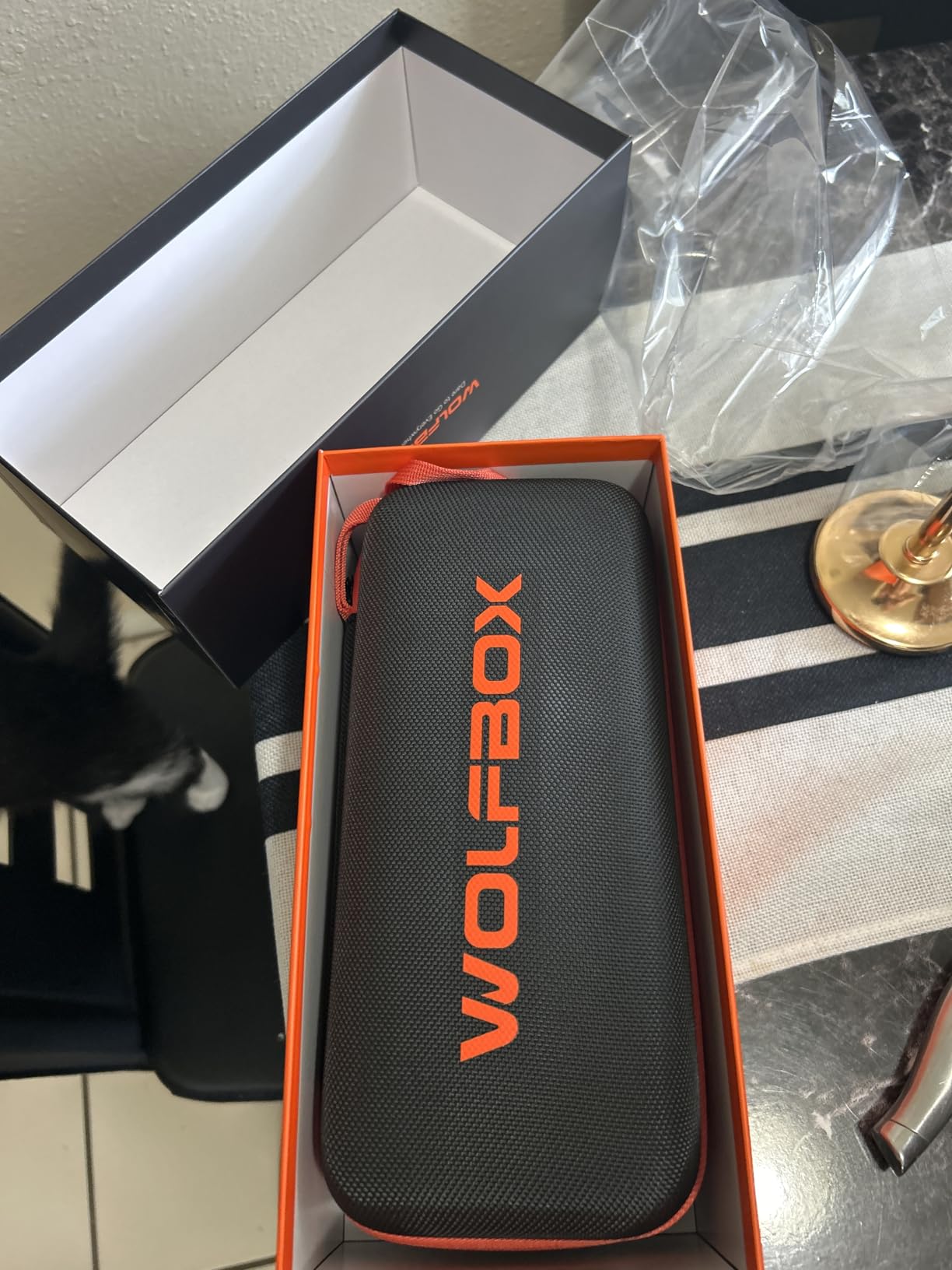
Owners highlight strong starting power on large engines, quick USB-C recharging and an easy-to-read display, with 85 percent of reviews at five stars. The flashlight includes SOS, strobe and high-beam modes, which is more than most competitors at this level offer. The listed operating range of -4F to 140F and IP64 protection cover the winter and mud cases.
At three pounds this is one of the lighter packs we tested against this class of output, which matters when you are lifting it over a tire or pulling it out from under a seat in the rain.
What works well for SUV owners?
The recharge speed changes behavior. A pack that takes eight hours to refill is one you will let sit flat for months. One that refills in 1.3 hours gets put on the counter every time you remember it, which is the whole game with a stored emergency device.
It is also a good match for campers and tailgaters who need a real power bank, since the USB-C port can refill a laptop at useful speed rather than trickling.
Where it falls short
The product metadata lists compatible vehicle type as passenger car, which conflicts with the 4000A and under-10-liter claim on the same listing. We flag that inconsistency so you are not surprised, and it is worth checking the physical label on the unit you receive.
Boost mode is polarity-sensitive here: attach the clamps incorrectly and the protection system cuts output rather than forcing a start. Model numbers within this product line also vary in capacity, so compare carefully if you are weighing it against a similar-sounding pack.
5. Povasee A30 – Lightest Pack That Still Covers a V8
Povasee Jump Starter 5000A Car Jumper Starter, Model A30 12V Jump Box for Car Battery up to 10L Gas or 8L Diesel Engine Battery Jumper Starter Portable with USB Dual Output/LED Light/Storage Case
5000A peak
74Wh pack
10L gas or 8L diesel
1.1 pounds
Pros
- Only about a pound and still covers a large V8
- RST button recovers batteries under 9V
- About 60 quick starts per charge
- 400 lumen flashlight with strobe and SOS
- Smart clamps only output when correctly attached
Cons
- AC wall adapter is not included
- Higher share of one-star reviews than the category leaders
- Smart clamps need careful seating on both terminals
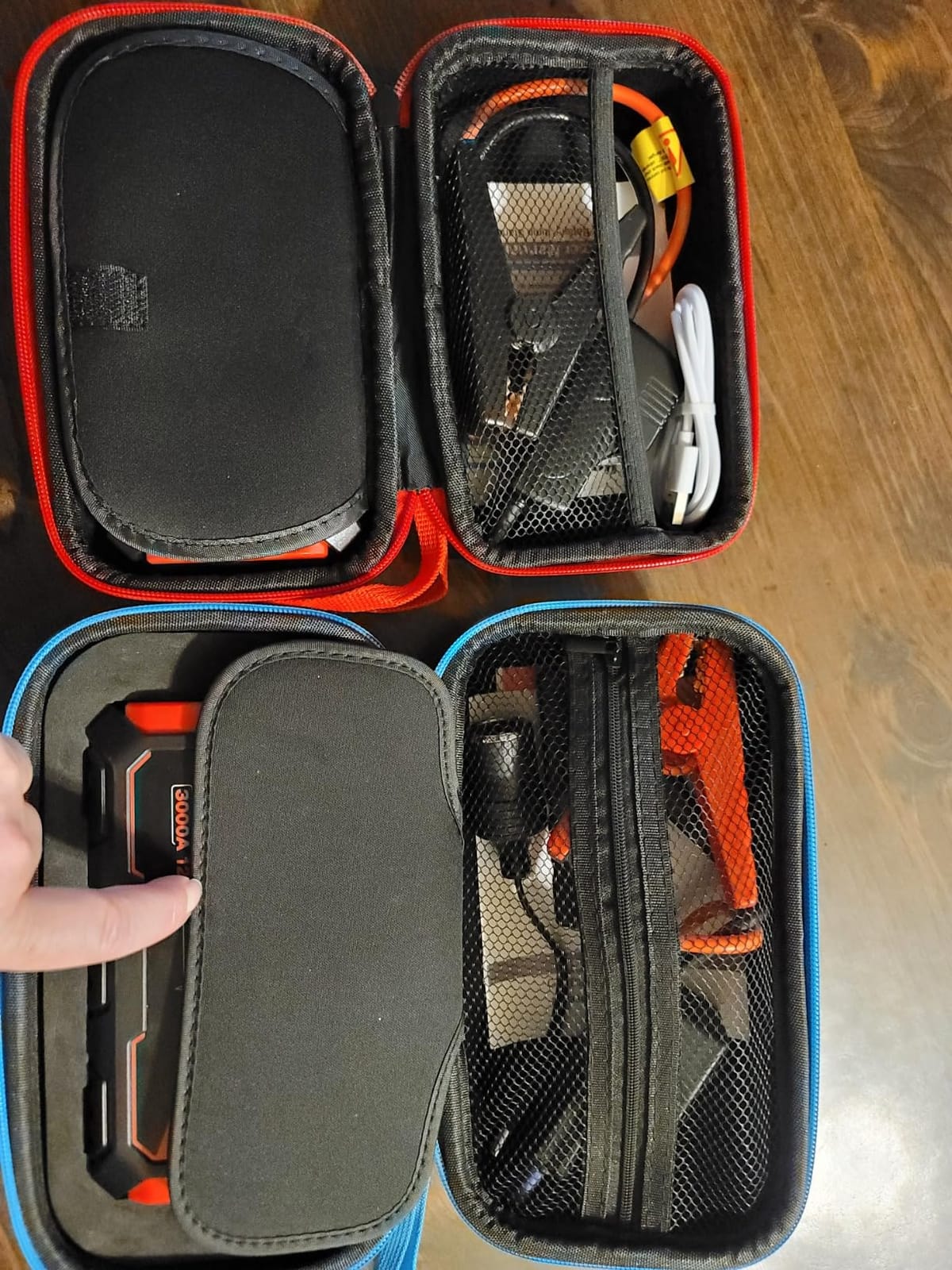
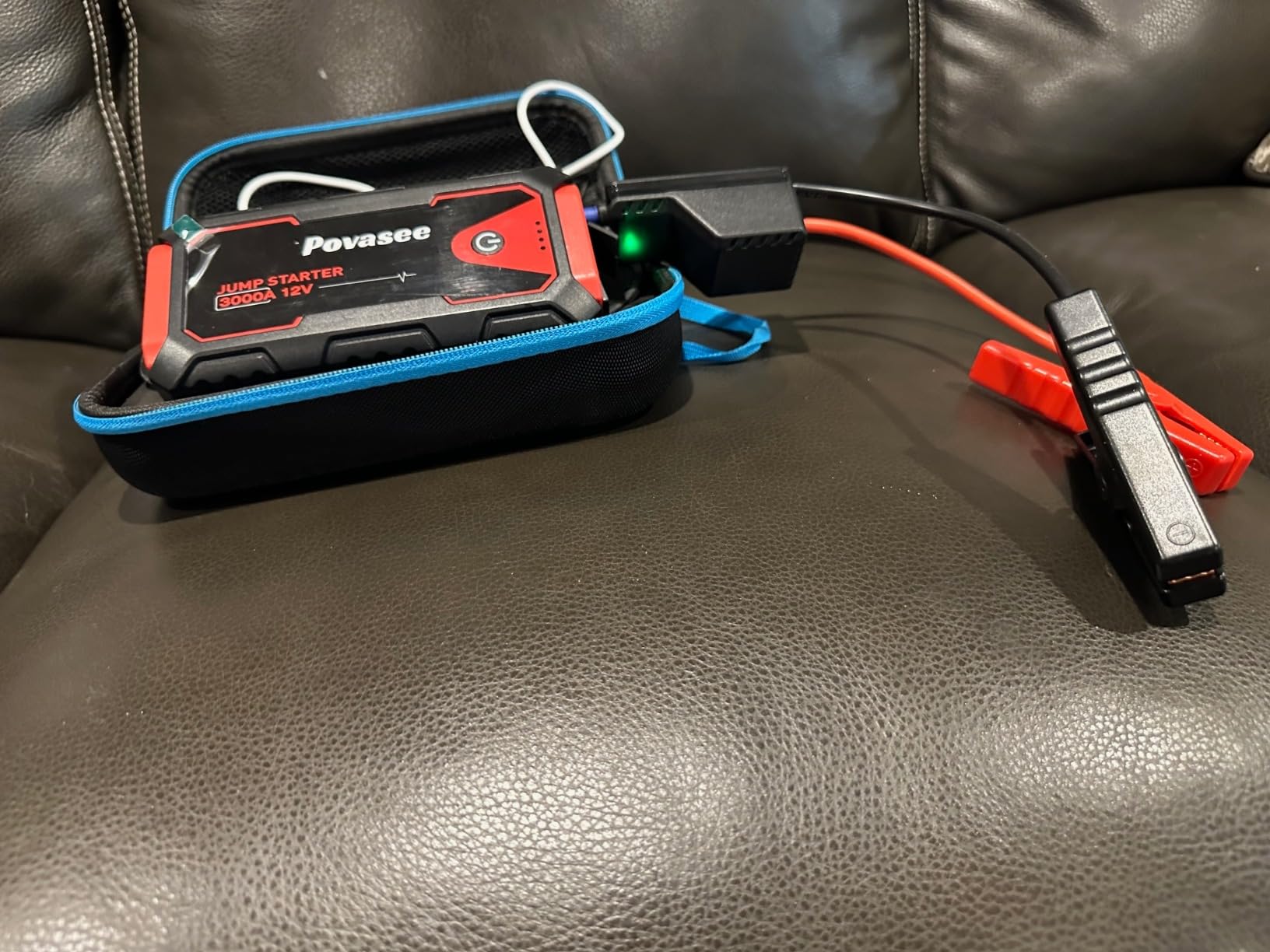
The A30 is roughly the size and weight of a paperback, which makes it one of the easiest packs here to actually keep in the vehicle. One pound one ounce is not a typo, and the 5000A rating still covers gasoline engines up to 10L or diesel up to 8L. For a driver who forgets to stow anything bulky in the cargo well, that matters.
Engine coverage at this weight is the surprise. Owners use it on large SUVs and trucks without complaint, and the RST button restarts an engine when battery voltage drops below 9V, which is precisely the condition a modern SUV presents after a few weeks of sitting with electronics awake.
The listed operating range of -22F to 140F is the widest low-temperature rating in this group, which is a genuine advantage for northern winters. Dual USB outputs at 5V/2.4A and QC3.0 let you charge two devices at once, and the 400-lumen light runs flashlight, strobe and SOS modes.
Protections cover reverse polarity, reverse charge, over-discharge, short circuit, over-charge, over-current, over-heat and spark resistance, and the smart clamps will not deliver current at all unless the attachment is correct.
Who is this pack for?
It suits a driver who wants one small object in the door pocket or the console and will not tolerate anything heavier. Small SUVs, crossovers and even large trucks are within its stated engine coverage, and the case is included in the box.
It is a good second pack too. One in the front console and one in the back of the vehicle covers the case where the front of the SUV is buried after a rollover or a deep snow bank.
Where it falls short
No AC wall adapter is included, so your first charge needs a USB wall plug you already own. The 74Wh of energy is on the lower side for a pack claiming 5000A, which is normal for the weight class but limits how many consecutive jumps you can expect against the rated 60.
The most honest caveat is consistency. Seven percent of reviews are one star, more than the category leaders in this group, which reflects a small number of units that do not perform to the headline figure. The smart clamps also demand a deliberate attachment to both terminals before the pack will output.
6. TOPDON JS3000 – Best Clamps for Big Truck Batteries
TOPDON JS3000 Jump Starter, 3000A, Boost Mode, 9L Gas/ 7L Diesel Engines
3000A peak, 750A for 2s
24000mAh
9.0L gas or 7.0L diesel
EVA case
Pros
- 100 percent copper clamps grip large truck battery posts
- Owners report starts on fully dead 6.7L diesels
- Auto-detects the battery for one-press operation
- 45 jumps per full charge with good retention
- Extendable hook and tilt stand for hands-free lighting
Cons
- Boost window only lasts about 15 to 30 seconds
- No AC wall charger included
- Heavier and bulkier than competing 3000A packs
- One owner reported cell swelling that split the case
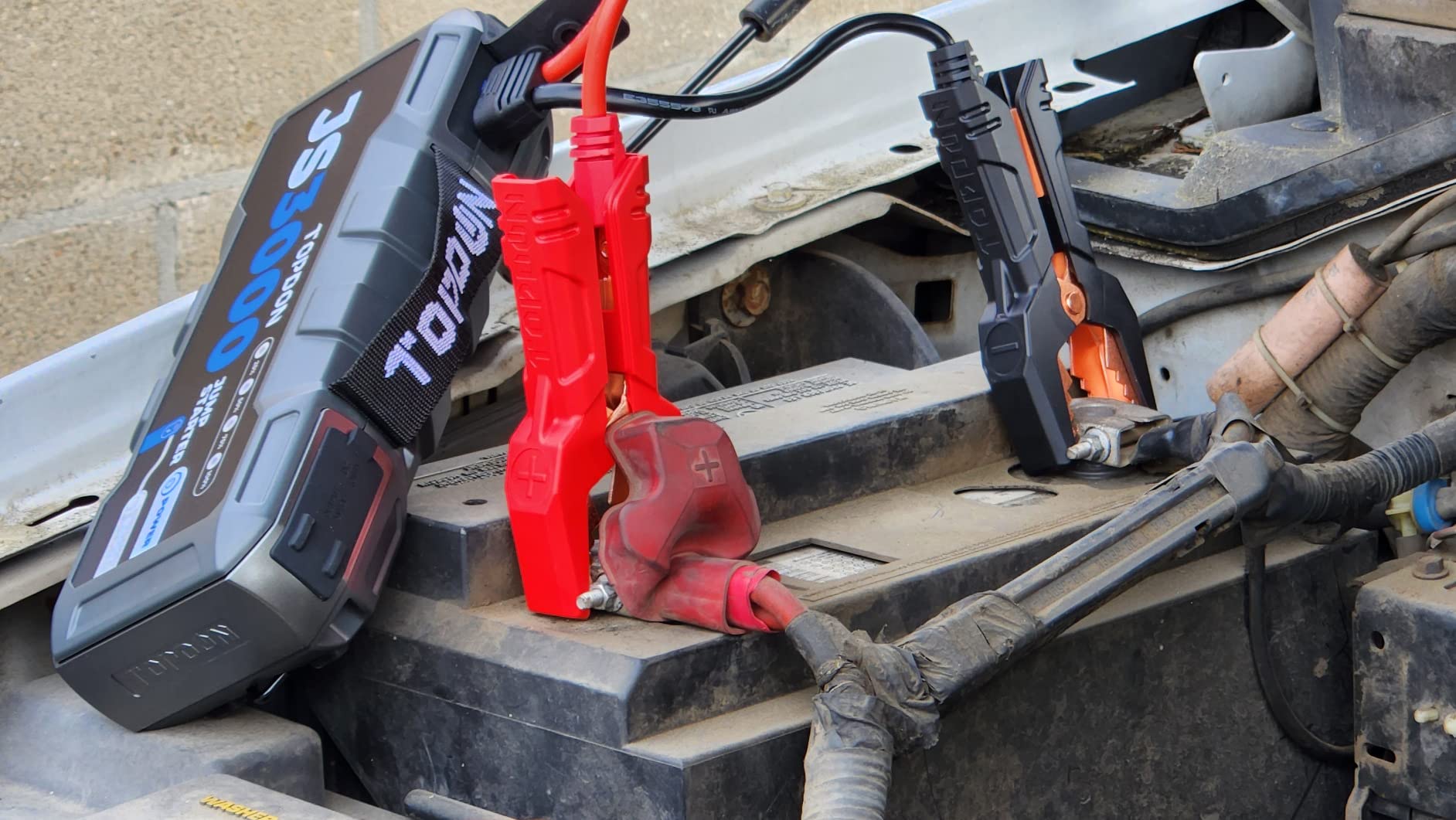
Clamp quality is the number one real-world failure point, and it is where this pack separates itself. The JS3000 ships with 100 percent copper clamps on heavy-duty cables, which owners with large truck batteries consistently single out as the difference between a clean connection and a pack that keeps erroring out. AutoGuide’s testing notes that several brands share interchangeable low-quality clamps, and this is one that does not.
Here is the number that makes the copper matter: the JS3000 is rated at 3000A peak but delivers 750A for two seconds, a figure far closer to what a starter motor actually draws. Owners report starting fully dead 6.7L Powerstroke F-450 and Ford Super Duty F-450 diesels, which is beyond what most 3000A packs will credibly claim on a diesel that has been sitting.
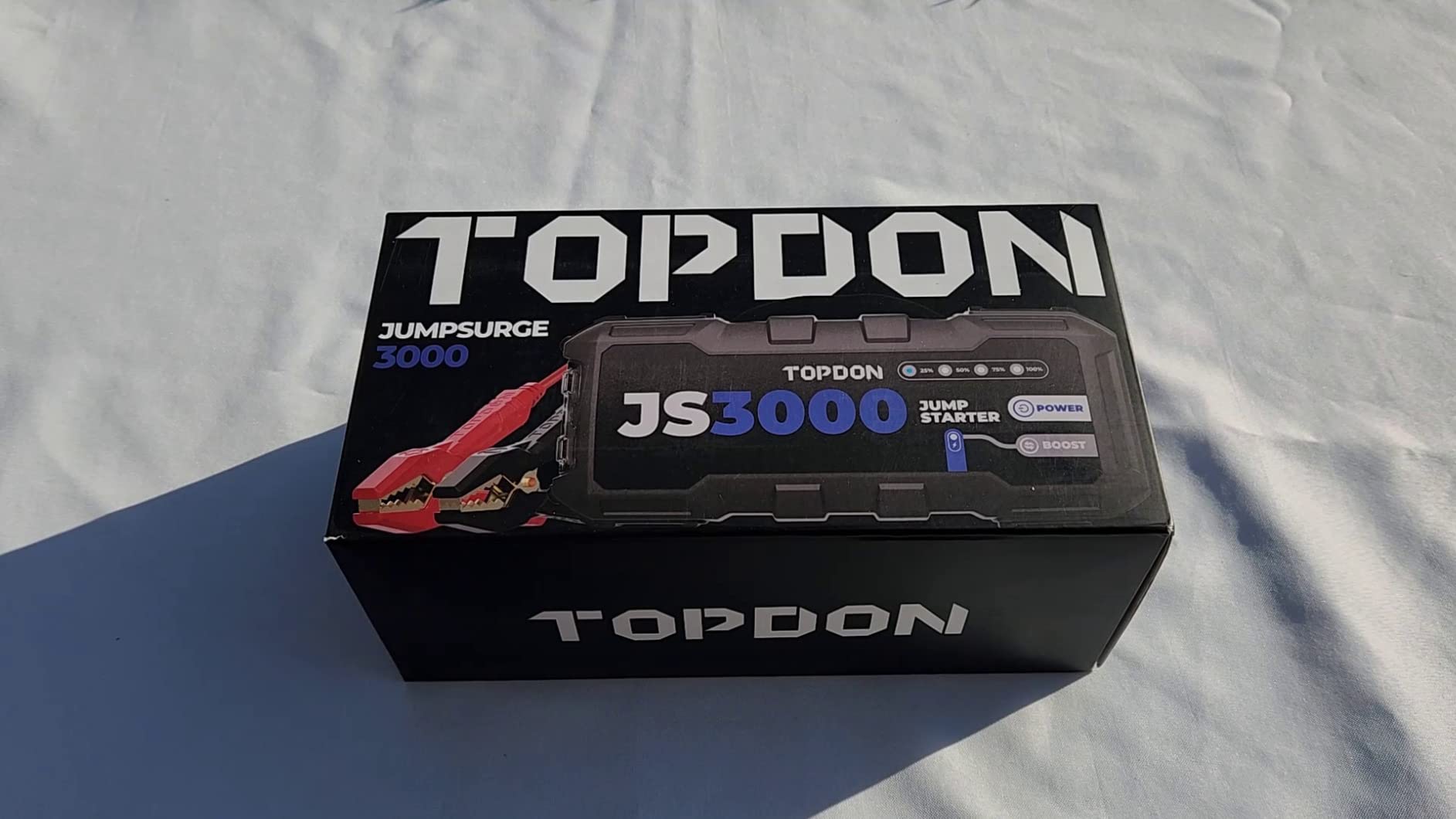
The 24000mAh pack delivers up to 45 jump starts per full charge and holds that capacity well through storage, which is exactly what you want in a vehicle that only uses it a few times a year. Bi-directional Type-C at PD45W can refill a laptop from zero to full in about two hours, and two USB QC3.0 ports plus a 16.8V DC port cover the rest.
The extendable hook and a 30-degree tilt stand give genuinely useful hands-free lighting, and the 400-lumen flashlight plus SOS beacon runs up to 30 hours. The enclosure is an IP54 fireproof design and an EVA carrying case is included.
Is the JS3000 right for an SUV?
If you drive a full-size SUV, tow a trailer regularly or own a 4×4 that spends time in cold mud, this is a strong choice. Seven liters of diesel coverage and copper clamps on heavy cable is the pairing you want when the battery posts are large and crusted and your hands are cold.
Owner reports of responsive customer service and an extended warranty program through the manufacturer add support that is genuinely useful if something fails outside the base coverage.
Where it falls short
Boost mode is only active for roughly 15 to 30 seconds before it drops out. If you do not get the start on the first attempt, you have to reconnect and press again, which is annoying on a cold morning with an engine that cranks slowly.
There is no AC wall charger in the box, and a QC18W USB adapter has to be sourced separately, which makes the first full charge slower than the laptop charging rating suggests. It is also heavier and bulkier than the lighter packs on this list, which is the trade for the copper hardware.
7. HPBS H50 – Most Versatile With a Big Display
HPBS H50 Jump Starter – 5000A Jump Starter Battery Pack for Up to 10.0L Gas and 8.0L Diesel Engines, 12V Car Battery Jumper Starter Portable with 3.0″ LCD Display, Jump Box
5000A peak
10.0L gas or 8.0L diesel
Up to 40 jumps
1.2 pounds
Pros
- Delivers strong starting power for the money
- Large 3.0 inch LCD with easy to read numbers
- About 1.2 pounds and small enough for a console
- Arrives with roughly 75 to 80 percent charge
- Storage box included
Cons
- Charge drains faster than the jump count suggests
- No wall charger
- only a USB-C cable
- Carrying case quality has changed between shipments
- 8 percent one-star share shows more unit variation
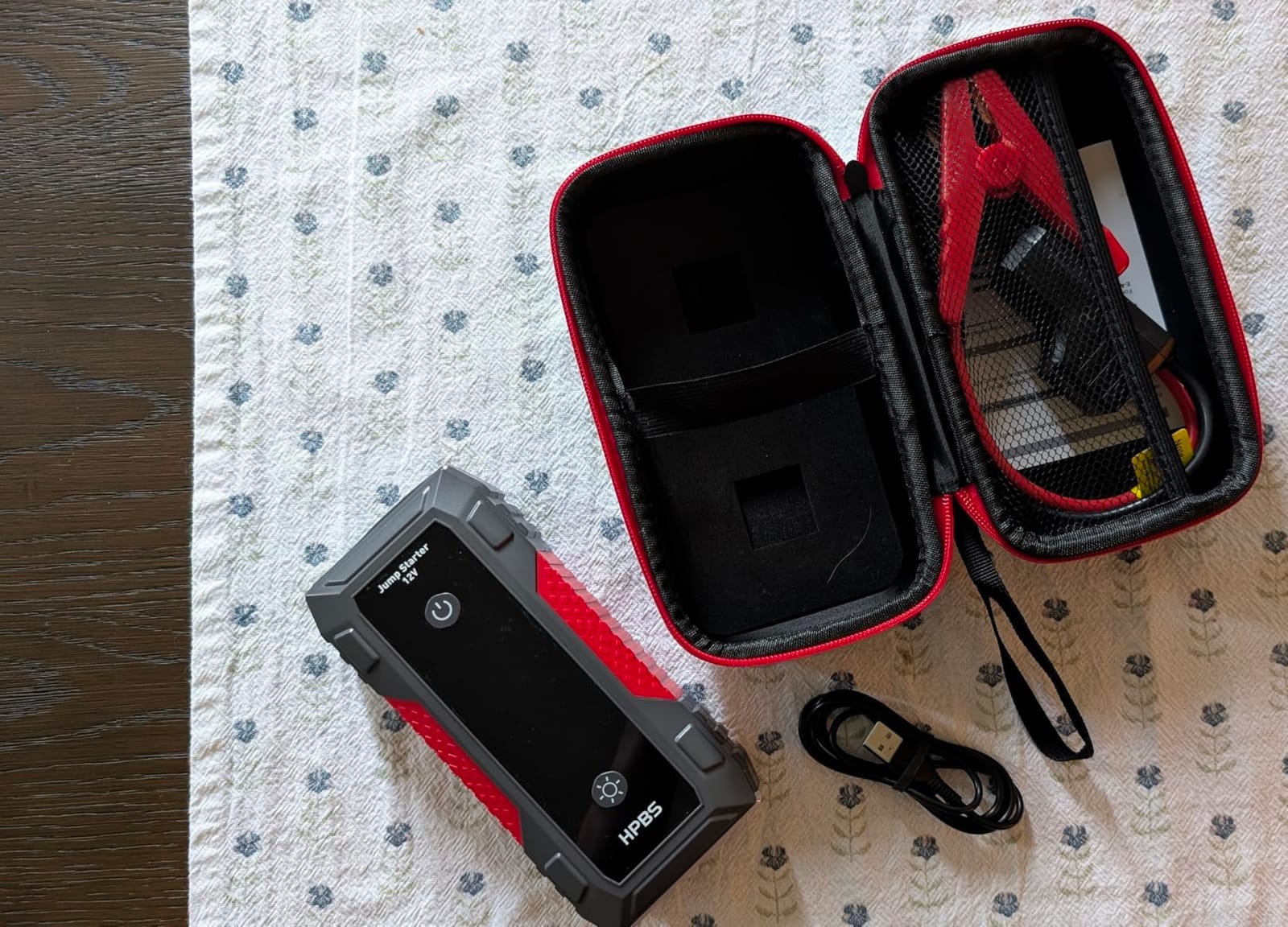
The HPBS H50 does the fundamentals well at a modest outlay. 5000A peak output covering gasoline engines up to 10.0L and diesel up to 8.0L is more engine coverage than several higher-tier packs offer, and owners report it starting fully drained batteries including on a Hyundai Palisade, which is a direct SUV match.
The 3.0-inch LCD is among the larger displays at this level, with big numbers you can read without squinting at a roadside. That sounds like a small detail until you are trying to check charge state in a dark parking structure with gloves on.
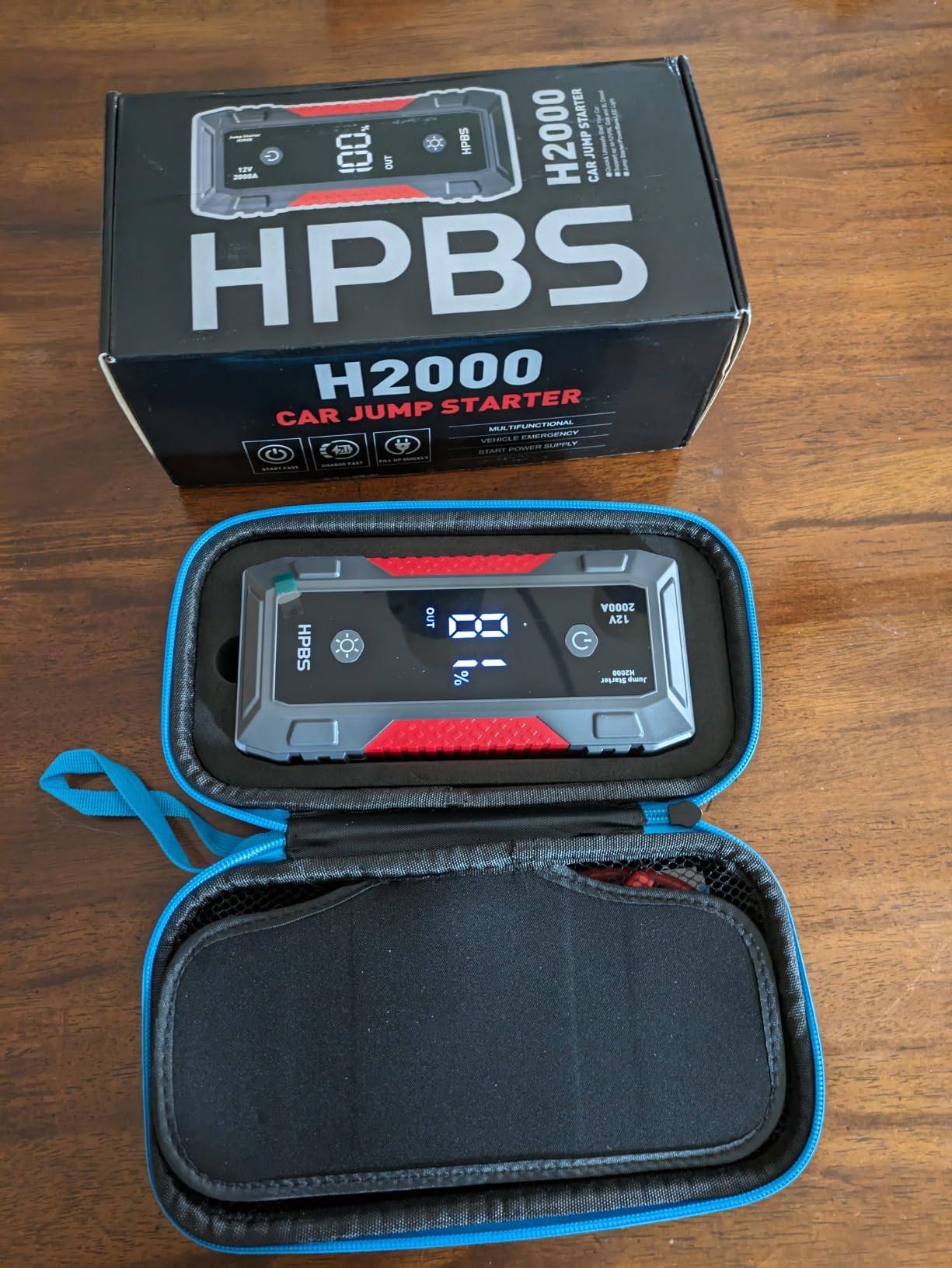
It arrives with roughly 75 to 80 percent charge, so you can use it before you ever find an outlet. Ten safety features cover short circuit, over-temperature, over-charge, over-discharge and reverse polarity, and the power bank offers 18W Type-C input plus USB outputs at 5V/2.4A and a quick-charge 5V/9V/12V tap.
Storage is not a concern either. At 1.2 pounds and 7.08 by 3.14 by 1.77 inches, it slides into a console bin or under a seat rail, and the rated range of -4F to 140F covers normal winter use.
Is the H50 good enough for an SUV?
Yes, for the majority of SUV owners the H50 will do everything a jump starter needs to do. Owners report successful first-try starts on Subaru and Hyundai SUVs without an outlet nearby, and the RST-style recovery handles batteries that are low rather than fully dead.
It is a good choice for a second vehicle, a teenager learning to drive, or a household that wants one pack per SUV without spending much on each.
Where it falls short
Battery capacity is the honest weakness. Owners report that two jumps can consume about half the charge, so the 40-jump rating reflects ideal conditions rather than repeated emergency use. Plan on recharging after every second jump in cold weather.
No wall charger is included, only a USB-C cable. The carrying case design has changed between production shipments with inconsistent quality across three versions, and an 8 percent one-star share reflects more unit-to-unit variation than the category leaders here.
8. BRPOM 8000A – Best for Camping and Tire Inflation
Jump Starter with Air Compressor, BRPOM 8000A Portable Car Jump Starter (All Petrol/12L Diesel), 160PSI 12V Battery Jump Starter Power Pack with Jump Clamps, LCD Screen, 600 Lumens Emergency Light
8000A peak
160PSI compressor
600 lumen light
3.1 pounds
Pros
- Reviewers report starting trucks larger packs failed on
- 160PSI compressor handles tires
- bikes and inflatables
- 600 lumen light with strobe and SOS modes
- Readable LCD for battery and tire pressure
- Doubles as a power bank for phones and tablets
Cons
- Compressor is slow
- a flat to 35 PSI fill took about 16 minutes
- Runs warm to the touch and noisy during inflation
- Jumper cables reported short on some vehicles
- Some reports of units not holding charge
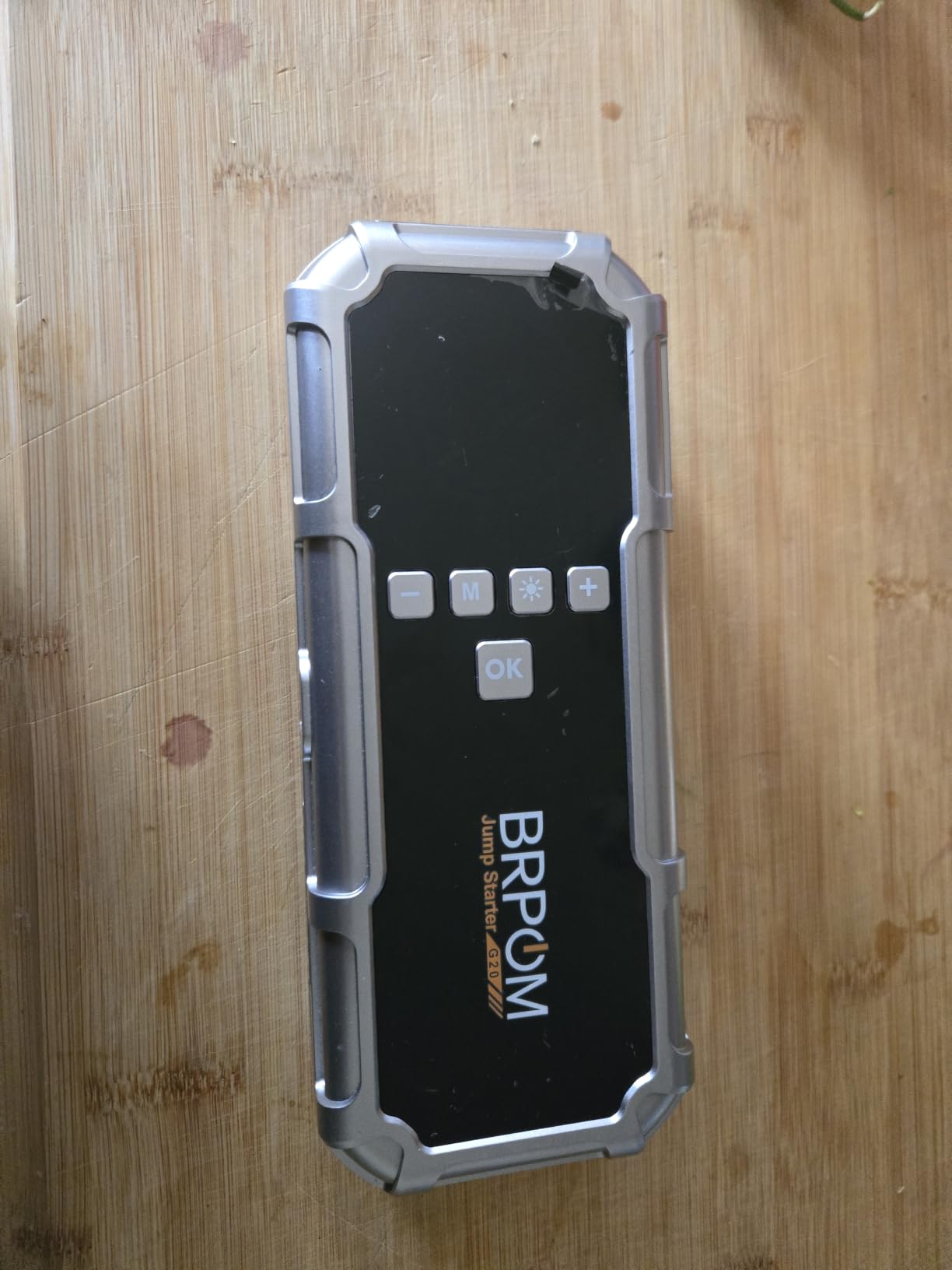
Two problems on a back road happen at once, and this pack addresses both. It is rated at 8000A for all petrol engines and 12L diesel, and that engine coverage reaches every SUV sold here, while the 160PSI compressor carries 5 preset modes, 4 nozzles and switchable BAR, KPA and PSI units. The 3.2-inch LED display reports battery level and tire pressure together.
Owners describe the jump performance as the surprise. Reviewers report starting a truck that two larger and more expensive jump starters could not turn over, which is the kind of report that earns trust regardless of what the box claims.
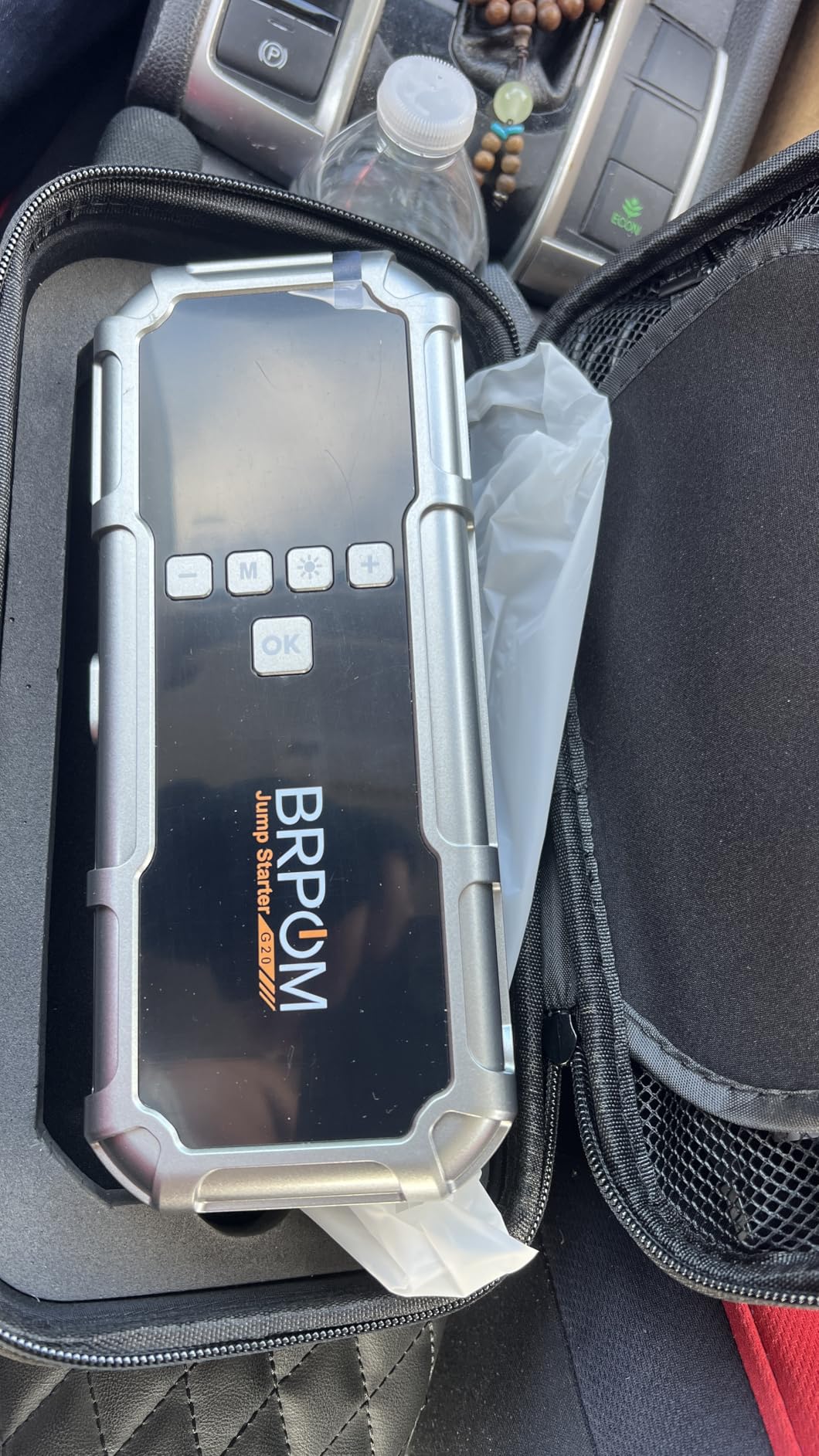
The 600-lumen emergency light runs steady, strobe and SOS modes, and 10000mAh of internal battery powers phones and tablets if your trip runs long. Ten automatic protection mechanisms sit behind a force start button for batteries that read too low to engage normally.
The rated inflation rate of 30PSI to 36PSI in 60 seconds is a best-case figure. Owners running the compressor for a full tire from flat report closer to 16 minutes, so plan on treating the compressor as a convenience rather than a shop tool.
Is the combo pack worth it?
If your SUV carries a spare, a compressor, or an air mattress for camping, one device that does both is genuinely appealing and saves storage space. At 3.1 pounds it fits comfortably in a cargo well or behind a seat.
The operating range of -4F to 140F and a compact body make it easy to leave permanently in the vehicle, and the power bank function is useful for a weekend at a trailhead.
Where it falls short
The compressor is the weak half of the combo. It runs warm to the touch and is noisy, and owners needing a fast fill on a work truck should look at the higher-flow compressors in the UTRAI or the HPBS air kit instead, both of which we rank in our guide to the best jump starters with air compressor. Jumper cables are reported as short on some vehicles.
There are also some reports of units that fail to hold charge after repeated use, and the box includes only the jump starter itself, so the nozzles and hose are less complete than the feature list suggests.
9. OXILAM 6000A – Longest Warranty in the Lineup
OXILAM Jump Starter 6000A for All Gas/12L Diesel, Car Battery Jumper Starter Portable, 12V Lithium Jump Box with Jumper Cables, LED Display, LED Light, Power Bank with USB, Type C Port
6000A peak
Up to 60 jumps per charge
Gas and 12L diesel
48 month warranty
Pros
- 48 month manufacturer warranty
- Proven on a 1-ton Ford Super Duty diesel straight from storage
- Small and light enough for a glove compartment
- Straightforward hookup that first-time users manage
- USB-C input
- two USB outputs and an 800 lumen light
Cons
- A truly flat battery gives a momentary jump only
- No built-in air compressor on this base variant
- Manufacturer advises topping up every three months
Warranty length is the criterion almost every competitor ignores, and it is a legitimate one for a device you will touch twice a year. OXILAM carries a 48-month manufacturer warranty, the longest here by a wide margin, and that coverage is a large part of why this pack sits where it does.
The power figure is not inflated either. 6000A peak current with up to 60 jump starts per charge and coverage for all gas engines plus 12L diesels, which includes pickups, RVs, tractors and yachts. One owner restarted a 1-ton Ford Super Duty diesel with two near-dead batteries after six months of trunk storage, which is about as demanding a test as this category offers.
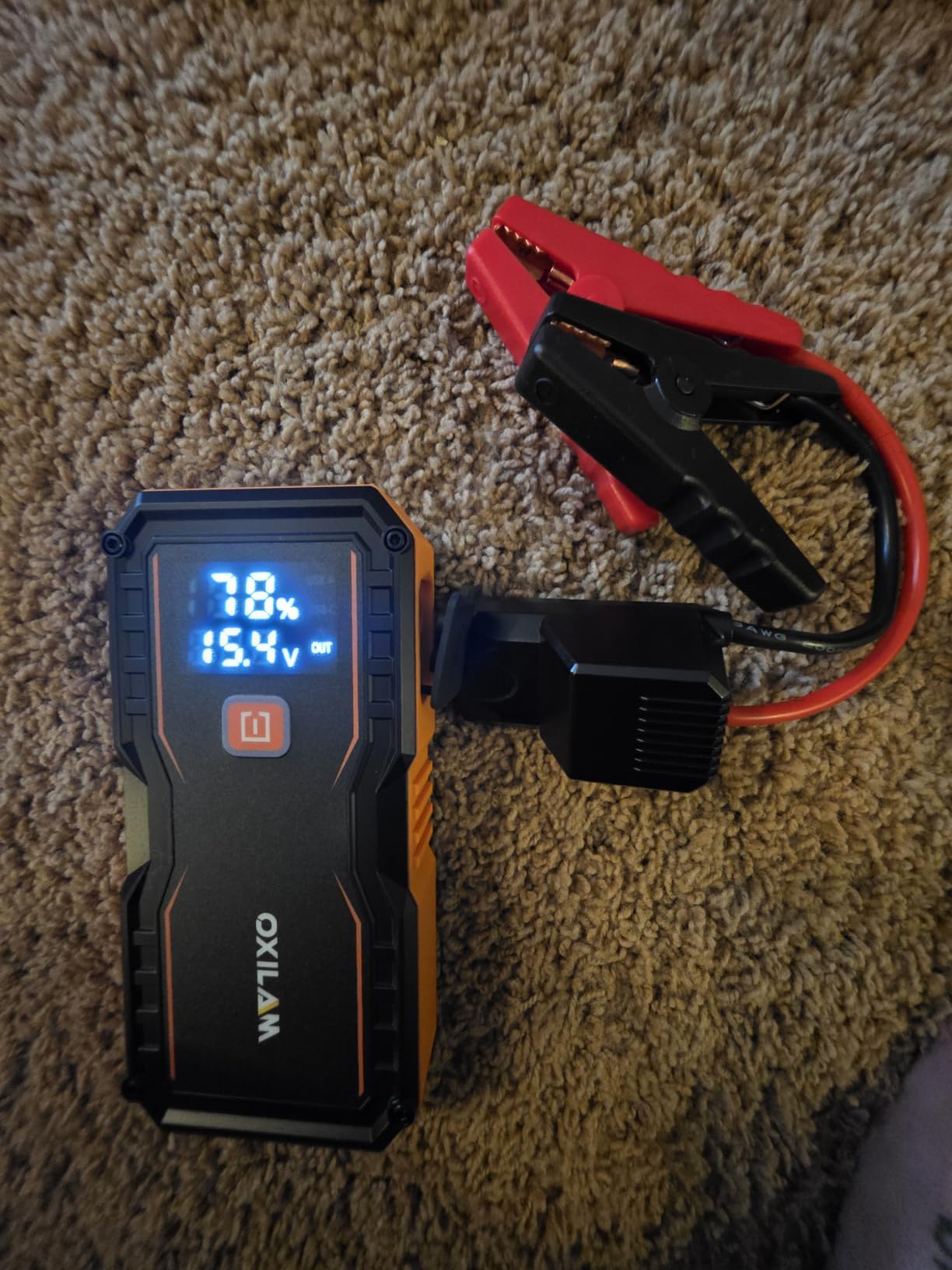
The listed weight of 3.36 ounces is almost certainly a packaging error rather than a real measurement, but the owner reports are consistent about it being small enough for a glove compartment. That matters on a three-row SUV where cargo space is at a premium and the glovebox is the easiest place to reach in a jam.
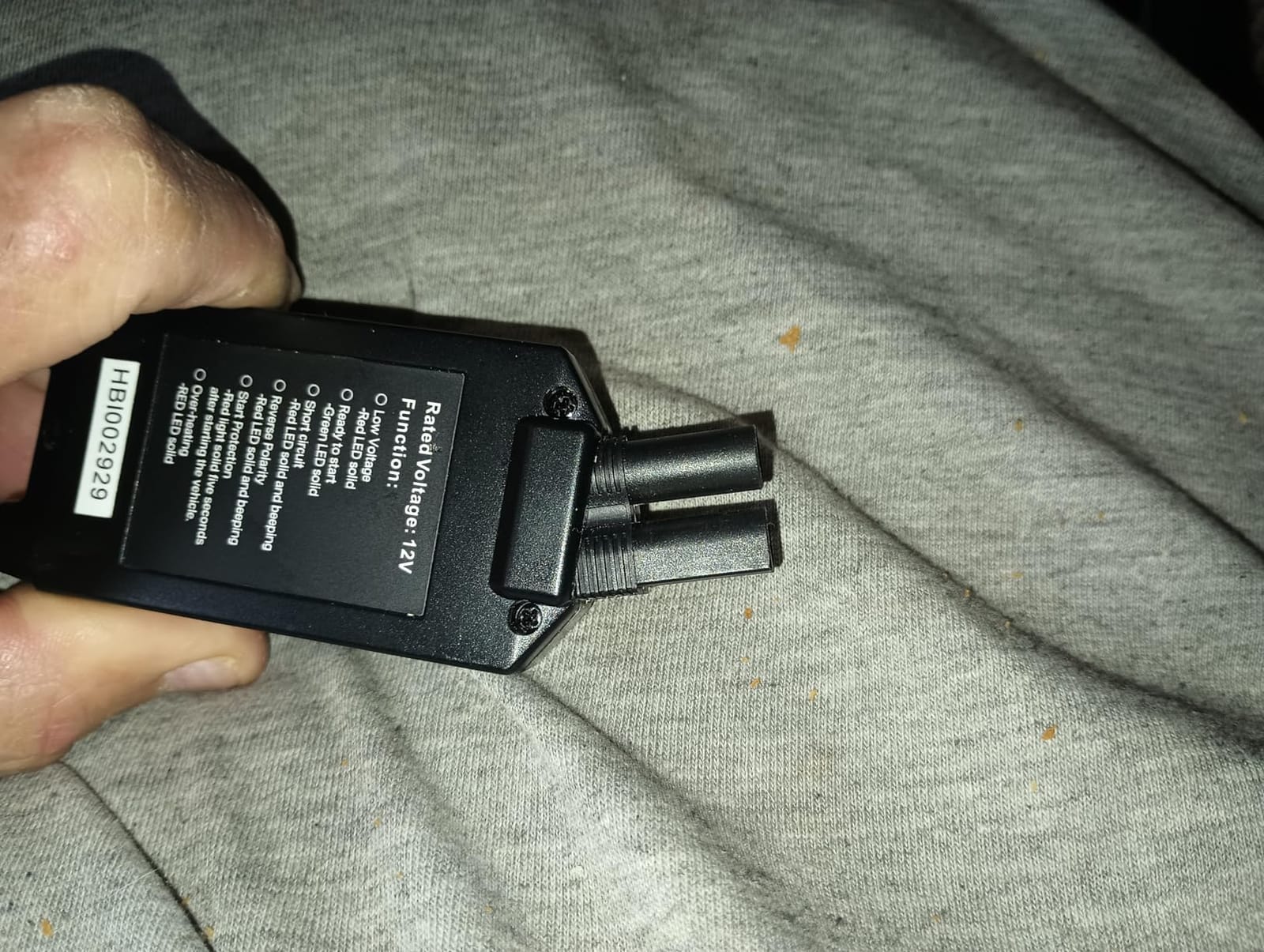
Protection covers short circuits, reverse polarity, sparks, overheating, loose connections and battery bulging. Two USB outputs at 5V/3A, 9V/2A and 12V/1.5A plus an upgraded Type-C input handle charging, and the LED screen shows battery status and remaining power.
Is the OXILAM right for your SUV?
It suits owners who want long coverage and small size more than they want a large flashlight or an air compressor. The 800-lumen light runs flashlight, strobe and SOS modes, and the waterproof shell with a protective cover and non-slip sides is built for a wet trunk or a bed.
You will rarely do better than four years of coverage on a battery device that many owners keep for a decade.
Where it falls short
The most important limitation is behavior with a truly flat battery. Owners report that the vehicle starts but will not keep running once the pack is disconnected, because a completely depleted battery cannot sustain the alternator’s output. This is a jump, not a recharge.
There is no air compressor on this base 6000A variant, and the manufacturer advises topping the unit up every three months and starting from above 50 percent charge, which is a stricter maintenance habit than most packs require.
10. UTRAI 8000A – Most Functions in One Box
UTRAI 8000A Jump Starter with Air Compressor 160PSI for All Gas/12L Diesel
8000A peak
160PSI 40L/min compressor
1000 lumen detachable light
1.25 kg
Pros
- Nine functions in one box including a tire repair kit
- 40L/min compressor with accurate pressure readings
- Detachable 1000 lumen light sticks to the hood
- USB-C charging lets the vehicle top it up
- Hard-shell case with detachable cables
Cons
- Roughly 7.5 hours to full charge
- Menu-driven interface with no dedicated buttons
- Outer shell feels thin for a trunk tool
- Some reports of overheating and refusing to charge
- 9 percent one-star share is among the highest here
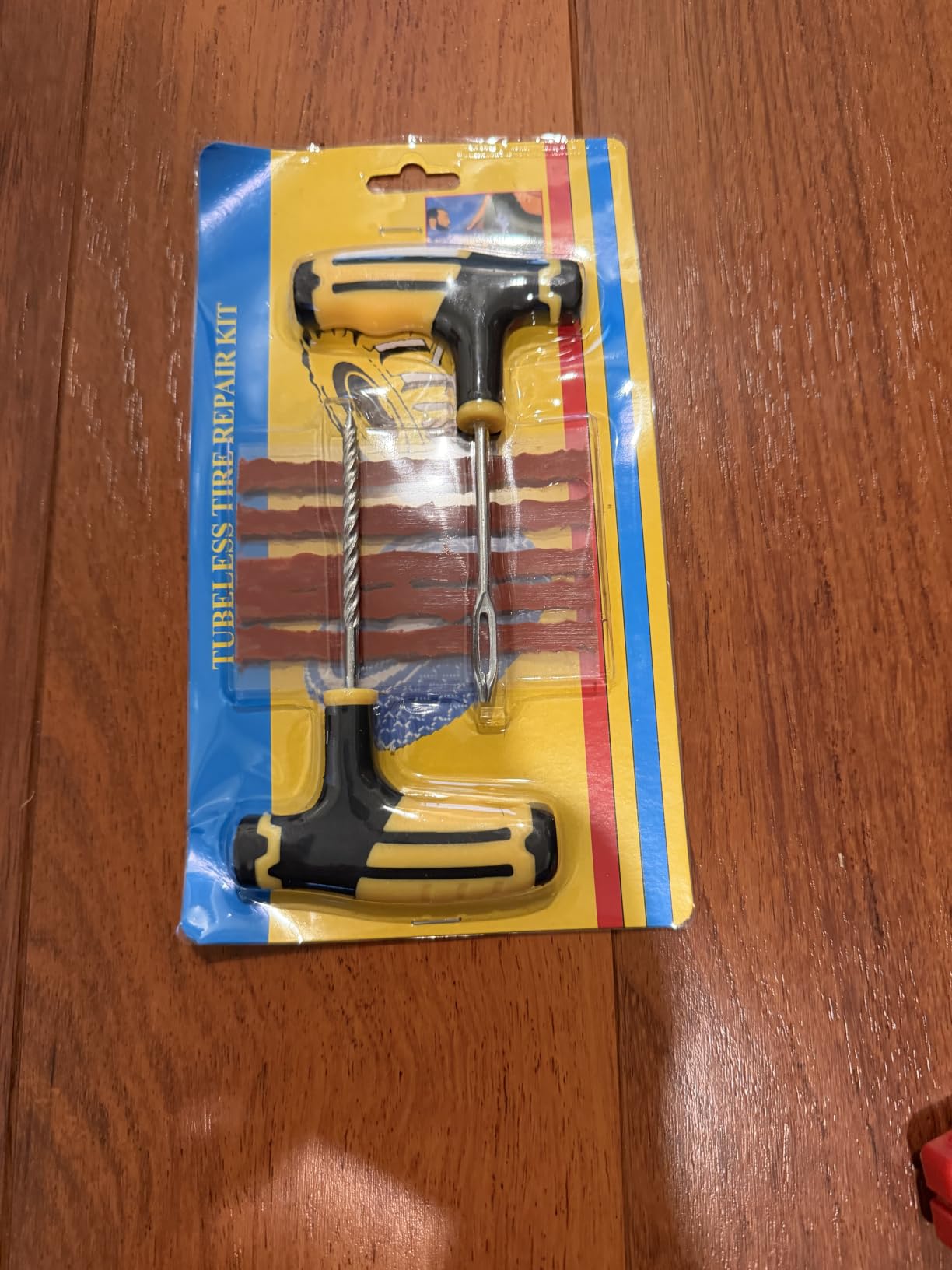
The UTRAI packs nine functions into one body: jump starter, 160PSI compressor, power bank, a detachable magnetic light, a tire pressure gauge, a tire repair kit and more. Owners who buy it tend to stay for the feature density rather than the jump performance alone, and there is real value in not owning a separate inflator, gauge and light.
The compressor is the standout here. At 40L/min it fills a 245/45 R19 from 30 to 36 PSI in about a minute, with smart preset pressure, auto shut-off, pressure detection, a memory function and plus or minus 1 PSI accuracy. That is a genuinely useful roadside tool rather than a novelty, and we compare it with the other dual-function units in our roundup of the best portable 12V jump starters with air compressors.

The detachable magnetic 1000-lumen light is a genuinely clever physical feature. It separates from the body and sticks to a hood or tailgate for hands-free night work, running up to an hour standalone across flashlight, strobe, red warning strobe and SOS modes.
The 8000A output covers all gas and 12L diesel engines with a force start function for fully drained batteries, and the housing is V0 fire-resistant with heavy-duty metal clamps and NTC battery temperature protection.
Who should get the UTRAI?
It suits an owner who camps, tows or works on the road and wants one device instead of four. The included tire repair kit covers a puncture well enough to get to a proper fix, and the gauge takes the guesswork out of checking pressure on a tow-heavy rig.
It also charges over USB-C, so topping up from the vehicle on a long drive is a real option rather than a theoretical one.
Where it falls short
Charging is the weak point. It takes roughly 7.5 hours from empty on the included adapter, which means it is essentially unusable as a daily carry device. The interface also relies on cycling through menus rather than dedicated buttons for each function, which slows you down when you are cold and in the dark.
Build quality is thinner than the feature count suggests, and there are reports of the unit overheating and refusing to display or charge until it cools. Nine percent of reviews are one star, so expect more variation between units than the specification sheet implies.
11. HPBS 5000A Air – Compact Eight-in-One Pack
HPBS 5000A Jump Starter with Air Compressor, Portable Car Battery Jump Starter with 150 PSI Tire Inflator for Up to 10.0L Gas and 8.0L Diesel Engines, 12V Jump Box Battery Charger Booster(Red)
5000A peak
150PSI 30L/min compressor
Eight-in-one design
1.6 pounds
Pros
- Owner revived a truck that sat a month in a New Hampshire barn
- 30L/min compressor inflates a 195/65 R15 in about a minute
- Compact and well built with a hard case
- USB Type-C charging
- 24 month warranty with 24/7 support
Cons
- 5000A ceiling of 10.0L gas or 8.0L diesel
- Ten-minute cooldown required after ten minutes of compressor use
- Compressor use drains the internal battery noticeably
- Some buyers recharge every two to three months
The HPBS 5000A Air is the smaller sibling of the H50 with a compressor added, and for 1.6 pounds that is a good combination. The eight-in-one design covers jump starting, tire inflation, a charging port, an LED flashlight, an SOS signal light, a bike pump, a ball pump and a digital pressure gauge, which makes it a natural fit for an SUV full of outdoor gear.
The jump performance is the part that surprised owners. One owner revived a truck that had sat a month in a New Hampshire barn, which is precisely the failure mode that makes owners move away from lithium packs and toward lead acid. The RST button restarts engines at the lowest battery voltages the pack can detect.
The 150PSI compressor moves 30L/min, filling a 195/65 R15 from 29 to 36 PSI in about a minute, and one owner used it for leak-finding and to bring a truck tire from 20 to 36 PSI in under ten minutes on under two charge bars. That is a working compressor, not a token one.
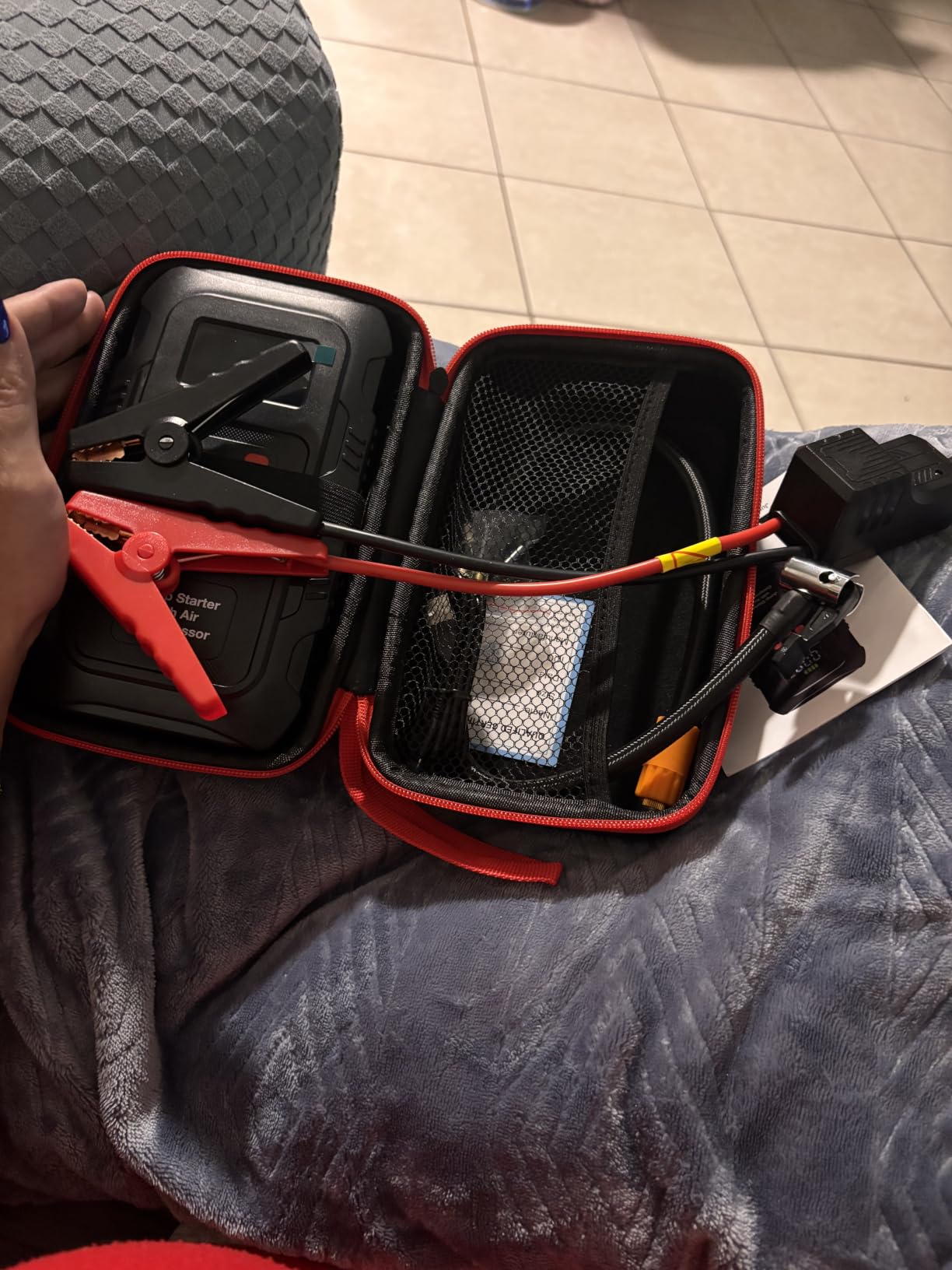
The box includes the smart jumper cable, a USB Type-C cable, a storage box, the pump tube, four air nozzles and a manual, with 10 built-in protections meeting UL, FCC and IEC standards and error indication through lights and beeping smart clamps.
Is the HPBS 5000A Air good for an SUV?
It covers gasoline engines up to 10.0L and diesel up to 8.0L from a full charge, so most SUVs are well inside its range. The hard case keeps the whole kit together, which matters in the third row of a family vehicle where loose cables migrate.
USB Type-C charging means you can refill it from the vehicle on a highway stop.
Where it falls short
5000A is the lowest peak figure among the packs we covered with air compressors, and the 10.0L gas ceiling means a large diesel is at the limit rather than comfortably inside it. The manufacturer also requires a 10-minute cooldown after ten minutes of continuous compressor use, an odd rule that exists because the compressor generates real heat.
Using the compressor noticeably drains the internal battery, and some buyers report recharging every two or three months and starting only above 75 percent charge. Treat it as a semi-seasonal device rather than an always-ready one.
12. GEHOPOW A9 – Compact IP66 Backup Pack
Gehopow 12v Jump Starter for 10.0L Gas/8.0L Diesel, 6000A Peak Car Battery Jumper Starter Portable, IP66 Waterproof Jump Box with Emergency Light and Storage Case
6000A peak
10000mAh pack
IP66 waterproof shell
1.7 pounds
Pros
- Among the most pocketable units here
- IP66 waterproof and dustproof housing
- Started a V8 Ram truck and a sedan on first hookup
- USB-C charging plus power bank output and a three-mode light
- Storage case and USB-C cable included
Cons
- Loses most of its charge after about two weeks sitting unused
- Some units stop accepting a charge after a few uses
- Output feels weak relative to the 6000A rating
- No built-in air compressor and a short USB-C cable
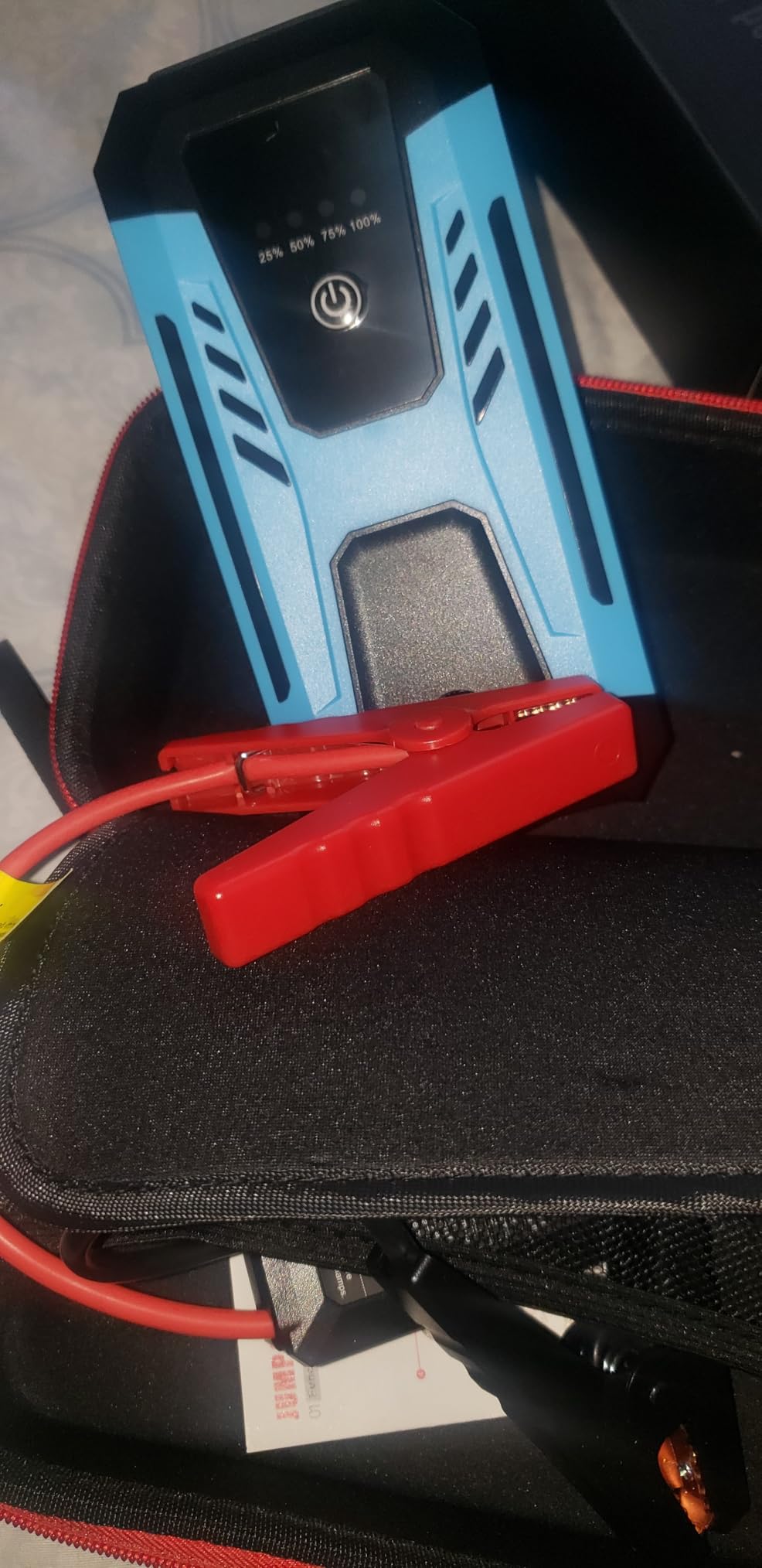
The GEHOPOW A9 is the one we include as a deliberate backup rather than a primary recommendation. At 7.0 by 3.5 by 1.6 inches and 1.7 pounds it is among the most compact and least costly units here, and it sits in the glovebox without complaint. Owners report it starting a V8 Ram truck and a sedan immediately on hookup, so the core capability is real.
The IP66 waterproof and dustproof housing is unusual at this level and genuinely useful on a truck bed or a wet trail. High-discharge lithium technology is claimed for stable operation in any climate, and the USB output charges phones and tablets with a three-mode flashlight, flash and SOS light.
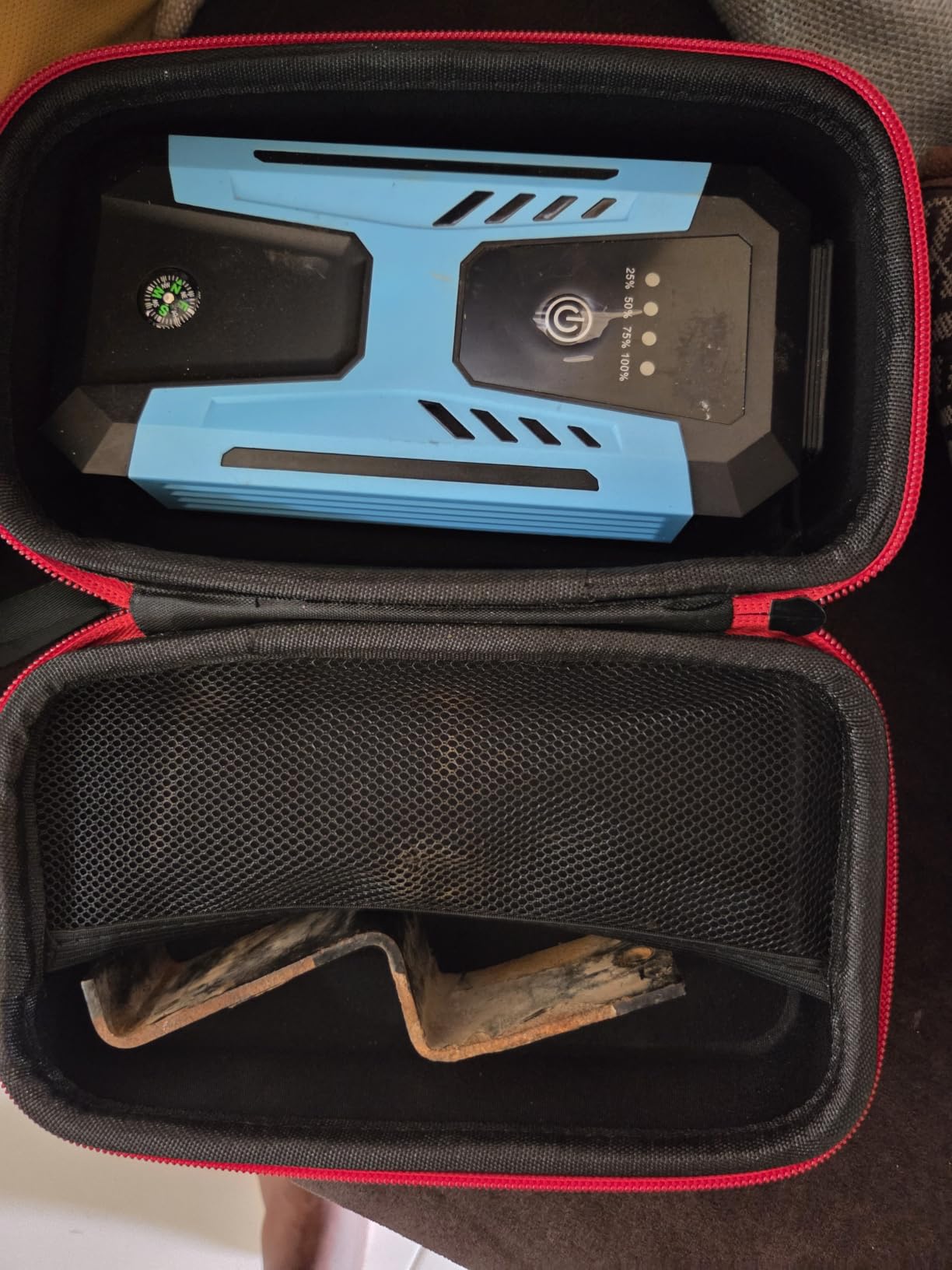
Engine coverage is 6000A for gasoline up to 10.0L and diesel up to 8.0L, which on paper covers every common SUV platform including a 5.0L V8 or a 3.0L turbodiesel. The package includes the jump starter, jumper cables, a USB Type-C charging cable, a manual and a storage case.
What the ratings do not hide is the standby drain. Several owners report units losing most of their charge after about two weeks of sitting unused, which defeats the purpose of a stored emergency device. One owner also reported a unit that stopped accepting a charge entirely after a handful of uses.
Is the GEHOPOW A9 worth buying?
Yes, as a second or third pack. It is also one of the most compact units here, so a household with two SUVs can put one of these in each vehicle for a small outlay, and the glovebox storage makes it something you will actually keep there rather than toss in the cargo well and forget.
It is also a sensible loaner to keep in a work vehicle where someone else will use it and nobody will manage a recharge schedule.
Where it falls short
Standby drain is the central problem, and it combines badly with the top-up-every-few-months advice that other brands give. You should expect to charge this one before every winter season regardless of how little it was used.
Some users also found its actual output weak relative to the 6000A rating, which is consistent with the general pattern that budget packs overstate performance relative to their build quality. There is no air compressor and the included USB-C cable is short, so you will want your own cable.
How to Choose a Jump Starter for an SUV?
How many amps do you need to jump an SUV?
For most SUVs you need roughly 1000A of peak output, and for a V8 or a diesel SUV you want 2000A or more. A four-cylinder crossover will start from about 800A, a 3.5L V6 needs 1500A, and a 5.0L or 5.3L V8 or a 3.0L turbodiesel wants 3000A and upward. More importantly, treat the peak number as marketing: real starter draw measured on a 4.0L V6 was around 301 amps, so what separates a good pack from a bad one is stored energy in watt-hours and whether it can deliver real cranking current for several seconds rather than one bright spike.
Matching the pack to your engine comes down to three tiers. A 2.5L turbo four-cylinder needs very little, a 3.5L V6 sits in the middle, and anything with a V8 badge or a diesel in the engine bay should point you toward the higher end of this list or toward lead acid.
One more sizing note specific to SUVs: cold cranking amps describe what a battery can deliver at -9C. A pack that meets the peak rating in a warm parking lot may disappoint at 5F, because a cold engine oil is thick, the battery voltage sags harder and a lithium pack that started at 70 percent capacity loses more of its punch.
Lithium-ion vs sealed lead-acid for SUVs
Both work. The tradeoff is weight against cold tolerance and how long the pack can sustain cranking current.
Lithium-ion packs store far more watt-hours per pound, recharge in one to two hours, hold charge for months and fit under a seat. They deliver a very intense burst for a few seconds, which is usually enough, and they derate noticeably in deep cold. Sealed lead-acid packs such as the Clore JNC660 weigh 18 pounds, take hours to recharge, hold their charge for months and keep cranking when a lithium pack has already given up.
Our read: a lithium pack for daily convenience and multiple jumps, a lead-acid pack for a genuinely dead battery in a rural or winter setting. Owners on r/askcarguys reach the same conclusion, and one commenter there recommends an old deep-cycle marine battery on a trickle charger as a quieter, heat-safer alternative for people who want reliability over convenience.
What cold weather does to a lithium-ion pack
Below roughly 15F, lithium-ion chemistry delivers less current from the same charge, and a pack sitting in an unheated vehicle overnight loses further capacity. That is the derating that matters most, and it is why the operating temperature ratings we list are a real differentiator rather than a checkbox.
Two practical habits fix most of it. Store the pack indoors between uses if you can, and top it up before a long winter trip rather than after. A pack at full charge in February performs far better than the same pack at half charge in the same temperature.
The owner review that repeated most often across this group was that packs left in vehicles through winter still start engines when brought inside and warmed. None of them stopped working entirely in the cold, which is the more useful finding.
Where to store a jump starter in an SUV
The battery location dictates the storage decision more than anything else. Many modern three-row SUVs put the battery under the driver’s seat, in the cargo floor behind a panel, or in the side of the trunk. Under a seat means you can store the pack in the same bay and reach it without tools.
Three storage zones work well in an SUV. The glovebox is best for small packs like the Povasee or GEHOPOW since it is at hand and dry. The cargo floor behind the third row is best for a heavier lead-acid box where weight is not a problem. Under-seat or in-bin storage is best for mid-size lithium packs that need to stay out of sight.
Avoid the deepest point of the cargo well. Water pools there in a storm, and liquid plus a lithium pack is a combination nobody needs.
How to jump start an SUV safely
First, confirm the failure. Turn the key and listen for a fast clicking or a slow grind rather than silence, and check for a dome light or headlights at low brightness. Silence with no lights usually means a blown fuse rather than a dead battery.
Next, locate the battery. On many SUVs it is under the rear seat or behind a cargo floor panel rather than in the engine bay, and on some it is under the hood on the opposite side from the engine. Take the panels off before you are standing in the rain with a dead pack.
Turn both vehicles off. Connect the red clamp to the positive terminal first, then the black clamp to the negative terminal. On a modern SUV the negative is often a bolt on the body rather than the battery itself, which is the correct choice.
Make sure the pack is powered on, then turn the key and give the engine up to 30 seconds. If it does not start, disconnect the negative first, then the positive, wait a minute and try boost or force start mode once. Do not hold the key against a dead battery repeatedly, because each attempt drains the starter.
Finally, disconnect in reverse order and drive for 15 to 30 minutes. That gives the alternator time to put meaningful charge back into the battery. If your SUV is diesel, the glow plug cycle draws heavily for the first seconds, so give it a longer crank than you would on a gas engine.
How We Picked and Ranked These
We compared all 12 packs on the criteria that decide whether a jump starter works on an SUV: stated engine coverage, stored energy in watt-hours, weight, lead length and clamp build, cold operating range, recharge method and warranty length. Where owner reports contradicted a specification, we weighted the owner reports, which is why several nominally stronger packs sit lower.
We treated the peak-amp figure as a rough indicator only, since there is no industry standard behind it, and we weighted measured starter draw far above the headline number. Safety features including reverse polarity protection and spark resistance were treated as requirements rather than bonuses.
Frequently Asked Questions
How many amps do you need to jump an SUV?
Roughly 1000A of peak output handles most four-cylinder and V6 SUVs, while a V8 or diesel SUV wants 2000A to 3000A or more. Treat the peak figure as marketing and focus instead on stored watt-hours and whether the pack can sustain cranking current for several seconds.
Which is better, Noco or Gooloo jump starter?
For SUV owners the comparison usually comes down to capacity and cold behavior. GOOLOO packs such as the GP4000 store roughly 98Wh, handle engines up to 10.0L and include a BOOST button for deeply discharged batteries, while NOCO units are typically smaller and lighter, better suited to compact crossovers and glovebox storage. Neither is a substitute for lead acid when the battery is truly dead.
What is the best car jump starter for SUVs overall?
The Hulkman Alpha85 is our overall pick for most SUV owners, covering engines up to 8.5L gas or 6.0L diesel from a 74Wh pack, holding charge for months and recharging in about 90 minutes. If your battery is genuinely dead rather than merely weak, the Clore JNC660 is the safer choice.
What is the best jump starter for a 4×4 vehicle?
A 4×4 usually has a larger engine and a battery that has been fully discharged, so weight tolerance and sustained cranking current matter more than size. The TOPDON JS3000 with copper clamps handles large diesel and truck batteries, while the Clore JNC660 in lead acid is the pick when the battery has been dead for weeks.
Can a jump starter hurt my car battery?
A properly rated pack will not damage your battery. Damage risk comes from connecting a low-output pack repeatedly to a deeply discharged battery, or from leaving a battery below its charge level for extended periods. After a jump, drive for 15 to 30 minutes and then put the battery on a proper charger to restore full capacity.
How long can you store a jump starter in a car?
Most lithium packs hold charge for six months or more in typical temperatures, and some are rated for up to 18 months. Cold weather shortens that window, and some budget packs lose most of their charge within two weeks. Top up every three months and avoid leaving any pack below half charge in an unheated vehicle.
The Verdict for SUV Owners
The Hulkman Alpha85 is the pick for most people reading this. It covers a 5.0L V8 from a 74Wh pack, holds its charge through a winter, refills in about 90 minutes and works as a proper power bank for a weekend trip. If your battery is truly dead after weeks, add the Clore JNC660 as a second unit rather than choosing between them.
For the other cases: the GOOLOO GP4000 for the most stored energy under four pounds, the TOPDON JS3000 when clamp reach on a big battery matters, and the OXILAM 6000A when you want four years of warranty coverage in a glovebox-sized box. Once it is in the vehicle, top it up every three months and keep the charge above half in winter.