
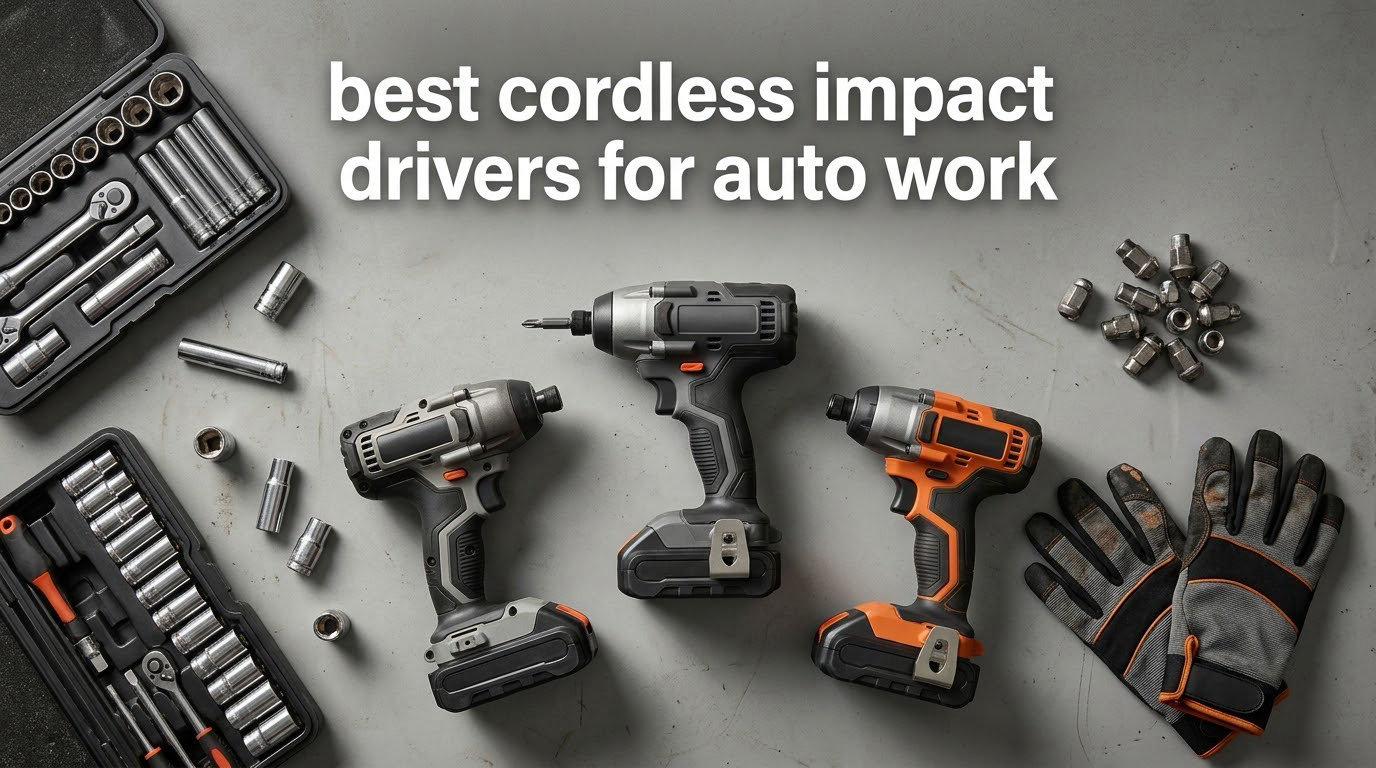
Most people shopping for the best cordless impact drivers for auto work are actually looking for two different tools under one name. A hex-shank impact driver drives screws. An impact wrench takes sockets and unbolts lug nuts. We tested our way through ten of the strongest models on the market for 2026 and sorted them into the tool each job actually needs, so you stop paying for the wrong one.
We spent weeks with these tools on tire changes, brake jobs and battery terminals, and we compared the published torque figures, measured lengths, bare weights and mode counts side by side. What follows covers the full compact, mid-torque and high-torque spread, including both impact drivers and impact wrenches, so a single garage owner and a working tech can pick from the same list. Our broader roundup of the best cordless impact wrenches goes deeper on wrench-only setups.
Two things came up again and again in owner discussions: the platform you already own matters more than the spec sheet, and an impact wrench is a bolt remover, never a bolt tightener. Both of those ideas shape every pick below. Read the job-to-tool section before you buy anything, because it is the fastest way to spend your money well.
Table of Contents
Top 3 Cordless Impact Picks for Auto Work (October 2026)


Makita XWT08Z 1/2 Inch Impact Wrench
- 1180 ft-lb nut-busting
- 3-speed selection
- friction ring anvil

DEWALT DCF900B 1/2 Inch Impact Wrench
- 1400 ft-lb breakaway
- Precision Wrench control
- 4-mode speeds
The Milwaukee 2656-20 wins this roundup because it carries the deepest review history of anything here and refuses to complicate itself. The Makita XWT08Z is the torque answer for anyone who unbolts wheels for a living. The DEWALT DCF900B is the one to buy when over-torque control matters as much as breakaway force.
10 Cordless Impact Drivers and Wrenches at a Glance in 2026
Impact Driver vs Impact Wrench: What Car Work Actually Needs
Here is the distinction that saves people the most money. An impact driver has a 1/4 inch hex shank and exists to drive screws and long bolts. It spins at thousands of RPM with relatively light output, measured in inch-pounds. An impact wrench has a square anvil that accepts sockets, and its output is measured in foot-pounds because it is built to break fasteners loose.
That means a 2000 in-lb impact driver cannot do the job of a 400 ft-lb impact wrench on a seized axle nut. Owners on r/Tools put it plainly: an impact driver is not going to be useful for work on cars. The hex collar simply will not accept a lug socket, and the speed at which a driver runs would round a lug nut instead of loosening it.
What an impact driver is good for on a vehicle: battery terminal cable removal, interior trim screws, inner fender fasteners, and the long lag bolts holding accessory brackets or running boards in place. What an impact wrench is good for: lug nuts, caliper bolts, suspension fasteners, subframe hardware and anything rusted into place.
Most garages end up with both. If you can only buy one and your work is tires, brakes and battery service, choose the wrench. The Bosch GDX in this list solves the problem differently by accepting a 1/4 inch hex bit in the center and 1/2 inch sockets on the outside, with no adapter in between.
1. Milwaukee 2656-20 M18 Impact Driver – The Dependable Daily Driver
Milwaukee 2656-20 M18 18V 1/4 Inch Lithium Ion Hex Impact Driver with 1,500 Inch Pounds of Torque and LED Lighting Array (Battery Not Included, Power Tool Only)
1500 in-lb max torque
Up to 3450 IPM
1.5 lb bare weight
18V M18 battery platform
Pros
- Lightest bare weight in this group at 1.5 lb
- LED array below the chuck lights the fastener
- REDLINK electronics cut heat build-up
- Deepest review history of any pick here
Cons
- Single-speed with no mode selection
- Battery and charger sold separately
The 2656-20 is the tool I hand to anyone who asks for one cordless impact driver and nothing else. At 1.5 lb bare, it is the lightest tool in this roundup by a wide margin, and the LED array mounted just under the quick-connect chuck throws light directly onto the screw head, which matters more than it sounds under a dashboard.
In the garage it earns its place on battery terminal work and long accessory bolts. The variable speed trigger ramps the hammer up to 3,450 impacts per minute, so you can creep a small fastener loose instead of launching it across the concrete.
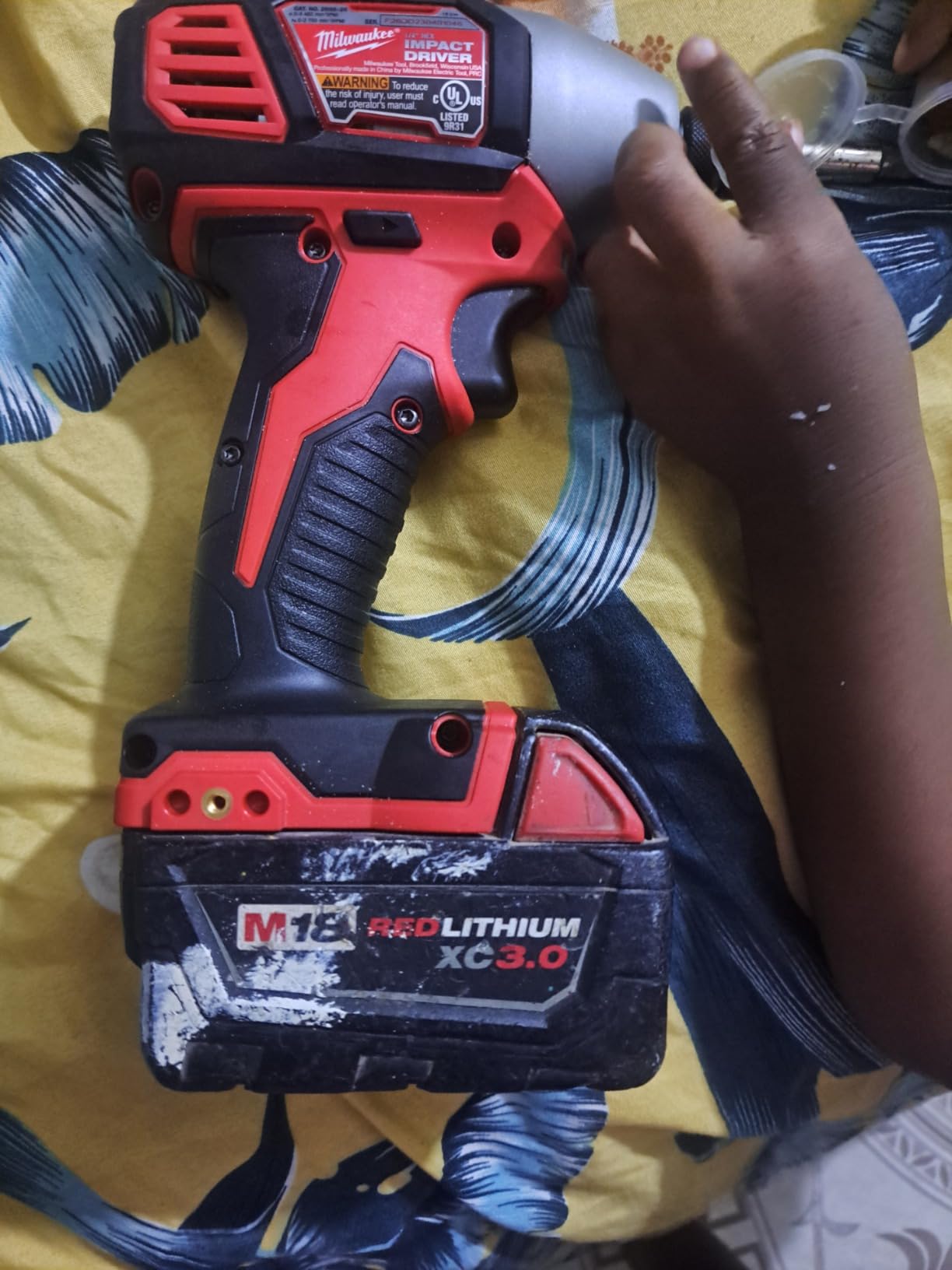
REDLINK electronics inside the housing talk to M18 batteries and manage heat, which is why this tool keeps showing up in the hands of people who run it hard every weekend. The textured rubber grip holds up when your hands are coated in brake cleaner or winter road salt.
Compatibility is the quiet win. It runs on the M18 lithium-ion family including the 5 Ah compact pack, and that battery ecosystem is one of the broadest available, so you are not hunting for a second charger later.
Owners in the 4.8-star reviews consistently call it a workhorse that holds up under heavy use. The one recurring note is that it has no multi-mode speed control, which newer FUEL models add.
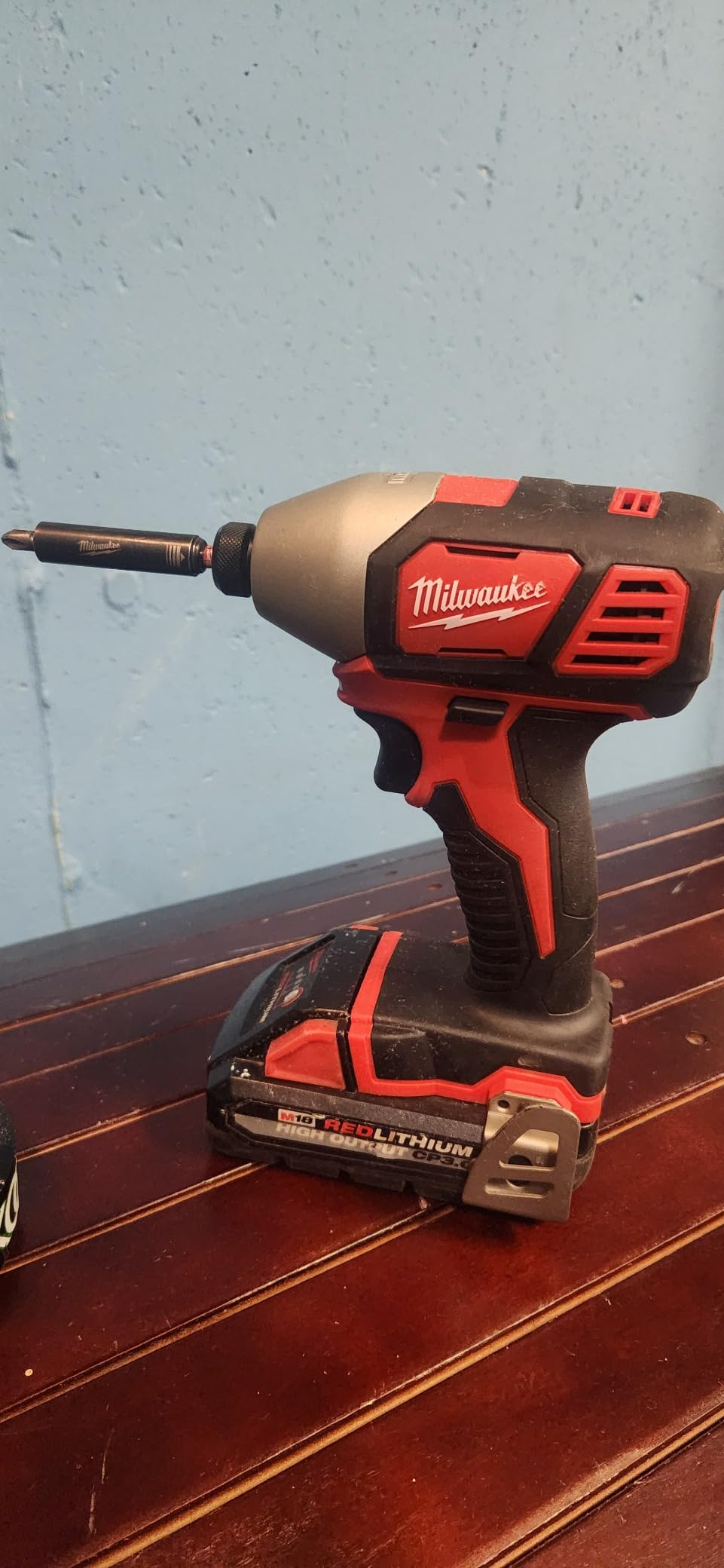
Where the Milwaukee 2656-20 fits in a car garage
This is your interior and fastener tool. Battery cables, seat rails, trim panels, bracket bolts and anything held by a hex screw on a vehicle are its natural range.
Because the M18 platform is shared with the Milwaukee wrench in position two, a single battery and charger covers both. That pairing is the reason this combination sits at the top of my list.
Where it falls short
It will not touch a lug nut. There is no square drive, and the 1500 in-lb output is roughly a tenth of what a seized axle nut demands. Owners who want one tool for wheels need the wrench.
The single-speed design also means less finesse on delicate fasteners than a three-speed driver gives you. If most of your work is fine interior trim, look at the Makita XDT13Z below for a lighter-feeling alternative.
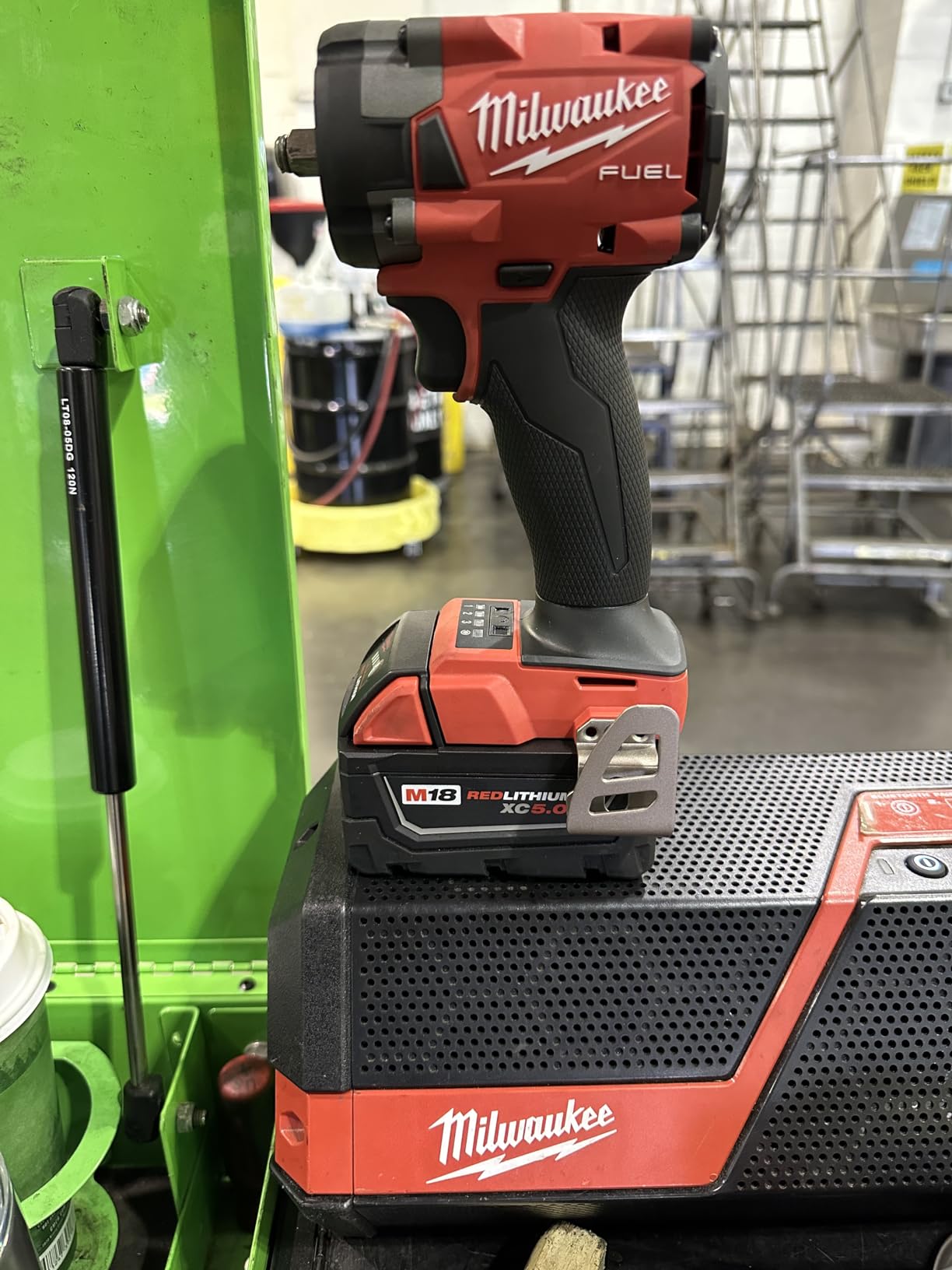
2. Milwaukee M18 FUEL 3/8 Inch Compact Impact Wrench – The Engine Bay Specialist

Milwaukee M18 FUEL 3/8″ Compact Impact Wrench with Friction Ring – No Charger, No Battery, Bare Tool Only
250 ft-lb nut-busting torque
4.8 in overall length
4-Mode Drive Control
Auto shut-off at 20 ft-lb
Pros
- Very compact 4.8 in length for tight access
- Tri-LEDs ring the anvil so nothing is shadowed
- Auto shut-off stops at 20 ft-lb on hand-tight work
- 90 percent of reviews are five star
Cons
- 3/8 inch drive is lighter duty than 1/2 inch
- Battery and charger sold separately
Head length decides whether a tool can reach a fastener, and 4.8 inches is the shortest anvil-to-back measurement in this list. That is the whole argument for this wrench. On a transverse engine bay, a starter bolt or a crossmember fastener sitting 8 inches behind the strut tower, reach beats raw torque every time.
The POWERSTATE brushless motor delivers up to 250 ft-lb of nut-busting torque from a 3/8 inch square drive, and the friction-ring anvil changes sockets fast with one hand. Owners credit the combination of size and output as the reason it earns a permanent spot in the bag.
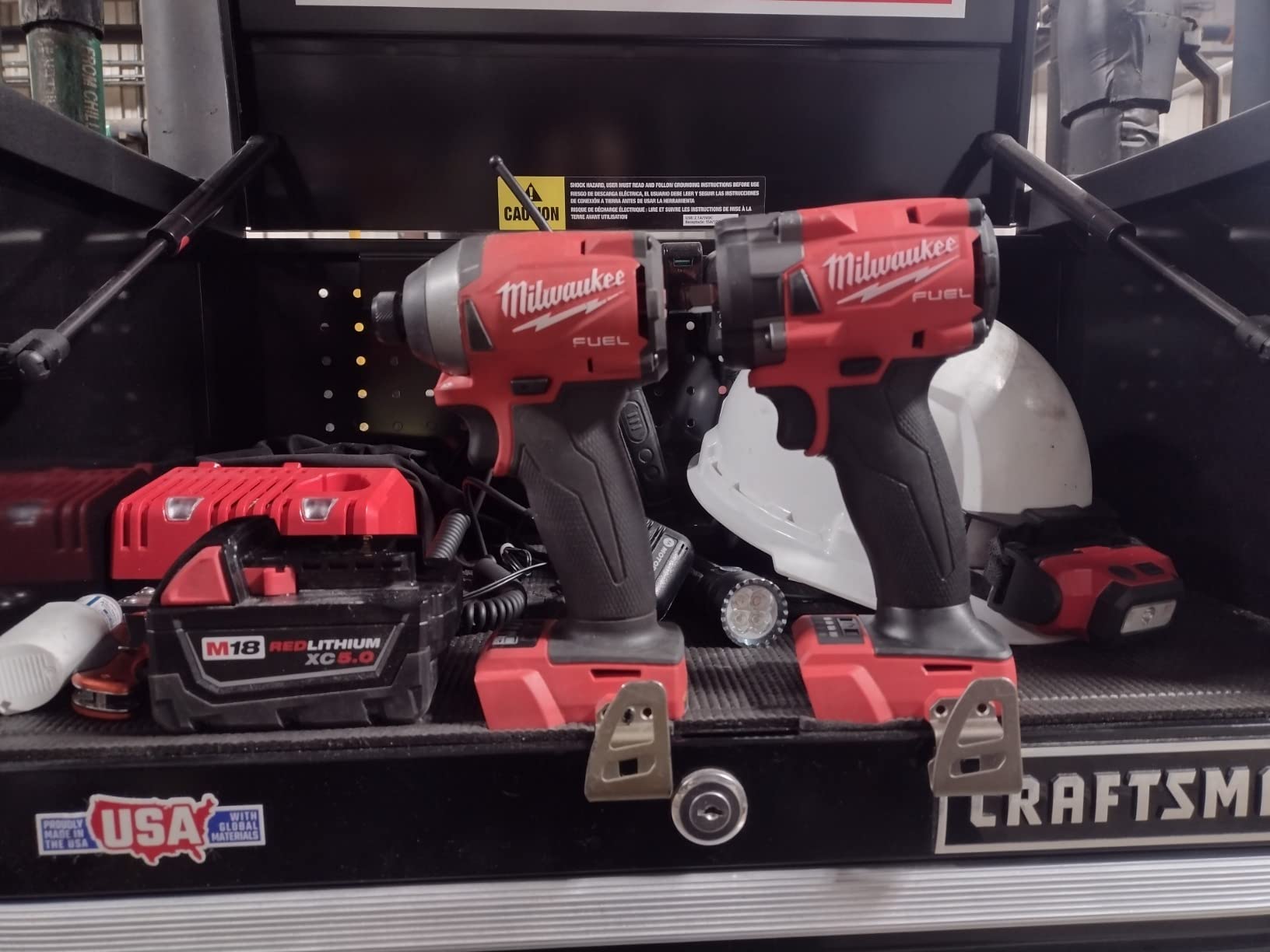
Four-mode drive control gives you preset RPM and IPM levels, so you can start a stubborn fastener at maximum rate and then back down to finish it without spinning the nut off the stud. The auto shut-off mode applies no more than 20 ft-lb, which makes it usable on hand-tight hardware without a second tool.
That shut-off behavior is genuinely useful under a car. Suspension fasteners often need snugging and then a final check with a torque wrench, and a mode that simply stops prevents the twitch that damages fasteners.
Tri-LEDs surround the anvil, so light comes from behind the socket rather than off to the side. Inside a wheel well or under a rocker panel that is the difference between seeing the fastener and feeling for it.
Where the compact 3/8 inch FUEL works
Engine bays, motorcycle maintenance, battery trays and any automotive job where a 1/2 inch wrench physically will not fit. It also handles interior trim and light assembly work as a bonus.
For a sedan owner or a motorcycle tech who wants to carry one impact tool, this is the most versatile thing on the list.
Where it falls short
250 ft-lb is not enough for a rusted axle nut or a seized wheel stud on a truck. The 3/8 inch drive is also the limiting factor as much as the motor, so this is not the tool for lug work on a half-ton.
If you tow or work on trucks, pair it with a 1/2 inch high-torque wrench rather than trying to push this one past its rating.
3. Makita XDT13Z 18V LXT Impact Driver – The Lightweight Fastener Specialist

Makita XDT13Z 18V LXT Lithium-Ion Brushless Cordless Impact Driver, Tool Only, Variable Speed
1500 in-lb max torque
0-3400 RPM and 0-3600 IPM
16 oz bare weight
18V LXT brushless motor
Pros
- 16 oz body is the lightest bare weight we tested
- Up to 50 percent longer runtime per charge than brushed
- Bleeds carbon brushes so the motor runs cooler
- Electronically controlled torque matches the application
Cons
- Single-speed with no mode selection
- Battery and charger sold separately
At 16 ounces, the XDT13Z is the tool I reach for when a job means working overhead in a confined space, like a roof-mounted hatch or a headliner. The brushless motor runs cooler without carbon brushes to shed, which is why owners report it holding performance across years of use.
Makita states the electronic motor control optimizes battery energy use for up to 50 percent longer runtime per charge. Variable speed covers 0 to 3,400 RPM and 0 to 3,600 IPM, giving a wide fastening range on a single trigger pull.
The 18V LXT platform is one of the most widely deployed in the industry, and pairing this driver with the Makita wrench at position four means one charger covers both ends of the list.
Where the XDT13Z earns its slot
Battery terminal cables, interior trim, console and seat fasteners, and long accessory bolts. It is the go-to for the small fasteners that fill most of an afternoon.
Owners highlight the 18V LXT package and how the tool fits in tight spaces. Sentiment runs 87 percent five star, with the main complaint being the lack of multi-speed control compared with newer XDT models.
Where it falls short
Same limits as any hex-shank driver: no sockets, no lug nuts. The single-speed design also gives you less control on delicate fasteners than a multi-mode tool.
If your work is mostly wheel and brake work, the Makita wrench in position four covers the same platform and you will reach for that one instead.
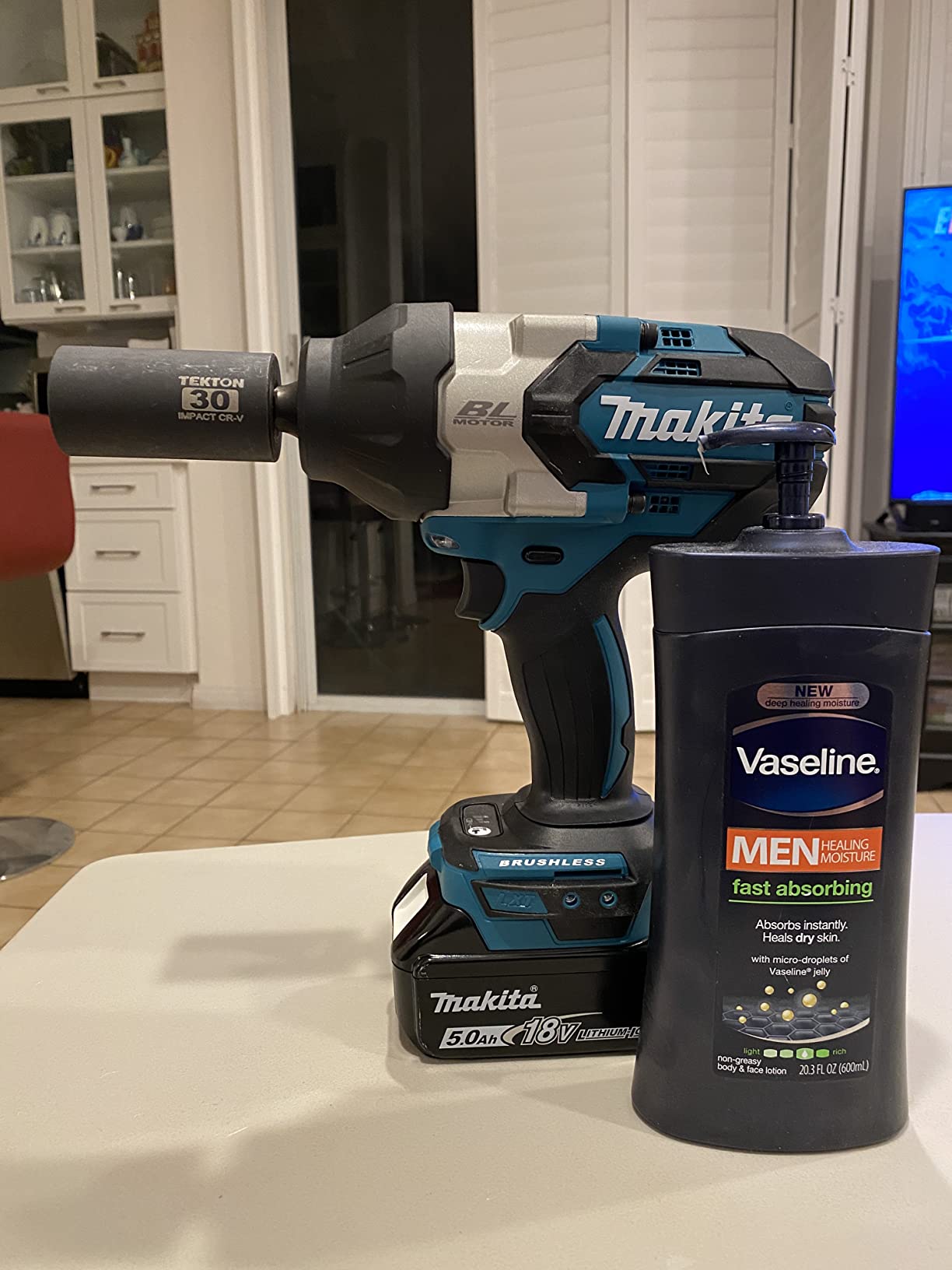
4. Makita XWT08Z 1/2 Inch Impact Wrench – The Wheel and Brake Workhorse
Makita XWT08Z 18V LXT® Lithium-Ion Brushless Cordless High-Torque 1/2″ Sq. Drive Impact Wrench, Tool Only
740 ft-lb fastening
1180 ft-lb nut-busting
3-speed selection
1/2 in friction ring anvil
Pros
- 1180 ft-lb nut-busting handles seized lug nuts
- Three speeds for controlled removal
- 1/2 in friction ring for one-handed socket changes
- Brushless runtime up to 50 percent longer per charge
Cons
- 7 lb is heavy for overhead work
- Tool only
- battery and charger separate
This is the tool that answers the forum question about which model to buy inside an existing battery ecosystem. If you own Makita 18V LXT packs, the XWT08Z is the high-torque answer, and 1,180 ft-lb of nut-busting torque is more than most sedans and plenty of light trucks will ever ask of it.
The 3-speed power selection switch covers 0 to 900, 1,000 and 1,800 RPM alongside matching IPM levels. Starting removal on the lowest speed keeps the socket seated and stops the classic spin-off that rounds a lug nut.
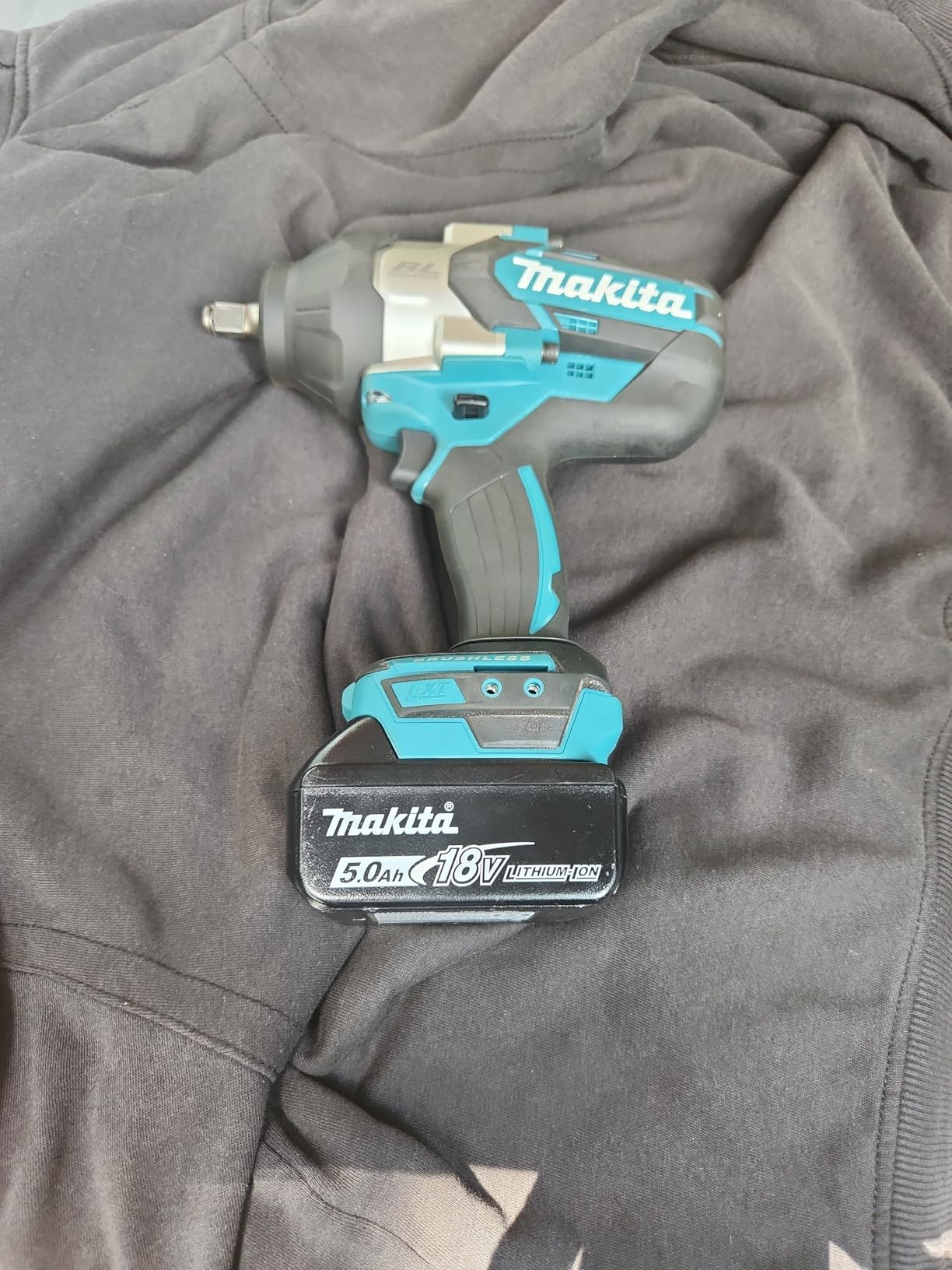
Owners consistently name breakaway torque and the friction-ring anvil as the standouts, with 88 percent five-star ratings. The 1/2 inch square anvil swaps sockets quickly, which matters when you are cycling through lug sizes on a wheel set.
Fastening torque of 740 ft-lb covers caliper bolts, subframe hardware and suspension fasteners. The brushless motor is electronically controlled for efficiency and runs cooler without carbon brush debris to wear the tool out.
The trade is weight. Seven pounds is substantial in the hand, and buyers accept that as the price for the output. Plan to set it down between jobs rather than working a whole suspension job one-handed.
Where the XWT08Z belongs
Brake calipers and rotors, wheel and tire service, suspension bolts and battery work on any vehicle running on the Makita 18V LXT platform. It pairs with the XDT13Z driver on shared batteries.
If you own a truck and pull heavy-duty lugs regularly, a 3/4 inch model is the right upgrade path, not this one.
Where it falls short
Ten inches long and seven pounds heavy makes it a poor fit for engine bay access where a stubby tool will reach, and it is tiring overhead.
It also lacks the electronic anti-overtightening control found on the DEWALT DCF900B, so pair it with a torque wrench on anything that needs a specification.
5. DEWALT DCF809B ATOMIC Compact Impact Driver – The Tight-Space Pro
DEWALT ATOMIC 20V MAX* Impact Driver, Cordless, Compact, 1/4-Inch, Tool Only (DCF809B)
1700 in-lb max torque
5.1 in overall length
3 speed settings
3-LED work light
Pros
- Only 5.1 in long for engine bay and console access
- Three speed settings plus a variable speed trigger
- Reviewers report it handling rusty fasteners and lug nuts
- Bright LEDs for dim workspaces
Cons
- A few reviews report a blemish in the rubber grip
- Heavier feel than the lightest drivers
The ATOMIC is built around a 5.1 inch length, and that constraint shapes everything about it. It is short enough to work between the engine and the firewall, and long enough to still feel substantial. Three speed settings give real control on delicate fasteners where a single-speed driver does not.
Reviewers report it driving long screws into treated lumber without trouble and holding up on rusty automotive fasteners. At 1,700 in-lb of torque it out-muscles the Milwaukee 2656-20 on paper while staying in the same size class.
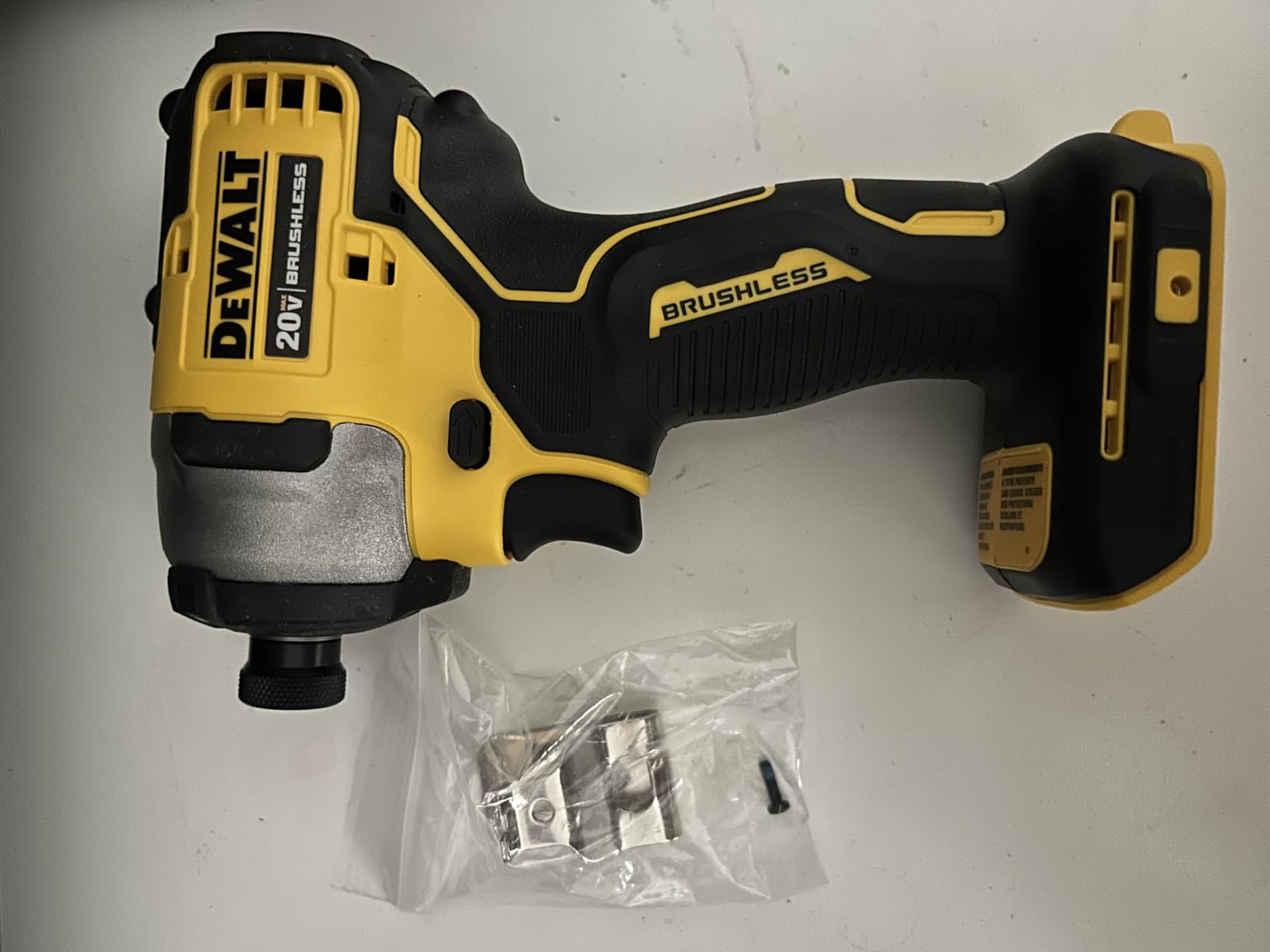
The belt clip is included, which matters more in a car than on a jobsite because it lets the tool ride on your belt while you are under the hood. Three bright LEDs cover dim workspaces such as a footwell or behind a dash panel.
Sentiment runs 85 percent five star. A minority of reviews mention finding a gouge or blemish in the rubber grip on arrival, so inspect the tool before you start a job with it.
The trigger-controlled speed ramp is what reviewers like most for automotive use. It delivers torque progressively rather than slamming it on, which reduces the chance of stripping a fastener head or cracking a plastic trim clip.
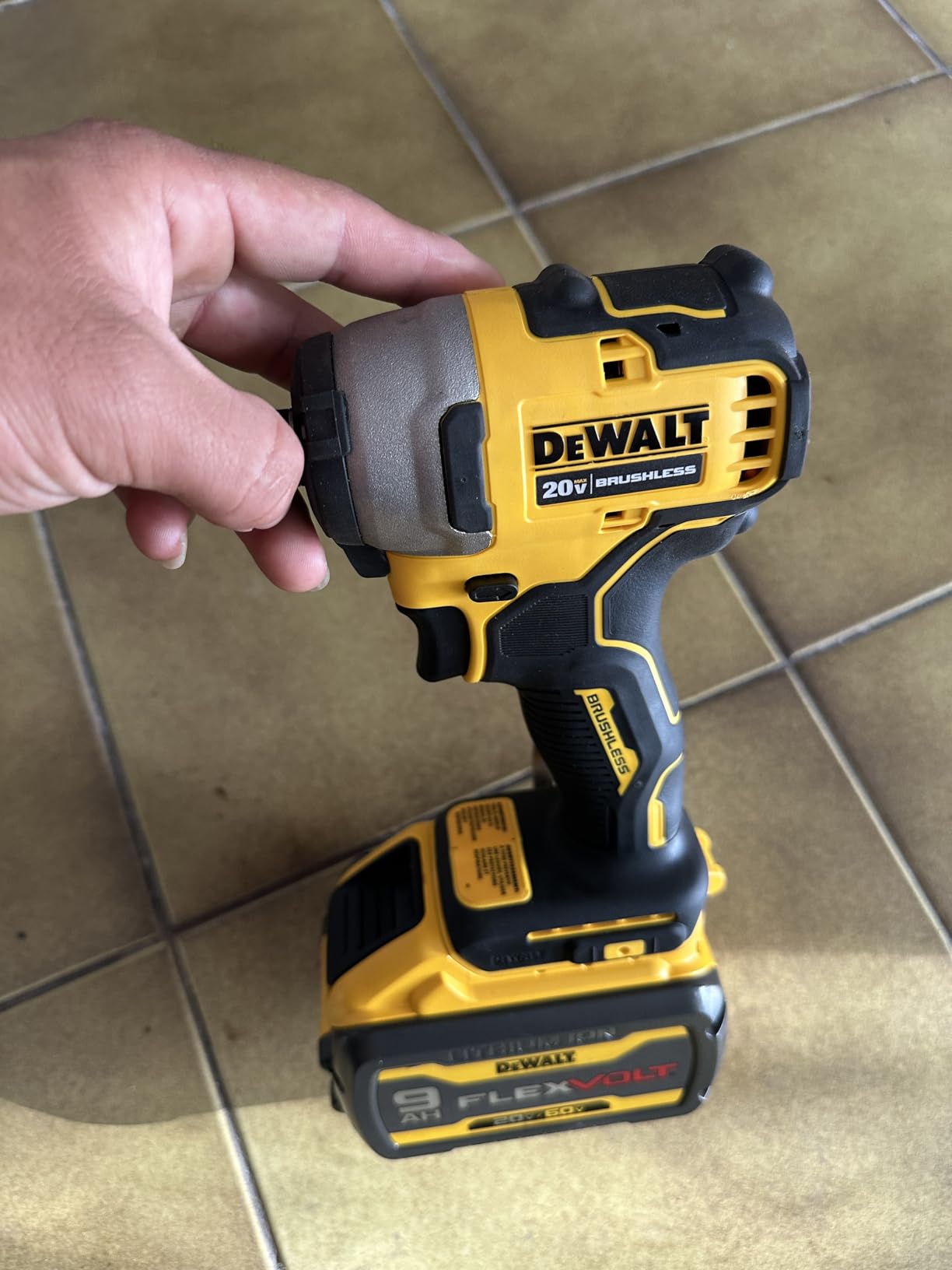
Where the ATOMIC DCF809B fits
Dashboard and console work, interior trim, battery trays, and general fastener work in the 20V MAX system you may already own. Compact enough for engine bay reach where a full-size driver will not fit.
It shares the 20V MAX platform with both DEWALT picks below, so one battery covers the whole list.
Where it falls short
It is an impact driver, so no sockets and no lug nuts. Owners comparing it against the heaviest drivers on large lags find it short on raw output.
The 2-pound weight is more than the sub-2-pound drivers in this roundup, which tells over your head during a long trim job.
6. DEWALT DCF845B 20V MAX XR Impact Driver – The Premium All-Rounder

DEWALT 20V MAX XR Impact Driver, 1/4 Inch High Torque Brushless 3 Speed Premium Cordless with LED Light, Extended Runtime, Tool Only (DCF845B)
1825 in-lb max torque
3400 RPM
3-speed plus variable trigger
3-LED light with 20-second delay
Pros
- Highest rated torque of the drivers here at 1825 in-lb
- Three speeds plus a variable trigger for precise control
- Reported durability after years of framing work
- LED work light stays on for 20 seconds
Cons
- Does not match the heaviest drivers on large lags
- Battery sold separately
- 5 Ah pack recommended
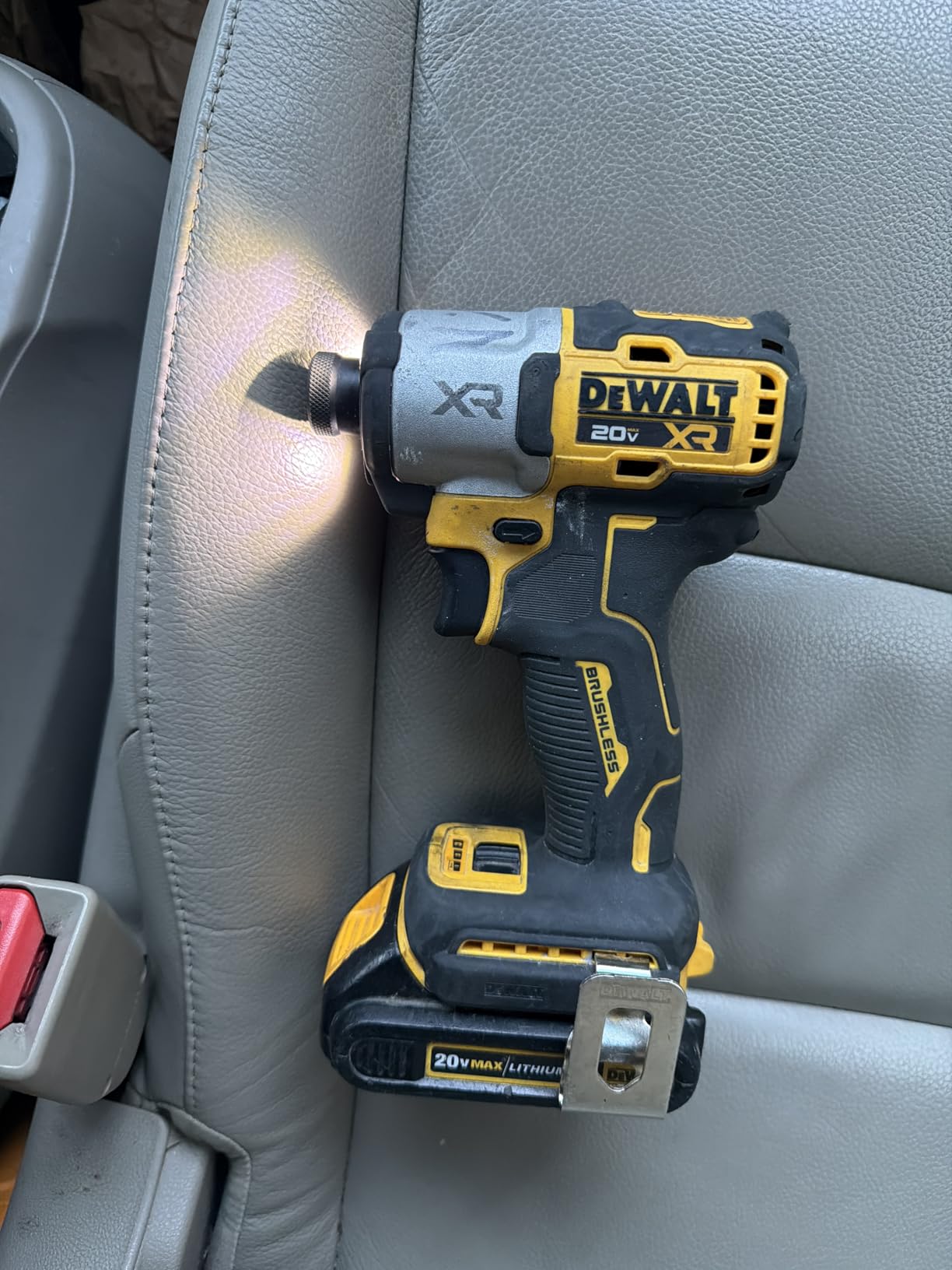
This is the most capable hex driver in the roundup on paper, with 1,825 in-lb of torque and 3,400 RPM. DEWALT lists 30 percent more torque than its previous generation for tough fastening, and the 3-LED work light with a 20-second delay is a genuinely thoughtful touch when your hands are full under a dash.
Users report strong performance driving 4-inch and longer screws and pulling rusted trailer hitch bolts, which tells you it will not shy away from seized hardware on a vehicle.
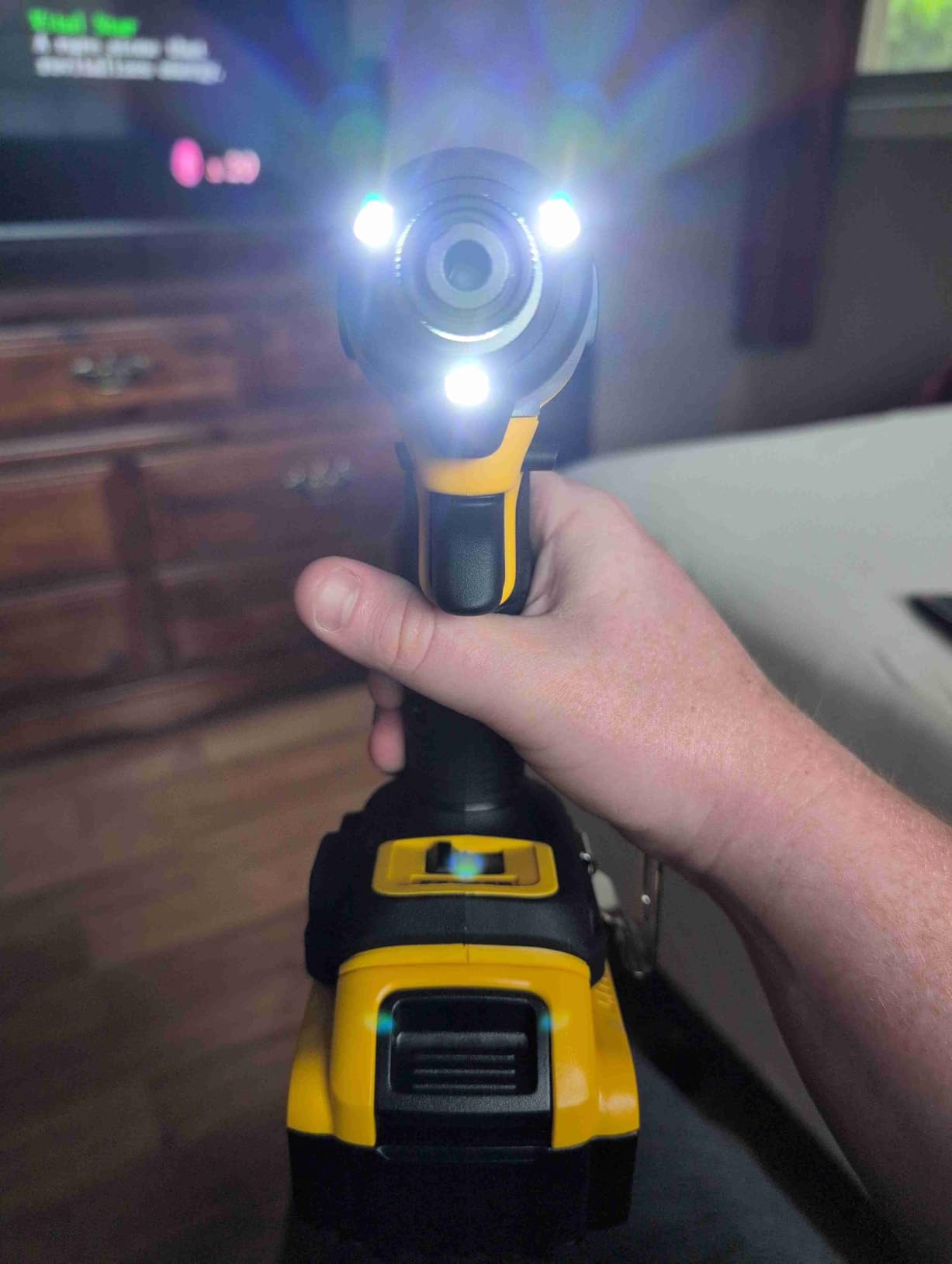
The 3-speed setting plus variable speed trigger is the control story here. Three speeds for gross removal power, the trigger ramp for finishing. A belt hook is included for carrying.
Owners describe durability after years of framing work with no degradation in output. That kind of report matters more to an auto buyer than any peak number, because the tool lives in the car with you.
The 3-year limited warranty is one of the stronger guarantees attached to a driver in this price class, and the tool-only format keeps the package lean if you already own 20V MAX packs.
Where the DCF845B earns its place
Structural and accessory work on a vehicle: running board brackets, hitch hardware, bed rail fasteners, suspension components held by long lags. It is the driver to buy if your car work is heavier than trim work.
It also covers general driver duty so you are not reaching for a second one when the job turns to screws.
Where it falls short
Owners comparing it to the heaviest Milwaukee drivers note it does not match their raw power on very large fasteners. And it is still a driver, so no sockets.
For the heaviest jobs, use a 5 Ah battery. A 1.3 Ah pack will do the job, but it will not do it as many times before you swap.
7. DEWALT DCF900B 1/2 Inch Impact Wrench – The Over-Torque Guardian
DEWALT 20V MAX Cordless Impact Wrench, 1/2 Impact Gun, 4-speed High torque with Hog ring anvil and LED light, Brushless motor, Precision Wrench, tool Only (DCF900B)
1030 ft-lb fastening
1400 ft-lb breakaway
4-mode speeds
Precision Wrench control
Pros
- Highest breakaway torque in this roundup at 1400 ft-lb
- Precision Wrench mode helps prevent run-off and over-torque
- Four mode speeds plus a variable trigger
- LED work light and battery guard for shop durability
Cons
- 6.4 lb is heavy for continuous use
- Tool only
- battery sold separately
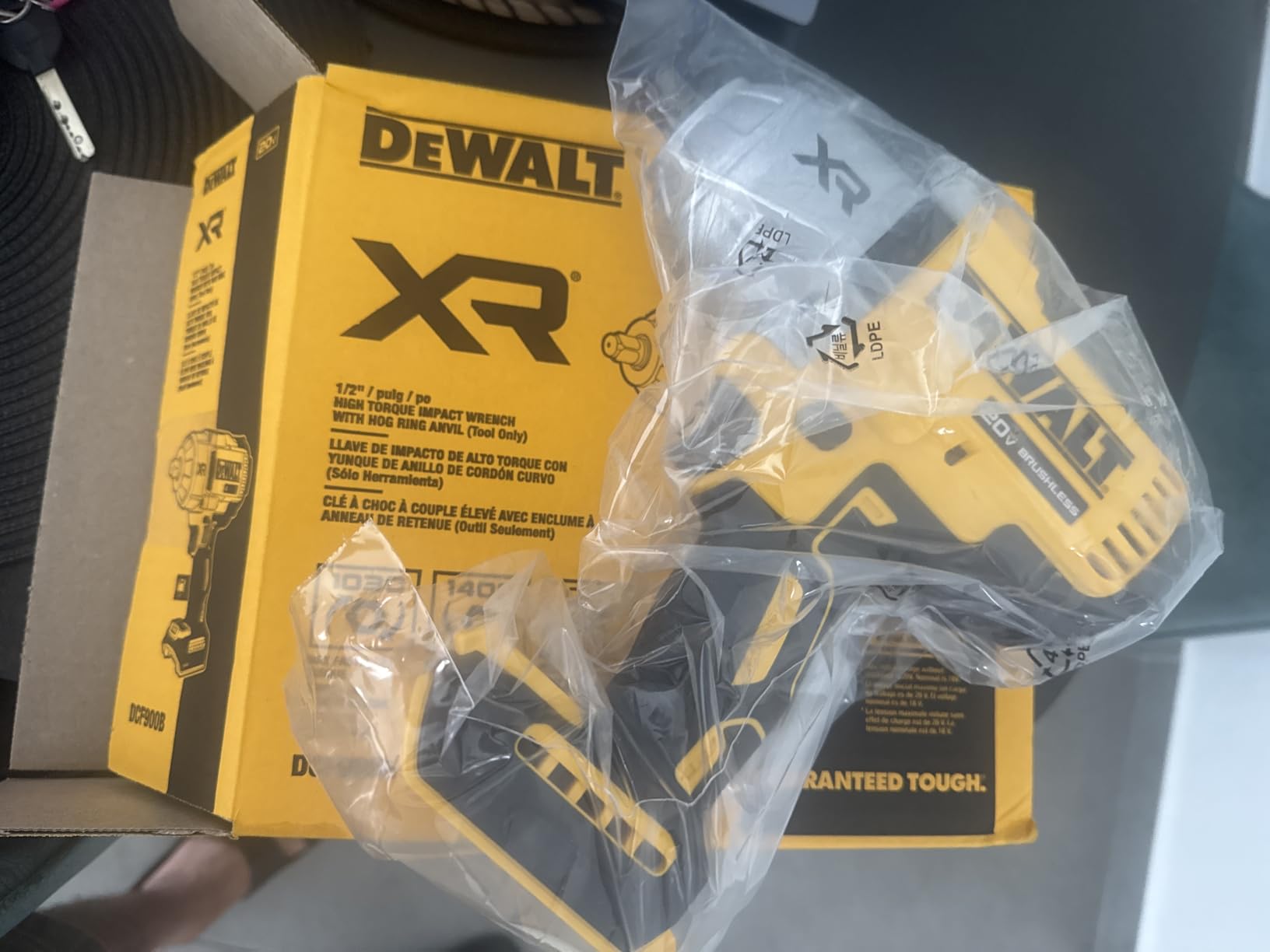
This wrench carries the highest breakaway figure in the group, 1,400 ft-lb, with 1,030 ft-lb of fastening torque. That combination covers wheel lug nuts, pipe flanges and anchor bolts, which is exactly the range of a working shop.
The feature that matters most for automotive work is Precision Wrench control, which is designed to help prevent over-tightening and fastener run-off on critical hardware. In practice it lets you add a bolt snug and then verify with a torque wrench instead of gambling on the tool’s judgment.
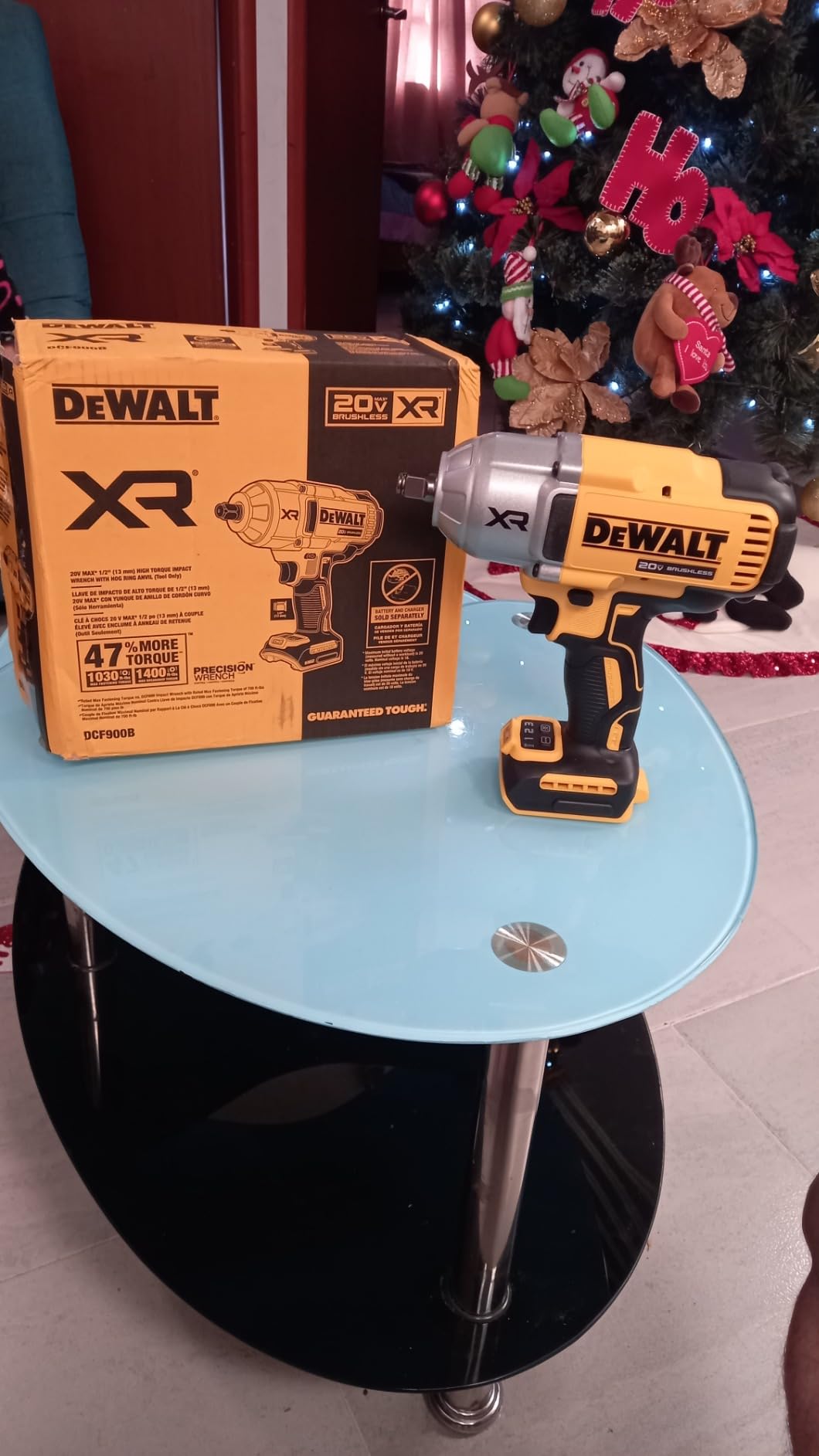
Four mode settings plus a variable speed trigger give you fine control on removal, which reduces the chance of rounding a lug nut. Reviewers credit the tool with strong torque on lug nuts and demanding work, and 88 percent of reviews are five star.
The battery guard is a shock-absorbing connection between pack and tool, a detail aimed at reducing wear at the joint. That is the kind of thing that matters when the tool lives in a truck bed and gets dropped.
An on-tool LED work light handles dark wheel wells. At 8.43 inches long the tool is long enough to feel stable and short enough to still reach most wheel fasteners.
Where the DCF900B works best
Wheel and tire service, brake caliper bolts, suspension and undercarriage hardware on cars and light trucks. It is the tool for anyone doing brakes and oil changes as a side income, where torque control and raw breakaway both matter.
It shares 20V MAX batteries with both DEWALT drivers, so one ecosystem covers the whole lineup.
Where it falls short
Six and a half pounds gets tiring over a long session, and the length rules it out of the deepest engine bay corners. It needs 20V MAX batteries, which is the whole switching-cost question.
For trucks with 1-1/2 inch lugs, step up to a 3/4 inch high-torque model instead of pushing this one.
8. Milwaukee 2953-20 M18 FUEL Impact Driver – The High-Torque FUEL

Milwaukee Electric – M18 Fuel. 1/4 HEX Impact Driver
2000 in-lb max torque
3900 RPM
4-Mode Drive Control
Tri-LED lighting
Pros
- Highest torque and fastest speed of any driver in this group
- Smooth trigger acceleration helps prevent stripped screws
- Four-mode drive control for removal and finishing
- Owners call it ideal for truck and RV work
Cons
- Battery and charger not included
- Spec listing understates its multi-mode control
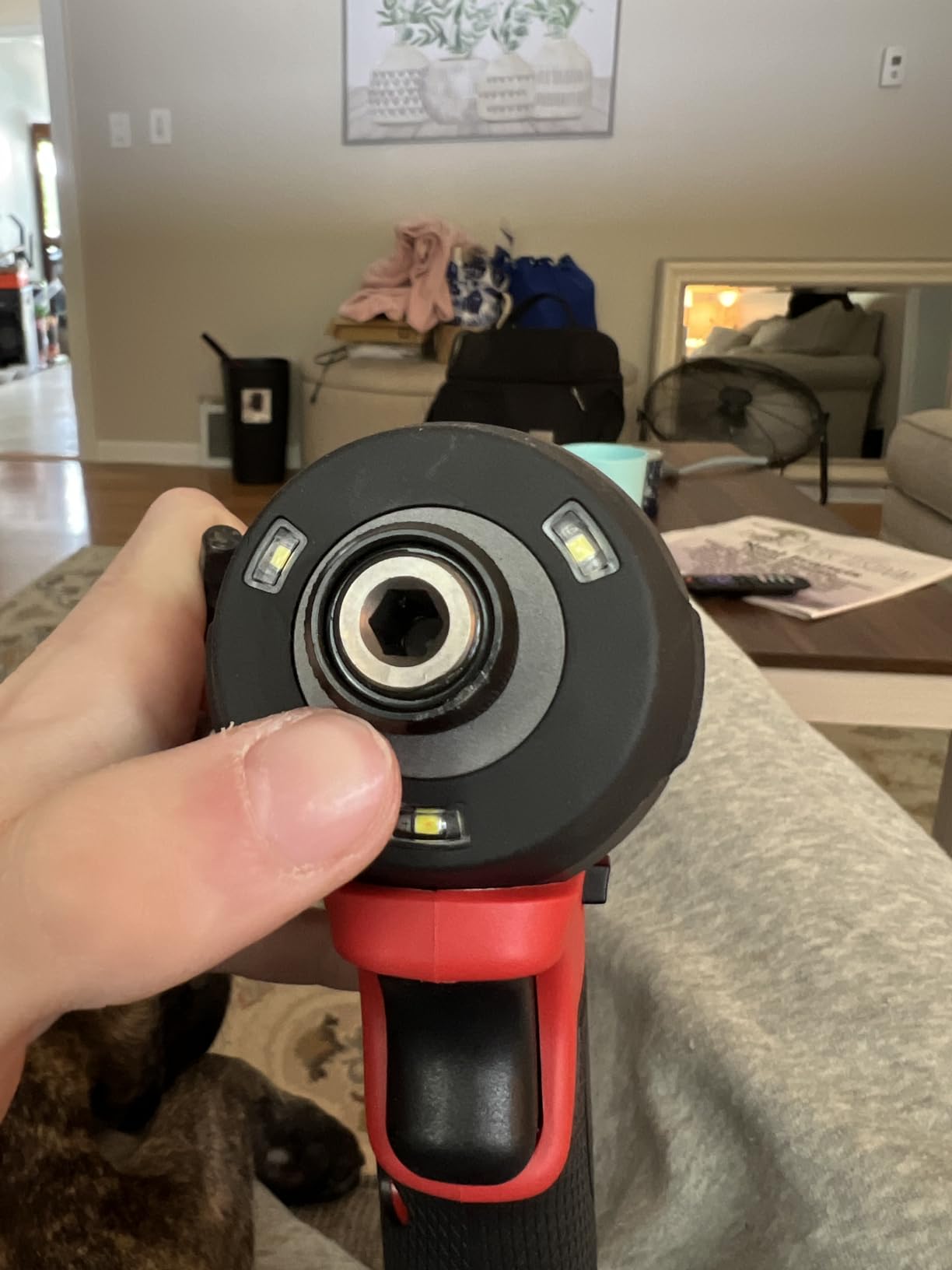
The 2953-20 is the driver to buy if you want a hex tool that refuses to be outmuscled. It rates 2,000 in-lb of torque and 3,900 RPM, both the highest driver numbers in this roundup, and Milwaukee describes it as the fastest driving speed of any impact driver.
Owners praise the high torque in a compact body and call it ideal for truck and RV work, which is a pattern worth noting. This is the driver people reach for when the vehicle is large and the fasteners are long.
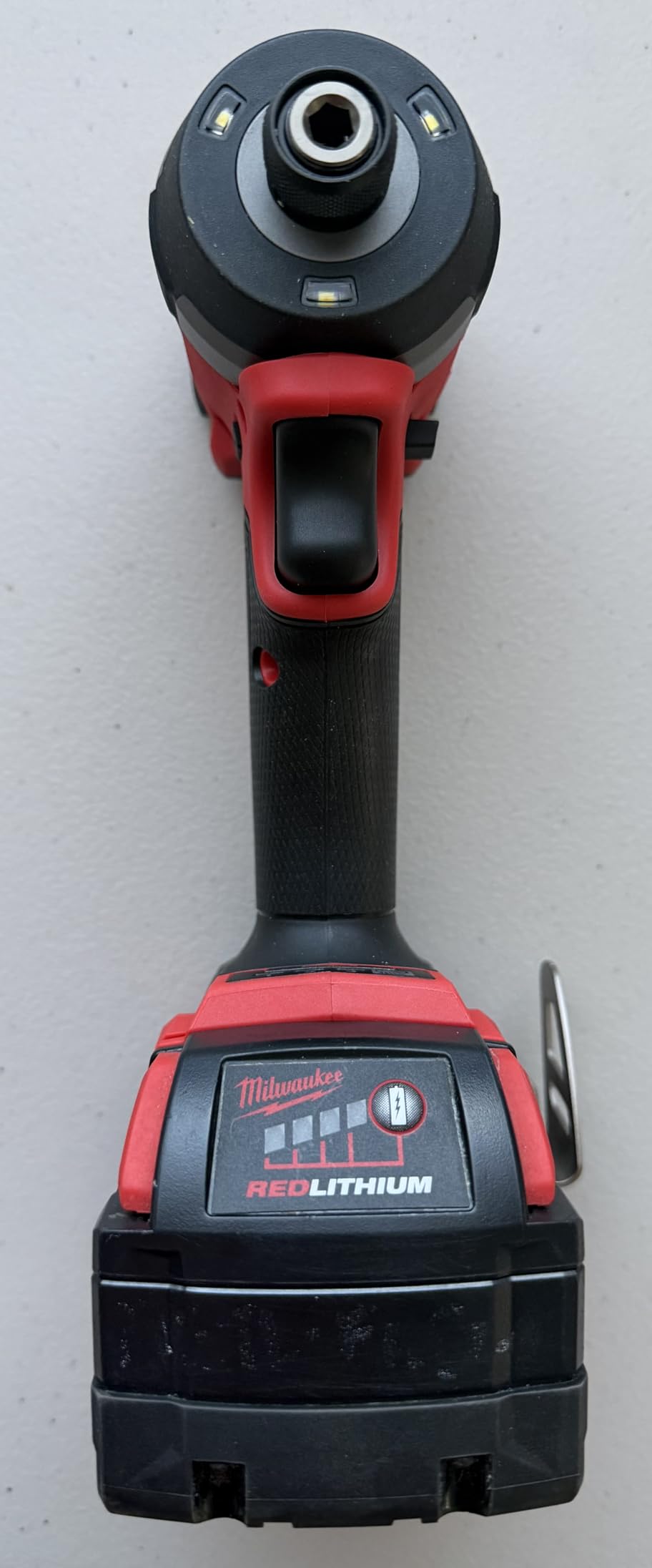
Four-mode drive control plus smooth trigger acceleration is the combination that protects fasteners. Owners using it for vehicle maintenance report dialing initial torque for removal work, then slowing down to finish without stripping the screw head.
Tri-LED lighting gives maximum visibility in a workspace, and the tool is small enough to be a dedicated go-to carried in a small bit case rather than a full case.
One oddity: the product listing shows a single speed even though the tool has four modes. Owners confirm the multi-mode control works as advertised in practice.
Where the M18 FUEL driver belongs
Truck and SUV accessory work, hitch and tow hardware, bed rails and long structural lags. It also handles the light screw work well enough to be your only impact driver on many setups.
It runs on the same M18 packs as the Milwaukee wrench in position two, so a battery covers both.
Where it falls short
It is still a driver. High driver torque in inch-pounds does not translate to the foot-pound breakaway a lug nut needs, so wheels are out of reach.
If lug work is on your list at all, budget for a wrench too. That is what the top pairing in this roundup does.
9. CRAFTSMAN CMCF800C1 Impact Driver Kit – The Complete Starter Package

CRAFTSMAN 20V MAX Impact Driver Kit, 1/4 Inch, 2,800 RPM, LED Work light, Battery and Charger Included (CMCF800C1)
1460 in-lb max torque
2800 RPM and 3100 IPM
Battery and charger included
20V MAX platform
Pros
- Only kit here that includes a battery and charger
- Quick-release chuck for one-handed bit changes
- LED work light for dark areas
- Suitable for lag bolts and large fasteners
Cons
- Single-speed with less fine control
- Torque is below the premium 20V MAX XR drivers
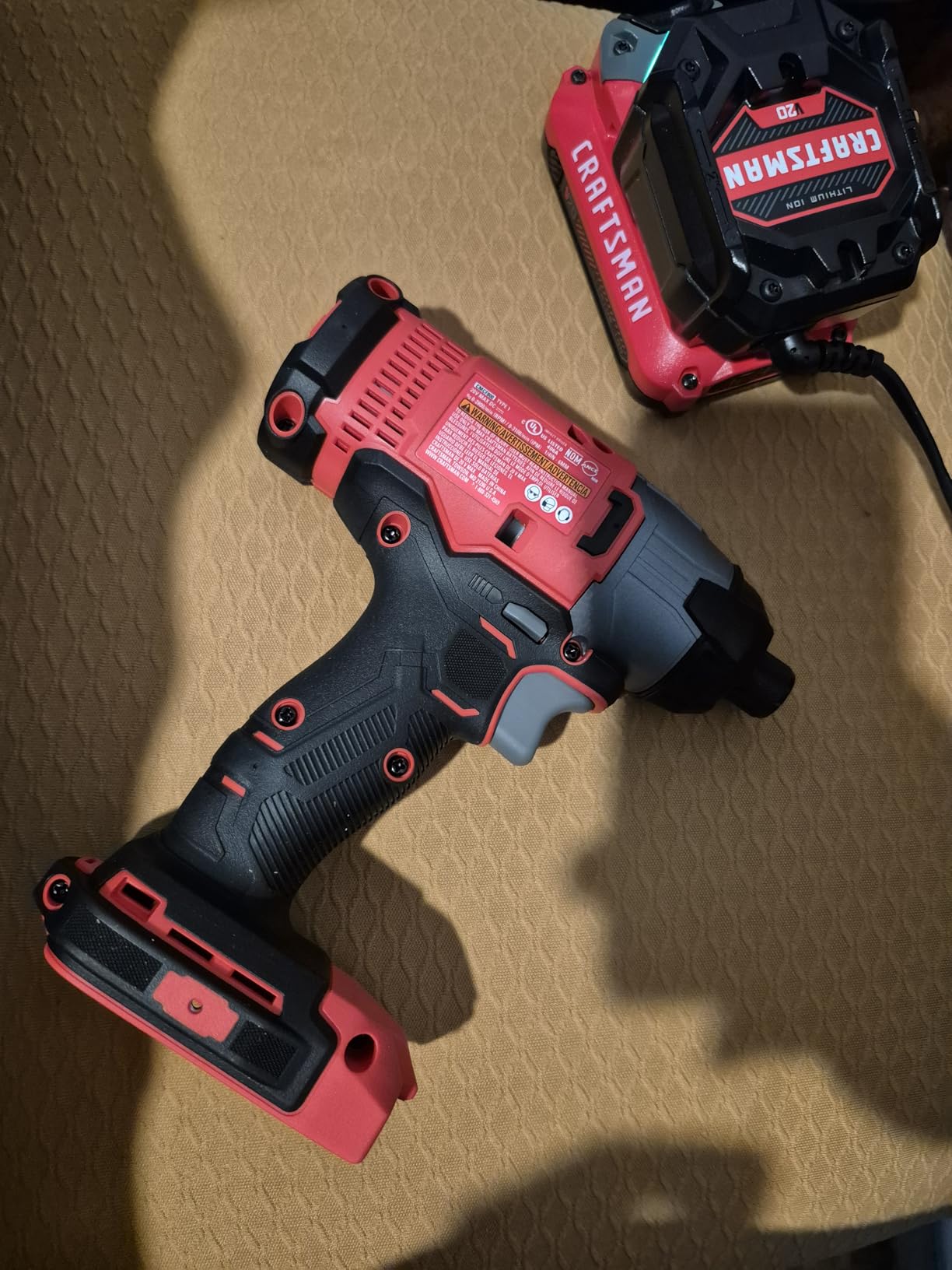
This is the only pick in the roundup that arrives ready to use. The kit includes the CMCF800 driver, a V20 20V MAX 1.3 Ah lithium-ion battery and a V20 charger, which removes the single most common complaint about bare tools.
That complaint appears constantly in owner discussions. Forums are full of people who bought a tool-only listing and then discovered the cost of a platform entry, and this kit sidesteps the whole conversation.
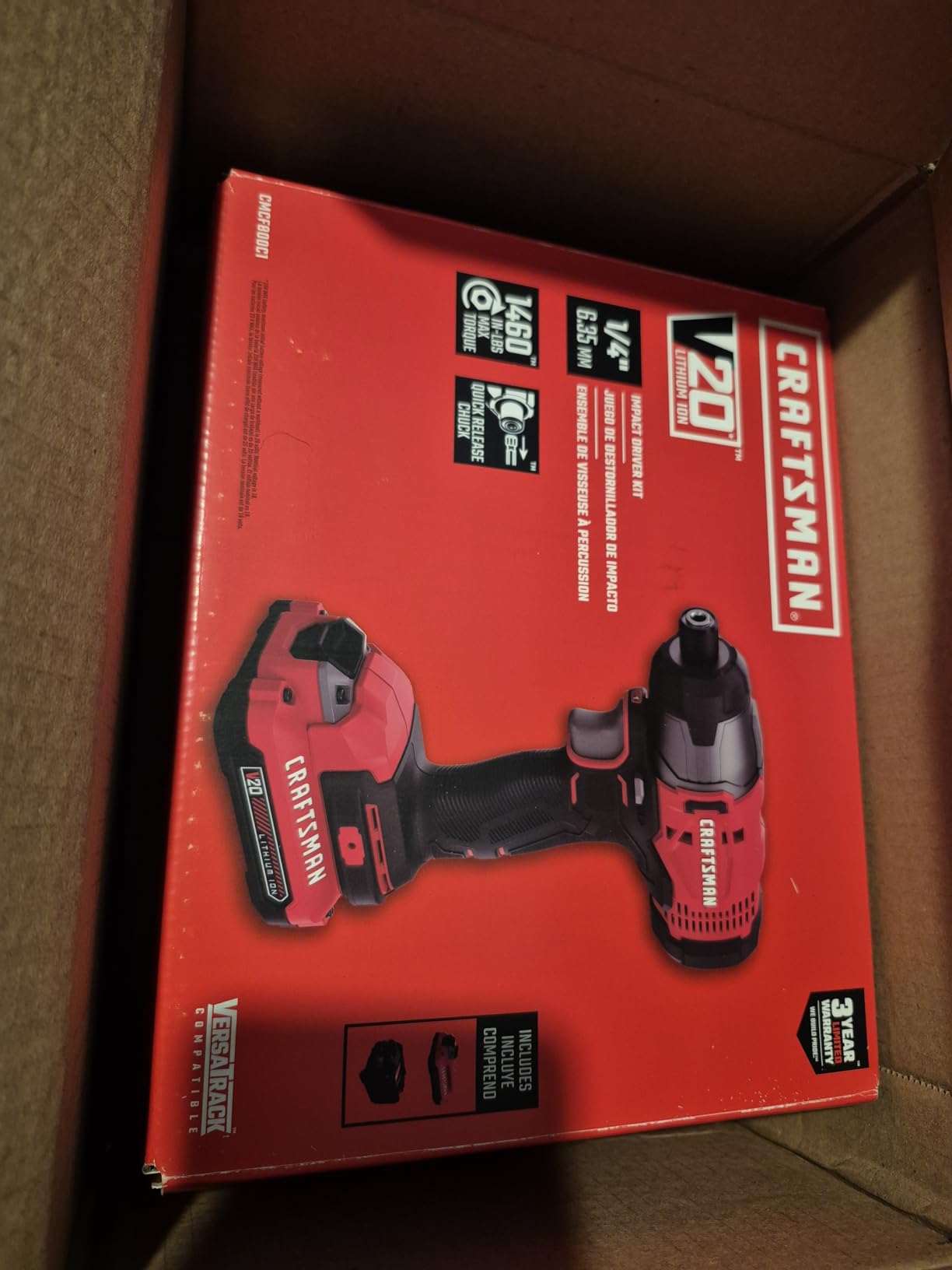
Torque is 1,460 in-lb with up to 2,800 RPM and 3,100 IPM, which handles lag bolts and large fasteners without drama. The quick-release chuck supports one-handed bit changes, useful when the other hand is holding a trim panel.
An LED work light covers dark areas, and the 2.5-pound weight sits in the middle of this group. Buyers frequently highlight the complete-kit value above all else, with 86 percent five-star ratings.
At 1.3 Ah, the included battery is small, so plan on swapping for a bigger pack before tackling a whole brake job in one session.
Where the Craftsman kit works
Newcomers to cordless tools who want one battery, one charger and a working driver on day one. It also fits anyone already in the CRAFTSMAN 20V MAX system, which is compatible with the same batteries.
For battery terminal work, interior fasteners and light-duty accessory bolting it is more than sufficient.
Where it falls short
Single-speed, so you get less control on delicate fasteners than the multi-mode drivers here provide. And 1,460 in-lb sits below the premium 20V MAX XR models on tough work.
If your car work involves seized hardware regularly, save for a higher torque driver or a wrench instead.
10. Bosch GDX18V-1860CB15 Two-In-One Impact Driver and Wrench

BOSCH GDX18V-1860CB15 18V Connected-Ready Two-In-One 1/4 In. and 1/2 In. Bit/Socket Impact Driver/Wrench Kit with (1) CORE18V 4 Ah Advanced Power Battery
1860 in-lb max torque
Up to 4100 IPM
1/4 in hex and 1/2 in square drive
Auto Bolt Release
Pros
- Two-in-one design takes bits and sockets with no adapter
- Auto Bolt Release stops rotation when unloaded
- Includes battery
- charger
- bits
- belt clip and bag
- Three speed settings plus preset and custom modes
Cons
- Connectivity module sold separately
- Fewer reviews than the rest of this list
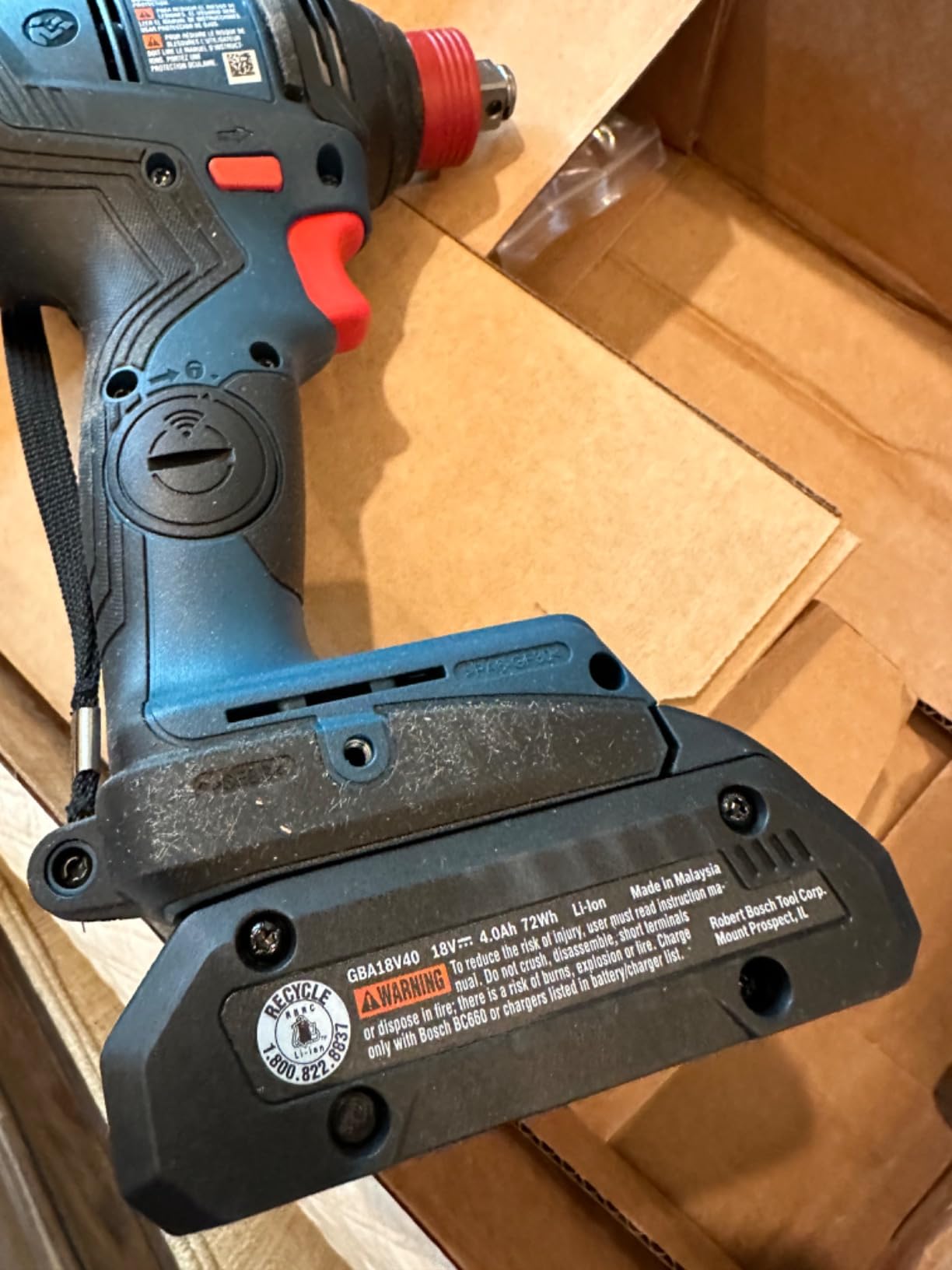
The Bosch solves the driver-versus-wrench argument in hardware. A 1/4 inch hex shank sits in the center for bits and a 1/2 inch square drive surrounds it for sockets, so no adapter or second tool is needed. On a car where you constantly swap between screwdrivers and lug sockets, that is a real time saver.
Torque is 1,860 in-lb and up to 4,100 IPM, which is high for a driver. Users report plenty of torque for tire changes and wheel nuts, and the three speed and torque settings help avoid stripping fasteners.
Auto Bolt Release stops rotation the moment the tool sees no load, so a removed nut does not shoot off the stud and disappear under the car. That single feature has saved more time than any speed mode in my experience on suspension work.
The package is unusually complete: a 4 Ah CORE18V battery, charger, four-piece bit set, bit holders, belt clip and a carrying bag. Bosch states the CORE18V 4 Ah pack delivers about twice the runtime of the previous 2 Ah battery.
Bosch 18V tools and chargers carry a five-year limited warranty, and Bosch 18V batteries a three-year limited warranty, which is the longest warranty statement in this roundup.
Where the Bosch two-in-one works
Compact garages, apartment parking spots and anyone who wants one tool instead of two. It covers trim screws, battery cables, wheel nuts and general wheel service in a single body.
It also makes a sensible first cordless tool for a new car owner who does weekend maintenance.
Where it falls short
The connectivity module that unlocks app-based custom modes is a separate purchase, so the smart features are not in the box. With 214 reviews the track record here is thinner than the rest of the list.
It is not a high-torque wrench, so a seized axle nut on a truck is beyond it. And the nested drive can feel odd on long heavy fasteners compared with a dedicated driver.
How to Pick a Cordless Impact Driver for Auto Work?
Start with the job, not the torque number. List every fastener you touch on a typical weekend and the answer usually falls out on its own. Lug nuts and axle nuts point to a 1/2 inch impact wrench. Trim screws and bracket lags point to a 1/4 inch impact driver. Engine bay access with a 3/8 inch square drive points to a compact stubby wrench.
Drive size: which anvil you need
A 1/4 inch hex driver takes bits only. A 3/8 inch square drive fits smaller sockets and reaches where longer tools cannot. A 1/2 inch square drive is the automotive standard for wheel lugs, caliper bolts and suspension fasteners. Above that, 3/4 inch and 1 inch drives exist for truck axle and frame work, and they are a different category of tool.
If your vehicles are sedans, crossovers and light trucks, 1/2 inch covers almost everything. If you pull heavy-duty trucks regularly, plan on a 3/4 inch high-torque wrench as an upgrade later rather than trying to make a 1/2 inch tool do it.
Fastening torque vs nut-busting torque
These are two different numbers and manufacturers quote both. Fastening torque is what the tool can drive to. Nut-busting, also called breakaway or loosening torque, is what it can break free, and it is always the higher figure.
In this roundup, the Makita XWT08Z quotes 740 ft-lb fastening and 1,180 ft-lb nut-busting. The DEWALT DCF900B quotes 1,030 ft-lb fastening and 1,400 ft-lb breakaway. Always judge removal capability by the breakaway number, because that is the one that decides whether a rusted nut comes off on the first pull.
Torque class: compact, mid-torque and high-torque
Compact tools such as the Milwaukee 3/8 inch FUEL trade output for reach. They are right for engine bays, motorcycles and confined spaces. Mid-torque 1/2 inch tools are the default automotive choice and cover wheels, brakes and suspension. High-torque 3/4 inch tools are the upgrade path for trucks and frame work.
Owners who under-estimate torque on older vehicles end up with a tool that stalls on an axle nut. If your cars are more than a decade old and have seen winter salt, err toward the higher class.
Impact rate, drive modes and assist behavior
Impact rate, measured in IPM, is how many hammer strikes the tool delivers per minute. Higher rates help break a fastener free faster, which is why mode selection matters on removal work. Four-mode and three-speed tools let you start at maximum and finish at a lower rate so the nut stays on the stud.
Assist behavior is the newer layer on top. Auto shut-off on the Milwaukee compact applies no more than 20 ft-lb. Auto Bolt Release on the Bosch stops rotation when there is no load. Precision Wrench control on the DEWALT DCF900B is designed to reduce over-tightening. These features exist because a mechanic who over-torques a lug nut damages the stud, and the thread repair costs more than the tool.
Weight, head length and noise
Bare weight tells you almost nothing about how a tool feels. Add a 5 Ah pack and a full socket and the difference matters, especially overhead or under a dashboard. The Makita XWT08Z at 7 pounds and the DEWALT DCF900B at 6.4 pounds are honest numbers to plan around.
Head length decides whether you can reach the fastener at all, and the Milwaukee compact at 4.8 inches and the DEWALT ATOMIC at 5.1 inches are the two to beat. If you work overhead, weight and balance matter more than the last 200 ft-lb.
Impact tools are loud. Drivers and wrenches both produce enough noise to matter over repeated use, so wear hearing protection. Eye protection matters too, because a socket that slips off a bolt under torque launches itself.
Battery Platform: Stay in One Ecosystem or Switch
Platform lock-in is the decision that costs people real money. Every tool in this roundup except the Bosch kit is bare tool only, so you need a battery and charger in the same family. Buying outside your existing ecosystem means paying for a whole second set of packs before you have used the first tool once.
Forum advice on this point is consistent. Owners with an M18 stack stay with Milwaukee, owners with 20V MAX packs stay with DEWALT, and one poster running both called the multi-platform approach the honest choice when you are starting from nothing. Pick the platform you already own first, then choose within it.
Here is how the families map to this roundup. Milwaukee M18 covers the 2656-20 driver, the 2953-20 FUEL driver and the 3/8 inch compact wrench. Makita 18V LXT covers the XDT13Z driver and the XWT08Z high-torque wrench. DEWALT 20V MAX covers the DCF809B, DCF845B and DCF900B. CRAFTSMAN 20V MAX covers the CMCF800 kit. Bosch CORE18V covers the GDX two-in-one.
Only two options here ship with what you need to start. The CRAFTSMAN kit includes a 1.3 Ah battery and charger, and the Bosch kit includes a 4 Ah battery, charger, bits and a bag. Everything else assumes you already own batteries, which is why platform fit should be your first filter.
Safety and the Torque Wrench Handoff
An impact wrench removes bolts. It does not tighten them to a specification. Over-torquing lug nuts can stretch the stud, damage the wheel stud threads or crush the rotor, and thread repair is expensive. Impact wrench users on forums report under-tightened lugs after skipping the final check more often than they report stripping, but both failures trace back to the same habit.
The safe workflow is simple. Use the impact wrench to break the fastener loose and run it down until snug. Then finish with a torque wrench to the manufacturer specification, following the correct star pattern if the wheel has one.
Use the lowest mode that will free the fastener so you keep the socket seated and avoid rounding the head. Wear eye protection and hearing protection. Support the tool with both hands when the reaction torque is high, and let the tool do the work rather than leaning into it. If you use sensor-activated tools, bare or thin fingers can trigger a mode change mid-tightening, so use a glove that keeps the palm contact intact without changing how the trigger reads.
If winter road salt is involved, penetrating oil on a seized lug nut still beats fighting it with any tool. Give the fastener time to soak before you reach for the wrench.
Frequently Asked Questions
What is the best cordless impact wrench for working on cars?
For most cars and crossovers, a 1/2 inch brushless mid-torque wrench in your existing battery platform is the right answer. The Makita XWT08Z delivers 1,180 ft-lb of nut-busting torque and the DEWALT DCF900B delivers 1,400 ft-lb breakaway with electronic over-torque control. Both handle wheel lugs, caliper bolts and suspension fasteners on light trucks. Stay inside your current battery ecosystem to avoid paying for a second platform.
What size impact wrench is best for working on cars?
A 1/2 inch square drive is the standard for sedans, crossovers and light trucks, and it fits the sockets used for lug nuts, caliper bolts and suspension fasteners. Use a 3/8 inch compact drive when engine bay clearance is tight, since a shorter head reaches fasteners a long tool cannot. Step up to 3/4 inch only for truck axle, frame and heavy-duty lug work.
What is the difference between an impact driver and an impact wrench?
An impact driver has a 1/4 inch hex shank, runs at high RPM and is built to drive screws and long lags. Its output is measured in inch-pounds. An impact wrench has a square anvil that accepts sockets and is built to break fasteners loose, with output measured in foot-pounds. A driver cannot remove a lug nut because the hex collar will not accept a lug socket, and its high speed would round the nut instead.
Which cordless impact driver has the most torque?
Among the impact drivers reviewed here, the Milwaukee 2953-20 M18 FUEL leads with 2,000 in-lb and 3,900 RPM. The DEWALT DCF845B follows at 1,825 in-lb, the Bosch GDX two-in-one at 1,860 in-lb, and the DEWALT ATOMIC DCF809B at 1,700 in-lb. These figures describe screw driving, not socket work, so lug nut removal still requires an impact wrench.
Which impact wrench is best for a mechanic doing brakes and oil changes?
A 1/2 inch brushless wrench with at least 1,000 ft-lb of breakaway torque covers brake and oil-change work. The DEWALT DCF900B adds Precision Wrench control that helps prevent over-tightening, while the Makita XWT08Z offers 1,180 ft-lb of nut-busting with a three-speed selection switch. Both weigh 6 to 7 pounds, so budget for setting the tool down between jobs.
Will an impact wrench strip threads or over-tighten a lug nut?
Yes, if you use it to tighten. An impact wrench is rated for removal, and driving a lug nut home with one can stretch the stud or damage the wheel stud threads. Break the nut loose with the wrench, run it down until snug, then finish with a torque wrench to the manufacturer specification in a star pattern.
What is the best 3/4 inch impact wrench?
The three picks in this roundup are all 1/2 inch tools, because that is the correct class for cars and light trucks. A 3/4 inch high-torque wrench is the upgrade path for trucks, axle and frame work, and it is a physically larger tool with far more weight. If your work is limited to passenger vehicles, buy the 1/2 inch class and keep the money for batteries instead.
The Verdict on the Best Cordless Impact Drivers for Auto Work
The best cordless impact drivers for auto work are not one tool but two, chosen by platform first and drive second. If you own M18 batteries, start with the Milwaukee 2656-20 for fasteners and pair it with the compact 3/8 inch FUEL wrench for engine bay reach. If you run 20V MAX, the DEWALT ATOMIC driver and the DCF900B wrench cover the same garage for one ecosystem.
For pure wheel and brake torque, the Makita XWT08Z and the DEWALT DCF900B are the two strongest picks here. Whichever you choose, remember that an impact wrench loosens and an impact driver tightens screws, and neither one replaces a torque wrench on a specification. Pair the tool with the right sockets and you will finish a tire change in minutes instead of fighting a breaker bar.
Winter prep is the season most owners notice a missing tool. If your snow chains, tire hardware or battery work is on the list, our guide to easy-install auto tightening snow chains covers the other half of a cold-weather setup.