
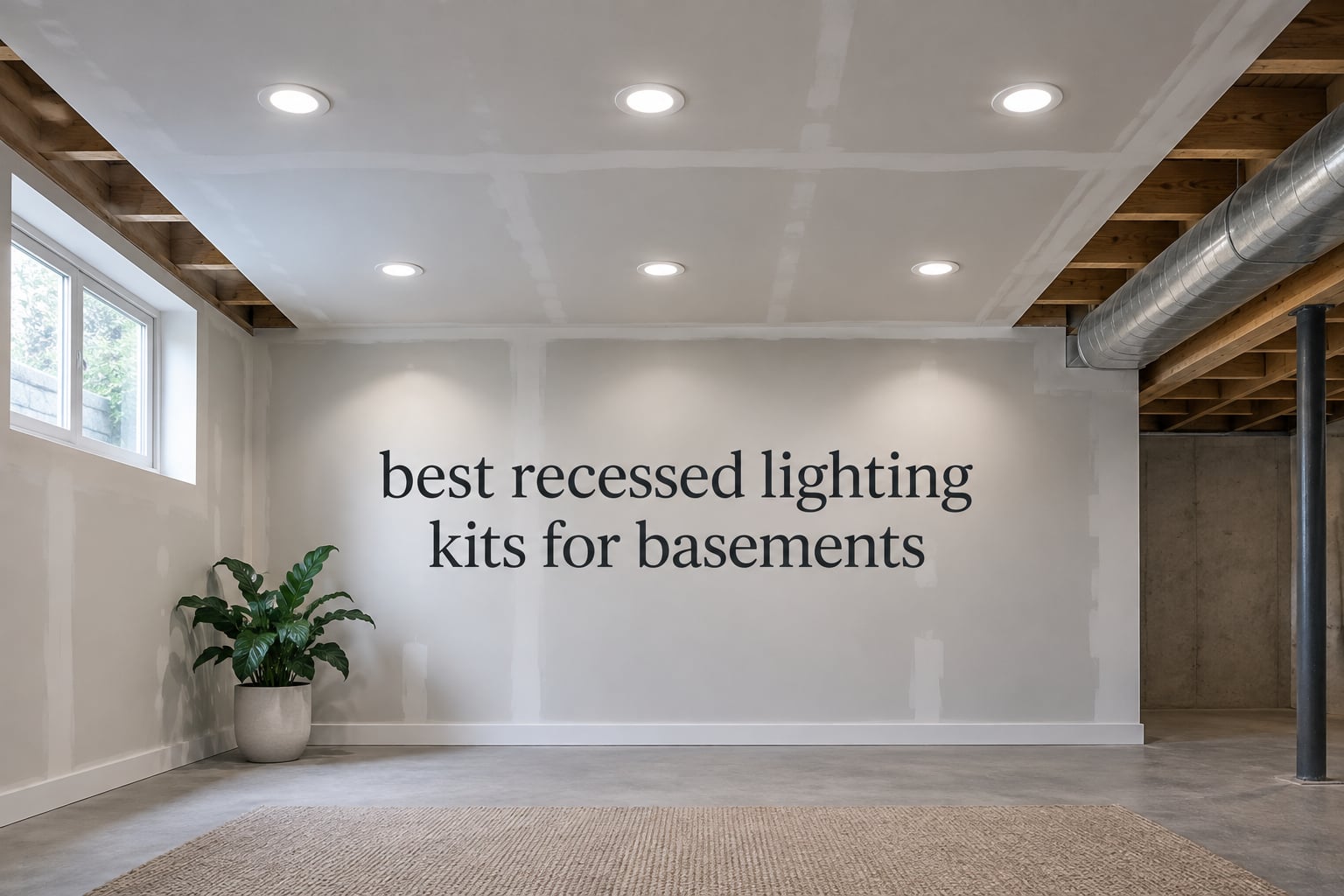
The best recessed lighting kits for basements are canless wafer downlights with an IC-rated junction box, because a basement ceiling is almost always low, joisted, and about to be buried in insulation. If the room is dry, a 6-inch canless kit at roughly 1050 to 1200 lumens with selectable color temperature covers most floor plans. If a shower, laundry sink, or exterior wall is involved, the answer changes to a wet-rated retrofit, and that single rating decides which products you can safely install.
Basements are the least forgiving room in most houses. The ceiling is usually 7 or 8 feet, the joists are already there, ductwork and steel beams cut the bays into odd shapes, and the floor sits below grade where humidity works at every seam. Get the fixture type wrong and you are chiselling out drywall a year later.
We compared 12 of the highest-rated canless and retrofit kits currently on the market, checking lumen output, wattage, color temperature options, dimming floor, IC rating, damp or wet rating, physical depth, and pack size against the manufacturer data on each listing. Twelve kits, several thousand reviews, and a lot of attention to the cutout diameter, because that is the number that decides whether a light fits your ceiling at all. Signal problems in the same rooms usually trace back to the same layout decisions.
One thing worth saying up front: no kit solves a bad layout. A room with nine lights and no reference to where the sofa sits will feel dim and glare at the same time. The spacing math and the safety ratings matter as much as the fixture, and we cover both below the product reviews.
Table of Contents
Top 3 Best Recessed Lighting Kits for Basements in 2026

Amico 12 Pack 6 Inch Canless
- 1050LM at 12W
- 5 CCT selectable 2700K-5000K
- IC rated junction box
- 2 inch clearance

Ensenior 12 Pack 6 Inch 5000K
- 1200LM at 12W
- Fixed 5000K daylight
- 5% to 100% dimming
- IC rated and ETL listed

All 12 Recessed Lighting Kits for Basements Compared in 2026
| Product | Specifications | Action |
|---|---|---|
| Amico 12 Pack 6 Inch Canless Wafer |
|
Check Latest Price |
| Ensenior 12 Pack 6 Inch 5000K Canless |
|
Check Latest Price |
| Ensenior 12 Pack 6 Inch 5CCT Canless |
|
Check Latest Price |
 Amico 6 Pack 6 Inch 5CCT Canless Amico 6 Pack 6 Inch 5CCT Canless |
|
Check Latest Price |
 Amico 12 Pack with Night Light Amico 12 Pack with Night Light |
|
Check Latest Price |
 Sunco 12 Pack 6 Inch Canless Slim Sunco 12 Pack 6 Inch Canless Slim |
|
Check Latest Price |
 DAMINY 24 Pack 6 Inch Canless DAMINY 24 Pack 6 Inch Canless |
|
Check Latest Price |
 CycevSun 6 Pack with Night Light CycevSun 6 Pack with Night Light |
|
Check Latest Price |
 TORCHSTAR 16 Pack 6 Inch Ultra-Thin TORCHSTAR 16 Pack 6 Inch Ultra-Thin |
|
Check Latest Price |
 zouzai 24 Pack 6 Inch Ultra-Thin zouzai 24 Pack 6 Inch Ultra-Thin |
|
Check Latest Price |
 FREELICHT 24 Pack 6 Inch Retrofit FREELICHT 24 Pack 6 Inch Retrofit |
|
Check Latest Price |
 LUXRITE 4 Pack 5 and 6 Inch Retrofit LUXRITE 4 Pack 5 and 6 Inch Retrofit |
|
Check Latest Price |
Canless, Traditional Can, or Retrofit: The Decision That Governs Everything
Canless wafer fixtures win in a typical basement because they need about 2 inches of clearance instead of the 5 to 7 inches a traditional can housing consumes, and because a joisted ceiling with a duct trunk running through it usually has nowhere to put a can. A retrofit trim is the opposite case: it drops into a housing that already exists. Traditional new-construction cans still make sense when the ceiling is open, you want a deep-recessed look, and you would rather swap a lamp in ten years than cut the ceiling.
Canless wafer — the right answer for a low or joisted basement ceiling, a retrofit into existing drywall with no cans present, and any room where you need 2 inches of clearance to clear ductwork or a boxed soffit. Every kit in this roundup except the two retrofits is a canless design.
Traditional can — the right answer when the ceiling is open before drywall and you want the light source set deep inside the housing to cut glare. The cost is ceiling depth and a larger cutout.
Retrofit trim — the right answer when the basement already has cans. The E26 screw-in base on the two retrofit kits here means no new wiring and roughly three minutes per fixture.
Drop-ceiling basement — fixtures must be fastened to the grid framing, not rested on a tile. A wafer light clipped into a tile without a structural fastener can fall the first time somebody reaches above it.
For a low ceiling specifically, recessed beats any other ceiling type. Pendant lights and flush mounts drop into the room and eat headroom you do not have, while a canless downlight sits essentially flush with the drywall surface.
The Safety Check: IC, Damp and Wet Ratings in a Basement
IC-rated means the fixture is certified for direct contact with insulation, and yes, any recessed light installed against insulation needs it. Basement ceilings in most of the country sit in an insulated floor cavity, so a non-IC housing buried in blown-in cellulose is a real hazard rather than a technicality. Every product in this roundup carries an IC-rated fixture and junction box.
Damp rated means the fixture tolerates humidity in a covered location, which is what an ordinary finished basement is. Wet rated means it can take direct water, which is what a shower stall or an uncovered exterior soffit needs. Two kits here are explicitly wet rated: the LUXRITE retrofit, rated for indoor and outdoor use, and the FREELICHT retrofit, listed water resistant.
Two details homeowners on forums keep flagging. First, the seal matters as much as the rating: a wafer light with a thin foam gasket can let conditioned air into the ceiling cavity and add to the noise that travels down from the floor above. Second, fire-rated 2-hour housings exist for finished and multifamily basements where the ceiling assembly must maintain a barrier. None of the kits below carry a 2-hour fire rating, so if your jurisdiction requires one, buy a housing from a commercial line rather than a wafer kit.
If your panel is already full, a common problem in older houses, adding the AFCI breakers that a finished basement usually needs can stall the project before the drywall is ever hung. Resolve that at the planning stage.
How Many Lights and How Far Apart in a Basement
The rule of thumb is to space fixtures about half the ceiling height apart, and about half that distance from the walls. In a 7 or 8 foot basement ceiling that works out to roughly 3.5 to 4 feet between lights and 2 feet in from every wall. A strict grid is where most basements go wrong, so lay the layout out against the furniture plan first.
Measure the ceiling height and halve it. That is your center-to-center spacing.
Set the first row 2 feet off each wall, then fill the field at your spacing interval.
Aim for roughly 300 to 400 lumens per square foot in a media or family room, and 400 to 500 in a gym or workshop where you need to see clearly.
Shift lights off the exact center of a TV wall or a sectional so nothing lands directly in your eyeline.
Run a separate circuit and switch for anything you want to control differently, and use a three-way switch at the top and bottom of basement stairs.
Working around ductwork and beams is where canless bodies pay off. A 5 or 6 inch can cannot go where a joist bay pinches to a few inches, while a wafer light and its junction box can sit beside the obstruction. Plan the driver box location before you cut, because a junction box that will not clear a duct is the most common reason a canless install gets abandoned mid-room.
1. Amico 12 Pack 6 Inch Canless Wafer Downlights – the best overall basement kit
Amico 12 Pack 6 Inch LED Recessed Lighting, Canless Wafer Downlight, White
1050LM at 12W
5 CCT 2700K-5000K
6.7 inch wafer, 0.9 inch deep
IC rated junction box
Pros
- Highest review volume in the group at 8347 ratings
- Selectable color temperature before install
- 1050 lumens replaces a 110W halogen
- Damp rated for basements and bathrooms
- Aluminum body with 5-year warranty
Cons
- Cutout tolerance is tight so cut inside the template line
- Thin-gauge junction box and a modest foam gasket
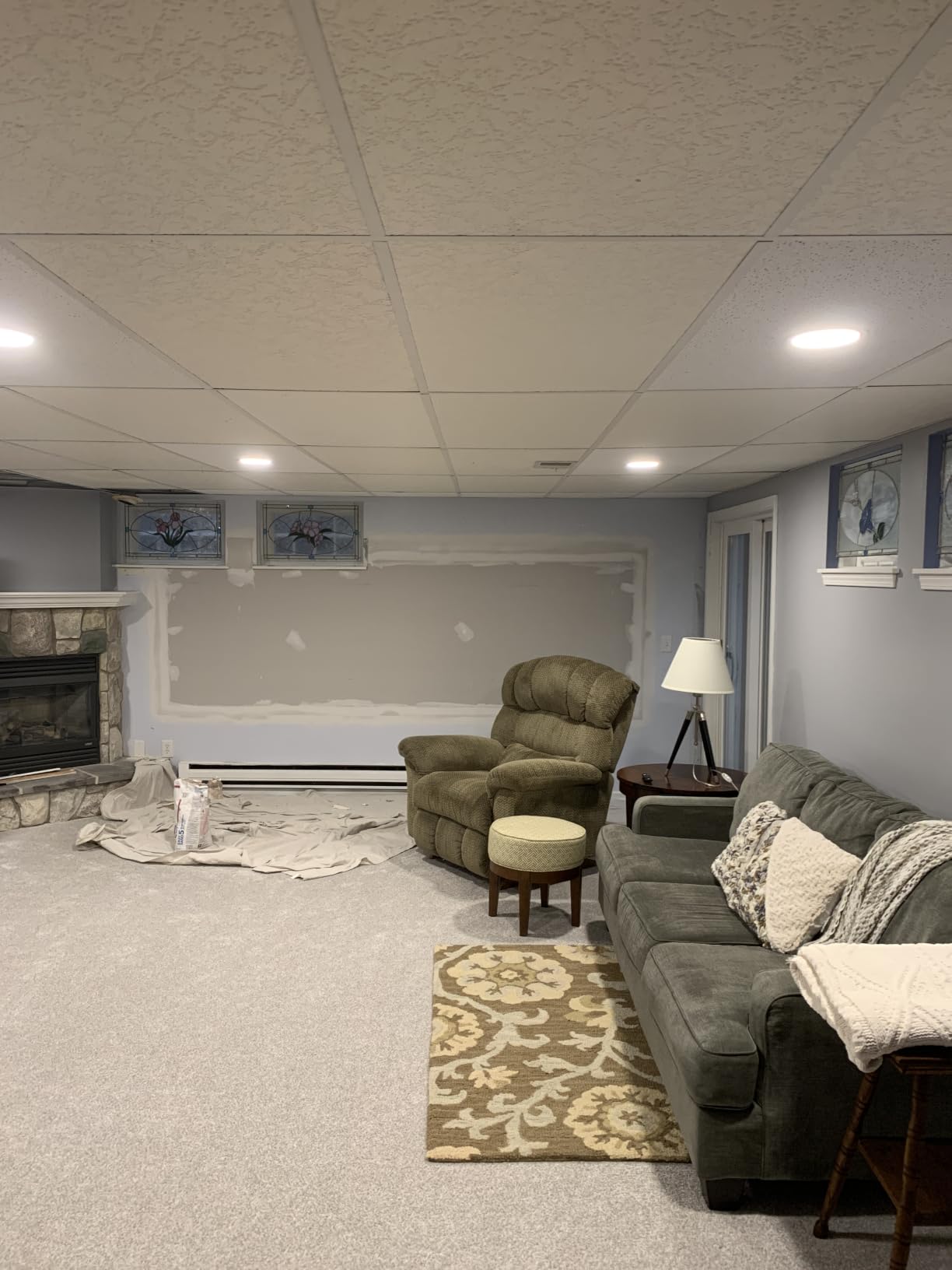
The Amico 12 Pack is the fixture we return to most often for a full basement finish. It is a 6 inch canless wafer rated at 1050 lumens on 12 watts, and the junction box gives you five color temperatures from 2700K to 5000K before a single wire is connected. With 8347 ratings at 4.7, it carries by far the largest review base in this group, which matters because the recurring complaint is consistent enough to plan around rather than discover later.
Owners praise the color temperature switch, the thin profile, and the ratio of light to wattage. Multiple reviewers describe using these to replace basement fluorescents in a single weekend, and the 2 inch clearance is specifically called out as the reason the lights fit around joists and duct runs.
The honest limitation is the cutout. The fixture measures 6.7 inches across, so cutting the nominal 6.25 inch hole leaves a very small lip, and reviewers repeatedly advise cutting a few millimetres inside the printed template and test-fitting before you cut the rest. The included template is printed slightly large, which makes that advice necessary rather than fussy.
A smaller share of reviews mention the thin-gauge metal junction box and a foam gasket that does not seal as well as some competing wafer lights, particularly on textured ceilings. Neither issue stops an install. Both are worth knowing about if air sealing above the ceiling is part of your plan.
What to check before you order the Amico 12 Pack
Confirm the cutout size against a template you print yourself rather than trusting the box art, and count your joist bays before ordering, because 12 fixtures covers roughly a 12 by 24 foot room at the spacing described earlier. If your basement is larger, budget for a second pack or plan two lighting zones on separate circuits.
When to pick something else
Skip this one if you need a wet location rating for a shower area, since it is listed as not water resistant. It is also not the strongest choice if the ceiling is aggressively low and the joist bay depth is measured in fractions of an inch, where a thinner body or a different mounting approach will save you a lot of chiselling.
2. Ensenior 12 Pack 6 Inch 5000K Canless – the highest rated output
Ensenior 12 Pack 6 Inch LED Recessed Light, 5000K Dimmable Canless Wafer
1200LM at 12W
Fixed 5000K daylight
6.73 inch wafer, 0.59 inch deep
ETL, Energy Star, IC and UL listed
Pros
- Highest rating in the group at 4.8 across 6182 reviews
- 1200 lumens from 12 watts
- Thinnest profile among the 12-packs
- 5% to 100% dimming on most dimmers
- 50000 hour lifespan with 5-year warranty
Cons
- Fixed 5000K with no color temperature selection
- Cool tone suits work areas better than living spaces
The Ensenior 12 Pack in fixed 5000K is the brightest canless kit here, at 1200 lumens from 12 watts, and it holds the top rating in the comparison at 4.8 across 6182 reviews with 88 percent five-star. At 0.59 inches deep it is also among the thinnest bodies in the group, which matters in a joisted ceiling where a taller wafer simply will not seat flat against the drywall.
Reviewers focus on the combination of output and clean dimming behavior, and many pair it with a dimmer switch for task areas such as a workbench or laundry table. The certification list is unusually thorough for a kit at this level, with ETL, FCC, Energy Star and UL-listed terminals all stated on the listing.
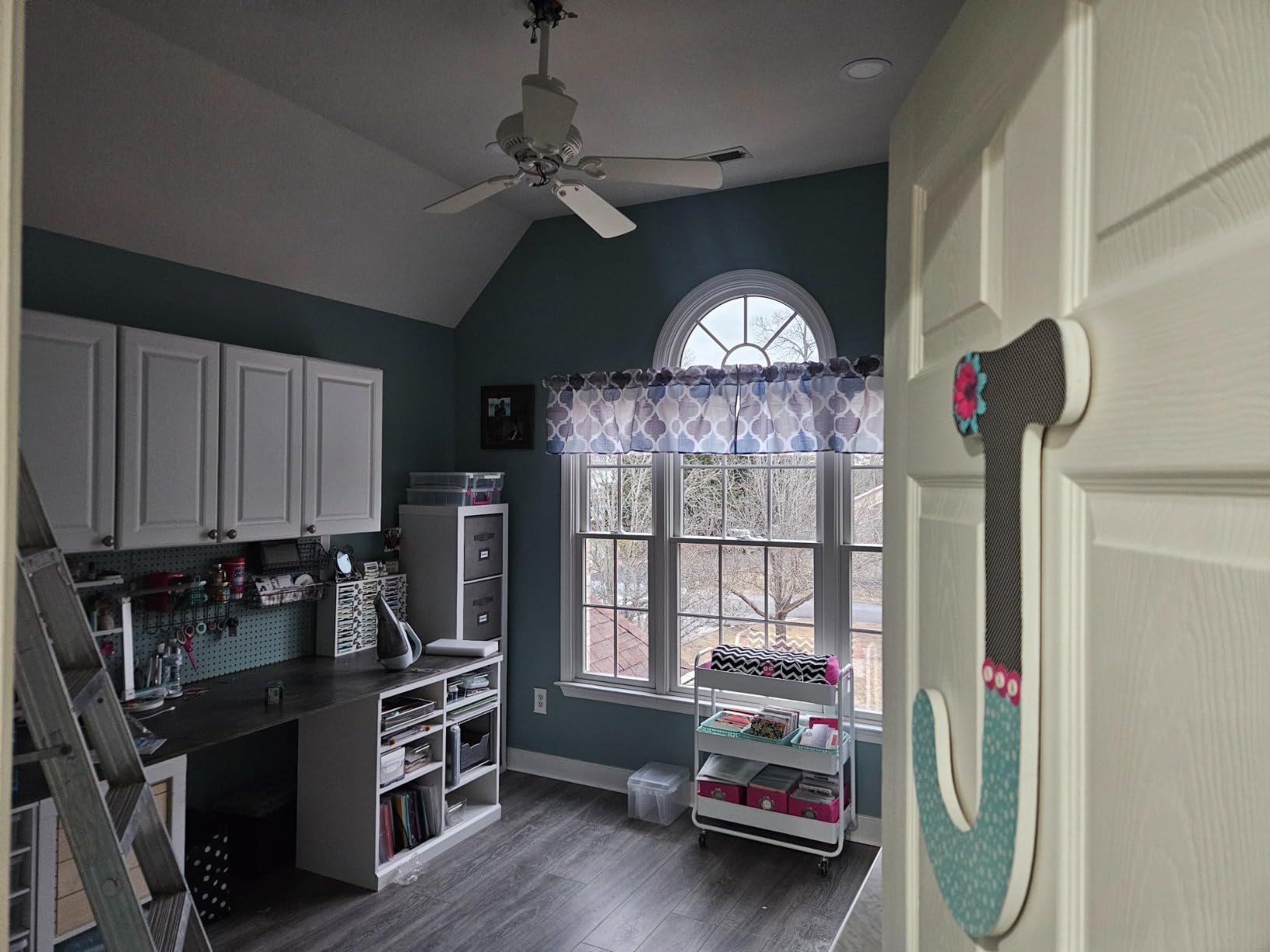
The single decisive limitation is color temperature. This variant is locked to 5000K daylight white, so if you want warm light in a finished media room you have to choose a different listing in the same family. Reviewers who installed it in a finished room frequently note that the cool tone reads more like a workshop than a lounge.
Otherwise the technical profile is clean: 5% to 100% smooth dimming, IC rated, damp rated for bathroom, eave, porch and soffit locations, and a 50,000 hour lifespan backed by a 5-year warranty.
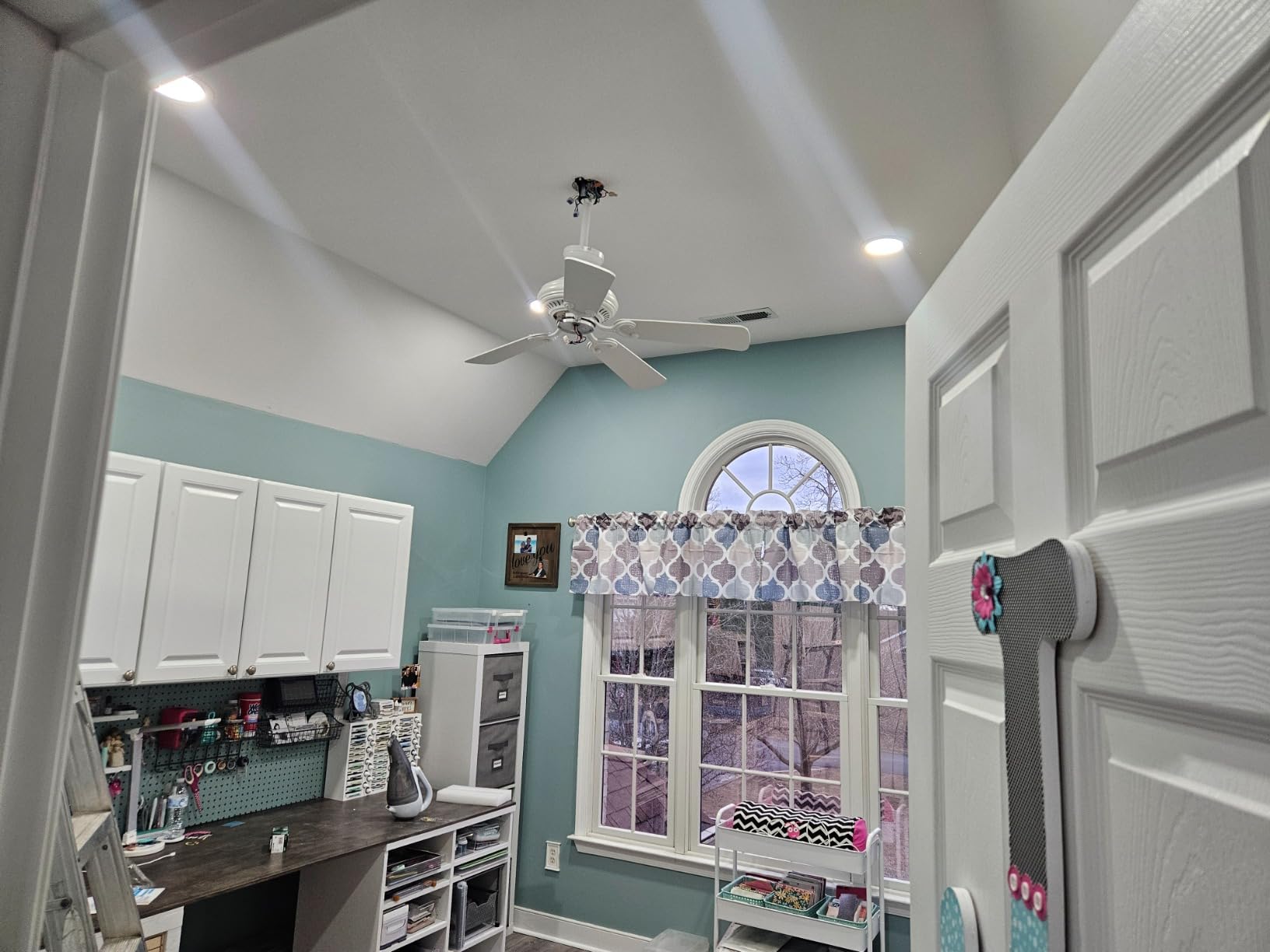
Where the 5000K Ensenior fits best
Basement workshops, utility rooms, laundry areas, and gym spaces all benefit from 5000K because the cooler tone makes edges and labels easier to read. Pair it with a dimmer so the same room can shift down to a softer level for evening use.
When to pick something else
Do not buy this variant for a finished media room, a guest bedroom, or any space you will sit in for hours. If you want one fixture that works in both a work corner and a lounge, the selectable 5CCT kits solve that, and there is a full section on color temperature below.
3. Ensenior 12 Pack 6 Inch 5CCT Canless – best value for most basements
Ensenior 12 Pack 6 Inch LED Recessed Ceiling Light, 5CCT, 1200LM 12W 120V
1200LM at 12W
5 CCT via junction box dip switch
CRI 80+
6.69 inch wafer, 0.94 inch deep
Pros
- 1200 lumens and 5 color temperatures in one pack
- Two inch clearance fits joisted low basements
- Flicker-free dimming from 5% to 100% with CRI 80+
- Aluminum body resists yellowing
- ETL and Energy Star certified with 50000 hour life
Cons
- Shade material listed as plastic so the trim may discolor
- Junction box required on every fixture adds install steps
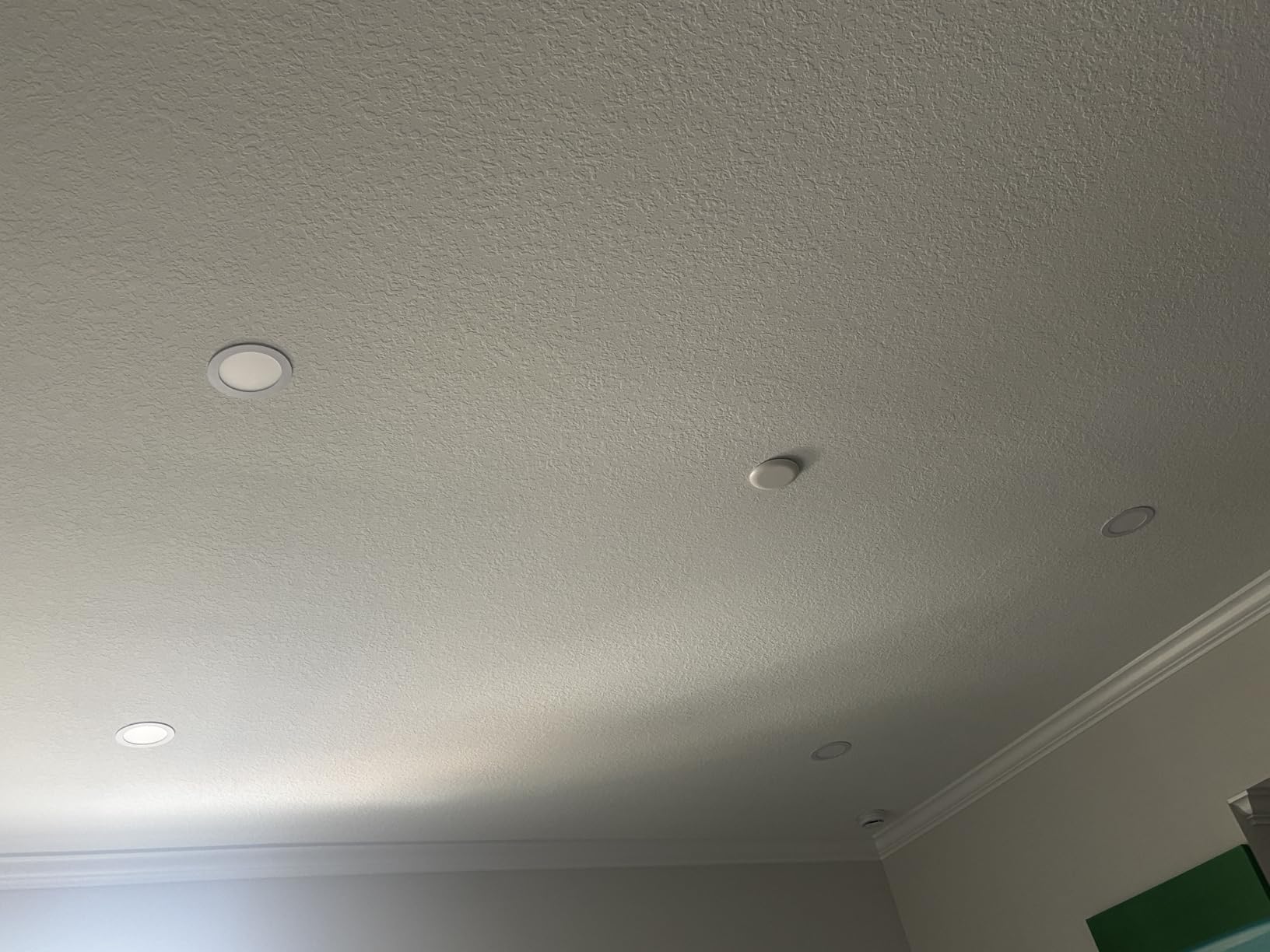
This is the kit we recommend when someone asks for one box that handles an entire finished basement without a follow-up order. It delivers the same 1200 lumens as the fixed-5000K Ensenior but adds a five-position dip switch on the junction box, so one purchase covers a warm media corner and a bright workbench without matching fixtures to rooms afterwards.
Reviewers single out the pairing of 1200-lumen output with the five-position switch as the reason it fits unfinished spaces like basements and garages, where joists block traditional cans. The 2 inch clearance lets the body bypass joists and ductwork, and the aluminum body is credited with resisting yellowing over long service.
The specification sheet lists the shade material as plastic while the body is aluminum, which is the detail buyers raise when thinking about long-term appearance of the visible trim. The junction box requirement is not a flaw, but it does add a wiring step per fixture compared with a screw-in retrofit, so budget more time on a first install.
Dimming runs 5% to 100% without flicker, CRI is 80 or better, and the 50,000 hour lifespan with a 5-year warranty sits comfortably in the middle of this group.
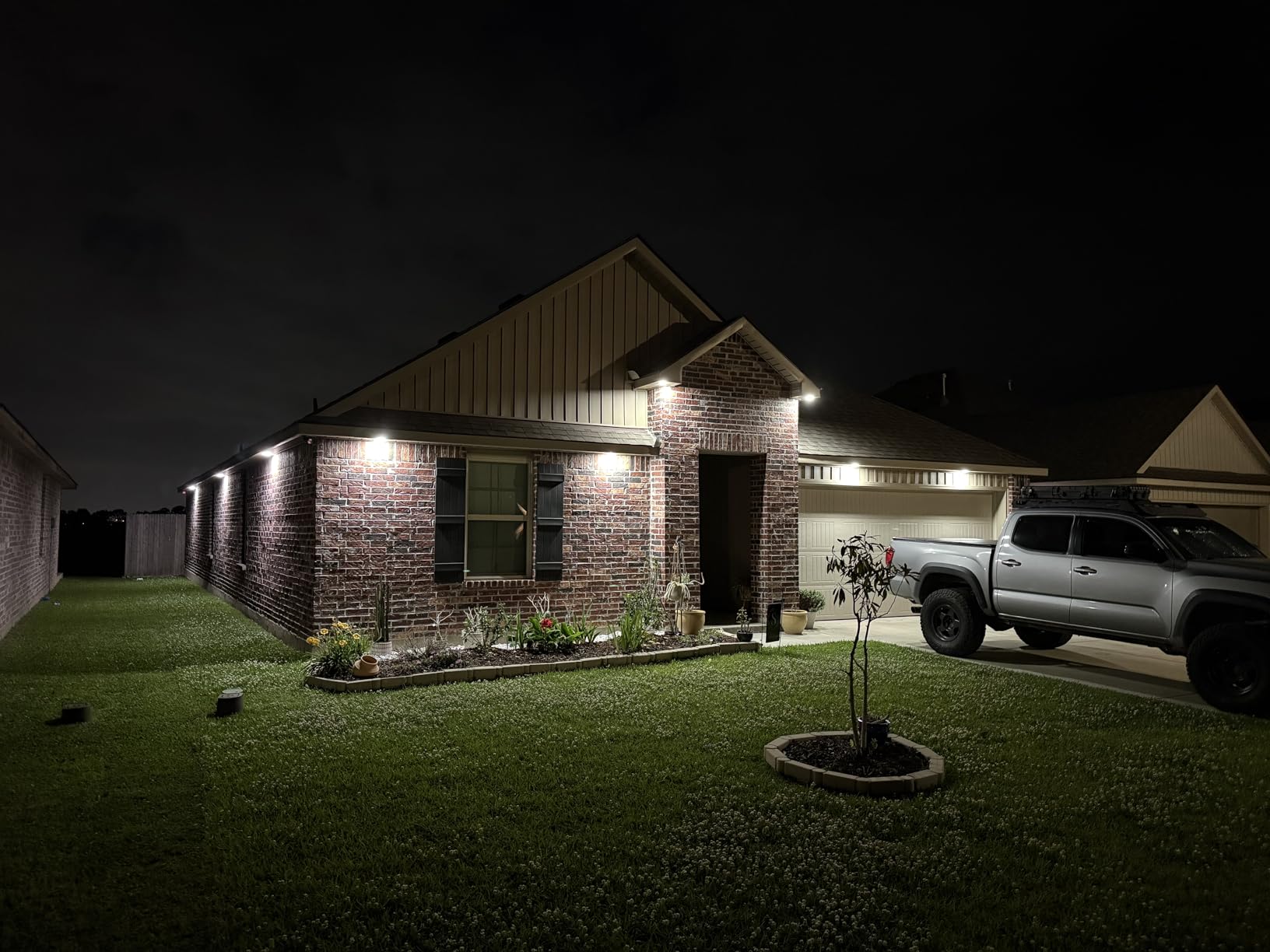
What this pack does well in a basement layout
The 1200 lumen figure supports roughly 300 to 400 lumens per square foot across a medium room, which is the right target for a media or family space. Set the dip switches at 2700K or 3000K over seating and 4000K over a workbench, and the same fixture covers both without a second product line.
When to pick something else
Pass on it if the visible trim color matters to you over a decade, or if you are working in a shower or other wet location. If your ceiling cavity is shallower than two inches anywhere, the thinner kits further down this list are a safer bet.
4. Amico 6 Pack 6 Inch 5CCT Canless – best for finishing one room first
Amico 6 Pack 6 Inch LED Recessed Light with Junction Box, 5CCT, 1050LM, 12W
6 pack of 6 inch canless
1050LM at 12W
5 CCT slide switch
IC rated and damp rated
Pros
- Lowest cost per fixture among the multi-packs
- Five selectable color temperatures before install
- Explicitly listed for basements and hard-to-reach damp spaces
- 1050 lumens at 12W equals a 110W halogen
- ETL and Energy Star certified
Cons
- Only six fixtures so larger rooms need a second pack
- 5-year warranty is shorter than the best in this group
The Amico 6 Pack is the sensible entry point when you are converting one basement room rather than the whole floor. It is the same 6 inch canless wafer body with the same five-position color temperature switch and the same IC-rated, thermally protected junction box, just packaged six at a time so you can test the color temperature on one room before committing to a larger order.
Reviewers treat it as exactly that: an entry point for a single space, valued for the per-fixture cost and for the fact that the manufacturer explicitly rates it for basements and other damp, hard-to-reach areas. The spring-clip and template install is quick once you have the first hole cut.
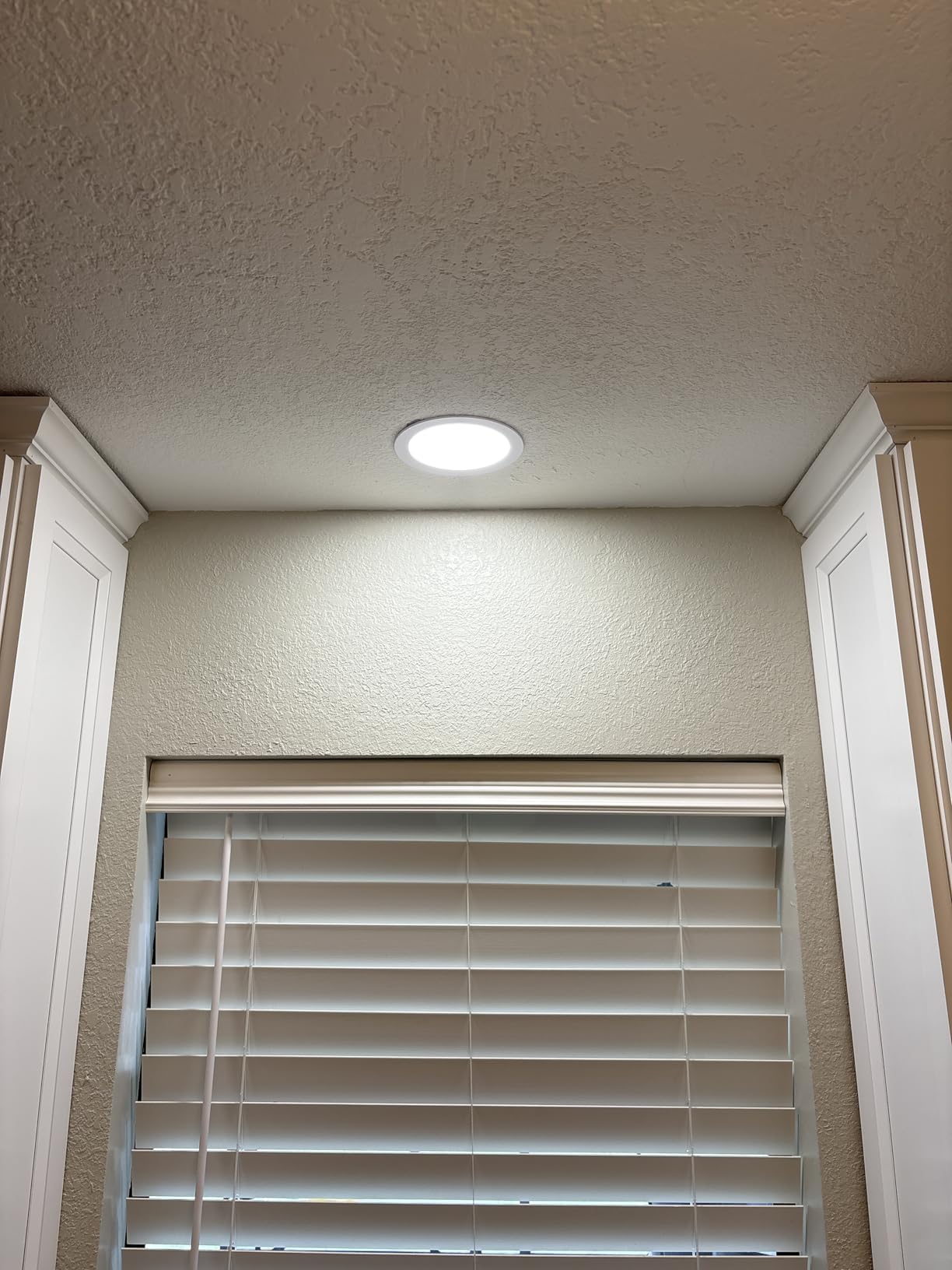
The limitation is arithmetic rather than technical. Six fixtures covers a modest room, so a 12 by 24 foot basement area needs two packs, and anyone planning ahead should just order the 12-pack version instead. The 5-year warranty is also shorter than the longest in this comparison.
Output is 1050 lumens at 12 watts with 87.5 lumens per watt, dimming is smooth from 5% to 100% without flicker, and the listed certifications are ETL and Energy Star. The listed 17.5 by 17.5 by 2.5 inch dimensions describe the shipping box, not the fixture.
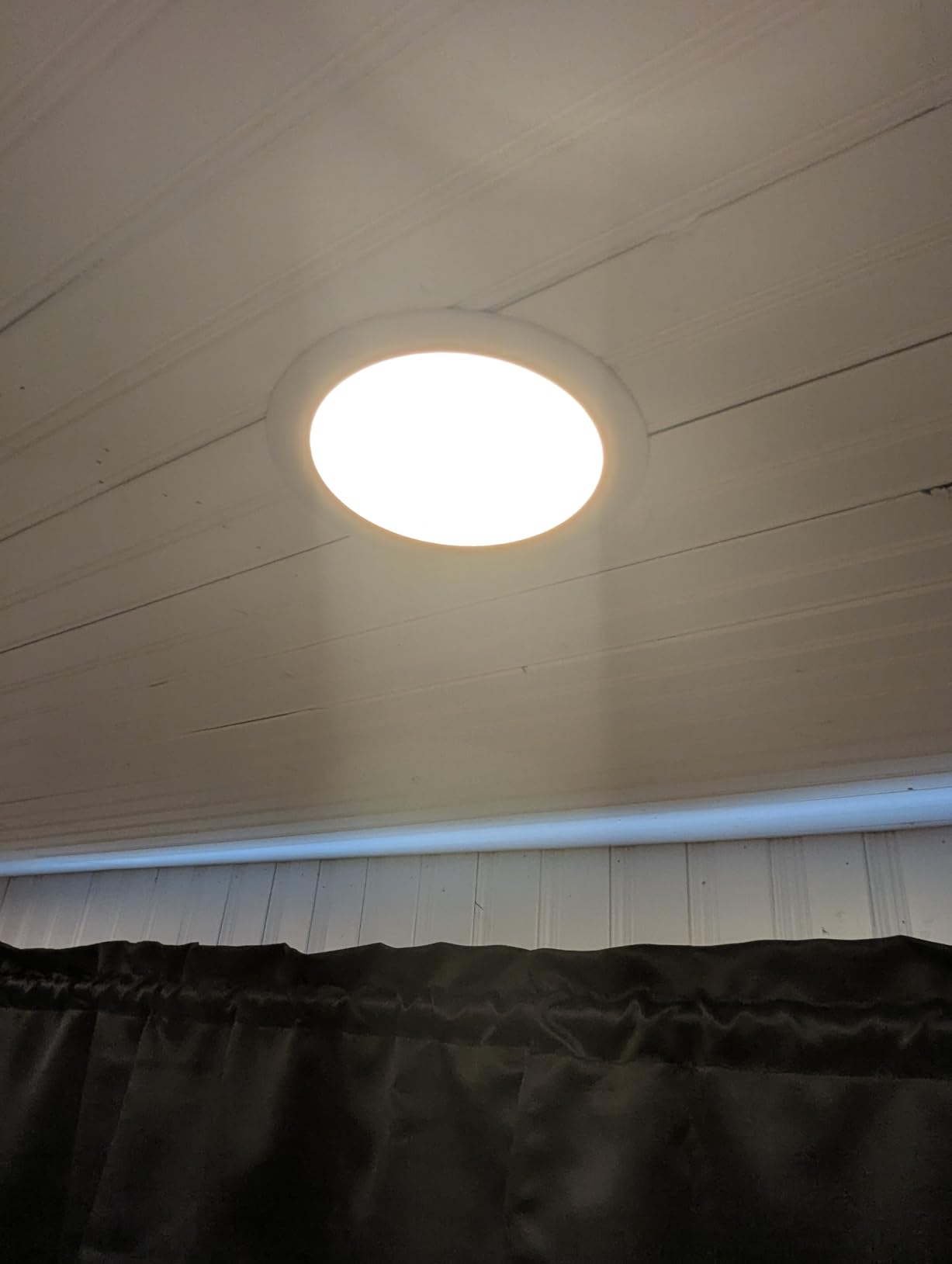
When a 6 pack is the right call
It suits a basement bathroom without a shower, a small craft room, a wine closet, or a stair landing where six lights is genuinely the whole job. It is also the sensible way to test a color temperature you have never lived with before committing to a full floor.
When to pick something else
If you are lighting an open basement with a sectional, you will need two orders and the seam in the middle of the room will land wherever the count happens to end. For anything above roughly 150 square feet, move up to a 12-pack so the layout is deliberate rather than accidental.
5. Amico 12 Pack with Night Light – best for hallways and stairwells
Amico 12 Pack 6 Inch LED Recessed Light with Night Light, 5CCT, 1100LM
1100LM at 12W downlight
2000K amber night light mode
6.93 inch, 0.98 inch deep
IC rated, ETL and FCC
Pros
- Two lighting modes in one fixture
- Glare-free amber night light for stairs and halls
- Five color temperatures in downlight mode
- Both modes dim from a standard wall dimmer
- Very light so it does not stress the ceiling drywall
Cons
- Night light brightness runs higher than a true night light
- Mode change needs a timed off-then-on at the switch
- Listed as not water resistant
Basement stairs are where people actually get hurt at three in the morning, and this Amico 12 Pack is the kit we would use there. Each fixture runs as a 1100 lumen downlight or switches to a 2000K amber night light mode, so a single run of lights handles both a bright ceiling and a dim path without a separate fixture type.
Reviewers describe the amber ring as genuinely glare-free and well suited to hallways, stairwells, and finished basements, and they like that both modes dim smoothly from a standard wall dimmer. A synchronization reset function returns all fixtures to downlight mode after ten seconds off, which stops a room getting stuck in night light mode after someone flicks the switch.
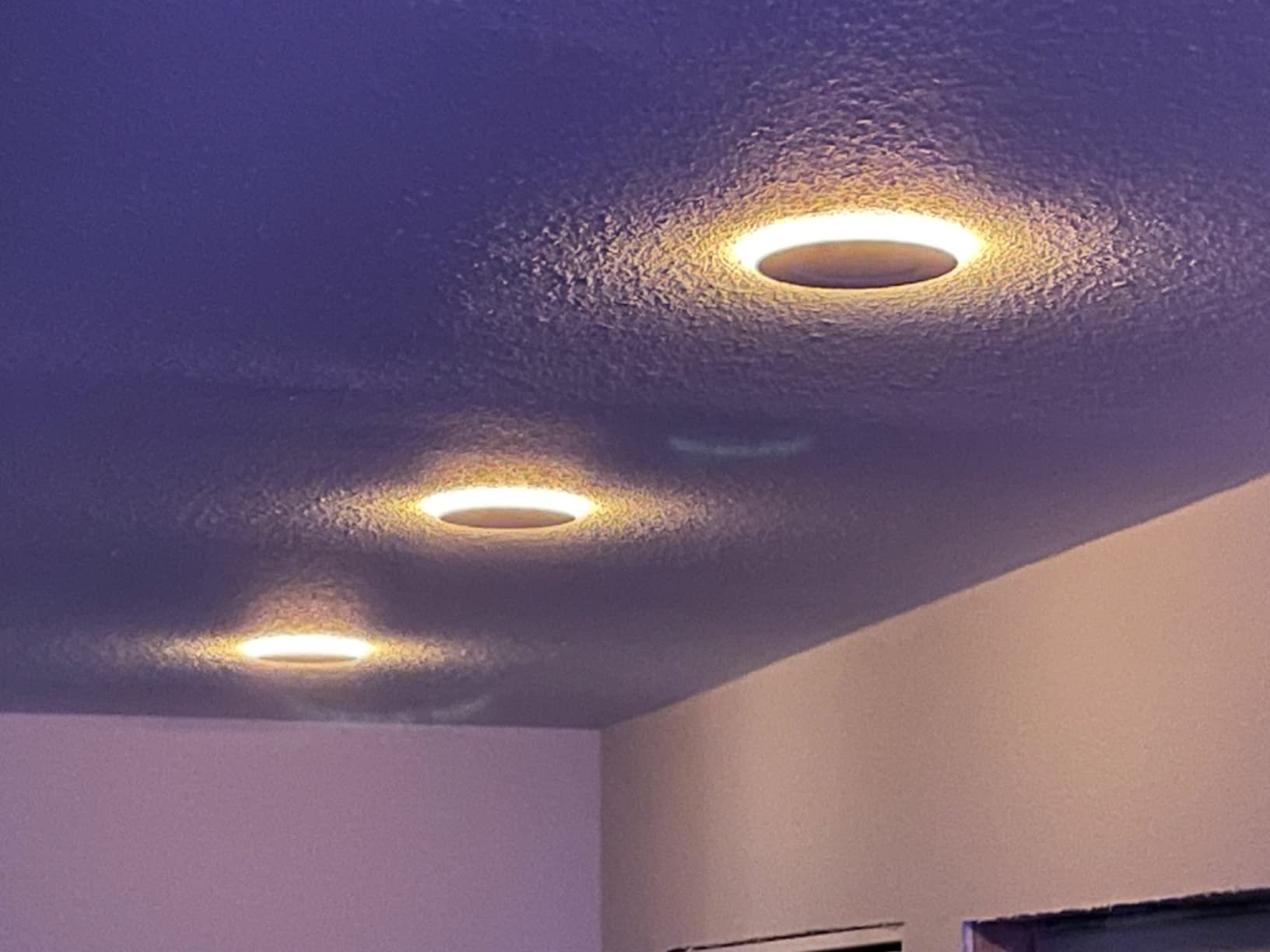
The practical criticisms are all about the mode switching. Changing between downlight and night light requires an off-then-on sequence at the wall switch, and the amber output is brighter than some buyers want for a true night light. The included push-in connectors are convenient but less secure than wire nuts, and the supplied seal is described as flimsy on textured ceilings.
It is listed as not water resistant, so it does not belong in a shower or an uncovered exterior location. Both modes dim from 5% to 100%, and the fixture is IC rated with ETL and FCC certification.
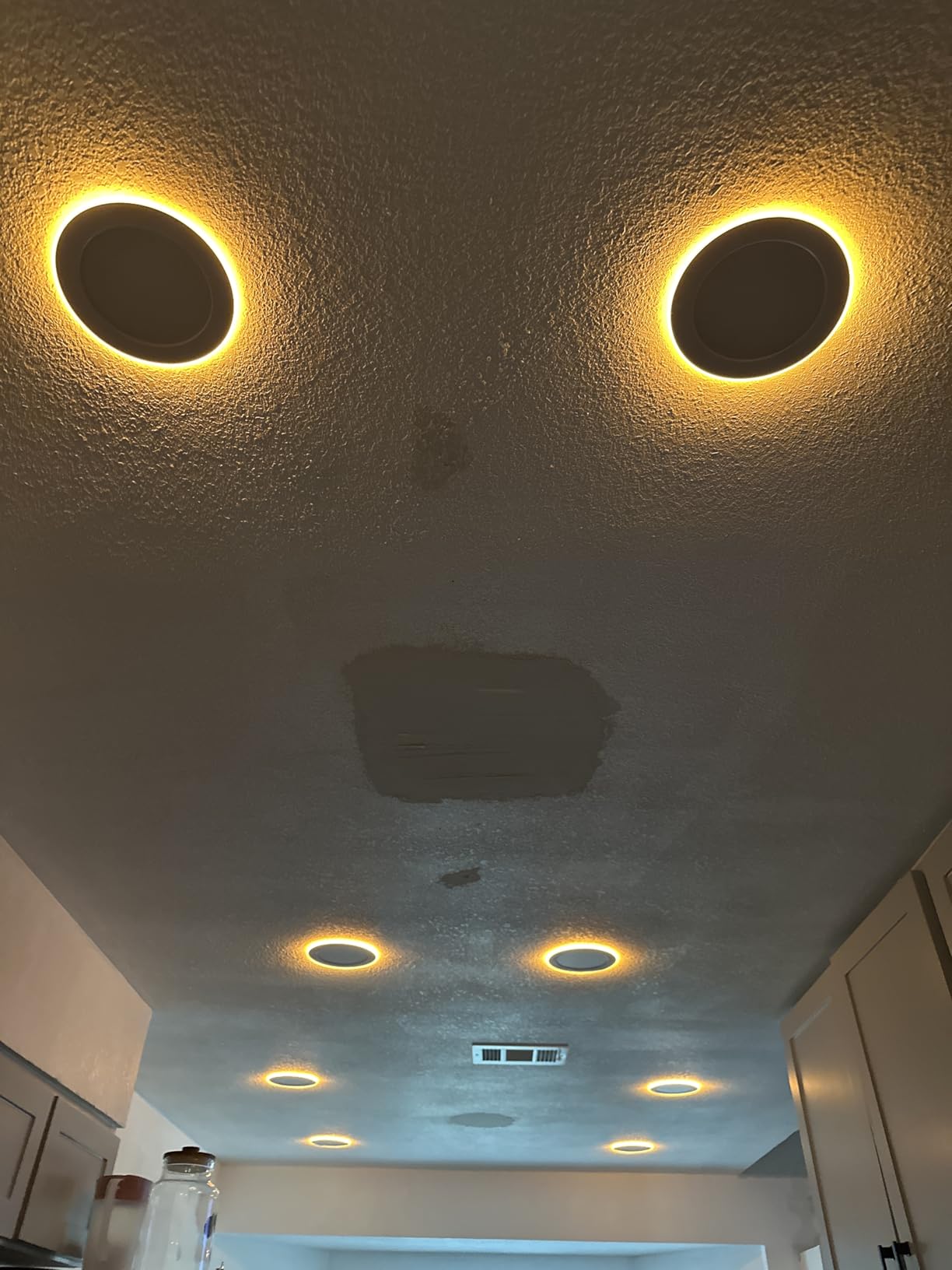
How to lay these out for stair safety
Put one fixture on each stair riser or at the top and bottom landing, on their own circuit and switch from the rest of the room. Set them to 2700K or 3000K for the downlight mode so the downstairs area matches the rest of the house, and leave the amber mode as the default for overnight use.
When to pick something else
Skip it where a bathroom or shower is involved, and skip it if you want an RGB or tunable night light, since the amber is a single fixed color. Households that hate fumbling at a wall switch in the dark are better served with a separate low-level path light on a photocell or motion sensor.
6. Sunco 12 Pack 6 Inch Canless Slim – best warranty coverage
Sunco 12 Pack 6 Inch Canless LED Recessed Lights, 5CCT, 14W, Dimmable
1200LM at 14W
5 CCT selectable
IC rated with constant current driver
10% to 100% dimming
Pros
- 1200 lumens per fixture for unfinished spaces
- Constant current driver included in every fixture
- 7-year warranty is the longest in this group
- ETL FCC RoHS T24 and Energy Star certified
- Spring brackets adapt to different drywall thicknesses
Cons
- Dimming floor is 10% rather than the 5% most rivals offer
- Trim is plastic rather than aluminum
- Lowest rating score among the 12-packs at 4.5
The Sunco 12 Pack is the one to buy when the paperwork is the deciding factor. Each fixture ships with its own constant current driver in the box, carries a 7-year warranty from a US-based brand, and is certified under ETL, FCC, RoHS, T24 and Energy Star. For a finished basement you intend to keep for a long time, that combination of coverage and stated certifications is worth more than a slightly better star average.
Output is 1200 lumens at 14 watts, which is the highest wattage draw among the kits here, so budget a little more attention to circuit loading. Reviewers value the output per fixture and the included driver, and the spring brackets are reported to adapt to single drywall, double drywall, and soffit conditions.
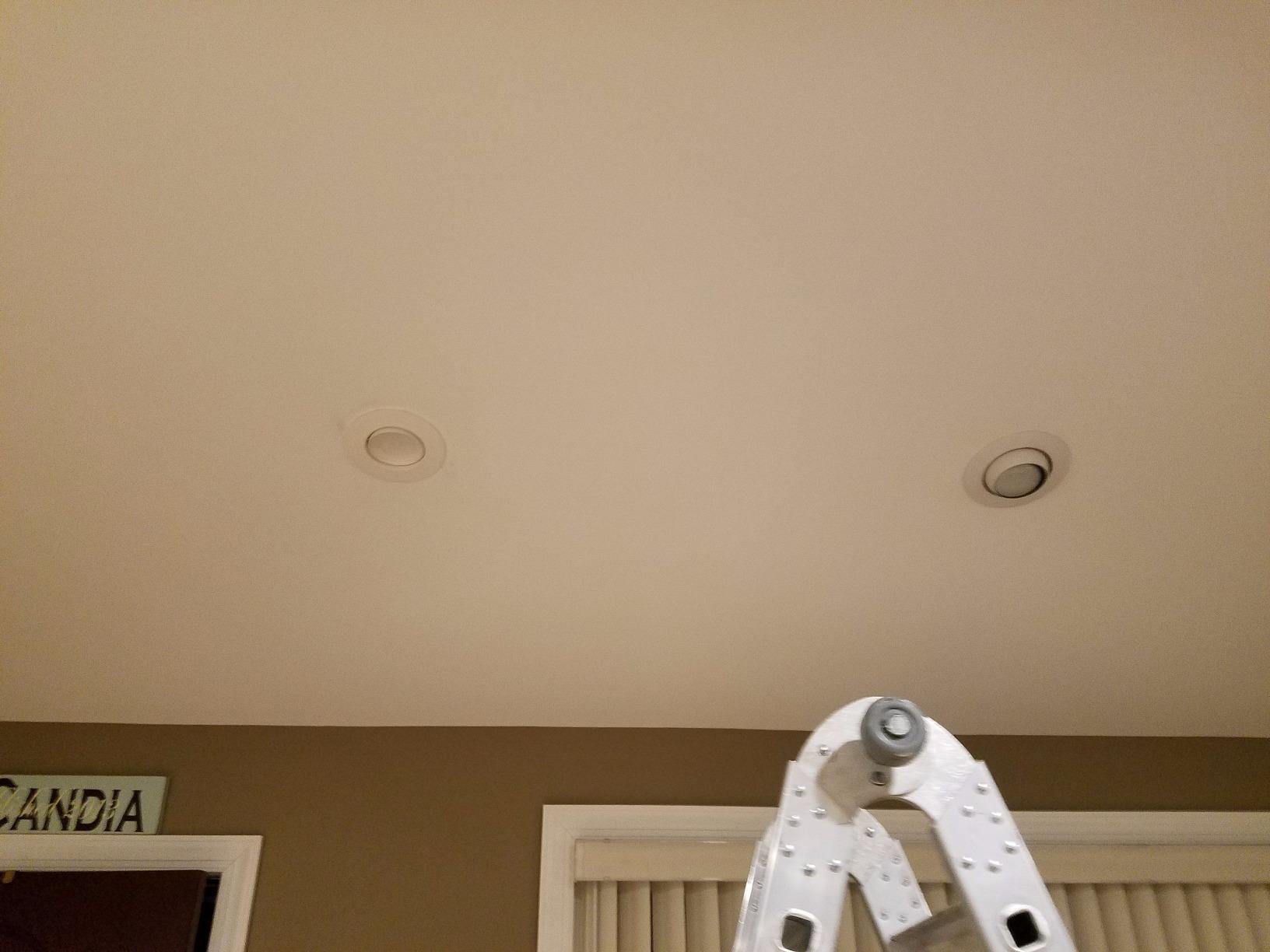
Two limits are specific and worth planning around. Dimming runs from 10% to 100% rather than the 5% floor most rivals hit, and buyers mention this specifically when pairing with lower-end dimmers. The trim is plastic rather than aluminum, which shows up in the visible appearance over time.
At 4.5 with a 6 percent one-star share, this is the softest-rated 12-pack in the comparison, so read a few of the lower reviews before you commit. It is also listed as not water resistant.
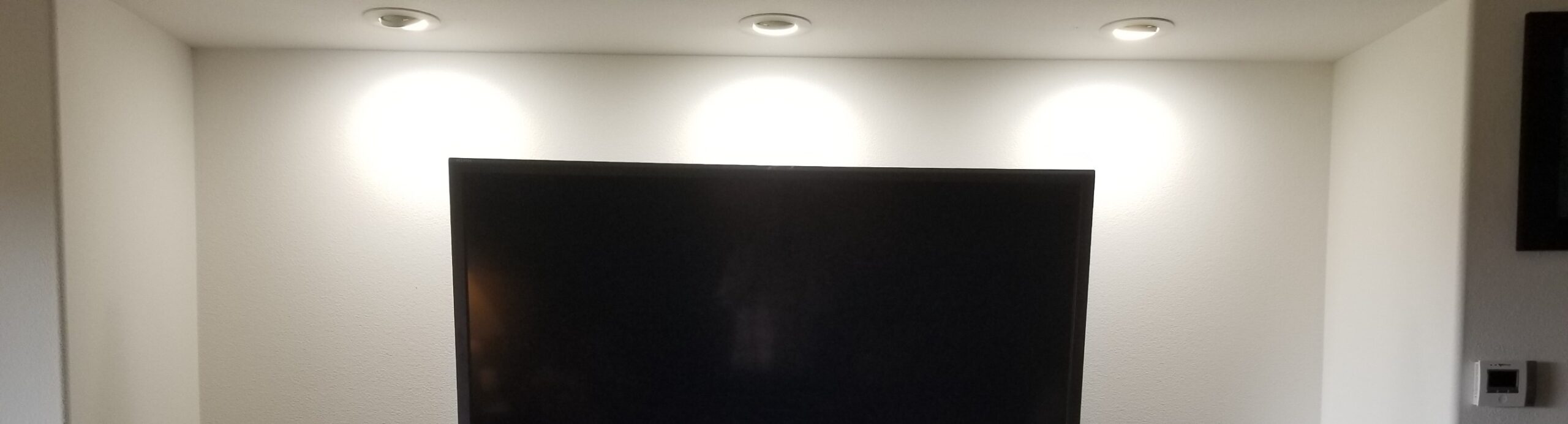
What to verify on this kit
Check your circuit capacity before ordering twelve fixtures, since 14 watts each is the highest draw in this group and 12 fixtures on one 15-amp circuit is not a comfortable margin. Confirm the dimmer is rated for LED loads and supports a 10% floor, and measure a joist bay where you plan to place lights.
When to pick something else
Choose a different kit if you want deep dimming for a media room, since a 10% floor reads as a noticeable step at the bottom of the dim. It is also the wrong choice for a wet location, and if the plastic trim bothers you in a room you will look at every day, an aluminum-bodied kit is a better long-term bet.
7. DAMINY 24 Pack 6 Inch Canless – best for a whole-basement order
DAMINY 24 Pack 6 Inch LED Recessed Lighting, Canless Wafer Downlight
24 pack of 6 inch canless
1100LM at 10W
5 CCT junction box switch
2 inch clearance, IC rated
Pros
- Twenty-four lights cover a large basement or shop from one order
- Best lumens per watt here at 110 lumens per watt
- 5% to 100% dimming
- Metal body described as equal to big-box fixtures
- IC rated and FCC certified
Cons
- Listed as not water resistant despite damp-location marketing
- Some reviews report service life of roughly 1.5 years
- 1-star reviews run 5 percent
- the highest in the group
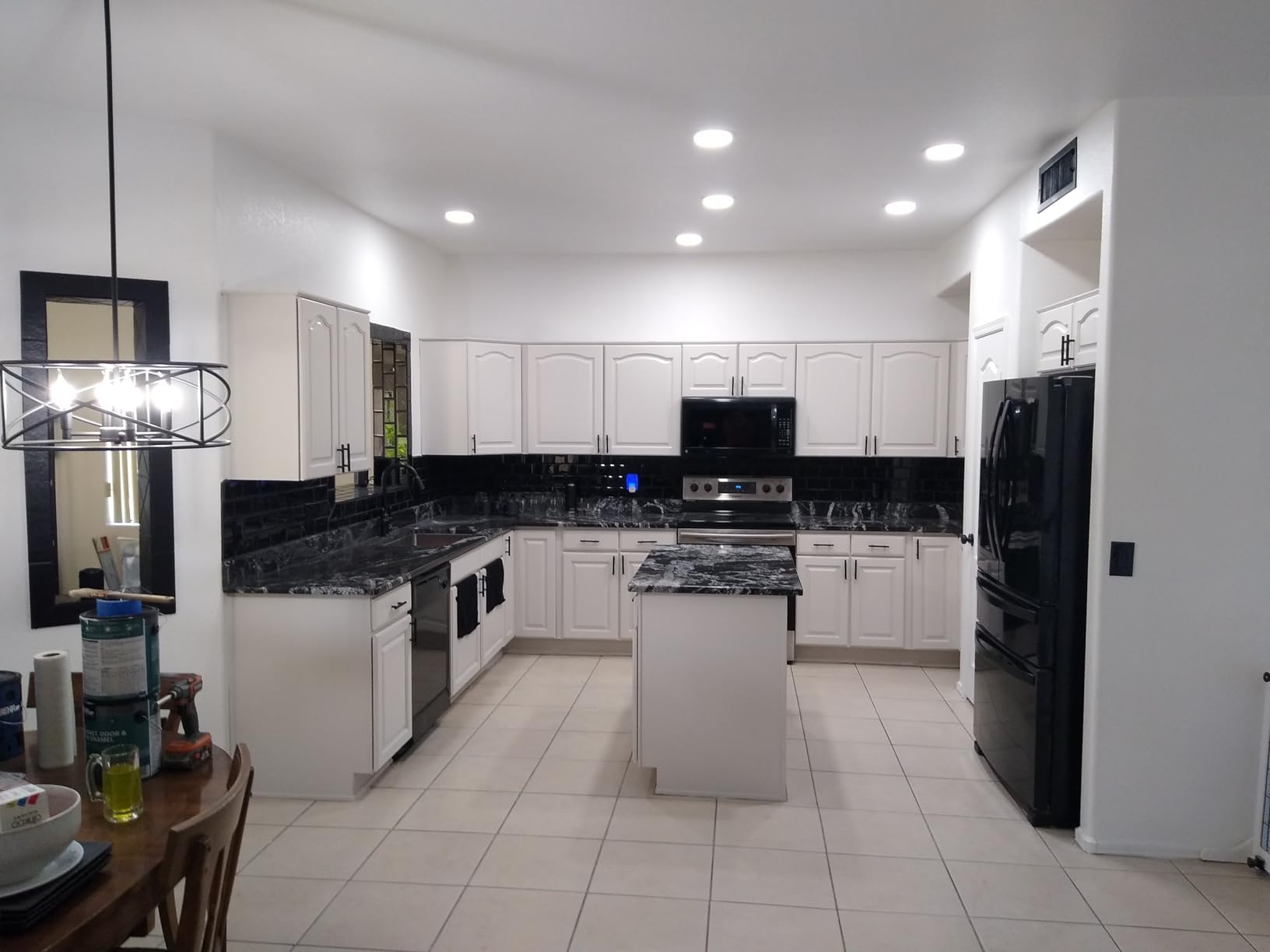
Twenty-four fixtures from a single order is the practical argument for the DAMINY kit. A finished basement of 300 square feet or more at the spacing described earlier needs more than a dozen lights, and most owners treat this pack as a one-purchase solution for a full basement, shop, or open-plan area.
The efficiency figure is the best in the comparison at 1100 lumens from 10 watts, or 110 lumens per watt. Reviewers describe the light as indistinguishable from big-box store fixtures and specifically praise the 5% to 100% dimming range and the low 10-watt draw, which matters on a circuit serving a whole room.
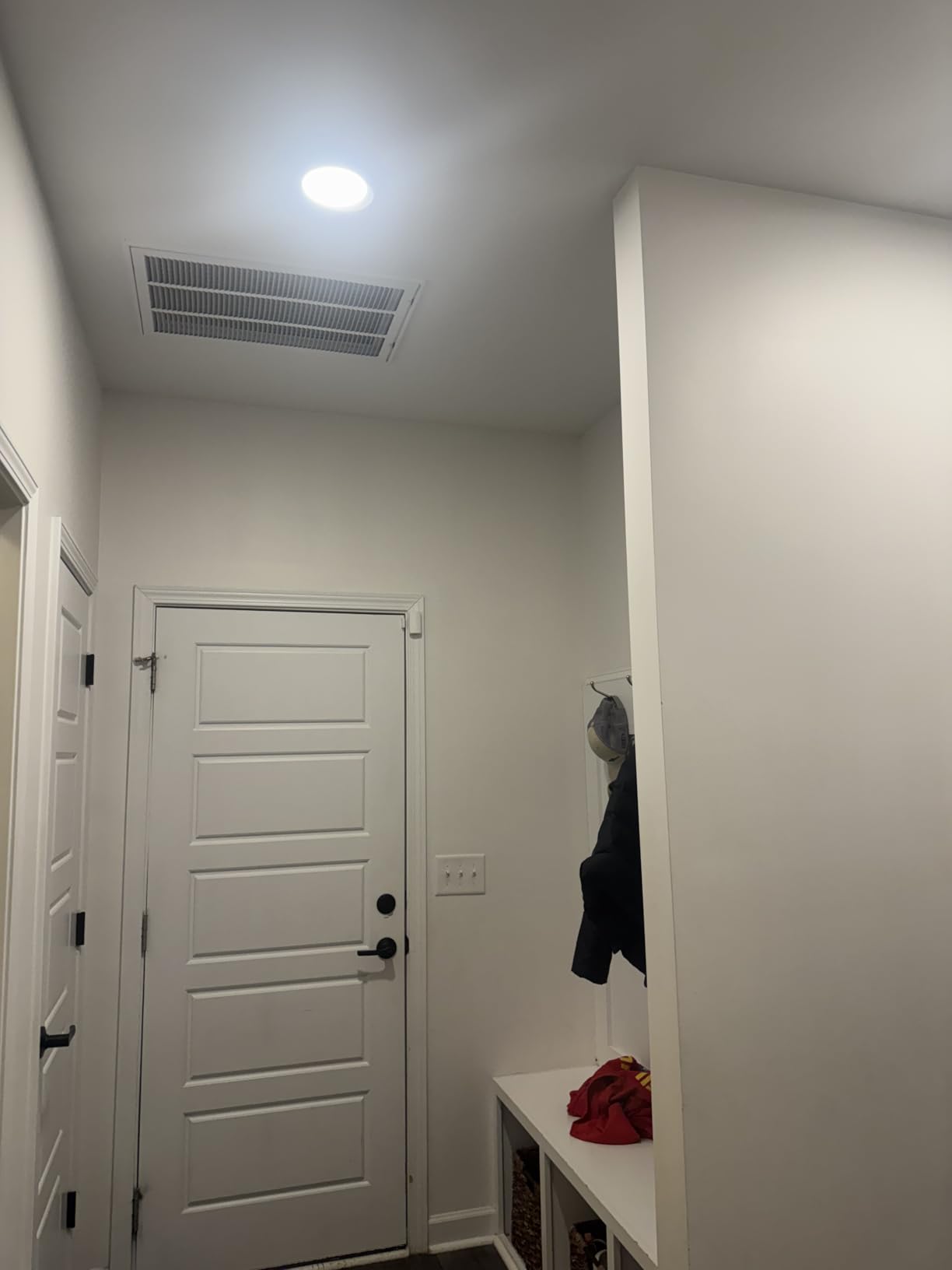
Durability is the reservation. A small number of reviews report fixtures lasting about a year and a half, and the 1-star share of 5 percent is the highest in this group. The product is also not marked water resistant even though damp-location use is suggested in the marketing, so do not treat the marketing language as a rating.
It is IC rated, FCC certified, needs 2 inches of clearance, and carries a 5-year manufacturer warranty with a metal body. The included components list is thinner than most, listing an instruction manual only, so confirm the junction boxes ship in the box before you start cutting.
How to use a 24 pack without wasting a layout
Mark all 24 positions on the ceiling before cutting anything, run the count in even rows at your spacing interval, and confirm the total against your room dimensions. Ordering one 24-pack and using 22 is far better than two 12-packs with a bad seam in the middle of the room.
When to pick something else
Pass on it if you cannot accept the durability reports or if you need a wet-rated fixture anywhere in the plan. For a room where appearance and a long service life matter more than fixture count per order, a 12-pack with a longer warranty is the safer route.
8. CycevSun 6 Pack with Night Light – best night-light retrofit
CycevSun 6 Inch Canless LED Recessed Lighting with Night Light, 6 Pack
6 pack of 6 inch canless
1050LM at 12W
2000K amber night light
Damp location approved, IC rated
Pros
- Junction box fits inside an existing can for a no-cut retrofit
- Soft diffused amber night light glow
- Five selectable color temperatures
- Junction box and wire nuts included
- Aluminum body with Energy Star certification
Cons
- CCT switch sits on the fixture so changing color means pulling the light down
- Slightly small trim that may need caulking at the edge
- ETL rather than UL listing
- 3-year warranty
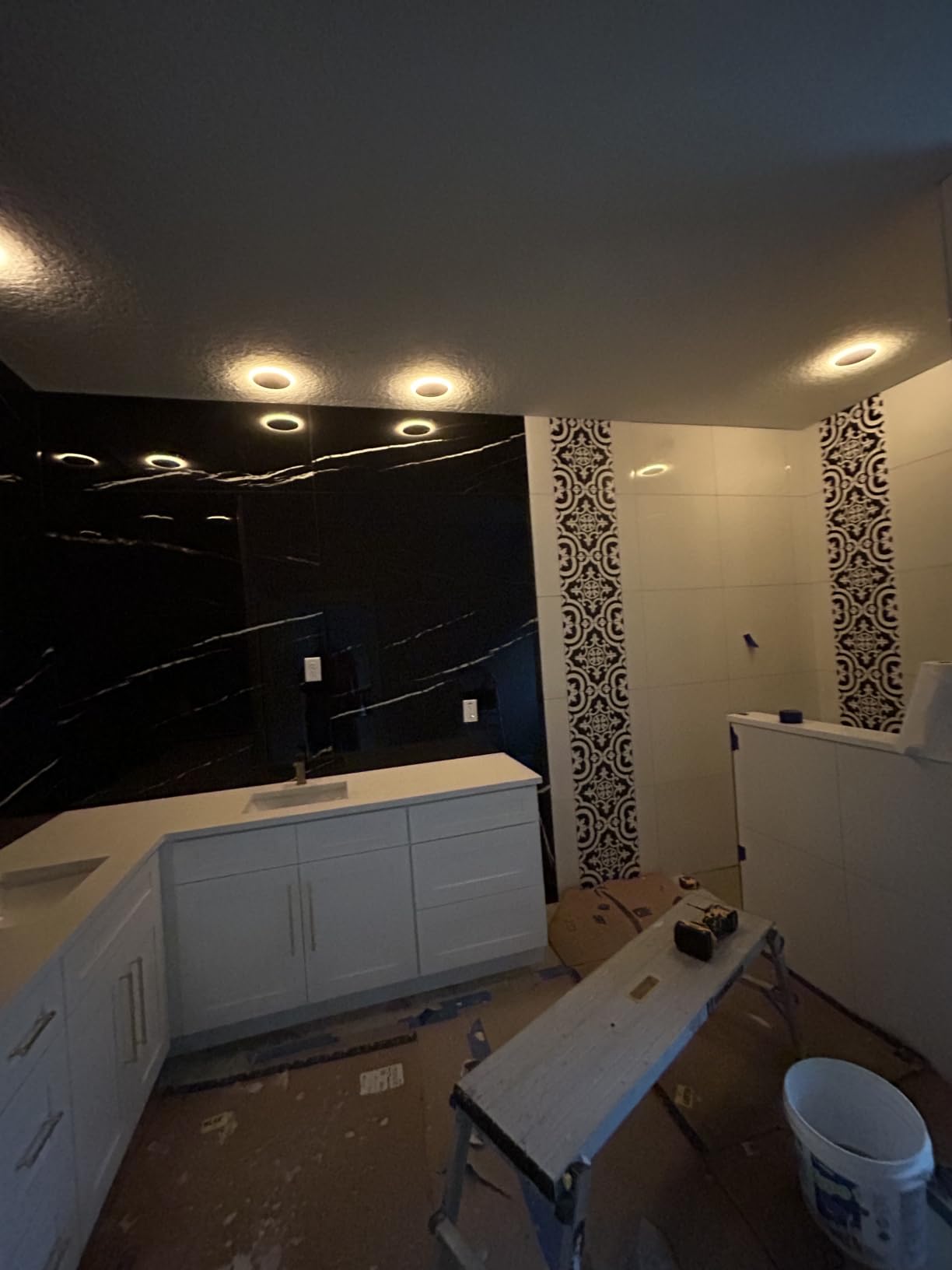
The CycevSun 6 Pack is the most interesting retrofit path in this group. Several reviewers describe tucking the junction box up inside an existing can, splicing into the existing socket wires, and closing the ceiling with no new cuts at all, which turns a six-fixture job into an afternoon rather than a project.
It carries the same dual-mode design as the larger Amico night light pack, with a 2000K amber night light and five selectable color temperatures in downlight mode, at 1050 lumens from 12 watts on an aluminum body. The night light glow is described as soft and diffused, which suits decks, hallways, and basement paths.
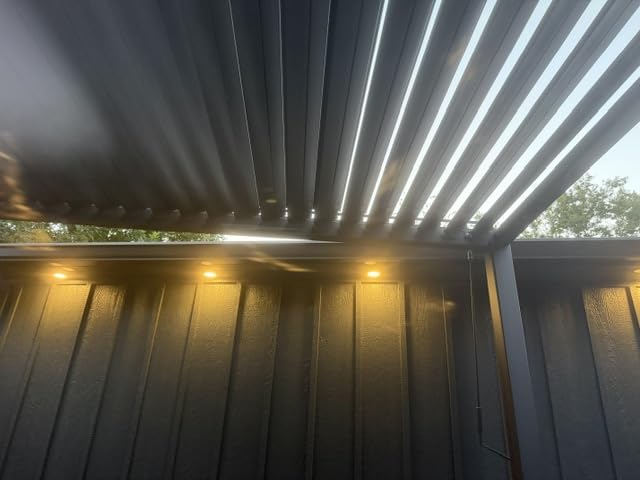
The most cited practical issue is control placement. The color temperature switch sits on the fixture body rather than the junction box, so changing color after installation means pulling the light back down out of the ceiling. Plan your color settings before the drywall goes up, not after.
A few smaller notes: the trim is slightly small and some owners add a little caulking at the edge, it is ETL listed rather than UL, and the warranty is 3 years. Dimming runs 5% to 100% and the fixture is damp location approved, though it is still listed as not water resistant.
What makes this a genuine retrofit
Because the junction box is small enough to sit inside an existing can housing, you can convert a finished basement with old recessed cans without touching the drywall at all. Verify your can diameter first and confirm the box clears the socket wires before you commit to six of them.
When to pick something else
Skip it if you expect to change color temperature later, or if you want UL listing and a longer warranty. If your basement has no existing cans at all, a dedicated canless 12-pack is a cleaner install and costs less per fixture.
9. TORCHSTAR 16 Pack 6 Inch Ultra-Thin – best frosted trim for glare control
TORCHSTAR 16-Pack 5CCT 6 Inch Ultra-Thin LED Recessed Light, 12W, Aluminum
16 pack of 6 inch ultra-thin
1000LM at 12W
5 CCT 2700K-5000K
Frosted anti-glare lens
Pros
- 4.8 rating with a 1 percent one-star share
- most consistent in the group
- Sixteen lights cover a large basement or shop in one kit
- Frosted scratch-resistant lens softens the light source
- IC rated and Energy Star certified
- Manufacturer explicitly lists basements among recommended rooms
Cons
- Highest cost per fixture of the kits compared here
- 1000 lumens is the lowest 6-inch output in the set
- Only a 3-year warranty
- Listed as not water resistant
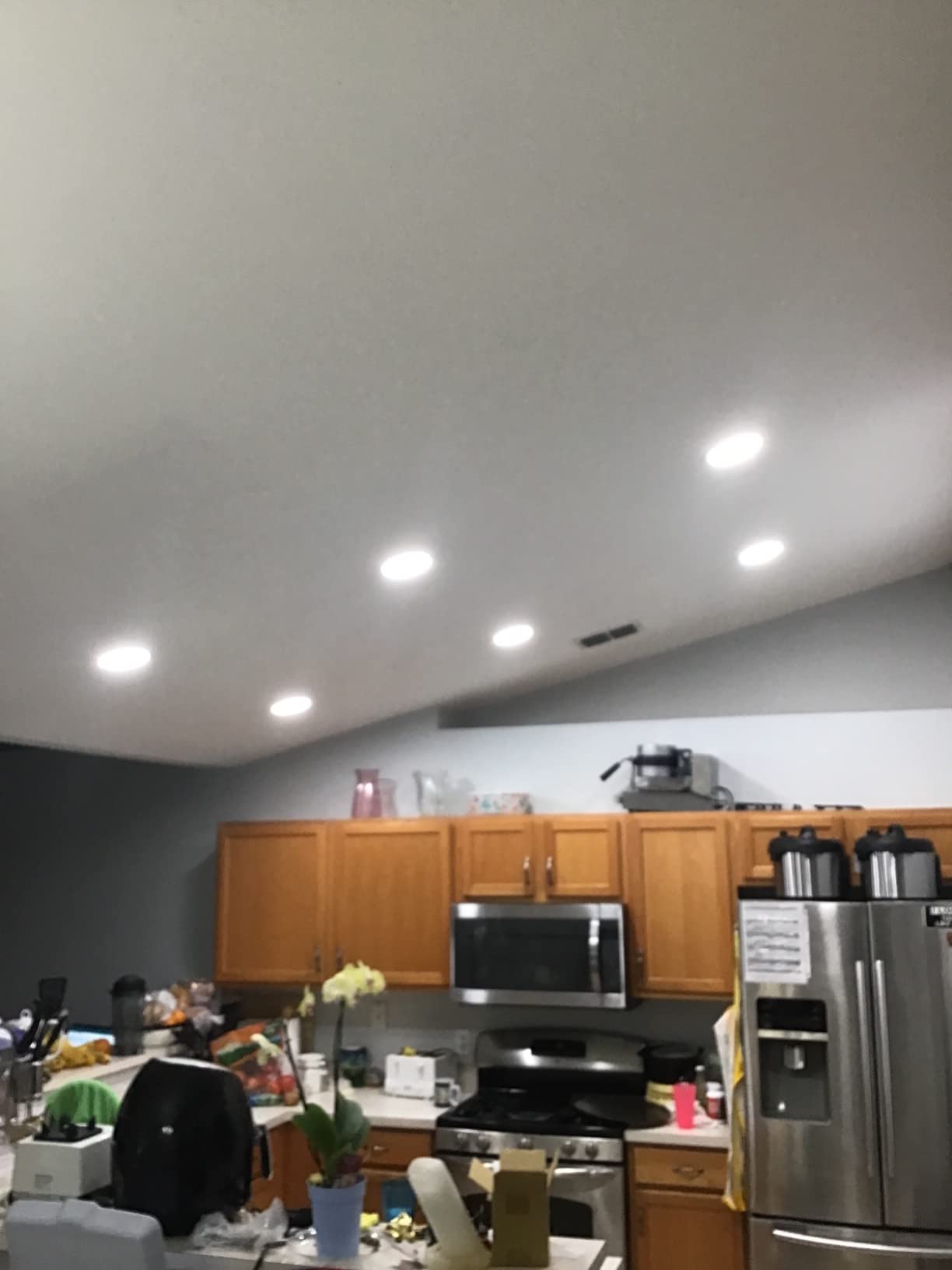
Glare is the underrated problem in a low-ceiling basement, and the TORCHSTAR 16 Pack addresses it directly with a frosted, scratch-resistant lens. On a 7 foot ceiling you are looking almost straight up into the light source, and a diffused lens softens that view in a way a bare LED module does not. Homeowners on forums have long argued for this kind of treatment for exactly this reason.
It also ties for the highest rating in the comparison at 4.8, with a 1 percent one-star share that is the most consistent scoring here. Sixteen fixtures cover a large basement or shop in one kit, and the manufacturer explicitly lists basements among the recommended rooms.
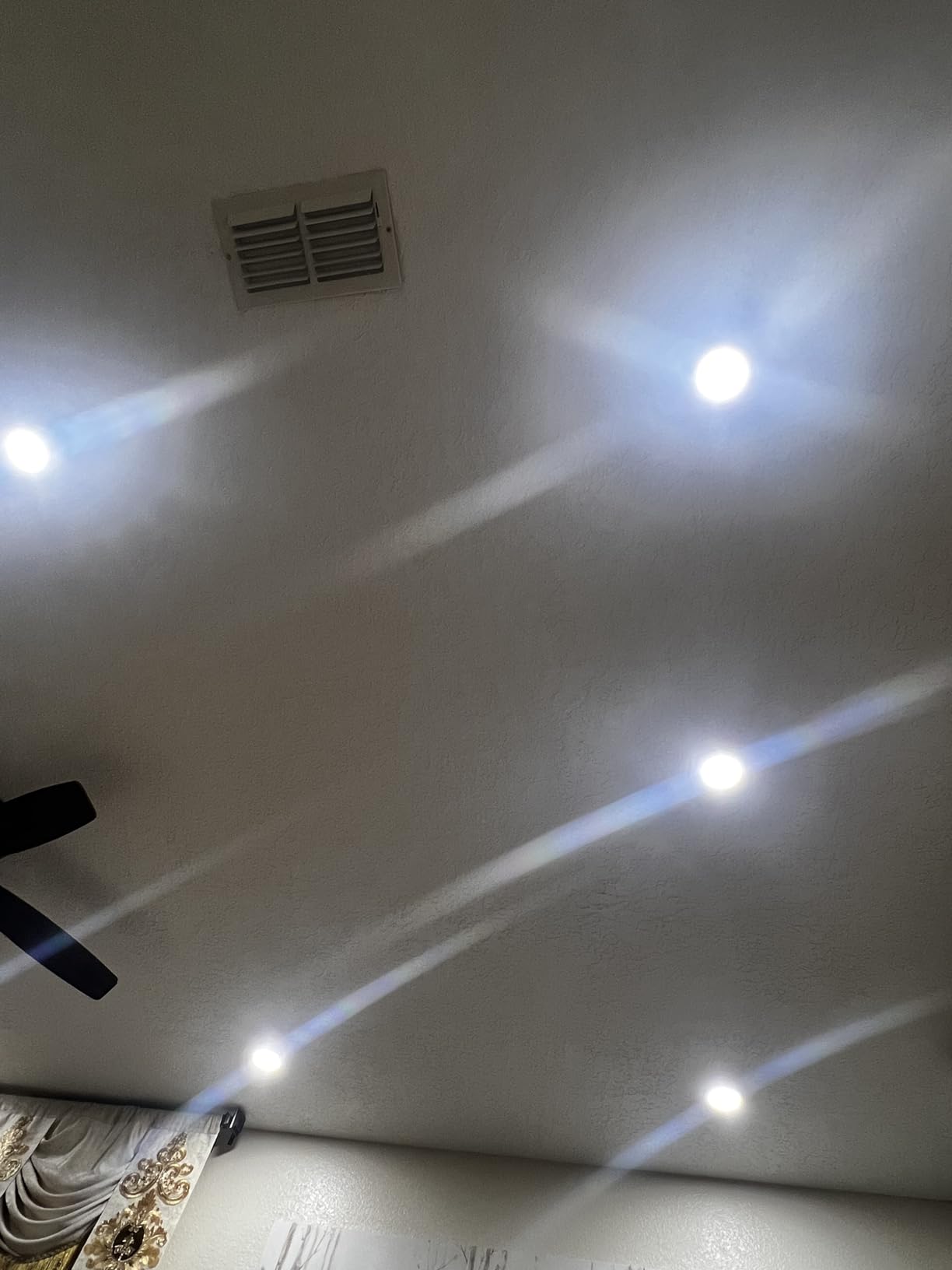
The trade-off is cost per fixture, which is the highest of the kits in this comparison, and output, since 1000 lumens is the lowest of the 6-inch options. If you need to hit 400 lumens per square foot in a large gym, you will need more fixtures to get there, which pushes the total cost up further.
The warranty is 3 years, and the fixture is listed as not water resistant. Dimming runs 100% to 5% with most dimmers, and the body needs only 2 inches of clearance, which suits low joisted ceilings.
How glare changes your fixture count
Because the frosted lens spreads the light rather than concentrating it, you can run a slightly wider spacing than the half-ceiling-height rule without the room reading as spotty. That means fewer fixtures, which offsets the higher per-fixture cost. It is also the better choice over a seating area where people look straight up.
When to pick something else
Pass on it if the total budget is tight or if you are lighting a high-output task space where raw lumens matter more than diffusion. It is the wrong pick for a shower or damp exterior soffit, and a 3-year warranty is short if you plan to keep the basement decades.
10. zouzai 24 Pack 6 Inch Ultra-Thin – best for the lowest ceiling clearance
zouzai 24 Pack 6″ LED Recessed Ceiling Light, 5CCT, Dimmable, 12W 1080LM
24 pack, 0.43 inch profile
1080LM at 12W
90 lumens per watt
5 CCT junction box reset switch
Pros
- Thinnest body in the group at 0.43 inches
- Explicitly rated for damp locations including basements garages and soffits
- Flicker-free and hum-free dimming from 5% to 100%
- UL-certified wire terminals
- Five selectable color temperatures
- 5-year service warranty
Cons
- Second highest cost per fixture in this comparison
- Smallest review base of the 24-pack options
- Listed as water resistant but not wet-location certified for direct spray
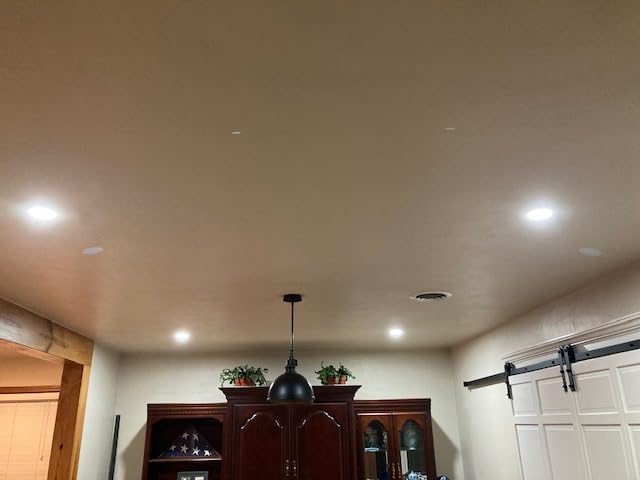
Some basements have joist bays so shallow that a wafer light will not sit flush, and the zouzai 24 Pack is the one to try first at 0.43 inches deep. That is roughly half the body depth of a typical 6 inch wafer, and it is the profile that gets a light into a cavity where everything else is listed to bypass joists and ductwork rather than fit between them.
The specification sheet explicitly covers basements, garages, and soffits for damp-location use, which is rare to see stated. Output is 1080 lumens at 12 watts for 90 lumens per watt, and reviewers specifically approve the flicker-free, hum-free dimming and the UL-certified wire terminals.
Cost is the reservation, since a 24-pack at this level sits among the most expensive options in the comparison, and the review base of 641 is the smallest of the 24-pack choices. Read the recent reviews rather than the headline number, because fewer owners means less evidence on long-term reliability.
Dimming is 5% to 100% and the color temperature switch is a reset switch on the side of the junction box, which is easier to reach than a switch on the fixture body. Certification covers ETL, Energy Star, and FCC.
When the profile is the deciding spec
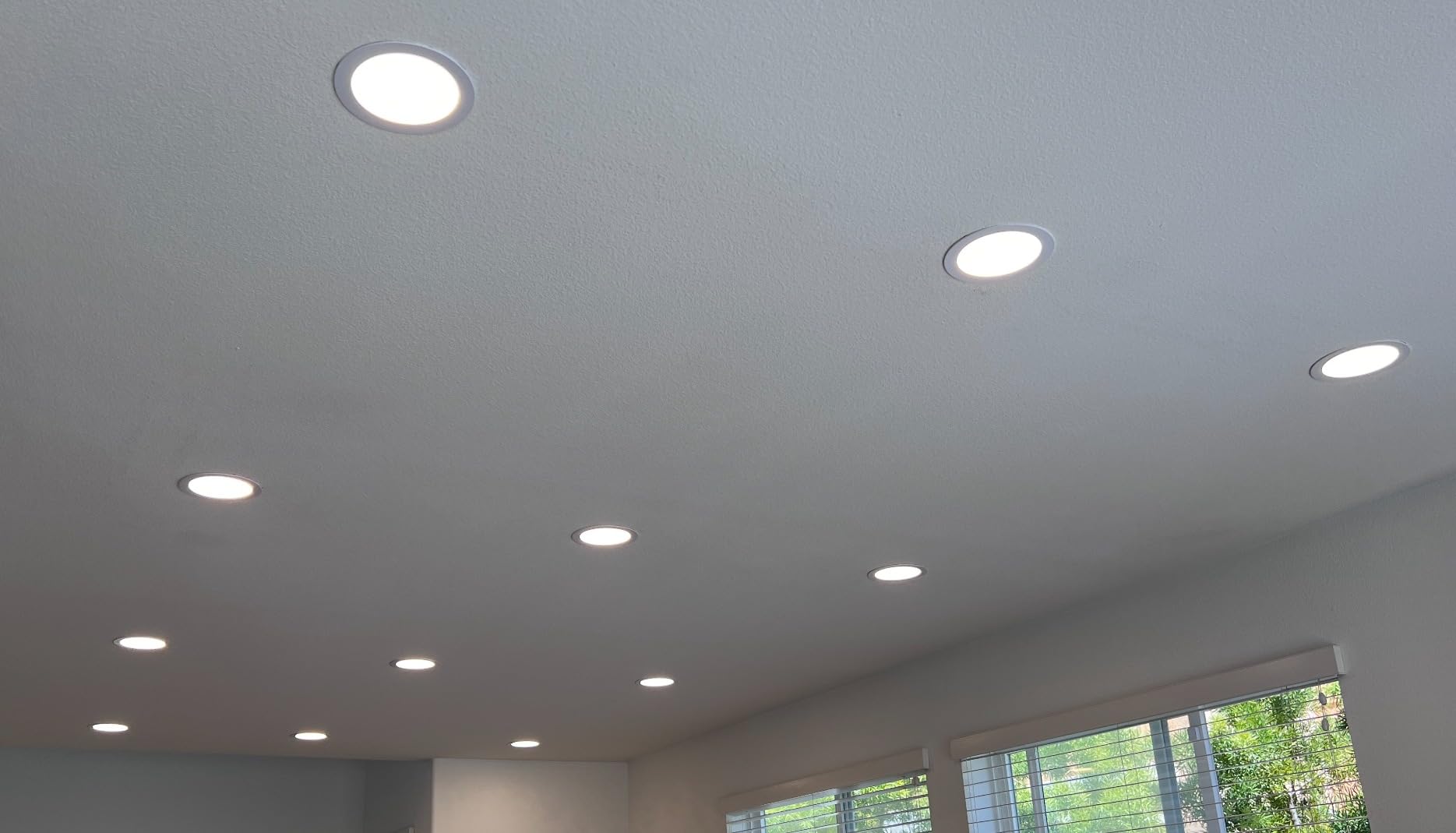
Measure the actual clearance between the top of the drywall and whatever is above it, joist or duct, at each planned position. Where that gap is under an inch, only the thinnest bodies will seat properly, and forcing a taller wafer leaves a visible gap around the trim edge.
When to pick something else
Choose a different kit if the per-fixture budget is the main constraint, or if you want the reassurance of a much larger review base. It is also the wrong choice for a shower, where a damp rating is not the same as a wet rating.
11. FREELICHT 24 Pack 6 Inch Retrofit – fastest existing-can swap
FREELICHT 24 Pack Retrofit LED Recessed Lighting 6 Inch, 5CCT, White
24 pack of 6 inch retrofit
1000LM at 10W
E26 screw-in base, no can removal
5 CCT 2700K-6000K
Pros
- E26 screw-in base needs no ceiling cutting or wiring changes
- Five color temperatures including 6000K
- Spring clips hold the trim in existing 6 inch cans
- Flicker-free and hum-free on standard dimmers
- IC rated and water resistant
- One owner installed 40 units with no failures
Cons
- Trim is larger than some old can openings so goof rings may be needed
- Lens can pop out of the housing
- Not compatible with smart dimmers
- Only a 2-year warranty and a 6 percent one-star share
If the basement already has 6 inch cans, the FREELICHT retrofit is the fastest route to new lighting you will find. The universal E26 screw-in base means the swap takes about three minutes per fixture with no electrician, no new wiring, and no cutting, which is a very different experience from pulling out drywall to add housings that were never there.
The color temperature range is the widest here, running 2700K to 6000K, and the module is IC rated, water resistant, and dimmer-friendly without flicker or hum. One reviewer reported installing 40 of these with no failures at all, which is the kind of field report that matters more than an average.
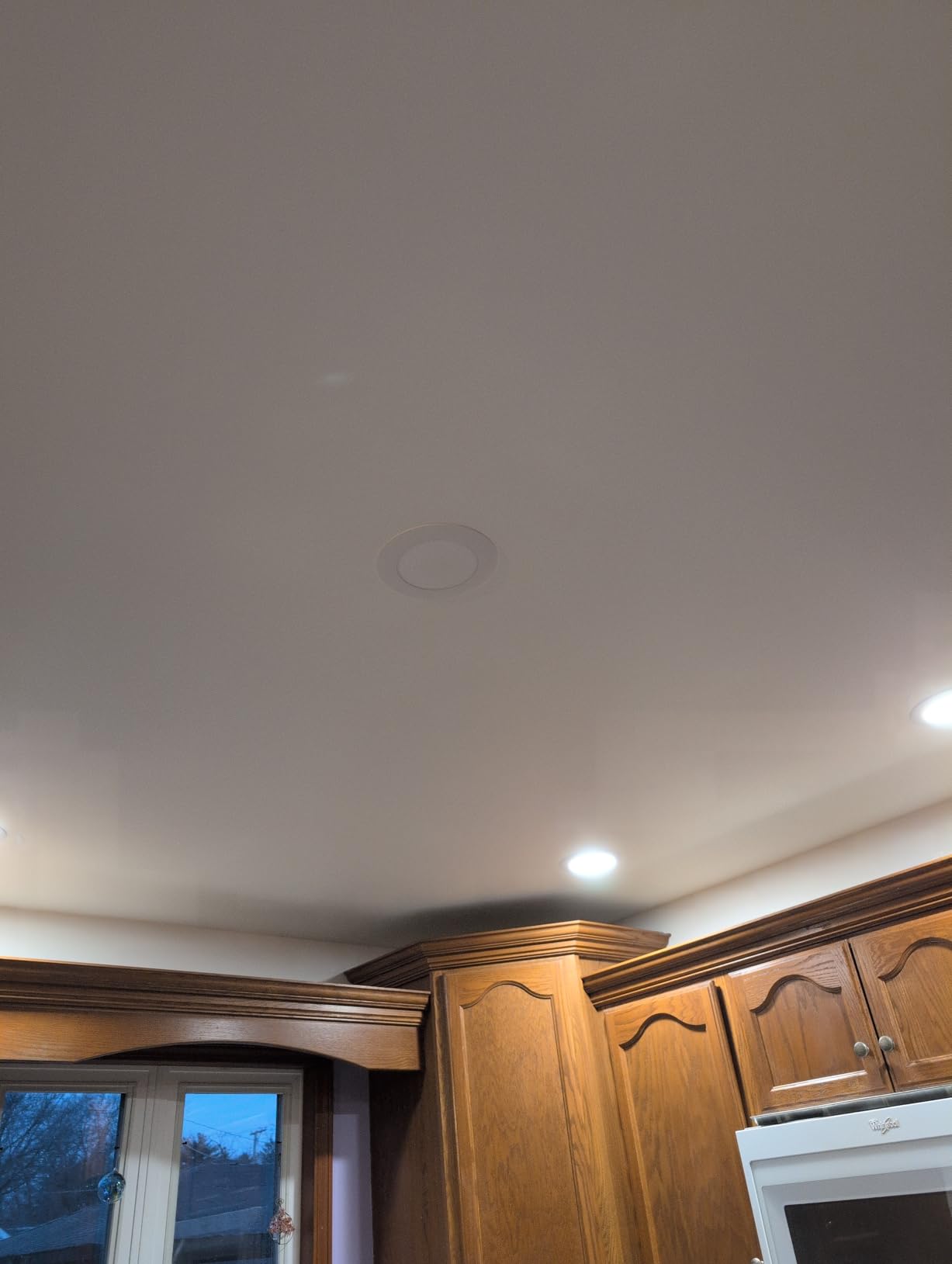
Fit is the recurring issue. The trim diameter is larger than some old can openings, which leaves a visible ceiling gap that goof rings can cover, so measure your existing cans before ordering. A few owners also report the lens popping out of the housing, and one detailed review describes a refund process that shifted from full refund to replacement only.
It is not compatible with smart dimmers, which rules it out for anyone building an automation setup, and the 2-year warranty is the shortest in this comparison. The 6 percent one-star share is also the highest here, so read the low reviews.
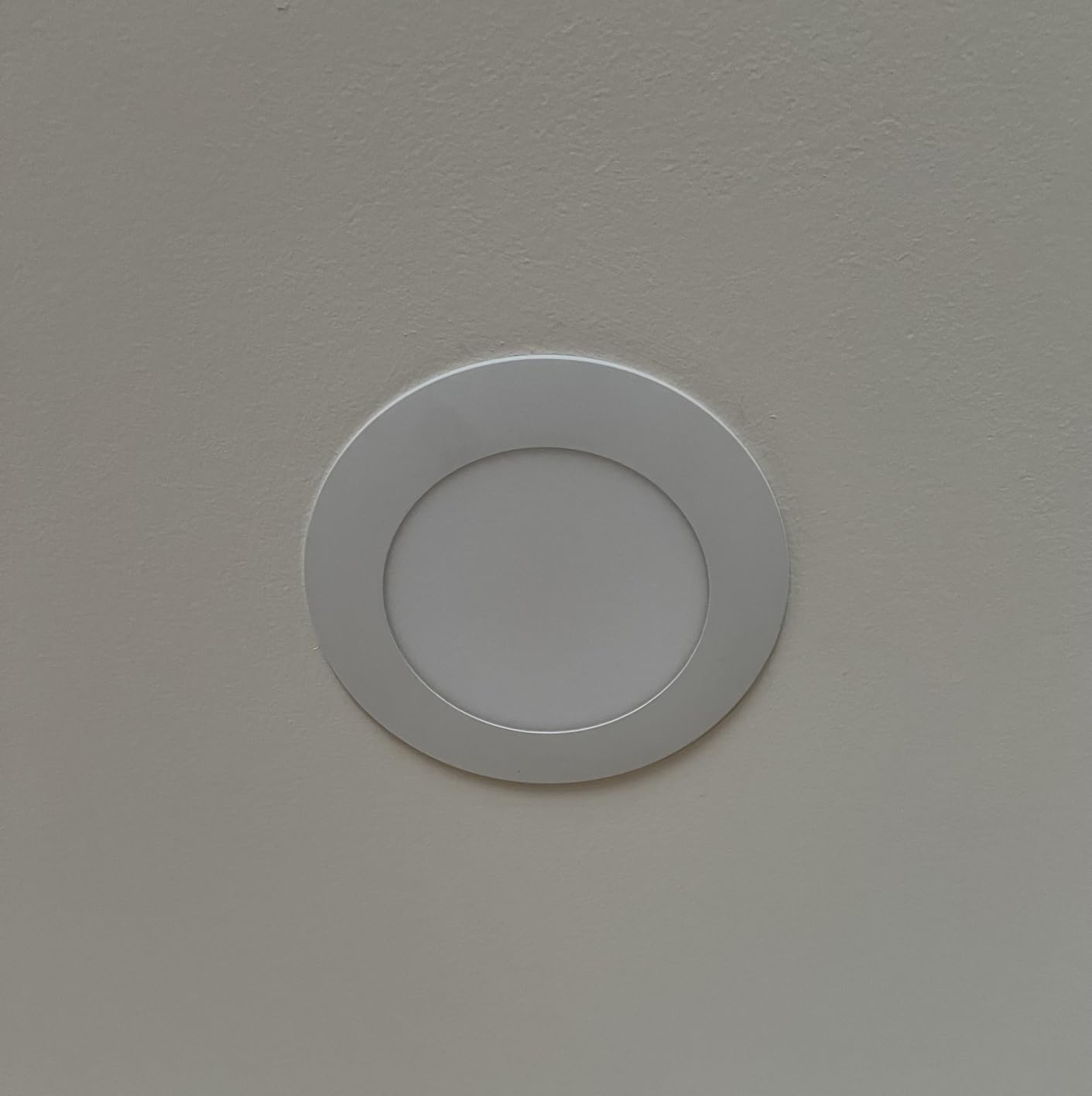
How to check compatibility in ten minutes
Remove one existing trim, measure the can opening and the depth from the ceiling plane to the back of the can, and compare both against the module. Check the socket wires are in good condition, since an aged cloth or brittle socket is a good reason to replace the can at the same time.
When to pick something else
Skip it if your cans are 5 inch rather than 6 inch, since a 5/6 inch retrofit like the LUXRITE covers both. It is also the wrong choice for smart dimmer setups, and if your old cans are non-IC you should deal with that rather than papering over it with a trim.
12. LUXRITE 4 Pack 5 and 6 Inch Retrofit – best wet-rated retrofit
LUXRITE 5/6 Inch LED Recessed Retrofit Downlight, 14W=90W, 1100 LM (4 Pack)
Retrofit for 5 and 6 inch cans
1100LM at 14W
CRI 90, 110 degree flood
Wet location and IC rated
Pros
- Fits both 5 inch and 6 inch housings for mixed can sizes
- CRI 90 gives better color accuracy than most kits here
- Five selectable color temperatures from 2700K to 5000K
- Foam gasket and baffle trim for a sealed finished look
- Wet location rated
- 50000 hour life with a 5-year warranty
Cons
- Only a four-pack so a full room needs several orders
- Highest cost per fixture of any option here
- Dimming floor is 10% rather than 5%
- 6 percent one-star share
- the highest in the group
The LUXRITE retrofit is the pick when water is part of the equation, because it carries a wet location rating alongside IC insulation contact rating. It is the clearest wet-rated choice in this group, and it is also the only option that fits both 5 inch and 6 inch existing housings, which matters in older basements where can sizes were never consistent.
Color quality is the other differentiator. CRI 90 with a 110-degree flood is the best rendering figure in the comparison, paired with a foam gasket and baffle trim that give a finished, sealed look. The E26 screw-in base keeps the swap to a few minutes per fixture with metal tabs for a flush finish.
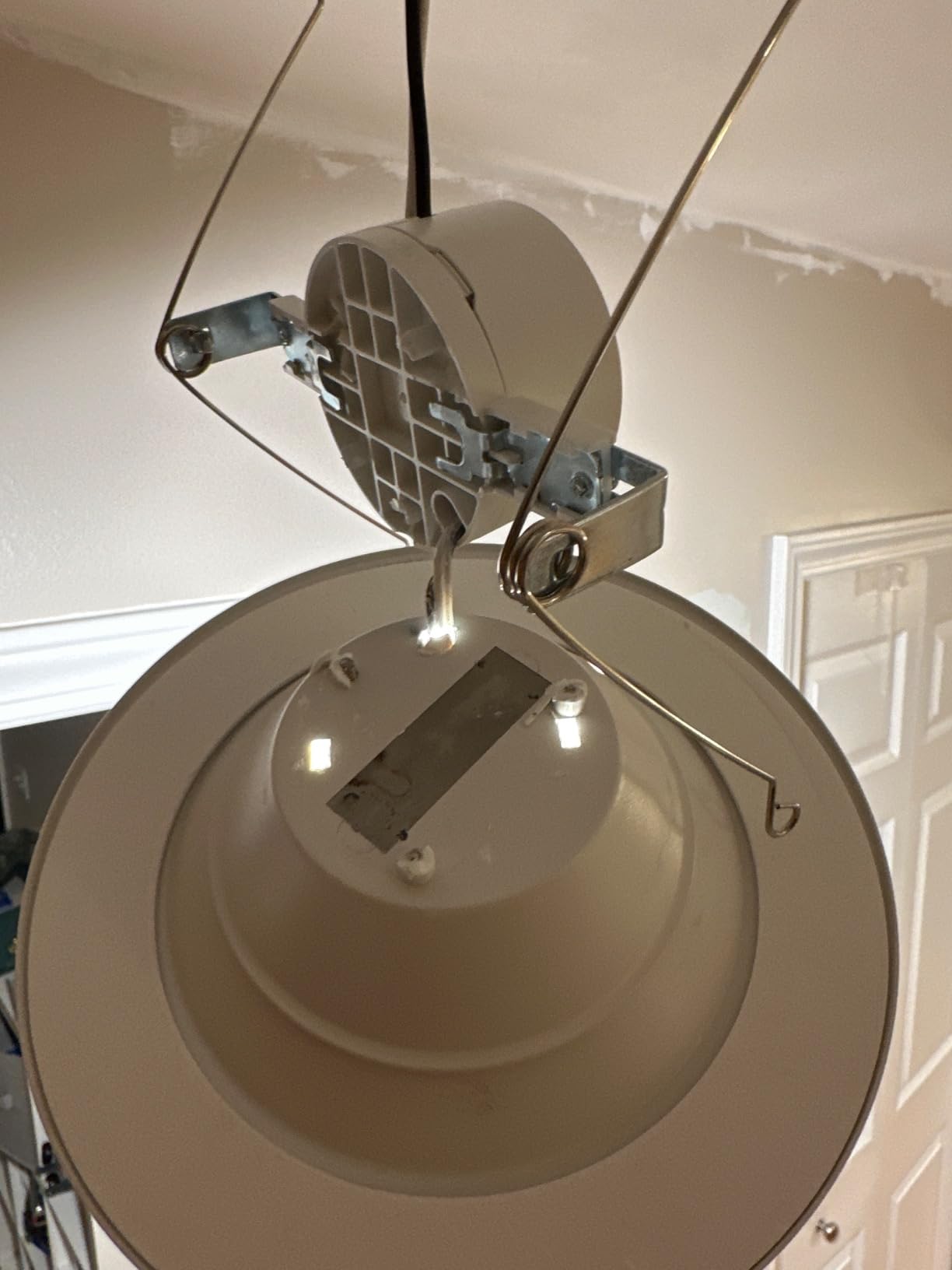
Packaging is the main drawback. Four per box is the smallest multi-pack in the group, so a full basement room means several orders, and the cost per fixture is the highest of anything in this comparison. For a basement bathroom with a shower, that trade is worth it, but for a 200 square foot open area it is not.
Dimming runs 10% to 100% rather than 5%, which matters if the room is a media space, and the 6 percent one-star share is the highest here. The listed 7.23 by 3.23 by 7.32 inch dimensions describe the packaged unit rather than the installed trim.
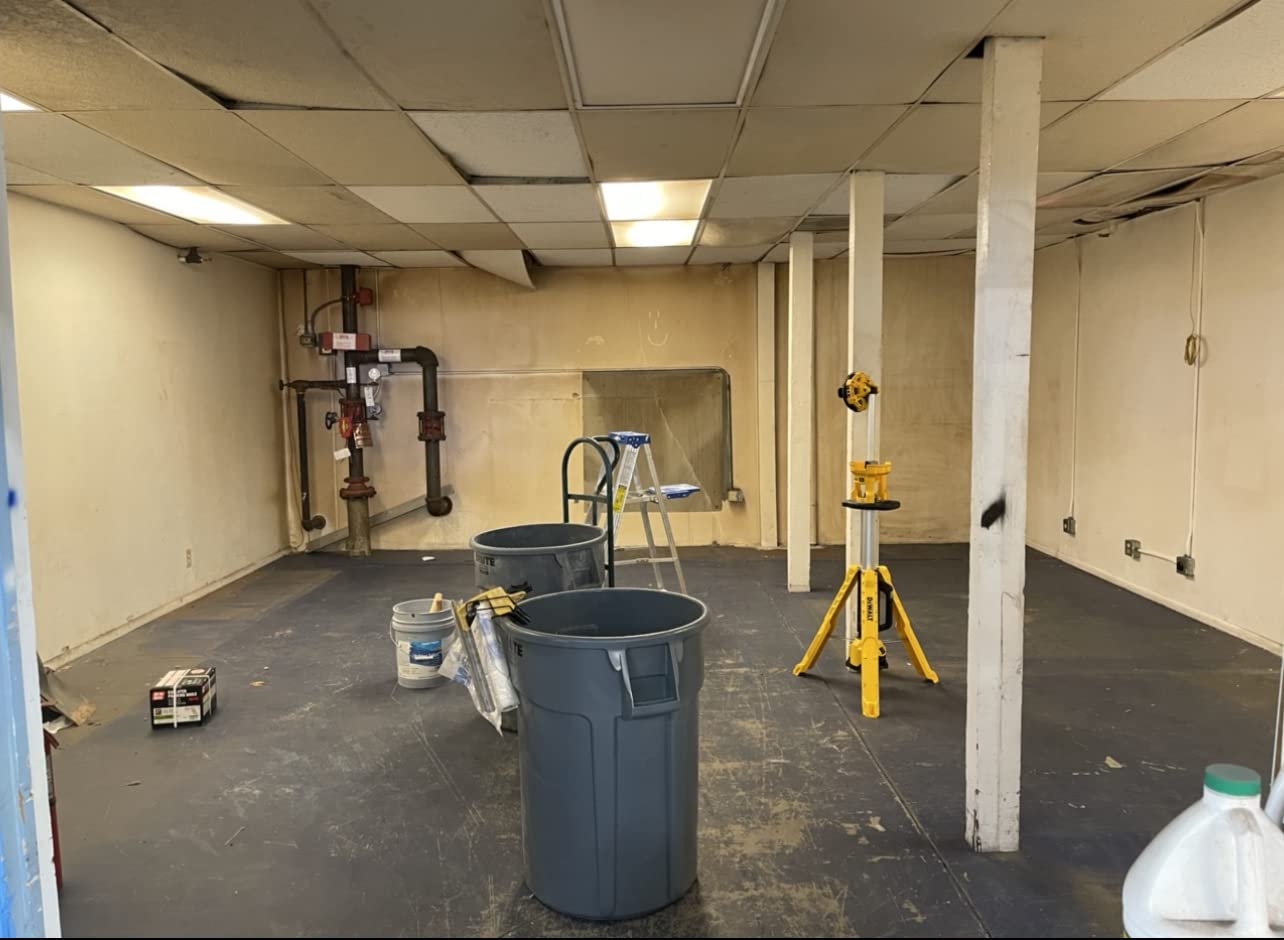
Where the wet rating genuinely matters
A basement bathroom with a shower, a ceiling can spot that will take condensation, or a garage-adjacent space under an exterior wall are the cases where a wet rating is the difference between a code-compliant install and a failed inspection. Elsewhere, a damp rating is enough and saves money.
When to pick something else
Pass on it for a large open area, where the four-pack count and per-fixture cost become the dominant issue, and for a media room that needs deep dimming below 10 percent. If you have no existing cans at all, a canless kit is the right product and this one does nothing for you.
Color Temperature, Dimming and Dimmer Compatibility in a Basement
Color temperature is the fastest way to make a basement feel wrong. Warm light reads as a living space, cool light reads as a utility area, and the same fixture can often do both if it has a selectable CCT switch set before installation. For a media or family room, 2700K to 3000K is the range most people settle on. Gyms, workshops, and laundry rooms do better at 3500K to 4000K. Laundry and bathroom spaces sit comfortably at 3000K to 3500K.
Dimming is where returns happen. Most of the kits here dim from 5% to 100% without flicker, though the Sunco and LUXRITE retrofits bottom out at 10%. LED dimmers with a low-load setting or a manufacturer-recommended phase-compatible model are worth the small extra cost, and legacy incandescent dimmers are the usual cause of the flicker and buzz that gets blamed on the fixture.
Integrated LED modules raise a fair question about the future. If a module eventually fails in ten years, a canless wafer means opening the ceiling, while a traditional can with a replaceable lamp means a cheap spare part and a pair of gloves. Most homeowners accept that trade in exchange for the cleaner look and easier install, and it is one of the few places where forum owners still argue for keeping canned lighting.
A few more planning notes. Pack size changes cost per fixture, and larger packs are cheaper but force a layout decision at once. Junction box placement is the real constraint in a joisted basement, so confirm where each box will sit before you mark a single hole. And if you are adding track lighting for artwork or a workbench, the recessed layout should still be planned so the two layers complement rather than fight each other, the same way we plan layered lighting in our track lighting kit guide.
How We Picked These Kits and What We Verified
Every kit in this roundup was checked against the manufacturer data published on its own listing page rather than a marketing summary. We compared lumen output, wattage, color temperature options, dimming floor percentage, IC rating, damp or wet rating, physical depth and cutout size, pack quantity, included components, certifications, and warranty length, and we cross-referenced those figures against the recurring themes in buyer reviews.
We excluded anything that could not be verified on a damp or wet rating, that lacked a stated IC rating, or that had a review history dominated by failures. We did not test these fixtures on a live ceiling, so treat the spec numbers as manufacturer data and the review summaries as reported owner experience.
Frequently Asked Questions
What is the best recessed lighting for a basement?
Canless wafer downlights with an IC-rated junction box are the best recessed lighting for most basements, because they need only about 2 inches of clearance instead of the 5 to 7 inches a traditional can consumes. For a dry finished basement, a 6 inch kit at 1050 to 1200 lumens with selectable color temperature covers most floor plans. For a basement bathroom with a shower, use a wet-rated retrofit instead.
What type of lighting is best for a low ceiling basement?
Recessed lighting is the best ceiling type for a low basement ceiling, because it sits flush with the drywall while pendants and flush mounts drop into the room and eat headroom you do not have. Canless wafer fixtures are the specific style to choose, since their shallow bodies fit into joist bays where a traditional can cannot go.
Is canned or canless recessed lighting better?
Canless is better for most basements because it needs roughly 2 inches of clearance, works in joisted ceilings and around ductwork, and is cheaper to install. Canned lighting is better only when the ceiling is still open before drywall, you want the light source set deep inside the housing to cut glare on a low ceiling, and you would rather swap a lamp in ten years than open the ceiling.
Are canless recessed lights IC rated?
Only if the manufacturer says so. Most canless kits sold for basements do carry an IC-rated fixture and junction box, but it is not automatic, and several kits in this comparison are simply not marked water resistant despite being marketed for damp spaces. Check the listing for an explicit IC rating before you buy, especially if you plan to insulate above the ceiling.
Do recessed lights need to be IC-rated if installed against insulation?
Yes. If insulation will touch the fixture, the fixture must be IC rated, which means it is certified for direct contact with insulation. Basement ceilings in most of the country sit inside an insulated floor cavity, so a non-IC housing buried in blown-in insulation is a real fire hazard. Check existing cans in an older basement before adding insulation above them.
What is the rule of thumb for recessed lighting?
Space fixtures about half the ceiling height apart and about half that distance from the walls. In a 7 or 8 foot basement ceiling that means roughly 3.5 to 4 feet between lights and 2 feet in from every wall. Aim for around 300 to 400 lumens per square foot in a media or family room and 400 to 500 in a gym or workshop, and shift positions off furniture so nothing lands in your eyeline.
What are the pros and cons of canless recessed lighting?
The pros are a shallow profile that fits low and joisted ceilings, no can housing to install, simple cut-and-clip fitting, and typically better dimming behavior with LED dimmers. The cons are an integrated LED module that cannot be replaced without opening the ceiling, a required junction box for every fixture, and a visible light source on a low ceiling that can create glare unless you choose a frosted or regressed lens.
How many recessed lights does a basement need?
Count the room area, divide by the spacing interval, and round up. Using the half-ceiling-height rule, a 12 by 24 foot room with a 7 foot ceiling works out to roughly 12 to 14 fixtures at 3.5 to 4 foot spacing set 2 feet off the walls. That is why 12-packs dominate whole-room kits and 24-packs suit open floors.
Can I install recessed lights in a basement ceiling myself?
Cutting holes and mounting fixtures is straightforward for a confident DIYer, but the wiring is where the judgement sits. Work in a live basement generally needs a permit and a rough-in inspection, and finished basement circuits often require AFCI protection that an older full panel cannot provide. If you are adding a new circuit, moving a panel, or working around a steel beam, use a licensed electrician.
What is the average cost to install canless lighting?
The fixtures themselves vary widely by pack size, from four-pack retrofits to 24-packs, and the dominant cost variable is labor rather than hardware. A DIY install is mostly the fixture cost plus a dimmer per zone, while a contractor adds hourly labor per fixture plus circuit work. The two costs that surprise people are adding a circuit to a full panel and upgrading to LED-compatible dimmers.
Final Verdict: Best Recessed Lighting Kits for Basements in 2026
For most basements, the Amico 12 Pack 6 Inch Canless is the pick. It combines 1050 lumens, five selectable color temperatures, an IC-rated junction box, and the largest review base in this comparison, and the one thing to plan around is the tight cutout tolerance. If your ceiling cavity is unusually shallow, the zouzai 24 Pack at 0.43 inches solves a problem the others cannot.
Choose the Ensenior 12 Pack in 5CCT when you want the most light per fixture with color flexibility, and the fixed 5000K Ensenior when the basement is a workshop rather than a lounge. For glare on a low ceiling, the TORCHSTAR 16 Pack with its frosted lens is the one to look at first. Existing 6 inch cans mean a retrofit, and a shower means the wet-rated LUXRITE rather than anything else on this list.
Whatever you choose, settle the spacing, the ratings, and the circuit plan before the drywall goes up. Those three decisions are the ones that are expensive to reverse. If you want the same careful planning applied to another basement system, our basement WiFi extender guide works through the matching layout questions.